Author: Daniel Pearson

  • Mayor Parker — and her mixed record — reaches 1,000 days in office | Shackamaxon

    Mayor Parker — and her mixed record — reaches 1,000 days in office | Shackamaxon

    This week’s column covers the ongoing Washington West Historical District saga, a 1,000 mayoral days, a City Council member who should retire, and an NFL coach who is a secret urban planning enthusiast.
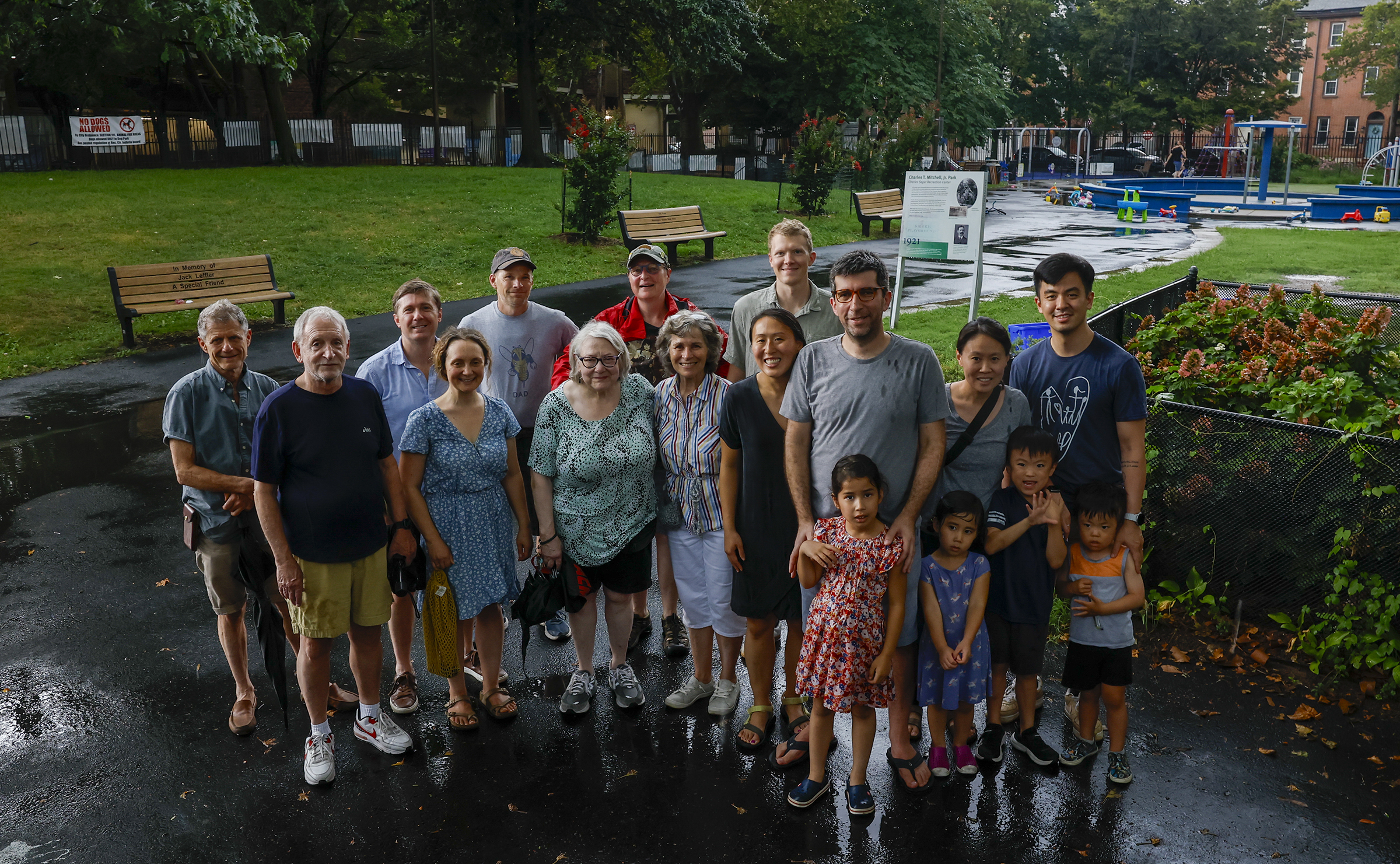
    Members of the Philadelphians for Rational Preservation gather at Seger Park in the Washington Square West neighborhood in July 2025. The group opposes the Washington Square West Historic District designation.Yong Kim / Staff Photographer

    People vs. preservation

    In a City Hall courtroom, lawyers for the city and the preservation alliance sought to defend the designation of the Washington West Historic District against a coalition of homeowners who have claimed the decision has cost them time and money. The outcome could have significant ramifications for such districts across Philadelphia.

    Dan Auerbach, a lawyer for the homeowners, says the district was created without sufficient evidence, and that a historic commissioner’s participation in drafting the document represents a conflict of interest. Attorneys Leonard Reuter and Paul Toner, who represented the defendants, took a different approach.

    When Common Pleas Court Judge Christopher Hall repeatedly asked for evidence, beyond the nomination itself, for the district’s historic significance, Toner replied, “I don’t need to.” The commission’s decision to approve is apparently all that’s required. They also argued that historic designation does not impose significant costs on homeowners.

    Hall seemed to take a skeptical view of these claims. As Auerbach pointed out, most pages of that document simply inventory the existing properties. Often, newly designated homes have no specific justification at all, or just a few words.

    Personally, I also find the dismissal of the real costs imposed on homeowners to be unconvincing. According to evidence supplied by Philadelphians for Rational Preservation, the group that formed in opposition to the district, homeowners who have been added to the district are already seeing adverse impacts. Door and window replacements now require permits, for example, and homeowners must spend considerably more to acquire historically accurate versions. This costs real time and real money.

    If Hall sticks with his initial ruling, which overturned the district designation, it could have serious consequences for the city’s preservation law.

    It may be that this district is simply too large and too broad. The period of significance covers nearly the entire history of Philadelphia, and many of the newly designated buildings are frankly unremarkable. While the city and the preservation alliance may feel the urge to appeal the matter to the Commonwealth Court, my suggestion is that they don’t.

    While I am skeptical of this particular nomination, I do think historic districts have a role to play in our city. Many of them are popular with residents, or have existed for so long that most homeowners were aware of the restrictions before purchasing.

    In the case of Washington West, however, the commission may simply have been too ambitious. The geographic range is just too large, the period of significance too extensive, and the residents themselves too strongly opposed.
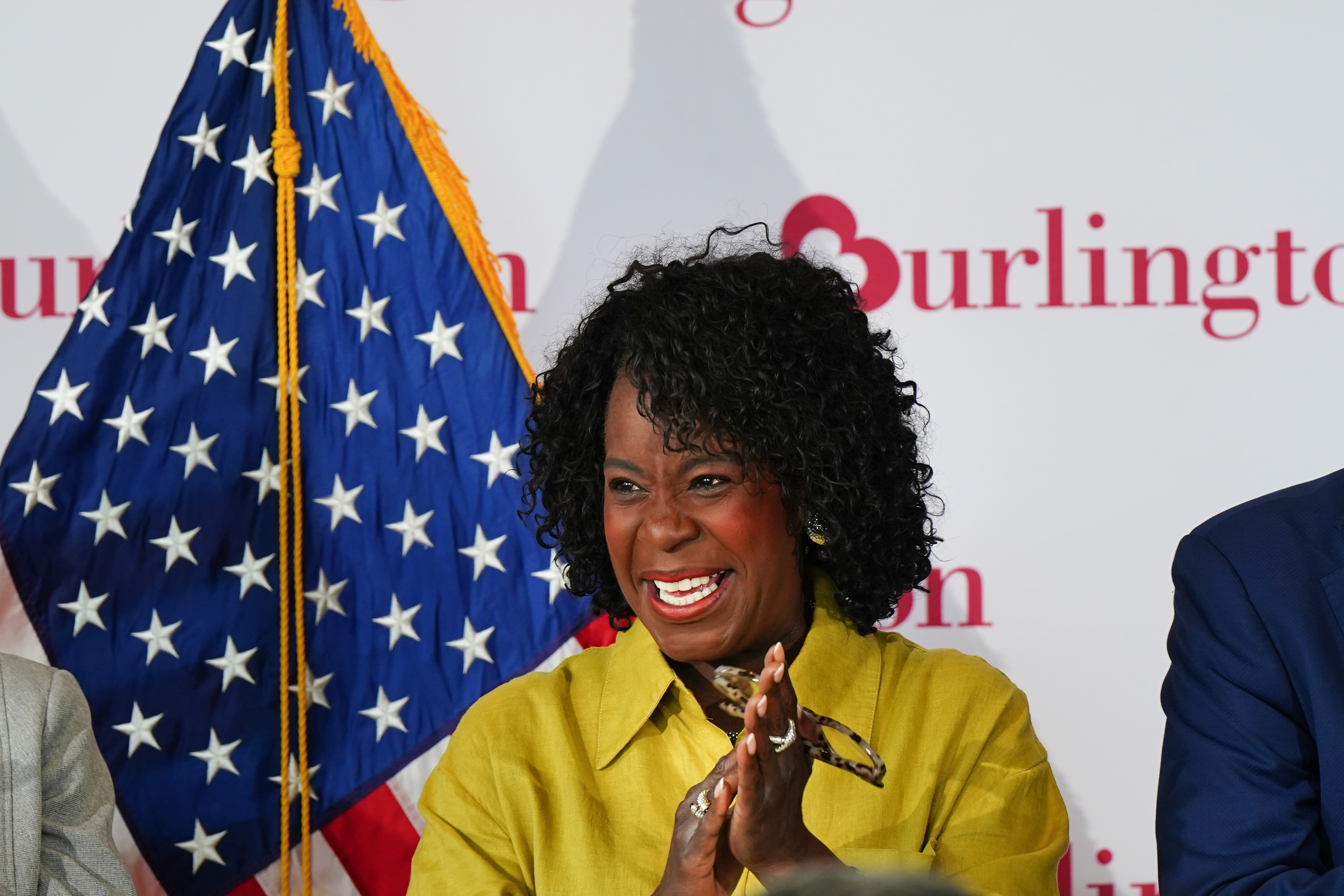
    Mayor Cherelle L. Parker at a news conference in September.Jessica Griffin / Staff Photographer

    Mayoral milestone

    Mayor Cherelle L. Parker celebrated her 1,000th day in office earlier this week at McPherson Square Library in Kensington, which is set to receive a $21.7 million renovation. Parker has made investing in Kensington a priority in her administration, although some of her priorities have been contested.

    She’s added police patrols to the neighborhood, sought to dismantle the drug market, and increased cleaning and greening efforts. She’s also come under fire from harm reduction advocates for eliminating funding for the nonprofit Prevention Point and city efforts to rein in a network of services built to alleviate the struggles of addiction, which some residents have blamed for the drug market’s continuing presence in their community.

    In many ways, Kensington is a microcosm of Parker’s tenure.

    Her administration has made genuine progress. Violent crime is at historic lows, with decreases in the city’s most dangerous neighborhoods driving the decline. Surveys suggest residents believe the city has gotten cleaner under her leadership. Yet discontent, some legitimate and some not, continues. Parker’s approval rating sits at 44%, a number that is likely high enough for reelection next year, but isn’t strong enough to give her the political capital she needs to take on and win fights with City Council.

    The biggest factors in whether residents approve or disapprove of the mayor seem to be their age and race. Among Philadelphians of color and those older than 45, Parker is popular. For those under 45 and white voters, she’s not.

    It is easy to say this divide is based on style. As Parker herself has said, she’s unapologetic about who she is and where she came from. To residents who may be fans of New York’s Zohran Mamdani, Parker may seem old-fashioned and unexciting. Of course, Mamdani also has a municipal budget of $126 billion at his disposal, while Parker makes do with just $7 billion.

    But a lot of it has to do with substance. Small-business owners have lost a crucial tax exemption; her vaunted ability to work across the aisle has not resulted in sustainable transit funding or enabled the school district to avoid closing 17 schools; and Parker has shied away from the ambitious civic reformer causes embraced by predecessors like Michael Nutter.

    If the mayor intends to reach 2,000 days in office without becoming yet another tired and unpopular chief executive, she’ll have to step up her game.
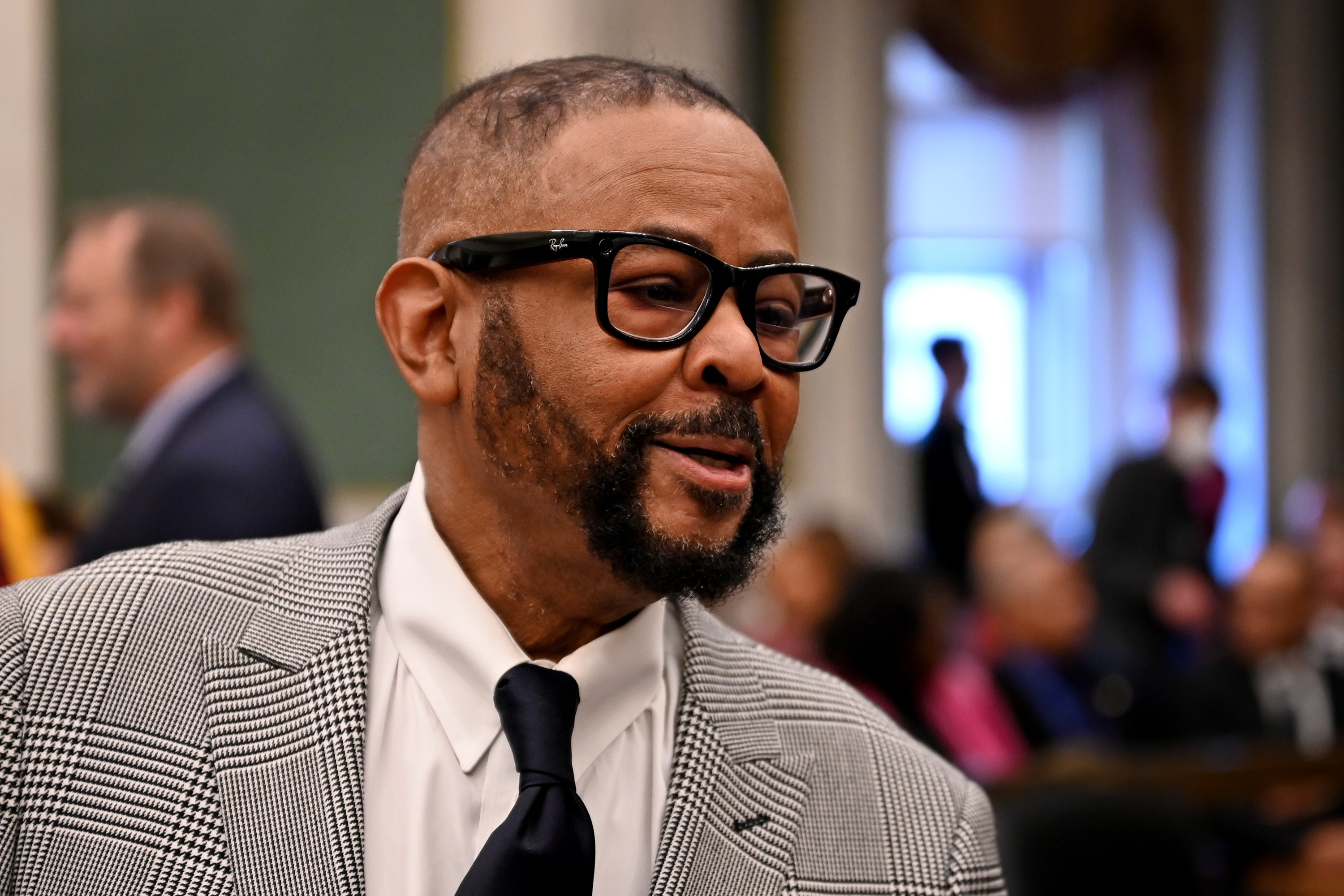
    Councilmember Curtis Jones Jr. in chambers as City Council meets in December.Tom Gralish / Staff Photographer

    Jonesing to stay

    Fourth District Councilmember Curtis Jones Jr. has had a long and often laudatory career in public service. But it is now time for it to end.

    My Inquirer colleagues have reported that even some of Jones’ closest friends and allies are urging him to consider retiring for real, rather than simply exploiting the city’s notorious Deferred Retirement Option Plan (DROP) program. Jones has only himself and his own statements to blame for his newly precarious position.

    It isn’t just that Jones and his wife are taking hundreds of thousands worth of taxpayer money while avoiding retirement; he also asked to delay a critical infrastructure project for his own political benefit.

    Jones cited his ongoing health issues as justification to The Inquirer, saying he needed the money to pay for treatment. I certainly sympathize with anyone struggling to maintain their health. However, Jones represents a city where the median household income is just over $60,000. At 69 years old, he is also eligible for Medicare.

    Retirement would also give Jones a chance to relax and focus on staying healthy. For his sake and ours, he should listen to his friends.
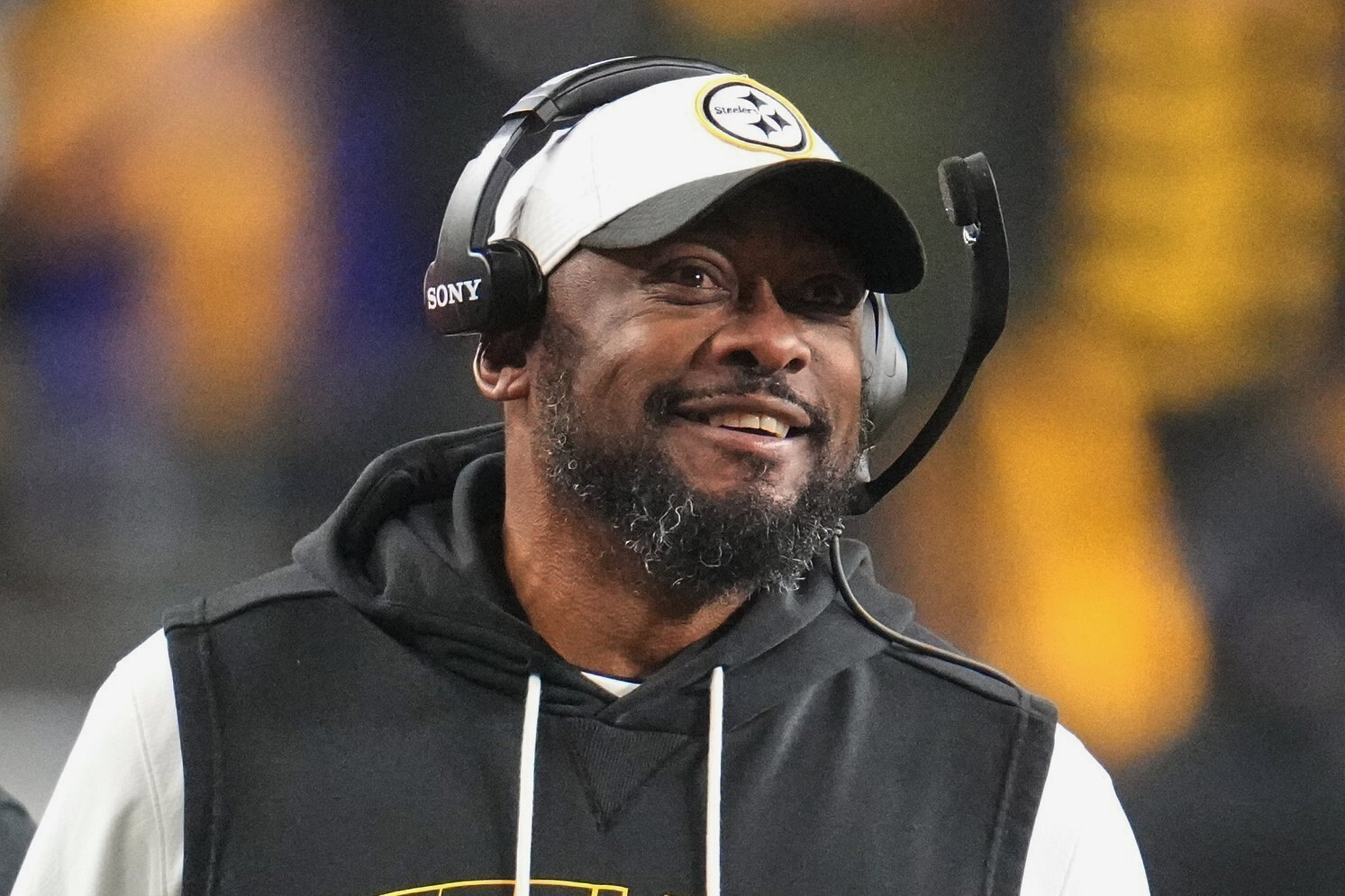
    Pittsburgh Steelers head coach Mike Tomlin stands on the sidelines during the second half of an NFL football game against the Baltimore Ravens in Pittsburgh in January.Gene J. Puskar

    Tomlintown

    When you write frequently about transit and housing, you tend to hear from the small cadre of people who are extraordinarily enthusiastic about these issues. This week, I found out about a surprising member of their ranks: former Pittsburgh Steelers head coach Mike Tomlin.

    Famous for his uncanny resemblance to actor Omar Epps and being the second Black NFL coach to win a Super Bowl, Tomlin used the game Minecraft to build his own fantasy city — a project that took place over a dozen years. He’s now giving the public a tour of his work.

    Tomlin said he wanted densely populated buildings because of his interest in architecture, and went as far as creating interiors for each of his creations. His work is remarkably cognizant of genuine urban questions like lighting and viewsheds.

    Like many gamers, he said his habit helped him “detach from the realities and the pressures of life.” We all need a way to unplug sometimes, but Tomlin’s impressive urban planning side project may have turned him into an unlikely urbanist hero.
  • SEPTA’s new plan paints a brighter transit future | Shackamaxon

    SEPTA’s new plan paints a brighter transit future | Shackamaxon

    This week marks a year since Shackamaxon debuted. Named for the place Lenape chiefs would meet for discussions and community ceremonies under the great elm, the column is focused on what happens at City Hall and Harrisburg — our modern Shackamaxons. This week’s edition focuses on SEPTA and whether bipartisanship is truly dead.

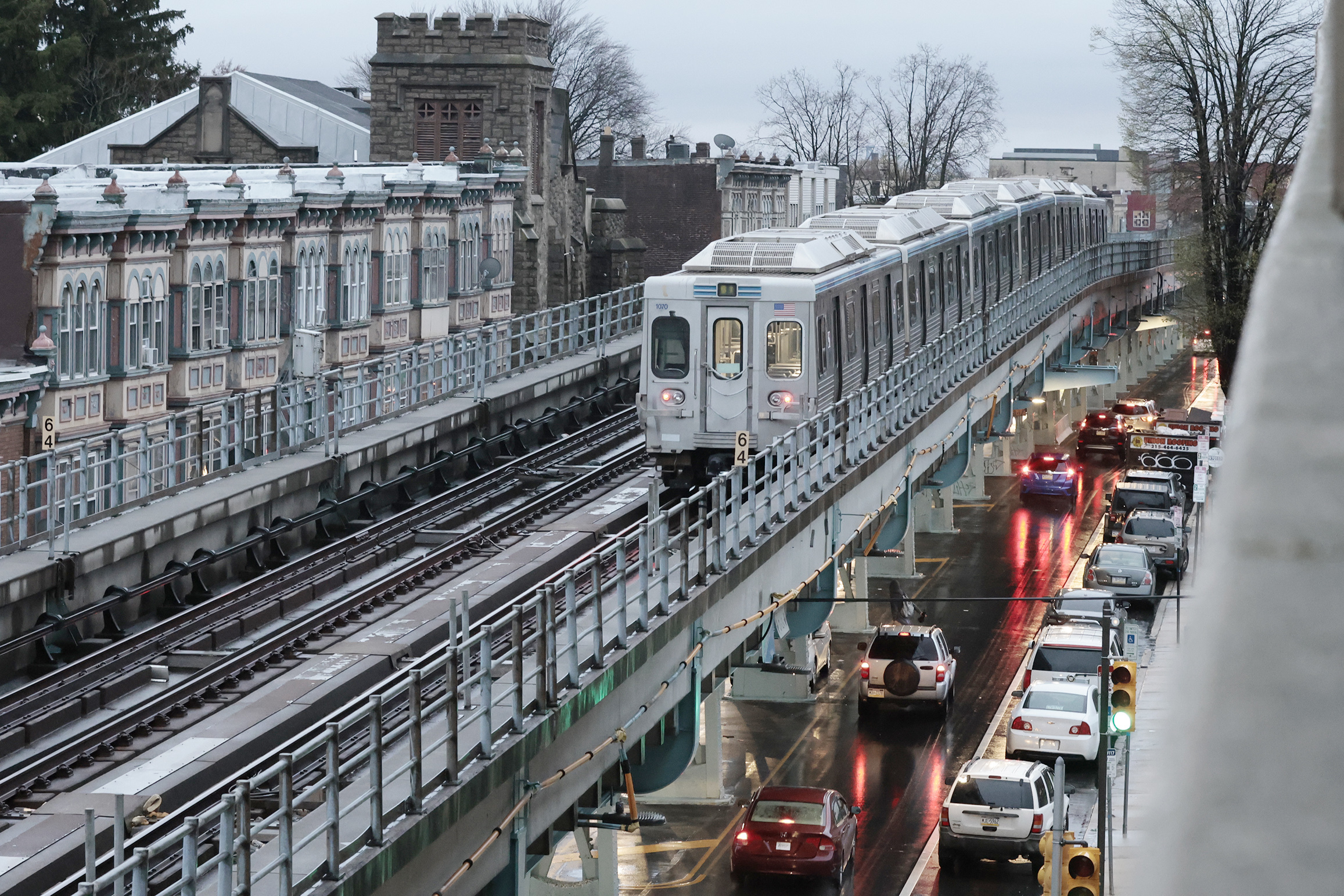
    A SEPTA Market-Frankford Line train as it heads away from the Frankford Transportation Center in 2024.Elizabeth Robertson / Staff Photographer

    Getting there

    In 2032, if all goes according to plan, SEPTA will look quite different.

    The Market-Frankford Line will have new trains and run more frequently. There’ll be new trolleys, as well, with modern light rail cars replacing the aging fleet. Instead of boarding at the corner, like a bus, trolley riders will have new, fully accessible stations with seating.

    The Regional Rail fleet will be in the middle of its own modernization. While the process will take longer, SEPTA plans to make every Regional Rail station accessible, replace its fleet, and boost frequencies to every 15 or 30 minutes, depending on the line. It’s an ambitious undertaking that would more than double the number of people who live within a quarter mile of frequent mass transit, from 900,000 to two million.

    This kind of optimism is rare for SEPTA, an agency that is accustomed to hearing complaints and begging lawmakers for enough money to keep current levels of service operating. The SEPTA Accelerate plan does depend on securing additional funding from Harrisburg. This time, however, the city’s transit leaders are trying a different approach: Instead of pointing out the potential dangers of losing services, they are highlighting what they could provide if given adequate resources.

    It also comes at an opportune time. While there are always improvements to be made when it comes to timeliness and quality of life, SEPTA has made unmistakable progress.

    Crime and fare evasion are down, thanks to dozens of additional Transit Police officers and a new initiative to install taller gates that are harder to jump over or squeeze through. Ridership is up, especially on bus routes that are part of the New Bus Network.

    The agency has hired hundreds of cleaners, with each station now covered by a dedicated member of staff during heavy-use periods. Customer satisfaction has reached record highs. Throughout it all, SEPTA has remained the country’s most efficient transit agency. Each ride costs less than $8 to provide, compared with the rest of the nation’s $12 average.

    Even Republican state Senate Majority Leader Joe Pittman seems to have noticed. In an interview with NBC10’s Lauren Mayk, Pittman gave SEPTA and new General Manager Scott Sauer credit for responding to criticism, reducing crime, raising revenue, and improving its credit rating.

    Locally, the proposal received praise. Montgomery County Commissioner (and SEPTA board member) Neil Makhija told me he’s been advocating for SEPTA to have 15-minute Regional Rail service for years, and that he is “thrilled to see that transformative vision has finally been released in this plan.”

    Longtime SEPTA riders will remember the old “We’re Getting There” slogan. The Accelerate plan is the agency’s biggest chance to finally arrive.

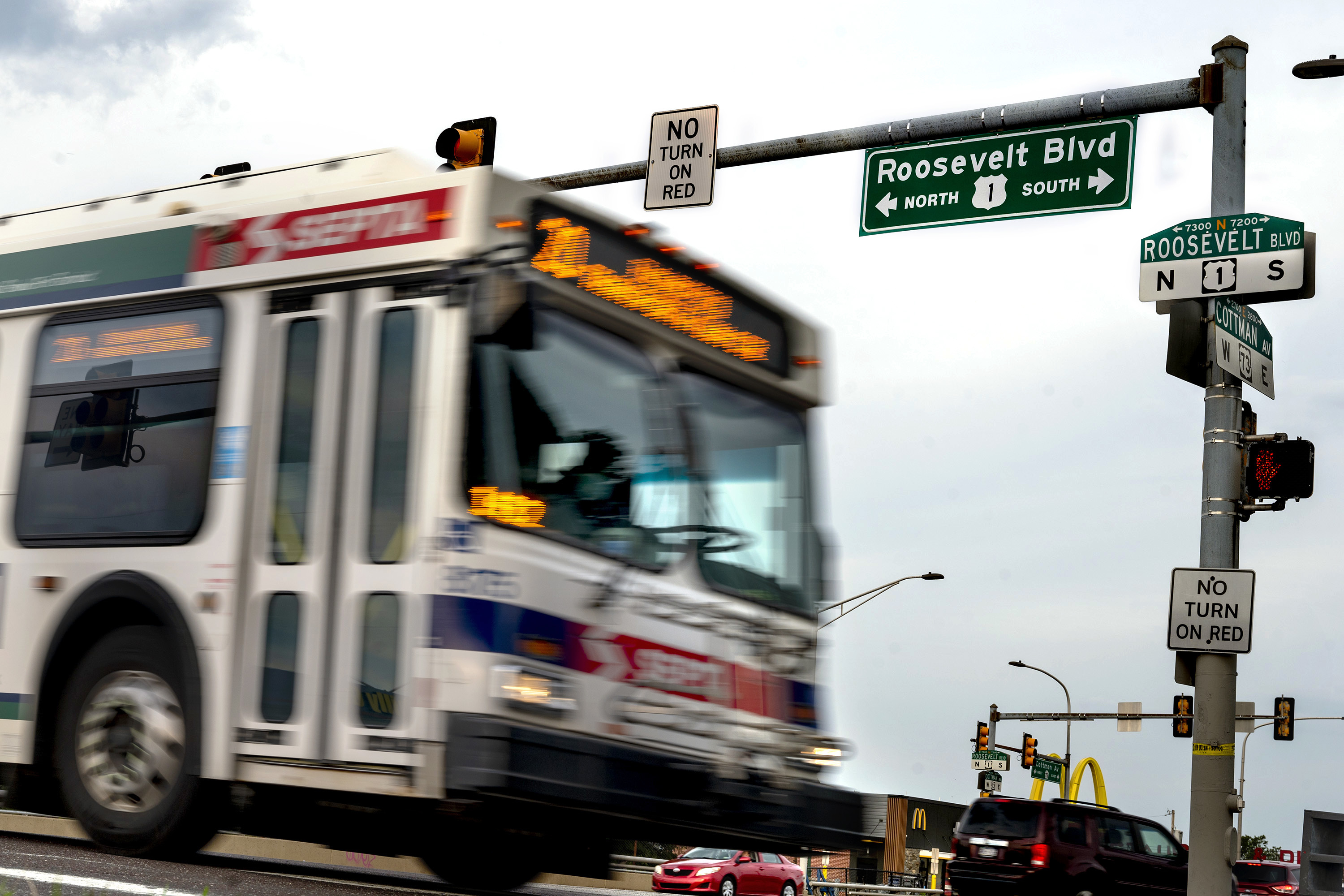
    Traffic on the Roosevelt Expressway at Cottman Avenue in Northeast Philadelphia.TOM GRALISH / Staff Photographer

    Boulevard or bust

    The plan, while ambitious, does not call for any significant expansions in the immediate future. Extensions to Reading, Allentown, Maryland, and King of Prussia get a brief mention — as ideas the agency might embrace in a better-resourced future. The long-awaited subway extension to Roosevelt Boulevard is also included in the map. Events, however, may require deciding on this sooner rather than later.

    After all, PennDot is already planning to redo the entire corridor. The initial plan is to add $134 million in safety improvements. Longer term, there are six different options. The route could either become a neighborhood boulevard, with less space for motorized traffic, or it could become a partially capped expressway, separating high-speed traffic from pedestrians and homes. Both proposals would then be paired with one of three transit options: a subway extension, a light rail route, or Bus Rapid Transit.

    BRT is the cheapest option and would be my preference if the subway doesn’t get built. The idea is to give buses a dedicated lane and limit how often they stop. This would speed up service for current riders, but wouldn’t bring in a significant number of new commuters. There is also a chance future policymakers would remove the dedicated bus lanes in order to provide more space for motorists, something that has happened to BRT systems in other states.

    To some policymakers, light rail represents a kind of Goldilocks option. It has more transformative potential than bus service, while costing less than a full metro line. To me, however, Roosevelt Boulevard is a particularly bad fit for the idea.

    The cheapest way to build a light rail system would include trains traveling in their own lanes next to automobile traffic. Given the often-chaotic behavior of motorists in Philadelphia, trips would be subject to delays every time a driver decides to save a couple of minutes by driving along the tracks. The trains would also get caught at red lights anytime left-turning traffic builds up.

    Officials could mitigate this risk by building an elevated trackway, but this would make the project significantly more expensive, negating the entire point of opting for light rail. Additionally, riders would have to transfer at the end of the line rather than seamlessly continuing into Center City, as they would with a subway expansion. Light rail also costs more to operate than a subway, meaning any savings would disappear over time.

    While it has the highest construction costs, the subway option remains the ideal solution for the corridor. It would transform how people get around the region.

    Bucks County residents would be able to travel all the way to the sports complex for events after parking at Rock Hill Station, helping to alleviate the postgame traffic crunch. Northeast Philadelphia’s emerging dining scene would benefit from improved access to diners from Center City and South Philadelphia. It would make the Boulevard an attractive corridor for employers, who could bring in talent from the city’s core via the subway, while also remaining accessible to suburban residents. It would also mitigate traffic congestion the most, which is especially important if PennDot selects the neighborhood boulevard option.

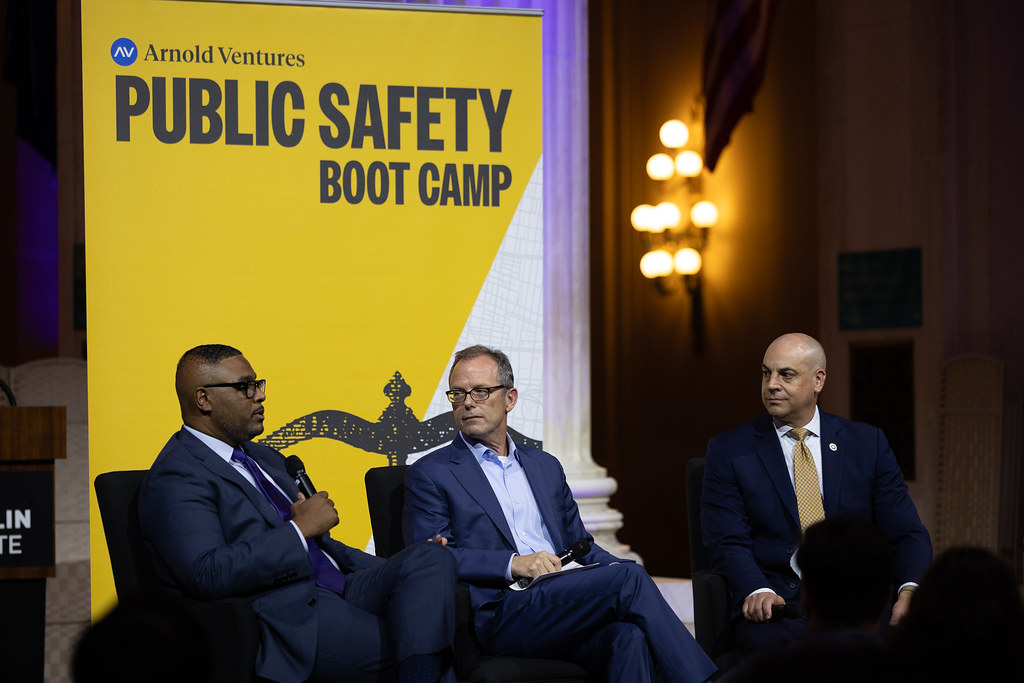
    Lt. Gov. Austin Davis (left) and Attorney General Dave Sunday (right) joined Arnold Ventures’ Kevin Ring at the company’s Public Safety Boot Camp on Thursday.Photo from Lt. Gov Austin Davis staff

    Bipartisan belief

    With state lawmakers consistently unable to perform the basics, like passing a budget on time, it is worth wondering whether Washington’s allergy to bipartisanship has spread to Pennsylvania, which has traditionally been more collegial.

    At a panel discussion last Thursday at the Franklin Institute, however, the spirit of cooperation was thriving. Lt. Gov. Austin Davis and Attorney General Dave Sunday spoke at Arnold Ventures’ Public Safety Boot Camp, which hosted legislators from around the country and both political parties. The two showed a remarkable amount of overlap, both professing support for evidence-based approaches, accountability, and second chances.

    Even better? State and local leaders are already seeing results from this balanced approach: Homicides in Philadelphia are at generational lows, as well as being down across the commonwealth.

  • Will a pedestrian death move Philadelphia police to step up traffic enforcement? | Shackamaxon

    Will a pedestrian death move Philadelphia police to step up traffic enforcement? | Shackamaxon

    This week’s edition of Shackamaxon looks at a crackdown on “smoke shops,” the Philadelphia police’s handling of traffic citations, how Harrisburg deadlines can be leveraged to fund transit, and what City Council forgot to talk about in its first session after returning from summer break.

    Up in smoke?

    An increasingly common frustration has been expressed across Philadelphia over the rise of what are known as “smoke shops,” which have proliferated in the city’s commercial corridors. Ostensibly operating as grocery stores, they are often locations where illegal drugs and drug paraphernalia are sold. They tend to operate late into the night and attract the ire of both residents and other business owners.

    That’s why it was refreshing to see someone make a substantive move to shut them down. State Rep. Amen Brown, whose district includes parts of West Philadelphia and Logan Square, has put together an initiative he’s called Operation Breezy. Working with both city and state law enforcement, and relying on the support of members of the community, Brown’s efforts have already shuttered 13 of the establishments.

    Brown’s approach uses confidential informants, many of whom come from the community itself. He told me that one of the now-closed shops had roughly 40 pounds of marijuana on the premises, the outlets routinely sell out-of-state cigarettes, and that firearms have been seized as part of the efforts. Residents who would like to help can send an email to OperationBreezy@gmail.com or a message to the effort’s Instagram page, @operationbreezy.

    Brown said he’d like to do more to stop the smoke shops, but that the best option requires action at the local level. Rather than enacting a broad-based curfew for all businesses, he’d prefer to target just the smoke shops. He says that might be possible by imposing restrictions on the operating hours of grocery stores that are smaller than 300 square feet. That’s a size below which, officials say, legitimate uses for a storefront become impractical.

    Official inaction

    Philadelphians were rightly outraged at the actions of a police officer who, in August, left a struggling pedestrian lying in the street, where he was later killed in a hit-and-run. Commissioner Kevin J. Bethel said he was “disgusted” by the patrolman’s behavior. City officials announced their intent to fire the officer. That’s the right call, even if the city’s cop-friendly arbitration process leads to 85% of officers getting their jobs back after alleged misconduct.

    Still, I couldn’t help wondering whether this incident is a natural outgrowth of the department’s policies. The Philadelphia police simply do not seem to take enforcing traffic laws seriously enough. Traffic citations have plunged over the last few decades. In the 1990s, officers regularly issued roughly half a million tickets per year. In 2023, about 45,000 tickets were handed out. These days, we celebrate an increase of a few thousand citations, even as overall stops remain at a fraction of the total pedestrian safety experts say is needed. Commissioner Bethel has said that enforcing traffic violations is a lesser priority.

    While many officers blame the city’s Driving Equality Law for this decline, that measure does not prevent officers from enforcing moving violations, which are the most dangerous offenses. Failing to do so is a choice the department has made on its own. The result of this lack of enforcement, traffic safety experts say, has been an increase in reckless and aggressive driving.

    Given that a city controller report called Philadelphia’s streets the most dangerous of any major U.S. city, this lack of prioritization must change. While speed cameras and other forms of automated enforcement have made a difference along high-traffic corridors like Roosevelt Boulevard and Broad Street, they can only enforce certain offenses in certain locations. Reckless driving is an issue almost everywhere.

    It is impossible to know what went through the mind of the officer who left Eugene Beauford in the street. The department has declined to publish his name, let alone make him available for an interview. But perhaps this horrific incident will prompt police brass to rethink the department’s strategy for enforcing traffic laws.

    Skill game shutdown

    Next month, Pennsylvania’s so-called games of skill will need to be unplugged. Oct. 13 marks the last day of the grace period the state Supreme Court gave the General Assembly to devise a taxation and regulatory scheme for the machines, devices that resemble slot machines and which are currently banned under state law. For years, legislators have debated where the machines can operate, and whether they should pay the same tax rate as existing slot machines.

    By pure coincidence, there’s another big deadline approaching: the authorization period for the state-appointed SEPTA prosecutor. I’d like to propose a potential compromise for both issues. Harrisburg should extend the SEPTA prosecutor’s authority by three years, agree to Gov. Josh Shapiro’s proposed shift in sales tax revenue to support public transit, and pay for it by legalizing skill games and taxing them at the same rate as slot machines. They should also pass regulations limiting the placement of the machines and creating penalties for owners who allow children to use them.

    Given District Attorney Larry Krasner’s recent struggles, extending the SEPTA prosecutor should be less politically contentious now than it was in years past. Lawmakers can also point to the significant decline in fare evasion and violent crime on the transit system over the last few years as justification.

    For Philadelphia lawmakers who may be reluctant to place limits on the authority of Krasner, who has been overwhelmingly elected by their constituents three times, that kind of middle ground can provide fiscal peace of mind for SEPTA, which has been subject to financial uncertainty for three years. While Democrats seem to be pinning their hopes for approving more state funding for SEPTA on winning control of the state Senate during this fall’s elections, that is hardly guaranteed. If a deal can be reached ahead of time, it reduces the risk of a collapse. It also does not preclude additional action next year.

    Finally, the need to act on skill games is clear. As it stands, it will be difficult for the commonwealth to shut down every location that houses the machines. We don’t even know how many exist. I am not a fan of these devices, which have a negative impact on the communities that host them. Regulation will make it easier to mitigate that damage and ensure Pennsylvanians see some benefit from the funds that flow through them.

    Council comeback

    After its three-month summer hiatus, City Council is back in session. All eyes on the second floor of City Hall will be trained on how Mayor Cherelle L. Parker will respond to a series of potentially contentious legislative proposals — from Councilmember Jamie Gauthier’s bill to stop burning trash to Councilmember Isaiah Thomas’ efforts to stop at least part of the school closure plan.

    Then there’s the matter of those city officials who deserve additional scrutiny, in particular Krasner and Sheriff Rochelle Bilal. Krasner has been referred for prosecution by a federal judge, while Bilal misled Council during her budget hearing earlier this year.

    City Council should hold investigatory hearings into both officials. Residents deserve better from their leaders than what both Krasner and Bilal have shown.

  • America lost its way after 9/11. We don’t have to stay on the wrong path.

    America lost its way after 9/11. We don’t have to stay on the wrong path.

    On Sept. 11, 1990, President George H.W. Bush gave a speech to a joint session of Congress with his vision for a “New World Order.” He promised that instead of the spheres of influence and deadly competition that had dominated international politics, there would now be a future where “the rule of law supplants the rule of the jungle.”

    For a while, it seemed like this could be true. War and conflict did not end in the 1990s, but peace seemed plausible.

    A United Nations-sanctioned coalition pushed Saddam Hussein out of Kuwait. Israeli and Palestinian leaders signed the Oslo Accords, which promised a shared future of two states for two peoples. Genocidal leaders in Rwanda and Serbia were removed from power. Even the Irish conflict, famously “800 years” old, was ended with the Good Friday Agreement.

    The United States reigned as the world’s sole superpower, and the next strongest militaries and economies mostly belonged to our allies. The Pax Americana seemed to have reached an unassailable zenith.

    Then it all came crashing down.

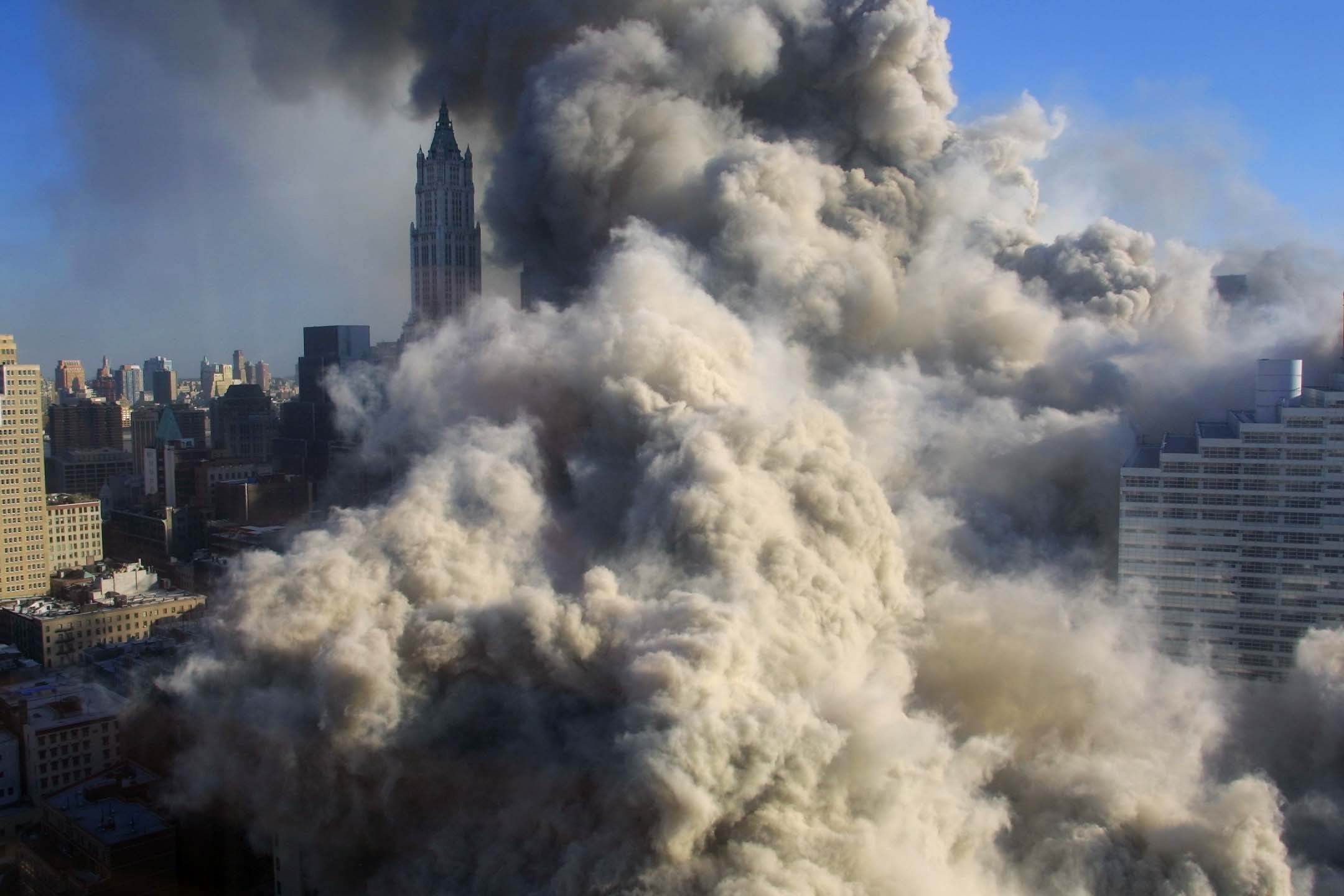
    When the planes hit the World Trade Center towers on Sept. 11, 2001, most of us did not realize it was the first step in the dismantling of the world we knew. I certainly did not. After all, I was only 12 years old.

    My seventh-grade classmates and I initially had no idea what had happened. We knew that our teachers were upset, and we caught a glimpse of maneuvering warships on the faculty lounge TV. The next thing we knew, we were being told to head home. For me, that meant hopping on SEPTA’s 67 bus. My younger brother and I watched news coverage of the devastation from our living room couch.

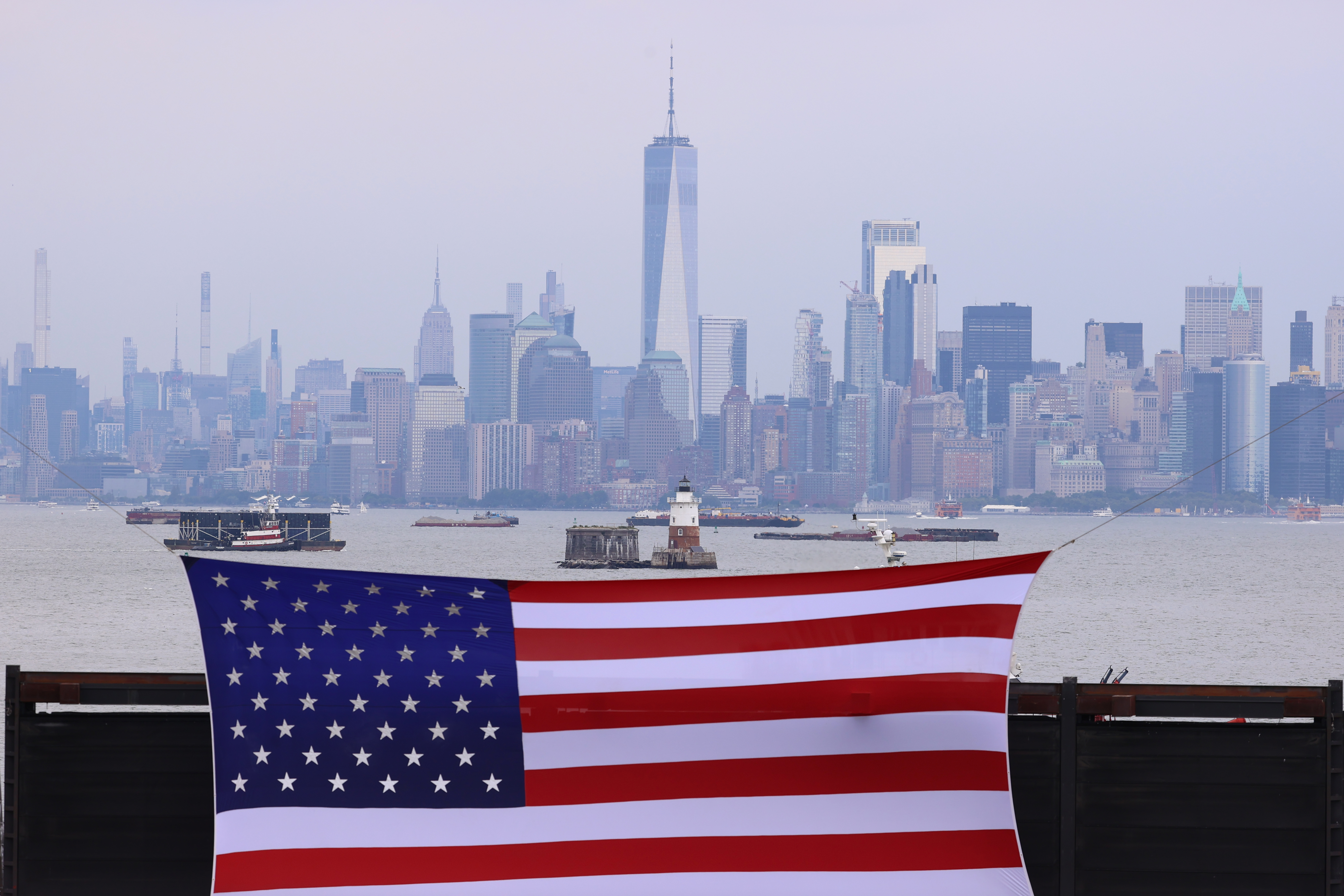
    Smoke rises from the collapse of the World Trade Center buildings, seen from the west and framing the Woolworth Building in the distance, in Manhattan on Sept. 11, 2001.TING-LI WANG

    At first, the attacks seemed to make the country stronger. We heard the inspiring story of the passengers who fought back on United 93, their plane crashing into a Pennsylvania field instead of its intended Washington target. When President George W. Bush threw out the first pitch at Yankee Stadium on Oct. 30 during the World Series, it felt like everyone was cheering him on, Republican or Democrat, Yankees fan or not. When he delivered a strike despite wearing a bulletproof vest under his pullover, it seemed like a promise that everything would get back to normal.

    It never did. Now, 25 years later, Americans overwhelmingly believe the country is on the wrong track, that we’ve strayed from our founding principles, that there is corruption in the federal government, and that the lives of our children may be worse than our own.

    Much of what went wrong can be traced to our initial efforts to avenge the dead.

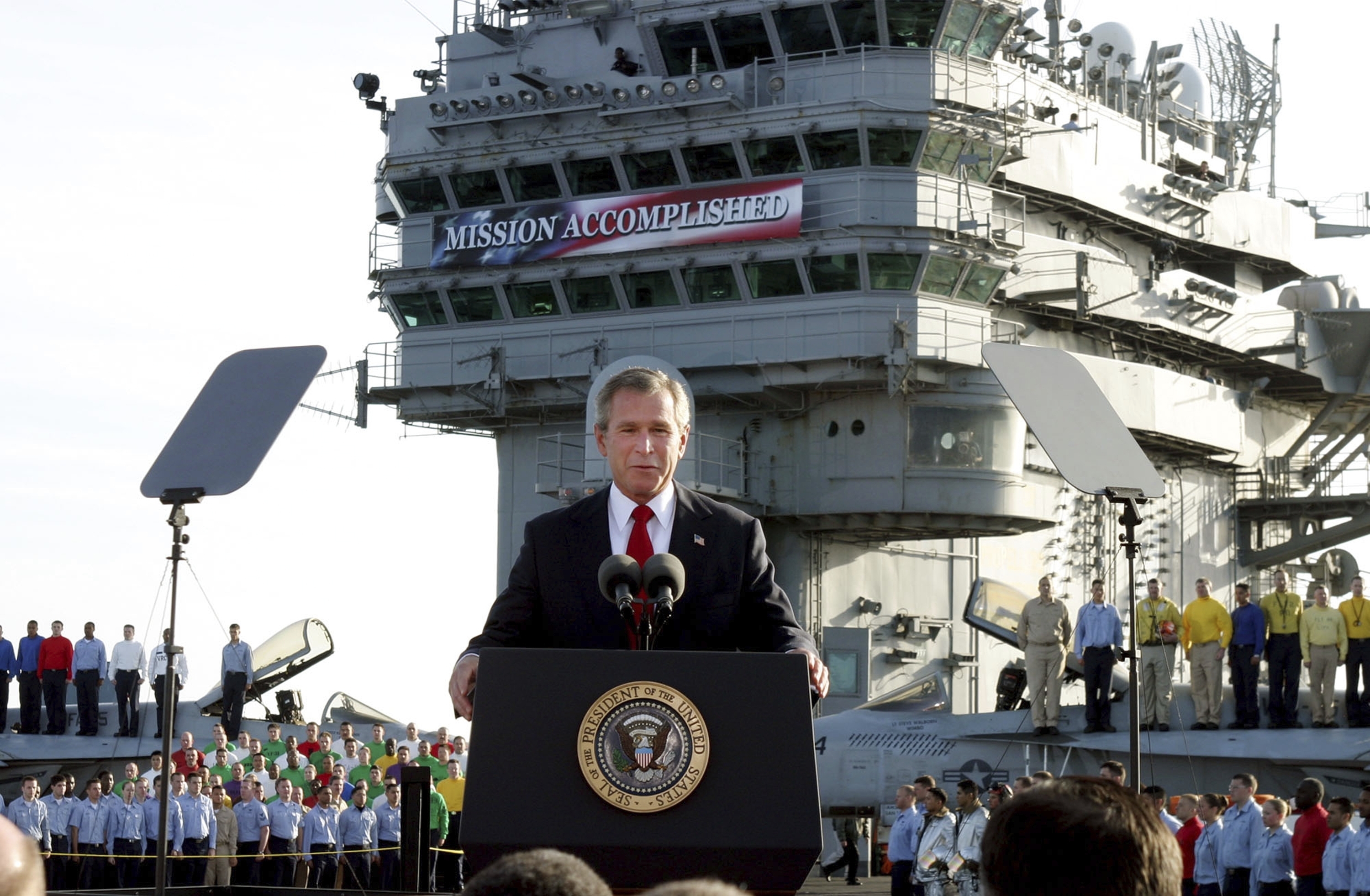
    When the U.S.-led international coalition invaded Afghanistan in October 2001 to destroy al-Qaeda and bring its leader, Osama bin Laden, to justice, it seemed like a moral and strategic necessity. In March 2003, the Bush administration expanded the war on terror to Iraq under dubious claims of the existence of weapons of mass destruction. A year later, as the justification for the war was falling apart, revelations of brutal torture at Abu Ghraib prison in Iraq destroyed what little credibility and international goodwill Bush had left.

    The reaction to 9/11 itself also presaged what was to come. While most Americans rallied to the flag after the attacks, a persistent subculture insisted they were faked in some way. The so-called 9/11 Truth Movement may have been a collection of cranky conspiracy theorists, but they represented a model for where America was heading — a time when people increasingly cannot agree on basic facts and no longer inhabit a shared reality.

    President George W. Bush speaks aboard the aircraft carrier USS Abraham Lincoln off the California coast on May 1, 2003.J. Scott Applewhite

    It isn’t just failures abroad that have fostered this sense of cynicism. In the ’90s, there was a great spirit of optimism about new technologies. The internet was heralded as a way to break down barriers and foster international cooperation. Initially, this also seemed to be true.

    On message boards, once-lonely hobbyists found one another, sharing knowledge about topics as disparate as model trains, hiking, or fashion. Even fierce political opponents like Bill Clinton and Newt Gingrich could agree on letting the internet mostly regulate itself.

    Today, 41% of Americans report having little to no confidence in tech companies. Instead of democratizing access to information, social media has flooded the zone with nonsense. Online ad revenue is reaped by tech companies while content providers fight over the scraps. Many local newspapers, their economic model upended, have either disappeared or been hollowed out. More and more, people are getting their news from short-form video apps like TikTok or Instagram, or from influencers who rarely cite their sources or explore the nuance behind any issue. The public’s distrust of Big Tech has somehow not spread to the figures the companies’ algorithms have pushed to the forefront.

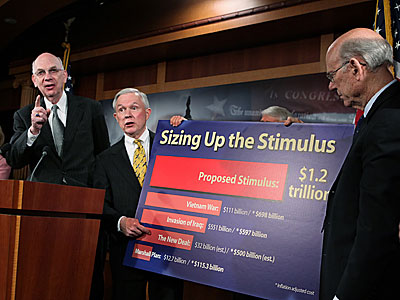
    The 2008 financial crisis also took a toll. Americans have disagreed over just about everything in our history, but the wave of foreclosures, stagnation in wages, and continued affluence for the country’s wealthiest sapped the public’s faith in the American dream. During the Great Depression, some wealthy figures like Charles Schwab and the Vanderbilts saw their fortunes shrink. During the Great Recession, the big banks received a $700 billion bailout, while 10 million ordinary Americans lost their homes.

    Republican senators explain their opposition to President Barack Obama’s financial stimulus package during a news conference at the Capitol in January 2009.

    In the 2000 election, both Democratic candidate Al Gore and Republican George W. Bush were viewed favorably by most of the American electorate. These days, a more divisive politics rules. Supporters of Donald Trump, convinced by the president that the 2020 election was stolen, stormed the U.S. Capitol. While it is true the 2000 election was itself controversial, with lawsuits about recounts in Florida ultimately reaching the U.S. Supreme Court, Gore conceded “for the sake of our unity as a people and the strength of our democracy.” Both Gore and President Bill Clinton attended Bush’s inauguration.

    Today, roughly 60% of Americans disapprove of President Trump, and just as many disapproved of President Joe Biden at the end of his term. Both major political parties are also unpopular, and railing against the party establishment has become a popular tactic in primaries.

    Of course, given the failures of the last 25 years, that establishment deserves to be questioned. The mainstream leaders of both parties share responsibility for the erosion in public confidence. Not only have they failed to anticipate the challenges of the 21st century, but their relentless partisanship has also made crafting sustainable solutions impossible. Nor have they offered new ideas that can compete with pledges to put every American on Medicare or claims that all our problems will disappear if we simply deport enough people.

    That doesn’t mean the next 25 years can’t be better.

    The beautiful thing about government of the people, for the people, and by the people is that we are in control. Just as our predecessors freed themselves from British rule, destroyed the power of slave holders that was corrupting our republic, reined in Gilded Age trusts, defeated fascism, and marched to finally make good on our nation’s stated belief that all men are created equal, those of us charged with the rights and responsibilities of citizenship today can also change our nation for the better. We must.

    Even as the Russian invasion of Ukraine drags toward year five, radical Israeli settlers seize land meant for a Palestinian state, and our nation divides itself over every ginned-up bit of culture war ephemera, we retain the same qualities that made us the world’s hegemon in the first place — ingenuity, openness to risk, and drive.

    Like the brave passengers on United Airlines Flight 93, we must recognize our predicament, find our resolve, and fight to ensure terror doesn’t win.

  • Neighbors struggle against a decade-plus of South Philly sinkholes | Shackamaxon

    Neighbors struggle against a decade-plus of South Philly sinkholes | Shackamaxon

    Welcome to Shackamaxon, a weekly politics column focused on what’s happening at City Hall and in Harrisburg. It is named for the place where the Lenape chiefs would meet to conduct the people’s business, which is now known as Penn Treaty Park.

    This week’s edition covers sinkholes, the embrace of “slopulism,” the ongoing struggle over the future of the Cecil B. Moore Library branch, and the loss of a venerable museum.

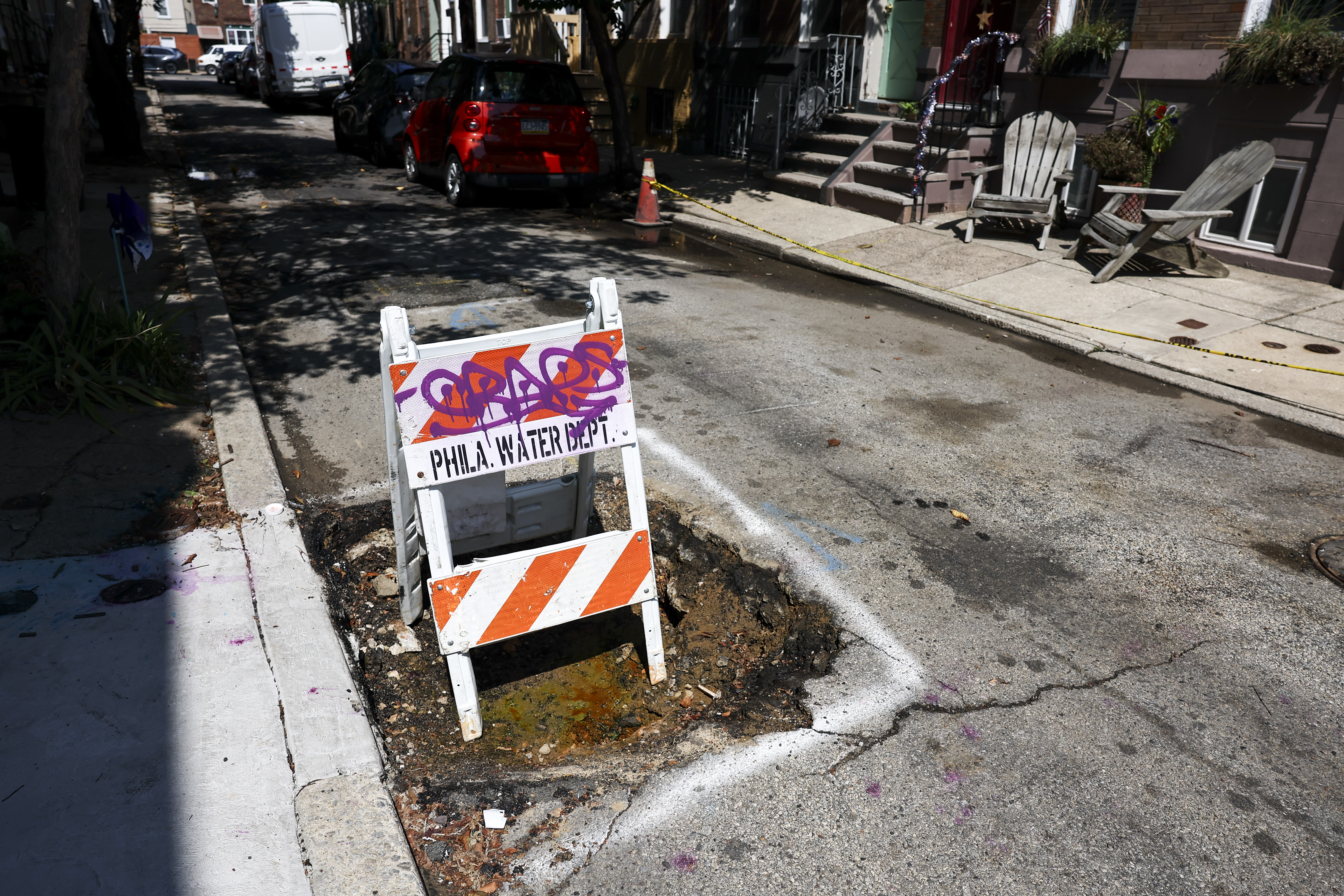
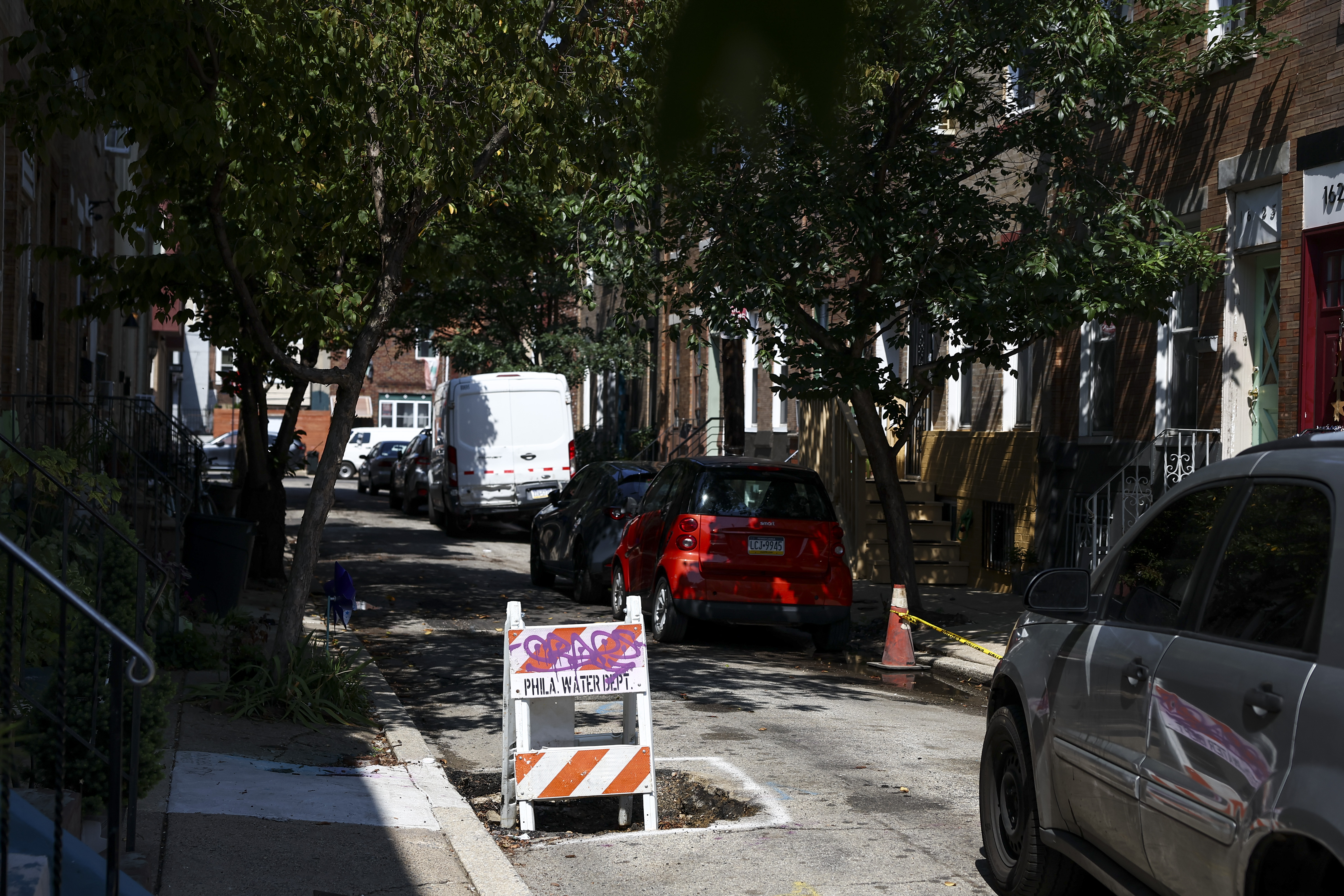
    Signage marks a hole in the road on the 1600 block of South Lawrence Street on Tuesday. Neighbors have been complaining about the street’s integrity for more than a decade.Monica Herndon / Staff Photographer

    Sinkhole street

    How long does it take for a 311 request to be resolved? For residents of the 1600 block of South Lawrence Street, it has been 13 years — and counting. In the meantime, city officials have repeatedly ignored their emails and offered excuses.

    It all began with a 2013 complaint about road instability. According to residents, their block once hosted a factory, which means that when their homes were built and their street was initially paved, it had to be filled in. Their concern is that, over time, this fill may have eroded, leading to the repeated formation of sinkholes and putting their buried utility pipes at risk.

    Given that one of the neighbors who contacted me, Tim Dunn, is a civil engineer, I would say this is a credible worry.

    While the city paid to fix three water laterals after the main broke, the neighbors believe three or four additional laterals were damaged and should have been covered, too. They also report that the laterals the city replaced experienced issues almost immediately. The block is scheduled to be repaved next year, and if underlying problems remain, the effort could be futile.

    You would think that would lead officials at the city’s Streets and Water Departments to investigate. But until this week, that wasn’t the case.

    The neighbors have compiled a timeline, complete with notes and evidence, of their efforts to get the departments to take their concerns seriously. Councilmember Mark Squilla, who represents the street, confirmed their account. Even he had trouble getting emails answered about this situation.

    Out of 36 requests from Squilla or residents for help or information, 19 went unanswered. Adding insult to injury, the neighbors told me the city has repeatedly deployed no parking signs, only to not send anyone to do any work. This was perceived as an intimidation tactic.

    When I reached out to the city to get their side of the story, they said they are now on top of the situation. On Tuesday, after my initial outreach, they finally sent a sewer operations team to investigate exactly what is happening underground.

    Changes in how we get around and how we shop have had an impact on our streets. When these homes were built back in the 1920s, cars were rare in Philadelphia. The most popular model, Ford’s famous Model T, weighed up to 1,500 pounds. People increasingly use SUVs and heavy-duty trucks as their daily rides, putting strain on roads created without them in mind. The total weight rating for a loaded Amazon delivery van can be almost 10,000 pounds. This is part of why Mayor Cherelle L. Parker proposed a “pothole tax” on deliveries.

    More money, however, would not fix what went wrong on South Lawrence Street. If existing communication and coordination issues aren’t resolved, residents will understandably see the pothole tax as yet another cash grab from City Hall.

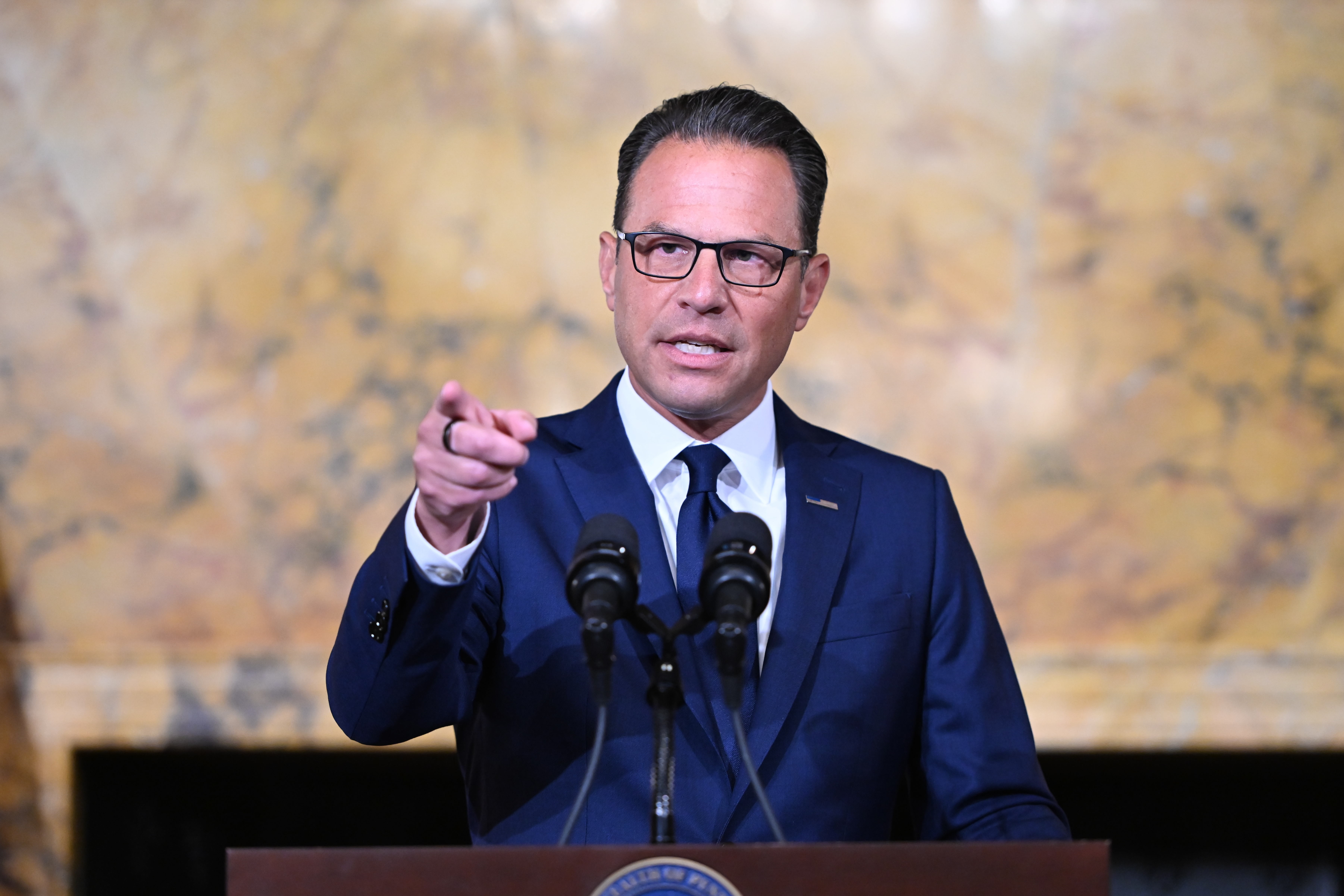
    Pennsylvania Gov. Josh Shapiro speaks during a news conference at the state Capitol, Aug. 18.Marc Levy

    Shapiro’s slopulism

    One of the most frustrating parts of post-pandemic politics is the rise of “slopulism.” Short-form videos make it easy to build support for ideas that pander to our biases but are either not factual or impractical. From inciting claims about voter fraud to the idea that we can “just make transit free,” no one wants to read the boring evidence when there’s a cool, colorful video that tells them what they want to hear.

    Gov. Josh Shapiro, a dedicated performer in the TikTok and Reels sphere, has embraced slopulism before. During his 2022 gubernatorial campaign, he promised to pursue “gas tax rebates,” an idea that would have depleted the state’s reserves and disproportionately sent cash to wealthier households. Mercifully, it doesn’t seem to have come up since he won.

    While Shapiro’s critics will often say that the Ambitious Abingtonian watches the polls like a hawk, he’s mostly avoided relapsing into slopulism as governor. At least, until recently.

    First came his about-face on data centers. Now he’s indicated support for a ban on automatic license plate readers known as Flock cameras.

    There are real concerns about their misuse. Many feel uncomfortable with a private company like Flock Safety playing such a big role in law enforcement, and there have been troubling instances of police officers using the devices to stalk ex-romantic partners. Guardrails must be established.

    At the same time, automatic license plate readers and other cameras have become an essential law enforcement tool. They can help identify stolen cars, track shooters after an incident, find hit-and-run drivers, and ensure detectives get the right perpetrator. While a spokesperson made clear that the governor’s statements were not meant as an endorsement for any particular piece of legislation currently before the General Assembly, Shapiro must ensure whatever restrictions are placed on the technology don’t curtail the important gains in reducing violence and solving crimes.

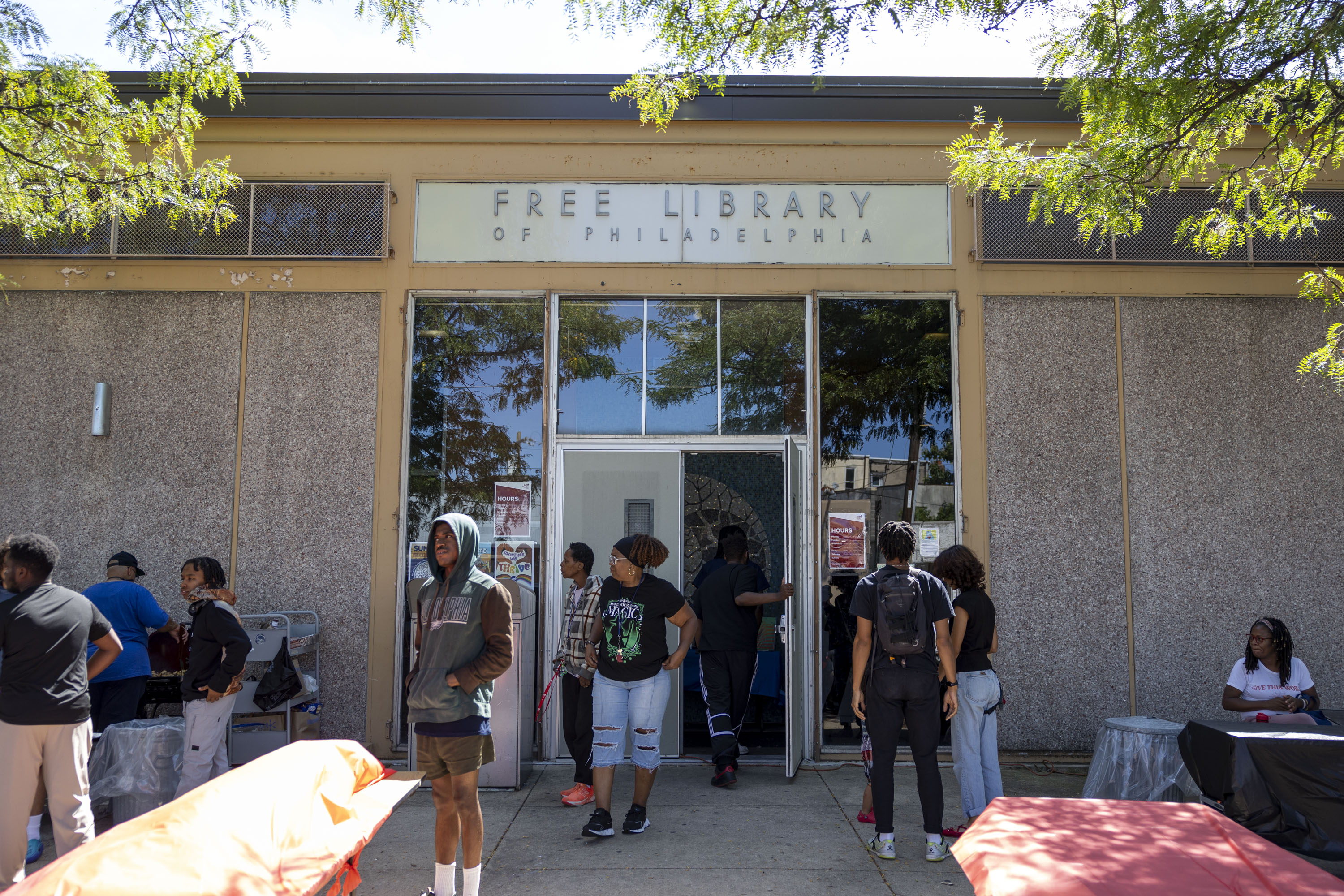
    People in the community come out for a meeting and cookout to discuss the funding and renovations for Cecil B. Moore Library on Aug. 29.Tyger Williams / Staff Photographer

    Limited library

    One politician who can’t be accused of following the polls is Jeffery “Jay” Young, City Council’s quarrelsome contrarian. After years of conversation, Young has agreed to allow renovations at the Cecil B. Moore Library in North Philadelphia to move forward. There’s just one big problem: His plan is only a fraction of what neighbors had asked for.

    Instead of adding a teen space, a private study room, new computers, and other physical improvements for which proponents had raised $8 million, the library will get a bare-bones approach. Young prefers building a new library and has so far been unwilling to reconsider that vision.

    Residents, for their part, are passionate and organized about saving their original plan. Sadly, councilmanic prerogative, the tradition that keeps Council members from second-guessing each other’s decisions, gives neighbors next to no recourse to stop Young.

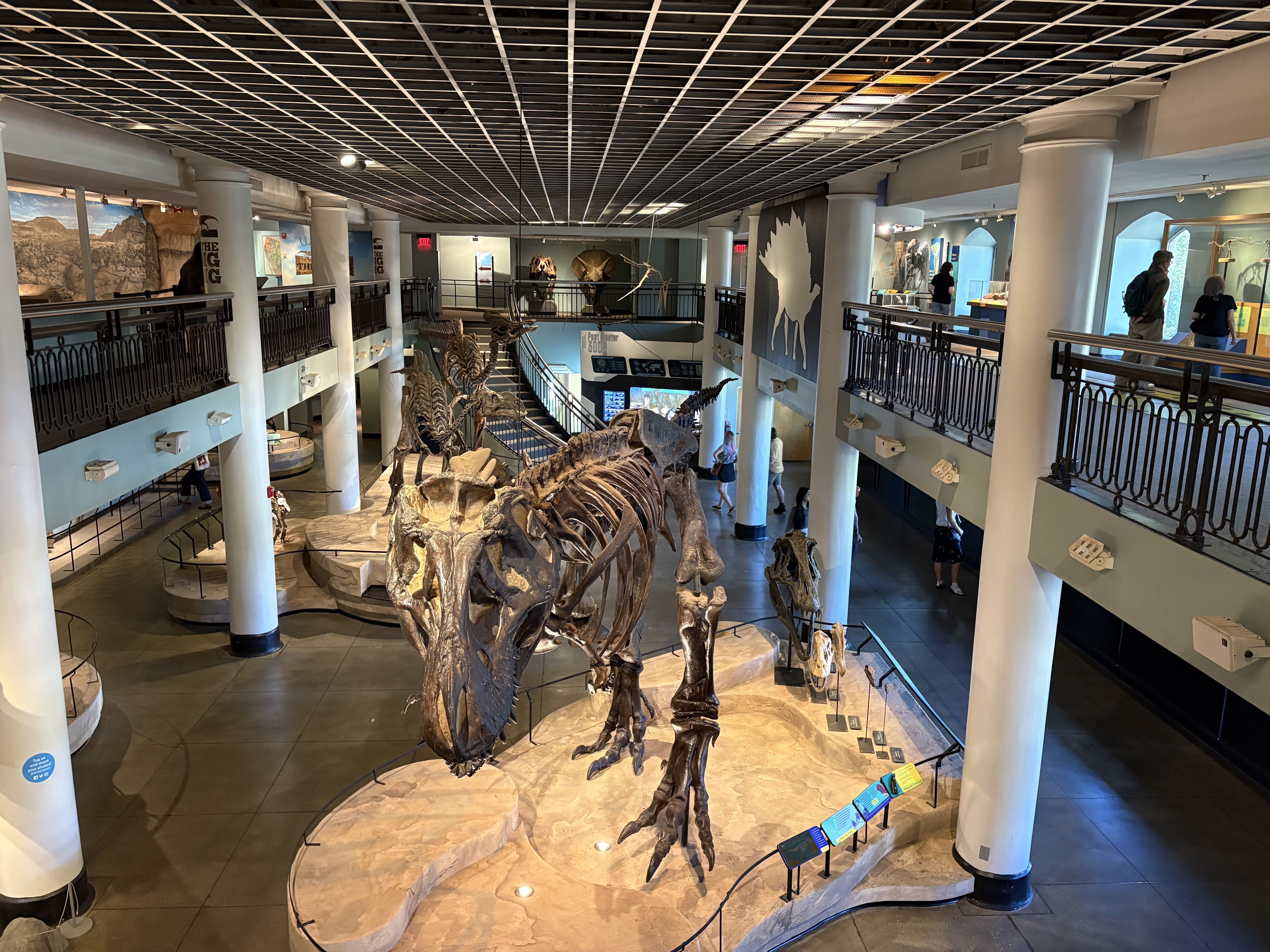
    The Dinosaur Hall at the Academy of Natural Sciences’ museum.Peter Dobrin

    Use it or lose it

    Since 1828, the Academy of Natural Sciences’ museum has offered visitors a glimpse into the planet’s living past. Like many Philadelphians, I have gawked at the massive, reconstructed Tyrannosaurus rex many times. The museum, however, has announced it may go the way of the dinosaurs.

    This set off a firestorm of criticism of both the Academy and Drexel, its partner. How could they do this to us? Why don’t we have more time? Did anyone ask for help?

    Almost in response, longtime civic leader and former Mayor Ed Rendell lieutenant David L. Cohen revealed that he had been trying to save the Academy for some time — and was close to a deal to keep the Academy in the city, even if the museum closes.

    While his efforts are welcome, this closure and the financial struggles at the Philadelphia Museum of Art are a reminder that a critical part of keeping these illustrious institutions around is showing up.

    After all, declining ticket sales and attendance are a running thread in this post-pandemic world. As much as the ornate stone buildings these collections reside in suggest permanence, they can and do close when support is not offered. I’ll include myself in saying that all of us need to appreciate and utilize the tremendous legacy past Philadelphians have left behind before it is gone.

  • The invisible volunteers who help keep democracy running

    The invisible volunteers who help keep democracy running

    They’ve been called the “most important people in running an election” by Secretary of the Commonwealth Al Schmidt, yet even as interest in election security has skyrocketed after Donald Trump’s persistent false claims of voter fraud, their jobs seem to be hidden in plain sight.

    Unlike the grifters and sycophants who help feed the president’s Big Lie and earn millions of social media followers, make frequent TV appearances, and are showered with adulation by the White House, the roughly 45,000 volunteers across Pennsylvania who are essential to ensuring elections happen fairly, smoothly, and efficiently are rarely recognized for the work they do.

    No wonder poll workers are in short supply — in the commonwealth and across the nation. A Brookings Institution report said that about half of all election officials found it either very or somewhat difficult to find enough workers.

    As someone who worked in elections before becoming a journalist, I’m hardly surprised. Running the polling booths is neither glamorous nor convenient. Voting starts promptly at 7 a.m. on Election Day and continues until 8 p.m. With prep and closing work, a shift can take up to 16 hours for some. In Philadelphia, doing your part to help preserve democracy can earn you up to $295. Elsewhere, compensation tends to be much less.

    In Pennsylvania, the job comes with an additional wrinkle. Our poll workers are elected. Across roughly 1,700 divisions in the city of Philadelphia alone, neighbors are asked to choose a judge of elections and inspectors. The judge then appoints a clerk, and either the city commissioners or the election board finds a voting machine operator. If the judge fails to show, the first voters may be asked to hold a curbside election to pick a successor.

    It is all somewhat delightfully antiquated even as it can contribute to Election Day delays.

    Recently, Philadelphia’s election officials sought to stem the shortage of poll workers. City Commissioners Omar Sabir, Seth Bluestein, and Lisa Deeley joined Schmidt to honor some of the city’s poll workers — and ideally recruit others at a rally in the City Hall courtyard, complete with pizza, pretzels, and water ice.

    Student poll worker India Nakai, 17, a Girard College senior, told the audience she was motivated to serve her community and see what happens behind the scenes, even though she isn’t old enough to vote herself yet. At the other end of the spectrum was another kind of senior, honoree Gwendolyn Clay, 74, who has been working the polls for 51 years.

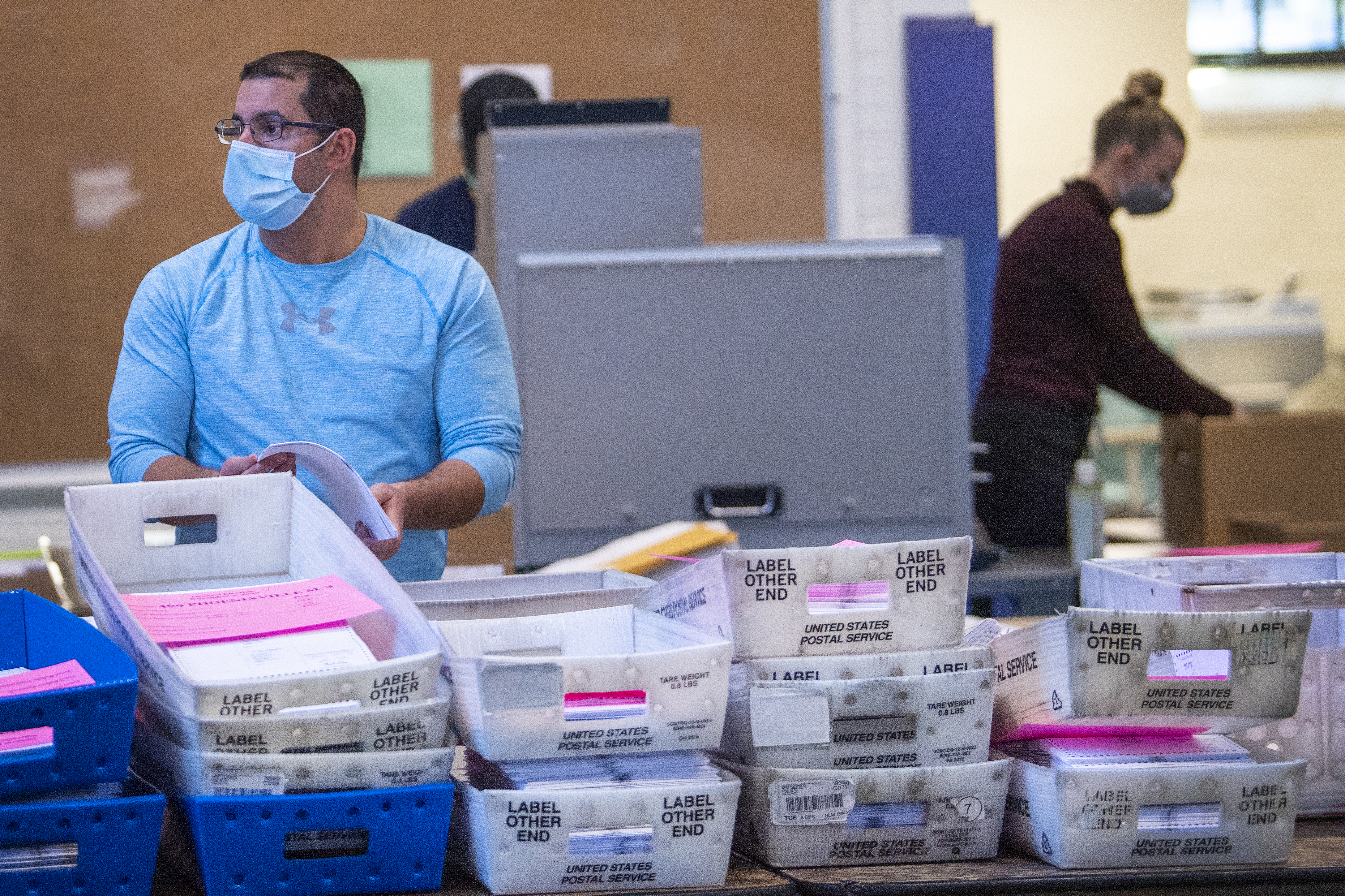
    Their dedication to public service and commitment to helping their neighbors reminded me of the people who signed up to help count ballots during 2020.

    I was there at the Pennsylvania Convention Center, where — despite the pandemic and the threats of armed agitators who believed Trump’s false claims of fraud — scores of Philadelphians showed up every day to help tally the unprecedented flood of mail-in ballots.

    Vote counters zealously followed the law, erring on the side of strict interpretation and removing ballots for even minor and inconsequential errors like a missing date or an absent secrecy envelope.

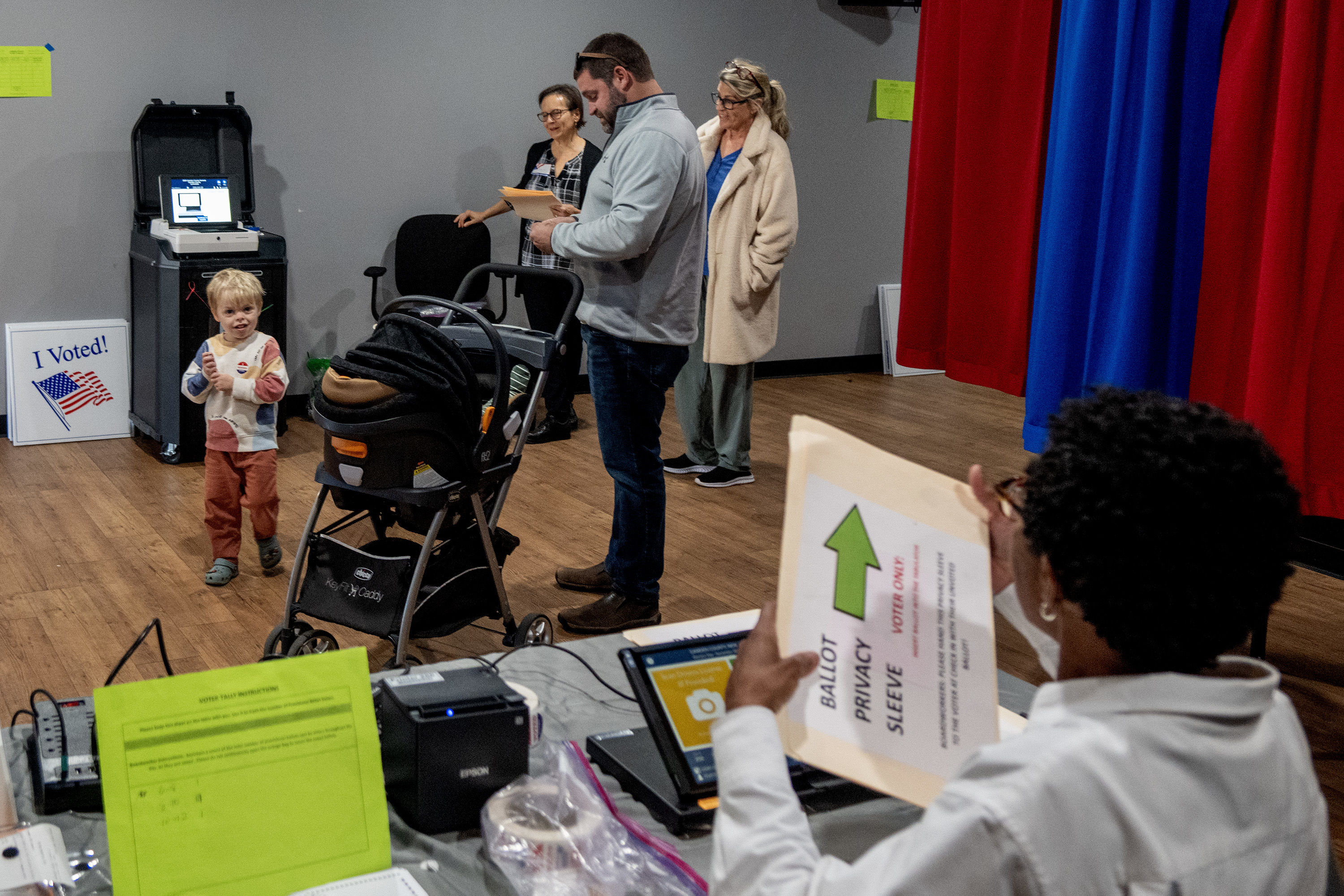
    Poll worker Janice Masud-Paul (seated) speaks with 4-year-old Weston after his father, Bob Comfort, voted in the Erlton Fire House on Route 70 in Cherry Hill on Election Day last year.Tom Gralish / Staff Photographer

    Elections, and democracy itself, depend on this kind of selfless dedication.

    Unfortunately, people like Clay and Nakai, who are willing to do essential but usually thankless work, are becoming rarer. And it’s not just staffing the polls that has seen recruitment challenges.

    Service organizations like the Elks, Kiwanis, and Rotarians once built and maintained parks and memorials, but are now in the midst of rapid decline. Veterans from the wars in Iraq and Afghanistan are less likely to join VFW or American Legion clubs, and more and more Americans are spending their days alone.

    Traditional, neighborhood-based churches have been supplanted by regional megachurches, with paid full-time staff replacing the volunteers and part-timers who once taught Sunday school and led worship.

    Across society, genuine connection is being eroded. It has been replaced by communities of outrage.

    The election-denying hordes are just one facet of this phenomenon. Instead of toiling away for hours in service of their fellow citizens, members of an outrage community must simply “like,” “reply,” or “repost” sentiments that align with their own half-baked suspicions. The actual factual record rarely matters, replaced by the wisdom of the algorithmic mob.

    Communities of outrage now exist for nearly every major facet of life, and every national news story. They allow participants to live in a world reconstructed to fit their belief system, with all the inconvenient facts smoothed away.

    School shootings like Sandy Hook are dismissed as false flags. Disappointing election results are attributed to fraud. People across the ideological spectrum increasingly believe antisemitic conspiracy theories, which blame every complex societal problem on Jewish people. Climate change is either denied or blamed solely on corporations, with no acknowledgment of who is buying all the gas, using artificial intelligence, or purchasing legions of plastic junk to fill our homes.

    Collective action to fix societal woes becomes impossible when individuals can no longer agree on what’s happening in the first place. As the internet has become a haven for everyone’s petty grievances, a society built on online outrage is a miserable one. At the turn of the century, roughly 70% of Americans reported being satisfied with the direction of the country. Today, that number sits at 25%.

    It is up to us as individuals to choose differently.

    Outrage artists will continue to peddle lies as long as we are willing to click on them. Outrage communities will keep growing as long as real communities continue to shrink. Filling a vacant seat on an election board won’t fix this problem overnight, but it is a step in the right direction.

    The more we strive to follow the example of service-minded people like Nakai and Clay, the closer we’ll be to creating a society we can be proud of.

  • The sheriff’s office doesn’t need a babysitter; it needs to be abolished | Shackamaxon

    The sheriff’s office doesn’t need a babysitter; it needs to be abolished | Shackamaxon

    This week’s edition of Shackamaxon covers data centers, property assessments, and more woes at the Philadelphia Sheriff’s Office.

    Jason Kelce with Liquid Death mascot Murder Man in an ad for the canned water and Garage Beer.Garage Beer

    Sports data center

    Former Eagles offensive lineman Jason Kelce seems to be more omnipresent in retirement than he was during his career. Most recently, he filmed a commercial for Garage Beer and Liquid Death that asked Americans to send him their urine to supply data centers.

    While conjuring a negative image of yellow liquid in a cup is probably an unwise strategy for someone who co-owns a light beer company, Kelce’s commercial had another major problem — data centers don’t actually use as much water as public perception suggests.

    In fact, the biggest threat to U.S. water supplies is something far more mundane: alfalfa farming.

    Across the arid Western states, farmers are using vast amounts of water to irrigate their fields, which are then used to feed cows for the beef industry. A single acre of alfalfa uses 1.6 million to 2.5 million gallons of water. In Utah, feed farming uses over half the state’s water supply. Meanwhile, the data centers themselves increasingly rely on closed-loop systems. The water used as coolant gets purified and reused, reducing their own need.

    The confusion over water use is emblematic of the general debate over the centers, which is rife with hard-to-vet claims. And shifting public opinion has left politicians in both parties flat-footed and scrambling to react.

    Gov. Josh Shapiro, the ever-Ambitious Abingtonian, issued his own response to the situation. Much of what Shapiro said is reasonable. He wants tech companies to pay for their own power and contribute to community benefits agreements, and to respect the Pennsylvania Constitution’s guarantee of clean air and pure water. Some of it is less sensible, specifically his commitment to local control.

    Local control sounds great in theory: Why shouldn’t communities have the final say over how they are developed? In practice, however, it is shortsighted. There are two reasons for this.

    One, the impact of data centers is regional, not local. If opponents are correct about the impact on water and electricity bills, this impact will exist no matter where the centers operate. Given the PJM grid Pennsylvanians rely on spans multiple states, there is no plausible pathway for local communities to insulate themselves from rising energy demand by blocking data center proposals.

    Two, not every community can afford to say no. Take the bankrupt city of Chester, for example. From its efforts to sell the Chester Water Authority to its role as host for the Reworld Trash Incinerator, financial considerations already play a big role in that city’s policymaking. By handing control to local authorities, the governor is ensuring cities like Chester will disproportionately play host to data centers.

    For those who believe they will have a strong negative impact on quality of life, how is that possibly fair?

    Instead, what is needed is federal, regional, or at least statewide coordination.

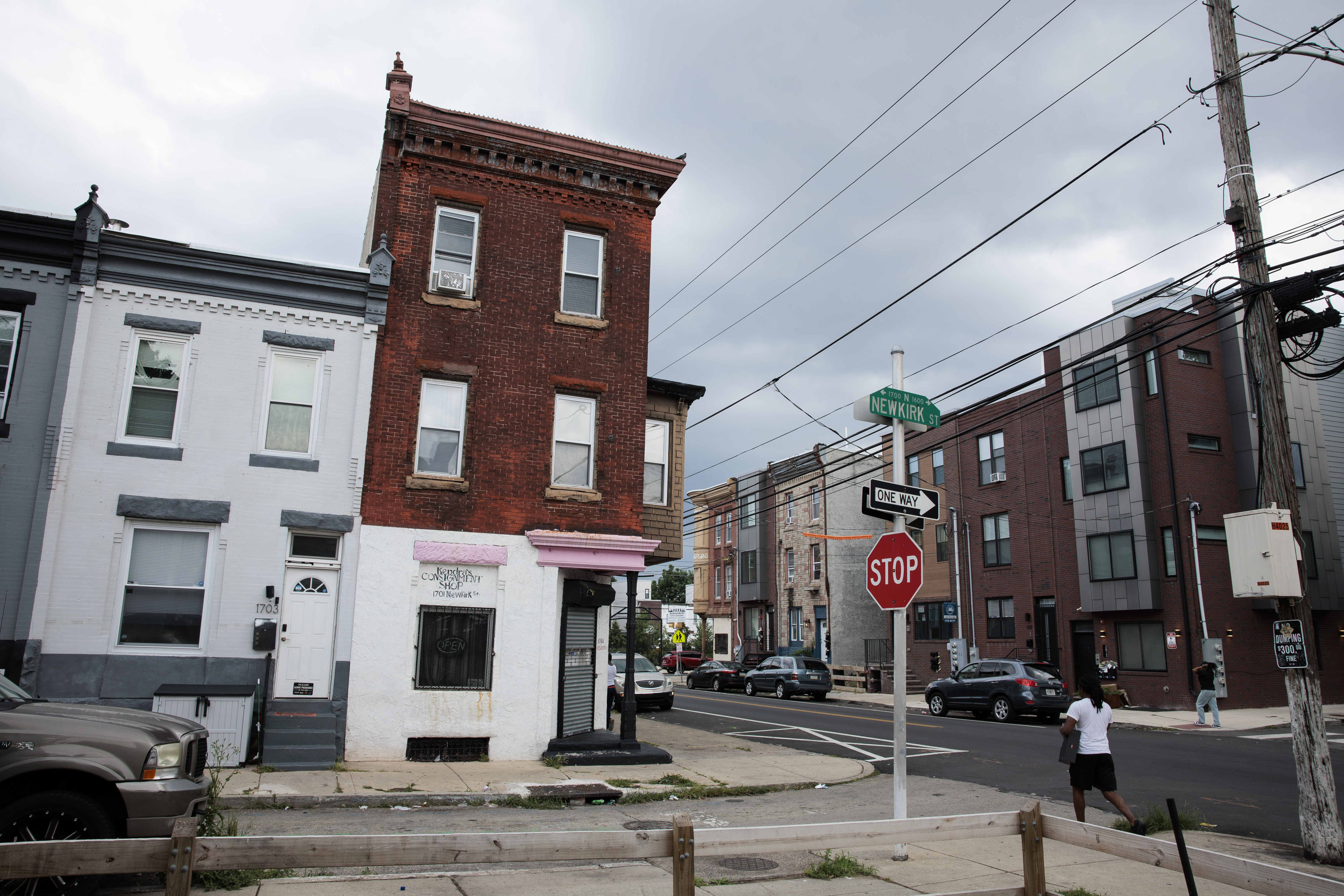
    The 1700 block of North Newkirk Street on Aug. 20. On this block in Strawberry Mansion, some homeowners saw their property assessments double.Monica Herndon / Staff Photographer

    Fair value

    Over in Allegheny County, home to Pittsburgh and many of its suburbs, the courts have ordered local officials to begin a full property reassessment, which must be completed by 2032. Pennsylvania is unique in not requiring regular reassessment.

    Pittsburgh’s values were last set in 2012, but more than a third of the state’s counties haven’t been reassessed since the 20th century. This leads to wildly out-of-whack and unfair tax bills for some residents.

    Of course, Philadelphians can tell you that regular reassessment is not a panacea for discontent. The city’s most recent valuations have set off a firestorm of consternation, especially given how many lower-income areas saw big increases. It doesn’t help matters that the neighborhoods Cherelle L. Parker used to represent on City Council, and powered her election as mayor, saw some of the smallest boosts in valuation.

    As tempting a story as the mayor favoring her core supporters while squeezing the city’s poorest neighborhoods may be, that is not an accurate assessment.

    Given the massive decrease in shootings and consistent efforts to clean and green the city, it is not surprising to see increased demand for neighborhoods like Kensington, Grays Ferry, and Fairhill. While there is still a long way to go on public safety, higher valuations are a sign of progress.

    It also should remind Council members that their theory that development drives property appreciation is faulty. Many of the neighborhoods with higher appreciation have seen little to no new development. In Northern Liberties/Fishtown, one of the city’s hot spots for new construction, values increased by just 1.7%.

    Additionally, the city has a powerful tool for protecting low-income homeowners: the homestead exemption. While the city’s stated property tax rate is 0.013998, owner-occupants pay a much lower rate. For a home valued at the city’s median of $260,000, the total tax bill is $2,239.68, or 0.008614. In Fairhill, where the median home value is $80,000, the homestead exemption eliminates the total tax liability for many residents. Boosting the exemption from $100,000 to $110,000 or $120,000 would ensure more low-income homeowners are protected from rising tax bills.

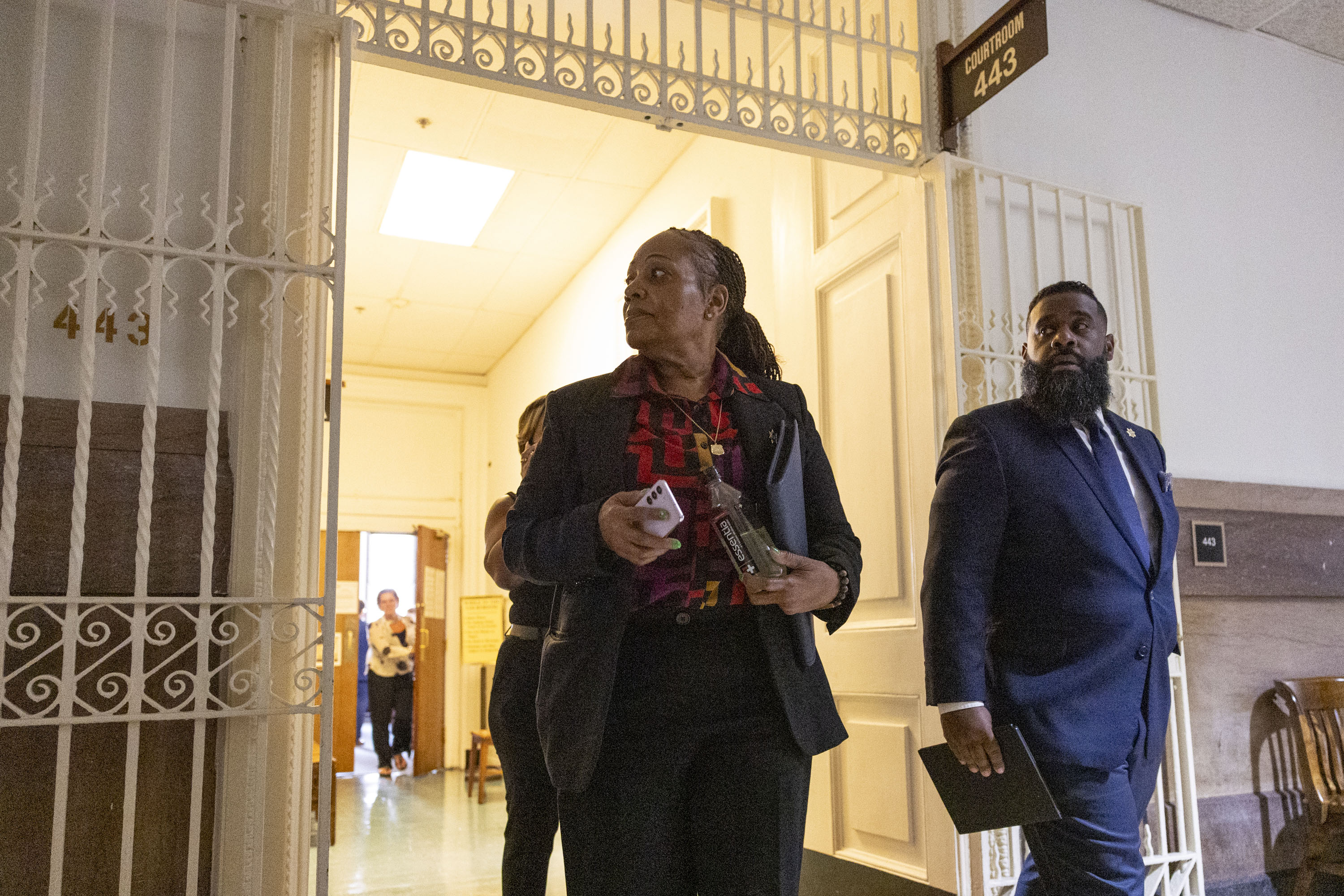
    Sheriff Rochelle Bilal is seen exiting a courtroom at City Hall on Wednesday.Tyger Williams / Staff Photographer

    Bilal’s babysitter

    Mayor Parker wouldn’t do it. City Council wouldn’t, either. Accountability for the Philadelphia Sheriff’s Office instead came from Common Pleas Court Judge Paula A. Patrick.

    After listening to a list of excuses and promises, it was clear Patrick had her fill of incompetence. The beleaguered department, which had been ordered to produce a specific set of documents months ago, suddenly released thousands of pages the night before the hearing.

    Instead of putting officials before the court with direct knowledge of why a backlog in processing property deeds began, Sheriff Rochelle Bilal instead sent Steven Wakefield, a deputy undersheriff who was hired just two months ago. Wakefield was tasked with testifying about past events he was not privy to, despite repeated warnings from the judge.

    As for Bilal herself, she claims to have “limited personal knowledge of the underlying facts.”

    Issuing deeds is one of the core functions of her job, but apparently the sheriff had no idea what was going on. Instead, Wakefield tried to scapegoat a former employee named Melissa Simpson, who had apparently been handling the entire process on her own without oversight from anyone.

    This testimony led to an agreement in which Bilal will have to identify someone to oversee deed sales for six months. A babysitter, essentially.

    While it is good to see someone holding the sheriff accountable for once, a temporary babysitter is only a partial solution. The office should be abolished.

    Sadly, that seems unlikely. Bilal may struggle to perform her day job, but she has thrived at building up political allies. She has been invited to news conferences by District Attorney Larry Krasner, remains a political player after her years running the Guardian Civic League, and faces next to no criticism from City Council. She was even honored by the Phillies as a “hometown hero.”

    Troublingly, Bilal does not even seem to have an opponent in next year’s elections, despite the continued public mismanagement of her office. That, at least, should change.

    Perhaps the Ambitious Abingtonian can find a Perspicacious Philadelphian willing to take on the challenge of replacing Bilal.

  • Democrat’s special election win in Western Pa. paints a dire midterm picture for GOP candidates | Shackamaxon

    This week’s edition of Shackamaxon covers SEPTA’s New Bus Network, an upset victory in Western Pennsylvania, and Center City’s creepy clown.

    A sign with a “Frequent Red” designation is posted at a South Philadelphia bus stop on Thursday. Some SEPTA bus routes are changing Aug. 23 with the launch of the New Bus Network program.Tom Gralish / Staff Photographer

    Quiet revolution

    Philadelphia has changed over the years, yet the city’s bus lines have mostly remained the same. Some of them are even based on routes that were once traversed by horse-drawn streetcars.

    The dated nature of these routes has started to take a toll. In the 2010s, bus ridership in Philadelphia declined. In fall 2014, Philadelphians took an average of 505,004 bus trips each weekday. By fall 2019, before any pandemic-induced declines, that number had fallen to 436,109. This made providing bus service less financially viable.

    In 2016, each bus trip cost SEPTA $3.44. With fares set at $2.25, riders paid most of the costs of service. Today, the fare is $2.90, but each bus trip costs SEPTA $6.90 — which is an improvement over the last few years, when costs have ranged from $7.19 to $11.32. Still, each ride is now largely subsidized by taxpayers. Given political realities and SEPTA’s deep capital needs, that’s not sustainable.

    This meant that it was time for some changes — never an easy task for Philadelphians.

    Because SEPTA’s fiscal sponsors were unwilling to invest more money in bus service, SEPTA was tasked with finding more riders without increasing the number of buses, bus operators, or bus depots. This meant cuts needed to be made to facilitate investments elsewhere while ensuring there were no disparate impacts on lower-income communities.

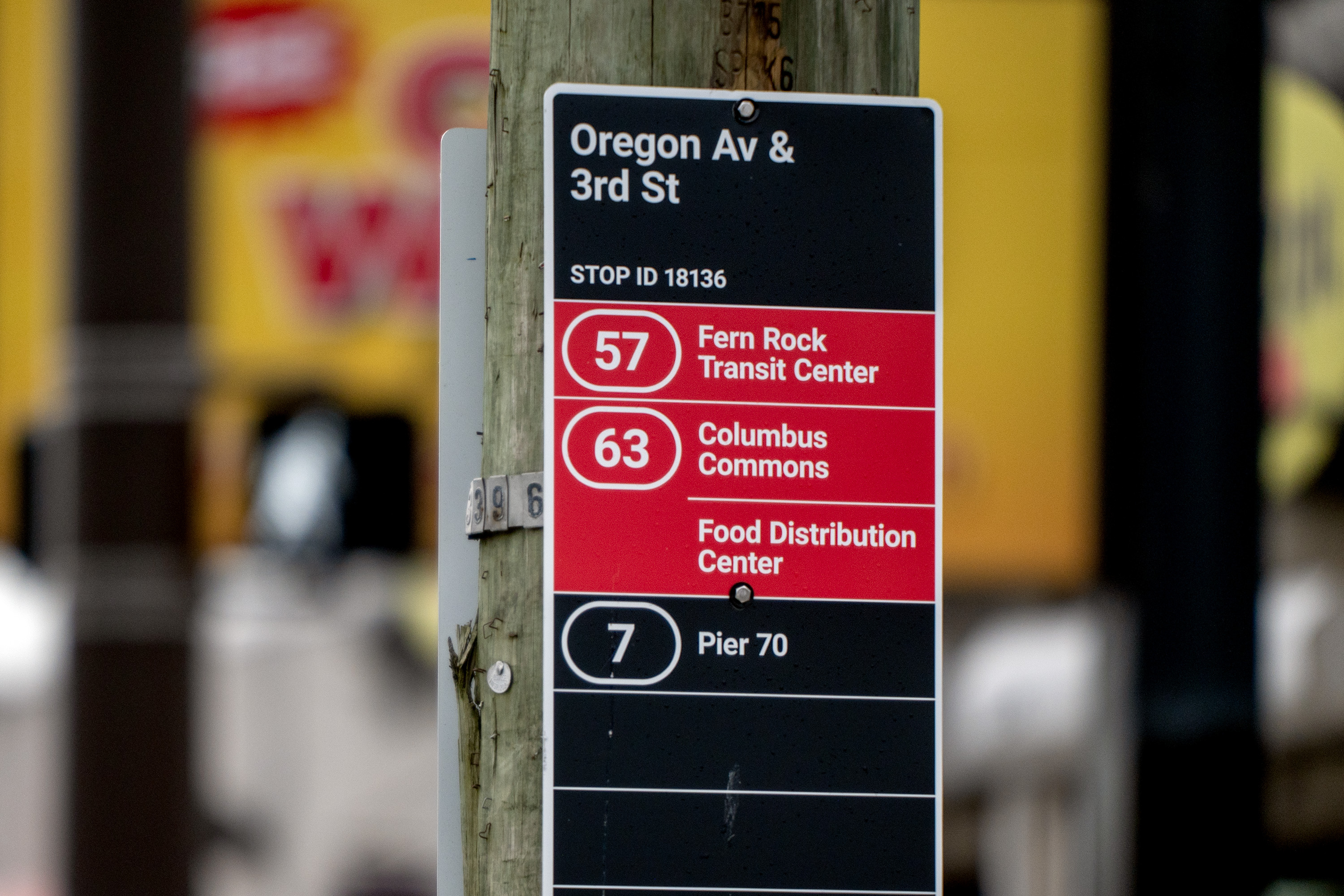
    On Monday, those changes will begin to take effect. The new Routes 72 and 76 will debut, providing crucial crosstown service. The 35, 47M, 62, 78, 89, and 106 will be discontinued.

    Although I sympathize with anyone who is losing their preferred bus route, these choices were not made without justification. In the case of the 47M and 89, some at SEPTA have been seeking their cancellation for ages.

    The 47M exists to distinguish the route from the regular 47, which travels down Seventh and Eighth Streets rather than Ninth. While the Ninth Street Market is an important destination, double-parked trucks making deliveries, double-parked customers picking up orders, and food stalls crowding the streetscape all make staying on time a difficult proposition. As for the 89 — which loops around parts of Juniata, Port Richmond, South Kensington, and Harrowgate — it takes nearly an hour to complete a route that takes 12 minutes on the El.

    These changes, to many riders, feel like cuts. This is an understandable response. In fact, SEPTA seems to have dropped the more ambitious-sounding Bus Revolution moniker in favor of the blander New Bus Network in response.

    But unlike last fall’s reductions over budget concerns, there won’t be fewer buses overall. The resources formerly used by the canceled routes will shift elsewhere. Importantly, frequency will increase across many routes. Including the regular 47. More and more transit experts are advising agencies to prioritize frequency and reliability in order to grow ridership.

    There will undoubtedly be some hiccups, despite SEPTA’s extensive attempts at communicating these changes. But whatever name you use, when it comes to the long-term health of the system, change is a step in the right direction.

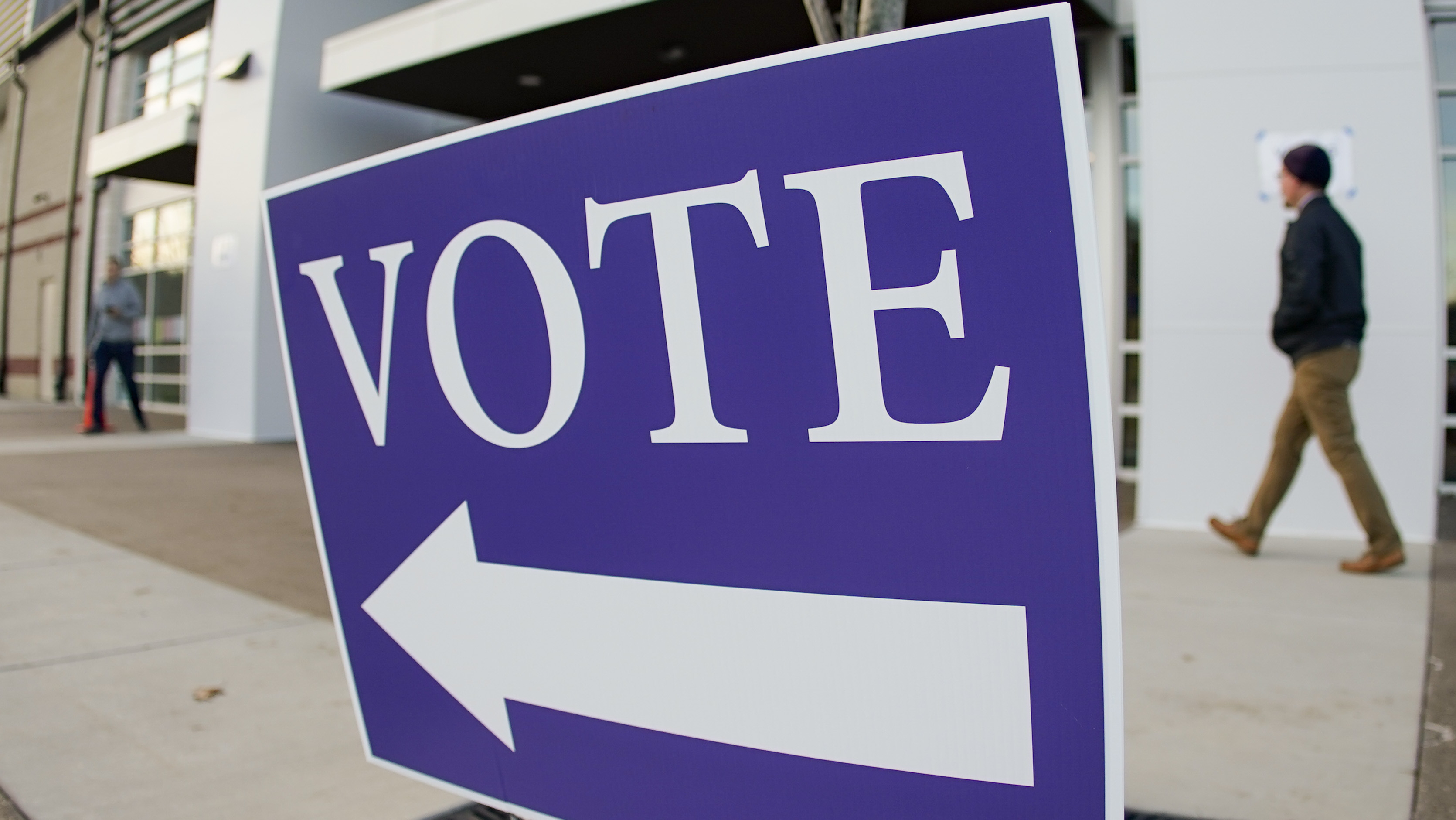
    Voters walk past a sign pointing them to the polling location in Cranberry Township, Pa. Democrat Brandon Dukes won Tuesday’s special election in a district Donald Trump won by 18 points in 2024.Keith Srakocic

    Blue Cranberry

    Pennsylvania’s 12th Legislative District, which includes Cranberry Township, used to be represented by Daryl Metcalfe. The commonwealth’s most infamous right-wing lawmaker once invited a white supremacist to testify at a legislative hearing, made bizarre homophobic remarks to a fellow lawmaker, and blocked dozens of bills for no reason other than their sponsor.

    After this week’s special election, it appears the Butler County district, which voted for Donald Trump by 18 points, will now be represented by a Democrat.

    While provisional ballots have yet to be counted, Democratic candidate Brandon Dukes currently holds an 88-vote lead over Republican Scott Timko. The two will face off again in November.

    For House Democrats, this win represents some desperately needed breathing room. While a small cohort of Republicans, many of them representing Southeastern Pennsylvania, have occasionally voted with the Democrats, the one-vote majority they’ve held for most of the last four years makes any defection costly.

    For Republicans, it should be taken as a warning sign. Right now, four congressional races are expected to be competitive, along with five races in the Pennsylvania Senate. If Democrats are overcoming 18-point margins, then Republicans may be vulnerable in more districts than anyone expected.

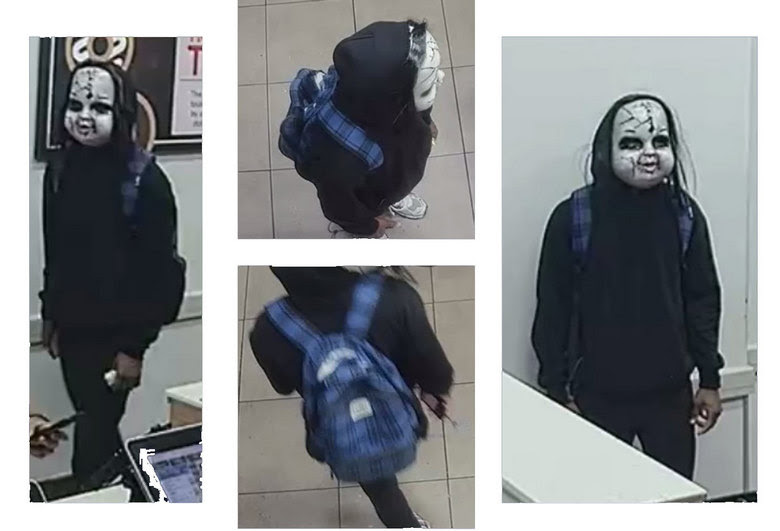
    Police are searching for a man in a “Chucky” style horror mask who is harassing Center City pedestrians.Philadelphia Police Department

    Clown time is over

    No matter how Philadelphia changes, the city seems unable to shake its tradition of men behaving bizarrely in public. From the “Swiss cheese” guy to Pukemon, and now a masked clown creeper.

    This time around, however, the city has found a champion who faced the danger and won.

    Jameka Wilson was on her way to SoulCycle early Wednesday morning near City Hall when she noticed a man wearing a Chucky doll-style horror mask stalking another woman, whom she tried to warn. As she told Good Day Philadelphia, when the man later approached her, laughing menacingly, Wilson stood her ground.

    She said she remained calm, turned around to face the man, squared up, and then landed a high kick directly to his chest. She even demonstrated her technique on Fox29 anchor Mike Jerrick, who volunteered for the task. Wilson advised other people who are concerned about the figure to avoid headphones and stay alert as they walk around.

    Wilson’s actions, and wise advice, have made her a genuine civic hero. Hopefully the Phillies and Sixers will soon come calling so she can throw out the first pitch, ring the bell, and get some love from grateful Philadelphians.

  • Data centers are good business but bad politics. Josh Shapiro tries to thread the needle. | Shackamaxon

    In this week’s Shackamaxon, the race for City Council kicks off, SEPTA police officers step in front of the cameras, and a Big Tech reckoning comes for the Ambitious Abingtonian.

    Councilmember Jeffery “Jay” Young Jr. during the Barber’s Hall community legacy celebration on Aug. 1.Yong Kim / Staff Photographer

    Contrarian challenge

    In political circles, the legislative lineage of Philadelphia’s 5th Council District is one of the city’s most esteemed and iconic. The first person to represent the residents of the 5th in City Council was Raymond Pace Alexander, the civil rights leader who was later appointed as the first African American judge on the Court of Common Pleas. The seat has also been held by Cecil B. Moore, Ethel Allen, and John Street. Few other districts can boast such an impressive list of luminaries.

    Today, its occupant is someone very different, Council’s quarrelsome contrarian, Jeffery “Jay” Young Jr.

    Of course, there’s nothing wrong with “good trouble” or sticking out from the crowd. Moore himself was famously pugnacious, with the former Marine once quoted as saying that “The imported Gandhi philosophy of nonviolence that still exists in the South will not be accepted in Philadelphia, where we believe in self-help and self-defense.” Allen was also a maverick, styling herself as a “B.F.R. — a Black, female Republican, an entity as rare as a Black elephant and just as smart.”

    Moore and Allen, however, were quarrelsome on behalf of the people they represented, and contrarians at a time when Black Philadelphians were mostly excluded from the halls of power.

    Moore successfully desegregated Girard College, paving the way for Young himself to attend decades later.

    Allen broke barriers, too, becoming the first Black woman to hold a seat on City Council, and served the community directly as a physician.

    Young, however, starts fights that help nobody. Worse, no one seems to understand why he’s fighting in the first place.

    From delaying repairs at the Cecil B. Moore Library to blocking popular housing proposals, Young’s actions frequently bring him in conflict, rather than concert, with the community he was elected to represent.

    It is unsurprising, then, to see that he’s already attracted a declared challenger for his seat, months before election season kicks off in earnest.

    Jalon Alexander has a big advantage over the opponents Young (almost) faced in the past: He’s managed to successfully get onto the ballot before, during the 2023 City Council at-large election.

    While he brings his own ideas to the table, Alexander is also clearly running in opposition to Young’s choices. The cybersecurity attorney grew up in Strawberry Mansion, and still lives there, but is running a campaign built to find support across the district’s geographic and political spectrum.

    Kellan White, at this point a potential candidate, presents another strong alternative. White managed Rebecca Rhynhart’s 2023 mayoral campaign, which was successful across much of the 5th District. He has a deep knowledge of city politics and policy, and a Rolodex of contacts that any political journalist would be jealous of. Unlike Young, both Alexander and White are willing to answer the phone to talk to reporters, community leaders, and their constituents.

    At this point, even if a dozen candidates run against him and split the opposition vote, Young may still face an uphill battle.

    When I’ve criticized other Council members, I always get calls or emails from constituents who defend their choices. In nearly three years writing about Young, not a single person has offered a defense.

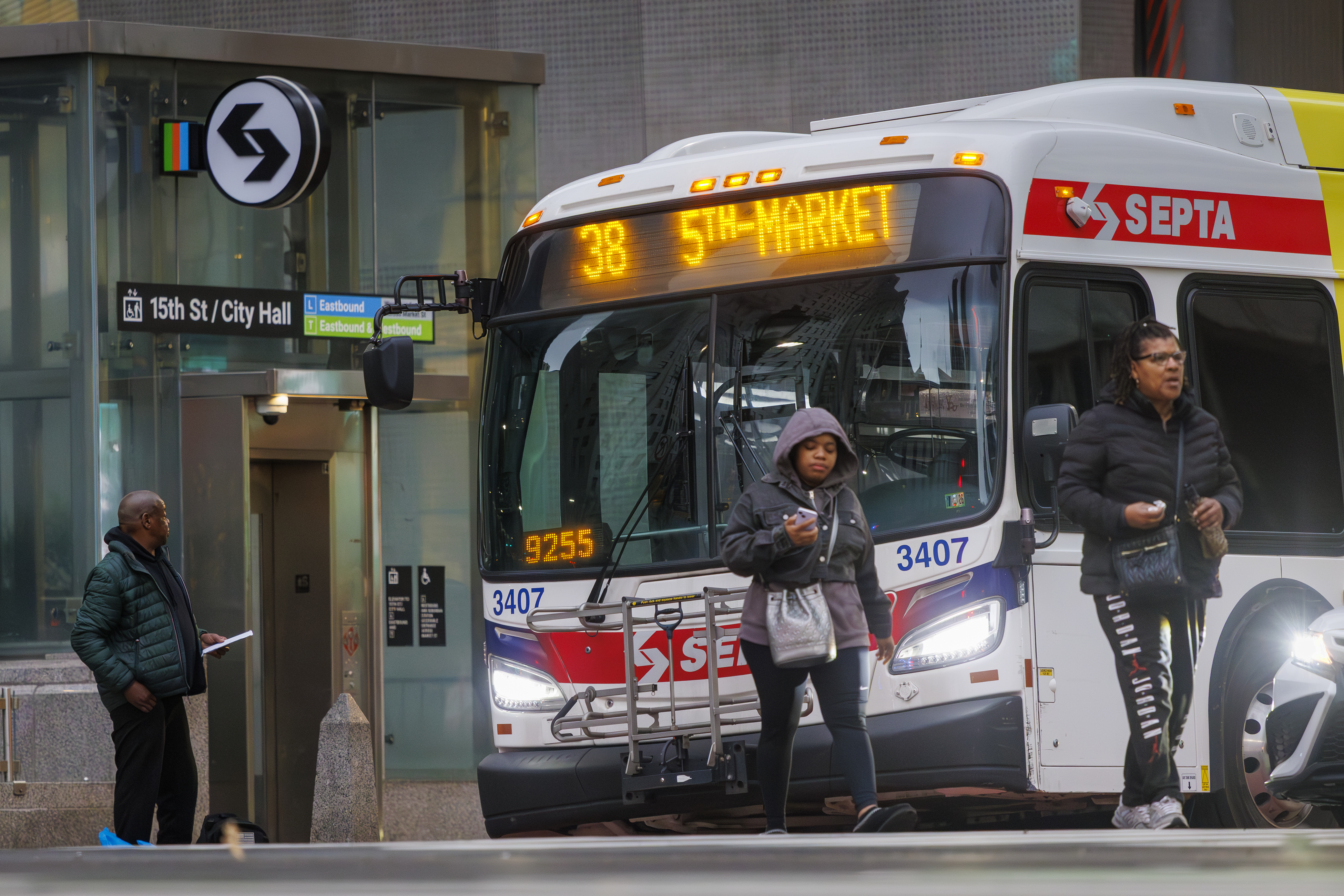
    A SEPTA Route 38 bus at 15th and Market Streets in May.Alejandro A. Alvarez / Staff Photographer

    Spotlight on SEPTA

    A few readers have asked me about film crews they’ve seen following SEPTA police around stations and transit vehicles recently. Media Relations Director Andrew Busch confirmed that the A&E Network is filming a docuseries, which will be broadcast next year.

    Personally, I’m looking forward to watching it. SEPTA’s roughly 250-strong police force is charged with patrolling more than 285 train and trolley stations, and nearly 3,000 vehicles. They are also in the midst of substantial declines in serious crime, which occurred alongside a crackdown on fare evasion and a surge in enforcement for quality-of-life issues. That’s a story worth showing.

    Less worthwhile would be a series focused on Kensington and the city’s drug epidemic. That’s a real part of SEPTA’s policing duties, but is often exploitative when told by outsiders.

    Gov. Josh Shapiro announces a $20 billion investment by Amazon in Pennsylvania data centers in Salem and Falls Townships in 2025.Commonwealth Media Services

    Data-driven

    Ever since the creation of the first computer, there have been concerns about its role in the future. It doesn’t help matters that many tech CEOs, like OpenAI’s Sam Altman, regularly express a kind of contemptuous attitude toward humanity and human needs. At one point, Altman said that artificial intelligence would “lead to the end of the world.” How inspiring!

    This has put public officials in a tough position over their support of data centers.

    For generations, states and cities have competed to attract investment. But these days, cash is flowing into an industry opposed by 74% of voters. Seeing an opportunity, challengers from across the political spectrum are using data centers in their political attack ads, while incumbents are scrambling to explain themselves.

    This isn’t run-of-the-mill NIMBYism, either. According to one report, only 8% of data center opponents live near one.

    Gov. Josh Shapiro, the Ambitious Abingtonian, exemplifies this conundrum. He was an early advocate for embracing data centers, but with polls tightening for his reelection efforts, he’s been forced to adapt.

    Of course, there’s a certain opportunism to state Treasurer Stacy Garrity’s embrace of the techlash.

    Her own party has been quite supportive of data centers. President Donald Trump has called them “tremendous.” Pennsylvania state Senate Majority Leader Joe Pittman has long advocated for the centers, which represent a particular opportunity for his own community, which has, in his words, “a long and storied history when it comes to the production of electricity.” U.S. Sen. Dave McCormick, the highest-ranking Republican in Pennsylvania, is married to Meta executive Dina Powell McCormick. Meta is one of the four companies investing a total of $1.5 trillion in new data centers.

    Pennsylvania Senate Republicans declined to pursue Shapiro’s proposed “GRID” initiative, which would have required the centers to produce their own electricity, conform to environmental standards, and make community benefits agreements in exchange for permitting assistance.

    Many of the current pitchfork-wielding politicos may themselves be forced to pivot when in office. Voters may hate data centers, but they also hate tax increases and service cuts.

    Loudoun County, Va., which is known as data center alley, has averted both. Local authorities have cut property tax rates by nearly 30% over the last decade, and the centers pay roughly half of the county’s property tax revenue. Given the increasing share of Pennsylvania’s budget that is paid through the extractive gambling industry, the need to invest more in schools and transportation, and the continuing structural deficit, it is no surprise politicians initially saw the AI boom as an opportunity.

    Now, state leaders will have to pick their poison.

    If they pursue data centers, they’ll face voter backlash. If they continue to embrace gambling, they’ll contribute to the impoverishment of their own constituents. If they stop investing in education or allow transit agencies to fail, they’ll weaken the commonwealth’s economy going forward. If they raise taxes, they’ll take the blame for that, too.

    While the data center surge may seem sudden to many, it is also a response to demand. Both businesses and individuals are increasingly using AI in daily life.

    Ironically, many social media posts about data centers include AI-generated text and images. It is a bit like if the Women’s Christian Temperance Union had fundraised with a booze cruise.

  • Krasner misses a chance to send a message against violence on SEPTA | Shackamaxon

    Welcome to Shackamaxon, a weekly politics column focused on what’s happening at City Hall and in Harrisburg. It is named for the place where the Lenape chiefs would meet to conduct the people’s business, which is now known as Penn Treaty Park.

    This week’s edition questions a plea deal, looks at Center City’s efforts to bring back daytime foot traffic, and examines the legacy of the Philadelphia wage tax.

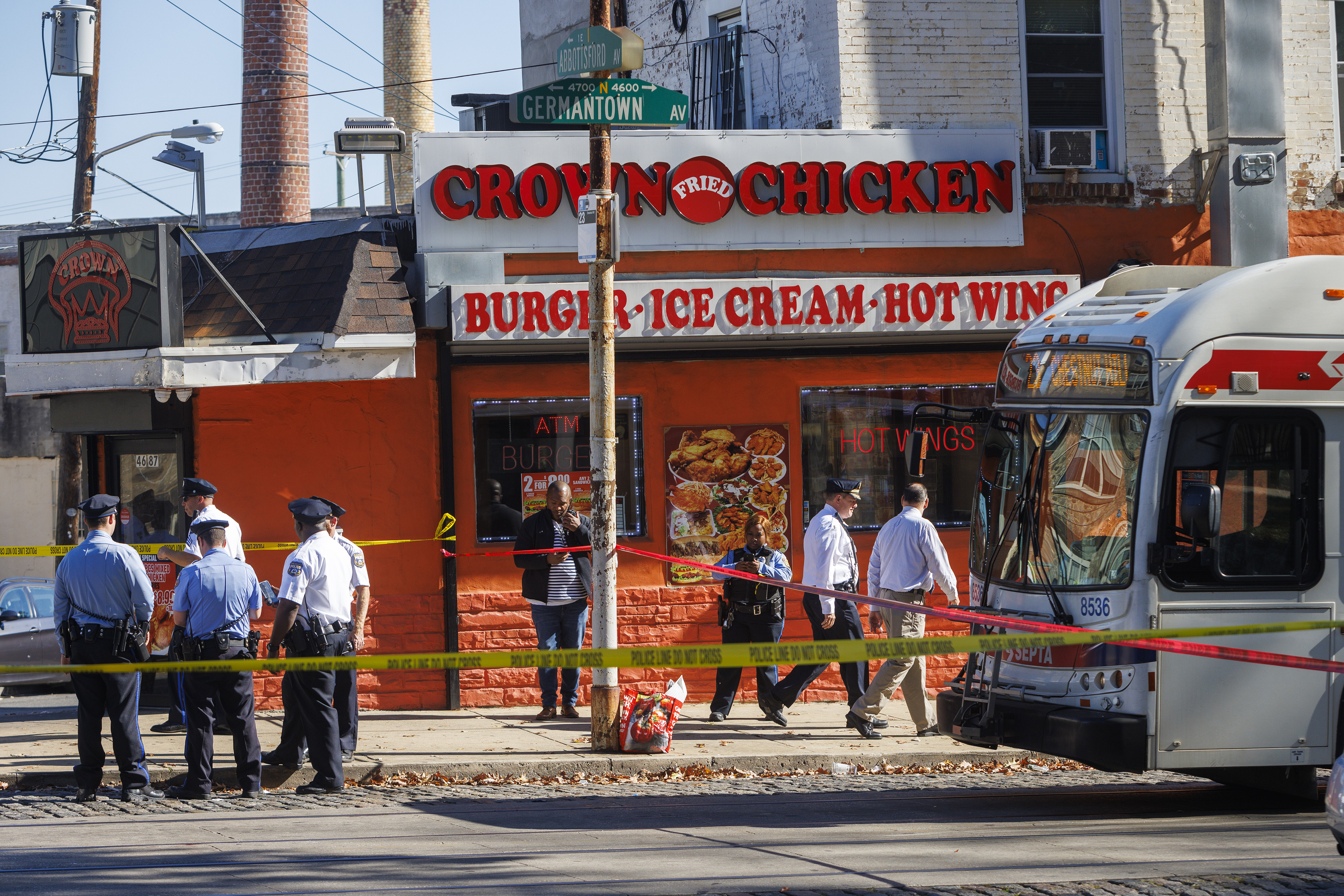
    SEPTA Transit and Philadelphia Police at the scene of the fatal shooting of SEPTA bus driver Bernard Gribbin in Germantown in October 2023.Alejandro A. Alvarez / Staff Photographer

    Deterrence desired

    On Oct. 26, 2023, Bernard Gribbin became the first city transit operator to die by gunfire while on the job. Family members called him “the best of the best,” and described the 48-year-old Army veteran as a man who loved Philadelphia, who proudly took out-of-town relatives on tours of the city when they came to visit, and who served the public by working as a bus operator — a demanding, underpaid, and utterly essential job.

    Gribbin’s murder sent shock waves through the city’s transit agency. His colleagues were left angry and afraid.

    Around that time, reporting from Mensah Dean at the Trace identified a spate of attacks against public employees. During the next contract negotiations, the Transport Workers Union demanded SEPTA install bulletproof glass to protect drivers. Operators report that management, which has long emphasized de-escalation, became even more strict about the kinds of interactions bus drivers and train conductors are permitted to have with unruly passengers. For many, this undermined their sense of stewardship of their vehicles.

    The death of Gribbin seemed like a case in which prosecutors could send a message that violence against SEPTA workers will be met with serious consequences. Instead, District Attorney Larry Krasner opted to accept a plea bargain.

    Gribbin’s killer, Zhontay Capers, was able to secure a conviction for third-degree murder this week, rather than first, which was her original charge. Pennsylvania law defines first-degree murder as a willful, deliberate, and premeditated killing. Given Capers shot six times and that surveillance video showed her with a firearm shortly before the shooting, there would seem to be a strong case.

    Of course, there could be complications I don’t know about. Perhaps another passenger was armed, a witness recanted, or Capers stood a good chance of being declared incompetent to stand trial. Prosecutors often accept plea deals in cases in which going to court presents too much risk.

    Yet, Krasner’s office refused to comment on any of these possibilities when asked. Instead, they called it an example of individual justice. Capers now faces up to 40 years in prison, rather than a life sentence. Unlike Gribbin, she may one day again enjoy the unfettered company of friends and family.

    Of course, individual justice is important. And if the circumstances of a particular case merit a third-degree charge, then so be it. But Krasner has not provided any additional information or shed any light on his office’s decision-making.

    Every killing is a tragedy that deserves justice, but Gribbin’s death had a magnified impact. Capers’ actions also caused public servants to be fearful of coming into work, and resulted in millions of dollars’ worth of unplanned spending in installing the protective glass.

    The public deserves a fuller account of why the plea deal happened.

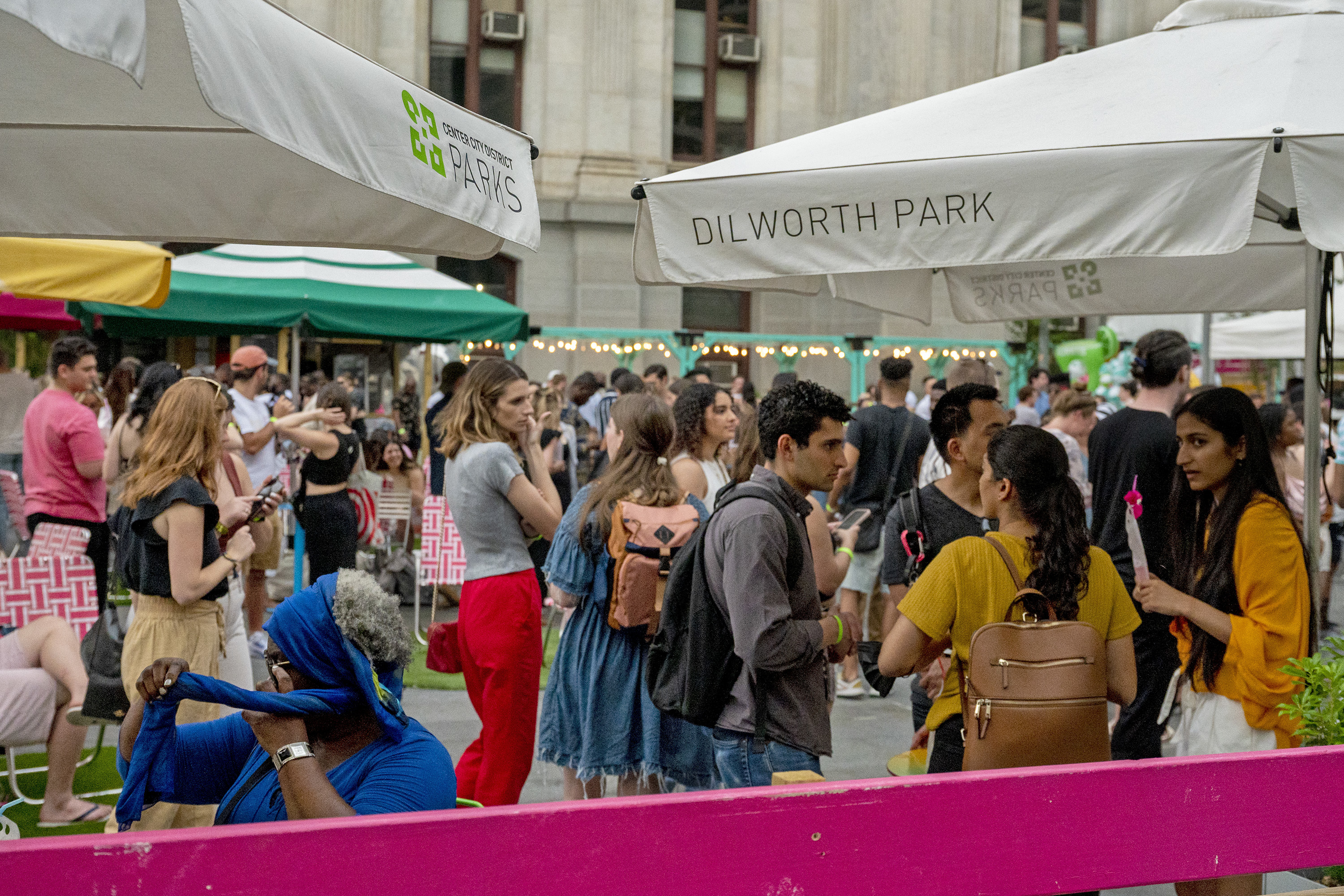
    Happy Hour at the Air Grille Garden at Dilworth Park in 202, part of the midweek Center City District Sips after-work events.TOM GRALISH / Staff Photographer

    Eventful days

    Like most big city downtowns, Center City is a major employment hub. More than 300,000 people work there, representing around 42% of jobs in Philadelphia.

    According to Clint Randall, the vice president for economic development at the Center City District, the amount of downtown office space has remained relatively stable for decades. That’s despite the rise of residential conversions and remote and hybrid work arrangements. Still, people are coming to the office less often, and momentum on bringing workers downtown on a more regular basis has stalled.

    Thankfully, Randall and his colleagues have a plan to ensure the city’s commercial core remains as essential as it can be by leveraging its status as a regional host, with events seen as both a short- and long-term way to make Center City more vibrant.

    Randall cited Center City Sips as a way to bring more people into town on Wednesday evenings during the summer. Philadelphia Open Streets, the FIFA World Cup, festivities around the MLB All-Star Game, and other smaller events have proved a major boon. They’ve brought out not just those who live and work in Center City, but also people from around the region and the world who may not otherwise have had a reason to come.

    I asked Randall about the potential for event fatigue among locals. With Center City adding thousands of new residents each year, would this create pressure to draw down on hosting? Randall said that vibrancy is what brings many people to live downtown in the first place. As inconvenient as it can be to live next to major festivals, it is also a major amenity.

    My own experience bears this out. I may not have made it to the Eagles’ Super Bowl parades if they hadn’t marched down Broad Street, not far from my South Philly home. Our friends and family also enjoyed the convenience of having a place to sit down and use a nonportable restroom.

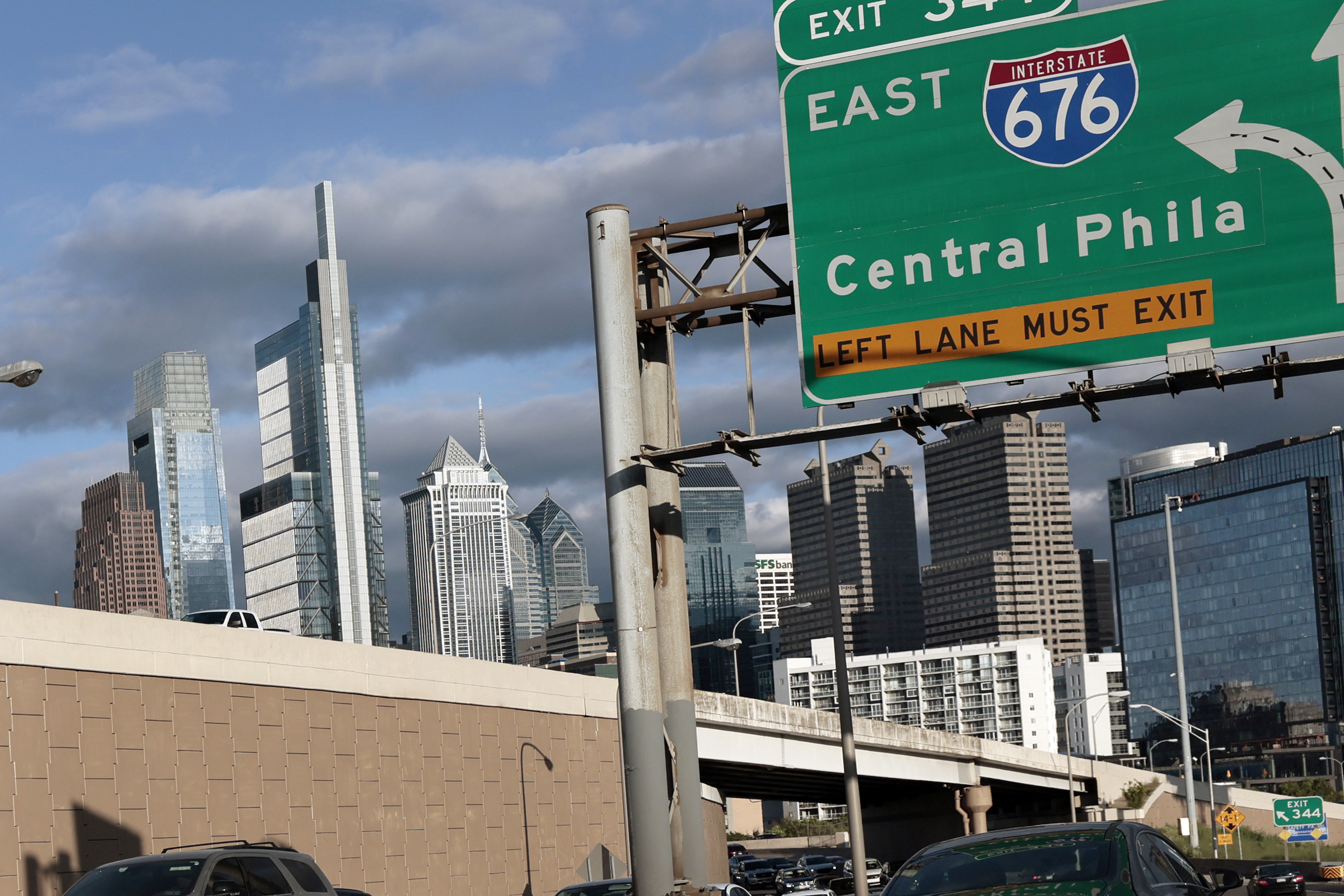
    A view of the Center City skyline as seen from the Schuylkill Expressway, where it intersects with the Vine Street Expessway, in May.Elizabeth Robertson / Staff Photographer

    Tax switch

    When Philadelphia became the first American city to institute a wage tax all the way back in 1940, the idea seemed like a no-brainer. After all, where else were people supposed to work? Suburban rail stations were packed to the brim with commuters, the Interstate Highway System did not yet exist, and anyone who wanted access to skilled workers had little choice but to open offices in Center City.

    Today, however, the region looks different.

    While Center City remains a major regional hub, Philadelphia has lost tens of thousands of jobs to suburban office parks. Most Delaware Valley residents drive themselves to work, and hundreds of thousands of people have moved to the suburbs. This has left us with an important policy question: How much of this shift is simply due to national cultural trends, and how much of it was caused by public policy?

    A new study from René Livas and Matthew Jacob at Harvard University, working with the Progress and Poverty Institute, attempts to answer this question. They say there is a clear link.

    As the wage tax rate rose between 1940 and 1976, jobs fled to the suburbs. Since City Hall began decreasing the tax in 1995, jobs have started to flow back into Philadelphia. In fact, the city recently overtook Montgomery County as the top host for office jobs in the region.

    The researchers’ proposal for replacing the wage tax is based around switching to a land value tax, an idea that is popular among economists. Separate tax rates for land and property are already legal in Pennsylvania, and the city already splits the two in its own property assessments.

    The idea, however, may be politically fraught. Homeowners already resent the chaos of the city’s regular assessments. Additionally, determining how much of a property’s value is inherent to its location may be easier said than done. While an 80/20 split between structural and land value is often cited as standard, levying the two individually would require significantly more research from the city’s Office of Property Assessment.

    In an email, Livas suggested phasing in the switch, which would help avoid big increases. He also said that the city’s existing programs, like the homestead exemption and Longtime Owner Occupants Program, should help alleviate the burden on homeowners.

    The data suggests the city could add around 26,000 jobs if this reform is pursued.