Author: Michelle Myers

  • The Philadelphia Portal is moving out of City Hall

    The Philadelphia Portal is moving out of City Hall

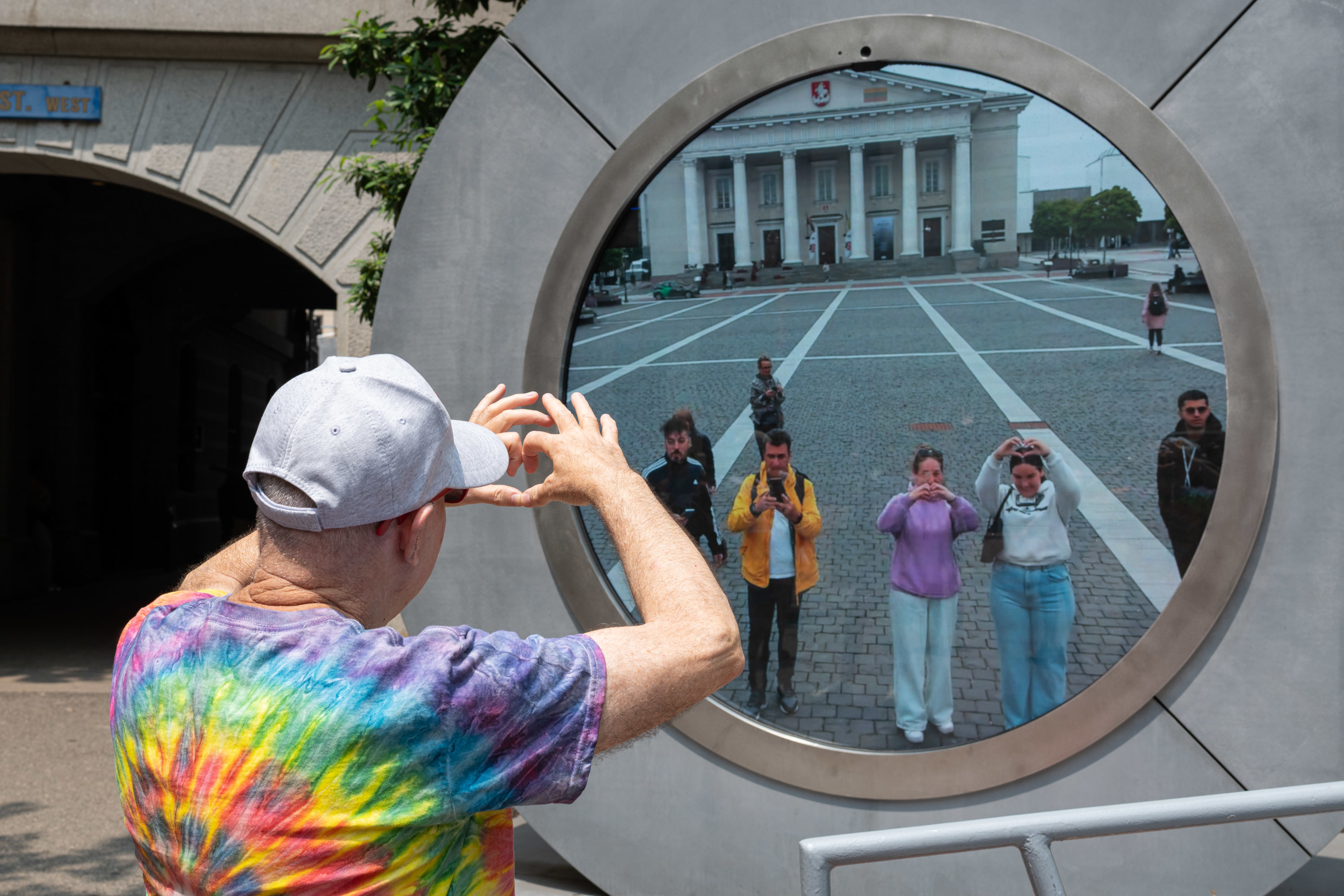
    City Hall will wave farewell to Ireland, Lithuania, and Poland. After almost two years, the Portal — the video art installation that shows livestreams of people in other countries — must move.

    Brought from New York City in 2024, the 3.5-ton circular video screen first found a home in LOVE Park until vandalism prompted its relocation to the City Hall courtyard.

    Now, their permit is running out.

    “We would have been happy to keep it at City Hall courtyard, but as we understand, the city has prior commitments for the winter market, so they are just not able to extend the permit,” said Nicolas Klaus, CEO of Portals.org

    The Portal’s permit is set to expire on Oct. 31; the city did not immediately respond to a request for comment. So, Portals.org is looking for a sponsor that can help house and relocate it.

    Sponsors can be public or private — such as nonprofits, foundations, cultural institutions, or local businesses — and can work collaboratively to house the Portal as long as they can provide:

    • An area preferably accessible to the public.
    • Cover the cost of relocating the Portal as well as “minor refurnishing work,” Klaus said.
    • Sponsor the yearly cost of maintaining the Portal and paying for the 24/7 connection, which can be about $30,000 a year, Klaus said.

    If a new home isn’t found by the end of September, Philly runs the risk of losing the Portal to a different city.

    “We are in contact with a few different cities, but Philadelphia is our first option; it’s the right place for the Portal,” Klaus said.

    The Philly Portal is the only one of its kind in North America, and has continued to add connections to new countries. Earlier this year, windows to the Philippines and Brazil were added to the City Hall livestream.

    “The attraction that the Portal provides is not the Portal itself; it’s the human connection it facilitates,” Klaus said.

  • Shooting on Germantown Avenue prompts Temple University alert

    Shooting on Germantown Avenue prompts Temple University alert

    Two men were shot Sunday morning in the Franklinville section of North Philly, prompting Temple University to alert its students to avoid the area.

    Around 11:50 a.m., police responded to a shooting on a highway in the 3400 block of Germantown Avenue, near Temple University Hospital, according to Philadelphia Police.

    Two people in a vehicle fired at a different vehicle, striking two people and driving away, Denise Wilhelm, Interim Vice President for Public Safety and Chief of Police at Temple, said in a statement.

    An injured person walked into Temple University Hospital, while another was transported by police. They are being treated for non-life-threatening injuries, Wilhelm said.

    The shooting scene is being held for investigation, police said, and Temple Police are assisting detectives in reviewing security video.

    In the meantime, Wilhelm said, Temple University is increasing its police patrols in the area.

    While Wilhelm said there is no connection between the university and the shooting, Temple is offering support for students through Tuttleman Counseling Services, and an assistance program for faculty and staff.

    Anyone with information about the shooting can contact the PPD tip line at 215-686-TIPS (8477) or East Detectives at 215-686-3243. Temple’s Investigations Unit is also open for tips at 215-204-6200 or Temple Police at 215-204-1234.

  • One man dead and another injured in Ludlow double shooting

    One man dead and another injured in Ludlow double shooting

    A double shooting left one man dead and another wounded early Sunday in the Ludlow section of North Philadelphia, according to Philadelphia Police.

    Police say they arrived at 8th Street and Oxford Avenue around 3:15 a.m. to find two men with gunshot wounds.

    One man was taken by police to Temple University Hospital, where he was pronounced dead at 4:25 a.m.

    The other man was dropped off at Temple by private vehicle, and his condition remained unknown, police said.

    Through Saturday, a total of 412 people had been shot in Philadelphia this year, a 35% decline from this time last year, according to police crime statistics.

    As the Homicide Unit continues to investigate, police urged anyone with information to call the PPD tip line at 215-686-TIPS (8477). Tipsters can be anonymous.

  • Man in critical condition after being shot in a South Philadelphia home

    Man in critical condition after being shot in a South Philadelphia home

    A 22-year-old man was in critical condition after being shot in a South Philadelphia home Tuesday night.

    Right before 10 p.m., police arrived at the 1900 block of Tasker Street following the report of a person being shot.

    Multiple fired cartridge casings were found outside the home, police said. Inside, the man was in the living room with a gunshot wound to the chest.

    Police believe the man was on the second-floor bedroom when he was struck. A motive remains unknown, and no arrests have been made.

    Officers took him to Penn Presbyterian Medical Center, where he was listed in critical condition.

    Through Aug. 4, Philadelphia had seen 494 shooting incidents, a 7% decrease compared with the same period last year, according to police crime statistics.

    Anyone with information can contact the Philadelphia Police Department by calling the police tip line at 215-686-TIPS (8477). Tipsters can remain anonymous.

  • The Frank Rizzo statue is repaired, and the search for a new location is underway

    The Frank Rizzo statue is repaired, and the search for a new location is underway

    In the case of Frank Rizzo, out of sight does not always mean out of mind.

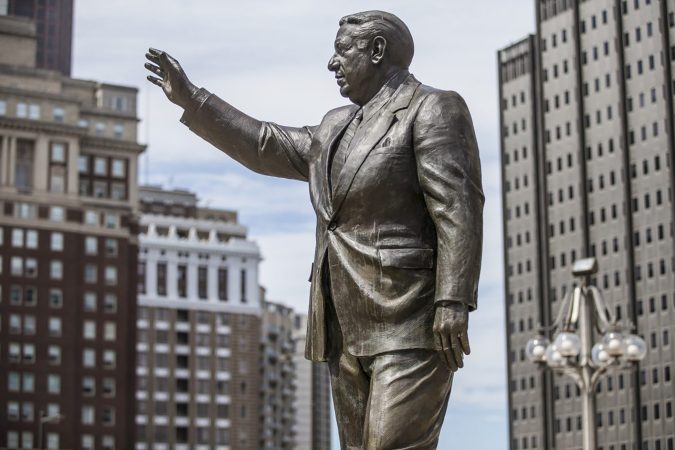
    The former mayor and police commissioner died 35 years ago. A 10-foot bronze statue reminded Philadelphians of his presence for decades, until civil rights protests in 2020 culminated in the monument’s removal from public display.

    It might have lost its prime spot outside the Municipal Services Building, across from City Hall. But, six years later, the statue remains a subject of interest, leaving reader JJ Cutuli to ask Curious Philly, The Inquirer’s forum for questions about the city: “Where is the Frank Rizzo statue, right now?”

    The short answer? Now that repairs have been made, the search for a new home is on. Here’s how we got here.

    » ASK US: Have something you’re wondering about the Philly region? Submit your Curious Philly question here.

    The last thing Cutuli heard on the Rizzo statue saga was that it was set to be returned to the Frank L. Rizzo Monument Committee, after a settlement was reached with the Philadelphia Art Commission last summer.

    “I am very much against the statue, against the man, against what it all represents,” Cutuli said. “But sweeping it under the rug or sending it to a scrap yard might take away the opportunity to deal with the issues that it represents.”

    Rizzo has long been a controversial figure. During the 1960s and 1970s, he was accused from different fronts in the city of having allowed police to function with little oversight, putting people of color in a vulnerable spot.

    Between 1970 and 1978, police shot civilians at a rate of one per week, according to an Inquirer investigation. That led critics to condemn Rizzo as a racist, and protesters even put a Ku Klux Klan hood on the statue’s head in 2016.

    “The statue is a deplorable monument to racism, bigotry, and police brutality for members of the Black community, the LGBTQ community, and many others. The treatment of these communities under Mr. Rizzo’s leadership was among the worst periods in Philadelphia’s history,” then-Mayor Jim Kenney said in a statement in 2020, when the city removed the statue overnight.

    For supporters, however, the South Philly native was a beacon of Italian American pride whose tough approach on crime could have been misunderstood.

    “He was a brute in some respects. But it wasn’t racist,” George Bochetto, an attorney for the Frank L. Rizzo Monument Committee, told The Inquirer in 2016. “It was law and order, it was crime, and I think he got a bad rap, frankly.”

    The agreement left the committee with an $80,000 payment from the city for damages caused to the statue during its removal.

    “They put it on the back of a flatbed truck and a piece of the base broke off so they had to replace that base,” Bochetto said. “There were also a lot of scratches and gouges on the body of the statue, which had to be repaired too.”

    The bronze Rizzo has been at a foundry undergoing “expensive five-figure repairs,” Bochetto said.

    Restorations are now done, according to the lawyer. The next frontier is finding a new home for the Rizzo statue.

    As part of the 2025 agreement, the statue should be displayed on private property, and in a way that makes it “not visible from the public right of way,” the agreement states.

    An exception can happen if the committee gets approval from Mayor Cherelle L. Parker or the managing director. Bochetto said that’s something the committee is working on. Bochetto did not describe locations being considered for the statue.

    The city did not reply to a request for information. So, the status of the monument’s home remains uncertain.

    Controversy aside, Bochetto said, it’s important to recognize that the statue is part of Philadelphia’s history.

    “People say that symbols like this from the past are a part of our history and that is true,” Cutuli said. “But as part of history perhaps these things do have a place in museums or perhaps they don’t, perhaps the story and the facts can exist without the statue.”

  • Some Philadelphians have turned to farmers’ markets as the cyclosporiasis outbreak continues

    Some Philadelphians have turned to farmers’ markets as the cyclosporiasis outbreak continues

    Procoro Jeronimo, 45, went to his yearly physical in late June. Doctors told him to lay off the bread and replace it with lettuce.

    The professional baker was wary, aware that lettuce was linked to an ongoing outbreak — caused by the single-celled parasite cyclospora — causing explosive bowel movements.

    Wanting to stay healthy for his five children, he caved, finding solace in not hearing about specific cases in Philadelphia.

    A week later, mid lettuce bite, Jeronimo learned that not only was Pennsylvania officially added to the CDC list of the states affected, but also that the outbreak was linked to now-recalled Taylor Farms iceberg lettuce sourced from central Mexico and sold at grocery stores, as well as Taco Bell and other restaurants.

    “That was it,” Jeronimo said. “It stopped feeling safe.”

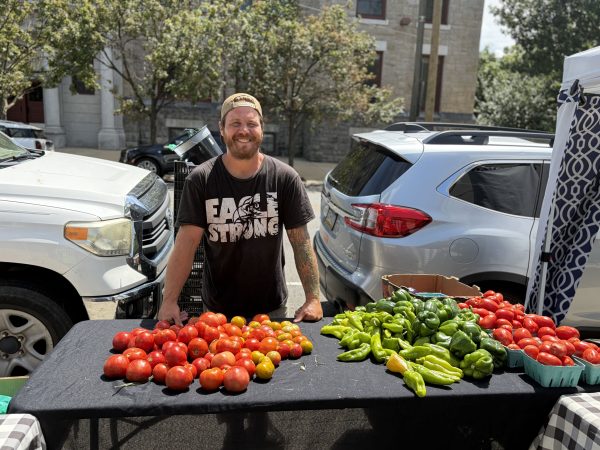
    The family ditched their grocery store produce section for the vegetable and fruit stand at the Dickinson Square Farmers’ Market in the city’s Pennsport area.

    “It’s hard, because most of our food, like pozole, includes lettuce,” Jeronimo said, checking tomato ripeness in front of farmer Bruce Santino’s stand Sunday morning.

    “Lettuce is cheaper at the grocery store; I went from paying $8 to $10 per month for lettuce to paying $20. I guess that is the price for mental peace,” he added.

    Jeronimo is not the only one willing to pay more for the feeling of safety. South Philly resident Marie Abbondanza, 42, also abandoned her grocery store produce to walk with her toddler and shop at the farmers’ market.

    “We are choosing to get all of our produce from the market because we don’t want to get sick and we want to support the local farmers,” Abbondanza said. “[Grocery stores are] really expensive and their produce isn’t really good, so if we have to pay a little bit more and the quality is better, it’s enough for me.”

    So far this year, Pennsylvania health officials confirmed at least 45 cases of cyclosporiasis. That number already surpassed the 40 cases the state experienced in 2025, but still below the 87 reported in 2024.

    In the last two to three weeks, Dickinson Square Farmers’ Market has seen the volume of visitors increase by about 15%, said Ben Bergman, 48.

    Bergman helps oversee Dickinson Square as well as four other farmers’ markets citywide.

    “It looks to be a little safer here because the food is grown closer to you,” Bergman said. “It has less opportunity to become infected with something.”

    The increase is being seen by the operators of other farmers’ markets.

    According to Bridget Palombo, director of healthy food access programming at the Food Trust, it’s not automatically the case that farmers’ market produce is safer.

    “It all depends on the processes that people follow,” Palombo said. “But there seems to be more trust in the products when people can speak to those growing it and bringing it to the market.”

    The Food Trust operates three year-round markets, three seasonal farm stands, and multiple pop-up markets citywide. Seeing an uptick in foot traffic makes Palombo believe that transparency is a big reason behind the feeling of safety Philadelphians are finding in farmers’ markets.

    Farmers’ market visitors get to ask the farmers where their food comes from, what kind of pesticides they used (if any), and how it was harvested.

    That transparency does come with a stiffer price tag.

    Farmers’ markets are opportunities to purchase directly from producers, allowing the local farms to charge the full, fair cost of production, where corporate farms can cut corners, Palombo said.

    “Lettuce from the local farmer has probably traveled only a fifth of the time in and out of cold storage; it’s touched fewer hands; and they are paying their staff livable wages, giving them breaks, and treating them in humane ways,” Palombo said.

    At the Dickinson Square Farmers’ Market, farmer Bruce Santino, 38, said he can attest to the care that goes into all of his produce, and how despite the cyclosporiasis outbreak and the uptick in clientele, his business has tried to keep prices steady.

    Four people work at his Mullica Hill, Gloucester County, farm, planting and harvesting all kinds of peppers, tomatoes, corn, melons, squash, and leafy greens.

    “Only eight hands touch your food, and we harvest the day before the market to get the freshest, highest-quality product,” Santino said.

    When they ran the numbers on how much lettuce they would need for this year’s season, they were not expecting a higher demand due to cyclospora.

    “As a farmer it’s been tough, because every year you have a crop plan and you do the math of how much you are going to need, then when something like this happens you have to produce as much as you can for the demand,” Santino said.

    He was planting and selling 1,200 to 1,500 heads of lettuce per week. Three weeks ago, the business sold almost $1,000 worth of lettuce in one day, he said. But as the staff were planning on upping their production, a couple of days with 100-degree weather fried the lettuce left in the field.

    “The little that actually survived was too bitter to harvest and we don’t want to put a bad name on our product, so we prefer to go without it,” Santino said.

    His business has already started replanting and plans to produce 30% more lettuce to keep up with the demand. But Santino will keep his price at $3 to $5 per lettuce head.

    “I hope we can retain this after the parasite gets taken care of,” Santino said. “I hope people feel safer coming to the local farmers’ market and I hope they taste the difference and stay with us.”
  • 1 teen is dead and another is facing charges in a fatal Atlantic County shooting

    1 teen is dead and another is facing charges in a fatal Atlantic County shooting

    Police found a New Jersey teen with a deadly gunshot wound in the driver’s seat of a car that had been in a crash. Now a 15-year-old is facing charges for shooting the driver, said the Atlantic County Prosecutor’s Office.

    A single-vehicle crash brought Mullica Township Police to Route 30 and Snow Hill Road on Friday evening. The driver, Javonte Stallworth, 19, of Mullica Township, was inside the car, lifeless, with a single gunshot wound to the head.

    According to prosecutors, two people believed to be passengers in Stallworth’s vehicle were seen fleeing the area on foot. Witnesses identified the pair as juveniles, prosecutors said.

    The teenagers were located, detained, and taken to the Atlantic County Prosecutor’s Office for questioning shortly after the incident, prosecutors said.

    The questioning ended with a 15-year-old Mullica Township resident charged with multiple counts, including: aggravated manslaughter, unlawful possession of a handgun, and possession of a firearm without a serial number. The prosecutors did not provide the full name of the 15-year-old.

    The investigation is ongoing, but the Atlantic County Prosecutor’s Office said the teen was transported to the Harbor Fields Juvenile Detention Center.

    Authorities urged anyone with information to call the Atlantic County Prosecutor’s Office Major Crime Unit at 609-909-7666 or go to ACPO.org.

  • 2 years after a CHOP doctor was killed riding her bike, loved ones commemorated her

    2 years after a CHOP doctor was killed riding her bike, loved ones commemorated her

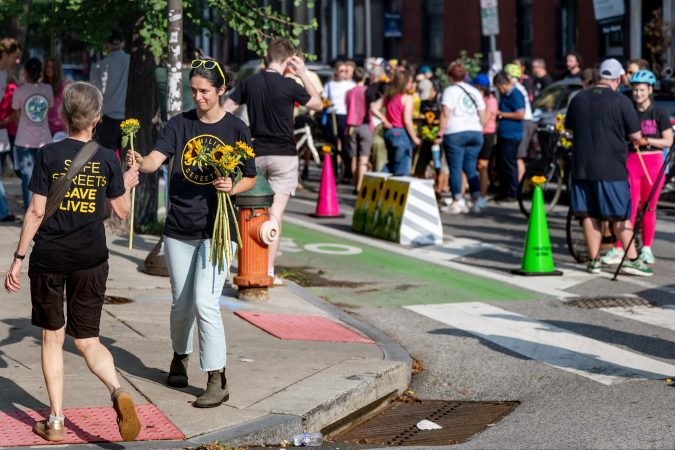
    Dozens of sunflowers bloomed near 18th and Spruce Streets on Sunday morning in memory of Barbara Friedes, as family, friends, and others gathered to remember the CHOP pediatric chief resident. They were marking the second anniversary of when she was struck on her bike and killed by a drunk driver in July 2024.

    The death has reverberated since then.

    Friedes’ death sparked public outrage and protests over traffic safety, with hundreds of cyclists calling for concrete-protected bike lanes, among other traffic safety improvements.

    For Catherine Dietrick, Friedes’ younger sister, there are no words or legislation that can bring her sister back.

    “The last time a crowd gathered right here was two days after my sister was killed. There was no angel bike yet,” she said, referring to a memorial bicycle placed at the site.

    “There were just people, a lot of flowers, notes, and a freshly power-washed street. Across the street, the steps of that house were still crumbled from the impact, and although these steps are fixed now, my sister never can be.”

    She sees the fight for safer roads for cyclists as something her sister would want to do to protect others.

    “I don’t know if a barrier between the bike lane would have saved my sister that day, but I know the lack of one didn’t, and to me, that’s terrifying,” Dietrick said.

    After the crash, in the fall of 2024, city transportation officials recommended $4.8 million in safety upgrades to bike lanes along Pine and Spruce Streets, including concrete barriers.

    A law signed by Mayor Cherelle L. Parker to prevent vehicles from stopping in city-designated bicycle lanes followed in December 2024.

    Separately, the city tried to establish new loading zones on Pine and Spruce Streets to ease pressure on the bike lanes, but neighboring residents sued, and on July 6, a judge upheld a temporary injunction blocking the action until the case is settled or goes to trial.

    Members of Philly Bike Action, an advocacy group, said the injunction delayed safety improvements, despite City Hall’s support.

    “Despite all that progress, our energy, all that public support, Spruce and Pine are still as dangerous today as they were the night that Barbara was killed,” said Jacob Russell, an organizer for Philly Bike Action.

    Although Philly Bike Action leaders said they understood the need to wait for the legal proceedings, they believed the city could move forward with a concrete barrier to keep cyclists safe.

    “We can’t wait another two to five years,” said organizer Jessie Amadio. “The barrier is not much bigger than the curves on the end of the road and will prevent cars from merging into the bike lane and hurting people.”

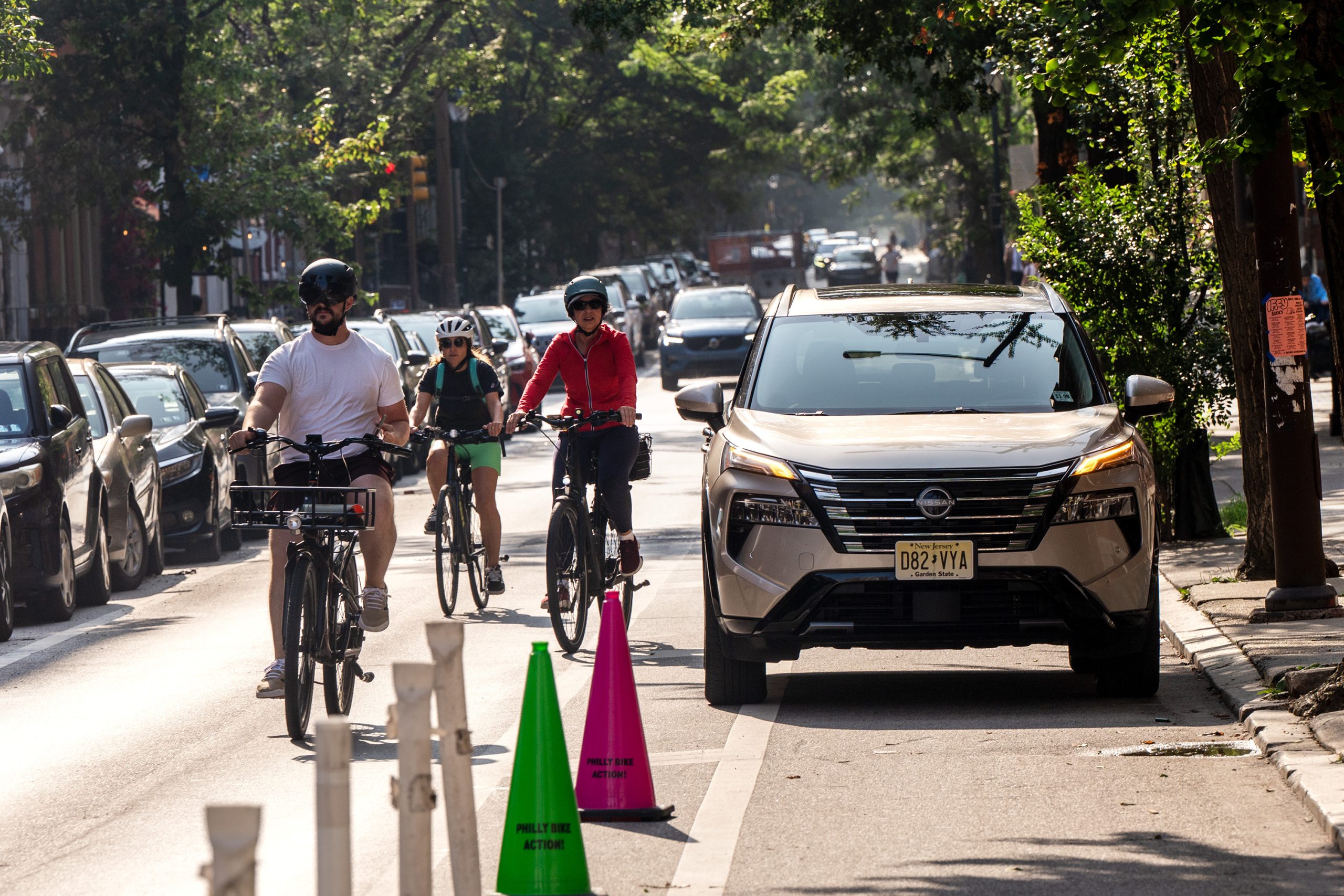
    A car is parked in the bicycle lane in the 1700 block of Spruce Street on Sunday, July 19, 2026, even as family, friends, and Philly Bike Action members gathered near Barbara Friedes’ angel bike at 18th and Spruce Streets for a memorial Sunday, July 19, 2026. Friedes, a 30-year-old Children’s Hospital of Philadelphia doctor, was killed on her bike at the intersection by a drunk driver in July 2024.Tom Gralish / Staff Photographer

    Attending the memorial, City Council President Kenyatta Johnson said preventing traffic violence has the same importance as preventing gun violence.

    “When a person is shot and murdered in the city of Philadelphia, we step up; we show up; we rally and come up with policies, and we also back it up with our budget,” Johnson said. “We have to also continue to make sure we are doing the same thing when it comes to traffic violence here.”

    As the crowd applauded, Johnson pledged he would remain committed to finding ways to protect cyclists in Philadelphia.

    Philly Bike Action members set up a barrier during the memorial with pink and green cones, and a Jersey barrier painted with 12 sunflowers, Friedes’ favorite flower, one for each cyclist who has died in a traffic accident since her death, the group said.

    “To the community members who oppose safer bike lanes, I understand that these changes may feel inconvenient. However, I ask you to consider the lives that you could be saving,” said Mary Dietrick, Friedes’ mother.

    “The decision before us is about more than paint, parking, or traffic patterns; it’s about the kind of city Philadelphia chooses to be.”

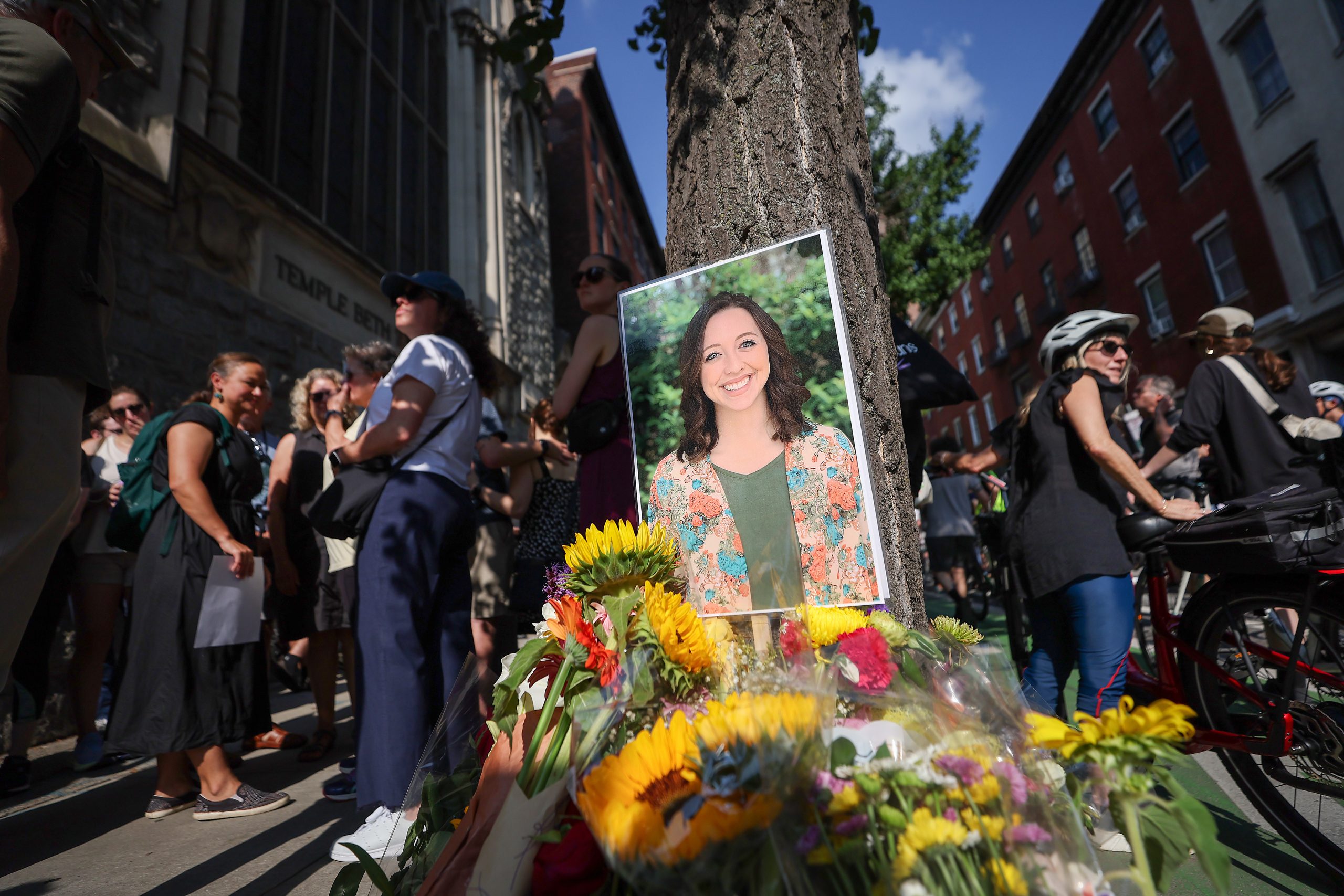
    A photo of Barbara Friedes rests against a tree during a vigil on the 1800 block of Spruce Street in Philadelphia, on Sunday, July 21, 2024. Friedes, a CHOP resident, was killed while biking on Spruce Street earlier that week.David Maialetti / Staff Photographer
  • What to know about the wildfire smoke in Philly and its health impacts

    What to know about the wildfire smoke in Philly and its health impacts

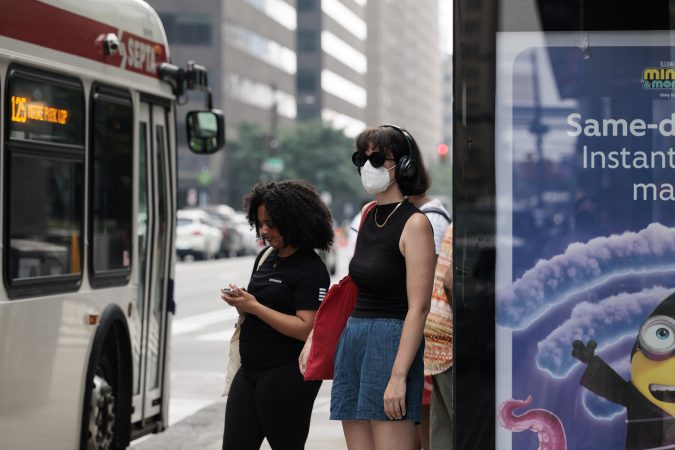
    As Canada grapples with hundreds of active wildfires, the rest of North America is feeling the impact with air quality alerts.

    In Philadelphia and elsewhere, the air quality score is considered unhealthy, particularly for the most sensitive people.

    Whether you are planning to go out or stay home, here’s what three experts had to say about staying healthy and what precautions are needed:

    What makes this smoke so toxic?

    Exposure to this particular fire smoke is a serious matter due to “photochemical aging,” said Eric Balaban, a pulmonary and critical care fellow at Temple University.

    As smoke travels, it interacts with oxygen, heat, and sunlight, creating a toxic profile that helps generate high levels of ground-level ozone and highly irritating aerosols, Balaban said.

    Ground-level ozone is a pollutant that forms when nitrogen oxides and volatile organics emitted by vehicles, power plants, and industry react in sunlight, especially during hot days such as Thursday.

    The pollutants aren’t the only problem.

    The fine particulate matter within the smoke is small enough to cross from the lungs directly into the bloodstream, Balaban said, increasing the risk of heart attacks and strokes, in addition to causing acute chest tightness, shortness of breath, and dizziness in otherwise healthy people.

    Who is at risk during the current unhealthy air quality?

    Philly’s air quality score was in the red stage Thursday, according to the Philadelphia department of public health, meaning we are breathing air considered unhealthy. The state Department of Environmental Protection issued a code purple alert for Friday, the second-highest step on the U.S. Environmental Protection Agency’s color scale, which indicates “very unhealthy air.”

    It is not the hazardous condition of the maroon level reached in Minnesota, where everyone is presumed to be impacted. But, for Ruth McDermott-Levy, a professor at Villanova University’s school of nursing, “all of us are at risk.”

    The risks increase for those with preexisting conditions like chronic obstructive pulmonary disease, asthma, emphysema, and chronic bronchitis.

    “Certainly there are groups of people at greater risk, from pregnant women, children, older people, and those with cardiac and respiratory illnesses. But we’re at an unhealthy level for everyone,” McDermott-Levy said.

    Symptoms of poor air quality and sensitive populations

    While most of the city is continuing daily life as normal, Michele Columbo, the allergy and immunology chief at Main Line Health, urged people to keep an eye on how their bodies react to the air quality.

    People can experience “difficulty breathing, dry cough, wheezing, tightness in the chess, and even feel light headed because of [the added] high heat,” Columbo said.

    Children in particular are at risk because they breathe faster than adults. And, pregnant people in the third trimester can already be experiencing difficulty breathing without the added contaminants to their lungs.

    Adults 65 years or older, individuals with cardiovascular disease, asthma, and other respiratory issues can also be more affected.

    What precautions to take if you go outside during unhealthy air levels?

    Columbo cautioned people from staying outside for more than a couple of minutes at the time, and even encouraged rescheduling outdoor activities.

    If you can’t avoid going outside, wear an N-95 mask, he said.

    Traditional surgical face masks are not meant to keep out the kind of pollutant particles that fire brings. During the 2023 Canada wildfires, experts recommended KN95 and N95 masks as the best options.

    Both Columbo and Balaban urged patients with preexisting conditions to make sure they have extra respiratory medications and inhalers on hand.

    “Anybody with respiratory problems should seek medical advice because it is better to be proactive and inquire medical personnel before the respiratory problem might become potentially more serious,” Columbo said.

    Should you take any precautions if staying inside?

    Balaban recommends replacing the home air-conditioning filters to improve indoor air quality.

    When will air conditions return to normal?

    The health department hopes air quality will improve by the end of Friday, but the U.S. Interagency Wildland Fire Air Quality Response Program said good air quality wouldn’t return until Saturday.

    Is fire-related unhealthy air quality the new normal?

    For McDermott-Levy, the newest round of wildfires from Canada, as well as the second heat dome to descend on the area in as many weeks, are a window into the future we might already be living in.

    “This is climate change and we are living it,” she said.

    Balaban encouraged the public to address the “root cause” of it through civic action.

    “We have opportunities to mitigate and prevent these environmental catastrophes from happening, but it is something that we need to agree to do together,” he said.

  • Peco contract negotiations continue as union members remain on strike

    Peco contract negotiations continue as union members remain on strike

    Peco and its striking unionized workers continued contract negotiations on Sunday, the second day of a strike that occurred as the region was affected by power outages caused by severe storms.

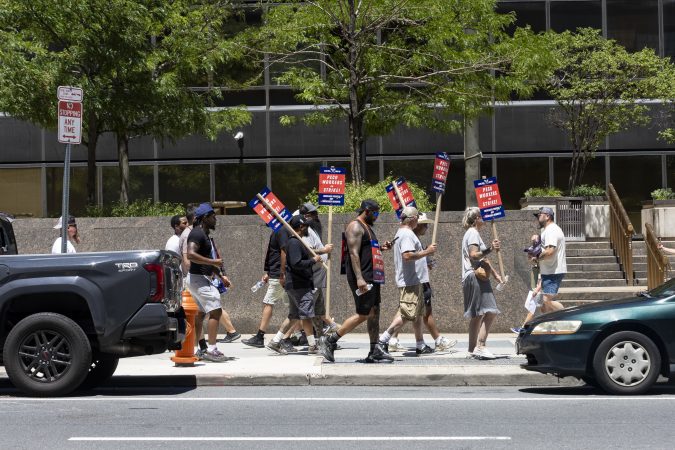
    A dozen striking workers were picketing at Peco’s Philadelphia office on the 2300 block of Market Street, as the company and the International Brotherhood of Electrical Workers Local 614 continued talks.

    The two sides have differed over wages and benefits, with the union seeking to have all of its roughly 1,500 members covered by pensions — 600 of them currently are not.

    It is the first strike in the company’s history.

    Peco has said its contingency plan should prevent customers from experiencing delays or interruptions in service. The company has also said that its contract offer is competitive and fair for employees and customers, adding that it has also offered improved retirement benefits.

    Bargaining was expected to continue through Sunday, according to Melissa McCleery, a union spokesperson.

    Peco’s latest offer, according to Larry Anastasi, president and business manager of IBEW Local 614, would give call center workers a lower wage increase than the rest of the union members. According to the union, 98% of call center workers are women.

    “We will not accept a contract that undercuts the women of our union,” Anastasi said in a statement.

    The company’s current offer, the union said, would bring an average annual wage increase of 3.5% for non-call center workers, between 2027 and 2031. Call center workers would receive 3% annual wage increases in the same time frame.

    To Anastasi, that is unacceptable.

    “Any deal that leaves the call center behind is a deal that will not be signed,” he said in a statement. “PECO’s proposal is an attempt to drive a wedge between our members and that’s not going to work.”

    The company rejected the union’s characterization of its offer.

    “To suggest that PECO would undercut the women of our union is ridiculous,” said a company spokesperson in a statement. “PECO values the contributions of all represented employees, including our customer care professionals, and we reject any suggestion that our goal during negotiations was to diminish the importance of any employee group.”

    The company said that its customer service workers’ average hourly pay is $45.12, well above regional benchmarks of $23.80 for customer consultants and $30.91 for specialized consultants.

    The striking workers in Philadelphia spent a long day in the sun on Sunday, bringing water bottles, coolers, and lawn chairs. They arrived on Market Street as early as 6 a.m., the union said.

    Pulling a megaphone he said he found in his children’s room, union member Tom Jarozynski yelled: “Peco, can you hear us?”

    As cars drove by beeping in support, Jarozynski continued: “What do we want?”

    “A contract,” the crowd replied.

    “When do we want it?”

    “Now.”

    On Saturday, the company said that federal mediation had been offered for the talks. Peco said it had accepted the offer for mediation, but the union did not. An IBEW spokesperson said union negotiators were busy bargaining and not available to answer questions about mediation.

    The union said workers plan to picket at different Peco locations until a contract is reached.