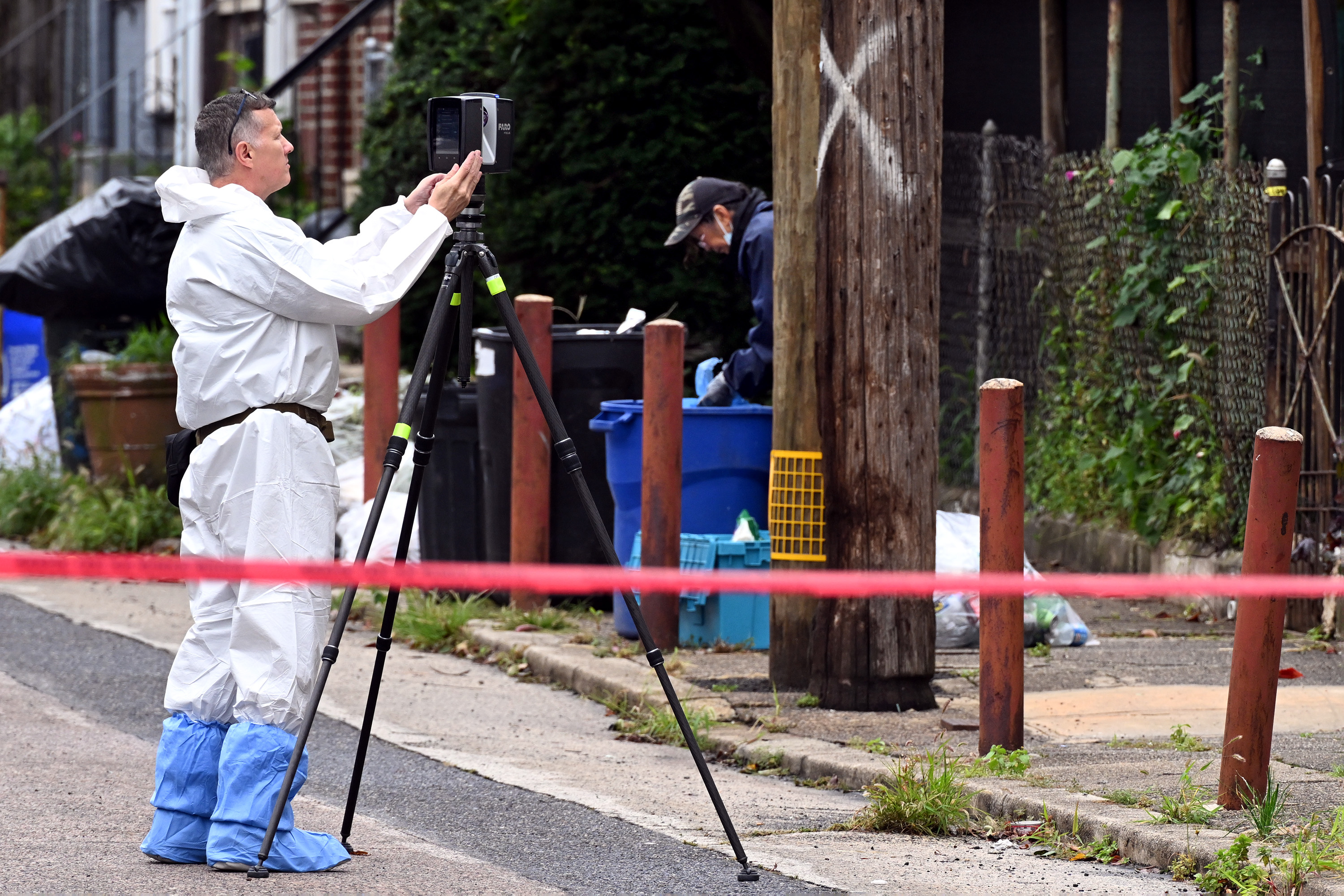
On Monday morning, a gray speckled cat stretched two long paws up the steps of the sepia-toned three-story home at 417 West Chew Ave. Moments later, a man dressed in a white suit gently kicked a blue-bootied foot in its direction.
No unauthorized personnel would be entering the Olney “House of Horrors” anytime soon — feline or otherwise — not on the watch of the FBI and Philadelphia police.
Monday marked the beginning of a fresh week of investigative work inside the home that became known for the drug, sex, and porn enterprise Raymond “R.C.” Horsch ran inside the brick walls. Horsch, who died last year at 82, is now linked to at least seven missing women, and left behind a trove of photos and videos investigators believe show real and staged violence and, possibly, murders.
Police declined to discuss what investigators are looking for, only revealing that law enforcement would be in the area until around mid-October.
However, yellow and red crime tape and police cars around the perimeter wouldn’t curb the curiosity of pedestrians, workmen, food delivery drivers, students, children, and former neighborhood residents who passed by the scene Monday.
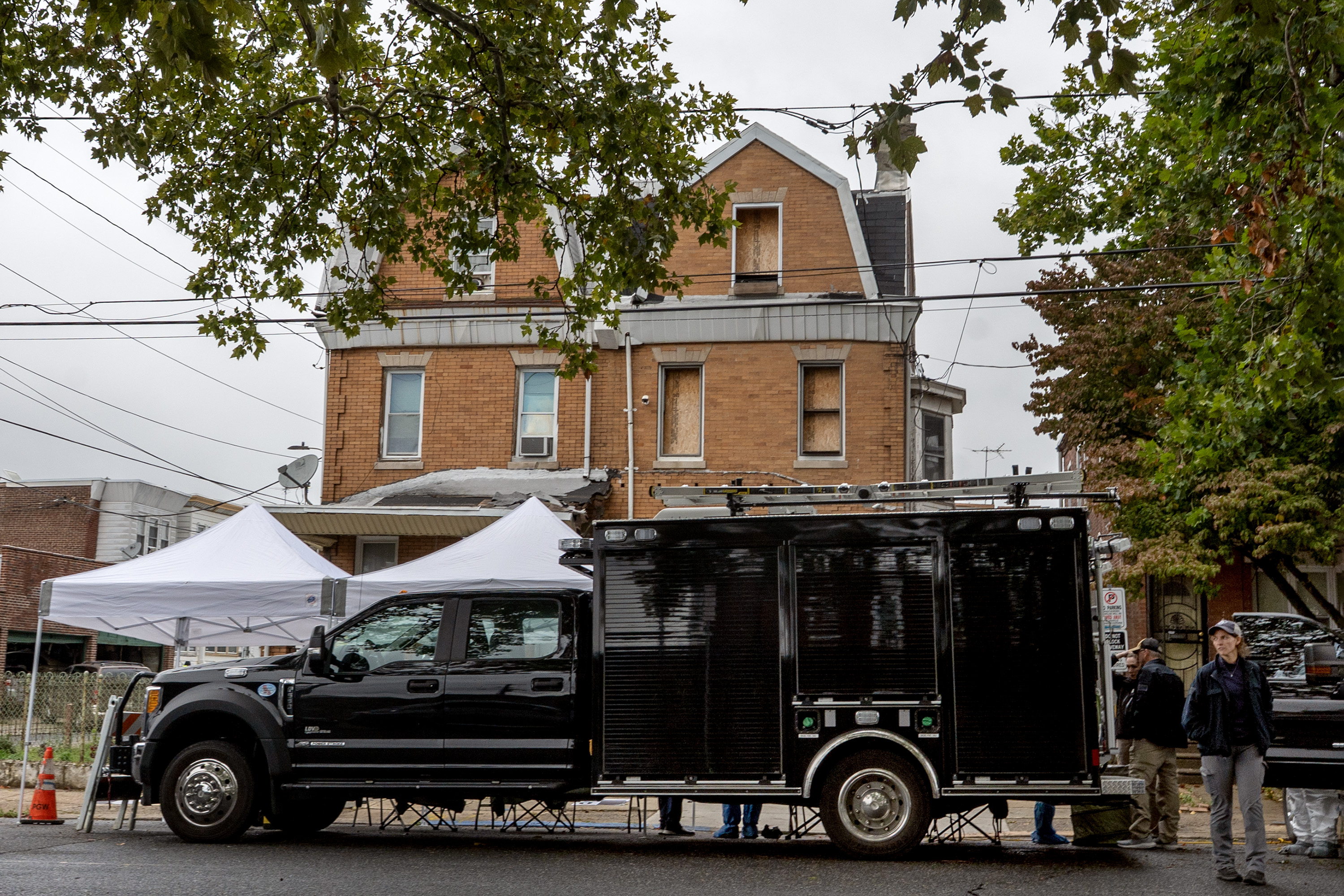
The scene outside the former home of Raymond “R.C.” Horsch on Chew Avenue. Tom Gralish / Staff Photographer
Throughout the morning, residents ducked under crime tape only to be chastised by police. Cars slowed to a stop as they drove perpendicular to West Chew and caught a glimpse of the law enforcement vehicles clustered around the home. When a toddler wearing a backward baseball cap and plaid shirt pointed at the home, his guardian turned their walk around.
Around noon, 31-year-old Fernanda Gabriela Armijos Nugra parked her car around the block and got out wearing white sweatpants, a scrunchie in her hair, and turquoise bands in her braces. She lives seven houses away from Horsch’s, she said.
Knowing what went on so close to her and her girls, ages 5, 8, and 15, has transformed her attitude about the neighborhood, she said.
“I walk around here with my daughters, and we really are afraid about what happened in that house,” she said in Spanish.
Though she never suspected the home could be linked to violence or murders, she said she had a bad feeling about the men who lived there, Horsch and his son, Eugene. Eugene Horsch is now in prison on federal charges from a June car stop near Independence Hall in which authorities recovered the fake ID of a missing woman.
“I used to see the son sitting on the steps of that house all the time and I’d tell my husband, ‘There goes a man with a really mean look on his face,’” she said. “When I saw the news, I was in shock.”
She’s only lived in the area two years and is now contemplating moving. The same is the case for Imani Hardy, 30.
“I don’t want to be here,” Hardy said from her parked car as she watched investigators come and go. “I just want to provide a different life for my kids.”
She and her sons didn’t encounter Horsch, as far as she knows, but the knowledge that his operation was so close is haunting, she said.
It’s chilled the atmosphere in the neighborhood. And something about that change feels permanent, she said.
“We still have to live our normal lives, but being as though we were in a neighborhood where someone was doing horrific things to people … It makes people be more alert,” Hardy said.
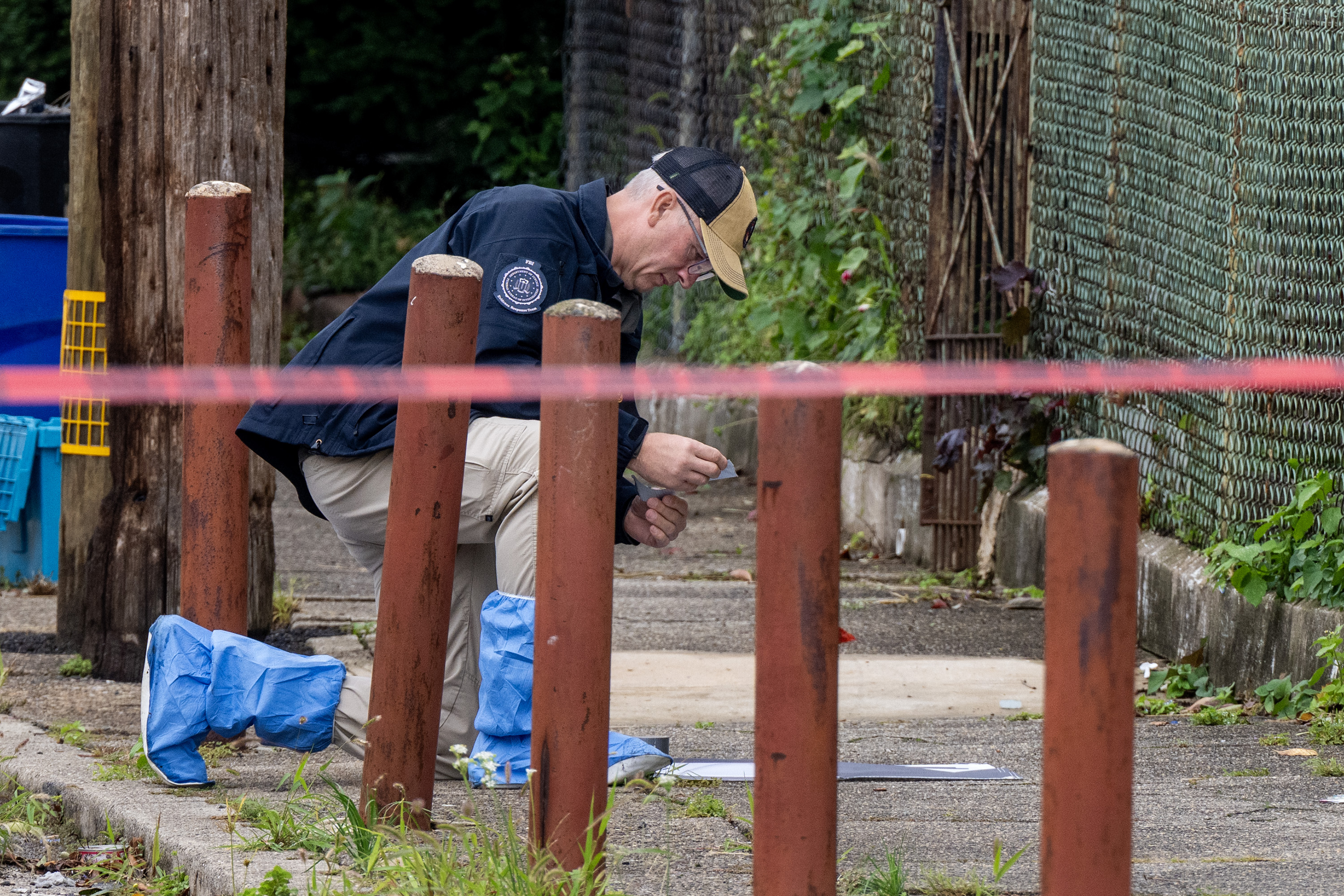
A member of the FBI Evidence Response Team outside on Monday during the beginning of a fresh week of investigative work inside the homeTom Gralish / Staff Photographer
Officers and reporters lifted police tape to help people on the cordoned-off block get out in their cars. Police kept watchful eyes over everyone who came and left, whether it be a neighbor on a bike or two workmen rolling boxes on a dolly up to the front door of a home beside Horsch’s. A squirrel darted toward the Horsch home on a telephone wire and turned back once the whirring of a drone grew louder.
Alexis Velez, a befreckled 18-year-old with Shirley Temple-esque corkscrew curls, lives about five minutes from the Horsch house. It’s smack between her and her grandmother’s home. She used to walk by the Horsch house daily to catch the bus to get to high school. She thinks about what could have been if she’d been in the wrong place at the wrong time.
“It’s terrifying, just thinking about it. I could have been one of those victims. I’m in the vicinity,” she said.
She’s now a freshman at La Salle University studying psychology, she said. Maybe one day she’ll come to learn what possesses the human mind to pursue violence. But, for now, it’s hard to wrap her head around it.
“I just think it’s insane,” she said.
The neighborhood had felt like a safe place where people looked out for one another, Velez said.
As she headed home, she struck up a conversation with two women. Sisters Theresa Yantz, 64, and Diane Matynka, 68, grew up in the Olney neighborhood but both now live in Lebanon, near Hershey. The two wanted to show Yantz’s daughter, Cara, 35, where they grew up and just how near it was to the Horsch house.
“We wanted to drive by and show her, how close that we hung out,” Yantz said after she and her sister whipped out their phones and started taking photos. “That’s why we’re here being so nosy.”
Yantz, Matynka, and Velez chatted about how the neighborhood changed since the sisters were children. Both sisters lived in Olney in the mid-1960s to late 1970s, and Yantz did another stint there in the early 1980s.
When Yantz and Matynka were young girls, they’d play on their bikes outside until the street lights came on. Decades later in the same neighborhood, Velez has had to persuade her protective father that he doesn’t need to chaperone her to class each day anymore.
Lately, though, she’s had a change of heart.
“After this, I might have him walk me a couple times,” she said.
The scene outside the former home of Raymond “R.C.” Horsch on Chew Ave. on Monday.Tom Gralish / Staff Photographer
Ten alleged drug traffickers, including the organization’s two reputed leaders, have been charged following a yearslong investigation into an operation that sent millions of dollars of cocaine into Philadelphia.
The operation originated at the U.S.-Mexico border and ended on the streets of Philadelphia and was responsible for distributing $5 to $10 million worth of cocaine to the streets of Philly every month, said David Metcalf, U.S. attorney for the Eastern District of Pennsylvania.
“Every prosecution that our office initiates aims to make our country and our community safer, but few have this magnitude of impact,” he said. “These are apex suppliers.”
The alleged traffickers were with charged with conspiracy to distribute five kilograms or more of cocaine and possession with intent to distribute, among other charges.
Five of the defendants were arrested Tuesday by the FBI and the other five were already in state or federal custody. If convicted, all face maximum sentences of life in prison.
Almost all the defendants involved had previously been prosecuted by the U.S. Attorney’s Office for similar offenses, Metcalf said, including alleged leaders Gregory “Smallz” Jones, 48, in 2009 and Edward “Beeb” Basley, 47, in 2007.
“This prosecution is not just of a drug trafficking network, it is the decapitation of a conspiracy to inject poison into our streets,” Metcalf said.
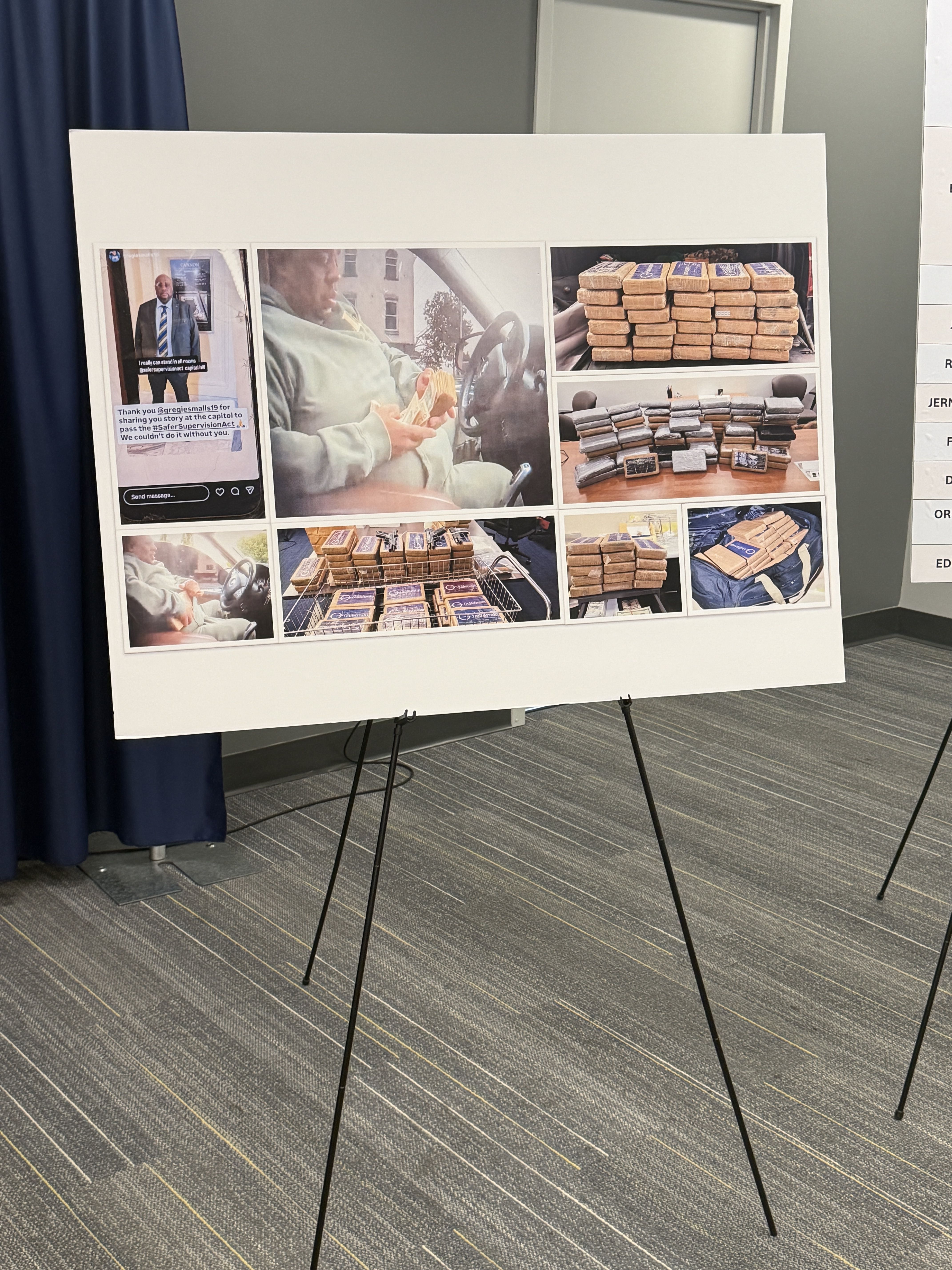
Photos from press conference on a recent takedown of an alleged drug operation in Philadelphia.Dana Munro
Jones allegedly served as the primary leader of the organization and procured the drugs from a supplier in Mexico, who delivered bulk shipments via tractor trailer to the Philadelphia area.
In May, one truck bound for Philadelphia containing 89 kilograms, or nearly 200 pounds, of cocaine was stopped in Knoxville by the Tennessee Highway Patrol, Metcalf said. The driver was Orenthial “D” Bailey, 50, one of the defendants, he said.
For the trucks that made it undetected to Philadelphia, Metcalf said, Jones met with the drivers in parking lots in and around the city to pay for and collect the cocaine. He would then meet up with his partner to deliver his share, after which both would distribute the drugs to customers and sub-dealers, according to Metcalf.
Cases like these are a top priority for the U.S. Attorney’s Office, Metcalf said, because the people at the top of drugoperations are generally the hardest ones to replace.
“It is not simply easy to have a relationship with a Mexican cartel member or a source of supply internationally,” Metcalf said. “That takes a great degree of trust, it takes a great degree of confidence. Those types of relationships and that type of infrastructure is difficult to replicate.”
A 33-year-old man from Pottstown is dead after he was ejected from his motorcycle Monday night when it crashed on a highway on-ramp in Northern Liberties.
Karl Kirschner crashed on the ramp from I-95 south to I-676 west. He was ejected from the motorcycle and landed on the street adjacent to the ramp around 11 p.m., Pennsylvania State Police said.
Kirschner, wearing a motorcycle helmet, was found alive but unresponsive at the intersection of Second and Callowhill Streets, police said. He had already been taken to Thomas Jefferson University Hospital by the time the troopers arrived. He died from his injuries at the hospital.
Troopers found the crashed motorcycle on the right shoulder of the ramp from I-95 south to I-676 west.
Details on what led to the crash were not immediately available.
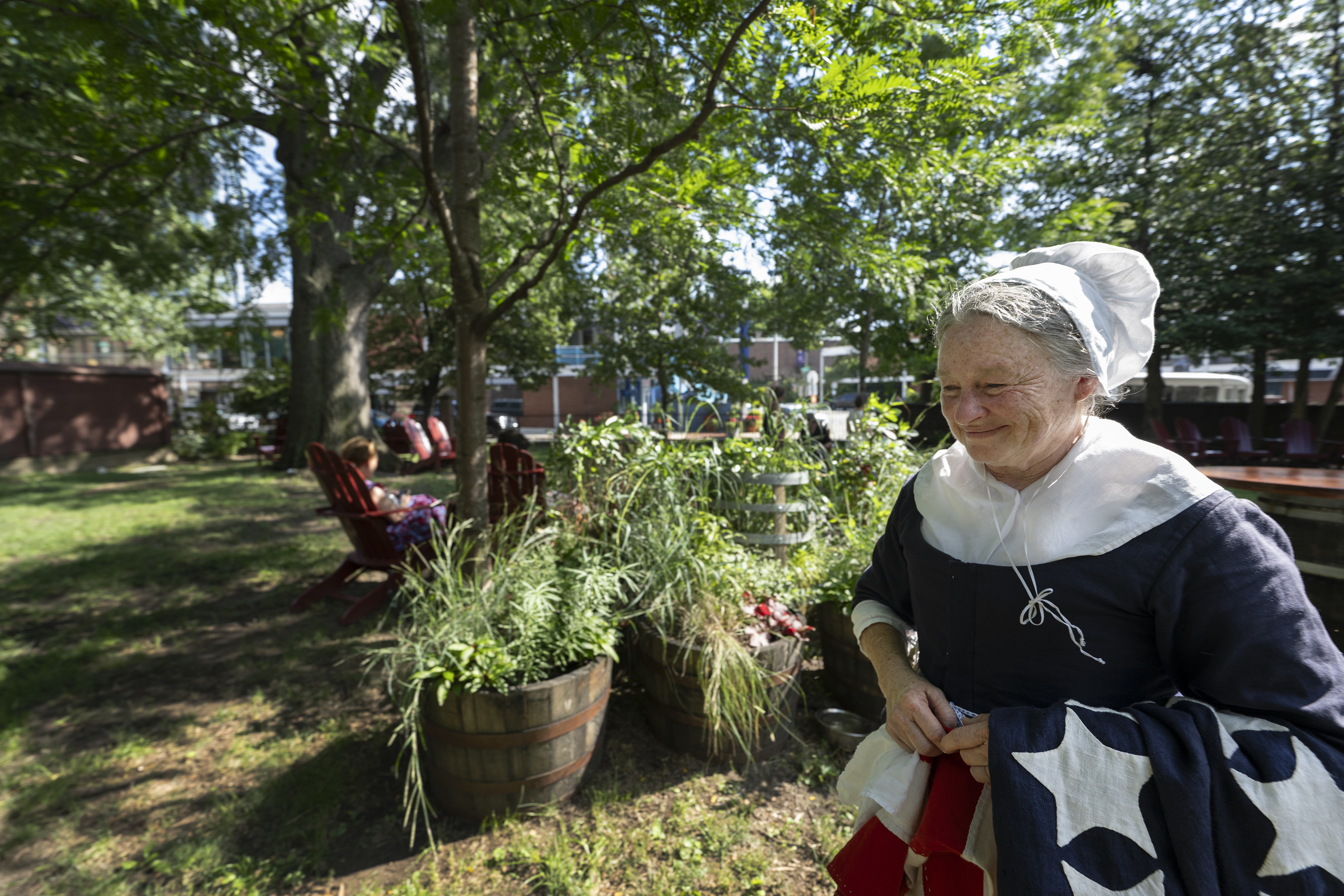
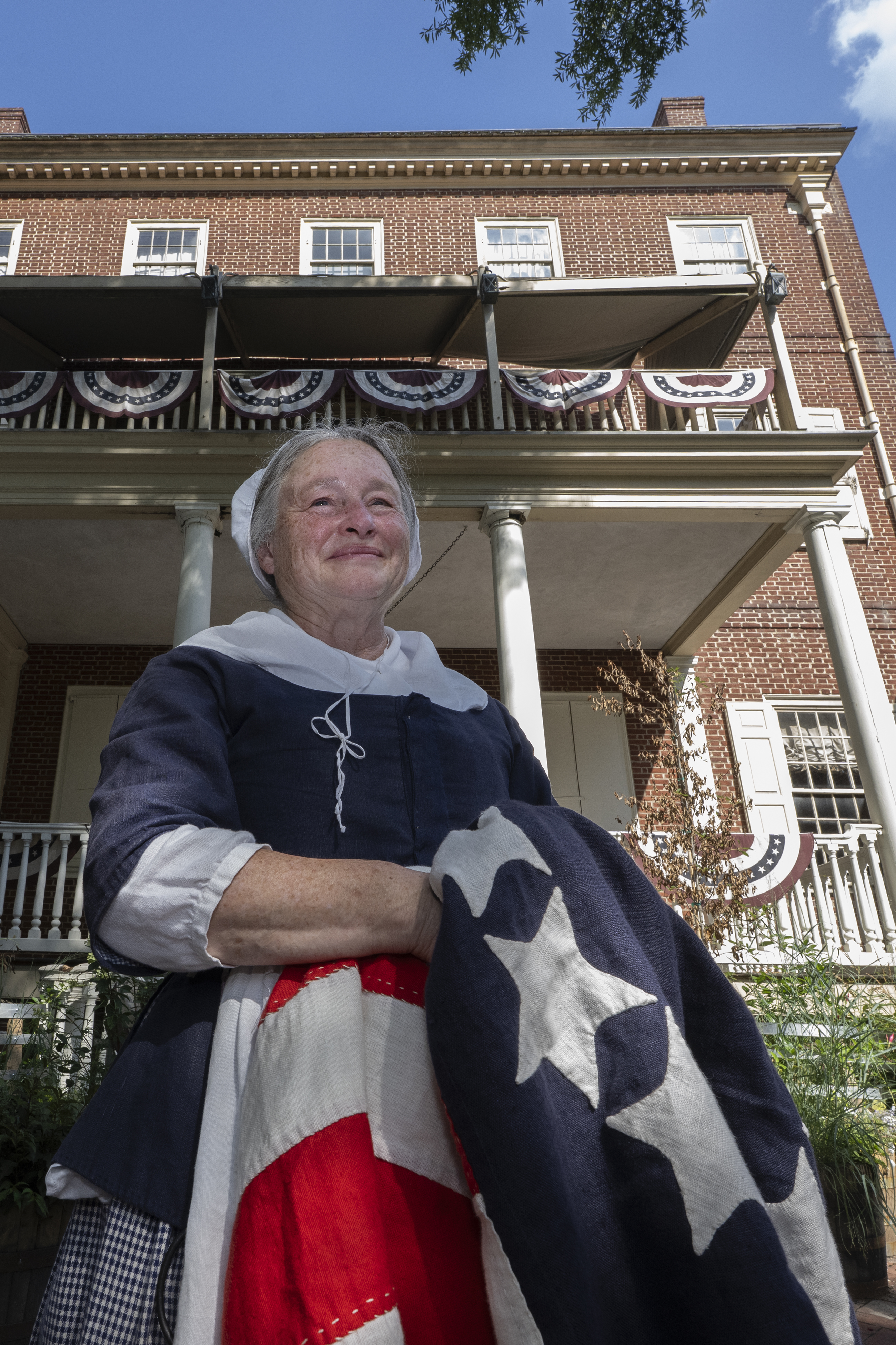
Her loose silver locks, twinkling blue eyes, and jovial smile have surely met your gaze at least one time this summer. You may have seen her likeness plastered to the side of a bus, on abillboard outside the Fashion District in Center City, or, if you’ve been lucky, you’ve seen all 4-foot-9 ofher in person.
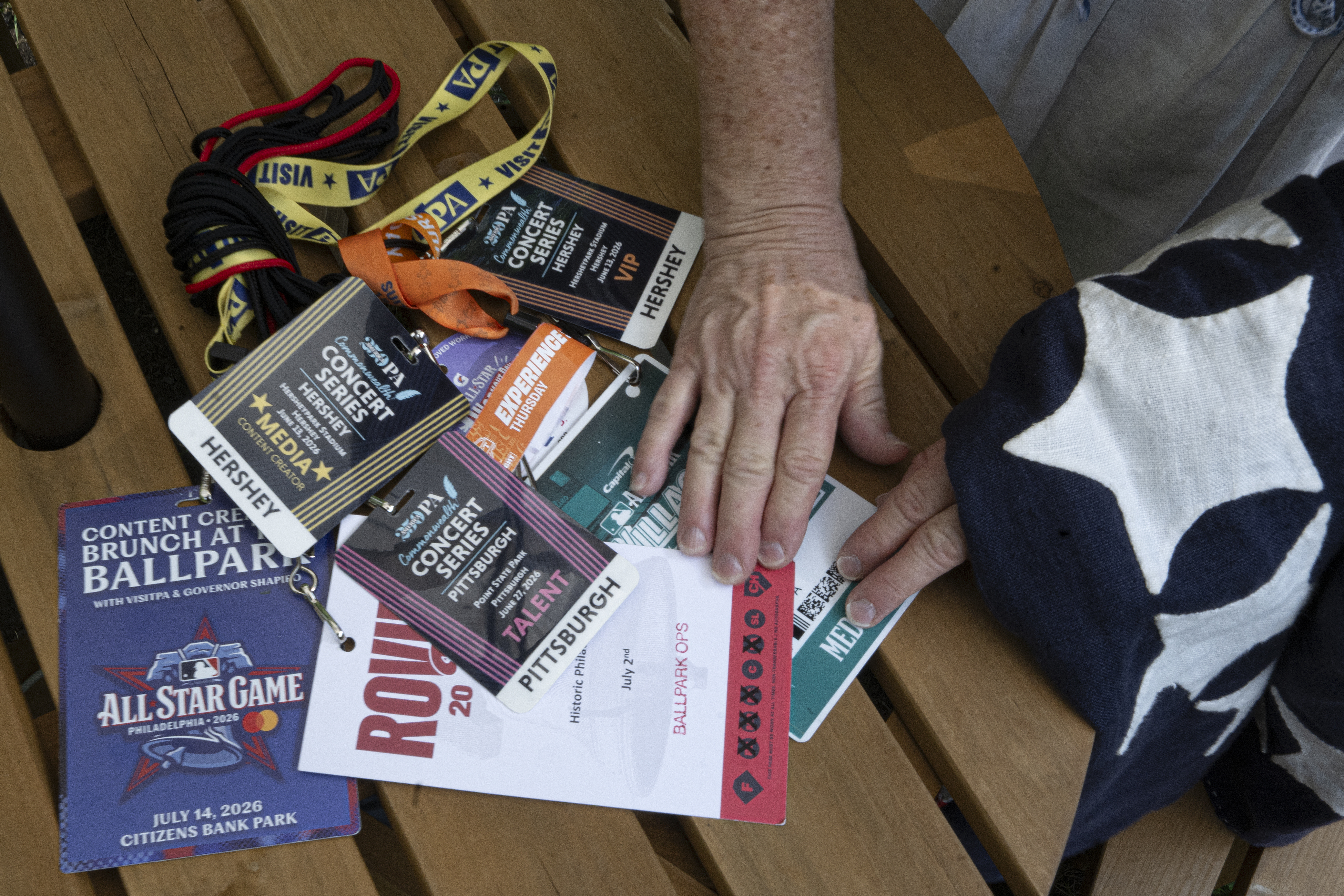
Carol Spacht, 70, has played Betsy Ross in the Philadelphia area for more than 30 years, but she’s never had a summer like this — one hosting rock concerts, strutting down red carpets with star athletes, and firing T-shirts into the sky from cannons.
A Visit PA advertisement in Center City featuring Carol Spacht as Betsy Ross.Visit PA
Betsy’s packed summer started with a kooky idea by tourism executives and representatives from some of the marquee events. To make the 250th summer really pop, Visit PA, the state’s tourism bureau, needed to stamp each summer event with something uniquely Pennsylvania. So it called upon Spacht as Betsy and Bill Robling, as Ben Franklin, as well as other recognizable Pennsylvania characters to become the state’s summer “playmakers” — essentially, hype men (and women) to appear at each big event.
Carol Spacht, who has portrayed Betsy Ross in Philadelphia for more than 30 years, poses for a portrait at City Tavern on Aug. 6, 2026. During Philadelphia’s Semiquincentennial summer, Spacht participated in celebrations surrounding events including the NFL Draft, MLB All-Star Game and a statewide free concert series, checking several longtime bucket-list experiences off along the way.Jose F. Moreno / Staff Photographer
Along the way, Betsy/Carol explored new cities, tried new sports, conquered some fears, and even kindled a brief but unforgettable summer romance.
Turns out that, even after more than 250 years, there are still plenty of new experiences to pursue.
Carol Spacht, who has portrayed Betsy Ross in Philadelphia for more than 30 years, poses for a portrait at City Tavern on Thursday, Aug. 6, 2026. During Philadelphia’s Semiquincentennial summer, Spacht participated in celebrations surrounding events including the NFL Draft, MLB All-Star Game and a statewide free concert series, checking several longtime bucket-list experiences off along the way.Jose F. Moreno / Staff Photographer
Since Betsy/Carol had a summer like no other, The Inquirer asked the Philadelphia celebrity to tell us about her top moments as the face of the United States’ 250th birthday celebration in Pennsylvania.
Where does Betsy end and Carol begin? After 30-plus years, even she couldn’t quite tell you anymore.
Betsy/Carol’s nine most memorable experiences this summer:
Tried a new food
It began with a lighthearted scuffle at an event they called the NFL Draft at Acrisure Stadium in Pittsburgh. On the concrete banks surrounding the field, on which the men in elaborate frocks romp and tumble, I found myself engaged in heated discourse with a man who calls himself Pittsburgh Dad.
He seemed to think that only experiences in Pittsburgh were civilized.
“You put Cheez Whiz on hoagies!” Pittsburgh Dad mocked. “I’d be happy to introduce you to a Primanti’s sandwich.”
This was my first jaunt to Pittsburgh, but Dr. Franklin and I entirely disagreed with him. We explained that Philadelphia had much higher civilization. The cheese and steak combination is a wondrous one!
But, resolved to maintain an open mind, Dr. Franklin and I ventured out that eve to Primanti Brothers to indulge.
The establishment bore an aroma not dissimilar to the scent of the rations the British offered my second and third husbands in prison. Perhaps some of these provisions were past their prime.
Nevertheless, I unwrapped my meal, beef twixt bread, without prejudice. I was dismayed to find the contents pouring out all over. I was certain these victuals wouldn’t fit evenly in my mouth. Nevertheless, I attempted a bite.
Immediately, I noticed the meat was covered in small sticks of potato that appeared to have been fried. The meal tasted of nothing, save wet potato and grease — simply vile.
I must speak plainly, I am decidedly no yinzer, as the Pittsburgh folk call themselves. I believe I’ll abide by cheesesteaks as my provision of choice forevermore.
Made a new friend
Weeks later, I ventured to Hershey, Pa. That eve, Joan Jett and the Avett Brothers would perform splendidly at Hersheypark for the America 250 PA Commonwealth Concert Series. ‘Twas a most delightful occasion and the venue smelled of chocolate! Delectable!
But my day’s peak came about hours prior, around midday, when I met a young woman named Cat Janisko. Together we were meant to capture moving portraits of ourselves enjoying the park for, as she explained to me, content for the Instagram. I had never traversed this village known as the Instagram, but being a woman of faith and deferential to my younger counterparts on these matters, I followed Ms. Janisko’s lead.
She wished to journey toward an enormous steel contrivance she called a roller coaster. I instantly bristled in apprehension.
When I looked to the top of it I glanced the fastest carriage I’d ever seen. It had no top, no horses and twirled along iron rungs. It seemed to defy all gravity. That bewigged fellow from England, Sir Isaac Newton, would have surely been confounded at the sight of it.
But then I spotted a procession of rather immobile horses encircling a festooned pole. ‘Twas known as a carousel, I learned. That seemed fitting, and so we embarked.
It had been centuries since I’d last mounted a steed, so my approach was less than dignified, but Ms. Janisko kindly offered a hand and together we rode, laughed, held a hearty discourse, and took pleasure in our budding fellowship.
Hosted a merry gathering, or, as the colony’s youths call it, a rager
Upon my return to Pittsburgh, I was advised to make for a promontory of sorts at a fork in the Ohio River — the yinzers called it Point State Park. That eve the rain was coming down with much force.
A company of musicians known as Third Eye Blind and a gentleman of song by the title of Nelly were meant to entertain the patriots that eve, the final performance in the America 250 PA Commonwealth Concert Series. I was tasked with introducing the fine performers.
I knew not of these songsters save that Mr. Nelly often remarked on being duly overheated in his jolly ditty “Hot in Herre.”
I stepped upon the stage and was rightly engulfed in lights of red and blue. I had no notion candles could shine in such hues.
Upon scaling the stage and taking my position in the center, I unfurled my small blue writing book and addressed the crowd.
Carol Spacht as Betsy Ross giving opening remarks at a Nelly concert in Pittsburgh.Beth Anne Spacht
“Tonight, I have been given the honor to help to celebrate the legacy of the country right here in Pittsburgh,” I bellowed, concluding with a rowdy “Huzzah!”
Being this was the last performance of the series, I beseeched the audience to “give me another huzzah!”
They obliged most graciously.
Fired a weapon of war
Back in my homestead of Philadelphia, I was presented with a most pleasing opportunity to fire a weapon from the grounds of Citizens Bank Park after the Philadelphia Phillies rightfully bested the Pittsburgh Pirates.
Mere moments before Dr. Franklin and I were meant to take the field, we were handed each a weapon and asked to engage in a few practice shots.
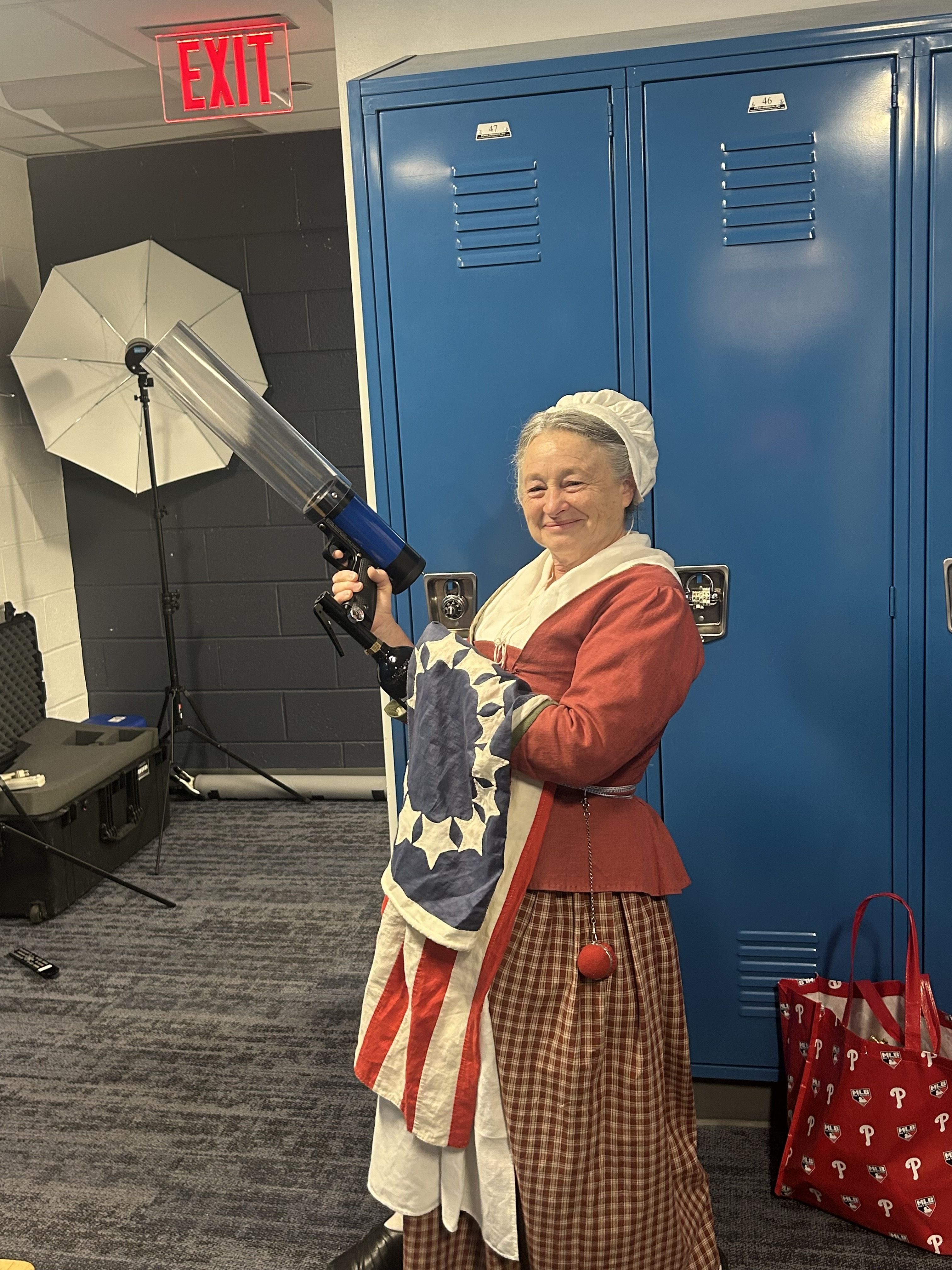
Carol Spacht as Betsy Ross poses with the Phillies T-shirt cannon.Mandy Tuttle
In my prime, I fashioned many a musket cartridge for our fine patriot men on the battlefields of the Revolutionary War. But this munition was decidedly softer and likely to inflict far fewer casualties.
The infantrymen with the Philadelphia Phillies presented me the cannon, but feared the “kickback” would be too much for my slight frame, they said. Pish posh, I decreed. After more than 250 years, I am rather sturdy.
I grasped the barrel of the weapon, drew a lever to pressurize the chamber, and pulled the trigger. The ammunition shot to the wall.
“Wow!” I exclaimed.
Not even a needle and thread could be so tantalizing.
I took to one corner of the field, Dr. Franklin to another, and Phil and Phillis, the Philadelphia Phillies’ homegrown militia members, took to the other corners.
Carol Spacht as Betsy Ross shoots a Phillies T-shirt cannon.Mandy Tuttle
I aimed my weapon high, but my munitions only reached the stadium’s second tier. Dr. Franklin reached the third but kindly refrained from boasting.
Carol Spacht as Betsy Ross on a Jumbotron at Citizens Bank Park shooting a Phillies T-shirt cannon.Mandy Tuttle
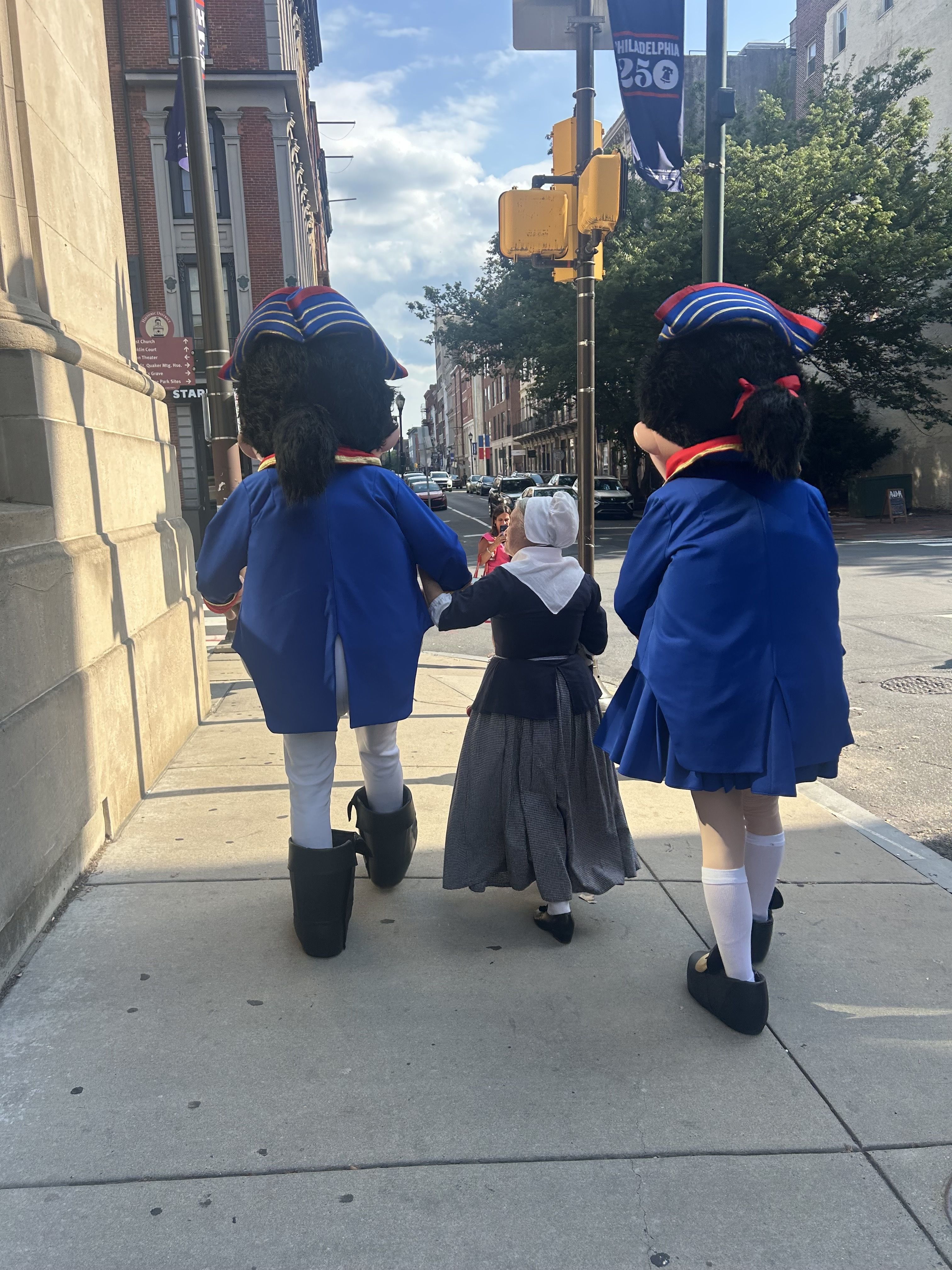
Soon after this, I again encountered Phil and Phillis,thePhillies’ twin mascots. I confided in the pair that my munitions only traveled to the second tier. They kindly shared a coveted privity. The longer a marksman pressurizes the chamber, the higher the munitions travel. To return the kindness, I gave the pair a few pointers on their curtseys.
Carol Spacht as Betsy Ross with Phil and Phillis in Philadelphia.Mandy Tuttle
Danced on the dugout with the Philly Phanatic
That same eve, I delighted in another new venture that I’d long awaited. Dr. Franklin and I were asked to dance beside the Phillie Phanatic on a section of the battlefield they call the dugout.
The Phillies infantrymen escorted Dr. Franklin and me through a tunnel and onto the field. We took our stations on either side of the Phanatic as a ditty known as “R.O.C.K. in the U.S.A.” by the fellow John Mellencamp graced our ears.
Suddenly, the Phanatic was holding some sort of large blue fiddle and strumming its strings. He handed it to Dr. Franklin who tried to play it with his teeth. It seemed to me most insensitive of him to boast a full set of teeth when our esteemed George Washington had so few, but I digress.
Soon, the Phanatic handed me the fiddle. I tried to play it rightly but found the instrument rather cumbersome, so I stood it upright and spun it round. It was nearly as tall as I am!
“Go Betsy,” a kind fellow in the audience hollered.
I pray no one informed the meeting of my transgression — Quakers aren’t meant to dance — but, oh, ‘twas such a delight!
Learned a new sport
During a series of events in Philadelphia that I’m told was called MLB All-Star Week — something regarding a stick and a ball — ‘tis of no consequence to me — I chanced upon a few youngladies, each one clutching the ends of two ropes.
I approached the fine young women from Philly Girls Jump, a group whose effort is to spark kinship among girls through sport.
“May I please try,” I inquired.
Upon my first attempt at this game they called “double Dutch” I stepped into the turning ropes and immediately became entangled. Pity. ’Twas quite unbecoming.
But one of the young patriots came to my aid.
“Dear Betsy,” the woman whispered. “Just jump in a steady rhythm. Don’t do anything else. We will do the rest.”
So I gathered up my petticoats, draped my flag over my arm, and attempted anew.
I leaped and leaped and the ropes flew under me, around me, and on top of me. ‘Twas most joyous an excursion.
Feeling venturesome, I endeavored to hop in a circle as the ropes turned. Most emboldened, I hopped clockwise, and then counterclockwise.
A marvelous little pastime it was!
Conquered a fear
The infantrymen of the Philadelphia Phillies invoked a new task for me amid MLB All-Star Week. They inquired about my interest in singing.
I am no songstress and have deftly avoided the activity. But I was told this style of singing, known as karaoke, would involve another voice and so I felt quite less vexed by the task.
Imagine my dismay when, during a practice, the man they called a disc jockey played me my song, “Philadelphia Freedom” by the lovely bespectacled gentleman Elton John, and all I heard was rhythmic cacophony, no second voice at all.
I feared this would prove the most disastrous of calamities.
To my horror, I soon learned this would not just be a singing performance but a singing competition among some performers, athletes, and myself.
As the penultimate competitor, I steeled myself, graced the stage outside Citizens Bank Park with feigned dignity and self-assurance and addressed the spectators of the MLB All-Star Fan Zone.
“Friends, my skill shall be with sewing. My skill is not with singing,” and so I beseeched: “Everyone must sing along.”
To my sheer delight, I soon discovered they were just as unlearned of singers as I! But we muddled through joyfully.
Next, a rather large gentleman named Jordan Mailata took the stage. I’m told he tumbles and romps in strange frocks in that game of football for the Philadelphia Eagles. He sang a ditty called “Eye of the Tiger” by a musical group known as Survivor.
He performed most wondrously. (Only a few years ago, Mr. Mailata competed on a visual program known as The Masked Singer, broadcast through all 13 colonies and beyond! How marvelous!)
Certainly, ‘twas no shock that he bested the competition, including myself, and was bestowed with the winning award.
But, as soon as he grasped the crystal trophy, he gazed upon my likeness.
“I’m actually going to give this to Ms. Betsy Ross because she did something incredibly brave,” he told the crowd.
My heart warmed! Even in the depths of war, kindness does persist.
Kindled a summer romance
Following that triumphant turnaround on the karaoke stage, Mr. Mailata and I ventured elsewhere in the fan zone to greet some young colonists who fancy the ball and stick game.
Before the young patriots could flank Mr. Mailata, I approached him.
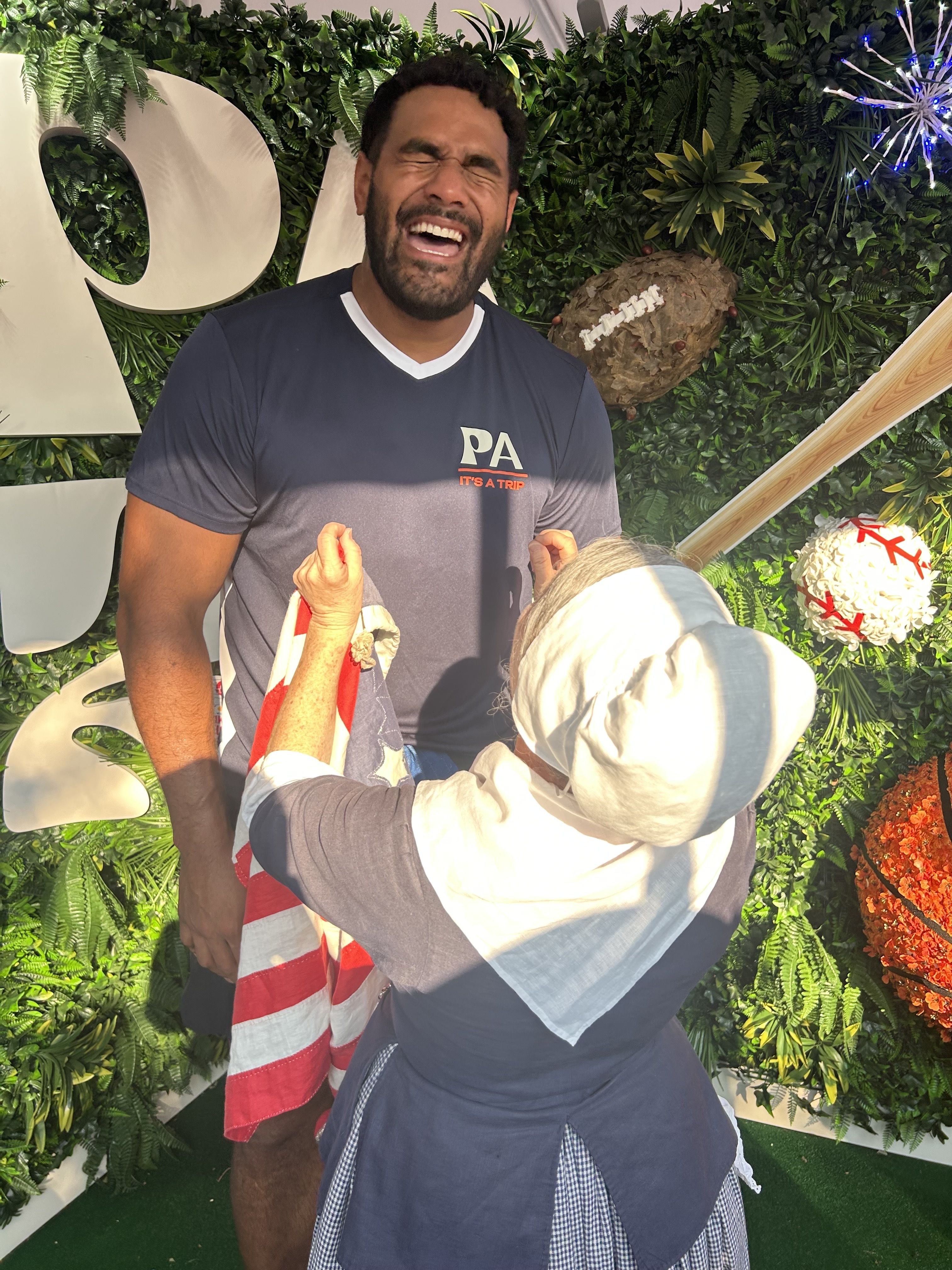
Carol Spacht as Betsy Ross with Philadelphia Eagles offensive tackle Jordan Mailata.Mandy Tuttle
I was eager to refresh him of the fact we’d encountered each other once before.
When Mr. Mailata was a fresh Eagle years ago, I made a right blunder when I met him and called him a giant due to his stature. He firmly corrected me that he is no giant, he is an Eagle.
His eyes lit up as I recounted the tale. We smiled and laughed and shared a warm embrace.
‘Twas a fleeting dalliance but one I shant soon forget!
Had a celebrity moment
On the verdant, dewy ground of Independence Mall, I was requested to participate in a celebration of this stick and ball game.
A red carpet would stretch much yardage across the grounds and all the most skilled sportsmen would walk down. Before they went, I’d be permitted to journey down the carpet myself alongside a wild collection of enormous creatures known as mascots.
I strolled the carpet bearing a flag alongside a lovely young woman named Mo’ne Davis, who also plays the ball and stick game — how marvelous that women may partake!
We carried our flags side by side and were followed by the most outlandish collection of drummers, musicians, and acrobats bending their limbs every which way! Would it be awfully vain to say I felt like a right monarch?
I had a chance to meet all the unusual creatures, many of whom were eager to show me their stars and stripes frocks. Mr. and Mrs. Met, clad in many a spangle, requested a portrait with me, as did Raymond of theTampa Bay Ray and Rosie Red of Cincinnati, another woman in this sporting field. Women really can do anything these days! How remarkable!
It was quite spectacular to have all eyes on me for a brief moment. I may have eluded many a history book, never having documented my greatest achievement, leaving historians to quibble for centuries, but I was pleased to find that it truly is never too late for a second act.
The museum opened in 1828, and moved to its current location on the Benjamin Franklin Parkway in 1876. Its last day with regular hours for the public will be Sunday, Sept. 27.
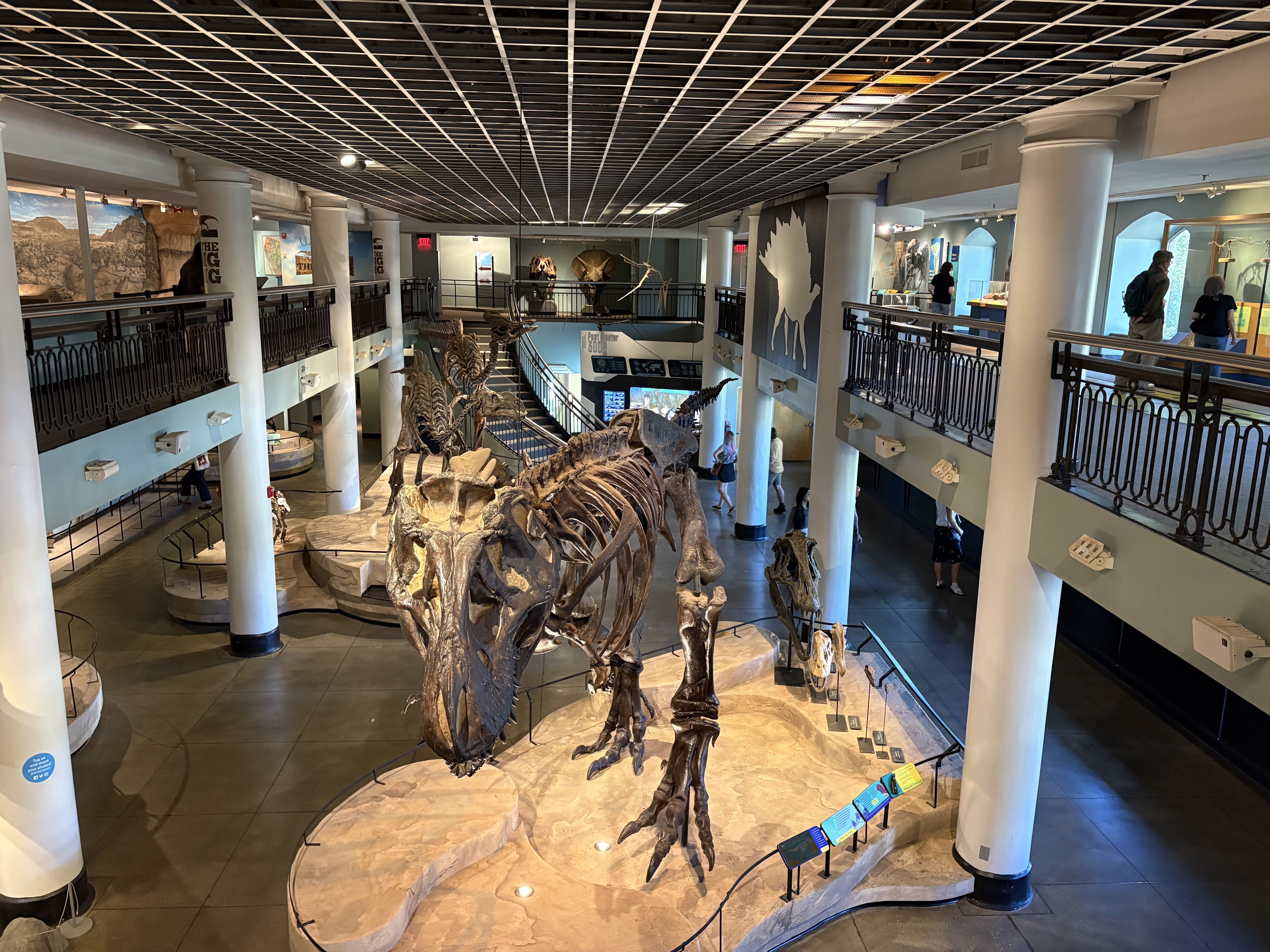
For some, the greatest loss was the sense of wonder children get when they peruse the museum, see bugs squirm, explore enormous nest displays and dioramas and, of course, lay eyes on the gigantic dinosaur skeleton.
“I’ll always remember the first time I went to the museum and I saw the dinosaur bones,” said Sakura Okuri, a 53-year-old retired FBI special agent who grew up in Germantown. “I’m just sorry that young kids aren’t going to be able to have that memory.”
Okuri, who now lives outside Pittsburgh, took comfort in knowing that if he missed something in one of the rich, expansive exhibits he’d have another chance because “it would always be there for me,” he said. “Apparently that’s not the case.”
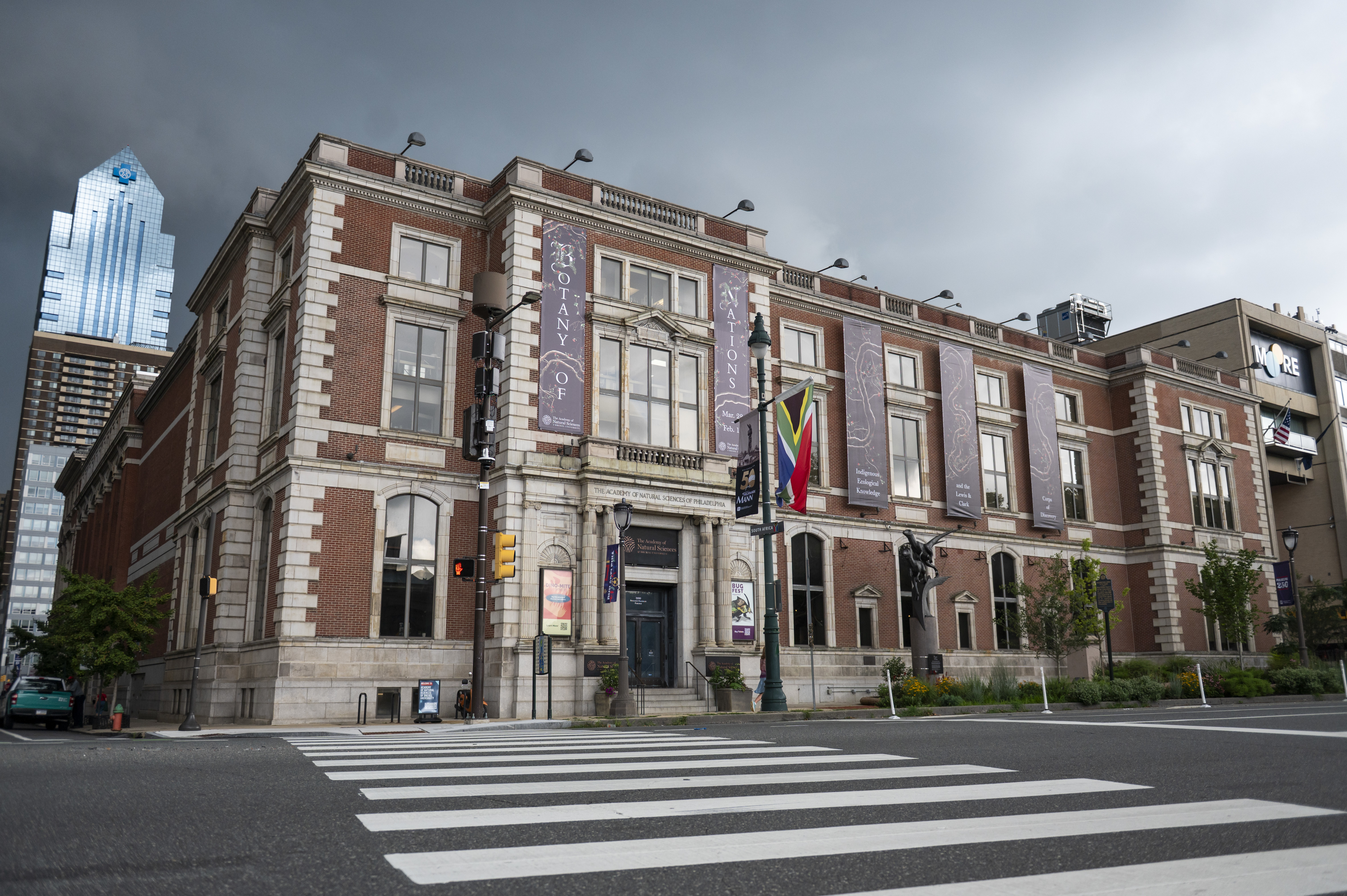
The exterior of the Academy of Natural Sciences on Aug. 5.Allie Ippolito / For The Inquirer
The news landed hard for 9-year-old Mira Thompson, who was leaving the Free Library of Philadelphia’s Parkway Central branch with her dad Tuesday afternoon when she got word. She’d gone to the Academy museum on multiple school field trips recently and was looking forward to more visits.
“That’s where I learned about pH testing last year,” Thompson said. “I didn’t know how to do that before going. I’m going to miss just being there.”
For many, it was a site of family bonding. Temple University senior Sean McClendon recalled fond memories there with his Opa, his grandfather, who worked at the museum taking care of owls and birds. Michael Ginsberg, a 60-year-old Northeast Philly native, remembers zealously volunteering to hold a hissing cockroach during a presentation at the museum to “get a rise out of my daughter.”
“My wife was not a fan of that,” he recalled. “‘Go wash your hands,’” she instructed.
One of two shell sculptures placed on either side of the entrance on the 19th Street entrance to the Academy of Natural Sciences of Drexel University.Tom Gralish / Staff Photographer
Ginsberg’s dad took him there when he was in first grade. Seeing the dinosaur bones in real life was a thrill after only knowing them on the pages of library books. He was shocked to see they were brown and not white like in renderings.
When he became a dad, himself, he started bringing his daughter.
“Dad, why are all the animals dead?” he remembered his then-toddler asking.
“They’re stuffed, hon,” he explained to her. “It’s a really cool art. It’s a way to get you closer. Just trust me, this is really cool stuff.”
The aim , ultimately, is to relocate the Academy’s collections and sell the building, which has a lot of deferred maintenance needs, said a source close to the talks between Drexel and the Academy, who asked not to be identified.
The interactive “Ocean Bound” exhibit at Academy of Natural Sciences in 2023.Courtesy of the Academy of Natural Sciences of Drexel University
Online, tributes poured in. Some said the museum inspired them to study museum education, others brought their kids there when they learned to walk, they said, or when the air-conditioning in their homes broke in the summer. Some parents considered it a seminal part of parenthood in Philadelphia; others relayed fond memories of bringing their kids with disabilities to the sensory friendly hour.
Kim Lynne, from Drexel Hill, often brought her 18-year-old son, Ethan, who is on the autism spectrum, to the museum starting around age 3. He appreciated the dinosaurs and bugs; she appreciated the discount Ethan’s medical needs access card granted them on the admission fee.
“He loved the third floor where they had the children’s area, the insects,” Lynne said. “He was into it early on.”
Colleen Hall, 45, often marveled at the museum when she passed by it during her years at Community College of Philadelphia. She then ventured in for social events and was wowed by the dinosaurs, butterflies, and polar bears. She enrolled at St. Joseph’s Museum and Cultural Heritage education graduate program in hopes of working there one day.
It’s hard to wrap her mind around the notion that the museum is really closing.
“My brain just isn’t going there yet,” she said when asked how she felt about the closure.
“It’s not the 11th hour yet,” she added.
For longtime Philadelphians, the loss of the museum marks another step in the city losing its character as shiny new facades slowly replace the old and storied institutions closing their doors.
“We are losing some of the things that make us a historic city,” said McClendon, the Temple senior. “I think that’s really something that’s part of Philly’s brand or image, not just cheesesteaks, and I think people might forget how much history there is because it’s so modernized.”
To those who’ve gone with parents and kids like Ginsberg, the facility is a generational treasure and one of the few places that Philadelphians of all ages, races, and socio-economic classes can enjoy.
“Our city is losing abig part of its heart,” he said.
Women in sun hats and men in baseball caps lugged suitcases and scurried up a ramp to board a hulking Norwegian Cruise Line Jewel ship Thursday afternoon. Moments later, thunder cracked, rain drizzled, and lightning lit up the Delaware River.
The passengers on Norwegian’s inaugural voyage out of its new permanent terminal at PhilaPort likely could not get out of the Philly region soon enough. They were headed to sunny Bermuda.
The opening of the $66 million terminal in Tinicum Township, Delaware County, followed Norwegian Cruise Line’s return to the Philadelphia area earlier this year, making it the first cruise line to sail from the region in more than 15 years and marking the return of the industry to the region.
Dan Farkas, EVP & General Counsel with Norwegian Cruise Line Holdings, speaks on the opening of a new terminal for PhilaPort Cruise Terminal on Thursday, Aug. 27, 2026, in Philadelphia.Tyger Williams / Staff Photographer
The seven-year partnership between PhilaPort and Norwegian will avail residents to journeys to various cruise destinations without having to travel to New York, Boston, or Miami, where Norwegian’s other East Coast ports are based.
The Jewel will make voyages to Bermuda until Sept. 26, and the Pearl will arrive in November, offering five-day to 14-day trips to Bermuda, the Caribbean, Bahamas, Canada, and New England through April 2028. In summer 2028, Norwegian will offer seven-day Bermuda and Atlantic Coast voyages aboard its Gem ship.
The return of the cruise industry to the area is anticipated to contribute around 2,200 new jobs and generate about $300 million in local economic activity annually, said Dan Farkas, executive vice president of Norwegian Cruise Line Holdings.
“It benefits all. It’s benefiting the local hotels, the restaurants, the transportation providers, as well as the many vendors that provision the ships,” Farkas said at Thursday’s new terminal unveiling, before marking the celebration by enjoying a tiny cheesesteak hors d’oeuvre.
The Norwegian Jewel Cruise ship at the new PhilaPort Cruise Terminal on Thursday, Aug. 27, 2026, in Philadelphia.Tyger Williams / Staff Photographer
The cruise industry evacuated the Philly region about 15 years ago as the ships companies were running outgrew the Navy Yard port, said PhilaPort spokesperson Sean Mahoney. About four years ago, Norwegian approached the port about sailing out of the region again, Mahoney said, but a series of obstacles related to siting, land ownership, and permits cropped up.
“There were times when it did not seem possible,” Pearson said. “But the PhilaPort board and staff pushed against the naysayers and the frozen river and, with the help of our partners, we got this thing done.”
At Thursday’s celebration, Norwegian presented a $20,000 check to Tinicum Township’s fire department and a $30,000 check to the Boys and Girls Clubs to benefit three local branches. The donations were part of the company’s Sail and Sustain program, aimed to benefit the communities where it runs services.
As the final stragglers boarded the ship to Bermuda, they enjoyed a quintessentially Philly send-off — being serenaded by a Mummers band in an unpredictable and muggy rainstorm.
As part of a settlement involving almost every U.S. state, Pennsylvania and New Jersey will each receive more than $500 million from Meta, the parent company of Facebook and Instagram, after a multistate coalition sued the tech giant for failing to protect kids from becoming addicted.
The two states’ shares are part of a larger payout ofthe $12.1 billion to $17.1 billion Meta will be required to make over the next 10 years to the states and U.S. territories involved in the suit. The exactfigure will depend on other social media companies agreeing to make similar changes.
Pennsylvania is expected to receive at least $516 million and up to $729 million, while New Jersey is expected to receive at least $525 million and up to $752 million, according to statements from each state’s attorney general.
“We can’t simply tell parents to do better while allowing technology companies to design platforms that are engineered to addict children,” Pennsylvania Attorney General Dave Sunday said during a news conference Wednesday. “Parents deserve better. Children deserve better, and today shows that Big Tech can do better — some just chose not to. Today is the first step in forcing Big Tech to do better.”
Meta did not immediately respond to a request for comment.
In addition to the monetary payments, the tech giant will also be required to make changes to satisfy the states’ concerns over child safety.
“As a parent, protecting your kids is always your North Star,” New Jersey Attorney General Jennifer Davenport said in a statement. “This agreement achieves critical protections for our children today.”
Neither attorney general commented on how the settlement funds would be used.
Instagram and Facebook will have to implement a combined two-hour daily time limit for child users with a mandatory pause after 15 minutes of continuous use and again at 60 and 90 minutes. These time limits will be in effect for five years. If Snapchat, TikTok, and YouTube — social media apps owned by other companies — agree to adopt similar terms, the daily limit on each platform would drop to 60 minutes and last for 10 years.
Child users also will not be able to access the websites from midnight to 6 a.m., will have limited access during school hours, and willnot receive push notifications on weekdays between 8 a.m. and 3 p.m. during the school year.
The company will be required to bolster its age-assurance measures to more accurately verify the age of users. It will also need to improve its age-appropriate content controls to better shield child users against bullying, content promoting eating disorders, and content related to suicide and self-harm.
Meta will have to limit its social comparison features, including beauty filters and visible tallies of likes on posts, and willbe required to make parent controls stronger and more user-friendly.
“These are changes that matter because they directly address how young people interact with these platforms, how long they use them, when they use them, what they are exposed to on these platforms, and the role that parents can play in keeping them safe,” Sunday said.
These changes, which are required to be enacted in the next six months, will be regularly assessed by an independent auditor and the settling parties.
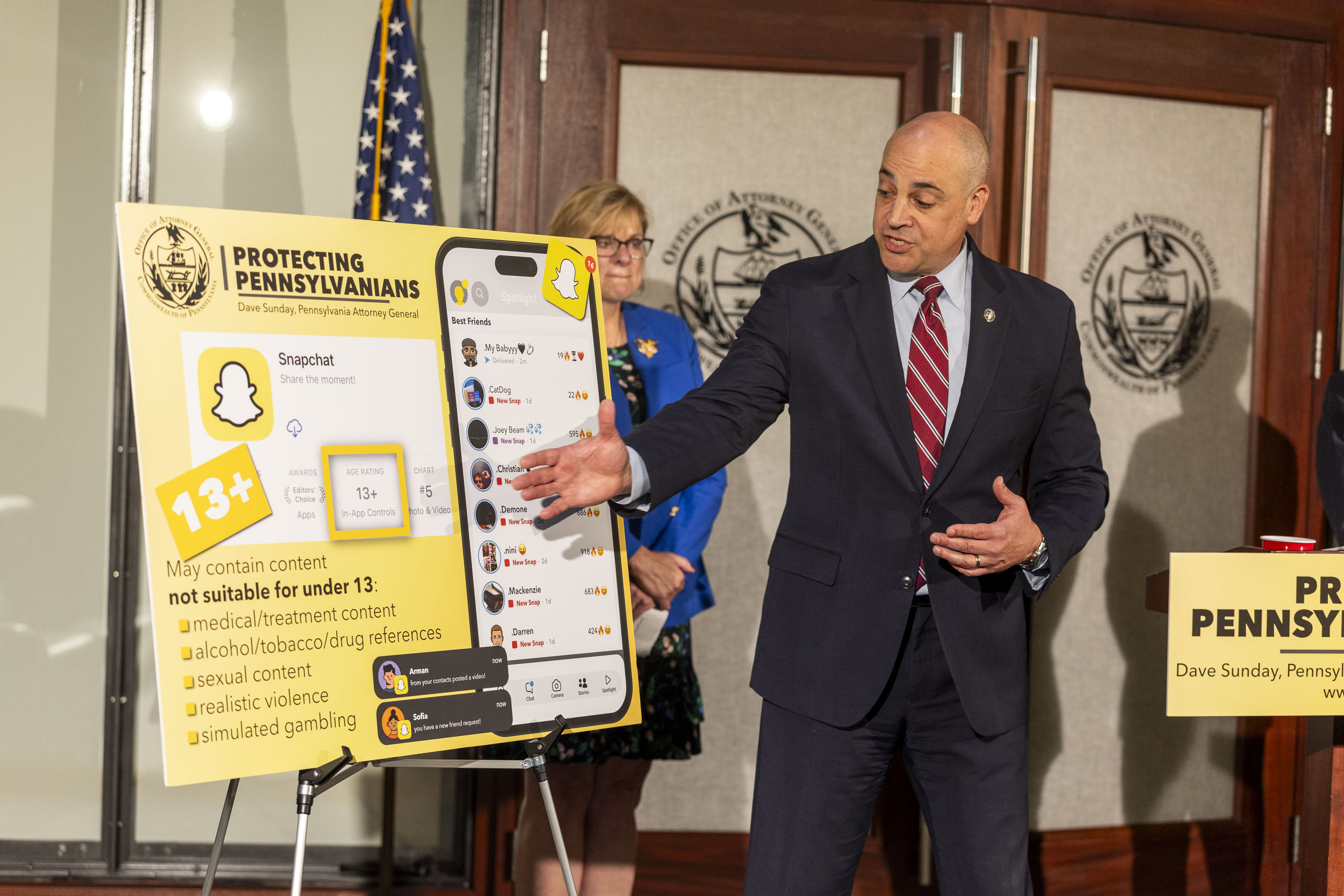
“Both of these actions reflect my priority as attorney general to protect our young people from tech giants who are choosing growth at all costs over the mental wellness of its users,” Sunday saidTuesday at a news conferencein Philadelphia.
The suit alleges that Snap Inc., owner-operator of Snapchat, does not properly warn users of the addictiveness of its features and does not protect children properly from compulsive use.
“The allegations against Snap fundamentally misrepresent our platform and our approach to teen safety,” a Snap spokesperson said in a statement. “We share the Attorney General’s commitment to protecting young people online and are disappointed they have chosen litigation rather than working with us toward that shared goal.”
The complaint, which Sunday’s office filed this week in Common Pleas Court in Philadelphia, asks the company to take steps to protect children from becoming addicted. It cites the SnapStreak feature and the ephemeral nature of the content as examples of ways the app hooks teens specifically.
“To a 13-, 14-, 15-year-old, social acceptance is everything,” Sunday said. “The streak feature puts a tangible value on friendships and influences a child’s feelings of self-worth.”
The app sends an implicit message that the more a child is on the app, the more friends they will have and the more socially accepted they will be, Sunday said.
“That exploits the fear-of-missing-out culture to the absolute extreme,” he said.
It also alleges that Snapchat improperly promotes how frequently adult-themed material — including sexual content and nudity, suicidal ideation, and drug use — appears on the platform to achieve an age-13-plus app rating in app stores.
Through this litigation, Sunday said, he hopes to see Snapchat required to provide a more honest depiction of its content to app stores so it can be marked with a more mature rating, and to change its algorithm to be less addictive.
Montgomery County similarly sued some of the nation’s largest social media companies, including Snapchat’s and TikTok’s parent companies, in a federal court in Northern California earlier this month.
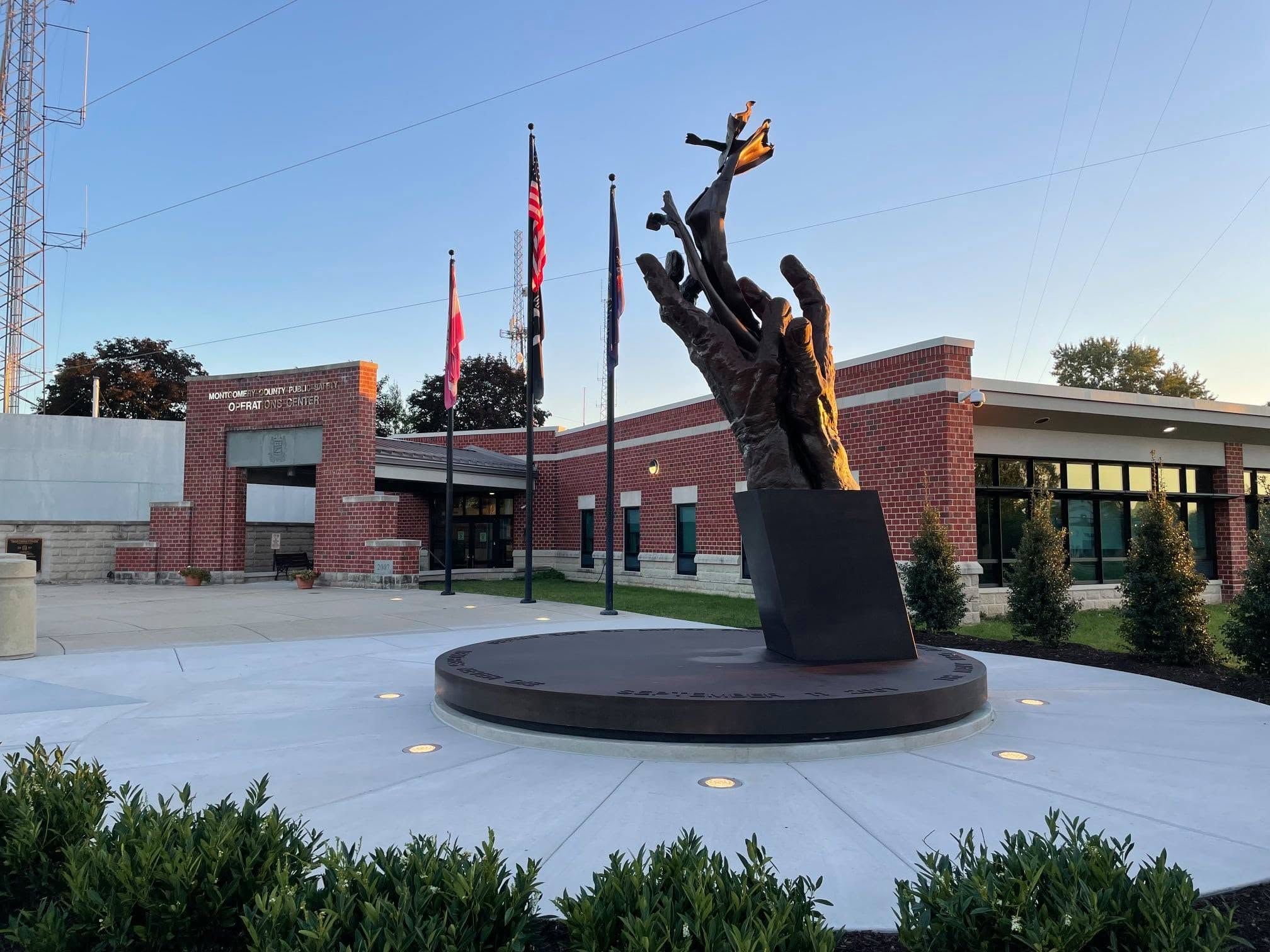
Montgomery County will move its 9/11 memorial to Elmwood Park in Norristown on Sept. 1 in advance of the 25th anniversary of the terrorist attack.
The goal is to make the memorial more accessible for county residents and visitors than it is at its current location at the county’s emergency operations center in Eagleville, Jamila H. Winder, chair of the Montgomery County Board of Commissioners, said in a statement.
The monument, which was commissioned by the Montgomery County Board of Commissioners in 2003, was created by sculptor Sassana Norton, who used an I-beam from the North Tower of the World Trade Center in the 18-foot monument honoring victims and first responders. It was erected at the Montgomery County Courthouse in September 2005and then moved to the Eagleville campus in 2021 due to courthouse construction.
Members of the public are invited to watch the procession of the memorial starting at 9 a.m. on Sept. 1. The monument will travel from Eagleville through Lower Providence and West Norriton Townships to Elmwood Park in Norristown. The procession will be accompanied by a Norristown Police Department motorcycle escort as well as other first responders and representatives from across the county.
A rededication ceremony will be held at 10 a.m. on Sept. 11 at Elmwood Park.
“Norristown is proud to host the County’s 9/11 Memorial in Elmwood Park,” Rashaad Bates, president of Norristown Municipal Council, said in a statement. “We are honored to provide a permanent home where residents can gather to remember, reflect, and pay tribute to those whose lives were forever changed on September 11.”
Iemad Saifo, the 65-year-old owner of Zena’s American Mediterranean Cuisine in Collingswood, has been released after spending two weeks in ICE detention at Delaney Hall in Newark, N.J.
Saifo emigrated to the United States from Syria in 2002 on a business visa and later sought asylum after the outbreak of the Syrian civil war. He was detained during a routine ICE check-in July 31.
Saifo is the primary caregiver for his 12-year-old son, who has autism. The elder Saifo also has spasmodic dysphonia, a rare condition that makes it difficult for him to speak, as well as chronic kidney disease.
Dozens of Collingswood-area community members wrote letters and signed a petition urging the court to keep him in South Jersey with his family.
As President Donald Trump pushes his mass deportation agenda, routine check-ins have become increasingly risky for immigrants. Immigration advocates say many of those who have been arrested at ICE check-ins were simply following government protocols.
Last week, New Jersey Attorney General Jennifer Davenport announced her office was investigating Delaney Hall after multiple detainees died there during the last year, raising concerns about the facility’s conditions and medical negligence. The privately operated detention center under contract with ICE has been the scene of fierce protests and political fights between the Trump administration and Democrats since its May 2025 reopening.
U.S. Immigration and Customs Enforcement said in a statement that Iemad Saifo was arrested both because he does not havepermanent status and because of a 2018 case in which he was indicted and found guilty of witness tampering and sentenced to five years’ probation.
“Under President Trump and Secretary Mullin, ICE is targeting the worst of the worst,” a Department of Homeland Security spokesperson wrote. “Nearly 70% of ICE arrests are of illegal aliens charged or convicted of a crime in the U.S.”
One of Saifo’s attorneys, Fiona Powell, credited the 150 notarized letters from community members testifying to his character with helping secure his release.
“This was an outpouring of community support like I’ve never seen before,” she said.
Those letters were authored last weekend during an event that friends, family, and community organizers hosted at his restaurant.
Many in South Jersey know Iemad Saifo from his restaurant, which opened in 2011, and from the nearly 10 years he previously spent working at a local 7-Eleven, said his 27-year-old daughter, Zena Saifo, for whom the restaurant is named.
Zena Saifo said she, her mother, and one of her brothers were granted asylum after the war began. Her father never heard back from the Department of Homeland Security on his asylumapplication, she said,so he later applied for permanent residency through his younger son, who was born in the United States.
“He’s always willing to help people, to give,” Zena Saifo said of her father.“People are really enraged and disgusted by what’s happening and doing everything they can to support him.”
Zena Saifo is still reeling from the day of his detention, she said, when she, her brother, and lawyers arrived at the Mount Laurel ICE office for the check-in around 7:30 a.m. and were made to wait until past noon. The Saifos’lawyer notified Zena her father would be detained. She tearfully pleaded with the ICE officer to let her say goodbye to him but was denied, she said.
“‘Was this the last time I saw my father?’” Zena Saifo recalled wondering in the moment. “It was just really, really devastating.”
In the period since Iemad Saifo’s detention, two of his sons,ages 24 and 26, have taken over the restaurant. His wife has stayed at home and taken care of the youngest. He turned 12 last weekend without his father present.
Zena Saifo said her father’s two requests of her in his absence were to water the family fig tree and to host a big celebration for her brother’s birthday.
On Friday morning, the family was en route to pay the $7,500 bond and pick Iemad Saifo up from Delaney Hall, Powell said.
The 2018 charge was brought up during the bond review, she said, but “in the end the judge was able to see that he’s an older man with a family who needs him and strong community ties and that he deserves to be home with his family.”
Going forward, Iemad Saifo’s legal team will do all it can to secure permanent residency for him. In the interim, Powell said, immigrants are always at risk of detention regardless of their circumstances. The Trump administration has issued 46,000 orders of removal or voluntary deportation since the start of last year in Pennsylvania, New Jersey, and Delaware, more than in the entirety of former President Joe Biden’s term. In New Jersey’s courts, orders of removal or voluntary departure rose 47% just between May and June, from 2,348 to 3,446.
However, to legally detain Iemad Saifo again, the government would need to show something about his situation has changed.
“It could take potentially months or years more in order to get him permanent status here, but we will continue doing everything we can to keep him here,” Powell said.