Author: Erin McCarthy

  • Surfside has taken over the U.S. alcohol industry. But its founders say the brand is staying put in Philly.

    Surfside has taken over the U.S. alcohol industry. But its founders say the brand is staying put in Philly.

    At a grand-reopening celebration at Stateside Live!, Stateside Vodka president Matt Quigley’s wife, Megan, grabbed his arm and beckoned to the crowd around them in disbelief.

    Nearly half the revelers were drinking a Surfside, Stateside’s wildly popular take on hard iced tea, or a Super Lyte, the company’s latest canned cocktail.

    “She goes, ‘What the hell did you guys do?’” Quigley recalled with a laugh.

    The couple noticed an abundance of the colorful cans while walking around the Philly stadiums’ renovated bar complex, for which Stateside had recently bought the naming rights.

    “It was just such a prideful moment of like … we’re here to stay,” Quigley said.

    Just a couple years earlier, fellow cofounder and CEO Clement “Clem” Pappas looked around Citizens Bank Park to see as many Surfsides as Miller Lites in the hands of Phillies fans: “Holy s —, this is happening,” Pappas recalled thinking at the time.

    At their massive new Center City headquarters last week, Pappas and Quigley said Surfside’s astronomical rise still feels surreal.

    In 2015, the area natives founded Stateside Vodka in a distillery near Kensington with their brothers, Zach Pappas and Bryan Quigley. The company started selling canned vodka sodas in 2021. But they launched into a different stratosphere when they debuted their spiked teas and lemonades in 2022.
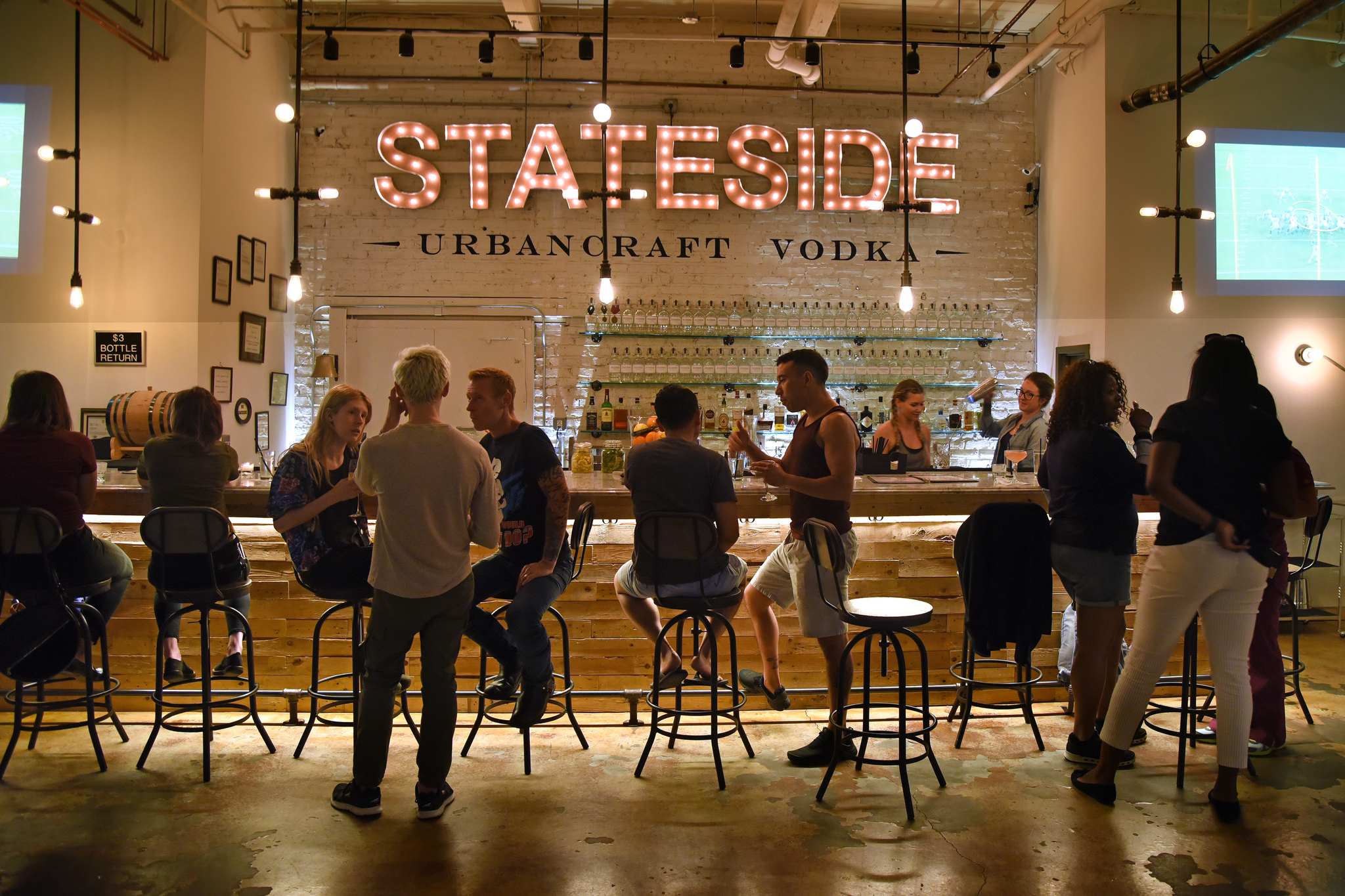
    Stateside Vodka’s taproom near Kensington is pictured in 2017, when it was called Federal Distilling. TOM GRALISH / Staff Photographer

    Branded as lower-calorie, better-for-you booze, the Surfside cans took off. The cofounders said they sold 200,000 cases in the first year, then 1.3 million in 2023, nearly 5 million in 2024, and a whopping 11.1 million cases last year.

    The “slammable” 4.5% ABV cans, as Matt Quigley describes them, are particularly popular in the summertime, a three-month period that accounts for about half the beverage company’s retail sales.

    So far this year, Stateside is on track for 70% growth in overall sales, and a 65% growth in Surfside sales, according to the company. That comes after a record year in which the company recorded 111% overall sales growth.

    (function(){function e(){window.addEventListener(`message`,function(e){if(e.data[`datawrapper-height`]!==void 0){var t=document.querySelectorAll(`iframe`);for(var n in e.data[`datawrapper-height`])for(var r=0,i;i=t[r];r++)if(i.contentWindow===e.source){var a=e.data[`datawrapper-height`][n]+`px`;i.style.height=a}}})}e()})();

    As a private company, Stateside does not have to publicly disclose earnings, and executives declined to share specific sales figures.

    While Surfside has accounted for about 90% of sales in the past year, the top executives are bullish on their latest invention, a sports-drink-inspired canned cocktail called Super Lyte. They said the new beverage had sold nearly 400,000 cases in three months, meaning it could outpace Surfside’s early growth.

    “The initial response is way beyond our expectation,” Clem Pappas said. “It feels like another hit.”

    Stateside is ascending despite a historic decline in drinking, with just over half U.S. adults saying they imbibed last year. Beer, wine, and spirits are decreasing in popularity. Ready-to-drink cocktails are the only major segment seeing consistent growth, and Surfside has been leading the pack.

    The company has achieved this success without the backing of an alcohol giant like Anheuser-Busch InBev or Molson Coors, which together manufactures hundreds of brands.

    Quigley, 42, and Pappas, 52, said they’ve been approached by nearly every big beverage company, but they have no interest in selling anytime soon.

    “As long as you’re still having fun, I see no reason to hang up the metaphorical cleats,” Quigley said.

    “I don’t want to sit on the bench. I want to be in the game,” Pappas said. “We still think it’s early days.”

    Stateside keeps Philly at its heart amid national growth
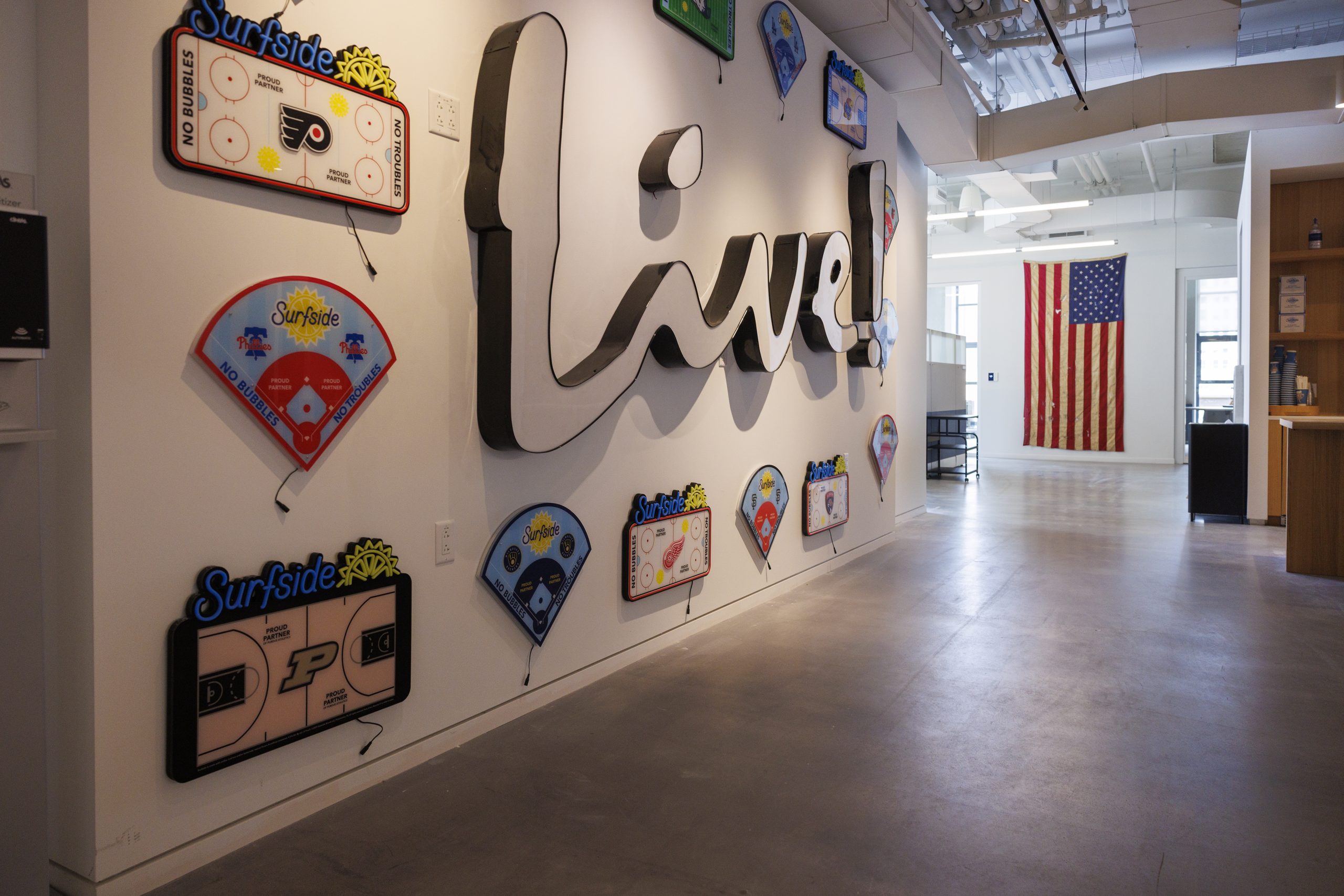
    A wall at Stateside Vodka’s new Center City headquarters shows a handful of Surfside’s 170 partnerships.Alejandro A. Alvarez / Staff Photographer

    In Stateside’s earliest days, Quigley recalled confiding in Pappas about a pipe dream: “If we ever get super successful, I want a sick office in a high-rise in Center City.”

    More than a decade later, they have moved from a temporary office in Feasterville-Trevose, Bucks County, to a chic new headquarters at 11th and Ludlow Streets in Market East.

    The company plans to stay put for at least 10 years, the cofounders said. For now, about 80 employees work there four days a week with room to grow.

    On a recent day, the office was humming during a new-hire orientation. While everyday operations include the same mundane tasks required of any business, the top bosses pride themselves on keeping the vibes light. “We’re not selling, like, car insurance,” Quigley said.

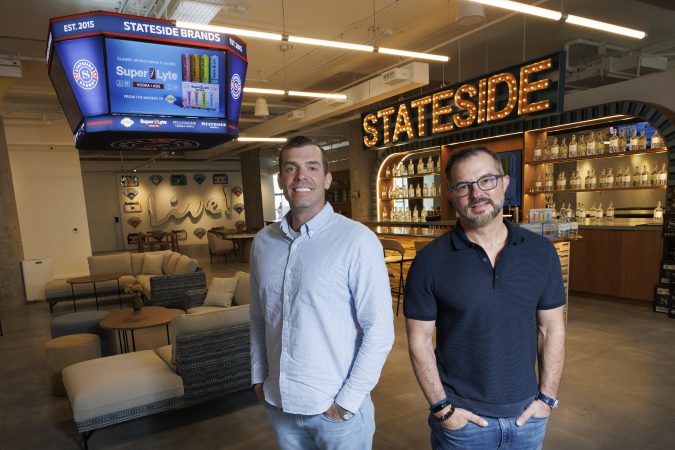
    The bright industrial-style space occupies 34,200 square feet across two floors. It is centered around a long bar with a backlit Stateside marquee, a replica of the one at the tasting room. Nearby, there’s an open lounge with couches, underneath a miniature Jumbotron. Ads for Surfside, Super Lyte, and Stateside rotate on the screens.

    Office happy hours are a given.

    “That’s part of the special sauce,” Pappas said. “We’re in the drinks business.”

    Philadelphia has always been at the heart of the company. It’s where they landed their first partnership with the Phillies, which fueled Surfside’s rise. At Citizens Bank Park, the cans have been the top-selling spirit since 2023, according to Stateside executives, citing figures from concessions provider Aramark.

    Across the city, the cofounders still run the 7,500-square-foot Kensington-area tasting room and distillery, the latter of which they hope to turn into an event venue.

    The distillery has been outgrowing its space for a while. But the need intensified in the past year as the vodka’s retail sales increased 120%.

    They attribute the boost in part to greater name recognition thanks to Stateside Live! They said they hope to move vodka production to a larger facility somewhere in the Northeast.
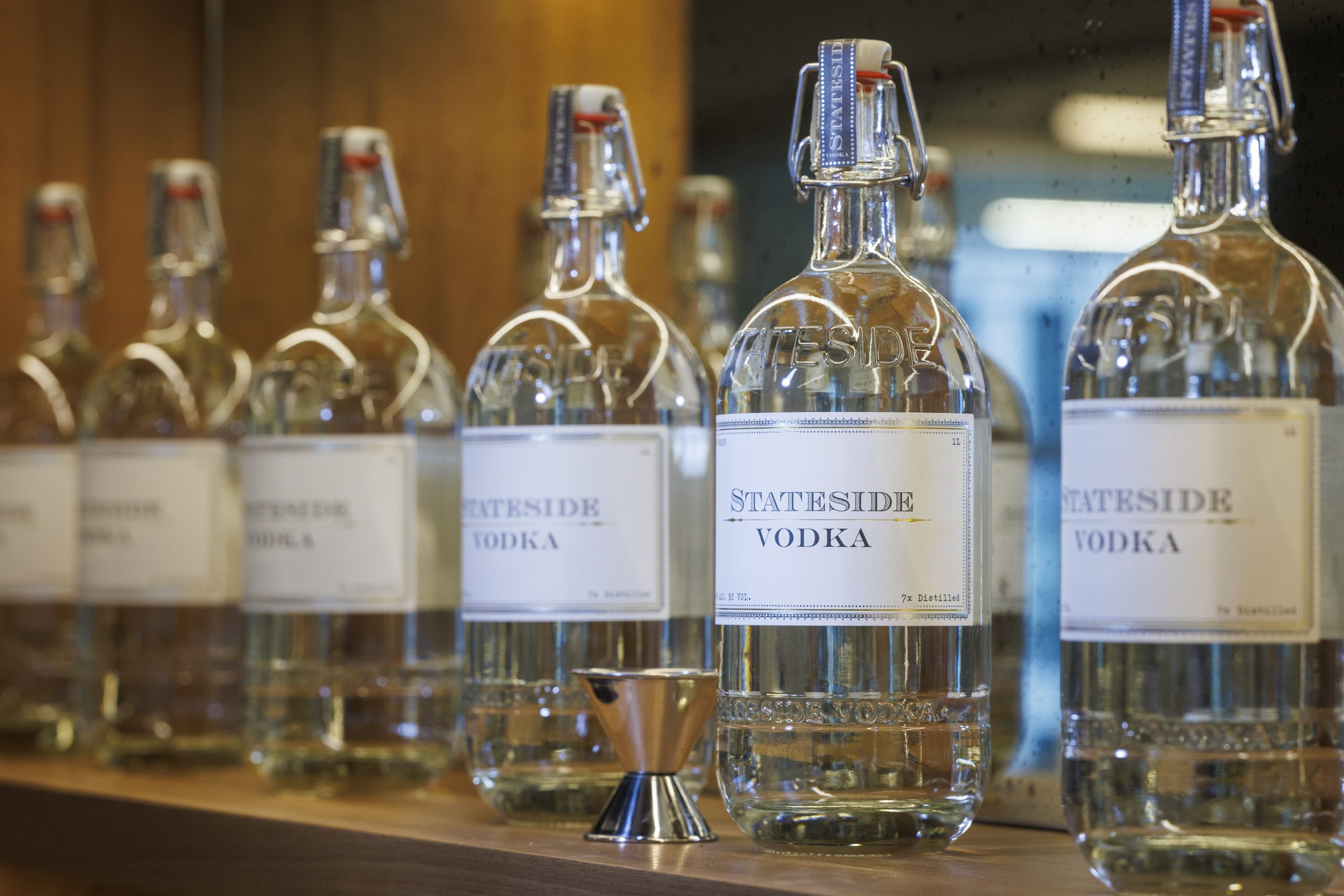
    Sales of the original Stateside Vodka, displayed at the company’s office bar, have grown 120% year over year.Alejandro A. Alvarez / Staff Photographer

    The cofounders have also stayed local: Quigley, a Fort Washington native, lives in Kensington, and Pappas, originally of Vineland, is in Haddonfield.

    Stateside’s reach, meanwhile, has expanded far beyond the region. The company employs about 340 nationwide, up from around 30 in 2022, executives said, and they sell in all 50 states through a network of more than 200 distributors.

    Across the country, Surfside has racked up 170 partnerships, including with MLB teams, music festivals, and colleges. Super Lyte has already acquired more than a dozen partnerships, too, including at Penn State, where they said it will be sold at Beaver Stadium this fall.
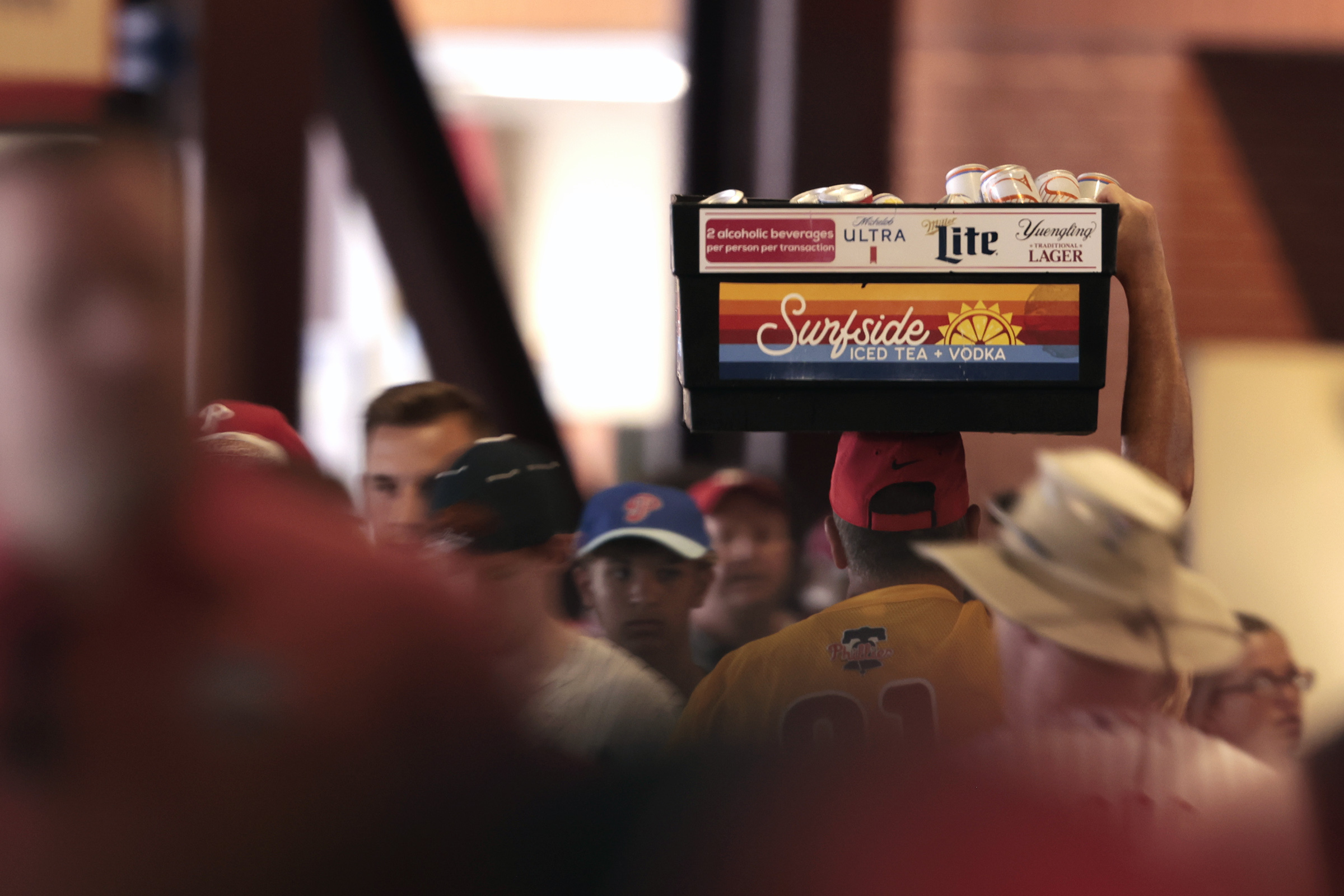
    A hawker carries drinks, including Surfsides, around the concourse at Citizens Bank Park in 2024. The brand now has 170 partnerships at venues nationwide.Elizabeth Robertson / Staff Photographer

    In many ways, the cofounders said, they’re trying to replicate the strategy that proved successful with Surfside at Citizens Bank Park: Connect with consumers somewhere where it feels only natural to grab a refreshing, familiar-tasting beverage.

    “You’re at a hot baseball game,” Pappas said. “You got a hot dog. You got a soft pretzel. You got an iced tea” — or, rather, a Surfside.

    Compared to seeing a new canned cocktail at a beer distributor, he added, “It’s more of an authentic, emotional connection.”
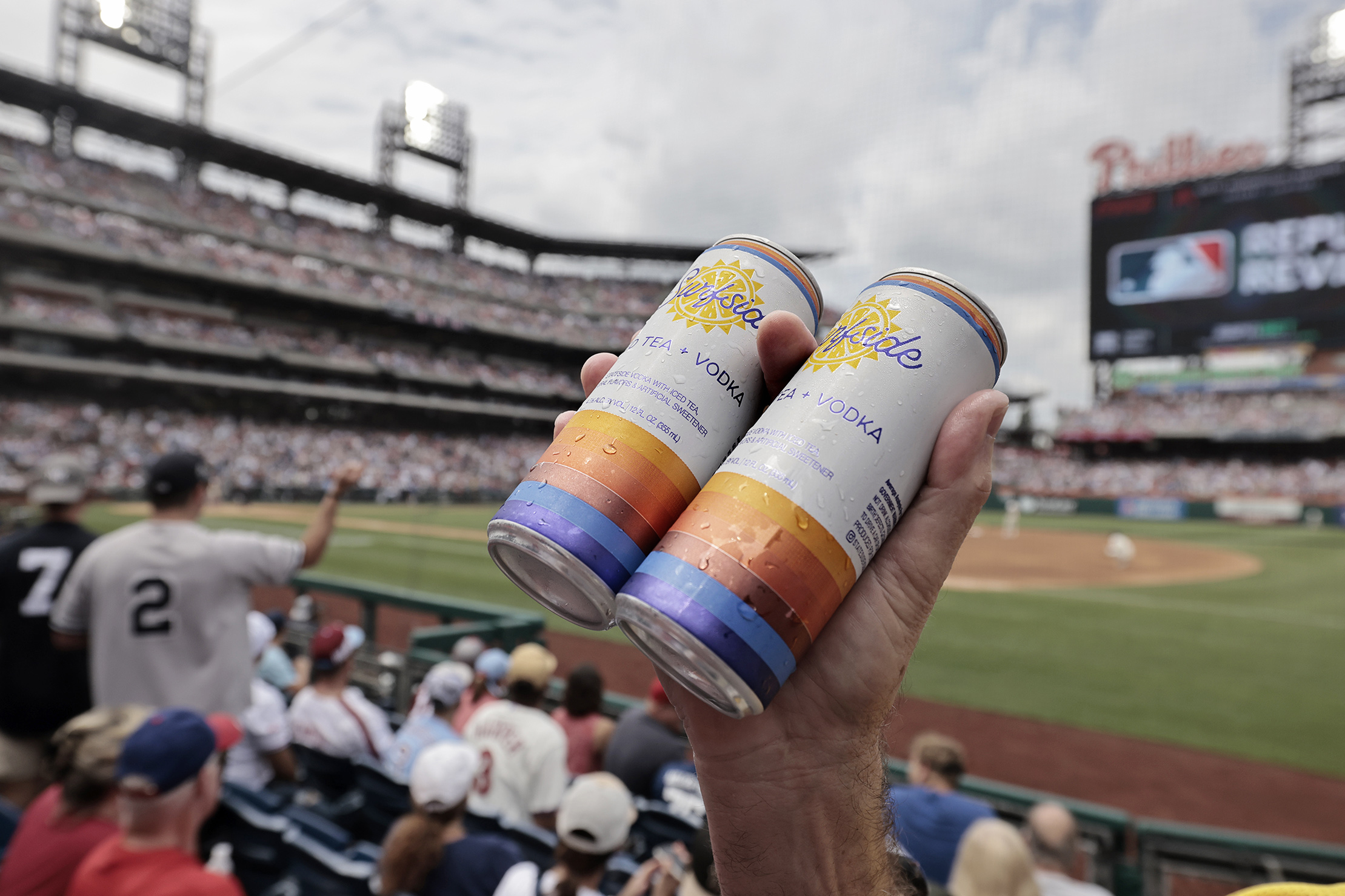
    A beverage hawker sells Surfside cans during a Phillies game at Citizens Bank Park in 2024. Surfside has been the stadium’s top-selling spirit since 2023.Elizabeth Robertson / Staff Photographer

    Surfside succeeds with familiar tastes

    When customers first sip a Surfside or Super Lyte, the taste is likely familiar, perhaps even comforting. It’s similar to iced tea, lemonade, tea cooler, or Gatorade, drinks that for many have been staples since childhood.

    That’s intentional, Pappas and Quigley said, and is one of the reasons they think their products have become so popular.

    “If you remember your first beer, it was like, ‘Oh God, who wants that?’ It’s bitter. It’s foreign,” Pappas said. “It’s an acquired taste.”

    But when it comes to these canned cocktails, “these are not acquired tastes,” he added. “They’re light. They’re easy.”

    Quigley said he got the idea for Super Lyte after years of mixing vodka into Gatorade and throwing the bottles into beach bags on summer vacations. He recalled thinking: “I can’t be the only person in America that’s been doing that for a long time.”

    The initial uptake of Super Lyte confirmed that, he said.

    Super Lyte launched in March with four flavors: fruit punch, orange, lemon-lime, and blue chill.

    Surfside now has 16 variations of iced tea, lemonade, iced tea-lemonade, and green tea. A 12-ounce Surfside contains 100 calories, 2 grams of sugar, and no carbonation, while a 12-oz Super Lyte contains 90 calories, no sugar, and no carbonation.
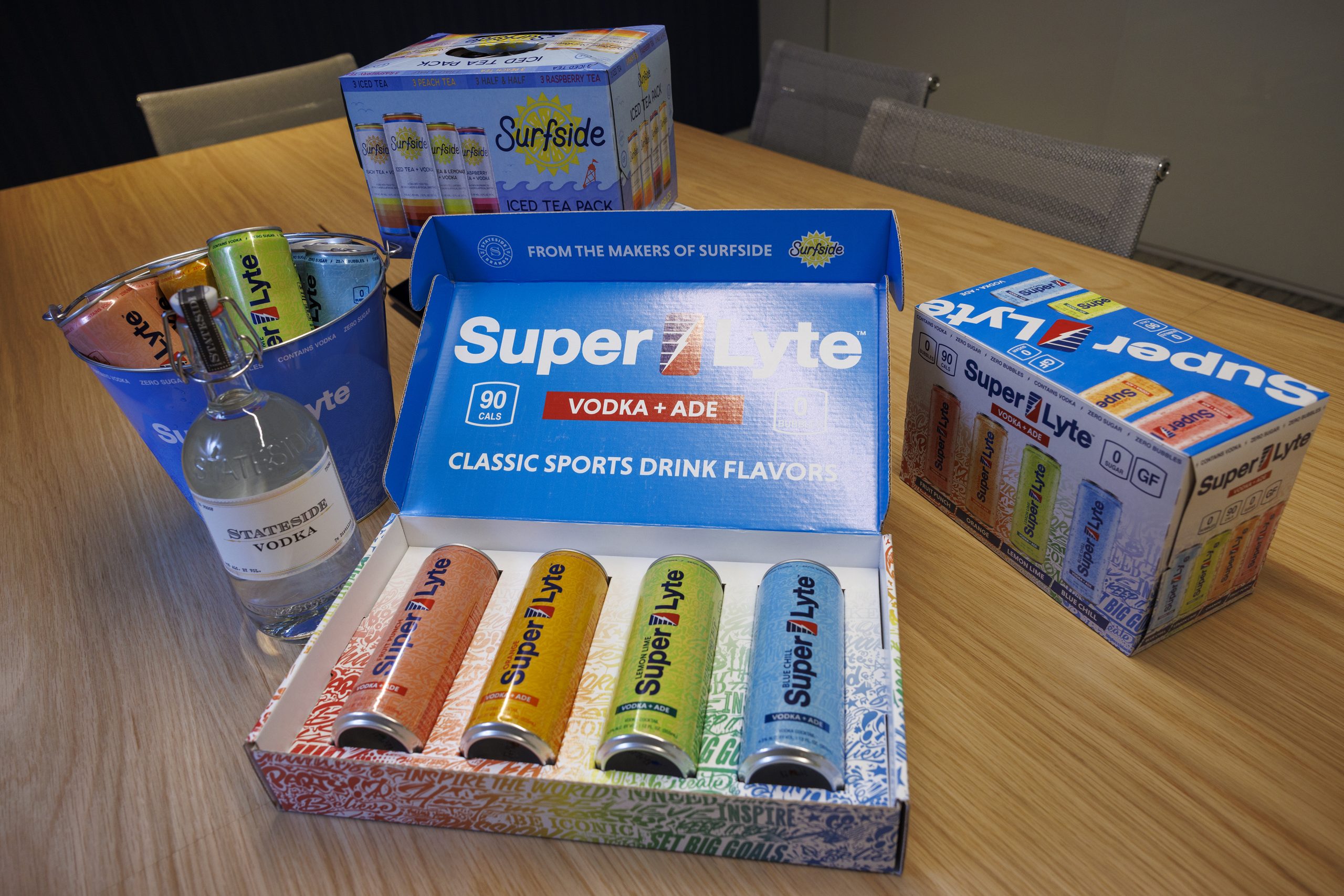
    Stateside Vodka’s new product line, Super Lyte, is displayed at the company’s new Center City headquarters.Alejandro A. Alvarez / Staff Photographer

    While the health risks of drinking and smoking differ, Pappas said he sees a parallel to the historic decline in the U.S. smoking rate amid the skyrocketing popularity of oral nicotine patches like Zyns.

    In the alcohol industry, “we’re meeting what was previously an unmet demand,” he said. It’s “all the convenience and the alcohol level of [a light] beer, where you can drink a few of them and you’re not getting sloshed.”

    Even younger consumers — who are least likely to drink alcohol, according to recent surveys — are gravitating toward Stateside products, with high sales in some college towns.

    Pappas and Quigley said they don’t see drinking rates declining much farther. Instead, they predict an evolution in the market, with an even greater focus on ready-to-drink cocktails.
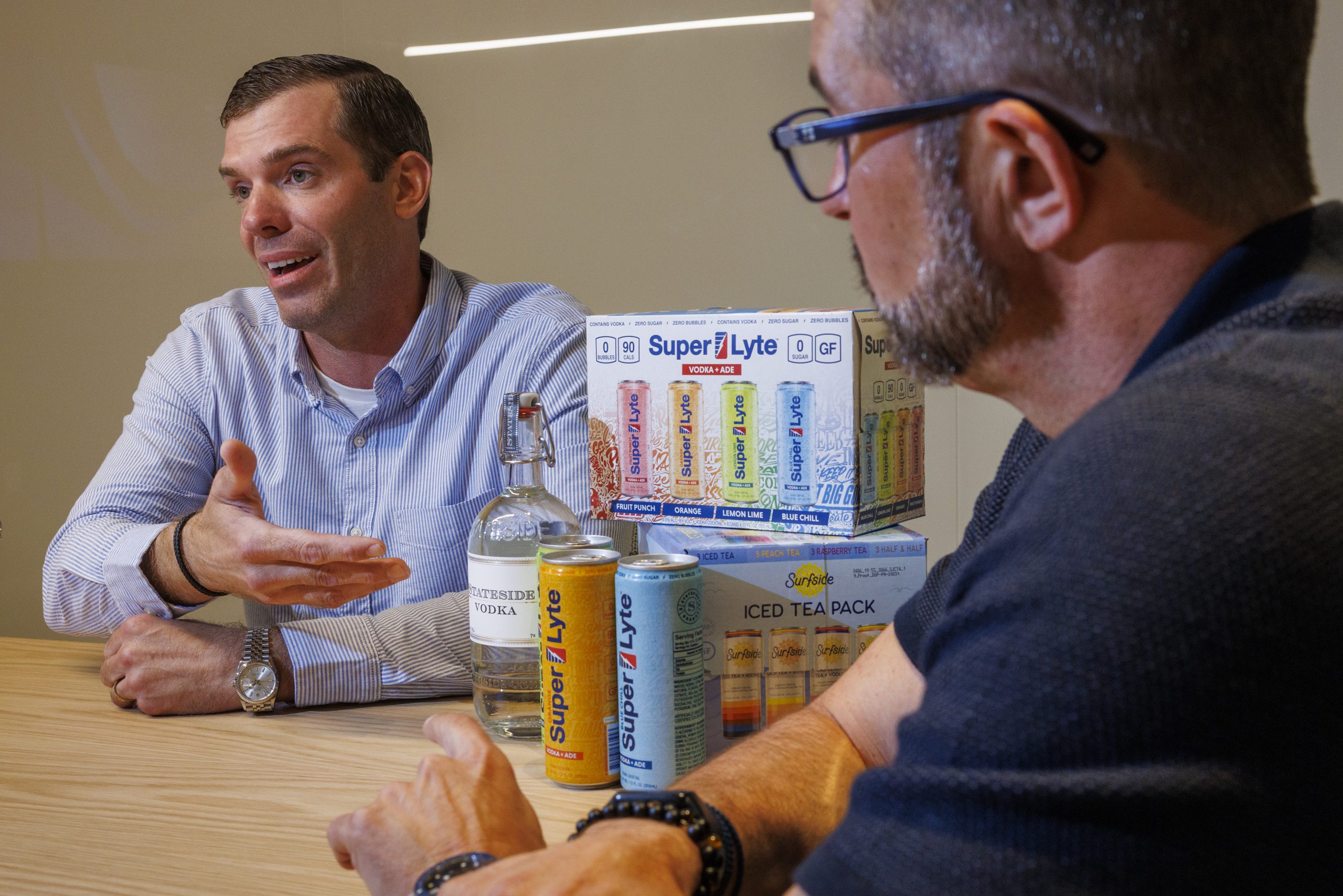
    Matt Quigley (left), Stateside’s president and cofounder, talks about the company’s products with fellow cofounder and CEO Clement Pappas.Alejandro A. Alvarez / Staff Photographer

    So Stateside’s leaders plan to keep crafting new products, they said, which is one of the reasons they have turned down acquisition offers.

    “Big, publicly traded multinational companies just aren’t great at innovating,” Pappas said.

    Stateside has now established “enough of the back-end capabilities to really compete pretty effectively,” he said, without losing “that entrepreneurial spirit” and the drive “to innovate and disrupt.”

    At the moment, he said, they are working on several beverage ideas, none of which are ready for publication.

    But it seems unlikely they’ll dabble in nonalcoholic drinks. As Quigley noted, “then it would just be iced tea.”
  • QVC’s on-air hosts aim to unionize as bankruptcy case continues

    QVC’s on-air hosts aim to unionize as bankruptcy case continues

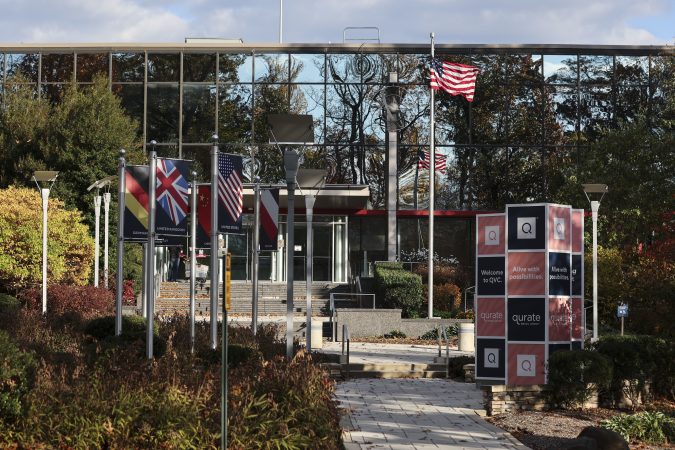
    QVC hosts are moving to unionize as the West Chester-based home shopping network reorganizes in Chapter 11 bankruptcy.

    A supermajority of the network’s 32 on-air hosts presented a petition to company management last week, announcing their desire to unionize and asking for voluntary recognition of the union, according to a statement from SAG-AFTRA, which the hosts intend to join.

    QVC management is reviewing the petition, spokesperson Matthew Goldstein said in a statement: “We respect the legal rights of all team members and are committed to following the appropriate process thoughtfully and responsibly.”

    On Tuesday, SAG-AFTRA — which represents 160,000 media professionals nationwide — filed an election petition with the National Labor Relations Board (NLRB) on the QVC hosts’ behalf, according to the federal agency’s website. If the employer does not voluntarily recognize the union, the petition can trigger an NLRB election and lead to a union’s formal certification.

    The hosts are taking steps to unionize as company higher-ups try to expedite the bankruptcy process, with the hope of emerging this summer.

    QVC pioneered home shopping 40 years ago and developed a loyal following of fans, mostly women, who bought clothes, home goods, kitchen appliances, tech products, and other wares at all hours.

    From its West Chester studios, the network and its smaller counterpart, HSN, still broadcast live, and customers can still call in to order merchandise. But the company has also expanded into online, social-media, and livestream shopping — with mixed results. They are up against stiff competition from the likes of Amazon and other ecommerce giants.

    After years of declining revenue and months of speculation, QVC Group filed for Chapter 11 protection in April, and submitted a reorganization plan that would slash its debt from about $6.6 billion to $1.3 billion within 90 days.

    In recent weeks, a group of shareholders has challenged the plan, putting the company’s expedited emergence in jeopardy, according to court documents.

    The QVC hosts, meanwhile, have other issues on their mind: They are concerned about artificial intelligence, and don’t want QVC using AI to imitate their image, voice, and likeness without consent or compensation, according to SAG-AFTRA, citing the hosts’ petition.

    The national union said the hosts are also calling for stronger job security in the face of AI, clearer paths for career advancement, greater say in company decisions, more equitable pay, and transparency around compensation.

    “We believe we should have meaningful input into our role in the network’s future, and that this is best accomplished through a formal collective-bargaining process,” the hosts wrote in the petition, according to SAG-AFTRA.

    SAG-AFTRA officials said they encouraged QVC management to voluntarily recognize the union and “avoid a costly NLRB process.”

    SAG-AFTRA national executive director and chief negotiator Duncan Crabtree-Ireland said in a statement that he applauded the QVC hosts’ “decision to stand together and seek a collective voice.”

    “These workers are at the heart of QVC’s success, connecting with audiences through creativity, authenticity, and innovation every day,” Crabtree-Ireland said.

    Goldstein, the company spokesperson, said the network’s hosts are “deeply valued team members and an important part of what makes QVC special.”

  • Philly women make 89 cents for every dollar men make, new report finds

    Philly women make 89 cents for every dollar men make, new report finds

    Women working in Philadelphia continue to make less than their male counterparts, according to a new report from the Forum of Executive Women.

    While the gender pay gap in the city narrowed between 2015 and 2024, women in the local workforce still earn on average about 89 cents for every dollar men make, according to the organization’s annual report, citing Philly-specific research from the Economy League of Greater Philadelphia.

    And the pay gap is worse for women of color, the report found.

    “Persistent pay gaps do more than reduce annual income,” Meghan Pierce, forum president and CEO, wrote in the report. “They affect lifetime earnings, retirement security, access to capital, business formation, and the generational wealth of women and their families.”

    “Pay gaps impact who leads, who invests, and who builds lasting economic power in our region.”

    The gender pay gap is narrower in Philadelphia than the national average, which is roughly the same as it was in 2010. Across the country, women earn on average 81 cents for every dollar made by men, according to data from the Economic Policy Institute, a left-leaning nonprofit think tank.

    Because of the gap, working women in the U.S. collectively lose about $1.7 trillion in wages each year, according to the forum report, and each woman loses about $500,000 on average during their career.

    While the gender pay gap is smaller in Philadelphia, racial disparities persist.

    Compared to non-Hispanic white men, white women in Philadelphia earn 94 cents on the dollar, the report found, while Black women earn 64 cents, and Hispanic and Latina women earn 57 cents.

    Women in the city also remain concentrated in lower-earning professions, making up 76% of healthcare workers and 66% of education workers, two sectors where the median annual earnings was below $60,000, according to the report, titled “The Philadelphia Paradox.”

    While a pay gap persists for local women at every education level, some industries have narrowed the gap more than others in recent years, the report found: Finance, retail, and real estate saw their gender pay gaps narrow, while the gap widened in arts, utilities, and construction.

    When it comes to Philadelphia’s gender pay disparity, the report concluded: “Progress is real, but closing the remaining gap requires addressing the structures that determine who enters higher-paying fields, who advances within them, and who benefits from the systems that shape long-term economic security.”

  • The only revived Iron Hill Brewery in the Philly suburbs is set to reopen next week

    The only revived Iron Hill Brewery in the Philly suburbs is set to reopen next week

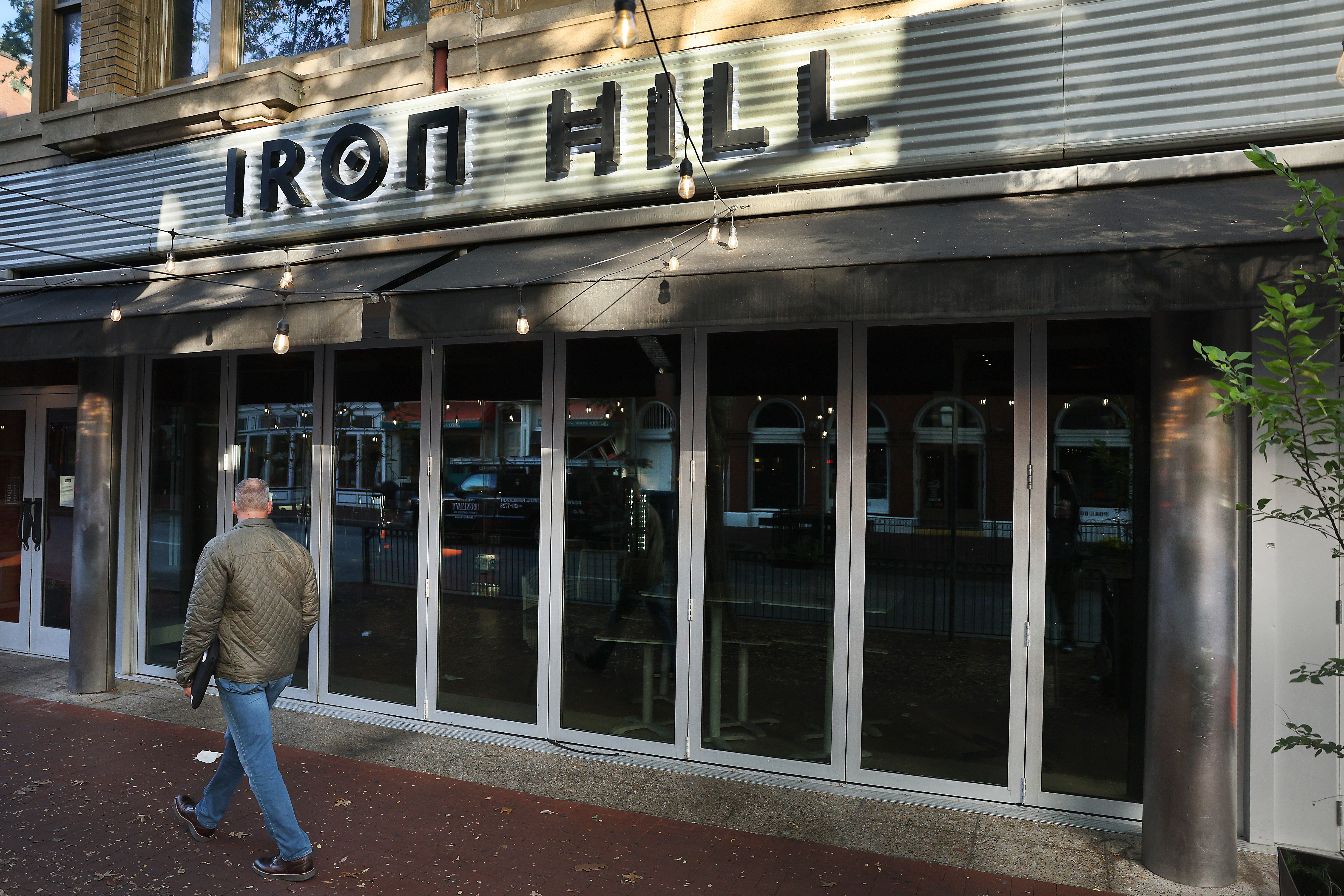
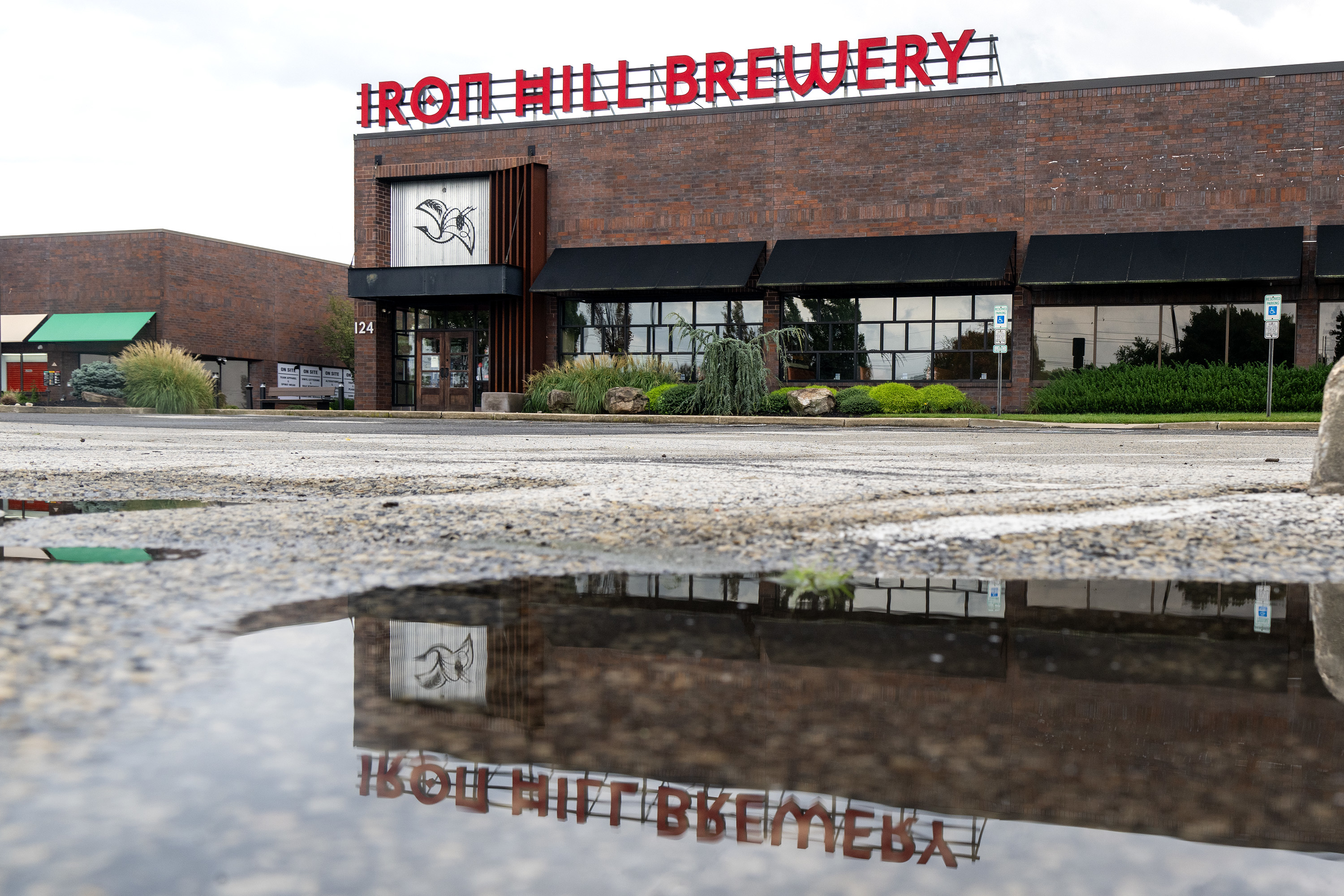
    Another Iron Hill Brewery is set to reopen next week.

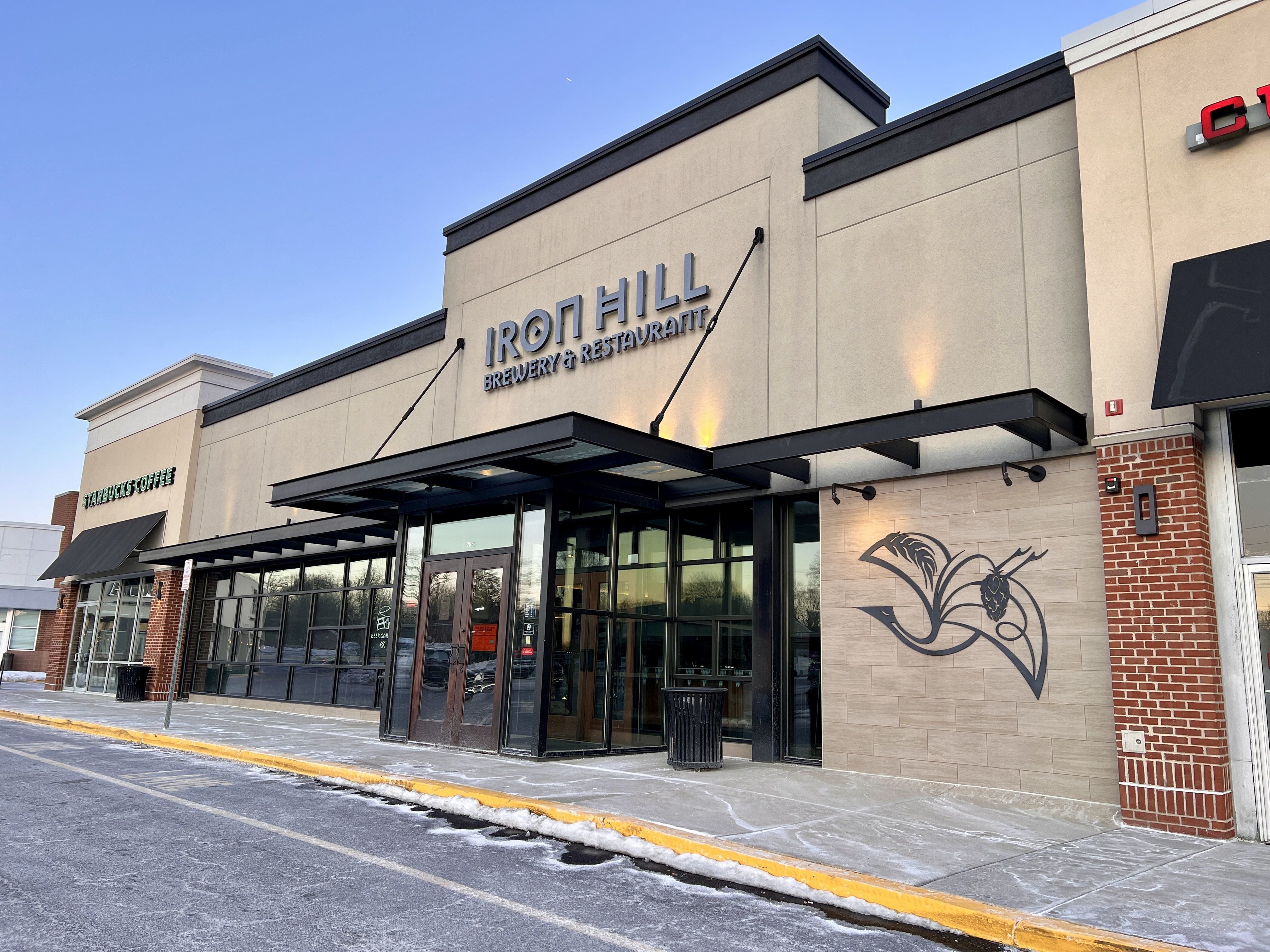
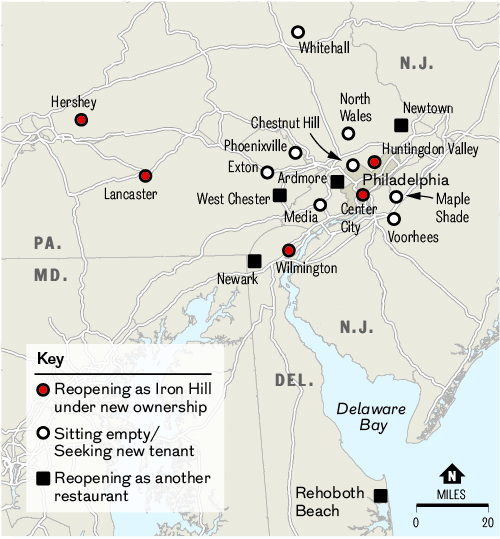
    The Huntingdon Valley restaurant will be back in business Monday, June 22, according to the restaurant’s new ownership group. It will mark Iron Hill’s fourth post-bankruptcy revival and the only one in the Philadelphia suburbs.

    The Center City brewpub reopened in April, followed by the Wilmington riverfront location in May and the Hershey restaurant earlier this month. The Lancaster outpost is also set to reopen by the end of June.

    Elsewhere, other former Iron Hills are being transformed into new restaurants. And in a few spots, property owners are still looking for their next tenant.

    The brewery chain, which was founded in Newark, Del., in 1996, had leased some of these properties for decades.

    Some longtime customers were shocked when Iron Hill’s former ownership group closed all locations in September and filed for liquidation bankruptcy, citing $20 million in debt. The abrupt shutdown left more than a dozen vacant brewpubs across Pennsylvania, New Jersey, and Delaware.

    In the bankruptcy process, a new ownership group — later revealed to include original cofounder Mark Edelson and other former executives — acquired Iron Hill’s trademark and intellectual property, as well as five restaurant leases.

    Amid the reopenings, the new owners have launched a fresh loyalty program and special offers, including a free beer and free appetizer for customers with prebankruptcy gift cards that are no longer usable.

    While Iron Hill had a suburban-Philly focus before bankruptcy, the Huntingdon Valley Shopping Center location is the only one set to be resurrected in the collar counties or South Jersey.

    Bartenders there will be pouring a new IPA, Hop Chase, brewed exclusively for Huntingdon Valley, according to the new owners. They said patrons can sit inside or outside at the restaurant’s beer garden, which was the chain’s first when it opened in 2016.

    “We’re creating a true neighborhood place for the guests we call family, somewhere the community can come together over laughter, great food and award-winning beer,” Naomi Yared, general manager of the Huntingdon Valley Iron Hill, said in a statement.

    What’s happening at your neighborhood Iron Hill?

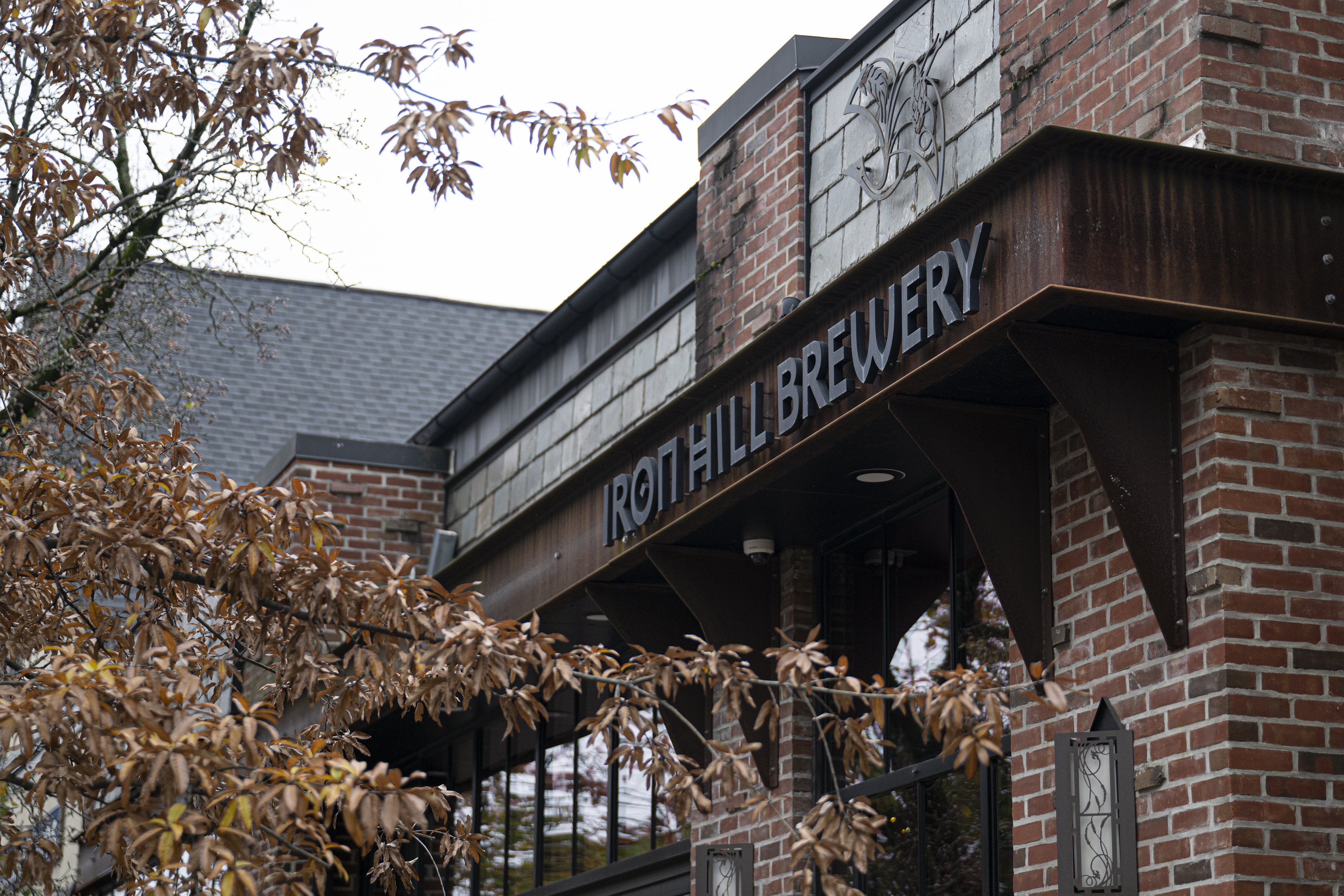
    The former Iron Hill Brewery in Chestnut Hill sat empty in November. Property owners are still marketing the space for lease.Jose F. Moreno / Staff Photographer

    Here’s what we know about these local Iron Hill Breweries as of publication time June 15:

    Philadelphia

    Pennsylvania suburbs

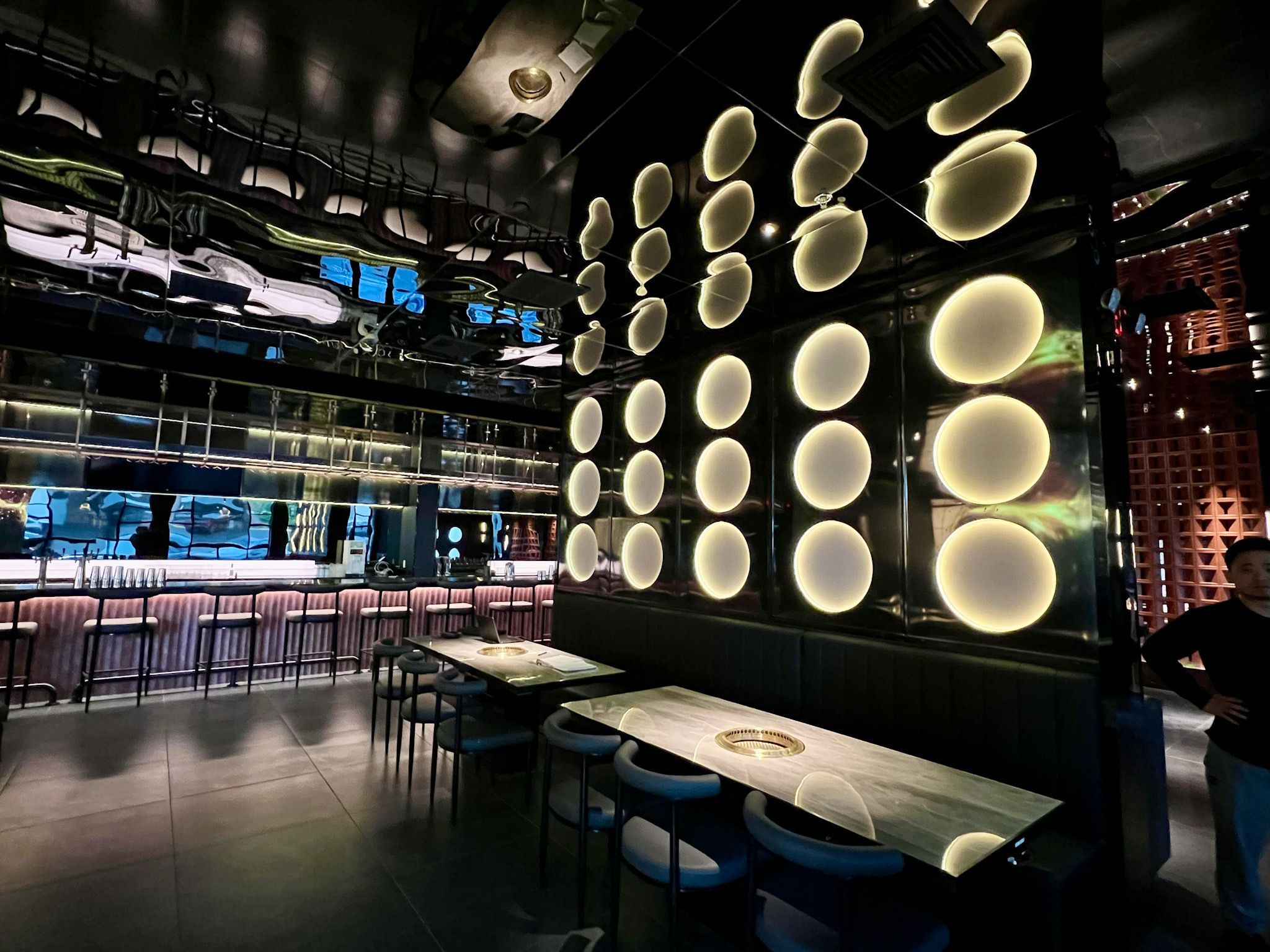
    The lounge area is pictured last month at Ogyu Japanese BBQ at the former Iron Hill Brewery in Ardmore.Michael Klein / Staff
    A pedestrian walked by the closed Iron Hill Brewery in West Chester in October. Magerk’s Pub & Grill is now taking over the space.David Maialetti / Staff Photographer

    Elsewhere in Pennsylvania

    • Hershey (101 W. Chocolate Ave.): Reopened as Iron Hill Brewery under new ownership
    • Lancaster (781 Harrisburg Pike): Reopening as Iron Hill Brewery under new ownership
    • Lehigh Valley Mall (950 Lehigh Lifestyle Center, Whitehall): No update from property owner

    New Jersey

    The closed Iron Hill Brewery in Maple Shade is pictured in September.Tom Gralish / Staff Photographer
    • Maple Shade (24 E. Kings Hwy.): No update from property owner
    • Voorhees (13107 Town Center Blvd.): No update from property owner

    Delaware

  • Plenty of Philly hotel rooms and Airbnbs still available days before FIFA World Cup kickoff

    Plenty of Philly hotel rooms and Airbnbs still available days before FIFA World Cup kickoff

    To Ed Grose, the FIFA World Cup is not looking like a bust for Philly-area hotels.

    Yet the president of the Greater Philadelphia Hotel Association said the matches, which start Sunday and end July 4, have not brought booming business.

    “It hasn’t delivered what we thought it would in terms of hotel rooms,” Grose said Monday.

    Some of Center City’s 14,500 hotel rooms remain available on game days and game-day eves, he said, though he declined to provide an estimated occupancy rate.

    Grose’s assessment — based on conversations with local hoteliers, he said — exemplifies the tourism uncertainty that remains just days before kickoff.

    Philadelphia has raised about $140 million in public and private funding to host the World Cup, according to Front Office Sports, and officials are heavily marketing the six South Philly games and other fan events across the city.

    A FIFA World Cup banner hangs from an entrance of Philadelphia City Hall, as seen on June 3.Jose F. Moreno / Staff Photographer

    Yet some soccer fans have said they’re avoiding World Cup matches due to a bevy of factors, including high ticket prices, expensive airfare, frustrations over FIFA’s business practices, and concerns among international fans about entering the U.S. due to the Trump administration’s immigration policies. On average, international tourists stay longer and spend more money than domestic travelers.

    There are other signs that lofty World Cup projections — which included FIFA’s broad promise of tens of billions of dollars in total economic impact — may not come to fruition.

    The Wall Street Journal reported Monday that every U.S. host city except San Francisco was seeing hotel occupancy of 40% or less, citing a recent CoStar report. Host cities in Mexico and Canada saw slightly better hotel occupancy, though still under 50%, according to the Journal.

    In Philadelphia, Google Travel searches show abundant hotel vacancies at prices under $300 or even $200 a night on some match days.

    The region’s short-term rental market has seen some last-minute demand, with about 60% of local Airbnbs and Vrbos set to be occupied on game days and game-day eves, according to AirDNA, which analyzes the platforms’ booking data. In early May, fewer than half available rentals were booked on those days.

    The inside of a South Philadelphia Airbnb was shown in early May, as its owner waited for last-minute World Cup bookings.Joe Lamberti / For The Inquirer

    As of Monday, World Cup demand has helped drive a 15% year-over-year increase in the number of Philly-area bookings and an 8% increase in occupancy on game days and game-day eves, said Bram Gallagher, AirDNA’s director of economics and forecasting.

    Those figures place Philly “right in the middle” of the World Cup markets, he said.

    “Some places are doing very, very well and some places are seeing marginal benefits,” Gallagher said, noting that Mexican markets are doubling demand. “In Philly, Boston, Atlanta, we’re seeing respectable gains.”

    Airbnb, which has partnered with FIFA, is still predicting that the World Cup will be “the biggest hosting event in Airbnb’s history — surpassing the 2024 Olympic and Paralympic Games in Paris,” according to a company statement, which noted “meaningful excitement for the tournament,” including among first-time guests.

    Some Philly Airbnb hosts still wait for World Cup guests

    Jenica Jones outside her South Philly Airbnb in early May. As of Tuesday, she said she has only gotten two World Cup bookings for a total of three nights.Joe Lamberti / For The Inquirer

    Jenica Jones received her first World Cup booking last month, after being included in an Inquirer article about low short-term rental demand during the tournament.

    A guest from the Dominican Republican reserved Jones’ South Philly rowhouse for two nights in June, Jones said, and the host was hopeful that World Cup demand would finally pick up.

    It hasn’t.

    The 42-year-old said she got just one other booking for a single night.

    Her Airbnb has a perfect 5-star rating, sleeps seven people, and is less than three miles from Lincoln Financial Field, the site of Philly’s six World Cup matches.

    The app’s dynamic-pricing tool had initially suggested she list the property for about $900 a night during the World Cup. Since then, she has dropped prices and offered discounts on some nights to entice soccer fans, she said.

    “I was predicting being full the entire month of June,” Jones said Tuesday. “They’re just not coming in as I expected.”

    “My schedule was booked more last year,” she said. As of Tuesday, she even had availability July 4, when the city is hosting a World Cup match and an Independence Day concert for America’s 250th birthday.

    Can World Cup fans get last-minute deals in Philly?

    The Live! Casino Hotel Philadelphia (at left) is located in the stadium complex. As of Tuesday, it still had rooms available at high prices for some World Cup matches.Elizabeth Robertson / Staff Photographer

    Despite the sluggish demand, last-minute planners shouldn’t count on scoring World Cup deals in the Philly region, according to hotel and short-term-rental experts.

    Gallagher, of AirDNA, said the most affordable Airbnb and Vrbo properties were the first ones to book up during the tournament. But individual hosts like Jones may choose to lower prices if their homes remain unbooked.

    Grose, of the Greater Philadelphia Hotel Association, said guests will pay higher rates on average during the World Cup than they would on a normal summer day.

    Yet on Sunday and three of the other five match days, many Center City hotels appeared to have rooms available for about $300 or less per night, as of Tuesday, according to Google Travel. Prices skewed higher and availability seemed more limited on the holiday nights of Friday, June 19, and Saturday, July 4, though rooms were still available across the city, including at the few hotels near the stadiums in South Philly.

    Grose said he remains optimistic about the coming weeks, which includes not only the World Cup and America’s 250th birthday celebration, but also the MLB All-Star Game in July.

    “Overall, the summer is still going to be a good summer for us,” he said.

  • Five Below has officially eliminated its above-$5 section

    Five Below has officially eliminated its above-$5 section

    Five Below, the Philadelphia-based discount retailer, has officially done away with its above-$5 section.

    But all its products aren’t below $5.

    Those higher-priced items — which had been set apart in stores’ “Five Beyond” sections and account for less than 20% of inventory — are now interspersed with the rest of the merchandise, according to chief executive officer Winnie Park.

    “We’ve actually seen that product perform better” when placed throughout the store, Park said last week on the company’s earnings call. “If you have a $35 gilt floor mirror, it’s in the room section and not tucked away in the back of the store.”

    The move came during a strong quarter for Five Below, which sells toys, games, decor, tech accessories, candy, party supplies, sporting goods, and more to kids, teens, and their parents.

    The company’s net sales rose nearly 33% and its net income increased to $123 million, triple the $41 million it recorded in the first quarter last year, according to the latest earning report.

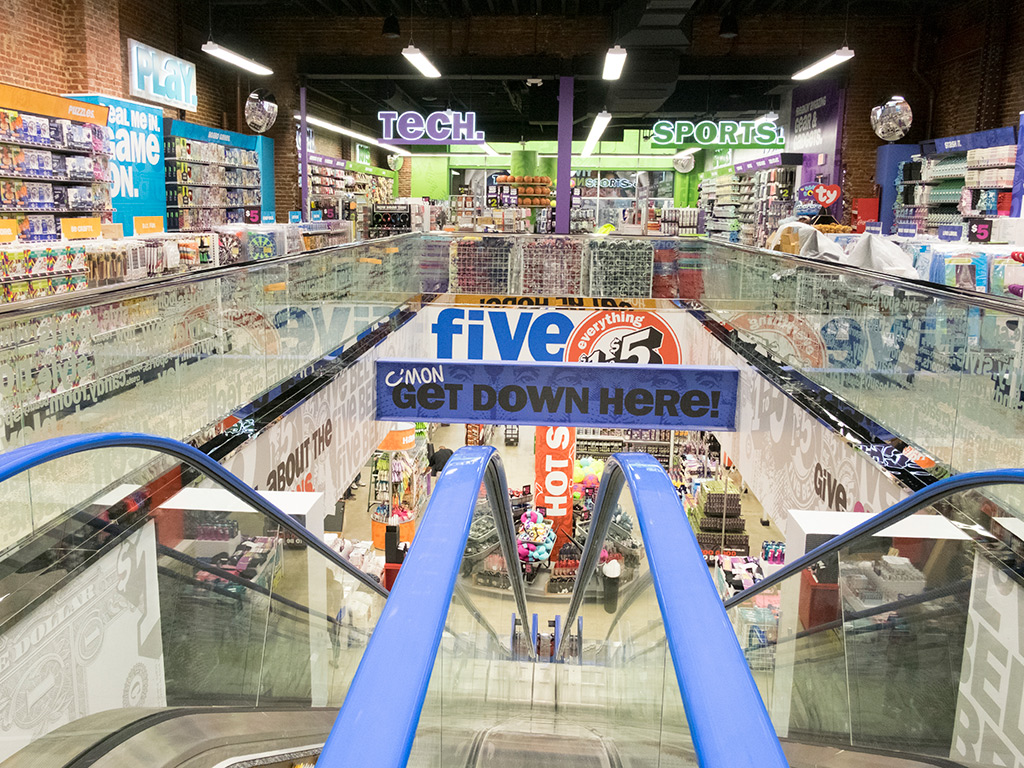
    The wide selection of products at Five Below’s Chestnut Street location, one of its flagship stores, is shown in 2019. ED HILLE / Staff Photographer

    Executives attributed some of this growth to the popularity of games and toys, “underpinned by strong support of squishy trends and collectibles,” said Dan Sullivan, chief financial officer.

    “Everyone has been talking about the squishy dumplings,” the viral fidget toys that Five Below capitalized on, Park said. Pokemon and other trading cards also flew off the shelves.

    “We’re constantly looking at what next trend we can amplify,” the CEO said.

    Other factors contributed to higher sales, too, said the executives, citing higher tax refunds and broader economic pressures that are attracting more consumers to discount retailers.

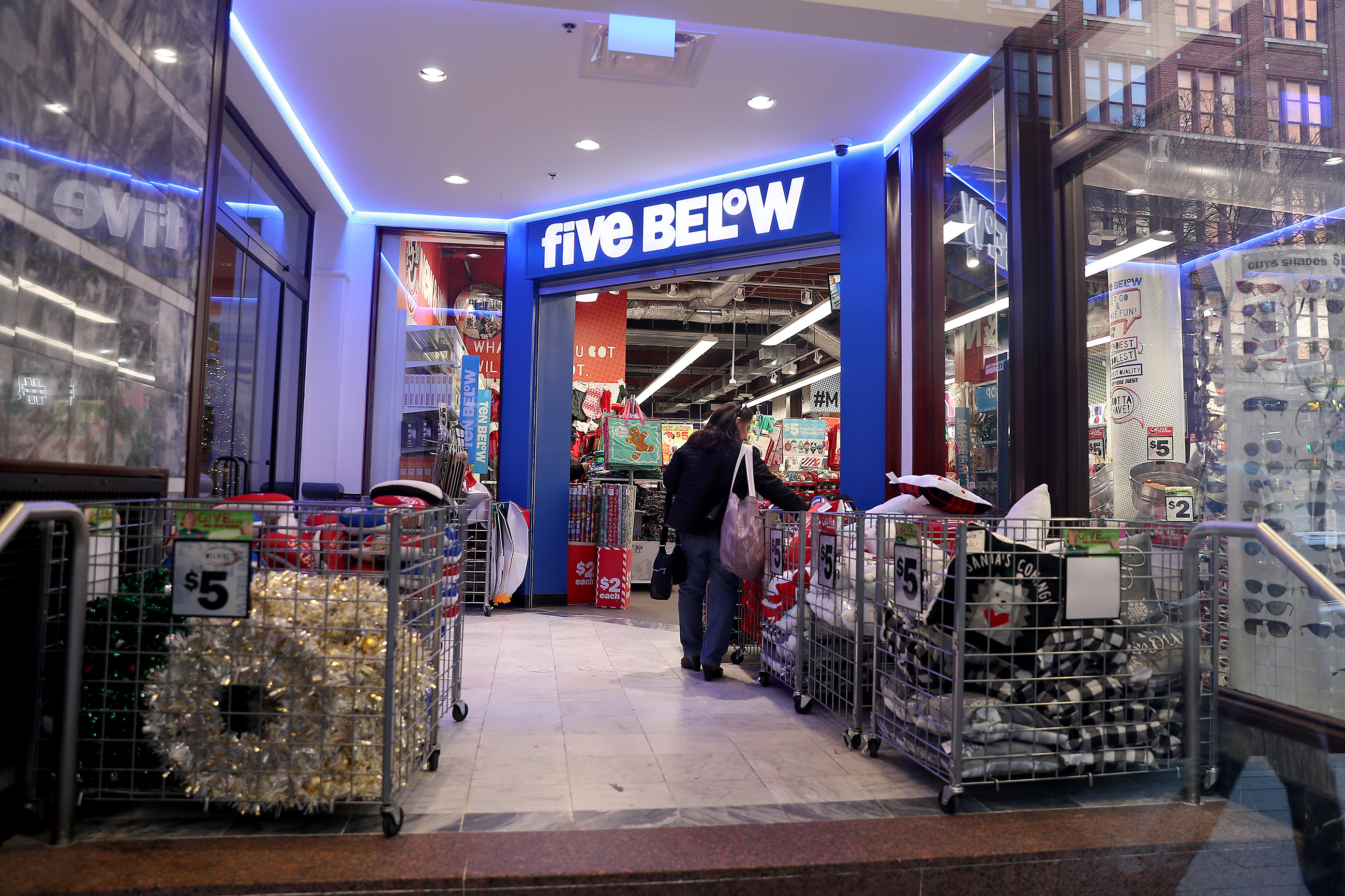
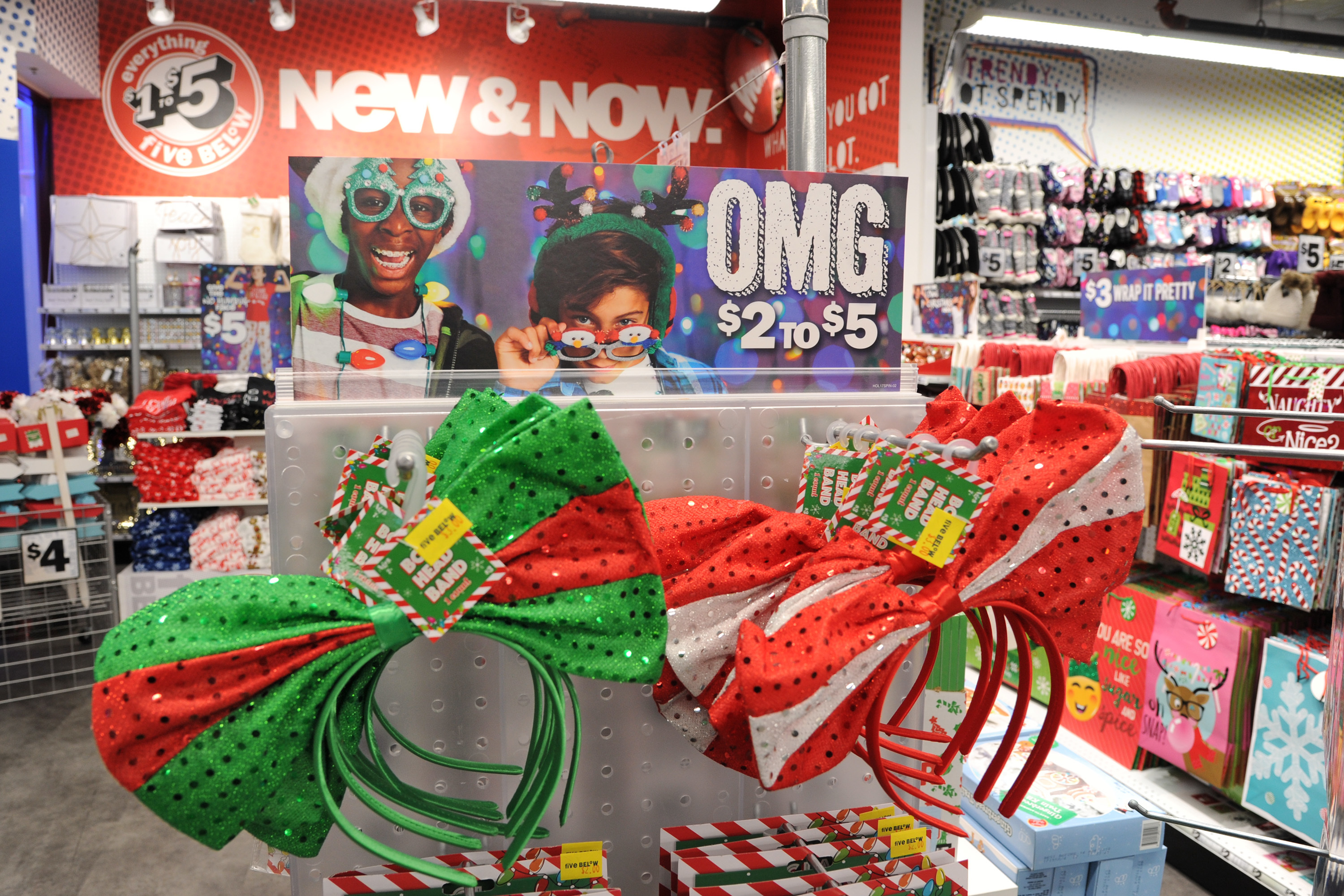
    A display of holiday accessories, priced between $2 and $5, were shown inside the Five Below on Market Street in this file photo.TOM GRALISH

    Off-price stores, such as Dollar General and South Jersey-based Burlington, have thrived in recent years amid rising costs of gas, groceries, utilities, and other essentials.

    Secondhand shops like Goodwill, which recently opened a giant new store in South Jersey, are also seeing stronger sales.

    At Five Below, executives said they have seen growth across all customer demographics, including millennial moms. Park said exercise gear, including yoga and Pilates equipment, has been a big seller.

    Sullivan said he’s curious to see what happens the rest of the year.

    “We’re being cautious,” the CFO said. “We’re looking at the world that our customers are living in with rising fuel costs, with very sticky inflation, with a somewhat soft labor market.”

    “And we think a piece of that pain that they are feeling wasn’t felt in the first quarter purely because of tax proceeds year-over-year that were significantly up,” he added.

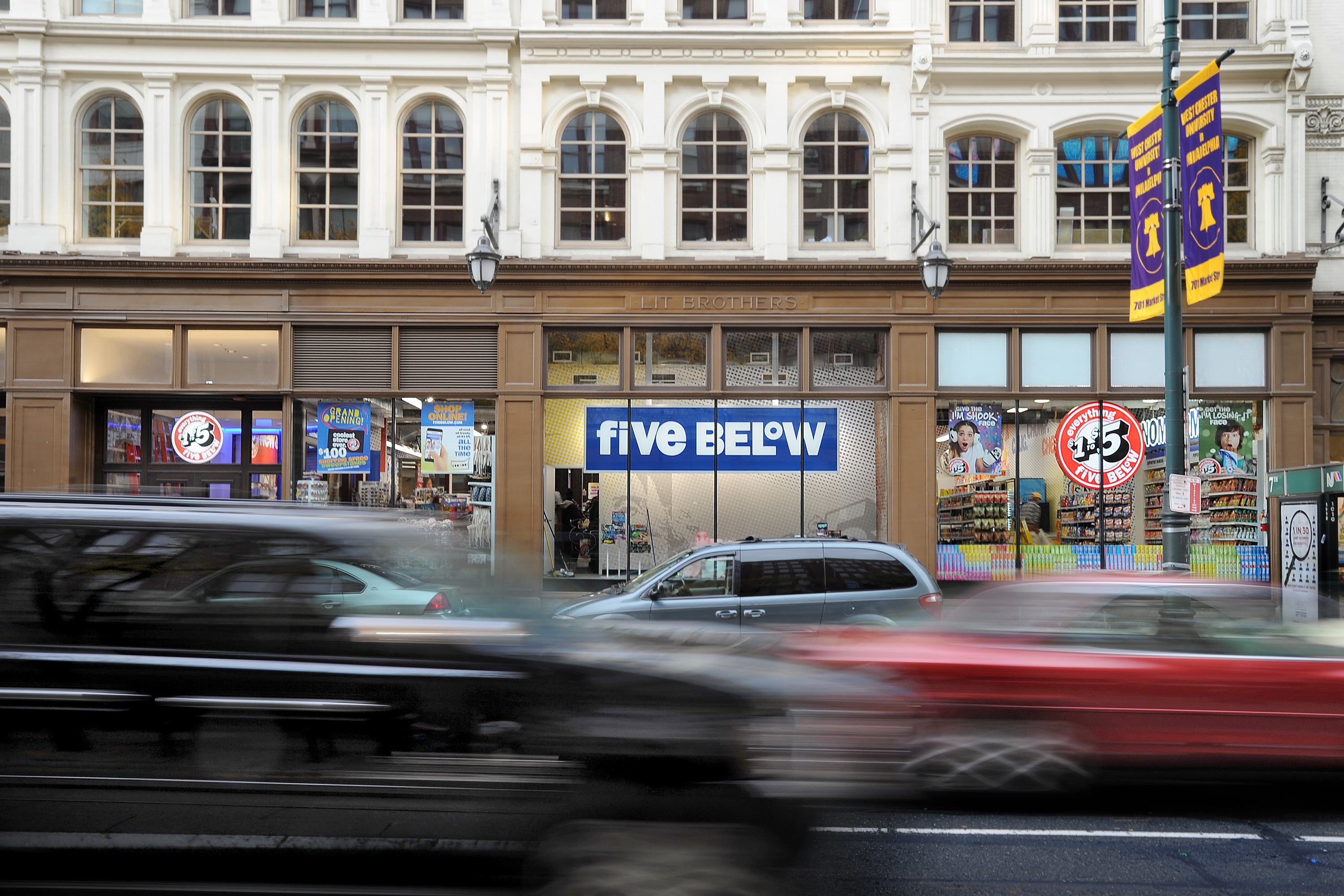
    Five Below was founded in Wayne in 2002 and has since grown to include 1,970 stores in 46 states. In 2018, the company opened a massive three-story headquarters in the former Lit Bros. building at 701 Market St. in Center City.

    Five Below’s Market Street location is shown before opening in this 2018 file photo.TOM GRALISH / Staff Photographer

    After a period of rapid expansion, Five Below has experienced some upheaval in recent years. Former CEO Joel D. Anderson stepped down in 2024 after two quarters of disappointing profits. Anderson, now CEO of Petco, had pushed to expand Five Below’s selection of above-$5 products.

    Park, the former top boss at Forever 21, took the helm in December 2024, with a mission to reaffirm Five Below’s reputation as an “extreme-value retailer,” as the company called itself in her hiring announcement.

    By last summer, the company was rebounding, thanks in part to viral toys like plush Squishmallows and artificial-intelligence tools that now help with inventory.

    Analysts told industry publication RetailDive that Five Below’s latest earning report showed the business in a strong position. They noted that stock prices fell initially, however, over concerns about the company’s ability to sustain this growth.

    “Looking ahead, the outlook remains very positive but is tempered by a dose of caution,” GlobalData managing director Neil Saunders told the outlet.

  • At a new Goodwill in South Jersey, customers are flocking for the deals and the resale potential

    At a new Goodwill in South Jersey, customers are flocking for the deals and the resale potential

    Mia Garcia showed off her clothing haul: a multicolored tank top, a backless white tee, a lacy maroon cardigan, and white tights for an upcoming trip to the New Jersey Renaissance Faire.

    The 19-year-old was as excited about the bill as she was about the fashion.

    Her grand total: $15.

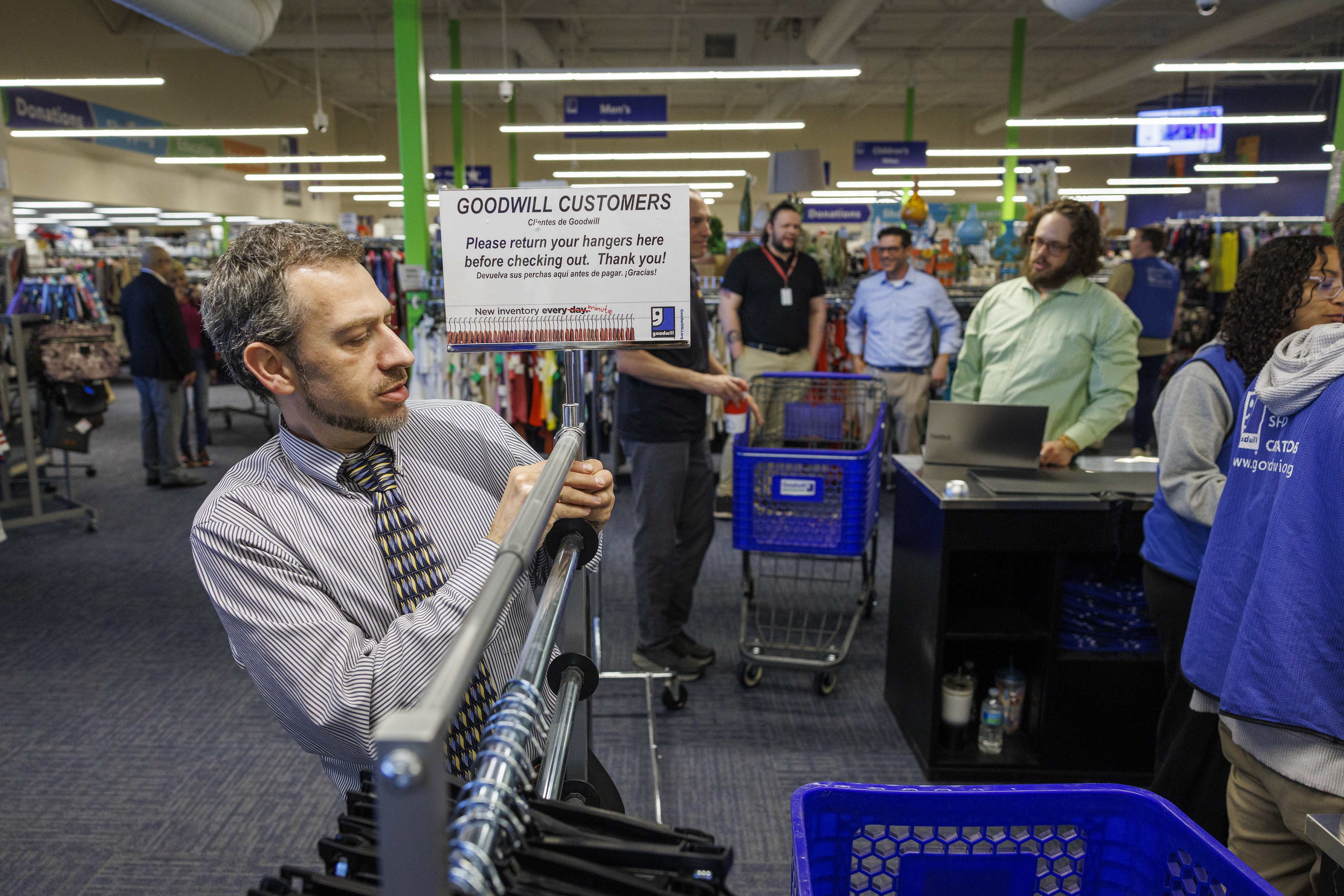
    She and her friend, Salsbee Jahan, scored the deals at a massive new Goodwill store in Deptford, where local executives say a growing number of Gen Z shoppers are flocking for clothes, shoes, decor, and more. Young customers are increasingly fueling the world’s largest thrift store chain, which posted record revenue last year.

    At Goodwill, “it’s definitely cheaper and easier to find older-style clothes,” like popular Y2K-inspired fits that are sold at a premium elsewhere, Garcia said. At some name-brand stores, “$20 won’t even get you get a shirt.”

    The women, both Deptford natives attending Rowan College of South Jersey, say they frequent malls, too. But Jahan, 18, said they’re trying to thrift more because “everything is going up” in price.

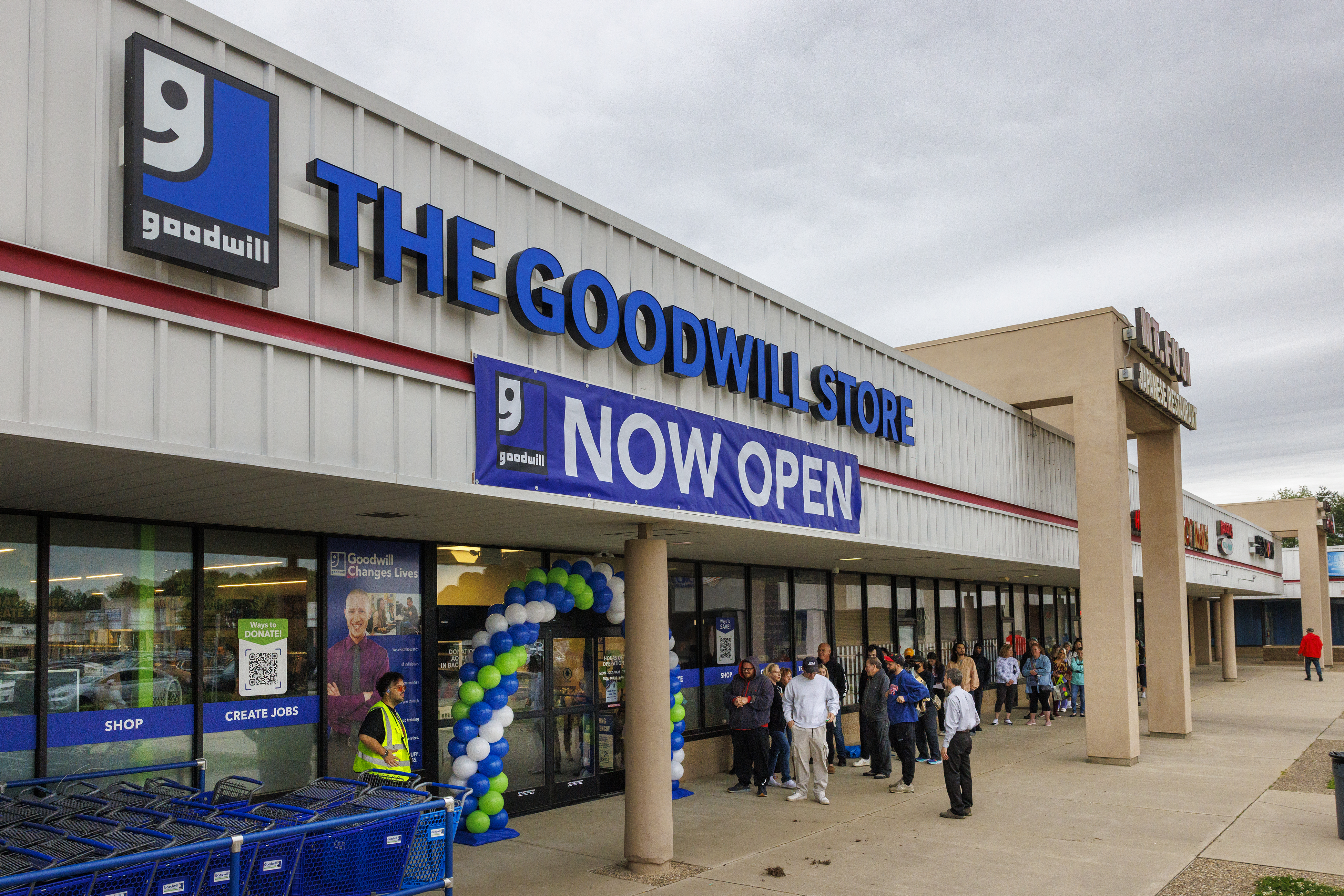
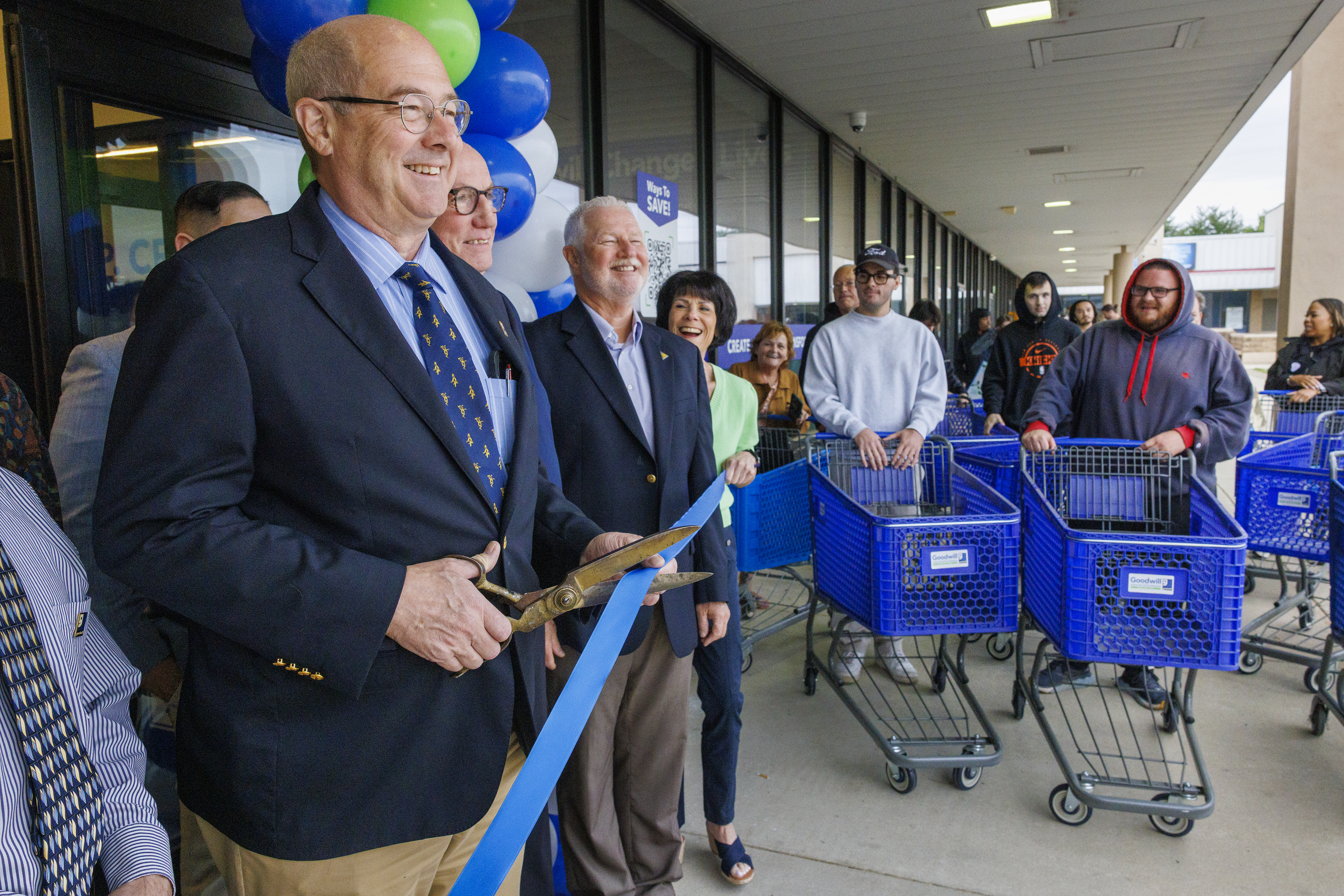
    Shoppers lined up to get inside the new Goodwill store in Deptford on opening day.Alejandro A. Alvarez / Staff Photographer

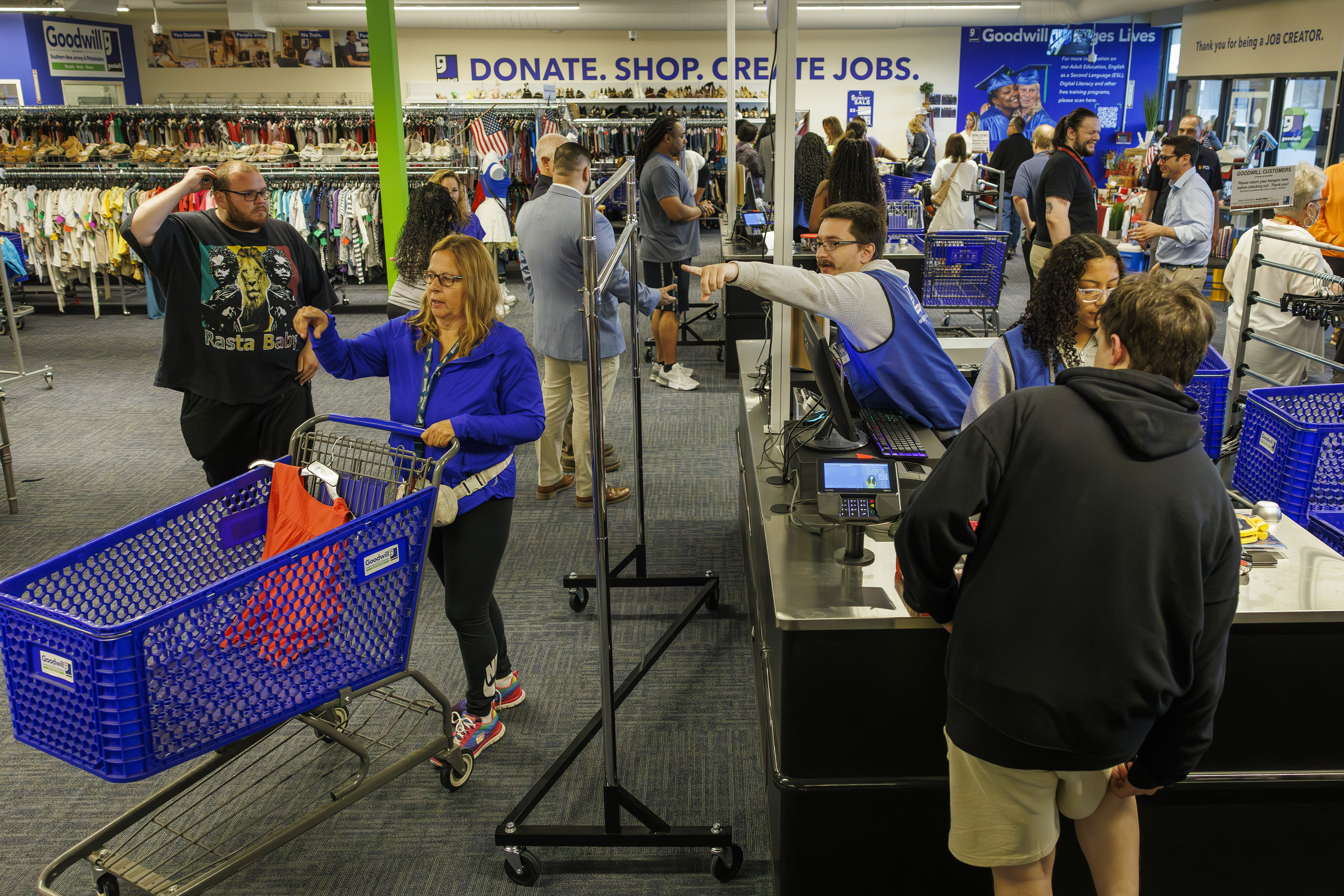
    The sentiment was echoed by several other customers at the 19,000-square-foot store, which was buzzing with dozens of shoppers around lunchtime Tuesday.

    “Gas prices have gone up. Groceries have gone up,” said Kaitlin Deegan, a 38-year-old nurse from Salem County. She was wearing a graphic tee and denim shorts that she had bought for under $10 at another Goodwill. “Now it’s all about thrifting.”

    Nearby, one woman put a $6.49 denim skirt in her cart, next to a pair of $7.99 sparkly shoes she’d grabbed earlier. Across the room, children perused shelves of toys, games, and stuffed animals — most under $10 — and teens eyed rows of $1.99 DVDs and 99-cent CDs.

    In its first 12 days, the new location on Clements Bridge Road averaged about 600 customers a day, more than double the foot traffic recorded at a smaller Goodwill retail store that recently closed in nearby Woodbury Heights, said regional manager Josef Fortun.

    Each Deptford customer has spent about $31 on average, he said, exceeding managers’ goals.

    Josef Fortun, regional manager with Goodwill Industries of Southern New Jersey, prepares the new Deptford store to open on May 21.Alejandro A. Alvarez / Staff Photographer

    This early success in South Jersey comes amid a larger thrifting resurgence. Last year, the U.S. resale market grew nearly four times faster than the broader apparel market, according to an annual report from the online consignment platform ThredUp.

    Goodwill recorded more than $7 billion in revenue last year, the New York Times reported, and annual sales across its 3,400 stores have risen 50% since 2019. Smaller secondhand shops, such as Savers Value Village and ThredUp, have also reported revenue increases, according to the Times.

    In the same Deptford shopping center as the new Goodwill, there are three other thrift stores: Once Upon A Child, Plato’s Closet, and Play It Again Sports. All are owned by Winmark Corporation, which has been adding more thrift stores and reporting year-over-year revenue increases.

    In nearby Cherry Hill, a Red White & Blue Thrift opened this spring, a half-mile from a 2nd Ave thrift outpost — owned by Savers Value Village — that opened in 2024.

    Goodwill also opened a store a year ago in a former Rite Aid in Voorhees. And its Woodbury Heights location, which is still accepting donations, is set to reopen June 15 as a Goodwill Home Medical Equipment Store.

    Boyd said the nonprofit chain is looking to expand into Cape May County in the near future.

    Why are more people thrifting?

    More people are buying secondhand right now for many reasons, said Mark Boyd, president and CEO of Goodwill Industries of Southern New Jersey and Philadelphia.

    “Challenging economic times definitely bring people into the Goodwill store, maybe for the first time,” Boyd said. At the same time, “there’s a lot of people out there who care a lot about reuse, and that’s driving particularly younger shoppers into Goodwill.”

    Friends Reed Habiak (foreground left) and Anthony Nunez (foreground right), both influencers and resellers, were first in line at the new Goodwill store in Deptford on May 21.Alejandro A. Alvarez / Staff Photographer

    And while thrifting is one of the most “tactile” experiences, Boyd said social media is playing a role in its rebirth. Many Goodwill customers are resellers, he said. They find steals in store aisles and then mark up the products to sell online or at flea markets.

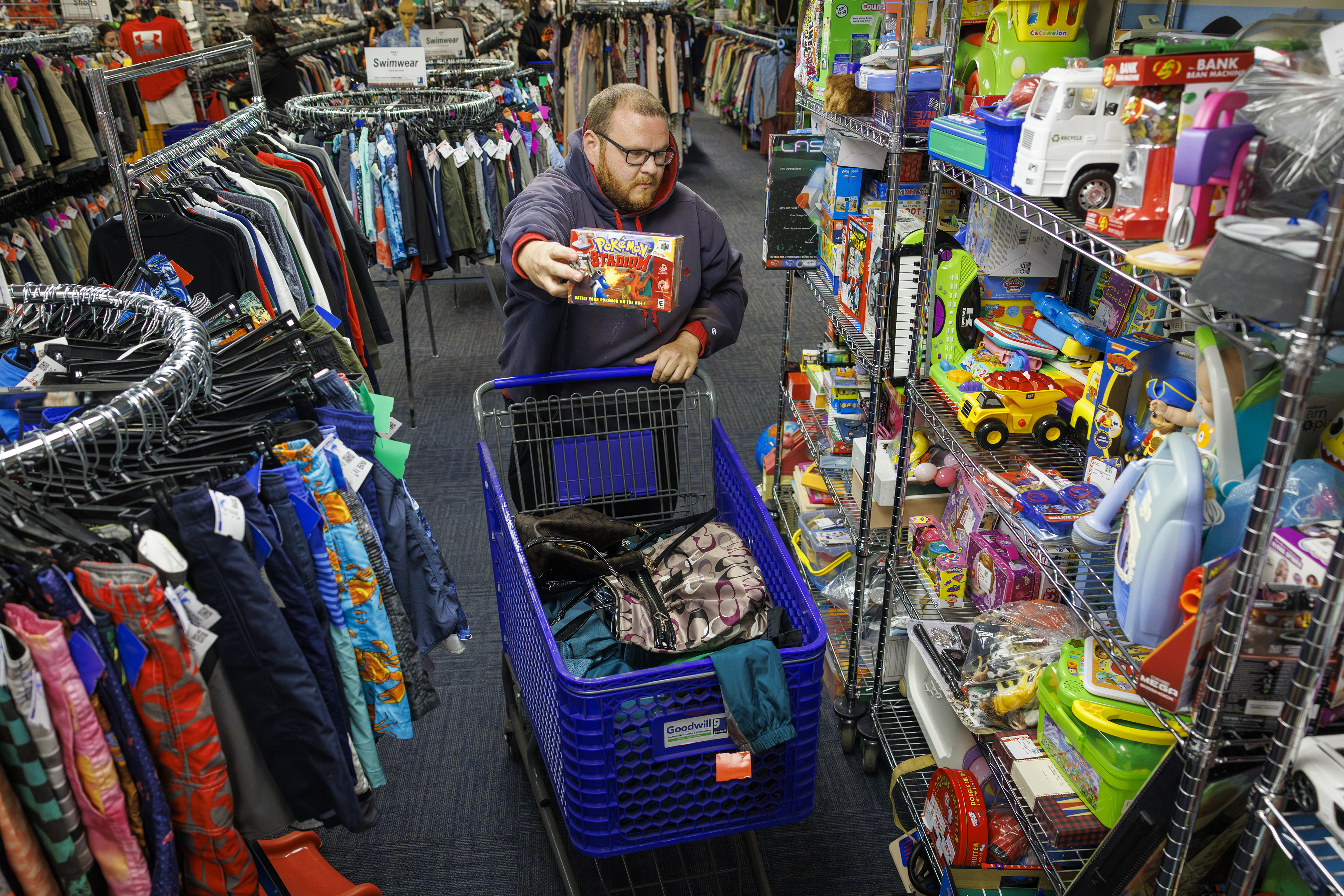
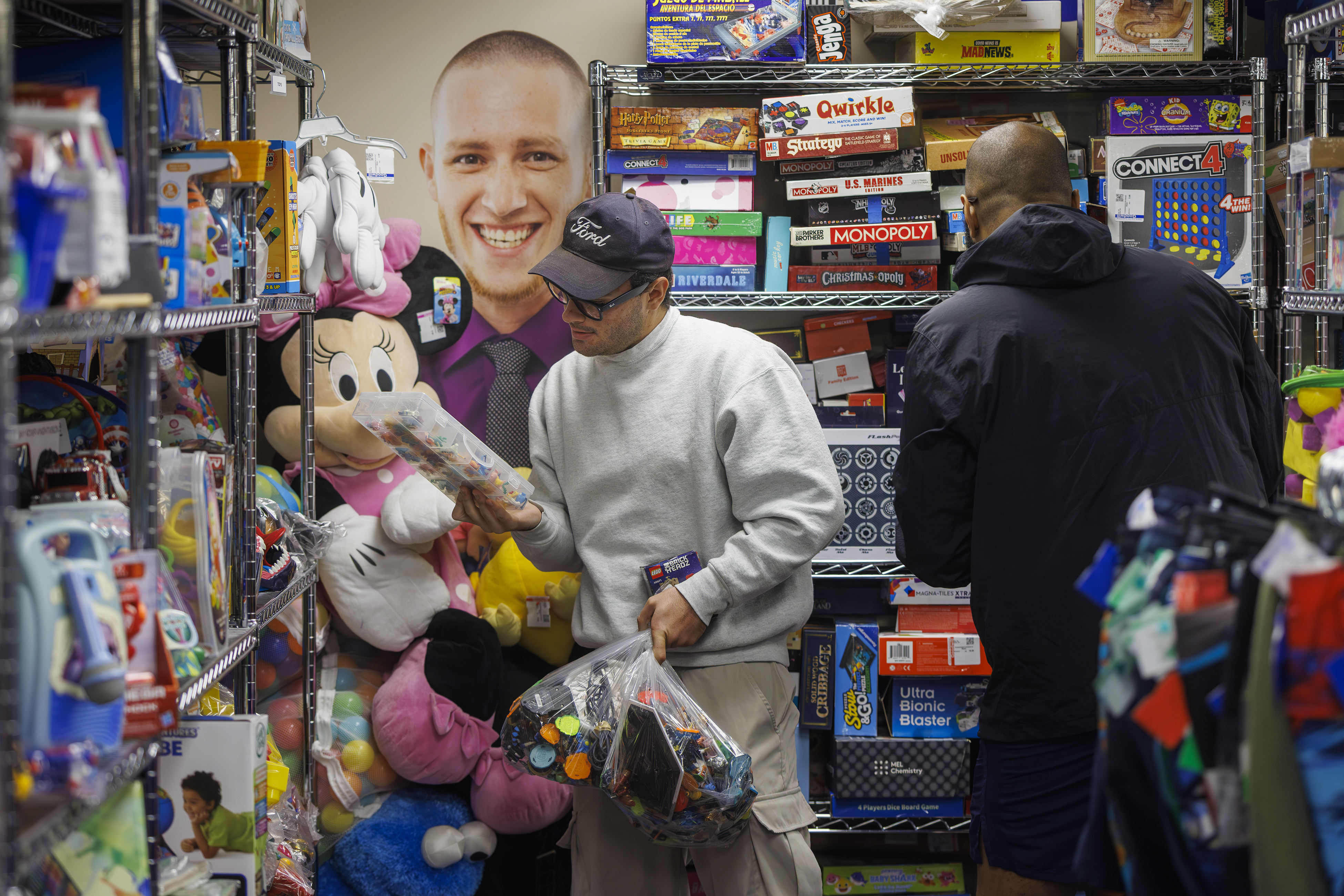
    On Deptford Goodwill’s opening day last month, professional reseller Anthony Nunez was first in line. He had arrived with a friend around 4:30 a.m., ready to hunt for sports jerseys, Pokemon memorabilia, video games, and vintage clothing to resell on eBay.

    Since losing a job in compliance during the pandemic, the 34-year-old Sayreville resident has been reselling full-time, making more than $100,000 a year, he said.

    Anthony Nunez flashes a Pokemon Stadium game he picked up in the toy section at the opening of the new Goodwill in Deptford.Alejandro A. Alvarez / Staff Photographer

    At the Deptford Goodwill, Nunez made a beeline for items with a high resale value, including a still-in-the-box Pokemon Stadium video game for Nintendo 64. He bought it for $18, Nunez said, and later resold it for $150, recouping the cost of his entire Goodwill trip.

    It helped that Goodwill executives had invited several resellers to a store preview, he noted.

    “They understand we help them too,” Nunez said. “I don’t know if they would be able to exist without us.”

    How social media has promoted thrifting

    Some longtime thrifters have started using social media to make extra cash.

    Melody Appel got into thrifting decades ago, when she was a student at Drexel University.

    Now 47 and living in Monmouth County, N.J., Appel recently got a TikTok account at the urging of her teenage daughters. At first, she just used the account to show off her thrifting hauls. But over the past month, she said she has started reselling items, too, making around $1,500.

    Many of her TikTok followers seem to be between the ages of 30 and 60, she said, but she has noticed many younger customers in stores.

    “People are seeing what they can find,” said Appel, who works as an educator and interior decorator. “And maybe their perception of what thrifting was is different from what thrifting is.”

    Reed Habiak, a social media influencer and reseller, looks for items in the Deptford Goodwill’s toy section on opening day last month. Alejandro A. Alvarez / Staff Photographer

    While some found their way to thrifting through social media, others get hooked when they stumble into a store, said Fortun, the Goodwill regional manager. He has noticed more young people at the Deptford store than at the old location in Woodbury Heights, he said, and he attributes some of that to the Edge Fitness Club right next door.

    Customers often come in on a whim, he said, and are in awe of the wide selection and the price tags.

    “People always look for deals,” Fortun said. “You go to discount stores like Ross and Burlington, you still don’t find items as cheap.”

    Goodwill is trying to keep these customers hooked with a new online loyalty program, which will offer special deals and send push alerts to shoppers when their favorite brands are stocked at a local store, said Boyd, CEO of the South Jersey and Philadelphia locations.

    Mark Boyd, CEO at Goodwill Industries of Southern New Jersey and Philadelphia, cuts the ribbon to open the new store in Deptford last month.Alejandro A. Alvarez / Staff Photographer

    Executives are also looking into using artificial intelligence to optimize parts of their operations, such as pricing, he said. But he doesn’t think technology could enhance the customer experience much, he added, and over-digitization could detract from it.

    “I really think thrifting is like one of the most human experiences you’re going to have, and it’s a great shopping experience,” Boyd said, “and that’s why it’s so popular.”

  • A Conshohocken bridal shop has closed after 45 years

    A Conshohocken bridal shop has closed after 45 years

    For more than four decades, hundreds of Philadelphia-area women first laid eyes on their wedding gowns at La Bella Moda.

    Even in recent years, as their bridesmaids and mothers increasingly bought dresses online, brides kept the Conshohocken boutique in business.

    But last month, the Fayette Street mainstay shut its doors for good.

    “It eventually wears on you,” said owner Gabriella Pagano Rush, who decided to close the shop in response to industry pressures and personal timing. The 30-year-old, who took over the store from her grandmother Lena Pagano in 2020, is due to have her first child this summer.

    “The business was fine,” Pagano Rush said. “Sometimes you just have to do something that is better for you in the long run.”

    La Bella Moda, shown here in 2023, sold wedding gowns and other formal wear for 45 years before closing its doors in Conshohocken last month.Courtesy Morgan Taylor Artistry

    She calls the transition “a happy ending,” one she said marks a new chapter in her life but also comes after years spent struggling to keep up with an evolving wedding industry.

    Weddings have become increasingly extravagant, with some Philly-area celebrations costing $40,000 or more.

    Social media has upped the ante — and the pressure on couples to plan the perfect day, noted Pagano Rush.

    They have more vendor choices than ever, and small businesses like La Bella Moda, where gowns cost $2,500 on average, must compete with wedding emporiums, which can offer a wider selection for less.

    The other options include larger brands, such as King of Prussia-based David’s Bridal, which is expanding its offerings while still selling dresses for under $500.

    There are also online retailers, such as Revelry and Azazie, which offer home try-ons and mail custom dresses directly to customers. Even broader ecommerce sites and fast-fashion brands sell wedding accessories.

    In recent years, as brides browsed veils and shoes at La Bella Moda, “I would start hearing, ‘Oh, I can get this on Amazon’ or ‘Oh, I can get this on Shein,’” which started out selling wedding dresses online before becoming a retail behemoth, Pagano Rush said.

    Someone shops for a wedding dress at David’s Bridal in Feasterville-Trevose in 2023. Allie Ippolito / Staff Photographer

    In 2023, Pagano Rush stopped selling bridesmaid dresses and other formal wear, which had accounted for about 30% of the shop’s business, she said. Instead, she doubled down on wedding gowns.

    She began offering $200 private appointments, during which a bride and up to eight guests got the store to themselves, with champagne, cookies, and a personalized shopping playlist, Pagano Rush said.

    “I really wanted brides to feel relaxed when they came into our store,” Pagano Rush said. “Not intimidated, not feeling pressured to find their dress.”

    How an Italian immigrant cultivated bridal joy in Conshy

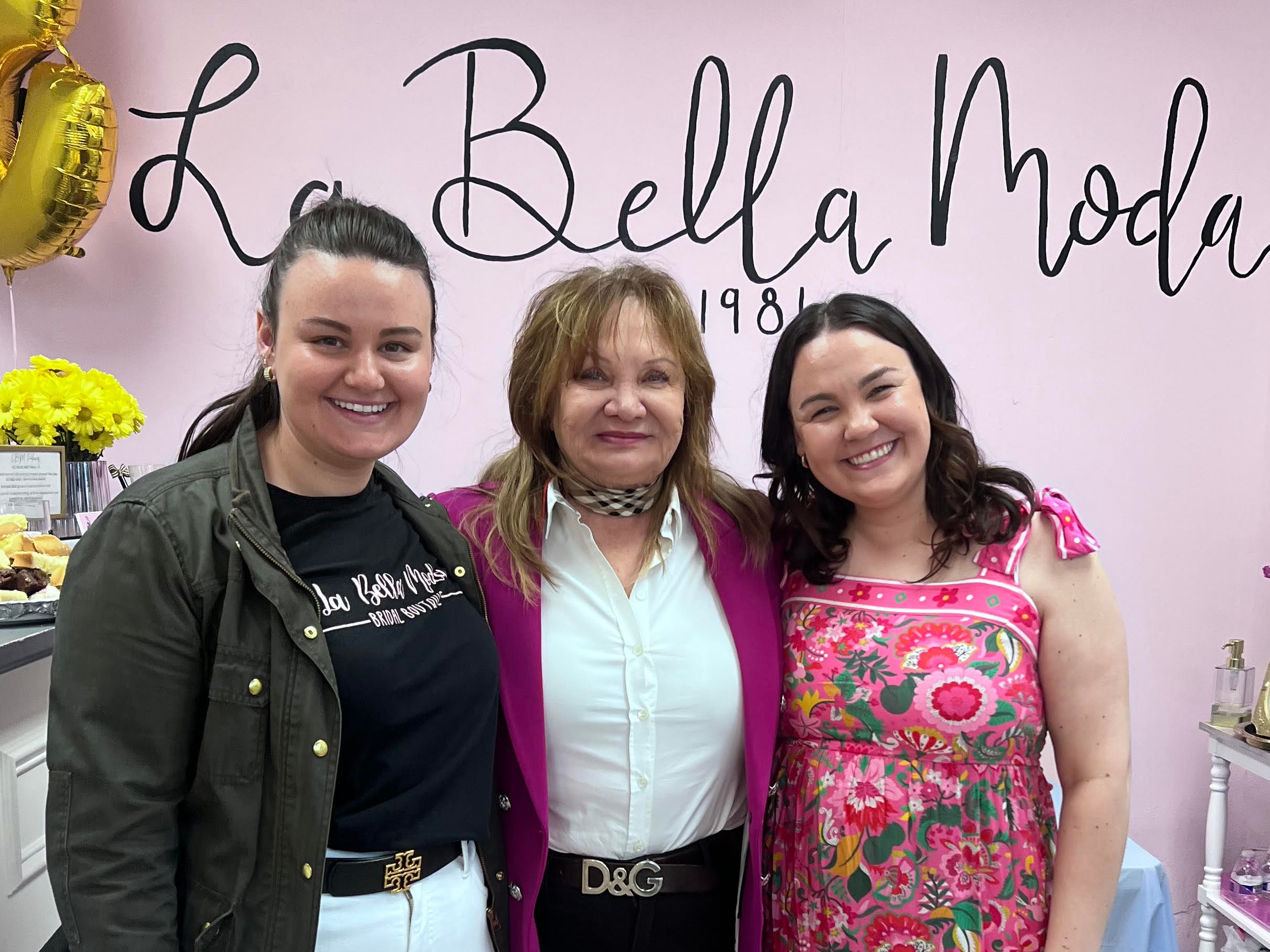
    La Bella Moda founder Lena Pagano (center) poses with her granddaughters in the Conshohocken shop. Gabriella Pagano Rush (right) took over as owner in 2020. Pagano Rush’s sister Michaela Bosico (left) encouraged the new owner to renovate the store during the pandemic.Courtesy Gabriella Pagano Rush

    Ever since she was a kid watching her “mom mom” Lena run La Bella Moda, Pagano Rush was enthralled by the wedding dress shopping experience.

    “I just remember growing up, going and visiting her at the store, helping her for fun, and just in the back of my head being like, ‘Oh, this would be really fun to do,’” said Pagano Rush, who grew up near Lansdale.

    At the time, the shop’s second floor was devoted to bridal try-ons, she said. “It was always so exciting when you would walk upstairs and you’d see all the brides up there trying on dresses.”

    The joy in the shop was cultivated by Lena Pagano, who emigrated from Italy, married, had three children, taught herself English, and then fulfilled a longtime dream of opening a boutique in 1981, Pagano Rush said.

    Lena Pagano, now in her 70s, stepped aside just before the pandemic in 2020, Pagano Rush said, and has been enjoying retirement in Plymouth Meeting.

    Meanwhile at La Bella Moda, Pagano Rush’s first few months as a business owner coincided with the early months of the pandemic, when businesses were forced to close. But she took it in stride and used the time to renovate the shop, making for a better customer experience when it reopened that June.

    Owner Gabriella Pagano Rush inside a renovated La Bella Moda in Conshohocken in 2023.Courtesy Morgan Taylor Artistry

    Montgomery County Commissioners Chair Jamila Winder said the Pagano family’s story exemplifies the immigrant experience.

    “In these times where it’s really hard for small business owners and entrepreneurs to start a business and sustain a business, Lena and Gabriella are really the epitome of that grit and that discipline and that vibrancy,” Winder said.

    “They’ve brought so much joy to women across Montgomery County, women who were planning for some of the best days of their lives.”

    Winder is one of them. A few years ago, she said, she bought her bridesmaids’ dresses at La Bella Moda.

    Customers remember their wedding dress fittings

    For women across the region, word of La Bella Moda’s May 31 closure brought back similar memories.

    Dozens commented on Facebook posts about the news.

    “I’ll never forget how gorgeous I felt in my lace gown on my wedding day,” wrote one woman. “Thank you for helping to make it so special, almost 20 years ago.”

    “Such amazing memories of the fitting and how beautiful you made me feel!” added another.

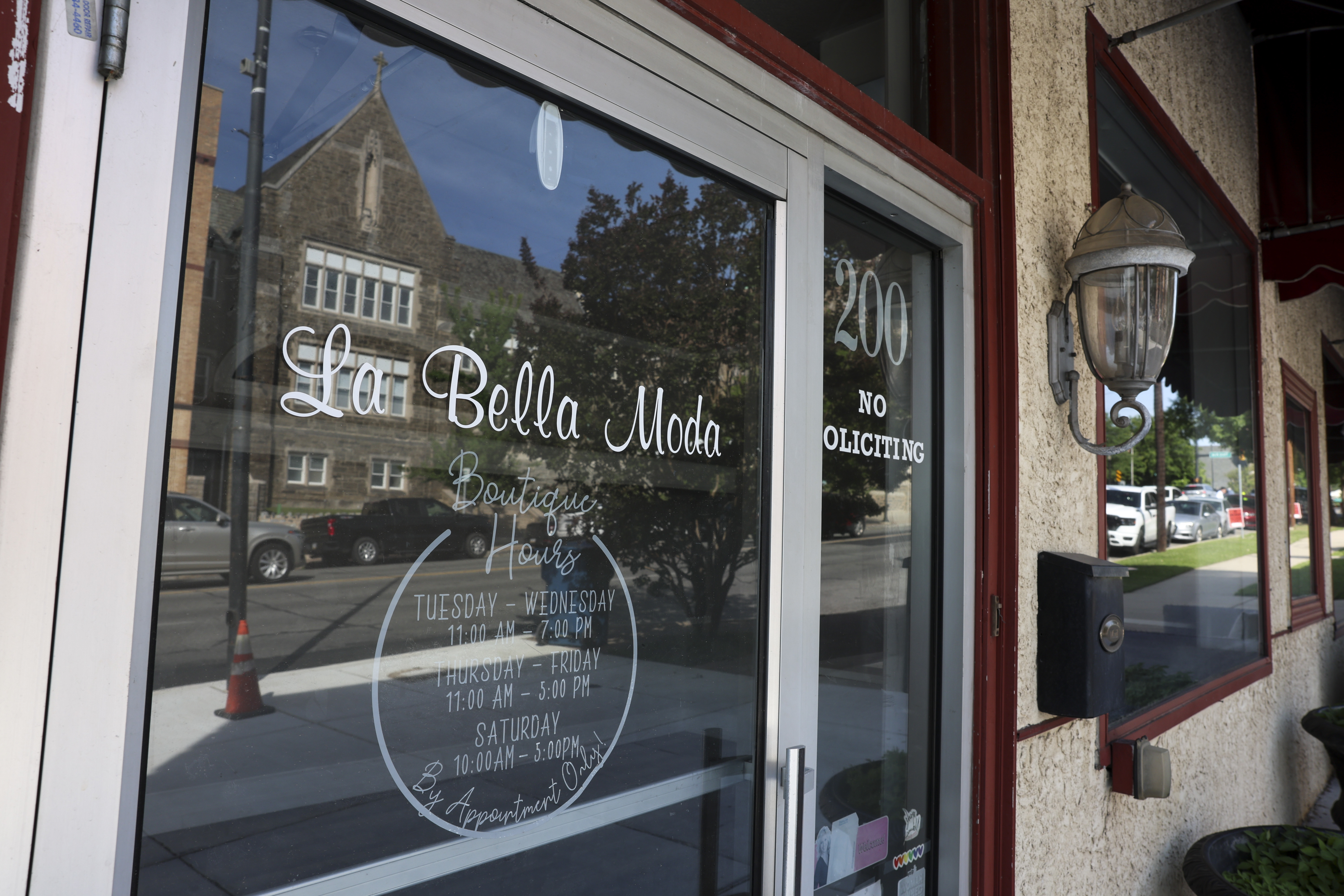
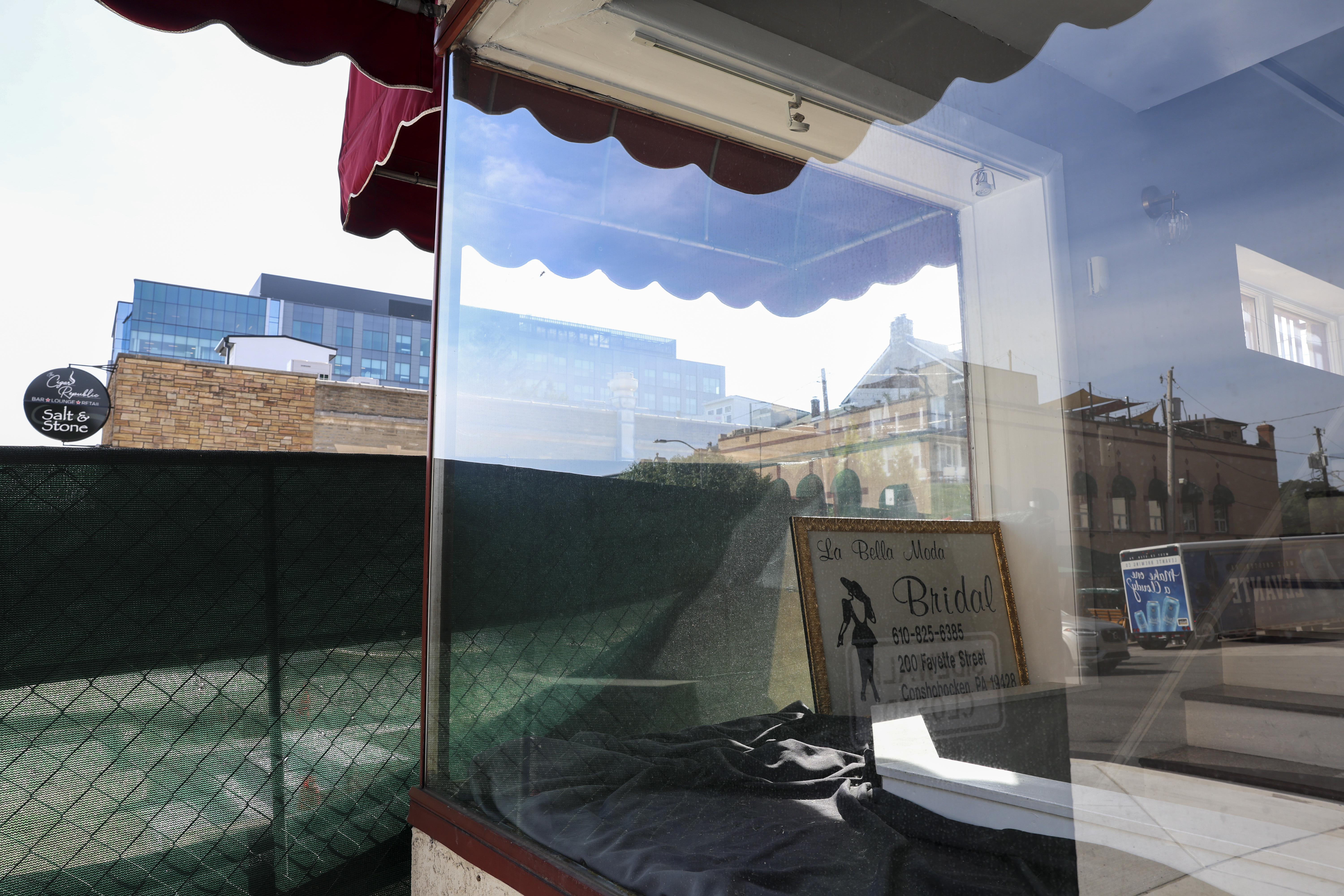
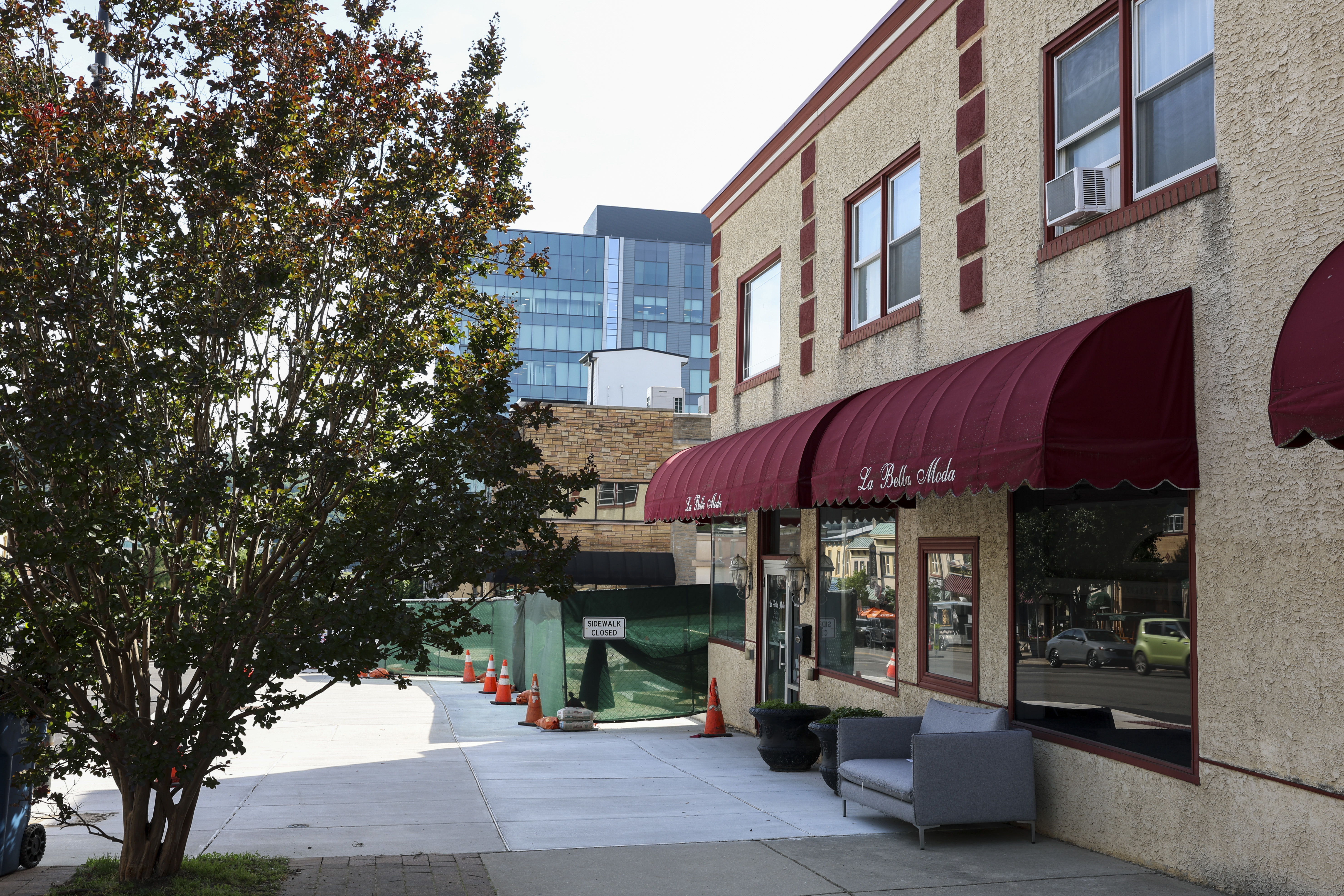
    The mostly empty window of La Bella Moda is pictured on June 4 in Conshohocken.Monica Herndon / Staff Photographer

    Tina Brennan West said she, too, recalls her wedding-gown fitting there 34 years ago.

    “I remember the experience walking through the doors, the smiles, the feeling that they already knew you,” said Brennan West, 55, of Plymouth Meeting, who works at an auto repair shop.

    She showed the stylists an inspiration picture from a magazine, she said, and an employee pulled a similar white-satin dress, with a long train, pink rose buds in the appliqué, and puffy sleeves that were popular at the time.

    She can still picture trying on the gown, she said, and see her mother and grandmother crying at the sight of her.

    Erin McElroy Kraft, now 60, wore her mother’s wedding gown for her 1992 nuptials. But the Plymouth Meeting native bought her bridesmaids outfits — deep-purple velvet skirt sets — at La Bella Moda.

    “It was absolutely beautiful,” McElroy Kraft said. “They were just so great at what they did.”

    McElroy Kraft, a retired foreign-service worker who now lives in Arlington, Va., said Fayette Street won’t feel the same on her next visit home.

    “It’s going to be hard not to see La Bella Moda in Conshohocken,” she said.

    The closed La Bella Moda on Fayette Street in Conshohocken is pictured on June 4.Monica Herndon / Staff Photographer

    La Bella Moda sits empty now. Its last dresses were either sold to customers during a recent farewell event, Pagano Rush said, or donated to bridal consignment shops owned by her friends.

    As for brides who had recently bought gowns at La Bella Moda, “no one was left without their dress and without a plan,” said Pagano Rush, who referred some customers to a local seamstress for alterations.

    The building, owned by Lena Pagano, will be leased to another tenant, Pagano Rush said.

    “The borough of Conshohocken has really done an amazing job of attracting businesses to that main corridor,” said Winder, the county commissioners’ chair. “I don’t anticipate that storefront will be vacant for long.”

    Pagano Rush said she believes there is still a place for independent shops in the modern wedding industry.

    “I can’t tell you how much attention we have gotten since April when we posted that we were even closing,” she said. “I wish small businesses just got this kind of attention and support” all time.