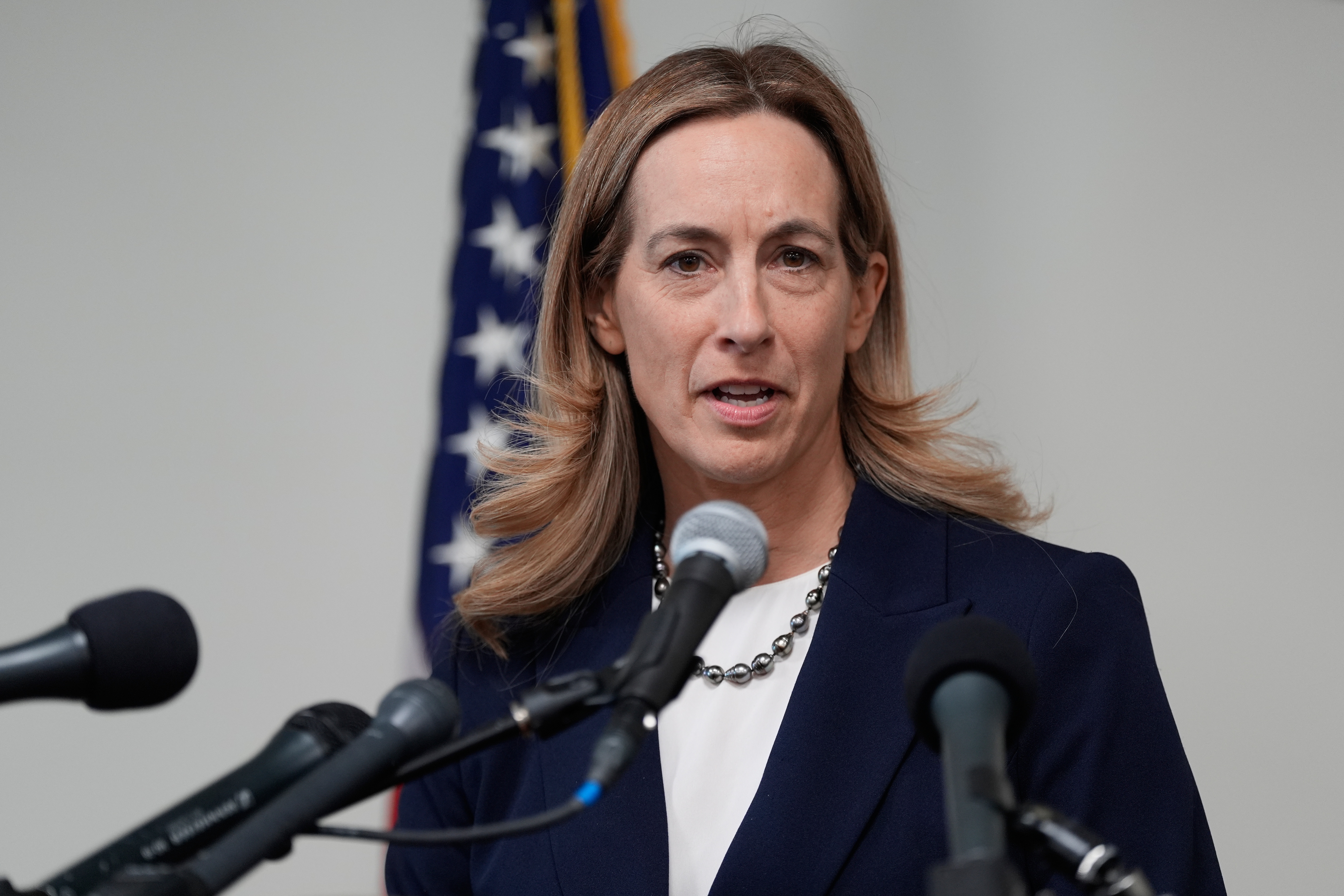
New Jersey Gov. Mikie Sherrill signed a law Tuesday that will permit people running for office to use campaign contributions to hire security guards and buy surveillance equipment, in a sign that politically motivated violence is on the rise.
The law takes effect immediately, according to the legislation.
Typically, candidates cannot not use political donations to cover personal expenses. But since the execution of New Jersey U.S. District Judge Esther Salas’ son in their Middlesex County home in 2020 by a self-described men’s rights lawyer, appointed and elected public officials nationwide have taken steps to protect their privacy.
The protections could extend to candidates’ immediate family members with whom they live. Candidates shall not hire relatives to work as security personnel, nor may they hire security companies owned by family, according to the bill.
The state Senate unanimously approved the legislation in June. The Assembly voted 51-12 with nine abstentions in September, sending it on to the governor for her signature.
Joan Dillon opened a childcare center in June of last year for 46 infants and toddlers in Gloucester County, where options for working-class and middle-class families are scarce. But within a month, the center was in trouble.
New Jersey froze additional funding for its Child Care Assistance Program in July 2025, stranding most families who expected to receive financial help to pay most of the cost. Former DemocraticGov. Phil Murphy reversed the decision eight months later, but it was too late for many of these parents, Dillon said.
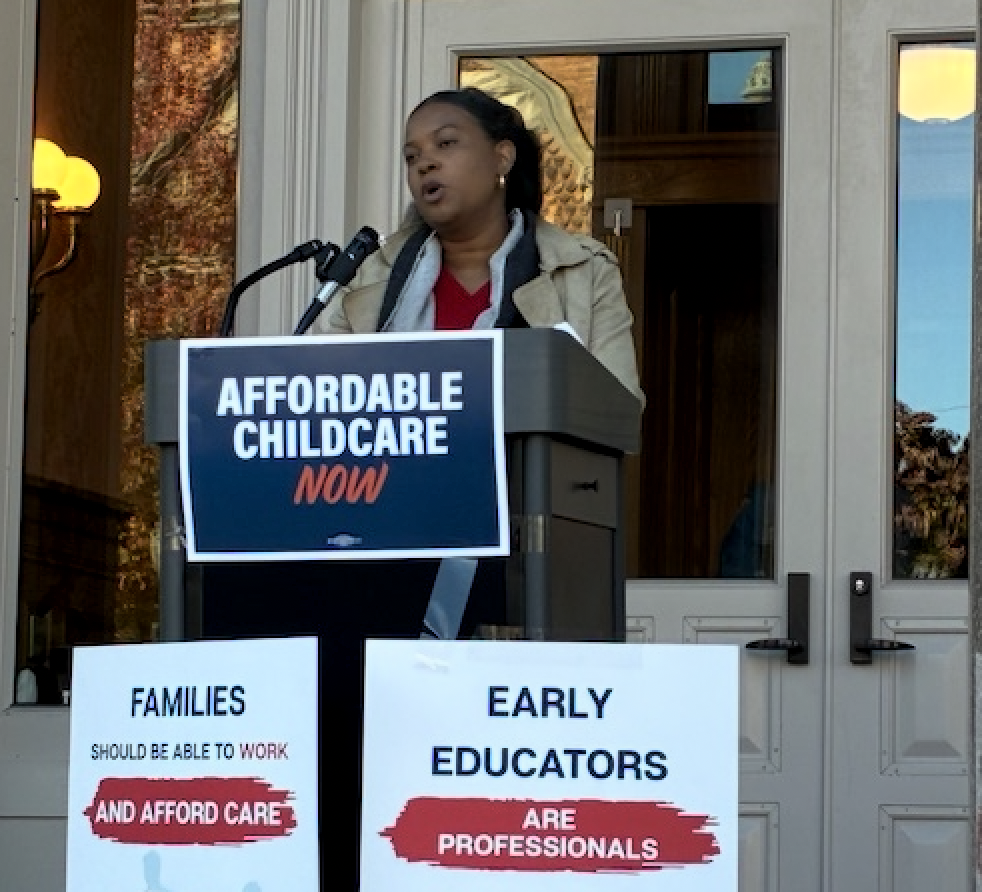
“One-third of the mothers of those families left the workforce. Some families moved out of the area to live with relatives who could help them. Others pieced together inadequate care,” Dillon told 20 members of the Assembly during an often emotional hearing at the Statehouse in Trenton on what many called the “childcare crisis” in New Jersey.
Dillon was among the dozens of speakers Thursday who explained how “the math does not work” when it comes tothe cost of childcare. The monthly rates range from $1,600 to $2,200 a month for infant care and $1,400 to $1,900 monthly for toddler care, according to state market data.
Childcare centers also struggle because even for those families who qualify for help through the state’s assistance program, the subsidy covers only one-third to one-half of the cost of rent, utilities, and trained educators, providers said.
“We invest in public dollars inpre-K through 12th grade because education benefits our entire society. But somehow, when children are at their most critical stage of brain development, we treat their early education as a private family obligation,” Dillon said. “We are asking New Jersey to recognize that education does not begin at age 3.”
A campaignled by childcare providers and nonprofits called Strong Start New Jersey offered one solution to begin to address the problem: Commit $35 million a year in the next three state budgets to expand the subsidy program to families with slightly higher incomes. This would allow 3,000 more families a year to qualify for help, said Sharon Levine, the Start Strong New Jersey director.
The $870 million program served about 70,000 working-poor families across the state last year.
“Unfortunately, this means many working families with young children are stuck in an affordability gap — their income is too high to qualify and too low to afford childcare without assistance,” Levine said.
Shelby Willmot of Hamilton said she fell into that gap. A promotion edged her just out of range for subsidized childcare.
She has sinceput pursuing a bachelor’s degree on hold and every month decides which bill she can pay late because she needs childcare for her son.
“I want to keep working. I want to finish my degree and provide a stable home life for my son,” Willmot said. “I’m asking for a system that gives us a chance to do that.”
Assembly member Brian Bergen (R., Morris), a member of the Assembly Commerce and Economic Development Committee, said he would support adding $35 million to expand the subsidy program.
“That doesn’t sound like a lot of money,” Bergen said. “What we heard today is an easy, solvable solution if we just cut the junk out of the budget.”
Assembly member William Spearman (D., Camden), who chairs the commerce committee, said one solution may be to adjust the program’s income limits to reflect what families take home after taxes.
Advocates said other solutions must help small and family-run businesses, which have been hit hard by the state’s push to expand free prekindergarten programs — a great initiative that has hurt childcare centers.
Kayanna Jackson, owner of Angel Touch Nature Preschool in Southampton, Burlington County, said she has allowed parents to skip or delay payments because she understands they are struggling to hold onto their jobs.
“As an educator and taxpayer, I contribute to our tax system, and I believe our tax dollars should be invested in meaningful change that strengthens our communities and builds an economy for our future generation,“ Jackson said in a rally on the Statehouse steps before the hearing.
“Our children deserve a system that will protect them and invest in them so that they can give back to the system and their communities.”
A Rutgers-Eagleton poll released this month found 73% of state residents said it is “very” or “somewhat” difficult to afford childcare expenses — more than for housing, utilities, and other spending categories.
An earlier version misstated the percentage of New Jersey residents who struggled to afford childcare expenses. It is 73%.
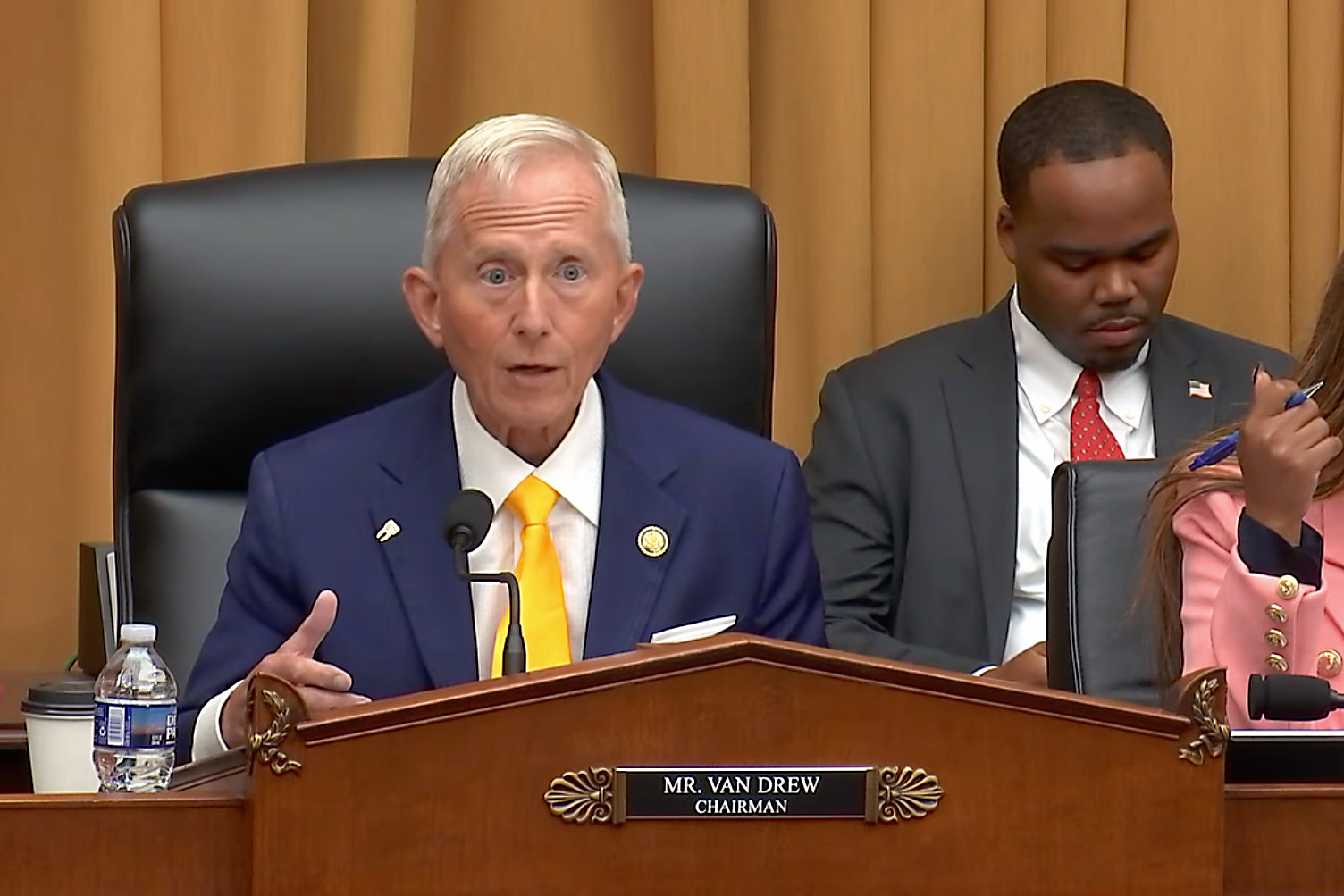
South Jersey Republican Rep. Jeff Van Drew Wednesday announced a congressional subpoena of New Jersey Gov. Mikie Sherrill’s administration, demanding it produce records he requested three months ago that may explain how 6,600 noncitizens were added to the voter rolls in violation of federal law.
Sherrill, a first-term Democrat, revealed in July that approximately 6,600 people who identified themselves as noncitizens were registered to vote in New Jersey between June 2023 and June 2024through the Motor Vehicle Commission, though fewer than 400 actually cast ballots.
Her administration’s response has been “inadequate,” and “an impediment” to their investigation, the letter said.
“None of the documents offered any substantive insight into how the noncitizen voter registration issue was discovered or why New Jersey did not conduct any remediation efforts until 2026,”said the letter Van Drew co-authored.
“These ineligible voter registrations raise concerns about the application of federal law in New Jersey as it pertains to accurate voter registration, as well as the effect that New Jersey’s failure to identify and remove noncitizens from its voter rolls has on the civil liberties of American voters and their ability to elect representatives,” according to the letter.
Sherrill has blamed former Gov. Phil Murphy’s team, as well as software vendor IDEMIA, for the registration of people who had answered they weren’t citizens and therefore ineligible to vote. Both have denied responsibility.
Murphy spokesperson Mahen Gunaratna on Wednesday pointed to his one statement on the matter from July in which he said Murphy “had no knowledge” of the issue and “applauds” Sherrill for looking into it.
Sherrill also referred the matter the law firm of former RepublicanAttorney General Jeffrey S. Chiesa for an independent investigation, which is ongoing, Sherrill noted Wednesday.
“I promised that when we discover a problem, we communicate the facts and fix it — and I meant it,” Sherrill’s statement said. “From the moment we discovered the Motor Vehicle Commission registration issue from 2023, we took action immediately, went above and beyond in making agencywide reforms, and have been transparent every step of the way. We did this so that New Jerseyans can feel confident that we are running the strongest and fairest election in our country.”
Sherrill dismissed the subpoena as “political theater,” and derided Van Drew and House Judiciary Chair Jim Jordan (R., Ohio) as “enablers” of President Donald Trump, whose administration has pushed for more power over state-run elections.
Van Drew defended IDEMIA, the vendor Sherrill has blamed, at the hearing on the matter last month but no one from New Jersey’s government or the voter registration system participated. Van Drew repeatedly accused the state of knowing about the noncitizen registration issue since 2024 and called it a “cover-up.”
Van Drew spokesperson Paxton Antonucci told The Inquirer after the hearing that documents showed the state contacted IDEMIA in June 2024 after noticing registered voters whose files were missing their age and party affiliation. Those questions were only asked of people who identified themselves as citizens wanting to vote, but the system still allowed people who said they aren’t citizens to register.
“This information was missing due to the fact that the software, for some reason, was failing to flag that this group of individuals had selected the ‘No’ option when asked if they were a U.S. citizen but were still allowed to be registered to vote,” Antonucci said last month.
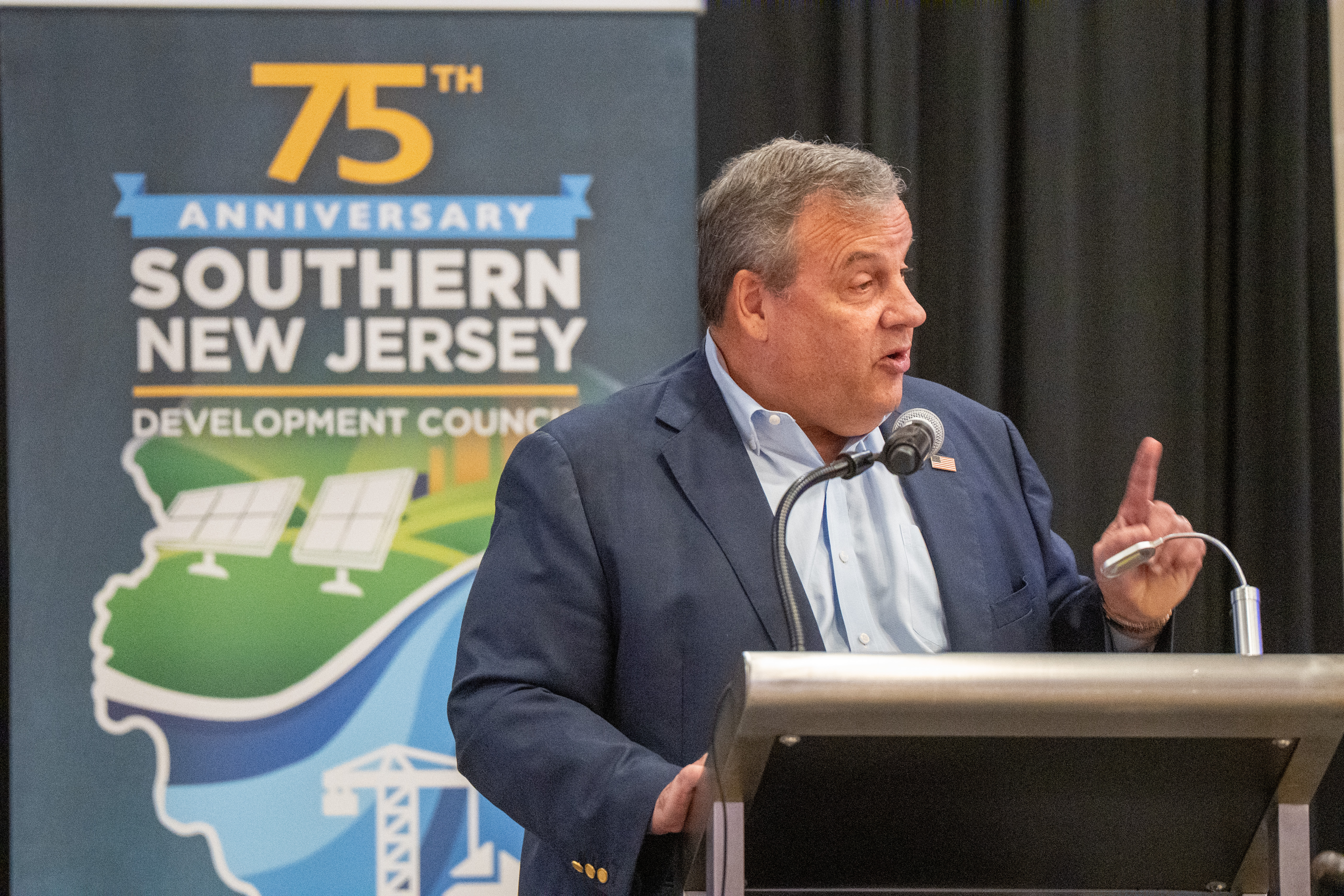
Former New Jersey Gov. Chris Christie predicted the Nov. 3 election will mark “the official end of the Donald Trump era,” when Democrats are expected to win control of the U.S. House, but warned the final two years of his presidency will not result in the stability the public craves.
The country needs leadership to “give people a view beyond the next crisis point” and “feel better about who we are as Americans and what we can do for each other and the world,” the former two-term Republican governor told 200 business leaders gathered Friday at a Southern New Jersey Development Council conference in Mount Laurel.
Trump cannot provide that kind of leadership, Christie said.
“We have a president now who markets every day in anger, in hate, in vengeance and self-dealing,” he said.
Polls universally show Democrats are poised to win control of the House — with pickups in Pennsylvania and New Jersey likely — and the Senate looks in play as the party has gone on offense in traditionally GOP states.
“We are ending an era, everybody. … I suspect it will officially be over Nov. 3. The only person who doesn’t know that is President Trump,” Christie said.
Christie was one of the first elected officials to endorse Trump after ending his own 2016 campaign, but he broke with the president after Trump claimed the 2020 election had been stolen from him. When Christie briefly ran for president again in 2024, he released an ad admitting backing Trump was a mistake.
“What we are in for are the most tumultuous two years,” as Trump will try “with every bit of his strength to hold on to attention and power,” Christie added.
His remarks at times sounded like a stump speech for his ownpotential candidacy in 2028, which he said last month he would consider after the election.
Christie said he would remain a loud voice for leadership and building back the country’s economy and standing in the world.
“I’m not going anywhere,” he said.
He also praised Democratic Gov. Mikie Sherrill and offered advice to corporate leaders on how to weather more economic and political upheaval.
Christie said he expected that Democrats will open numerous investigations into the Trump administration’s conduct when the new Congress convenes in January. He added that he hoped they would not put the country through another impeachment process, which he said would result only in giving Trump more attention.
“Attention to him is like oxygen to everyone else in this room,” he said.
‘Rooting for Sherrill’
Christie described the fruitful partnerships he forged with Democrats, including his collaboration with formerstate Senate President Steve Sweeney (D., Gloucester)in 2011 to force workers to pay more for their pensions and benefits to avert a collapse. The deal was immensely unpopular with public union workers.
He criticized her immediate predecessor, former Democratic Gov. Phil Murphy, for allowing the budget to balloon from $34 billion to $60 billion. (Murphy has criticized Christie for spending down the state’s surplus to about $600 million.)
“If you want to be governor of this state, and this is a cautionary tale to our current governor, who, by the way, I like and I am rooting for, you can’t be governor part-time,” Christie said. “What I hope we now do is encourage the current governor to have some courage.”
Earlier in the day, South Jersey elected leaders of both parties discussed how to strengthen the region’s economy and rebuild after Trump.
U.S. Rep. Herb Conaway, a Burlington County Democrat, said House Democrats are committed to making “a case against the rampant corruption of the Trump administration” and to restoring the cuts to Medicaid slated to take effect next year under Trump’s One Big Beautiful Bill Act, which will threaten the eligibility of hundreds of thousands of low-income New Jerseyans.
“The American people expect it, and we are going to give it to them,” he said.
Hundreds of thousands of New Jerseyans who buy health insurance through the state’s Affordable Care Act marketplace, GetCoveredNJ,will face double-digit premium increases next year.
The average premium increase for individuals and families will be 19.8%, which insurance carriers attributed to rising medical and specialty drug costs, Acting Banking and Insurance Commissioner Susan Ochs said in a statement Thursday.
Some of the plans offered by the state’s five carriers raise rates far higher than the average increase. UnitedHealthcare will charge 35.7% more, Oscar rates will rise by 29.3%, and Ambetter from Wellcare New Jersey is 20.8% more.
AmeriHealth and Horizon’s rate increases are below the state average, at 17% and 15.3%, respectively.
The Pennsylvania Insurance Department announced last month an average rate increase of 16% for health plans sold to individuals and families through Pennie, its ACA marketplace.
Last year, many lost subsidies that dramatically lowered their costs when Congress declined to renew pandemic-erasubsidies for people with higher incomes who were insured through the ACA.
Nearly 70,000 people in New Jersey dropped their coverage as a result, according to the state. Ochs said the loss of subsidies drove away all but the sickest people who couldn’t find coverage elsewhere, creating a sicker and more expensive pool of consumers.
State marketplace plans enrolled440,362 people this year.
“These health insurance rate increases will place extraordinary pressure on household budgets and drive more New Jerseyans to make the heartbreaking choice to drop coverage altogether,” Ochs said. “While this is a challenging environment for many, our GetCoveredNJ team is here to help consumers find plans that may work for them.”
The average premium increase for individual marketplaces nationwide is 15%, lower than New Jersey, according to a recent Kaiser Family Foundation analysis.
Members of the Small Employer Market will pay an average of 18.8% more. Horizon is raising premiums by 19.5% and both Oxford and AmeriHealth by 17.6%, the department said.
Linda Schwimmer, president of the New Jersey Health Care Quality Institute, a research and advocacy nonprofit, expressed dismay on consumers’ behalf.
“Given the loss of the extra premium supports and the increase in prices of healthcare services and medication, the insurance premium rate increases are unsurprising but unsustainable. The small employer market increases are also skyrocketing at about 19%,” Schwimmer said.
The open enrollment period in New Jersey runs from Nov. 1 through Jan. 31, 2027.
NEW PROVIDENCE, N.J.— While most Democrats running for Congress this year are squarely focused on running against President Donald Trump, New Jersey candidate Rebecca Bennett deviated from the typical playbook last week during a swing through Union County.
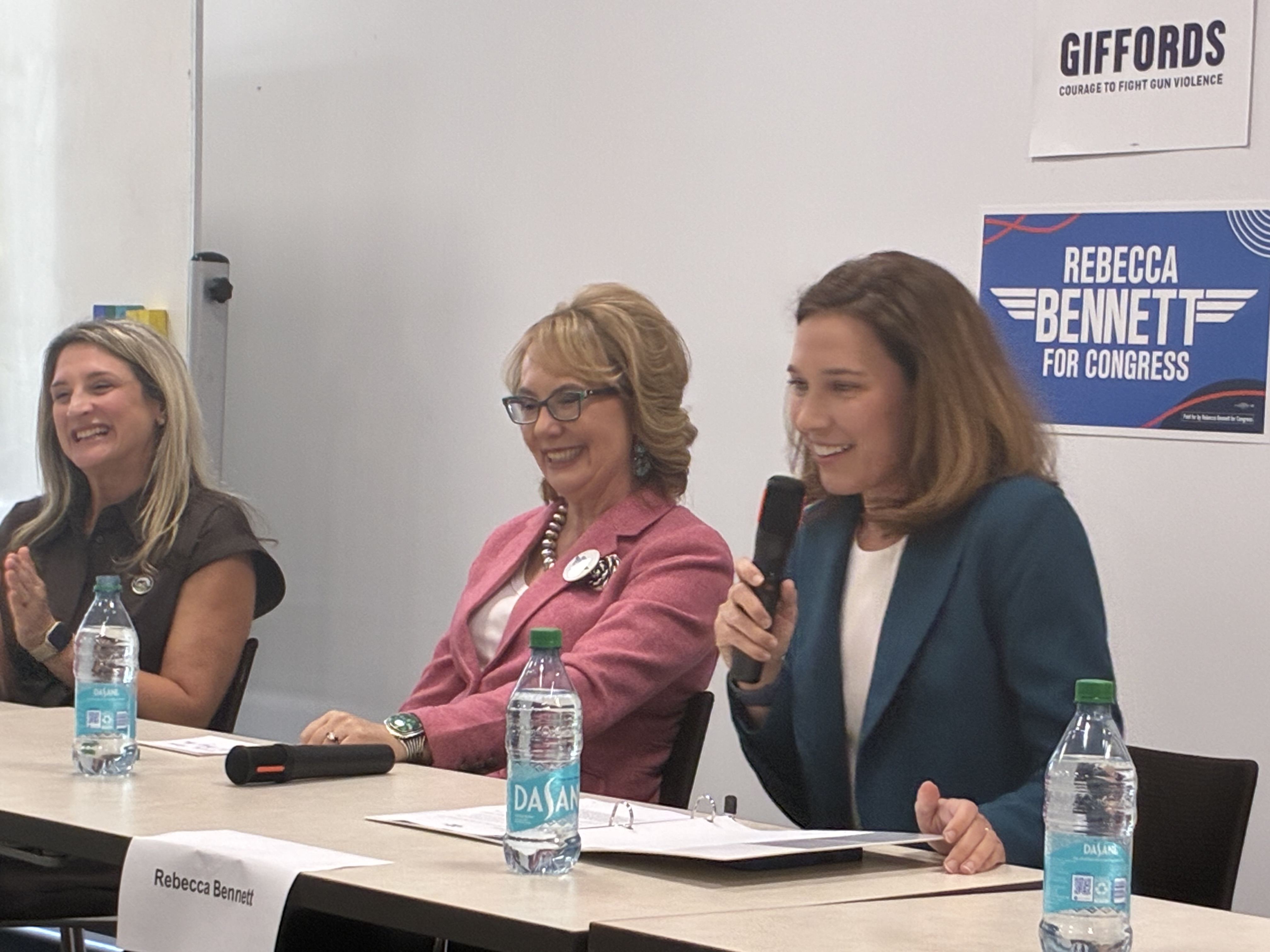
She mentioned Trump only once. And Bennett did not even mention her opponent, 7th District incumbent Republican U.S. Rep. Tom Kean Jr., until the final minute of an hour-long discussion on gun control with former U.S. Rep. Gabby Giffords, an Arizona Democrat who has been a leading voice on the issue since surviving an assassination attempt in 2011.
“I want to be clear that we are traumatizing a generation of kids because our elected officials in Washington are failing to solve this crisis that we are dealing with in this country,” Bennett said.
“There are very clear, commonsense things that we can do to tackle this, like background checks, like red flag laws, like secure storage and assault weapons bans. I want you all to know this is absolutely going to be a priority for me.”
Bennett is projecting confidence three weeks before Election Day.
Kean, the two-term GOP incumbent, must overcome a strong anti-Trump backlash and lingering questions over his nearly four-month medical leave of absence for depression that he did not explain until his return in June.
This week,two major Republican PACs confirmed they have pulled funding from Kean’s race, while the Democratic Congressional Campaign Committee told Politico it would spend $13 million on ads in 39 targeted races, including the 7th District.
The same day she campaigned with Giffords, Bennett announced her latest fundraising haul: $4 million since the start of July.
The enthusiasm for Bennett at the gun control event was palpable, with Giffords’ participation attracting an enthusiastic group of supporters in red T-shirts bearing the Moms Demand Action logo.
“Strong women get things done,” Giffords said.
“Words once came easily. But I’ve not lost my voice,” said Giffords, whose lingering injuries affect her speech and gait. “America needs all of us to speak out, even when you have to fight to find the words. … We are at a crossroads. We can let the shooting continue or we can act.”
“As a mother who lost her son, I know we cannot wait,” said Banks, who took part in the discussion. “We need a representatives like Rebecca Bennett who will turn these commitments into votes, funding, and action that helps protect our children and communities.”
Frustration with Trump
If the predicted “blue wave” enables Democrats to wrest control of the House from Republicans, it will carry Bennett to victory, said Ashley Koning, director of Rutgers University’s Eagleton Center for Public Interest Polling.
To prevail, Kean must overcome voters’ “absolute frustration and dissatisfaction with the Trump administration,” as well as his absence from Congress this year — unexplained until he returned and revealed he had been in treatment for depression, Koning said.
“This is a perfect storm against Kean. It becomes very hard for him to overcome,” Koning said.
But Kean, a fixture of the region’s politics for decades, should not be dismissed, his supporters say.
Rep. Tom Kean Jr. (R-N.J.) departs after delivering a speech to the House of Representatives on his absence at the Capitol in Washington, on Tuesday, June 30, 2026. Kean has finally reappeared in Congress, but questions remain about his nearly four-month absence from public life, which he said was due to depression. (Eric Lee/The New York Times)
The 7th District — spread across Hunterdon and Warren Counties and parts of Morris, Somerset, Sussex and Union — knows Kean well, said Mike Duhaime, a Republican strategist who has run statewide and national campaigns but is not involved with Kean’s race.
Pre-Trump, the Kean brand was solidly fiscally conservative and socially moderate.
“He has a core group of voters, so he will do much better than the average Republican,” said Duhaime, who is also a friend of the Kean family.
“But there is no arguing the environment is really bad for Republicans,” Duhaime said, noting that party leaders are spending more this year to defend traditionally red states, like Kansas.
Three prominent forecasters, including the nonpartisan Cook Political Report, last week tagged the New Jerseyrace as “leans Democratic.”
Bennett spokesperson Carly Jones tried to reinforce the candidate’s underdog status by downplaying the Congressional Leadership Fund’s decision to steer money intended for Kean to other districts.
“Here’s what we know: Trump and National R’s placed a $500k media buy for Kean Jr. yesterday b/c he’ll be a rubber stamp for forever wars & higher prices. CLF pulling their ads represents, at most, 13% of R’s total spend against Rebecca. They still have $19M in ad reservations,” Jones posted Tuesday on X.
Kean had raised $4.89 million as of June 30, according to the most recent filings to the Federal Election Commission. Kean’s campaign declined to share its latest fundraising totals ahead of this week’s deadline.
“Tom has always proven to be a good fundraiser for himself,” said Bill Palatucci, a committeeman in the National Republican Committee who also has strong ties to the Kean family.
If anyone can survive the anticipated blue wave, Kean can, Palatucci said. Warren and Sussex Counties are “deep, deep red, the president is still popular there, and Tom has a very good team who knows how to turn out the vote.”
“I’d put this in the toss-up category,” Palatucci said.
Gun control advocate and former Arizona Rep. Gabby Giffords, center, campaigns with Democrat Rebecca Bennett at a library in New Providence. Bennett is challenging incumbent Republican Tom Kean Jr. in the 7th district.Susan Livio
Former Navy helicopter pilot charts similar course to Sherrill
There was a time when a newcomer like Bennett, a 39-year-old health technology executive from Bridgewater, would have struggled to gain any traction in a contest against a well-known, well-financed incumbent.
But in the Trump era, all politics is national. And the national mood is bleak, according to polls, as an unpopular war rages on and energy and food costs remain high. A recent Rutgers poll found three-quarters of New Jerseyans find it either “very” or “somewhat” difficult to afford education expenses like student loans and childcare, and two-thirds struggled with gas and medical costs.
These conditions create a path for Bennett, one that Democratic Gov. Mikie Sherrill blazed last November, Koning said. Bennett, like the governor, is a former Navy helicopter pilot.
Sherrill won handily in Kean’s backyard in Westfield and Summit on her way to a 14-point statewide win over Republican Jack Ciattarelli after a Trump-focused campaign.
“The Democrats smartly nominated someone here more in the moderate Sherrill mold rather than a socialist or far left,” Duhaime said.
“I don’t think people know where she stands on the issues,” Duhaime added. “She’s a former military pilot, so they probably think she is centrist.”
Bennett has campaigned on making healthcare, energy, and childcare more affordable. Her to-do list includes rolling back the cuts to Medicaid that Kean supported when he voted for Trump’s One Big Beautiful Bill Act, which paid for tax cuts partly by reducing spending on programs that benefit low-income people.
She would undo the tax break on the wealthy and use the money to cap families’ childcare costs at 7% of their household income and create a separate rate class for data centers “to make sure they are paying their fair share,” Bennett told The Inquirer Editorial Board.
(The editorial board, which runs The Inquirer’s opinion pages and decides endorsements, operates independently from the newsroom. Newsroom editors and reporters have no role in endorsements, and opinion staffers have no role in news coverage).
Kean has not responded to the board’s invitations to appear.
The Republicanhas touted his success in helping to restore the State and Local Tax (SALT) deduction through 2029, a win for high-tax states like New Jersey.
At a Sept. 28 debate, Kean stood apart from Trump on two key issues. For the first time, he spoke out against Immigration and Customs Enforcement operating an immigrant detention center in Roxbury, in the district. He also stressed his support for the Gateway Hudson River rail tunnel project, which Trump repeatedly has tried to defund.
“I will make sure that I counter anybody who gets in my way, including this president,” he said.
These are not the issues featured in the attack ads bombarding TV viewers.
Bennett’s ads have focused on introducing herself to voters and contrasting herself with Kean on issues such as stock trading by members of Congress — a controversial topic in the district for several election cycles.
In one ad, titled “Fighting For,” Bennett says: “I approve this message because the Navy taught me service over self. So I’ll never take corporate money. I already sold my stocks.” During the debate, she slammed Kean for signing off on stock trades, even during his medical leave.
Kean denied the claim, saying that his signature is legally required but that he has had no input on how his money is invested. “I’ve not traded an individual stock since I’ve been a member of Congress,” he fired back.
One of Kean’s most recent ads, titled “Profits Over Patients,” calls Bennett “a greedy, liberal millionaire who doesn’t care about you.” Kean’s campaign declined to answer questions about the ad, which flashes to headlines involving Lifepoint Health, a private equity-owned hospital chain. As an executive at Midi Health, a telemedicine company focused on women’s health, Bennett brokered a deal for Midi to work with Lifepoint.
Kean is running a lower-profile campaign compared with Bennett by having fewer public events and discouraging the media from attending. But Palatucci said Kean is “out there in the district seven days a week. Voters see him. And his social media efforts are very, very good.”
Palatucci said this is where Bennett comes up short. “If you get out and talk to people in Hunterdon, Warren, and Sussex Counties and ask them who is Rebecca Bennett, they would have no idea,” he said
When it comes time to vote, what 7th District residents think of Trump’s record is likely to determine the outcome, Duhaime said.
“It’s harder to carve out an image unique from the party and from Trump,” he said.
As tech CEOs debate the looming threat of artificial intelligence to worldwide safety and economic stability, lawmakers in New Jersey have begun taking steps to protect the workforce from fast-moving changes that have already disrupted how many do their jobs.
The state Senate Labor Committee last week voted unanimously to approve a bill that would regulate how employers use AI to monitor, evaluate, and ultimately replace workers.
The bill, which comes amid a broader backlash to AI and surveillance technology, now moves to the Senate budget committee for consideration before a vote by the full chamber. The “Fair Act” would require private- and public-sector employers to provide 60 days notice before implementing AI that would impose significant changes to job expectations. Employers who eliminated jobs because of AI advances would be required to offer training, extended severance pay, and benefits, according to the bill.
It would also regulate how employers use electronic monitoring tools to collect information about employees’ productivity, and how “automated employment decision-making systems” are used to hire, promote, and fire people.
“It makes sure employers can’t spy on you when you are off the clock. Your boss should not be able to follow you home,” said Charle Wowkanech, president of the New Jersey State AFL-CIO, which represents 1 million public- and private-sector workers and their families, who spoke at a recent rally outside the Statehouse to draw attention to the bill.
Artificial intelligence is already monitoring the productivity of thousands of people who work in grocery stores, factories, and cannabis operations in the state, said Daniel Ross, president of United Food and Commercial Workers Local 152, which represents workers in New Jersey, Pennsylvania, Delaware, and Maryland. “The time-test matrix is so unreasonable that workers skip bathroom breaks, they don’t take water breaks, to avoid falling behind,” Ross said.
“Surveillance is not mainly harmless oversight, as it’s sold by employers,” Ross said. “Workers subjected to these practices experience elevated stress levels, declining mental health, and [increased] injury rates.”
Other states have already taken up the issue.
California, Colorado, Connecticut, Illinois, and New York have enacted various workplace protections from AI, according to Multistate, a clearinghouse for state legislation across the country. Pennsylvania has introduced its own bill to regulate AI in the workplace.
However, New Jersey business and industry leaders urged the committee to rethink some of the most sweeping provisions of the bill.
Most of the 1,300 members of the Chamber of Commerce Southern New Jersey are small businesses, which are not equipped with vast human resource or legal departments to implement the law, said Adam Guzjewski, president of Katz Government Affairs.
The bill requires employers to comply with vague requirements to ensure AI does not undermine “an employee’s autonomy, dignity, or welfare.”
But Jack Kelly, a lobbyist for the New Jersey Business and Industry Association, said it’s unclear how these requirements will be enforced for businesses.
“Large corporations may have dedicated legal compliance and technology teams. Many New Jersey businesses do not. For small businesses, these requirements create significant barriers to entry,” Kelly said.
New Jersey’s legislation is not out of step with how other states have regulated AI use, said Tony L.J. Lin, anassociate professor of accounting at Rowan University who studies artificial intelligence in the workplace.
“If AI materially restructures jobs, we need a mechanism for retraining and redeployment,” Lin said.
States should push back on efforts to evaluate employees through invasive means like monitoring keystrokes, simply because this strategy likely does not fully show a worker’s productivity or value, Lin said.
Lin said there is great potential to improve jobs using AI. A nurse-practitioner, for instance, would benefit from technology that handles automated tasks. But a nurse-practitioner will always be valued for the “human judgment, contextual understanding accountability” aspects of the job, he said.
Debbie White, president of the largest nurses union in New Jersey, isn’t so sure.
“Healthcare employers are increasingly using AI and electronic monitoring systems to track worker productivity, evaluate performance, and influence staffing decisions,” White testified during the Oct. 1 hearing in Trenton.
However, White said these systems fail to measure “the reality of nursing care,” which often involves time comforting ailing patients and educating their families among other overlooked aspects of the job.
“AI can be useful, but it can’t replace the judgment of a nurse at the bedside,” she said.
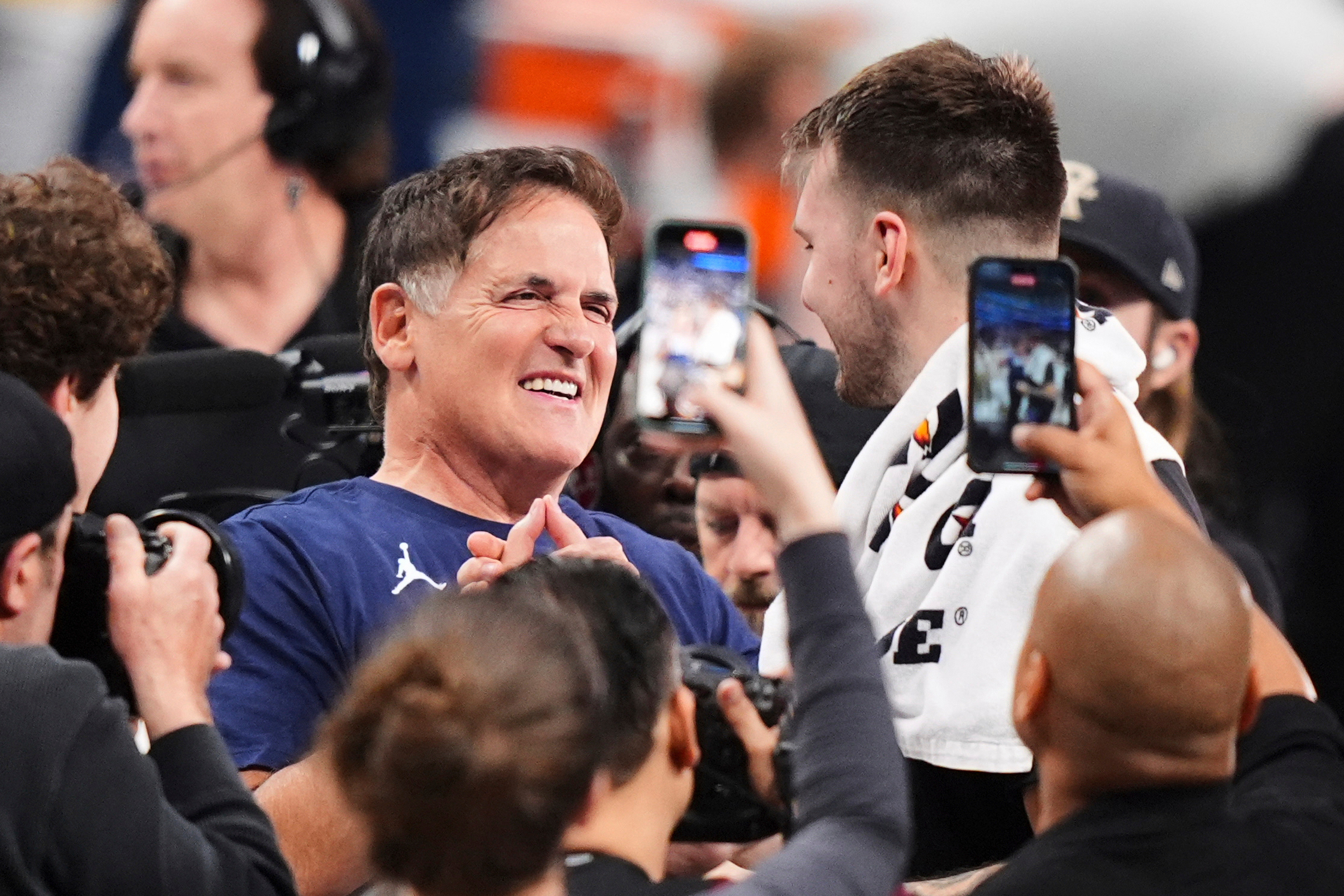
Billionaire Mark Cuban will assist a New Jersey panel Gov. Mikie Sherrill created to study how to halt the soaring price of healthcare for public workers in the state.
“I’ll volunteer to be on the committee that cuts health benefits cost. You need someone from the outside that is objective and can stand up to the big health care conglomerates,” Cuban posted on the social media platform X Saturday, tagging Sherrill.
On Monday afternoon, Sherrill enthusiastically responded, telling Cuban that she appreciates his“innovative work in this space as we bring all ideas to the table.”
Cuban in 2022 launched Cost Plus Drugs, an online pharmaceutical sales company that sells generic drugs directly to consumers at discount prices. Earlier this year, he announced a partnership with President Donald Trump’s low-cost prescription drug plan, TrumpRx.
“No more kicking the can down the road in New Jersey,” Sherrill told Cuban on X. “I want accountability and results. We’d love to have you on Team Jersey as we tackle this challenge. Let’s talk — we’ll reach out today!”
Cuban connected with senior leadership in the governor’s office later in the day, an administration official said.
The State Health Benefits Program Reform Working Group gathers for its first meeting Oct. 16, according to Sherrill’s office. No word on whether Cuban will be there.
The Pittsburgh native is a minority owner of the Dallas Mavericks and a former star of Shark Tank, the TV show that elevates budding entrepreneurs who vie to pitch the best start-up ideas.
New Jersey’s healthcare actuary, Aon, has attributed four consecutive years of double-digit premium increases in the state Health Benefits Program to the soaring cost of specialty drugs, such as those treating diabetes, obesity, kidney disease, and eczema. Aon has not cited generic drugs as a big cost driver.
Pricey outpatient care is also another culprit, Aon has said.
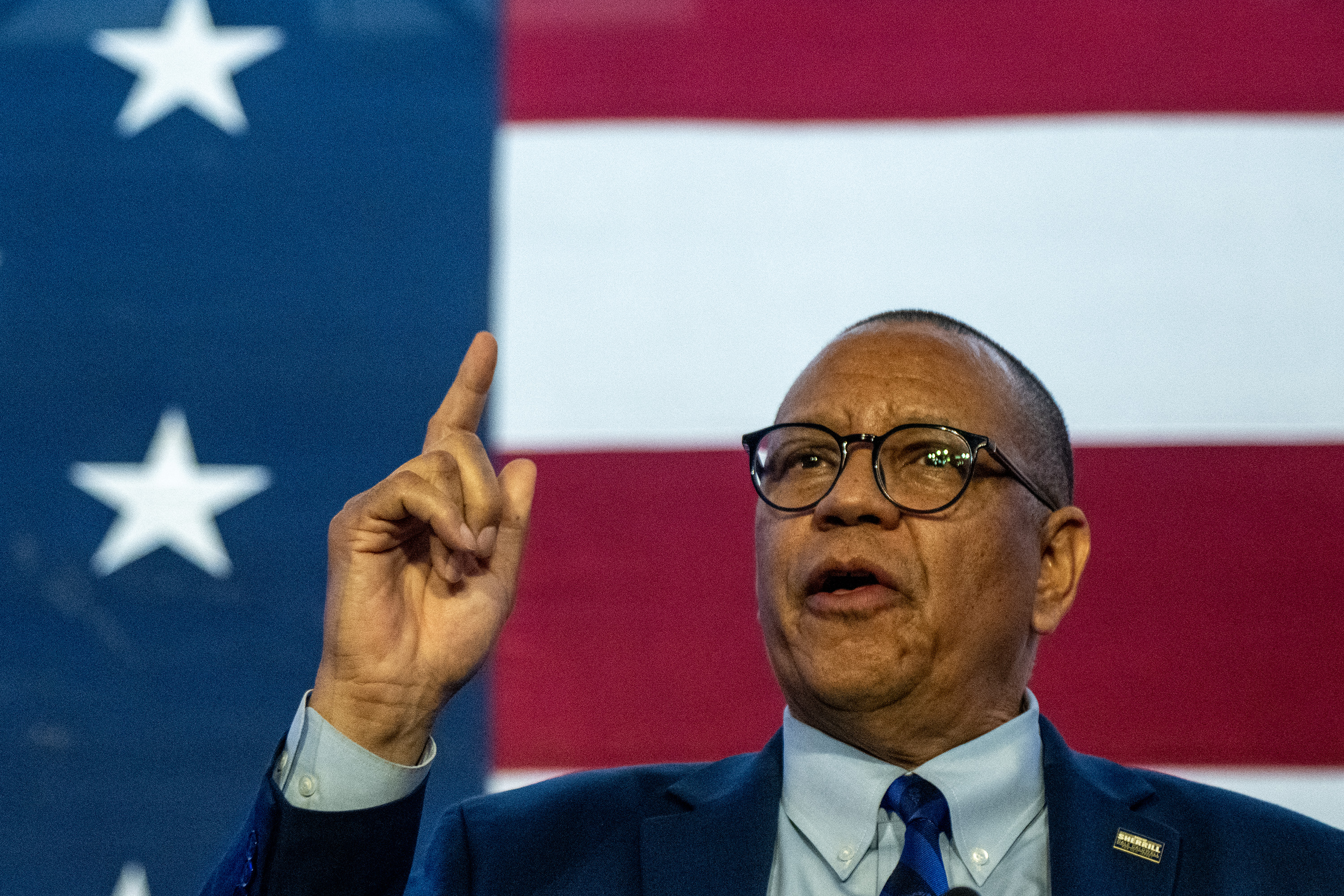
Former New Jersey Lt. Gov. Dale Caldwell, who resigned last week after investigators found that he had made inappropriate and sexually charged comments to women and violated ethics rules, is now being investigated by his church, according to an email from a bishop reviewed by The Inquirer.
Cynthia Moore-Koikoi, the bishop of the Eastern Pennsylvania and Greater New Jersey Episcopal Area, sent a brief email to colleagues on Sept. 25, just hours after Gov. Mikie Sherrill announced Caldwell’s resignation that day.
“I write to inform you that I have received a complaint concerning Rev. Dale Caldwell, Lt. Governor of New Jersey and licensed pastor. The complaint is being processed according to the policies and procedures of the United Methodist Church,” the bishop’s email said.
In an email to the Inquirer Thursday night, Moore-Koikoi elaborated, saying she had suspended Caldwell from his pastoral duties until the investigation was done.
“Because we hold clergy to a high standard, we take the allegations made in the report seriously,” Moore-Koikoi’s statement said. “Following the publication of the report about the former Lt. Governor, I received a complaint based on the concerns raised in the report. In order to protect the well-being of Rev. Caldwell, the congregation, and all those involved, Rev. Caldwell has been placed on suspension while the complaint is processed.”
A spokesperson for the bishop clarified that the complaint “is based on what was already under investigation.”
In her email to members, Moore-Koikoi asked that they pray for him “and all those impacted by this process,” the email said. Moore-Koikoi included a Bible verse, 1 Corinthians 4:5a: “Therefore judge nothing before the appointed time; wait until the Lord comes.”
In an interview earlier Thursday, Caldwell said he was not facing any new allegations of impropriety. He said the Eastern Pennsylvania and Greater New Jersey Episcopal Area was simply “investigating the investigation, based on the same information.”
“It’s a piling on, and it’s crazy,” said Caldwell, the senior pastor at Covenant United Methodist Church in Plainfield.
At the time, he said no one has asked him to step aside. Caldwell could not immediately be reached for comment on the bishop’s statement saying she had suspended him.
Caldwell and his attorney have vociferously denied the former lieutenant governor and secretary of state did anything wrong and have criticized the findings of the four-month investigation by former Attorney General Christopher Porrino, who served under Gov. Chris Christie.
Caldwell, 66, left his job as president of Centenary University to run with Sherrill last year. The investigation found that Caldwell hit on a female staffer’s friend, and that when she turned him down, he told the staffer that ambitious women like them needed a man in a position to help them “but you young women are looking for young sperm.”
Caldwell denied making the comments, “but we did not find his denial credible,” Porrino’s report said. The state trooper accompanying Caldwell that day told investigators he never heard Caldwell make that statement.
Caldwell said Thursday he could not understand why they “disregarded” the testimony of the trooper, ”who was two feet away.”
The report said Caldwell also repeatedly brought personal guests to ticketed events without clearing it with the ethics officer and without paying for the extra tickets. The practice continued even after warnings, attending an ethics training, and being told about the investigation.
In releasing the report, Sherrill said it “lays out a pattern and practice of long-term concerning behavior.”
His attorney said when Caldwell “learned that reimbursement was appropriate in one particular situation, he reimbursed $175 for the event.”
Caldwell said he resigned “for the good of the state of New Jersey” because the matter distracted from the Sherrill administration’s important work.
When asked to comment, a Sherrill spokesperson referred to the governor’s earlier comments defending the thoroughness of Porrino’s investigation.
Caldwell and his attorney have said they are weighing their legal options. When asked what he might do, he said he could “sue for harassment.” He lamented “there was something wrong with the American system of justice” because it would take an enormous amount of money to prove he did nothing wrong.
“I can leave with my head up. I have a 22-year-old daughter and she was seeing all these people attack her dad,” Caldwell said. “I have a good life and opportunities. The number of supporters are many more than the detractors.”
Staff writer Aliya Schneider contributed to this article.
This story has been updated to reflect Caldwell’s suspension from his pastoral duties.
The overall approval rating for the first-termDemocratic governor also remains steady eight months into her tenure, the poll said.
The poll found 44% of New Jerseyans approve of the way Sherrill is handling her job, 34% disapprove, and 22% are unsure. The poll was conducted from Sept. 24 through 27, a period covering the investigation’s release and former Lt. Gov. Dale Caldwell’s resignation.
South Jersey residents were less supportive of Sherrill, however, with 33% approving of her performance, 47% disapproving, and 21% unsure.
(function() {
var l2 = function() {
new pym.Parent(‘SHERRILLPOLL3.html’,
‘https://media.inquirer.com/storage/inquirer/projects/innovation/arcgis_iframe/SHERRILLPOLL3.html’);
};
if (typeof(pym) === ‘undefined’) {
var h = document.getElementsByTagName(‘head’)[0],
s = document.createElement(‘script’);
s.type = ‘text/javascript’;
s.src = ‘https://pym.nprapps.org/pym.v1.min.js’;
s.onload = l2;
h.appendChild(s);
} else {
l2();
}
})();
“Gov. Sherrill’s approval numbers look much like they did at 100 days, which in this political climate — and after a challenging summer — is itself an accomplishment,” said Ashley Koning, an assistant research professor and director of the Eagleton Center for Public Interest Polling at Rutgers University-New Brunswick.
”She continues to draw more positive reactions than negative ones, and more New Jerseyans have formed an impression of her than had of Phil Murphy at this same point in his first term,” Koning said. “But a quarter of residents still have no opinion of her almost a year in, and how those New Jerseyans eventually break will decide whether her net positive ratings hold.”
Stephen Sigmund, a spokesperson for Sherrill, said the poll reflects how the governor has approached the job.
“Since day one, Gov. Sherrill has been taking action to drive down costs, build a stronger future for our kids, make Trenton more accountable, and stand up to Donald Trump’s attacks on our state. That work is resonating with New Jerseyans, and her focus will always be on delivering for them,” Sigmund said.
The pollster asked participants to evaluate how well she had handled the independent investigation into claims that Caldwell used his job to meet women.
The center had to adjust the question to reflect Caldwell’s resignation last Friday, but there was no statistically significant difference in how people responded. The poll found 68% saying she handled the situation “very well” or “somewhat well,” 14% “not very well” or “not well” at all, and 19% were unsure, the poll said.
Sherrill released the independent counsel’s report, which corroborated allegations of sexual harassment, last Thursday. Caldwell resigned the following day. He and his attorney, Thomas Calcagni, denied any wrongdoing and called the investigation flawed.
“She brought in an outside investigator and then called publicly for her own lieutenant governor to resign, and most residents read that as accountability rather than protecting her own or politics as usual,” Koning said.
The governor released a 61-page report from a monthlong investigation conducted by an outside law firm late Thursday afternoon. The report said Caldwell had made inappropriate comments to women and violated ethics rules. Caldwell, a minister, is the former president of Centenary University.
According to the report, Caldwell made a “romantic advance toward a female staffer’s friend.” When she turned him down, Caldwell told the staffer that ambitious women like her and her friend needed a man in his position to help them “but you young women are looking for young sperm,” according to the report.
Although Sherrill’s marks are favorable, participants were less optimistic on the direction of the state, with 43% saying New Jersey was on the wrong track, 37% on the right track, and 20% unsure.
The poll also asked residents their opinion on President Donald Trump. He remained overwhelmingly unpopular in New Jersey, with 24% saying they had a favorable impression of him, 66% unfavorable, and 10% no opinion.
In South Jersey, 60% of residents had an unfavorable opinion, 30% had a favorable opinion, and 10% had no opinion. The poll defined South Jersey as Camden, Burlington, Gloucester, Cumberland, Salem, and Cape May Counties.
The results are based on a survey of 1,004 adults. The poll has a margin of error of plus or minus 4.1 percentage points.