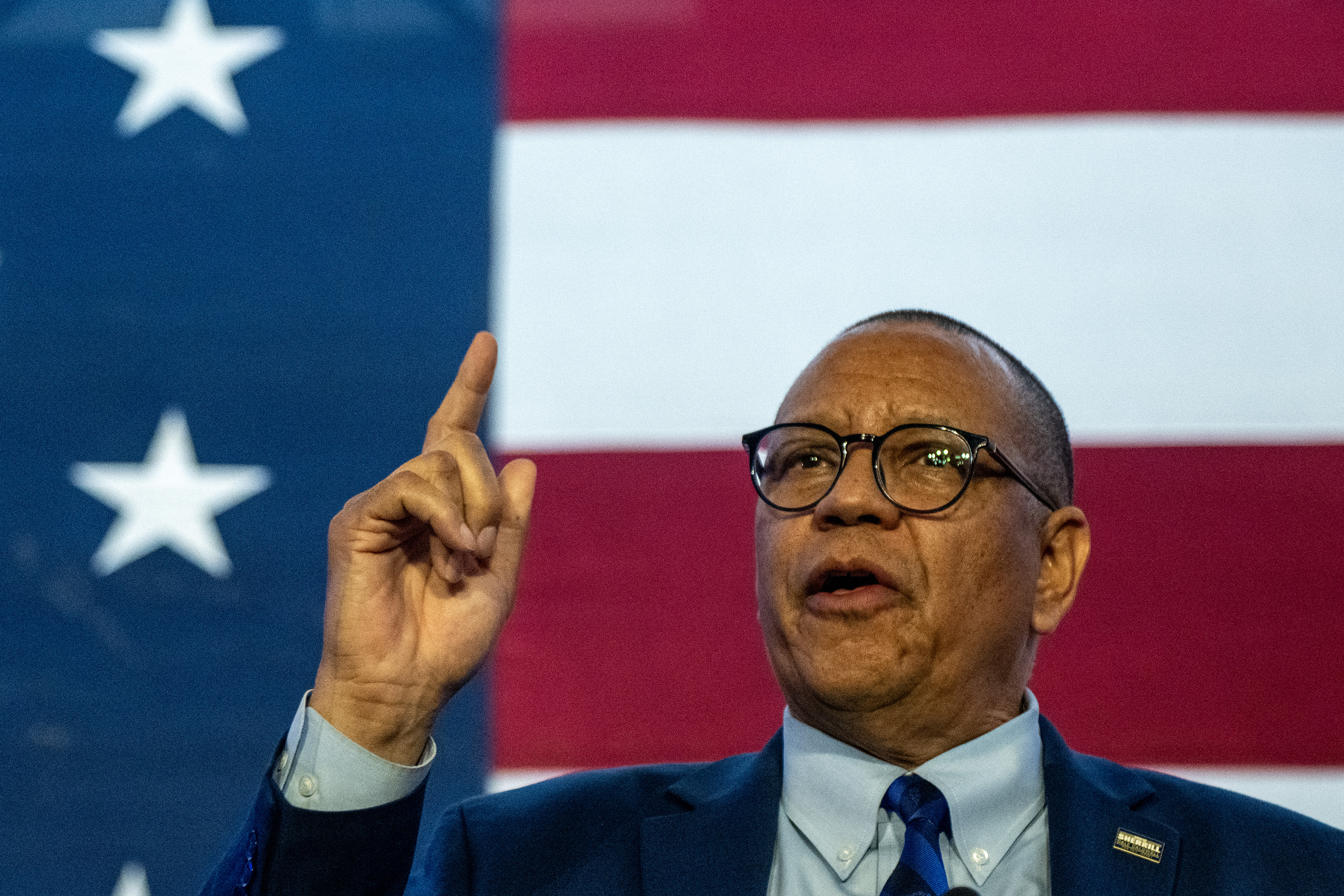
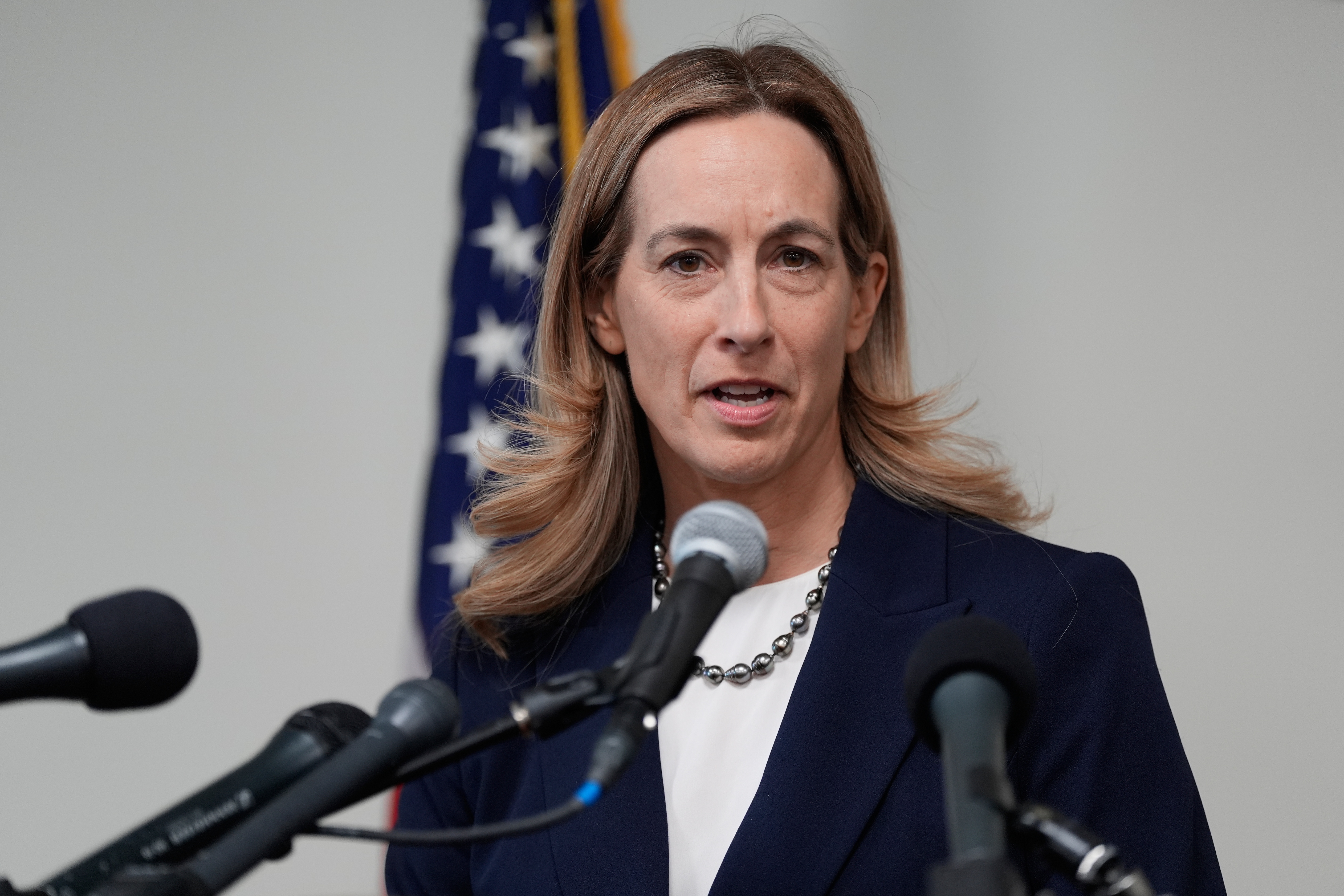
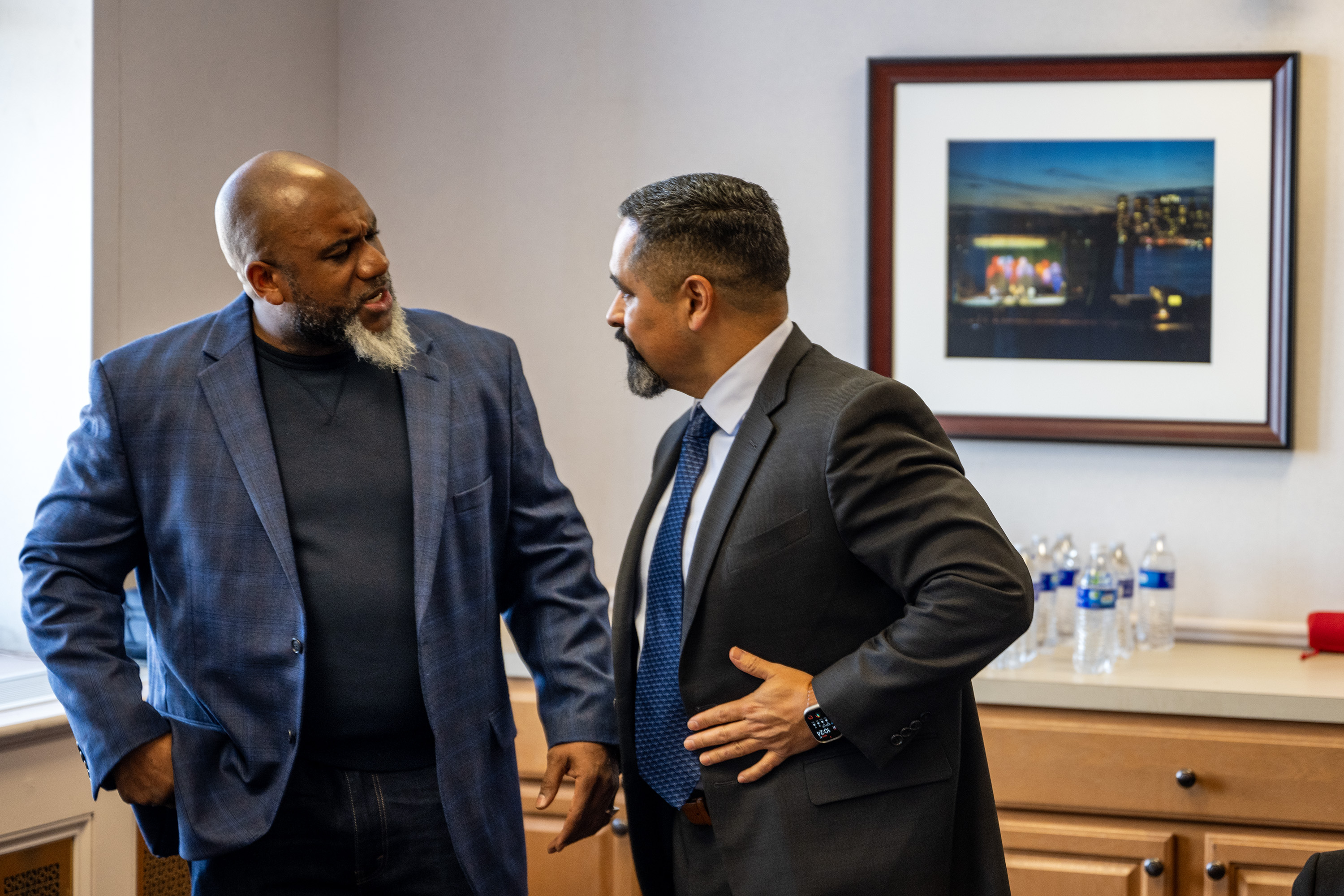
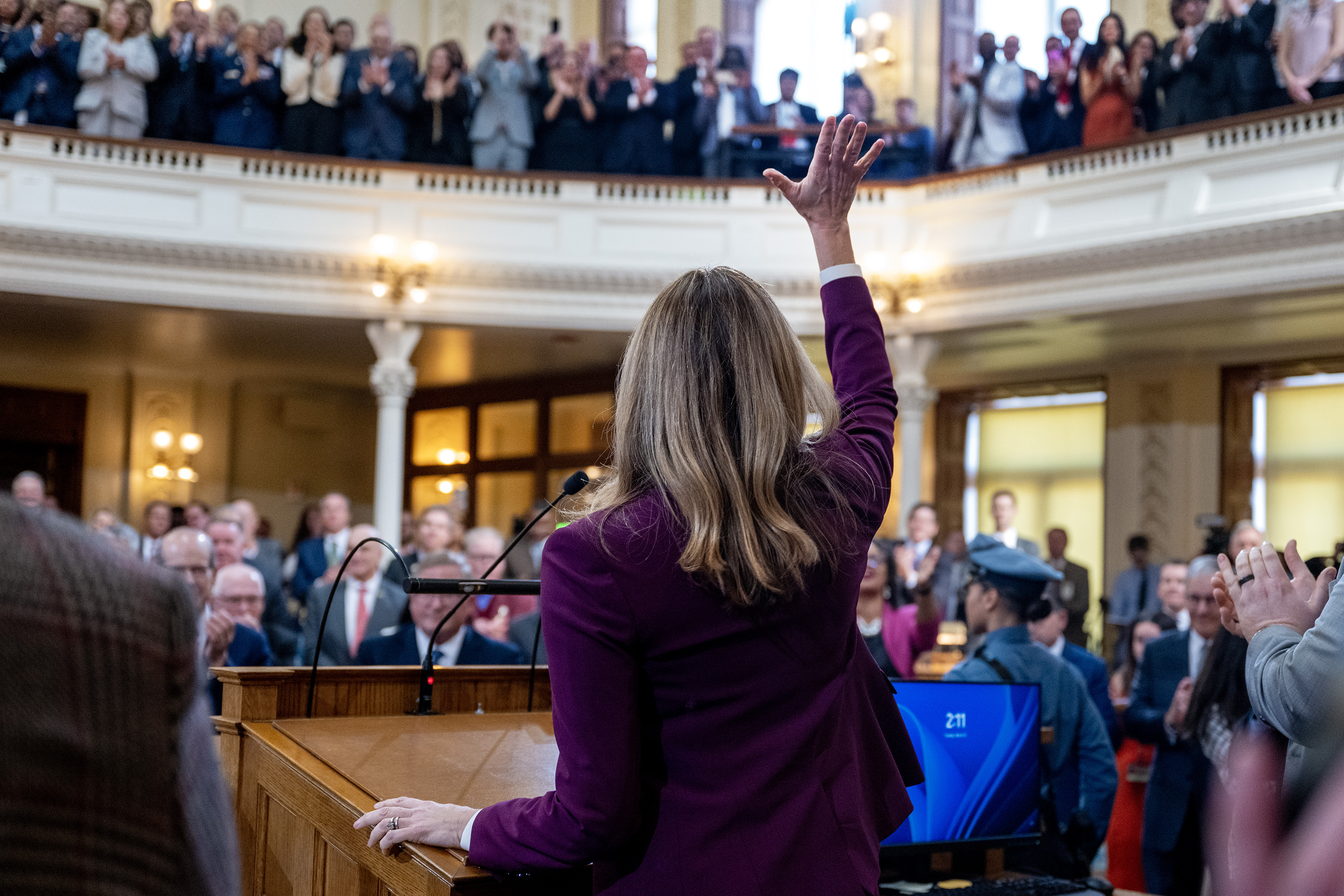
Former New Jersey Lt. Gov. Dale Caldwell, who resigned last week after investigators found that he had made inappropriate and sexually charged comments to women and violated ethics rules, is now being investigated by his church, according to an email from a bishop reviewed by The Inquirer.
Cynthia Moore-Koikoi, the bishop of the Eastern Pennsylvania and Greater New Jersey Episcopal Area, sent a brief email to colleagues on Sept. 25, just hours after Gov. Mikie Sherrill announced Caldwell’s resignation that day.
“I write to inform you that I have received a complaint concerning Rev. Dale Caldwell, Lt. Governor of New Jersey and licensed pastor. The complaint is being processed according to the policies and procedures of the United Methodist Church,” the bishop’s email said.
In an email to the Inquirer Thursday night, Moore-Koikoi elaborated, saying she had suspended Caldwell from his pastoral duties until the investigation was done.
“Because we hold clergy to a high standard, we take the allegations made in the report seriously,” Moore-Koikoi’s statement said. “Following the publication of the report about the former Lt. Governor, I received a complaint based on the concerns raised in the report. In order to protect the well-being of Rev. Caldwell, the congregation, and all those involved, Rev. Caldwell has been placed on suspension while the complaint is processed.”
A spokesperson for the bishop clarified that the complaint “is based on what was already under investigation.”
In her email to members, Moore-Koikoi asked that they pray for him “and all those impacted by this process,” the email said. Moore-Koikoi included a Bible verse, 1 Corinthians 4:5a: “Therefore judge nothing before the appointed time; wait until the Lord comes.”
In an interview earlier Thursday, Caldwell said he was not facing any new allegations of impropriety. He said the Eastern Pennsylvania and Greater New Jersey Episcopal Area was simply “investigating the investigation, based on the same information.”
“It’s a piling on, and it’s crazy,” said Caldwell, the senior pastor at Covenant United Methodist Church in Plainfield.
At the time, he said no one has asked him to step aside. Caldwell could not immediately be reached for comment on the bishop’s statement saying she had suspended him.
Caldwell and his attorney have vociferously denied the former lieutenant governor and secretary of state did anything wrong and have criticized the findings of the four-month investigation by former Attorney General Christopher Porrino, who served under Gov. Chris Christie.
Caldwell, 66, left his job as president of Centenary University to run with Sherrill last year. The investigation found that Caldwell hit on a female staffer’s friend, and that when she turned him down, he told the staffer that ambitious women like them needed a man in a position to help them “but you young women are looking for young sperm.”
Caldwell denied making the comments, “but we did not find his denial credible,” Porrino’s report said. The state trooper accompanying Caldwell that day told investigators he never heard Caldwell make that statement.
Caldwell said Thursday he could not understand why they “disregarded” the testimony of the trooper, ”who was two feet away.”
The report said Caldwell also repeatedly brought personal guests to ticketed events without clearing it with the ethics officer and without paying for the extra tickets. The practice continued even after warnings, attending an ethics training, and being told about the investigation.
In releasing the report, Sherrill said it “lays out a pattern and practice of long-term concerning behavior.”
His attorney said when Caldwell “learned that reimbursement was appropriate in one particular situation, he reimbursed $175 for the event.”
Caldwell said he resigned “for the good of the state of New Jersey” because the matter distracted from the Sherrill administration’s important work.
When asked to comment, a Sherrill spokesperson referred to the governor’s earlier comments defending the thoroughness of Porrino’s investigation.
Caldwell and his attorney have said they are weighing their legal options. When asked what he might do, he said he could “sue for harassment.” He lamented “there was something wrong with the American system of justice” because it would take an enormous amount of money to prove he did nothing wrong.
“I can leave with my head up. I have a 22-year-old daughter and she was seeing all these people attack her dad,” Caldwell said. “I have a good life and opportunities. The number of supporters are many more than the detractors.”
Staff writer Aliya Schneider contributed to this article.
This story has been updated to reflect Caldwell’s suspension from his pastoral duties.
The overall approval rating for the first-termDemocratic governor also remains steady eight months into her tenure, the poll said.
The poll found 44% of New Jerseyans approve of the way Sherrill is handling her job, 34% disapprove, and 22% are unsure. The poll was conducted from Sept. 24 through 27, a period covering the investigation’s release and former Lt. Gov. Dale Caldwell’s resignation.
South Jersey residents were less supportive of Sherrill, however, with 33% approving of her performance, 47% disapproving, and 21% unsure.
(function() {
var l2 = function() {
new pym.Parent(‘SHERRILLPOLL3.html’,
‘https://media.inquirer.com/storage/inquirer/projects/innovation/arcgis_iframe/SHERRILLPOLL3.html’);
};
if (typeof(pym) === ‘undefined’) {
var h = document.getElementsByTagName(‘head’)[0],
s = document.createElement(‘script’);
s.type = ‘text/javascript’;
s.src = ‘https://pym.nprapps.org/pym.v1.min.js’;
s.onload = l2;
h.appendChild(s);
} else {
l2();
}
})();
“Gov. Sherrill’s approval numbers look much like they did at 100 days, which in this political climate — and after a challenging summer — is itself an accomplishment,” said Ashley Koning, an assistant research professor and director of the Eagleton Center for Public Interest Polling at Rutgers University-New Brunswick.
”She continues to draw more positive reactions than negative ones, and more New Jerseyans have formed an impression of her than had of Phil Murphy at this same point in his first term,” Koning said. “But a quarter of residents still have no opinion of her almost a year in, and how those New Jerseyans eventually break will decide whether her net positive ratings hold.”
Stephen Sigmund, a spokesperson for Sherrill, said the poll reflects how the governor has approached the job.
“Since day one, Gov. Sherrill has been taking action to drive down costs, build a stronger future for our kids, make Trenton more accountable, and stand up to Donald Trump’s attacks on our state. That work is resonating with New Jerseyans, and her focus will always be on delivering for them,” Sigmund said.
The pollster asked participants to evaluate how well she had handled the independent investigation into claims that Caldwell used his job to meet women.
The center had to adjust the question to reflect Caldwell’s resignation last Friday, but there was no statistically significant difference in how people responded. The poll found 68% saying she handled the situation “very well” or “somewhat well,” 14% “not very well” or “not well” at all, and 19% were unsure, the poll said.
Sherrill released the independent counsel’s report, which corroborated allegations of sexual harassment, last Thursday. Caldwell resigned the following day. He and his attorney, Thomas Calcagni, denied any wrongdoing and called the investigation flawed.
“She brought in an outside investigator and then called publicly for her own lieutenant governor to resign, and most residents read that as accountability rather than protecting her own or politics as usual,” Koning said.
The governor released a 61-page report from a monthlong investigation conducted by an outside law firm late Thursday afternoon. The report said Caldwell had made inappropriate comments to women and violated ethics rules. Caldwell, a minister, is the former president of Centenary University.
According to the report, Caldwell made a “romantic advance toward a female staffer’s friend.” When she turned him down, Caldwell told the staffer that ambitious women like her and her friend needed a man in his position to help them “but you young women are looking for young sperm,” according to the report.
Although Sherrill’s marks are favorable, participants were less optimistic on the direction of the state, with 43% saying New Jersey was on the wrong track, 37% on the right track, and 20% unsure.
The poll also asked residents their opinion on President Donald Trump. He remained overwhelmingly unpopular in New Jersey, with 24% saying they had a favorable impression of him, 66% unfavorable, and 10% no opinion.
In South Jersey, 60% of residents had an unfavorable opinion, 30% had a favorable opinion, and 10% had no opinion. The poll defined South Jersey as Camden, Burlington, Gloucester, Cumberland, Salem, and Cape May Counties.
The results are based on a survey of 1,004 adults. The poll has a margin of error of plus or minus 4.1 percentage points.
Health insurance premiums will cost 34.4% more for 300,000 public school and county college employees and their familiesacross New Jerseynext year as medical costs continue to escalate and the popularity of costly prescription drugs soars.
The change will affect teachers and other school staff in Camden, Pemberton, Evesham, and nine other South Jersey districts, as well as six unions at four local colleges.
What is to come for students, employees, and taxpayers may be just as dire. Cutting jobs, reducing transportation and student extracurricular activities, and raising property taxes are the most likely options school districts and collegeswill consider, said Jonathan Pushman, advocacy director for the New Jersey School Boards Association.
“The dilemma is there are limited options we can turn to,” Pushman said. “A lot of difficult decisions are ahead.”
On Friday, the New Jersey School Employees Health Benefits Commission voted 4-2 to accept the premium increases forecast by the state’s actuary. Democratic Gov. Mikie Sherrill’s administration had warned that if the commission did not act, it would have closed down the insolvent program at the start of the new year.
Instead, the rate hikes will take effect in January.
The School Employees’ Health Benefits Program serves 212 school districts and county colleges, representing 300,000 employees, retirees, and their dependents.
The local districts covered by the plan are Camden, Brooklawn, Beverly, Delanco, Evesham, New Hanover, Pemberton, Willingboro, Elk, Newfield, Camden County Technical Schools, and the Burlington County Board of Special Services, which serves special-needs students.
It also provides coverage for employees of Camden County College, Rowan College at Burlington County, Rowan College at Gloucester County, and Rowan College of South Jersey, according to the New Jersey Treasury Department.
There are a total of 590 school districts in New Jersey, with the majority of them, including Cherry Hill, obtaining health coverage outside the state plan. In recent years, steeper costs have compelled many districts to leave in search of a more affordable option. Those who stay tend to serve an older and sicker — and therefore a more expensive — population and cannot afford a better deal on the open market.
These conditions have created a “death spiral” for the plan, actuarial and state officials say. The State Health Benefits Plan for state and local workers faces a similar crisis.
The union-affiliated members on the commission voted against the premium hikes, insisting there had to be a way to cut costs.
After the vote, New Jersey Education Association president Steve Beatty and other top officials said in a statement that their members on the commission “requested information, proposed specific steps to reduce the rates and sought greater transparency about the factors driving these increases. Unfortunately, the division has refused to meaningfully engage in that effort.”
The rate hikes “threaten the resources available for students,” the union officials’ statement said. “They should not lose out because health care costs are out of control. When districts are forced to spend significantly more on health care, that leaves less money for the programs, staff and services our students rely on every day.”
School officials huddled this week to consider the array of unpalatable options. Few were ready to say what comes next.
Rowan College of South Jersey “will continue to evaluate the situation and make adjustments as necessary while keeping student success our priority,” said Susan Nardelli, vice president of communications, marketing, and enrollment management. “Every industry is facing the same healthcare struggle.”
Union leaders said they are counting on state lawmakers to find a solution. They said they seek action on a proposed bill that would create a new health benefits trust, composed of union and management leaders, and establish a three-doctor medical advisory panel. Districts that join would not be permitted to leave, according to the bill.
The new insurance trust would “provide greater transparency and accountability and is focused on controlling costs,” the union’s statement said.
School boards agree that dramatic changes are necessary, Pushman said. This must include “honest conversations with unions,” he said.
Schools — which are funded by taxpayers — bear 98% of the cost of health insurance compared with the 2% covered by employees, Pushman said. In the private sector, employers pay about 90% of the cost.
A law enacted during the pandemic set specific limits on what school employees must pay for healthcare, based on their income level. That law, which expires at the end of next year, has limited the options for savings, Pushman said.
“As much as we want to provide quality healthcare coverage, bearing the costs of these incredibly rich plans is getting to the point of unsustainability,” he said.
State Sen. Troy Singleton (D., Burlington) agreed.
“We have to be honest with … what the state can afford to provide sufficient coverage for employees. It’s not a bottomless pit for taxpayers,” Singleton said. “It’s become a frustrating point for all parties.”
New Jersey Gov. Mikie Sherrill Thursday night called for the resignation of Lt. Gov. Dale Caldwell after an ethics investigation found he had sexually harassed a woman and made advances to others, even after he was warned to stop.
Caldwell, through his attorney, denied the claims and questioned the thoroughness of the investigation.
According to a 61-page report by an outside law firm, Caldwell made a “romantic advance toward a female staffer’s friend.” When she turned him down, Caldwell told the staffer that ambitious women like her and her friend needed a man in his position to help them “but you young women are looking for young sperm,” according to the report.
Caldwell denied making the comments, “but we did not find his denial credible,” the report said.
The probe found he also used his title and clout to secure a promotion for a state employee he was dating.
“Using his state email account, on May 26, 2026 – less than one month after being admonished and trained with regard to workplace conduct and ethics matters, and four days after the Chief Ethics Officer formally notified him of this investigation-the LG reached out to an official in another executive branch department and suggested that the state employee receive a promotion,” the report said.
Caldwell’s attorney Thomas Calcagni said his client forwarded the employee’s resume and did not disclose the two had a personal relationship.
“There is a difference between failing to disclose a personal relationship when forwarding the resume of a qualified job applicant and actually using the power of public office to secure a job or financial benefit for someone,” his statement said.
“The report cites no evidence indicating that Dr. Caldwell ordered anyone to promote her, or controlled the hiring decision or demanded that she receive a new position.”
The employee did not get a promotion and left state government, Calcagni’s statement said.
Investigators also corroborated a complaint that he had brought personal guests to ticketed events without clearing it with the ethics officer or paying for the extra tickets — and that the practice continued even after being warned not to.
Sherrill said she has asked for Caldwell to resign by Friday.
“These violations substantiated in the investigation reflect a pattern of behavior that does not meet the standards of this Administration,” the first-term Democratic governor said in a public statement. “The ethical lapses persisted despite multiple warnings and trainings.”
“The substantiated finding of sexual harassment is extremely troubling,” Sherrill’s statement said. “I’ve seen firsthand how a hostile culture can undermine everyone’s ability to succeed. It’s insidious and ruptures the trust within an organization.”
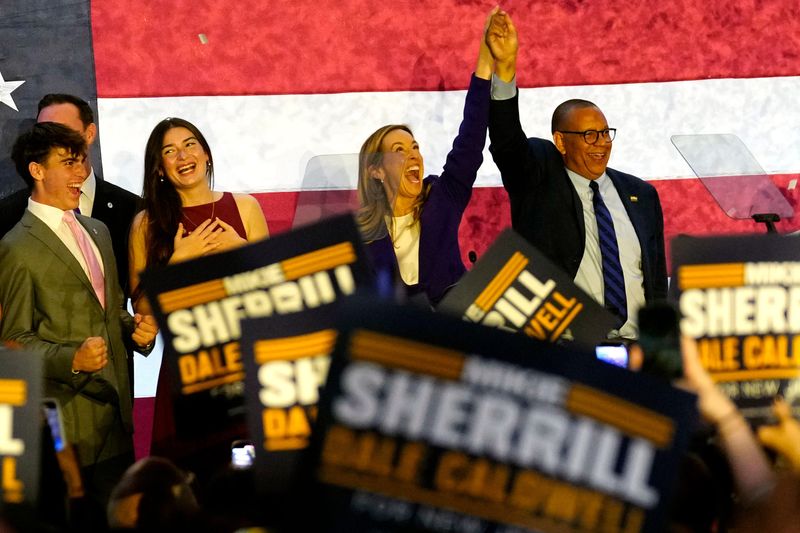
Lt. Gov. Dale Caldwell (left) follows Gov. Mikie Sherrill off the stage following the celebration of their victory at an election night party in East Brunswick Nov. 4, 2025.Tom Gralish / Staff Photographer
If Caldwell refuses to step down, the governor can suspend him without pay and remove him as secretary of state, a role he also holds that will be critically important as the November election approaches. The Legislature could also move to impeach him, a source familiar with state rules said.
The lieutenant governor has an annual salary of $210,000.
The investigation, sparked by at least one anonymous complaint, focused on claims that Caldwell had brought uninvited women to public events without paying, according to sources close to the administration. He has also been accused ofhanding out his business card to women he wanted to date.
But the most serious allegation of sexual harassment was not revealed until Sherrill shared it Thursday. Former Attorney General Christopher Porrino and his law firm were hired to investigate the claims. The probe has been going on since at least May.
Caldwell denied the allegations and suggested racism was a factor in a May 28 letter to the state’s chief ethics officer, noting that he is “the first single Black man to serve at this level in government.” “In this current political environment, false accusations, especially against people of color, seem to be commonplace,” he continued in the letter first reported by BINJE.com.
“I have never asked anyone out on a date, ‘hit on,’ or pursued anyone romantically while conducting official business as Lieutenant Governor and Secretary of State,” his letter said. “Throughout my career in government, higher education, nonprofit leadership, ministry and public service, I have consistently conducted myself professionally and respectfully.”
Immediately following the release of the investigation’s report, Caldwell’s attorney disputed each of the claims. He did not address the governor’s call for Caldwell’s resignation.
“The question is not simply whether investigators believed one person over another,” Calcagni said in a statement. “The question is whether the evidence actually proves that a violation occurred. In our view, the evidence does not support these findings.”
Calcagni said there was no recording of the statement he made to a female staffer, and the State Trooper accompanying him did not hear the conversation.
With no corroboration, “the evidence should be examined particularly carefully before reaching a finding of workplace harassment,” his statement said.
Caldwell reimbursed the state $175 for tickets to an event once he was informed that accepting anything free was not permitted, Calcagni’s statement said. ”There is a meaningful difference between making a good-faith error when analyzing the regulations and deliberately using public office for personal benefit.”
Until Thursday night, Sherrill had refused to publicly acknowledge the months-long ethics investigation, saying only that any complaints against a member of her administration would be taken seriously.
Caldwell, a 66-year-old father and divorced minister with degrees from Princeton University and the University of Pennsylvania, has served in numerous public and nonprofit jobs. He was president of Centenary University and worked as deputy commissioner of community affairs in former Democratic Gov. James McGreevey’s administration more than 20 years ago. Healso founded two charter schools, served as president of the New Brunswick Board of Education and taught at Fairleigh Dickinson University.
Sherrill has not left the state, aside from some short trips to New York, since the news of the investigation leaked at the start of Labor Day weekend. Republican lawmakers criticized her for leaving Caldwell in charge while she campaigned earlier in the summer.
In the last two weeks, Caldwell’s friends and colleagues have released public statements and given interviews defending his character and public service record.
Felicia Simmons of Asbury Park was one of several friends to rush to Caldwell’s defense last week by questioning the legitimacy of the investigation. She helped organize one of the events in question — the Whitesboro Black History Gala, an event in April recognizing the preservation efforts of the state’s first planned Black community, located in Cape May County. She said she invited him and knew he was bringing guests.
But as of Monday, Simmons said she had not been interviewed by investigators. She could not be reached for comment Thursday night.
Calcagni said the fact that key witnesses were not interviewed casts doubt on the investigation.
“These due process concerns, coupled with breaches of confidentiality throughout the process, render any findings palpably deficient and create a dangerous and challenging precedent for anyone who wishes to defend against anonymous conjecture and character assassination,” Calcagni’s statement said.
NJ.com and Politico reported the state paid Porrino’s law firm, Lowenstein Sandler about $50,000 for its work from May 21 through June 25, based on a public records request. The state records custodian turning over the records told the outlet it was “not confirming or denying the existence of any investigation regarding Dale Caldwell.”
Staff writer Aliya Schneider contributed to this report.
New Jersey is poised to allow political candidates to spend campaign donations on security guards and equipment, amid a rising toll of national violent threats and deadly attacks against politicians and their families.
The 80-member state Assembly on Thursday gave final approval to a bill that would enable politicians to buy alarm and motion-detection systems and hire guards “provided that the security measures address ongoing dangers or threats that would not otherwise exist were it not for the individual’s status or duties as a candidate or officeholder.”
The bill passed 53-13 with eight abstentions.
Majority Democrats did not speak during the debate. Some Republicans questioned why candidates’ safety should in any way depend on the size of their campaign fund. They recommended that concerned candidates apply for a firearm and protect themselves.
Assemblywoman Dawn Fantasia (R., Sussex) said she encountered “some real live wires out there” and has beefed up security in her own home. She has enlisted help from the state police and the attorney general’s office as well. But the bill still gave her pause.
“I don’t believe anyone has ever donated to me … thinking, ‘I hope it keeps her alive,’” Fantasia said.
Typically, candidates cannot not use political donations to cover personal expenses. But since the execution of New Jersey U.S. District Judge Esther Salas’ son in their Middlesex County home in 2020 by a self-described men’s rights lawyer, appointed and elected public officials nationwide have taken steps to protect their privacy.
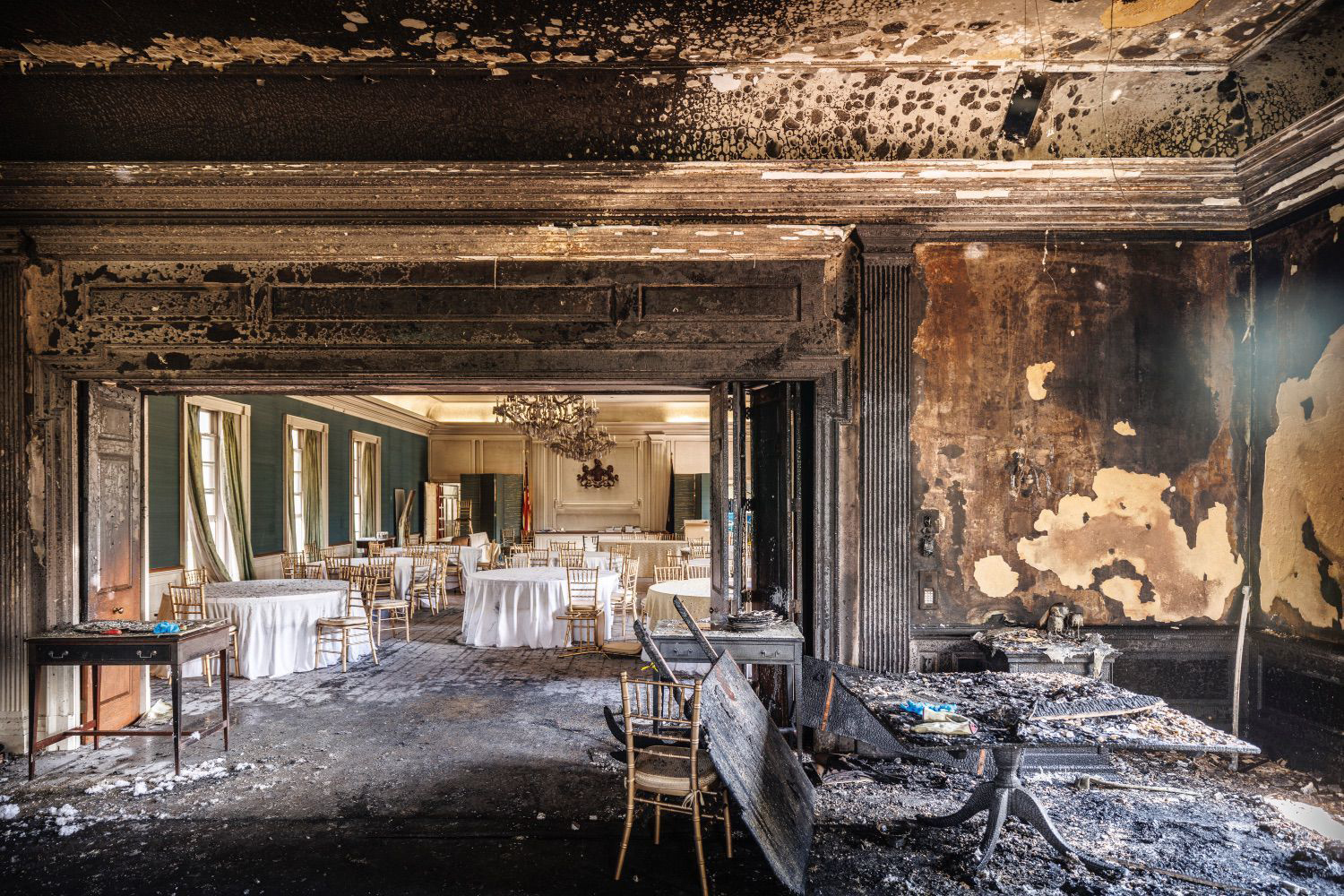
Those fears only multiplied after President Donald Trump was wounded during a shooting at a Pennsylvania campaign rally in 2024, last year’s arson attack at the Pennsylvania governor’s mansion while Gov. Josh Shapiro slept inside, and the 2025 assassination of Democratic Minnesota State Rep. and former House Speaker Melissa Hortman and her husband.
This image provided by Commonwealth Media Services shows damage after a fire at the Pennsylvania governor’s mansion while Democratic Gov. Josh Shapiro and his family slept inside on Sunday, April 13, 2025, in Harrisburg, Pa. (Commonwealth Media Services via AP)A
New Jersey would be the 17th state to allow political contributions to be spent on security, according to the National Conference of State Legislatures.
Rowan University political science professor Ben Dworkin called the need for such a bill “an unfortunate development in the hyper-partisan world we live in.”
“For any number of years, protecting the candidate meant staff walking in a circle around them, creating a bubble, and moving through the crowd,” said Dworkin, the director of the Rowan Institute for Public Policy and Leadership. “It’s sad if we have gotten to the point the majority of the legislature needs professionals.”
It is now up to Democratic Gov. Mikie Sherrill to decide whether to sign the legislation into law. The 40-member Senate passed the measure in June.
The next major statewide election is next year, when all 120 seats in the legislature are on the ballot.
The protections could extend to candidates’ immediate family members with whom they live. Security personnel could not be relatives, nor could candidates hire security companies owned by family, according to the bill.
Security devices may be sold after the campaign, according to the bill.
The state Election Law Enforcement Commission would implement the measure if Sherrill signs it.
During the whirlwind spectacle of his daughter’s Sept. 1 wedding, business leader Duvi Honig noticed his guest, Lt. Gov. Dale Caldwell, was sharing his business card and private cell phone number with everyone he met.
Honig said he told Caldwell to stop — he was there as a friend and he wanted him to relax and have fun. Caldwell assured him that in his role as Gov. Mikie Sherrill’s liaison to the business community, he was happy to help anyone in need, Honig recalled.
So when Honig read the news days later that Caldwell, a minister, was the subject of a monthslong ethics investigation for allegedly giving business cards to women he wanted to date, among other claims, he said he had to defend the lieutenant governor. No one else seemed to be speaking up for him, he said.
“I thought, ‘What the heck is this?’ What I witnessed — him being overly nice to everyone — is being used against him?” said Honig, a Lakewood resident and founder of the national Orthodox Jewish Chamber of Commerce. “He is a special person. He is accessible to anyone and he has no agenda.”
Lt. Gov. Dale Caldwell plays with a soccer ball at the Collingswood World Cup fan fest on July 19.Courtesy Camden County
Now that Caldwell’s name and political future are tied to an investigation — which Sherrill will not confirm but is privately being carried out by a former state attorney general — some of his friends and colleagues are rushing to his defense to answer the question: Who is Dale Caldwell?
Before the investigation became public, Sherrill, a rising star in the Democratic Party, had been hitting the road for the party’s candidates in key congressional races, transferring the gubernatorial powers and responsibilities to Caldwell when she left the state.
But she has since curtailed her travel while the investigation drags on amid Republican criticism and concerns from members of her own party, according to three veteran Democrats who were involved in her campaign or have ties to her administration who were not authorized to comment publicly.
“She is failing at the most important time” by not being able to campaign, said one veteran adviser.
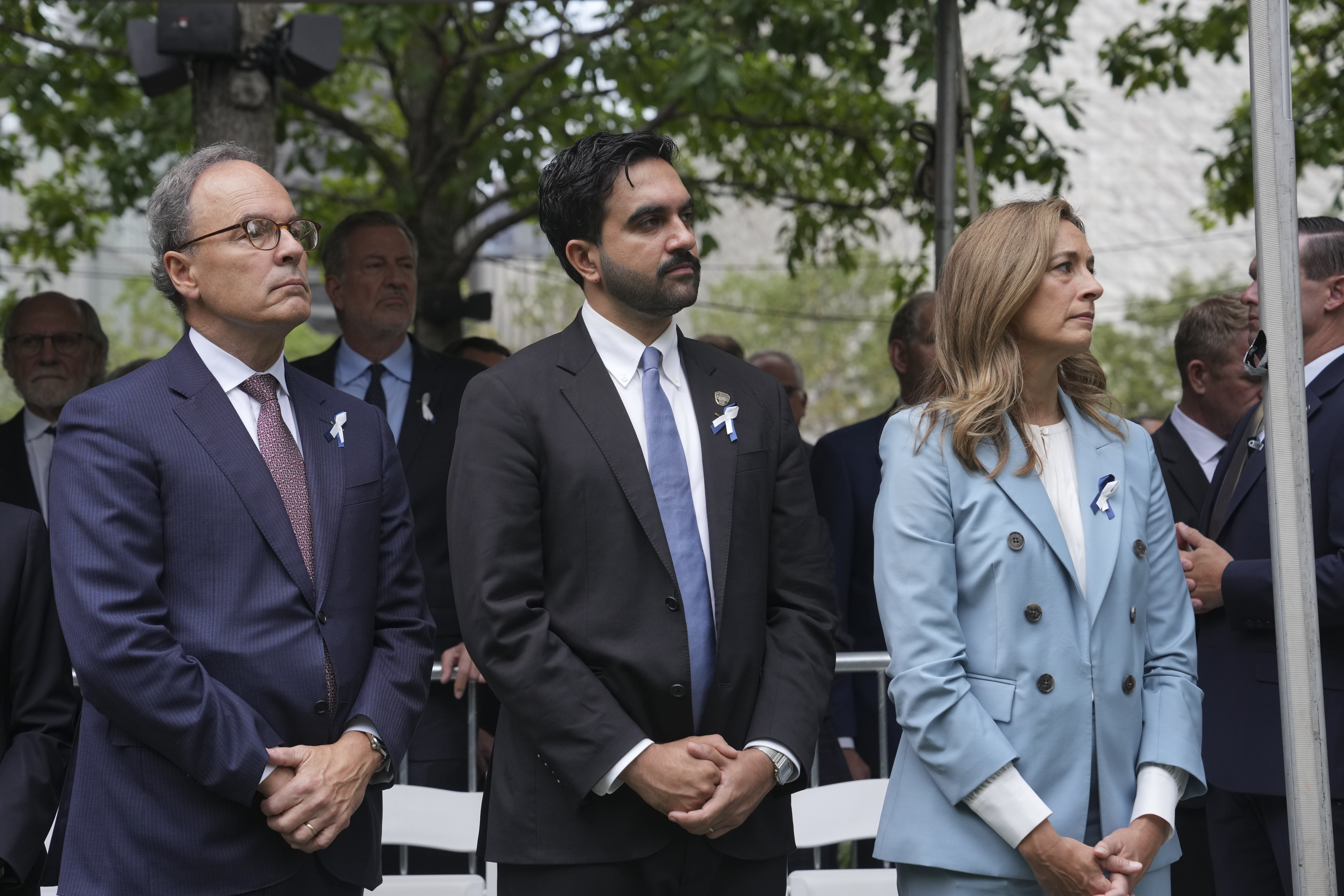
The governor recently made trips to New York City for a 9/11 memorial event and a live interview with the Atlantic, but she did not make Caldwell acting governor because of an exception that allows travel across the river.
“We’re not going to speculate about the Governor’s schedule, but her priorities are always guided by the best interests of New Jerseyans,” Sherrill spokesperson Sean Higgins said in a statement.
Gov. Mikie Sherrill (right) stands beside New York Mayor Zohran Mamdani at the National September 11 Memorial in lower Manhattan on Sept. 11, 2026. Hiroko Masuike
Democratic power players have privately expressed frustration that Sherrill has left them in the dark about the probe while Republicans call for Caldwell’s resignation. Sherrill said in a statement days after the news broke that “any credible report must be fully examined and addressed.”
The veteran campaign adviser, who is close to both Caldwell and Sherrill, said the two have not spoken directly with each other as the investigation proceeds.
A senior campaign adviser, impressed with Caldwell’s resuméand “unblemished public record,” recommended the pick. It dramatically raised his public profile to new heights in a role that would entrust him to lead the state in Sherrill’s absence.
The 66-year-old divorced minister with degrees from Princeton University and the University of Pennsylvania previously served as the first Black president of Centenary University. He worked as deputy commissioner of community affairs in former Democratic Gov. James McGreevey’s administration more than 20 years ago.
Lt. Gov. Dale Caldwell embraces his daughter Ashley Caldwell after she introduced him at Sherrill’s election night party in East Brunswick on Nov. 4, 2025.Tom Gralish / Staff Photographer
He also held a seat on the New Brunswick Board of Education for nearly three decades and founded charter schools in Asbury Park and Trenton.
Last year, the state comptroller’s office interviewed Caldwell, a founder and then-board president at the College Achieve Greater Asbury Park Charter School, as part of its ongoing investigation into whether the school had violated public contract laws and misused public funds.
Caldwell is the first man and third Black person to serve as lieutenant governor. He quickly embraced the opportunity to be Sherrill’s No. 2, a campaign adviser said.
“Their dynamic [between Sherrill and Caldwell] was terrific. Reports coming back on his appearances were all very positive and they got off on a strong start on inauguration day, as far as I knew,” the adviser said.
One person close to the campaign, however, said after the election Caldwell asked others how he should do the job.
“You are there as the governor’s person. You report to the governor and chief of staff,”the source said. “He laughed. I think he was trying to do his own thing.”
New Jersey Gov. Mikie Sherrill and Lt. Gov. Dale Caldwell celebrate their victory on Nov. 4, 2025, in East Brunswick.Kevin R. Wexler, Kevin R. Wexler
The investigation, sparked by at least one anonymous complaint, began more than four months ago, according to the campaign adviser.
The complaint accused Caldwell of bringing uninvited women to events andhanding his business card out to women he wanted to date. And a state employee accused him of making inappropriate comments, the New York Times reported.
Caldwell declined a request for an interview through a spokesperson. His attorney, Thomas Calgagni in Newark, did not respond to requests for comment.
Caldwell denied the allegations and suggested racism was a factor in a May 28 letter to the state’s chief ethics officer, noting that he is “the first single Black man to serve at this level in government,” and that “in this current political environment, false accusations, especially against people of color, seem to be commonplace,” which was first reported by BINJE.com.
“I have never asked anyone out on a date, ‘hit on,’ or pursued anyone romantically while conducting official business as Lieutenant Governor and Secretary of State,” his letter said. “Throughout my career in government, higher education, nonprofit leadership, ministry and public service, I have consistently conducted myself professionally and respectfully.”
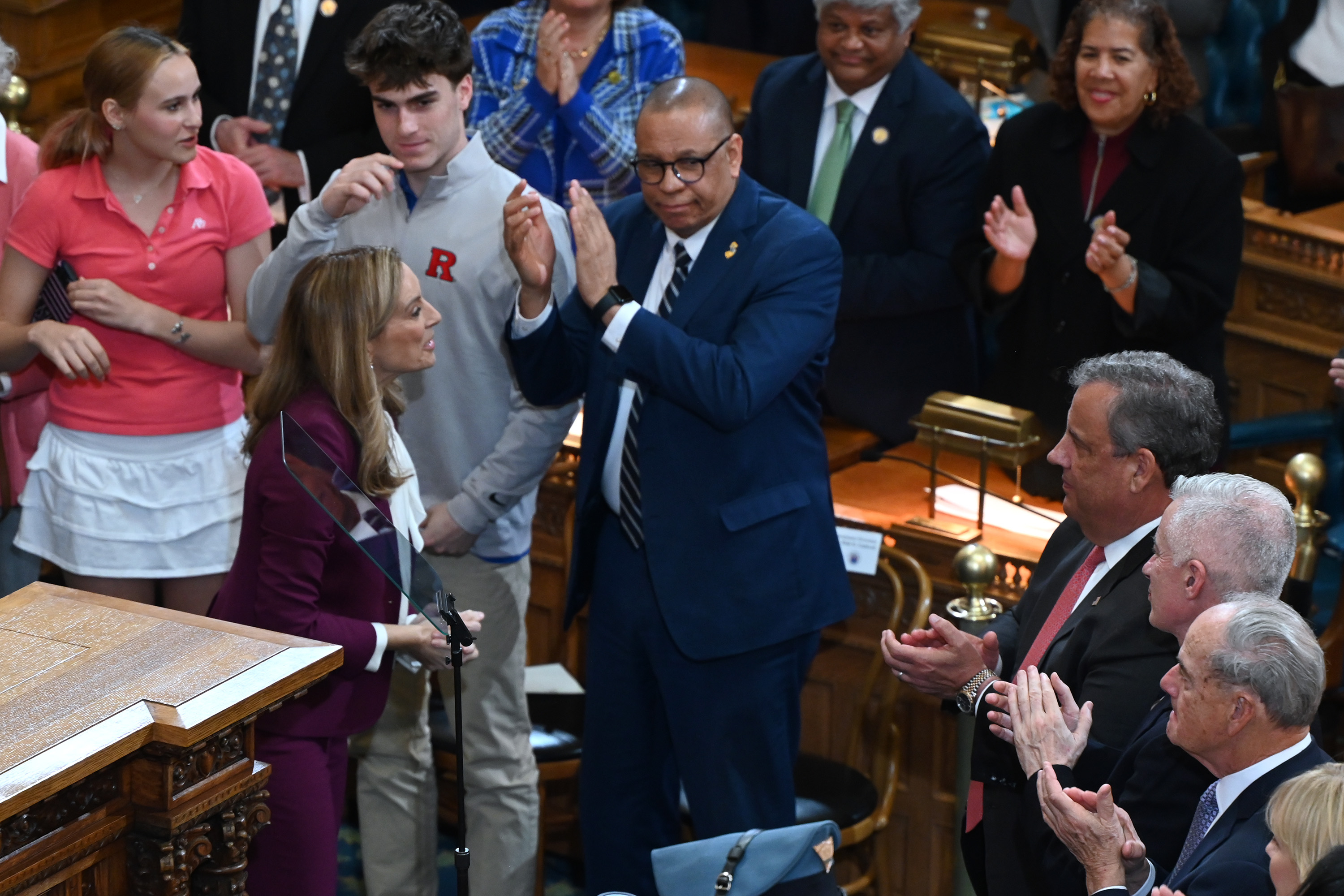
Lt. Gov. Dale Caldwell (center) applauds as Gov. Mikie Sherrill finishes her budget address March 10 in the Assembly Chamber at the New Jersey State House.Tom Gralish / Staff Photographer
Former congressional candidate Tim Alexander, an Atlantic County-based civil rights attorney, got to know Caldwell while working on the campaign trail for Sherrill in South Jersey last year. He sang Caldwell’s praises and said he believes he is “good for the state.”
Alexander, a former detective, said Caldwell supported his congressional bid but stepped away to avoid a conflict as the new secretary of state, which he called a “testament to his character.” The former candidate, who is Black, said he cannot believe race is a factor in the allegations without knowing more.
“Dale has impeccable credentials, and he also has Black skin. So there’s a lot that I could opine on, but when it comes to investigations, I got to leave it out. … If we have confirmation bias, it turns the investigation to trash,” he said.
Fighting back, with help
Last week, a small band of friends and colleagues spoke out to condemn the vague allegations, the snail’s pace of the investigation, and the permanent harm to Caldwell’s reputation no matter the outcome.
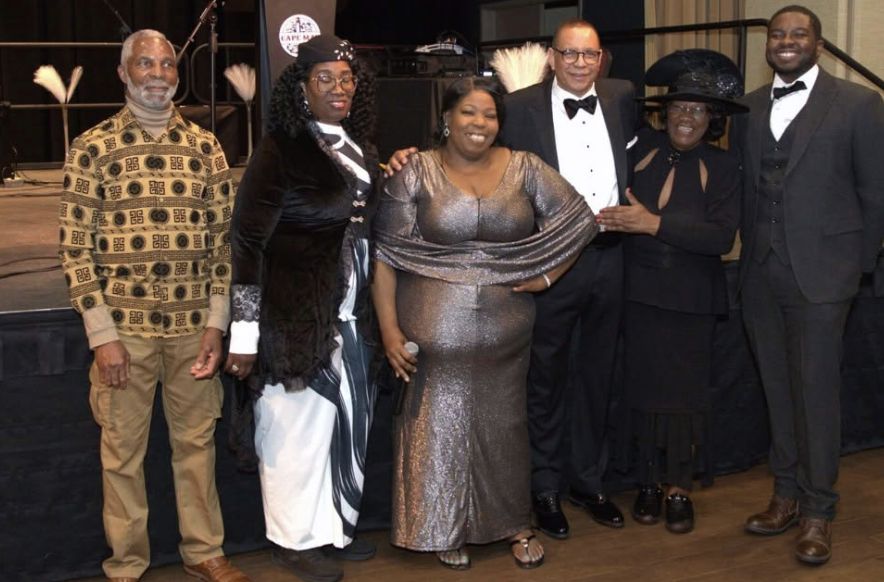
Felicia Simmons of Asbury Park was one of several friends to rush to Caldwell’s defense last week by questioning the legitimacy of the investigation. She helped organize one of the events in question — the Whitesboro Black History Gala, an event in April recognizing the preservation efforts of the state’s first planned Black community, located in Cape May County.
Simmons said she invited the lieutenant governor to hand out proclamations to honorees. She said she saw no questionable behavior on his part.
“It was very meaningful for him to be here,” she added.
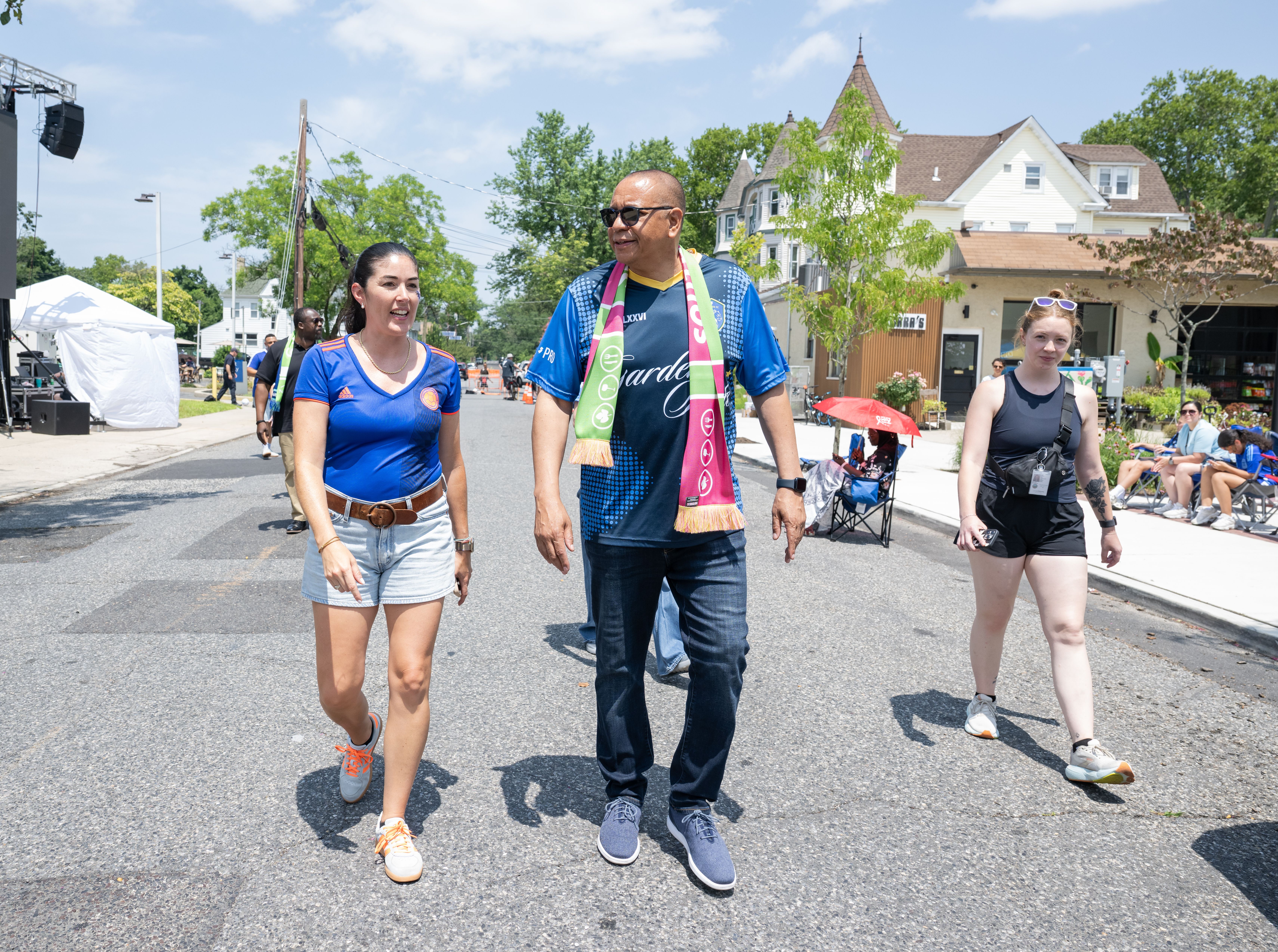
Lt. Gov. Dale Caldwell walks with Collingswood Mayor Daniela Solano-Ward in Collingswood on July 19 before reports of the investigation.Courtesy Camden County
Caldwell’s staff alerted her prior to the event that he would be bringing guests, which is not unusual because many dignitaries seldom travel alone, Simmons said.
And after all these months, no one from former Attorney General Christopher Porrino’s law firm, which is leading the probe, has spoken to her yet — even after she issued a statement criticizing investigators for not contacting her.
“I feel highly offended,” she said.
Lt. Gov. Dale Caldwell (third from the right) attended the Whitesboro Black History Gala in April, at the invitation of Felicia Simmons (center). He is the target of an ethics investigation after an anonymous complaint said he acted inappropriately around women, including at this event. Simmons denies the allegation.Courtesy of Felicia Simmons
Caldwell “comes from a line of men with integrity,” noting his father marched with the Rev. Dr. Martin Luther King Jr., she said.
“I truly believe Gov. Mikie Sherrill made the right choice picking this man and we can’t just sit back,” Simmons said. “These awful allegations could follow him for the rest of his life.”
Albert Stark, from the Philadelphia- and Marlton-based law firm Stark & Stark, also came to Caldwell’s defense in an interview, calling him a reliable friend and public servant. Stark said Caldwell, a pioneer in bringing tennis to young Black youth, helped establish the National Junior Tennis and Learning network in Trenton.
When he first heard about the scandal, Stark said, he wondered: “Who was setting him up?”
They haven’t spoken since the investigation was publicized, he said, but he offered this advice: “‘Just be yourself. You’re a terrific guy.’ He has got nothing to be ashamed of.”
‘They are trying to destroy his integrity’
Before the investigation leaked, Caldwell spent his summer visiting with business leaders and elected officials throughout the state, including in South Jersey. Local leaders did not comment on the accusations but said they appreciated Caldwell spending time in the region.
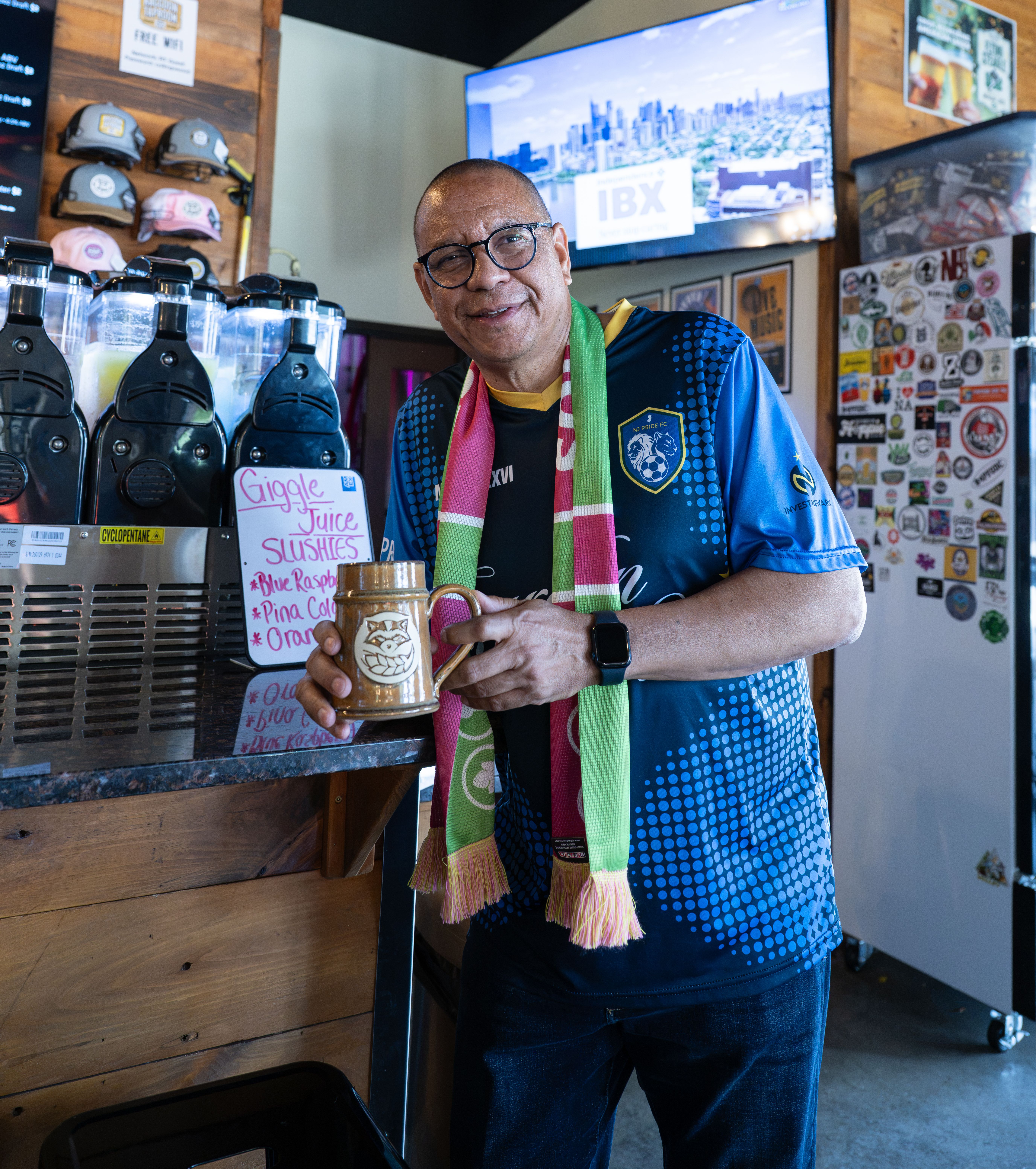
Collingswood Mayor Daniela Solano-Ward said Caldwell visited her small borough for the second time for its World Cup fan fest. Caldwell kicked a soccer ball around with the mayor, thanked volunteers, and fist-bumped Deputy Mayor Amy Henderson Riley’s daughter. He posed with local vendors, smiled in front of a “giggle juice slushies” menu at Racoon Taproom, and chatted with kids at the All Fired Up! pottery studio.
Lt. Gov. Dale Caldwell poses at Racoon Taproom in Collingswood on July 19.Courtesy Camden County
“He was kind and respectful, and seemed like he was very engaged in the things we were saying,” she said, noting that their interactions were limited.
As acting governor he visited Campbell’s and the Philadelphia 76ers training facility in Camden for an economic development tour in August, and he returned later that month for a Chamber of Commerce Southern New Jersey resource fair alongside Camden Mayor Vic Carstarphen, a Democrat who declined to discuss Caldwell.
Thank you to @ChooseNJ and Camden Community Partnership for showing me some of the great work the City of Camden is doing to strengthen its economy and expand opportunity.
The Governor and I are committed to making sure Camden – and every community across the state – thrives. pic.twitter.com/95zIkO3KNy
— Lieutenant Governor Dale Caldwell (@LtGovCaldwellNJ) August 21, 2026
New Jersey Democrats have not been rushing to defend Caldwell, who has become a complicated topic for them with the extent of the allegations against him unclear.
Gerard Cleaves, a professor at Pillar College, a private evangelical Christian school in Newark, said he was angry at the Democrats who, he believes, are “out there fanning the smoke” by leaking tidbits of the investigation and not offering public support.
“They are trying to destroy his integrity,” he said.
“I am an old, white male Republican conservative who worked very hard to get [Sherrill’s GOP opponent] Jack Ciattarelli elected,” said Cleaves, who said he met the lieutenant governor at Fairleigh Dickinson University, where Caldwell taught from 2018 to 2023. When Caldwell joined Sherrill’s ticket, Cleaves said, he told his colleagues they “would be hard to beat” based on Caldwell’s resumé and character.
Caldwell has not missed their Wednesday morningBible study lessons since news of investigation broke earlier this month, Cleaves said.
“He doesn’t appear stressed. He knows in his heart who he is. He has told me he will not resign. He is not going to give up,” he said.
TRENTON — Parents of people with developmental disabilities tearfully pleaded with New Jersey lawmakers on Monday to mandate the installation of cameras inside state-licensed group homes to protect their children from abuse and neglect, which they say have become almost a routine occurrence.
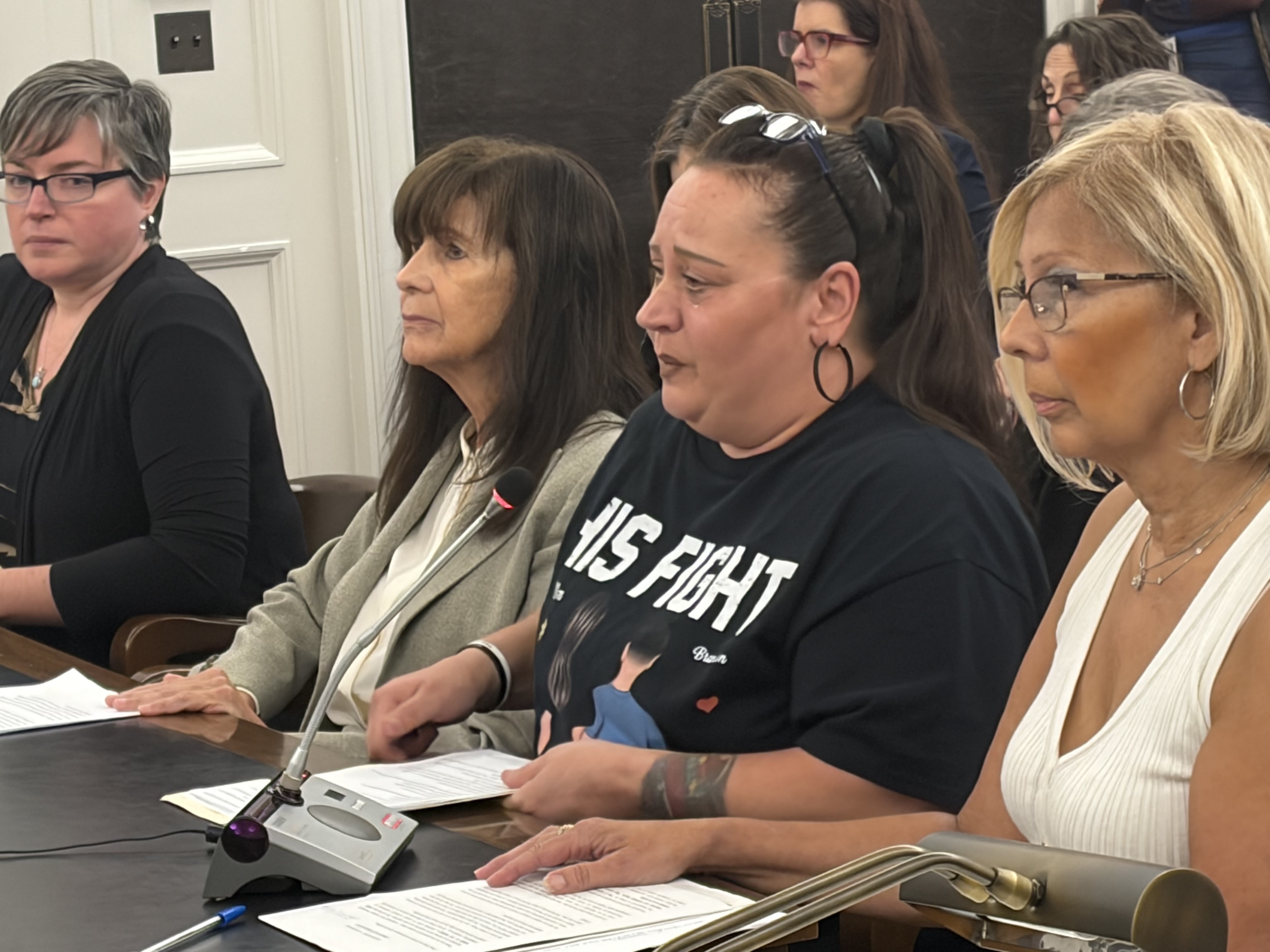
A family’s frequent visits and vigilance are not enough to protect their adult children’s safety, said Priscilla Quesada of Egg Harbor Township, who testified that her son Brandon suffered broken bones and other injuries in group homes in Burlington and other South Jersey counties. He is now in a state-run facility.
“I never imagined I would have to stand before lawmakers and ask for something as basic as cameras to protect my child,” Quesada said.
“As his mother, I have had to fight for answers. I have had to look at medical records. I have had to ask questions about injuries and when they occurred,” Quesada said through tears. “And I keep asking myself one question: If there had been cameras, would we have known what happened to him? Maybe the abuse would have stopped sooner.”
The fight over cameras in group homes has gone on for more than six years without a resolution. And it has been nine years since the bill’s namesake, Billy Cray, died in his group home bedroom in Somers Point.
The Assembly Health Infrastructure Committeeheard nearly three hours of testimony for and against installed cameras in group homes. Chairman Sterley Stanley (D., Middlesex) said he would schedule another hearing after working with group home lobbyists, disability advocates, and family groups to reach a compromise.
“We are all committed,” Stanley said after the hearing. “Cameras in the homes would be a vital first step, but we also want to address the abuse that is happening.”
Several representatives from the group home industry insisted the issue is more complicated than it appears. People with disabilities deserve privacy, a civil right protected under federal law, argued Cathy Chin, executive director for the Alliance for the Betterment of Citizens with Disabilities.
“Common areas in private homes are neither public spaces open to the public nor institutional settings. They are homes, where a degree of individual and communal privacy is to be expected and protected in the same manner as any home or community,” Chin said.
About 30% of group homes already use cameras, Chin said.
“Individuals and their guardians consider this option before choosing a group home, which means they can make the choice freely, without pressure from their housemates or their guardians,” Chin said.
Libby Vinson, CEO of the New Jersey Association for Community Providers, said the camera systems run from $20,000 to $25,000 — which would blow a “huge hole” in the providers’ budgets. She said it made more sense to spend taxpayer money to improve staff training and prevent harm.
The legislation would require licensed group homes serving people with developmental disabilities to install cameras in living rooms, kitchens, and other common areas with the consent of all residents in the dwelling.
The cameras would record video but not audio, according to the bill. The group home operators must retain recordings for at least 90 days and share the recording with a resident or guardian upon request. The state would inspect the homes to ensure the cameras are installed and working properly.
The campaign for group home cameras emerged following the 2017 death of 33-year-old Billy Cray, whose body was found in his bedroom closet in his Somers Point group home. An autopsy said he died of natural causes, but his mother, Martha Cray, said she has never received satisfactory answers about his supervision and care.
The demand for cameras intensified in the last year following media reports detailing abuse and neglect inside group homes and the lack of consequences for the operators and staff.
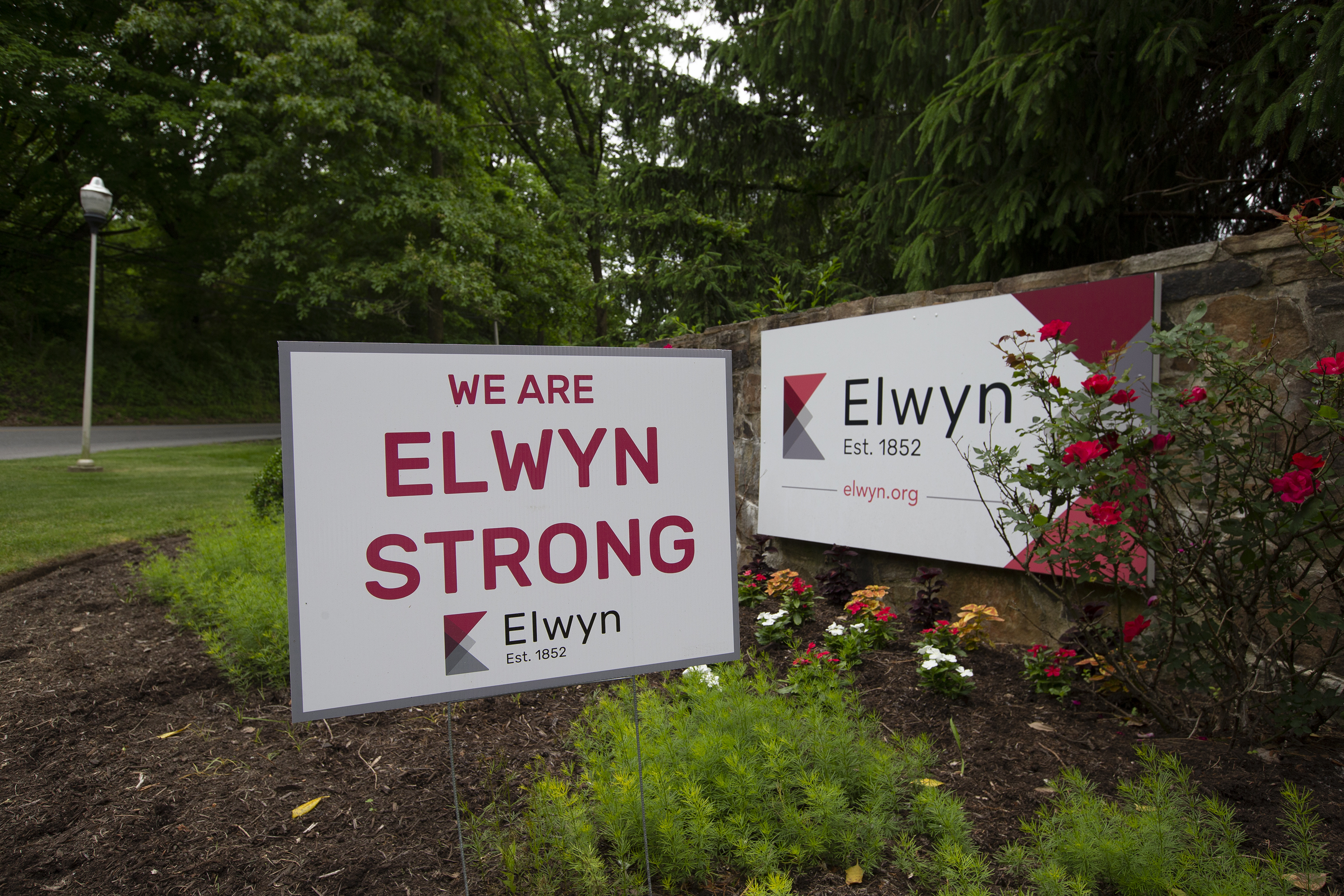
Former Attorney General Matt Platkin last year charged Elwyn, a group home operator based in Media with facilities across multiple states, and an employee with neglect for allowing a resident who had fallen twice to remain on the floor for hours on two occasions in 2023 at a group home in Vineland.
Elwyn, one of the nation’s oldest providers of services for intellectually and developmentally disabled individuals, is based in Media, Pa. CHARLES FOX / Staff Photographer
Attorney General Jennifer Davenport, appointed in January by Gov. Mikie Sherrill, dropped the charges last month in exchange for Elwyn agreeing to be monitored by an outside firm.
Pennsylvania law permits the installation of cameras in group home common areas with consent from all residents. The group home operator must hang signs alerting people cameras are in use.
A new law took effect in New Jersey in July that for the first time gives the state department of human services authority to impose fines on abusive and neglectful group homes.
Families have argued that the state seldom substantiates claims of abuse and neglect. The evidence provided by cameras could help both residents and employees, who may be unfairly accused of wrongdoing.
Camden County resident Mary Jane Lovett said her son, Timothy, 36, endured 15 years of physical abuse — including some injuries requiring hospital care — at group homes in Pennsylvania. He recently moved to a state-licensed group home in Northfield, and she wants the comfort of knowing cameras are present.
“Video speaks for itself. There’s no bias, no way to deny an incident that is captured on video,” Lovett said.
“I never dreamed that I would be sitting in front of you, pleading with you to help keep my son safe in a group home funded by New Jersey taxpayer dollars, including my own.”