Author: Zoe Greenberg

  • To get closer to God, these six women moved into a ‘house of discipleship’

    To get closer to God, these six women moved into a ‘house of discipleship’

    Peace Ike was raised Christian, but in 2017 she found herself in a “low-faith place,” as she describes it. Demoralized and uncertain of what to do next, she traveled to Greece with three close friends.

    During hours of conversation and reflection there, she had a revelation: God wanted her to open a communal space. So upon returning to Philadelphia, she purchased a six-bedroom house in Germantown. She was single, without roommates, or a plan for how to pay the mortgage.

    “When I hear things clearly, I go for it,” Ike, now 41, said.

    Within two months, the rooms were filled, she said.

    Originally, the house didn’t have a spiritual focus, though Ike, who works as a strategist on workplace culture and conflict, would sometimes host worship nights. She hadn’t selected for religious roommates, but she saw her role as helping people to “live well” and grow spiritually. She began her own mornings with devotional time; she would invite people to stay who had nowhere else to go, and pray with strangers who were suffering.

    By its second year, the house had become an intentional “Christ-centered” place. As Ike described it in a recent post for a new roommate, “We range in ages from 29-47 and we truly love the Lord and each other … The greatest thing that bonds us is our passion for Christ.”
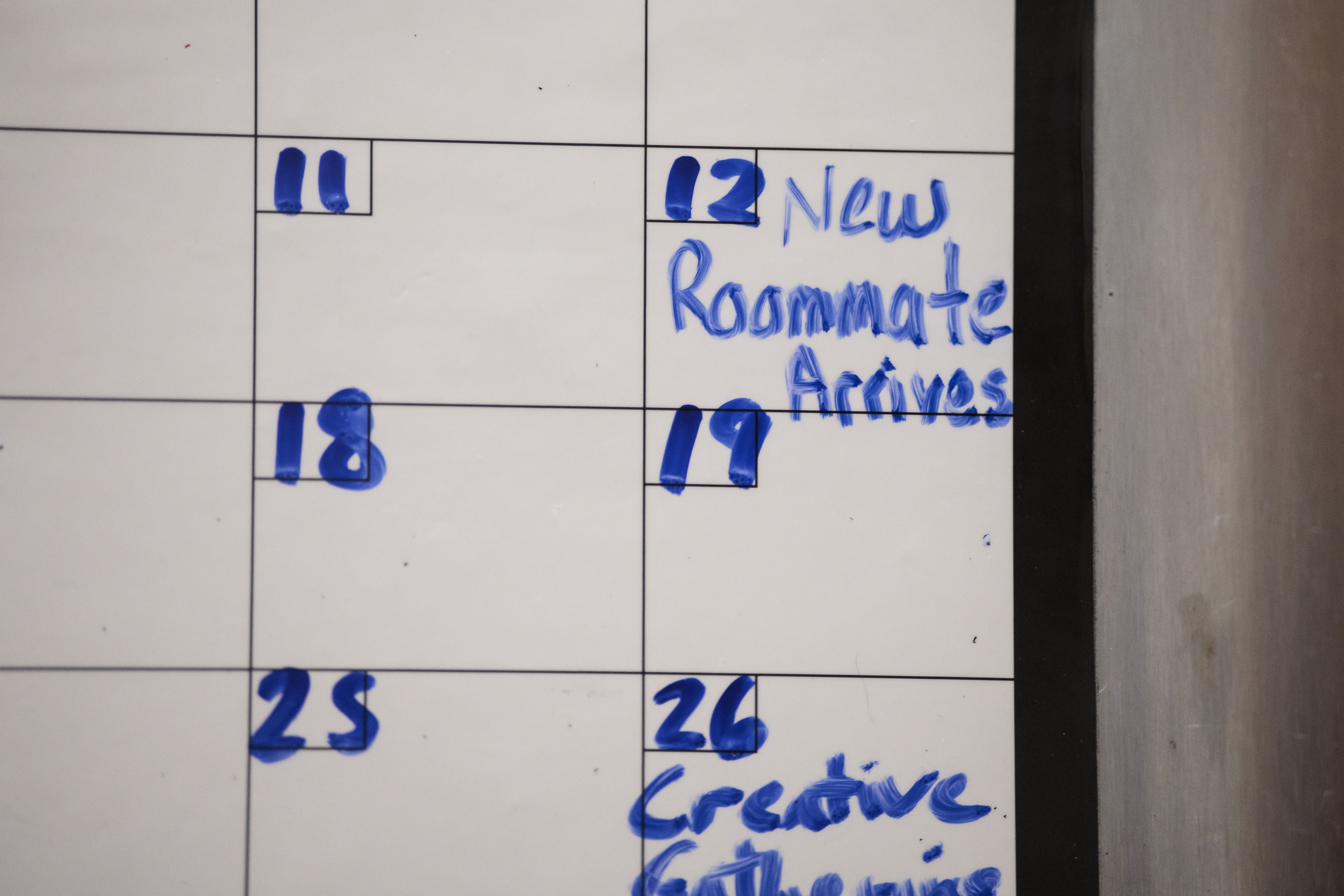
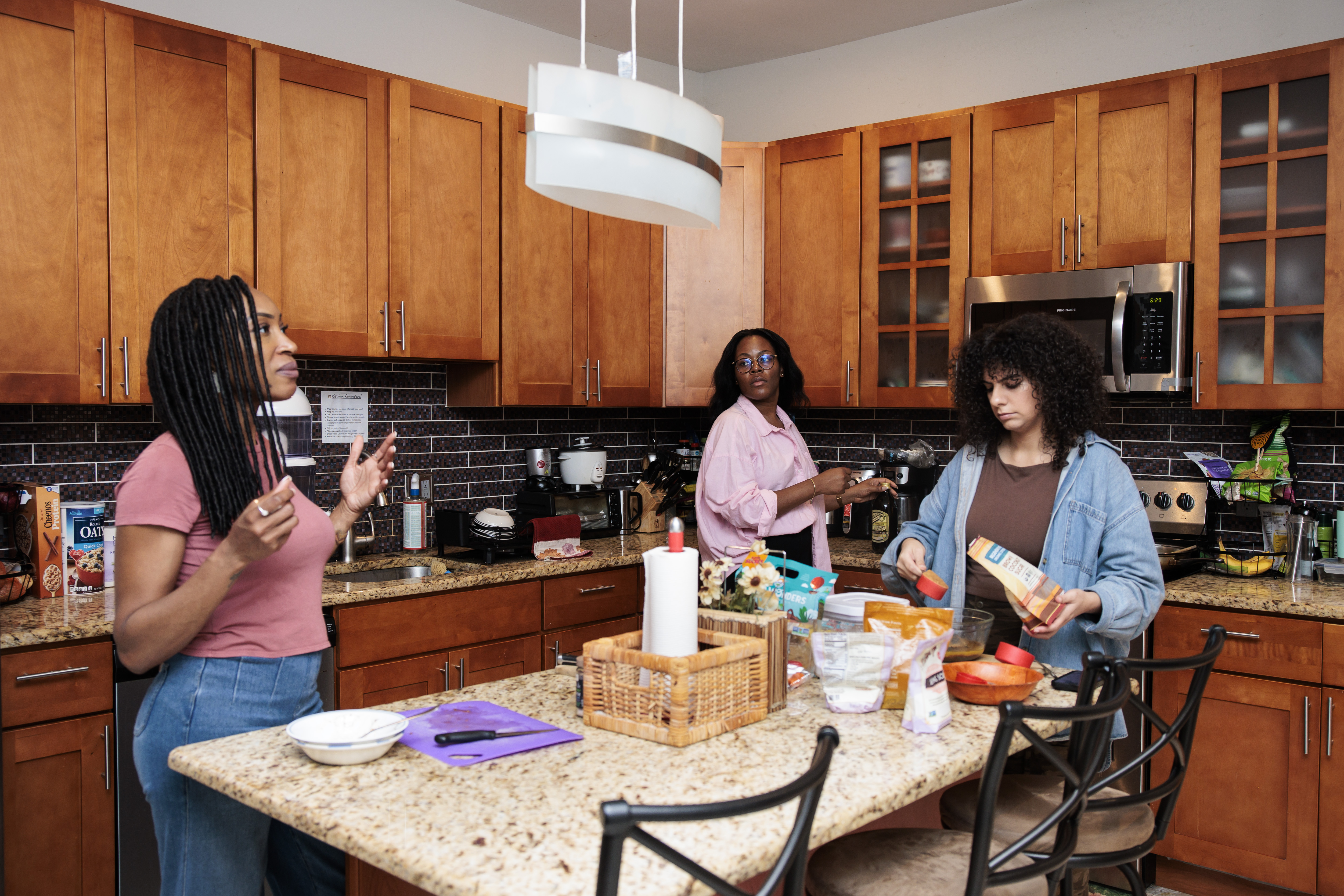
    When a new roommate moves in, the women have a long hangout where they ask about pet peeves and personality types. Monica Herndon / Staff Photographer

    The house is now in its ninth year and is home to six women.

    Christina Levy, 31, has lived in the home for almost six years. Levy was born into a Christian Apostolic home in Jamaica; her father was a minister and her mother did missionary work. When she enrolled in Penn’s Graduate School of Education, she moved directly from her family’s home in New Jersey into Ike’s house.

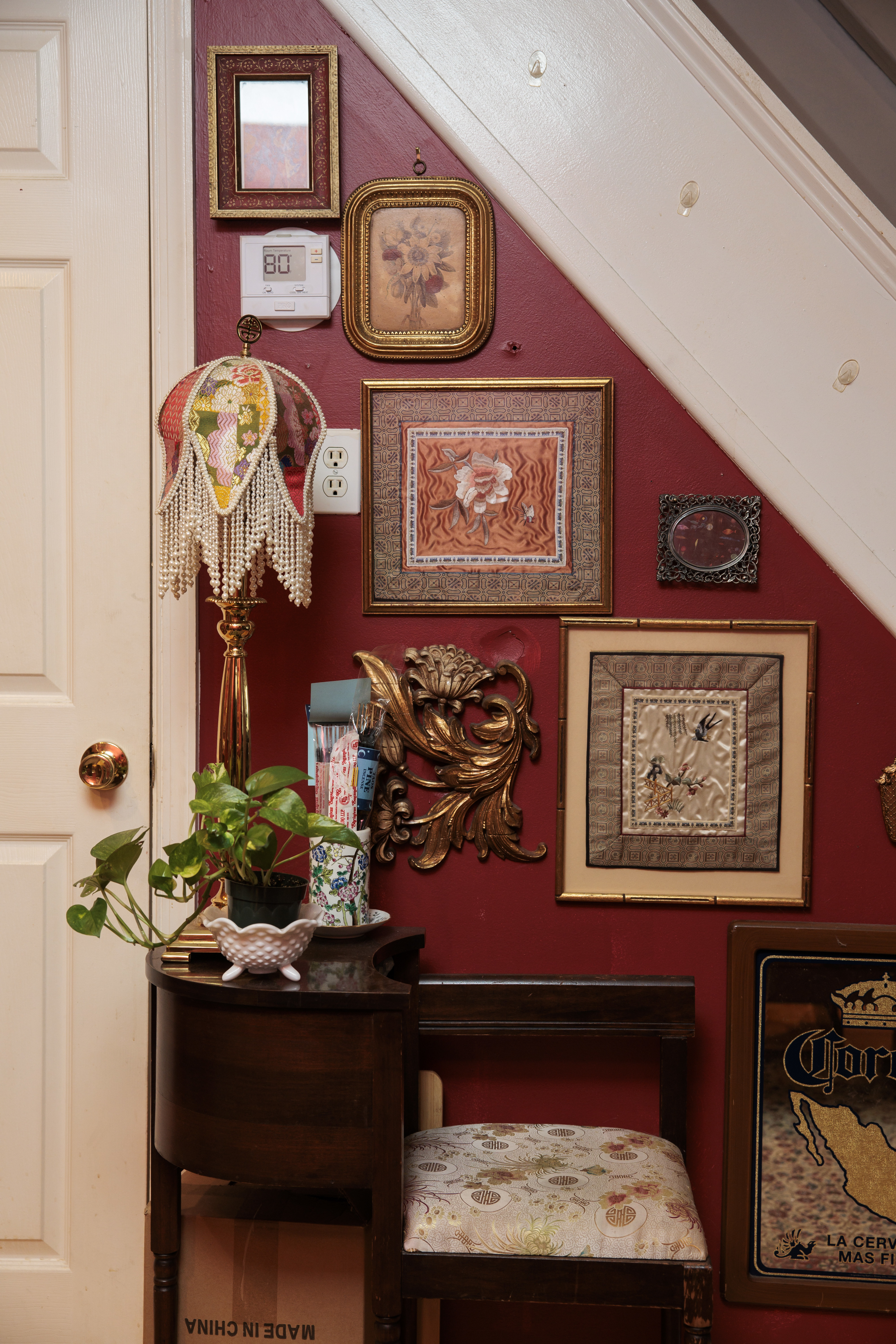
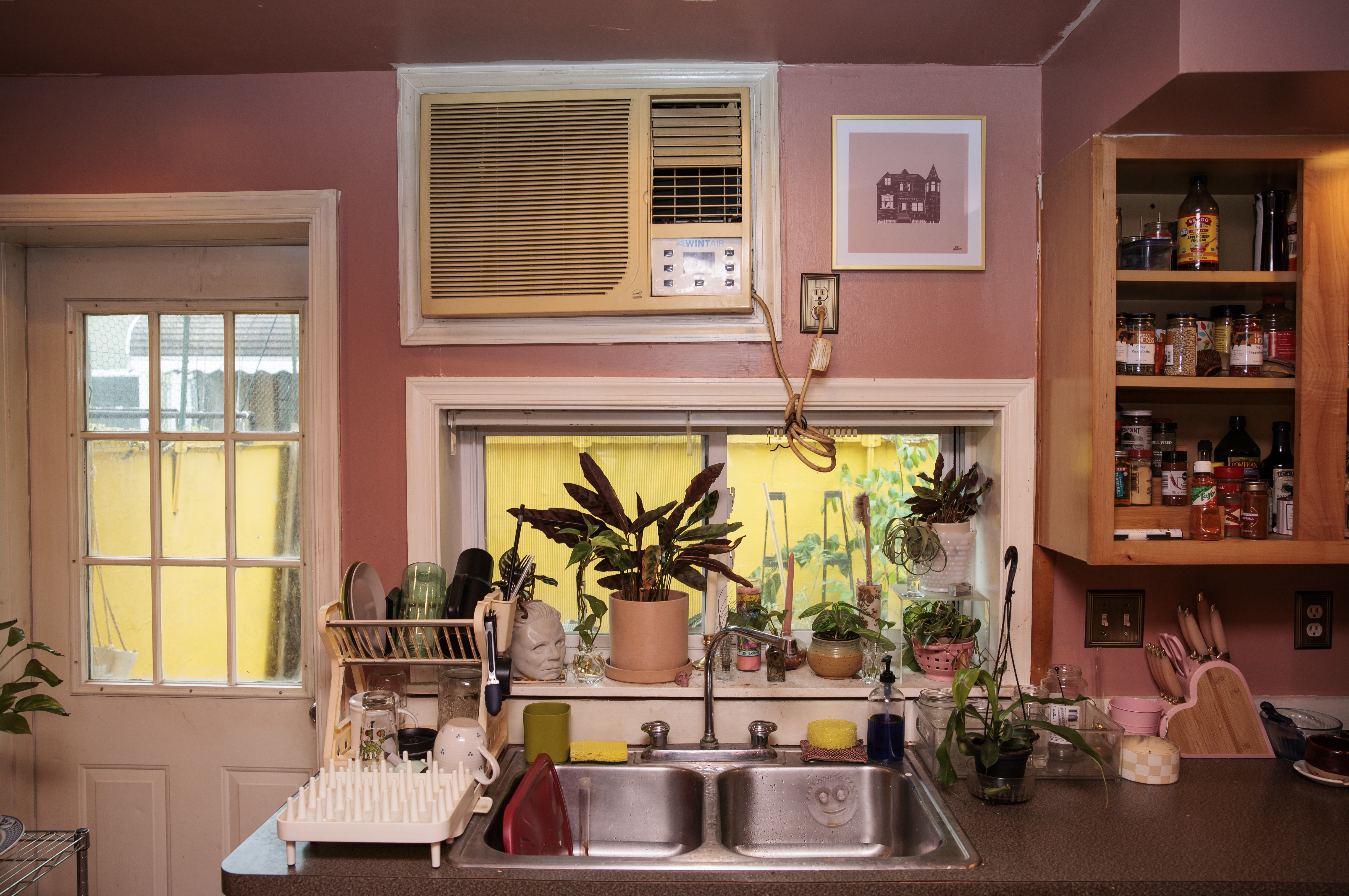
    The women are all independent, with different schedules, but with a common vision for how they want to live. They joke that their kitchen island, where they bring their complaints and longings, is like church. Three of them also attend the same church in Bristol on Sundays.

    “It really feels like we’re sisters and we’re all connected by the same Father, and that’s God,” Levy said.

    The following, as told to Zoe Greenberg in separate interviews, has been edited for length and clarity and combined.

    On deciding to move in

    Levy: I tend to be the kind of person who looks for signs. Like, “Should I do this?” I felt like the Lord was really leading me toward this house.
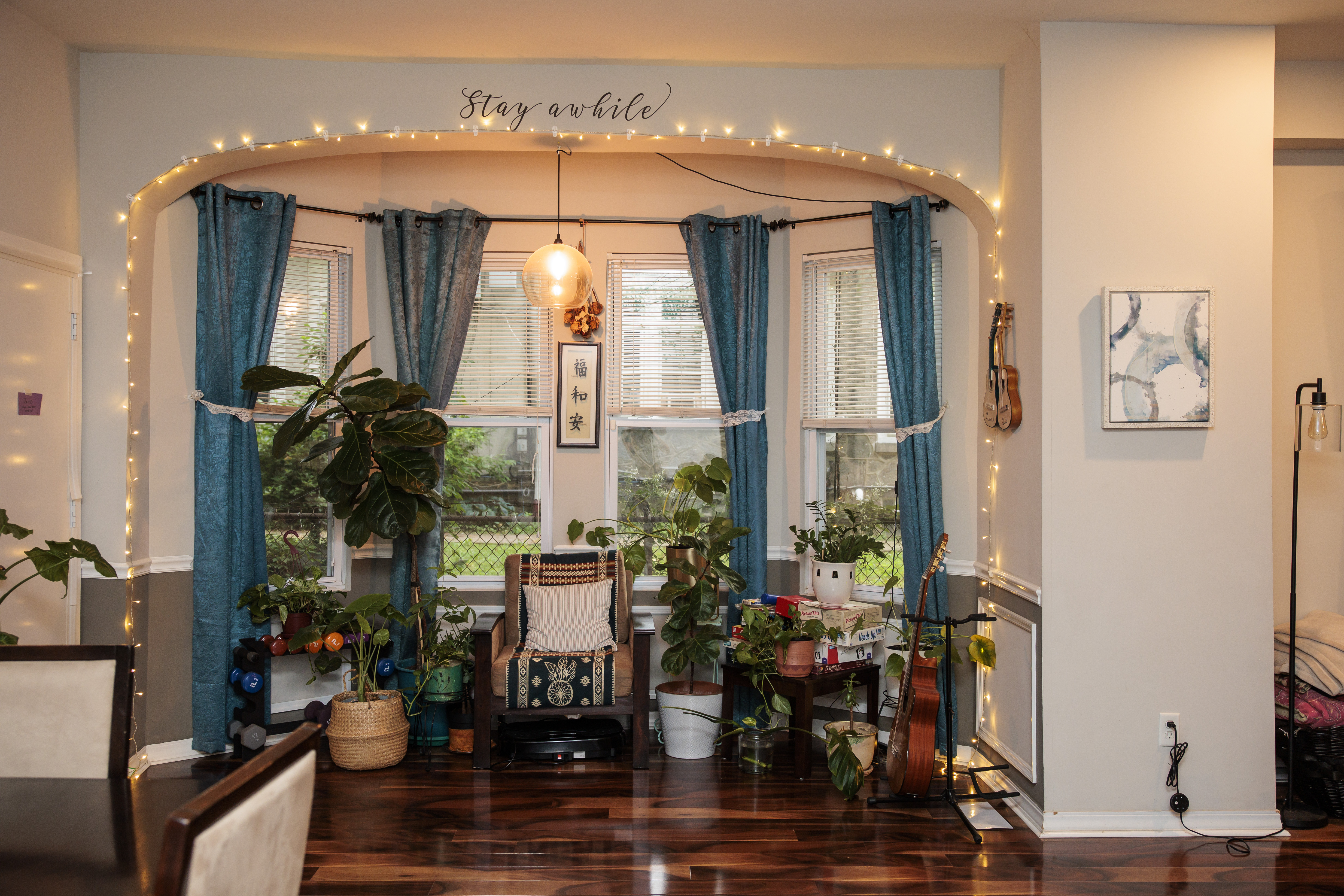
    Even before the house was intentionally Christian, Ike hosted worship nights for neighbors and friends. Monica Herndon / Staff Photographer

    On welcoming new housemates

    Ike: Any time a woman moves into the house, we have a long hangout, and we get to know her. We go over personality types. We go over pet peeves. Are you a night owl or a morning person? How do you prefer to handle conflict? All of the things that you would want to know about someone that you’re going to be spending your life with.

    On becoming a ‘house of discipleship’

    Levy: No one’s trying to be Christian here. It’s not a rigid thing. All the girls that come in, it’s like they carry something that someone else in the house is going to need.

    Ike: There’s a term called ‘disciple’ in Scripture. Jesus had 12 disciples. He taught them everything he knew, and he always directed people back to God. Oftentimes, I’ll talk about this as a discipleship house. When it started, I was certainly discipling a lot of young women who needed direction in life. Now it’s like we are discipling each other.

    On whether non-believers can live there

    Ike: I always tell people, you don’t have to share our faith to be a part of this home, but I want them to know that it is the central thing that glues us. It’s in all of our conversations. When someone comes home and they’re having a hard day, we sit and we listen and we pray with them.

    On being a landlord among peers

    Ike: I have been very adamant about that — don’t treat me like a landlord. I am just one of y’all, but when something needs to be done, come and call me, and I’ll get it done right away. It allows me to feel like I’m at home with my sisters and not on the job all the time.

    On house rules

    Ike: With six women, we do not have men overnight. My experience has taught me that it’s really easy to get into conflict when we don’t know your boyfriend as well as you know your boyfriend. If you want to go spend time at his house, that’s fine. We also don’t do drug use.
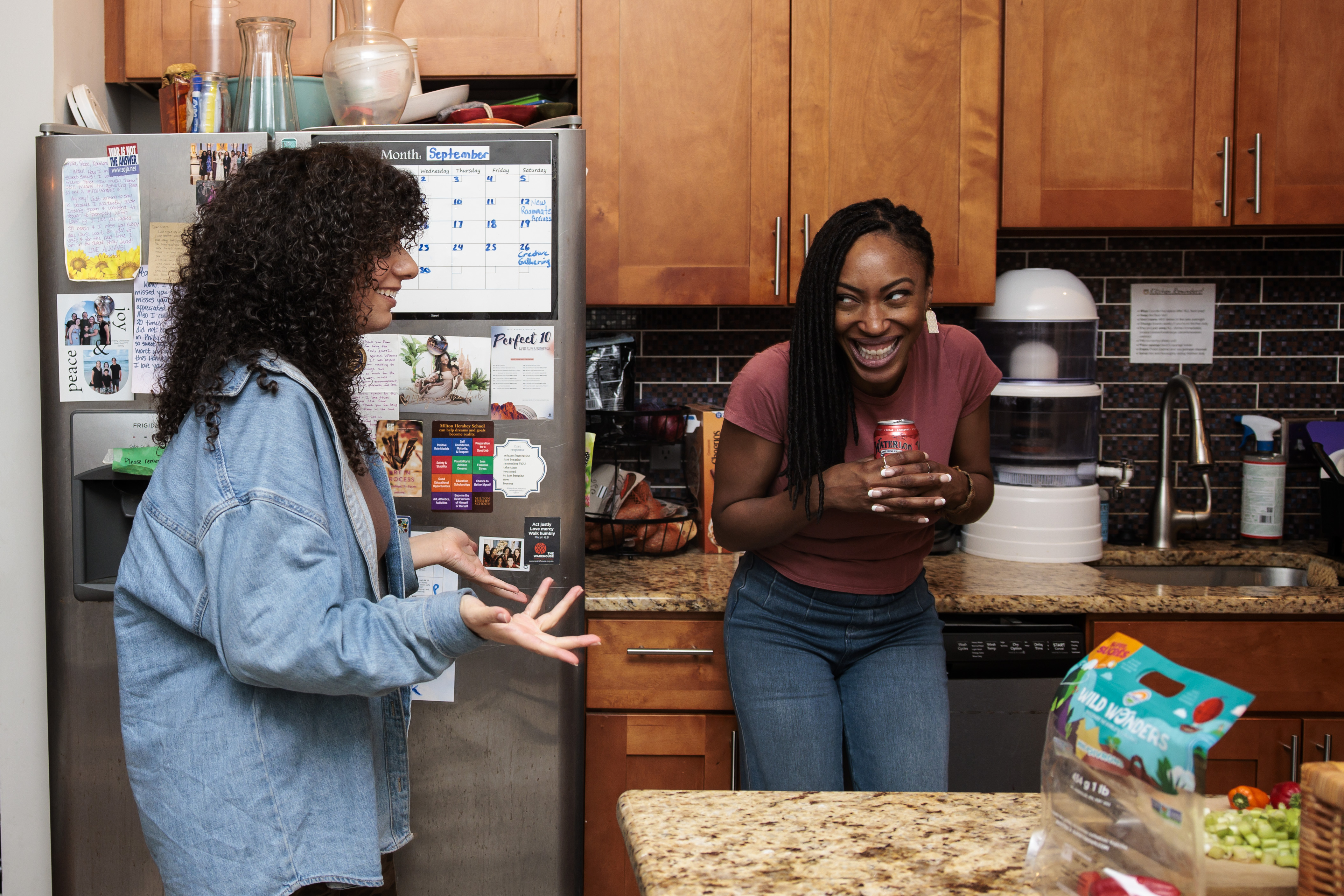
    Peace Ike, right, bought the Germantown house after she had a revelation to do so. She lives there with five other women, including Kallie Jalal, left. Monica Herndon / Staff Photographer

    On kicking people out of the house

    Ike: It hasn’t always been roses. There have been girls who’ve just been dishonest, wanting to do those things that we agreed we would not do as a home. Part of the contract is when you do that, then we ask you to leave.

    On what comes next

    Levy: If anything would make me leave my sisters here, I feel like it would be a door opening for me to get my PhD or career elsewhere. And of course a man.

    Ike: When I pursue a relationship, I’m not going to live in the home with five other women with my spouse. The house can continue as a community house if there are women here who are invested in that. Anything is possible. I think that I am going to enter a season where I will enjoy some privacy with my spouse. I would love that for a short period. But then I know myself: Two years in, I’m like, “Oh, we should really rent out that spare room.”


    This story is part of a series about life partners across the Philadelphia area.

    If you want to share your story about who you’re navigating life with, romantically or otherwise, write to lifepartners@inquirer.com. We won’t publish anything without speaking to you first.
  • A hit-and-run left a woman unable to live alone. So her niece bought her house and moved in.

    A hit-and-run left a woman unable to live alone. So her niece bought her house and moved in.

    Lynsey Lehr grew up knowing that her beloved Aunt Donna survived a near-deadly hit-and-run as a teenager.

    The details of the tragedy were part of the tight-knit family’s history.

    Donna Eiser had just finished her freshman year at East Stroudsburg University and aimed to become a physical education teacher. Then one night in August 1974, she was hit by a car a few blocks from her Bensalem home. She spent the next six months in the hospital, relearning how to speak and move. The crash left her permanently disabled, unable to return to school or work, and in need of long-term care.

    Lehr’s large family, most of whom lived nearby, rallied. Lehr and her two siblings grew up next door.

    “We grew up knowing that there are people who need to be looked out for,” Lehr, 35, said. “She was always one of our pals.”

    Her grandmother lived with Eiser and acted as her primary caregiver for the next 43 years, until the grandmother’s death in 2018.

    Then the family needed to come up with a plan for Eiser’s future. The Bensalem house was left in a trust to Eiser, and the family wanted to sell it so she could profit from the sale, but Eiser could not live on her own or afford rent elsewhere.

    Lehr, a graphic designer at Dietz & Watson in Philadelphia who was still living with her family next door, decided to buy the house and move in with her 71-year-old aunt. She became the 24/7 on-call person; Lehr’s mother shares the rest of the caregiving with her.

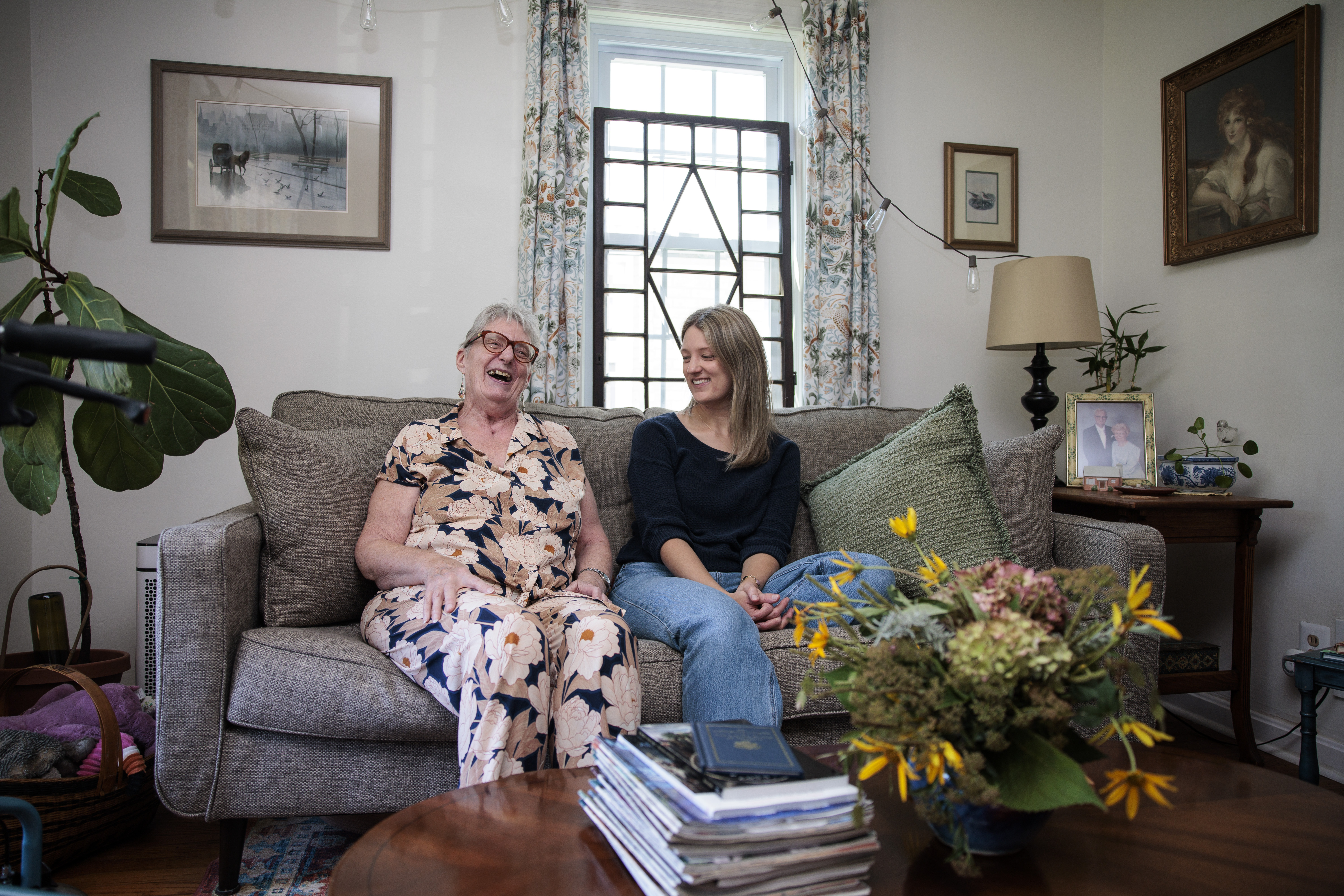
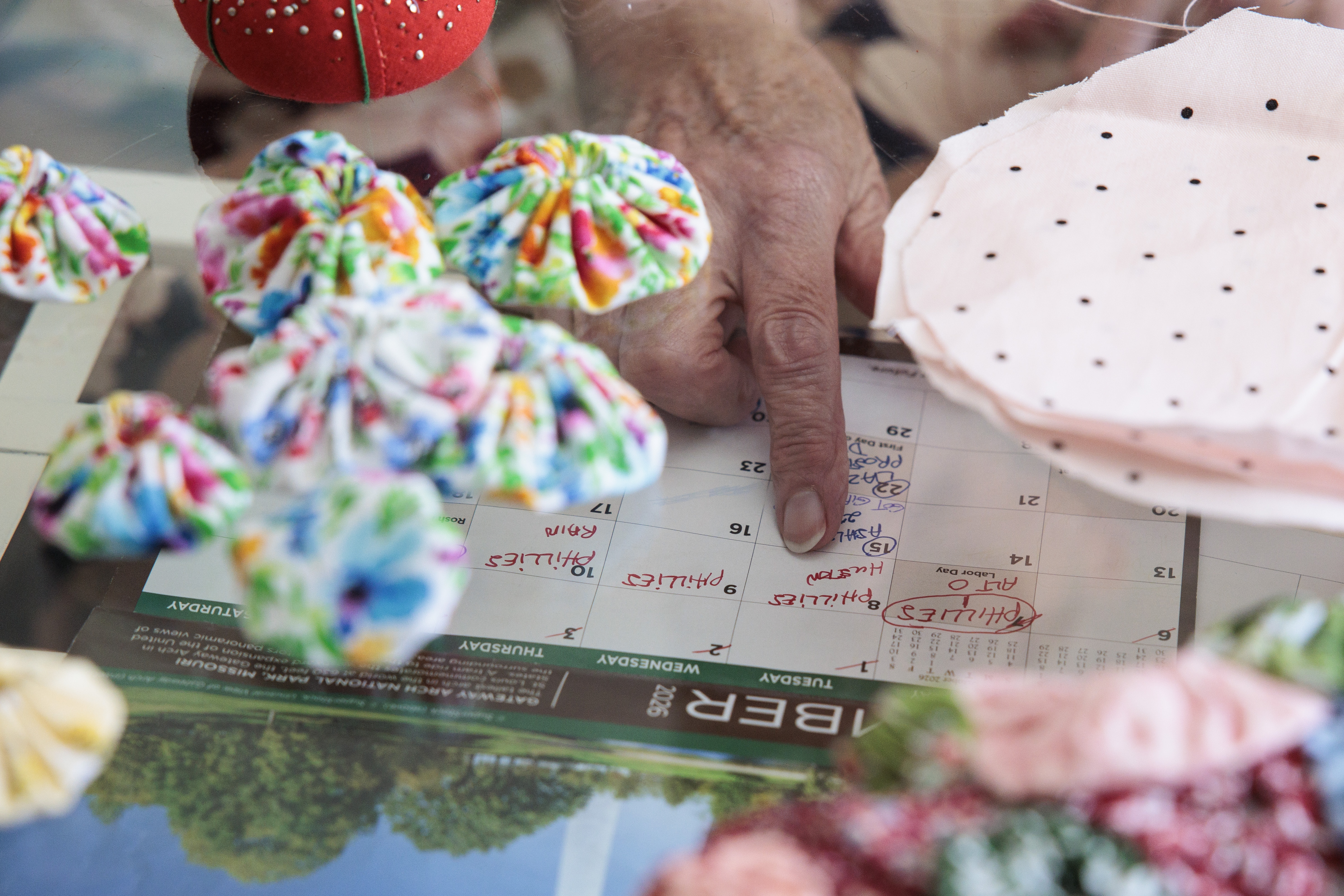
    These days, Lehr and Eiser can often be found at home together, sewing, playing Yahtzee, and listening to the Beatles.

    “My life definitely looks different than some of the people around me,” Lehr said. “While it’s a responsibility, it’s a joy.”

    The following, as told to Zoe Greenberg, has been edited for length and clarity.

    On deciding to buy the house

    Lehr: I couldn’t bear the thought of my aunt losing her mother and then losing her home. The emotional toll just would have been too much. Consistency and routine in her life are important. I was also ready to spread my wings a little bit, even though I was buying right next door.

    Eiser: My mother passed away, my father passed away, and I’m disabled. I need someone to help me. So since Lynsey lives right next door, and I’m her godmother and her aunt, she decided to come over and live with me. That helps me out a whole lot.

    On becoming a full-time caregiver at 30

    Lehr: I didn’t consider not doing it, just because she was my priority. She still is. I don’t know that we’ll stay in the house forever, but I know she’ll be with me forever. She’ll be with one of us forever. At the time it felt like a big responsibility, but it didn’t feel like the alternative was an option I wanted to consider.

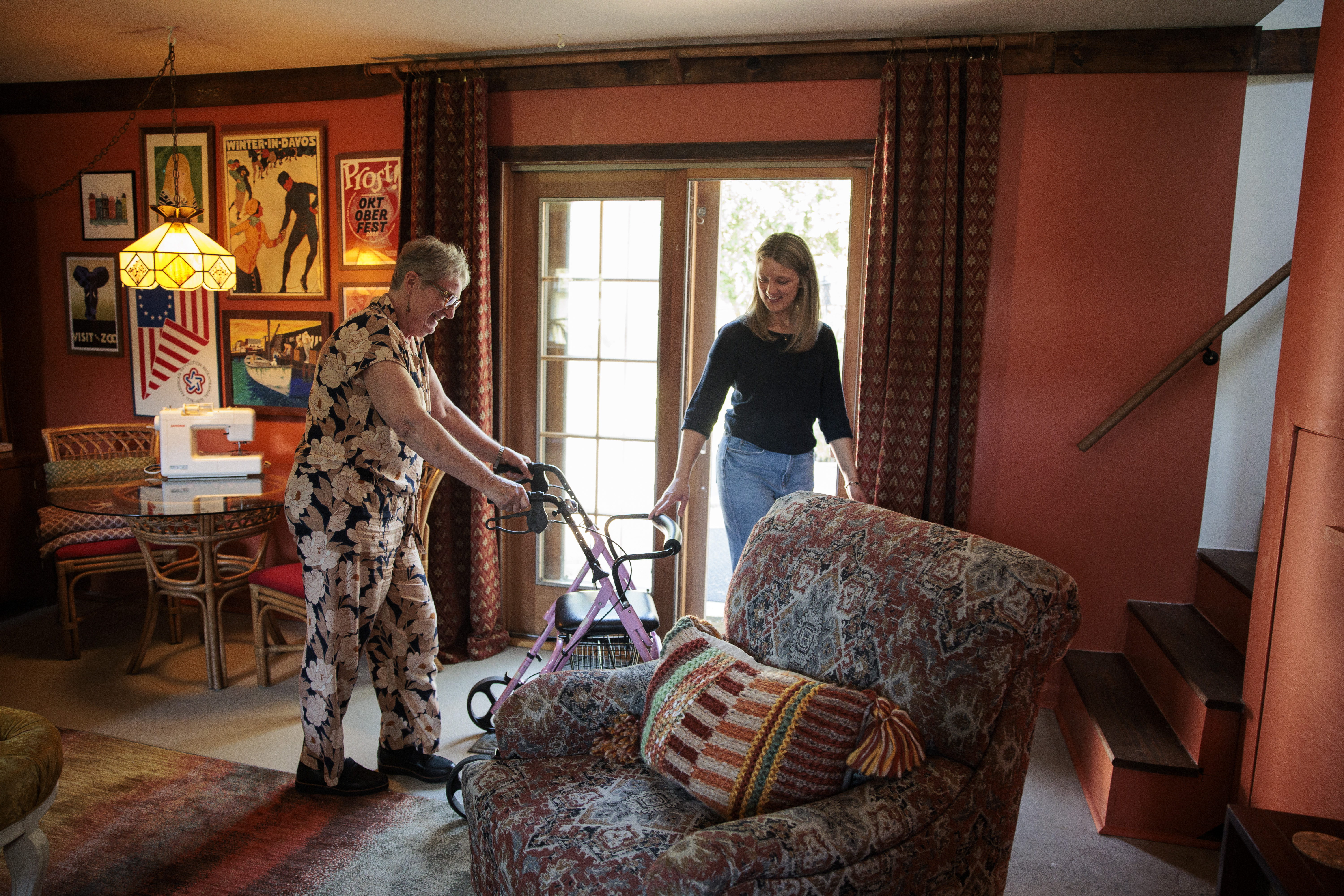
    Donna Eiser was left permanently disabled by a hit-and-run when she was 19. Here she uses her mobility device in the home she shares with her niece. Monica Herndon / Staff Photographer

    On being both niece and caregiver

    Lehr: It’s a hard balance sometimes. I don’t want her to feel that I’m treating her like a child, because she’s not. But there are definitely times when I have to ask her to do the dishes or pick up laundry. I still find her playing a mother role to me, and she always did. As my godmother, she took it very seriously to be a spiritual guide and an emotional guide. I think ultimately we’re friends. I don’t know that there’s any kind of hierarchy.

    On forgoing a romantic partner

    Lehr: I am not in a romantic relationship, and a part of me feels like this may occupy a lot of my time that I would have normally dedicated to finding myself a romantic partnership. My pursuit of that is secondary to this.

    Eiser: I always thought maybe I could, but I can’t handle that. It’d be nice to go out every now and then, but when you find someone who wants to be controlling or wants to have their own way, I say no.

    On making it work financially

    Lehr: I could not do any of this without my family support. I have an income and I pay my bills, and then my aunt fortunately gets help from Social Security, so she contributes a bit of that for her room and board. Because of her disability benefits, she’s not allowed to accumulate any kind of savings. We make it work.

    On comparing her life to her peers

    Lehr: I have a lot of friends who have young kids, and I think that the caregiving responsibility is similar. There’s a part of me that mourns living alone because I have friends who have their own apartments, or fewer responsibilities. In a way, that life does sound desirable.

    It’s kind of a slow life, especially with her mobility issues. We have to consider what is within her comfort level and we do spend a lot of time at home. But we’re content with that.

    Donna Eiser points to the calendar that she uses to help her remember appointments and plans. She’s a major Phillies fan. Monica Herndon / Staff Photographer

    On their 36-year age difference

    Eiser: It’s OK to have a young roommate. Sometimes I think, “How come I can’t do what she’s doing?” The older you get, the harder it is.

    Lehr: Honestly, I think Aunt Donna’s younger at heart than I am. She’s so creative, she’ll come up with these outlandish projects. Yesterday, she mentioned out of nowhere that she wanted to be a corn on the cob for Halloween. Now we’re planning logistically how that’s going to work.


    This story is part of a series about life partners across the Philadelphia area.

    If you want to share your story about who you’re navigating life with, romantically or otherwise, write to lifepartners@inquirer.com. We won’t publish anything without speaking to you first.

  • The cult-favorite ceramic dinnerware from ‘The Bear’ holds a pop-up sale in Philly

    The cult-favorite ceramic dinnerware from ‘The Bear’ holds a pop-up sale in Philly

    On the first morning of the Jono Pandolfi dinnerware pop-up in Philly, a woman FaceTimed her best friend from the center of the studio, documenting the shelves of turquoise and yellow and persimmon salad plates. A man cradled a 4-ounce, birch white creamer made of toast-colored clay.

    Pandolfi is the designer behind the handmade plates and cups in some of Philly’s most well-regarded restaurants, including Southwark, River Twice, and Vetri Cucina.

    Based in North Jersey, Pandolfi started his eponymous company in 2004 and has since become famous in the (niche) world of high-end plateware. He crafted the espresso and cappuccino cups for Eleven Madison Park and recently designed five new shapes for chef Daniel Humm’s forthcoming West Village restaurant. (Usually, “I only release one new shape every few years,” he said.)

    Even Carmy on HBO’s The Bear uses Jono Pandolfi dinnerware.

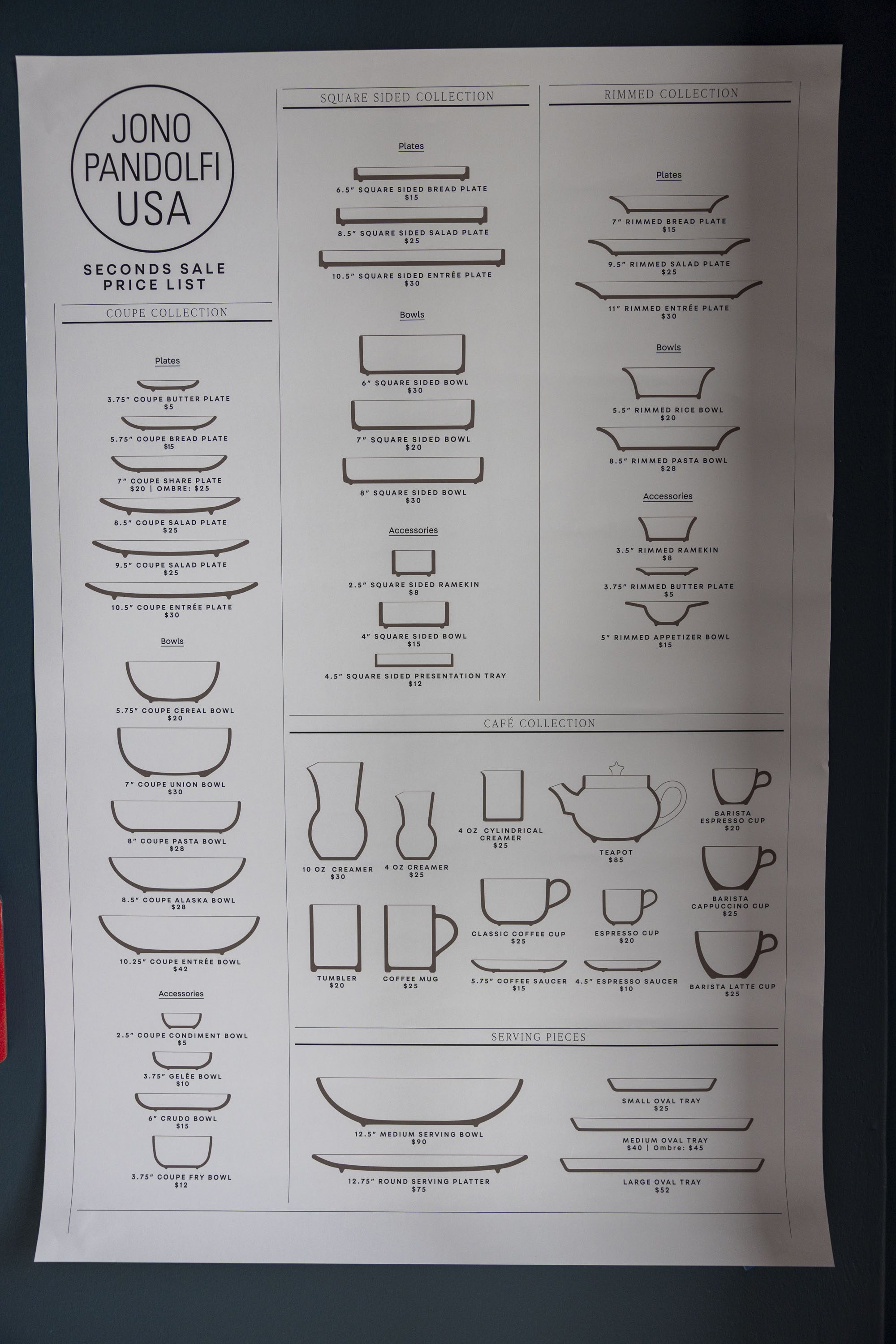
    A price list for the Philly pop-up. Tyger Williams / Staff Photographer

    The 10-day Philly pop-up, held at an Olde Kensington apartment complex, offers pieces at deep discounts. Some are overstock from restaurant orders or one-off commissions with special colors and shapes. Others are seconds, pottery with small cosmetic flaws. One of the best-selling pieces is the Alaska bowl — a “pasta-sized bowl,” as Pandolfi calls it — which normally sells for $57 and is on sale for $28.

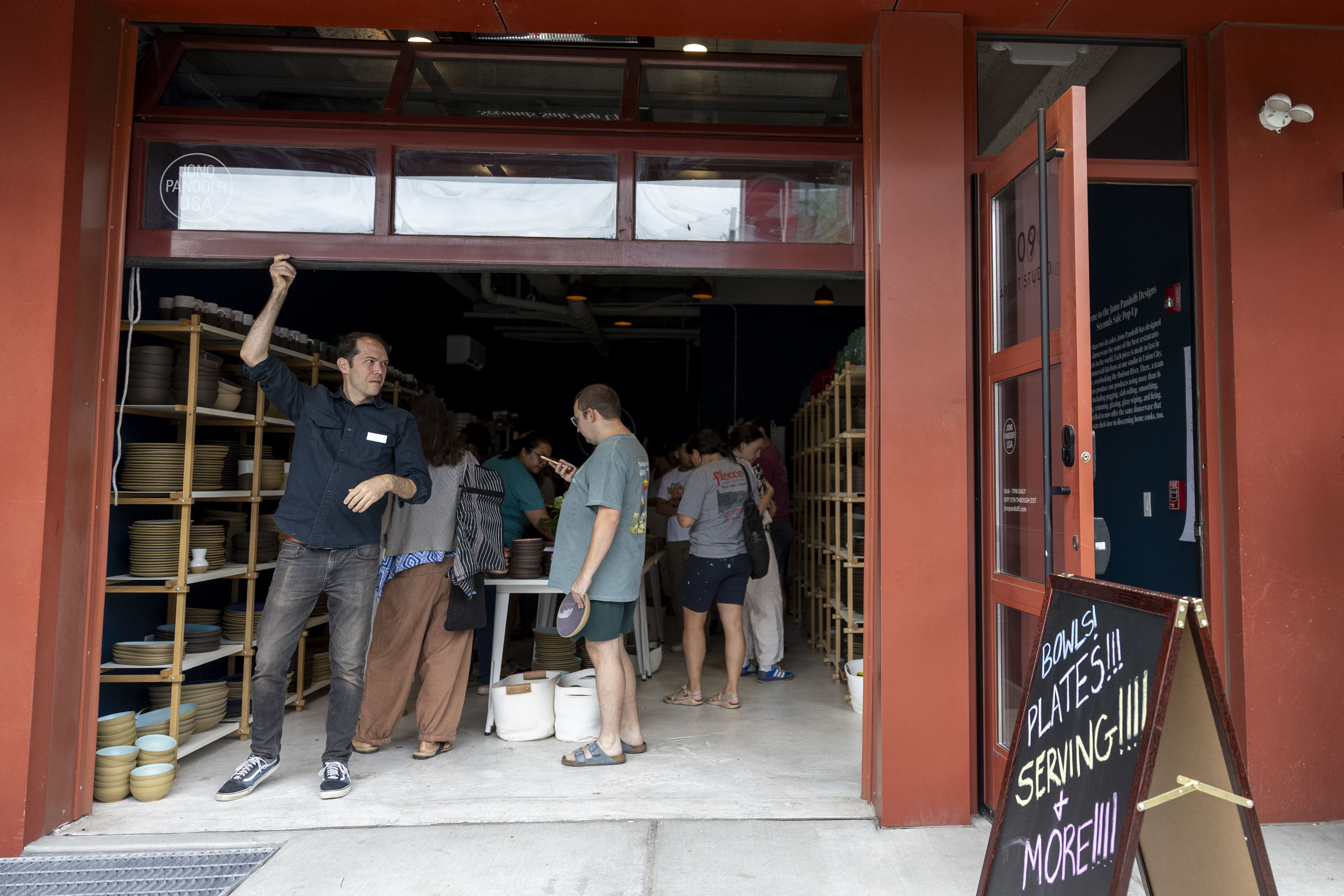
    “If you need to make 100 dinner plates for a customer, you have to probably fire 120,” Pandolfi, in black jeans and a magnetic name tag reading “Jono, Founder,” said in an interview at the Philly sale. The pop-ups are a way to sell off the extras. Some are stamped with the labels of the restaurants that originally commissioned them.

    Founder Jono Pandolfi poses for a portrait at his Philly pop-up. His dinnerware has become a cult favorite. Tyger Williams / Staff Photographer

    The sale runs daily 11 a.m. to 7 p.m. through Sept. 21, at 1525 N. American St. Studio #109. Reservations are available online, though people can also just walk in.

    The first day drew pottery enthusiasts and devoted home chefs, as well as fans of The Bear, from across the city. Customers pored over a crumpled seconds sale-price list on the main table, and the studio echoed with the gentle thunk of pottery being lifted, examined, and restacked.

    “I’m always looking for beautiful things to collect,” said Julia Jacob, 38, an interior designer living in South Philly. She is planning to host family in her new home for the first time this Thanksgiving and wanted clean white plates to make the food look good.

    One of Pandolfi’s golden rules is that his beautiful dinnerware cannot upstage beautiful food. He likes working within the confines of what chefs want from their dishes: They must be minimalist, durable, dishwasher-safe. The company churns out 1,000 such pieces a day from a studio in Union City, New Jersey.

    Alex Nguyen, of South Philly, examined a salad plate at the pop-up. Tyger Williams / Staff Photographer

    “It feels like you’re buying something that’s not made at Target,” said Soumya Dayananda, 50, an attorney who lives in Society Hill. She was considering salad plates in four colors, as well as turquoise dinner plates.

    Susan West, 41, carried a large serving tray, a medium serving tray, two bread plates, and three small bowls, all in vibrant yellow.

    “I don’t need anything,” she said. She couldn’t justify buying all new dinner plates — but these were for hosting. For cheese, for olives! She liked the rustic look of the pottery, and the way it lent itself to showing off unfussy food. She was almost ready to check out when she spotted a small red-and-green-banded plate on a shelf by the register.

    “I’m very tempted by this for Christmas cookies. But I’m like, that’s ridiculous.” She paused to consider the plate. “Should I get one? This is where I spiral.”

    The pop-up is being held at a 500-square-foot studio at 1525 N. American St.Tyger Williams / Staff Photographer

    Some customers returned multiple times in a single day.

    Catherine Pelletier, 60, a designer on the Main Line, had learned about Jono Pandolfi after researching the dinnerware on The Bear. She has since been to Pandolfi’s pop-ups in New Jersey and New York.

    She arrived at the Philly studio sale right when it opened, and bought serving platters and dip bowls for herself. Then she left. But her friend asked if it wasn’t too much trouble, could she return, and pick up a few things for her? So Pelletier came back and ended up purchasing serving trays and bowls for her friend as well.

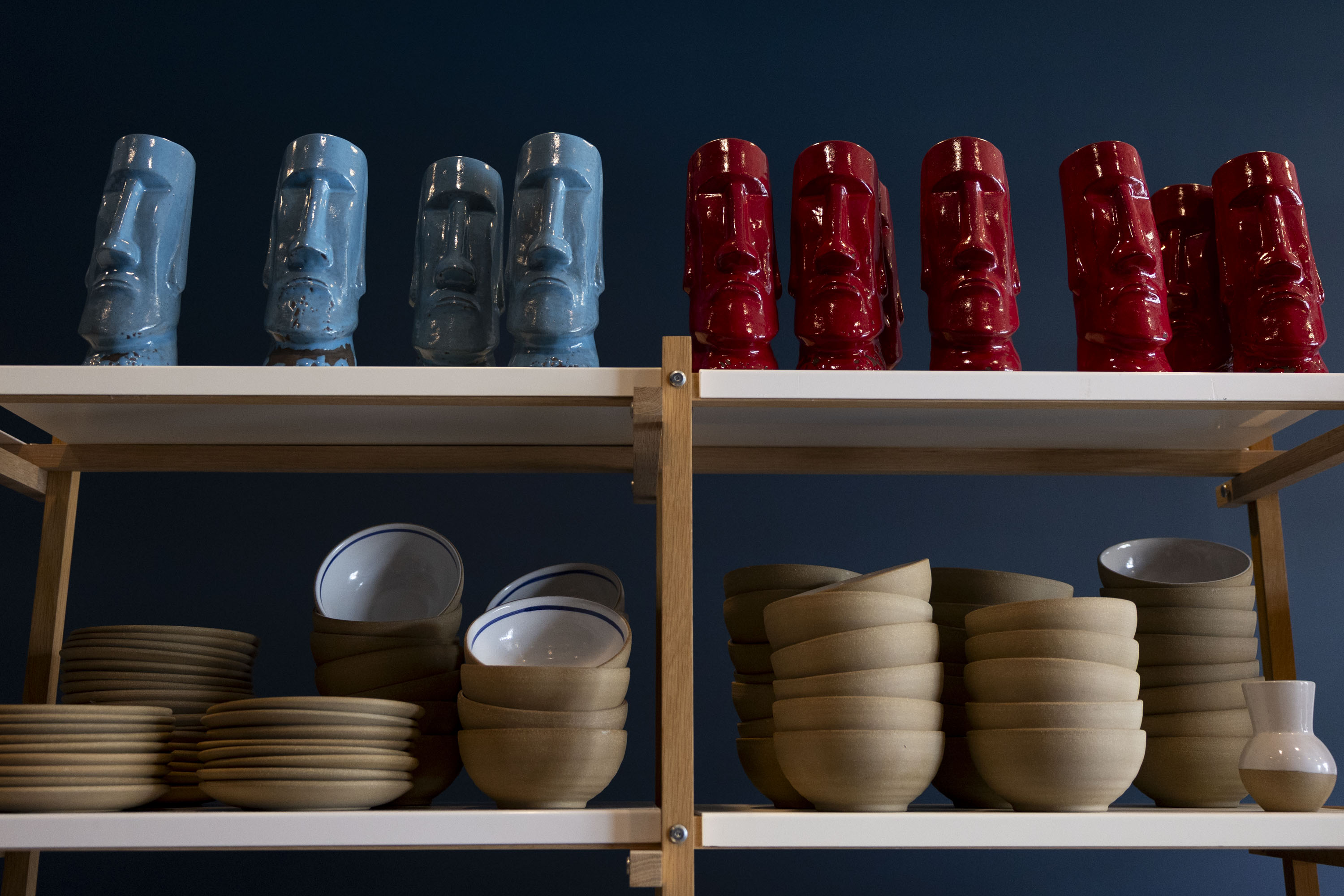
    The “tiki cups” on sale at the Philly pop-up. Tyger Williams / Staff Photographer

    Maryam Mahdavi, 64, and a collector of pottery, was eager to talk shop with Pandolfi, but she also recognized she had a lot to do. She had dragged her husband to the pop-up, and now he was enchanted by the shiny green tiki cup, a nearly foot-high mug with a face like an Easter Island statue. (“I don’t want that,” Mahdavi said, before magnanimously agreeing to buy it for her husband.)

    She stared down the studio’s central table, piled high with bread plates and pasta bowls and ramekins and square-sided salad plates originally designed for chef April Bloomfield’s Tosca Cafe in San Francisco. She had no more time for small talk.

    “Now,” she said, “I gotta focus.”

  • She put in an offer on a ‘granny special’ in South Philly before her partner set foot inside | How I Bought This House

    She put in an offer on a ‘granny special’ in South Philly before her partner set foot inside | How I Bought This House

    The buyer: Joanna Jaeger, 32, general manager at Bart’s Bagels.

    The house: A 894-square-foot rowhouse with two bedrooms and 1½ baths built in 1920 in Lower Moyamensing.

    The price: Listed for $236,900; purchased for $233,000.

    The agent: Martha Lutz, OCF Realty.

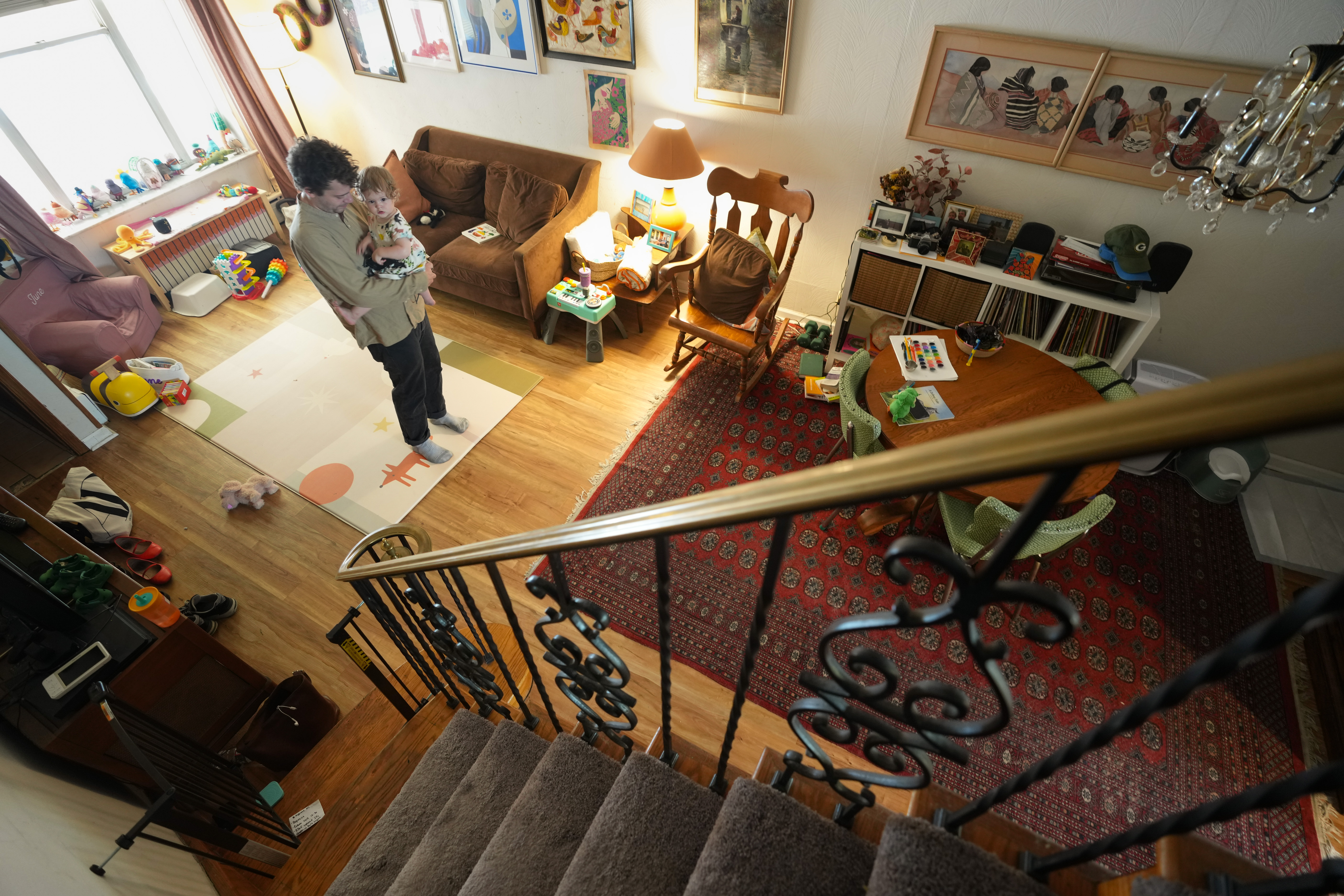
    Adrian Schraufnagel and June on the first floor. Jessica Griffin / Staff Photographer

    The ask: Joanna Jaeger and her boyfriend, Adrian Schraufnagel, were tired of their one-bedroom in West Philly and fed up with renting in general. When their landlord announced a $200 rent increase in 2022, they notified him they would be moving out in 90 days.

    The clock was ticking to find a new home.

    They wanted a move-in ready place that wouldn’t immediately require expensive repairs. And after renting in West Philly for six years, they were eager to move across the river, to be closer to restaurants and more public transit. They also wanted to live within walking distance of a dog park.

    With a ceiling of $250,000, they hoped to find something closer to $230,000.

    Joanna Jaeger’s mother paid for the floors to be redone. Jessica Griffin / Staff Photographer

    The search: Jaeger enlisted a friend and coworker to be her real estate agent. They visited a series of newly renovated houses because Jaeger thought they would require the fewest repairs after move-in. She put in an offer on one but didn’t get it. She was becoming increasingly panicked.

    “I was like, ‘Oh my god, we’re running out of time!’” Jaeger recalled.

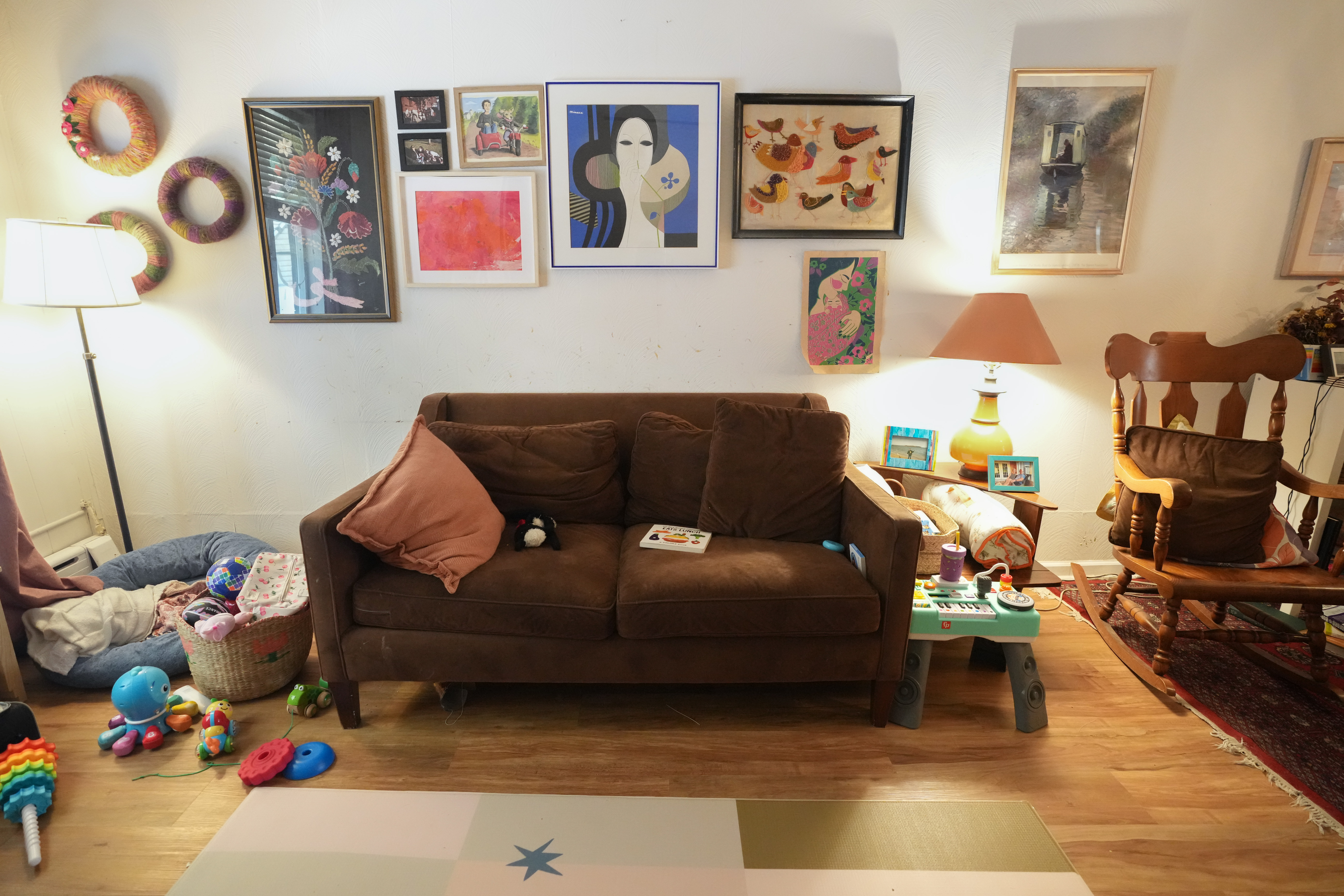
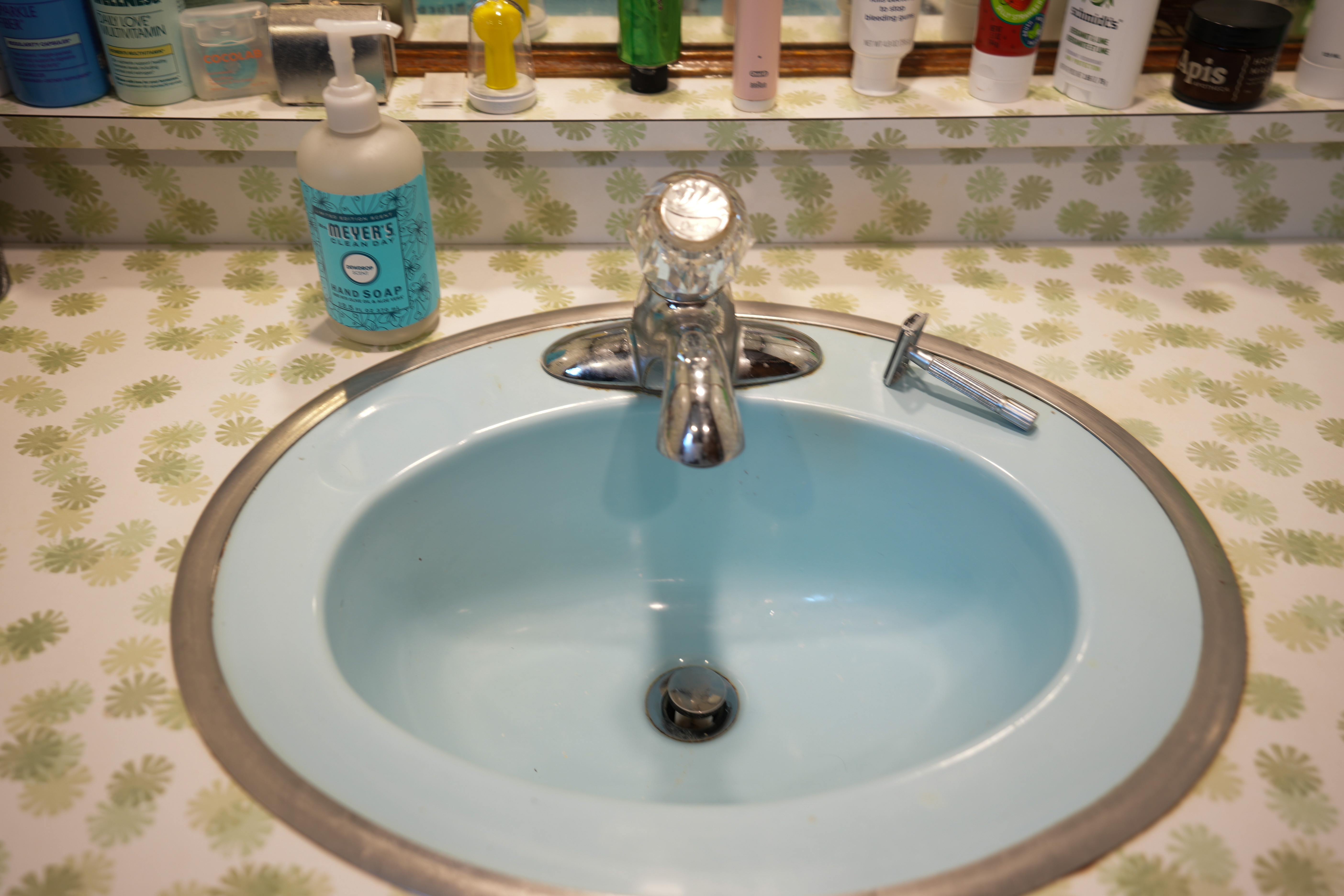
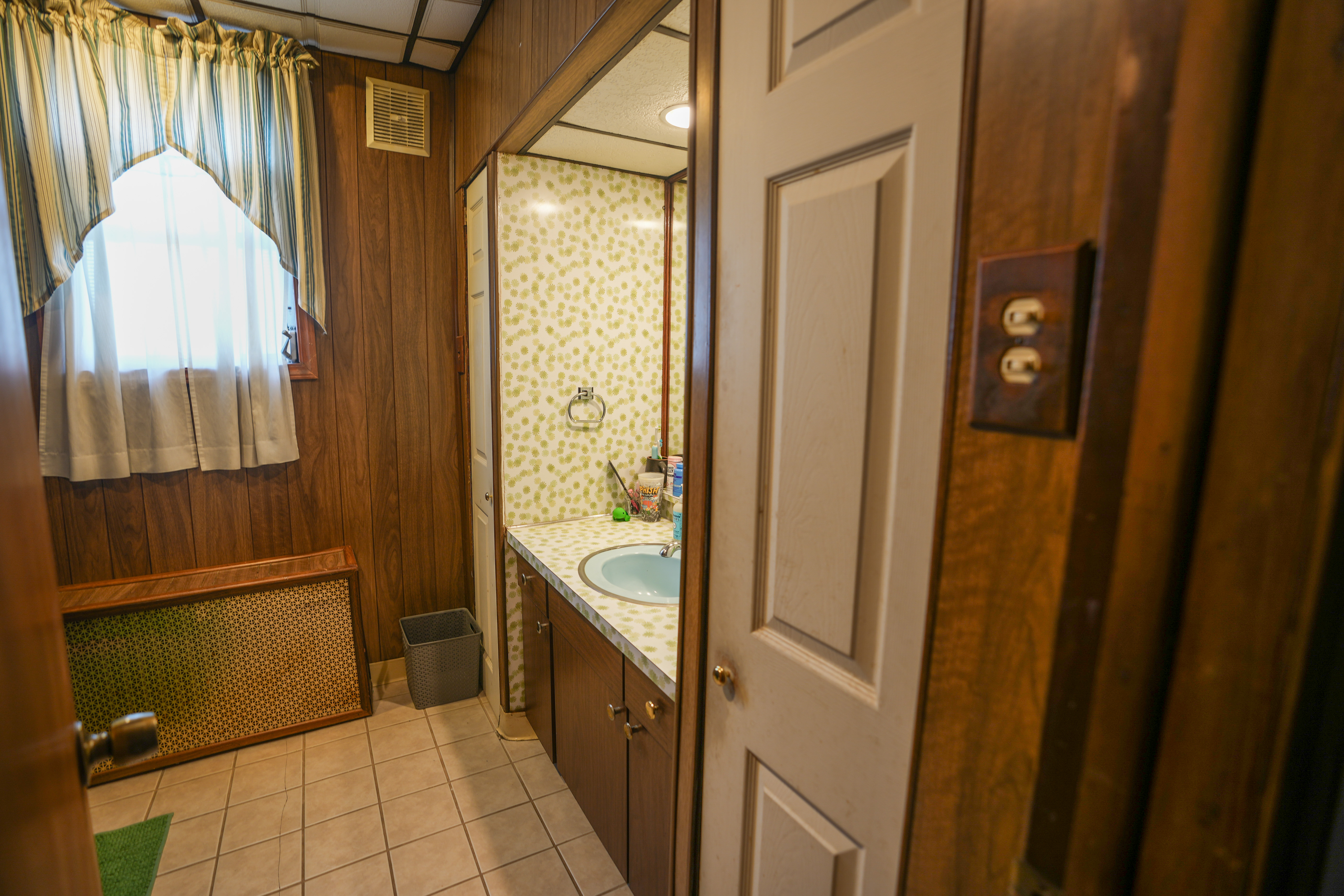
    Then, in April she saw an intriguing house on Zillow. It was a “granny special,” she said, featuring wall-to-wall purple shag carpeting and an upstairs bathroom paneled in dark wood with a ’70s floral motif around the sink. When she visited, there was a framed portrait of Frank Sinatra on the basement wall.

    Jaeger immediately loved the ’70s floral motif around the bathroom sink and the pale blue sink and tub. Jessica Griffin / Staff Photographer

    “It felt so cozy,” Jaeger said. “You could tell whoever lived there took a lot of pride in the house.”

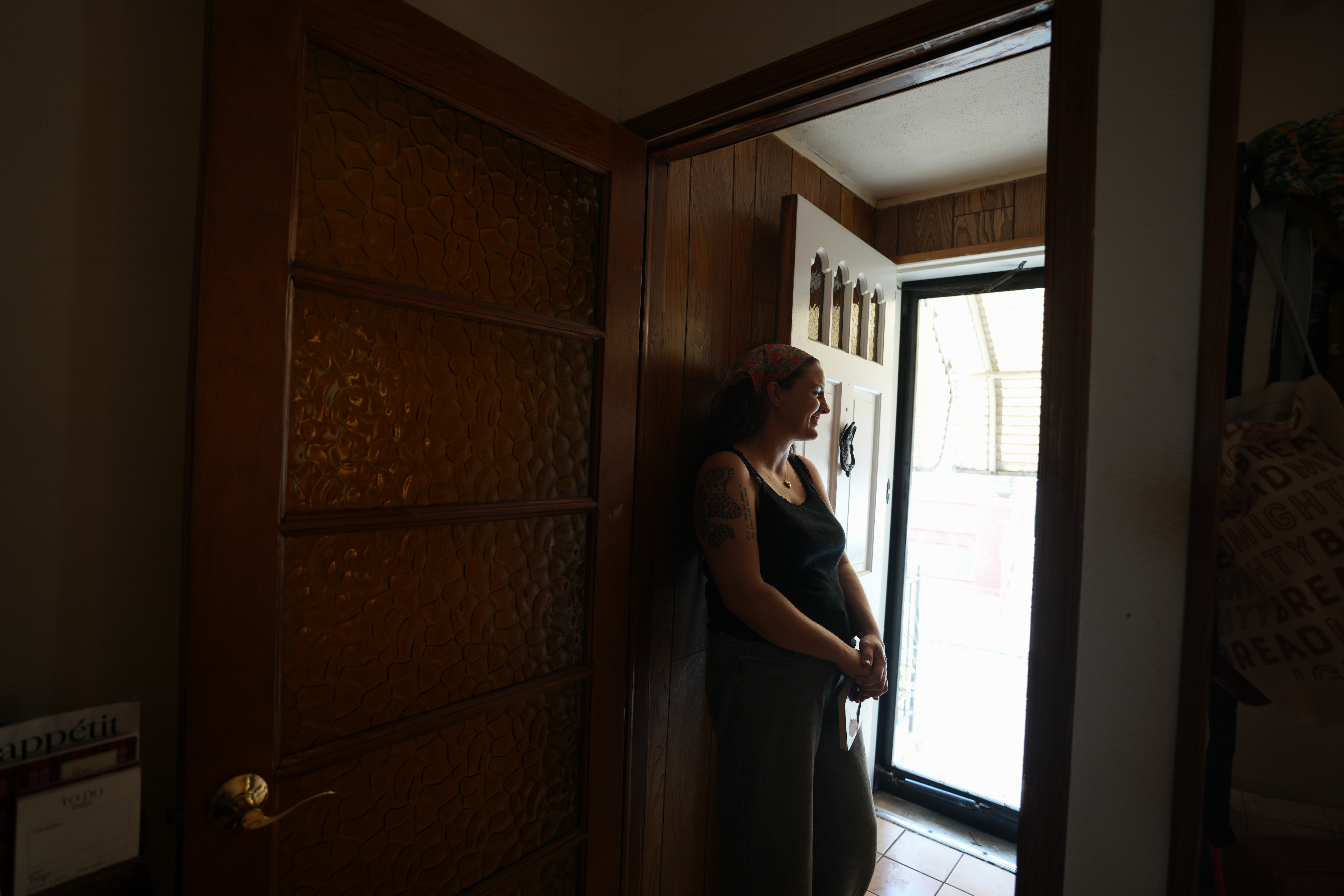
    Though she had been looking at recently flipped houses, she especially liked the old-school South Philly features, including the awning out front and the amber-colored textured glass in the vestibule.

    The house was walking distance to Marconi Plaza and close to the bus and the Broad Street Line.

    Joanna Jaeger immediately loved the textured amber glass in the vestibule of the South Philly house. Jessica Griffin / Staff Photographer

    The deal: Jaeger told Schraufnagel that because of their tight deadline, he wouldn’t get to see the house in person before she put in an offer. He trusted her.

    “He usually follows the vision that I propose,” she said.

    She put in an offer for $233,000, an amount slightly under asking that her agent still deemed “respectful.” The sellers accepted the next day.

    Whoever lived there took a lot of pride in the house, Joanna Jaeger thought when she visited the home. Jessica Griffin / Staff Photographer

    An inspection found the house in good condition. The main issues were an electrical system with cloth insulation — a feature in many older homes that would make an electrical panel upgrade more expensive — and basement tiles likely made from asbestos. They were already painted over by the previous owners.

    “We’ve never tested it because we don’t really want to know,” Jaeger said.

    Adrian Schraufnagel and Joanna Jaeger ripped up the purple shag carpeting on the floors themselves. Jessica Griffin / Staff Photographer

    The money: A friend advised Jaeger not to buy a house with a boyfriend, and Schraufnagel’s credit score would have negatively impacted their interest rate.

    So Jaeger decided to buy the house herself. She qualified for a first-time homebuyer loan for $11,650 through Pennsylvania Housing Finance Agency and was able to negotiate a $2,500 seller assist after the inspection. The closing costs on the house were $13,364.

    Though she had saved up $15,000 to put toward the house, she ended up withdrawing only $9,214 from her savings for a $10,000 down payment.

    Schraufnagel contributes to the monthly payments, though the deed is in Jaeger’s name. With a 5.625% interest rate, the couple’s monthly payments are $1,274, plus $121 per month for mortgage insurance.

    Joanna Jaeger said buying her South Philly home made her feel grounded enough to have a child. Jessica Griffin / Staff Photographer

    The move: Jaeger closed on the home in early June 2022, and she and Schraufnagel moved in the day before their West Philly lease ended.

    They rented a U-Haul for large items and packed smaller ones into Jaeger’s Prius. A new neighbor saw them unloading boxes and offered to help, a sign of the close-knit community they were joining.

    “They are still very fabulous neighbors,” Jaeger said.

    When Jaeger’s parents visited for the first time, her dad suggested replacing the dated bathroom. “This bathroom is why we bought the house!” she told him.

    The bathroom is paneled in dark wood, one of the old-school features Joanna Jaeger loved about the house. Jessica Griffin / Staff Photographer

    Life after close: Jaeger and Schraufnagel ripped up the purple carpets from the first floor, the bedrooms, and the hallways themselves, and Jaeger’s mother contributed $10,000 to install new vinyl plank floors. But the work wasn’t done by the time they moved in, so they had to camp out in a corner of the living room for two days.

    The house has already been a site of major life changes. Jaeger and Schraufnagel married in 2023 and welcomed their first child, June, last year.

    A set of June’s paints. Jessica Griffin / Staff Photographer

    “If we hadn’t bought our house, we probably would have decided not to have a kid,” Jaeger said. “Moving into our house gave me a big sense of grounded-ness.”

    The house still has its quirks: The bedrooms are connected by a closet, so if both closets are open, there’s a passageway between them. And sometimes Jaeger and Schraufnagel will come across something like mismatched molding that was clearly done by an amateur in a DIY spirit.

    Even so, they don’t plan to move any time soon.

    “We’re gonna own this house forever,” Jaeger said, “and probably live in this house forever.”

    Did you recently buy a home in the Philadelphia area or South Jersey? Share the story of how you did it. Email Inquirer real estate reporters at properties@inquirer.com.

  • How to have a Perfect Philly Day, according to former Eagles linebacker Connor Barwin

    How to have a Perfect Philly Day, according to former Eagles linebacker Connor Barwin

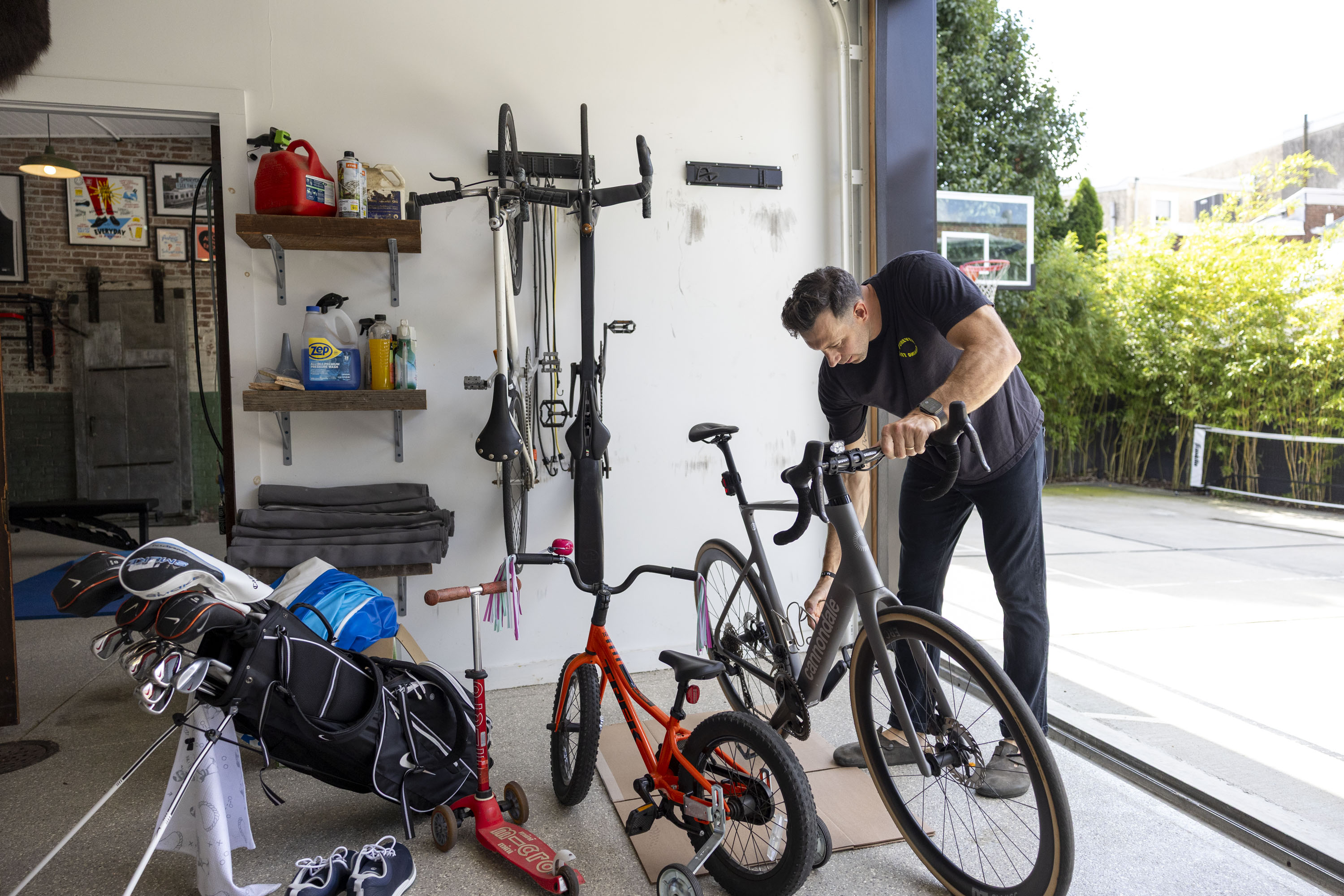
    Connor Barwin has a tattoo of the Detroit skyline sketched on his right arm, but in nearly every other way, he’s a Philly diehard. (Some fans have wondered online whether it’s actually the Philadelphia skyline — it’s not.)

    The former linebacker moved here in 2013 to play for the Eagles and “fell in love with Philly pretty quickly,” he said.

    During his first season, Barwin, 39, launched the Make the World Better Foundation to fund revitalizations of city parks and playgrounds. He lived in Center City and rode SEPTA to practice.

    Even when he left to play for the Rams in Los Angeles in 2017 and the Giants in New York in 2018, he maintained his civic devotion, reminding Pennsylvanians from afar to register to vote. In 2018, he moved back for good, settling in Fishtown with his wife, his now 8-year-old son and his 5-year-old daughter. He reads The Inquirer in print every Sunday.

    His foundation hosts a yearly benefit concert and has transformed the Vare Recreation Center in Grays Ferry and Waterloo Playground in Kensington, among others.

    Barwin now works for the Eagles as head of football development and strategy. On his perfect day, he orders the same breakfast he’s eaten roughly 199 times before, (quietly) roots for his kids from the sideline of their soccer games, and spends several happy hours at the Linc.

    A perfect day for Connor Barwin involves biking to breakfast with his wife and two children. Tyger Williams / Staff Photographer

    7 a.m.

    I’m sleeping in, and waking up around 7 — on my own and not with my kids jumping in my bed. I have quiet time with my wife. I still get the physical paper delivered on Sundays, and if I can get 30 minutes to read it before my kids wake up, that’s the start of a perfect day.

    8 a.m.

    All of us get on our bikes and ride over to Cafe La Maude. I don’t know how I discovered it, but I’ve been going there for about 12 years. I get the open-faced burrito. I’ve probably been there 200 times, and I’ve ordered the open-faced burrito 199 times. I hear they have a lot of other great things on their menu, but I don’t waver.

    9:30 a.m.

    We bike home. It’s about a mile, and when you’re with two young kids, you have to take your time. Cycling is the perfect thing because it gets me outside, it gets me with my family, and we’re all getting some exercise.

    11 a.m.

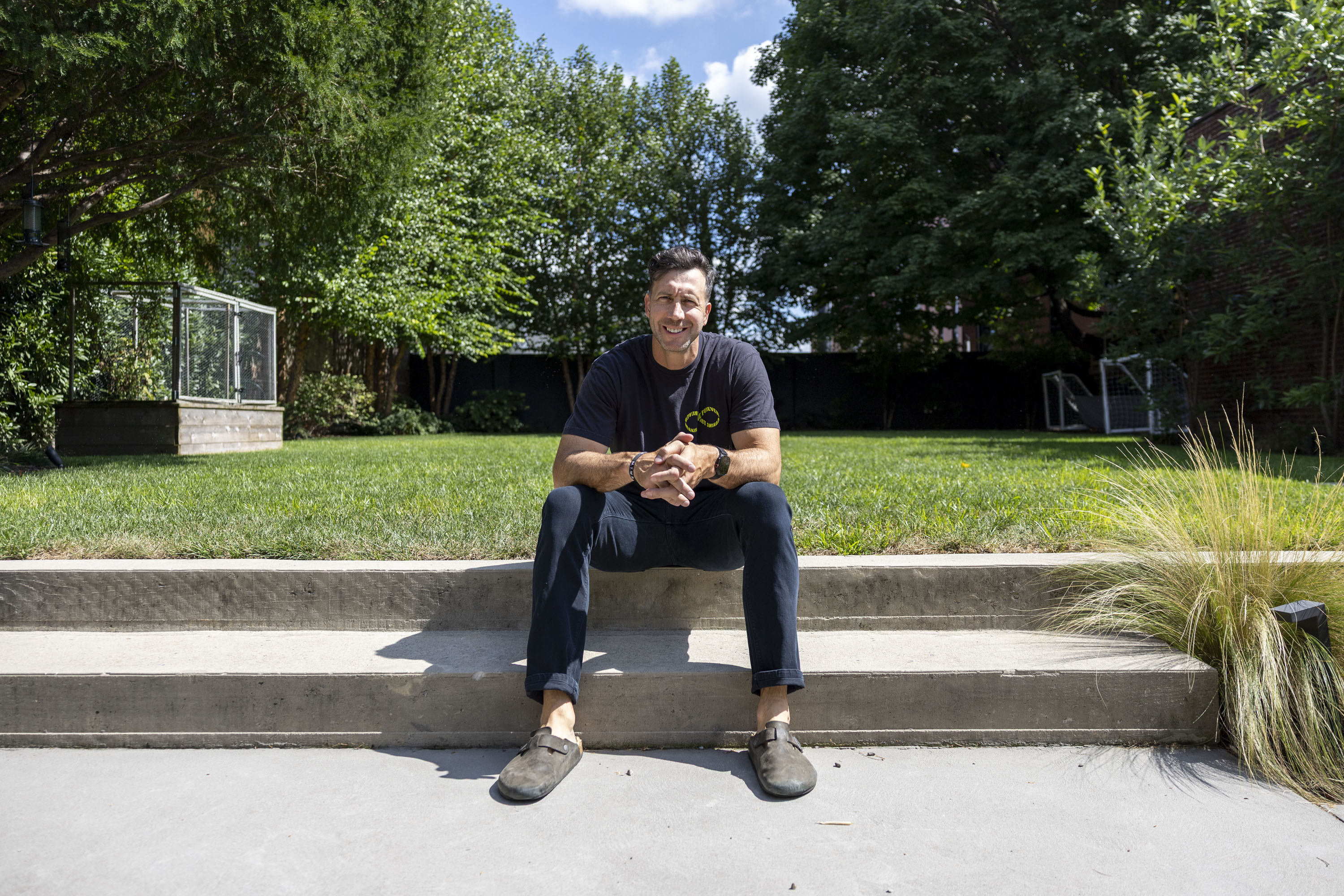
    We go watch my kids play soccer in a local club. You just can’t forget the chairs because there’s usually not seating. On my perfect day, I’m sitting and watching both of them from the same vantage point.

    I try to let them have that space and for their coach to do the coaching, and I just try to observe. There’s three things that are most important: to have fun, be a good teammate, and play hard. And if kids are doing that, they’re getting what they should be getting out of sports.

    Connor Barwin sits for a portrait in his backyard, where his kids like to play soccer. Tyger Williams / Staff Photographer

    12:30 p.m.

    Around the block from where we live is a great little corner store, D&C Deli. We’ll walk down and get hoagies from there. I get the Italian, my wife gets the turkey. My kids get turkey and cheese or tuna. It’s one of the great parts about living in the city.

    1 p.m.

    I drop off the family. I get dressed and get whatever I need. Then I’m heading down to the Eagles stadium to be there three-plus hours before the 4:25 game.

    1:30 p.m.

    I run the stadium stairs, taking in the stadium before it fills up. It’s a tradition that I like to do since I stopped playing.

    I love seeing and talking to the people who work in the stadium. I have some fun conversations with them about what they think about the game. They play a big role in the game day experience, so I enjoy that. And then I have my responsibilities before a game.

    4:25 p.m.

    I’m locked into my role. There’s a focus and intensity to it. I often get asked, do I miss not being a player anymore? I would say I don’t really miss it because I enjoy still being a part of it, and the intensity and competition that comes with it.

    7:30 p.m.

    The Eagles win. After the game, I hang out with my family and other families in the stadium for an hour or so to let traffic die down. Maybe on a perfect day it’s not a close game, so people leave early and there’s less traffic.

    8:30 p.m.

    When I played, I always got Santucci’s pizza after home games. Now I go back and forth between Santucci’s and Pizzeria Beddia. If I’m ordering Santucci’s, it’s a mushroom pizza. If I’m at Beddia, we’re usually getting the corn pie. My wife’s favorite is the pizza with greens. And we get the plain as well.

    10 p.m.

    We put the kids to bed, and then my wife and I have a Lambrusco.


    The conversation has been edited for clarity and brevity.

  • They used to date. Now they’re best friends raising her child together.

    They used to date. Now they’re best friends raising her child together.

    Elysia Baskins and Christopher Johnson did not intend to raise a child together.

    They instantly got along when they met on Bumble in 2022; they both loved anime and eating Japanese food. But after their first date, Baskins didn’t feel a romantic chemistry, so they became best friends instead.

    In 2025, Baskins got pregnant with her partner and asked Johnson to be the godfather.

    She and her partner planned to live together with the baby. They signed a new lease on her West Philadelphia apartment and he packed a U-Haul. But he died by suicide on the day he was set to move in.

    Baskins was left reeling, four months pregnant with barely enough money to cover rent.

    Johnson, who lived in Fishtown, kept showing up. He drove her to prenatal appointments and watched episodes of Better Call Saul with her. Sometimes he stayed the night in her guest room when she didn’t want to face it alone.

    In January, he was the one who drove her to the Hospital of the University of Pennsylvania to give birth. In the months that followed, he visited every week. He folded laundry; he built the crib. He told Baskins the baby could call him “DD,” short for “Deity-ous Dad,” a joking play on “godfather.” He calls her “Baba.”

    The baby’s father was Black, and to Johnson, who is also Black, it felt especially important that the baby grow up with another Black parent.

    “I never thought about it in a casual way, or a lackadaisical way,” Johnson, 31, said. “I fully planned to be the next parent, the third.”

    Christopher Johnson with Elysia Baskins’ daughter, Thursday, Sept. 3, 2026 in Philadelphia.Elizabeth Robertson / Staff Photographer

    In July, Baskins, 33, and her daughter, who is 8 months, moved in to Johnson’s home in Fishtown.

    Baskins now works from that home, as a text counselor for the 988 Suicide & Crisis Lifeline. Johnson works as an inventory coordinator at a Kensington hardware store and as a home health aide for his mother. Though they are not romantically involved, neither are dating other people right now. They are raising her daughter together.

    “With him not being her biological father, I wouldn’t necessarily feel like I need to consult him on all the parenting decisions,” Baskins said. “But I would want to anyway. So it almost doesn’t matter.”

    The following, as told to Zoe Greenberg in separate interviews, has been edited for length and clarity and combined.

    On telling Johnson she was pregnant

    Baskins: I was very nervous because things weren’t ideal, but I had been really wanting a baby for a long time. I knew he would potentially be worried about me. It was planned, but maybe not entirely well-thought-out.

    Johnson: I was a bit apprehensive. I cannot make that choice for anyone else, obviously. But I thought circumstantially, they weren’t ready. In terms of mental health, finances. My apprehension was known before the pregnancy — there are no real secrets between us.

    On asking Johnson to be the godfather

    Baskins: As soon as I knew I was pregnant, I wanted him to be her godfather. I knew I was going to need to rely on a community of people to raise this child. It wasn’t going to just be me and my partner. If anything happened to both of us, he would literally step up and take care of her.

    Johnson: They asked me together. I said yes, I’d love to. I knew I was going to be present.

    On deciding to move in together

    Baskins: It wasn’t something I jumped on. I really thought it over for weeks, maybe even months. I asked everyone in my support system, “Do you think I should do this?” I didn’t want to put a big strain on our friendship.

    Johnson: We talked about it when she was pregnant. At least I threw it out there as a thought. But it was just too hard of a time to try to make that kind of decision.

    On committing to each other

    Baskins: I said, “If we move in together, I’m going to be here for at least five years probably before I can be fully independent. … I worry about when that time comes. She’s gonna be attached to you like you’re her parent.”

    Johnson: I tried to be properly responsible and consider all the factors. For myself, my answer was: at worst, everything will be OK.

    On sharing the parenting

    Baskins: He does a little bit of everything. He’s fed her. He puts her to bed. He changes her. He takes her out. He gives her baths. I just do that stuff more.

    I think of myself as the primary parent, but I also refer to him as a co-parent. I don’t have the exact same expectations as I might have had of my partner, but somewhere in the middle — not just a regular friendship either.

    Johnson: I think of myself both as godfather and as Dad. I’m proud to be the person that’s here, day in and day out, in this paternal role. But in no way will I not also honor her true father. Her father was a great dude. We’ll be as close as parent and child can be, but we’ll have to navigate that as she gets older.

    On dating other people

    Baskins: I’m not really interested in dating, but a time could come when that might be different.

    Johnson: I’d rather have stability and everything settled for a bit before I go back into dating. We’re two grown adults who aren’t partners, living with each other and co-parenting. If one of us wants to date and have someone that we’re dating over, there’s a lot to explain ahead of time.

    On what the future might look like

    Baskins: I would love to still be living in really close quarters. We have talked about what if we want to get a house around the same time? Could we get a house together?

    Johnson: I think we’ll probably still be living together. Or living in such close vicinity it’s practically like we’re living together.


    This story is part of a series about life partners across the Philadelphia area.

    If you want to share your story about who you’re navigating life with, romantically or otherwise, write to lifepartners@inquirer.com. We won’t publish anything without speaking to you first.


  • 2 women found dead in Ogontz neighborhood in an apparent murder-suicide, police say

    2 women found dead in Ogontz neighborhood in an apparent murder-suicide, police say

    Police said two women were found dead inside a home on the 1600 block of Conlyn Street in the Ogontz neighborhood on Sunday afternoon in what is being investigated as a murder-suicide.

    Police did not release the identities of the women.

    Officers responded to the scene around 1:50 p.m., after a gunshot was heard from inside the home, police said. A “barricade” was declared and ended about an hour later, police said.

    Two adult women were found inside the home and pronounced dead at the scene by medics.

    Police said preliminary information indicated that it was a murder-suicide. The relationship between the women has not been established and the motive was unknown. An investigation is ongoing, police said.

  • New speed cameras in West and North Philadelphia will start warning drivers on Monday

    New speed cameras in West and North Philadelphia will start warning drivers on Monday

    Drivers who are found speeding on portions of Route 13 monitored by new automated cameras will begin receiving warnings on Monday morning.

    The 60-day warning period is part of the rollout of new traffic safety measures that city officials hope will reduce traffic deaths. The efforts are part of Vision Zero, which aims to cut traffic deaths in Philadelphia to zero.

    The newly installed cameras are stationed along Route 13 in West Philadelphia and parts of North Philadelphia.

    The Route 13 corridor — identified by the city as a particularly dangerous stretch of road — spans Baltimore Avenue in West Philadelphia, Hunting Park Avenue in North Philadelphia and Roosevelt Boulevard in the Northeast before leaving the city by way of Frankford Avenue.

    A 60 day warning period for newly installed speed cameras goes into effect on August 31, 2026 on the yellow part of Route 13.City of Philadelphia

    The city pointed to earlier installments of speed cameras along Roosevelt Boulevard, which cut speeding by 95% and sharply reduced crashes and fatalities since being installed in 2020, according to state data. Those cameras, which started as part of a pilot program, became permanent in 2023.

    “Our goal is to continue saving lives,” said Gabe Roberts, acting executive director of the Philadelphia Parking Authority, in a statement.

    Drivers who travel more than 11 mph over the posted speed limit will eventually be ticketed, with fines starting at $100 and rising to $150 for those driving more than 30 mph over. Ticketing will begin October 30.

    For now, drivers recorded speeding will receive warnings in the mail.

    The revenue from the speed camera tickets goes towards other traffic safety improvements across Philadelphia, according to the city’s Office of Transportation and Infrastructure Systems.

    The city said there are now 80 automated cameras in total; the new ones follow those installed along Broad Street, Frankford Avenue, and Roosevelt Boulevard.

  • How to have a perfect Philly day, according to State Senator Nikil Saval

    How to have a perfect Philly day, according to State Senator Nikil Saval

    State Sen. Nikil Saval’s favorite glimpse of Philadelphia comes at dawn, on the return leg of his run across the Ben Franklin Bridge. Lately, he’s been listening to Lizabeth Cohen’s 2019 book Saving America’s Cities along the way.

    “It feels like you’re experiencing the city at a moment of total possibility,” Saval, 43, said.

    Saval was a journalist before he was a politician, writing about architecture and design for the New York Times and the New Yorker and publishing Cubed: The Secret History of the Workplace, a book about the evolution of white-collar work.

    When he first ran for state Senate in 2020, the New York Times dubbed him the “N+1 candidate,” a reference to his time as co-editor of the Brooklyn-based literary magazine. (He remains on its board).

    Now, the Democratic Socialist represents the Pennsylvania Senate’s 1st District, stretching from the Philadelphia International Airport across South Philly up to Port Richmond. He is perhaps best known for sponsoring the state’s Whole-Home Repairs program, which funds homeowners to repair and adapt their homes and served as a model for a federal pilot program that became law last month.

    He lives in the Italian Market with his wife and two young children. On his perfect Philly day, he buys fresh tortillas, strolls down Fabric Row, and plays a game at the Philadelphia Museum of Art inspired by the Surrealists.

    State Sen. Nikil Saval lives in the Italian Market with his wife and two young children. Erin Blewett / For The Inquirer

    5:30 a.m.

    I’m up slightly before my children. It’s a magic hour and I try to go for a run. My favorite route at that hour is to go up Fifth Street to the Ben Franklin Bridge, and then over the bridge to Camden and back. You get the best view of the city on the way back.

    7 a.m.

    My kids are up. We’ll make coffee and put breakfast together at home. We’re usually supplementing that with another coffee at some point. I’m a partisan supporter of Shot Tower Coffee in Queen Village. I feel like everyone gathers there — there have been times when it’s so populated that we will defect to Gleaners Cafe in the Italian Market, which is warm and friendly.

    9 a.m.

    My son has been taking golf lessons through First Tee at the Walnut Lane Golf Club, which is a public course in East Falls. I’m not a golfer, I have no interest. But he’s gotten into it. First Tee is really diverse.
    It turns out to be this nice morning ritual. He’s chipping balls with a bunch of kids, we sit at the snack bar with our younger son while he colors. We read the newspaper, and he eats a pretzel, because that’s naturally what you have for breakfast.

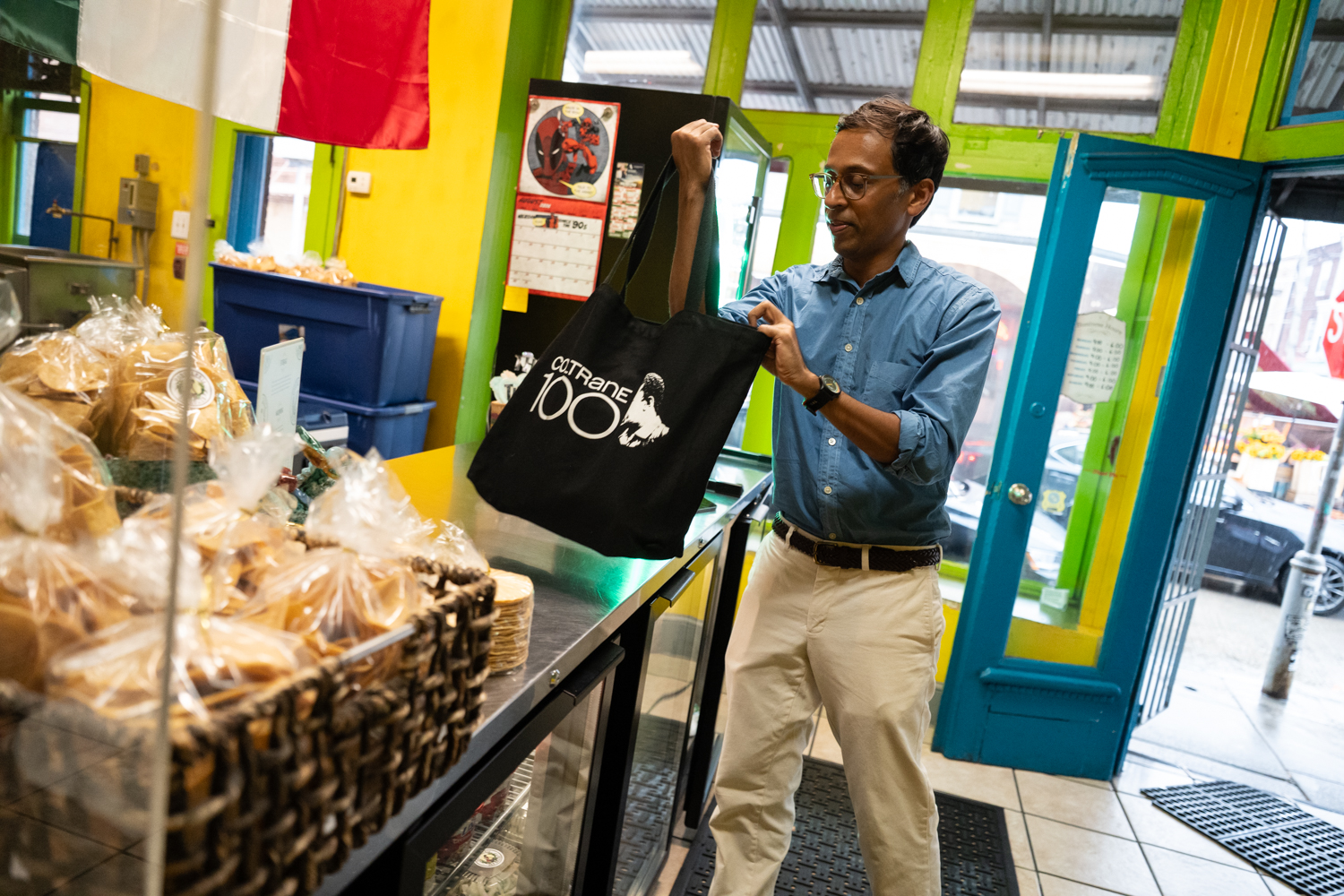
    Nikil Saval buys tortilla chips and beans at Tortilleria San Roman in the Italian Market. Erin Blewett / For The Inquirer

    11 a.m.

    Then we’ll go to Headhouse Farmers Market. We’ll get the lonsa from Aaji’s, a local brand. It’s Indian tomato relish, and it’s amazing. I give those out as Christmas gifts to my colleagues in the Senate.

    We’ll get chips and pico de gallo from Tortilleria San Roman, tortillas from Casa Mexico. We’ll get other produce from Charlie’s and pasta from Claudio Specialty Foods.

    12 p.m.

    We travel by SEPTA to the Art Museum. They have an Art Kids program, where we drop off our younger son to do an art project.

    Then we’ll spend an hour and a half with my older son in the galleries. We’ve developed this game that came out of the Surrealism exhibit. We’ll do an “exquisite corpse,” where someone draws the top third of a drawing, and then someone does the middle third, but you don’t look. Then you unfold the paper at the end and see what you come up with.

    Each of us will choose a sculpture or a painting to draw as one section.

    Nikil Saval buying produce in the Italian Market. Erin Blewett / For The Inquirer

    2 p.m.

    Next we go to South Kensington. There’s a really good vegan Puerto Rican place there, Casa Borinqueña. We also love the falafel from the Al Amana Grocery store that’s attached to the Al Aqsa mosque. They’re the best in the city.

    3 p.m.

    We take a post-lunch stroll on Frankford Avenue. We visit the Philadelphia Record Exchange, and Lot 49 Books on Girard Avenue, which is awesome.

    Then we take the 57 down to Fourth Street, Fabric Row. It’s one of these great commercial corridors because it maintains everything that’s historic, but over time it has integrated new businesses that are of a piece, like Approved Textiles. They sell really amazing products, especially this brand of Palestinian soap that we buy there. Yowie has awesome designers for goods as well as clothes. Brickbat Books has great records and an extraordinary selection of books.

    Nikil Saval leaves Tortilleria San Roman in the Italian Market with his groceries. The state senator loves to cook. Erin Blewett / For The Inquirer

    6 p.m.

    We get a babysitter and order from Tamalex, a Mexican restaurant in our neighborhood. We have a go-to order of nachos that the kids like.

    6:30 p.m.

    We love Mish Mish. It’s a good place to go with friends and get lots of things. I’m vegan, and there’s always something exciting there.

    8 p.m.

    Then we go see performing arts, anything that’s unexpected. We’re members of the Film Society, so we’ll go to a “Surprise 35!″ showing. Once a month, they’ll show a movie on 35 mm film; you don’t know what it is until it starts. We’re in a good age of repertory film in the region — the Philm Club newsletter is a good resource.

    We go to shows at Solar Myth, where they have free jazz. We also have an Opera Philadelphia subscription. That’s always novel and shocking. They’re frequently new productions. You pay $11. The audiences are totally transformed.

    10 p.m.

    If we had the energy for a post-all-of-this drink, I would go to Southwark. It feels boisterous, but private in this way where you can have a conversation. The bartenders are incredibly welcoming.

    The conversation has been edited for clarity and brevity.

  • She borrowed $11,000 from her 401(k) to transform a ‘total dump’ in South Philly | How I Bought This House

    She borrowed $11,000 from her 401(k) to transform a ‘total dump’ in South Philly | How I Bought This House

    The buyer: Tessa Maropis, 29, property manager for her family’s realty business in Texas.

    The house: An 896-square-foot rowhouse in South Philly with three bedrooms and one bath built in 1923.

    The price: Listed for $280,000; purchased for the same.

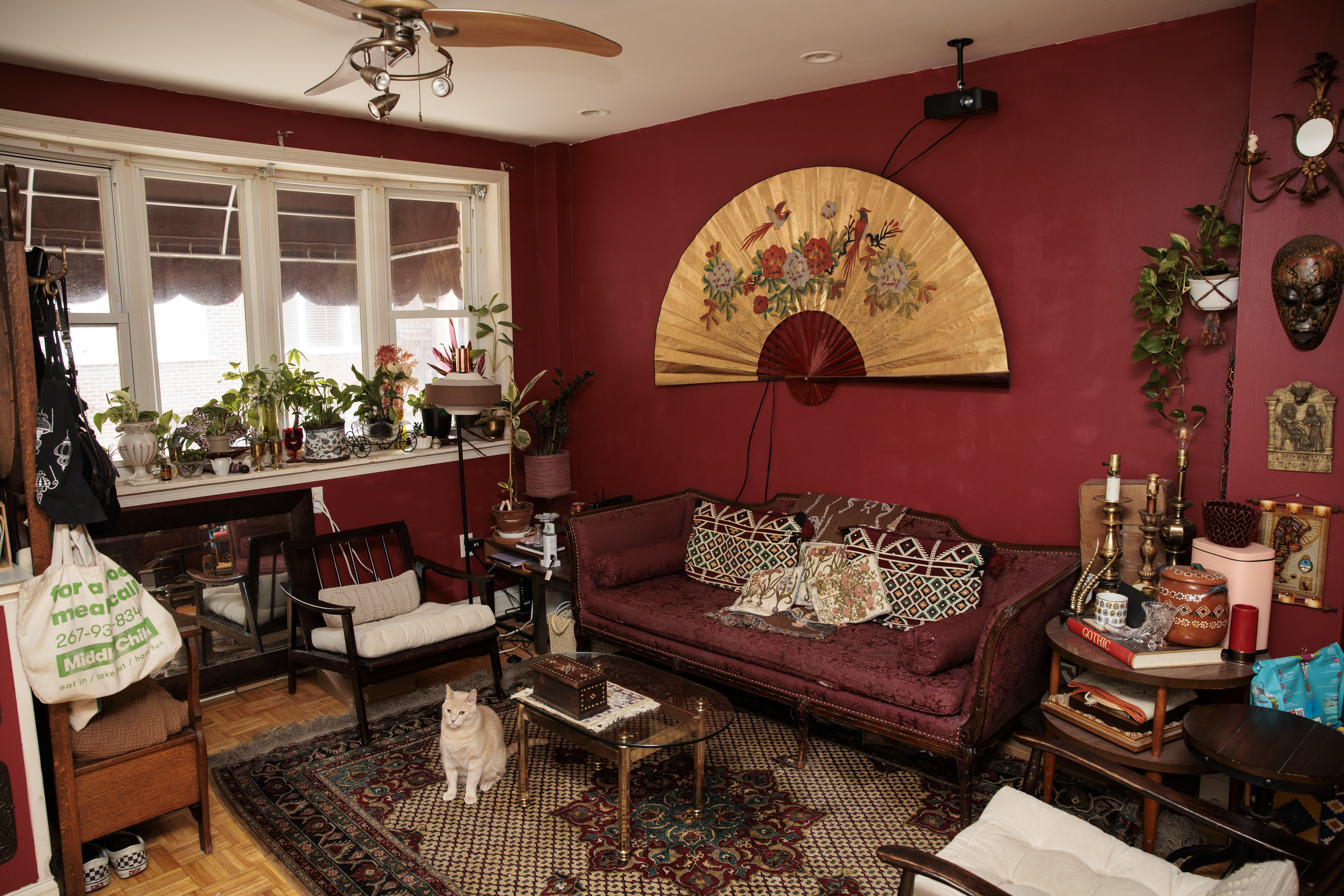
    Maropis knew her mahogany and silk couch would fit perfectly in the living room. Monica Herndon / Staff Photographer

    The agent: Salvatore Emma, Exit Elevate Realty.

    The ask: Maropis moved to Philly from Austin, Texas, in 2022 for a job, bringing her then-boyfriend with her. They signed a 15-month lease in South Philly but broke up after five months. Then they kept living together.

    When the lease finally ended, Maropis wanted to start fresh. She hoped to find a rental with a bathtub and a private outdoor space that retained its original details. She didn’t want millennial gray or a sleek Ikea remodel.

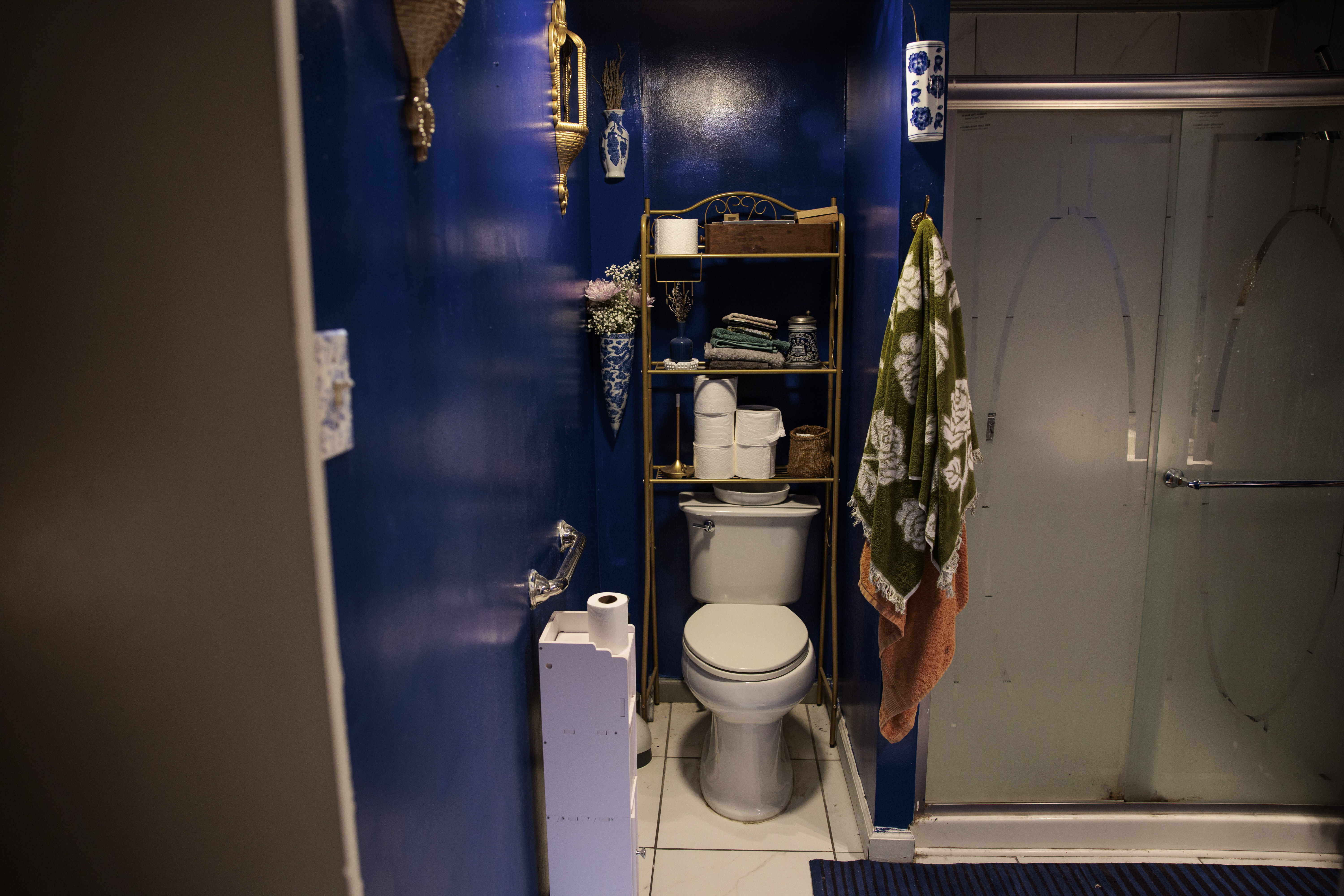
    The bathroom at Maropis’ house. Monica Herndon / Staff Photographer

    She also knew she wanted to stay in the 19147 zip code. A frightening incident had left her committed to the area: Two weeks after arriving in the city, Maropis was drugged at a bar and left near her house, she said. A good Samaritan found her and drove her safely home, unharmed.

    “As much as something terrible happened,” she said, “it showed me how surprisingly gentle and kind the community here was.”

    Maropis said she “lucked into the best community” in South Philly. Monica Herndon / Staff Photographer

    The search: Maropis had bad luck on the rental market; the apartments she liked kept getting snapped up. As her search dragged on, she found what seemed like a perfect house, but the owners were offering only a short-term lease because they planned to sell soon. Not wanting to move immediately, Maropis looked into buying the house. She prequalified for a mortgage but didn’t have enough cash to make the monthly payments affordable.

    It dawned on her that buying could be a real option if she found a less expensive place.

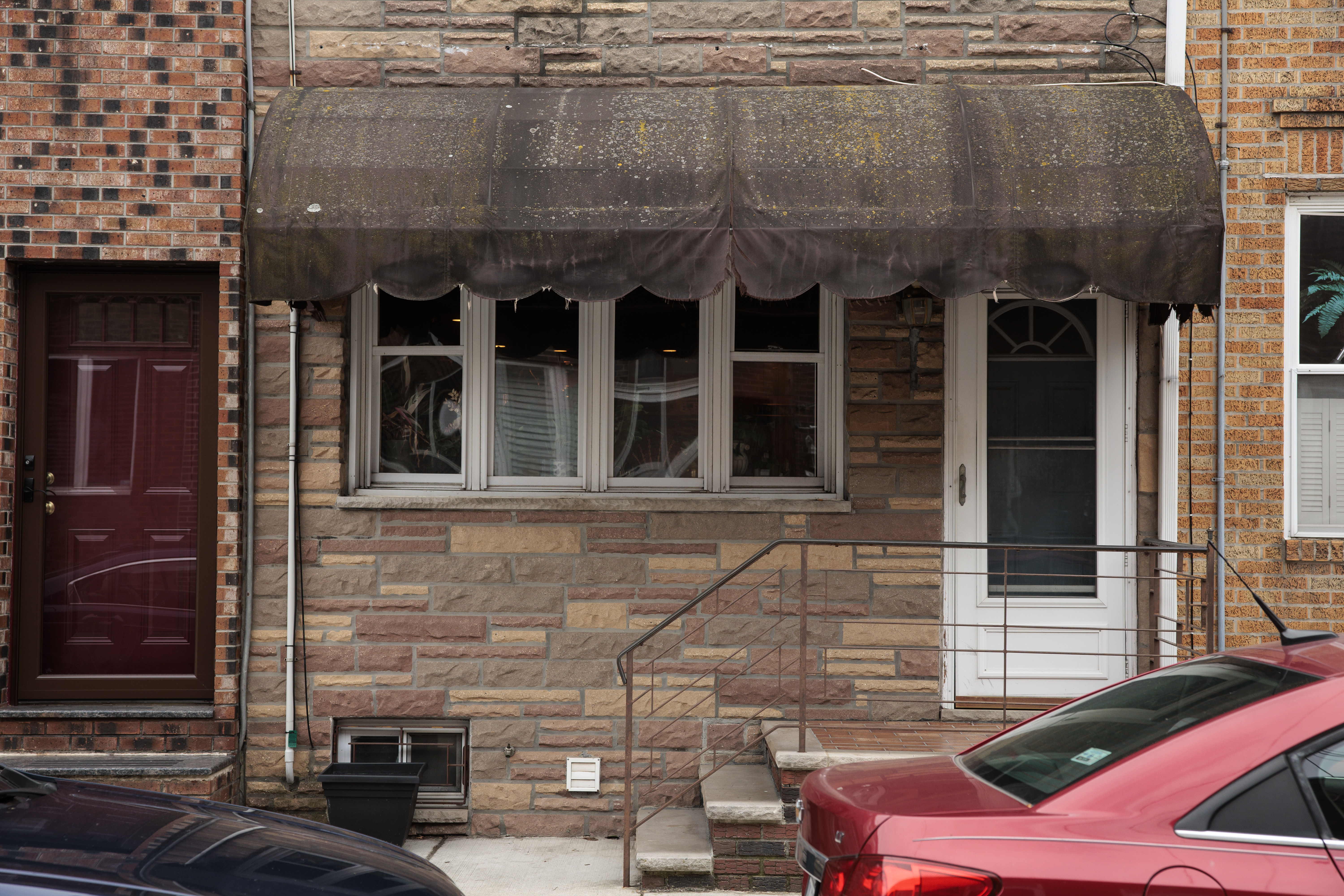
    The appeal: The first house her agent showed her had attracted little interest. It was filthy; the stairs and second floor hallway were covered in poorly maintained blue shag carpeting from the 1960s, and there were holes punched in the smoke-stained walls.

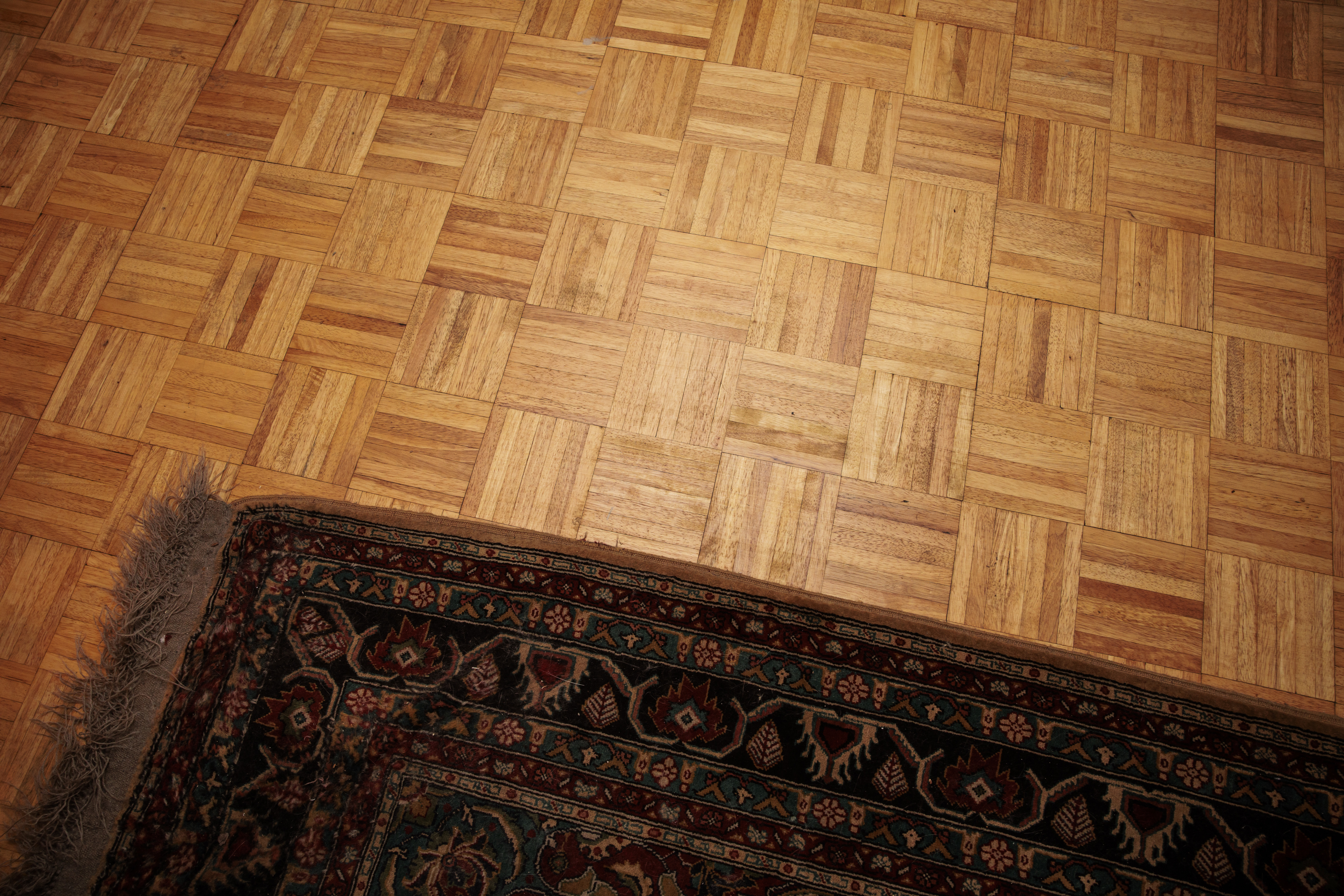
    Maropis especially loved the original bamboo parquet floors in the living room. Monica Herndon / Staff Photographer

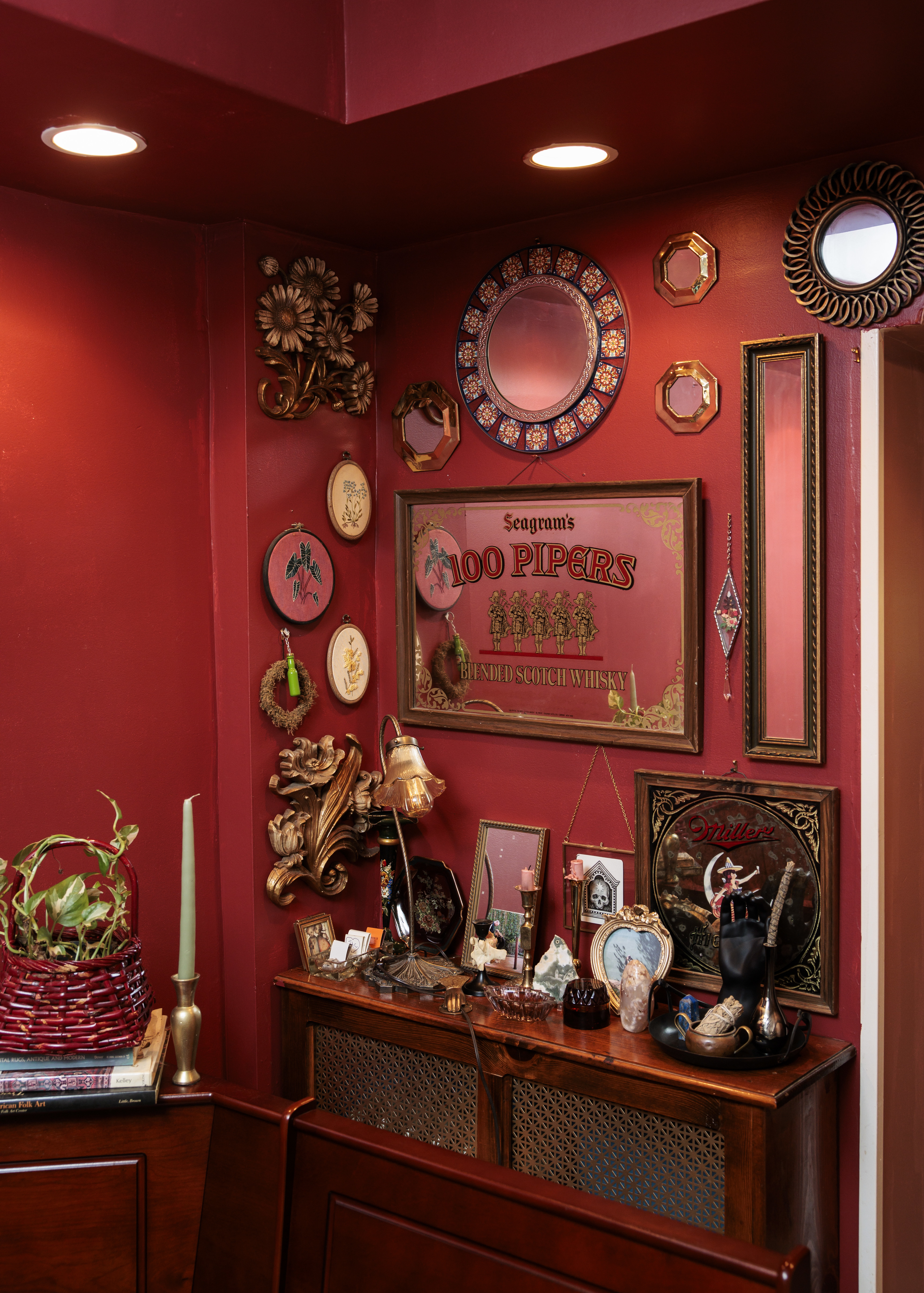
    “It was a total dump, so every person who looked at it hated it,” Maropis said. Yet right away she loved the wooden radiator covers, which looked like Victorian mantelpieces with brass grates, and the bamboo parquet floor in the living room. She could already picture a place for her mahogany and silk couch.

    She had grown up fixing houses, and she thought she could manage about 99% of the problems herself.

    “It had great bones and just needed somebody to love it a little bit,” she said. “The first time I toured it, I had a little tingle of the feeling that maybe I could actually live here.”

    The radiators have wooden covers with brass grates. Monica Herndon / Staff Photographer

    The deal: From the outset, Maropis knew she was in a good position to negotiate because the owners wanted to sell quickly. Her agent was in the same brokerage as the seller’s agent, so they were both incentivized to make it work.

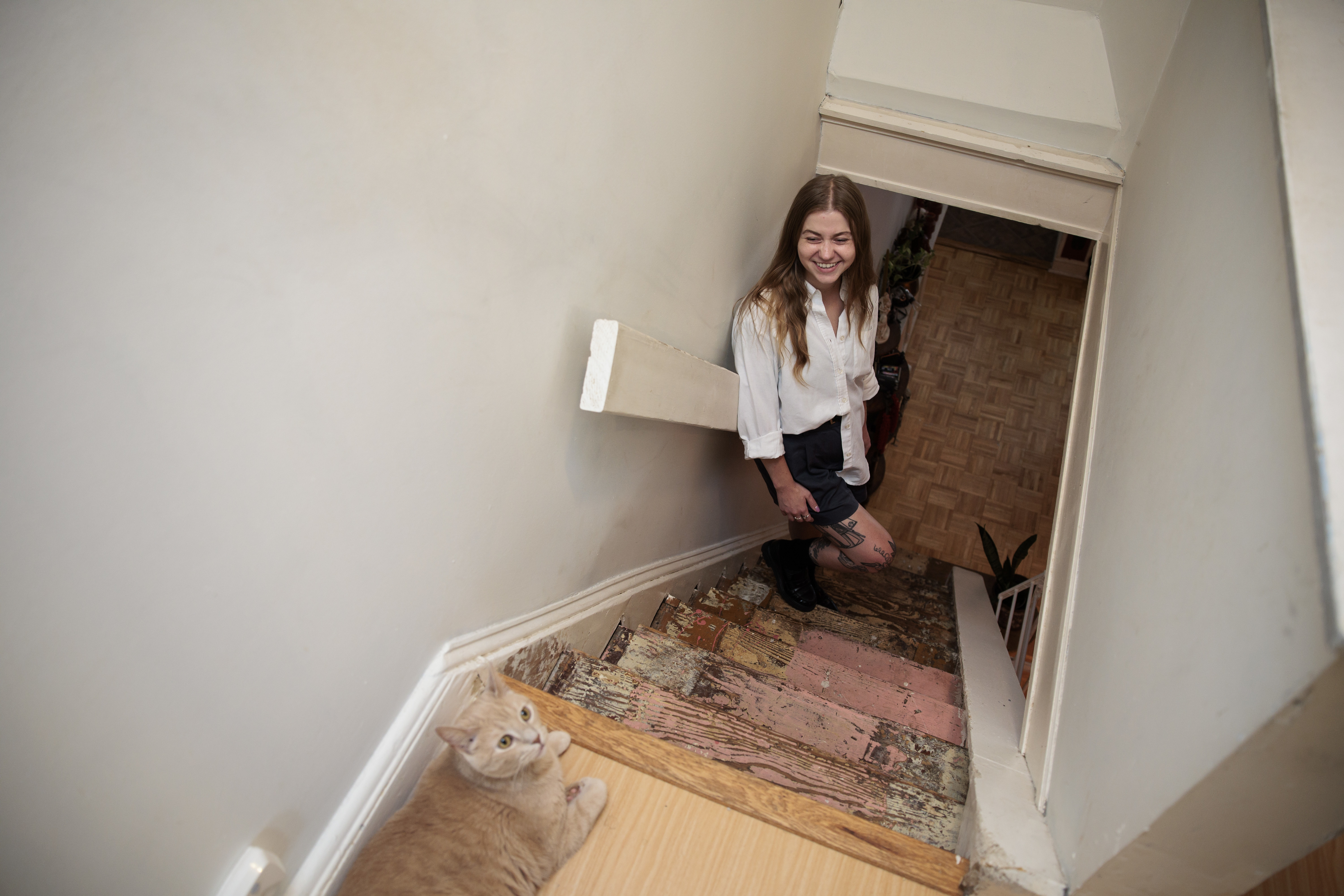
    Maropis describes the stairs as the bane of her existence. Monica Herndon / Staff Photographer

    She also had leverage because of the state of the house. The inspection revealed lead pipes in the basement, a furnace that was leaking carbon monoxide, and a foundation partly chewed through by termites.

    The house had a reverse mortgage so the sellers did not want to budge on the purchase price. But Maropis negotiated a $15,000 seller’s assist, which went partly toward her closing costs and partly toward her down payment. She visited twice more before deciding to buy.

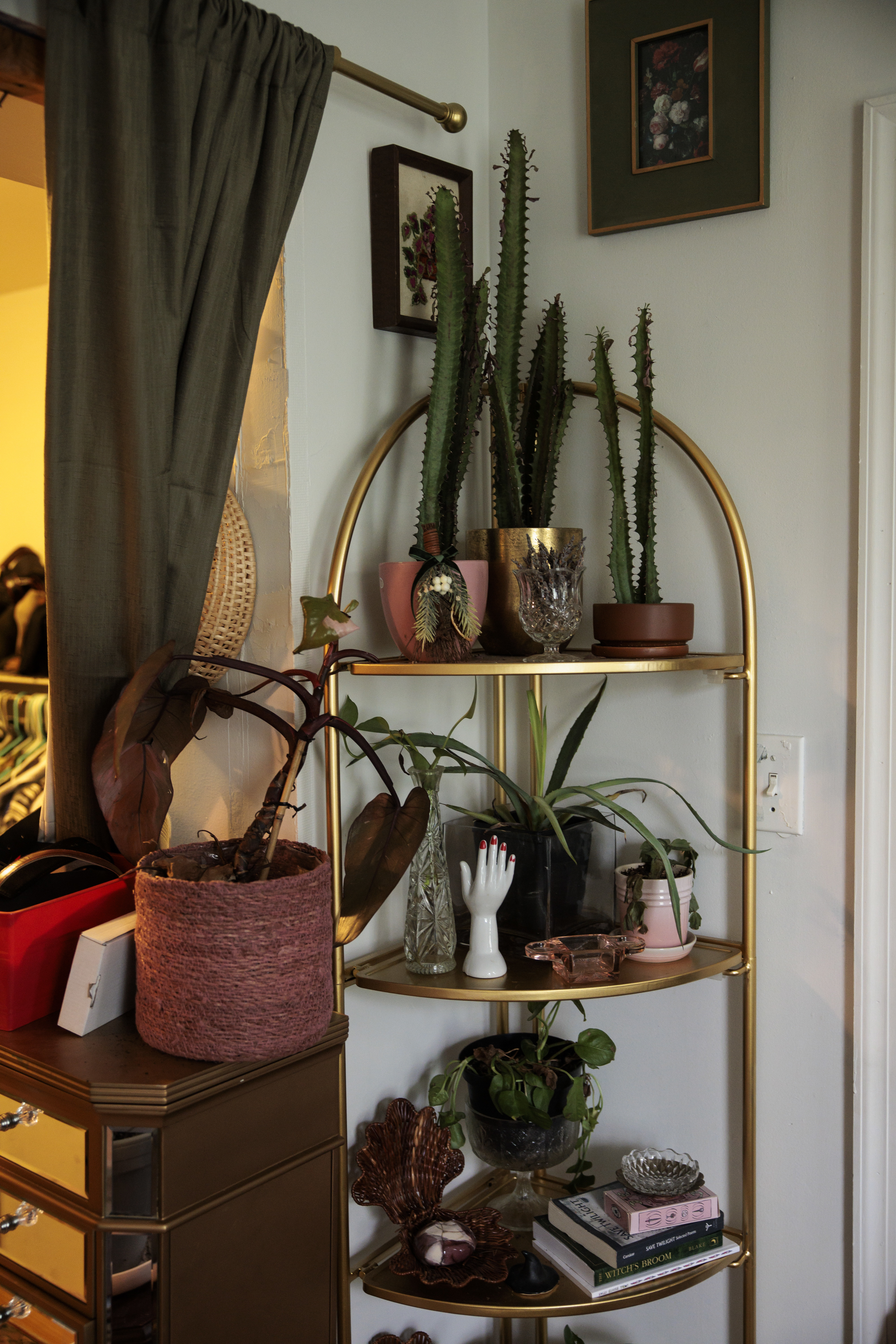
    Plants fill a corner shelf. Monica Herndon / Staff Photographer

    The money: Maropis’ decision to buy was clinched when she learned she could withdraw money from her 401(k) to put toward her down payment. For three years she had been working for the consulting company GLG, contributing 7% of her salary to her 401(k), with an equivalent company match.

    “I always considered my 401(k) Monopoly money because I don’t really think my generation will ever be able to retire,” she said. She ultimately withdrew $11,000 from her retirement account to buy the house.

    Maropis described her style as Victorian modern; she felt the house had an “old-school feel.” Monica Herndon / Staff Photographer

    She then used her end-of-year bonus to put down an additional $5,000, bringing her down payment to 6%. She secured a Federal Housing Administration (FHA) loan for the rest, with an interest rate of 6.2%. Because of the seller’s assist, she paid only $2,100 in closing costs.

    She wanted to keep her monthly costs under $2,000, but ended up paying $2,200 per month until she refinanced in winter 2024, bringing her monthly payments down to $1,800.

    The move: Maropis closed on the house at the end of March 2023, two days after her 26th birthday.

    She moved in two weeks later, with the help of Broad Street Movers and her dad, who had flown in from Texas.

    Maropis said her next project is a renovation of the tiles, countertops, and appliances in the kitchen. Monica Herndon / Staff Photographer

    Life after close: Maropis’ life as a homeowner began with hours of scrubbing. She hired a contractor to tear out the carpets and replace them with luxury vinyl plank, but he did a shoddy job, and the vinyl is already peeling.

    Three months after moving in, she was laid off, which scuttled some of her financial plans. She had aimed to pay back her 401(k) from her salary that same year but instead owed a small tax penalty.

    Still, she’s thrilled with her home and the community it brought her. Her now-husband moved in with her in 2024, and they share two cats, Daddy and Little Cat. Grumpy’s Tavern is nearby, and she says the dive bar regulars are like her neighbors.

    Her next big project will be renovating the kitchen, replacing the counters, tiles, and appliances.

    “The progress of this house,” she said, “is one of the things I absolutely love the most.”

    Did you recently buy a home in the Philadelphia area or South Jersey? Share the story of how you did it. Email Inquirer real estate reporters at properties@inquirer.com.