Bryce Harper on Thursday declined to discuss an Inquirer report about a personalized video of the Philadelphia Phillies star that FanDuel Sportsbook sent in November 2024 to a VIP bettor who had a gambling addiction.
The Inquirer obtained a copy of the 21-second video, which is marked with a blue FanDuel logo and shows Harper offering a greeting to the bettor, Terry Thompson, and Thompson’s son.
Harper is not wearing FanDuel merchandise but mentions that he was reaching out at the request of Thompson’s VIP manager — “your host Bryttanni at FanDuel” — who wanted to ensure that he had an “extra special Thanksgiving.”
There is no evidence that Harper had a partnership with FanDuel, nor that he had any indication that Thompson was suffering from an addiction.
FanDuel on Thursday released the following statement:
“FanDuel is committed to fostering a culture of responsible gaming and protecting our customers. Unlike illegal offshore sportsbooks, FanDuel employees are trained to recognize and flag signs of problem gambling and offer resources and tools, and we continue to review and strengthen our policies to ensure we have the industry’s strongest consumer protection initiatives.”
The Inquirer previously shared the video of Harper with his agent, Scott Boras, as well as the Phillies and Major League Baseball.
Each declined to comment.
The Phillies were in Cincinnati on Thursday, preparing to play the Reds. It was there that Harper declined through the team to address the video before a reporter could directly ask him about it. Later in the day, Harper announced on Instagram that he had decided to participate in the All-Star Home Run Derby, which will be held Monday at Citizens Bank Park.
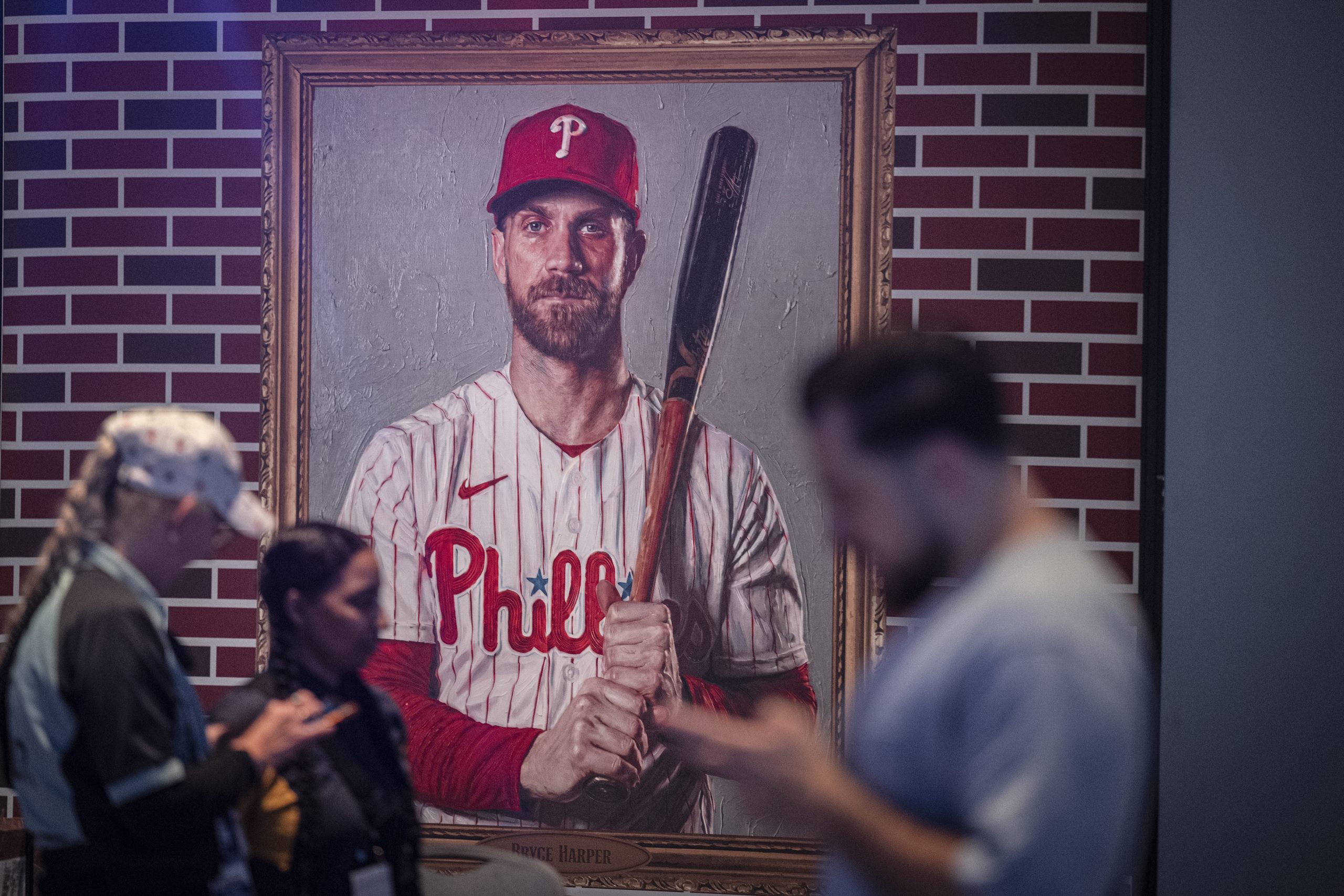
A portrait of Bryce Harper is on display at the 2026 MLB All-Star Village inside the Pennsylvania Convention Center in Philadelphia. The All-Star Game will be held next week at Citizens Bank Park. Jose F. Moreno / Staff Photographer
Independent experts said the FanDuel video does not appear to be a violation of MLB’s current collective bargaining agreement, which allows athletes to appear in advertisements or make personal appearances for casinos, racetracks, or sportsbook companies, so long as the ballplayers do not encourage betting on baseball.
The current policy, which is scheduled to expire in December, does not specifically addresses interactions with VIP programs or bettors.
Still, the episode raises ethical questions about the league’s relationship with gambling companies, whose business practices are facing increasing scrutiny from state and federal lawmakers, said Jodi Balsam, a former NFL attorney who now works as the director of the Sports Law Clinic at Brooklyn Law School.
“Is this the kind of activity that either the union or the league want their players to be associated with,” Balsam said, “if it leads to addictive and self-destructive behaviors by a fan?”
Beginning in 2020, Thompson wagered $18.5 million with FanDuel and lost $1.5 million, according to a lawsuit that the Public Health Advocacy Institute filed in March in Common Pleas Court in Philadelphia on behalf of Thompson and against FanDuel and DraftKings, to which Thompson also lost money.
Harper is not named as a defendant in the lawsuit.
Thompson’s attorneys allege that he became addicted to placing microbets — in-game wagers on something as minor as the speed of a pitch during a baseball game — until he gambled away his final $10,000 on a DraftKings parlay bet in February.
Broke and afraid of disclosing the scope of his losses to his family, Thompson contacted his therapist and indicated that he planned to take his life.
He typically announces new endorsement deals, which in the past have included companies such as Under Armour, Gatorade, and Dairy Queen.
The circumstances of how Harper came to appear in the video for Thompson, and whether he received any compensation, remain unclear.
Staff writer Lochlahn March contributed to this article.
The Inquirer will continue to report on issues related to the growth of gambling addiction — among teens and adults — across Pennsylvania. If you, or someone you know, would like to speak with a reporter, please contact David Gambacorta or William Bender at dgambacorta@inquirer.com or wbender@inquirer.com
As the 2020 NFL season kicked off, Terry Thompson picked up his phone and placed a wager with FanDuel Sportsbook on his favorite team, the Philadelphia Eagles.
It was his first time gambling through an app, and he soon started placing microbets, which are in-game wagers on something as small as whether the next play would be a pass or run.
He grew addicted to the effortless, rapid-fire action. Every game, every quarter, every play — click, click, click. Thompson would ultimately wager $18.5 million with FanDuel, earning him VIP status with the company. That meant exclusive perks, from champagne to Super Bowl tickets, which made him feel important and enticed him to continue gambling.
By late November 2024, Thompson had incurred steep losses and resorted to desperate measures to fund his addiction. Then, one afternoon, he flicked open his phone and received a FanDuel reward that momentarily distracted him from his debts: a personalized video message from Philadelphia Phillies superstar Bryce Harper.
The Inquirer obtained a copy of the 21-second video. In it, Harper addresses Thompson by name and acknowledges Thompson’s young son. Harper ends by thanking Thompson for his support.
Harper is not wearing any FanDuel merchandise, but the video is marked with the company’s logo, and Harper mentions that he was reaching out at the request of Thompson’s VIP manager, “your host Bryttanni at FanDuel,” who wanted to ensure that Thompson had an “extra special Thanksgiving.”
Professional sports leaders had long recoiled at having any association with gambling. But the U.S. Supreme Court ruled in 2018 that states could legalize sports betting, and each league now has lucrative partnerships with sportsbook companies, whose advertisements can be easily found in stadiums and arenas, and during game broadcasts.
Still, league officials preach about the importance of protecting the integrity of their games and have rules that are designed to maintain distance between professional athletes and bettors. Although Major League Baseball’s policy does not explicitly reference interactions with VIP gamblers, Harper’s personal message to a bettor — apparently arranged by an employee of a major sportsbook — is a unique test of how cozy the league will allow players to get with gambling companies.
There is no evidence that Harper has an official partnership with FanDuel, or was aware that Thompson had an addiction.
The Inquirer could find no other examples of an active athlete recording a personal message to a sportsbook VIP customer who, by definition, had to be regularly betting large sums of money.
The Inquirer shared the video with Scott Boras, Harper’s longtime agent, and asked if he or Harper would discuss how FanDuel had obtained the video.
Boras declined to comment.
The Inquirer also shared the video with the Phillies and MLB. Both declined to comment, and the players union did not respond to a request for comment.
Multiple experts familiar with the fraught intersection of professional sports and the gambling industry said that while Harper does not explicitly encourage gambling in the video, it still raises concerns.
Danny Funt, who researched sportsbook VIP programs for his 2026 book, Everybody Loses: The Tumultuous Rise of American Sports Gambling, said in an email that VIP bettors sometimes get to hang out with former athletes. He cited former San Diego Charger LaDainian Tomlinson, who worked in retirement for DraftKings, as one example.
But the Harper video is entirely different, he said.
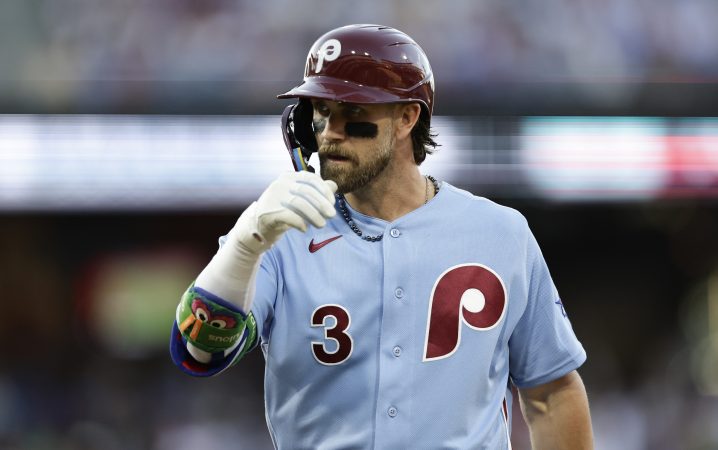
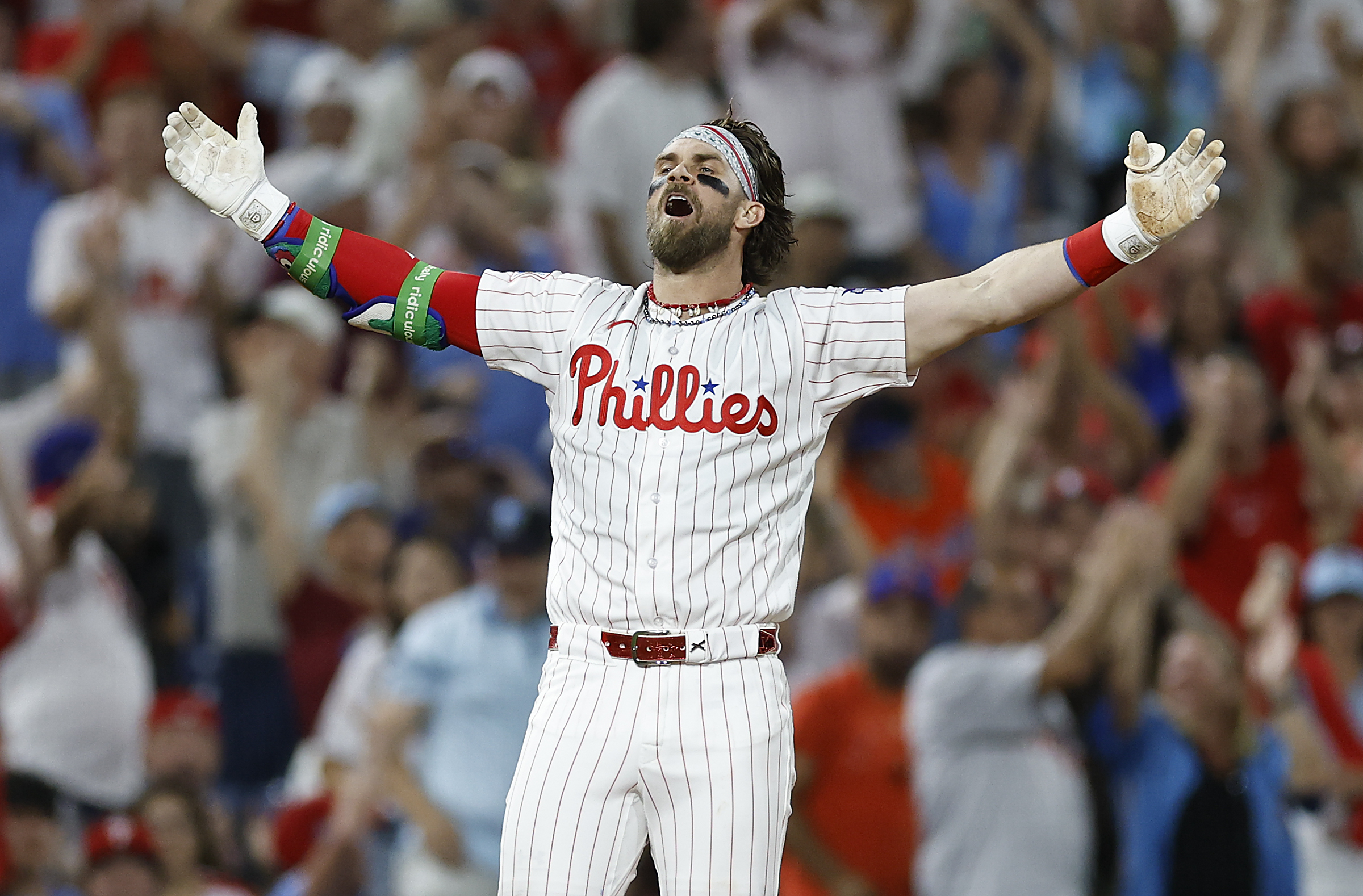
Harper, a nine-time All-Star and two-time MVP, has been one of baseball’s most marketable stars throughout his 15-year career.Yong Kim / Staff Photographer
“I’ve never heard of an active player, let alone a former MVP, doing something like this,” Funt said.
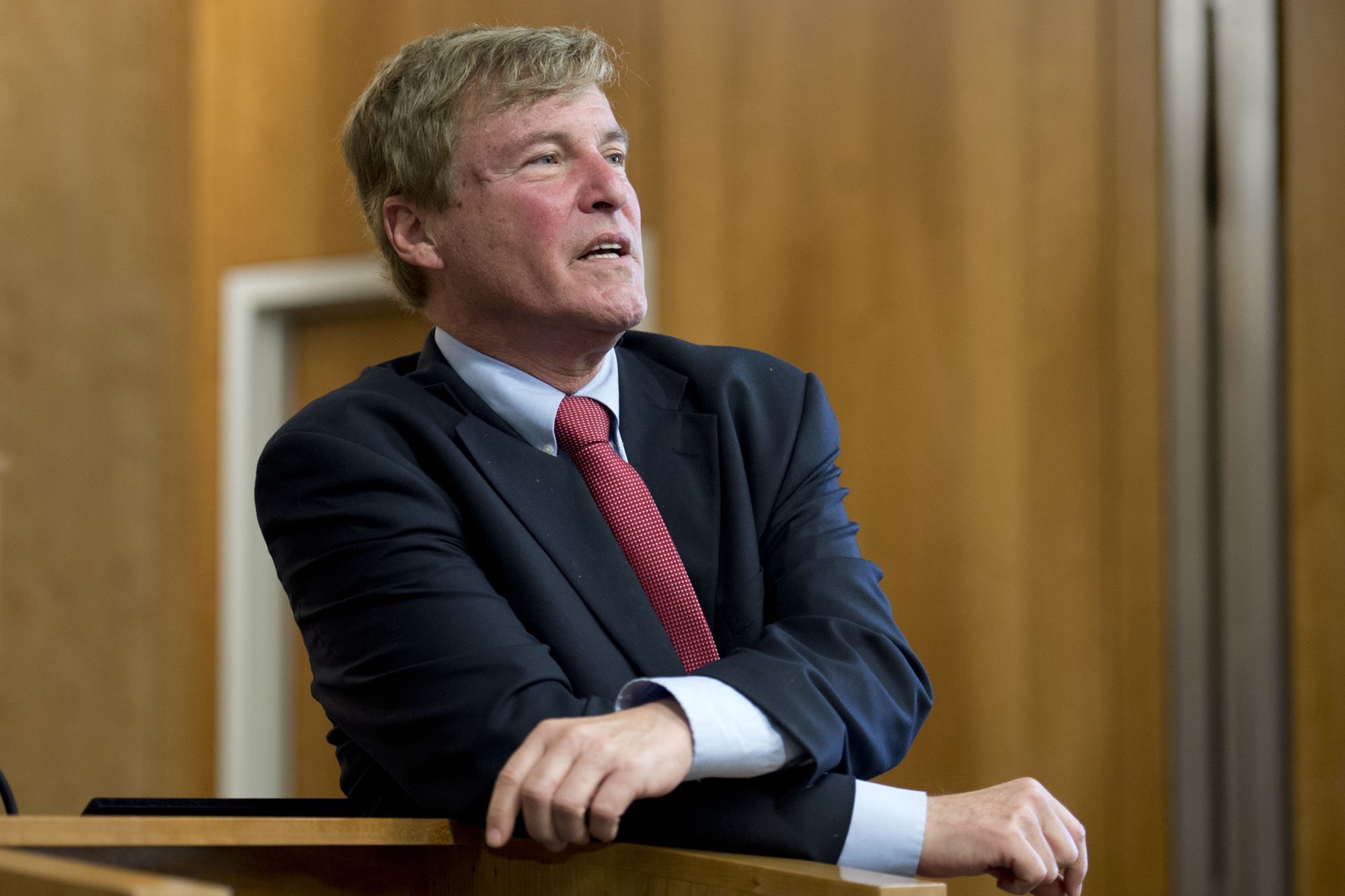
Leigh Steinberg — an agent who represents Kansas City Chiefs quarterback Patrick Mahomes, and whose past clients included MLB All-Stars Manny Ramirez and Will Clark — called the Harper video “bad for sports.”
Steinberg said if one of his clients approached him about doing promotional work of any kind for a sportsbook company, he would advise them to walk away.
“It’s not good for your brand,” he said. “It’s exploitative and it’s not the sort of activity you want to be associated with.”
MLB’s collective bargaining agreement, which is set to expire in December, allows athletes to appear in advertisements or make personal appearances for casinos, racetracks, or sportsbook companies, so long as the ballplayers do not encourage betting on baseball.
NFL players are prohibited from marketing or promoting “any form of gambling” under the league’s current collective bargaining agreement.
The NBA, meanwhile, allows its players to own a passive ownership stake — less than 1% — in sportsbook and prediction market companies, and engage in promotional work for gambling companies, provided they do not encourage betting on basketball. As a member of the Los Angeles Lakers, LeBron James appeared in advertisements for DraftKings.
Harper, 33, has been one of baseball’s most marketable players throughout his 15-year career. He has had endorsement deals with many companies, including Under Armour, Gatorade, Dairy Queen, and Blind Barber, a chain of barbershops and lounges of which Harper owns an equity stake.
He has also been famously unafraid of the spotlight, openly discussing everything from his Mormon faith — which prohibits gambling and alcohol use — to perceived criticism from his boss.
Professional sports leagues that once vehemently opposed any association with gambling enterprises have now embraced lucrative partnerships with sportsbook operators. Monica Herndon / Staff Photographer
Jodi Balsam, a former NFL attorney who is now a sports law professor at Brooklyn Law School, said even if Harper’s video does not violate baseball policy, it raises ethical questions about the league’s relationship with gambling companies, whose business practices are facing increasing scrutiny from state and federal lawmakers.
“The first question I would have is, was [the Harper video] done by the sportsbook company precisely because they know they have an addicted gambler on their hands, and they’re trying to wring every cent out of him that they can?” Balsam asked.
FanDuel did not respond to a request for comment.
Balsam’s question is at the center of a lawsuit that attorneys for the nonprofit Public Health Advocacy Institute filed in March in Common Pleas Court in Philadelphia on behalf of Thompson and another plaintiff. The suit alleges that FanDuel and DraftKings, another sportsbook company, use their products and VIP services to intentionally maximize addiction.
Harper is not named in the lawsuit.
Thompson, whose attorneys declined to make him available for this story, details the depths of his gambling addiction in his lawsuit.
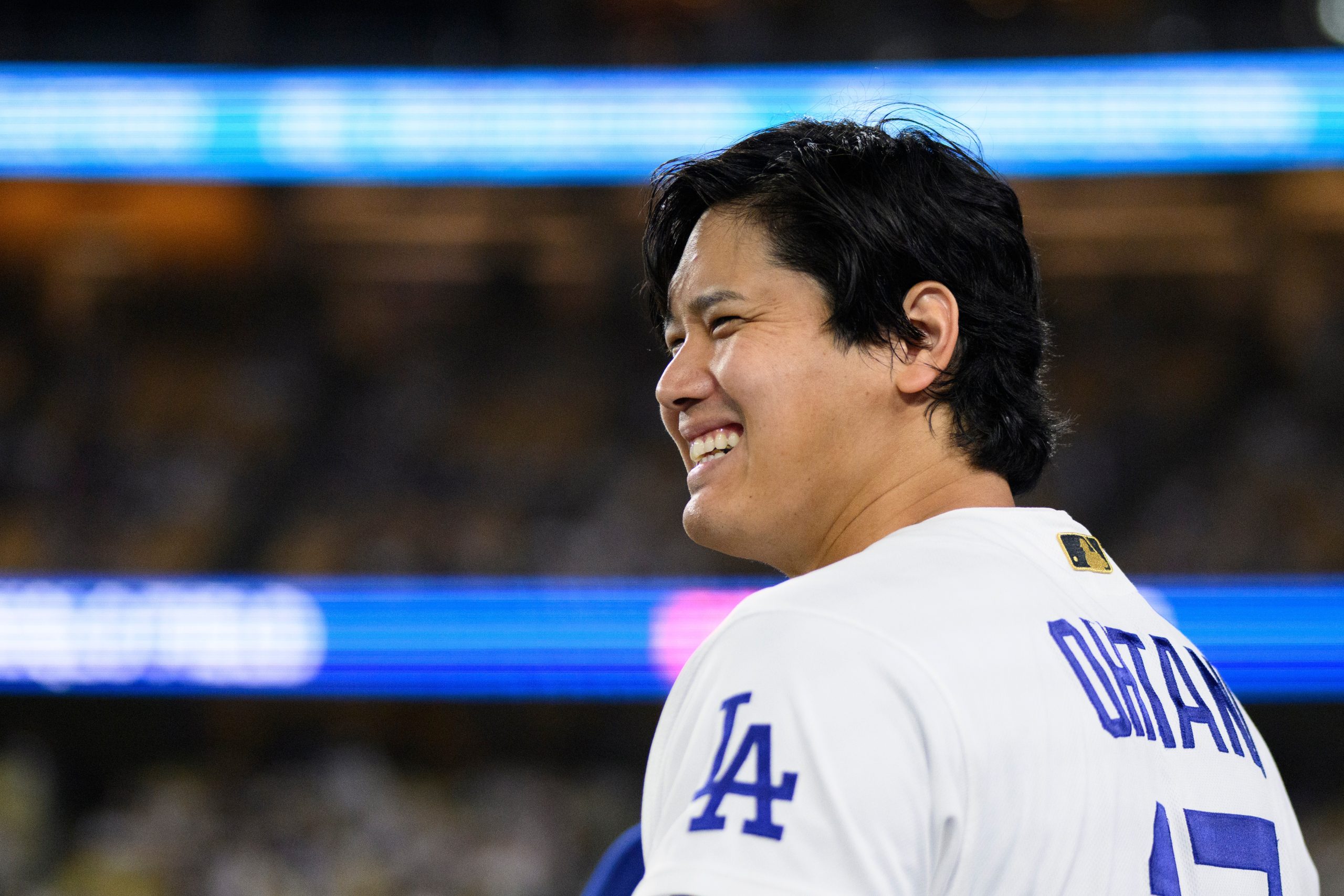
Los Angeles Dodgers star Shohei Ohtani’s former interpreter, Ippei Mizuhara, was sentenced in 2025 to 57 months in federal prison for illegally transferring nearly $17 million from Ohtani’s bank accounts to pay off gambling debts. Kyusung Gong
He alleges that he covered his losses by taking out second and third mortgages on his home, which later fell into foreclosure, and then sold his shares of an investment company that he had run for two decades.
By late February, Thompson’s suit claims, he wagered and lost his last $10,000 on a DraftKings parlay bet.
His losses totaled nearly $2 million, according to the lawsuit. Desperate and feeling like he could not confess the scope of his financial ruin to his family, Thompson texted his therapist, who then contacted the police. Officers raced to Thompson’s home and prevented him from harming himself.
Balsam said Thompson’s tragic story should give sports leagues and its players pause.
“Is this the kind of activity that either the union or the league want their players to be associated with,” Balsam said, “if it leads to addictive and self-destructive behaviors by a fan?”
How MLB’s betting stance changed
“People know gambling is deadly,” Allan H. “Bud” Selig said. “I don’t have to conduct focus groups.”
It was November 2012, and Selig, then MLB’s commissioner, was being deposed for nearly three hours in Milwaukee. A lawsuit instigated by then-New Jersey Gov. Chris Christie sought to overturn a longstanding federal law that restricted legal sports betting to just four states.
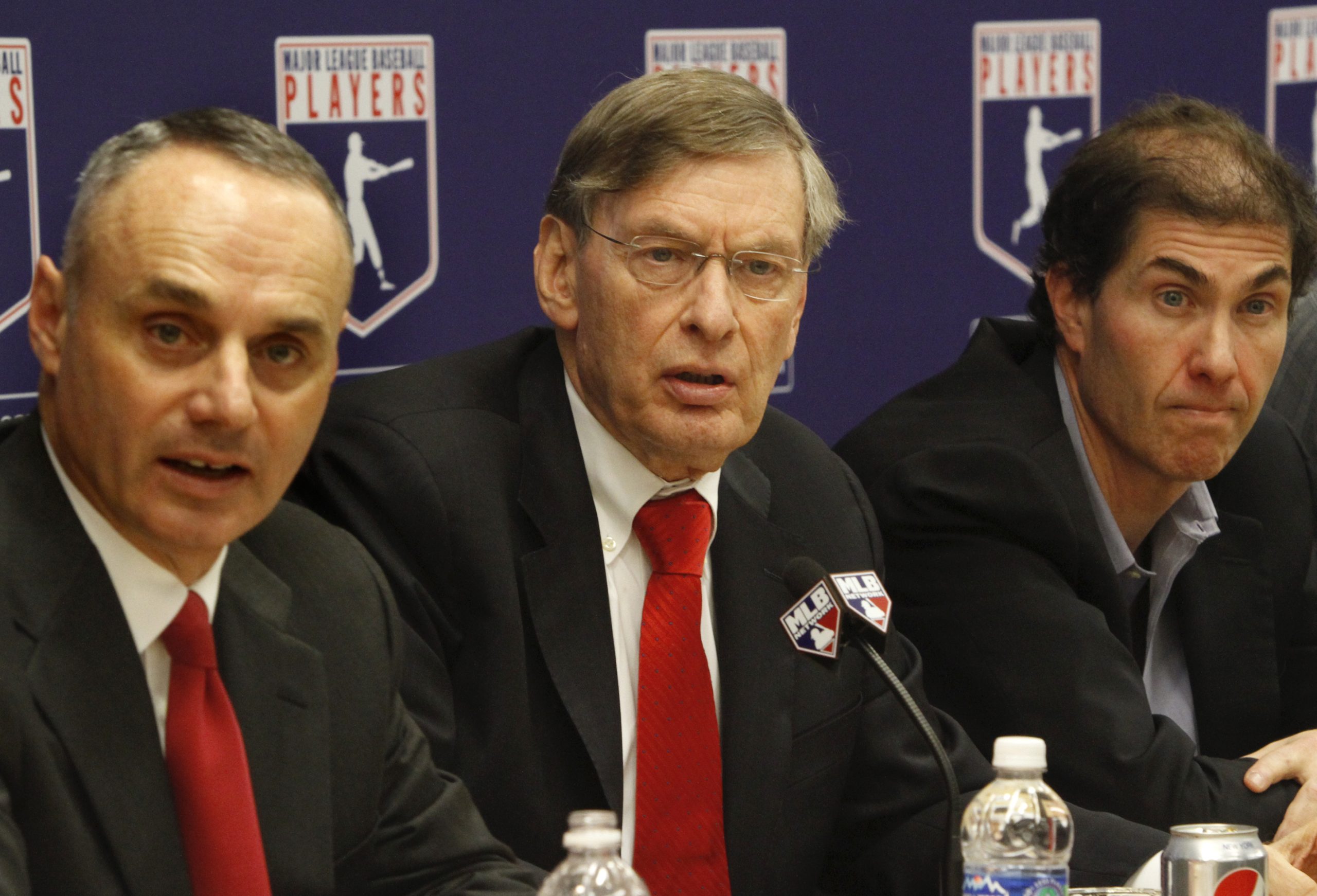
Major League Baseball longtime commissioner Bud Selig (center) argued in a 2012 deposition that widespread legalized sports gambling would be harmful to baseball. He was later succeeded by Rob Manfred (left), who has overseen partnerships between the league and sportsbook companies. Bebeto Matthews
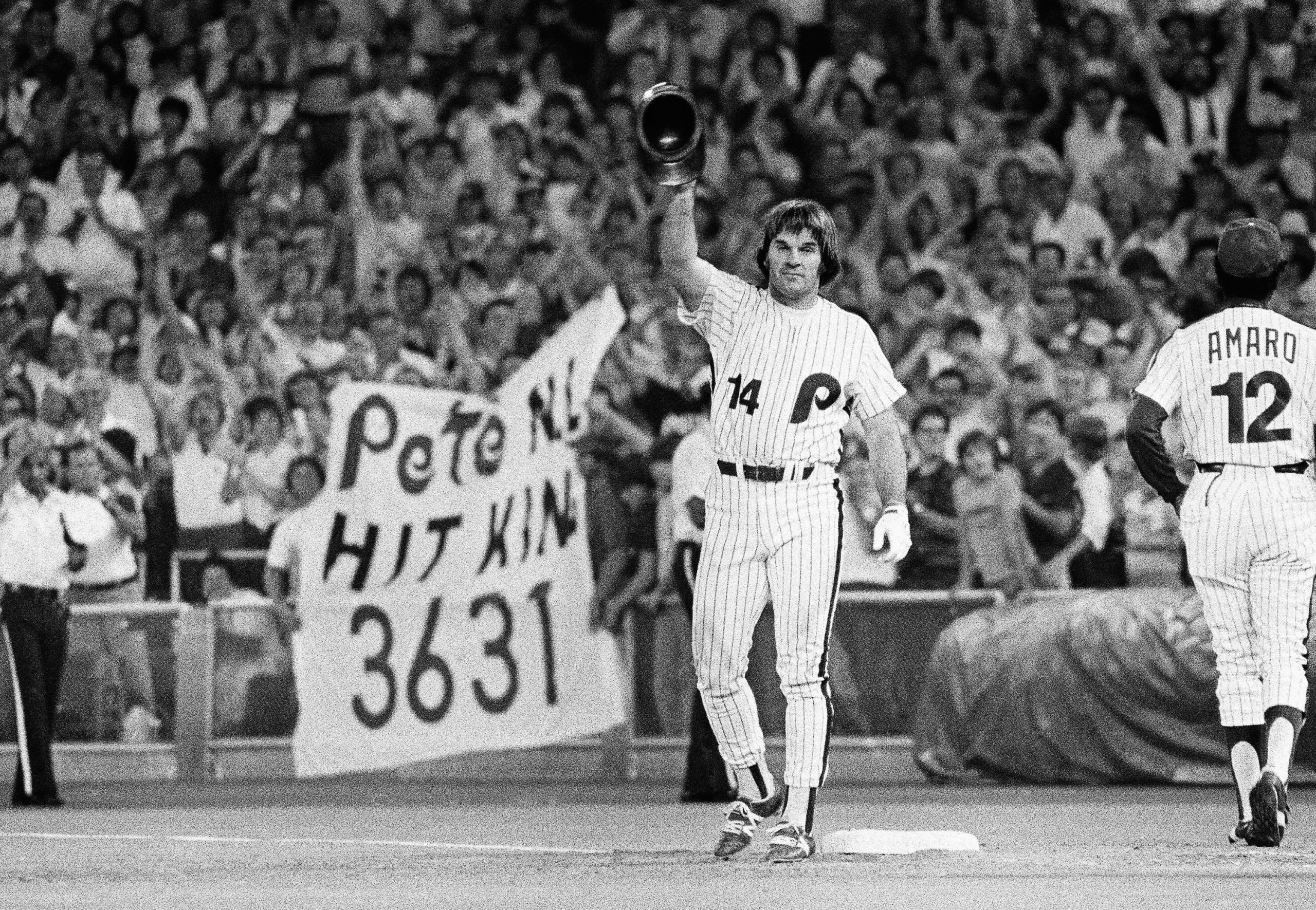
Baseball’s leaders had sought for decades to avoid recurrences of past gambling scandals that had threatened the integrity of the sport. Selig had maintained the hard line of his predecessors, perhaps most notably by upholding the league’s 1989 lifetime ban of former Phillies first baseman Pete Rose, who was found to have bet on baseball while managing the Cincinnati Reds.
Selig said he understood why state lawmakers would welcome the tax revenue that widespread legalized sports gambling could generate. But he argued such a development could only increase the odds of new baseball betting crises, which would be “the end of your sport.”
“I’m just — guess I have to say to you that I’m appalled,” Selig said in the deposition. “I’m really appalled.”
In 2019, MLB — led by a new commissioner, Rob Manfred — entered into its first partnership agreement with FanDuel.
Manfred sent a memo to players outlining the league’s gambling policy. At that time, it prohibited players from performing services “in any capacity involving sports betting for any third party,” a categorization that included “promoting or endorsing sports betting products or services.”
A new collective bargaining agreement, reached in 2022, allowed players to do promotional work for sportsbooks. Colorado Rockies outfielder Charlie Blackmon soon became the first professional baseball player to secure a deal as a brand ambassador for a sportsbook company.
Not everyone affiliated with MLB has welcomed the new relationships between the league and gambling entities.
“We’re entering a very delicate and, dare I say, dangerous world here,” Tony Clark, then president of the players union, told reporters in 2022.
MLB gave a lifetime ban in 1989 to former Phillie Pete Rose for betting on baseball while he was the manager of the Reds.Anonymous
Two years later, MLB Players Inc. — a licensing and marketing subsidiary of the players union — filed a lawsuit that accused DraftKings of using without permission or compensation photos of MLB stars on its betting app and in social media posts. FanDuel and Bet365 were also named as defendants in the suit.
Harper figured prominently in the lawsuit. The complaint against DraftKings, filed in U.S. District Court in the Eastern District of Pennsylvania, included images of Harper’s face on the DraftKings app and a reference to a hypothetical wager on Harper hitting two home runs in a game. Attorneys also mentioned Harper in later courtroom arguments.
Being able to control how their names, images, and likenesses are used is a “crucial return on their substantial career investment,” the players’ attorneys wrote in the complaint. “It also enables athletes to avoid being associated with companies, commercial products, and industries that they do not wish to be perceived as supporting and endorsing.”
(The union ultimately dropped its case against FanDuel, and the lawsuit was settled earlier this year for undisclosed terms.)
In May 2024 — five months before FanDuel sent Harper’s video message to Terry Thompson — Manfred fired umpire Pat Hoberg for sharing a sportsbook account with a professional poker player who placed bets on baseball.
An investigation found no evidence that Hoberg himself had bet on baseball, Manfred later said. But the existence of the shared account — and the fact the umpire had deleted Telegram messages between himself and the poker player — created the “appearance of impropriety that warrants imposing the most severe discipline.” Hoberg appealed his dismissal but lost.
A year later, Bud Selig’s stark warning materialized.
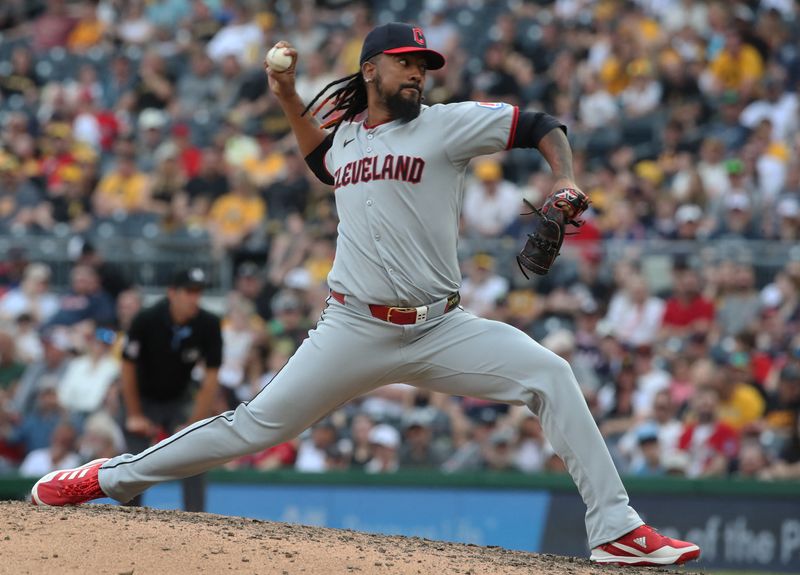
Former Cleveland Guardians pitcher Emmanuel Clase has been accused by federal investigators of conspiring with bettors in exchange for financial kickbacks.Charles LeClaire, IMAGN IMAGES v
Federal authorities indicted Cleveland Guardians pitchers Emmanuel Clase and Luis L. Ortiz, and accused each of conspiring with bettors.
Clase and Ortiz “agreed to throw specific types and speeds of pitches” prior to games, and bettors wagered on those pitches, the indictment states. In exchange, the bettors wired thousands of dollars to the pitchers through a third party in the Dominican Republic. Clase and Ortiz have each pleaded not guilty to wire fraud conspiracy and related charges and are awaiting trial. MLB has placed them on paid nondisciplinary leave.
That same year, Ippei Mizuhara, a former translator for Los Angeles Dodgers star Shohei Ohtani, was sentenced to 57 months in federal prison for illegally transferring nearly $17 million from Ohtani’s bank account to pay Mizuhara’s gambling debts.
Those episodes have not resulted in baseball’s demise, as Selig had once imagined. But they also did not rupture MLB’s relationship with gambling entities, which collected a record $165 billion in sports wagers in 2025.
As part of negotiations over a new collective bargaining agreement with MLB, the players union recently asked the league for to grant players more freedom to seek endorsements from sportsbook operators and prediction markets, ESPN reported.
The VIP treatment
FanDuel awards five points for every dollar that a bettor pays on a contest entry fee. To achieve VIP status, bettors must amass 600,000 points, which expire after a year of inactivity.
“But don’t worry,” the company explains on its website, “it’s easy to stay active.”
Terry Thompson earned a FanDuel VIP manager, Bryttanni Morgan, in 2021, court records show.
Morgan texted Thompson often about the fortunes of the Eagles, commiserating over the team’s ups and downs. Their conversations also veered into more personal terrain — favorite restaurants, travel plans, and family.
A FanDuel VIP manager allegedly offered tickets to Super Bowl LVII to bettor Terry Thompson, an Eagles fan who had a gambling addiction.David Maialetti / Staff Photographer
FanDuel’s intention, Thompson’s attorneys allege, was for Thompson to believe that Morgan was his friend.
Their exchanges often returned to Thompson’s betting activity. Morgan encouraged him to place more wagers, even when he showed signs of financial strain, the lawsuit states.
Morgan is named as a defendant in Thompson’s lawsuit. Her attorney could not be reached for comment.
In late December 2022, after Thompson had suffered more losses, Morgan texted him: “Are we gonna take a little break and start fresh in the New Year?”
“I’ll try,” Thompson wrote back, adding a smiley face symbol.
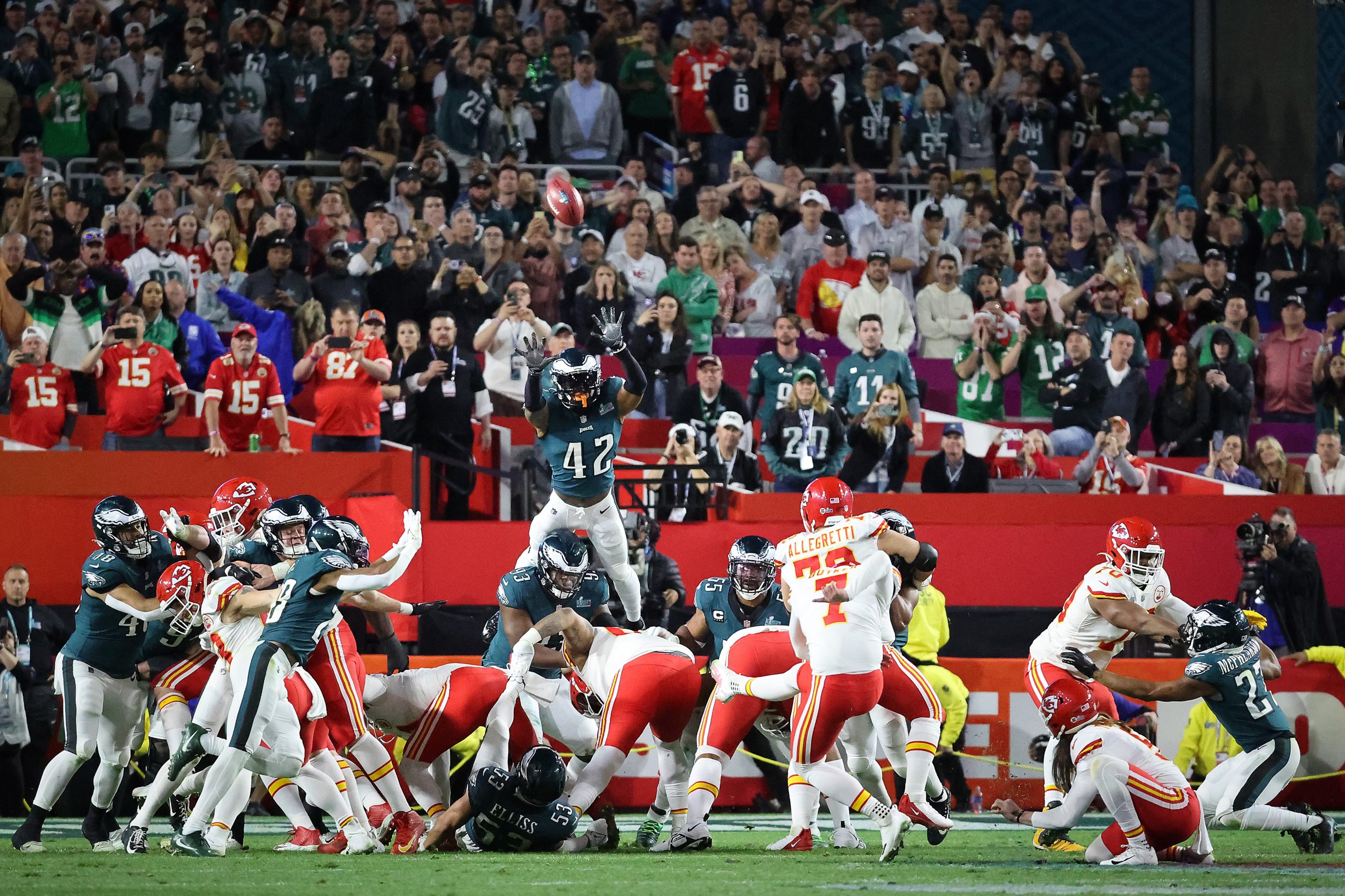
A few weeks later, on Jan. 13, 2023, Morgan offered a FanDuel VIP perk: two tickets to Super Bowl LVII in Arizona — where Thompson’s beloved Eagles would face the Kansas City Chiefs — along with free transportation, and tickets to Sports Illustrated and FanDuel parties.
On other occasions, Morgan provided Thompson with tickets to Eagles, Flyers, and Sixers games. FanDuel also flew Thompson and his son to Super Bowl LVI in California, with pregame access to the playing field and celebrities like Chris Rock.
Funt, the author, said he has major concerns about how the VIP programs are used to ensnare gamblers.
“They exist to egg on a reckless and potentially dangerous style of betting, using perks and other incentives that would be borderline irresistible for many sports fans,” he said. “I can only imagine how someone who loves Bryce Harper would feel indebted (no pun intended) to a sportsbook that facilitated a personalized video from him.”
Leigh Steinberg said he had not heard of other instances of sportsbook companies using active athletes to send greetings to a bettor.
“Because it’s not public, it’s hard to understand whether it’s ubiquitous or an exception,” he said.
Leigh Steinberg has represented numerous NFL stars, from Chiefs quarterback Patrick Mahomes to NFL Hall of Famers Troy Aikman and Steve Young.Randy Pench/Sacramento Bee / MCT
But Steinberg, who publicly struggled with an addiction to alcohol, argues that interactions between athletes and bettors who wager heavily on sports are inherently problematic.
“Getting a phone call or a zoom or a Cameo from a highly placed player is so flattering,” he said. “It’s stacking the deck unfairly in favor of continuing addicting behavior.”
The glamour of Thompson’s Super Bowl trips and brushes with celebrities had long since faded when he reached the nadir of his gambling earlier this year.
There were no more offers of free betting credits to be had, or microbets to chase.
Broke and broken, Thompson entered a psychiatric facility to undergo treatment for gambling addiction.
The Inquirer will continue to report on issues related to the growth of gambling addiction — among teens and adults — across Pennsylvania. If you, or someone you know, wants to speak with a reporter, please contact David Gambacorta or William Bender at dgambacorta@inquirer.com and wbender@inquirer.com
Correction: An earlier version of this story misstated the university where Jodi Balsam works as a law professor. She works at Brooklyn Law School.
Moments after Purdue University soundly beat Grambling State in the first round of the 2024 NCAA Men’s Basketball Tournament, Carson Barrett turned to his phone.
The Purdue guard, playing with a torn right meniscus, had sunk a three-pointer in the game’s final minutes to put his team up, 78-50. But amid the happy afterglow of victory, Barrett’s phone filled with venom.
“I hope you f— die,” read one text message that he received.
“Kill yourself for taking that 3 you f— worthless loser,” added another.
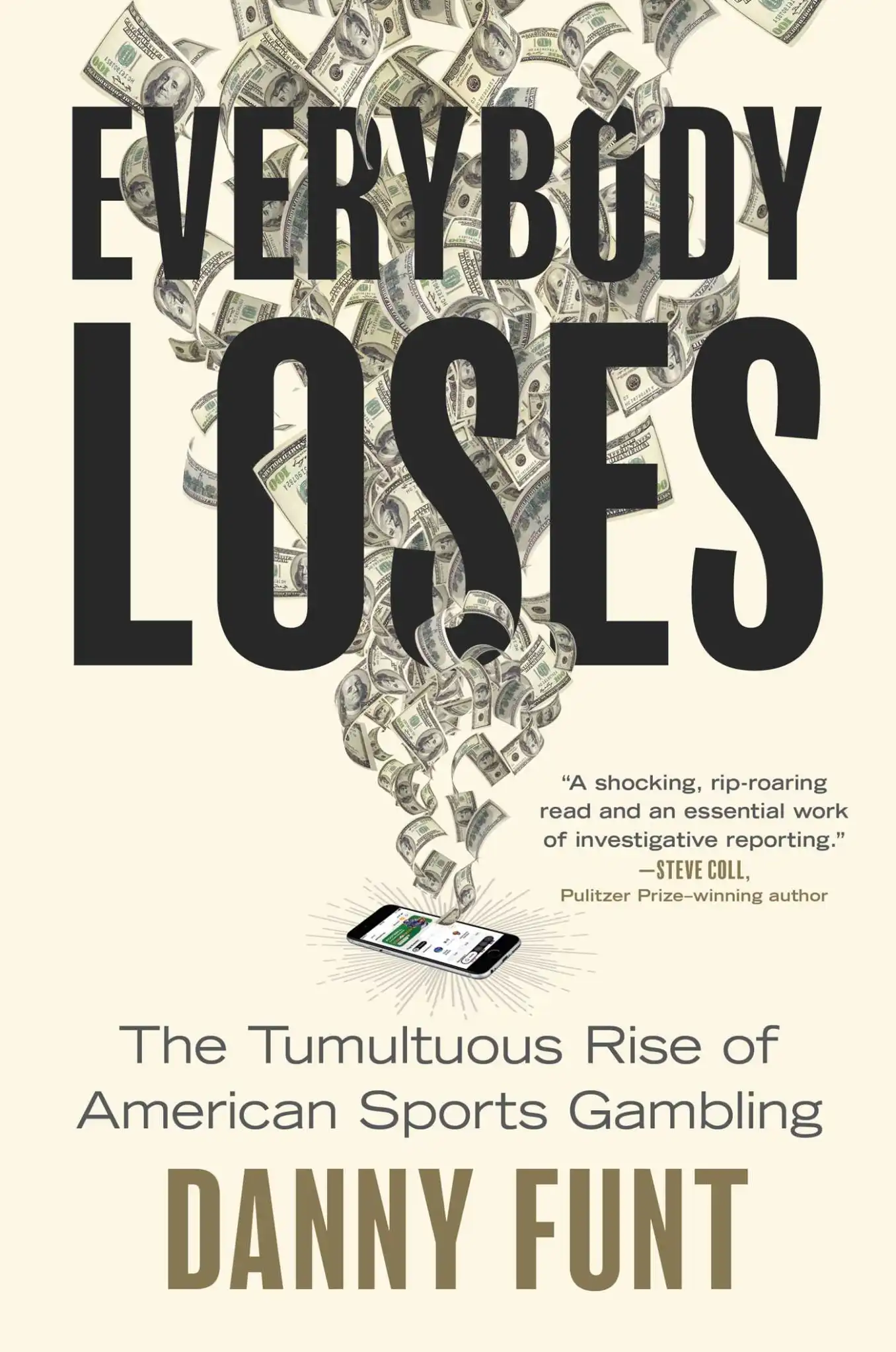
It’s the opening anecdote of the book Everybody Loses: The Tumultuous Rise of American Sports Gambling, an exploration of the fallout from a 2018 U.S. Supreme Court ruling that allowed states to enact individual sports betting laws. The decision has resulted in gambling becoming an omnipresent part of everyday American life.
Barrett became a harassment target because his three-pointer ensured that Purdue would cover a 27-point spread, explains author Danny Funt, a journalist who has written for the Washington Post, the Wall Street Journal, and the New Yorker.
While researching “Everybody Loses: The Tumultuous Rise of American Sports Gambling,” author Danny Funt interviewed officials at FanDuel and DraftKings as well as people who suffered from gambling addiction.Handout
Funt revisits critical moments in how gambling was embraced, like NBA commissioner Adam Silver writing an op-ed for the New York Times in 2014 that called for sports betting to be legalized and regulated. Silver claimed that nearly $400 billion was wagered annually on sports. But that eye-catching sum, Funt writes, was actually just a thinly sourced guesstimate.
Once states began legalizing sports betting, professional leagues abandoned their once- impassioned opposition to having any association with gambling, and entered into lucrative partnerships with sportsbook companies.
But some ex-league officials who spoke to Funt — including former NFL commissioner Paul Tagliabue and former MLB commissioner Fay Vincent — expressed lingering concerns.
“What’s going to happen is. it’s going to get out of hand. Gamblers will start fixing games,” Vincent correctly predicted. “And when that happens, Congress will intervene.”
Funt retraced the evolution of sportsbook companies FanDuel and DraftKings, and spoke with unnamed officials at each company about their business practices, including VIP managers who offer benefits — like free Super Bowl tickets — to bettors who consistently wager and lose large sums.
He also interviewed Nigel Eccles, a FanDuel cofounder.
“I love games that are beatable,” Eccles told Funt. “Unfortunately, what they’ve done with sports betting in the U.S. is turn it into a game that you can’t win, because if you win, they shut your account.”
Yet Everybody Loses isn’t told strictly through the eyes of executives and policymakers. Funt also interviewed ordinary people — a fifth-grade teacher in Connecticut and a college student from Washington Township, Gloucester County — whose lives were derailed by an all-consuming gambling addiction.
Inquirer reporters recently spoke to Funt, 34, about the research he conducted for his book, which was published in January by Simon & Schuster.
This interview has been edited and condensed for clarity.
You interviewed sportsbook industry officials. Was there anything they said that surprised you?
To hear an executive at a company say: ‘If you think about it, my job was to basically slowly bleed someone dry.’ We understand that’s the essence of gambling, but to hear an executive use those words was striking.
And there were definitely a lot of things that I didn’t expect. I didn’t realize the scope of the online VIP business at all. The things they’ll do to pamper those customers, the specifics of it blew me away: Throwing out the first pitch at a baseball game or playing pickup basketball on an NBA court.
The point of doing that is so these customers feel like [VIP managers] are their friend. So if they ever think of pulling back on their betting, they’ll lose all these perks — but also lose a friend that they’ve made.
Should regulators consider limits to prop bets or in-game microbets?
That’s something that these companies have invented, essentially, to give you a million ways of constructing same-game parlays, which are their most profitable product. So they want you to bet on limitless things, so you can construct an infinite number of same-game parlays.
The other thing with these in-game bets — which is the fastest-growing side of betting, and you can see companies like DraftKings really pushing them — is that it’s a road to compulsive behavior, if you’re betting on a minute-by-minute basis.
You could definitely restrict those bets, as far as the variety and abundance of them. But you could also mandate more of a responsibility on the operators to pick up on risky behavior from their customers, and intervene accordingly.
Funt has written for The Washington Post, The New Yorker, and The Wall Street Journal.Handout
What do you think about the gambling content that young people encounter on social media, television and at sporting events?
As far as kids go, there are a lot of data points that are really alarming. I live in Charlotte. Half of the calls to the problem gambling hotline in North Carolina are coming from parents who are so concerned about their kids betting.
There are a lot of things that made [betting] mainstream, but I have to think having A-list movie stars and our heroes in sports pitching [these products] constantly has to have an effect on kids.
A lot of people I talk to — whether it’s educators, health experts, or lawmakers — this potential epidemic of gambling among kids is what they’re most worried about.
You write about sportsbook customers who had winning streaks, and then were stunned to find that the companies limited their accounts.
That limiting comes as such a surprise to people. They think, based on the premise of legalization, that there is a relatively level playing field. Then they learn that no, the deck is stacked against you.
If you do anything that shows you’re a competent bettor, you’ll get cut down to being able to bet only pennies on an NFL game. It feels grossly unfair. There are some states looking into regulating that.
But the advertising so clearly says that this is a way to make money. I just walked by an ad for PrizePicks, which said, basically, make money because you know sports.
What’s your perspective on prediction markets, which allow people to wager on everything from Hollywood awards shows to military conflicts?
I mainly think of them as a workaround — they offer gambling by a different name, and avoid paying state taxes. But by and large, I think they’re sports-betting operators. So the question becomes: Is this the logical extension of Americans wanting to bet on more and more stuff?
Kalshi’s CEO has said their ambition is for people to bet on literally everything, eventually. But I’m curious if that’s a viable business. I don’t think the average person wants to put in the time to bet on legislation, or the weather tomorrow, or who’s going to win at the Oscars. I think that is sadly feeding people who have an addiction.
The Inquirer will continue to report on issues related to the growth of gambling addiction — among teens and adults — across Pennsylvania. If you, or someone you know, wants to speak with a reporter, please contact David Gambacorta or William Bender at dgambacorta@inquirer.com and wbender@inquirer.com