Author: David Gambacorta

  • In Pennsylvania, the epicenter of online gambling, anger over addiction and loss fuels a backlash

    In Pennsylvania, the epicenter of online gambling, anger over addiction and loss fuels a backlash

    Reynaldo Rivera had little interest in sports betting. He preferred playing slots and table games at casinos around Philadelphia, where he’d unwind a couple times a week after covering the graveyard shift as a tow truck driver.

    But when the COVID-19 pandemic left most forms of indoor recreation off-limits in 2020, Rivera downloaded some sportsbook apps, and sampled their digital simulations of casino games.

    He soon discovered that he had no reason to ever return to Rivers Casino on Delaware Avenue, or Parx Casino in Bensalem, to play slot machines and Ultimate Texas Hold’em.

    “You open your phone,” he said, “and it’s right there.”

    Occasional after-work gambling turned into constant on-the-job gambling. Rivera sat for hours in the cabin of his tow truck, the outside world dark and still, while he tapped and tapped on his phone.

    Hundreds of dollars in losses became thousands. Then, tens of thousands. By this spring, he’d wagered about $2.4 million, losing $137,000.

    As his losses ballooned, the gambling companies made sure he knew how valuable he was to them. They granted Rivera VIP status and supplied him bonus credits and gifts, like a Peloton bike, courtesy of DraftKings.

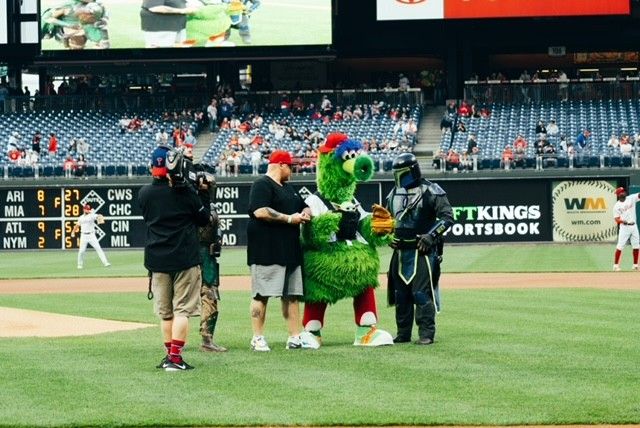
    BetMGM arranged an even more remarkable reward through a sponsorship deal with the Philadelphia Phillies. On a spring evening in May 2022, Rivera was led onto the lush infield grass at Citizens Bank Park, before the Phillies played the Texas Rangers. As thousands of fans watched, Rivera tossed a ceremonial first pitch.

    Yet the constant gambling and losing left Rivera feeling ashamed and foolish. He was struggling to get by, instead of living comfortably from the money he made driving a tow truck.

    He just couldn’t stop.

    “Listen, I don’t have a drug addiction,” Rivera, 56, said in a recent interview. “But if that’s what it feels like, that’s crazy.”
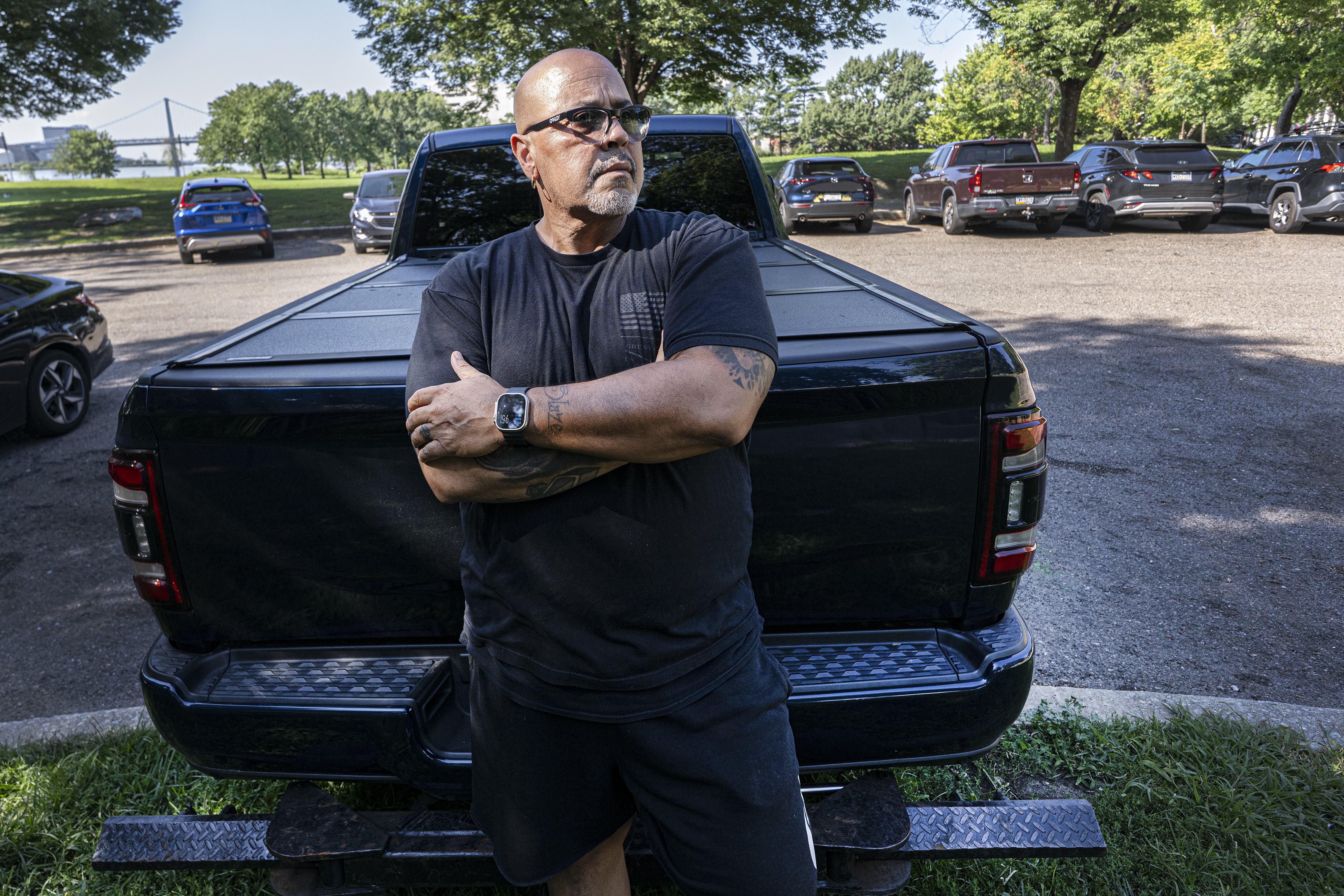
    Reynaldo Rivera said he grew addicted to playing online casino games on his phone while working as an overnight tow truck driver in Philadelphia. Earlier this year, his attorney filed a lawsuit against DraftKings and FanDuel over his addiction.Jose F. Moreno / Staff Photographer
    As Rivera’s gambling losses deepened, he said companies granted him VIP status and enviable rewards, like throwing out the first pitch before a Phillies game at Citizens Bank Park in 2022. Courtesy of Reynaldo Rivera

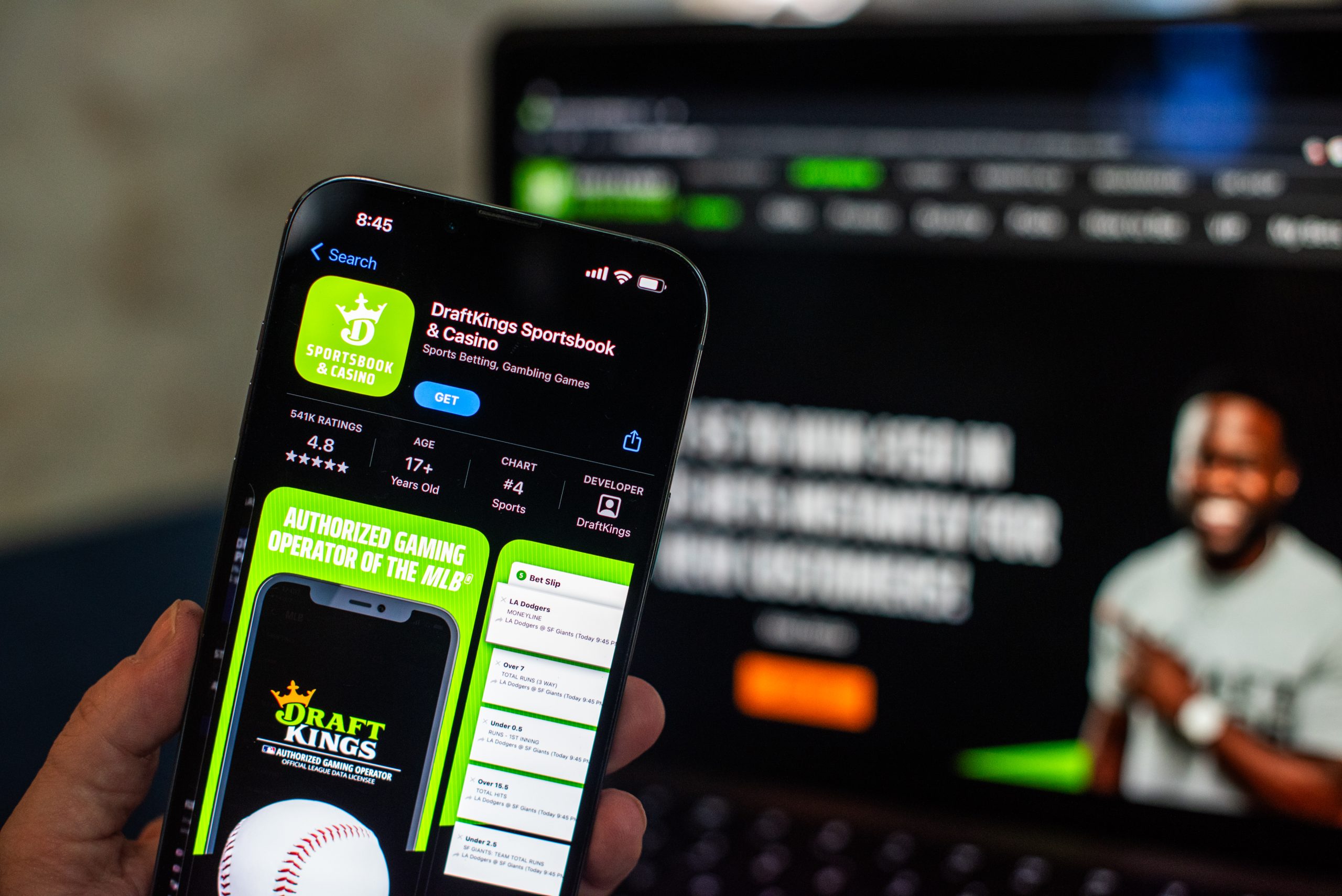
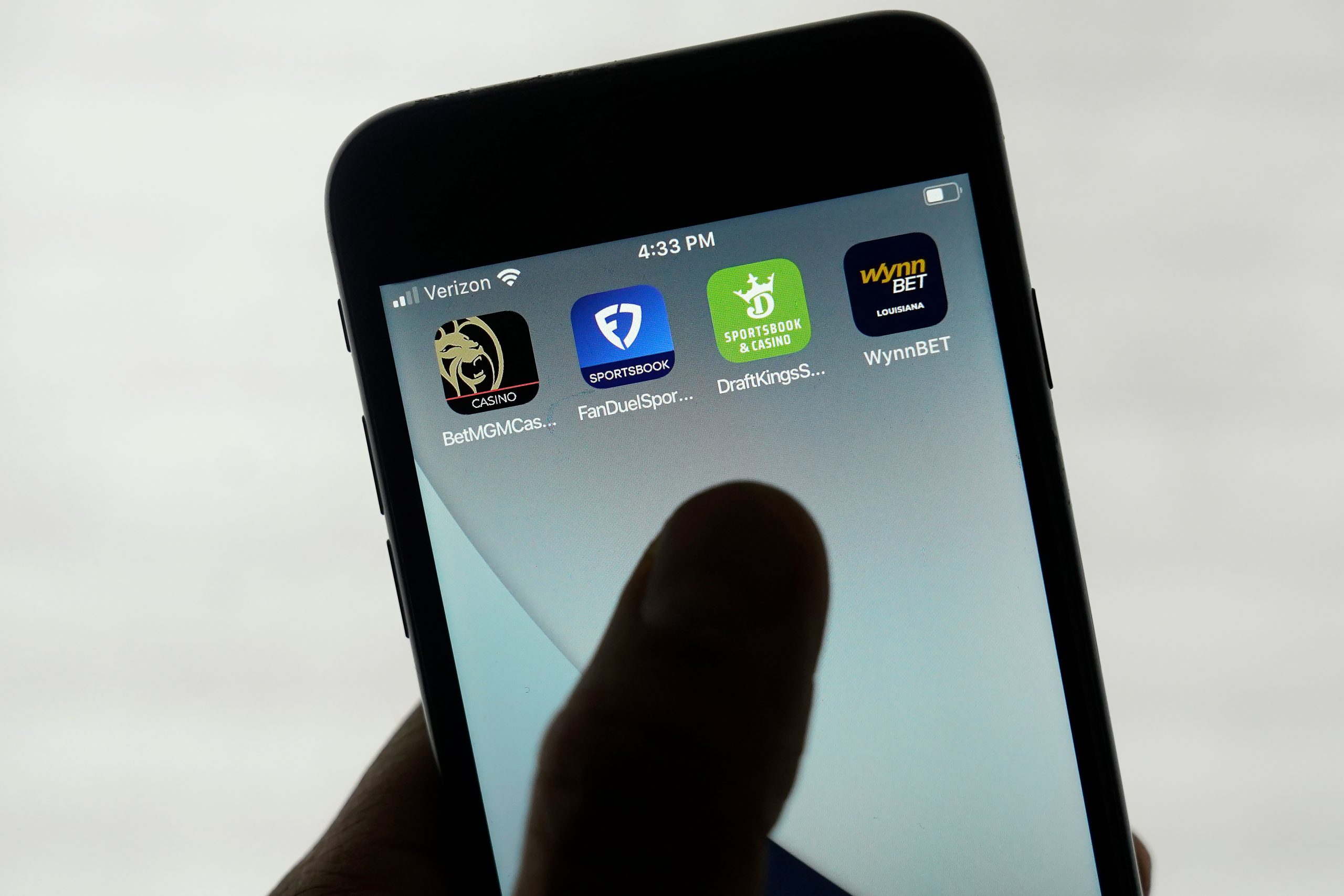
    Less than a decade ago, gamblers had to invest time and physical effort if they wanted to bet on sports or play casino games, whether it meant going to Las Vegas or Atlantic City, or meeting up with a bookie. Now, it takes only the flick of a thumb to open an app.

    And it’s no longer a fringe activity that needs to be sought out. Nearly everywhere Americans look, there are advertisements about sports betting or prediction markets: billboards alongside highways, banner ads in stadiums, sponsored segments in sports broadcasts, and TV and online pitches featuring global stars-turned-well-paid ambassadors, including Philadelphia 76er LeBron James, tennis legend Maria Sharapova, and Academy Award winner Jamie Foxx.

    But a corollary backlash is also taking shape, as the repercussions of nearly unlimited access to gambling have become impossible to ignore.

    Lawmakers are demanding greater control over how sportsbooks and prediction markets operate, while a wave of litigation is attempting to hold those companies responsible for their customers’ addictions, echoing similar legal action that’s been taken against social media companies. (Meta agreed in August to pay up to $18 billion to settle lawsuits it faced over claims that it designed its products to be addictive to children and teens.)

    The impact of the gambling industry’s skyrocketing growth might be felt more acutely in Pennsylvania than anywhere else. In March, the American Gaming Association wrote in a report that Pennsylvania had the largest online gambling market in the U.S., generating $3.46 billion in revenue in 2025 — a 27.9% increase from the year before.

    Pennsylvania recorded $7.7 billion in overall gambling revenue in 2025, a sum that trailed only Nevada, according to the gaming association. Pennsylvania is also one of just eight states that have thus far legalized both online gambling and sports betting.

    Philadelphia, meanwhile, is the seventh-largest commercial casino market in the country, having generated $1.4 billion in 2025, the gaming association said, and last year was the top market for online gambling advertisements.

    “The casino itself has expanded basically into infinity,” said Timothy Fong, the co-director of the UCLA Gambling Studies Program, which researches gambling disorders and evidence-based addiction treatments.

    While brick-and-mortar casinos have long wooed bettors with offers of free meals and hotel rooms, the modern gambling industry bears little resemblance to the neon palaces of past generations.

    “If you go back in time, like 25 years ago, and you compare the differences, it’s obviously not the same world,” Fong said. “It’s not even the same universe, and it’s because gambling is frictionless right now. It takes very little effort to get bets down. And you also have a much wider array of choices of how to bet, what types of wagers are out there.”

    The state’s Gaming Control Board last week published an annual overview of its regulatory activity, and reported that 30,000 people are enrolled in its self-exclusion programs, which prevent bettors with addictions from being able to legally gamble.

    Researchers at Pennsylvania State University’s Criminal Justice Research Center have found that between 60% and 73% of adults in the state had engaged in some form of betting in 2025, with as much as 30% gambling online. The average age of online gamblers was 37, and more than 77% were men, with 61% identifying as white.

    Overall, Penn State found that between 2.4% and 6.4% of Pennsylvanians might be problem gamblers — more than double the reported national average of 1% to 3%.

    “That’s an inordinate amount of people,” said Eric Webber, a senior behavioral health therapist for Caron Treatment Centers, which offers addiction rehabilitation services in Pennsylvania, Florida, Georgia, New York, and Washington, D.C.

    Webber, since 2013, has been treating people who have gambling addictions. The number of his patients — who include lawyers, executives, and college students — has climbed steadily since the U.S. Supreme Court ruled in 2018 that states could adopt their own sports betting laws.

    He described one young client whose compulsions led him to coordinate a phone, laptop, and tablet to play multiple hands of blackjack simultaneously.

    “I tell people this is the new epidemic,” Webber said, and Pennsylvania “is at the epicenter of it.”

    Rivera is among a half dozen former customers of FanDuel and DraftKings who have recently sued the companies in Common Pleas Court of Philadelphia. Their lawsuits allege that the apps use “hyper-personalized algorithms” and loyalty programs to target “the most addicted, problem users” that make up a disproportionate chunk of the sportsbooks’ revenue.

    Rivera’s lawyer, Jennifer Hoekstra, said her Pensacola, Fla.-based firm, Aylstock, Witkin, Kreis & Overholtz, has retained about 15,000 clients with similar claims, and has filed lawsuits against sportsbook operators in Delaware, Massachusetts, and New Jersey.

    “FanDuel and DraftKings have created, essentially, an addiction crisis,” Hoekstra said. “They built an addictive product intentionally.”
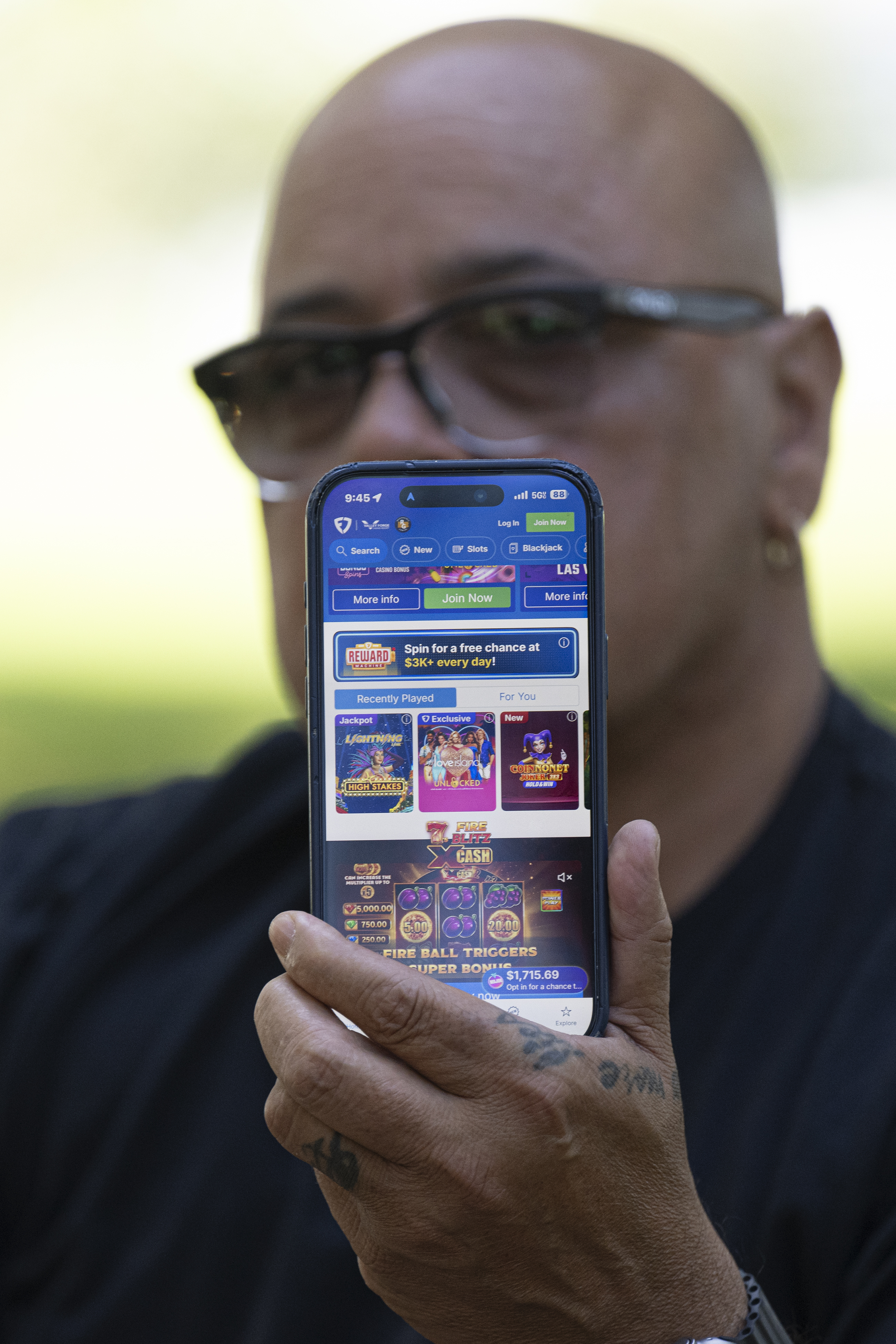
    Rivera’s attorney, Jennifer Hoekstra, said DraftKings and FanDuel banned him from their apps after he sued the companies. Rivera said he still can’t bring himself to delete the apps. Jose F. Moreno / Staff Photographer

    The companies have rejected that characterization and said they offer tools that allow players to monitor and set limits on their deposits, wagering, and playing time.

    FanDuel “supports and exceeds the comprehensive requirements set by Pennsylvania regulators for how we monitor customer behavior and respond to signs of harm,” a spokesperson wrote in an email.

    In 2025, the company spent $158 million on responsible gaming technology, conducted 58,000 account reviews, and removed 5,700 users from FanDuel’s platform, the spokesperson said.

    A DraftKings spokesperson wrote that while the company won’t comment on pending litigation, it “takes responsible engagement concerns very seriously” and has a team of more than 50 full-time employees and a chief responsible gaming officer who focus on that issue. “Responsible engagement is embedded across our business and essential to DraftKings’ long-term sustainability,” the spokesperson said.

    The sportsbooks have asked judges to dismiss other lawsuits that have accused them of product liability and violating state consumer protection laws. Their attorneys have argued that FanDuel and DraftKings don’t sell an actual product, but instead offer a free app and have no obligation to protect customers from placing lawful bets, even if their gambling becomes excessive.

    Shortly after Rivera’s lawsuit reached the court docket in July, DraftKings and FanDuel banned him from their apps, and the friendly VIP managers who had once texted him regularly no longer responded to his messages, his lawyer said. Yet Rivera can’t bring himself to delete the sportsbook apps from his phone. The urge to place a bet remains just under the surface, an itch he can’t scratch. Sometimes, he imagines winning back the money he’s lost.

    “If I had access to them apps, I’d probably be on them,” he said. “I know I’d be on them.”
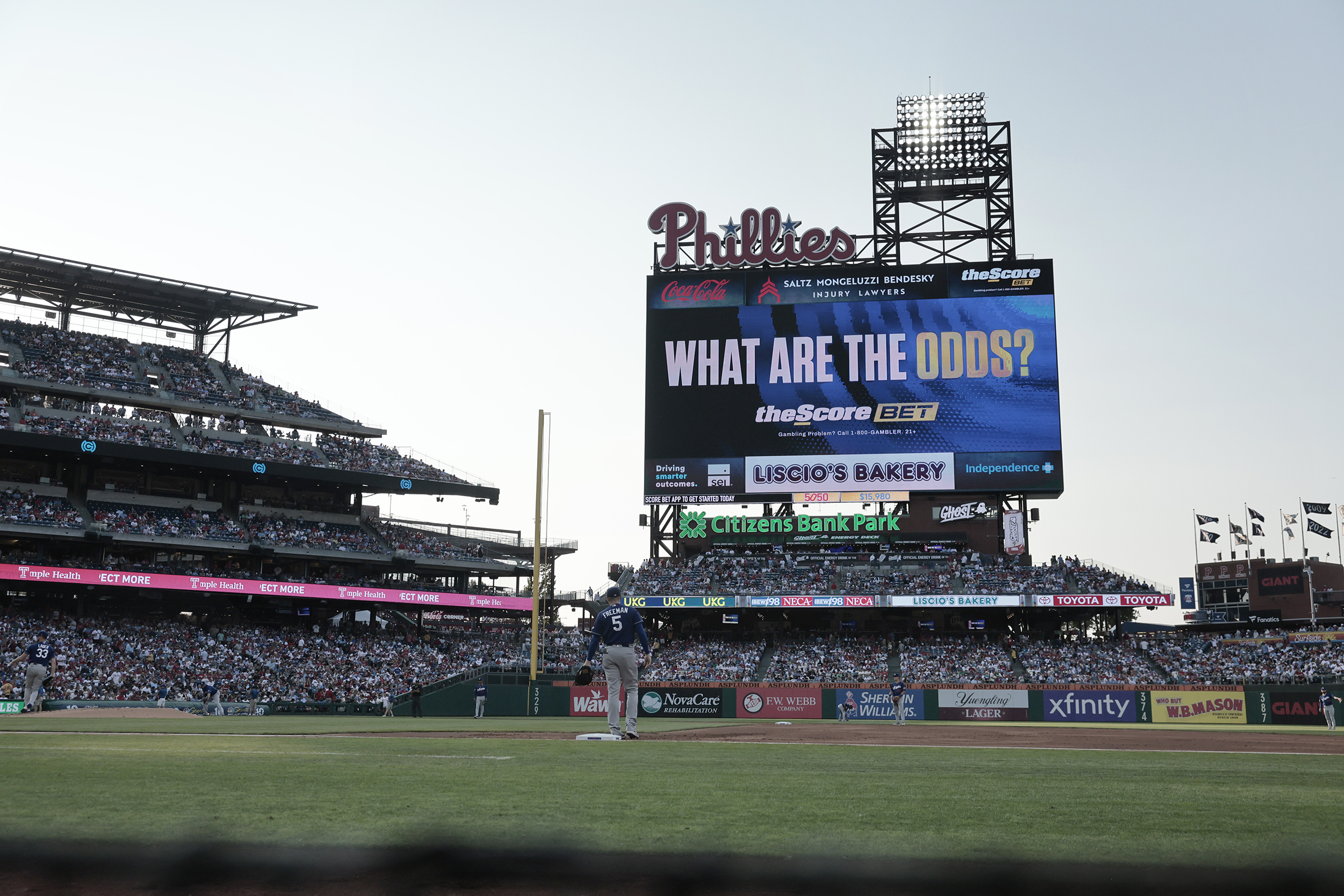
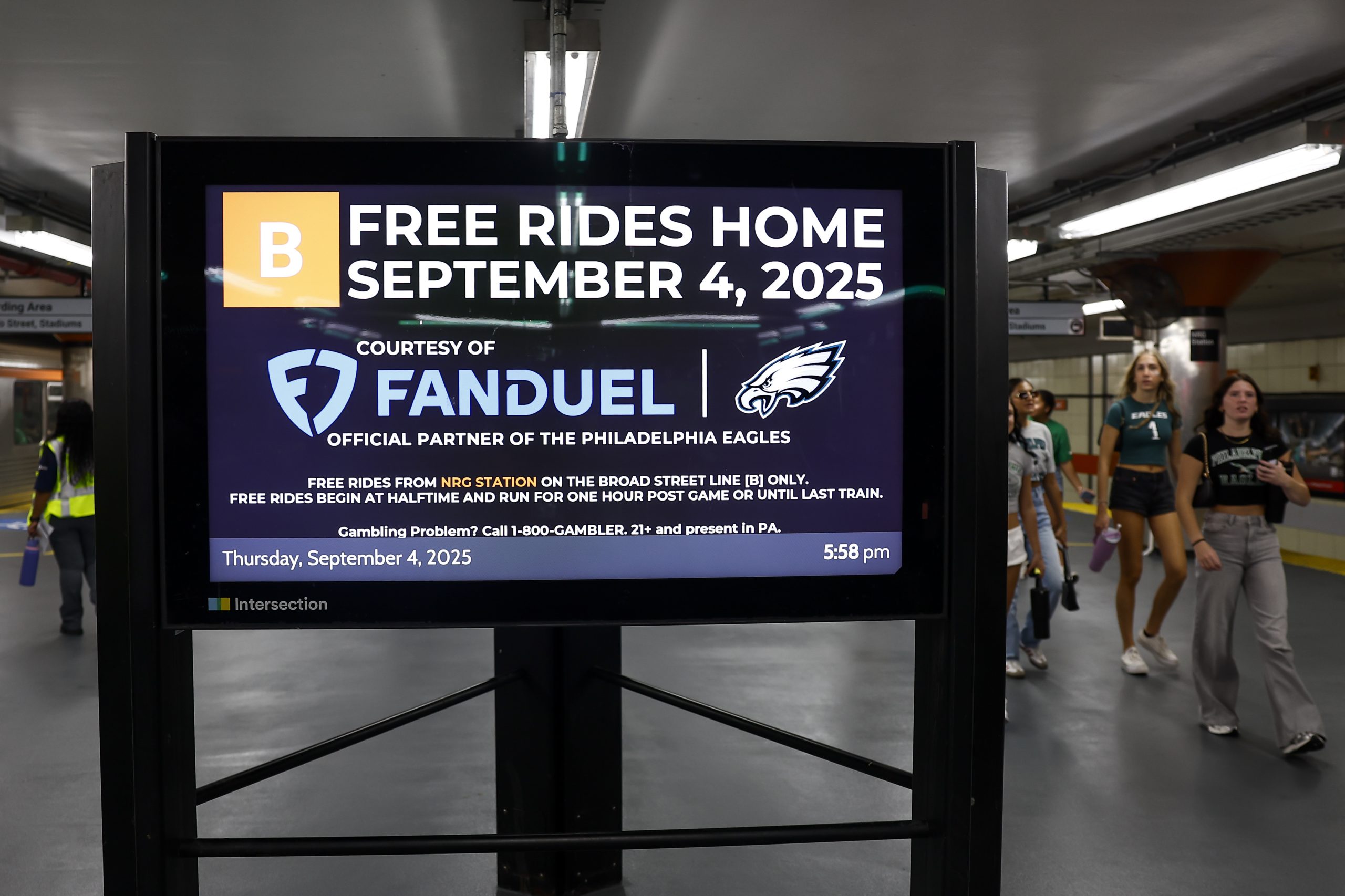
    Advertisements for sports betting can now be easily found at professional sports stadiums and during broadcasts of games. Elizabeth Robertson / Staff Photographer

    A bond, broken

    On Sept. 23, a cluster of parents walked through the echoey halls of the Russell Senate Office Building in Washington to a small, cream-colored room. Once inside, they unspooled personal accounts of how gambling addiction had impacted their lives. Politicians and advocates listened and nodded solemnly, and discussed the urgency of a newly announced gambling reform movement.

    Raymond Mikesell described the inseparable bond that he shared with his son, Ray, who at the age of 4 began helping out at Cafe Raymond, the breakfast and lunch spot that Mikesell operated for 17 years in Pittsburgh, beginning in 2007. Ray became a full-time fixture in the restaurant as he grew older, whipping up blueberry ricotta pancakes in the kitchen while his father amiably chatted with customers.

    By age 20, Ray had enough money to buy his own house. That picture of success was punctured when Mikesell one day received some of his son’s bank statements by mistake, and discovered that his account had been repeatedly flagged for insufficient funds.

    “I said, ‘Ray, what’s going on here? You got to explain this to me,’” Mikesell recalled. “He said he was betting.”

    Mikesell wanted to help his son climb out of debt. He began managing his finances, giving him an allowance, and sometimes paying his mortgage. Mikesell said he also avoided mentioning professional sports altogether, for fear that it would drive his son to place more wagers.

    “Within a month, he was kicking my door down to tell me I’m ruining his life,” he said. “We all knew what it was. It was the addiction to gambling. He just wanted to bet all his money.”

    Mikesell said his son spiraled deeper into addiction. He maxed out his credit cards, and his home fell into foreclosure, and then was sold at a sheriff’s sale.

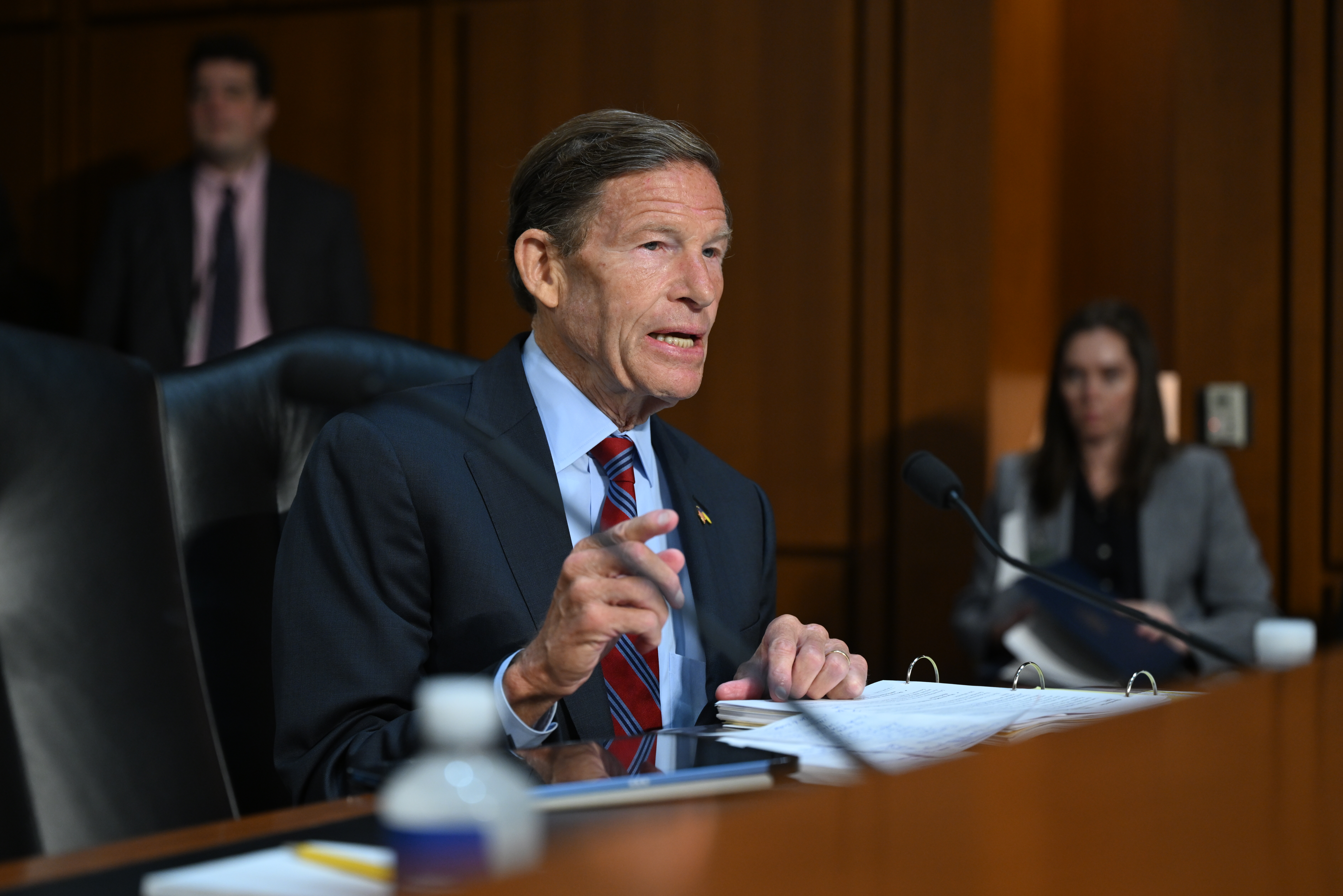
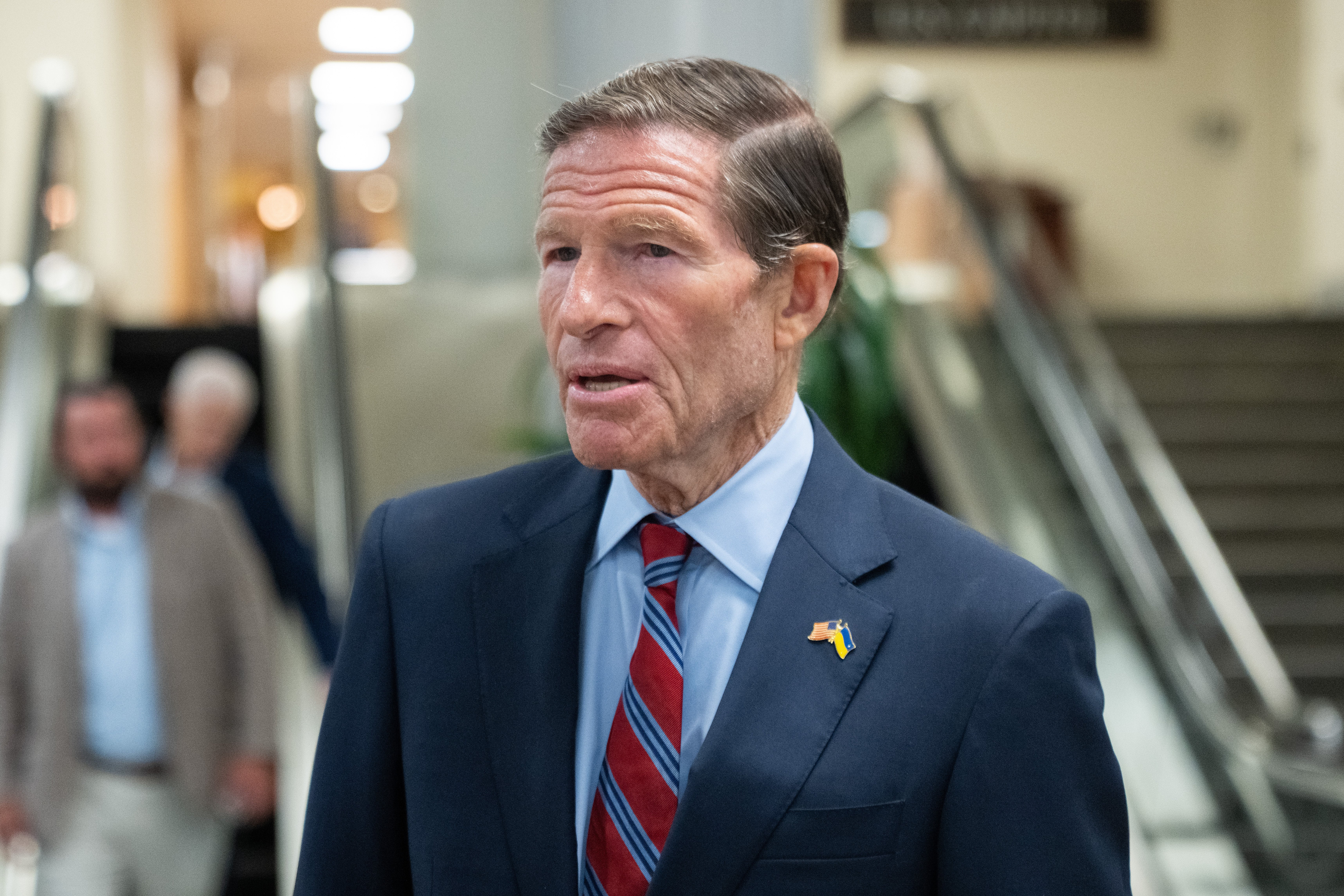
    Among those who had assembled in the senate room with Mikesell were U.S. Sen. Richard Blumenthal (D., Conn.) and U.S. Rep. Paul Tonko (D., N.Y.). In 2025 the lawmakers introduced the SAFE Bet Act, which would prohibit sportsbooks from marketing during live games and using artificial intelligence to inform the promotions they offer to bettors.

    Blumenthal and Tonko each addressed the parents, who represented a nonprofit, Families and Friends of Gamblers, which was created with the help of the Public Health Advocacy Institute. (Lawyers for the institute in March sued FanDuel, DraftKings, and the NFL on behalf of Terry Thompson and Christopher Sage, men from the Philadelphia suburbs who developed sports gambling addictions.)

    Blumenthal accused sportsbook companies and prediction markets of exploiting their customers’ compulsions.

    “It drives families apart. Ruins people’s careers,” he said. “It basically decimates lives, because gambling can be an addiction. We know it’s an addiction. It’s a disease, like every addiction.”

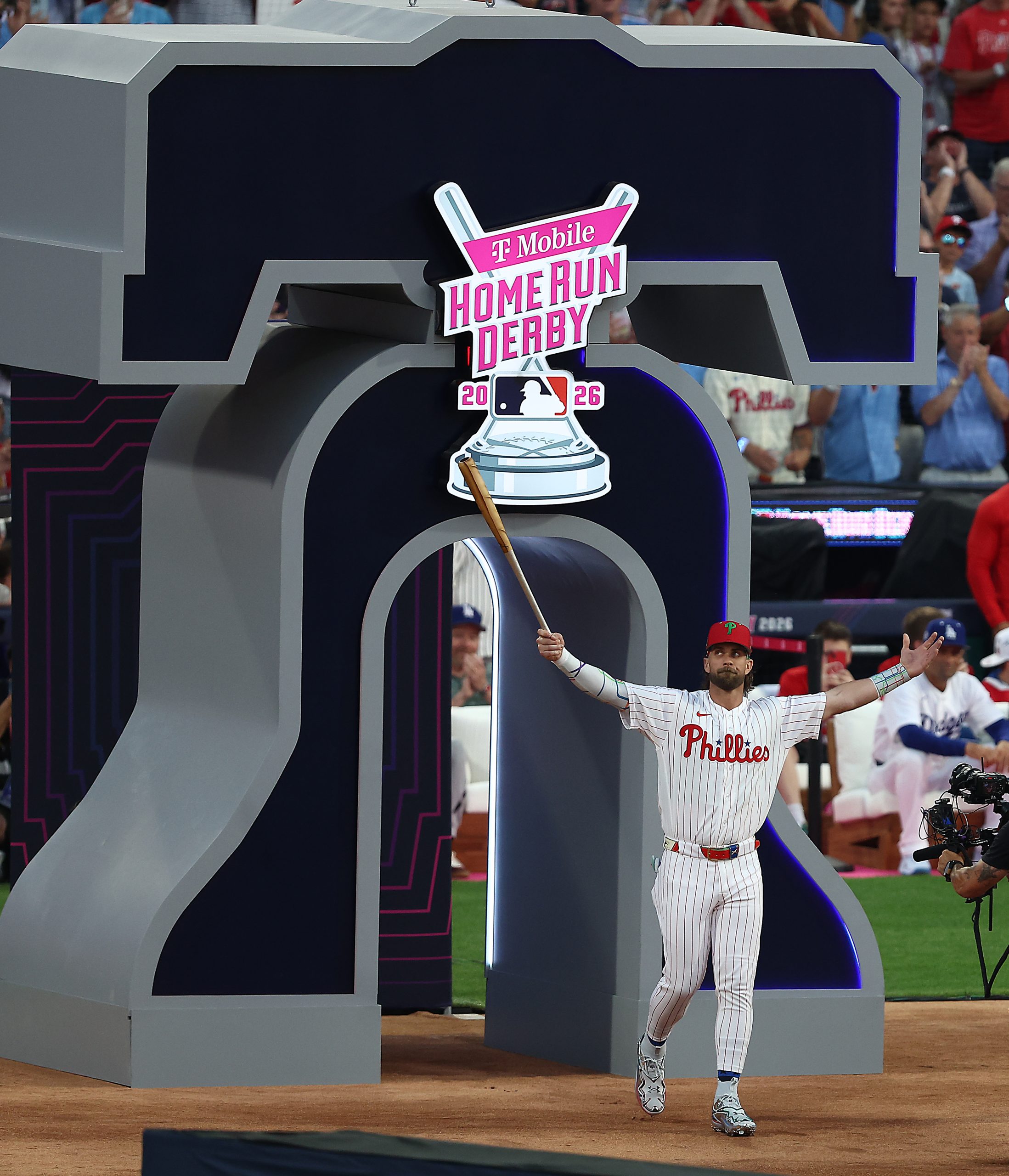
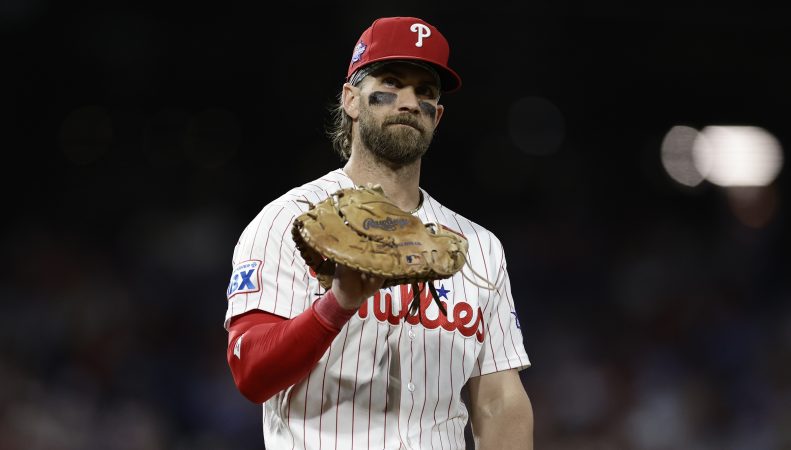
    Tonko and Blumenthal in August demanded that FanDuel end its VIP services, citing reporting from The Inquirer that revealed that a FanDuel VIP host had sent a personalized video of Phillies star Bryce Harper to Thompson, who earlier this year planned to end his life after gambling away the last of his family’s savings.

    A FanDuel executive disclosed to the lawmakers in a Sept. 24 letter that the company has sent approximately 30 personalized videos from athletes and entertainers to its customers during the last two years, but said such perks are not meant to encourage betting.

    In response to the congressional scrutiny, the Major League Baseball Players Association has said it would support prohibiting players from doing promotional work for gambling VIP programs.

    Such measures arrived too late for Mikesell’s son.

    A few days before Thanksgiving in 2024, Mikesell spoke by phone with Ray, who was still staying in his foreclosed-upon house in South Fayette. Neither knew that Allegheny County Sheriff’s Office deputies planned that day to serve Ray with an eviction notice.

    When the deputies later arrived and knocked on Ray’s door, they heard a single gunshot.

    Ray, 24, had died by suicide.

    Mikesell later said that he didn’t believe his son had planned on taking his life — he had already packed his belongings and his two cats in his car — but might have panicked when he saw police at his property.

    “We found a note in his garage,” Mikesell recalled. “It said, ‘Please take care of my cats.’”
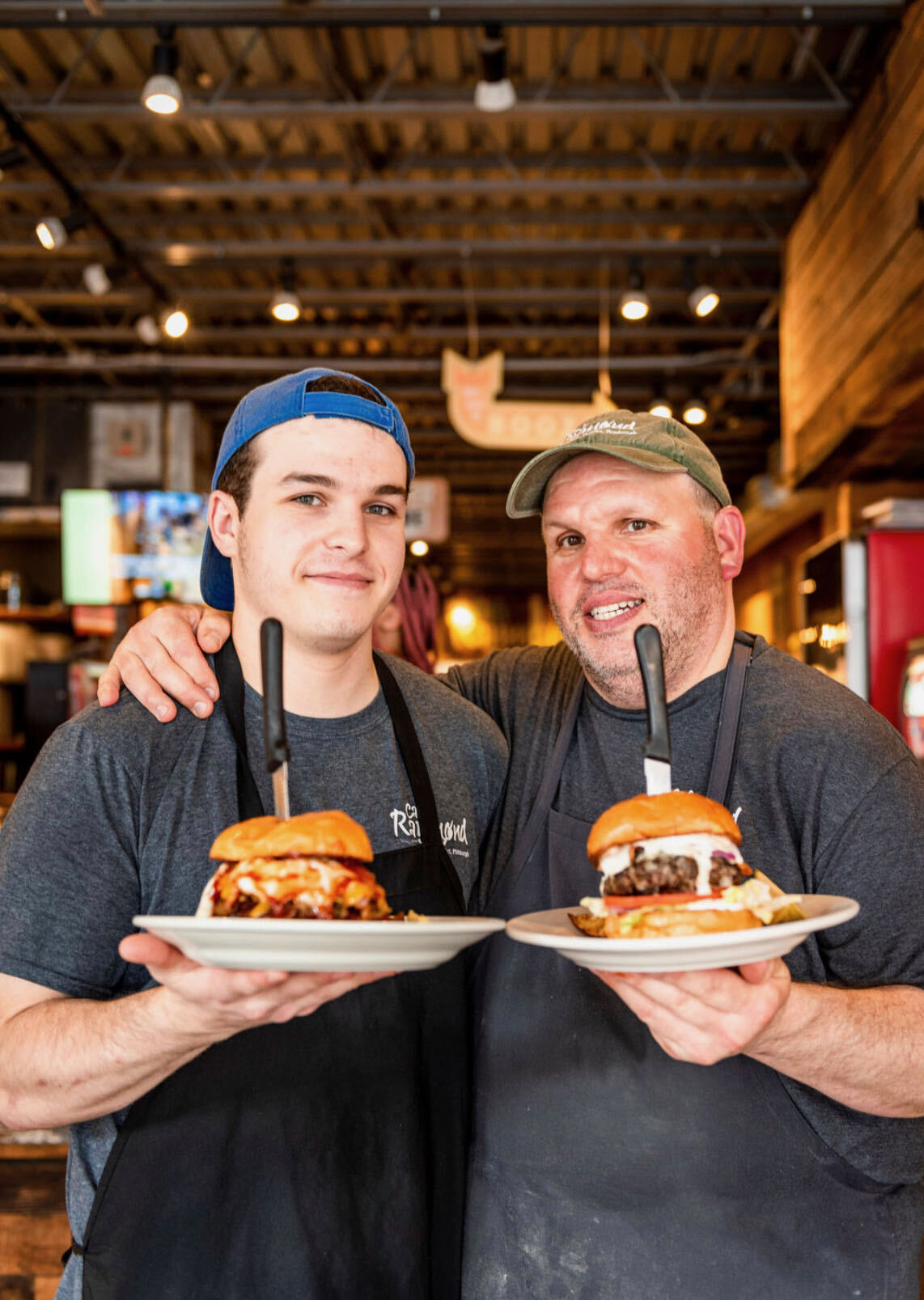
    Raymond Mikesell (right) and his son Ray (left) worked together daily at Cafe Raymond, Mikesell’s restaurant in Pittsburgh. Courtesy of Raymond Mikesell

    Grief-stricken, Mikesell contacted Rep. Jason Ortitay, an Allegheny County Republican, to ask if anything could be done to address gambling addiction. Earlier this year, Ortitay introduced a bill that would prevent betting apps from being accessed within Pennsylvania schools.

    “I called my wife and daughter, and we cried,” Mikesell said, his voice breaking. “Because it’s a small step in a big thing that’s going to mean a lot someday soon.”

    After police closed their investigation into Ray’s suicide, investigators returned his cell phone to his parents. They discovered that a month after his death, Ray’s phone was still buzzing with promotional offers from gambling companies.

    “There was one text from DraftKings,” Mikesell said, “asking him, ‘Are you betting with someone else? What’s going on?’”

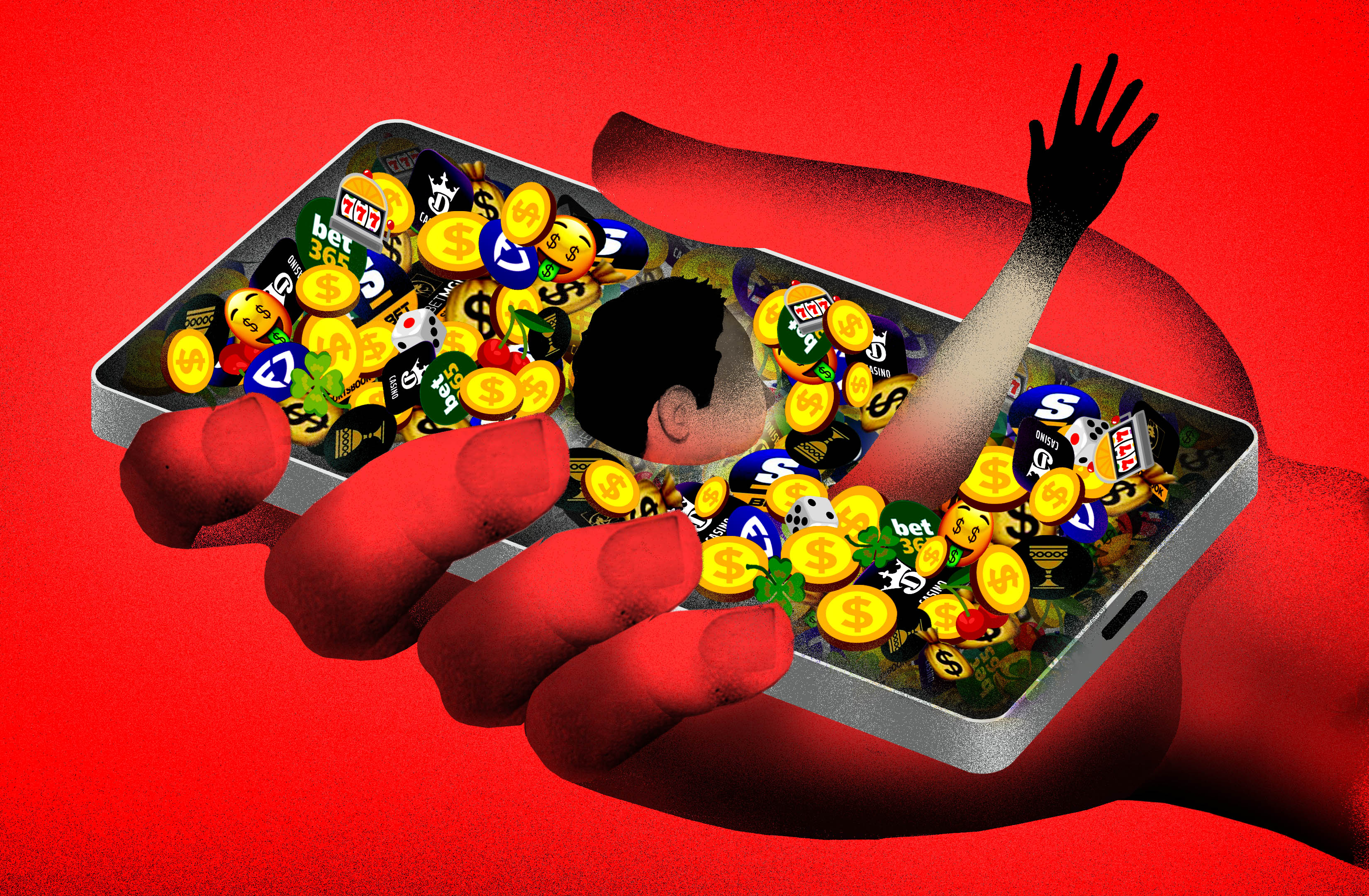
    Advertisements that encourage viewers to try online gambling or prediction markets have become nearly inescapable. Staff Illustration

    ‘The gambler’s fallacy’

    Tales of tragedy and heartache like Mikesell’s have spurred other legislative and legal efforts to rein in sportsbooks and prediction markets.

    Pennsylvania lawmakers are drafting legislation to ban in-game microbets and curtail VIP programs, and have introduced additional bills to prohibit consumers from using credit cards to place wagers, restrict gambling entities’ ability to send push notifications to customers, and ban insider trading on prediction markets.

    The Sports Betting Alliance — a national advocacy organization whose members include FanDuel, DraftKings, BetMGM, bet365, and Fanatics — has said it would oppose legislation to eliminate microbets, and has likened VIP services to rewards that retailers like Starbucks offer to frequent customers.

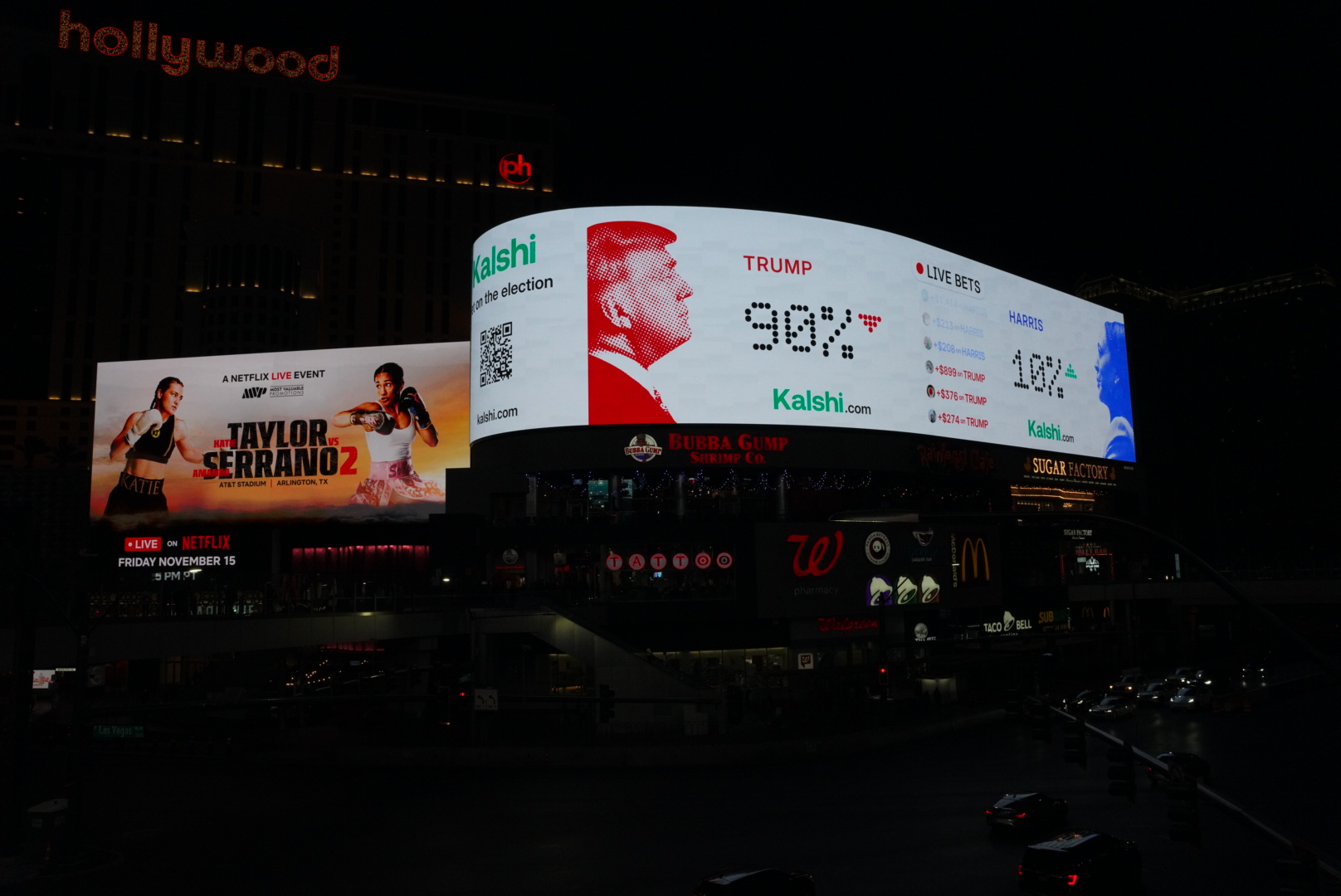
    New York Attorney General Letitia James has sued prediction markets Polymarket and Kalshi, accusing each of operating illegal gambling platforms. The federally regulated markets are available in 50 states, and customers can be as young as 18, while the legal gambling age remains 21.

    Prediction market officials insist that their products are not gambling apps — even after recording tens of billions of dollars in sports wagers during the FIFA World Cup — but rather a financial product similar to the stock exchange.

    In early September, New Jersey Attorney General Jennifer Davenport petitioned the Supreme Court to decide whether states should have the authority to regulate prediction markets as they do gambling.

    Amid those legal tussles, researchers are still assessing the complex picture of addiction that has been associated with the widespread growth of online sports betting and prediction markets.

    In early September, Bank of America Institute published an analysis that showed the largest share of customers who engaged in online betting in July came from lower- and middle-income households.

    FanDuel’s logo can be found next to the entrance of Live! Casino & Hotel, which sits about a block north from Citizens Bank Park in South Philadelphia.Elizabeth Robertson / Staff Photographer

    The institute said that median account balances of households that participated in online betting was 59% of those that did not, but didn’t include demographic or other details about those customers.

    “There’s something called the gambler’s fallacy, which basically goes like this: ‘If I keep doing this, I have to win,’” said Webber, who conducts inpatient rehabilitation at Canon’s 110-acre campus in Berks County.

    “From a biological standpoint, it’s a dopamine rush, so even if I’m losing, I’m getting a reward. It’s the excitement of the chance — ‘I might get this. And VIP [rewards] are going to make me feel like the man.’”

    In June, researchers from West Virginia University and the University of Oviedo published a study suggesting that the legalization of sports betting could lead to a 3% increase in the annual divorce rate. “Effects emerge gradually and are driven almost entirely by online wagering,” the authors wrote. (The study, which examined state and county data from 2012 to 2024, has not yet been peer-reviewed.)

    A 2025 report from the Democrat-leaning Progressive Policy Institute, meanwhile, found a 36% decrease in bankruptcies between 2019 and 2024 in states that legalized online sports betting, with “no sign of a tidal wave of bankruptcies or consumer credit downgrades.”

    That same year, The Lancet Regional Health-Europe published a study that showed suicide was the leading cause of death among 6,899 patients in Norway who had a gambling disorder between 2008 and 2021.

    Though those patients had a higher suicide risk than the general population, the researchers found that gambling addiction had a lower suicide risk than substance use disorders, alcohol dependence, psychotic disorders, or mood disorders.

    None of that research, though, captures how easily even a new gambler’s experience can escalate from a fun diversion to a life-altering obsession.
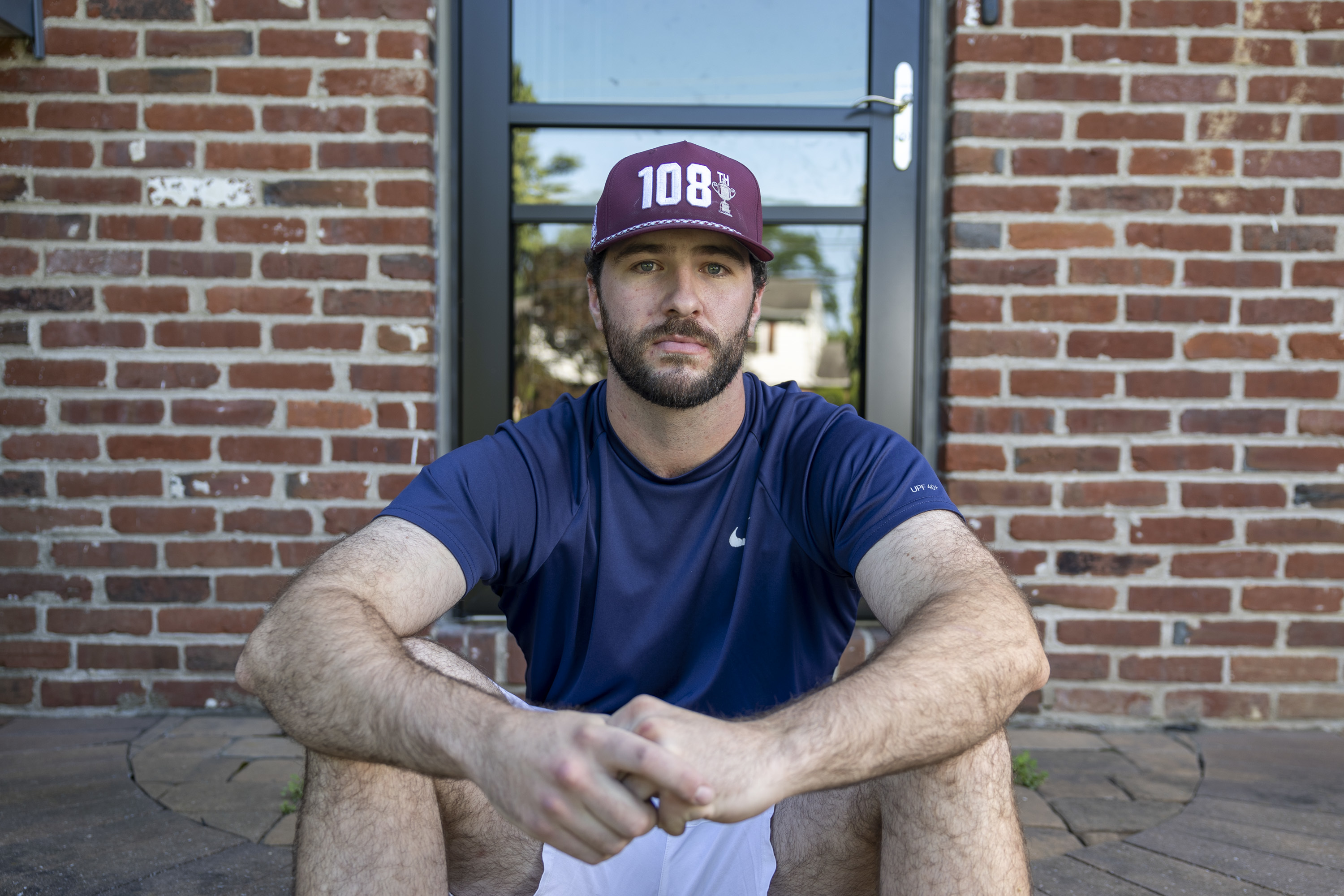
    Hiding his online gambling addiction from those closest to him left John Field feeling like he was living a double life, and ultimately drove him to lose a long-term relationship. Tyger Williams / Staff Photographer

    A double life

    When John Field turned 21, he opened accounts with DraftKings and FanDuel, and occasionally placed football parlay bets when he hung out with friends. Eventually, he tried the apps’ casino offerings, and became hooked on slots — 20 cents a spin at first, then 50 cents, then 5 bucks, then 10 dollars.

    He gambled nonstop at a warehouse job that he held in Clifton Heights, but hid this newfound compulsion from those closest to him. He felt like he was leading a double life.

    “Have you ever seen the show Severance?” Field asked, referring to the Apple TV sci-fi show in which office workers live separate lives in and out of work. “It was just like that. I had to basically pretend like I was a completely different person.”

    One person knew the truth: Field’s mother, Debbie. She still had access to his bank account from when he was younger and observed that Field was regularly moving money to a FanDuel account.

    “It started off slow,” Debbie said, “and then every year, it got worse.”

    Field recognized that he had a problem, and said he tried several times to close his FanDuel or DraftKings accounts. But then he felt a maddening urge to start gambling again.

    “Every time I’d run out of money, I’d see an ad, like, ‘Deposit 50 bucks and get $500 in casino credit.’ So when I was down real bad I’d download the other apps,” Field said. “I knew they’d give me a bunch of money to start with.”

    His phone eventually held apps from Fanatics, BetRivers, Borgata Online, BetMGM, Caesars Palace Online, SugarHouse, Stardust, and Bally Bet. Some weeks, he gambled away nearly his entire paycheck.

    Debbie Field saw that her son’s bank account was plunging into negative figures, and accruing overdraft fees. She implored him to disclose his addiction to his longtime girlfriend. The couple had started dating when they were sophomores at Penncrest High School in Middletown, Delaware County, and were planning to get an apartment together.

    “I was like, ‘John, you can’t move in with your girlfriend without telling her. You tell her, or we will,’” Debbie recalled. “He was petrified.”

    Field told his girlfriend about his struggles with addiction. The couple forged ahead and moved in together in February 2025.

    “I figured we got our own place, I got rent, bills, I really should probably stop this,” Field said. “And it just, again, got way worse. Because then when I lost money, I was like, ‘Holy s—, I have to pay rent, I have to get groceries.’”

    He chased his losses, diverting more money into gambling apps.
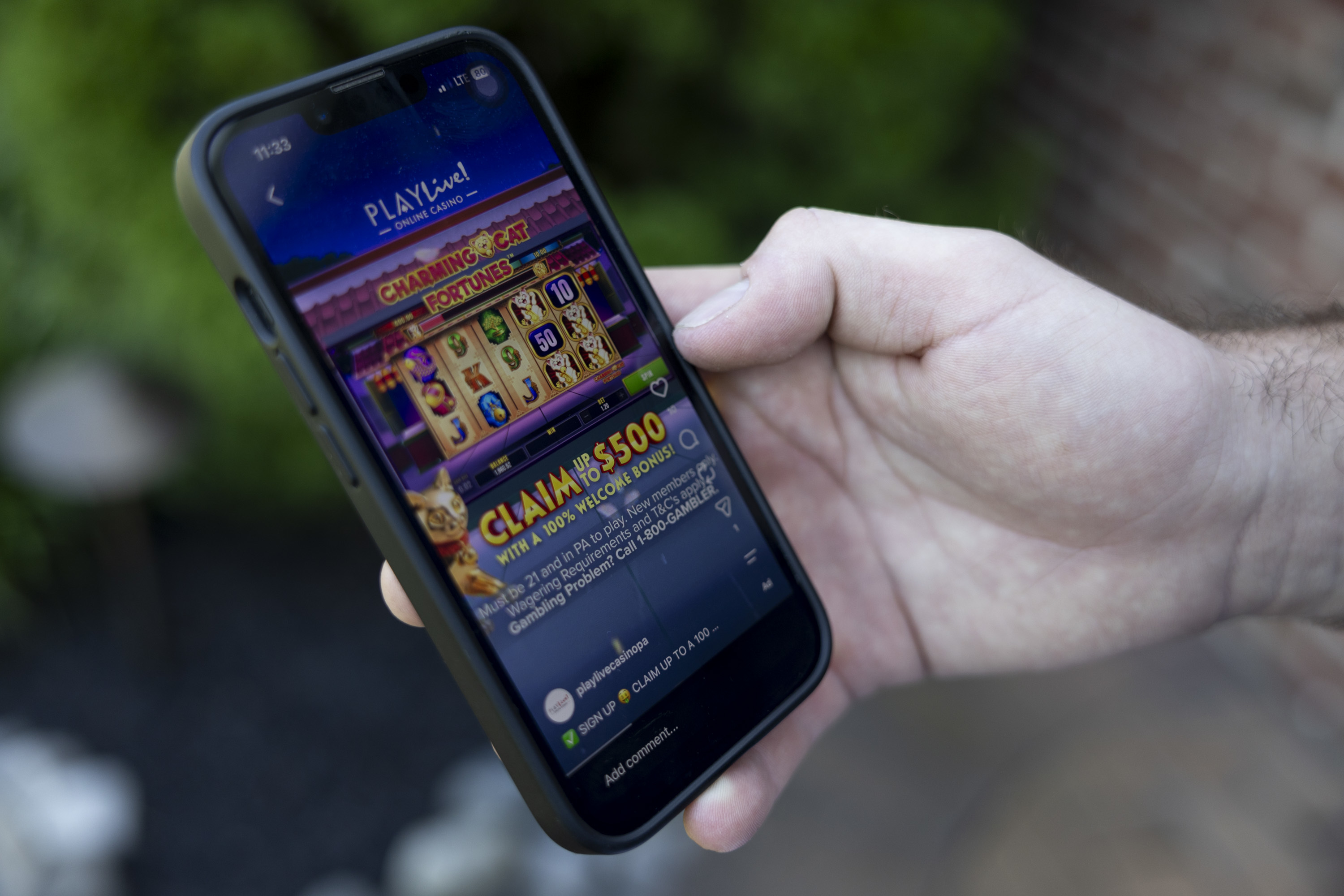
    After losing his apartment, Field moved in with his parents and began undergoing treatment for gambling addiction. He said he still encounters numerous daily ads for gambling on social media. Tyger Williams / Staff Photographer

    By March 2025, Field needed his parents to pay his rent. Two months later, he and his girlfriend broke up. Heartbroken, he moved back in with his parents, and agreed to participate in online therapy sessions through ETHOS Treatment.

    Field’s therapist, Phil Waibel, said there is so much demand for gambling addiction treatment, he now has a waiting list for his group sessions. “It’s taking the hearts and minds of young people — especially young men — at an astonishingly high rate,” he said.

    Waibel has treated patients who discovered that it was difficult to escape gambling marketing and push notifications even when they attempted to quit.

    “They’re seeking out even those people who have gone out of their way to block or delete contacts, to self exclude or unsubscribe from email lists,” Waibel said. “They continue to be bombarded, which would indicate a predatory or extremely offensive stance, to loop people back in as soon as possible.”

    Field, 27, said he now feels like his addiction is under control. He excluded himself from all gambling activities in Pennsylvania, secured a union job with a construction company, started going to a gym, and began repairing relationships with friends and family members.

    “Every aspect of my life is significantly better,” he said.

    Yet gambling isn’t out of the picture entirely.

    Recently, Field used Venmo to send some money to his sister, and faced a pop-up ad from a casino app that offered a $1,000 deposit match and up to 1,000 spins.

    “Sign up today,” the message read.

    After opening his Instagram app, he encountered ads for Charming Cat Fortunes — a slots game from PlayLive! Casino whose motto is “Stay entertained 24/7” — in addition to ads for a gold digger-themed slots game from betParx.

    Field estimates that he sees nearly 20 gambling ads across various social media platforms each day. “I’d be having a good day, not thinking about it,” he said, “and then boom, you’d see an ad, and feel that little itch, and you just kind of got to get rid of it.”

    He now considers the barrage of advertising to be a form of motivation.

    “It’s like, ‘F— these guys.’ All they’re trying to do is shove it down my throat,” he said. “It’s just insane how inescapable it is.”

    The Inquirer will continue to report on issues related to the growth of gambling addiction — among teens and adults — across Pennsylvania. If you, or someone you know, wants to speak with a reporter, please contact David Gambacorta or William Bender at dgambacorta@inquirer.com and wbender@inquirer.com

    <style>
    h6.font-inquirer-headline.antialiased.font-normal.text-white.text-5.leading-[26px].sm:text-6.sm:leading-8.mt-2.sm:mt-4.lg:mt-4.px-4.lg:px-0 {
        max-width: 450px;
        margin-left: auto;
        margin-right: auto;
    }
    
    blockquote.inq-blockquote.my-7.lg:my-12.text-center {
        max-width: 430px;
        margin-left: auto;
        margin-right: auto;
    }
    
    .inq-icon.inq-icon--link {
      color: red;
    }
    
    a.relative.z-1.text-blue-mid.hover:shadow-lightmode {
        color: #db1f1f;
    }
    </style>
  • FanDuel tells Congress it has sent about 30 personalized videos of athletes and entertainers to customers

    FanDuel tells Congress it has sent about 30 personalized videos of athletes and entertainers to customers

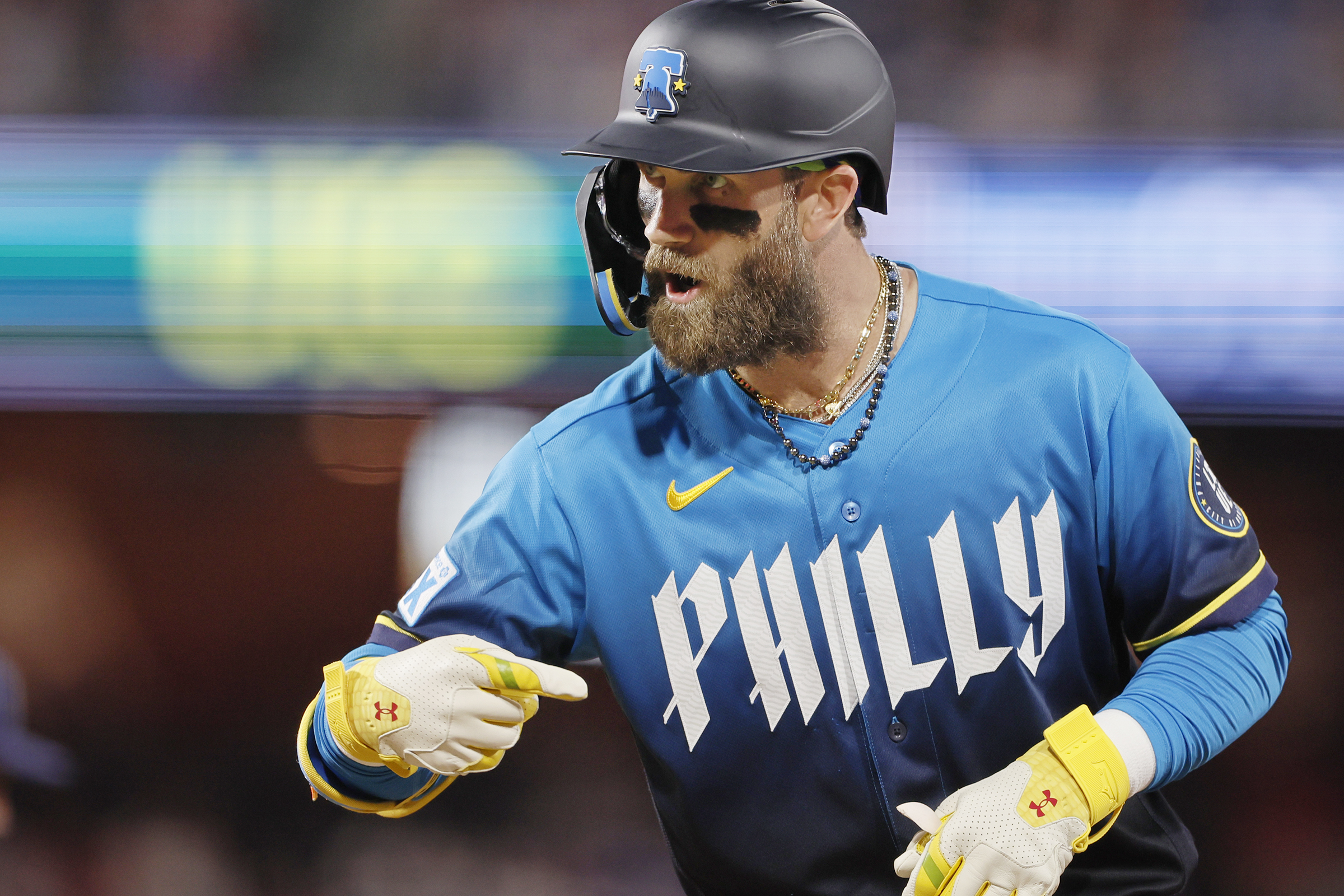
    In response to congressional concerns about a video of Phillies star Bryce Harper that a FanDuel VIP account manager sent to a bettor who had an addiction, a FanDuel executive recently disclosed in a letter to lawmakers that the company has sent approximately 30 similar personalized videos of athletes and entertainers to its customers during the last two years.

    “On occasion, FanDuel has arranged a personalized video message, almost always through publicly available services, as a token of appreciation for a customer’s loyalty in choosing FanDuel over its competitors,” Cory Fox, a senior vice president for public policy and sustainability, wrote on Sept. 24.

    The videos, Fox said, are not used to “induce customers to continue gambling.”

    FanDuel did not name the 30 athletes and entertainers in its letter. The company declined on Wednesday to provide their identities to The Inquirer.

    It was the second letter that FanDuel has sent about its business practices to U.S. Sen. Richard Blumenthal (D., Conn.) and U.S. Reps. Paul D. Tonko (D., N.Y.) and Valerie P. Foushee (D., N.C.) since mid-August. The lawmakers had demanded that the company end its VIP program after The Inquirer wrote in July that FanDuel had sent in 2024 a short video greeting from Harper to a bettor from the Philadelphia suburbs who had a gambling addiction.

    Blumenthal, Tonko, and Foushee also called on Major League Baseball and the Major League Baseball Players Association to prohibit players from doing promotional work for gambling entities. Such activity is permitted in the league’s current collective bargaining agreement, as long as players do not encourage betting on baseball.

    Sen. Richard Blumenthal, D-Conn., is among the federal lawmakers who have criticized FanDuel over some of its business practices.Allison Robbert

    In response, the players union said it would support banning players from participating in personalized marketing campaigns for VIP programs as part of its next contract.

    The legislators pressed FanDuel for additional information about its VIP practices earlier this month, accusing the company of initially providing them with “misleading and incomplete” responses.

    Fox said that FanDuel’s VIP program “serves only a small fraction of total FanDuel customers” and is meant to encourage customer loyalty. He noted that the company’s competitors — including federally regulated prediction markets — have similar loyalty programs.

    The lawmakers previously alleged that VIP account managers foster “false friendships” with gamblers to entice them to continue betting, and asked whether FanDuel ensures they are not extending predatory offers to problem gamblers.

    Fox denied those claims in his response.

    He said VIP managers are trained to recognize and report signs of problem gambling — such as a bettor expressing concern about paying bills or making references to harming themselves — and must seek approval before offering customers certain levels of rewards.

    The company separately reviews customers’ wagering, deposit, and withdrawal patterns and the amount of time spent on FanDuel’s platform for potential red flags.

    “FanDuel’s VIP program is not designed to encourage destructive gambling,” Fox wrote.

    A VIP manager obtained a video of Harper, a two-time National League Most Valuable Player, through the video service Cameo, and sent it in November 2024 to Terry Thompson, a Montgomery County resident who lost nearly $2 million on sports bets that he placed with FanDuel and DraftKings beginning in 2020.

    Earlier this year, having gambled away the last of his money, Thompson indicated to his therapist that he was planning to die by suicide. He entered a psychiatric facility to be treated for gambling addiction.

    When Harper recorded the greeting, he was not aware that Thompson had an addiction, or that FanDuel intended to use the video for business purposes, Harper wrote on Instagram in July.

    <iframe src="https://embed.documentcloud.org/documents/28711202-fanduel-congressional-response-92426/?embed=1" width="8.5" height="11" style="border: 1px solid #d8dee2; border-radius: 0.5rem; width: 100%; height: 100%; aspect-ratio: 8.5 / 11" allow="fullscreen"></iframe>

    Fox said if customers indicate that they want to cut back on gambling or shutter their account, the company provides assistance, and does not offer perks to encourage them to reconsider.

    “Where the right outcome is closing the account entirely,” Fox wrote, “FanDuel’s VIP Account Managers take that action.”

    The Inquirer will continue to report on issues related to the growth of gambling addiction — among teens and adults — across Pennsylvania. If you, or someone you know, would like to speak with a reporter, please contact David Gambacorta or William Bender at dgambacorta@inquirer.com and wbender@inquirer.com

  • Philly workers celebrate ‘beauty of union solidarity,’ bemoan rising costs at Labor Day parade

    Philly workers celebrate ‘beauty of union solidarity,’ bemoan rising costs at Labor Day parade

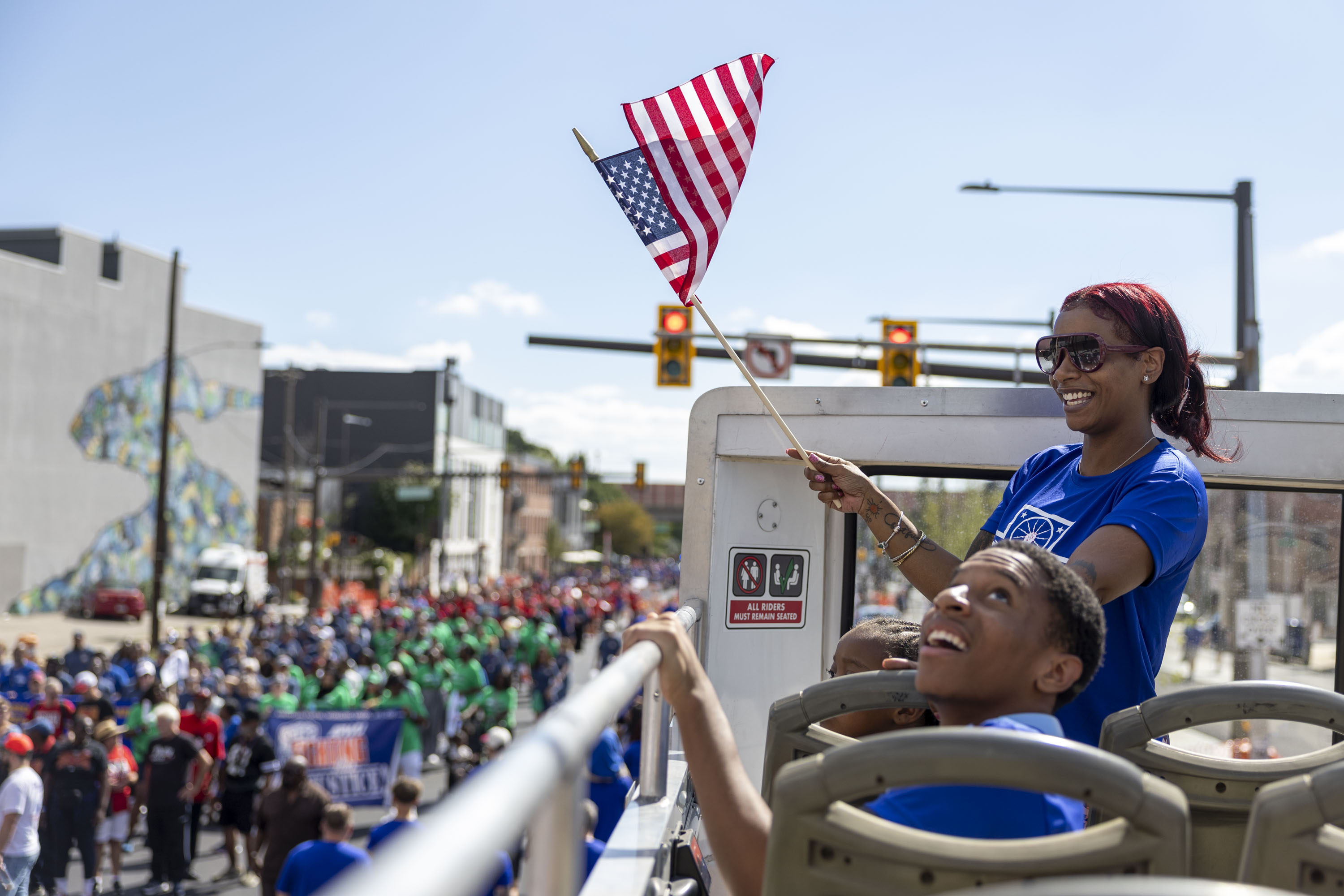
    For more than an hour, waves of union members and their families marched and chanted along a half-mile stretch of Washington Avenue late Monday morning, their steps amplified by the percussive thunder of drum line groups.

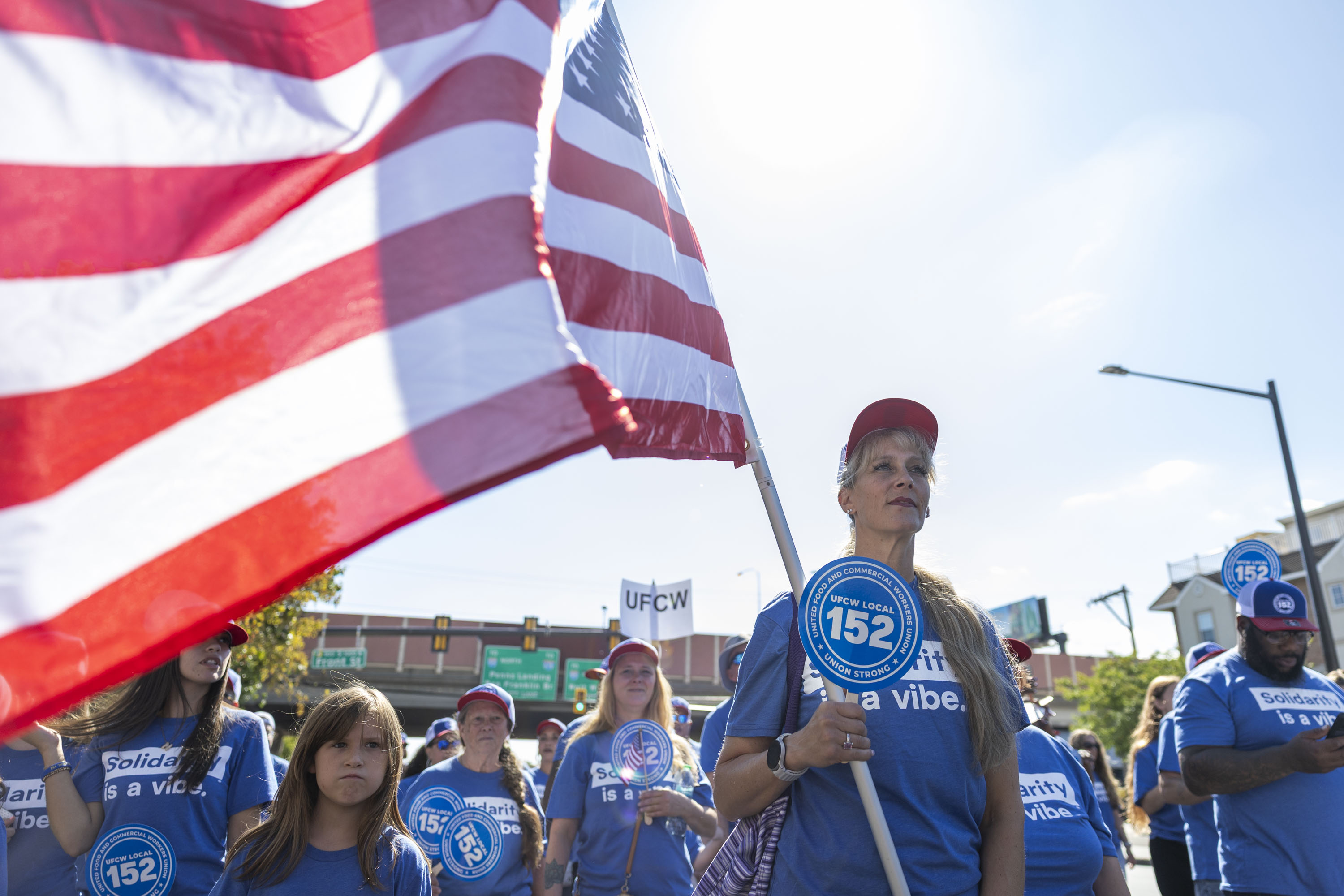
    Some could have easily opted to spend their Labor Day — balmy as it was, with blue skies and occasional tufts of cotton candy clouds — on a beach or at a barbecue, mused Wendell Young IV, president of United Food and Commercial Workers Local 1776, as he trekked past houses and storefronts in a blue T-shirt that bore the words “Solidarity is a vibe.”

    But Young said he thought anger over some of President Donald Trump’s policies — such as a controversial attempt to end collective bargaining rights for more than a million federal workers — had compelled many union members to instead take to the streets for the 39th Annual Tri-State Labor Day Parade.

    “He’s more interested in putting his name on buildings and arcs,” Young said, “than protecting the rights of workers.”

    Economic anxiety was a recurring theme throughout the parade, as it is across much of the U.S. Federal Reserve data in January showed that wealth inequality in the country had reached its highest level since 1989.

    Lois Crudele, of Brooklawn, with Local 152 of the United Food and Commercial Workers International Union, is holding up the American flag while walking with fellow union members during Monday’s parade.Tyger Williams / Staff Photographer

    “Workers in general are very concerned about cost increases across the board,” said Danny Bauder, president of the Philadelphia Council AFL-CIO. “Inflation keeps increasing [prices], and the job market is tight.”

    Nina Coffey, secretary and treasurer for SEIU Local 668, which represents 20,000 social service union employees in Pennsylvania, said members most often express concern about the “rising costs of healthcare, being able to put food on the table, as well as unregulated artificial intelligence that we’re facing.”

    Yet uncertainty did not overshadow what was an otherwise joyous day.

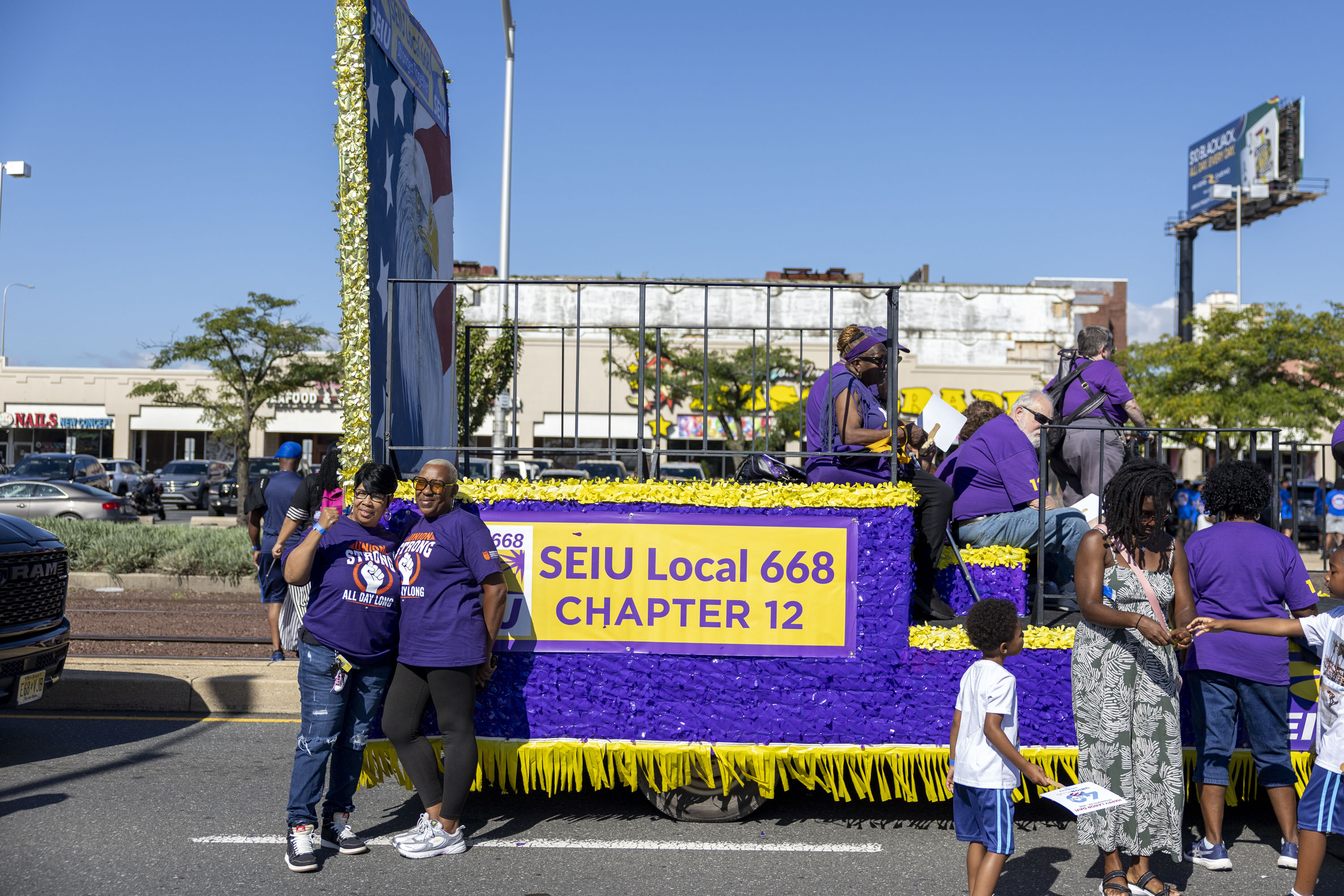
    Behind Coffey, on Washington Avenue near Fifth Street, SEIU members on a purple and gold float tossed candy to giddy children on a sidewalk, where handfuls of smiling onlookers waved and recorded with their phones.

    Bauder praised what he called “the beauty of union solidarity” — the communal lift that members experience when another union achieves a victory. He cited, as an example, the 1,500 unionized Peco workers who won raises and full retirement medical coverage after briefly going on strike in July, and hotel union workers who also secured wage increases after going on strike in June.

    During a rally before the parade, outside the Sheet Metal Workers’ Local 19 Training Center on Columbus Boulevard, city and state officials preached from a platform about organized labor’s enduring presence.

    “Philadelphia is a union town forever,” said city managing director Carlton Williams, who added that union workers have cleaned more than 150,000 city blocks under Mayor Cherelle L. Parker’s administration.

    Charlene Little (left) and Tanita Williams (right), of West Philadelphia, with SEIU Local 668, with their parade float.Tyger Williams / Staff Photographer

    Parker appeared briefly during the pre-parade gathering, then left abruptly.

    “The mayor was here and wasn’t feeling well. She will be fine,” Parker’s spokesperson, Joe Grace, wrote in a text message. “She is sorry to miss an important event for organized labor that she never, ever misses.”

    Parker later returned, and then attended two additional Labor Day events.

    Pennsylvania Lt. Gov. Austin Davis, who also addressed the assembled union members, noted that his father is a union bus driver in Pittsburgh.

    “I know what a good union job can do for a family. I’ve seen it,” Davis said. “And I think we’re going to continue to fight to protect that way of life here in Pennsylvania.”

    A recent Gallup poll found that unions have a 71% approval rating, a figure that was surpassed only in the 1950s and in 1936.

    The same poll showed that 47% of Americans want unions to have more influence than they currently do.

    But only 10% of U.S. workers are union members, according to the most recent data from the U.S. Bureau of Labor Statistics. That percentage is slightly higher in Pennsylvania, at 10.9%, and New Jersey, at 14.7%.

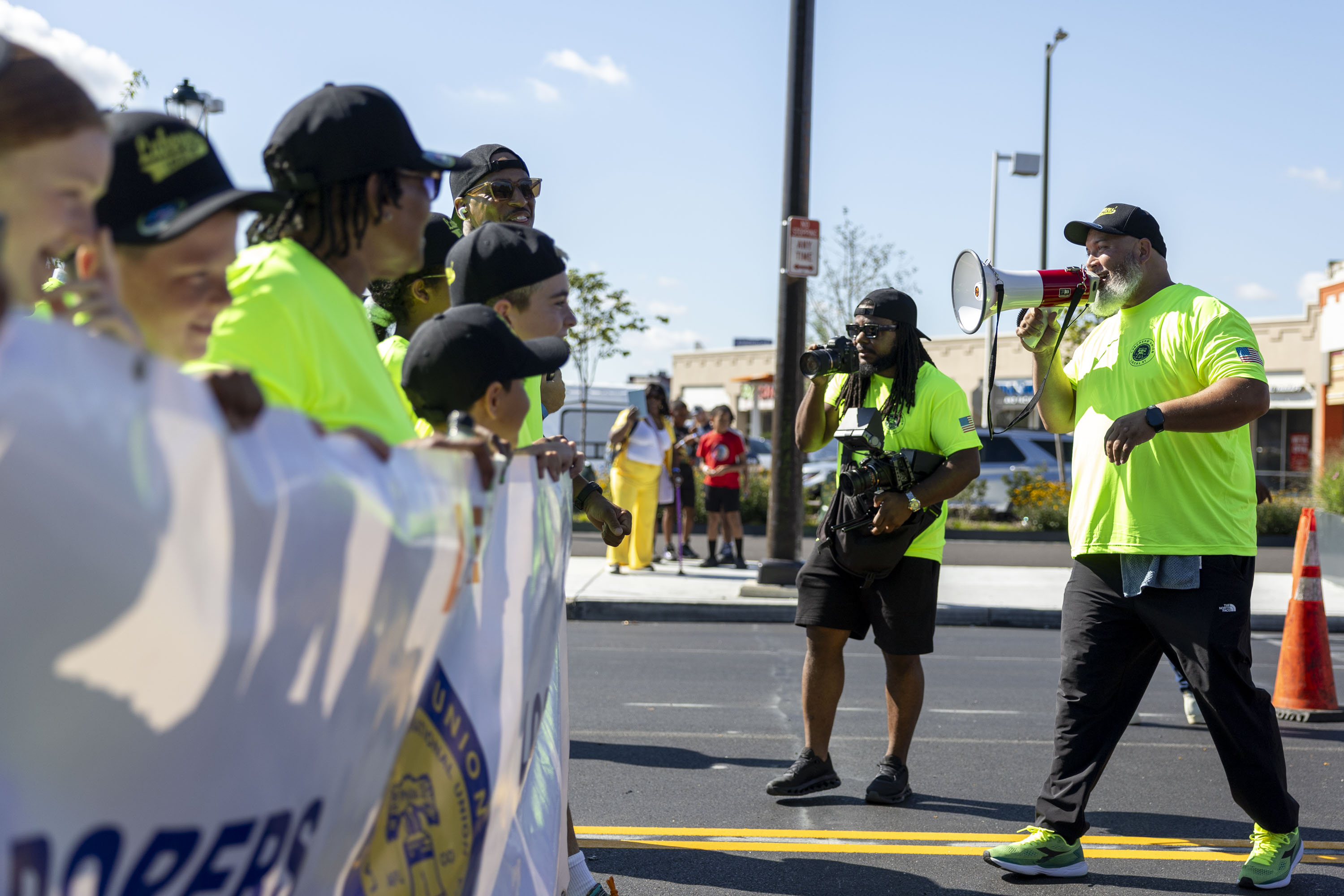
    Billy Williams, of Northeast Philadelphia, with Local 57 of the Laborers’ International Union of North America, is leading chants for his fellow union members.Tyger Williams / Staff Photographer

    Perception of unions improved during the COVID-19 pandemic — when nurses, bus drivers, and grocery workers were deemed essential — and has remained high ever since, Paul Clark, a professor of labor and employment relations at Pennsylvania State University, wrote in an email.

    As many Americans’ standard of living has fallen, and income inequality has grown more extreme, labor unions have appeared to many as the “only institution that could help working people win a bigger share of the wealth they were creating and that they deserved,” Clark said.

  • Lawmakers accuse FanDuel of ‘promoting addiction’ amid battle over VIP promotions

    Lawmakers accuse FanDuel of ‘promoting addiction’ amid battle over VIP promotions

    Three members of Congress renewed their criticism of FanDuel Sportsbook on Thursday, accusing the company’s leaders of providing “misleading and incomplete” responses to a recent inquiry about the VIP services and rewards that it offers to customers.

    In a letter to FanDuel chief executive officer Christian Genetski, U.S. Sen. Richard Blumenthal (D., Conn.) and U.S. Reps. Paul D. Tonko (D., N.Y.) and Valerie P. Foushee (D., N.C.) wrote that they “remain unconvinced that FanDuel is making an active effort to protect bettors from harmful gambling and instead appears to be promoting addiction.”

    The lawmakers had initially sent letters on Aug. 10 to FanDuel, Major League Baseball, and the Major League Baseball Players Association, and demanded that each make policy changes following an Inquirer story about a personal video greeting from Phillies star Bryce Harper that a FanDuel VIP manager sent in 2024 to a bettor who had a gambling addiction.

    In response, the MLBPA said last week it would support banning players from doing promotional work for sportsbook VIP programs in the union’s next collective bargaining agreement.

    The lawmakers had called on FanDuel to eliminate its VIP rewards and disclose information about those services, including whether the company had sent videos of other athletes to VIP bettors, or offered promotions to gamblers who experienced losing streaks and attempted to cut back on wagering.

    In an Aug. 14 response, FanDuel wrote that it is “committed to being a transparent and cooperative partner” but did not directly respond to many of the lawmakers’ questions.

    The company said it spent $158 million on responsible gaming in 2025, and that it extensively reviews customers’ betting history before offering them VIP status.

    Though professional sports leagues were once deeply opposed to legalizing sports betting, leagues and many franchises have now entered into lucrative partnerships with gambling entities.Elizabeth Robertson / Staff Photographer

    “Sports wagering is one of the most heavily regulated industries in the United States,” wrote Cory Fox, a FanDuel senior vice president, “and FanDuel operates a licensed online sportsbook in 26 U.S. jurisdictions.”

    The lawmakers seized on this point, writing that FanDuel also has a prediction market, FanDuel Predicts, “which undermines the integrity of — if not bypasses — those very regulations.”

    A FanDuel spokesperson said he was looking into the matter Thursday morning, but did not respond to follow up requests for comment.

    Prediction markets allow customers to wager on a range of subjects: sports, politics, Hollywood award shows, the weather. They’re regulated by the federal Commodity Futures Trading Commission, which thus far has enforced few limitations on companies like Kalshi and Polymarket.

    Critics — including former New Jersey Gov. Chris Christie, who works as a strategic adviser to the American Gaming Association — contend that prediction markets are running illegal sports betting operations. New Jersey Attorney General Jennifer Davenport earlier this week petitioned the U.S. Supreme Court to decide whether states should have the authority to regulate the markets.

    In their latest message to FanDuel, the lawmakers described the company’s “VIP perks, constant push notifications, and personalized promotions” as exploitative, and demanded the company provide a written response to eight questions by Sept. 17.

    Sportsbook VIP rewards and push notifications are a central thread in a lawsuit that the nonprofit Public Health Advocacy Institute filed in March in Common Pleas Court of Philadelphia against FanDuel, DraftKings, the NFL, and the data company Genius Sports on behalf Montgomery County resident Terry Thompson and Delaware County resident Christopher Sage, VIP bettors who each developed ruinous gambling addictions.

    FanDuel, DraftKings, the NFL, and Genius Sports have each sought to have the case dismissed.

    Thompson, who received the 21-second video of Harper, lost more than $1.8 million on sports bets, and planned to die by suicide earlier this year, rather than reveal to his family the scope of his losses.

    Harper has said that he recorded the message through the video service Cameo, but didn’t know that Thompson had an addiction, or that FanDuel intended to use it as a VIP reward.

    The Inquirer will continue to report on issues related to the growth of gambling addiction — among teens and adults — across Pennsylvania. If you, or someone you know, wants to speak with a reporter, please contact David Gambacorta or William Bender at dgambacorta@inquirer.com and wbender@inquirer.com

  • Former N.J. Gov. Chris Christie discusses his legacy as the godfather of legal sports betting, prediction markets, and the Trumps

    Former N.J. Gov. Chris Christie discusses his legacy as the godfather of legal sports betting, prediction markets, and the Trumps

    Chris Christie has been a two-time Republican presidential candidate, the governor of New Jersey, and a U.S. attorney. But history might show that he generated the most enduring national impact in a different role, as the godfather of legalized sports betting.

    In 2012, when he was still New Jersey’s governor, Christie signed a bill that would allow customers to wager on professional and collegiate sports at 12 casinos and four racetracks.

    He correctly predicted that the bill — which directly challenged a longstanding federal law that restricted legal sports betting to just a handful of states — would lead to him being sued by powerful opponents, and that over the long haul, his efforts would succeed.

    But in a recent interview with The Inquirer, Christie said that even he did not imagine that sports gambling would evolve from a location-based attraction to phone apps that are readily accessible and open for business around the clock. Americans spent a record $165 billion on sports wagers in 2025, amid growing concern from health experts and lawmakers that mobile gambling is driving a health epidemic.

    Nor did Christie — who now works as a strategic adviser to the American Gaming Association — envision the rise of prediction markets, some of which have been accused in lawsuits across the U.S. of running illegal sports betting operations. Christie, however, said he is unsurprised that two prediction market companies count Donald Trump Jr. among their advisers.

    Christie’s sports gambling crusade began just two months after New Jersey voters approved a referendum in November 2011 to legalize sports betting in the state.

    Casino industry lobbyists had long championed the type of bill that he signed, predicting that sports betting would be a double win for the state, attracting new customers to struggling casinos and generating revenue to benefit elderly and disabled residents.

    But a federal law, the Professional and Amateur Sports Protection Act, had since 1992 restricted legal sports betting to Delaware, Montana, Nevada, and Oregon. Christie wasn’t deterred.

    “Am I expecting there may be legal action taken against us to try to prevent it? Yes,” he told reporters in 2012. “But I have every confidence we’re going to be successful.”

    Then the National Collegiate Athletic Association — along with Major League Baseball, the NFL, the NBA, and the NHL — sued Christie for violating the federal law, igniting a legal saga that would wind for years through district and circuit courts before reaching the U.S. Supreme Court in 2017.

    Christie argued that PASPA had been a constitutional overreach that violated the Tenth Amendment’s “anti-commandeering” doctrine.

    “We lost the first six times [in lower courts],” Christie said. “I had the sense that maybe I was wrong.”

    In 2018, the Supreme Court voted to overturn PASPA, giving states the freedom to enact their own sports betting laws.

    This interview with Christie, 63, has been edited and condensed for clarity.

    Why was legalizing sports betting in 2012 a priority for you?

    I was trying to differentiate Atlantic City, and give the casinos something new and different to offer, and to help preserve the horse racing business. I saw it at the time as an offensive and defensive measure. That was the motivation.

    The leaders of professional sports leagues were critical of your efforts, and deeply opposed to legalizing sports gambling. What did you think of their position?

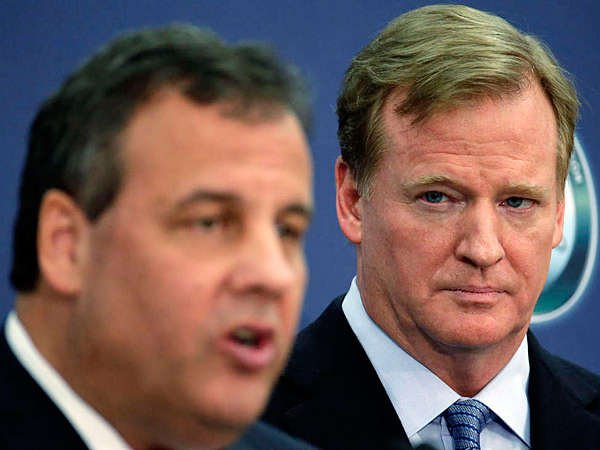
    I thought that their opposition was both wrongheaded and hypocritical, and I told them so. [Then-NBA commissioner] David Stern was probably the most vehement against it, but [NFL Commissioner] Roger Goodell was a driving force, too. I told them, ‘[Sports betting] is happening anyway. You’d rather have people bet with illegal bookies — either mob-related, or offshore — than companies who are in the business and regulated by the state?’ It made no sense.

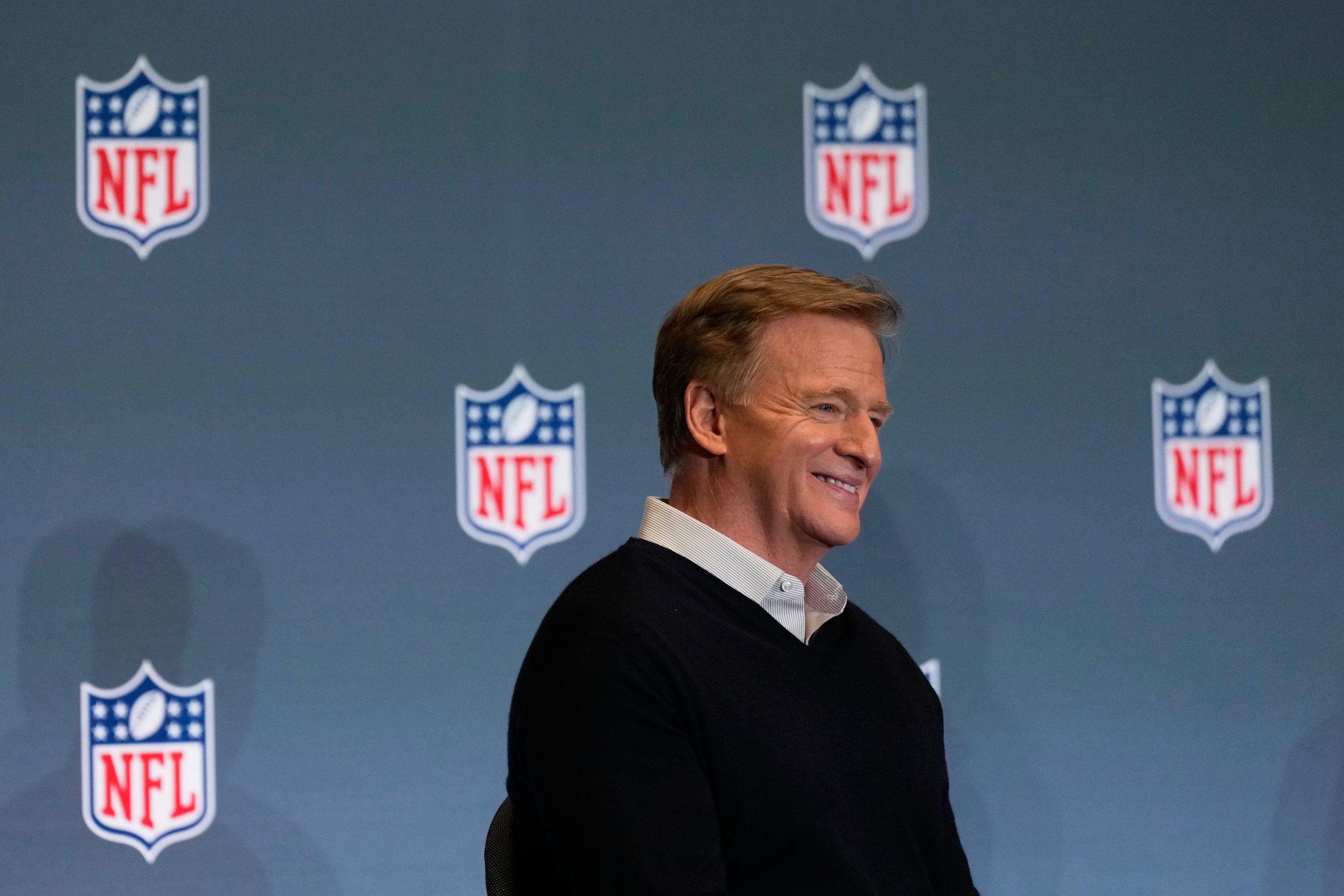
    Along with his peers in other professional sports, NFL Commissioner Roger Goodell (right) was opposed in 2012 to an expansion of legalized sports betting.
    Were you surprised to see those leagues later enter into lucrative partnerships with sportsbook companies?

    I wasn’t surprised at all. The leagues have shown an extraordinary ability to chase a dollar. I’m still waiting for the statue that they’re going to build of me, or the thank-you note. [Legalizing sports betting] has helped their TV contracts as well. People who weren’t even necessarily interested in sports before are now extraordinarily interested because they have a little bit of a wager on it. It’s kind of amazing.

    In the years since the Supreme Court overturned PASPA, NBA and MLB players have been arrested for conspiring with gamblers. An NFL executive was recently suspended for sharing inside information about the team’s draft plans.

    It’s inevitable that was going to happen. But I think because there is such a great deal of transparency, the leagues can act quickly. That makes it much more different from when gambling was illegal, and you still had some athletes or people associated with sports interacting with [bettors]. The regulation brings about transparency, and transparency makes it easier to police.

    Sports betting has evolved into a 24/7 mobile enterprise. Do you consider it to be a different product than what it was in 2012?

    Completely. I don’t think I could ever have anticipated that it would be in everybody’s pocket. That’s a little bit disturbing to me, to tell you the truth, the proliferation of it. And obviously prediction markets have been very disturbing to me, particularly because they market to teenagers, which is strictly prohibited for the legal gaming companies.

    Prediction markets have also faced backlash for allowing people to wager on U.S. military operations and the deaths of foreign leaders.

    I think the whole thing is absurd, and not good for the public.

    President Trump’s son, Donald Trump Jr., was reportedly given $300,000 worth of Kalshi shares in 2025, after becoming an adviser to the company. MARSHALL SCHEUTTLE
    President Trump’s son, President Donald Trump Jr., is an adviser to Kalshi and has shares of the company, and his venture capital firm has invested in Polymarket. Those companies are regulated by the federal Commodity Futures Trading Commission. Does that seem like a conflict to you?

    I think common sense gives you the answer to that. If it’s a money-making enterprise for the Trump family, then the odds are it’s going to face light regulatory action.

    Some state attorneys general have sued Kalshi. They allege that the company is running an unlicensed, illegal sports betting operation. Kalshi insists it is a commodity exchange. Will this end up being decided by the Supreme Court?

    It’s betting. It’s not an investment. It’s not a commodity. The Supreme Court has ruled that states have the right to regulate sports betting. I think that it’s going to go to the Supreme Court, and I’m confident [the prediction markets] will lose.

    We’ve interviewed addiction experts who say that sports gambling addiction is now a health epidemic, similar to tobacco and opioid abuse.

    I always thought that a big portion of this [revenue] has to go toward addiction treatment, and I think that’s got to continue.

    Elected officials in Pennsylvania, New Jersey and other states are exploring new regulations for sportsbook operators, like curtailing or eliminating in-game microbets or VIP programs. Are those kinds of reforms needed?

    As long as [sports betting] is a venture that creates tax revenue, then the states are always going to be examining this issue. They’re partners. They can’t claim no responsibility. I don’t know how it’ll manifest, or where it’ll land. … I think all regulation should be rooted in evidence-based research. So if there are changes that we see that could help make [gambling] safer, they should be considered.

    The Inquirer will continue to report on issues related to the growth of gambling addiction — among teens and adults — across Pennsylvania. If you or someone you know wants to speak with a reporter, please contact David Gambacorta or William Bender at dgambacorta@inquirer.com and wbender@inquirer.com

  • MLBPA supports banning players from promoting sportsbook VIP programs

    MLBPA supports banning players from promoting sportsbook VIP programs

    The Major League Baseball Players Association said Monday that it supports prohibiting players from participating in personalized marketing campaigns for sportsbook VIP programs, amid congressional scrutiny of a video of Philadelphia Phillies star Bryce Harper that a FanDuel employee sent to a customer who had a gambling addiction.

    Jeffrey Perconte, MLBPA’s general counsel, wrote in a letter to U.S. Sen. Richard Blumenthal (D., Conn.) and U.S. Reps. Paul D. Tonko (D., N.Y.) and Valerie P. Foushee (D., N.C.), that the union would be willing to adopt this restriction as part of a new collective bargaining agreement that it is negotiating with Major League Baseball.

    The three members of Congress had sent letters on Aug. 10 to MLB, the players’ union, and FanDuel, demanding that each take corrective action to address The Inquirer’s reporting on the personalized video Harper recorded and a FanDuel VIP host sent in 2024 to Terry Thompson, a Montgomery County resident who lost $1.5 million on sports wagers that he placed with FanDuel.

    Thompson planned to die by suicide earlier this year rather than acknowledge to his family the scope of his losses, according to a lawsuit that the nonprofit Public Health Advocacy Institute filed in March on Thompson’s behalf against FanDuel and DraftKings, which had also allegedly provided him with VIP perks.

    Harper has said that he recorded the message through the video service Cameo but didn’t know that FanDuel would utilize the 21-second video as a reward for an addicted gambler.

    The Democratic lawmakers told FanDuel to end its VIP program, which they described as predatory, and called on MLB and the MLBPA to prohibit players from performing promotional work for gambling entities.

    That players aren’t prohibited from doing promotional work for gambling companies is a “systemic failure,” the lawmakers wrote, “rooted in the deep enmeshment between leagues, teams, and sports books.”

    In his response, Perconte noted that the current collective bargaining agreement, which expires in December, allows players to appear in advertisements or make personal appearances for casinos, racetracks, or sportsbook companies, provided the ballplayers do not encourage betting on baseball.

    “We believe the restrictions on endorsements and partnerships in our collectively bargained policies represents a good-faith effort to allow responsible betting-related promotional activity by teams and players,” Perconte wrote.

    “That said, our current policies do not explicitly reference or otherwise address the types of ‘predatory VIP programs’ described in your Aug. 10 letter. The Association stands ready to make proposals to fill that gap.”

    FanDuel responded in a separate letter to the lawmakers, explaining that the company offers tools that enable bettors to limit how much and how often they wager, and extensively reviews customers’ betting history before offering them VIP status, according to a copy of the message that was posted online by the outlet Sports Betting Dime.

    “Employees who are primarily responsible for engaging with VIPs — VIP Account Managers — are salaried employees,” wrote Cory Fox, a FanDuel senior vice president. “Their compensation is not tied to how much their customers wager or the results of those customers’ wagering activities.”

    FanDuel did not address questions that the Congress members raised about whether VIP managers had sent videos of other athletes or celebrities to gamblers.

    Since the U.S. Supreme Court voted in 2018 to give states the authority to enact their own sports betting laws, MLB and other professional sports leagues have entered into lucrative partnerships with sportsbook companies and prediction markets.

    Perconte wrote that half the league’s 30 franchises have partnerships or sponsorships with sports betting operators, while the owners of three teams — the Boston Red Sox, Chicago Cubs, and Los Angeles Dodgers — are “seed investors in a newly announced prediction market futures trading platform called FutureSports.”

    As part of collective bargaining negotiations, the players union has proposed lobbying with MLB to ban proposition bets and event contracts that are based on a player’s in-game performance, which the union said is linked to higher rates of problem gambling and bettors harassing players and their families.

    “And while MLB has thus far rejected this proposal, we intend to continue pursuing it,” Perconte wrote.

    Elected officials in Pennsylvania are separately planning legislation that would restrict or eliminate sportsbook VIP programs, and in-game microbets, an effort that Joe Maloney, the president of the Sports Betting Alliance — a national advocacy organization whose members include FanDuel, DraftKings, BetMGM, bet365, and Fanatics — said the organization will oppose.

    Pennsylvania’s Gaming Control Board, which regulates casinos, online gambling and sports wagering, has also said that it is reviewing the Harper video.

    The Inquirer will continue to report on issues related to the growth of gambling addiction — among teens and adults — across Pennsylvania. If you or someone you know wants to speak with a reporter, please contact David Gambacorta or William Bender at dgambacorta@inquirer.com and wbender@inquirer.com

  • Senate, Congress members demand FanDuel eliminate VIP programs for bettors, citing Bryce Harper controversy

    Senate, Congress members demand FanDuel eliminate VIP programs for bettors, citing Bryce Harper controversy

    Three members of Congress on Monday demanded that FanDuel Sportsbook end its VIP reward program and called on Major League Baseball and the Major League Baseball Players Association to prohibit athletes from doing promotional work for gambling entities in response to a “deeply disturbing” controversy involving Philadelphia Phillies star Bryce Harper and a VIP bettor who had a gambling addiction.

    The Inquirer reported in July that a FanDuel VIP manager had sent a personal video greeting from Harper in 2024 to Terry Thompson, a Montgomery County resident who ultimately lost $1.5 million on bets that he placed with the sportsbook operator.

    Harper later said that he had recorded the message through the video service Cameo, but didn’t know that FanDuel would utilize the 21-second video as a reward for a gambler.

    “FanDuel should not be using reckless and unscrupulous loyalty programs to drive bettors into debt and addiction,” U.S. Sen. Richard Blumenthal (D., Conn.) and U.S. Reps. Paul D. Tonko (D., N.Y.) and Valerie P. Foushee (D., N.C.) wrote to the company’s CEO, Christian Genetski. “As such, we strongly demand FanDuel to end its VIP program for bettors, especially those suffering from a gambling addiction, on its platform.”

    Thompson planned to die by suicide earlier this year, rather than confess to his family the scope of his losses, according to a lawsuit that the nonprofit Public Health Advocacy Institute filed in March on Thompson’s behalf against FanDuel and DraftKings, which had also allegedly provided him with VIP perks.

    The three Democrats, who cited The Inquirer’s reporting in their letter, asked Genetski to respond by Aug. 24 to eight questions about the company’s practices, including whether FanDuel VIP managers have sent videos of other athletes or celebrities to gamblers, and if the company monitors those managers to ensure they’re not extending predatory offers to problem gamblers.

    The lawmakers wrote that VIP managers foster “false friendships” with gamblers to entice them to place additional bets.

    Thompson has alleged that his FanDuel VIP host sometimes asked about his family, and provided him with tickets to two Super Bowls and Champagne.

    In an emailed statement, a FanDuel spokesperson did not respond to the congress members’ demand to end its VIP program, but said that the company employs a monitoring system to flag concerning patterns and “trained specialists” to help gamblers who show signs of harmful behavior.

    “Customer protection informs every decision we make as an organization, and we do not compromise when it comes to doing the right thing for our customers,” the spokesperson said.

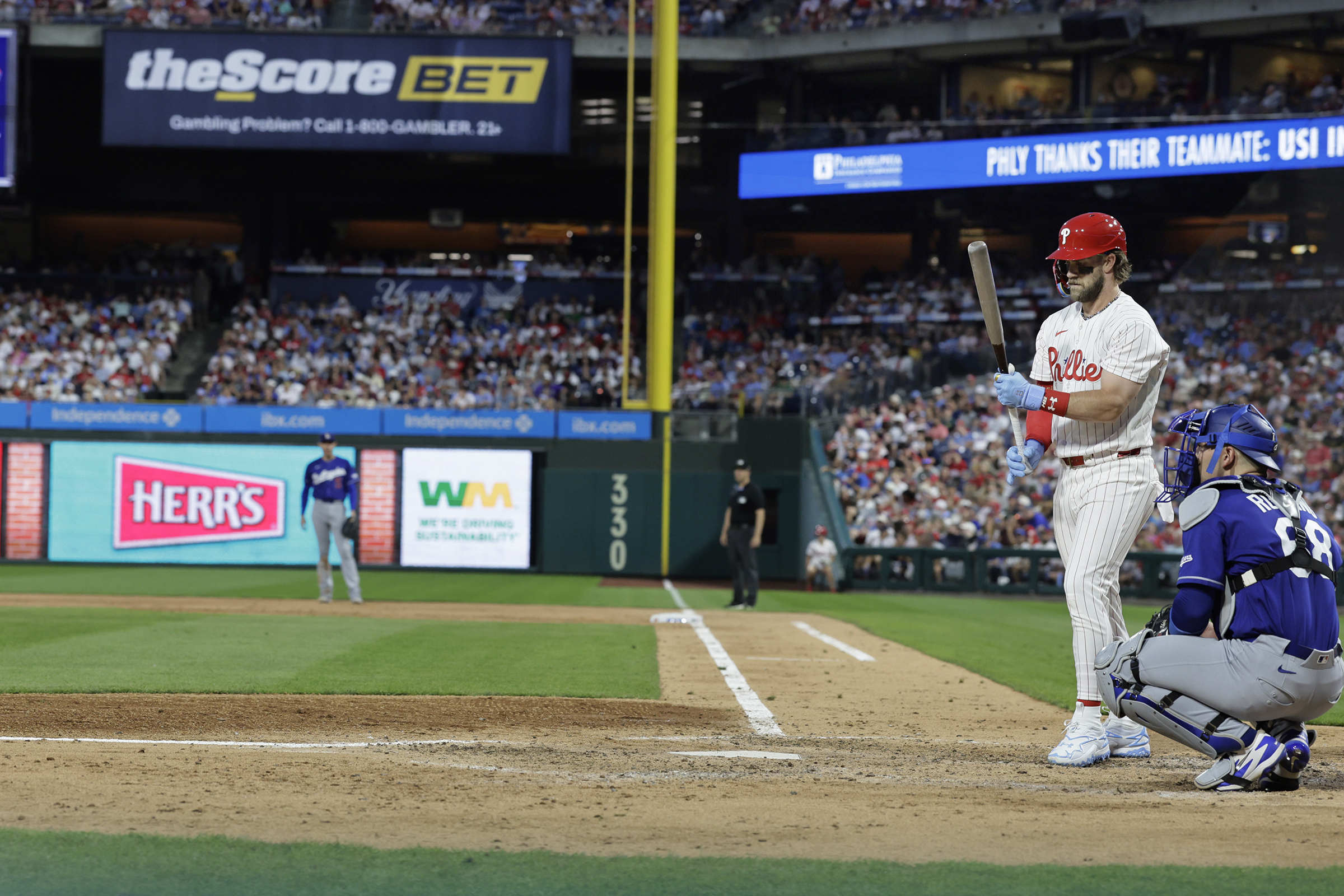
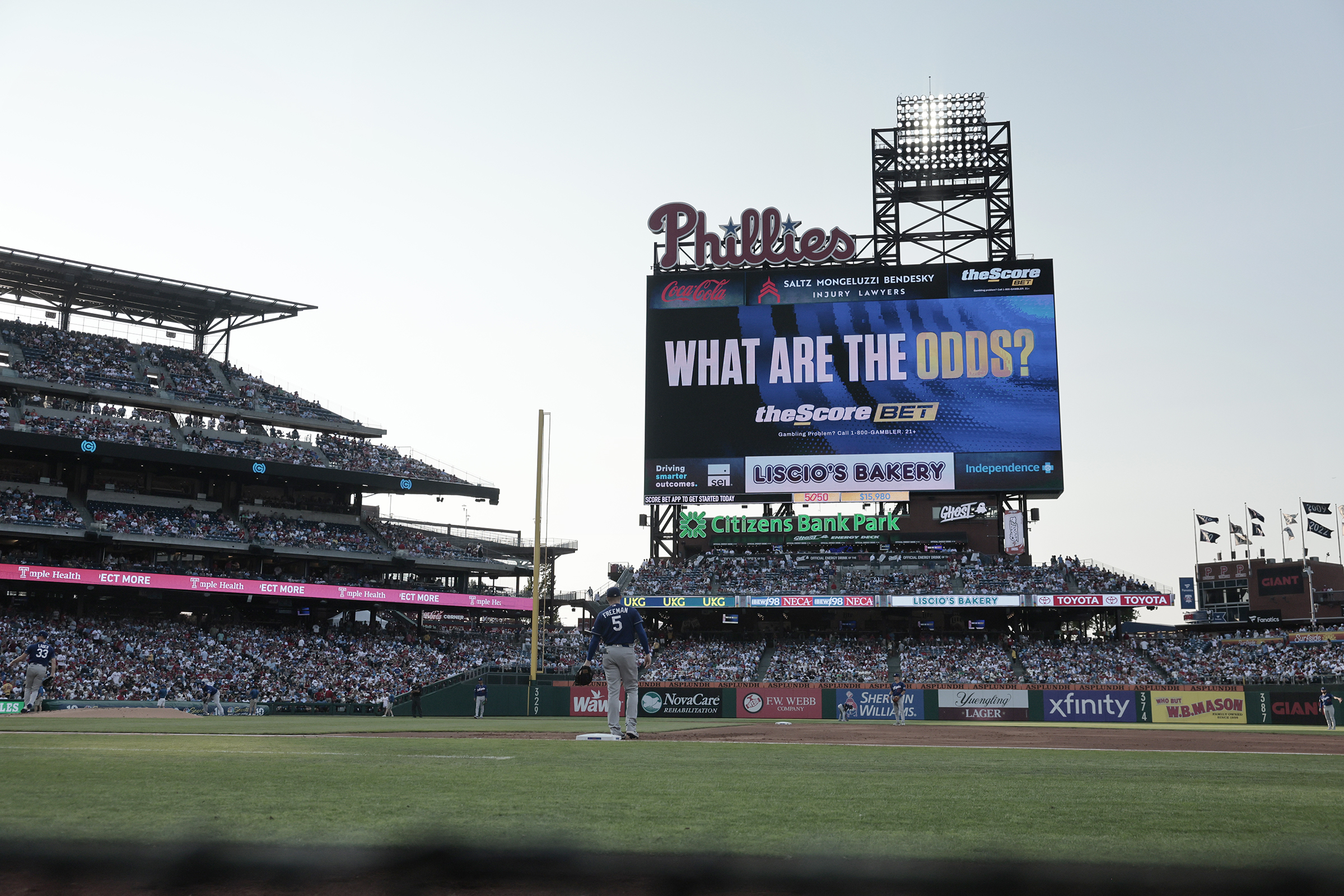
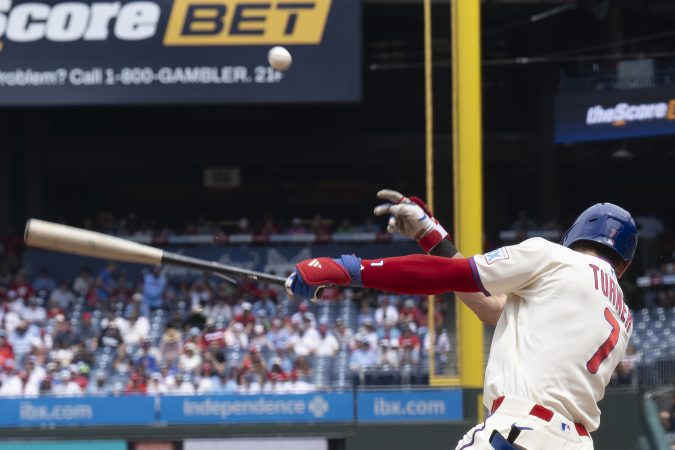
    Prominent advertising for theScore Bet can now be found in right field at Citizens Bank Park. Elizabeth Robertson / Staff Photographer

    In a separate letter to MLB Commissioner Robert D. Manfred and Bruce Meyer, the players union’s interim executive director, the lawmakers called for “an end to the MLB and MLBPA policies that enabled this type of predatory promotion.”

    MLB’s collective bargaining agreement, which is set to expire in December, allows athletes to appear in advertisements or make personal appearances for casinos, racetracks, or sportsbook companies, so long as the ballplayers do not encourage betting on baseball.

    That players aren’t prohibited from doing promotional work for gambling companies is a “systemic failure,” the lawmakers wrote, “rooted in the deep enmeshment between leagues, teams, and sports books.”

    A representative for Major League Baseball declined Monday to comment.

    As part of negotiations over a new collective bargaining agreement with MLB, the players union is seeking more freedom for players to seek endorsements from sportsbook operators and prediction markets, ESPN has reported.

    MLBPA declined to comment.

    Blumenthal, Tonko, and Foushee also asked MLB and MLBPA to respond to questions about their partnerships with sportsbook operators. The lawmakers said that the league and the players union “must not allow players, regardless of their level of awareness, to legitimize sportsbook VIP programs designed to exploit the most vulnerable fans.”

    Elected officials in Pennsylvania are separately planning legislation that would restrict or eliminate sportsbook VIP programs, and in-game microbets, an effort that Joe Maloney, the president of the Sports Betting Alliance — a national advocacy organization whose members include FanDuel, DraftKings, BetMGM, bet365, and Fanatics — said the organization will oppose.

    The Inquirer will continue to report on issues related to the growth of gambling addiction — among teens and adults — across Pennsylvania. If you or someone you know wants to speak with a reporter, please contact David Gambacorta or William Bender at dgambacorta@inquirer.com and wbender@inquirer.com

  • FanDuel and DraftKings seek dismissal of lawsuit at the center of Bryce Harper video controversy

    FanDuel and DraftKings seek dismissal of lawsuit at the center of Bryce Harper video controversy

    FanDuel and DraftKings have each asked a Philadelphia judge to dismiss a lawsuit that accuses the companies of profiting from practices that two bettors say caused them to develop gambling addictions.

    The sportsbook operators, as well as the National Football League and the data company Genius Sports, were sued in March by the nonprofit Public Health Advocacy Institute on behalf of Terry Thompson and Christopher Sage, men from the Philadelphia suburbs who allege that they compulsively placed in-game microbets through FanDuel’s and DraftKings’ apps and were enticed to continue gambling by rewards that VIP managers offered, even after they displayed signs of addiction.

    But attorneys for FanDuel and DraftKings argue that the lawsuit — which claims that the companies violated Pennsylvania’s consumer protection law, and were negligent in protecting Thompson and Sage from harm — is inherently flawed, according to preliminary objections that were filed July 15 in Common Pleas Court in Philadelphia.

    “Courts around the country, including courts that sit in this Commonwealth, have held that there is no duty of care to protect customers from their own lawful wagering, even where such wagering is alleged to be compulsive,” wrote attorney Erin L. Leffler, who represents FanDuel.

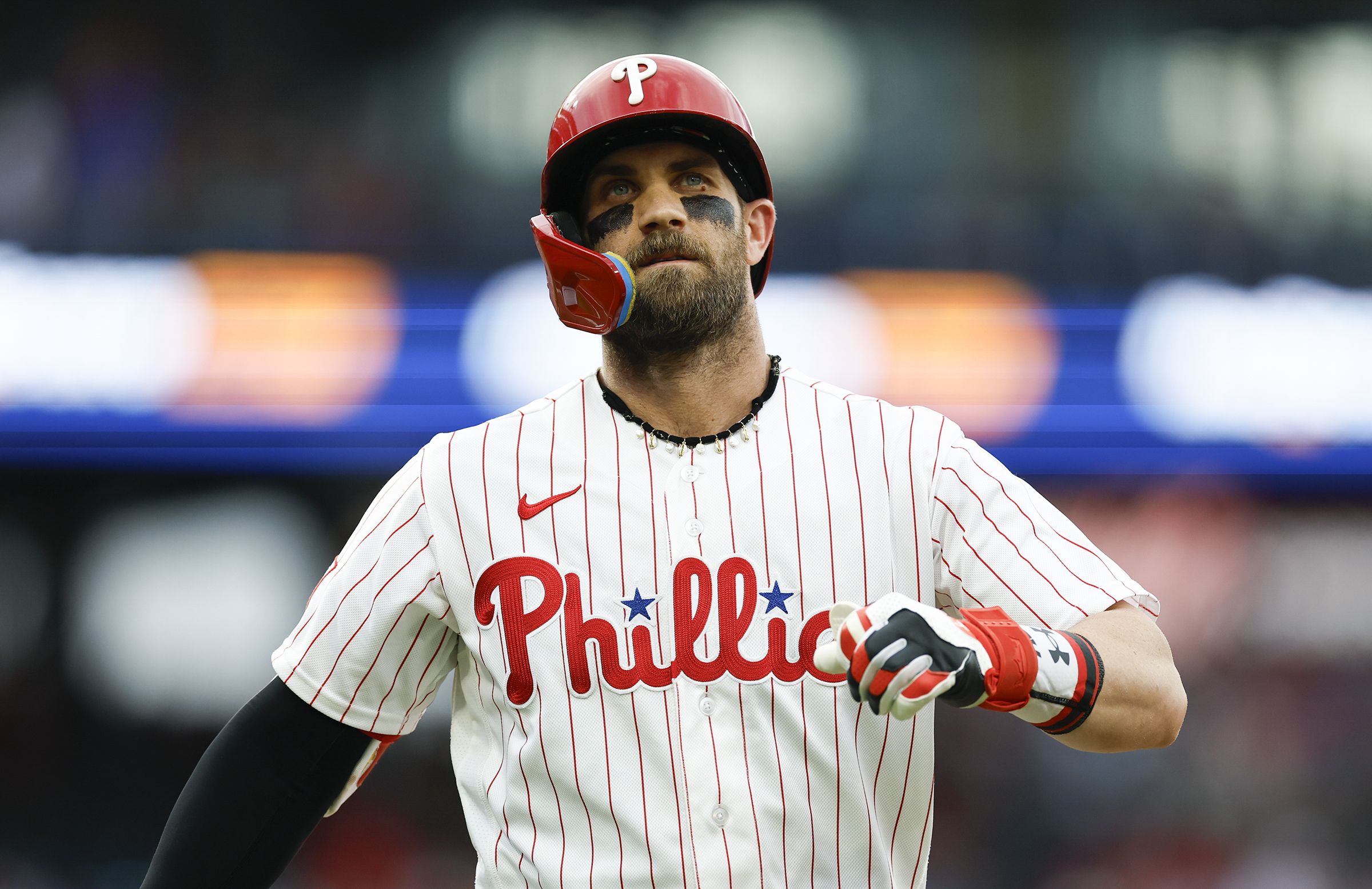
    Phillies first baseman Bryce Harper said he didn’t know FanDuel intended to use a Cameo video that he recorded in 2024 as a reward for a VIP bettor. Elizabeth Robertson / Staff Photographer

    Thompson, of Montgomery County, placed his first bet with FanDuel in 2020 and went on to lose nearly $1.8 million, his lawsuit alleges. He planned to die by suicide earlier this year rather than confess the scope of his losses to his family, the lawsuit says.

    Sage, of Delaware County, began wagering with DraftKings in 2019 and eventually lost about $175,000. To fund his gambling, he alleges, he stopped making payments on his mortgage and truck, and borrowed money from loan sharks.

    Lawyers for FanDuel and DraftKings wrote that Thompson and Sage knew about their addictions for longer than the state’s two-year statute of limitations for product liability lawsuits.

    Yet the sportsbooks contend that they should not even face product liability claims, because they do not sell an actual product but instead offer customers a free online app.

    The Public Health Advocacy Institute declined to comment Monday.

    The lawsuit attracted national attention following a July 9 Inquirer report that revealed Bryttanni Morgan, a FanDuel VIP manager, had sent a personalized video of Phillies first baseman Bryce Harper to Thompson in November 2024. (Morgan, who is named in the lawsuit, was also a VIP manager for Sage.)

    Harper later wrote on Instagram that he had recorded the message through the paid video service Cameo but had not known that FanDuel intended to use it as a reward for a VIP gambler who had an addiction.

    The Phillies star is not named in the lawsuit. The Pennsylvania Gaming Control Board — which regulates casinos, online gambling, and sports wagering — has said it is reviewing the Harper video.

    FanDuel and DraftKings, in their preliminary objections, suggested that Common Pleas Court Judge Gwendolyn N. Bright could pause the case to allow the gaming control board to evaluate elements of the case that fall under its regulatory purview, like in-game microbets.

    The board has not yet reviewed the court records, a spokesperson, Doug Harbach, wrote in an email Monday.

    “With that said, the PGCB’s role as the regulator of gaming in the Commonwealth is, first, to make sure that all persons and entities licensed by us to engage in that activity have and maintain suitability through a showing of ongoing good character, honesty and integrity,” he said.

    NFL commissioner Roger Goodell, pictured in February prior to the Super Bowl. Lawyers for the league argued that Terry Thompson’s lawsuit should be dismissed. Matt York

    One of the defendants, London-based Genius Sports, licenses official statistics and data from the NFL, the NCAA, and other leagues, and supplies that information to betting markets. The company also earns commissions on gamblers’ microbets, Thompson’s and Sage’s attorneys have alleged, a revenue stream that reached more than $125 million in 2025.

    In addition to licensing its data to Genius Sports, the NFL has also owned as much as 8.7% of the publicly traded company’s stock, making it Genius Sports’ largest shareholder.

    Genius Sports and the NFL are also seeking to have Thompson’s and Sage’s lawsuit dismissed.

    Attorneys for Genius Sports wrote that the company is “merely an upstream data supplier” and has no control over sportsbook apps.

    The NFL argued that the court has no jurisdiction over the league, which had no “relevant contact of any kind” with the plaintiffs.

    Other possible resolutions

    In a separate court filing, FanDuel’s attorneys argued there is a more proper path to resolving the case.

    “This dispute belongs in arbitration, not in court,” the lawyers wrote.

    After creating accounts with FanDuel, Thompson and Sage each agreed to the company’s terms and conditions, which require customers to resolve complaints through mandatory, multistep arbitration.

    The DraftKings app on a smartphone arranged in Hastings-on-Hudson, New York, US, on Monday, July 31, 2023. MUST CREDIT:Tiffany Hagler-Geard

    “The arbitration agreement was not hidden in the terms,” reads part of the response to the lawsuit. “It was prominently disclosed at the outset.”

    FanDuel successfully argued for arbitration earlier this year in the Southern District of New York, where a former Jacksonville Jaguars executive, Amit Patel, sued the sportsbook operator for $250 million, claiming it worsened his gambling addiction, according to a report in Sportico, a sports business web site.

    Patel was sentenced in 2024 to more than six years in federal prison for embezzling more than $22 million from the Jaguars. He used some of the money to place online wagers.

    FanDuel later agreed to pay $5 million to the NFL, in “the interest of being a good partner with the league,” ESPN reported.

    The Inquirer will continue to report on issues related to the growth of gambling addiction — among teens and adults — across Pennsylvania. If you or someone you know would like to speak with a reporter, please contact David Gambacorta or William Bender at dgambacorta@inquirer.com or wbender@inquirer.com

  • To reduce problem gambling, Pa. commission recommends enacting some strict prohibitions. Don’t bet on it, sportsbook alliance says.

    To reduce problem gambling, Pa. commission recommends enacting some strict prohibitions. Don’t bet on it, sportsbook alliance says.

    The tension between the rise of legalized sports betting and the specter of gamblers developing ruinous addictions came into sharp focus last week, between the stark recommendations of a nonpartisan Pennsylvania commission and a baseball star’s social media post.

    Lawmakers could impose restrictions on sportsbook operators, such as banning in-game microbets and curtailing VIP programs, the Joint State Government Commission wrote in a 126-page study on sports betting and interactive gambling that was published July 13.

    A bill to prohibit microbets and other sports gambling products that could amplify addiction is currently being drafted, said State Rep. Tarik Khan, who introduced the resolution that authorized the commission’s research.

    “The scope of the problem is worse than we thought,” said Khan (D., Philadelphia).

    State Rep. Tarik Khan said lawmakers are drafting legislation that will seek to prevent sportsbook operators from offering in-game microbets.Tom Gralish / Staff Photographer

    He referenced surveys, cited by the study, showing that 48% of men ages 18 to 49 have an account with at least one sportsbook company, while 52% reported wagering an increased amount of money after they experienced losses.

    “Sometimes you have to be very clear on what companies can and can’t do, especially when money is involved,” Khan said.

    Americans spent a record $165 billion on sports betting in 2025, and were projected to wager at least $3 billion on the recent FIFA World Cup.

    Analysts have predicted that microbets — wagers that can be made on individual plays and outcomes during a live game — could grow by $14 billion by the end of the decade.

    The sports gambling industry is likely to oppose eliminating such a lucrative product, according to Joe Maloney, the president of the Sports Betting Alliance, a national advocacy organization whose members include FanDuel, DraftKings, BetMGM, bet365, and Fanatics.

    “I’m just not sure that something as proscriptive as banning that market achieves what is the stated endgame,” Maloney said. “I’m not entirely sure what the problem is that they’re trying to solve.”

    The same day the state study came out, Philadelphia Phillies first baseman Bryce Harper took to Instagram to explain how FanDuel had acquired a personalized video he made in 2024, which the sportsbook company then sent to Terry Thompson, a local VIP bettor who suffered from a gambling addiction.

    Harper wrote that he had recorded the 21-second video — a copy of which was obtained by The Inquirer — through the video service Cameo. In it, Harper said he was doing the video on behalf of a FanDuel host. But the nine-time All-Star later said that he was not aware that FanDuel intended to use the recording for business purposes or that Thompson had an addiction.

    “Had I known FanDuel’s true intent,” Harper said, “I would not have made the video.”

    The state study summarized litigation that sportsbook operators are facing in Pennsylvania, including a lawsuit filed in March by the Public Health Advocacy Institute on behalf of Thompson and another man against FanDuel and DraftKings. The suit alleges that the companies profit from the compulsive nature of microbets and use VIP rewards to entice gamblers to keep betting, even after they have displayed signs of addiction.

    Thompson, of Montgomery County, lost nearly $2 million to wagers that he placed with FanDuel and DraftKings.

    “These companies’ profit margins are dependent on people with gambling disorders,” Khan said. “It’s clear. Did [FanDuel] tell Bryce Harper that they wanted a video for a person who had lost that much money? Of course not.”

    Maloney disputed Khan’s characterization of sportsbook companies’ business practices.

    He compared VIP programs to customer rewards that retailers like Starbucks or T-Mobile offer, and said bettors can easily opt out of the programs or from receiving promotional offers.

    “There’s no sustainable and durable future for this industry if it is not responsible and committed to integrity,” he said. “The notion that any industry can sustain itself across a small and finite number of users is completely false.”

    The regulation battle

    The commission, a research and policy development agency for the Pennsylvania legislature, retraced the evolution of sports betting in the U.S. and identified measures that lawmakers could pursue to curb addiction.

    Since the U.S. Supreme Court ruled in 2018 that states could establish their own sports betting laws, sportsbook companies and lesser-regulated prediction markets have entered into highly visible partnerships with professional sports leagues and teams that once were uniformly opposed to gambling.

    The rise of the sports betting industry has helped fill state coffers. Pennsylvania recorded $6.7 billion in gambling revenue in 2025, with $602 million derived from sports wagers.

    Tales of bettors who grew addicted to the instant dopamine spike of gambling on mobile devices or placing in-game microbets, then tumbled into a whirlpool of spiraling debt, have also become plentiful.

    “States are waking up to the reality of sports betting now. They’re seeing a lot of the downstream impacts,” said Uttara Ananthakrishnan, an assistant professor of information systems at the University of Washington and an expert on online betting and gambling addiction.

    The NFL, like other professional sports leagues, has abandoned long-held opposition to gambling entities, and entered into partnerships with sportsbook operators.Monica Herndon / Staff Photographer

    Ananthakrishnan said new research suggests that gambling is not only associated with financial stress, but also can lead to more crime, suicide, divorce, child maltreatment, and housing instability, while siphoning state lottery revenue.

    A recent study conducted by Pennsylvania State University’s Criminal Justice Research Center found that 2.5% to 6.4% of Pennsylvania adults may be problem gamblers, while a 2025 National Council on Problem Gambling survey showed that at least 20 million Americans reported experiencing problematic gambling behavior during the previous year.

    The state commission study, meanwhile, cited a Harris Poll that found 79% of Americans believe gambling addiction is “as serious or more serious” than alcohol or drug addictions.

    “It’s very, very disturbing,” Khan said.

    The commission suggested that lawmakers could obtain customer data from gambling companies and have them independently analyzed to better understand which practices and products are most harmful.

    It offered other, more immediate recommendations as well: preventing bettors from using credit cards to place deposits; mandating that customers limit the duration of their gambling and the frequency of their deposits; and forbidding companies from sending promotional offers to gamblers if they have logged out of their accounts, or using artificial intelligence to create individualized promos.

    The study also suggested prohibiting gambling advertisements from public university campuses.

    “I don’t sit here as a voice of the industry and deny the science,” Maloney said. “Gambling is an activity that can become problematic, and for some people, it can become addictive.”

    But Maloney argued that many of the gambling studies and surveys that experts cite do not prove a direct link between gambling products and those who develop addictions.

    “By all means, it’s a policy conversation that we absolutely want to have if the legislators are responding to highly publicized research, and confusing correlation with causation, and relying on national media interlopers who are largely transcribing academics and researchers in that space, and delivering clicky headlines,” Maloney said.

    Sports betting helped drive gambling revenue in Pennsylvania to a record $6.7 billion in 2025. Jeff Chiu

    Ananthakrishnan said the negative effects are real.

    “I am glad Pennsylvania is recognizing the problem and looking at evidence-based policy to curtail problem gambling,” she said.

    Ananthakrishnan said the legislature should act on at least two proposals in the study: Require gambling apps to use their own data to predict problem gambling behavior, rather than using the information just to convince users to place more bets; and require the apps to release anonymized player stats that could be analyzed by an independent research entity.

    “This creates a pathway to design evidence-based policies that directly address the specific mechanics of digital addiction without relying solely on operator self-reporting,” she said of the latter proposal.

    ‘Too close to the edge’

    While legislators in Pennsylvania and other states, like New Jersey, grapple with how to enforce guardrails on sports betting, leagues continue to face headline-grabbing gambling scandals.

    The NFL last week indefinitely suspended an Arizona Cardinals official, Ryan Gold, who is accused of leaking information about the team’s draft plans and participating in parlay bets on NFL and college games, ESPN reported. Gold has denied any wrongdoing through his attorney. The matter is now being investigated by the Arizona Department of Gaming.

    In May, a DraftKings employee was arrested in Las Vegas and charged with conspiracy and related offenses for allegedly participating in a sports betting ring with a basketball player from Fresno State.

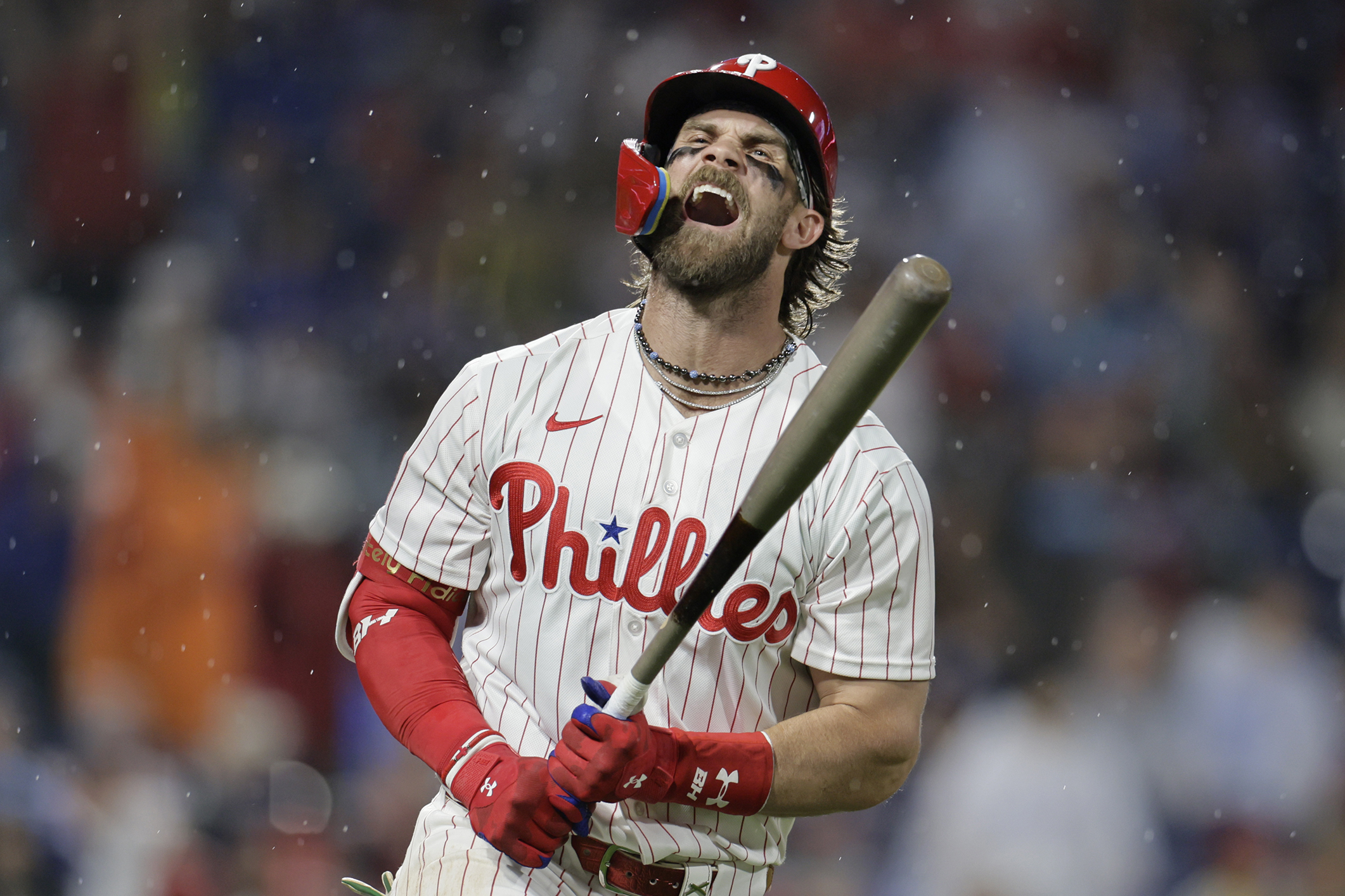
    Hours before he participated in the All-Star Home Run Derby on July 13, Bryce Harper wrote on Instagram that he didn’t know FanDuel planned to use a video he recorded through Cameo as a reward for a VIP bettor. Monica Herndon / Staff Photographer

    The Pennsylvania Gaming Control Board, meanwhile, is reviewing the controversy over FanDuel’s use of the Bryce Harper video.

    Major League Baseball’s commissioner, Rob Manfred, told reporters that Harper did not violate the league’s collective bargaining agreement, which allows players to engage in some promotional work for sportsbooks and casinos, provided they do not encourage betting on baseball.

    The gaming control board has separately proposed new regulations to address gambling addiction, said a spokesperson, Doug Harbach.

    Among the changes the board wants to implement are daily, weekly, and monthly limits on deposits that bettors can make to cashless gaming systems, and prohibiting companies from implying that betting is risk-free or a way to pay bills.

    “We have to make sure there are safeguards,” said Khan, the state representative. “Sometimes people get too close to the edge.”

    The Inquirer will continue to report on issues related to the growth of gambling addiction — among teens and adults — across Pennsylvania. If you, or someone you know, would like to speak with a reporter, please contact David Gambacorta or William Bender at dgambacorta@inquirer.com or wbender@inquirer.com

  • Pennsylvania Gaming Control Board ‘reviewing’ Bryce Harper’s FanDuel video

    Pennsylvania Gaming Control Board ‘reviewing’ Bryce Harper’s FanDuel video

    The Pennsylvania Gaming Control Board says it is examining a video of Philadelphia Phillies first baseman Bryce Harper that FanDuel sent in 2024 to a VIP bettor who was struggling with a gambling addiction.

    “We are aware of the situation and are reviewing it,” Doug Harbach, a spokesperson for the board, said Friday. “I can’t comment beyond that at this juncture.”

    It’s unclear if the gaming control board, which regulates casinos, online gambling and sports wagering, has contacted FanDuel or Harper. David Purdum of ESPN first reported the gaming board’s interest in the situation.

    The Inquirer obtained the 21-second video, which shows Harper greeting the bettor, Terry Thompson, and Thompson’s son, and ends with Harper thanking Thompson for his support.

    Harper is not wearing FanDuel merchandise in the video, but it is marked with the company’s logo. Harper mentions that he was reaching out at the request of Thompson’s VIP manager — “your host Bryttanni at FanDuel” — who wanted to ensure that Thompson had an “extra special Thanksgiving.”

    The Inquirer could find no evidence that Harper has a business relationship with FanDuel, nor that he was aware Thompson had a gambling addiction. Harper declined through the Phillies on Thursday to comment.

    FanDuel obtained the video from Cameo, a source familiar with the matter said Friday.

    The company allows users to pay athletes, celebrities and musicians to record personal messages for them.

    On its website Cameo notes that celebrities don’t necessarily have to follow a purchaser’s instructions.

    “You acknowledge and agree that the Talent User has sole discretion to determine how to fulfill your request and the content of the CAMEO Video created, and may not follow your request exactly,” reads part of its terms of services.

    Cameo did not respond Friday to multiple requests from The Inquirer for comment.

    A video of Harper addressing an individual can be purchased from Cameo for $899. He also offers recordings for businesses for $9,999.

    The Inquirer earlier in the week shared the FanDuel video with Harper’s longtime agent, Scott Boras, the Phillies, and Major League Baseball. Each declined to comment.

    Beginning in 2020, Thompson wagered $18.5 million with FanDuel and lost $1.5 million, according to a lawsuit that the Public Health Advocacy Institute filed in March in Common Pleas Court in Philadelphia on behalf of Thompson and against FanDuel and DraftKings, to which Thompson also lost money.

    Harper is not named as a defendant in the lawsuit.

    Thompson’s attorneys allege that he became addicted to placing microbets — in-game wagers on something as minor as the speed of a pitch during a baseball game — until he gambled away his final $10,000 on a DraftKings parlay bet in February.

    Broke and afraid of disclosing the scope of his losses to his family, Thompson contacted his therapist and indicated that he planned to take his life.

    Police reached Thompson before he harmed himself.

    Harper, meanwhile, is one of baseball’s most marketable players, and was recently named to his ninth All-Star team.

    He typically announces new endorsement deals, which in the past have included companies such as Under Armour, Gatorade, and Dairy Queen.

    The Inquirer will continue to report on issues related to the growth of gambling addiction — among teens and adults — across Pennsylvania. If you, or someone you know, would like to speak with a reporter, please contact David Gambacorta or William Bender at dgambacorta@inquirer.com or wbender@inquirer.com