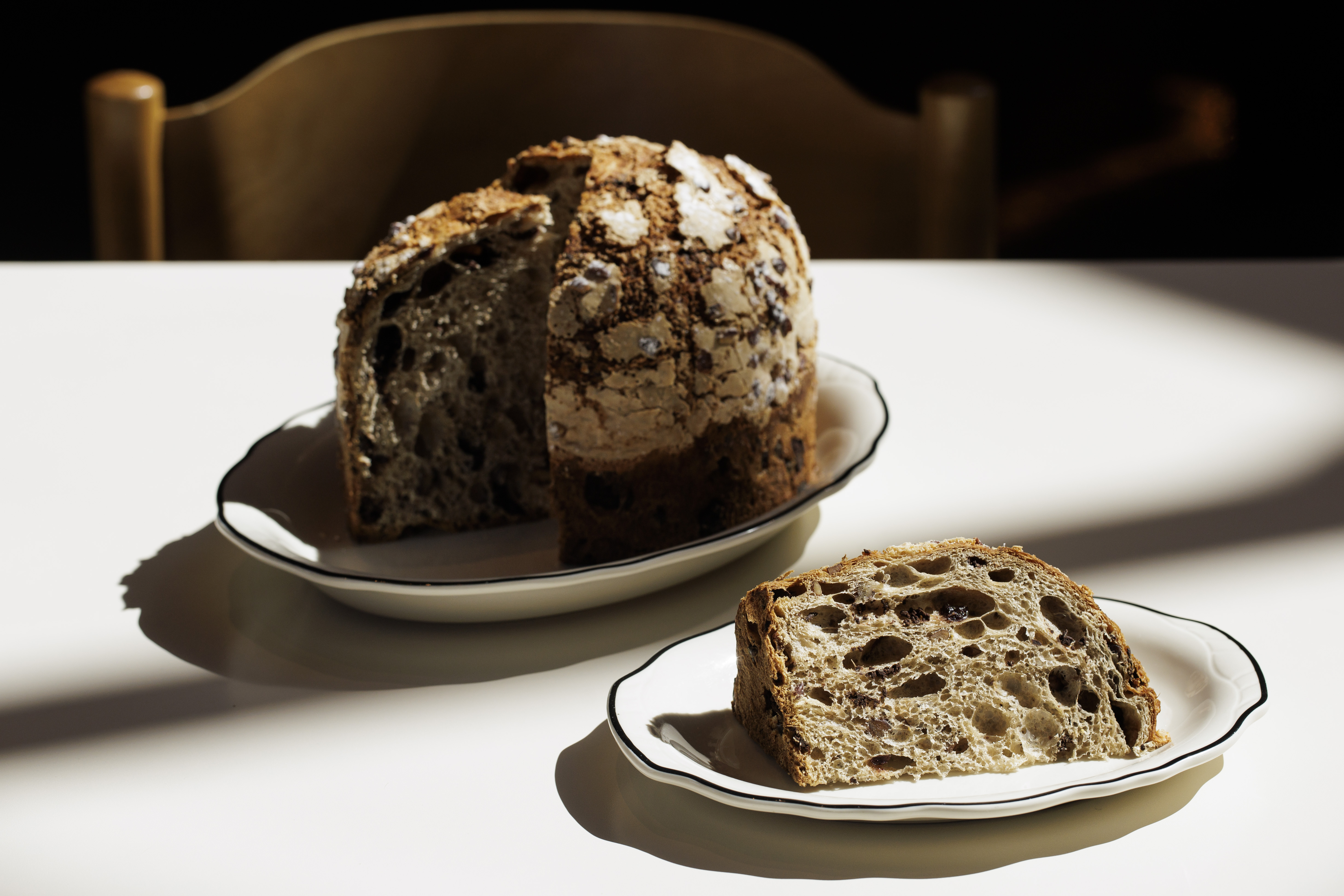
On one block of Martha Street, it feels like Christmas came early. Panettone — sliced and dolloped with whipped cream — is already officially for sale.
Matty, who oversees the pastry program for Defined Hospitality restaurants including Suraya and Condesa, said Formosa is shorthand for Aquaformosa, the tiny mountain village in Calabria, Italy, where his grandfather was born. Likewise, the pop-up’s menu spans bread-forward (and seasonally anachronistic) sweets that are meant to evoke a sense of warmth. There are oversized cinnamon rolls swirled with blueberry jam, a sticky-sweet plum upside down cake, and doughnut shop-style maple pecan cruellers, among other delights.
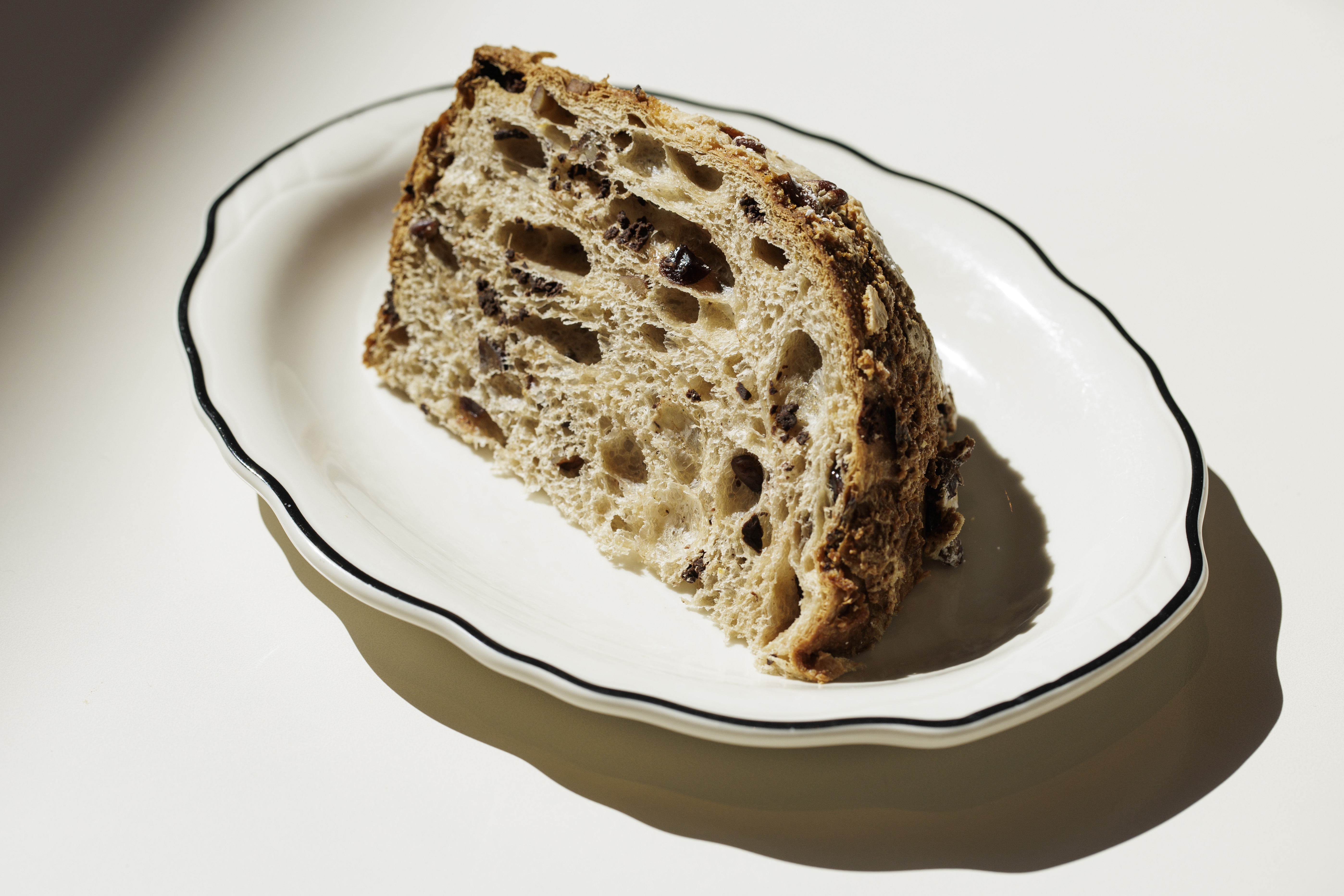
At Formosa inside Picnic, pastry chef James Matty’s panettone will be served as $9 slices topped with whipped cream.Monica Herndon / Staff Photographer
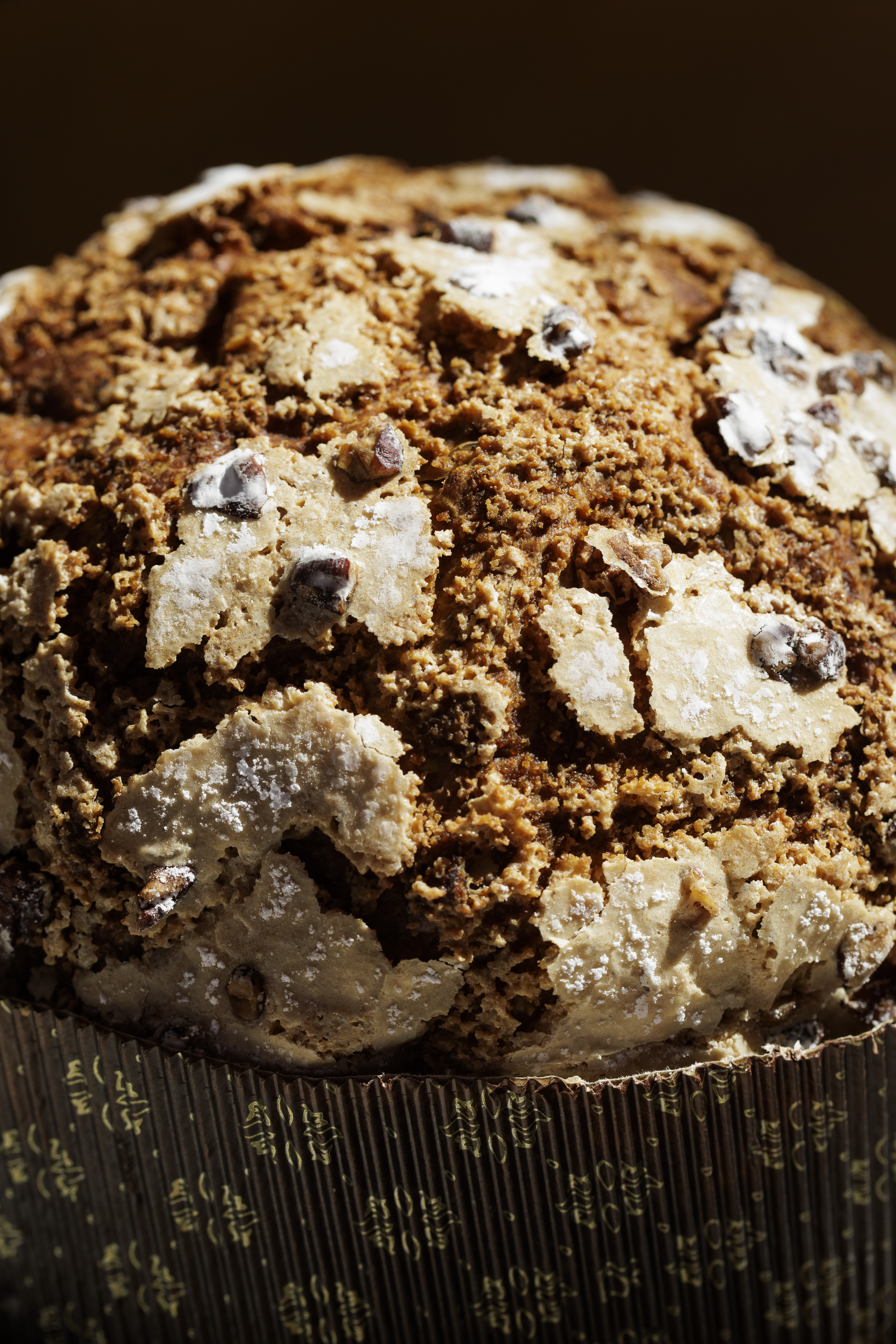
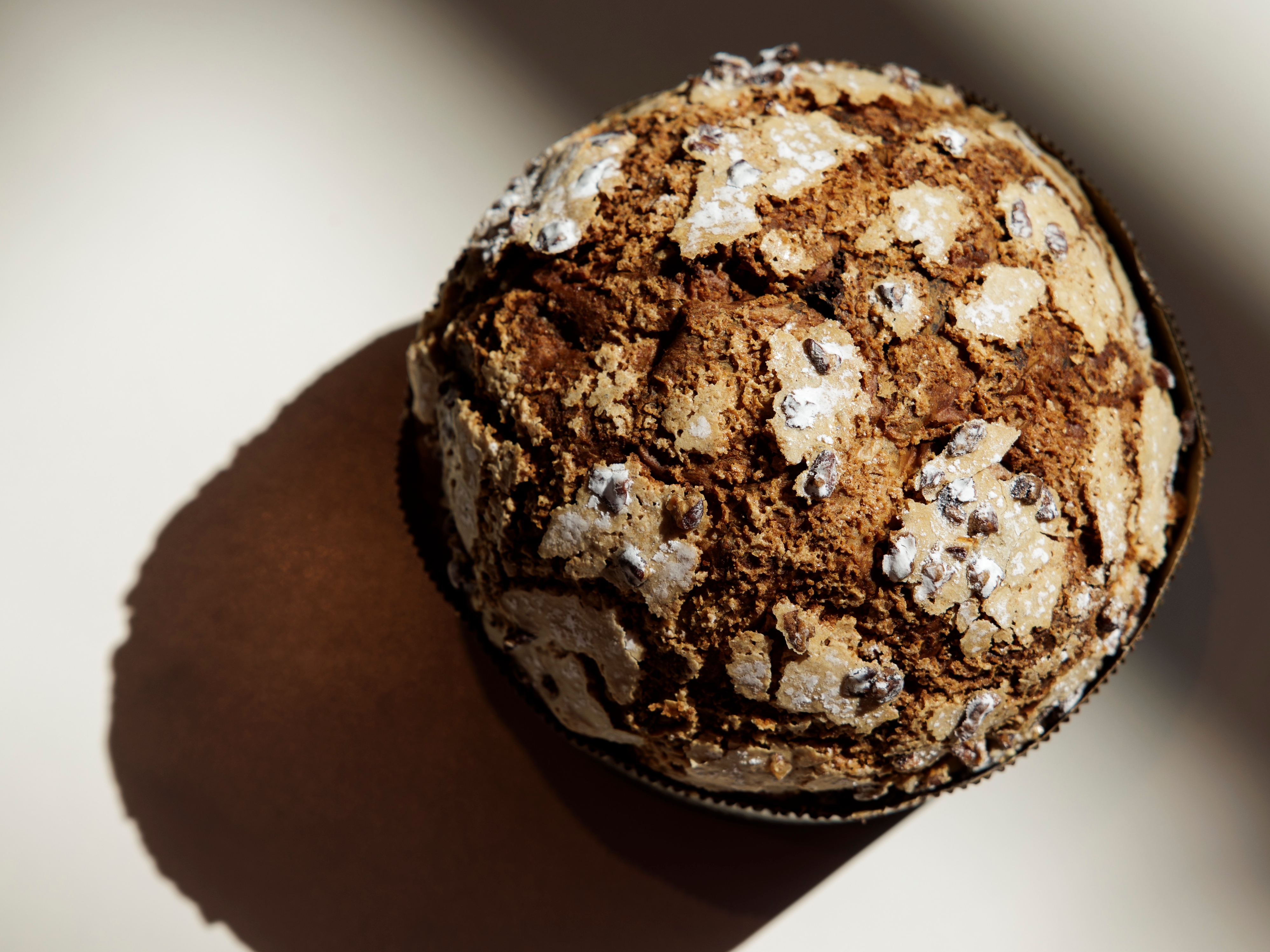
The panettone is Formosa’s crown jewel. Flecked with dark chocolate chips, pecans, and Luxardo cherries, Matty’s version splits the difference between classic and new-aged panettones, which tend to be airier and more voluptuous. His bread is buttery soft and light, with a crackly crust that’s fun to peel off.
To me — a panettone novice — it tasted like a cross between the world’s moistest poundcake and a sourdough loaf.
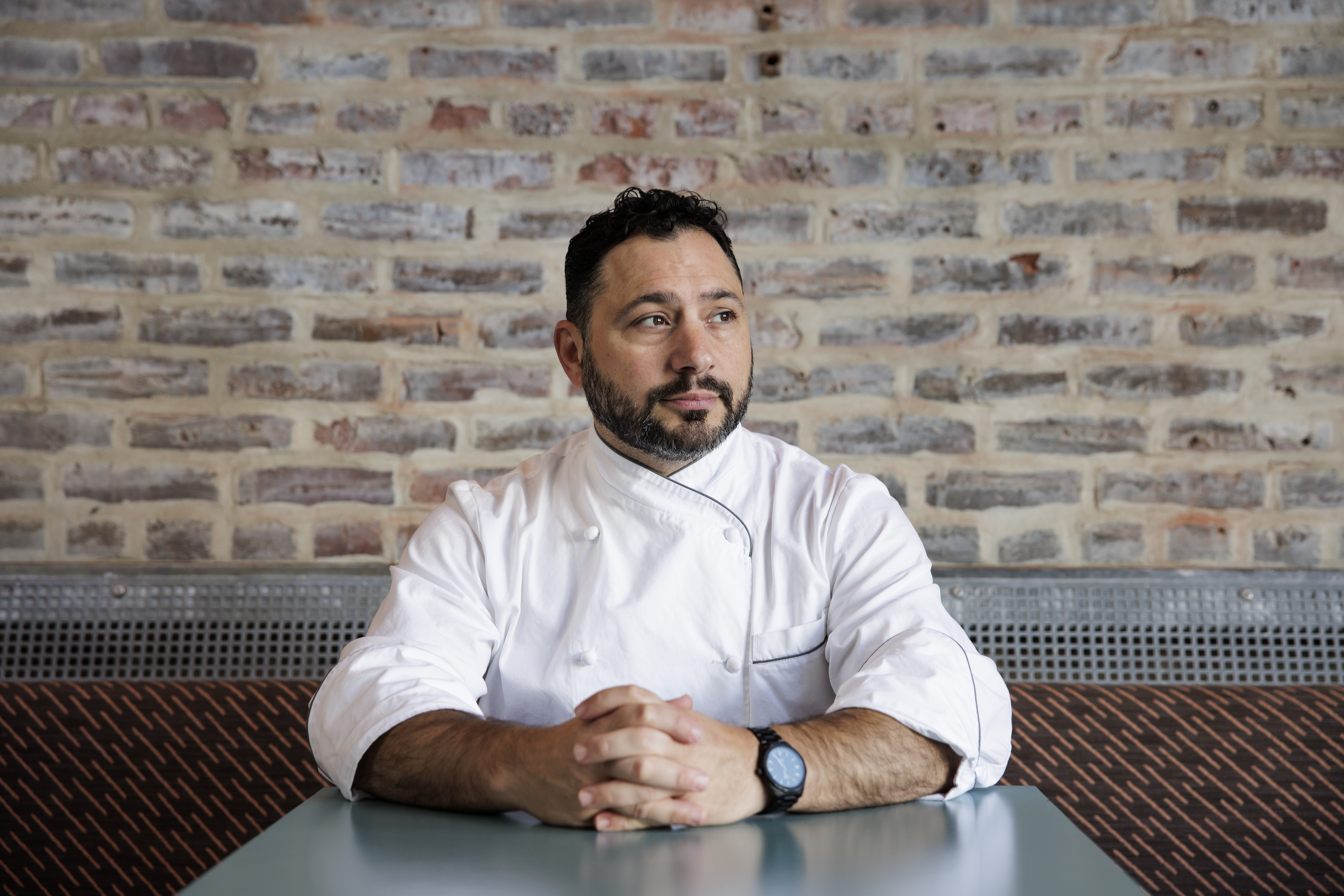
Matty, who grew up in Trooper, Montgomery County, was also not raised in a panettone family. His fixation with the bread began in adulthood while studying at the Culinary Institute of America, where he became enamored with the craftsmanship good panettone requires.
Pastry Chef James Matty poses inside Picnic, the restaurant hosting his Formosa pastry pop-ups during October 2026.Monica Herndon / Staff Photographer
Panettone is “like the mountaintop” of bread, said Matty. “It’s the most difficult to pull off consistently.”
Formosa’s version takes the equivalent of a work week to prepare. The dough must ferment for three days, said Matty. It takes another two to proof and bake. The most stressful test comes at end: Panettone must hang upside while cooling so it doesn’t collapse inward under its own weight.
The first time Matty made panettone, he said called it a “complete flop.”
Formosa’s panettone takes five days to prepare.Monica Herndon / Staff Photographer
“It literally flopped out of the mold,” he said. Upwards of twenty retries later, and Matty’s panettone hangs steadily on the cooling rack, sort of like muffin-shaped bats.
At Formosa, Matty’s panettone will be served in $9 slices topped with whipped cream. As for selling whole rounds in time for the winter holidays, Matty said to “wait-and-see.”
For now, I’ll just be adding it to the top of my wish list.
Formosa at Picnic, 2421 Martha St., instagram.com/formosa.philly. Hours: 8 a.m. – 12 p.m. (or sell out) Saturday – Sunday from Oct. 3 to Oct. 25.
Panettone’s real test come at the end: To cool, the Italian sweet bread must hang upside down. If prepared incorrectly, it flops.Monica Herndon / Staff Photographer
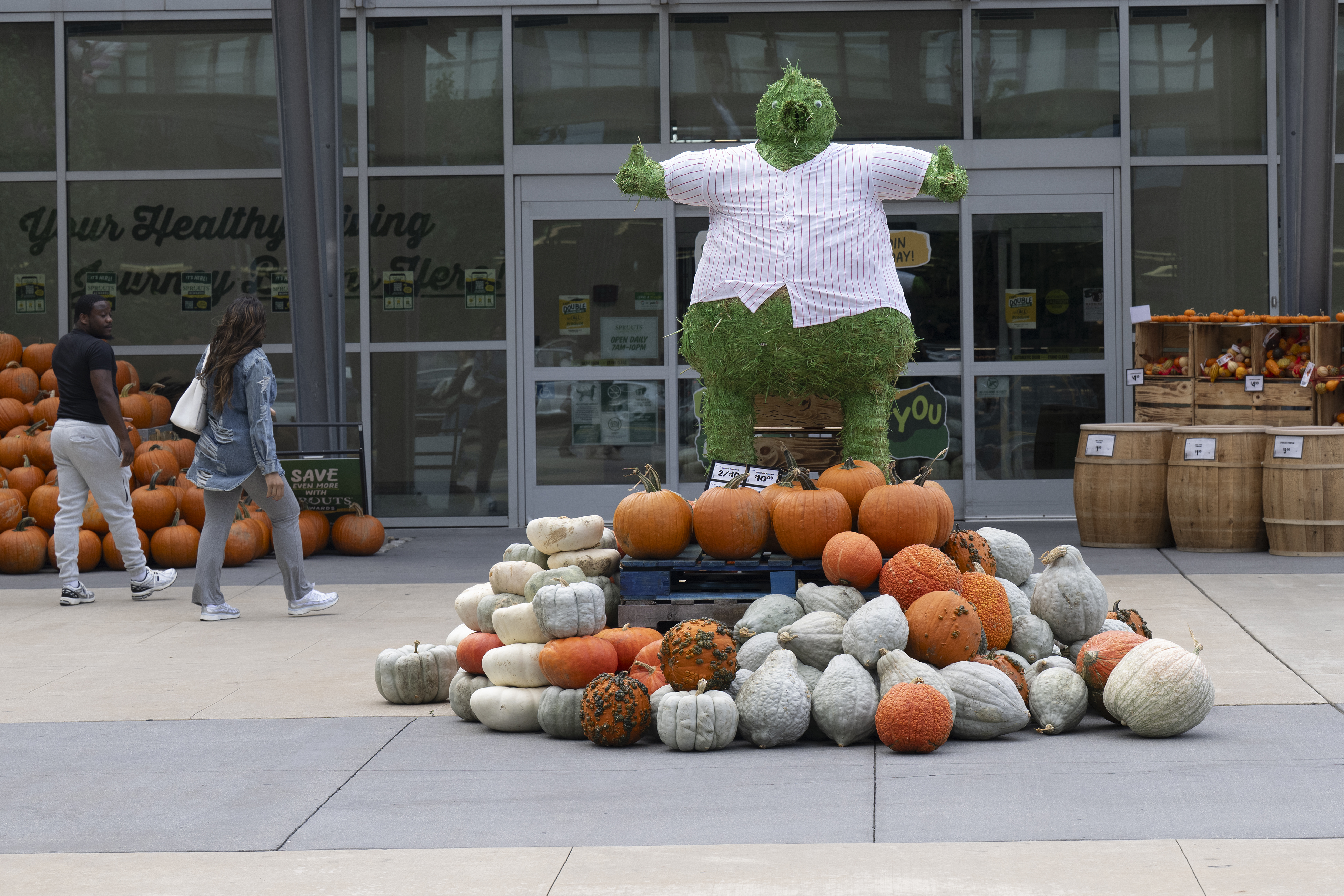
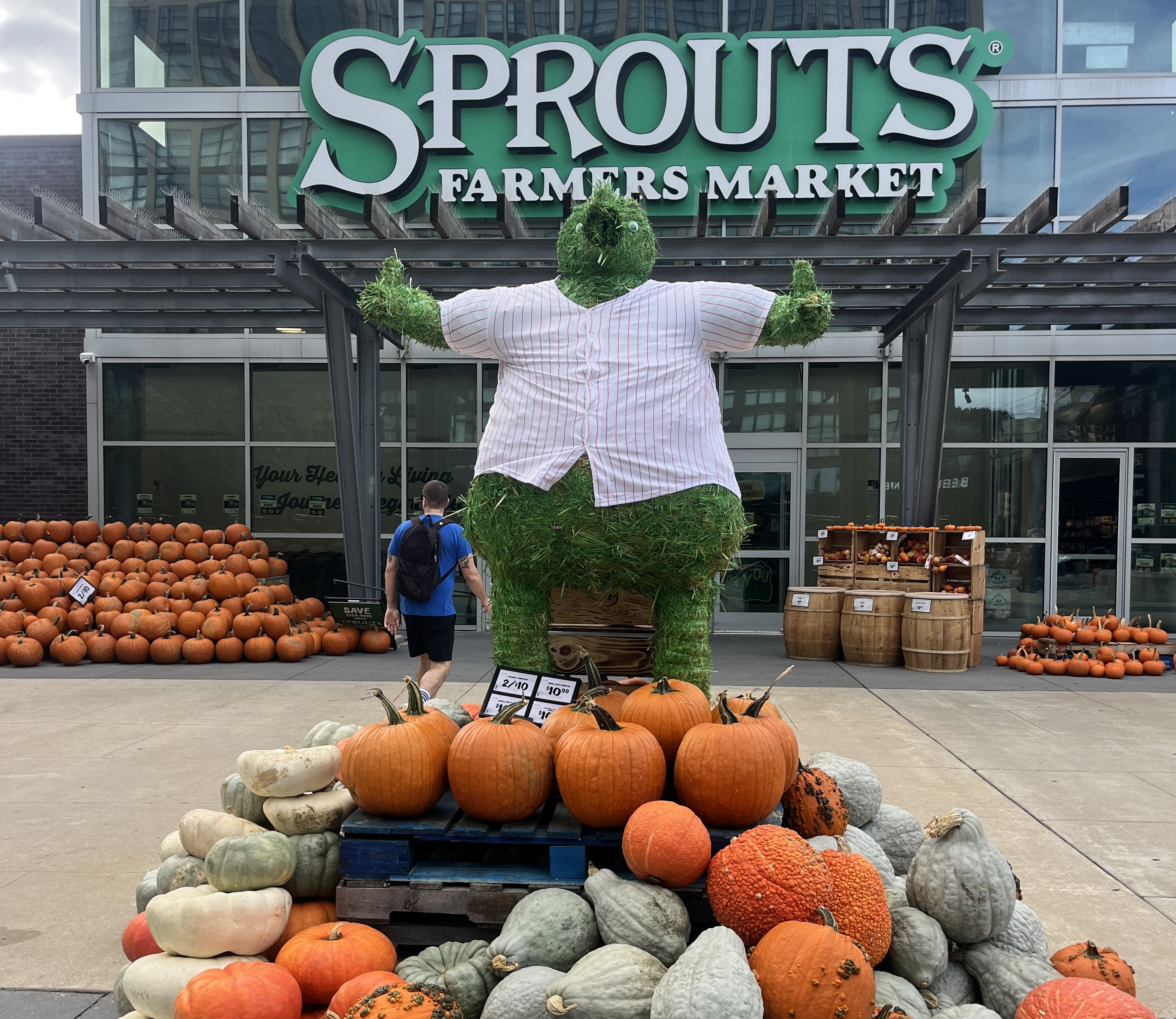
The new display at the Sprouts Farmers Market on Broad Street looks as if someone was forced to draw the Phanatic both from memory and out of spite.
That’s the best description I can give of the haggard green giant that was erected outside the supermarket in mid-September.
Rotund, snouted, and wearing a pinstripe baseball tee, the creature has all the trappings of our dear Phillie Phanatic, the Galapagos-born flightless bird who reps the Phillies. Somewhere along the way, however, the details got lost in translation.
“That is not the Phanatic. What the f—?” wrote user @JamesPhl96 on X on Sept. 19 above two photos of the Sprouts monster staring unblinkingly into the night. Viewed over 113,000 times, the post has helped the figure take on a life of its own as equal parts landmark, monster, and friend-shaped photo-op.
“The Sprouts Phanatic fall display can’t hurt you. He’s not real,” one X user wrote, attributing the advice to his therapist.
“That’s my sleep paralysis demon,” wrote another. The creature has also been called many names, including — but not limited to — the “Fauxnatic,” “Phil E. Guy,” and Phrank, aka the Phanatic’s weird cousin.
Faisal Khan, who has managed the Broad Street Sprouts location since December, is quick to defend his store’s creation as “beautiful” and not at all scary.
The knockoff Phanatic was designed by Four Seasons Produce, a national produce distributor based in Ephrata that delivers to Sprouts locations in the Philadelphia region, Khan said.
The 5’7″ Phanatic knockoff outside the Sprouts Farmers Market at 1000 S. Broad St. does not fit into his baseball jersey.Beatrice Forman / Staff
The company (not to be confused with the landscapers) creates seasonal displays for the store every fall, according to Khan. Four Seasons retains full creative control, he said. They’ve mostly stuck to piles of artfully arranged pumpkins and other gourds — until now.
“They kind of went all out this year,” Khan said. “I was very happy.”
The Fauxnatic has quirks beyond his lump-like figure and piercing googly eyes.
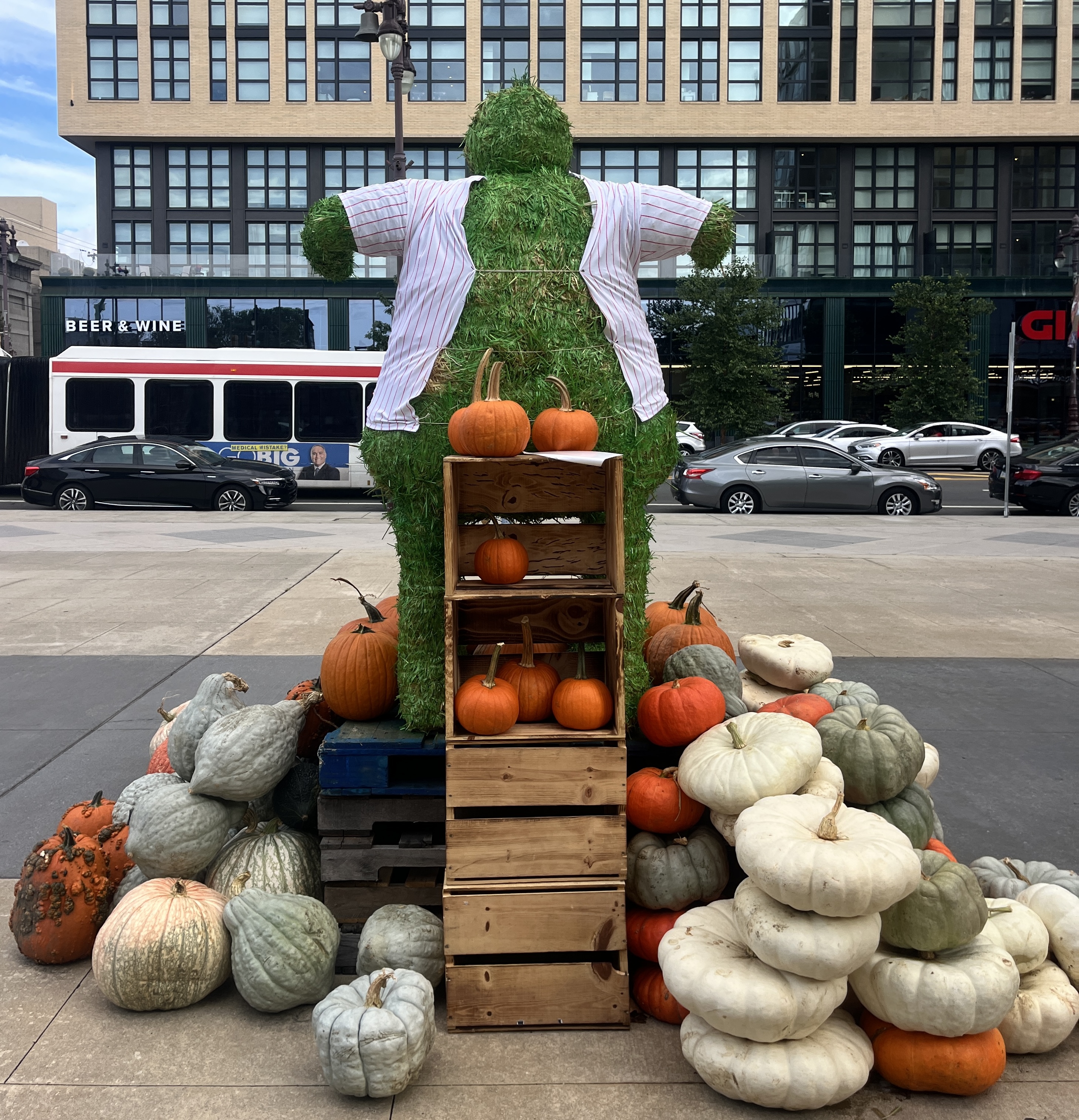
The 5′7″ topiary is made of hay that was dyed green. It flakes off like dead skin. Measuring at 76 inches around at its widest point, the creature also cannot be contained by a baseball jersey. The back is held together by string so the Fauxnatic does not flash the general public, even if he does come close to mooning us. (Rest assured: two pumpkins are placed where his butt cheeks would be.)
His baseball tee doesn’t even bear the Phillies logo. The Fauxnatic had a hat, Khan conceded, but it blew away in the wind.
Khan says the creature has been a boon for the Sprouts location, which was the organic supermarket chain’s first to open in Philly at 1000 S. Broad St. in 2018. Since the day the monster went up, Khan has watched what he estimated as “100-plus people” stop by to take photos.
“It’s mostly families coming with their kids,” Khan said. The Fauxnatic “brings a lot of foot traffic in.”
Shawn Erwin and her 5-year-old daughter Skylar are one of those families. Erwin and her daughter took photos with the creature at the end of an early evening grocery run Thursday. They giggled the entire time.
The Phillie Phanatic outside the Broad Street Sprouts Farmers Market lacks branded merch. He had a hat at some point, the store’s manager said, but it blew away.Beatrice Forman /
Skylar, for her part, thinks he looks just like the Phanatic. Her mom isn’t so sure.
“He looks like he’s made from hay,” Erwin said. “What happened to his hat?”
Khan said the store plans to keep the Fauxnatic up through Halloween, at which point he will be swapped out for a holiday motif.
“I’m honestly surprised,” Khan said. “You know we’re just a grocery store, right?”
Zoe Tanner’s handiwork is immediately recognizable: Cloudlike cold foam puffs flecked with sprinkles that adorn the lattes at Loretta’s, the Society Hill cafe at the epicenter of Philly’s little treat boom.
Loretta’s sells about 200 specialty lattes on a busy day, Tanner estimates.
This September, Tanner spent hours in Loretta’s basement making bite-size uncrustables to top the coffee shop’s PB&J latte, which comes with Concord grape syrup and a peanut butter cold foam. In May, the drink du jour was a black-raspberry-maple concoction topped with a nutty tahini whip and sprinkles shaped like spring flowers. Next month, Tanner is whipping up a banana latte decorated with pretzel rod ghosts. Proceeds from each creation have gone to local charities such as ACCT Philly and the Eagles Autism Foundation.
“Say what you want about the girls that come in from Instagram, but they’re making a difference by buying a drink,” Tanner said. “That matters to me.”
Tanner, 31, serves as the operations director of all three of Bush and Morris’ businesses, splitting her days between training staff, managing inventory, and developing latte recipes. Barista-ing at Loretta’s, however, is the best part of her job.
“I love connecting with people,” said Tanner. “And coffee is so cool because it goes through so many processes to get into your cup, but everyone who touches it is really important, from the grower to the roaster to the barista.”
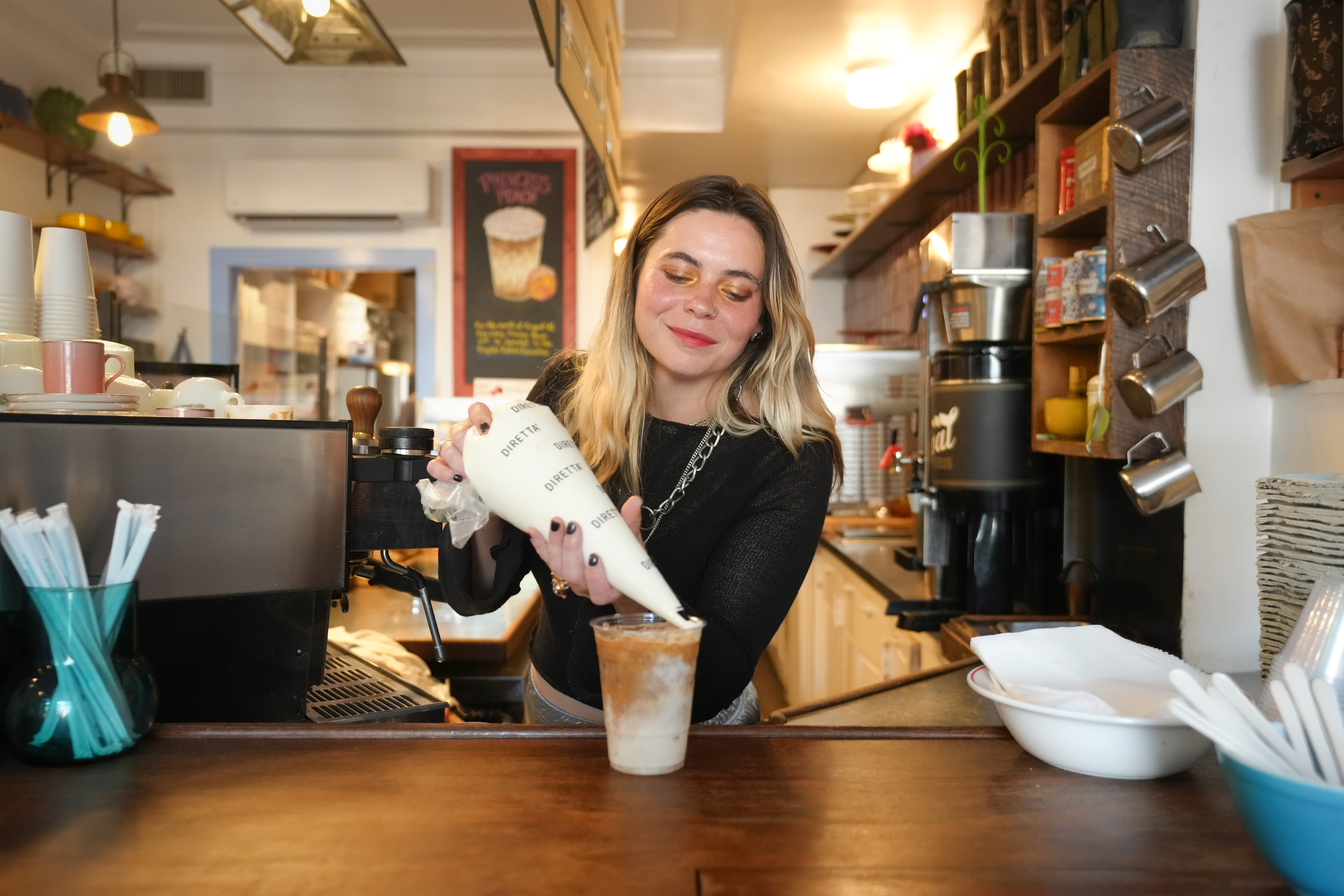
Zoe Tanner pipes marshmallow whip onto a speciality latte at Loretta’s, a coffee shop in Society Hill.Jessica Griffin / Staff Photographer
Tanner, who moved to Philly in 2015 from a small town in Maryland, fell into coffee by working at Starbucks while attending the University of Valley Forge. After, she worked her way up from being a barista at La Colombe’s Dilworth Park location to account manager for the local coffee chain, where she was responsible for convincing mom-and-pop shops to use the brand’s products. She started at Loretta’s when they opened.
The job fuels Tanner’s second career as a self-made musician who writes, records, and mixes all her music. This fall, Tanner will release her fifth album as Mommy Rockstar Bitch, the grunge persona that has helped Tanner find power in her role as the self-proclaimed “mom friend.”
Tanner said working at Loretta’s keeps her grounded like the novelist Charles Bukowski, who kept his job as a mailman during his early days as a writer. It’s also brought her unexpected fame.
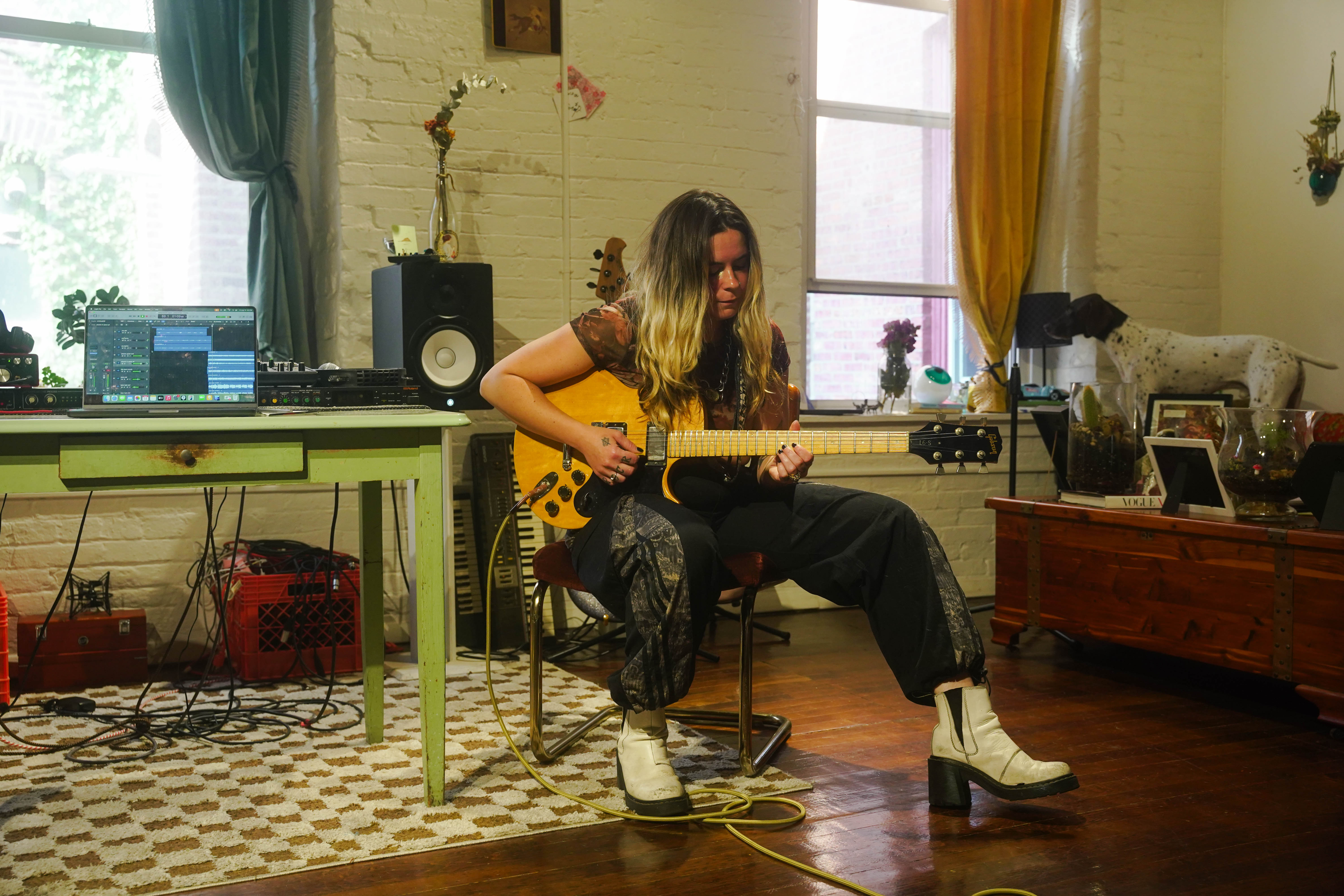
Zoe Tanner plays guitar in the living room of her apartment in Olde Kensington.Rowan Ohara
“I was running in Fishtown the other day when a group stopped me and were like, ‘Can we take a picture with you? You’re the Loretta’s girl,’” Tanner said. “Never did I think coffee would be how I build my brand.”
So, how does Philly’s most famous barista spend a perfect day in the city? It involves sharing human food with her dog, running a half marathon, and mixing music from her home in Olde Kensington.
5 a.m.
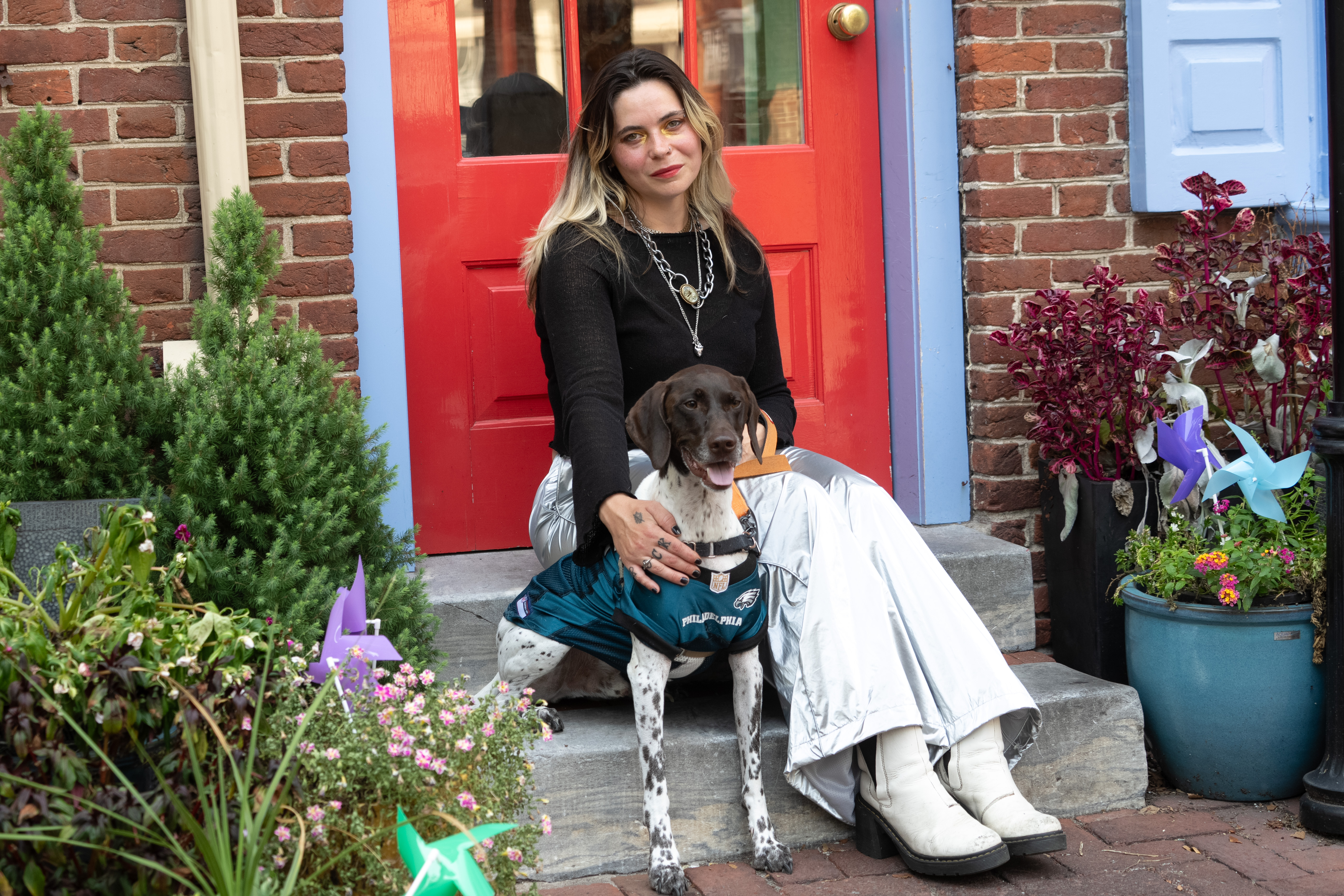
I generally wake up at 5 a.m. with my dog Barrett — a 6-year-old German shorthaired pointer — barking at me to give him pets. I automatically smile; one of my biggest accomplishments in life is that he’s so well-behaved because GSPs are such a tough breed.
After a quick morning walk with Barrett, I’ll head to a 6 a.m. Heated Power Strength yoga class at Monarch Yoga in Kensington. I go without having any coffee, which is so unnatural for me, and then when I get out, I feel so awake and alive. The music is also so upbeat and fun for a strength class, but since it’s a yoga studio, [the instructor] still gives us a spiritual concept to focus on.
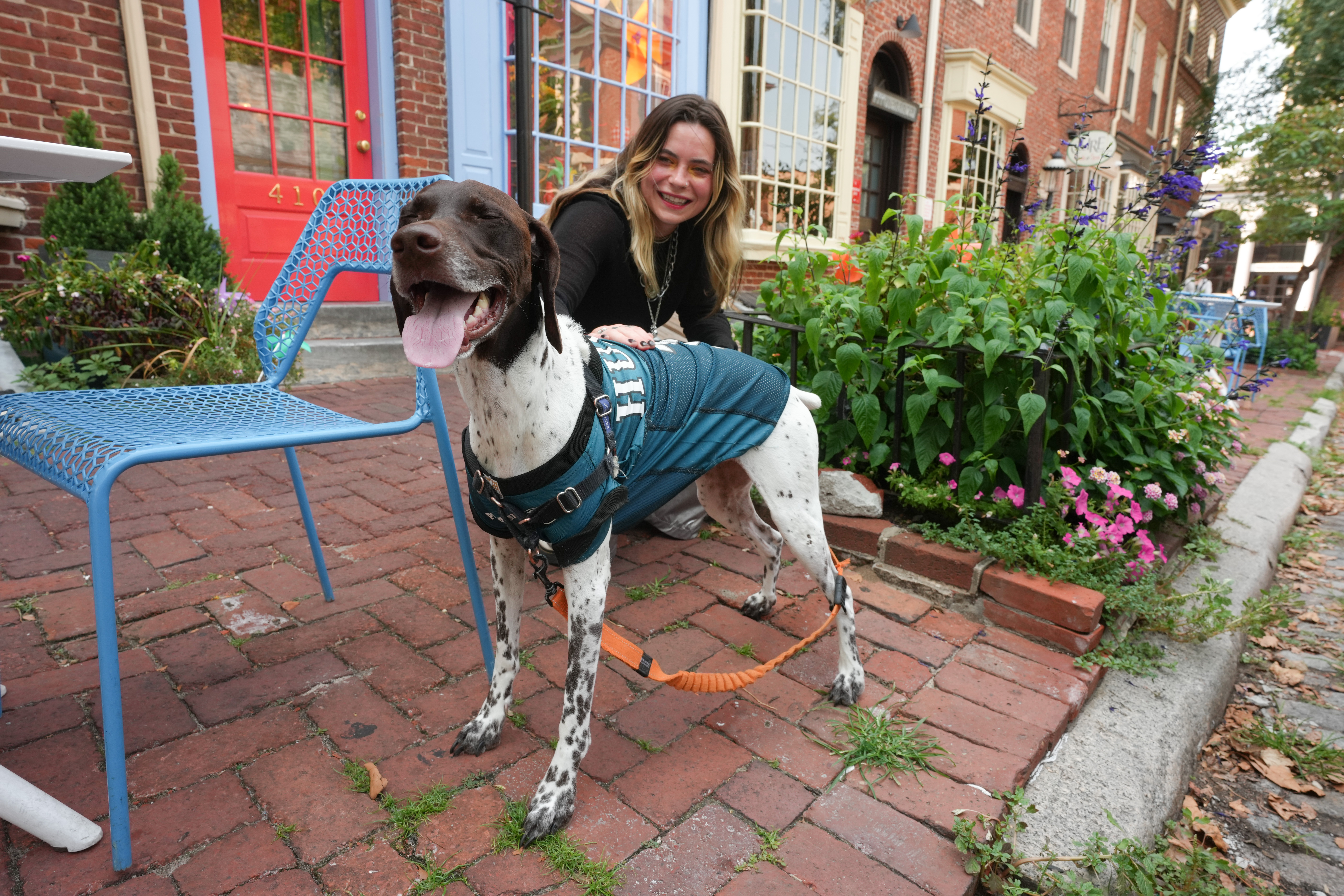
Tanner likes to share food with Barrett, her 6-year -old German shorthaired pointer. His favorites include banh mi from Ba Le and pizza from Pizzeria Beddia.Jessica Griffin / Staff Photographer
7:30 a.m.
Next, I’ll grab Barrett for a long walk that’s mostly about him being the center of attention. People might say that I’m a bad dog mom for this, but I share my food with him.
I’m not even embarrassed by this because Barrett has good taste: When we go on long runs, we always stop at Ba Le Bakery in South Philly for a lemongrass and beef banh mi, and when we walk down Frankford Avenue, he will literally yank me across the street for Huda Burger. I even gave him a Pizzeria Beddia birthday party. I promise he’s a healthy dog.
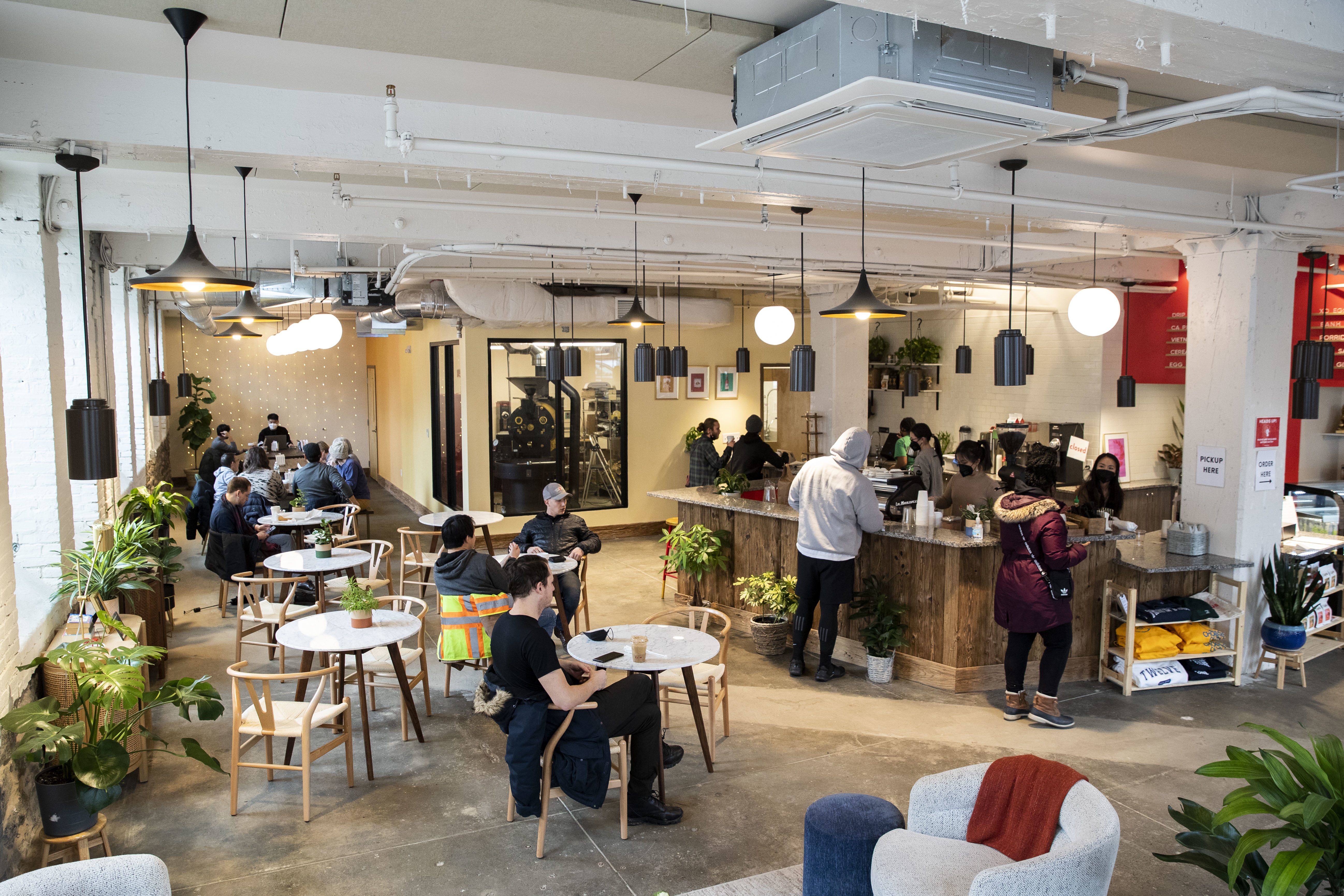
Anyway, on our long walks we will either stop at Rival Brothers Coffeefor a short Americano and so Barrett can look out the window, or Càphê Roasters to split a fried chicken sandwich. It’s funny because I used to joke about never wanting to be a regular somewhere, but now I walk into these places and it feels like I’m talking to my siblings. It’s a beautiful way to start my morning.
The inside of Càphê Roasters in Kensington, where Tanner and her dog Barrett are regulars.Monica Herndon / Staff Photographer
10 a.m.
After also feeding Barrett real dog food, I head down to Loretta’s to clock in for a shift. On a perfect day, work involves barista-ing a little bit, doing latte research, and filming content for social media.
All of our specialty lattes involve a specialty syrup and cold foam, and they take about three iterations each to get right. I love it because I feel like I’m in a lab, trying to find the right balance of fun and sweetness without just serving people sugar just because it looks pretty … [Kelsey Bush] and I are both very anti-unicorn frappuccinos.
As director of operations at Loretta’s, Zoe Tanner says the best parts of her job include working on latte recipes and barisa-ing.Jessica Griffin / Staff Photographer
At some point, I will stop for lunch. I’m in a protein era right now, so I like to order the Emma, which I equate to Loretta’s version of a chicken Caesar salad wrap. I also love our Rice Krispies Treats. They’re just perfectly done. Packaged Rice Krispies Treats are always so dry.
2 p.m.
It is officially time for me to go on a long run — 13.1 miles at minimum because I’m a distance diva.
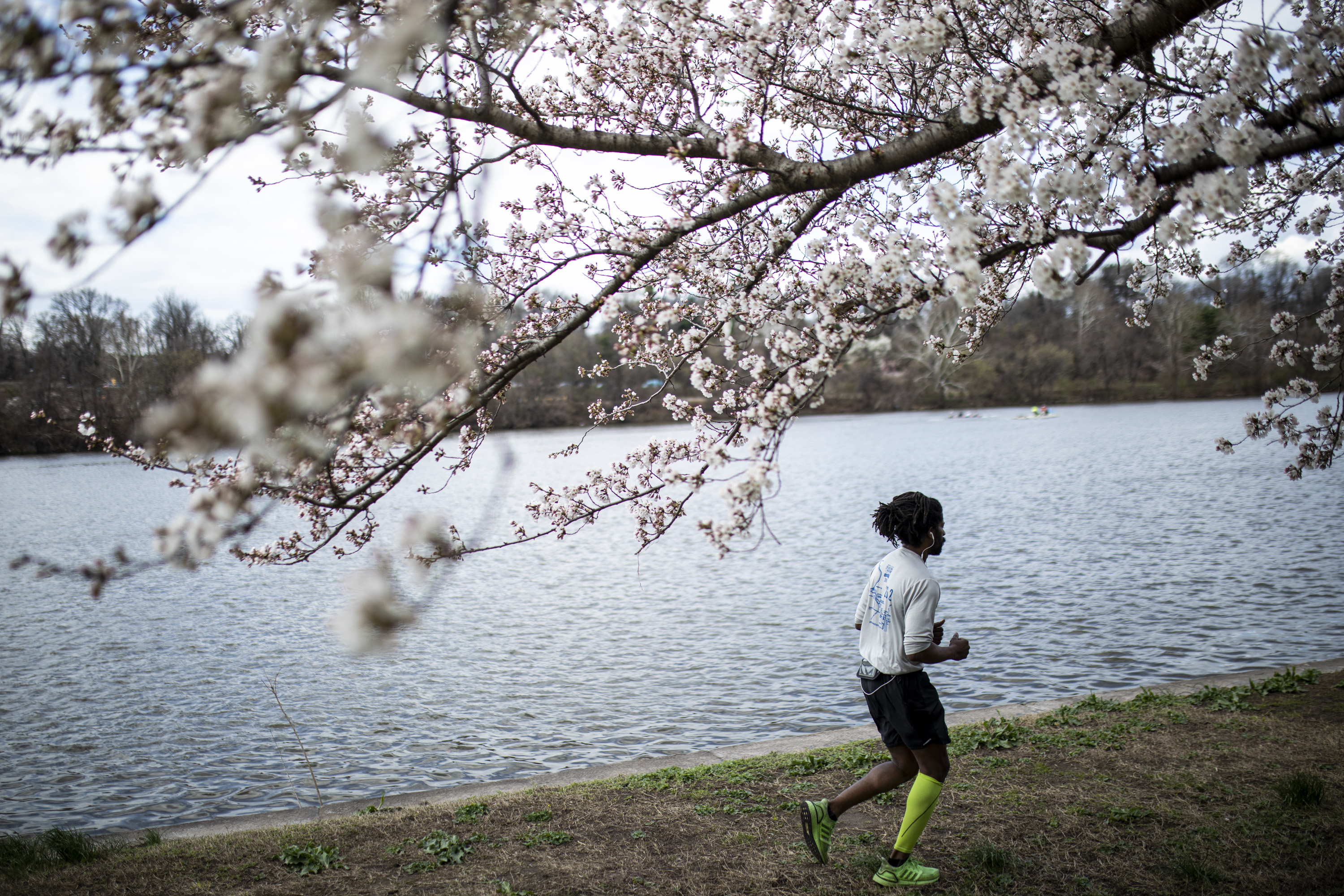
My go-to route is river to river: I’ll run from my apartment to Penn Treaty Park, down to the Headhouse Shambles, across South Street to Schuylkill Park, up to the Philadelphia Museum of Art, and back.
While I’m running, I like to listen to a lot of my raw mixes to get a sense of what needs work, but if I’m trying to have a really blissful run, I’ll listen to Dean Blunt or Sade. If you run by the river and put on Sade, you’ll feel like the hottest person in the universe. Trust.
Tanner likes to run along the Schuylkill River, the Delaware River, and through Penn Treaty Park.TYGER WILLIAMS / Staff Photographer
I also like to think of my runs as quests. I will deliberately only bring my phone and headphones so I’m forced to stop for the things I need to keep going, like a snack or electrolytes. It’s fun because it helps me get to know the city better, even after more than a decade. … I think people get tired of Philly because they don’t chew down on it enough.
Running this way has also made me a public bathroom expert because peeing, of course, is always part of the quests. My hot tip: Never count out a Whole Foods.
6 p.m.
After my run, I like to get dinner and drinks with my friends.
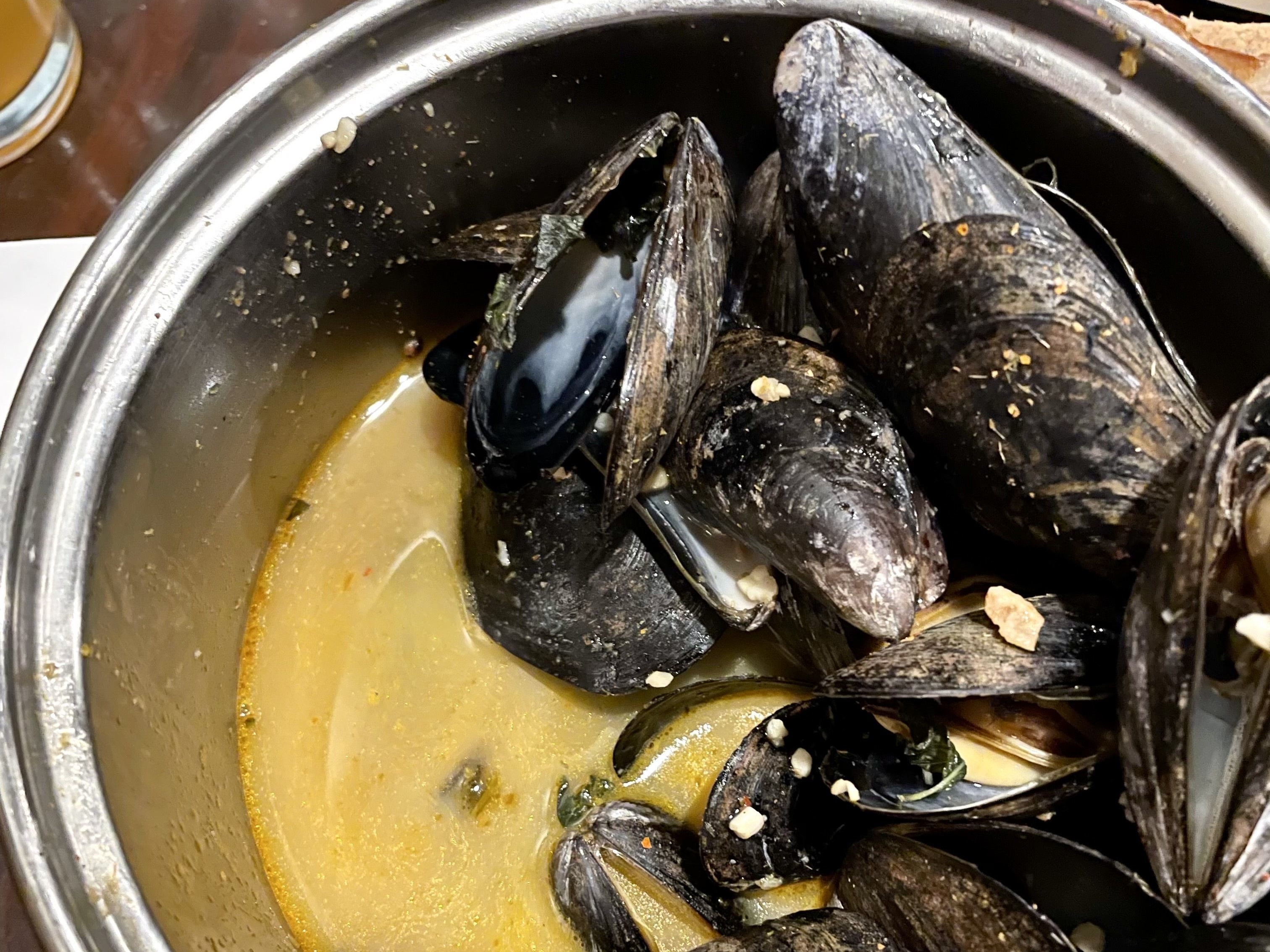
Our go-to is Monk’s Cafe, which I recently learned might be haunted? I typically order the Thai curry mussels, a saison, and fries.
I know there’s a lot of discourse about Monk’s having the best fries, but I want to make clear that I do NOT play that game. Fries come in all shapes and sizes, and they’re all good. I would never body shame a fry. It’s like trying to say a basketball player is more athletic than a football player. How could you?
A pot of mussels in Thai curry broth at Monk’s Cafe.Craig LaBan
If we want to have a less chill night, my friends and I will go to Johnny Brenda’s— I had my first ever legal drink there, and they make a great steak. For a more chill night, we like to eat at Phở 75. I want my pho with dark meat chicken and all the fixings — jalapeños, bean sprouts, cilantro, sriracha, hoisin. Barrett, of course, will probably have a piece of the chicken.
9 p.m.
I like to end my day with music, either by practicing with my band or mixing my album, which reminds me a lot of coming up with drinks for Loretta’s since both start with me asking the same question: What can I do to make this thing pop?
Sound mixing is so similar to food and beverage because it’s very easy to sense when you’ve done too much and need to pull back. Things often taste and sound the best when they’re at their most natural.
This interview has been edited for length and clarity.
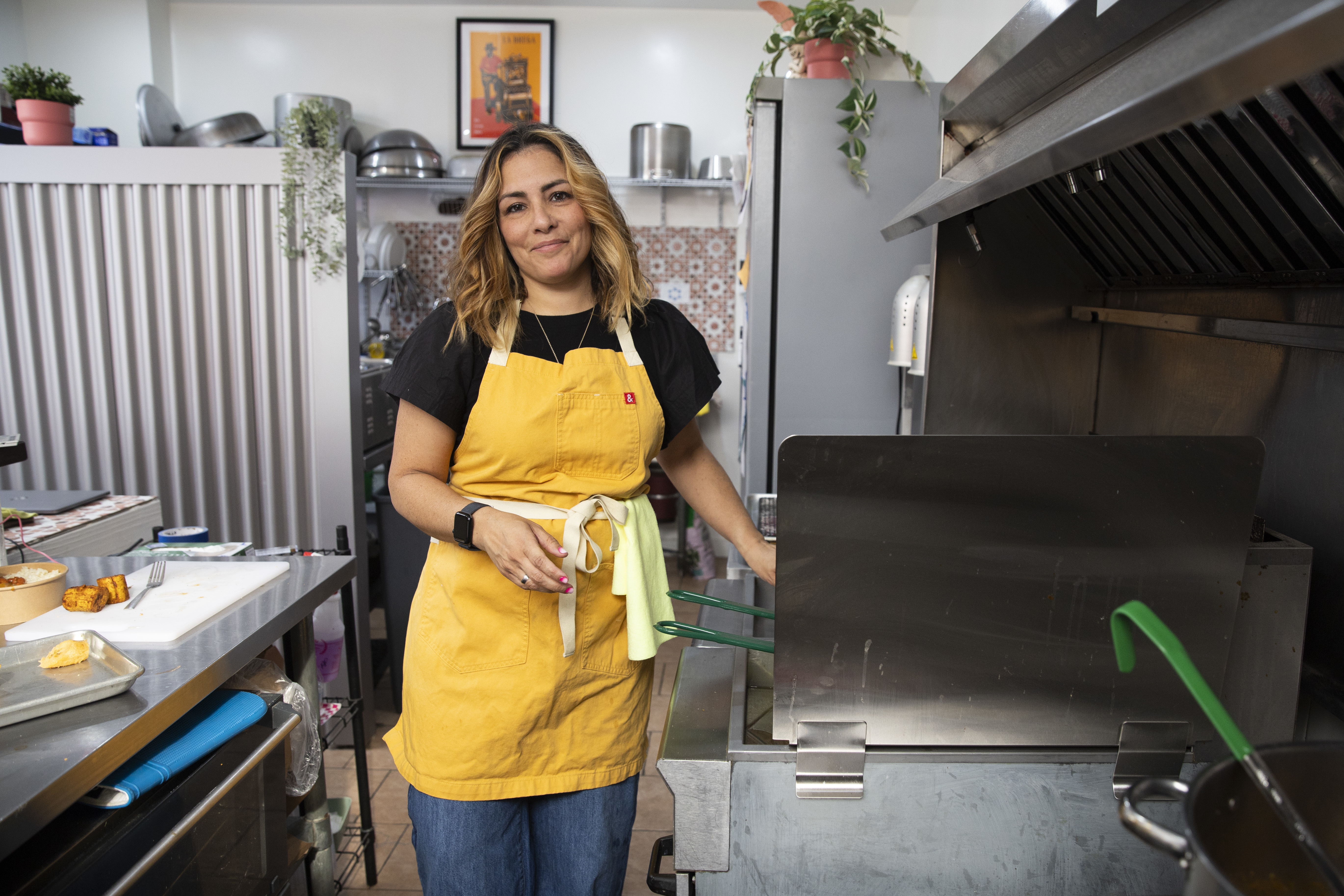
Every week, Amaryllis “Amy” Rivera-Nassar hand-shapes and deep-fries around 2,000 pastelillos at her Fishtown takeout joint, Amy’s Pastelillos.
Rivera-Nassar opened the bright pink storefront at 2001 Memphis St. in 2024 after spending years as the neighborhood’s “pastelillo lady,” selling the Puerto Rican turnovers — filled with classic chicken stew, guava BBQ pork, and truffled mushrooms, among others — via pop-ups. But 2026 is the year things really started to click.
The only hitch: Rivera-Nassar says she’s running out of room to keep up. Her kitchen barely has enough space for two burners, two fries, a pair of fridges, and an oven.
“It’s like a little tiny shoebox. We do so much with so little,” Rivera-Nassar said.
Luckily, Rivera-Nassar now has a big team in her corner: This week, the Philadelphia 76ers and Bank of America announced that Amy’s Pastelillos won the Enrich Program competition, making the takeout shop an official Sixers partner for the upcoming NBA season.
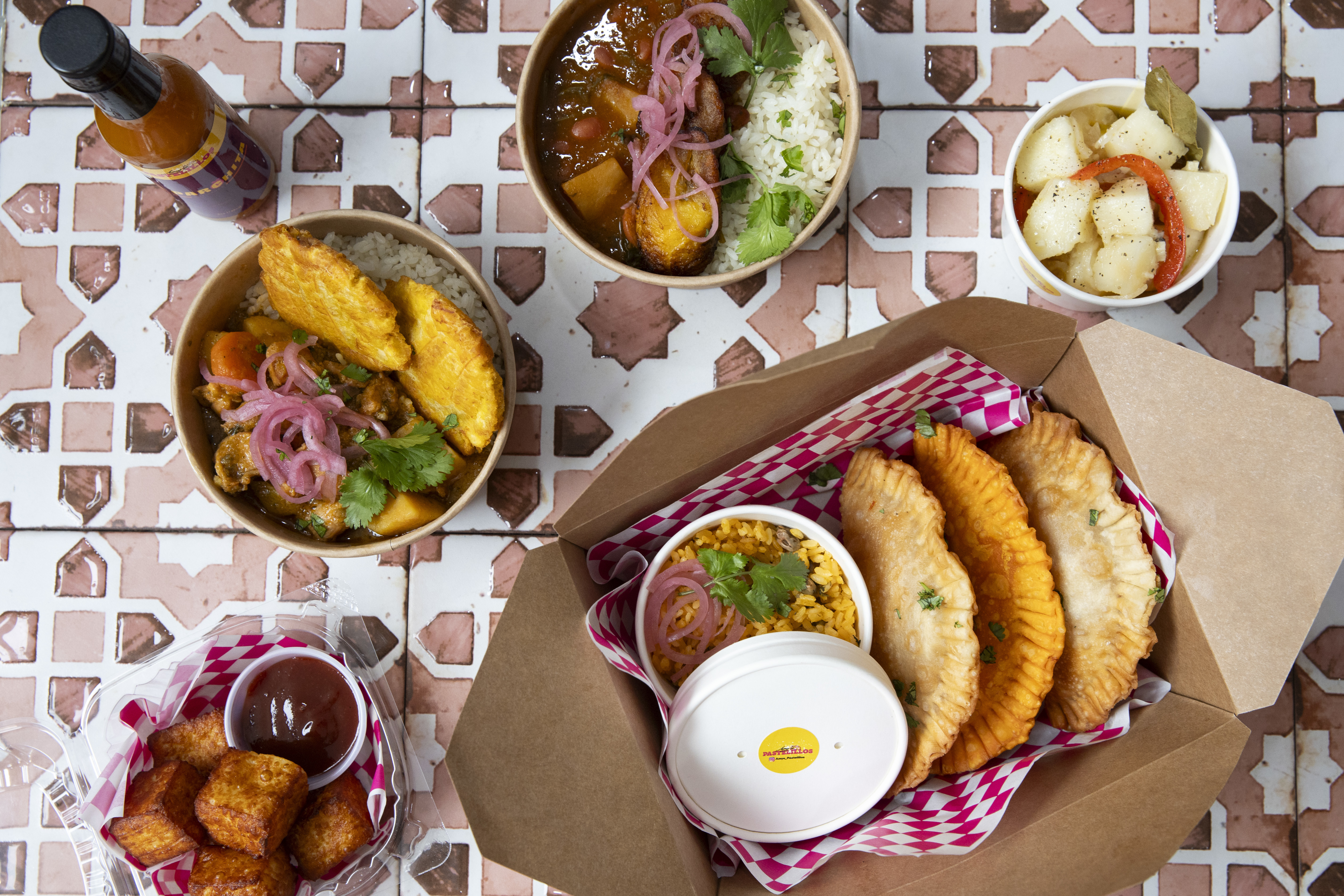
A spread of dishes including pastelillos at Amy’s Pastelillos, now an official partner of the Philadelphia 76ers for the 2026-27 NBA season.Monica Herndon / Staff Photographer
The prize package is valued at approximately $250,000, and includes a year of marketing support, business consulting, and strategic networking from both Bank of America and the Sixers. As an official partner, Amy’s Pastelillos brand will be promoted to 76ers fans through a mix of TV, social media, and radio ads, plus appearances.
The opportunity, Rivera-Nassar said, couldn’t have come at a better time.
“I had been spending all year trying to secure support and funding for my business, and had been getting constant ‘nos,’” she said. “I just can’t believe that we won.”
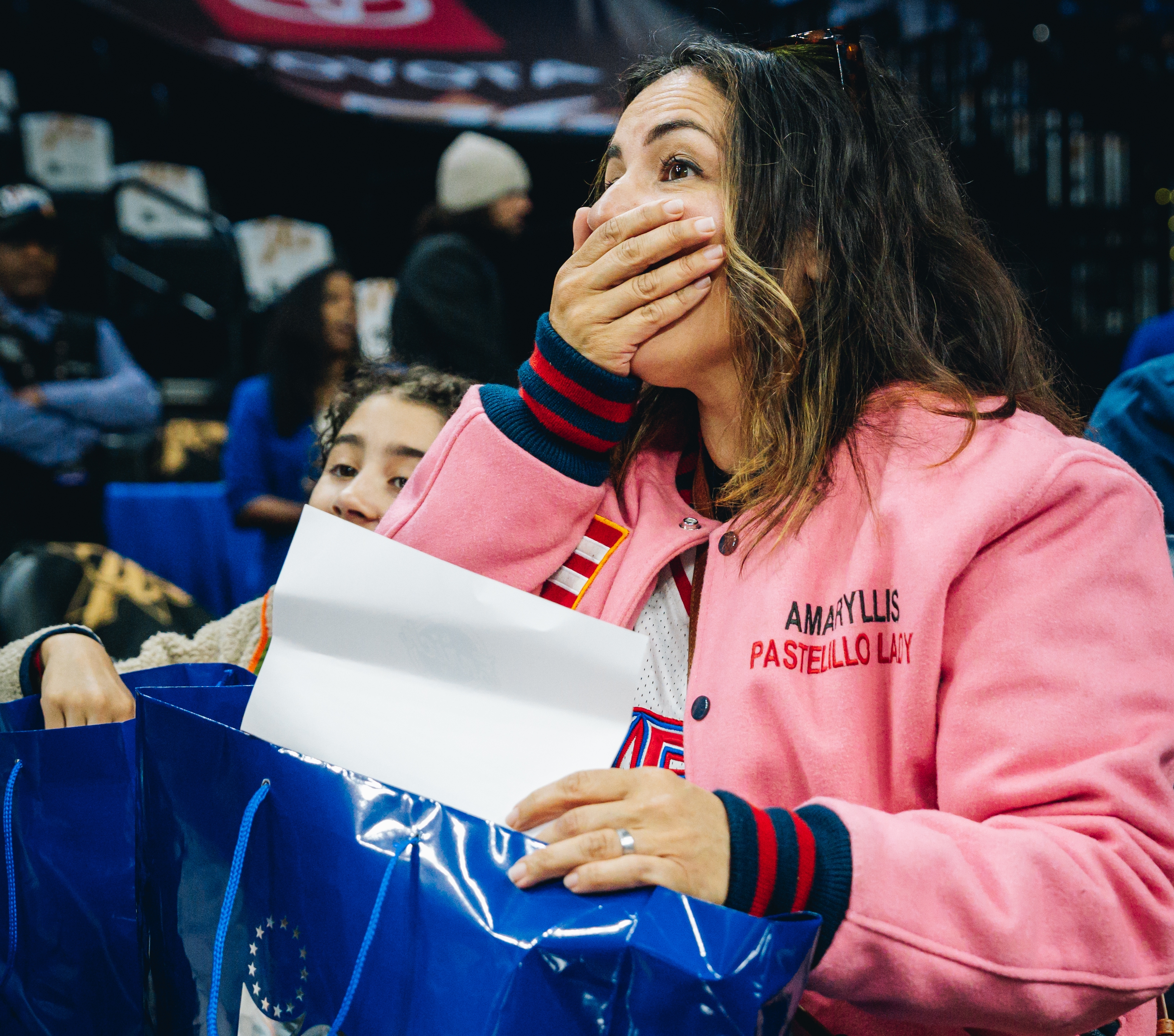
Amaryllis “Amy” Rivera-Nassar, owner of Amy’s Pastelillos, found out her business was an Enrich Program winner during Game 4 of the Sixers playoff series against the Boston Celtics at the Xfinity Mobile Arena.Courtesy Philadelphia 76ers
Bank of America and the Sixers started the Enrich Program during the 2020-21 basketball season as a way to uplift small, local, and underrepresented business owners in and around Philly. Previous winners include East Falls coffee shop Thunder Mug Cafe and the late Charisse McGill’s Lokal Artisan Foods, the brand behind the popular French toast bites stands previously located at Spruce Street Harbor Park and the Christmas Village.
The program is competitive: 175 businesses applied earlier this spring, a Sixers spokesperson said via email. After submitting an application detailing their growth plans, selected business owners must pitch Bank of America and Sixers executives. Enrich’s two other finalists, the Northern Liberties gift shop Laser Philly and the popular Kensington gelato shop Cloud Cups, also received $10,000 cash prizes.
“Amy’s story stood out to us,” the Sixers spokesperson said. “Her vision extends beyond the restaurant itself — she is passionate about creating a space where Philadelphians can experience and connect with Puerto Rican culture and community. That combination of entrepreneurial growth [and] cultural purpose … made Amy’s journey one we were excited to support.”
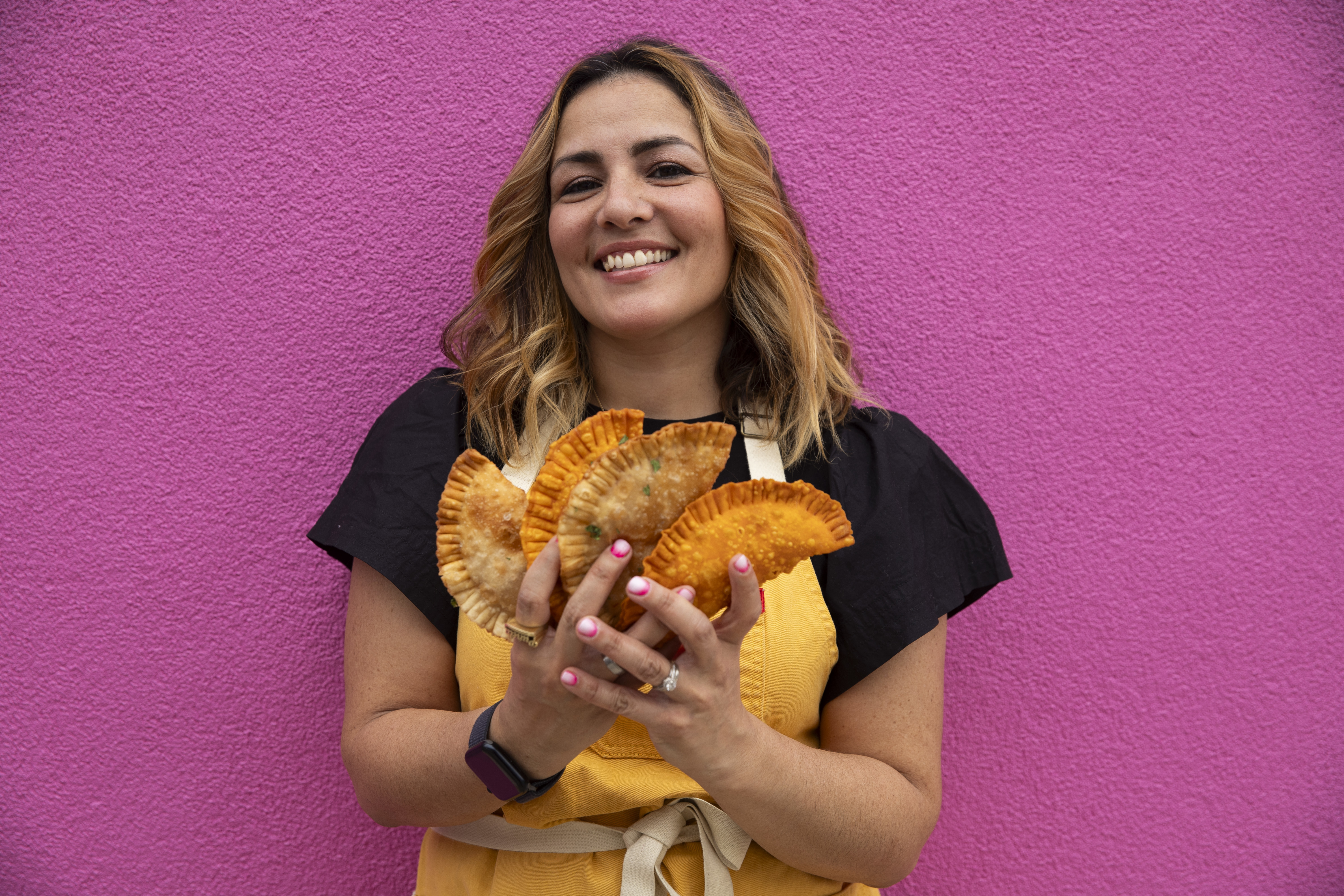
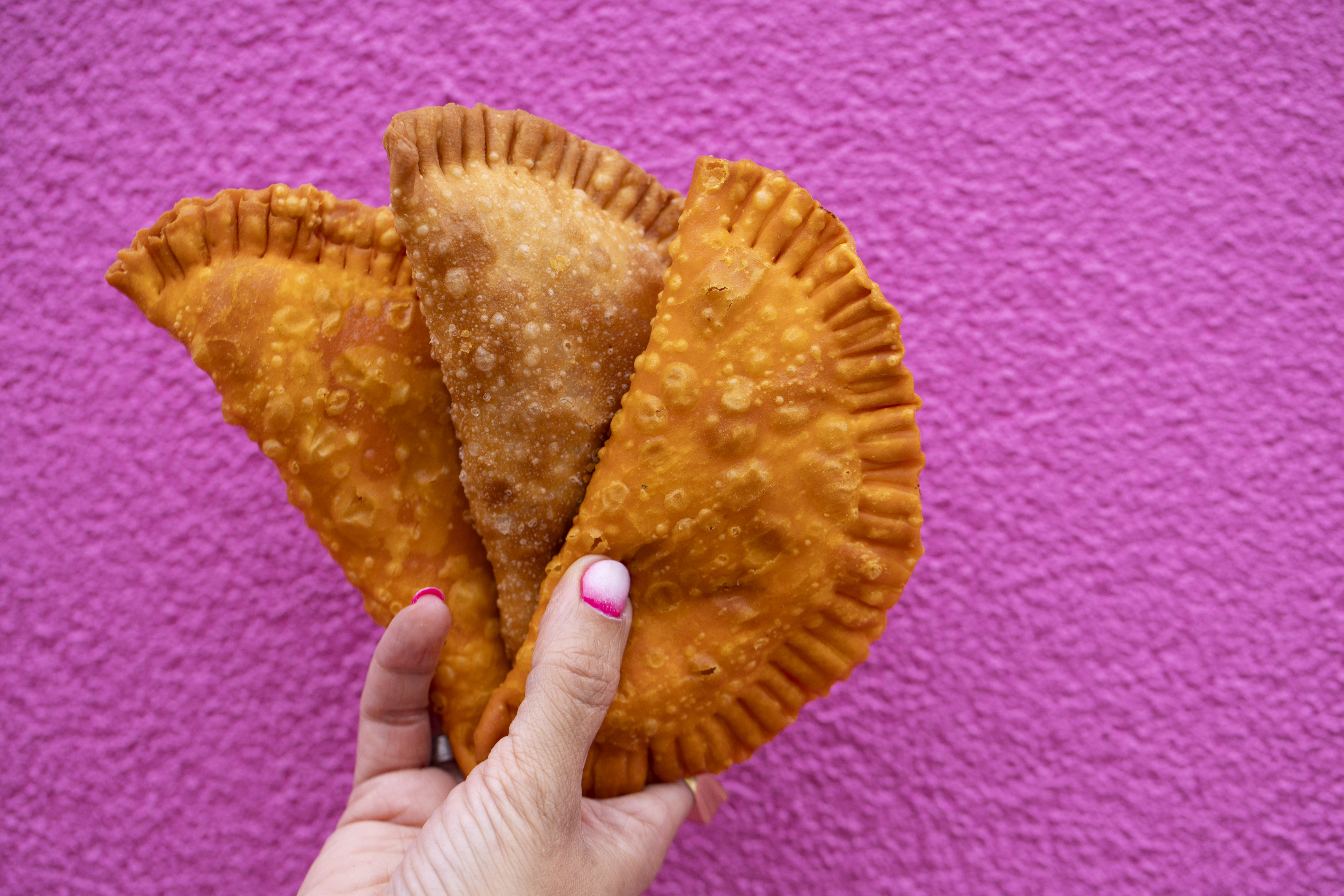
Amaryllis “Amy” Rivera-Nassar holds three pastelillos from the menu outside her restaurant, Amy’s Pastelillos. She estimates the storefront sells just under 2,000 Puerto Rican turnovers per week.Monica Herndon / Staff Photographer
“We did 700 pastelillos in two hours for just Super Bowl parties alone,” she said. “But the aftermath was super-exciting. A lot of people were like, ‘Oooh, Puerto Rican food’ and really wanted to explore the culture.”
Rivera-Nassar believes the support from Bank of America and the added visibility from the Sixers can help Amy’s expand to a larger off-site prep kitchen —even if she can’t bear to leave her bright pink storefront.
“I’m attached. It’s my baby,” she said,at the same time acknowledging that, space-wise,“we’ve hit our ceiling.”
Amaryllis “Amy” Rivera-Nassar works in the kitchen at Amy’s Pastelillos. Now an Enrich Program winner, Rivera-Nassar is hoping to expand to a larger, off-site prep facility.Monica Herndon / Staff Photographer
Rivera-Nassar is most excited to see her business’ name in lights inside the Xfinity Mobile Arena. She learned about winning the Enrich prize while sitting courtside with her 10-year-old daughter at Game 4 of the Sixers playoff series against the Boston Celtics.
“I was already overwhelmed by the fact that Tyrese Maxey and [V.J.] Edgecomb were right in front of us. And then the Sixers reps came out and congratulated me,” Rivera-Nassar said. “I was floored.”
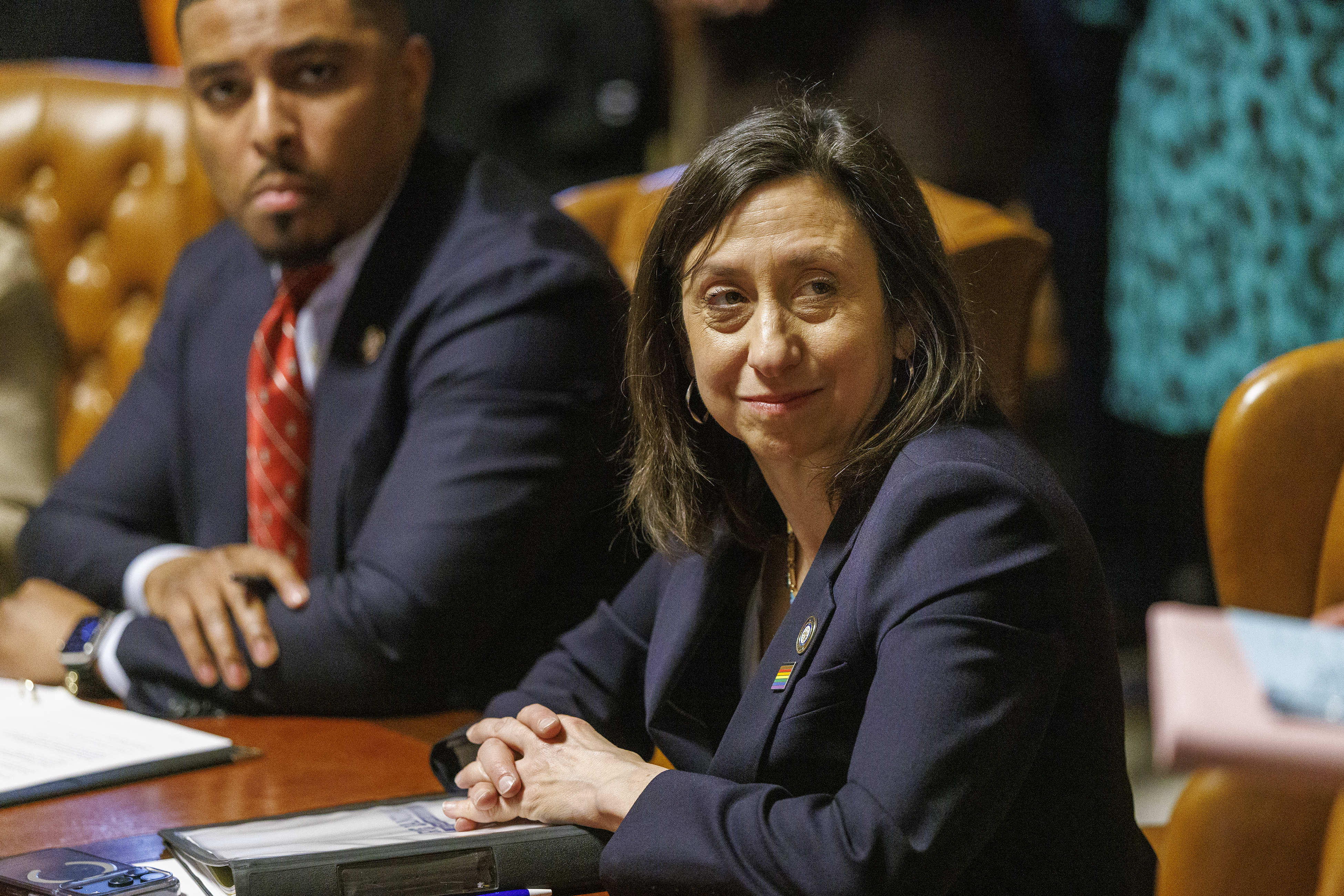
A line in Philadelphia’s zoning code conflates drag performances with strip clubs, topless bars, and other adult cabaret venues. It’s a definition that City Council hopes to change.
Councilmember Rue Landau introduced legislation on Thursday to remove references to “male or female impersonators” in a section of the zoning code that regulates “Adult Oriented Services.”
As currently written, Philadelphia defines an adult cabaret as a place that “features topless dancers, go-go dancers, exotic dancers, strippers, male or female impersonators or similar entertainers … dancing, performing or acting in a lewd, sexually erotic, exciting or stimulating manner.”
The distinction is similar to one found in a Tennessee law that prohibits so-called “adult cabarets” featuring “male or female impersonators” from being staged anywhere minors might see it. It also mirrors language used in similar drag bans struck down this year byjudges in Texas and Montana, and one currently up for consideration by the Idaho Senate.
If passed, Landau’s proposal would strike the provision regarding male and female impersonators.
The bill will first be considered by City Council’s Rules Committee. The legislation has the support of Mayor Cherelle L. Parker’s administration, Landau said, and has also been shared with her colleagues in City Council, who Landau described as “supportive.”
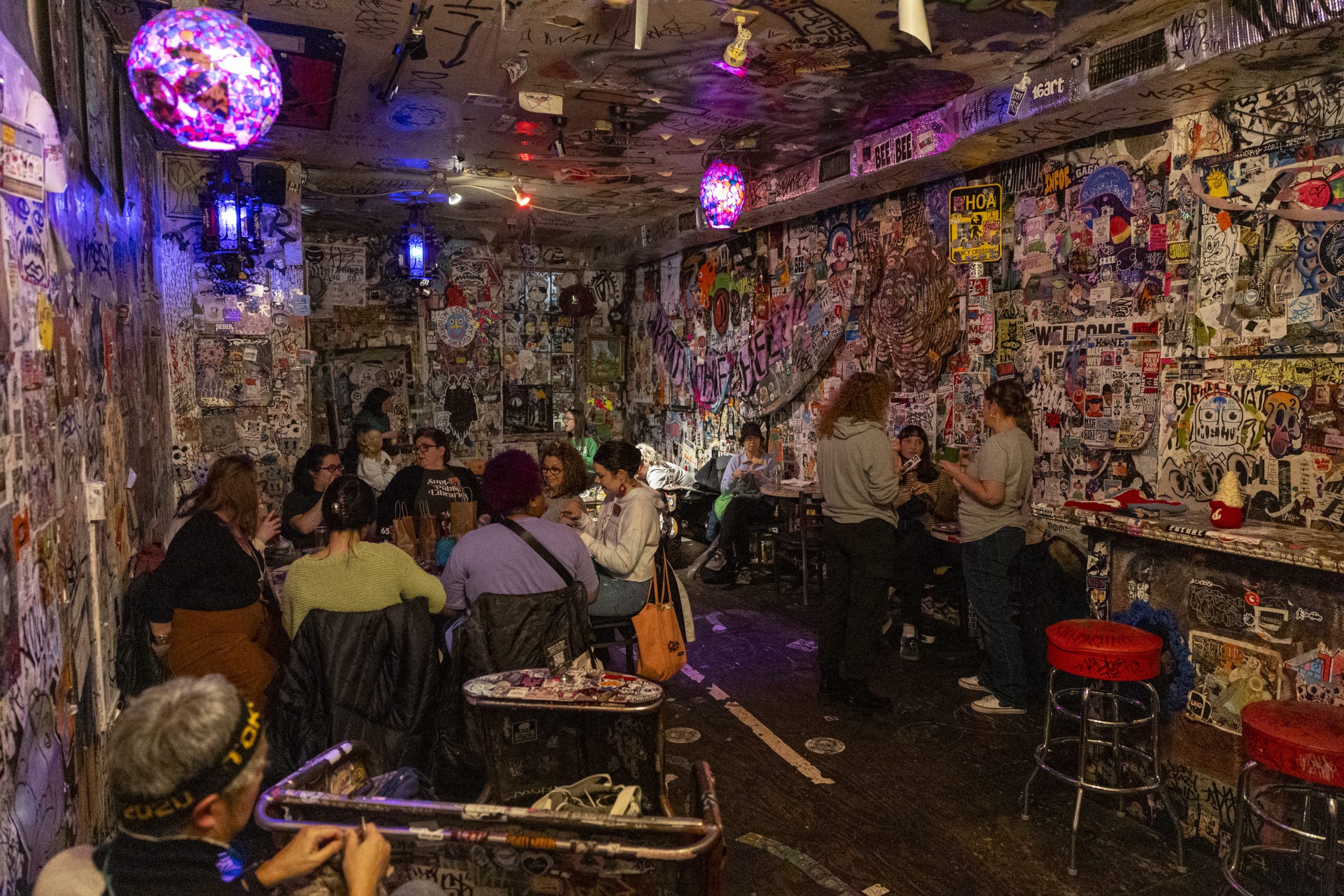
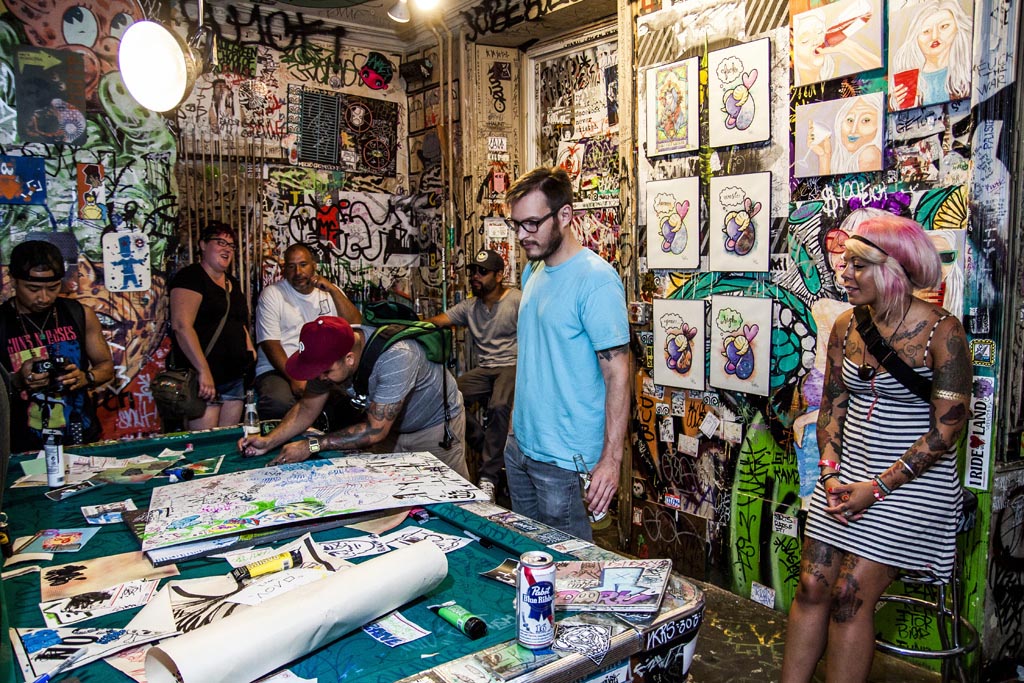
Landau’s bill is inspired by recent events at South Street bar Tattooed Mom, which has long been a go-to venue for Philly’s LGBTQ+ artists, and particularly drag performers, in part because it doesn’t charge acts.
A crowd fills Tattooed Mom. The popular South Street bar is unable to host events with music for the foreseeable future.Tyger Williams / Staff Photographer
Tattooed Mom owner RobertPerry told The Inquirer Friday that he brought what he called the “offensive and troubling language” to the attention of Landau’s staff, but was not involved in drafting the legislation.
The incident “opened my eyes to actually reading the code and having conversations … I think the [language] is so antiquated that people don’t even realize it’s there,” Perry said. “We might have initially spurred the conversation, but Landau did all the heavy lifting.”
Perry was initially instructed to seek an adult cabaret permit in addition to a special assembly license for Tattooed Mom, he told the Philadelphia Gay News in July. That same month, an L&I spokesperson told Philly Voice that the permit — which traditionally governs businesses such as strip clubs and adult theaters — is required to host drag and burlesque events.
Perry now believes that his bar doesn’t need one upon further research, he said Friday.
Regardless,Landau said Tattooed Mom’s predicament was the spark for her proposal.“They were cited in violation of this provision simply because they had a drag performance happening,” she said. “We don’t want that happening in Philly … A lot of folks rely on drag performances for their livelihood, and we just want to keep supporting them.”
Landau is unaware of L&I citing other Philly venues for hosting drag or burlesque shows without a permit. “This is thankfully nothing that L&I is usually citing establishments” over, she said.
A crowd looks at art inside the South Street bar Tattooed Mom.
If passed, Landau’s legislation won’t green-light events with music at Tattooed Mom. All Philly establishments with an occupancy of 50 or more people that host music performances, dancing, or DJs are required to have a special assembly occupancy license, which costs $253 and must be renewed annually. To procure one, Tattooed Mom must first apply for a zoning exception.
The process involves holding a public meeting for community feedback followed by a separate hearing in front of the Zoning Board of Adjustment. As of March 2026, the wait time for a hearing is 180 days — or roughly six months — according to a manual from the City of Philadelphia.
Perry said he has yet to begin Tattooed Mom’s application.
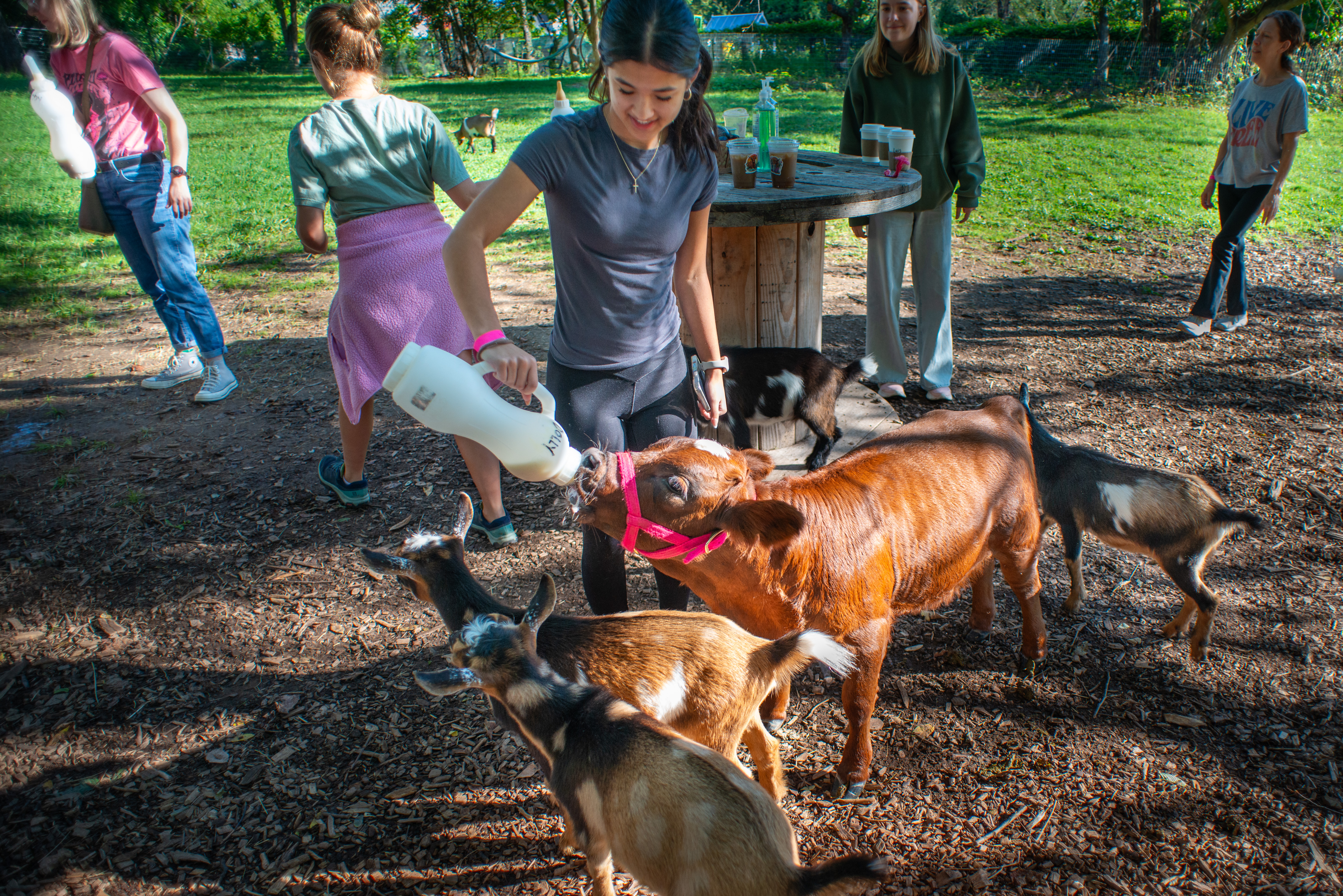
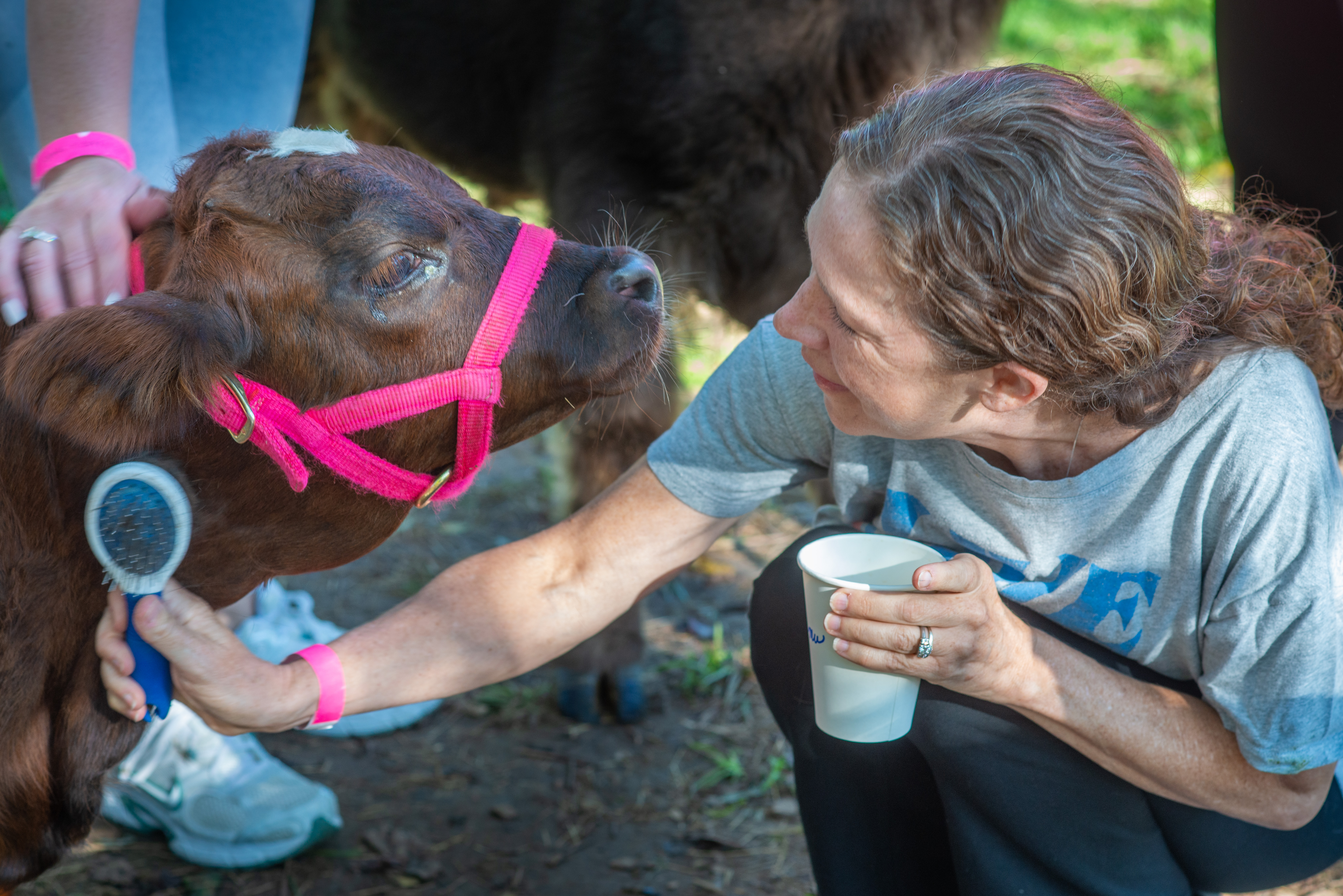
Dolly is an Aries. She likes pink accessories, the feeling of freshly brushed hair, and morning coffee with friends. She also has to be the center of attention.
No, Dolly is not a teenage girl.She’s a three-month-oldHereford calf with a job: To snuggle up with as many guests as possible at Rose Bridge Farm, a Montgomery County animal sanctuary.
Rose Bridge Farm sits on almost 13 acres of land at 1314 Limekiln Pike in Dresher, once part of an estate owned by William Penn in the mid-1700s. When steward Kristin Sutch took over the property in 2013, she transformed it into a sanctuary for farm animals rescued from livestock auctions, dairy farms, and breeders.
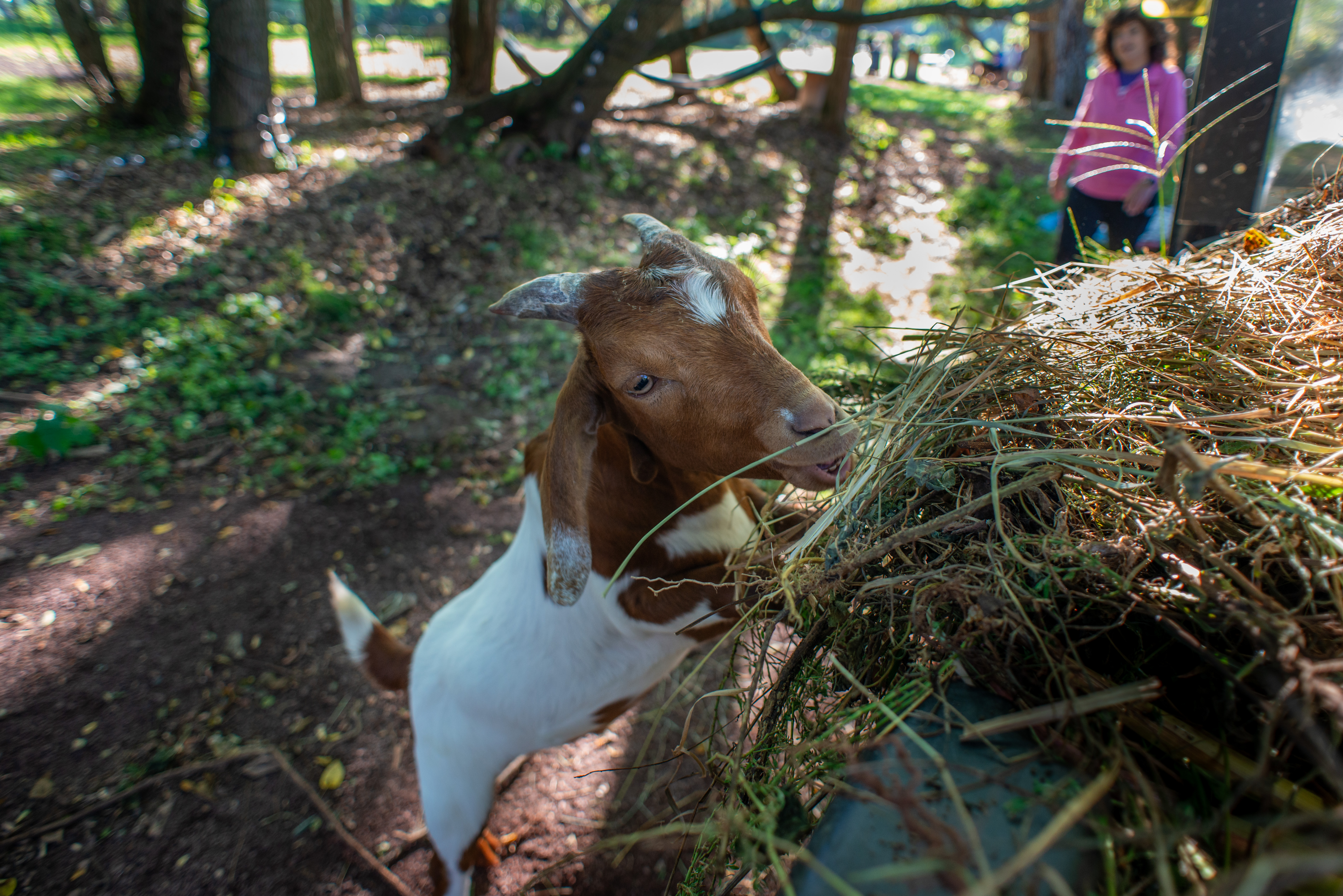
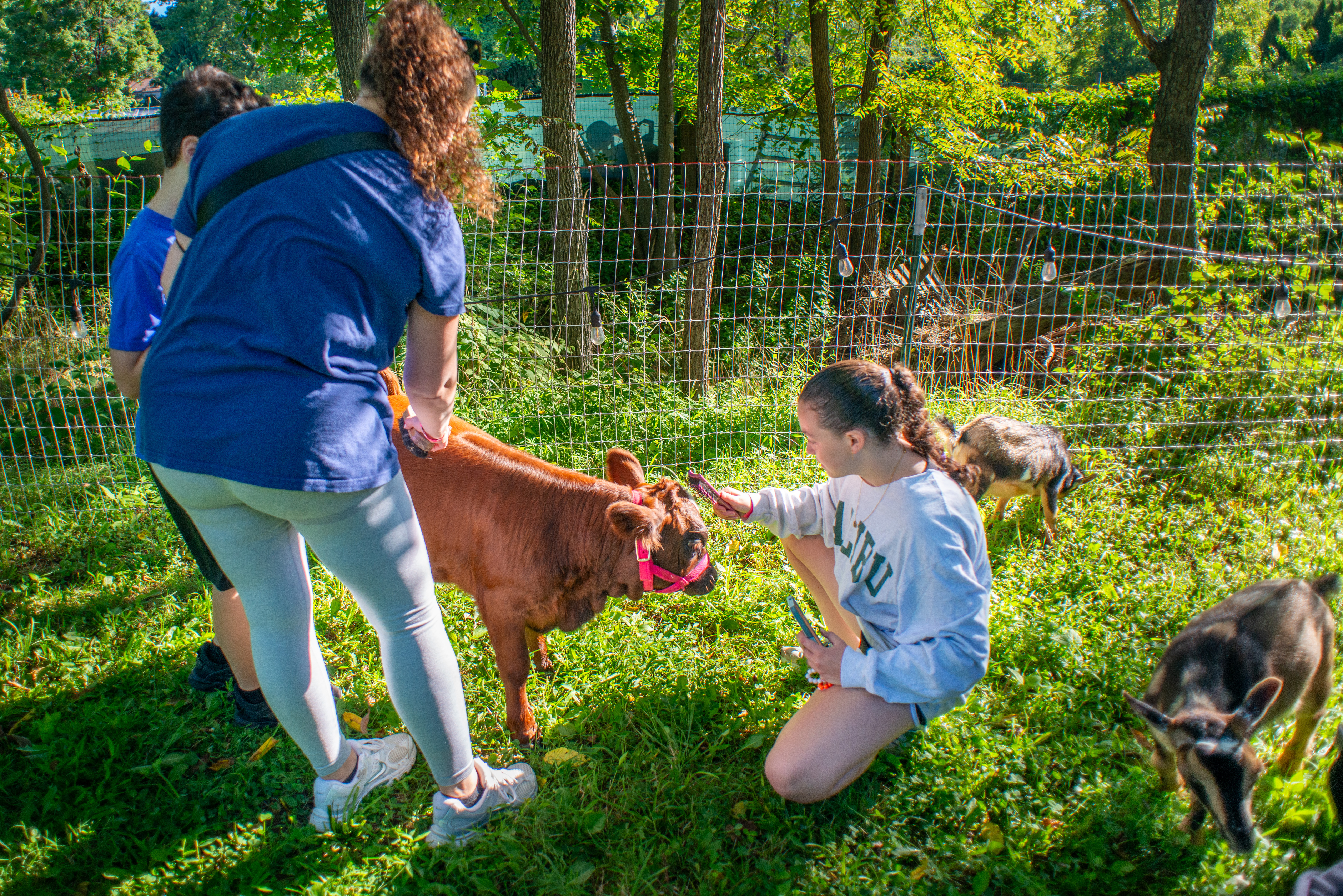
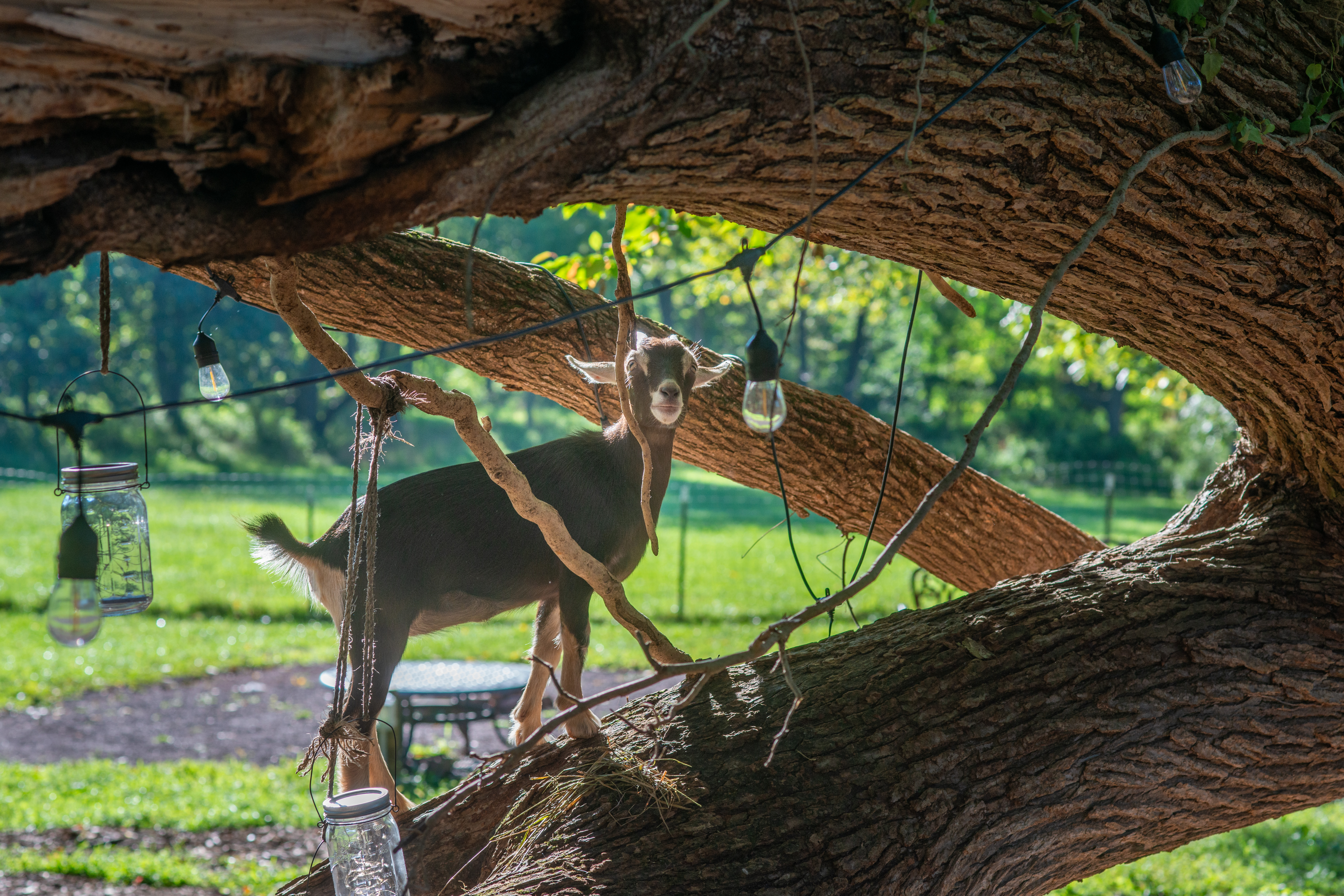
The sanctuary has 50 animals at any given moment, Sutch said, most of them babies that eventually will be adopted out to private farms and other sanctuaries. About a dozen kids — baby goats, that is — clomp around the property, climbing on lopsided trees as if they were a playscape. Freshly rescued lambs doze together in a dimly lit corner of the farmhouse, while kittens play upstairs in a renovated loft.
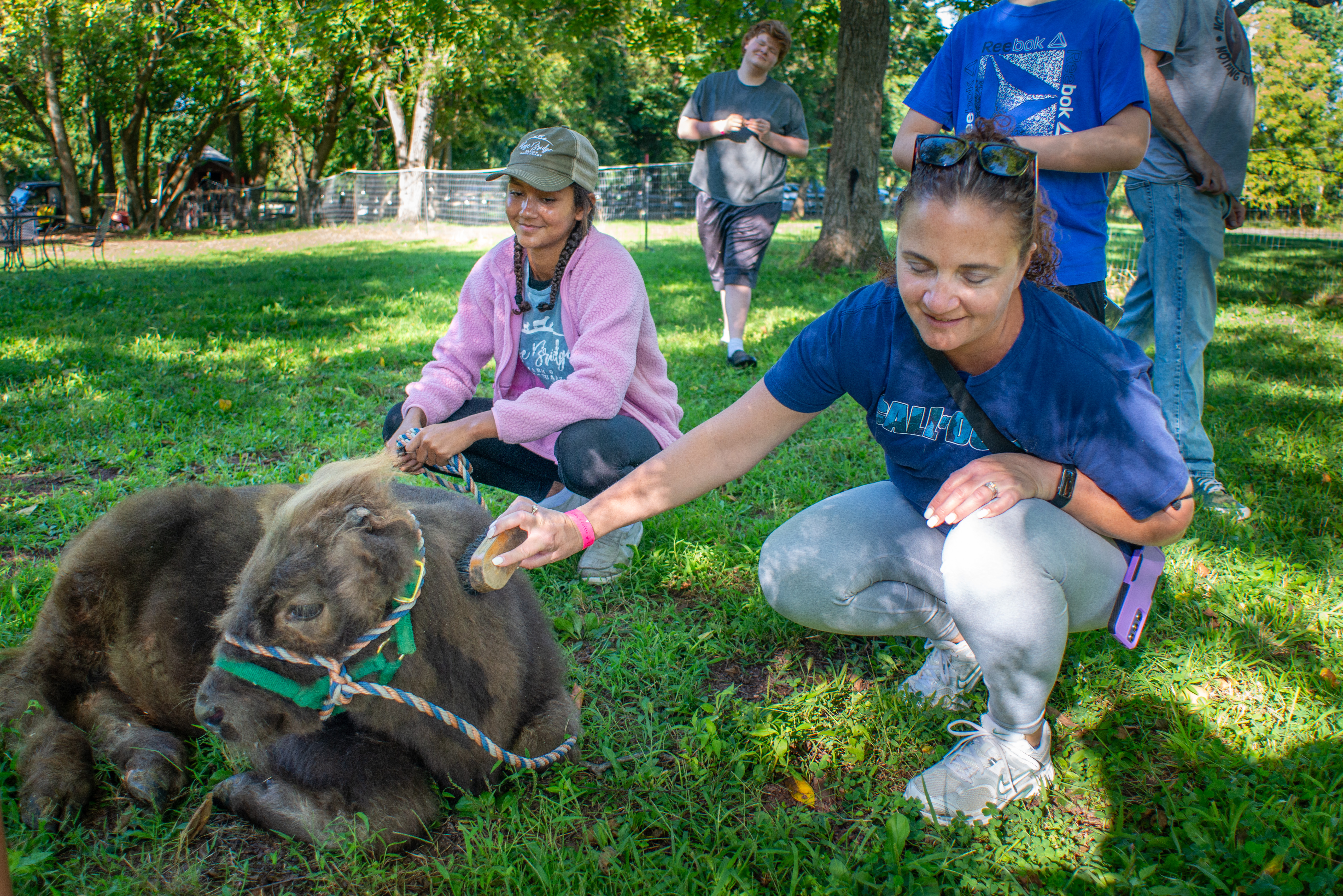
Ava Cranshaw (left), a volunteer, and Diane Haggerty, of Doylestown, brush Teddy — a mini Highland cow — at Rose Bridge Farm sanctuary during a morning Cows & Coffee event.William Thomas Cain / For The Inquirer
Rose Bridge has always been open to the public, offering guided animal husbandry tours, birthday parties, and the once-trendy goat yoga to offset the cost of running the rescue. Sutch, however, struck gold with a novel idea: What if people could start their morning like she does, by drinking coffee in the company of baby cows?
“A lot of these animals are bottle babies, so they really enjoy companionship. They’re like your dog: If you leave, they get sad,” Sutch said. “Having the public come in … [the cows are] getting as much love, snacks, and cuddles they could hope for.”
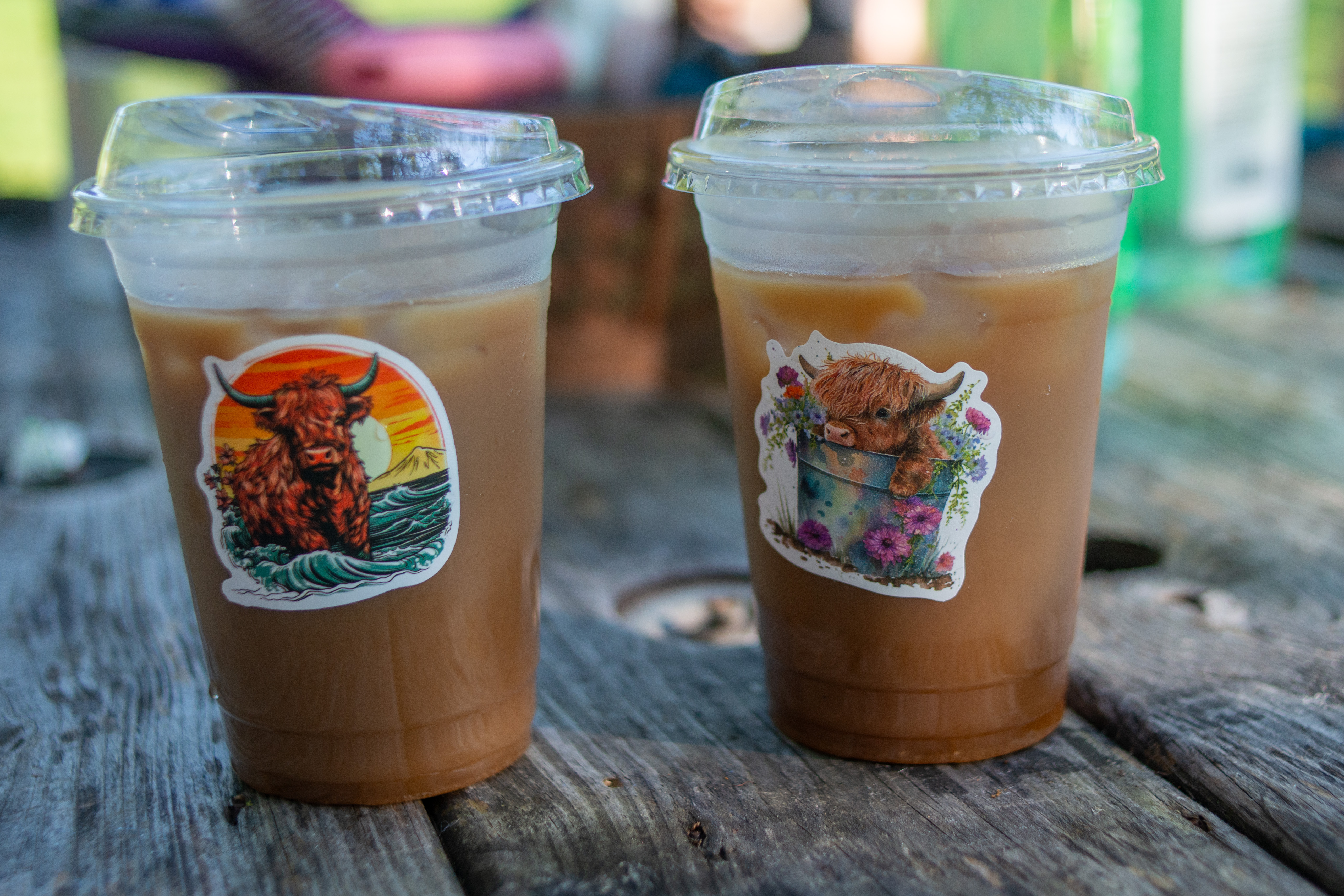
Coffee cups with Highland cow decals from a Cows & Coffee session at Rose Bridge Farm and Sanctuary.William Thomas Cain / For The Inquirer
During the hourlong, $20 sessions (which run daily at 8, 9, and 10 a.m.), guests start in the barn’s loft with an unlimited self-serve drip and iced coffee bar that includes sugar, nondairy milks, creamers, and cold foam alongside seasonal sprinkles.
Next, one of Rose Bridge’s volunteers will lead the group to the farm’s pasture, where they can brush, cuddle, and bottle-feed Dolly and her friend Teddy, a five-month-old mini Highland cow with fringe bangs and a summer buzz cut that’s just starting to grow in.
The sanctuary’s sessions are so popular that Sutch started offering an evening version branded Cows & Cocktails, where guests can sip on alcoholiciced tea and lemonade made with farm-grown mint and lavender alongside Teddy and Dolly. They’re content with booze-free bottles of milk.
A goat eats a snack during a Cows & Coffee event.William Thomas Cain / For The Inquirer
The events’ success has helped Sutch begin to check off a laundry list of renovations to the nearly 300-year-old farm, such as an automatic fire system, new barn doors, and eventually, a rehabbed bottle room.
“Everything needs replacing,” Sutch said. “And you should see our vet bills, our feed bills, our hay bills. … It takes a lot to run this farm, so [Cows & Coffee] has really been a blessing.”
Cows and goats and kittens, oh my
It’s easy to feel chosen at Rose Bridge. When I attended Cows & Coffee on a recent crisp morning, it started with a tiny tuxedo kitten trying to climb inside my coconut cream latte. Outside, baby goats nibbled on the hem of my shirt at seemingly every turn. If I stopped petting Dolly under the chin, she’d moo as if she missed me.
Melissa Watters, of Elkins Park, brushes Dolly during a Cows & Coffee event at Rose Bridge Farm.William Thomas Cain / For The Inquirer
“You look at them, especially the fuzzy baby ones, and they just make you feel all warm,” said Sutch.
Rose Bridge caps Cows & Coffee sessions at 15 attendees, with a 10-and-up age minimum. Attendees are encouraged to brush Dolly and Teddy, and to let the calves suck their thumbs, sort of like a baby and their pacifier. For maximum bonding, Sutch recommends squatting down to the cows’ level and “talking to them like a friend.”
Diane and Grace Haggerty, of Doylestown, brush Dolly during a Cows & Coffee event at Rose Bridge Farm.William Thomas Cain / For The Inquirer
Dolly, who was dropped at Rose Bridge in April from the back of an SUV, wasn’t always a diva. Teddy, however, was always a ham.
“He’s a big kisser,” said Sutch, and loves to get his floppy bangs styled.
Rose Bridge also has a new cow in town: Lady A, a 1½-year-old mini Highland cow named after the country band. Since she’s the eldest, Sutch said, Lady A is still adjusting to socializing with the rambunctious Teddy and Dolly. But what she lacks in fans, she makes up for in friends.
A goat walks on a tree at Rose Bridge Farm & Sanctuary, an animal rescue in Dresher, Pa.William Thomas Cain / For The Inquirer
“She’s a little feisty,” said Susan Connolly, who drove nearly 50 miles to Rose Bridge from her home in Kendall Park, N.J. “I like that.”
Diane Haggerty and her daughter, Grace, were partial to Dolly. “She speaks her mind and actually lets you pet her,” said Grace, who went to Cows & Coffee for her 12th birthday. “This exceeded all my expectations.”
Admittedly, not everyone was sold.
“I don’t know how at peace I feel,” said Katrina Miciek of Havertown. “I’m too busy making sure the cows and goats don’t eat my shoes.”
Ella Skiles, a volunteer, kisses a lamb at Rose Bridge Farm & Sanctuary in Dresher, Pa.William Thomas Cain / For The Inquirer
Rose Bridge Farm Sanctuary, 1314 Limekiln Pike, Dresher, rosebridgefarmsanctuary.com; Cows & Coffee runs 8 to 10 a.m. daily.
A coed bathhouse is opening in Philly. Its business model involves choreographed sauna rituals and Bitcoin-heated pools.
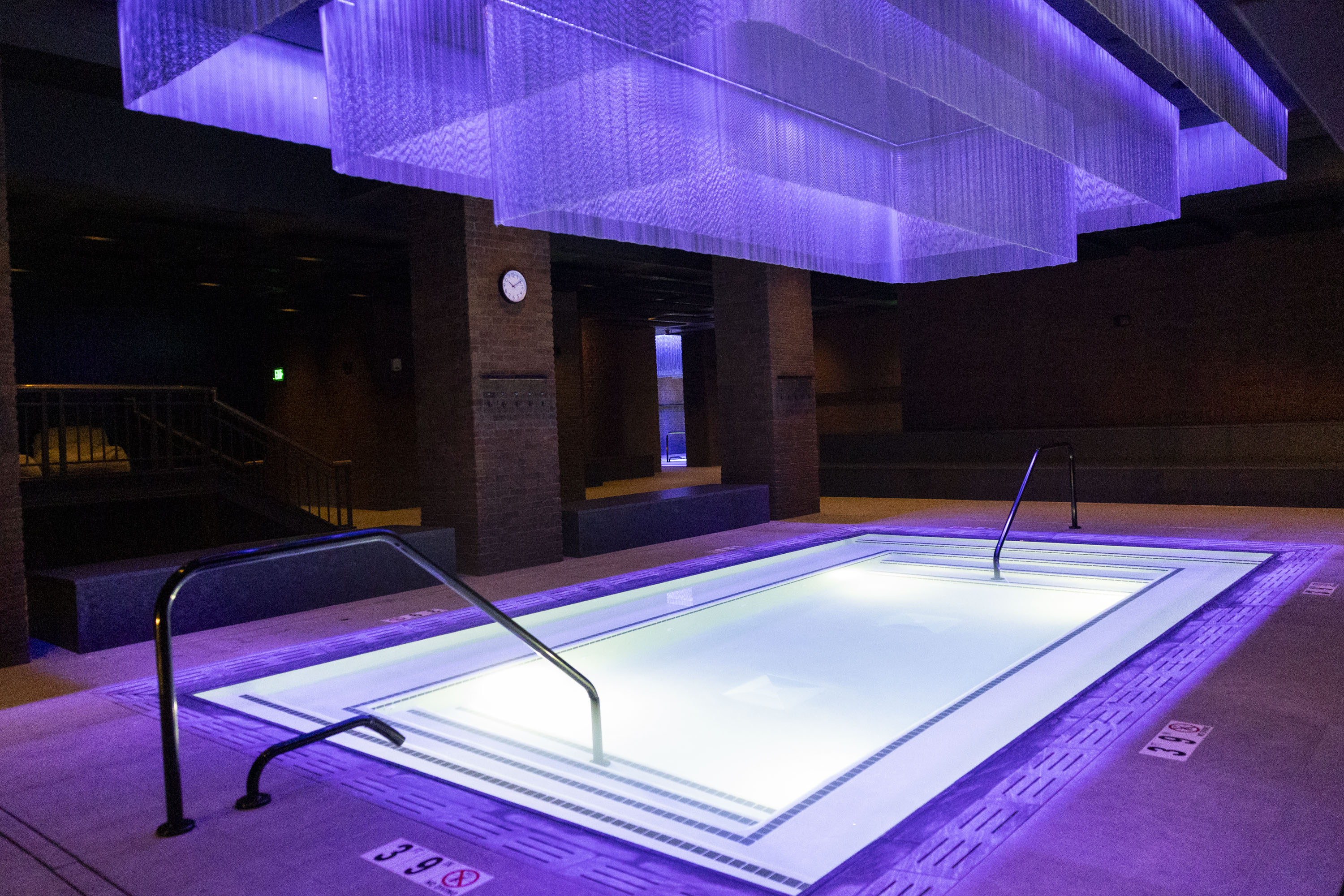
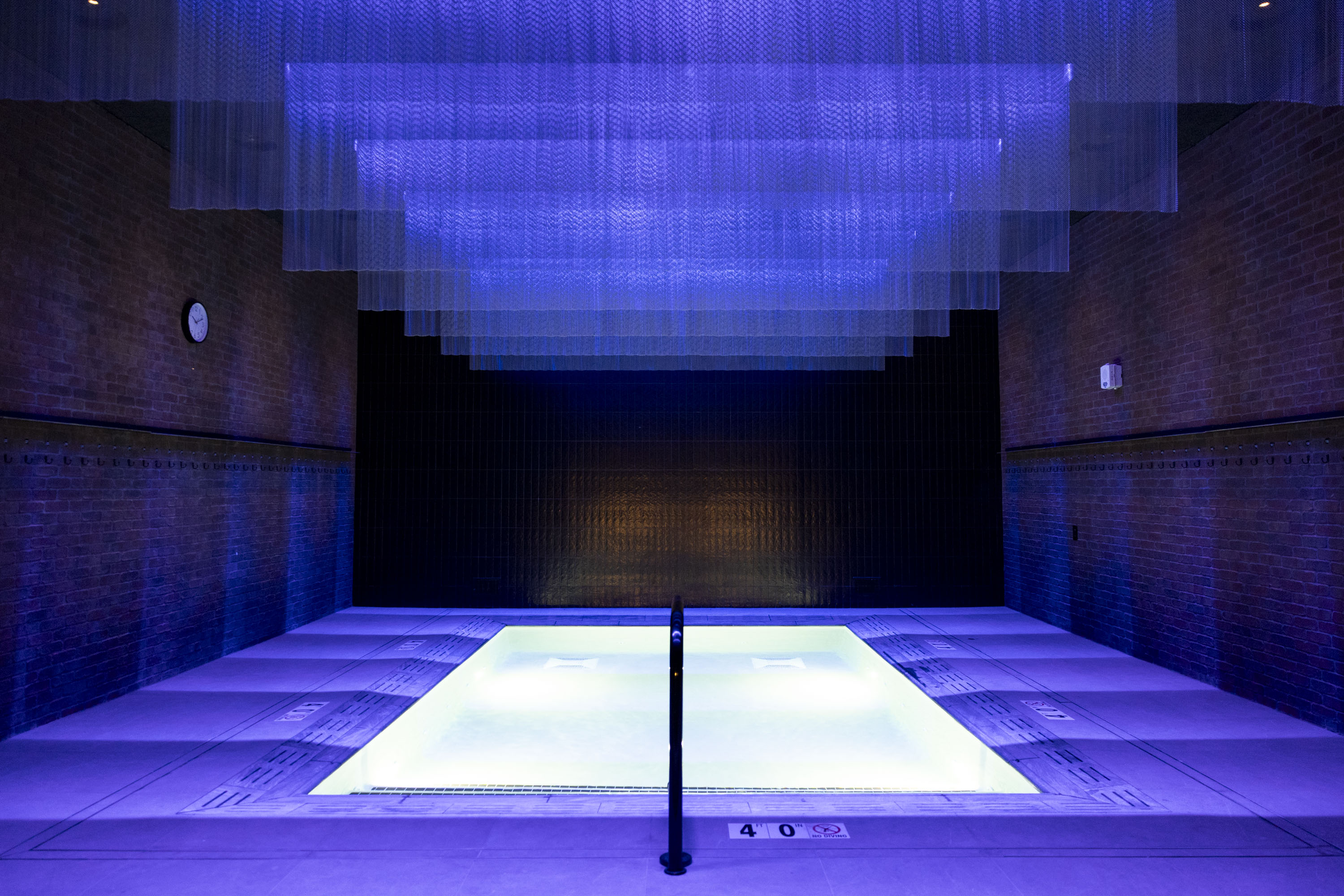
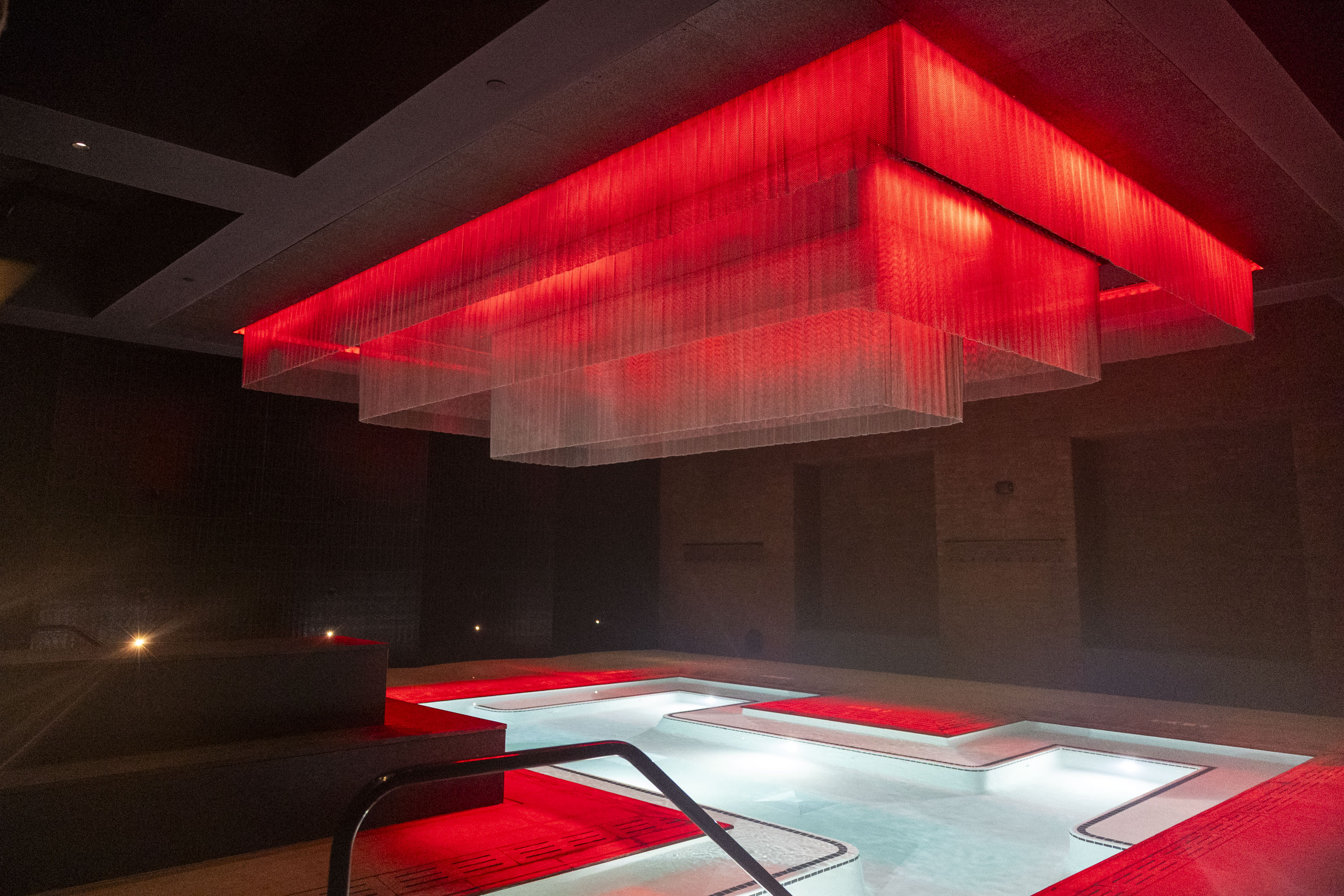
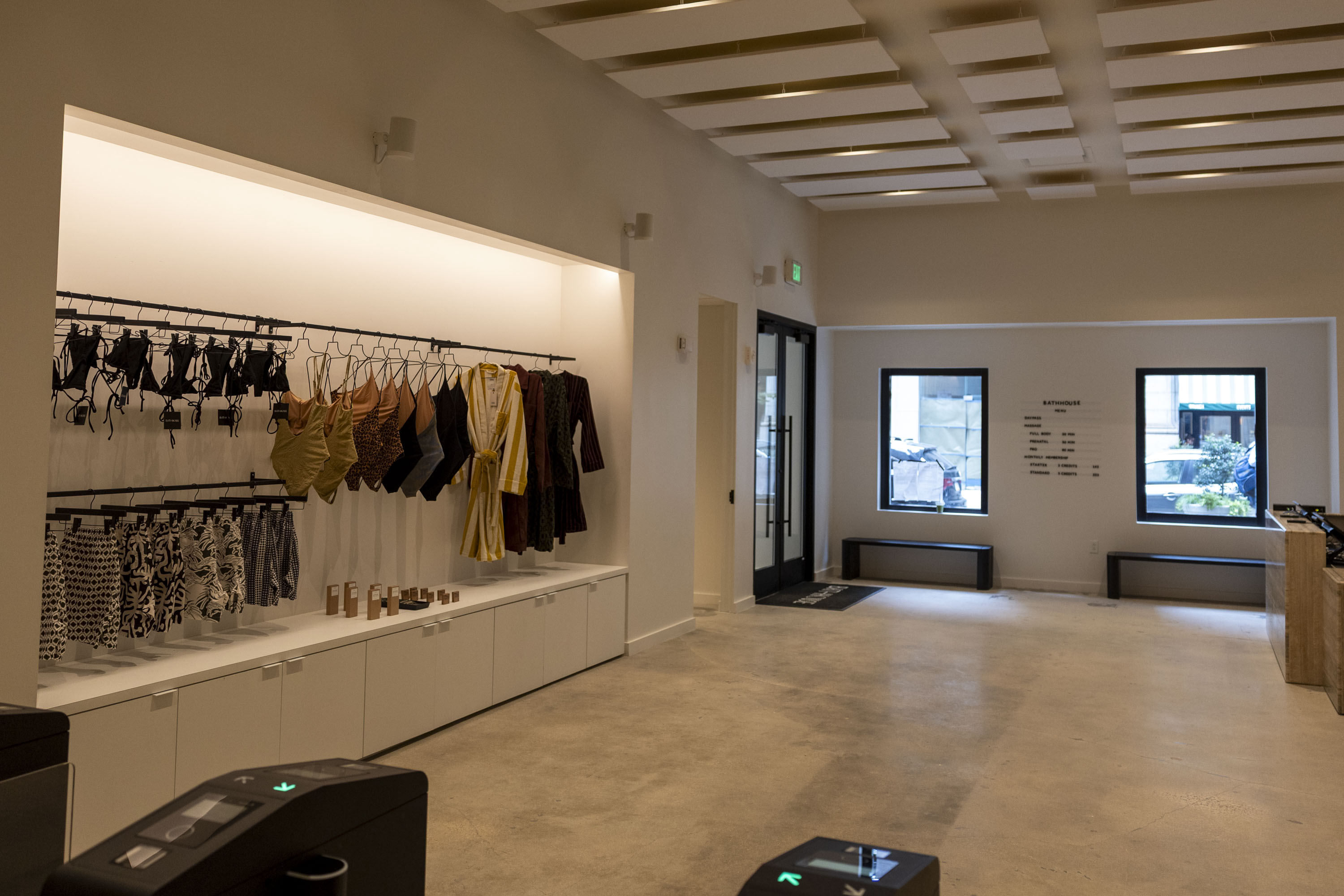
Bathhouse opens on Friday, Sept. 25, at 1418 Walnut St., transforming the Bellevue Hotel’s defunct basement food court into a sprawling facility with three saunas, three pools, a steam room, and appointment-only massages. The 36,000-square-footspace is the largest standalone wellness complex in Philly. It’s also the latest in a gambit to rebrand sweating as an activity that is simultaneously sexy and productive.
“Our business is technically a 7,000-year-old business,” said Travis Talmadge, a certified sauna master and Bathhouse’s cofounder. “People have been building hot rooms to sweat in forever, and pools aren’t a new concept … All we’re doing is bringing the best-in-class” versions of both.
The cold plunge inside Bathhouse’s 36,000-square-foot location in the basement of the Bellevue Hotel.Tyger Williams / Staff Photographer
After opening another New York City location in 2024, Bathhouse received a $35 million investment from Imaginary Ventures, the investment firm that previously backed beauty brands such as Glossier, Kosas, and Alix Earle’s Reale Actives.
Now, Bathhouse is on an expansion tear. Philly’s location will be the first outside of NYC, with other outposts planned for Chicago, Nashville, Los Angeles, Minneapolis, North Jersey, and Connecticut.
Roughly 1,000 people pass through each of the company’s now three NYC locations per day, Talmadge estimated. Most, he said, are focused on decompressing before or after work. Others, he said, use it in place of happy hour with friends. Some are even on dates. None, Talmadge stressed, want a spa.
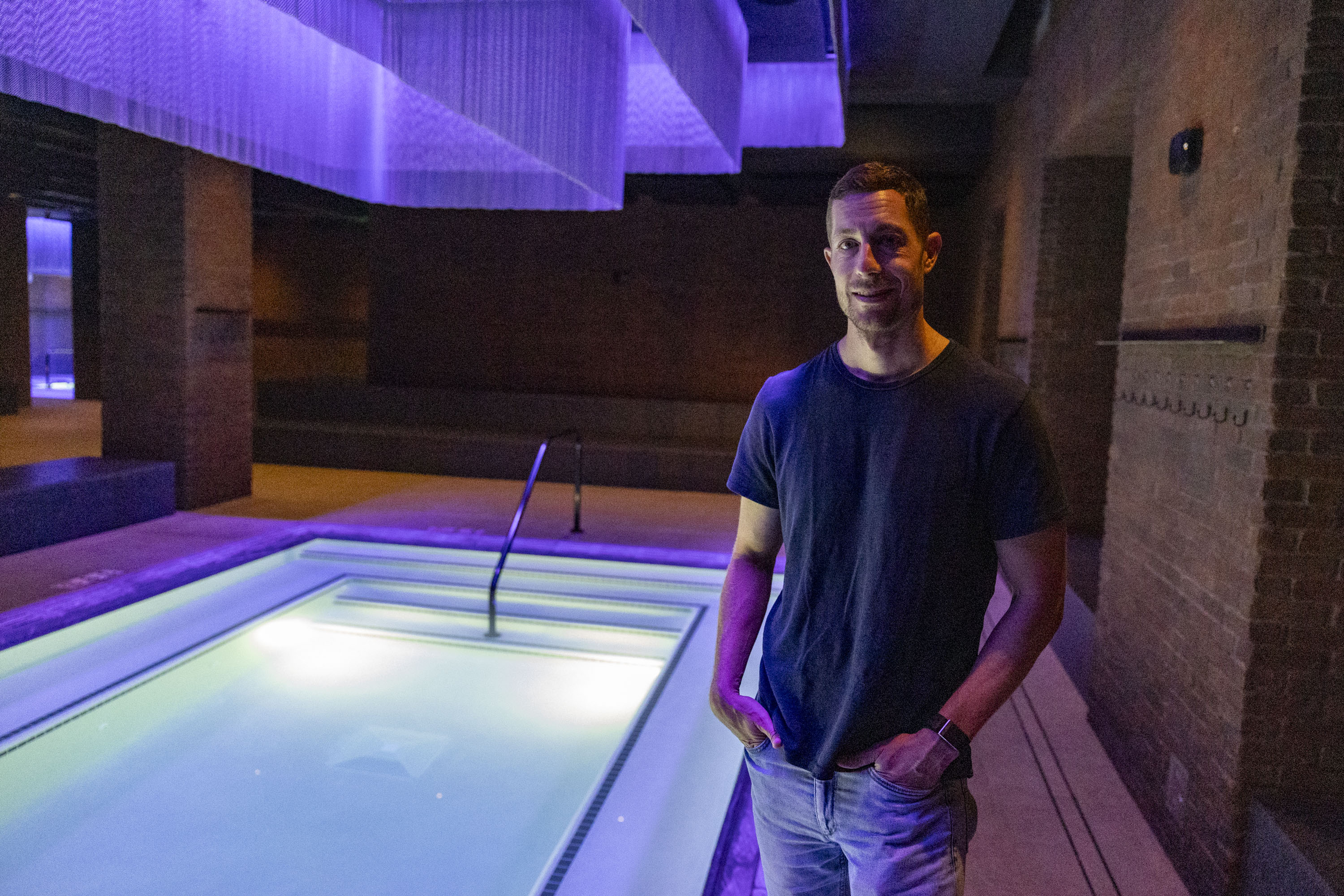
Bathhouse cofounder Travis Talmadge is a certified sauna master who also hosts aufgusses, a traditional German sauna ritual.Tyger Williams / Staff Photographer
“Spas really focus a lot more on relaxation and pampering,” he said. “There’s really no pampering [here]. There’s nothing relaxing about sitting in a 200-degree room or a 45-degree pool.”
The amenities
Bathhouse draws on Russian, Turkish, and German bathing rituals to create a distinct wellness experience.
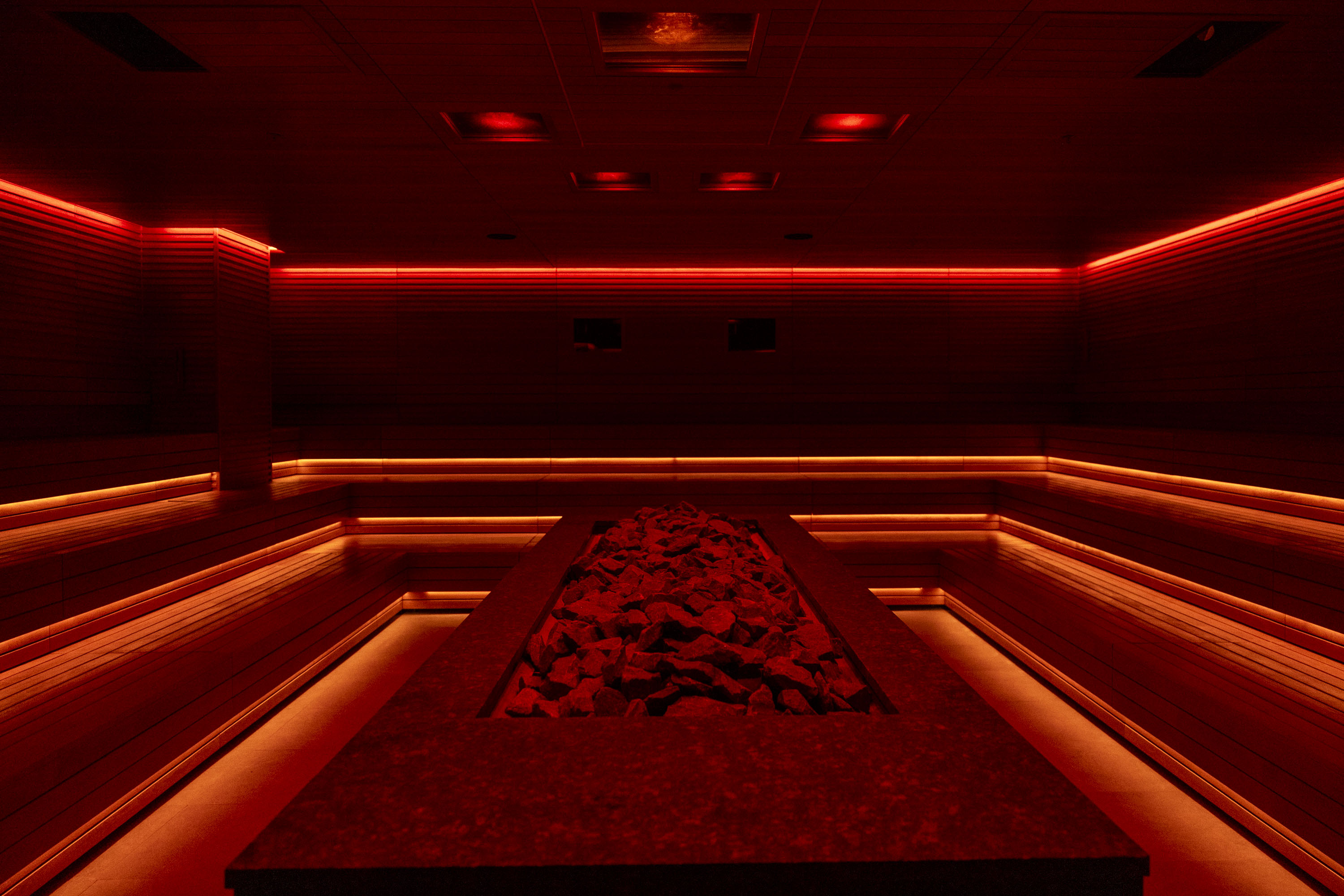
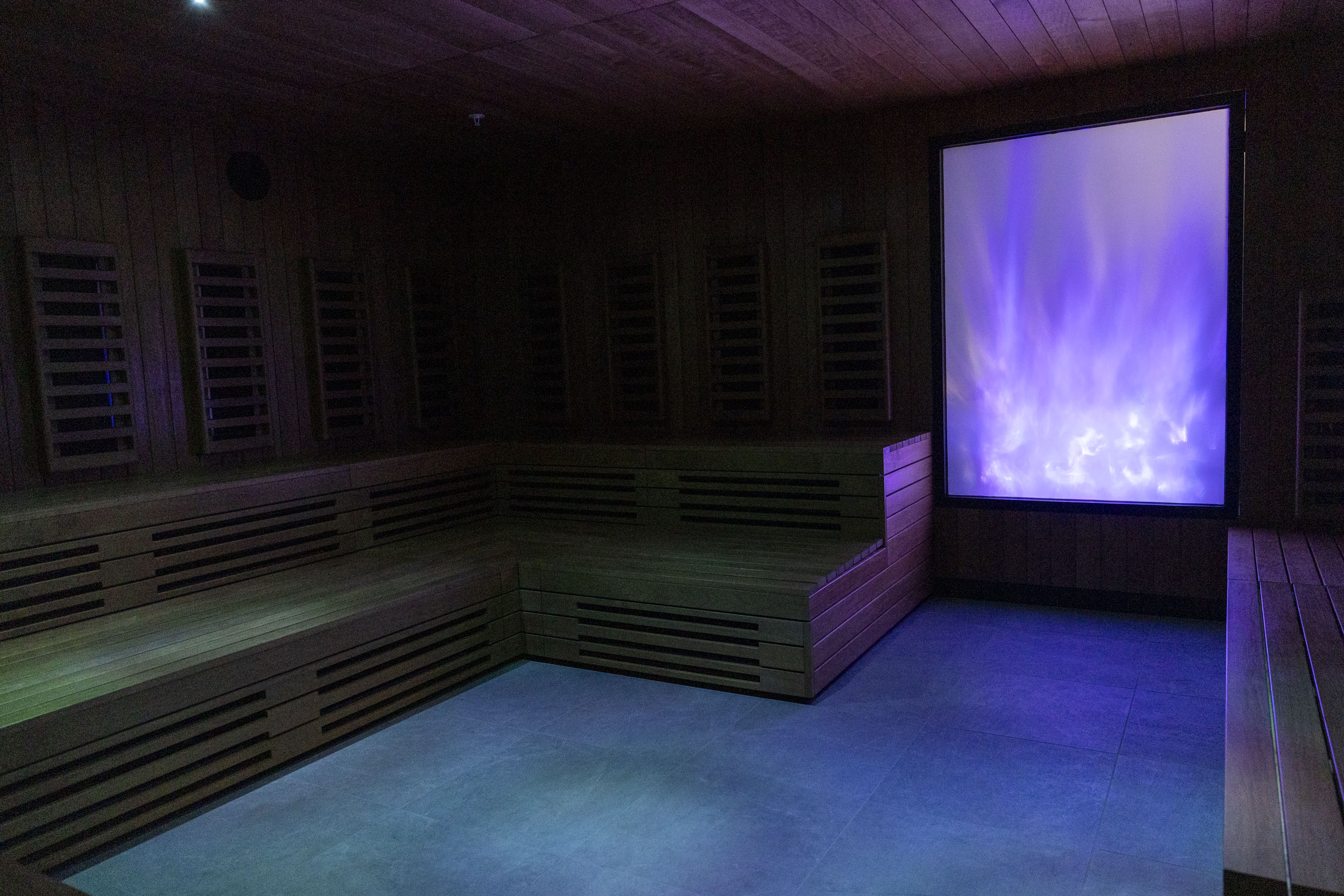
The Philly location is launching with a steam room and three saunas: a 140-degree infrared one; a 190-degree traditional Russian banya heated by a wood stove; and a large dry room warmed to 180 degrees that Talmadge repeatedly referred to as the “event sauna.” Its lights have “the capabilities of a nightclub,” Talmadge said, and can change color to match the beat of the music during Bathhouse’s regularly scheduled sauna rituals.
The space also has hot and neutral pools alongside a traditional cold plunge, plus private rooms for full body massages and an on-site cafe for smoothies, beer, natural wine, and light bites. (A rooftop pool and sauna will open in May, Talmadge said.)
The dry “event” sauna room at Bathhouse heats to 180 degrees Farenheit. It’s also where sauna masters perform aufgusses — German sauna rituals — for guests.Tyger Williams / Staff Photographer
Zach Seidman, head of marketing for the Bellevue, called Bathhouse “a complement” to the Sporting Club’s fitness-first offerings. “There’s nothing like it in Philadelphia,” he said.
The infrared sauna at Bathhouse is the gentlest of the Philadelphia location’s three saunas.Tyger Williams / Staff Photographer
In theory, Bathhouse is the cheapest of them all. Day passes at the Philly location start at $29 but are subject to change based on demand and time of day.
Talmadge said Bathhouse tries to avoid trends. Instead, they are singularly focused on hosting aufgusses, a theatrical German ritual wherein a sauna master melts essential oil-doused snowballs on a bed of hot stones. To circulate the scents, the sauna master then whips towels around the room like helicopter blades.
The hot pool at Bathhouse Philadelphia. Located at 1418 Walnut St., it is the brand’s first location beyond New York City.Tyger Williams / Staff Photographer
In Philly, Bathhouse will likely host aufgusses every 90 minutes in — naturally — the event sauna, lead by certified sauna masters. Talmadge, who earned the title in 2021, said each sauna master has their own playbook of tricks meant to evoke a smile, if not some sort of spiritual experience. (His is a double-towel spin mixed with a bit of catch-and-release.)
“Some people really love the aromatherapy and want to see how the scents hit their nervous system,” Talmadge said. “Other people love watching the show and are in it for the tricks … Everyone has their own experience.”
The Bitcoin
What, exactly, is powering your Bathhouse experience? Bitcoin, in part.
Since its 2019 founding, Bathhouse has used small on-site data centers of Bitcoin miners to warm its pools and heated seats, extracting excess energy from the machines via pipes. The practice, Talmadge said, has helped significantly cut Bathhouses’ electricity bills while allowing them to make back some money, even as returns from the cryptocurrency have slowed.
“It’s like a rebate,” said Talmadge with a shrug.
The entrance area at Bathhouse Philadelphia, 1418 Walnut St.Tyger Williams / Staff Photographer
If Philadelphians can get past the Bitcoin miners lurking in the background, Talmadge recommends first-timers start with 15 minutes in the gentler infrared sauna. They should also hydrate constantly.
Those looking to maximize their sweat should lay on the top row of the Russian banya, which becomes the hottest point in the bathhouse as the heat rises.
“That’s your belly of the whale,” Talmadge said. “The goal with the saunas is to eventually try to push yourself.”
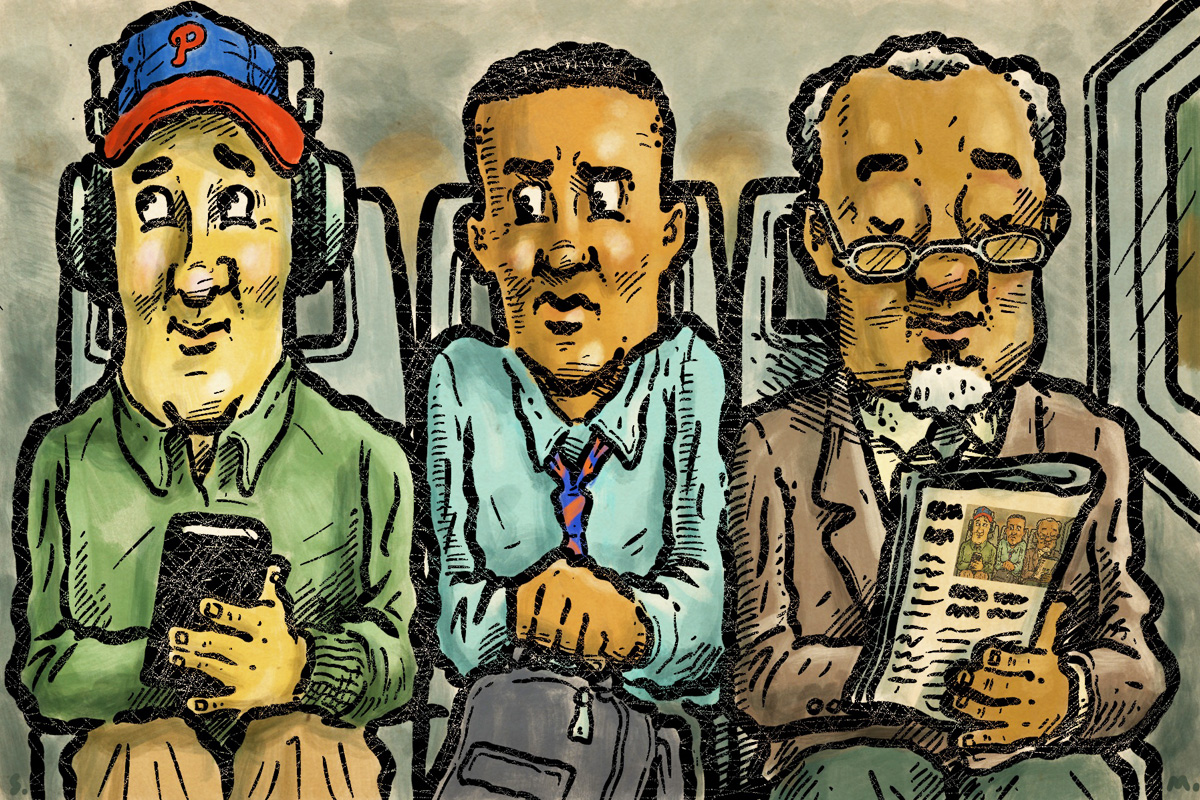
On Regional Rail, I often sit in the aisle of a three-seater, knowing the car will fill up at rush hour. When it does, I stand up so another passenger can take the middle seat, then return to my aisle seat. My friend says that’s awkward on a busy car, and I should just slide over. Who’s right?
Beatrice Forman, Food & Dining reporter
I feel like sliding over is one of those things that’s baked into the social contract of riding public transit, TBH.
If it’s a busy car, it’s your moral duty to slide over and free up the aisle seat. Sitting at the end of the row is a defensive posture that makes it seem like you don’t want someone next to you.
Abigail Covington, Life & Culture reporter
The right thing to do is slide over.
Beatrice Forman
I think it’s weird because it treats the middle seat kind of like a punishment? And most Regional Rail rides aren’t long enough to the point that it matters. One of my favorite facts about Regional Rail is that none of the trains have bathrooms because the trips aren’t that long.
Abigail Covington
I would absolutely do what the writer does. Everybody knows the middle seat is terrible. The window is better because you don’t have people on either side of you. The aisle is better because it makes it easier and faster to get off the train. The only reason to sit in the middle is if there is nowhere else to sit. If the aisle was open when you got to it, you hold onto that seat for dear life. It’s basically like riding first class for free.
Beatrice Forman
I don’t know that taking the middle seat makes it that much slower to get off the train. It’s like when people stand as soon as the airplane lands! It doesn’t help you move any quicker. The real prime real estate is getting a seat close enough to a door. First class does still have middle seats, after all.
I always slide over because of the golden rule. I would hate to be relegated to the middle seat for the rest of my life just because my stop is closer to the end of the line.
Abigail Covington
Yeah, Bea, you’re correct. The right, polite thing to do is slide over. If you’re getting up to let someone else in, you’re causing commotion in the aisle, forcing others to move, or shoving them closer together. Trains work best when everybody on them works together to create a seamless, efficient experience. Like stepping off the train at a stop if you’re standing by the door. By not scooting over, you’re being a bottleneck.
Beatrice Forman
And no one likes a bottleneck.
Abigail Covington
Exactly. And I say that with love, as a fellow aisle seat-addicted bottleneck.
Beatrice Forman
You know, at least they’re not one of those people that take their shoes off on the train. Those people deserve the middle seat for life.
Bagel shops come in all stripes. There are sandwich shops and schmear shops, shops that will gladly toast your bagel, shops that will refuse to scoop it, and shops with service so curmudgeonly it comes across as endearing.
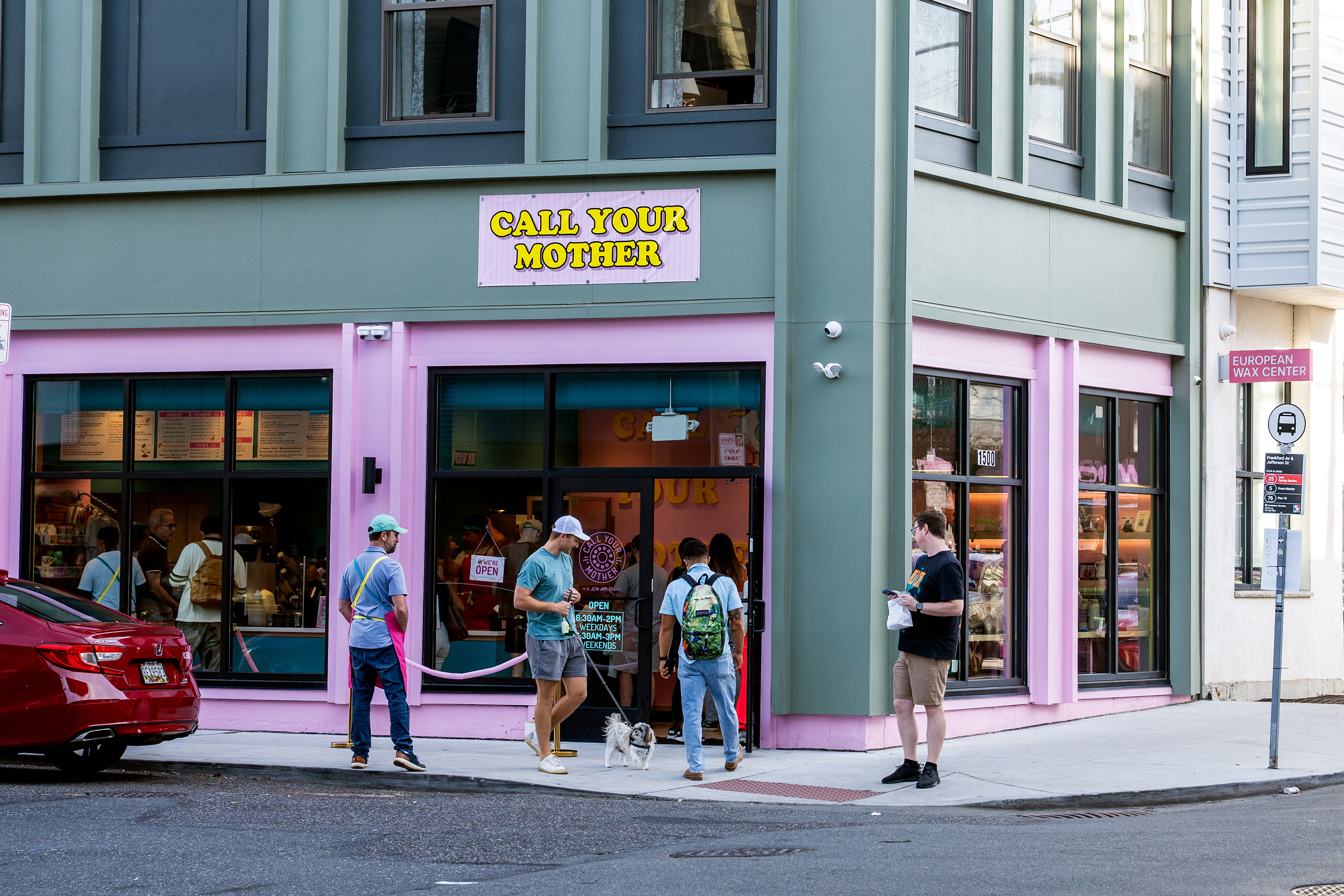
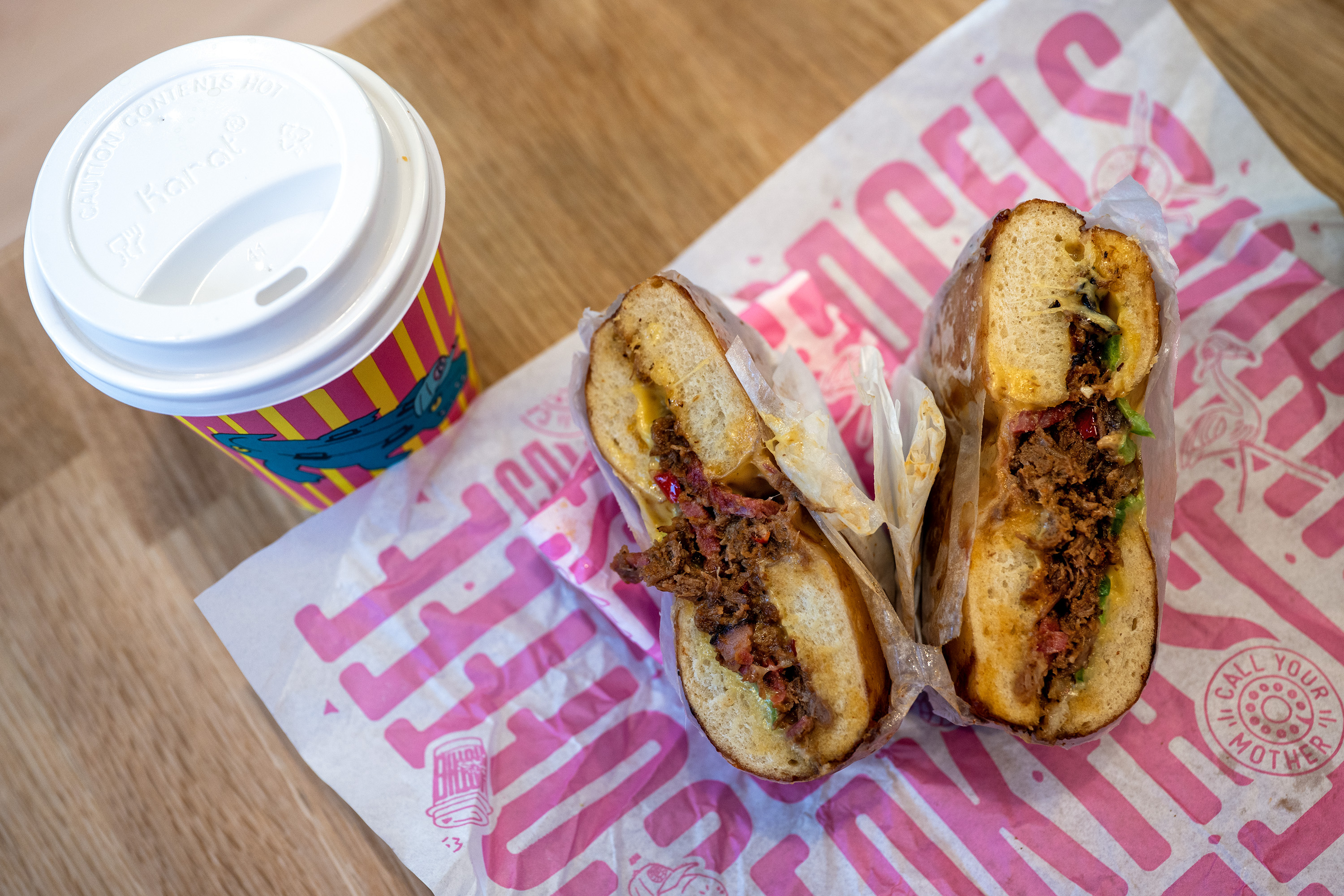
Call Your Mother, the latest bagel chain to hit Philly, isn’t trying to be any of those. Instead, it is America’s preppiest bagel shop, closer to a viral tween clothing store than a neighborhood deli.
The shop’s newly opened Fishtown location looks like a boutique that just so happens to serve bagels, its bubblegum pink storefront sporting a mural of a cream cheese-and-lox bagel and a latte alongside a school of cartoon fish.
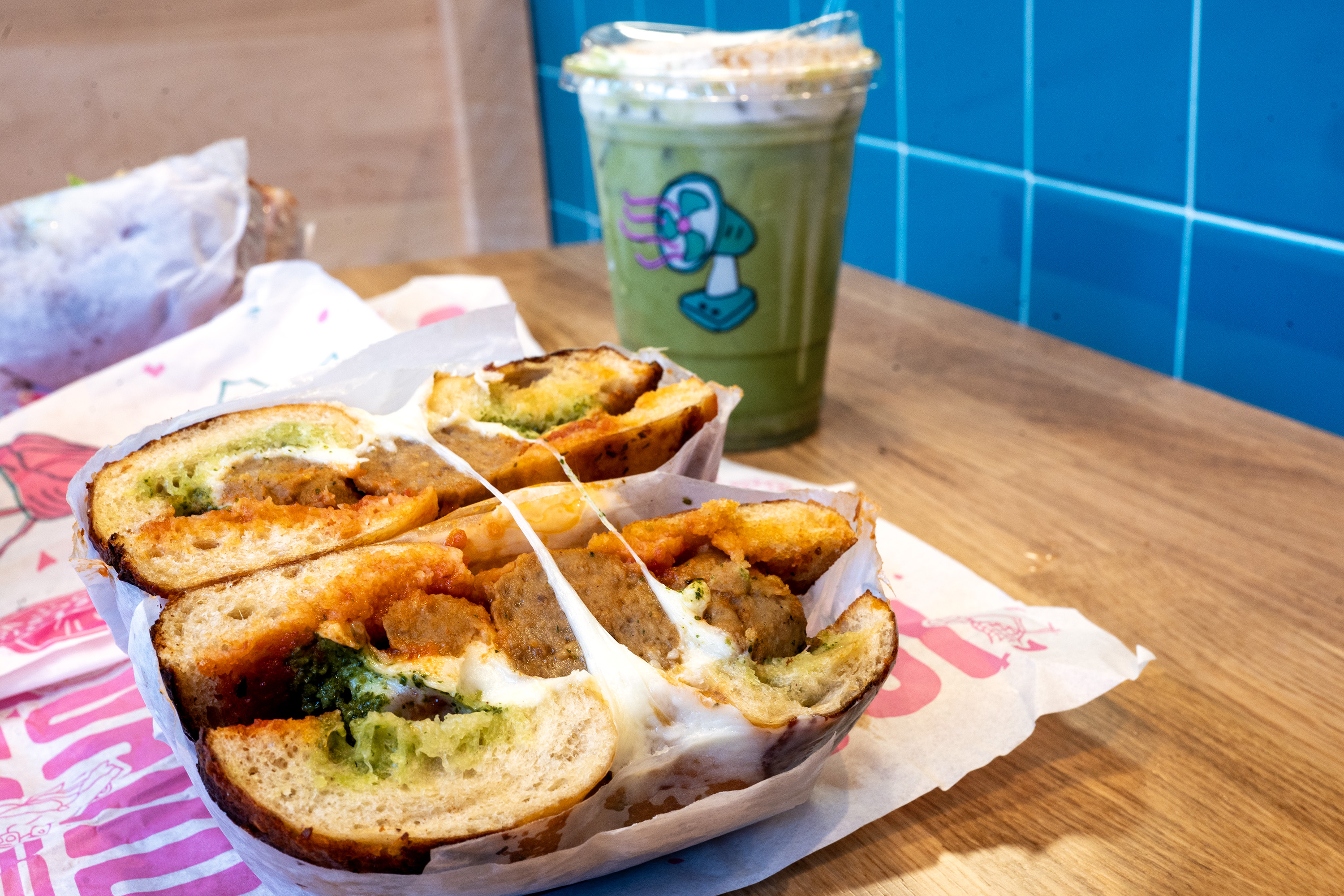
The meatball sub bagel and banana bread-matcha latte at Call Your Mother during its Fishtown soft opening on Tuesday, Sept. 8, 2026.Tom Gralish / Staff Photographer
Shortlisted as a candidate for Bon Appetit’s best new restaurants list in 2019, Call Your Mother is now synonymous with the private-equity bagel boom: The shop went from a handful of locations in D.C. to 28 across Maryland, Virginia, Colorado, Illinois, and Pennsylvania after the investment firm Invus, an early Cava investor, purchased a stake in the company at the start of 2025.
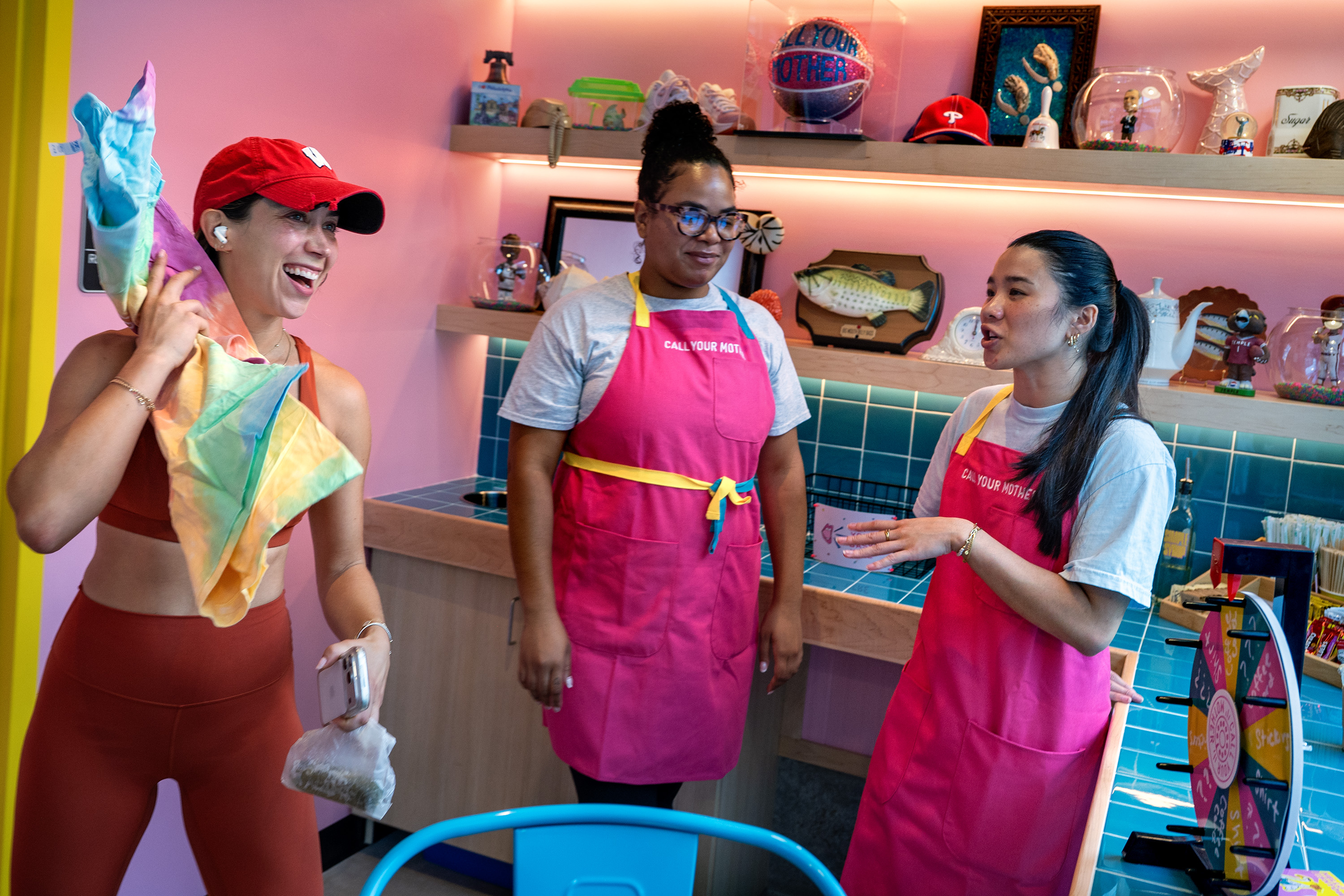
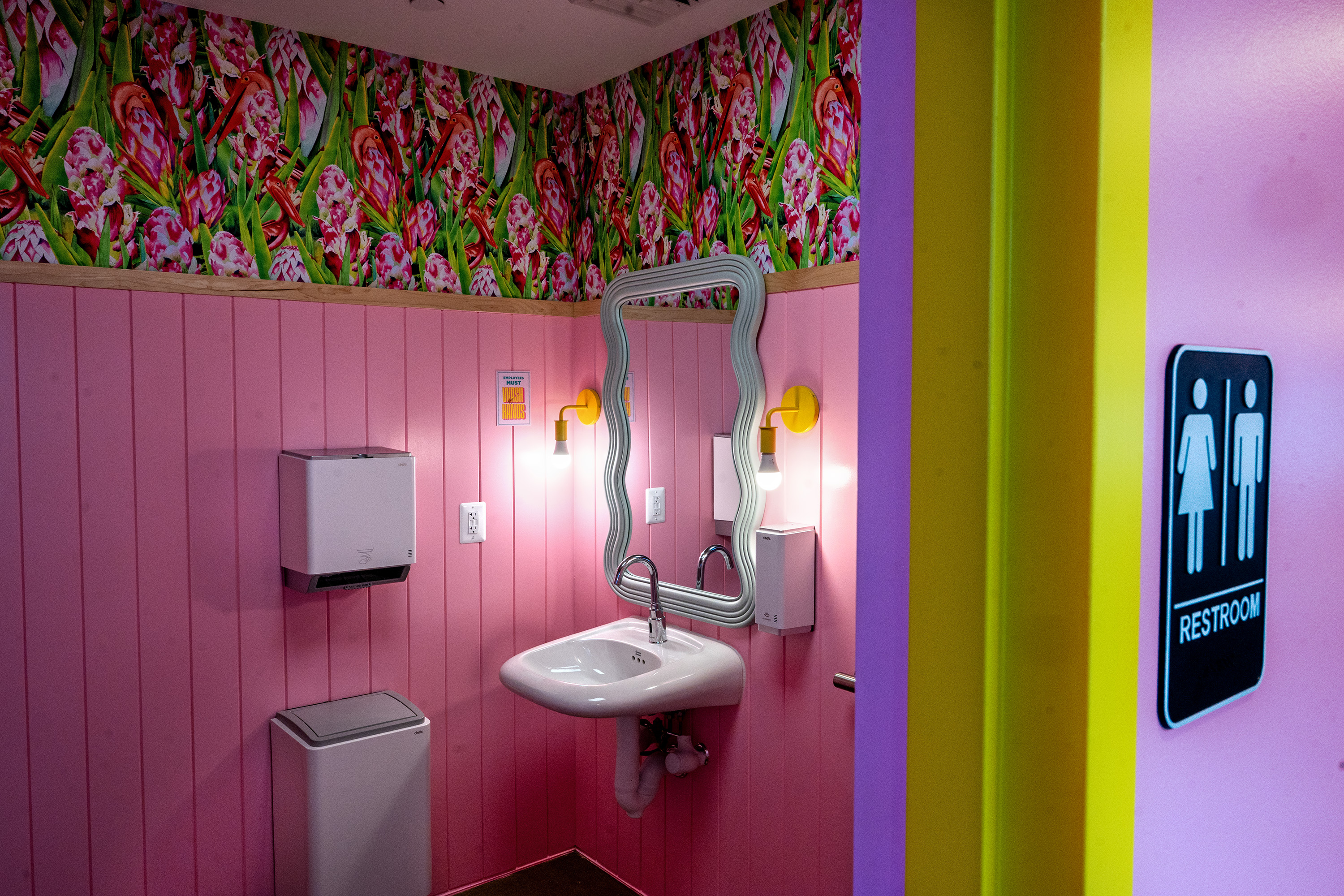
To be fair, Call Your Mother is making an effort to blend into Fishtown. The inside of its 1500 Frankford Ave. space doubles down on the whimsy with kitschy wares — Phillies bobbleheads, a tiny Liberty Bell, and a bedazzled basketball — procured from local thrift stores such as Thunderbird Salvage. A tasteful merch wall abuts the cash register, where customers can purchase pastel-colored dad hats and tees alongside jars of Fishtown Pickle Project and One Trick Pony, the peanut butter brand that Dana and Moreira also co-founded. (The bathroom, however, sticks out: it’s wrapped in a Lilly Pulitzer-style tropical wallpaper.).
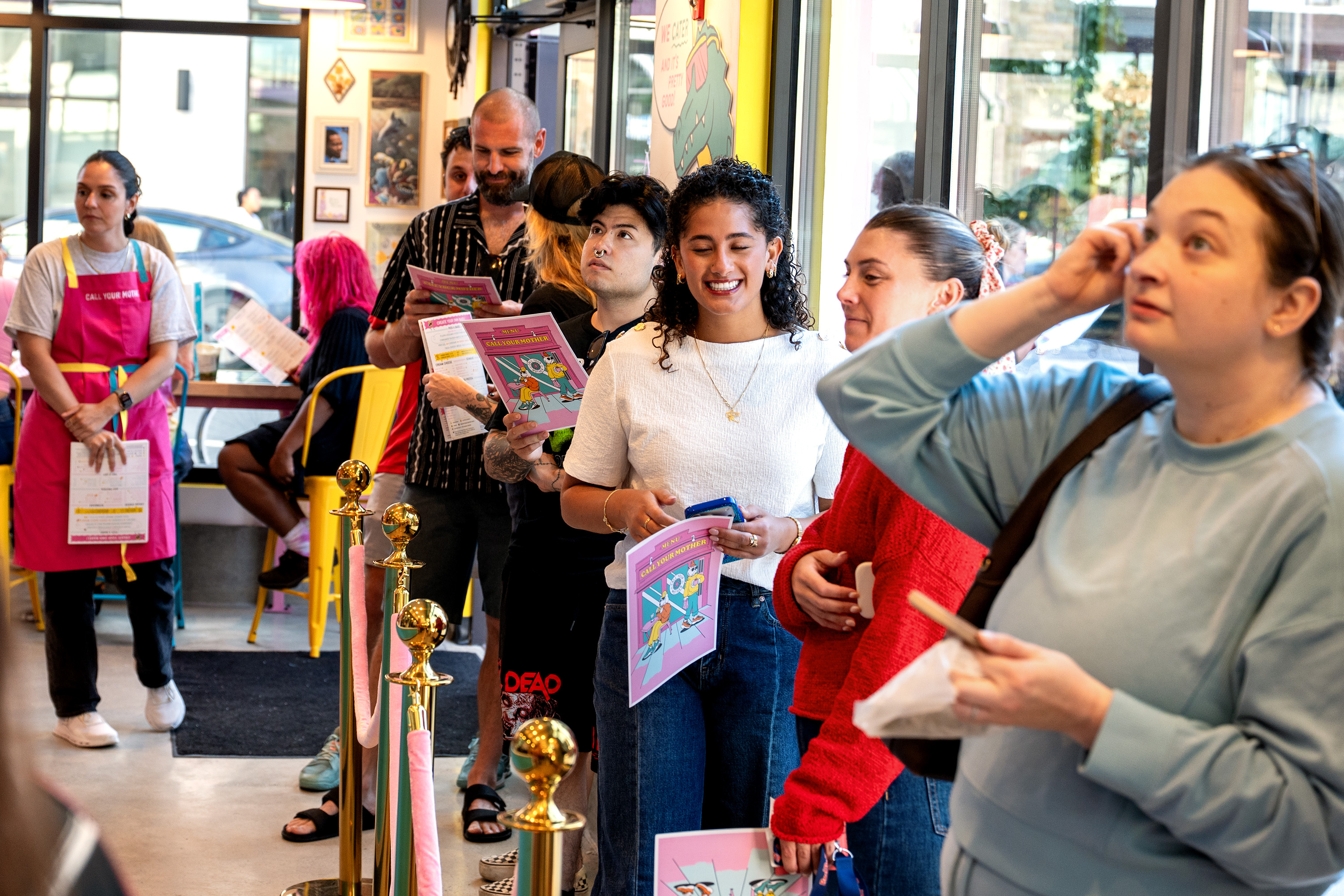
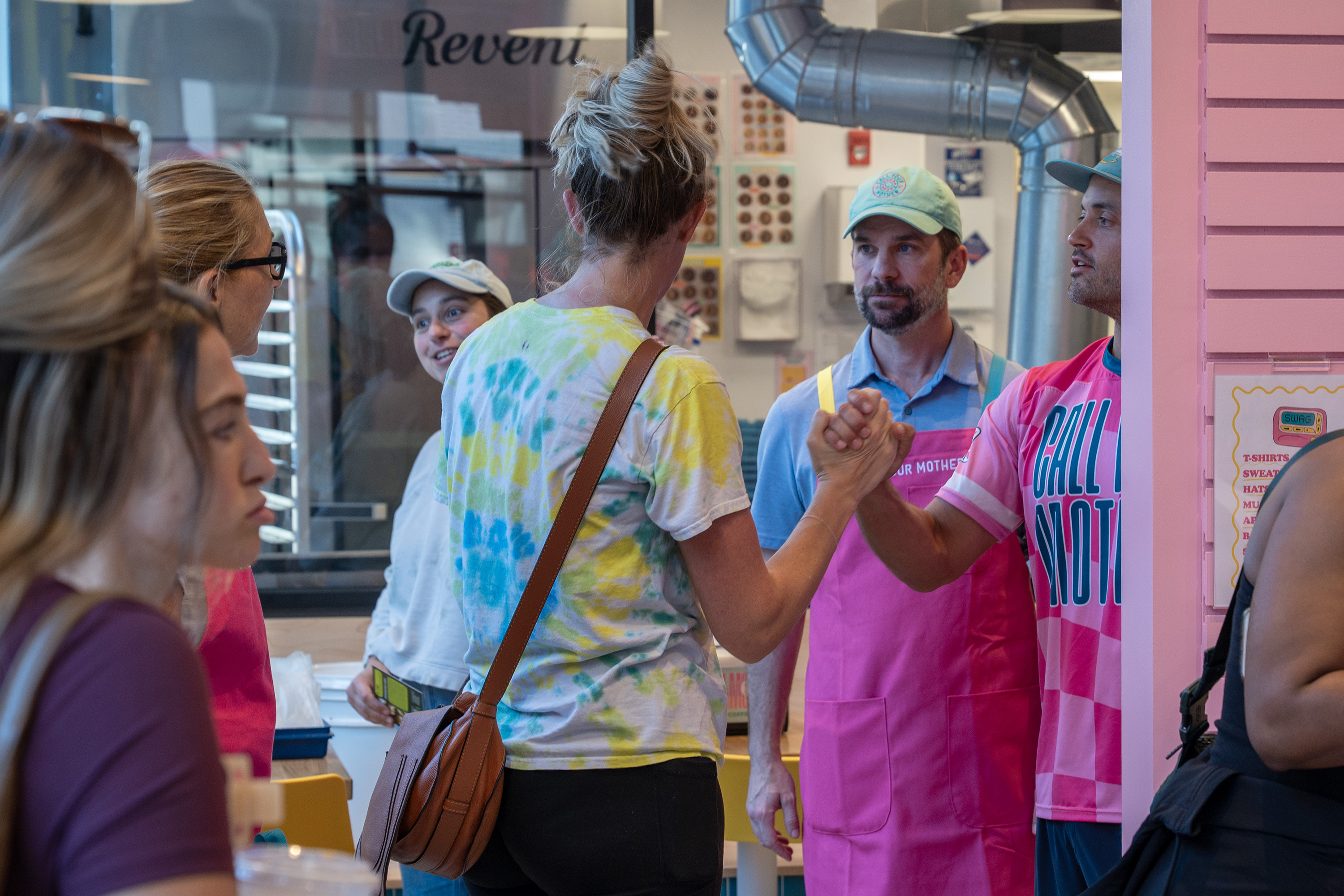
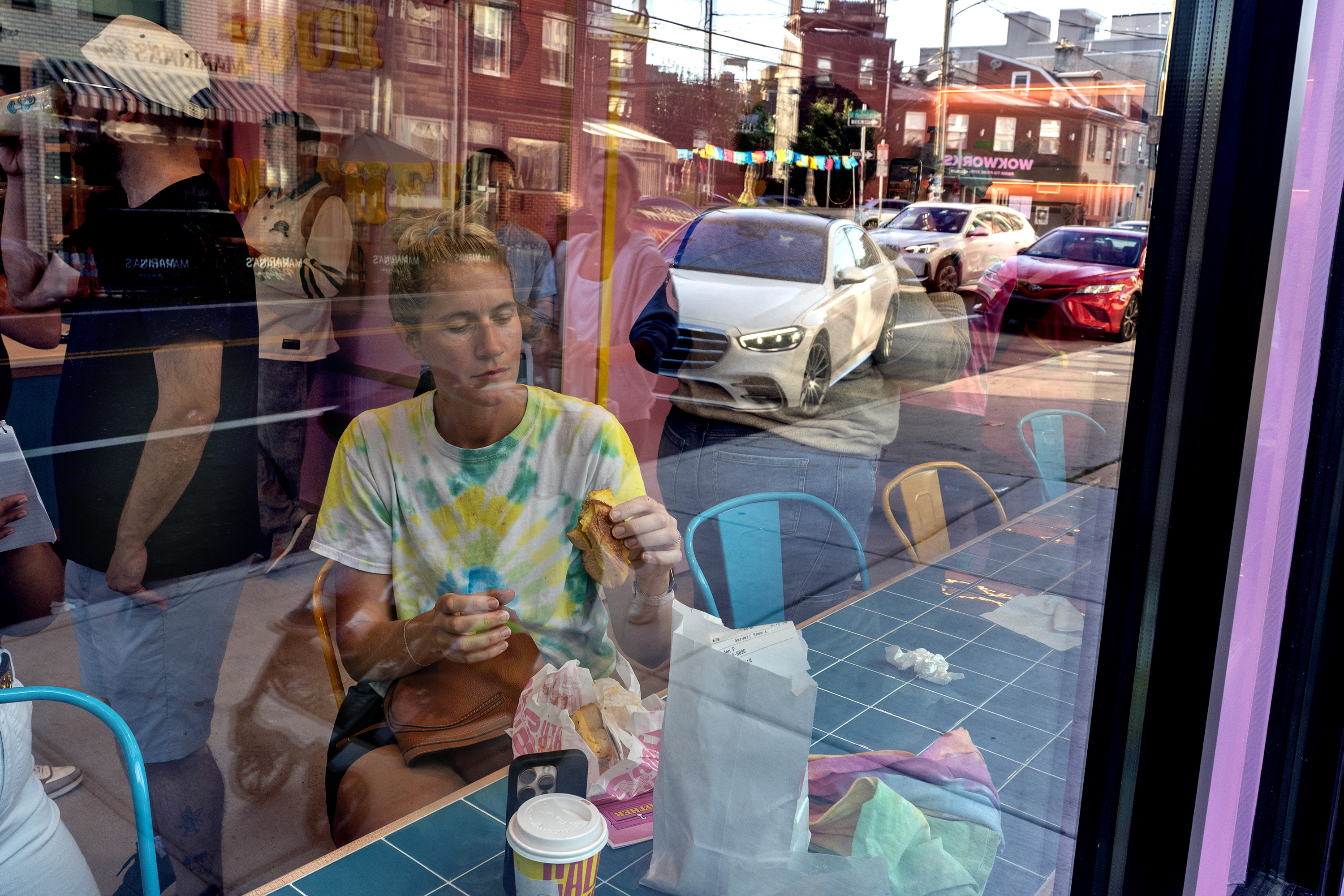
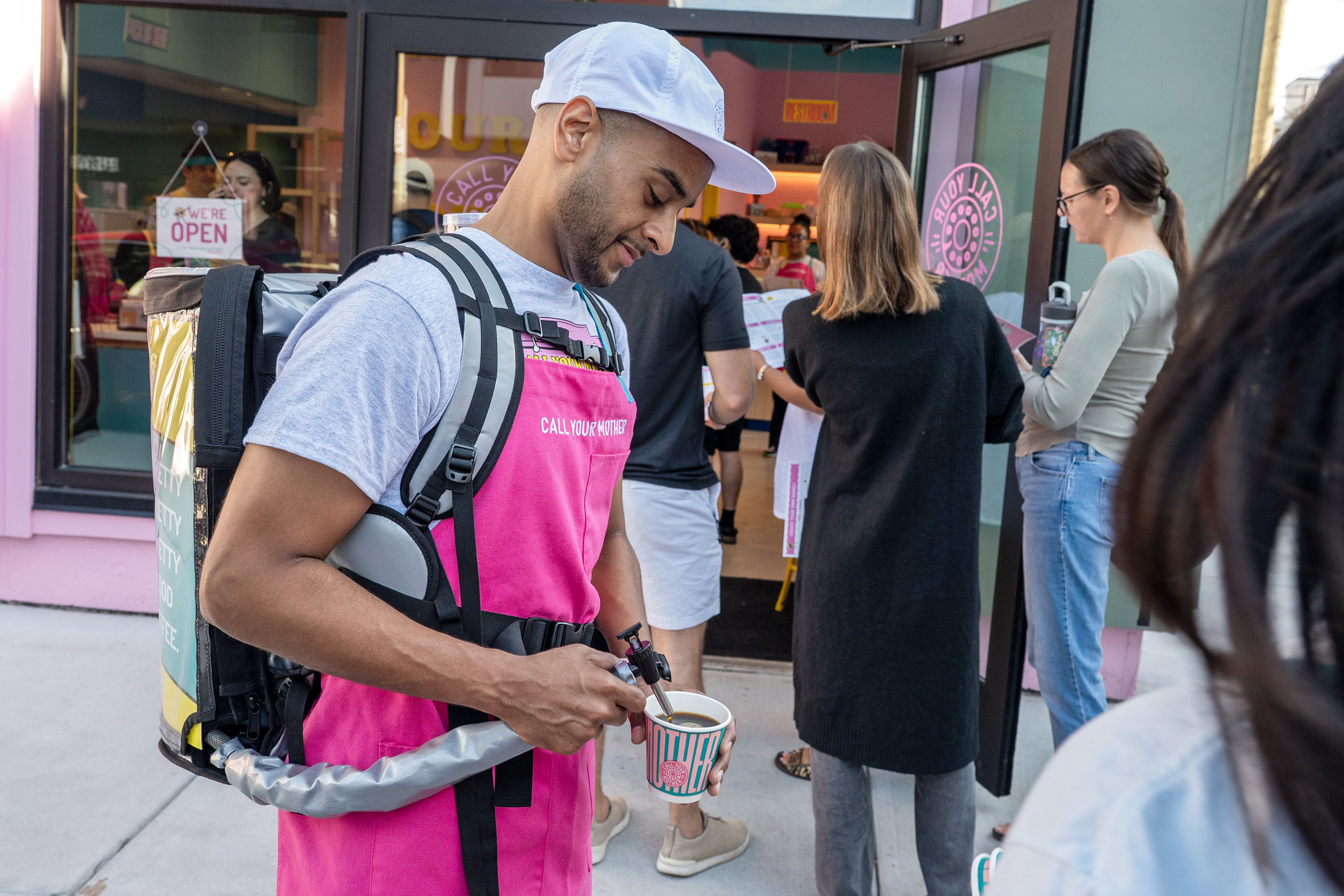
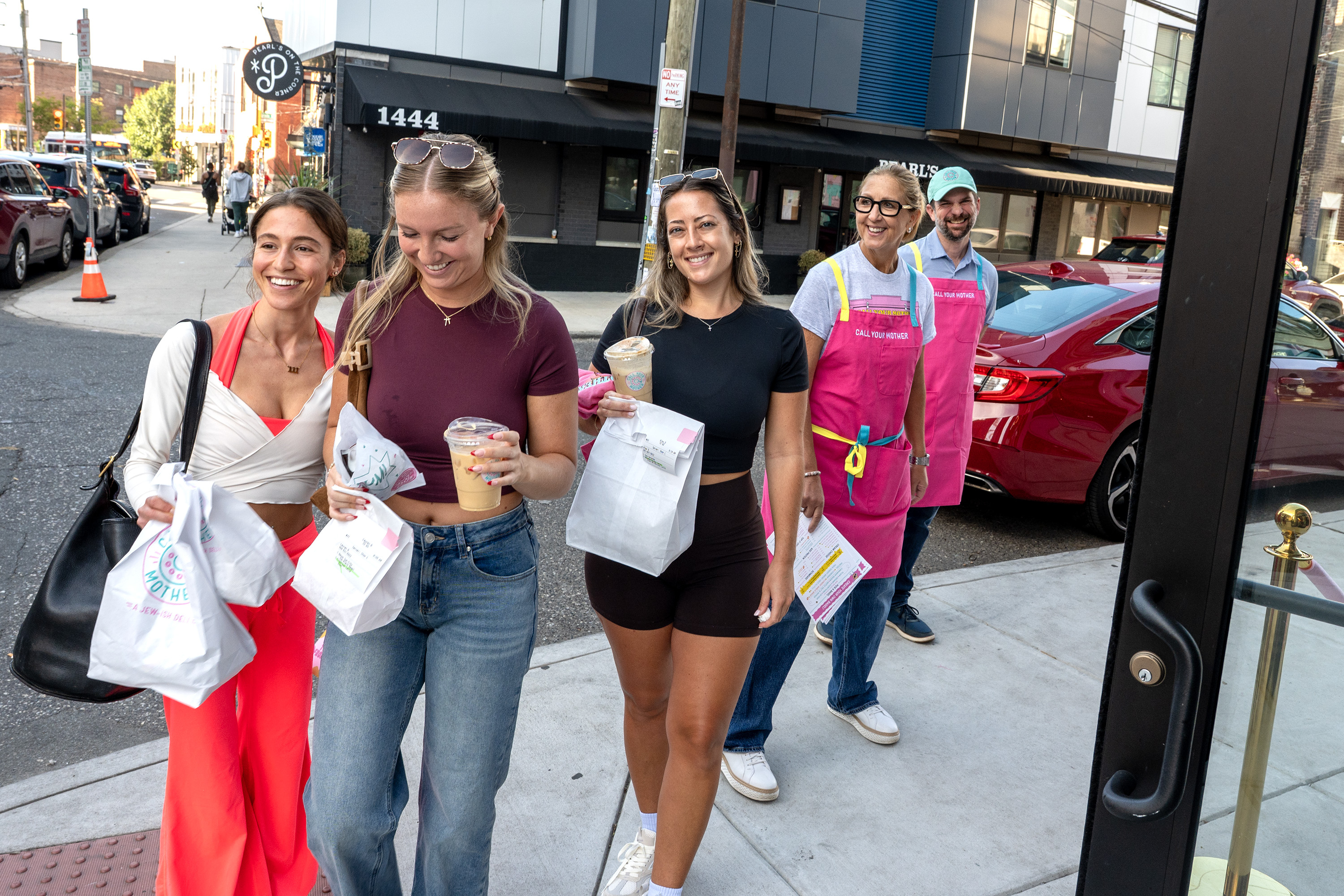
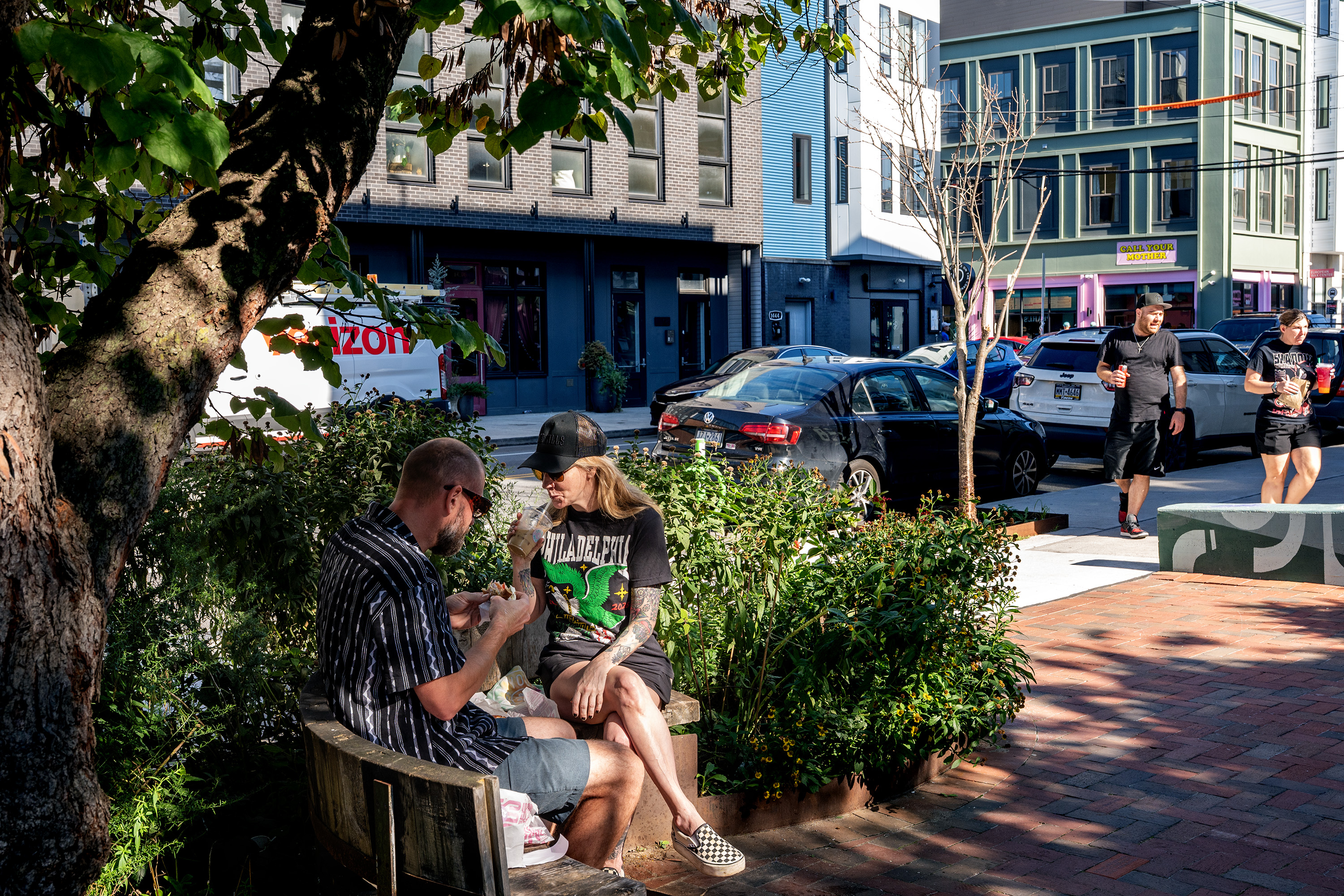
Customer Allison Mattiola wins a free T-shirt after spinning the wheel with Shay Wireman (center) and Annie Leder (right) on the Call Your Mother marketing team. Behind them is a display of kitschy thrift shop finds.Tom Gralish / Staff PhotographerThe line waiting to place their orders during the soft opening on Tuesday.Tom Gralish / Staff PhotographerFounder and co-owner Andrew Dana (right) greets customers with COO John Murray.Tom Gralish / Staff PhotographerFrankford Ave is reflected in the window as customer Jordan Price has her bagel, at the counter seating facing the street.Tom Gralish / Staff PhotographerWith a backpack insulated dispenser, corporate IT manager Osman Mohamed pours free coffee for customers waiting outside.Tom Gralish / Staff PhotographerVice president Kristine Denicourt (left) and COO John Murray (right) greet customers leaving with their bagel orders.Tom Gralish / Staff PhotographerThe all-gender restroom.Tom Gralish / Staff PhotographerCustomers Ethan Haymes and Carrie Bliss Brooke (right) eat their breakfast bagels from Call Your Mother (rear, right) in the park across the street during their Fishtown soft opening Tuesday, Sept. 8, 2026.Tom Gralish / Staff Photographer
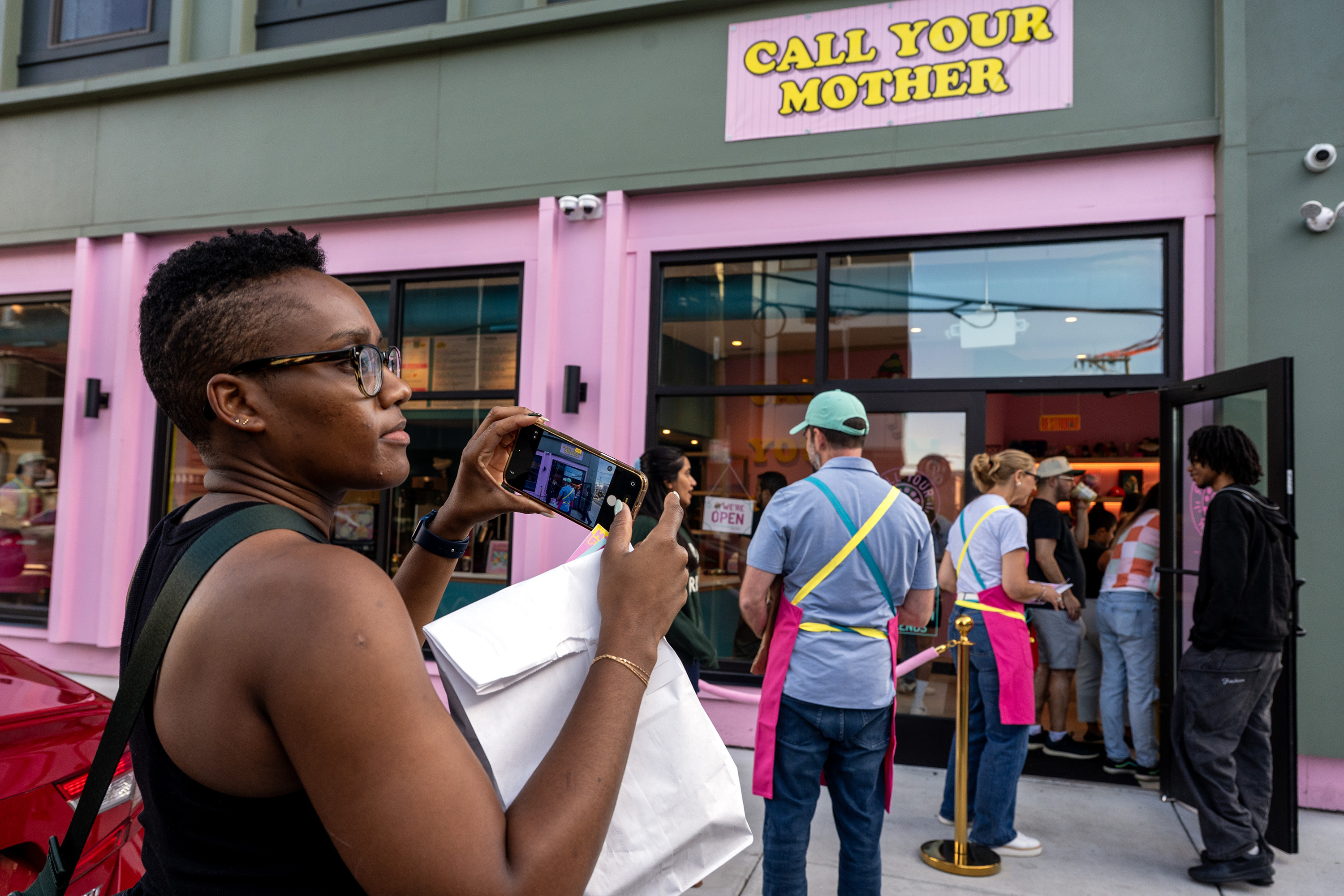
Indoor seating is limited, split between a few two-tops and counter seating. That didn’t stop influencers from flooding the space during a soft opening. They were after the money shot: carefully pulling apart a steaming breakfast sandwich to create a dramatic cheese pull.
Neighbors were more skeptical.
“How many bagel and coffee places do we need in Fishtown?” said Gabriela Rivera, a decades-long resident who wandered in Tuesday morning during her morning walk.
It’s a fair question.
Call Your Mother’s first Philly location is smack in the middle of the city’s bagel renaissance. The shop is surrounded by outposts of Philly Style Bagels, Bagels & Co., and Kismet, three local chains. It’s also on a strip of Frankford Avenue that has seen an influx of corporate chains, from the controversial Starbucks across the street to New York City’s venture capital-backed 7th Street Burger, which opened four blocks south last month.
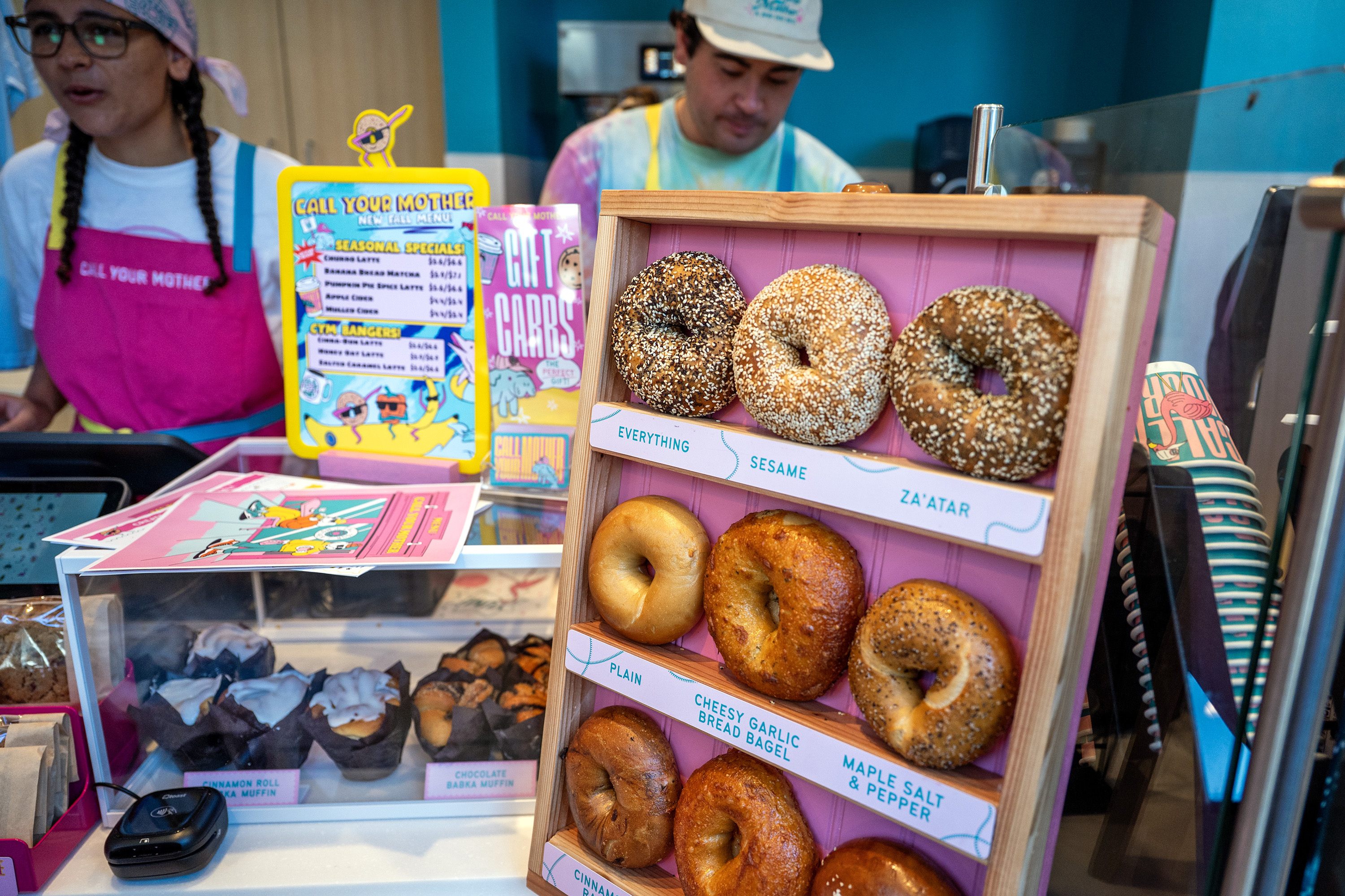
Call Your Mother offers nine bagel varieties, which can be ordered plain, with schmears, or as part of sandwiches.Tom Gralish / Staff Photographer
“For a long time, [Fishtown] was small businesses … the more big stuff that comes in, I worry the neighborhood is going to become less community-centered,” said Justin Berger, Rivera’s fiancé, who also lives in the area.
Both of them still ordered breakfast sandwiches. They were free, after all.
New York-style with a hint of Montreal
Call Your Mother’s bagels split the difference between New York-style — the classic fluffy-yet-crusty kind — and Montreal-style, which are smaller, sweeter, and denser.
Bagels are made on-site using a recipe developed by Moreira, an Argentinian-born chef who never ate a bagel until building Call Your Mother with her husband. The chain’s are still hand-rolled and kettle-boiled with a simple honey-sweetened dough.
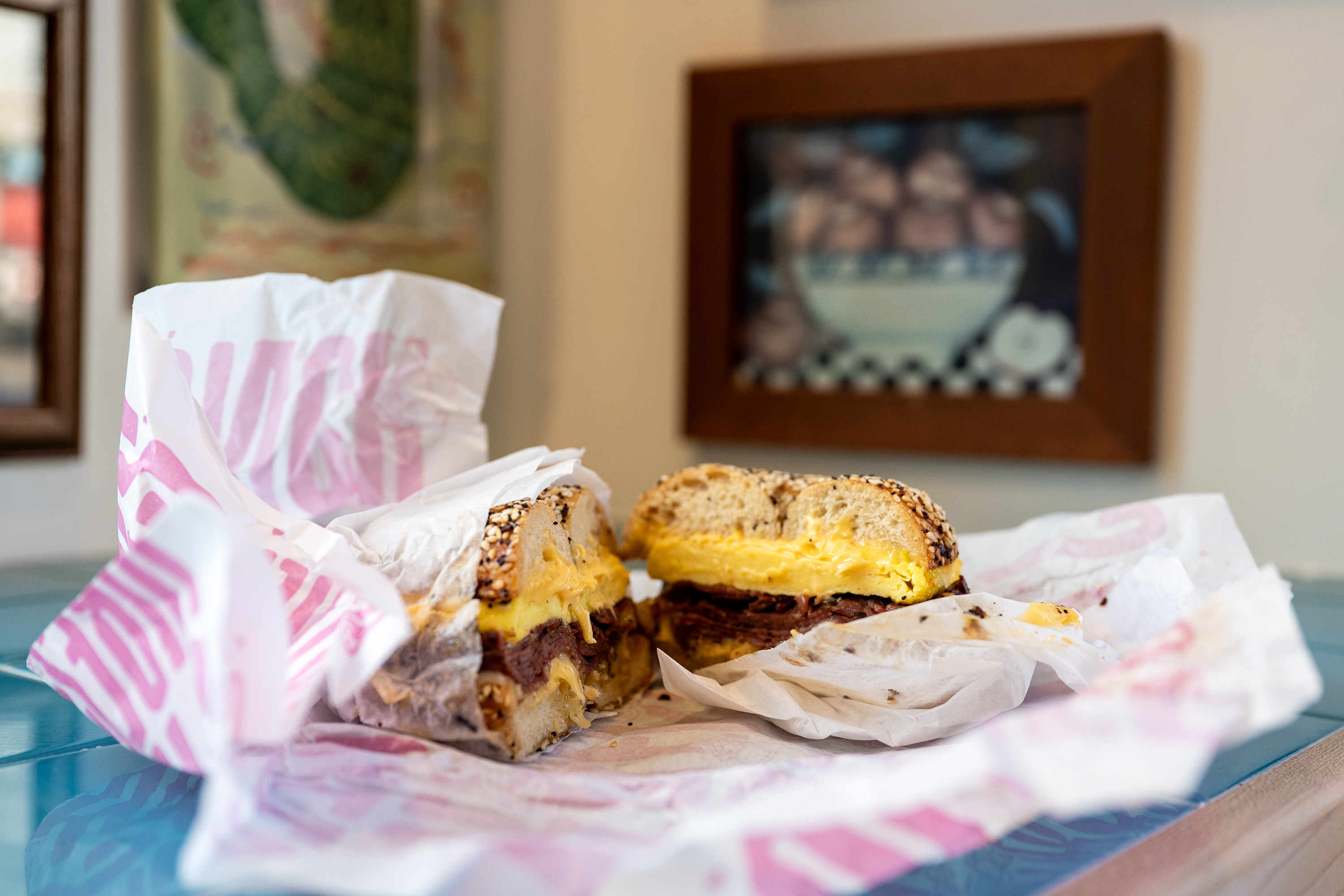
The Sun City bagel at Call Your Mother during its Fishtown soft opening Tuesday, Sept. 8, 2026.Tom Gralish / Staff Photographer
Their bagels come in nine flavors, ranging from classic plain and everything and to cheesy garlic bread, maple sea salt and pepper, and salt-crusted pretzel. You can order them with a schmear, though most customers go for the sandwiches, which range from $9 to $15 in Philly.
The chain’s menu includes 19 sandwiches, categorized indiscriminately as those with “breakfast-y vibes” and “lunch-y vibes.” (You can order both all day.) Some fuse Dana’s half-Jewish upbringing with Moreira’s Argentinean palate, like the Jetski, which features sofrito-seasoned brisket and pastrami. Others, like the Don Cesar — literally a grilled chicken Caesar salad on a bagel — are somewhat light, while some are downright decadent. Case in point, the fall special:meatballs, marinara, and mozzarella on a bagel.
Customer Shannelle Palmer takes a photo outside Call Your Mother as she leaves with her bagel order during its Fishtown soft opening Tuesday, Sept. 8, 2026.Tom Gralish / Staff Photographer
The Thunderbird (chicken sausage, eggs, American cheese, cheddar cheese, and spicy honey, recommended on a maple sea salt bagel) tastes “like a happy accident,” said Jordan Price, a local content creator who lives in Fishtown. “It reminds me of when all the stuff on a breakfast platter mixes together and gets syrupy.”
Berger, on the other hand, was sure he could taste a bit of the private equity.
“It tasted like it was made somewhere else and shipped here,” he said after biting into his lox and cream cheese on yuca bread, Call Your Mother’s gluten-free bagel alternative.
The Chai Latte and Jetski bagel at Call Your Mother during its Fishtown soft opening Tuesday, Sept. 8, 2026.Tom Gralish / Staff Photographer
Price doesn’t mind. The chains are already here, she said. At least this one has bagels she thinks her kids will like.
“There’s literally a Sweetgreen down the street. We are surrounded by so much private equity,” Price said. “If it was the first of that sort of thing in the neighborhood, I’d be more upset.”
Call Your Mother, 1500 Frankford Ave., 215-703-3254, callyourmotherdeli.com. Hours: 6:30 a.m. to 2 p.m. Monday through Friday; 6:30 a.m. to 3 p.m. Saturday to Sunday.
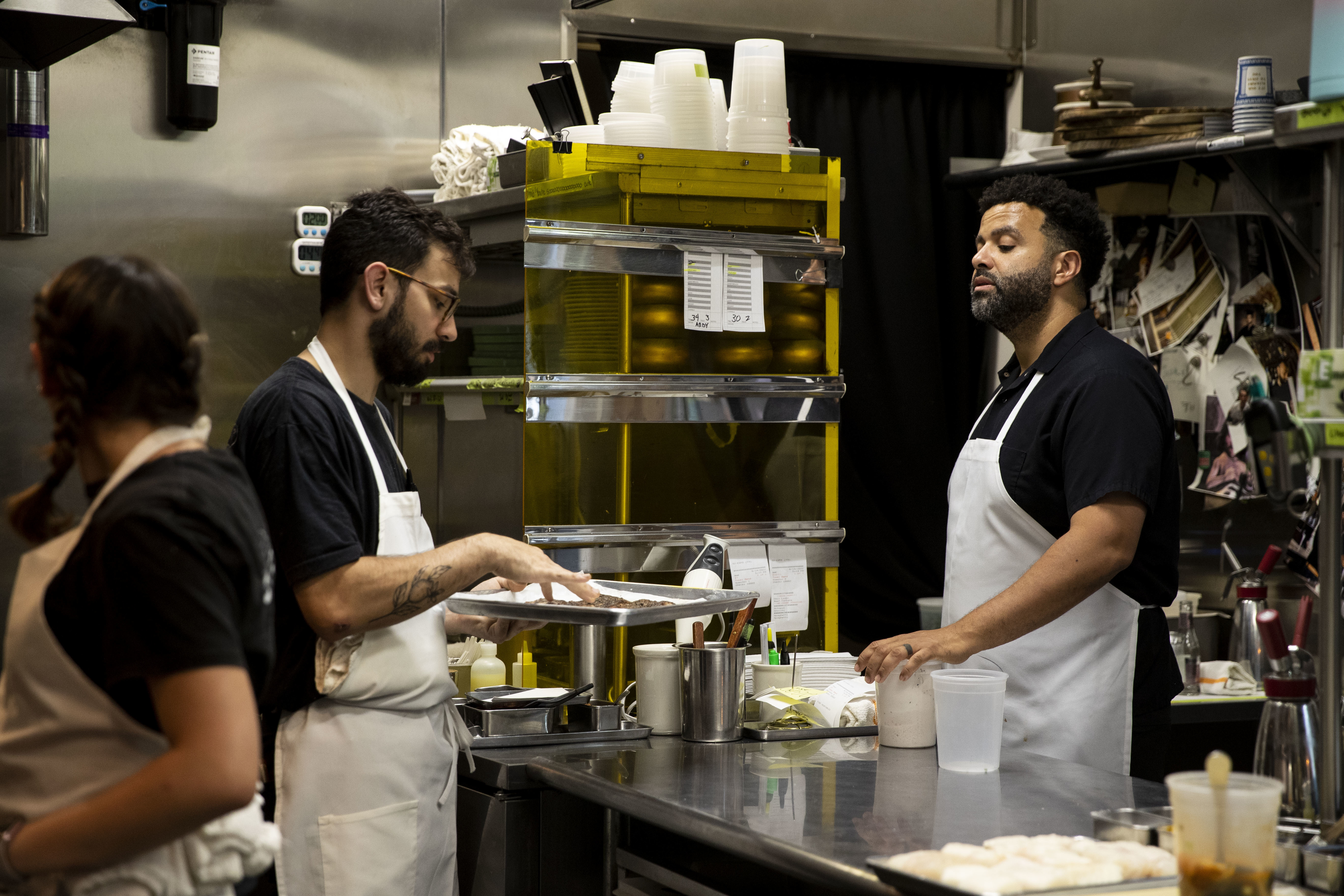
One of Philly’s most prominent fine-dining restaurants received a state grant to createan even higher-end establishment. The project promises to create 100 jobs and help cement Philly’s place as a culinary hot spot. It drew criticism over the use of tax dollars.
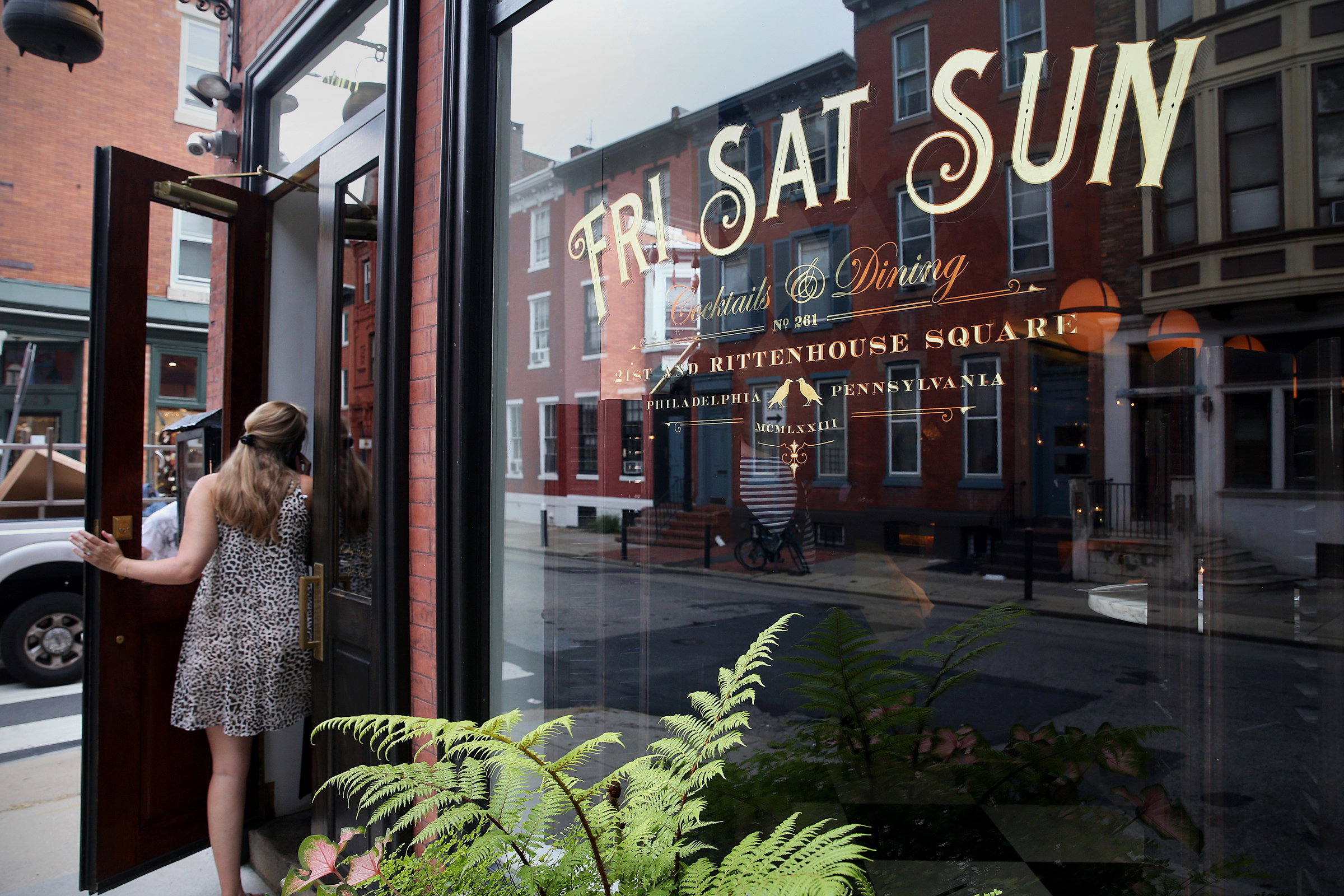
The Weekend Restaurant Group, which owns the acclaimed Rittenhouse Square restaurant Friday Saturday Sunday, was awarded $1.5 million from the state’s Redevelopment Assistance Capital Program in July to help finance the expansion of the Michelin-starred restaurant. The grant will cover only a fraction of the project’s multimillion-dollar budget.
The endeavor will be the “first minority-owned restaurant of its kind” in the United States, wrote Friday Saturday Sunday chef-owner Chad Williams, who is Black, in the restaurant group’s application.
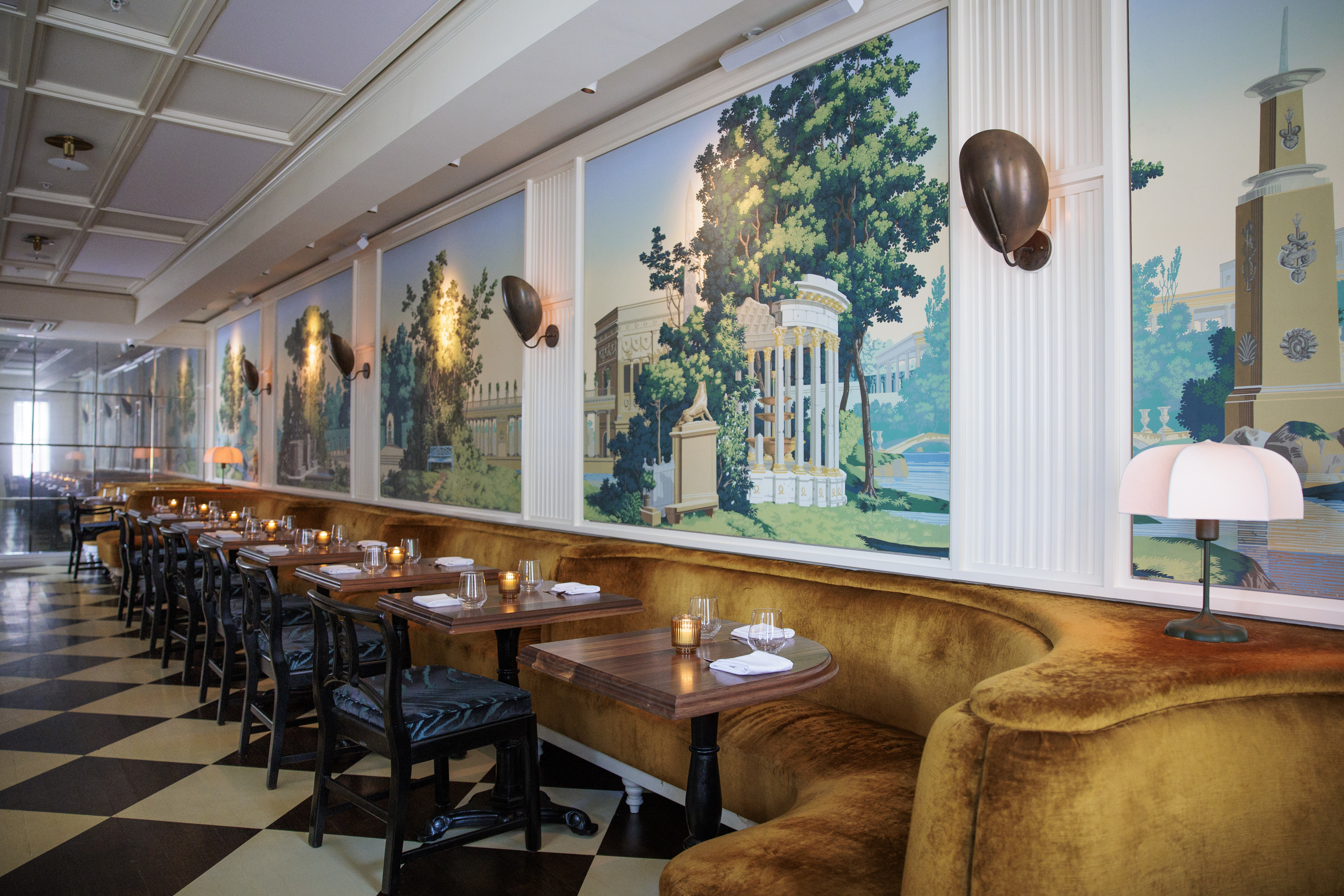
The undertaking involves connecting Friday Saturday Sunday with a neighboring rowhouse that will eventually be transformed into a three-story dining destination withan 18-seat chef’s counter, private dining rooms, and a post-dinner sweets lounge.
Williams runs Friday Saturday Sunday with his wife, Hanna. Together, they announced plans to grow their award-winning restaurant at 261 S. 21st St. last summer, after entering an agreement to buy the adjoiningproperty at 2048 Rittenhouse Square. Neighbors enthusiastically endorsed their ambitious plan, whichcame five months before the restaurant earned a Michelin star.
The interior of Friday Saturday Sunday’s upstairs dining room, which offers a $205-per-person tasting menu.Monica Herndon / Staff Photographer
In the state grant application,Williamswrote “the project will generate significant cultural impact [by] retaining and creating high-quality jobs, attracting visitors from the region and beyond, and raising Philadelphia’s profile.” Renovatingthe storied Philadelphia restaurant “demonstrates a long-term to commitment to the city, with the scale and ambition to be a generational anchor in its neighborhood.”
Yet when news of the grant spread on social media last month, it was met with critics who were angry that taxpayer dollars were funding a fine-dining restaurant.
“Luxe restaurant getting a grant to become more luxe? … WTF?” one person wrote under an Instagram post about the grant with over 100 comments, many of which were critical.
“Give it to the schools” instead, wrote another.
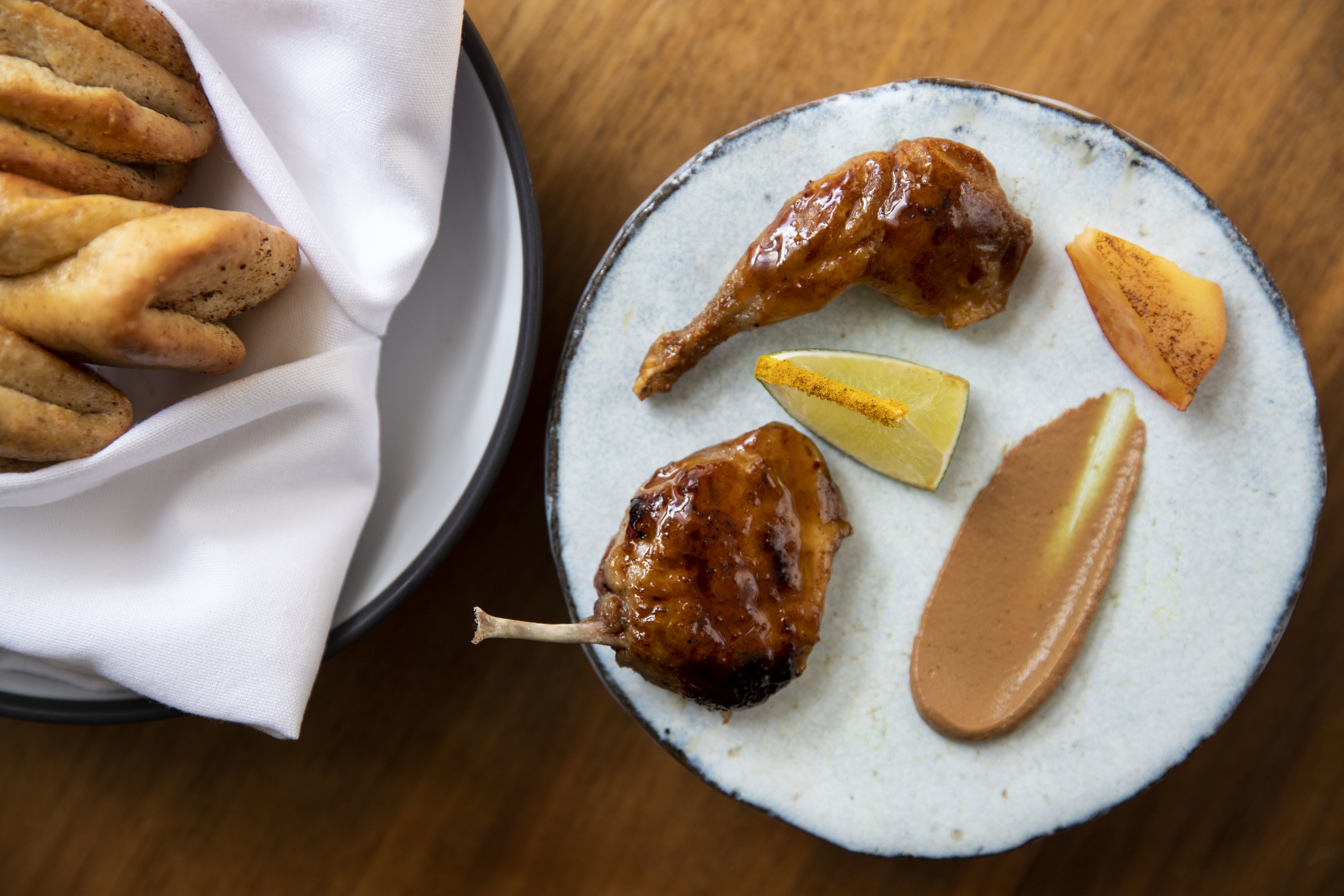
The grilled quail with coco bread at Friday Saturday Sunday, photographed in 2022.MONICA HERNDON / Staff Photographer
Williams says the grant money — which is from a fund for construction projects that would benefit the state culturally and economically — is a win for the city, not just Friday Saturday Sunday.
“I was born here. I left, learned all that I could, and came back. What we want to do is push the culture forward and, with that, hopefully [bring] economic benefits for everyone in the city,” Williams said.
“There’s going to be tax revenue and jobs that come back in a very real way.”
A much-debated grant program
Better known as RACP, theRedevelopment Assistance Capital Program defrays the cost of construction-ready projects across Pennsylvania that stand to generate substantial economic growth. The fund has stirred controversy in the past.
The program was launched in 1986 tosupport construction and real estate projects that intend to create jobs, boost tax revenue, orhave significant cultural and civic impact. Eligible projects must cost at least $1 million and secure at least half of their funding from other sources.
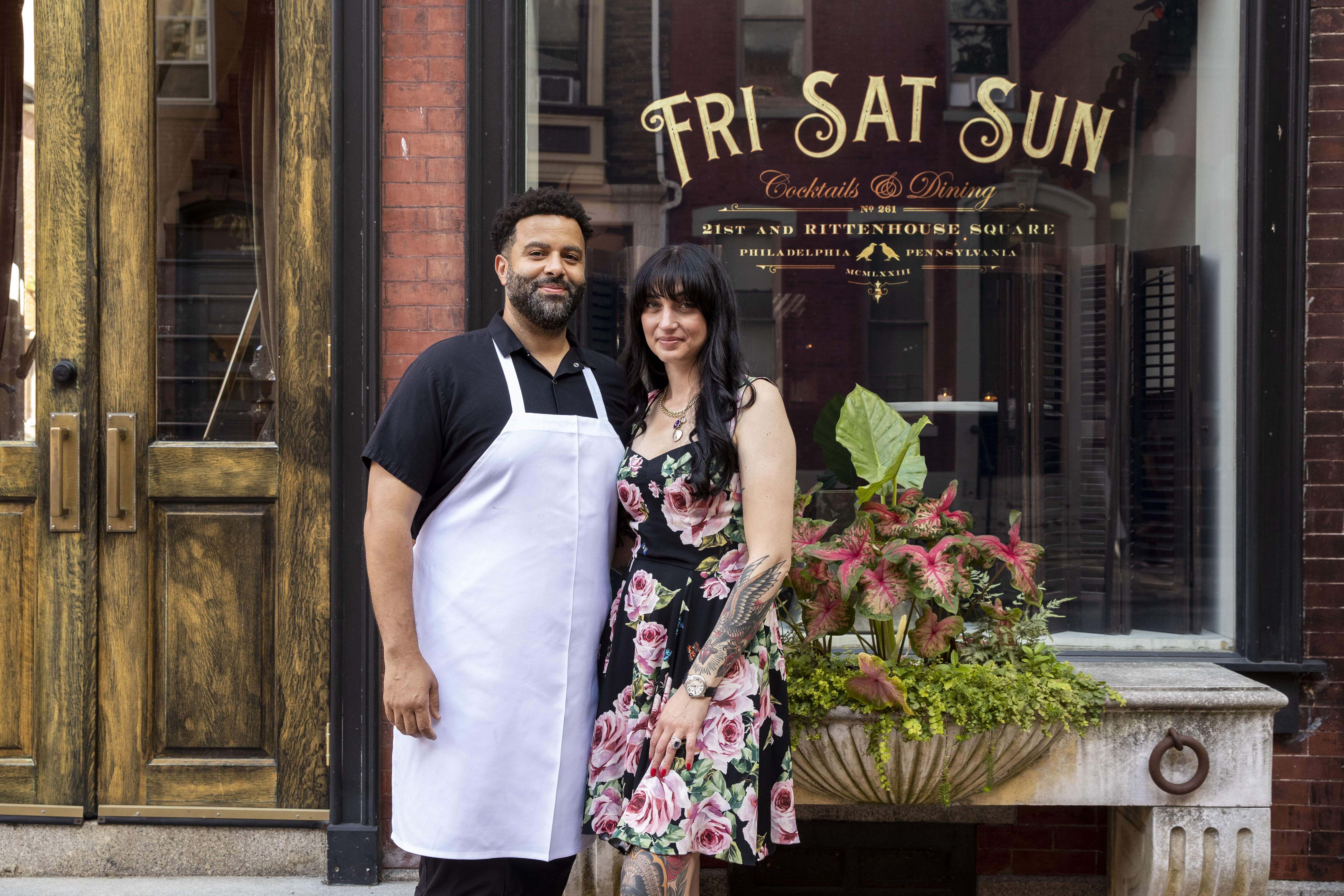
Chef Chad Williams and Hanna Williams at their restaurant Friday Saturday Sunday.Monica Herndon / Staff Photographer
Because grants are decided at the governor’s discretion, the program has previously been criticized for a lack of transparency and glad-handing.
RACP was overhauled in 2012 after an audit found that the Gov. Tom Corbett administration did not adequately disclose or document why projects were awarded grants. Similar accusations cropped up again in 2020, when critics alleged Gov. Tom Wolf and state legislators were misusing the program for political favors.
This July, Gov. Josh Shapiro’s administration allocated $445 million in RACP grants to 356 projects across the state. Recipients range from private real estate developments and public parks to affordable housing and renovations of schools, hospitals, and community centers. The program was particularly competitive in Philadelphia: 170 projects applied. More than half were rejected.
(function(){function e(){window.addEventListener(`message`,function(e){if(e.data[`datawrapper-height`]!==void 0){var t=document.querySelectorAll(`iframe`);for(var n in e.data[`datawrapper-height`])for(var r=0,i;i=t[r];r++)if(i.contentWindow===e.source){var a=e.data[`datawrapper-height`][n]+`px`;i.style.height=a}}})}e()})();
Friday Saturday Sunday’s expansion is projected to cost $7.5 million overall, according to the grant application. Once complete, Williams told The Inquirer, it will add 100 front- and back-of-house jobs to the Weekend Restaurant Group’s payroll. (The group currently has 40 employees, according to the application.)
Not all RACP hopefuls are awarded the full amount of funding they applied for. Friday Saturday Sunday’s expansionwas one of 12 Philly projects awarded the full amount requested.
(function(){function e(){window.addEventListener(`message`,function(e){if(e.data[`datawrapper-height`]!==void 0){var t=document.querySelectorAll(`iframe`);for(var n in e.data[`datawrapper-height`])for(var r=0,i;i=t[r];r++)if(i.contentWindow===e.source){var a=e.data[`datawrapper-height`][n]+`px`;i.style.height=a}}})}e()})();
A spokesperson for the Shapiro administration told The Inquirer over email that the Weekend Restaurant Group’s proposal “is fully consistent with the purpose and authorized uses of the RACP program and represents an appropriate use of RACP funds.”
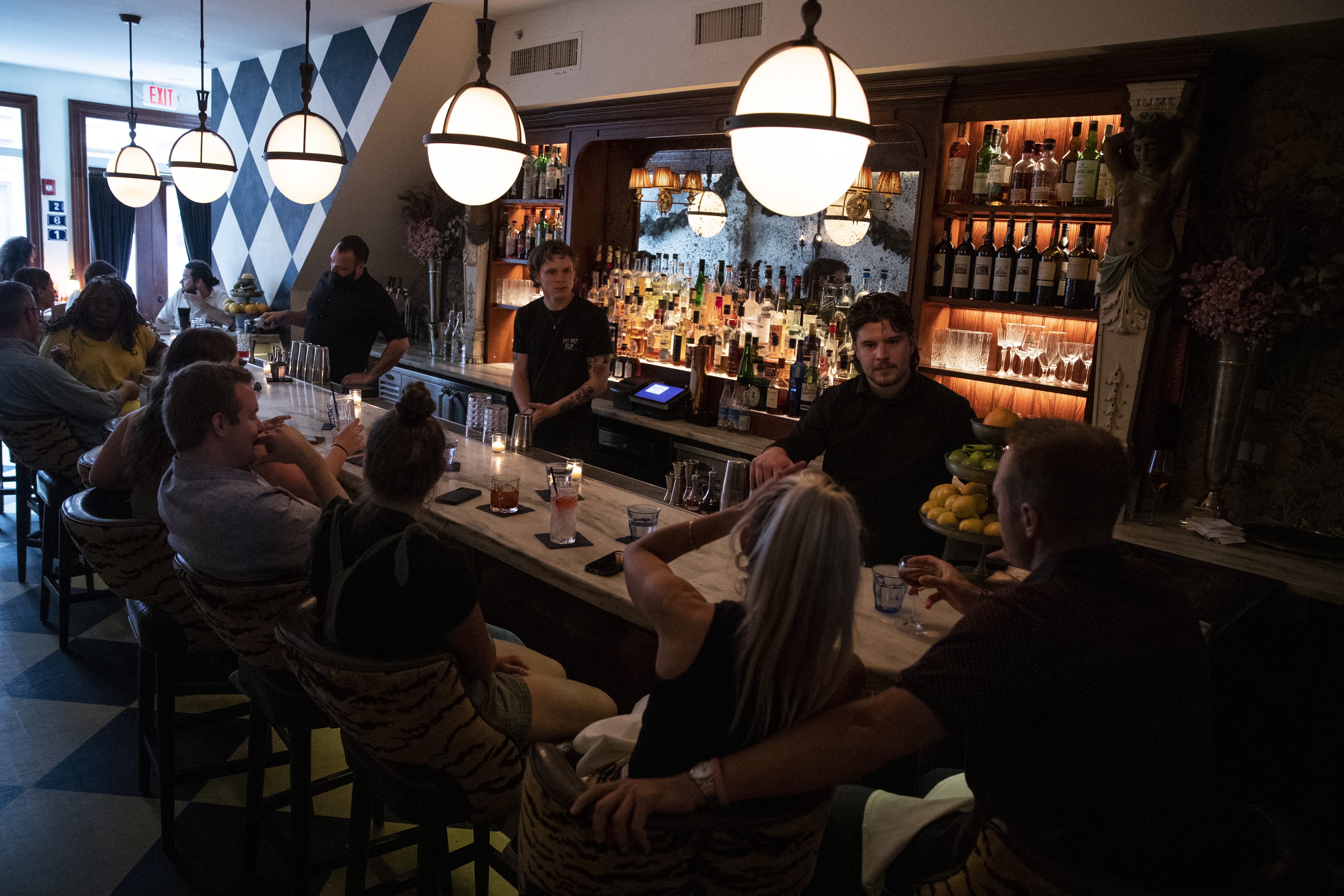
The downstairs Lovers Bar at Friday Saturday Sunday is a two-time James Beard Award nominee.Monica Herndon / Staff Photographer
Receiving the RACP grant was a relief, said Williams, who said he is funding more than half of the $7.5 million project with loans.
Taking on the financial liability is “not a rosy story necessarily,” Williams said, “but it’s a risk we’re willing to take.”
Williams envisionsthe3,500-square-foot rowhouse at 2048 Rittenhouse Square as a chance to create an old-school fine-dining experience inspired by the likes of Le Bec-Fin and Vetri Cucina. Guests will start with welcome drinks on the ground floor before moving upstairs for an intimate meal at a chef’s counter helmed by Williams. Diners will finish the meal on the third floor in a designated dessert space, Williams said.
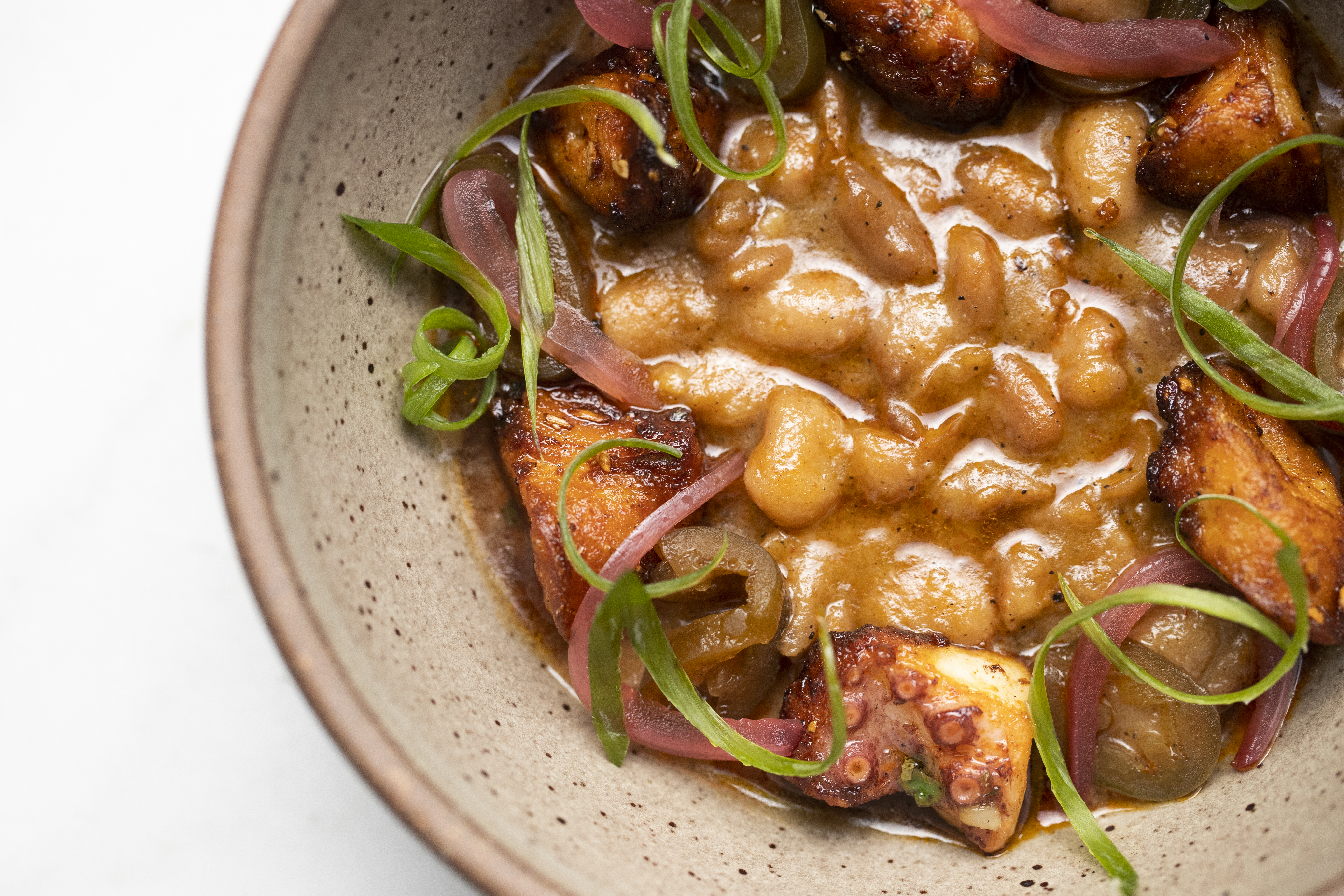
The octopus and beans from the bar menu at Friday Saturday Sunday, photographed in 2023.Monica Herndon / Staff Photographer
The concept will extend the Friday Saturday Sunday brand and render the original tasting menu into a “less formal” affair that is more in line with “what neighbors and regulars want,” Williams said. The connected properties will also enable Friday Saturday Sunday to serve large parties and potentially open seven days a week. The expanded hours will allow for more staff, Williams said
Williams said the project could break ground in October. He’s optimistic about a September 2027 opening.
He framed Friday Saturday Sunday’s expansion as a moonshot. “To be frank, for a Black chef to have this opportunity and do it is a big deal,” Williams said.
“Having a chance to practice our craft at this level is extremely rare.”
‘We need all the help we can get’
Williams decided to apply for RACP funds after exhausting more traditional financing routes.
“Without state support, the project would face a significant financing gap,” he wrote in the application, “as private funds alone cannot absorb both the acquisition and essential structural work.”
Despite his restaurant’s extremely successful track record, the chef found the process similar to the original financing of Friday Saturday Sunday — which required the Williamses to sell their home and submit paperwork to“14 different banks” before finding one that would take a chance on them.
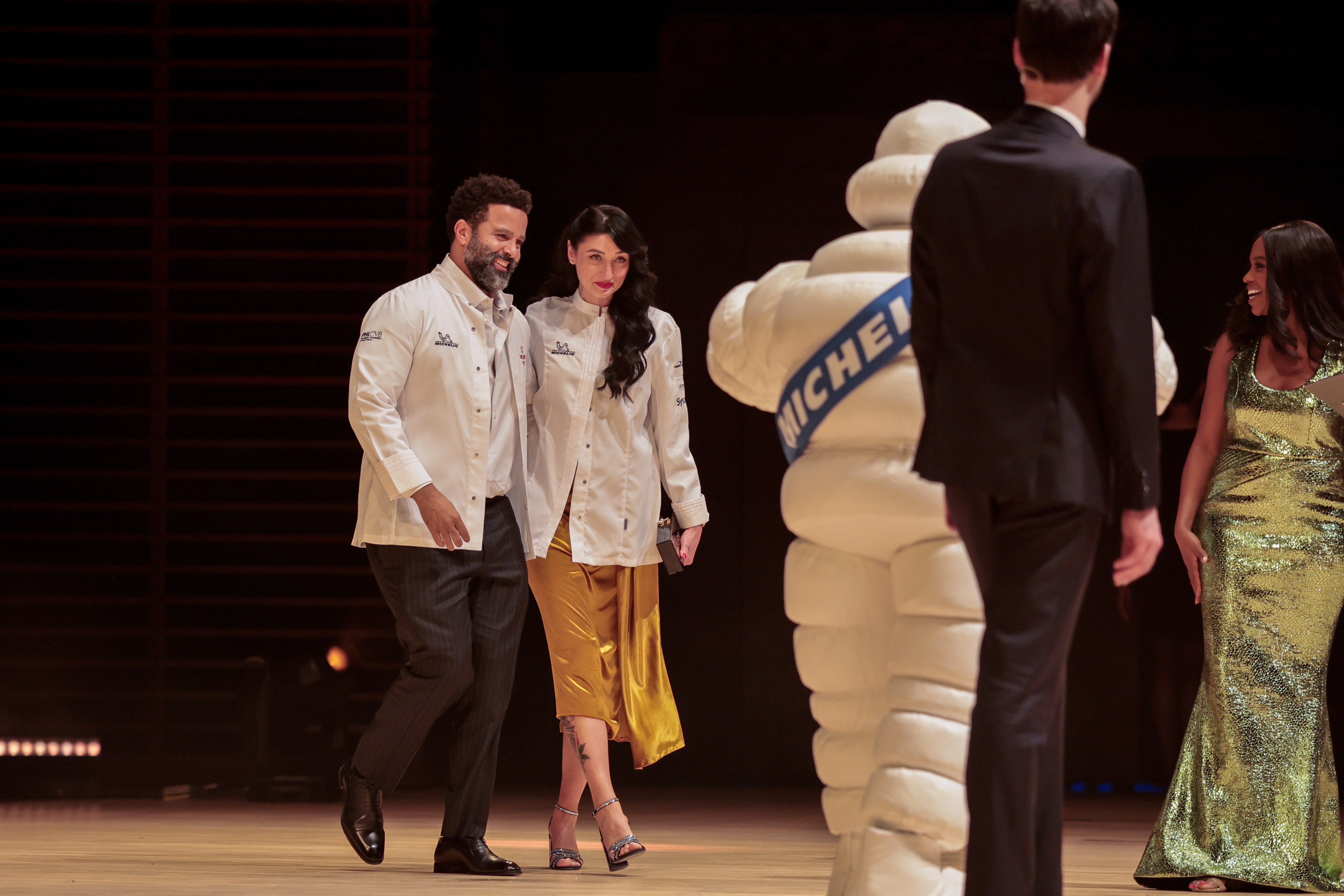
Friday Saturday Sunday, run by chef Chad Williams and his wife, Hanna, earns a Michelin star at the Kimmel Center on Nov. 18, 2025.Elizabeth Robertson / Staff Photographer
It’s a struggle many Black entrepreneurs know well: Several studies have found that Black-owned businesses are discouraged to apply, denied, and offered inferior loans at higher rates than white counterparts, even when appearing more creditworthy.
“We’ve put in our work here, had some success and won some things, but it did not make [financing] any easier,” said Williams. He was attracted to RACP because it was described to him as a “colorblind grant” by other BIPOC entrepreneurs who encouraged him to apply.