Philadelphia police have identified the victim of a fatal car crash in Center City as a teacher at a West Philly elementary school.
Zoe Schemm, 26, was attempting to catch a bus near 19th and Lombard Streets when the driver of another vehicle struck her at 6:42 a.m. Wednesday. Schemm suffered severe injuries after becoming trapped underneath the vehicle and was pronounced dead at the scene, according to police.
The driver of the white Audi sedan was traveling west on Lombard when the car hit Schemm while she was crossing the street. The driver remained at the scene. Police are investigating but have made no arrests.
Schemm was a teacher at Belmont Charter Elementary School in West Philadelphia. Belmont Charter’s elementary and middle school held classes virtually Thursday to give its community space to grieve Schemm’s death.
“Belmont Charter Network is heartbroken by the unexpected death of a member of our school community. She was a valued teacher who cared deeply for her students and made a lasting impact during her time at Belmont. Her loss is being felt deeply across our community,” Aquilla Waller, Belmont Charter’s head of school, said by email.
“I’m heartbroken that a young Belmont Charter teacher lost her life after being struck by a vehicle. … This is another somber reminder of how important it is to make sure our streets are safe,” City Councilmember Jamie Gauthier, who represents West Philadelphia, said in a social media statement.
A pedestrian was killed in a car crash in Center City on Wednesday morning, police said.
At about 6:42 a.m., Philadelphia police responded to a report of a crash involving a vehicle and pedestrian near 19th and Lombard Streets. The victim was a woman in her 20s and she was pronounced dead at the scene, according to police.
The woman was crossing Lombard Street when the vehicle driver, who was traveling westbound, struck her. The driver remained at the scene, and no arrests have been made.
Overall crashes declined from 2020 to 2025, while crashes involving non-motorists have stayed the same or increased, according to an analysis of Pennsylvania Department of Transportation data by the group Philly Bike Action. Fifty-five percent of people killed in Philly traffic crashes last year were non-motorists, and 52% of serious injuries from crashes occurred when a driver hit someone not in a car, the group found.
You might roll your eyes if a real estate agent tells you about a fixer-upper with a lot of potential. But that truthful line of persuasion has been working for supporters of the Germantown Life Enrichment Center.
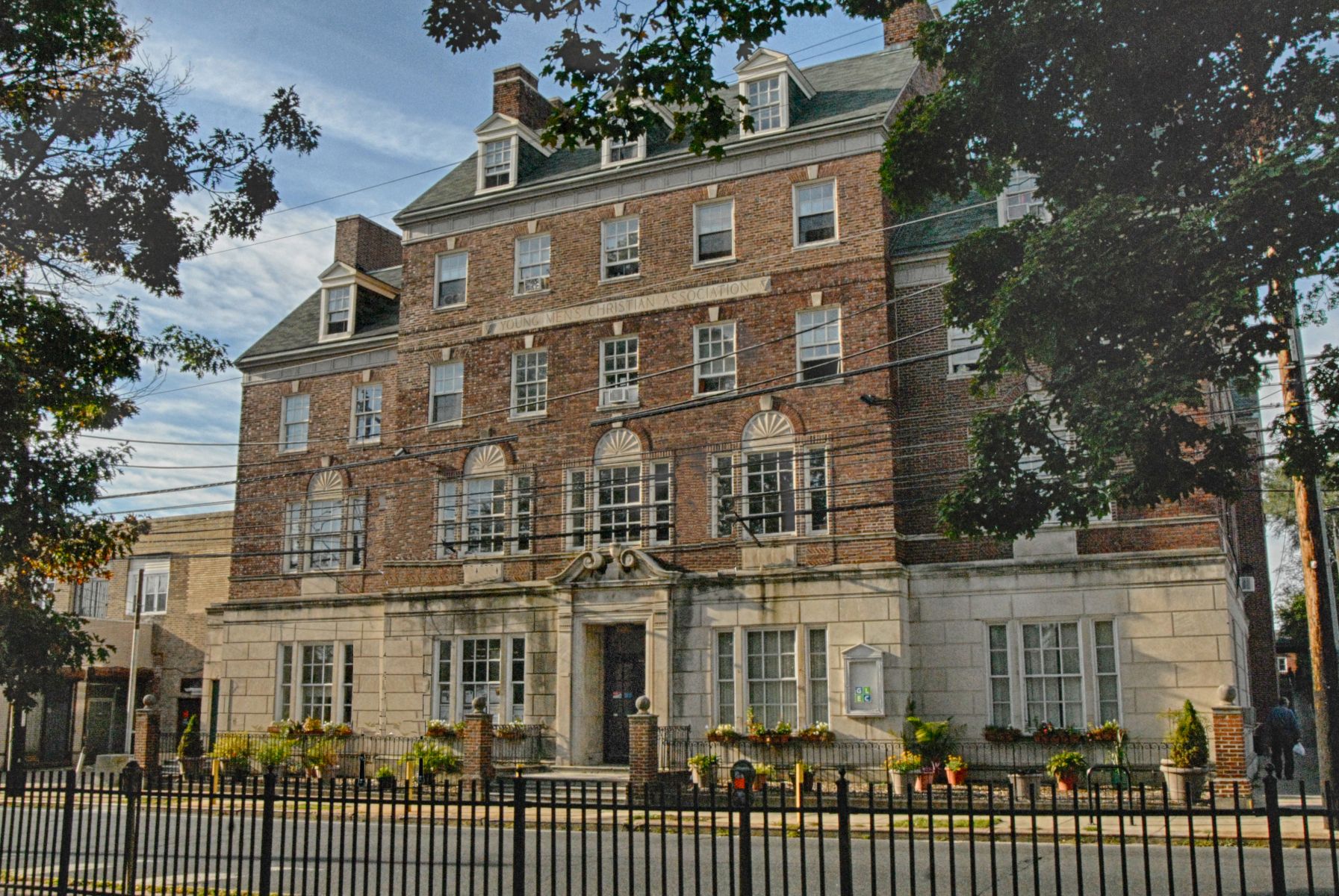
The center, known as GLEC, is an unusual two-in-one facility at 5722 Greene St. It offers an array of community programming, including pool, fitness, and youth activities, and transitional housing for formerly homeless men.
The former YMCA building opened in 1922, and has not received major renovations since the 1990s. It has gradually decayed while waiting for essential repairs, including to its HVAC system and roof.
The building was in dire financial condition in late 2024 into 2025, after the pandemic hurt memberships and childcare participation. Utility bills and shutoff notices piled up, and it appeared the center could close at any time. Germantown would lose a vital community resource, and one of the city’s few housing options for homeless men would disappear.
But over the last several months, GLEC has begun receiving support it has long needed, by way of a combined $9.2 million from various sources. In the spring, the center learned it had been awarded $5 million from the city’s funding for homeless housing, courtesy of the American Rescue Plan, to use on its residential section. Then the center received an additional $2.5 million for the creation and repair of residential housing units in July from state funding. The money will go toward new central air-conditioning, new showers, updated bathrooms, and more.
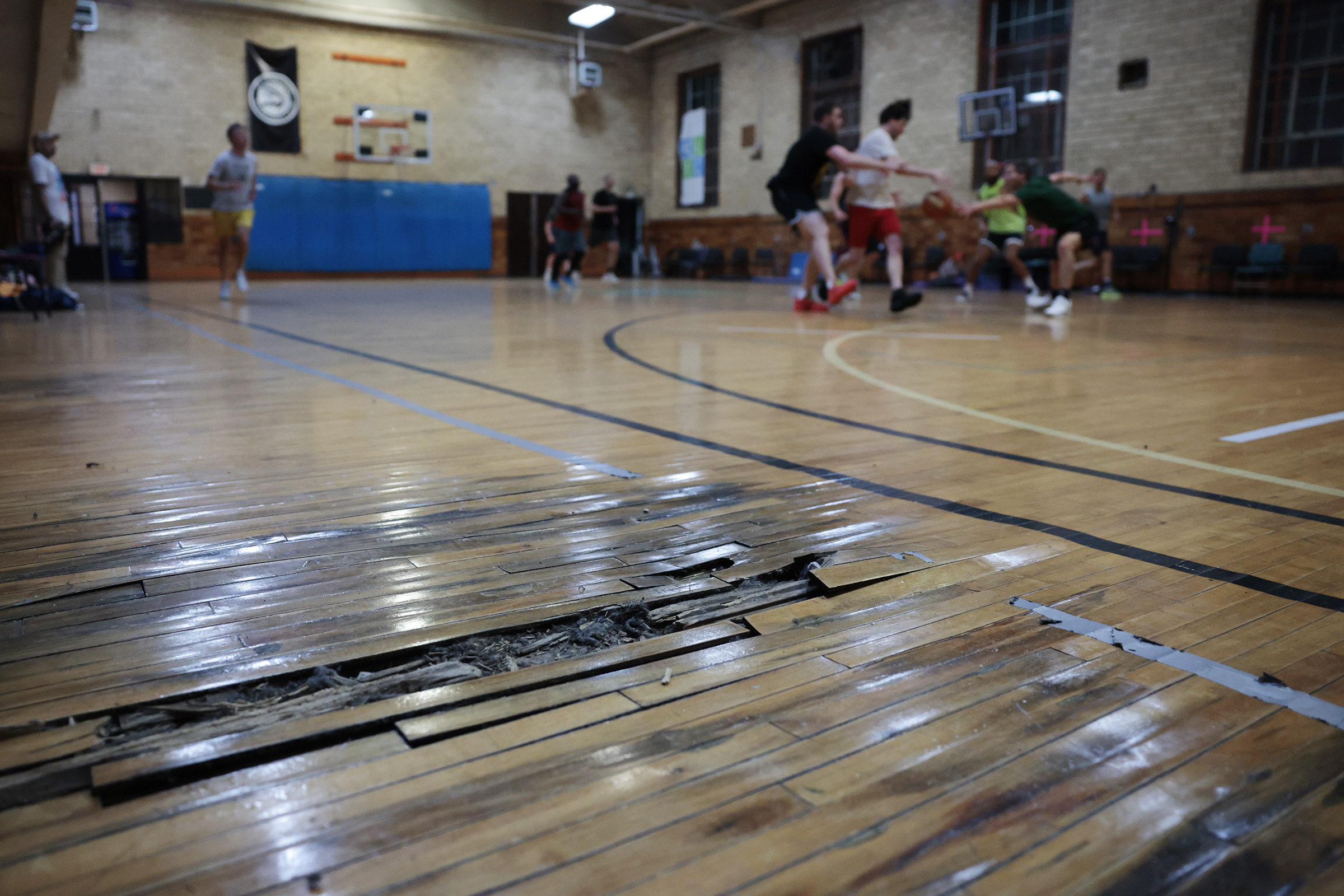
Last week, GLEC learned it will receive about $950,000 from state Local Share Account funding, raised from gaming revenues, which will go toward repairs to the building’s community center offerings, like replacing the basketball floor and renovating locker rooms and bathrooms.
Macy Brown, 4, center with swimcap, uses her life vest to stay above the water as she kicks up a storm to navigate the pool at the Germantown Life Enrichment Center in 2018.MICHAEL BRYANT
And on Sept. 17, Democratic State Sen. Art Haywood presented GLEC with a $750,000 grant from a state program that goes toward housing affordability and rehabilitation measures, also meant for improvements to the community center sections of the building.
The inflow of funding represents a remarkable and hopeful turn of events for those who have fought to keep the building open.
“It feels like a miracle. … I’m so profoundly grateful to the entire community that rallied around to to work together to make this happen,” said Doron Taussig, chair of the GLEC board.
Yet even with those funds, Taussig said, the building’s daily financial challenges remain.
The center still operates with a monthly deficit of about $25,000, executive director and CEO Lyn Kuebler said. She said even while the major investments from the city and state suggest they are committed to the center’s being used for this kind of housing work for the next 30 to 40 years, there is still a long way to go before all of its needs are met.
“Even though we’ve gotten awards … it’s not money in the bank that can pay your electric bills,” Kuebler said.
Not finished
When the center hit its low point at the end of 2024, Kuebler said, she began warning people that without an intervention soon, “we’re not gonna be here.” She invited Haywood, who represents parts of Philadelphia and Montgomery County, to tour the building that December to see both its potential and how much was needed to reach it.
“There’s not many places for men who have been hard on their luck,” Haywood said, noting that it is one of the few single-occupancy housing options for homeless men in the city. He said he admired the resiliency of the center’s leadership, and agreed to help secure funding.
“The organization just needed a lot of love,” he said.
A Dadball basketball game (in background) at the Germantown Life Enrichment Center in Philadelphia, where there are some badly needed repairs, in 2025.Elizabeth Robertson / Staff Photographer
While Haywood and other officials went to work to preserve the building’s long-term future, Taussig sought out smaller donors to help with the daily expenses. For over a decade, the center has been the home of Taussig’s pickup basketball group, which nicknamed itself “Dadball.” The group of once-new dads in their 30s and 40s kept playing as their kids grew up, and formed a community.
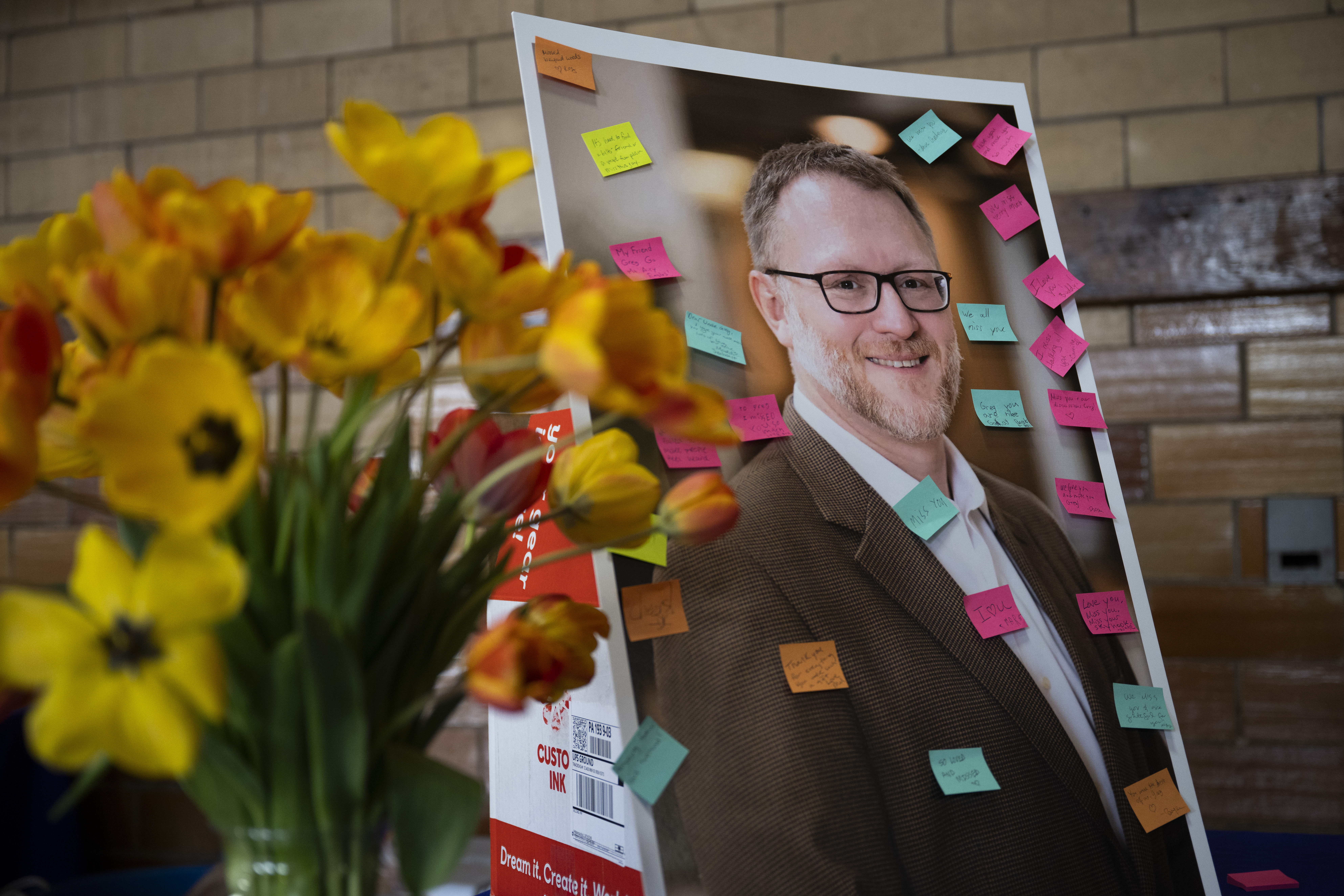
In April 2025, one of the group’s most beloved members, Greg Anderson, died after suffering cardiac arrest during a game. In their grief, Taussig and the other Dadballers rallied and raised about $100,000 to keep the center open. They have since renamed the basketball gym in Anderson’s honor.
Personalized notes are stuck to a portrait of Greg Anderson during a gym dedication ceremony for the late Mount Airy Dadball basketball player on Saturday, May 2, 2026 in Philadelphia.Joe Lamberti / For The Inquirer
Kuebler said the organization determined it needs about $4 million more to address all of the community centerrenovations, so several items are on hold, like installing an elevator. She is asking community members to help in any way they can.
“We are further than we’ve ever been. It helps you not be weary,” said Kuebler, who has been with the center for 16 years.
People are riding the fundraising momentum, Taussig said. Another Dadballer will soon begin a culinary education program focused on teaching people to make affordable, high-nutrition meals. Anderson’s widow, Melanie Anderson, is organizing a women-only dance party in the basketball gym, he said.
And a Jefferson University master’s in architecture class is conducting a community design project on GLEC. The students will study the building and surrounding community for what the best uses of the space may be, and offer suggestions on how to accommodate them, Taussig said.
“It’s bringing all of this energy into the building. … It’s what this building needed and really ought to be used for,” Taussig said.
Correction: Lyn Kuebler’s name was spelled incorrectly.
Philly Youth Basketball, a nonprofit that hosts a range of programming within the sport and outside it from its massive Nicetown facility, is expanding its footprint.
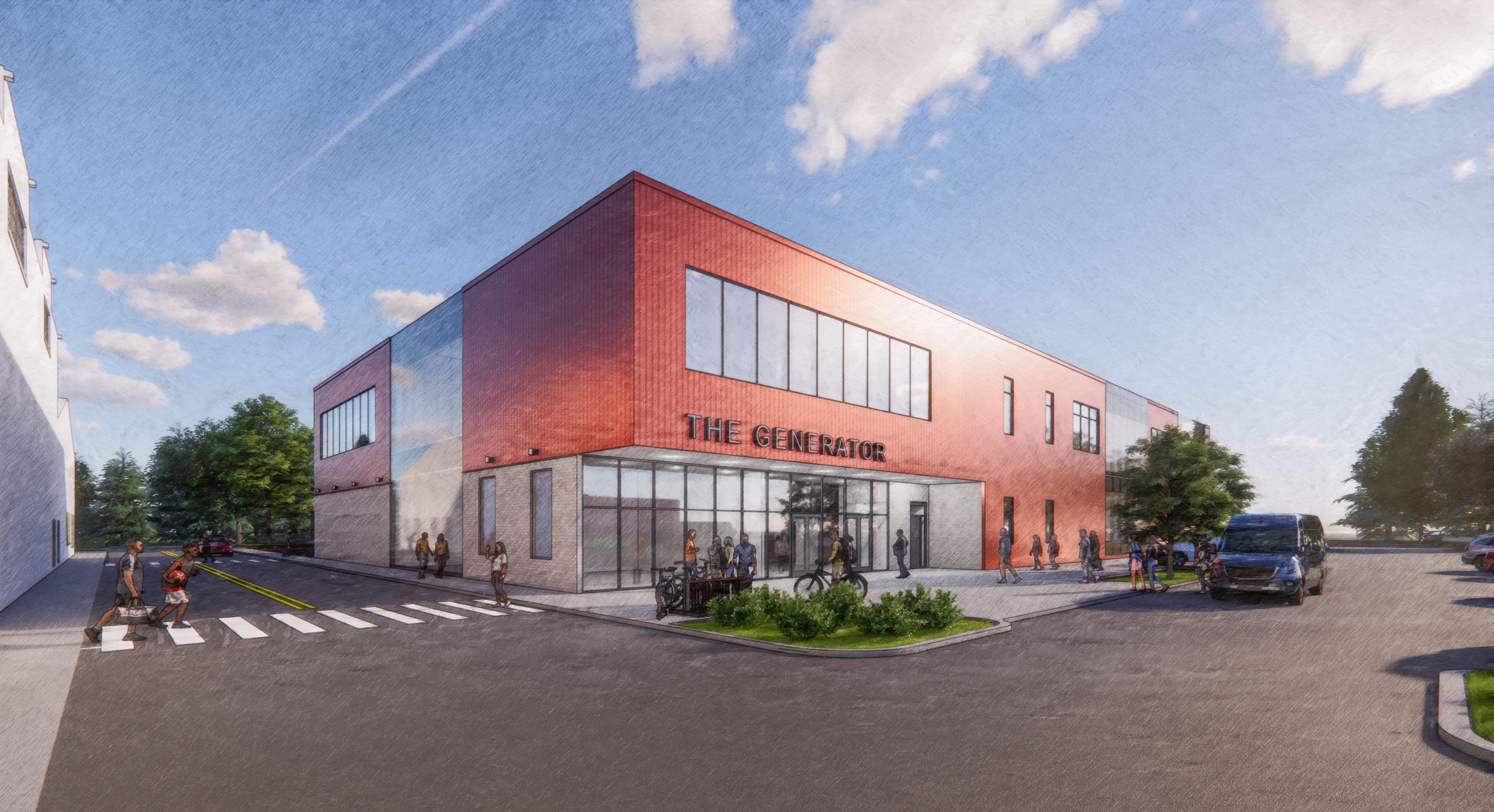
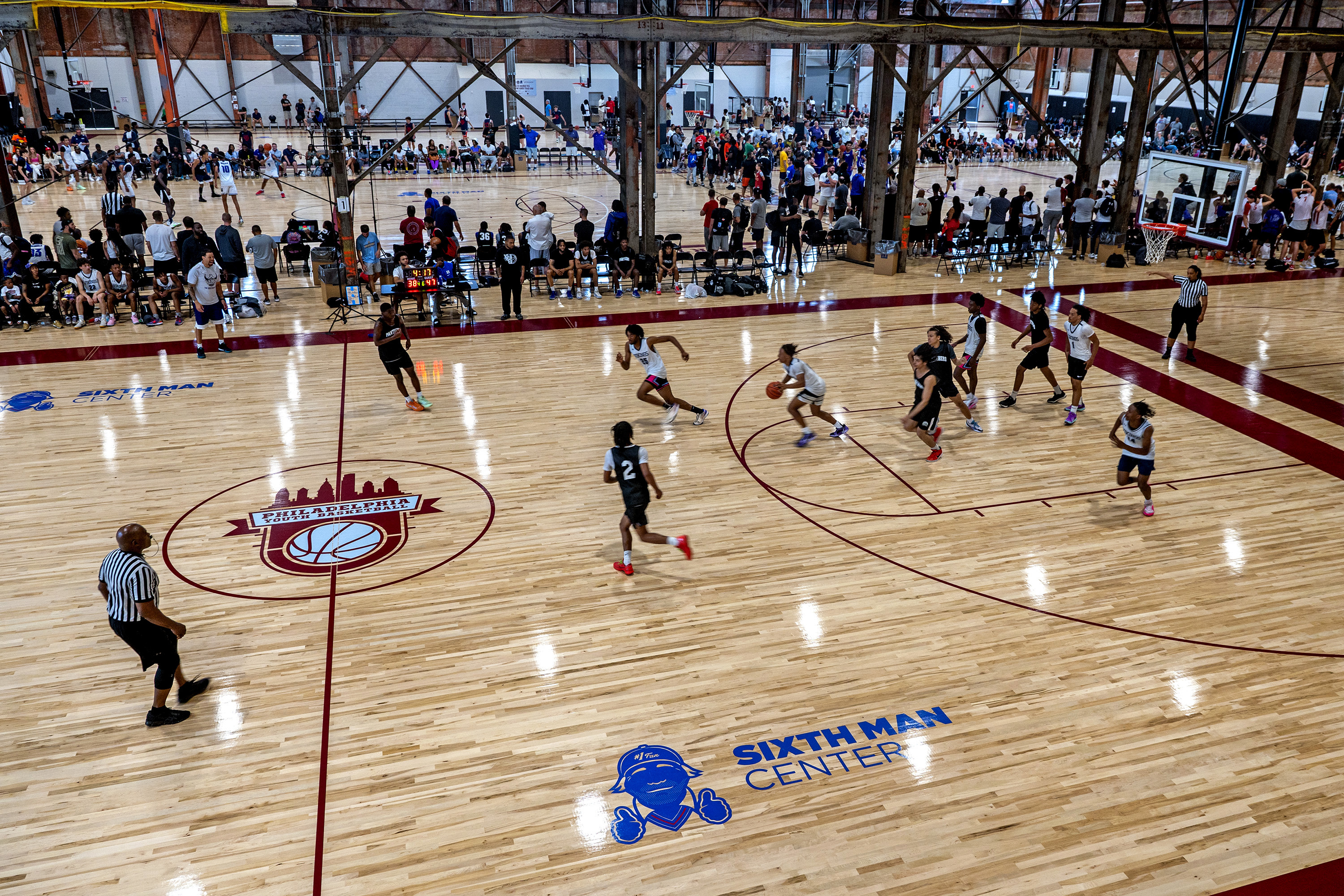
On Friday, it announced a $50 million workforce development project called the Generator. The 40,000-square-foot building will be constructed next door to Philly Youth Basketball’s home, the Alan Horwitz “Sixth Man” Center, located at 4250 Wissahickon Ave.
The Generator is designed to help adults from ages 18 to 29 build pathways to careers in skilled trades like carpentry and welding, healthcare, tech, and entrepreneurship. Its offerings will include hands-on training and certification, a small-business accelerator, and clinical health and mental health resources.
The Generator will also focus on developing its young adults’ soft skills, through services like career coaching and job placement, financial literacy education, and supplementary essentials like driver’s education and academic support. Philly Youth Basketball estimates 600 young people each year will be involved in its certificate programs.
The organization plans to break ground next fall, with an estimated opening in early 2029.
“In our city, it is entirely too hard for young adults, especially those who’ve not gone to a well-resourced K-12 schooling experience, who’ve not had a college diploma, who don’t come from an affluent, high social capital family … to build a career and to transcend one’s circumstances,” said Kenny Holdsman, president and CEO of Philly Youth Basketball.
“And we think we can do something about that on a really big scale,” he said.
A rendering created by Voith & Mactavish Architects of The Generator, Philly Youth Basketball’s planned $50 million workforce development hub, slated to open in early 2029. The Generator will help young adults build careers in the skilled trades, healthcare, tech and entrepreneurship.Voith & Mactavish Architects
Philly Youth Basketball has raised $10 million for the project so far, largely through philanthropic donations. As part of the overall funding,$1.5 million has come through the state’s Redevelopment Capital Assistance Program, including a newly announced additional $500,000 from Gov. Josh Shapiro’s administration. Other money has come from the Small Business Administration. It is unclear where the rest of the funding will come from.
“What happens here is different than what happens anywhere else. I believe this is a special place,” Shapiro said Friday at an event announcing plans for the workforce hub.
“Here in Pennsylvania, we recognize all pathways to success and opportunity, and we invest in them. Whether you go to college, you go to the military, you go to a union training hall, all of those pathways deserve our respect and all of them deserve our investment,” he said.
Mayor Cherelle L. Parker said expanding career pathways in the trades was especially valuable, given that artificial intelligence would not easily replace those jobs. She said the Generator would help young people who might otherwise face barriers to economic mobility.
“We’re teaching young people how to fish. Our city will be safer when folks are going to bed at night and waking up in the morning to do a job that will allow them to take care of their families, go on a vacation, live with a sense of dignity and pride,” she said.
Skills for life
Philly Youth Basketball has been running programs throughout the city for over a decade, but it did not have a permanent space until it opened the Sixth Man Center in 2024. The facility was designed to use basketball as a means of positively impacting Philly youth and exposing them and their families to opportunities outside the sport.
The Sixth Man Center features not just six full-size courts and basketball programs for all ages, but also a healthy foods cafe, and spaces and programs focused on education, mental health, and entrepreneurship. Holdsman said the 100,000-square-foot facility welcomes about 1,400 visitors a day, and even more when it has hosted other community events, like a recent Eid celebration that drew 8,000.
There is action on six courts during a Philly Live event on Sunday, June 30, 2024, at the Alan Horwitz “Sixth Man” Center.Tom Gralish / Staff Photographer
The Generator represents the culmination of Philly Youth Basketball’s mission to go beyond athletics. Holdsman said the nonprofit identified a need to help young people not only growing up, but after high school, too. Organizers chose to focus their work on careers in the trades, healthcare, and tech, Holdsman said, because the fieldsdemonstrated growth, reliable credentialing, trainers and educators who could be relatable to young adults (and especially young Black men), and pathways for economic mobility.
Amin Ray, 17, has embodied the organization’s “kinder to career” model. The Germantown high school senior has been involved with nearly every program Philly Youth Basketball has to offer, beginning with basketball when he was 11 and then branching out to off-court offerings.
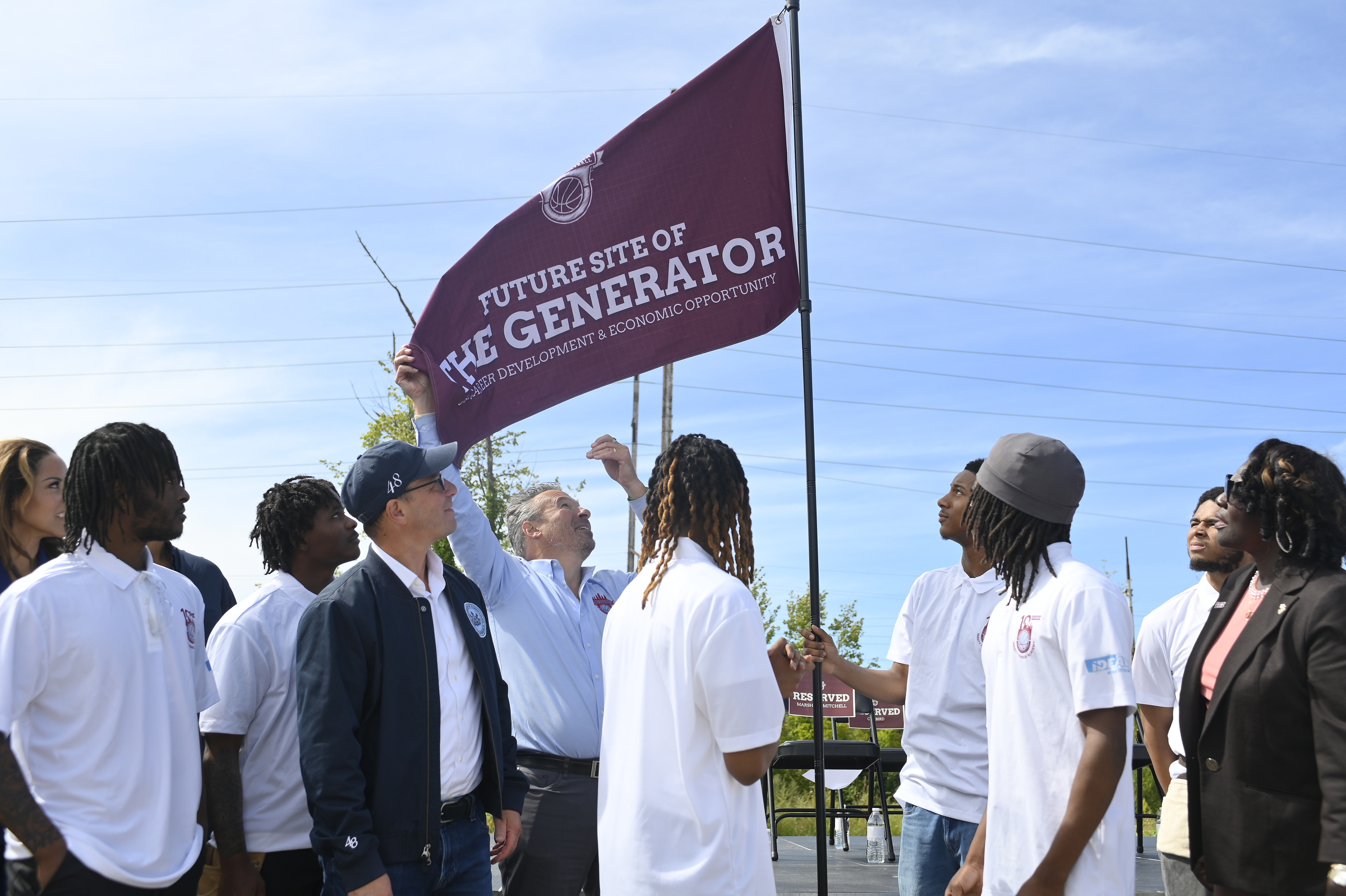
Now, he is part of the first cohort of the organization’s Varsity Trades Academy, which will serve as an on-ramp to the Generator before it opens. Ray and the 49 other academy participants have received instruction in various trades, and he has become most fascinated with carpentry.
Gov. Josh Shapiro and Philly Youth Basketball Varsity Trades Academy students watch as Kenny Holdsman and Amin Ray hold up a flag at the future site of the Generator on Friday.Bastiaan Slabbers/ For the Inquirer
“It’s something about — after you finish a job … and you ride past, that satisfaction. You’re telling yourself, ‘Yeah, I built that,’” he said, pointing out a set of wooden benches he and the cohort built that people attending the event were sitting on.
He will finish with the academy in December, and start working in a manufacturing program in partnership with Community College of Philadelphia in February while he finishes his virtual school program. Twelve others from the academy have already been placed in jobs through the program.
“As human beings, we’re never done learning. We’re always still growing. So as much knowledge as you can possibly obtain, the more valuable you can be as a human being,” Ray said.
A collection of Philadelphia grassroots nonprofits are suing the umbrella organization that lost them hundreds of thousands of dollars from years of mismanagement and poor accounting.
The 18 small groups have sued the Federation of Neighborhood Centers, a nonprofit that helped them and other small organizations manage grants. FNC, which operated as a fiscal sponsor for more than 100 Philadelphia grassroots nonprofits, collapsed last year after it was unable to distribute money owed to the groups.
After years of poor recordkeeping and spending itself into a deficit, and in some cases using money designated for one group to pay another, the organization froze outgoing payments by the end of summer 2025and ceased operations by the end of the year.
Each of the 18 organizations says it held a positive cash balance with FNC at the time of its collapse. The fiscal sponsor lost more than $426,000 belonging to 24 groups, a third-party audit found. The suit claims the groups had to shut down or cut back operations as a result of the nonprofit’s financial mismanagement.
The fiscal sponsor’s then-CEO, Michael Harbison, resigned in August 2025. He did not have relevant experience in an executive, management, or financial accounting role, and “does not know why he was hired” as CEO, according to the complaint filed last week in Common Pleas Court.
The complaint alleges the Federation of Neighborhood Centers should have known about its financial challenges by early 2024, and did not have an adequate workforce to meet the demands of administering fiscal sponsorship services for over 100 small organizations.
The current CEO, Demir Moore, acknowledged the nonprofit had grown too quickly and took on more clients than it could handle without proper financial guardrails, the complaint said. The collapse of the fiscal sponsorship program was due to a “lapse of management,” Moore previously told The Inquirer, a comment that was quoted in the lawsuit. Moore also said the downfall was “absolutely not attributable to malfeasance or embezzlement.”
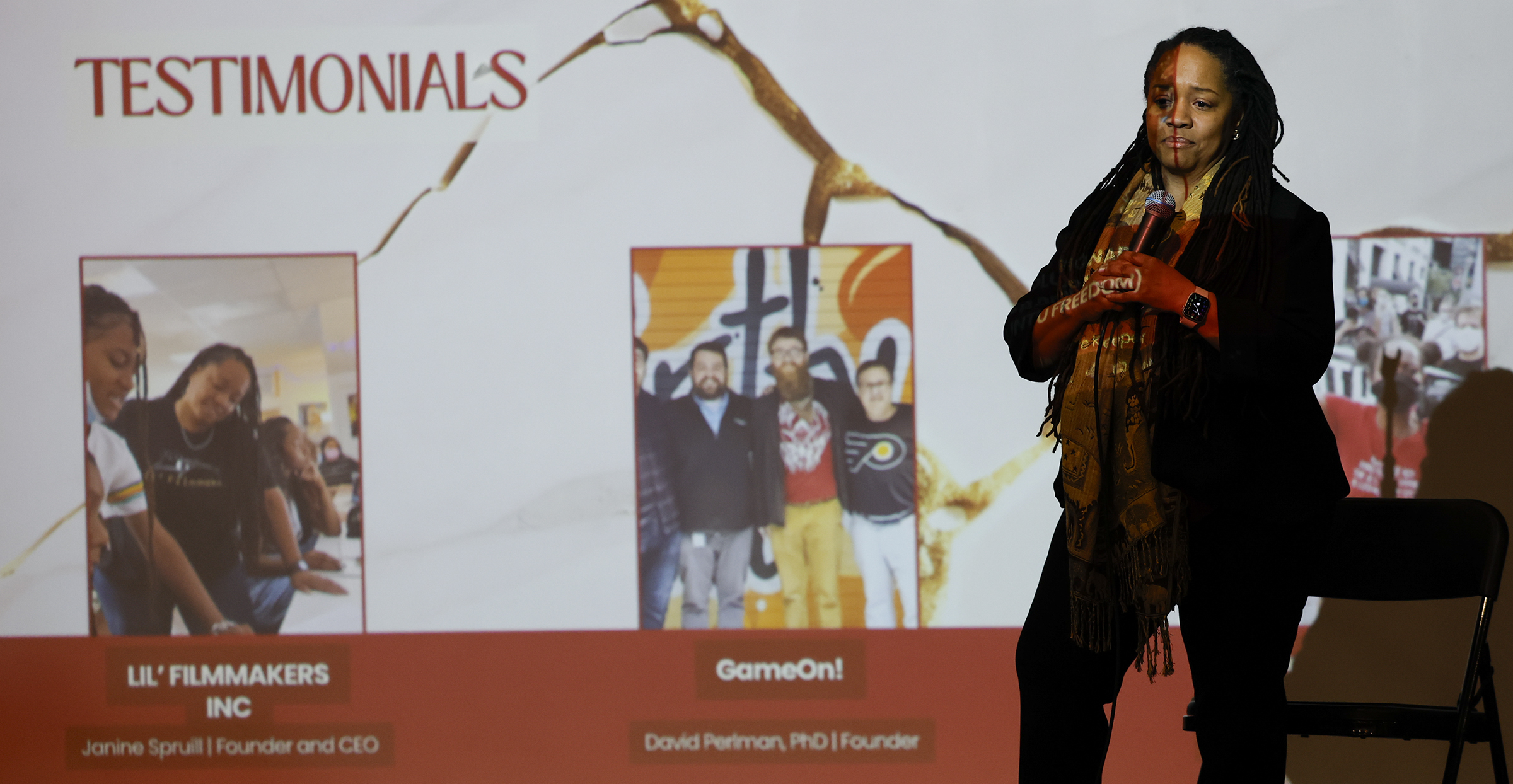
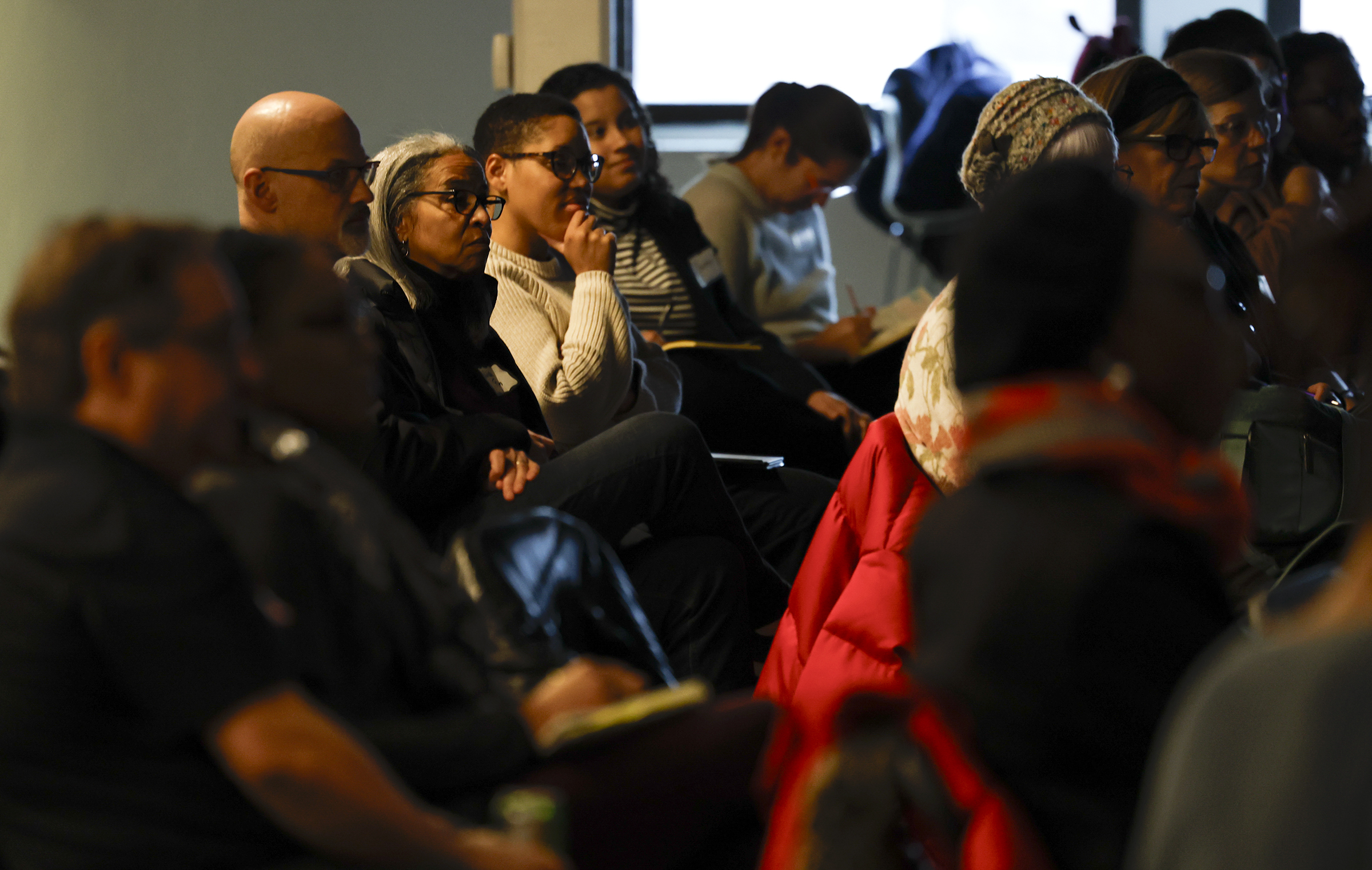
Participants listen to speakers during a February town hall for projects affected by FNC’s collapse.Yong Kim / Staff Photographer
Moore did not immediately respond to a request for comment, nor did the plaintiffs’ attorneys with Ballard Spahr.
As the Federation of Neighborhood Centers collapsed and froze operations, Social Impact Commons, an organization that supports fiscal sponsors, came in to conduct the financial audit. It also assisted the fiscal sponsorship program’s shutdown, including helping some grassroots organizations transition to new fiscal sponsors.
By the time it finished working with FNC in February, Social Impact Commons found 34 projects had gone to new fiscal sponsors or independent nonprofits, 39 were closed or defunct, and 31 had yet to transition. It’s unclear what has happened to those remaining projects since then, or if they have found any financial relief.
The 18 organizations suing FNC represent a wide range of missions, like improving food access, empowering underrepresented young filmmakers, supporting mothers who have lost children to violence, animal rescue, and more.
A renovation project to a beloved library should be easy win for a local politician. But plans to rehab the Cecil B. Moore Library have been anything but a win for Councilmember Jeffery Young Jr.
Young and representatives from the Philadelphia Capital Program Office and the Free Library of Philadelphia gave further details on the $2 million in renovations planned for the North Philly library at a community meeting Tuesday. An additional $8 million previously raised and allocated for the project will remain unused for now.
Construction is expected to begin in October on what city officials are calling phase one of a larger project. The initial phasewill include a new accessible building entrance, restrooms, and elevator; HVAC replacement; a new fire-alarm system and water heater; and safety improvements to building exits, they said.
The building at 2320 Cecil B. Moore Ave. will be closed during construction, which is expected to last about six months. During the closure, some limited programming will be available at the nearby MLK Recreation Center at 2101 Cecil B. Moore Ave., according to the Free Library’s neighborhood library services division chief, Joel Nichols.
Other library programming at MLK or elsewhere is under consideration, he said, but it remains unclear whether Cecil B. Moore will have a dedicated satellite branch.
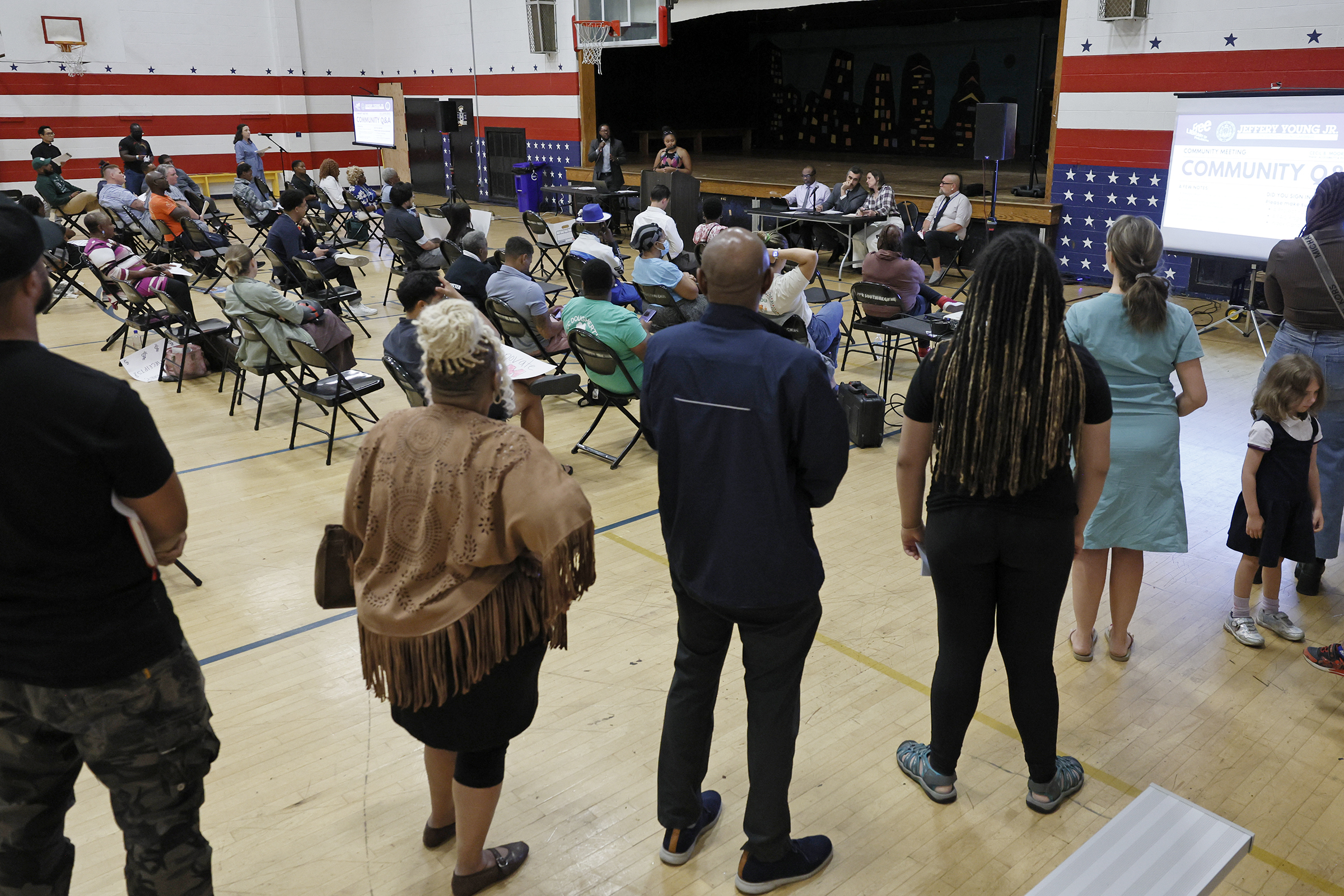
The plan did not go over well with the roughly 100 community members who came for Tuesday’s meeting at MLK Recreation Center. They and other supporters of the library have long been frustrated by how Young has wielded his power of councilmanic prerogative to delay the project for years while pursuing alternative ideas for the site, and has resisted spending the full $10 million that has been raised.
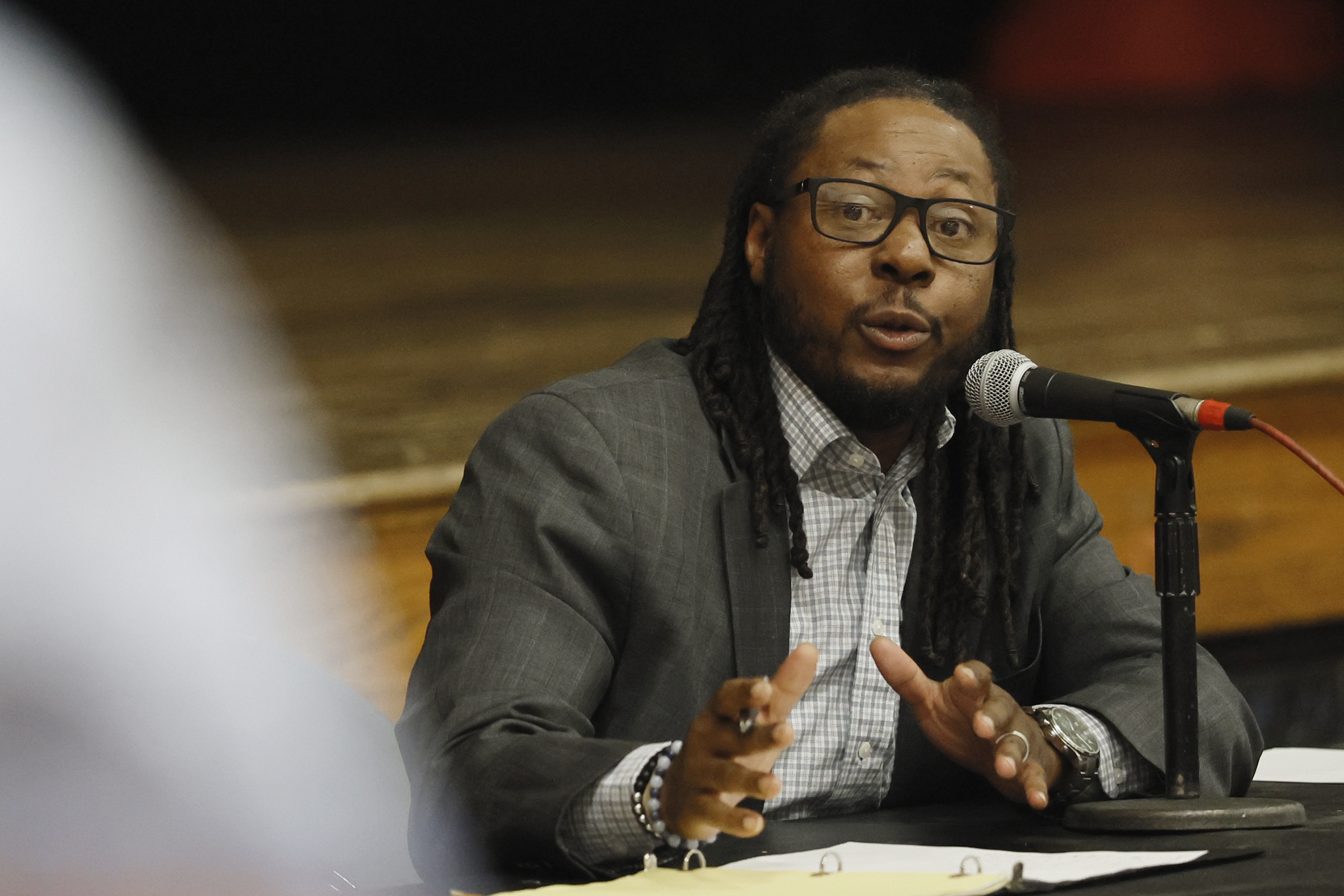
Councilman Jeffery Young Jr. responds to a question from a member of the public during a community meeting, hosted by the councilman and capital projects, at the MLK Recreation Center in Philadelphia on Tuesday, September 15, 2026. The meeting centered on the councilmember’s plans for renovating the Cecil B. Moore library.Elizabeth Robertson / Staff Photographer
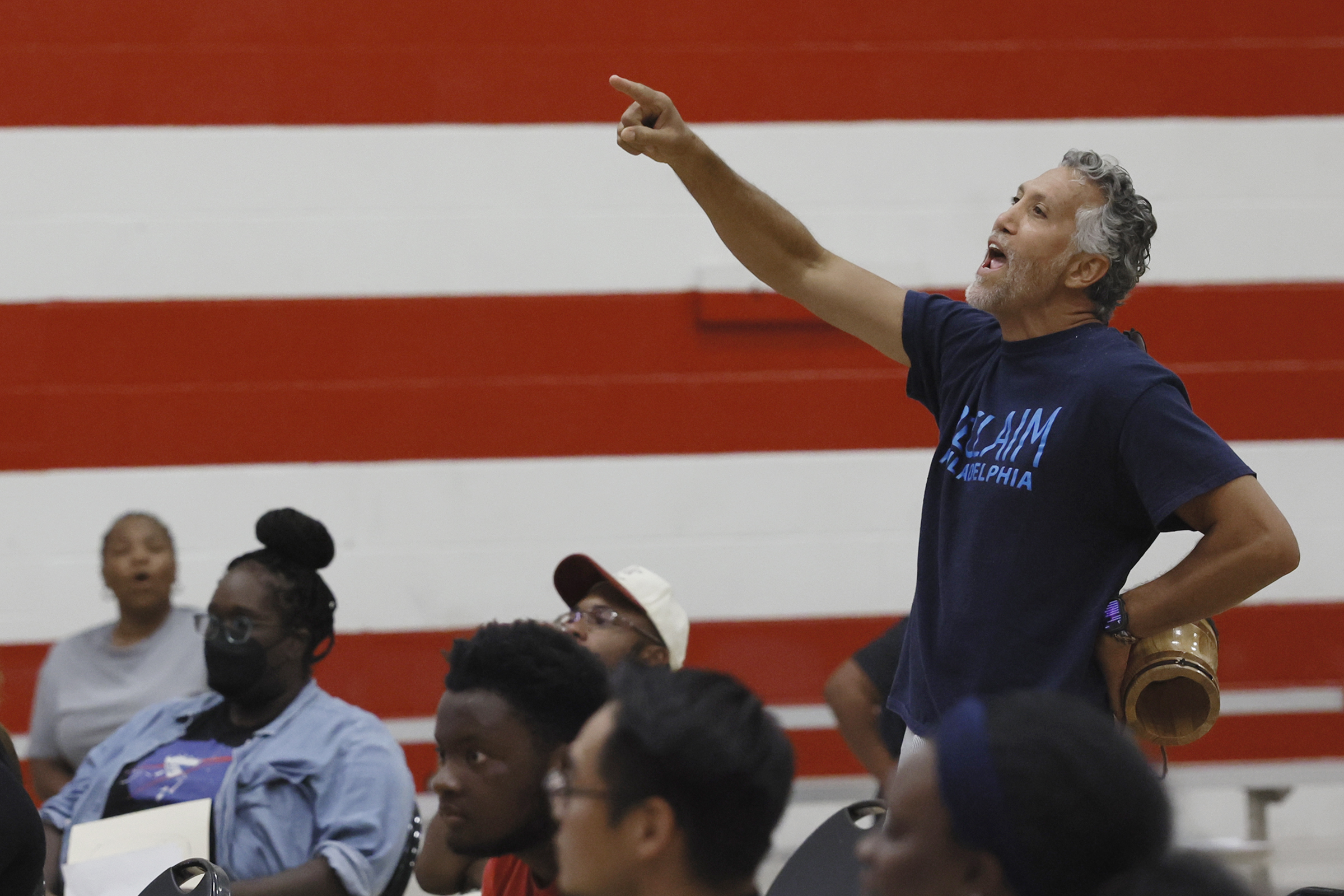
Young’s responses to their questions did not ease that frustration, as he and capital program office representatives could not provide details about future project phases, citing the need for more community feedback. Throughout the event, residents chanted at Young to release the full funds and yelled back and shook musical instruments while he gave answers. Some held up signs referencing his forthcoming reelection campaign, which spelled out “one term.”
“At what point have you received enough community engagement that you can listen to the community?” asked Allyce Estremera, a Brewerytown resident.
Lack of community input
In a presentation, officials highlighted the library’saging infrastructure and the urgent need for the foundational and safety improvements in their plan. The Cecil B. Moore Library, which opened in 1962, still has its original restrooms and an HVAC system from 1994, they said. The building has been “plagued by deferred maintenance,” said the library system’s deputy director of property management, Ty Dupass.
In his opening remarks, Young acknowledged the role the library has played in the community for generations, and said the renovations would “bring this building back to life.”
Community members have not voiced opposition to renovations included in the first phase. However, residents have been asking Young and the city to proceed with a more comprehensive $5.3 million renovation plan put forth through the city’s Rebuild initiative, which was slated to begin construction in 2024 and could have been completed by now had it begun on schedule. The Rebuild plan would have included the phase one renovations, as well as a dedicated teen space, new flooring, additional computers, exterior upgrades, and more.
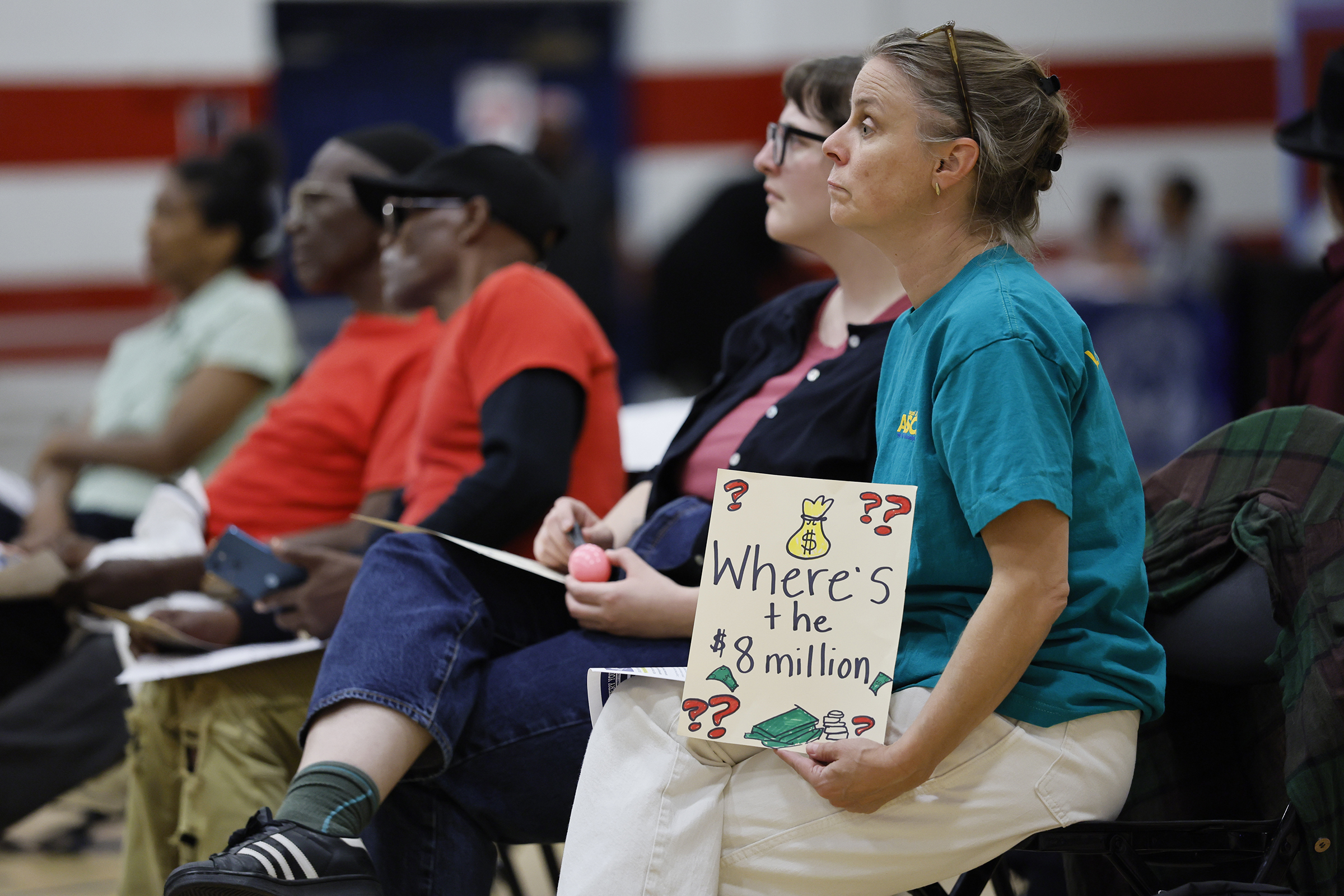
Catherine Martin, a AFSCME DC47 Local 2186 member and library worker holds her “Where’s the $8 million” sign during a community meeting, hosted by Councilman Jeffery Young Jr and capital projects, at the MLK Recreation Center in Philadelphia on Tuesday, September 15, 2026. The meeting centered on the councilmember’s plans for renovating the Cecil B. Moore library.Elizabeth Robertson / Staff Photographer
But once Young replaced outgoing Council President Darrell L. Clarke in 2024, he secured an additional $5 million from the city’s capital budget and paused the project. At various points, Young has offered larger development proposals for the library, including a new building or a hybrid space that includes a library and affordable housing. While the housing proposal has been dropped, Young said Tuesday the current library footprint was too small to accommodate the 21st-century features the community deserves.
Young’s spokesperson, Yumeno Young, and Philadelphia Capital Program Office representatives said the remaining $8 million raised for the project remains committed to the library in its current location.
“Leadership is built on trust. And where is the trust? Because they’re not earning it,” said Emily Dumas, 38, who said she does not trust the $8 million would actually go to the current library building.
Nikol Ligon, 56, said she believed Young and the city ought to release the full funding for a wider renovation, and does not like that the Council member seems to have first and last say on a project that means so much to the community.
And Neferteri Raynor, 24, signed up this summer for a community advisory group Young’s office organized to gather feedback, but the group has held no meetings so far.
“We would love to have a level of certainty and transparency,” she said.
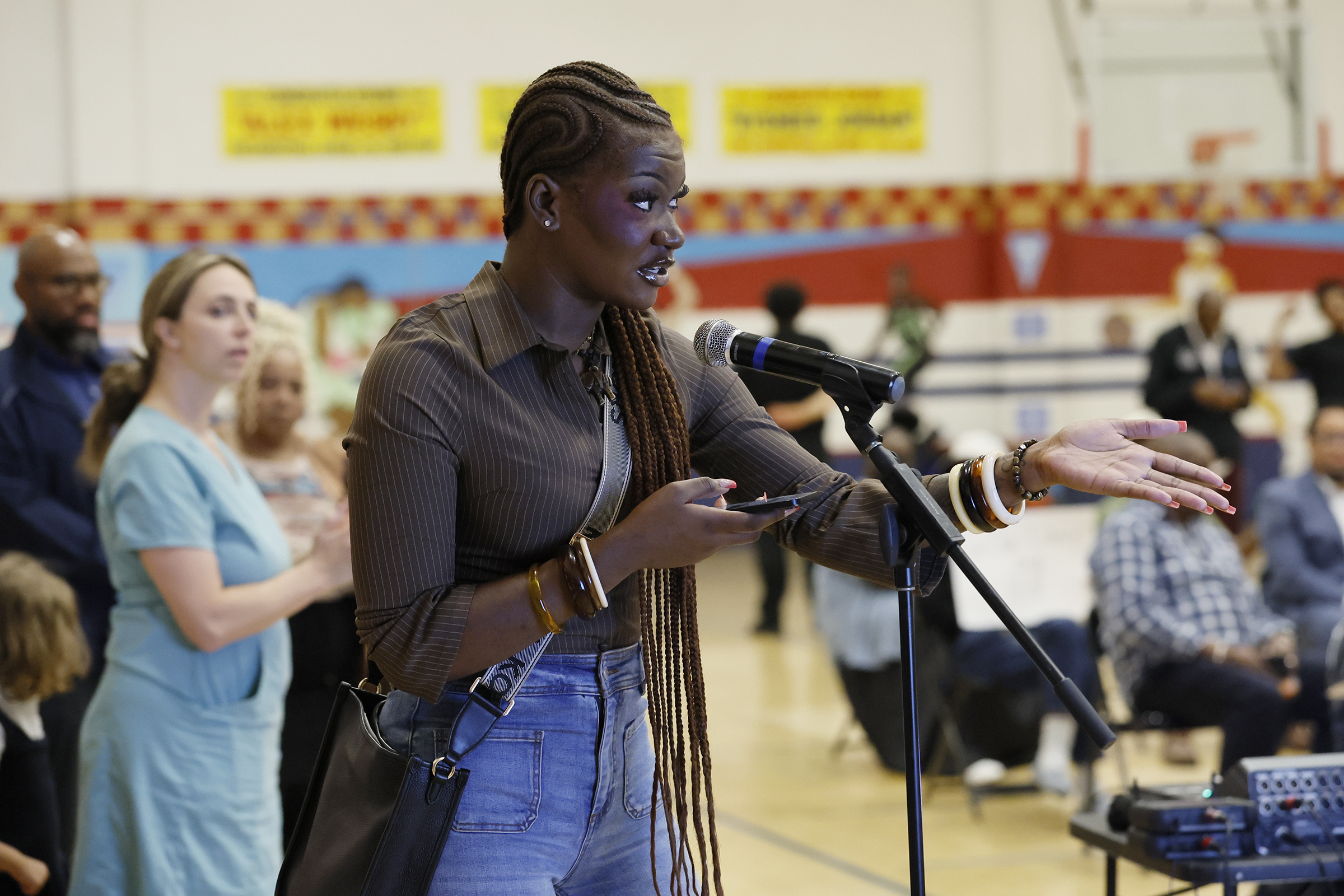
Neferteri Raynor asks questions during a community meeting, hosted by Councilman Jeffery Young Jr and capital projects, at the MLK Recreation Center in Philadelphia on Tuesday, September 15, 2026. The meeting centered on the councilmember’s plans for renovating the Cecil B. Moore library.Elizabeth Robertson / Staff Photographer
Election preview
Yumeno Young said an assessment may be conducted to determine what additional amenities and renovations could be constructed in the future, given the library’s current footprint, but it is unclear if or when that would happen.
The convoluted planning and decision-making confused State Sen. Sharif Street (D., Philadelphia), who spoke at the meeting in support of the residents.
“I don’t understand any of the process that was said today. … We need to come back with a better plan,” he said.
Members of the public line up for a chance to speak at the community meeting, hosted by Councilman Jeffery Young Jr and capital projects, at the MLK Recreation Center in Philadelphia on Tuesday, September 15, 2026. The meeting centered on the councilmember’s plans for renovating the Cecil B. Moore library.Elizabeth Robertson / Staff Photographer
Young largely deferred questions to his spokesperson or the capital program office representatives, and said “we are working on this as a team” when residents implored him to speak more.
Andcommunity members said they were often left more confused by his answers. Siobhan Neitzel, the Brewerytown Sharswood Neighborhood Coalition colead of youth and education, said it felt as if Young was passing accountability onto others.
Some residents brought up the timing of the initial renovations, which are scheduled to be completed shortly before Young, considered the most vulnerable Council member, is on the primary ballot for reelection in May. The residents swore to use the library saga against Young.
While library staff have said they were told by capital program staff the renovation timing was related to Young’s reelection, Young denied there was any connection.
At points during the meeting, Young appeared to get frustrated. He said his goal is to find the best uses for taxpayer money.
“Your voices will be included in the process. … I’m not going to do anything just to do it,” Young said.
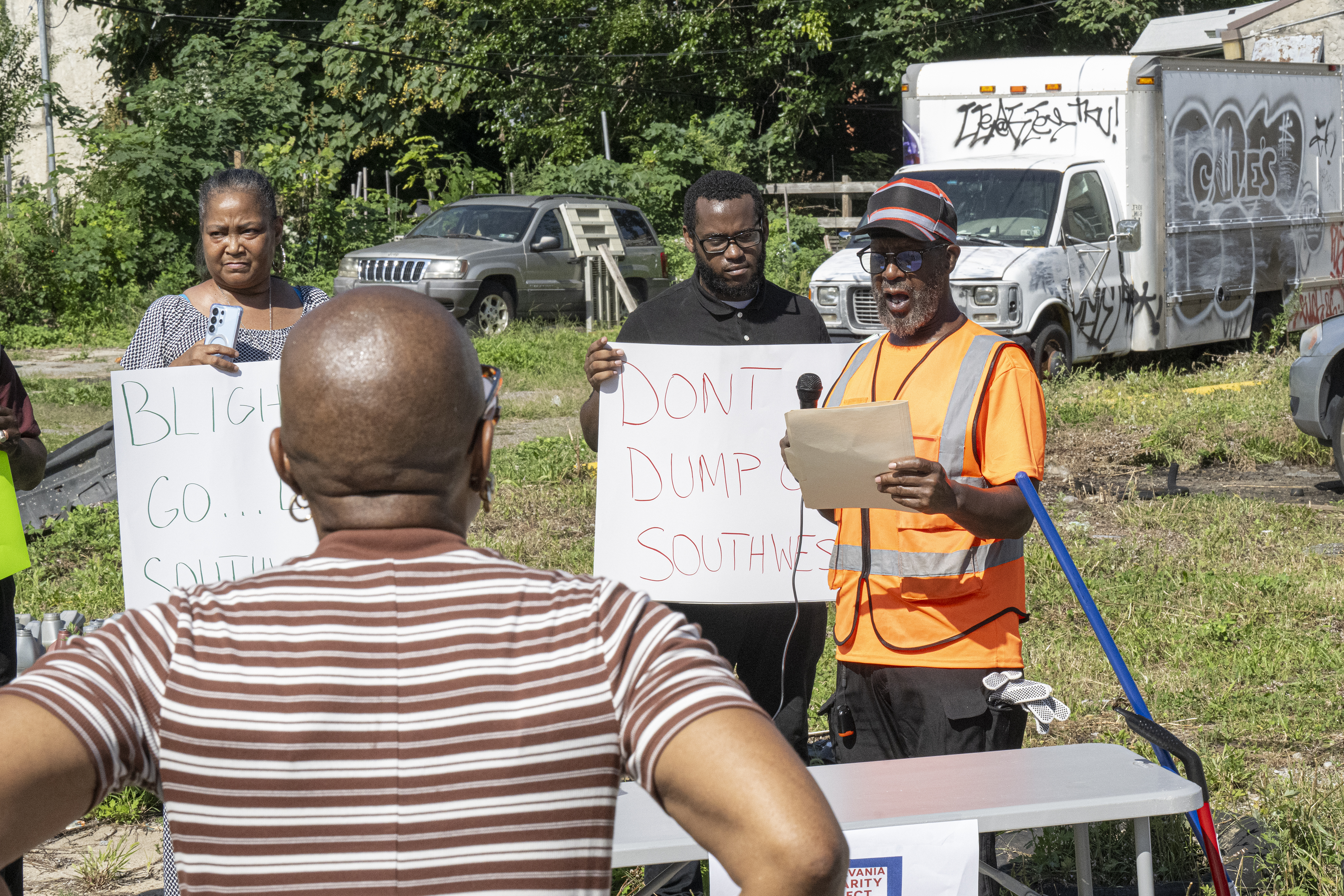
It would be hard to imagine a vacant lot of abandoned cars, tires, and trash lasting long in Center City before it got taken care of. But a group of Southwest Philly residents say that’s exactly what’s happening in their neighborhood.
Their relatively new group, the PA Solidarity Project, cataloged roughly 50 instances of blight over the spring, including abandoned cars and houses, illegal dumping, and potholes, and reported them to the city in early June. Longstanding blight is a common concern in the neighborhood, they said. But the city has only taken action on about half of those reported problems since then, the group said.
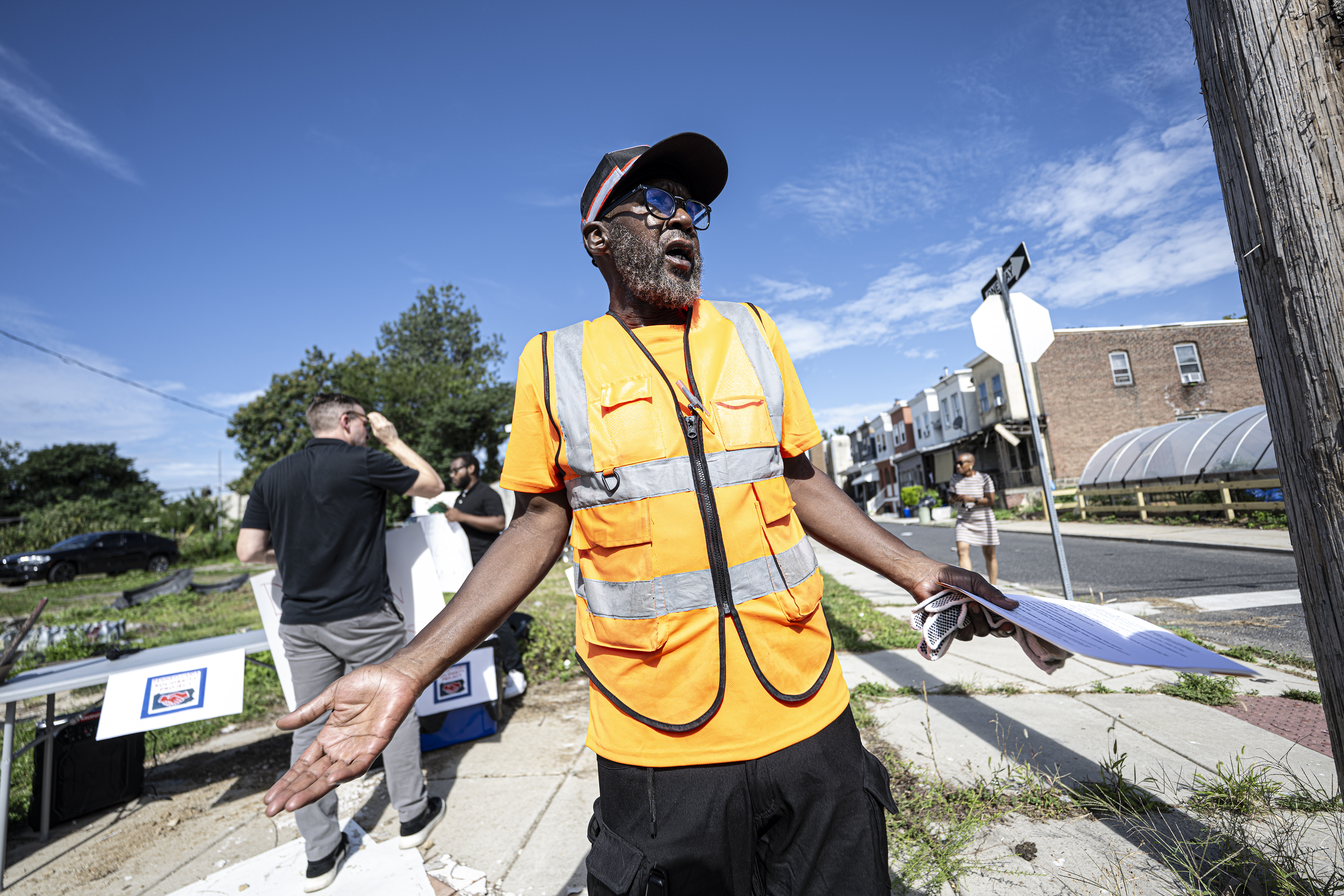
“In other zip codes, this wouldn’t be allowed,” said Andrew Coates, 67, a block captain and Southwest Philly resident for over 30 years. He referenced a recent story by the Philadelphia Citizen, which found higher-income zip codes tend to get their 311 requests addressed more than 50% quicker than lower-income areas like Southwest Philly.
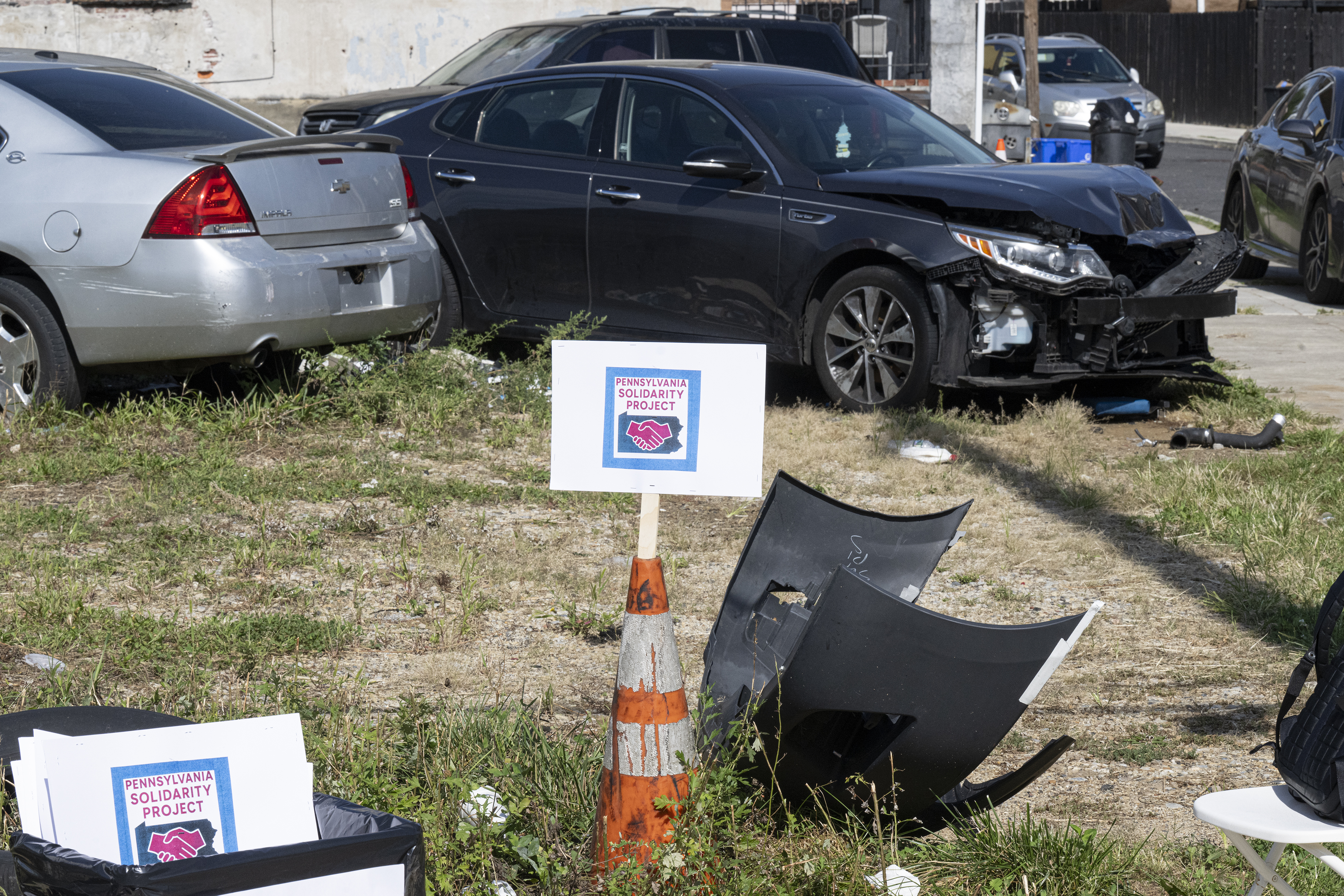
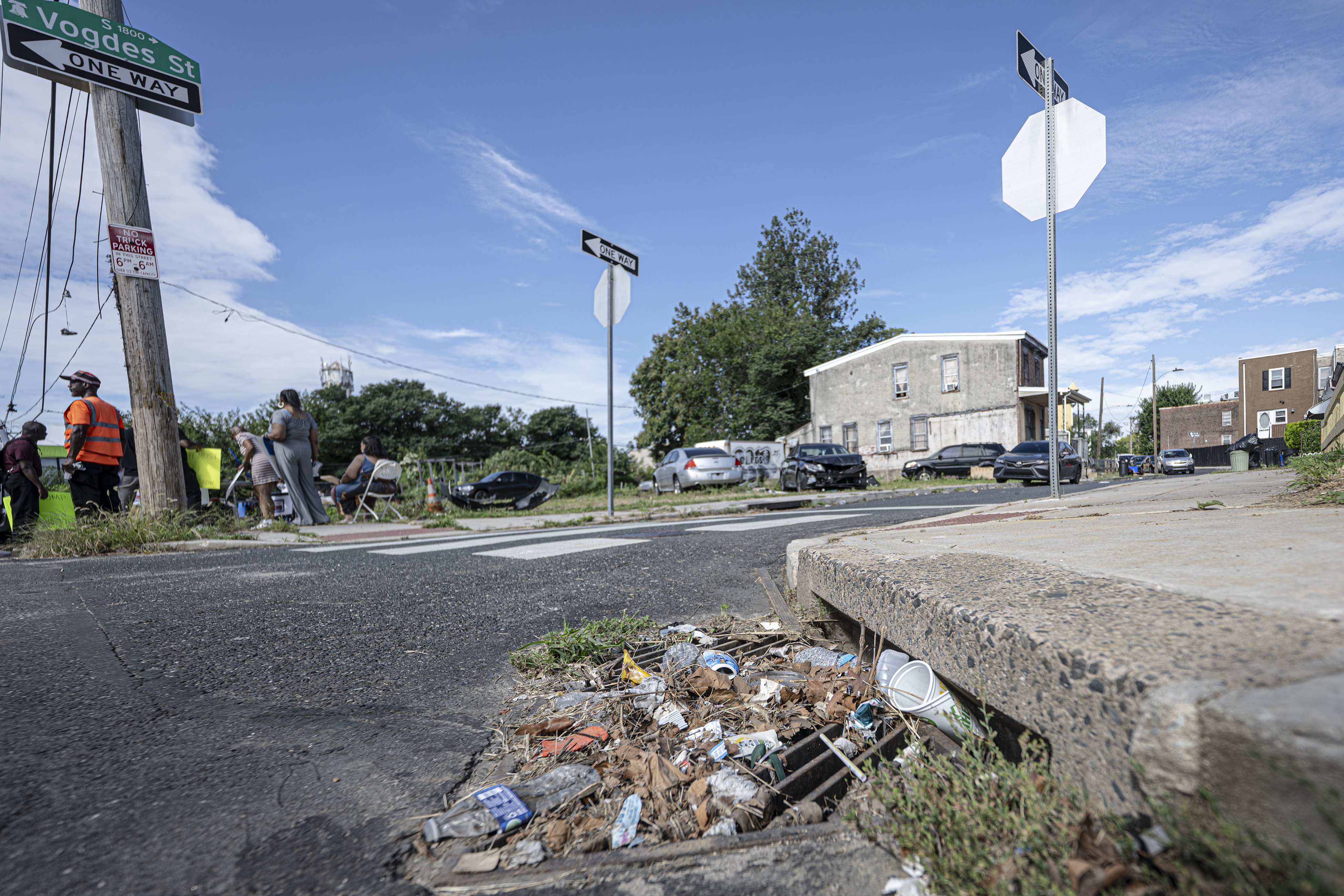
Coates stood in front of the intersection of Paschall Avenue and South Vogdes Street on Thursday, where a vacant lot held several abandoned and busted cars, oil jugs, overgrown weeds, and other trash. He said the constant signs of blight weigh on everybody, and younger generations see them as an expected part of life in Southwest Philly.
Abandoned cars are shown in a vacant lot Thursday, Sept. 10, 2026, in Southwest Philadelphia. Residents have been trying to get the city to address longstanding blight in their neighborhood, including abandoned cars and illegal dumping.Jose F. Moreno / Staff Photographer
“If you’ve grown up and this is all you’ve seen, you think it’s normal,” he said. The PA Solidarity Project aims to break that perception, and said it needs the city’s help.
“We’re resolute about this. …We want the transformation,” he said.
‘A lack of respect’
The PA Solidarity Project formed last fall, and began its work by surveying Southwest Philly residents to identify common issues they could act upon together. Blight was a common response, with residents highlighting how the neglect impacted their quality of life. Several auto shops tend to be the source of the abandoned cars and illegal dumping, residents said.
“I’m talking about what our children have to see walking down the street. …They send a message that somehow this neighborhood doesn’t much matter,” said Morgana Jackson, 60, another member.
“Southwest Philadelphia matters,” she said.
But residents individually had mixed results submitting requests to 311, and decided the group, which has a small core of about six residents but has gotten about a hundred involved with various activities, needed to act collectively, the organization said.
“When residents report a problem and nothing happens …I believe that shows a lack of respect,” said Towanda Robinson, 56, a PA Solidarity Project member.
Trash piles up near a vacant lot Thursday, Sept. 10, 2026, in Southwest Philadelphia. Residents have been trying to get the city to address longstanding blight in their neighborhood, including abandoned cars and illegal dumping.Jose F. Moreno / Staff Photographer
The residents conducted a sweep of the neighborhood to note the most troublesome areas and examples, and presented their catalog of about 50 blight items to representatives from the city’s Neighborhood Community Action Centers program in early June. The initiative is designed to serve as hyper-local city halls in each City Council district, where residents can file complaints, receive benefits, or resolve problems with a city agency.
Group members said they believed the city was receptive to their concerns, and were encouraged by the city’s promise at a late-June community meeting to put together an action plan for Southwest Philly.
But since then, only about half of their cataloged requests have been addressed, and smaller but noticeable signs of neglect remain. While the residents said they appreciated the work the city has done so far, it hasn’t been enough.
They said they are particularly frustrated since Mayor Cherelle L. Parker has spoken openly about tackling cleanliness and quality of life issues, but the push doesn’t feel like it has reached their corner of the city yet.
City spokesperson Keisha McCarty said the Neighborhood Community Action Centers program has received reports of 16,578 issues citywide from constituents from October 2024 through August 2026, and it has resolved 94% of them. In the district that includes Southwest Philly, 92% of issues have been resolved, McCarty said.
One explanation for the delays addressing the PA Solidarity Project’s full catalog is that a handful of the issues require coordination with the school district and with Verizon to address a wire box, according to McCarty.
Still, “it’s disheartening,” when blight persists, Coates said.
A Southwest Philadelphia resident and block captain, Andrew Coates, speaks about the need to clean city streets and efforts to get the city to address longstanding blight in the neighborhood, including abandoned cars and illegal dumping, during a news conference near their homes Thursday, Sept. 10, 2026, in Southwest Philadelphia.Jose F. Moreno / Staff Photographer
On Thursday, the PA Solidarity Project held a small event in front of the Paschall and Vogdes lot to call attention to the longstanding blight, and called the city to act. The residents who spoke were adamant that they and their neighbors care about the area, and are willing to do their part to fix the problems — Coates and other residents take it upon themselves to do street cleanups in the neighborhood from time to time.
“People do care about this and people want it addressed. But people are limited about what they can do. … They can’t do what the city does,” Coates said.
Jackson said she and the others point out the better care other neighborhoods receive, not to argue those blocks deserve less but instead to argue every zip code deserves equal attention.
“Because we love it, we refuse to accept the idea that blight is something we have to live with,” Jackson said.
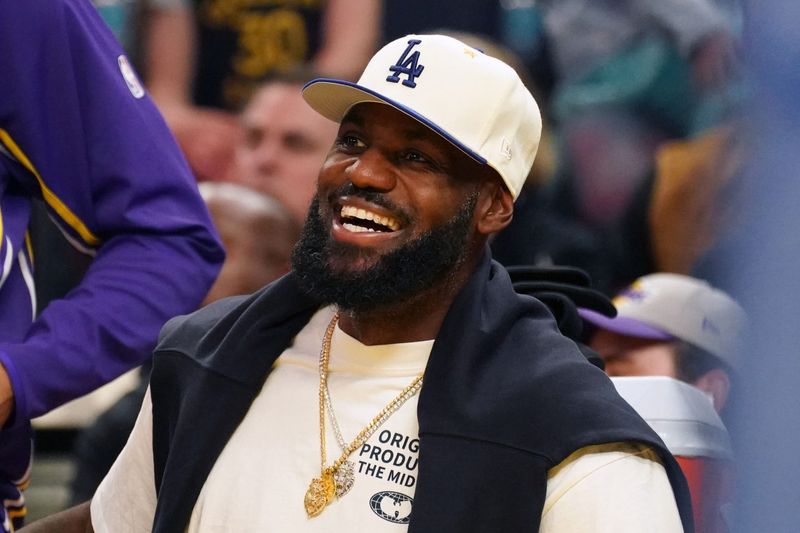
Where LeBron James would choose to play the final years of his storied career was a fixture on prediction markets this summer. Now, James could benefit from the boom of those platforms.
On Saturday, James shared a short video on social media announcing a partnership with the prediction platform Polymarket. The Sixer then posted a longer commercial-ready version of the video Tuesday, in which James visits Polymarket’s fictional headquarters and its “sports” floor.
In his tour around the office, Eli Manning, Derek Jeter, Spike Lee, Sue Bird, Emily Ratajkowski, John Leguizamo, and other athletes and celebrities make cameospromoting the platform ahead of football season.
It is unclear what the nature of James’ partnership with Polymarket is, or if the partnership extends beyond this commercial. Polymarket did not respond to questions about James’ partnership.
Step inside Polymarket HQ.
Somebody get the ice bath ready for @EliManning after that tackle. 🧊🤣🏈
James’ partnership raises ethical questions about whether an active athlete should be promoting and benefiting from gambling platforms, and particularly prediction markets, where inside information and influence could sway bets or determine their outcomes.
Polymarket and other prediction markets typically have rules prohibiting insider trading and are regulated by the Commodity Futures Trading Commission. The NBA has no policy against its athletes partnering with prediction markets, and is likely to join other leagues by announcing its own official prediction market partnerships before the start of the forthcoming season, as reported by Front Office Sports.
Prediction markets vs. traditional gambling
Polymarket and other prediction markets argue they are distinct from traditional sports gambling platforms because there is no “house” that sets odds and stands opposite gamblers. Instead, bets are agreements between individuals and the market sets the odds. But in practice, prediction markets function similarly to sportsbooks, with even more opportunities to wager money.
Prediction markets offer opportunities that go beyond traditional bets on wins and stats, like which teams won’t win the Super Bowl, which team a free agent player might sign with, or whether a quarterback will average a certain number of fantasy football points over the season. The bets are phrased as binary, yes-or-no outcomes.
Prediction market offerings extend beyond sports, bringing even more ethical questions — at any moment someone can bet on whether a public figure will say a particular word during a speech, when traffic in the Strait of Hormuz will return to normal levels, or the number of confirmed measles cases in the United States in 2026. Last month, several Democratic senators wrote a letter to the Commodity Futures Trading Commission demanding it stop allowing bets on California wildfires.
“Prediction markets have been enabled to expand rapidly, increasingly inviting speculation on war, political violence, disasters, and public emergencies that raise ethical and public policy concerns. These markets risk creating perverse incentives, undermining public trust and commodifying human suffering,” they wrote.
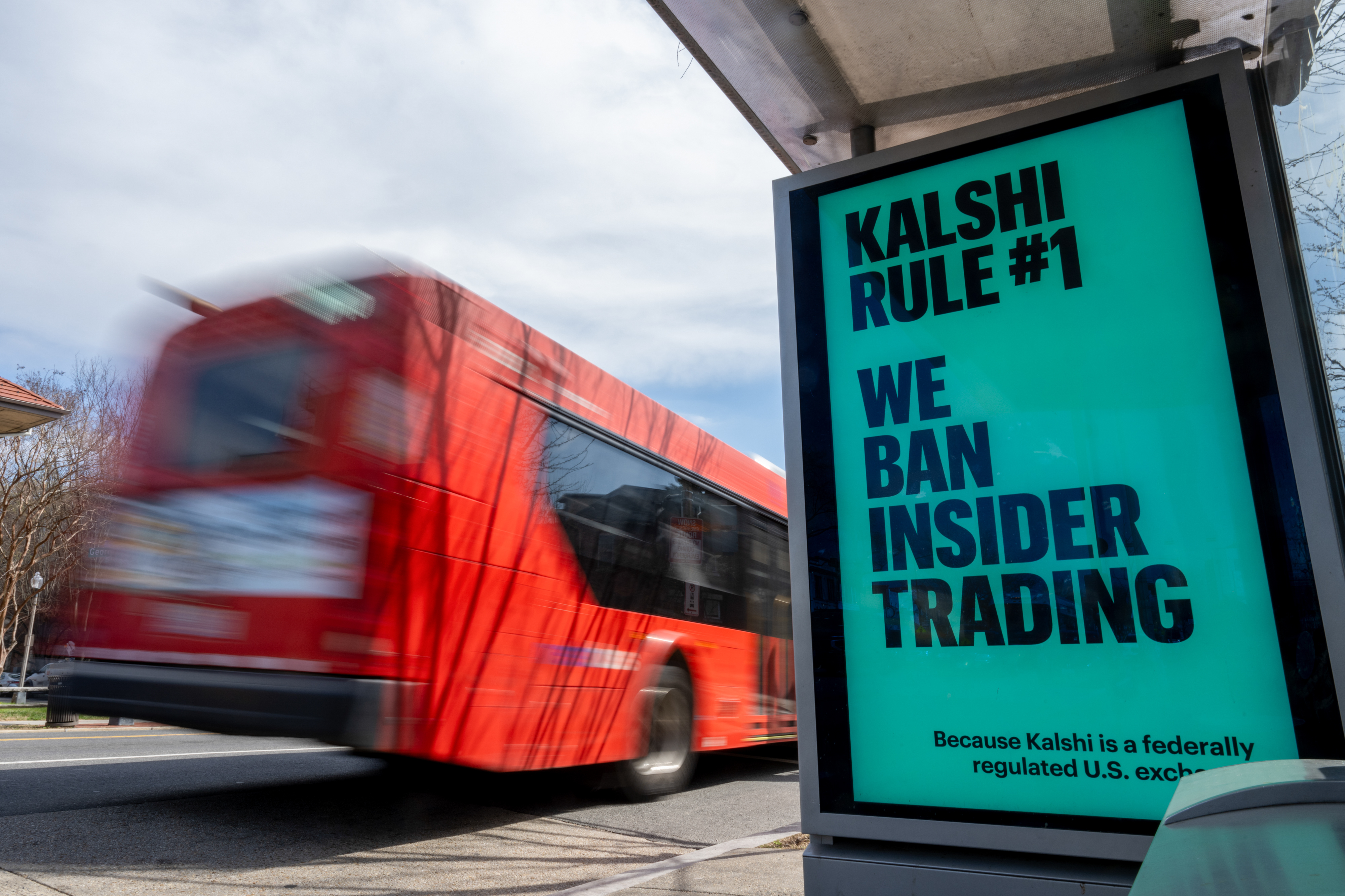
A Kalshi advertisement at a bus stop in Washington, D.C. Daniel Heuer
A U.S. Special Forces soldier was arrested in April after authorities said he made more than $400,000 using insider information to place Polymarket bets on the military’s raid capturing Venezuela’s president, Nicolás Maduro.
Athletes are typically prohibited from placing traditional bets on their own leagues, but the rules on prediction markets are less defined.A few months ago, the NBA, MLB, and their players unions sent a letter to the Commodity Futures Trading Commission asking it to bar athletes and league employees from betting on the NBA and MLB in prediction markets.
The gray areas of legality and ethics around sports gambling are how Phillies All-Star Bryce Harper became the center of controversy this summer, after The Inquirer reported that Harper had sent a personalized video on behalf of the sports betting platform FanDuel to a man who had become addicted to gambling.
Harper later said he did not have a partnership with FanDuel, and was not aware what the video was being used for or that it was going to someone with a gambling addiction.
More partnerships on the way?
Despite the ethical issues, partnerships between athletes and prediction markets appear to be growing. James seems to be the only active athlete partnered with Polymarket, but other major athletes — including soccer star Lionel Messi —have deals with a competitor, Kalshi, or have invested in the platform.
Elsewhere in the NBA, Giannis Antetokounmpo announced he had become a Kalshi shareholder in February, just after the NBA trade deadline, when Antetokounmpo had been the subject of numerous trade rumors attracting bets on prediction platforms. On deadline day, Antetokounmpo tweeted a clip from The Wolf of Wall Street to happily announce he was not leaving the Milwaukee Bucks, but over the summer, he successfully pushed for a trade to the Miami Heat.
Bettors on Kalshi reportedly traded more than $23 million over Antetokounmpo’s future during the deadline betting window.
“One of the things in terms of the ethical issues [of the partnership] is the timing,” Melinda Roth, a professor of business, finance, and sports law at Washington and Lee University, told Fortune magazine of Antetokounmpo’s investment. “The timing really puts a spotlight on how prediction markets work, who is allowed to buy contracts, and who has inside information.”
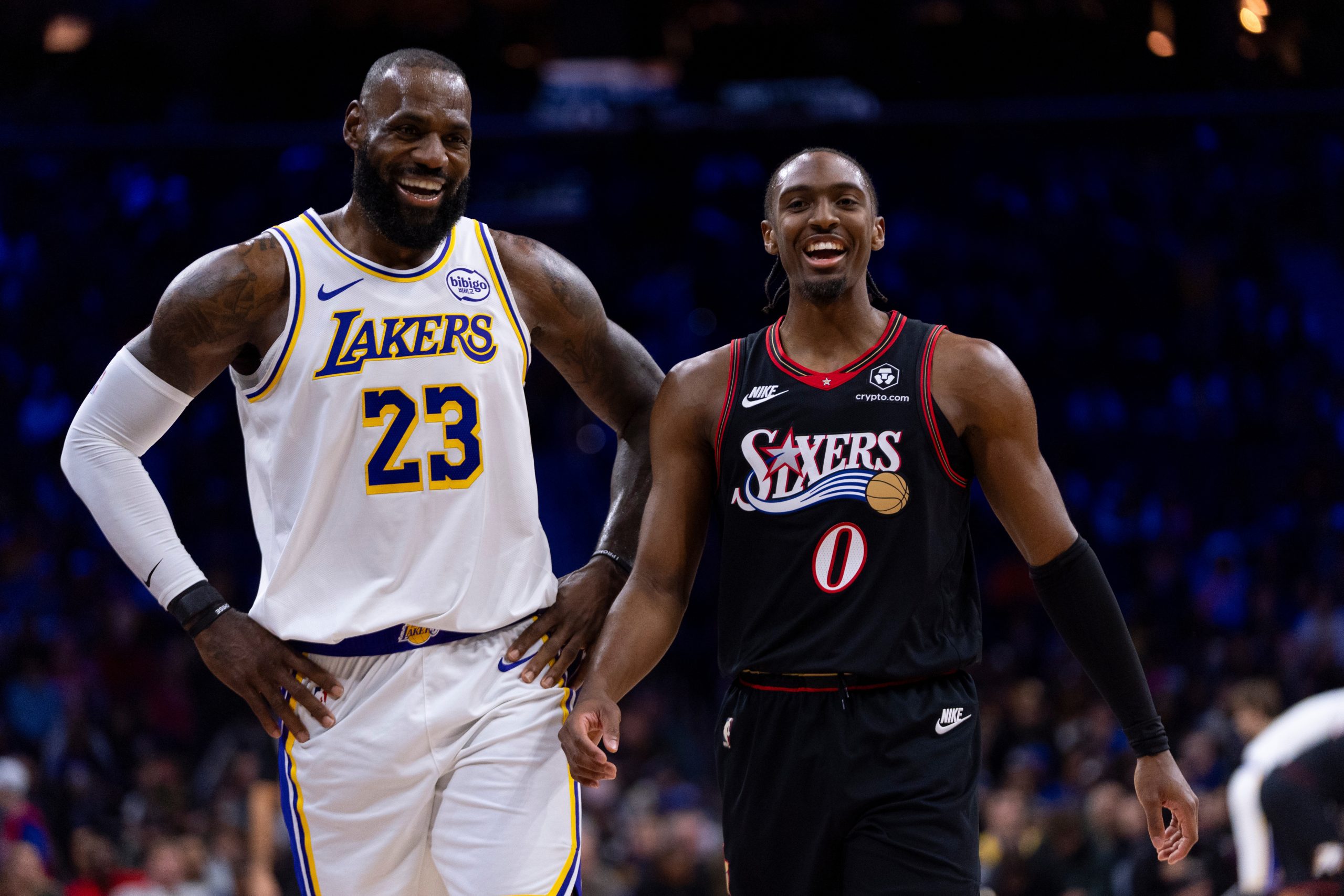
Los Angeles Lakers’ LeBron James, left, shares a laugh with Philadelphia 76ers’ Tyrese Maxey, right, during an NBA basketball game, Sunday, Dec. 7, 2025, in Philadelphia.Chris Szagola / AP
Yet the future of prediction markets is somewhat unclear. They have the backing of President Donald Trump’s administration. Meanwhile, some states are attempting to wrest regulatory control back from the federal government, and the issue may soon come before the U.S. Supreme Court.
But the direct ties between prediction markets with athletes are not necessarily inevitable — the NFL and PGA Tour prohibit their players from partnering with prediction markets.
Only a few years ago, James took a much different stance on sports gambling, sayingthe practice was taking the integrity out of sports.
“It’s weird that some of our regular fans that love the game kind of only care about a parlay now. … It’s kind of taken some of the integrity out of the game because people are kind of really only caring about the betting,” he told the Los Angeles Times in 2023.
A year later, James signed an endorsement deal with the sports betting platform DraftKings, promoting wagers during football season in a series of commercials alongside Kevin Hart.
The former Pennsylvania State University student accused of orchestrating a cocaine-trafficking ring has been released on bail, after a preliminary hearing Wednesday where three of his co-defendants testified against him.
Agostino Abbatiello, 24, eventually came to be known as the main cocaine supplier on campus, according to a criminal complaint. He and other co-defendants allegedly made regular trips to New York City and Philadelphia to acquire large quantities of cocaine, and distributed the drugs out of the Delta Upsilon and Sigma Chi fraternity houses from 2023 to 2024, prosecutors say.
A judge ordered Abbatiello be held for trial on all charges, which include felony counts of possession with intent to deliver cocaine, conspiracy, and other related offenses. Fourteen people have been charged, and all but one are current or former Penn State students.
At Wednesday’s hearing, State College Police Department Detective Donald Paul said after Thomas Robinson, 23, was arrested in 2024, he began cooperating with investigators and pegged Abbatiello as the head of the operation, as reported by the Centre Daily Times.
Robinson testified about the roughly 10 cocaine purchases he made from Abbatiello, which grew in size and price to as much as a kilogram of cocaine for $22,000, the news outlet reported. According to Robinson, the cocaine was typically ground down and repackaged in half-gram bags that were sold for about $80 apiece.
Two other co-defendants provided more details in their testimonies. One said some fraternity pledges were directed to package the cocaine for sale, while another testified that Abbatiello flaunted the money he was making, and was gambling thousands of it at a time, the Centre Daily Times reported. Senior deputy attorney general Megan McGoron said Abbatiello was making hundreds of thousands of dollars.
Abbatiello, of Long Island, N.Y., was denied bail when he was arraigned last month, and spent about two weeks in jail. At Wednesday’s hearing, prosecutors requested a $5 million bail, but Abbatiello’s attorneys successfully argued for his bail to be set at $250,000. Abbatiello posted bail and is now home with his family, his lawyer Philip M. Masorti said in a statement.
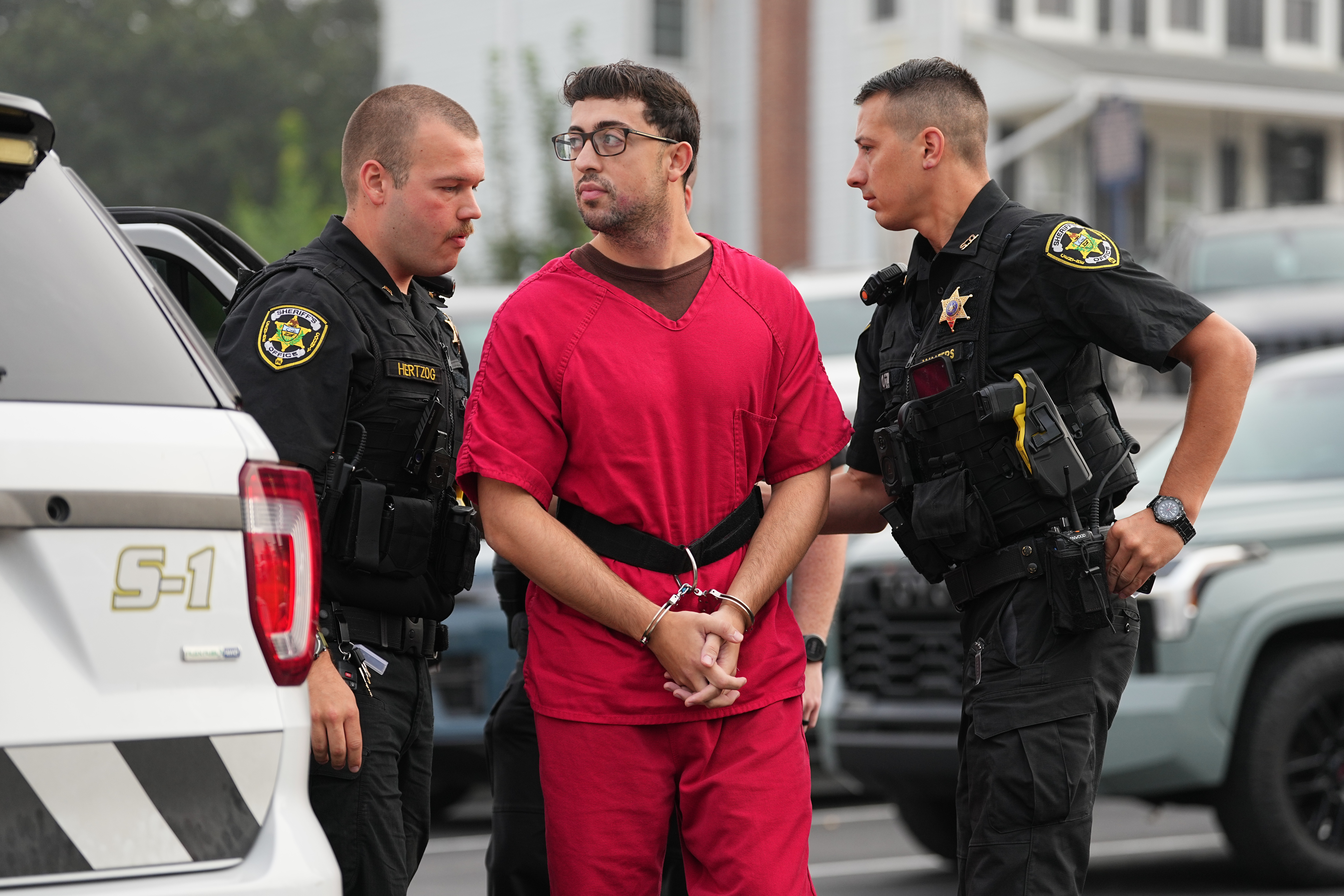
Agostino Abbatiello, who is facing charges including possession with intent to deliver and conspiracy, arrives to an appearance at Centre County Courthouse in Bellefonte, Pa., on Wednesday.AP Photo/Matt Rourke
“We have maintained that holding Agostino without bail was neither necessary nor justified. He is not accused of committing an act of violence. He did not flee. When he learned of the charges, he left his job in Florida, traveled to Pennsylvania, and surrendered himself to authorities,” he said.
Robinson and three other defendants also charged with felonies waivedtheir preliminary hearings. The case against Robinson’s father, who alsofaces felony charges for concealing and tampering with evidence, will move forward, a judge ruled.
A Peco power project in West Philly that Councilmember Jamie Gauthier described as “critical” for the neighborhood has been delayed, after residents expressed outrage at the electric utility’s plans to trim their beloved tree canopy.
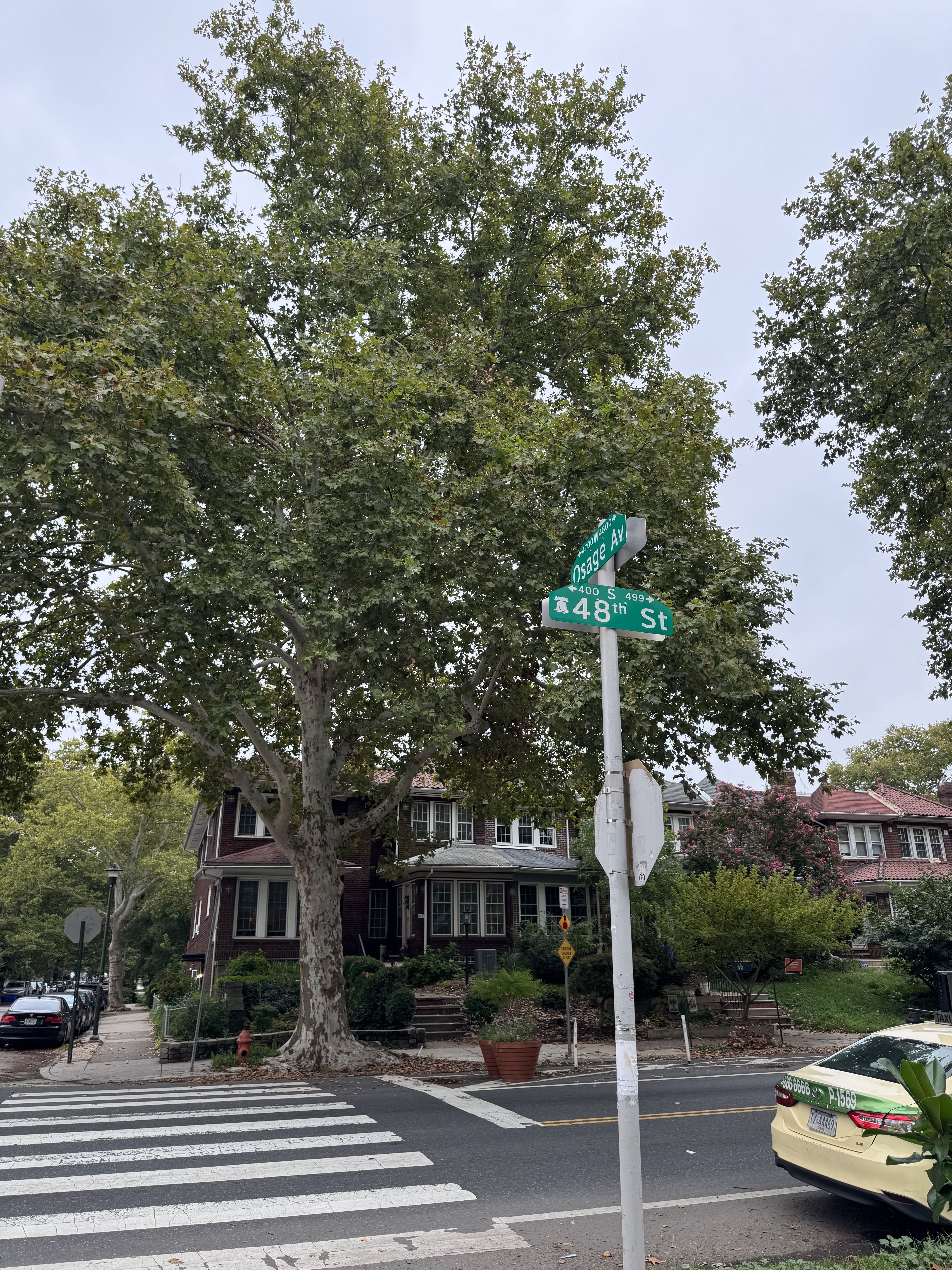
Residents near the 400 block of South 48th Street received flyers from Peco in early August, explaining that the utility would soon begin a power infrastructure project involving the installation of electrical poles and wire, and trimming large trees draping over the street. It was the first they’d heard of the project, according to block captain Jonas Maciunas.
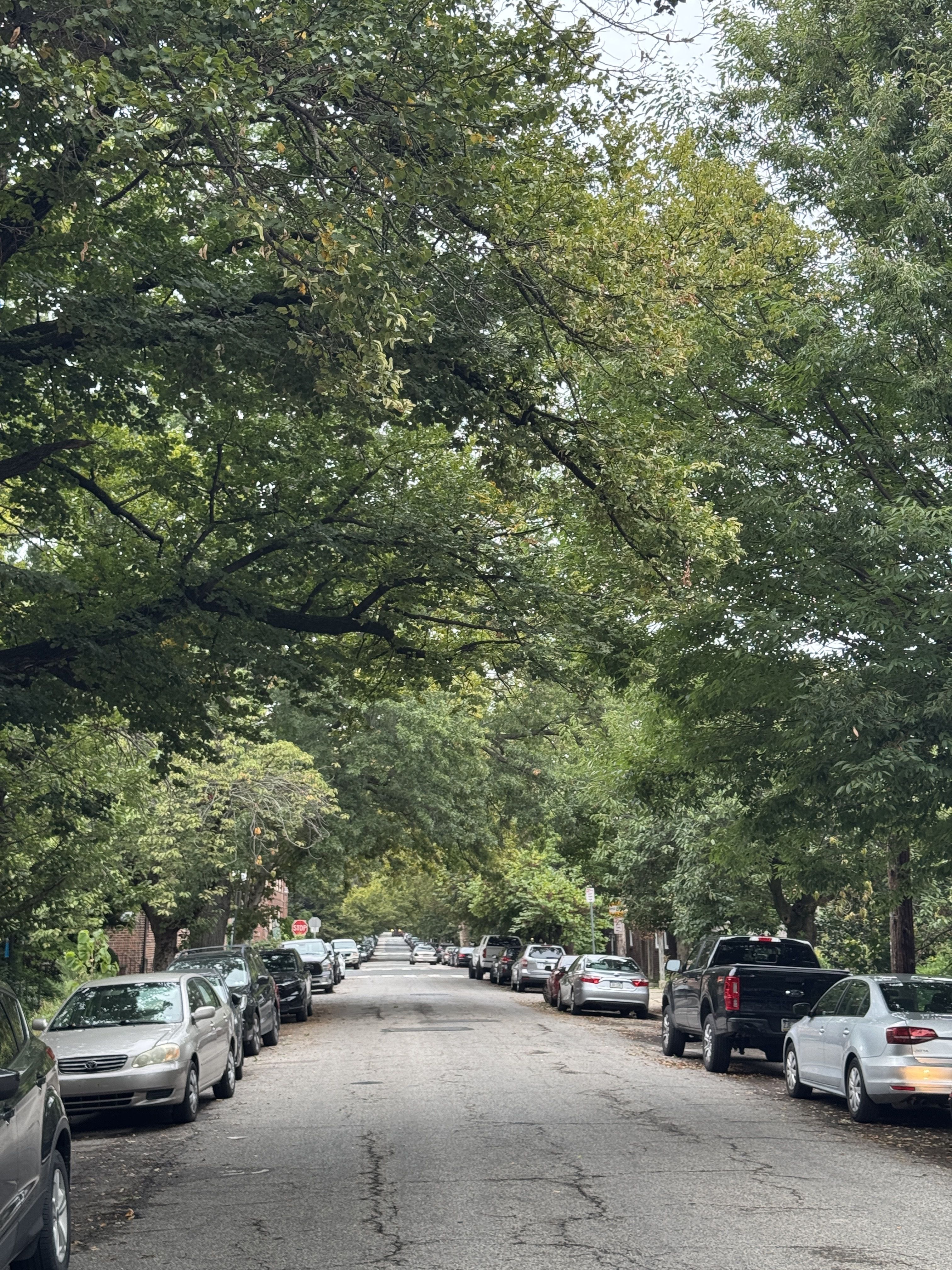
“Right now the place that is our home, the creation that we’re taking care of, is being unilaterally changed against our will,” Maciunas, 42, said. The Garden Court street’s tree canopy is one of the draws for living in the neighborhood, and Maciunas said he believes that feature would be ruined by the project and ongoing maintenance.
“That’s butchery … over time, this is a death sentence,” he said of the tree trimming.
The tree canopy over Osage Avenue near South 48th Street.Nate File
But residents are in dire need of the new infrastructure. Over the hottest days of this summer, Gauthier’s office began hearing from people living in apartments at 48th Street and Osage Avenue about extended power outages. For the better part of a year, they’d experienced several days-long outages in the summer and the coldest parts of the winter.
Gauthier said it surprised her to learn Peco had not adequately communicated with these residents about the problems and why temporary fixes had continued to fail.
Looking for answers
The area near 48th Street and Osage Avenue is served by an aging, four-kilovolt infrastructure, according to Peco spokesperson Candice Womer. Peco’s modernization plan would transition residents to a modern 13-kilovolt distribution system, which is designed to be more resilient, more reliable, and reduce the frequency and impact of power outages.
Gauthier said she contacted Peco after hearing about the outages, and learned the utility already had plans for a $15 million modernization plan that would improve power access for a large portion of West Philly. Those plans have been under development since at least 2023, but have yet to break ground. Gauthier implored Peco to accelerate the plan for a smaller portion that would cover these 48th and Osage residents, and it agreed.
Councilmember Jamie Gauthier talks with news media following a special session of City Council March 24, 2025.Tom Gralish / Staff Photographer
The expedited plan, which will cover roughly 1,000 residents, involves installing or replacing 10 power poles, and installing 450 feet of new wire and related equipment along 48th Street. It’s unclear how many trees would be need to be trimmed to accommodate the new infrastructure, and how much wider the scope of the full plan is. Womer said the upgrades would better support future anticipated energy needs for electric vehicles, solar energy, and other electricity demands.
After residents received the flyers from Peco stating installation would begin the following week, some contacted Gauthier’s office in confusion and anger. She asked Peco to pause its plans, and organized a community meeting last week with the utility so residents could learn and ask questions about the project. It did not go well, both Mathias and Gauthier said. Peco representatives provided little information, they said, and could not answer questions in a satisfactory manner.
“I don’t understand Peco’s communication. I don’t understand their response, and I don’t understand the lack of ownership for allowing this to become such a big, urgent problem,” Gauthier said.
Womer said Peco appreciated the feedback it has received from residents and community stakeholders, but noted that it does not include a public engagement process for every one of its projects.
“While we welcome community feedback and consider it when evaluating project implementation, our responsibility is to ensure we continue providing safe and reliable electric service to our customers,” Womer said by email.
In particular, Gauthier said she and residents did not receive an adequate explanation from Peco as to why the new power lines need to be built aboveground, when areas like Center City use underground power lines. Womer said Peco evaluated alternatives, but determined the underground system in the area had no capacity for the new lines and infrastructure without major construction.
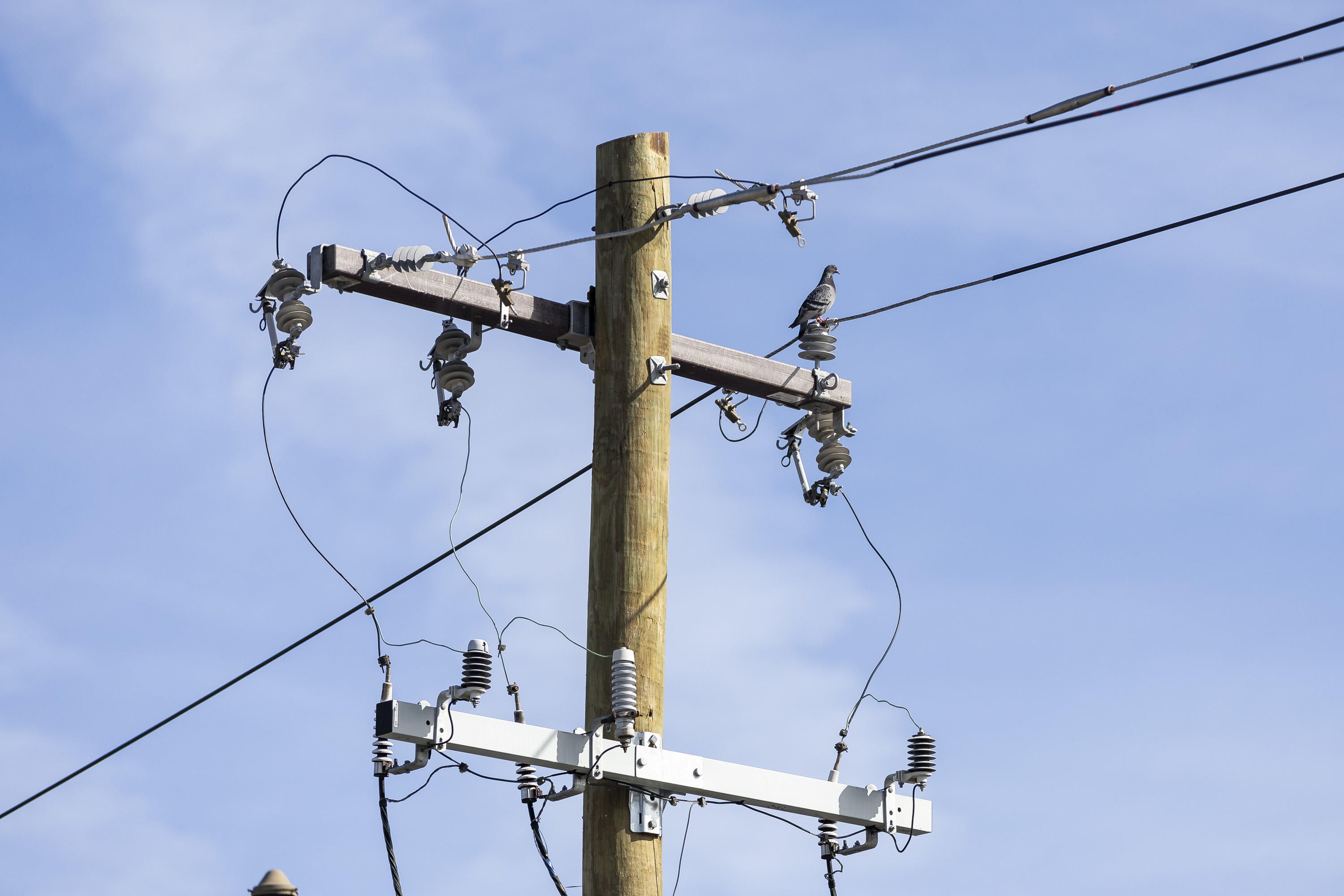
A pigeon resting on electric pole in October.Tyger Williams / Staff Photographer
“The aerial solution provides the most timely and cost-effective path to improving reliability while minimizing overall construction duration and disruption,” Womer said.
Top priority
Gauthier is attempting to thread the needle of satisfying all of her constituents. She said the concerns of the aesthetically concerned homeowners are valid. So too are those without power, some of whom asked Peco at the community meeting to reimburse them for food that has been spoiled as a result of the failing electricity.
There is no precise timeline for the accelerated plan to resume. Gauthier is arranging for Peco to speak at another community meeting in the near future, where she expects them to have more answers for residents upset by the new infrastructure plan. But ultimately, she said the need forreliable power has to come first.
“I understand the concerns around the trees,” she said, but ”we have to get this project done.”