Author: Melanie Burney

  • Lawnside embraces its past as the South Jersey community celebrates its 100th incorporation anniversary

    Lawnside embraces its past as the South Jersey community celebrates its 100th incorporation anniversary

    After Lawnside became the first incorporated African American municipality in the Northeast, the South Jersey community became a center for Black culture.

    It attracted visitors from across the region drawn to its thriving churches, jazz scene, nightclubs, amusement park, shops and gathering spaces, and barbecue stands.

    A century later, Lawnside has embraced its past as the first Black self-governing municipality, and while it has changed with the times, it also has preserved its rich history that traces its roots to the 18th century.

    “It is quite a history. It’s a big deal,” said Linda Shockley, president of the Lawnside Historical Society. “I love the idea of Lawnside.”

    Lawnside launched a centennial celebration earlier this year to commemorate its milestone anniversary with activities that included a scholarship luncheon, a Juneteenth celebration, and a barbecue cookout. More events are planned for later this year.

    And on Sunday, as they have for more than 150 years, descendants of one of Lawnside’s oldest families, the Still family, met for their annual gathering.

    The tiny community of about 3,200 residents was established on March 23, 1926, when Gov. A. Harry Moore signed legislation incorporating the Borough of Lawnside.

    Best known as a stop on the Underground Railroad, Lawnside was previously known as Snow Hill. Peter Mott, a freedom fighter, used his three-story home to help enslaved people escape.

    During its heyday, Lawnside was a popular destination for Black people who traveled there to shop, attend church, and socialize, said Shemele Jordon, a professional genealogist. The town had its own schools, businesses, and doctors. Because of segregation, many could not go elsewhere, she said.

    “It was a place where African Americans came from all over,” said Jordon. Professional athletes from Philadelphia traveled there for haircuts, she said.

    Over the years, the landscape has changed in the 1.4-square-mile town, located about 13 miles southeast of Philadelphia. Most of the attractions — like Lawnside Park which had a Ferris wheel, a baseball stadium, and picnic areas — have been replaced with developments and retail spaces.

    The demographics have changed, too, although Lawnside remains an independent and self-governed predominantly Black community that maintains close ties to its past. The population is about 70% Black, 20% Hispanic, 5% white, and 1% Asian.

    Lawnside remains a close-knit community where just about everyone knows everyone else, said Mayor-elect Michael Harper. Growing up, three generations of his family lived there. Now, his five adult children reside in Lawnside, he said.

    “I counted it a blessing that I knew my family my entire life,” said Harper, 63, who recently retired as the Camden fire chief. “We’re going to try to keep this legacy going.”

    Family reunion

    The Still descendants on Sunday had a catered barbecue meal, shared family stories and songs, and walked a short red carpet runway.

    “I love to see gatherings like this,” said Jill Samuels, 72, of New Rochelle, N.Y. “This country tries to divide us. It’s important for families to stay together.”

    Her mother Ola Bass, 99, a former Philadelphia schoolteacher, was the oldest person at the gathering. She was born on Nov. 23, 1926 in a house in Lawnside built by her father.

    “I wake up each morning and I say, ‘Lord, am I still here?’” she said.

    Said her daughter: “There’s a reason the Lord still wants her here.”

    They were among the nearly 200 people who attended the reunion at the Wayne R. Bryant Community Center. Earlier, they attended services at Mt. Zion United Methodist Church, the family’s church, and where a family member, the Rev. Clifford Still, is the pastor.

    “It’s just been a part of the reunion,” said Winifred Still Davis, one of the reunion planners. “That’s where we started.”

    The reunion began in 1870, and for many years mostly consisted of church services and dinner at Mt. Zion. Later, it became a picnic held in a family member’s backyard.

    On Sunday, family members reenacted the first reunion, a gathering of 10. They set up a table with formal place settings.

    “We have to remember the ancestors. We walk on their shoulders,” said Valerie Still. “They can’t erase our history as long as we stay united.”

    That history also has a strong spiritual foundation.

    The `mother church’

    At the historic Mt. Pisgah African Methodist Episcopal Church on Warwick Road, the faithful from Lawnside and neighboring communities still worship on Sundays. The oldest church in town, it also has played a role in the borough’s religious life..

    The church began as Methodist prayer meetings held in homes around 1792. Philadelphia Bishop Richard Allen formed an A.M.E. church that became Mount Pisgah.

    It is the second-oldest A.M.E. church in New Jersey and was where the Rev. Jarena Lee became the first woman in the denomination allowed to preach.

    Although its membership has declined in recent years, Mt. Pisgah remains a cornerstone. It is considered the “mother church” that birthed other worship houses in Lawnside and elsewhere.

    “This is my home away from home,” said Ava Rhem, 76, of Pine Hill, a member since 2005. “The nucleus of our family is our faith.”

    On a recent Sunday, the Rev. Josiah Haggins preached an upbeat message: “Fix your face,” taken from the biblical story of Cain and Abel, to about 30 parishioners.

    Haggins delivered a call-and-response sermon that at times brought the congregation members to their feet answering in affirmation. A keyboard player and a drummer pounded spiritual melodies.

    The church is one of three Lawnside sites on the National Register of Historic Places. The others are the Peter Mott House and Mt. Peace Cemetery, a resting place for Black Civil War veterans.

    “It’s a foundation of our lives,” said Chere Munderville, 52, of Sicklerville. “There’s so much going on in this world that you need fellowship.”

    Haggins, a native of Jacksonville, Fla., was appointed the pastor in 2022. He was unaware of Lawnside’s history when he moved there with his wife, Rochelle, also a pastor, and their three children, but has embraced its traditions.

    “Pastoring is the greatest privilege that God has trusted me,” Haggins said. “I just want to try my best to honor that.”

    And, of course, so much of Lawnside’s history is about history, itself.

    Teaching history

    On a recent tour, the students in the Lawnside Underground Railroad Camp listened intently for two hours as they viewed an exhibit about Lawnside on display at the Camden County Historical Society in Camden.

    Jordon, the exhibit’s curator, guided them through the exhibit showing them old photographs and artifacts chronicling the centennial anniversary. Lawnside was located on unincorporated land known as Centre Township when Black residents settled a boundary dispute to form the borough, she said.

    “This is 1926 — Black people standing up for themselves. Let’s hear it for the Black people,” she said, drawing applause.

    The free youth camp, in its fifth year, is the first-of-its kind sponsored by the historical society to teach middle school students about the Underground Railroad.

    They learned about historic sites and slave auction block sites in Camden. At the end of the five-day camp, they made craft, visual arts and poetry projects to show what they learned.

    Stacey Johnson, 13, a rising ninth grader at Sterling High, said his mother signed him up for the camp. He initially didn’t want to attend, but was happy that he did.

    “It gives me a better insight on Black history,” said Johnson, of Somerdale. “It was nice to least learn about it.”

    James Whitworth, 12, a rising seventh grader at Lacey Township Middle School in Ocean County, the only white student in the camp, said he learned about the camp from a friend. His mother transported him daily the 50-plus miles from Ocean County.

    “I just wanted to learn more about Black history. It just seemed interesting,” said Whitworth. “It’s been a nice experience.”

    Angela McNeil, of Lawnside, said she knew the camp was a good experience for the four children she signed up when she heard them another room singing “Wade in the water,” a Negro spiritual they learned at camp.

    “It’s important for them to understand their past and know their history,” said McNeil.

  • A lawyer and a teacher are sprucing up Camden, one free lawn cut at a time

    A lawyer and a teacher are sprucing up Camden, one free lawn cut at a time

    With the afternoon sun beating down, Keith Benson and his childhood friend Brian Turner meticulously tended to a lawn in Camden’s Parkside neighborhood on a recent Friday.

    They took turns pushing a red lawn mower that left neat lines in the lush grass. They edged up the perimeter and pulled weeds from the sidewalk in front of the property on Bradley Street.

    A short time later, the pair completed the job, packed up their equipment and sped off to their next assignment in Benson’s burgundy Ford-150 pickup.

    They didn’t get paid and they didn’t want any payment, except possibly a cold bottle of water.

    Keith Benson and his childhood friend Brian Turner help residents and the community by providing free lawn care, in Camden, N.J., July 31, 2026.Jessica Griffin / Staff Photographer

    Benson, a Camden High history teacher, and Turner, a litigator and personal injury lawyer at a Cherry Hill law firm, are spending the summer working for free. They want to give back to the city where they have lived and worked.

    “I’m grateful to be able to do it,” said Benson, 46. “We have to pass that on.”

    Benson was looking for something to do when the school year ended in June. He came up with the idea and enlisted Turner to help.

    They shared their plans mainly through word of mouth, friends, and social media posts. The response has been overwhelming and the two have been fielding text messages and calls to schedule appointments.

    Since June, they have cut nearly 100 lawns, including 14 repeat cuts, Benson said. They hope to get back to every lawn once a week, he said. The free service is limited to Camden, and they use their personal equipment.

    “When they text us, we go,” said Turner, 47, of Cinnaminson. “We always show up when we say we will.”

    Camden Mayor Victor Carstarphen launched a “Camden Strong” campaign several years ago and has encouraged residents to help spruce up the community. That initiative is cleaning up neighborhoods, removing bulk trash, and restoring public spaces.

    This summer, too, residents such as Elton Custis have been cleaning up their blocks on Saturday mornings for a half hour to support Camden Strong. Custis compiled a list of more than a dozen mostly elderly neighbors for Benson and Turner for the free lawn cutting. They completed them all, he said.

    “I just love the fact that they started this,” Custis said. “They didn’t wait for anybody’s approval. They just got it done. They have been a godsend, that’s for sure.”

    As the temperature approached 90 degrees, Benson and Turner made their fourth stop of the day on Bradley Street. They have worked on the hottest days of the summer, stopping only for inclement weather.

    They cut a vacant lot adjacent to a home where Ted Davis Jr., the son of the city’s first Black judge, now resides. They also mowed his backyard.

    “They’re true to their word, when they say it’s free,“ said Davis, a retired personal trainer and high school coach. ”I offered to pay but they declined.”

    Davis said he was not surprised by the undertaking. He met both as teenagers when the signed up to train with him at his Smart Jox business.

    “I respect them very much,” Davis said. “It’s not a lot of people who are doing what they are doing.”

    Keith Benson and his childhood friend Brian Turner help residents and the community by providing free lawn care, in Camden, N.J., July 31, 2026.Jessica Griffin / Staff Photographer

    Earlier that day, Turner, a former assistant Camden city attorney, had stopped in his office at Malamut Law firm and worked for several hours. The firm has supported his community service, he said.

    Benson and Turner met in 1996 their sophomore year at Moorestown Friends School. Benson transferred from Cherry Hill schools.

    “We didn’t like each other at first,” Benson recalled.

    “He hated me,” Turner said.

    They became friends that summer when Benson’s father, also named Keith, forced them to sign up for a basketball camp. The elder Benson was unaware of the tension, but believed the young Black men in a predominantly white school should be friends.

    Both men graduated from Rutgers-Camden where both played basketball and Turner was named the New Jersey Athletic Conference’s Player of the Year in 2002.

    Left to right: Rutgers-Camden basketball teammates Keith Benson, Robert Scott, and Brian Turner circa 2002.Courtesy of Keith Benson

    Both also earned doctorate degrees — Benson in education and Turner in law. Benson lives in Camden and the two conducted basketball clinics at Camden High this summer.

    “Now, they are ridiculously fast friends,” the elder Benson said. “Their friendship is beautiful and I love it.”

    Whistling and humming as they worked, Benson and Turner quickly finished up the lawn on Bradley Street. There was some friendly bantering about whether the lines in the grass were perfectly straight.

    “We do argue all the time,” Benson said.

    “Sometimes, he doesn’t listen,” Turner quipped.

    Next, the pair moved to South Eighth Street to cut the lawn in front of a rowhouse. They also cut the adjacent properties, including in front of a boarded up property on the corner.

    Keith Benson and his childhood friend Brian Turner help residents and the community by providing free lawn care, in Camden, N.J., July 31, 2026.Jessica Griffin / Staff Photographer

    They mowed eight lawns for the day. Both said they hope to inspire others to find ways to help their neighbors and the city.

    “We’ll do as many lawns as we can,” Benson said.

    Added Turner: “When you can help out, help.”

  • Haddonfield high school junior wins prestigious, all-expenses-paid Coolidge Scholarship, only a few awarded in country

    Haddonfield high school junior wins prestigious, all-expenses-paid Coolidge Scholarship, only a few awarded in country

    As he prepares for his senior year at Haddonfield Memorial High School, Luke Patterson has a big decision to make: What college to attend? He has a blank check to go anywhere.

    Patterson, 17, was awarded an all-expenses-paid merit scholarship from the Calvin Coolidge Presidential Foundation. The four-year award will cover tuition, room and board, and related expenses for him to attend any college in the United States.

    He was among five students nationwide selected from among 4,200 applicants, said Matthew Denhart, the foundation’s president. He is the first recipient from South Jersey since the foundation began awarding the scholarships in 2016, he said.

    “It doesn’t matter to us where they go,” Denhart said in an interview. “The sky is the limit.”

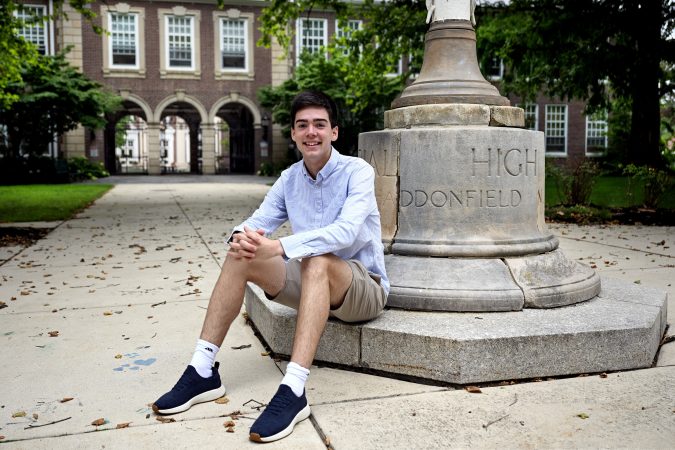
    Haddonfield Memorial High School rising senior Luke Patterson poses at the school Tuesday, July 7, 2026. He has been awarded a Coolidge Scholarship, a prestigious, highly competitive full-ride merit award that pays for four years of tuition, room, board, and expenses at any accredited U.S. college or university.Tom Gralish / Staff Photographer

    Patterson learned about the scholarship last year when he noticed a track teammate reading Coolidge’s autobiography. The teammate was reading the book to apply for the scholarship.

    In order to apply, Patterson was also required to read Coolidge’s autobiography and study policies during his administration, write several essays and get recommendation letters. Applicants must demonstrate humility and a commitment to public service, qualities endeared by Coolidge.

    He then traveled to Plymouth Notch, Vermont, Coolidge’s birthplace and where the foundation is located, for a final interview. He fielded questions from a panel chaired by the state’s former governor, James H. Douglas.

    “I expected to be nervous, but I actually felt pretty comfortable,” he said. The foundation requests that recipients do not disclose details about the interview process.

    Said Denhart: “Luke was just a real star.”

    At Haddonfield High, which enrolls about 870 students in grades 9 through 12, Patterson is an honors student, participates on the track and cross country teams, and writes for the school newspaper, covering school board meetings.

    Patterson also is a member of the Anti-Bias Club and serves as historian of the Student Council, and has been tapped to help spearhead a project this school year to create a timeline for the school’s 100th anniversary, Principal Tammy McHale said.

    “Where good things are happening, Luke is around it,” McHale said.

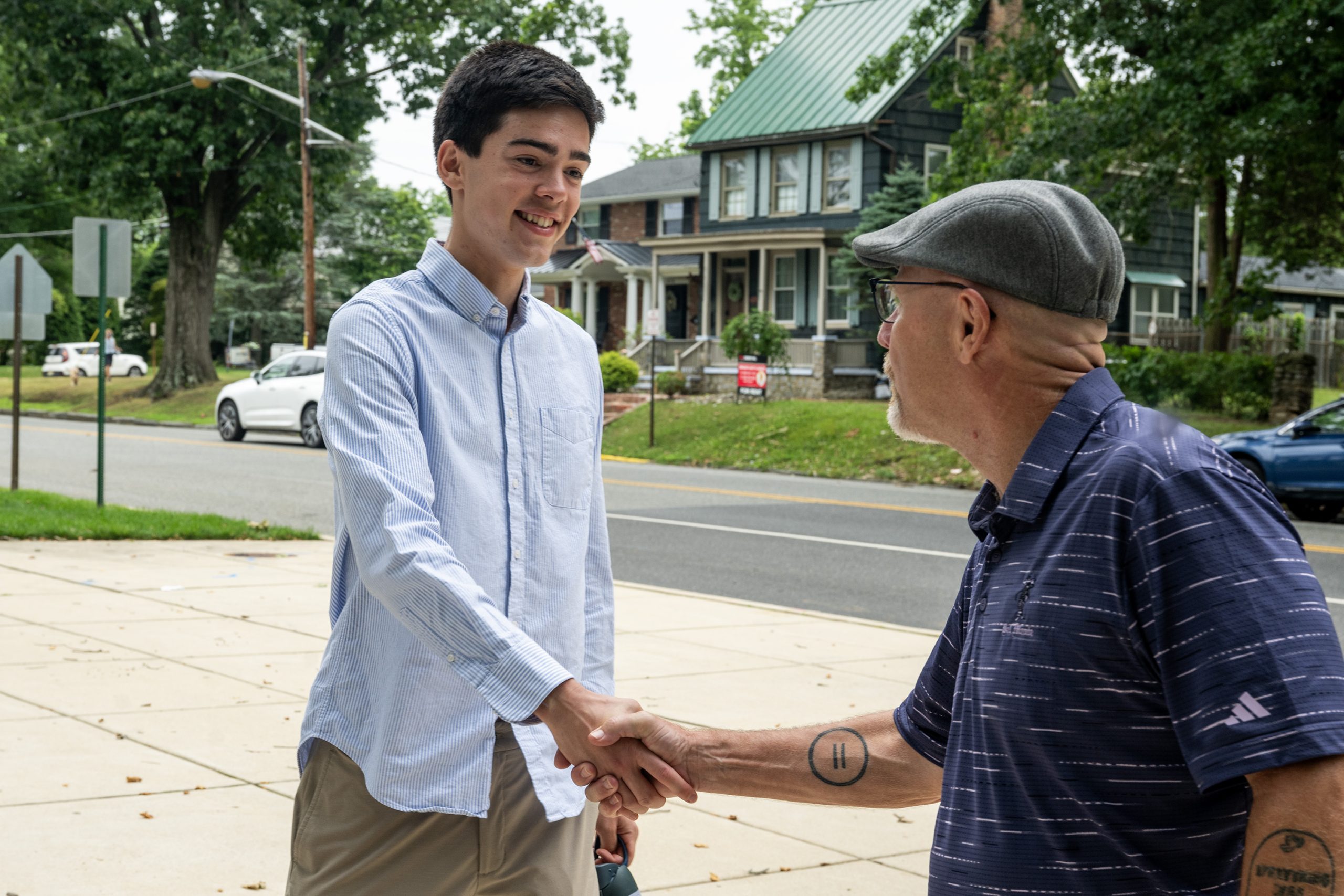
    Haddonfield Superintendent of Schools Chuck Klaus (right) happens to pass by as Haddonfield Memorial High School rising senior Luke Patterson is at the school Tuesday, July 7, 2026. Patterson has been awarded a Coolidge Scholarship, a prestigious, highly competitive full-ride merit award that pays for four years of tuition, room, board, and expenses at any accredited U.S. college or university.Tom Gralish / Staff Photographer

    Patterson also is a cadet with the Civil Air Patrol, a youth auxiliary of the U.S. Air Force, and an active member of Grace Episcopal Church in Haddonfield.

    English teacher David Scorsolini noted in a recommendation letter that Luke had demonstrated humility in his world literature class, one of the scholarship’s requirements. Patterson showed respect for his classmates and their perspectives, he said.

    “It takes a great deal of humility to read, and more importantly, to listen. Luke listens,” Scorsolini wrote in an email.

    Patterson credits his teachers for preparing him to apply for the scholarship. He was surprised when he got a call that he had been selected.

    “I was completely shocked,” he said. “Over the next days, I realized how many doors this opens.”

    It will ease the financial burden on his parents, who also have a younger daughter, Clara, he said.

    “I’m just really proud of all that he has done,” said his mother, Ellen Patterson. “Obviously, the scholarship is amazing.”

    The foundation launched the scholarship program to better educate young people about Coolidge, considered one of the least-known presidents, Denhart said.

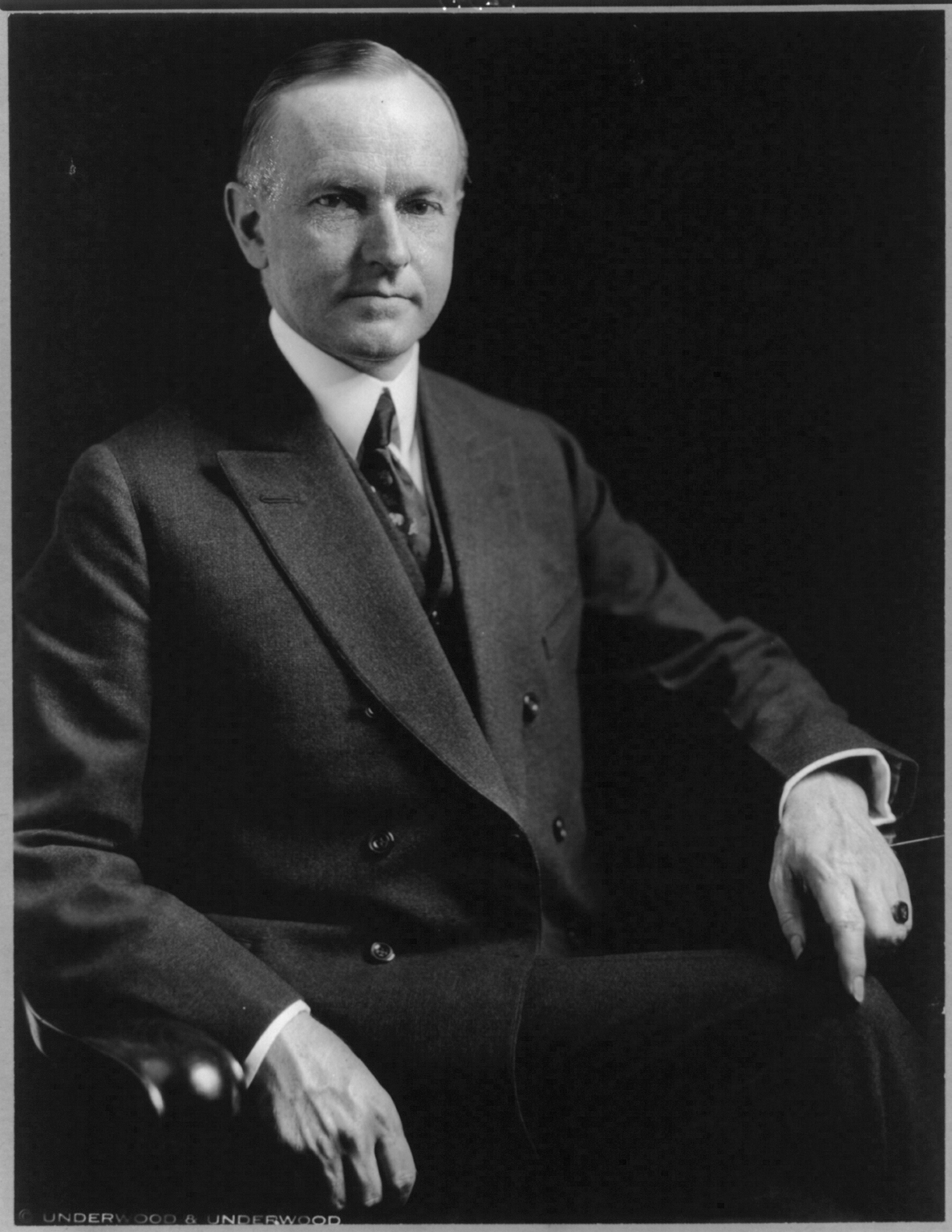
    Calvin Coolidge’s seated portrait, June 6, 1924.Library of Congress

    The program seeks students who embody the principles and ideas that defined Coolidge’s term as the 30th U.S. President. Coolidge was known for his humility as well as his support for political bipartisanship, public education, and local self-government.

    This is the 11th class of scholars sponsored by the foundation, Denhart said, and since 2016, nearly 50 students have passed through the program. The foundation also awards smaller scholarships to its top 100 finalists.

    The scholars are not expected to follow the politics of Coolidge, a Republican who had a reputation as a small-government conservative, Denhart said. They study his history and public policies and debate at an annual seminar, he said.

    Patterson said he plans to spend the summer finalizing his college choices and writing essays. He is undecided about a possible major.

    “The really cool thing about the scholarship is that it opens up all kinds of possibilities,” Patterson said.

    He is considering joining an ROTC program and possibly becoming a U.S. Air Force pilot.

    Patterson wants to encourage underclassmen to consider applying for the scholarship. His advice:

    “Don’t be afraid to put yourself out there. You never know what might happen,” he said.

  • A record number of N.J. students are earning associate’s degrees with their high school diplomas. Meet three of them.

    A record number of N.J. students are earning associate’s degrees with their high school diplomas. Meet three of them.

    When Jasmine Thach began high school four years ago, she wanted to balance academics and extracurricular activities to pursue her college dreams.

    By sophomore year, Thach was enrolled in her first college course. She began taking as many as five classes a semester — enough credits to obtain an associate’s degree in May from Camden County College.

    Thach picked up her second diploma when she graduated in June as valedictorian from Camden County Technical Schools in Pennsauken.

    “I knew that I could do it,” said Thach, 18, of Pennsauken. “I didn’t know how lucky I was.”

    Thach is among a record group of 367 students enrolled in New Jersey’s 21 county vocational-technical schools who graduated with associate’s degrees this year while attending high school. That amounts to 30 more than the previous year, said Jackie Burke, executive director of the NJ Council of County Vocational-Technical Schools.

    “It’s a great outcome,” said Burke. “This is really an attractive option that more people are looking at.”

    Once considered an option mostly for students to pursue skilled trades, vocational-technical schools have become increasingly competitive and are attracting students who want a different pathway to college or careers.

    In a tough economy, the vocational-technical schools make it easier and more affordable for students to earn credit for college-level work. Many have partnerships with county colleges and other nearby two- and four-year colleges, Burke said.

    “It’s a reflection of students seeing the value of getting a head start,” Burke said. “This is really a way to save on those costs.”

    Of the 367 students graduating this year, 31 are from Camden County Technical Schools, which has campuses in Gloucester Township and Pennsauken. The Gloucester County Institute in Deptford has 17 graduates. Burlington County Institute of Technology has students who earned some credits, but none who obtained the full associate’s degree. Cumberland County Technical Education Center in Vineland had the second-highest in the state, with 60 graduates.

    For the 2024-25 school year, more than 35,000 students were enrolled in New Jersey’s county-vocational schools. The schools are selective; only about 12,000 of the nearly 30,000 who apply annually statewide are accepted.

    Students may study a wide range of disciplines, from traditional vocational fields like cosmetology and construction to engineering and health science.

    Under the Early College Associate Degree (ECAD) program, counselors work with students to meet their high school requirements while earning an associate’s degree and attending some of their classes on college campuses.

    In most cases students earn credits at a significantly reduced cost or free. Students can enter four-year colleges as sophomores or juniors, amounting to big savings in time and money.

    Here are the stories of a few of this year’s graduates:

    Jasmine Thach: Wanted to help fund college

    With two siblings already in college, Thach wanted to help ease the financial burdens for her parents. She volunteered as a tutor and participated in performing arts and the newspaper club, all while maintaining her grades.

    She graduated from Camden County College with an associate’s degree in liberal arts and sciences, and from Camden County Technical Schools in Pennsauken.

    In a nod to her Cambodian heritage, she learned to play the kong thom, a traditional Cambodian musical instrument consisting of gongs, and the violin. Every Sunday she travels with her family to Arlington, Va., to take lessons, part of their quest to preserve their culture.

    Jasmine Thach as she graduated from Camden County Technical Schools’ Pennsauken campus last month. Thach, who also received an associate’s degree from Camden County College, plans to attend Johns Hopkins University as a math major.Jose F. Moreno / Staff Photographer

    While her mother and sister learned traditional Cambodian dances, Jasmine discovered a passion for music. “I have two left feet,” she quipped.

    Jasmine received a full scholarship to attend Johns Hopkins University where she plans to major in applied math and statistics.

    She wants to become an actuary and eventually obtain a doctorate and become a college professor.

    “I’m very big on math,” she said.

    Yeheira Acosta: `I’m just really grateful’

    Education has become a family affair for Yeheira Acosta, with her parents and younger sister following in her footsteps to make a better life.

    She graduated in June from Cumberland County Technical Education Center in Vineland and picked up an associate’s degree in computer science from Rowan College of South Jersey.

    Yeheira Acosta of Vineland, N.J., (third from left) shown with her family, graduated from Cumberland County Technical Education Center and obtained an associate’s degree in computer science from Rowan College of South Jersey. She plans to attend Vanderbilt University in the fall.Courtesy of Yeheira Acosta

    A first-generation college student, Acosta has inspired her family. A younger sister is also on track to earn an associate‘s degree while in high school. Her father recently enrolled in a DeVry University online cybersecurity program, and her mother is pursuing a GED.

    Acosta, 18, of Vineland, plans to study AI at Vanderbilt University, where she earned a full ride. A Yankees fan, she wants to work in the sports industry.

    Although she is excited about the next chapter, Acosta said she will miss her family and her church, the Life of Faith in Vineland, where she provides technical support.

    “I‘m just really grateful, not everyone has the same opportunity,” she said. “I don’t take it for granted.”

    Max Yeung: An aspiring lawyer

    The youngest of three siblings, Max Yeung has set his sights on becoming a personal injury lawyer and a public service advocate.

    He obtained an associate’s degree in prelaw from Rowan College of South Jersey in Sewell. Yeung said following a computer science track at the Gloucester County Institute of Technology and an internship he got along the way helped him realize that law is his passion.

    Yeung said he landed an internship at an Audubon law firm with assistance from a college professor. His top priority was completing as many credits as possible.

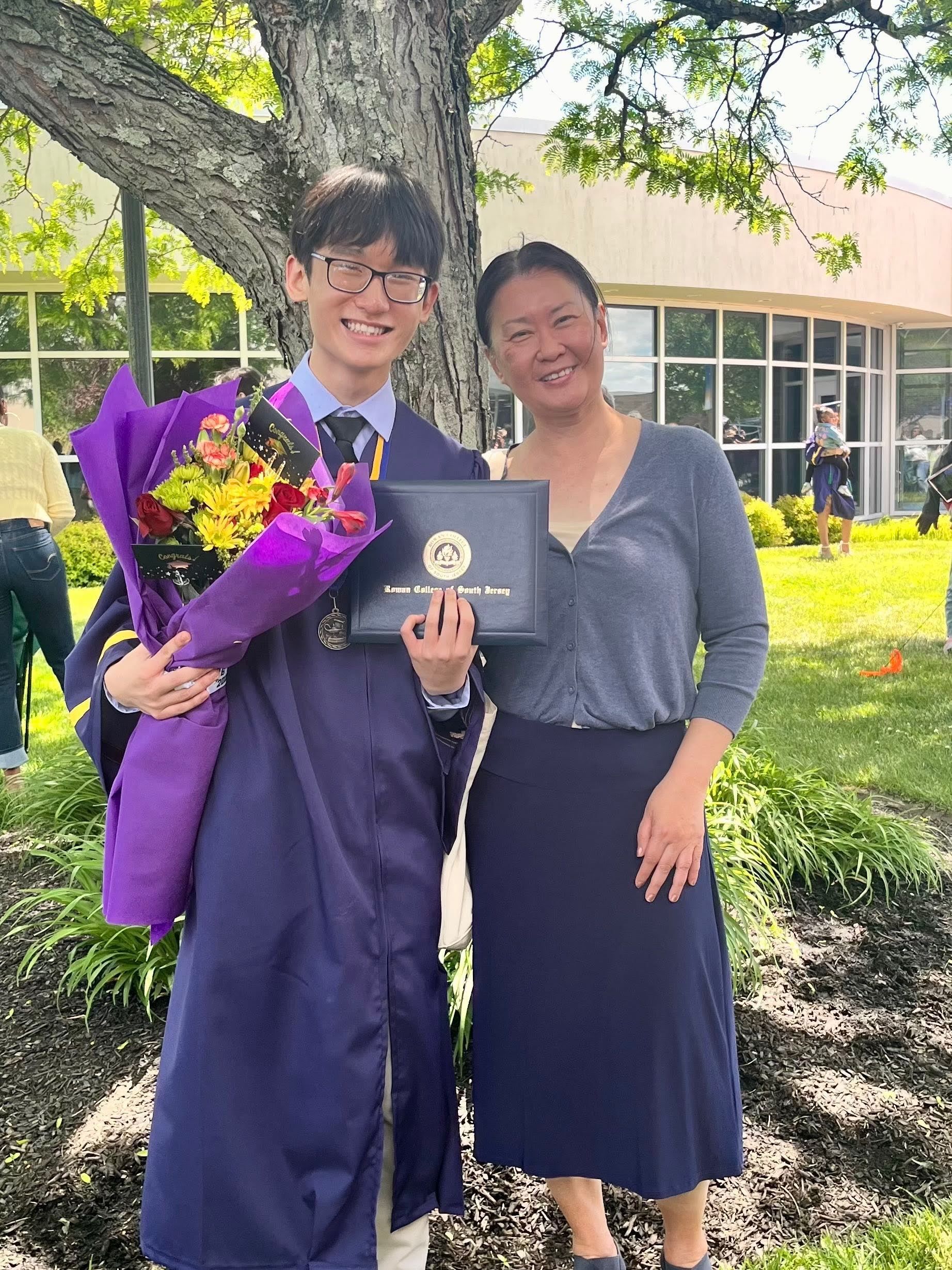
    Max Yeung, 17, of Sewell, poses with his mother, Li Khoo, after receiving an associate’s degree from Rowan College of South Jersey.Max Yeung

    At his high school, Yeung, 17, of Sewell, founded a nonpartisan civics group that registered students to vote. He was also president of the National Honor Society.

    “It was a lot of juggling. There were a lot of moments when I had to huddle down,” he said. “It helped me understand what the college environment looked like.”

    Yeung plans to attend Rowan University as a law justice major. Depending on how many credits transfer, he may graduate in a year or two and then hopes to attend Rutgers-Camden Law School.

  • South Jersey school board again rejects $27K merit pay for its embattled superintendent

    South Jersey school board again rejects $27K merit pay for its embattled superintendent

    Embattled Washington Township school Superintendent Eric Hibbs has lost another battle with the South Jersey school system to get $27,000 in merit pay.

    A motion to award Hibbs the bonus pay for performance failed by a 4-3 vote with two abstentions at a contentious meeting Tuesday night. Five favorable votes are needed for adoption.

    This was the third time since August that the nine-member board has not approved the merit pay, likely setting up another legal showdown between Hibbs and the board. He has a pending whistleblower lawsuit against several board members.

    Hibbs has said he had met four of the five goals approved by the board and listed with his contract for the 2024-25 school year. He earned $220,375 during the 2023-24 school year.

    The board voted on the request, with little public discussion. Hibbs did not comment at the meeting. He did not respond to a message seeking comment Wednesday.

    In order to vote, the board had to invoke a rarely used “doctrine of necessity” because it otherwise would not have a quorum. Six of nine members have a conflict of interest with Hibbs, whom they suspended last year until he was reinstated by a judge. The board remains roiled by infighting over its superintendent.

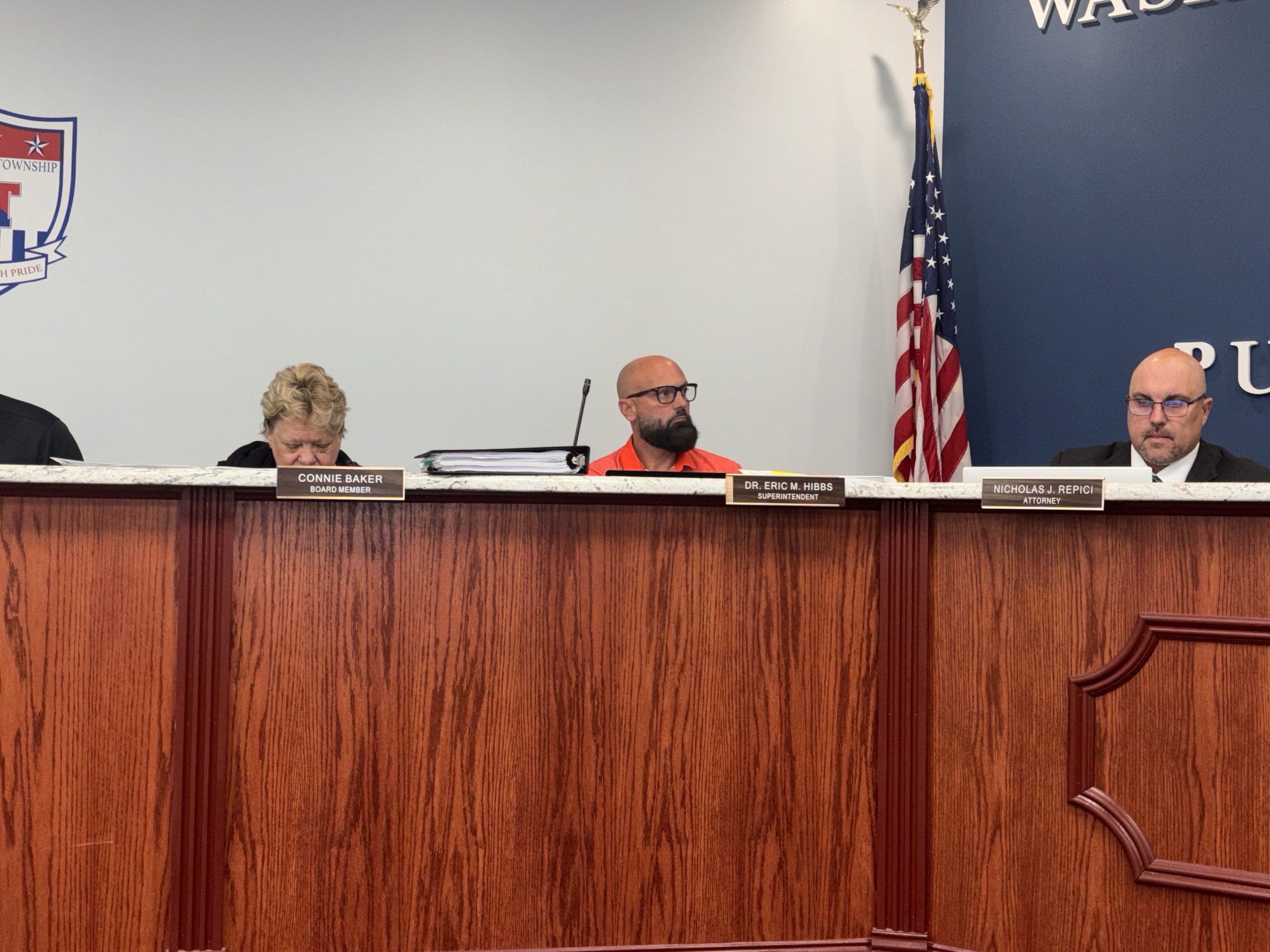
    Washington Township School Superintendent Eric Hibbs (middle) listens during a school board meeting Tuesday night.Melanie Burney

    Here’s what’s to know about the situation:

    Why is Hibbs seeking merit pay?

    Hibbs initially requested the merit pay last August, five months after he was suspended by the board with pay. He was reinstated in July after a judge found that the board had violated the Open Public Meetings Act when it suspended him.

    According to his contract, if he meets goals set by the board, Hibbs is entitled to an annual merit bonus of up to 14.99% of his salary. Hibbs is among the highest-paid school chiefs in South Jersey.

    Interim Executive Gloucester County Superintendent Robert Bumpus approved the merit pay, as required by state law. The board must also give its approval to disburse the funds.

    Tuesday’s motion also would have allowed Hibbs to carry over up to 20 unused vacation days in addition to receiving a $27,000 bonus.

    Hibbs has been superintendent in the Washington Township district since 2023. His contract runs through 2027.

    What were the merit goals?

    Hibbs’ goals, approved by a previous board, include completing Google training presentations, taking online professional development courses, and beefing up security processes.

    He received $25,000 in merit pay for similar goals for the 2023-24 school year, according to district records obtained by The Inquirer under N.J.’s Open Public Records Act.

    The merit pay has been an ongoing issue between Hibbs and the board and has escalated since last year. The dispute has raised questions about his fate when his contract expires. The board must notify Hibbs by December if his contract will not be renewed; otherwise, the contract automatically renews for four years.

    Why was the doctrine of necessity necessary?

    Six board members were deemed ineligible to discuss Hibbs’ employment because of conflicts, board solicitor Nicholas J. Repici said. They either have family members who work for the district or are named defendants in Hibbs’ lawsuit against the district, he said.

    The doctrine of necessity allowed the conflicted board members to participate in the vote. But they were barred from any deliberations in executive session or public discussions.

    Board vice president Terri Schechter chaired a special committee of the board members without conflicts that discussed the Hibbs matter. She brought forward the motion to approve the merit pay.

    “Any discussion?” Schechter asked.

    “We’re not allowed,” board member Julie Kozempel said. She abstained along with board President Pat Blome.

    A petition launched by a parent called for the board to invoke the doctrine and vote on Hibbs’ contract renewal. It asked those who “agree that the district needs a clean break and less expensive contract for its superintendent” to consider signing the petition, which a community member spoke about at the board meeting Tuesday night.

    What is the dispute between Hibbs and the board?

    A complaint filed by local union leaders against Hibbs with the New Jersey School Ethics Commission alleged that the superintendent provided preferential treatment to a board member’s relative by changing a failing grade in September 2023.

    The board suspended Hibbs and hired a conflict lawyer to investigate the allegations. Hibbs was eventually cleared of any wrongdoing.

    In his own ethics complaint, Hibbs accused Kozempel and board member Elayne Clancy of not following procedures when the board hired Insurance Consulting Services LLC in 2021, prior to his tenure as superintendent.

    Hibbs filed a whistleblower lawsuit in May 2025, alleging his suspension was in retaliation for raising questions about the insurance contract. He alleged that the selection procedure was “procedurally flawed.”

    His employment has remained a point of contention among school board members.

    Here are other takeaways from Tuesday’s meeting

    During public comment Tuesday, there were also emotional appeals to the board to reinstate three guidance counselor positions that were cut to help balance the budget for the 2026-27 school year.

    Several school nurses and a student also expressed concern that the district has reduced the workday for several nursing assistants in cost-saving moves. They cited health and equity concerns.

    Board members were surprised to learn that first-level French and German classes were being cut at the high school due to the budget. They were told that the classes would resume next year.

    Hibbs said the district, which enrolls about 7,200 students, faced a $10 million deficit for the upcoming school year. More cuts are likely in future years without additional revenue, he said.

    “This is the reality of where we are,” Hibbs said. “We have no other place to go.”

  • Vineland schools are allowing teachers to wear jeans and dress more casually for the end of the school year

    Vineland schools are allowing teachers to wear jeans and dress more casually for the end of the school year

    Vineland’s public school teachers are having an easier time with the question of what to wear to work — at least for the final days of the school year.

    In a move to boost morale in the South Jersey school system and make teachers’ lives easier this spring during a hectic testing period, the district eased its dress policy to allow denim jeans until the end of the school year on June 25.

    Teachers love it and hope it will continue in September.

    “It’s one small way to make the world of work a little friendlier,” said Vineland Education Association president Louis Russo, a social studies teacher. “It’s one small thing off of their shoulders.”

    Teachers Andrea Ruiz (left) and Elaine Petrini (right) at Rossi Elementary in Vineland on June 9. The teachers are allowed to wear jeans until the end of the school year.Tom Gralish / Staff Photographer

    School board president Cedric Holmes said the Cumberland County district notified employees when they returned from spring break in April that they could wear jeans any day of the week under a pilot program.

    Holmes said there had been rumblings among staff because the district — the largest in Cumberland County, with 11,000 students — had to extend the school year to make up snow days. Vineland‘s June 25 last day of school is among the latest in the region.

    The months following spring break are among the toughest with students undergoing standardized state testing, Holmes said. There are also end-of-the year field trips and outings when it makes sense to allow more relaxed clothing, he said.

    “It was important to the board that staff felt that we saw the stress of all of that of this as a practical way to give a morale boost for the end of the year,” Holmes said.

    Teachers typically dress a bit more formally for school. According to Vineland’s policy, female teachers must wear skirts, slacks, skorts, or dresses with blouses or sweaters, or school uniform. The skirt, skort, or dress should not exceed three inches above the knee.

    Male staffers can wear suits or slacks with jackets and ties, sweaters, school uniform, or sports or dress shirts. Deemed unacceptable for both are sneakers, flip-flops, bedroom slippers, combat boots, and work boots. There are exceptions for teachers attending field trips or who work in specialized areas such as health and physical education or arts.

    The district also has a uniform policy for students, but Holmes said that has been relaxed and the board also plans to reexamine that policy.

    New Jersey’s 600 school districts set their own policies for staff and students.

    Steve Baker, a spokesperson for the New Jersey Education Association, which represents 200,000 teachers and support staff, said the union supports the efforts in Vineland “to develop policies that help create a positive learning and working environment for students and staff.“

    On a busy morning last week at Anthony Rossi Elementary in Vineland, third-grade teacher Jeffrey Martine stood in front of the class dressed in khaki shorts, a button-down blue dress shirt, and slip-on loafers. As an added bonus, it was a dress-down day, which allowed teachers to wear casual attire beyond jeans.

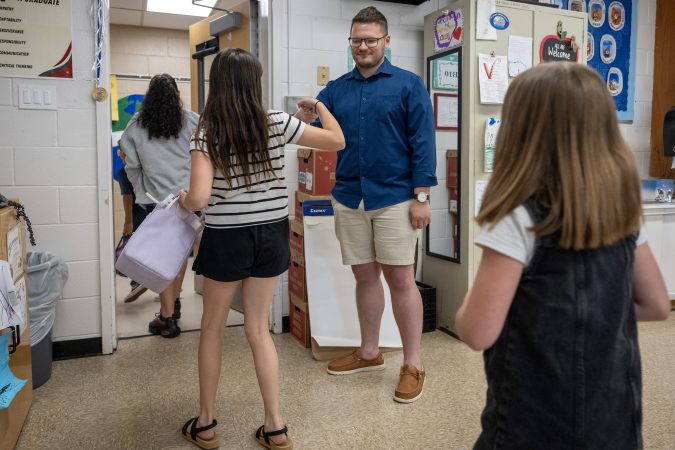
    Jeffrey Martine, a teacher at Rossi Elementary in Vineland, greets a student at the school last week.Tom Gralish / Staff Photographer

    “If you do your job well, you have to be able to move,” Martine said. “I’m all about comfort.”

    Students in Martine’s gifted and talented class were spread around the room working on a project in small groups. Some sat at desks making posters, while others were stretched out on the floor.

    “I don’t think professionalism and comfort are mutually exclusive,” Martine said. “Teachers should be judged more on how they interact with their students than the pants they select.”

    Holmes acknowledged the dress code was outdated and revisions are needed. The board plans to review the changes implemented this spring and may allow teachers to wear jeans during the new school year, he said.

    “It was time for a change,” said Kaitlynn Rossi, a long-term substitute teacher. “People don’t dress like that.”

    Teacher dress codes have evolved nationally over the years, especially during the pandemic, when more casual attire was the norm.

    Based on responses from teachers around the world, the website We are Teachers in 2024 compiled a list of “16 Ridiculous Dress Code Rules for Teachers You Won’t Believe Are Real.” The list included prohibiting hats, capri pants, pants with pockets, UGGs, hoodies, or dark underwear.

    In Philadelphia, where classes ended last week, there is no system-wide dress code for staff. Arthur Steinberg, president of the Philadelphia Federation of Teachers, which represents about 14,000 teachers, counselors, nurses, secretaries, and other workers, said employee dress typically does not come up as an issue.

    School board president Cedric Holmes at Rossi Elementary in Vineland last week. Holmes said the teacher dress code policy was relaxed in an effort to improve morale at the end of the school year.Tom Gralish / Staff Photographer

    Holmes said teachers have responded well to the changes in Vineland and there have been few infractions, like torn or ripped jeans.

    Before Vineland implemented the pilot dress code, teachers were allowed to wear jeans only for special days. The schools sponsor fundraisers that allow teachers to pay $2 to wear jeans. Students are allowed to wear jeans on dress-down days determined by their school principal, and they do not have to pay.

    Fourth-grade teacher Andrea Ruiz said dressing more casually helps her students see her differently. A sign in her classroom says: “Be the best version of you.” She enjoys sitting with students on the carpet in her classroom or playing kickball on the playground.

    “We’re meeting them where they are,” said Ruiz, who was wearing a gray T-shirt and striped pants. “It’s definitely something different for us.”

    Teacher Kaitlynn Rossi with students at Rossi Elementary in Vineland last week.Tom Gralish / Staff Photographer

    Timothy Purnell, executive director of the New Jersey School Boards Association, said a decision as simple as allowing jeans can have an impact on the learning environment.

    “If jeans support a positive environment during testing, that’s a local call we respect,” Purnell said.

    Russo believes a less-stringent dress code will help attract and retain younger teachers amid a national teacher shortage. He wants them to still dress in a manner that gets respect from students.

    “We just have to find the right balance,” Russo said.

    Staff writer Kristen A. Graham contributed to this article.

  • Collingswood’s James Garfield Elementary School set to close due to budget cuts

    Collingswood’s James Garfield Elementary School set to close due to budget cuts

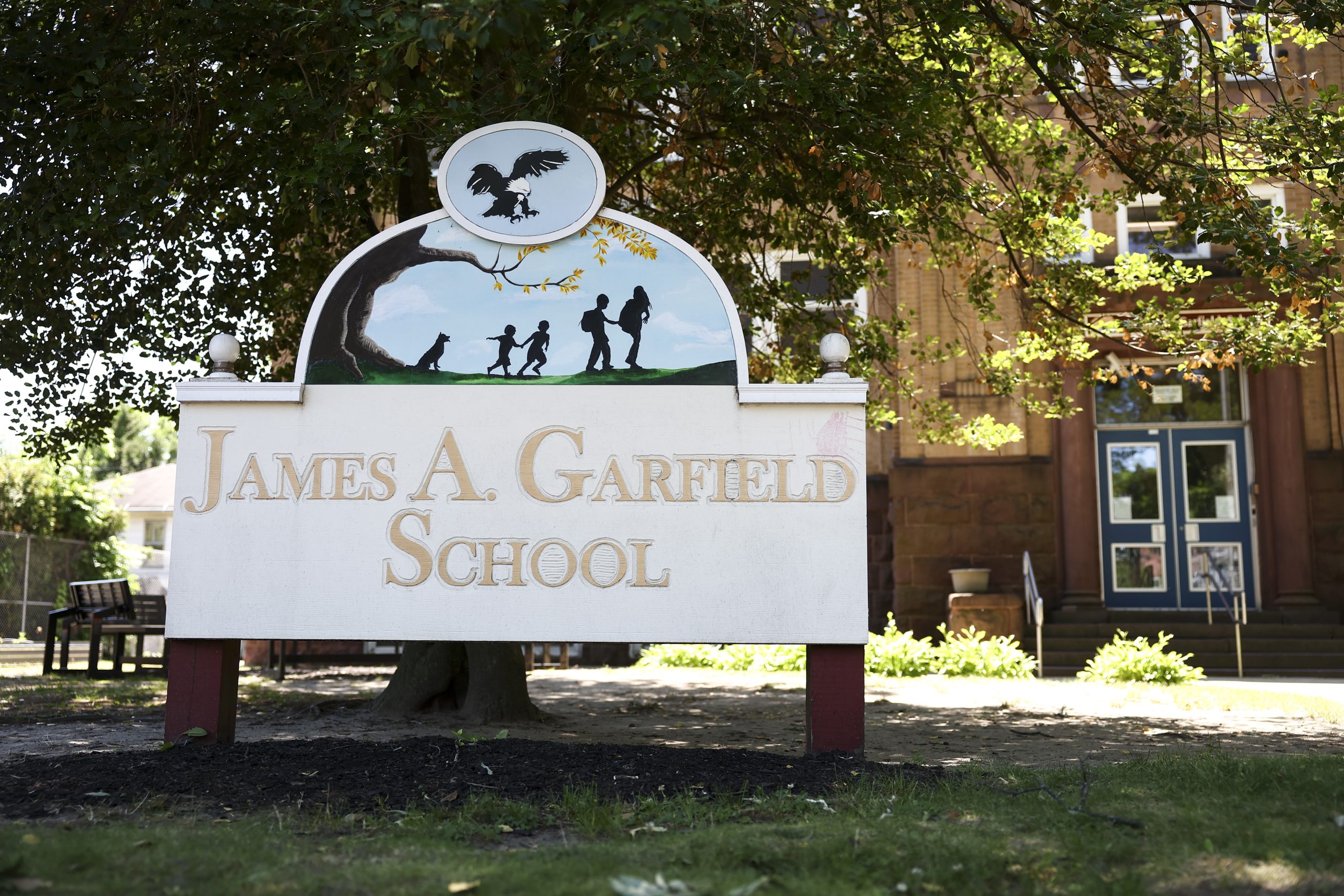
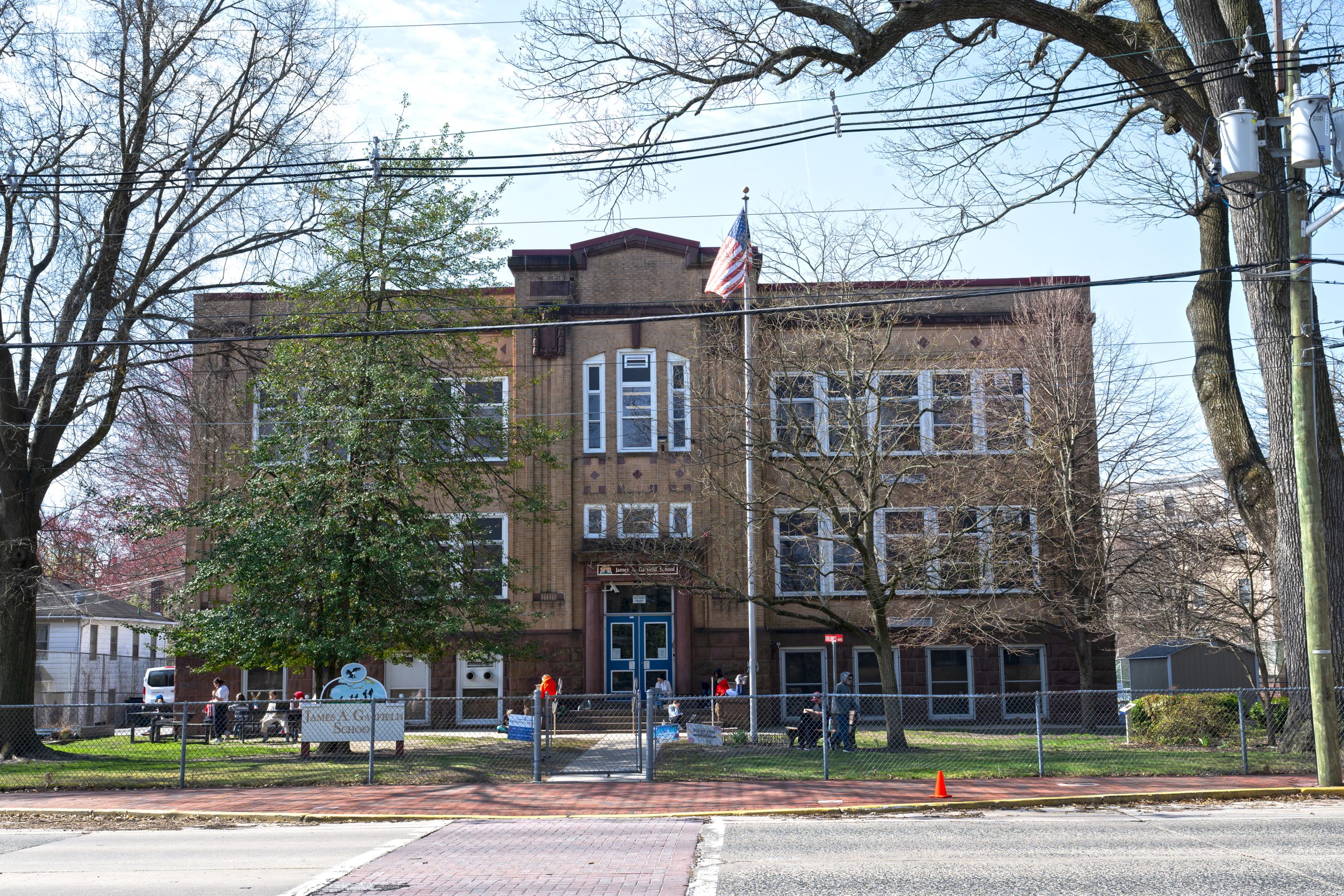
    Tucked away on a bustling tree-lined Collingswood street, James A. Garfield Elementary has been the center of its South Jersey neighborhood for more than a century.

    Built in 1915, it is the second-oldest public school in Collingswood and has educated generations of families. Passersby stop in the front yard to reminisce under two giant trees or sit on a century-old bench.

    Garfield enrolls about 128 students in kindergarten through fifth grade. The teachers know every student by name and parents love the sense of community.

    It will come to an end next week when Garfield closes its doors.

    “It’s been the best 13 years of my career,” said principal Mark Wiltsey. “Is it sad? Of course. I was all about it. It’s who I am.”

    The exterior of James A. Garfield Elementary School in Collingswood.Monica Herndon / Staff Photographer

    Facing a $3.3 million budget deficit for the 2026-27 school year, Superintendent Fred McDowell made the difficult decision to close Garfield and transfer students and staff to other schools. With operating costs exceeding available revenues, the district also cut 33 positions and programs.

    “No one ever wants to make reductions to staff,” McDowell said in an interview this month. “It has become necessary. It’s just not sustainable.”

    Collingswood Public Schools Superintendent Fredrick McDowell at James A. Garfield Elementary School earlier this month. He said budget issues forced him to close the school, which his own child attends.Monica Herndon / Staff Photographer

    Collingswood’s state aid for the coming year was reduced by $305,000, while expenses have increased by $4.8 million. The district increased property taxes by 6.4% but still had a budget hole.

    In what has been described as one of the toughest budget seasons in years, districts across the state are facing similar dilemmas. Cherry Hill, Haddonfield, and Washington Township are cutting positions, too.

    A vote of no confidence

    The Garfield closing and other cuts struck a nerve in Collingswood, which currently enrolls about 2,500 students in nine schools. The district plans to consolidate its high school and middle school operations, shut down its high school wellness center, and impose fees for some extracurricular activities.

    The Collingswood Education Association criticized the decisions and took a no-confidence vote against McDowell. Saying there was an “urgent need for a change in the leadership direction,” the union implored the school board to relieve McDowell of his duties.

    The union, which represents about 230 teachers and support staff, said 150 staff members have left since McDowell became schools chief in 2021. Morale has dropped and fiscal decisions have impacted the classroom, the union said.

    Garfield Elementary in Collingswood is preparing to close.Jose F. Moreno / Staff Photographer

    McDowell, whose contract expires in 2027, defended his record and blasted the union for finger-pointing during a budget crisis. Staff turnover follows post-pandemic nationwide trends, and Collingswood’s structural budget deficit has been years in the making, he said.

    “It’s not a mismanagement problem. It’s a revenue problem,” McDowell said. The district plans to ask voters to approve a bond referendum on Nov. 5 to cover operating costs. Voters rejected a controversial $44.5 million bond proposal in 2024.

    McDowell will be affected personally by the Garfield closing. His 9-year-old daughter is a fourth grader and a son would have been a kindergartner in the fall.

    “In what world does a father want to close his own child’s school, unless there’s no other way,” the superintendent said.

    ‘Heartbroken’ to lose an elementary school

    There were tears and high emotions as word spread that the two-story neighborhood school would close, affecting about 100 students and about 15 teachers and support staff. The fifth graders will move to middle school, and the remaining students will be sent to the district’s four other elementary schools with larger class sizes to accommodate more students.

    “I feel heartbroken. I feel angry,” said Elizabeth Vukovic Gartlan, whose youngest, Liam, is a fourth grader at Garfield. “It’s such a wonderful school and a beautiful community.”

    Gartlan said Liam asked: “Why can’t we have a bake sale” to save the school? He will go to Newbie Elementary in the fall. His mother worries that more cuts could come.

    Teacher Samantha Nash Rovner talks with a reporter at James A. Garfield Elementary School on this month. Garfield is closing at the end of the school year.Monica Herndon / Staff Photographer

    The closing has been bittersweet for teachers, too, as they pack up years of materials. Fourth-grade English teacher Samantha Nash Rovner will have third graders at Zane North.

    “It’s very mixed emotion,” Rovner said. “It’s really sad that Garfield is closing.”

    McDowell said no employees will lose their jobs, although some staff may be put in different positions.

    Located on Haddon Avenue, Garfield is a hub in Collingswood, known for its quintessential Main Street aura. The schools and the downtown district are walkable, making its quaint shops and restaurants popular destinations.

    “It’s just a special place,” said Julie Donato, the mother of two Garfield students. ”Our entire life revolved around this school.”

    The school is decorated with colorful murals and inspirational quotes. Framed pictures of students and their families line the walls. A memorial garden out front pays tribute to Michael Jubb, a student killed in an accident, and a sign honors Dolores Bobb, a beloved crossing guard.

    Donato said her husband’s grandmother attended Garfield. When his grandmother came to the United States from Italy, Garfield students taught her English, she said. And Donato’s children were especially fond of visiting senior citizens who live next to the school at Collingswood Manor.

    The school is named for James A. Garfield, who was elected the 20th U.S. president in 1881 and assassinated just 200 days into his term.

    Most students are unaware of the school’s history, Wiltsey said. Because the school is often referred to as Garfield, they believe the name comes from the comic strip about a cynical orange tabby cat with the same name, he said with a laugh.

    Fifth grade students work in English class at James A. Garfield Elementary School in Collingswood this month. The school is closing at the end of the school year.Monica Herndon / Staff Photographer

    Wiltsey said the school receives letters from former students sharing memories of their time at Garfield. They are archived in an album with old photographs.

    For a Garfield history project that has been saved at the school, Bonnie Brown Saunders of Colorado recalled enrolling as a kindergartner in 1948. She recalled memories for every year, including first grade when a pretty girl transferred in.

    “All the boys liked her — a lot. I learned about two emotions — boys and jealousy. I also learned how to read and become the picture of health,” she wrote.

    A photograph of the seventh grade class at James A. Garfield Elementary School on April 24, 1922.Monica Herndon / Staff Photographer

    Wiltsey, who will move to the middle school complex as a supervisor, said school officials began preparing students last month for the closing. Tatum Elementary will get the biggest chunk, about 52 students.

    There have been walking tours and activities to meet new classmates and teachers, he said. Siblings were assigned to the same school.

    Wiltsey compared preparing for the last day of school — June 22 — to the grief process and has experienced a range of emotions. Teacher Jessica Harbridge said the reality will hit in September.

    “I’ve accepted it,” Wiltsey said. “We’re all moving on to new challenges.”

    Principal Mark Wiltsey talks about the family photographs that line the walls at James A. Garfield Elementary School.Monica Herndon / Staff Photographer
  • Cherry Hill school board gets pushback on suggestion to drop African American history mandate

    Cherry Hill school board gets pushback on suggestion to drop African American history mandate

    The Cherry Hill school board made national headlines when it became the first New Jersey school system to require students to take a course on African American history to graduate.

    Five years later, the board debated whether the course should be dropped as a requirement in light of budget problems in South Jersey’s largest school system.

    And while officials have assured the community that the course will remain part of the curriculum, the debate highlights the difficult choices that districts are facing during a tough budget year. In Cherry Hill, the board approved a budget that will cut 70 positions, increase class sizes, and raise property taxes to eliminate a $29 million deficit.

    As that budget process played out this spring, board member Renee Cherfane suggested the district could reconsider African American history if future budget cuts are necessary. The idea drew pushback from students as well as community and civil rights leaders, who pledged to fight any attempt to roll back the requirement.

    “Black history is an essential part of American history,” said Ma’isha Aziz, president of the Camden County East branch of the NAACP. “Teaching it helps ensure students gain a fuller understanding of the nation’s past and present.”

    Cherry Hill High School East senior Skylar Adams, a member of the African American Cultural Club, said changing the course would send the wrong message. Black students make up about 10% of the district’s 11,000 students.

    “In the world we live in today where the rights and voices of African Americans are constantly being challenged and minimized, now is not the time to make our history seem less important,” Adams told the board. “Making this course an elective instead of a requirement sends a message that learning about Black history is optional and not important enough for every student.”

    Superintendent Kwame Morton, the district’s first Black schools chief, praised students who made passionate appeals to the board to keep the course. He reassured them that the course was not in jeopardy.

    “The board is not at this point taking action on any recommendation to eliminate that course. That’s not what’s happening,” Morton said.

    Cherry Hill Superintendent Kwame Morton.Alejandro A. Alvarez / Staff Photographer

    Here is what to know about the debate around the course:

    How the issue unfolded

    Cherfane sparked a heated discussion during a board meeting last month when she suggested making African American studies an elective instead of a required course. She cited the district’s $29 million deficit, which prompted layoffs and cuts.

    In the event the board has to cut additional teaching positions in the future, having that class as a mandate limits options, she said. About 800 students are required to take the course every year, she said.

    “It’s not about offering the class. It’s about requiring it,” Cherfane said. ”We wouldn’t be getting rid of it entirely.”

    Other board members asked Cherfane to explain why she targeted that class. The district offers other electives, such as multivariable calculus, a high-level math course that few students take, that are not required by the state as a graduation requirement, said board member Miriam Stern.

    Board president Gina Winters said any review examining potential cost savings should not be specific to one class. The African American history class was pitched by students and supported by the community, she said.

    “I understand that it’s a tight budget, but we also have a responsibility as a board to educate our children on the things that our community thinks are important,” Winters said.

    Cherfane did not respond to messages seeking comment.

    How did the class get started?

    By an 8-0 vote, the board approved the course as a graduation requirement in February 2021. Students who organized Black Lives Matter protests sparked by the killing of George Floyd in 2020 in Minneapolis by a white police officer asked for the class. They said Black history was mostly taught only in February.

    Cherry Hill became the first district in the state with the requirement, according to the New Jersey Department of Education. New Jersey and Pennsylvania require history to be taught, but districts decide the content of their courses. Philadelphia and Camden schools also mandate a course in African American history to graduate.

    The district developed a curriculum for a semester course and began offering it for the 2021-22 school year for freshmen and sophomores at its two comprehensive high schools. The district hired two teachers.

    Teacher Jennifer LaShure said the course tackles topics that previously received little attention in U.S. history classes. She has included units on early African culture, arts, systemic oppression of today, anti-racism, and activism.

    “I worry about the message that it sends to the students that something as important as history can be taken away,” LaShure told the board. “We see it all over, but it’s scary to see it happening right here.”

    Community pushback

    Former board member Corrien Elmore-Stratton, who was the only Black member of the board that approved the course as a requirement, said the need for it remains.

    “… We are already having spaces and places where our students are being erased, torn down, no longer heard, misunderstood, and DEI has become a dirty word,” she said, referencing President Donald Trump’s attacks on diversity, equity, and inclusion. “It really is disheartening to hear that anyone on this board of education to think of to do.”

    Carole Roskoph, a retired educator and former Cherry Hill council member, said she was “perplexed” by the discussion.

    “It doesn’t make sense to me,” she said.

    Motion withdrawn

    Following the discussion, Cherfane made a motion to refer the issue to the policy committee to review possibly adjusting the graduation requirement for African American history. She withdrew the motion midway through voting, after a board member expressed unreadiness, and the discussion abruptly ended.

    Cherfane did not reintroduce the motion at the May 26 meeting and it was unclear if the matter would be addressed again.

    Other cuts, however, are moving forward in Cherry Hill and will take effect next school year.