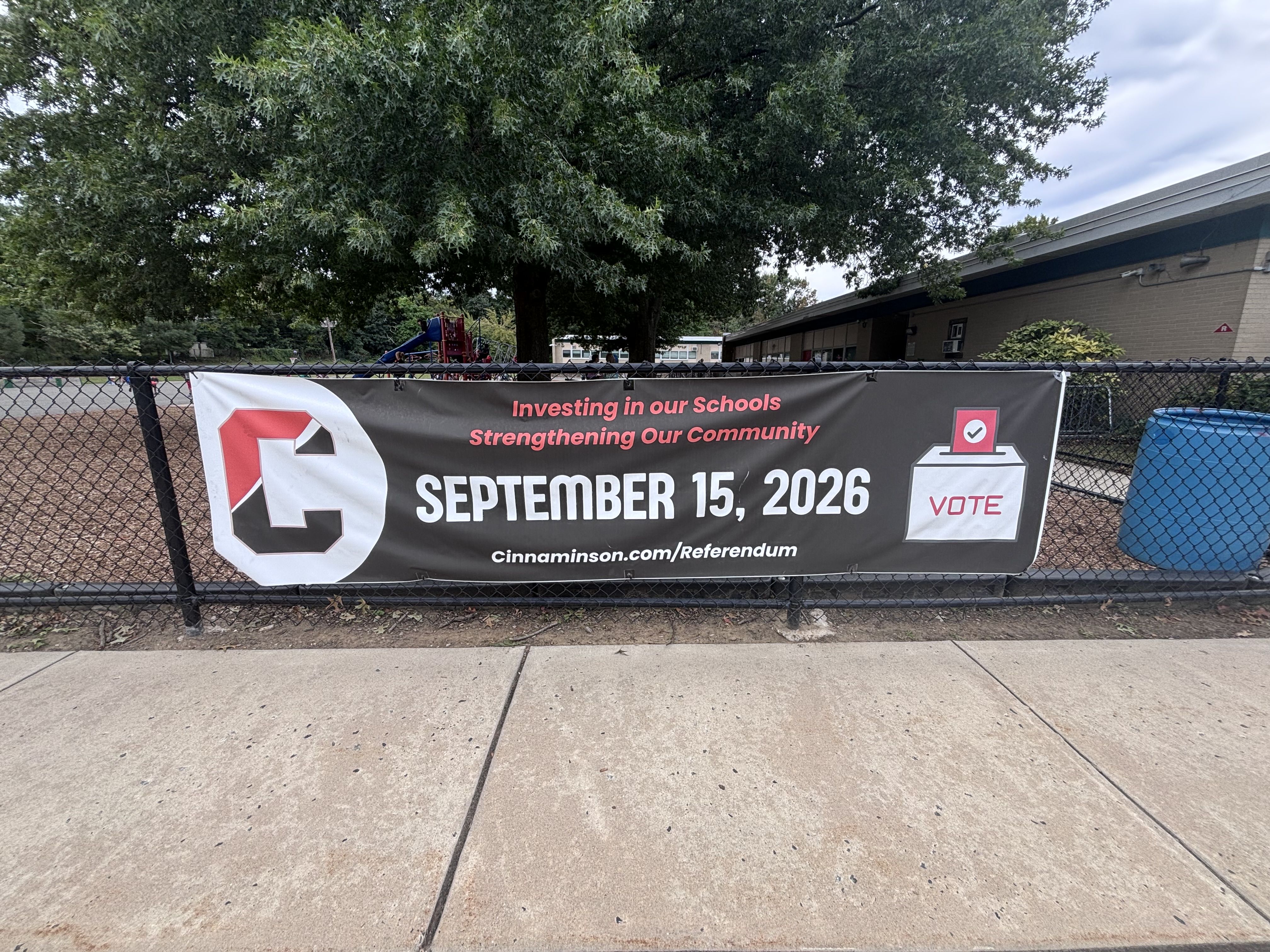
The referendum was approved by nine votes, 1,744 to 1,735, according to the district. Results for a second question were previously announced with voters rejecting a $18.3 million spending proposal 1,927 to 1,536.
The bond proposal was the largest in the history of the South Jersey school system. The first question had to pass for voters to consider the second question.
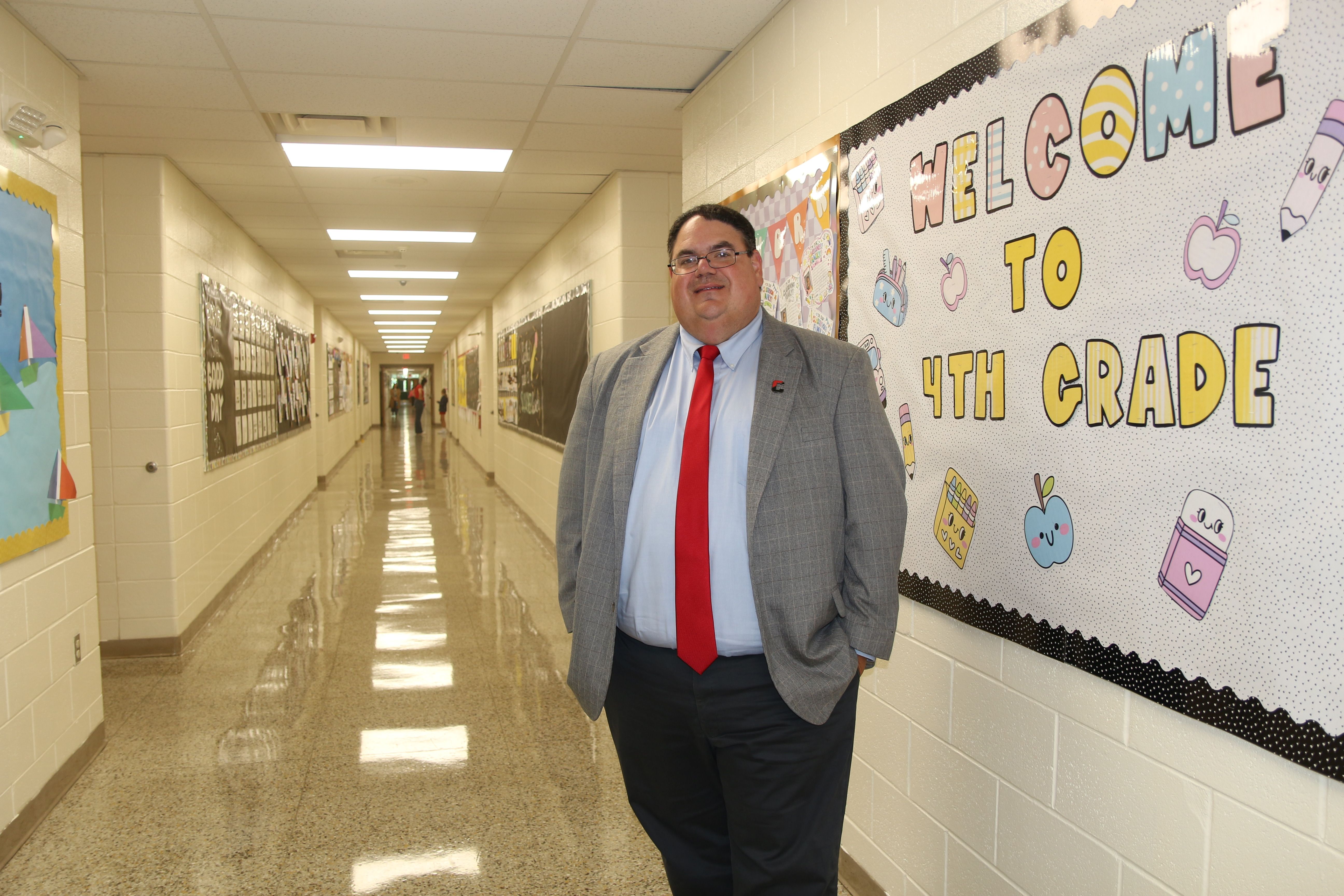
“We are deeply humbled by our community’s trust and investment in our schools,” Superintendent Stephen Cappello said in a statement. “Waiting for every mail-in ballot to be counted was an inspiring reminder of civics in action and proof that every single vote truly matters.”
The district plans to use the funds for improvement projects, classroom additions, HVAC upgrades, new water fountains, and renovated bathrooms.
The plan will add about $399 annually in taxes on a home assessed at the township average of $236,538, according to officials. The state will contribute $16.8 million.
Cappello said the approval will allow the district to address critical infrastructure needs and relieve crowded classrooms. Bidding timelines and construction plans will be finalized in the coming months, he said.
Question 2 would have generated funds to add classrooms at Memorial School, a new gym at Eleanor Rush Elementary, and a new synthetic stadium field at Cinnaminson High School.
Voters in Clementon overwhelmingly rejected a $13.5 million school bond question in the Sept. 15 special election that would have added about $243 annually to the tax bill for a home assessed at the borough average of $115,178. The funds would have been used to build an early childhood center for preschoolers.
The election was one of five times during the year that school boards may ask voters to approve a bond issue or special question. They are typically used to pay for projects districts cannot readily fund through their annual general operating budgets.
Voters in Clementon this week overwhelmingly rejected a $13.5 million school bond question that would have raised property taxes, while a $76 million referendum in Cinnaminson was too close to call.
If approved, the Clementon bond would have been used to build an early childhood center for preschoolers. The measure, according to officials, would have added about $243 annually to the tax bill for a home assessed at the borough average of $115,178.
Meanwhile, the outcome of Tuesday’s special election in Cinnaminson — the largest bond referendum in the district’s history — was too close to call, Burlington County election officials said.
Preliminary results indicate the school bond issue appears to be heading for defeat, officials said. There were 1,632 votes against the proposal and 1,610 in favor, with mail ballots and provisional ballots still being verified and counted, elections officials said. A final count is expected at the end of the month.
The Cinnaminson proposal, which included two questions, would add about $560 annually on a home assessed at the township average of $236,538, according to officials. The funds would be used for improvement projects, classroom additions, HVAC upgrades, new water fountains, and renovated bathrooms.
The first question had to pass for voters to consider a second question. However, the second question was defeated, 1,808-1,491.
Cinnaminson Township Public Schools Superintendent Stephen Cappello has said the district would regroup and figure out next steps if voters rejected the bond questions. Taxpayers are still paying down a 2014 referendum that added about $238 annually to local property taxes.
“The election numbers and the voter response will ultimately drive whether the Board seeks a future referendum,” Cappello said in a statement.
Tuesday was one of five times during the year that school boards may ask voters to approve a bond issue or special question. They are typically used to pay for projects districts cannot readily fund through their annual general operating budgets.
After months of legal wrangling, the Washington Township school board has decided to part company with embattled Superintendent Eric Hibbs.
The bitterly divided board voted 5-4 at a sometimes contentious meeting Tuesday night not to renew Hibbs’ four-year contract when it expires in June. Hibbs has been the South Jersey district’s chief since 2023.
Before the vote during a three-hour meeting, Hibbs read an impassioned statement defending his tumultuous tenure in the district. He cited millions of cost savings, the largest pre-K expansion project in the district’s history, and facility upgrades.
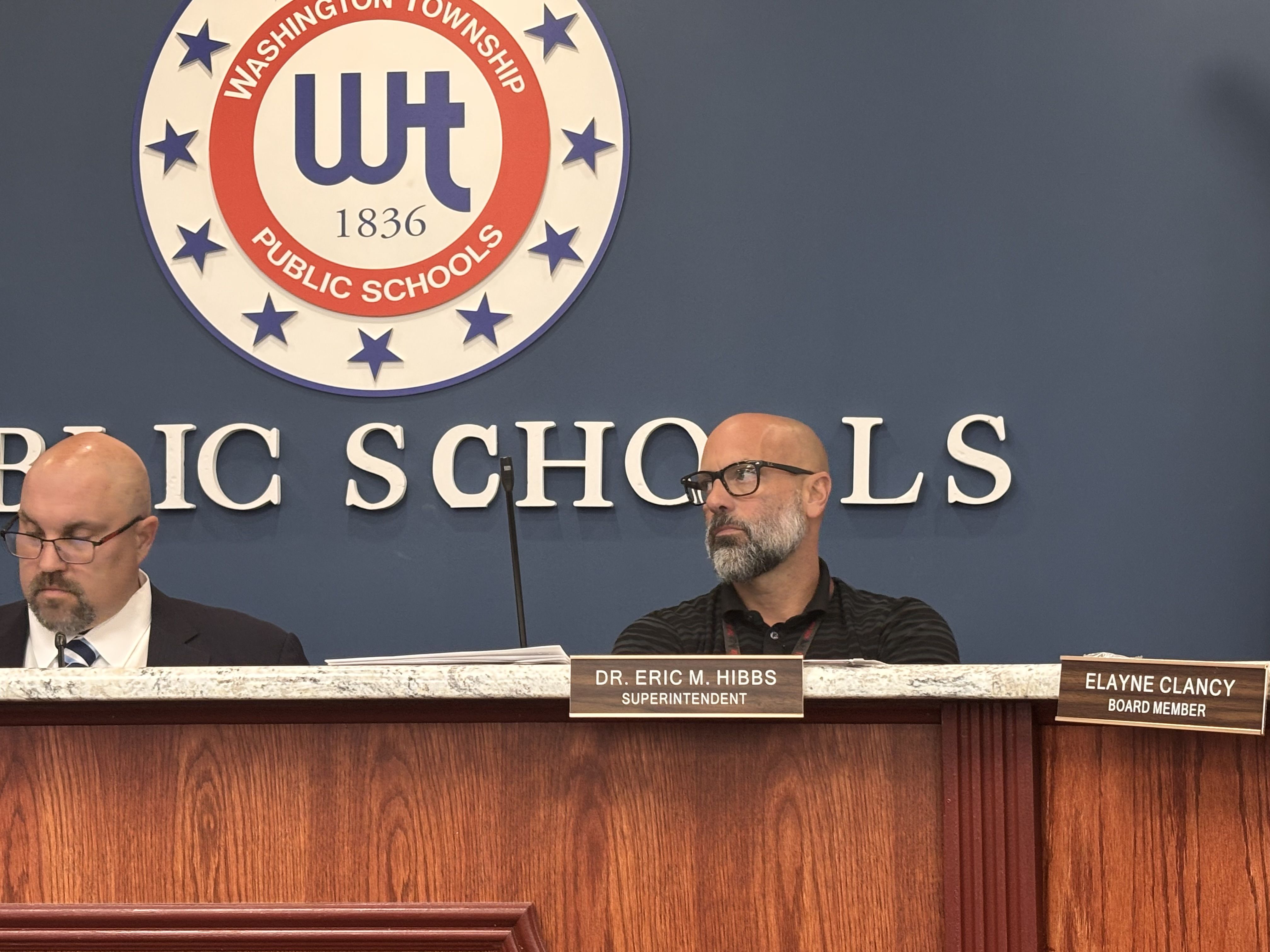
The Washington Township school board voted not to renew the district’s contract with Superintendent Eric Hibbs.Melanie Burney
“The question that you should just be ready to answer is why. Just why?” Hibbs told the board. “I have tried every day to lead this district with integrity, accountability, and unwavering commitment to its students.”
Board president Pat Blome declined to comment on next steps for the district. She voted in favor of the motion to serve Hibbs with notice that his contract would not be renewed.
“This is a very emotional night for everybody tonight,” Blome said before casting the deciding vote. “But I feel it’s in the best interest of the district for me to vote yes.”
Five favorable votes are needed to adopt measures concerning the superintendent. The board has been divided by infighting and has not been able to agree on other matters involving Hibbs.
A motion to award Hibbs $27,000 in merit pay for the 2024-25 school year was defeated 5-4 Tuesday night. It was the fourth time that Hibbs has requested the bonus pay for performance.
Hibbs has said he met four of the five goals approved by the board and listed with his contract. He earned $220,375 during the 2023-24 school year, putting him among the highest-paid superintendents in South Jersey.
According to his contract, Hibbs is entitled to an annual merit bonus of up to 14.99% of his salary if he meets the goals, which were set by a previous board.
Hibbs’ goals include completing Google training presentations, taking online professional development courses, and beefing up security processes.
He received $25,000 in merit pay for similar goals for the 2023-24 school year, according to district records obtained by The Inquirer under New Jersey’s Open Public Records Act.
Board member Scott Laliberte said a special committee composed of three board members without conflicts who discussed Hibbs’ request believed he had met the merit pay requirements.
“You did a great job and I appreciate all of your efforts. And you did all of that with the board fighting you on the majority of the way,” Laliberte told Hibbs.
Laliberte and the two other special committee members resigned Tuesday night. Laliberte expressed frustration that their recommendations were not followed.
The board had until December to notify Hibbs if his contract would not be renewed; otherwise, the contract would automatically renew for four years.
The board also rejected Hibbs’ five proposed merit goals for the 2026-27 school year. It agreed to allow Hibbs to carry over up to 20 unused vacation days.
The proposed goals were not made public Tuesday. Board member Julie Kozempel said she voted against them because she believed that “they were for things that a superintendent should already be doing.”
The decision to end ties with Hibbs was just the latest legal showdown between Hibbs and the board. He has a pending whistleblower lawsuit against several board members.
The nine-member board made few public comments Tuesday because of procedural rules. Six members were barred from commenting because they have a conflict of interest with Hibbs, whom they had suspended last year until he was reinstated by a judge.
In order to vote, the board had to invoke a rarely used “doctrine of necessity” because it otherwise would not have had a quorum. The six members either have family members who work for the district or are named defendants in Hibbs’ lawsuit against the district.
The doctrine of necessity allowed the conflicted board members to participate in the vote. But they were barred from any deliberations in executive session or public discussions.
Hibbs has been at odds with the board since last year, when local teachers union leaders filed a complaint against him with the New Jersey School Ethics Commission alleging that the superintendentprovided preferential treatment to a board member’s relative by changing a failing grade in September 2023.
The board suspended Hibbs in March 2025 and hired a conflict lawyer to investigate the allegations. Hibbs was eventually cleared of any wrongdoing and reinstated after a judge found that the board had violated the Open Public Meetings Act when it suspended him.
In his own ethics complaint, Hibbs accused Kozempel and board member Elayne Clancy of not following procedures when the board hired an insurance carrier in 2021, prior to his tenure as superintendent.
“I am proud that when I believed something needed to be said, I had the courage to say it,” Hibbs said Tuesday night.
In other business, the board agreed to reinstate the work schedule for nursing assistants whose hours were reduced because of budget cutbacks. Hibbs and business administrator Janine Wechter said the district will likely face a budget shortfall next year and cannot afford the additional expense.
“We can’t consistently adopt a budget and then turn around and change it. It’s alarming,” Wechter said.
Cinnaminson School District Superintendent Stephen Cappello has big plans for his South Jersey school system — if voters approve a $76 million bond referendum, the largest in the district’s history.
It would allow the district to make desperately needed changes and improvements in all five of its schools. Voters head to the polls Tuesday to consider the proposal that would raise local property taxes.
“This is a big one,” Cappello said in an interview. “This will be an important part of where we are moving forward.”
Cinnaminson voters will decide on two school bond referendums totaling $76 million during a special election on Sept. 15.Melanie Burney
If approved, it would help ease overcrowding at two elementary schools where some students attend classes in trailers, upgrade security systems, improve HVAC systems, and add new gyms and a high school stadium complex.
Cinnaminson in Burlington County and Clementon School District in Camden County are the only districts in the tri-county region with bond referendums in Tuesday’s special election.
Cappello acknowledged that referendum questions can be a tough sell especially amid tight economic conditions because they typically seek a property tax increase. Cinnaminson residents are still paying down a $40 million bond referendum in 2014 that added $238 annually to the average tax bill.
“No one takes those numbers lightly,” Cappello said. “We’re all sensitive about that.”
Cappello said the Burlington County district has been struggling with crowding in light of a growth explosion in the township. The district has about 600 more students than it had a decade ago, he said.
The district has spent millions to relocate students to six trailers the district calls “learning cottages.” It also leases space in a strip mall for administrative offices.
“There’s instruction happening in hallways, which is not our favorite,” Cappello said.
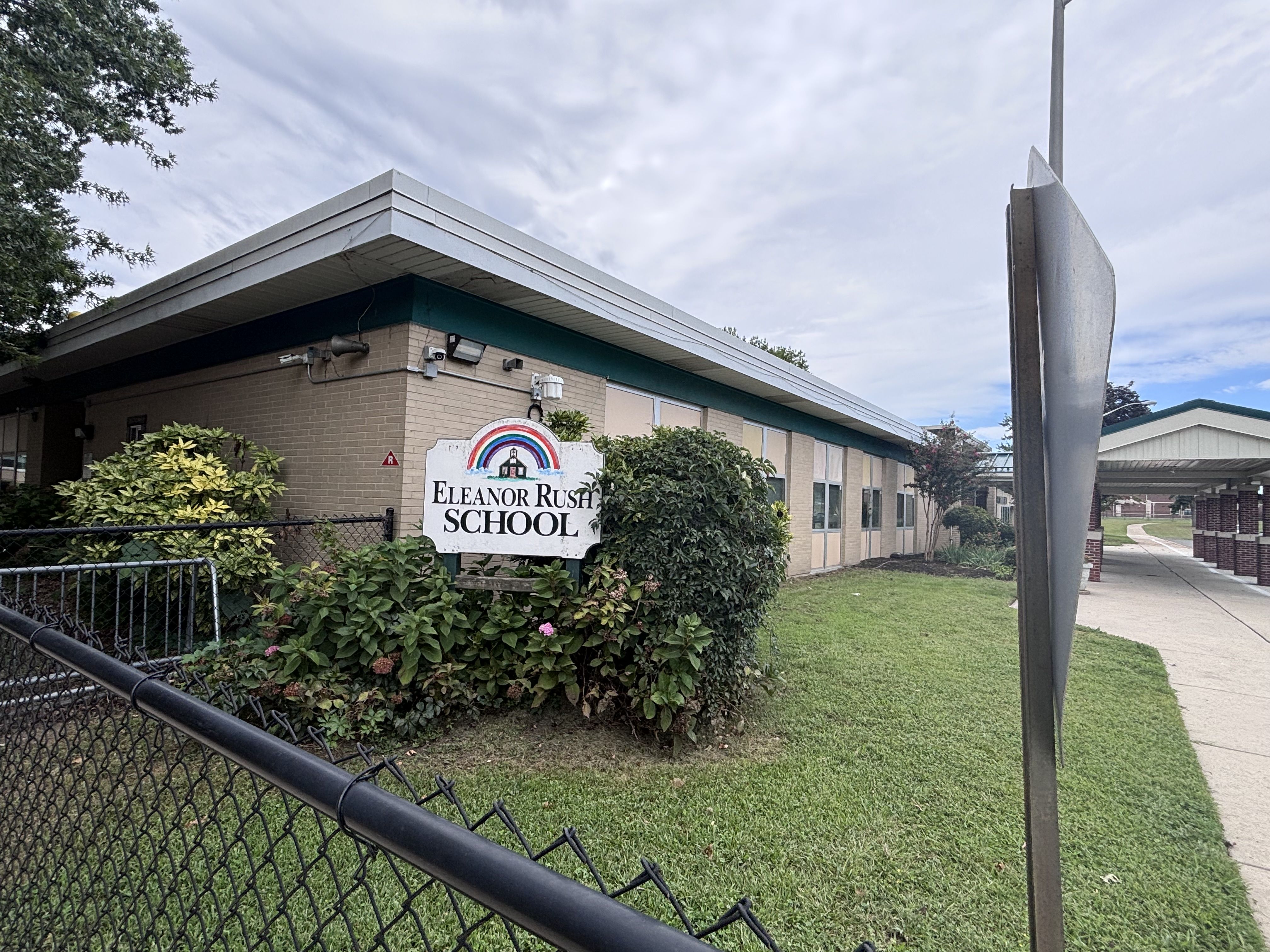
The Eleanor Rush School would get eight new classrooms and other improvements if Cinnaminson voters approve a $76 million bond referendum on Tuesday.Melanie Burney
The need is especially felt at Eleanor Rush Elementary where the all-purpose room is always bustling with activity. Because it is used for lunch, special classes including gym, music, STEM, and art cannot be held during the two-hour lunch period, presenting a scheduling challenge, Cappello said.
Tom Angelone, a STEM teacher at Eleanor Rush and a father of three in the district, said the district desperately needs more space. His classroom is located in one of several trailers on the complex.
Tom Angelone, a STEM teacher at Eleanor Rush Elementary.Melanie Burney
“I think we need to support the future generation,” Angelone said. “I will be voting yes on both questions. It’s a cup of coffee a day.”
Cinnaminson split its list of improvements into two bond questions. The first question includes a repaved parking lot at Memorial School, new fountains and renovated bathrooms at Eleanor Rush, six pre-K classrooms at New Albany School, a new esports arena and robotics classroom at the middle School, and a new roof and STEM lab at the high school.
Voters must approve question 1 in order to adopt the second question. It would fund a new one-story pre-K addition with six classrooms and bathroom additions at Memorial, a new gym addition at Rush, and a new turf field and track and field replacements at Cinnaminson High.
In Clementon, voters are deciding on a $13.5 million bond referendum to build a new early childhood center on a vacant lot. If approved, it would add about $243 annually to the tax bill for a home assessed at the borough average of $115,178.
The new center would include eight classrooms, a multipurpose room, and a playground area, according to the district’s website. Pre-K enrollment is expected to nearly triple to about 135 students for the 2027-28 school year, the district said.
An artist rendering of an Early Childhood Center proposed for the Clementon school district if voters approve a $13.5 million bond referendum in Tuesday’s special election.Clementon school disyrict
By shifting its youngest learners, the district said it would use the vacated space for other grade levels and electives, and add a dedicated sensory room for special needs students. The pre-K classes were temporarily moved this year to a site in Lindenwold, the district said. Clementon enrolls 621 students in kindergarten through eighth grades.
Statewide, voters in at least four other districts are considering 12 bond questions, according to the New Jersey School Boards Association. They allow districts to pay for projects that cannot readily be funded through their annual general operating budgets.
Tuesday is one of five times during the year that school boards may ask voters to approve a bond issue or special question.
The questions total more than $308 million with the state contributing about 40%, or roughly $122 million, if approved by local voters.
Cherry Hill Public Schools is battling with a group for parents of special education students about information tables at back-to-school night.
The Cherry Hill Special Education PTA, known as CHSEPTA, said it has sponsored tables at district schools at the beginning of the school year for 12 years, but the request was denied this year by Superintendent Kwame Morton.
It has filed a grievance with the nine-member school board after unsuccessfully lodging an appeal with Morton. The group has alleged discrimination by the district for refusing to allow an independent group to set up a table.
“This is a clear-cut case of discrimination,” said Jennifer Naddeo, president of CHSEPTA. “Our families that have children with special needs need to have their own table with representation as well.”
Naddeo said her group educates parents about their rights, offers assistance to help them get their children evaluated for services, and makes sure that individualized education plans, or IEPs, are followed. The group, which has about 400 parents on its mailing list, also brings in experts to speak, she said.
The Cherry Hill school district, which enrolls nearly 11,000 students, has a parent-teacher association at each of its 18 schools as well as a Zone PTA, an umbrella group. It also has a special education advisory group, required by the state for every public school district.
In a statement, the district said it“continues to review and strengthen procedures across the district to ensure greater consistency among our schools.”
It said districtwide organizations like the special education PTA will coordinate a table with Zone PTA. Naddeo said that process has not been followed previously and her group had not been notified of any changes in procedures.
Dr. Kwame Morton, Cherry Hill’s schools superintendent, at his office on June 3, 2024.Alejandro A. Alvarez / Staff Photographer
“This approach provides a clear and consistent process for participation while continuing to support opportunities for parent organizations to connect with families throughout the district,” the district’s statement said.
Naddeo said her group, which has about 80 dues-paying members, is a separate nonprofit and should not be required to seek permission from another group. The grievance asked the board to overturn Morton’s decision.
About one-fourth of Cherry Hill’s students are classified as special education and have IEPs, according to Naddeo. Others have a 504 plan that accommodates disabilities. Cherry Hill also sends some students to a school or specialized program outside the district because the student needs services the district cannot provide.
Cherry Hill Board of Education President Gina Winters told the special education PTA that the board lacked the authority to review an administrative decision by the superintendent.
Peg Kinsell, policy director of the SPAN Parent Advocacy Network based in Newark, said the dispute was troubling. Naddeo’s group has a reputation as an active advocacy group for special education, she said.
“I don’t know why you would want to put barriers in front of families getting information,” Kinsell said in an interview this week. ”I can’t figure out what the big deal is.”
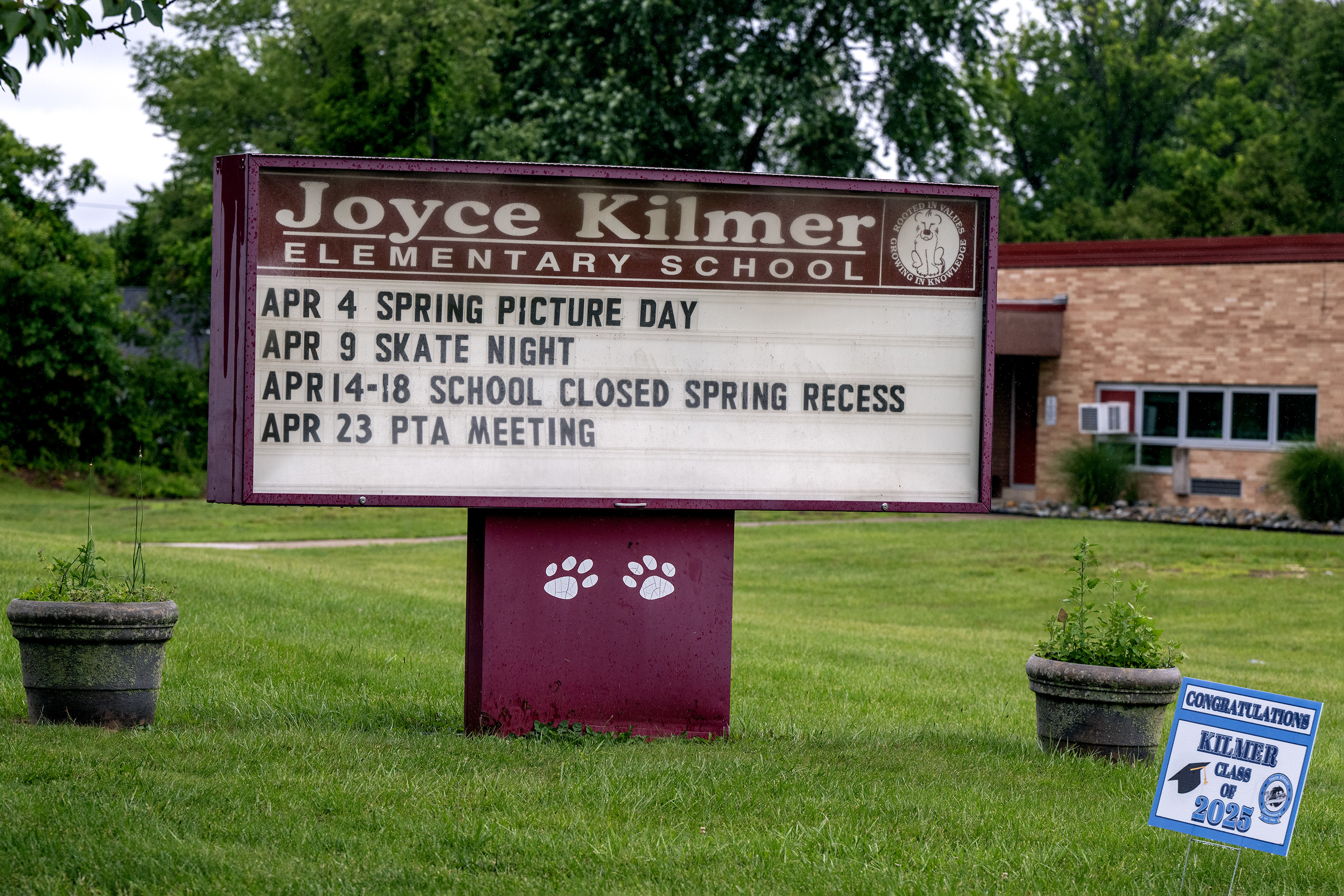
Joyce Kilmer Elementary at 2900 West Chapel Ave. in Cherry Hill, May 28, 2025.Tom Gralish / Staff Photographer
Naddeo said her group missed a back-to-school night held this week at Joyce Kilmer Elementary School because it was not given permission to have a table. The school PTA groups are geared toward general education students, she said.
“When your child is struggling, you want to be represented,” Naddeo said.
She said the group plans to set up information tables next month outside the Cherry Hill library and during the township’s Harvest Festival on Oct. 18.
As she welcomed her kindergarten class to New Albany Elementary in Cinnaminson Wednesday, veteran teacher Maureen Coller shook off a few nerves.
A smiling Coller stood at the entrance to Classroom 7 to welcome each student. Beginning her 26th year as an educator, Coller still gets excited and a little anxious about a new school year.
“First days are always a little bit of jitters,” she said. “You never know what’s in store.”
Across New Jersey, the state’s 1.4 million public school students are returning for a new school year. That includes first-timers like Coller’s class.
Nearly two dozen students carrying colorful backpacks and lunch boxes piled into her brightly decorated classroom. Most were excited, with only a few appearing apprehensive.
Shortly after arriving, Logan Santos, 5, raised his hand to get Coller’s attention across the room.
“Can I get a hug?” he asked trembling, his face crumbling.
Coller, a mother of five, hugged Santos and patted his shoulders. She showed him a photo of his older sister, Harper, a second grader in the same school, on her cell phone and told Logan he would get to see his grandmother, a cafeteria aide, at lunch time. He eventually settled down.
“He just got overwhelmed and missed his family,” Coller said.
Coller comforts kindergartner Logan Santos on the first day of school.Tom Gralish / Staff Photographer
Throughout the day, Coller put all of her young charges at ease, complimenting their outfits or giving them a reassuring gentle touch. She showed them the class pets — three live rabbits munching nosily in a cage named Kobe, Iverson, and Tim (Duncan), after the NBA players.
“I love bunnies,” said Lillian Geesaman, 4, the first to arrive. She put away her backpack in a cubby at the back of the room and found her seat at a table with a “welcome to kindergarten” mat.
New Albany enrolls about 640 students in kindergarten through second grade. There are 213 kindergartners assigned to 10 classrooms. Cinnaminson, like most South Jersey schools, has full-day kindergarten.
“I’m so excited to see the kids,” principal Valerie Jones said. “I get to see them grow throughout the year.”
Coller, 47, decided at a young age that she wanted to become a teacher, playing school with her dolls. After graduating from Chestnut Hill College, she began her teaching career in Philadelphia in 2000.
After giving birth to her first child, Coller moved to Cinnaminson, her hometown, to raise her family. A 1997 graduate of Cinnaminson High School, she met her husband in the Burlington County town, and the couple lives on the same street where she grew up.
During her 20-year career at New Albany, Coller has taught kindergarten and first grade. She believes she found her niche with the kindergartners.
“Kindergarten is where I really belong. You get something different every day,” she said. “I love their energy and I love creating a clean slate.”
Kindergartner Navy Lawrence is honored on her birthday with a special crown by teacher Maureen Coller on the first day of school at the New Albany School.Tom Gralish / Staff Photographer
New Jersey has encouraged all of the state’s more than 600 public school systems to offer free, full-day kindergarten. Currently, kindergarten is not mandatory in New Jersey. There have also been calls to mandate free preschool.
Experts say kindergarten is important because students learn basic concepts such as letters and numbers, as well as how to get along with others. It also helps develop social, emotional, and academic skills and boosts confidence.
Coller’s students spent the morning learning the routine of a school day. They sang the song of the day about a gray squirrel, colored, and listened to a story read aloud by Coller. A sign on the bulletin board reads “Believe in yourself.”
“It’s always exciting, hoping for a good year,” said Coller’s aide, Paula Otto.
Coller has earned a reputation as a dedicated and compassionate teacher. Earlier this week, she was inducted into the district’s Educator Hall of Fame.
“She’s an amazing teacher. They don’t make them like Maureen anymore,” Superintendent Stephen Cappello said.
Also honored posthumously in the 2026 Hall of Fame class was Fae Beth Zuckerman. She died about 10 years ago.
Cinnaminson teacher Fae Beth Zuckerman was posthumously indicted into the district’s 2026 Educator Hall of Fame. She died about 10 years ago.Courtesy of Cinnaminson Schools
After more than two decades in the same district, veteran educator Neil Burti is starting a new job: Mount Laurel Schools superintendent.
Burti spent nearly his entire career in nearby Cherry Hill schools, rising from teacher and coach to principal and most recently director of secondary education. His stint included taking over as principal at Cherry Hill East for several months, after a shake-up stemming from a lawsuit alleging a former assistant principal was subjected to discrimination and retaliation by the board and top administrators.
He is beginning a new chapter when the school year begins Wednesday for about 4,500 students as schools chief in Mount Laurel, a pre-K through eighth-grade district in Burlington County.
Burti, 50, succeeds George Rafferty, who retired this summer after leading the district for a decade. He took over Aug. 1 under a three-year contract.
In the first few weeks on the job, Burti said he has focused primarily on meeting as many stakeholders as possible — mostly staff — and getting ready to welcome students.
For his first year, Burti, who lives in neighboring Marlton with his wife, Jessy — his college sweetheart — and their four children, plans to visit every school to meet with more students and teachers and embark on a tour “to listen, learn, and lead.”
We talked to Burti about his decision to leave Cherry Hill, his priorities for Mount Laurel, the financial challenges facing all districts amid declining state aid, and the kind of superintendent he wants to become.
Thisinterview has been edited for length and clarity.
Why was this the right time to leave Cherry Hill?
Cherry Hill provided me tremendous opportunities as a young teacher, a young administrator, and then as a seasoned veteran. Twenty-four years is a long time.
I also recognize that change is healthy. I was at a point in my career where I was looking for some type of change, some type of new challenge, I wasn’t actively seeking a job, but when this opportunity presented itself, I knew this would be a dream position. The reality is that Mount Laurel is a destination district.
It became obvious to me that this was the right opportunity, the right choice, and Mount Laurel was the right place. I’ll always miss the connection to so many former students, families, faculty, and staff.
What did your special assignment at Cherry Hill East as principal teach you that you will bring to the superintendent’s job?
I felt privileged to be able to serve as principal at Cherry Hill High School East on special assignment.
What it reinforced for me is exactly what I already know about this business: There are things that are predictable, and there are things that are unpredictable.
As leaders, we have to be ready to handle both. Whether it’s something you see coming and can prepare for or something you’re dealing with reactively, you have to be ready. You have to be confident and competent enough to address both the predictable and the unpredictable.
What are your priorities for the first year?
My goal is to listen, learn, and lead, and I feel like I need to do it in that order.
That listening and learning will ultimately guide me as I move into the leading phase of my plan. It will have everything to do with stakeholder input and the data I collect during year one as we determine together the vision for the district.
The district is focused on academic achievement, partnering with families and the notion of belonging. That’s critical to me because we know in education, there’s a big difference between fitting in and belonging.
There are also clear goals around pre-K expansion, early literacy, and algebra readiness.
New Jersey school districts are struggling to operate with reduced state aid. What are Mount Laurel’s biggest budget challenges?
The challenges in Mount Laurel are no different than the challenges in other districts in Burlington County, across the state, and really across the country.
Those challenges have everything to do with an inadequate funding formula, the rising cost of health and energy, and a national teacher shortage.
With the uncertainty of the state budget, there’s no way to predict what will happen financially if the state funding formula doesn’t adequately fund districts. At this point, I’m not aware of staffing reductions, program cuts, or larger class sizes on the horizon here in Mount Laurel. We expect to be fully staffed for all certificated positions.
A year from now, what will tell you that your first year was successful?
The great thing about Mount Laurel is that substantive work has already been done. I view my role as building on that past success while keeping an eye on future improvement.
When you’re starting the role, you’re not necessarily beginning with your legacy in mind. It will really be about long-range planning for the district.
At the end of my first year, I want to be able to say that we have looked deeply at Mount Laurel, not just in terms of our organizational structure and processes, but through the lens of the challenges facing us.
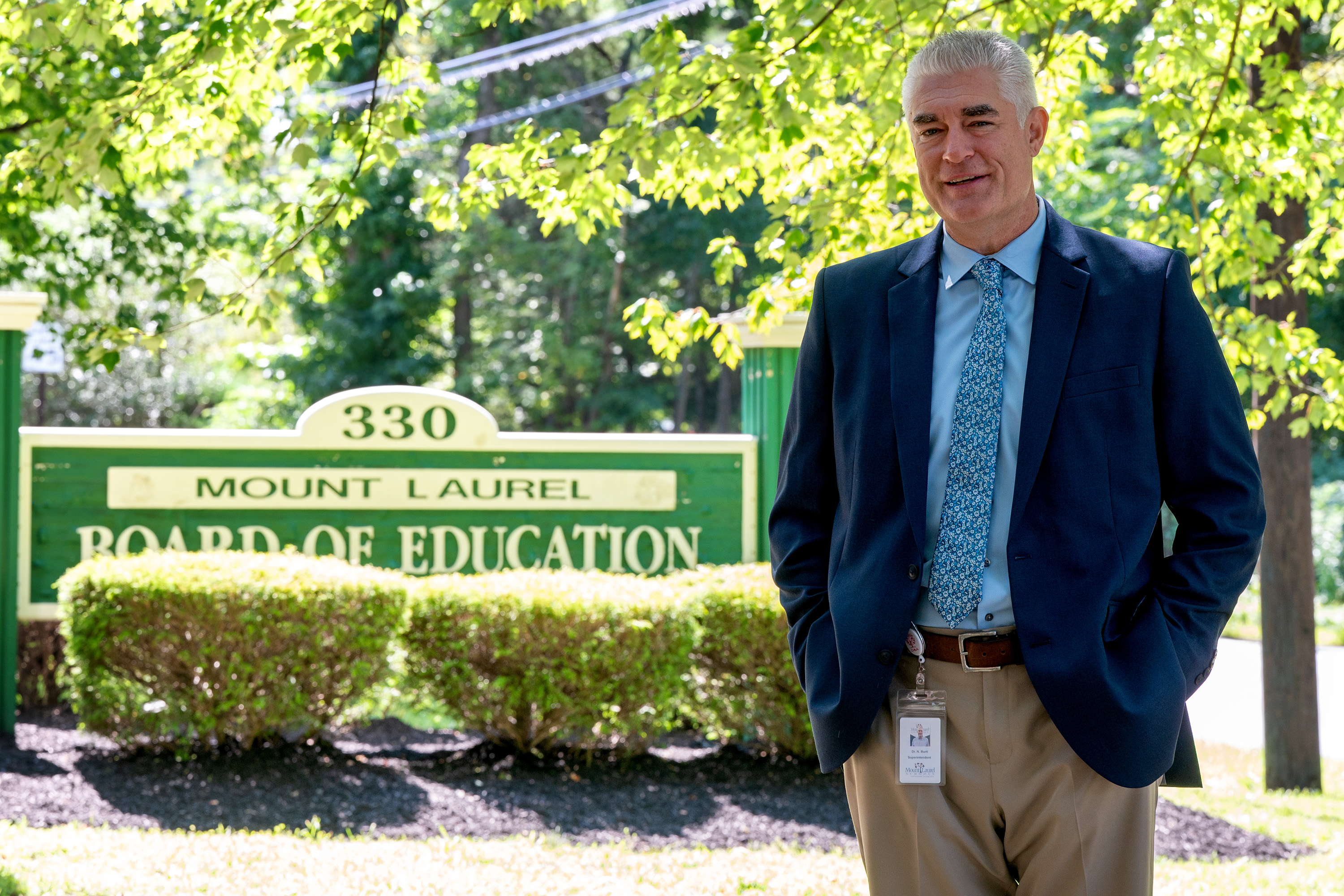
Neil Burti, new superintendent of Mount Laurel Public Schools, at Board of Education headquarters on Aug. 26. He previously was a teacher and administrator in Cherry Hill.Tom Gralish / Staff Photographer
The Camden school district has dropped its longtime mandatory school uniform policy at its five high schools.
Instead of wearing uniforms that included khaki pants and a shirt based on their school colors, students returning to school on Sept. 3 will have a dress code that allows more flexibility but bans durags, bonnets, hair rollers and curlers, pajamas, and revealing clothing.
Superintendent Alfonso Q. Llano Jr. said the decision was made after feedback from students and staff in the South Jersey school system. Elementary and middle school students will continue to wear uniforms. In a social media post earlier this month, the district explained the decision as a response to students who expressed “desire for greater opportunities to express themselves through their clothing while maintaining a safe learning environment.”
High school will also start an hour earlier at 8:05 a.m. and run until 2:25 p.m. The district said the earlier time aligns with national start times and better meets the needs of students who work after school or have extracurricular activities.
The new dress code has drawn mixed reaction from students and staff. It will impact students at the district’s two traditional high schools, Camden High and Eastside High, and three magnet schools, Dr. Charles E. Brimm Medical Arts High, Creative Arts High, and the Big Picture Learning Academy.
“I think it’s a good idea. It allows students to break the mode, creates more creativity,” said Odalys Dejesus, 17, a rising senior at Eastside. “It’s a good step forward.”
Former school board member Jose E. Delgado said the uniform policy was established more than two decades ago to improve security by making it easier to identify students entering buildings, curb bullying, and stop students from wearing gang colors.
Delgado and others who served on the board that adopted the uniform policy have asked state Department of Education Commissioner Lily Laux to review whether Llano followed procedures for switching to a dress code.
“It makes no sense,” Delgado said. “The uniform policy was working.”
A state education department spokesman said the dress code policy was a local matter. Camden has been a state-operated district since 2013.
State superintendent Alfonso Q. Llano Jr. speaks during the Camden City board of education regular meeting in Camden on Tuesday, April 21, 2026.Elizabeth Robertson / Staff Photographer
Delgado believes the dress code policy is too subjective and can be interpreted differently by school leaders. He also worries about enforcement.
“The teachers are not going to enforce this,” Delgado said. “They have enough problems.”
Camden Education Association President Pam Clark said she supported the new policy for high school students only.
“I’m for the district giving the students a chance to wear their regular clothes,” Clark said. “However, the students need to know there will be consequences if they do not come to school presentable.”
The policy also bans open-toe shoes, most face coverings like ski masks, baseball hats, short shorts and mini-skirts, and baggy pants with underwear showing. Hoodies are allowed but the hood must be removed when the student enters the building.
The policy calls for progressive disciplinary action for violators, beginning with a warning, and possibly escalating to in-school suspension and a meeting with a parent or guardian for repeat offenders.
Last year, then-acting Superintendent Davida Coe-Brockington said the district would enforce a long-standing policy banning students from wearing all-black outfits at the Camden High campus.
Interim state-appointed Camden school Superintendent Davida Coe-Brockington.Camden school district
The complex houses four separate wings, and students were assigned shirt colors based on their school. Coe-Brockington said the all-black outfits made it difficult for staff to easily identify which school a student attends.
Karen Borrelli, a veteran health and physical education teacher at Brimm, does not support the move to a dress code. She said the uniforms gave the schools identity, especially at the Camden High campuses. Some parents depended on district-issued vouchers to purchase uniforms, she said.
“They don’t have the money to get outfits and keeping up with the Jones,” Borelli said referring to possible peer pressure students may face to wear the latest fashions. “Our parents can’t afford that.”
Llano said students may still opt to wear uniforms. Borrelli expressed doubt that they would because they would stand out.
“The focus shouldn’t be on what they are wearing to school, but on academics,” Borrelli said. “It’s going to be a mess.”
Tuskegee University sparked a national debate earlier this year when president Mark Brown tackled the thorny issue of proper attire for students at the historically Black college.
Like Camden, Tuskegee banned students from wearing hair bonnets and durags, which customarily are worn to protect Black hairstyles while people sleep.
The Philadelphia school district leaves it to schools to set a dress code policy for students “so that their appearance does not constitute a health or safety hazard.”
Last school year, an uproar flared at Philadelphia High School for the Creative and Performing Arts when female students complained they were unfairly flagged for dress code violations.
Students said they were told by administrators that the crackdown was imposed because men outside of school were following female students. The district said it would review the dress code policy.
Staff writer Kristen A. Graham contributed to this report.
New Jersey students are going back to school with a new phone-free routine in September.
Starting on the first day of classes, all K-12 students in public schools must power off and put away phones and most internet-enabled devices before the bell rings, with only a few exceptions.
Heartily endorsed by educators who believe it will ease classroom distractions, promote academic performance, and improve student mental health, New Jersey’s new rule marks a big change for students accustomed to having their cellphones and other devices nearby and checking them regularly — even during class.
Some districts, such as Cherry Hill and Woodbury, have voluntarily implemented cell phone bans. Woodbury Superintendent Andrew Bell said most students embraced the restrictions and spend more time interacting with each other during breaks.
“At this point, it’s simply part of our culture and daily routine,” Bell said of the cell-free policy, passed two years ago.
The state left it to local school boards to determine how to implement the law at a district level, while complying with the guidelines. Because policies may vary, parents and students should check with their local district.
The law requires the state’s nearly 600 public school districts to adopt a policy banning the use of cell phones and other personal devices for the entire school day. The law allows some flexibility on enforcement and how the devices are stored.
The state Department of Education issued guidelines this summer to help district set local policies. Some districts including Cherry Hill in Camden County and Washington Township in Gloucester County this month are voting on amending existing policies.
Districts had to decide whether students would be required to store their phones in their lockers or bins, in locked pouches, or in their backpacks with their personal belongings. The devices must be powered off.
The guidelines apply to all internet-enabled devices, typically smartphones, smartwatches, smart glasses, and ear buds, or any device that can access online content.
Some districts have also included other communication devices like flip phones, two-way radios, and walkie-talkies. Some rules may vary, for age appropriateness, depending on grade level, too.
What is bell-to-bell?
Cherry Hill school board member Bridget Palmer explained the restriction this way at a recent board meeting: “The minute you walk in to the meeting, you leave.”
The law restricts students from using their phones during lunch and study hall periods.
Districts get to decide whether phones can be used before and after school on school grounds, on school buses, and during school-sponsored events, such as athletic events and extracurricular activities.
“We’re not going to tell kids they can’t use their phones when they’re at Disney,” Washington Township Superintendent Eric Hibbs said at a board meeting. “We couldn’t enforce it anyway.”
Districts must also provide parameters for how and when parents can contact their children during an emergency. Hibbs said Washington Township will have phones available in every office that a student can use, and is developing a way for parents to contact their child on a district-issued device.
“A true emergency — all of this goes away,” Hibbs said. “No child will ever get in trouble for calling 911 for reporting an emergency.”
Where will the phones be stored?
The law lets the districts decide where the phones will be stored during the school day. The state provided some funding for districts to purchase locked Yondr pouches. Others are designating lockers or bins.
Lianah Carruolo, 12, a seventh-grade student, unlocks her cell phone pouch outside the junior high entrance to Woodbury Junior/Senior High School on Friday, Sept 20, 2024. Alejandro A. Alvarez / Staff Photographer
Cherry Hill’s amended policy would allow students to keep their phone in their personal belongings. It must be turned off, not just on vibrate or silent.
“We prefer that you don’t bring it to school, but if you bring it to school, it has to be off and in your backpack or your locker for the duration of the day,” Palmer said.
In Camden, the district’s new “off and away” policy says phones should be off and out of sight. They are permitted at a teacher’s discretion for instructional purposes. After a first offense, the phone will be confiscated and returned to the student at the end of the day; for subsequent offenses, the phone will be returned to a parent or guardian.
In Washington Township, pre-K to fifth graders must store their phones in their backpacks, sixth to eighth graders must store theirs in their lockers, while high schoolers will be allowed to keep theirs in their backpacks.
Hibbs said few high school students use their lockers so it was decided to allow them to keep their phones in their personal property. With about 2,100 students, the high school is among the largest in South Jersey.
Are there any exceptions to the law?
The law mandates exemptions for students with a disability or an Individual Education Plan (IEP) or 504 plan that stipulates the need for an internet-enabled device.
The exemptions include students with a health plan, such as students with diabetes who need their phone to check glucose levels.
There are also exemptions for students who use the cell phone for translation, or are the primary caregiver responsible for the well-being of a family member.
School policies must also outline procedures for mobile devices that will be implemented in the event of an emergency, such as a lockdown.
In the event of a family emergency, parents should contact the school office, and not the student directly, according to the guidelines.
How will violations be handled?
Districts are posting the new policy on district and school websites, in newsletters, and on social media sites to inform parents and students about the changes. They may also review it at back-to-school-nights, orientations, and training sessions for staff.
The disciplinary action may vary, depending on the district, and typically begins with a warning that could escalate with additional violations. Districts must specify how a phone may be confiscated.
Washington Township’s policy calls for progressive discipline, based on grade level. Administrators, not teachers, will be responsible for confiscating a phone if warranted.
There are 10 possible “consequences” for high school students beginning with an administrative warning for the first two violations, Hibbs said.
For additional violations, students will get a lunch detention and have their phone confiscated for three to four infractions, Hibbs said. Sanctions for additional violations include requiring a student to store the phone in a locker or main office, a two-day internal suspension, and a mandatory parental meeting.
“It’s going to be a very big change, but we’re going to navigate it,” Hibbs told the board.
When Gregory Williams stepped into Ravitz ShopRite in Cherry Hill, he was on a mission, carefully selecting fresh fruit to add to his shopping cart.
After stocking up on strawberries, peaches, nectarines, and a pineapple, Williams moved quickly to the meat section to peruse his options.
“I’m on the healthy side,” said Williams, 29, of Camden.
Williams got a ride recently to the ShopRite courtesy of a new program that offers free door-to-door transportation to the supermarket to Camden residents.
Camden resident Gregory “Baby Face” Williams arrives to take a van to the ShopRite in Cherry Hill Tuesday, Aug. 4, 2026. Pastor Amir Khan (left) is on a mission to help residents eat healthier, as Camden is a food desert and doesn’t have any grocery stores. With a grant from FEED NJ, Khan is picking up residents and transporting them free of a charge to the suburban store.Tom Gralish / Staff Photographer
It’s funded by a grant from Food Equity and Economic Development in New Jersey, or FEED NJ, which seeks to provide residents in food deserts like Camden and Salem with better access to fresh, affordable, and healthy food options not always available in their local community.
Camden, a nine-square-mile city of about 71,000, has not had a full-service supermarket since 2013, when the Pathmark store on Mount Ephraim Avenue closed. The city tops the state’s list of 50 food desert communities.
Those with cars or access to public transportation travel to nearby suburban communities or shop at pricey neighborhood corner stores or bodegas with fewer healthy options.
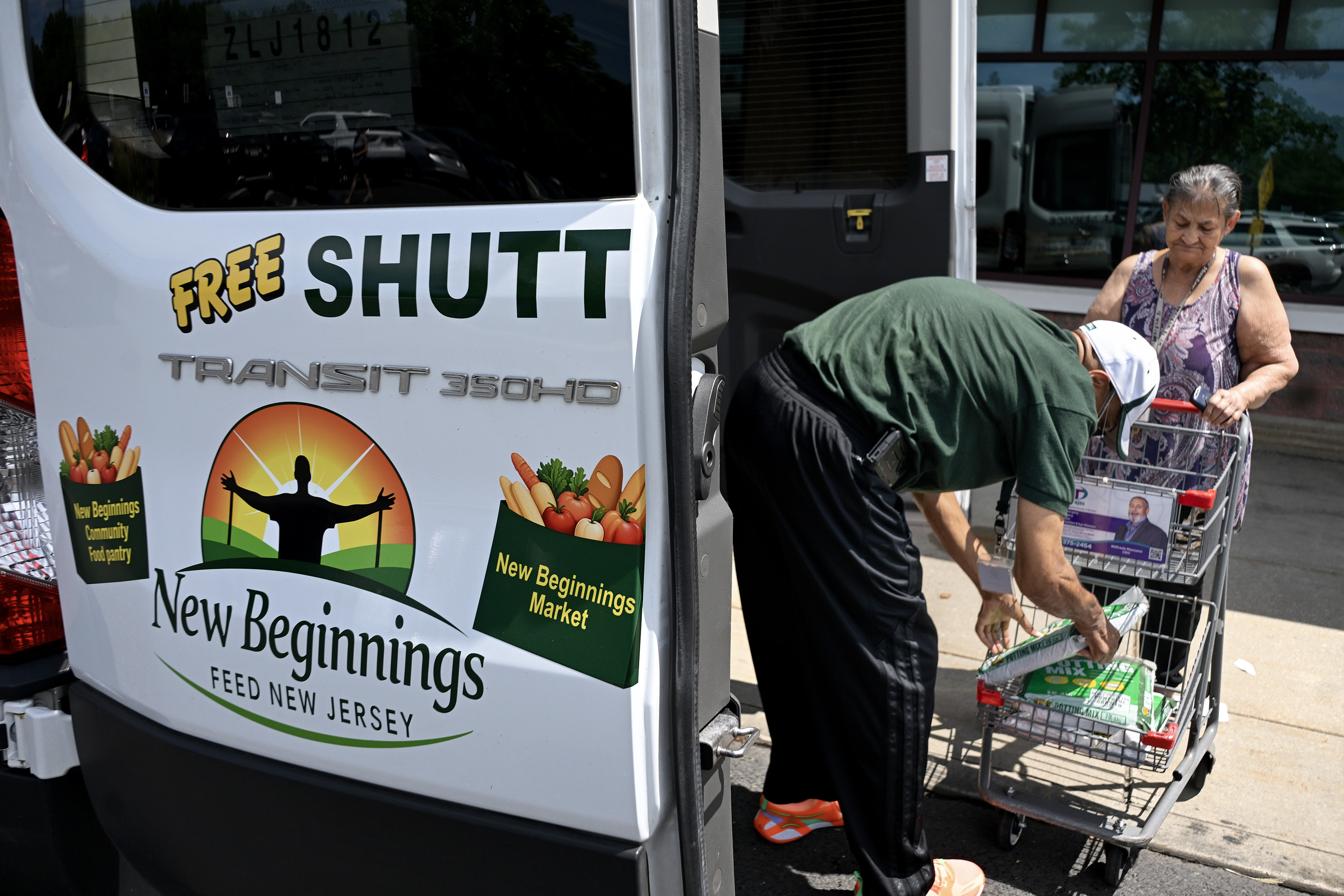
After efforts to bring a supermarket to Camden fell short, Pastor Amir Khan launched the free shuttle service with a $487,000 FEED NJ grant awarded earlier this year from the New Jersey Economic Development Authority (NJEDA). He purchased three vans to transport Camden residents to the supermarket along with equipment for a pantry.
“I knew that this was what was best for people of Camden,” Khan said. “God blesses us to be a blessing to others.”
Van driver Lonnie Watkins helps Camden resident Agripina Vega unload her cart after shopping at the ShopRite in Cherry Hill Tuesday, Aug. 4, 2026. Camden is a food desert and doesn’t have any grocery stores. Pastor Amir Khan is on a mission to help residents eat healthier. With a grant from FEED NJ, Khan is picking up residents and transporting them free of a charge to the suburban store.Tom Gralish / Staff Photographer
The grant was made through a $30 million state pilot program that awards funds for projects to improve food access and food security in the New Jersey communities most in need, said Tara Colton, chief economic security officer at NJEDA.
Nearly $9 million was awarded to projects such as urban farming and fresh markets in Camden, Colton said, and statewide, 72 organizations received grants.
“Food security is crucial to the state’s economic success,” Colton said. “We need to ensure that everyone has their basic needs met.”
Agripina Vega, 75, was happy to get transported from the Riverview Towers, a building for senior citizens in Camden. Normally, she has to wait until her daughter-in-law can pick her up.
“I love it,” Vega said, standing in front of ShopRite waiting for a ride home after purchasing meat, fruit, and dog food.
Khan operates the shuttle through his New Beginnings Behavioral Health, a faith-based nonprofit that helps unhoused people, people recovering from addiction, and returning citizens transition back into society.
In addition to the shuttle service, the center provides a community food bank and pantry. It also has several shelters, provides job training and placement, and offers mental health and drug counseling.
Khan believes his mission is “changing and transforming lives.” He encourages clients to follow a motto on a sign in the lobby that reads: “Accept what is. Let go of what was. Have faith in what will be.”
Jay Rutherford, the program’s supervisor, hopes others will learn from his life. He was released from prison in 2023 after serving 31 years for felony murder.
“I was in a bad situation,” said Rutherford, 52. He was 19 when he went to prison.
Khan said his work at New Beginnings was inspired by his father, a doctor in Camden who often provided free treatment to patients unable to pay. His goal is to help residents choose healthier lifestyles.
The shuttle service to ShopRite is available to Camden residents only, said Lorene Watkins, a director at Khan’s organization. It operates Mondays through Fridays, and occasionally on Saturdays to meet demand, she said. About 25 people are transported weekly, she said.
Camden resident Ryan Crews (right) shops at the ShopRite in Cherry Hill Tuesday, Aug. 4, 2026. Tom Gralish / Staff Photographer
“It’s terrible that there’s no supermarket here,” Watkins said. “These are people, too, and they should have a supermarket.”
Colton said there are “promising efforts” to eventually locate a supermarket in Camden, perhaps with a smaller footprint. Meanwhile, the state is funding food access programs to help meet the need, she said.
The state is not “giving up the goal of a full-service supermarket,” Colton said.
Watkins said a mobile market stocked with groceries will be added to the New Beginnings fleet in a few months. It will make stops around Camden and residents can purchase items from the van, she said.
Since it began a few weeks ago, the shuttle service has added stops at Walmart and Aldi stores in Cherry Hill to the routes, Khan said.
“We want to be a convenience,” he said. “Anything we can do to get people to eat healthier.”
The family-owned ShopRite supported the shuttle grant, said Jason Ravitz, vice president of operations for the Ravitz Family Markets. It has also donated food gift cards, Watkins said.
“Hopefully, people’s dollars can go further,” Ravitz said. “We were always taught you have to be there for the community.”
Camden residents Gregory “Baby Face” Williams (left) and Ryan Crews (right) shop at the ShopRite in Cherry Hill Tuesday, Aug. 4, 2026. Tom Gralish / Staff Photographer
First-time shopper Benjamin Moore, 33, picked up fresh fish, chicken, and dairy products. He typically shops at a corner store.
“There’s a lot more stuff here, more of a variety,” he said.
Kathy Mason, 65, made a shopping list before traveling to the store and pulled it out to make sure she didn’t forget anything. She navigated the massive store picking up items.
“I don’t have that much money at all,” Mason said. “For the whole month, it’s really tight.”
Camden resident Kathy Mason displays her shopping list at the ShopRite in Cherry Hill Tuesday, Aug. 4, 2026. Camden is a food desert and doesn’t have any grocery stores. Pastor Amir Khan is on a mission to help residents eat healthier. With a grant from FEED NJ, Khan is picking up residents and transporting them free of a charge to the suburban store.Tom Gralish / Staff Photographer
Like many of the other riders, Mason receives Social Security or Supplemental Nutrition Assistance Program food assistance benefits. They try to make healthy choices and stretch their dollars.
“Sometimes, if there is something I really want, I can’t get it,” said Williams, who receives $277 a month in food assistance. “You have to pay your bills.”
To schedule a pickup with New Beginnings Behavioral Health’s shuttle, call 856-588-0807.