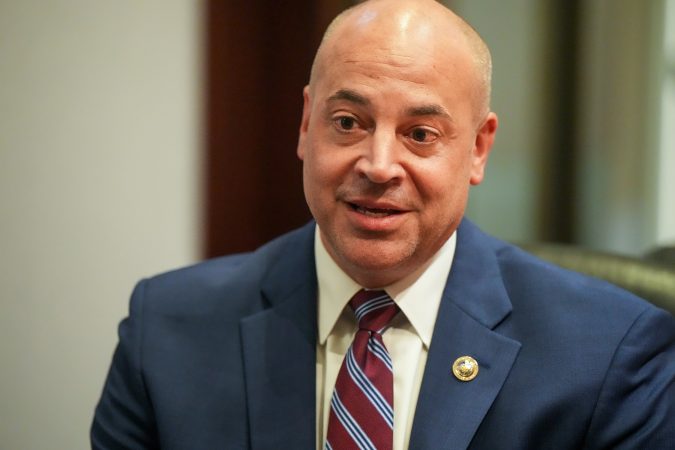
Author: Jesse Bunch

  • Pa. Attorney General Dave Sunday talks Supreme Court’s Krasner ruling, abortion appeal

    Pa. Attorney General Dave Sunday talks Supreme Court’s Krasner ruling, abortion appeal

    Attorney General Dave Sunday has spent 18 months as the state’s chief law enforcement officer, overseeing a sprawling office that handles criminal prosecution, civil litigation, consumer protection services, civil rights enforcement, and more.

    In that time, the 51-year-old Republican and Harrisburg native says, he has taken on issues ranging from the opioid crisis to illegal crime guns. And last week, the Pennsylvania Supreme Court handed his office broad authority to review the efforts of Philadelphia prosecutors to overturn murder convictions they have called unjust, a signature initiative of District Attorney Larry Krasner’s office.

    In a recent interview at his Philadelphia office, Sunday talked about that and more.

    What is your reaction to the Supreme Court ruling on the work of District Attorney Larry Krasner’s Conviction Integrity Unit?

    Obviously, it’s an unprecedented ruling.

    Oftentimes, the best outcome is through the adversarial process. We work with the Philly DA’s office in a lot of different areas, and I viewed this ruling as any other that provides me with instructions on a way on which I have to run my office.

    Moving forward, the ruling requires your office to review any post-conviction concession that Krasner’s office aims to pursue. How will that work?

    There are questions. How many times will we have to intervene? What will that do to staffing? Will we have the logistics and resources to do it appropriately? I think that process will unfold over the next month or so.

    There’s no other real comparison for this ruling, and so what I can say very simply is this: It is absolutely crucial that there is a voice for the families of victims, and at the same time, I think it’s crucial to make sure that we protect the rights of individuals who are charged with crimes and convicted of crimes.

    That balance is found in applying the law and the facts to the issue. That’s something we will enthusiastically do.
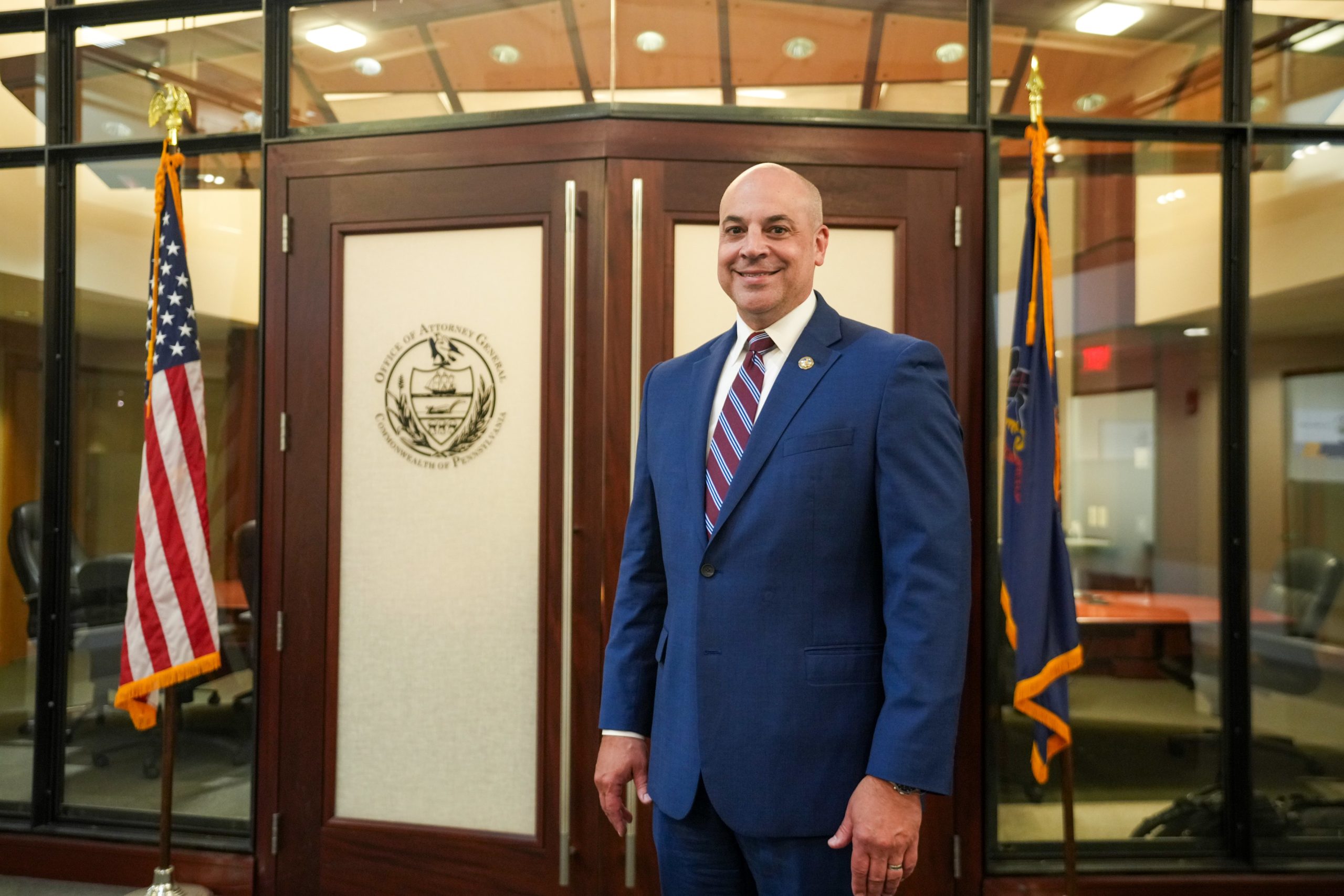
    .Assistant General David Sunday, in Philadelphia, June 23, 2026.Jessica Griffin / Staff Photographer
    Since Krasner first took office, his prosecutors have supported efforts to overturn around 115 convictions. Given the Supreme Court’s findings, do you now question whether some of those overturned convictions should be reconsidered?

    Well, we have to look at the legal process there. For individuals who the court has already ruled in a manner in which they’re out of prison, those cases are done.

    But with cases that are still going through the appellate process, individuals that are incarcerated, those are situations where we’re going to have to take a look at it. I mean, this is very serious, and when the Pennsylvania Supreme Court rules in this manner — not just the ruling itself, but the verbiage — I, as attorney general, take that extremely seriously.

    We will do our job, and we’ll do our duty, and we’ll review it, but it’s also important to understand that this isn’t a quest to prove someone wrong. It’s a quest to ensure that all parties are zealously advocated for.

    Krasner has strongly opposed the ruling. He’s likened this issue to the struggles of the Civil Rights Movement and said that the decision undermines the votes of those who elected him to office. What is your response to that?

    I don’t think that it benefits anyone for criminal justice leaders to editorialize a lot of the work we do.

    It’s critical that the citizenry knows and understands that their case will be dealt with by applying the facts to the law — and I know that’s not the most exciting answer, but there are things that are in my control and there are things that aren’t in my control, and his reaction to anything is completely out of my control.

    The last thing individuals who live in the community want to hear are elected officials yelling at each other. They want to see outcomes.

    Earlier this year, justices ruled that mandatory life sentences without parole for those convicted of second-degree murder are unconstitutional. What are your thoughts on that?

    Third-degree murder, second-degree murder, those are cases where the acts resulting in the crime are vastly different case to case. As a prosecutor, I’ve tried horrific second-degree murder cases — one was an in-home burglary where an individual was left face down on the ground, duct-taped, and they ultimately died from positional asphyxiation, which really is torture.

    At the same time, there are second-degree murder cases where you have multiple codefendants, and — this case is highlighted a lot — one of the codefendants pulls a gun out, kills an individual, and all those codefendants, because they were acting in concert and furthering some conspiracy, they’re all guilty of second-degree murder and they’re in for life.

    So there are second-degree murder cases where the individuals should have an opportunity for parole, and at the same time, there are cases that are absolutely horrific, where individuals should spend the rest of their lives in prison.

    The important place we’re in now is the legislative process, moving forward to ensure that the punishment is commensurate with the harm caused in the crime.

    Violent crime has fallen dramatically from its pandemic-era highs in Philadelphia and across the state. Should the attorney general’s office get some credit for that?

    There is no one individual or agency that can take credit for these outcomes. We’re with our federal partners, we work with everybody.

    After I was elected, some of the very first calls I made were to the Philadelphia mayor and the police commissioner, and I made it very clear that we’re partners. I’m excited, let’s go. And that’s what we’ve done.

    The Attorney General’s Gun Violence Task Force is a huge part. We do everything we can every day to go after gun traffickers, illegal straw purchasers. We’ve removed more than 500 crime guns off the streets [statewide] in 2025.

    In addition to that, our Bureau of Narcotics works every day in Philadelphia. Last year, we removed 56 million doses of fentanyl from the streets, and a large portion of that was in the city.

    The Commonwealth Court struck down a decades-old law that banned Pennsylvanians from using their Medicaid benefits to pay for abortions, and last month, your office appealed. Why?

    A lot of people don’t understand the role of the AG in a lot of issues. In Pennsylvania, we have the Commonwealth Attorneys Act, the rules that dictate the job, and one of the rules in there is that the attorney general shall defend the constitutionality of statutes in Pennsylvania.

    I have irritated the entire political spectrum, because I am defending statutes whether you like them or not. That’s literally my job. What a lot of people don’t understand is that the [Medicaid] law is part of the Abortion Control Act — the same law that allows abortions to occur up to six months of pregnancy, the very same law.

    In that law is a subsection that also says that government funds cannot be used for abortions — so I’m defending the abortion law in Pennsylvania, just like I would any other section of that law.

    Critics say that by appealing the ruling and prolonging this issue, you are denying Pennsylvanians of what the court called a “fundamental right to reproductive autonomy.” How do you respond?

    Just like every law we defend — every single one — there are people that like it and don’t like it, and they will have commentary. I certainly respect their absolute right to have that commentary.

    What I will say is, this decision has nothing to do with that. It is the job of the attorney general to defend the statute.
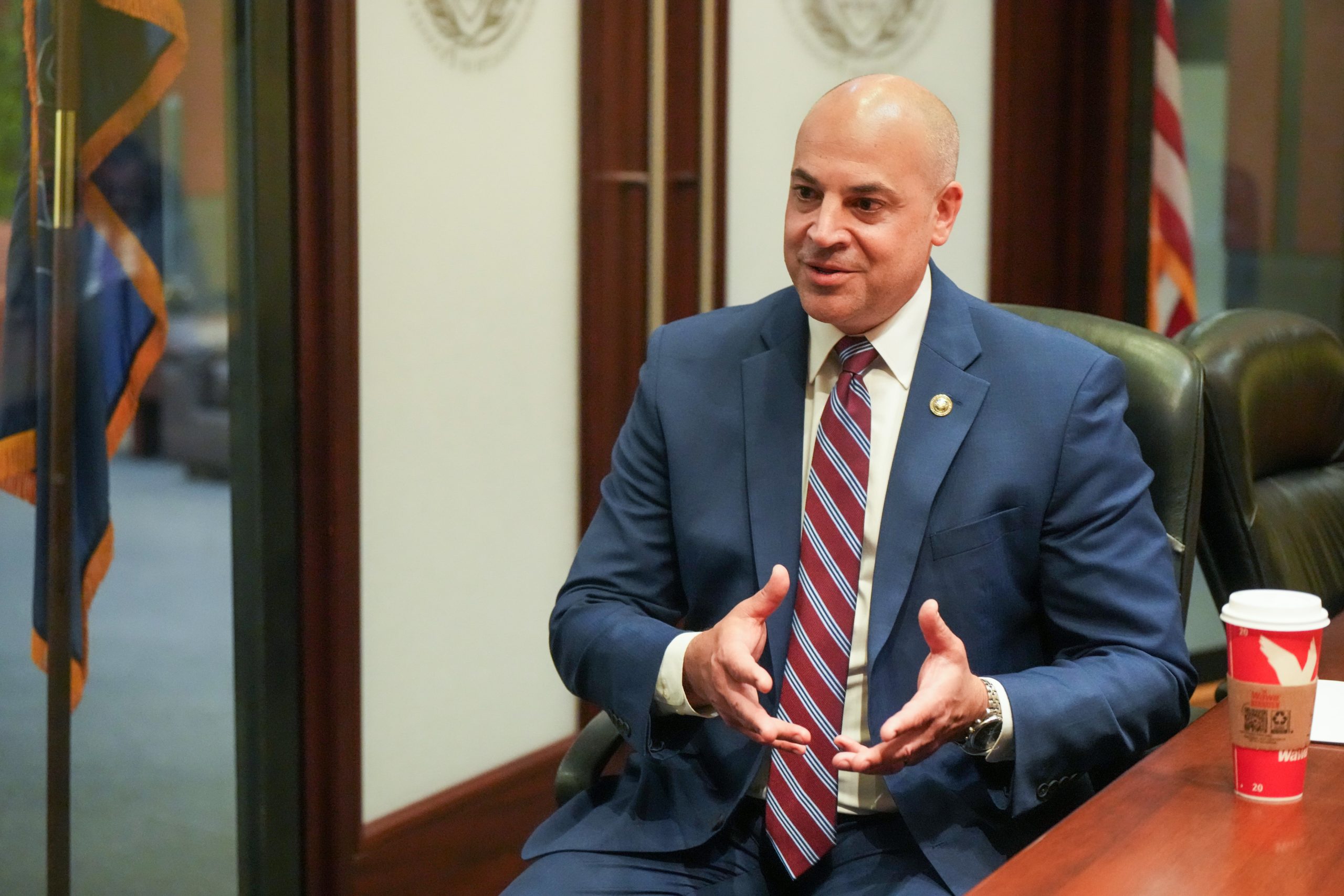
    .Assistant General David Sunday, in Philadelphia, June 23, 2026.Jessica Griffin / Staff Photographer
    What would you say has set your tenure apart from your predecessor, Gov. Josh Shapiro, and his appointed successor, Michelle Henry?

    Very simply, I came into this job as a prosecutor. I ran on public safety. I wasn’t a legislator, so when I look at the office, I view it as a place where you follow the facts in the law, and you fight hard to keep people safe.

    With that being said, I have hyper-focused on issues impacting citizens. We have huge crises in Pennsylvania that need to be addressed, specifically the mental health crisis.

    When I came into office, I saw our prisons are full of people that have mental and behavioral health challenges. Individuals go to jail solely because they have a mental health crisis, and what I want to see are people getting treatment.

    What we did was create a new initiative that gives police a toolbox, so when they come into contact with someone in a mental health crisis [who is committing a low-level criminal offense], they can get that person into treatment [if the person chooses to do so]. At the same time, that person can be charged, and the police have the flexibility to hold that charge.

    This is brand-new, and we have nine counties that are already signed up and are rolling. We have five more lined up and ready to roll over the next few months.

    President Donald Trump held a rally in Pennsylvania on Tuesday, and he was joined by some of the state’s other top Republican officials, such as Stacy Garrity. Is that an event you would have liked to attend?

    In all candor, I have events that have been scheduled for months and months, and the reality is, a lot of these [presidential] events pop up pretty quickly.

    On Tuesday, I had an event with the first elected attorney general in Pennsylvania, LeRoy Zimmerman. I was with him at a fireside chat, talking about what the AG’s office has looked like, and how it’s changed over the last 30 years.
  • ‘Snuffed her life out’: Man accused of randomly shooting CHOP nurse in Tredyffrin Township appears in court

    ‘Snuffed her life out’: Man accused of randomly shooting CHOP nurse in Tredyffrin Township appears in court

    Hours before Steve Jahn shot Megan Nieberle to death on a March evening this year, prosecutors said, he drove around Tredyffrin Township for hours with a gun in his hand.

    In dashcam videos played in a Chester County courtroom Monday, Jahn is seen gripping a semiautomatic handgun in his Chevy Silverado truck, muttering to himself and glancing back and forth erratically as cars pass by.

    Those utterances, prosecutors said, offer a view into the mindset of a man about to commit murder.

    “Get out of the [expletive] way,” Jahn says an one point, one hand on the wheel, another on his firearm. “You don’t belong here.”

    “Ya’ll [expletive] are dead,” the 44-year-old says in another clip.

    Though it would be hours before Jahn, who police said was homeless, encountered Nieberle, a 53-year-old mother of three and a nurse at Children’s Hospital of Philadelphia, prosecutors used the videos from Jahn’s dashcam to bolster their contention that he had been prepared to harm someone that Saturday.

    Jahn, a Berwyn native, was arrested a day after the March 7 shooting and charged with first- and third-degree murder, aggravated assault, and reckless endangerment.

    The hearing marked the first time Jahn appeared in a case that shocked the Chester County community and kick-started a conversation about mental illness and firearms.

    Some residents questioned why police did not act more forcefully to ensure that Jahn, who had been in a mental health crisis that day, was checked into a nearby psychiatric unit.

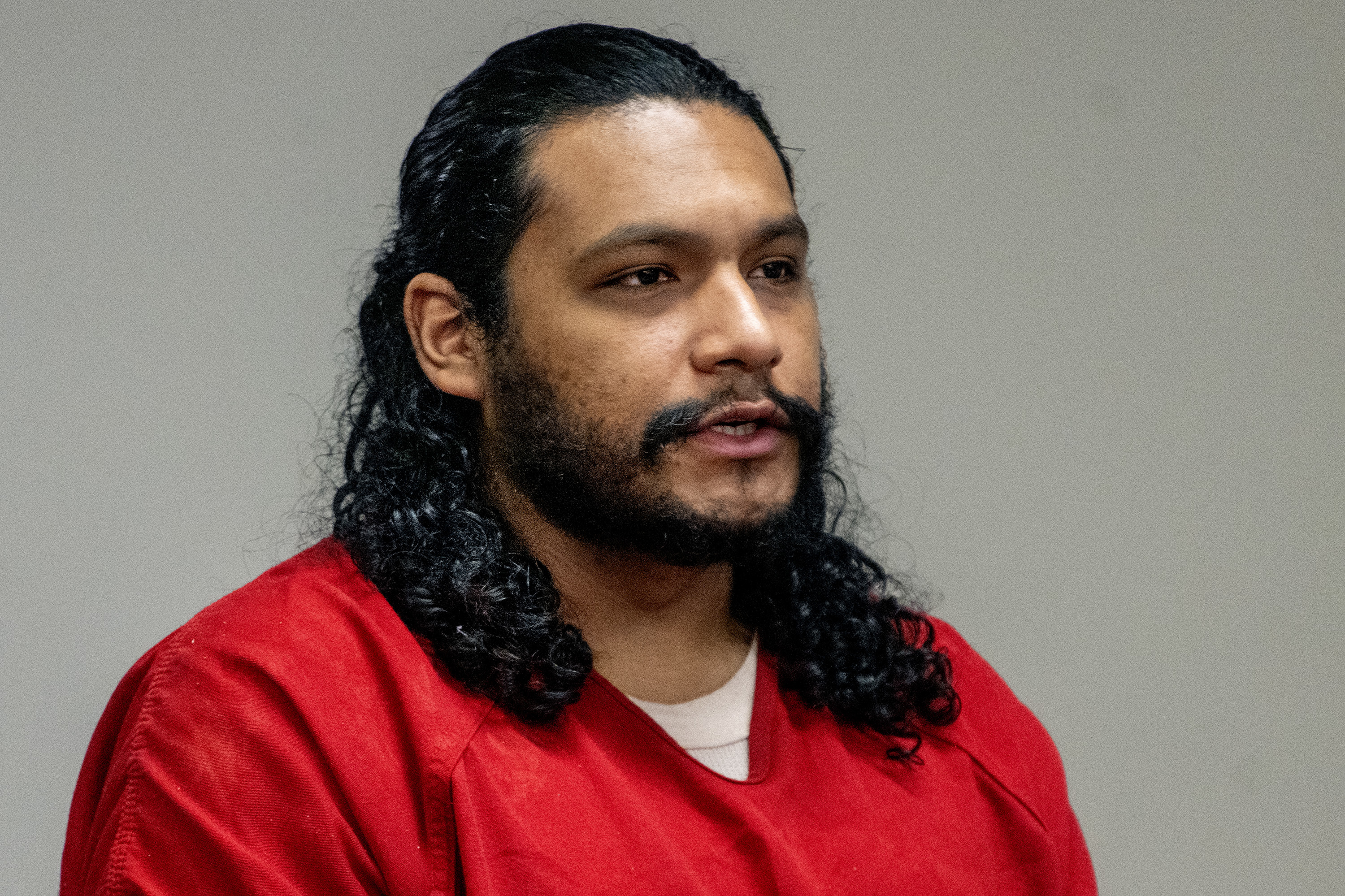
    Jahn, wearing a red prison jumpsuit and sporting a beard, showed little emotion during the hearing, as Nieberle’s loved ones looked on, some in tears.

    Assistant District Attorney Kathleen Wright said prosecutors had linked Jahn to the crime scene using GPS data from his vehicle, gunshot residue recovered from his hands and clothing, and remarks he made while in police custody.

    Though the footage of Jahn was illuminating, Wright said, the shooting itself was not captured on the dashcam because Jahn had removed the device shortly before the shooting.

    Wright called Tredyffrin police officers and county detectives to the stand to testify about the scene they had encountered near the intersection of Old State Road and Contention Lane, where Nieberle was found in the driver’s seat of her silver Acura SUV around 10:47 p.m. with a gunshot wound to the head.

    She was bleeding heavily, the officers said, and was taken to a nearby hospital, where she died the next morning.

    Chester County Det. Matthew Shumway of Chester County said data recovered from Jahn’s truck allowed investigators to identify him driving down the dimly lit residential street that night.

    Approaching Nieberle’s vehicle, Jahn slowed his truck to 6 mph, Shumway testified. He fired once through her driver’s side window, the detective said, a shot captured on a neighbor’s doorbell camera.

    Played in court, the short video showed Jahn’s headlights cut through the darkness and illuminate an approaching vehicle. Within seconds, a loud bang rang out.

    Jahn’s attorney, Brian McCarthy, did not contest many of prosecutors’ assertions about how events unfolded that night, but he argued that first-degree murder was not appropriate because Jahn had not shown premeditation and intent to kill, conditions required to meet the threshold for that crime.

    “What we did see does not establish murder in the first degree,” McCarthy said of the dashcam footage. The person in that video, he said, was a “troubled man looking back and forth, not a cold-blooded killer.”

    Wright, the prosecutor, countered that Jahn’s actions were premeditated. She said Jahn had rolled down his window, aimed his weapon, and would have “had to have known” that there was someone inside an oncoming vehicle.

    Of Nieberle, Wright said, Jahn “snuffed her life out and left her there to die.”

    District Judge Patricia A. Zaffarano ruled that prosecutors had presented sufficient evidence for the case to proceed to trial on all charges.

    Jahn will be formally arraigned on July 2. He remains in custody in the Chester County Correctional Facility after being denied bail in March.

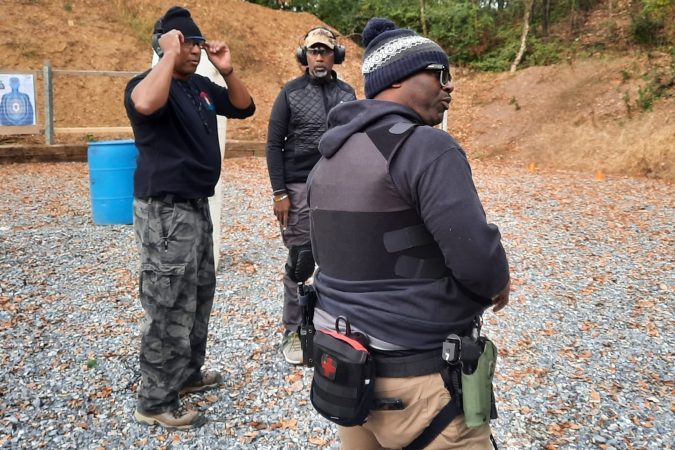
  • Why did a firearms instructor who promoted gun safety shoot three Philly cops? Those who knew him struggle for answers.

    Why did a firearms instructor who promoted gun safety shoot three Philly cops? Those who knew him struggle for answers.

    In videos posted online, firearms instructor Eric Franks taught others how to handle guns safely.

    “If you don’t have a leg strap on … your firearm’s going to be flapping out,” the 57-year-old Wynnefield man said in an Instagram video demonstrating how to properly secure a “battle belt,” a tool for holstering guns and equipment.

    So some people who knew him found it hard to fathom that Franks, a retired Philadelphia firefighter, father, and business owner, walked up to a group of police officers on a West Philadelphia street and got into a confrontation that ended in gunfire.

    On Saturday night, police said, Franks shot and wounded three officers, and they returned fire, killing him.

    “The biggest thing he taught was restraint, situational awareness,” said Randy Robinson, a friend and fellow member of That Gun Talk, a firearms training organization Franks helped found during the pandemic.

    Robinson said Franks taught students: “The last thing you want to have to do is pull your firearm.”

    Like others grappling with conflicting emotions about Franks’ role in the shooting, Robinson is struggling to understand why his friend of seven years fired the shots that cost him his life.

    Police were called to the block around 10:30 p.m. that night for a report of a shooting on 54th Street, not far from Mingle, a popular event space Franks owned that had hosted a teenager’s birthday party that evening.

    Alerted by his son to the nearby gunfire, Franks made his way to Mingle, near where he began to argue outside with several police officers who told him they were trying to establish a crime scene, according to surveillance footage and police accounts.

    As officers investigated a vehicle that had been struck by bullets, Franks approached and began complaining about crime and policing in the area, said a source familiar with the case who spoke on the condition of anonymity to discuss an ongoing investigation.

    He appeared frustrated, the source said, that officers had not yet cordoned off the area around the vehicle with crime scene tape, and became increasingly agitated as officers repeatedly asked him to step back so they could do their jobs.

    Video obtained by The Inquirer appears to show Franks yelling at officers, then pushing one, before stepping back and pulling a gun from his waistband.

    Franks then fired multiple shots at the officers, who took cover behind nearby vehicles, according to the video and police accounts, and four officers returned fire. Three officers — including a sergeant — were struck by gunfire. Franks was shot in the chest and the leg and later died at Thomas Jefferson University Hospital.

    Police have not released the names of the injured officers or identified those who discharged their weapons that night. One officer was shot in the face, one in the hip, and another in the leg, officials said. A 43-year-old officer was released from the hospital on Tuesday, police said, following the release of a 39-year-old sergeant on Monday.

    The shooting remains under investigation by the police department’s officer-involved shooting unit and the Philadelphia District Attorney’s Office.

    DA Larry Krasner said investigators from his office had visited the scene, spoken to witnesses and Franks’ family, and reviewed video footage and other evidence. He said his office — like Franks’ family and members of the community — has questions about what happened that night.

    James Funt, an attorney for Franks’ wife, Michelle, and his two children, said he, too, is looking for more information on what transpired in the moments before the gunfire.

    “That’s all the family is looking for — a full, fair, and thorough investigation,” Funt said.

    Meanwhile, those who knew Franks say the shooting ran counter to the behavior of the man they knew — an advocate for responsible gun ownership and reducing crime in the neighborhood.

    Franks was a founding member of That Gun Talk, a local chapter of the National African American Gun Association formed in 2020 to promote self-defense training among Black gun owners, according to Robinson.

    He said he was puzzled that Franks would resort to violence in a neighborhood he had urged local leaders to make safer.

    In recent years, Franks had brought his concerns to City Councilmember Curtis Jones Jr., who grew up near the Franks family in West Philadelphia and was familiar with his older brothers.

    Jones said in a recent interview that Franks had spoken with him multiple times about his frustrations with crime and policing on the business corridor near Mingle.

    “What he wanted was better enforcement of laws, and felt frustrated with the reality of our ability to patrol in a way he thought [the corridor] deserved,” Jones said.

    And Franks once visited Jones’ office to discuss firearms education for city residents, as well as the possibility of opening a Black-owned shooting range in the neighborhood, an idea Jones said he did not agree with.

    The Council member recalled that Franks’ relatives were among the first to open a business on the 54th Street corridor in Wynnefield in the 1970s, a variety store not far from where Franks was killed.

    “This whole tragedy, it’s bizarre, ironic, and I grieve for everybody,” Jones said. “The officers that were shot, the family — Franks was a patriarch, the community respected him.”

    Funt, the family lawyer, agreed.

    Franks cared about “getting more police on the beats, trying to get drugs out of the neighborhood,” Funt said. “I think it was in that spirit that he went there,” to the block in West Philadelphia, on the night he was killed.

    How that instinct led to the gunfire that wounded three police officers and ended Franks’ life is a question police and prosecutors will seek to answer as their investigation continues.

    Staff writer Ellie Rushing contributed to this article.

  • A 17-year-old is in critical condition after being stabbed outside Logan house party, police say

    A 17-year-old is in critical condition after being stabbed outside Logan house party, police say

    A 17-year-old is in critical condition after being stabbed Monday evening outside a party in the Logan section of Philadelphia, authorities said.

    The crime happened around 11:30 p.m. on the 4500 block of North Carlisle Street, according to police.

    Police said the teen, whom they did not identify, had been approached on the street by a group of men he had argued with earlier in the day.

    Someone in that group pulled a knife and another person drew a gun, police said.

    As the teen fled, he realized he had been stabbed and called police, authorities said.

    First responders found that he had been stabbed three times in the back and once in the left thigh. He was taken to Jefferson Einstein Philadelphia Hospital, where he remained in critical condition as of Tuesday afternoon, according to police.

    Officers have not identified any suspects or recovered any weapons as they continue to investigate, police said.

  • ‘This is not about Pride’: Police Commissioner Bethel addresses criticism of police response to Gayborhood

    ‘This is not about Pride’: Police Commissioner Bethel addresses criticism of police response to Gayborhood

    Addressing criticism of his department’s handling of crowd control at a Pride celebration in the Gayborhood over the weekend, Police Commissioner Kevin Bethel said Friday that his officers became overwhelmed by dueling events and unruly behavior from large groups of teenagers.

    The turmoil — which led police to arrest 15 people and shut down street festivities in the LGBTQ+ neighborhood earlier than anticipated — stemmed from a change in the way the city celebrated Pride this year, Bethel said in a news conference at police headquarters.

    The decision to hold Philadelphia’s official Pride celebration on the Benjamin Franklin Parkway on Sunday deviated from the tradition of holding it in the Gayborhood, according to Bethel, who said the competing events created a public safety risk.

    In retrospect, he said, barricades that police set up on the Gayborhood sidewalks — another deviation from past celebrations there — might not have been a wise move.

    “We now know that might not have been the right decision,” he said, noting they caused ‘frustration” among guests.

    Bethel said the evening took a turn when large groups of people began arriving at both the Parkway and the Gayborhood, overwhelming the 600 officers dispatched across both events.

    And in the Gayborhood, that included crowds of teenagers, some breaking out into fights, he said.

    The commissioner said commanding officers made the decision to close down the streets near popular gay bars like Woody’s around 8 p.m. as a consequence.

    To underscore the point, Bethel played a video of one of those altercations, which showed a throng of young people acting erratically, some yelling and pushing each other.

    He called the arrival of young people to the Gayborhood a “surge” that saw teens “taking over” a parking lot and getting on top of cars.

    “At that point there are some decisions that have to be made,” Bethel said. “We can’t have thousands of individuals swirling together.”

    Bethel also acknowledged public outcry over images of police officers on horseback and motorbikes engaged in crowd control. Those officers had been dispatched to the Gayborhood from the Parkway event once crowds began to get out of hand, he said.

    “That is not pretty — it is not pretty when you move people,” he said.

    Responding to questions over the department’s enforcement at LGBTQ+ festivities, Bethel repeated his earlier assertion that the nature of the event had nothing to do with police response.

    “All of this is not about Pride, it is not about the Gayborhood, it is not about anyone’s feelings about anything,” he said. “It is about safety.”

    The commissioner added that he welcomed speaking again about the issue at City Council hearings called on the matter that will likely take place in the fall.

  • Former Philly SWAT officer who pepper sprayed protesters on I-676 will serve one year of probation

    Former Philly SWAT officer who pepper sprayed protesters on I-676 will serve one year of probation

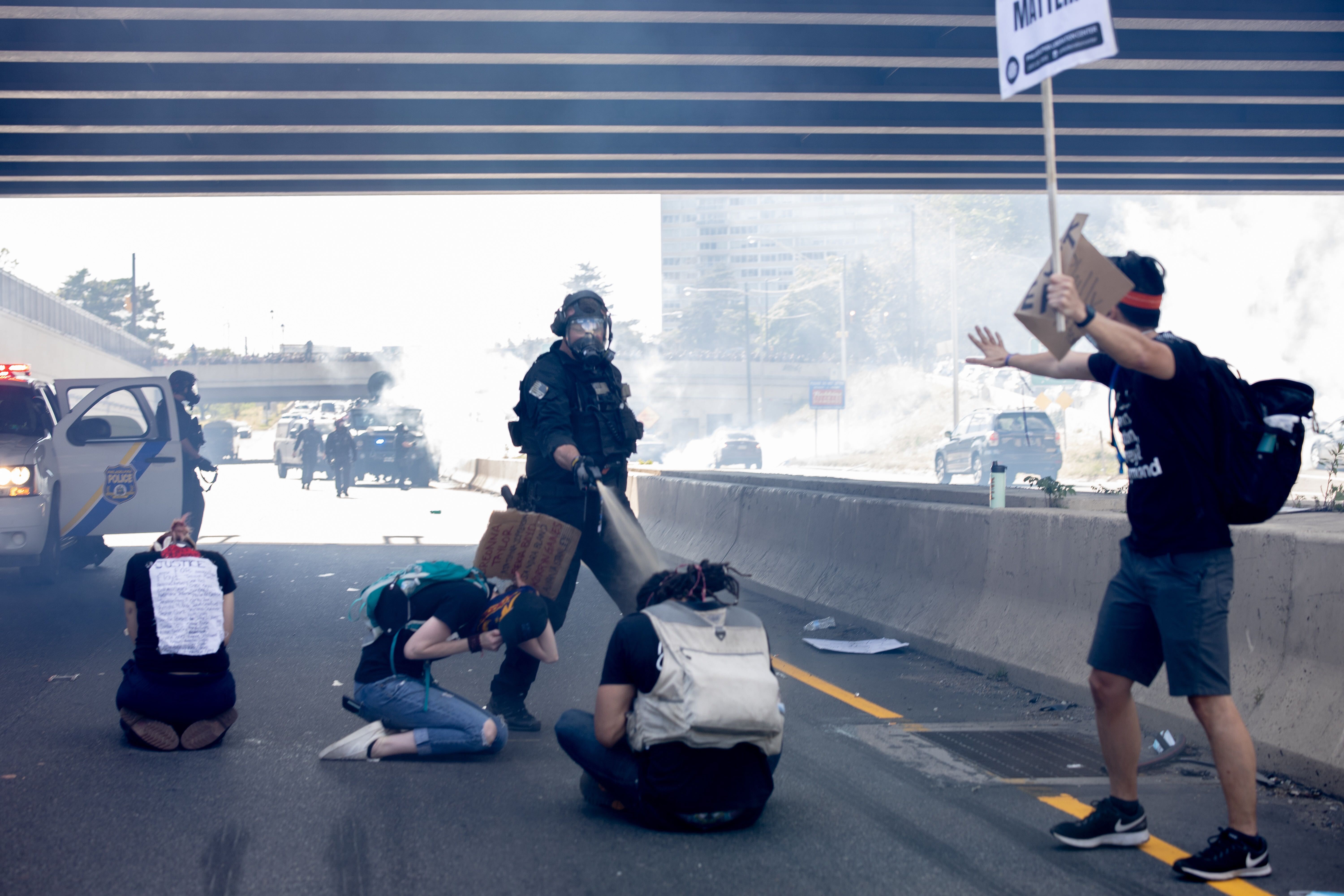
    A former Philadelphia police officer who pepper sprayed several people on I-676 during the 2020 protests over George Floyd’s murder has pleaded no contest to assault and related crimes, ending a legal saga that captured national attention.

    Richard P. Nicoletti, 41, will serve one year of probation in exchange for accepting punishment — but not admitting guilt — in the case.

    In addition to assault, prosecutors had accused Nicoletti of reckless endangerment, official oppression, and possessing an instrument of a crime.

    The former SWAT officer was one of two Philadelphia police officers charged with crimes for their conduct during that summer’s protest over racial justice and police brutality.

    Nicoletti had served 12 years with the police department before he was fired over the incident in 2020. Then-Police Commissioner Danielle Outlaw said she was “disgusted” by his conduct and then-Mayor Jim Kenney described his actions as unacceptable.

    The Philadelphia District Attorney’s Office first sought to hold Nicoletti accountable in 2021, when prosecutors said his decision to pepper spray several protesters in the face amounted to a crime.

    A city judge dismissed the criminal case against him, saying Nicoletti had been authorized by his commanders to clear protesters from the highway, but a different judge soon reinstated the charges.

    The case then went before a jury in 2023 and ended in a mistrial.

    Philadelphia SWAT officer Richard P. Nicoletti shown pepper spraying three kneeling protesters on I-676 on June 1. Nicoletti is now being charged with simple assault, reckless endangerment, official oppression, and possession of an instrument of crime.Courtesy Wolfgang Schwan

    Prosecutors continued to press the case.

    Nicoletti’s lawyers argued that a subsequent trial should be held outside of Philadelphia, where they suggested too many jurors had already formed opinions about the widely publicized demonstrations, which ended with police using tear gas against protesters on the Vine Street Expressway.

    Common Pleas Court Judge Roxanne E. Covington agreed that the case should be moved to another jurisdiction.

    Court records show that the case was later moved to Veterans Court, a system designed for people who have served in the military and who have been charged with generally low-level offenses. The court emphasizes treatment and services and is designed to rehabilitate, rather than incarcerate defendants.

    Nicoletti served in the Army and was deployed several times to Iraq and Afghanistan, according to a fundraiser circulated to raise money for his defense.

    In March, court records show, Nicoletti pleaded no contest to all 10 charges he faced in a proceeding overseen by Municipal Court Judge David C. Shuter.

    A spokesperson for the district attorney’s office did not respond to multiple requests for comment on the case and its diversion to Veterans Court.

    Nicoletti’s defense attorney, Charles Gibbs, did not immediately return a request for comment Friday.

  • A St. Joe’s Prep grad is recovering from a traumatic brain injury after violent high school ‘tiki party’ in Wissahickon park

    A St. Joe’s Prep grad is recovering from a traumatic brain injury after violent high school ‘tiki party’ in Wissahickon park

    As graduating seniors at St. Joseph’s Preparatory School prepared for college, summer jobs, and other hallmarks of young adulthood this spring, 17-year-old Shawn Rinnier was focused on a simpler goal.

    He hoped to muster the physical strength to walk across the graduation stage to collect his diploma.

    That’s because the Bryn Mawr teenager is recovering from a traumatic brain injury that his parents say he suffered during an assault at a late-night party in Wissahickon Valley Park last month.

    The attack knocked him unconscious, they said, and he has since experienced poor memory, fatigue, delayed vision, balance issues, and numbness in the right side of his body.

    Now, in addition to caring for their son during what they expect to be a lengthy recovery, the Rinniers are seeking accountability for the people who assaulted their son.

    “Nobody will talk at this point, and it just seems like people are trying to protect themselves, protect their friends,” said his mother, Susan Rinnier. “There’s some young adults that have a lot on the line here.”

    Alongside investigators with the Philadelphia Police Department, Rinnier’s parents are working to piece together the events of the May 10 “tiki party” in the woods near Chestnut Hill, where they say about 250 teenagers had gathered before the evening turned physical.

    Rinnier’s brain injury has left him with little recollection of what happened, said his father, Shawn Rinnier Sr., leaving his parents to look for clues after being sent photos and videos of the assault that partygoers took on their cell phones.

    That night, students from a nearby Philadelphia private school as well as those from schools in the suburbs gathered for the party, which had been promoted on social media, Shawn Rinnier Sr. said.

    He did not name the schools, deferring comment on those details to investigators.

    The videos, Susan Rinnier said, show young people growing increasingly aggressive and eventually fighting.

    “A couple fights broke out where the video evidence is showing that the other students were the aggressors” in the assault of her son, Susan Rinnier said.

    “Some kids are on the sidelines yelling and chanting ‘punch on him’ and riling things up,” she said. “Our son, kind of scared, turns around and starts walking out of the event. The group follows him for about a second or so. That’s all we can see.”

    A woman driving home in Chestnut Hill that night discovered Rinnier lying in the street around midnight and called 911, his father said. Shawn Rinnier Sr. later spoke to the woman, who told him “hundreds” of people had been fleeing through the woods with flashlights.

    The parents did not recognize the young people involved in the assault, and they continue to communicate with detectives who told them they are interviewing people who may be involved.

    A spokesperson for the police department did not return requests for comment on the investigation.

    Rinnier was rushed to Jefferson Einstein Philadelphia Hospital and put on a ventilator, his parents said, and doctors later determined that his traumatic brain injury was moderate to severe.

    “When he finally awoke, he was suffering from poor memory, couldn’t follow instructions, was confused, acting impulsive,” his mother said. The teen then moved to a rehabilitation unit at Bryn Mawr Hospital, where he continues to recover, she said.

    The violent events of that spring night were life-altering, Rinnier’s parents said.

    Their son, a tennis player, was preparing to attend the University of Florida on a scholarship this fall, they said. Those plans are now on hold.

    Instead, the teen is taking part in an extensive outpatient rehab program, and his parents are working to have his enrollment deferred to 2027, when they hope he will be well enough to attend school.

    Making sure that Rinnier took part in graduation at St. Joe’s last month was a more readily attainable goal, his parents said, and they were determined that he would achieve it.

    Susan Rinnier was pleased to see that he was able to walk across the stage on May 31, even if he soon grew fatigued and experienced numbness in his legs after the ceremony, she said.

    The Rinniers’ next hope is that police will find and charge their son’s attackers. Meanwhile, they continue to scan social media for additional photos and videos that may offer a better view of the incident.

    “We owe it to Shawn to continue to move this forward any possible way we can, to get to the bottom of this,” his father said. “That’s our job as parents, and we’re not gonna stop.”

  • Philly man charged in the murder of a mother beaten to death with bricks

    Philly man charged in the murder of a mother beaten to death with bricks

    A Philadelphia man has been arrested and charged in the death of a North Philadelphia mother beaten with a pair of bricks over the weekend.

    Dawaun Lewis, 30, has been charged with murder, robbery, and related crimes in the death of 45-year-old Keisha Furlow, police said. He was taken into custody Thursday after being arrested by Highway Patrol officers near his home on West Girard Avenue.

    First responders discovered Furlow, a mother of four, in an alley near her North Opal Street home in North Philadelphia early Sunday morning, according to police.

    Her face had been badly injured, and investigators believe two bloodied bricks found near her body had been used in her slaying hours before, around 2 a.m.

    Furlow was pronounced dead at the scene, and medical examiners determined she died from blunt force trauma.

    Investigators said they reviewed surveillance footage showing a person kicking Furlow and beating her head with a brick. That person and another individual fled with Furlow’s purse before ditching it nearby, they said.

    There was no word if police have any information about the second attacker. The investigation is continuing.

  • Oregon man pleads guilty to murder, admits stabbing Cherry Hill veterinarian to death in 2024

    Oregon man pleads guilty to murder, admits stabbing Cherry Hill veterinarian to death in 2024

    An Oregon man who drove across the country in a jealous rage to kill his ex-boyfriend’s new partner in Cherry Hill has pleaded guilty to first-degree murder in connection with the 2024 slaying, prosecutors said Wednesday.

    Cristian Custodio-Aquino, 28, of Portland, was charged in the stabbing death of Michael Anthony, a well-liked South Jersey veterinarian.

    The body of Anthony, 45, was discovered on the front lawn of his home on Sharrowvale Road early on a December morning, prosecutors said.

    Anthony had been stabbed in the body, neck, and head. Detectives soon linked the killing to Custodio-Aquino using DNA from a pair of prescription eyeglasses he had left at the scene and by tracking his vehicle entering and leaving the neighborhood.

    He was arrested in California and has since been incarcerated in a New Jersey correctional facility.

    With his guilty plea, Custodio-Aquino is expected to be sentenced to 30 years in state prison without the possibility of parole, according to the Camden County Prosecutor’s Office.

    Grace C. MacAulay, the county prosecutor, called Anthony’s death tragic, saying it had deeply affected the Camden County community.

    “This guilty plea represents a significant step toward justice and ensures the defendant will be held accountable for his actions,” she said in a statement.

    Custodio-Aquino’s defense lawyer had said there was little evidence tying him to the crime, but prosecutors pieced together what they said was a compelling case.

    In addition to the eyeglasses investigators linked to the Peru native, prosecutors were able to identify Custodio-Aquino’s black Nissan Altima entering Anthony’s neighborhood on the morning of the Dec. 10 killing, and later leaving the scene.

    After Anthony’s murder, prosecutors said, Custodio-Aquino drove to Fresno, Calif., where he stayed with a friend. He also wiped his phone and attempted to sell his vehicle. Investigators later recovered samples of Anthony’s blood from inside the car.

    Michael Anthony, 45, a South Jersey veterinarian, was found dead outside his home in Cherry Hill.Courtesy of Haddon Vet

    All the while, prosecutors said, Custodio-Aquino searched the internet for news stories that mentioned Anthony’s killing and his memorial service.

    Investigators eventually learned that Custodio-Aquino had a previous relationship with Anthony’s partner, Kyle Bartsch, and killed Anthony out of jealousy. Custodio-Aquino and Bartsch had lived together in Haddon Township but separated in 2021 after a domestic dispute, prosecutors said.

    Not long before Anthony’s murder, he and Bartsch had communicated with Custodio-Aquino and knew that he was returning to the East Coast, according to prosecutors.

    The death of Anthony, a divorced father of two, rattled neighbors in the Barclay Farm section of Cherry Hill.

    His body was discovered facedown on the front lawn by his 16-year-old son, who had gone to look for his father after he did not return from an early morning walk, prosecutors said.

    Relatives described Anthony as devoted to his family and two sons, and after his death, tributes poured in from friends, neighbors, and people whose pets he treated at his Haddon Heights veterinary clinic.

    Bartsch said in an interview last year that he was devastated by the “sudden and senseless” loss of his partner. He described Anthony, his partner of three years, as “an exceptional person, universally loved by those who knew him.”

  • Mother of four beaten to death with brick in North Philadelphia; two suspects sought

    Mother of four beaten to death with brick in North Philadelphia; two suspects sought

    A 45-year-old mother of four was beaten to death with a brick in North Philadelphia on Sunday, according to police.

    Keisha Furlow was found in a rear alley on North Opal Street around 6:15 a.m. that morning by first responders, who pronounced her dead at the scene.

    Furlow had suffered severe lacerations to her face, police said. Officers found two bloodied bricks on the ground near the woman’s body and believe they were used in the attack, which occurred around 2 a.m.

    Investigators are searching for two people they believe are responsible for the attack, according to a law enforcement source who was not authorized to speak publicly given the ongoing nature of the investigation.

    One of the attackers, captured on surveillance footage, appears to kick Furlow and beat her repeatedly with a brick, according to the source.

    Investigators believe both assailants fled with Furlow’s purse after the attack. The department released an image of one of the suspects, a man, on Wednesday afternoon.

    Furlow is a resident of the 2700 block of North Opal Street, according to police.

    No arrests have been made, and homicide detectives continue to investigate.