Author: Jesse Bunch

  • A PHA employee was shot at a Germantown public housing complex, and union leaders are looking for answers

    A PHA employee was shot at a Germantown public housing complex, and union leaders are looking for answers

    A Philadelphia Housing Authority employee was seriously injured when he was shot during an attempted robbery Saturday at a public housing complex in Germantown, according to officials with his union.

    The man, a mechanical engineer who is in his 30s, was working overtime on the 5800 block of Morton Street when he was shot, officials with 32BJ SEIU said.

    They did not identify the man, citing privacy concerns.

    The married father remains hospitalized in stable condition and could face serious challenges in his recovery, the officials said.

    The incident began at the Morton Homes shortly after 3:00 p.m., when the man was approached by three men wearing black masks who attempted to rob him, officials said.

    It is not immediately clear what led to the gunfire. The suspects fled in a black Nissan Altima, according to police.

    Investigators said the men then crashed the vehicle at the intersection of Walnut Avenue and Cliveden Street and fled on foot.

    Police did not recover any spent shell casings from the scene and continue to investigate with the assistance of PHA public safety officers.

    Another PHA employee was unharmed and gave aid to his injured coworker until first responders arrived.

    On Monday, labor leaders and city officials gathered outside PHA’s headquarters in Germantown to condemn the brazen act of violence and urge the housing authority to increase its efforts to keep employees safe.

    “Our Philadelphia Housing Authority membership wakes up every day not sure if they will be injured or hurt on the front lines of ensuring that public housing is safe for people,” said Tim Finucan, the Pennsylvania state director for 32BJ SEIU. “There’s a structural problem at PHA that needs to be addressed.”

    Finucan said he would like to speak with PHA officials regarding proposed safety measures, which could include more robust security for employees, for example.

    Others with 32BJ SEIU said their PHA employees were afraid.

    Chuck Delcorpo, a union shop steward, read a letter from one such employee, saying he wished to remain anonymous.

    “This man getting shot was the last straw,” the employee wrote. The letter blamed safety issues on layoffs at PHA and workers being sent into unfamiliar areas to keep up with the resulting uptick in work required of them.

    Kelvin Jeremiah, CEO of PHA, said Monday that employee safety was a primary concern of the authority.

    Jeremiah said during his remarks that he had not been invited to speak, but nonetheless wished to address the matter and offer thoughts and prayers for the injured engineer.

    “We are not tolerating any violence whatsoever directed at our employees,” he said.

    Councilmember Cindy Bass, whose district includes Germantown, said she, too, would like to discuss employee safety with PHA.

    Such conversations “have to happen” after Saturday’s shooting, she said.

    “On any given day we all get up and go to work, and we expect at the end of the day that we’re going home. Bass said. ”This goes to remind us that that is no guarantee.”

    Meanwhile, Jeremiah and Ryan Boyer, business manager for the Philadelphia Building and Construction Trades Council, are offering a $30,000 reward for information leading to the arrest and conviction of those responsible.

    Anyone with information is encouraged to contact the Citizens Crime Commission at 215-546-6532 or the PHA Police Department at 215-684-1911, or by sending an anonymous tip to Phacrimetips@pha.phila.gov.


  • Man kills 67-year-old woman, injures two others in back-to-back DUI collisions

    Man kills 67-year-old woman, injures two others in back-to-back DUI collisions

    A 40-year-old North Carolina man was charged with homicide by vehicle after killing a 67-year-old woman and injuring two others in back-to-back DUI collisions in Northwest Philadelphia on Sunday, according to police.

    Robert James Pennington, of Nashville, N.C., was arrested that afternoon in West Mount Airy after attempting to flee the scene of the second crash.

    Pennington first struck a Ford Fiesta in his Dodge Ram pickup truck around 4 p.m. at the intersection of Wissahickon Avenue and Rittenhouse Lane in Germantown, police said.

    The collision seriously injured the Fiesta’s driver, a 53-year-old man, who was taken to Einstein Medical Center in critical condition.

    Pennington then fled the scene and drove at a high rate of speed to West Mount Airy, where he struck a Toyota at the intersection of Johnson Street and Walnut Lane, police said.

    The Toyota’s driver, a 51-year-old woman, and a passenger were taken to Einstein, where the driver was listed in stable condition.

    The passenger, a 67-year-old woman whom officials have not identified, suffered serious injuries and was pronounced dead at the hospital several hours later, according to police.

    Officers arrested Pennington near the scene after he abandoned his pickup truck and fled on foot. They later found he had been driving while intoxicated, police said.

    Court records for Pennington were not immediately available Monday.

  • JudgeGPT? Artificial intelligence enters Philly judicial chambers, raising questions over accuracy.

    JudgeGPT? Artificial intelligence enters Philly judicial chambers, raising questions over accuracy.

    A group of federal judges in Philadelphia are using artificial intelligence to aid with cases being heard in the U.S. District Court for the Eastern District of Pennsylvania, raising new questions about the role of AI in the region’s justice system.

    The judges, participants in a pilot program run by researchers at the University of Pennsylvania’s Carey Law School, have welcomed AI chatbots like ChatGPT into their chambers to schedule court hearings, draft jury instructions, and, in some cases, recall and summarize factual information about their cases. In all, around 25 judges in Pennsylvania and surrounding states are taking part.

    The program, dubbed the PennLaw-Judiciary AI Testbed, provides ongoing training and support for judges and their staff as they learn about AI’s growing impact on the legal system.

    Polk Wagner, a Penn legal professor who oversees the program, said participants are largely using the tools in their chambers to quicken administrative tasks, though some judges have used AI for more intensive work, such as summarizing elements of their cases and drafting documents.

    “One of the challenges of being a judge is dealing with huge volumes of information and visualize it in a good way,” Wagner said. “These tools are really good at compiling information on a very large scale, if you know how to use them.”

    Still, changing norms around AI behind the bench raise questions about what role the technology will play in courtrooms of the future. Generative artificial intelligence is known to hallucinate, producing answers to queries that sound correct but are factually inaccurate.

    In 2025, a federal judge’s chambers in New Jersey was caught using the technology to draft an opinion that contained incorrect information and hallucinated quotes, stunning attorneys who spotted the errors. A Mississippi federal judge’s chambers made a similar blunder that year.

    “People are aware of the dangers,” said Zachary Arbitman, a civil attorney and cochair of the Philadelphia Bar Association’s federal courts committee. “It’s another tool in the toolbox — you just have to use it appropriately.”

    Arbitman said he and other attorneys continue to grapple with ethical questions over using artificial intelligence to aid their work. He was unaware that federal judges were exploring similar concerns through the Penn program.

    The attorney said he is not aware of any court-wide rules on judicial AI use, noting that such technology policies typically come from judges themselves. In 2023, for example, U.S. District Judge Michael M. Baylson issued an order requiring that attorneys who submit legal filings written with the aid of AI must disclose that they have done so.

    For U.S. District Judge Joshua D. Wolson, participating in the Penn program has allowed his chambers to experiment with a tool he predicts will become intertwined with courtroom work.

    Wolson, who has served in the federal civil division since 2018, said he and his staff use artificial intelligence for a variety of tasks, such as drafting charging instructions for juries before deliberations, which are often lengthy and change slightly each trial.

    “I may have the AI help me wordsmith while I have my law clerks work on the legal analysis piece of it,” Wolson said. “Frankly, it’s faster.”

    Yet Wolson said he is also mindful of the technology’s risks, refraining from using AI for tasks like legal research, summarizing documents, or drafting opinions.

    “Everyone — at least in this court — is aware of a concept called ‘human-in-the-loop,’” the judge said, referring to the idea that highlights the necessity of having a real person oversee artificial intelligence’s decision-making.

    Those behind the Penn program, too, say they are focused on potential concerns as they continue to enlist judicial chambers to adopt the tools.

    To that end, Wagner, the legal professor, said his team encourages judges and their staff to keep the scope of their AI usage as limited as possible.

    For more intensive uses, he said, that means ensuring that their research queries focus on specific elements of a case — dates, locations, and keywords — rather than using chatbots as a search tool for legal knowledge or judicial precedent.

    “These tools are pretty bad at legal research — even today,” Wagner said, noting that the wider set of information a chatbot is asked to crawl, the increased likelihood that it could produce an inaccurate answer.

    The judges taking part in the program, which has grown from fewer than 10 chambers when it began in 2024, span a range of ages and prior experience with AI, according to Wagner. While a handful of clerks have become “skeptical and hesitant” over the technology’s potential to err, he said, judges have largely reported a positive impact.

    “In our view, artificial intelligence is going to be integrated into legal practice from top to bottom,” he said. “The judges realize that, and they want to make sure they and their chambers are ready.”

  • The family of Philly rapper D. Jones is mourning after his death by stray gunfire

    The family of Philly rapper D. Jones is mourning after his death by stray gunfire

    Days after a stray bullet struck and killed 42-year-old Darrell Tyree Jones — a Philadelphia rapper better known by his stage name “D. Jones” — his family continues to grieve a loss that has touched the city.

    “They just took a big old piece of me,” said Jones’ mother, Yolanda, in her North Philadelphia rowhouse as she sat among mourners on Tuesday.

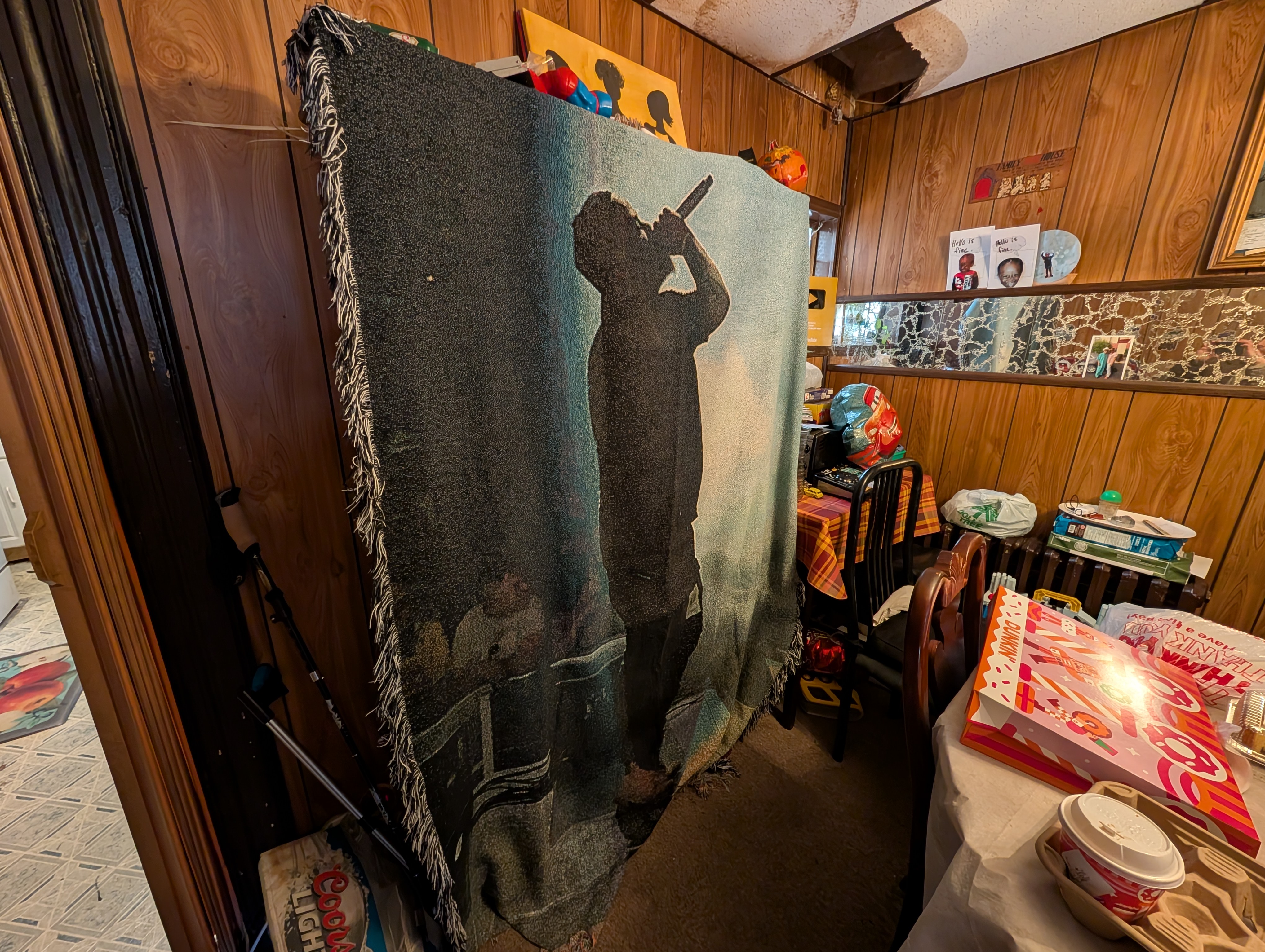
    Photos of Jones, spanning infancy to adulthood, adorned the wood-paneled walls — reminders of a son Yolanda said she never lost touch with.

    There had been little relief from the pain of Jones’ death early Saturday morning, she said.

    Jones’ success in hip-hop took him as far as Amsterdam for a performance and earned him credits with big-time artists like Jadakiss and Dave East.

    But in Yolanda’s living room, the most important part of her son’s life — his love of family — was all that seemed to matter. She was reminded of that when Jones’ 5-year-old son, Aadon, waddled to her lap in a bid for his grandmother’s affection.

    The circumstances of Jones’ death are not a mystery.

    Police arrested 40-year-old Daniel Dickerson, a SEPTA bus mechanic, near the scene of the North Philadelphia shooting that morning and charged him with murder and related crimes. The transit agency is cooperating with investigators.

    Authorities said Jones was caught in the crossfire of an unrelated road-rage shooting that broke out around 1:30 a.m. near Broad and Erie streets. There, Dickerson opened fire at a Dodge pickup truck from a Ford SUV, and a chase ensued.

    Responding officers soon discovered Jones blocks away in a GMC Yukon. He had been struck by a stray bullet and crashed while attempting to drive himself to the hospital, officials said. He was then taken to Jefferson Einstein Hospital, where he was pronounced dead.

    Yolanda Jones said her son had been driving home from a friend’s birthday party that morning.

    “He was in the wrong place at the wrong time,” she said. “He wasn’t a violent guy.”

    The tragedy ended a life defined by a passion for music, she said. Yolanda recalled Jones in the late 1980s — then the age of her grandson now — lighting up as songs by rap pioneers like Big Daddy Kane came on the radio.

    She motioned toward an empty space in the living room in front of her, at what was once something of homemade stage where her son’s skills blossomed.

    “We used to be in here doing homemade music videos,” she said with a smile. “He would come in, start singing and dancing, rapping. From then to now, that’s all he wanted to do.”

    Neighbors, too, gathered in Yolanda’s living room Tuesday to mourn the loss of Jones.

    “Every time we look at that door, we know he’s never coming back through it,” said Loretta James, who has lived next-door for decades.

    Angela Robinson, another neighbor, said she will remember Jones as a “gentle giant.”

    “All the social media, all the things people say about him, you don’t have to lie,” Robinson said of the public outpouring of grief in recent days. “He was just a good dude. Loved his music, loved his family, loved his son.”

    Jones’ family and friends said he had much life left to live. He had recently celebrated his son’s birthday, and was preparing for a hometown performance on Dec. 4 at a music venue in the city’s Mayfair section.

    Despite his death, they said the concert will not be canceled.

    Jones’ loved ones will gather at VOIX Karaoke that evening for an night of music, they said. And on Saturday afternoon, a balloon release and celebration of Jones’ life is set to take place on 9th Street between York and Dauphin streets.

  • The discovery of three dead siblings in a South Jersey home has rattled a quiet neighborhood

    The discovery of three dead siblings in a South Jersey home has rattled a quiet neighborhood

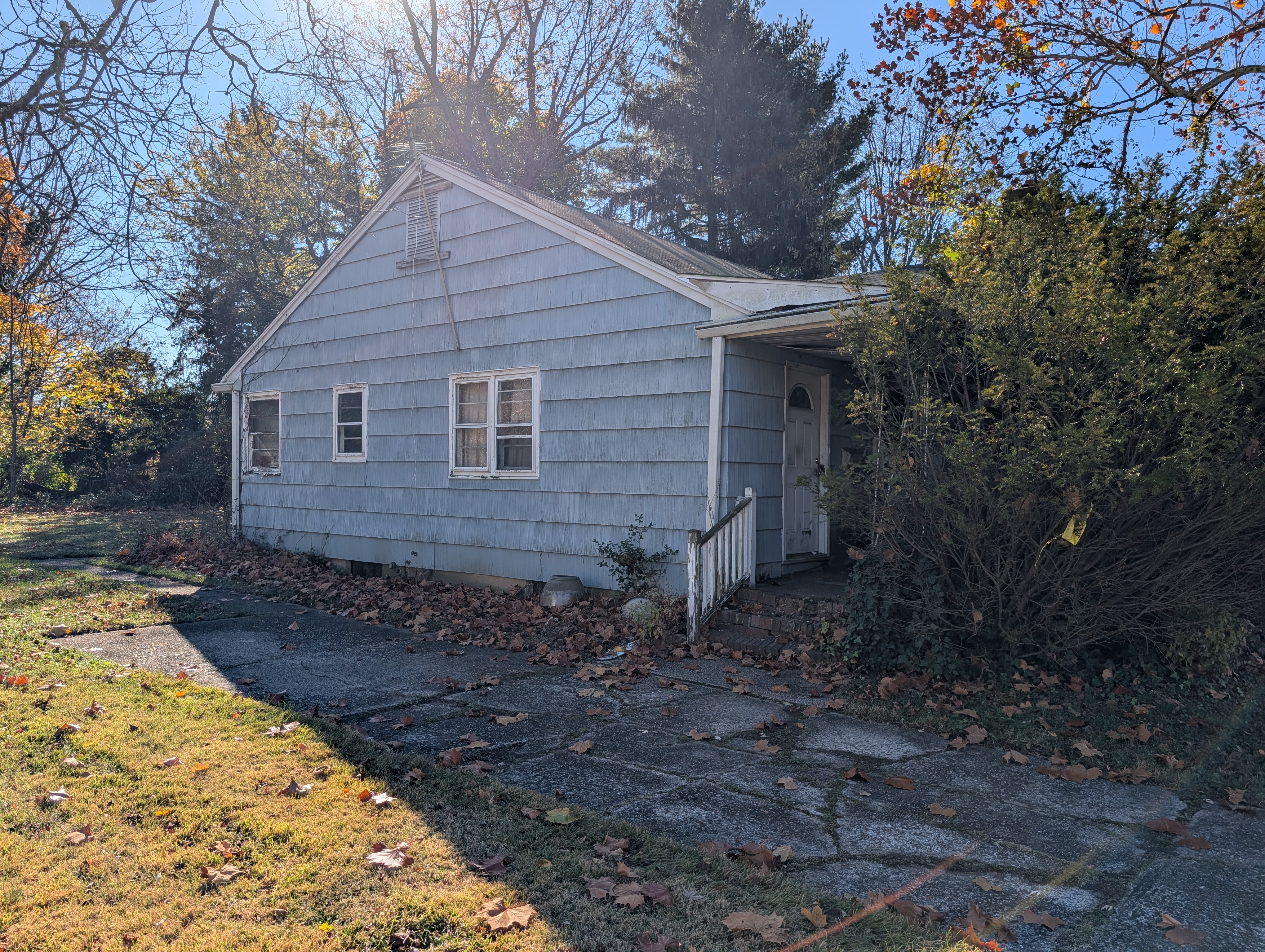
    Last week, a mail carrier in Mount Holly, N.J., arrived at a dilapidated single-story home to find the mailbox sealed shut with clear tape. Then he made an even more unusual discovery.

    “9-1-1 inside″ said a note taped to the front door, paired with a drawing of two frowning faces with x’s instead of eyes.

    What Mount Holly police eventually found inside 3 Winding Way has continued to shock the quiet suburban community.

    William Monk, 64, Randolph Monk, 69, and Rosalind Monk, 71, were dead inside the home, according to a source familiar with the investigation. The cause and manner of their deaths have not been released as the medical examiner’s office continues its examination.

    A spokesperson for the Burlington County Prosecutor’s Office declined to comment, citing the pending result of the autopsies. Mount Holly police referred questions to prosecutors. There is no active threat to the community, the department said in a Facebook post.

    A neighbor said the Monks were siblings who had lived in the declining property for years.

    They kept to themselves and rarely left home or interacted with neighbors, according to Chris Wyatt, who has lived next door since 2013. Wyatt said he had no reason to believe anything was amiss in the home, though he found it impossible to ignore the failing condition of the property in recent years.

    “We’re just in shock,” Wyatt said of his neighbors’ deaths.

    A piece of crime scene tape hung in a tree outside of the Monks’ home Wednesday when The Inquirer spoke to neighbors. Some lawns still had skeletons and gravestone decorations up from Halloween, flags for Philadelphia sports teams, garages brimming with bicycles, and other signals of suburban life were abundant.

    3 Winding Way bore none of those signs.

    The light blue home’s front porch was caved in, propped up by temporary metal beams, and windows and siding were damaged. An overgrown bush partially obstructed the front door where the mail carrier discovered the chilling note.

    Wyatt said the Monk siblings did not have a car and sometimes rode the bus to work. One of the brothers had worked at a nearby Boscov’s for a time, he said. Rosalind Monk worked as a crossing guard and had retired.

    Another male sibling, “the most personable” of the group, also lived at the home but died years ago, Wyatt said.

    He remains curious to learn what happened inside the home as prosecutors and law enforcement continue their investigation, as well as what will become of the unsightly property.

    The knowledge that three people had died there under unusual circumstances has not brought comfort to the father of young children.

    “I’ve lived here over 10 years,” Wyatt said. “I never got the inclination that something like this was even possible.”

  • Krasner to investigate Malayshia Allford’s death and the foster care system, as City Council pushes for change

    Krasner to investigate Malayshia Allford’s death and the foster care system, as City Council pushes for change

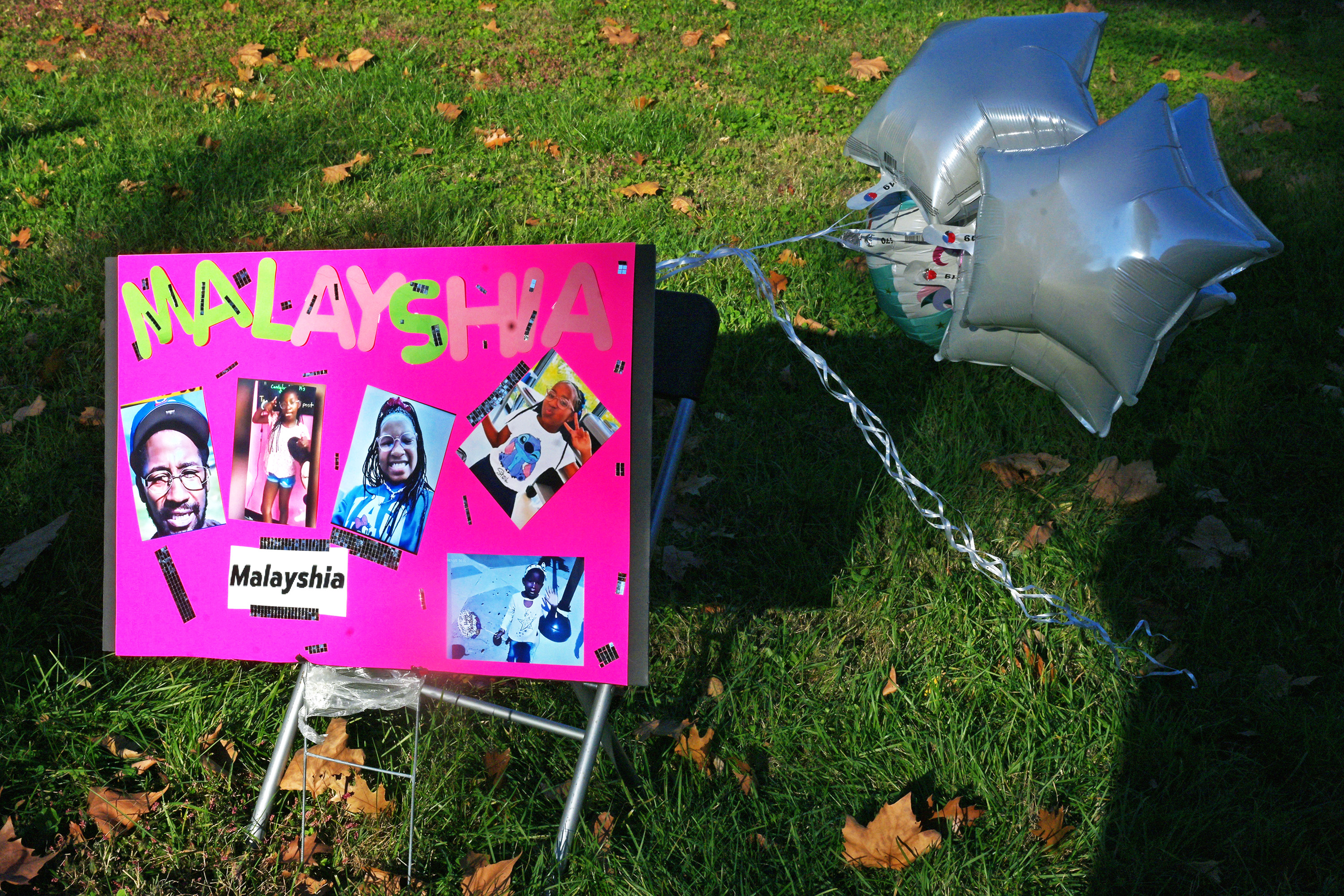
    The Philadelphia District Attorney’s Office will conduct an independent investigation into the death of 10-year-old Malayshia Allford as well as the city’s foster care system, officials said Thursday.

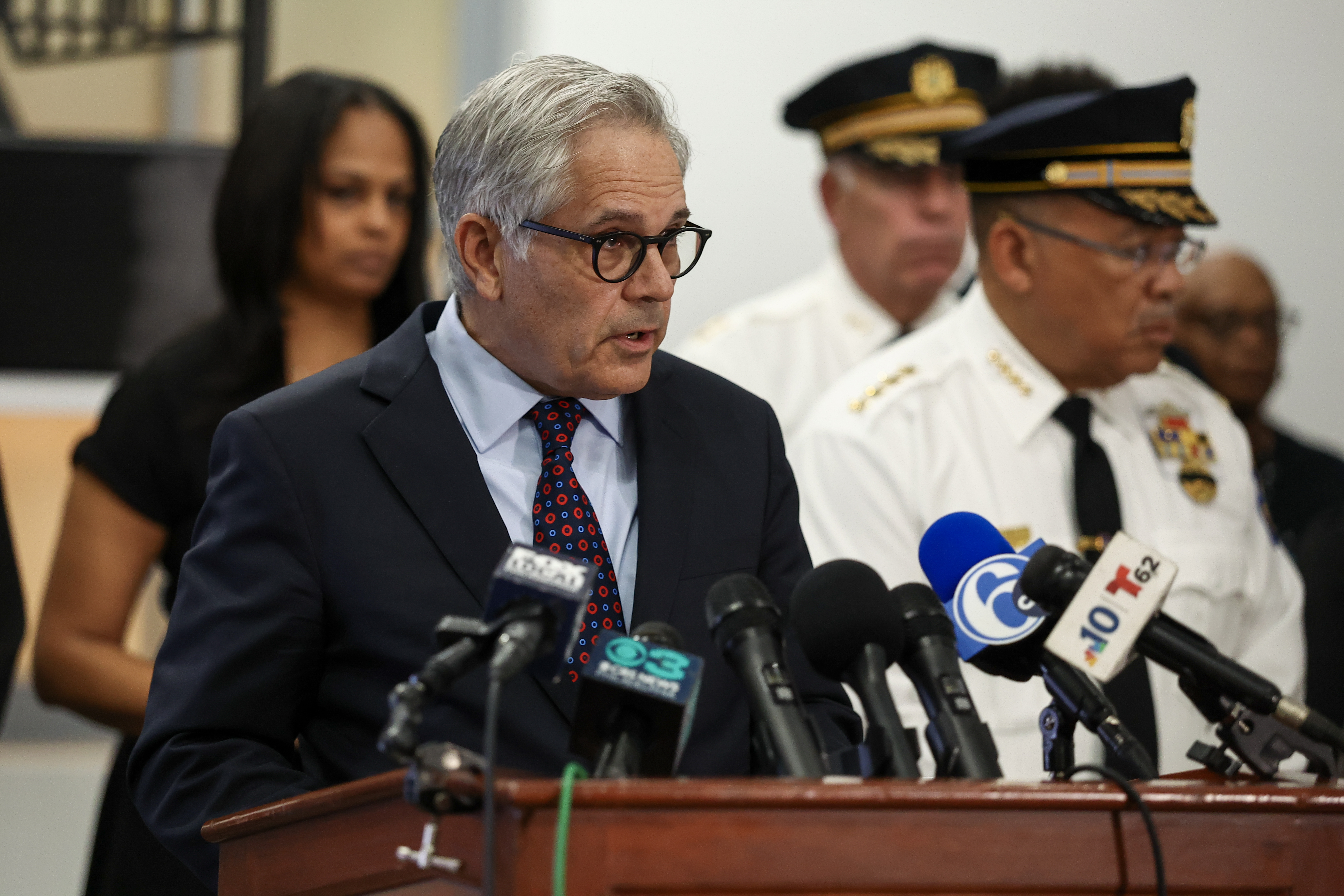
    District Attorney Larry Krasner announced the sweeping investigation at a news conference, saying Malayshia’s death in the care of her foster mother, 36-year-old Carprice Williams, was a tragedy.

    “The law, sadly, did not completely protect Malayshia Allford,” Krasner said. “This is for that family, this is for that community, it is for the outsiders in the city of Philadelphia that care so much.”

    The district attorney joins a growing list of city officials who have called for changes to the city’s child welfare system this week following the girl’s death.

    On Tuesday, Mayor Cherelle L. Parker issued an executive order convening a committee of child welfare experts who will review how the city can improve oversight of a foster care system of more than 2,000 children. And on Thursday, City Council members introduced three resolutions calling for public hearings on the city’s child welfare system, including the oversight of children in foster care.

    The investigation by Krasner’s office will utilize the “special powers” of his position, the district attorney said, though the exact outcome of such an inquiry remains unclear. Some of the potential changes that Krasner suggested could come of the probe would require shifts to policies and laws that his office does not control.

    Asked whether anyone other than Williams would be prosecuted over the circumstances that led to Malayshia’s death, Krasner said that the investigation would be broad but that, in tandem with Williams’ criminal prosecution, it would shed light on bureaucratic solutions to systemic problems.

    For example, the district attorney said his office would explore how to improve funding for court-appointed special advocates, the people who represent abused and neglected children in court, and who Krasner said deal with high turnover and low pay.

    His office will consider whether to implement regular reviews of child abuse cases alongside Philadelphia police and advocates, a process Krasner said is currently conducted for sexual assault cases.

    The review will also question the kinship laws that determine which caregivers are eligible for foster care placement. That includes exploring how to expedite the licensing process for a child’s extended family members and relatives to become caregivers, Krasner said.

    “Is it all about blood,” he asked, “or does it have to do with someone in a child’s life who can provide a safe and loving place to live?”

    In what Krasner said was perhaps the most important part of the investigation — and one that touches on a core element of Malayshia’s case — his staff will scrutinize the expungement process that foster parents have used to remove abuse allegations from their records.

    Police discovered Malayshia’s body, beaten and bruised, in the trunk of a Lincoln sedan in Camden County on Nov. 4, ending a more than weeklong search for the girl, who had been living with Williams in her West Philadelphia rowhouse for about two years.

    Williams, a teacher with the Philadelphia School District, was charged with murder and related crimes the following day.

    And The Inquirer learned that Williams had been accused of abusing another foster child in her care in 2021, although she was able to have that allegation expunged from her record and continue caregiving through Catholic Community Services, a designated community umbrella agency (CUA) contracted by the Philadelphia Department of Human Services (DHS).

    City Council President Kenyatta Johnson said after Thursday’s meeting that “everything is on the table” to prevent what happened to Malayshia from happening to other children.

    The resolutions introduced Thursday direct committees to examine how DHS monitors children placed outside their homes, how its network of CUAs manages child welfare cases, and whether agencies are doing enough to prevent abuse, neglect, and child fatalities. One resolution also calls for scrutiny of the Philadelphia School District’s hiring and screening practices.

    The measures were introduced by Councilmembers Anthony Phillips, Kendra Brooks, and Cindy Bass. Phillips said some members of Council had been “sounding the alarm about DHS for a long time.” He described the weeks following Malayshia’s death as a “challenging [time] for many of us who love children and have families,” and vowed that her “legacy is going to be a great change in the city of Philadelphia.”

    Johnson said the state’s role in placing children in foster care also should be examined. “However, I’m not getting into pointing fingers,” he said. “We all have to work together and figure out” the state- and city-level policies, then decide, “How can we all come together and make sure something like this does not happen in the future?” he said.

    Also appearing before Council was a young woman who said that she lived with Williams as a foster child for several months until she ran away in May 2020.

    Maria Campbell, 21, stood beside local activist Ameer Barber as he pressed for Council members to take swift action to fix the foster care system, and did not speak. But afterward, she told The Inquirer she had run away from Williams’ Simpson Street house to escape what she described as months of abuse.

    Witnesses familiar with Malayshia’s time in Williams’ care described her treatment of the girl as horrific, court records show.

    She was repeatedly denied food, beaten with a phone cord, and thrown down the stairs, among other abuses, according to the report obtained by The Inquirer. Williams has since been accused of intentionally misleading investigators who had been searching for Malayshia, going as far as faking affectionate text messages from the girl to make it appear as if she was still alive.

    A medical examiner determined that Malayshia died of blunt force trauma, suffering a fractured rib, bruises on her head, torso, and buttocks, and whiplike marks across her legs, according to a police report.

    Surveillance video from late October shows a relative of Williams’ carrying a large bag from her home and loading it into a vehicle, according to a police report.

    It was not clear whether prosecutors will charge that man with a crime. Krasner said his office would have an update on that investigation in the near future.

    Staff writer Jake Blumgart contributed to this article.

  • What actions have City Council and Mayor Parker proposed following Malayshia Allford’s death?

    What actions have City Council and Mayor Parker proposed following Malayshia Allford’s death?

    The death of 10-year-old Malayshia Allford in the care of her foster mother — a West Philadelphia woman who has been charged with murder and was previously accused of abusing another child — has rocked the city and spurred calls for changes to the foster care system.

    On Tuesday, city leaders began officially responding to those demands.

    Mayor Cherelle L. Parker, who called 36-year-old Carprice Williams’ alleged treatment of Allford a “crisis of unimaginable proportions,” issued an executive order that calls for child welfare experts to convene and deliver a report on how the city can improve its handling of the thousands of foster cases overseen by the Philadelphia Department of Human Services and managed by a network of contractors and nonprofits.

    Meanwhile, City Council members announced they had taken their own interest in investigating the circumstances that led to Allford’s death and making changes to Philadelphia’s child welfare system.

    A resolution calling for hearings on the matter, introduced by Councilmember Anthony Phillips and cosponsored by Councilmember Curtis Jones Jr., calls for hearings to probe the workings of DHS and foster care contractors, particularly when it comes to accessing records that detail prior abuse allegations leveled against foster parents. That is a reference to the fact that Williams was able to foster Allford after having a 2021 abuse allegation expunged from her record.

    The goal, the resolution says, is to propose safeguards that may prevent another tragedy. Read on for a summary of the mayor’s executive order and the City Council resolution.

    What actions were proposed?

    Mayor’s executive order: Establishes a Child Welfare Review Committee, which will be tasked with reviewing the way DHS interacts with community umbrella agencies (CUAs) — the nonprofits that contract with the city to manage foster care cases — as well as local foster care agencies.

    Committee members will be asked to conduct a “comprehensive review” of issues affecting the city’s child welfare system, according to the order.

    Members will review the process for placing children in foster care homes, for example, and probe how the city and state monitor such cases, the order says.

    They will also examine how foster homes are licensed and consider how to best manage visitations from a child’s biological family members. And they will review the city’s criteria for contracting with certain foster care providers.

    City Council resolution: Authorizes Council’s Committee on Children and Youth to hold hearings that will examine how the city keeps children in its child welfare system safe.

    The hearings will explore what safeguards exist to support children placed outside the care of their biological families and how the city can engage with the concerns of a foster child’s family members during placement, according to the resolution.

    They are also expected to delve into how city agencies can better coordinate with foster care providers and how to prevent abuse, neglect, and fatalities within the system.

    The hearings will probe how contractors select homes for foster placement, for example, or how they assess whether a child’s relatives are eligible for possible placement within the family.

    Additionally, the discussions will examine the training foster care providers receive, exploring whether they are prepared to meet the needs of children in their care. That includes training received by staff with the CUAs responsible for managing many of the city’s foster care cases.

    The hearings will also focus on DHS — specifically how the city agency records and responds to instances when a foster care provider has been accused of prior abuse or neglect.

    That includes examining what types of records and prior investigations providers may “lawfully access and consider during interviews, home studies, and approval decisions, including when a former [caregiver] applies to foster another child through a different provider,” the resolution says.

    Who’s involved in the plans?

    Mayor’s executive order: The Child Welfare Review Committee will be composed of up to 15 members who are “experts and leaders in the field of child welfare and foster care,” according to the order.

    Members will be selected by the mayor from a variety of professional fields, such as childcare advocacy groups, social workers, medical and behavioral health professionals, and legal experts who specialize in child welfare and the foster care system.

    Two committee chairs will be appointed by the mayor.

    City Council resolution: Council’s Committee on Children and Youth will oversee the hearings. The committee is chaired by Phillips, with Councilmember Isaiah Thomas as vice chair.

    The committee includes Councilmembers Kendra Brooks, Jamie Gauthier, Jim Harrity, and Rue Landau.

    What are the possible outcomes?

    Mayor’s executive order: The committee’s goal is to “work toward the elimination of child abuse-related fatalities, near fatalities, and injuries,” the order says.

    It also aims to improve how DHS coordinates with CUAs, nonprofits, and local foster care agencies.

    City Council resolution: The hearings could change how the city’s child welfare system operates.

    For example, the resolution says the discussions will explore whether additional training is needed for DHS employees to assess whether a foster placement is safe, and to learn how to escalate their concerns about possible abuse to superiors.

    The talks could lead to changes in how foster care providers access information about potential caregivers, how caseworkers verify that a child is safe in a foster home, and how attorneys and family members advocate on behalf of a child in a potentially dangerous situation.

    And the hearings could change how agencies determine when it is safe for children to return to their original home, among other possible outcomes.

    Participating Council members are also expected to consider how to publicly release information regarding these potential changes, whether they are working, and whether additional safety measures may be required.

    What are the timelines?

    Mayor’s executive order: Mandates that committee members submit a report on their findings to the mayor within 120 days of convening.

    City Council resolution: There is no date set for hearings to begin.

    After the first hearing, the resolution requires DHS to provide the Committee on Children and Youth a monthly report for a period of two years.

    That document is expected to include tallies of children who are placed in kinship and foster care, reunited with a parent or guardian, or subject to a court order terminating parental rights, according to the resolution.

  • Delaware County police chief charged with stealing more than $50,000 in overtime payments, authorities say

    Delaware County police chief charged with stealing more than $50,000 in overtime payments, authorities say

    Upland Borough Police Chief Michael Irey collected more than $50,000 in fraudulent overtime payments, prosecutors said Monday, and during some of the hours he said he was working he was actually dining and drinking at local bars.

    Irey, 55, was charged with multiple counts of theft, tampering with evidence, obstruction of justice, forgery, and related crimes in connection with the scheme, which authorities said began in 2025 and continued until early this year.

    Irey frequently logged overtime using his access to the police department’s scheduling system, saying he was directing traffic outside a local charter school or pursuing aggressive and intoxicated drivers on borough roads, prosecutors said.

    Instead, they said, he was visiting bars and restaurants in Media, Middletown, and Newtown Square, while assigning other officers to cover the work he was being paid for.

    Detectives with the Delaware County District Attorney’s Office began investigating Irey in December after receiving information about the alleged misconduct. Eight of Upland Borough’s nine police officers submitted anonymous tips to borough officials about Irey, prosecutors said.

    He was placed on leave in February and later resigned, borough officials said.

    The officers said they had seen Irey at bars like DiFabio’s Market & Tap, Old State Tavern, La Porta, and LaScala’s Fire during afternoon hours when he was supposed to be directing traffic outside the Chester Community Charter School or serving as roving DUI enforcement as part of a Pennsylvania Department of Transportation grant program.

    Investigators built their case by studying Irey’s digital time sheet, reviewing his bank statements, and tracking his vehicles’ movements using automatic license plate readers and finding several instances in which the chief was not where he was supposed to be.

    At one of those locations, DiFabio’s in Media, staff told investigators Irey and another person were frequent visitors and often came in the early afternoon. Staff at La Porta said Irey was a regular, coming in “every Thursday” in 2025.

    The overtime payments amounted to more than $56,600 over the course of the year, prosecutors said.

    Irey was arrested in New Jersey last week on a separate gun possession charge and is awaiting extradition back to Delaware County.

    In announcing the charges against Irey, Delaware County District Attorney Tanner Rouse commended the Upland police officers who reported their boss to authorities, saying they had demonstrated “willingness to do what is right, even when it is difficult.”

    “The badge carries a responsibility that does not end when the shift is over,” the prosecutor said. “Public trust should never be treated as a personal paycheck.”

    Staff writer Vinny Vella contributed to this article.

  • Drexel student arrested for shooting man in neck in North Philadelphia, police say

    A Drexel University student was charged with attempted murder and related crimes after shooting a man in the neck in North Philadelphia on Monday, authorities said.

    Jackson T. Roberts, 22, was arrested Monday and was being held in the Curran-Fromhold Correctional Facility on $2 million bail, according to court records.

    Police arrested Roberts at a home on the 900 block of West Dauphin Street that morning after responding there for a report of a shooting.

    They arrived around 9:20 a.m. to find a 22-year-old man who had been shot in the neck, police said.

    The victim, whom police did not identify, was taken to Temple University Hospital. The extent of his injuries was not immediately clear. Police said Wednesday that the man was stable.

    Police did not identify a motive as they continue to investigate the crime.

    In addition to attempted murder, Roberts is charged with aggravated assault, possessing an instrument of a crime, simple assault, and reckless endangerment.

    He is being represented by a public defender, court records show.

  • Two teens arrested for carrying out string of gunpoint robberies, police say

    Two teens arrested for carrying out string of gunpoint robberies, police say

    Two teenagers were arrested in connection with a string of early-morning gunpoint robberies in Center City and North Philadelphia this month, including one outside the Four Seasons Hotel, authorities said Thursday.

    Kyeme Hunter and Jaiden Bethea, both 19, were charged with seven counts each of robbery, aggravated assault, criminal conspiracy, firearms offenses, and related crimes.

    They were being held at the Curran-Fromhold Correctional Facility on $1,050,000 bail.

    The arrests bring to a close a weeks-long investigation in which police asked the public for help in identifying the two people responsible for a string of crimes that began early Oct. 2 and ended the following week.

    Hunter and Bethea wore ski masks and, in some instances, wielded firearms, including a weapon equipped with a distinct blue laser, Capt. Jason Smith of the Central Detective Division said when announcing their arrests.

    They carried out at least seven robberies, he said, and targeted pedestrians who were carrying bags, including someone they held at gunpoint outside the Four Seasons at 19th and Arch Streets.

    The men stole a variety of items, from cell phones and a laptop to credit cards and bags of clothing, Smith said.

    They carried out some of the crimes in a black Honda Accord that was reported stolen in New Jersey and discovered abandoned on the 2200 block of West Sergeant Street in North Philadelphia on Oct. 5, he said.

    Hunter was arrested Tuesday afternoon at his home on the 100 block of East Hortter Street in East Mount Airy, according to police.

    Then on Wednesday, police searched a home on the 2200 block of West Harold Street in North Philadelphia that was connected to Bethea, and they arrested him there without incident.

    There, they recovered two loaded firearms, a 9mm Luger pistol with an obliterated serial number and blue laser attachment, and a polymer 9mm ghost gun, Smith said.

    Those weapons were “very similar to the two firearms used by the offenders,” he said.

    Police also recovered more than $11,000 in cash and a key fob programming device, a tool commonly used to steal push-to-start vehicles.

    Hunter and Bethea are expected to appear in court next month. They have yet to hire attorneys, court records show.