Author: Michelle Baruchman

  • Shapiro, Democrats blasted Trump’s ‘conspiracy theories.’ That message has not changed after New Jersey’s noncitizen voting revelation.

    Shapiro, Democrats blasted Trump’s ‘conspiracy theories.’ That message has not changed after New Jersey’s noncitizen voting revelation.

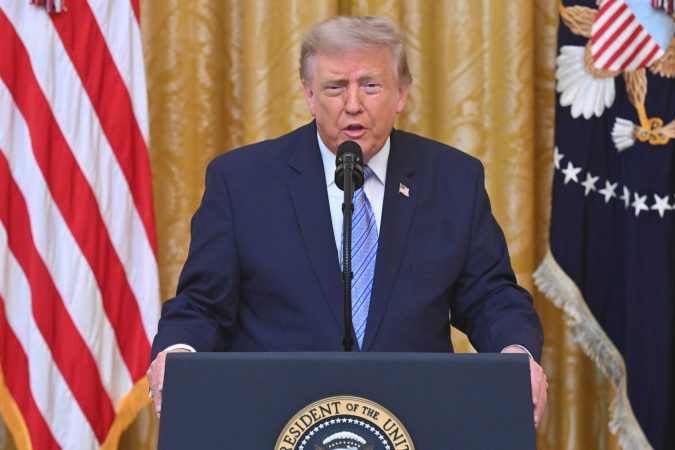
    The day after President Donald Trump delivered a prime-time speech contending, among other claims, that 250,000 noncitizens were registered to vote in just four states, Pennsylvania Gov. Josh Shapiro derided it as “a whole bunch of conspiracy theories that are just simply not connected to reality.”

    A week later, when New Jersey revealed that 6,600 noncitizens were improperly registered to vote in the state and nearly 400 cast a ballot due to a glitch, Shapiro’s message was nearly identical — that Trump is pushing “baseless conspiracy theories” as he seeks more power over state-run elections.

    Pennsylvania and New Jersey were both on the list of Democratic-led states that Trump claimed had thousands of noncitizens on their voter rolls. The methodology of how the Trump administration arrived at that figure remained unclear, but his administration has sought to leverage the New Jersey disclosure as evidence of a larger problem.

    But Shapiro and other national Democrats have not shifted their messaging on the issue ahead of the high-stakes midterm elections. They are refusing to cede to the GOP any suggestion that New Jersey’s voter rolls are evidence of widespread voter fraud and are warning that the changes Republicans seek would make it tougher for many Americans to vote.

    Shapiro, a likely presidential contender in 2028, joined 25 other Democratic officials from across the nation in a lawsuit last Thursday challenging the administration’s ramped-up attempts to coerce states to share their raw voter data by threatening to withhold money for homeland security and disaster preparedness.

    “Withholding this funding will make our communities less safe and would be dangerous under any circumstance, but doing this in an attempt to undermine states’ authority over elections is reckless and unconstitutional,” Shapiro said.

    Kentucky Gov. Andy Beshear, another potential 2028 candidate, also joined the suit. (Both Shapiro and Beshear lead states with Republican attorneys general.)

    The day after Trump’s speech, Shapiro challenged the administration to present “real evidence” of noncitizen voting, which Pennsylvania election officials say is extremely rare.

    In addition to Pennsylvania and New Jersey, the White House also targeted Nevada and California for additional scrutiny over their voter rolls, according to a document posted to the White House website last week shortly after Trump’s speech.

    California Gov. Gavin Newsom, one of Trump’s most vocal critics in the Democrats’ potential 2028 field, said the president’s speech was fueled by debunked lies.

    “It was unhinged. Unfounded allegations of election fraud — it’s madness. But he’s setting it up. He’s setting you all up. You know what he’s doing. He’s doing it in plain sight. He’s socializing all of this to normalize all of this,” Newsom said last week, during a news conference that took place the same day as New Jersey’s announcement.

    Trump has repeatedly promoted conspiracy theories about California elections in recent weeks — including in two Pennsylvania speeches — despite no evidence that fraud occurred.

    For U.S. Sen. Cory Booker (D., N.J.), pushing back against Trump presents a tougher challenge.

    Booker, also a likely 2028 aspirant, must balance the governing changes he sees as needed in New Jersey with the larger politics of the moment. He said the failure of the software was “not acceptable” but rejected Trump’s efforts to portray the entire election system as faulty.

    “There are those who will choose to weaponize this issue to undermine confidence in our elections,” Booker said in a statement. “We cannot allow that.”

    But Republicans have pointed to New Jersey as proof that a sweeping overhaul is needed for November’s results to be trusted.

    Trump’s allies are pushing the SAVE America Act, which would require voters to provide proof of citizenship when registering to vote and to show photo ID at the polls. The effort has stalled in Congress amid concern, even among Republicans, that the bill’s restrictions on mail voting could make it harder to cast a ballot and that many citizens could wrongly be blocked from voting if they do not have access to required paperwork.

    Vice President JD Vance, widely viewed as a 2028 Republican candidate and a potential political heir to Trump, seized on New Jersey’s revelations as a renewed opportunity for the legislation’s relevance.

    “If only there was a way to stop this type of ‘software error’ that allowed non citizens to vote in our elections,” he wrote in a post on X that targeted Booker and Sen. Andy Kim (D., N.J.), both of whom are unlikely to support the Republican-led bill.

    But the registration glitch happened despite these individuals answering “no” when asked on a keypad whether they were U.S. citizens. They were added to the system “through no fault of their own,” New Jersey Gov. Mikie Sherrill said last week, so it is not clear that showing additional documentation would have prevented the error.

    Sherrill ordered her chief counsel to investigate the issue, which occurred under her predecessor, former Democratic Gov. Phil Murphy, and promised to hold those responsible for the error accountable.

    Talking about this issue can pose an obstacle for both parties now that New Jersey’s glitch has been identified, said Sam Chen, a Pennsylvania strategist who has worked for former Gov. Tom Corbett and other Republicans.

    Republicans have overplayed their hand and are not seen as an authoritative voice on voter fraud, but Democrats have spent the same amount of time dismissing all of Republicans’ concerns, including some that are legitimate, Chen said.

    “When you’ve got an entire party saying, ‘No, this is never happening,’ and now you see what you see in New Jersey, it is going to leave a serious credibility issue for them,” Chen said.

    Democrats, like Shapiro, could build more credibility if they acknowledged the positive parts of the SAVE Act, he contended.

    “Grab what’s good, vehemently oppose what’s bad, and states can blaze their own path,” he said.

    But J.J. Balaban, a Philly-based Democratic ad maker, said it does not make sense for Democrats to go along with the SAVE Act because the charges are being made in bad faith.

    While many Democrats would support efforts to make election systems more secure, Balaban said, that is not what the Trump administration is trying to do — and New Jersey does not change that.

    “Voter fraud was shockingly rare a month ago. It remains shockingly rare today,” he said.
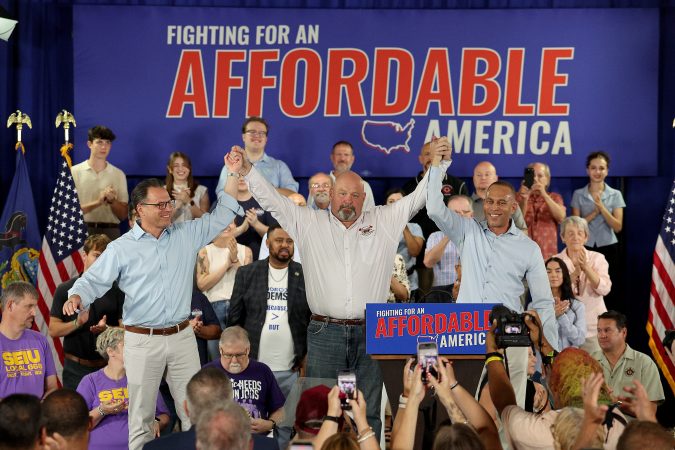
  • Hakeem Jeffries and Josh Shapiro rally for Democrat Bob Brooks, 100 days ahead of a competitive congressional race in Lehigh Valley

    Hakeem Jeffries and Josh Shapiro rally for Democrat Bob Brooks, 100 days ahead of a competitive congressional race in Lehigh Valley

    With 100 days until Election Day in Pennsylvania and across the country, top Democratic leaders rallied in the Lehigh Valley Sunday to support a Democrat they hope will defeat the Republican incumbent and help take control of Congress during the midterm elections this November.

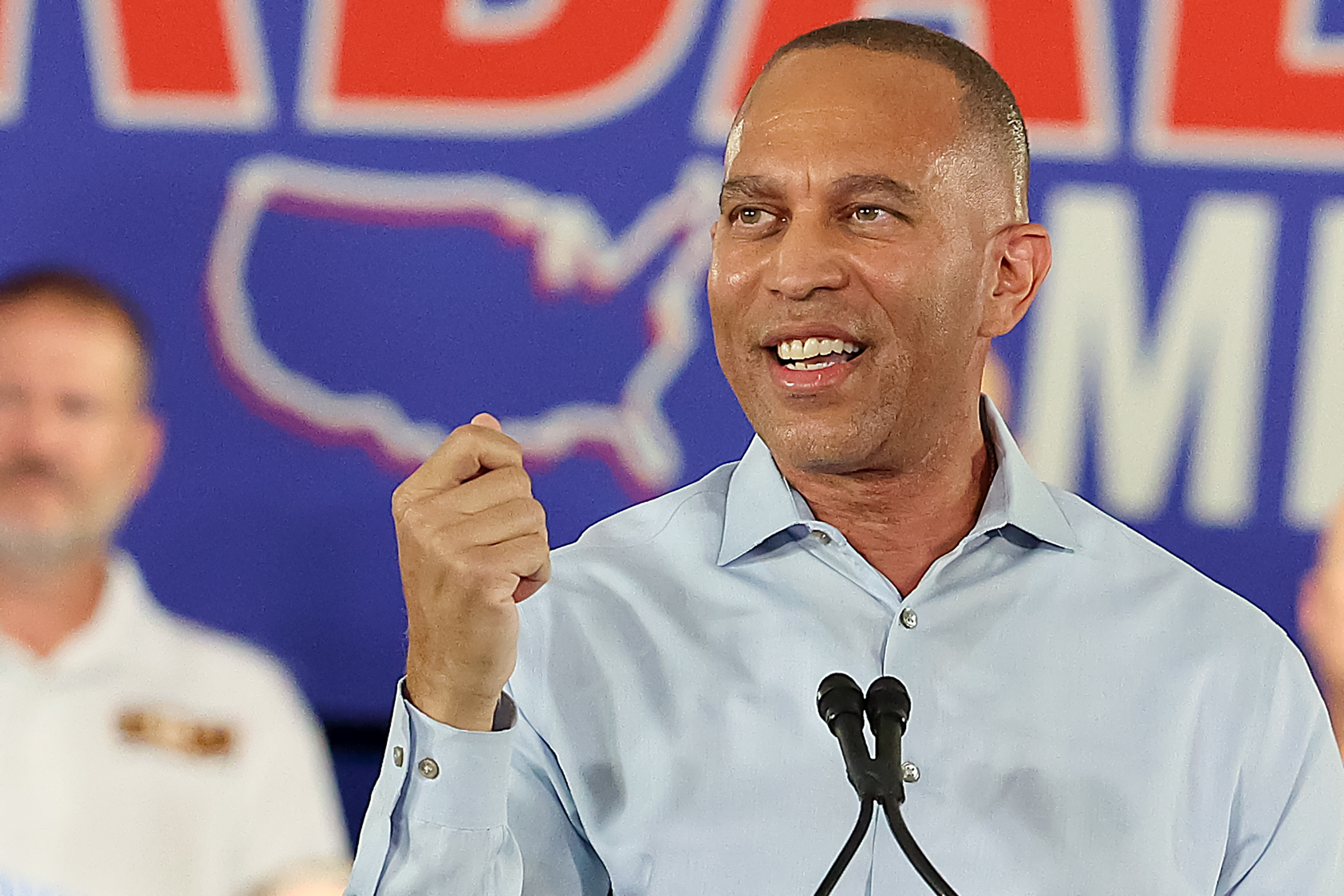
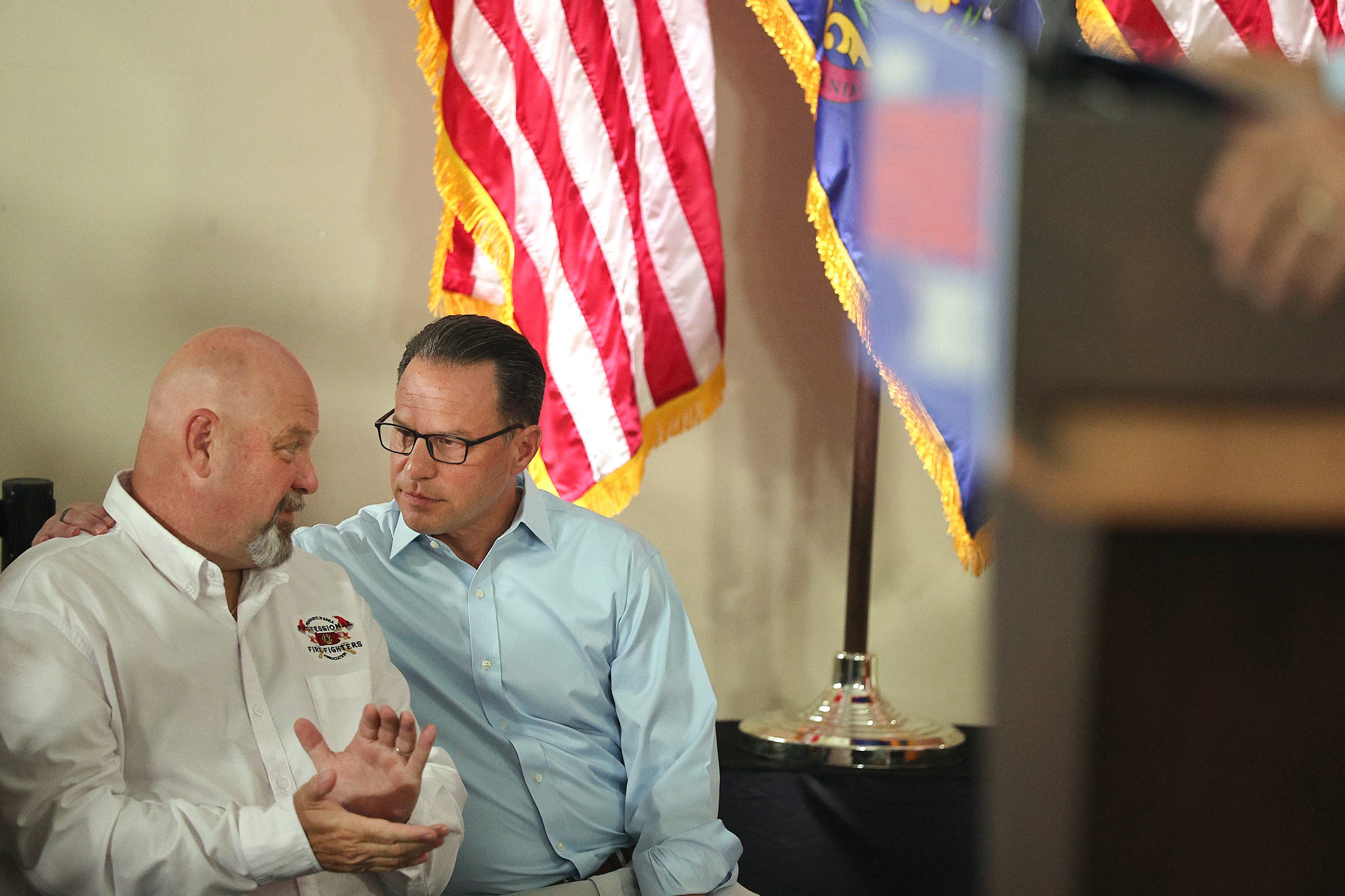
    Pennsylvania Gov. Josh Shapiro and U.S. House Minority Leader Hakeem Jeffries stood on a union hall stage with Democrat Bob Brooks, a firefighter and union leader who is running for a House seat in a key Pennsylvania swing district, in front of a crowd of about 150 people.

    “We have just 100 days until the midterm election, 100 days to change direction in this country. This is no longer a marathon; it’s a sprint,” Jeffries said. “And there’s no better place to begin that sprint than right here in the steelworkers union hall in Bethlehem.”

    Jeffries is poised to become the speaker of the House — and the first Black speaker — if his party wins control in the midterms. Democrats see winning Pennsylvania’s 7th Congressional District as a critical step in making Jeffries’ ascension happen, and taking action on a range of issues, from lowering gas prices to banning stock trading among members of Congress.

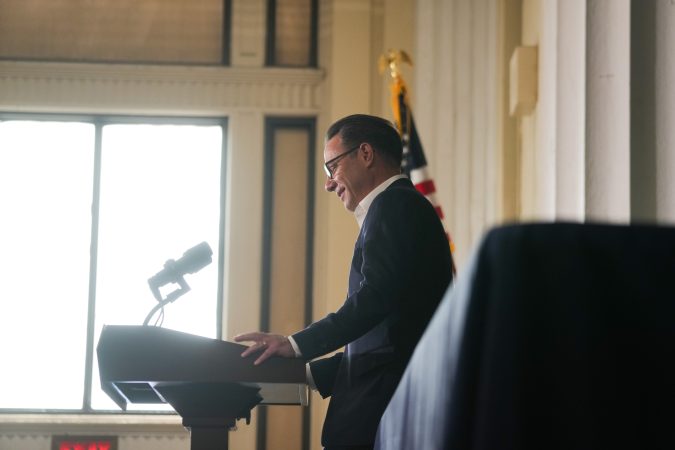
    House Minority Leader Hakeem Jeffries addresses the audience during a rally for congressional candidate Bob Brooks at the United Steelworkers Union Hall in Bethlehem, Pa., on Sunday, July 26, 2026.David Maialetti / Staff Photographer

    The visit comes as Republicans seek to bolster GOP Rep. Ryan Mackenzie, the district’s vulnerable freshman, who won his seat by just 1 percentage point in 2024, when President Donald Trump defeated Democrat Kamala Harris statewide. Trump visited the district in June, giving a speech about manufacturing, and a rambling range of other subjects, at the Macungie-based Mack Trucks facility — though he took nearly an hour to even mention Mackenzie by name.

    Mackenzie has a financial edge over Brooks. He has raised a total of nearly $4.5 million, compared to Brooks’ $2.3 million. But Brooks outdid Mackenzie handily between April 30 and June 30, after Brooks’ first-place finish in the robust and competitive Democratic primary. He added roughly $1.2 million to his stockpile during that time period, while Mackenzie only took in about $631,000.

    During the primary, Brooks was able to attract support from many ideological corners, including Shapiro, former Transportation Secretary Pete Buttigieg, and U.S. Sens. Bernie Sanders (Ind., Vt.) and Elizabeth Warren (D., Mass.), who saw him as an unpolished outsider committed to the party’s values.

    Brooks, who dropped out of college after a baseball injury, worked as a bartender and beer truck driver in the Lehigh Valley before later becoming a firefighter in Bethlehem. He also mowed lawns and plowed snow on the side.

    After his retirement from the fire department after more than 20 years of service, Brooks continues to serve as the president of the Pennsylvania Professional Fire Fighters Association, where he’s represented about 8,000 firefighters across the state since 2021.

    “I’ve lived in public housing. I’ve relied on food stamps when times were hard. I’ve had to choose between paying the medical bills and paying the mortgage. I’ve worked hard, and I made it out of a fire. I’m proud to be standing here today,” Brooks said.

    “Now I want to take that experience with me to the halls of Congress, so we can actually pass laws that work for working people,” he said.

    His first foray into politics began with a lobbying effort to lower the standards for first responders to have post-traumatic stress injuries covered by workers’ compensation, legislation that Shapiro signed in 2024.

    Shapiro, the first-term Democrat, has also been using his broad popularity to support Democratic candidates downballot in competitive elections across Pennsylvania while he campaigns for his own gubernatorial reelection bid.

    Congressional candidate Bob Brooks (left) and Gov. Josh Shapiro talk during a rally at the United Steelworkers Union Hall in Bethlehem Sunday.David Maialetti / Staff Photographer

    Last weekend near Harrisburg, Shapiro joined Pennsylvania Democrats to launch a campaign for candidates in key state Senate seats and congressional districts, both of which he hopes to flip to Democrats as a show of his political influence ahead of a widely expected run for the presidency in 2028. He also boosted former local TV anchor Janelle Stelson, who is challenging Republican U.S. Rep. Scott Perry for the second time in the Harrisburg-based 10th District.

    “One reason why we need Bob Brooks in the Congress of the United States is he’s a firefighter, and firefighters are always there for you,” Shapiro said, who referenced his gratitude to firefighters after an arsonist attacked his residence last year.

    “When you spend a lifetime being there for people when they’re young, being there for people when they are hurting, being there for people when they need help …. You have compassion in your heart. You’ve got a servant’s heart, and that’s the kind of people we need in the Congress of the United States,” he said.

    Shapiro’s campaign said it has given more than $3.3 million to the state party and its election effort since the fall of 2025, as part of his signature effort to “put a check on Donald Trump’s chaos, cruelty, and corruption.”

    Brooks’ and Stelson’s races are two of the four most competitive congressional contests in Pennsylvania this year. Republican U.S. Rep. Bob Bresnahan is facing a challenge from Scranton Mayor Paige Cognetti in the 8th District, and Republican U.S. Rep. Brian Fitzpatrick is running against Bucks County Commissioner Bob Harvie in the 1st District.

    Republicans are fighting to keep the competitive seats in GOP control. Mackenzie’s campaign manager blasted Brooks’ “dumpster fire candidacy” ahead of Sunday’s event.

    “At every step of his career, Bob Brooks has put himself first, his politician buddies next, and his own workers last,” Andres Weller said, in a statement.

    Among other news, Weller mentioned a leaked audio recording of Brooks that alleged Shapiro pushed his union to support the GOP candidate for Pennsylvania treasurer in the 2024 election.

    Shapiro has denounced claims that he dissuaded the state firefighter’s union from backing the then-Democratic nominee Erin McClelland because of a personal grudge, and Brooks later said he misspoke in the recording.

    All three men blasted Mackenzie for supporting cuts to Medicaid, as part of Trump’s 2025 One Big Beautiful Bill Act.

    Jeffries, who had last appeared in Pennsylvania on July 2 to commemorate the 250th anniversary of the vote for the Declaration of Independence, said if Democrats take the majority, they will also tackle “rampant corruption” and make life more affordable.

    “As House Democrats, we will build an economy that works for everyday Americans and drive down the high cost of living in every possible area because life is too expensive,” he said. “That means the grocery store, the gas pump, and your housing costs. It also means that you should be able to go see a doctor and get the care that you need.”

  • Josh Shapiro joins lawsuit against Trump administration’s plan to withhold disaster aid to pressure states on voter data

    Josh Shapiro joins lawsuit against Trump administration’s plan to withhold disaster aid to pressure states on voter data

    Pennsylvania Gov. Josh Shapiro was one of 26 Democratic officials from across the nation to join a lawsuit challenging President Donald Trump’s administration over its efforts to compel states into sharing raw voter data by threatening federal funding for natural disasters.

    “Withholding this funding will make our communities less safe and would be dangerous under any circumstance, but doing this in an attempt to undermine states’ authority over elections is reckless and unconstitutional,” Shapiro in a statement Thursday.

    New Jersey and Delaware are among the other states on the Illinois-led lawsuit. The complaint, filed in U.S. District Court in Rhode Island, comes amid escalating tensions between Democratic-run states and the federal government over how best to ensure noncitizens are not voting in any elections — a situation these states say happens extremely rarely.

    But New Jersey’s admission Tuesday that about 6,600 noncitizens were inadvertently added to the state’s voter rolls, due to a system error in the state’s department of motor vehicles voter registration program, has thrust the issue into the national spotlight as these efforts were already underway.

    The Department of Homeland Security announced earlier this month that the Federal Emergency Management Agency would require states to hand over their unredacted voter rolls and adhere to significant changes in their election administration in order to receive funding for preparation and recovery from catastrophic disasters, such as major storms.

    The policy puts nearly $6 million in federal aid at jeopardy for Pennsylvania, according to Shapiro.

    Shapiro has routinely signed on to lawsuits against the Trump’s administration, particularly when federal funding to the state has come under threat.

    Pennsylvania election officials have repeatedly declined to hand over unredacted voter rolls to the Trump administration, citing privacy concerns.

    New Jersey has also refused to provide voter roll data to the Trump administration, though the federal government is using the state’s registration mishap to justify its request.

    “We are not in the practice of turning this kind of personally identifying data over to the federal government because we have seen them weaponize it … and they don’t have a reputation for keeping it private, either,” New Jersey Gov. Mikie Sherrill said after a news conference Thursday.

    As for the FEMA funding, New Jersey Attorney General Jennifer Davenport said in a social media post Thursday that the Trump administration “threatens our safety when it plays politics with these funds.”

    While most of the plaintiffs are attorneys general, Shapiro was one of two governors to join the complaint, along with Kentucky Gov. Andy Beshear, another potential 2028 presidential contender who also leads a state with a Republican attorney general.

    In a prime-time address last week, Trump called for an overhaul of U.S. election administration and ticked through old debunked claims about his 2020 election loss.

    Pennsylvania and New Jersey are among four states — along with California and Nevada, which also joined the suit — that the Trump administration is targeting for additional scrutiny over their voter rolls, according to a document posted to the White House website last week. The one-pager claimed widespread instances of noncitizen voting, much broader than what New Jersey said it uncovered, though election experts have suggested caution when examining these numbers.

    “The Trump Administration is holding critical funding for homeland security and disaster response hostage in their latest attempt to take over our elections and perpetuate baseless conspiracy theories,” Shapiro said in his statement Thursday.

  • New Jersey reveals glitch allowed 6,600 noncitizens to register to vote ahead of 2024 election

    New Jersey reveals glitch allowed 6,600 noncitizens to register to vote ahead of 2024 election

    Roughly 6,600 people who were not citizens were improperly registered to vote over a yearlong span ahead of the 2024 election because of a software error in New Jersey’s motor vehicle system, New Jersey Gov. Mikie Sherrill disclosed Tuesday.

    The revelation came just days after President Donald Trump’s administration targeted New Jersey as one of four states that the Department of Homeland Security claimed had noncitizens on its voter rolls, along with neighboring Pennsylvania. The White House said the announcement from New Jersey underscored the need for Trump’s proposed national overhaul of elections.

    Among the noncitizens, who were wrongly registered between June 2023 and June 2024, fewer than 400 cast a ballot, Sherrill said.

    The voters were scattered across the state and registered as Democrats, Republicans, and unaffiliated voters, though the office did not provide percentage breakdowns.

    Sherrill, a Democrat who took office in January, pointed a finger at her predecessor, noting that the wrongful registrations took place under former Democratic Gov. Phil Murphy. She said that she “immediately ordered” her chief counsel to investigate the issue and that the individuals erroneously added to the voter rolls be removed “before the next election,” which will be the November midterms that will determine control of Congress. The individuals have been notified of their planned removal.

    “As a military veteran who swore an oath to defend our Constitution, and as a former federal prosecutor, I believe the integrity of our elections is fundamental to our democracy. I am appalled by the reckless failures that allowed this to happen and the lack of transparency shown by those in charge at the time,” Sherrill said in a statement.

    Sherrill, at a news conference Tuesday afternoon, said the investigation would determine which elections the noncitizens’ votes were cast in — and whether they included the 2025 gubernatorial race in New Jersey, which Sherrill won, or the 2024 presidential election, when the state went for Vice President Kamala Harris — but neither contest’s outcome would have been changed by these ballots cast.

    The glitch occurred when individuals were applying for driver’s licenses and identification cards in New Jersey. Although they answered “no” when asked on a keypad whether they were a U.S. citizen, “through no fault of their own, the system registered them anyway,” Sherrill’s office said.

    Trump last Thursday delivered a prime-time address in which he, amid conspiracy theories about his 2020 election loss, claimed the Department of Homeland Security had identified more than 250,000 noncitizens registered to vote across four Democratic-led states — New Jersey, Pennsylvania, California, and Nevada — according to a document the White House posted online during Trump’s speech.

    DHS Secretary Markwayne Mullin claimed Tuesday on X that more than 35,000 noncitizens could be registered in New Jersey. However, the department has not shared the methodology it used to arrive at that number, and experts have cautioned it could include new citizens who have not been updated in a system meant to check work eligibility.

    “Just ONE illegal vote cancels out the vote of a U.S. citizen,” Mullin said.

    He said he appreciated Sherrill’s announcement, but “this should’ve been done a LONG time ago.”

    Pennsylvania election officials have disputed DHS claims of noncitizen registrations, but the timing of the New Jersey disclosure is sure to fuel scrutiny of the four states.

    Sherrill said she learned of the error last Wednesday, the day before Trump’s address.

    White House, Republicans call for changes to voting laws

    Trump’s administration has been pushing states to hand over unredacted voter rolls and threatening legal consequences for election officials, but New Jersey and Pennsylvania have resisted, saying doing so could put voters’ personal information at risk.

    “As the Trump Administration tries to weaponize elections for political gain, I am ensuring we protect our elections. Let me be clear: Donald Trump has zero credibility on the issue of election integrity,” Sherrill said in her statement.

    The White House argued that the New Jersey disclosure helped make the case for the SAVE Act, which would require prospective voters to prove their citizenship in order to register to vote.

    “Democrats and their media allies have repeatedly said it is impossible for noncitizens to register to vote, let alone cast a ballot. Time and again, they have been proven wrong. As President Trump has said, there is nothing more important than the integrity of our elections,” said Abigail Jackson, a spokesperson for the White House.

    The legislation has stalled in the Senate, but the New Jersey announcement will likely renew a push for it ahead of the midterms.

    “This is why we must confirm citizenship before anyone registers. Only US citizens should vote in our elections,” U.S. Sen. Dave McCormick (R., Pa.) said on X in response to the Garden State’s news.

    The senator has yet to weigh in on Pennsylvania’s inclusion on the White House’s list.

    U.S. Sen. Cory Booker (D., N.J.) called the failure of the registration software “not acceptable.” But he said he trusts Sherrill and the state to solve the problem and criticized “those who will choose to weaponize this issue” as attempting to undermine confidence in elections.

    “I have full confidence in New Jersey’s ability to administer voter registration and elections accurately and securely, and to ensure every legal ballot is counted,” Booker said.

    U.S. Sen. Andy Kim, a South Jersey Democrat who criticized Trump’s speech last week, declined to comment.

    New Jersey Republicans called for a bipartisan investigation and chastised Democrats for dismissing the issue in the past.

    “We believe this issue is not isolated to this one-year time frame or a software glitch. The system and verification process must be improved in order to safeguard our elections,” said Christine Giordano Hanlon, chair of the New Jersey GOP. “The public also deserves to know why this was covered up and who was responsible for keeping this critical information from the public.”

    U.S. Rep. Jeff Van Drew, a South Jersey Republican facing a challenge from Cape May Mayor Zack Mullock this fall, said the state should end automatic registration through the New Jersey Motor Vehicle Commission and require proof of citizenship to register.

    “We have had extremely close elections in New Jersey, and God knows how many other ineligible voters may still be on the rolls or how many ballots have been cast without ever being identified,” Van Drew said in a statement. “It is unacceptable.”

    The National Voter Registration Act of 1993, commonly known as the motor voter law, requires states to enable people to register to vote through departments of motor vehicles when they are getting a driver’s license. Twenty-three states, including New Jersey and Pennsylvania, provide automatic voter registration through the DMV, according to the National Conference of State Legislatures.

    Micah Rasmussen, the director of the nonpartisan Rebovich Institute for New Jersey Politics at Rider University in Mercer County, said the wrongful registrations were a small slice of the state’s 6.6 million voters.

    “It’s got to be dealt with,” he said. “The administration is dealing with it, but it’s also something well short of systemic.”

    He said that the DMV has long been a weak link in motor vehicle voter registration and that it is worth looking into replacing the vendor that runs the registration software.

    “On Election Day, when voters can go and argue and plead their case before a judge because they’re not registered and they thought that they were, invariably, it surprises nobody when DMV winds up being the problem,” he said.

    This is not the first time a state’s motor vehicle system has incorrectly registered noncitizens.

    Pennsylvania Secretary of State Al Schmidt uncovered a similar glitch in 2017 while he was serving as a Philadelphia city commissioner, discovering that a Pennsylvania Department of Transportation error had allowed 168 noncitizens to register to vote in the city, and likely a couple of hundred statewide.

    The state’s voter rolls were updated in 2018, and Schmidt has emphasized that noncitizen voting remains incredibly rare.

    In a statement, Schmidt said Pennsylvania’s automatic voter registration system, which was implemented in 2023, permits only eligible applicants — American citizens — to register to vote.

    “AVR has allowed hundreds of thousands of eligible Pennsylvanians to register to vote while safeguarding the integrity of our voter rolls,” he said in the statement.

    Sherrill said that she is exploring options to rectify the problem, and that the vendor behind the error will be replaced. Individuals responsible for the error will be held accountable, she said.

    “We’re open to suggestions that make our elections more safe,” she said. “The investigation will have findings on what occurred. We will be looking carefully at what we can do to make sure it doesn’t occur again.”

  • Shapiro takes new step in boosting Democrats in both state and federal swing districts

    Shapiro takes new step in boosting Democrats in both state and federal swing districts

    Ahead of the 2026 midterm elections, Gov. Josh Shapiro is using his broad popularity and giant cash stockpile to boost Democratic candidates downballot in competitive elections across Pennsylvania while he campaigns for his own reelection bid.

    At a union hall in Harrisburg, Shapiro joined Pennsylvania Democratic Party members Saturday to launch a new effort that will pool donations to fund field offices, signage, and volunteers to support Democrats in key state Senate seats and congressional districts.

    “We have an opportunity here in the Commonwealth of Pennsylvania, the birthplace of our democracy, the swingiest swing state in the country, to decide what the future of the Congress of the United States looks like, and to be a model for good governance right here in Harrisburg,” he said.

    He referred to the effort, called Rise Up Pennsylvania, as “the most coordinated, well-funded, well-organized campaign in the history of the Democratic Party here in the commonwealth.”

    Shapiro, a first-term Democrat, is in a strong position as he faces a challenge from his Republican opponent, State Treasurer Stacy Garrity, for the governor’s mansion. He’s leading Garrity 53% to 40%, according to a poll of registered Pennsylvania voters released this week from Quinnipiac University. Both Shapiro and Garrity faced no opposition in their party’s primary.

    And he remains popular in the state, with 51% of respondents in the poll reporting a favorable opinion, and 56% approving of the way he is handling his job as governor.

    He also boasts a massive war chest that continues to grow. Between April and June, Shapiro brought in $12 million toward his reelection bid, bringing his total fundraising to $50 million since January 2025, his campaign told The Inquirer this week. Garrity’s campaign did not share its fundraising numbers, which are not due to the state until Sept. 22. During the last cycle, he outraised her 10-1.

    But the larger test this November for Shapiro, widely expected to be considering a run for president in 2028, will be whether he can translate his political influence to other candidates. If Democrats flip the state Senate, four Democratic congressional candidates Shapiro backs beat Republican incumbents, and he wins, the governor could become somewhat of a Democratic kingmaker in one of the nation’s biggest battlegrounds.

    And his efforts in these races are not just a simple show of support.

    Earlier this week, Shapiro’s campaign announced he has given more than $3.3 million to the state party and its election effort since the fall of 2025, with $1.5 million of that since April.

    The party, which is operating Rise Up Pennsylvania, can use the money toward door-knocking and phone-banking efforts.

    Shapiro has endorsed union leader and firefighter Bob Brooks in the Lehigh Valley-based 7th Congressional District. Brooks is running against Republican U.S. Rep. Ryan Mackenzie. He has also endorsed Scranton Mayor Paige Cognetti, who is running to unseat Republican U.S. Rep. Rob Bresnahan in the 8th District. And he has backed Bucks County Commissioner Bob Harvie in his quest to defeat Republican U.S. Rep. Brian Fitzpatrick in the Bucks County-based 1st District.

    On Saturday, Shapiro appeared alongside former local TV anchor Janelle Stelson, who is challenging Republican U.S. Rep. Scott Perry for the second time in the Harrisburg-based 10th District.

    “I know we’re frustrated right now. I know we’re angry right now,” Shapiro said. By “making sure Janelle is our next congressman, we can stop this chaos, this cruelty, and this corruption in D.C.”

    Stelson blasted Perry for his votes on supporting U.S. military action in Iran and for his involvement in the Jan. 6, 2021, riots at the U.S. Capitol. She said voters have been concerned about corruption and wants to institute age limits for members of Congress.

    Shapiro has also sought to strengthen Democrats’ chances by installing his allies to lead the state party.

    “From now through Election Day, we are going to keep our foot on the gas to make sure that we are not only taking advantage of the moment that the delusional president has given us with this political opportunity, but also expanding on our state House, flipping the state Senate, reelecting our governor, and making Donald Trump a lame duck president,” said Eugene DePasquale, chair of the Pennsylvania Democratic Party.

    Democrats have already opened 27 field offices across Pennsylvania, hired 100 full-time organizers, and knocked on 63,000 doors, DePasquale said.

    A moderate Democrat who boasts about his success cutting taxes, Shapiro has struggled to get top Democratic priorities through the Pennsylvania legislature, where the GOP controls the Senate.

    Also on stage Saturday were State Sen. James Malone, who is running for reelection, and Sarah Agerton, a former Mechanicsburg Borough Council member who is running for the state House.

    If Democrats flip the Senate, Shapiro said his priorities would be raising the state minimum wage, codifying access to abortion, and funding more affordable housing.

    “All of this is possible, and this, in many ways, is the center of what is going to decide whether we have a trifecta in Harrisburg and a Democratic majority in Washington,” Shapiro said.

  • Shapiro says Trump’s claims of widespread noncitizen voting are ‘not connected to reality’

    Shapiro says Trump’s claims of widespread noncitizen voting are ‘not connected to reality’

    Gov. Josh Shapiro blasted President Donald Trump Friday morning, a day after the president used a prime-time speech to reignite a series of conspiracy theories about his 2020 election loss that intelligence and voting experts have both warned are based on misrepresentations and falsehoods.

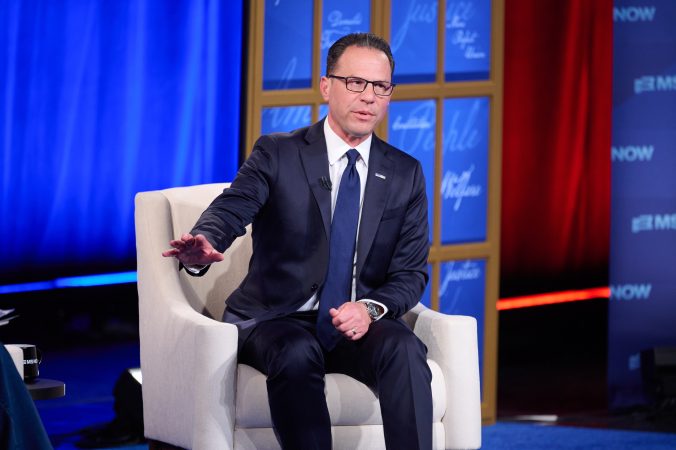
    “It was an unfortunate day for America to have really an unhinged president in the White House spewing a whole bunch of conspiracy theories that are just simply not connected to reality,” Shapiro said on MS NOW’s Morning Joe Friday morning.

    The speech comes less than four months ahead of the November election, which will determine control of Congress and the Pennsylvania governor’s office. As Trump administration looks to usher in sweeping national changes to election administration, Shapiro and other Democrats have promised to continue resisting those efforts.

    Shapiro, a potential Democratic contender for the presidency in 2028, noted his role in battling Trump’s team in court as Pennsylvania attorney general in the aftermath of the 2020 election — which Trump continues to insist he won, without evidence, six years later.

    “I went 43-0,” Shapiro said, calling Trump’s assertions baseless.

    DHS targets Pennsylvania and New Jersey

    While the president did not directly reference Pennsylvania in the speech, the White House did target the state — along with New Jersey, California, and Nevada — in a document it posted online Thursday evening in support of the president’s claims.

    The document claims that the Department of Homeland Security has identified more than 250,000 noncitizens registered to vote spread across the four Democratic-led states, but it provides little explanation of the methodology used.

    Pennsylvania Secretary of State Al Schmidt, a Republican appointed by Shapiro, rejected the allegation in a statement.

    “Pennsylvania follows all state and federal laws when it comes to our elections, and our voter rolls are properly maintained and updated,” Schmidt said in a statement Thursday. “All evidence has shown that noncitizen voting is extremely rare across the country, including in Pennsylvania.”

    The assertions, which Trump said were made in concert with the nation’s top intelligence agency chiefs, are included in memos on the White House homepage that together weave broad allegations of fraud surrounding the 2020 presidential election that remain unproven despite multiple audits and investigations six years later.

    “These disclosures reveal an election system so broken and so vulnerable that no one can possibly defend it. It is not defensible,” Trump said Thursday.

    But none of memos show evidence that would change the outcome of the election and a broad range experts have pointed that some contain information that undercut Trump’s claims.

    The document targeting Pennsylvania and New Jersey is a one-page summary of a Department of Homeland Security investigation, which the White House says identified, a total of 278,000 noncitizens across the country who are registered to vote in federal elections.

    The White House document suggests the number was derived from putting voter files through the federal government’s Systematic Alien Verification for Entitlements (SAVE) tool, which has previously been used to further false claims of widespread voter fraud.

    “While the Department has made clear that we cannot share Pennsylvanians’ private, personal information, we welcome DHS sharing their methodology and list of potential ineligible voters so we can carefully review the validity of their claims,” Schmidt said in the statement.

    The announcement also comes as Pennsylvania and other states have pushed back against requests from the Department of Justice to hand over unredacted voter rolls. Schmidt has argued that sharing the rolls would put voters’ personal information at risk.

    The Trump administration has insisted doing so is the best way to avoid criminal prosecution for “aiding and abetting the violation” of federal voting laws.

    DHS Secretary Markwayne Mullin said 23 states already work with the department to screen for noncitizen voters, in a news conference Friday, and those who continue to resist could face legal consequences.

    States that want to be reimbursed for the cost of running federal elections must implement the department’s requests, he said.

    “We will make sure that we make those states a priority to look at who voted in their states, and hold the election officials accountable,” Mullin said. “If the election officials — once we gave them the information they need to secure their elections — chose not to, then those individuals can also be held accountable by fines, by penalties, and even depending on how far it goes, prison time.”

    But funding from the federal government to run elections “is modest at best and neither reliable nor consistent,” according to the Center for Election Innovation & Research.

    Schmidt, who investigated noncitizen voting in his previous role as Philadelphia’s Republican city commissioner, has repeatedly rebuffed the department’s demands and said it is extremely rare for noncitizens to vote and already prohibited by state law.

    There have been only 77 instances of noncitizens voting in the entire United States between 1999 and 2023, according to an analysis from the Bipartisan Policy Center, and authorities investigated in each instance.

    To vote in Pennsylvania, you must be a U.S. citizen, a resident of the state for 30 days, and 18 years old by Election Day. Registration must be done 15 days prior to an election.

    There are three main ways to register: online, via a paper form handed into a county board of elections, or at PennDot or another state agency. Some people register when obtaining a driver’s license, if eligible, or after a naturalization ceremony.

    But the SAVE system doesn’t always catch up with those changes, said Ben Geffen, a senior attorney at the Public Interest Law Center in Philadelphia who reviews elections. That means, results might show “false positives” that evaporate upon “even a little bit of investigation” into individual circumstances.

    Pennsylvania will be crucial in determining control of the House with four swing districts being targeted by both parties, meaning that the state’s election is likely to fall under the microscope as they repeatedly have since the 2020 election when Trump sought to overturn Joe Biden’s victory.

    “We are prepared here in the Commonwealth of Pennsylvania to once again have a free and fair, safe and secure election,” Shapiro said.

    State audit found only one noncitizen on Pa. voter rolls

    Shapiro said he trusts Schmidt, a Republican, “because we believe here in Pennsylvania the administration of elections is nonpartisan.”

    In 2017, Schmidt, then a Philadelphia city commissioner, identified a glitch in PennDot’s system that had allowed 168 noncitizens to register to vote in the city, and likely a couple hundred statewide.

    The voter rolls were updated in 2018, Geffen said, so none of the glitches would have impacted the 2020 election or any beyond.

    A 2026 audit from Pennsylvania Auditor General Timothy DeFoor, a Republican, found that just one noncitizen was improperly registered to vote at PennDot due to human error. The individual never cast a ballot.

    New Jersey has also fought against the full release of its voter rolls.

    Gov. Mikie Sherrill joined other Democratic governors in calling Trump’s speech “alarming” in a statement issued Thursday.

    “Democratic governors stand ready to fight back against the Trump administration and stop any and all unlawful attacks on every American’s constitutional right to vote,” said the statement from the Democratic Governors Association.

    Sen. Andy Kim, (D., N.J.) referred to Trump’s address as “25 minutes of conspiracy theories from a man who still can’t get over 2020” in a post on X.

    Trump also used the speech, which was not carried live on ABC, NBC, or CNN, to advocate for the SAVE Act, the elections bill that would require people to prove that they are U.S. citizens when registering to vote.

    “Addressing this crisis of election security demands that Congress must pass the SAVE America Act,” Trump said. “How easy is that to do unless you want to cheat?”

    The legislation, which has stalled in Congress, is unpopular among Democrats and even some Republicans. Among the concerns that have been raised from opponents is that it could block married people who take their spouse’s surname from registering to vote because of the mismatch with their birth certificates.

    Sen. Dave McCormick (R., Pa.) urged passage of the bill on social media Thursday, but he did not respond to a question Friday about the Trump administration’s claims about noncitizen voting in Pennsylvania.

    But as November approaches, another Pennsylvania Republican, Philadelphia City Commissioner Seth Bluestein, said voters can be sure their votes will be counted accurately.

    “Prior to every election, we conduct logic and accuracy testing on every piece of equipment that is used for the election,” said Bluestein, the sole Republican on the three-member board that oversees Philadelphia elections.

    “Voters, when they cast their ballots, have a verifiable paper ballot for every single vote that gets cast, and then after the election, we conduct two audits of a random sampling of ballots to verify that they were tabulated accurately,” he said.

  • Democratic Sen. John Fetterman has more support among Pa. Republicans than GOP Sen. Dave McCormick, new poll shows

    Democratic Sen. John Fetterman has more support among Pa. Republicans than GOP Sen. Dave McCormick, new poll shows

    U.S. Sen. John Fetterman has insisted he has no plans to leave the Democratic Party, despite continued attempts to sway him.

    “I remain strongly pro-choice, pro-weed, pro-LGBT, pro-SNAP, pro-labor and even pro-rib-eye over bio slop,” the Pennsylvania lawmaker wrote in an opinion piece published in the Washington Post in May.

    But if he were to change his mind, a new poll shows he might have a home in Pennsylvania’s GOP.

    Just under half of registered voters in the state approve of how Fetterman is handling his job as a U.S. senator, according to a Quinnipiac University poll released Wednesday.

    But the vast majority of the first-term Democrat’s support comes from voters in the opposing party: 77% of surveyed Republicans said they approve of Fetterman, while just 19% of Democrats do.

    That is a higher share of voter support than even U.S. Sen. Dave McCormick, Fetterman’s Republican colleague from Pennsylvania, received from his own party, with 68% of surveyed Republicans approving of his job performance.

    Fetterman also faced more ire from Democrats than his GOP counterpart — with 69% of Pennsylvania Democrats disapproving of their party’s senator, compared with 52% who disapprove of McCormick.

    The Quinnipiac survey, conducted June 9-13, polled 895 registered Pennsylvania voters and has a 4.3-percentage-point margin of error.

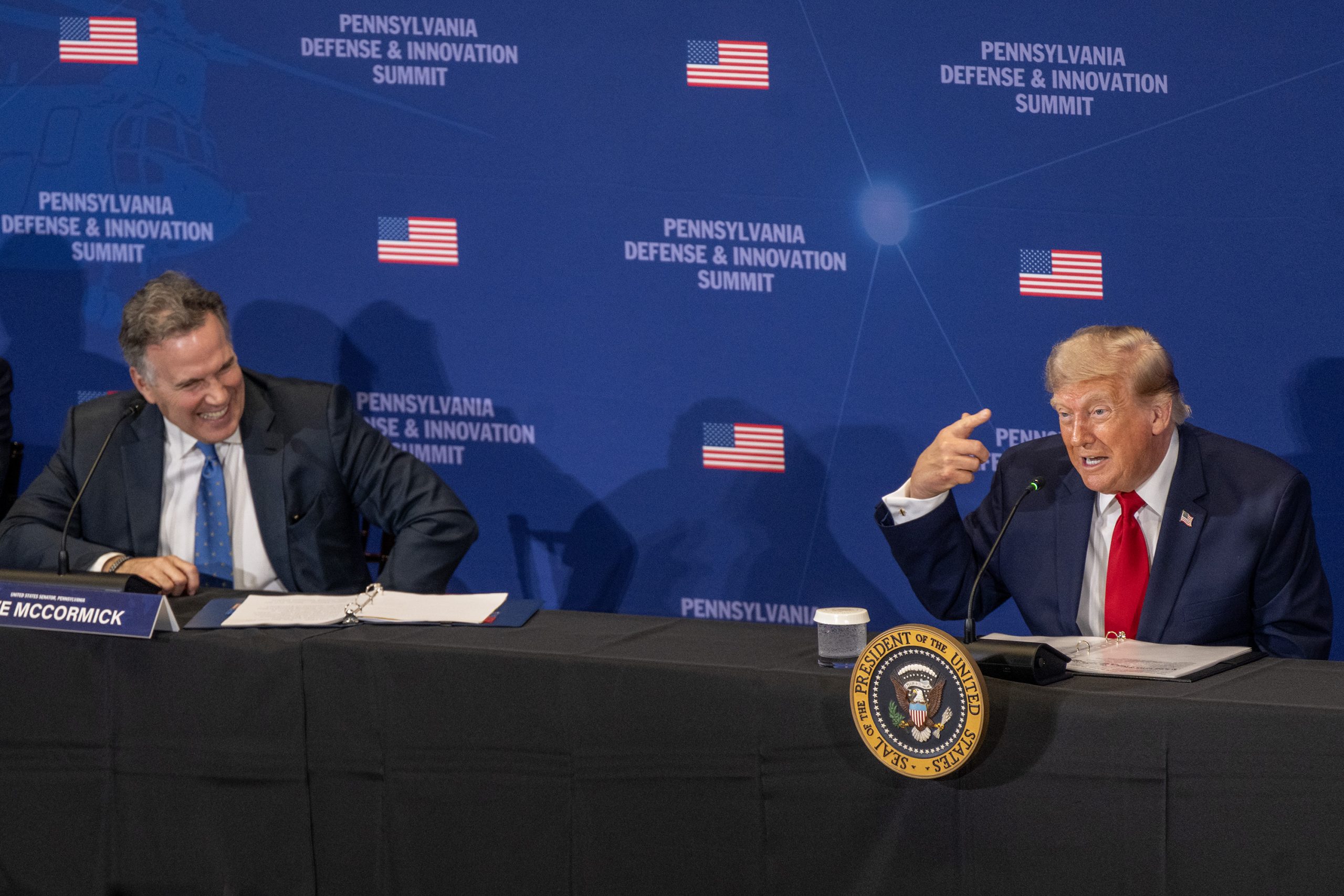
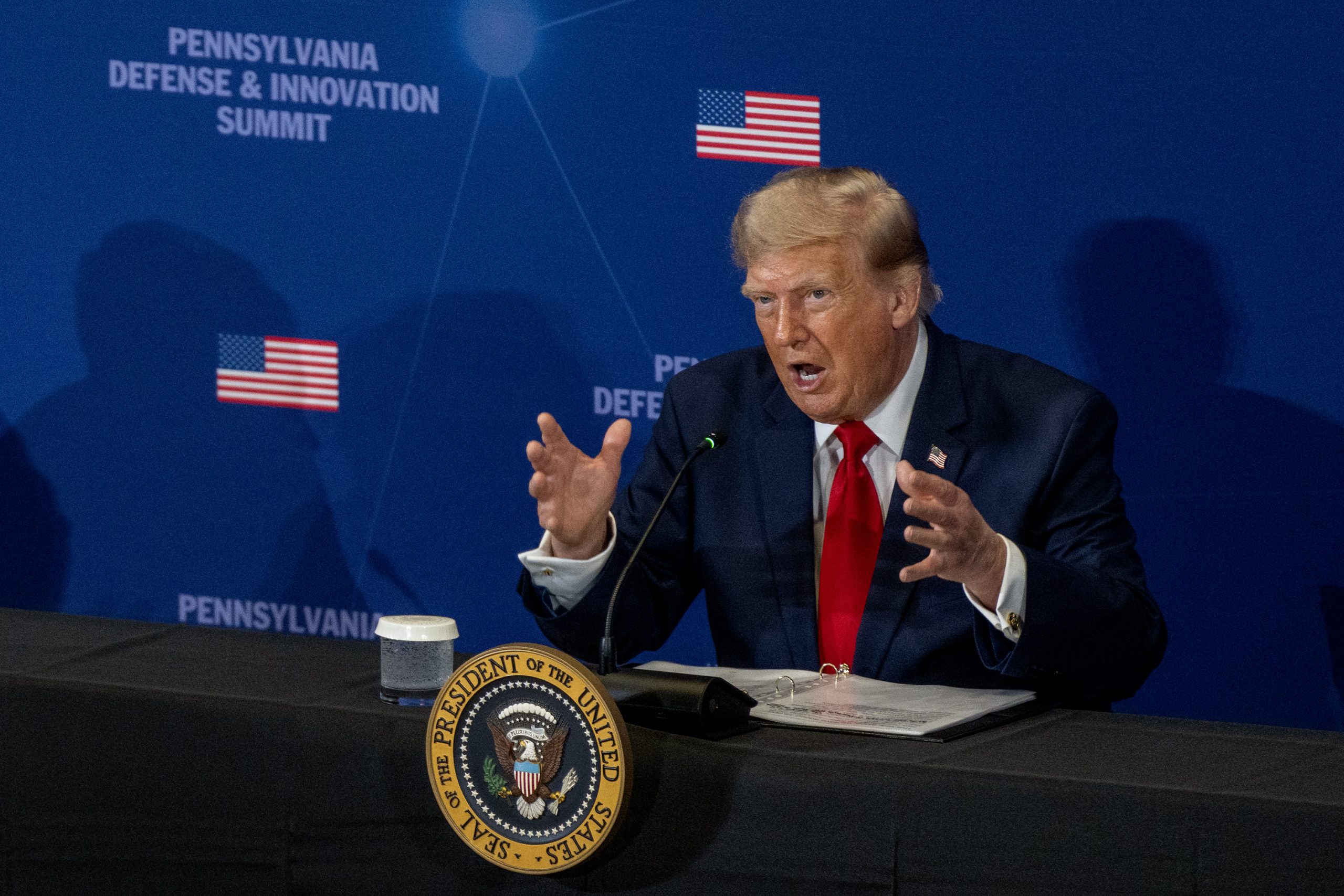
    President Donald Trump appears at a Defense and Innovation Summit hosted by U.S. Sen. Dave McCormick (left) at the US Army War College in Carlisle Wednesday, July 15, 2026.Tom Gralish / Staff Photographer

    Since Fetterman began casting key votes in support of President Donald Trump and publicly criticizing progressives in his party, conservatives have been leaving the door open and, at times, rolling out a welcome mat.

    (function(){function e(){window.addEventListener(`message`,function(e){if(e.data[`datawrapper-height`]!==void 0){var t=document.querySelectorAll(`iframe`);for(var n in e.data[`datawrapper-height`])for(var r=0,i;i=t[r];r++)if(i.contentWindow===e.source){var a=e.data[`datawrapper-height`][n]+`px`;i.style.height=a}}})}e()})();

    State Sen. Greg Rothman, chair of the Pennsylvania GOP, said he could consider supporting Fetterman’s reelection if he switched parties, and Fox News’ Sean Hannity said Trump himself urged Hannity to coax Fetterman into becoming a Republican in exchange for the president’s support.

    During an interview Wednesday at the Hill Nation Summit in Washington, Fetterman said the Democratic Party’s stance on Israel could push him out.

    “If our party ever becomes — and just makes it official — the anti-Israel party, that’s when I would leave because that’s been a moral clarity for me,” he said.

    Democrats, meanwhile, have mostly taken a hands-off approach. The Pennsylvania Democratic Party has previously declined to comment on Fetterman’s positions and actions, including his new joint fundraising committee with McCormick. The venture, announced earlier this month, allows them to split money from donors who want to give to both of their campaigns, a boost for Fetterman, who has reported raising significantly fewer campaign dollars on his own.

    Democratic Gov. Josh Shapiro has also avoided directly criticizing Fetterman, but admits their relationship is estranged.

    In an interview with Politico in May, Shapiro said it had been “probably years” since he had seen Fetterman at an event in Pennsylvania.

    “I’m not saying he hasn’t been at one, but I haven’t seen him and I’m at most things,” he said.

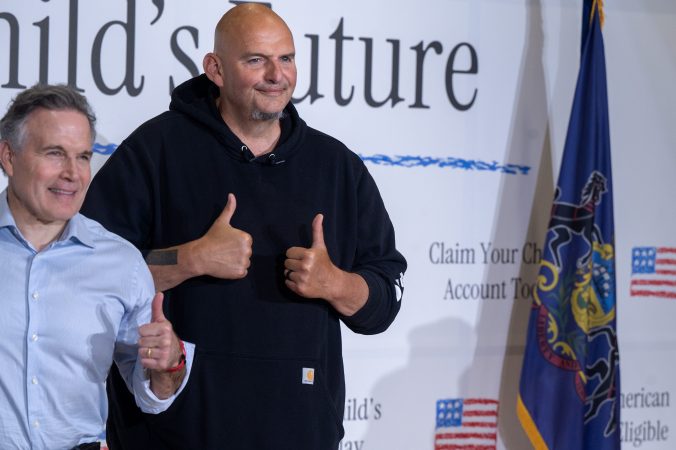
    Fetterman was most recently in Philadelphia at an event with McCormick to promote Trump Accounts, the new federally backed savings accounts for kids that became law with Trump’s signature One Big Beautiful Bill Act.

    More than half of registered Pennsylvania voters want Fetterman to leave the Democratic Party altogether, according to the Quinnipiac poll.

    It is a figure that represents both push and pull: 57% of Democrats surveyed said they want him to leave, and 55% of Republicans do, too. The poll did not ask whether he would be welcomed into the GOP.

    “The Democrats would like to show him the door. The Republicans seem to be welcoming him in. Thus is the political irony of Sen. John Fetterman,” Tim Malloy, a polling analyst at Quinnipiac, said.

    (function(){function e(){window.addEventListener(`message`,function(e){if(e.data[`datawrapper-height`]!==void 0){var t=document.querySelectorAll(`iframe`);for(var n in e.data[`datawrapper-height`])for(var r=0,i;i=t[r];r++)if(i.contentWindow===e.source){var a=e.data[`datawrapper-height`][n]+`px`;i.style.height=a}}})}e()})();

    Fetterman, who is likely to face a primary opponent, has not yet disclosed whether he plans to seek a second six-year term in 2028. U.S. Reps. Brendan Boyle (D., Philadelphia) and Chris Deluzio (D., Allegheny) and former U.S. Rep. Conor Lamb, a Western Pennsylvania Democrat who lost the Senate primary to Fetterman in 2022, are all considered to be potential contenders.

    Malloy called Fetterman’s approval among Republicans “stunningly high.”

    “He’s a maverick,” he said. “He is certainly one of the most unique politicians in the country.”

    “Being an independent voice that works with the other side to deliver for Pennsylvanians might put me at odds with the party that I have stayed committed to and have no plans to leave — but I will continue to put the commonwealth and the country first,” Fetterman wrote in the Post.

  • Poll: 44% of Pennsylvanians say they’re financially worse off now, while a majority oppose AI data centers

    Poll: 44% of Pennsylvanians say they’re financially worse off now, while a majority oppose AI data centers

    Almost half of Pennsylvania voters say they are worse off financially compared with one year ago, while nearly 3 in 4 say they do not want an artificial intelligence data center in their backyard, according to a new poll released Wednesday.

    The Quinnipiac University survey of 895 registered Pennsylvania voters has a 4.3-percentage-point margin of error.

    According to the poll, 44% of Pennsylvania voters believe they are financially worse off than a year ago, as gas prices have fluctuated amid the ongoing war between the United States and Iran. That opinion was politically split, as 64% of Democrats said they are financially worse off now, while 61% of Republican voters polled said they are better off this year than last. Just 34% of respondents said the nation’s economy is excellent or good, while 53% think it is getting worse.

    Meanwhile, 76% Pennsylvania voters said they would oppose data center construction in their communities — a broad swath that includes Democrats, Republicans, and independents.

    Almost half of the voters polled have an unfavorable opinion of artificial intelligence itself.

    “People are really troubled by this new industry,” said Tim Malloy, a polling analyst at Quinnipiac. “It’s about noise, it’s about water, it’s about taxes, and it’s about … not understanding exactly what it is.”

    Quinnipiac’s poll also shows Pennsylvania voters have not been satisfied with the state’s policy responses so far. When asked if they approve of “the way Gov. Josh Shapiro is handling data centers in Pennsylvania,” just 24% of the surveyed voters said they approve. Among the Democrats polled, 40% said they approve.

    The results of the poll, conducted June 9 to 13, come days after Pennsylvania lawmakers and Shapiro approved new regulations on data centers as part of the 2026-27 state budget.

    Starting next summer, data centers will be required to submit information about their energy and water usage to the Pennsylvania Department of Environmental Protection annually. Those reports will be available to the public, and data center operators that do not comply will be fined $10,000 per day.

    But other restrictions on data centers that saw bipartisan support ultimately failed to pass in the budget package and will remain on the table when legislators return this fall.

    Those include an effort championed by Shapiro to limit sales and use tax exemptions benefiting developers, though it would not apply to the $20 billion Amazon project already underway, including a data center in Falls Township.

    Efforts to enact local or statewide moratoriums on data center development were not included in the final state budget, either.

    AI data centers also remain top-of-mind for the voters polled by Quinnipiac, with 76% saying they are following news about them very closely or somewhat closely. The centers ranked among voters’ top issues, with 42% saying they factor into their decision about whom to vote for in the election for governor.

    But other issues — namely the economy and cost of living — top the list, with healthcare just behind.

    Shapiro stays popular

    Shapiro otherwise remains popular among Pennsylvania voters.

    In the poll, 51% of respondents reported having a favorable opinion of Shapiro, and 56% approve of the way he is handling his job as governor.

    “Pennsylvanians agree that Governor Josh Shapiro is delivering results for families, seniors, and businesses all across the Commonwealth by showing up, listening, and getting stuff done,” his campaign said in a statement.

    Gov. Josh Shapiro arrives for the MLB All-Star Game red carpet at Independence National Historical Park on Tuesday, July 14, 2026 in Philadelphia.Monica Herndon / Staff Photographer

    Shapiro, a first-term Democrat, is seeking reelection in November, running against Republican State Treasurer Stacy Garrity. The poll released Wednesday found that 53% of those surveyed would vote for Shapiro, while 40% said they would vote for Garrity. That is a slight change from Quinnipiac’s February poll, when 55% of voters supported Shapiro and 37% said they favored Garrity.

    Garrity, meanwhile, appears to be struggling to gain traction. Just 22% of Pennsylvania voters have a favorable opinion of her, according to the latest poll, while 58% said they have not heard enough about her. Half of the Republicans surveyed said they did not know her well enough to give an opinion.

    More than half of independent voters, 58%, said they would vote for Shapiro in a head-to-head matchup.

    “Usually, it’s not the death knell when not enough people know enough about you, but it sure as heck doesn’t help, and the election’s not that far away,” Malloy said. “Barring some dramatic change in opinion about the current governor, or something that she does or says which just catches fire with people, she’s got a huge uphill climb.”

    Though he has brushed off questions about potential presidential ambitions, insisting he is focused on the state election in November, Shapiro has continued to build a national profile, with media appearances and a book tour.

    Trump approval remains low

    Though he remains strong with the Republican base, only 39% of Pennsylvania voters polled said they would give President Donald Trump a positive job approval. His approval is nearly nonexistent with Democrats at 2%, but even among independents, only 31% rate him well.

    That outlook comes two years after Trump carried Pennsylvania in the 2024 election. He visited the state Wednesday to tout new investments in Pennsylvania’s defense industry.

    President Donald Trump appears at a Defense and Innovation Summit hosted by U.S. Sen. Dave McCormick at the US Army War College in Carlisle Wednesday, July 15, 2026.Tom Gralish / Staff Photographer

    In the forthcoming midterm elections, Pennsylvania voters gave Democrats the slight edge — 49% to 43% — as their preference to control the U.S. House of Representatives over the Republican Party.

    The Quinnipiac poll also showed voters are able to distinguish between state level and national concerns, with 53% saying they are very or somewhat satisfied with how things are going in Pennsylvania.

  • Josh Shapiro has fundraised $50 million since the beginning of last year, his campaign says

    Josh Shapiro has fundraised $50 million since the beginning of last year, his campaign says

    Gov. Josh Shapiro’s teeming campaign war chest continues to grow.

    The first-term Democrat raised a whopping $12 million toward his reelection bid for Pennsylvania governor between April and June, his campaign said Wednesday — bringing his total fundraising to $50 million since January 2025.

    The announcement from Shapiro’s campaign came months ahead of the next financial filing deadline for Pennsylvania candidates, on Sept. 22.

    But the news of the governor’s eye-popping fundraising figures — topping the $10 million he raised between January and March — came the same week that federal elected officials and candidates are required to submit their financial reports.

    Shapiro is widely speculated to be considering a 2028 presidential run, though he has demurred when asked about any presidential ambitions. Several members of Congress, including U.S. Sens. Cory Booker of New Jersey, Mark Kelly of Arizona, and Chris Murphy of Connecticut, and U.S. Reps. Ro Khanna of California and Alexandria Ocasio-Cortez of New York — all of whom were due to file their latest fundraising totals by Wednesday night — are also seen as prospective candidates for the Democratic presidential primary.

    However, federal officials face different limits on the amounts of money they can receive. Individuals can give only $3,500 per candidate per election. In Pennsylvania, state law allows unlimited spending for candidates, and multiple donors have contributed five- and six-figure dollar amounts to Shapiro’s campaign.

    A spokesperson for Shapiro declined to comment on the timing of his fundraising announcement.

    If Shapiro decides to run for higher office, the money he has raised would not follow him. State campaigns are not permitted to transfer money to a presidential run. But his connections could provide a vast network of donors if he pursues the White House.

    Shapiro, who has boasted high popularity ratings in Pennsylvania throughout his term, has also consistently polled well ahead of his Republican gubernatorial opponent, State Treasurer Stacy Garrity.

    Garrity’s campaign did not provide its latest fundraising numbers. Full reports for both Garrity and Shapiro, including who gave the money and how much was spent, will be available in September. In the 2022 Pennsylvania governor’s race, Shapiro spent a historic $73 million to beat Republican State Sen. Doug Mastriano.

    During the last reporting cycle, Shapiro outraised Garrity 10-1 as she struggled to compete with Shapiro’s large donations from across the country. Her campaign has previously emphasized that most of her contributions came from individual Pennsylvanians.

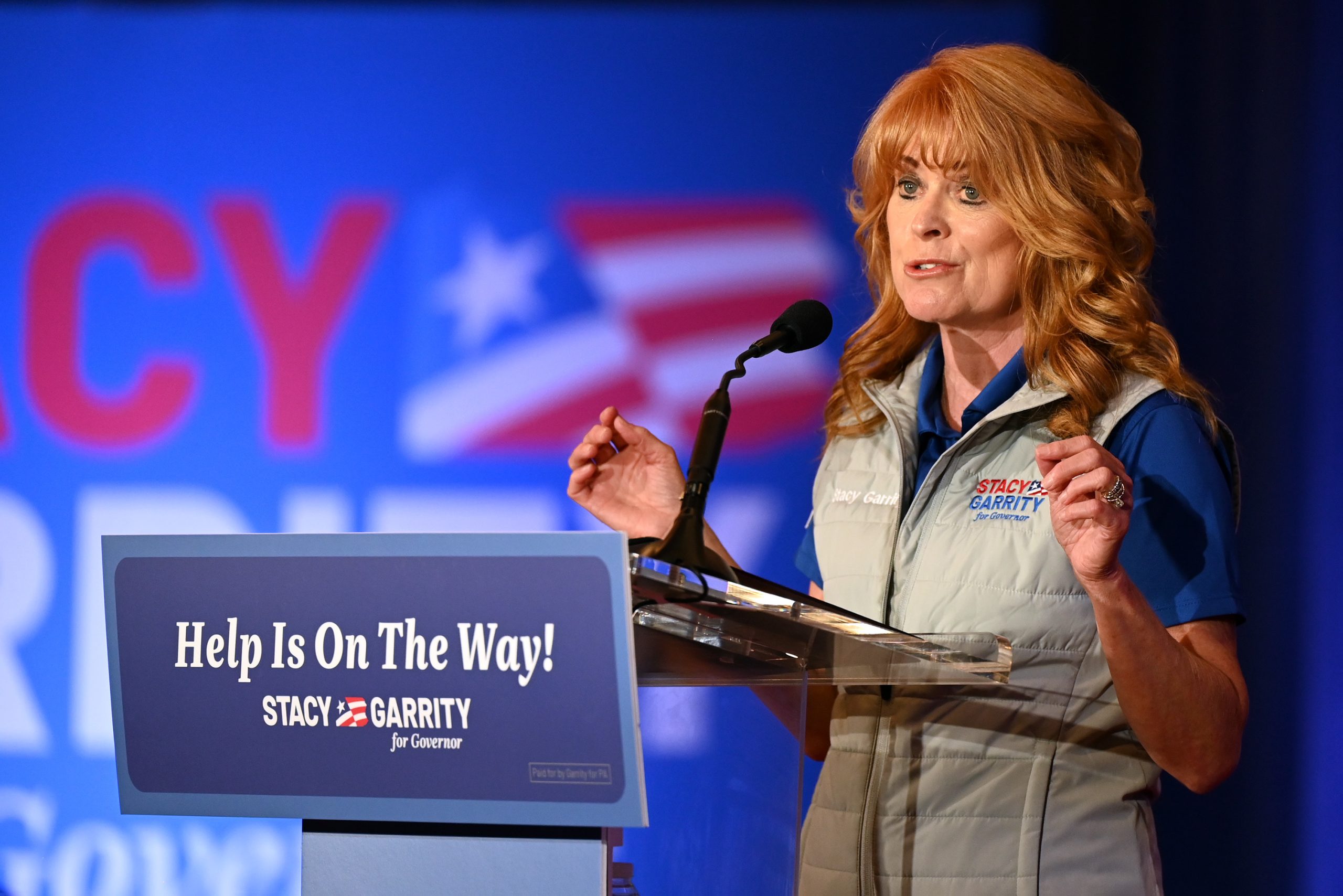
    State Treasurer and Republican candidate for governor Stacy Garrity holds a rally in Bucks County Sept. 25, 2025 at the Newtown Sports & Events Center.Tom Gralish / Staff Photographer

    On Tuesday, Garrity stopped in Philadelphia for an event with Florida Gov. Ron DeSantis at the Union League about issues related to affordability, according to an event flyer. Media were denied entry into the private event.

    Shapiro was also in the city on Tuesday, touting the boost to education funding in the new state budget.

    The governor has repeatedly said his focus is on the November election in Pennsylvania, where he is vying not only for reelection but also to rally enthusiasm down-ballot in efforts to flip control of the state Senate and elect Democrats to four nationally watched congressional seats in attempts to flip the U.S. House.

    Shapiro has taken on a more prominent role in the state’s Democratic Party over the last year. A longtime ally, Larry Hailsham Jr., became the party’s executive director in October 2025, and since then, the governor has continued to invest in the party.

  • Democrat John Fetterman launches cross-aisle fundraising committee with Republican Dave McCormick

    Democrat John Fetterman launches cross-aisle fundraising committee with Republican Dave McCormick

    In a rare move, Pennsylvania’s two senators have created a joint fundraising committee that would allow them to split money from donors who want to give to both of their campaigns, despite being members of different parties.

    Democratic Sen. John Fetterman’s decision to join Republican Sen. Dave McCormick in the fundraising collaboration comes as he has repeatedly dismissed speculation that he could switch parties after siding with Republicans on several key votes.

    As polls have shown him losing support among Democratic voters, he has also reported raising significantly fewer campaign funds on his own and has not said if he will run for a second term in 2028.

    Common Ground PA, which filed paperwork with the Federal Election Commission Monday, lists four beneficiaries for the joint fund: Fetterman for PA; Friends of Dave McCormick; Every Vote PAC, which lists Fetterman as the PAC sponsor; and Pennsylvania Honor, which lists McCormick as the leadership PAC sponsor.

    A joint fundraising committee, first enabled by the FEC in 1977, allows two or more candidates, PACs, or party committees to coordinate fundraising efforts to share donations and expenses.

    A donor can abide by federal contribution limits while still giving one check that can be allocated to multiple campaigns. But since these groups typically involve party committees, it is rare for these joint ventures to be bipartisan.

    Katie Terry, who is listed as the treasurer for Team McCormick, is also the treasurer for Common Ground PA. She did not respond to a request from The Inquirer for comment.

    Mike DeVanney, a spokesperson for McCormick’s campaign, called the PAC a donor-driven effort.

    “This group of donors value the collaboration exhibited by Senators McCormick and Fetterman for Pennsylvania and want to support both of them,” he said in a statement.

    The joint fundraising committee was first reported by Politico.

    The two senators have spoken often about their cross-aisle friendship since McCormick took office in 2025, and they have repeatedly teamed up in recent months.

    They appeared alongside each other last week in Philadelphia to promote Trump Accounts, the new federally backed savings accounts for kids that became law with President Donald Trump’s signature One Big Beautiful Bill Act.

    And they joined forces to fill Pennsylvania’s empty spot at the Great American State Fair in Washington after Gov. Josh Shapiro said state officials could not find a Pennsylvania business to sponsor the state’s booth.

    Fetterman has routinely criticized his own party, feuding with progressives on a range of issues, including Israel and immigration enforcement.

    In a fundraising email sent in May, McCormick referred to Fetterman as one of his “closest working partners,” a realization that he said surprised even him.

    In that drive, which asked donors to support his efforts to “work across the aisle to get results for the people of Pennsylvania,” McCormick praised his Democratic colleague.

    “Senator John Fetterman and I couldn’t look more different. We don’t agree on everything. But we both grew up in Pennsylvania. We both know what it means to fight for working families who feel like Washington forgot them. And we both refuse to let politics get in the way of getting things done,” he wrote.

    McCormick told reporters in May his friendship with Fetterman is the most frequent topic of conversation he hears, and he gets positive feedback from it.

    “We look for ways to work together. I think people want that,” he said.

    Individuals could donate to Fetterman or McCormick separately. But joint fundraising committees, which are used widely by both parties, pull in large checks from donors and split the money across multiple committees using a formula that adheres to federal contribution limits, according to an analysis from the watchdog group OpenSecrets.

    Typically, though, campaigns jointly fundraise with their party.

    Common Ground PA is among the few coordinated efforts across the aisle. A former PAC, the Problem Solvers Patriots, raised funds for members of both parties in previous election cycles.

    Fetterman, who polls poorly with Pennsylvania Democrats, is likely to face a primary challenge if he runs for another term.

    Former U.S. Rep. Conor Lamb, who lost the Senate primary to Fetterman in 2022 and has not ruled out a run in 2028, blasted the move online as “Another betrayal from Fetterman.”

    U.S. Rep. Chris Deluzio, a Western Pennsylvania Democrat who says he has received “a lot of encouragement” to run for Fetterman’s seat, also questioned the creation of the PAC.

    “Helping the Republicans raise money to spend against Democrats is bad, right?” Deluzio said on X.

    However, Fetterman has been notching strong approval from Republicans, and Pennsylvania Republicans along with Trump himself said he could receive GOP support if he switched parties.

    Fetterman’s Republican support has also been growing at the bank with contributions from prominent GOP donors, particularly through his other joint fundraising committee and leadership PAC. At the same time, his fundraising has plummeted overall, raising less than half his previous annual totals in 2025.

    Staff writers Gillian McGoldrick and Sam Janesch contributed to this article.