Author: Jenice Armstrong

  • The incalculable impacts of Trump’s attack on TPS

    The incalculable impacts of Trump’s attack on TPS

    It’s terrible what’s going on with Haitians and Syrians who have been living under a special designation known as Temporary Protected Status (TPS).

    They’ve literally been in panic mode since last month’s U.S. Supreme Court 6-3 ruling cleared the way for the Trump administration to strip away their ability to legally work and be protected from deportation. Roughly 350,000 Haitians and 6,000 Syrians are scrambling to figure out what their next moves will be.

    Will they relocate to Canada? South America? Somewhere else? Or even go underground? Pause for a moment and imagine having to find a whole other country that will take you in.

    Many fled Haiti’s 2010 earthquake and have lived in the United States for more than 15 years. We’re not talking about illegal aliens. These people are here legally. They are our neighbors. They own homes. Some have children who are U.S. citizens. They pay taxes. They hold jobs. Many work in hospitals, nursing homes, and retail establishments. Some are entrepreneurs. What are they supposed to do? Where do they go? Do they take their American-born children with them?

    MAGA dismisses them, saying, “Go back to Haiti.” But it’s not that simple. The tiny Caribbean nation is on the U.S. Department of State’s Do Not Travel list. It’s not safe there. Not for Americans. Not for native-born Haitians, either.

    Same thing for Syria.

    The Trump administration has dramatically restricted the number of refugees allowed in this year to just 7,500, but makes exceptions for white South Africans.

    As an African American, it galls me to have to sit back and watch this kind of racial preference play out. Granted, disparate treatment like this is nothing new. America has always been racially divided — but what’s happening now reaches a new depth of inequality.

    It starts at the top.

    President Donald Trump’s disdain for Haitians is deep and well documented, having falsely accused those living in Springfield, Ohio, of eating their neighbors’ pets and “destroying their way of life.” He has a long history of racial animus directed at Black people, famously referring to Haiti as being a “shithole country” and claiming many of its immigrants “probably have AIDS.”

    Former Fox News host Megyn Kelly may be feuding with Trump, but it certainly sounded as if she were speaking for his administration last month when she said this about Haitians: “We don’t want you. We don’t care if you’re offended.”

    Bigot Barbie wasn’t done, adding: “Get out. Go home,” before using an expletive to tell immigrants to go back to Haiti. Kelly delivered her vile commentary shortly after the Supreme Court’s conservative majority ruled that government officials could end Temporary Protected Status for those who had come to America to escape violence and natural disasters.

    Megyn Kelly speaks at a Donald Trump campaign rally at PPG Paints Arena in Pittsburgh in advance of his election in 2024.Evan Vucci

    Congress created the TPS program in 1990 to protect noncitizens regardless of their immigration status.

    Now that the protections Haitians and Syrians have been living under have effectively ended, Trump can extend his campaign pledge and include those until now legally residing here in his mass deportation efforts.

    This is scary.

    And potentially life-threatening.

    Yet, it’s not on a lot of people’s radar.

    I reached out to the Rev. Jennifer Joseph, the lead pastor at Zion Community Church in Yeadon, where many Haitians worship. She told me people need to know that “folks on TPS are not illegal, and they are not criminals.”

    Joseph added, “Those who are not well versed about immigration law just assume that these people shouldn’t have come [and that] they should have known better.”

    Yes, I’ve heard that, too.

    Many don’t know what TPS is, and that the program doesn’t offer its own path to citizenship.

    It’s great that the U.S. allows immigrants to reside here when their homelands are in turmoil. But once people arrive and become long-term, law-abiding residents, they need more pathways to permanent legal status.

    They also need to be protected from the political whims of people like Trump or Homeland Security Secretary Markwayne Mullin.
  • New construction can be a good thing — but developers need to respect existing homes

    New construction can be a good thing — but developers need to respect existing homes

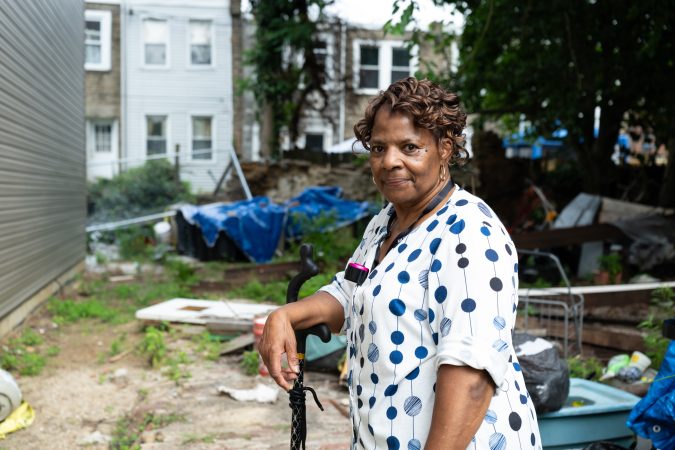
    Most days during the summers — sometimes well into the evening — Delores Lawrence is outside her home in Germantown weeding, watering, and otherwise tending her garden.

    Her small front yard is where she grows tomatoes, blackberries, purple daisies, and orange and yellow lilies, all planted closely together. There’s also a narrow strip on the side where Lawrence cares for a mix of potted calla lilies, peonies, and other vegetation.

    The land around her home is her peace.

    It’s her little slice of the American dream.

    But instead of being able to enjoy another summer growing season, Lawrence is livid about how the construction of a new apartment building next door has disrupted life on the block where she has lived for more than 30 years.

    Her garage is no longer standing, her brick driveway damaged, and the construction noise at times was absolutely unbearable.

    Lawrence, who worked in nursing before being injured, doesn’t know what to do. “I want my garage built back up. I want my driveway reconstructed,” she told me recently over the phone. “It makes me angry. It makes me upset. I even went to the doctor. I can’t even sleep.”

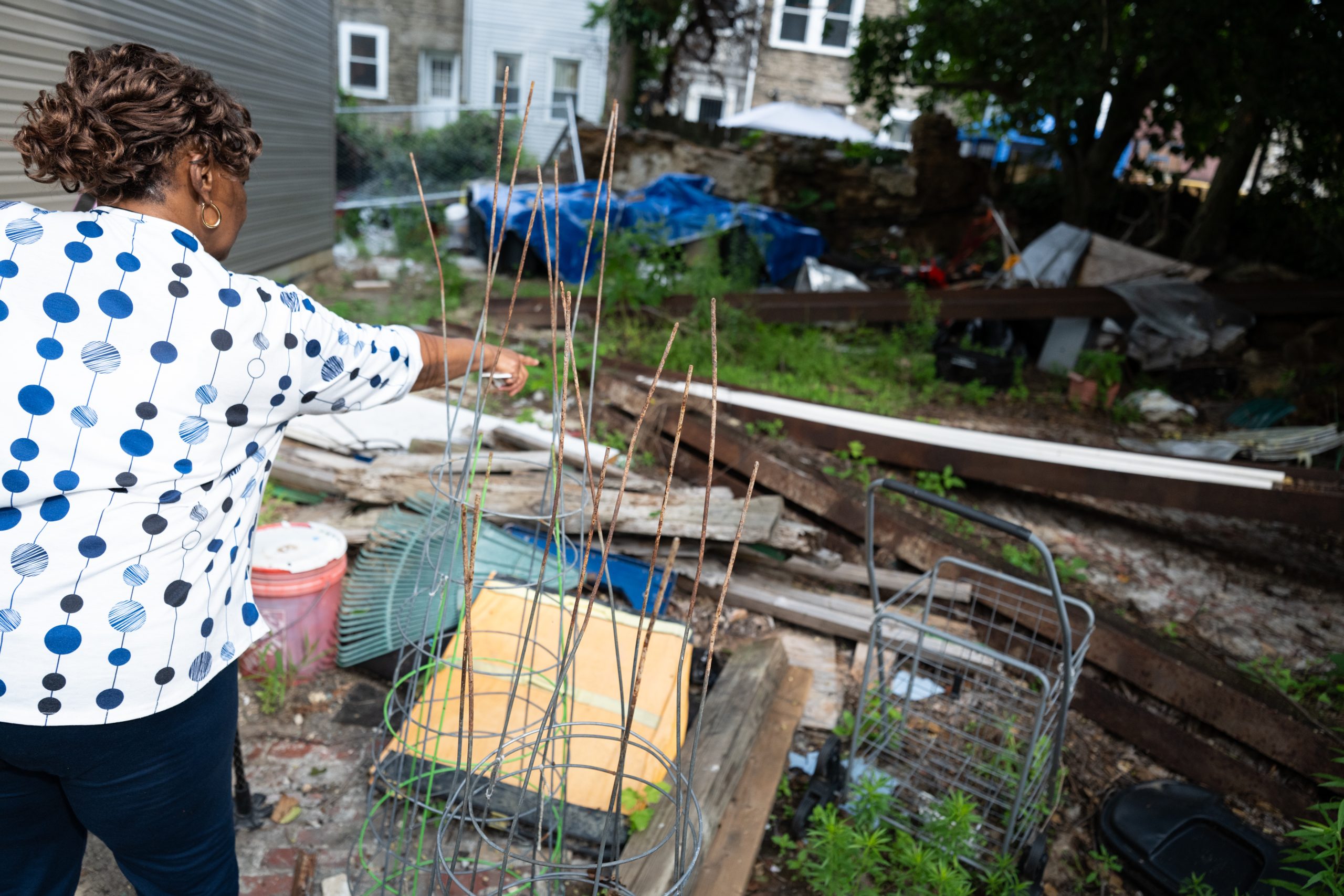
    I recently paid a visit to the 200 block of East Bringhurst Street and walked with Lawrence as she pointed out the shambles the construction had made of her beloved yard.

    There was a stack of old bricks that had been removed from her driveway. The remnants of an old stone garage where she would do arts and crafts projects. “These are iron beams that they took off the roof,” she said. “It was a building back here.”

    There was more — a tree trunk lying on its side with its roots exposed, what looked like electrical cables in the rear, and containers of paint that she said belonged to the builders working next door.

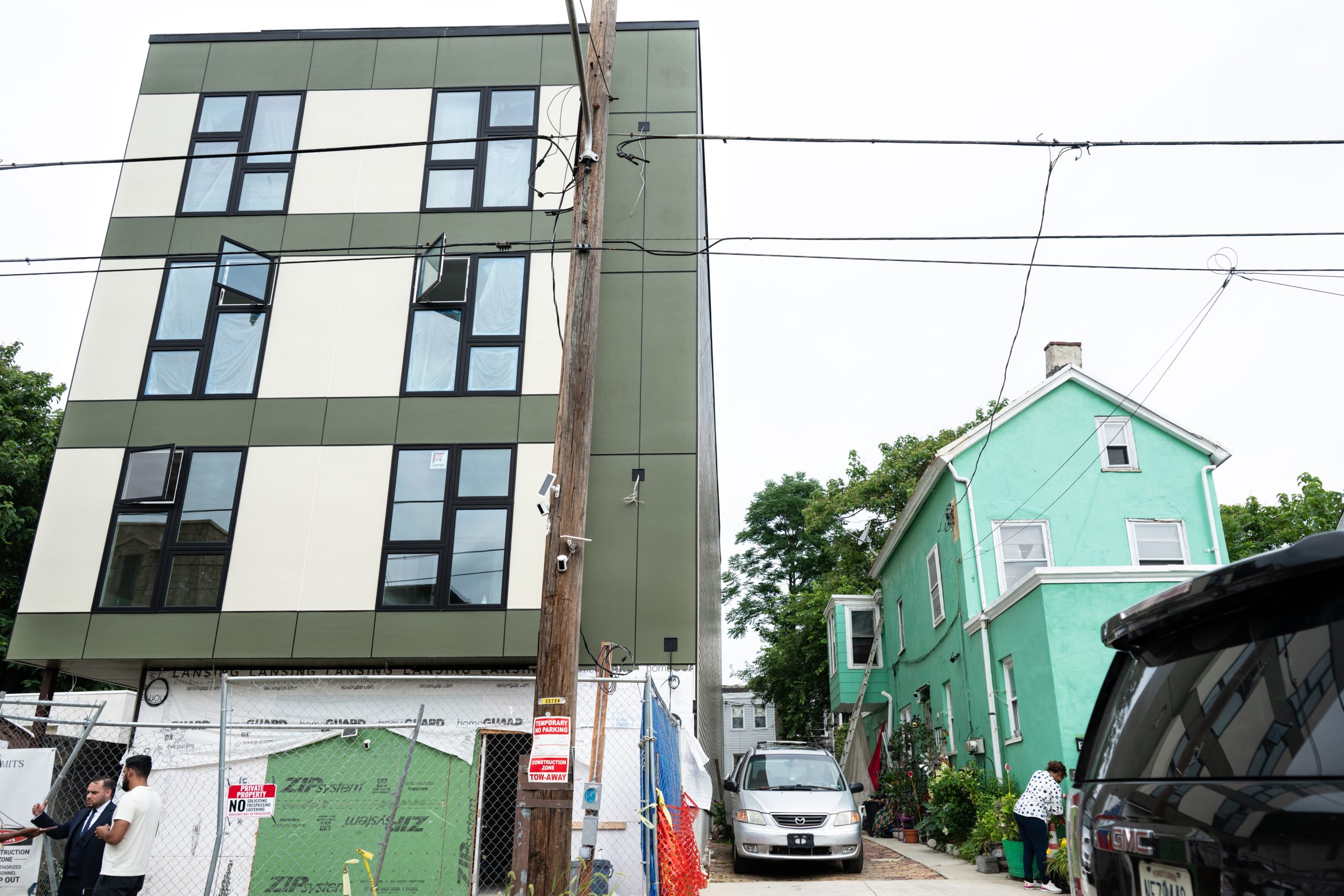
    Delores Lawrence points to the remains of a garage where she used to do arts and crafts projects amid the detritus of a construction project next door. The project — a 15-unit apartment building — has been underway since 2024.Erin Blewett / For The Inquirer

    Taking in the scene, I thought to myself that this is a whole situation — and I saw how it has turned into a court fight that is shaping up to be as messy as Lawrence’s backyard.

    On one side, there’s Lawrence, a 70-year-old homeowner who has filed a lawsuit demanding compensation for damage to her property caused by the construction of a new four-story, 15-unit building immediately adjacent to her driveway.

    On the other side is Danilo A. Burgos, the cofounder of Burg Properties and the 29-year-old son of State Rep. Danilo Burgos, a Democrat who was first elected in 2018 and who serves the North Philly neighborhoods of Kensington, Hunting Park, and Feltonville. The four-story, 15-unit building is under the charge of the younger Burgos and has been in the works since 2024.

    Given everything going on in Philly right now, it would be easy to ignore the situation between a politically connected developer creating much-needed affordable housing and a senior citizen upset about its impact on her property. But I can’t help but feel for Lawrence.

    Besides, hers isn’t an isolated situation. What’s happening to her in Germantown is actually emblematic of similar struggles playing out between residents and developers in neighborhoods around the city.

    Residents of Chinatown successfully pushed back against a proposal to build a new Sixers arena along Market Street. In Northern Liberties, several neighbors on Brown Street are suing a developer, claiming their homes were damaged by the construction of a nearby apartment building. In 2024, my colleagues at The Inquirer produced an entire series called Crumbling City about how housing redevelopment created construction issues among some rowhouses.

    What sets the situation in Germantown apart is the reality that the developer is the son of a state legislator.

    “This is about entitlement and privilege,” Kevin L. Valentine, Lawrence’s attorney, told me in an email.

    Property owner Danilo A. Burgos speaks to the press outside his affordable housing project under construction in the Germantown section of Philadelphia on Thursday, July 9.Erin Blewett / For The Inquirer

    I reached out to Burgos, the state representative, who said: “My son has not done anything wrong. The lady, she’s suing him, and they’re in court. That’s it.” He added, “They have everything documented, and when the court case comes, everything will be squared away, God willing.”

    As for the son, he says he’s doing good for the community by providing affordable housing. Philly is in the midst of a “severe housing crisis,” which is why Mayor Cherelle L. Parker has made building and restoring roughly 30,000 homes a cornerstone of her legislative agenda.

    But developers still need to respect neighbors in the communities where they build. Christopher Edwards, a block captain and president of the Baynton Hill Neighbors Association, is deeply concerned about the impact the new Bringhurst Street apartment building will have on the narrow street with limited parking.

    “We can see where this thing is going to become very unpleasant, especially for those of us who have lived there for years,” he told me.

    After meeting with residents who aired their concerns, Burgos, a Temple University graduate, said he purchased a nearby lot that he intends to convert into a parking lot for his tenants’ use. Neighborhood residents, he said, will have priority when it comes to renting units.

    As far as the garage in the rear of Lawrence’s home that had been negatively impacted, Burgos said that “it wasn’t a structure. It wasn’t a garage. It was like freestanding walls scattered [around]. Because some were up. Some weren’t.”

    He said his workers knocked down a party wall the properties shared. “We notified her of the wall that we were going to knock down,” Burgos told me as we stood with his attorney in front of his new apartments. “Everything we did, we didn’t do it behind her back; we did it with her knowing what we were going to do.”

    Attorney Saury A. Mejia and property owner Danilo A. Burgos (left) speak to the press outside Burgos’ affordable housing project under construction as neighbor Delores Lawrence (right) tends to her garden in the Germantown section of Philadelphia on July 9. Lawrence says construction of Burgos’ low-income housing project next door damaged her property.Erin Blewett / For The Inquirer

    I liked hearing him say he was prepared to fix any of the property damaged by his workers. But Burgos said he is awaiting permission from Lawrence to do it.

    “We’re willing to put it back to its prior condition,” Burgos said, adding that he’s willing to negotiate. “We’ve been open to dialogue the entire time.”

    It sounds to me as if a meeting with all parties involved needs to happen quickly.

    “I want him to sit down with my client and for him to make her whole,” Valentine said. “I’m just trying to get some justice for this woman.”

    Councilmember Cindy Bass is willing to convene such a gathering. “If we can get all parties together, we’re certainly willing to do that and to do it soon,” she said.

    Meanwhile, the proverbial clock continues to tick. Time is money. That’s not something Lawrence, who worked at Shriners Hospital for Children, has much of.

    The more I think about what Lawrence is going through, the angrier I get. I’ve never been in her situation personally, but who would want workers coming onto their property and damaging it? People work hard for what they have. Your home is supposed to be your sanctuary. You may not have a say in what goes on around you, but you’re the custodian of what goes on inside your proverbial picket fence.

    “I’m here minding my business. I’m not bothering nobody,” Lawrence told me. Her voice broke into sobs as she added, “How long do I have to put up with this?”

  • I visited the Great American State Fair on the National Mall in D.C. It wasn’t great.

    WASHINGTON — It was blisteringly hot when I showed up at President Donald Trump’s much-ballyhooed Great American State Fair on the National Mall in honor of the nation’s 250th birthday.

    As I headed off to check in as a member of the media, a friend who’d accompanied me decided to wait at a lemonade stand.

    At first, I was a little concerned, wondering how I was ever going to find her. A lemonade stand on the National Mall in Washington, D.C., was bound to be mobbed on a scorcher of a day like the one we had on Monday.

    I needn’t have worried. It wasn’t that kind of party. Crowds were so thin that I quickly spotted her standing alone and eating a snow cone that cost a whopping $8. “Even on a hot day, there was no line at the lemonade stand,” pointed out my friend, Pamela Thomas of Pathfinders Travel, who had taken the train from Philadelphia with me.

    That should give you a pretty good idea of how it was at the so-called Great American State Fair, brought to us by Freedom 250, an organization created by President Donald Trump.

    Low crowds.

    High food prices.

    Lots of walking.

    The Great American State Fair was downright boring.

    Oh, there was an 110-foot Ferris wheel borrowed from the Smithsonian Institution. I watched people stand unsheltered under the blazing sun as they waited for their turn. But that’s the only carnival ride I saw.

    This wasn’t like any state fair I’d ever attended. Where was the merry-go-round? Where was the roller coaster? The cotton candy? The local beauty queens? The fair could use a quilting demonstration and band performances. I saw only one cornhole game.

    The so-called Great American State Fair needs a whole lot more fun and a whole lot less Trump.

    There wasn’t much for children to do besides have souvenir replicas of their new Trump passports stamped.

    I managed to find some shade while sitting on a folding chair inside an area called David’s Tent. As I cooled off, I listened to a woman onstage sing religious songs. Behind me was an aboveground swimming pool set up, ostensibly, for on-the-spot baptisms. In the spirit of inclusivity, there was also a candle-filled menorah positioned in the front of the tent.

    At one point, we made our way over to the Hawaii booth. Inside, all we saw was a large mural of the Aloha State that included a picture of former President Barack Obama that someone had defaced.

    A smiling woman offered to stamp our “passports.” There was nothing else going on in that booth. Not a flowered lei or macadamia nut in sight. No hula dance demonstration. No ukulele performance.

    Same thing with the neighboring Alaska booth.

    I made a point of checking out the North Carolina booth, which had been criticized for having images of Confederate flags on display on TV monitors. This one was a bit more inviting, with its colorful NASCAR displays. I didn’t see anything resembling a rebel flag — but I did see a bale of cotton just sitting on the floor, which can be seen as offensive because of its slavery connotations. The setup had been organized by private donors. One company, Mt. Olive Pickles, has since pulled out of the fair.

    The D.C. booth had some upbeat music playing, a fake cherry blossom tree, and a giant map of the mall that attendees stuck pins into to represent where they lived. “No go-go music?” I asked an attendant, who assured me that some was in the playlist.

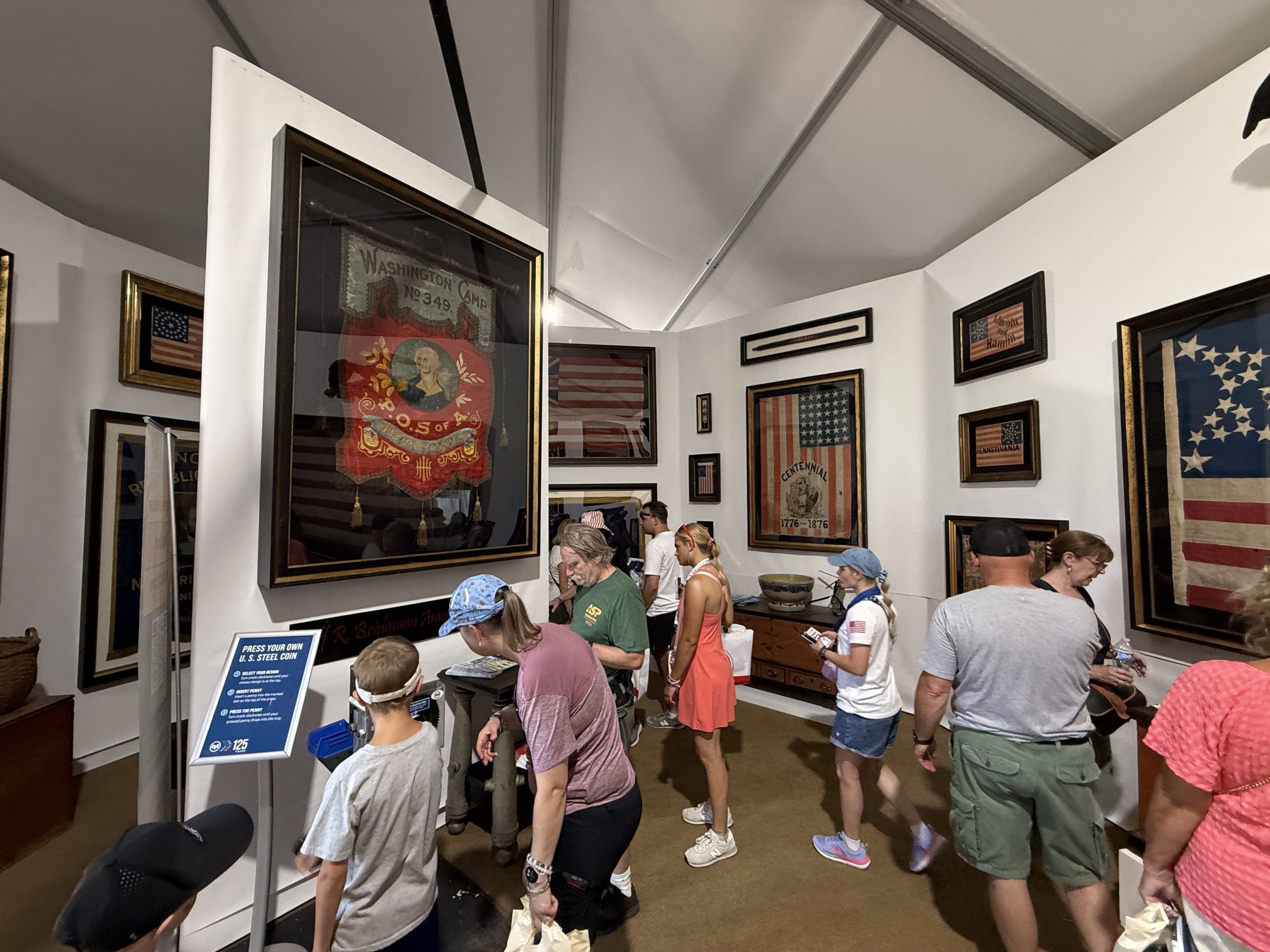
    Pennsylvania’s pavilion showcases state history and memorabilia at the Great American State Fair on June 30 in Washington, D.C.Sam Janesch / Staff

    Pennsylvania had initially opted out of participating, but its booth opened the day after I was there, funded by private sponsors and pulled together by U.S. Sens. Dave McCormick (R., Pa.) and John Fetterman (D., Pa.) after Gov. Josh Shapiro passed on participating.

    Cape May County, a Republican stronghold, sponsored the New Jersey booth and brought in an impressive-looking eight-foot sand castle. But I noticed one small red plastic bucket of saltwater taffy that a kid was rummaging through. For an area as rich and diverse as the Garden State, the display felt incomplete.

    Soon, I had had enough.

    We stopped by the media table again on our way out and asked about what was on the schedule for later. The answer? A rodeo demonstration at 7 p.m. That was it.

    I was stunned. America deserved more and better for its 250th birthday celebration.

    So, if you decide to go experience the Great American State Fair before it is dismantled on July 10, don’t say I didn’t warn you.

  • Trump’s Reflecting Pool debacle mirrors what’s ailing America

    WASHINGTON — I arrived in Washington, D.C., on Wednesday and headed straight to the Reflecting Pool on the National Mall to see for myself what it looked like.

    At first glance, it appeared as if sand had been tossed into the newly renovated water basin located between the Lincoln Memorial and the Washington Monument. But my eyes were mistaken. “The sand” was actually the underlying surface showing through as the coating at the bottom started peeling off.

    As I bent down to get a closer look, I made a point to keep my hands close to my body. I knew better than to touch so much as a drop of that water, since people have allegedly been arrested for vandalism after touching the floating detritus.

    President Donald Trump blames “radical lunatics” for defacing his latest renovation project. “This isn’t random mischief — it’s targeted sabotage by anti-American crackpots who despise a strong, proud, and beautiful country. They cannot build; they can only destroy. They cannot celebrate our heritage; they can only deface it,” reads a statement released by the White House.

    I walked around the pool’s entire perimeter. I didn’t notice any stench, not even a whiff. But the reports are true, and Trump’s $14 million no-bid boondoggle to renovate the Reflecting Pool in advance of the nation’s 250th anniversary has faced one stumbling block after another.

    Depending on the angle of the sun and where you’re standing, the combination of the newly added dark paint that’s already chipping away and the algae blooms gives the illusion that the pool is a beautiful aquamarine color. I didn’t expect that.

    But it’s not what the president ordered.

    Nor is it what the American people want or need right now. We want the war with Iran to be over, but Trump is more concerned with putting a Mar-a-Lago-esque stamp on the nation’s capital. He has barely acknowledged that Americans are most concerned about how to pay for gas, food, and healthcare insurance premiums.

    The Lincoln Memorial Reflecting Pool was fine the way it was. Trump should have followed President Joe Biden’s lead and just left it alone. Same thing with the White House East Wing that Trump ordered torn down for a $600 million ballroom project. Same thing with the Kennedy Center for the Performing Arts before Trump made himself chair and slapped his name on the living memorial built to honor the late President John F. Kennedy.

    Trump’s gonna trump, though.

    Back in April, he announced plans to install an industrial-grade surface on the Reflecting Pool. He originally wanted it to be turquoise, but took the contractor’s advice and went with a darker color that he calls “American Flag Blue.” In typical Trump fashion, he claimed it would only take a week to rehab and cost about $1.5 million, only for the project to take months to complete and the cost to balloon to $14 million.

    Workers refilled the pool on June 9. The water quickly turned green, which the U.S. Department of the Interior blamed on “residual algae from the supply lines.” It has since been treated with hydrogen peroxide and ozone nanobubbles. And the blue material coating the bottom has started coming off.

    The century-old Reflecting Pool has had issues for years. But it’s still a beautiful thing to behold.

    Civil rights activists famously flanked it while listening to the Rev. Dr. Martin Luther King Jr. deliver his famous “I Have a Dream” speech in 1963. Same thing when Marian Anderson performed on the steps of the Lincoln Memorial in 1939, after the Daughters of the American Revolution refused to let the African American contralto sing in their concert hall because of her race.

    Under Trump, the Reflecting Pool has become a Rorschach test of where we are right now as a nation. Some only see its beauty, while for others, the bumbling rehab symbolizes yet another Trump failure.

    “I came to see for myself. I wanted to see what all the hoopla was about,” said Cedric Jackson, an Atlanta resident whom I spotted taking photos. “It’s not as green as I thought it was going to be. So they’ve obviously been doing some kind of work.”

    But then he added, “I think this is probably something that could have been avoided.”

    I couldn’t agree more. Like so much damage and harm the Trump administration has inflicted during this second term, it didn’t have to be this way.

  • America’s 250th birthday hits differently with Trump in the White House

    America’s 250th birthday hits differently with Trump in the White House

    It wasn’t always like this. I’m old enough to remember the Bicentennial celebration back in 1976. After being struck by the trifecta of the Civil Rights Movement, the Vietnam War, and Watergate, it felt as if the country was moving forward.

    I lived in the nation’s capital, the epicenter of America’s Bicentennial celebration. Practically everything had a Bicentennial theme. Even the fire hydrants were painted red, white, and blue. I spent much of that hot, humid summer attending free Bicentennial-themed events such as the Smithsonian Institution’s Folklife Festival and the July Fourth fireworks display.

    At our house in Brookland in northeast Washington, D.C., my parents hosted their annual backyard BBQ with the usual Southern favorites. My dad, a Korean War veteran, proudly hung the American flag from our front porch. Patriotism wasn’t code for MAGA back then. Political affiliation didn’t matter as much. Americans celebrated the nation’s 200th birthday together.

    Those were happy times.

    I shudder to think about what this year’s celebration of America’s 250th anniversary in Washington will be like with President Donald Trump living in the White House.

    It’s so like him to have created Freedom 250 instead of allowing America250, which had been created by Congress an entire decade earlier, to go it alone.

    But that’s how it is with him. Trump is going to Trump. That’s why he’s furious about having his name ordered removed from the Kennedy Center for the Performing Arts.

    It’s also why his scowling face appears on commemorative U.S. passports, National Park Service passes, and gold coins made specially for the 250th anniversary.

    It’s not enough for him to have large banners featuring his image hanging from various government office buildings — he’d love it if he could get his mean mug on $250 bills, as well.

    Trump wants to make America’s 250th birthday party about him, too.

    Take what happened after musical artists started dropping out of a series of concerts after learning it wouldn’t be the nonpartisan event they expected. The president went on Truth Social and trashed the performers, and also floated the idea of hosting a giant MAGA rally instead — featuring none other than himself.

    “We should have a giant MAKE AMERICA GREAT AGAIN RALLY, for 250, instead of having overpriced singers, who nobody wants to hear, whose music is boring, and yet who do nothing but complain,” Trump posted, adding, “Cancel it.”

    Cue the fireworks! Finally, the president and I agree on something. He’s right about canceling the musical performances. But in my opinion, he didn’t go far enough. Trump should cancel all of the Freedom 250 events, which have been billed as nonpartisan but were actually organized by a group formed by Trump.

    At this great age, America deserves better than a president who has installed a massive red, white, and blue cage on the South Lawn of the White House for a UFC fight on Sunday, June 14, the day of his 80th birthday.

    It’s problematic enough that America’s Founding Fathers were too sexist and racist to include equal rights for women, African Americans, and Native Americans in the Constitution, but fast-forward to today, and we have the griftiest of grifters in the Oval Office.

    Trump has finagled it so that the IRS is “forever barred and precluded” from auditing Trump, his family, and the Trump Organization’s taxes prior to May as part of a deal to settle his $10 billion suit against the Internal Revenue Service.

    And if the courts don’t permanently block it, Trump intends to create a $1.776 billon slush fund using taxpayer money that could be used to compensate rioters who stormed the U.S. Capitol on Jan. 6, 2021, among other things.

    Demonstrators storm and breach the US Capitol building in Washington on Jan. 6, 2021. Victor J. Blue

    Meanwhile, migrants are being systematically rounded up, denied basic human rights, and packed into squalid detention centers such as Delaney Hall in Newark, N.J., and America is engaged in an intractable and unprovoked war with Iran that has sent gas prices and the cost of living skyrocketing for all of us.

    Trump is focused on the wrong things: his daily stock trades, building a $400 million ballroom at the White House, rehabbing the Reflecting Pool, erecting a giant arch in D.C., and adding a promenade onto the Lincoln Memorial.

    Instead of helping heal the country’s divisions and bring Americans together, the president does whatever is best for him.

    His leadership has put America in a sunken place, and that’s nothing to celebrate.

  • Lorina Marshall-Blake wears retirement with the verve and flair of one of her signature hats

    Lorina Marshall-Blake wears retirement with the verve and flair of one of her signature hats

    During the early 1990s, back when I was a business reporter for the Daily News and brand-new to Philly, one of my first challenges was to figure out who the local players in corporate and political circles were. It didn’t take long before I came across Lorina Marshall-Blake.

    She stood out partly because of her penchant for wearing exquisite hats. But it was also because Marshall-Blake was the newly installed vice president of government relations at Independence Blue Cross. I would see her at meetings and events across the city. She seemingly knew everybody in business and at City Hall — and could work a room like no other. Not only was Marshall-Blake a mover and shaker, but it was clear she was well-liked and respected, as well.

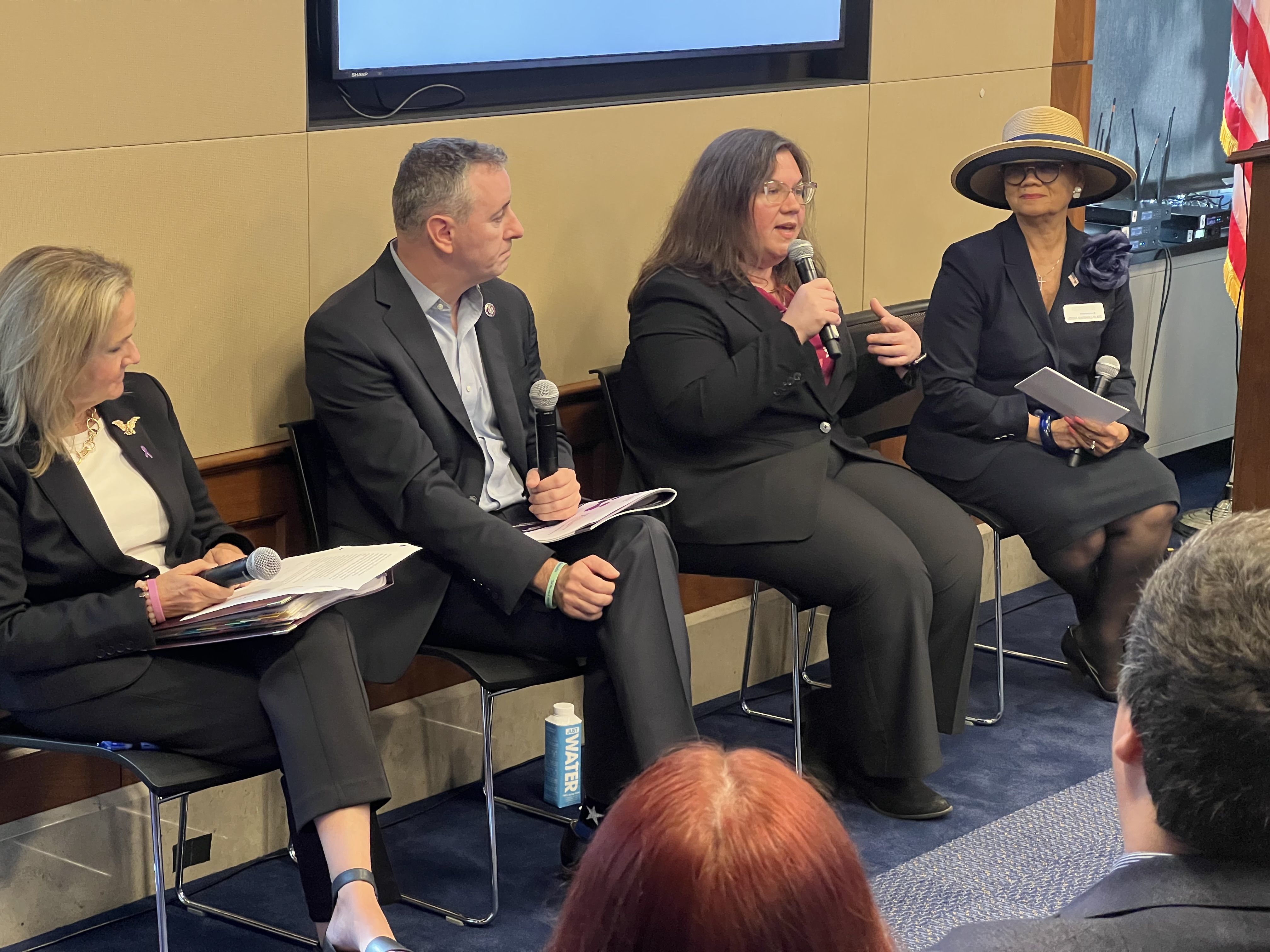
    Lorina Marshall-Blake at a meeting in Washington, D.C., with U.S. Reps. Madeleine Dean and Brian Fitzpatrick, and Kristina Canfield of the Association of Recovery in Higher Education.Courtesy of Independence Blue Cross

    “Lorina Marshall-Blake has a way of making people feel seen and supported the minute she walks into a room,” Kelly Munson, president and CEO of Independence Blue Cross, said. Marshall-Blake, she added, is an example of “how you lead matters just as much as what you lead.”

    Watching Marshall-Blake’s career trajectory from afar, I was in awe. There aren’t many women — much less Black female executives — who have experienced the kind of success she has, especially during the early 1990s. The proverbial glass ceiling that blocks qualified women and people of color from advancing in the workplace is stubbornly thick, but Marshall-Blake was somehow able to break through it.

    In 2011, she was named president of the Independence Blue Cross Foundation, the company’s philanthropic arm, which has distributed more than $90 million in grants to various local causes — including a program that provides scholarships for Philly-area high school students to attend nursing school.

    When I learned earlier this year that Marshall-Blake intended to hang up her fancy hats after 35 years at Independence Blue Cross, I felt a little sad, because it marked the end of an era.

    “She’s an iconic person given what she achieved during that period of time,” said A. Bruce Crawley, the public relations guru who met Marshall-Blake when they were both students at the now-defunct Charles Morris Price School of Advertising and Journalism.

    Crawley, who founded the African American Chamber of Commerce, watched her career over the years, and “was amazed at the progress she was able to make because she was always just a nice person.”

    Back then, he believed that to succeed in corporate America, “it required a certain toughness.” Crawley added, “I thought that she maybe would be challenged by having to be tough, but she was able to do that in a way that didn’t grate on people, and she was a very productive executive.”

    When I reached out to Marshall-Blake earlier this year about doing an exit interview, she informed me she will continue working with IBX — just not in a full-time capacity.

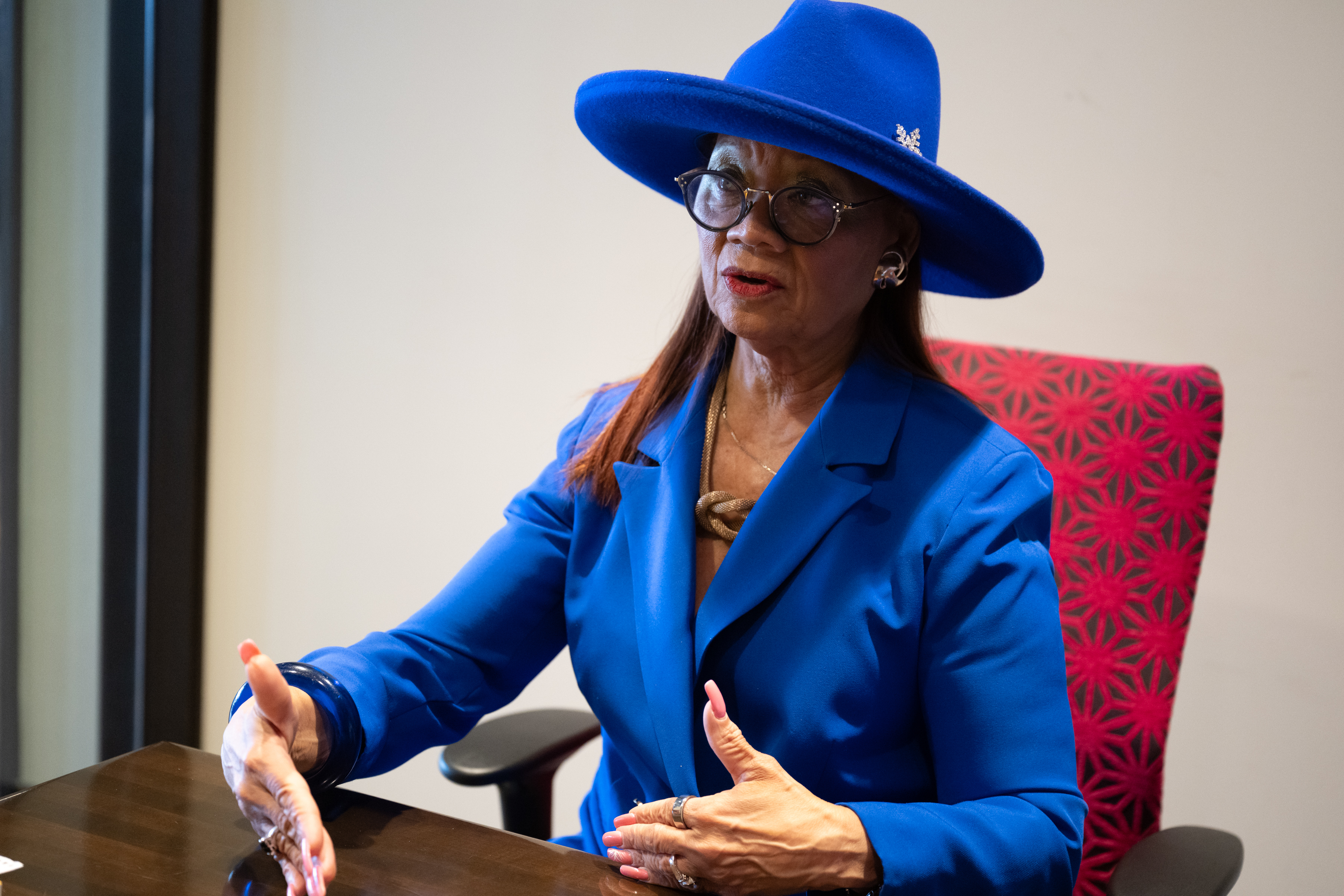
    Lorina Marshall-Blake chats with Jenice Armstrong at the Pyramid Club in March.Erin Blewett / For The Inquirer

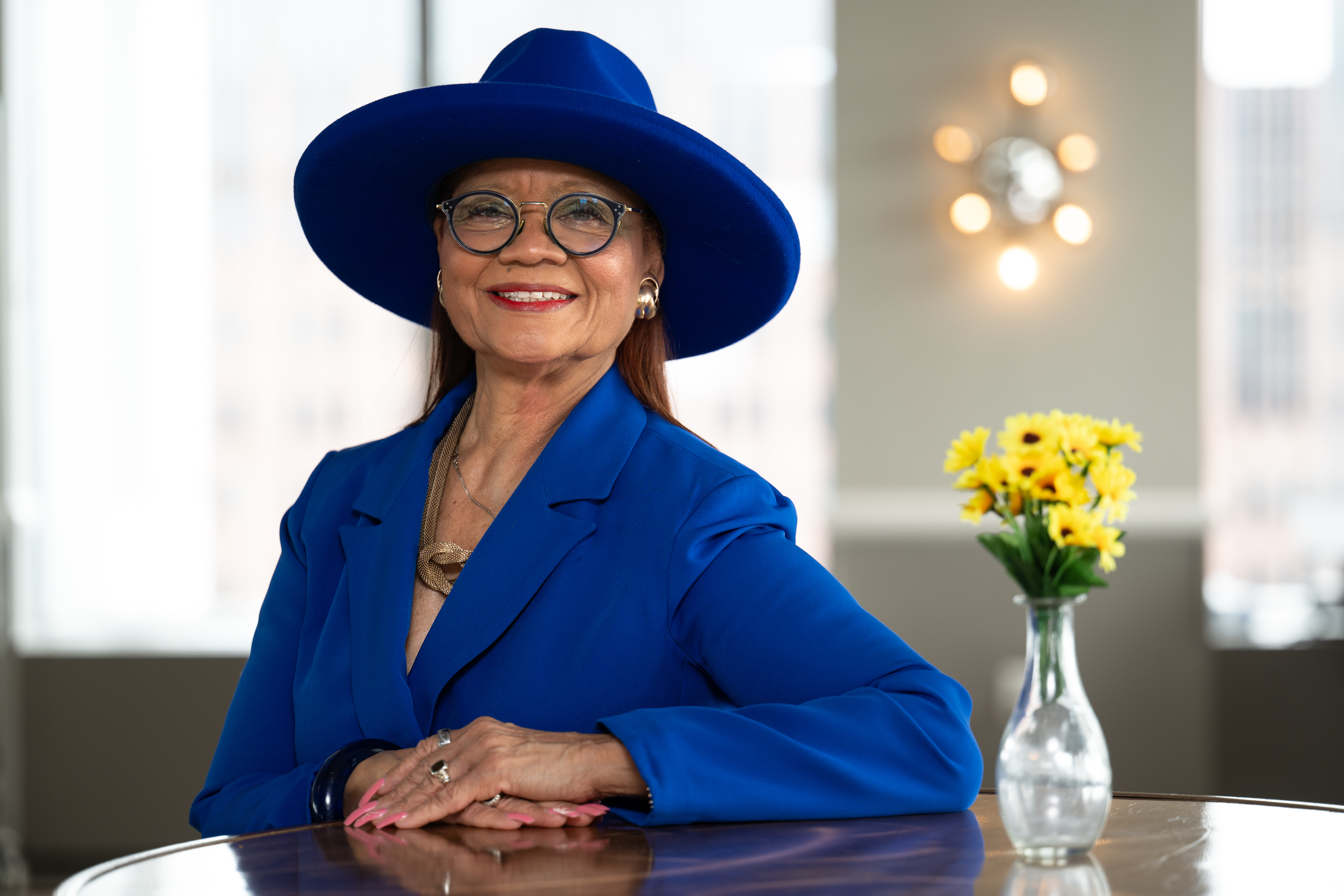
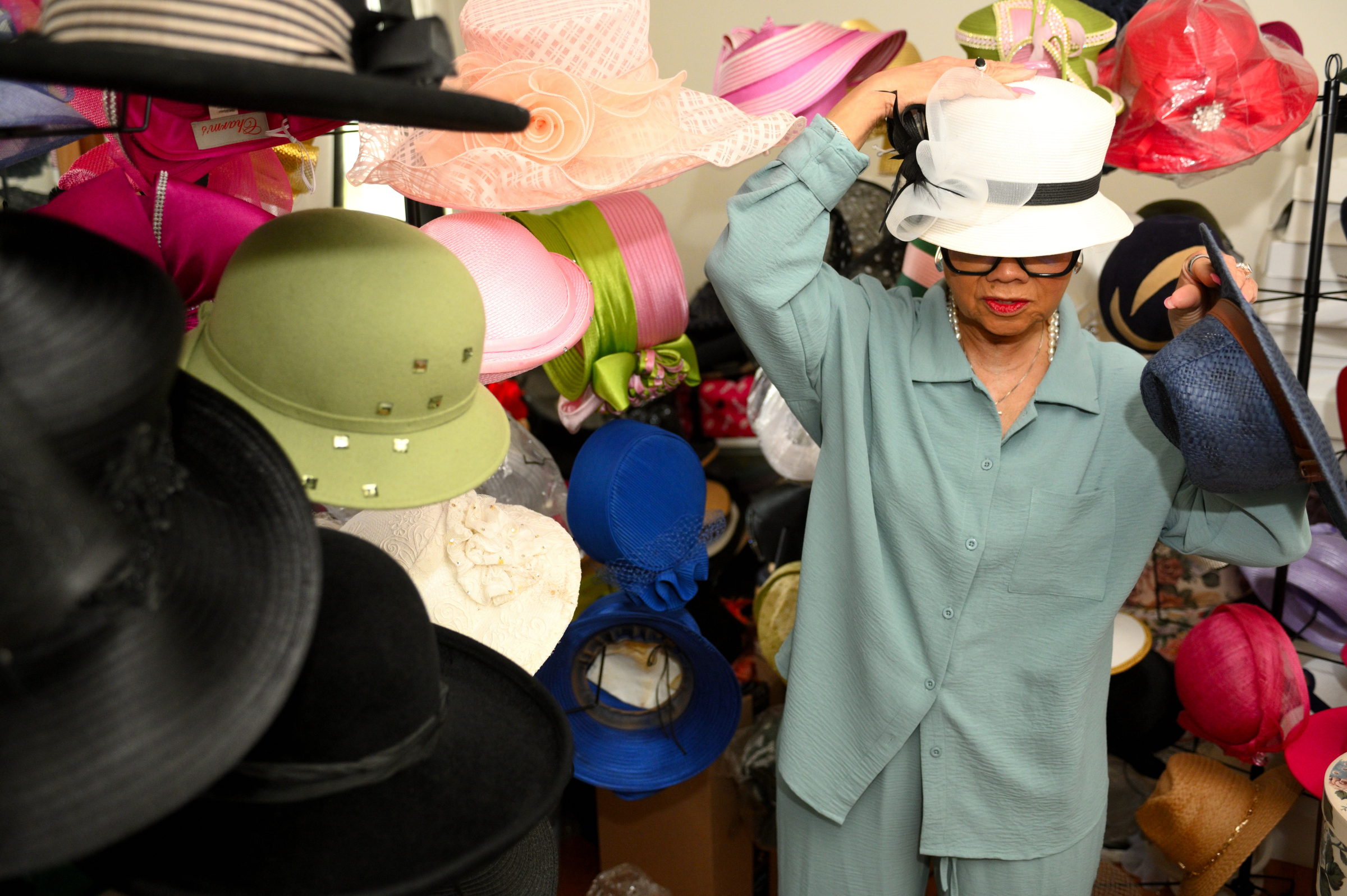
    But I still wanted to meet with her to talk about her next chapter, as well as to glean some wisdom about succeeding in corporate America. We agreed to meet at the Pyramid Club on a chilly, overcast day. When she walked in, Marshall-Blake lit up the room in an electric blue pantsuit with, of course, a crisp matching chapeau.

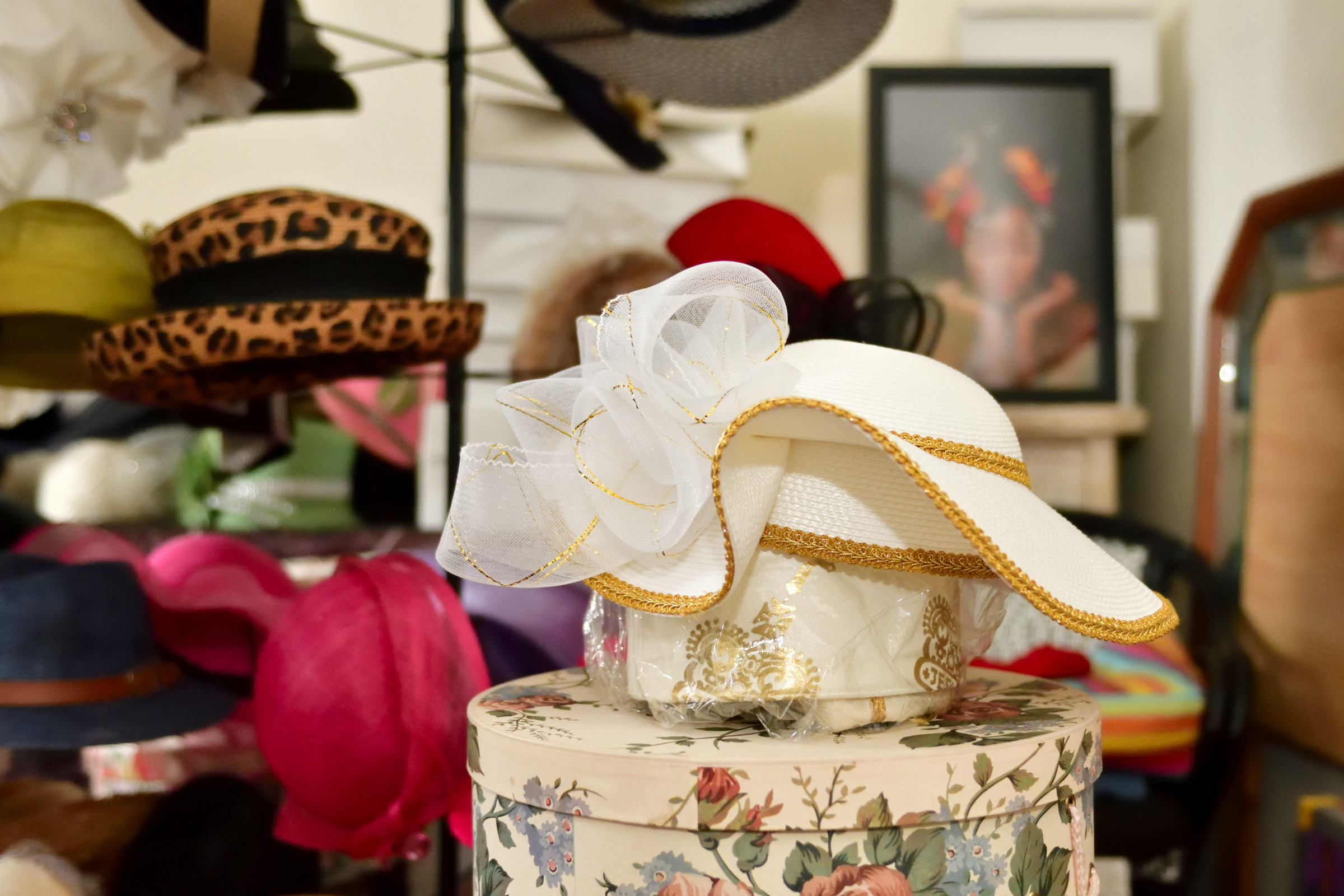
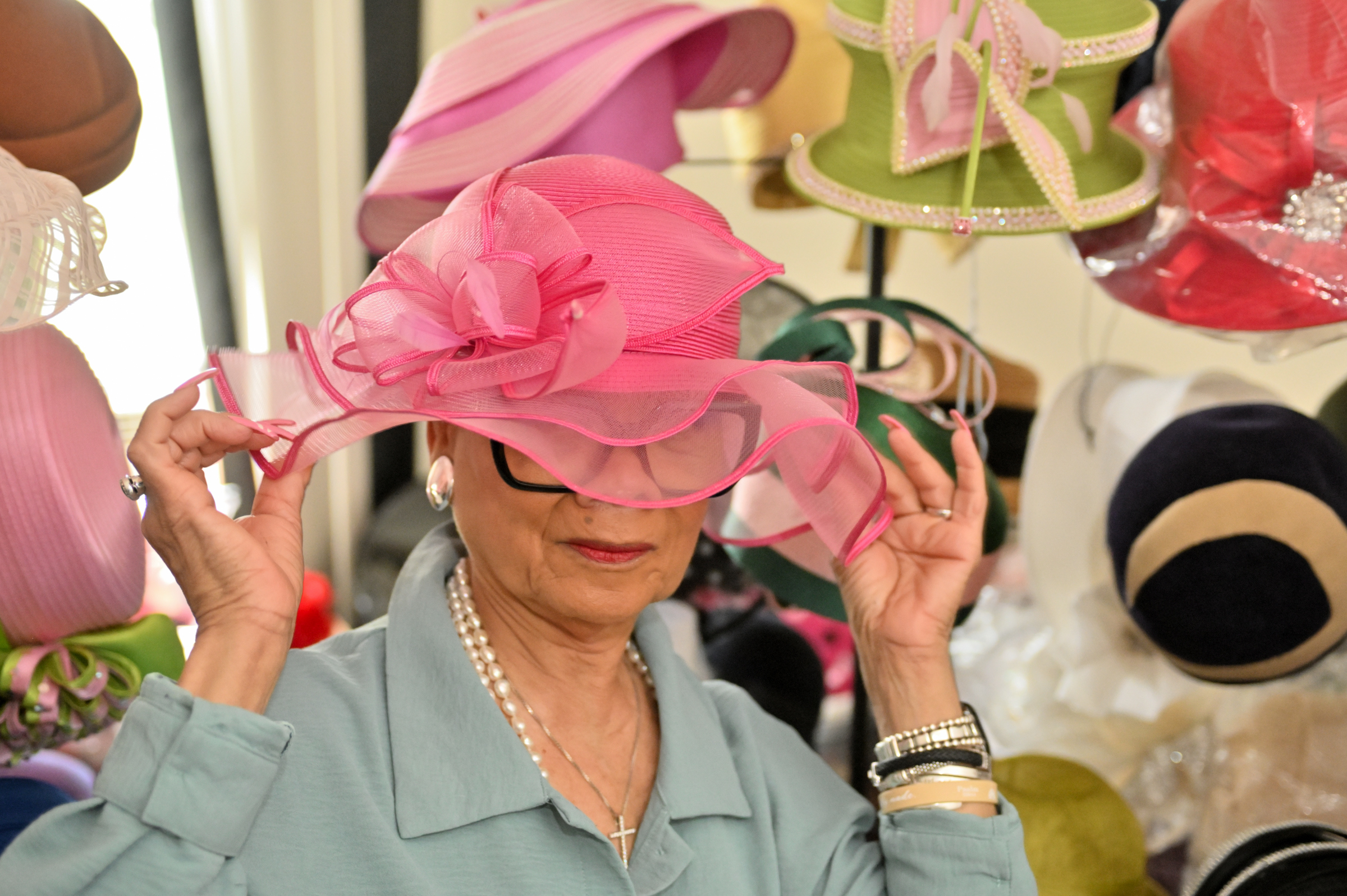
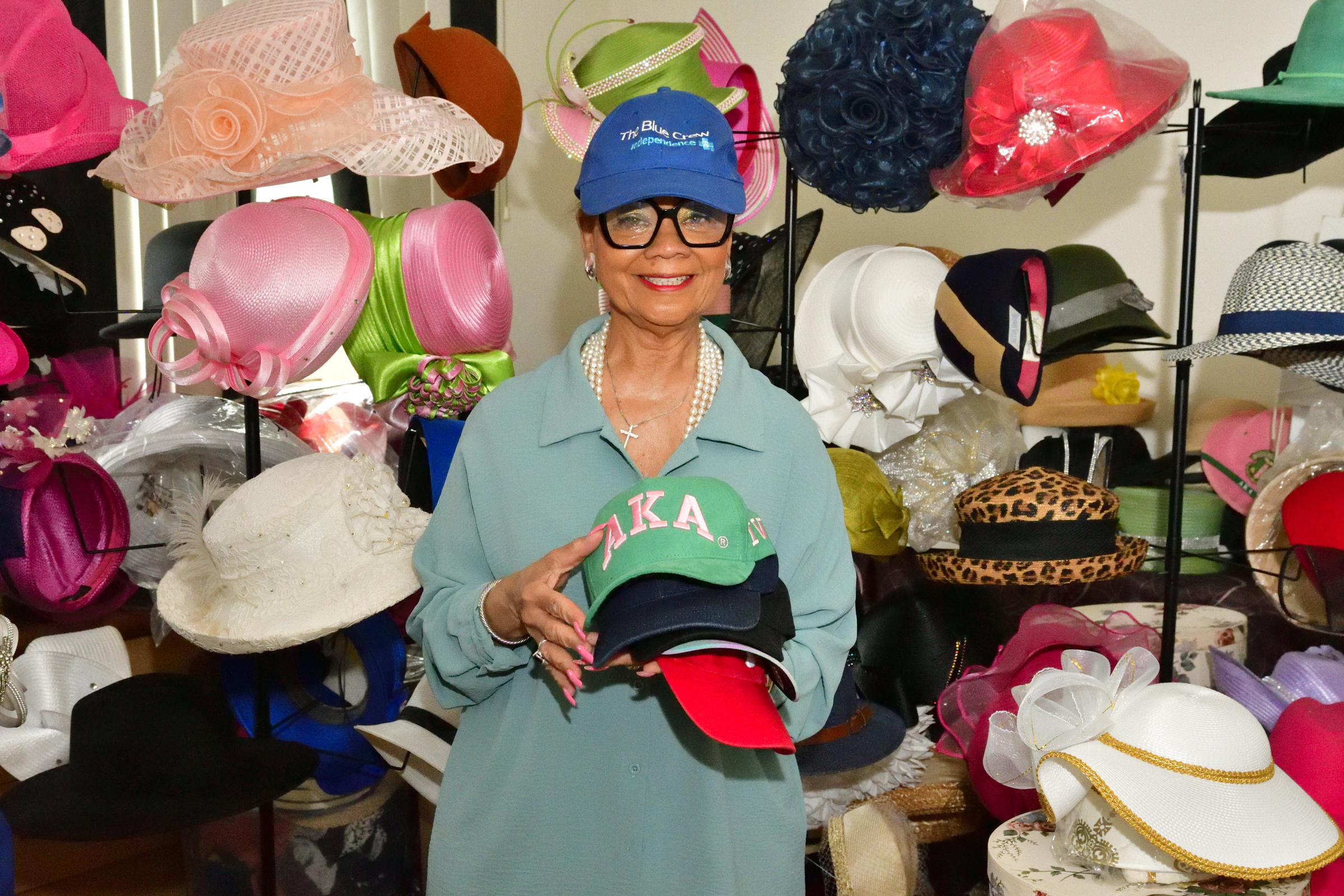
    She told me she has an entire room in her home filled with hats, many of which were given to her as gifts over the years.

    Listening to Marshall-Blake talk about growing up as a middle child in a family of five children in a modest, four-room house on the 600 block of North Yewdall Street in West Philadelphia, I thought about the considerable challenges she faced along the way. Her mother was a homemaker; her father was a welder until he was injured on the job.

    “I didn’t know I was poor until somebody told me I was poor,” she said.

    After graduating from Overbrook High School in 1968, where she was a cheerleader and class treasurer, Marshall-Blake won a scholarship to attend Temple University. But her college dreams were put on hold because she couldn’t afford books.

    She went on to hold a series of low-level jobs at Philadelphia Gas Works, Cigna, and a local law firm, and took undergraduate classes before finally graduating from Antioch University in 1983.

    Marshall-Blake got her first big career break in 1980, when PGW named her vice president of government relations and urban affairs — a role she fully embraced. She said she worked to learn everything she could about the organization from the ground up — literally.

    “I donned my meter reader outfit and read meters,” she told authors of the 2020 book, They Carried Us: the Social Impact of Philadelphia’s Black Women Leaders. “I climbed underneath buildings and got in ditches with the guys. I got on the phones. I wanted to know the people that really carried PGW. If there was a gas explosion, I was there. It was more than just showing up. I was present.”

    Lorina Marshall-Blake dons a full fascinator from her collection …Bastiaan Slabbers / For The Inquirer
    … and an Independence Blue Cross cap.Bastiaan Slabbers / For The Inquirer

    In 1990, she completed her master’s degree in government relations at the University of Pennsylvania. The following year, she moved to Independence Blue Cross, where she had been named vice president of government relations.

    “I’ll always remember the first day I walked into Independence Blue Cross on June 1, 1991,” Marshall-Blake said during a retirement reception in her honor at the company’s headquarters earlier this spring. “This work for me was more than a job. For me, it was ministry.”

    March 31 marked her last official day as a full-time employee at Blue Cross, but her consulting agreement with the insurance giant began immediately. She said she welcomes the slower pace of her new role. She’s 75. It’s time. She’s ready.

    Still, stepping into her next act will be a major adjustment. Marshall-Blake is working on letting go of her usual “got-to-do-this” mindset. The 20 unpacked boxes in the middle of her living room can stay where they are. She’ll get to them when she gets to them.

    Lorina Marshall-Blake wears a classic coffin-top Stetson …Bastiaan Slabbers / For The Inquirer
    … and then a mushroom crown hat with a downturned brim.Bastiaan Slabbers / For The Inquirer

    Marshall-Blake, who is also an associate minister at Vine Memorial Baptist Church in West Philly, said she recently offered up a simple prayer: “Lord, let me accept retirement with grace.”

    She accomplished so much during her time in corporate America; I’m sure she will do the same during this season in her life, too.

    My hats off to her.