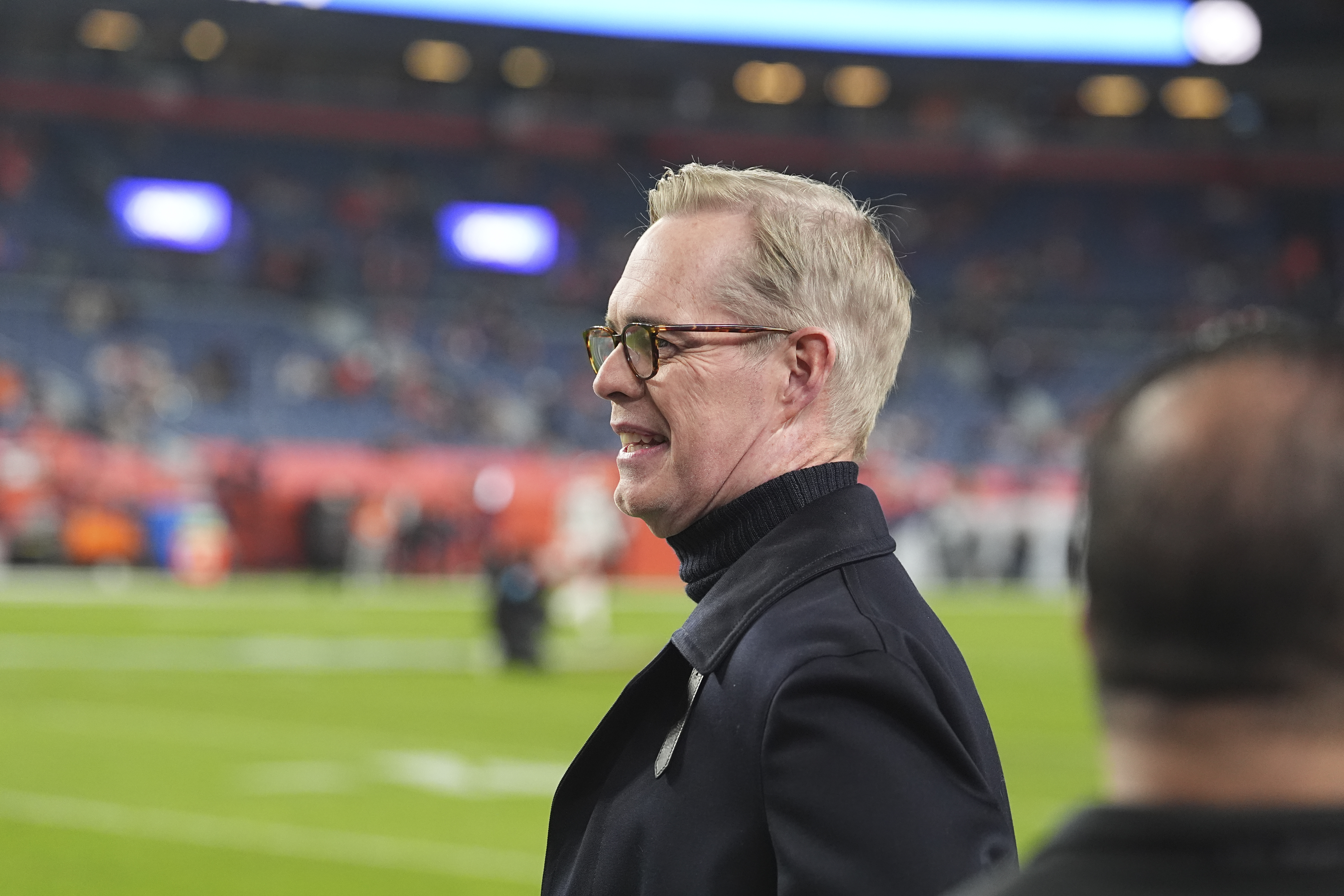
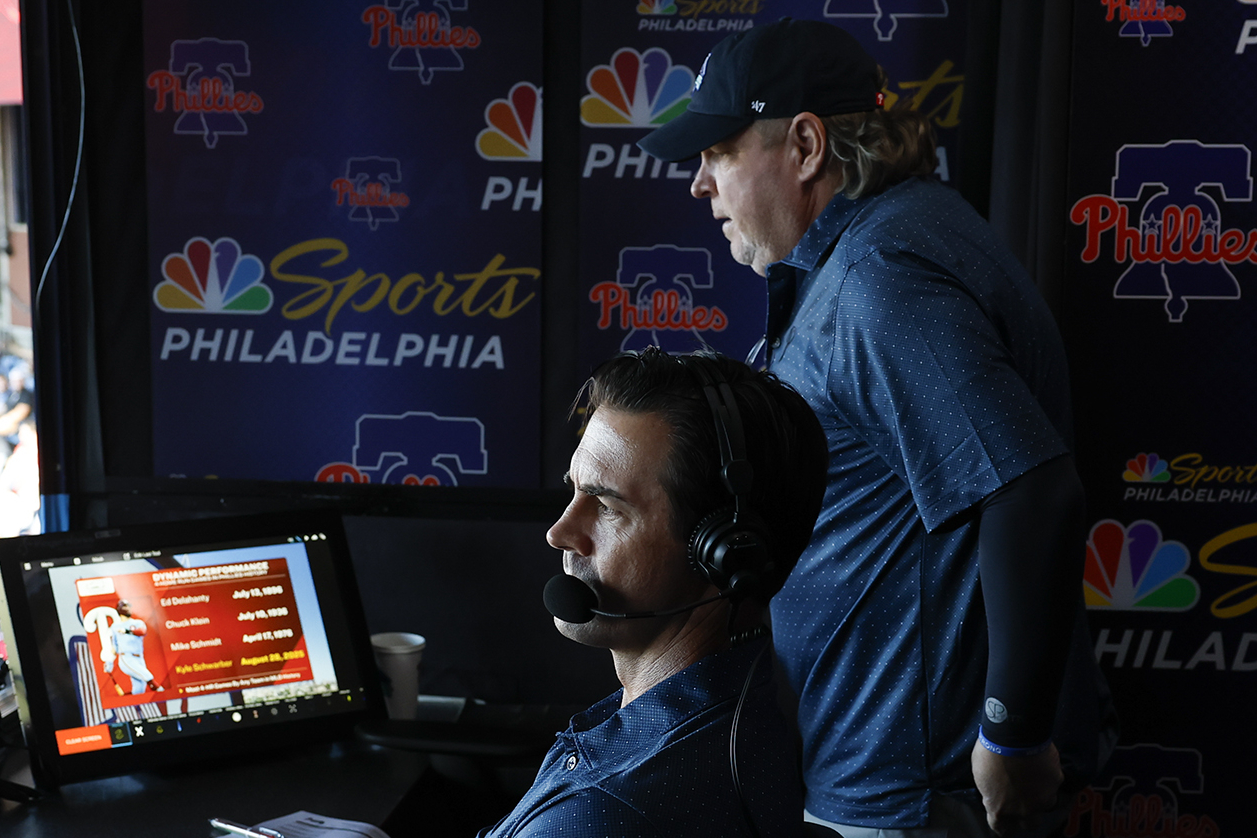
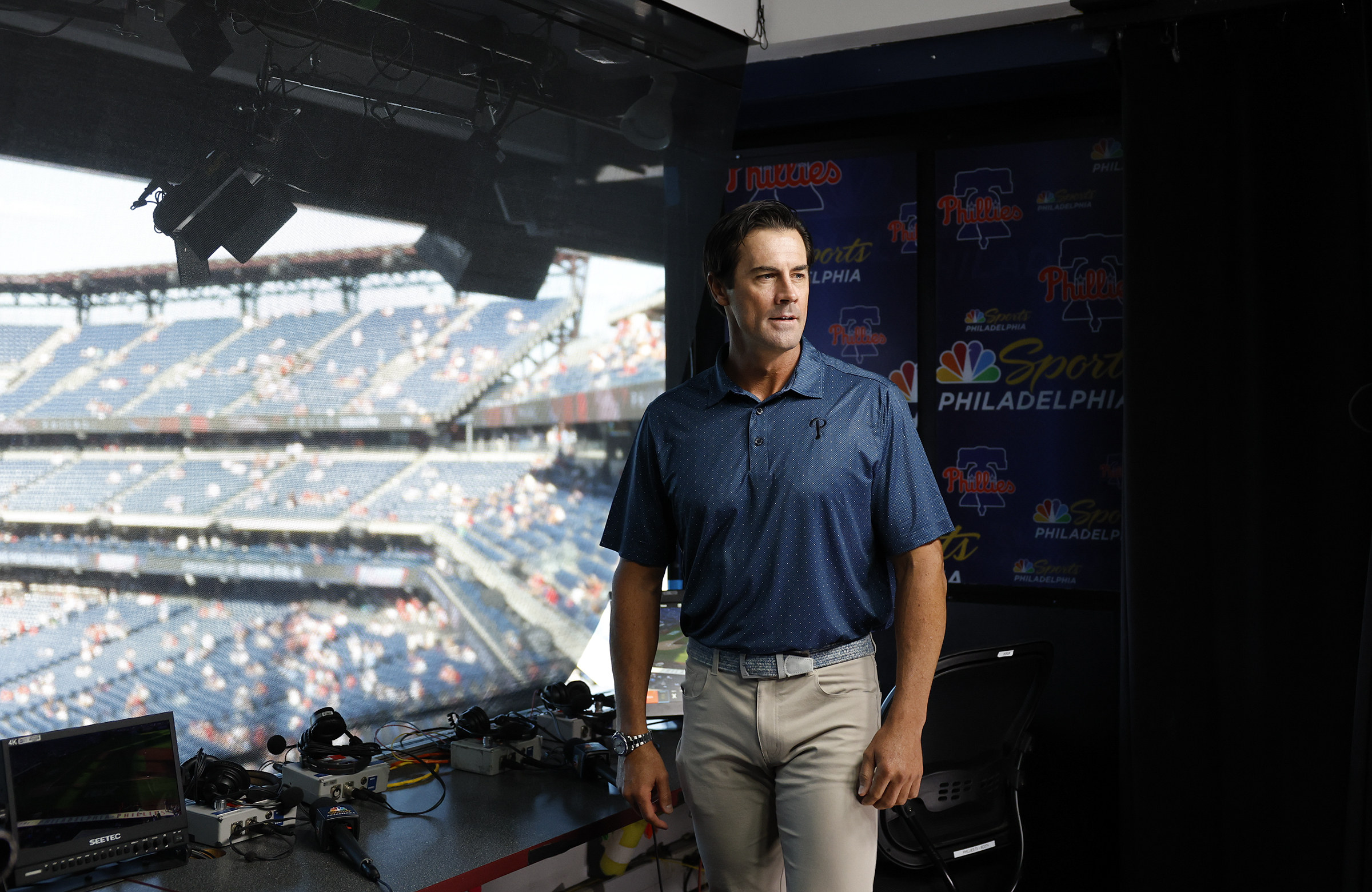
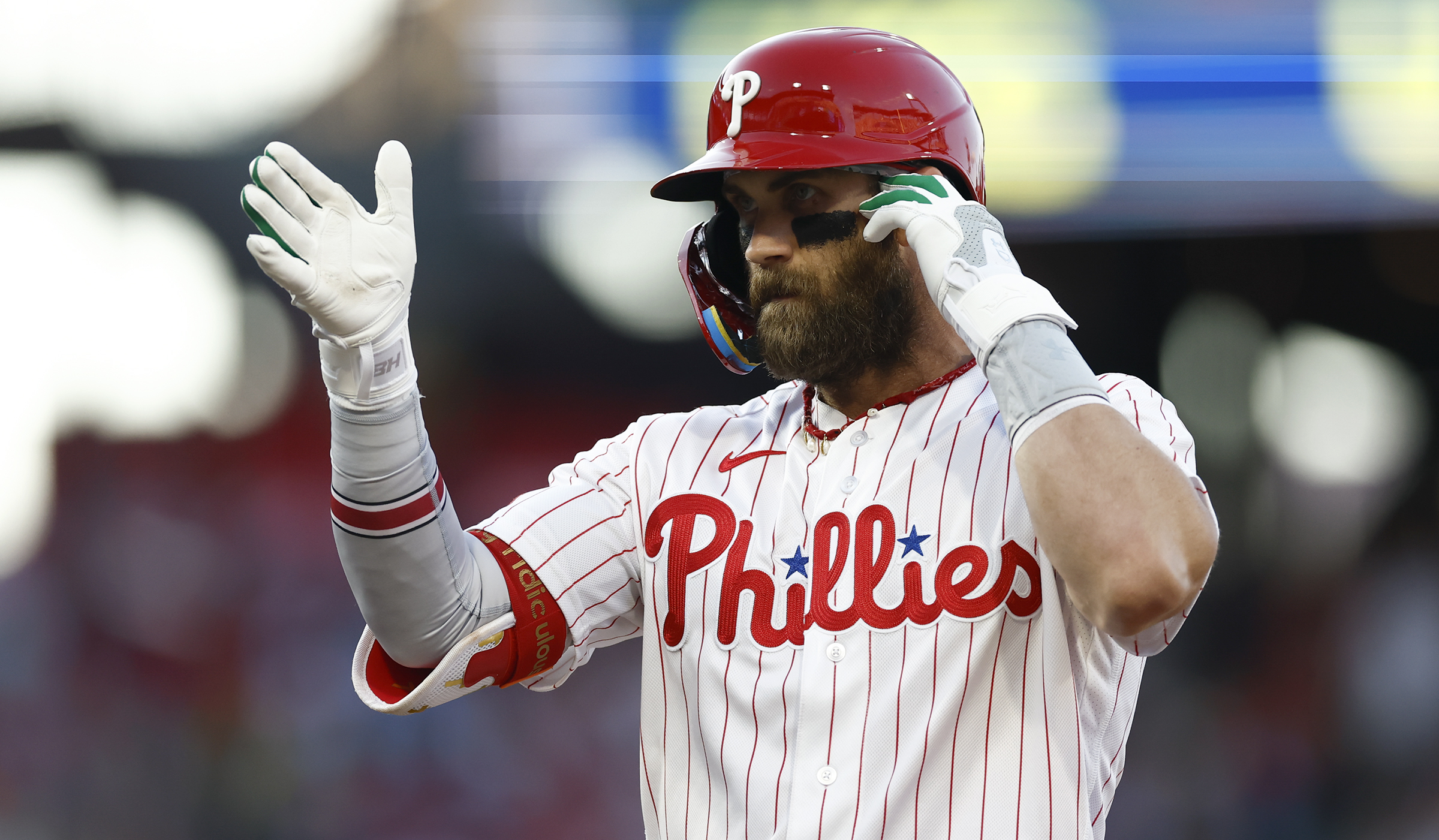
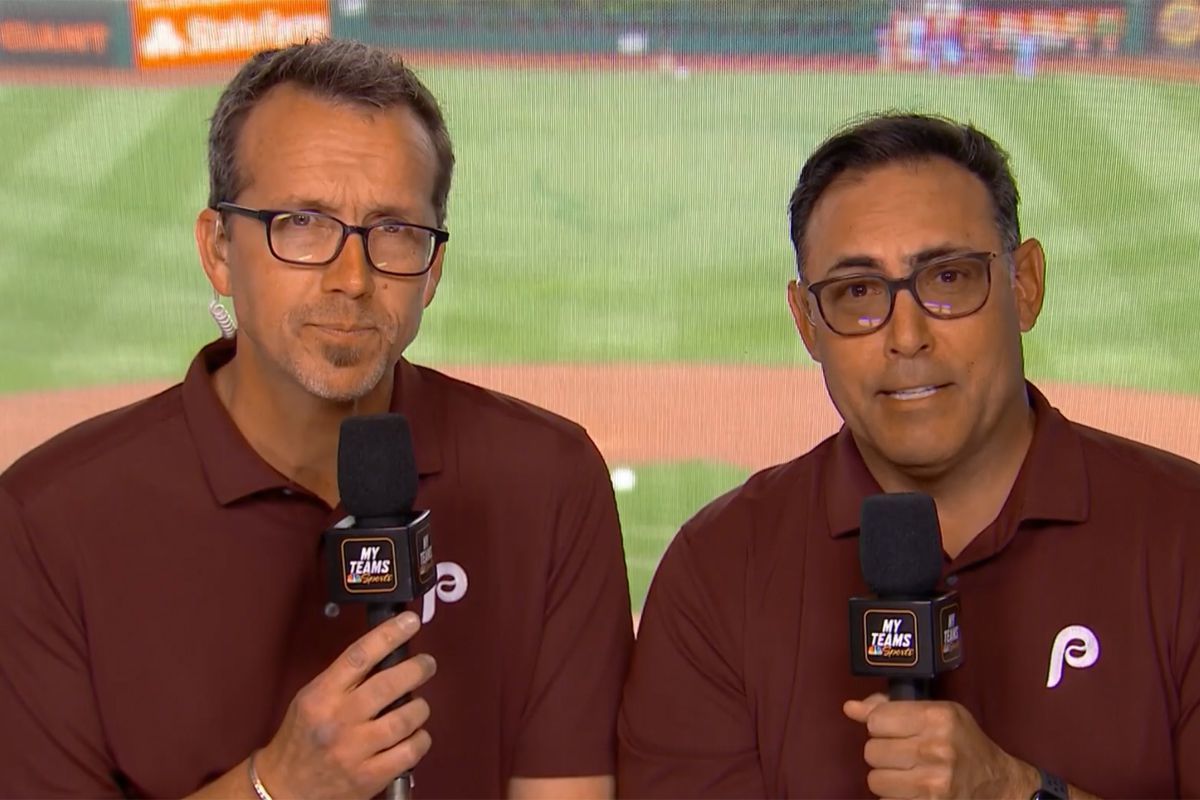
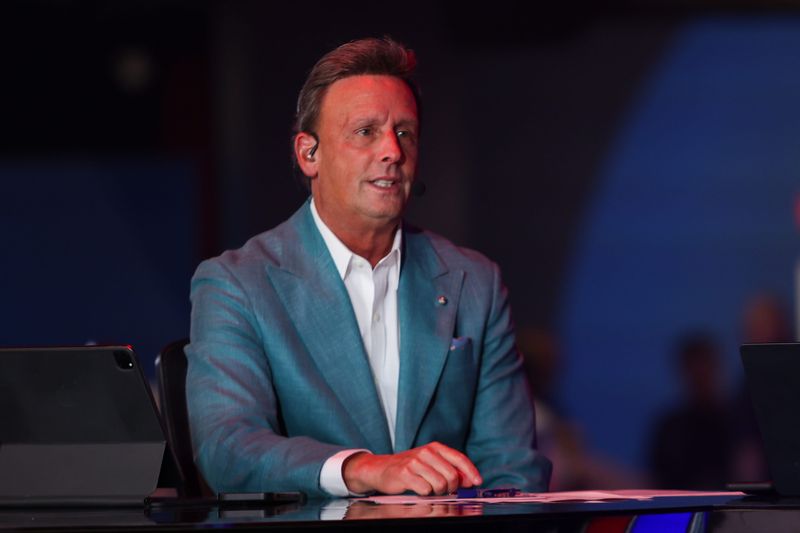
Buck has had a lot stacked against him in Philly during much of his broadcasting career. Eagles fans have hated Buck because of his association with Hall of Famer Troy Aikman, who led the Dallas Cowboys to three Super Bowl victories. Phillies fans felt like he was rooting against their team because they were used to hearing fan-friendly announcers like Harry Kalas and Tom McCarthy.
“Philly fans are at times hard to please, and that’s what makes them great,” Buck said. “They demand effort and excellence.”
A good example of the divide was 2008, when Buck was broadcasting the Phillies’ World Series victory on Fox while Kalas provided the radio call.
Kalas’ passionate call of the final out, a strikeout by closer Brad Lidge, still gives goose bumps to Philly sports fans: “Swing and a miss! Struck him ooooooooout! The Philadelphia Phillies are 2008 world champions of basebaaaaaaaall!”
Buck’s call, by contrast, was dry and direct: “Phillies are world champions.”
“I was raised in a house where I was taught to dislike Joe Buck,” Kylie Kelce said last year on her husband’s short-lived ESPN late-night now. “It seemed as though he was always cheering for the other team,”
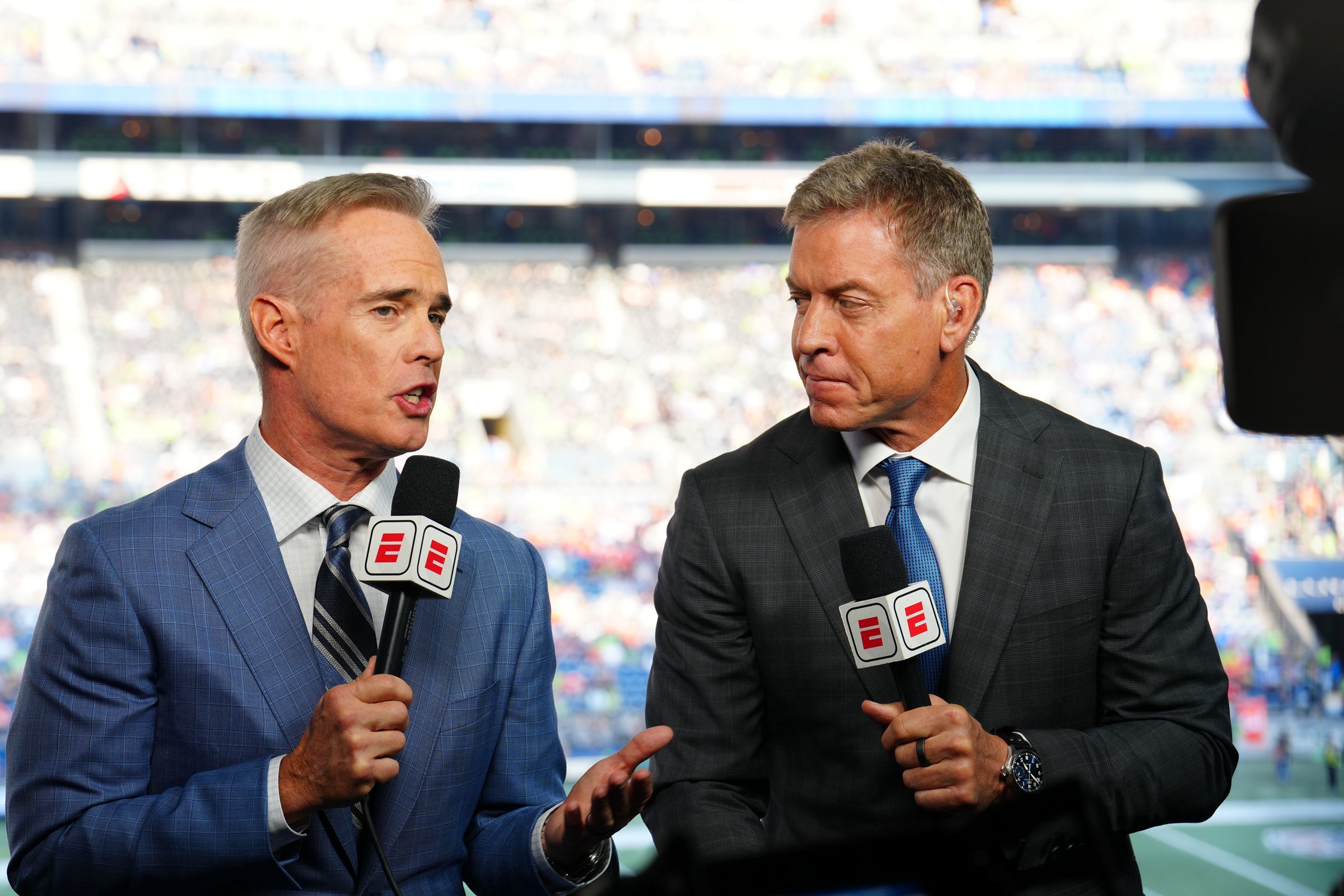
Buck’s voice is one of the few in the sports world that signal a big game, and fans have come to view him and Aikman as one of the best broadcasting duos in the league. This year, the two will be back calling the Super Bowl, their first together since 2020 at Fox.
Joe Buck (left) and Troy Aikman have been calling games together since 2002. ESPN Images
Buck isn’t sure what to attribute his newfound respect from Philly sports fans to. Likely it has something to do with Aikman being far removed from his playing days with the Cowboys, but the more likely culprit is that he no longer calls national baseball games.
“Everyone is listening to every tone that comes out of your mouth and assigning some rooting interest that just doesn’t exist,” Buck said. “There would just be no reason why I would root against Philly. It’s just silly stuff.”
“I think people have come around on Joe over the past five to 10 years,” Cataldi said. “He’s always accused of rooting for the opposite team, but if you listen to his broadcast, it’s right down the middle.”
In his fifth season on ESPN’s Monday Night Football, Buck won’t have a rooting interest when the Eagles take on the Chicago Bears. But his stat guy in the booth will.
Ed Sfida, a Villanova grad, has worked with Buck and Aikman since 2003, dating back to their days at Fox Sports. They’ve become so close Buck invited Sfida to his wedding when he married Michelle Beisner, who now works alongside her husband at ESPN.
“Back at Fox, if the Eagles were playing the same time we were doing another game and scored a touchdown, we’d look down in the corner of the booth where Sfida stands and he’s doing the Eagles’ wing flapping thing,” Buck said. “He’s the best.”
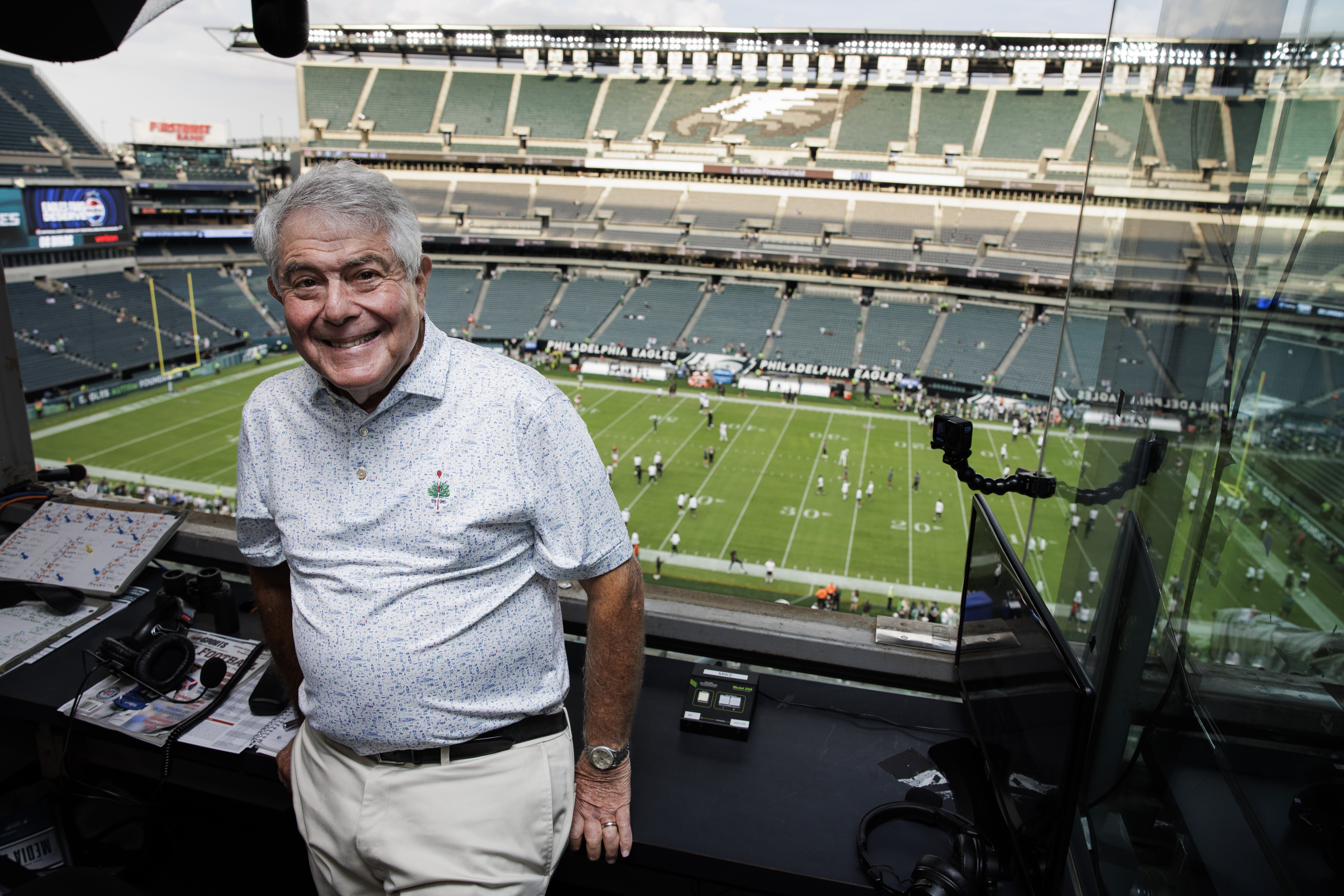
Buck doesn’t see himself following in Merrill Reese’s footsteps
Merrill Reese is in his 50th season as the radio voice of the Eagles. Monica Herndon / Staff Photographer
Buck is in his 33rd year calling NFL games in a career that dates back to Fox acquiring TV rights to the league in 1994.
That’s a long time, but he has a ways to go to match Eagles radio announcer Merrill Reese, who is in his 50th season calling the Birds, easily the most-tenured announcer in the league.
If Buck were to make it to 50 years, he’d be 74. So does he seem himself lasting in the booth that long?
“The answer to your question is no,” Buck said. “It’s just amazing to me, whether it’s Merrill or Al Michaels, the mental clarity and strength it takes to find your way through these games and not say something ridiculously stupid.”
“I’m just blown away by Merrill and how smart and clear and energetic is he,” Buck said.
A future without Troy Aikman at ESPN?
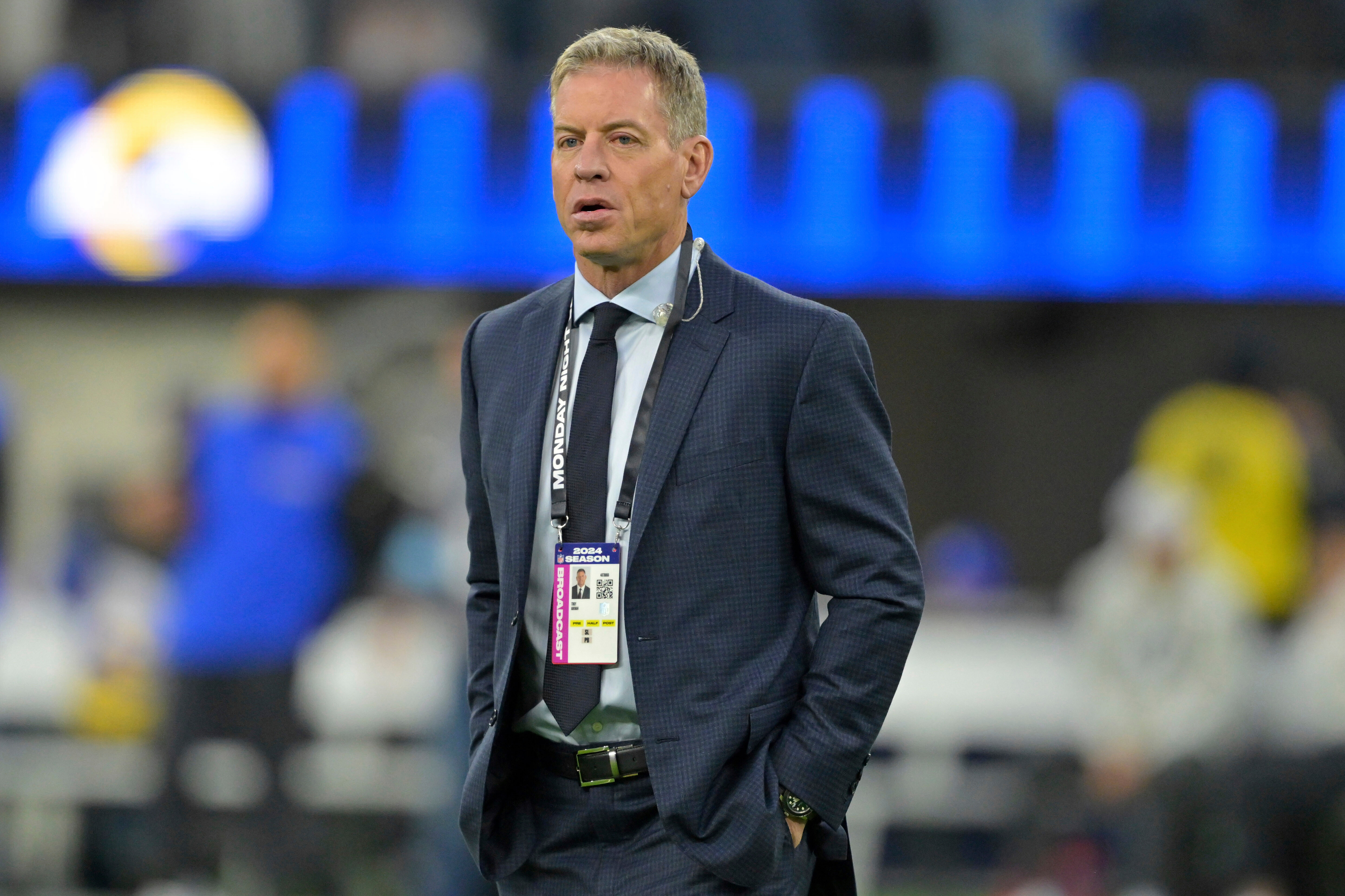
Troy Aikman’s ESPN contract expires at the end of the season. Jayne Kamin-Oncea
Buck recently signed a contract extension reportedly worth more than $100 million that will keep him at ESPN through the 2032 season. But Aikman hasn’t and reportedly won’t until after the season ends, after he and Buck call the Super Bowl at SoFi Stadium in February.
There’s been uncertainly about the longtime duo before. When Aikman signed with ESPN in 2022, Buck had a year remaining on his deal with Fox, but executives let him out of his contract early so he could move to ESPN with Aikman.
Buck hasn’t spoken with Aikman about his plans, but he hopes the two will remain together at ESPN and keep the NFL’s longest-running TV booth going.
As for Aikman, there could be plenty of options. With uncertainty at CBS due to Tony Romo’s arrest and subsequent suspension, Aikman could solidify their No. 1 booth ahead of their Super Bowl next season. There’s also Amazon Prime, where Thursday Night Football announcers Al Michaels and Kirk Herbstreit have contracts that expire at the end of the season.
“I’ve been in this business long enough to know nothing is a guarantee,” Buck said. “So my only answer to any of that is we’ll see.”
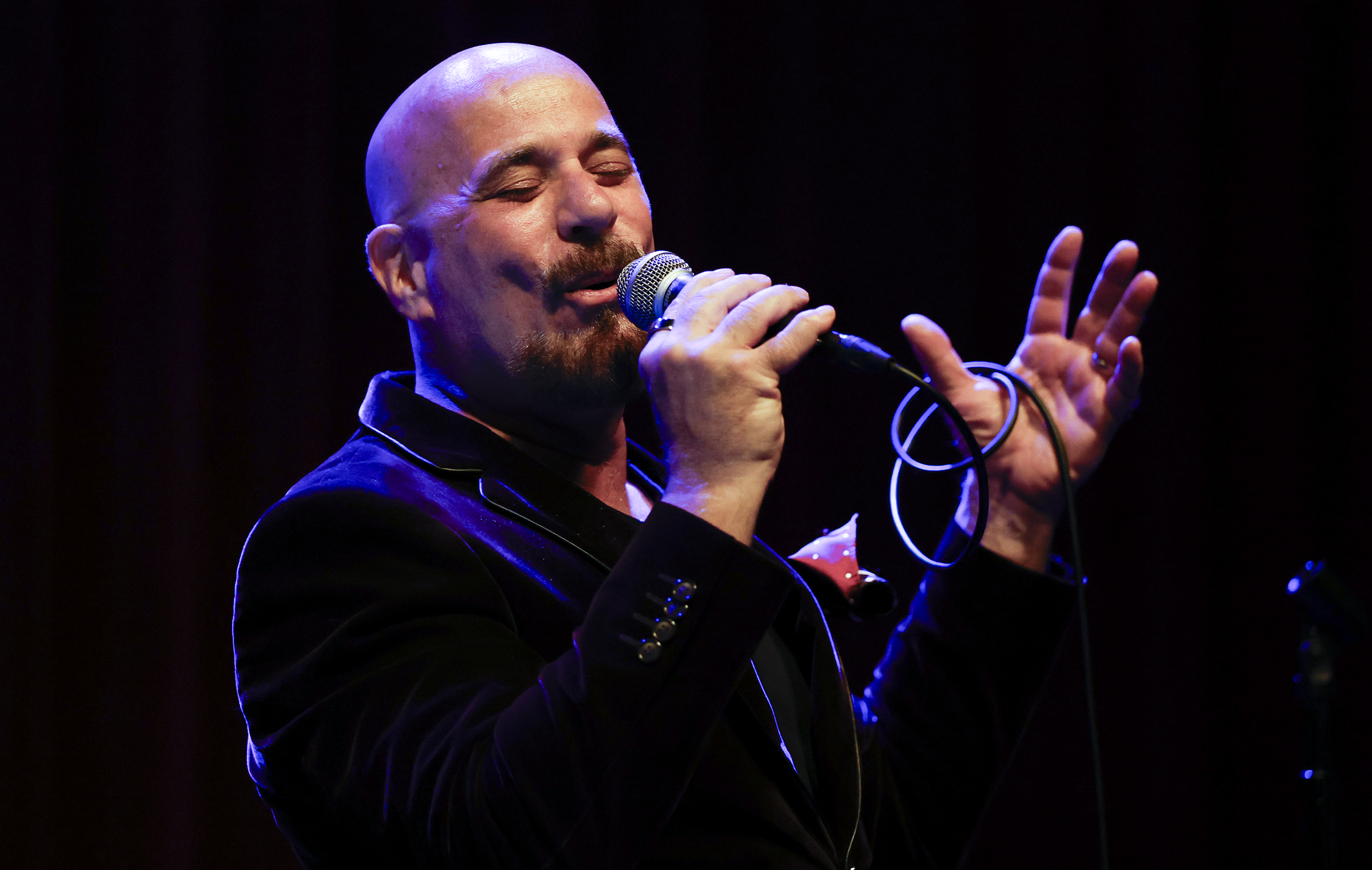
“I had a tape recorder I would sing into,” said the South Jersey jazz vocalist.
“I was one of those kids holding a brush in the mirror, singing Billy Joel songs. I was that kid.”
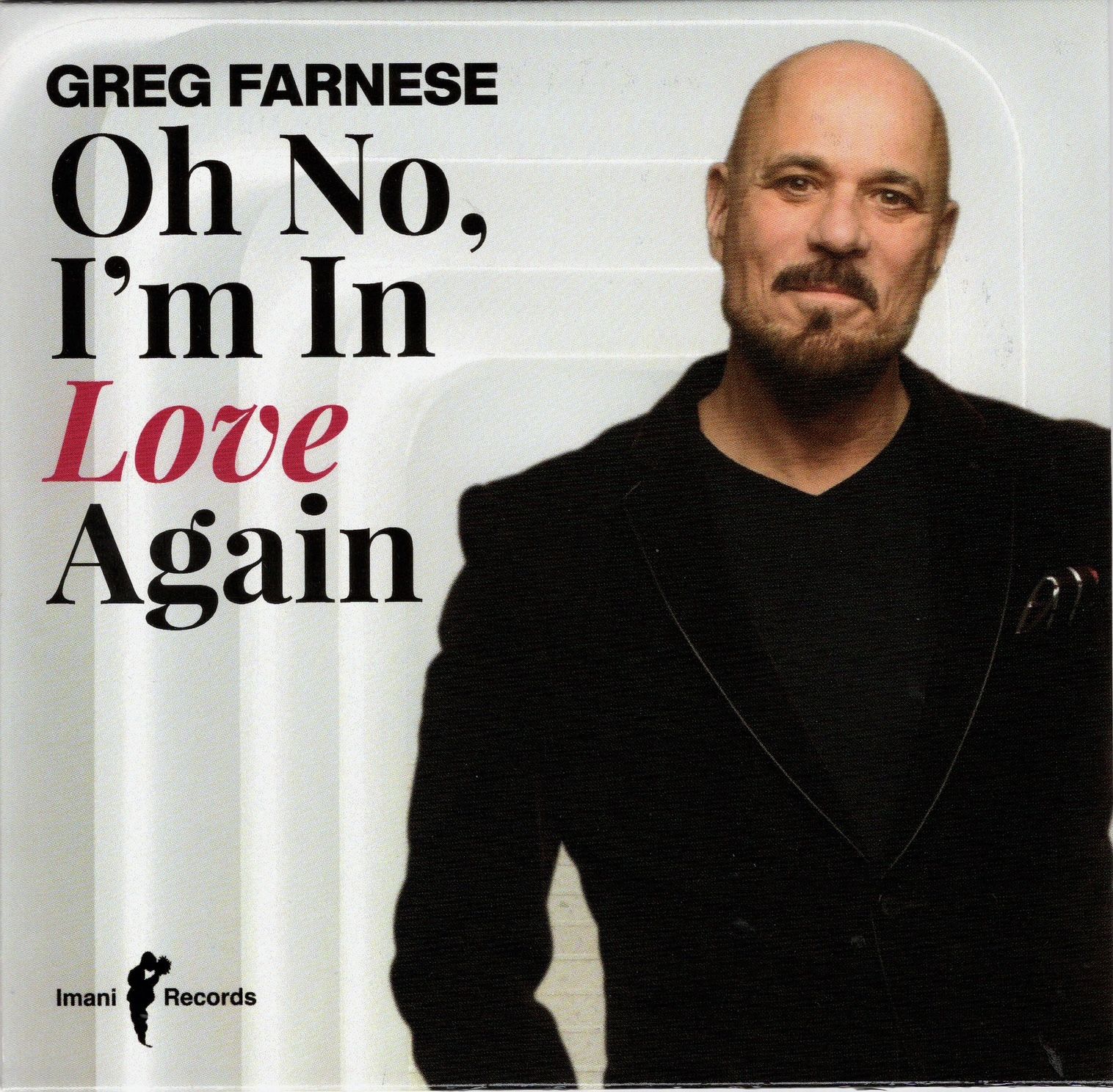
But it was a roundabout route to the stage for Farnese, whose debut album, Oh No, I’m in Love Again, was just released on Philly jazz pianist Orrin Evans’ Imani Records.
First, he followed his father, Aldo Farnese — the star of Philadelphia children’s television shows Dickory Doc and Adam Android in the 1960s and 1970s — in pursuing an acting career. After a stint in Hollywood working in production and scoring some small movie and TV roles, he came home to Philly in the mid-1990s.
Since then, Farnese has had a day job — actually, usually a night job — as a TV camera operator for the Phillies, first at Veterans Stadium and, since 2004, at Citizens Bank Park. He operates a super slo-mo camera from the left field power alley in front of Ghost Energy Deck (formerly Harry the K’s).
By 2012, Farnese was long settled into that job, and also working Sixers and Flyers games for NBC Sports Philadelphia. In 2012, he won an Emmy for his work on the World Series.
But then he felt — as he puts it speaking via Zoom from his home in Woolwich Township, Gloucester County, while his golden retrievers Bailey and Oliver lounge on a sofa behind him — “a tap on the shoulder.”
The cover image to Greg Farnese’s album “Oh No, I’m in Love Again.”Courtesy of Imani Records
“When I was a kid, my father would sing throughout the house. We would say ‘Dad, you’ve got a great voice, you should be a singer,’” Farnese said. “And he would go, ‘Meh,’ and kind of blow us off.”
Then one day, he said, “I was singing while putting my son’s air hockey table together.” His wife, Laurie, said “Greg, you’ve got a beautiful voice. You should sing.”
“I started to go ‘Meh …’ — and then I stopped myself. Because I remembered that as a child, I thought my father was wasting his talent.
“So I said: ‘Get me a karaoke machine for Christmas, and I’ll start working on my voice.’ And that’s what I did.”
Farnese, who will perform at Tim McCloone’s Supper Club in Asbury Park on Oct. 4 and the Exit 0 Jazz Festival in Cape May on Oct. 23, is a poised vocalist and skilled song interpreter. Oh No! I’m in Love Again features two originals, including the title cut, both written with Alan Gardner, a former collaborator with Farnese’s father.
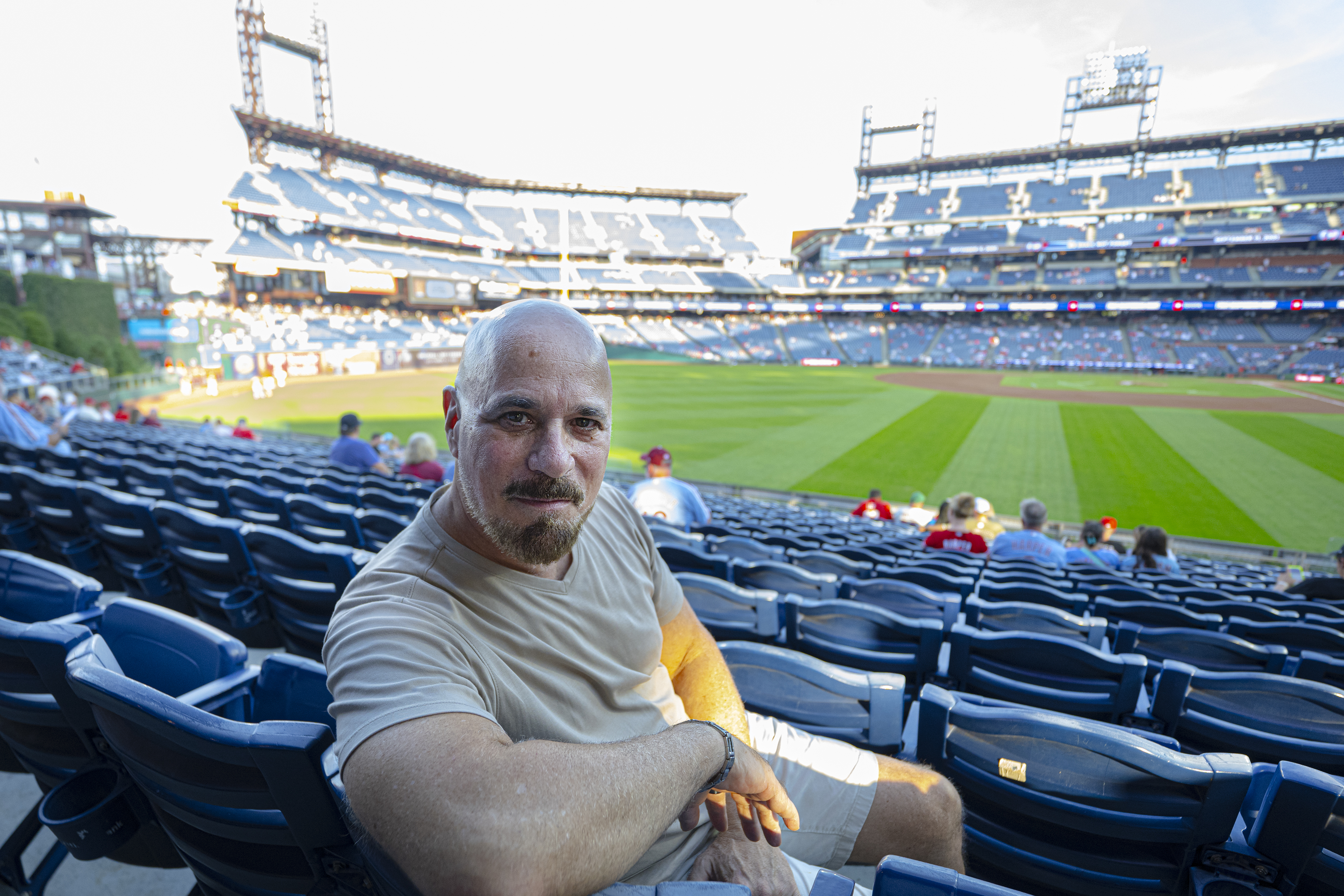
Greg Farnese, a television cameraman and musician, is photographed Wednesday, Sept. 10, 2026, at Citizens Bank Park in Philadelphia, where he works as a camera operator in left field. Farnese, a crooner, recently released his debut album, “Oh No, I’m in Love Again,” on Grammy-nominated Philadelphia pianist Orrin Evans’ Imani Records. Farnese also works as a Phillies television cameraman for NBC Sports Philadelphia, stationed nightly in the left-field power alley.Jose F. Moreno / Staff Photographer
‘The magician canceled, can you come down and sing a song?’
The album, whose polish belies that it was recorded in a single day at MorningStar Studios in Montgomery County, features Philly jazz players like drummer Leon Jordan Sr. and horn arrangements by trumpeter Elliot Bild.
Along with a delicate version of Johnny Mercer’s “Dream” accompanied by guitarist Paul Bollenbock, the album includes Green Day, Oasis, and Tears for Fears songs, all artfully rearranged to make familiar sound fresh.
It’s been a long road of confidence building for Farnese to work with a musician as accomplished as Evans, a three-time Grammy nominee who this spring was named artistic director of the Seattle Repertory Jazz Orchestra. (He’ll split his time between Seattle and Philly.)
Speaking between innings during a recent Phillies-Astros game — an 11-7 win, thanks to a Kyle Schwarber grand slam — Farnese calls Evans “so smart and honest, and a great pianist. It’s like having Quincy Jones in my corner.”
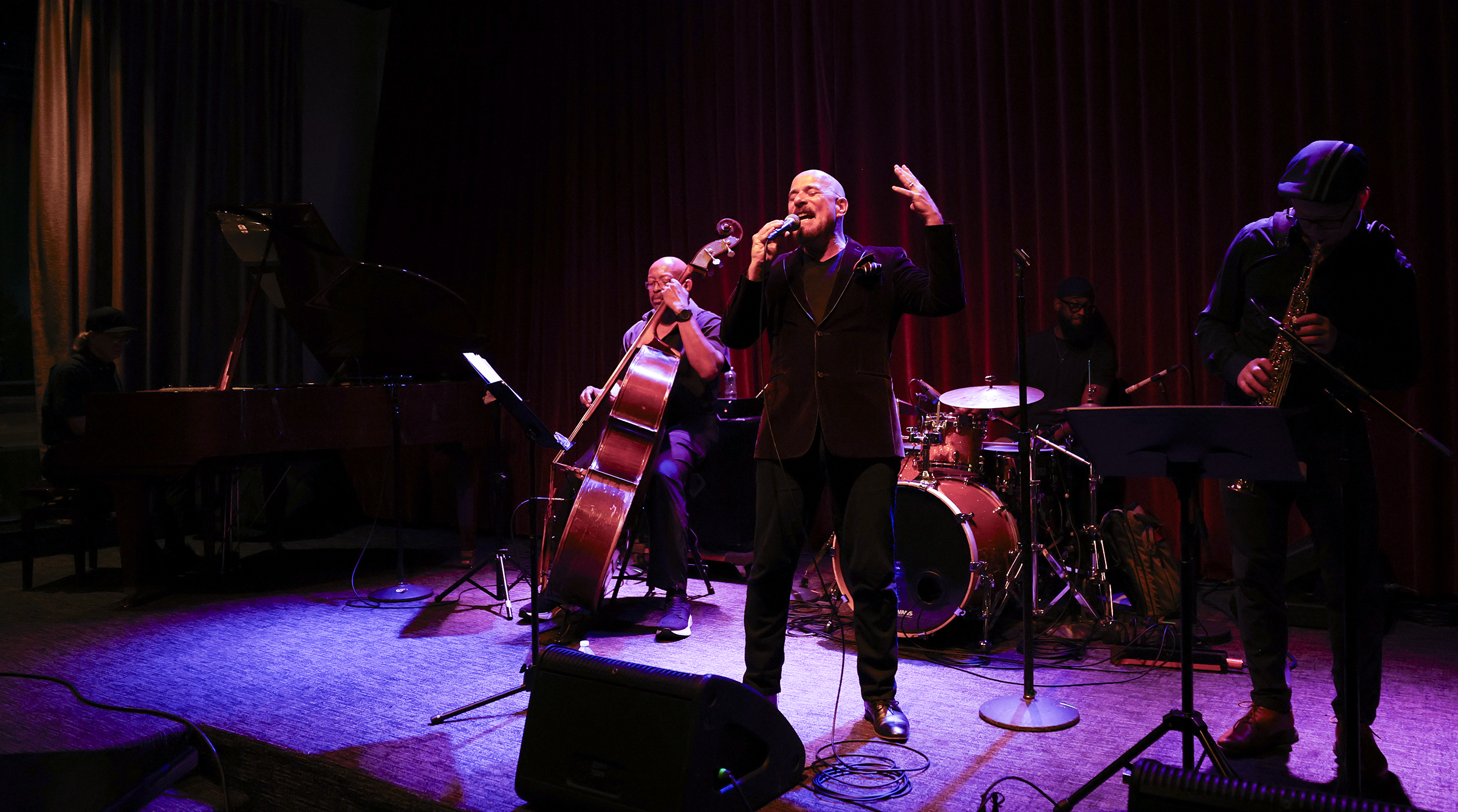
Greg Farnese (center) performs at the World Stage in University City on Sept. 18, 2026. Farnese just released his debut album, “Oh No, I’m in Love Again.”Yong Kim / Staff Photographer
“I started out singing in pizza parlors,” said Farnese, 62. “My wife is a psychologist and she used to work at nursing facilities. She called me one day and said, ‘The magician canceled, can you come down and sing a song?’
“I told her no, I’m not ready yet. She said, ‘Get the hell down here, just do it!’ I was afraid, and I was so self-conscious about being good.”
But as Farnese sang the 1940s standard “Moonlight in Vermont” to an elderly audience in Egg Harbor Township, he had a revelation.
“The two ladies in the front started crying. I was bringing them back to when they were young. That moment I realized that it wasn’t really about me. It was about the effect the music had on the audience. I saw them crying and I thought: This is what I want to do.”
Since then, Farnese has surrounded himself with first-class musicians and sung in area jazz clubs and private events, while also traveling for gigs in New York and Chicago.
Working with the Phillies suits his ambitions. Knowing his schedule months in advance, he books shows when the team is on the road.
“We’ve brought him on a couple of times to sing ‘Take Me Out to the Ballgame,’” said Phillies TV play-by-play announcer Tom McCarthy. “I love his energy. He just brings so much professionalism and creativity and knows how to get the crowd involved. He’s an entertainer.”
Farnese put an exclamation point on one of the Phillies most memorable wins this year.
‘What would Ray Charles do with a Green Day song?’
Evans wasn’t all that familiar with Farnese’s music before he decided to produce Oh No, I’m in Love Again and put it out on his label, home to artists like Philly keyboard player Luke Carlos O’Reilly and Los Angeles drummer Tina Raymond.
Choosing who to work with isn’t about “it has to be the best vocalist, or the best saxophonist. It’s if somebody asks me to help them, and I believe in them as a human being.”
Though he “wasn’t super-duper familiar with Greg’s singing,” Evans said, “I knew some of the people he was playing with. So I know this person doesn’t play with slouches, so he can’t be a slouch.”
The key to success in recording, Evans says, was trust.
“I just like working with people I like. And I know that if we can vibe off the bandstand, there’s no way we’re not going to vibe on the bandstand.
“One of the best things I can say about Greg is his desire and ability to learn. He has an inquisitive spirit. He’s not done evolving. I really love this record, and I’m excited for the next one because of him.”
“I love jazz and swing music,” Farnese said. “You know, Bennett, Bublé, Sinatra. That’s my wheelhouse. But growing up I was exposed to all these different styles. Everything from Simon and Garfunkel and the Beatles to Curtis Mayfield and Puccini.
“So I’m creating a vocal style that combines songs I really love in jazz arrangements. What would Ray Charles do with a Green Day song? What would Duke Ellington do with a Blood, Sweat & Tears song? I want to be my own artist that creates my own music in my own style.”
“I have a great job at NBC Sports Philadelphia. But when I got that tap on the shoulder, that was God saying. ‘This is not what you’re supposed to be doing.’ And being a middle-aged man, this is not a dress rehearsal. This is it. Now’s the time.”
Greg Farnese will perform Oct. 4 at Tim McCloone’s Supper Club, 1200 Ocean Ave N, Asbury Park, timmcloonessupperclub.com and Oct. 23 at the Exit 0 Jazz Festival, Cape May, exitzerojazzfestival.com.
But the NBC Sports Philadelphia announcer and former Phillies first baseman won’t be joining them.
“Last game for John Kruk,” McCarthy said at the end of Thursday’s broadcast, with Kruk quickly interrupting to add, “Not ever!”
So why isn’t Kruk calling the final series of the season? He’ll be down in San Antonio, Texas, to watch his daughter’s volleyball tournament.
Replacing Kruk in the booth for the Phillies three-game series against the Tampa Bay Rays will be Ben Davis. NBC Sports Philadelphia will broadcast two of the games — Friday night and Sunday afternoon — while Fox will broadcast the action Saturday night.
McCarthy will be on hand to call Friday’s game, which begins at 6:30 p.m. with Cristopher Sánchez (18-6, 2.93 ERA) scheduled to take the mound. But he’ll miss Sunday’s season finale because he’ll be calling the Week 3 NFL matchup between the Houston Texans and Indianapolis Colts on CBS.
The timing is obviously not ideal, especially if the Phillies haven’t clinched a playoff spot heading into Sunday’s game. But the way the calendar worked, McCarthy actually missed fewer games this season than previous years.
“I don’t miss any games during the regular season, kind of by design,” McCarthy told The Inquirer last month. “Unless it’s my kid’s graduation. … I save it for football season.”
Former Phillies pitcher Cole Hamels will be back in the booth for Sunday’s season finale. Yong Kim / Staff Photographer
That means Scott Franzke, in his 21st season as the Phillies radio voice, will make the jump to TV again to call Sunday’s game. He’ll be joined by Davis and former World Series MVP Cole Hamels, who is finishing up his second season calling Phillies games.
Gregg Murphy will call Sunday’s game on 94.1 WIP alongside Larry Andersen.
Friday might not be the last Phillies broadcast for McCarthy. While NBC Sports Philadelphia won’t be airing any playoff games, McCarthy will call one of the four wild-card series for NBC. That means there’s a chance he could finally call a Phillies playoff game on TV — if they hold on to a wild-card spot.
NBC will name its full roster of wild-card announcers Sunday.
Phillies playoff picture
window.addEventListener(“message”,function(a){if(void 0!==a.data[“datawrapper-height”]){var e=document.querySelectorAll(“iframe”);for(var t in a.data[“datawrapper-height”])for(var r,i=0;r=e[i];i++)if(r.contentWindow===a.source){var d=a.data[“datawrapper-height”][t]+”px”;r.style.height=d}}});
As Yogi Berra famously said, “It’s déjà vu all over again.”
The Phillies enter Friday needing two wins or a win and some help to clinch a wild-card spot.
Both the Chicago Cubs and San Diego Padres clinched the playoffs Friday, leaving the Phillies and Arizona Diamondbacks to fight it out for the final wild-card spot.
The good news is the Phillies still control their own destiny. Here are the scenarios where they end up with a wild-card spot:
Two wins against the Rays
Two losses by the Diamondbacks against the Padres
A Phillies win AND a Diamondbacks loss
The bad news is the Diamondbacks hold the tiebreaker and are hot, having won five straight games and 12 of 20 games this month. Meanwhile, the Phillies have gone 9-12 in September, haven’t won a series since the beginning of the month, and might be without second baseman Luis Arráez this weekend after he sprained his left ankle Thursday.
“We know about the 10-game losing streak, which scares the living daylights out of me right now,” former Phillies pitcher Ricky Bottalico said during Thursday’s postgame show. “If they could do it once, they could certainly do it twice.”
Phillies news
Bryce Harper could be on the move during the season finale against the Rays. Yong Kim / Staff Photographer
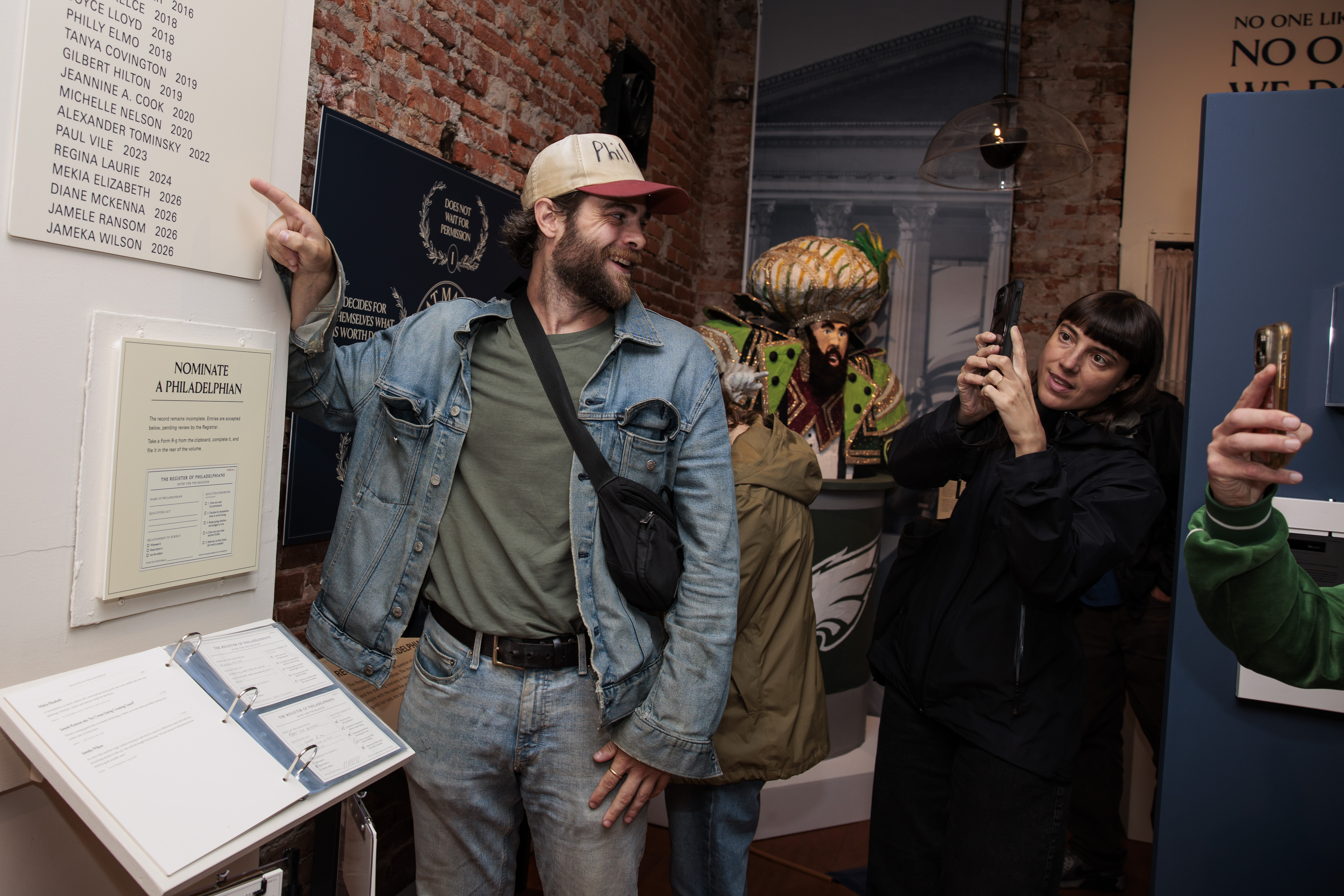
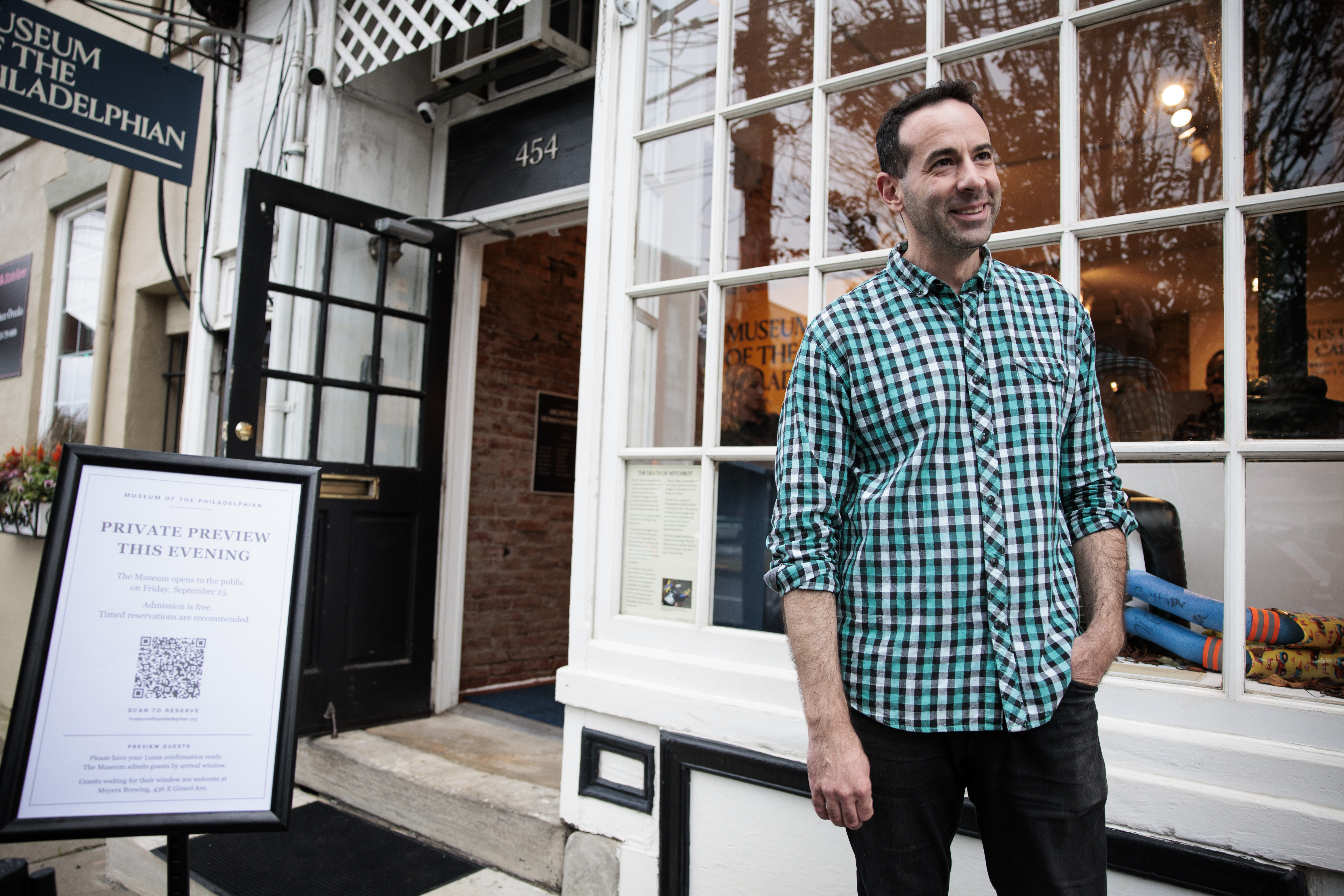
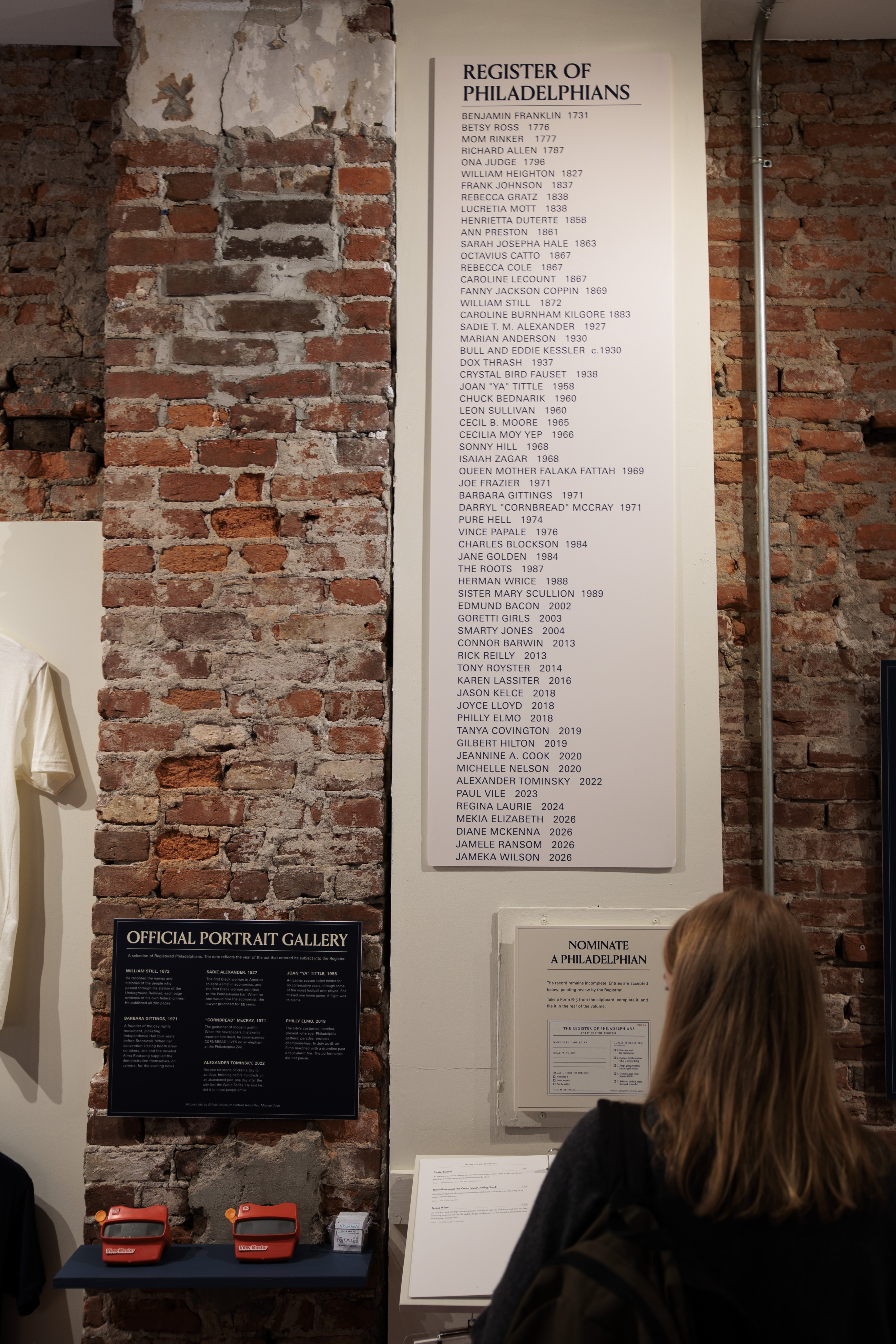
Alexander “Chicken Man” Tominsky walked into the Museum of the Philadelphian in a Canadian tuxedo and a baseball hat with “Phillies” written on it in marker on Tuesday and was blown away to find his name on a plaque alongside other local legends like Benjamin Franklin and Philly Elmo.
“No way! Oh my gracious! Who would have known when I was a little kid crying in my pillow something like this would happen,” he said, pointing to his name.
Tominsky — who became renowned throughout the land in 2022 for eating 40 rotisserie chickens in 40 days, culminating with a public noshing of a chicken on an abandoned Walmart pier in South Philly — was invited to a preview opening for the museum by its founder and creator, Brian Adoff.
Founder and creator Brian Adoff outside his Museum of the Philadelphian in Fishtown.Monica Herndon / Staff Photographer
“The museum is about the personality and attitude and conduct of Philadelphians,” Adoff said. “My personal hope is that you leave inspired to really be the best version of yourself, the best Philadelphian you can be.”
Located in a 300-square-foot storefront that was previously Adoff’s office on East Girard Avenue in Fishtown, the free, temporary “micro museum” is just down the road from another Philly landmark — the “I Hate Bank of America” sign. The large, yellow banner was put up by a homeowner in 2007, after the bank branch across the street ticked him off. The branch closed many years ago, but the sign remains, a grand tribute to Philadelphians’ spite.
View on Threads
What makes Philadelphians this way? And what makes it so oddly endearing? These are questions Adoff explores in his absurd and unexpectedly heartwarming museum, which opens Friday.
“There’s an emotional narrative arc the museum takes in its 300 square feet, where it ends with literally a book of Philadelphians who exhibit five qualities that I’ve determined, with my crack team of curatorial advisers, that make up a Philadelphian,” Adoff said.
As of a student of the Philadelphian who’s written hundreds of profiles of the everyday people who make me love this city more every day, I thought Adoff had set a lofty goal for himself when we first met earlier this month. How do you distill what it means to be a Philadelphian in 300 square feet? And how do you decide who makes the cut?
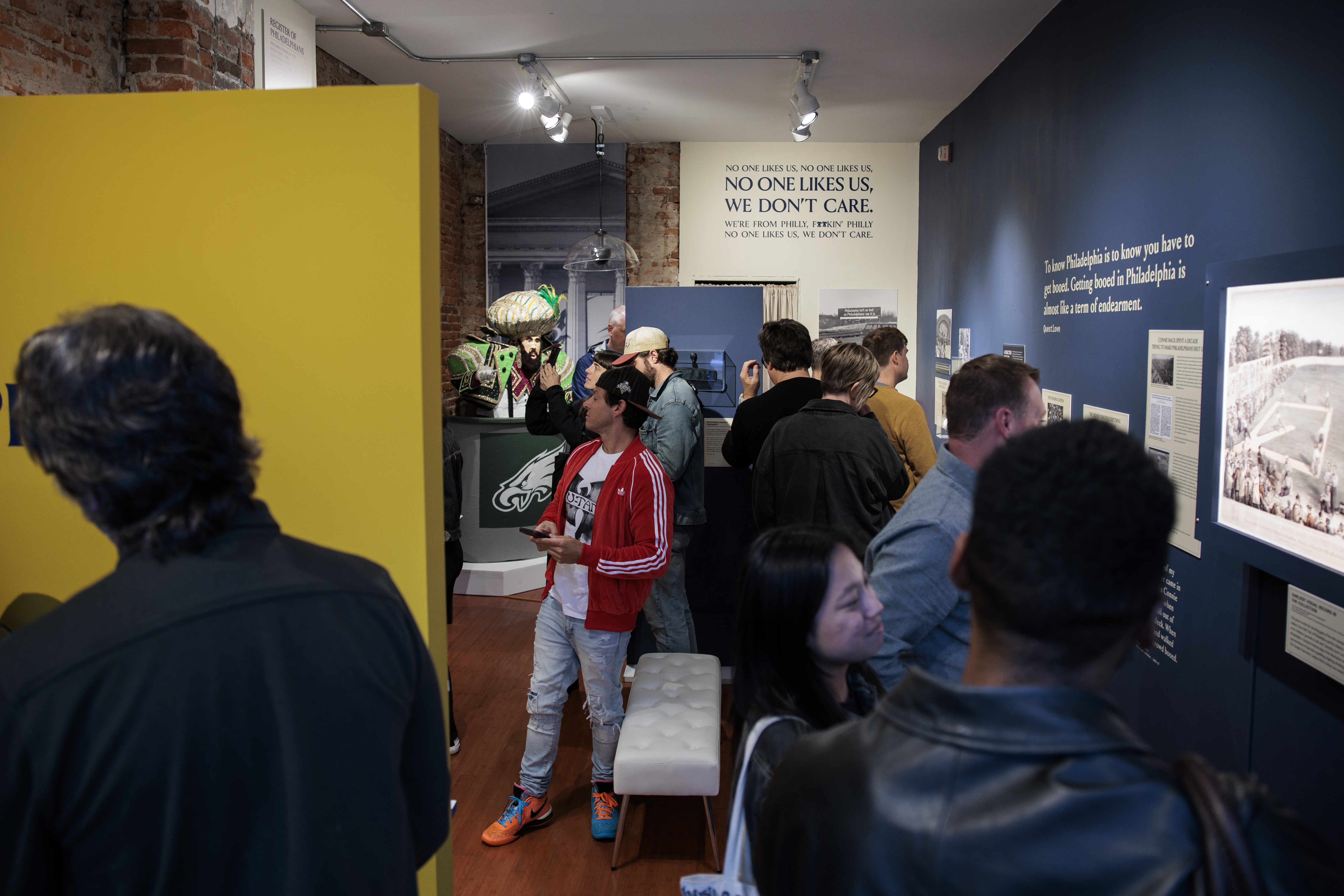
At the preview Tuesday, I was pleased to find that over the course of about 20 exhibits in the space, Adoff skillfully addresses the Santa-hating-battery-throwing-robot-killing tropes that haunt Philadelphians, while also getting to the oddly-touching truths behind those, and other very Philly stories.
Visitors browse the Museum of the Philadelphian.Monica Herndon / Staff Photographer
And while Adoff and his team have compiled a “Register of Philadelphians” with more than 50 names and stories of local folk heroes who epitomize what it means to be a Philadelphian, their best decision may have been to include cards for visitors to nominate their own quintessential Philadelphian. Because if one thing is certain, Philly is going to have thoughts.
Grease the pole
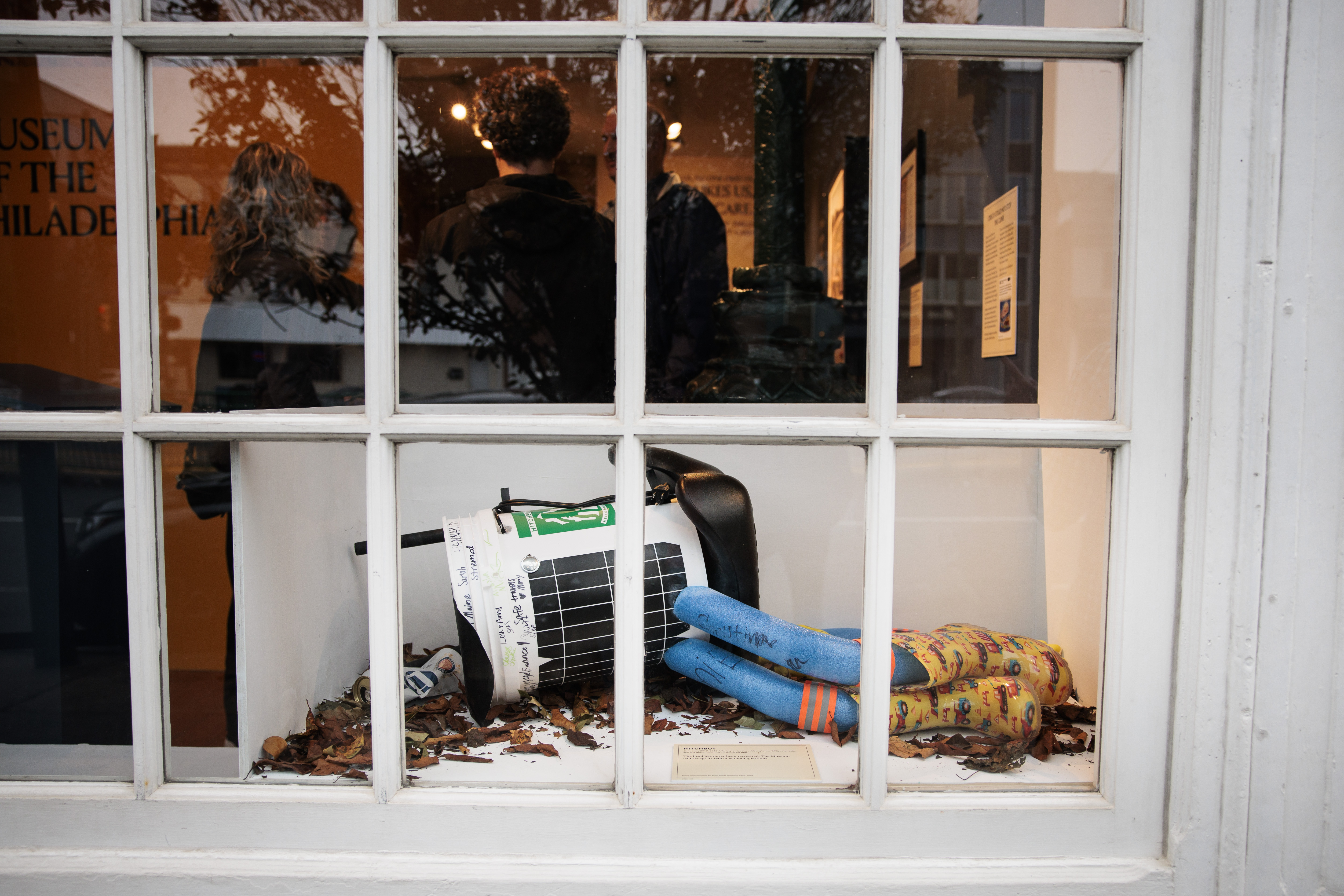
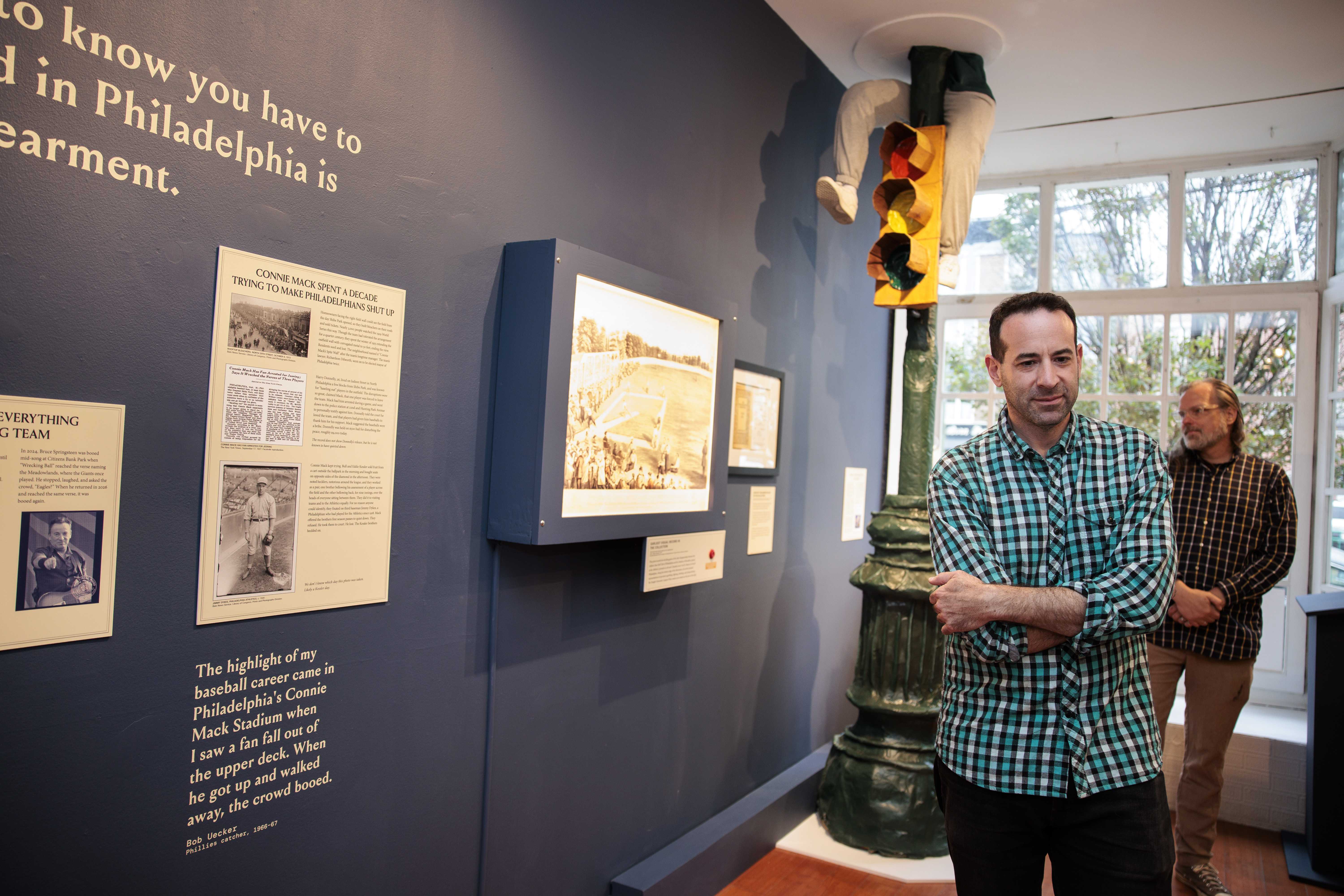
Guests are greeted in the museum’s front window by a re-creation of the death of hitchBOT, the hitchhiking Canadian robot who traveled across the country on human kindness, only to be dismembered and beheaded in Philly. In the accompanying plaque, Adoff notes that Philadelphians offered to rebuild the robot, and that a Philly police detective jokingly blamed the crime on New Jerseyans.
A re-creation of the death of hitchBOT is displayed in the front window of the Museum of the Philadelphian.Monica Herndon / Staff Photographer
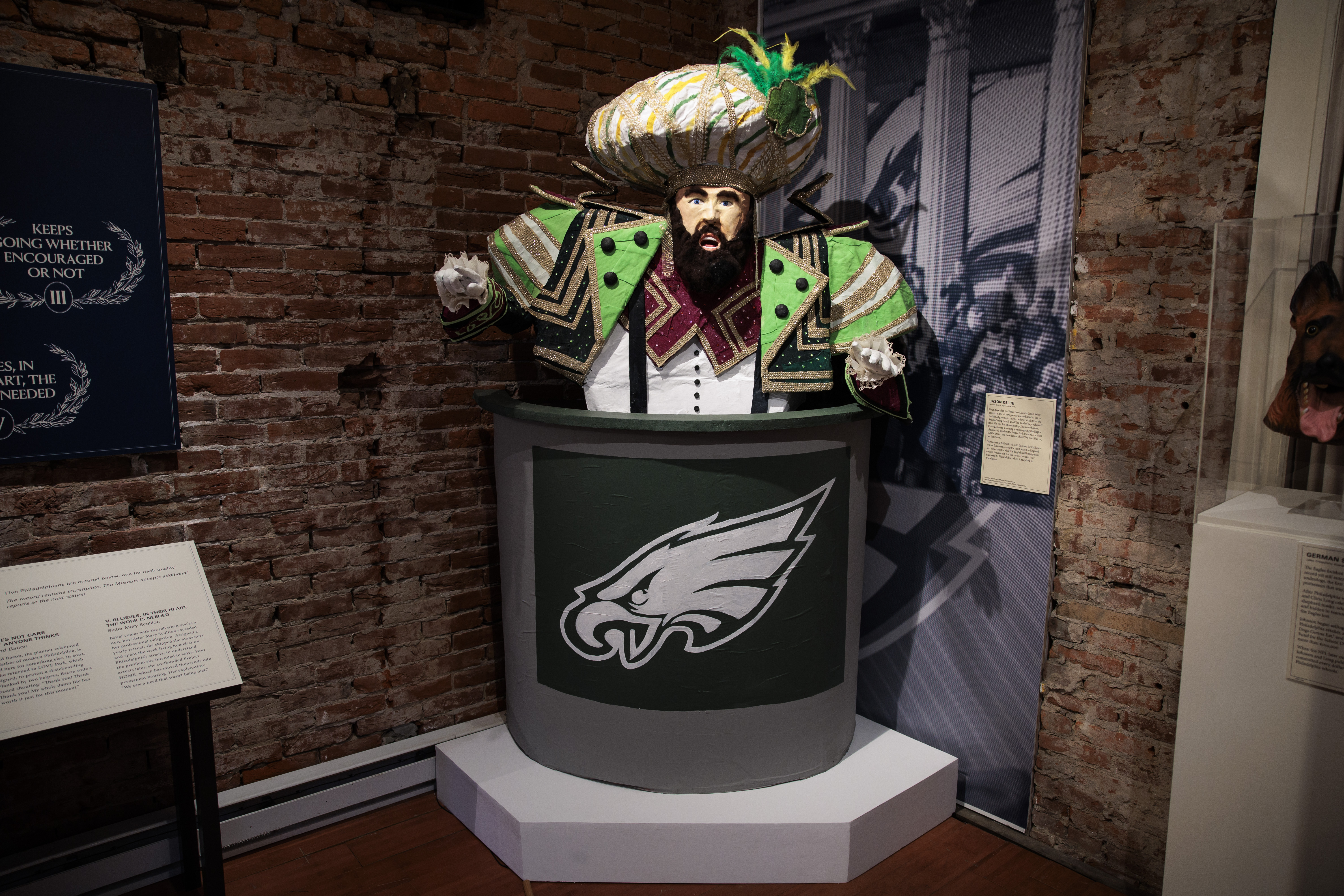
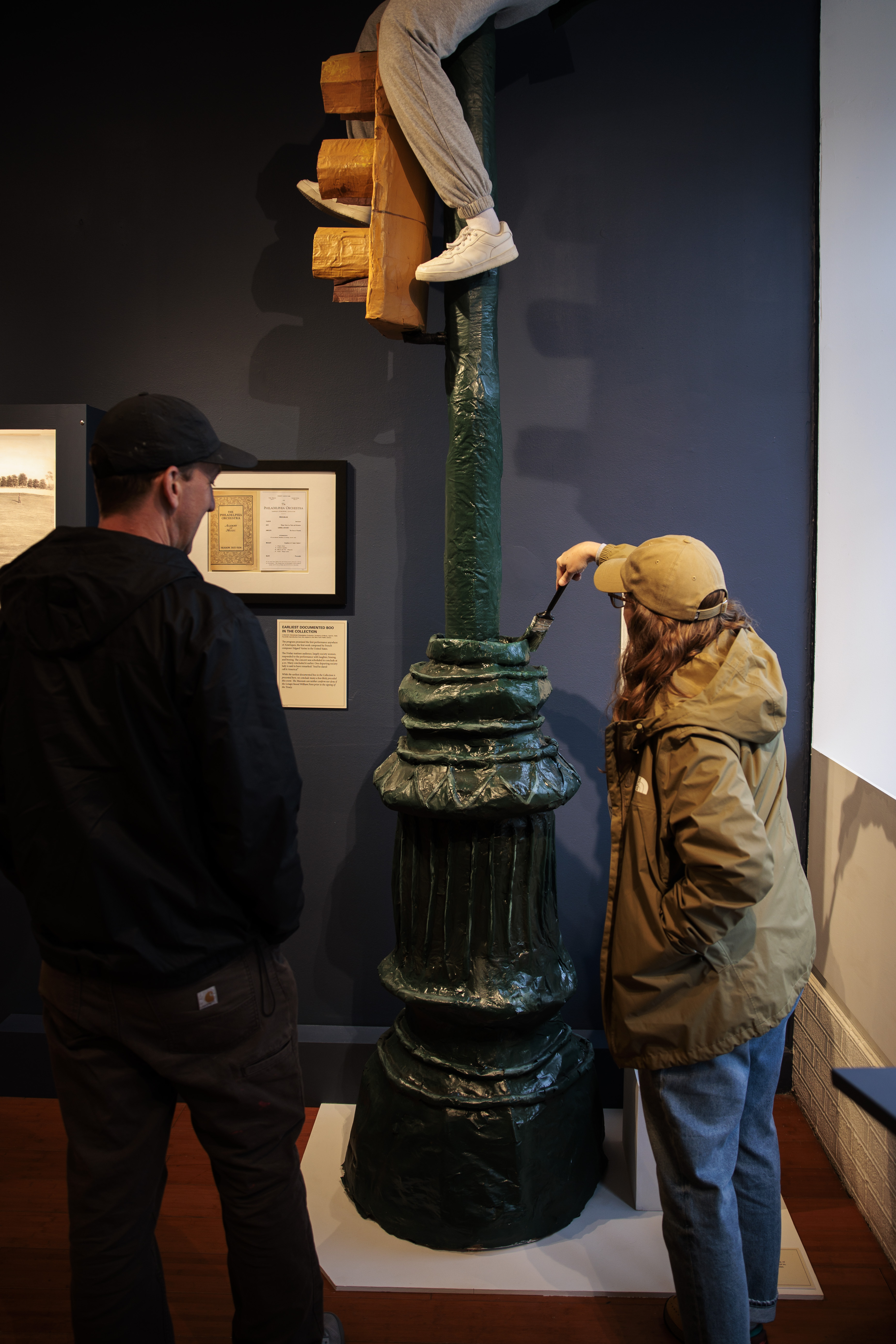
Once inside the museum, two large papier-mâché sculptures immediately catch the eye — one, of a Philadelphian climbing a greased pole, and the other of Jason Kelce during his Eagles Super Bowl speech. In the first, guests are invited to “grease the pole” with a paintbrush and clear goo from a nearby can (you know I did it!), and at the latter, visitors can stand under a sound dome (fancy!) in front of the sculpture to hear Kelce’s “Hungry Dogs” speech.
A papier-mâché sculpture of Jason Kelce during his 2018 Eagles Super Bowl speech is featured in the Museum of the Philadelphian.Monica Herndon / Staff Photographer
In the center of the room is a freestanding wall with a rearview mirror on it. The accompanying plaque tells the story of Ted Passon, whose parked car was flipped in the aftermath of the Phillies 2008 World Series win. Passon created a blog asking Philadelphians who enjoyed the spectacle to help pay for his vehicle, and through the generosity of donors, he was able to get a new car and give $3,000 to someone else whose car was flipped. On an iPad at the exhibit, visitors can play a YouTube video of the flipping and read Passon’s blog.
I remembered the story well because I interviewed Passon about it in 2008. Seeing him at the event Tuesday was a full-circle Philly moment for both of us. Passon, who’s now an Emmy Award-winning documentarian, said he was happy to loan the mirror of the vehicle Philly claimed from him to the museum.
“It’s an honor to be included in the story of Philadelphia,” he said. “If I can be a footnote in the city’s history, I did something right in my life.”
‘Booing is my love language’
Other exhibits explore Philadelphians’ history with booing, our history of throwing things, and the five qualities Adoff and his team have decided make a Philadelphian, with number one being, “Does not wait for permission.”
The “Register of Philadelphians” on the wall and accompanying book begins in 1731 with Benjamin Franklin and ends this year, with Jameka Wilson, the woman who went viral for her TV interview about kicking a man in a Chucky mask who was terrorizing pedestrians.
The Register of Philadelphians features notable Philadelphians ranging from Ben Franklin to Jameka Wilson. To the left of the register is the museum’s official portrait gallery, which can be seen through two ViewMasters. Monica Herndon / Staff Photographer
I was excited to see a couple people I’ve written about on the list, including Paul “Jelloman” Vile and the late Gilbert Hilton, who turned heads across the city for years in his “Badillac” car, which was covered in items from Goodwill, and who was one of the most Philly people I’ve ever met.
There’s also a portrait gallery by the Rev. Michael Alan of seven Philadelphians in the register that can only be seen through an old-school ViewMaster, which were a hit with the crowd.
“It was a small space and this was a way to make something look bigger without being bigger,” Alan said.
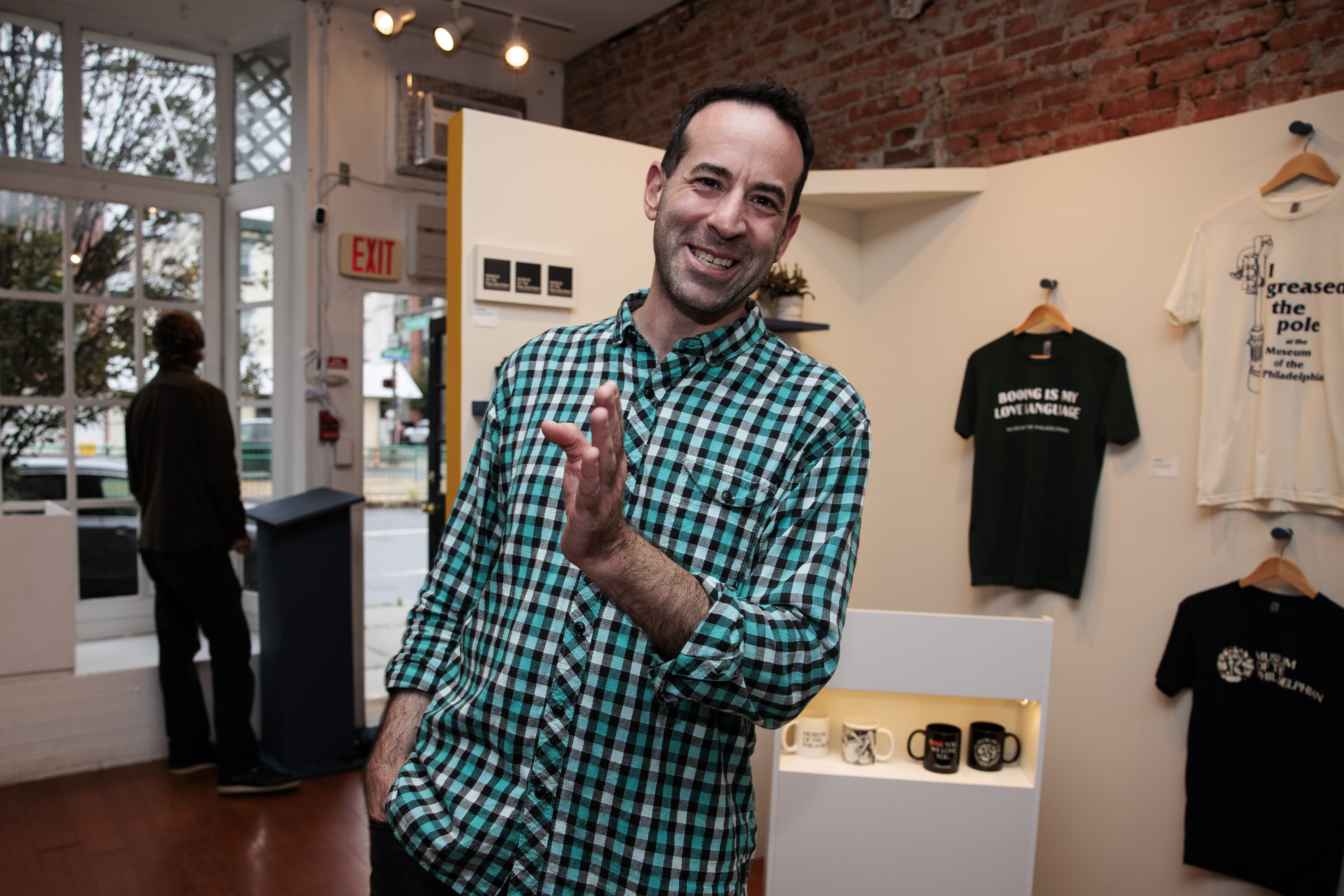
Creator and founder Brian Adoff talks about the Museum of the Philadelphian in front of the museum’s gift shop. Monica Herndon / Staff Photographer
The tiny museum even has a gift shop with shirts that say “I greased the pole at the Museum of the Philadelphian” and bumper stickers that read “Booing is my love language.”
‘The most Philadelphian thing’
The museum was funded by Adoff through his experience design studio, Architects of Human Connection, and admission is free because he believes “the Philadelphian has paid enough.”
The museum is a culmination of Adoff’s many endeavors over the years, from music, clowning, absurdist theater, and working as a tour guide for the Greater Philadelphia Film Office, to managing a software business and, most recently, creating events that connect Philadelphians.
In 2023, he cofounded the Fishtown Choir,and last year, Adoff created Join Philly, which connects Philadelphians with area clubs and groups.
The idea for the museum came to Adoff in June, as he was trying to think of uses for his storefront office space. With the help of five paid collaborators, Adoff built the museum in less than three months, which is impressive, given the amount of research that clearly went into the exhibits, plaques, and bios.
“It started kind of absurd and silly until I was like, ‘Oh, this is just like everything else I do. It matters and it actually has heart and it has meaning,” he said.
Brian Adoff in the Museum of the Philadelphian he created in Fishtown. Monica Herndon / Staff Photographer
Here’s the potentially scandalous thing — Adoff isn’t a Philly native. He’s originally from Long Island, moved to Cherry Hill as a kid, and came to Philly to attend the University of Arts. He spent time in Chicago then returned to Fishtown 20 years ago, where now lives with his wife and son.
Knowing how nativist Philly can be (my native colleagues said transplants can “never” say they’re from Philly if they moved after the age of 13), I had to ask Adoff what gave him the gall to open the museum.
“Because I express the qualities that make a Philadelphian,” he said.
“But you decided those qualities, right?” I asked. (They are: 1. Does not wait for permission 2. Decides for themselves what is worth doing 3. Keeps going whether encouraged or not 4. Does not care what anyone thinks 5. Believes, in their heart, the work is needed).
“Yes, which is the most Philadelphian thing I could have done,” he said.
Adoff wants people to leave his museum feeling as inspired as he did after watching the opening of the Obama Presidential Center on TV. He dreams of Rob Mac narrating an audio tour of the exhibit, like Steve Buscemi does for Eastern State Penitentiary. And his longterm goal is to open a more universal experience one day — a fart museum. Everybody isn’t lucky enough to be a Philadelphian, but everyone farts.
I imagine Benjamin Franklin, a fellow Philly transplant who once wrote a satirical essay about flatulence, would think that’s a gas.
Darrin Rowland (left), and Leslye Rowland grease the pole sculpture at the Museum of the Philadelphian on Tuesday. Monica Herndon / Staff Photographer
Know before you go
The museum, 454 E. Girard Ave., is open Fridays (5 to 8 p.m.), Saturdays (noon to 5 p.m.), and Sundays (noon to 5 p.m.) Sept. 25 through Nov. 1.
Admission is free, but timed reservations online are recommended. Opening night is already booked and only a few spots remain for this weekend.
Like Philadelphia, there is a lack of public bathrooms at the museum, in that there are none.
The museum is wheelchair accessible via a temporary ramp. Email visit@museumofthephiladelphian.org prior to visiting so staff can have the ramp ready.
All ages are welcome, but some exhibits do include profanity.
The Phillies kick off a four-game series with the New York Mets Thursday, but fans will need to do a bit of channel surfing to catch all the games.
Thursday night’s game will air on Fox beginning at 7:15 p.m., with Kenny Albert and Tom Verducci calling all the action. Ken Rosenthal will report from Citi Field.
Aaron Nola (6-10, 4.69 ERA) is scheduled to take the mound for the Phillies. Nola hasn’t allowed more than three runs in a start since way back on July 22, when he gave up five to the Los Angeles Dodgers. He’ll face Mets rookie Nolan McLean (11-9, 3.24 ERA), who gave up just two hits and struck out 10 in a win against the Phillies on July 19.
On Friday, the Phillies jump off TV and onto streaming for their final appearance on Apple TV’s Friday Night Baseball this season. First pitch is scheduled for 7:10 p.m., with Alex Faust and Ryan Spilborghs on the call and Tricia Whitaker reporting from the stadium.
Apple TV also has its own pregame show hosted by Sierra Santos alongside former outfielder Chris Young and MLB insider Russell Dorsey.
It’s the fifth season of Apple TV’s seven-year, $595 million deal with MLB, which runs through the 2028 season. Over that time, the cost has nearly doubled from $6.99 to $12.99 a month.
While Apple TV’s exclusive games remain an annoyance for baseball fans without the streaming service, they do come with one important perk — the ability to switch the audio feed over to 94.1 WIP and Scott Franzke and Kevin Stocker calls.
The quality of Apple TV’s broadcast is also generally very good, with crystal-clear footage and minimalist graphics (though the constant probabilities and live gambling updates become a bit annoying).
Scott Franzke (left) and Ruben Amaro, Jr. will call the final two games of the Phillies-Mets series on NBC Sports Philadelphia. NBC Sports Philadelphia
The final two games of the Phillies-Mets series will be back on NBC Sports Philadelphia Saturday or Sunday. With Tom McCarthy calling Sunday’s NFL matchup between the Cleveland Browns and Tampa Bay Buccaneers on CBS, it’ll be Franzke calling the games alongside former Phillies general manager turned announcer Rubén Amaro Jr.
John Kruk will be back Tuesday along with McCarthy to call the Phillies’ series against the Milwaukee Brewers, the second-to-last of the season. And World Series MVP-turned-broadcaster Cole Hamels will be back in the booth for the final Phillies game of the season on Sept. 27 against the Tampa Bay Rays.
Phillies playoff picture
NL East standings
window.addEventListener(“message”,function(a){if(void 0!==a.data[“datawrapper-height”]){var e=document.querySelectorAll(“iframe”);for(var t in a.data[“datawrapper-height”])for(var r,i=0;r=e[i];i++)if(r.contentWindow===a.source){var d=a.data[“datawrapper-height”][t]+”px”;r.style.height=d}}});
There was a moment where it seemed like the Phillies might overtake the Braves in the standings. But after dropping two of three against Atlanta last weekend, the Phillies’ chances of winning the National League East appear distant as best.
The Phillies enter Thursday’s series opener against the Mets 4½ games behind the Braves with 10 remaining. Atlanta faces the AL West-leading Houston Astros this weekend, but finish the season against the lowly Cincinnati Reds and Miami Marlins. An epic collapse along the lines of the 1964 Phillies — who blew a 6½ game lead with 12 remaining — doesn’t seem likely.
NL wild-card standings
window.addEventListener(“message”,function(a){if(void 0!==a.data[“datawrapper-height”]){var e=document.querySelectorAll(“iframe”);for(var t in a.data[“datawrapper-height”])for(var r,i=0;r=e[i];i++)if(r.contentWindow===a.source){var d=a.data[“datawrapper-height”][t]+”px”;r.style.height=d}}});
If the season ended Tuesday, the Phillies would end up in the second wild-card spot, meaning they’d travel to Chicago for a three-game series against the Cubs.
The good news is the Phillies are just a half-game down from the top wild-card spot entering Thursday. Overtaking the Cubs would move that three-game series to Citizens Bank Park.
The bad news is the Cubs, who are off Thursday, own the tiebreaker against the Phillies. Chicago kicks off a three-game series against the Reds Friday before finishing the season with series against the Marlins and Boston Red Sox.
The MLB playoffs begin Sept. 29 and will air on NBC.
Phillies magic number
That is the combined total of Phillies’ wins and/or losses by the teams on the outside looking in that are needed to secure at least the third wild-card berth and a spot in the playoffs.
As Philly guys go, the Phanatic is one suave dude. His gyrating belly, chameleonlike tongue, and ability to burn our opponents without uttering a single word have charmed generations of Philadelphians.
Now, this smoothie operator has a smoothie all his own and it tastes like the tears of our rivals — sweet, salty, and delicious.
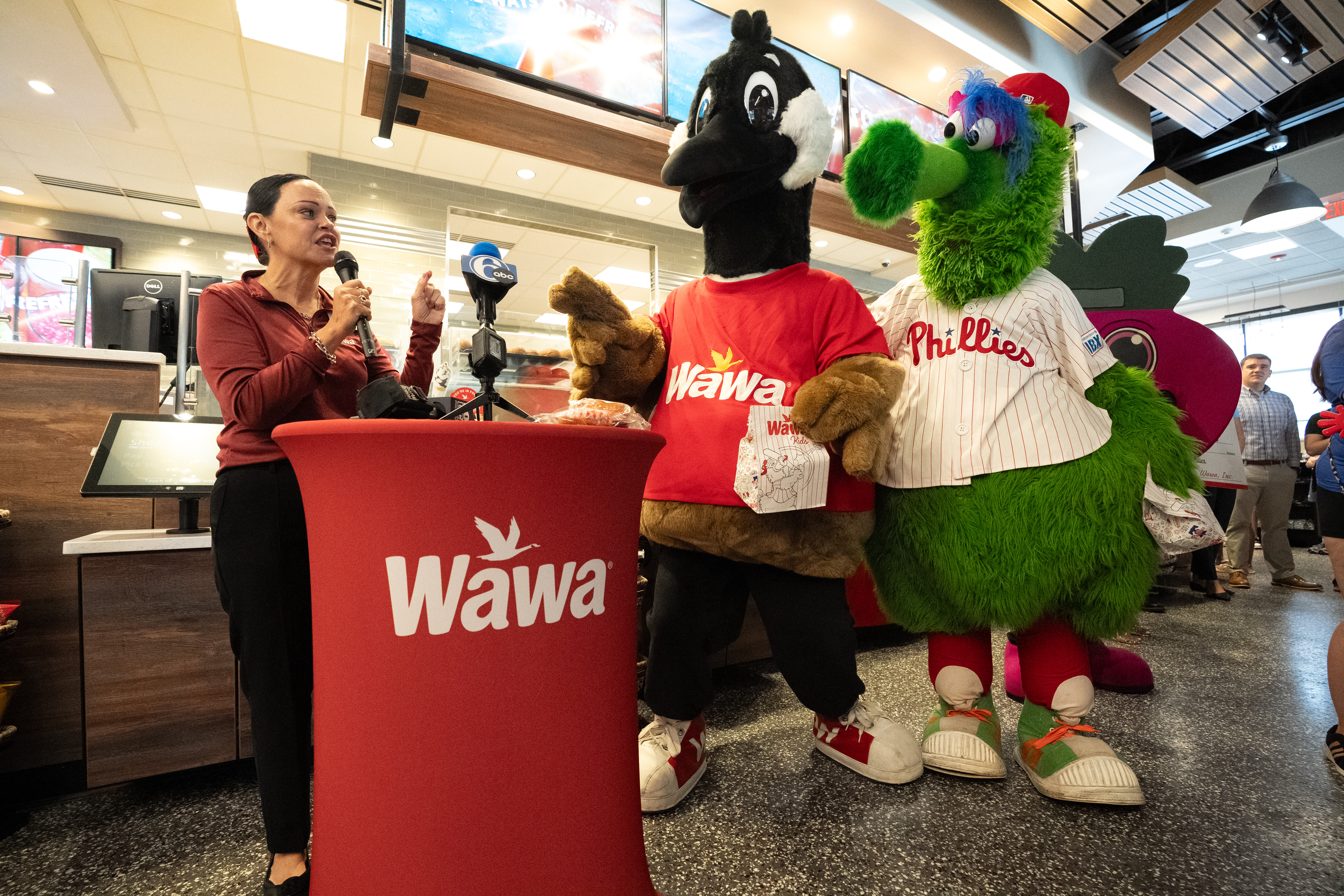
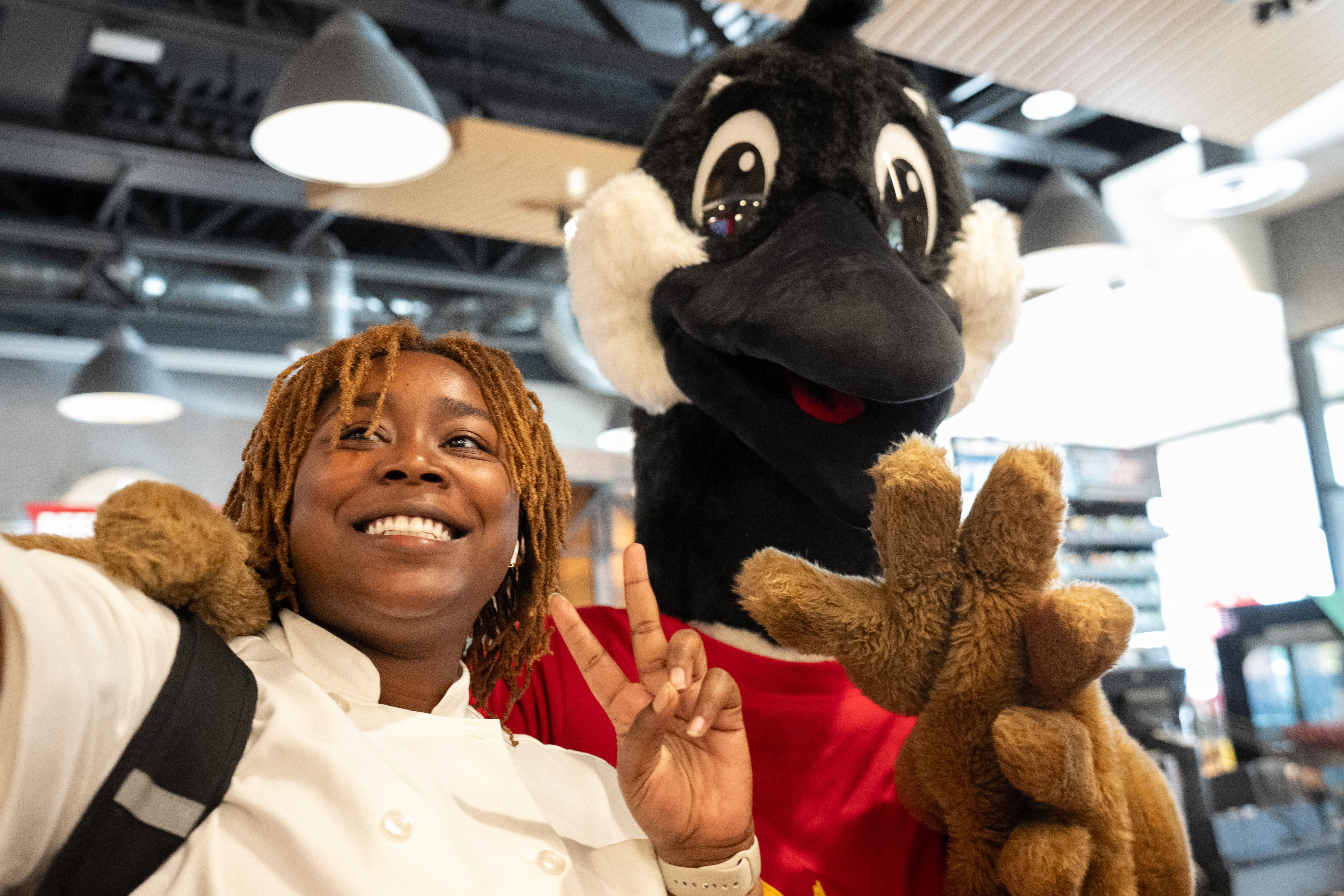
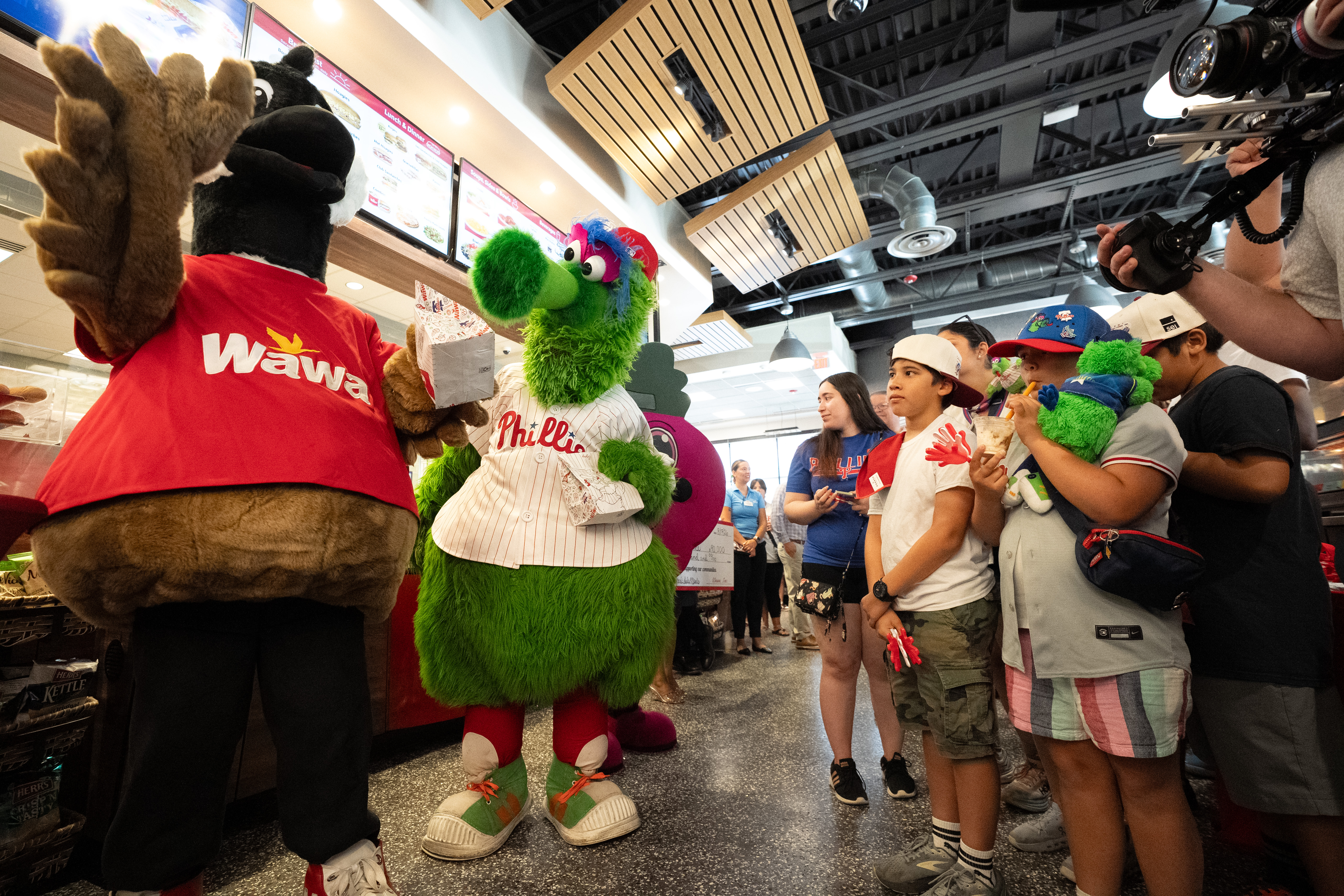
Kim Rodriguez, Wawa manager, along with the Wawa mascot Wally Goose and the Phillie Phanatic in Philadelphia on Aug. 17, 2026.Jessica Griffin / Staff Photographer
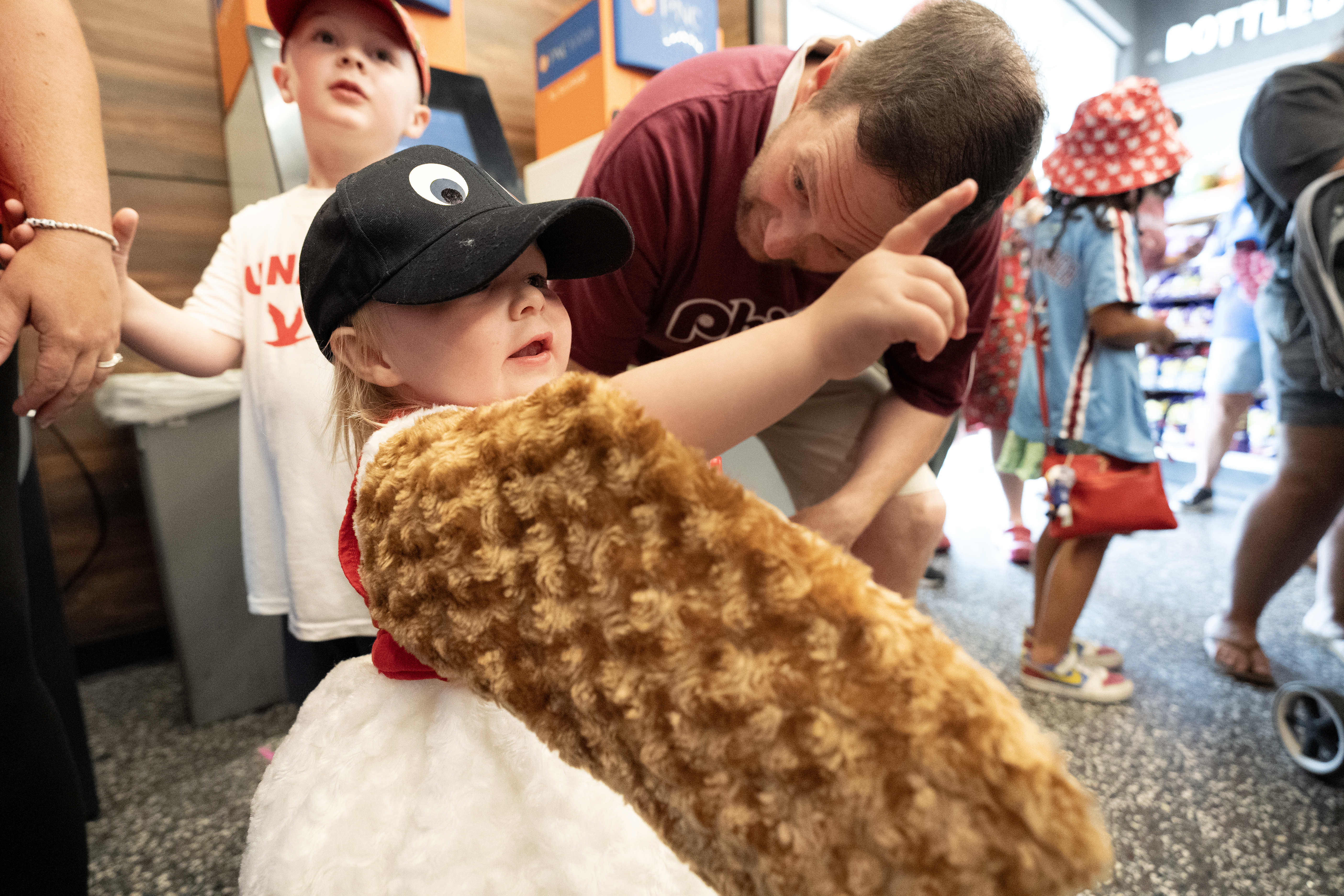
Wawa debuted its new, limited-edition Phanatic Caramel Curveball Cream Smoothie during an event at the chain’s Penrose Avenue store Monday that was part news conference, part pep rally, and perfectly preposterous.
Fans packed the store — for what, they weren’t exactly sure — they just knew it would be a chance to “hang with the Phillie Phanatic and Wally Goose,” according to Wawa’s Facebook page for the event.
The two-birds-one-store offer was enough to bring out a flock of more than 75 people dressed in Phillies, Phanatic, and Wawa gear, including sisters Elizabeth and Jennifer Bertolet of Doylestown. They arrived 90 minutes before the event and decided that whatever was about to happen, it was “going to be awesome.”
“Wally is going to be here and the Phanatic is going to be here. Why wouldn’t we be here?” Elizabeth Bertolet said.
Maggie McNulty, who is dressed as Wally Goose, and her father, Glenn McNulty, attend an event at Wawa’s Penrose Avenue store celebrating the partnership between the Phillies and Wawa. Jessica Griffin / Staff Photographer
Justin Tichy, chief operations officer for Wawa, announced during his remarks that the smoothie is part of a new partnership between Philly’s hometown baseball team and its hometown convenience store.
Fans at Friday’s Phillies’ game against the St. Louis Cardinals will receive a Wawa Kyle Schwarber bobblehead, samples of the Phanatic smoothie, and a chance to see Wally Goose throw out the first ceremonial pitch.
When asked how he’s feeling about taking the mound, Wally shuddered with nervous energy then practiced his pitching wing.
She Willians, of Job Corps culinary, and the Wawa mascot Wally Goose at Wawa’s Penrose Avenue store Monday. Jessica Griffin / Staff Photographer
Perhaps he’ll throw a curveball like Wawa did by not making its Phanatic smoothie green. A source said it’s because the Phanatic is unlikely to put anything green in his smoothie, which 100% tracks. You don’t get that bouncy belly by drinking kale.
When asked what he thought about the new drink bearing his name, the Phanatic raised his arms overhead then circled his belly around in approval.
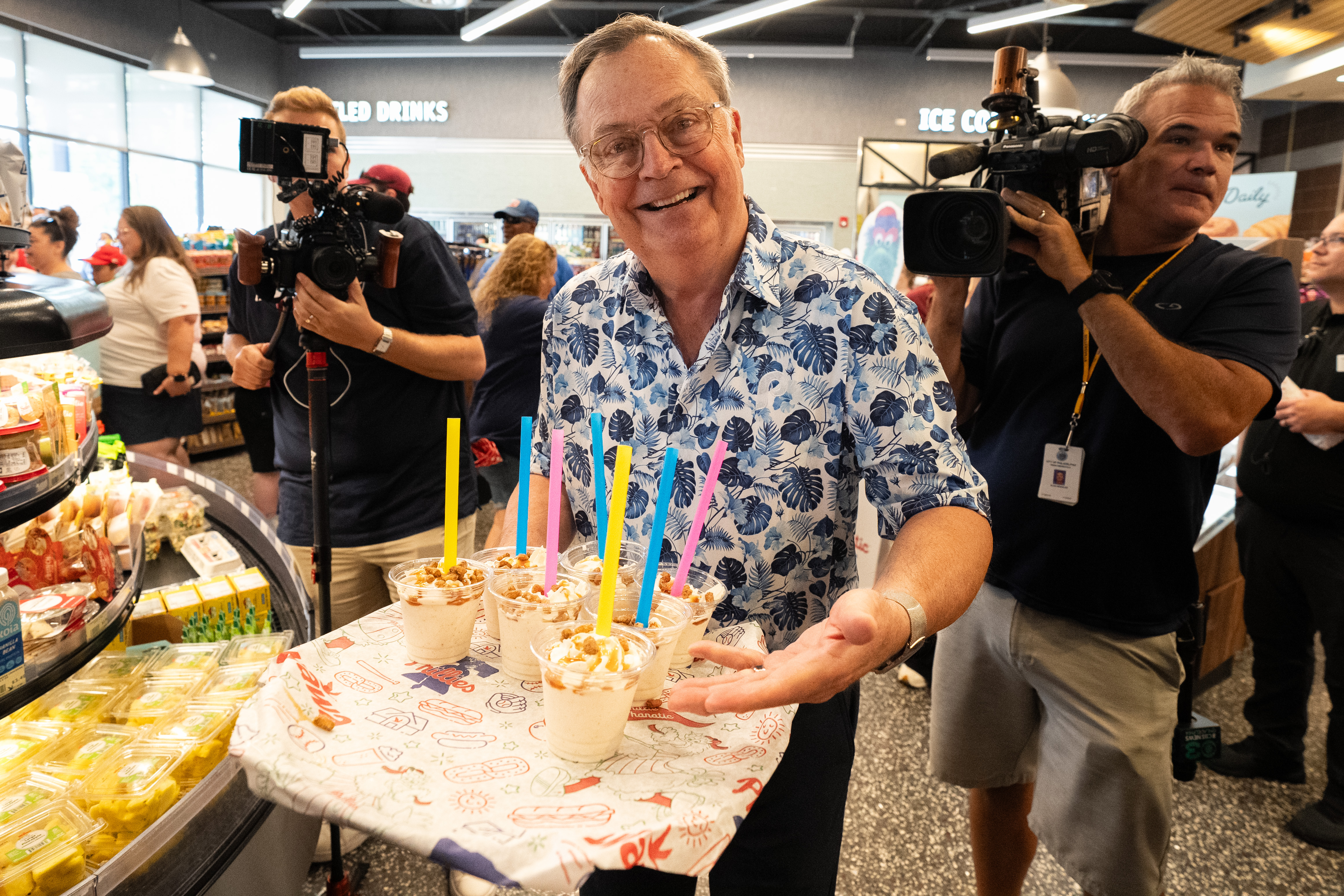
The smoothie is made with vanilla ice cream, caramel sauce, whipped cream, salted caramel syrup, and sea salt pretzel pieces. It comes in a limited-edition cup featuring the Phanatic’s eyes and the tip of his snout and it only comes in one size — phanatically large — clocking in at 970 calories.
Zack Sminkey of Woodstown, N.J., who wore a matching red shirt-and-shorts combo featuring repeating patterns of the Phanatic, brought his 7-year-old daughter Zoe to the event. Both approved of the new smoothie in the big green guy’s honor.
“It’s really good. It’s very ballpark-tasting,” Sminkey said. “I almost feel like it tastes like Cracker Jacks. It’s delicious.”
Jennifer Bertolet described it another way as she and her sister toasted their free samples of smoothie.
“It tastes like World Series win with a sprinkling of Mets tears,” she said.
Phillies ambassador Scott Palmer with a tray of new Wawa limited-edition Phanatic Caramel Curveball Cream Smoothies.Jessica Griffin / Staff Photographer
When Wawa released a limited-edition Gritty Smoothie in the spring in honor of Philly’s prince of chaos, it was only a matter of time before the OG mascot king got one of his own, too.
The partnership between Wawa and the Phillies solidified Wawa as the team’s official hoagie in June. Wawa hoagies now come wrapped in Phillies-themed paper, and the chain is selling red-and-white striped Phillies doughnuts and Phillies-themed kids meals, which come with stickers of the Phanatic and Wally Goose. A portion of the proceeds from the kids meals go to Philabundance.
In turn, Wawa has an increased presence at Citizens Bank Park with new advertising and ballpark activations.
Wally Goose and the Phillie Phanatic represent Wawa and the Phillies at a news conference on Monday about their recently-announced partnership. Jessica Griffin / Staff Photographer
But the Phillies and Wawa were in a situationship long before they made things official this summer. Whenever the Phillies make the playoffs, Wawa brings back its Kyle Schwarber-themed Schwarberfest, a Hoagiefest spinoff featuring discounted hoagies. And in 2024, Bryce Harper was fined by MLB for showing his love for the chain by wearing custom-made Wawa cleats and a headband during a game.
The Phillies and Wawa collaborations, including the Phanatic smoothie, will be available at stores in the region through Sept. 28.
No word on if the offers will be extended in the event of a Red October.
Today while interviewing a woman inside of a Wawa whose baby was dressed like Wally Goose, I was surprise-attacked from behind by the Phanatic, who put me inside of his shirt.
That is a sentence only a Philly journalist could write – and believe and live through.
Booker Rowe, 85, of Philadelphia, award-winning violinist, the first Black musician to play with the Philadelphia Orchestra and the Nashville Symphony String Quartet, the second permanent full-time Black player in the Philadelphia Orchestra, teacher, mentor, and role model, died Friday, July 31, of complications from pneumonia and sepsis at Jefferson Abington Hospital.
A lifelong musician — he played piano at age 5 and violin at 11 — Mr. Rowe was invited by famed music director Eugene Ormandy in 1968 to become the first Black musician to perform with the Philadelphia Orchestra. He was a substitute violin during most of the 1968-69 season and returned for good in 1971 as the orchestra’s second Black permanent full-time member.
Mr. Rowe stayed for 49 years.
“My first day, I came in late from New York, and the orchestra was already rehearsing, and I sat myself down on the last stand to play,” Mr. Rowe told The Inquirer’s Peter Dobrin in 2020. “The sound was amazing. It was like stereo all around me. The stage was slanted down, and when the brass and winds would play I had to brace myself with my right leg from being blown off stage. It was just so beautiful.”
For five decades, until his retirement in 2020, Mr. Rowe played with half a dozen elite conductors and traveled the world in the orchestra’s second violin section. He and his colleagues gave thousands of memorable performances at the Academy of Music, the Kimmel Center, and the Mann Center in Philadelphia, Carnegie Hall and the Lincoln Center in New York, and the Saratoga Performing Arts Center in Saratoga Springs, N.Y.
They played at the 1993 World Series at Veterans Stadium, for Pope Francis in 2015, and at the Vail Music Festival in Colorado. They played in Europe, South America, Asia, and elsewhere around the world.
This photo of Mr. Rowe (left) appeared in the Daily News in 1993Newspapers.com
In 1973, the orchestra made a historic 10-day, five-concert cultural exchange tour in China, and Mr. Rowe told the Daily News afterward that he visited a commune and returned with Chinese instruments. In 2008, he mingled with former Secretary of State Alexander Haig and other international notables after a concert in Beijing.
In 2013, he posed for pictures with the Chinese welcoming contingent at Shanghai Airport. “Booker was such a kind soul, and his passion, his artistry, and his humanity are woven into who we are,” Yannick Nézet-Séguin, the orchestra’s music and artistic director, said in a tribute.
Ryan Fleur, the orchestra’s president and chief executive officer, said: “He was a warm and steadying presence in our orchestra.”
Born in Kentucky, Mr. Rowe and his family moved to North Philadelphia when he was 2. His father was a singer, and his mother played piano, and they “pushed me in the direction of classical music,” he told the Daily News in 1981.
He became concertmaster for the West Philadelphia High School orchestra, the All-City high school orchestra, and the old all-Eastern Conference college orchestra. He earned a bachelor’s degree in music at Temple University in 1963 and a master’s degree in music at Yale University in 1968.
Before Philadelphia, he played solo in New York and with symphony orchestras in Nashville, New Haven, Conn., and Washington. Later, he played with the old Symphony Club of Philadelphia, the Lansdowne Symphony Orchestra, and other local groups.
Mr. Rowe (left) stands with fellow musicians Andre Watts (center) and Renard Edwards.Courtesy of the family
He also got freelance gigs with Sammy Davis Jr., Isaac Hayes, Smokey Robinson, the Supremes, Barbra Streisand, Aretha Franklin, and other stars. He played with chamber music ensembles around the country and gave dozens of free concerts for children, churches, and community and scholarship fundraisers.
He championed racial and ethnic diversity, and was active with the Philadelphia Orchestra’s cultural diversity initiative. He sought and performed work by Black and other minority composers, and mentored dozens of colleagues and students.
He encountered at least one racist incident that first year in Philadelphia and told the Daily News in 1981: “The time was right for an Afro-American in the Philadelphia Orchestra. It was just a matter of finding somebody who was ready.”
Mr. Rowe and his family lived in Center City, East Mount Airy, and Germantown. Courtesy of the family
A friend said on Facebook: “His legacy and historical contributions are unparalleled.”
Mr. Rowe taught at Settlement Music School and gave private lessons. He earned music and service awards from City Council, the American Foundation for Negro Affairs, and other groups.
In 2019, he was asked to advise young musicians in a video interview for the Philadelphia Orchestra website, philorch.ensembleartsphilly.org. “Practice, practice, practice,” he said. “But also enjoy, enjoy, enjoy. Do it with love in your heart.”
Booker Taliaferro Washington Vance Rowe Jr. was born Dec. 10, 1940, in Lexington, Ky. In Philadelphia, he studied at the old Philadelphia Musical Academy and Settlement Music School, and his father worked at RCA Victor records in Camden. So their home was always filled with music.
Mr. Rowe (rear center) stands with Philadelphia Orchestra colleagues and members of the Chinese welcoming contingent in 2013.
Jan Regan / Philadelphia Orchestra
He met soprano Patsy Baxter at a Philadelphia Orchestra concert, and they married in 1970 and had a son, Landis, and a daughter, Vivian. They lived in Center City, East Mount Airy, and Germantown, and visited his family often back in Kentucky and Tennessee.
Mr. Rowe enjoyed puzzles, hiking and kayaking with his family, and tai chi. Friends noted his “kindness,” “million-dollar smile,” and “cheerful presence” in Facebook tributes.
ESPN went through another round of layoffs Tuesday, this time stemming from its purchase of the NFL Network.
The cuts targeted both on-air talent and behind-the-scenes employees, according to sources not authorized to speak publicly. The layoffs are part of wider cutbacks at Disney previewed in April by CEO Josh D’Amaro and a consolidation of employees at ESPN and the NFL Network.
In a note to staff Tuesday morning, ESPN chair Jimmy Pitaro said the company was forced to “make some difficult decisions about job impacts” stemming from the merger, and that the moves were intended to “best position us for the future.” Employees were being notified Tuesday, Pitaro said.
“While most of the job impacts are tied to the acquisition, we will also notify colleagues in other parts of the company today that their positions have been impacted,” Pitaro added.
ESPN declined to comment.
Longtime ESPN announcer Karl Ravech is among those reportedly being let go. Brett Davis, Brett Davis-Imagn I
Ravech had been with ESPN since 1993, covering baseball for more than three decades in a variety of roles, including as the voice of Sunday Night Baseball for four seasons. He had been slated to call the Little League World Series for ESPN next month.
NFL Network insider Tom Pelissero was also reportedly among the cuts. He’s been with the network since 2017 and is one of the network’s top insiders, along with Ian Rapoport and Philly native Mike Garafolo.
Rapoport signed a multiyear contract with ESPN in April.
ESPN also parted ways with former Carolina Panthers quarterback and NFL MVP Cam Newton, as first reported by Outkick’s Bobby Burack. Newton has been a frequent guest on First Take with Stephen A. Smith during the NFL season.
Longtime NFL Network analyst Charles Davis, best known for calling NFL games on Fox and CBS, was also let go, according to The Athletic. This fall he’ll replace Gary Danielson as CBS’s lead college football analyst on Big Ten games alongside Brad Nessler.
Other ESPN staffers reportedly let go were veteran SportsCenter anchor David Lloyd, sports injury analyst Stephania Bell, and ex-NFL linebacker Bart Scott, who cohosted an ESPN radio show in New York City with one-time 94.1 WIP host Chris Carlin.
Boxing and MMA reporter Andreas Hale and staff writer Dan Hajducky both announced their own layoffs on social media.
“I’ve been here before. Change is constant, but the outcomes are uncertain,” Hale wrote.
Ryan Clark pulled from live show
Ryan Clark was pulled off NFL Live Monday and informed he was being let go. Jay Biggerstaff, Jay Biggerstaff
Layoffs arrived early for Ryan Clark, the former NFL defender turned TV analyst who has been a star at ESPN for the past decade.
As first reported by The Athletic, Clark was taken off the air midway through NFL Live on Monday and informed he was being let go after reporters began inquiring about his status with the network.
In an Instagram post Tuesday morning, Clark described the incident as “madness.”
“My peace is with God, and my humility comes from within,” Clark wrote. “I’ll continue to build myself so the world can never strip me of what’s real.”
Clark joined ESPN in 2015 and has been a prominent personality across the network’s NFL programming and daytime shows, including Monday Night Countdown with former Eagles star Jason Kelce.
Longtime ESPN host Stephen A. Smith was particular upset by Ryan Clark’s ouster. Jerome Miron/Imagn
Longtime ESPN personality and First Take host Stephen A. Smith called it a “rough day” at the network.
While several regulars from his show were among the cuts, the one-time Inquirer columnist and reporter was particularly irked by Clark’s ouster. Smith described him as “arguably the best NFL analyst in America.”
“The bosses know I’m not happy about this decision. I’ve made that very, very clear,” Smith said Tuesday afternoon on his SiriusXM show Straight Shooter, adding later in the show, “Was I asked what I thought, what my feeling were? Yes, I was. And of course I said we have to keep him.”
Smith also spent time outlining all the cutbacks ESPN has gone through dating back to May 2013. A lot of familiar names were forced out the door in the past decade-plus, including Jeff Van Gundy, Jayson Stark, Todd McShay, Zach Lowe, and Ed Werder.
“This ain’t the days when ESPN could just hire and hire and hire some more without ever having to let go or lay off anybody,” Smith said. “Those days are long gone.”
ESPN purchased NFL Network and NFL Media in February in a deal valued between $2.5 billion and $3 billion. As part of the deal, all NFL Network staffers and personalities became ESPN employees, and the league took a 10% stake in the network.
NFL Network isn’t going anywhere, and will still have original programming, including Good Morning Football, and will broadcast a handful of NFL games.
It’s the second round of layoffs at ESPN in recent months. In the spring, about 30 behind-the-scenes staffers were let go as part of companywide layoffs that reportedly impacted around 1,000 employees.
As we speak, the last of FIFA’s traveling caravan has packed up, ready to move onto its next stop, while leaving American fans looking at the soccer landscape in this country, wondering why, with the wealth of raw athleticism we have here, couldn’t one of those two teams in Sunday’s final have been us?
Good news. Historically speaking, every World Cup spawns change. Bad news? When it comes to soccer, the United States has been historically bad at making the changes needed to make a stir. In 2026, emerging from the group stage shouldn’t be a hope — it should be the norm.
The change needed to push American soccer forward is not an easy fix. OK, well, it is, but it requires a dedicated strategy and a collective belief that development, not greed, needs to be at the forefront.
That investment begins at the grassroots level and comes in two main tiers: Investing heavily in identification and developing raw, untapped talent.
The other? Educating parents that there’s more to the game than striving to make the top club team in your area.
You could add a third — offering greater exposure to the game — but that topic sits on its own almost entirely when you consider the level of gatekeeping that exists, from broadcasting contracts going to cable and streaming services to the outrageous price points of tickets.
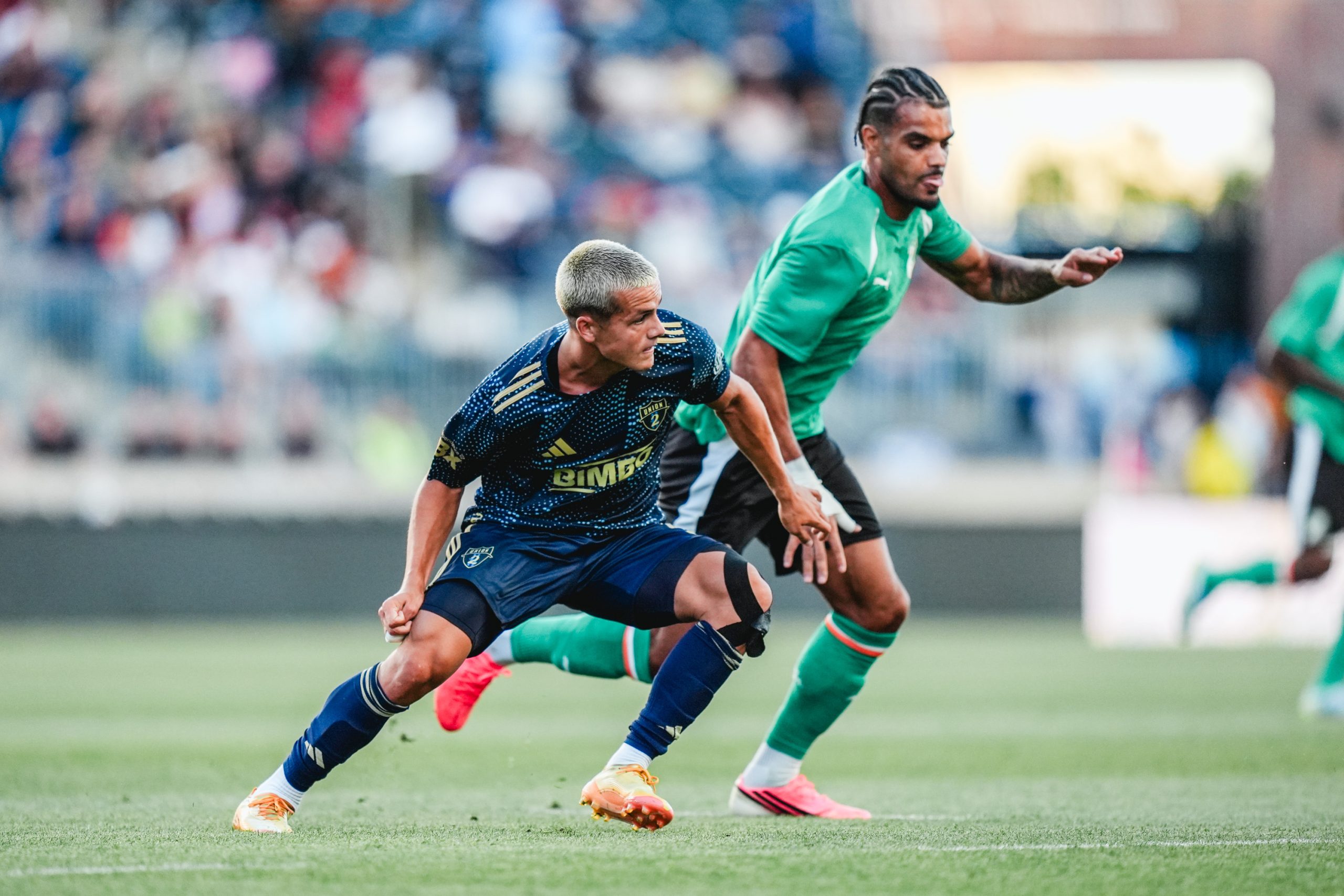
Cavan Sullivan (left) is an example of the type of player the U.S. could produce behind a deeper focus on development. Philadelphia Union
It already is in some states, like here, in what the Union is doing with youth development that spawns real American hopefuls (see: Cavan Sullivan). Undoubtedly, that last sentence ruffled a few feathers among the club soccer community.
If that’s the case from where you’re standing, well, therein lies the problem.
Recent history has shown that’s not always going to arrive via a traditional club model where parents are overspending, because at the starting-out level, they honestly don’t know any better. It’s not saying the model is all that ails when it comes to development, just that it can no longer be widely considered as a preeminent pathway for children as young as 5.
U.S. Soccer recognizes this. Just last week, it noted that in the aftermath of the national team’s round of 16 exit, it’s “trying to create a new system that then we’d make highly affordable. It’s a bold strategy that comes with a ton of roadblocks. The current model is not just fully ingrained into how we develop talent, but it makes a lot of people really rich off kids with a dream and parents with deep pockets.
But what would an argument be without a solution? Here are two.
Giving kids an opportunity to ignite a passion for soccer starts with making sure there are ample, unlocked places to play.Allie Ippolito / For The Inquirer
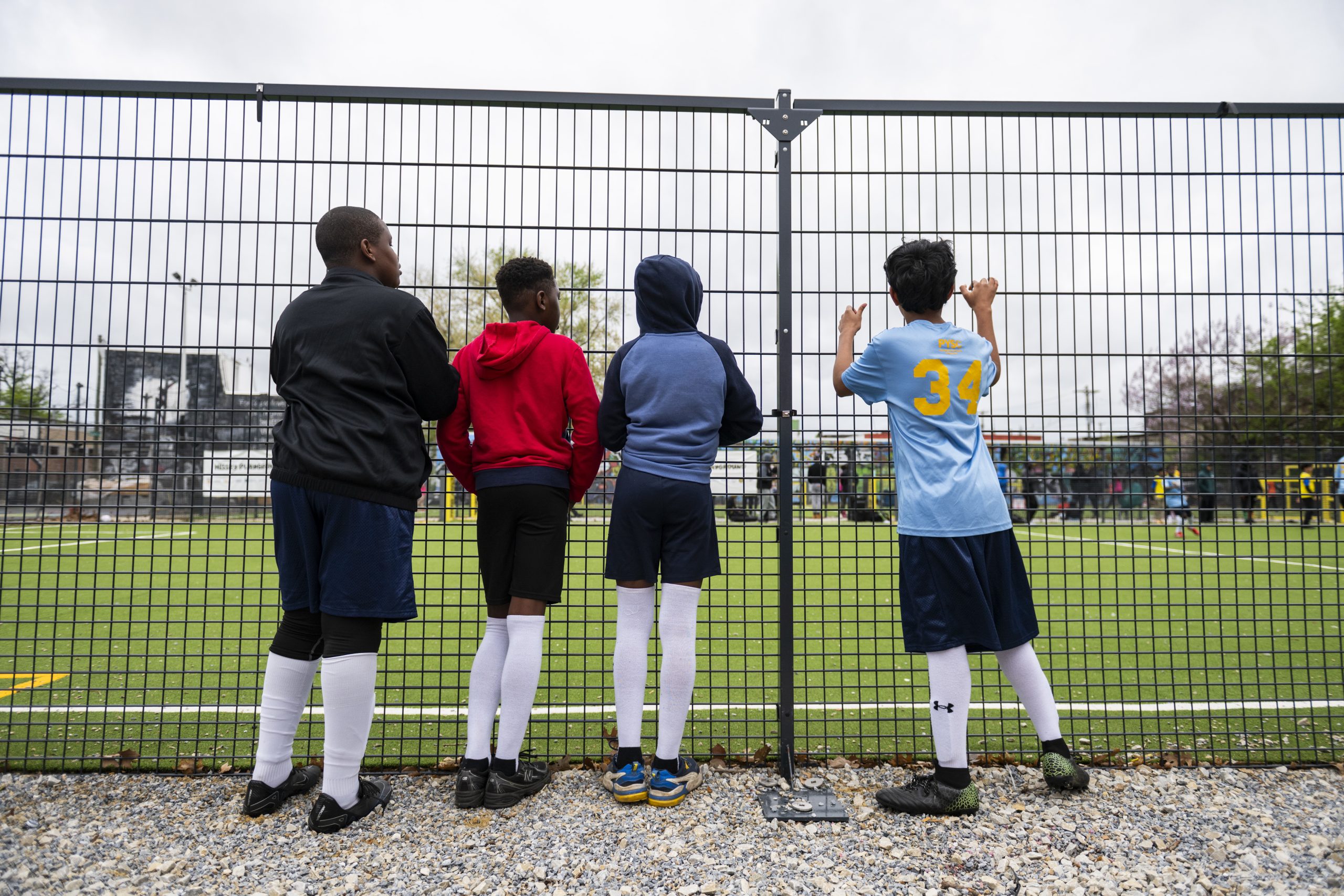
First, foster excitement by putting the game everywhere. Start with a focus on inner cities and rural communities. Loosen the restrictions on accessibility, price, and most importantly, the gates of locked-up ballfields that kids could be playing on.
Second? Put some skin in the game.
Imagine pouring financial resources into underserved neighborhoods. You’ve built the fields, now get kids playing on them. How about a series of cash prize tournaments at multiple age ranges and skill abilities?
Organizers receive winnings under the demand that a substantial amount of the proceeds is used to create more opportunities to foster interest. In turn, U.S. Soccer and the academies of Major League Soccer teams plant scouts at these events to find the raw talent and develop them.
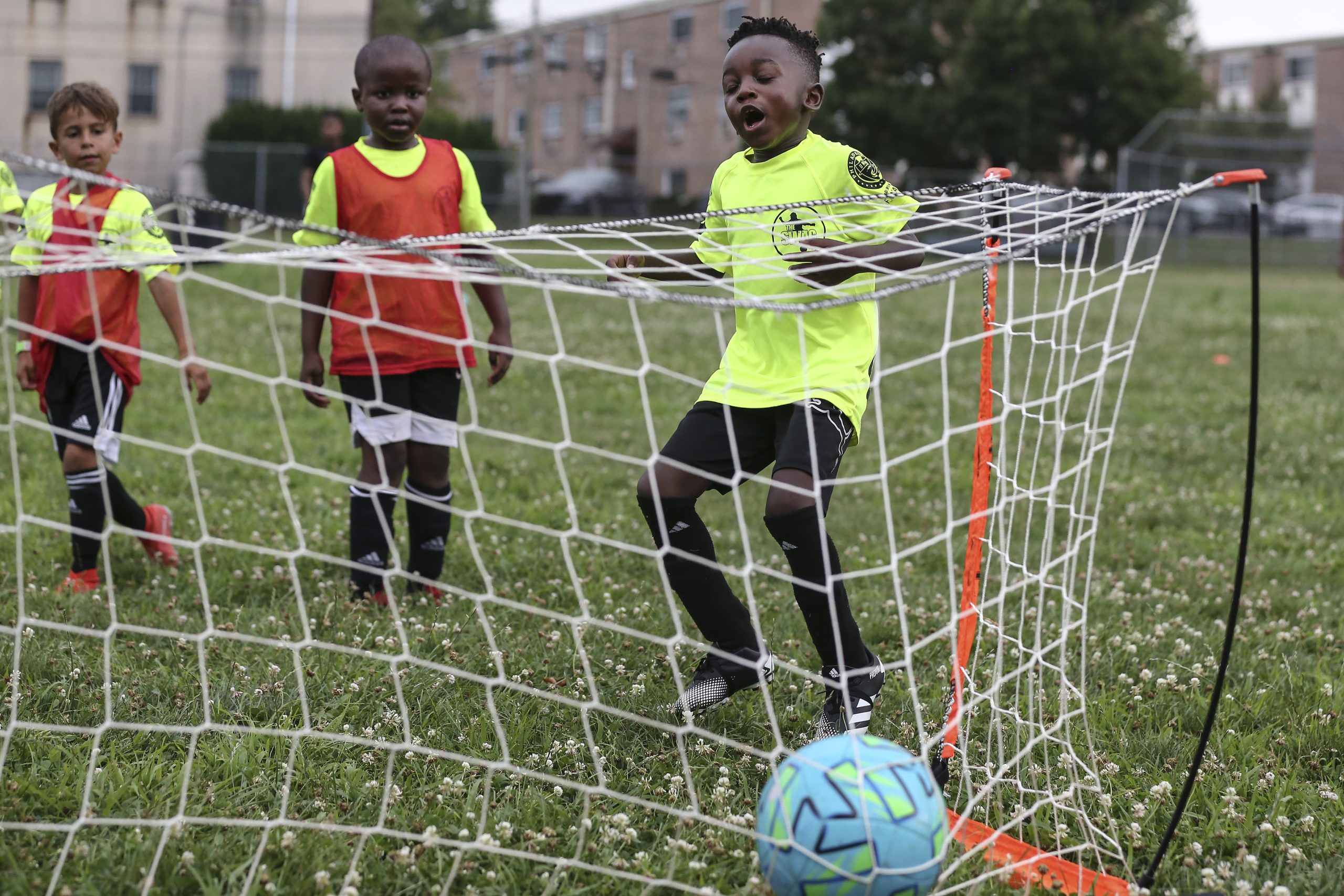
Started in 2018, the Philadelphia Union’s SWAG program offers underserved kids the opportunity to learn the game, and for the ones that show promise, get placed on a developmental path to pro track. STEVEN M. FALK / Staff Photographer
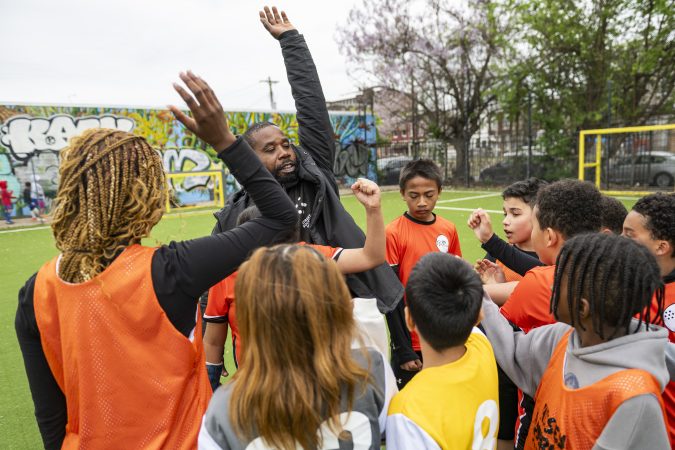
Some of that is already happening. In 2018, the Union created the SWAG program, going into schools, finding kids, developing them from the age of five, and grooming them to be on a professional pathway. It’s the kind of pipeline that city-based organizations like Kensington Soccer Club and Capitolo Soccer AC Fairhill, Street Soccer USA and many more are at the ready to be, and are already finding diamonds in the rough all along the way.
The problem is, as it stands, not enough people in power when it comes to the game care to look.
The parent trap
Listen, at the end of the day, you don’t know what you don’t know.
According to figures from Project Play, a study created by the Aspen Institute, youth sports is a $40 billion a year business, with youth soccer a sizable chunk of that equation.
The reason why there’s so much money to be made? Here’s a big one: uninformed parents.
At a certain level, there is this real fear of missing out from parents when it comes to their kids’ trajectory. The FOMO isn’t in every case, but here’s how it typically works when it comes to soccer in America. It starts innocently, a parent signing a child up for in-house soccer, where you discover, and it’s affirmed by a coach and others, that your kid has real talent.
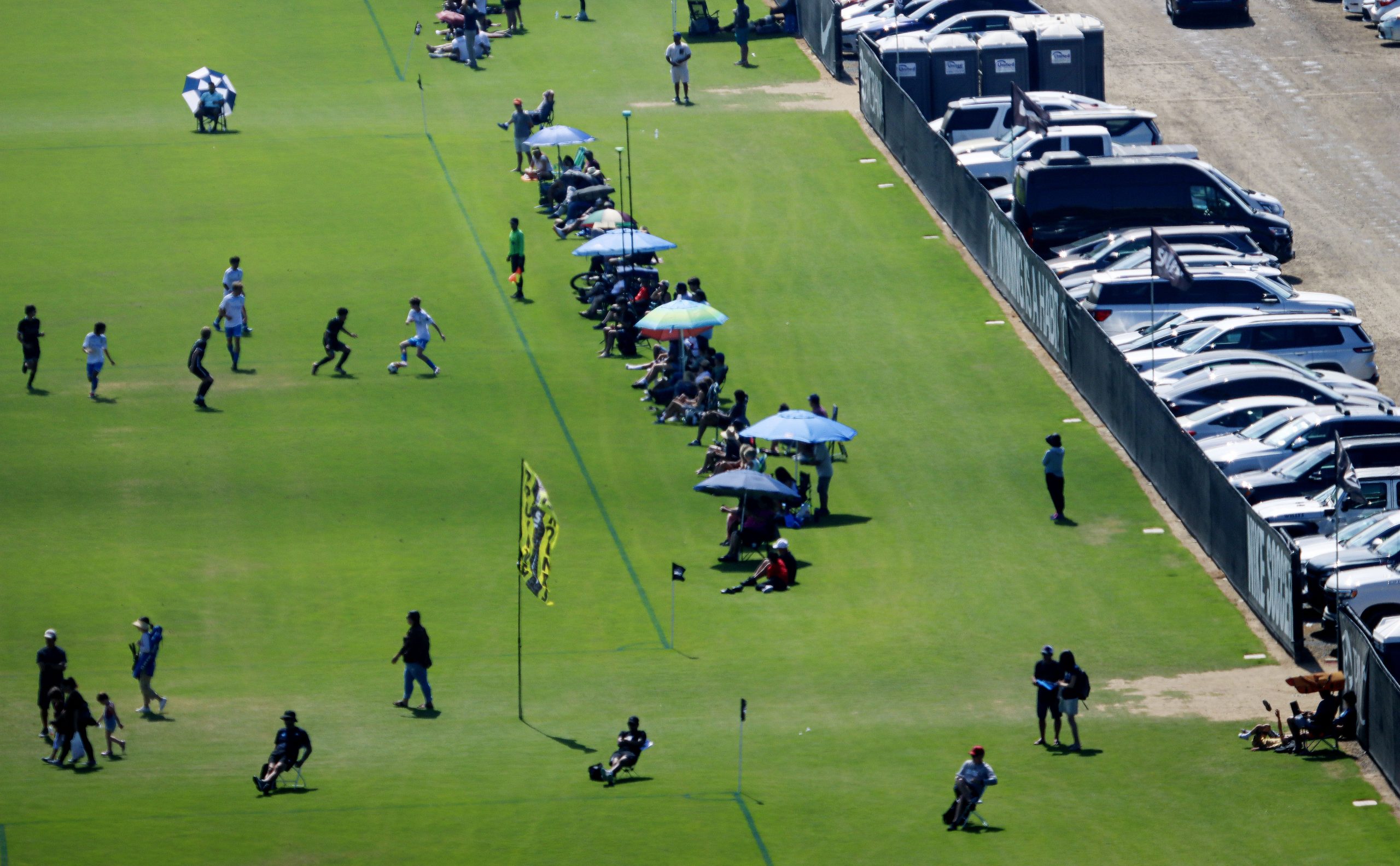
Parents typically spend hundreds on top of committing multiple days of their family’s time to youth soccer tournaments all over the country. Sandy Huffaker
But instead of offering programs to develop that talent and get that child acclimated to the sport at a young age through actual development at a continued low cost, parents are coerced into believing that their child would fit seamlessly on a travel club team. One that competes year-round, practices 2-3 times a week, and plays games and tournaments on the weekend.
And then there’s the time cost. Traveling back and forth between states, sometimes to play the same team from the next town over from your club in a tournament.
If you’re a soccer parent, undoubtedly, you’re nodding your head as it probably sounds like your trajectory in youth soccer to date.
Suppose the solace comes in that you’re not alone?
For many parents, looking for the best place for their child to play the sport at a top level comes at a high cost. Butch Dill
And then there are the buzzwords. “Select.” “Premier.” “A-Squad.” All of these focus not on developing kids into the talent needed to put the U.S. in the best position to win a World Cup, but instead compile the best kids to help that club win across multiple age groups. They’re also words that make parents salivate, spending money they believe will deliver their child to greatness.
Or at least, that team that everyone is talking about.
At the end of the day, parents want to provide what they believe is the best opportunity for their child. Some don’t know what that looks like in soccer.
Can’t fault that. The real fault is in the subsequent exploitation of this ideology by organizations charging thousands for a child to have said opportunity.
Parents in these same circles have revealed that for kids as young as nine and 10 years old, their club won’t even look at kids who don’t already come in with a certain level of skill. Ask yourself: If the mindset has to be about development, how is that mentality not a perceived problem?
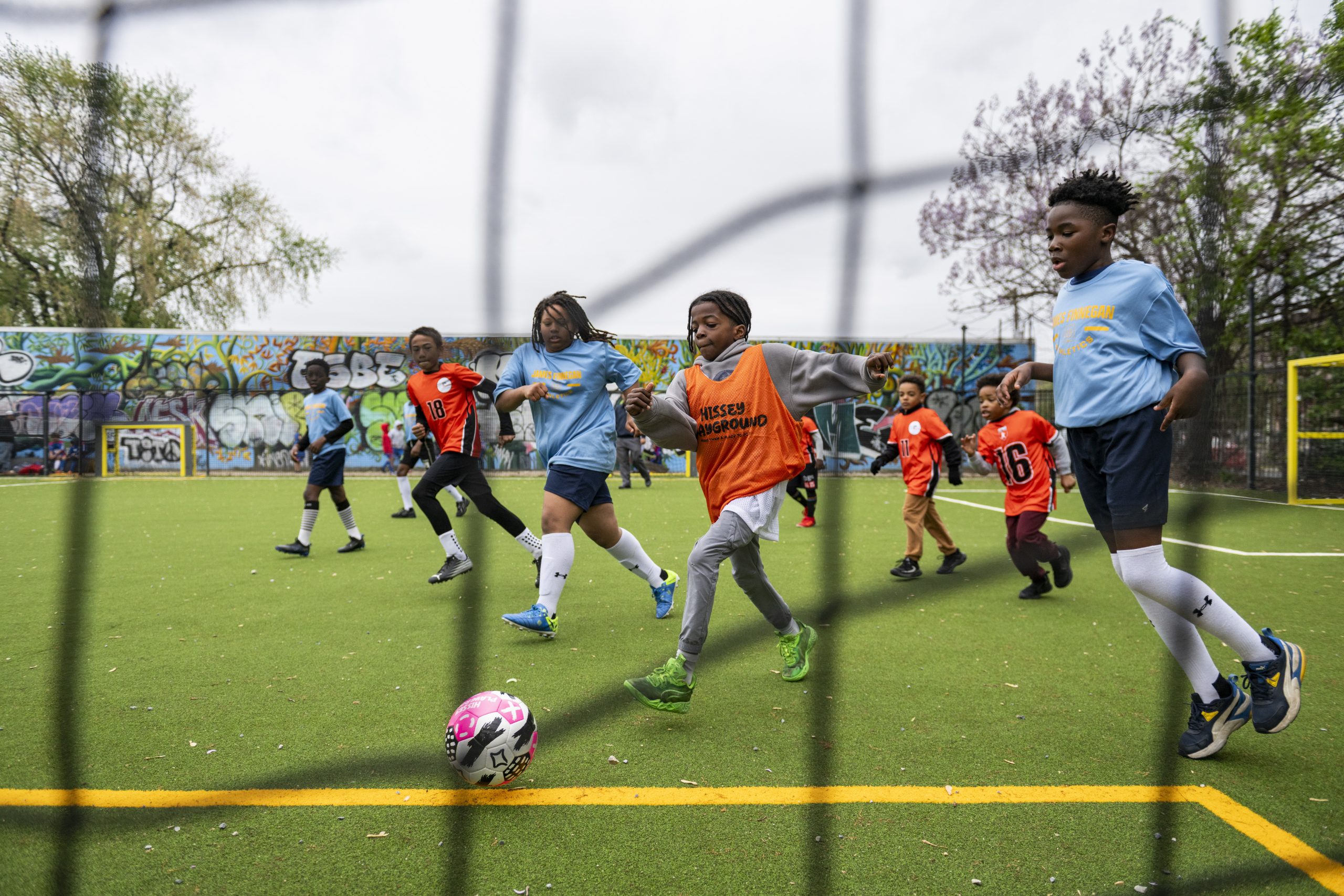
Kids play in Kensington Soccer Club’s Love Street League program at Hissey Playground in Kensington.Allie Ippolito / For The Inquirer
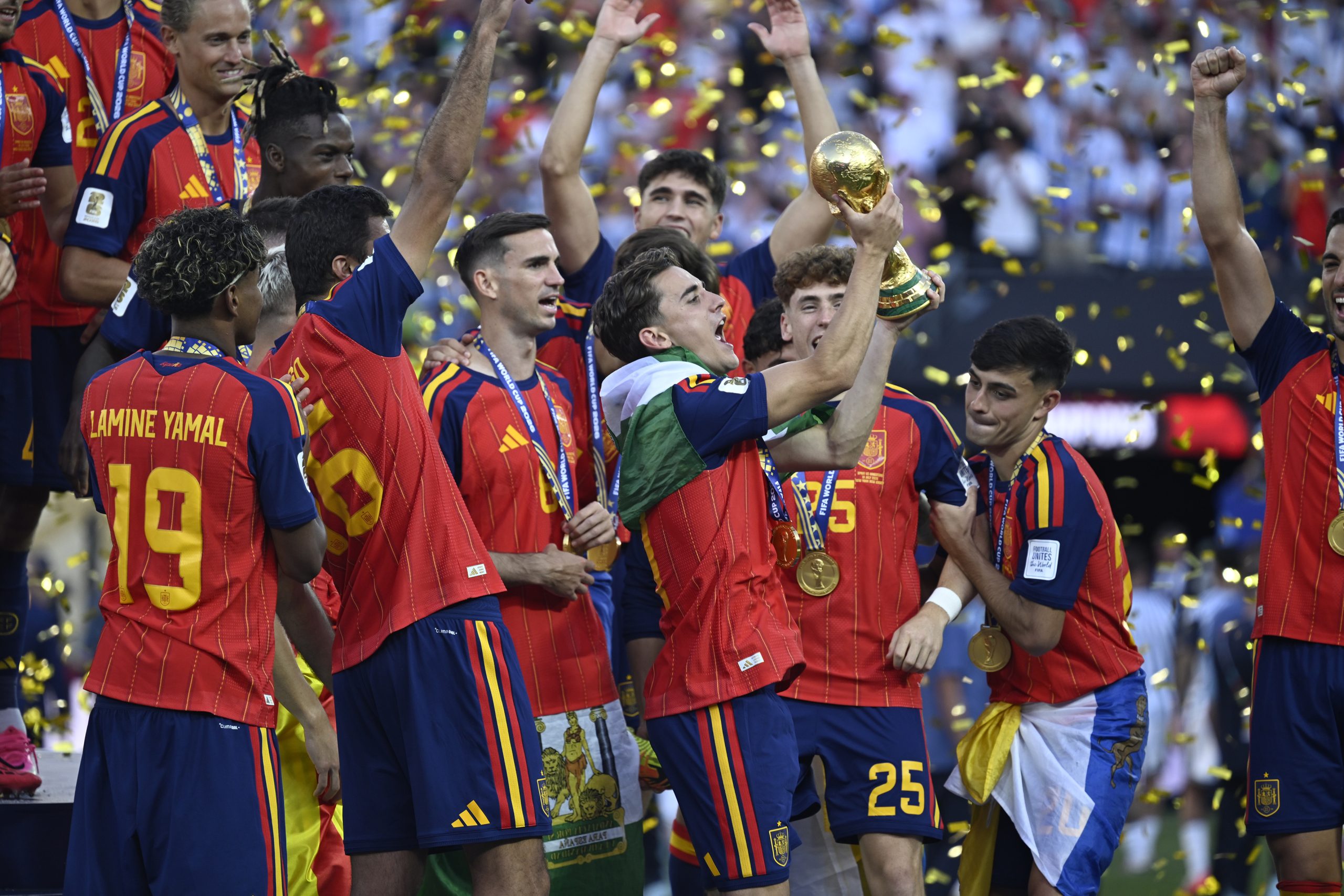
So, of course, that begs the question: “Who pays, then?” Well, there are plenty of youth systems around the world with strategies that give youth soccer in America a fantastic roadmap. Anyone tuning in to Sunday’s final was treated to a great page to start reading if you look at what Spain has been able to do on almost every level over the last 10 years, right up through yesterday.
Two World Cup titles in less than 20 years. A European title. The only nation where both the men’s and women’s teams are defending world champions. If the goal is to crack the code on how to produce players who can go far in a quest to chase a World Cup trophy, maybe start there.
Spain’s Gavi (9) holds up the FIFA World Cup trophy as Spanish players celebrate after winning the World Cup final against Argentina in East Rutherford, N.J., on Sunday.VINCENT ALBAN
As it stands today, club soccer in America serves a purpose. It’s a great conduit for exposure. It offers youth players a firsthand look at the rigors of competition at a very young age. It teaches teamwork and being dedicated to a collective mission.
But it’s not about development. If it were, parents wouldn’t need to consider paying even more for privatized training or skill development camps and clinics. And now, the notion is growing that private equity sees ways in which it can get involved in the gambit. If there isn’t more of a fight to make sure that the status quo doesn’t become the legacy of this World Cup, history looks pretty bound to repeat itself in four years.
A journalistic mentor of mine back in the 1980s told me that Harry Truman, pressed for a comment on the passing of a political enemy, finally said, “It’s a damn shame when anybody dies.” Of course, like most perfect quotes, HST probably never actually said this, yet I find occasion to think of these words often. On Saturday night, South Carolina GOP Sen. Lindsey Graham — whose moral compass went haywire in the 2010s when a brief moment of truth–telling about Donald Trump melted into embarrassing capitulation — died suddenly from heart problems. He was just 71. It’s a damn shame.
Dems need to give up on fake blue-collar campaigns like Platner’s
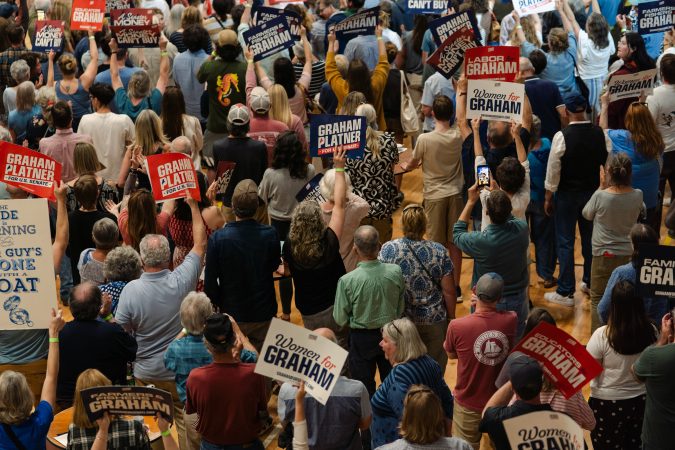
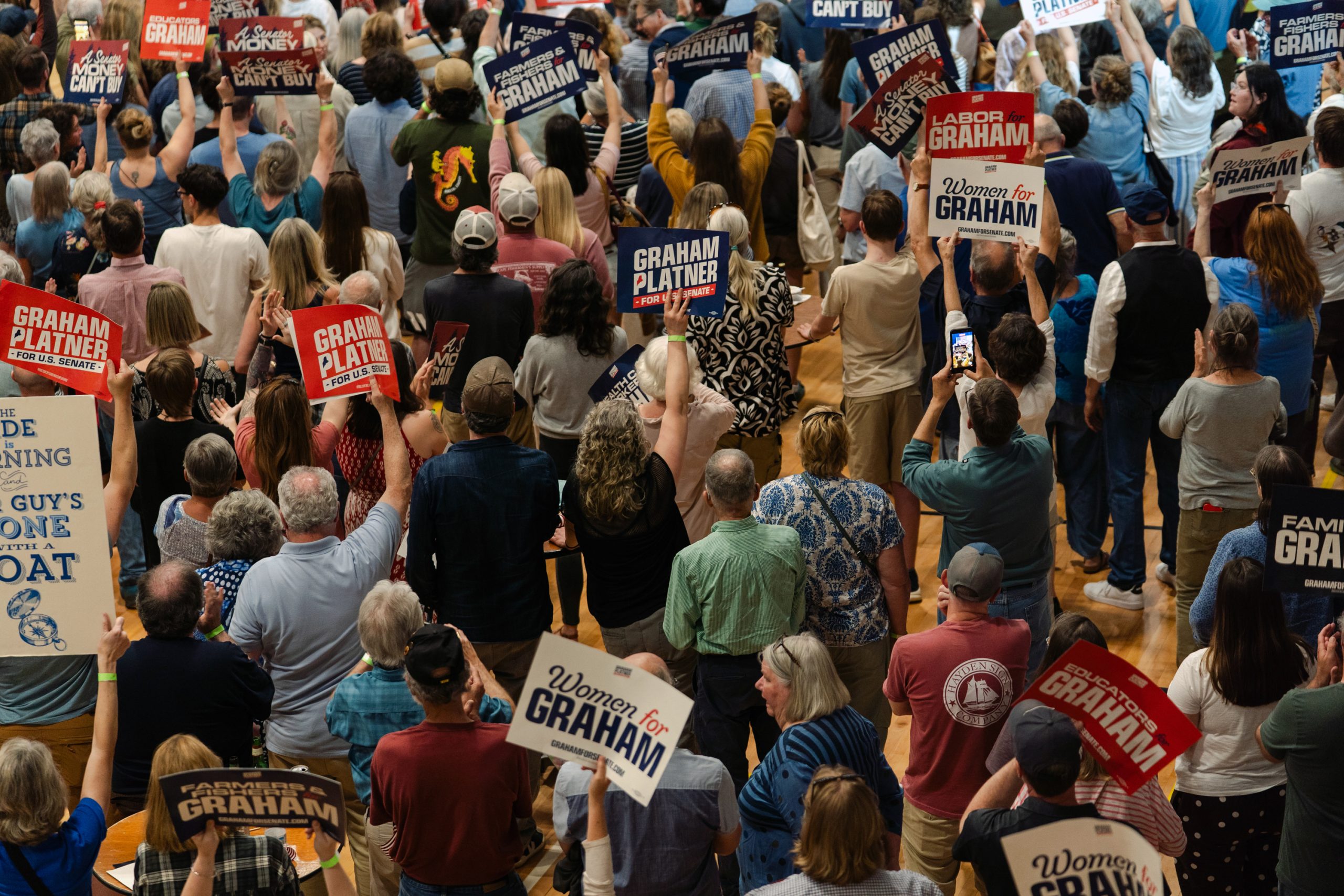
Supporters cheer for Graham Platner in Blue Hill, Maine, after he won the Democratic Senate primary on June 9. Platner’s bid for the Senate inspired progressive Democrats. But the campaign, which he suspended July 8, was messy, disorganized and ultimately doomed by a steady drip of scandal. SOPHIE PARK
Graham Platner, the failed Maine Democratic Senate candidate, was introduced to most of us outside of the Pine Tree State less as a human being than as a fully formed narrative.
The ruggedredhead with angry eyes was an ex-Marine from the Iraq and Afghanistan wars who became an oyster farmer and then a political outsider with all the right words for an electorate that’s mad as hell and isn’t going to take it anymore.
We now know that Platner’s origin story — compelling, but larded with omissions and sprinkled with lies — belonged on the fiction shelf. But even after the Democrats’ scandal-scarred June primary winner accepted the inevitable and ended his candidacy on Friday, he lives on as an avatar upon which everyone with a stake in a badly broken Democratic party can project their distrust and rage toward others — folks who ought to be their allies in an all-out war against fascism.
Days later, the Platner discourse is almost as toxic as the candidate himself. People who voice their opinions, even in 280 characters on social media, get called everything from sexist Bernie-bro rape apologists to Quislings who want big corporations to keep running the Democrats into the ground, and all the rest in between. Don’t even mention Israel. In fact, don’t @ me after this is posted.
Having said all that, there is a conversation that must be had by the Democrats, and probably a wider circle. And the disappearance of Platner himself from the picture makes that easier, because I think we can all stipulate that as a human being he was clearly not worthy to be a U.S. senator, even in the Senate’s current morally diminished state.
There is another Graham Platner somewhere on Earth 2 who also suffered PTSD and developed a drinking problem fighting in pointless wars, and who also got a Nazi tattoo and posted wretched stuff on Reddit, but turned his life around in a glorious redemption song. But that’s not the Platner we got on here on Earth 1. Instead of an apology, he was weirdly defensive about his past, because — we now know — he was hiding stuff that was even worse than that.
Although Platner has denied the most serious charge of a sexual assault, there should be zero tolerance in the Democratic Party for the type of sexual misconduct that’s been confirmed, let alone what’s been additionally alleged. That’s not just the only proper moral stance, but it sets Dems apart from a twisted GOP that nominated Trump three times. Platner’s disappearance is a blessing to everyone.
But even with that matter resolved, we still haven’t answered the bigger question that I posed the only other time I wrote about Platner back in the spring: Why did a majority of Maine Democrats — roughly 150,000 voters — ignore the party establishment to back this guy?
But first Democrats — and just about everyone, frankly — need to do a better job understanding not just the “why” of Platner supporters, but the “who.” Baked into the Platner myth was this notion that in running a gruff-sounding ex-Marine and oyster farmer, Democrats had found a key to regaining the long-lost white working class.
Two huge problems with this. First — and this will sound familiar here in Pennsylvania where shorts-and-hoodie-wearing Sen. John Fetterman grew up upper middle class before donning a blue collar — Platner comes from a fairly privileged background. He’s the son of a lawyer and upscale restaurant owner and grandson of a famous architect; he started high school at the super-elite Hotchkiss School.
Which brings us to the crux of the problem: the notion that Platner’s pre-implosion success was his ability to win back working-class voters in an overwhelmingly white state. Polls exposed this all as a lie. A late June survey from the New York Times/Portland Press Herald/Siena showed Platner losing white, non-college educated voters by a whopping 21% to the GOP incumbent Sen. Susan Collins. So what gave him a shot at winning? A massive 37% edge among college degree holders.
Look, we all know that it’s been the obsessive mantra of the political pundit class that Democrats will never fully win back America without restoring the working-class coalition that elected Franklin Roosevelt four times during the New Deal era. I hate to be a contrarian here, but what if that’s not true?
A society that over a half-century has once again made higher education an elite sport and now has a right-wing media and demagogues like Trump to heighten working-class grievances and blame the wrong people has created voters who — at least for now (hold this thought) — arguably aren’t worth chasing after.
The frayed alliance of progressives and liberals who comprise the core of the Democratic base do some dumb stuff — opposing new units that could lower housing costs, or “nice white parents” leading to de facto school segregation — that should stop.
An America that’s not inclusive and that isn’t fair when it comes to gross income inequality, not to mention who gets to see a doctor or send their kid to college, isn’t a cause worth fighting for. And there’s already a healthy number of working-class people — not the majority, not yet — who would agree with this.
Platner was a bad guy but he appealed to voters who wanted good things. Let’s not bemoan the fact that his movement was based on educated people. Let’s build on that. Instead of lowering our values to win elections, let’s play the long game to lift more people up to a better place.
It’s way past time for college-educated progressives and our allies to stop apologizing for the things we believe in. The current push to find a candidate who can replace Platner and fight for all the right stuff — without the personal baggage of their predecessor — is a great place to start. Maybe it’s even time to revive the old cliché: As Maine goes, so goes the nation.
Yo, do this!
Tuesday is the folk-music legend Woody Guthrie’s 114th birthday. I use the present tense because it very much feels like the singer who influenced living icons from Bob Dylan to Bruce Springsteen is still with us. Now, a friend, the pioneering rock journalist Greg Mitchell, has directed a new documentary about the musician, his political activism in the mid-20th century, and his lasting influence: Woody Guthrie and the Ghost of Tom Joad. It’s now streaming on PBS.org and will also be popping up on PBS stations this summer. You can — and should! — stream it here.
Monday night I read a remarkable piece of journalism that I feel compelled to share. Last week, a lot of America was talking about a photo from July 4 that showed a young Black woman on a D.C. Metro train surrounded by masked members of the white supremacist Patriot Front. There was so much commentary about what this woman must be feeling and thinking, and almost all of it — as shown by some remarkable reporting by former Inquirer journalist Ellie Silverman, writing for NOTUS — was wrong. The truth is heartbreaking.
Ask me anything
Question: Why do we not know what’s going on with (ailing Kentucky Sen. Mitch) McConnell? What is the Republican endgame? What’s the benefit to prolonging the process of determining a replacement? What is that process (seems to be in dispute)?
Answer: We know a little more now than we did when I addressed this issue last week. His staff on Sunday released a brief statement and what is being called a “proof of life photo” — with that morning’s Washington Post sports page visible in the shot — seeking to explain McConnell’s month-long hospitalization and hoped-for return to the Senate. There were, of course, immediate conspiracy theories that the photo was artificial intelligence, but there’s no compelling evidence of that. The biggest mystery is, why doesn’t the 84-year-old McConnell just quit, with only about six months left until he leaves office in January? Kentucky has changed its Senate replacement law a couple of times, mainly because GOP lawmakers don’t want Democratic Gov. Andy Beshear making the pick. The new law requires a special election, but there probably will not be one if McConnell stays in office through Aug. 3. Republicans seem desperate to avoid the special election, and I’m not sure why, since McConnell surely isn’t helping advance the Trump agenda from his hospital bed.
What you’re saying about…
You really didn’t think I could go a whole newsletter without mentioning soccer, did you? Last week’s question about Trump’s FIFA intervention and the reversal of the American Folarin Balogun’s red-card suspension drew a unanimous response: The president was wrong to get involved, and he seemed to create a negative vibe around the U.S. team before it got blown out of the World Cup by Belgium, 4-1. “To me, it appeared to be the wrong call, but the ref called it.” wrote ex-soccer mom Suzanne Urban Ryan. “We had to live with it. Trump getting involved was just really poor judgement based on his need to win a game that he is not even a player.” Added Jordan Lang: “I’m sure his corrupted meddling negatively affected the psychology of the U.S players.” Yup.
📮 This week’s question: Trump plans to address the nation in prime time Thursday with ginned-up information about his bogus and debunked claim that the 2020 election was stolen from him. He is laying the groundwork for November, and election interference on a scale to rival the Jim Crow South. How can Congress, the courts, the media, and everyday citizens respond to this dire threat before it spirals out of control? Please email me your answer and put the exact phrase “Trump election meddling” in the subject line.
Backstory on why ICE is killing immigrants, again
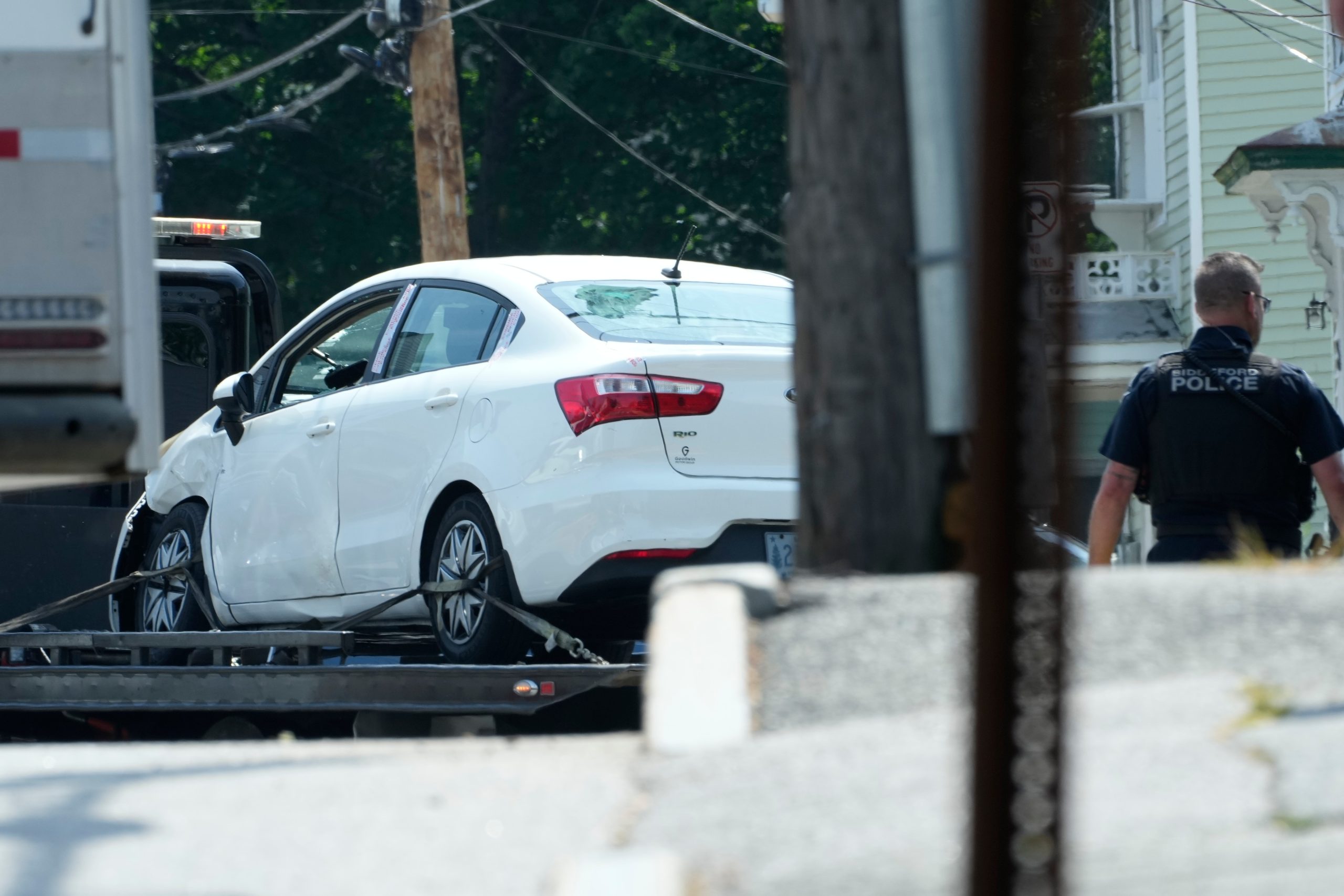
A vehicle with a damaged window is transported away from the scene of a shooting involving U.S. Immigration and Customs Enforcement, Monday in Biddeford, Maine. Robert F. Bukaty
The fight against police brutality against African Americans in the late 2010s found its rallying cry when New York City police choked and killed a street peddler named Eric Garner, whose last words were. “I can’t breathe!” Now, Monday’s latest fatal shooting by U.S. Immigration and Customs Enforcement agents that shattered the morning calm of Biddeford, Maine has produced a new mantra. As 26-year-old Joan Sebastian Guerrero lay dying on the pavement — shot in the head, then dragged from his car and handcuffed — a bystander heard him say in anguish: “I tried to stop.”
Moments earlier, the man, reported to be a Colombian national with a U.S. work permit, had left his home, possibly with his daughter, in a white Kia sedan, which was hemmed in by ICE agents in their vehicles. Although the Department of Homeland Security changed the wording of its statements over the course of the day, it ultimately reported that an ICE agent shot Guerrero because the driver attempted to flee and the officer was “fearing for public safety.” But ICE and DHS, whose officers have now shot and killed at least 11 people since Donald Trump returned to office, have repeatedly seen their versions unravel as more video and witnesses emerged. The two most recent attacks — Monday’s assault on Guerrero and last week’s Houston shooting of 52-year-old Mexican national Lorenzo Salgado Araujo — happened on working-class residential streets without clear videos of the shootings, and with ICE agents not wearing body cams.
Still, a pattern is starting to emerge as DHS and its new leader, the former Oklahoma senator Markwayne Mullin, put a flood of new, barely trained ICE recruits on the streets in attempt to make mass arrests of immigrants without the same level of hoopla and backlash that happened in cities like Minneapolis and Chicago under Mullin’s predecessor, Kristi Noem. In both the Houston and Biddeford shootings, ICE began the morning in what it claimed was a targeted operation seeking a specific immigrant with a removal order, only to try to arrest and ultimately kill men, in Salgado and Guerrero, who were not the supposed targets.
It’s quickly becoming clear that ICE’s new strategy is a recipe for disaster. Both Salgado and Guerrero, according to what we know from witness accounts, didn’t seem to know what exactly to do when their vehicles were surrounded by unmarked vans and yelling men. In both cases, ICE agents interpreted the predictable panic and chaos as aggression, and made a split-second decision to end a human life forever. It increasingly looks as if the federal agents — facing an impossibly ambitious goal from the Trump regime of arresting and deporting 1 million people a year — insist they have a name on a sheet of paper, when in reality they are racially profiling brown-skinned men driving to blue-collar jobs.
Like so many projects of our current government, the new ICE scheme is not only inhumane but also dumb and counterproductive. Mullin’s apparent new strategy was to meet the high arrest quotas sought by Trump and his immigration guru Stephen Miller without generating the kind of public protest and backlash that all but drove DHS out of Minnesota this winter. It’s not working. Even before Guerrero’s name was released, angry demonstrators took to the streets in Biddeford and stormed the office of the state’s GOP Sen. Susan Collins, who recently voted for a $70 billion cash infusion for immigration raids.
The tactics may have changed slightly, but the repulsive devaluation of human life has not. Mass deportation is a failure — strategically, politically, and morally.
What I wrote on this date in 2019
Some days my past writings read like Nostradamus, but more often than not they reveal how fleeting our political moments can be. On this date seven years ago, this columnist joined a lot of progressive voters in swooning over the early-stage presidential ambitions of Massachusetts Democratic Sen. Elizabeth Warren, who had just spoken at the left-wing convention Netroots Nation here in Philadelphia. “With her slam-dunk performance Saturday,” I wrote, “Elizabeth Warren became president … of the American progressive movement, anyway.” But Sen. Bernie Sanders had other ideas about that, and then Joe Biden and South Carolina voters came along with different ideas about Warren, Sanders, and control of the Democratic Party. Read the rest: “Netroots Nation was the day Elizabeth Warren became president of the American left.”
Recommended Inquirer reading
It was a full week for me, and for American outrage. First, I tackled the Houston ICE killing of 52-year-old Mexican national Lorenzo Salgado Araujo and the return of ambitious immigration raids to American cities. I noted that the new ICE strategy aimed to ramp up arrests without generating public outcry, and I urged readers not to go to sleep on mass deportation. Over the weekend, I wrote about the similarities between the Trump regime and the disastrous ancient reign of the Roman emperor Caligula. I detailed how Trump’s growing paranoia that he will be assassinated in office is causing new bloodshed in the Persian Gulf and inspiring fresh efforts to quash civil liberties here at home.
Kenesaw Mountain Landis must be spinning in his grave. He was the former federal judge who tried Chicago’s notorious “Black Sox” for throwing the 1919 World Series at the behest of New York gamblers, then became baseball commissioner to clean up the national pastime. For decades, Major League Baseball shunned even the slightest whiff of gambling connections that might taint the sport — but times have changed. My Inquirer colleague David Gambacorta — one of the best investigative reporters in the business — last week broke a remarkable story about how the lucrative betting site FanDuel egged on a local addicted gambler to keep playing until he lost some $1.5 million. Plot twist: FanDuel’s effort includedhaving Phillies slugger Bryce Harper send a personalized video to please the local bettor. It’s disturbing that a) Harper, with a 13-year $330 million contract, also feels the need to peddle $899 videos on Cameo and b) he has a relationship with people at a gambling website. But FanDuel is now “the official sports betting partner” of MLB — an appalling relationship that only encourages morally dubious behavior like the Harper video. The rank corruption of modern American society, including sports, is why we need investigative reporters like Gambacorta. You can read the next installments in this saga, and support his work, when you subscribe to The Inquirer.
By submitting your written, visual, and/or audio contributions, you agree to The Inquirer’s Terms of Use, including the grant of rights in Section 10.