Olympic gold medalist Dominique Dawes will expand her chain of gymnastics academies to Mount Laurel in September.
The South Jersey location, at 1180 Nixon Drive in the East Gate Square shopping center, is the first effort in Dawes’ planned expansion into the Philadelphia area. She plans to open five or six additional gyms in the coming years, according to Philadelphia Business Journal.
Along with the Mount Laurel location, Dawes, who’s from Silver Spring, Md., also is opening a second location in the Houston area in August. Her first academy opened in Clarksburg, Md., in July 2020, and there currently are six locations across Maryland, Virginia, Georgia, and Texas.
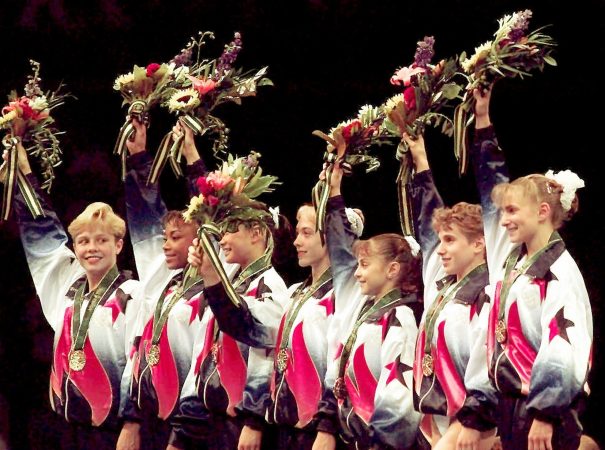
Dawes is a three-time Olympian who competed at the 1992, 1996, and 2000 Games. She made history as the first Black American woman to win an individual Olympic medal in gymnastics with a bronze medal on the floor exercise in the 1996 Olympics in Atlanta. She also helped win team gold at those same 1996 Games when her teammate Kerri Strug famously completed her vault exercise on an injured ankle. The “Magnificent Seven” was the first United States women’s gymnastics team to win a team gold at the Olympics. Dawes also won team bronze in 1992 in Barcelona and 2000 in Sydney.
Now a mother of four, Dawes has spoken publicly about the toxicity she endured during her career and how she doesn’t want her children — or any other children — to experience the same. Instead, she hopes to redefine the culture of the sport through her string of academies that have an estimated 7,000 students ranging from toddlers to 18-year-olds.
“We’re trying to do things differently,” Dawes said in an interview with Capital B Atlanta. “It means nothing if your child is a great gymnast — standing on top of the podium — but yet, their self-esteem is shot, their mental health is shot, and they don’t know how to make relationships in this world. I believe that if that is the outcome, then we’ve failed.”
Plans for expansion into the Philly area don’t include specifics on locations yet, but the Philadelphia Business Journal reported that proximity to families is a large factor in Dawes finding spaces for the gyms.
The Supreme Court on Tuesday upheld bans in Idaho and West Virginia on transgender athletes playing on girls’ and women’s sports teams, the latest in a string of legal setbacks for the LGBTQ+ community before the high court.
In a decision led by the court’s six conservatives — but joined in parts by its three liberals — the justices found that states can separate teams based on “biological sex” without offending the Constitution’s guarantee of equal protection and Title IX, a landmark 1972 antidiscrimination law involving education.
“Separate sports teams for biological males and biological females are reasonable: Given the inherent physical differences between the sexes, allowing only biological females to play on women’s and girls’ teams can reduce the risk of physical injury and ensure fair competition,” Justice Brett M. Kavanaugh, who coached his daughter’s youth basketball team, wrote for the majority.
The court’s three liberals, led by Justice Sonia Sotomayor, agreed that West Virginia’s ban did not violate Title IX. But they disagreed with the majority on several fronts, especially the conclusion that the West Virginia law withstands scrutiny under the Constitution’s guarantee of equal protection for all.
Sotomayor wrote that a lower court should have the chance to sort out a question central to the case of the teenage plaintiff from West Virginia, Becky Pepper-Jackson: whether trans girls who have not undergone male puberty have physical advantages in sports.
“Because of the Court’s decision today, West Virginia, and any other state actor, can deny B.P.J. and others like her these experiences simply because it thinks they have an inherent athletic advantage, even if the facts show that they do not,” Sotomayor wrote.
The court did not address what is arguably the flip side of its ruling — whether schools and states can adopt policies allowing transgender athletes to compete on girls’ and women’s teams, as some liberal states and communities do.
“That question is currently the subject of litigation in some lower courts,” Kavanaugh wrote in a footnote. “Nothing in this opinion is intended to decide that question.”
The ruling is among several in recent terms that are consequential for the LGBTQ+ movement. The Supreme Court in March ruled a Colorado law banning “conversion therapy” for gay and transgender youths probably violated the free-speech rights of a religious counselor who wants to counsel such young people according to biblical teachings.
Earlier that month, the court sided with Christian parents in blocking, for now, California policies that discourage schools from informing parents of a student’s sexual orientation or gender identity without the student’s consent. Last year, the court upheld bans on gender transition treatment for minors.
Questions over whether transgender girls and women should play on girls’ and women’s sports teams has been a particular flash point in a broader conversation about transgender rights. Dozens of states have bans amid intense public debate about fairness at all levels of competition.
The debate over the allowance of transgender women in collegiate athletics gained national attention in 2022 after Penn swimmer Lia Thomas won the national title in the women’s 500-yard freestyle. Thomas, who is a transgender woman, competed for the Quakers men’s team during the 2018-19 season before medically transitioning.
In July 2025, Penn struck a deal with the Trump administration regarding Thomas’ participation. According to the deal, Penn agreed to ban transgender athletes, vacate Thomas’ records, release a statement in support of Title IX “as interpreted by the Department of Education,” and send personalized letters of apology to Thomas’ former women’s teammates. The deal came after the White House had paused $175 million in federal funding to Penn because of Thomas’ participation on the Quakers’ women’s team in 2021-22. The federal funding was restored following the agreement.
The issue came to the high court in a pair of cases, brought separately by Pepper-Jackson, a teen from West Virginia, and Lindsay Hecox, a Boise State University student in Idaho. Both argued that the bans in their states discriminated on basis of sex and violated the Constitution’s equal protection clause. In January, the justices appeared sympathetic to arguments for keeping the bans in place as the cases were argued back-to-back.
LGBTQ+ activists said the decision would be devastating for some young people.
“This is a heartbreaking ruling for our clients and transgender girls like them who’ve asked for nothing more than the same opportunities afforded to their peers,” said Joshua Block, senior counsel for the American Civil Liberties Union’s LGBTQ & HIV Rights Project, who argued the case for Pepper-Jackson.
Sasha Buchert, director of nonbinary and transgender rights at Lambda Legal, said the decision was upsetting but also narrow.
The ruling is “a serious loss — we’re not minimizing that,” she said. But noting that the court did not impose a national ban on transgender athletes in female sports, Buchert added, “This ruling says, sure, a state may discriminate, not that they must discriminate.”
Twenty-seven states have passed laws banning transgender student-athletes from competing on women’s or girls’ sports teams. Supporters of the bans say they are necessary to ensure fairness and safety because of inherent physical differences between males and females. Opponents say the laws discriminate against trans people and should be struck down.
President Donald Trump early last year signed an executive order aimed at keeping transgender women out of women’s sports. The administration has argued that there are only two sexes — male and female — and that they “are not changeable.”
Soon after the executive order on sports, the NCAA and the U.S. Olympic and Paralympic Committee updated their policies to bar trans women from playing on women’s sports teams. Since then, the administration has aggressively investigated schools that allow trans girls to participate in girls’ and women’s sports.
Education Secretary Linda McMahon welcomed the court’s decision Tuesday.
“For years, ideologues distorted Title IX to advance a radical transgender agenda, subjecting women to immeasurable harm,” she said in a statement.
Nicole Neily, founder and president of Defending Education, a conservative advocacy group, called the decision an “exercise in judicial humility” and noted that it may be disappointing to conservatives in liberal states that allow transgender athletes to participate.
“Although it’s certainly not as sweeping as parent activists would have liked, it means that the action shifts to the states and is now a persuasion game,” she said in a statement.
Views among Americans on transgender issues are nuanced. A Pew Research Center survey published in February 2025 showed 56% of adults support policies aimed at protecting transgender people from discrimination in jobs, housing, and public spaces.
But over the past few years, Americans also have become more supportive of restrictions for transgender people, according to the Pew survey. Fifty-six percent of Americans supported bans on providing gender transition care for minors, up 10 percentage points from 2022, the study found.
But athletics have always stood out.
The Pew survey found that 66% favored laws that require trans athletes to compete on teams that match their sex assigned at birth, up eight points from 2022. Even before the general shift in public opinion, a majority of Americans opposed allowing trans women to compete against other women at all levels of sports, according to a Washington Post-University of Maryland poll.
The science concerning biological advantages of transgender girls and women in sports is evolving and remains hotly debated. The case featured competing evidence about whether transgender girls are inherently better at sports. The transgender plaintiffs presented evidence that transitioning before puberty prevents them from building enough body mass to have an advantage in high school and college sports.
Lawyers for the states countered with studies that showed that nontransgender boys and men perform better at all ages. The study found that boys between the ages of 7 and 12 ran about 4% faster and jumped about 7% farther than girls in the same age group.
“The legislatures and the schools are better equipped — and under the Constitution, are the more appropriate entities — to assess the competing medical and scientific considerations and draw appropriate lines,” Kavanaugh wrote in the majority opinion. “Of course, no line that the States draw will satisfy everyone.”
While there’s no comprehensive tally of trans athletes nationally, an estimated 300,100 transgender youths between the ages of 13 and 17 live in the United States, according to the Williams Institute at the UCLA School of Law. The Human Rights Campaign, an LGBTQ+ advocacy group, has estimated that 14% of trans boys and 12% of trans girls play on a sports team.
Inquirer Staff Writer Conor Smith contributed to this article.
It’s unorthodox to begin a piece by denigrating a subject of sympathy, but in this case, it applies.
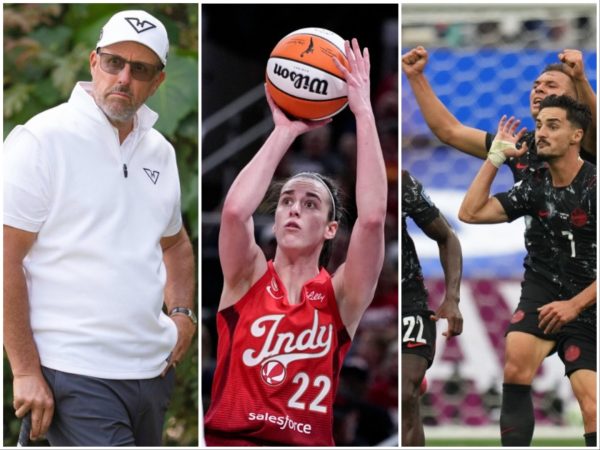
Indiana Fever superstar Caitlin Clark is smug, and she’s kind of a jerk, and plays a little bit dirty herself. Also, there’s little viable argument that if she were a bit less abrasive then perhaps she would be less of a target.
But there’s no doubt that she has been a target of jealousy and resentment since her arrival in the league, and there’s less doubt that the WNBA and its officials do a pathetic job of protecting her. She is, after all, the greatest asset not only in women’s basketball, nor in the history of women’s basketball, but in the history of women’s sports.
That’s with all due respect to Billie Jean King, Babe Didrikson Zaharias, Serena Williams, et al. Clark is the queen of a mainstream team sport in an era when mainstream team sports matter more than ever. She should be treated like royalty. Instead, she’s treated like crap.
She’s filled arenas, sparked expansion, and sold millions of jerseys, both her own and those of her peers. Her reward? She’s been the victim of nine flagrant fouls since she joined the league in 2024, more than anyone else.
The latest flagrant wasn’t even called in real time, if you can believe it. As a matter of fact, it wasn’t even called a foul.
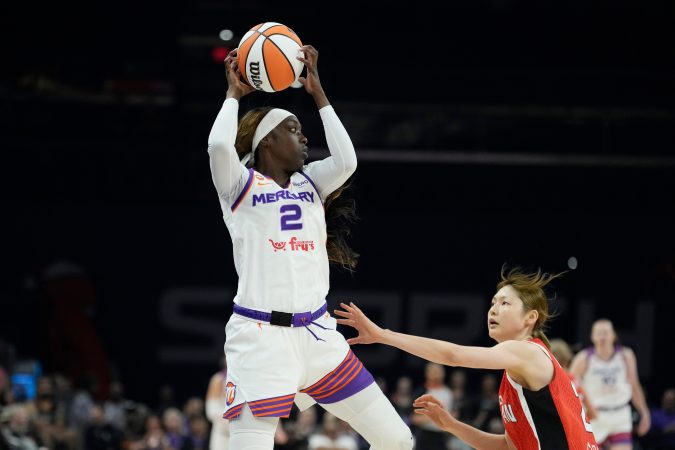
On Wednesday, while pursuing a loose ball, Phoenix Mercury forward Alyssa Thomas kneed Clark in the thigh and jammed her fist into Clark’s throat as Clark lay on the ground.
This angel of Alyssa Thomas cheapshotting shows that not only did she punch Caitlin Clark in the throat; she kneed her in the groin too.
The league should look at this, assess a flagrant, & do everything they can to protect their most important player. pic.twitter.com/xDArcPTYiS
The league reviewed the incident, declared that Thomas had committed a Flagrant 2, and suspended her for Saturday’s game against Toronto. Thomas, a hard-nosed, Draymond Green-type of player, has a history of flagrancy; last season, she elbowed rookie Kiki Iriafan in the throat and threw Angel Reese to the ground.
In the same game Clark was undercut on two jump shots, neither judged flagrant in real time or upon review. She left the game having aggravated a back injury.
That’s right: The most important player in WNBA history entered the game with a back issue, was the recipient of three dangerous fouls, and left the game having been reinjured.
She missed the Fever’s game this past Saturday, and her status is unknown for this coming Sunday’s game in Las Vegas.
She missed most of her sophomore season in 2025 with various injuries.
Not all of Clark’s missed time has been a result of hard fouls, but that’s the point. She’s the draw. Any hard foul on here should be amplified.
She should be preserved like ancient parchment. She should be protected like religious relics. She is worth 10,000 times her weight in gold and should be treated accordingly.
You should get two technicals for brushing her cheek. You should get a Flagrant 1 for coughing on her.
Intentional foul on a fast break? Twenty years to life.
Is this fair? Of course not. Is this business? Yes, it is. Business is seldom fair. If you don’t think that’s true, you should study capital gains taxes, corporate tax breaks, and film of Larry Bird in the 1980s.
It doesn’t matter that Clark is not the best player in women’s basketball history (that’s Diana Taurasi), and it doesn’t even matter that she’s not the best player today (that’s A’ja Wilson). What matters is that Clark’s the most valuable female athlete, at a time when female athletics is finally experiencing its true value.
One financial projection valued women’s sports revenues to generate at least $3 billion this year, an increase of 340% since 2022. You know what else happened in 2022? Clark, a sophomore at Iowa, became the first player in women’s Division I history to lead the nation in both points and assists. She became a phenomenon.
A cocky phenomenon; a celebrating, taunting, in-your-face phenomenon — but a phenomenon nonetheless.
For the record, I don’t like it when Steph Curry or LeBron James flaunt their cellys either. But as much as they mean to their sport, neither touches the importance of Clark either in her chosen profession or in her demographic.
Protect her at all costs.
Phil’s just desserts
Seventeen years ago, the myth of Tiger Woods collapsed when the report of an affair, a car crash, and series of mistresses revealed the greatest golfer of all time, branded as a squeaky-clean, monomaniacal über-athlete to also be one of the greatest hypocrites of all time.
No one benefited more from Tiger’s downfall than Phil Mickelson, Tiger’s biggest rival. Even after his departure to LIV Golf that sparked a wider exodus and a bitter feud, and even as Mickelson bizarrely delves further into support of far-right policies on social media, there remained a core of Mickelson supporters who adored his magnificent talent, swashbuckling style, and his entertaining public pronouncements.
That’s all over. Phil’s done.
Two weeks ago, Golf Digest reported that Phil Mickelson, Woods’ biggest rival, was kicked off The Farms Golf Club near San Diego and had his membership rescinded in the middle of a round after club officials determined that he had made inappropriate advances and contact with a female staff member. Mickelson denied the accusation.
Two days ago, Skratch Golf correspondent Alan Shipnuck produced a scathing report that detailed several more inappropriate episodes with two other women. It also supplied evidence that Mickelson cheated with at least one woman on a regular basis, paying a pro shop kid $500 to drive around the course with Mickelson’s cell phone so that if his wife, Amy, wondered what he was doing, she would think he was playing golf.
In light of the transgressions by Woods, which include various addictions, it’s been astonishing to witness the leeway given Mickelson during his three decades in the limelight. He’s been connected with insider trading, he’s been cast as an inveterate gambler — he was accused of trying to bet on the 2012 Ryder Cup, which he and the rest of the U.S. team lost by 1 point (Mickelson went 3-1-0) — and created a legion of enemies on the PGA Tour and in its galleries when he defected to LIV.
Now, this.
Now, what?
Tiger has admitted his transgressions, has faced his demons, and has largely recovered his image.
Phil never will.
The biggest difference between Mickelson and Woods is that, whatever advances Tiger made in pursuit of his infidelities, as far as we know, they were at least consensual, if not welcomed or pursued.
Mickelson isn’t the only distasteful star in professional golf — Fred Couples admitted he cheated on his wife while she was fighting cancer — he’s just the smarmiest, the creepiest, and the phoniest. Golf writers and broadcasters protect their cash cows like baseball writers did in the 20th century: They shield flawed heroes from the glare of reality.
Phil was especially alluring, since, in contrast to surly, multi-ethnic Tiger Woods, he was a generally affable Great White Hope.
Regardless, both made their beds. There, they will lie.
Another ‘Golden Goal?’
I was there for Sidney Crosby’s overtime Golden Goal that beat the United States at the 2010 Winter Olympics in Vancouver. Wayne Gretzky, the Great One, and Donald Sutherland, perhaps the greatest Canadian actor, sat just above my right shoulder, and they erupted with joy when Sid the Kid potted the winner. It was only the second time since 1952 that Canada won Olympic gold in its national sport. Most Canadians who witnessed it know where they were that day.
That was the sort of hyperbole coming from the Great White North when Canada beat South Africa in the World Cup’s Round of 32 knockout stage Sunday. More Canadians play soccer than hockey, and soccer ranks second in popularity with the 40 million Canadians.
“We really wanted to give this win to all the Canadians,” Stephen Eustáquio said in a television interview. He scored the winner in extra time. “When I shot, I felt everybody shot with me. Everybody put a bit of power on it and it went into the back of the net.”
It was the first time Canada reached a knockout round, though, even as one of the host nations, they didn’t host the game; they had to travel to Los Angeles because they did not win their group. The Maple Leaf flag will fly next in Houston on Sunday, when our northern neighbors, who entered the tournament ranked No. 30 in the world, will face the winner of No. 6 Morocco and No. 7 Netherlands.
KNOXVILLE, Tenn. —With Tennessee’s Candace Parker among the eight inductees in the 28th class of the Women’s Basketball Hall of Fame, the site of Tennessee Theatre, which opened in 1999, seemed perfect.
But Philadelphia could have worked equally well as a magnet attraction, considering the number of people at the Women’s Basketball Hall of Fame with ties to the area.
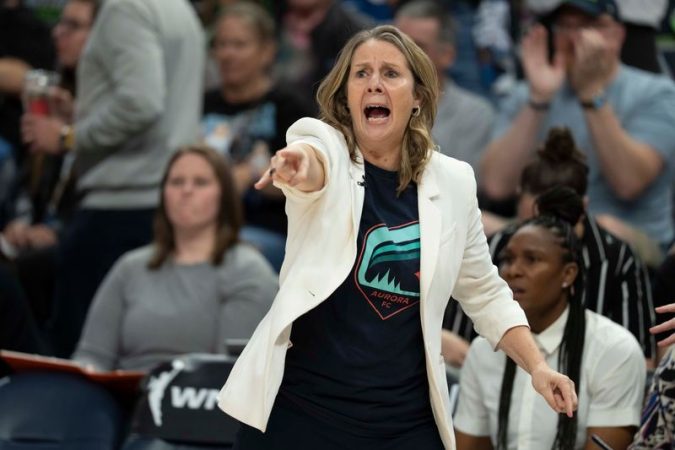
South Jersey native and former La Salle star Cheryl Reeve, longtime coach of the Minnesota Lynx who, with 379 victories, is one away from being the all-time league leader in a 17-year career, became the second WNBA mentor to gain induction.
She already is the combined leader when playoff appearances are factored.
Reeve is tied with former Houston Comets coach Van Chancellor at four WNBA titles and is in the hunt again this season. She also guided the 2024 USA Olympic team in Paris to its eighth straight gold medal.
The former high school hoops star at Washington Township was presented by one of her assistants, former Lynx great Lindsay Whelan. Among her supporters were recently retired Northwestern coach Joe McKeown, a Father Judge graduate who had Reeve as an assistant at George Washington, and Taj McWilliams-Franklin, who played for her in Minnesota and was also on the ABL Philadelphia Rage.
“She always treated everyone the same,” McWilliams-Franklin said of playing for Reeve.
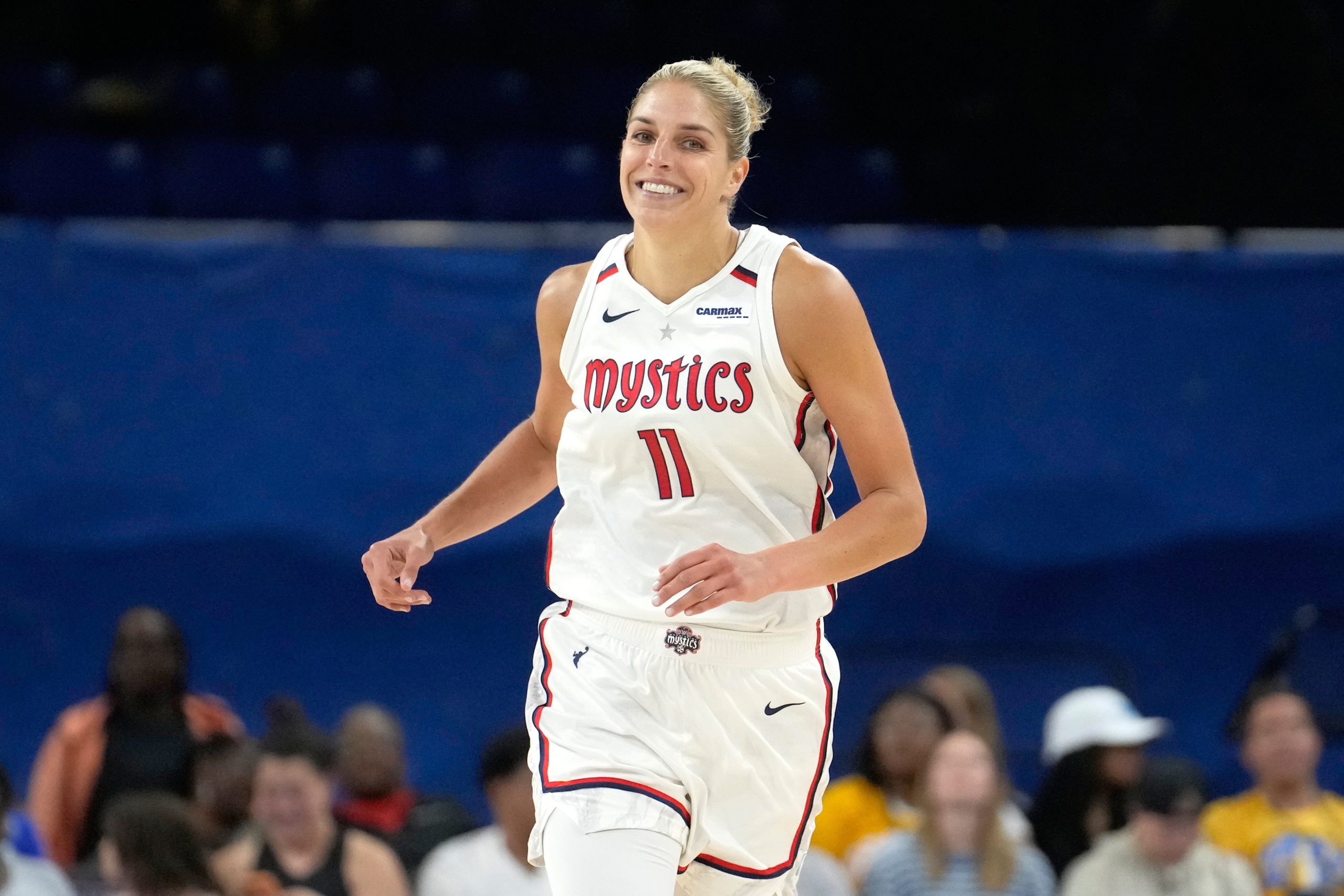
Delaware grad Elena Delle Donne, out of Wilmington, now retired and the first managing director of USA 3×3 women’s national team, was also in the class and was introduced by former Immaculata star Marianne Stanley, who was an assistant coaching her on the Washington Mystics’ 2019 WNBA championship team.
Delle Donne was the No. 2 draft pick by the Chicago Sky in 2013, earning WNBA Rookie of the Year that season. She was twice league MVP and was the first member of the 50/40/90 club in 2019, shooting 51.5% from the field, 43% from three-point range, and 97.4% from the line.
“That’s a whole season,” Stanley said of Delle Donne’s shooting accuracy.
Elena Delle Donne was a two-time WNBA MVP and Olympic gold medalist. She retired after the 2023 season.Charles Rex Arbogast
Acclaimed ESPN broadcaster Doris Burke, who could not attend but earned induction as a contributor, has lived in Ardmore since 2018. She has been a pioneering woman on NBA broadcasts besides having done WNBA and NCAA national women’s games earlier in her career as an analyst.
The late Barbara Kennedy-Dixon out of Clemson, whose husband accepted the award on her behalf, was presented by all-time Kentucky great Val Still, who lives in Palmyra, N.J.
Kennedy-Dixon, one of eight players in NCAA history with 3,000 points and 1,000 rebounds, still holds a slew of ACC single season marks. and in 1982 playing against Penn State, she scored the first basket in the inaugural NCAA women’s tourney.
Meanwhile, taking over as the Hall’s executive director this year is former Tennessee star Michelle Marciniak, known as “Spinderella” in her high school days as a point guard in Allentown, and who also played on the Philadelphia Rage at the same time as Dawn Staley.
Parker and Delle Donne are also headed for Springfield, Mass., in August as part of the Naismith inductee class as is former Tennessee notable Chamique Holdsclaw, who was Parker’s presenter.
“She changed the game,” Holdsclaw said of Parker, who then saluted likewise in her acceptance speech.
The other inductees Saturday night were Amaya Valdemoro, a former WNBA star in Houston and the first Spanish star inducted here, former Colorado star Isabelle Fijalkowski, the first French player into the WNBA, drafted in the inaugural 1997 season and whose daughter 6-foot-7 Alicia Tournebize now plays for Staley at South Carolina, and recently retired Kirkwood Community College coach Kim Muhl, who is the NJCAA leader with a 1,108-178 record and nine titles. He holds the NJCAA D-II women’s record of 39 straight wins.
One of the more opinionated individuals in the WNBA, Reeve during Friday’s media session got emotional, shedding a few tears talking about playing for Speedy Morris at La Salle and how much of his coaching she has taken with her to her career.
Taking about her high school coach Dawn Schilling, later married to Eagles star John Bunting, Reeve, who also played softball, credited Schilling for steering her to continue basketball “with more opportunities.”
In Saturday’s speech, she made references on working Immaculata coach Cathy Rush’s camps and mentioned John Miller, who also coached her at La Salle.
Reeve, who was taking a 5 a.m. flight Sunday to rejoin the Lynx at Dallas, has had her share of controversy with WNBA officials and talking about seeing some listed as inductees here, quipped “I can’t wait to get one.”
Talking about her first WNBA job as an assistant to Anne Donovan at a $5,000 salary and later with Dan Hughes and Bill Laimbeer before hired with the Lynx, Reeve said, “From 2001 until today, I ate, drank, and slept everything WNBA. I experienced teams folding, I collected unemployment, and hearing my dad wonder when I was going to get a real job.
“This game has given me a fulfilling lifetime of joy. To share the Hall with so many women’s basketball greats makes me glad I never got a real job.”
Marciniak, doing her first welcome, noted her number was retired.
“I had No. 3 before Parker, so yes my number is retired.”
Delle Donne, who had a short commitment at UConn before landing home at Delaware to be closer to her sister Lizzie, who was born deaf, blind and cerebal with cerebral palsy, brought the house down in her opening remarks, expressing the warmth she felt from Knoxville.
“I’m not sure if it’s because of this Hall of Fame honor or because I left UConn after 24 hours.”
Saluting her sister, Delle Donne was emotional, saying, “Although you can’t hear me, I hope you can feel the impact you made on me. For the challenges most people couldn’t begin to understand … you’ve shown me that the hardest battles are met head-on without self-pity.”
On her recent retirement after dealing with back issues late in her career, dealing with the pain, she decided it was time and was at peace with herself.
She described her career as “a love story, that even had a brief divorce for volleyball until I came back.”
Parker wore a suit designed as a tribute to her coach, the legendary Pat Summitt, who 10 years ago Sunday, died from complications of early-onset Alzheimer’s disease.
“My continued desire to imitate Pat and how she attacked life every day proves there’s nobody like her,” Parker said. “Though she’ll be gone 10 years ago tomorrow, she’s still leaving a lasting impact that we all can and should draw from.”
No matter where Kahleah Copper’s basketball journey takes her, she continues to carry North Philadelphia with her — even on her shoes.
The Phoenix Mercury guard and four-time All-Star debuted a custom “Norf Philly” Adidas Harden Vol. 10 player-exclusive sneaker during Wednesday night’s game against the reigning WNBA champions Las Vegas Aces.
The black-and-white shoe features “Just a kid from” on the left heel and “Norf Philly” on the right heel. Copper has adopted the phrase “just a kid from Norf Philly” throughout her time in the WNBA. It’s a nod to the neighborhood that helped shape her.
Her love for basketball started on the streets of North Philadelphia. She practiced shooting by attaching a crate to a one-way sign on 32nd & Berks Streets.
“There wasn’t a lot of opportunities for young girls to play in different leagues, so I played in a league with a bunch of guys,” she said in an interview in 2025. “The things those guys instilled in me, whether it was that toughness or that grit or just always having that chip on my shoulder because I wasn’t as strong as them … shout out the guys.”
In 2021, Copper was named WNBA Finals MVP after leading the Chicago Sky to their first championship. After winning the championship, she paid it back to her Philly roots.
“North Philly is different,” she said in a 2021 article in the Players’ Tribune. “It’s a place I love, the place where I learned how to play tough.”
The Aces won Wednesday’s game, 86-76, and Copper, who finished with 26 points, is averaging a team-best 19.3 points, 3.4 rebounds, and 1.9 assists for the Mercury (4-12), who are 13th in the WNBA standings.
Copper has joined the tradition of Philadelphia basketball stars using sneakers to show where they’ve come from. The Nike Kobe 4 Philly dropped on Jan. 1, 2009, with a color scheme of red, white, and blue to pay homage to Kobe Bryant’s hometown and the 76ers. A “Philly” Nike Kobe 4 Protro was released in 2024.
Official Look at the 'Philly' Nike Kobe 4 Protro
This "Philly" colorway pays homage to Kobe Bryant's connection to the Philadelphia area, as his father, Joe, played for the Philadelphia 76ers in the 1970s.
Rasheed Wallace, a 2004 NBA champion with the Detroit Pistons and Simon Gratz graduate, was known for wearing high-top Nike Air Force 1s.
“The strap was a Philly thing,” Wallace told the All the Smoke podcast in May 2025. “In Philly when we wear the high-top Air Force 1s, you keep the strap on the back.”
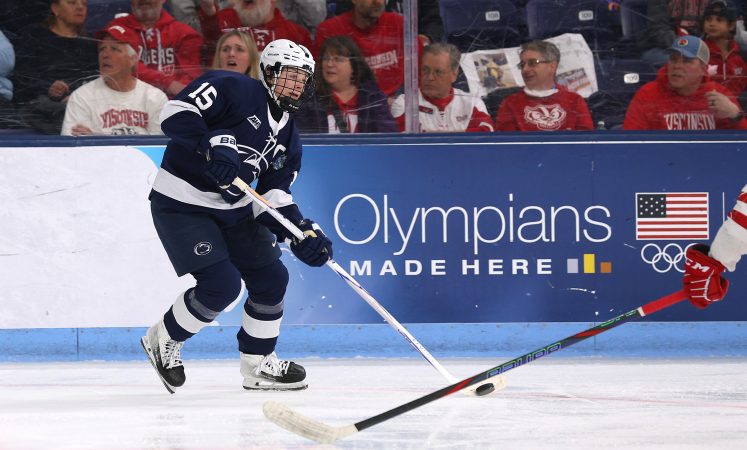
Tessa Janecke has had no shortage of big moments this year, from winning gold with the United States women’s hockey team at the Winter Olympics in Milan to playing in the Frozen Four on home ice in State College.
On Tuesday night she added another, as Las Vegas of the Professional Women’s Hockey League selected Janecke with the third overall pick of the PWHL draft.
The new team in Las Vegas was the fourth team to be announced as part of the league’s second round of expansion for the 2026-27 season, its fourth. which takes the league from eight teams to 12. Detroit; Hamilton, Ontario; and San Jose, Calif., are the other three.
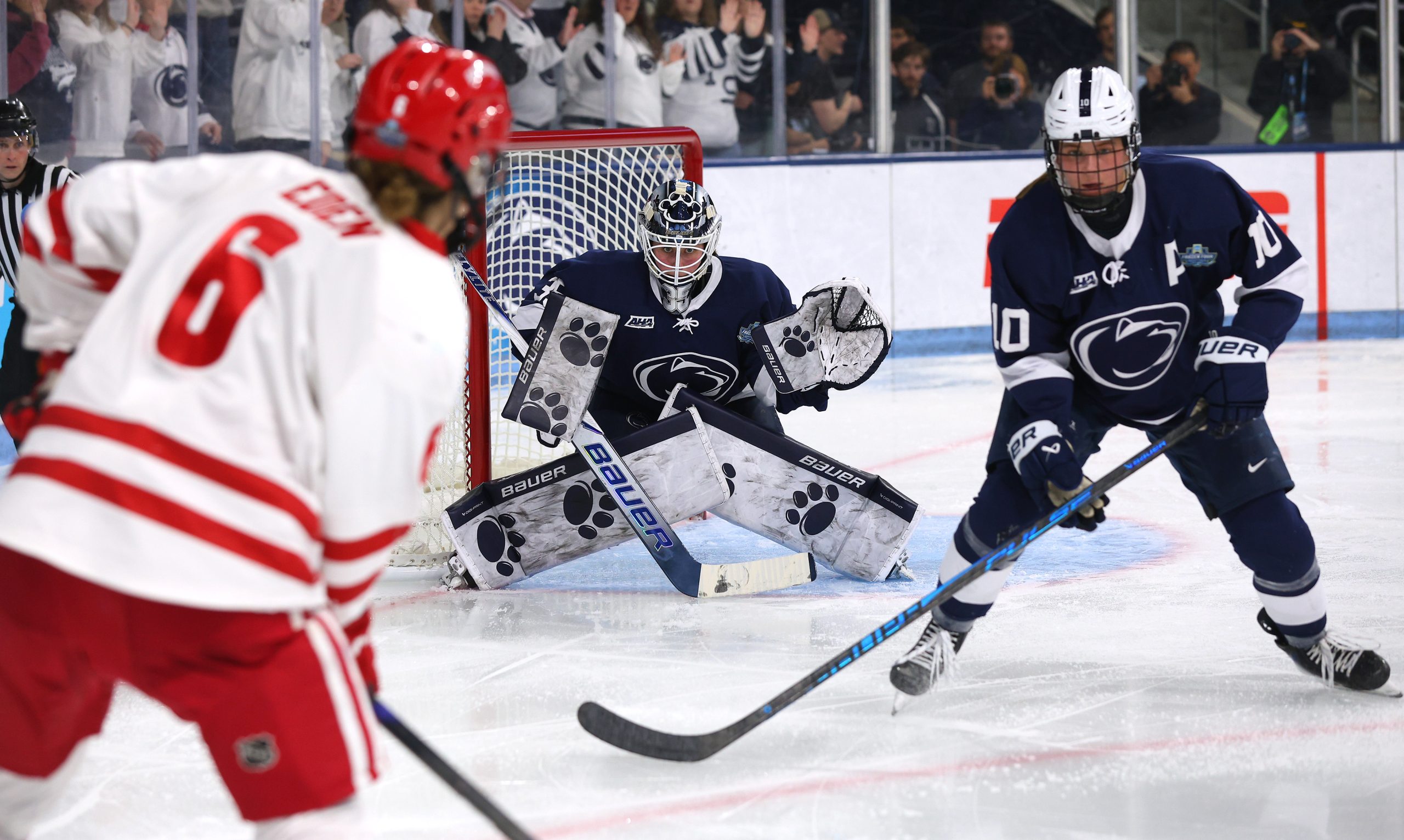
The Vancouver Goldeneyes picked Wisconsin star Caroline Harvey first overall. Minnesota’s Abbey Murphy went second to the Seattle Torrent, and Wisconsin’s Laila Edwards (San Jose) and Lacey Eden (Las Vegas) rounded out the top five.
After helping lead Penn State to its first women’s Frozen Four appearance, Janecke says she knows what it’s like to help build a program and is prepared to do the same in Vegas.
“Me and my class have kind of built that place into what it is today, and hopefully into what it continues to be, and I’m really excited to be able to do that with Las Vegas as well,” Janecke said.
Janecke added: “It takes so much hard work and adversity, even if you’re not winning games, to still make those around you feel like they belong and feel that sense of community in the team.”
As Penn State’s leading goal scorer last season with 26 goals, the 5-foot-8 forward also led the team in points (48) and finished with 201 career points, the most ever for a Penn State hockey player.
Tessa Janecke (right) finished with five assists in seven games for the U.S. women’s hockey team in the Winter Olympics earlier this year.Hassan Ammar
She also became the first Penn State athlete to win a gold medal in the Winter Olympics and had five assists in the United States’ seven games in Milan.
Janecke also played for Team USA in the 2025 IIHF World Championships, where she scored the golden goal.
The Orangeville, Ill., native was named to the Atlantic Hockey America conference first team four times and won three straight AHA player and forward of the year awards, making her the second woman in the conference to achieve that feat. She also became the first Penn State women’s player to be a top-three finalist for the Patty Kazmaier Memorial Award, given to the top women’s college player. She was a top-10 finalist the previous two seasons.
Janecke said she plans to carry her experience from Penn State to the next level.
“I think there’s an edge to Penn State that people don’t always realize,” Janecke said. “They kind of fly under the radar. Maybe that’s a good thing and a bad thing, but I think I’m going to take that 200-foot play that I’ve developed at Penn State and bring that to Las Vegas.”
Penn State representation and a local connection
Wynnewood’s Grace Dwyer, a Harriton High School graduate, also was drafted in the first round, 10th overall to the Boston Fleet.
The blueliner had 76 points (18 goals, 58 assists) during her four-year career at Cornell and was first-team All-Ivy last season. She also previously played for the Philadelphia Junior Flyers, along with Penn State’s Leah Stecker, who went 27th overall to Boston in the third round.
Stecker, one of seven Nittany Lions to be drafted — the most from any one college — was a four-year contributor and played in all of Penn State’s games over the last three seasons.
Penn State’s Katie DeSa (35) and Leah Stecker were selected Wednesday in the PWHL draft.Craig Houtz / For The Inquirer
The Randolph, N.J., native finished her career with 57 points (12 goals, 45 assists), but was most productive in the defensive zone, with 83 career blocks.
Maddy Christian, an Elk River, Minn., native, also was drafted in the third round to her hometown team, the Minnesota Frost. She had 84 points (46 goals, 38 assists) and 86 blocks in four seasons at Penn State.
Goalie Katie DeSa was drafted with the first pick of the fourth round by the Goldeneyes after finishing her career with the most shutouts in program history (25). She also was AHA Goaltender of the Year in back-to-back seasons and had a career .932 save percentage.
Forward Katelyn Roberts was taken 43rd overall in the fourth round by the New York Sirens. She scored a career-best 16 goals as a senior and set a program record for most single-season game-winning goals (seven), which was tied for the second-most nationally. She is one of six players in program history to record at least 100 career points.
In the fifth round, Kendall Butze joined Janecke with Las Vegas. Butze was named the AHA’s best defensemen in back-to-back seasons and is Penn State’s all-time leader in points by a defenseman (94).
Hamilton, one of the other expansion teams, nabbed Mya Vaslet in the sixth round (66th overall). Vaslet, who’s from Sittsville, Ontario, finished with 60 points (30 goals, 30 assists) in 149 games with the Nittany Lions.
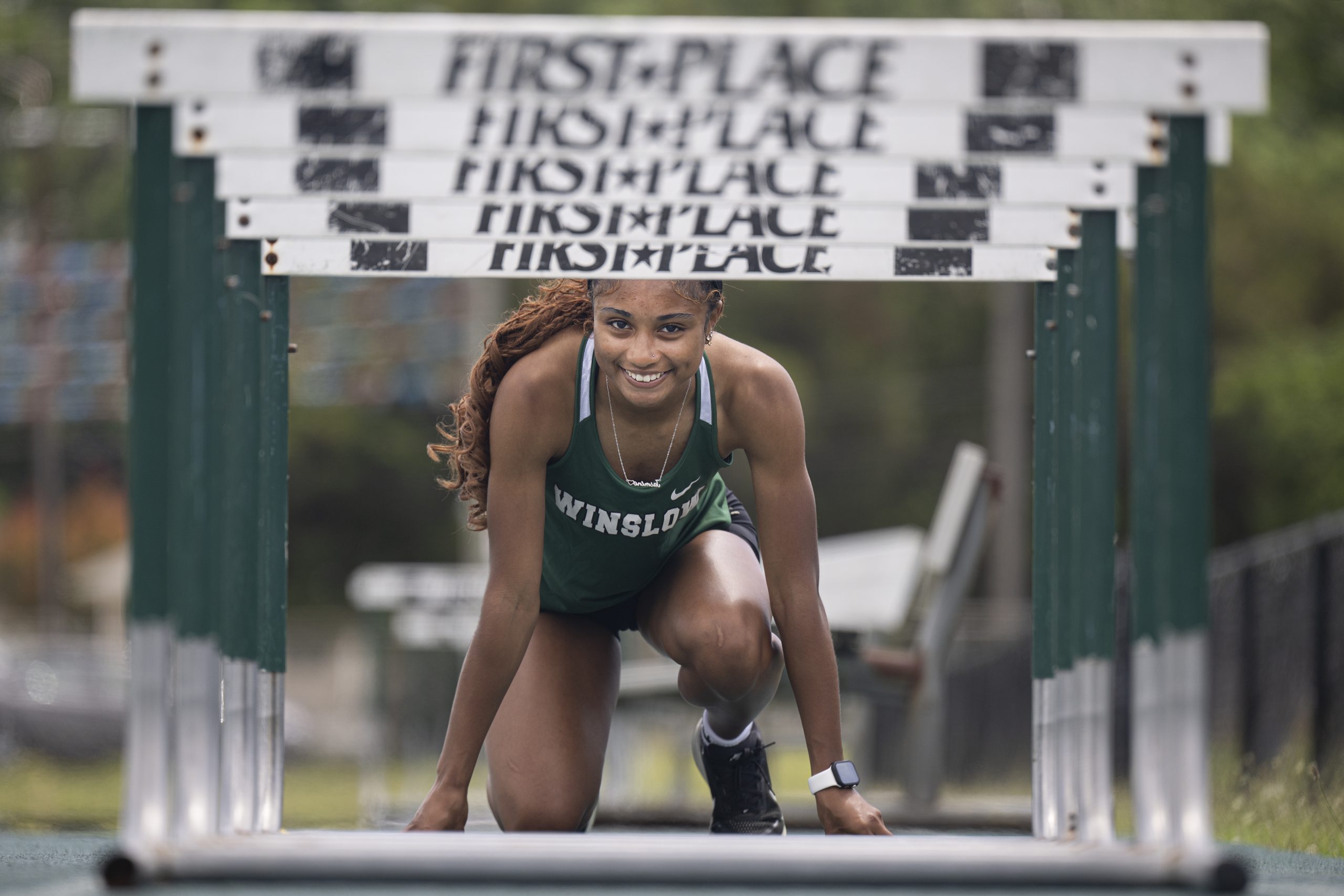
Jasmine Jackson sat on her couch at her home in Winslow Township, watching a broadcast of the nation’s fastest high school hurdlers competing at the 2025 Brooks PR Invitational. As she watched, she made it her goal to be on that track, competing in the race.
After a year of training and dropping time, her invitation arrived in the mail, making her the first athlete in Winslow Township history to earn a spot in the prestigious event.
“It was a big accomplishment when I got the invitation,” she said. “I was ecstatic. To know I was the first to do this showed it was a stepping stone to something even greater.”
And something greater came at this year’s Brooks PR Invitational on June 7 in Renton, Wash.
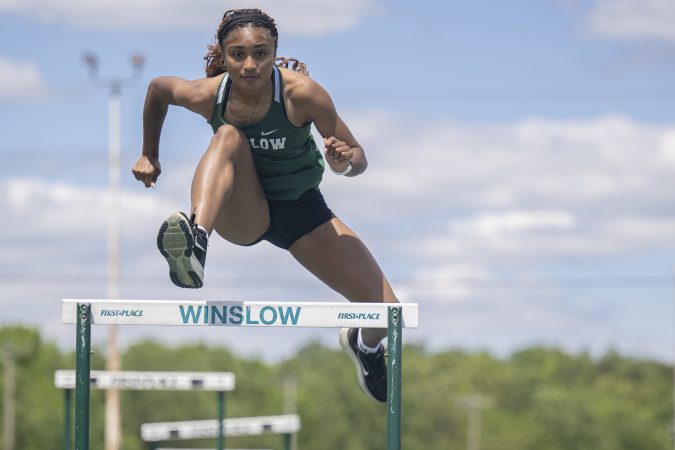
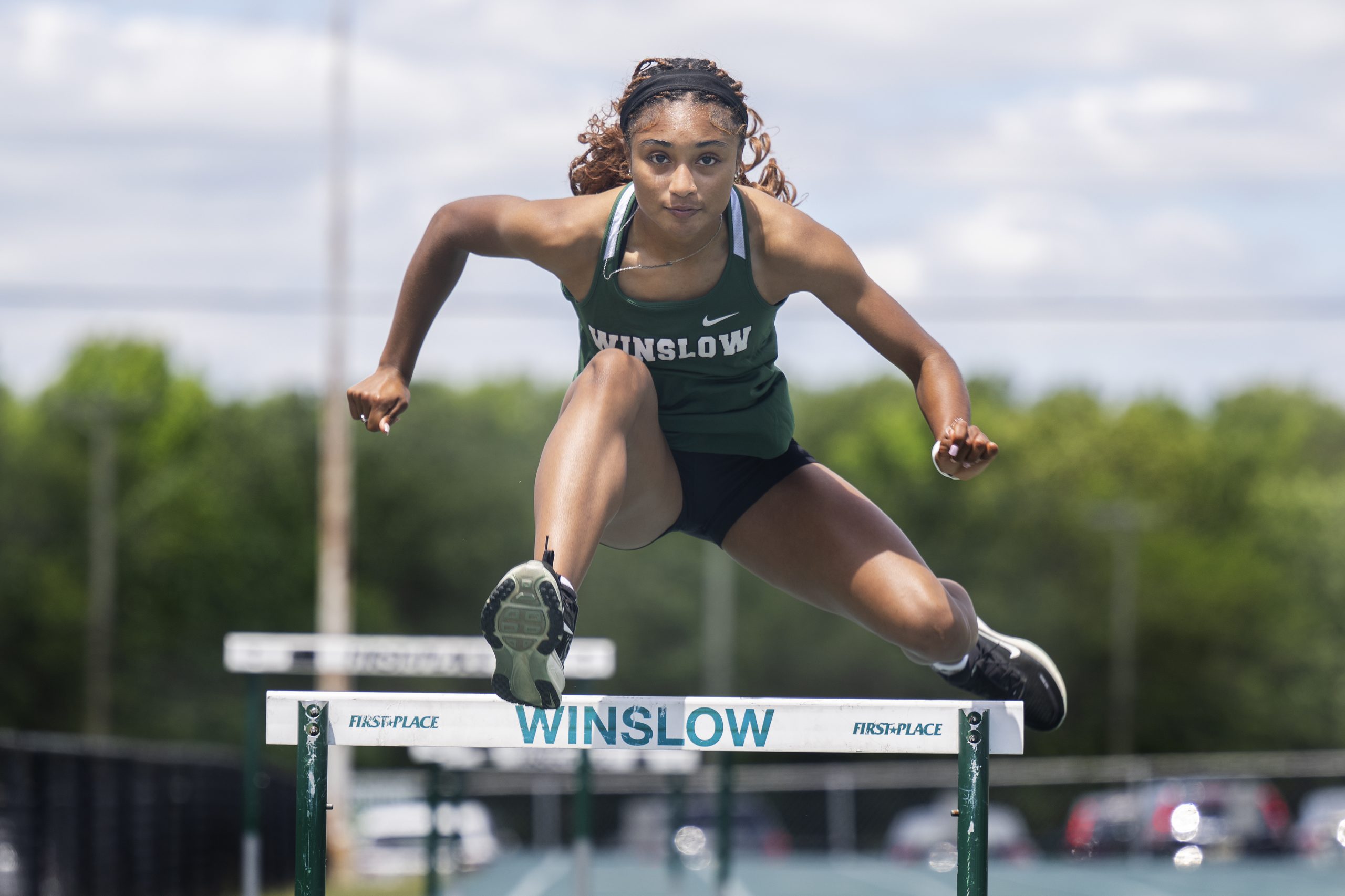
The Winslow Township High School sophomore claimed the 100-meter hurdles title with a time of 13.33 seconds. It came days after winning the New Jersey Meet of Champions and running a personal-best 13.28 seconds.
Jasmine Jackson set a personal record in the 100-meter hurdles at the New Jersey Meet of Champions.Jose F. Moreno / Staff Photographer
Her personal record currently ranks No. 3 in state history, No. 3 all-time on the wind-legal list for sophomores, and No. 3 in the nation this season. Jackson continues to climb the ranks as one of the nation’s fastest hurdlers and wants to accomplish more.
Her love for hurdling began at a young age. Jackson grew up going to the track with her dad, Tyree Jackson, who was a sprinter and relay runner at Camden High School and Rowan. He is now a track-and-field coach at Pennsauken.
When she was 5, she saw a hurdle on the track and asked her dad if she could try to jump over it. Tyree initially said no, worried she might hurt herself, but she persistently asked, so he finally gave in.
She cleared the hurdle with her right leg leading and left leg trailing, the form she still uses today.
“It was perfect,” Tyree said.
Starting out, however, he wasn’t convinced that hurdles would become her event.
“There were a lot of times where I thought that maybe hurdles weren’t for her because she was too timid and scared to actually run through the hurdles,” he said.
Tyree scoured the internet for drills and training ideas to help his daughter develop as a hurdler. His former teammates offered advice on technique and form, and they soon progressed from wickets to smaller hurdles. She joined Winslow Elite Track and Field at age 8 to keep improving.
By 14 years old, Jasmine broke the national record for the 100-meter hurdles with a time of 13.72 seconds at the 58th AAU Junior Olympic Games in Greensboro, N.C. That race gave her a newfound confidence.
“That race pushed her over the edge as far as her demeanor and her confidence level because in order for her to win and break the record, she had to beat some really talented athletes she had never beaten before,” Tyree said.
And as her confidence has grown, her times have dropped.
Part of that growth has come from racing against the nation’s best, including one of her biggest competitors, Nia Armstrong from Tampa, Fla. The hurdlers have developed a friendly rivalry over the years since they typically compete in the same races and push each other to faster times.
“Whenever those two compete against each other, it’s like I don’t care who else is on the track, the race is going to be between them,” Tyree said.
Before the Meet of Champions earlier this month, Jasmine was nervous. The meet featured the toughest competition she faced all season. But as she set up on the line, she reminded herself that she belongs here and is built for the moment.
“I just tell myself I’ve been here before. It’s just a track. I know how to run. I know how to hurdle. I know what I’m capable of,” she said. “I believe in myself, I’m ready for this moment, and not to let an opportunity pass by because you might not get it again.”
Developing self-belief in a mentally challenging sport, Jasmine says, has been one of her biggest areas of growth.
“She’s always been good. She just didn’t have the confidence to know that she’s good,” said Shawnnika Brown, Jasmine’s high school coach. “Now, she is running with a purpose.”
That purpose is reflected in her daily routine. Jasmine trains with her team after school, goes to the gym to lift weights, and does additional hurdle sessions with her dad on the weekends.
Having Tyree as her coach has also been an important part of her success.
“I try not to let the coach interfere with the father,” Tyree said. “I’ve learned how to talk to her and get her motivated to the best of my ability without her being upset with the father.”
After Jasmine won at Brooks, Tyree let his daughter enjoy the moment before turning their attention to the next race.
“She knows I’m going to focus on the flaws first before I celebrate her and give her roses because I sometimes have to be the coach first and then dad second,” he said.
That approach is shaping one of the nation’s fastest high school hurdlers, but Jasmine’s goals go beyond state titles and national championships.
Jasmine Jackson will compete at the New Balance Nationals at Franklin Field this weekend.Jose F. Moreno / Staff Photographer
“The ultimate goal is to go to the Olympics,” Jasmine said. “Knowing I have that goal in mind, no matter how I feel, I know I have to work for it. It’s not going to be given to me. I have to earn it.”
For now, the 15-year-old can check the Brooks PR Invitational off her list. Up next is the New Balance Nationals running until Sunday at Franklin Field. Jasmine will run the 100-meter hurdles and 4×400-meter relay championship. She is looking to earn her first national title at the event.
“I’m tired of being second at this event,” she said, laughing. “I’m going up against pretty tough girls, so it’s going to take a lot to win. I believe I can do it if I put my mind to it.”
NEW YORK — The WNBA is expanding its schedule to 50 games per team next season — the most in the league’s 30-year history.
The new collective bargaining agreement that was ratified earlier this year allows the league to play up to 50 games for the next two seasons. There can be up to 52 regular-season games in 2029 and for the rest of the CBA.
“Demand for the WNBA has never been greater, and expanding to a 50-game regular season reflects the extraordinary momentum we are seeing across the league,” WNBA commissioner Cathy Engelbert, a Collingswood native, said in a statement.
“This move reflects our commitment to growing the game and creating more opportunities for fans to watch the best players in the world and experience the extraordinary talent and competition that define the WNBA.”
The league is playing 44 games again this season. Over the next few seasons, the WNBA is adding three new teams through expansion. Cleveland is joining in 2028, Detroit in 2029, and Philadelphia in 2030. Connecticut is moving to Houston next year.
When the league first started in 1997, teams only played 28 games. That’s grown over the past three decades with the exception of 2020 and 2021 because of the COVID-19 pandemic.
Engelbert has said she’d love to play games overseas starting next season. The league expanded its footprint to Canada this year with the addition of the Toronto Tempo — the first WNBA franchise outside of the United States.
The WNBA has added a lot of new TV and streaming partners over the past few years including ION, USA Sports, NBC, and Amazon to go along with ESPN and CBS.
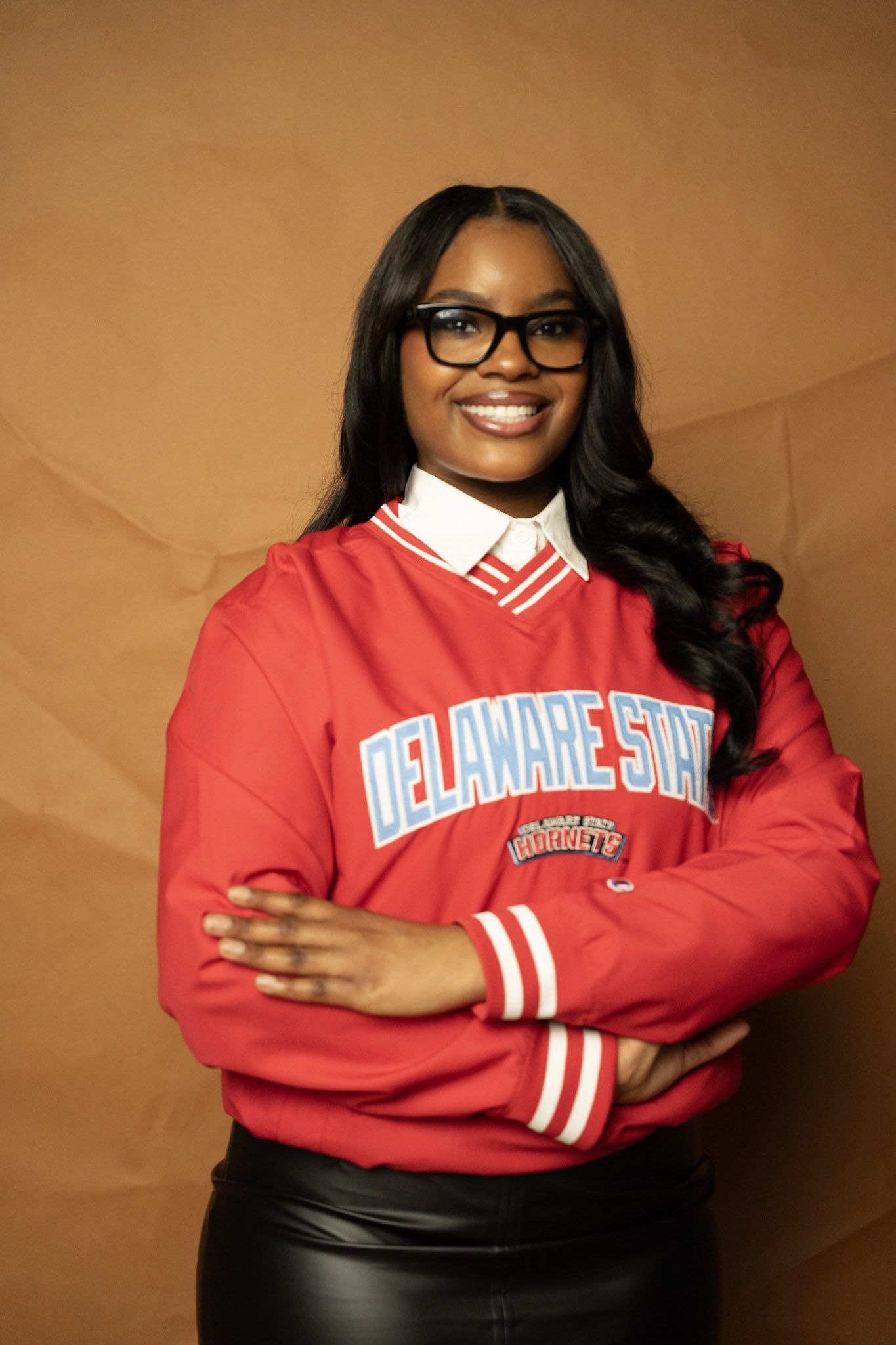
Coming from a single-parent household, with another sibling already in college, 20-year-old Philadelphia native Tommi Crump knew she would need a lot of scholarships if she wanted to attend Delaware State.
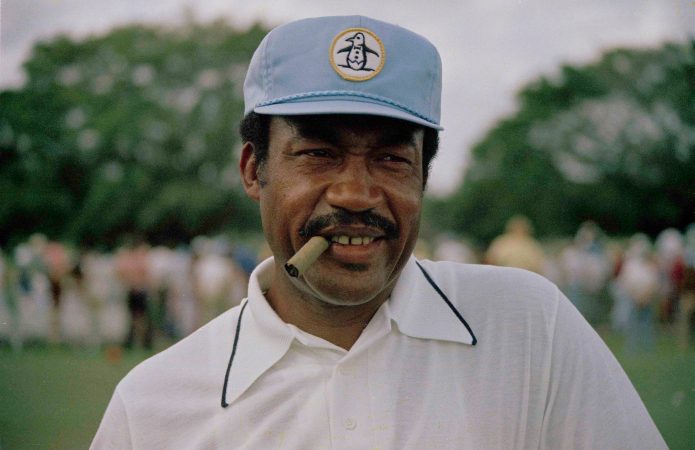
So, one day, her mother, Erika Wines, sent her a social media post about the Charlie Sifford Scholarship Fund. Crump applied for and received the $5,000 scholarship before her freshman year in 2024 and earned it again this year. The fund was created to honor Sifford, a trailblazing golfer who got his start at West Philadelphia’s Cobbs Creek Golf Course, and help fund college costs for students attending historically Black colleges and universities or for students focusing their education on a golf management program.
“It truly made a great impact on me and helped me out a lot financially because attending an out-of-state HBCU is very expensive,” said Crump, who’s majoring in preveterinary medicine. “And my mom definitely doesn’t have the funds to provide $40,000 a year for me to attend school. So it really means a lot that someone is gracious enough to provide me with financial aid support.”
Philly native Tommi Crump, a junior at Delaware State, is a 2026 Sifford Scholar.Sifford Scholars
Sifford is known as the Jackie Robinson of golf and was the first Black person to play and win on the PGA Tour. His perseverance helped many other young golfers make their way onto the course, including his protégé, Tiger Woods.
“He faced a lot of obstacles that could have discouraged a lot of people,” said Houston native Lourraine De Luna, another 2026 Sifford Scholar.“But he continued forward, changing the landscape of his sport. I’m also an athlete, so his story reminds me of true leadership that isn’t just about personal success. It’s about creating opportunities for those who come after me. It’s the kind of legacy I hope to leave as well.”
As a sophomore soccer player at Lincoln University, De Luna, 19, is a first-year recipient of the award. Before applying for the scholarship, she already knew of Sifford’s legacy from her father, Alfred Quarles, a huge fan of the golfer. De Luna also is interested in golf and has volunteered at her aunt’s golf tournament, the DMP Servant’s Heart Charity Golf Classic, in Houston.
“Receiving this scholarship is an incredible honor because it connects me to a legacy bigger than myself,” De Luna said. “His impact continues to grow and inspire people every day, and I’m grateful to be carrying his legacy forward.”
Lincoln soccer player Lourraine De Luna also is a 2026 Sifford Scholar.Sifford Scholars
De Luna and Crump are two of 12 scholarship recipients.
The Sifford Scholarship Fund was founded in 2022, during Sifford’s centennial year. Sifford, a Charlotte, N.C., native who moved to Philly as a teenager and lived there for nearly two decades, died in 2015 at age 92.
Each tournament did something to celebrate Sifford’s centennial year. But organizers of the Hartford Open, now known as the Travelers Championship, wanted to do something more to honor his legacy. Sifford’s first PGA Tour win came at the 1967 Hartford Open.
“They were the catalyst for starting the scholarship fund and they are the inaugural donor,” said Russell Crockett Jr., the managing partner of Just Let Me Play LLC, which manages Sifford’s estate. “They had a golf tournament on the golf course Charlie won the tournament on as a fundraiser for our scholarship fund. But, one of the criteria as part of a scholarship is that we had to have an already established foundation in order to manage the funds.”
That’s where the Cobbs Creek Foundation comes in. The foundation is a nonprofit focused on restoring the Cobbs Creek Golf Course, which is known as the “great uniter,” welcoming everyone to enjoy the game of golf, including Sifford, who called it his “home course.” In addition to its driving range, learning facility and nine-hole short course, the complex recently opened the Little Horse Tavern, named in honor of Sifford.
“This is where [my father] got his first start after experiencing what it was like to be a Black golfer in the segregated South,” Charles Sifford Jr. said at a Cobbs Creek event in April. “He began to see what might be possible. Even when opportunities were limited because of his skin color.
“Cobbs Creek is more than a golf course. It’s a place of community, a place to play and compete, and a place to belong. I love the fact that not only is the golf course being restored to its original routing. It brought back its original purpose — a place where all Philadelphians can come and enjoy.”
That connection made backing a scholarship to benefit HBCU students a no-brainer.
“It was a natural thing for us,” said Enrique Hervada, the chief operating officer of the Cobbs Creek Foundation. “We met Russ Crockett and Charles Sifford Jr., and they were looking for some help to get the foundation started. So we became their fiduciary for them.
“We try to support them however we can. It’s very rewarding for us at the foundation, the Cobbs Creek Foundation to see real things come out of the work we’ve done. We’re helping a lot of kids here as well, but as far as the Sifford scholarship, we’re thrilled to be a part of it. We think it’s a great mission and something we certainly believe in and are happy to help with.”
Nearly 9,000 miles from home, Gianna Vadino’s Philly presence could still be spotted in the middle of the ring.
Last month, Rajadamnern Stadium in Bangkok, one of Thailand’s oldest and most famous Muay Thai arenas with a capacity of 8,000, was full of mostly Thai fans rooting for their nation’s fighter, Petchmai Sor. Pracha.
But from the crowd, a few Americans cheered for the underdog Vadino, a 35-year-old Philly resident making her professional debut.
“It was very comforting because I was waiting to walk out, and I was getting super nervous,” said Vadino, who was born in Washington Township but has lived in Philly since 2009. “I’m not from here. I’m from America. Everybody’s betting against me. And then random Americans would walk by and tap me on the shoulder like, ‘You got this.’ And as silly as it is, I was way more comfortable knowing that there were actually people who were rooting for me.”
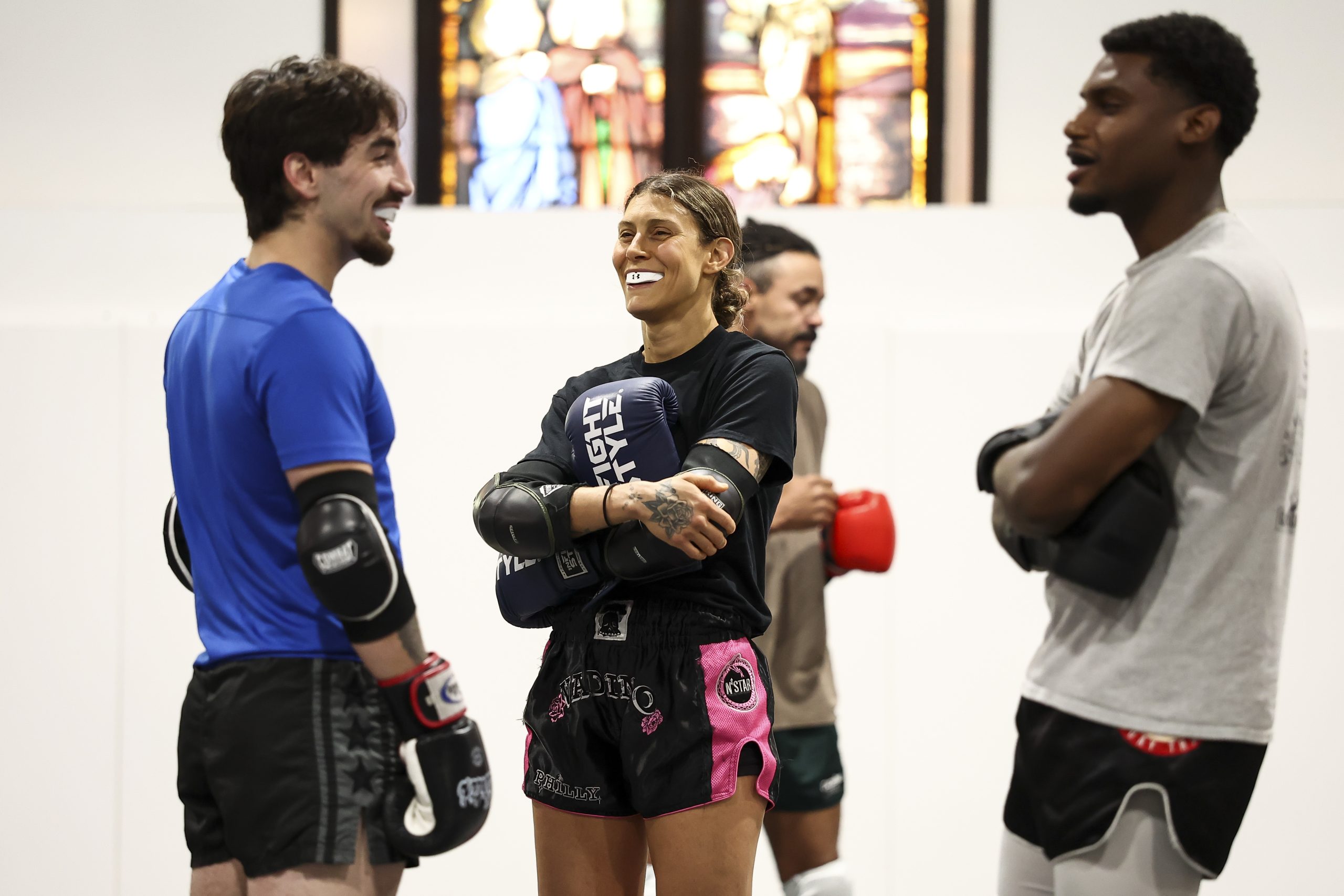
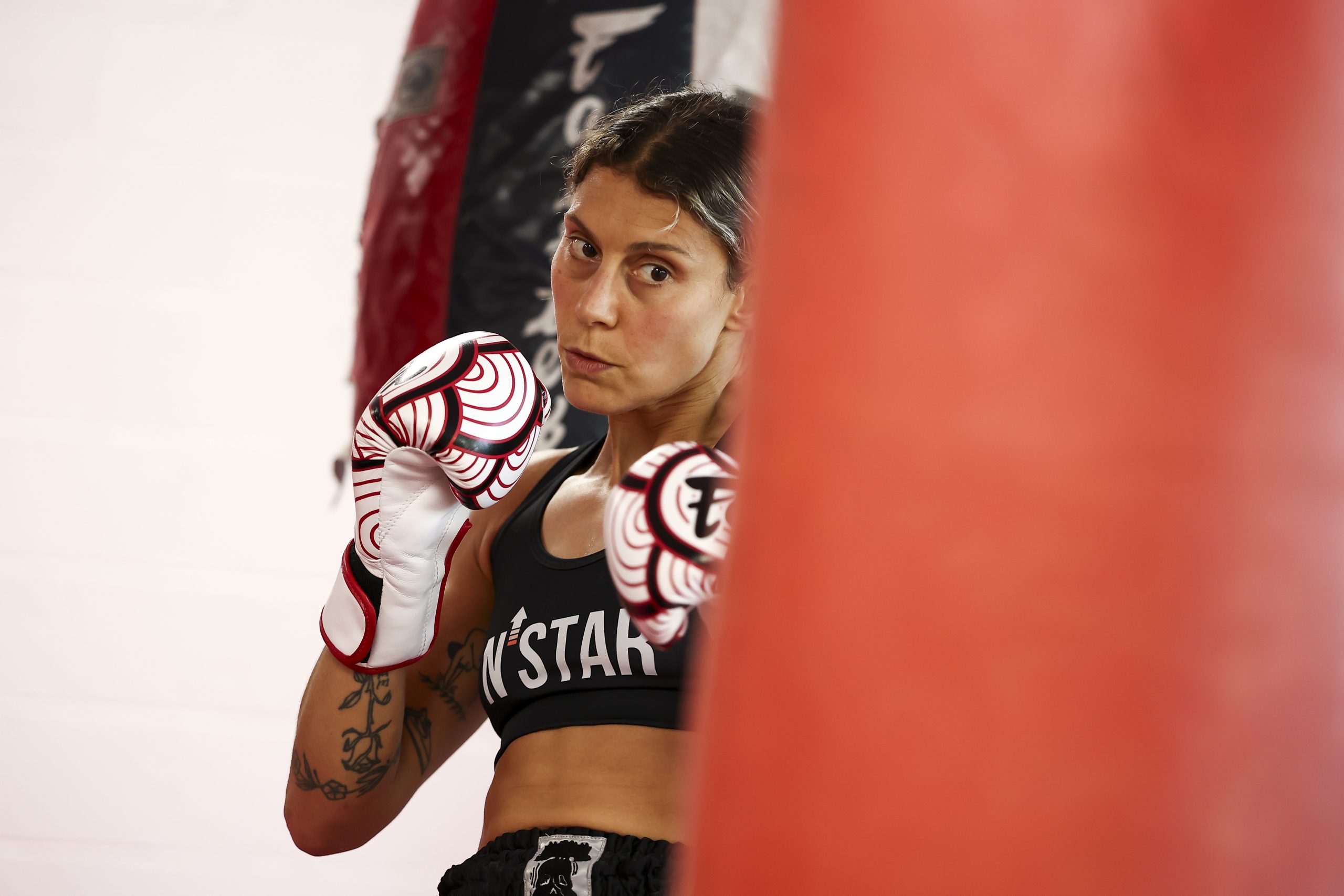
Muay Thai fighter Gianna Vadino (center) laughs during a workout Tuesday at the North Star Academy.Monica Herndon / Staff Photographer
Vadino ended the night with a win, improving to a 26-2 overall record — and, more importantly, 1-0 as a professional — after defeating Petchmai by decision. Following her win, some of the American fans who were cheering for Vadino made their way over to congratulate the Philly underdog.
“I was standing outside of the stadium after I fought, and this family was like, ‘Are you from Philly?’ And I was like, ‘Yeah, why?’” said Vadino, who now lives in Roxborough after 15 years in South Philly. “They were like, ‘We’re from South Philly.’ I was like, ‘That is so weird. Like, why are you guys here?’”
Apparently, it’s not hard for Philly to spot its own — especially when it comes to fighting.
“The way that I fight is very — I’m kind of like a bully,” Vadino said. “I put a lot of pressure on people. I brute-force my way through things if technique isn’t working. … It’s not always the best idea. But that’s what I do. So I do feel like there’s some South Philly in that for sure.
“I’m not going to deal with people’s s—. I’m just going to get the job done no matter what I need to do.”
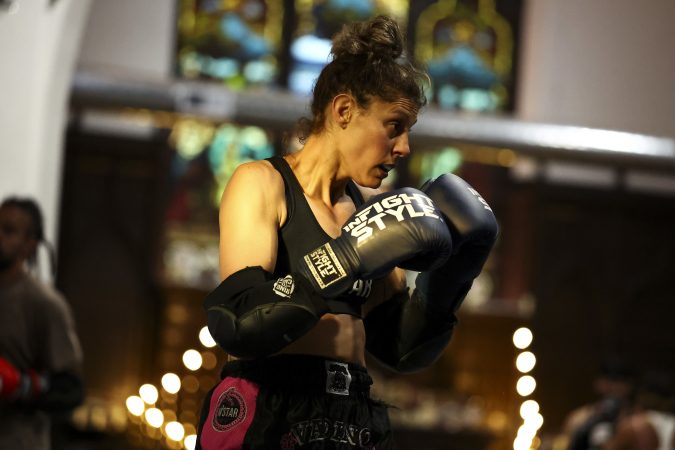
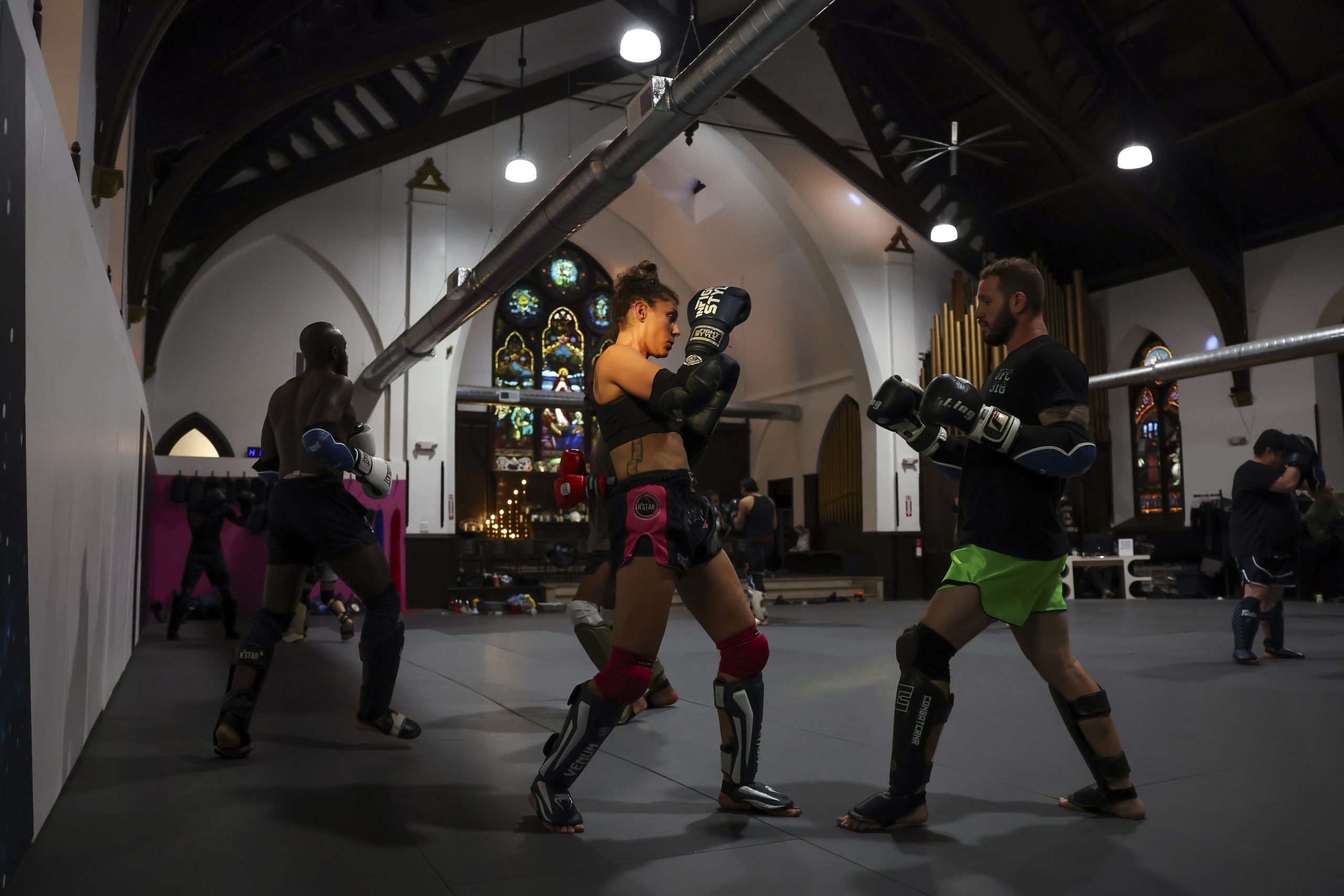
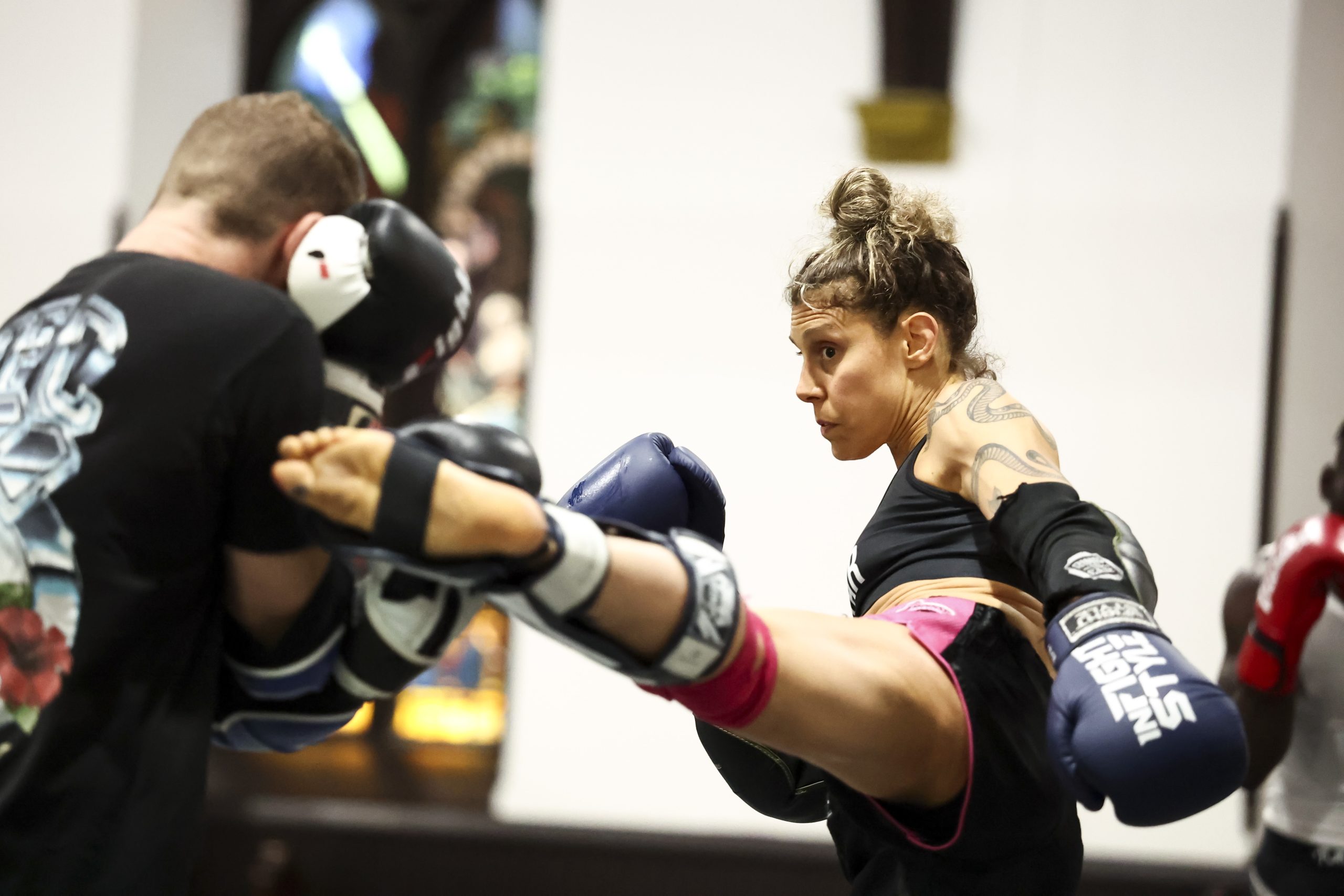
Muay Thai fighter Gianna Vadino spars with Timmy Green (right) at the North Star Academy.Monica Herndon / Staff Photographer
‘Unbreakable consistency’
That mindset has stayed with Vadino since her days playing soccer, basketball, and lacrosse as a child. But once she enrolled in the University of Arts, her active side took a bit of a backseat.
“I was like, ‘I guess I’ll start running,’” Vadino said. “And then I just subconsciously craved that team aspect, and I didn’t really know it. And then once I started doing Muay Thai, I kind of got that fix.”
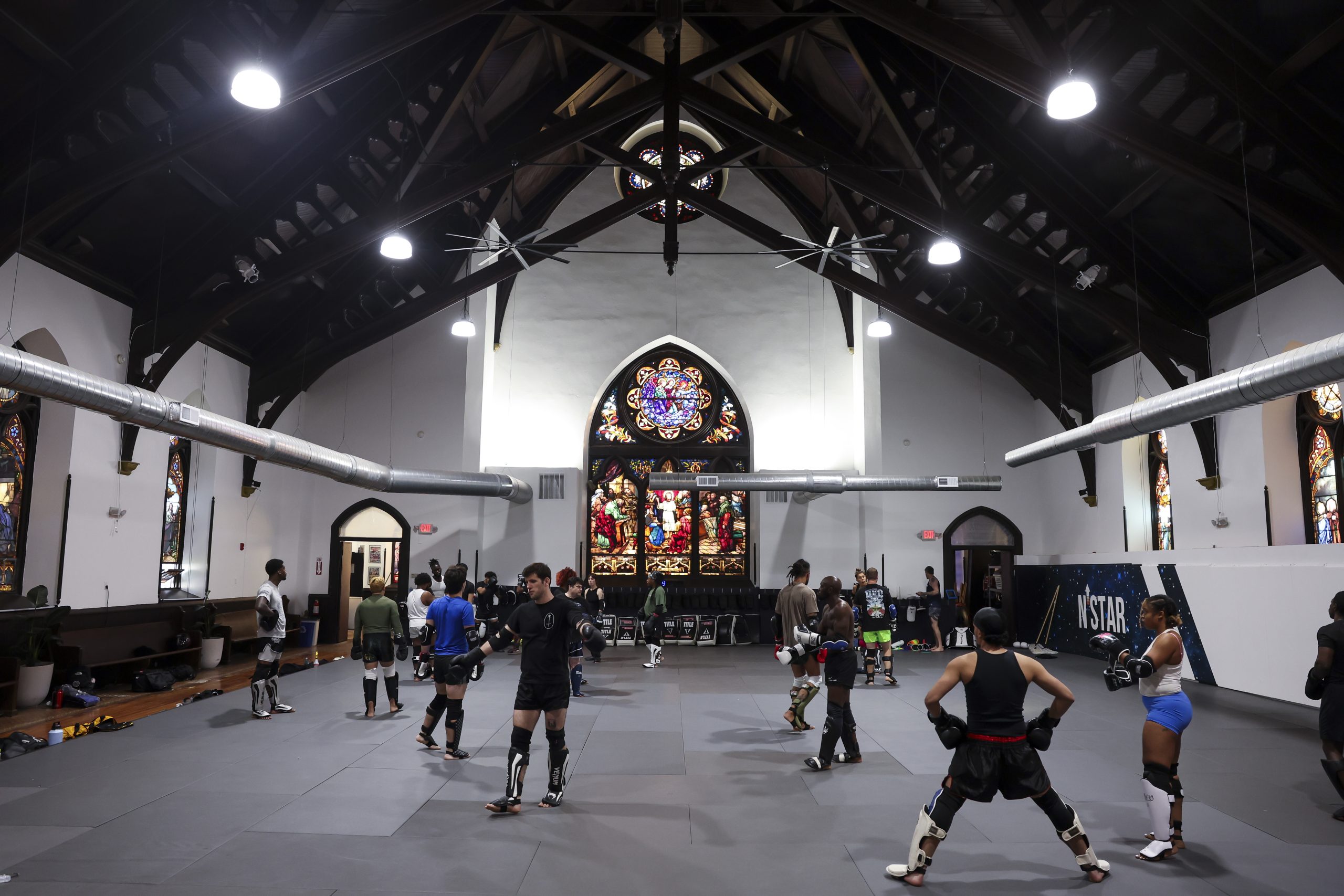
Vadino started practicing Muay Thai in 2017 at 27 years old. Four years later, she began to compete, fighting out of Germantown’s North Star Academy. From the gym run out of the former St. Michael’s Evangelical Lutheran Church, she has gone on to become a five-time international champion and a 13-time national champion as an amateur.
“The one thing that makes her exceptional is that she just normalizes things that are pretty extreme,” said Jackson Galka, her Muay Thai coach and the owner of North Star Academy. “And I think that’s the secret to her success. It’s just a solid routine and unbreakable consistency.”
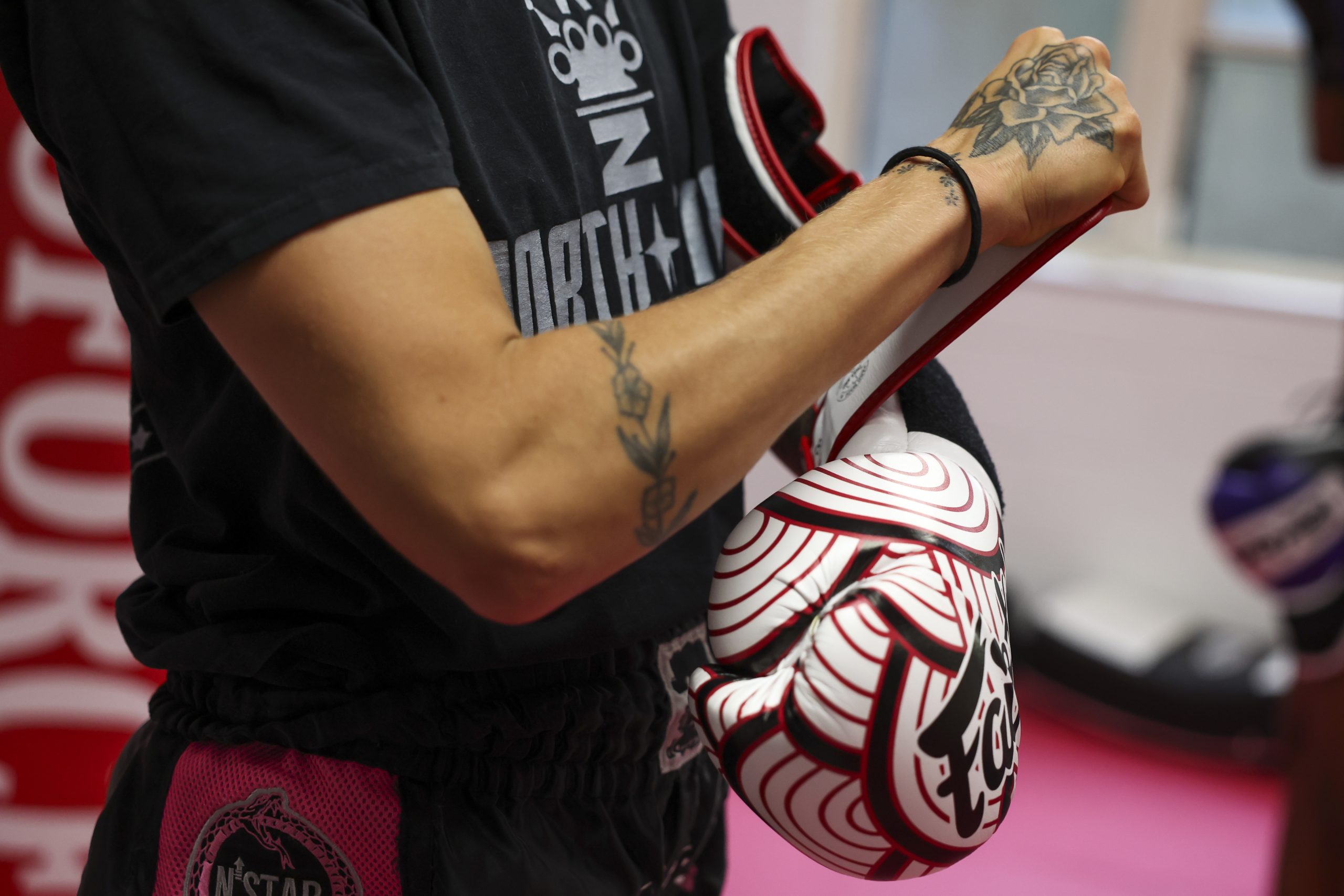
Some of Muay Thai fighter Gianna Vadino’s championship belts on display at the North Star Academy on Tuesday.Monica Herndon / Staff Photographer
Despite her success, a defining moment in another discipline shaped Vadino into the fighter she is today. Before devoting herself full-time to Muay Thai, Vadino made her MMA debut in 2024. After suffering a knockout loss, she reevaluated her career.
“I think that was the biggest [setback],” Vadino said. “A lot of people were hopeful that MMA was the path for me. It was just a s— experience. I felt depressed. And I decided MMA wasn’t for me. It wasn’t just because of the knockout. It was the environment and the air around it and the culture. It’s very cutthroat. It’s more mean and showy. And Muay Thai is just a very respectful sport. You look at your opponent as if you’re thankful for them. There’s just an incredible level of respect.”
But competing strictly in Muay Thai came with its own issues. For one, Vadino had a hard time finding pro fights in the U.S.
“I’ve been trying to get a professional fight for a couple years in the U.S.,” Vadino said. “And it’s really tough because there’s not a lot of women doing it in general. And there’s not a lot of women doing it at a professional level. So it tends to be that you have to just go abroad in order to fight professionally.”
Muay Thai fighter Gianna Vadino wants to fight a pro bout in the U.S. but her discipline isn’t very common here.Monica Herndon / Staff Photographer
‘She hunted the competition to extinction’
As Vadino continued to search for a pro fight in the United States, Galka recommended that she return to Thailand. She briefly competed there nearly two years ago, following her MMA debut, in an International Sports Kickboxing Association tournament.
“There’s not a huge pool of women at her weight and experience in the United States,” Galka said. “So she kind of like mounted the heads of everyone on her wall. She’s hunted the competition to extinction in the United States. So it’s like, ‘All right, well, what are we going to do?’”
To help with the booking, Derek Kenney, the owner and head coach of Burning Spirits, a gym in Fishtown, put her in contact with a coach from Sityodtong Muay Thai Camp in Thailand. Eventually, they booked her first pro fight.
She trained in Thailand for two weeks, taking a break from her job as a creative studio manager at Ollie.
“Thailand is like a whole other level,” Vadino said. “The main difference is the structure of classes and conditioning. In Thailand, they do much more conditioning, and everything is outdoors. It’s like 100 degrees, you’re running miles, and you’re drenched in sweat.
“But Thailand has the best fighting culture. They just have a different outlook on fighting. In America, people worry about their records, they say no to fights, or hear, ‘We need eight weeks to prepare’ for something. But, in Thailand, they’re like, ‘Whatever. I just fought; I’ll fight again in two weeks.’ The attitude is different.”
After two sessions a day, training nearly six hours for six days a week, Vadino was ready for her fight at the Rajadamnern Stadium.
“It’s the biggest stadium in Thailand, and I feel like it’s just a dream for anybody to be able to fight there,” Vadino said. “So the fact they got me on a card that was in that stadium was just like nuts in itself. So I think I was more excited and nervous over that aspect vs. the pro aspect of it.”
Muay Thai fighter Gianna Vadino trained in Thailand for two weeks before her first pro fight.Monica Herndon / Staff Photographer
‘Muay Thai is an art’
Ahead of her win in Thailand, Vadino decided to add some new ink to her collection: a bamboo tattoo of two tigers on her back.
“I find myself always wanting or getting something new after I’ve had a fight,” Vadino said. “I feel like there’s something there, some sort of transformation that I go through both mentally and physically. And getting a tattoo is a bit of an outlet. It signals the end of that fight journey. It’s just like a collection of art on my body.”
Vadino has 20-30 tattoos, including a snake, designed by her husband Dan Kelso, a tattoo artist, on her upper arm. As an alumna of the University of Arts, which abruptly closed in 2024, and former photography intern at The Inquirer (2011), Vadino has always stayed in touch with her artistic side.
“Before I started doing martial arts on the side, I would do photoshoots for myself or I was into bookbinding stuff,” Vadino said. “And once I started fighting, I didn’t feel the need to do it. And I feel like that’s because Muay Thai is an art. It’s a martial art; there’s a creative outlet in there and I feel like that’s kind of scratching that itch for me.”
Vadino isn’t alone in making the transition from art school to professional fighter. Former UFC lightweight and current commentator Paul Felder is a 2008 UArts graduate who replaced his love of the theater with an octagonal stage. Later in his career, however, the South Philly native returned to acting, including a cameo in It’s Always Sunny in Philadelphia and, more recently, a recurring role on HBO’s Hacks, in which he brought his UFC skills to the screen.
What’s next for Muay Thai fighter Gianna Vadino? Here, she spars with Timmy Green (left).Monica Herndon / Staff Photographer
What’s next?
Typically in Thailand, most fighters are ending their Muay Thai career at around 27 years old. But for Vadino, 27 was just the start. Now, nearly 10 years later, she’s won her first professional fight and plans to continue her journey.
“I want to fight for as long as I can,” Vadino said. “As long as my body will allow me to. I feel great right now, so, hopefully, that keeps going. I’ve technically fought pro and probably shouldn’t fight any amateur fights anymore. But Freedom [Fighter] Promotions asked me to defend my belt in Philly in September. So I might do that. Ideally, the goal is to only fight pro. But I just don’t know how realistic that is.”
Vadino defeated Jordan Smelker by TKO in December 2025 to win the promotion’s lightweight USA championship. September would be Vadino’s first time defending that title.
“To be honest, I’ve gone further than I ever thought that I would in this sport,” Vadino said. “I had no idea that I would even be able to call myself a professional Muay Thai fighter. That’s insane. So I should just be happy with where I’m at.”
Gianna Vadino sees Muay Thai as a creative outlet.Monica Herndon / Staff Photographer