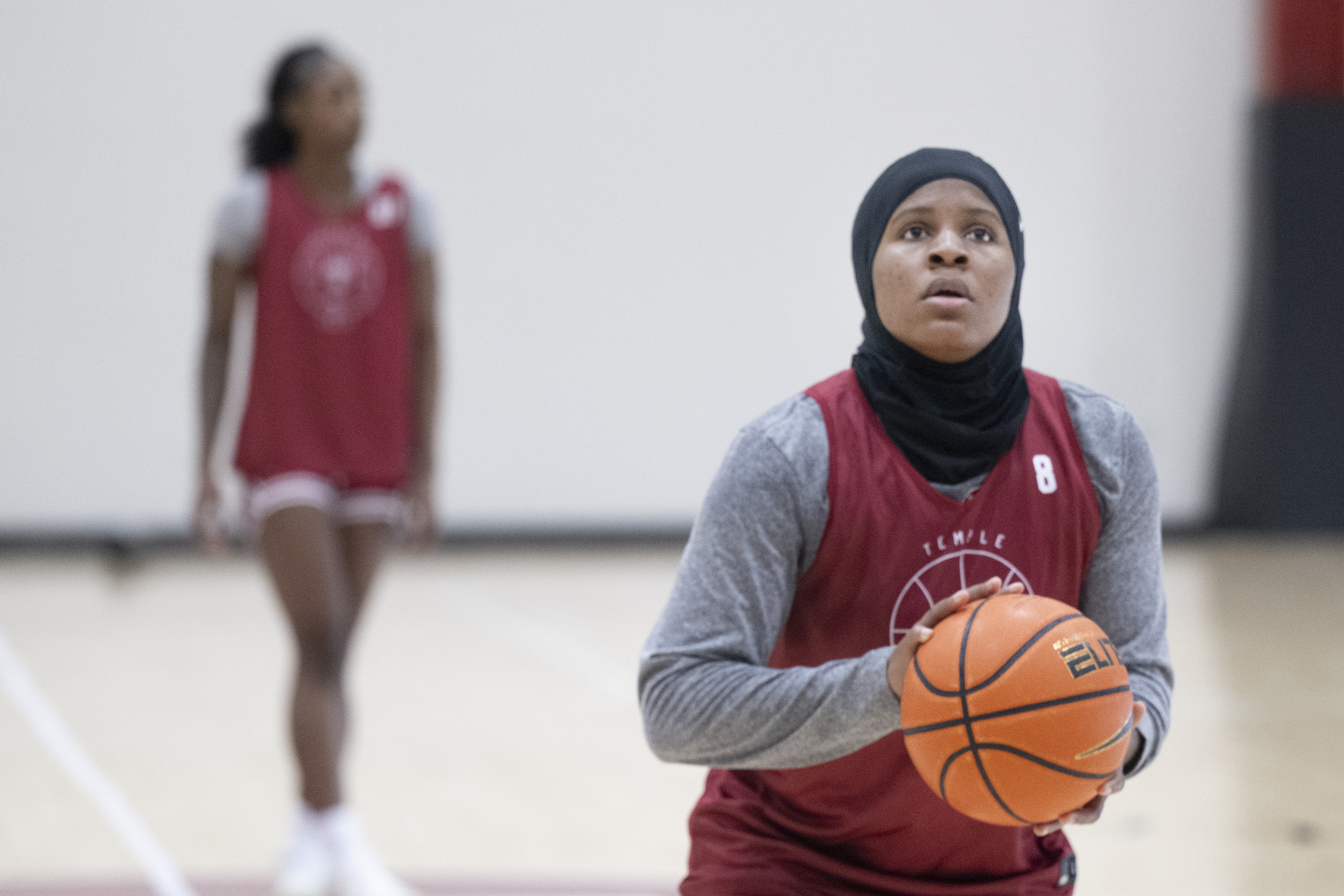
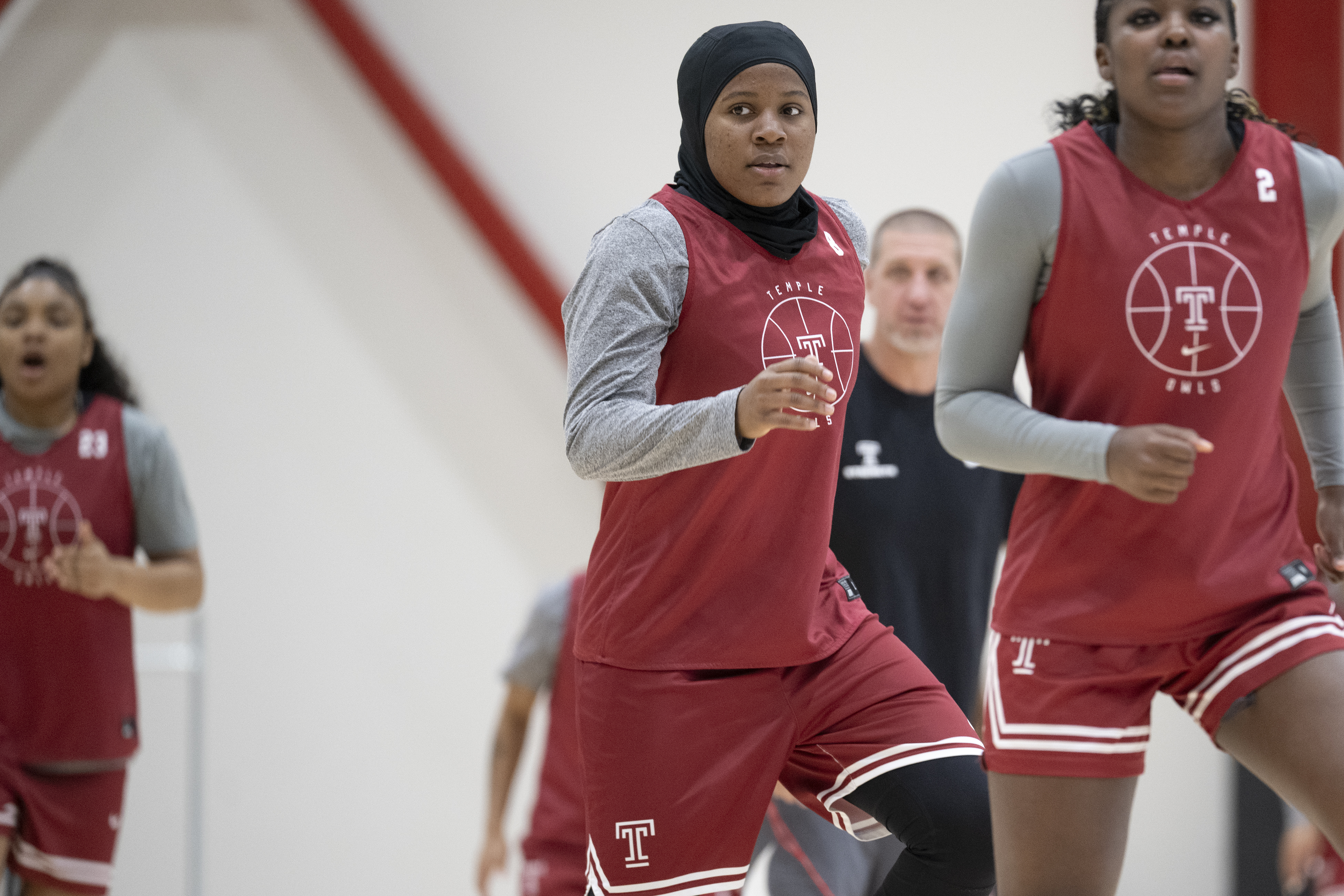
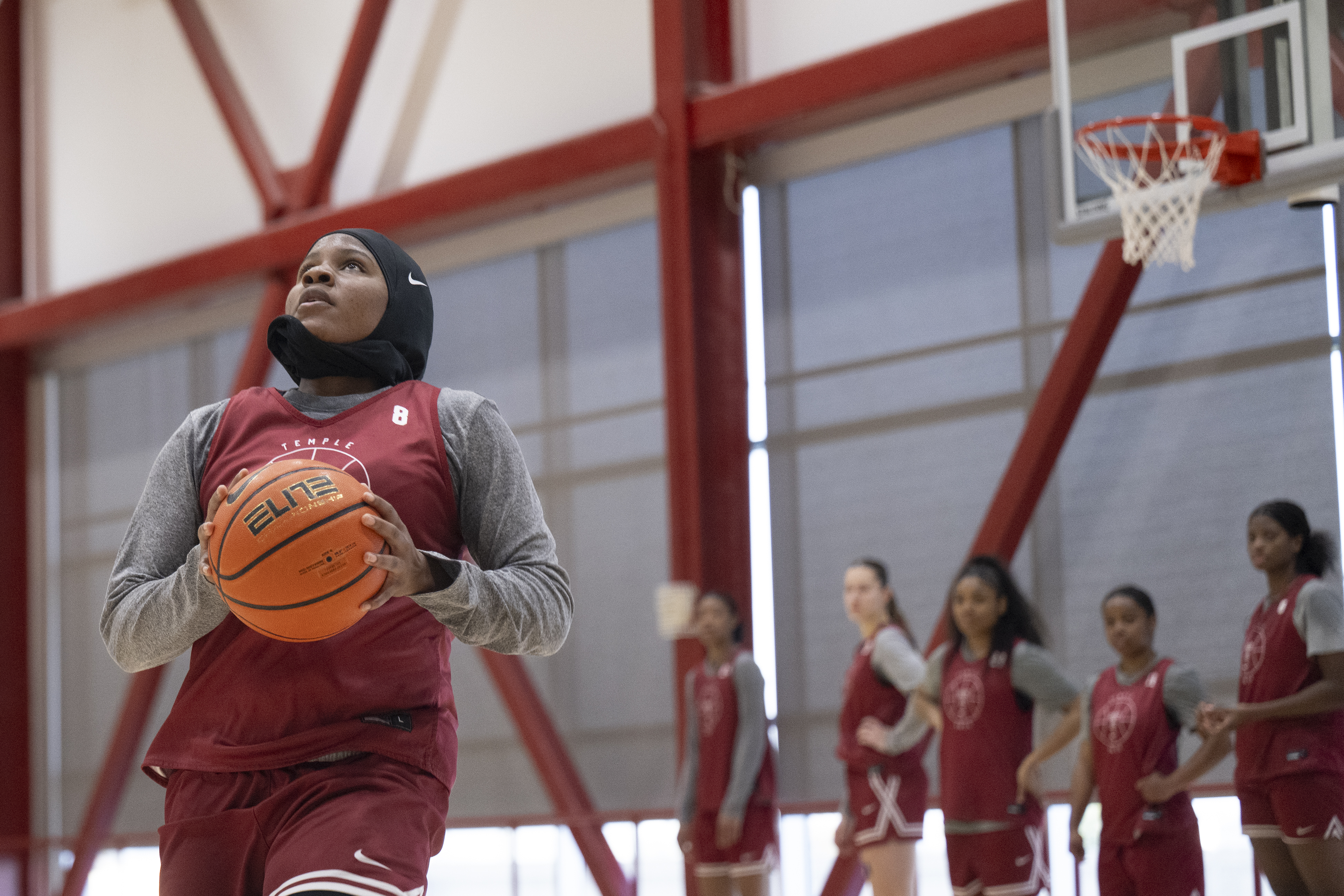
Temple opened its women’s basketball season similarly to how it closed 2025-26.
The Owls lacked depth and defense last season, and they didn’t make much progress at George Mason on Monday night. Temple crumbled to the Patriots, who went on a 22-0 run in the second quarter to seal the Owls’ 91-71 loss..
Guard Kaylah Turner led Temple with a team-high 21 points, but the same problems from last season persisted.
Next, Temple will host Navy in its home opener on Nov. 7 (2 p.m., ESPN+).
A short rotation
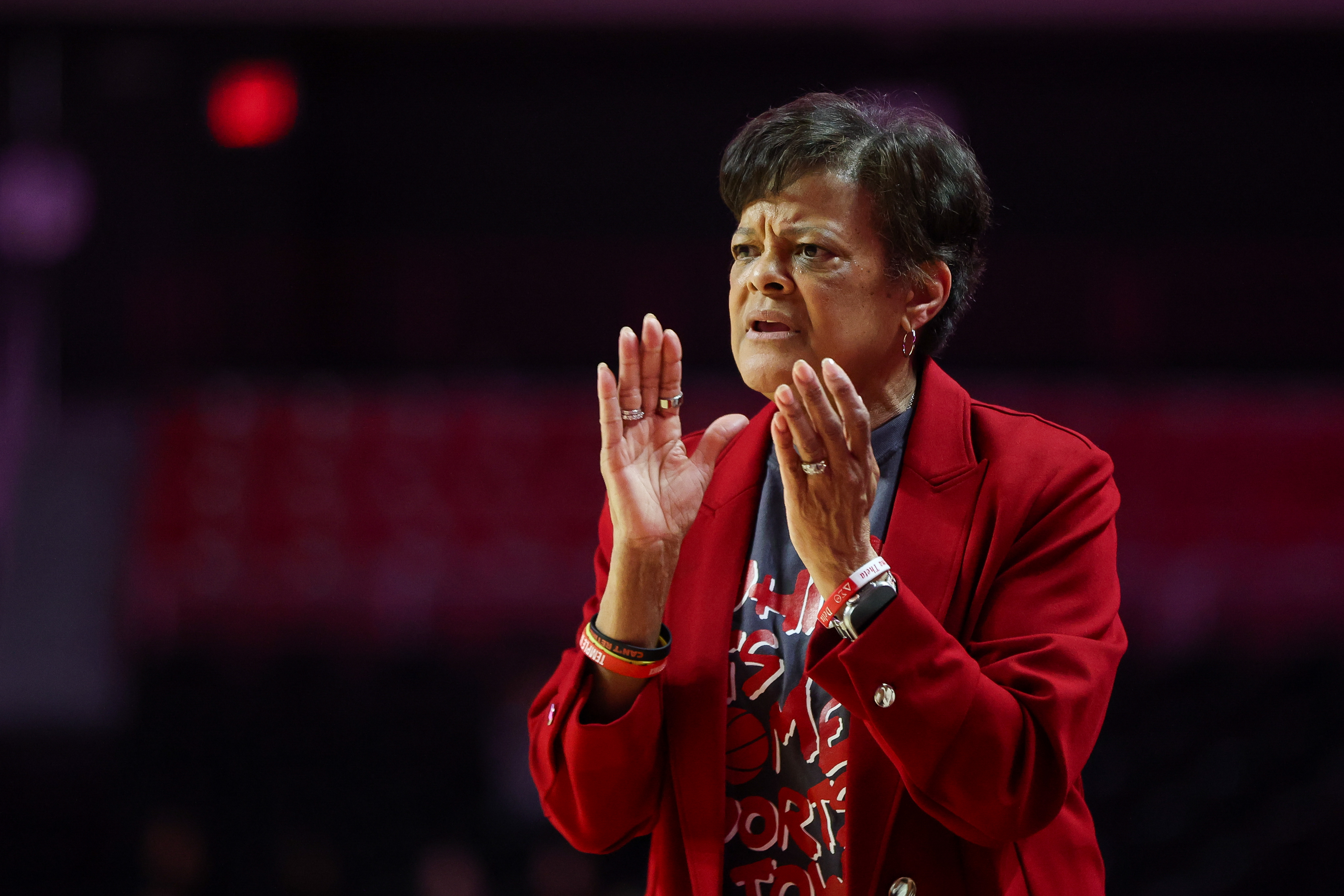
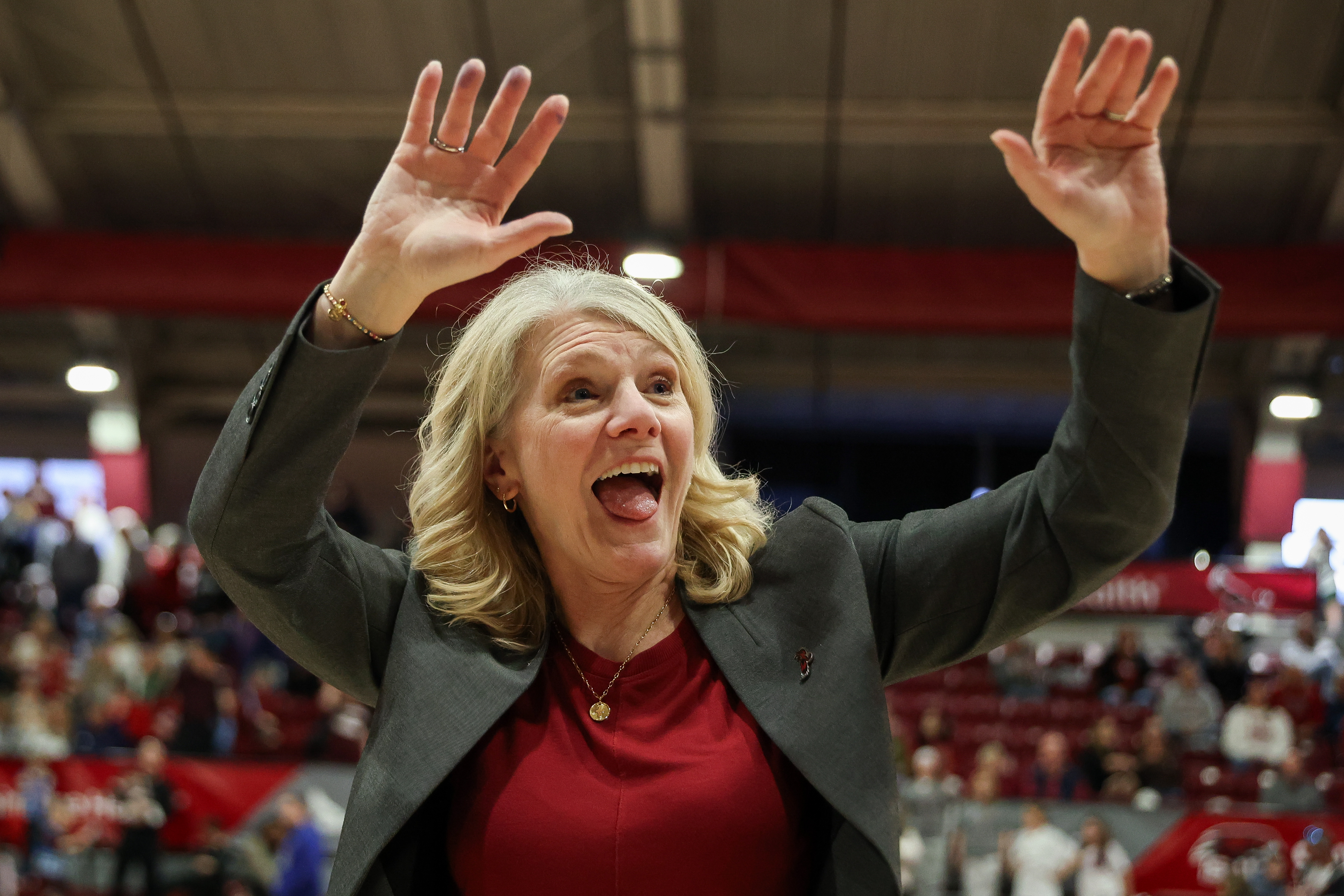
Temple coach Diane Richardson attributed last year’s shortcomings to a lack of depth. Progress was made Monday night, but not nearly as much as Temple would like.
The Owls’ bench scored 15 points to the Patriots’ 27. Richardson made it a point to give the reserves more playing time. Four of them logged more than 10 minutes, though production from the bench didn’t follow, as the second-stringers shot just 25%.
Transfer guard Taliyah Logwood, who played for Texas Southern last year, showed promise. She scored eight of her nine points in the third quarter.
It still wasn’t enough. Temple’s only double-digit scorers were starters, including Turner, Tristen Taylor (12), and Saniyah Craig (10).
Troubles on the glass
The Owls showcased their full-court defense that Richardson emphasized in the offseason. Directly under the basket, however, they faltered.
Temple conceded 18 offensive rebounds that led to 21 second-chance points. Four of those boards came in the first five minutes. When shots went up, the Owls lost their assignments and let George Mason grab rebounds.
The Patriots shot 54.2% on two-pointers and scored 34 points in the paint. In the fourth quarter, George Mason scored nine second-chance points, while Temple tallied zero.
Shayla Smith spent much of her high school basketball career proving she could score against anyone.
At Universal Audenried Charter, she became Philadelphia’s all-time scoring leader for either gender (2,666 points) and helped the Rockets win three consecutive Public League championships. But after leaving Philadelphia for Penn State, Smith discovered that success at the college level wouldn’t come as easily.
The guard averaged 2.6 points and 2.6 rebounds in a limited role as a freshman. Now, Smith is back home, preparing for her sophomore season at Temple, which opens its season at George Mason on Monday night, with a different perspective on basketball.
“I think it changed my view of the game a little bit, because now I understand that everything’s not all about talent,” Smith said. “It’s also how you can fit in a system and play with other good players.”
Leaving Philadelphia was initially part of the appeal for Smith. She believed Penn State and the Big Ten would expose her to play with top-notch talent.
Audenried coach Kevin Slaughter and assistant coach Marcellus Boone recognized her competitiveness earlier on.
The two recalled Smith questioned whether Audenried’s schedule provided enough challenges and asked to face tougher schools. The coaching staff began scheduling games against highly skilled programs, including Westtown School.
Her work ethic was equally demanding.
Slaughter recalled Smith arriving late to a gathering with friends because she stayed at the gym lifting weights and shooting. Even after completing scheduled workouts, Smith sometimes asked to continue.
“She always put basketball first, always,” Slaughter said.
Shayla Smith averaged 2.6 points and 2.6 rebounds last season with Penn State.Jose F. Moreno / Staff Photographer
At Penn State, however, Smith struggled to find consistent playing time despite having some promising performances, including 13 points and nine rebounds against South Carolina.
Her former coaches questioned how Penn State utilized her, but Smith described the experience as frustrating yet ultimately beneficial.
“It was an experience that I needed to become a better player and person,” Smith said.
When opportunities weren’t available, Smith found ways to remain engaged.
“The only thing I could do was clap for my teammates when they got theirs,” she said.
After Penn State parted ways with coach Carolyn Kieger in March, Smith entered the transfer portal. Temple quickly emerged as an option, although the program’s interest was nothing new.
Temple coach Diane Richardson recruited Smith in high school.
“She’s a baller,” Richardson said. “We watched her [in high school], loved her intensity, loved the way she played.”
Smith enjoyed attending Temple games while she was being recruited, but she initially wanted to experience life outside Philadelphia.
After a year away, her priorities changed.
“When I went through the experience that I went through, I felt like I needed to be home,” Smith said.
Richardson has embraced Smith’s return, even giving her the nickname “Hometown Hero.”
Temple’s fast-paced offense also offers a natural fit for Smith’s scoring ability, but Richardson wants Smith to recognize that she can contribute without carrying the entire offense.
“You don’t have to prove yourself on every single possession,” Richardson said she told Smith. “We know how you play. We already know that.”
Diane Richardson said Shayla Smith is “a baller” and recruited her in high school.Jose F. Moreno / Staff Photographer
Instead, Richardson has encouraged Smith to play freely, recover quickly from mistakes, and contribute in other areas.
Temple guard Tristen Taylor has already noticed that adjustment.
“I think she’s gotten better with balancing, knowing when to score, when to pass it, and just being a great teammate all around,” Taylor said.
That development reflects something Boone has emphasized throughout Smith’s career.
“Shayla will become a more complete player when she learns to be dominant without scoring,” Boone said.
“They definitely told me that I’m more than scoring,” Smith said. “I can do more than score, and I have other players around me that can also score. We can play off of each other.”
Returning home also means Smith’s family and friends can watch her play in the area again. Her primary goals, though, are winning and developing.
And if she could go back and change one decision, she wouldn’t hesitate.
ROME — In her first college basketball game, in November of 2023, Hannah Hidalgo announced herself to the college basketball world — and international basketball fans — with a 31-point outburst in Paris.
Her Notre Dame team got blown out that day by the eventual national champions, South Carolina. But it was the start of Hidalgo, a Merchantville native and graduate from Haddonfield’s Paul VI, becoming one of the stars of college hoops.
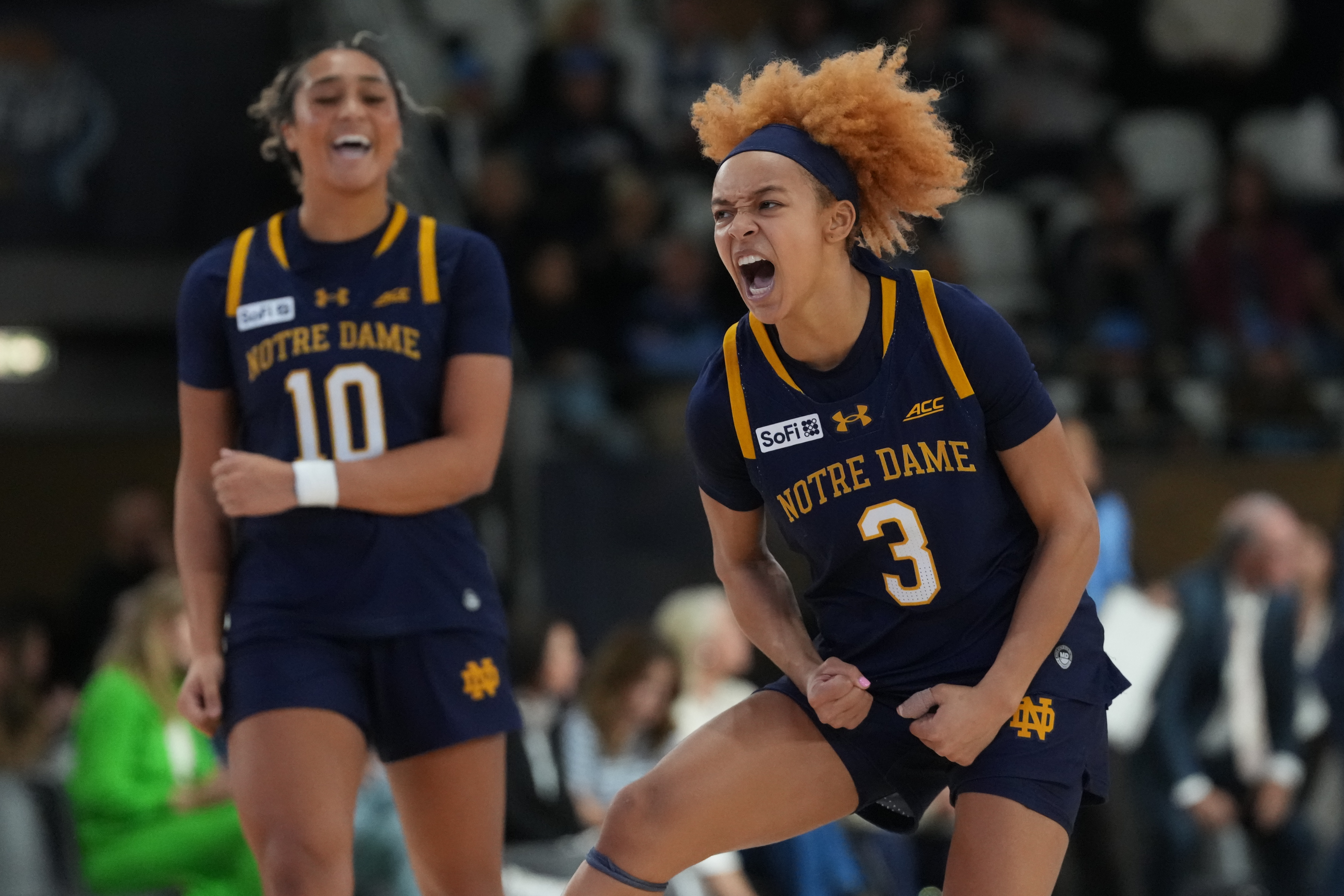
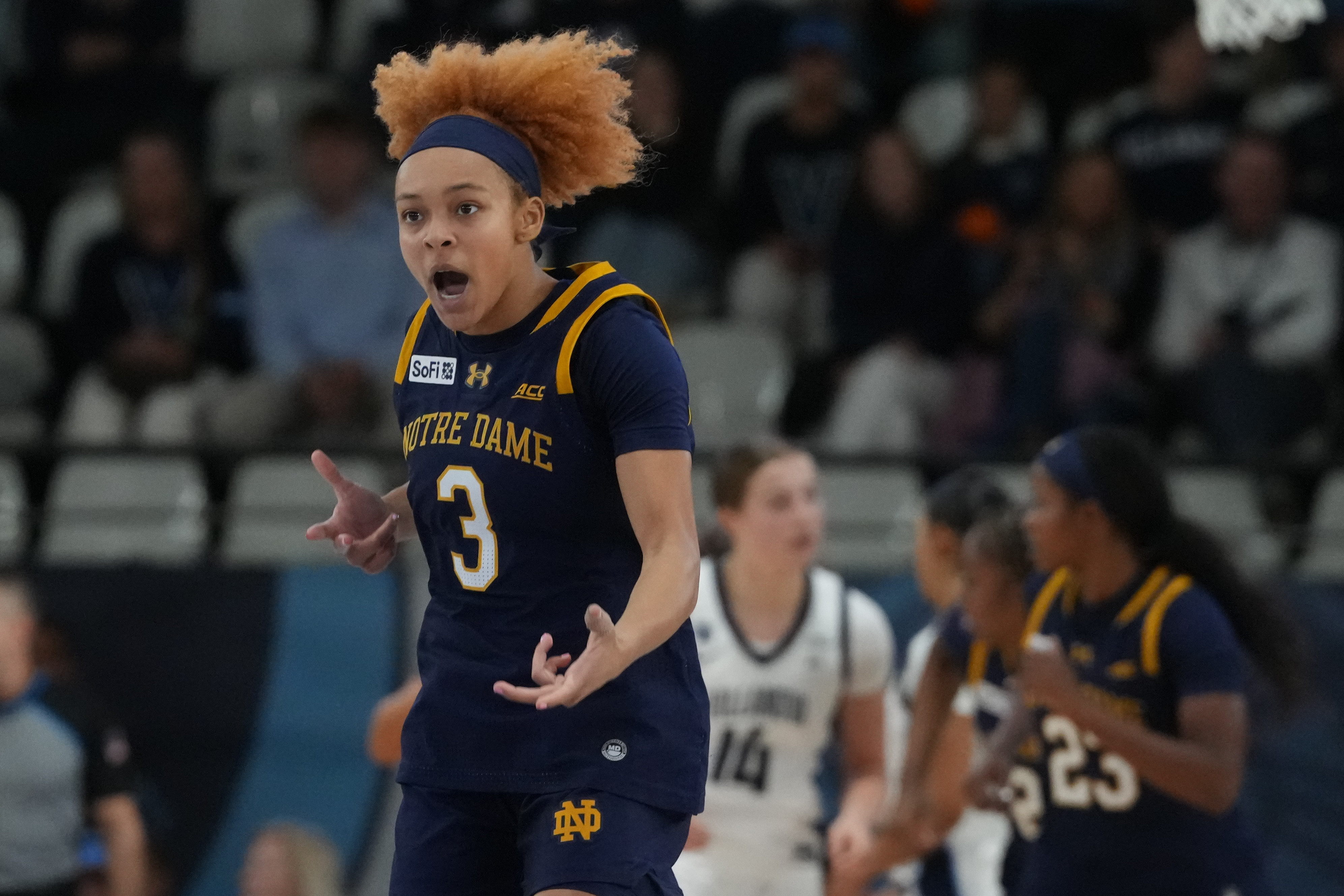
Three years later, in another European city, Hidalgo kicked off her senior year and Player of the Year campaign by doing everything 13th-ranked Notre Dame needed her to do in a 99-75 blowout victory over Villanova, finishing off a sweep in the men’s and women’s doubleheader after Notre Dame’s men beat Villanova, 74-72.
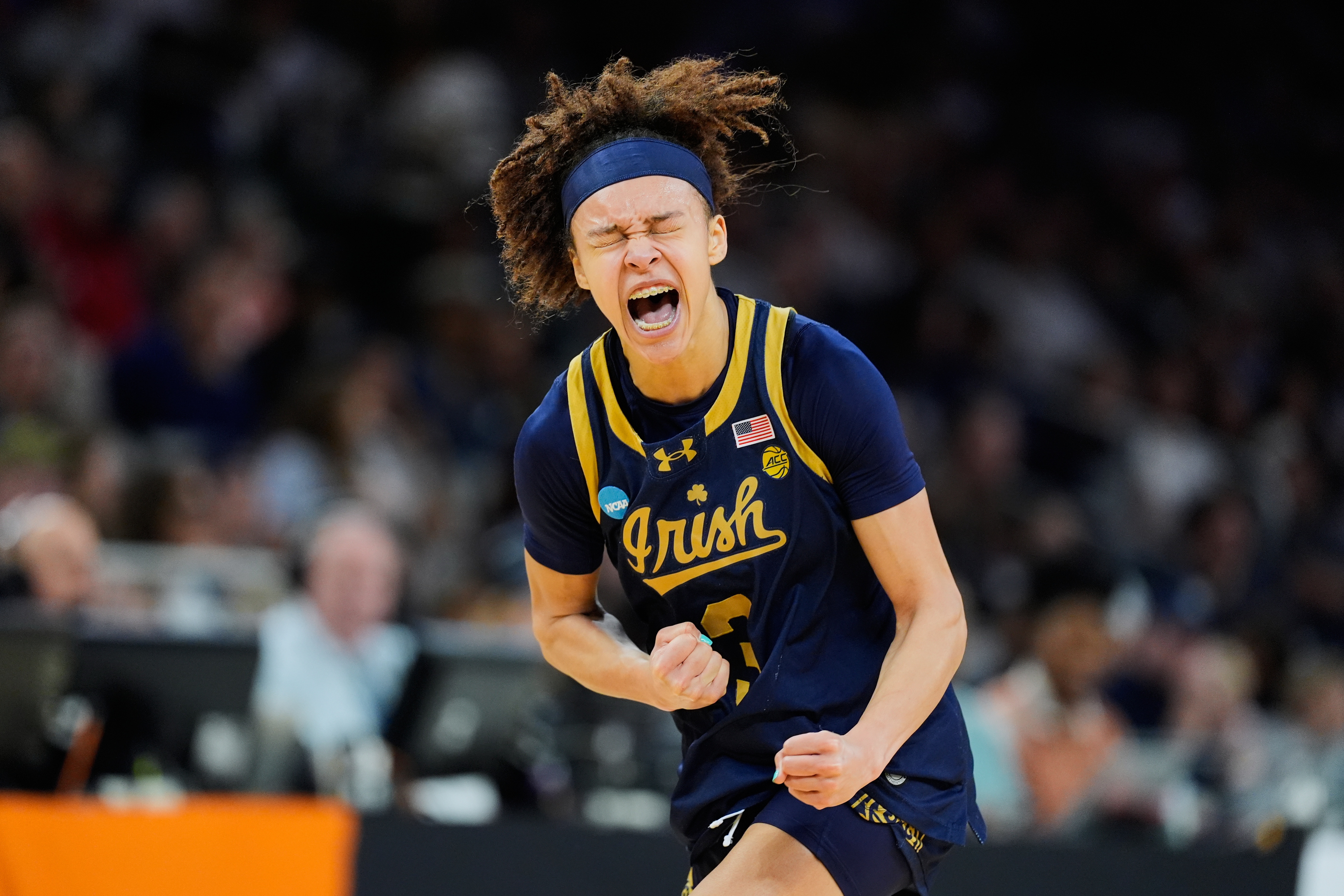
Hidalgo, a preseason All-American, one-upped her big day in Paris, scoring 32 points. Always a threat for a triple-double, sometimes with steals as part of the math, Hidalgo added eight assists, seven rebounds, and three steals.
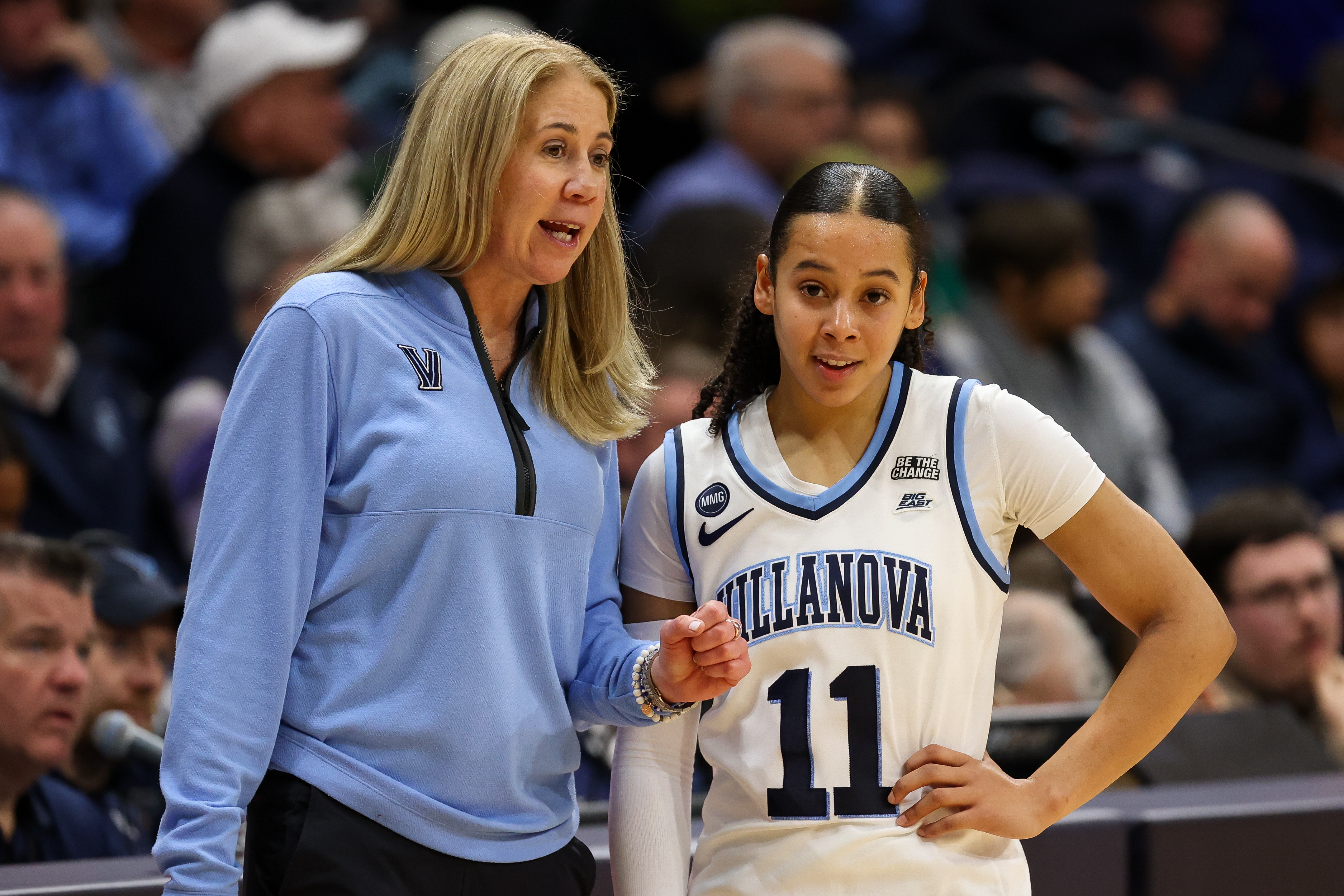
“Seeing it on film, watching her for the last three years, you’re aware of what she’s capable of doing,” said Villanova coach Denise Dillon. “Just trying to throw a number of different players her way to mix up the defensive scheme.”
Notre Dame’s Hannah Hidalgo reacts against Villanova on Sunday.Gregorio Borgia
It’s become a futile effort. Hidalgo has averaged at least 22 points in all three of her college basketball seasons. Last year, her final per-game averages were: 25.3 points, 6.9 rebounds, 5.2 assists, and 5.6 steals. Yes, a dominant point guard who for the last two seasons averaged more steals than assists.
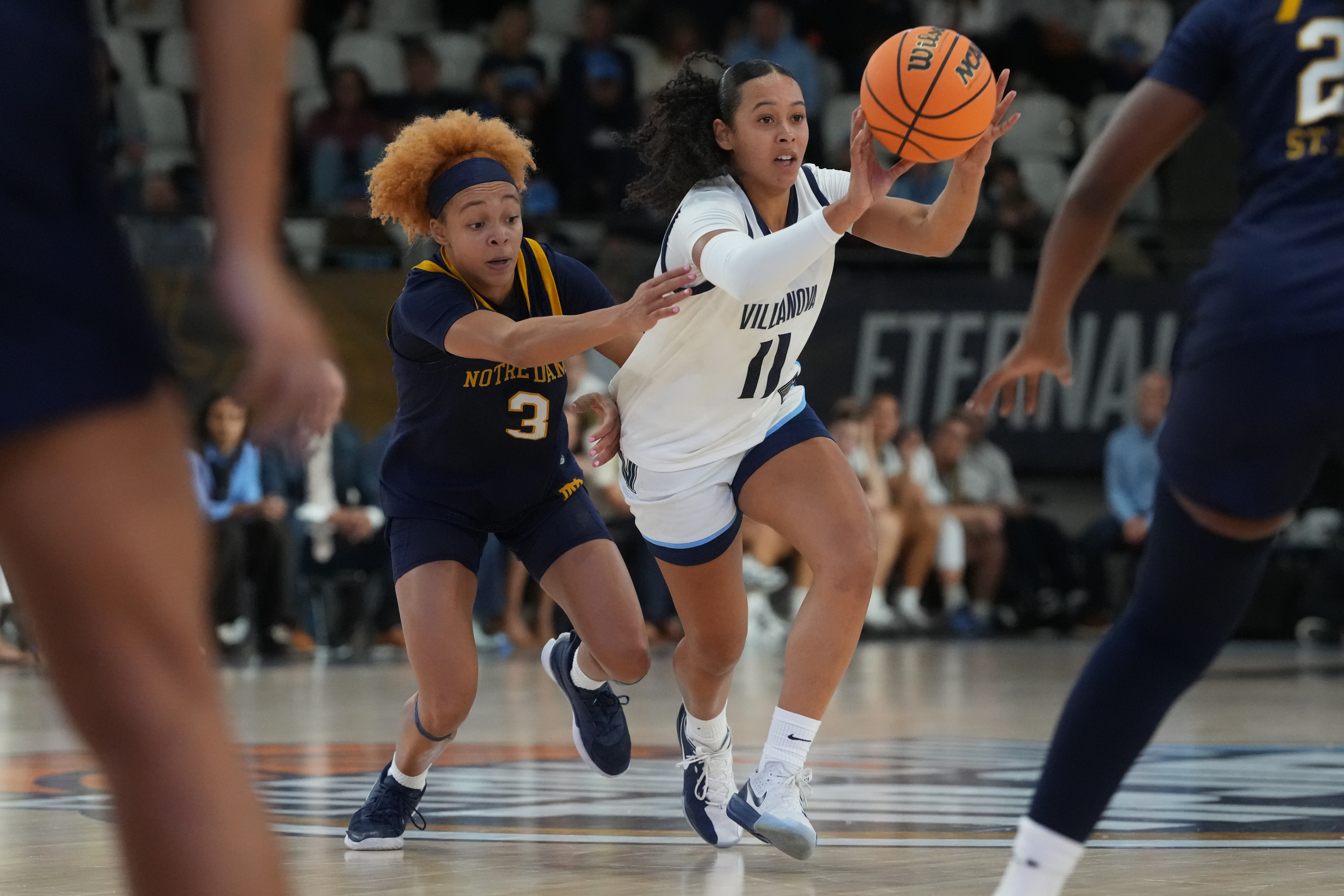
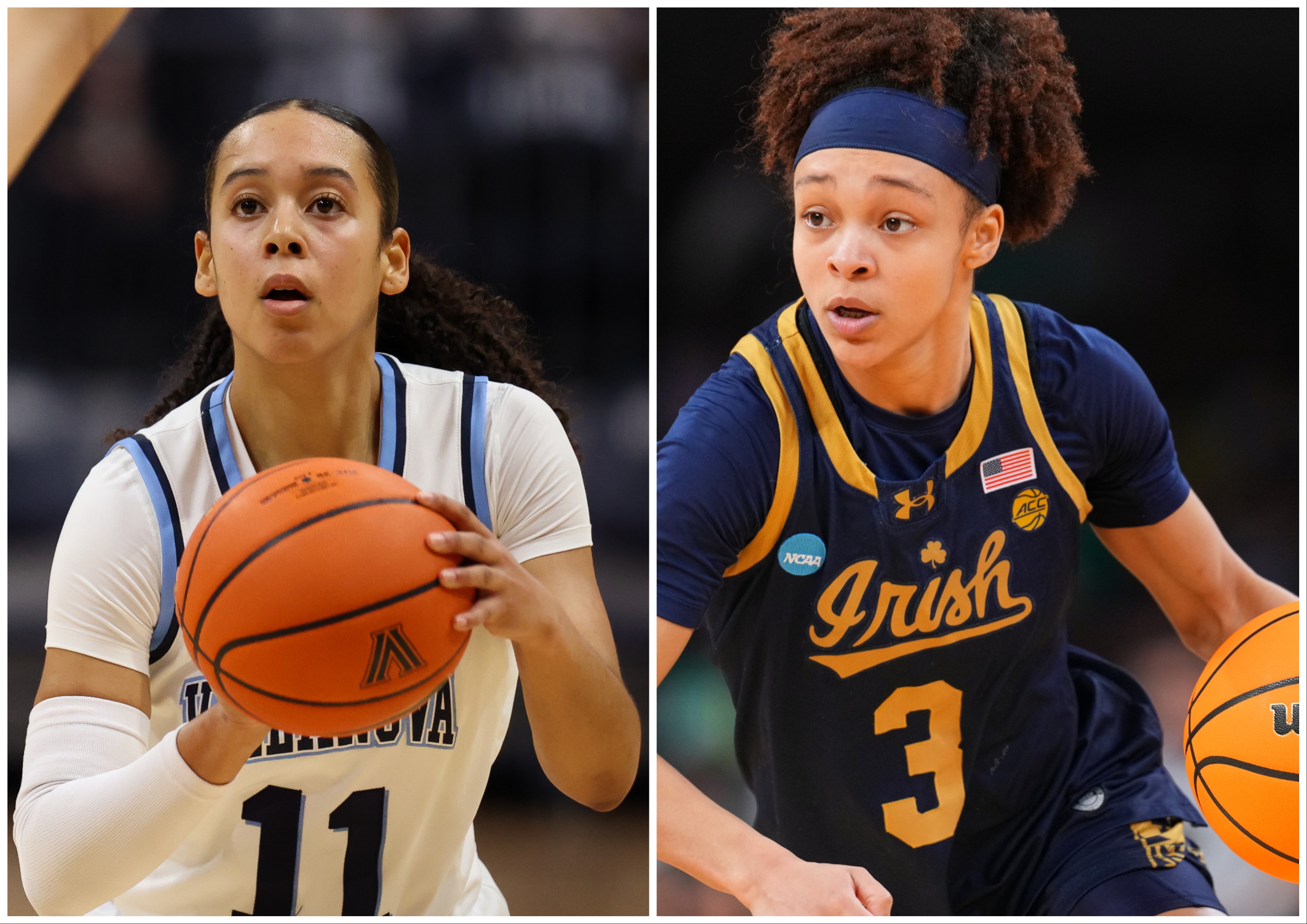
There were points Sunday where probably nobody inside the Palazzo dello Sport would have cared if Hidalgo and Villanova’s Jasmine Bascoe just played one-on-one. Bascoe, a junior, had 26 points and nine assists.
The difference was Hidalgo has much more capable co-pilots. One of them, sophomore forward Leah Macy, scored 27 points and had 14 rebounds. There was an obvious talent disparity at times, but Notre Dame will go as far as Hidalgo takes the Fighting Irish.
Hidalgo, the 2023 Gatorade Player of the Year in New Jersey, will have stiff competition in the Player of the Year race from the likes of USC’s JuJu Watkins and UConn’s Sarah Strong, the last two players of the year, and maybe a few others. Hidalgo is projected to be a top-three pick in the next WNBA draft.
“She’s always been how good she was today,” Bascoe said. “She played really hard. I respect her a lot. She’s done a great job representing small guards out there and I hope to do the same thing that she’s doing.”
Villanova’s Jasmine Bascoe said Notre Dame’s Hannah Hidalgo “played really hard. I respect her a lot.”Gregorio Borgia
Notre Dame coach Niele Ivey said coaching Hidalgo the last three years has been “amazing.”
“She’s somebody that I love to coach,” Ivey said. “I love her tenacity. I love that she’s a dog. She allows me to coach her. She wants to be coached. She’s turned into an incredible leader. She gets better every time she steps on the floor. It’s easier for me to coach because she holds herself to a higher standard and she helps me hold the team to a higher standard. So when you have one of your best players, one of your hardest workers, and someone I can communicate with … she wants to be great. It’s been a joy.
“She’s just really special. We have a special bond and I’m blessed that God allowed me to be a part of her journey because she’s amazing.”
Faith has guided Hidalgo, she said. Asked about her performance Sunday, she credited her faith and her teammates.
“I try and stay humble,” she said. “They were available for me to get the assists and they were able to get me open so I could create my own shot.”
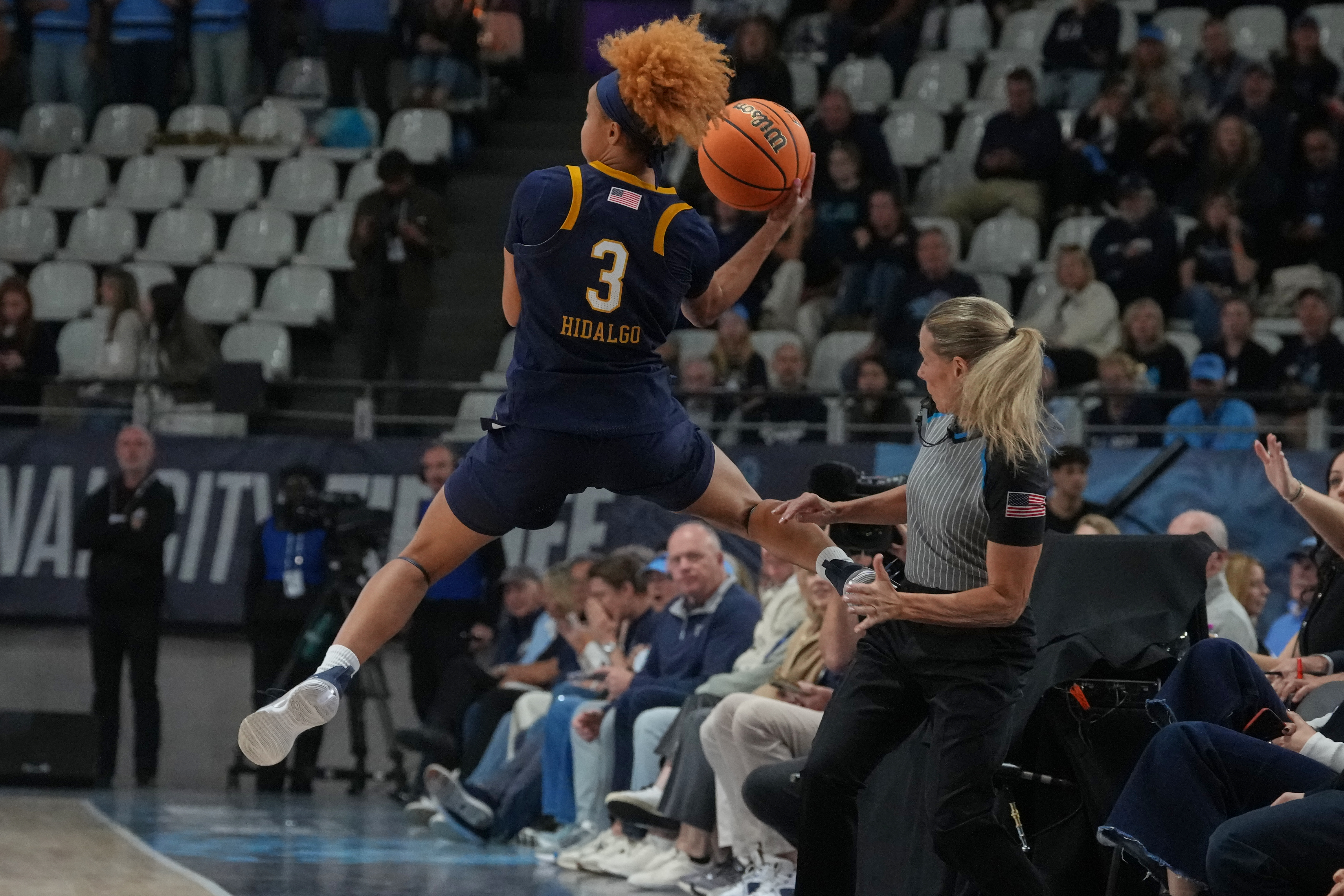
Hannah Hidalgo recovers the ball against Villanova in Rome on Sunday.Gregorio Borgia
Hidalgo is Christian but not Catholic. She was moved Saturday when she spent the morning in St. Peter’s Basilica for a Mass given by Philadelphia Archbishop Nelson J. Pérez and later presented a gift to Pope Leo XIV inside a building in Vatican City, the Paul VI Audience Hall, that shares a name with her high school.
Faith, Hidalgo said, “keeps me grounded” and she was able to connect with that aspect of her life during the trip to Rome this week.
“It keeps me humble,” she said. “It’s such a blessing. Basketball has taken me all over the world and so I’m grateful.”
The first time Abbey McGettigan played rugby, she was the only girl on an all-boys team. Now, she’s flying across the Atlantic Ocean to Dakar, Senegal, to represent Team USA at the Youth Olympic Games as a cocaptain on the women’s rugby sevens team.
Now 17, the Downingtown native turned to rugby after trying several other sports. After getting used to being the smallest on the field when she started as a 10-year-old with the Downingtown Rugby Club, her love for the game has only grown.
“I was so nervous. I had never been more nervous for anything in my life than I was for playing rugby with all the boys,” McGettigan said. “But once I played a few games and went to a bunch of practices, the confidence started building, and I realized how much I loved it, which pushed me to keep going, keep doing it.”
McGettigan is one of 29 athletes representing Team USA in various sports. The games, which mark the first time an Olympic event will be held in Africa, begin Saturday evening with the opening ceremony. The rugby sevens competition begins Monday and is available to stream through Olympics.com and the Olympics Channel.
Her parents, Sean and Maggi McGettigan, knew they couldn’t pass up the chance to see their daughter compete on an international stage.
“No matter what happens, we’re going to want to go give her big hugs after the games like we always do,” Maggi said. “I remember when we were talking about whether we were going to go or not and looking at the schedule and just seeing the words ‘opening ceremonies’ and being like, ‘Oh, of course we have to go.’”
The McGettigans are no strangers to the sport; family members have played over the years. But when Abbey and her older sister, Lily, began playing, it took their parents some time to get used to watching them compete in such a physical sport.
“Rugby is a different sport than other sports they have played,” Maggi said. “It is so inclusive. The girls are so supportive of each other. So even though, if you’re a parent, you’re looking at this like, ‘Oh, my God, that’s way too intense or aggressive,’ that’s what makes it an amazing sport and what the players fall in love with. My biggest advice for parents is just let them give it a try. I guarantee they’re going to love it.”
Rugby has been growing in popularity among girls, building on the visibility of high-profile athletes such as Ilona Maher. Oliver Snow, Abbey’s longtime coach and head coach of the Downingtown Rugby Club, said he has seen this growth firsthand.
“It’s kind of funny now, but we used to call her ‘little baby Abbey’ because she looked so small on the field with everyone,” Snow said. “But even back then, I knew she had something special, and this exposure is going to help the sport and club grow even more than it already has. We are able to have full teams of girls playing at a competitive level. That wasn’t the same when the McGettigans began.”
It’s been a whirlwind for Abbey, a senior at Downingtown STEM Academy. The past few months have included Youth Olympic Games trials in California as well as college recruiting and applications.
“They mailed us a big package of all this Team USA stuff when we found out we made the team, so opening that was the moment when I was like, ‘Wow, this is really happening.’ It was surreal,” she said.
The excitement for rugby doesn’t stop after the Youth Olympics, however. Abbey will join her sister in playing the sport in college, heading to Harvard next fall, while her older sister attends Brown.
“All summer, my sister and I worked out together in preparation for my camp to qualify for Team USA. She’s one of my biggest inspirations, really,” Abbey said.
Down the line, Abbey said one of her biggest goals is to play for the senior U.S. squad.
“She has this determination and motor inside of her that is unstoppable, which I’m sure we will see not only in Dakar but throughout her rugby career,” Snow said.
For now, though, Abbey’s sights are focused on the competition ahead. With her parents in the crowd and her sister cheering her on from the States, she said she feels prepared and excited for the games ahead.
“I trust all my teammates so much,” Abbey said. “Of course, I’m nervous because I’ve never competed at a level like this before, internationally, representing Team USA. But I remember all the work I’ve done and what my family and coaches have said. As long as I’m present and am where my feet are, I’m confident we will succeed.”
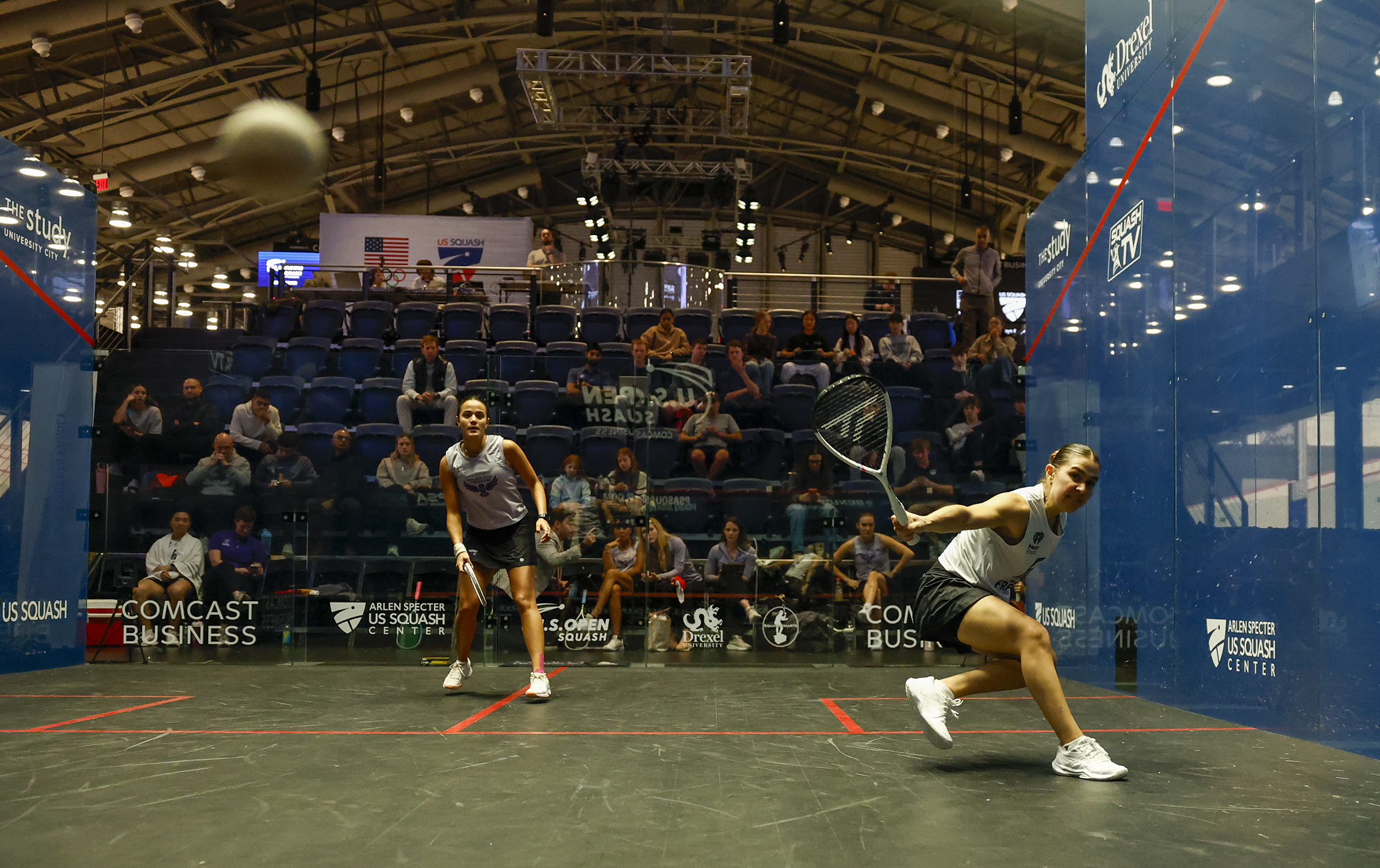
Squash usually is a one-on-one game. But for the Philadelphia Freedom, it’s all about teamwork, strategy, and racing against the clock.
Now in their third season, the Freedom compete in the National Squash League, which puts a twist on the traditional game for men and women (Philadelphia also has a men’s team, the Lightning).
“Personally, one of the reasons I decided to get involved was because I thought it was a good opportunity,” Sunil Desai, the Freedom’s owner, said Thursday as his team lost, 45-34, Seattle Freeze. “I think there’s something to this, and I, as well as all the players out there, would really like to see squash grow.”
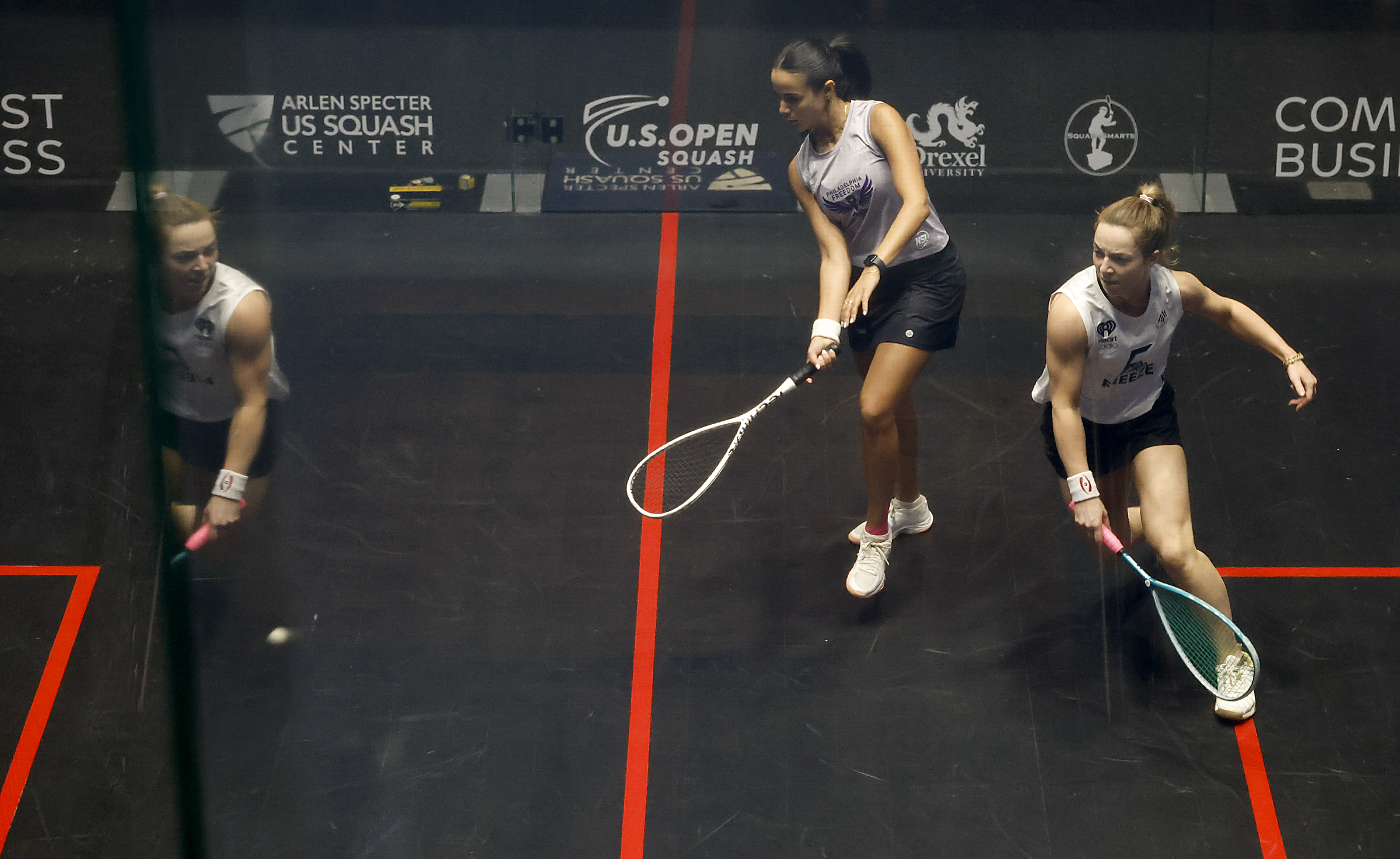
Hannah Craig of the Seattle Freeze (right) goes after the ball against Nour Aboelmakarim of the Philadelphia Freedom in the first period on Thursday.Yong Kim / Staff Photographer
In the NSL, the clock is just as important as the scoreboard. Matches are divided into three timed periods, forcing players to rethink how they approach every rally.
Each team gets three starters and three substitutes. The first two periods are 20 minutes long and have one PowerPlay (where only the attacking team serves and scores), while the third period has two PowerPlays and four subs for 30 minutes of action. The team with the most match points after three periods wins.
“If it’s your PowerPlay, you want to try and win points as fast as possible,” Desai said. “If it’s not your PowerPlay, you want to make points last as long as you can to just waste time.”
It’s a learning curve, even for experienced players.
“You can tell them all you want beforehand, and until they get out there, it doesn’t always register,” Desai said. “So the more they play the format, that’s the progression. They learn to adjust.”
Though the Freedom’s star, current world No. 5 Olivia Weaver, is from Chestnut Hill, others hail from Egypt, France, and Norway. The sport itself originated in England.
“We travel so much for this sport, it has become normal,” said world No. 35 Mariam Metwally as she stretched after the match. “We have families that take us in in America, which is unlike many other places. They are so nice here.”
Added Norway native Madeleine Hylland: “It’s a very small community, which can be helpful in feeling comfortable with the travel.”
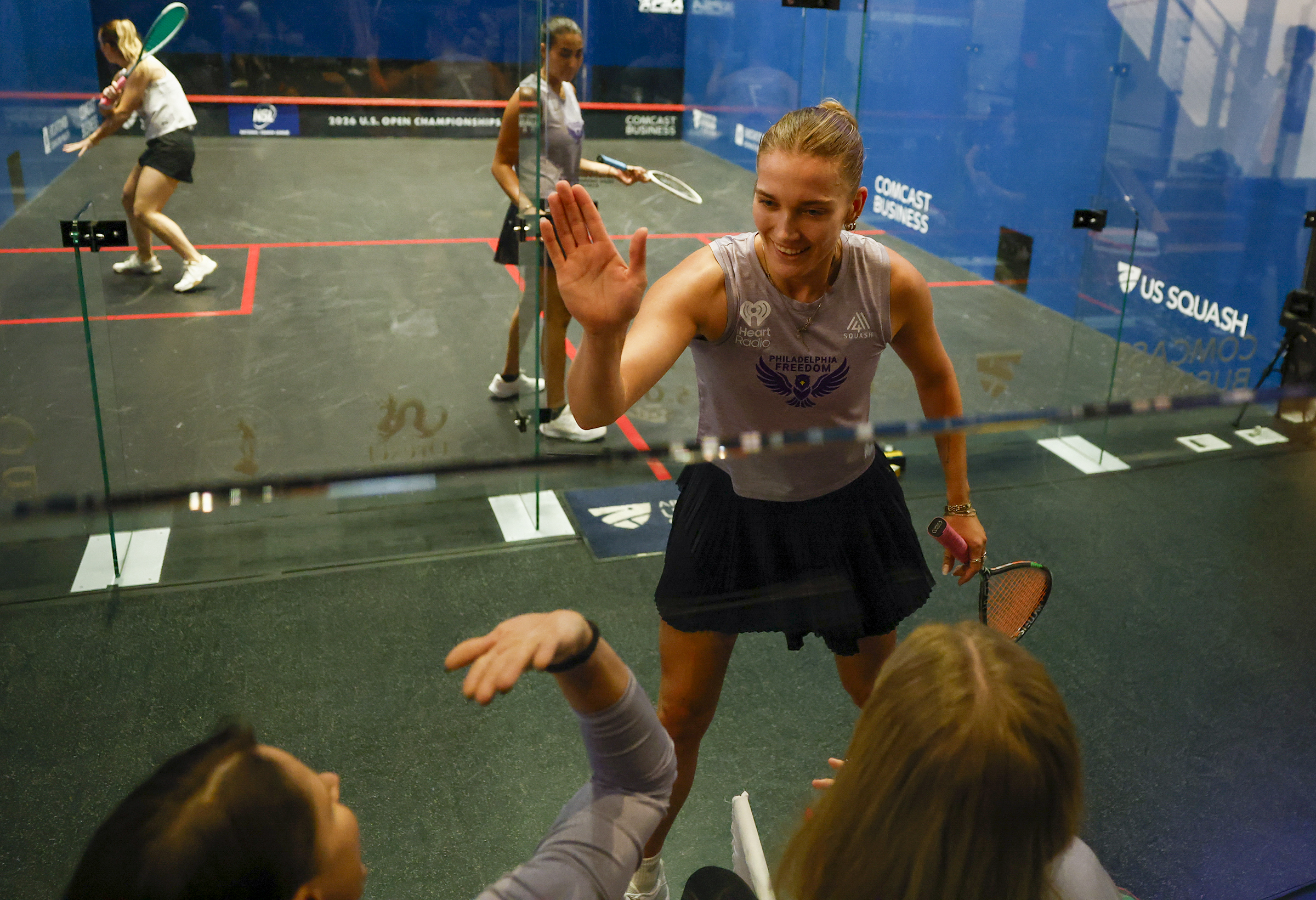
Madeleine Hylland of the Philadelphia Freedom high-fives her coaches in the second period. Hylland hails from Norway.Yong Kim / Staff Photographer
Unlike tennis, which can be played on a variety of surfaces, squash requires specialized indoor courts, presenting a challenge when introducing the sport to youth and school programs.
Desai coaches girls’ squash at Conestoga High School, where the goal is to get as many girls on the court as possible and continue to grow interest in the game. Several members of the high school girls squash team attended Thursday night’s Freedom match.
“It’s really cool to get to watch the pros play,” said Lizzie Brooks, a senior squash player at Conestoga. “I feel like we all learn a lot when we get to come and watch. It’s just really fun.”
Brooks said she was especially excited to watch the upcoming U.S. Open, which starts Sunday at the Arlen Specter US Squash Center on Drexel’s campus. Several Freedom players plan to compete.
“The Open is crazy,” Brooks said. “We’re going on one of the days, but it will be way more packed than it is today. But still, it feels like everyone kind of knows everyone here, even during the Open.”
Said Desai: “As you can see, it’s a very friendly community. You can have competition that brings out the best in everyone. And you can have rivalries and at the end of the day still actually be friends.”
The Philadelphia Big 5 announced its 2026 Hall of Fame class on Thursday, with five inductees, including longtime St. Joseph’s women’s basketball coach Cindy Griffin.
Griffin will be recognized alongside Ashley Gale (La Salle), Laura Kurz (Villanova), Shey Peddy (Temple), and Zack Rosen (Penn) during the men’s edition of the Big 5 Classic at the Xfinity Mobile Arena on Saturday, Dec. 5, and again during the Women’s Big 5 Classic at The Palestra on Sunday, Dec. 6.
In her 26th season leading the Hawks, Griffin is the program’s all-time leader in wins with 442. She’s led the Hawks to four consecutive 20-win seasons, with 11 20-win seasons total. She’s also coached 20 players who have gone on to play professional basketball.
A St. Joe’s alumna, Griffin also had a four-year career on Hawk Hill as a player from 1987-92. She was a three-year team captain and led the Hawks to three consecutive NCAA Tournament appearances and four Big 5 titles. Griffin was the eighth coach in NCAA Division I history to lead her alma mater to the NCAA Tournament as a player and a coach.
Etching her name in the record book as a coach, Griffin, who was inducted into the SJU Basketball Hall of Fame in 1998, is still among the program’s career leaders in assists (510), steals (197), three-point field goal percentage (.364), and free throw percentage (.763).
Gale, who was at La Salle from 2007-11, still holds the single-season record for three-point field goals made with 92, and ranks fourth all-time in three-point field goals made with 186.
She also stands third in career free throw percentage (81.8%) and sixth in career steals (200).
Former Villanova guard Laura Kurz (left) was the 2009 Big 5 women’s Player of the Year. Bob Child
From Villanova, Kurz, the 2009 Big 5 women’s Player of the Year, is being honored for her career with the Wildcats from 2007-09. She is one of three players in the program’s history to reach 1,000 points in just two seasons.
A two-time women’s Big 5 Player of the Year, Atlantic 10 Player of the Year, and Defensive Player of the Year, Peddy, who spent three seasons at Temple (2010-12), recorded 206 career steals, which ranks ninth all-time in the program, as well as a single-season record for 77 three-pointers in the 2011-12 season.
During the 2011-12 season, Peddy also led the A-10 in scoring at 17.6 points per game and ranked second in the conference and was among the top 20 players in the nation with 3.1 steals per game.
She also reached the 1,000-point milestone in just two seasons.
Shey Peddy (right) led Temple to the NCAA women’s tournament in 2012, and went on to have a seven-year career in the WNBA. AP
The only man among the inductees, Rosen is being honored for his four-year career at Penn from 2008-12. During the 2012 season, Rosen was both the 2012 Ivy League and Big 5 Player of the Year and 2012 Honorable Mention All-American. That same year, he set the program record for assists in a season (173), minutes played (1259), and starts (33), which still stand.
𝐁𝐢𝐠 𝟓 𝐇𝐚𝐥𝐥 𝐨𝐟 𝐅𝐚𝐦𝐞 🏆
Congrats to Penn great Zack Rosen on being named to the Big 5 Hall of Fame in the Class of 2026!
Rosen was the 2012 Ivy League and Big 5 Player of the Year and Honorable Mention All-American as a senior.
ROME — Jasmine Bascoe has played against Hannah Hidalgo on an international stage before. Bascoe’s Team Canada met Hidalgo’s American side in the lead up to an international tournament in what Bascoe called a “teaser in an exhibition game a couple years ago.”
And because it was international competition and not a college game, both star guards had different, less assertive roles.
“I can’t say I’ve played the NCAA Hannah, but I’ve definitely been on the court with her before,” Bascoe, who begins her junior year on the Naismith Trophy watch list, said Friday before Villanova practiced at the Giulio Onesti Olympic Center.
That means Hidalgo, a native of Merchantville, New Jersey, and one of the best players in women’s college basketball, hasn’t faced the NCAA version of Bascoe, either.
The two teams meet Sunday at the Palazzo dello Sport after the men’s teams officially tip off the college basketball season earlier in the day. It’s a Villanova team again picked second in the Big East behind juggernaut UConn and with a team capable of another at-large NCAA Tournament bid against a Notre Dame team that starts the season ranked 13th nationally and has aspirations of a deep tournament run.
It’s a critical nonconference game to start the season, but it’s also a showdown of two smaller guards who do a little bit of everything for their respective teams. For Bascoe, Villanova’s leading scorer in both her freshman and sophomore seasons, it’s a chance to show a larger audience that the Milton, Ontario, native deserves to be in some of the same national conversations that Hidalgo is in.
“I don’t really care too, too much about the accolades,” Bascoe said. “But obviously just putting myself on the map as a player and Villanova on the map. I feel like we’re definitely seen as the underdogs in this matchup, but I think that’s something we can use to our advantage.”
Notre Dame guard Hannah Hidalgo averaged 25.3 points and 6.9 rebounds last season.Tony Gutierrez
So, Bascoe took the humble approach in responding to the answer, but her coach knows the reality of a game and opportunity like this. Denise Dillon said she thinks Bascoe is looking forward to the head-to-head with Hidalgo “a great bit.”
“Of course you want to go against the best,” Dillon said. “You want to see where you stand. That’s Jas on every level, wanting to compete against the best.”
That’s where Hidalgo sits entering her senior season. The Paul VI graduate was named to the preseason AP All-America women’s college basketball team last week and is expected to be a top three pick in the next WNBA draft. She averaged 25.3 points and 6.9 rebounds last season and amazingly had more steals per game (5.6) than assists (5.2).
“Preparing against her, I enjoy it,” Dillon said. “You just love watching. You watch her first and then you watch what everybody else is doing.
“You realize her ability to make plays on the offensive end, but I say defensively is where I’m most impressed by her. She’s like a free safety out there.
“Putting in perspective with our players … you’ve seen pieces of her in other players, but she has the whole package.”
Bascoe, who averaged 18.9 points, 4.8 assists, and 4 rebounds last season, said the matchup against Hidalgo is “really cool” and “a testament to both of us and our hard work and what we’ve both put in, especially as small guards.”
Fewer know how good Bascoe is, though Dillon said “you’re hearing more talk.”
Why not more?
“It’s about where you bring your team,” Dillon said. “I felt this way with Maddy Siegrist as well. ‘Yeah, you’re doing some good stuff. But what is your team doing?’ Just continuing to challenge [Bascoe] with bringing people along and leading the way.”
That component is more important than ever this time year after last year’s second-leading scorer, Brynn McCurry, had knee surgery in September. She’ll miss the 2026-27 season.
Denise Dillon said “you’re hearing more talk” about how good guard Jasmine Bascoe is.Isaiah Vazquez / For The Inquirer
This version of Bascoe, now in her third year on campus, is “very different, much more mature, just a lot more emotionally sound,” she said.
“Being able to throw her into the fire as a freshman was an easy decision because of her commitment to just being great every day,” Dillon said. “She shows up every day. However it’s been an absolute player to watch her grow and mature in the game and then off the court.”
Dillon will need it. With McCurry out, Bascoe and her backcourt mate Kennedy Henry are the only two returning players who averaged more than six points last season. The schedule will let Dillon know soon what kind of team she has. Besides Sunday’s opener vs. Notre Dame, Villanova has non-conference contests vs. No. 9 LSU, No. 24 West Virginia, and a strong Kansas State team.
After practice, the Villanova women were due for a private tour Friday night at the Vatican, where they’ll return Saturday morning for a mass followed by an audience with the pope.
“It’s been great because we talked with the players about recognizing that this is a business trip and their approach has been nothing but [business],” Dillon said.
“We have an opportunity to experience Rome and a pope visit, all of that, however they’re really focused in on rest, treatment, whatever they need to do to be prepared for the game.”
For Bascoe, that means preparing for a major matchup. It’s a five-on-five sport, of course. But all eyes will be on the two 5-foot-7 guards Sunday afternoon.
“I really respect her as a player,” Bascoe said. “She’s a great player, obviously, I feel like everyone knows that.”
Wildcats announce jersey patch sponsor
Villanova’s men’s and women’s basketball teams will be the first of the school’s 24 varsity programs to sport a new jersey patch on Sunday.
The school on Thursday announced a multiyear partnership with Future Standard, a global alternative asset manager. Terms of the agreement were not disclosed, but Future Standard will “collaborate with the Villanova School of Business on educational programming, classroom engagement, and other initiatives designed to connect students with leaders and perspectives from the financial services industry,” according to a press release.
The partnership also includes plans for financial literacy programming for Villanova athletes.
Growing up, Sabrina Robinson wanted to play Major League Baseball.
Robinson, a northern New Jersey native who started playing baseball at age 5, followed in her older brother‘s footsteps and played on the same team as him. Her father’s philosophy was that if her brother didn’t have to eventually switch to softball to see a future in the sport, she shouldn’t, either.
“He never did see a difference between us, and I just like baseball better,” Robinson said.
But despite not wanting to switch to softball, there was no clear path forward for Robinson in baseball.
That was, until this year.
Robinson now plays for the Boston Hunters, one of the four teams in the Women’s Pro Baseball League. The WPBL’s inaugural season, which began Aug. 1, ran until Sept. 22, when the Los Angeles Queens beat the San Francisco Firebells, 2-0, to win the league’s first championship. Little League World Series legend and Philly native Mo’ne Davis was on the winning team.
And just as the WPBL provided a path in the sport for Robinson, it also provided a previously unthinkable future for girls like the ones Robinson coaches at Philly Girls Baseball in her spare time.
“These girls have a whole new path, and people literally can’t tell them that women can’t play baseball because there’s really a whole professional league now,” Robinson said. “Just pull up ESPN if you want to tell them they’re wrong.”
Philly Girls Baseball is a nonprofit that began in 2019 and now draws girls from as young as 8 years old from Philadelphia and the surrounding areas to play baseball on all-girls teams.
Erin Nunes Cooper, the founder of Philly Girls Baseball and a coach, said the WPBL has caused an uptick in interest, which she expects to have a “trickle effect” as the league grows. But the main difference, she said, is in how the girls see a future in the sport.
Joey Eckstein, another Philly Girls Baseball coach, said that the presence of the league even changes the discussions she can have with parents.
In the past, parents expressed concerns about wanting their daughters to focus on soccer, basketball, or other sports that could provide a direct path for their children in college and beyond. Now, Eckstein said, she can remind them that the WPBL is an option, especially as the league continues to create new opportunities as the girls grow up.
“The league is growing, and if they’re 12U right now, who knows what it’s going to look like in like eight to 10 years when they’re graduating from college,” Eckstein said. “The opportunities are there, and they’re only growing.”
Having someone like Robinson as a living example and coach for the girls only adds to that. In July, Philly Girls Baseball took five teams of girls to the Baseball For All national tournament in Rockford, Ill., where the WPBL is based. Cooper rotated the coaches to make sure each team had a game learning under Robinson.
“Every single one of our girls had the opportunity to learn from a WPBL coach and have this relationship with her,” Cooper said. “So now, when they go to the games, and we have had several players make the trip out there to watch in person, they literally know players on the field, which is so awesome. They make them signs, they sign autographs, and then I think there’s another really special thing that WPBL is doing, which is that the players and the coaches are all there to welcome girls as spectators, and they’re so gracious with their time and what they’re doing to talk to the girls about baseball is just really special.”
That’s what Robinson tries to continue while coaching these girls as well.
Though Robinson admits it might not be the best thing to admit as a coach, when she’s working with these groups of young girls, she said she’s “not super focused on the baseball.” There’s not much she can change in a weekend, she said. She’s focused, rather, on the mindset she can help them develop.
“Especially with girls, I see them getting in their heads a lot, and I know exactly how that feels,” Robinson said. “I could see a bunch of the girls doing stuff that I would do, and I had to talk myself out of. So it’s nice to be able to understand them fully and be able to help them.”
But the biggest thing, Robinson said, is just giving them something to believe in, which was difficult in the past when there were no professional women’s baseball players for them to look up to.
Robinson herself said when she was growing up, she had WNBA players or golfers to look up to as far as female athletes. Now, Robinson gets to be the role model she never had in her sport.
“I feel like the girls actually can believe it and see it now when we tell them, you can keep going in the sport,” Robinson said.
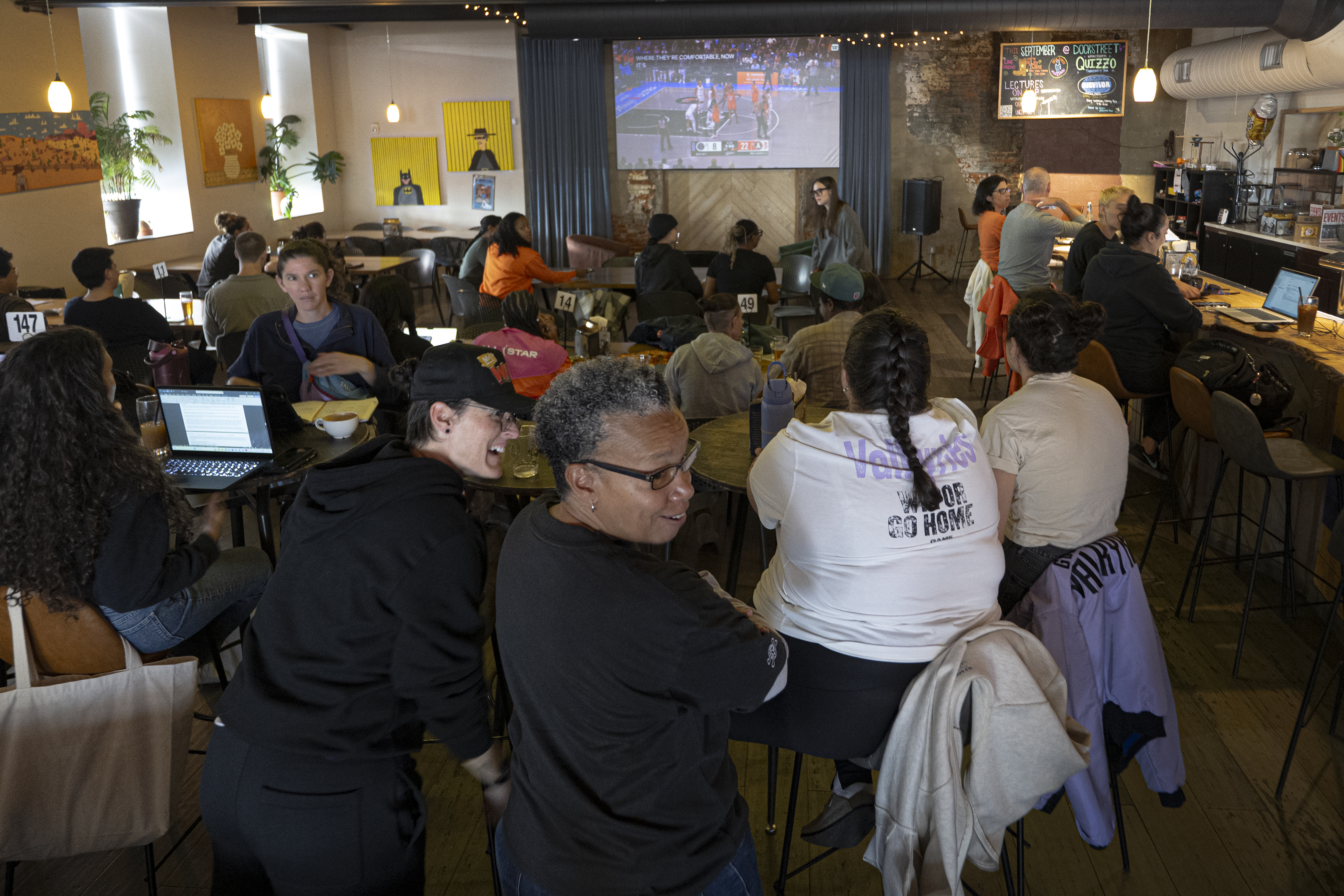
An unusual combination of beer, coffee, laptops, and jerseys popped up at Dock Street Brewery South early Thursday afternoon as Stoop Pigeon hosted a watch party for Game 6 of the WNBA Finals.
The matchup between the Golden State Valkyries and the Atlanta Dream has been highly scrutinized after the WNBA announced that the game would tip off at 12:30 p.m. Philadelphia time, or 9:30 a.m. for Golden State fans watching from home.
Despite the unusual time, Philadelphia’s WNBA fans showed their support as the host Dream beat the Valkyries, 80-69, in front of 17,099 fans at State Farm Arena in Atlanta to force Game 7 on Saturday night in San Francisco. Stoop Pigeon, Philadelphia’s “women’s sports hub,” has been hosting watch parties since 2024. Once the WNBA announced the date and time for Game 6 earlier this week, Stoop Pigeon co-founder Jen Leary met the difficult schedule with a comedic social media post in the form of a letter to Philadelphia employers.
“We are writing on behalf of your employee,” the letter reads. “As you may have heard, Game 6 of the WNBA Finals was rescheduled to 12:30 p.m. on a workday. … We hope you grant [Name] a half day off to support these athletes.”
Though some attendees at Dock Street did take off work for the occasion, many sat behind open laptops, juggling emails and pivotal plays on the court.
“I knew this was a chance to celebrate the Valkyries if they win,” said Deborah Choi, a Philly resident who works in corporate healthcare and is a Valkyries fan. “I did not want to be at home, alone, watching it on my second computer screen. I wanted to be somewhere with community and fellow fans, but I’m frustrated this is how it had to be.”
The Dream’s regular-season home, Gateway Center Arena, seats 3,500, making it the smallest venue in the WNBA by capacity. Meanwhile, State Farm Arena, home of the NBA’s Atlanta Hawks, seats approximately 17,000.
Scheduling conflicts with the Hawks, as well as entertainment events, clashed with the WNBA Finals. The Atlanta Dream said in an open letter to the city that they had expressed their concerns to the WNBA weeks earlier. The solution of moving Game 6 from 8 p.m. to 12:30 p.m. was not “what they fought for.” The team also admonished the league for its handling of the situation, saying its “concerns did not receive the attention, nor the urgency that they deserved.”
The disappointment among WNBA fans was palpable Thursday afternoon.
“This is Finals. There’s no reason that it should be played in the middle of the week during the day,” said Allie Cohen, the founder of Higher Rung, a women’s sports marketing agency. “It would not be great if it was in a crowd of 3,500. That doesn’t match the level that the WNBA is at right now. They deserve to be in a place where they can play for their thousands of fans. But I do think this highlights the broader conversation we’re having about women’s sports right now, the disparity and investment.”
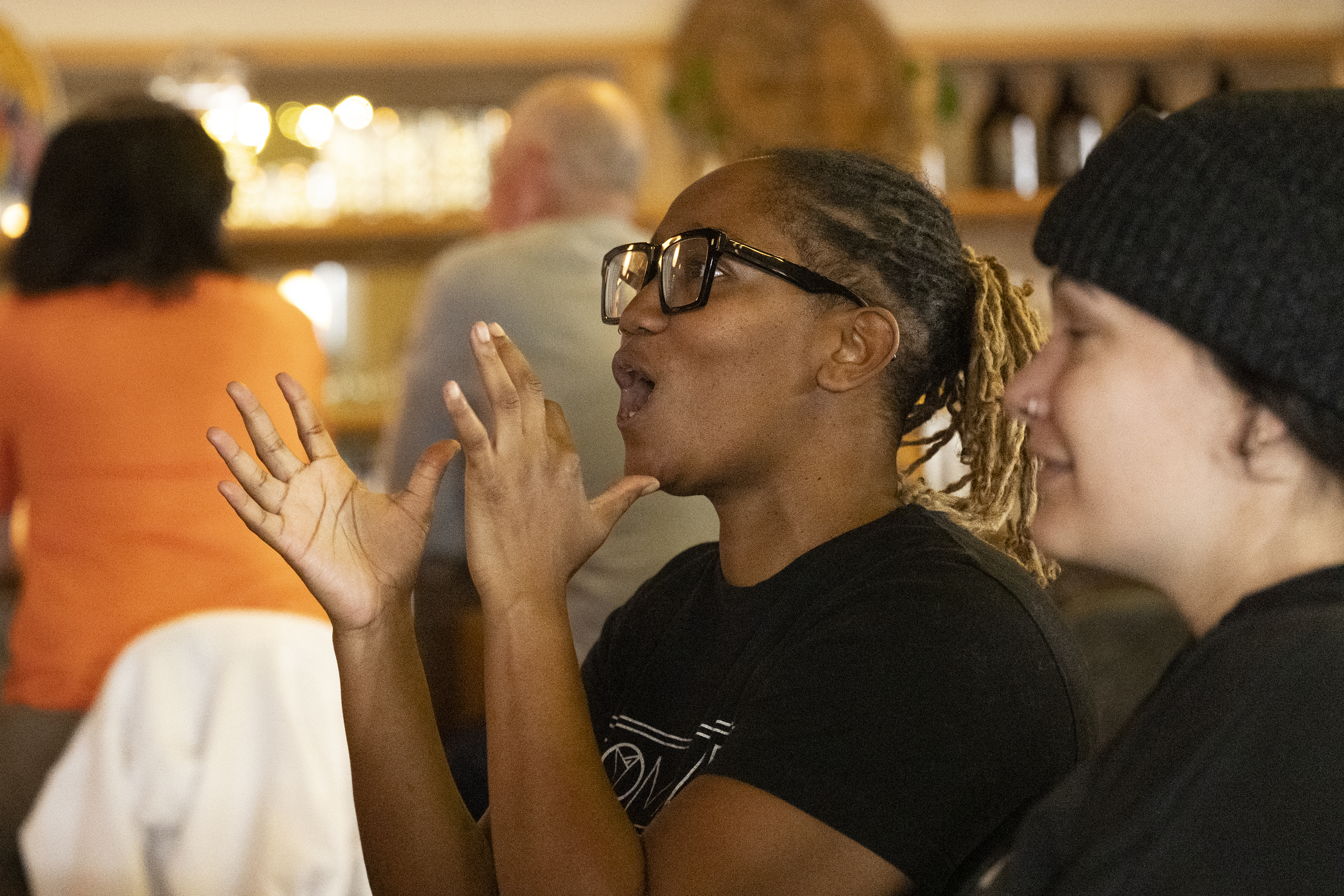
Phylea Andreson (left) and Hanna Johnson were among those in attendance at Stoop Pigeon’s impromptu WNBA Finals watch party.Jose F. Moreno / Staff Photographer
Stoop Pigeon offers updates on brick-and-mortar location
Leary detailed how the WNBA’s scheduling has strained not only the fan base but also business owners. With little time to plan, she faced challenges she hopes will soon fade as Stoop Pigeon prepares to open its brick-and-mortar location early next year.
“We are aiming for the third week in January to open,” Leary said. “But 100% we will be up and running by Unrivaled.”
The location will be at the corner of Broad and Pine Streets. Leary says it will be a family-friendly hub serving coffee, food sourced from local chefs, and drinks, with dozens of TVs showing women’s sports throughout the day.
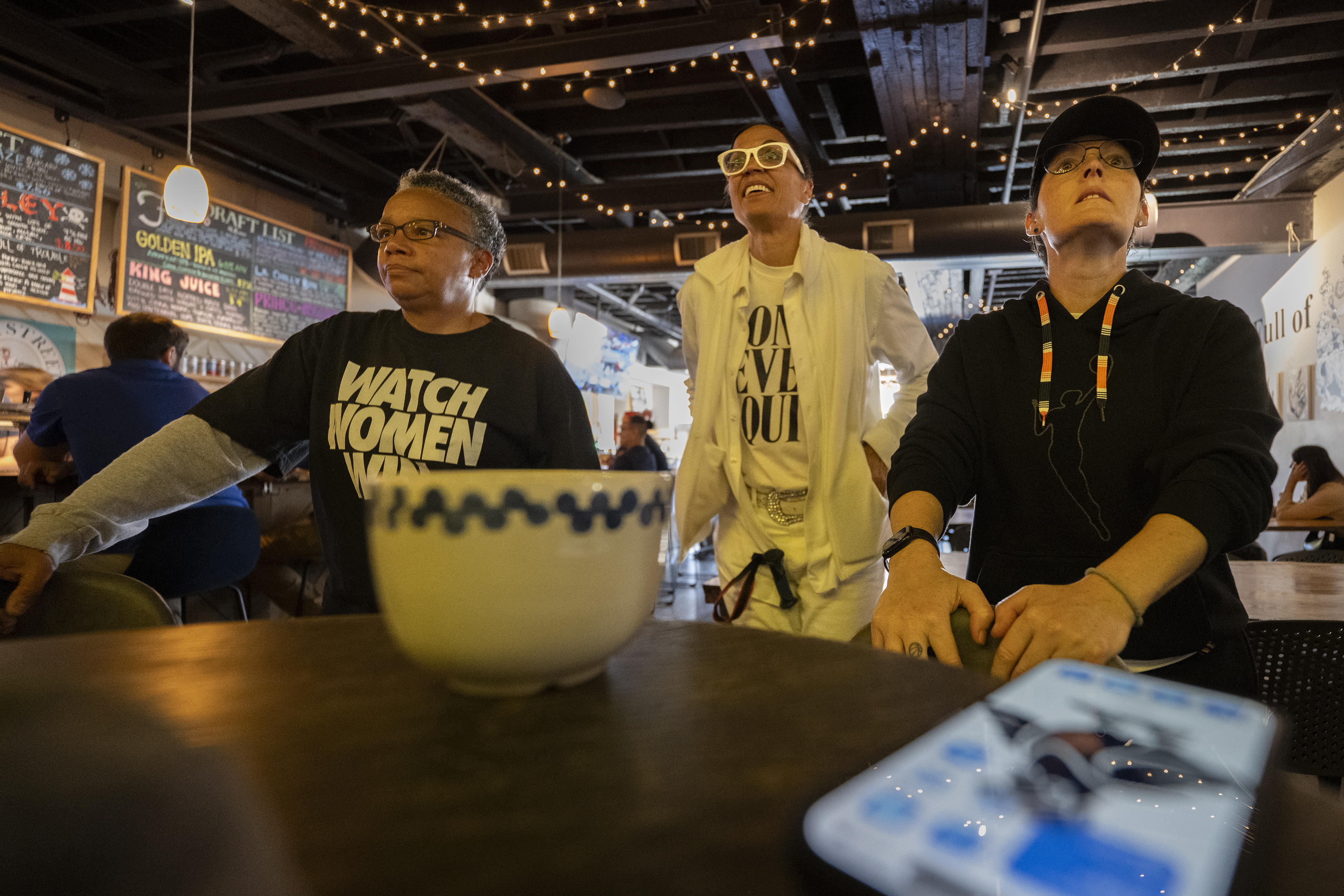
Fawn McGee (left), Valerie Still, and Stoop Pigeon cofounder Jen Leary watch Game 6 of the WNBA Finals during an impromptu watch party on Thursday at Dock Street Brewery South.Jose F. Moreno / Staff Photographer
Leary’s yearslong dream is finally coming to fruition, and the turnout at Dock Street for the WNBA Finals is helping fuel her “cautious optimism” about Stoop Pigeon’s upcoming opening.
“I’m terrified, but really, really excited to see Stoop Pigeon filled with fans this time next year, not to mention when we get our own team,” Leary said. “Like, I’m already afraid that we’ll outgrow the space by the time we’re open.”
Despite the excitement surrounding Stoop Pigeon’s opening, Leary is among those dismayed by the WNBA’s handling of the schedule, saying the situation “would’ve never happened if the roles had been reversed with the NBA.”
“It’s like, they take two steps forward and 10 steps back,” Leary said. “How many times can we rally and show support again? You know? It’s 2026. When are we going to stop doing this to women? Women’s sports, especially the WNBA fans, are so loyal. This game could have been at 2 o’clock in the morning, and people would have shown up.”
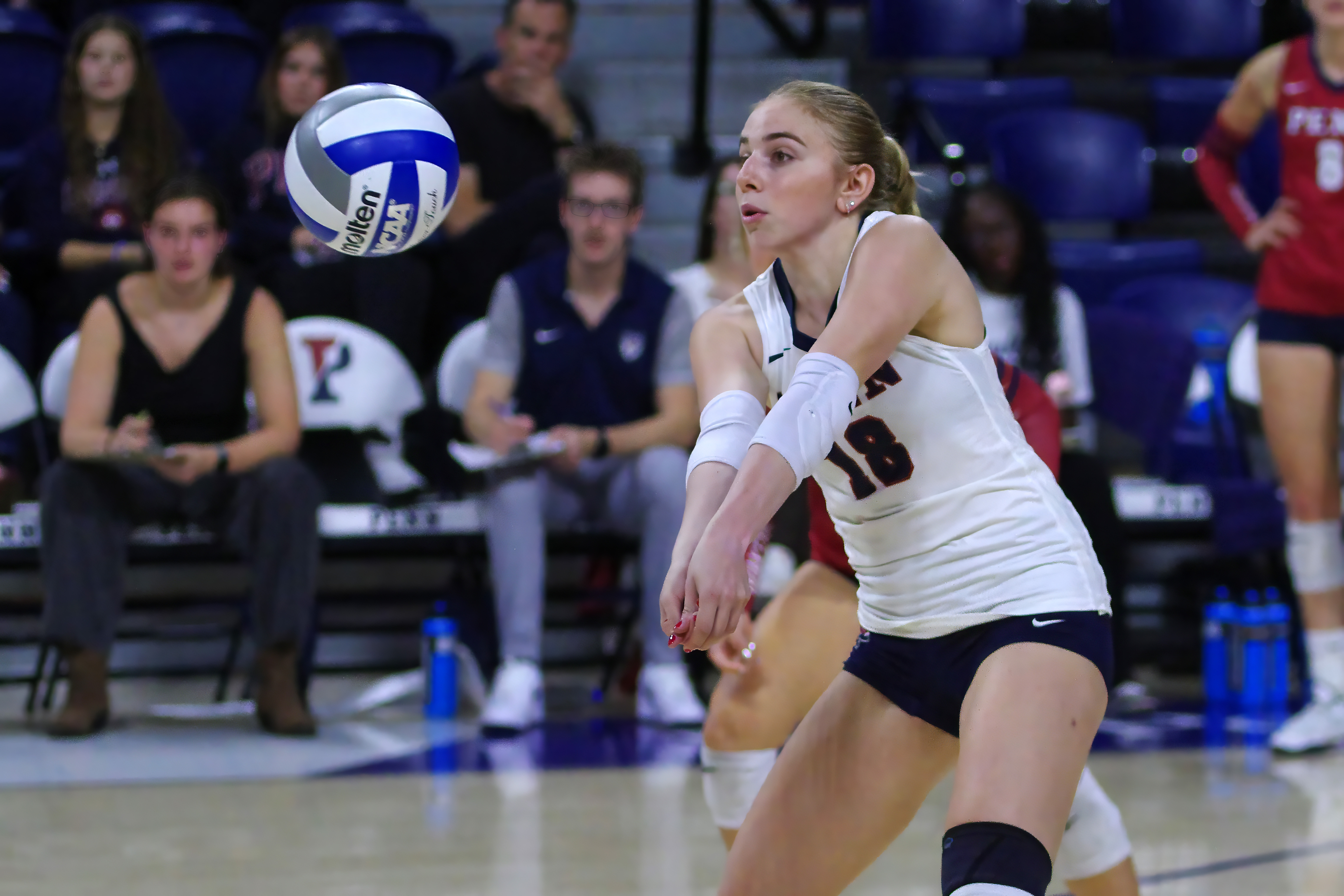
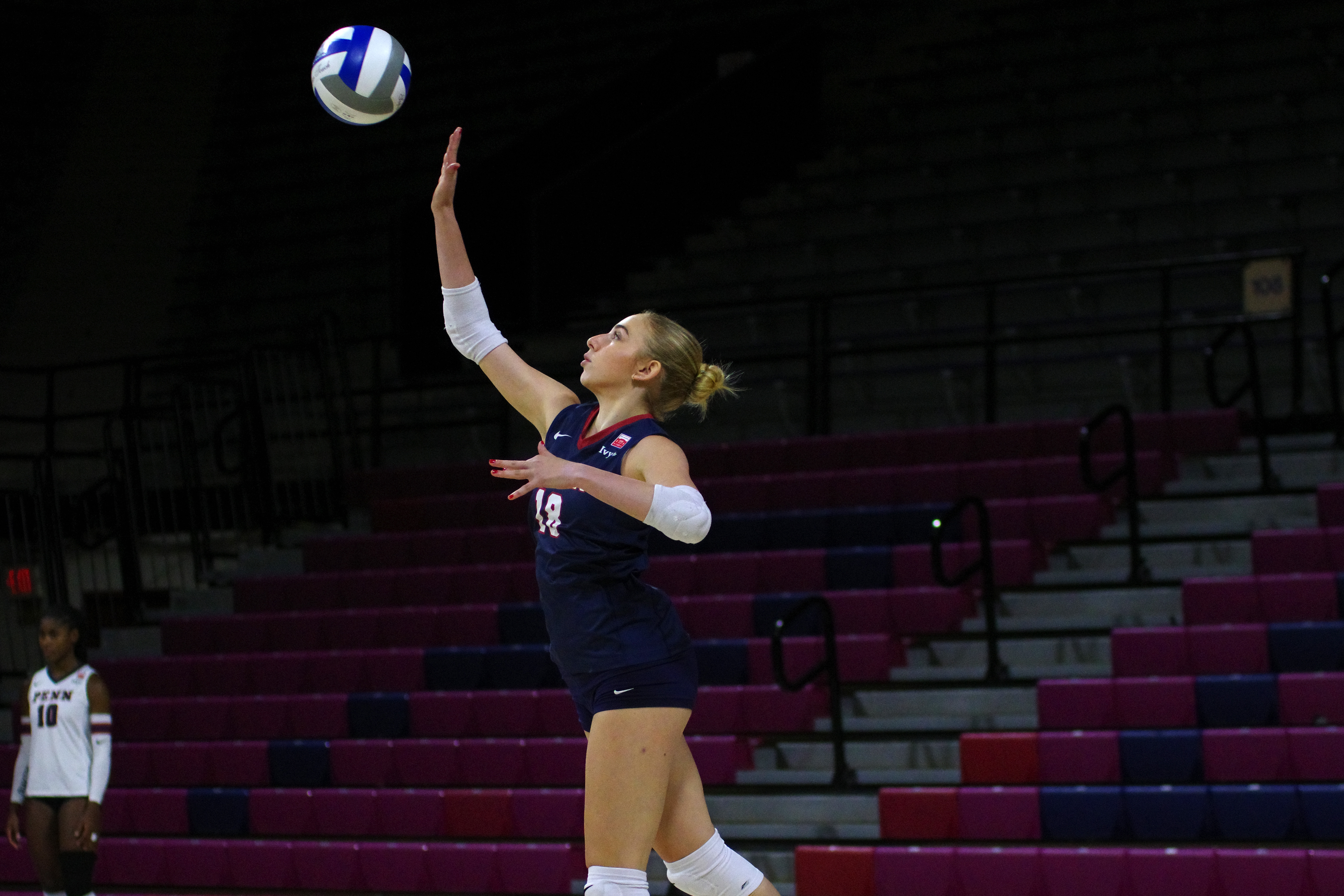
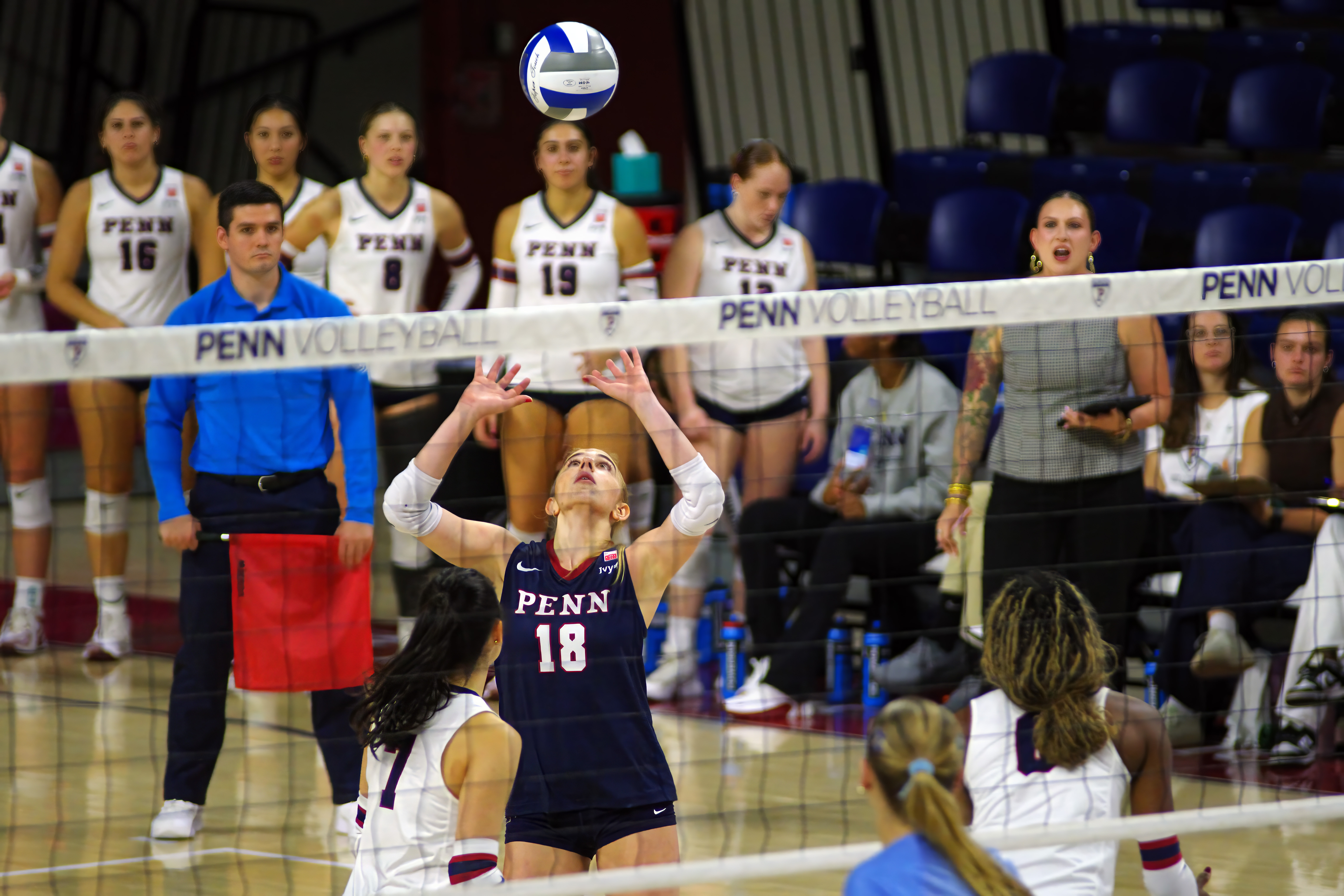
On the morning of Oct. 5, Penn sophomore libero Addison Pollock found out she led Division I volleyball in digs per set and was in the top 15 for total digs.
Later that day, she was in the emergency room and renamed “Toothless Pollock” by a teammate.
After an accident in practice, Pollock hasn’t played in a game since Oct. 3, and her return to the court is unknown. As of Wednesday, though, she’s still atop the NCAA in average digs (5.85 per set) and the Ivy League in total digs (304). Penn, meanwhile, is 10-7 (2-5 Ivy League) and next faces Columbia on Friday (5 p.m., ESPN+).
As a freshman, Pollock was named honorable mention All-Ivy, played in 75 of 90 sets, and led the Ivy League with 360 digs. Before her injury, Pollock had played in every match this season and led the team in digs for 12 of the 13 matches.
When her older brother, Jack Pollock, heard about her national accomplishment, he called her.
“I was like, ‘You’re a beast. I love you.’ And she was like, ‘Thank you.’ Then I hung up.”
And when two of Addison’s teeth nearly fell out after a collision in practice, she called him again.
A sibling’s push
Before Addison’s rise to Division I volleyball, she was following Jack’s footsteps. Both were goalies on their soccer teams. They played lacrosse. Basketball. Addison also dabbled in diving, tennis, horseback riding, and flag football.
Jack was the one who encouraged Addison, then going into sixth grade, to try volleyball. She found she excelled at it.
“That was one thing she was better [at] than me,” he said. “And I think when she realized she was better than me at [volleyball], she started continuing to push herself.”
Jack, a junior at Michigan, puts Addison’s game on the TV at his fraternity’s chapter house. But he remains her friendly competitor.
“I can’t give her that,” he said of who’s more athletic. “I think I’m a little more athletic, but she’s definitely a great athlete.”
Penn libero Addison Pollock began playing volleyball in sixth grade.Penn Athletics
“Heartbreaking and heartwarming to see”
During a drill at practice on Oct. 5, Pollock and another teammate went for a tip midcourt when Pollock’s face smashed into the teammate’s shoulder.
“She was extremely distressed,” senior outside hitter Zada Sanger said. “I mean, her teeth were not in her head. … She was in a lot of pain, and that was clear.”
Pollock’s front tooth and the tooth next to it were knocked out of socket, and her mouth was fractured. She needed a splint and two root canals.
Pollock didn’t know when she could return to play. She had to be on a liquid diet for two weeks. She was concerned her smile would never look the same.
In her own words, it was “obviously kind of sucky.”
Junior right side hitter Jenniya Lane changed Pollock’s contact information to “Toothless Pollock” on her phone but assured her, “‘You know, it could be worse. You could have actually no teeth.’”
The team rallied to support Pollock. Junior outside hitters Jenna Garner and Ellie Siskin brought her soup and a smoothie. Lane and Sanger visited with Van Leeuwen ice cream — cookies and cream, birthday cake, and honeycomb.
When Sanger saw Pollock back at her dorm, she said the sophomore was “somehow still optimistic. … It was both heartbreaking and heartwarming to see.”
Sanger and Lane understood the frustration and fear behind such an injury.
“I mean, [the dentist] physically had to go in and maneuver her teeth back into place, and I don’t think that’s anything that anyone would ever think about going through in a sport that’s supposed to be noncontact,” Lane said.
Added Sanger: “I understand that feeling of scarcity. You only have so many years of playing college volleyball, and Penn volleyball specifically.”
But Pollock already was searching for the positives.
“I’m also looking forward to the life skills that this will teach me,” she said.
Pollock described her position, libero, as “the battery, the energizer of the team,” because the libero flies across the floor just to lift the ball into the air one more time. The “scrap of it,” the 5-foot-8 Pollock said, as well as a libero’s preferred height — “it’s really easy to be short” — is what drew her to the position.
Pollock learned from her parents that “if I want something, I have to work for it.”
So when she was recruiting for volleyball, she would email 75 schools before every tournament with her schedule and clips of her playing. She ultimately chose Penn in the fall of 2023 from a list that included Columbia, Yale, and Pitt, even though it had gone 2-22 a season ago.
Pollock appreciated the blend of athletics, academics, and social life Penn offered, but also, “I tend to root for the underdog,” she said.
“One of the things I admire about her is [that] she’s very unapologetically who she is,” Sanger said.
Penn libero Addison Pollock is “unapologetically who she is,” according to teammate Zada Sanger says.Penn Athletics
Whether in her identity as a Jewish student-athlete or as a female volleyball player, Pollock isn’t afraid to speak up.
On the court, she wears No. 18, a significant number in Jewish culture, and a Star of David necklace. For Rosh Hashanah, she brought in challah bread, honey, and apples for the team to enjoy. It’s a pride she shares with Jack.
“I don’t think either of us are scared of anything,” he said. “I think both of us feel very confident in our identities, and if someone has a problem with either me or my sister being Jewish, I think they could take it up with us, and I honestly would love that.”
Three days after her injury, on Thursday, Pollock went to listen to former Hamas hostage Omar Shem Tov speak about his experience at an event hosted by multiple colleges’ Jewish student groups. Then, on Friday, she supported her teammates as they faced Brown, joining the huddles and saying quick words to a teammate during timeouts. Penn won the match, 3-2.
As Pollock put it, “Never underestimate the duality of an Ivy League student.”