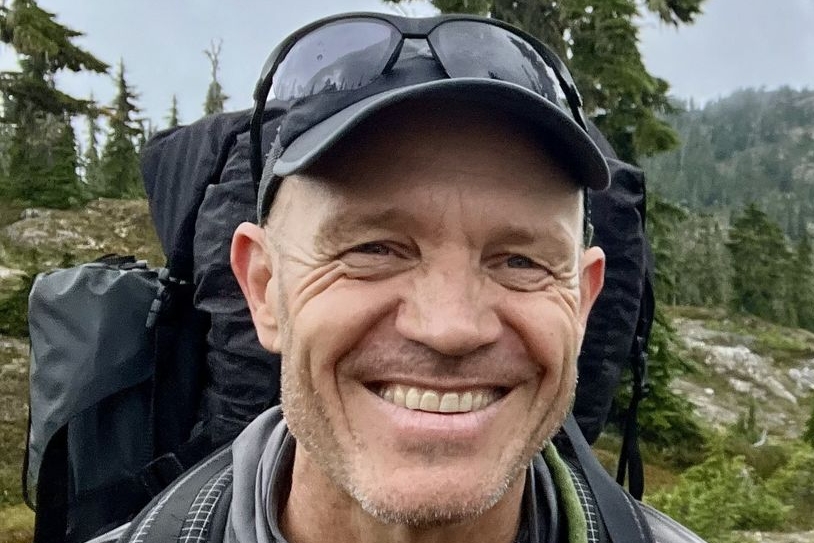
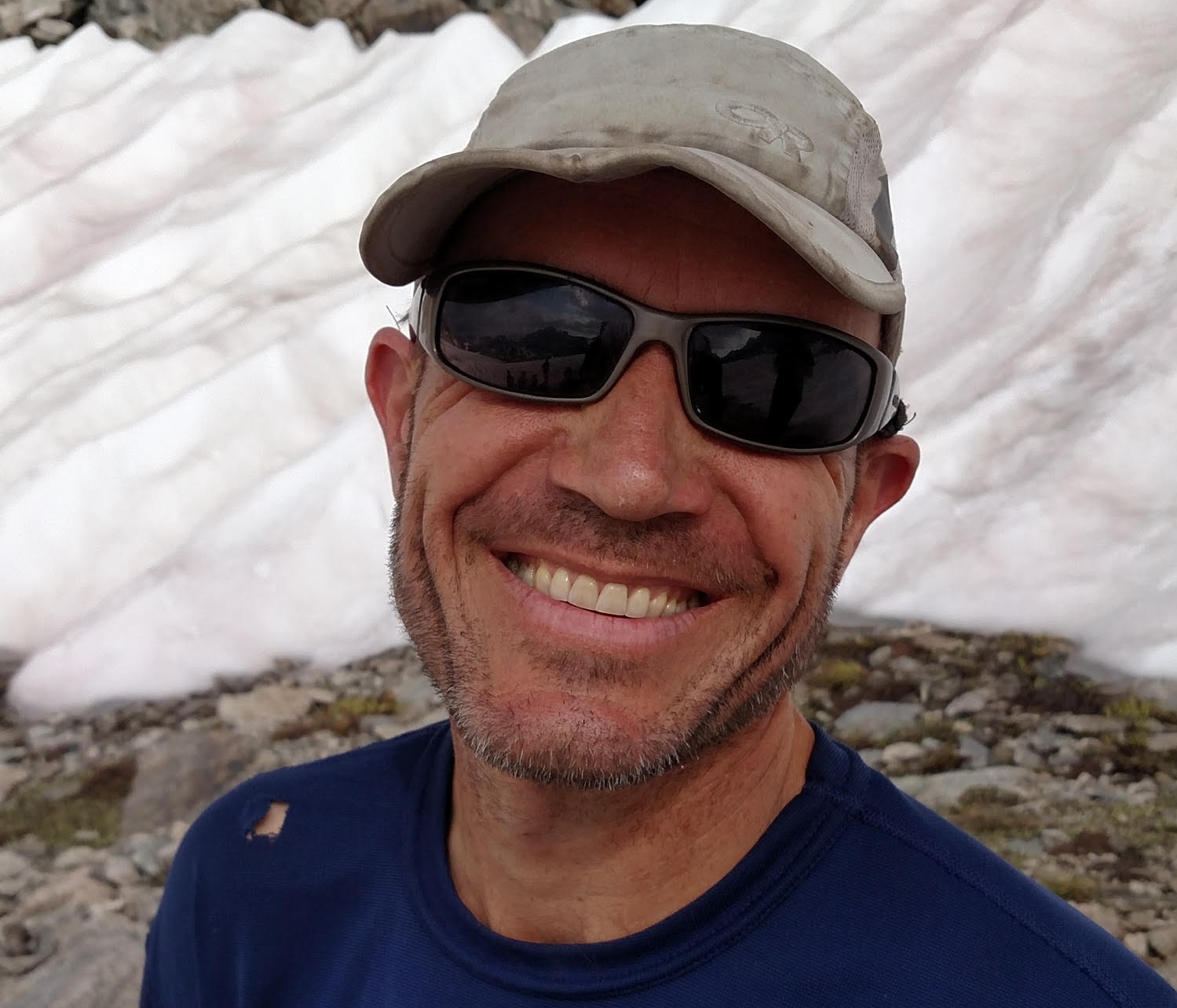
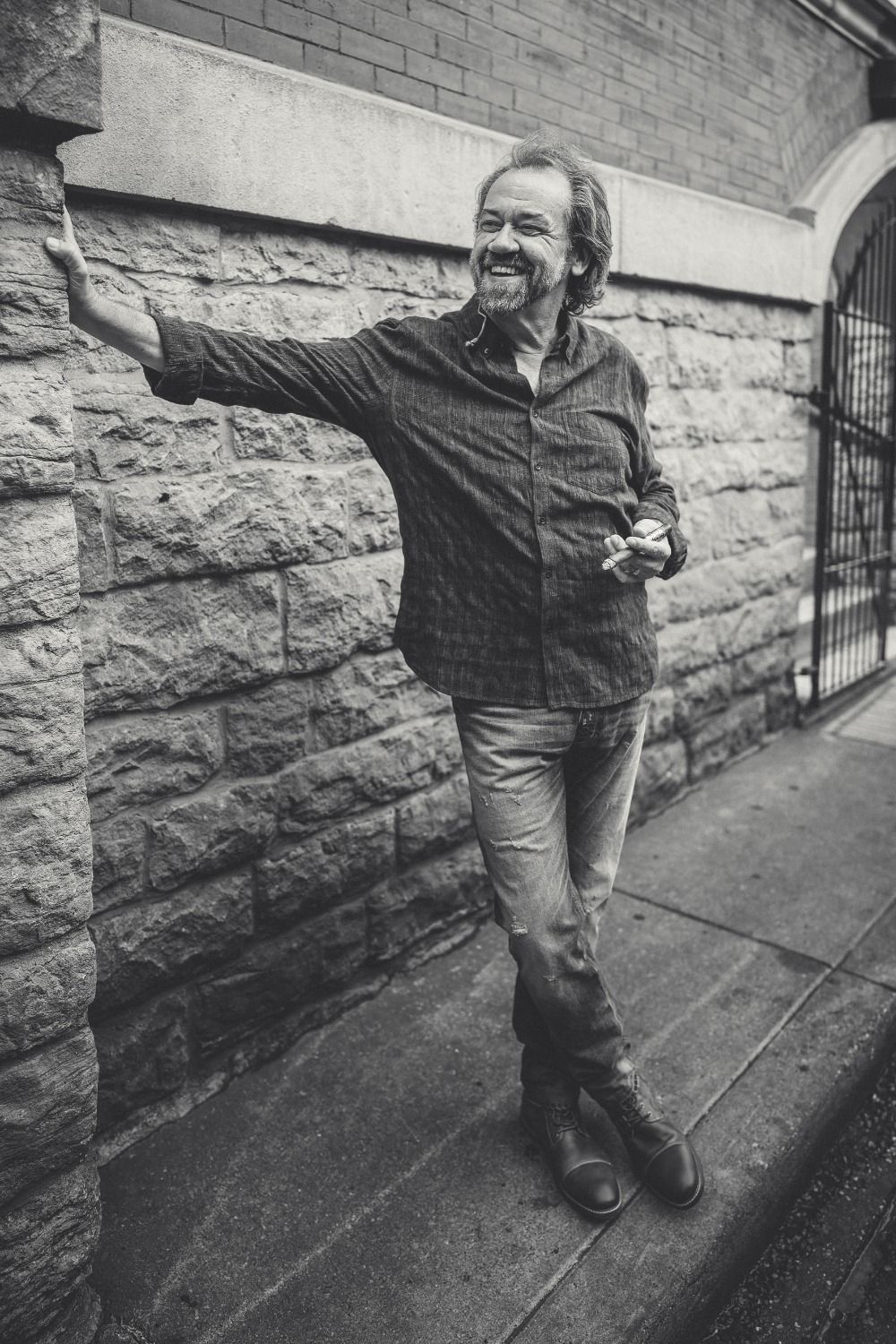
Peter D. Yeomans, 58, of Philadelphia, innovative clinical psychologist at the Corporal Michael J. Crescenz Department of Veterans Affairs Medical Center, founder of Cold Mountain Counseling LLC, worldwide mountaineer and backcountry adventurer, teacher, author, mentor, Quaker, and volunteer, died Friday, Aug. 28, of cardiac arrhythmia at the VA Medical Center in University City.
Dr. Yeomans was an expert in trauma, substance use disorder, moral injury, and spiritually integrated healthcare. He joined the Philadelphia VA Medical Center as a staff psychologist in 2009 and became director of its innovative PTSD outpatient team program in 2019.
He opened his own psychology practice, Cold Mountain Counseling, in 2021 and advised thousands of veterans, fellow backcountry adventurers, and other clients in need across the country. “He was instrumental in the healing process for so many veterans that it is hard to fathom the reach of his influence,” a VA colleague said in a tribute.
R. Tyson Smith, a friend and colleague, said several veterans told him: “Peter Yeomans saved my life.”
At the VA center, in addition to physical and mental ailments, Dr. Yeomans and others innovated a treatment for what are called “moral injuries” from military service. They connected therapists with VA chaplains to link emotional healing with faith rituals, and veterans in the program spoke appreciatively about shifting the guilt and shame of moral failures during war from soldiers in general to society at large.
“These are stories to hear and also for the public to wrestle with,” Dr. Yeomans told The Inquirer in 2019. His wife, Kate O’Shea, said: “He was the most responsible person you could imagine, and he felt he had a responsibility to humanity.”
Outside the medical center, Dr. Yeomans spent weeks at a time hiking, backpacking, packrafting, skiing, rock climbing, and mountain biking around the world. He reached summits in Alaska and Argentina, had to be rescued from a deep crevasse, and worked as a program supervisor and senior field instructor in the 1990s for the National Outdoor Leadership School in Alaska, Wyoming, Arizona, and Utah.
Later, he cofounded the local Wilderness Outdoor Leadership Force for teens in Kensington. Talia Young, a longtime WOLF member, called him “genuine and earnest … and joyful with kids.”
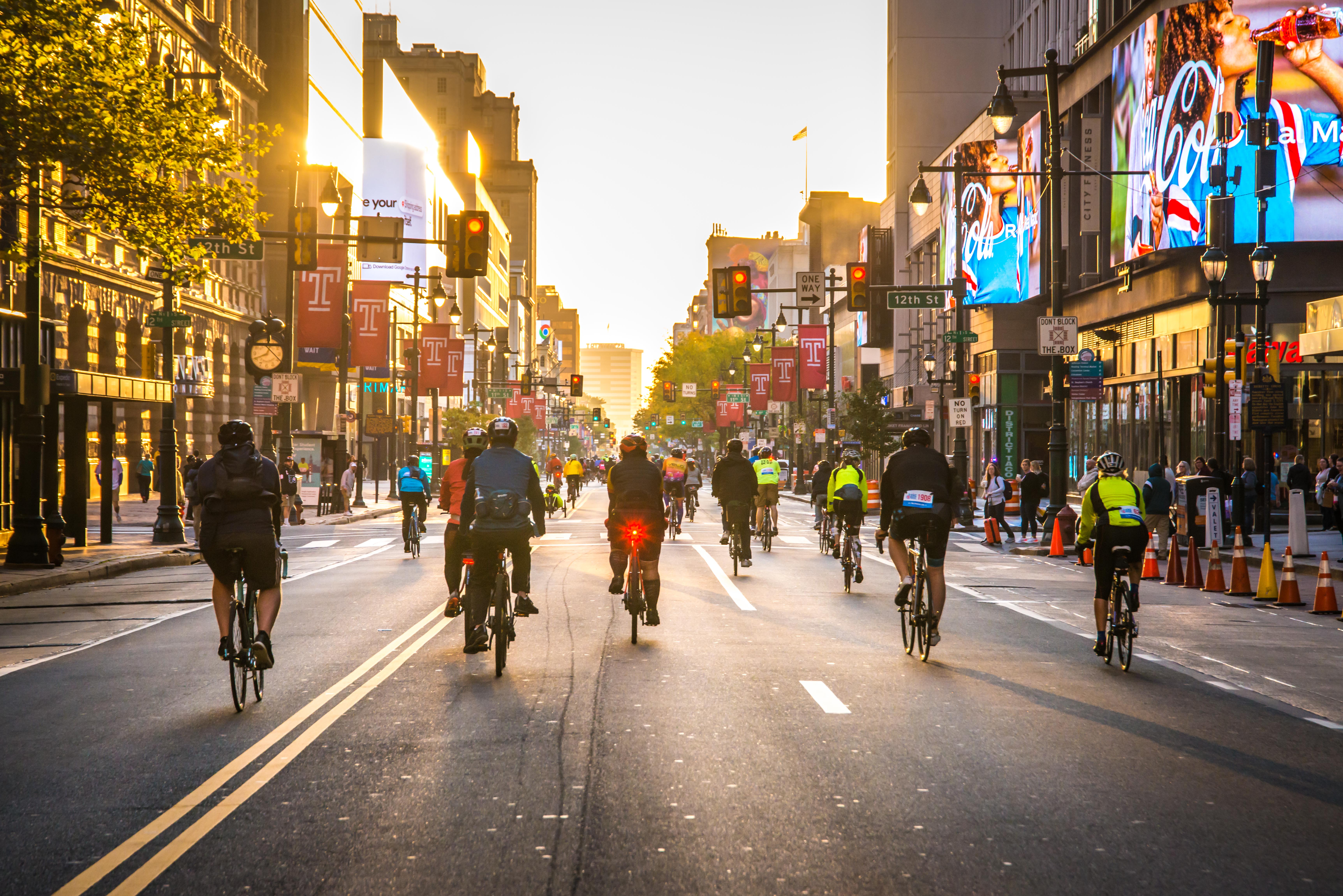
Dr. Yeomans was an avid cyclist.Bicycle Coalition of Greater Philadelphia
Longtime colleague Rob Riman said he was a “consummate adventure partner and wildly inspired guide.” On his website, coldmountaincounseling.com, Dr. Yeomans said: “Many of the fondest memories of my life are from adventures in the mountains.”
He earned a bachelor’s degree in psychology from Harvard University in 1991 and came to Philadelphia from Wyoming in 1997 to be with O’Shea. He earned a master’s degree in psychology from Lesley University in Massachusetts in 2001 and a doctorate in clinical psychology from Drexel University in 2008.
Dr. Yeomans traveled to New Zealand, Rwanda, Burundi, and elsewhere to train other counselors. He worked in state correctional institutions in Philadelphia and Chester, and earlier for the American Red Cross in Germany.
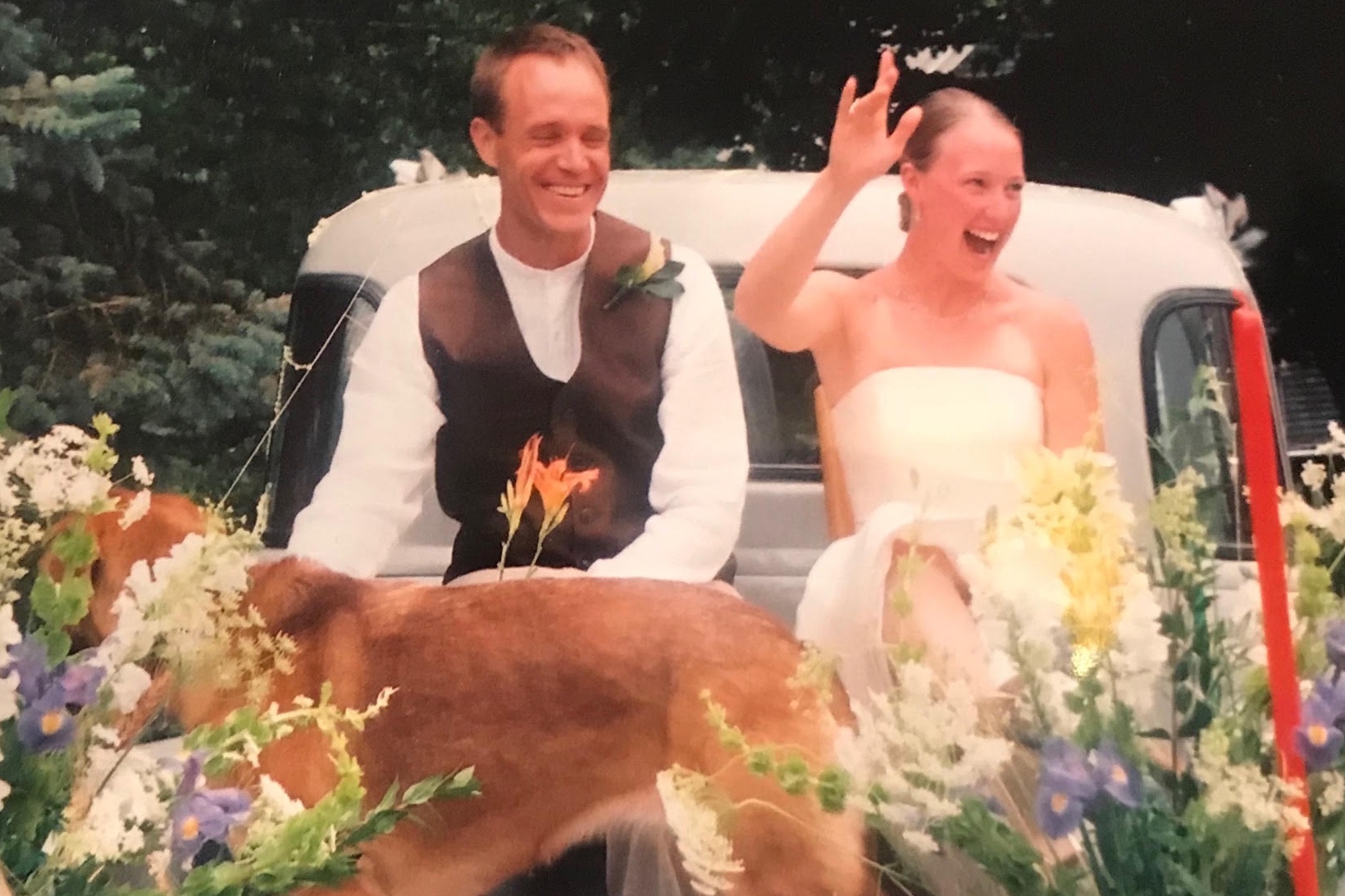
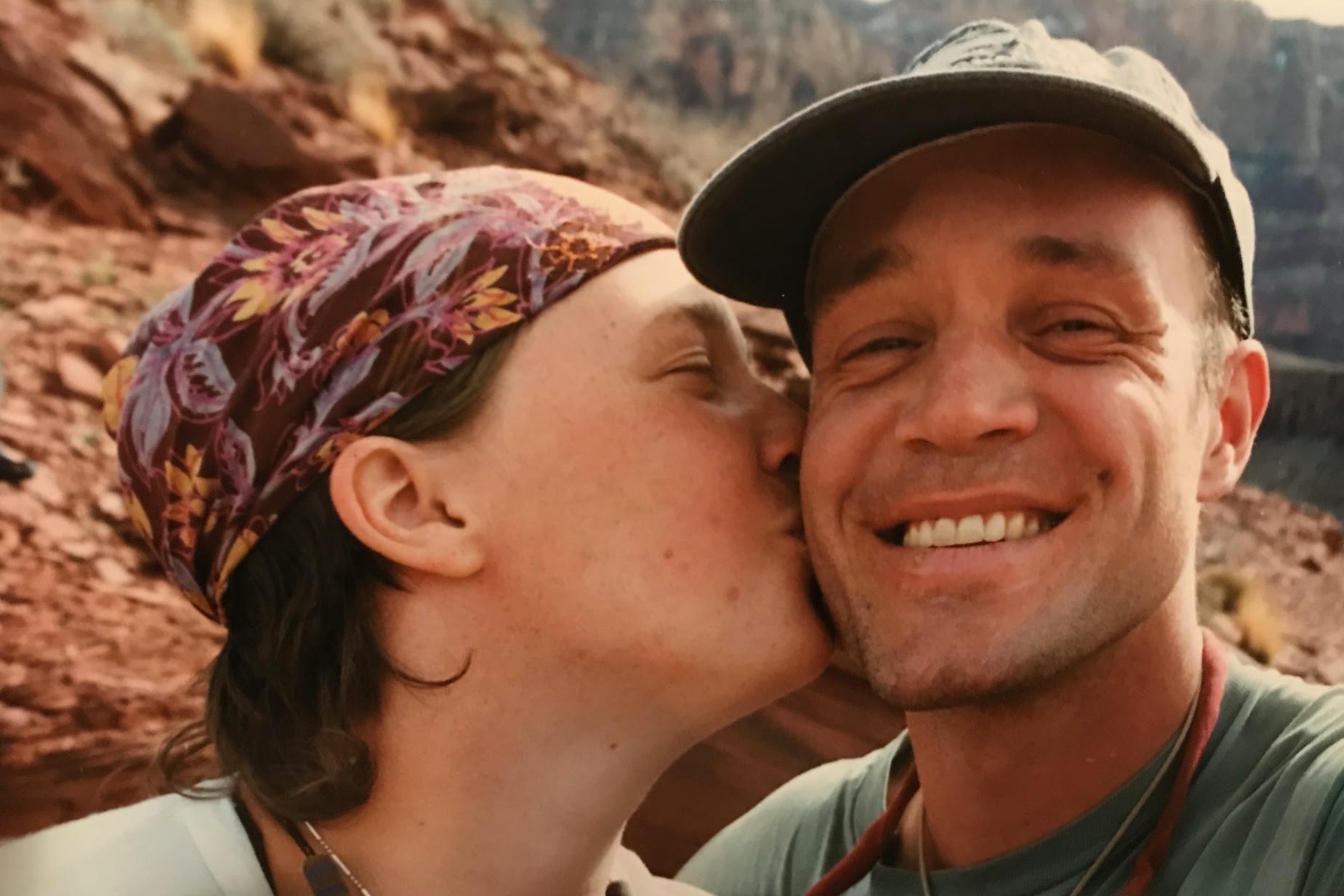
Dr. Yeomans and his wife, Kate, married in 2002 and had many adventures together. Courtesy of the family
He taught classes on moral injuries at Germantown Friends School, the University of Pennsylvania, and elsewhere. Longtime friend William Anninger said: “He was particularly good at creating emotional sharing among men.”
Friend Lila Berman said: “He exuded warmth and care for the people around him, and for the natural environment.”
Peter Douglass Yeomans was born Aug. 27, 1968, in Berkeley, Calif. The family moved to Massachusetts when he started high school, and he graduated from Concord Academy in 1986.
He met Kate O’Shea at an environmental ethics course in Utah in 1996, and they married in 2002 and lived in Germantown. He made her tea in the mornings and left love notes behind when he left the house first. They reared a daughter, Ada, and sons Josiah and Levi, and they all went on memorable adventures in Wissahickon Valley Park, across the country, and around the world.
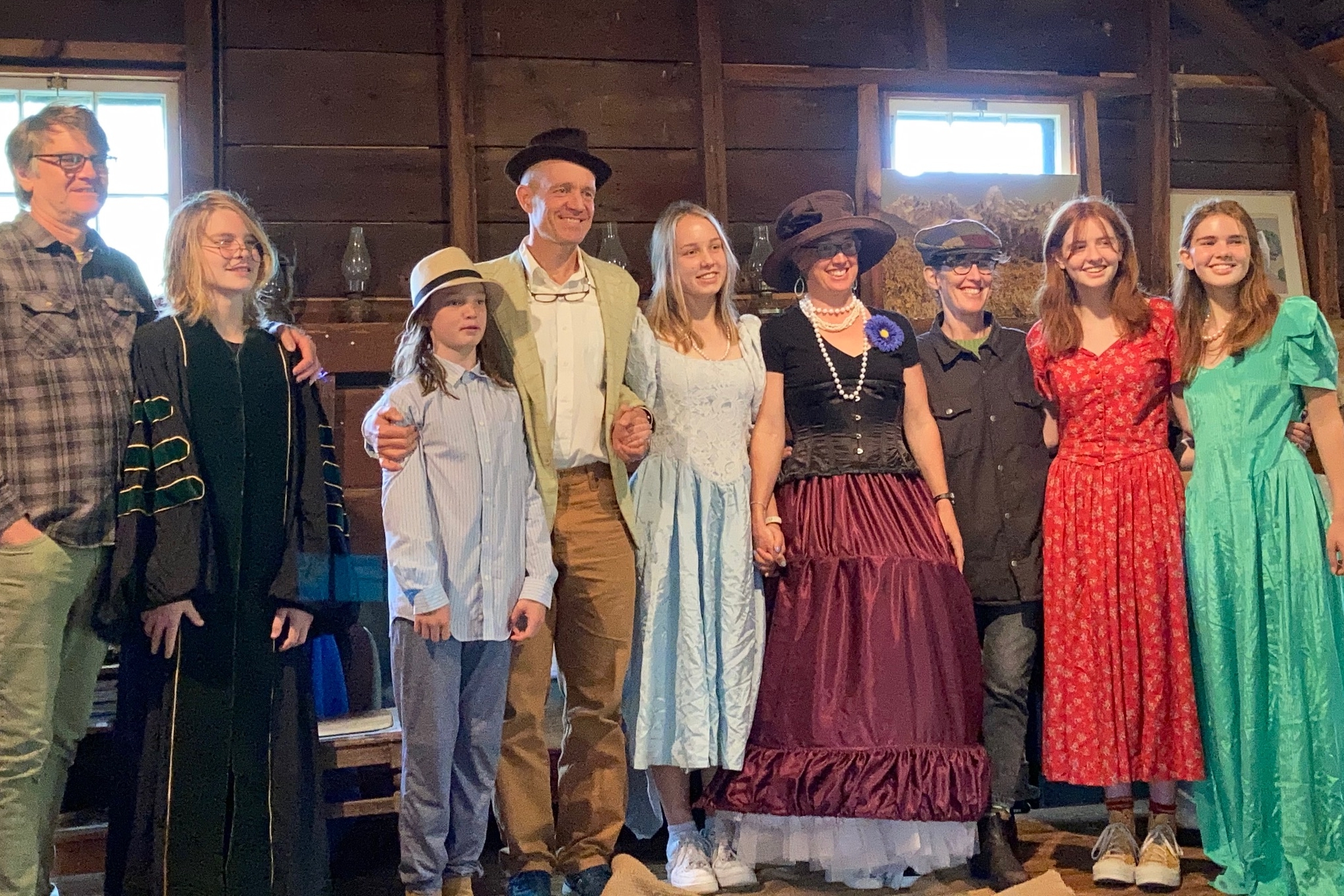
Dr. Yeomans, rear left on top and fourth from the left on bottom, enjoyed time with his family in the mountains and on stage. Courtesy of the family
“They complemented each other perfectly,” their daughter said. “He taught us how to read a map, find a campsite, and most importantly bake cinnamon rolls in the backcountry.”
Dr. Yeomans was a member of the Bicycle Coalition of Greater Philadelphia, and he rode his bike often from home in Germantown to work in University City. He went to Germantown Friends Meeting, played guitar, sang, and acted in theatrical shows in high school and later with community groups and his family.
He was inclusive and encouraging, his brother, Ben, said, “drawing out capacities in me I wasn’t yet trusting.” His parents, Anne and Tom, said: “It has been a great privilege to have been Peter’s parents.”
His mother-in-law, Margaret O’Shea, praised his “compassion, selflessness, nobility, and grace,” and his father-in-law, Dan O’Shea, said: “When our daughter met Peter she described him as ‘Mr. Perfect.’ Little did we know how perfect.”
“It has been a great privilege to have been Peter’s parents,” his parents said.Courtesy of the family
Kate O’Shea said: “Because of Peter, our world is a kinder, more generous, and more loving place.”
In addition to his wife, children, parents, brother, and in-laws, Dr. Yeomans is survived by other relatives.
A memorial service is to be held at 2 p.m. Saturday, Oct. 3, at Germantown Friends Meeting, 47 W. Coulter St., Philadelphia, Pa. 19144.
It isn’t often that a mudroom is the main attraction that sells a house.
But Adnan Zulfiqar says that is what drew him and his wife, Hajira, in 2017 when they were looking for a house for themselves and their three young children. It was the last stop at the end of an exhausting day of searching.
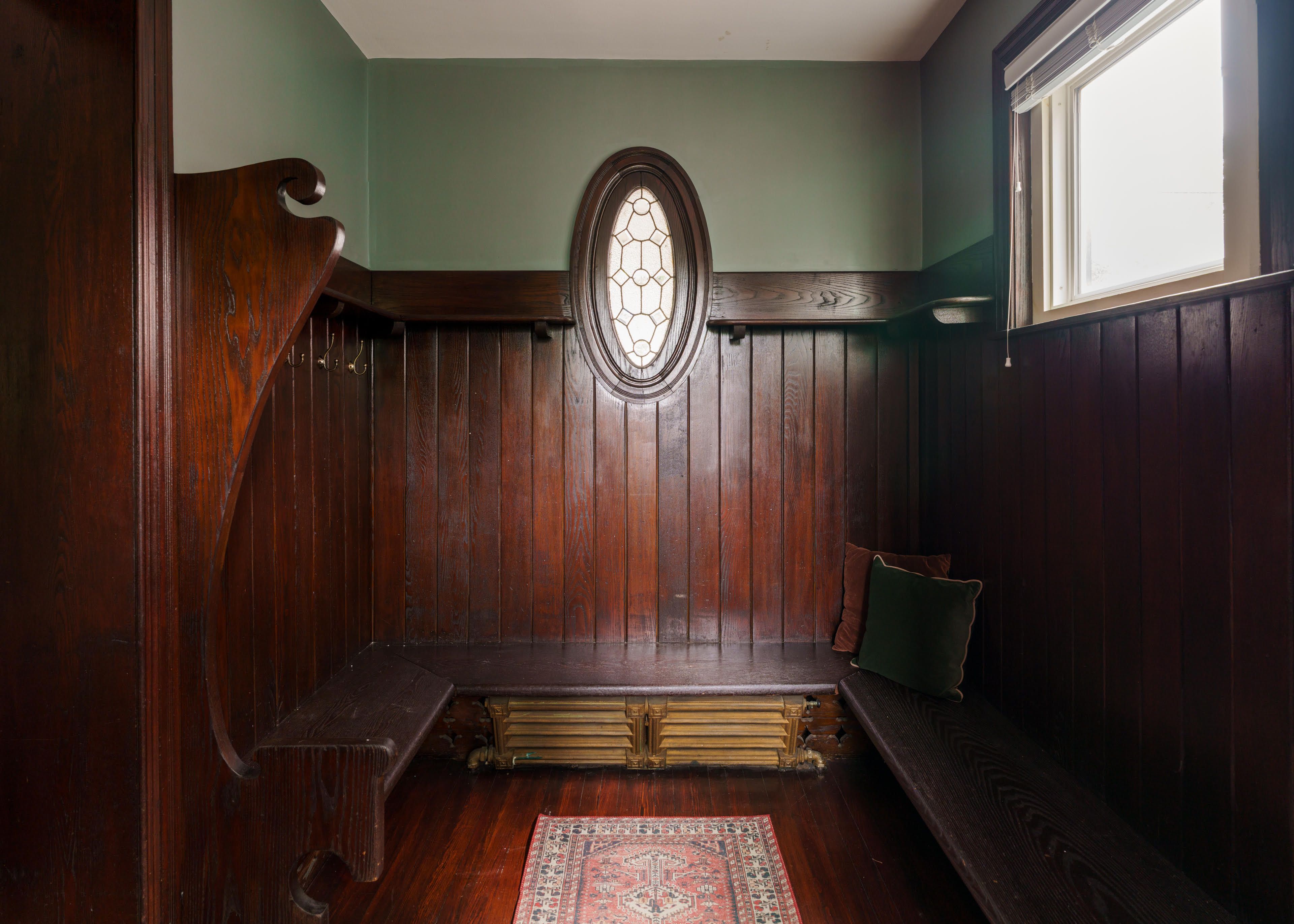
The mudroom in Adnan Zulfiqar’s house as shown in the for-sale listing in September 2026 in Philadelphia.Donkin Media/Thomas Donkin
“There was just a serene feeling,” he said. That the wood-paneled mudroom had been built by previous owners as a prayer room.
Careers took the family away from the home in 2022, but Hajira’s family is from Philadelphia, and Adnan said they always thought they might return, so they rented the house when they moved, instead of selling.
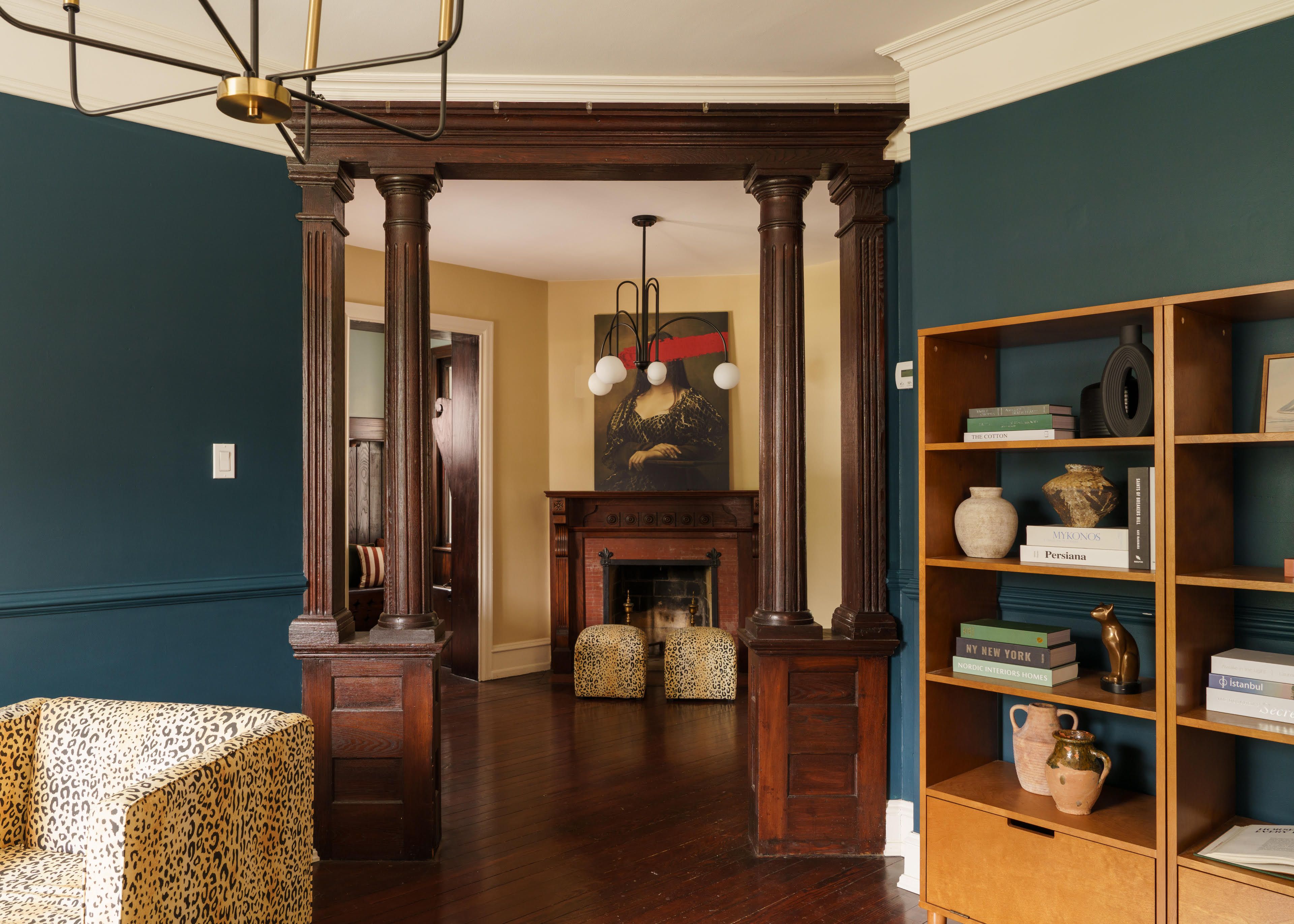
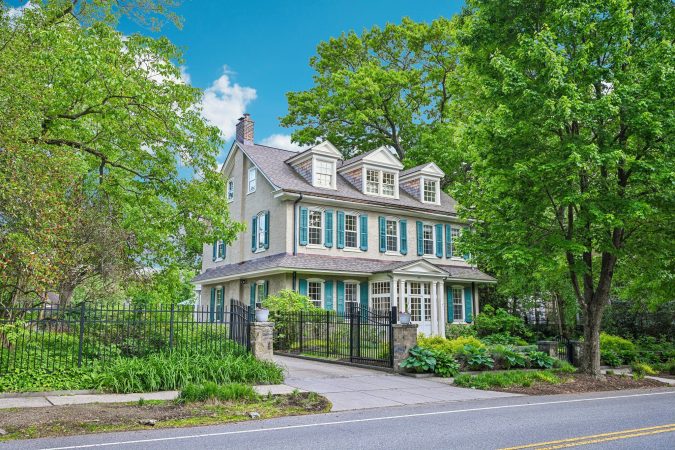
The house has original wood floors, crown and chair moldings, decorative fireplace mantels, and two usable fireplaces.Donkin Media/Thomas Donkin
It was perhaps “wishful thinking,” Adnan said. “We loved the house, and we loved the neighborhood.”
But the family has now settled in Northern Virginia. Adnan commutes to his job as a law professor at Boston College, and Hajira is a dentist.
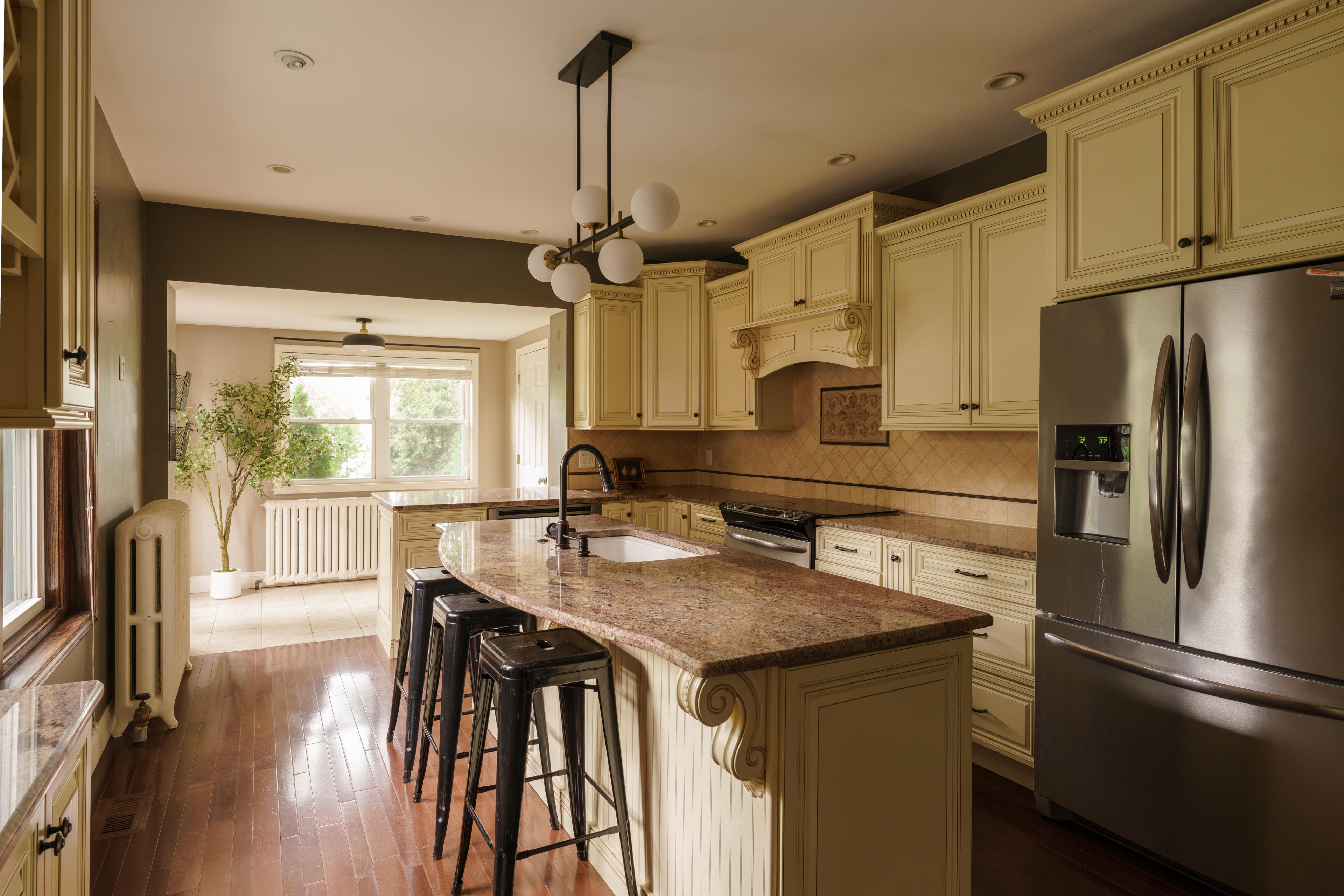
he kitchen has granite countertops, stainless steel appliances, and a large island.Donkin Media/Thomas Donkin
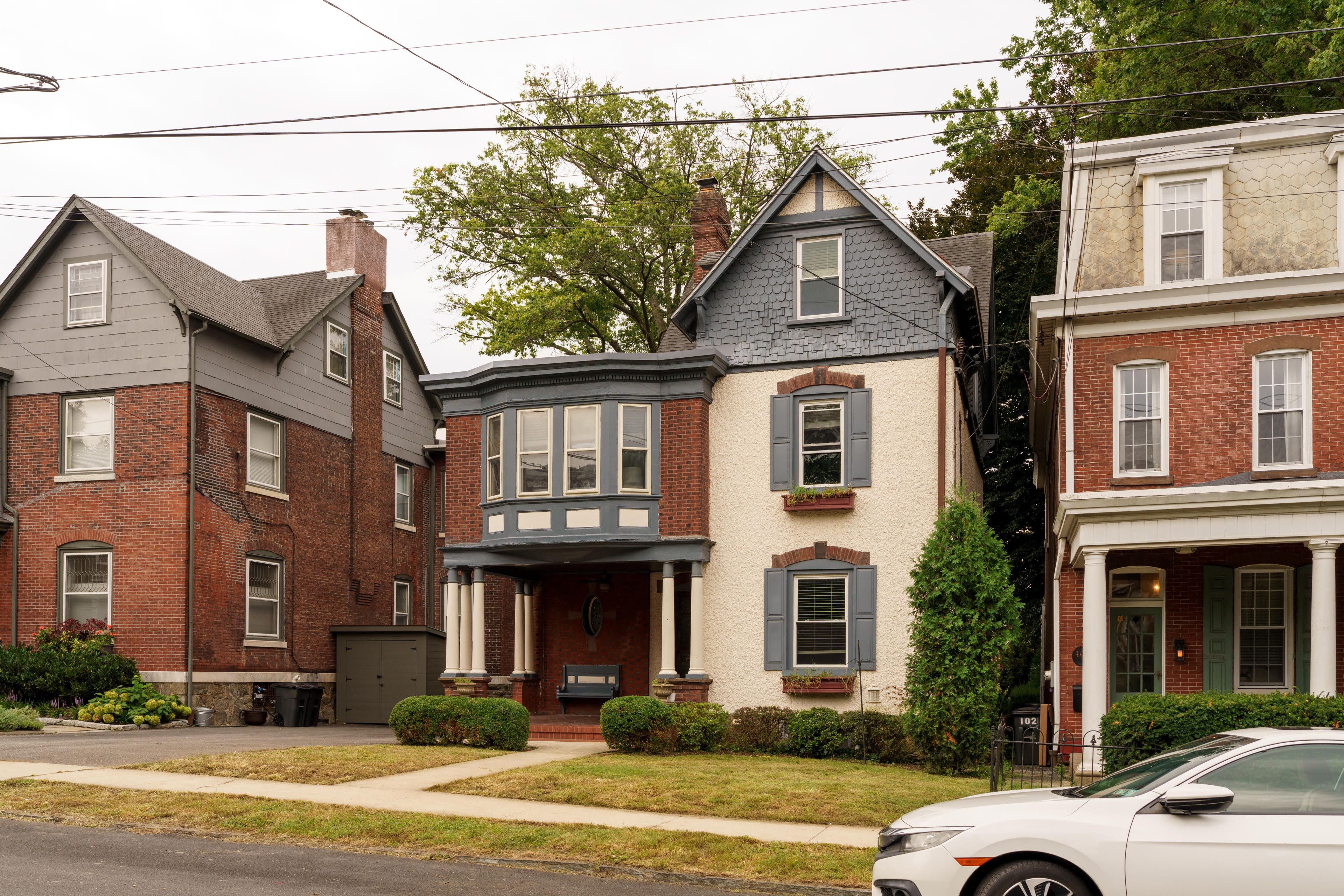
The four-bedroom, 3½-bath Victorian is 3,101 square feet.
It has original wood floors, crown and chair moldings, decorative fireplace mantels, and two usable fireplaces.
The kitchen has granite countertops, stainless steel appliances, and a large island, and there is also a half bathroom.
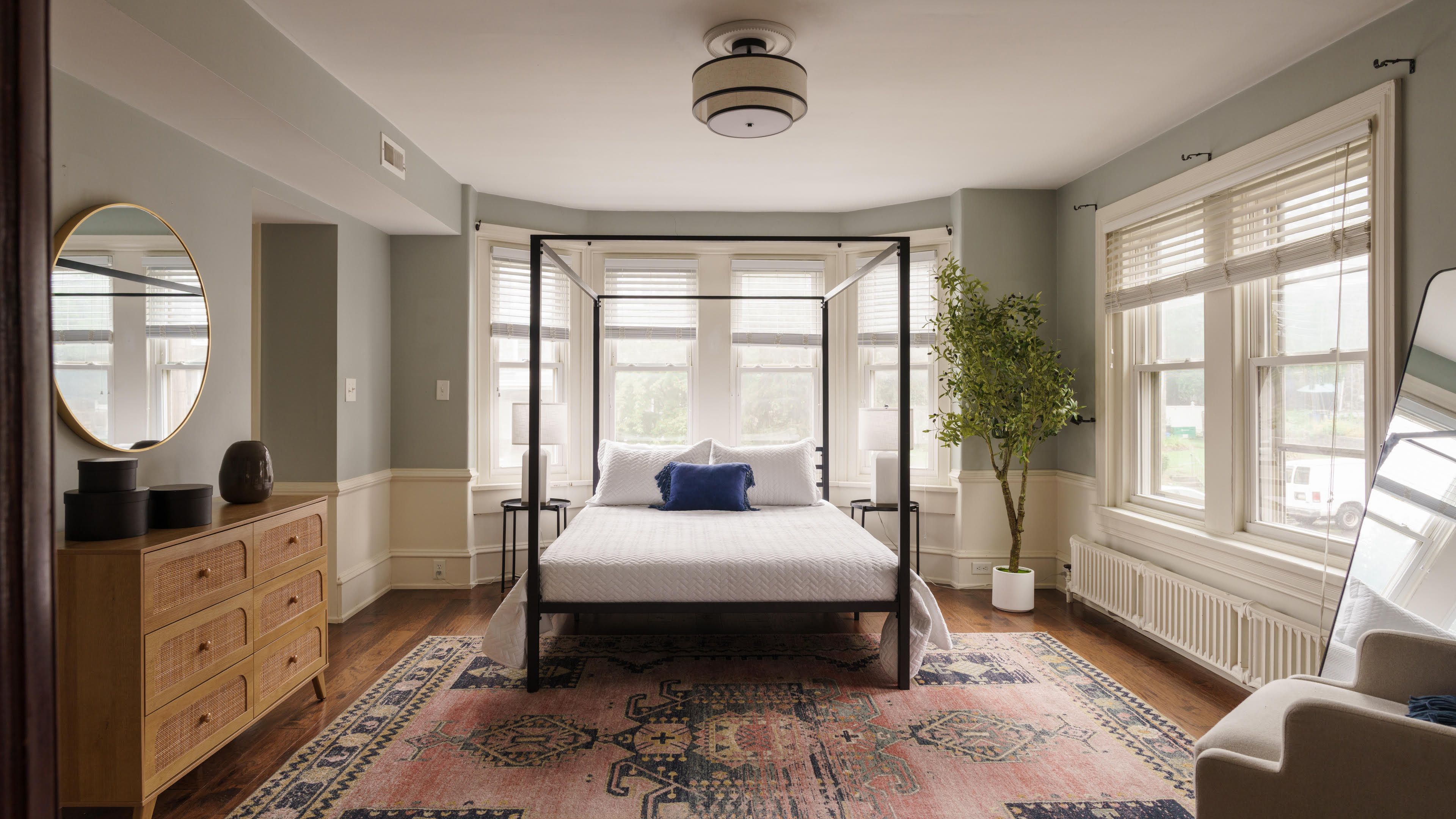
A bedroom in Adnan Zulfiqar’s house as shown in the listing.Donkin Media/Thomas Donkin
The primary bedroom is on the second floor with an en suite bathroom. There is a second bedroom with full bath, laundry, and a bonus space, which Adnan used as an office.
The third floor has the other two bedrooms, a full bathroom, and additional bonus space that can be used as a reading nook.
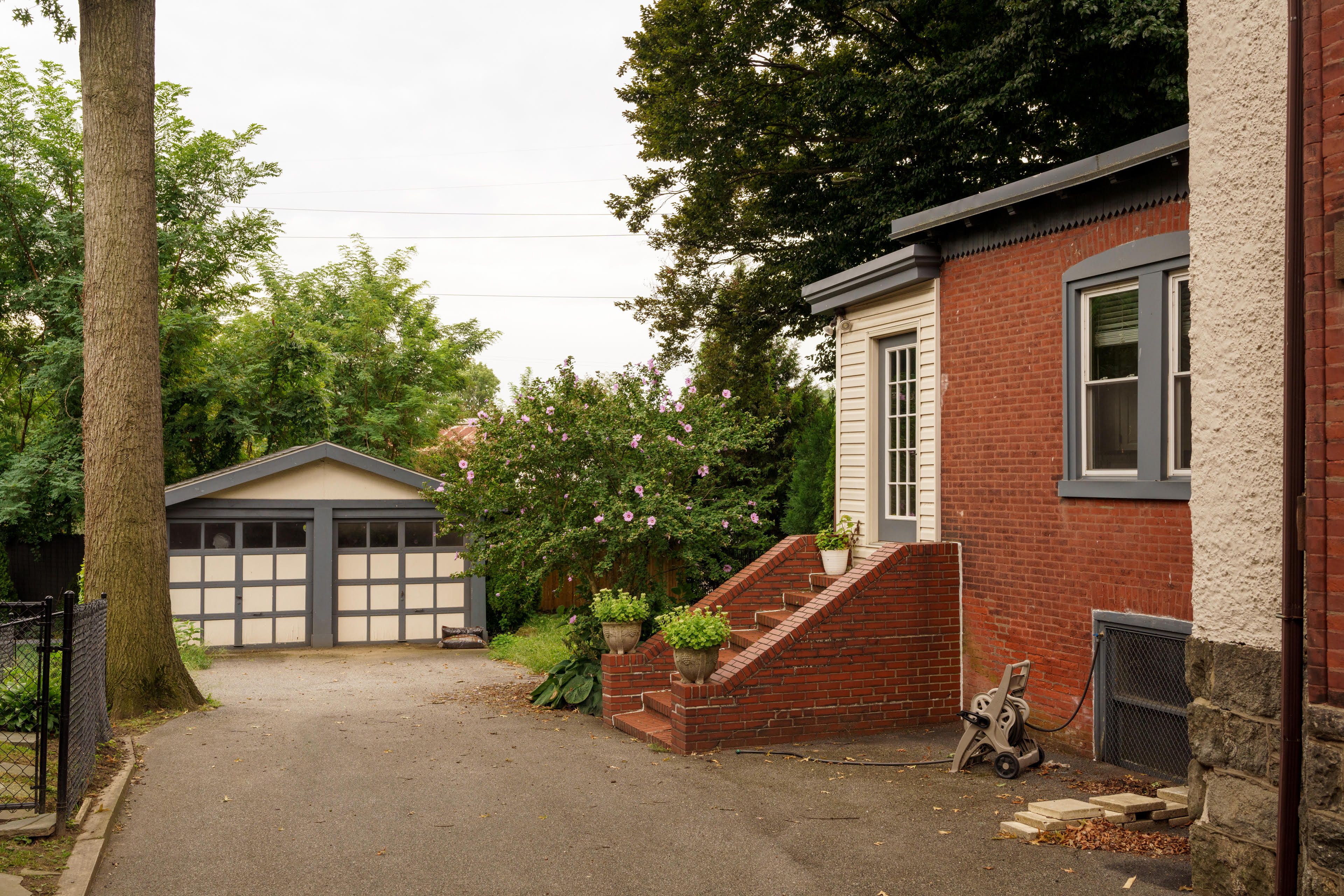
The driveway and detached garage.Donkin Media/Thomas Donkin
There is room to park four cars in the driveway and two more in the detached garage.
The home is close to the Wissahickon Regional Rail station, Kelly Drive, and I-76.
The house is listed by Kristin McFeely of Compass Realty for $750,000.
The unofficial last weekend of Philly’s summer pop music schedule keeps the heat on. There’s Don Toliver and Kacey Musgraves in South Philly, Kehlani in Camden, Lily Allen in Fairmount Park, Los Lobos in King of Prussia, and the Delaware Valley Bluegrass Festival in South Jersey.
Thursday Sept. 3
Los Lobos
The great Chicano band Los Lobos is the focus of Native Sons, a documentary that is now making the film festival rounds. It shares a name with the band’s 2021 album of songs of Los Angeles. That album was produced by the band’s one non-Los Angeleno: Cheltenham-native sax and keyboard player Steve Berlin. So this Montgomery County gig is a hometown show of sorts for the band that — if justice is ever served — will one day wind up in the Rock & Roll Hall of Fame. 7 p.m., Concerts Under the Stars, 175 W. Valley Forge Road, King of Prussia, concertsunderthestarskop.com.
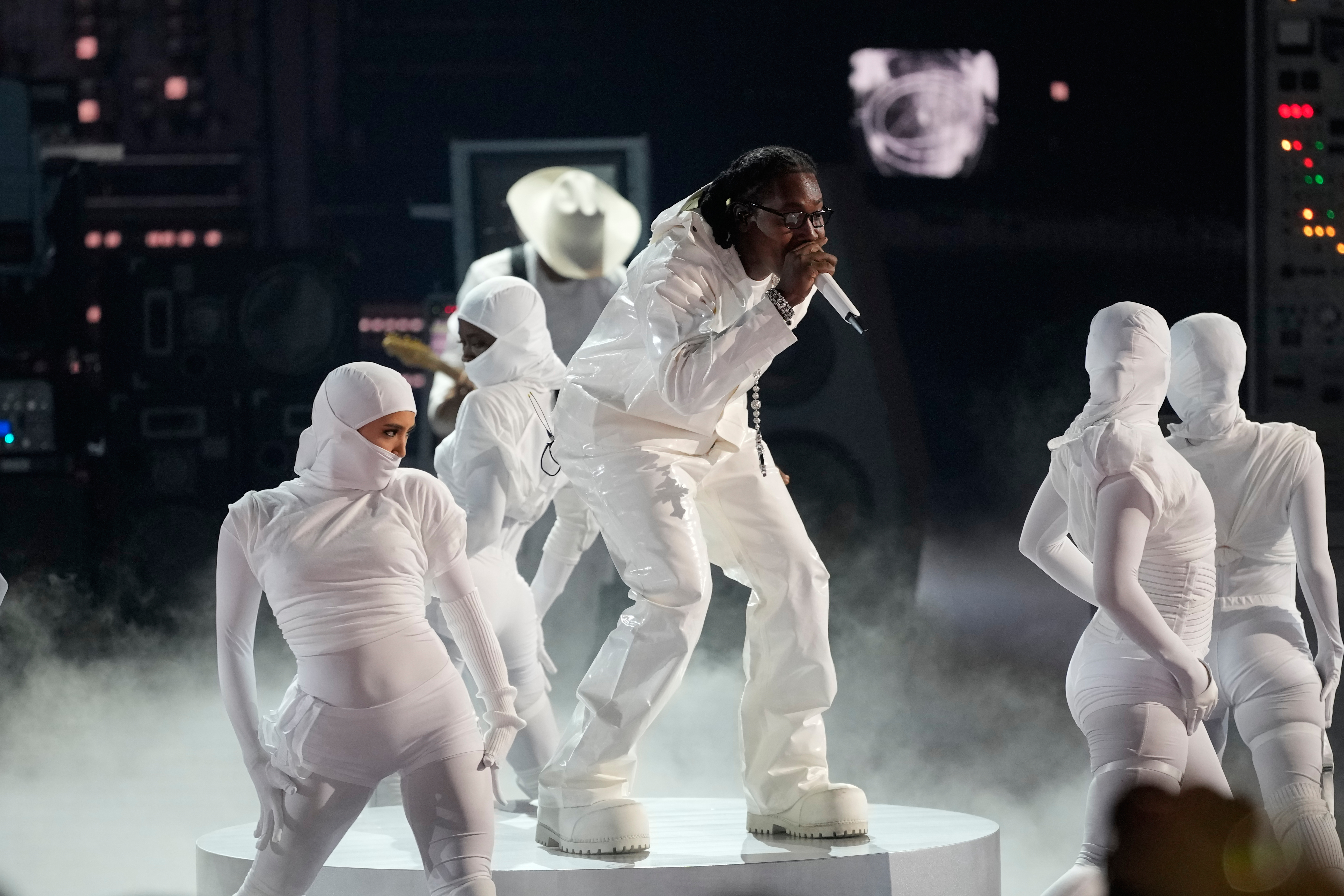
Don Toliver performs during the BET Awards on Sunday, June 28, 2026, at the Peacock Theater in Los Angeles. (AP Photo/John Locher)John Locher
Don Toliver
The Houston rapper born Caleb Zackery Toliver brought his “Octane Tour” to South Philly in May and already, he’s back. It’s the second “Nitrous” leg of the trek for Toliver’s Octane album, which features Teezo Touchdown and The Odyssey actor Travis Scott. Chase B. is also on the bill. 8 p.m., XfinityMobile Arena, 3601 S. Broad St., xfinitymobilearena.com
Friday Sept. 4
Kacey Musgraves
Kacey Musgraves comes back to country on Middle of Nowhere, the Grammy-winning Texas songwriter’s excellent seventh album. Willie Nelson, Billy Strings, and Philly Music Fest headliner Gregory Alan Isakov drop in. Musgraves also finds common ground with fellow Lone Star State singer Miranda Lambert, with whom she had a longstanding beef, on “Horses and Divorces.” Expect this show to turn into a Dolly Parton celebration. Flatland Cavalry opens. 8 p.m., Xfinity Mobile Arena, 3601 S. Broad St., xfinitymobilearena.com
Dan Tyminski headlines the Delaware Valley Bluegrass Festival in Pilesgove, N.J., on Saturday, Sept. 5.Courtesy of the Artist
Friday Sept. 4 to Sunday Sept. 6
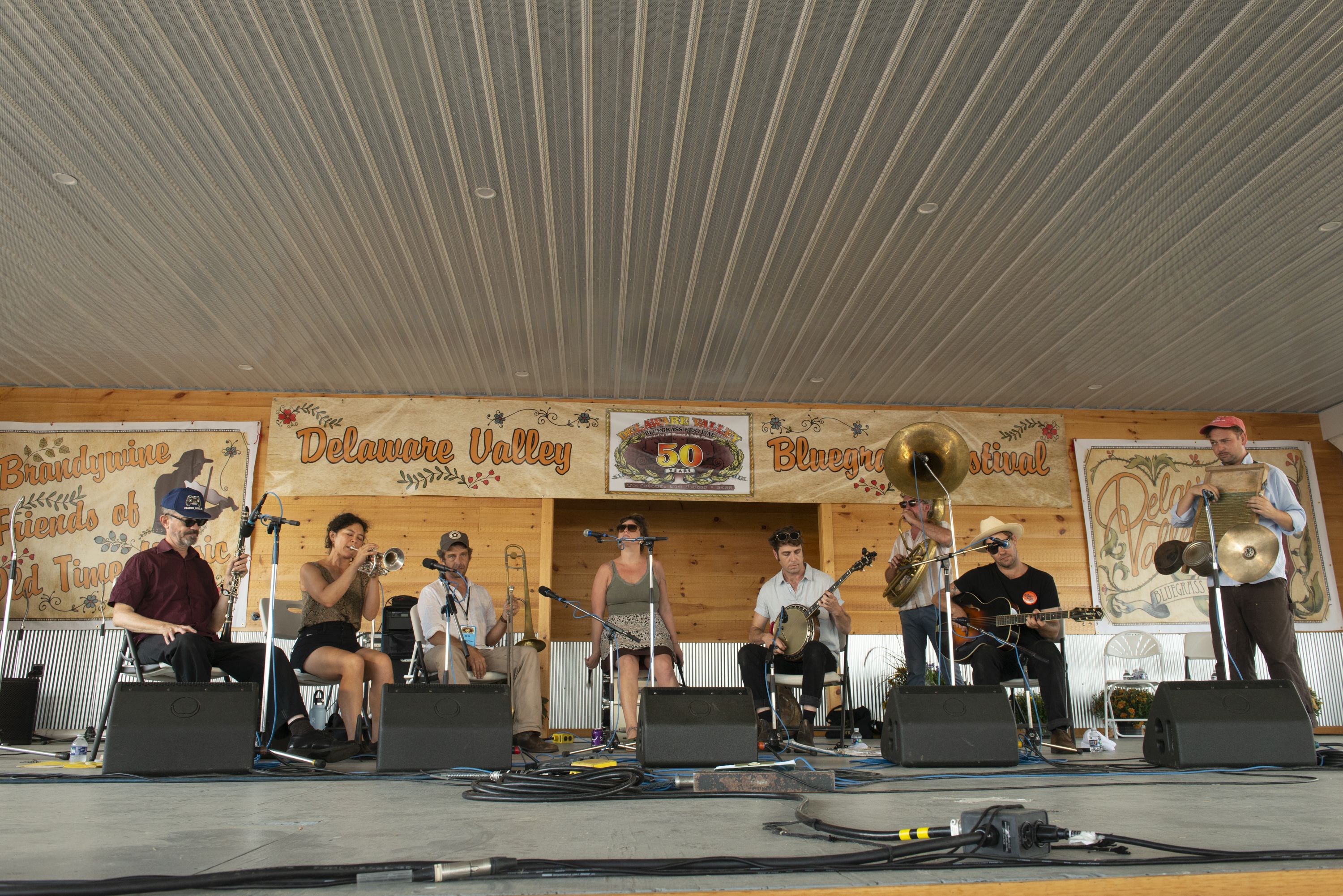
Delaware Valley Bluegrass Festival
Founded at the urging of bluegrass titans Bill Monroe and Ralph Stanley in 1972, the Delaware Valley Bluegrass Festival is a Labor Day weekend tradition that endures.
This year’s three days of music kicks off Friday in Salem County in South Jersey with Kathy Mattea, the country-bluegrass singer who hosts public radio’s Mountain Stage, as headliner. Friday’s lineup also includes the Price Sisters — singing Ohio siblings Lauren and Leanna Price — as well as Virginia guitarist Junior Sisk and the Travelin’ McCourys, sons of bluegrass legend and frequent DVBF headliner Del McCoury.
On Saturday, Dan Tyminski gets top billing. The former member of Alison Krauss’ Union Station has had two moments of extraordinary popularity for a bluegrass musician: 2000’s O Brother, Where Art Thou? soundtrack, on which he sang “I Am a Man of Constant Sorrow,” and “Hey Brother,” an unlikely 2013 hit with Swedish dance music producer Avicii.
New Orleans street band Tuba Skinny at the Delaware Valley Bluegrass Festival in 2022. The band will return to play the Pilesgrove, N.J., fest on Saturday.Delaware Valley Bluegrass Festival
New Orleans ragtime street band Tuba Skinny also plays Saturday, as do Critten Hollow, Danny Paisley & Southern Grass, and the Gibson Brothers. The festival winds down Sunday with Black Eyed Suzies — self-described as “the Bluegrass Ladies of Maryland” — as well as Tennessee quintet Blue Highway, Chicago duo Special Consensus, Boone, N.C., roots band Burnett Sisters, and Nashville quintet Appalachian Road Show. Gates open at 8 a.m. each day. Salem County Fairgrounds, 735 Route 40, Pilesgrove, N.J., delawarevalleybluegrass.org.
Kehlani performing during the second day of The Roots Picnic at the Belmont Plateau on May 31, 2026, in Philadelphia.Monica Herndon / Staff Photographer
Saturday Sept. 5
Kehlani
Kehlani had the biggest hit of their career last year with “Folded,” which was co-written with Philly producer Andre Harris and won two Grammys. The R&B vocalist celebrated with a performance at The Roots Picnic, and now they’re back for a headlining show in Camden on a tour that includes Durand Bernard, TheArti$t, Wahseel, and Dixson. 7 p.m., Freedom Mortgage Pavilion, 1 Harbour Blvd, Camden, freedommortgagepavilion.com.
Lily Allen at the Met Philly in April during her show “Lily Allen performs West End Girl.” She returns to play the Highmark Mann on Sunday.Christina Bryson
Sunday Sept. 6
Lily Allen performs ‘West End Girl’
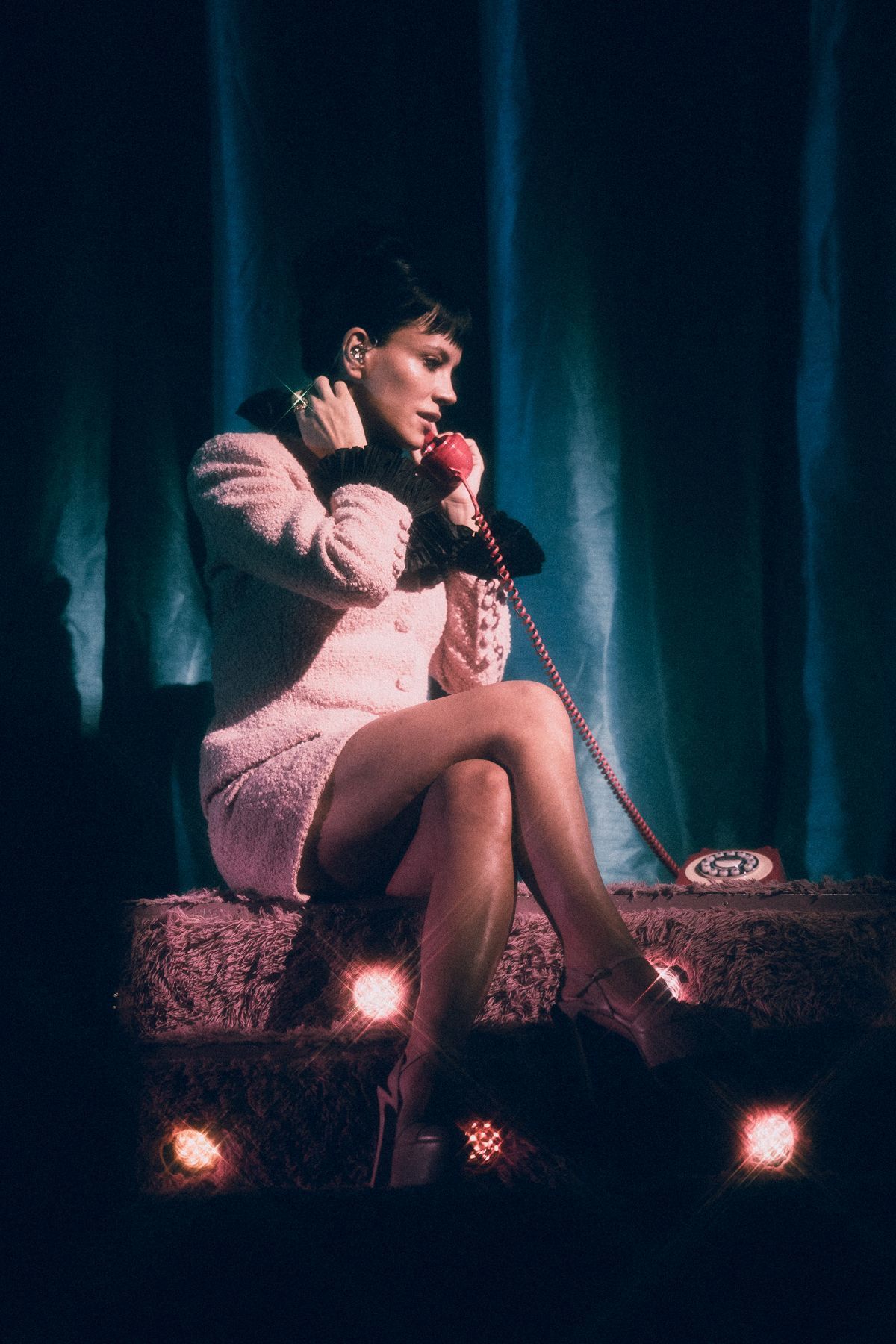
Lily Allen struck a nerve with last year’s West End Girl, a song suite inspired by the dissolution of her marriage to actor David Barbour, that resonated big time with an audience all too familiar with shady doings by unfaithful partners. Earlier this year, the British songwriter, who has displayed a winningly wicked wit going back to her 2006 Alright, Still?, performed West End Girl album in order in a terrific, if brief, show at the Met. Sunday’s show was scheduled for the Xfinity Mobile Arena but moved to the Mann. 8 p.m., TC Pavilion at the Highmark Mann, 52901 Parkside Ave., highmarkmann.com.
Philly tribute to the Clash
Many, including me, have argued that the four sides of London Calling, the 1979 double album by the British punk band the Clash, add up to the greatest album of all time. One side each goes to a Philly band: Citizens Riot, No Good Crowd, the Big Trip, and 2 Tones Clash. Guests on this tribute show include Hannah Taylor, Spoon Ferguson, John Faye, Cowmuddy, Phil Dunn, and Adam Weiner of Low Cut Connie (also playing a Free at Noon in Ardmore on Friday.) 6 p.m., Ardmore Music Hall, 23 E. Lancaster Ave., ardmoremusichall.com
Slowey and the Boats
Fab Philly instrumental quintet Slowey and the Boats’ breezy, light-on-its-feet sound is built around steel guitarist Isaac Stanford. The band’s delightful Slowey After Dark swings sweetly, using the Hawaiian origins of Stanford’s instrument as a starting point. 2 p.m. Wissahickon Brewing Company, 3705 W. School House Lane, sloweyandtheboats.com.
Peter Hook & the Light play Union Transfer on Monday.Adam Kennedy
Monday Sept. 7
Peter Hook & the Light
Bassist Peter Hook was a key player in Manchester, England, in the late 1970s and 1980s as cofounder of Joy Division, New Order, and Durutti Column. Since 2020, he’s played the music of Joy Division and New Order, with his bassist son Jack, who frees him up to sing. He’ll perform New Order’s 2001 album Get Ready, plus pull from the JD and NO catalogs. 8 p.m., Union Transfer, 1026 Spring Garden St., utphilly.com
Tuesday Sept. 8
Social Distortion
Longtime Southern California punk band Social Distortion is in fine form on Born to Kill, its first album in 15 years. Leader Mike Ness sounds refreshed after a battle with tonsil cancer, and the band is pushed hard by drummer David Hidalgo Jr., son of the coleader of Los Lobos. Social D’s fellow SoCal punks the Descendents and young Australian punks the Chats also perform. 8 p.m., themetphilly.com
Gary Clark Jr.
At Bruce Springsteen’s Music of America concerts in the spring, Gary Clark Jr. covered “Power of Soul” by Jimi Hendrix’s Band of Gypsys and Bobby “Blue” Bland’s Texas shuffle “Further on up the Road.” Those two songs hint at the range of the Austin-based Clark Jr., who has been Texas’ leading guitar hero since he gained nationwide renown with Blak & Blu in 2012. Dumpstaphunk and DJ Kurupt open. 8 p.m. Keswick Theatre, 291 N. Keswick Ave., Glenside, Keswicktheatre.com
DJ Jazzy Jeff performing at The Roots Picnic in Philadelphia, on May 30, 2026.Tyger Williams
Wednesday Sept. 9
DJ Jazzy Jeff
Jeff Townes has had himself a Semiquincentennial summer. At The Roots Picnic, the West Philly-born and -raised DJ put on a turntablism clinic on Belmont Plateau. Then Townes teamed with Will Smith and The Roots to shut down the Philly 250th celebration on the Ben Franklin Parkway in the wee hours of the morning. Now he’ll display his musical mastery at a Longwood Gardens illuminated Fountain Party. 8 p.m.,1001 Longwood Road, Kennett Square, longwoodgardens.org.
New Zealand singer Aldous Harding plays Underground Arts on Wednesday.Emma Wallbanks
Aldous Harding
New Zealand songwriter Aldous Harding is touring behind Train on the Island, the fourth album she’s recorded with PJ Harvey collaborator John Parish producing. The songs are in keeping with Harding’s reputation as an inscrutable, willfully strange songwriter but are also rock solid psychedelic folk tunes. Sam Burton opens. 8 p.m., Underground Arts, 1200 Callowhill St., undergroundarts.org.
After a summer of nonstop action — the World Cup, Major League Baseball’s All-Star Game, the festivities surrounding the nation’s 250th birthday — things have finally calmed a bit in Philadelphia.
But that doesn’t mean there’s not plenty still to come this fall.
The area will once again host a variety of festivals and markets in the coming weeks and months, celebrating everything from food to the arts and everything in between.
Now entering its fourth year, the festival celebrates Muslim-owned establishments in and around Philly. Last year’s version featured more than 100 vendors and 6,000 attendees.
📅 Sept. 19,📍King of Prussia Mall, 160 N. Gulph Road, King of Prussia, Pa. 19406, 🌐 phillyhalalfoodfest.com
Scene of the swan boats from the 2023 Delaware River Festival held both in Philadelphia and Camden.Partnership for the Delaware Estuary
The event combined two former festivals, the Partnership for the Delaware Estuary’s Coast Day and Alliance for Watershed Education’s River Days Festival. Expect lots of family-friendly activities, from ferry rides and pedal boats to crafts and water-related education. Events take place at both Penn’s Landing on the Pennsylvania side of the river, and Wiggins Park on the New Jersey side.
📅 Sept. 26, 10 a.m. to 4 p.m., 💵 ,📍101 N. Columbus Blvd., Philadelphia, Pa. 19106 and 2 Riverside Dr., Camden, N.J. 08103, 🌐 delawareriverfest.org.
Held at Allens Lane Park, this fourth-annual festival features live performances, food, an art market featuring the work of local vendors — but also the opportunity to make some art yourself, with stations for painting, printmaking, and ceramics.
📅 Oct. 3, 11 a.m. to 4 p.m., 💵 Free,📍601 W. Allens Lane, Philadelphia, Pa. 19119, 🌐 allenslane.org.
First Fridays return to the Cherry Street Pier, complete with artist studio tours, markets, and exhibit openings along the Delaware River. Upcoming dates are Aug. 7, Sept. 4, Oct. 2, Nov. 6, and Dec. 4. Events begin at 4 p.m.
📅 Various dates, 💵 Free,📍121 N. Columbus Blvd, Philadelphia, Pa. 19106, 🌐 cherrystreetpier.com
Since 1987, St. Nicholas of Tolentine Parish has held this annual event dedicated to Italian culture. The day kicks off with a 10:30 a.m. Mass and subsequent neighborhood religious procession, and there’s plenty of live music, Italian food, and family-friendly activities.
This three-day event in and around Philly’s Gayborhood celebrates National Coming Out Day. Things kick off Oct. 9, with a variety of pre-parties and kickoff events. The following day, Oct. 10, is a night of dancing at Voyeur Nightclub, and the festival concludes with a parade on Oct. 11.
📅 Oct. 9-11, times vary, 💵 Prices vary by event,📍Various locations, 🌐 phillygaycalendar.com
The fall market this year celebrates its 10th year at Dilworth Park near Philly’s City Hall. Held over three days in October, this pet-friendly event brings a slew of artists and makers together, from jewelry and photography to glassware and woodwork.
📅 Oct. 9-10 (noon to 8 p.m.) and Oct. 11 (noon to 6 p.m.), 💵 Free,📍1 S. 15th Street, Philadelphia, Pa. 19102, 🌐 madeinphila.com
A day of celebration in honor of one of Pennsylvania’s most iconic foods: the Dutch breakfast meat, scrapple. Reading Terminal Market turns into a scrapple haven, as vendors offer a variety of scrapple-themed items. There’s live entertainment, cooking demonstrations — even a scrapple-sculpting competition (held Oct. 15, the Thursday before the festival).
📅 Oct. 17, 10 a.m.-5 p.m., 💵 Free entry, pay as you go,📍1136 Arch St., Philadelphia, Pa. 19107, 🌐 readingterminalmarket.org
The fifth annual Philly Bike Ride kicks off at the Philadelphia Art Museum on Saturday, Oct. 17.Courtesy of Philly Bike Ride
Now in its fifth year, this annual ride takes cyclists past some of the city’s top landmarks. The 20-mile course is closed to traffic, making it a great event for riders of all ages and experience levels. Afterward, celebrate with food trucks and a beer garden. Registration is required; early-bird prices (through July 12) range from $43 to $200.
There’s live music all day, pumpkin decorating for kids, and a variety of items from local shops, crafters, and artisans. Local vendors will be on hand, with a beer garden from Wissahickon Brewing.
📅 Oct. 17, 11 a.m. to 5 p.m., 💵 Free admission,📍Ridge and Midvale Avenues, Philadelphia, Pa. 19129, 🌐 discovereastfalls.org
Last year’s inaugural event went so well that organizers are running it back. Main Street will be taken over by local artists and vendors, food trucks, live music, and — ahem — a mac and cheese crawl.
The 23rd Street Armory hosts this annual celebration of all things coffee. More than 20 roasters have already been lined up (with more expected soon) for this two-day event that also includes food and live music.
📅 Oct. 17-18, 9 a.m. to 4:30 p.m., 💵 Tickets are $25-$73,📍22 S. 23rd St., Philadelphia, Pa. 19103, 🌐 phillycoffeefestival.com
More than 100 artists, crafters, and vendors are expected at this year’s annual family-friendly festival held at Croft Farm. Mechanical Brewery will have a beer garden, plus there’s free pumpkins, a petting zoo, and live entertainment.
📅 Oct. 18, noon- 4 p.m., 💵 Free entry, pay as you go,📍100 Bortons Mill Rd., Cherry Hill, N.J. 08034, 🌐 chnj.gov
This free event gives visitors a peek behind the scenes of the Community Arts Center in Wallingford. There’s 30 vendors, plus demos and tours, art activities for children, and a pumpkin-painting contest — plus live music. For a full schedule of the day’s events, check out the Community Arts Center website.
The Braid Mill in Germantown hosts this fourth annual fall festival, with food trucks, wine and cocktails, local bands and DJs, and a craft marketplace. Early-bird tickets are available at a steep discount if purchased before Oct. 1.
📅 Oct. 25, noon-5 p.m., 💵 $20 for entry ($12.51 before Oct. 1), pay as you go,📍346 E. Walnut Lane, Philadelphia, PA 19144, 🌐 phillyflannelfest.com
The first-ever Inquirer Food Festival was held last year at the Fillmore in Fishtown. This marks the event’s second year.
The city’s premier food festival returns to the Fillmore this fall, featuring a lengthy lineup of top area restaurants. Sao, Pine Street Grill, and The Bread Room are among the participants already confirmed for this year’s event. There’s also an empanada-making workshop from chef Jezabel Careaga, with music from DJ Na$h, plus the chance to try off-menu dishes.
📅 Nov. 14, 11 a.m. to 6:30 p.m., 💵 Ticket prices vary,📍29 E. Allen St, Philadelphia, Pa. 19123, 🌐 foodfest.inquirer.com
If you have ever considered giving up your car, now is the time.
There’s the price of gasoline, which has shot up by more than 35% since President DonaldTrump launched the war against Iran in February. Even if you never start the ignition, simply owning a car will now set you back an average of $8,000 a year in insurance, maintenance, and loan payments.
And those are just the immediate costs. As a major source of greenhouse gases, cars contribute significantly to climate change, which is already pushing up the price of food and everyday purchases.
So, let’s say you’re ready to ditch your money pit on wheels. Then what?
I’ve been struggling with this question since I moderated a panel this spring with Sarah Goodyear and Doug Gordon, the duo from the popular podcast The War on Cars, who just published a rousing call to arms, Life After Cars: Freeing Ourselves from the Tyranny of the Automobile. The event, held at the capacious Resurrection Philadelphia church in Center City, was sponsored by Philly Bike Action and 5th Square Advocacy, two groups dedicated to promoting alternatives to driving.
Resurrection’s sanctuary was packed — with the converted. When Goodyear and Gordon asked the audience who had traveled to the event by car, only a few sheepish hands went up.
While their bookdoes a great job of detailing the ways cars “ruin everything,” there is little in it to help the car-dependent kick the habit. The problem is, most people have no idea where to start.
Even in the Philadelphia region, which has better-than-average transit and cycling infrastructure, the prospect of living without a car can seem a little like trying to swim without arms and legs. How will you take the kids to sporting events, look after elderly parents, and buy groceries without a vehicle? Our local transit services — SEPTA, NJ Transit, and PATCO — don’t serve every nook and cranny of the region and don’t run as frequently as they should.
Like everything else in America these days, the debate over the role of cars in our daily lives tends toward extremes. Philadelphia urbanists can sometimes come off as unsympathetic, as if they expect people to go cold turkey and swap their vehicles for bikes and SEPTA. Meanwhile, the pro-car lobby keeps insisting, against the evidence, that the car-free life is not practical outside a few transit-rich neighborhoods, like Center City.
But who says it has to be all or nothing?
‘Habituate walking’
My advice: Keep your car — for now, at least — but look for opportunities to get around by other means. Walk to the grocery store. Ride a bike to dinner at a nearby restaurant. Think of these excursions as a trial run. Once you feel comfortable, take the train or bus to work. You may never give up your car permanently, but you will save a bundle on gas and maintenance, reduce congestion, and boost your step count.
That’s how Jane Murray started weaning herself from the car. The Ardmore resident, who now runs a popular Instagram account called @Janewalksardmore, first began taking long walks as a way toexperience her Main Line town on a deeper level. To give shape to her Instagram project, she decided to visit every block in Ardmore and document her travels.
Jane Murray walks along Lancaster Avenue in downtown Ardmore, as part of a project to to walk every street in the Main Line town.Alejandro A. Alvarez / Staff Photographer
The more she walked, the more comfortable she felt leaving her car at home. She now wheels a “granny cart” to Trader Joe’s, a 15-minute walk from her house. Not long ago, she hopped a SEPTA bus to meet friends for quizzo in a pub a few towns away. At the end of the night, she took an Uber home.
Murray’s kids still have to take a bus the four miles to their middle school and she drives them to distant sporting events, but makes a conscious effort to “habituate walking” into her routine. Before leaving the house, she checks her transit apps to see if she can get to her destination without driving. Sometimes, she mixes it up: When she’s running errands, she’ll drive part of the way, then walk the last few blocks. Her Instagram has inspired her neighbors, who pepper her for tips about safe walking routes.
A mobility menu
Living in America without a car is often portrayed as a hardship, something that people on the margins are forced to endure. But, for me, living without a car has been a joy.
I didn’t know what to expect when I impulsively decided to get rid of my aging clunker 30 years ago after being presented with an expensive repair bill. Before then, I had rarely taken taxis or splurged on Amtrak to visit family in New York. Since I would no longer have to pay for car insurance, I promised to allow myself those indulgences. My husband and I were living in Center City, which certainly made our experiment more doable. (I should mention that I was pregnant at the time. I took a taxi to and from the hospital.)
Besides saving a lot of money, not having a car has liberated me in ways I never could have imagined. Bike lanes were virtually nonexistent in Philadelphia in the ’90s; today my bicycle is my main form of transportation. Thanks to the city’s mostly flat terrain, I can easily cycle to interviews and events in far-flung neighborhoods. My ride is equipped with side baskets, allowing me to do my grocery shopping by bike. When my destination is beyond biking distance, or when I have to look presentable, I’ll take SEPTA or reserve a Zipcar from the local car-sharing company. In a pinch, I can always summon an Uber, a Lyft, or a taxi. I still walk a lot, and it’s no exaggeration to say I run into people I know on every outing.
The key here is to think of mobility as a menu of options, rather than a car/no-car binary. While low-speed electric bikes have made it easier to cover long distances, not everyone can, or wants to, bike. Even transit can be daunting for a novice. The fear of crime also deters some people from using SEPTA, even though serious incidents have fallen dramatically in the last decade.
In 2022, Councilmember Mark Squilla (center), former Eagle Connor Barwin, Councilmember Kendra Brooks, and Councilmember Helen Gym took part in a Bike to Work Day event sponsored by the Bicycle Coalition of Greater Philadelphia to promote cycling as a means of transportation.JESSICA GRIFFIN / Staff Photographer
Eden MacDougall vividly remembers his trepidation when he started commuting from Langhorne, in Bucks County, to Temple University on SEPTA’s Regional Rail. “I kept thinking, how will I know it’s my stop?”
By the time MacDougall graduated in 2022, he was a super-commuter. To get to his new job at Mastery Charter School, where he is an AmeriCorps reading instructor, he had to use three forms of transportation: He started his day by biking two miles from his home to the Langhorne station. After taking a SEPTA train to Fern Rock, he changed to the Broad Street subway, getting off at Erie. The trip took an hour and 45 minutes, but MacDougall, who never learned to drive, loved it. “I’d open up my book and read the whole way.”
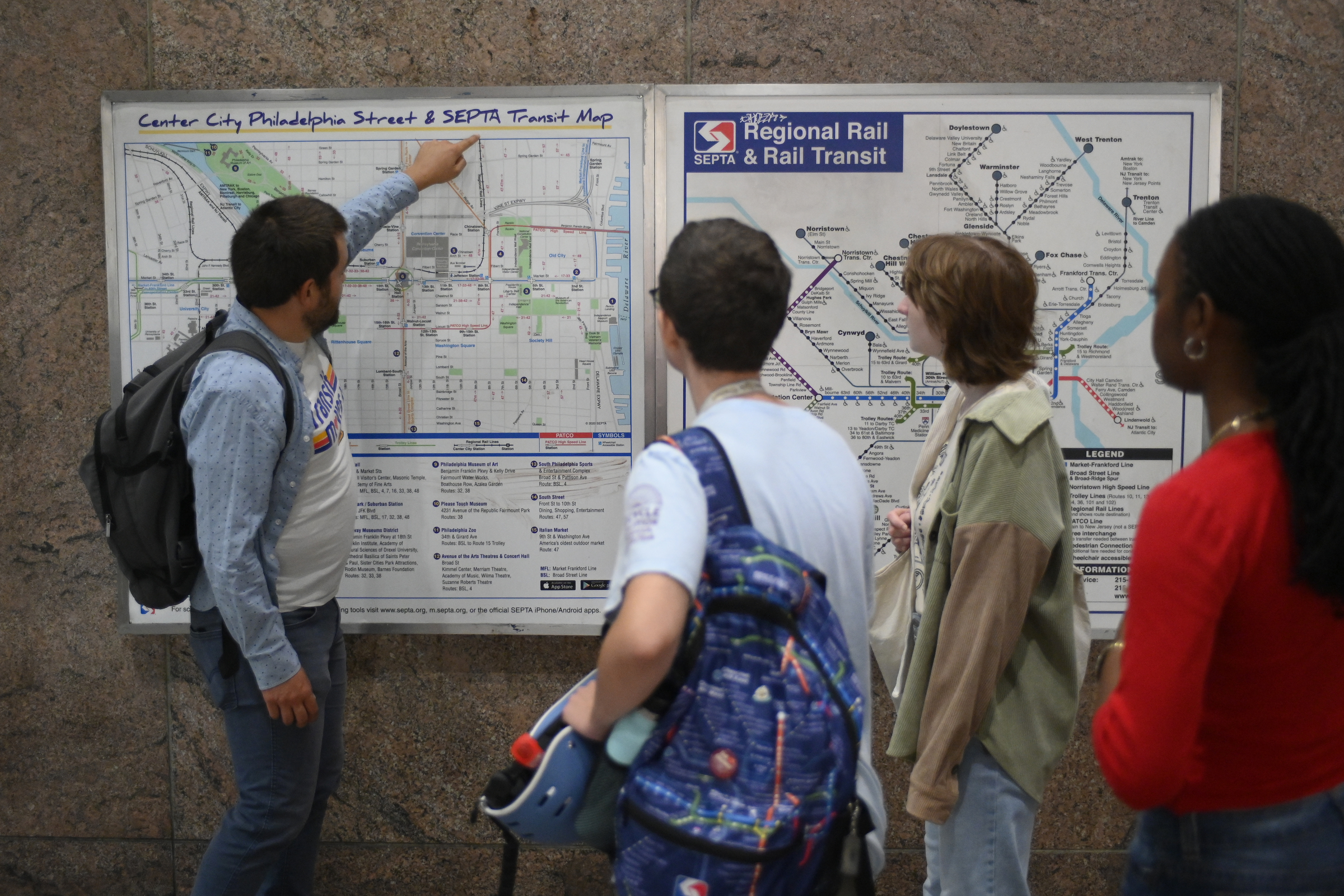
Stephen Bronskill, coalition manager for Transit Forward Philadelphia, shows incoming Temple University students how to navigate SEPTA during a tour organized at the start of the new semester. Bastiaan Slabbers / For The Inquirer
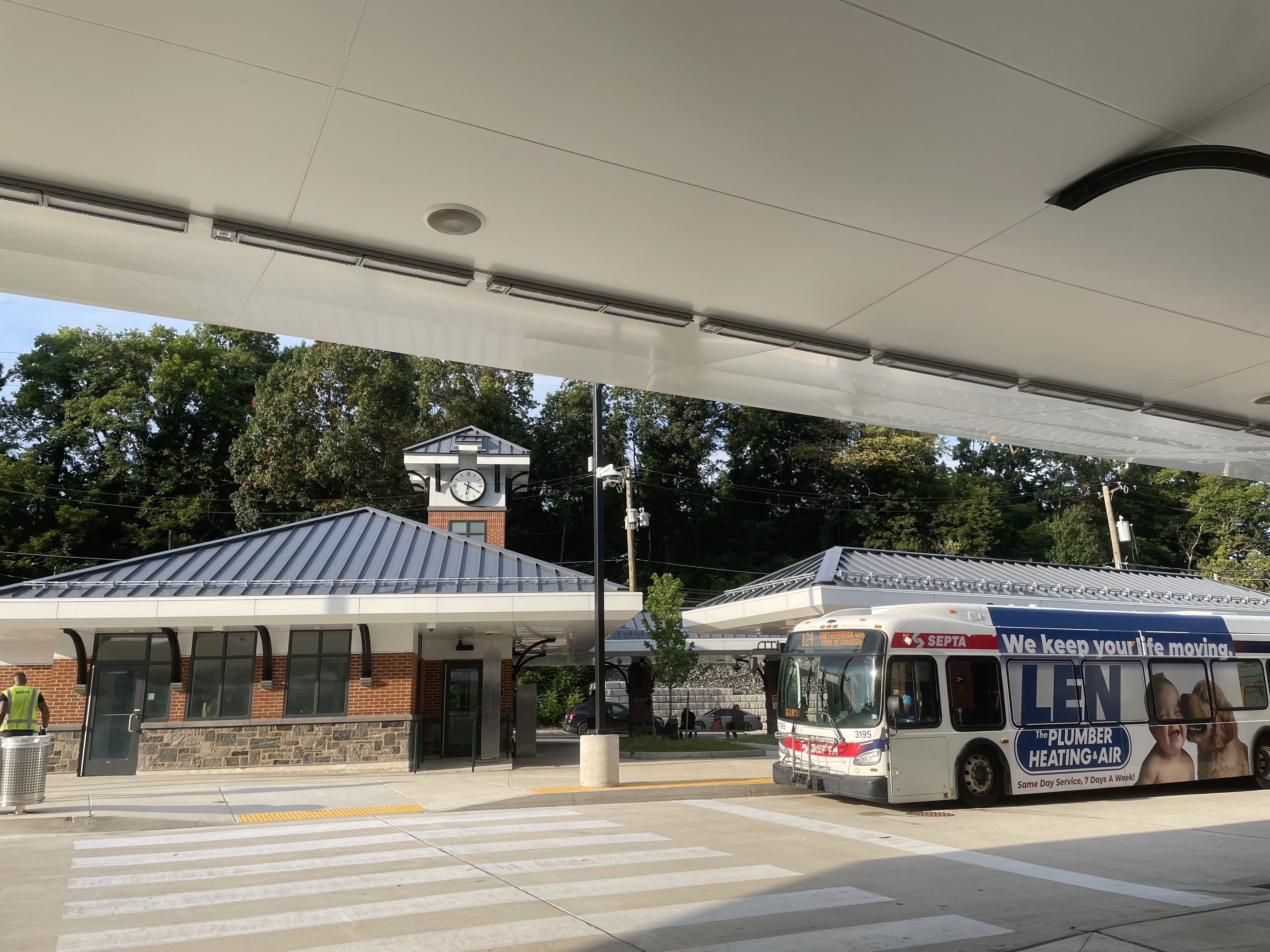
Now he lives in Philadelphia and volunteers as an instructor for Transit Forward Philadelphia and the Bicycle Coalition of Greater Philadelphia, which run Saturday tours to help people feel more confident riding SEPTA. Although the events provide practical advice, like how to use a transit app, they’re intended to be fun excursions. MacDougall recently shepherded a group from Roxborough to the Clark Park farmers market, showing them how to change from the Route 9 bus to a West Philadelphia trolley. Along the way, the group got to see SEPTA’s efficient new Wissahickon Transit Center on Ridge Avenue, where 11 bus routes converge.
The two groups, which have been lobbying the state legislature to help SEPTA secure much-needed state funding, started the Saturday tours as an extension of their advocacy work. They believe the exposure to SEPTA’s system can help reset public perceptions.
SEPTA’s new Wissahickon Transportation Center on Ridge Avenue in Manayunk is a major upgrade for the city’s bus riders. The sprawling, $50 million station opened in January 2026 and allows 5,000 passengers a day to switch between 11 bus lines. (photographeed Aug. 2026)Inga Saffron / For The Inquirer
“People had a lot of negative experiences during the pandemic,” Julio Rodriguez, the Bicycle Coalition’s policy director, told me. So, when SEPTA announced it was implementing its long-awaited schedule changes this summer, the transit advocates saw a chance to change the conversation.
Helping SEPTA boost ridership isn’t their only goal, however. Because they believe fewer cars will make Philadelphia a safer, more livable city, they’re organizing similar outings to get people comfortable with bike commuting.
Changing habits
Even while these advocates are gaining adherents, many skeptics remain convinced people will never give up their cars.
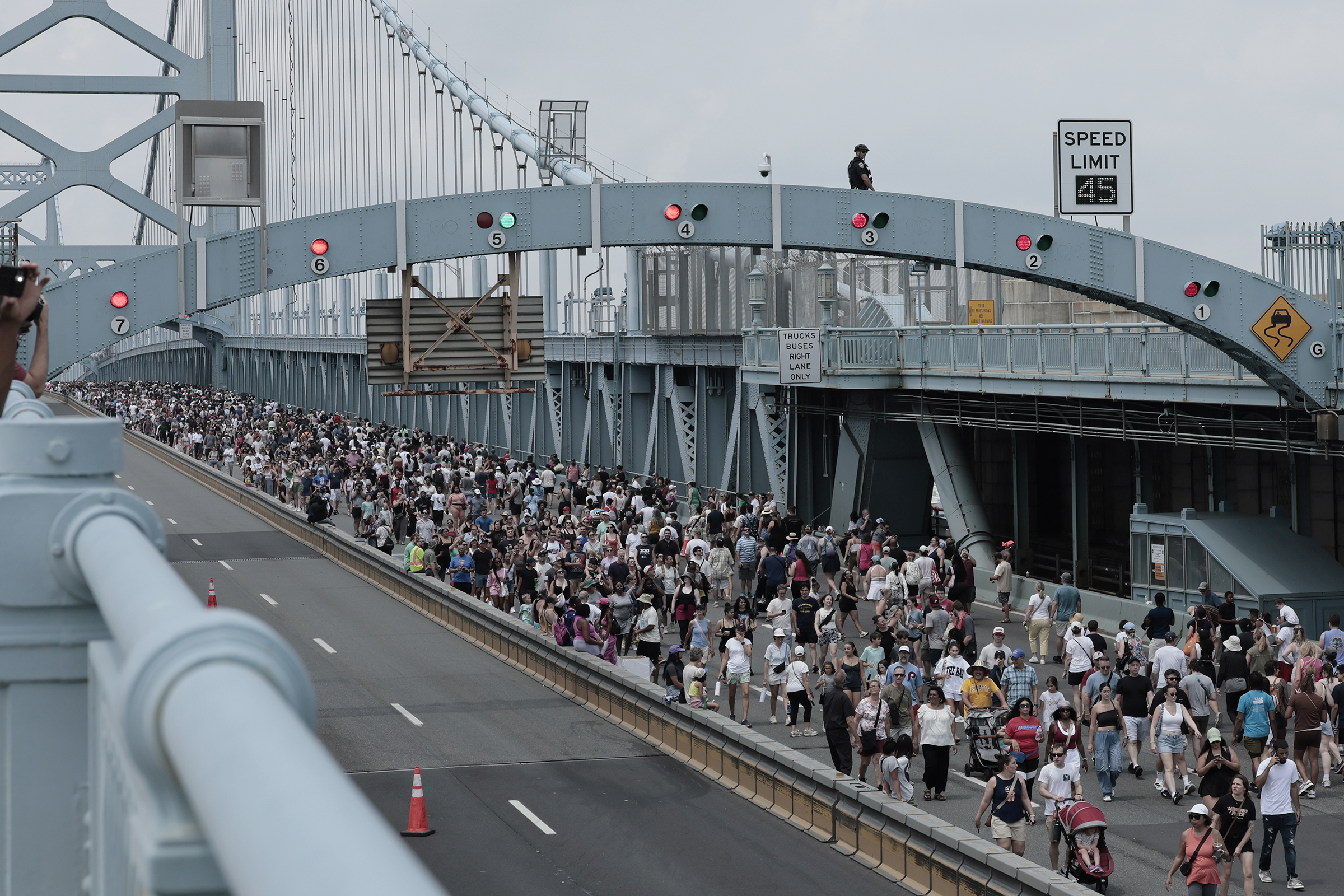
But the public’s cheerful response to this summer’s car-free celebrations around Philadelphia suggests that habits can change. Almost 600,000 people converged for World Cup watch parties at Lemon Hill in Fairmount Park during the 39-day FIFA Fan Festival — even though parking was banned. After the games ended, I saw hundreds of people streaming along the Schuylkill River Trail to 30th Street Station, a distance of 1.5 miles. Thousands took transit, rode bikes, or walked to the Ben Franklin Bridge to celebrate its centennial in July.
Thousands of people took transit, biked, or walked on July 11 to parade across the Ben Franklin Bridge to celebrate the 100th anniversary of its opening.Elizabeth Robertson / Staff Photographer
For people who switch to alternative forms of transportation, the payback is immediate. But Philadelphia and the region also have much to gain from having fewer cars racing through the streets: cleaner air, less noise, more casual social encounters with neighbors, and less wear-and-tear on infrastructure
The impact on climate change is a different story. Individual actions can only do so much to slow the dramatic shifts in global weather. It’s also a frustrating chicken-and-egg situation. People won’t see car-free living as truly feasible until there is intensive government investment in transit, bike infrastructure, and pedestrian safety.
Until that happens, carry a fare card, sign up for car-share, install a transit app on your phone — and don’t forget to wear ahelmet.
You say you want a revolution? That’s not quite what SEPTA’s proposing. This weekend, the region’s transit agency will roll out the first phase of its New Bus Network, the bus system’s first significant update since the agency was formed in the 1960s.
Sound familiar? Once dubbed Bus Revolution, the project began in 2021 after transit agencies around the country saw massive declines in ridership. SEPTA’s Bus Revolution was set to launch in 2025 but faced significant community pushback and coincided with the state funding crisis that halted many planned transit initiatives. It was officially shelved in November 2024.
Later phases of the plan, which will roll out in 2027, will impact other neighborhoods. The number of bus routes in SEPTA’s system will drop from the current 124 to 106 when all four phases are complete.
SEPTA says the changes are needed to modernize the system and make it easier to use.
To help you navigate the changes that will impact how you navigate the city, we’re here to breakdown down all 30 impacted routes.
This route remains the same but with reduced service.
Days
Times
Previous
Now
Weekdays
6 a.m. to 9 p.m.
Every 16-25 minutes
Every 30 minutes
Saturdays
8 a.m. to 9 p.m.
Every 22-25 minutes
Every 30 minutes
6
Cheltenham-Ogontz to Olney Transportation Center
On weekdays, route 6 will have increased service during peak hours, but a reduced service otherwise.
Days
Times
Previous
Now
Weekdays
6 a.m. to 9 p.m.
Every 11-13 minutes
Every 10 minutes
Weekdays
9 p.m. to midnight
Every 20 minutes
Every 30 minutes
Weekdays
midnight to 4 a.m.
Every 30-40 minutes
Every 60 minutes
SEPTA also rolled out new signage that identifies certain routes as “frequent red”, indicating a bus is scheduled to arrive within 15 minutes or less on weekdays from 6 a.m. to 9 p.m.
17
Front-Market to 20th-Johnston
Route 17 will be shortened and no longer operate on its old route from 20th Street and Johnston Street down to the stadium complex or the Navy Yard. SEPTA recommends Navy Yard commuters take route 45 instead.
This route will also operate with reduced service overnight.
Days
Times
Previous
Now
Weekdays
midnight to 5 a.m.
Every 30 minutes
Every 60 minutes
SEPTA also rolled out new signage that identifies certain routes as “frequent red”, indicating a bus is scheduled to arrive within 15 minutes or less on weekdays from 6 a.m. to 9 p.m.
25
Frankford Transportation Center to Front-Spring Garden
Route 25 is essentially being cut in half. The old route ran down Delaware Avenue to Columbus Commons. The new route will terminate at the Spring Garden Market-Frankford Line station. The old route from Spring Garden to Columbus Commons will be serviced by the new route 76.
Route 25 will now operate for 24 hours a day, as part of SEPTA’s late-night OWL network.
This route will also have increased service.
Days
Times
Previous
Now
Weekdays
6 a.m. to 9 p.m.
Every 20-30 minutes
Every 15 minutes
Weekends
6 a.m. to 9 p.m.
Every 30 minutes
Every 20 minutes
SEPTA also rolled out new signage that identifies certain routes as “frequent red”, indicating a bus is scheduled to arrive within 15 minutes or less on weekdays from 6 a.m. to 9 p.m.
32
Broad-Carpenter to Ridge-Lyceum
Route 32 will have slightly reduced service with fewer buses overall. All route 32 buses will terminate at Manayunk, as opposed to the previous schedule where half would terminate at 33rd Street and Cecil B. Moore Avenue. There’s also a slight route extension into Roxborough for school service.
35
Manayunk Roxborough Loop
Route 35 will be discontinued on Aug. 23. SEPTA recommends riders take route 61.
According to SEPTA’s operation statistics, route 35 is the seventh most expensive bus based on the average cost per passenger.
39
Richmond-Cumberland to 33rd-Dauphin
Route 39 will remain the same but with reduced service on weekdays and slightly increased service on Saturday evenings..
Days
Times
Previous
Now
Weekdays
6 a.m. to 9 p.m.
Every 20-30 minutes
Every 30 minutes
Saturday
5 p.m. to 9 p.m.
Every 40-60 minutes
Every 30 minutes
44
Front-Market to Ardmore
Route 44 will no longer run along its old route that would sometimes terminate at Gladwyne. Beginning Aug. 23, all 44 buses will run to Ardmore, with select trips stopping at Narberth.
This route will also have reduced service.
Days
Times
Previous
Now
Weekdays
9 a.m. to 3 p.m.
Every 15-30 minutes
Every 60 minutes
Weekends
6 a.m. to midnight
Every 30 minutes
Every 60 minutes
45
Navy Yard/Broad-Oregon to 12th-Noble
Route 45 will be extended to the Navy Yard to cover for the changes to route 17.
After 9 p.m. the route will have reduced service on weekdays.
Days
Times
Previous
Now
Weekdays
9 p.m. to midnight
Every 20 minutes
Every 30 minutes
46
58th-Baltimore to 63rd-Malvern
Route 46 will have increased service on weekdays.
Days
Times
Previous
Now
Saturdays
9 a.m. to 6 p.m.
Every 20 minutes
Every 15 minutes
Sundays
9 a.m. to 7 p.m.
Every 30 minutes
Every 20 minutes
SEPTA also rolled out new signage that identifies certain routes as “frequent red”, indicating a bus is scheduled to arrive within 15 minutes or less on weekdays from 6 a.m. to 9 p.m.
47
Whitman Plaza to 5th-Godfrey
Route 47 will merge with route 47M and have increased service.
Days
Times
Previous
Now
Weekdays
6 a.m. to 9 p.m.
Every 8-9 minutes
Every 7-8 minutes
All days
Midnight. to 5 a.m.
Every 45 minutes
Every 30 minutes
SEPTA also rolled out new signage that identifies certain routes as “frequent red”, indicating a bus is scheduled to arrive within 15 minutes or less on weekdays from 6 a.m. to 9 p.m.
47M
Whitman Plaza to 7th-Spring Garden via 9th
Route 47M has been discontinued and will now be served by a more frequent route 47.
The merger of these two routes includes a realignment so that the northbound 47 runs on Seventh Street, as opposed to Ninth Street. Southbound buses will still run on Eighth Street.
49
33rd-Dauphin to 40th-Baltimore
Route 49 will look very different from its old route. It will no longer serve Gray’s Ferry. SEPTA recommends riders take route 79 instead.
Route 49 will also operate on many different roads. The most notable change is taking 33rd Street instead of 29th Street. in Strawberry Mansion and Brewerytown.
These changes are paired with generally reduced service.
Days
Times
Previous
Now
Weekdays
8 a.m. to 3 p.m.
Every 18-22 minutes
Every 30 minutes
Saturdays
8 a.m. to 9 p.m.
Every 22 minutes
Every 30 minutes
Sundays
9 a.m. to 7 p.m.
Every 22 minutes
Every 30 minutes
52
49th-Woodland to Wissahickon Transportation Center/50th-Parkside
Route 52 will no longer follow its old route to Gladwyne. SEPTA cites low ridership and doesn’t offer an alternative route.
SEPTA also rolled out new signage that identifies certain routes as “frequent red”, indicating a bus is scheduled to arrive within 15 minutes or less on weekdays from 6 a.m. to 9 p.m.
53
Carpenter Station to Richmond-Westmoreland
Buses on route 53 will no longer follow the old route that terminated at Sedgwick Street and Wayne Avenue. Instead, service will end at Carpenter Regional Rail station. There are additionally a bunch of small differences across the route. For example, route 53 will now serve Roosevelt Boulevard. on the western side of Hunting Park.
The 53 will also continue past G Street and extend into Port Richmond.
54
Richmond-Cambria to 33rd-Dauphin
Buses on route 54 will have reduced service during weekdays and increased service during evenings.
Days
Times
Previous
Now
Weekdays
9 a.m. to 3 p.m.
Every 15-18 minutes
Every 20 minutes
All days
9 p.m. to midnight
Every 45 minutes
Every 30 minutes
57
Whitman Plaza to Fern Rock Transportation Center
The old route 57 occasionally would terminate at Packer Marine Terminal, that service will be discontinued.
During weekends the route 57 will run at a reduced service.
Days
Times
Previous
Now
Weekends
All day
Every 10-12 minutes
Every 15 minutes
Service along Crescentville and Cheltenham Avenues will be reduced to every hour.
SEPTA also rolled out new signage that identifies certain routes as “frequent red”, indicating a bus is scheduled to arrive within 15 minutes or less on weekdays from 6 a.m. to 9 p.m.
60
Wissahickon Transportation Center/35th-Allegheny to Richmond-Westmoreland
Most of route 60 will continue to go down Allegheny Avenue, but it will not follow its old route where some buses stopped on Delaware Avenue and Lewis Street.
The 60 will occasionally take an extended route and continue to the Wissahickon Transportation Center. The schedule is roughly split 50:50 whether a bus will continue to this new terminus or stop early at 35th Street and Allegheny Avenue.
Route 60 will also see increased service.
Days
Times
Previous
Now
Weekdays
6 a.m. to 6 p.m.
Every 10-15 minutes
Every 10 minutes
SEPTA also rolled out new signage that identifies certain routes as “frequent red”, indicating a bus is scheduled to arrive within 15 minutes or less on weekdays from 6 a.m. to 9 p.m.
61
9th-Market to Ridge-Summit
Route 61 will be extended to Upper Roxborough. This is primarily to cover for the discontinued route 35.
62
9th-Market to Andorra
Route 62 will be discontinued. SEPTA recommends riders take routes 9, 27, or 61 as an alternative. According to SEPTA, route 62 was the fourth most expensive route to operate, costing an average of $45 per passenger.
64
50th-Parkside to Pier 70
Previously, route 64 would occasionally terminate at 49th Street and Woodland Avenue. Under the new network, all trips will terminate at Parkside Loop. The 64 will also no longer take the old route’s detour into Grays Ferry.
Route 64 will operate at a increased service.
Days
Times
Previous
Now
All days
6 a.m. to 9 a.m.
Every 12-18 minutes
Every 12 minutes
All days
9 a.m. to 9 p.m.
Every 20 minutes
Every 15 minutes
SEPTA also rolled out new signage that identifies certain routes as “frequent red”, indicating a bus is scheduled to arrive within 15 minutes or less on weekdays from 6 a.m. to 9 p.m.
72
Cedarbrook Plaza to Frankford Transportation Center
72 is a brand new route that mostly operates on Cheltenham Avenue and will run every 30 minutes.
73
Frankford Transportation Center to Richmond-Westmoreland
Route 73 will now run at a reduced service from every 20-25 minutes to every 30 minutes.
Additionally the route 73 will no longer be part of the OWL network, ending 24-hour service on the line. SEPTA recommends riders take route 25 for overnight buses.
76
Rising Sun-Olney to Columbus Commons
Route 76 is a brand new route that will mostly run along Delaware and Frankford Avenues every 30 minutes. This route replaces service removed from the newly aligned route 25.
78
Express from Cornwells Heights to Center City
Route 78 will be discontinued due to lower ridership. SEPTA does not recommend an alternative bus.
According to SEPTA figures, the 78 was the most expensive bus to operate in their network. It has an average of 2.4 passengers per hour, costing the agency $394 per rider.
79
Columbus Commons to 29th-Snyder/40th-Market
Route 79 will occasionally be extended into West Philadelphia. Roughly every other bus will continue to 40th and Market Streets, instead of the current terminus of 29th Street and Synder Avenue.
SEPTA also rolled out new signage that identifies certain routes as “frequent red”, indicating a bus is scheduled to arrive within 15 minutes or less on weekdays from 6 a.m. to 9 p.m.
80
Express from Horsham to Olney Transit Center
Route 80 will be discontinued. SEPTA stated that “ridership has declined significantly since 2019 and the same connection can be made with a transfer on local routes 22, 51, and 310.”
According to SEPTA data, route 80 was the third most expensive route to run, costing the agency $50 per passenger.
89
Front-Dauphin to Arrott Transit Center
Route 89 will be discontinued. SEPTA says route 89 is “duplicative of other routes,” and offers “routes 3, 5, 25, 39, 41, 43, 53, 56, 75, 76, and K as alternatives.”
105
Paoli/Rosemont to 69th Street Transit Center
Route 105 will extend to Paoli for roughly every other bus, essentially merging with the now discontinued route 106.
The old route that serviced Suburban Square will no longer operate. There are also minor alignment changes in Overbrook.
Route 105 will operate at a increased service.
Days
Times
Previous
Now
Weekdays
All day
Every 30-60 minutes
Every 30 minutes
Weekends
All day
Every 60 minutes
Every 30 minutes
These changes will take effect on Aug. 24.
106
Paoli to 69th Street Transit Center
Route 106 will be discontinued on Aug. 24.
Do you still have questions about the changes to SEPTA’s bus network? Read our Q&A guide for details on how to contact SEPTA, information about future alterations in 2027, and much more.
Methodology
The animating buses on the diagram are an approximation of the number of buses active at 9 a.m. on a weekday schedule.
Old routes are accurate to SEPTA’s bus network on Aug. 4.
For simplicity, if a route can have different terminuses, we show all possible paths the bus operates on.
story continues after advertisement
Staff Contributors
Design, Development, and Data: Sam Morris
Reporting: Sam Morris and Erica Palan
Editing: Cynthia Henry
Subscribe to The Philadelphia Inquirer
Our reporting is directly supported by reader subscriptions. If you want more journalism like this story, please subscribe today
Tori Bauver was sitting at home on July 11 when the sky outside of the Wyndon Apartments in Wynnewood began to darken. Bauver watched the clouds roll in, then the rain come, blowing “literally sideways” outside her window. She remembers leaning in to see the darkening landscape and noticing that rain had begun to penetrate her windows. Then the “outside went stark white” and water started pooling on her windowsills.
“I was like, ‘Oh, my God. This is gonna flood. This apartment’s gonna flood,’” she said.
The light fixture above Bauver’s bed filled with water, then poured over the edges. The ceilings began to leak, then one by one, they collapsed. The building’s roof ripped off, and Bauver had a clear, and unsettling, view of the sky from her living room.
Bauver, now a resident of West Chester, where she and her partner moved after breaking the lease on her Wynnewood apartment, had been living in the Wyndon Apartments for two years when the July microburst storm tore through Lower Merion, destroying her home and more than $5,000 of her and her partner’s belongings. She was one of dozens of suburbanresidents who emerged from the storm with damaged property and a devastated home.
As the Philadelphia region sees hotter and more humid summers, flash flooding, extreme precipitation, and life-threateningstorms have become a more common feature of daily life.Weather eventsmarked by downed trees, dangerous flash floods, waterlogged roadways, and eroded bridges are, more and more,forcing suburban residents and cash-strapped local governments to pour millions into repair and resilience projects, all while large swathsof the region’s infrastructure are built to withstand weather patterns of a bygone era, one in which storms like July’s microbursthappened once in a decade, rather than multiple times a summer.
As the region’s weather patterns intensify, officials and climate experts say the municipal mosaic of Philadelphia’s suburbs faces unique challenges when it comes to planning for a future marked by climate change.
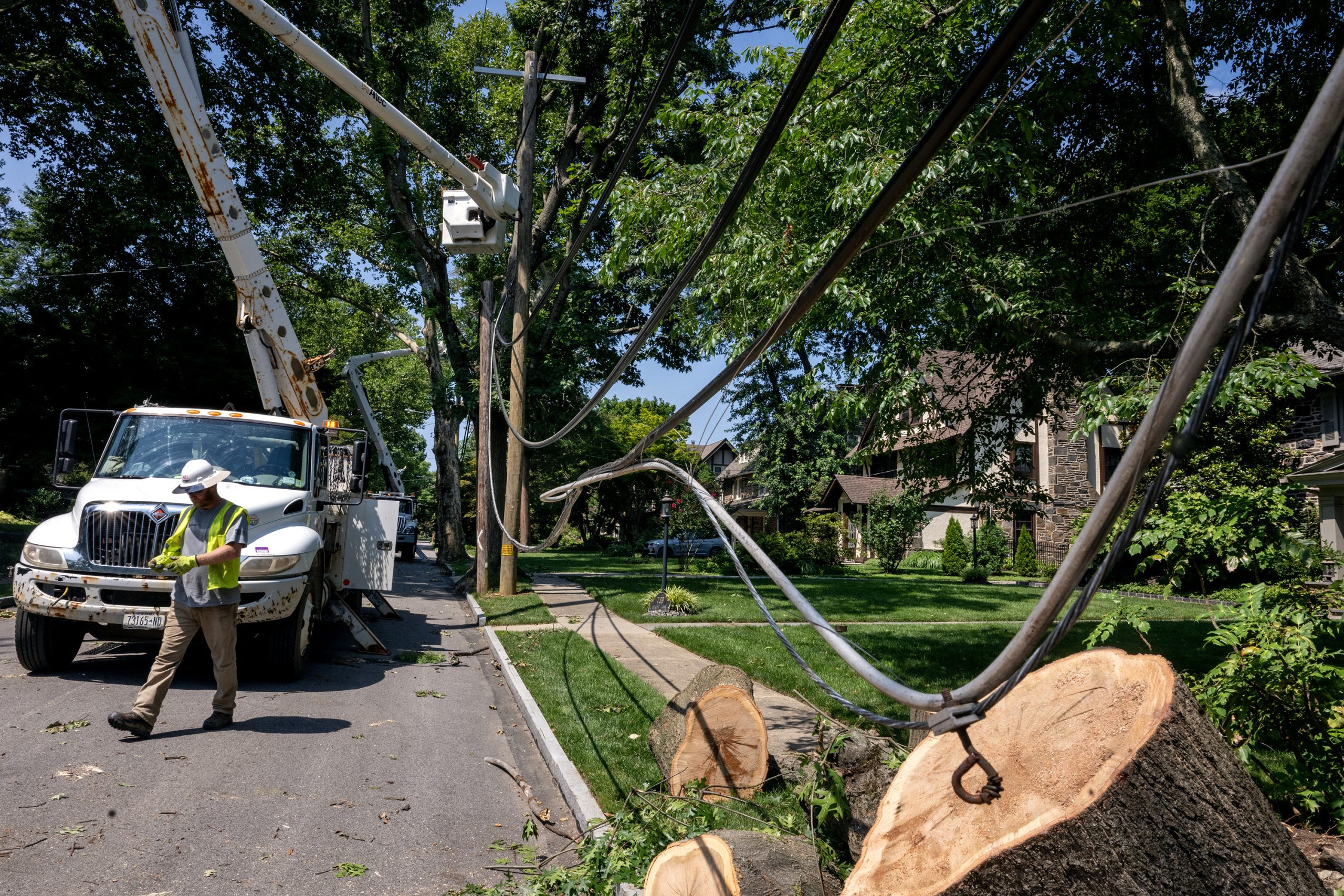
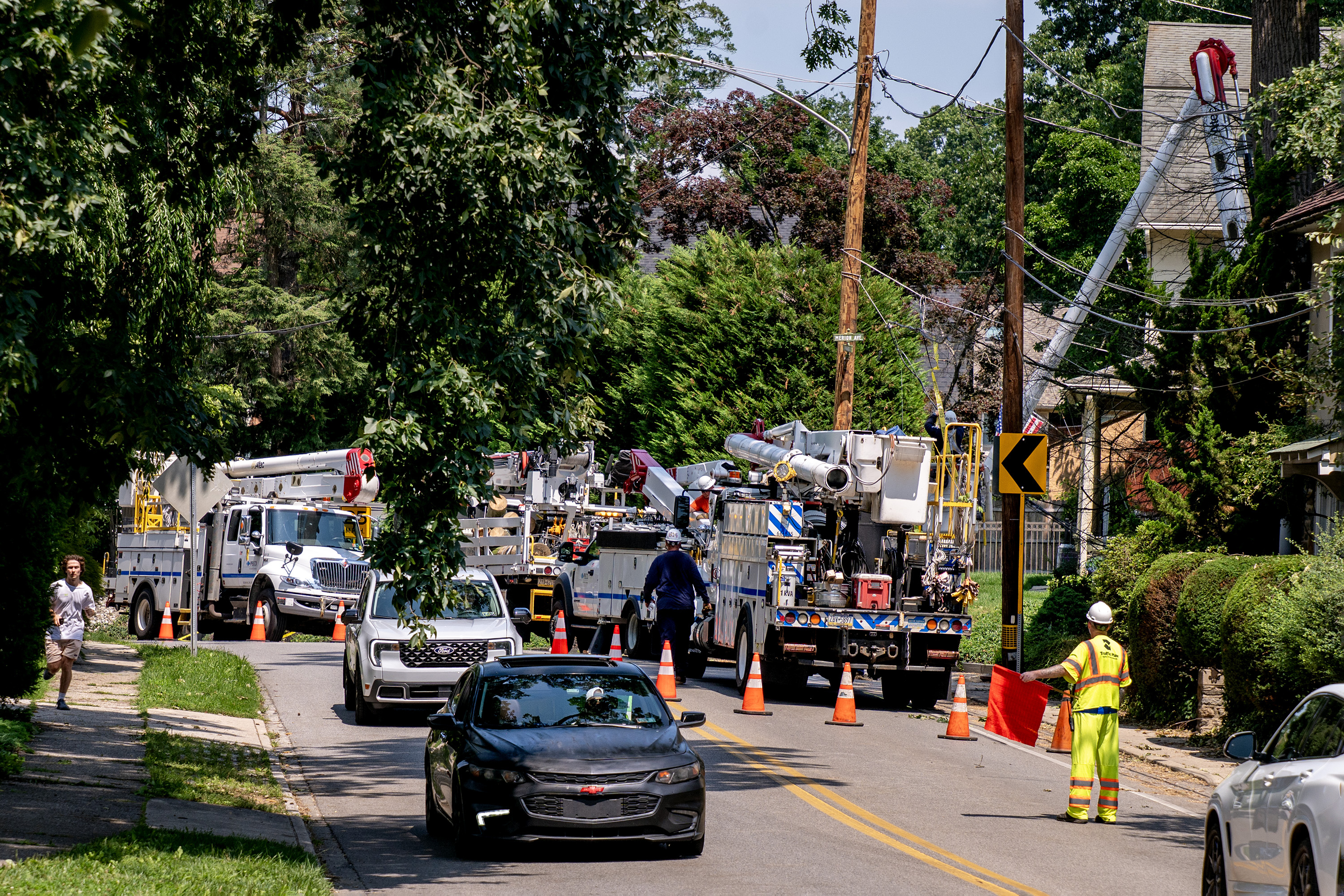
Utility workers restore power in Merion Station on July 13 after a microburst storm ripped through parts of Philadelphia and Montgomery County.Tom Gralish / Staff Photographer
The Philadelphia region’s changing weather
The average July temperature in Philadelphia has risen 4.4 degrees since 1940. In the 1900s, Philadelphia averaged four days per year with temperatures above 95 degrees, according to a 2024 EPA report. This summer, Philly has seen six days with high temperatures above 95 degrees, according to the National Weather Service. By the end of the 21st century, that number could climb to more than 50 days per year.
Hotter weather means more precipitation, and more frequent and intense rain events. For every 1.8 degrees the air temperature increases, the amount of water the atmosphere can hold increases by 7%.
“The infrastructure we have now is not always built to a standard to accommodate the extreme weather we’re seeing now,” said Chris Linn, manager of the Office of Resilience and Environment at the Delaware Valley Regional Planning Commission.
AsRay Courtney, a Lower Merion commissioner and chair of the township’s sustainability committee, said, “We get a 100-year storm every year.”
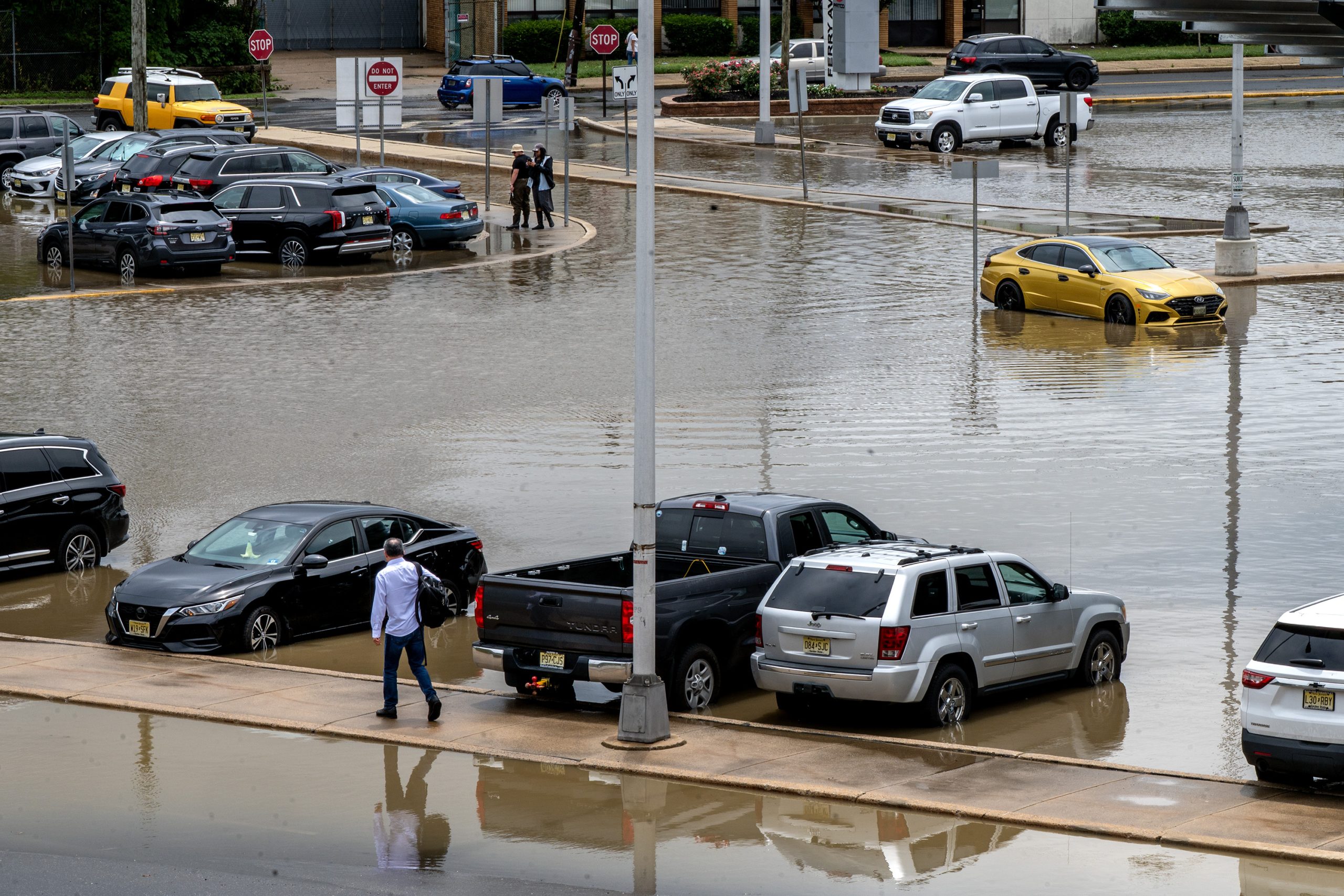
Cars in a flooded parking lot at the Ferry Avenue PATCO station in Camden on July 6. Philadelphia and its suburbs have been hit with numerous flash floods this summer, as an increasingly hot and humid atmosphere gives way to more extreme weather.Tom Gralish / Staff Photographer
Flooding as ‘the biggest and most common hazard’
The impacts of intense storms are multitudinous and cascading, and the topography of Philadelphia’s suburbs can make it particularly difficult to find effectivesolutions.
Linn said flooding is “the biggest and most common hazard that communities face,” and it presents the most “consistent and pervasive” issues for municipal leaders.
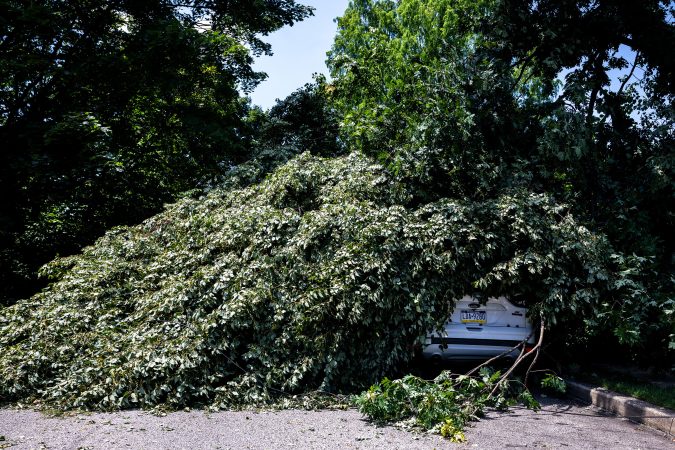
Intense precipitation and flash floods, which have been a constant this summer, can disrupt transit, turn roads into rivers, and endanger residents’ lives. High winds and saturated soil frequently bring down trees, damaging homes and cars and knocking out overhead power lines. Disruptions to power can be particularly dangerous when residents are left without fans or air-conditioning during hot summers.
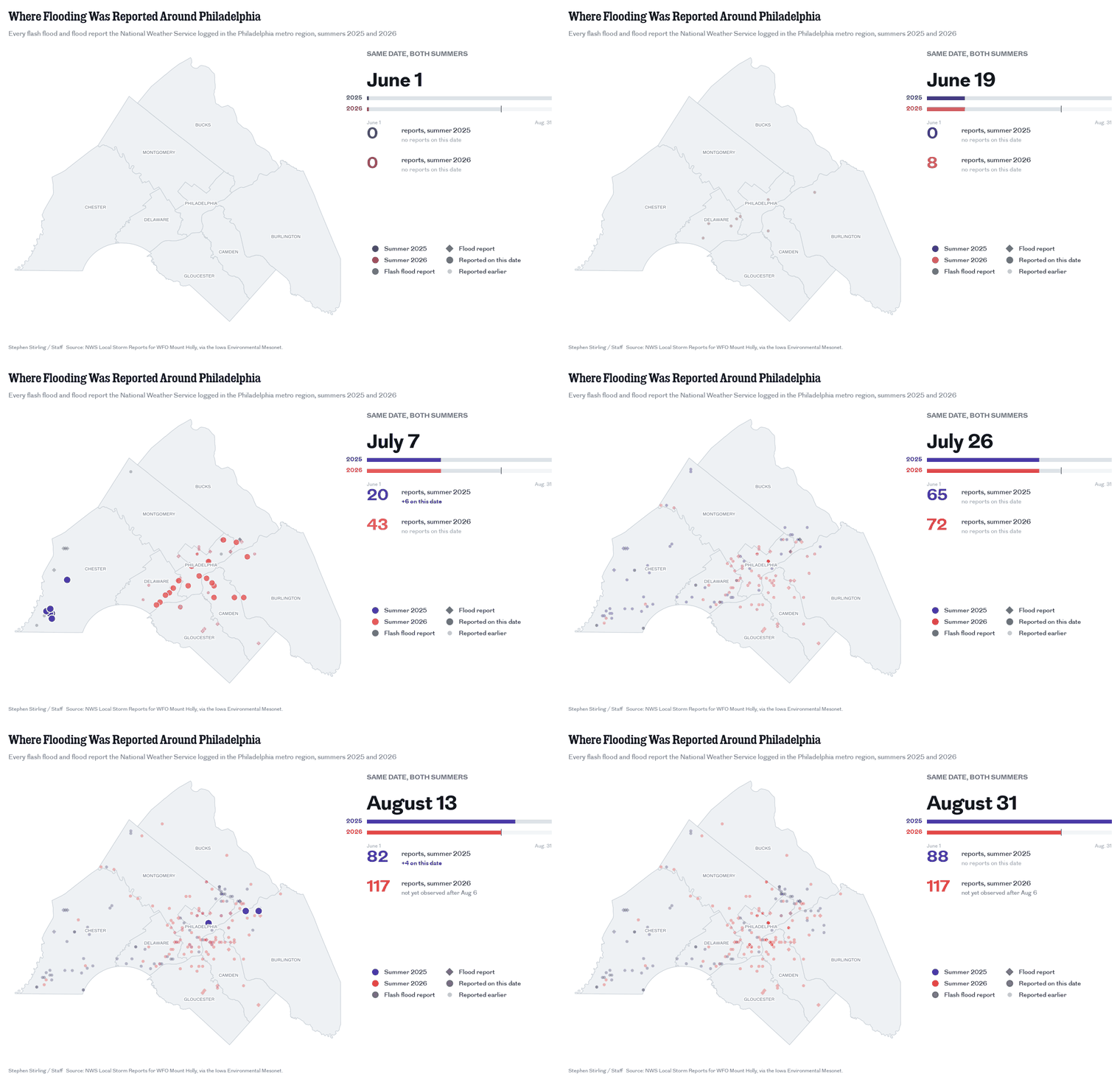
Flooding has been reported more than 200 times in the Philadelphia region over the last two summers.Stephen Stirling
“I see roads flooding consistently, trees coming down, power going out, and then our local government spending resources every time one of these storms happens. It’s overtime costs and tree costs, and then also all the private citizens having to spend costs cleaning up trees and other debris,” Courtney said.
“These unlikely, freak events are really the ones that break us,” said Matthijs Bouw, architect and professor at the University of Pennsylvania’s Stuart Weitzman School of Design.
A key tool for managing extreme weatheris stormwater systems, or the collection of drains, basins, ditches, and pipes that collect rainwater and snowmelt and move it from developed areas into local waterways. Stormwater systems are critical in moving water off impervious, or impenetrable, surfaces, like the parking lots, paved roads, and shopping centers often found in the suburbs.
The more developed a suburb is, the more runoff a storm will produce, increasing flooding risks, said Franco Montalto, professor of civil, architectural, and environmental engineering at Drexel University.
Yet many municipalities are contending with aging stormwater systems that require costly repairs. Lower Merion’s 2018 Comprehensive Stormwater Management Plan listed aging pipes, undersized infrastructure, operational costs, and increasing flooding as challenges for the township. Many of Philadelphia’s suburban communities are composed of buildings that predate a 1978 state law requiring counties and local governments to plan with stormwater management in mind.
Some communities are more vulnerable to climate impacts than others, with density, land cover, wealth, and the state of repair of existing infrastructure as factors. A 2021 climate change vulnerability analysis by Montgomery County found denser, water-proximate communities like Norristown and Pottstown to have some of the highest risk of increased stresses due to climate change. Greener, more rural parts of the county like New Hanover and Marlborough Townships presented lower risks.
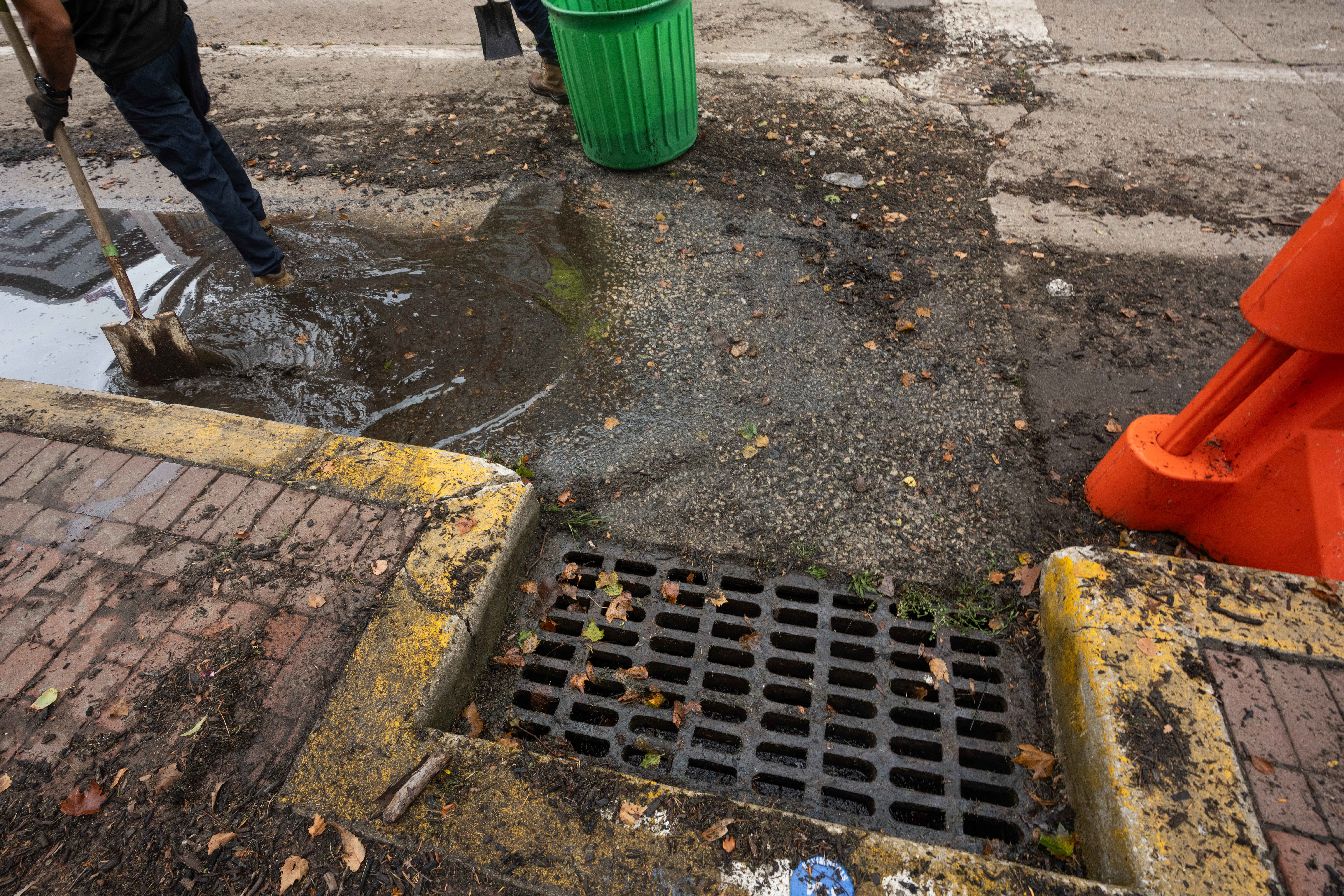
The aftermath and clean up of flooding in Camden on July 6. Stormwater systems are a critical tool for local governments to manage flooding. Jessica Griffin / Staff Photographer
How can communities mitigate impacts?
Experts described a range of interventions for managing climate impacts, from constructing rain gardens to rewriting zoning ordinances.
Maintaining a healthy tree canopy and building rain gardens can help rainwater permeate into the ground. Larger infrastructure efforts like stream restoration projects and floodplain maintenance can help stabilize the built environment.
However, Linn said, these interventions “don’t necessarily address more severe or catastrophic flooding in terms of mitigating those impacts.”
Long-term climate resilience, experts said, relies on making land-use and zoning decisions that preserve floodplains and natural drainage patterns and ensure stormwater systems can manage our new, rainy reality.
Montalto is interested communities that have become “safe to flood,” or that have created parks, parking lots, road medians, and other open spaces that trap water during floods, then properly drain it, keeping it away from buildings and roads. A basketball court built below a park, for example, can fill with water during a storm and slowly drain, mitigating runoff (one was recently installed in New York City). Copenhagen’s Cloudburst Management Plan, adopted in 2012 after a major storm, is a blueprint of sorts in Montalto’s mind.
However, bringing “safe to flood” infrastructure to Philly’s suburbs may be a far-out goal.
In the vast suburbs, the collection of boroughs, townships, and county lines makes unified action difficult, and forces officials to think along municipal, not watershed, lines. On the Main Line alone, rainfall and snowmelt drain into a collection of dozens of creeks and streams that do not start or stop where a municipal boundary is drawn, making it difficult to take coordinated and effective action when it comes to flood mitigation along certain waterways.
Finding the funding to repair and replace stormwater infrastructure, too, can be taxing, as local governments stare down costly projects, even with the availability of state and federal grants.Political will factors in, with municipalities differing in their desire and ability to use taxpayer dollars to tackle climate issues.
Philly’s suburbs, like the city, are also often old, dense, and built out, making it hard to retrofit them to be more climate-sensitive.
“So many of our communities are built out and have been built out for a long time, so the vulnerabilities and the challenges are built in to the community,” Linn said.
Utility workers restore power along Wynnewood Avenue in Merion Station on July 13.Tom Gralish / Staff Photographer
Solving ‘complex issues’ in Montgomery County
Despite the challenges, progress is being made, said Montgomery County Commissioner Jamila Winder.
Montgomery County in 2025 led a flood mitigation planning study for the 362-square-mile Perkiomen Creek Watershed, which stretches across Montgomery, Bucks, Berks, and Lehigh Counties. The study identified flood-prone areas, evaluated mitigation tactics, and worked to build a framework for long-term resilience. The county is currently in the process of carrying out a floodplain restoration project along the Wissahickon Creek in Whitemarsh Township. Both projects came to fruition after Hurricane Ida tore through the region, bringing record floods and killing multiple people.
The county has repaired 30 structurally deficient bridges since 2017 and has repaved dozens of miles of road. County workers also removed 200 dangerous trees earlier this year, resulting in a significant drop in emergency phone calls about tree damage, Winder said.
Lower Merion in 2021 hired its first full-time sustainability manager and in 2023 completed its first sustainability plan. Radnor Township has adopted a comprehensive climate plan, and Haverford Township has set out to achieve 100% zero-carbon renewable power by 2035.
The Pennsylvania Department of Environmental Protection in January announced more than $17 million in funding for environmental projects across the state, including stream restoration and stormwater management.
Winder said, “We’re seeing that when we work across federal, state, county, and local leadership, that we can come together to solve some of these complex issues.”
This suburban content is produced with support from the Leslie Miller and Richard Worley Foundation and The Lenfest Institute for Journalism. Editorial content is created independently of the project donors. Gifts to support The Inquirer’s high-impact journalism can be made at inquirer.com/donate. A list of Lenfest Institute donors can be found at lenfestinstitute.org/supporters.
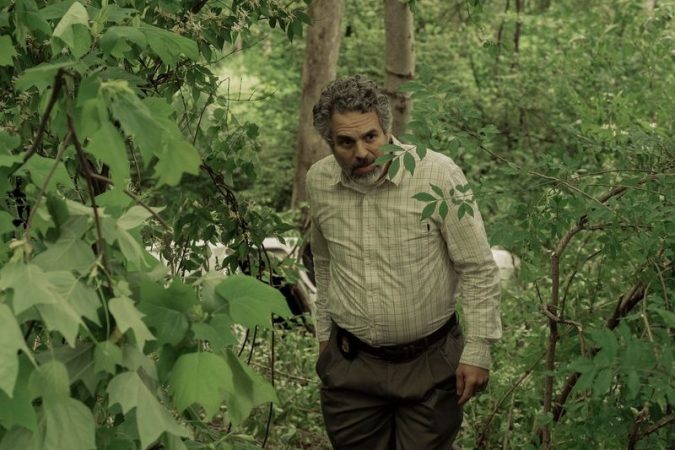
If you’re taking a run through Wissahickon Valley Park next week and spot those signature Mark Ruffalo curls and determined glint in his eye through the tree leaves, worry not! The HBO series Task is filming its second season in the Northwest Philly park Monday through Friday.
On Monday, the Bells Mill West Lot will be closed to the public for filming and will reopen the next day. Visitors can park instead in the Bells Mill East Lot.
On Tuesday and Wednesday, the trail entrance at Manatawna Avenue will not be accessible. Houston Meadow can be accessed through the Houston Playground entrance on the Yellow Trail.
The film crew is slated to park vehicles and equipment on some parts of Forbidden Drive. The trail will remain open, but hikers and runners may see stop signs warning them of “equipment ahead” or to go “slow ahead.”
The Delaware County-set series Task byMare of Easttown creator and Berwyn resident Brad Ingelsby centers on FBI agent Tom Brandis, portrayed by Ruffalo. In the second season, Brandis is leading a new task force and confronting his rival Philadelphia DEA agent Eddie Barnes, played by Mahershala Ali, the Oscar winner who starred in Moonlight, Green Book, and the third season of the HBO crime show True Detective.
The show’s first season also made its way around the city and suburbs. It featured scenes at the Rita’s Italian Ice & Frozen Custard in Collingdale, the Willowbrook Shopping Center in Boothwyn, and Marsh Creek State Park in Downingtown.
Kurt Vile’s love of Philly — and Philadelphia’s affection for Kurt Vile — has never been in question.
For the cover of Constant Hitmaker, the 2008 album that announced his arrival, Vile posed in front of a blown out wall “that looks like a Rauschenberg painting” at the corner of Frankford and Norris, he recalls. “That stuff’s beautiful, you know?”
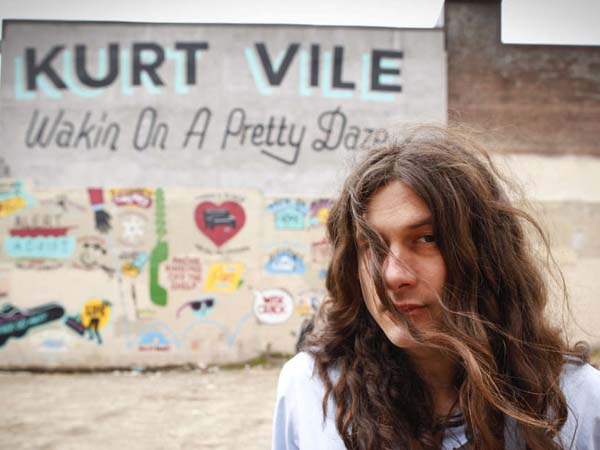
Since 2012, a Steve “ESPO” Powers mural that doubles as the cover for Vile’s 2013 album Wakin On A Pretty Daze has adorned a wall at Front and Master Streets in Northern Liberties, visible to travelers headed north on the Market-Frankford El.
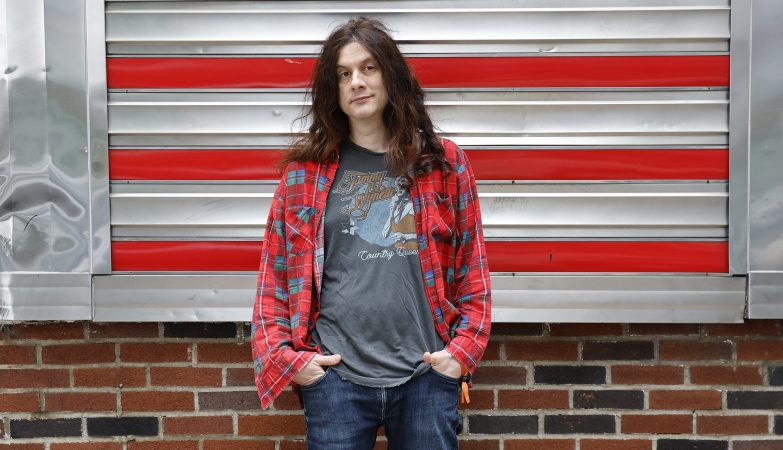
With his signature mane and quizzical expression, Vile, who grew up in Lansdowne in Delaware County, has been the face of Philly’s reign as the capital city of 21st century indie rock.
Kurt Vile stands in front of a mural by Steve “ESPO” Powers on March 27, 2013. Michael S. Wirtz / Staff Photographer
The city is embedded in Vile’s music at every turn, from the “I park for free!” boast on the 2018 song “Loading Zones” to the cover of 2022’s Watch My Moves, which pictures the Dad rock king wearing a crocodile mask in Wissahickon Valley Park, flanked by daughters Awilda and Delphine.
But Vile has never repped his hometown so hard as on his new album, Philadelphia’s Been Good To Me, released in May. It includes shout-outs to Lincoln Drive, the Schuylkill, and Sun Ra, and an infectious single “Chance to Bleed” that features Philadelphia gangsta rap pioneer Schoolly D in a video shot at Kung Fu Necktie.
Philadelphia’s Been Good To Me even includes a playful taunt at two of Vile’s classic rock favorites who dared to record songs with the word Philadelphia in the title.
“A couple of my heroes wrote a song,” Vile talk-sings in “You Don’t Know Cuz It’s My Life.” “But that ain’t where they’re from, so hey you don’t know / But I still love you, Neil and the Boss.”
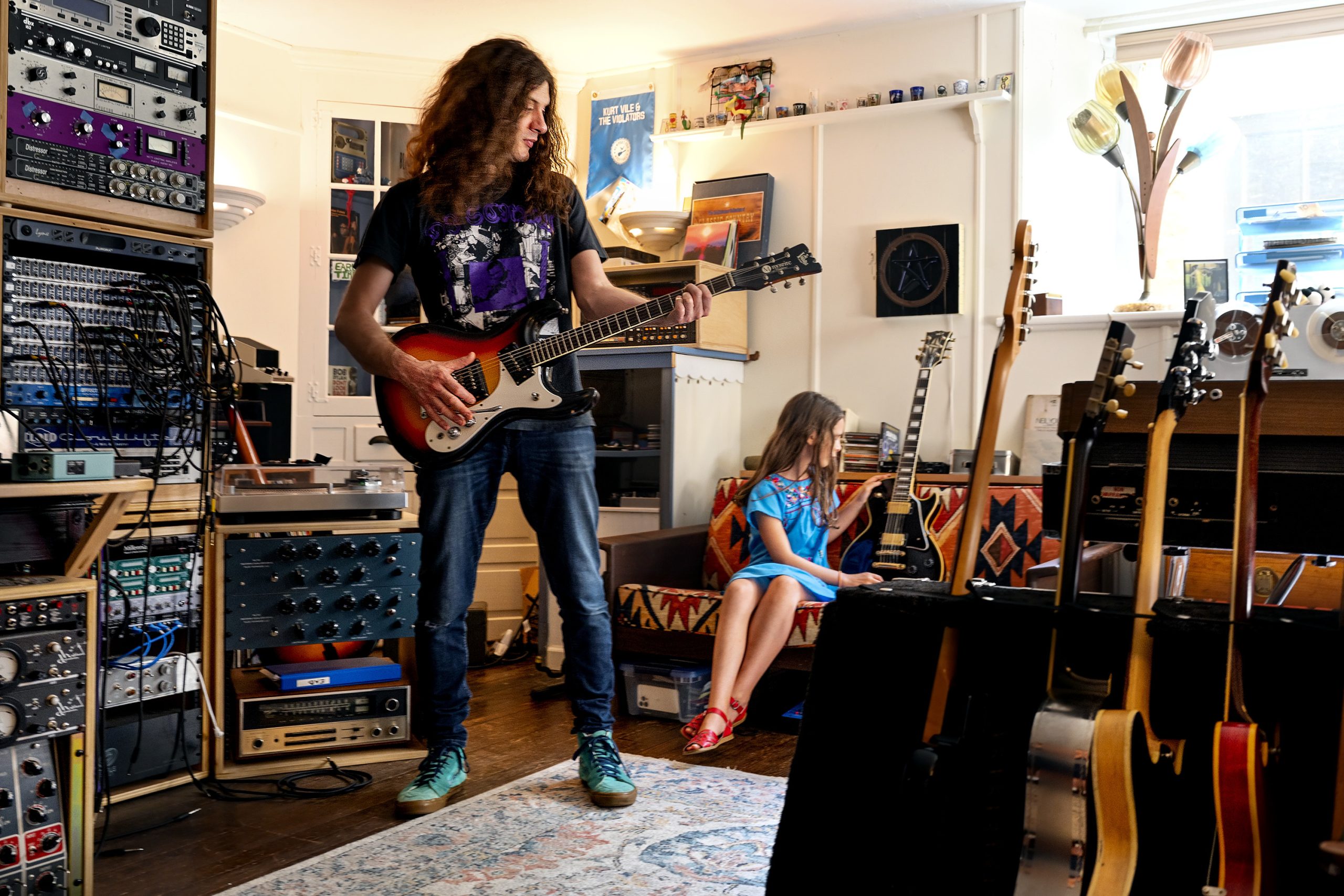
Working in the wee hours in his basement OKV studio — which stands for “Overnight Kurt Vile” — in his fieldstone house in Mount Airy, Vile recalls, “I was singing along to this keyboard track I had laid down, and that thought came to me.”
Kurt Vile in his basement studio at his home in Mount Airy June 13, 2022, with his daughter Delphine.Tom Gralish / Staff Photographer
Vile, who had (legally) parked his Prius in a nearby loading zone, was talking at the Silk City Diner on the Sunday night of Memorial Day weekend where he would realize a long-held ambition: sitting in with centenarian saxophonist Marshall Allen and members of the Sun Ra Arkestra.
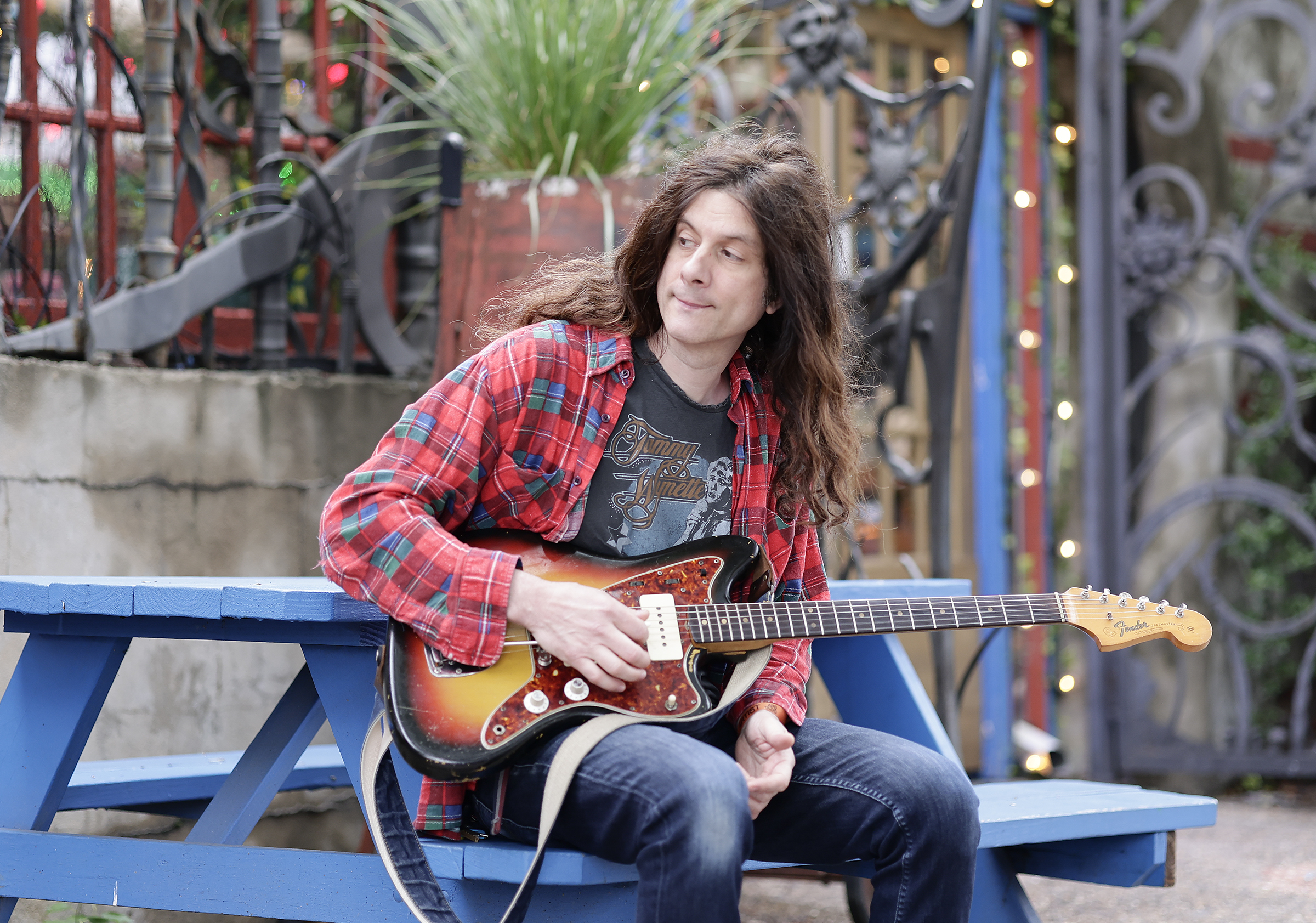
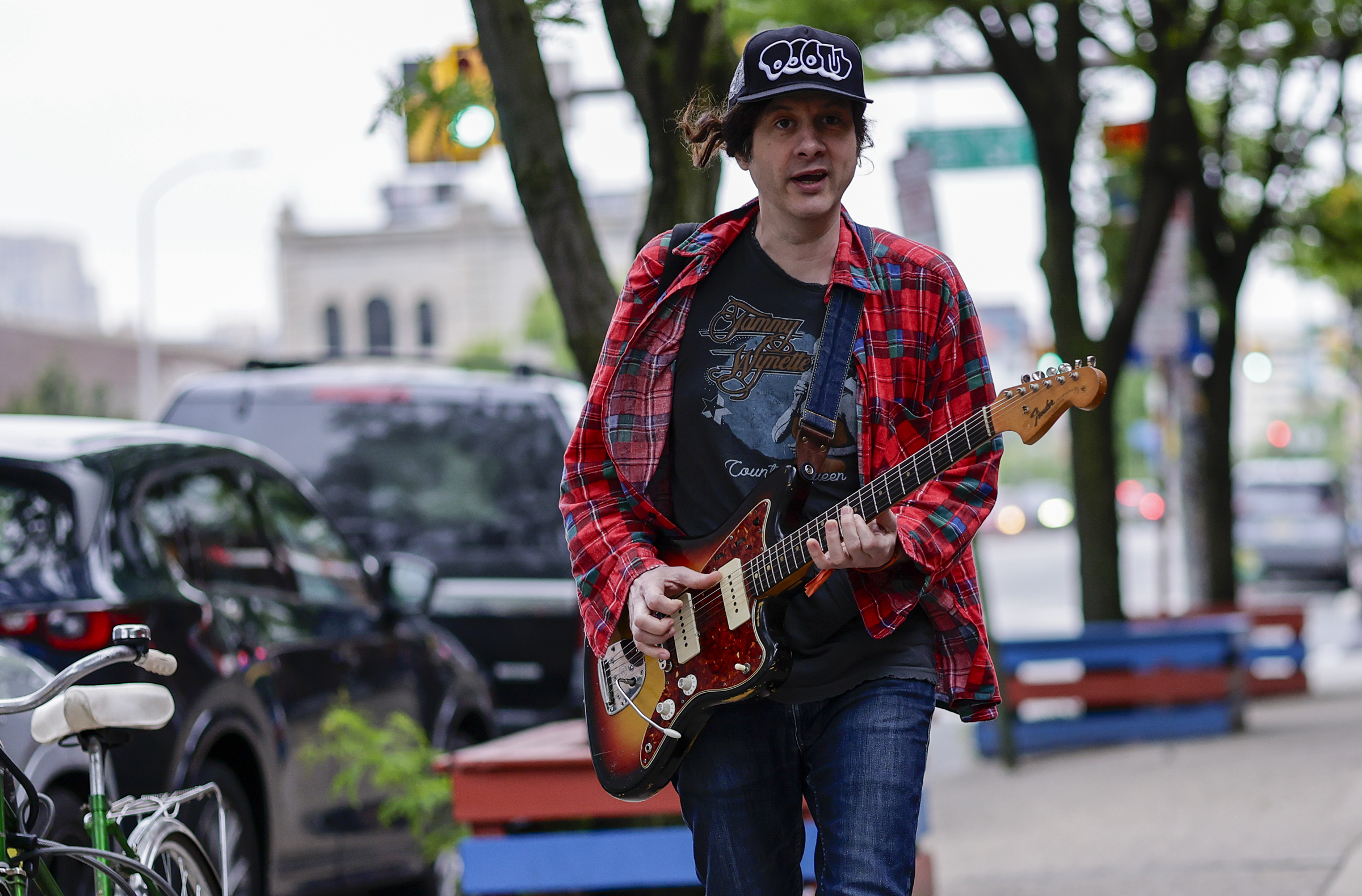
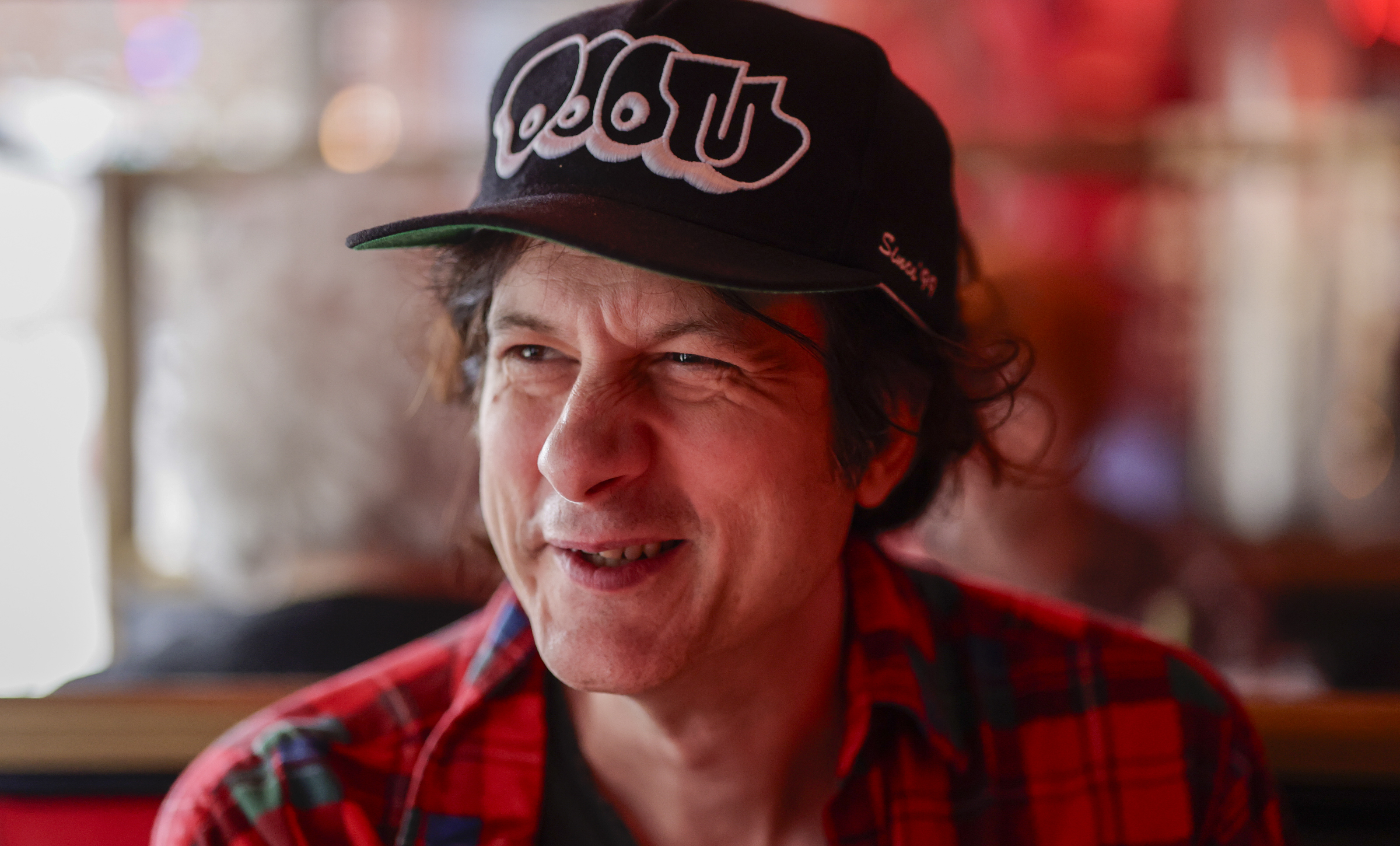
Vile — who was wearing a Tammy Wynette T-shirt and MF Doom trucker’s hat, with his 1965 Fender Jazzmaster Sunburst in the booth beside him (without a case) — explainedhis unique position in Philadelphia music history while dining on an Impossible Burger and Korean fried cauliflower.
“Springsteen wrote the song ‘Streets of Philadelphia’ and Neil wrote ‘Philadelphia,’ and they’re both on the soundtrack to Philadelphia, right?” he says, referring to Jonathan Demme’s 1993 AIDS drama.
“I get where they’re coming from, but it’s still an assignment. They’re singing about a city they don’t know that well. I’m proud of the city that I’m from, and I’m also lucky that I’m from here.
“It’s like my friend Mary Lattimore, who plays the harp.” (And has given lessons to Vile’s daughters, who also both play guitar.) “She’s not from Philly, but she lived here forever, so it feels like home to her, even though she’s in LA now.”
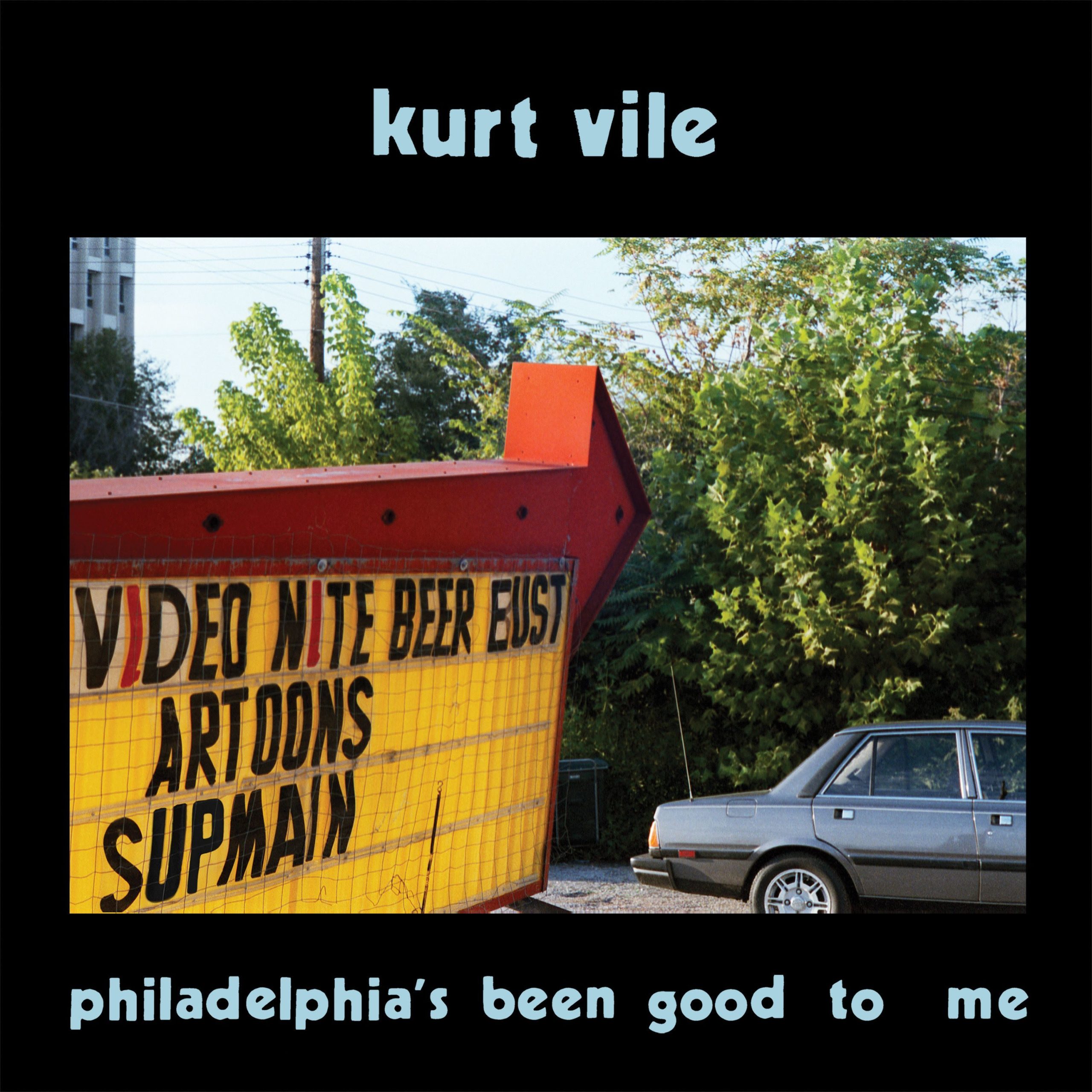
The album cover of Kurt Vile’s ‘Philadelphia’s Been Good To Me,’ which features a photo by Memphis photographer William Eggleston.Verve
Adam Granduciel of the War on Drugs, with whom Vile frequently teamed up when both were aspiring artists in the 2000s, also grew up elsewhere and now lives in Los Angeles.
“They’re two of my oldest friends that were in the Philly scene forever, but they don’t have the extended history that I do.”
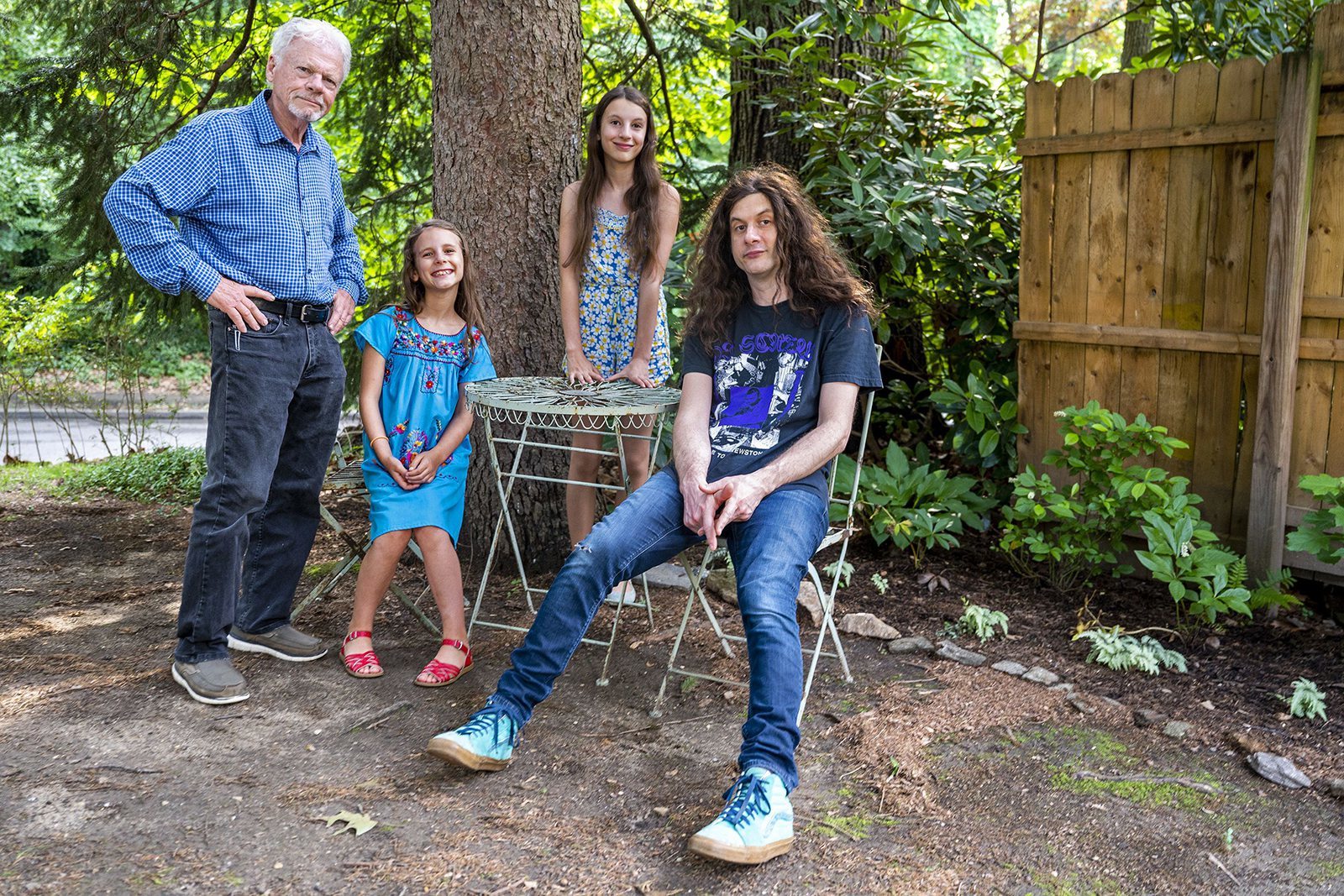
Kurt Vile with his father, Charlie, and his daughters Delphine (left) and Awilda, who posed with him on the cover of his latest album, at his home in Mount Airy on June 13, 2022.Tom Gralish / Staff Photographer
The Philly fixture
Vile — who is the oldest boy among the 10 children of his SEPTA train operator father Charlie and stay-at-home mother Donna — is Philly-area born and bred.
“I’m the OG,” he says. “That’s what I’m proud about. It’s like Questlove, or something,” though for all the Philly repping the Roots drummer does, he doesn’t live here either.
Vile, by contrast, is a Philadelphia fixture. When artists like country rebel Margo Price, Australian rocker Courtney Barnett, and North African desert blues band Tinariwen have come to town, there was one way to know for sure they were in Philadelphia: Kurt Vile was standing next to them onstage.
Vile plays the Dell Music Center with his band the Violators on July 25 as part of Connor Barwin’s Make The World Better Concert Weekend. He played Barwin’s first MTWB Foundation benefit in 2014, which raised money to build playgrounds and rec centers throughout the city.
“I don’t follow football and I didn’t know who he was,” Vile says, recalling meeting Barwin at a show. “He walked in and he looked amazing. He was so tall, like a [expletive] Eagle. He was just a genuine fan. I love reconnecting with Connor and watching him do his thing.”
Vile’s July 25 show is the second of two MTWB nights at the Dell. The first-night headliners are 1990s alt-rock heroes Pavement.
“Pavement was my gateway drug to indie rock,” Vile says. “Stephen Malkmus was my hero. I got my first job as a busboy at the Blue Comet on Baltimore Pike and I would spend all my money on Pavement CDs.”
Now, Vile is friends with Malkmus, and was stoked when he found out they were both playing the MTWB weekend — until he realized that he has a gig in Boston the night Pavement is playing. “I’m missing Pavement by a day,” he says. “Which I’m not happy about.”
Vile, 46, has spent his entire life living in the Philly area, save for 2002-03 when he followed his wife Suzanne Lang to Boston while she got a master’s degree at Emerson College.
Philly alt-rock star Kurt Vile outside the Silk City Diner on Sunday, May 24, 2026 in Philadelphia.Yong Kim / Staff Photographer
He worked as a forklift operator for an air freight company. “The most ball bustin’ blue-collar job there is,” he says. Before he mastered the machinery, “I got made fun of a lot my first year. But then I got really good at it.”
Returning to Philly and moving to Northern Liberties, he went to work for Philadelphia Brewing Company, where he was hired by future pizza sensei Joe Beddia who was roommates with Granduciel. “They were all blown away by my forklift skills,” recalls Vile. “And that’s how I met Adam.”
At PBC, Vile met Jack Rose, the late Philadelphia guitarist who, like Vile, was a fan of influential American Primitive guitarist John Fahey.
Asked to name his top five Philadelphia artists, Vile starts with Rose. He then adds Purling Hiss guitarist Mike Polizze, and psychedelic folk singer Meg Baird, Petty Bunco label head and singer Richie Charles, along with Schoolly D.
“Is that five?” It is, but Vile has a couple more: Marshall Allen-slash-Sun Ra, and rockin’ country band Florry. “They’re so fun and excitable and young,” Vile says.
Kurt Vile in the music room in his home in Mt. Airy June 13, 2022 (this is not the basement studio)TOM GRALISH / Staff Photographer
“I love Mount Airy and Germantown,” he says. “There’s still so much old-school Philly in Germantown. And Mount Airy really saved my life. I love that there’s forest, and I have room to think.
Kurt Vile at his home in Mount Airy June 13, 2022, with his daughters Awilda (left) and Delphine, who posed with him on the cover of his latest album.Tom Gralish / Staff Photographer
“But I can still go to the city any time, and it’s so quick,” driving his Prius down Lincoln and Kelly Drives. “You go in through the Art Museum, and it’s a classy way to go in, you know?”
Over 10 albums, Vile has continued to develop a raw, unhurried signature sound. He often seems to be talking to himself in a bemused drawl over patient jams that turn out to be transfixing.
What country star Keith Urban once said of Vile’s 2015 hit “Pretty Pimpin’” in naming it as one of five songs he wished he’d written applies to Vile’s songwriting in general: “I don’t know how he wrote it, but it sounds like pure stream of consciousness.”
Philly alt-rock star Kurt Vile walking outside the Silk City Diner on Sunday, May 24, 2026 in Philadelphia.Yong Kim / Staff Photographer
‘Philadelphia’s Been Good To Me’
On Philadelphia’s Been Good To Me — whose cover features a photo by Memphis photographer William Eggleston — that deft, uncanny approach is evident on tracks like “99th Song,” an ode to a loop pedal that turns out to be a paean to domestic bliss.
“Stoned on music, well, the best kind of high,” he sings. “Got love in my life, and three girls by my side.” Later, the album includes a more straightforward love song: “Every Time I Look At You,” which begins: “Every time I look at you, sparks fly from my eyes.”
At Allen’s birthday party, Vile took a seat next to guitarist DM Hotep at the rear of the stage. “I was playing spacey, bendy Sonic Youth-hybrid leads,” he said afterward. “I felt really calm up there.”
A few days after that party, Vile celebrated the release of Philadelphia’s Been Good To Me at the Triangle Tavern in South Philly, where 200-plus fans lined up to purchase the album and receive a free vegan cheesesteak as a bonus.
Vile headed out with the Violators in June, and checked inbefore a sold-out show at San Francisco’s Castro Theatre this month.
“I’m a little discombobulated today,” he says, ordering a late afternoon large coffee and glazed doughnut. “It was a late night.”
The night before, Vile enjoyed a day off at Festa, a beloved San Fran karaoke bar closing this year he wanted to visit one last time. “I’m shy at first, but then everybody sings and I get up, too.” His go-to is “Stand Back” by Stevie Nicks.
The tour, Vile says, “is going good, man.” This trek has made him rethink the streaming era. He’s a fan of physical media, and feels “the past was more simple and honest.”
Philly alt-rock star Kurt Vile at the Silk City Diner on Sunday, May 24, 2026 in Philadelphia. Yong Kim / Staff Photographer
“But now the way people can consume your catalog from streaming, the younger people can binge my catalog like Netflix, and I can tell that they know all of my music. I just feel that people are connected.
“This is my 10th record, and I’ve accumulated all these songs that have emotional qualities combined with a dreamy, pretty, hypnotic thing, and then it rocks live with my electric guitar. It just keeps evolving. The songs are simple enough, but the possibilities are endless.”
On the bus, Vile has been keeping Philly — and Delco — close to his heart.
Kurt Vile in concert at the Union Transfer, Friday, June 3, 2022Steven M. Falk / Staff Photographer
“I’m watching Mare of Easttown,” he says. “I never saw it, and now I’m obsessed, just watching all the Delaware County locations and hearing Kate Winslet say a sentence half-Delco, half-British.” He slips into a Winslet impression: “I’m hoping for an an-swer,” and chuckles to himself.
“But it’s my favorite show in a long time,” says Vile, who has Task cued up next. “And it’s got Mannequin Pussy in it. Does the director not know who I am?” he wonders. “I guess I’ve got to get in touch.”
“The timing is interesting, ‘cause I’ve been spending a lot of time in Delco lately,” says Vile, who’s been hanging with his parents and recently dropped in at his old haunt Paul Revere Pizza in Lansdowne. “Now I’m traveling, and I’m touring my Philly record, and I’m loving it. I’m loving being somewhere else and not in Philly every night. But I’m watching Mare of Easttown. And I know I’m gonna love it when I come home.”
Kurt Vile & the Violators with They Are Gutting A Body of Water and Twisted Teens at the Dell Music Center, 2400 Strawberry Mansion Dr. at 7:30 p.m. July 25th, dellmusiccenter.com.
Brenda Beiser knows firsthand how difficult buying a home in the Philadelphia area can be. She’s not only a Redfin real estate agent, but she’s also an empty nester who wanted to downsize.
Her six-bedroom house in Mount Airy sold right away when she put it on the market in May. But she decided not to buy a replacement.
“I went for a rental because I didn’t really want to compete with everyone who’s trying to get into a smaller house,” Beiser said. “A lot of people who are in their 60s and would have traditionally downsized into a smaller house just aren’t doing it. They can’t find a place to go.”
Brenda Beiser, a Redfin real estate agent in the Philadelphia area, decided not to buy another home when she sold her Mount Airy house, because she didn’t want to enter the region’s competitive housing market.Courtesy of Brenda Beiser
The Philadelphia region has a housing supply problem, just like large swaths of the country, and that’s impeding both repeat and first-time buyers. Inventory is particularly low across the Northeastern United States, where construction has not kept up with demand. In the beginning of this year, Zillow predicted that the Philadelphia metropolitan area would be one of the country’s 10 most-competitive housing markets of 2026.
Home supply, however, has also ticked up a bit in the region compared with last year, and homes are staying on the market a bit longer before they sell. For the four weeks ending June 21, the region was in the top five markets with the highest annual increase in new home listings, according to a Redfin analysis of the 50 most-populous metropolitan areas.
“The market’s encouraging,” said Jake Markovitz, president of the board of directors for the Greater Philadelphia Association of Realtors. “It’s certainly more balanced than it has been the last four, five years.”
Erin Thompson, CEO of the Montgomeryville office with Keller Williams and leader of the Erin Thompson Team, agrees. She said buying and selling is “ebbing and flowing but trending toward a more stabilized market.”
“Although I feel like I’ve said that twice in the recent past, and then it’s gone bonkers,” she said.
The region’s market is a mixed bag.
Some homes are sitting for a while, and some owners are at risk of selling properties for less than they bought them for a few years ago. Other homes have inspired five or more buyers to compete against each other, hiking up prices, said Markovitz, an associate broker with the Karrie Gavin Group at Elfant Wissahickon Realtors.
This Graduate Hospital home went under contract last month a few weeks after it was listed for sale.Courtesy of Jake Markovitz
“As an example, I’m seeing more inventory in Chestnut Hill than I have in a long time, which is giving buyers a little bit of power,” he said. But if the right property hits the market, it will go fast.
He’s seen the same happen in neighborhoods such as Graduate Hospital and Fishtown.
Because of strong demand for homes in the region, “I just don’t think we’ll see any major shift in prices coming down,” he said.
‘Weird’
Markovitz and Thompson both used the same word to describe the recent real estate market: weird.
They said housing activity isn’t always following time-tested rules.
Philadelphia homes that sat on the market for months last fall, typically a busy season, suddenly went under contract in the winter, typically a slow one.
A house that sits on the market for 30 days that a buyer thinks can be theirs at a lower price can suddenly attract two other buyers at the same time. And now they all need to be ready to pay more.
Housing markets have always been hyperlocal, with buyer demand varying from neighborhood to neighborhood and block to block. But now, “it’s almost like a property-by-property basis,” even for comparable homes, Thompson said.
Owners bound by ‘golden handcuffs’
Even with recent upticks in home listings, the region’s housing supply is nowhere near enough to meet demand.
“Most people are anticipating this year will continue to be a little tough,” Thompson said, “and then next year we’ll start to see some more inventory.”
Markovitz said homeowners who bought properties five years ago with 3% or 4% mortgage interest rates are still experiencing “some sticker shock” from current rates, which lately have been averaging about 6.5% for a 30-year, fixed-rate mortgage.
“Those people, even if they’re ready to leave, are kind of bound by their golden handcuffs,” not wanting to sell and then have to buy a home at a higher interest rate, he said.
But for many homeowners, “the reality of the market has set in a little bit,” he said. “Where people were sort of hoping, wishing that rates would come back down, they’re not.” And life events such as births, deaths, and job moves mean that people need to sell their homes.
This recently sold Graduate Hospital home has skyline views from the roof deck.Courtesy of Jake Markovitz
And buyers show up to purchase them.
Thompson said she was nervous when she listed a Phoenixville home for sale during Memorial Day weekend,when many homebuyers might be traveling. But a lot of people came to see it, and the seller ended up with seven offers and a final price that was well over what they expected.
Buyers, however, aren’t accepting just anything. They are more selective and less likely than in past years to skip home inspections. If sellers want to get the highest price, they have to prepare their properties for sale, agents said.
Homes, and especially kitchens and bathrooms, need to be up-to-date, and central air-conditioning is a plus, said Annette Collier, owner and real estate broker at Able Real Estate, based in West Philadelphia.
“That’s what buyers are looking for, and I don’t think they’re willing to settle,” said Collier, who works in the city and surrounding areas. “I find that less buyers want to do any renovations. Most buyers want a move-in-ready situation.”
Homebuyers want updated kitchens, like this one in a Graduate Hospital home that recently sold.Courtesy of Jake Markovitz
And sellers need to be realistic about how much they can get for their home.
“If you overprice by even just a little bit,” Thompson said, “you’ll end up sitting.”
Buyers ‘ready to pounce’
Generally speaking, buyers now have more time to make decisions than they did last year, since homes are staying on the market longer.
But, in some submarkets, especially in Philadelphia’s collar counties, “there’s so much demand that certain houses are just going to fly off the shelves,” said Beiser, who works in Philadelphia and surrounding areas.
“I have some buyers in the suburbs, and they‘ve kind of stopped looking because it’s too challenging,” she said.
This home in Upper Merion Township is listed for sale for $699,900 by agent Erin Thompson.Jacob Schroeder, Left Bank Real Estate Photo Services
Beiser has been working with a couple with children who live in Philadelphia but want to move to the suburbs. Each spring for the last three years, her clients make a plan to try to find their next home. But every year, they decide that continuing to live in the city is more convenient than facing competitive markets in which they’re expected to skip home inspections to win a property, Beiser said.
Thompson has seen a growing trend of frustrated buyers putting in offers above the asking price even when they’re not facing direct competition. One client recently went under contract on a Fishtown home they had immediately put an offer on.
“They came in aggressive, because they’d just lost out on a house, and they’d been looking for a while,” she said. “You have these buyers who are scarred and tired, so they’re coming in more aggressive.”
Thompson tells buyers to make sure they’re as prepared as possible before starting their home search.
“You have to be ready to pounce the second [a home] comes to the market,” she said.
This home on the market in Upper Merion Township spans more than 2,800 square feet and has three bedrooms.Jacob Schroeder, Left Bank Real Estate Photo Services