Tag: West Oak Lane

  • A Delco nurse has lived legally in the U.S. since childhood. ICE arrested her as she took her 3-year-old son to Disneyland.

    A Delco nurse has lived legally in the U.S. since childhood. ICE arrested her as she took her 3-year-old son to Disneyland.

    Delaware County nurse Monica Ryadi and her husband couldn’t wait to take their 3-year-old son to Disneyland, so he could meet his adored Cars movie characters — Lightning McQueen, Tow Mater, and the rest.

    They didn’t get there.

    The family had barely stepped off the plane at Los Angeles International Airport on Sept. 15 when they were surrounded by four or five men in street clothes who said they were ICE agents, flashed a badge, and snapped Ryadi into handcuffs.

    When her husband protested, the officers threatened to arrest him and send their toddler, Luca, to child-protective services, the couple said in court filings. One officer told Ryadi she was here illegally and, “I don’t care if you are the president of the United States or a congresswoman like Ilhan Omar,” court records say.

    Ryadi, 30, said she kept insisting that she was a legal immigrant.

    And that’s true.

    She has lived in the U.S. since she was 9, brought to this country by her parents when they fled religious persecution in Indonesia.

    They entered on legal visas in 2005, and five years later were officially granted what’s called “Withholding of Removal.” That’s where an Immigration Court judge agrees that deporting someone to their homeland could get them hurt or killed.

    It’s similar to asylum, the key difference being the federal government retains the right to deport someone if it can find a third country willing to take them. Withholding does not include a path to citizenship.

    Traditionally, people who gained that relief were left alone.

    Now that’s changed, as the Trump administration takes a new, hard view — seeing those who have Withholding, even those who have lived here for decades, as candidates for deportation. Some immigrants are held in ICE detention for months while the administration tries to find a foreign government to accept them.

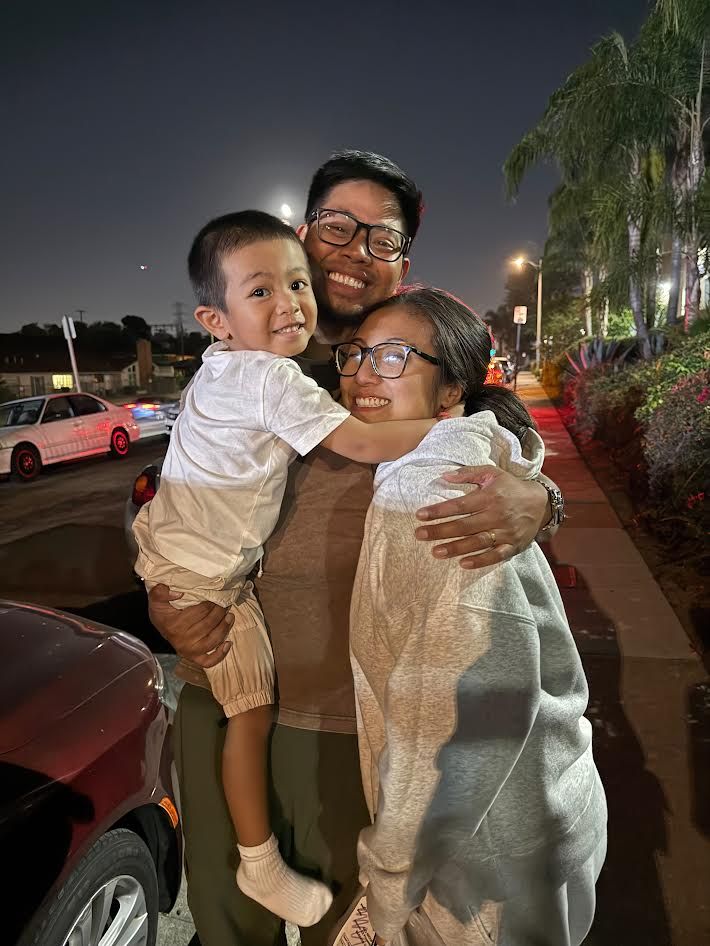
    On Tuesday, after 15 days in custody at the Adelanto ICE Processing Center in California, Ryadi was ordered freed by a U.S. magistrate judge. Her husband and son flew to her immediately, and the family reunited that night, at the same Los Angeles hotel they booked when they planned to visit Disneyland.

    “It’s a lot of emotions,” Ryadi said in an interview after her release. “I am still terrified, I’m still living under fear.”

    At the same time, she said, “I can’t stop thinking about the other women that are in there.”
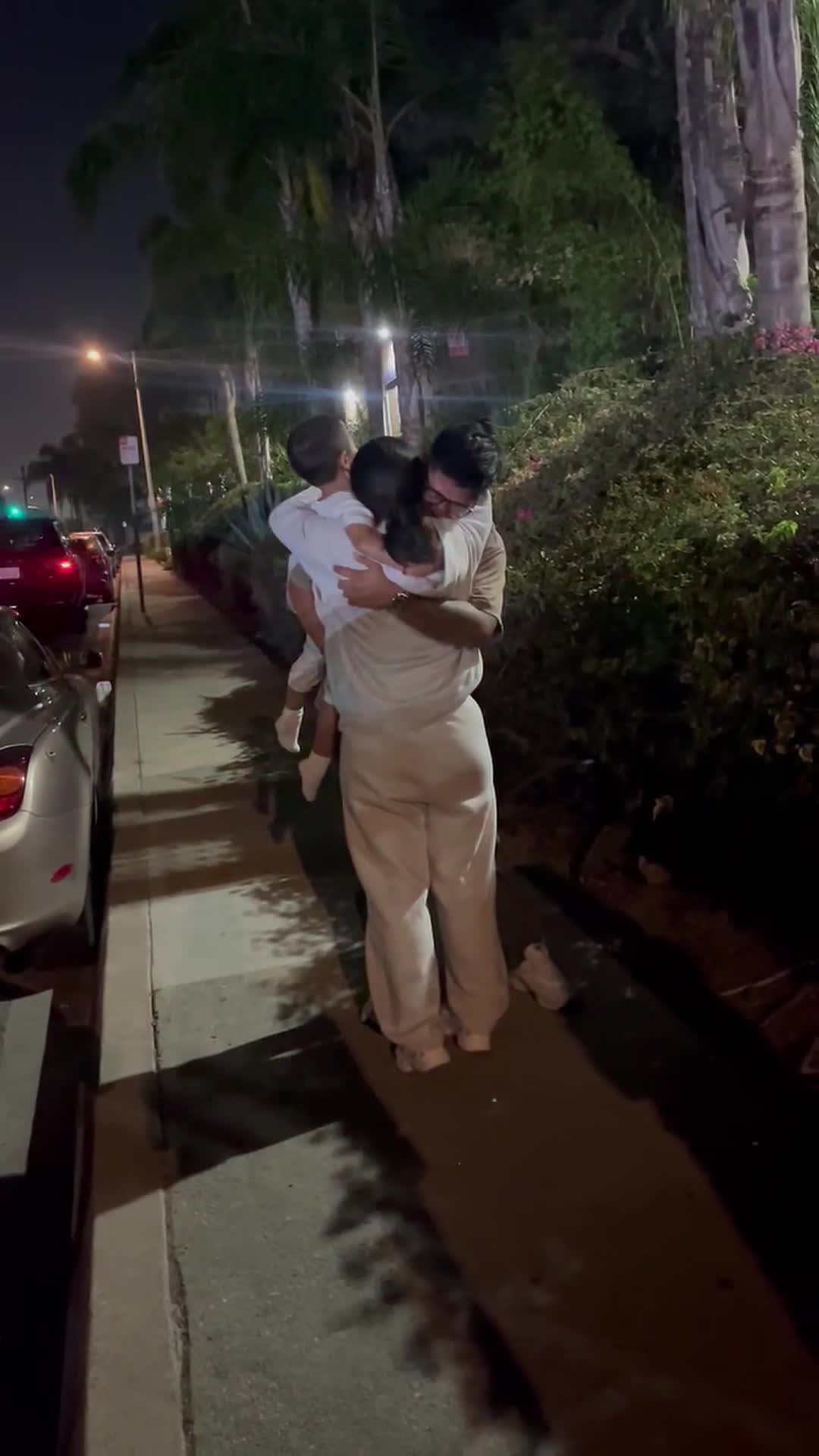
    A Delco nurse arrested by ICE reunites with her family
    Video: A Delco nurse arrested by ICE reunites with her family

    The Department of Homeland Security said in a statement that Ryadi was “an illegal alien” taken into custody “during a targeted enforcement operation at Los Angeles International Airport.”

    DHS said she entered the U.S. legally in 2005 but “overstayed her welcome” in violation of immigration laws. An immigration judge issued a deportation order in 2010, DHS said, but did not note that such an order is a standard part of receiving permission to stay, work, and live in the U.S. under a grant of Withholding of Removal.

    Ryadi’s husband, Steven Sary, 35, said he was overjoyed to be reunited with his wife. “But there’s still work to do,” he said. ”What’s the next step for us? We’re still living in fear.”

    He tried to stay positive and supportive while Ryadi was detained, even at moments when they were both crying on the phone. He told her, “You don’t have to worry about Luca, I’m doing the best I can.”

    The couple has arranged their lives around their son, setting schedules so one parent is always home with him. Ryadi works weekends at Riddle Hospital in Media, while her husband works Monday to Friday as a UPS truck driver.

    The two met when they were children growing up in Philadelphia, and married in 2021.

    Ryadi graduated high school from the Academy at Palumbo in the Bella Vista neighborhood, then earned an associate degree at Philadelphia Community College before obtaining her bachelor’s degree at Ohio University.

    She became a nurse, she said, because she wanted to help people.

    The court order that freed Ryadi came the same day that the Supreme Court ruled the Trump administration could resume the fast deportation of immigrants to countries other than their own.

    The court granted the government’s emergency request to block an appeals court ruling that said the process was unlawful, because immigrants were not given sufficient opportunity to raise safety concerns.

    The Supreme Court said it would hear oral arguments in the case in December, with a final ruling likely next year.
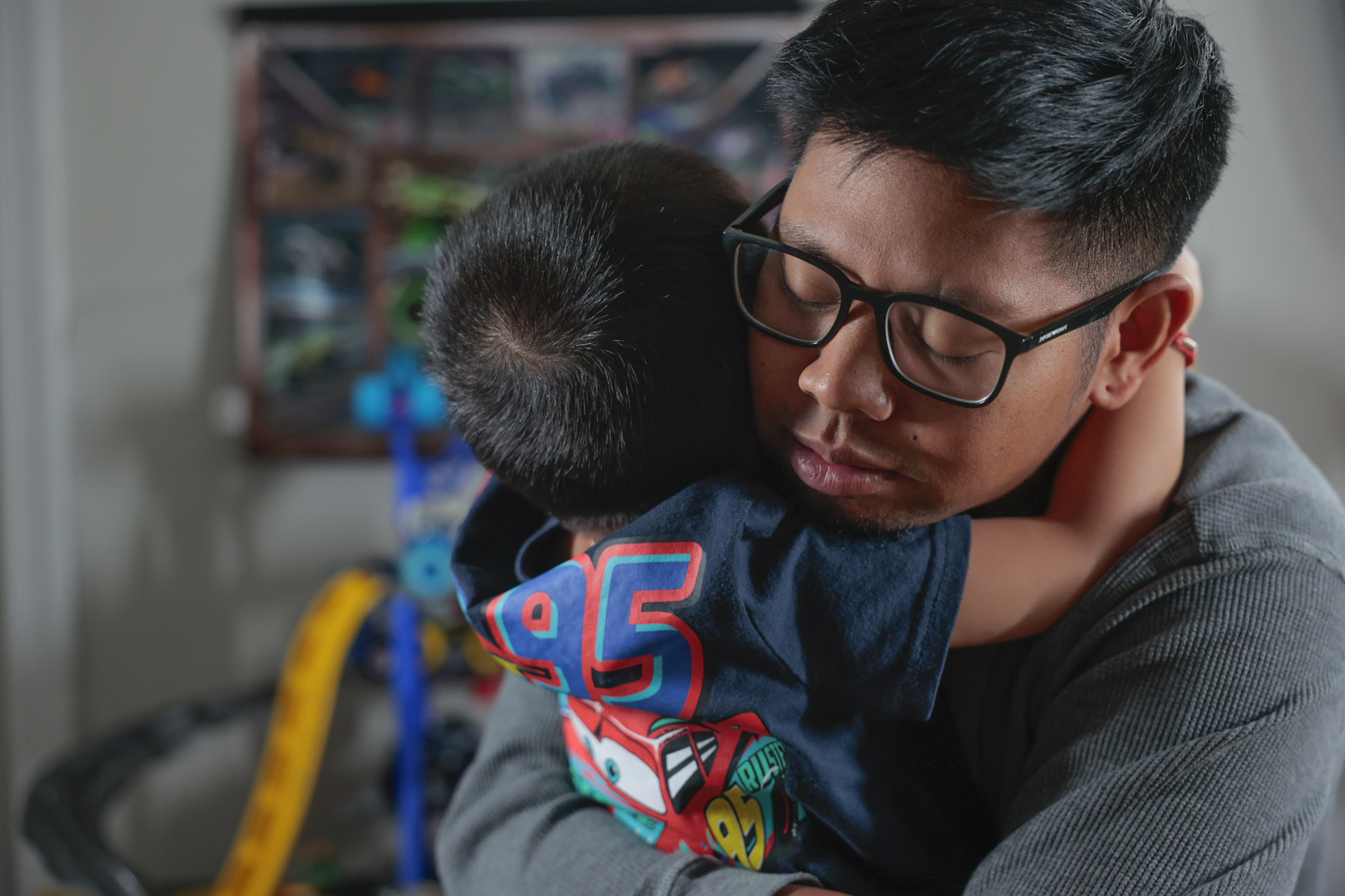
    Steven Sary hugs his 3-year-old son, Luca, at their Delco home, waiting for word on his wife, who at the time was detained in California by ICE. She was detained by ICE agents after getting off a plane in Los Angeles as the family traveled to Disneyland. Steven M. Falk / For The Inquirer

    “What happened to Monica should be treated as an extrajudicial kidnapping,” said Ryadi’s Philadelphia immigration attorney, Eric Rosenfeld, who is handling the case pro bono.

    He noted that Ryadi is a registered nurse, the wife of an American citizen, and the parent of a son who is an American citizen — yet ICE casually told her she would be sent to an undisclosed third country.

    She was never given any type of document or warrant to explain her arrest, he said. Upon release she was fitted with a GPS ankle monitor, and she knows ICE will likely try again to deport her, the attorney said.

    “This is a respite. Not security,” Rosenfeld said.

    As the Trump administration pursues its mass-deportation agenda, the protection offered by Withholding and similar relief “is proving to be very little protection at all,” the American Immigration Council wrote. “The Trump administration is trying to ship them out wherever it can — and keep them locked up in the meantime.”

    A Philadelphia man who was arrested in July remains in detention, despite having lived legally for almost 20 years.

    Mamadou Fadel Cherif of West Oak Lane was granted protection from potential political violence in his native Guinea. Now the administration wants to deport him to Ghana.

    Ryadi’s arrest added to the steadily growing number of immigrants taken into custody at American airports. The Philadelphia advocacy organization Asian Americans United estimates more than 20 people have been arrested at Philadelphia International Airport or while seeking to fly there since July 12.

    To receive Withholding of Removal, applicants must prove they were persecuted in the past or that their lives would be threatened in the future, that their home government harmed or will harm them — or failed to control others who might do so.

    When that relief is granted, the immigration judge also enters a deportation order, then tells the government it cannot deport the person to their homeland. In that way the removal is “withheld.”

    “We were planning to have an amazing trip with the family,” Sary said, “to see Cars Land with our son. But that changed.”

    This image shows Delaware County nurse Monica Ryadi, left, in white, being arrested by ICE agents at Los Angeles International Airport on Sept. 15. She and her husband were taking their 3-year-old son to visit Disneyland.Courtesy of the family

    “It felt like I was kidnapped,” Ryadi said. “I kept saying, ‘I’m legal, I’m a legal immigrant.’”

    She grew up in the United States with government permission, has work authorization, a Real ID, and a Social Security number. She pays taxes. Yet she was chained wrist, ankle and waist like a criminal, she said.

    Ryadi wonders if the ICE operation against her began in Philadelphia. As her family waited to board the plane, she said, a woman in a black jacket approached and made small talk.

    The woman didn’t have luggage, Ryadi said, and she didn’t get on the flight. Instead, she walked away to talk to a man who also did not appear to be a passenger.

    When Ryadi was released from the Adelanto detention center, 90 miles northeast of Los Angeles, immigrant-aid volunteers gave her a ride all the way to the city.

    There she flew into the arms of her husband and son.

    “I’m so happy to see you!” she cried.

    At the hotel, the family saw people decked out in Disney attire, coming back from the theme park. Young Luca asked if they could go.

    On Wednesday his parents took him to Cars Land.
  • A Philly family bought their first home thanks to reparations from Quakers in Germantown

    A Philly family bought their first home thanks to reparations from Quakers in Germantown

    Charmira and Quincy Pilgrim wanted to become homeowners a decade ago when they got married.

    But over the years, job losses, jobs that didn’t pay enough, children, unpaid maternity leave, and rising costs of living made saving for homeownership impossible.

    They were finally able to start putting money away late last year. And this spring, they found a $315,000 house they wanted to buy in West Oak Lane. But they were short thousands of dollars for their down payment and closing costs.

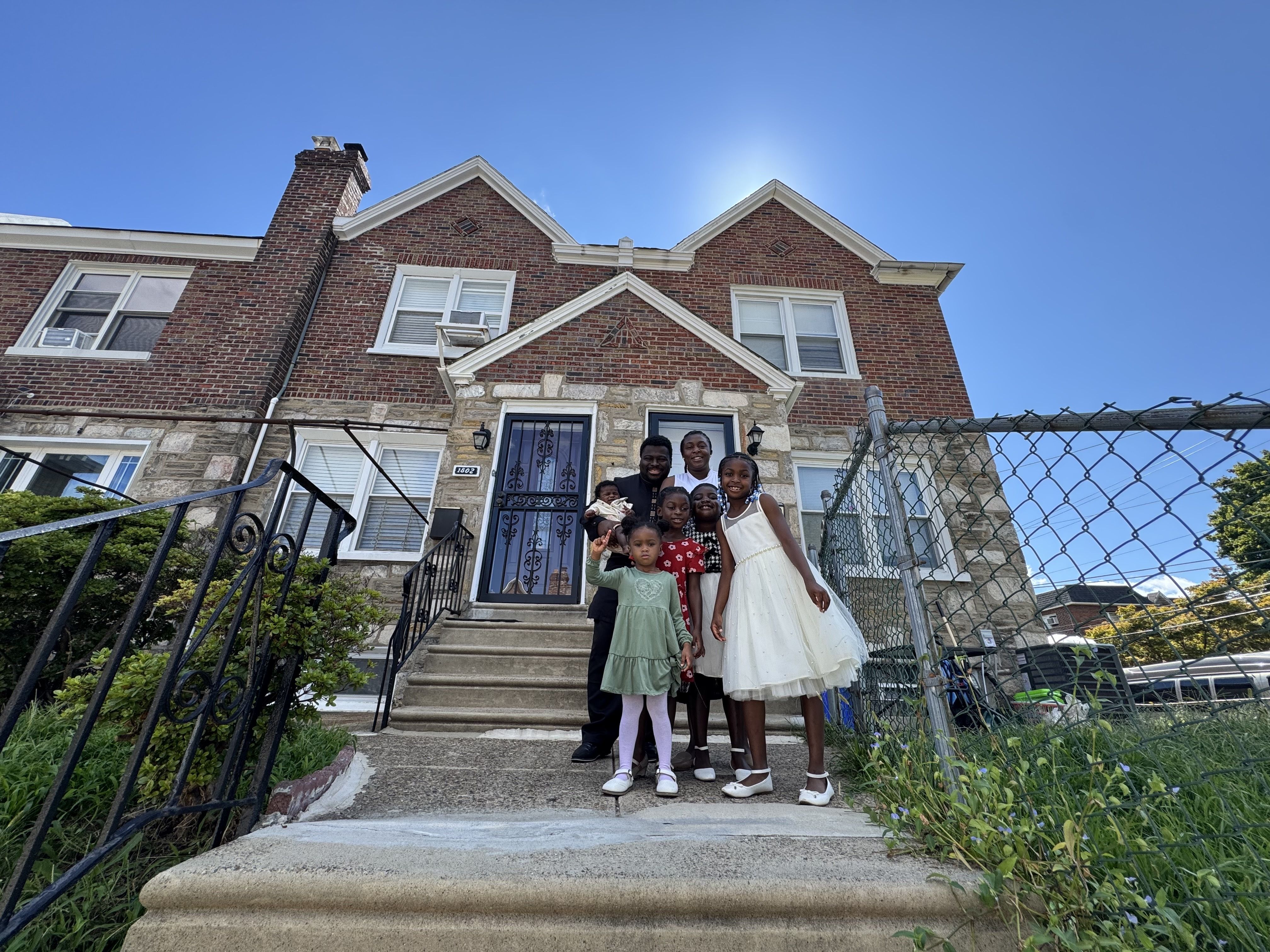
    What got them and their five children into their new home was a $10,000 first-time homebuyer grant funded by a group of Quakers in Germantown.

    “It was a blessing that I ended up getting the grant because money was tight,” said Charmira, a 32-year-old special-education teacher and case manager.

    Up-front cost is a common barrier to homeownership for renters in Philadelphia and across the country. Grants for down payments and closing costs can help aspiring homeowners get in the door. Governments, mortgage lenders, and nonprofits are common funders.

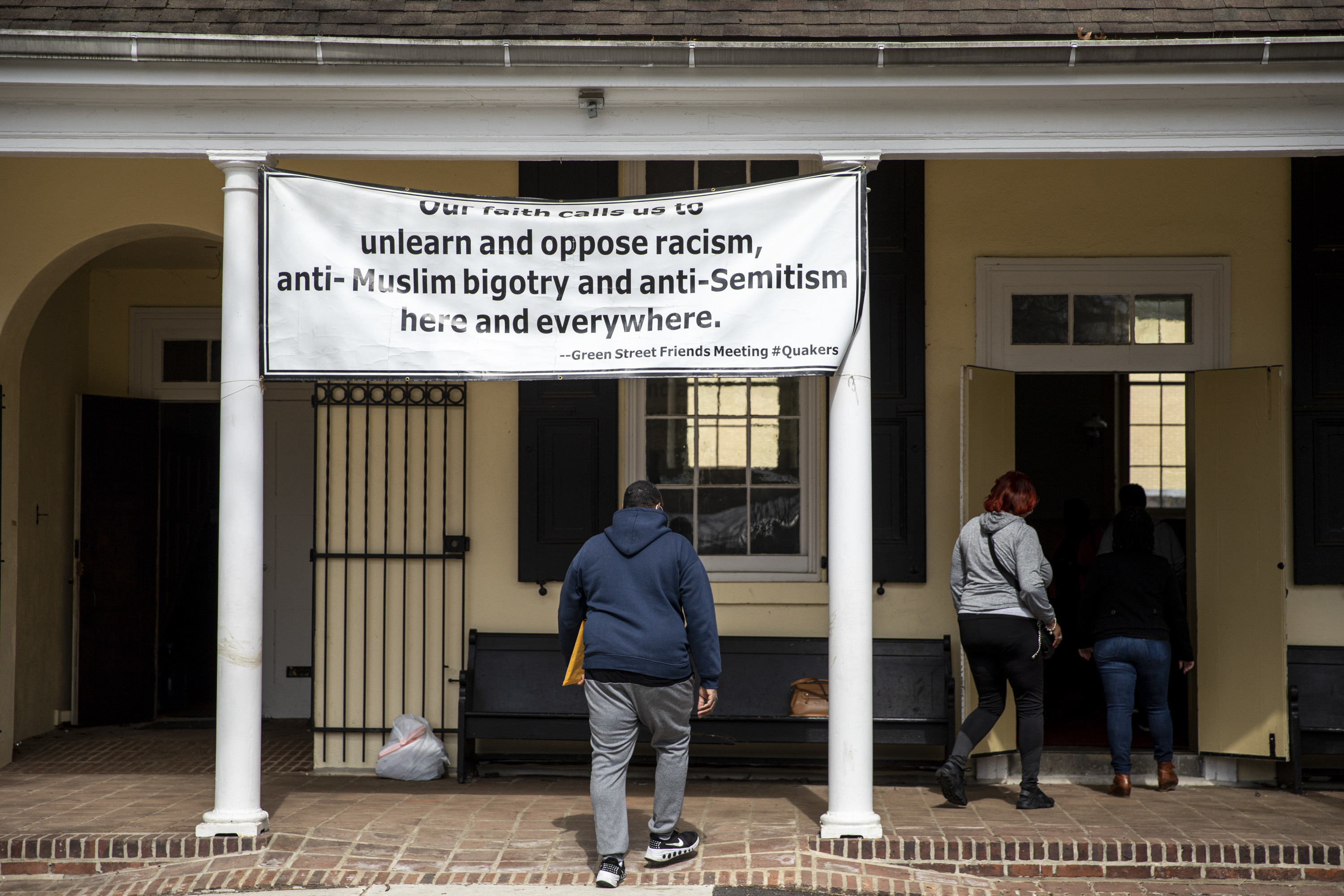
    That’s what makes the Pilgrims’ grant stand out. It’s one of five $10,000 grants that Green Street Friends Meeting, a Quaker congregation in Germantown, is funding to help people buy their first homes. It’s part of the congregation’s racial justice plan to redistribute wealth to Black residents in the Germantown area as a form of reparations.

    When Green Street announced the homebuyer grants in March, it said it sees reparations as “economic and spiritual repair for the intergenerational harms of slavery, Jim Crow, and their afterlives.” Reparations, it said, are “intended to address the theft and pillaging of Black wealth” for hundreds of years through systemic discrimination.

    Lucy Duncan, a member of Green Street, said the homebuyer grants are “a redistribution of wealth that’s about fairness and equity.”

    The goal is to keep Black residents from being priced out of their communities and “provide resources to help maintain Black Germantown,” she said.

    Rebecca L. Grant, a Black member of Green Street’s reparations committee who has been a Germantown homeowner for 22 years, said the committee wanted to eliminate a hurdle to homeownership and the wealth it can create for Black residents.

    “We knew these grants wouldn’t undo generations of discrimination,” Grant said, ”but we thought we could make a difference one family at a time.”

    How the homebuyer grants work

    To distribute the grants, Green Street partnered with birdSEED, a Washington-based nonprofit that aims to reduce racial wealth gaps in the Washington and Philadelphia areas. As part of its work, the nonprofit helps members of historically disadvantaged communities buy their first homes.

    The Quaker congregation contributed funds to birdSEED’s Housing Justice Grant Program and required that its money go to Black homebuyers purchasing in the 19144 or 19138 zip codes.

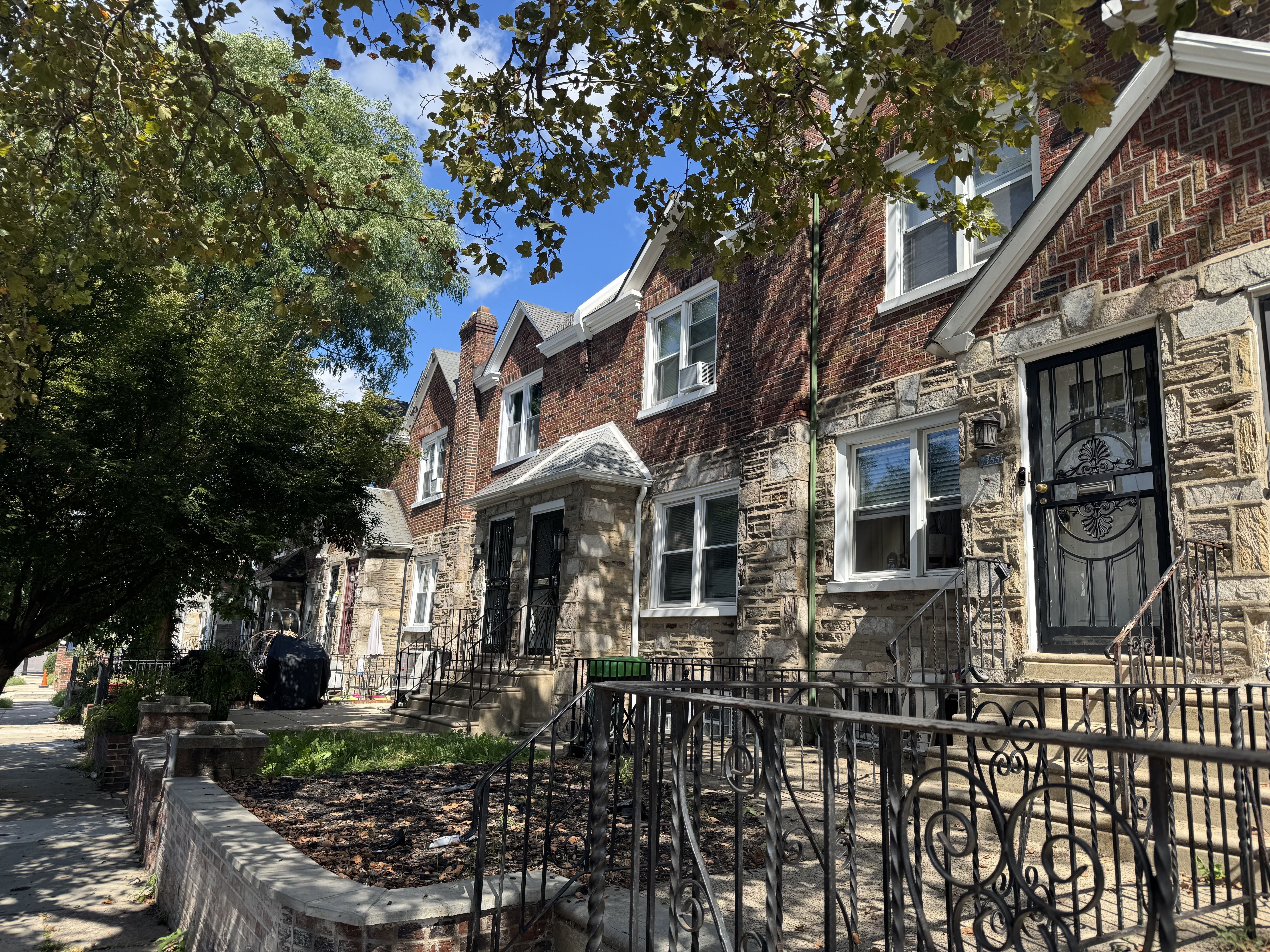
    West Oak Lane is one of the communities where homebuyers can use grants from Green Street Friends Meeting to purchase properties.Michaelle Bond / Staff

    In the Philadelphia area, birdSEED typically awards grants of between $5,000 and $10,000 for down payments and closing costs. An advisory board reviews applications and interviews top candidates. The board scores applicants based on their readiness to purchase a home and the impact the grant would have, said Leslie Case, birdSEED’s co-executive director.

    Candidates need to have lived in the area in which they are buying for at least three years. They cannot have purchased a home before. And their household can make up to $150,000 a year. Preference is given to populations who have historically faced barriers to homeownership.

    Homebuyers can apply for the current round of birdSEED’s housing justice grants until Sept. 30.

    The nonprofit has awarded about 40 homebuying grants so far in the Philadelphia region, which includes surrounding counties in Pennsylvania and New Jersey.

    Maegan Scott, birdSEED’s co-executive director, said the grants funded by Green Street represent “momentum” as the nonprofit seeks to expand its presence in the Philadelphia area.

    A majority of the nonprofit’s housing justice grants have gone to first-generation homebuyers. But a common thread ties all applicants together.

    “Everyone’s looking for stability,” Scott said. “Everyone is looking ahead to the next generation, the generation after that.”

    Green Street’s reparations initiative

    In June 2021, Green Street pledged to spend $50,000 a year for 10 years as part of its reparations work, spurred by a moral calling and the realization that the congregation had a large pot of money in unrestricted reserves.

    The following year, the congregation partnered with attorneys to help Black Germantown residents make wills and straighten out legal ownership of their properties.

    In about a year and a half, clinics to resolve and prevent tangled titles preserved more than $11.3 million in housing wealth for more than 85 families by protecting homes that might otherwise have been lost because of unclear legal ownership, according to Green Street. It was a massive return on the $25,000 the congregation spent on fines and legal services for families who didn’t qualify for free legal help.

    Green Street Friends Meeting in Germantown welcomed neighborhood residents to its meetinghouse in April 2022 to get help with tangled titles and estate planning at a legal clinic it hosted.TYGER WILLIAMS / Staff Photographer

    Over the last few years, Green Street’s reparations work has included music education for Black youth, funds for Black midwives in Germantown and a new birthing center in Mount Airy, estate planning services, and additional housing support.

    “We didn’t want the reparations to just be about acknowledging a painful history,” Grant, the reparations committee member, said. “We want it to be about what we can do now.”

    She said she used to think that reparations for Black Americans would never happen.

    “But it’s so wonderful to see and understand that, ‘Oh, this has to happen on a local level,’” she said.

    The Pilgrims and one other family have bought homes using Green Street’s grants so far.

    Duncan, at Green Street, said that when birdSEED sent her the first pictures of the families, “I almost started to cry.”

    “It’s such tangible and long-term impact for these families,” she said. “And hopefully, generational impact.”

    A home of their own

    Charmira and Quincy Pilgrim closed on their three-bedroom house at the end of May, about a month before their fifth child was born.

    The children, the oldest of whom is 8, love playing in the side yard, backyard, and finished basement. Charmira loves to cook, and she now has a big kitchen. The house is close to biological family and church family.

    Charmira said being a homeowner “means freedom.” She has started planning future upgrades for her home.

    “It feels good to have ownership. It feels good to be in a space I can create a vision for,” she said. “I see this as an opportunity for my kids to have a legacy.”

  • A Guinean immigrant has lived in the U.S. legally for two decades. Unable to deport him to his homeland, ICE wants to send him to a third country.

    A Guinean immigrant has lived in the U.S. legally for two decades. Unable to deport him to his homeland, ICE wants to send him to a third country.

    The lawyer for a Guinean man who has lived legally in the United States for nearly 20 years asked a federal judge to free him from ICE detention on Thursday, even as government attorneys described plans to proceed with his deportation.

    Mamadou Fadel Cherif, 56, was arrested by immigration officers as he left his West Oak Lane home for work on July 13 and remains in custody at the Moshannon Valley Processing Center in Central Pennsylvania.

    “There’s a human being underlying these proceedings,” attorney Conor Deane told U.S. District Judge Juan Sanchez, as the lawyers debated complicated immigration regulations and law. “An exceptional human being. … He’s the epitome of who you would want to live in this country.”

    Fadel Cherif works in dining services at La Salle College High School, the private Catholic boys school in Montgomery County, and also drives for Uber. He’s the main support for his wife, who has legal permanent residency, and for their four American-born sons, one of whom is a Marines reservist.

    Deane sought Fadel Cherif’s immediate release, saying he has been illegally detained and denied due process under the law.

    Nearly two decades ago, Fadel Cherif was granted what’s called Withholding of Removal, which allows him to live and work in the United States, and bars his deportation to his West Africa homeland, where the U.S. government agrees he could be harmed or killed over his political beliefs.

    That status does not shield him from being sent to a third country, however, if ICE can find a nation willing to accept him. Those kinds of third-country deportations are difficult for the agency to achieve, but the Trump administration has pushed to accomplish them.

    The Migration Policy Institute estimates that during its first year back in office, the Trump administration carried out about 15,000 removals to third countries, a fraction of the total 396,000 deportations.

    Deportations of those who have Withholding of Removal are even more rare, according to the Amica Center for Immigrant Rights in Washington. The center says it is pointless to detain those people while attempting to deport them. If ICE were to release a foreign national and later identify an appropriate third nation, it could simply detain them again.

    In court Thursday, the judge noted that authorities plan to deport Fadel Cherif to Ghana — sparking courtroom debate over the West African land’s assurances to the U.S. government that he would be safe there.

    Deane said those assertions are not sufficient to deport someone. He described Ghana’s diplomatic assurances as “very boilerplate,” and not barring that nation from sending his client to another country or even back to Guinea.

    Assistant U.S. Attorney Landon Jones told the judge he did not have additional information regarding Ghana’s assurances, but the U.S. State Department has deemed them credible.

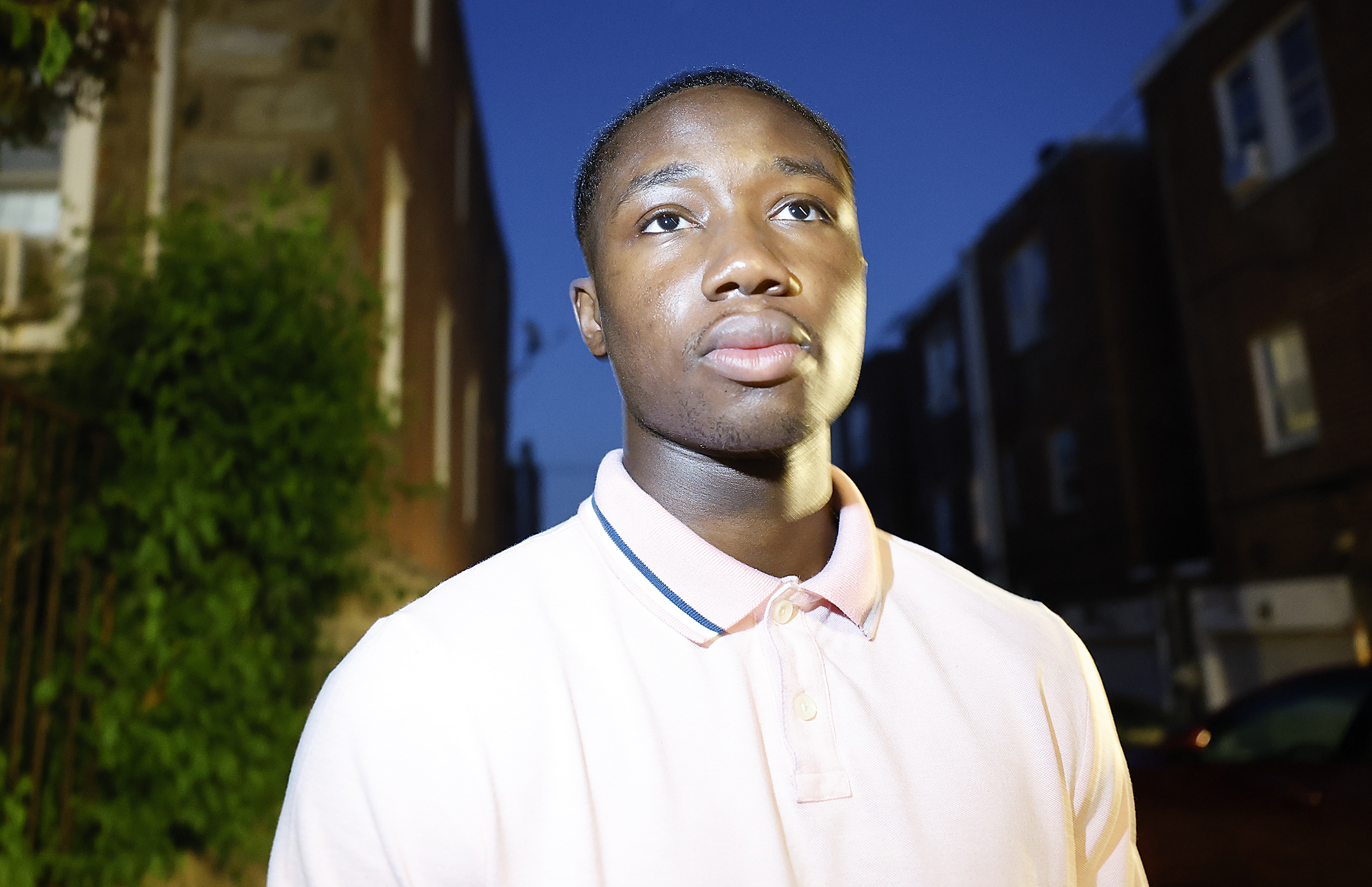
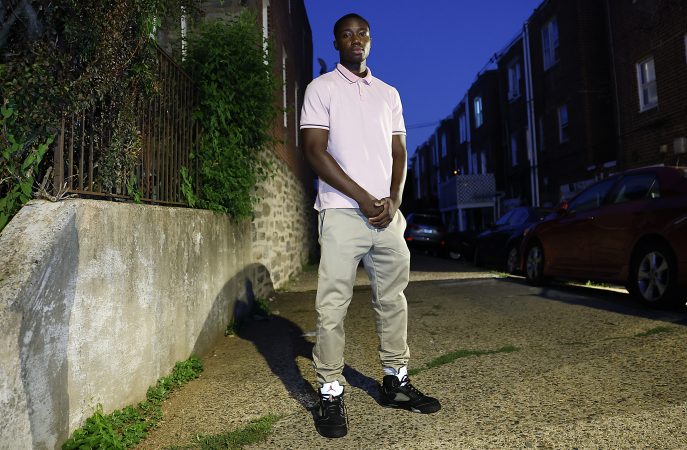
    Abdoulaye Cherif near his West Oak Lane home in July 2026. His father, Mamadou Fadel Cherif, was arrested by ICE and has been detained while the agency tries to deport him.Yong Kim / Staff Photographer

    Fadel Cherif’s wife and two of his sons, who were in court for the proceedings, declined to comment.

    Advocacy groups and immigration lawyers say the Trump administration is increasingly arresting and detaining migrants who have been granted withholding, keeping them in custody while it pursues removal to a third country.

    One challenge to deportation is even those nations that willingly accept their own citizens can be disinclined to accept other foreign nationals.

    Ricky Palladino, another lawyer for Fadel Cherif, said earlier that there’s no reason for ICE to detain him. He has no criminal record, but does have work authorization, a Social Security number, and a driver’s license.

    Fadel Cheriff is nearing the end of his eighth week in detention.

    In Guinea, a nation of 12 million people that’s roughly twice the size of Pennsylvania, Fadel Cherif was jailed by the government after protesting the results of his country’s 1998 presidential election, which was marred by irregularities. He later fled in fear of being rearrested, using a document that showed a different Guinean identity to enter the United States in New York in November 2003.

    Fadel Cherif was denied asylum — which carries a path to citizenship — when he could not prove that he had filed within a year of entering the United States.

    To receive Withholding of Removal, applicants must prove they were persecuted in the past or that their lives would be threatened in the future, that the government harmed or will harm them — or failed to control others who might do so. They also must show that moving to a different part of their home country would not provide safety.

    When Withholding of Removal is granted, the immigration judge also enters a deportation order, then tells the government it cannot deport the person to their homeland. In that way the removal is “withheld.”

    People with that status cannot leave the United States without triggering deportation, have no path to citizenship, and cannot petition to bring family members to this country.

    Fadel Cherif’s lawyers filed what’s called a habeas petition, which asks a judge to order the government to prove it has the lawful authority to detain the person. The term “habeas corpus” translates from Latin as “you have the body,” and such filings are considered crucial constitutional safeguards against wrongful imprisonment.

    Habeas petitions, once rare, have dominated the docket at Philadelphia federal court since the Trump administration initiated a policy of mandatory detention last year. That provoked an avalanche of lawsuits by immigrants who challenged their incarceration, demanding their freedom or at least a bond hearing in Immigration Court.

    Judge Sanchez gave no indication of when he would issue a ruling.

  • What Philly got out of the World Cup, the nation’s 250th, and the MLB All-Star Game

    What Philly got out of the World Cup, the nation’s 250th, and the MLB All-Star Game

    As the afterglow of the world’s largest sports tournament and the country’s formal 250th birthday party in Philadelphia fades, the city is returning to its regularly scheduled programming.

    But those months of celebrations came with significant investments into the city: building up the Benjamin Franklin Parkway, hosting Grammy Award-winning stars, renovating Lemon Hill to welcome half a million people, and, of course, the cleaning and maintenance work that made Philadelphia look fresher than it has in years.

    SEPTA and the city partnered to landscape and beautify major traffic intersections, sometimes with a new mural provided by Mural Arts Philadelphia. SEPTA stations also received a much-needed deep clean and graffiti removal, all before and during the summer celebrations.

    PHLASH buses got an extra stop to get to Lemon Hill; fans got free rides on the Broad Street Line after World Cup games. And, just as the international fans packed up their bags to head home, it’s time for many of those features to go, too.

    But Philadelphia has taken steps to keep things looking pretty for the long term, beginning with the city’s $11.5 million landscaping and anti-graffiti project focused on transportation “gateways” that it has pledged to continue and expand beyond the summer. The city also added 250 cherry blossom trees throughout Fairmount Park and elsewhere, in a project led by the Japan Society of Greater Philadelphia that honored the original 1,600 cherry blossoms Japan gifted Philly for the Sesquicentennial in 1926.

    But what about all the things staying in Philly? The city is not getting just generational memories and a summer party out of the deal. Here are some of the major legacy projects remaining in Philadelphia for years to come, perhaps even until the tercentennial celebration in 2076.

    (function(){function e(){window.addEventListener(`message`,function(e){if(e.data[`datawrapper-height`]!==void 0){var t=document.querySelectorAll(`iframe`);for(var n in e.data[`datawrapper-height`])for(var r=0,i;i=t[r];r++)if(i.contentWindow===e.source){var a=e.data[`datawrapper-height`][n]+`px`;i.style.height=a}}})}e()})();

    New mini soccer pitches across Pennsylvania

    Location: Throughout Pennsylvania.

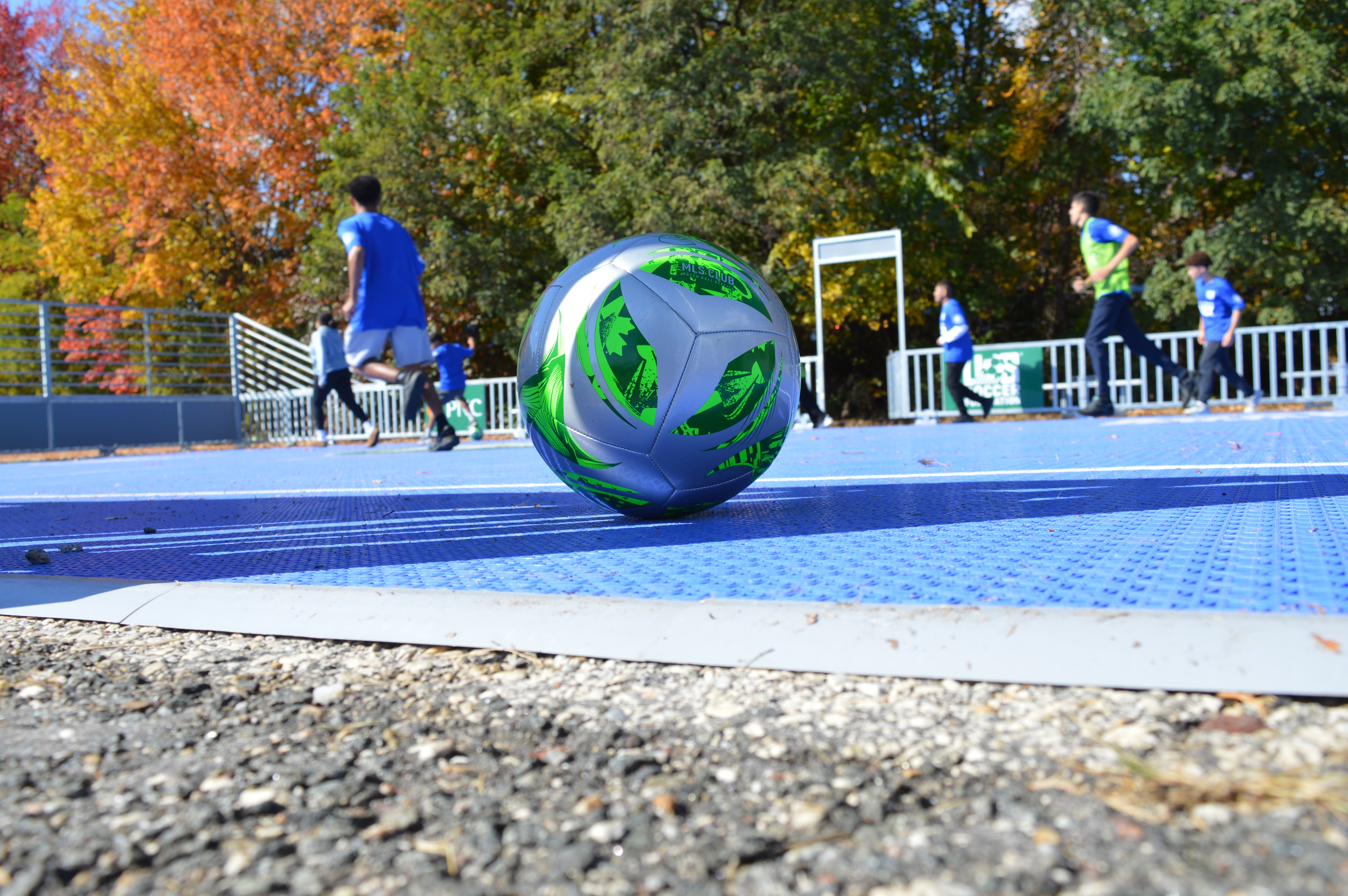
    The project: How does the United States grow the next crop of elite soccer players? By making it easier to play soccer starting at a young age. At least 13 mini soccer pitches are being installed at schools, recreation centers, and parks across Pennsylvania.

    The U.S. Soccer Foundation has committed $2 million to install mini-soccer fields like this one in Northeast Philadelphia ahead of the 2026 FIFA World Cup.Kerith Gabriel

    Who is behind it: The city and several nonprofits and private companies are backing this initiative, mostly through a $2 million investment from Philadelphia Soccer 2026, the city’s host committee for the 2026 men’s World Cup. Additional backers include the Philadelphia School District, Independence Blue Cross, and Comcast, among others. The U.S. Soccer Foundation is administering the funds and overseeing the installation of the pitches.

    Bank of America Visa Street Soccer Park

    Location: 1036 N. Front St.

    The project: The transformation of Fishtown’s TipTop Playground into two mini, enclosed turf soccer pitches, with additional event space and field lighting for night play. The pitches are now open for kids and adults.

    • Fishtown’s street soccer park will host leagues, free training clinics, and youth soccer programs. Casual pickup soccer is available outside of scheduled programming, led by Street Soccer USA, the organization that helps run such soccer parks across the country.
    • Keep up to date on programming at instagram.com/streetsoccerphila.

    Who is behind it: You guessed it: Bank of America and Visa. Street Soccer USA will run programming at the park in collaboration with local groups.

    Lemon Hill Park

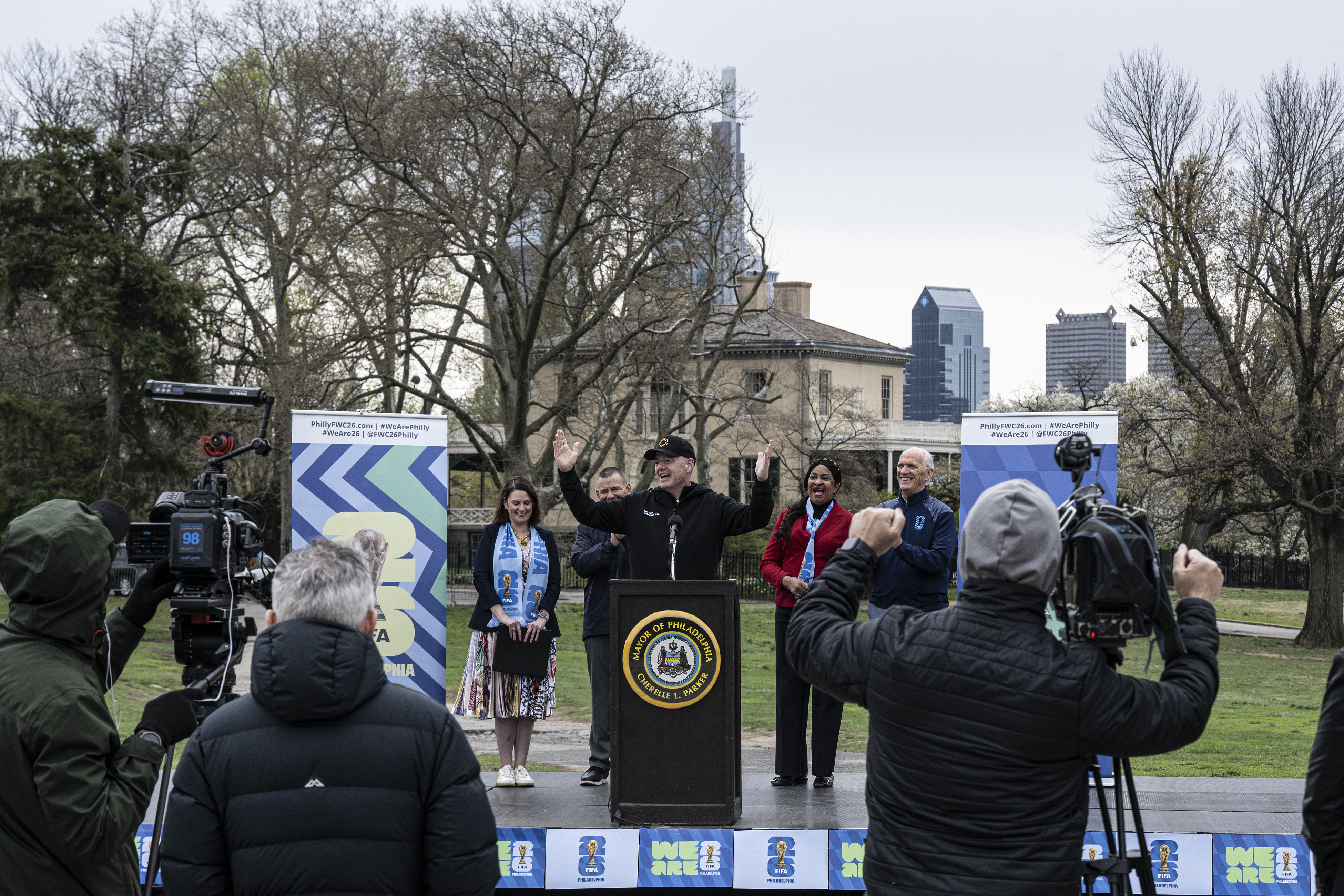
    FIFA President Gianni Infantino, center, will visit Lemon Hill Park on Thursday, April 10 for an operational planning tour of Philadelphia Soccer 2026’s FIFA Fan Festival siteJose F. Moreno / Staff Photographer

    Location: Sedgley Drive and North Lemon Hill Drive.

    The project: Lemon Hill Park received some updates ahead of hosting the official FIFA Fan Festival, and is now getting a much-needed makeover after 39 days of World Cup festivities. The restoration of the grass is underway, with more permanent amenities soon to be constructed.

    • Some upgrades are complete:
    • Other upgrades are coming soon:

    Who is behind it: Philadelphia Soccer 2026 is committing $4 million to park upgrades, with help from the city, to repair the grass fields, bring new modern amenities to parts of the park, and outfit the space with new electrical service, provided by Peco, to prepare for future large events.

    FDR Park’s Ashburn Field

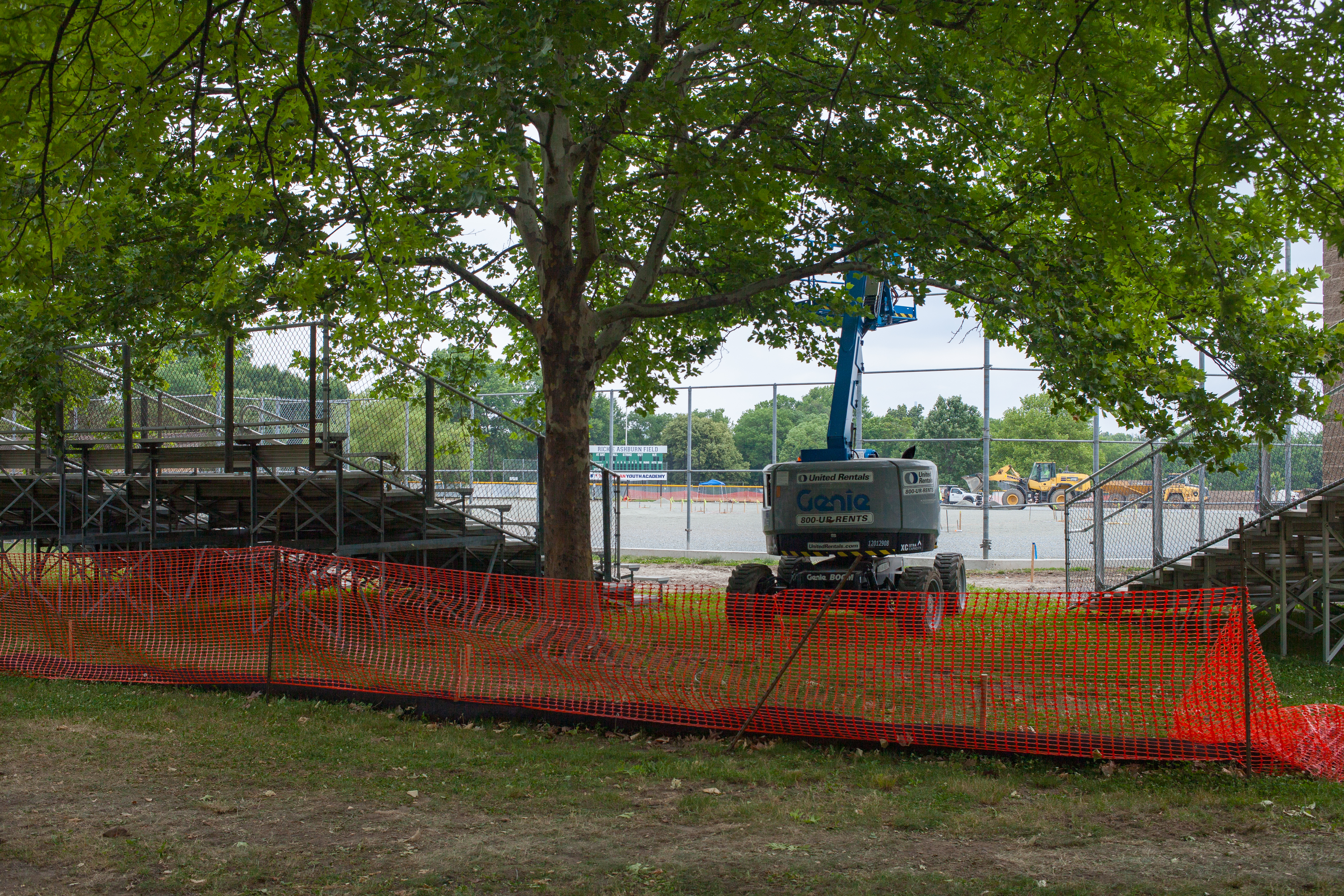
    The MLB is renovating Ashburn Field in FDR Park, a city field managed and maintained by the Phillies that hosts a variety of youth baseball programs.Colin Evans / For The Inquirer

    Location: 1500 Pattison Ave.

    The project: Ashburn Field at FDR Park has been resurfaced with a new turf field, meant to better handle wet weather conditions. The 135,000-square-foot field was built in 1998, using funds generated from the 1996 MLB All-Star Game in Philadelphia.

    Who is behind it: Major League Baseball and the Phillies, as part of a combined investment of more than $5 million in various projects tied to the 2026 MLB All-Star Game, including revitalizing the Negro Leagues Memorial Park and mural at 44th Street and Parkside Avenue in West Philly.

    Independence National Historical Park

    The rotunda inside the First Bank of the United States is pictured on Monday, June 29, 2026 in Philadelphia.Erin Blewett / For The Inquirer

    Location: 599 Market St.

    The project: Several improvements have already come to Independence National Historical Park and Independence Mall to commemorate the nation’s Semiquincentennial, and more are on the way. They include:

    • A $3.9 million “Join or Die” sculpture on Independence Mall, inspired by the truncated snake in Benjamin Franklin’s cartoon of the same name. The 46-foot-long granite work is expected to be unveiled this fall.
    • Beautification and horticultural work. This includes work at the Benjamin Rush Garden at Third and Walnut Streets, which showcases the 1976 Bicentennial Bell, a 10-ton Liberty Bell replica gifted by Queen Elizabeth II.
    • The reopening of the First Bank of the United States, on Third Street between Walnut and Chestnut Streets. The bank had been closed for 50 years but is now open for visitors thanks to a $43 million renovation.

    Who is behind it: Independence Historical Trust, the city, the state, private foundations, philanthropists, and legacy groups.

    Germantown Historical Society Visitor Center

    Location: 5501 Germantown Ave.

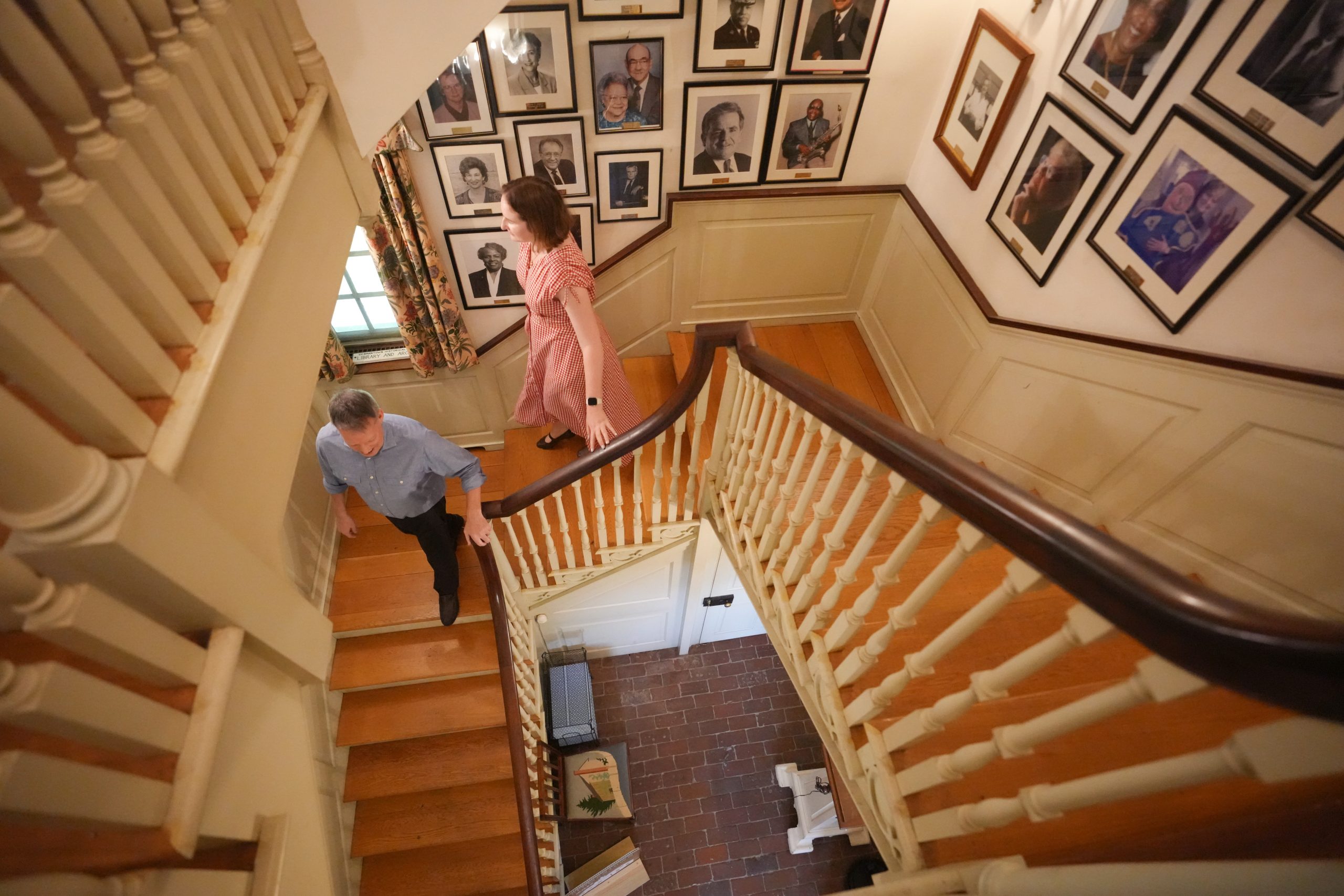
    Tuomi Forrest, executive director at the Germantown Historical Society, and Kaila Temple, curator of collections at GHS, at the Germantown Historical Society building located at 5501 Germantown Ave. in Philadelphia, July 21, 2026.Jessica Griffin / Staff Photographer

    The project: The Germantown Historical Society has its first visitors center, thanks to a $100,000 renovation of a section of its headquarters. It is modest but will host rotating exhibits, maps and pamphlets, and a gift shop.

    Historic Germantown consists of various landmarks and attractions in Northwest Philly, including the Aces Veterans Museum, Awbury Arboretum, and the Germantown White House, where George Washington once lived.

    Who is behind it: The Funder Collaborative for the Semiquincentennial, a philanthropic group organized by the Connelly Foundation that donated to many initiatives and projects related to the 250th anniversary celebration.

  • What you need to know about SEPTA’s bus route changes

    What you need to know about SEPTA’s bus route changes

    The first phase of SEPTA’s bus network overhaul begins Aug. 23, and Brandon Miller is mobilizing hundreds of employees for a final push to meet face-to-face with riders in the days leading up to the changes and during the first week after they take effect.

    “It’s a blitz,” said Miller, manager of planning programs at SEPTA, describing discussions at “pop-ups” as an effective way to help people navigate the new network.

    “This is the evolution of the ‘Bus Revolution,’” Miller said.

    Unlike some transit agencies, SEPTA has not done a comprehensive redesign of its bus network in its 58-year history. The agency has publicly pushed to do so since 2021, but change was delayed by opposition, political wrangling, and, later, a two-year fiscal crisis.

    Originally the “Bus Revolution” was supposed to happen all at once, but SEPTA ultimately decided to phase in changes to routes.

    The process has been quieter this time around.

    Dan Nemiroff, SEPTA’s director of city service planning, , said people are more open to the need for changes, especially after SEPTA had to shut down bus routes last year because of a budget deficit. A court ordered those cuts reversed, and the agency later received an infusion of cash from PennDot.

    “I think there’s more willingness to accept the fact that … we need to make the bus network a little bit more efficient,” Nemiroff said. “We need to make the system more attractive for people.”

    In the first wave, 30 routes will be affected in some way.

    Some routes with low ridership or that duplicate nearby service will be eliminated. Others will be extended or run more frequently, and two new routes will be added.

    What routes will change?

    New and expanded routes: Route 72, a new crosstown bus running along Cheltenham Avenue, and the new Route 76 bus from Columbus Commons to Rising Sun and Olney. Route 45 will be extended to provide service to the Navy Yard, and Route 79 will be extended from South Philadelphia into University City.

    Eliminated routes: 35, 47M, 62, 78, 80, 89, and 106.

    I have specific questions. How can I ask SEPTA?

    There will be a Zoom session on Aug. 19 from 6 p.m. to 7 p.m. Register here to attend.

    Miller said the talk is informally called “back-to-school,” with more discussion of the changes’ effects on students than in previous meetings.

    SEPTA has a webpage dedicated to Phase One changes, as well as an overview of the New Bus Network.

    Riders can call SEPTA customer service at 215-580-7800 or email specific questions to planning@septa.org.

    I want to talk to someone in person.

    Beginning Monday, street teams will conduct “pop-up” visits at key transit hubs at various times between 6 a.m. and 8 p.m.

    Next week, visits will include South Broad Street and Snyder Avenue, Cedarbrook Plaza, Hunting Park Station for changes to Route 53, Spring Garden Station, and Willow Grove Mall.

    Staff are also attending community events.

    When will changes happen?

    The majority of changes will take effect Sunday, Aug. 23, followed by the Route 105 extension and elimination of Route 106 on Monday, Aug. 24.

    What areas are most impacted?

    How can I find alternative routes?

    SEPTA’s website provides alternative routes. Look up your route here.

    What other changes are planned?

    Phase 2 changes are planned to begin in February.

    Phase 3 changes are planned to begin in June 2027.

    Phase 4 changes are planned to begin in Fall 2027. Many details are still being worked out.

    Why redesign the bus network?

    SEPTA launched its bus redesign efforts in earnest after ridership declined 13% from 2013 to 2019, a drop attributed to slow speeds, reliability problems, and competition from ridesharing companies. And that was before the COVID-19 pandemic.

    Bus ridership rebounded faster than it did on other transit services, but SEPTA’s thinking is that simplifying the network will make it easier to use, with more frequent service on fewer or shorter routes.

    Will bus stops be changed?

    Stops will disappear during the first phase on routes that are eliminated, but there will be no wholesale changes yet.

    Philadelphia had the shortest median distance between bus stops of any large U.S. city as of 2021, at 564 feet. Pittsburgh’s median distance was 623 feet, while Chicago’s was 673 feet.

    Having more stops per mile provides access to more people, but closely spaced stops can also slow buses and make them less reliable.

    Early plans for Philadelphia’s bus network redesign aimed to “rebalance” stops by spacing them farther apart to improve speed. But the idea has been unpopular.

    SEPTA may revisit the issue later.

    More questions about the New Bus Network?

    Email transportation reporter Thomas Fitzgerald at tfitzgerald@inquirer.com.

  • ICE wants to deport a Philly man who has lived legally in the U.S. for 20 years. He fled Guinea after being jailed by the government.

    ICE wants to deport a Philly man who has lived legally in the U.S. for 20 years. He fled Guinea after being jailed by the government.

    Abdoulaye Cherif was asleep when his phone rang that morning, and he answered only because the display showed the call was coming from a prison.

    He was shocked to hear the voice of his father, who was supposed to be at work, driving for Uber.

    Mamadou Fadel Cherif told his son he had been arrested by ICE as he left the family home in West Oak Lane. He said he needed his son to break the news to his mother, because she would be devastated to hear it over the phone.

    Cherif, 21, called his mom at work and told her she needed to come home.

    Now, two weeks after that July 13 morning, “we’re all scrambling,” Cherif said in an interview. “A piece of us is missing.”

    Fadel Cherif, 56, never expected to be arrested by ICE. He lives legally in the United States, having been granted Withholding of Removal almost 20 years ago.

    That status allows him to stay and work, and bars the government from deporting him to his homeland, the West Africa nation of Guinea, where the U.S. government agrees he could be harmed or killed over politics.

    His status, however, does not shield him from being sent to a third country, if ICE can find a nation willing to accept him.

    Those kinds of third-country deportations are difficult for the agency to achieve. But recent ICE guidance tells agents that when immigrants with Withholding of Removal or Convention Against Torture protections report for check-ins, officers should consider the viability of their removal and if they should be detained in the meantime.

    Advocacy groups and immigration lawyers say the Trump administration is increasingly arresting and detaining migrants who have been granted withholding, keeping them in custody while it pursues removal to a third country. Last year, an Iranian immigrant who had fled the regime spent nearly six months in detention before a federal judge ordered his release.

    Officials with U.S. Immigration and Customs Enforcement, who did not initially respond to queries, said Tuesday that they were working on a response to questions about the case.

    (function(){function e(){window.addEventListener(`message`,function(e){if(e.data[`datawrapper-height`]!==void 0){var t=document.querySelectorAll(`iframe`);for(var n in e.data[`datawrapper-height`])for(var r=0,i;i=t[r];r++)if(i.contentWindow===e.source){var a=e.data[`datawrapper-height`][n]+`px`;i.style.height=a}}})}e()})();

    Philadelphia immigration attorney Ricky Palladino, who represents Fadel Cherif, said there is no reason for ICE to detain him. He has no criminal record. He has legal authorization to work, a Social Security number, and a driver’s license.

    Palladino filed a petition in federal court that seeks Fadel Cherif’s immediate release, arguing that he has been denied due process under the law.

    In nearly 20 years, the filing says, no government official has suggested that Fadel Cherif’s deportation was “even remotely likely.” And it says that ICE can return someone with his status to custody only if, on account of changed circumstances, the agency finds “a significant likelihood that the alien may be removed in the reasonably foreseeable future.”

    Immigration attorney Ricky Palladino with Palladino, Isbell & Casazza, LLC, at his office on Walnut Street in Center City Philadelphia in 2022.Alejandro A. Alvarez / Staff Photographer

    Palladino said in an interview that Fadel Cherif is the main support for his wife, who has legal permanent residency, also known as a green card, and for their four American-born sons, including Abdoulaye, a Marines reservist.

    In Guinea, a nation of 12 million people that is roughly twice the size of Pennsylvania, Fadel Cherif was jailed by the government after protesting the results of his country’s 1998 presidential election, which was marred by irregularities. He later fled in fear of being rearrested, using a document that showed a different Guinean identity to enter the United States in New York in November 2003.

    For years he has worked in dining services at La Salle College High School, the private Catholic boys school in Montgomery County, and also drives for Uber.

    Matt Beck, director of dining services for CulinArt at the school, was upset to learn of the arrest, describing Fadel Cherif as an extremely hard worker.

    “He’s a good guy,” Beck said. “The students here love him. And so does the staff.”

    Fadel Cherif’s detention comes as ICE is arresting record numbers of immigrants. In one five-day span this month, the agency detained more than 10,000 people across the country, the New York Times reported.

    The rate of ICE arrests topped 1,300 a day in June ― and grew again to a record 1,474 a day during the first 11 days of July, Syracuse University professor and immigration-data analyst Austin Kocher reported last week.

    “ICE has been touting record high arrest numbers this summer ― and they are not wrong,” Kocher wrote in an analysis.

    The ICE directive issued shortly after President Donald Trump took office meant that people with Withholding of Removal could be detained, noted the Catholic Legal Immigration Network Inc., even if they had no criminal record and had been reporting to ICE for years without incident.

    “Given the increased pressure that ICE has been under to meet quotas for arrests, detentions, and deportations,” the network wrote, “it is not surprising that the agency is focused on those who already have removal orders as being easy targets.”

    Fadel Cherif was denied asylum when he could not prove that he had filed within a year of entering the United States.

    To receive Withholding of Removal, applicants must prove that they were persecuted in the past or that their lives would be threatened in the future, that the government harmed or will harm them ― or failed to control others who might do so. And they must show that moving to a different part of their country would not provide safety.

    Withholding offers fewer benefits than asylum, which includes a path to citizenship and allows people to seek to have their spouses and children join them in the United States.

    When Withholding of Removal is granted, the immigration judge also enters a deportation order, then tells the government it cannot deport the person to their homeland. In that way the removal is “withheld.”

    People with that status cannot leave the United States without triggering deportation, have no path to citizenship, and cannot petition to bring family members to this country.

    While the U.S. government may try, deporting people with withholding to a third country is difficult to accomplish. Nations that willingly accept their own citizens can be disinclined to accept other foreign nationals.

    The Migration Policy Institute estimates that during its first year back in office, the Trump administration carried out about 15,000 removals to third countries, a fraction of the total 396,000 deportations.

    Deportations of those who have Withholding of Removal are even more rare, according to the Amica Center for Immigrant Rights in Washington. The center says it is pointless to detain those people while attempting to deport them. If ICE were to release a foreign national and later identify an appropriate third nation, it could simply detain them again.

    Abdoulaye Cherif near his West Oak Lane home on July 23. His father, Mamadou Fadel Cherif, was arrested by ICE and has been detained for weeks.Yong Kim / Staff Photographer

    Fadel Cherif remains in custody at the Moshannon Valley Processing Center, the ICE facility in central Pennsylvania.

    “My brothers, they need their dad in their life,” said his eldest son, Ahmad, 22, noting that the youngest brothers are 13 and 15. “It’s very important for my dad to be here.”

    Abdoulaye Cherif said his father told him that on that morning, he demanded that the ICE agents show him an arrest warrant signed by a judge. Instead, he said, the officers presented an agency-issued detainer.

    Today, he said, the family is surviving financially on savings. Emotionally, they struggle without their father.

    “He’s like the glue,” Abdoulaye Cherif said. “He directs us, he leads us, he’s the dad. He’s been worried about the situation at home, making sure we get all the bills paid on time.”

    Inquirer staff writer Abraham Gutman contributed to this article.

  • Bill Wine, Emmy Award-winning film and TV critic, and longtime La Salle professor, has died at 81

    Bill Wine, Emmy Award-winning film and TV critic, and longtime La Salle professor, has died at 81

    Bill Wine, 81, of Philadelphia, three-time Mid-Atlantic Emmy Award-winning film and TV critic, retired tenured associate professor of TV and film at La Salle University, onetime freelance TV critic for the Daily News, freelance writer, playwright, and popular lecturer, died Sunday, June 14, of complications from Parkinson’s disease at his home in Chestnut Hill.

    The son of two part-time amateur actors and a lifelong devotee of theater, film, TV, writing, and teaching, Mr. Wine was a film critic for WTXF-TV, Channel 29, for 12 years and KYW radio for 17 years. Known for his pithy, witty, and often acerbic reviews, and a breezy conversational style of writing, he worked at Channel 29 from 1990 to 2002 and KYW from 2001 to 2018.

    “Bill Wine was a character out of a Neil Simon comedy, more Oscar than Felix,” said Carrie Rickey, former Inquirer movie critic. “You didn’t have to wait long for the punchline.”

    Mr. Wine’s film reviews on Channel 29 were often funny and entertaining. Channel 29

    At Channel 29, Mr. Wine was nominated for eight regional Emmy Awards for commentary and writing, and won three. He appeared regularly on the station’s Ten O’Clock News, in primetime movie preview and review programs, and later on Mondays, Wednesdays, and Fridays on Good Day Philadelphia.

    By 1990, he had already written hundreds of freelance film reviews for the Daily News and Courier-Post, done radio reviews for WPEN, and taught a variety of classes about film and writing for a decade at La Salle. So, despite no previous TV experience, he was hired at Channel 29 over 60 other film critic applicants.

    “I had never been on TV, but I wasn’t nervous,” he told the Daily News in 2001, “because I had been standing in front of 100 students for 10 years.”

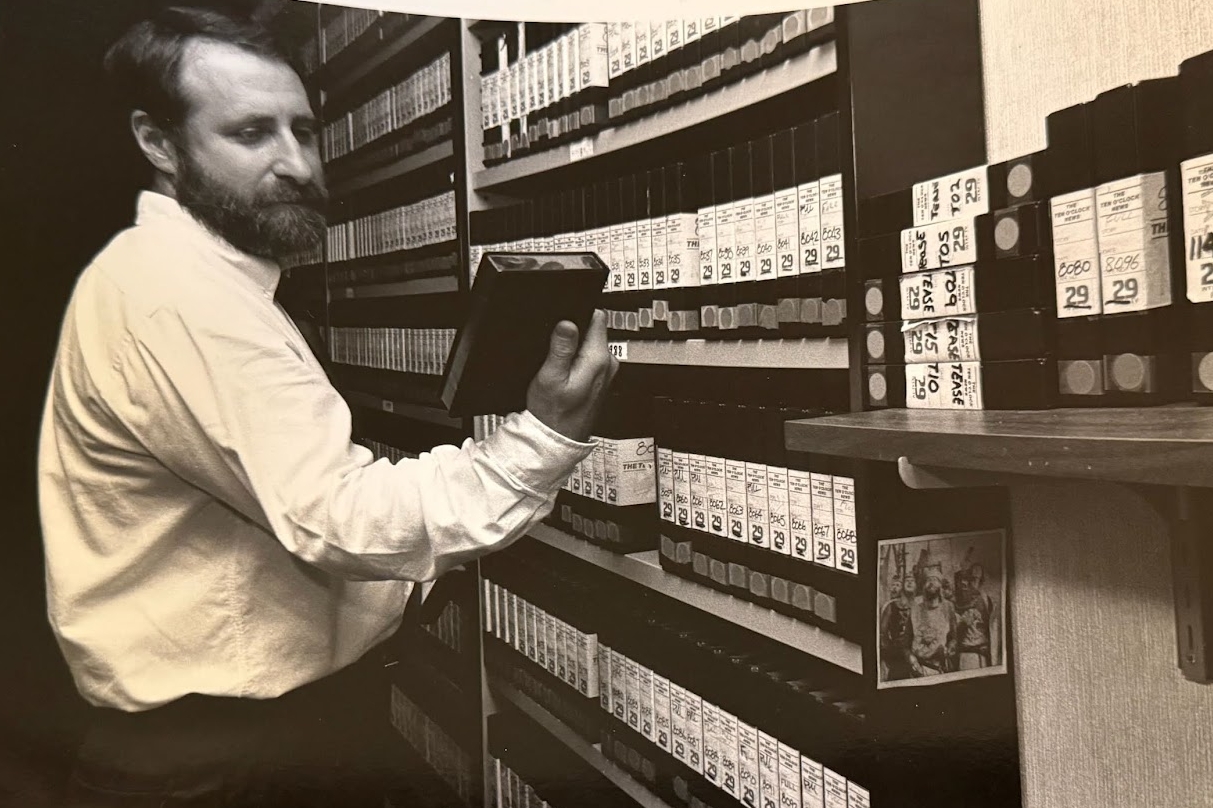
    Mr. Wine worked at at WTXF-TV, Channel 29, for 12 years.Courtesy of the family

    He started at KYW radio in 2001 and usually aired reviews and reports on Thursdays, Fridays, and Saturdays. Sometimes, he watched three movies in one day. He left Channel 29 in 2002 and KYW in 2018 only after both companies eliminated their local film critic position.

    “When I started [writing film reviews], it was before the internet,” he told The Inquirer in 2018. “A lot of people [now] feel like, ‘Who the heck is a movie critic to come on in a minute and to dismiss something that took hundreds of people and millions of dollars to create?’”

    In the 1970s and ‘80s, he wrote articles and reviewed films, TV shows, books, and plays for WPEN, The Inquirer, Courier-Post, Philadelphia Magazine, and other outlets. In 1975, he wrote dozens of freelance TV columns called “On the Air” for the Daily News.

    Mr. Wine wrote dozens of columns as a freelance TV critic for the Daily News in 1975.Newspapers.com

    He spent three years in California in the 1970s working on plays and film and TV scripts. He hobnobbed with famous writers, producers, and actors in Los Angeles, staged one of his own plays, and was a winning contestant on a new TV game show.

    He wrote 11 plays over the years, and several made it to the stage. “Now the people who disagree with my reviews can come and find out if I’m as dumb as they think I am,” he told The Inquirer in 2002.

    He aired reviews on WIP radio and lectured often at libraries, schools, community centers, theaters, and other venues about his favorite films, adapting books to film, and other topics. “He could be wickedly funny, especially when delivering a pan of a movie,” his family said in a tribute. “One of his favorite quotes was: ‘I had a bad seat. It was facing the screen.’”

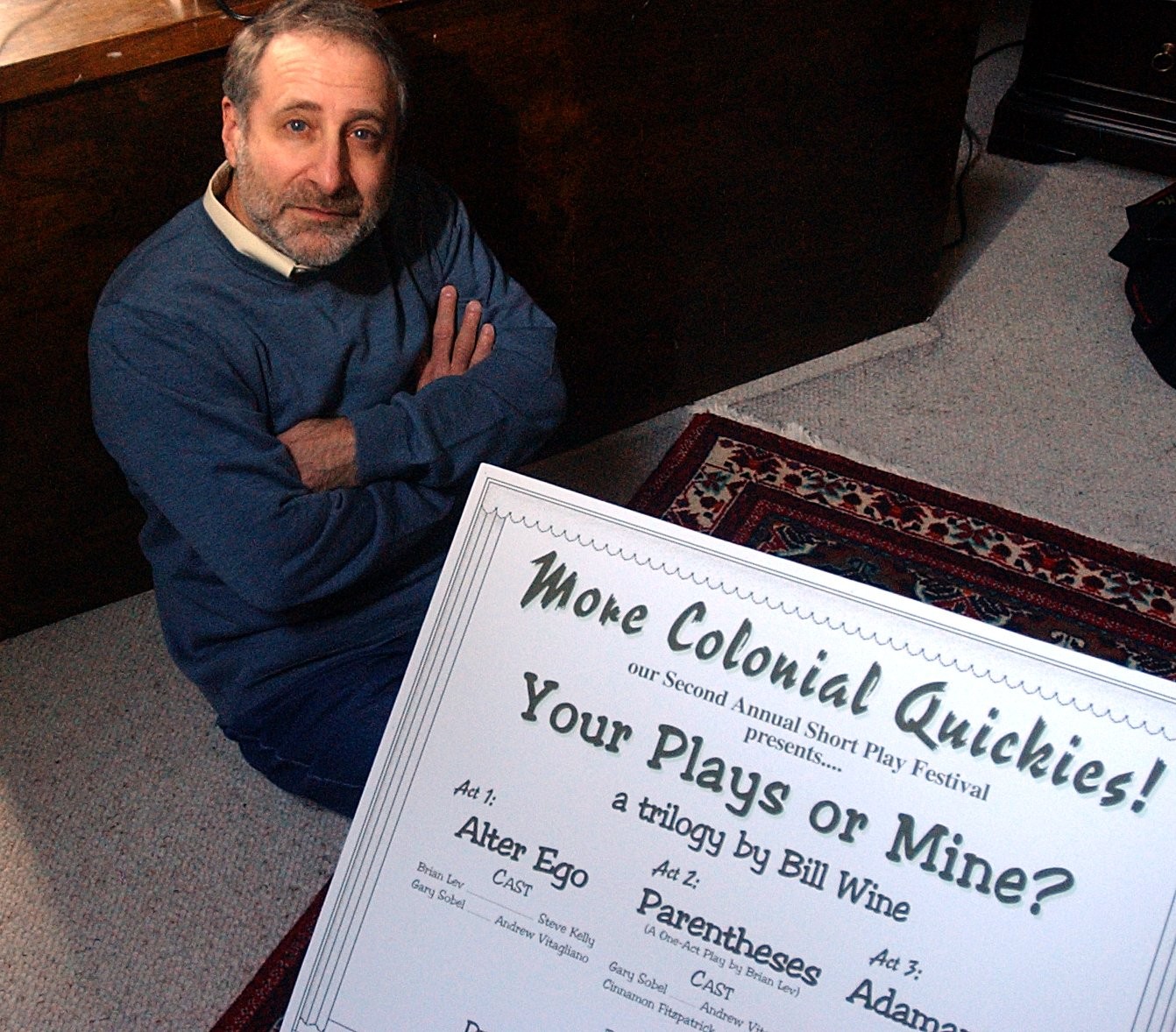
    Mr. Wine was a prolific playwright who enjoyed table readings with family and friends. La Shina Clark / Staff Photographer

    Mr. Wine earned a bachelor’s degree in math at Drexel University and a master’s degree in communications at Temple University. He helped design La Salle’s nascent Communication Department in the 1980s, and school officials called him one of their “Founding Fathers.” He also taught briefly at Drexel, and came close to earning a doctorate at Temple.

    In 2001, he was featured in a Daily News story about “celebrity professors” and said: “You have to remind yourself that this is television, not the classroom. You mention, say, ‘film noir’ on TV, and you get a memo.”

    William David Wine was born June 21, 1944, in Germantown. He grew up in West Oak Lane and Cherry Hill, attended Central High School, and graduated from the old Cherry Hill High School.

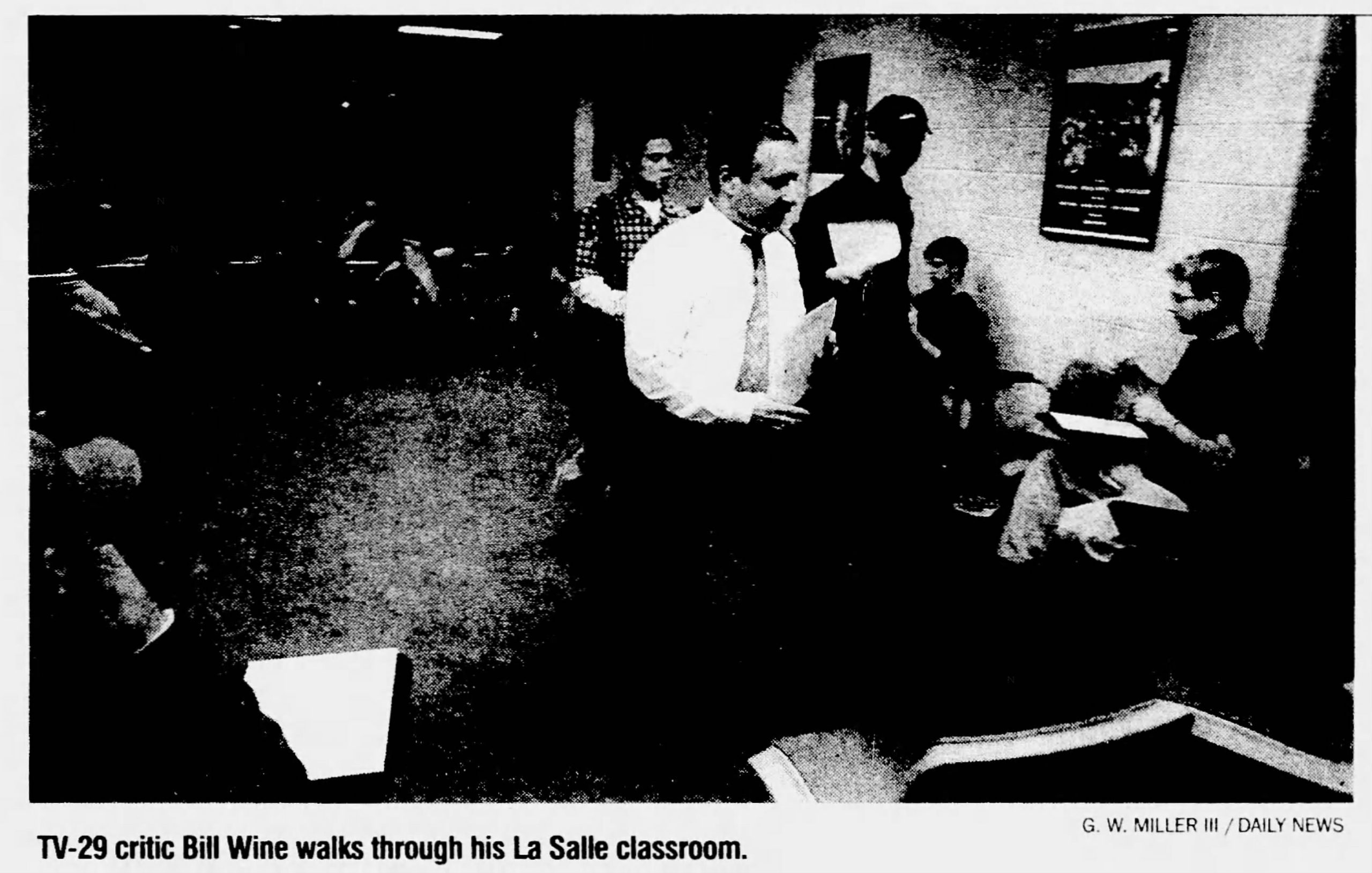
    A story and this photo of Mr. Wine about his time as a professor at La Salle appeared in the Daily News in 2001.Newspapers.com

    As a boy, he devoured newspaper movie reviews and fell in love with film after seeing Alfred Hitchcock’s 1954 thriller Rear Window. He got positive reviews of his own freelance movie review when he was at Temple, and he knew then, he said later, that writing about movies was his creative niche.

    “The first time I saw my byline, I was hooked,” he told Drexel Magazine in 2016.

    He married Dina Lichtman, and they divorced later. He married Suzanne Monsalud in 1981, and they had daughters Simone and Paulina, and lived in Germantown, Wyncote, and Chestnut Hill.

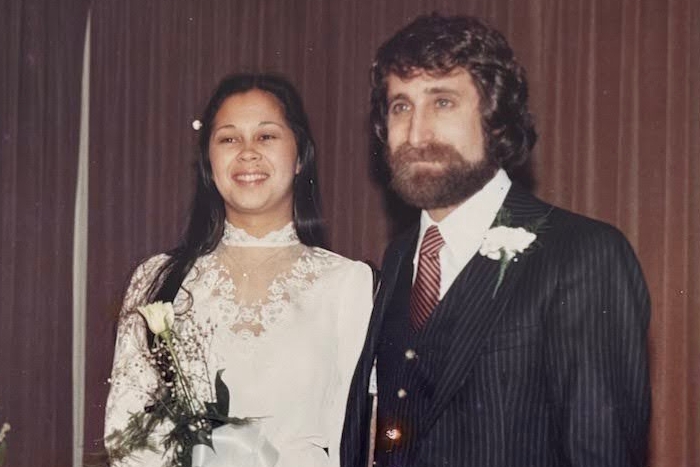
    Mr. Wine and his wife, Suzanne, married in 1981.Courtesy of the family

    Together, Mr. Wine and his family traveled to Paris and London, and he and his wife honeymooned in Rio de Janeiro, Brazil. He doted on his daughters and sometimes took them to his La Salle classroom, the Channel 29 TV set, and movie screenings.

    Friends, former colleagues, and former students called him “a force of nature,” “smart and gifted,” and “a rare combination of kindness, professionalism, and humor.” His daughter Simone said: “His humor, warmth, and presence made life brighter.”

    Mr. Wine played tennis, third base on adult softball teams, and pickup basketball into his 70s. He followed the Phillies, 76ers, and Eagles closely, and hit tennis balls with Hall of Famer Rod Laver at a publicity event in Los Angeles.

    Mr. Wine and his family made memorable trips to Paris, London, and elsewhere. Courtesy of the family

    “He was a wonderful father and a dedicated teacher,” his wife said. “He was a real Philadelphian, and we complemented each other.”

    His daughter Paulina said: “Dad, I think you cracked the code. We’ll see you at the movies.”

    In addition to his wife and daughters, Mr. Wine is survived by three grandchildren, a sister, Marcia, and other relatives. A sister died earlier.

    A celebration of his life was held earlier.

    Donations in his name may be made to the Bill Wine Scriptwriting Award at La Salle University, 1900 W. Olney Ave., Philadelphia, Pa. 19141.

    Mr. Wine (second from left) enjoyed time with his family. Courtesy of the family