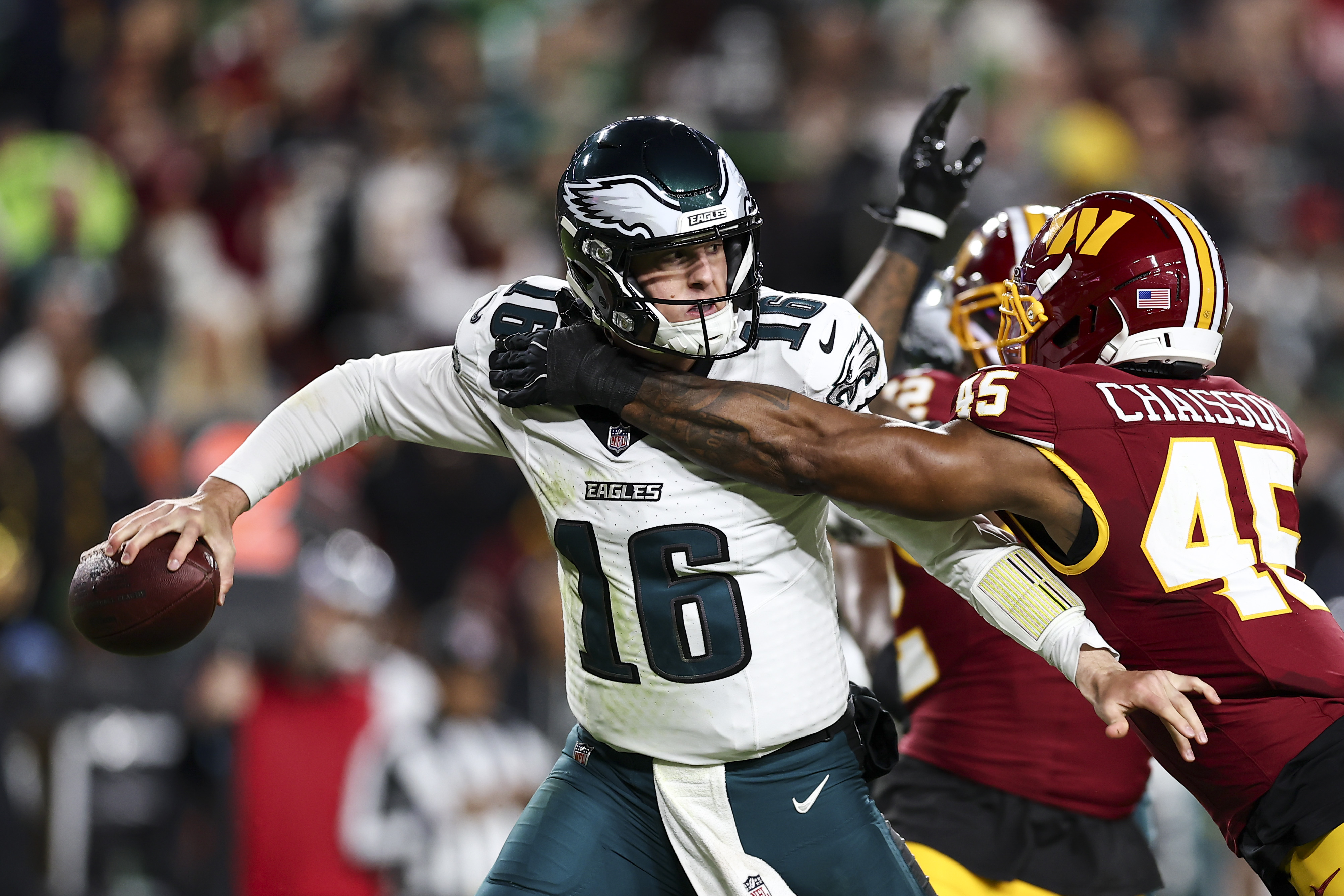
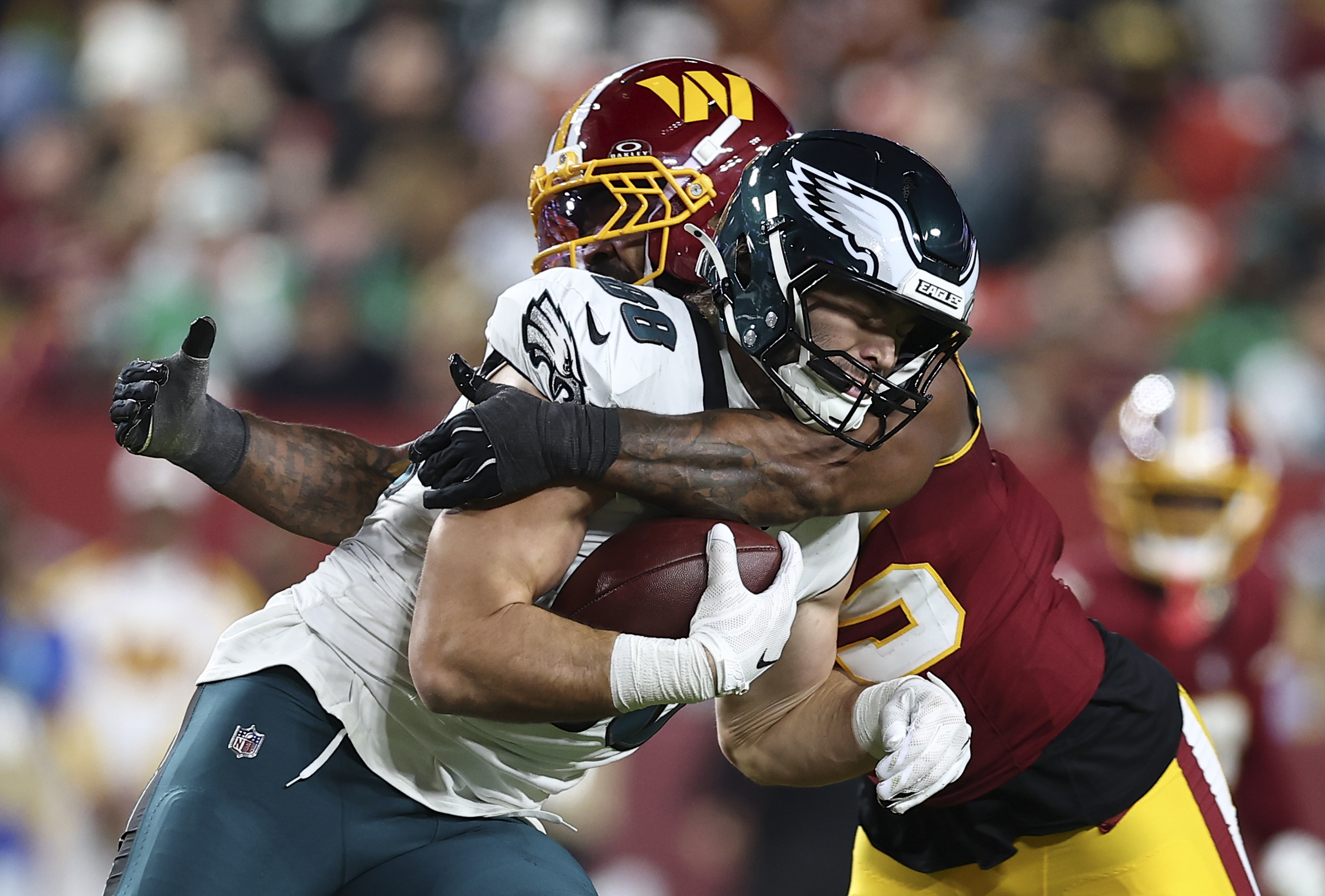
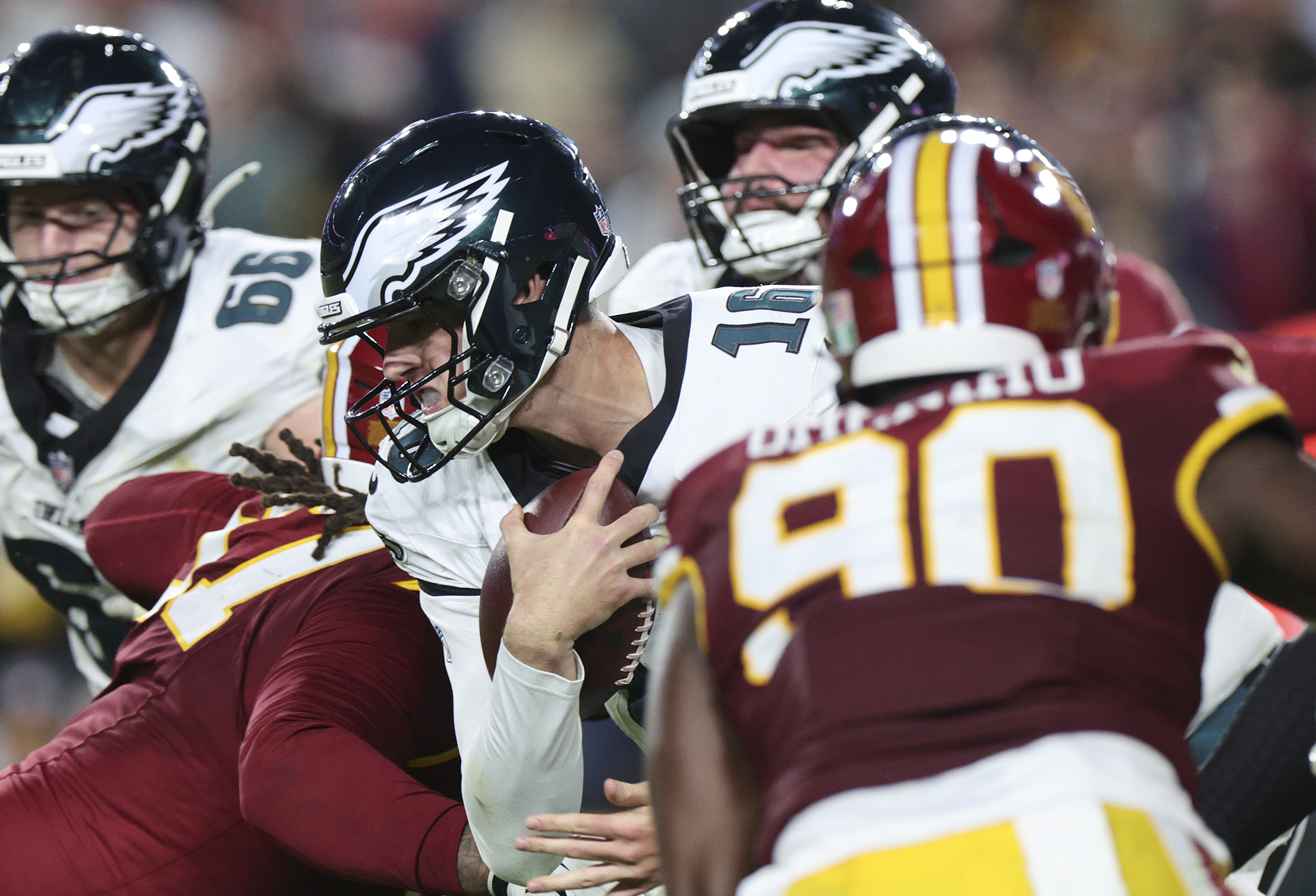
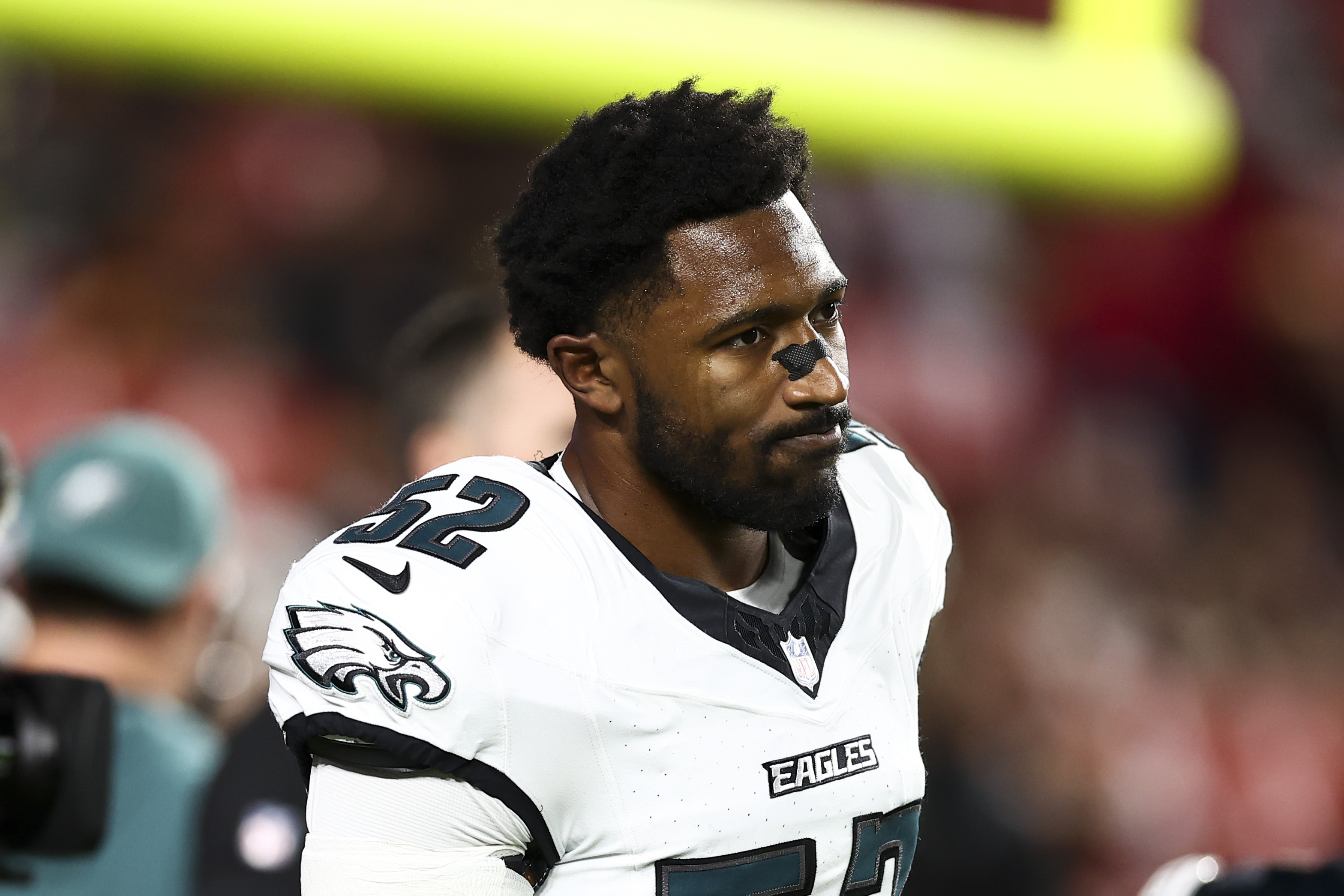
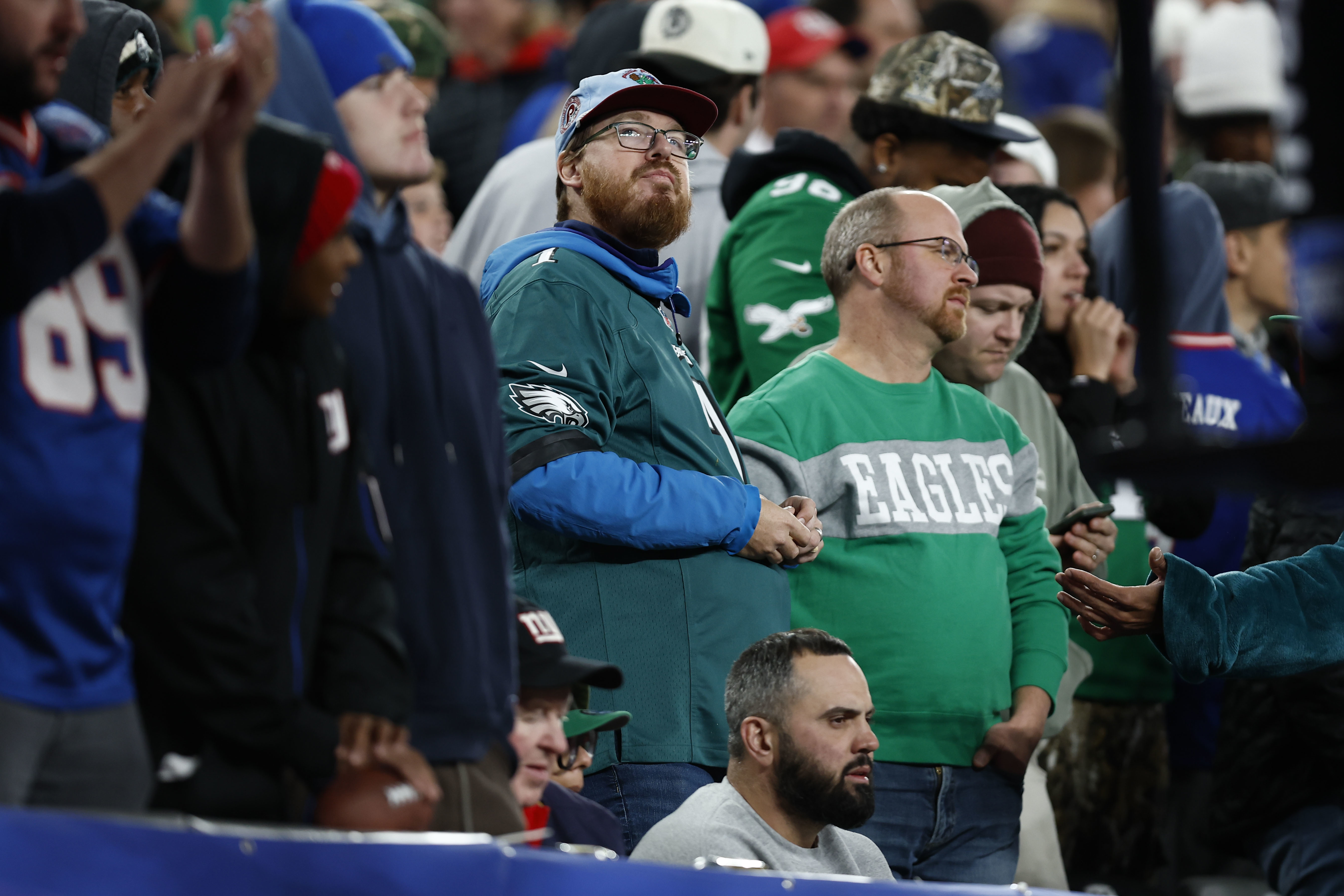
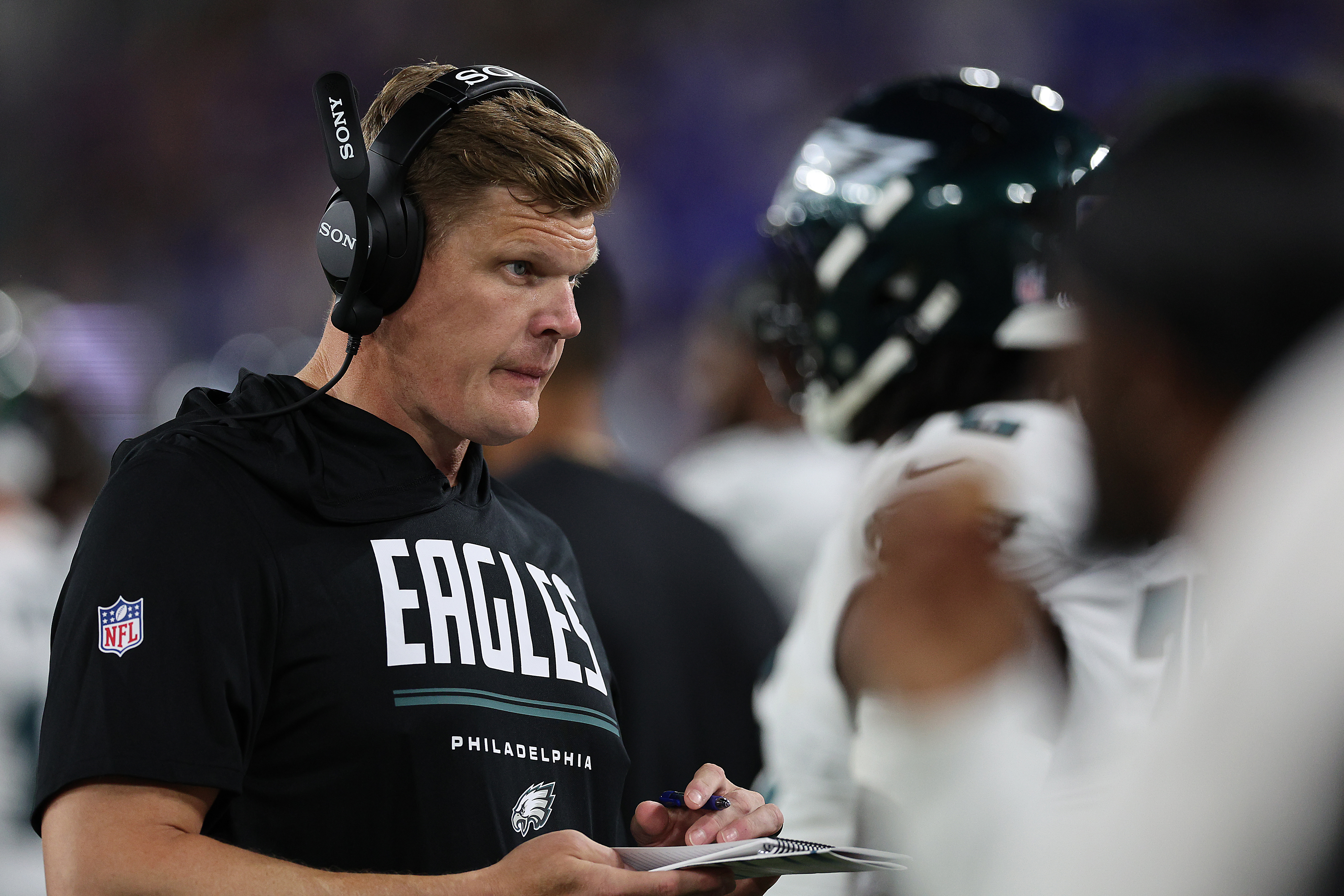
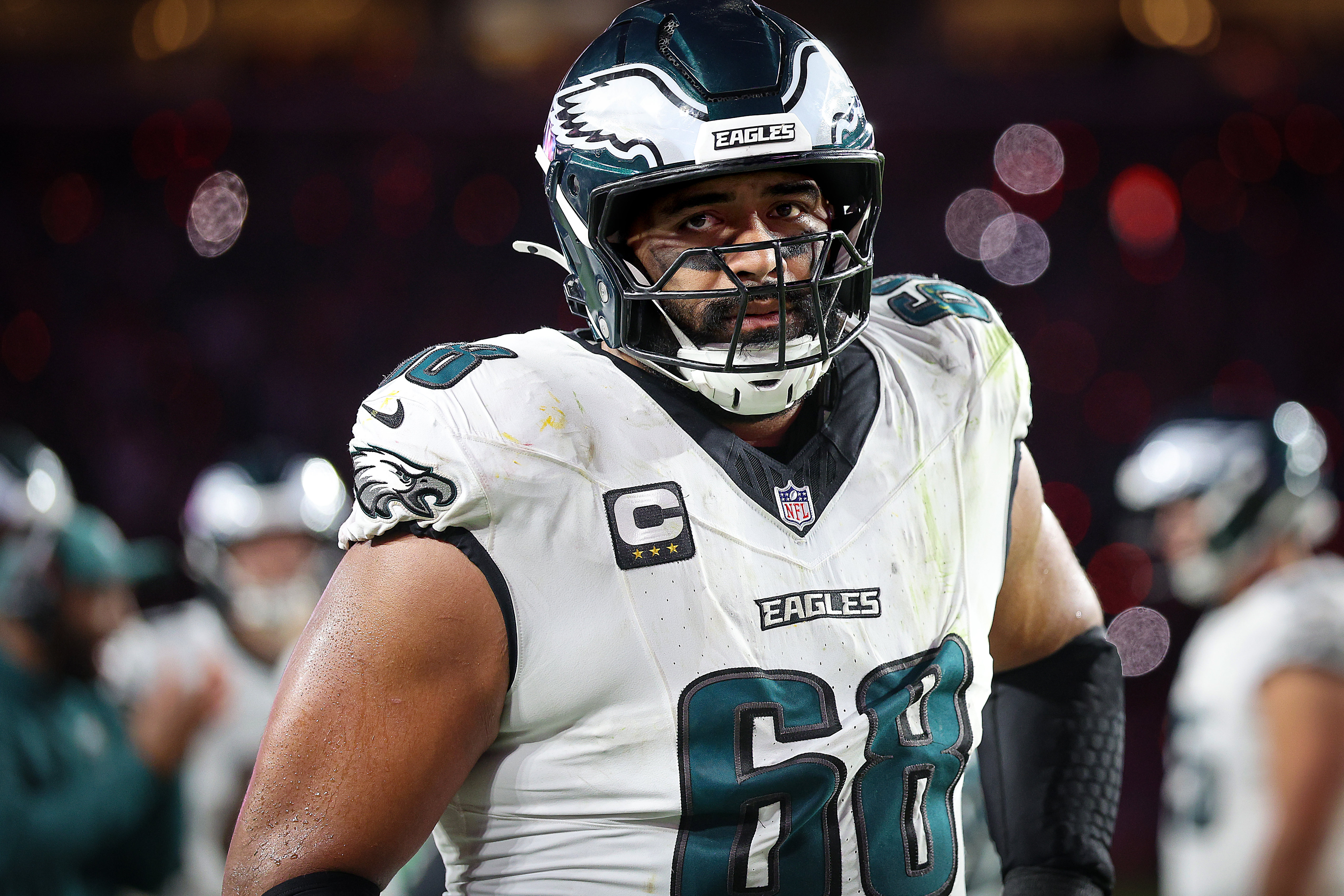
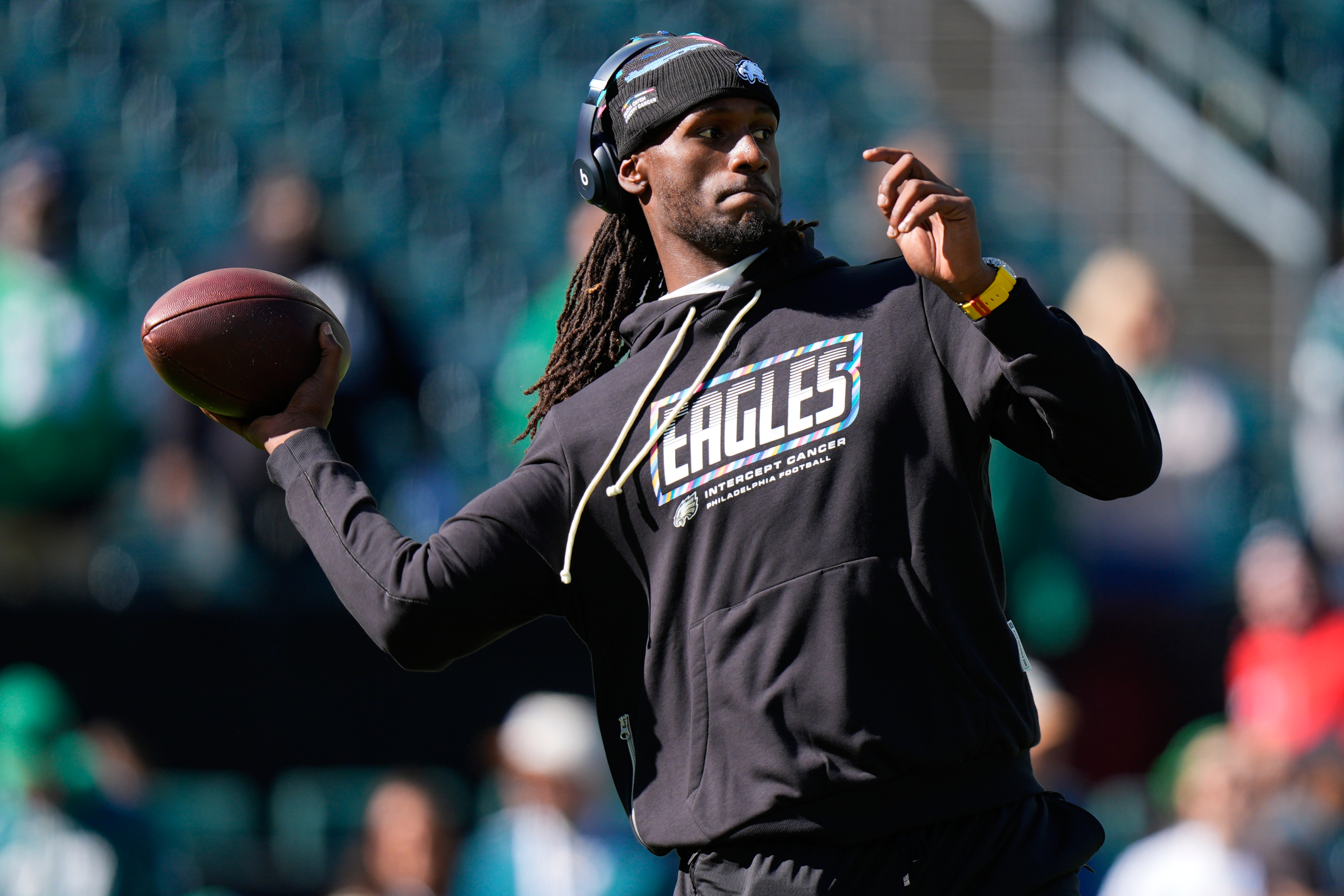
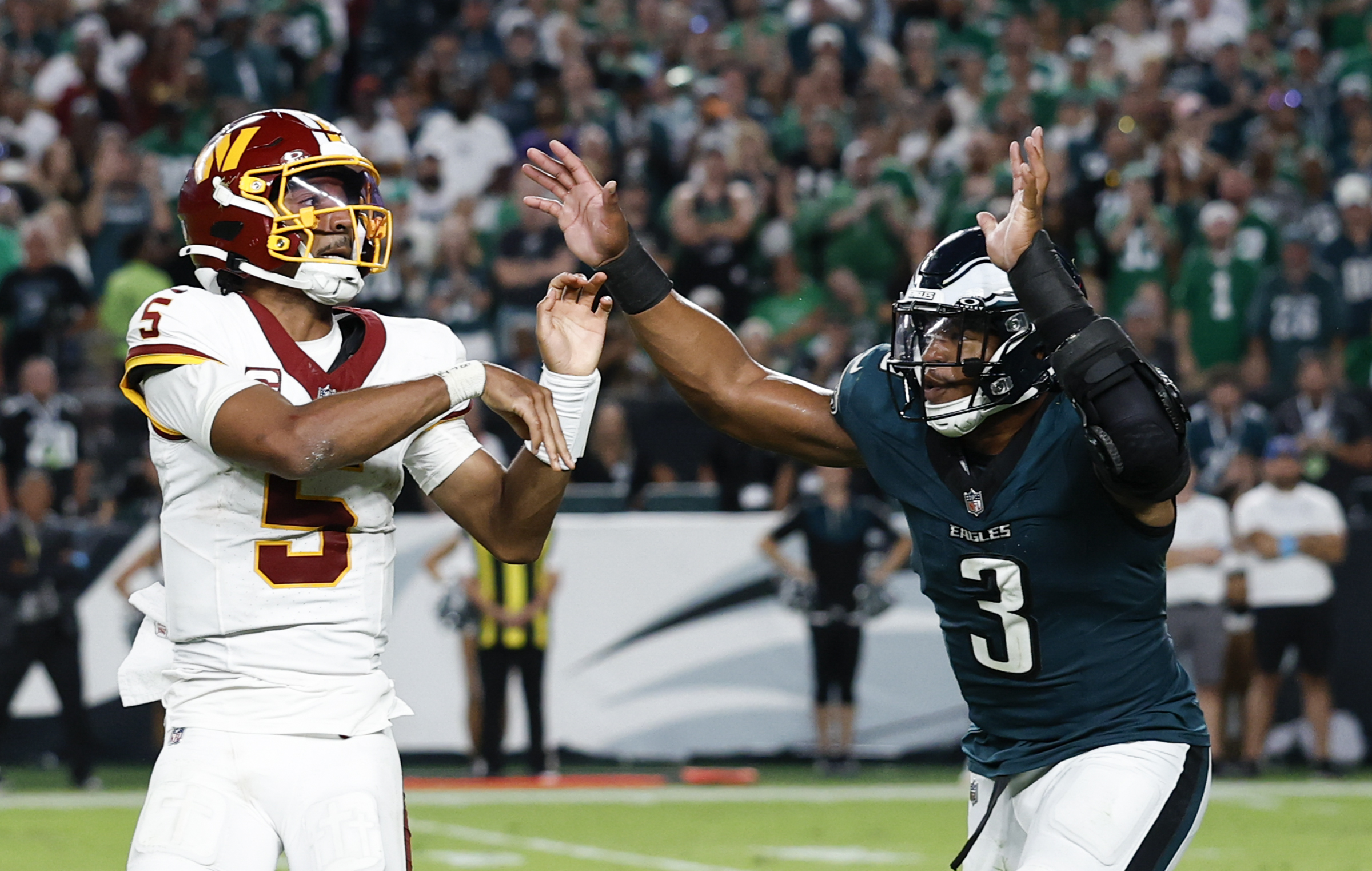
It was a relatively meaningless play. The result of the game was decided. The Eagles were down 17 points and 42 yards away from the end zone with two seconds left.
The stadium was emptying. Eagles fans watching back home in the Delaware Valley probably already had their sleep masks on.
Tanner McKee dropped back and threw short to rookie tight end Eli Stowers, who turned upfield and saw nothing but space. With the help of a block from Darius Cooper, he got by one Washington defender and had three to beat as he stepped inside the 20-yard line.
Sure, the game was over, but it took all three guys to get Stowers down.
“I was hoping I could drag them in there,” Stowers said on Wednesday.
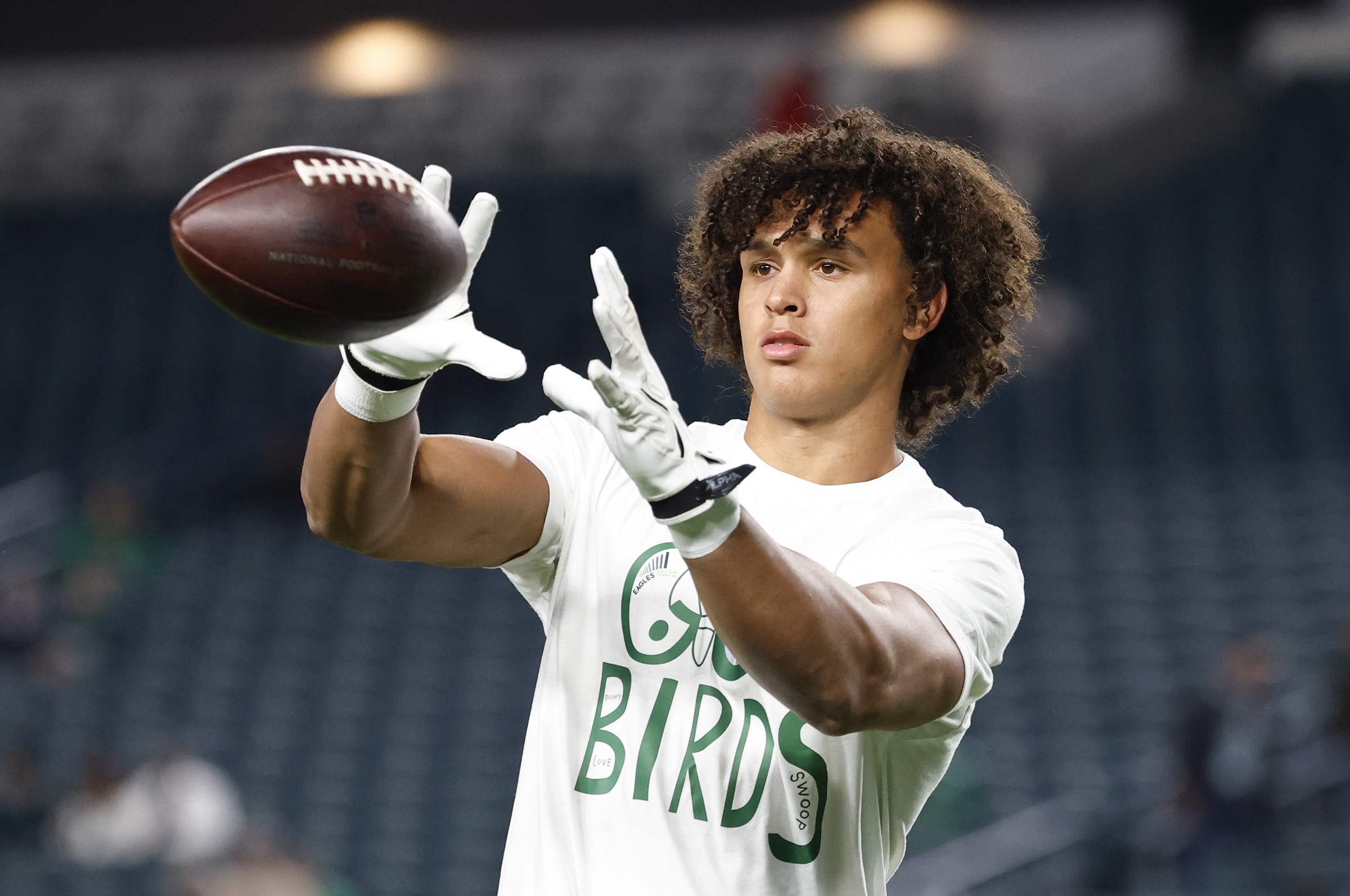
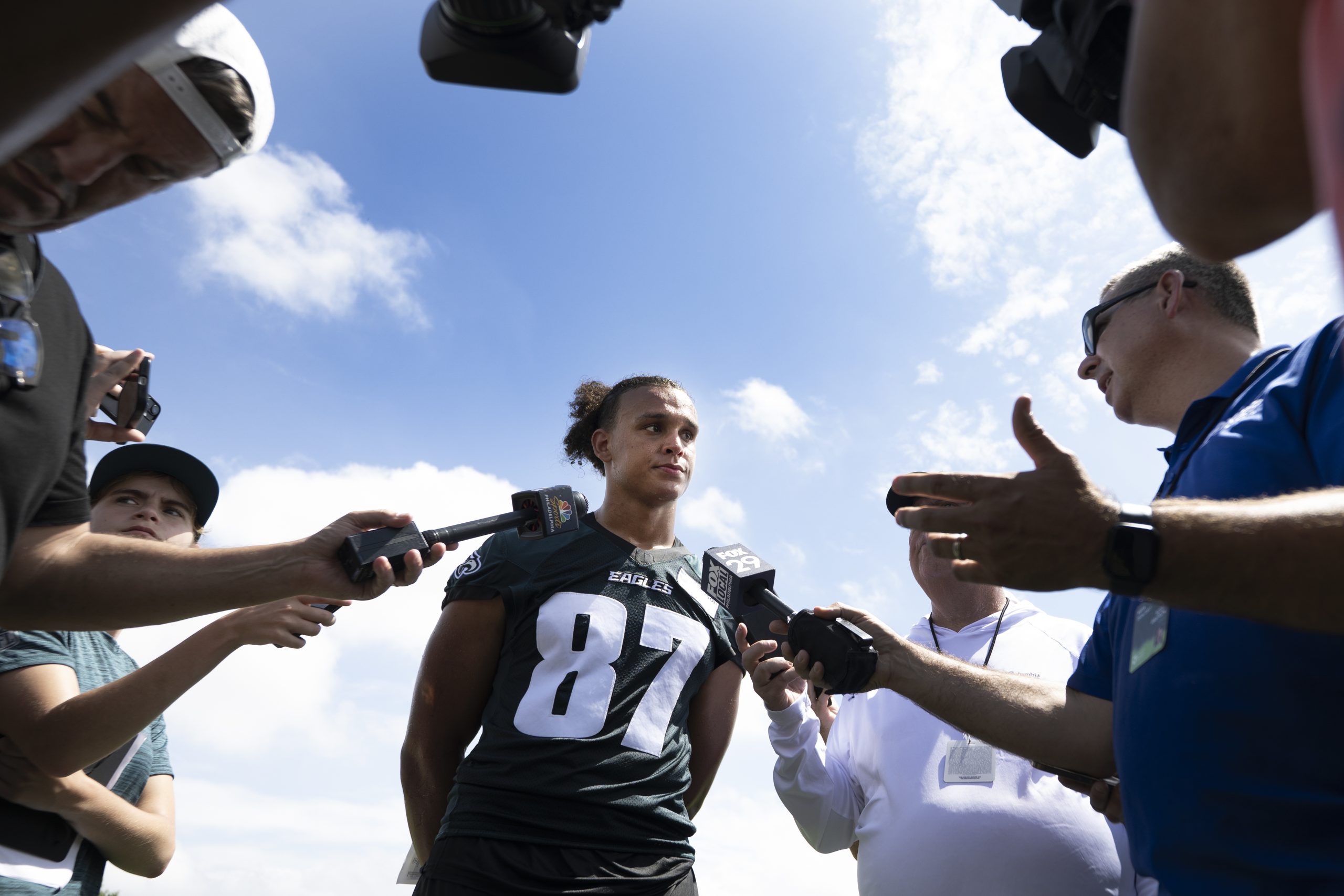
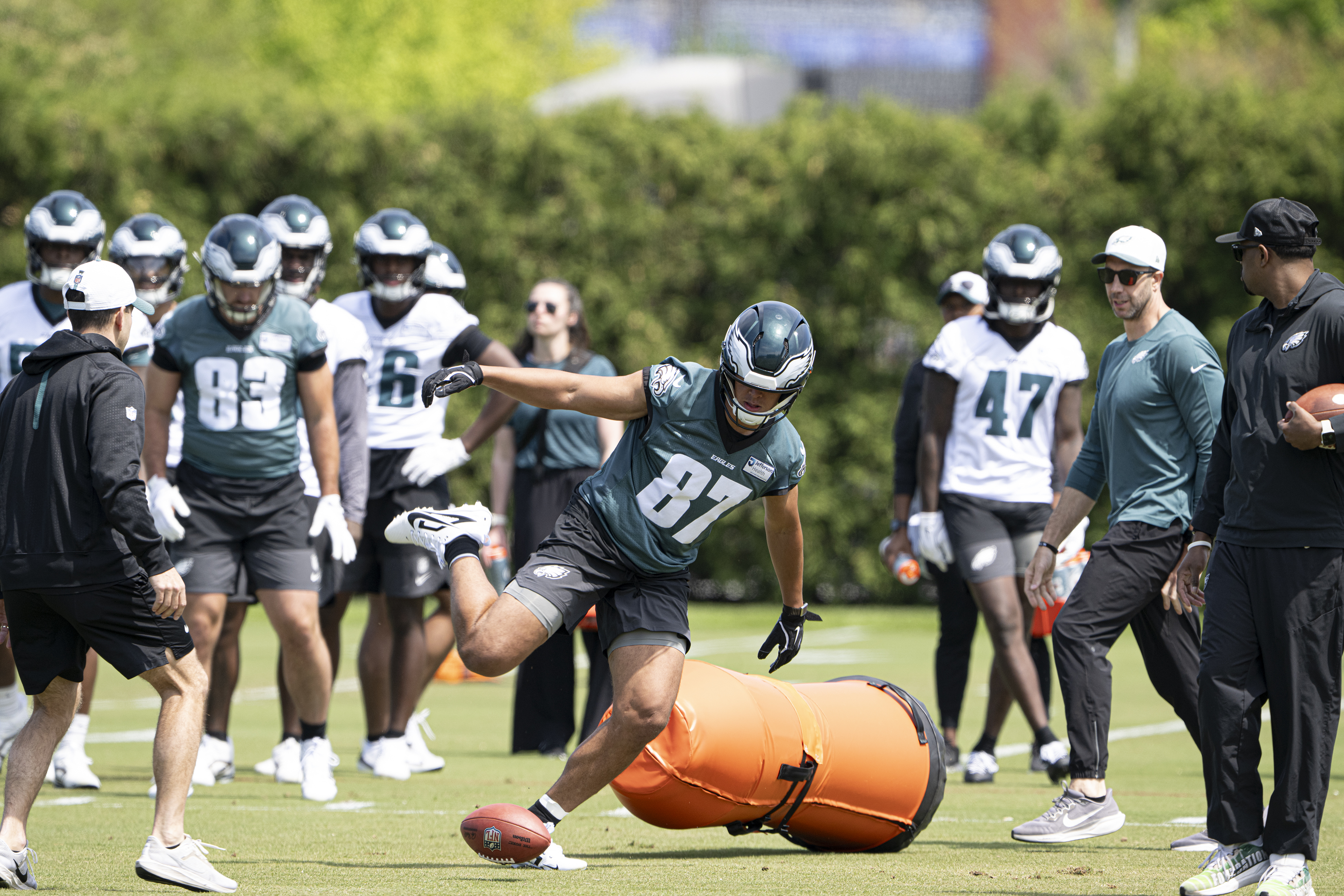
There likely will be a lot more meaningless moments to come from the rest of this Eagles season, but they all are meaningful for players like Stowers who are logging their firsts in the NFL. The second-round pick is finally healthy, and the three catches he had Sunday — two of them came in garbage time — helped his confidence, he said.
This hasn’t been the rookie season Stowers envisioned, and likely not the one the Eagles imagined when they selected him 54th in the draft. The Eagles raved about the former quarterback turned tight end and thought his athleticism and size could create mismatches on offense.
But Stowers had a slow start to training camp and wasn’t a big factor in the offense, even when playing with the backups. He then suffered a hamstring injury late in camp before a curious first week of the regular season that had him say publicly that he thought he was playing only to be placed on injured reserve before the game.
Eli Stowers waited until October to make his formal NFL debut. Jose F. Moreno / Staff Photographer
It took about seven weeks, Stowers said, for his body to get back to normal after hamstring and quad injuries stunted the start of his NFL career and kept him from making his debut until Week 7.
“Sometimes injuries like that, you can’t do anything about it,” he said. “You take care of your body the best way you can. Get good sleep, eat right, drink, do all the stuff. But sometimes you just can’t do anything about it.”
Stowers said he can still see the growth in himself from this rookie season despite not playing.
“In the span of the time when I wasn’t out on the field, I was being really intentional about getting reps that didn’t require me running: catching the ball, hand placement, hand combat, stuff like that,” he said. “Staying in the playbook, mentally being ready. I think there was a lot of progress just in the time I wasn’t playing just to be able to set myself up for when I get back, to be able to get better.”
Stowers has only been playing tight end since 2023. There’s some mental “carryover,” he said, from quarterback, but the physical nature of the position requires more “nuances and technique.” He’s still trying to master hand placement, blocking technique, and route running at the NFL level.
The Eagles may be wise to allow him to learn more on the job now that their season is in turmoil. They could trade Dallas Goedert before Tuesday’s deadline, though there are salary cap implications to doing so.
After the Eagles signed Zach Ertz to their practice squad, they put his locker next to Stowers’, a move Ertz felt was intentional. Both players are represented by the same agency, and Ertz made sure Stowers knew he could ask him questions whenever he needs to.
Eli Stowers says he benefited mentally and in his preparation during his time on injured reserve. Jose F. Moreno / Staff Photographer
Sometimes, Stowers said, he’ll be sitting quietly in his locker stall and Ertz will nudge him and ask if he has anything on his mind Ertz can help with.
Stowers said all the veterans in the tight end room have been helpful.
“I’ve really appreciated that they’ve kind of poured into me,” he said.
Now that his first NFL touches are out of the way, what’s next?
“My goal every single day is the same, put my best foot forward, work as hard as I can, and whatever my job is week-to-week, attack that job with the best of my ability,” Stowers said.
“It’s always good to get the first one out of the way. To feel that in a game, I think it was a good first step for me.”
Mercifully, the Eagles are almost at their bye week.
Their roster could look a little different this time next week after Tuesday’s trade deadline, but it’s safe to say the Eagles — and their fans — are ready for a break.
They’re 2-6 after six consecutive losses. Their offense has been woeful. Their defense has been leaky. They have suffered a rash of injuries to important players.
And there’s still nine more games to go, starting Sunday with a 1 p.m. home game vs. the New York Giants.
Here are some numbers and trends worth noting ahead of the NFC East showdown (we use that term liberally):
Tanner McKee will take to the bench after a shaky three-week trial as the Eagles’ starting QB. Monica Herndon / Staff Photographer
1998
Only the winless Los Angeles Chargers have a worse point differential than the Eagles, who are minus-65 in that category through eight games. (Side note: the Chargers have only played seven games. Yikes.)
When was the last time the Eagles were at minus-65 or worse through eight games? You have to go all the way back to 1998. Parallels have been drawn to Andy Reid’s final season of 2012, but even that team was 30 points better in point differential at this juncture of the season, as pointed out by The Ringer’s Sheil Kapadia.
The Eagles have scored an NFC-low 137 points. No team that has completed eight games has scored less than the Eagles.
The last time the Eagles went through eight games without topping 350 yards in a game was 1971, when they did it through 11 contests.
The Eagles racked up a season-high 341 yards in Week 2 in Tennessee, and dating back to last season have gone 10 consecutive games without going over the 350 mark.
The Eagles are averaging 244 yards during their six-game skid.
The pressure rate has hamstrung every Eagles QB who has taken a snap this season. David Maialetti / Staff Photographer
42.6%
It is hard for an offense to do much moving when the quarterback is being pressured at a rate of 42.6% of dropbacks, according to Next Gen Stats, the fourth-worst mark in the NFL. That’s the world Milton is stepping into. It’s what Tanner McKee dealt with, and it was life for Jalen Hurts, too, before his season was stalled.
The Eagles are allowing too many unblocked pressures. They haven’t consistently communicated and dissected defenses in order to have any sustained success.
Run blocking isn’t much better. According to Sharp Analytics, the Eagles are tied for the league low in average yards before contact per running back rush at 0.7, and their run stuff rate of 23.7% is 31st in the league.
The Giants’ pass rush without Brian Burns (knee), whose season ended in Week 3, has not been as dangerous. They are 20th in the NFL with a pressure rate of 34.2%.
Jonathan Greenard is still looking to make an impact as an Eagle. Monica Herndon / Staff Photographer
9%
That’s the pressure rate of the Eagles’ biggest acquisition of the offseason, edge rusher Jonathan Greenard.
Injuries have limited him to five games, six full practices, and only a limited role in the games he’s played, but Greenard’s pass rushing being nonexistent has been a big factor on a team that is struggling to get after opposing quarterbacks.
The Eagles rank 29th in pressure rate (31.5%), according to Next Gen. They have just 10 sacks on the season, none of them from Greenard.
The Giants have been just OK protecting their quarterback. They’re 20th in pressure rate allowed (37.4%).
If Eagles fans walk away happy on Sunday, it will literally be an upset. Monica Herndon / Staff Photographer
2009
As of Wednesday afternoon, the Eagles were 3-point home underdogs to the Giants.
It’s been a while since the Eagles were home ‘dogs against their NFC East rival. According to Yahoo betting analyst Ben Fawkes, Sunday would mark the first time the Giants are road favorites in Philadelphia since Nov. 1, 2009.
Amid the Eagles’ six-game losing streak, many have been quick to point to the offensive line as the main reason for the team’s struggles.
It makes sense. The Eagles have given up a pressure rate of 42.65, which ranks 29th in the NFL, and the team ranks 27th in rushing offense.
Coaching the line is Chris Kuper, who replaced legendary offensive line coach Jeff Stoutland this offseason. Stoutland spent the previous 13 seasons with the team and became a household name thanks to his two Super Bowl wins.
Replacing Stoutland was a difficult task, and Kuper clearly hasn’t matched the exploits of his predecessor in his short time with the team. That’s why Kuper has faced some ire from pundits and Eagles fans this week. Coach Nick Sirianni came to Kuper’s defense on Monday, as he faced questions about the job security of his offensive staff.
“Chris is coaching his [butt] off,” Sirianni said Monday. “He’s fighting his [butt] off, he’s coaching his [butt] off on a daily basis. You guys don’t get to see that. I get it on a daily basis.”
Eagles offensive tackle Jordan Mailata has been the only constant on the O-line this year.David Maialetti / Staff Photographer
All-Pro tackle Jordan Mailata took it a step further. Mailata spoke for nearly 15 minutes Wednesday afternoon and shifted the blame toward the players, not Kuper, for the unit’s struggles.
“I think it’s easy to point the blame to someone who isn’t out there executing plays,” Mailata said. “When you’re not playing your best football, you’re not playing as close as you want to go, it’s easy to point somewhere else. … That’s something that we’ve been talking about as a unit, like, ‘You need to do a better job just finishing our blocks.’”
“I don’t like passing the blame on a coach. He’s doing everything he can. … We’ve been doing a terrible job.”
In fairness to Kuper and the O-line, the unit has been a revolving door this season. Lane Johnson retired before Week 5. Cam Jurgens was traded to the Baltimore Ravens that same week. Landon Dickerson missed five games due to injuries, and all of them have been replaced by far less experienced players. It’s a difficult task.
This is another reason why Mailata was quick to come to his coach’s defense. He even mentioned that Kuper — who played eight seasons in the NFL — has a coaching style similar to that of Stoutland’s.
“He gets on us,” Mailata said. “He’s similar to Stout in that way. The amount of time we’ve spent in the film room, watching technique, watching good technique, watching bad technique, and then coaching it. It’s really on-the-field stuff that’s probably a lot more different to Stout because of the scheme, but now we’re trying to pick up those numbers. I think he does a great job.”
The Eagles have a new starting quarterback, and he has an arm strong enough to launch an orange the length of a football field.
Joe Milton will make his first NFL start Sunday against the New York Giants, replacing Tanner McKee as the Eagles look to snap a six-game losing streak.
The 26-year-old joined the Eagles roughly three weeks ago after being signed off the Dallas Cowboys’ practice squad. Now, with Jalen Hurts sidelined and the Eagles sitting at 2-6, Milton is getting his opportunity.
Here’s what to know about the Eagles’ newest starting quarterback:
He once threw an orange 100 yards
Milton’s arm strength has been turning heads for years, but perhaps his most unusual throw didn’t involve a football.
In December 2022, while Tennessee was preparing to face Clemson in the Orange Bowl, Milton participated in a challenge to see how far he could throw an actual orange.
The result? Roughly 100 yards.
Milton later suggested he could throw one even farther and said his arm had been tired from practice.
He’s cousins with Super Bowl champion Anquan Boldin
Football talent runs in Milton’s family.
His cousin is former NFL wide receiver Anquan Boldin, who played 14 seasons with the Arizona Cardinals, Baltimore Ravens, San Francisco 49ers, and Detroit Lions.
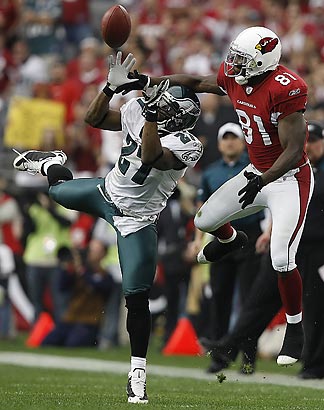
Quintin Mikell breaks up a pass to the Cardinals’ Anquan Boldin.
Boldin earned three Pro Bowl selections, won Super Bowl XLVII with Baltimore, and finished his career with 1,076 receptions for 13,779 yards and 82 touchdowns.
The two also share roots in Pahokee, Fla., where Boldin attended high school and Milton was born.
Milton’s road to the NFL began at Michigan, where he spent three seasons from 2018 to 2020 before transferring to Tennessee.
He became the Volunteers’ full-time starter in 2023 and finished the season with 2,813 passing yards, 20 touchdowns, and five interceptions. He also rushed for 299 yards and seven touchdowns.
His college career spanned six seasons, and he graduated from Michigan in 2021 with a degree in American culture.
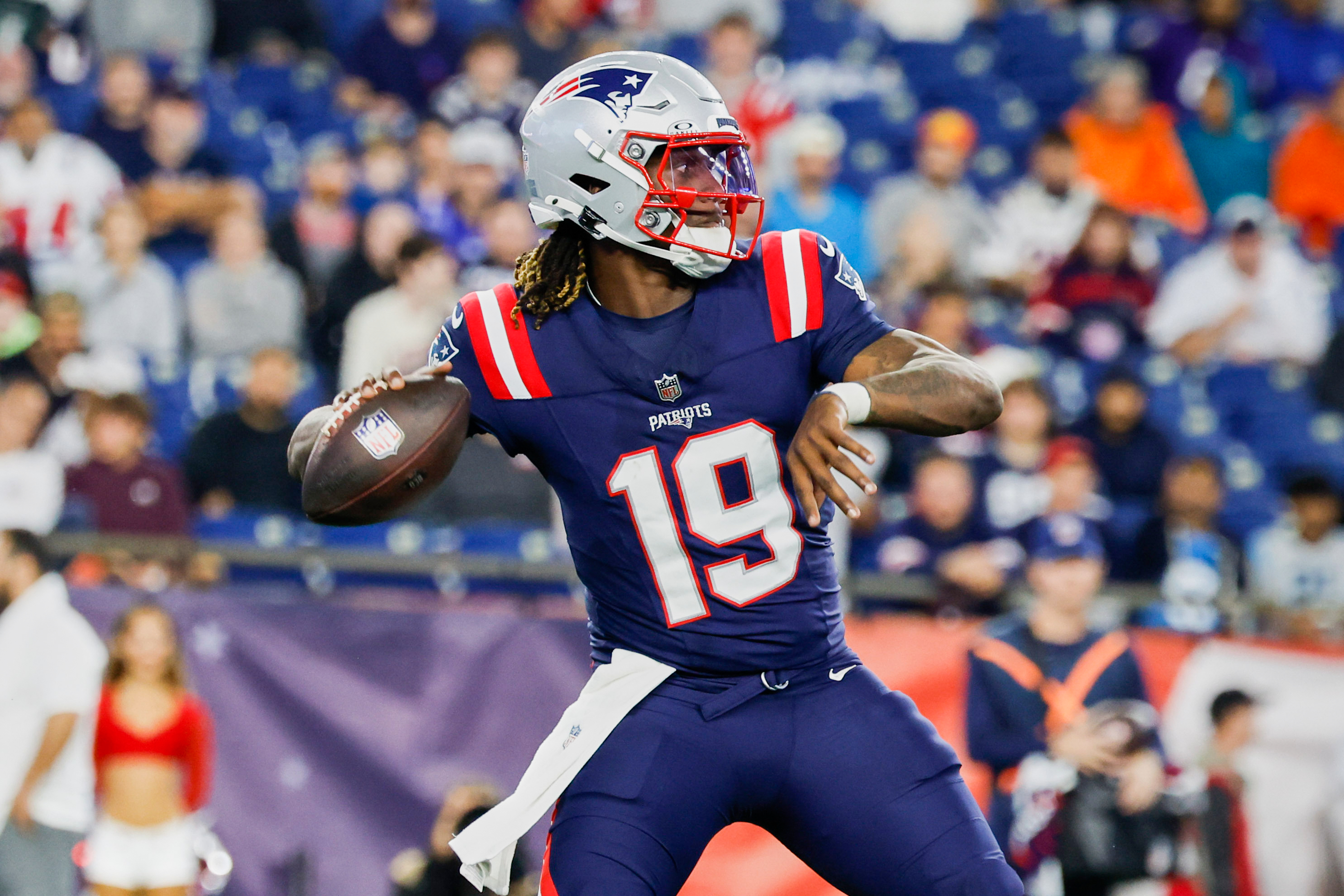
Joe Milton also has played for the New England Patriots and Dallas Cowboys.Greg M. Cooper
His NFL debut was impressive
Milton was selected in the sixth round of the 2024 draft by the New England Patriots.
He made his regular-season debut in New England’s 2024 season finale against the Buffalo Bills, taking over for Drake Maye after the opening drive and completing 22 of 29 passes for 241 yards and a touchdown.
Milton also rushed for a touchdown, helping the Patriots secure a 23-16 victory.
Despite the performance, he was traded to Dallas in April 2025.
Before becoming the Eagles’ newest starter, Milton was competing for a backup job behind Dak Prescott in Dallas.
The Cowboys ultimately chose former Eagle Sam Howell over Milton before the 2026 season, waiving him before bringing him back on their practice squad.
The Eagles signed Milton on Oct. 16 as their quarterback situation became increasingly uncertain following Hurts’ injury.
Less than a month later, Milton is preparing to start against the Giants, with an opportunity to provide a spark to an offense that has struggled for much of the season.
Part of the brilliance of 30 Rock, the NBC sitcom from 2006-13 that parodied the TV production process, lay in its quirky supporting cast and the irreverence inherent to the characters. This was before the peak of the #MeToo movement and the prevalence of the alphabet-soup era of sexual identities, and, while those initiatives have become and remain urgently important, some of the 30 Rockers wouldn’t make it past the sensitivity sensors today.
Exhibit A: Toofer.
Keith Powell’s character, James “Toofer” Spurlock, is a sweater-vested, argyle-socked African American who gets his nickname from his conservative, white boss, Jack Donaghy (Alec Baldwin), who says “Toofer” checks multiple corporate boxes: “With him you get a two-for-one; He’s a Black guy and a Harvard guy.”
Trudeau called the Conservative candidate in Durham yesterday a “Twofer”. Main stream media ignored it. If you don’t know what that racist comment means from PM Blackface @JustinTrudeau then let Alex Baldwin explain it to you. pic.twitter.com/gEHbtOSu4L
When Jeffrey Lurie hired Sirianni in 2021, Nick was supposed to be a Toofer: Both a head coach and a play-calling offensive coordinator. If Sirianni was a competent Toofer, then the Eagles would enjoy stability in the early stages of quarterback Jalen Hurts’ career.
Things didn’t worked out as planned.
In fact, with the team stuck in its first six-game losing streak in 14 years and no end in sight, these days Sirianni isn’t much of a one-fer.
How we got here
Sirianni surrendered play-calling duties after a 2-5 start to his head coaching career, in which he committed to a passing game Hurts could not handle. The team surged into the playoffs in 2021, has mostly thrived ever since, and Sirianni has never resumed play-calling duties.
That time is now. Sirianni should call the plays for the rest of the season.
Why?
Because the guy doing it is even worse than Sirianni was five years ago.
Sean Mannion not only is a first-year, first-time offensive coordinator who has been a coach for only 2½ seasons. He has never been a coordinator or a play-caller at any level, not even college intramurals.
Mannion is a failed quarterback, which actually is the most common path to offensive coordinatorship, but he has virtually no experience at anything beyond sitting in meetings, holding clipboards, and watching the starter on iPads. He spent 2024 as an offensive assistant in Green Bay, which means he coached nothing, then spent 2025 as the quarterbacks coach, helping the Packers finish 16th in scoring and 17th in passing.
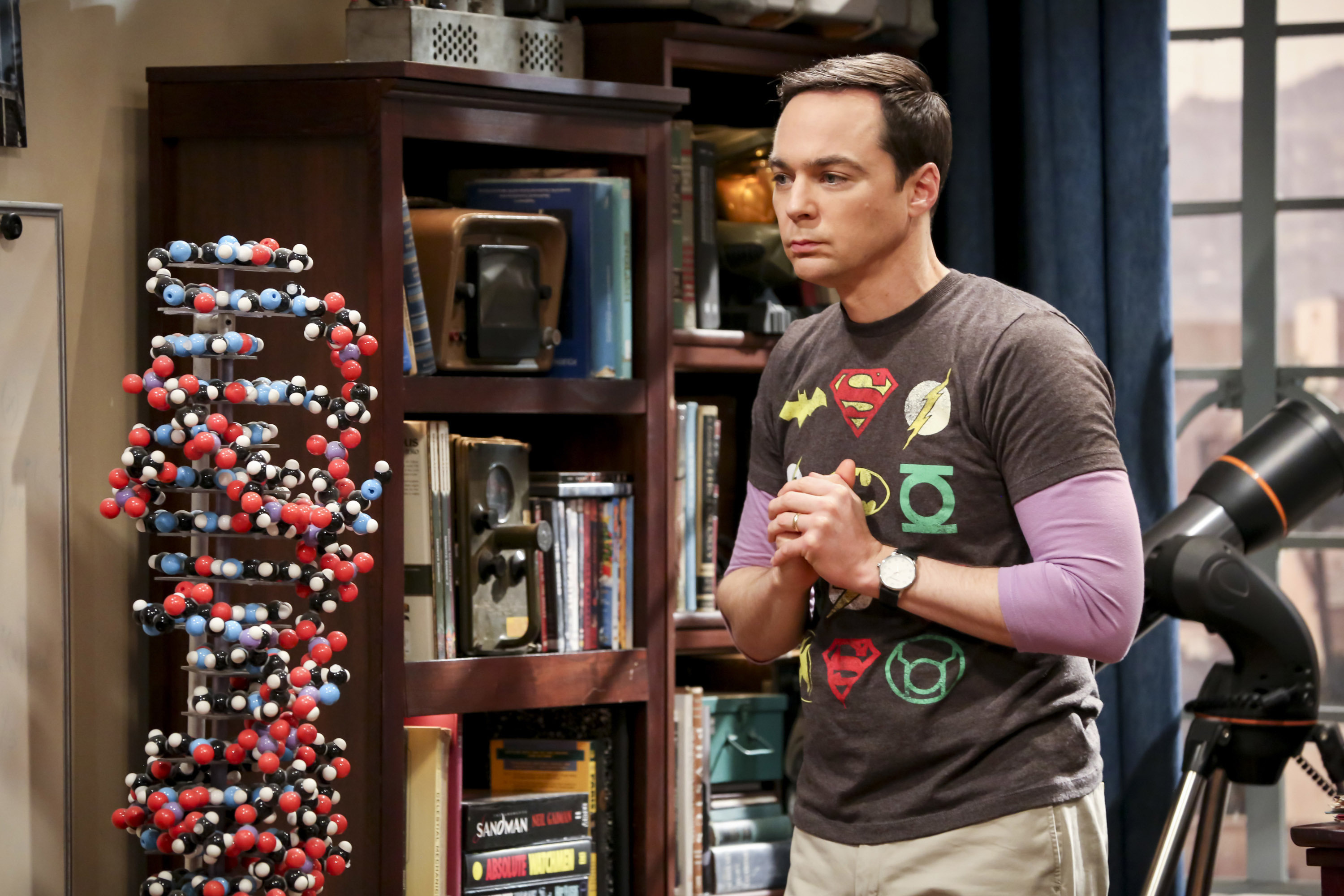
It’s like Elon Musk hired Sheldon Cooper to pilot the shuttle to Mars because he understands the theoretical physics involved.
Jim Parsons playing character Sheldon Cooper in a scene from the series finale of “The Big Bang Theory.”Michael Yarish
There’s no escaping it: Mannion was a bad replacement for Kevin Patullo, who got his house egged last season but now looks like Bill Walsh by comparison.
Eagles OC Kevin Patullo addresses his house getting egged by unhappy fans: “When it involves your family, obviously it crosses the line.” pic.twitter.com/sMgkxh3E7J
If Sirianni starts calling plays again he might not challenge the memory of Paul Brown, but he has to be better than Mannion. The choice, timing, and sequence of Mannion’s plays have been comically inept. Among a laundry list of other reasons — injuries, age, poor discipline, blood clots — Mannion is the main reason the Eagles are the only six-loss team in the NFC. The Birds are the lowest-scoring team in the conference by almost a field goal.
Even so, the bigger picture has less to do with Mannion than with Sirianni.
Role playing
Ray Rhodes was the last head coach Lurie hired who didn’t call the offensive plays. That was in 1995, when most head coaches didn’t call plays. Besides, Rhodes had no background as an offensive coach. Lurie is smart, and he quickly realized that the Golden Goose of the NFL would be a head coach with a background in offense who was able to call plays.
Toofers.
Andy Reid, Chip Kelly, Doug Pederson, and Sirianni all were hired as Toofers. Why?
Because top coordinators get hired away to be head coaches. The best way to retain your play-caller is to make sure he’s also your head coach.
Nick Sirianni was hired in 2021 with the idea that he would call plays, even though Frank Reich had called plays under him in Indianapolis. TOM GRALISH / Staff Photographer
Sirianni, who had not called plays as offensive coordinator in Indianapolis, failed in his first attempt. If he had been able to call plays, there would have been no revolving door of offensive coordinators. Stability marks the regimes of Reid in Philadelphia and Kansas City, of Sean McVay in Los Angeles, of Kyle Shanahan in San Francisco. Sirianni was supposed to deliver stability.
Still, Sirianni has won two NFC titles and a Super Bowl and made the playoffs in all five seasons. Before he gets fired, he deserves another chance to prove himself.
More to the point, he needs to demonstrate that he can call plays.
Otherwise, there’s no point in having him continue to coach.
Video: What should the Eagles’ 3-5 year plan be? | unCovering the Birds
New kids in town
The Eagles have switched offensive coordinators the last four seasons, twice because their coordinators earned head coaching jobs elsewhere, and twice because Sirianni promoted inexperienced reflections of himself.
Then, there’s Hurts.
Shane Steichen’s scheme and execution, Brian Johnson’s scheme and execution, Kellen Moore’s scheme and execution, Patullo’s scheme and execution, and Mannion’s scheme and execution all might have similarities in concept and terminology, but they are not identical.
Hurts has not had the same OC in consecutive seasons since 2021 turned into 2022. Not coincidentally, Hurts has progressed very little since 2022. This is an indictment of Sirianni’s ability to develop quarterbacks, but it’s also an expected result in an absence of continuity.
When he was hired, Sirianni was expected to devise a scheme that would optimize a magnificent offensive line, a very good running back — at the time they had Miles Sanders — and develop Hurts in accordance with his strengths and in spite of his weaknesses.
Let’s be clear here: Very few quarterbacks don’t have physical weaknesses. Michael Vick, Josh Allen, and Cam Newton, guys with rifles on their shoulders and V-8s under the hood, they come along, what, once every five years? Ten? Tom Brady, Peyton Manning, Joe Montana, Steve Young: None of them were the Ultimate Weapon.
We’ve acknowledged for years that Hurts wins despite his shortcomings. To belabor the shortcomings is like arguing about local climate patterns and refusing to move. If you don’t like it hot, don’t live in Florida. There are plays Hurts doesn’t like, and there are throws he can’t make, so why force them upon him?
Hurts has blood clots in his lungs. He won’t play again during this lost season. Tanner McKee is the quarterback of the moment. He brings his own set of challenges.
Let’s see if Nick can get the best out of McKee.
Let’s see if he can get the best out of what’s left of the roster.
If Sirianni can devise a feasible game plan during the week and call logical plays on game days, then he deserves to keep his job. If he cannot, then the Eagles must replace him with someone who can.
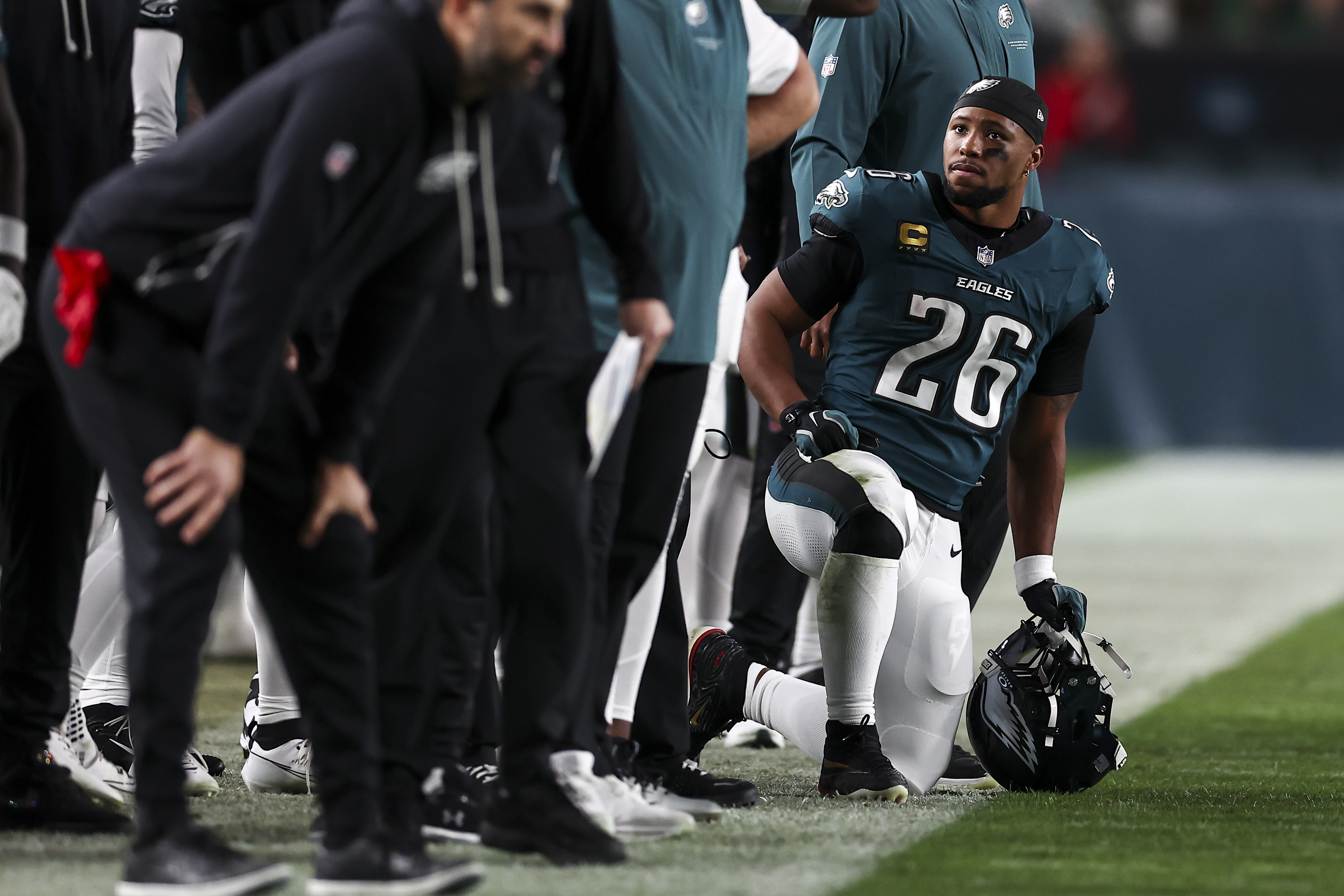
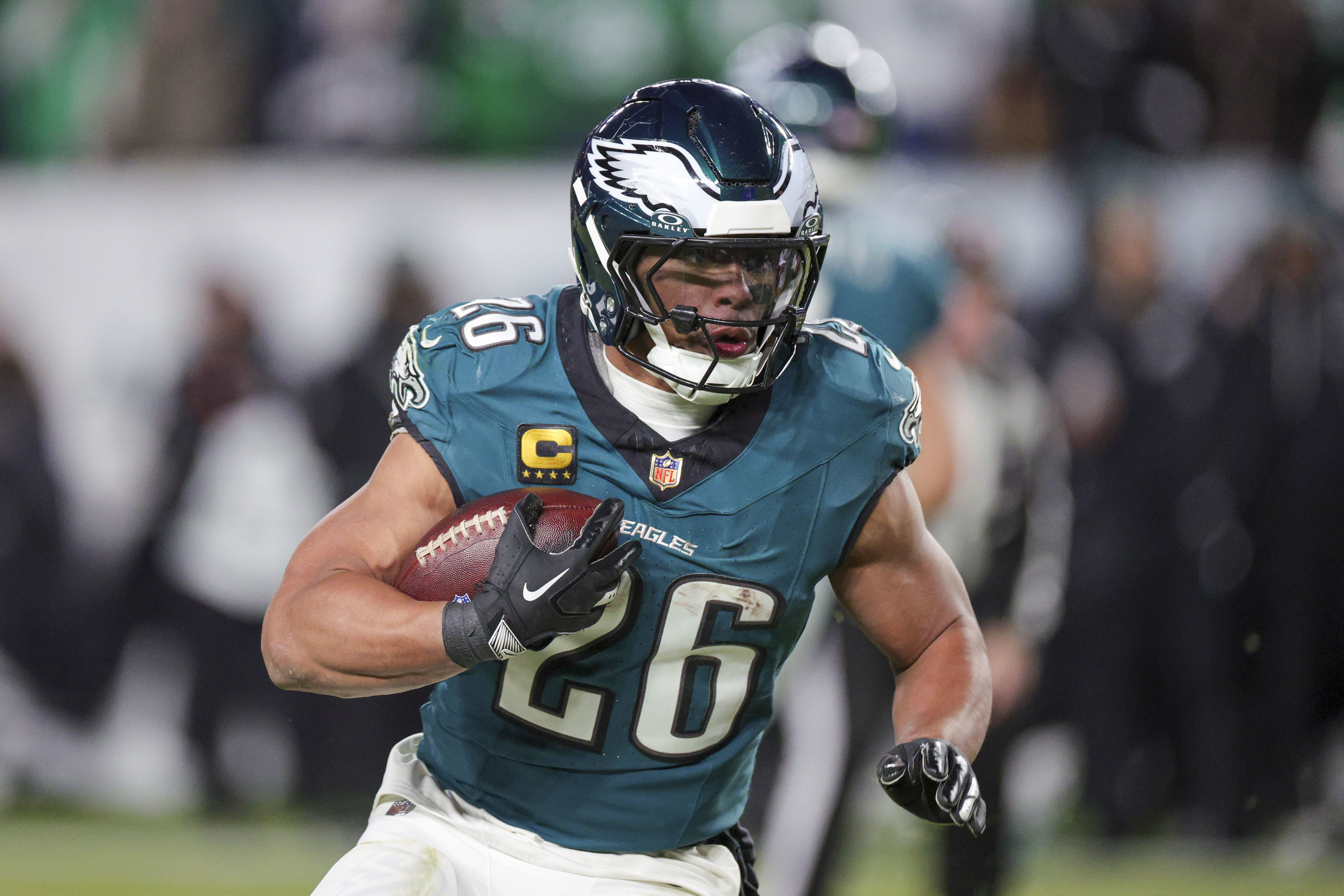
Without intending to, Saquon Barkley made the strongest possible case Sunday night at Northwest Stadium against the Eagles trading him — this season, next season, any season. Howie Roseman and the team’s front office had already assured him that he’d be staying put come the NFL trade deadline next Tuesday. But in the aftermath of the Eagles’ sixth straight loss, this one 27-10 to the Washington Commanders, in the silence of a somber locker room, Barkley took the extra step of showing why there’s no realistic return that would be worth sending him somewhere else.
“My whole entire mindset is, we have a little issue going on right now,” he said, “and I feel like I’m the type of player and type of leader who can help us get out of it, and I want to be one of the reasons why we fix it.”
Right now, Barkley has a bad back and a bad hamstring, and the Eagles are a bad team, and shutting him down for the rest of this season to preserve his long-term health would be a defensible decision. Still, in the cost-benefit analysis that has to accompany any move Roseman might make to improve the team for 2027 and beyond, retaining Barkley is a no-brainer. Not just because trading him would chew up $26.5 million in dead-cap money in ‘27, according to the database OvertheCap.com. And not just because the chances of getting enough value in return for him at this stage of his career — he’s 29 and in his ninth NFL season — are slim.
Look around the Eagles’ locker room, and you can’t help but notice how few veteran leaders remain. Jordan Mailata has clearly tried to take on a greater role as a spokesman for the offense, and Zack Baun and Jordan Davis are willing to stand up for an underperforming defense, and … who else? So many of the players who are supposed to be entering the prime of their careers haven’t gone through the kinds of hard times that Malcolm Jenkins, Jason Kelce, Brandon Graham, and Lane Johnson had. Jalen Carter so far hasn’t shown he’s cut out to be anything more than a man-child, and he, Quinyon Mitchell, Cooper DeJean, and their peers haven’t known a world in which the Eagles are anything other than Super Bowl winners or contenders.
Barkley has gone through such dark days, just not here, not yet. It’s fitting timing that his former team is the Eagles’ next opponent. The New York Giants have straightened themselves out some now that they have, in John Harbaugh, a competent head coach with enough power within the franchise to make a positive difference. After the 2023 season, though, they were the laughingstock of the league for allowing Barkley to sign with the Eagles, for handing him to an NFC East rival and giving him the shot to shine as the biggest star on a championship team, for failing to understand that he was the caliber of player and person an organization should do everything it can to keep.
Funny that Barkley finds himself now in a similar situation to the one he was in then.
Saquon Barkley wants permission to do as an Eagle what he was not permitted to do as a Giant: help pull the franchise out of a low point. Yong Kim / Staff Photographer
“That was so long ago,” he said. “That was three years now. My mindset’s still the same. The last time I said this — when I was in New York, that I wanted to be a Giant for life — it kind of went the opposite [way]. So I’m not going to sit here and jinx myself.
“I just have nothing but respect for this organization and the men and women in the building and this team. So that’s how I feel. I’m not saying I like being in this situation, because no one likes losing six in a row. But I don’t cower away from it. It’s something that’s present, and you can be like, ‘Oh, here we go again,’ or you can try to find a way to fix it. That’s kind of been my M.O. When I was at Penn State, helped turn that around. Had that belief when I went to New York. Just didn’t [happen]. Sometimes it doesn’t go that way. Was able to come here and be part of something special, and I feel like the culture is here.”
It will be as long as the Eagles take care to maintain and replenish it, and Barkley doesn’t have to be a 2,000-yard back again to help them in ways tangible and intangible. He commands enough respect, models the right habits and attitude and demeanor, that they would be fools to tell him, everyone else in their organization, and everyone around the league, He’s worth nothing more than a third-round pick.
The NFL isn’t the NBA, isn’t the NHL, isn’t another sport where a collection of young talent can develop together over time. There’s plenty of inherent roster turnover just from players’ physical attrition and the league’s salary-cap and contract rules. A franchise like the Eagles as they are now — a franchise that has won, is in the midst of a nightmare season, and expects to win again soon — needs at least a few mainstays to bridge that gap.
“I don’t know if I’m being asked to do that,” Barkley said. “It kind of comes with the territory. It’s not just me. It’s a whole bunch of us. Just in trying to be a reason that we fix it, I’m part of the problem, too. I’m part of the problem and why we haven’t won in six games. It’s all of us. We’ve all put ourselves in this situation, and we all own a little part of it. We’ve just got to do whatever we can to try to get out of it.
“Maybe I’m just naive. I’ve said it before; I said it while I was in New York: Until we’re statistically out of it, I believe we still have a chance. Even when that happens, you still have to come to work. … There’s a kid out there whose parents saved up to come out and watch us play. Whatever it is, you’ve got to find your ‘why.’”
He has his. What he did through the great, he can do now through the awful. Saquon Barkley can show the world how it’s supposed to be done. That still matters. For the Eagles, it has never mattered more.
After their 27-10 loss to the Washington Commanders on Sunday night, the Eagles (2-6) now sit in last place in the NFC East. Their playoff window is all but slammed shut.
Does that mean a fire sale is looming ahead of the Nov. 10 trade deadline?
Like anything, it isn’t that simple. A confluence of factors determine what makes a trade worth executing, including the return, the cost of replacing that player, and the potential salary cap implications.
Regardless of whether the Eagles opt to buy or sell at the trade deadline, general manager Howie Roseman will likely keep the same objective in mind — sustained success into the future, believes former New York Jets general manager and current ESPN analyst Mike Tannenbaum, who once faced similar questions in his own front office role.
“I think any year, it’s a juxtaposition of what’s good for the organization, short-term and long-term, and obviously [the Eagles have] done a very good job of having sustained success,” Tannenbaum said. “So I think it’s just more of those continued evaluations of if and when there’s opportunities to either add a quality player for the long-term or get good return in the future. You always balance those competing thoughts.”
A.J. Brown will cost the Eagles $27.1 million against the cap in 2027. Yong Kim / Staff Photographer
Mounting dead cap an issue?
“Out of sight, out of mind” isn’t necessarily an expression that applies to NFL players who are released or traded.
That concept is especially relevant to Roseman and the Eagles as the trade deadline looms. When players on veteran contracts depart the team, they can still leave salary cap charges over the years that follow, in the form of dead money. Major forms of dead money typically come from prorated bonuses spread out over the duration of contracts.
Those prorated bonuses are paid to players as lump sums up front, but instead of the full amount counting against the salary cap in a single year, teams can account for them over multiple years.
This allows teams to spend cash over cap — a player may be paid more in cash than is actually charged to the salary cap in any given year. The Eagles take this strategy a step further, adding voidable years onto veteran contracts to push those prorated cap hits into the future, beyond the years those players are actually under contract with the team.
The Eagles can do this because of owner Jeffrey Lurie’s willingness to spend, especially as it relates to rewarding homegrown stars with lucrative contracts. According to Over The Cap, the Eagles rank sixth in the league in total cash spending in 2026 at $364.2 million. Their cash-to-cap ratio is 1.63, the second-highest in the league this year.
But when a player is cut or traded before June 1, any prorated bonuses pushed out to the future will hit the present salary cap as dead money. A player traded at the deadline is considered a post-June 1 transaction, meaning any proration in future years accelerates on to the salary cap as dead money in the next league year.
For example, when the Eagles traded Cam Jurgens to the Baltimore Ravens on Oct. 7 in exchange for a 2028 second-round pick and a 2027 fifth-rounder, he remained on the books in 2027 in the form of a $14.9 million dead cap charge. A.J. Brown still counts against the cap, too, to the tune of $27.1 million. The Eagles waited to trade him to the New England Patriots until after June 1 earlier this year so they could split up his dead cap charge over two seasons, instead of taking it all on this year.
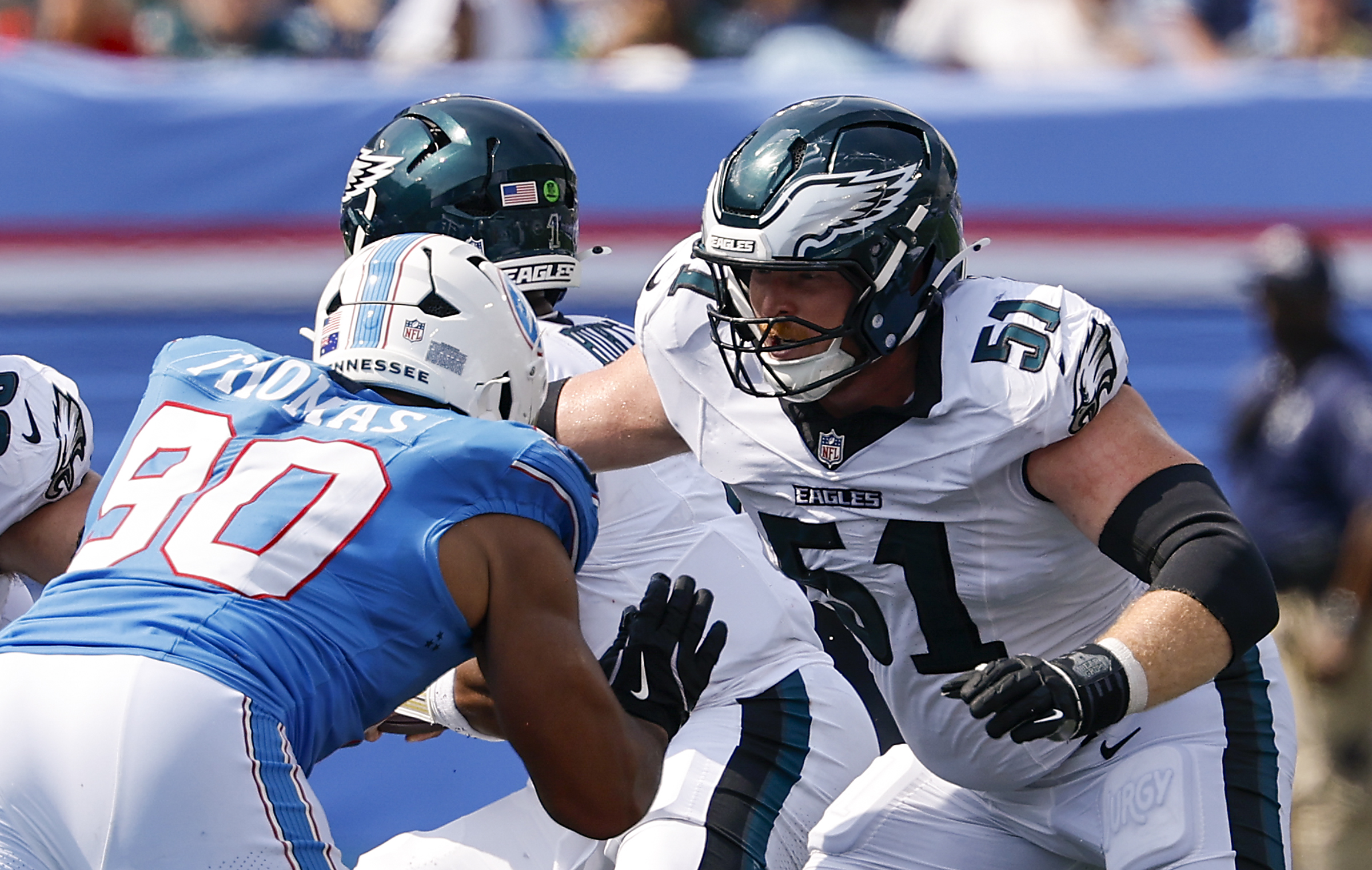
Cam Jurgens (51) has a $14.9 million cap charge for the Eagles in 2027. Yong Kim / Staff Photographer
The Eagles already rank third in the league in dead money for 2027 at $43.7 million, according to Over The Cap. That estimation is incomplete, though. When Lane Johnson’s retirement is processed after June 2, his dead cap charge will be spread out over the next two years, with $16.6 million coming in 2027 and $26.3 million in 2028, per Over The Cap. That would currently put the Eagles at $60.3 million of dead money in 2027, which would lead the league.
That total for 2027 could grow even more in the coming days if Roseman decides to sell off certain veterans at the trade deadline.
ESPN reported Sunday that the Eagles will not trade Saquon Barkley at the trade deadline. Beyond his contributions on and off the field, though, there would be salary cap implications next year if the Eagles traded him before the deadline. According to Over The Cap, Barkley would leave a dead cap hit of $26.5 million in 2027 if traded, which is roughly $13.4 million more than his current cap charge for 2027 if he remained on the team.
Dallas Goedert would leave a $18.3 million dead cap charge in 2027 if traded, an $8.7 million increase over his currently scheduled cap hit. Zack Baun would have a $22.5 million dead cap hit next year if he’s moved, an increase of $10.6 million. Meanwhile, a trade of Landon Dickerson would leave a $12.1 million dead cap charge in 2027, resulting in a cap savings of $1.9 million.
A fire sale at the deadline could compound those dead cap charges next year, depending on who is traded. Even so, their total dead money must be considered within the context of the rising salary cap in that year. Since the NFL introduced the salary cap in 1994, it has risen every year except for one — the 2021 COVID-19 year.
The salary cap eclipsed $300 million for the first time in league history in 2026. Over The Cap projects a $327 million base salary cap in 2027, which would be an 8.6% increase over the 2026 cap of $301.2 million. The league typically sets the official base salary cap in late February ahead of the start of the new league year.
When the cap goes up, a team’s dead money takes up a smaller percentage of it. This is why Tannenbaum said he doesn’t believe the acceleration of dead money would necessarily prohibit a team from dealing a veteran at the deadline.
“If you trade a player unexpectedly and they have a larger acceleration than expected, it could impact the structure of another transaction,” Tannenbaum said. “But I just think the way the cap has grown, it’s just rare to hear or to put a scenario together where it’s going to prevent you from doing something fundamentally.”
Mike Tannenbaum knows the range of factors that go into a GM’s calculus at the trade deadline. Rich Barnes
Even those so-called unexpected trades don’t come out of left field. Tannenbaum explained that teams run through different scenarios of potential trades and how those prospective transactions would impact the structures of other player contracts.
“If we trade player X and we have to accelerate a payment, where is that coming from?” Tannenbaum said. “If we [were] going to structure a different player on an extension, we always were looking at literally to the day of, like, OK, this scenario or that scenario.
“I just think the way the system has evolved, you typically have enough levers — the cap’s upward of $300 million now — that you could figure out solutions to most cap questions you have.”
Tannenbaum says he isn’t overly concerned about the Eagles’ annual dead money charges against their salary cap, so long as the leaguewide base salary cap continues to rise.
“Every year, you’ve heard of other teams, these doomsday scenarios, and then the cap goes up another $20, $30 million, and now all of a sudden, those dead money charges are accounted for,” Tannenbaum said. “I don’t think there’s any reason to think that the cap won’t continue to go up, and I think that has to be a big factor when you look at that analysis.”
Revisiting the Jurgens trade
There are other considerations at play when deciding if a trade helps a general manager such as Roseman achieve his goal of fielding a competitive roster on a yearly basis. For example, Roseman remarked in the aftermath of the Jurgens trade that the Eagles were getting “four players for one” in the deal.
The picks (including premium draft capital in a second-rounder) account for two of those players. Drew Kendall, who took over at center for Jurgens, accounts for another, a reflection of the importance Roseman places on having a viable replacement for the traded player (especially a replacement on a rookie contract).
Howie Roseman has suggested that the Cam Jurgens deal offered the Eagles too much value to pass up. David Maialetti / Staff Photographer
Roseman can reallocate the money that was set to be due to Jurgens to a fourth player, so to speak, especially as talented players on rookie contracts become eligible for extensions.
“You have to look at, hey, if we move on from a player that maybe we can’t afford or can’t extend, and we can get a good premium pick, there’ll be a little short-term sacrifice, but long-term we’re going to feel really good about this decision,” Tannenbaum said.
But these trades don’t exist in a vacuum. Even if a trade makes sense on paper, Tannenbaum stressed the importance of considering the impact a move could have on the culture of a team. General managers must lean on others within the organization to compensate for their blind spots as it relates to roster building.
“I think it’s really important if you’re in the front office to sit there, talk to ownership, talk to your coaches, and say, ‘Hey, what am I missing here?’” Tannenbaum said. “Here’s great value to get multiple picks in the future, which is great for us. But what are we losing in the locker room? And if player A graduates, who’s replacing him, not only on the field, but from a leadership standpoint?”
The Eagles will travel to face the Washington Commanders at 8:20 on Sunday night at Northwest Stadium. Here’s what you need to know about the matchup:
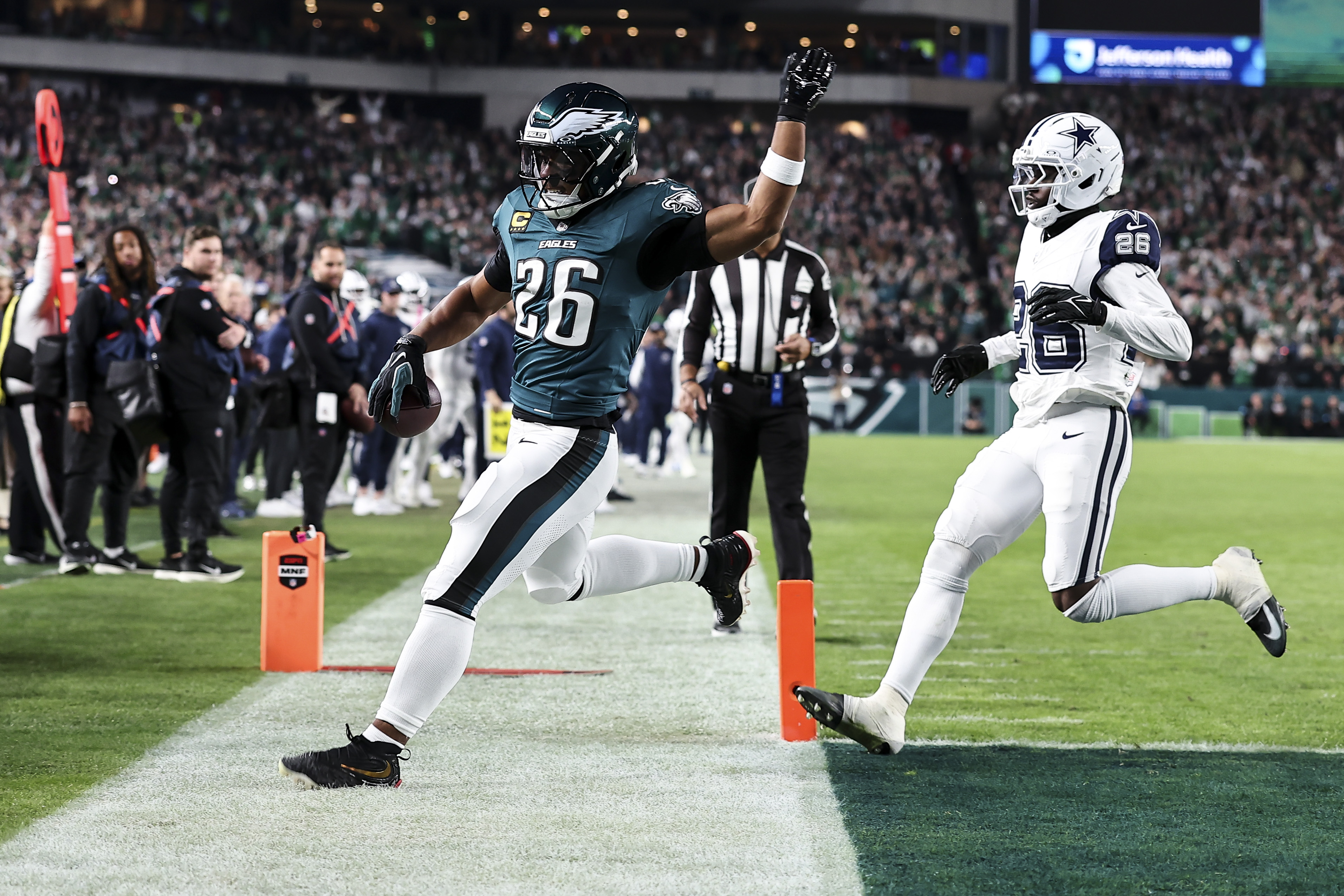
When the Eagles have the ball: The Eagles know they have to run the ball effectively to have any chance of resurrecting their offense, and for the first time this season, they actually showed some life on the ground last week vs. the Dallas Cowboys. It’s a shame Saquon Barkley couldn’t stay on the field because he looked explosive and decisive whenever he got the ball out of the backfield. He returned on Friday after missing the first two days of practice this week, but it’s unclear how much he’ll be hindered by hamstring and back injuries if he can go. The Eagles’ running back room has looked like a MASH unit. The latest casualty to go on injured reserve was Dameon Pierce. If Barkley is out or limited, Elijah Mitchell or Jaydon Blue could be tabbed as the lead ball carrier. Yikes.
A healthy Saquon Barkley (26) would give the Eagles a fighting chance in Week 8. Monica Herndon / Staff Photographer
Sean Mannion’s commitment to the outside-zone run game is admirable, though not entirely sensible. The Eagles simply don’t have the personnel to consistently employ the scheme. They did have greater success between the tackle box in left guard Landon Dickerson’s return last week. If this is to be the starting five up front for the remainder of the season, Mannion has a chance to build off that continuity. The Commanders’ run defense isn’t great. They rank 20th in expected points added (EPA) per rush, but are holding running backs to just 3.8 yards a carry. Aside from a Barkley 42-yard jaunt on an inside-zone run, Washington held Eagles tailbacks to just 2.8 yards on their 17 other rushes in the first meeting in Week 1. Longtime defensive tackle Daron Payne is out for the season with a foot injury, a major blow to the unit.
The Commanders’ run efficiency numbers have been weighed down by their struggles to contain scrambles. Defensive coordinator Daronte Jones plays a lot of two-high safety shells, which can allow for mobile quarterbacks to break containment. Jalen Hurts gained 48 yards on five scrambles in Week 1 vs. Washington. Alas, his replacement Tanner McKee poses no such threat. McKee showed improvement as a passer in his second start, but there were still misfires, misreads, and misadventures whenever he had to drop on passing downs. Mannion did well to get the ball out with schemed-open first reads, particularly on money downs. The Eagles went 7-of-15 on third and fourth downs.
The downfield passing game was lacking, however, without receivers DeVonta Smith (hamstring) and Dontayvion Wicks (ankle). They will be sidelined for a second consecutive week. Rookie Makai Lemon stepped into the vacancy and continued to show why the Eagles drafted him. He’s not afraid to stick his nose in tight spaces and make tough grabs. He’ll likely be McKee’s top read, along with tight end Dallas Goedert, who could be showcased again ahead of the trade deadline. Jones has tried to implement fairly exotic coverage schemes, but there have been busts in the back end partly as a result. Trey Amos is back at corner, while safety Quan Martin is the secondary’s weak link.
Commanders defensive coordinator Daronte Jones likes to blitz. Nick Wass
The Commanders don’t have a strong four-man pass rush. If they’ve gotten pressure, it’s come more from blitzing. Jones worked under mad genius Brian Flores in Minnesota, and Washington is second only to the Vikings in blitz rate (42.3%). The Cowboys only blitzed McKee on 10% of his drops last week, which boggled the mind. The Eagles had another unblocked pressure on the first play last week and managed to complete the pass, but there’s little doubt Washington will send overloads and simulated pressures at a unit that still doesn’t have enough answers against exotic pressures. Commanders linebacker Frankie Luvu is Jones’ chess piece in the blitz, but rookie linebacker Sonny Styles looks like a star in the making.
When the Commanders have the ball: Jayden Daniels is a good quarterback. He’s not the one-year wonder some have painted him as amid various injuries. He’s back from an elbow injury that sidelined him a few weeks, and despite not having much around him, he’s still managed to keep the Commanders in games. He lost top receiver Terry McLaurin (knee) for the season recently, however, and needs all the help he can get behind a porous offensive line. It’s no wonder he’s looked hesitant in the pocket at times, especially early in games. But he still has a savvy veteran receiver in Stefon Diggs and a couple of capable downfield threats in rookie Antonio Williams and former first-rounder Treylon Burks.
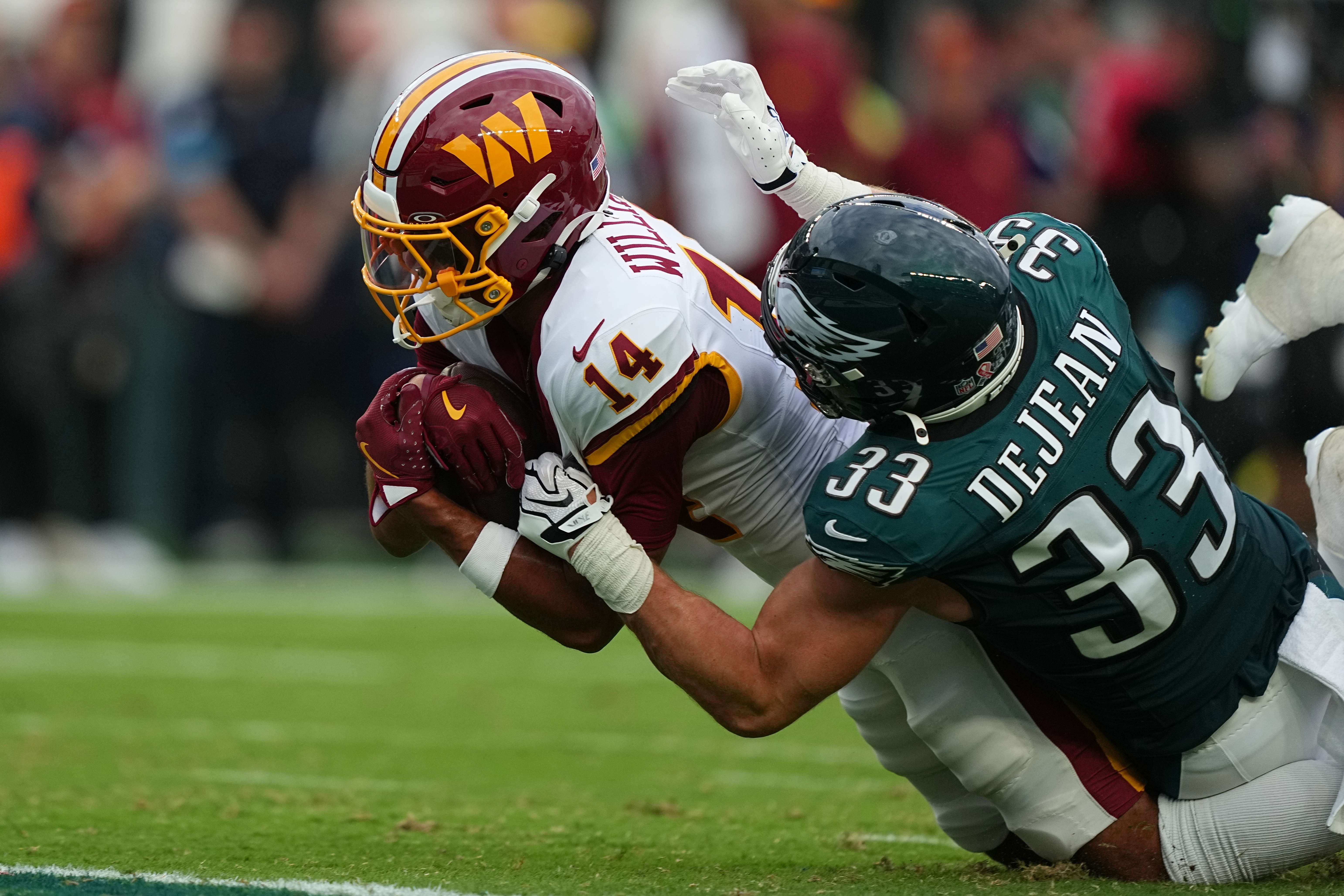
Cooper DeJean (33) had a rough time against Antonio Williams and Washington in Week 1 in a season that as been a step back for the All-Pro. Matt Rourke
Diggs got the better of Cooper DeJean back in September. The Eagles slot cornerback’s struggles in that game weren’t a one-game blip. I wouldn’t be surprised to see Washington offensive coordinator David Blough go after him in man coverage situations. Blough’s system hasn’t leaned into the under-center stuff that many predicted before the season. Daniels is often in shotgun or the pistol. But he still has a lot of early reads over the middle and will take advantage of second-level linebackers who bite on play-action. Jeremiah Trotter Jr. may be an overall upgrade over Jihaad Campbell (hamstring/quad), who is out, but Trotter is still lacking in experience.
The Commanders, like the Eagles, have struggled against the blitz. But the Eagles, unlike Washington, don’t have effective blitz packages or blitzers. This is where not having Nakobe Dean might have hurt the most. A toothless blitz has hindered a Vic Fangio pass rush that is last in quick pressure rate. Dak Prescott wasn’t touched once last week. Defensive tackles Jalen Carter and Jordan Davis have taken a lot of heat for the pass rush inadequacies, but the lack of pressure from the edges is of bigger concern. Jonathan Greenard has been either hurt or unproductive, while Jalyx Hunt and Nolan Smith Jr. haven’t won enough one-on-ones. Smith should be back after missing a game because of a concussion.
Jordan Davis (center) and Jalen Carter (right) will face scrutiny on Sunday after a weak outing on Monday Night Football. Monica Herndon / Staff Photographer
The Eagles face another set of below-par tackles after failing to capitalize on matchup advantages on Monday night. Left tackle Brandon Coleman, who was forced into the lineup after Laremy Tunsil suffered a triceps injury in training camp, has been a turnstile. We’ll see if Carter has enough pride, as Fangio said he would, to rebound from a career-low performance. He’ll mostly encounter right guard Sam Cosmi, Washington’s lone top-tier blocker, and Carter has faded in their earlier matchups.
Washington’s run offense isn’t strong and recently lost top tailback Jacory Croskey-Merritt. Rachaad White, formerly of the Tampa Bay Buccaneers, has been passable as his replacement. A heavy zone-blocking scheme hasn’t opened enough holes and has struggled against five-man fronts. I can see Davis and Co. bouncing back from last week’s disastrous outing. But they also have to contend with Daniels’ mobility. He can knife defenses on the ground, and Fangio’s scheme has historically had issues keeping running quarterbacks in check.
Extra points: The 1-4-1 Commanders are coming off a much-needed bye. They aren’t quite as banged up as the Eagles, but they’ve gotten off to another bad start with a coach in Dan Quinn who is teetering on the edge of getting fired. Somehow they’re 5½ point favorites, which speaks volumes more about the Eagles than anything else.
Nick Sirianni needs his team to demonstrate effort before Sunday night’s primetime audience. Yong Kim / Staff Photographer
Nick Sirianni didn’t call out his players for their effort vs. Dallas, but there were clues that some guys may be checking out. It’s understandable, with half the starting offense injured or gone. But Sirianni’s future could ride on how his team fights in the face of adversity. The culture stuff is supposed to be his strength. If he can’t at least get his squad to play hard, there really isn’t much left to keep him here. That may sound harsh. He certainly does more than that, but after repeated changes to his staff and scheme, there’s little doubt owner Jeffrey Lurie is questioning his coach’s future. He came close to firing him before, although I doubt such a move would come in-season.
As for the outcome of this game, can I pick both teams to lose? Maybe a tie? I won’t chicken out, so let’s go with the home team.
It’s Halloween, but the Eagles have been experiencing it for five weeks now. It’s been a season reminiscent of a haunted house, with new horrors at every turn. From clock management mishaps to a frenzy of injuries, the latest scare has surrounded the culture in Eagles locker room and the conversations about it.
Those conversations also include questions about if there is an effort problem in Philly. Head coach Nick Sirianni was quick to shut those conversations down.
Instead, the message this week has been on focusing on the details that may have been lacking and putting the Eagles in the best position to win throughout the week.
“What you do throughout the week is going to put you in positions. It guarantees nothing,” Sirianni told reporters Friday in a news conference. “But that’s what you need to do to be able to put yourself in the best positions to win.”
Looking toward the rest of the season, the Eagles aren’t in much of a position to win anything substantial. With just a 3% chance of making the playoffs, according to The Athletic’s NFL playoff simulator, the 2-5 Eagles will take on the 1-4-1 Commanders in a rematch of one of the only games the Eagles won this season.
A win has the potential to shake off some of the cobwebs for the Birds. A loss will only make this season scarier.
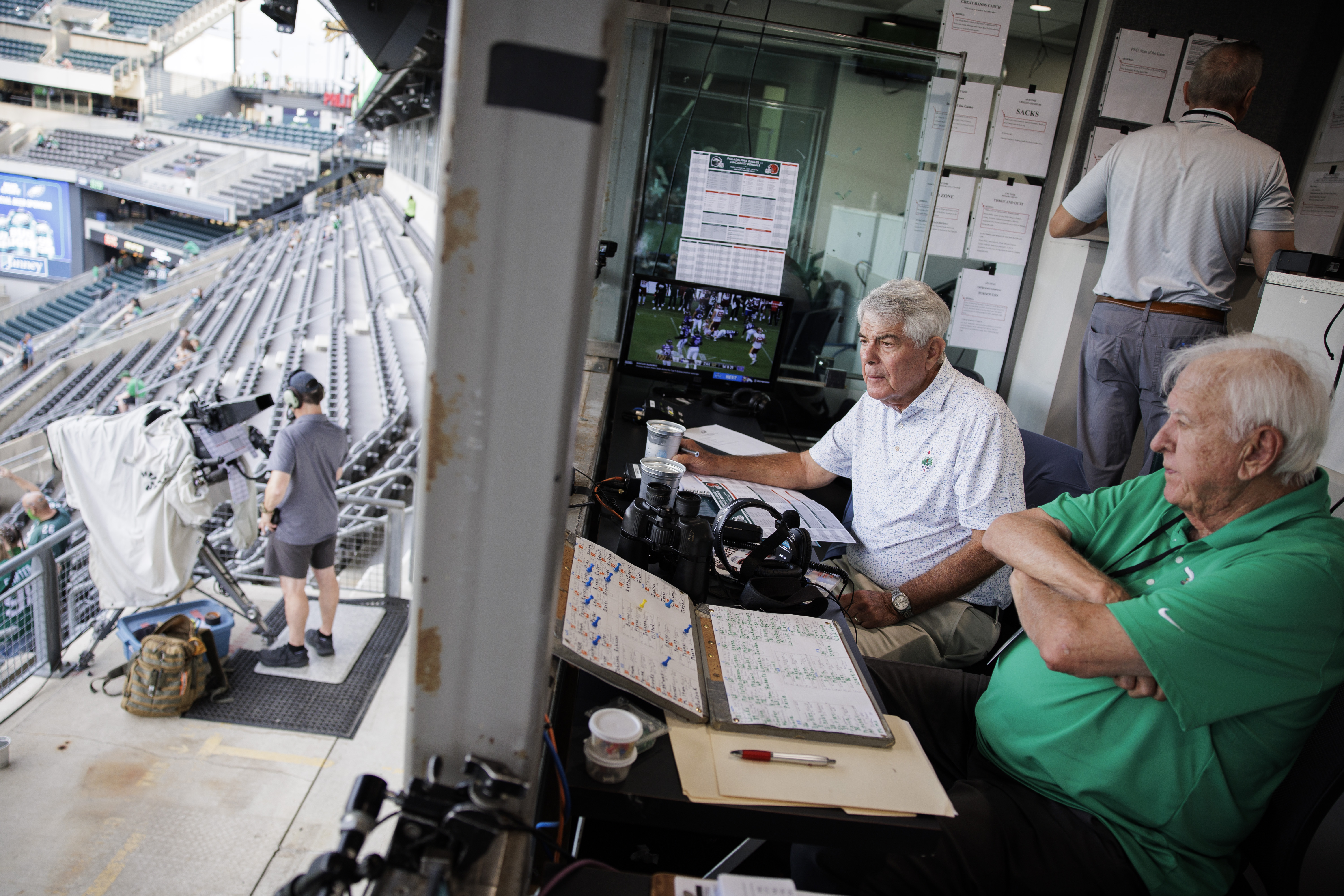
As usual, Merrill Reese (left), here with spotter Bill Werndl, will be on the call when the Eagles take on the Washington Commanders on Sunday.Monica Herndon / Staff Photographer
Despite some talk that they may get flexed out of prime time, the Eagles and Commanders will sill play on Sunday Night Football on NBC, with kickoff at 8:20 p.m. The game also will be available to stream on Peacock. Mike Tirico (play-by-play), Cris Collinsworth (analyst), Melissa Stark (sideline) and Terry McAulay (rules analyst) will be on the call for the game.
Merrill Reese and Mike Quick will have the radio call on WIP (94.1-FM).
Final injury report
Running back Saquon Barkley admitted he wasn’t fully healthy for Monday’s game against the Cowboys as he returned from a hamstring injury. And then he suffered a back injury during the loss. Still, Barkley has been cleared to play on Sunday.
Eagles
Out
WR DeVonta Smith, hamstring
WR Dontayvion Wicks, ankle
WR Britain Covey, knee
LB Jihaad Campbell, hamstring/quad
CB Jonathan Jones, hamstring
Questionable
CB Jakorian Bennett, knee
Commanders
Three of the five players on the Commanders injury report are a part of Washington’s defensive unit. The defense, under first-time play caller Daronte Jones, currently ranks 25th in the NFL in yards allowed per game, giving up 354.5 total yards on average.
Out
DT Javon Kinlaw, knee
Questionable
TE John Bates, shoulder
WR Treylon Burks, foot
DT Jer’Zhan Newton, pectoral
DT Daron Payne, foot
Latest Week 8 odds
The Eagles are the 5½-point underdogs against the Commanders, according to FanDuel. This is the fifth consecutive week the Eagles have been underdogs, and they’ve gone on to lose in each of those games. Back in the good old days, the Eagles were the underdog six times during the 2024 and 2025 regular seasons, and went 6-0 against the line.
Check out more odds and player props for this week here.
Storylines to watch
Eagles running back Saquon Barkley and his availability will be among the biggest storylines on Sunday.Monica Herndon / Staff Photographer
Barkley’s status ahead of Sunday was a big question throughout the week. That’s since been answered.
Now, it raises a new question: How much can Barkley contribute on Sunday night? While you shouldn’t expect Barkley to be hurdling backward and rushing for 200 yards, he said Friday that he still hopes to provide a “spark” on offense.
“One day, I’m not going to be playing football,” Barkley said. “Whenever that is, and I’m going to look back, I don’t want to look back and be like, ‘I could have given it a chance and I didn’t.’”
There are obvious issues on the field for the Eagles, but Super Bowl quarterback Nick Foles thinks they’re indicative of larger “culture” issues within the team. Sirianni doesn’t want his team listening to that.
Our Eagles Week 8 preview show
Olivia Reiner discussing Cooper DeJean on the Week 8 episode of our Eagles preview show.Matt Mullin / Staff
Olivia Reiner and Ryan Novozinsky discussed the contract statuses of a few of the team’s young stars and outlined some of the keys to Sunday night’s NFC East clash on this week’s Gameday Central preview show.
Here’s what our columnists are saying ahead of Week 8, starting with Mike Sielski, who looked at the many “what if” scenarios surrounding the season.
Sielski: “It’s not so simple as saying, Everything would be better if Stout were still here. The Eagles wanted to change offensive systems, which necessitated changing their blocking schemes, and as terrific as Stoutland was, as tight as his relationships with the players under him were, the O-line was not the dominant force in 2025 that it had been in 2024.” Read more.
Marcus Hayes: “Eagles coach Nick Sirianni, hopeful of retaining his $17 million job, insists he doesn’t have problems with his locker room. Well, Jalen Carter is a problem in his locker room. He’s not the only problem, but he’s the biggest problem.” Read more.
David Murphy: “Eagles general manager Howie Roseman is smart enough to know that he must capitalize on whatever future benefit exists from the disposability of 2026. He is also smart enough to understand the limits of the potential draft capital available to him even with a forward-thinking philosophy. It is much more limited than a lot of Eagles fans like to think.” Read more.
What the Commanders are saying
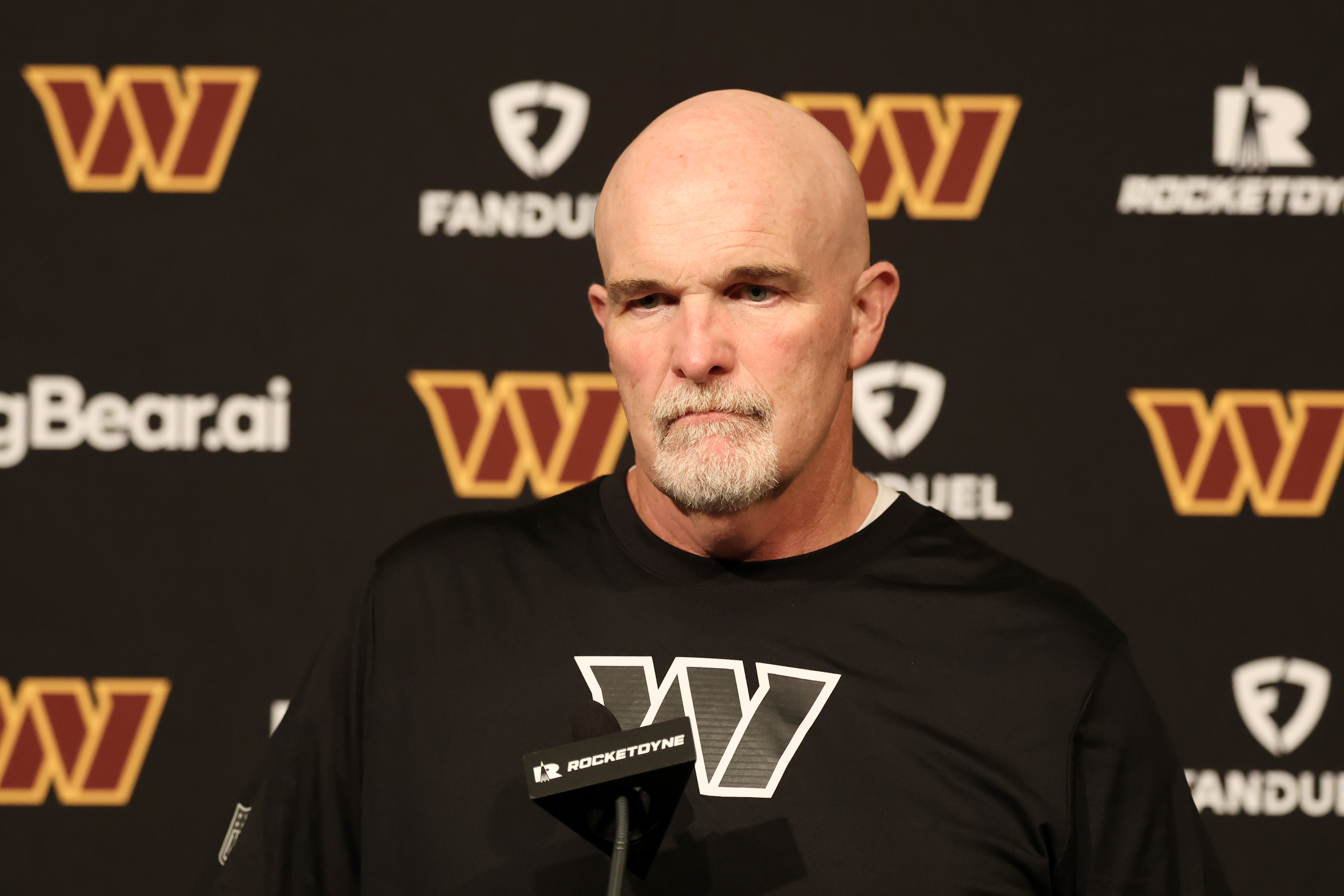
Washington Commanders head coach Dan Quinn doesn’t exactly have fond memories of the Week 1 matchup with the Eagles.Jed Jacobsohn
For the Eagles, there have been very few highs this season. Beating the Commanders in the season opener by spoiling their two-point conversion attempt was one of them. But for Commanders head coach Dan Quinn, it was one of his least favorite moments of the season.
“This is a great rivalry of games,” Quinn said. “We love battling them. I’m hoping they feel the same on their side. A lot of the games we’ve had with them have been tight, and those are the moments that you want as a competitor.”
Quinn on playing a banged up Eagles squad: “Matchups are matchups, and sometimes that goes all the way up until in the coach’s locker room. … But as far as our planning, based on them, a good bit, especially early in the week, is our plan, how we go about attacking the system.”
What the national media is saying
Even with an interception and a misthrow late in the second half against the Cowboys, Jason Kelce thought backup quarterback Tanner McKee’s performance on Monday was a lot better than the previous week’s. And as McKee settles into the role and the Eagles get used to a season without Jalen Hurts, Kelce said this is when everyone will get to see what Philly is truly made of.
“That’s when it gets hard to keep things on rail and keep it together,” Kelce said. “And it’s not even just the players. It’s like everything, man. Because everybody starts questioning everything, and you should because you’re losing games. But this is where great coaches, leaders, this is where you get tested as a ballclub and how you weather this.”
Hopefully the Eagles will put the Halloween festivities behind them for their first game in November and move on to giving fans something to be grateful for ahead of Thanksgiving.
After practicing on Friday for the first time this week as a limited participant, Saquon Barkley (hamstring/back) is available to play against the Washington Commanders on Sunday night.
Barkley, the 29-year-old running back, was removed from the final injury report on Friday. On Monday night, he made his return to game action in the Eagles’ loss to the Dallas Cowboys after missing the previous two contests with a hamstring injury. However, early in the game, his back locked up, which he said afterward was a result of overcompensating for his injured hamstring.
He finished with just nine touches on 10 snaps — seven carries for 62 yards and a touchdown, plus two receptions for nine yards. He did not practice on Thursday and was listed as a non-participant on Wednesday (the team held a walkthrough that day, so the injury report was an estimation).
Barkley acknowledged on Friday that he will have to continue to manage his injuries throughout the game, indicating that he may not be able to shoulder a full workload. Regardless, he said he wants to continue to provide a “spark” on offense through his playmaking ability and his leadership.
“One day, I’m not going to be playing football,” Barkley said. “Whenever that is, and I’m going to look back, I don’t want to look back and be like, ‘I could have given it a chance and I didn’t.’ It’s kind of what I live by. So try my best to just keep recovering, being smart, but I like playing football. If I have an opportunity to play, I’m going to try my best to play.”
DeVonta Smith is still dealing with lingering hamstring issues. Monica Herndon / Staff Photographer
While Barkley will be available to play on Sunday night, the Eagles will be without their top receivers in DeVonta Smith (hamstring) and Dontayvion Wicks (ankle) for a second straight week.
Neither receiver participated in practice this week, as they were officially ruled out on Friday. Linebacker Jihaad Campbell (hamstring/quad), wide receiver Britain Covey (knee), and cornerback Jonathan Jones (hamstring) were also ruled out.
Even though outside linebacker Jalyx Hunt (knee/ankle) and defensive tackle Moro Ojomo (neck) were limited participants in practice all week, both players were removed from the injury report on Friday. Ojomo said his injuries over the last several weeks have been “annoying,” as he was on the injury report leading up to the Cowboys game with an abdominal ailment. Ahead of the Los Angeles Rams game in Week 4, he was dealing with calf and elbow injuries.
“I feel like last couple weeks, I’ve been dealing with different crap, and I just want to like feel healthy and just go out there and practice with those boys, because practice is so important,” Ojomo said. “So that’s kind of been a pain, but the trainers have been great about that, and the coaches have been great about that.”
Nolan Smith Jr. is set to return after missing last week’s game with a concussion, which he sustained in Week 5 against the Jacksonville Jaguars. The Eagles’ banged-up edge rusher corps is expected to be back to full strength this week, with Smith, Hunt, and Jonathan Greenard set to be active.
Defensive back Michael Carter II (abdomen) is also available to play for the first time since Week 5. He had taken over for Marcus Epps as a starter at safety for two games before going down. Kenny Moore II has been starting in his place.
Cornerback Jakorian Bennett (knee), who is on injured reserve, is listed as questionable. If he is not activated this weekend, the Eagles have until Nov. 4 to sign him to the 53-man roster or place him on season-ending injured reserve.