Tag: Villanova

  • Villanova U. spent more than $100 million on renovations of the former Cabrini campus. Students will begin living and learning there this fall.

    Villanova U. spent more than $100 million on renovations of the former Cabrini campus. Students will begin living and learning there this fall.

    The former Cabrini University campus has undergone a more than $100 million, Villanova-fueled rebirth, and students will begin attending classes and living there this month.

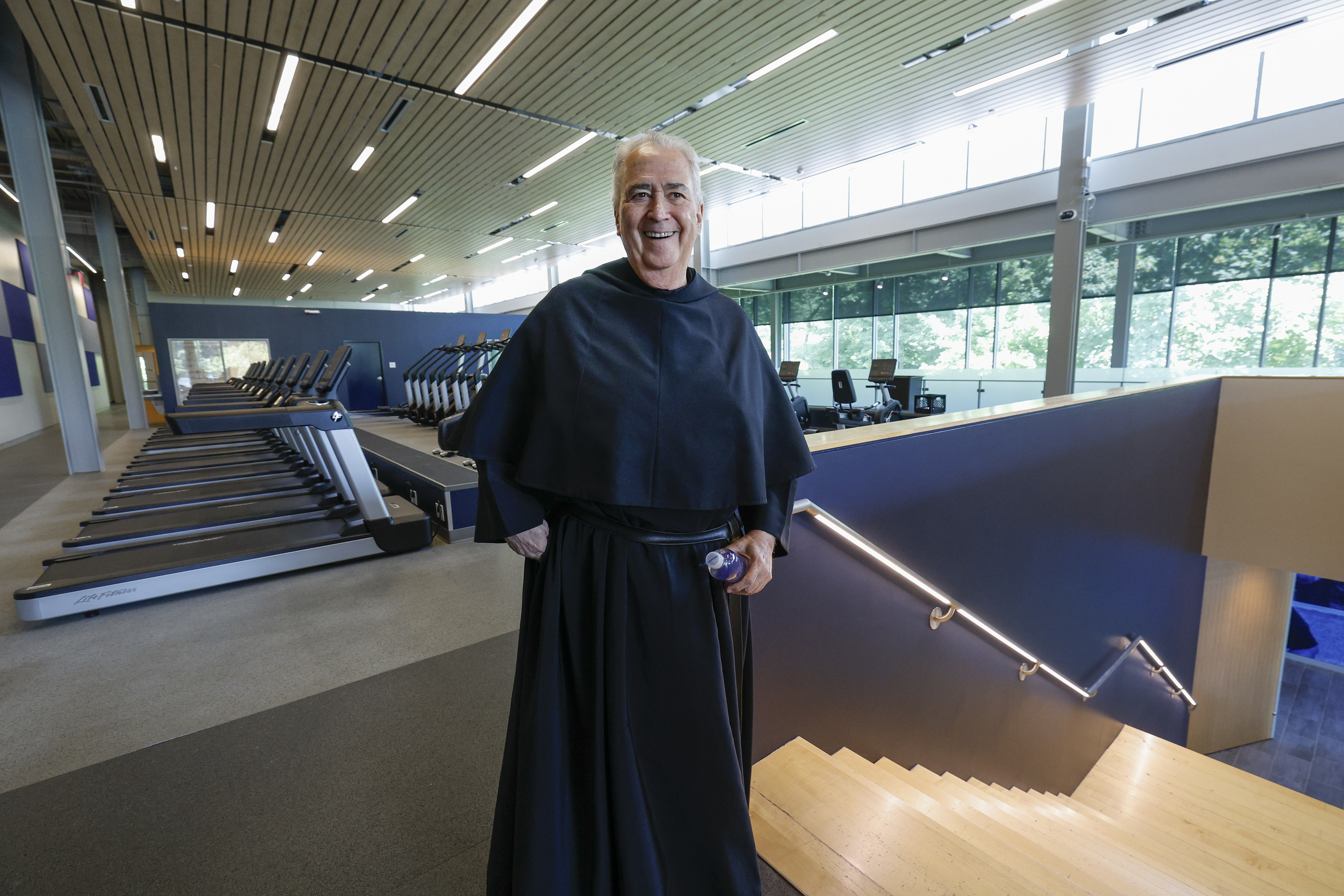
    Large signature blue and white V’s for Villanova University are everywhere. “Ignite Change. Go Nova,” says a wall in the student recreation center. Beds in the residence halls now have navy blue sheets, and many of the buildings have been renamed to honor Villanova’s Augustinian heritage.

    The Radnor campus once in dire need of maintenance sports a fresh look, including new light poles, landscaping, painting, furniture, boilers, roof repairs, a running fountain, pickleball courts, and restored architectural flourishes, in addition to upgraded educational technology for classrooms.

    The university removed dead trees, installed firepits on the campus green, and connected the two campuses’ phone and internet systems.
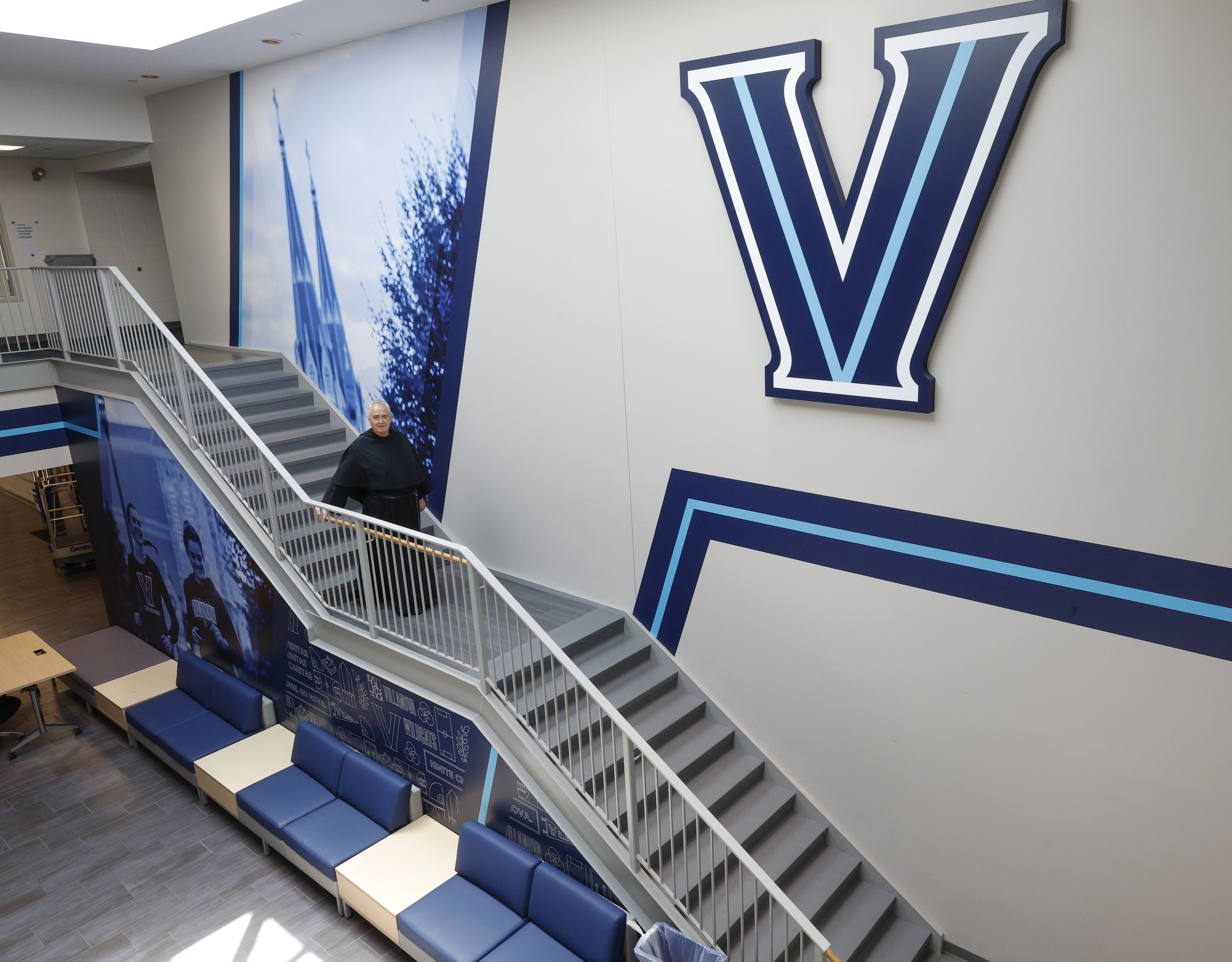
    Villanova President Rev. Peter M. Donohue walks down the stairs at the Dixon Center, which has been covered in Villanova signage and colors. Steven M. Falk / For The Inquirer

    It is all part of Villanova’s effort to make the 112-acre campus that it acquired from the shuttered Cabrini look and feel decidedly Villanovan. The campus has been closed for the last two years as the planning and upgrades took place.

    “It’s always been a beautiful campus, but it looks very Villanova now,” said Kelly Tuzio, assistant director of Villanova’s graduate nursing program, who worked at Cabrini from 2005 to 2011.

    “You can feel the change,” she said, helping to ready the Iadarola Center, the building she works in, for the opening. “Everything is just done to perfection.”

    Some things remain largely untouched, like the signature statue of Mother Cabrini on the green and the Mansion, Cabrini’s former administrative building, which is on the National Historic Register. It was renamed Montefalco Hall. Masses will continue to be celebrated in the chapel: Cabrini was a Catholic university, as is Villanova.
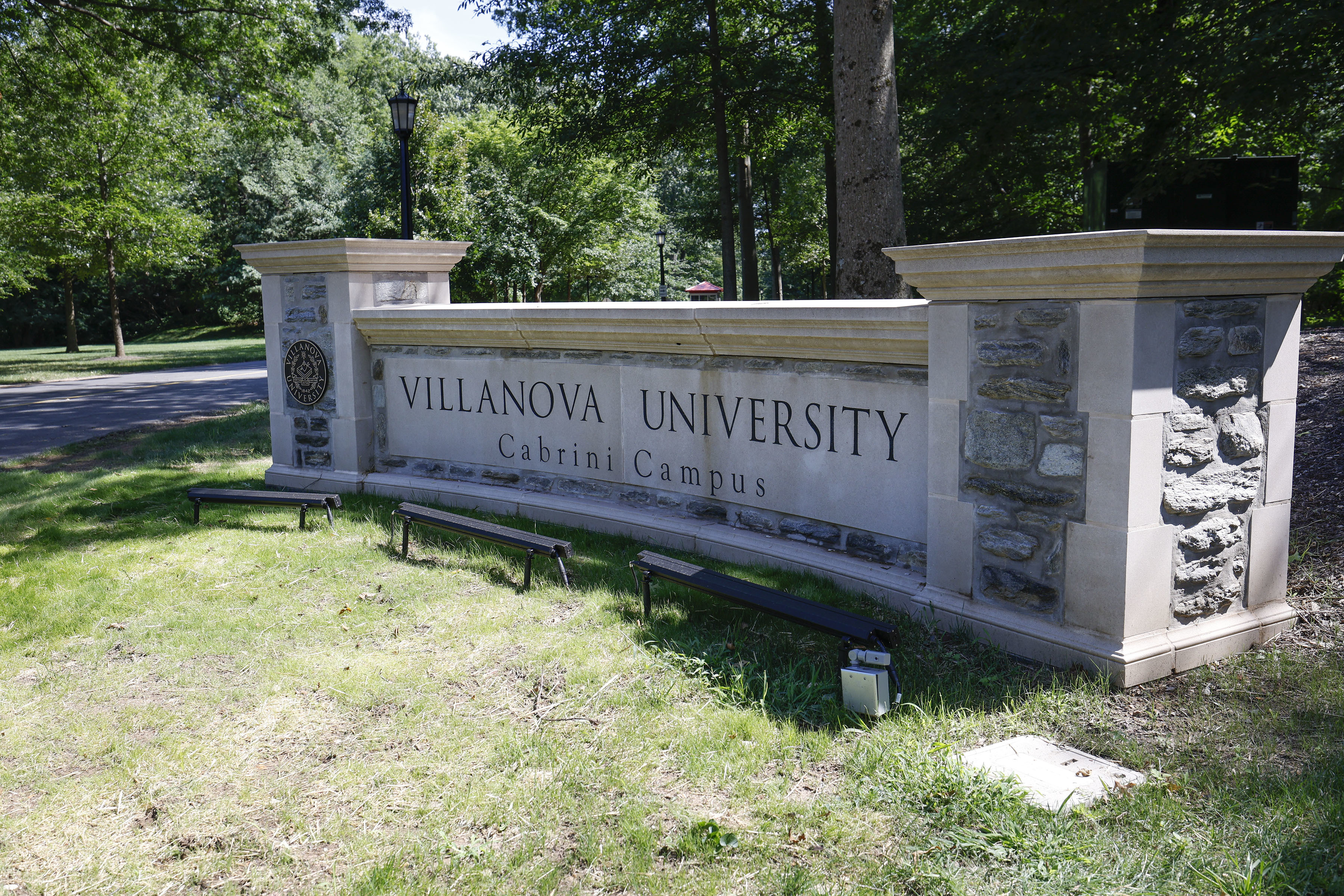
    Villanova University purchased the nearby campus of the now shuttered Cabrini University two years ago and has had the site closed for remodeling. But this fall, students will live and study there. Steven M. Falk / For The Inquirer

    And signs at the entrance to campus say: Villanova University, Cabrini Campus — a nod to Villanova’s larger promise to retain Cabrini’s legacy.

    A new era of growth

    The acquisition of the campus, which officially opens for fall classes Aug. 24, marks an era of new growth for Villanova.

    As many other colleges have lost enrollment in recent years, Villanova plans to grow its undergraduate student body, now at about 7,000, to 8,000 over the next four years, said the Rev. Peter M. Donohue, Villanova’s president. That growth started this year with about 250 additional freshmen. And the school plans to maintain its selectivity; it admitted just 29% of applicants for this fall’s class and saw more than a 10% surge in applications over the last year.

    Villanova, which has a 260-acre main campus, will expand 43% in size with the addition of Cabrini. The university’s acquisition of Rosemont College — which will be complete in 2028 — will add 58 acres, increasing Villanova’s total to 430 acres.

    The Cabrini campus will house five academic departments: psychological and brain sciences, graduate nursing, education and counseling, ethics, and part of communication. About 75 faculty — 10% of the total — will be based there.
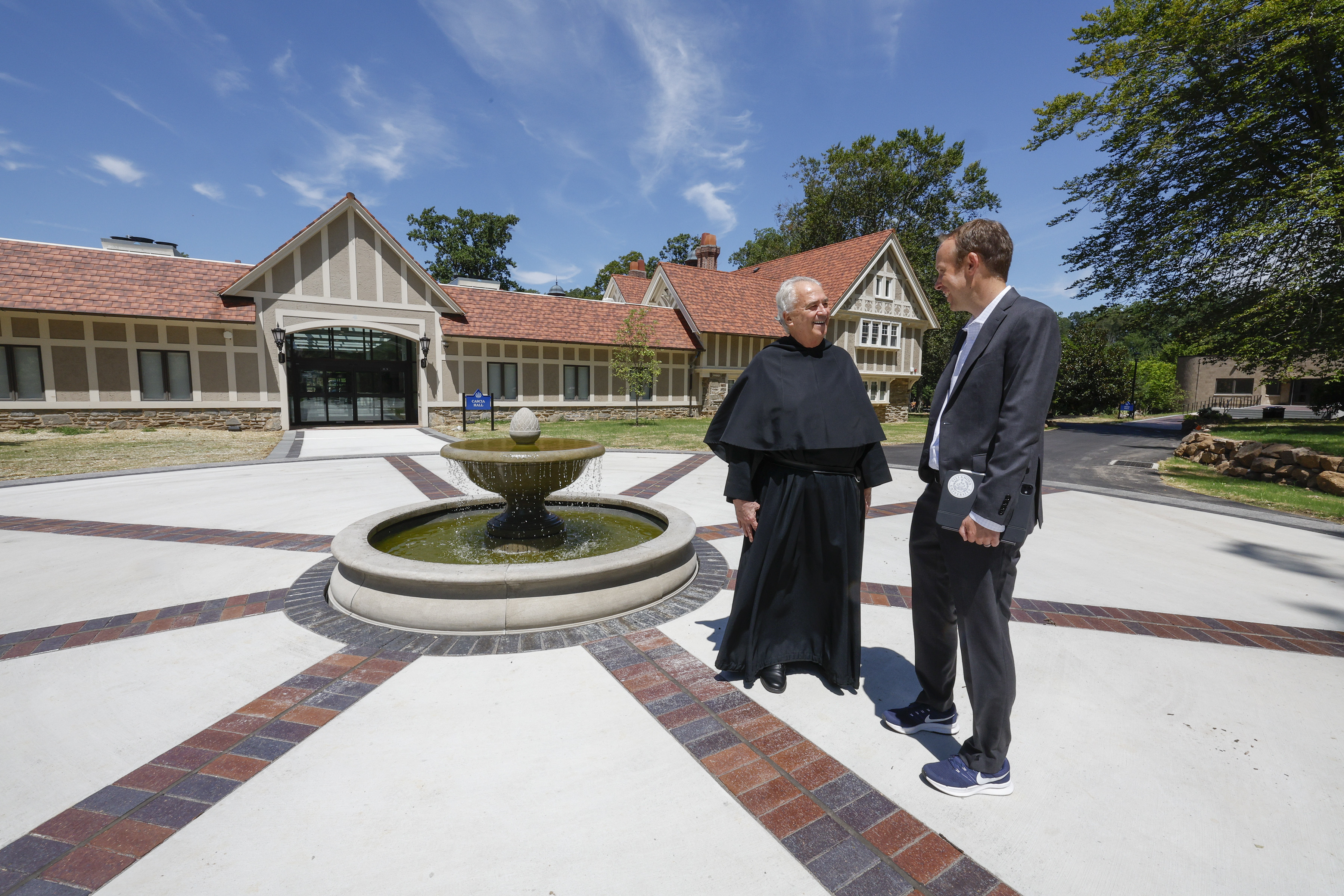
    Villanova University President the Rev. Peter M. Donohue left, and Timothy Hoffman, vice provost for finance and administration, stand in front of a newly installed fountain outside Cascia Hall, which received a lot of renovations inside and out. It houses the student center. Steven M. Falk / For The Inquirer

    About 900 sophomores — roughly half of those enrolled at Villanova — will live on the campus, expanding the percentage of undergraduates who live on Villanova’s campuses to more than 80%.

    In addition, more than 2,000 undergraduate and graduate students — about a fifth of Villanova’s overall student population — will take classes at the Cabrini campus in the fall, said Timothy Hoffman, vice provost for finance and administration.

    “I’m just excited to see life again on the campus,” said Michelle Filling-Brown, formerly dean of academic affairs at Cabrini and now associate vice provost for the integrated student experience at Villanova.

    She has been designing themed living and learning communities for the new Cabrini campus.
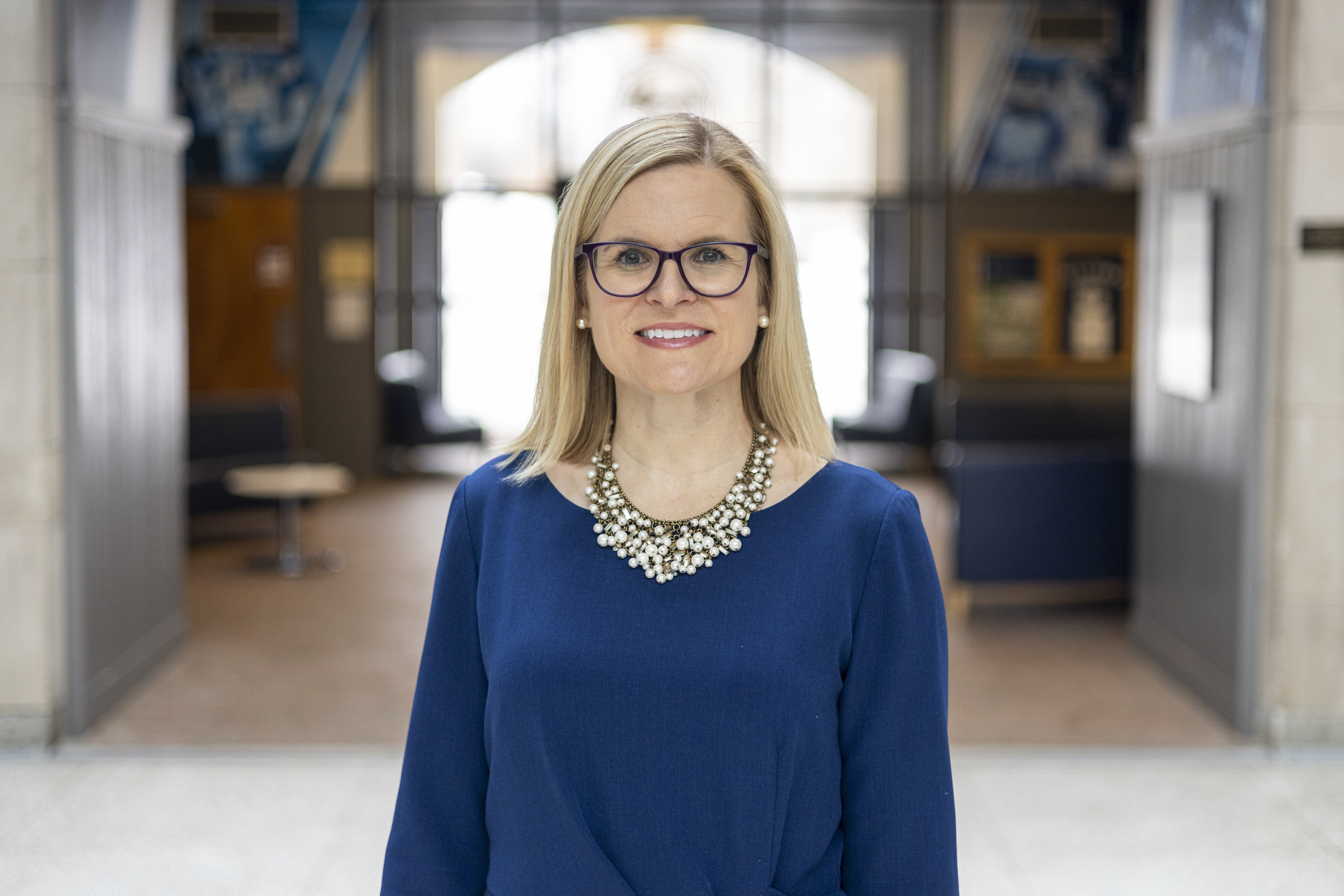
    Michelle Filling-Brown, a former top administrator at Cabrini, now works at Villanova.Tyger Williams / Staff Photographer

    Started in 1957, Cabrini was the only college founded by Sister Francesca Cabrini’s Missionary Sisters of the Sacred Heart. The university announced in 2023 it would shut the next year and Villanova would take it over, giving students and employees a year to find a new runway. The decision came as enrollment plummeted, finances tightened, and deferred campus maintenance mounted.

    In spring 2024, the 67-year-old school marked a series of lasts, including its final commencement.

    Cabrini became one of a growing number of shuttered colleges in the region whose campuses have been acquired by others. St. Joseph’s University bought the University of the Sciences campus, Thomas Jefferson University the former Philadelphia University campus, Drexel the former Salus University, and Lackawanna College the former Peirce College. Various entities, including Temple University, bought pieces of the former University of the Arts. Plans for the soon-to-close University of Valley Forge have not been announced.

    Donohue said Villanova has not yet made specific plans for Rosemont.
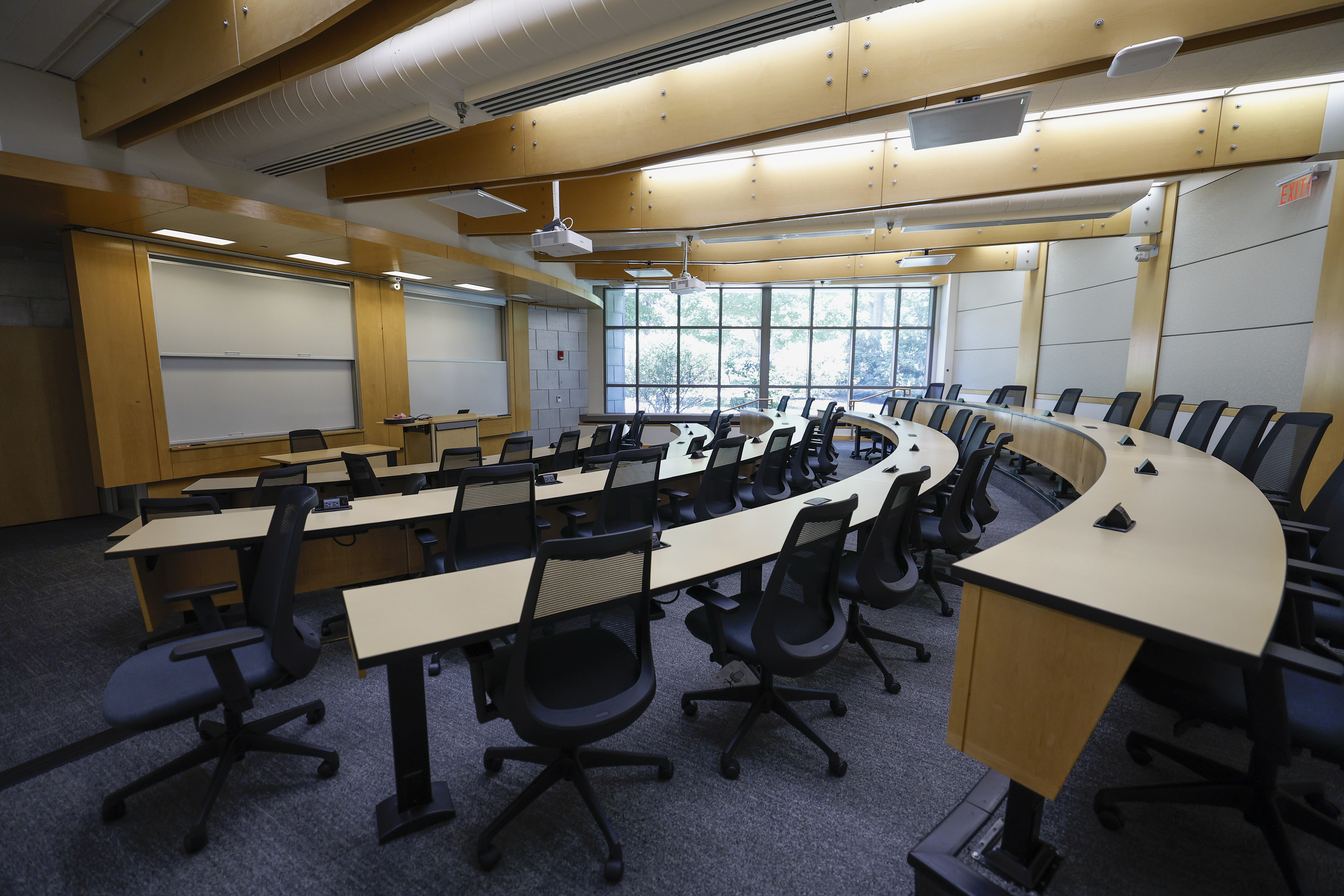
    A classroom with new educational technology at the Iadorala CenterSteven M. Falk / For The Inquirer

    Before beginning renovations, Villanova invited Cabrini alumni to collect memorabilia, Donohue said. The school also donated truckloads of old furniture and materials that it did not plan to use to nonprofits.

    A $170 million-plus investment

    The university has invested more than $170 million into the Cabrini purchase, including the $70 million it paid to close out Cabrini’s debt and acquire its land, buildings, and assets, and more than $100 million on renovations. Donohue said it will take just four years for the school to recover that money through the operation of the campus.

    The university was able to keep $15 million of Cabrini’s $42 million endowment, the school said.

    Though the campus has not officially opened yet, a few students have begun to move in. Last Tuesday, a group of young staff members huddled in a room, planning grand-opening activities. Others unpacked and organized nursing equipment.
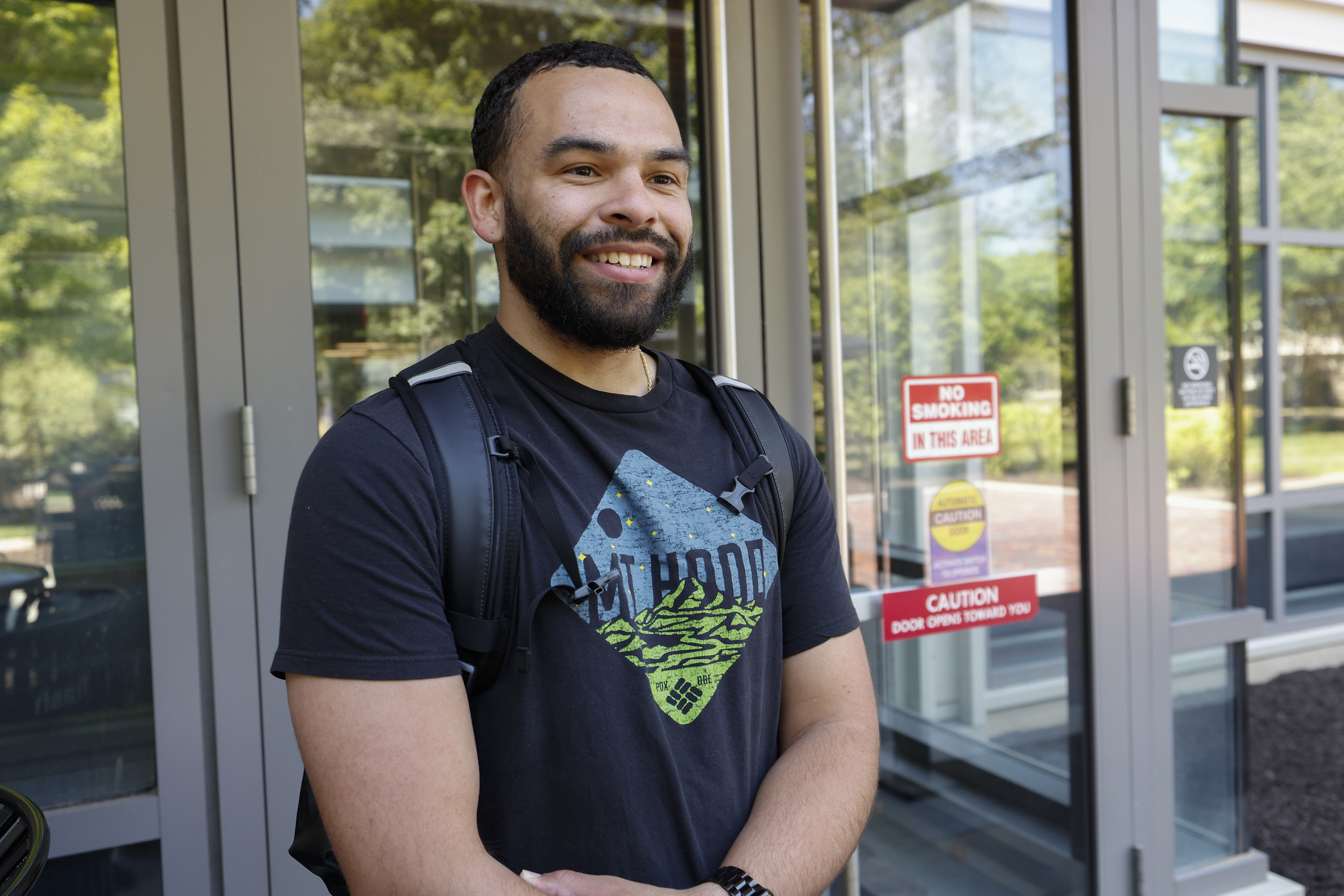
    Graduate student Curtis Wesley stops by the Iadarola Center where he will study this fall.Steven M. Falk / For The Inquirer

    Curtis Wesley, 26, an incoming graduate student in the nurse anesthesia program, strolled out of the building where his classes will be.

    “I just wanted to come and check it out,” said Wesley, who is from Kansas. “I was excited to see all the new technology.”
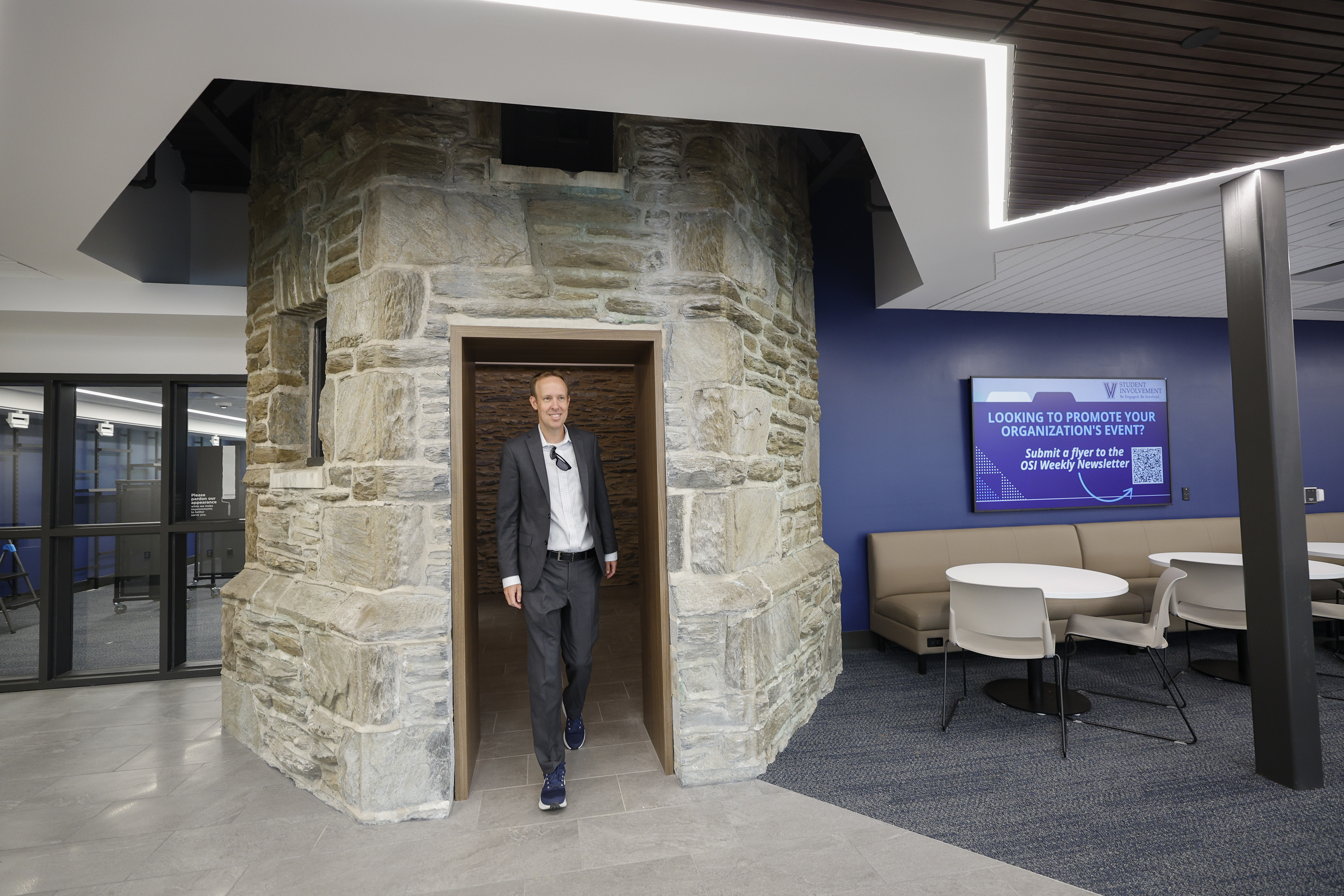
    Timothy Hoffman, vice provost for finance and administration, emerges from the stone-walled turret leading to what will be a Villanova apparel shop. The turret was uncovered during remodeling at Cascia Hall. Steven M. Falk / For The Inquirer

    One of the buildings that received the most renovation was the former Grace Hall, now Cascia Hall, home to the student center. The building used to be a stable house for the Woodcrest Mansion. Over the years, Cabrini put up drywall and turned much of it into office space.

    Villanova knocked those walls down and uncovered architectural flourishes including gargoyle-like stone carvings and a cavernous, stone-walled turret with a wooden-framed doorway, leading to what will be a Villanova apparel shop.
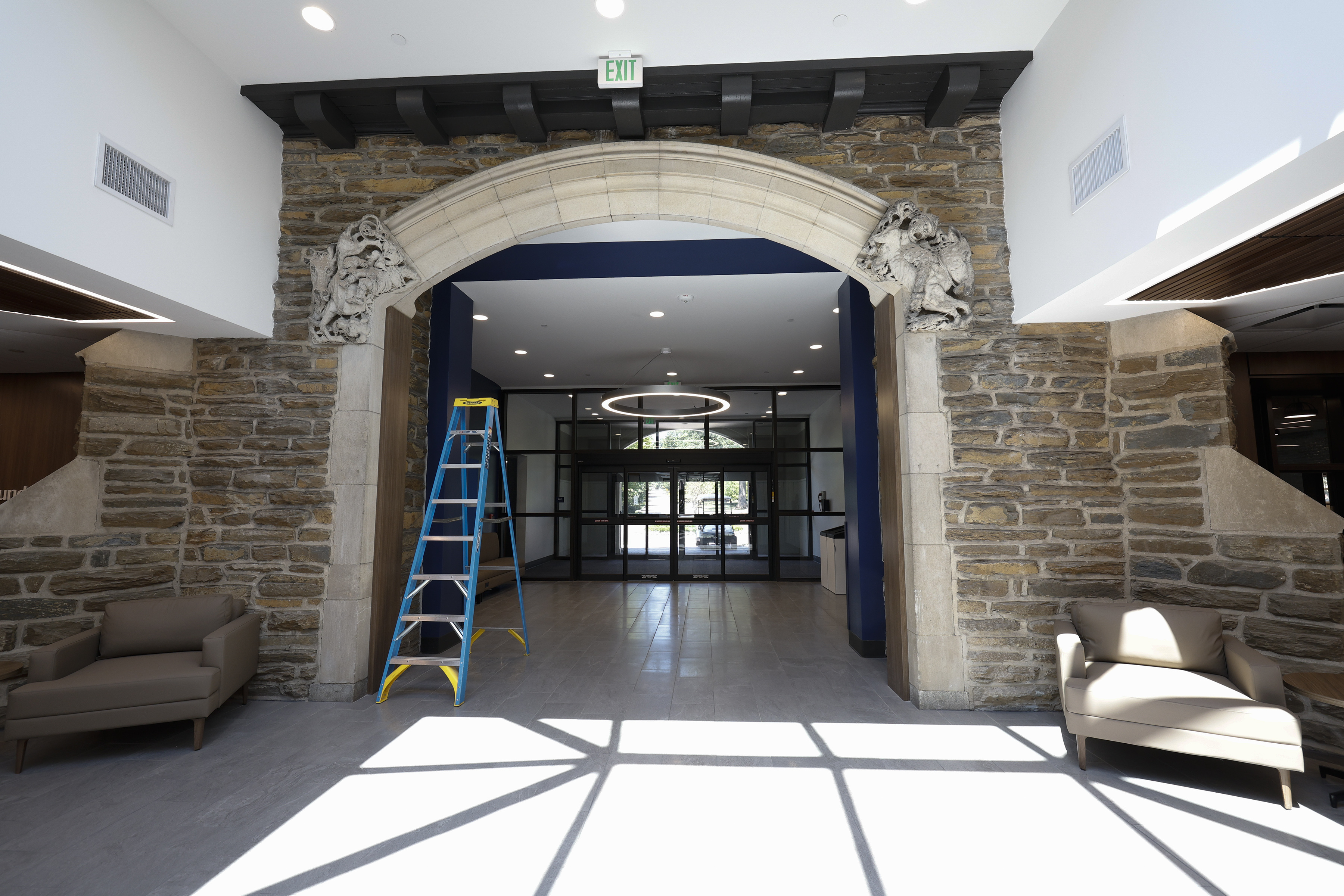
    Renovations at Cascia Hall uncovered some architectural flourishes, including these stone carved gargoyles. Steven M. Falk / For The Inquirer

    The Dixon Center will remain an athletic facility, but now the basketball court has a large V in the center and the smoothie bar will offer treats such as the Brunson, named after Villanova Wildcats basketball star-turned-New York Knicks standout Jalen Brunson, and the Father Peter Power, honoring the university president.

    Donohue couldn’t name the ingredients in his new signature drink.

    “I didn’t know it existed,” he said.

    The facility, which also got new cardio equipment and reupholstered weight benches, will be used for non-varsity sports recreation.
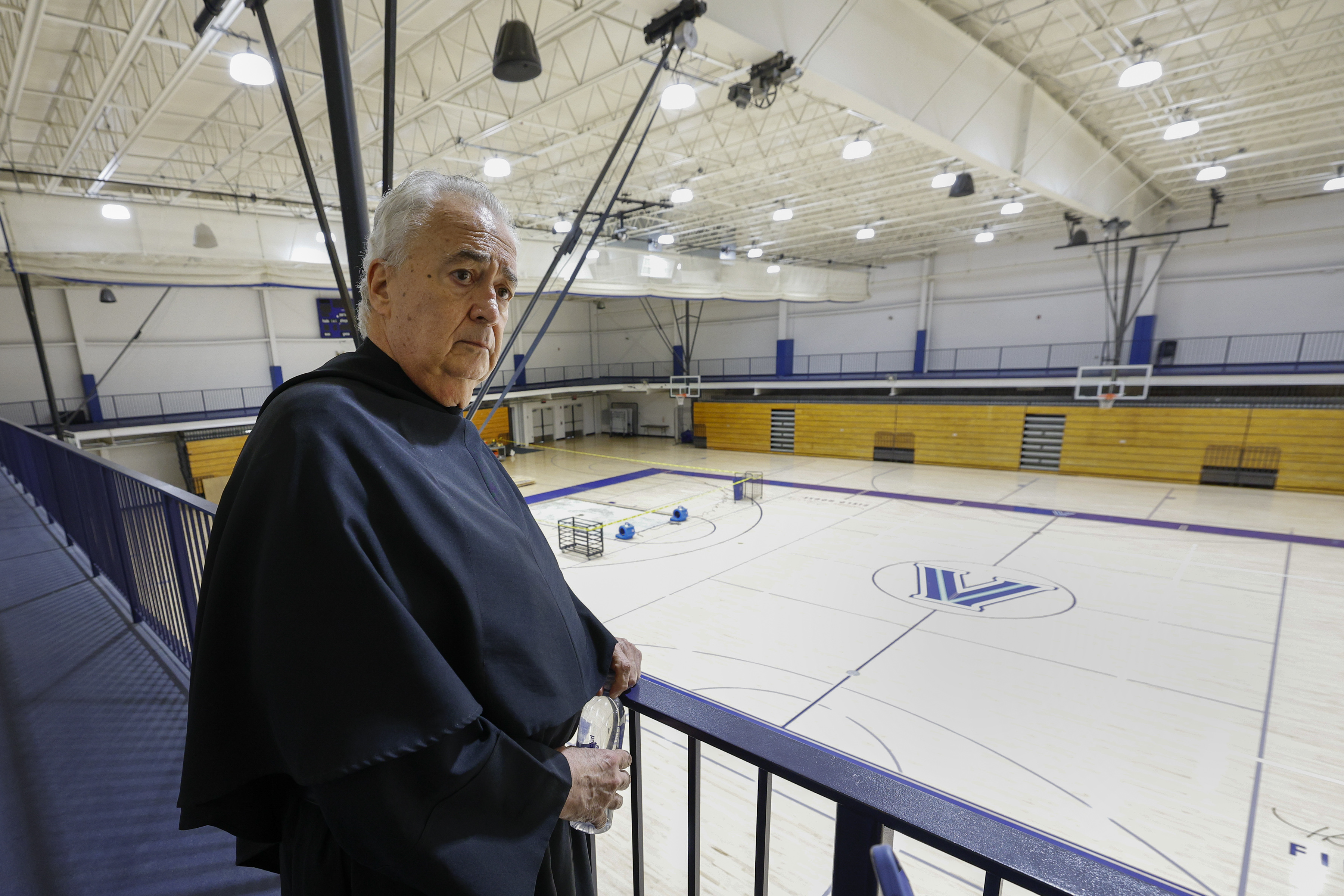
    Villanova President the Rev. Peter M. Donohue overlooks the basketball court at the Dixon Center. Steven M. Falk / For The Inquirer

    “Our intramural basketball activity goes into the wee hours because we’re limited in our number of courts, so we are delighted to have this space,” Hoffman said.

    The Iadarola Center, Cabrini’s former science building, includes a new nursing simulation facility that Cabrini had recently finished. But Villanova added upgrades, including a vivarium for psychology department research and more space for the brain science program. The former Cabrini library has been converted into student study space.

    ‘Many more dorm options’

    Seven residence halls will house students, including two that had been closed amid Cabrini’s enrollment decline. One of them had a malfunctioning boiler — not anymore.

    Sophomores were given the choice of living at Cabrini. Villanova ran tours of the campus for students last academic year. Those who chose Cabrini said they were attracted to the renovated dorms and larger room configurations that allow them to live with several roommates and share a bathroom. Options on main campus for sophomores are largely limited to doubles with a large bathroom shared by an entire floor or wing.
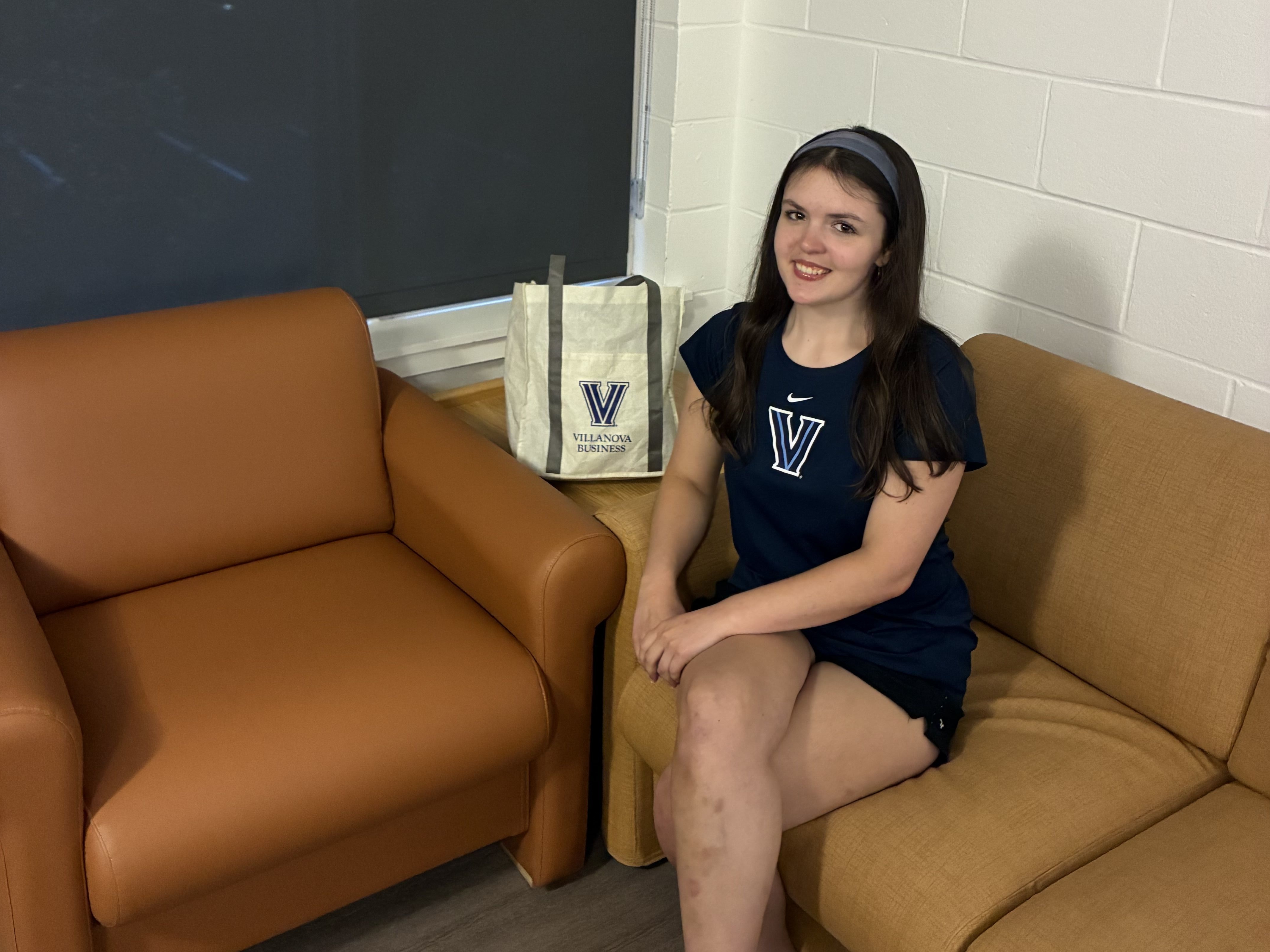
    Villanova University sophomore Molly Dunphy-Culp has moved into her new apartment on the Cabrini campus.Courtesy of Molly Dunphy-Culp

    “With Cabrini, there are so many more dorm options,” said Molly Dunphy-Culp, 19, a sophomore who was born in Boston and grew up in Abington.

    She will be sharing an apartment in Lecceto Hall with three classmates.

    She acknowledged that she will have to take the shuttle to main campus for classes, but said the short ride will be worth it. Dunphy-Culp also has a job on Cabrini as a recreation center supervisor — another plus for living there.

    About half the students on campus will be allowed to have cars. Sophomores do not have that option on main campus.

    “Two of my close friends are both going to have cars on campus,” said Ella Hayman, 19, a sophomore from just outside Boston. “This will give us a little more freedom we didn’t have last year. That was a big motivation.”
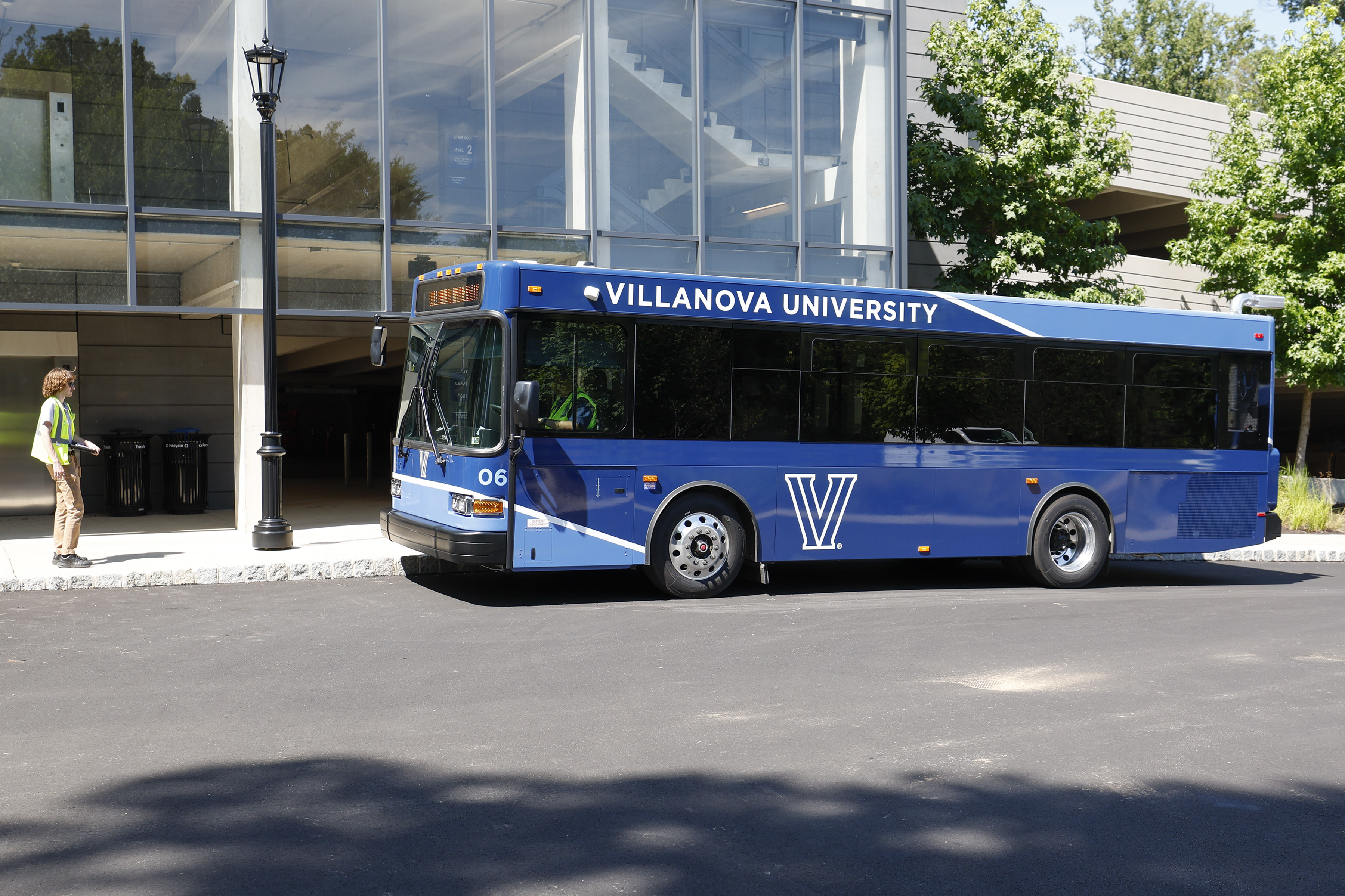
    Shuttle buses including this one will transport students between Villanova’s main campus and the Cabrini campus 1.9 miles away. Steven M. Falk / For The Inquirer

    Thirteen shuttle buses will transport students between the two campuses, which are 1.9 miles apart — a seven- to 12-minute ride, Hoffman said. A team of Villanova employees over the last couple of years visited five universities with multiple campuses, including Lehigh and George Washington, to learn how best to integrate them. They looked closely at models for a shuttle system that would keep students informed of where and when buses would be arriving and departing, Hoffman said.

    Among new dining options on the campus is the restaurant-style Table 1842, named for Villanova’s founding year, where students can order off a menu. It is located in the former Founder’s Hall, now Bellesini Hall, which also was heavily renovated, including the installation of a new entrance that leads directly into dining facilities so people do not have to climb as many steps.

    Bellesini has become the third-largest classroom building at Villanova. Some of the nearly 30 classrooms on the Cabrini campus had to be expanded to accommodate slightly larger class sizes, Hoffman said. Cabrini’s classes were 12 to 14, and Villanova starts at 16, Hoffman said.
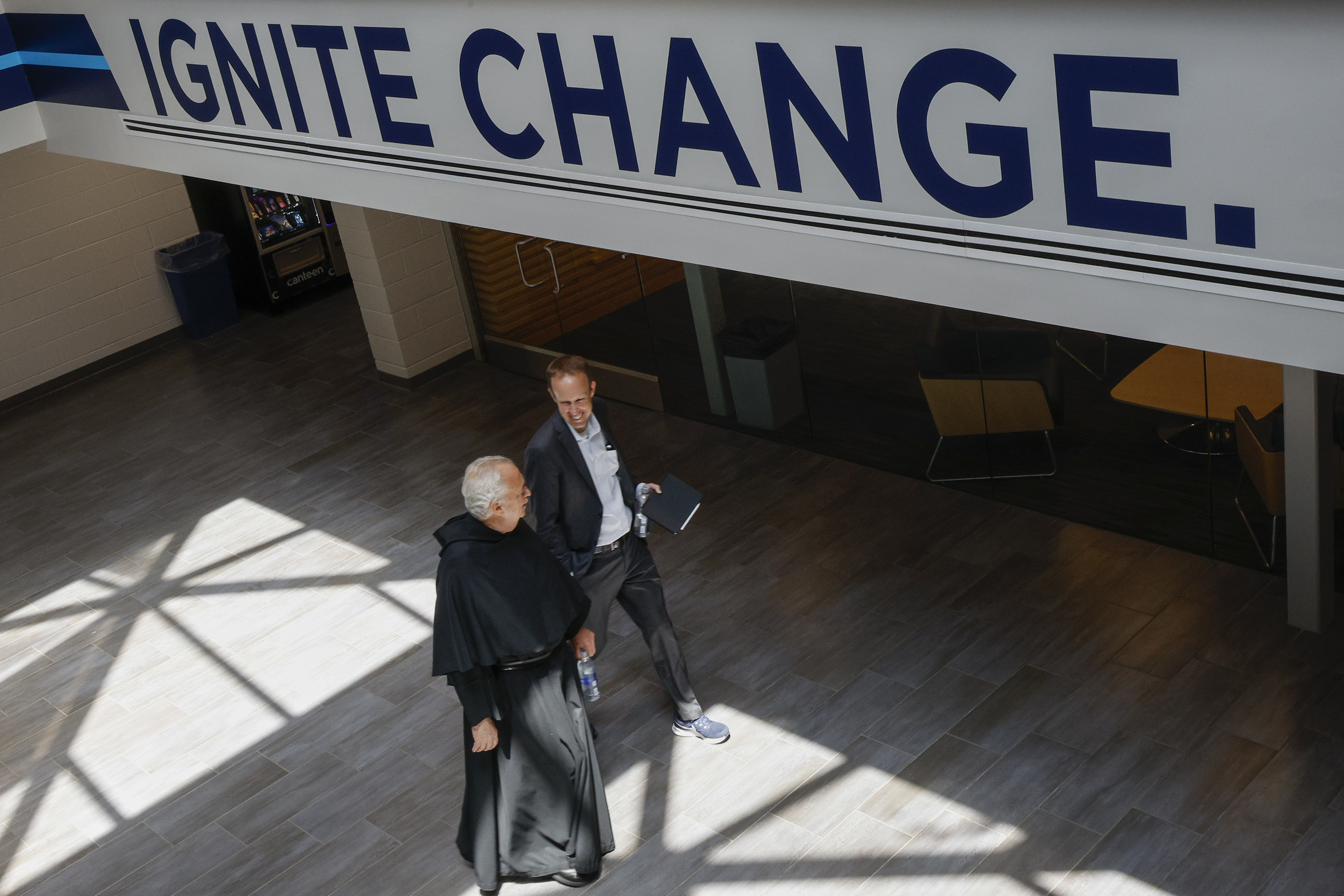
    Villanova University President the Rev. Peter M. Donohue left, and Timothy Hoffman, vice provost for finance and administration, walk through the Dixon Center. Steven M. Falk / For The Inquirer

    Some improvements are still to come, including renovations to the former Mansion, which will be costly, and a nature trail, Donohue said.

    Villanova named Francesca and Xavier Halls for Mother Cabrini and is continuing Cabrini’s Center for Immigration; Villanova converted it to the Mother Cabrini Institute on Immigration. Villanova also launched an elementary education major in honor of Cabrini’s former program.

    Preserving a legacy

    “They had a strong desire to make sure some of their legacy lasted, and we wanted to protect that,” Donohue said.
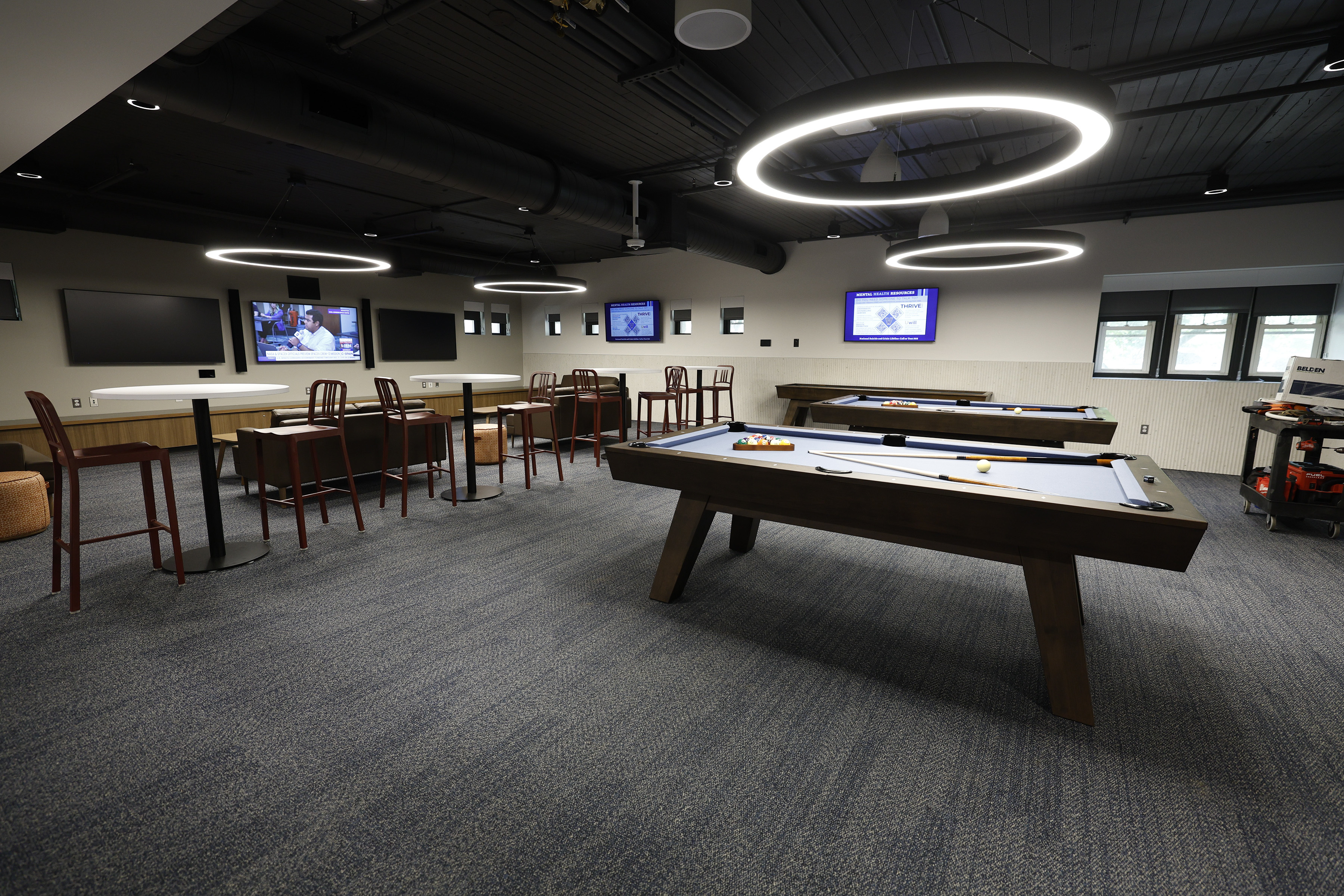
    The game room at Cascia HallSteven M. Falk / For The Inquirer

    Coincidentally, there is a stained glass window of St. Augustine — namesake of Villanova’s founding order — in Cabrini’s chapel and a stained glass window of Mother Cabrini in Villanova’s Corr Hall chapel.

    Filling-Brown, the former Cabrini administrator now at Villanova, said it seems meant to be.

    “It’s beyond my wildest dreams for the campus,” Filling-Brown said. “It’s the best outcome to see Catholic higher education continue on that campus.”
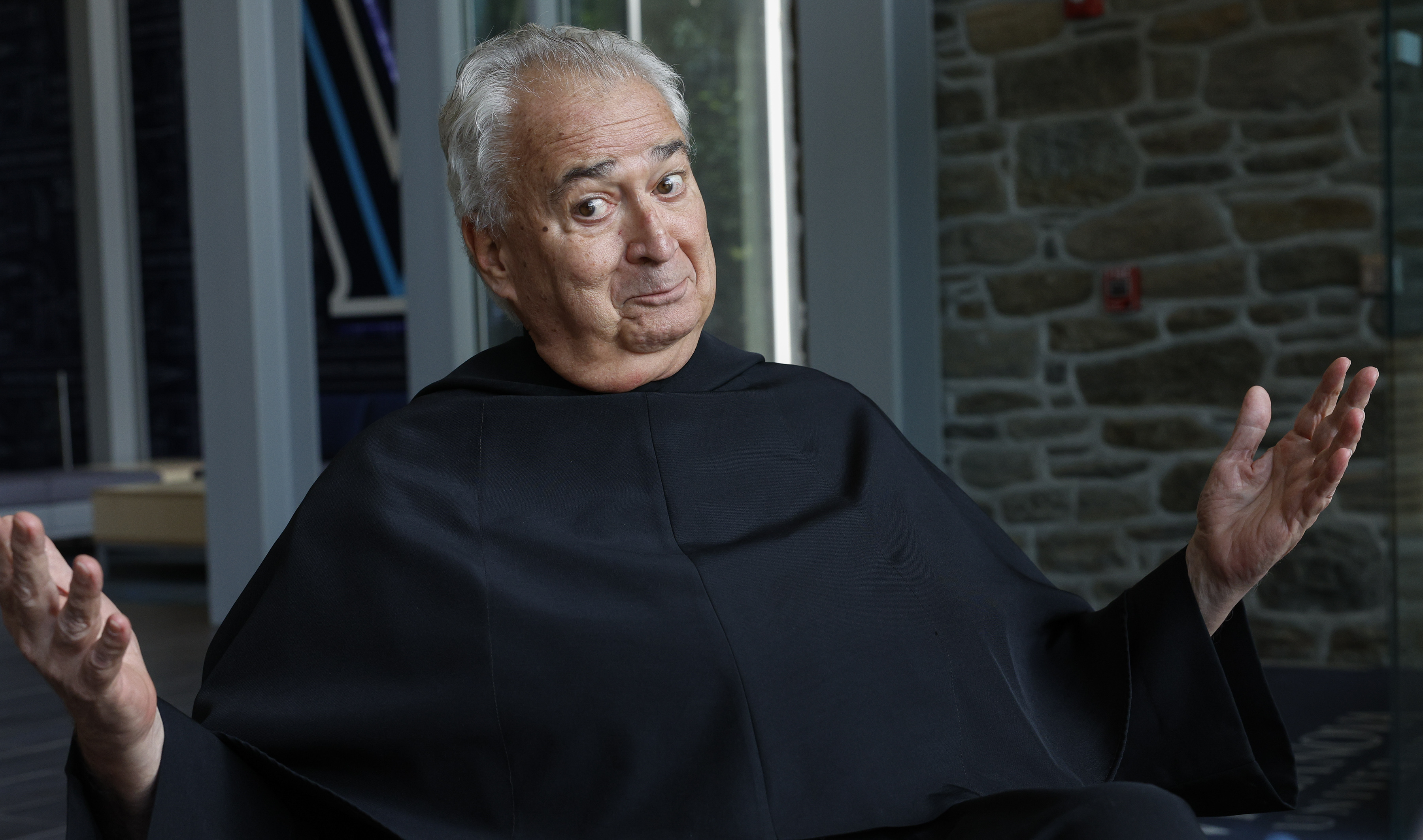
    Villanova President the Rev. Peter M. Donohue discusses all it took to remodel the Cabrini campus. Steven M. Falk / For The Inquirer
  • Under pressure from its accreditor, University of Valley Forge offers students information on transferring

    Under pressure from its accreditor, University of Valley Forge offers students information on transferring

    Under pressure from its accreditor, the University of Valley Forge is offering students and families information on how to transfer to other colleges.

    The move comes as the Phoenixville-based college — which enrolls 589 students, according to the National Center for Education Statistics — faces the possible loss of its accreditation by the Middle States Commission on Higher Education. Colleges need accreditation to keep their students eligible for financial aid.

    Middle States last month issued its most serious warning — “show cause” — to the small Christian college that prepares students for leadership in the church and the world. It cited concerns about finances, planning, and governance.

    The university is among the latest institutions in the region to face the threat of closure amid a declining pool of high school students and increased competition. The University of the Arts and Cabrini University closed in 2024. Rosemont College’s campus has been purchased by Villanova University, and the college plans to conclude its operations in 2028. Peirce College has been merged into Lackawanna College, a process that has been approved by the U.S. Department of Education and was sanctioned by Middle States this month.

    University of the Sciences and Philadelphia University were phased out in previous mergers with St. Joseph’s University and Thomas Jefferson University. Pennsylvania State University plans to close seven of its Commonwealth campuses next year.

    On its website, the University of Valley Forge says that it is not closing, but that it has established several colleges as “teach-out partners” that would streamline admission of University of Valley Forge students in the event of a closure. The school was required under the Middle States process to develop “teach-out plans” that would provide students with options to complete their education if the school were to close.

    “Although this process does not require the university to provide students with teach-out options at this time, we understand that students may wish to consider alternative pathways for completing their academic programs during this period of uncertainty,” the school wrote in an email to students.

    The school, according to its website, plans to charge $41,020 in tuition, fees, and room and board for next academic school year, which is scheduled to start Aug. 30.

    The school held an event on campus earlier this month with representatives from the partner institutions — Eastern University in St. Davids, Messiah University in Mechanicsburg, and Southeastern University in Florida — so that students could get information. All three schools are private, Christian universities.

    But the University of Valley Forge on its website, which was updated as recently as Tuesday, said it is “actively pursuing strategies to strengthen enrollment, finances, partnerships, and operations.”

    “While no institution can guarantee future outcomes,” the school said, “leadership remains committed to preserving and advancing the university’s mission.”

    The challenges appear to be substantial.

    Earlier this month, the school said that it planned to soon communicate decisions about staff furloughs and that it would have to delay payroll for up to one week, according to emails obtained by The Inquirer from a source close to the university who was not authorized to discuss the matter and requested anonymity.

    “I am deeply sorry for the disruption and for the hardship this may cause,” university president David Kim wrote, according to the email.

    Kim, board members, and several other administrators and faculty have not responded to a request for comment. The emails did not indicate if furloughs occurred, how many, or for what period.

    The school employed 419 people in calendar year 2021, according to the school’s most recently filed Form 990. With expenses of $20.2 million, the school operated with a $1.9 million loss that year, the tax document shows.

    The Rev. Don Immel, a member of the University of Valley Forge board, addressed the Middle States action in responding to a July 11 Facebook post asking why the college was requesting “urgent prayer.” The university held a day of prayer and fasting on July 8 following the Middle States’ action.

    “The need is financial,” Immel wrote. “We have a donor who has the capacity and has expressed the willingness to step in. Please pray that the donations is released.”

    In other public Facebook posts, parents of students, alumni, and others have expressed concern.

    “I have a daughter enrolled at UVF right now, and is supposed to be starting her sophomore year come this fall,” one parent wrote. “I don’t know at this point what to do concerning her returning to campus in the fall, or do we need to look at transferring now.”

    An alumnus also had questions.

    “Should we be doing anything to secure duplicate degrees or official transcripts (in the event that we lost ours or anticipate needing copies in the future)?” the alum wrote.

    The school has until Sept. 1 to “show cause” to justify why it should not lose accreditation, according to Middle States. The commission will review the university’s submission, the school said on its website, and take its next action — which could include up to revocation of accreditation — in November.

    In issuing the show-cause decision, the commission cited “insufficient evidence that the institution is in compliance” with standards involving planning, resources, and institutional improvement, and governance, leadership, and administration.

    The university must document in its show-cause report “financial resources, funding base, and plans for financial development to support its educational purposes and programs and to ensure financial stability,” the commission said. The school also must provide information on long-range financial planning that includes “realistic enrollment projections and the assumptions on which they are based,” the commission said.

    The university started in 1939 as the Eastern Bible Institute, which was aimed at training pastors, evangelists, missionaries and Christian educators, and lay workers, according to the school’s website. It became a college in 1975 and the University of Valley Forge in 2014. The university is part of an international network of Assemblies of God colleges and universities and offers more than 60 degree programs, according to its website.

  • Pope Leo XIV will present inaugural Villanova University sustainability award created in his name

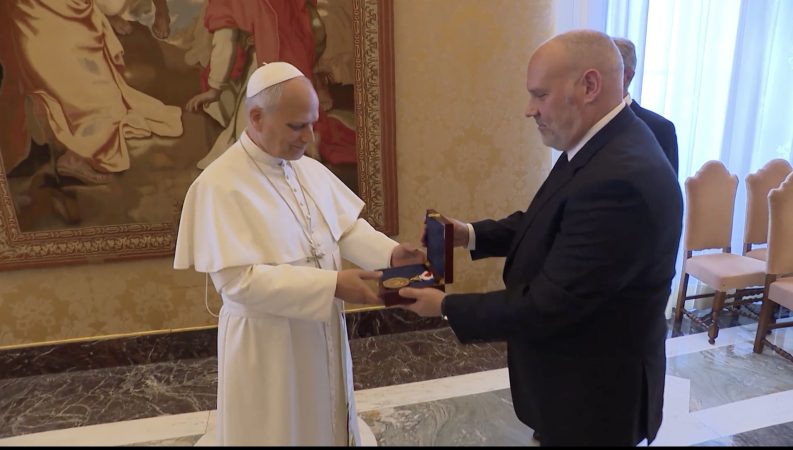
    Pope Leo XIV will present a new Villanova University-created award in his name that recognizes outstanding leadership in sustainability at a conference in Italy in October, another sign of the school’s close ties to the pontiff.

    It will be several weeks before Villanova and Notre Dame officially open their basketball seasons in Rome with a men’s and women’s doubleheader on Nov. 1.

    While Villanova has had a longstanding relationship with the Vatican, including an internship program that sends students there every year, both events signify the Catholic university’s deepening relationship with the Vatican and Italy since Pope Leo, a Villanova graduate, became pope last year.

    In 1977, Pope Leo, then known as Robert Prevost, earned a bachelor’s degree in mathematics from Villanova and in 2014 received an honorary doctorate from the university.

    The medal winner — an international honor — will be announced in September and then presented in October at the university’s International Sustainability Conference, Responding to the Cries of the Earth and the Poor, in Castel Gandolfo near Rome, the school said. The conference, which is expected to draw 300 participants including academics, church representatives, and leaders from the public and private sectors, will be held Oct. 12 to 15.

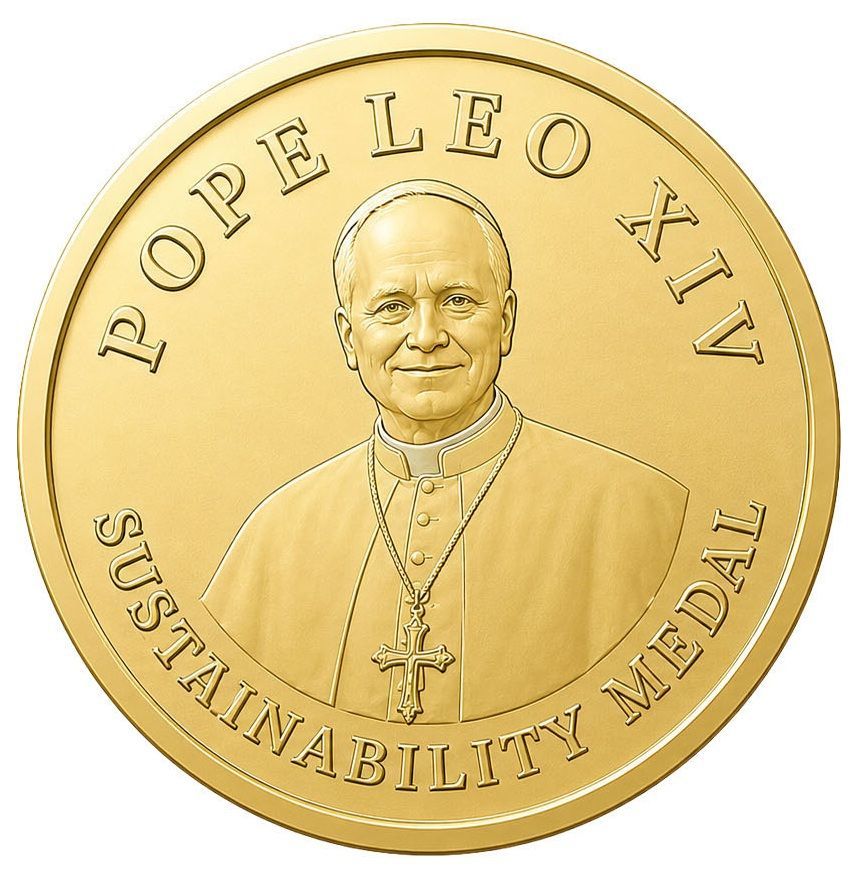
    The front side of a new international medal recognizing leadership in sustainability that Villanova University will award in Italy in OctoberCourtesy of Villanova University

    It is the university’s second sustainability conference, the first to be held in Italy. Its first conference in 2024 was on Villanova’s campus.

    “The Pope Leo XIV Sustainability Medal reflects a deeply held belief at Villanova University: that care for our common home and care for one another are inseparable,” the Rev. Peter M. Donohue, Villanova University’s president, said in a statement. “By recognizing leaders whose work advances both environmental stewardship and the common good, we hope to inspire meaningful and lasting impact in communities around the world.”

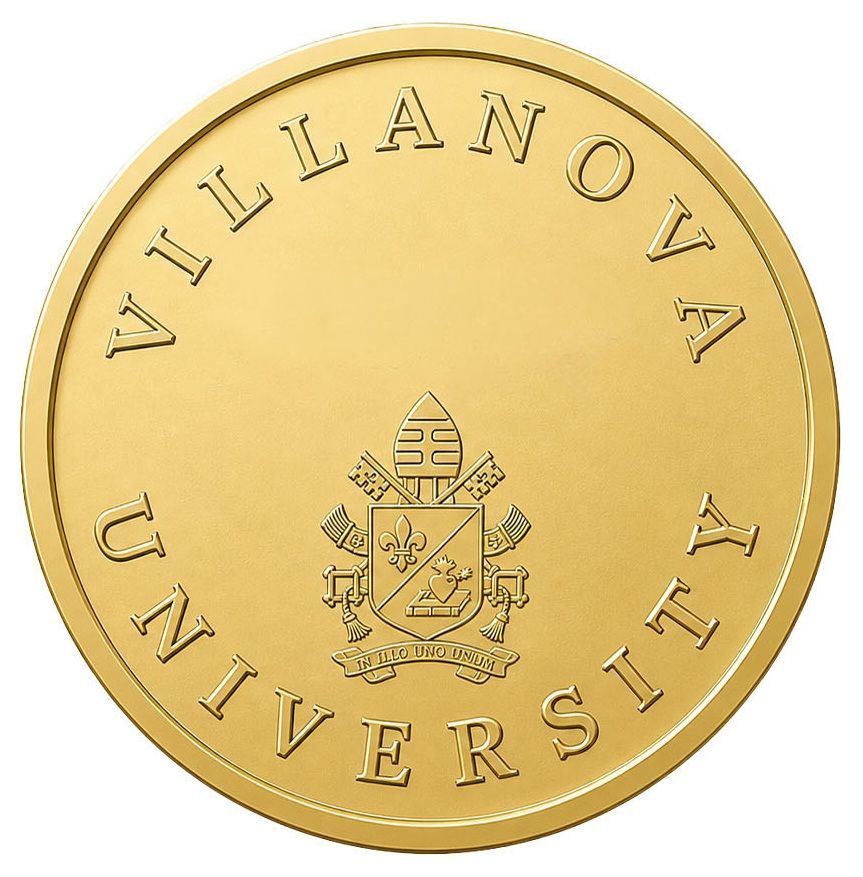
    The back of the new international medal that Villanova University will award for the first time in Italy in OctoberCourtesy of Villanova University

    The award, which will be a biennial honor, will recognize those who have advanced “sustainability, ecological responsibility and integral human development,” the school said. It specifically will highlight those who excel at “integrating care for the environment, social justice, concern for vulnerable populations, and responsible stewardship of economic and natural resources.”

    The winner can come from any field or discipline and will be selected by a committee of members of the university’s Sustainability Leadership Council. The award includes a monetary component, but details are still being determined, a university spokesperson said.

    The medal will feature Pope Leo on one side and Villanova University’s name on the other and is meant to highlight the pope’s commitment to sustainability, the school said.

  • Suffocating dome of smoke descends over Philly region

    Suffocating dome of smoke descends over Philly region

    Philadelphia’s jinxed July, which had already featured a record-setting dome of heat and microburst storms that razed hundred of trees, now includes a smothering, suffocating smoke.

    The polluted campfire-like vapor from Canadian wildfires plummeted air quality Thursday, lowered visibility enough that flights were delayed at Philadelphia International Airport, and prompted cancellation of a concert at Cooper River Park in Camden County. The Phillies moved Thursday night’s game up one hour due to air quality concerns.

    The smoke, which was expected to blanket the region at least through Friday, originated from fires burning in Western Ontario, said Sarah Johnson, a meteorologist at the National Weather Service’s Mount Holly office.

    It was swept in by winds that mixed to keep it closer to the ground.

    “It’s just a factor of the winds at all levels kind of working together,” Johnson explained.

    It is difficult to pinpoint when the air quality might return to normal, she said. Those forecasts come from state environmental protection departments and are usually no more than 48 hours out.

    The Pennsylvania Department of Environmental Protection has declared a Code Purple Air Quality Alert for Friday. Code purple signifies very unhealthy air, meaning people should avoid long or intense outdoor activities, and sensitive groups should avoid all outdoor activities. The department suggested not using gas-powered lawn and garden equipment, and avoiding the burning of leaves or trash.

    Rain forecast for Saturday could help suppress the smoke, Johnson said, but on Thursday afternoon it was too early to be sure.

    Poor air quality caused by the fires remained the biggest issue as they burned through forests and buildings before their smoke swept south, collecting ambient pollution from Boston, New York, and other areas before reaching Philadelphia.

    Philadelphia issued a Code Red Air Quality Caution Day on Thursday, meaning some people were at risk of experiencing health effects, including elevated risks for people with heart or lung disease, asthma, older adults, children, pregnant people, immunocompromised people, people experiencing homelessness, people who use drugs, people without access to air filtration, and outdoor workers.

    The city advised people to limit their time outdoors and consider rescheduling activities.

    “Today is not the day to start your marathon training plan,” Palak Raval-Nelson, commissioner of the Philadelphia Department of Public Health, said in a statement.

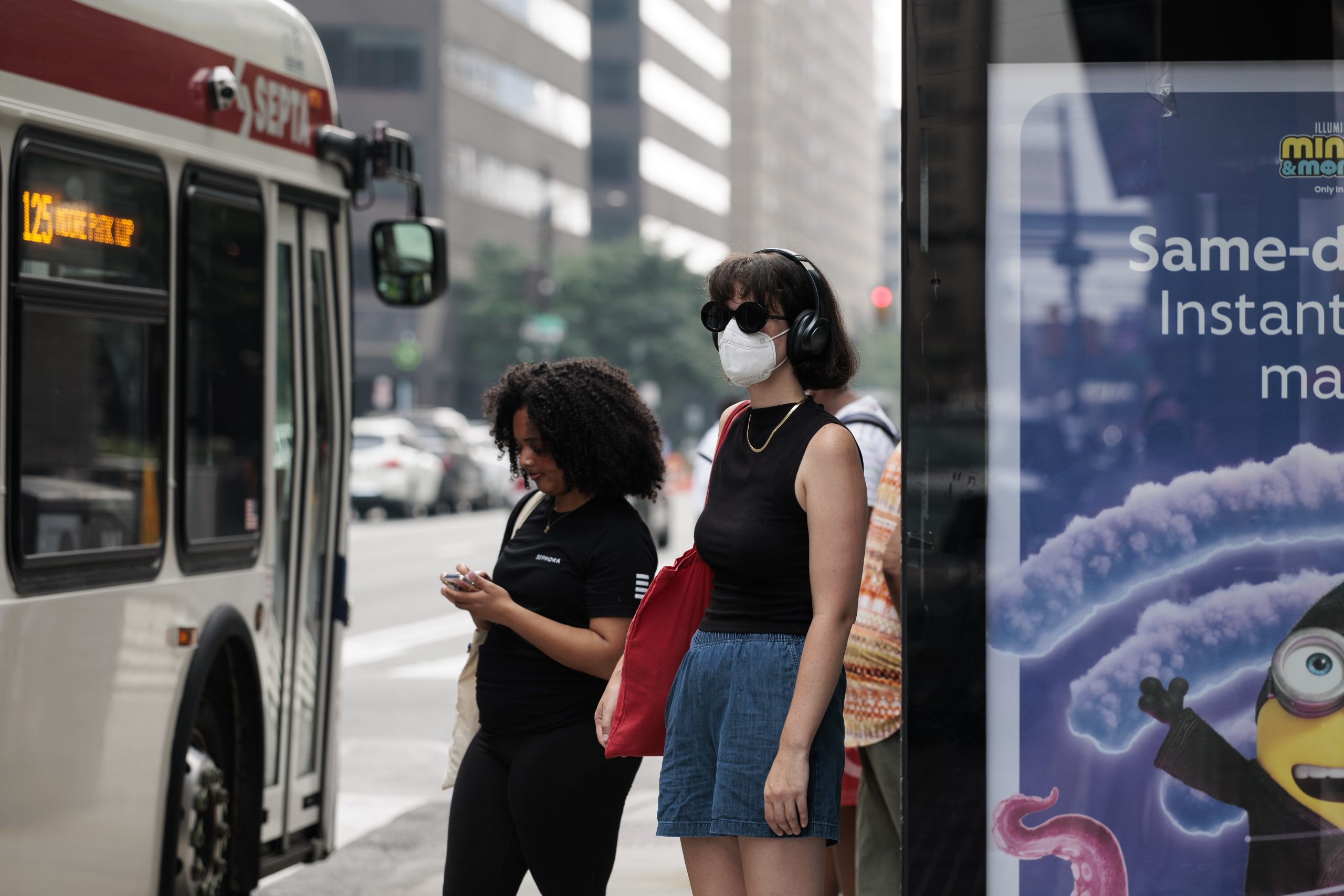
    Penn State graduate student Ray Boone waits for the bus with a face mask on because of the air quality, on Thursday, July 16, 2026 at 17th Street and JFK Boulevard in Philadelphia. The Pennsylvania Department of Environmental Protection has declared a statewide Code Red air quality day due to Canadian wildfire smoke blowing into the Philadelphia region.Monica Herndon / Staff Photographer

    High temps increase risks

    The smoke affected thousands of square miles in the region, from the Poconos to the Shore through Delaware.

    The Air Quality Index, or AQI, by the U.S. Environmental Protection Agency was in the unhealthy range for all of the region as of 4 p.m. Thursday. The index ranges from 0 to 500. Unhealthy is from 151 to 200.

    Censors in Centre County, Pa., recorded a hazardous AQI of 345 by Thursday afternoon, the highest and most dangerous level. Other sensors in Lycoming and Bradford Counties recorded AQIs above 200, or very unhealthy.

    Center City had an index of 192, which is considered unhealthy. Northeast Philadelphia, Chester, Norristown, and Camden all were similarly in the unhealthy range.

    Not helping: Temperatures in the 90s with humidity so high that it made it feel in excess of 100 degrees.

    Julie and Bill Guise, 66 and 72, respectively, basked in the somewhat cool breeze billowing from a giant fan inside the President’s House complex at Independence National Historical Park, hoping to get relief from the oppressive air. The Flagstaff, Ariz., residents, however, were unaware of what exactly was causing it.

    “We couldn’t figure out what it was,” Bill Guise said of the haze in the atmosphere.

    But it did not change their plans. The couple are used to wildfires.

    “It’s much worse out West,” Julie Guise added, likening the western smoke, when it’s extra bad, to sitting next to a campfire.

    Eric Balaban, a pulmonary and critical care fellow at Temple University, was hesitant but still went running Thursday morning.

    “If I didn’t have an addiction to running, I would not have gone. And I would recommend other people not to run. Do as I say, not as I do,” he said with a laugh.

    But exposure to the smoke is a serious matter, Balaban said. He noted that the smoke that travels “carries a uniquely toxic profile that poses severe health risks to both healthy individuals and vulnerable populations.”

    Ruth McDermott-Levy, a professor at Villanova University’s school of nursing, said that air quality had become a risk not only for those already suffering from health issues, but for everyone.

    “All of us are at risk,” McDermott-Levy said. “Certainly there are groups of people at greater risk, from pregnant women, children, older people, and those with cardiac and respiratory illnesses. But we’re at an unhealthy level for everyone.”

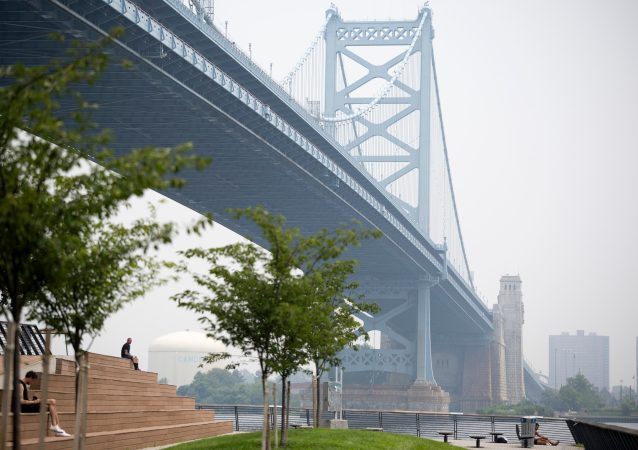
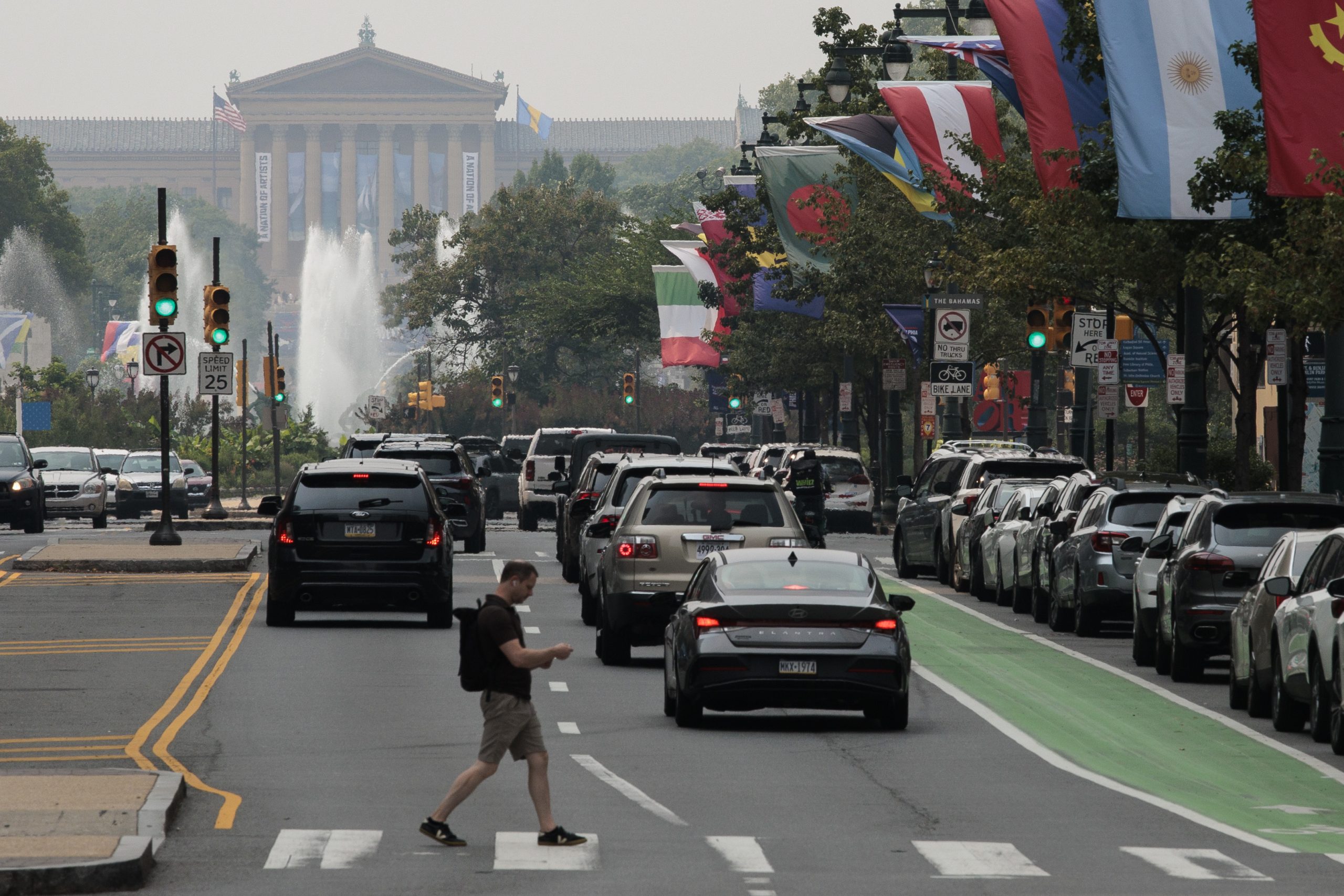
    The Philadelphia Museum of Art behind a smokey haze on Thursday, July 16, 2026 in Philadelphia. The Pennsylvania Department of Environmental Protection has declared a statewide Code Red air quality day due to Canadian wildfire smoke blowing into the Philadelphia region.Monica Herndon / Staff Photographer

    What’s in the air?

    The two major pollutants of concern are ground-level ozone and fine particulate matter known as PM2.5.

    Ground-level ozone is a pollutant that forms when nitrogen oxides and volatile organics emitted by vehicles, power plants, and industry react in sunlight, especially during hot days. It can cause airways to constrict, leading to shortness of breath. It can especially affect those with asthma, emphysema, and chronic bronchitis.

    Fine particulate matter is so small that it can cross from the lungs directly into the bloodstream, bringing a body-wide exposure that can increase the risk of heart attacks and strokes, in addition to causing acute chest tightness, shortness of breath, and dizziness in otherwise healthy people.

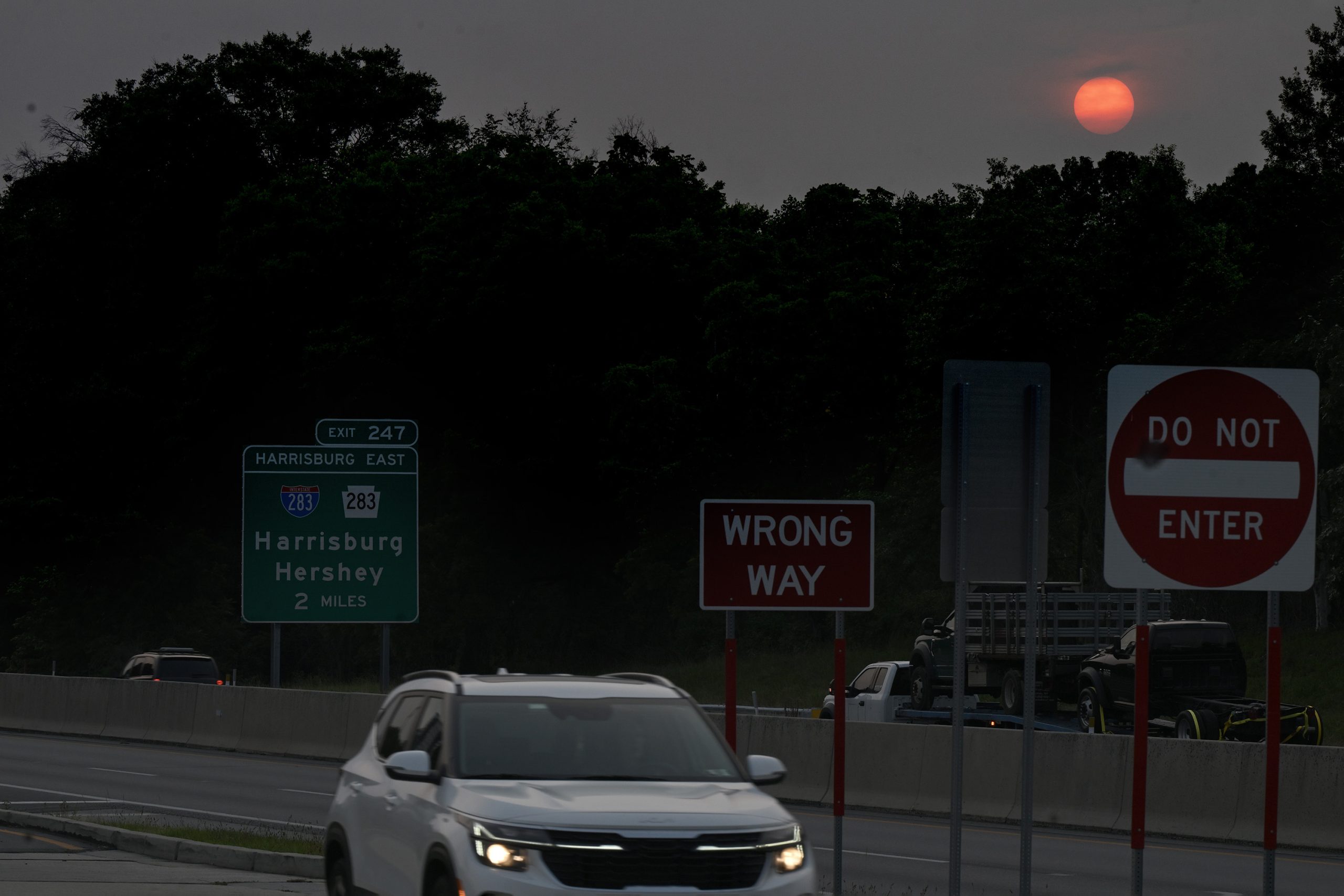
    The sun sets in a hazy sky over the Pennsylvania Turnpike Wednesday, July 15, 2026 as the Canadian and Great Lakes wildfire smoke moves into the region’ This at the Highspire Service Plaza], eastbound near Middletown.Tom Gralish / Staff Photographer

    Staff writer Nate File contributed to this article.

  • Gerry O’Reilly, Villanova track Hall of Famer, Irish Olympian, and Vanguard executive, has died at 61

    Gerry O’Reilly, Villanova track Hall of Famer, Irish Olympian, and Vanguard executive, has died at 61

    Gerry O’Reilly, 61, of Chester Springs, Hall of Fame middle distance track star at Villanova University, 1988 Irish Olympian in the 1,500-meter run, longtime executive at the Vanguard Group Inc., mentor, and role model, died Thursday, June 11, at Phoenixville Hospital after an earlier sudden cardiac event.

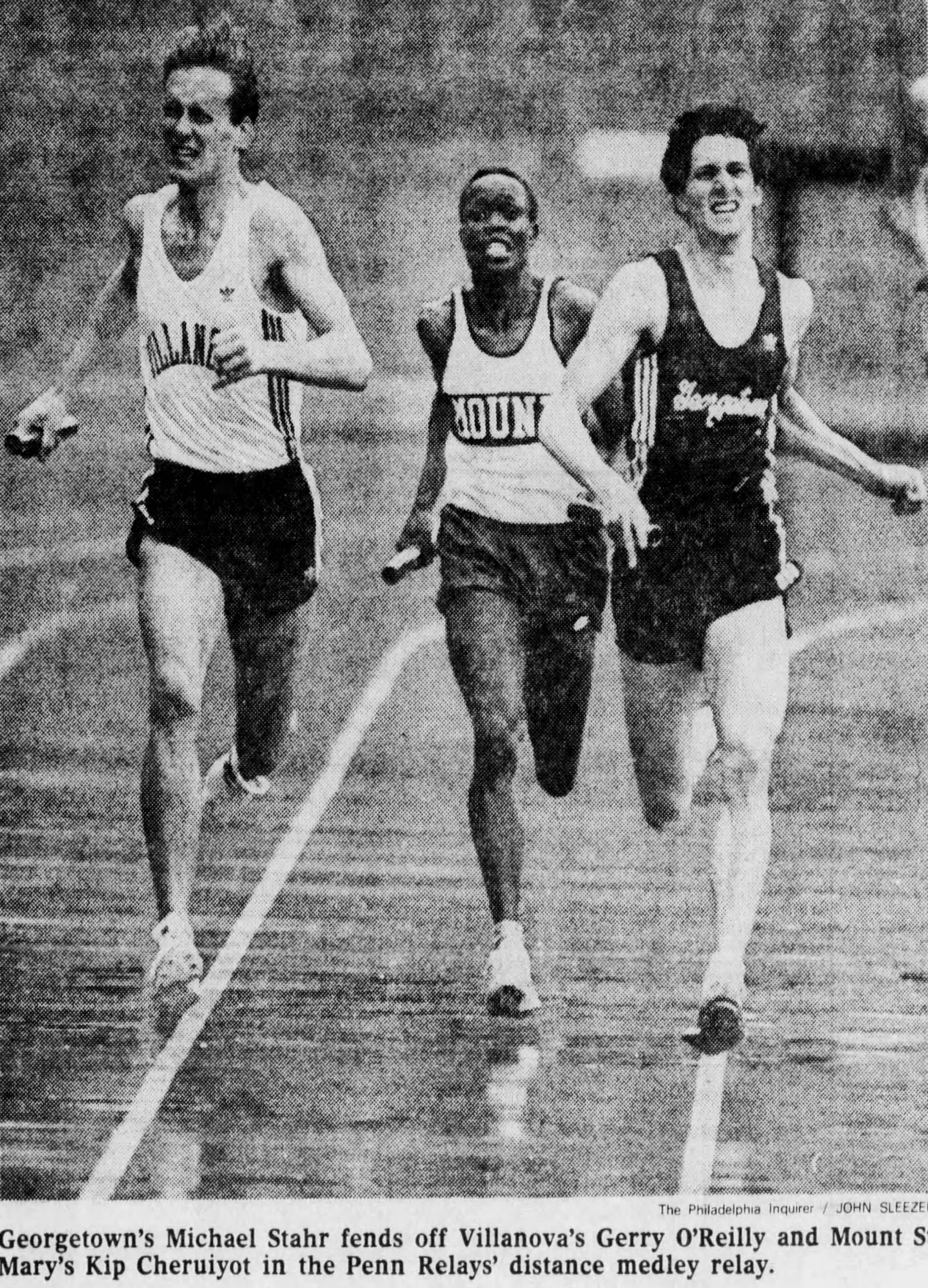
    Born and reared in Dunboyne, County Meath, Ireland, Mr. O’Reilly earned a track scholarship to Villanova in 1983 and joined a dozen other Irish athletes in what became known as the school’s Irish Pipeline to the Main Line. He went on to run cross-country and indoor and outdoor track, win seven Big East Conference championships, and hold the Big East outdoor record in the 1,500 for 37 years.

    He ran the 1,500- and 3,000-meter runs, the mile, and the distance medley relay at Villanova, and was named All-America four times. He won six national collegiate championships, was named outstanding performer at the 1986 Big East Indoor Championships, and was inducted into the Penn Relays Wall of Fame in 2007 and the Villanova Varsity Club Hall of Fame in 2009.

    “Without exaggeration, those were four of the best years of my life,” Mr. O’Reilly told Dave Thomas on the Belmont Plateau Hall of Fame podcast. Villanova “kind of set me up both athletically and academically for the rest of my life.”

    Marcus O’Sullivan, former Villanova teammate and countryman, now director of track and field and cross-country at Villanova, said Mr. O’Reilly “had a steadfast moral compass that guided him in his life, and in doing so it had an intoxicating influence on others. … We all need a person like Gerry O’Reilly in our lives.”

    After college, Mr. O’Reilly competed in the international Millrose Games in New York, the 1987 World Championships, the 1989 World Indoor Championships, and for Ireland in what is now the World Athletics Championships. At the 1988 Summer Olympics in Seoul, South Korea, he made it to the semifinals of the 1,500.

    Irish Olympic team officials called him “an exceptional athlete” and praised his “genuine commitment to helping the next generation.” They said: “Once an Olympian, always an Olympian.”

    Irish marathon Olympian John Treacy told the Irish Times: “Gerry was a smashing runner and just the nicest guy, great for staying in contact and communicating with other Irish runners over the years.”

    Mr. O’Reilly ran miles at night after school in the rural Irish fields and lanes, and joined the Dunboyne Athletic Club when he was 9.
    Villanova University

    Mr. O’Reilly was also inducted into the Belmont Plateau Hall of Fame in 2025 and recently honored by his hometown Dunboyne Athletic Club.

    He earned a bachelor’s degree in economics in 1987, joined Vanguard in 1992 and the trading desk in 1994, and worked as an investment leader and portfolio manager. He was a mentor, colleagues said in a tribute, “who made immeasurable contributions to several of Vanguard’s flagship index funds.”

    He served on corporate panels and lectured at leadership development events. Colleagues called him “riveting and influential” and “a giant in every sense except ego.” One said: “You could tell he truly cared about the markets and about doing things right.”

    A friend said: “Great athlete, great person.”

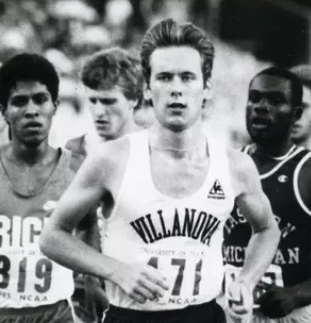
    This photo and a story about Mr. O’Reilly (left) appeared in The Inquirer in 1987.Newspapers.com

    Gerard Christopher O’Reilly was born July 1, 1964. He was the oldest of six children and excelled at cross-country, track, soccer, and other sports.

    He ran miles at night after school in the rural Irish fields and lanes, joined the Dunboyne Athletic Club when he was 9, and was inspired, he said later, by Irishman Eamonn Coghlan’s fourth-place finish in the 1,500 at the 1976 Summer Olympics. Mr. O’Reilly went on to win the 1983 Irish Junior 1,500 championship.

    He met fellow track star Melody Sye, and they married in 1992 and had a daughter, Meghan, and sons Keelan, Jack, and Conor. They divorced later.

    “Despite all his trophies and merits,” Mr. O’Reilly’s family said in a tribute, “he always remained humble and would say being a dad to his four kids was his proudest accomplishment.”

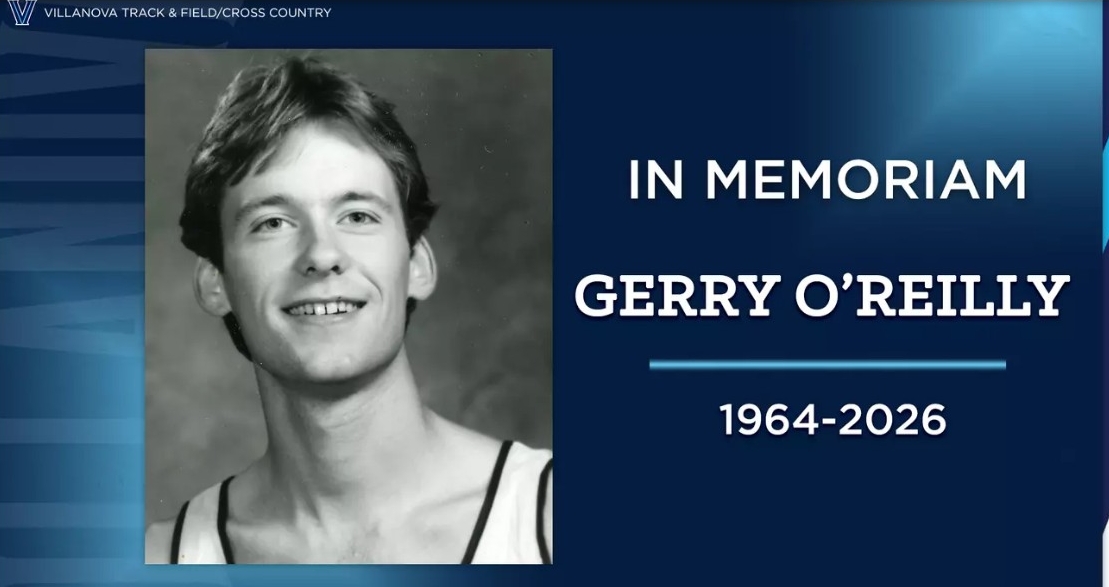
    Villanova honored Mr. O’Reilly online.Villanova University

    Mr. O’Reilly was an avid bicyclist, and he spent many weekends on long rides and at Eagles games on Sundays. He liked poker, hikes with his dog, Bear, and watching sports with his family.

    “Most of all,” his family said, “he simply enjoyed cracking jokes, sharing stories, and spending time with his friends and family.”

    In addition to his children and former wife, Mr. O’Reilly is survived by three sisters, two brothers, and other relatives. “His final gift,” his family said, “was saving multiple lives through organ donation.”

    Services were held earlier.

    Donations in his name may be made to the American Heart Association, 7272 Greenville Ave., Dallas, Texas 75231; Special Olympics, 2600 Virginia Ave. N.W., 11th Floor, Washington, D.C. 20037; and the American Cancer Society, Box 6704, Hagerstown, Md. 21741.

  • Jay Wright named to National Collegiate Basketball Hall of Fame

    Jay Wright named to National Collegiate Basketball Hall of Fame

    Jay Wright is headed to the National Collegiate Basketball Hall of Fame.

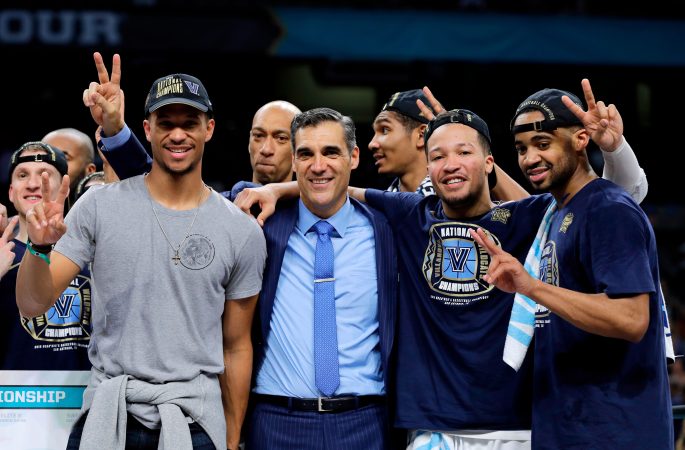
    On Monday, it was announced that the longtime Villanova coach would be inducted as a part of the Hall’s 2026 class. Wright led Villanova for 21 seasons from 2001 to 2022. In that span, the Wildcats made four Final Four appearances and won NCAA titles in 2016 and 2018.

    Wright, who had a career record of 642–282 (.695), including a seven-year stint at Hofstra (1994-2001), is widely considered to be the main force behind Villanova becoming a consistent national brand in college basketball. He is already a member of the Naismith Memorial Basketball Hall of Fame, being inducted in 2021.

    “The Class of 2026 represents the very best of college basketball — individuals whose performance, leadership, and impact helped shape the game at the highest level,” Hall of Fame CEO Kevin Henderson said in a statement. “Their legacies will forever be preserved as part of the sport’s rich history.”

    Five other selectees make up the Hall’s incoming class: UCLA coach Walt Hazzard from Overbrook High School, Kentucky coach Tubby Smith, Kansas coach Ted Owens, Michigan star Glen Rice, and BYU standout Danny Ainge.

    The induction will take place Oct. 22 in Kansas City, Mo., where the National Collegiate Basketball Hall of Fame is located.

  • Religious liberty isn’t the only American principle on Pope Leo XIV’s mind as he accepts the Liberty Medal

    Religious liberty isn’t the only American principle on Pope Leo XIV’s mind as he accepts the Liberty Medal

    The common wisdom that “There will never be an American pope” went up in white smoke on May 8, 2025, when Cardinal Robert Prevost, a boy from the South Side of Chicago and a graduate of Villanova University, was elected pontiff and took the name Leo XIV.

    Now, on the eve of America’s Semiquincentennial, as if to underscore how much has changed, the American pope has been awarded the National Constitution Center’s Liberty Medal. Pope Leo accepted the award at the Vatican on April 30. On Friday, in a ceremony at the National Constitution Center on Independence Mall, the pontiff will address the audience live from the Vatican in a speech that will be livestreamed globally.

    The medal, according to the center’s interim president and CEO, Vince Stango, will celebrate how “[i]n formal Vatican statements and public addresses, His Holiness has affirmed that peace cannot exist without freedom of religion, freedom of thought, and freedom of expression, principles that closely align with constitutional protections guaranteed by the First Amendment.”

    One reason an American pope was long unthinkable is that American principles have not always aligned with Catholic principles. The proud American refusal to establish the Catholic Church as the national religion flew in the face of traditional Catholic teaching that the church should ensoul the body politic.

    That was never going to happen in the United States, of course. Not even close. And so the question then became, from the Catholic point of view, what to say about the American model that included the First Amendment, with its coordinated guarantees of the “free exercise” of religion and the nonestablishment of religion by Congress.

    Rome’s response has changed over time. In the late 1800s, Pope Leo XIII noted with approval the religious situation of Catholics in the United States, yet cautioned against the error that separation between the church and the civil power was to be the norm. By the 1950s, though, some Catholic thinkers were claiming the American model, in fact, stated the ideal, reasoning that the First Amendment guarantee of “free exercise” is necessary for a person to honor his God-imposed duties.

    By now, even though the Second Vatican Council (1962-1965) stated that it was leaving the church’s traditional teaching “untouched,” the nonestablishment of religion and a legal guarantee of individual and group free exercise of religion, subject to just limitations for the common good, constitute the norm proposed by the Catholic Church to the world as we know it.

    In speaking to the Spanish Parliament on June 8, for example, Pope Leo insisted that laws must respect “freedom of thought, conscience and religion, a fundamental right that protects the most intimate sphere of the person. The freedom upon which the contemporary state is built, if it is authentic, recognizes the religious dimension of the human person.”

    In the ceremony on Independence Mall on Friday, Pope Leo will address a nation in which, for the first time in its history, it is becoming socially acceptable to oppose the free exercise of religion for some people. Litigation that threatens to cancel people’s freedom to live according to their conscience becomes more common. The seal of confession, long protected in the United States, is under assault, and the threat is real. In his address to the Spanish Parliament, Pope Leo warned against the withdrawal of that protection, and the warning needs to be echoed in the United States.

    It would be one of history’s great ironies for an American pope to call his country back to a principle that his church learned, in part, from America.

    Religious liberty is not the only American principle on the American pope’s mind, as his message to the 2026 graduates of his alma mater makes clear. “This being the 250th anniversary of the United States of America, I would invite you to recall in a special way the guiding principles of the foundations of our nation: ‘We hold these truths to be self-evident: that all [people] are created equal; that they are endowed by our Creator with certain inalienable rights, and among those are Life, Liberty and the pursuit of happiness.’”

    The principles of the First Amendment are to be cherished, but prior to those principles, the pope has reminded us, are the principles of the Declaration of Independence around which the nation was formed in 1776. And while the declaration does indeed attest to the nation’s commitment to the people’s Creator-given right to liberty, the outstanding principle of the declaration to which President Abraham Lincoln later found the nation “dedicated” since 1776 was that all people are “created equal.”

    When Lincoln summoned the American nation to rededicate itself to the equality of all persons, he did so for good reason: Unless we are related to one another as equals, we are related to one another as fractions to wholes. The three-fifths clause of the original U.S. Constitution gave effect to slavery, a grievous injustice removed by the 13th Amendment in concert with the other Reconstruction amendments. These amendments constitutionalized the nation’s earlier commitment to our having been “created equal,” but not everyone is a believer in the equality of all people.

    Today, Americans are divided over the declaration and, specifically, the claim that we are “created equal.” Human equality is said by some to be a self-evident lie, and even among those who pay it lip service, commitment to the basic equality of all people is undermined by identity politics, race-based priorities, and blood guilt.

    Pope Leo, though, is not in doubt about the equality of all people. In his first encyclical, Magnifica Humanitas, he writes that we are equal in “ontological dignity, which is neither acquired nor earned, nor does it need to be justified.” This immutable and foundational equality is true of all people because we are, without exception, “created in the image and likeness of God.”

    And this is another truth Americans need to reclaim.

    In order to reclaim it, we need to understand that human equality was never meant to state something empirical or measurable about people. The equality declared by the declaration and celebrated by Lincoln, and fully constitutionalized by the Reconstruction amendments, depends on what is spiritual in a person, represented by the radical Christian judgment that underneath the obvious and often wonderful diversity of people lies a universal sameness in being created in the divine image.

    When G.K. Chesterton was asked, “What is America?” he gave a characteristically smart answer that has been debated ever since: “America is a nation with the soul of a church. America is the only nation in the world founded on a creed. That creed is set forth with dogmatic and even theological lucidity in the Declaration of Independence.”

    Robert Prevost, now Pope Leo, was formed, in part, in that “church” with its declarational creed. He was also, and first, formed in the Catholic Church, with its commitment to the universal equality of all people.

    What the American pope can do now, in a way no other person on earth can, is to remind Americans that the equality to which their nation has been dedicated since 1776 depends on what Christianity has shown the world: that even the least, in worldly eyes, are equals in God’s eyes.

    Patrick McKinley Brennan is the chair of Catholic legal studies and a constitutional law scholar at Villanova University.

  • In Villanova, the average starter home costs $1 million

    In Villanova, the average starter home costs $1 million

    Villanova is one of a record 242 places in the country where the average starter home is valued at $1 million or more, according to Zillow.

    The community is the only such place both in Pennsylvania and in the Philadelphia metropolitan area, according to an analysis by Zillow based on April home values. Zillow calls properties starter homes if they are in a market’s bottom third of home values.

    Million-dollar starter homes are rare. The typical starter home in the United States is worth a little less than $200,000. But home values keep rising as demand for homes has outpaced supply, especially over the last few years.

    “The pandemic reset the cost of buying a home, spreading million-dollar starter homes from a handful of coastal states to more than two dozen states across the country,” Kara Ng, senior economist at Zillow, said in a statement.

    Since early 2020, the number of communities in the United States where the average entry-level home is worth at least $1 million has tripled, from 80 to 242. And the number of states has jumped from nine to 26.

    Unsurprisingly, expensive California is the state with the most communities where the average starter home is valued at $1 million or more — 105. But the numbers in New York and New Jersey are rising the fastest.

    “Million-dollar starter homes are popping up in more Northeast cities because the housing shortage there hasn’t been solved,” Ng said. In the Northeast, home construction hasn’t kept up with demand.

    In early 2020, Pennsylvania didn’t have any communities where the average starter home was valued at $1 million or more, and New Jersey had one: Alpine in North Jersey.

    The Garden State now has 26, up from 21 last year. Most are either in North Jersey or the Jersey Shore.

    These include Avalon, Stone Harbor, Strathmere, Cape May Point, and five of Long Beach Island’s six towns: Harvey Cedars, Barnegat Light, Long Beach Township, Surf City, and Beach Haven.

    (function(){function e(){window.addEventListener(`message`,function(e){if(e.data[`datawrapper-height`]!==void 0){var t=document.querySelectorAll(`iframe`);for(var n in e.data[`datawrapper-height`])for(var r=0,i;i=t[r];r++)if(i.contentWindow===e.source){var a=e.data[`datawrapper-height`][n]+`px`;i.style.height=a}}})}e()})();

  • 13-acre Villanova estate to be preserved in $13M deal

    13-acre Villanova estate to be preserved in $13M deal

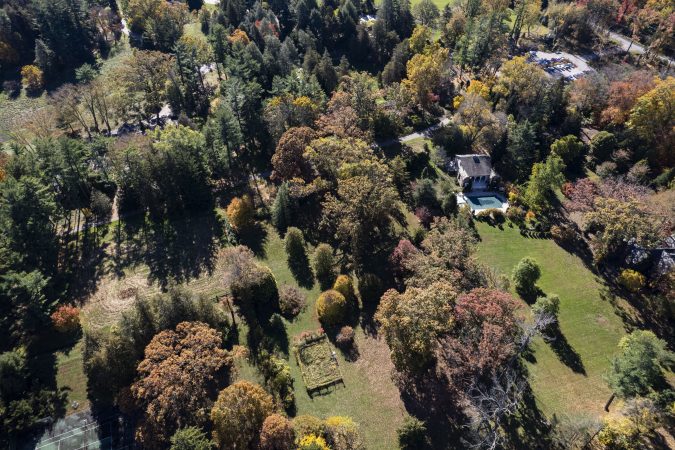
    The 13-acre Oakwell estate, which Lower Merion School District once hoped to turn into school athletic fields, has been preserved after being purchased by two nonprofits.

    The $13 million deal was authorized by the district in 2024 to sell the lush estate in Villanova that contains 700 trees, many of them old growth. The sale closed Friday.

    Under the arrangement, the conservation nonprofit Natural Lands purchased 10 acres of land for roughly $10 million, and the nonprofit Wyncote Foundation purchased three acres that contain the Oakwell mansion for about $3 million.

    John Bennett, a retired medical doctor who owned the estate before the district, said he was relieved.

    “Beneath those magnificent oak trees, some of which have stood for more than 200 years, rest my son’s ashes,” Bennett said. “Those trees were already old when America was young. They have survived wars, economic depressions, hurricanes, and generations of families who walked beneath their branches.“

    Bennett, who has moved from the area, said he feels “an overwhelming sense of gratitude.”

    (function() { var l = function() { new pym.Parent( ‘oakwell__graphic’, ‘https://media.inquirer.com/storage/inquirer/ai2html/oakwell/index.html’); }; if(typeof(pym) === ‘undefined’) { var h = document.getElementsByTagName(‘head’)[0], s = document.createElement(‘script’); s.type = ‘text/javascript’; s.src = ‘https://pym.nprapps.org/pym.v1.min.js’; s.onload = l; h.appendChild(s); } else { l(); } })();

    The district’s agreement to sell Oakwell to the nonprofits came after furious pushback by Bennett, neighbors, and even some students who banded together in protest.

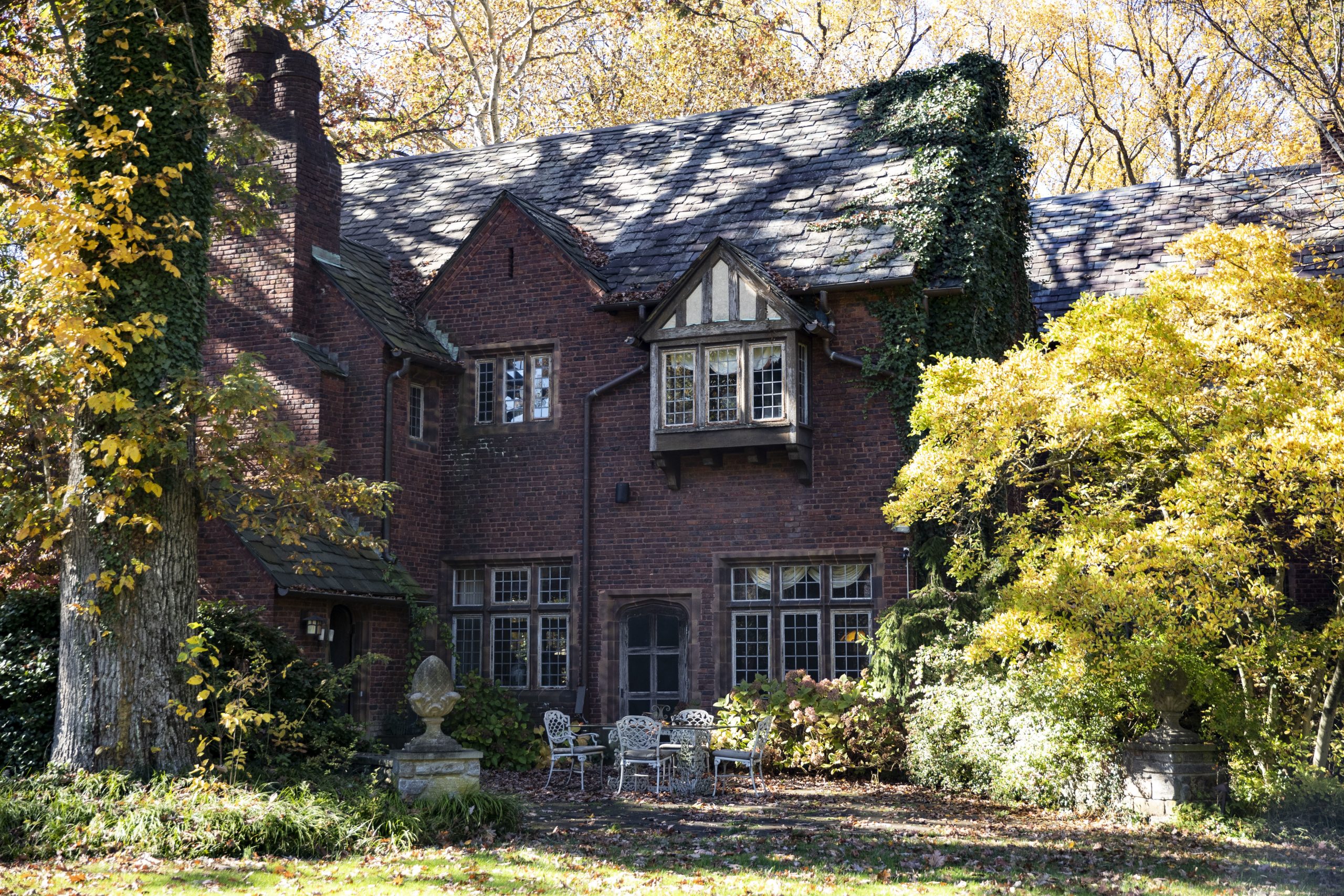
    Besides trees, Oakwell contains a 20,000-square-foot brick Tudor Revival mansion replete with heavy wooden doors, a wainscoted library, and Mercer floor tile. The Wyncote Foundation plans to restore and preserve the mansion.

    The property also contains a pool house, a teahouse once watched over by a terra-cotta warrior, stone fencing, and a brick-walled garden complex all dating back at least 120 years. That will all be owned by Natural Lands.

    Frank Ranelli, superintendent of the Lower Merion School District, said in a statement that the sale “will enhance the quality of life for members of the Lower Merion community.”

    “It feels really like a dream come true,” said Oliver Bass, president and CEO of Natural Lands.

    A portion of the Oakwell mansion in Villanova in 2022.Monica Herndon / Staff Photographer

    Becoming part of Stoneleigh

    Bass noted it had taken years of planning to acquire the tract after the Lower Merion School District purchased Oakwell in 2018 from Bennett.

    The district purchased Oakwell under condemnation with the goal of transforming it into a large athletic complex for the then-new Black Rock Middle School. However, Bennett had originally wanted to sell it to Villanova University.

    The 10 acres that Natural Lands just purchased will become part of the organization’s neighboring 42-acre Stoneleigh public garden. Oakwell was once part of Stoneleigh but was subdivided in the late 1920s and early 1930s.

    Now, the properties will be reunited, Bass said.

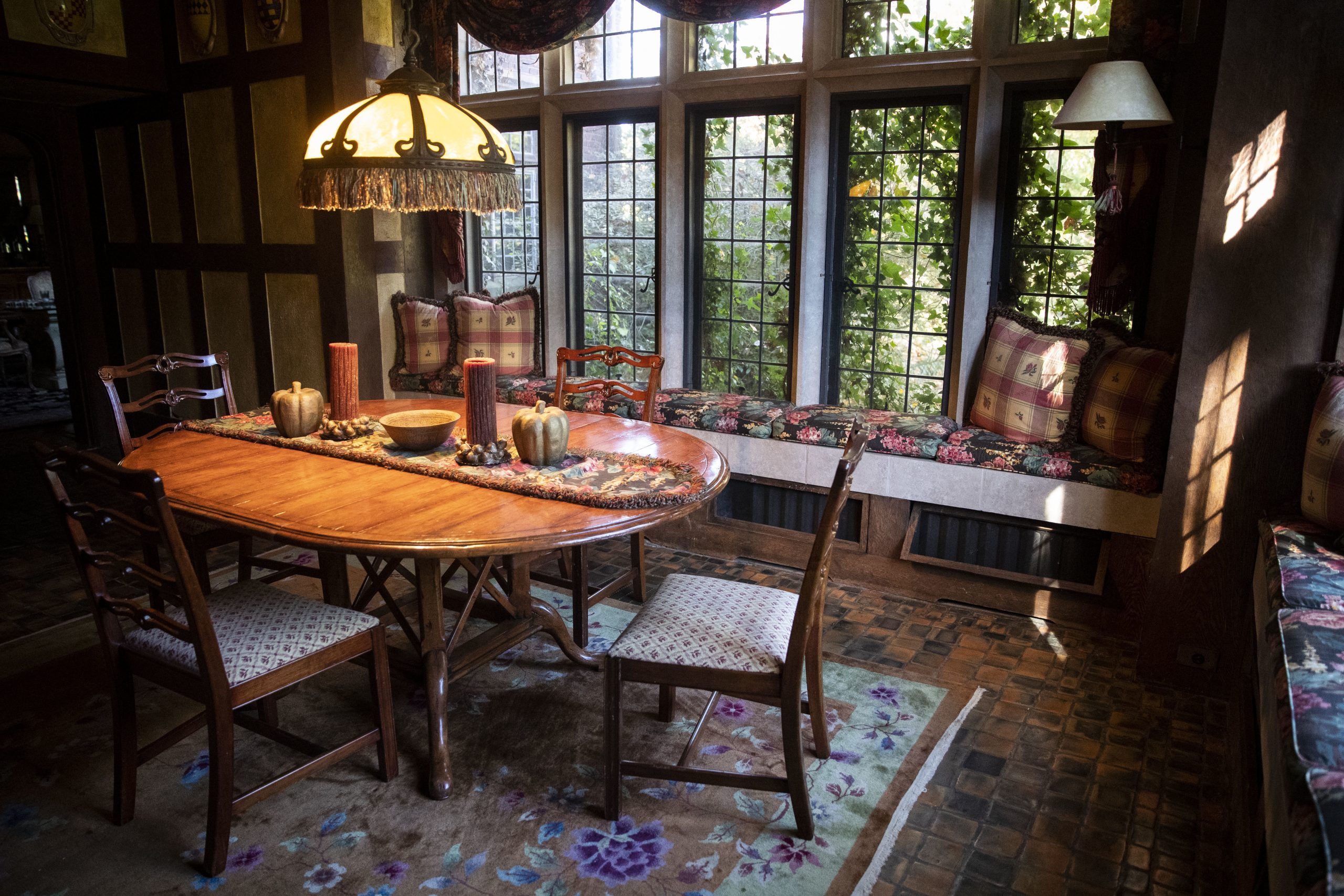
    The interior of the Oakwell Estate in Villanova, Pa. Monica Herndon / Staff Photographer

    Bass said that Natural Lands never envisioned that the entire tract would be saved when discussions first started with the school district years ago. The deal was helped by money from the Wyncote Foundation, Bass noted, and the William Penn Foundation provided leadership support.

    Natural Lands has a master plan for the new parcel, but Bass said it could take years to complete work and integrate it fully with Stoneleigh. He said Natural Lands is working with an architect and a landscape architect and will likely have to raise additional money. When finished, the Oakwell tract will be open to the public.

    “It will become one holistic experience with Stoneleigh,” Bass said, “just larger and grander.”

    “The fact that we’ll be able to unite two properties separated by nearly a century is pretty remarkable,” Bass said.

  • Jalen Brunson pours in 45 points as Knicks close out Spurs for first NBA title since 1973

    SAN ANTONIO — Jalen Brunson and the Comeback Knicks did it again. And now they’re the Champion Knicks.

    For the first time in 53 years, New York rules the NBA. Brunson scored 45 points, including 13 straight for New York in the fourth quarter, and the Knicks beat the San Antonio Spurs 94-90 in Game 5 of the NBA Finals on Saturday night.

    The Knicks won the series 4-1, rallying from double-digit deficits in all four of those victories. The deficit was 16 on Saturday night. Brunson and the Knicks were never fazed.

    Brunson, fittingly, closed with a flourish. He set a Knicks record for points in a finals game; it had been 38 by Willis Reed against the Los Angeles Lakers in Game 3 of the 1970 series. It now belongs to the left-handed point guard who changed the franchise’s fortunes when he arrived four years ago.

    Mikal Bridges and Josh Hart — the other two parts of the “Nova Knicks” trio that also includes Brunson, three players who were NCAA champions at Villanova and teamed up in New York to try to do the same — combined to score 27 points. Bridges had 14, Hart 13.

    Brunson won NCAA crowns twice with Villanova — both in Texas, the 2016 one in Houston and the 2018 one in San Antonio, just a few miles away from the arena that the Spurs call home.

    A Texas three-step of titles, and this one was surely the sweetest of all.

    Dylan Harper scored 25 for the Spurs, who got 19 points, 14 rebounds and five blocked shots from Victor Wembanyama.

    The Knicks improved to 4-0 in closeout opportunities this season, winning them all on the road. It didn’t feel like the road, though — not with thousands of New York faithful having made the trip to Texas to see a moment 53 years in the making.

    New York got to the brink of this title by rallying from 29 points down in Game 4 to win 107-106 on OG Anunoby’s tip-in with 1.2 seconds left on Wednesday night. It was the largest comeback in NBA Finals history and the biggest comeback in any game this season, regular season or playoffs.

    By comparison, then, a 16-point rally in this one seemed easy.