Tag: Villanova University

  • Aaron Bauer, ‘the Lizard King,’ retires after 38 years teaching at Villanova

    Aaron Bauer, ‘the Lizard King,’ retires after 38 years teaching at Villanova

    Scientist Aaron Bauer gawked at the cat-sized gecko.

    The two-foot-long, preserved creature had sat unidentified in a natural-history museum in France for nearly two centuries.

    Staring at its huge head and climber’s build, “I sure as heck could recognize that this was a gigantic, unknown species,” he said.

    The extinct creature was the largest gecko to ever live, and the first new species Bauer — at the time a PhD student in his 20s — ever discovered and described.
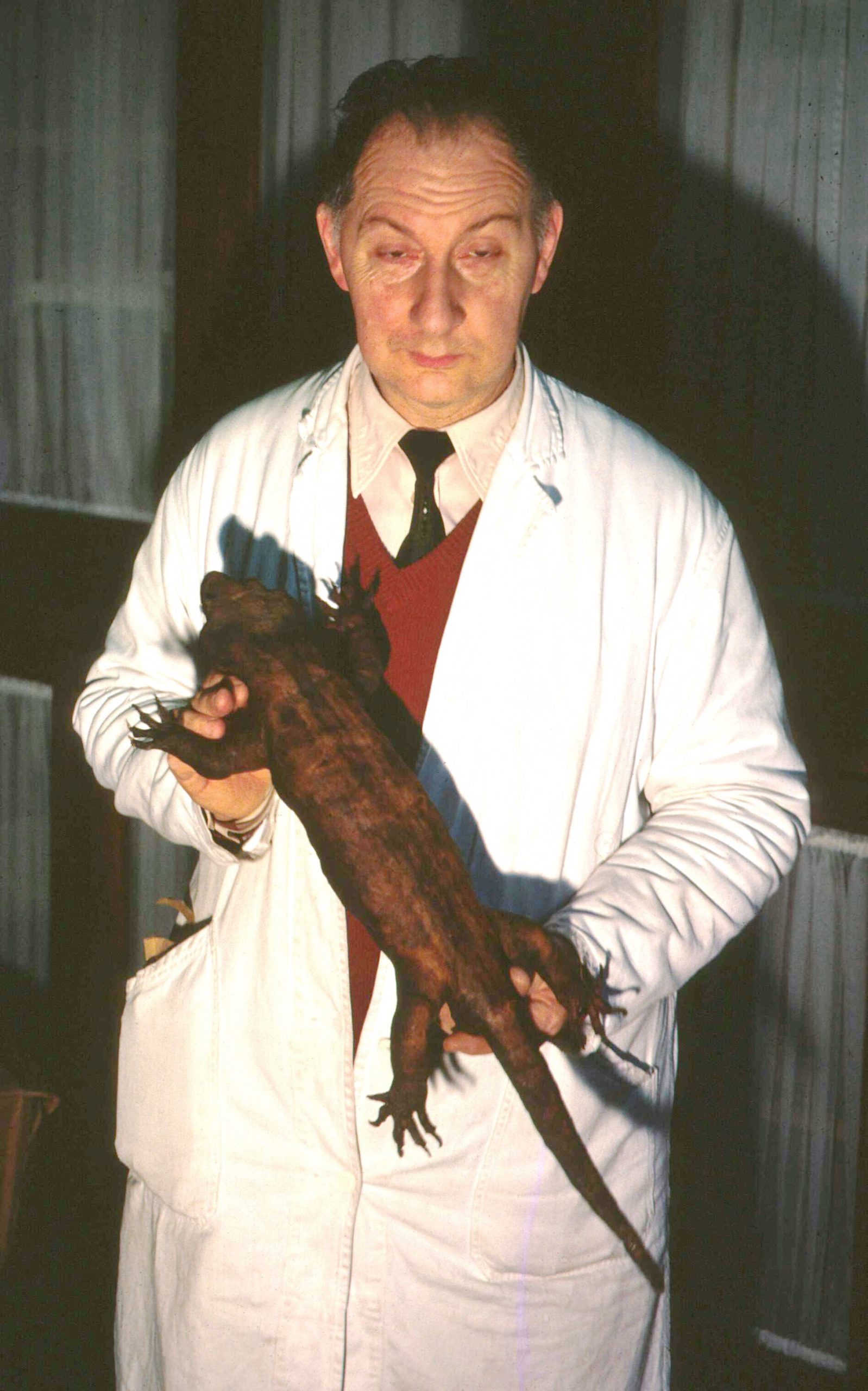
    French museum worker Alain Delcourt is pictured holding the giant gecko, which was the first new species of gecko Aaron Bauer ever described.Courtesy of Aaron Bauer

    Now a renowned herpetologist at Villanova University, Bauer, 65, has identified 320 new species of reptiles and counting — more than any other living scientist.

    Scientists worldwide discover more than 16,000 new species every year, researchers estimate, spanning plants, animals, insects, and other forms of life.

    Nicknamed “the Lizard King” by his students, Bauer retired in May from a 38-year-long teaching career at the university, where he mentored dozens of master’s students in herpetology, the study of reptiles and amphibians.
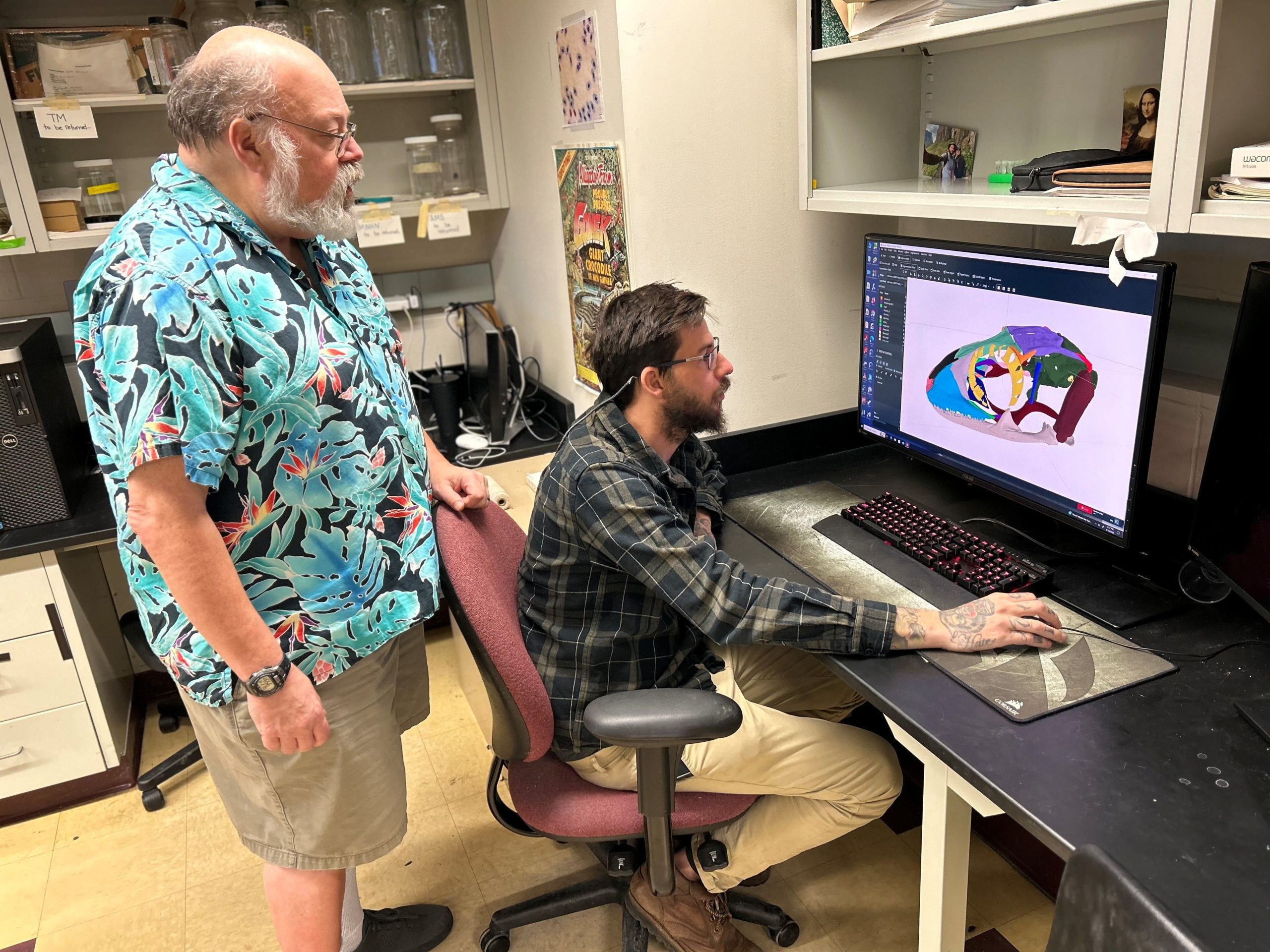
    Aaron Bauer’s former students are hosting a Bauer-fest in honor of his retirement from teaching.Courtesy of Villanova

    Some of his discoveries happened much like his first — seeing something in a museum that was “clearly something new,” he said. Others happened through regular travels to Africa, the South Pacific, and Asia.

    His longest research project revolves around the original giant gecko he discovered 40 years ago during a 1980s trip to Marseille.

    Bauer’s former graduate student, who later became a University of Michigan-Dearborn professor of biology, helped him analyze DNA from the gecko’s leg bone in 2023.

    “If I have had a successful career, it’s because I’ve had great students who didn’t just come and go,” Bauer said.

    The snazziest snake
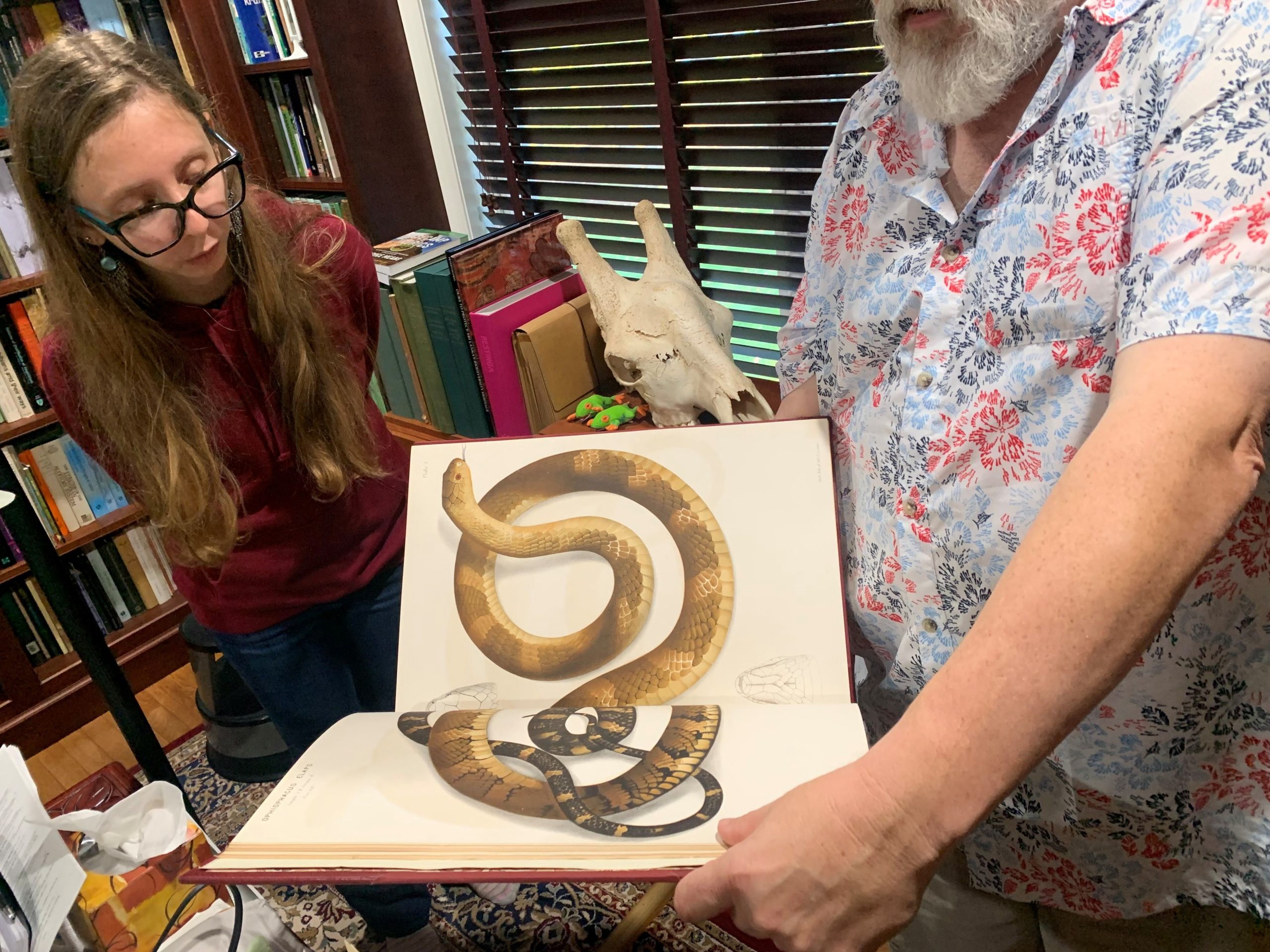
    Aaron Bauer keeps in touch with his former students. The majority have stayed in herpetology.Courtesy of Villanova

    Bauer spent his childhood exploring ponds, fields, and wildlife on the 68-acre Long Island estate where his grandfather was a caretaker.

    He decided to become a herpetologist at age 5, after catching “the snazziest snake we have in the northeastern U.S.”

    As an 8-year-old captivated by the bright green creature, Bauer typed up lists of all the Latin names of amphibians and reptiles.

    He knew he wanted to work with these critters, but not how to make a living from it.

    “Nobody in my family had gone to college, so what do I know?” Bauer said.

    His path began with studying zoology and history at Michigan State University, where he graduated in 1982.

    As a PhD student at the University of California, Berkeley, he specialized in lizards. It was the one species he could not find at the Long Island estate, where frogs, salamanders, turtles, and snakes abounded.

    “Everybody wants what they don’t have,” he said.

    Geckos, in particular, captivated him with their “weird features,” he said, including toe pads, the ability to climb, and lack of eyelids.
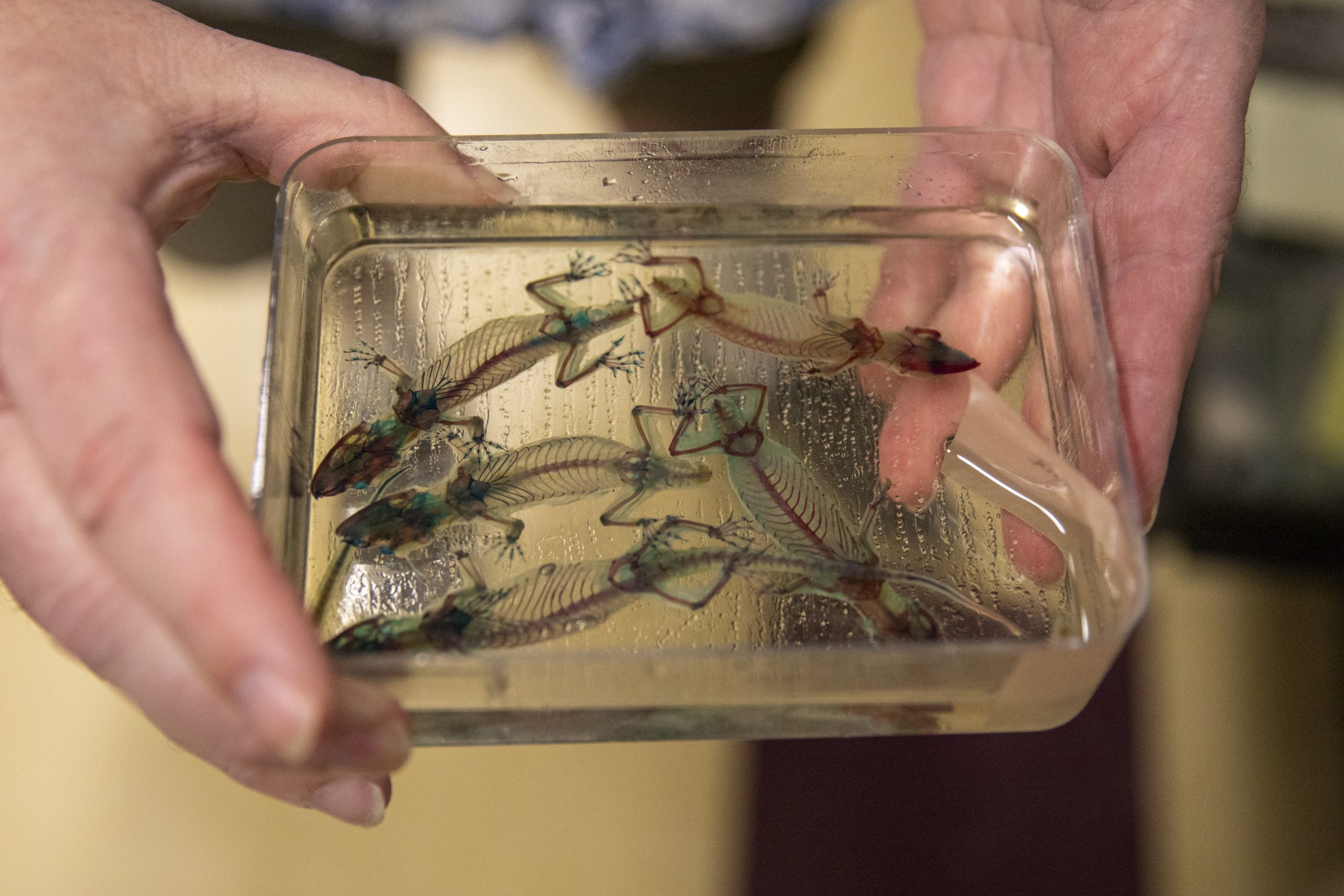
    Aaron Bauer holds a container of African House Geckos in the labs at Mendel Hall at Villanova University.TYGER WILLIAMS / Staff Photographer

    His research explores the diversity of life and its history:

    How does this lizard’s anatomy allow it to be successful? How is it related to the area of the world where it lives, and how did it get there?

    In the field

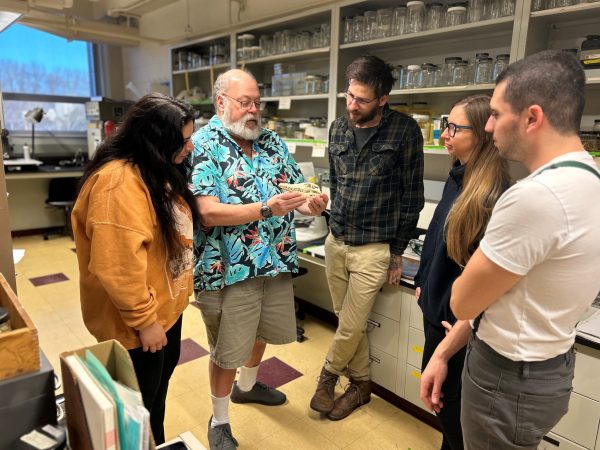
    At work, people know Bauer as the guy in Hawaiian shirts and shorts.

    He tries not to wear such bright shirts in the field, because “you want to be a little more inconspicuous in the vegetation,” he said.

    In these areas, the nearest human could be 50 or 100 miles away.

    His team tries to sample from as many places as possible to capture diversity. Some days, they cover hundreds of miles. Other days, they spend a week in one place.

    Usually, they identify a new species.

    “One of the facts of field work is you don’t know what you’re going to find,” Bauer said.

    His team brings nets for frogs, snake sticks for pinning venomous snakes, and equipment to collect tissue samples for DNA analysis. Lizards can be caught by hand.

    From these field trips, he has collected enough material to work on for the rest of his life. Still, he said he feels a “physiological urge” to go back, and will continue researching as an emeritus professor.
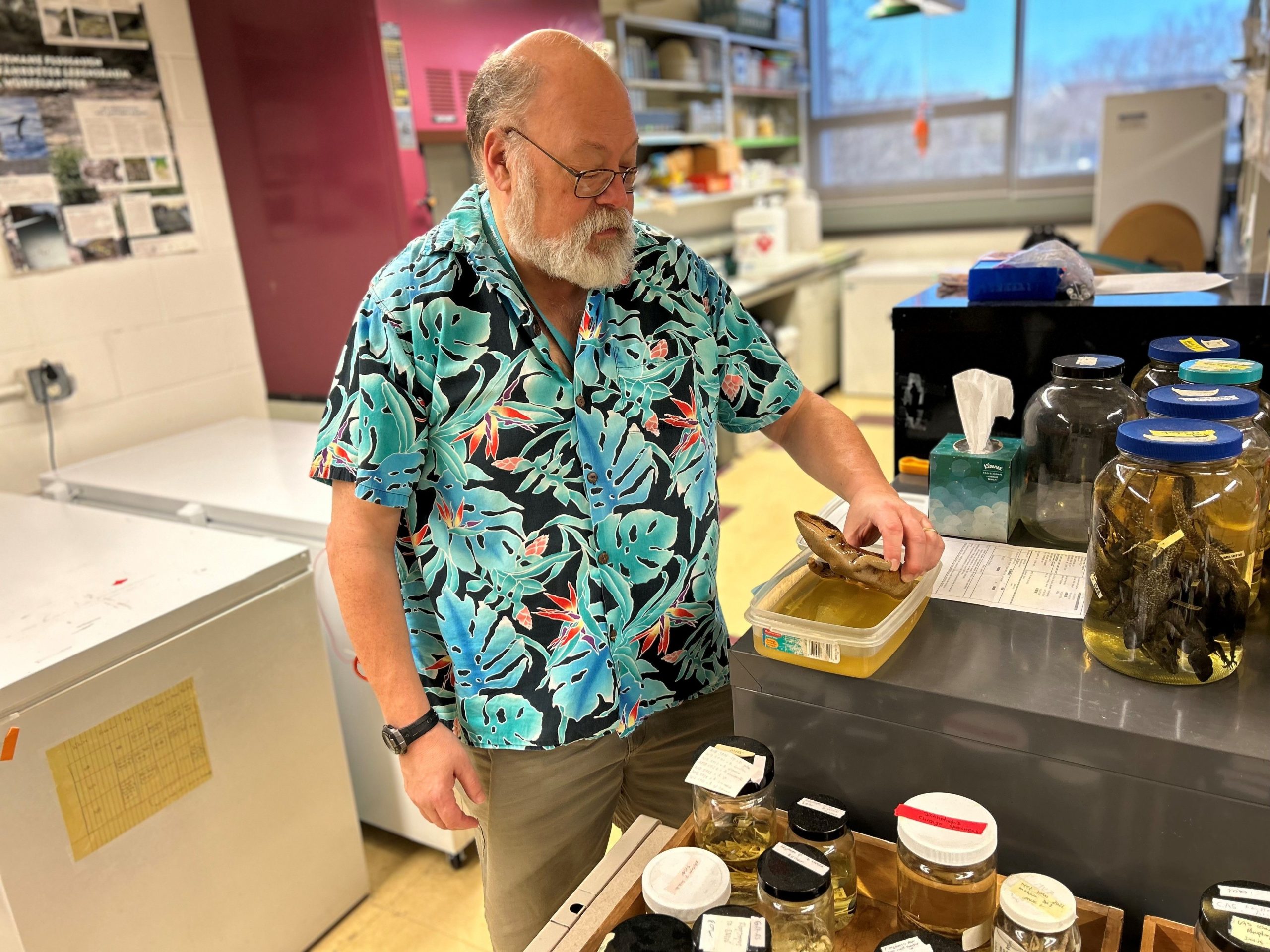
    Aaron Bauer retired from his 38-year-long teaching career at Villanova in May.Courtesy of Villanova

    Bauer always reminds his students how lucky they are to go to remote places like northern Namibia, where they may go a week without seeing another person.

    “There’s something special about that,” Bauer said. “To go places that most people will never see and don’t know even exist.”

    Raising an academic family tree
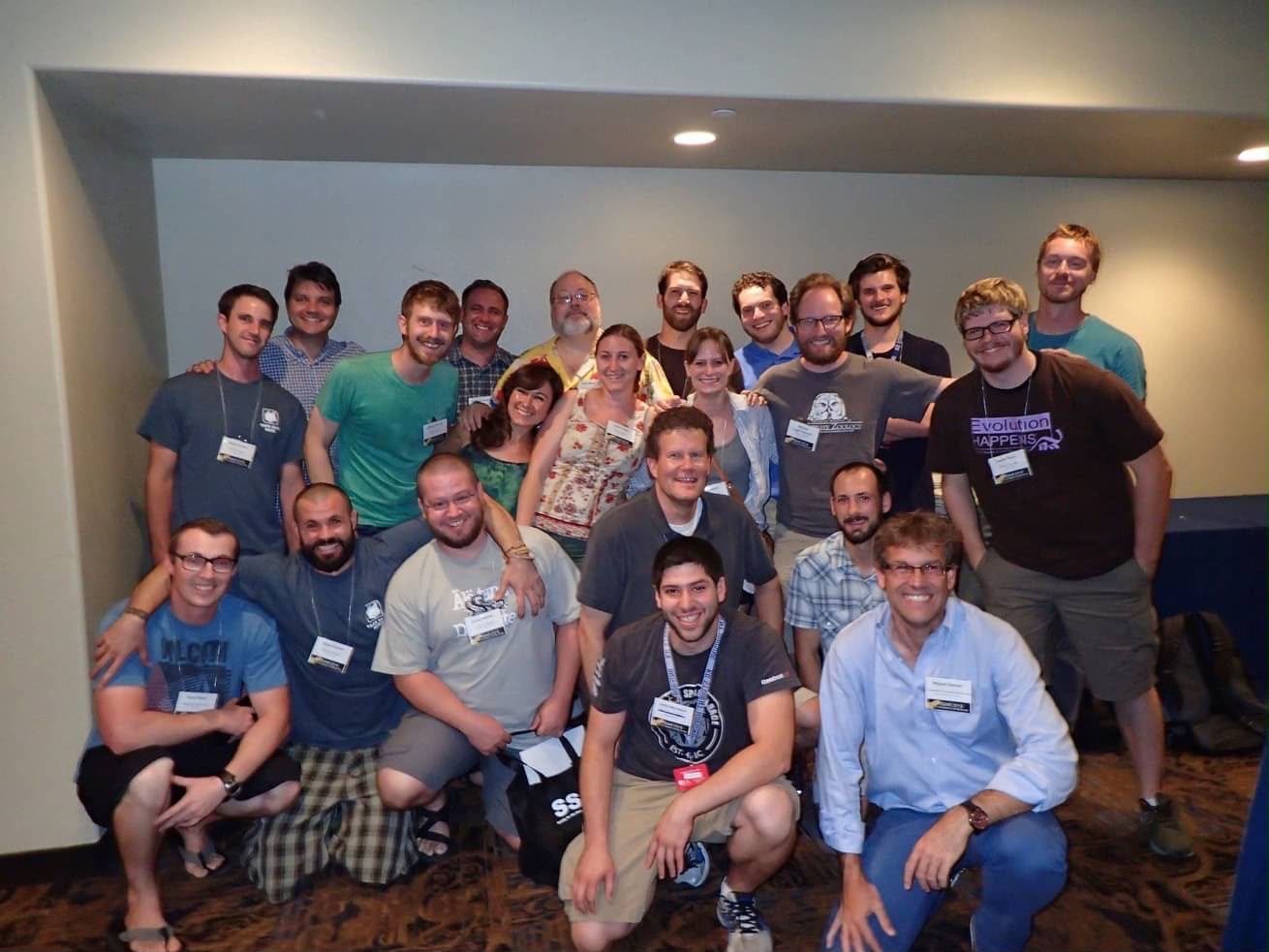
    A group photo of Aaron Bauer, Todd Jackman, and many current and former students at a herpetology meeting at the University of Kansas in 2015.Courtesy of Daniel Paluh

    At this week’s national herpetology conference in New Orleans, a special session called “Bauer-fest” will celebrate his career.

    “He’s always continued to be a really strong advocate for all of his students,” said Daniel Paluh, an assistant professor at the University of Dayton in Ohio, and one of the former students organizing the event.

    Paluh was intimidated by Bauer when he first met him at a conference, before realizing he was “a very friendly, funny, personable person.”

    Bauer had an “open-door policy,” Paluh recalled, to help his students with research. That came with access to his personal library — one of the largest collections of books on herpetology in the world and the inspiration for a scene in the 2012 movie The Amazing Spider-Man.
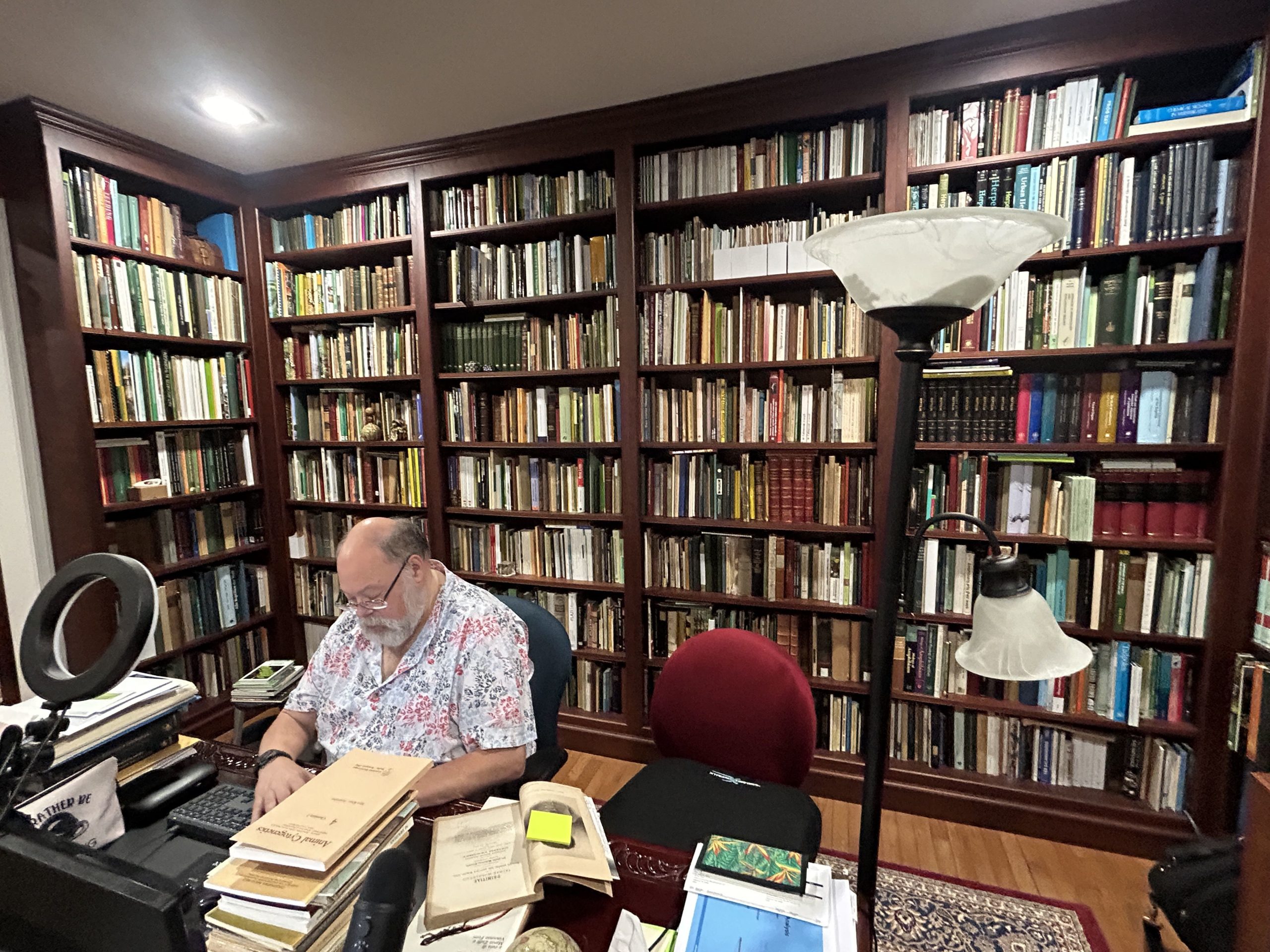
    Aaron Bauer’s personal library is one of the largest collections of books on herpetology in the world. It was used as inspiration for a scene in the 2012 movie “The Amazing Spider-Man.”Courtesy of Aaron Bauer

    Bauer also cares about his students’ lives beyond graduation, said his Villanova colleague Todd Jackman, who is organizing a “Bauer-palooza” near the university in September.

    About 80% of his former master’s students have stayed in the field, becoming professors in Louisiana and Kentucky, a museum curator in Australia, the head of nature conservancy in southern Angola, and more.

    “I’m not crazy about being the center of attention, but I think that’s outweighed by the fact that I’ll have all of these people in one place,” Bauer said.
  • Pope Leo XIV celebrates immigrants in speech to Philadelphia crowd amid clash with Trump ahead of 250th anniversary

    Pope Leo XIV celebrates immigrants in speech to Philadelphia crowd amid clash with Trump ahead of 250th anniversary

    Addressing a Philadelphia crowd live from the Vatican, Pope Leo XIV called for a “recommitment” to American ideals.

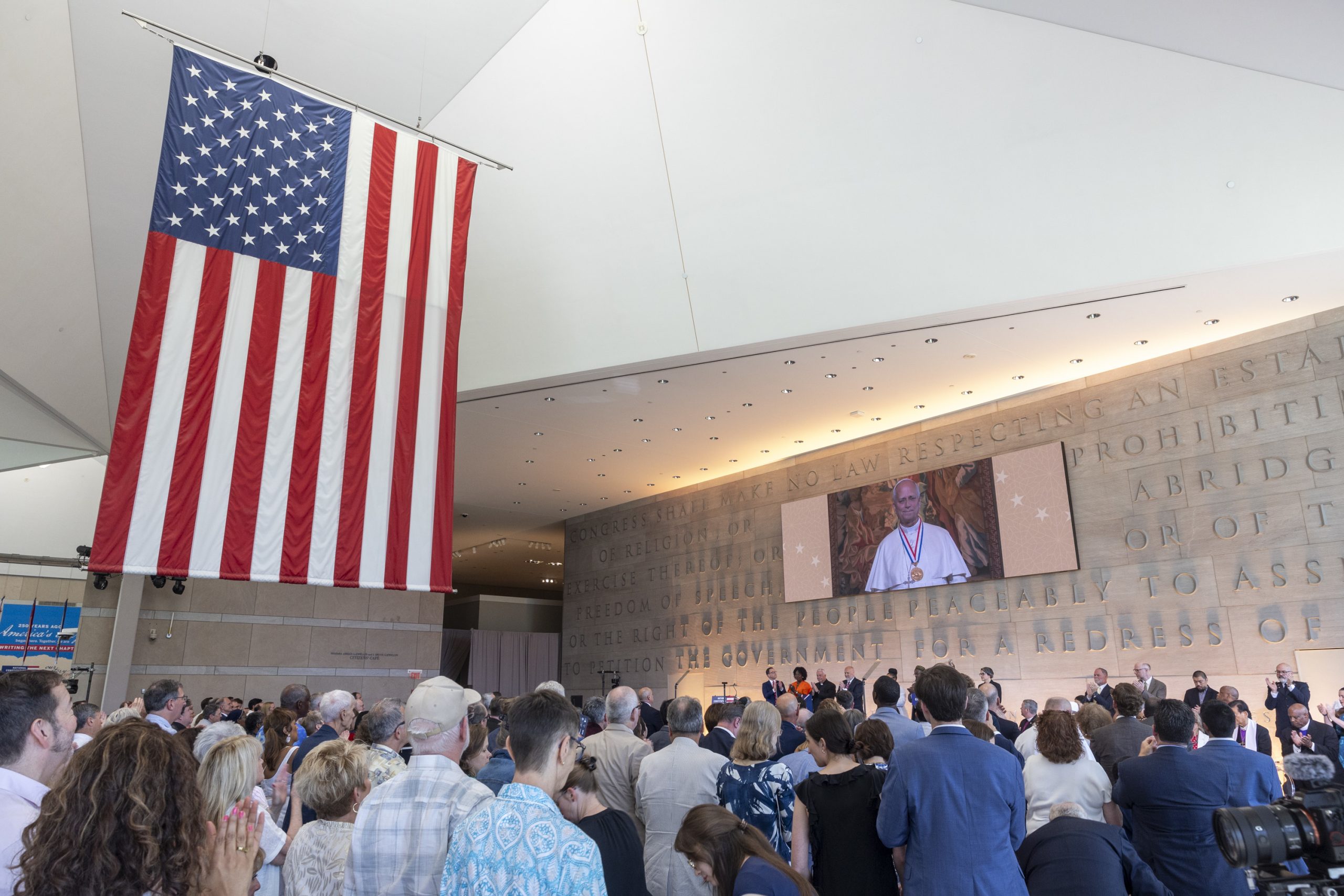
    The first U.S.-born pope delivered remarks virtually at an interfaith ceremony inside Philadelphia’s National Constitution Center on the eve of the United States’ 250th birthday to accept the center’s prestigious Liberty Medal.

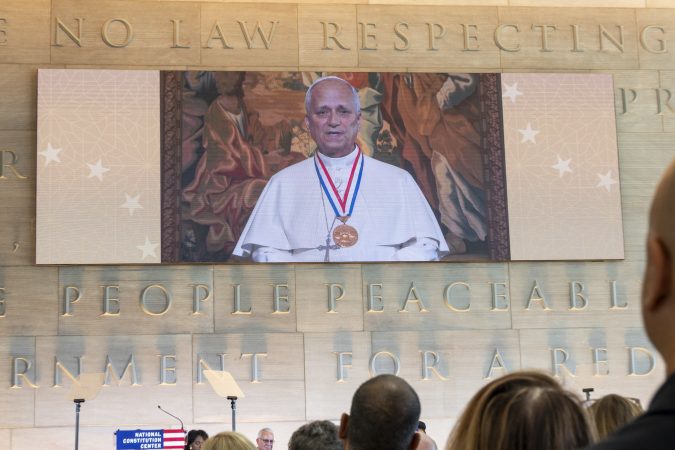
    Facing a screen showing the live, cheering Philadelphia audience, the pontiff wore his Liberty Medal along with a cross around his neck.

    Leo, who grew up in Chicago and attended Villanova University, quickly pointed out his American roots, calling himself “a son of this great country.”

    “I join you in asking God’s blessings upon America’s future that the lofty ideals enshrined at the beginning of the Declaration of Independence may continue to guide the flourishing of the nation in unity, justice, and peace,” he said.

    Leo, who was elected pope last year, spent years serving the church in Peru and has been outspoken about calling for international peace. That’s landed him at odds with President Donald Trump’s administration on the issue of migrants, the war in Iran, and more.

    The pope leaned into some of those themes in his speech, even though he did not refer to the president directly.

    He nodded to his advocacy for humane treatment of immigrants and noted that the founders of the United States “made America a byword for freedom, as the country opened its doors to successive waves of immigrants, enabling them and their children to play their part in shaping the future of the nation.”

    He said the “love of freedom” in the United States has inspired the country “to look beyond itself and at great sacrifice to champion the cause of freedom beyond its own borders.” But he acknowledged that mission hasn’t been straightforward, noting that building a society that embodies such ideals “was not always easy and, in many respects, is still a work in progress.”

    The pontiff’s speech comes the day before he plans to visit Lampedusa, an Italian island known as a stop for migrants making the dangerous journey across the Mediterranean Sea from North Africa to Europe. His predecessor Pope Francis made his first official visit outside of Rome in 2013 to the same island and condemned the “globalization of indifference” toward migrants.

    Pope Leo XIV speaks at the Liberty Medal Ceremony at the National Constitution Center in Philadelphia on Friday.Tyger Williams / Staff Photographer

    Julie Silverbrook, the chief content and learning officer for the National Constitution Center, emphasized in a Friday interview that Leo is a “global leader who has been uniquely shaped by American ideals.”

    “He has brought together people of different faith traditions, and through his ministry really reflected his belief in the inherent dignity of all human beings,” she said.

    Leo declined an invitation from Trump to the United States to celebrate the country’s 250th birthday on July Fourth, the New York Times reported. The first American-born pope opting to visit migrants instead sends a stark message as the president pursues his mission of mass deportations.

    But the pontiff’s participation in the Philadelphia program highlights his connections to the region, which isn’t lost on the National Constitution Center.

    The Philadelphia-based private nonprofit organization chose Leo for the award due to “his lifelong work promoting religious liberty and freedom of conscience and expression around the world — ideals enshrined by America’s founders in the First Amendment to the U.S. Constitution.” That, and also because he is the first pope born in the United States, and has connections to Philadelphia, Silverbrook said.

    “He was shaped by those freedoms … in much the same way that the Declaration of Independence was shaped by the city of Philadelphia, and of course a reflection of American values that have been carried globally,” she said.

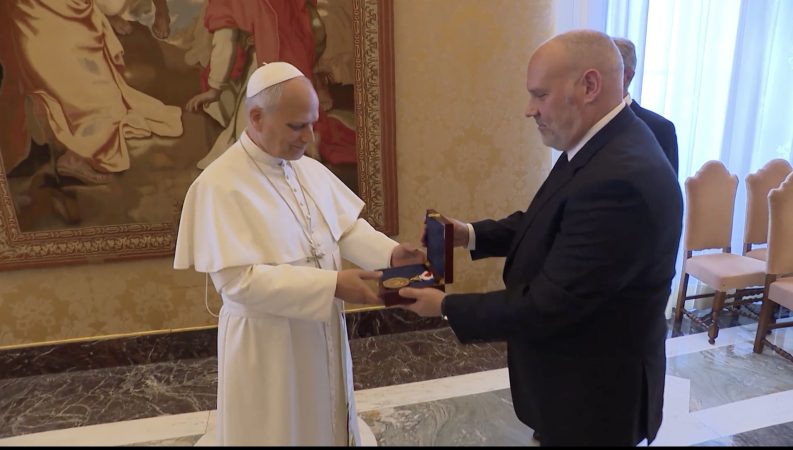
    When a delegation from Philadelphia’s National Constitution Center met with Leo at the Vatican in April to present him with the medal in person, they also bore a few local goodies: a bundle of Villanova swag, a replica of George Washington’s Acts of Congress, and a Wawa tote bag filled with Tastykakes.

    “I think he very much so feels a connection to Philadelphia, both having been educated here, and I think in this semiquincentennial moment, I think the eyes of the world are on Philadelphia, and we’re thinking about the ideals that have emanated from this place for 250 years,” Silverbrook said.

    Leo, a 1977 Villanova alum, recently passed on a surprise message to graduates of his alma mater. Vince Stango, the interim president and CEO of the National Constitution Center, also went to the Augustinian university on the Main Line, which co-sponsored the NBC10 broadcast of the event along with the archdiocese and Malvern Prep.

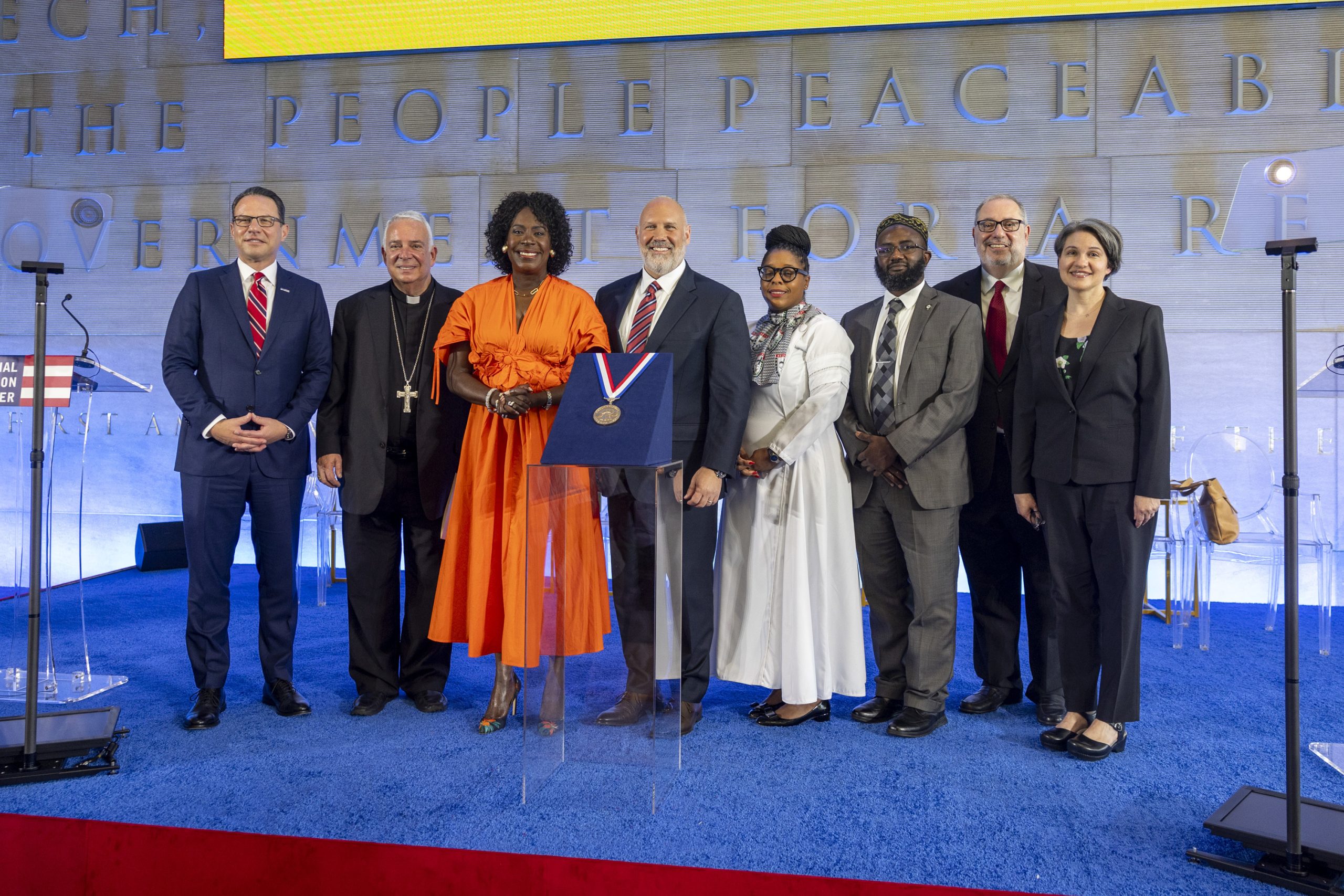
    (From left to right) Gov. Josh Shapiro, Rev. Nelson J. Pérez, Mayor Cherelle L. Parker, Interim President & CEO of National Constitutional Center Vince Stango, Rev. Carolyn C. Cavaness, Imam Quaiser D. Abdullah, Rev. Luis A. Cortés Jr., and Rabbi Jill L. Maderer, pose for a photo at the Liberty Medal Ceremony at the National Constitution Center in Philadelphia, Pa., on Friday.Tyger Williams / Staff Photographer

    Clashing with Trump

    The pope has contended that it’s up to each country to determine how they want to accept migrants while also denouncing the Trump administration’s “extremely disrespectful” treatment of them.

    He has also spoken out against Trump’s threats against Iran, and declined to participate in the president’s “Board of Peace” for Gaza’s reconstruction.

    In an April social media rant, Trump complained that he doesn’t “want a Pope who criticizes the President of the United States.” The president called the Catholic leader weak and accused him of “catering to the Radical Left.”

    Leo told reporters that month that he has “no fear, neither of the Trump administration, nor of speaking out loudly about the message in the Gospel, and that’s what I believe I am called to do, what the church is called to do.”

    In his Friday remarks, the pope made a call for unity but warned that a country should come together with “ideals that do not fade with the passing of time.”

    He called on the United States to recognize its values of “peace and prosperity, a country characterized by generosity and nobility of heart,” and said the values of “shared human dignity, equality, and the rights laid out in the Declaration of Independence” can help unite and guide the nation.

    The Liberty Medal

    The Liberty Medal was created in 1988 and has been hosted by the National Constitution Center since 2006.

    The award has gone to storytellers, philanthropists, civil rights leaders, and politicians on both sides of the aisle, such as Ukrainian President Volodymyr Zelenskyy, former Supreme Court Justice Ruth Bader Ginsberg, the Bushes, Malala Yousafzai, and Thurgood Marshall.

    The center describes its recipients as individuals who “strive to secure the blessings of liberty to people around the globe.”

    The process of selecting Leo began about a year ago, Silverbrook said.

    The speech was initially going to be projected on Independence Mall, but the event was moved indoors due to the extreme heat and livestreamed by the center online.

    Rich Russo, 63, a Fishtown resident who attended the event in person, called the experience “once in a lifetime.”

    “How many times do you get the pope talking to you?” said Russo, who works for a bank.

    Gov. Josh Shapiro, who is Jewish, and Mayor Cherelle L. Parker, a Baptist — both Democrats who have been outspoken about their own faiths — joined Philadelphia Archbishop Nelson J. Pérez and other religious leaders who made remarks on stage prior to the pope’s speech. Pennsylvania Attorney General Dave Sunday, a Republican, rang a replica Liberty Bell outside.

    “Philly is proud that the pope is a graduate of Villanova University who spent time living and working in our region,” Pérez said on stage. “Pope Leo knows us, and we feel like we know him, too.”

    “His influence, however, extends beyond Philadelphia,” the archbishop added.

  • Religious liberty isn’t the only American principle on Pope Leo XIV’s mind as he accepts the Liberty Medal

    Religious liberty isn’t the only American principle on Pope Leo XIV’s mind as he accepts the Liberty Medal

    The common wisdom that “There will never be an American pope” went up in white smoke on May 8, 2025, when Cardinal Robert Prevost, a boy from the South Side of Chicago and a graduate of Villanova University, was elected pontiff and took the name Leo XIV.

    Now, on the eve of America’s Semiquincentennial, as if to underscore how much has changed, the American pope has been awarded the National Constitution Center’s Liberty Medal. Pope Leo accepted the award at the Vatican on April 30. On Friday, in a ceremony at the National Constitution Center on Independence Mall, the pontiff will address the audience live from the Vatican in a speech that will be livestreamed globally.

    The medal, according to the center’s interim president and CEO, Vince Stango, will celebrate how “[i]n formal Vatican statements and public addresses, His Holiness has affirmed that peace cannot exist without freedom of religion, freedom of thought, and freedom of expression, principles that closely align with constitutional protections guaranteed by the First Amendment.”

    One reason an American pope was long unthinkable is that American principles have not always aligned with Catholic principles. The proud American refusal to establish the Catholic Church as the national religion flew in the face of traditional Catholic teaching that the church should ensoul the body politic.

    That was never going to happen in the United States, of course. Not even close. And so the question then became, from the Catholic point of view, what to say about the American model that included the First Amendment, with its coordinated guarantees of the “free exercise” of religion and the nonestablishment of religion by Congress.

    Rome’s response has changed over time. In the late 1800s, Pope Leo XIII noted with approval the religious situation of Catholics in the United States, yet cautioned against the error that separation between the church and the civil power was to be the norm. By the 1950s, though, some Catholic thinkers were claiming the American model, in fact, stated the ideal, reasoning that the First Amendment guarantee of “free exercise” is necessary for a person to honor his God-imposed duties.

    By now, even though the Second Vatican Council (1962-1965) stated that it was leaving the church’s traditional teaching “untouched,” the nonestablishment of religion and a legal guarantee of individual and group free exercise of religion, subject to just limitations for the common good, constitute the norm proposed by the Catholic Church to the world as we know it.

    In speaking to the Spanish Parliament on June 8, for example, Pope Leo insisted that laws must respect “freedom of thought, conscience and religion, a fundamental right that protects the most intimate sphere of the person. The freedom upon which the contemporary state is built, if it is authentic, recognizes the religious dimension of the human person.”

    In the ceremony on Independence Mall on Friday, Pope Leo will address a nation in which, for the first time in its history, it is becoming socially acceptable to oppose the free exercise of religion for some people. Litigation that threatens to cancel people’s freedom to live according to their conscience becomes more common. The seal of confession, long protected in the United States, is under assault, and the threat is real. In his address to the Spanish Parliament, Pope Leo warned against the withdrawal of that protection, and the warning needs to be echoed in the United States.

    It would be one of history’s great ironies for an American pope to call his country back to a principle that his church learned, in part, from America.

    Religious liberty is not the only American principle on the American pope’s mind, as his message to the 2026 graduates of his alma mater makes clear. “This being the 250th anniversary of the United States of America, I would invite you to recall in a special way the guiding principles of the foundations of our nation: ‘We hold these truths to be self-evident: that all [people] are created equal; that they are endowed by our Creator with certain inalienable rights, and among those are Life, Liberty and the pursuit of happiness.’”

    The principles of the First Amendment are to be cherished, but prior to those principles, the pope has reminded us, are the principles of the Declaration of Independence around which the nation was formed in 1776. And while the declaration does indeed attest to the nation’s commitment to the people’s Creator-given right to liberty, the outstanding principle of the declaration to which President Abraham Lincoln later found the nation “dedicated” since 1776 was that all people are “created equal.”

    When Lincoln summoned the American nation to rededicate itself to the equality of all persons, he did so for good reason: Unless we are related to one another as equals, we are related to one another as fractions to wholes. The three-fifths clause of the original U.S. Constitution gave effect to slavery, a grievous injustice removed by the 13th Amendment in concert with the other Reconstruction amendments. These amendments constitutionalized the nation’s earlier commitment to our having been “created equal,” but not everyone is a believer in the equality of all people.

    Today, Americans are divided over the declaration and, specifically, the claim that we are “created equal.” Human equality is said by some to be a self-evident lie, and even among those who pay it lip service, commitment to the basic equality of all people is undermined by identity politics, race-based priorities, and blood guilt.

    Pope Leo, though, is not in doubt about the equality of all people. In his first encyclical, Magnifica Humanitas, he writes that we are equal in “ontological dignity, which is neither acquired nor earned, nor does it need to be justified.” This immutable and foundational equality is true of all people because we are, without exception, “created in the image and likeness of God.”

    And this is another truth Americans need to reclaim.

    In order to reclaim it, we need to understand that human equality was never meant to state something empirical or measurable about people. The equality declared by the declaration and celebrated by Lincoln, and fully constitutionalized by the Reconstruction amendments, depends on what is spiritual in a person, represented by the radical Christian judgment that underneath the obvious and often wonderful diversity of people lies a universal sameness in being created in the divine image.

    When G.K. Chesterton was asked, “What is America?” he gave a characteristically smart answer that has been debated ever since: “America is a nation with the soul of a church. America is the only nation in the world founded on a creed. That creed is set forth with dogmatic and even theological lucidity in the Declaration of Independence.”

    Robert Prevost, now Pope Leo, was formed, in part, in that “church” with its declarational creed. He was also, and first, formed in the Catholic Church, with its commitment to the universal equality of all people.

    What the American pope can do now, in a way no other person on earth can, is to remind Americans that the equality to which their nation has been dedicated since 1776 depends on what Christianity has shown the world: that even the least, in worldly eyes, are equals in God’s eyes.

    Patrick McKinley Brennan is the chair of Catholic legal studies and a constitutional law scholar at Villanova University.

  • No, Pope Leo XIV wasn’t at a ’70s Villanova University fraternity party in this viral photo

    No, Pope Leo XIV wasn’t at a ’70s Villanova University fraternity party in this viral photo

    Did Pope Leo XIV actually go to a Villanova University fraternity party?

    That’s what one user on X purported when he posted an aged photo of the leader of the Catholic Church standing with a group of young men — one wearing a Villanova T-shirt and holding a small dog — in front of a brick bungalow. “The future Pope Leo XIV at a Villanova frat party in 1976,” the caption read.

    The tweet had 1.4 million views and more than 15,000 likes as of Sunday.

    But internet sleuths were suspicious:

    “Not one of them is holding even a beer. That’s one tame frat party,” one of nearly 150 comments read.

    “Doesn’t this look more like a step ranch in/near Chicago than anything on the Main Line?” another user smartly deduced.

    The photo was actually taken at a fellow Wildcat’s house on the South Side of Chicago, where the pontiff is from, according to a classmate who has a copy. The classmate, who declined to be named for privacy reasons, assured The Inquirer it was not a frat party and dated the photo to the mid-’70s.

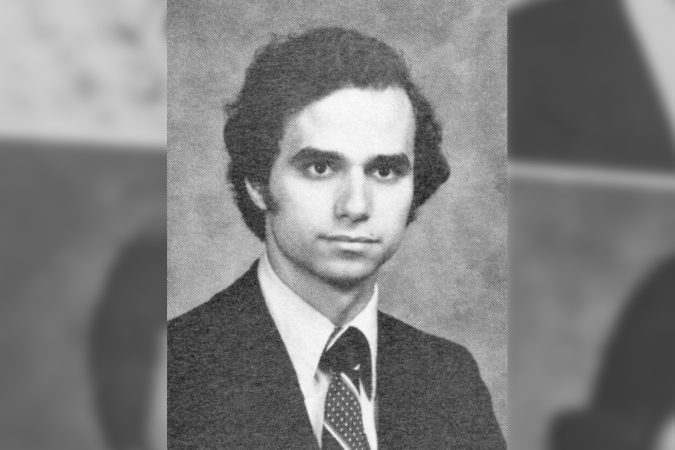
    Pope Leo graduated from Villanova in 1977. He’s the first U.S.-born pope, which presumably could also mean he’s the first to brush up against Greek life, but Villanova does not have fraternity and sorority housing. The Holy See, the Vatican’s governing body, did not immediately respond to an email seeking more information about the photo.

    Still, people were intrigued by the idea of the Pope at a party:

    “It’s important to me that the pope has been to a frat party even if it was a daytime frat party of eight,” one user wrote.

    Another said, “Learning your frat bro is now the pope. That’s like something from the epilogue of Animal House.”

  • You can trace Jalen Brunson’s greatness and the Knicks’ NBA title right to Villanova

    You can trace Jalen Brunson’s greatness and the Knicks’ NBA title right to Villanova

    In a Rock Hill, S.C., restaurant last Wednesday night, during a recruiting road trip to the Nike 100 Camp, Ashley Howard locked his eyes on a television above the bar, enthralled by the most dramatic comeback in NBA Finals history, his mind recalling a more modest rally from nine years earlier.

    Jalen Brunson, Josh Hart, Mikal Bridges, and the New York Knicks kept chopping into that 29-point San Antonio Spurs lead. Madison Square Garden kept getting louder. And as Game 4 slowly shifted from a series-tying rout to the surest sign that three former Villanova stars would soon bring about the end of a 53-year championship drought, Howard remembered a college basketball game from January 2017, from the season between ’Nova’s ‘16 and ‘18 national championships.

    An assistant under Jay Wright then, an assistant under Kevin Willard now, Howard reminisced with the friend sitting next to him — former Villanova head coach Kyle Neptune, now an assistant with the Charlotte Hornets — about a 61-59 Wildcats victory over Virginia. Villanova had trailed that day by 12 points with less than 10 minutes to go, an imposing deficit given how Tony Bennett’s Cavaliers teams could slow a game to a crawl. But Hart and Brunson had pulled ‘Nova back from the brink, and Donte DiVincenzo had tipped in an off-target Hart layup at the buzzer, and Howard saw the residue of that win in OG Anunoby’s soaring-eagle tip-in and the Knicks’ 107-106 stunner in Game 4. In Brunson’s 45-point masterpiece Saturday night in the clinching Game 5. In the title run of a team that was smarter, tougher, and tighter than every other in the NBA playoffs.

    “After winning the first national championship, every game these guys played together in ‘17 was the biggest game for whoever they played,” Howard said in a phone interview. “They have everything to lose, and their opponent doesn’t. There’s a different type of mental toughness and mental fortitude you have to have to not only play under that pressure but answer the call in those moments.

    “Now they’re all back together, and it’s almost like déjà vu where that Villanova connection is back. The other pieces are different. The coaches are different. But when you look at that Knicks team, you say, ‘Yo, those dudes are playing Villanova basketball.’ It’s really all about how they play hard. They compete for the entire game. They never, never quit. They play unselfishly, and you can tell that they love each other. That just makes my chest stick out as wide as all outside.”

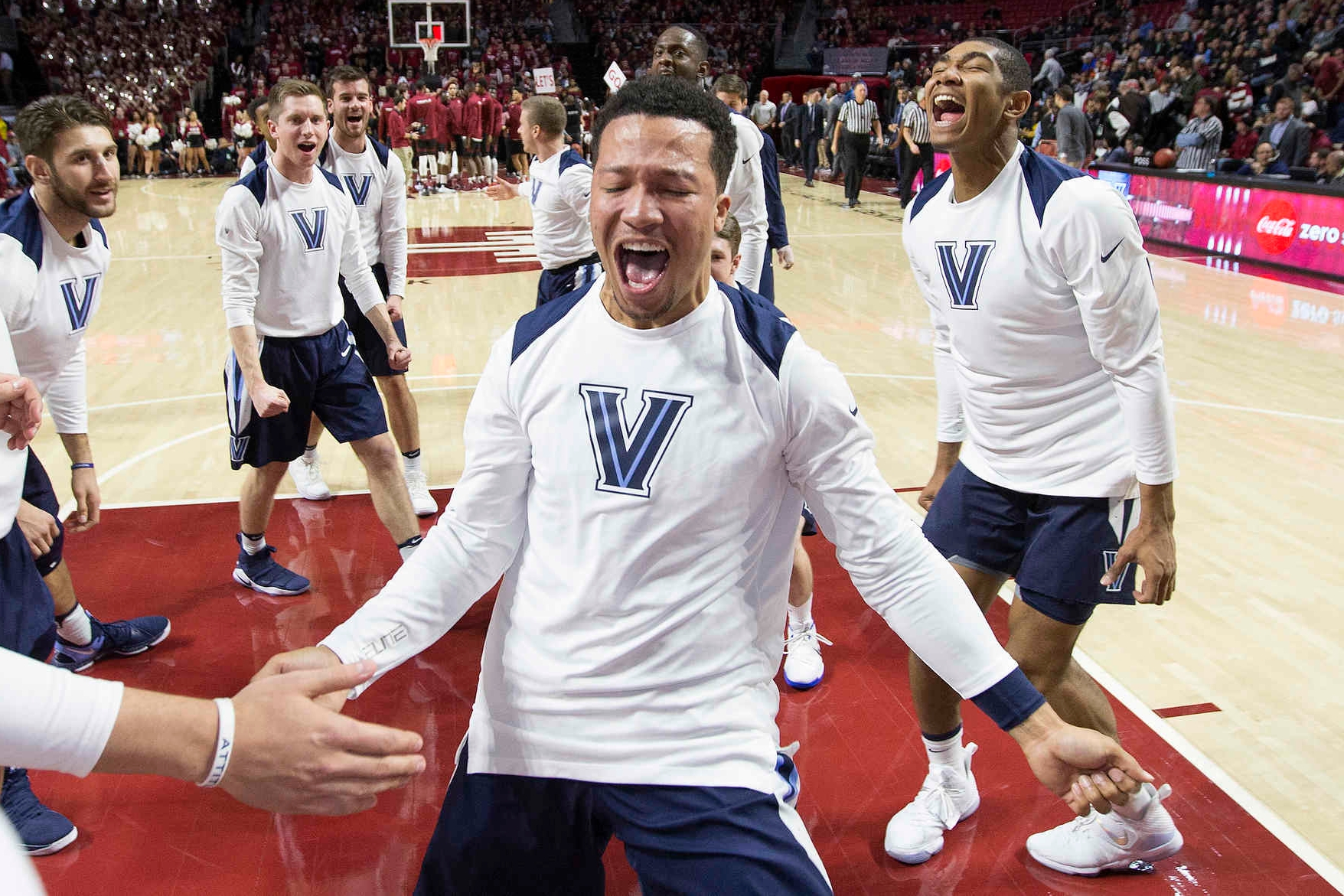
    Josh Hart (right) won the 2016 national title with the Wildcats.Charles Fox / Staff Photographer

    Howard was at the nexus of the origin of the ‘Nova Knicks, and the irony of his role in that story is that he, with such deep Philadelphia hoops roots, had left town when he made his first connections with Brunson, Hart, and Bridges. A standout guard at Monsignor Bonner and Drexel, he was climbing the college coaching ladder — first four years at La Salle, then four back at Drexel — when in 2013 he accepted the chance to assist Chris Mack at Xavier. It was a more highly regarded mid-major, a better shot to jump to a bigger program, and in that one year he spent in Cincinnati, Howard recruited that trio before reuniting with them again at Villanova.

    In Hart, Howard saw a relentless and tenacious guard who pulled down as many as 25 rebounds in games at Sidwell Friends in Washington and for his AAU club, Team Takeover. He also met a low-maintenance kid who, when Howard coaxed him to Xavier for an on-campus, didn’t need a fancy dinner at an exclusive restaurant. No, when Howard offered to buy him lunch, Hart instead was desperate for a sack of double-cheese sliders from White Castle. “Shows what a freak of nature he is,” Howard said.

    Bridges’ and Brunson’s recruitments were more personal for Howard, starting at Xavier and continuing after he joined Wright’s staff at ’Nova. Howard was friendly with Bridges’ cousin Bernard Tyler, who forwarded him a video of the kid’s highlights from Great Valley High School and Team Final, one clip after another of Bridges cutting to the basket and creating shots within Great Valley’s motion offense, with an enticing text: This is the next one. Make sure you get this dude. And Howard could only chuckle when Mack called him one day after attending a high school holiday tournament in Chicago and asked him, Hey, Ash, do you know Rick Brunson? His kid is really good.

    “Reached out to Rick,” Howard said. “We caught up, and I jumped on Jalen from that point on.”

    There’s a chicken-or-egg aspect to the greatness that Wright’s program achieved during that stretch in the mid-2010s and to the qualities that Brunson, Bridges, and Hart developed there and still carry with them. Would these players, because of their inherent strengths, have thrived in other programs? Or did they need to learn under Wright and his staff and his culture? A dash of both, of course, and the conditions and choices that led to their flourishing at Villanova — and to those two national championships — aren’t likely to be duplicated in college basketball’s current era of status seeking and coin chasing.

    Mikal Bridges was on both the 2016 and 2018 Villanova championship teams.Yong Kim / Staff Photographer

    Bridges went to Wright and Howard and suggested that he redshirt as a freshman, that he sit out an entire season for the sake of his growth as a player and person. Hart started just three games over his freshman and sophomore seasons, could have transferred out of frustration and a search for more playing time, and didn’t. Brunson as a freshman took a secondary role alongside Ryan Arcidiacono, then ran the Wildcats’ show for two years before entering the NBA draft. Good luck being so patient in developing players and building a program now.

    “It was a period of time where you could build off your failure and mistakes and learn from them collectively,” Howard said. “You could develop young people over a course of time and nurture and appreciate the process. … All these guys in their own way trusted us and allowed us to push them to limits. Parts of their experience at Villanova, man, it was tough, but they allowed us to make them uncomfortable.”

    It was the perfect preparation for these playoffs, for these NBA Finals, for a remarkable run capped when Brunson took control of Game 5, when the sub-6-foot guard with the impeccable footwork, with the endless array of head fakes and midrange shots, with the glorious old man’s game was once again the coolest customer on the court.

    “You could see the Spurs getting tight,” Howard said, “and you could see Jalen saying, ‘Yo, get me the ball. I’m gonna make these plays.’ Me being around J, it’s like, ‘Here he comes. It’s on.’ When the stakes get high, that dude is coming.”

    It had been 53 years, long enough for any franchise and its fans to wait for that kind of ride, and all it took was something Ashley Howard and everyone at Villanova had seen a million times before. All it took was Jalen Brunson, Josh Hart, and Mikal Bridges doing what they’ve always done.

  • Jalen Brunson pours in 45 points as Knicks close out Spurs for first NBA title since 1973

    SAN ANTONIO — Jalen Brunson and the Comeback Knicks did it again. And now they’re the Champion Knicks.

    For the first time in 53 years, New York rules the NBA. Brunson scored 45 points, including 13 straight for New York in the fourth quarter, and the Knicks beat the San Antonio Spurs 94-90 in Game 5 of the NBA Finals on Saturday night.

    The Knicks won the series 4-1, rallying from double-digit deficits in all four of those victories. The deficit was 16 on Saturday night. Brunson and the Knicks were never fazed.

    Brunson, fittingly, closed with a flourish. He set a Knicks record for points in a finals game; it had been 38 by Willis Reed against the Los Angeles Lakers in Game 3 of the 1970 series. It now belongs to the left-handed point guard who changed the franchise’s fortunes when he arrived four years ago.

    Mikal Bridges and Josh Hart — the other two parts of the “Nova Knicks” trio that also includes Brunson, three players who were NCAA champions at Villanova and teamed up in New York to try to do the same — combined to score 27 points. Bridges had 14, Hart 13.

    Brunson won NCAA crowns twice with Villanova — both in Texas, the 2016 one in Houston and the 2018 one in San Antonio, just a few miles away from the arena that the Spurs call home.

    A Texas three-step of titles, and this one was surely the sweetest of all.

    Dylan Harper scored 25 for the Spurs, who got 19 points, 14 rebounds and five blocked shots from Victor Wembanyama.

    The Knicks improved to 4-0 in closeout opportunities this season, winning them all on the road. It didn’t feel like the road, though — not with thousands of New York faithful having made the trip to Texas to see a moment 53 years in the making.

    New York got to the brink of this title by rallying from 29 points down in Game 4 to win 107-106 on OG Anunoby’s tip-in with 1.2 seconds left on Wednesday night. It was the largest comeback in NBA Finals history and the biggest comeback in any game this season, regular season or playoffs.

    By comparison, then, a 16-point rally in this one seemed easy.

  • Trump attends ’Nova Knicks game and they end a 13-game playoff winning streak. Coincidence?

    NEW YORK — The ’Nova Knicks finally lost.

    All it took was Donald Trump.

    The least-loved New Yorker since Boss Tweed, the Donald on Monday took it upon himself to ruin pregame plans and pleasures of thousands by becoming the first sitting president to attend an NBA Finals game.

    It tracks: Trump always seeks to steal the shine from winners, and the Knicks, fueled by NCAA champs Jalen Brunson, Josh Hart, and Mikal Bridges, were winning like nobody’s business. They had won 13 consecutive playoff games and held a two-games-to-none lead over San Antonio when they took the court at Madison Square Garden.

    Trump’s presence created traffic snarls and ingress nightmares, and he was buried by boos during the singing of the national anthem, but nobody in the joint paid him much mind after that. He’d wanted to sit with Spike Lee and Larry David courtside, but the Secret Service (and perhaps his more sane advisers) persuaded him to retreat to a suite. There, in the shadows, he rested as the streak ended, a 115-111 downer in Game 3.

    Then, he fell asleep.

    You can’t make it up.

    Later, Trump blamed Karl-Anthony Towns. He wasn’t wrong.

    Look, it wasn’t all Trump’s fault, or KAT’s fault. It wasn’t anybody’s fault, really.

    Well, maybe it was the refs’ fault. That’s what Knicks coach Mike Brown claimed.

    “They outshot us 14-3 [from the line] in the third quarter. Maybe we did foul. But they fouled, too,” Brown said. “If they do this, 24-8 [in the second half], in Game 4, it’s going to be tough to win.”

    It will be interesting to see the league’s reaction to Brown’s comments, since he was fined twice in 2024 for interactions with officials before he was fired by the Kings.

    His players had no axe to grind.

    “That didn’t cost us the game,” said Towns, who finished with just 11 points. “We turned the ball over. We didn’t execute. We didn’t do the things that got us 13 straight wins in a row.”

    It was a very non-’Nova-Knicks night, the sort they cannot afford against an assemblage like San Antonio’s.

    The Spurs won nine more regular-season games than the Knicks. Third-year center Victor Wembanyama finished third in MVP voting this year and was Defensive Player of the Year, De’Aaron Fox was an All-Star this season, Keldon Johnson was this season’s Sixth Man of the Year, and guard Stephon Castle won Rookie of the Year last season.

    Wemby had 32 points, eight rebounds, six assists, and three blocks. Castle has 23 points. Fox had the dagger and eight assists.

    They are a very, very good team.

    The Knicks trailed by five with 9 minutes, 18 seconds to play when Brunson, who leads the Knicks like he led the Wildcats, returned to the game. That set the scene for another comeback, like Game 1 in the Eastern Conference finals against the Cavaliers or Game 2 on Friday in San Antonio, Texas. Those comeback wins branded these Knicks the same way the gritty, deep Villanova teams were branded when the won NCAA titles in 2016 and 2018 under Jay Wright.

    Alas.

    The Knicks got 32 points from Brunson. They got 16 points and nine rebounds from Josh Hart. But they got just two points from Bridges, the hero of Game 2 just three nights before.

    Alack.

    Whether it was the 13-game run, the 53-year drought, or the presence of the president, Brunson & Co. were making no excuses.

    “There are going to be a lot of distractions, positive and negative,” Brunson said. “Most important is how we compose ourselves as a team, and we have to make sure we have accountability as a team.”

    To be fair, it was thrilling to the end.

    Brunson hit a putback-and-one, a jumper as the shot clock expired, and a three-pointer with 33.7 seconds to play that cut the lead to three points, but Fox’s jumper with 12.2 seconds and two late free throws from Castle were just enough.

    You felt early that not even the steely pedigree forged on the Main Line almost a decade ago would be enough Monday.

    Wembanyama had nine points and a blocked shot in the first five minutes. Bridges committed two fouls and a turnover and had his shot blocked in the first four minutes.

    That’s how the Spurs built a double-digit lead. A constellation of stars of stage and screen looked on, hoping for a sweep, the sweetest possible end of a 53-year title drought. From Lee to David to Ben Stiller, they all felt it. The Knicks seemed … affected. Tight. Flat.

    Mostly, anyway.

    The Knicks took their first lead when Brunson — who else — canned a 25-foot three-pointer with just over four minutes left before halftime. He hit it over Wembanyama, reluctant to extend his defense too far, lest Brunson burn him to the basket again.

    About a minute later, with the Knicks down by four, Castle bulldozed Brunson while pursuing an offensive rebound. Hart scored on the ensuing possession and tied it at 54. Hart’s trey gave the Knicks the lead again, and Brunson dropped another 25-footer on Wemby. Brunson’s feed with 9.6 seconds soon sent Towns to the line, where he made both free throws, the end of a 14-3 run, and the Knicks’ halftime lead was 64-57 after they dominated the second quarter, 42-24.

    But the Spurs won the third quarter by eight, scored the first six points of the fourth, and held off the valiant ’Nova Knicks.

    They resume the series Wednesday, but don’t expect Trump to be back.

    Knicks fans might burn down the city.