By the time I arrived at the Fillmore for last Saturday’s Inquirer Food Festival, my stomach was growling. I knew I needed to bring my appetite for the big day, so I’d skipped breakfast. Now it was time to eat, and a feast of inventive, off-menu bites from nearly 50 of Philly’s best chefs and bakers awaited.
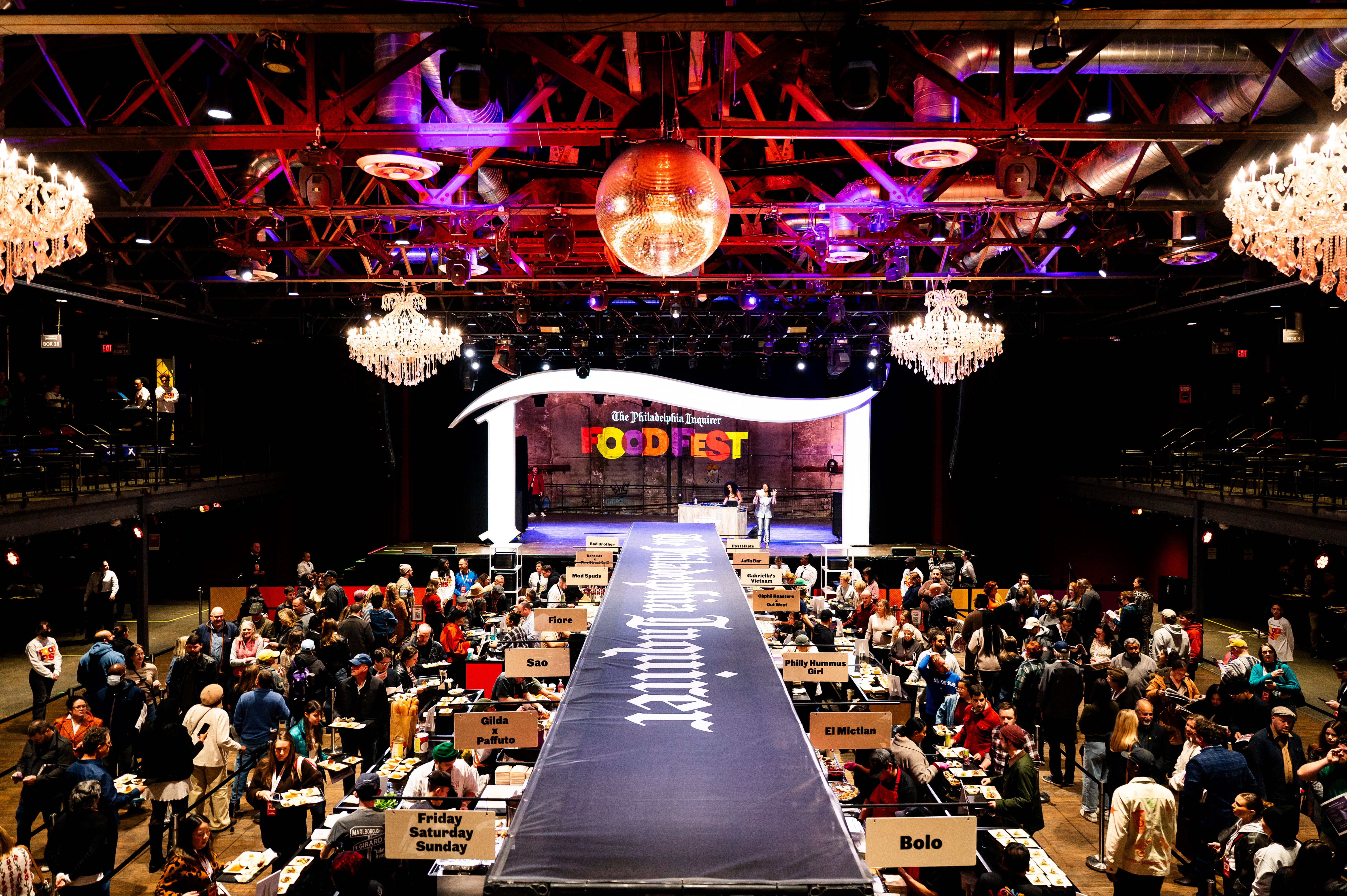
Inside, colorful lights illuminated the crowds of hungry food lovers weaving between restaurants’ booths. Bartenders were pouring signature cocktails and mocktails, chefs were staging cooking demonstrations, and Inquirer bake-off treats were circulating upstairs.
It was a choose-your-own-adventure kind of afternoon, but I was on a specific mission: Eat everything. Over two tasting sessions, I did just that, sampling dishes from stellar restaurants like Michelin-starred Friday Saturday Sunday, neighborhood favorite El Mictlan, and fine-dining spots Vedge and Ocho Supper Club, which were among several restaurant pairs that teamed up for the festival. Choosing just five favorites wasn’t easy, but a few bites were simply too good to forget.
Here are the best things I ate.
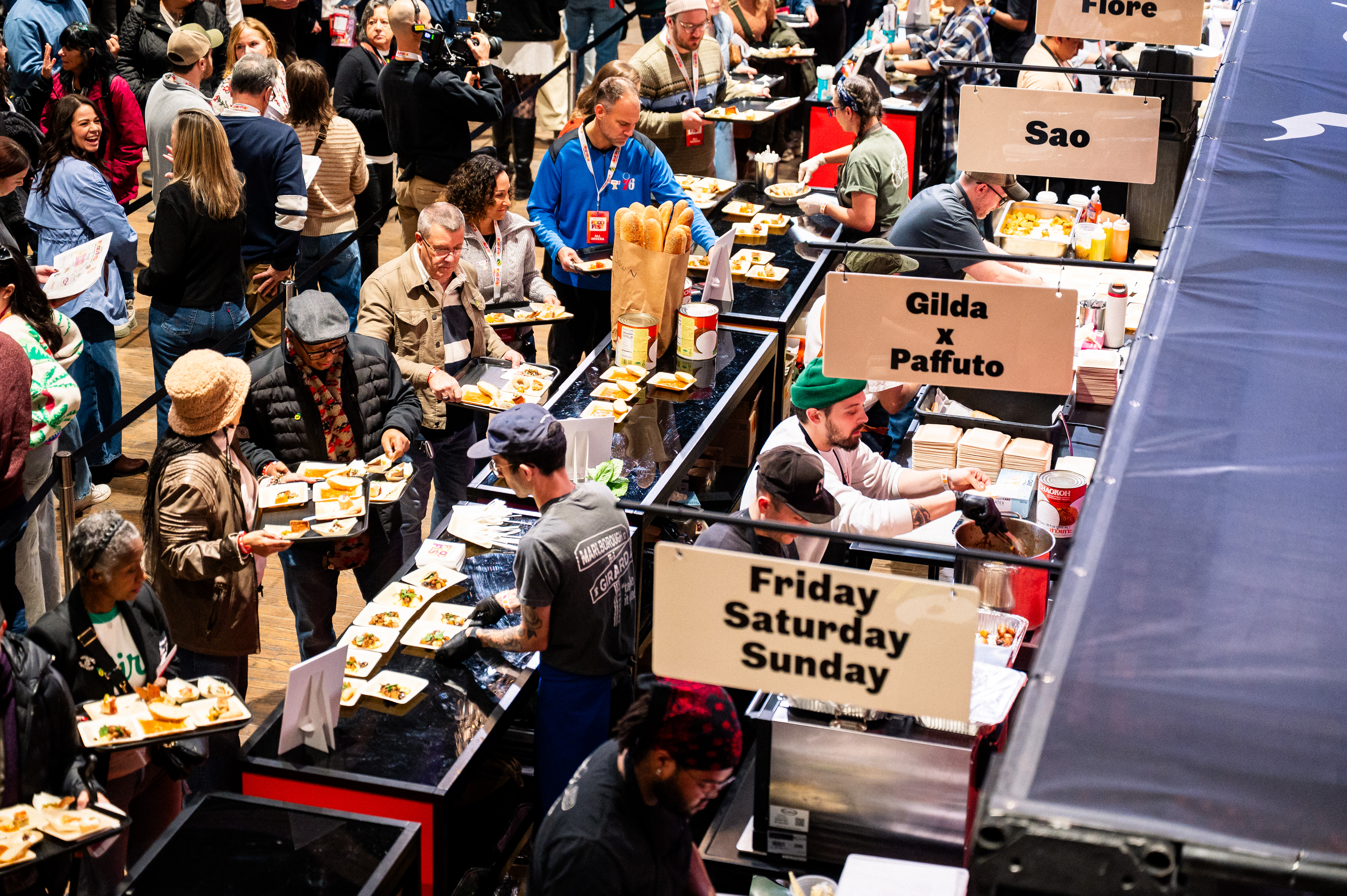
The restaurant booths, including Friday Saturday Sunday, at the Inquirer Food Festival.Joe Dantone
Friday Saturday Sunday
I don’t have much of a sweet tooth, but pastry chef Amanda Rafalski’s blackberry-and-corn pavlova won me over. Tart blackberry-chamomile preserves balanced the sweetness of roasted corn custard, while the delicate meringue and fried corn silk snapped, crackled, and popped in my mouth. Just when I thought I’d experienced every texture, another one came along.
Gilda x Paffuto
Gilda and Paffuto’s wild boar ragù tasted like November in a bowl. Slow-cooked with red wine, pancetta, and mushrooms, the rich, earthy meat was served over creamy chouriço polenta with roasted root vegetables. A little orange gremolata cut through the richness, adding a welcome burst of brightness. It was the kind of hearty, comforting dish that makes you glad it’s cold outside.
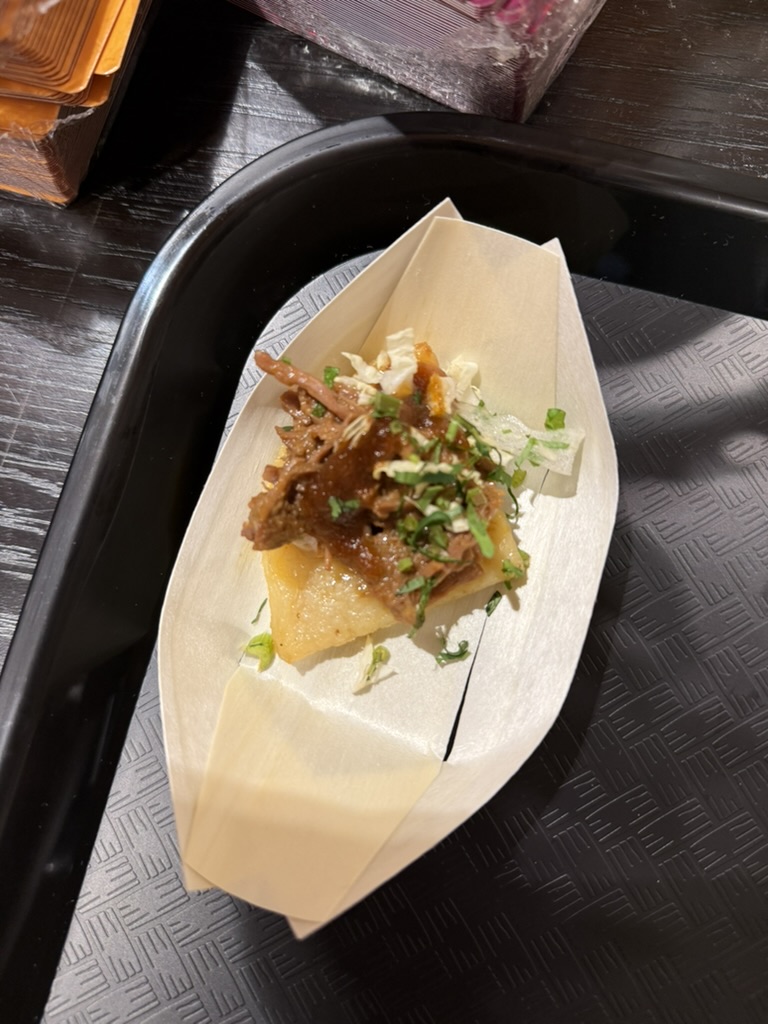
Classic Scottish tattie scones with Malaysian rendang from Mod Spuds.Abigail Covington
Mod Spuds
I wasn’t sure what to expect when I approached Mod Spuds’ table. I’d never heard of a tattie scone, nor had I tried Malaysian rendang. Turns out I’d been missing out on both. Ange Branca’s miniature Scottish potato flatbreads were crisp around the edges and soft in the middle, making them the perfect vehicle for the rich, hearty, deeply spiced meat.
El Mictlan
I was already stuffed when I got to El Mictlan. So I planned to take only one bite of chef Chelo Manzanarez’s chochoyotes, little corn masa dumplings swimming in a rich, nutty green mole that reminded me of pozole. Instead, I inhaled the whole thing. No regrets.
The Bread Room
A butter-and-cheddar sandwich has no business being so delicious, but Christina McKeough’s humble dish was a reminder that sometimes simple is best. The seeds coating the bun gave every bite some crunch, the cultured butter added richness, and the sharp Clover Creek cheddar delivered a smack of flavor. That was the whole sandwich, and I wouldn’t have changed a thing.
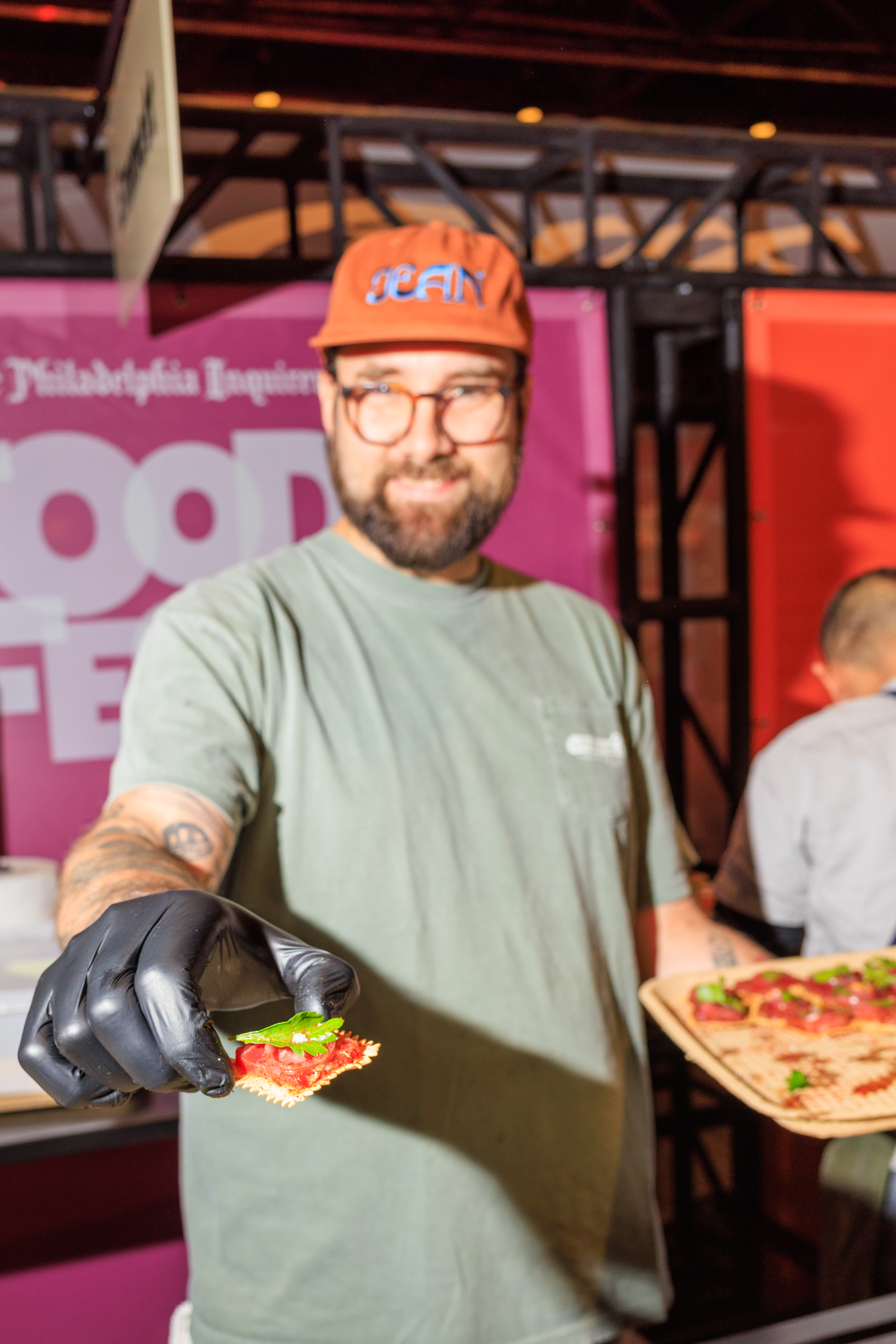
Emmett’s Julian van der Tak serving up chili-cured tunakc tinari
Emmett
My second tasting got off to a blazing start thanks to chef Evan Snyder’s chili-cured tuna. Served on a crunchy everything-seasoned matzo cracker with red pepper labneh and pickles, the fish had just enough heat to give it a kick, while the labneh and pickles added pleasant tang. The perfectly sized portion left me wanting more and eager to try out Emmett’s full menu.
Tesiny’s pickled mussels with spiced Espelette breadcrumbs and chives.Joe Dantone
Tesiny
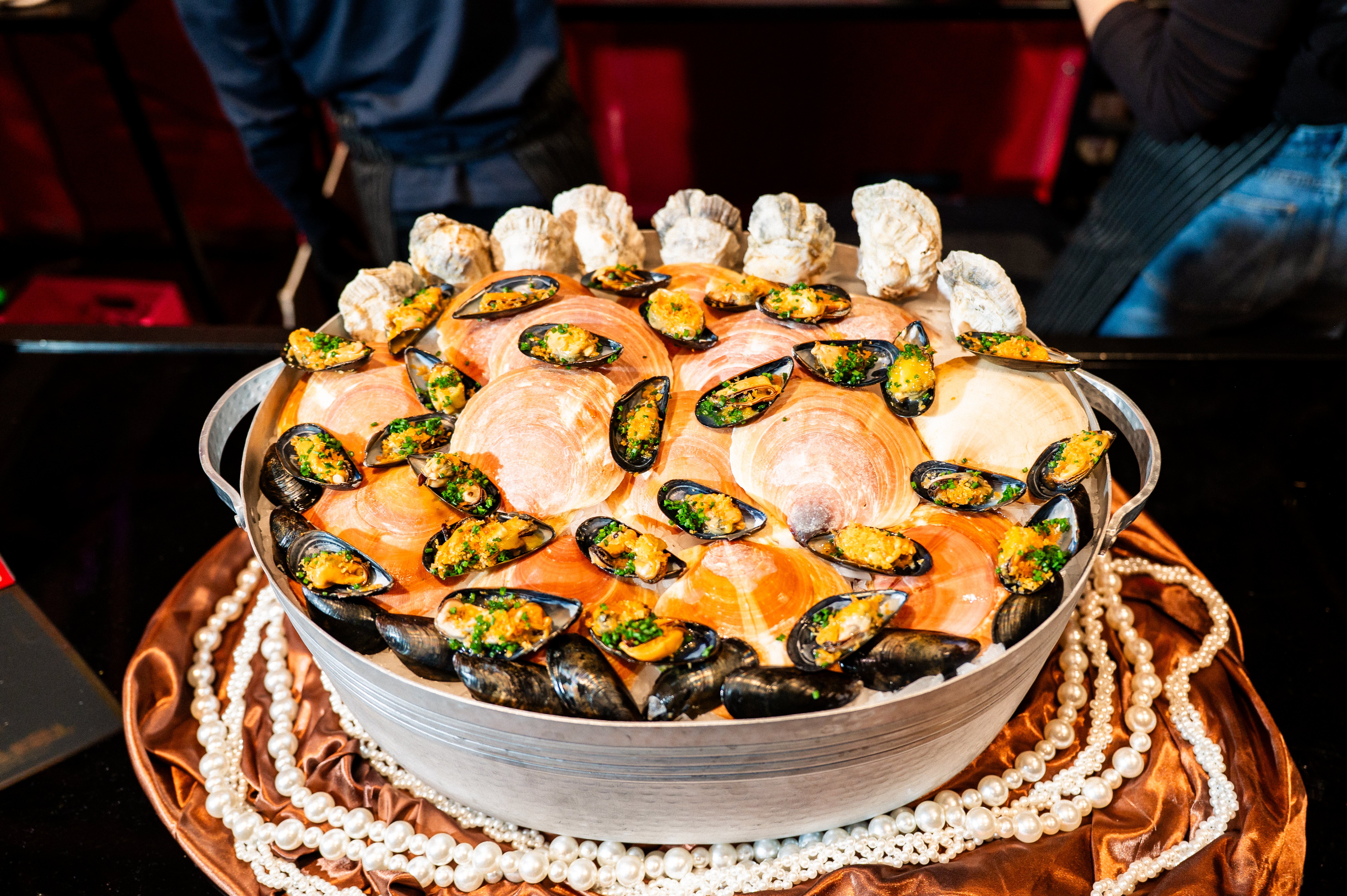
My last dish of the day turned out to be the perfect finale. Kevin McWilliams’ pickled mussels were worlds away from the traditional white-wine-and-butter preparation. Briny and pleasantly tart, with a crunchy topping of Espelette-spiced breadcrumbs and chives, they were refreshing rather than rich. After hours of eating, this light, delicate bite was exactly what I needed.
Philly’s a small town, and that’s true of its chef community, too.
We invited a number of the city’s top chefs to Bridesburg’s BLDG39, where The Inquirer’s Ariane Datil did some light matchmaking, pairing up Philly chefs and tasking them with whipping up something that marries two culinary perspectives into one creative, collaborative dish. Below, read about the dishes they created for The Inquirer Food Festival, scheduled for Nov. 14 at the Fillmore. (Watch their meet-cutes in Datil’s reality TV-inspired series, Love at First Bite.)
If you’re tempted to try the fruits of their labor in person, get a ticket soon: The event is nearing sellout.
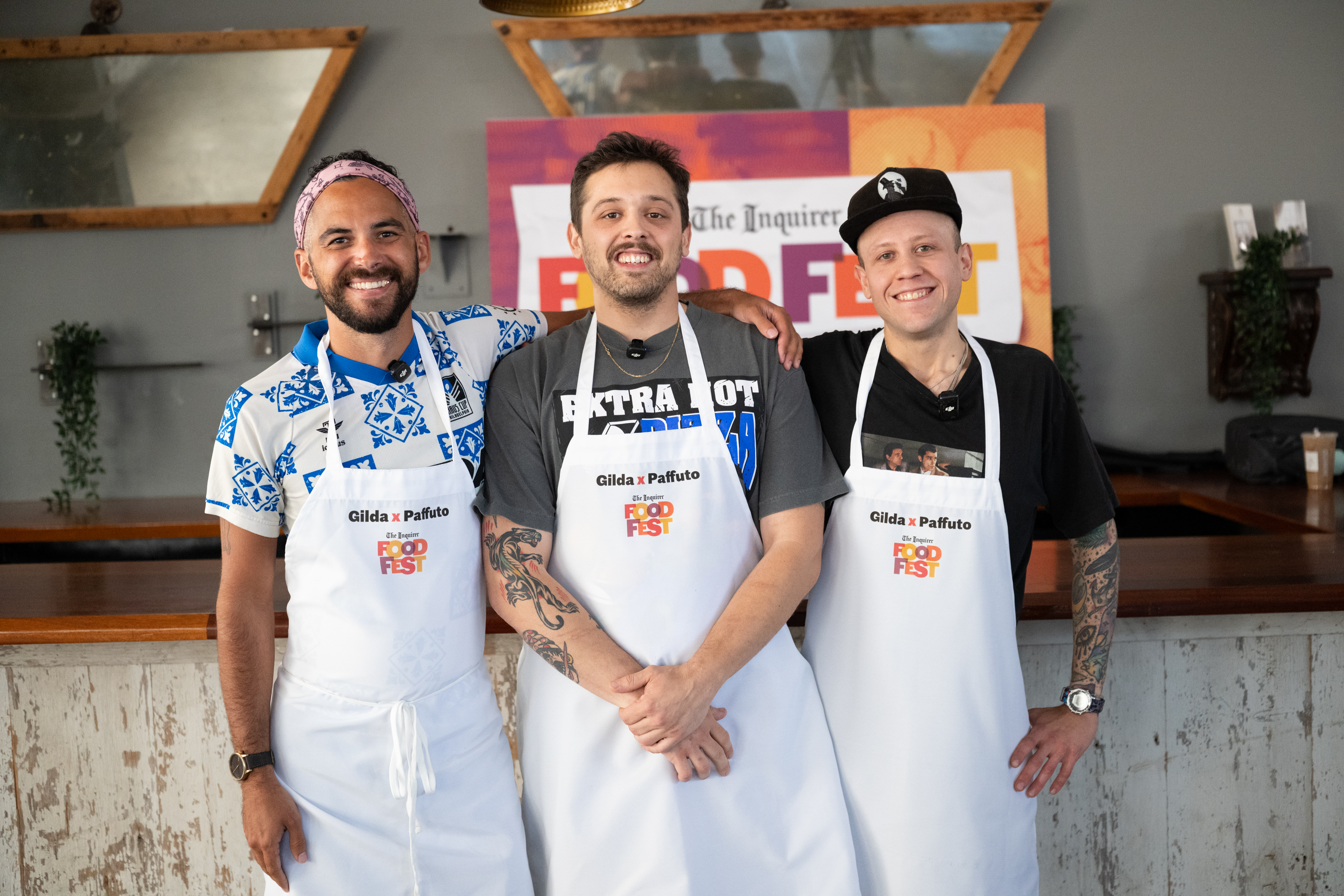
Brian Mattera, chef and owner of Gilda (left), and Paffuto chefs and owners Jake Loeffler and Daniel Griffiths.Erin Blewett / For The Inquirer
Paffuto x Gilda
“Too many cooks in the kitchen spoil the broth,” or so the old saying goes. At The Inquirer Food Festival, they’re actually planning to make a delicious stew.
Gildachef Brian Mattera is teaming up with Jake Loeffler, Sam Kalkut, and Danny Griffiths — the trio behind panzerotti specialist Paffuto — to make a Portuguese-inspired (but mostly Italian) beef stew served with chorizo and crispy mushrooms over polenta.
The stew is “something warm, comforting, [and] familiar,” Griffiths said. “Grandma’s bite.”
The collaboration is kismet. Both restaurants are inspired by no-nonsense, East Coast grandparents. They also happen to share the same interior designer. “Our places are also designed to feel like grandma’s kitchen,” Mattera joked. “Well, a cool grandma.”
Paffuto, which opened in 2023 in Bella Vista, draws inspiration from Griffiths’ and Loeffler’s Italian American upbringings in North Jersey and New York. As such, the menu’s centerpiece is panzerotti, a fried treat that is basically a hybrid of a calzone and a Totino’s pizza roll. Paffuto’s get stuffed with combos of the good stuff — like bacon, eggs, and Cooper Sharp, or sliced rib eye, caramelized onions, and more Cooper Sharp — and they’re delightfully crisp.
The Gilda and Paffuto crews collaborated earlier this year on a knockout panzerotti stuffed with crispy suckling-pig skin. The partnership, Loeffler said, resulted in Mattera giving the Paffuto dudes a sterling piece of advice: “Read the good reviews once, the bad reviews twice, and then never again,” Loeffler recited. “Think about them, learn from them, but never dwell on them.”
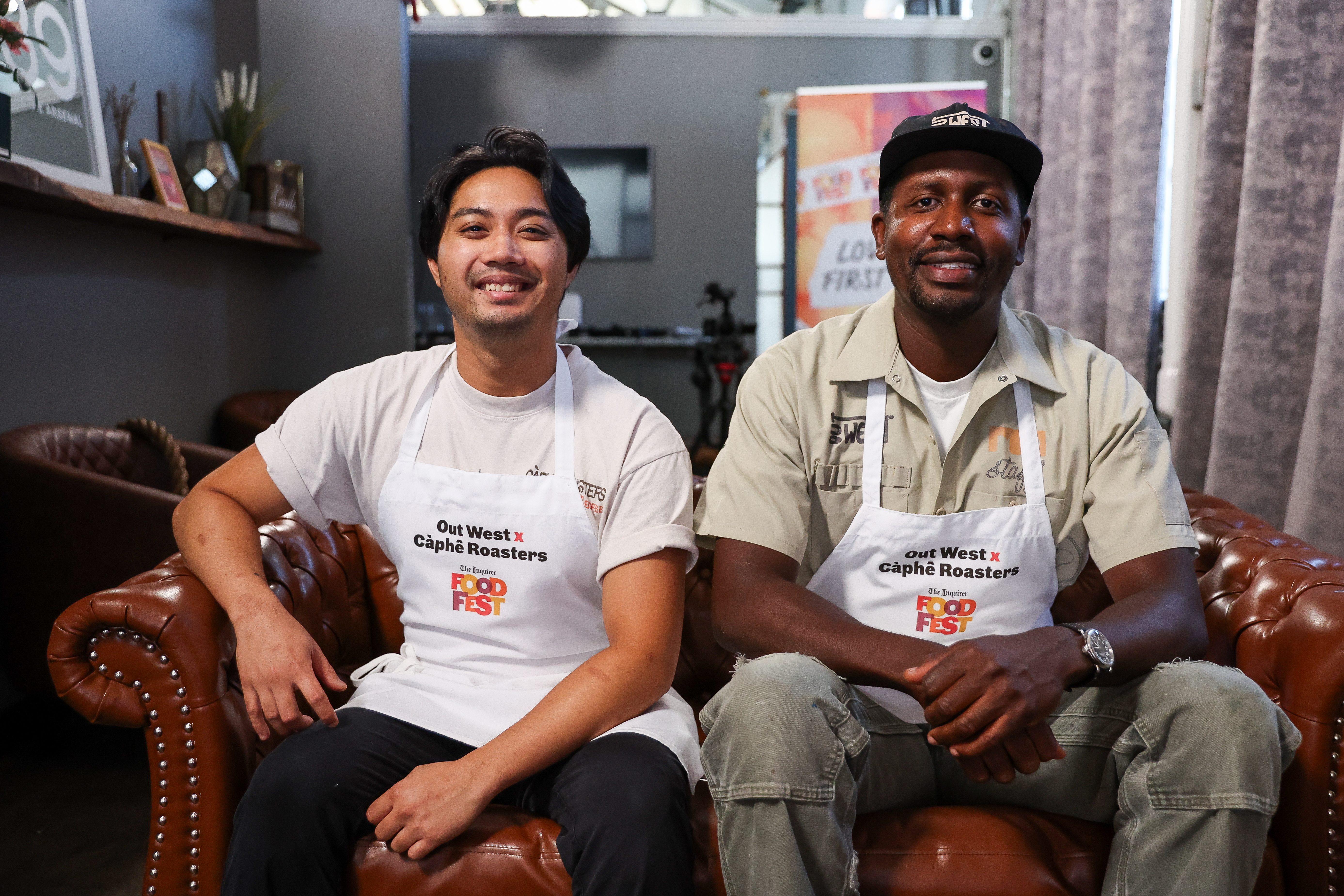
Càphê Roaster’s chef Luigi Datu (left) and Out West’s co-owner Muhammad Abdul-Hadi. Isaiah Vazquez / For The Inquirer
Càphê Roasters x Out West
When Càphê Roasters and Out West come together, it gives a whole new meaning to the term “Philly Special.”
Kensington’s modern Vietnamese café and new-school West Philly coffee shop are mashing up their cultures with a take on the hoagie at The Inquirer Food Festival. A baguette from South Philly’s Ba Le Bakery, the city’s banh mi standard-bearer,will be the vehicle fora lamb-belly terrine banh mi that getssmeared with a pork-free version of Càphê Roasters’ signature pâté and finished with a hearty dose of aromatic Thai basil.
“I don’t think you can have a good sandwich without the right bread,” saidMuhammad Abdul-Hadi, Out West’sowner.
The dish was a fun thought exercise for Càphê Roaster’s chef Luigi Datu, who recommends customers thereadd chả lụa, a steamed pork sausage from Vietnam, to the café’s classic banh mi or staple breakfast sandwich. Out West, meanwhile, is halal, so the coffee shop regularly subs in lamb for pork in its own scrapple and sausage, egg, and cheese options.
Located on opposite ends of the city, the two cafés have mutual respect for each other. Datu admires Out West because the coffee shop “feels pretty Philly” while Abdul-Hadi was quick to start calling Datu “cousin Luigi.”
“Kitchens are like family,” Abdul-Hadi said while bumping shoulders with Datu.
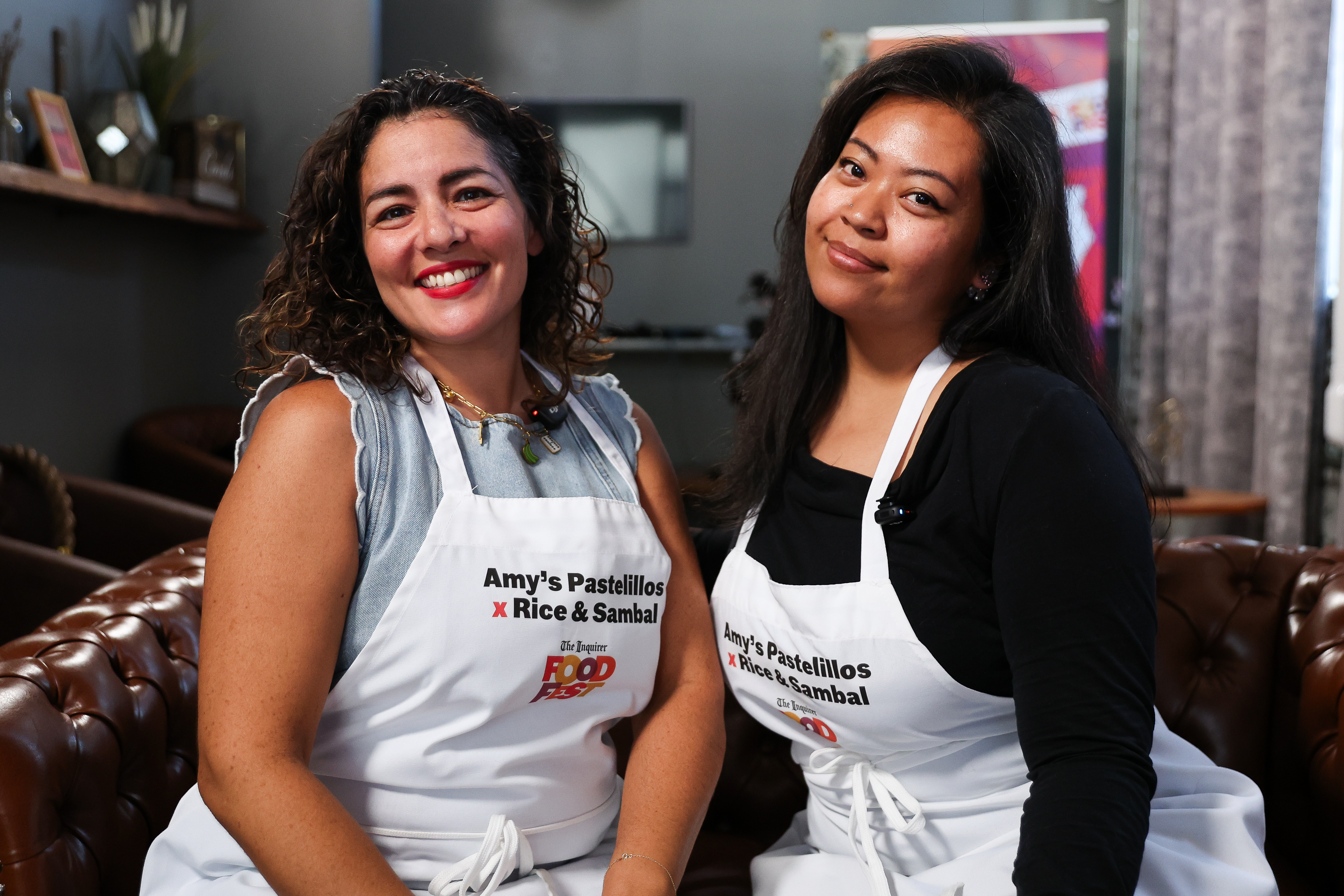
Amy’s Pastelillos owner Amy Rivera-Nassar (left) and Rice & Sambal’s Diana Widjojo partner together during an Inquirer Food Fest “Love at First Bite” production at BLDG 39 on Monday, Sept. 14, 2026, in Philadelphia.Isaiah Vazquez / For The Inquirer
Amy’s Pastelillos x Rice & Sambal
Where else besides The Inquirer Food Festival can you get a single bite that blends flavors from Puerto Rico, Indonesia, and India?
That’s what you can expect from Amy’s Pastellilos’ Amy Rivera-Nassar and Rice & Sambal’s Diana Widjojo, who are collaborating on what they described as a “deconstructed pastelillo,” aka thimble-size servings of slow-cooked ropa vieja and rice served insidehollow spheres of fried Indian panipuri.It all gets topped with lemongrass and Widjojo’s sambal aioli.
“It’s more interesting than mayo-ketchup,” Widjojo said playfully, comparing her signature chile-spiced sauceto the classic Latin American condiment combo that Rivera-Nassar offers with pretty much her entire menu. (Rivera-Nassar immediately told her to cool it with the trash talk.)
Dip dispute aside, it’s all love between Rivera-Nassar and Widjojo in the kitchen. The pair have long admired each other’s tenacity and joyful cooking as members of Sisterly Love Collective, a mentorship community for women entrepreneurs in hospitality. Widjojo, for her part, is an Amy’s Pastellilos regular.
Rivera-Nassar’s stews (often offered as specials), remind Widjojo of growing up in Queens, where Puerto Rican and Southeast Asian communities commingle. They taste like “having my friends around,” Widjojo said.
Rivera-Nassar beamed. The chef converted her neighborhood pop-ups into a brick-and-mortar in Kensington in 2024, cementing locals’ love of the traditional Puerto Rican turnovers.
Widjojo, meanwhile, got her start at Hardena, the James Beard-nominated Indonesian restaurant that she ran with her mom and sister in South Philly. She struck out on her own in 2025 with Rice & Sambal, a cozy East Passyunk BYOB where her skills shine best in the Liwetan platter, a stunning arrangement of 24 Indonesian staples.
“We kept going back and forth on what our cultures look like together,” Widjojo said. The result, Rivera-Nassar bragged, is “memories in a pot” and a whole lot of crunch.
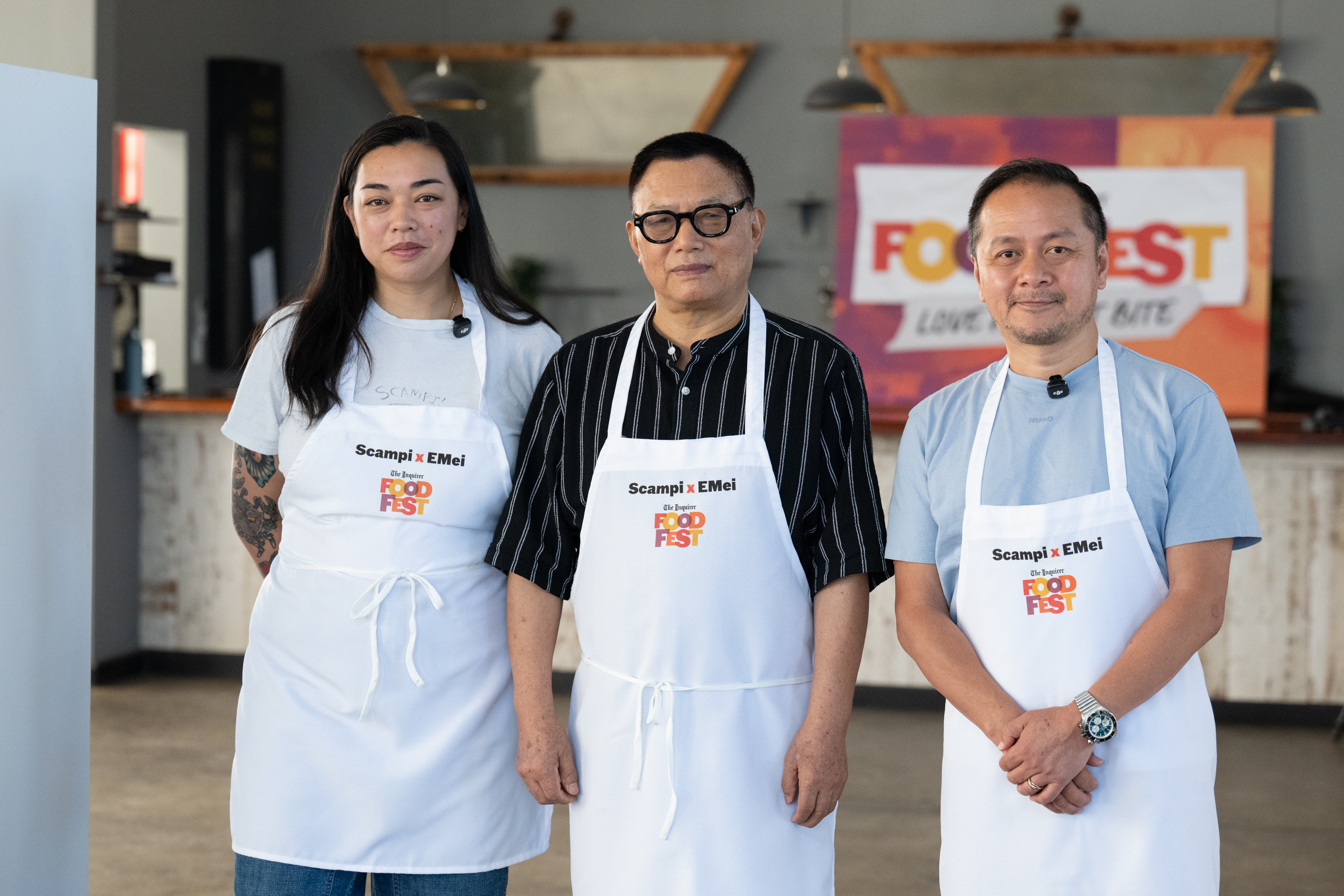
Scampi chef and owner Liz Grothe (from left), EMei chef Yongcheng Zhao, and EMei co-owner Dan Tsao pose for a portrait.Erin Blewett / For The Inquirer
EMei x Scampi
What happens when one of Philadelphia’s most accomplished Sichuan chefs pairs up with a young gun who prefers to keep things “middle-class fancy?” Shockingly, a twist on Irish street food.
Scampi’s Liz Grothe will partner with EMei’s owner and chef, Dan Tsao and Yongcheng Zhao, at The Inquirer Food Festival. They’ll repurpose the Chinatownrestaurant’s best-selling Chongquing chicken as the base for a spice bag — the compulsively snackable Chinese Irish combo of spicy fried chicken and curry on fries. Zhao will bring the heat and Grothe will bring the potato and curry (which will be pumpkin-based, for fall).
For Grothe, cooking alongside Zhao is akin to meeting an idol. She can rattle off a list of favorites from EMei’s extensive menu: mapo tofu, the white fish and green peppercorn pot, and (gluten-free) dan dan noodles. When she was a sous chef at Fiorella, Grothe used to order from EMei every Saturday to cap off a long work week.
“I feel like I’m a kid again trying to soak up everything I can,” she said while firing up the burners next to Zhao. He’s “one of the masters of Chinese cuisine.”
Zhao has been a fixture at EMei since its 2011 opening in Chinatown, where it has endured as one of the neighborhood’s best restaurants, according to food critic Craig LaBan, thanks to its uncompromisingly authentic menu, adaptability, and Zhao’s more than half-century of experience working with Sichuan spice.
Zhao and Tsao are already fans of Grothe’s determination. “There’s a lot we can learn from the younger generation,” Tsao said.
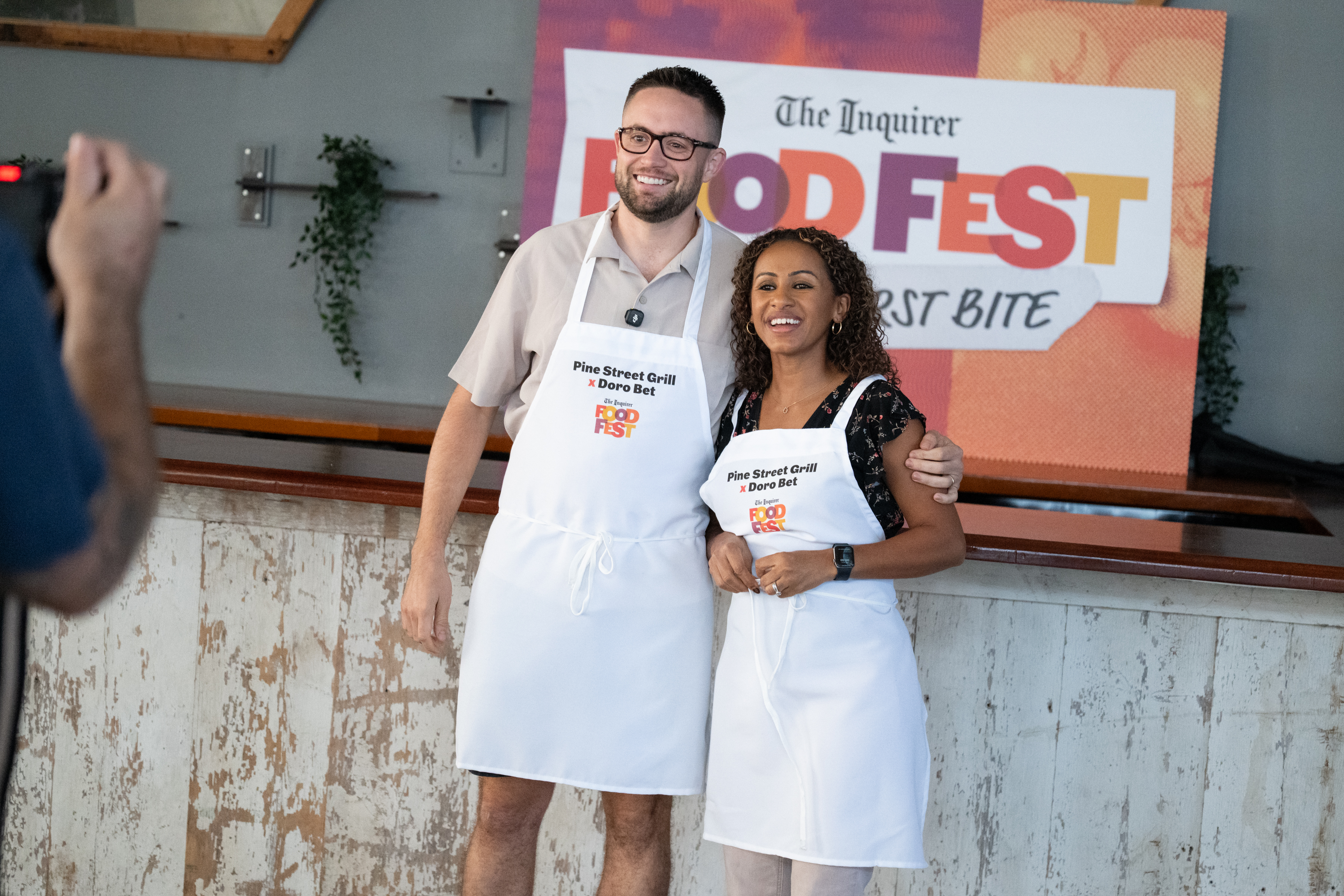
Co-owner and chef at Pine Street Grill Alex Kemp and chef and co-owner Mebruka Kane of Doro Bet pose for a portrait.Erin Blewett / For The Inquirer
Pine Street Grill x Doro Bet
Doro Bet is known for berbere and turmeric-spiced fried chicken. Pine Street Grill is known for brown butter Buffalo wings. But don’t expect them to serve either at The Inquirer Food Festival.
Instead, Alex Kemp, of Pine Street, and Mebruka Kane, of Doro Bet, will collaborate on a classic Canadian smoked trout dip paired withcrispstrips of injera, the spongy Ethiopian flatbread that tastes like pumpernickel when fried.
Both elements are labors of love: Kemp’s trout must smoke for 24 hours before getting the dip treatment, while the injera’s sourdough ferments for four days before baking atop a mitad, a skillet-size griddle designed just for injera. The berbere, Kane said, ties it all together, seasoning both the chips and the dip. (She uses her mom’s recipe, whose secret ingredient is a touch of fenugreek for nuttiness.)
“Trout dip is a little boring [to me] because I grew up eating it,” said Kemp, who is from Quebec. Kane’s additions “are the most interesting. Growing up in Canada, I never saw anything like [her] technique.”
Kemp is also one part of a heavy-hitting Philadelphia family business. Together with his wife, chef Amanda Shulman, the chef co-owns Pine Street Grill, My Loup, and Her Place Supper Club (which was among the first restaurants to earn a coveted Michelin star last year). Kemp takes the reins at My Loup, the James Beard-nominated French bistro where the “Esca-roll” — a giant, garlicky escargot roll with cinnamon bun-esque structure — has become the signature hit.
Pine Street Grill, which opened in Fitler Square in 2025, is where Kemp gets to kick back. It’s a neighborhood restaurant with highlights that include fat eggplant Parmesan, matzo ball soup, a burger, and those Buffalo wings.
Kemp and Kane move about the kitchen as if they’ve known each other for ages, casually swapping spices and stories about what it’s like to scale family businesses. “We might get a cooking show after this,” Kemp joked.
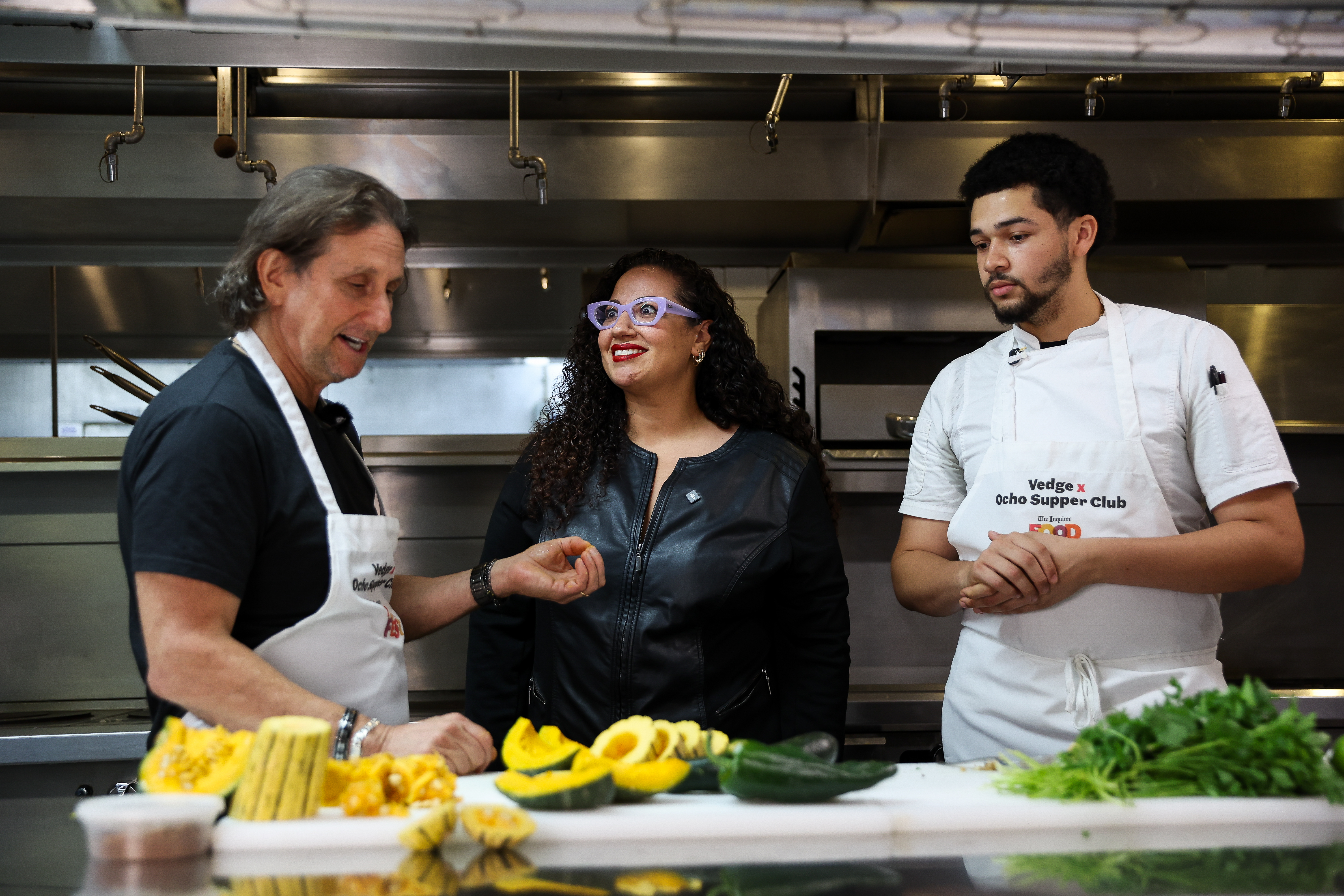
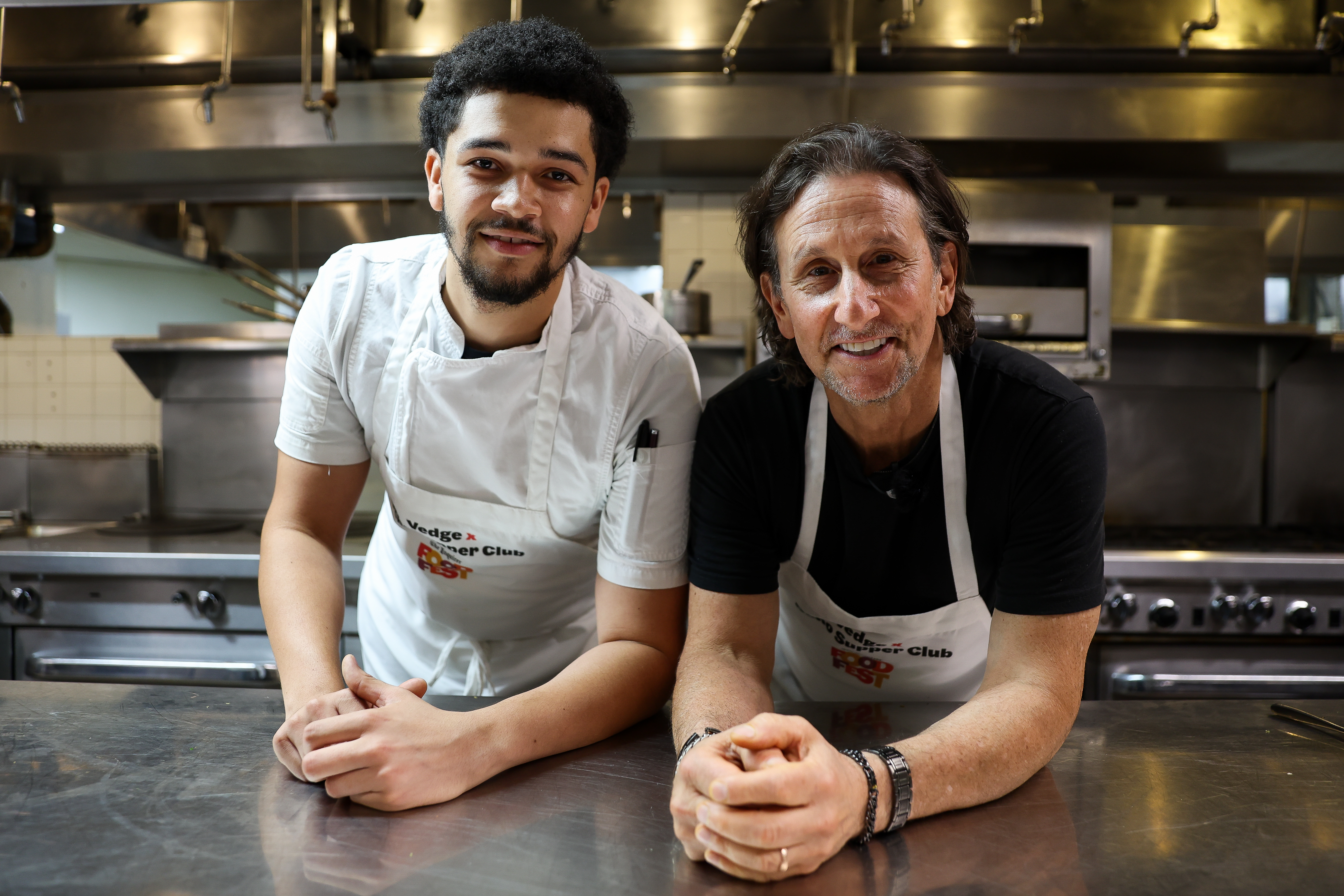
Ocho Supper Club chef RJ Smith and Vedge owner and chef Rich Landau pose for a portrait during an Inquirer’s Food Fest 2026 production shoot.Isaiah Vazquez / For The Inquirer
Vedge x Ocho Supper Club
When a fine-dining legend partners with one of the city’s most exciting young chefs, it’s all about eating your vegetables.
At The Inquirer Food Festival, Vedge and Ocho Supper Club will team up on an autumnal dish: jerk squash smoked over pimento wood, topped with a green jerk sauce and crumble made from the squash skin and seeds.
Husband-and-wife chefs Rich Landau and Kate Jacoby sit at the vanguard of Philadelphia’s vegan dining scene. Their long-closed Bella Vista restaurant Horizons was Philly’s first true experiment in vegetable-focused fine dining. Its sequel, Vedge, has endured for 15 years on Locust Street, with a menu of all-vegan greatest hits, ranging from silky rutabaga fondue to spicy dan dan noodles flecked with oyster mushrooms, that still feels timeless. Now the restaurant is honing its approach to sustainability, turning its food scraps into compost that eventually fertilizes the soil at Linvilla Orchards, the popular Delaware County farm and apple orchard.
While Landau and Jacoby are focused on fine-tuning their business, Ocho Supper Club chef RJ Smith is still looking for a permanent home for his. Smith, 21, grew his supper club from just a few seats in his Drexel University dorm room to the Rittenhouse Hotel, where his elaborate tasting menus scored an indefinite residency.
With Ocho, Smith draws on Afro-Caribbean recipes and fine-dining techniques honed in the kitchen at hot spots such as Provence and Royal Izakaya. He creates dishes that pulse with flavor and originality, like jerk duck and king crab served in a yellow curry laced with roasted garlic.
There’s nothing new about black sesame. In fact, it’s ancient — one of the oldest cultivated crops in human history. But now, it’s trending all across the U.S. Yelp even named it one of 2026’s standout flavors. As with matcha, ube, and pandan, black sesame is a classic Asian ingredient that’s been brought to the forefront of trendy cafes and on dessert menus.
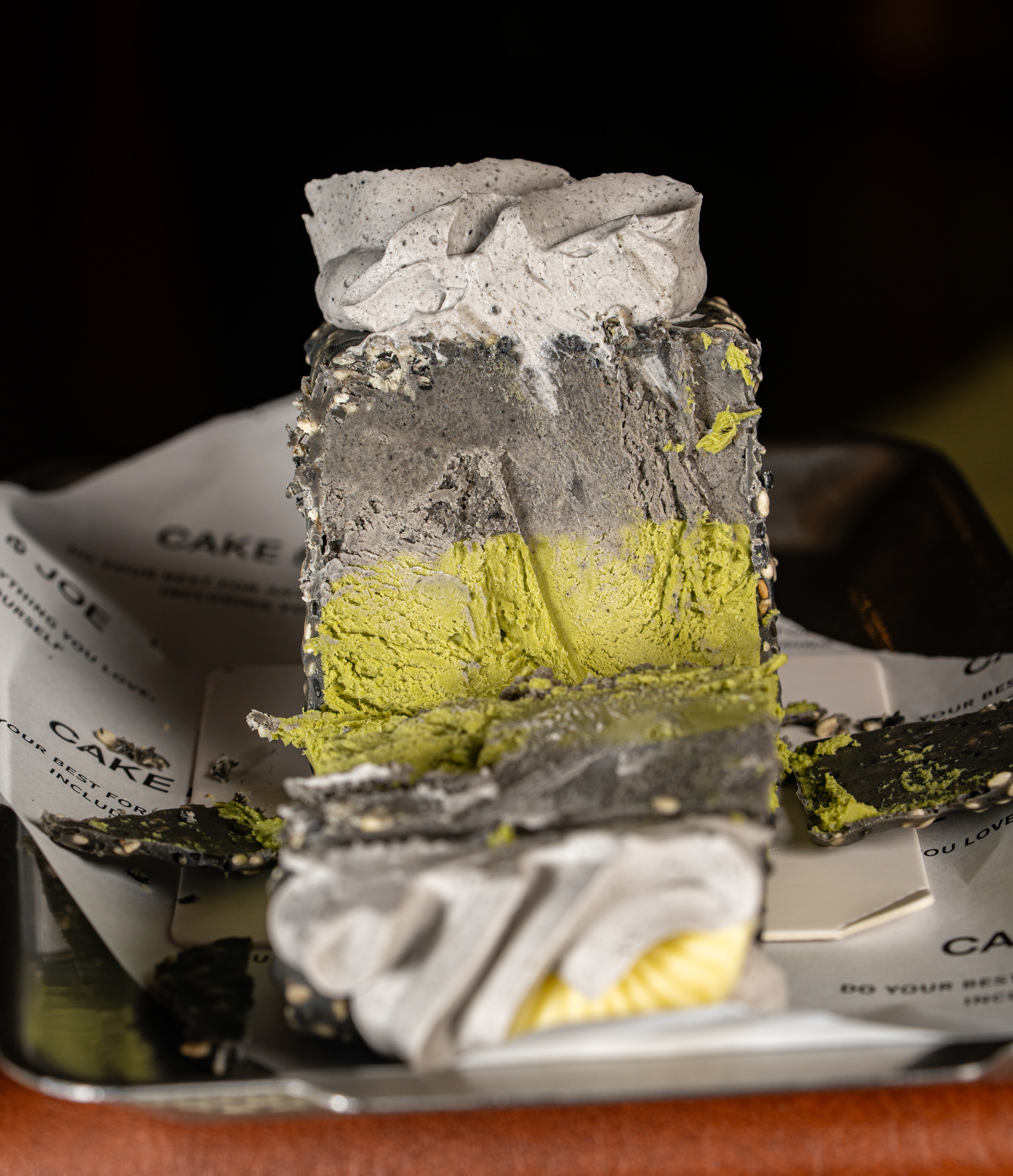
The black sesame cake at Cake & Joe features black sesame chiffon, matcha mousse, and black sesame cream.Mike Prince
Walk into a typical matcha-focused cafe in any of Chinatown’s popular chains, and you’ll see black sesame turning foams a charcoal gray or being mixed into soft serves and coffee. But it’s not limited to Chinatown: black sesame is on the menus of restaurants like dancerobot, Vedge, Càphê Roasters, Cake & Joe (where it’s turned into a chiffon and layered with a matcha mousse), and more, as Philly’s pastry chefs work with the ingredient.
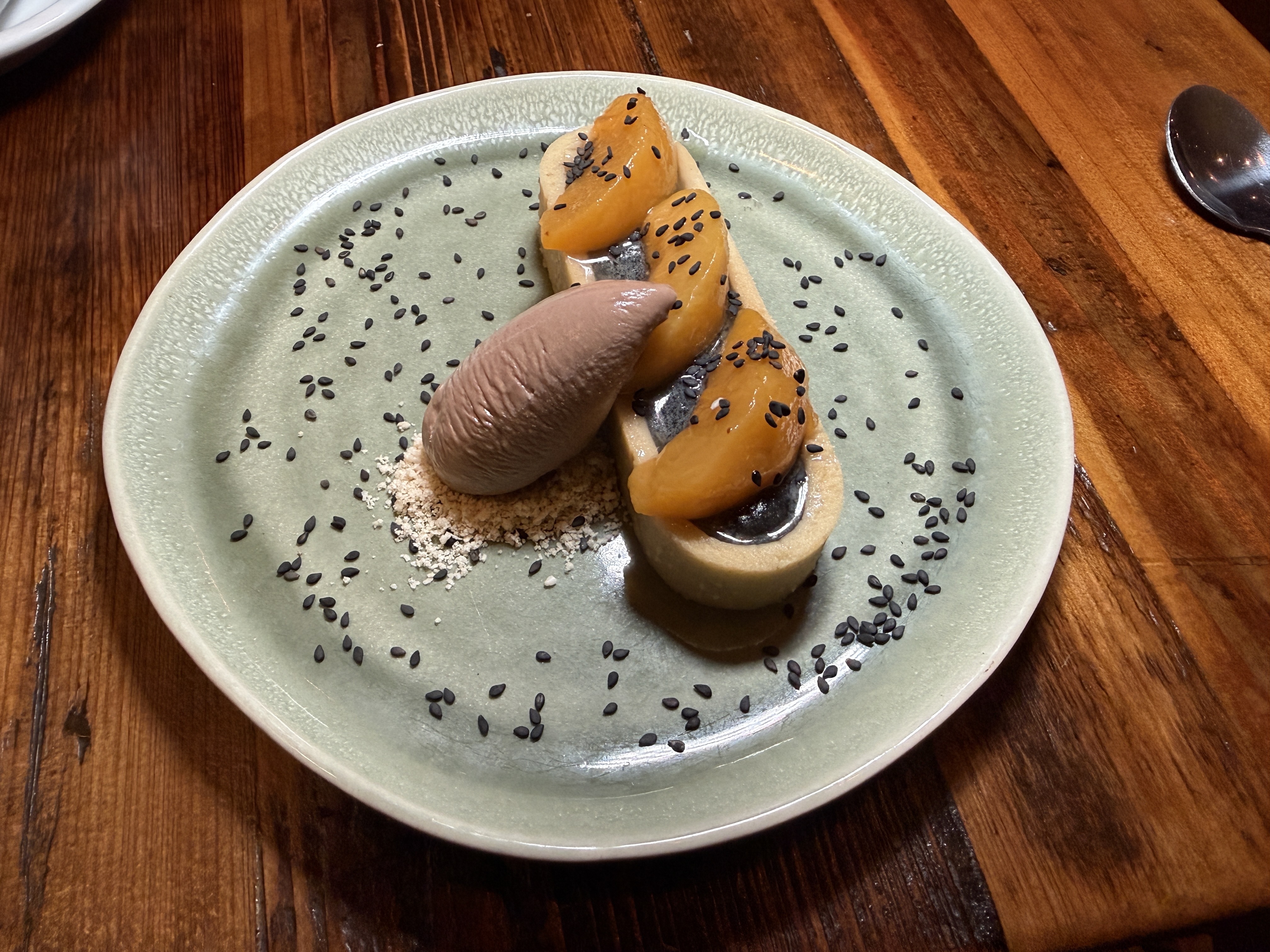
The black sesame tart at Vedge.Kiki Aranita / Staff
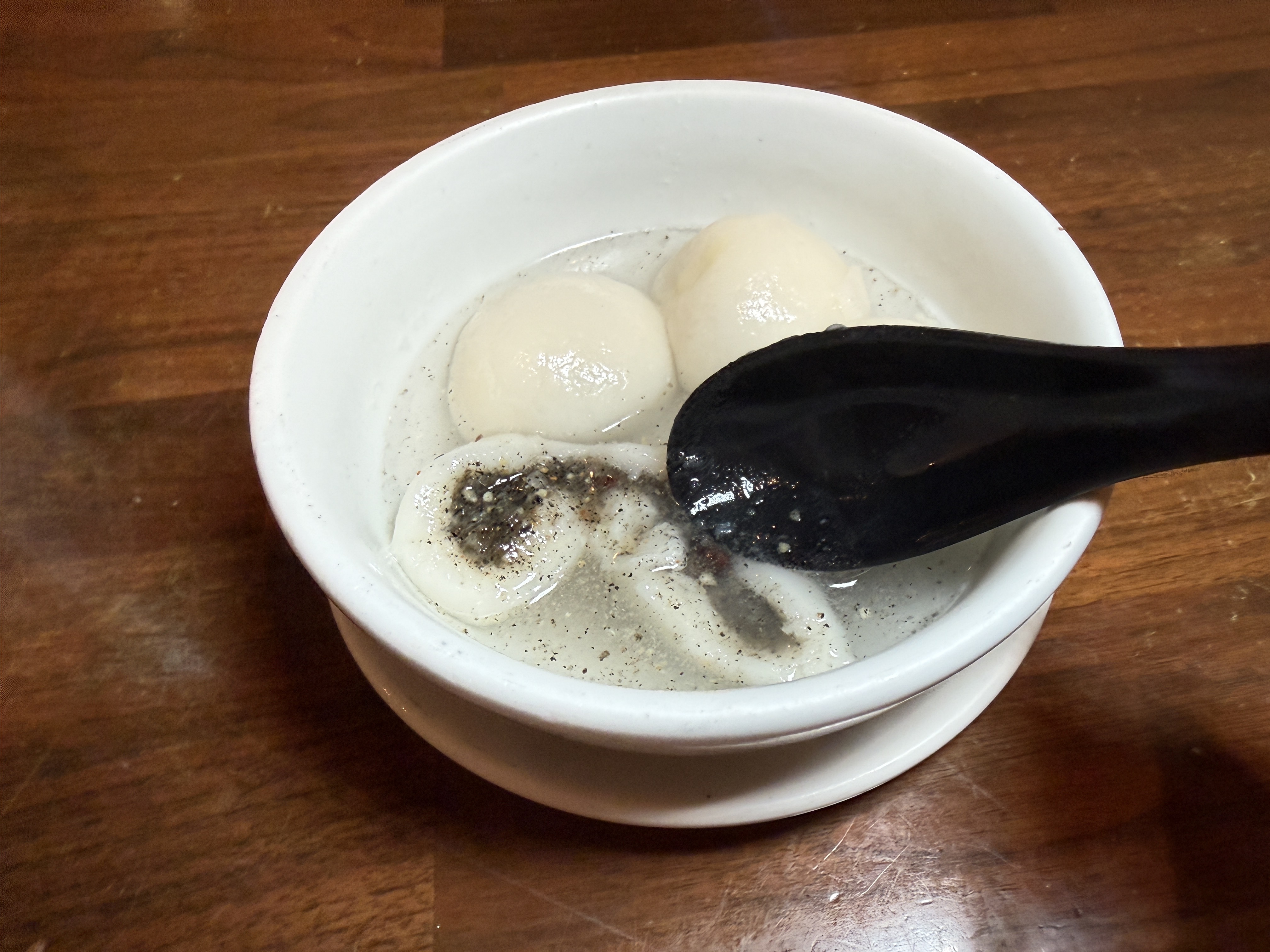
Black sesame is also a fall crop, and you’re likely to start seeing it even more as the temperature drops. It has been used for centuries in East Asia, often consumed ground. There’s an enduring belief that as a home remedy, it keeps hair black and delays graying. In traditional Chinese cooking, the ground seeds fill the mochi balls of tangyuan that are suspended in a hot and sweet soup.
Sweet rice balls with black sesame filling at Emei.Kiki Aranita / Staff
Black and white sesame seeds come from the same plant. The difference in the seeds is due to processing. Unlike white sesame seeds, black sesame seeds retain their outer hull (like the difference between white rice and brown rice). The hull gives black sesame a nuttier, bitter, and even smoky flavor, as well as a crunchier texture compared to creamy, sweet, white sesame seeds.
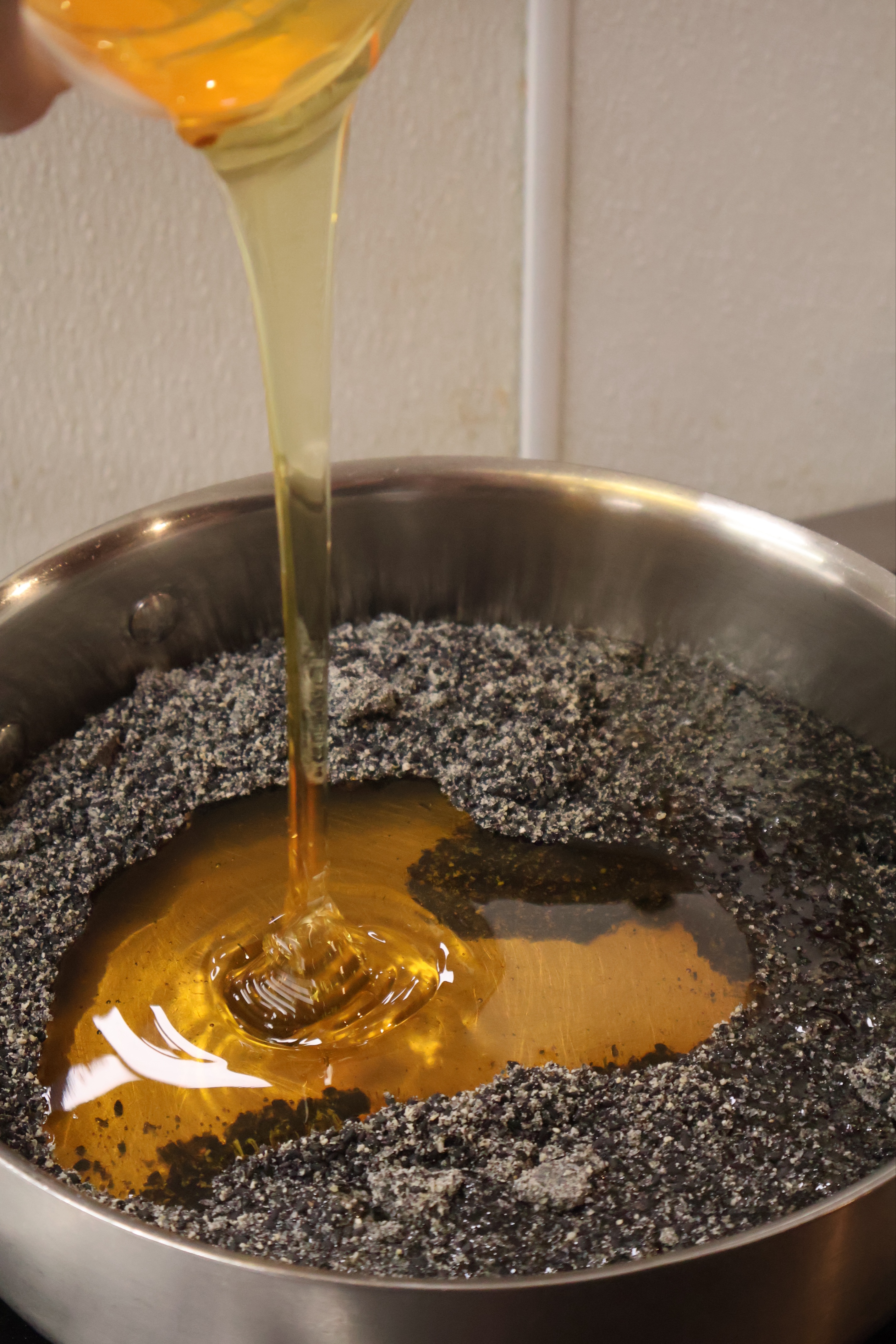
At the Bread Room, “we use black sesame seeds to make the base of the [black sesame] latte,” said executive chef Christina McKeough. “The seeds are toasted and ground, then simmered in a lightly sweetened simple syrup with honey, maple syrup, and salt to create a rich, toasty, nutty, well-balanced, sesame-forward syrup.”
Making black sesame syrup at The Bread Room.Courtesy of High Street Hospitality
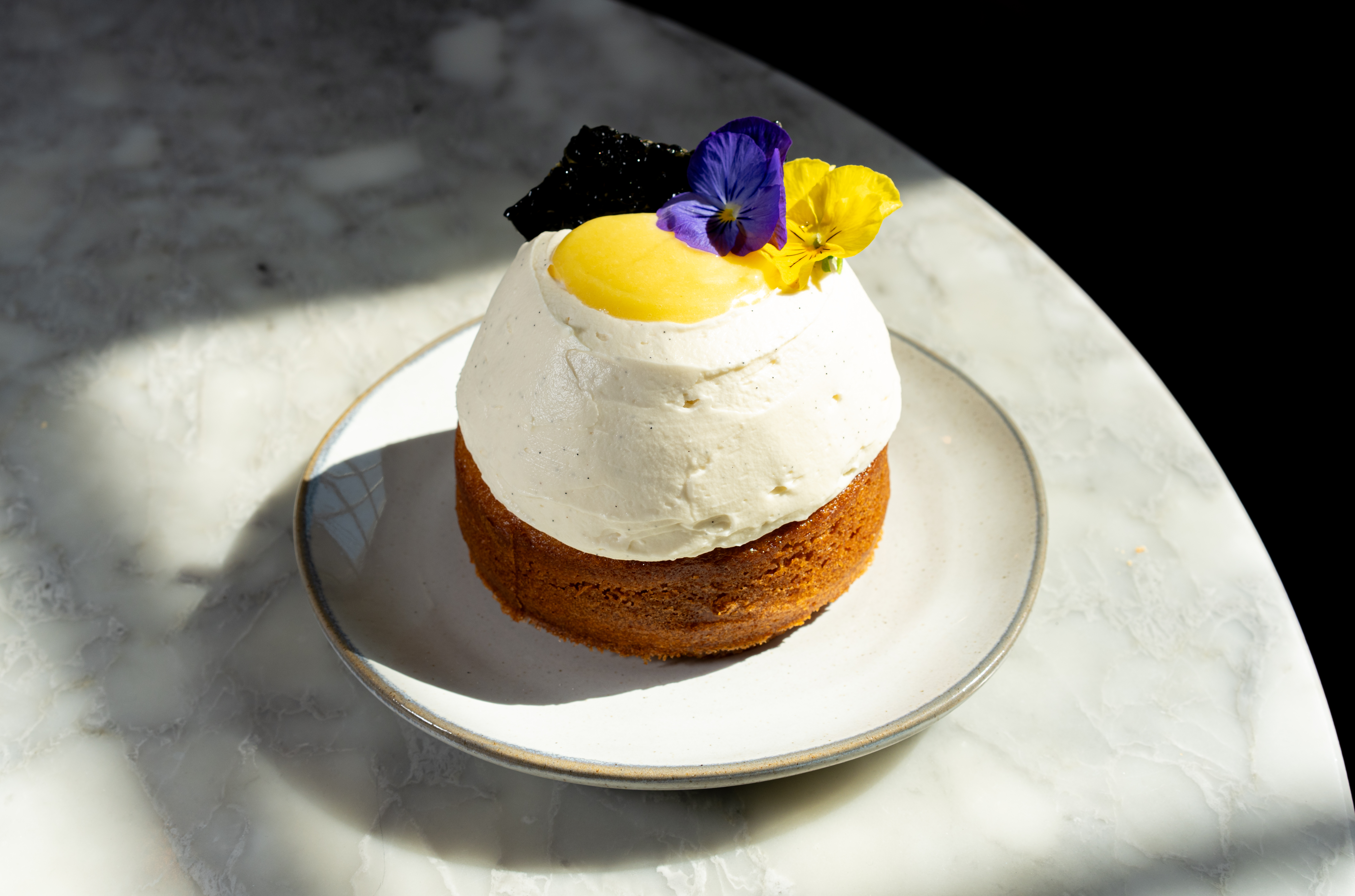
Càphê Roasters’ seasonal black sesame coffee drinks are set to return in November. To get a taste of black sesame there in the meantime, pastry chef Zoe DeLay makes a brittle with it for the cafe’s yuzu honey cake, which makes her nostalgic for her childhood. “My mom is Korean and there aren’t a lot of desserts in Korean cuisine, so growing up, I mostly ate rice cakes made with honey, black sesame, and chestnuts, which are also big fall flavors,” she said.
Yuzu honey butter cake with salted vanilla cream, yuzu curd, and black sesame brittle.Mike Prince
“Yuzu and honey are floral, bright, and citrusy flavors but black sesame is grounding and has a savory edge. In brittle form, it retains its crunchy texture,” she said. “Black sesame adds depth and personality to sweet things. It gives Korean cuisine nutty, earthy flavors and it’s incredibly versatile. You can use it in ganache, creams, cakes, and as a glaze.”
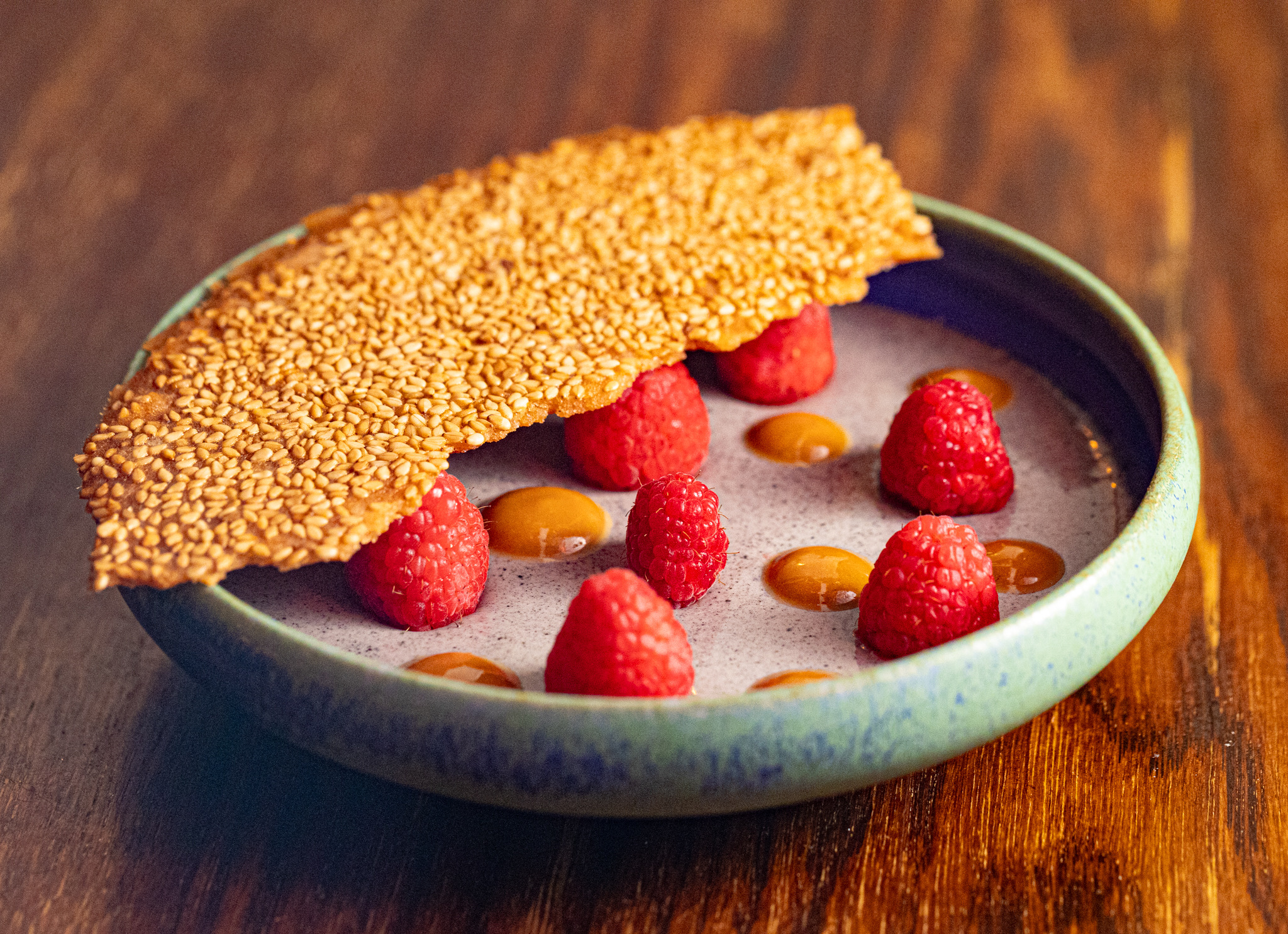
At Vedge, chef-owner Kate Jacoby makes a black sesame tart which also reminds her the first moment she tried halva as a child. “It rivals peanut butter in its indulgence level,” she said. The tart itself was born by accident, after Jacoby unintentionally ordered too large a bag of the seeds. These worked their way into a frangipane, or sweet paste, which fills an oblong sable-cookie tart shell that is also topped with fresh peaches.
The black sesame panna cotta from Royal Izakaya.Jesse Ito
Black sesame panna cotta is one of Royal Izakaya’s signature desserts, developed by Jesse Ito and Justin Bacharach. They really leaned into savoriness of the black sesame cream, adding miso dulce de leche as yet another salty, umami-rich ingredient. When the time came to put a black sesame dessert on dancerobot’s menu, Bacharach drew from the black sesame research and development he had started at Royal. “I like desserts that aren’t just sweet but also tangy, salty, bitter — like a savory dish. The earthy nuttiness of black sesame in a sweet dessert really brings out an interesting complexity,” said Bacharach.
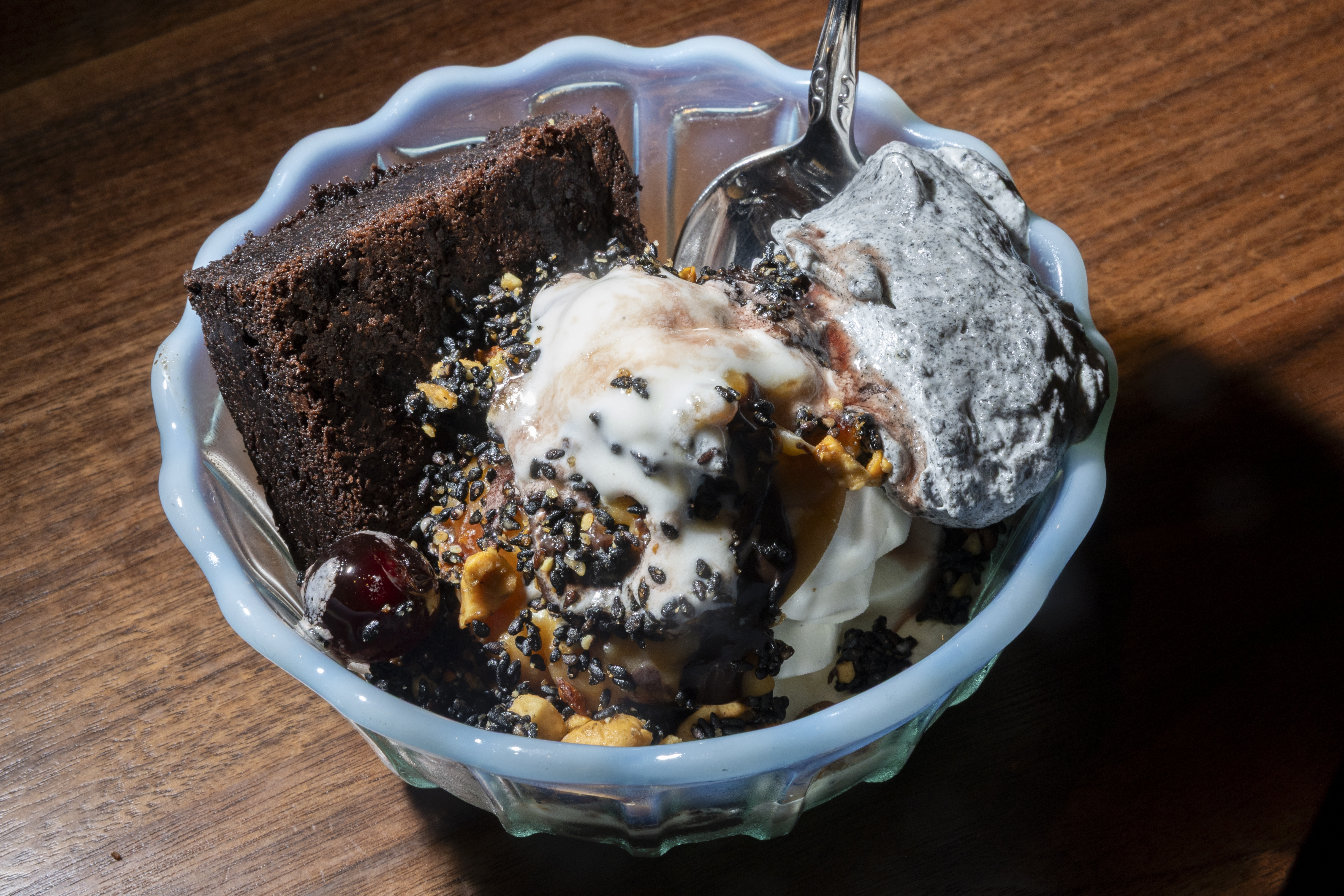
For their black sesame sundae, dancerobot uses the ingredient many times over. “We make a black sesame fudge brownie, black sesame curd, black sesame hot fudge, and a black sesame and peanut crisp where we utilize the leftovers from the bar, which makes a black sesame espresso martini,” he said.
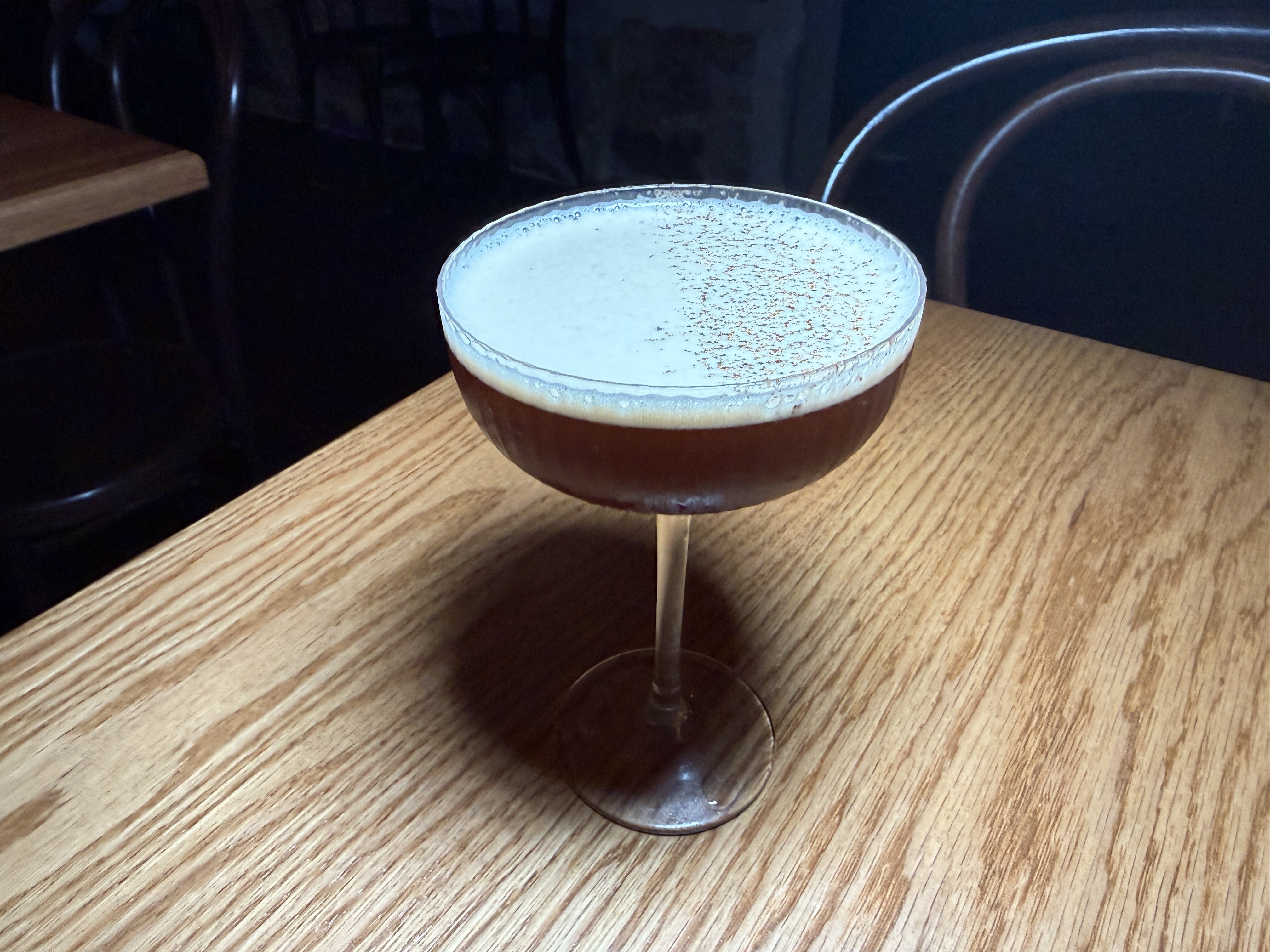
The black sesame espresso martini from dancerobot is made with Haku gin that has been fat-washed with black sesame paste.Kiki Aranita / staff /
To make the espresso martini, beverage manager Kristian Fidrych first makes a black sesame syrup, toasting the seeds “until they start crackling and popping,” and steeping them in a Demerara sugar syrup. The process leaves the bar team with excess black sesame seeds that have been cracked open — perfect for the black sesame sundae’s brittle. Fidrych adds another layer of black sesame to the espresso martini by using black sesame paste to fat wash the Japanese Haku vodka overnight, which makes the base of the cocktail.
“I hate sprinkles,” said Saif Manna, the baker behind Manna Bakery. So when Manna was tasked with creating a holiday cookie for The Inquirer in 2023, he used crushed pistachios and freeze-dried raspberries to give his caramelized butter and honey sesame cookies a festive splash of green and red. “I wanted to make something nostalgic and memorable and so I started with cookie I hated as a child, barazek cookies.” He always thought they were too crunchy, so he transformed them into ones with a soft, gooey, chewy texture. The cookies he created for The Inquirer’s holiday edition kept evolving and the following year, he made them with black sesame seeds instead of white. The black sesame version has become his go-to Christmas cookie (look for it on the menu soon at Manna Bakery.)
And so, you can also think of black sesame seeds as earthy, natural sprinkles. If you want to try them at home, sprinkle them on yogurt or a bowl of steamed rice. Or just wait — odds are they’ll be showing up at a menu at your local cafe soon enough.