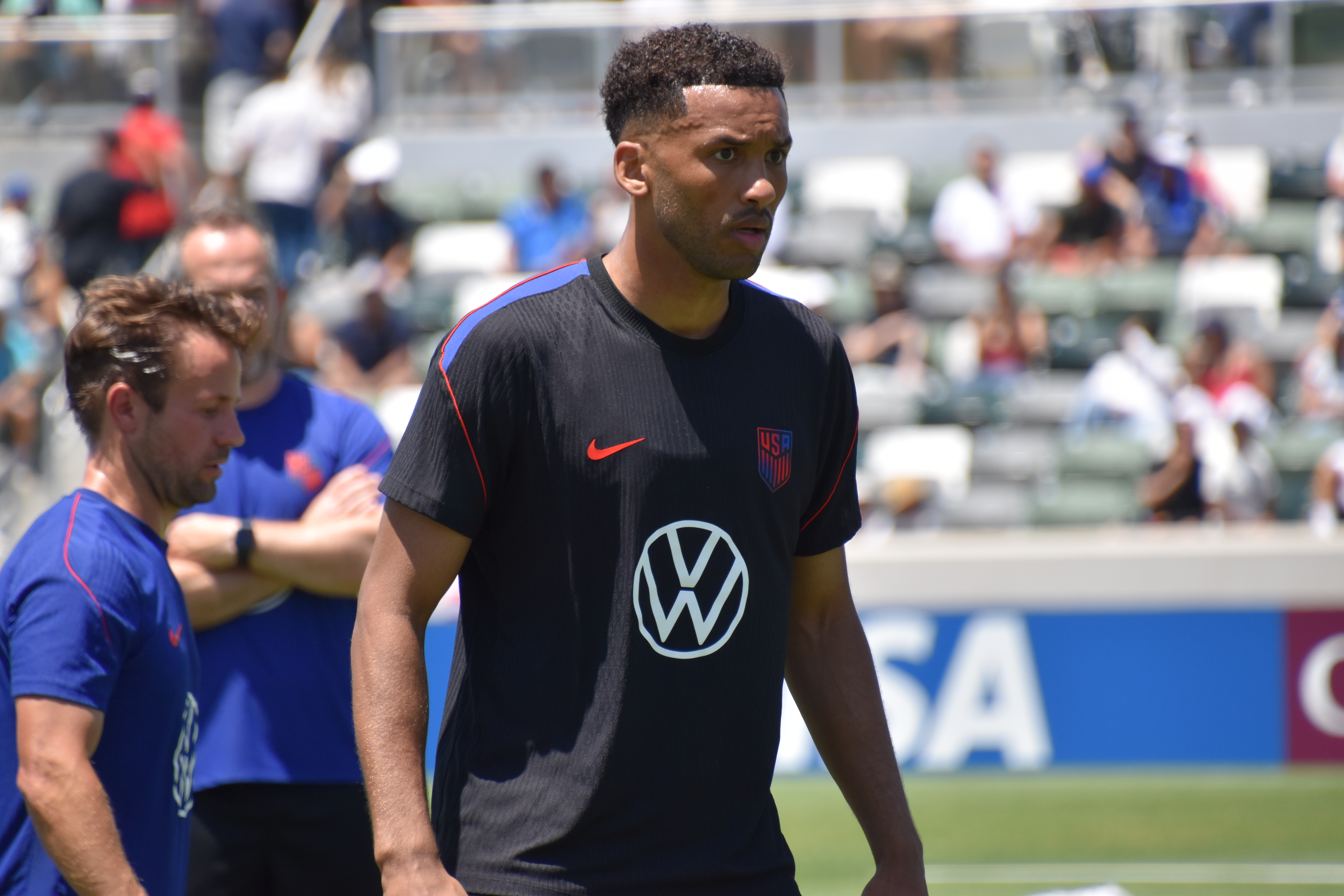
Most of Neil Pierre’s rapid rise this summer has been watched by a mix of Union fans who’ve enjoyed the team’s turnaround since the World Cup, and soccer savants intrigued by a new big-time prospect.
However, that is about to change, potentially forever. Such is the power of being part of the senior U.S. national team for the first time.
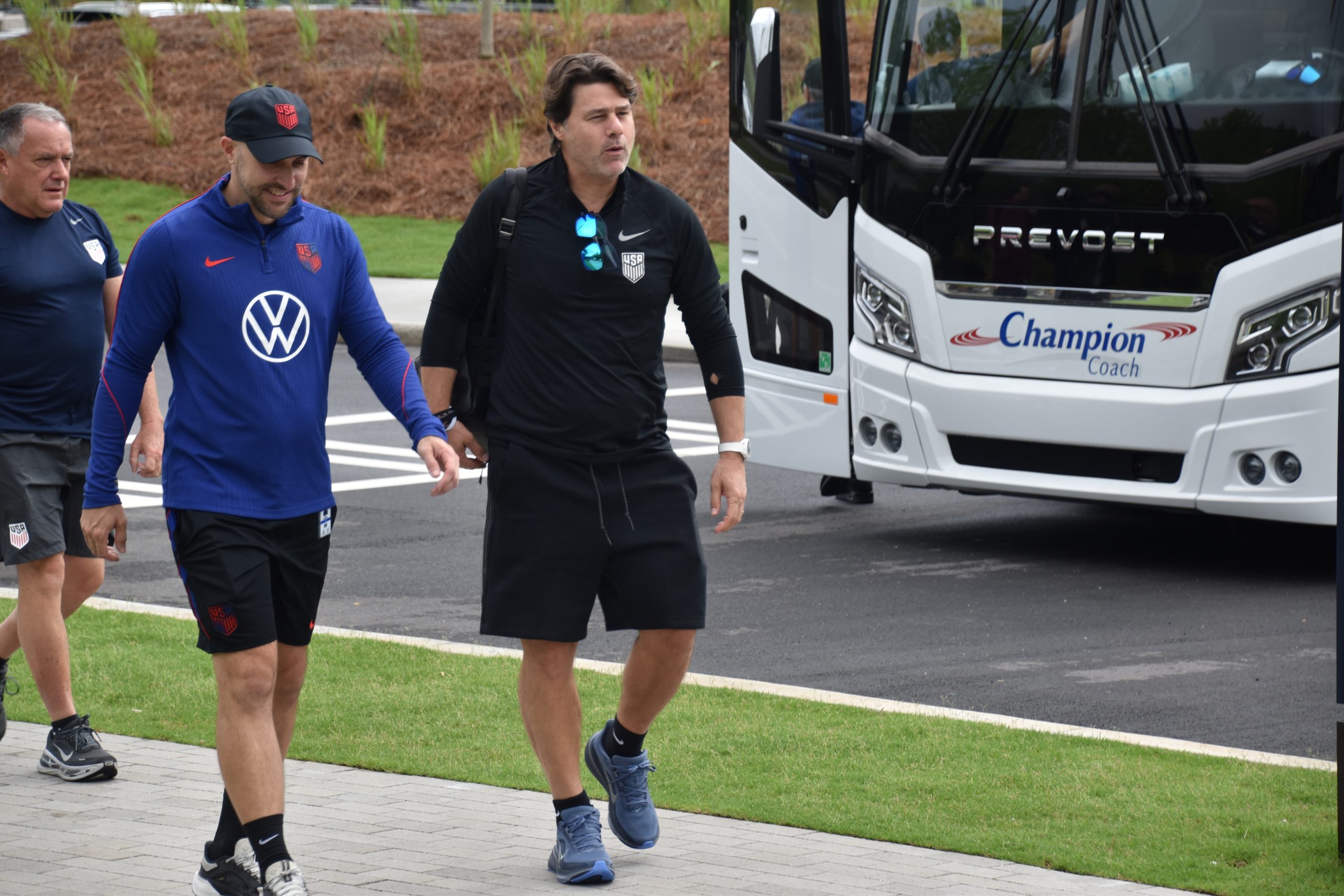
“The biggest thing is, just, you’re representing the whole country,” Pierre said in a meeting with the media from U.S. Soccer’s national training center in suburban Atlanta on Tuesday. “It’s definitely another level from representing Philadelphia to everyone in the States. … You’re representing everyone that doesn’t get seen, and trying to represent the good and not the bad.”
Understandably, Cavan Sullivan is getting the most hype of the trio of young Union stars on the latest roster. But that doesn’t mean the other two aren’t getting any. Pierre and Frankie Westfield will get their due over the course of the FIFA window that runs from this week through Oct. 6.
He admitted to being “a little nervous coming in here — these players, I’ve watched growing up a little bit, and in the World Cup.”
But as so often happens when the national team has a new generation, there was a warm welcome for a player who has featured for U.S. youth teams since 2022.
“The expectation they gave me was, enjoy, compete, and obviously it’s an honor to represent the crest,” Pierre said. “So do everything and show everything that was the reason why you’re coming here.”
Or, as he put it more bluntly a moment later: “They tell me, like, ‘Yeah, great to meet you, but hey, you better show it on the field.’”
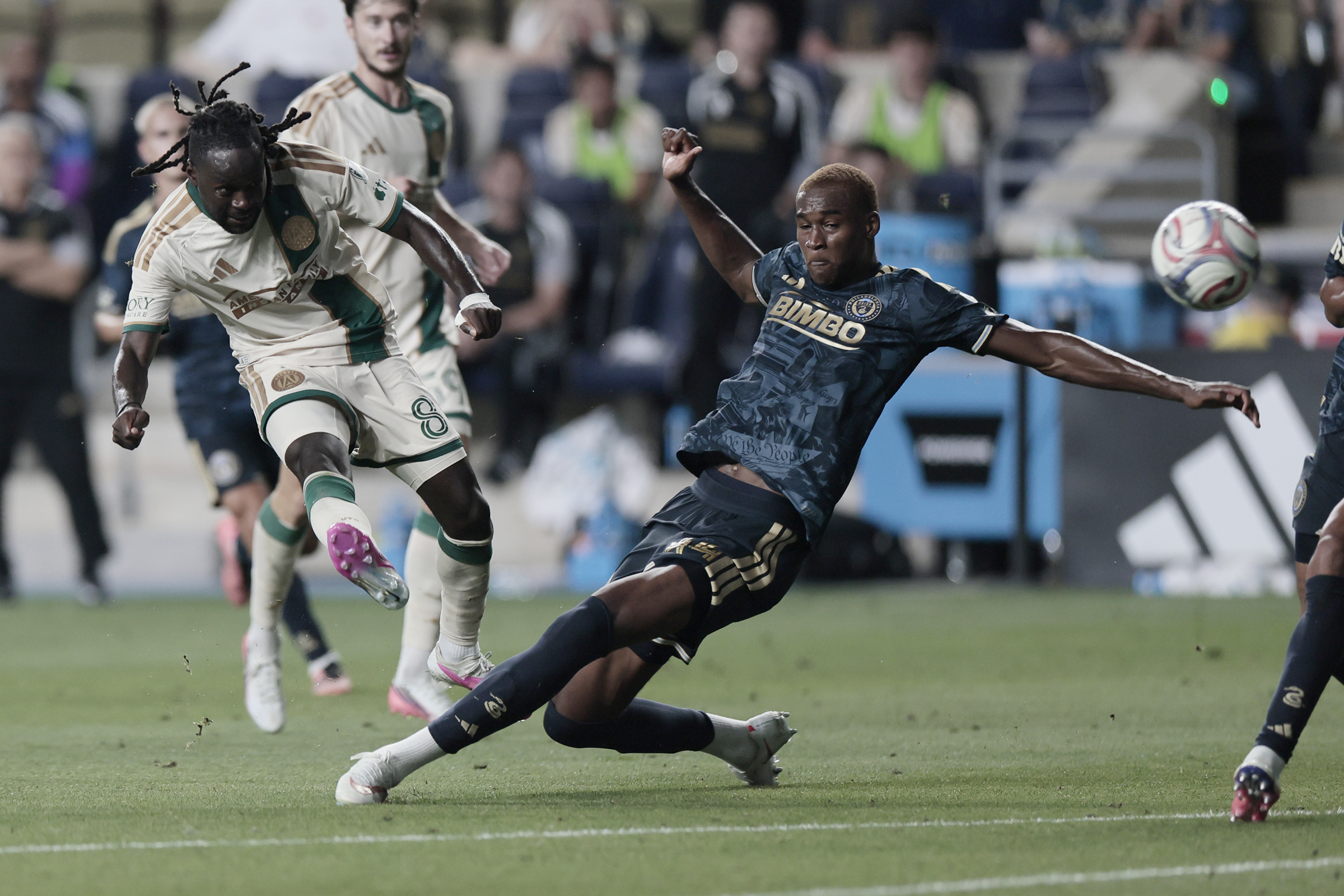
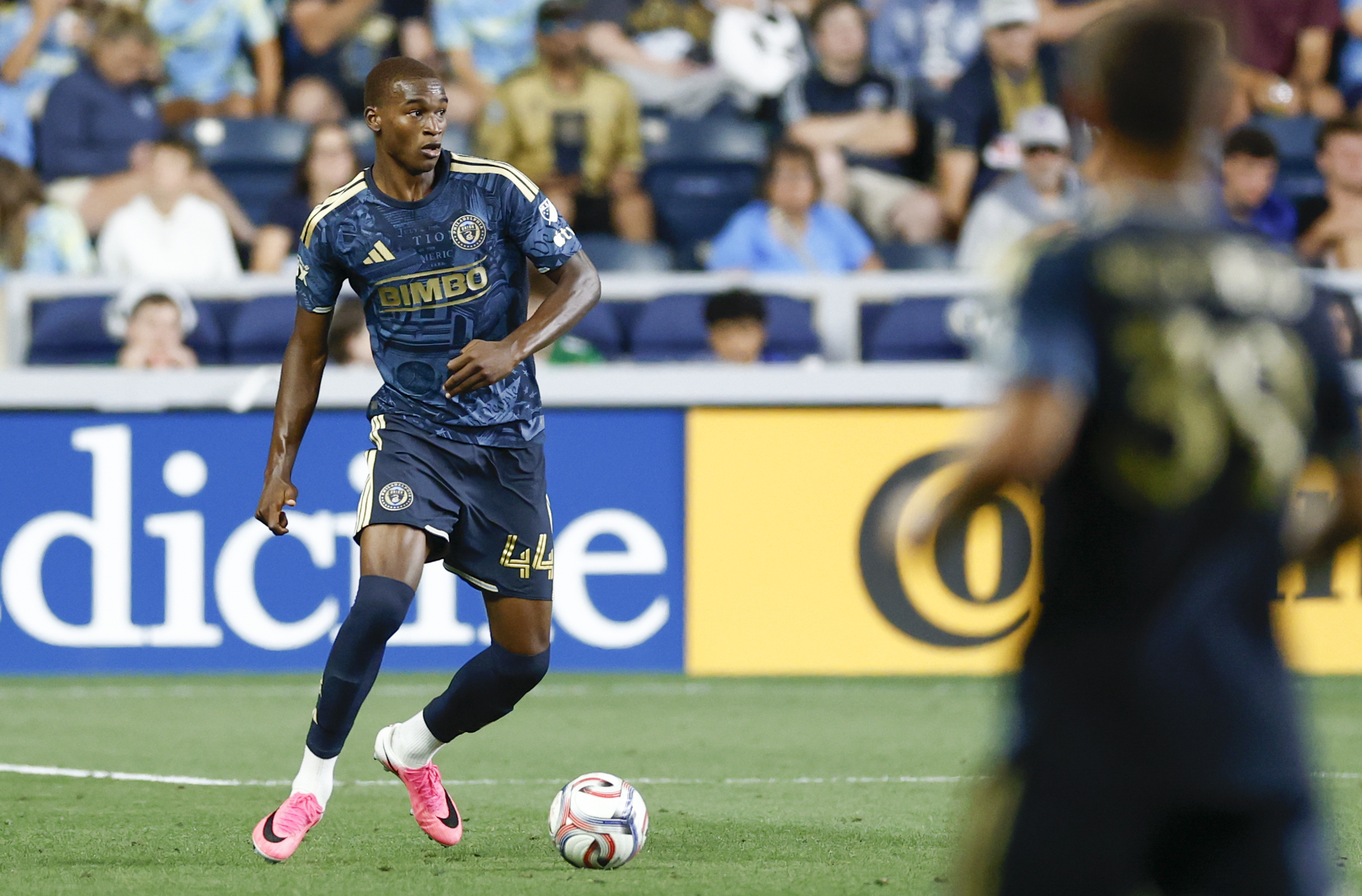
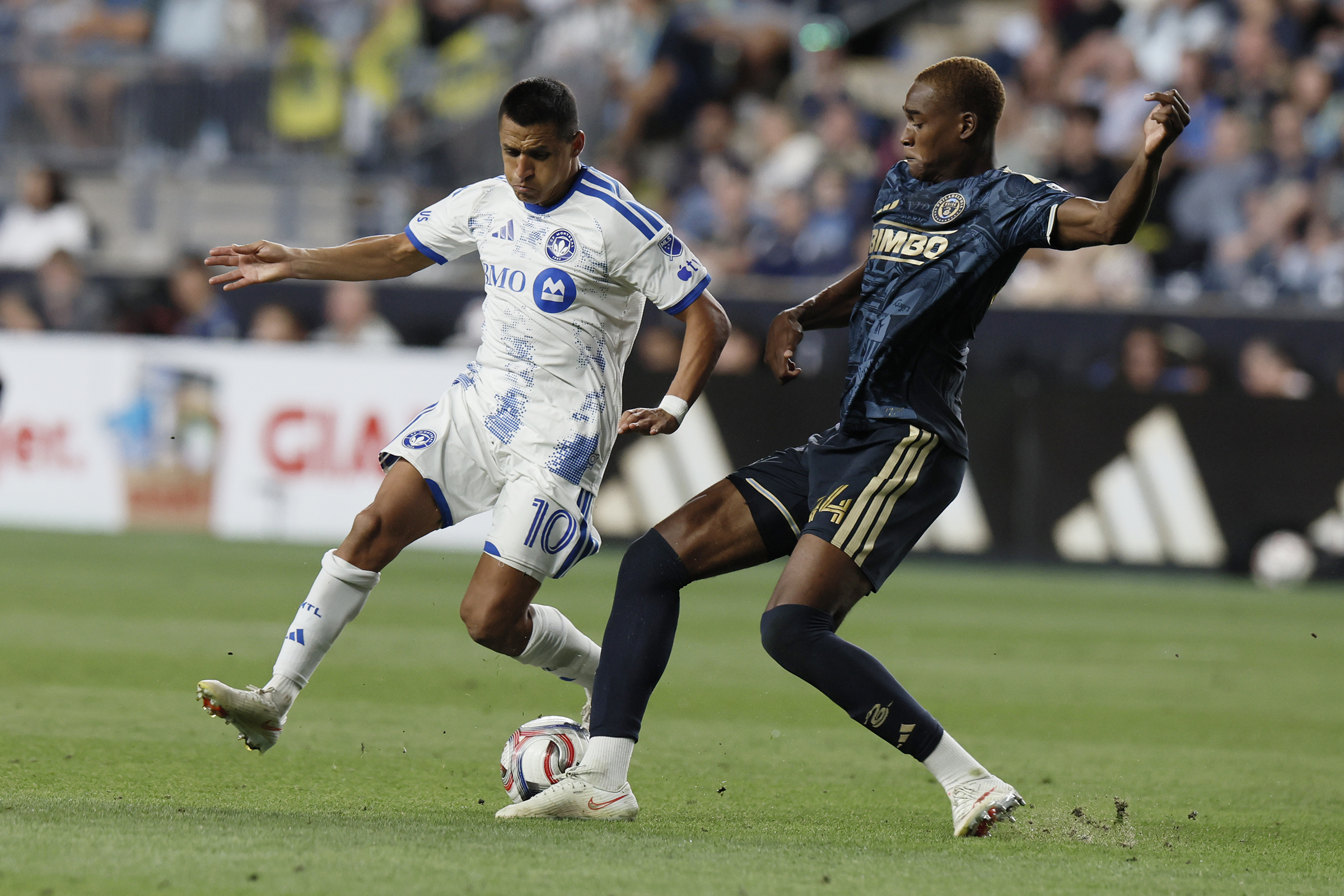
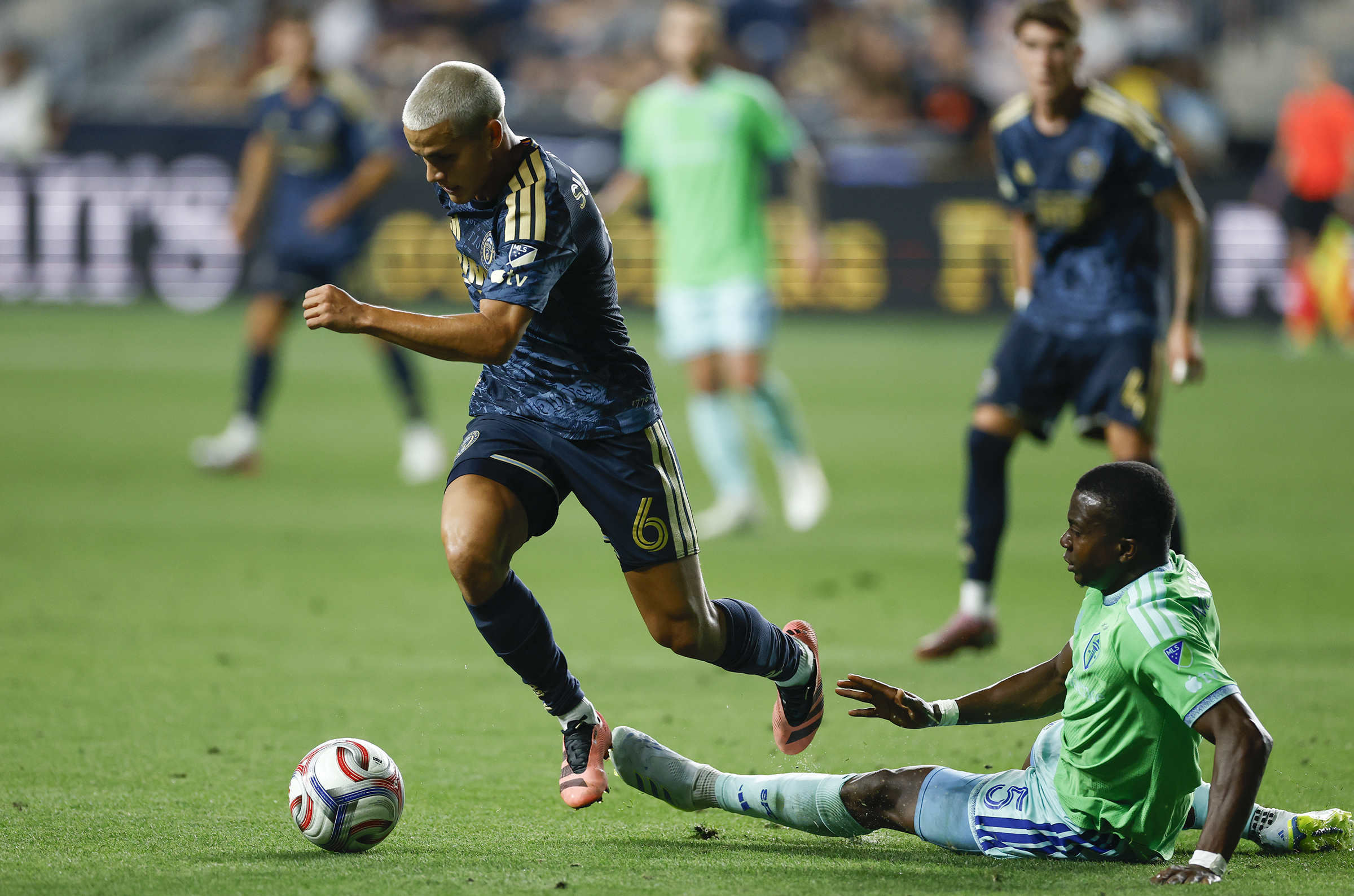
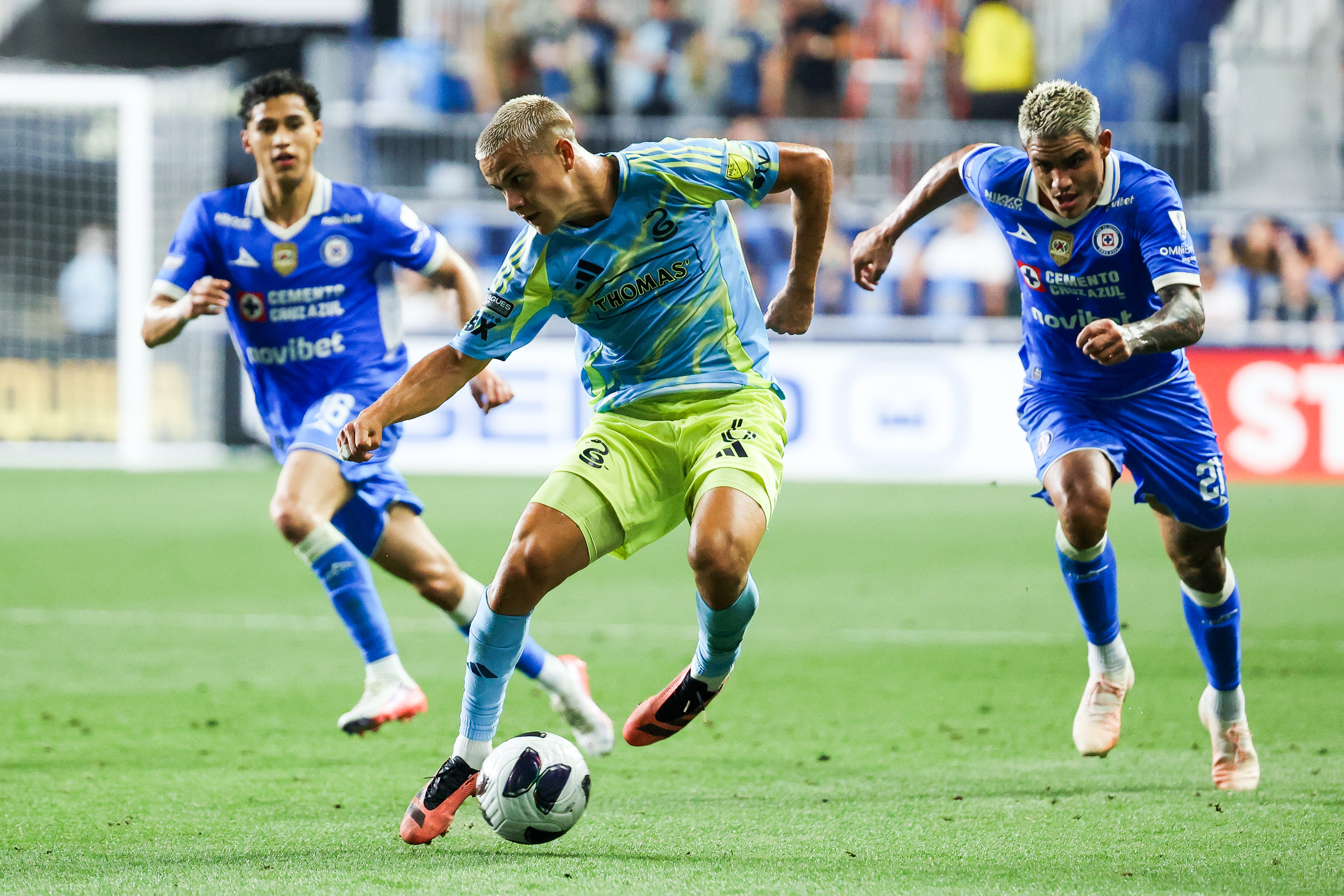
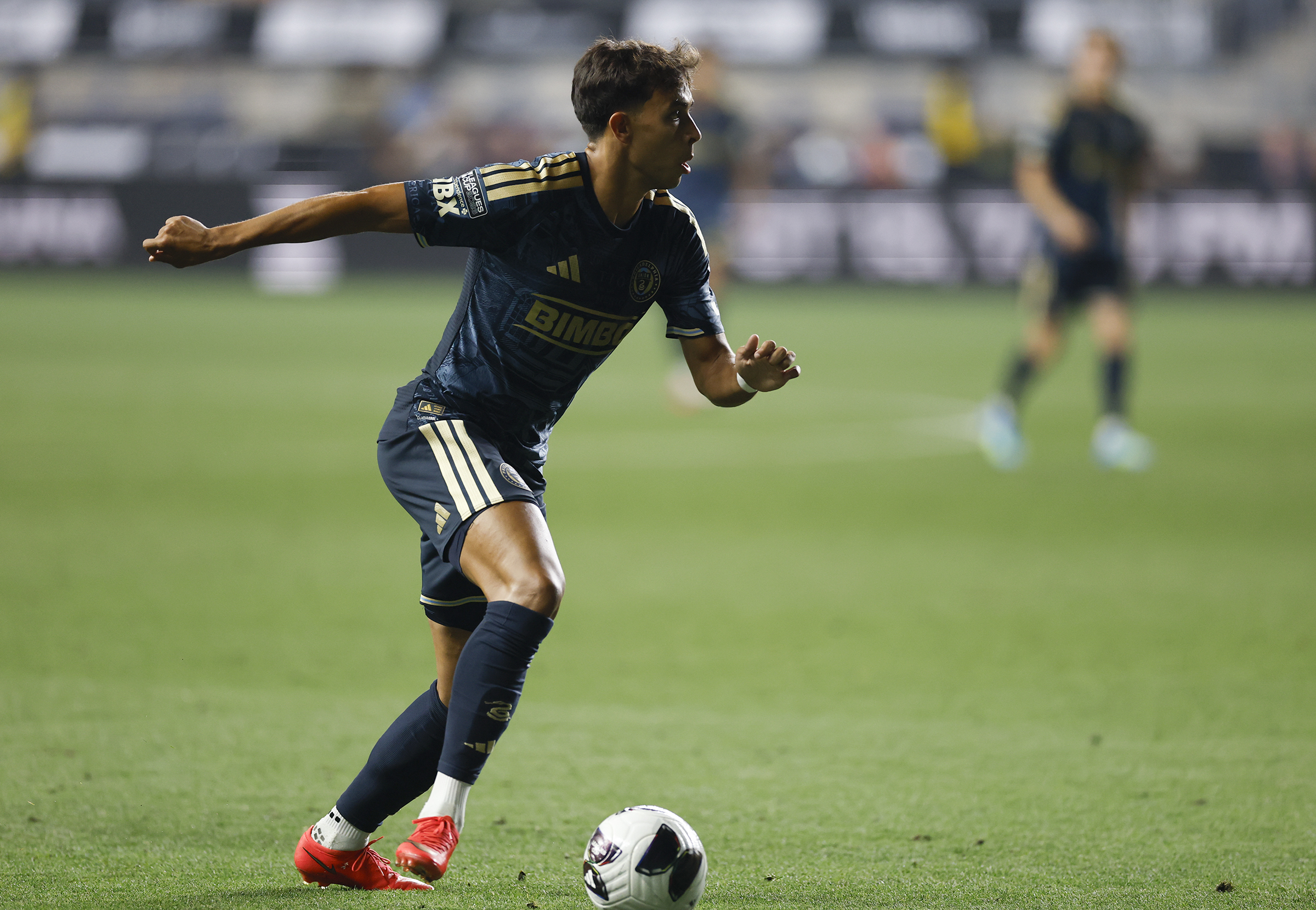
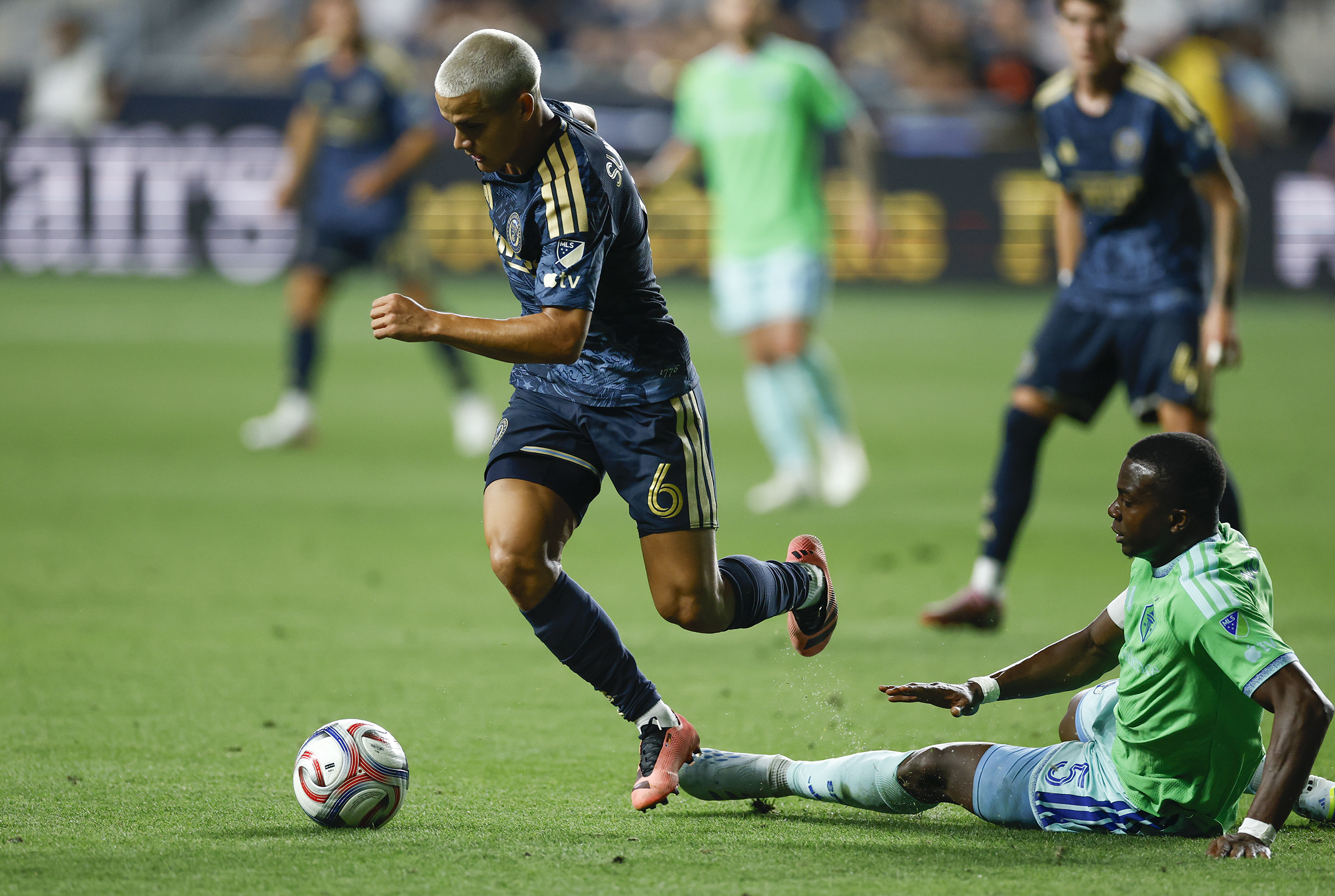
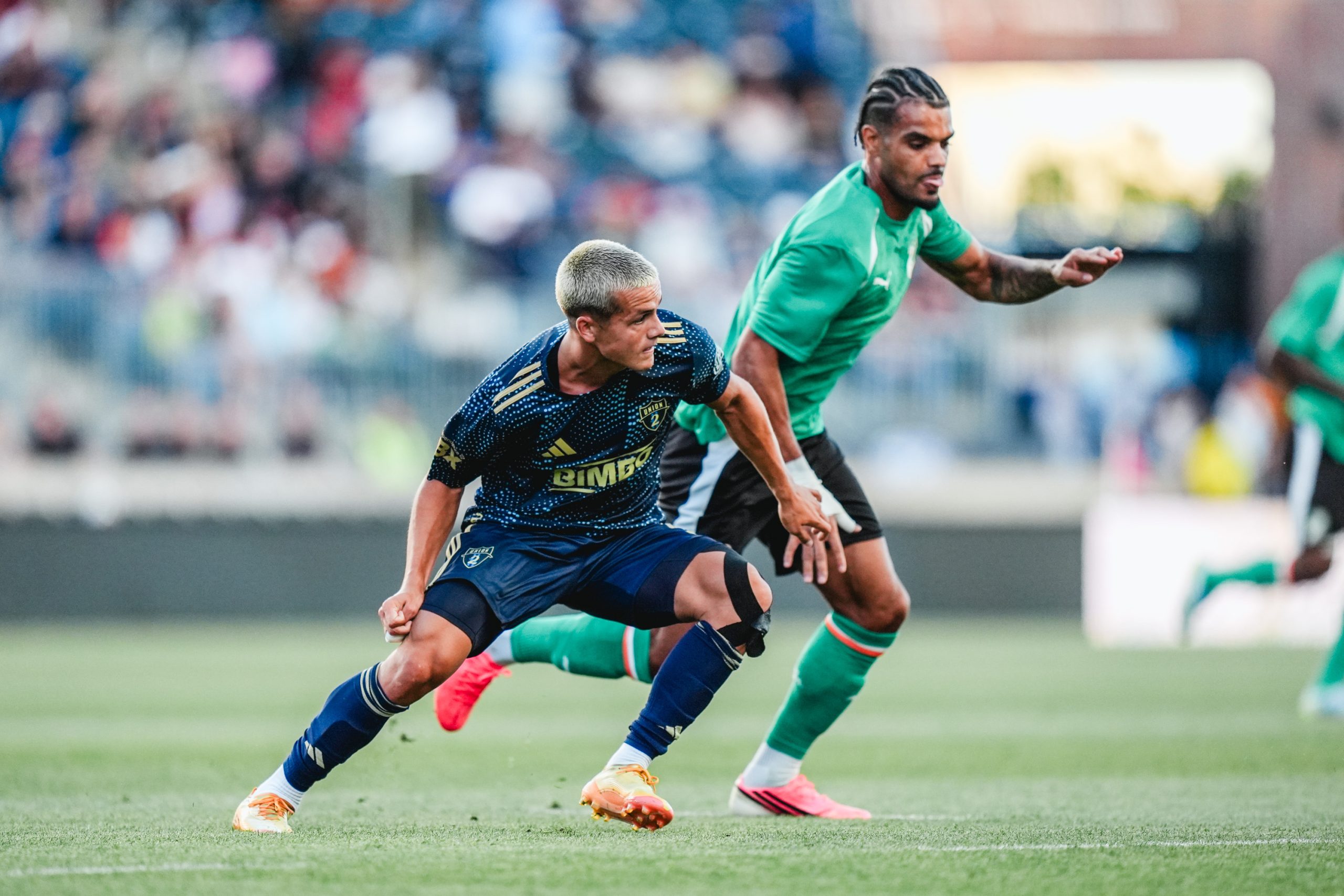
Neil Pierre (left) on the ball during a Union game in July.Yong Kim / Staff Photographer
Pierre has reached this point because of his strong play for the Union in recent months. He has featured in all 11 games of the club’s unbeaten run in regular-season play since the World Cup, with 10 starts, and is the squad’s top centerback in clearances, tackles, and blocked shots per 90 minutes.
Along with that, he has shown the passing skills that had scouts raving when he was in the academy, and chipped in four goals on top of it all.
Going there was a key step in proving Pierre was ready for the physicality of MLS, which is a big step up from the reserve team level where the 6-foot-7 defender had been.
“My loan in Denmark, I would say that was a very, very big part of my success this year, I think,” Pierre said. “Being away from home for the first time, seeing a whole different world, it was a good thing — it was kind of like, I would say, my college experience away from college, growing as a person. I think that also translated to [helping] on the field.”
It’s a measure of Pierre’s maturity that he knew the significance of the “college experience” line, and that he’ll never have the real thing. That’s the way it is in the soccer world, as it has already been for so many Union players.
There’s more symbolism in the fact that this squad also includes Auston Trusty, the first centerback to rise through the Union academy ranks to the pros. It would be quite a sight for Union fans if the Media native and Pierre share the field in one of the Americans’ four upcoming games.
Trusty didn’t arrive in camp until Tuesday afternoon because of some personal commitments, so Pierre hadn’t gotten to meet him yet when he spoke. But Trusty needs no introduction to anyone who comes through the Union ranks. There are photos of him around the campus — no doubt a few more since this year’s World Cup — and he is on the board of the Union’s academy.
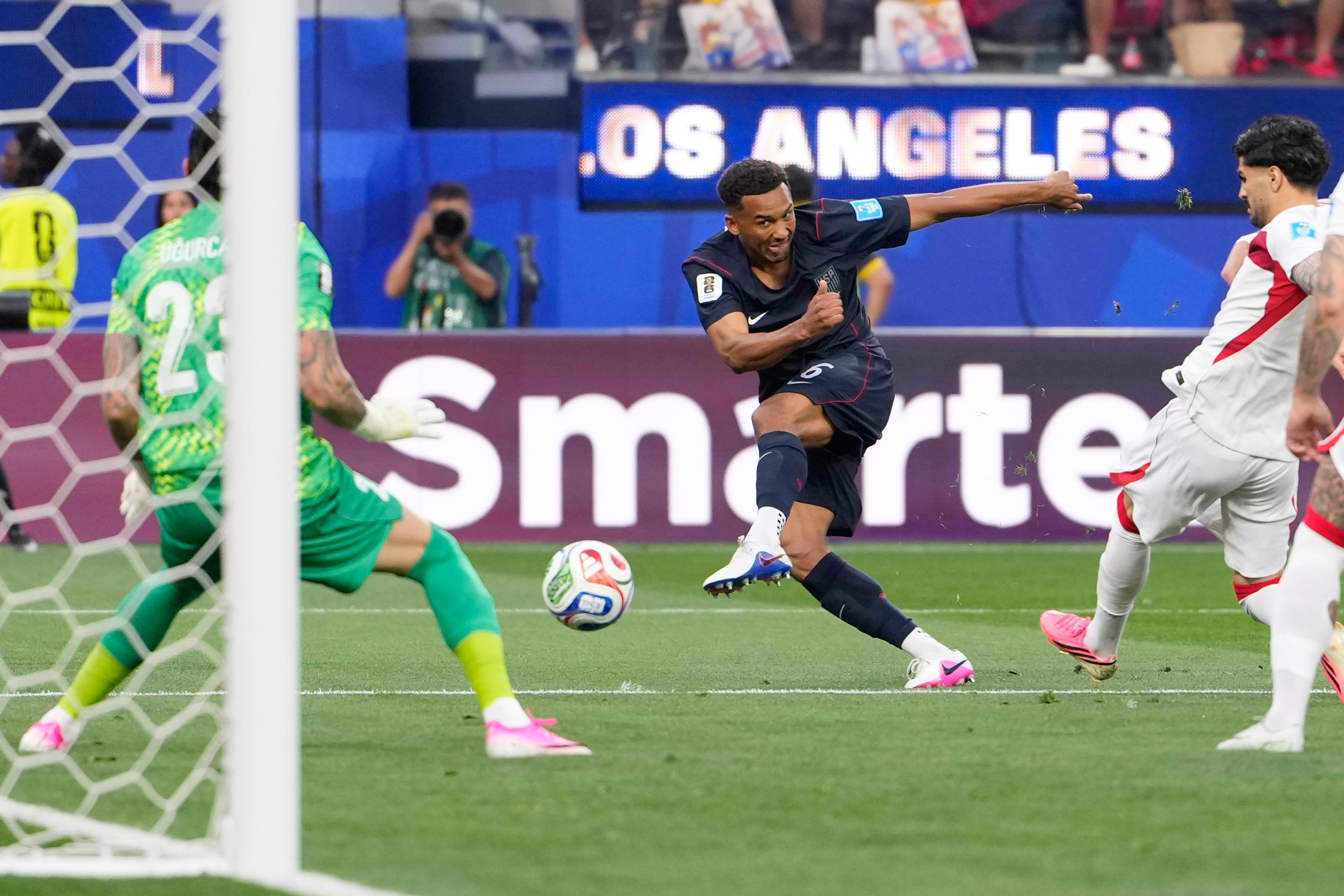
Media native Auston Trusty (center) made his first World Cup squad this summer, and scored his first World Cup goal in the U.S.-Turkey group stage game.Mark J. Terrill
“It will definitely be good meeting him,” Pierre said. “On the field, we’ll see how we play together and connect, and then obviously off the field, we’re going to have some banter and jokes about it.”
In the meantime, Pierre was joined on the podium by another centerback from the World Cup team, Miles Robinson. The FC Cincinnati veteran has liked what he has seen.
“Obviously, he’s a great player just to be here in the first place,” Robinson said while seated next to Pierre on the podium. “What I’ve seen so far, he’s obviously strong, a big force, he’s calm on the ball, technical. Just to see him at 18 years old in this game, in this camp, really proving himself day by day, is something to definitely admire and appreciate.”
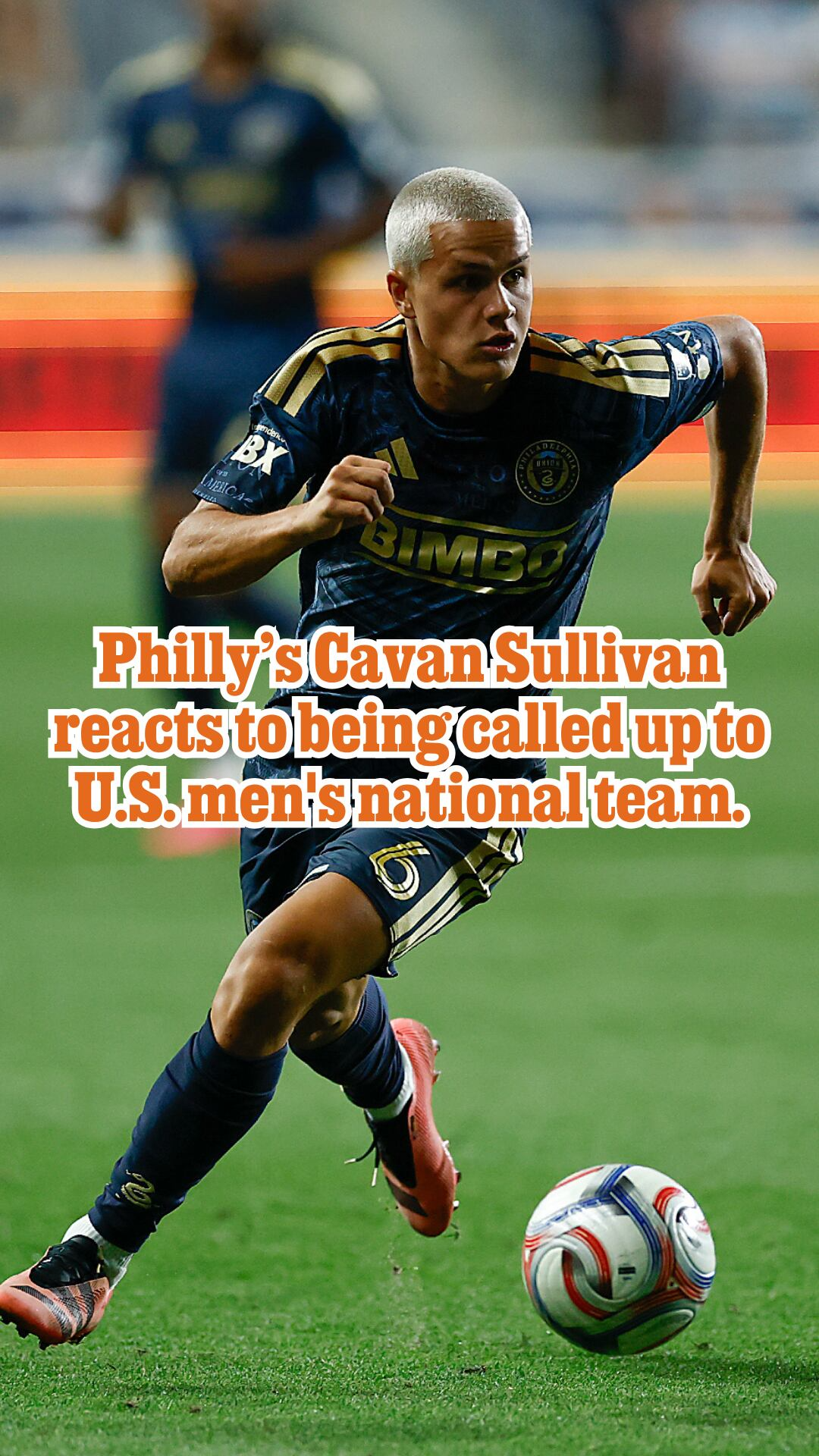
Union phenom Cavan Sullivan’s rapid rise in the soccer world reached a new milestone on Thursday, as the 16-year-old earned his first invitation to the senior U.S. men’s national team.
He is one of three Union players on the latest 28-man squad, along with defenders Neil Pierre and Frankie Westfield. They’re joined by three more with local roots: goalkeeper Matt Freese of Wayne, and centerbacks Auston Trusty of Media and George Campbell of Chester.
Video: Philly’s Cavan Sullivan reacts to being called up to U.S. men’s national team.
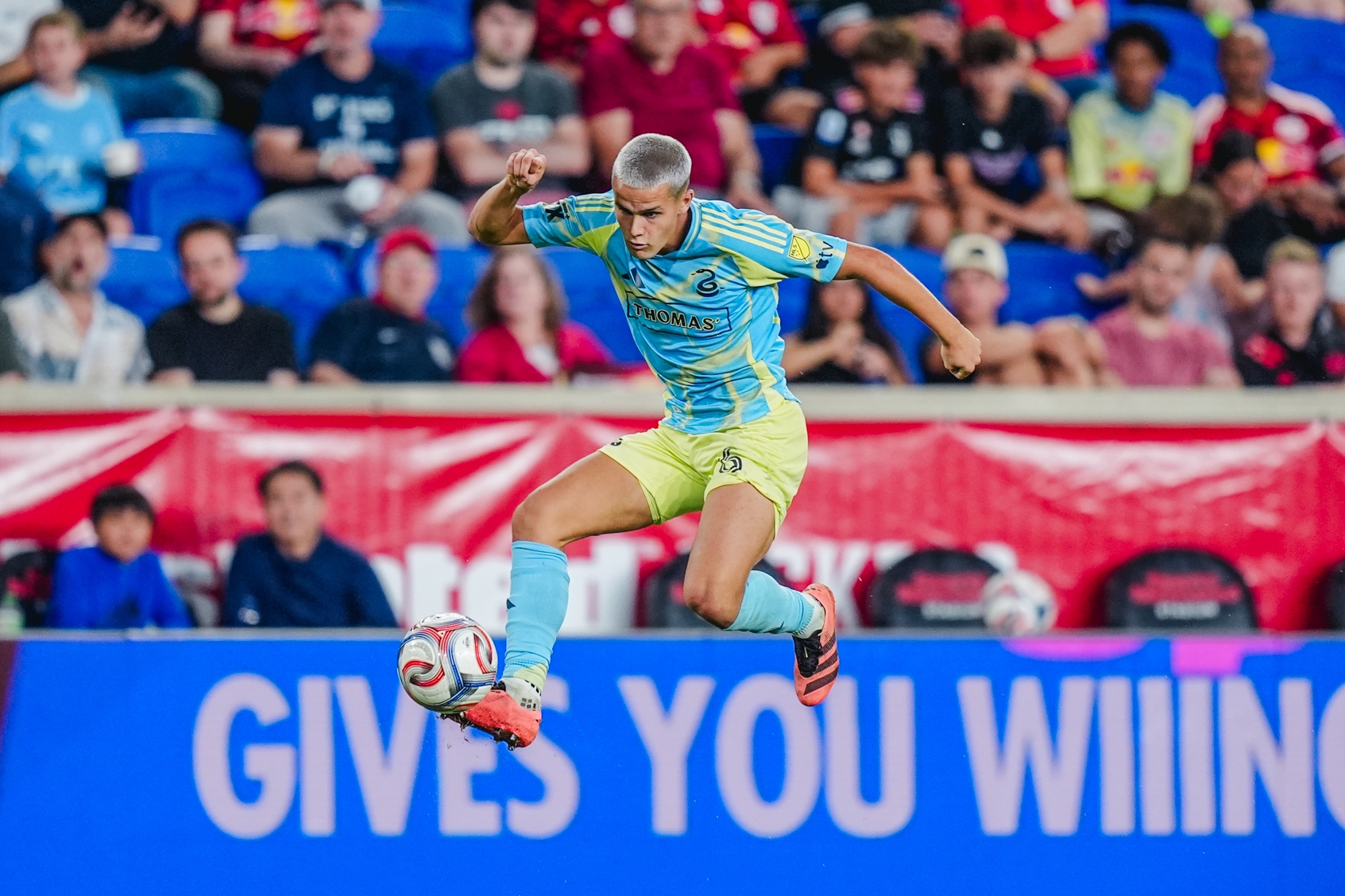
Since the Union resumed their season after the World Cup, Sullivan has scored six goals and added five assists in 12 appearances. They include highlight-reel moments that seized headlines across the globe: a dazzling trap and run for a goal at Red Bull New York on Aug. 29, and a backheeled finish in a 5-0 rout at San Diego FC on Sunday.
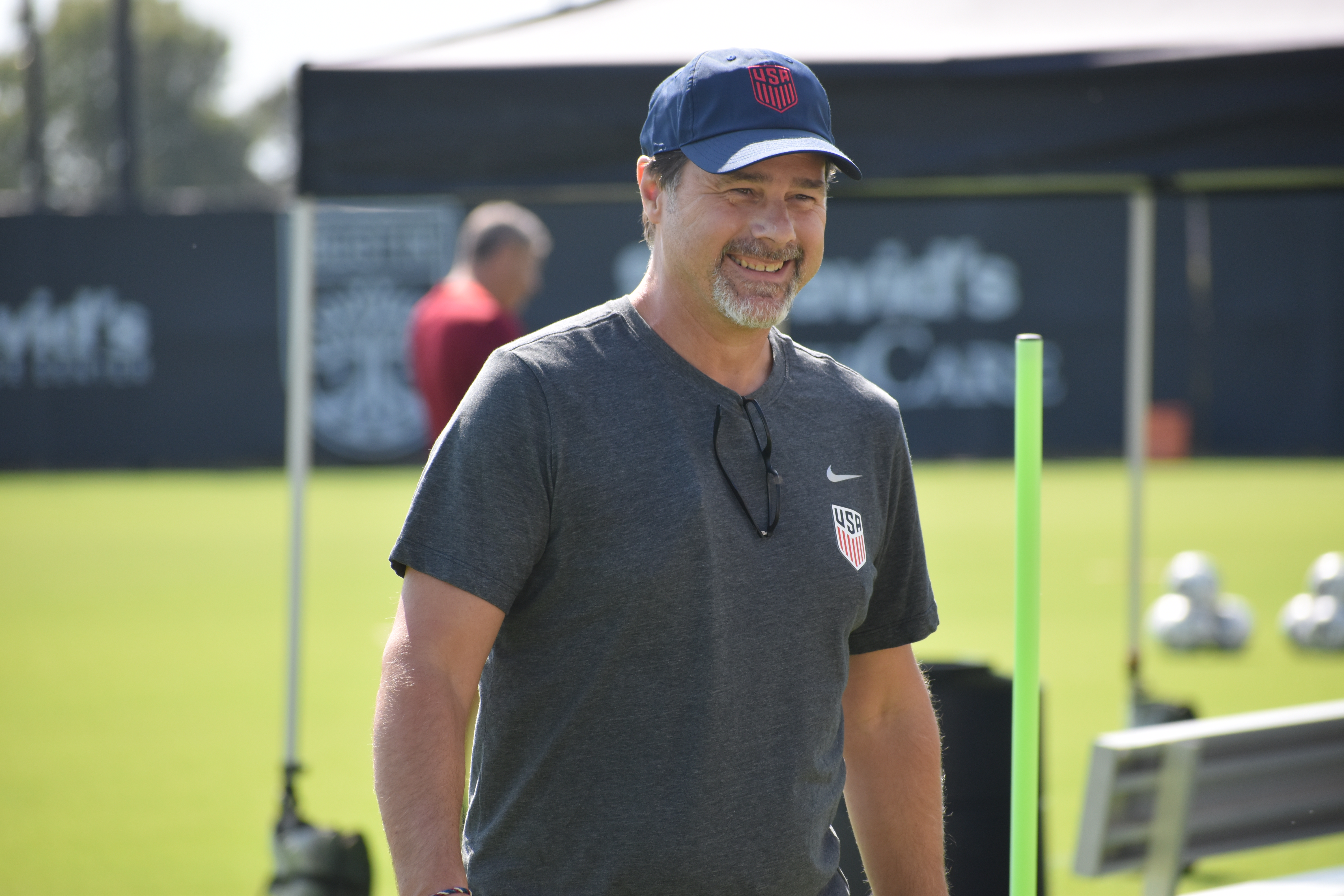
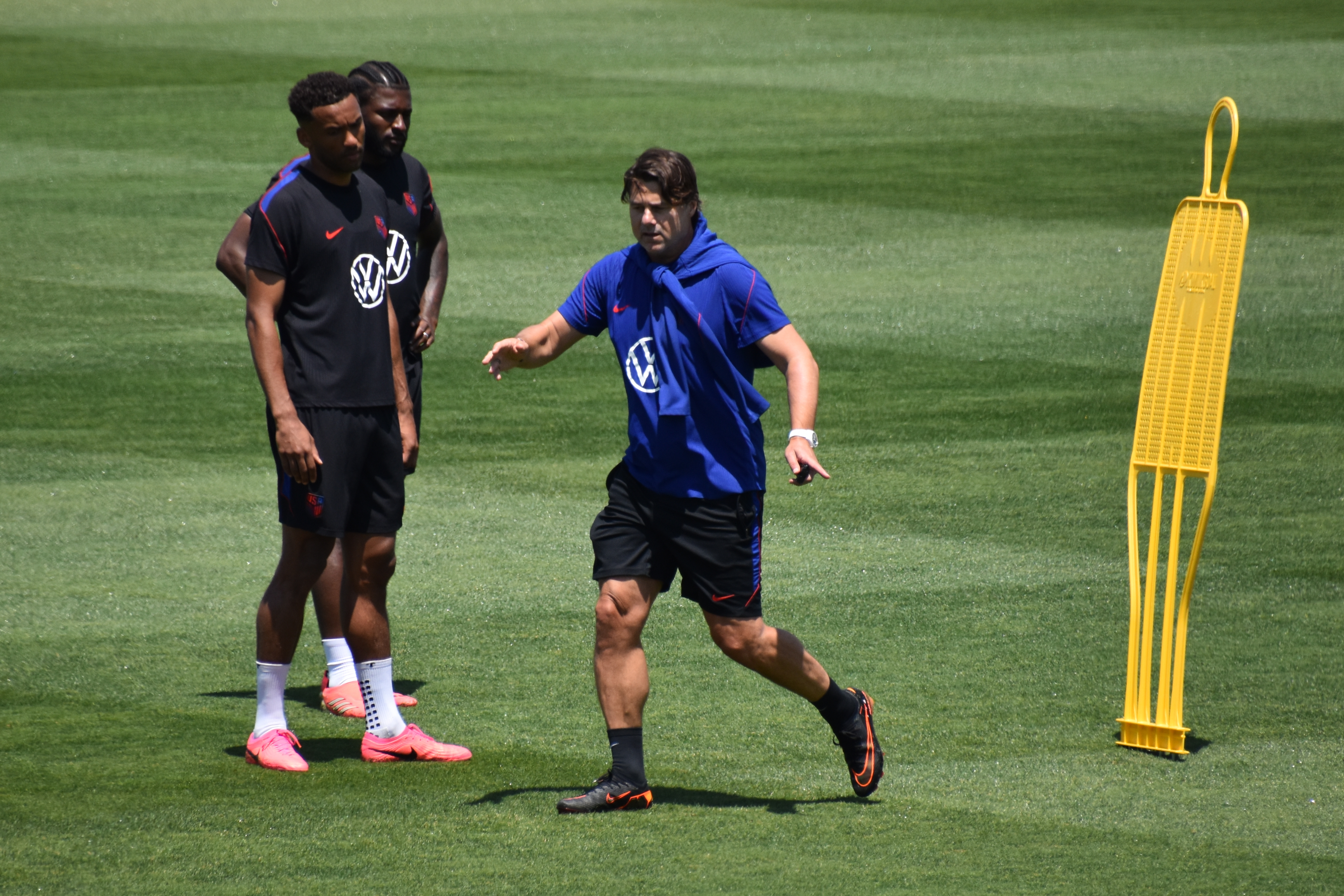
“I think he deserves all the praise that he’s getting,” U.S. manager Mauricio Pochettino said in a news conference Thursday morning. “Because he’s performing well, he’s playing well, he’s giving assists and scoring goals — and he’s 16.”
Attention isn’t just coming from within MLS. They’re watching on Europe’s big stage, too, since Sullivan is due to join English superpower Manchester City at the end of 2027.
The deal was agreed upon when he turned pro with his hometown club at 14 years old in 2024. While neither club can discuss it publicly because of British labor laws, everyone knows the clock is ticking.
Just before 2 a.m. in Manchester, and it might have woken some people over there up… pic.twitter.com/jI4u2a7pW5
Right now, Sullivan is enjoying the present, kept grounded by coaches, teammates, and family. Chief among them is his oldest brother, Quinn Sullivan, a stalwart of the Union in his own right who earned his senior national team debut last year.
“We need to have a clear idea how to — I don’t want to use the word ‘help,’ but just to be with him and try to provide the best platform for him to evolve,” Pochettino said of wanting to get to know Sullivan. “Every day, we need to be the people that go there to push, and to evolve, and to sometimes put limits, sometimes to encourage to keep going [and] doing what he’s doing. It’s a good challenge for us, and I think it’s exciting to have him.”
The plan to get Sullivan to begin his career in Chester, with the right mix of firmness and care, has worked perfectly so far. And it’s the latest endorsement of the Union’s youth academy, which has become a remarkable pipeline for U.S. national team talent.
Media’s Auston Trusty is one of the veterans on this U.S. squad.Jonathan Tannenawld
Pierre, Westfield also earn the call
Now a new era is arriving, and not just with Sullivan. He’s joined on this squad by two more of the Union’s leading youngsters: Pierre, an 18-year-old centerback, and Westfield, a 20-year-old outside back.
“You are happy for Philadelphia, no?” Pochettino said. “Plenty of players from Philadelphia.”
Both players are major candidates for the 2028 Olympic squad, which is a big part of why they were invited. The Olympics is an under-23 age-group event, and this window is one of the only chances for candidates to get senior national team experience before they go into their own training regimen.
Pierre was born in Lebanon, Pa., and his family moved to Blue Bell so his older brother, Nelson, could join the Union’s academy as a kid. In time, Neil made his own impression and now is the club’s top centerback prospect since McKenzie and Trusty.
Neil Pierre (right) has made his own rapid rise with the Union this summer.Elizabeth Robertson / Staff Photographer
He’s impossible to miss on the field, standing 6-foot-7. He’s scored four goals since joining the Union’s first team this summer. But he also has proven he has the defensive chops to mix it up with veterans and a terrific passing game.
“When you compare him with a 30-year-old, or 26- or 28-year-old centerback that maybe is playing in another country, or maybe in MLS, I don’t see the difference [just] because one has more experience than other,” Pochettino said. “Both can make a mistake; both can be good. That is why, [with] this type of potential, when players like this guy are playing in MLS, how we can contribute in their career, to evolve and be better and better, is this guy being with us.”
Westfield grew up at the other end of Northeast Philadelphia from the Sullivans, in Morrell Park. For a while, he might not have been the most famous athlete in his house, at least locally: his brother, Rocco, starred for the Father Judge boys’ basketball team that won the last two Catholic League championships.
Frankie made his pro debut the night before Rocco claimed the first of his titles. Now, he has made a name for himself.
Frankie Westfield has been impressive as the Union’s starting right back.Yong Kim / Staff Photographer
“I think that it’s normal that it’s a different process now to build the roster,” Pochettino said. “With the idea of not only to perform today, but also to help these young kids to become more mature, more experienced — and because the one of the biggest objectives of the [U.S. Soccer] Federation is the Olympic Games in two years. And I think giving the opportunity to be involved in this senior team is a thing that is going to pay and to be very helpful in two years for these kids.”
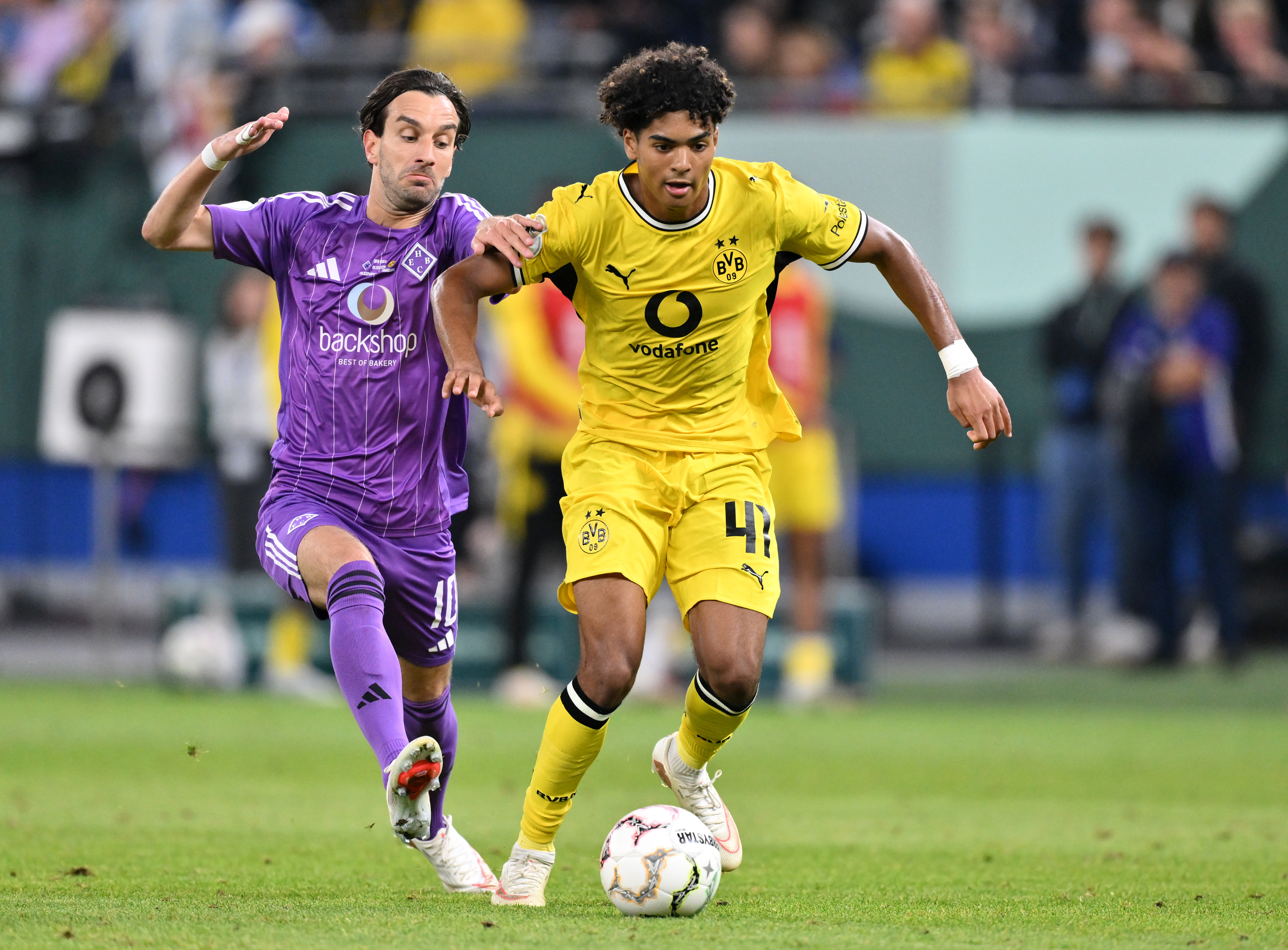
The Union trio is part of a fleet of fascinating youngsters on this latest U.S. squad. Others include wingers Mathis Albert of Germany’s Borussia Dortmund, Cole Campbell of Germany’s Elversberg, and Zavier Gozo of England’s Crystal Palace; forward Julian Hall and midfielder Adri Mehmeti of Red Bull New York; and goalkeeper Diego Kochen, who grew up at Spanish giant Barcelona and is now with Denmark’s Lyngby.
Eleven of the 26 players on the squad are newcomers, with 13 returnees from the World Cup. Among the latter are Freese, Trusty, and perennial locker room leaders Chris Richards and Tyler Adams.
The Americans will take the field starting Monday at the national training center in suburban Atlanta, then head off on a cross-country journey with four games: Peru on Sept. 26 in Orlando, Chile on Sept. 29 in St. Louis, then rivals Mexico on Oct. 3 in Glendale, Ariz., and Canada on Oct. 6 in St. Paul, Minn.
Mathis Albert of Germany’s Borussia Dortmund (right) is another of the intriguing young talents on this U.S. roster.Oliver Hardt
USMNT roster for autumn friendlies
Local products in bold
Goalkeepers (4): Chris Brady (Chicago Fire), Matt Freese (New York City FC), Diego Kochen (Lyngby, Denmark), Brian Schwake (Nashville SC)
Defenders (10): George Campbell (West Bromwich Albion, England), Sergiño Dest (PSV Eindhoven, Netherlands), Alex Freeman (Villarreal, Spain), Peyton Miller (New England Revolution), Neil Pierre (Union), Chris Richards (Crystal Palace, England), Antonee Robinson (Fulham, England), Miles Robinson (FC Cincinnati), Auston Trusty (Celtic, Scotland), Frankie Westfield (Union)
Midfielders (9): Tyler Adams (Bournemouth, England), Mathis Albert (Borussia Dortmund, Germany), Sebastian Berhalter (Middlesbrough, England), Zavier Gozo (Crystal Palace), Adri Mehmeti (Red Bull New York), Yunus Musah (AC Milan, Italy), Brooklyn Raines (New England Revolution), Gio Reyna (Strasbourg, France), Malik Tillman (Bayer Leverkusen, Germany)
Forwards (5): Cole Campbell (Elversberg, Germany); Justin Ellis (Orlando City), Julian Hall (Red Bull New York), Ricardo Pepi (PSV Eindhoven, Netherlands), Cavan Sullivan (Union)
"You are happy for Philadelphia, no? Plenty of players from Philadelphia."
Yes, it is an enjoyable part of my job as a professional cynic. But he can rest assured that lots of people around town are happy today:
Next week, U.S. men’s soccer team manager Mauricio Pochettino will announce his roster for the team’s upcoming games in late September and early October. As hopes grow for some of the Union’s young rising stars to get called, Pochettino acknowledged Friday that he’s been watching them, and has been impressed.
“Philadelphia has good young players, good kids, that maybe we will call a few [of],” he said in a roundtable meeting with reporters on Monday. “New York, yes, Orlando, Nashville, Atlanta — I can keep going, no? But I think, yes, we are so excited, because I think we can add young kids that can bring a fresh start, and you can feel something different.”
Pochettino didn’t give specific names, and made clear from the start of the meeting that he wasn’t going to. But his acknowledgment was enough, amid that list of clubs with notable prospects.
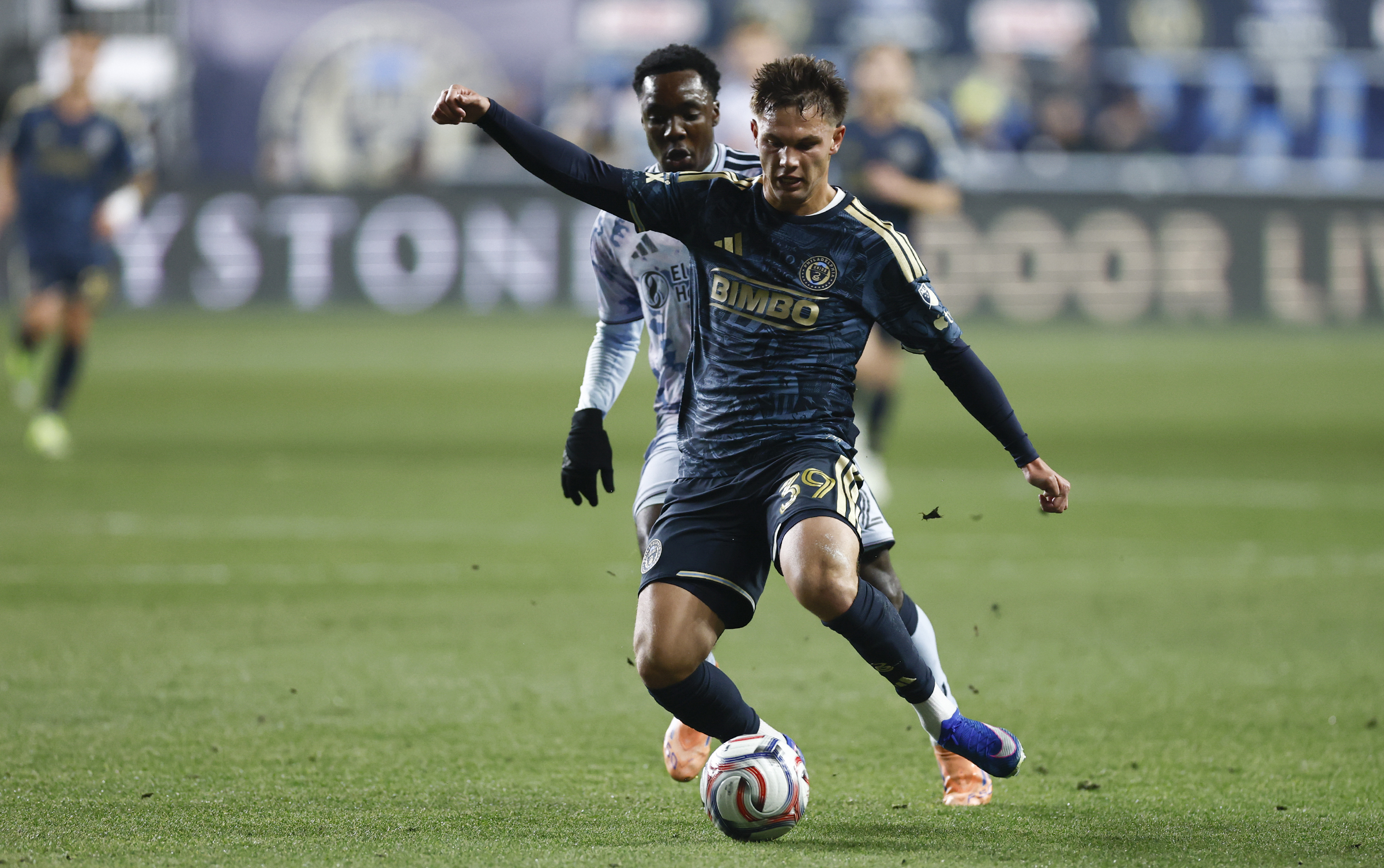
Cavan Sullivan (left) has blossomed into a big-time player for the Union this summer.Yong Kim / Staff Photographer
The door is open to them and other emerging players, from MLS and across the Atlantic.
“The idea now is, it’s about to start to work for the project that is 2030,” the year of the next men’s World Cup, Pochettino said. “And of course, the next camp is going to be the opportunity to bring players that can be involved in that four-year process, with the possibility to arrive to 2030 in the best condition. I think we need to work for the present because we need to win games, we need to be competitive; but I think it’s a different approach than it was in the last period when we arrived.”
He also will be factoring in candidates for the 2028 Olympic team. It’s an under-23 squad, and U.S. Soccer wants a big performance on home turf in Los Angeles. Westfield and Pierre are prime candidates at that level, with Westfield projected as the potential starting right back.
Goalkeeper Andrew Rick is another Olympic candidate, though he faces longer odds to make this senior squad. But those odds improved when Pochettino said he expects to have four goalkeepers on his 26-player roster.
Andrew Rick (center) got great experience spending the World Cup with the U.S. team as a practice player.Jonathan Tannenwald
“We have a core of young players that need to play the Olympic Games, because it’s an objective for our federation and for the country to try to be a contender for the gold medal,” he said. “And I think it’s important: It’s going to be in our country, and we are going to support that.”
So expect to see Olympic team coach Steve Cherundolo working with Pochettino this fall. And file away that this specific FIFA window is an especially good chance to get Olympic team candidates into the senior squad.
The next three windows are the Concacaf Nations League quarterfinals in the fall, the final four in Los Angeles in March, and the Gold Cup next summer. Pochettino will want the stars for those games, but he doesn’t need them all for the friendlies.
“It’s a decision that we are talking [about] now,” he said. “I think it’s a very important thing if we can provide them, the players that maybe Steve believes can be important in two years, in the Olympic Games — it’s a window that maybe we can provide minutes and international experience.”
Mauricio Pochettino (right) had four Union alumni on the World Cup team this summer, including centerbacks Auston Trusty (left) and Mark McKenzie.Jonathan Tannenwald
But there are some caveats to the youth movement. One is that the squad for the upcoming four-game slate — against Peru, Chile, Mexico, and Canada — won’t just be prospects. There are veterans from the World Cup squad whom Pochettino wants, to help get results and to help set the tone for the new generation.
“We are going to do a mix,” he said. “Experienced players with young players that can fit together and start to work, and [help] how the young kids start to manage the pressure to play in the first team.”
Pochettino is watching the prospect class to see not just how they play, but how they conduct themselves.
Neil Pierre has won rave reviews this summer for his play at centerback and his charming character.Steven M. Falk / For The Inquirer
“When you are young, of course, you need to be confident, you need to have trust in yourself, and belief that you can perform, and that you can do well — but I think there is a limit, no?” he said. “I think you are only entitled to talk a little bit out of order if you are [Lionel] Messi — if you’ve won eight Ballon d’Or [world player of the year awards], OK, you can talk with a certain arrogance. But even Messi, you aren’t going to feel or hear him talking in this way.”
He spoke of his own role in that, too, knowing how a high-profile manager’s words can be magnified in the media.
“The balance is the most important, and one of our responsibilities is to protect these guys,” Pochettino said. “Because sometimes if you play well and you are 17, 16, or 18, and you play well, people start to talk about that you are Messi or you are a big star in the world because you do a few good things. If after [that], you are confused and you don’t manage [it] well, that can be dangerous for your career, and that is what we don’t want.”
It took just one moment for the Union’s 3-1 win to live up to the billing, from the player who stood atop the marquee.
Cavan Sullivan’s sixth goal for the Union’s first team was easily his most sensational: a perfect jumping trap of Danley Jean Jacques’ cross-field pass, a cut left into the 18-yard box, and a lashing shot to the far post.
It sent jaws dropping from North Jersey to Chester and well beyond, perhaps even to his future home at Manchester City. (Or at least it would have when they woke up Sunday morning over there, as it was just before 2 a.m. in England when the play happened.)
“This was the first moment of a really special individual play for one of his goals,” interim Union manager Ryan Richter said. “So that was cool.”
The trap alone was a special play, and Richter rightly insisted that the pass was its own highlight. Jean Jacques hit it inch-perfect into open space on the right flank.
Sullivan then brought the ball down before it could hit the turf, with the kind of first touch that makes soccer scouts worldwide swoon. All the more when it’s done by a 16-year-old — and yes, with an extra layer when that teen is an American. The world has gotten used to this country winning men’s World Cup games, but it’s sometimes still surprised when a Yank shows such skill.
There was no guarantee a goal would follow, though, not least since Sullivan had passed up a chance to fire from atop the box in the first half. This time, he charged past Dos Santos and shot before a sliding Ronald Donkor could get there.
“The first half, I didn’t think that he was at his best: A couple opportunities where he had a chance to make a play that didn’t come off in the way that you know he can, and then a couple defensive lapses, I thought … [where] he got outplayed a little too bit too easily,” Richter said. “But the second half, he fixed what he needed to fix, and he got going in the game.”
Then came a moment where Richter could watch just like the rest of us.
“The goal that he scored, it’s what he’s capable of doing,” he said. “In these one-v-one situations, he’s different, and we want to give him the freedom to express himself. And honestly, he has gained the respect of his teammates, that they also give him the freedom that he can go in these moments, because they know that he can create something out of it.”
The drumbeat has grown louder for Sullivan to earn his first senior U.S. national team call-up for the four-game friendly run in September and October. Indeed, quite a few observers think Mauricio Pochettino should call up Pierre and Westfield, too.
Pierre has turned just as many heads in the know as Sullivan lately, and turned more with his latest goal Saturday — his fourth in nine Union first-team games this year.
“He’s growing every week, and you guys are watching the same thing I am: he looks like a top center back in this league,” Richter said. “He has to keep pushing, and keep his feet on the ground, and focus in the right way, and become the best center back in this league. That should be his target — but that’s a day-to-day thing that he has to keep pushing to get better and better.”
Westfield, meanwhile, has become the leading candidate to be the starting right back on the 2028 Olympic team.
Andrew Rick and Quinn Sullivan could also merit consideration, given their past work for Pochettino and Rick’s potential to make the 2028 squad.
Asked whether Cavan should get the call, Richter answered promptly: “That’s not my job to influence that one way or the other.”
The Union could soon see Mauricio Pochettino (right) call up a new generation of their prospects, following in the footsteps of alumni like Auston Trusty and Mark McKenzie.Jonathan Tannenwald
But that doesn’t mean he isn’t allowed to, and he snuck in a little of it.
“If you’re watching the games — which, the national team staff, I’m sure they are watching these games — then he’s making a case for himself,” Richter said.
The squad should be announced in mid-September, which means the Union probably have three more games before then: Saturday at home vs. CF Montréal (now with Chilean legend Alexis Sánchez), Sept. 9 at home vs. FC Cincinnati, then the year’s longest road trip to visit San Diego FC on Sept. 13.
(And yes, this writer hears those of you ready to pounce on Richter saying “watching the games.” Four years into MLS’s streaming deal with Apple, no Union-related subject still draws more emails than the lack of games on traditional TV. So take note that the Cincinnati game will be on FS1.)
The two weeks left for the U.S. staff to judge the Union will go by quickly. But they’ve got plenty of evidence now, especially with Cavan Sullivan, Pierre, and Westfield.
So does ever more of the soccer world.
Lionel Messi scored four goals last night, but it isn't the biggest story in MLS this morning – not even on the league's own website.
Ryan Richter knew the odds when he stepped onto the podium at Subaru Park on Sunday night.
Though the Union still have a mathematical chance to advance to the Leagues Cup quarterfinals, it would take a blowout win over Santos Laguna on Thursday in Chester (7 p.m., Apple TV) and so many results by other teams that it’s barely worth thinking about.
“It will be a little different, that’s the reality,” he said after Sunday’s win over Necaxa.
But while the chance for a trophy has sailed down the Delaware River — the least important of the trophies the Union can win, as the low attendances have once again proved — that doesn’t mean the team has failed here. In fact, something quite important has happened.
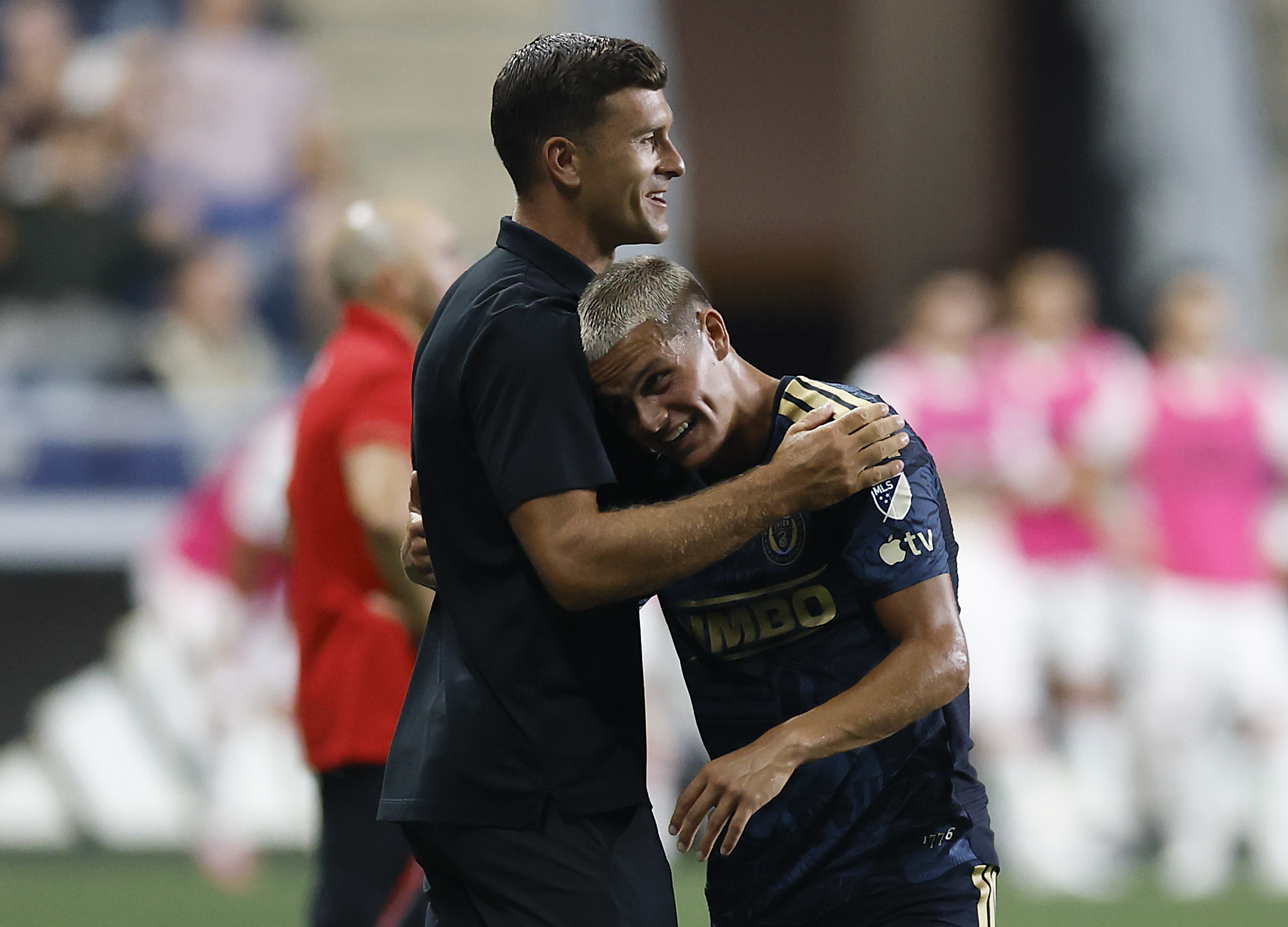
Ryan Richter (left) embraces Cavan Sullivan after subbing Sullivan out of the Nexaca game, where the 16-year-old had a goal and an assist.Yong Kim / Staff Photographer
For a young American player with dreams of representing the country on soccer’s biggest stages, there’s no experience like facing teams from other Concacaf nations early in your career. No amount of teaching in the Union academy’s classrooms can match learning by doing, and a slew of Union players have done it this summer.
“You see the physicality, and almost the cleverness,” Richter said. “The way that they are able to use their bodies, the way they’re able to position themselves. The physicality is just a little bit different, I would say, and the style of player.”
As an example, he cited “the way the striker, [when] the ball comes in [to] him, you’re getting the elbow early in your stomach to make the 2 yards of space for himself. It’s a very savvy way of playing.”
It’s also the sort of thing that makes new soccer fans recoil — until, of course, their own player does the same thing and benefits from it.
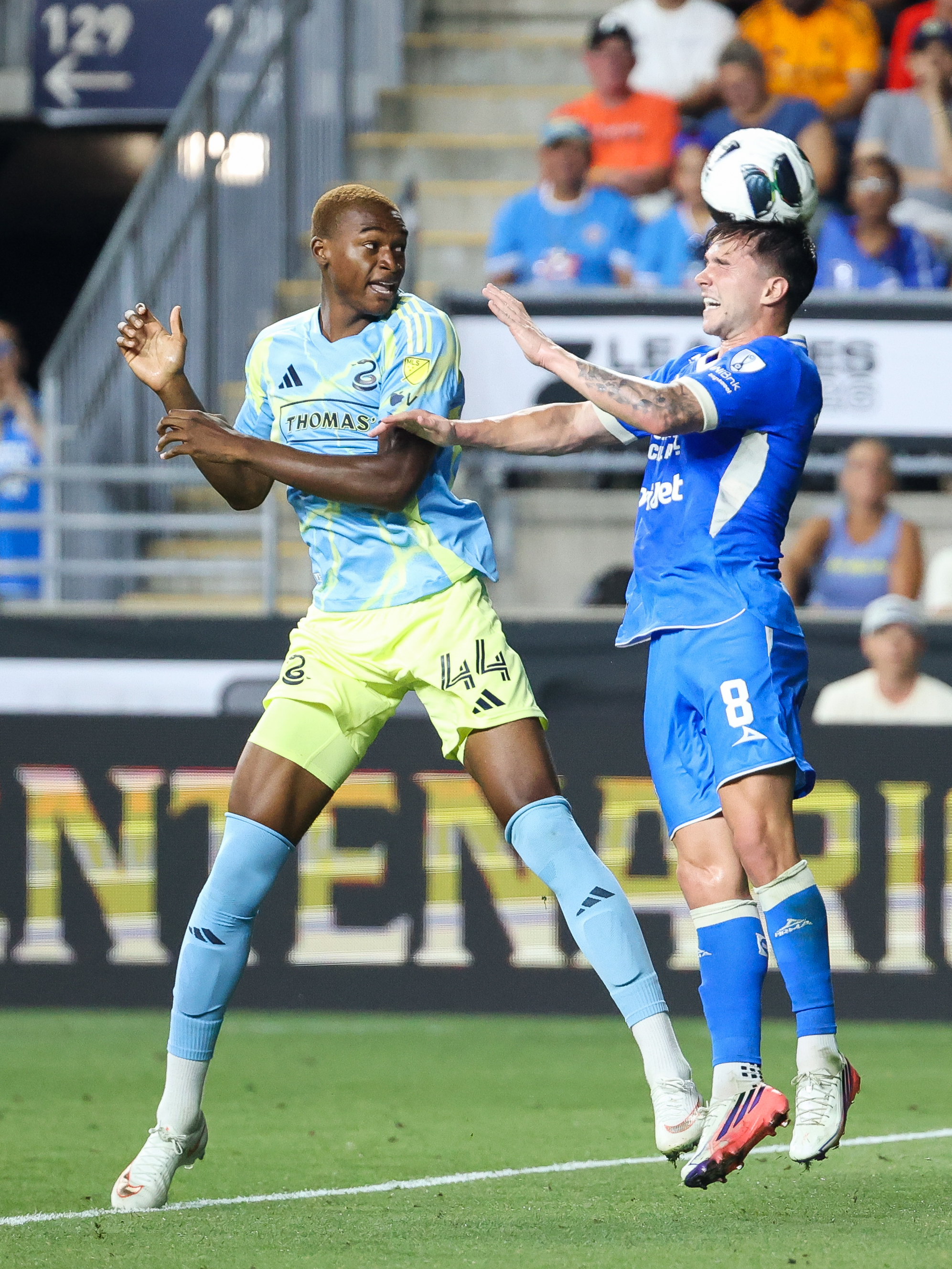
Frankie Westfield (right) going up for a header against Cruz Azul.Isaiah Vazquez / For The Inquirer
‘That Concacaf feel’
Which Union players have gained the most from these two games? Cavan Sullivan tops the list. He was a force in both, and he knew exactly what he was getting into.
“It’s a different element than MLS, so it’s great experience,” said Sullivan, who was a U.S. stalwart at last year’s under-17 World Cup. “More of that Concacaf feel: that gritty, aggressive battle, games that are just battles. So I think it’s great for us, great for young guys.”
Quinn Sullivan has fit right back in during his first games back from the long injury absence. Obviously he has needed time to ramp up to full fitness, but he’s now showing he’s close.
Neil Pierre has continued a breakthrough summer at centerback that has left scouts across the sport raving. Spanish superpower Barcelona was reportedly already monitoring him before he returned to Chester from his loan to Denmark’s Lyngby, and you can be sure the line of suitors will keep growing.
Neil Pierre (left) battling Cruz Azul’s Agustín Palavecino.Isaiah Vazquez / For The Inquirer
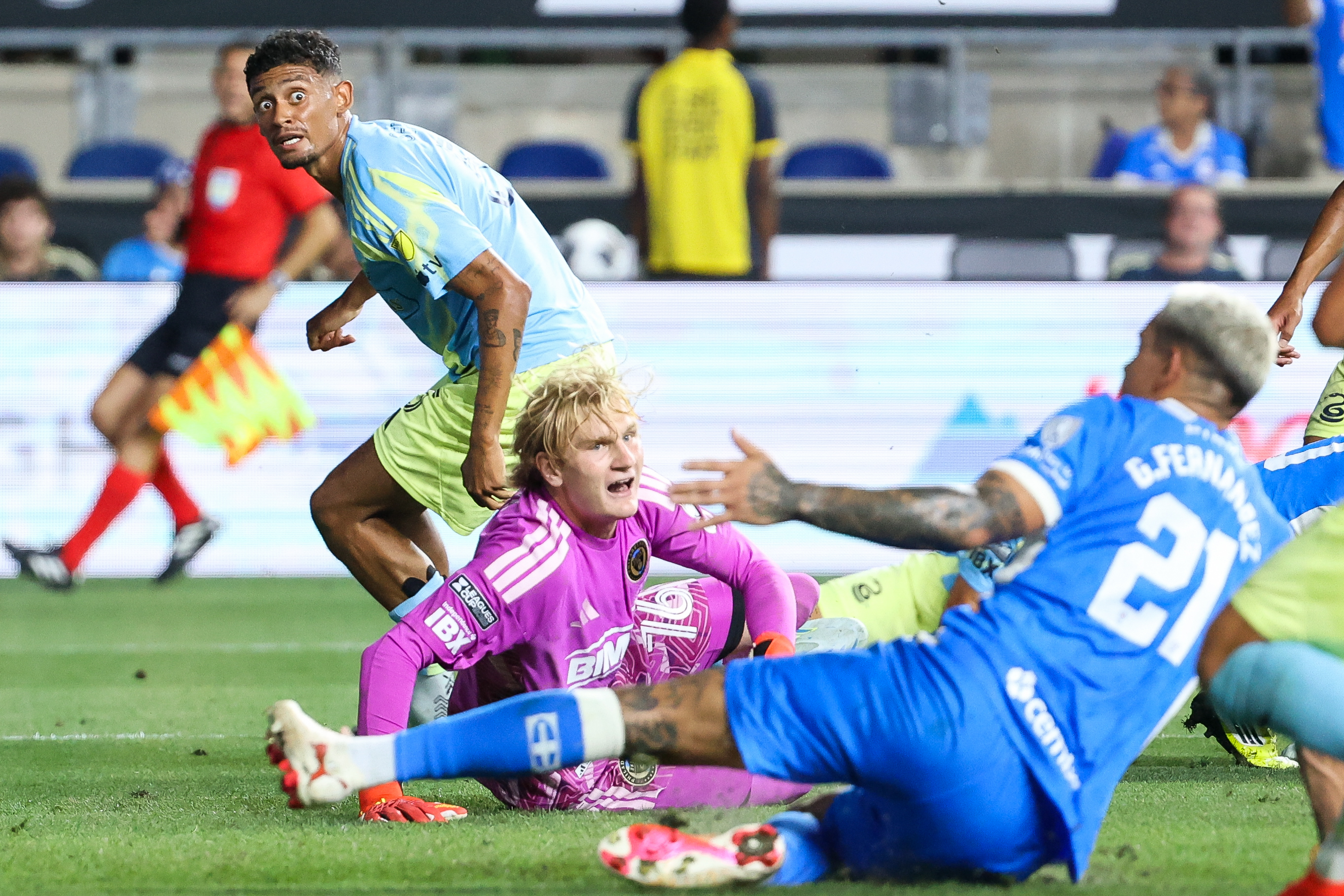
Andrew Rick has built upon his priceless experience with the U.S. World Cup team, starting in net for both Leagues Cup games and playing especially well against Necaxa. (It wasn’t his fault that a breakdown in front of him left Japhet Sery Larsen having to mark two attackers at once, leading to the visitors’ goal.)
Last, but a long way from least, Frankie Westfield has continued his impressive rise at left back, despite making the error that led to Cruz Azul’s goal in the Leagues Cup opener.
Perhaps this all seems strange to be saying about a team that not only won’t win the Leagues Cup, but might now call just making the playoffs a successful season after years of higher aspirations.
But a broader look could explain it.
We were just getting settled! 🤯⚽ Nathan Harriel came down the wing and opened the scoring with a great shot for @PhilaUnion!
The continuing afterglow of the World Cup includes Mauricio Pochettino’s renewal with the U.S. men’s national team. He has pledged to look at new players for the 2030 cycle, and his first opportunity to do that will come in the four friendlies that start late next month.
Since the two FIFA windows after that (in November and next March) are reserved for the serious business of the Concacaf Nations League, there’s ample reason for Pochettino to leave some veteran stars home for the friendlies and give newcomers a chance.
Cavan Sullivan is on the list of candidates. Quinn Sullivan might be, too, since Pochettino knows him from last summer and respects his game.
“Obviously that’s a goal,” Quinn said, though he was quick to add, “Right now I’m really focused on building my fitness back.”
Quinn Sullivan on the ball in the Necaxa game.Yong Kim / Staff Photographer
It’s also worth remembering the manager’s praise for Nathan Harriel last fall, though other defenders are higher up the priority list right now. The 25-year-old has a lot of experience under his belt now, not just the tactical kind but the streetwise kind.
“All these opportunities you get to play against these Mexican teams are good learning moments for sure,” Harriel said. “Those games you get up for [them]. And it’s difficult, it’s hard, there’s tough moments, but you learn and you can grow from it.”
Is Pierre on the list, still a raw talent at age 18 but in that impossible-to-miss 6-foot-7 frame? The senior national team might be a step too far at the moment. But there’s also the 2028 Olympic team to consider, an under-age-23 squad. He could definitely be of interest to that group’s head coach, Steve Cherundolo, now and over the next two years.
The same goes for Rick, as Cherundolo and Pochettino ponder what to do with a crop of young goalkeepers that is interesting but has no standout yet.
Andrew Rick (center) in action against Cruz Azul.Isaiah Vazquez / For The Inquirer
Obviously, Rick has to contend with being Andre Blake’s backup, and the limited playing time that results. But he has amply proved his abilities to the Union, and likely to the U.S. staff, too.
Westfield has perhaps the most potential for the Olympic team. Outside backs are always hard to come by, and the 20-year-old from Morrell Park in Northeast Philadelphia can play either flank. If he keeps playing this well, his stock should be quite high.
“Everyone’s going to be shooting for the Olympics and World Cup, and we have big dreams,” Quinn Sullivan said. “These smaller versions of the big thing are always helpful.”
And as Harriel said of his journey: “Anything’s possible — I thought I had no shot, and I ended up being there.”
The Leagues Cup has helped show why these players do have a shot.
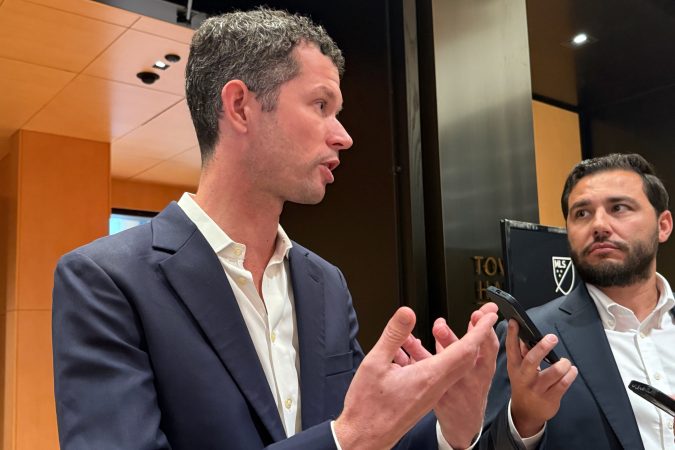
NEW YORK — U.S. Soccer Federation CEO JT Batson was among the VIPs at Larry Berg’s introduction as Major League Soccer’s next commissioner on Tuesday. After the event, Batson took questions from the media. But that didn’t mean he offered detailed answers to all of them.
That was particularly true when questions about FIFA president Gianni Infantino came up.
“As we shared publicly, we supported Concacaf’s statement on Friday with regards to FIFA Forward Enterprises,” Batson said, referring to Infantino’s plan to sell shares in a new FIFA private company — including to Josh Kushner, whose brother’s father-in-law is U.S. President Donald Trump.
That “support” was a mere one-sentence post on X: “U.S. Soccer stands with Concacaf and its members.” It was attached to Concacaf’s post with its statement that formally “rejected” Infantino’s plan.
“We have a board meeting in September where, among many topics, one of [them] is thinking about what the best future is for global soccer,” Batson said. “There’s so much more opportunity to grow soccer in more communities around the world, and to do it in a way where those communities are healthier, where they’re more sustainable, and everyone around the world is more connected. We’re looking forward to that discussion, and I don’t anticipate a whole lot of communication ahead of that.”
What happens if the issue is forced with Infantino before then? Europe’s soccer governing body UEFA could call for an extraordinary FIFA Congress to try to overthrow FIFA, and might get Concacaf’s help in doing so.
The Guardian reported Tuesday morning that all 41 of Concacaf’s member nations sent letters endorsing Infantino’s reelection before the World Cup, but “many are now giving serious consideration to withdrawing them.”
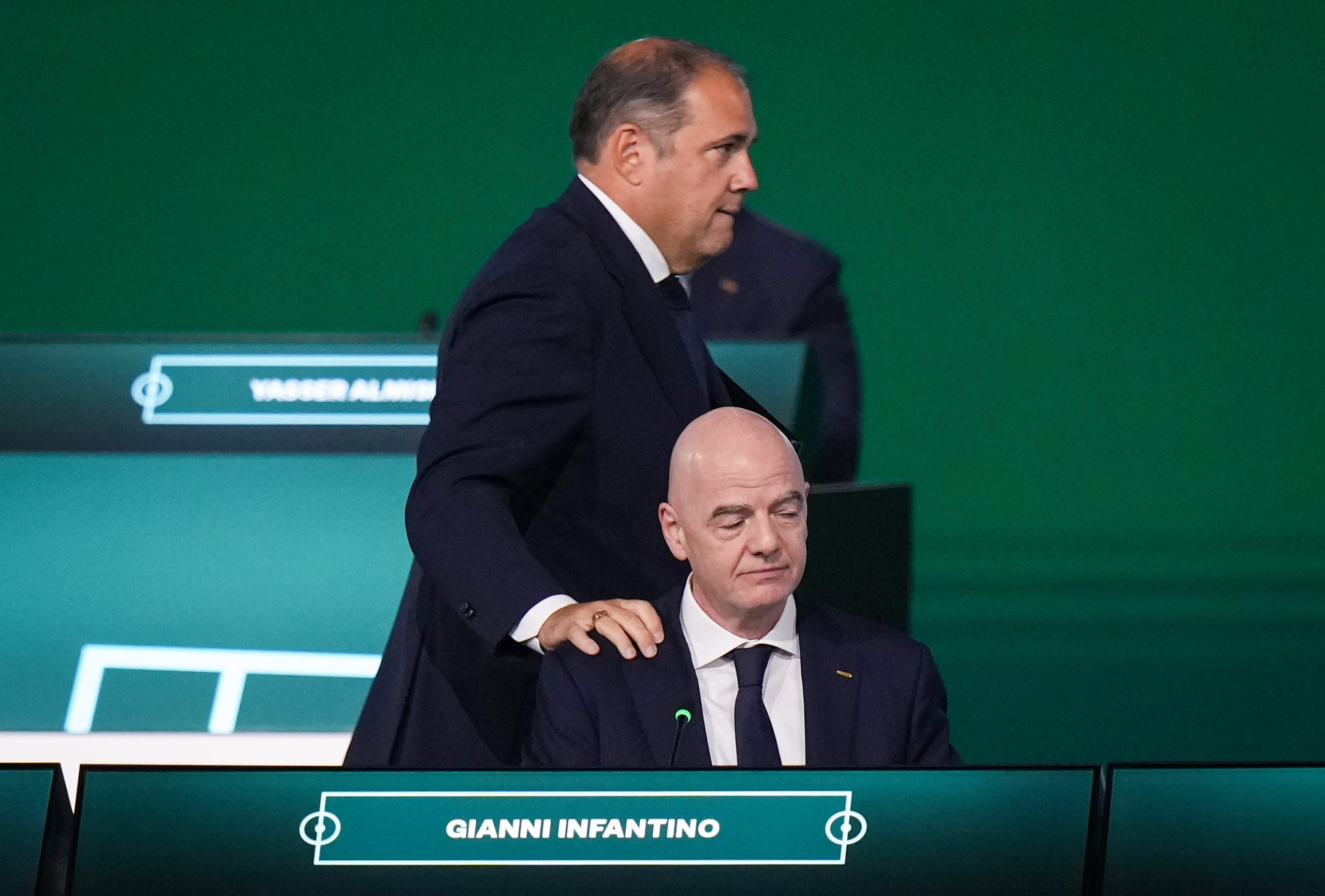
Concacaf president and FIFA vice president Victor Montagliani (top) with FIFA president Gianni Infantino at the FIFA Congress in Vancouver, British Columbia, in April.Darryl Dyck
The report further said U.S. Soccer specifically “is understood to be deeply unhappy with Infantino,” with the backlash over President Trump’s intervention on Folarin Balogun’s red card a key point. But “given the political sensitivities,” the report added, U.S. Soccer “may not feel able to take him on.”
When Batson was asked if U.S. Soccer wrote such a letter and might withdraw it, he answered: “I haven’t seen that story, so it’s hard for me to comment on it.”
He was also asked whether U.S. Soccer would back Concacaf president Victor Montagliani if he runs against Infantino, which looks increasingly possible. Batson didn’t answer that question directly.
Current MLS commissioner Don Garber was asked his opinion of it all, not just as the MLS’ leader but as a member of U.S. Soccer’s board.
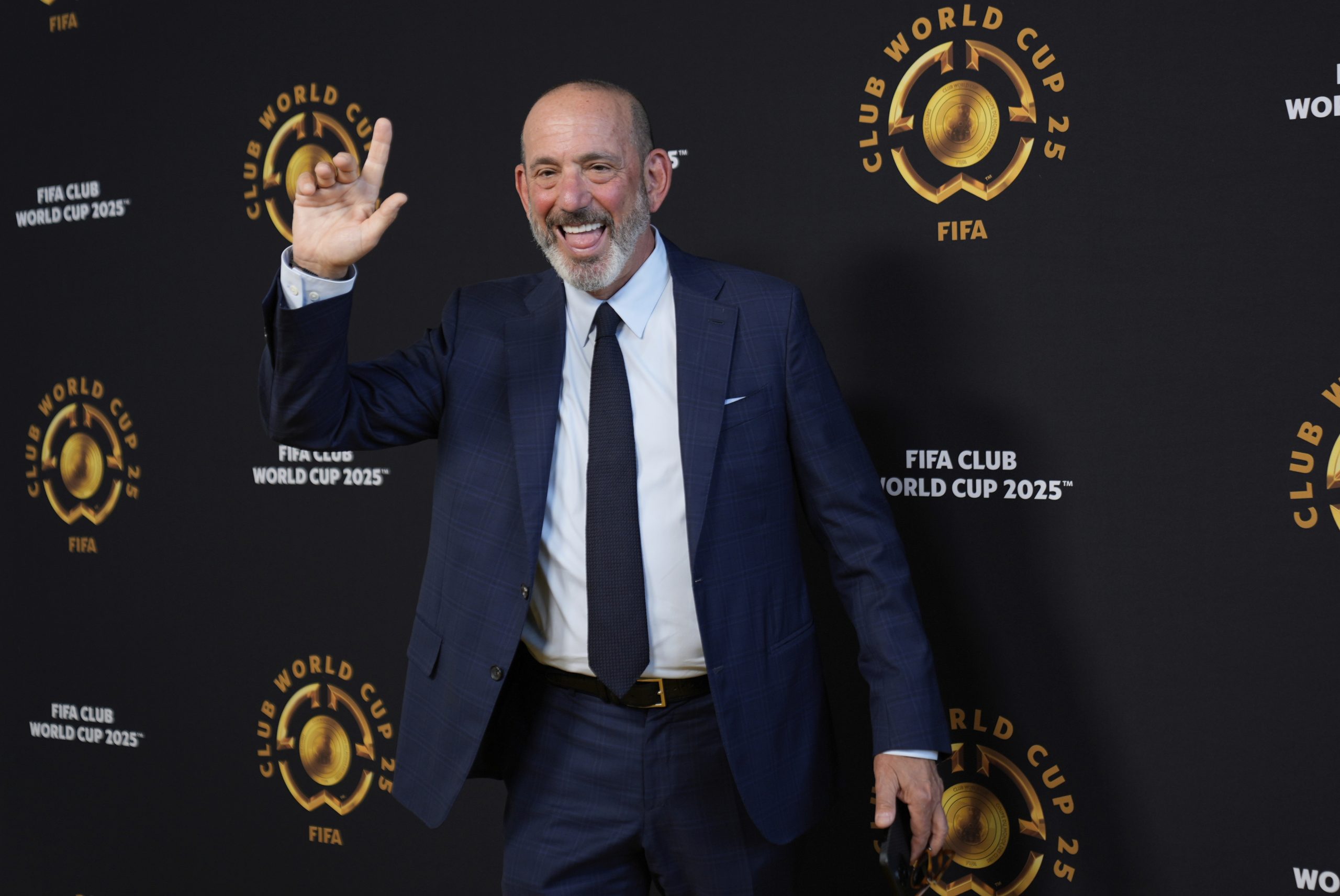
MLS commissioner Don Garber at last year’s Club World Cup final.Pamela Smith
“I’m going to wait for JT and Cindy [Cone, U.S. Soccer’s president], who I have a lot of faith in, and see what they want or don’t want to do,” he said. “But I haven’t spent any time thinking about it. I’m still reveling in the beauty and joy of the World Cup, disappointed that there’s negativity, but this is an issue that’s going to have to be addressed — but it’s going to be addressed by others.”
Garber spent plenty of time in Infantino’s orbit leading up to this summer, including when three MLS teams played in last summer’s Club World Cup. But he claimed he had no inside knowledge of Infantino’s privatization plan.
“I found out when everybody else did by reading it on social media,” he said. “And I’ve been focused on today, and our Leagues Cup which starts [this week]. I have no information, and probably no more or no less than anybody else in the world.”
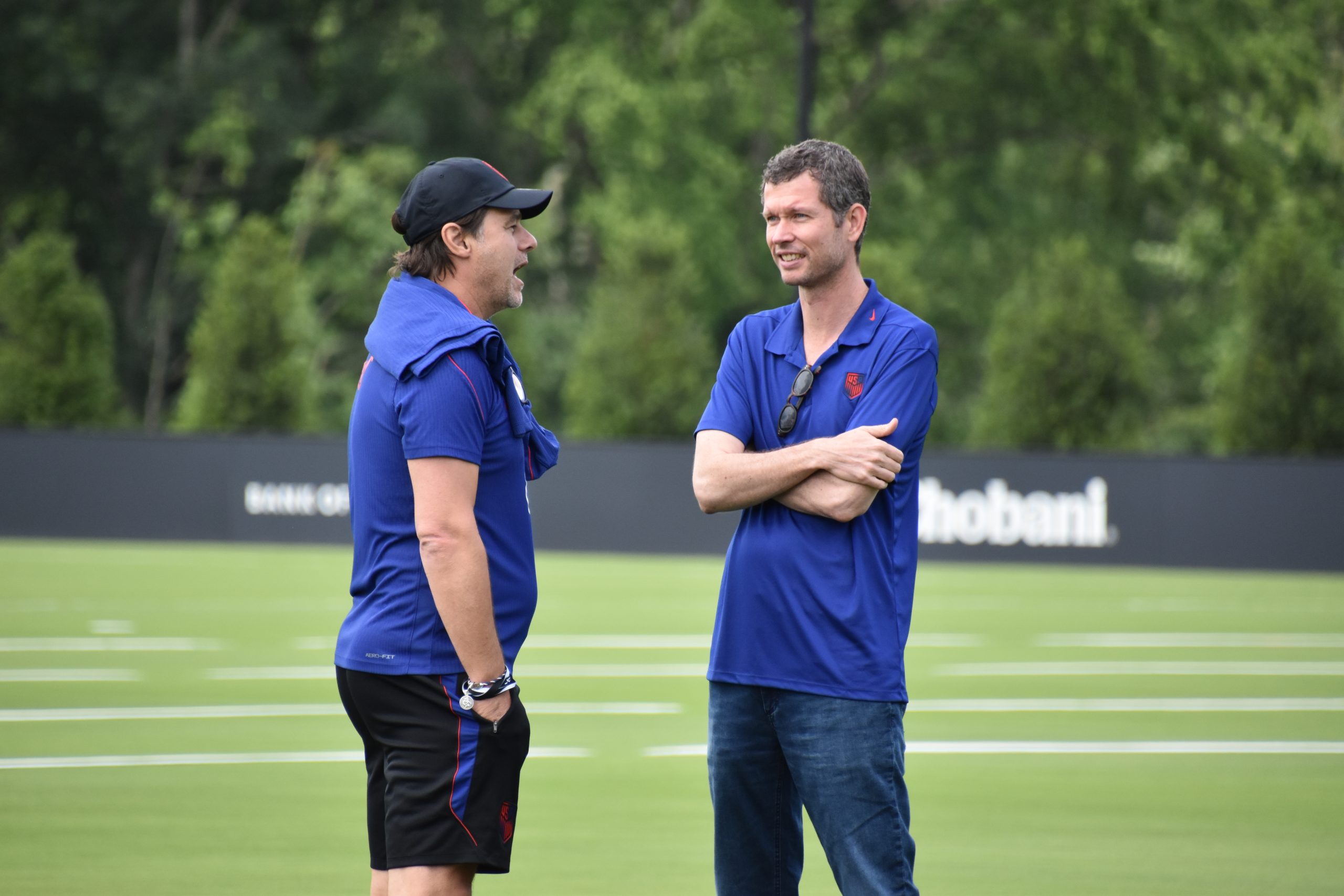
Mauricio Pochettino (left) with JT Batson during the U.S. men’s team’s pre-World Cup training camp.Jonathan Tannenwald
Contract talks started well before the World Cup, as Batson acknowledged when the U.S. team’s World Cup training camp kicked off in late May. An extension offer was put on the table back then, but both sides agreed to wait to see how the tournament played out.
After the Americans were eliminated in the quarterfinals on July 6, both sides took a breather for a bit. But once they started talking again, it didn’t take long for a deal to get done.
“We’re super excited that Mauricio and his staff are joining us for this next project,” Batson said. “We signed the contract Sunday, we announced it Monday, and at 7 a.m. this morning Eastern time, I was on with Mauricio, and Jesús [Pérez, Pochettino’s top assistant], and Dan [Helfrich, U.S. Soccer’s chief operating officer], about all the planning and everything around the next steps. They’re pumped, we’re excited, and we’re ready to get going.”
Batson confirmed an ESPN report that there are “mutual protections” in Pochettino’s deal, which runs through the 2030 World Cup, in case he doesn’t see it all the way out.
Mauricio Pochettino (center) has agreed a new deal to stay on as the U.S. men’s soccer team’s manager through the 2030 World Cup.Jonathan Tannenwald
That is an unusual phrase, certainly not as simple as “a buyout.” But it feels like an implicit acknowledgment that European clubs might pursue Pochettino, and that the summer of 2028 might be a natural separation point if the circumstances are right — especially if the U.S. plays in the 2028 Copa América with South American teams.
“Of course there are protections for both sides in this,” Batson said. “They were incredibly thoughtful, it was very straightforward, and we’re excited for the next four years.”
Asked to put a dollar figure on it, Batson only said “it’s material.”
If Pochettino does leave in the summer of ‘28, Steve Cherundolo would have an easy move over from the Olympic squad — mostly an under-23 age group — to the senior team.
Steve Cherundolo played for the U.S. national team for many years, and was Los Angeles FC’s manager from 2022-25.Michael Wyke / AP
But Batson believes Pochettino might stay for the whole term.
“I know from the moment we announced Mauricio, there were lots of folks skeptical that they actually were committed, and that they cared about soccer in this country, and they wanted to do all the things necessary to make us successful as a men’s national team, but more broadly as U.S. Soccer,” Batson said. “I’m incredibly excited that folks now are getting — obviously this summer, they got to see — the Mauricio and staff that we all knew, and of course now we’re seeing with their very long-term commitment to U.S. Soccer.”
The long road to the 2030 men’s World Cup, and Mauricio Pochettino’s second term as U.S. men’s soccer team manager, will kick off in late September.
FIFA this year combined the September and October windows into one long stretch in which teams can play up to four games. The U.S. will play all four, against a combination of familiar regional rivals and visitors from South America.
Up first will be Peru on Sept. 26 in Orlando. Then it’s off to the Midwest to face Chile on Sept. 29 in St. Louis. Both of those games will be played at the local MLS stadiums.
Next up will be a renewal of the U.S. team’s most famous rivalry, against Mexico, on Oct. 3 in Glendale, Ariz. That gets an NFL stadium stage for the 80th edition of the matchup, and the first since last year’s Concacaf Gold Cup final.
Mexico beat the U.S. in last year’s Concacaf Gold Cup final.Ashley Landis
Because the nations cohosted this summer’s World Cup, they didn’t have to qualify. That meant there were none of what are usually the best clashes, on each team’s home turf in World Cup qualifying. And they might not return, because the World Cup’s expansion to 48 teams means Concacaf’s qualifying groups are spread out.
So we will be left with friendlies and hopes for meetings in the Gold Cup and Concacaf Nations League, which officially are neutral-site games, even though they’re always in the United States.
The last game of the slate will be against Canada on Oct. 6 in St. Paul, Minn. That will give the U.S. a chance to renew acquaintances with an old friend, the Canucks’ Wisconsin-born manager Jesse Marsch. The Princeton alumnus undoubtedly will relish that, as he so often relishes tossing barbs across the border at a U.S. program that spurned him when it first hired Pochettino.
Who will play in the games is an interesting prospect. Though the stars from the World Cup teams might sell tickets, many fans hope to see a new era of younger players get a shot. Potential call-ups include the Union’s Cavan and Quinn Sullivan, Frankie Westfield, and Neil Pierre; Red Bull New York’s Adri Mehmeti and Julian Hall; and Real Salt Lake’s Zavier Gozo.
Cavan Sullivan played for the United States at last year’s under-17 World Cup. He could get a shot with the senior squad this fall.Chris Ricco
It’s notable that MLS is playing a full round of games during the FIFA window, on Sept. 26 and 27. We’ll see how that affects Pochettino’s selections, and if he can get all the MLS-based players players he wants. (Europe’s leagues will be off.)
Keep an eye on goalkeeper, too. One of the U.S. pool’s top prospects, Diego Kochen, went on loan from Spanish superpower Barcelona to Denmark’s Lyngby — a team part-owned by the Union — for the upcoming European season.
Though none of the venues are near Philadelphia, they might at least make a nice quick escape for fans looking for a trip. Presales for U.S. Soccer members start Wednesday, and sales to the general public start Friday.
After the September-October window, the U.S. will enter the 2026-27 Concacaf Nations League in the November window. That will be a home-and-away quarterfinal series, and the opponent will be determined by first-round contests during that September/October window. The top four teams in the region got a bye to the quarters: the U.S., Mexico, Canada, and Panama.
The 2027 final four will be played in its usual window, next March, at SoFi Stadium in Inglewood, Calif.
SoFi Stadium hosted two of the United States’ group stage games at this summer’s World Cup.Jonathan Tannenwald
USMNT schedule (all times Philadelphia time)
Saturday, Sept. 26: vs. Peru at Inter.co Stadium, Orlando, 4:30 p.m. (TNT, truTV, Telemundo 62, Universo, HBO Max, Peacock)
Tuesday, Sept. 29: vs. Chile at Energizer Park, St. Louis, 8 p.m. (TNT, truTV, Universo, HBO Max, Peacock)
Saturday, Oct. 3: vs. Mexico at State Farm Stadium, Glendale, Ariz., 10 p.m. (TNT, Telemundo 62, Universo, HBO Max, Peacock)
Tuesday, Oct. 6: vs. Canada at Allianz Field, St. Paul, Minn., 8 p.m. (TNT, truTV, Universo, HBO Max, Peacock)
Mauricio Pochettino has signed a new contract to remain the U.S. men’s soccer team’s manager through the 2030 World Cup, U.S. Soccer announced Monday morning.
“I really believe that this is an exciting situation and moment for soccer in the USA,” Pochettino said in a roundtable talk with The Inquirer and other media outlets. ”After 18, 19 months working with the objective that was only the World Cup, now [the goal is] to start in a fresh way with a different approach, trying to create a different philosophy, different idea of what we need to do.”
U.S. Soccer initiated talks on a new deal in late spring, with the understanding on both sides that it would be contingent on success in the summer. After the tournament, both sides took a few weeks, then returned to the table and finished the deal.
“They really believed in us before the start of the World Cup,” Pochettino said, “and that, I think, is another positive point for us.”
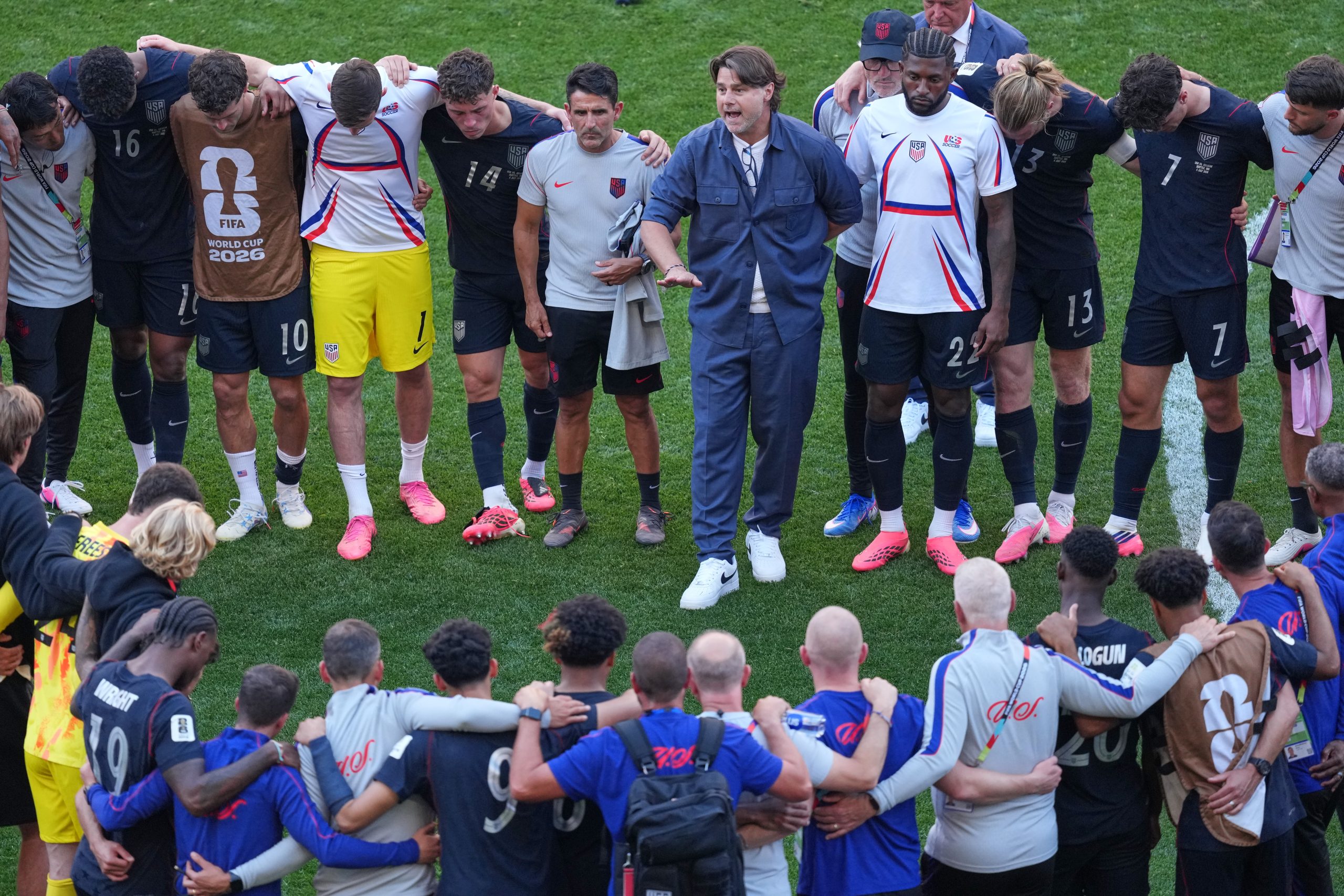
Mauricio Pochettino (center) talking with players and staff after the U.S.’ loss to Belgium that knocked them out of the World Cup.Nick Didlick
The 54-year-old Argentine arrived in late 2024, hired through this year’s World Cup. He accomplished most of what he had set out to achieve, raising standards for players by challenging the big stars to shake off their past complacency.
When the biggest moment came, Pochettino oversaw the first U.S. men’s team to win two group games at a World Cup since 1930, and the first knockout-round win since 2002. That led to an unprecedented wave of fan support across the country, and Pochettino seemed to be genuinely inspired by it.
“The magic thing that happened during the World Cup, in the connection with the people, of course with the whole organization and everything, was a key point to make that decision” to return, he said.
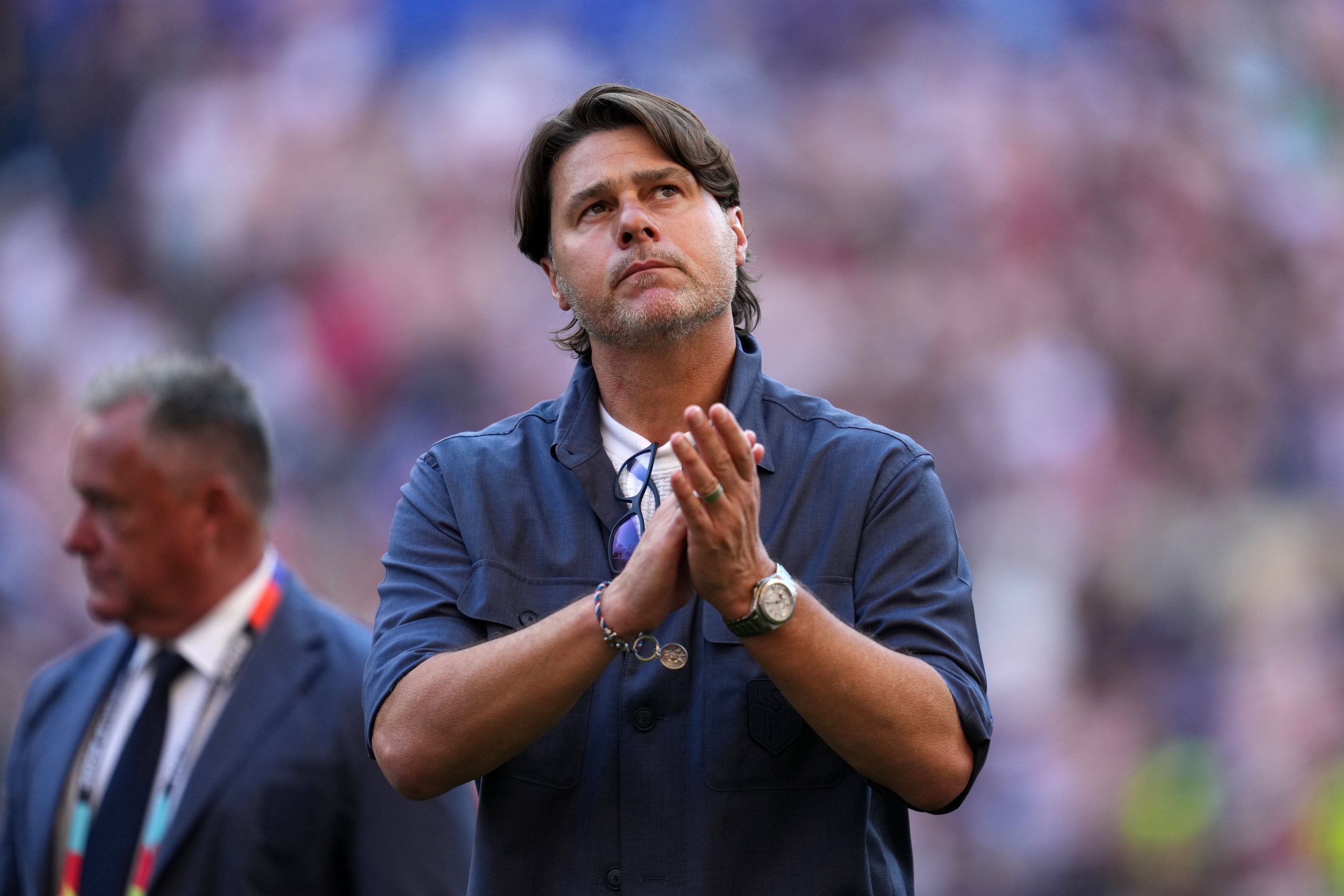
Mauricio Pochettino applauding the fans after the Belgium game.Abbie Parr
Pochettino said Monday that he believes “that gap with the best teams the world is not too big. I think if we will be capable to do things in a different way, to reduce that gap, I think it’s possible.”
The distance includes some of the hardest yards to cover in the sport. So there were serious questions to ask. And to his credit, he answered them pretty directly.
The first question was how much change Pochettino wants to enact, especially with a new generation of young players ready for a shot at the senior squad. He said he is ready for quite a bit.
“I don’t want to think, and that you believe, that it is a continuity of the last 18 months or 19 months that we were working there‚” he said. “The good thing is that we have the experience and the knowledge about the players that were working with us. And of course, now [we] open the pool to bring, players that were playing in the last year or now they are playing more in MLS, but also for players that maybe we didn’t have time to assess during that process that was a very compact and very short period.”
Quinn Sullivan (second from right) is one of many young players with Union ties whom Mauricio Pochettino has called up so far. Cavan Sullivan could easily be on the radar for the next four years.Jonathan Tannenwald
Pochettino added: “It’s going to be key, it’s going to be important, to provide the young kids that we really believe have the potential to arrive in 2030, in four years, to start to work. And to start to know [them], and set up the principle that we expect from them.”
Another big question, one that a lot of fans have in particular: Will Pochettino actually stay here for the duration of his deal? If he continues to do well here, European clubs will no doubt continue to call. It was no secret before and during the World Cup that there was interest, and he was looking.
“For us, every time that we sign a contract, it’s to go to the last day of the contract,” he said. “If now we sign a four-year contract, we need to think to arrive there. And we signed the contract because we really believe that we are going to be four years there.”
But he also acknowledged the obvious: “Nothing is sure — in life, but it’s less in fútbol.”
“Four years’ time is a really long period,” he said. “You never know what can happen in soccer. Today, people really love you, but in X time maybe that feeling changes.”
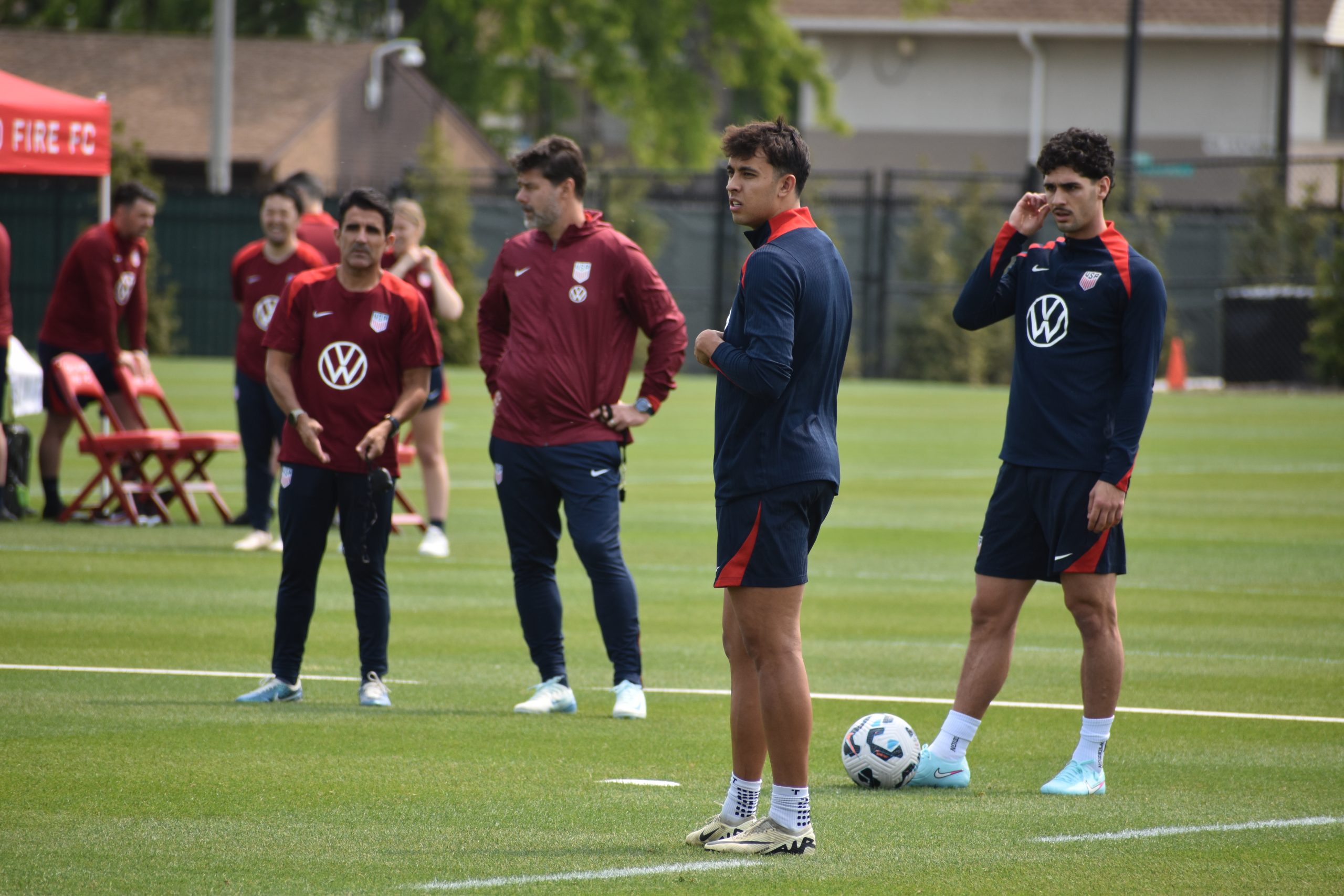
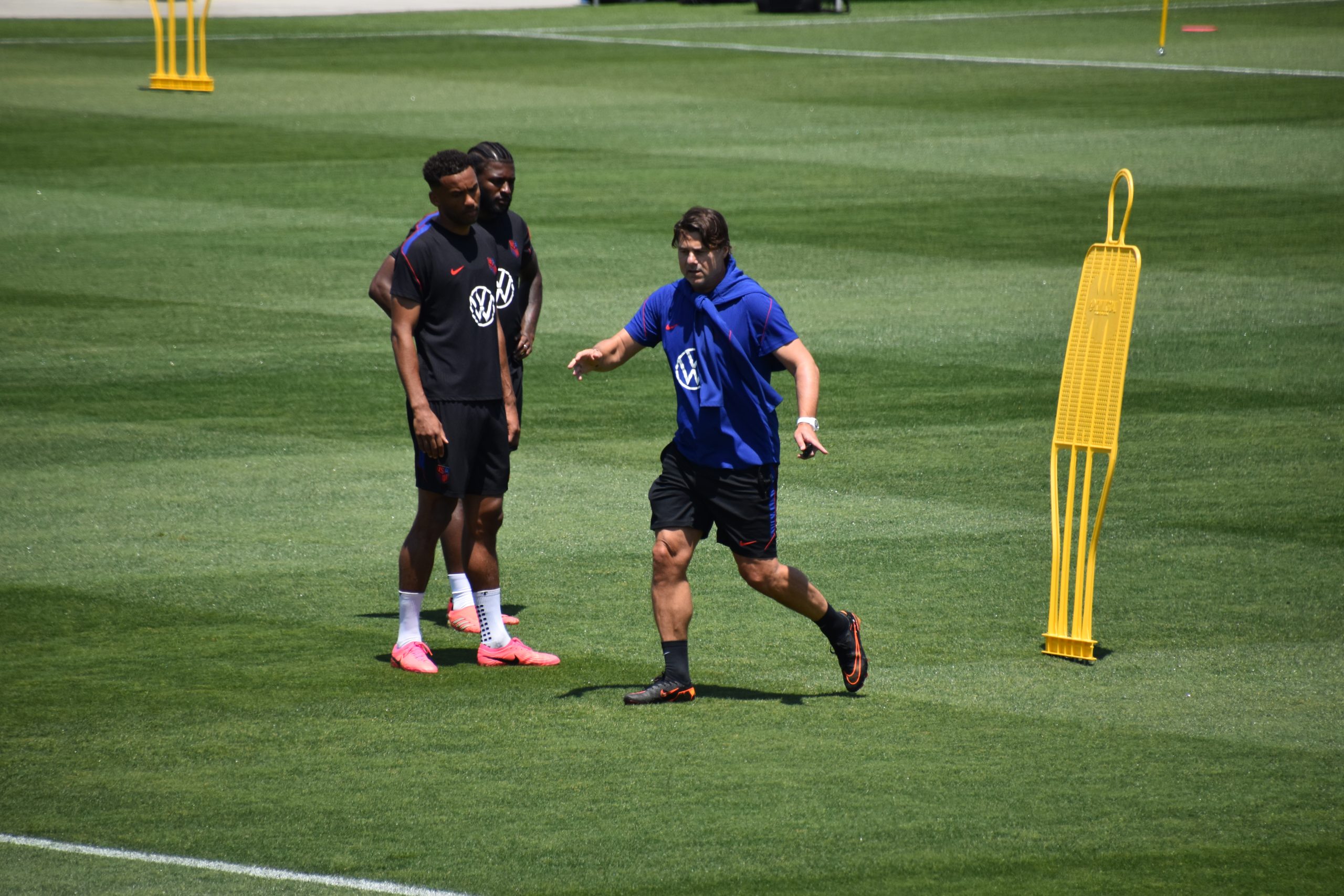
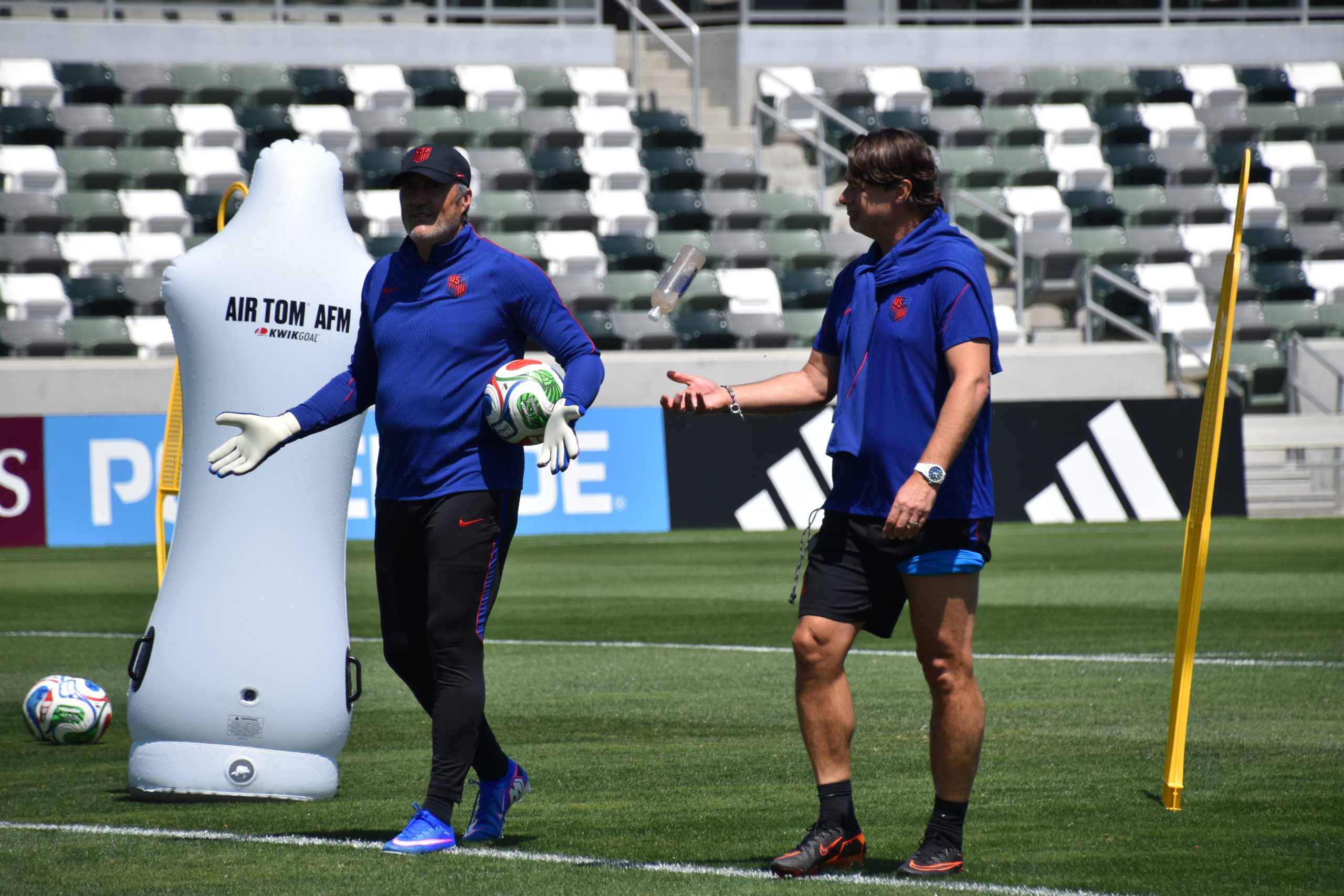
Maurio Pochettino (right) giving instructions to former Union defenders Auston Trusty (left) and Mark McKenzie at a practice during the World Cup.Jonathan Tannenwald
Will he make the U.S. his home?
Another big question is how much time Pochettino and his staff, all of which is also returning, will spend in the United States vs. Europe. They were all based in the latter for the first term, usually only crossing the Atlantic for national team game windows.
He isn’t alone on that count, to be sure. Argentina manager Lionel Scaloni has reached two straight World Cup finals with a home base in Spain, and Canada manager Jesse Marsch doesn’t live full-time in that country.
But there are some optics in the U.S. that aren’t the same in other countries.
This summer’s long-term impact on growing soccer’s fan base here is still to be seen. The NFL and NBA will no doubt take back their pieces of the spotlight in the coming months (we’ll see about baseball’s piece if there’s a work stoppage), so a U.S. coach might have to do more publicity work than was needed heading into a tournament on home turf.
Mauricio Pochettino and his longtime top assistant Jesús Pérez (left).Jonathan Tannenwald
There are also the practical benefits of the senior national team manager spending more time at the national training center in suburban Atlanta, where many youth national team coaches and backroom staff are based.
Put it all together, and it would be nice to see Pochettino and his staff be public presences at more MLS games, and at some of the big youth clubs and events around the country.
“Now [that] we finish with the negotiation and the agreement, I will consider it to move to the USA, of course, because that process is four years,” Pochettino said. “I think I have no problem, and all the coaching staff, we don’t have any problem to move to the USA.”
That felt significant to hear.
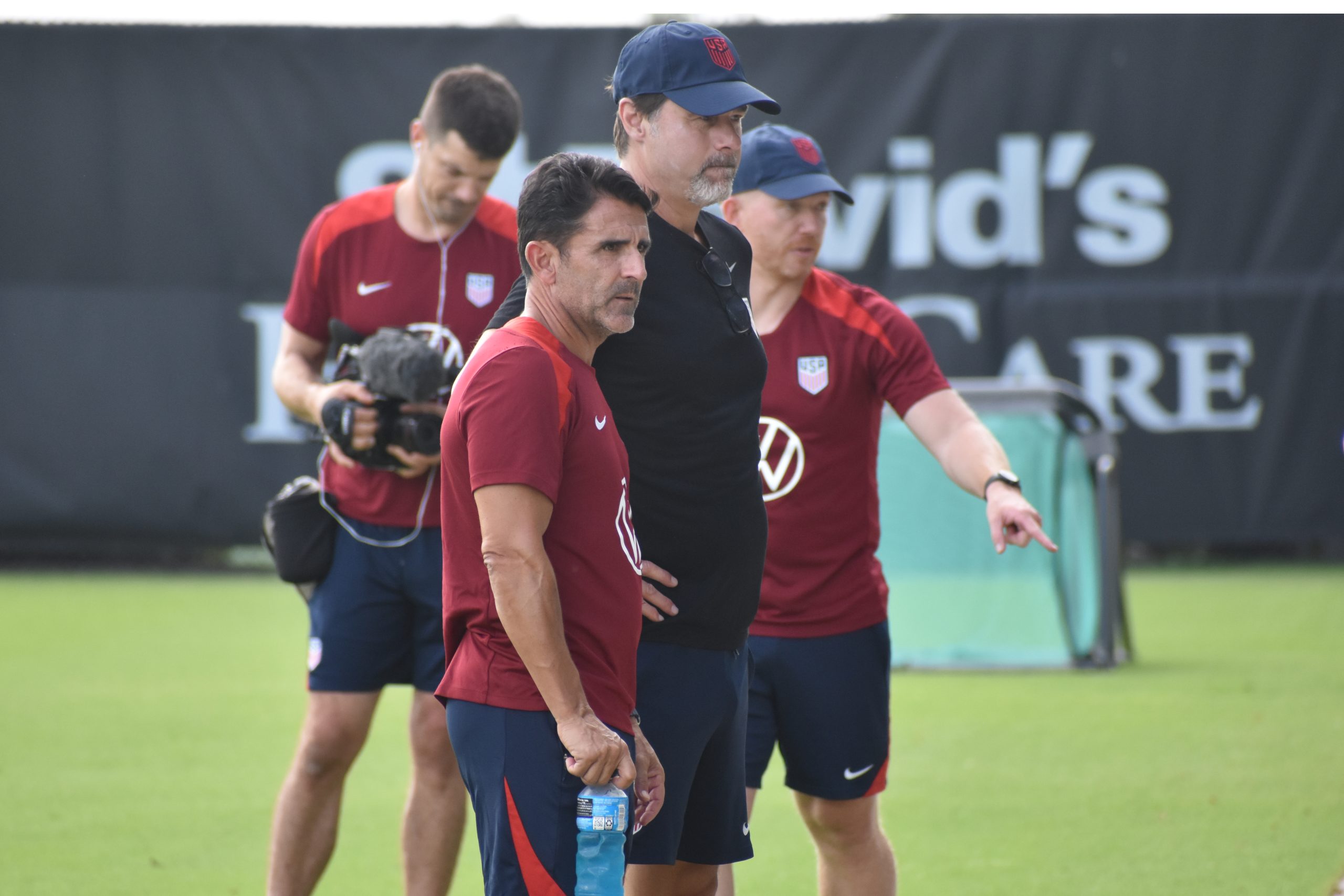
Toni Jiménez (right) is the goalkeeper coach in Mauricio Pochettino’s dedicated group of assistants.Jonathan Tannenwald
And one for the bosses
The last big question goes to U.S. Soccer’s leadership — including the big-money private equity donors who are once again paying Pochettino’s salary. By rehiring him, they are sending an implicit signal that he is better than any American candidate. Do they actually believe that?
None of the top brass were made available to take questions from the media before Monday’s announcement. There were only statements from president Cindy Cone and CEO JT Batson. (Nor have they said anything about the scandal around FIFA president Gianni Infantino, despite repeated requests for comment.)
“Mauricio has built a culture where players trust the group, trust the process and trust each other,” Cone said. “That culture, and the staff who helped build it, are exactly what we want to continue investing in for the men’s national team now and for the future. We are also excited about the experience and perspective Mauricio and his staff can bring across U.S. Soccer as we strengthen our pathways and seek to impact the broader soccer landscape in the United States.”
Batson said: “We know we have a lot of work to do to achieve our clear ambitions, including competing to win men’s World Cups and having soccer become the most played sport in every community.” And he was pretty clear that he believes Pochettino is the person for the job.
“I couldn’t be more excited that Mauricio and team are committed to partnering with all of us to do the hard work to bring those ambitions to life,” he said.
Mauricio Pochettino (left) speaks with JT Batson during the U.S. men’s team’s pre-World Cup training camp at the national training center in May.Jonathan Tannenwald
MORRISTOWN, N.J. — Though the World Cup only just reached the rearview mirror, the soccer world is already speeding toward the new European club season.
Brenden Aaronson is proof.
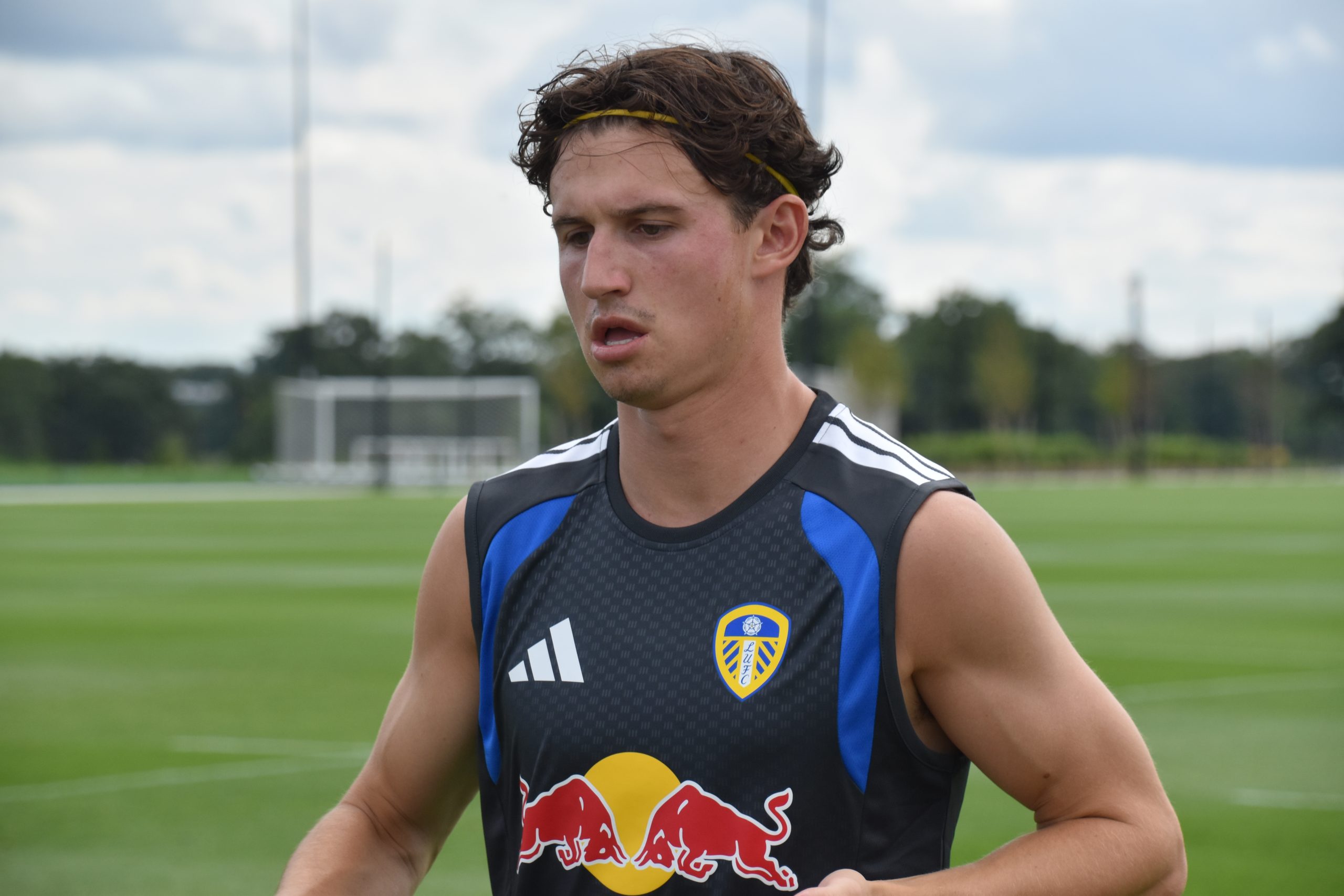
After taking the three-week break that FIFA’s rules allow for players after major tournaments, the Medford native returned to work at his club, Leeds United of the English Premier League, on Monday. Conveniently, that was right as his teammates arrived in North Jersey amid Leeds’ first preseason tour of the U.S. in nearly 30 years.
“Just great to get home, spend some time in Jersey,” he told The Inquirer. “I just needed to just get home and see family. I hadn’t been home since last September. That’s been probably the longest time I’ve been away from home.”
Leeds fell to Wrexham of the second-tier Championship last Saturday in Tampa, 3-2, then beat fellow Premier League club Sunderland 1-0 on Thursday in Harrison, N.J. The finale is Sunday against powerhouse Liverpool in Chicago (4 p.m., ESPN Deportes), the same day Wrexham and Sunderland meet at Subaru Park (noon, ESPN).
Alas, Aaronson wasn’t in the game squad Thursday, as much as he wanted to play being close to home. He had a lot of friends and family in attendance, and a busload of fans from the Leeds supporters’ group in Philadelphia made the trip. (Their viewing parties at the Black Taxi in Fairmount are lively occasions.)
But if his absence disappointed the box office, it wasn’t too surprising since he’d only just returned. No one begrudged him the time to rest, having gone just about nonstop since the last preseason started.
Not for nothing, too, he was also able to finally enjoy being a husband after his whirlwind wedding that briefly took him out of U.S. camp in late May.
That was just one early turn in a roller-coaster ride through the World Cup.
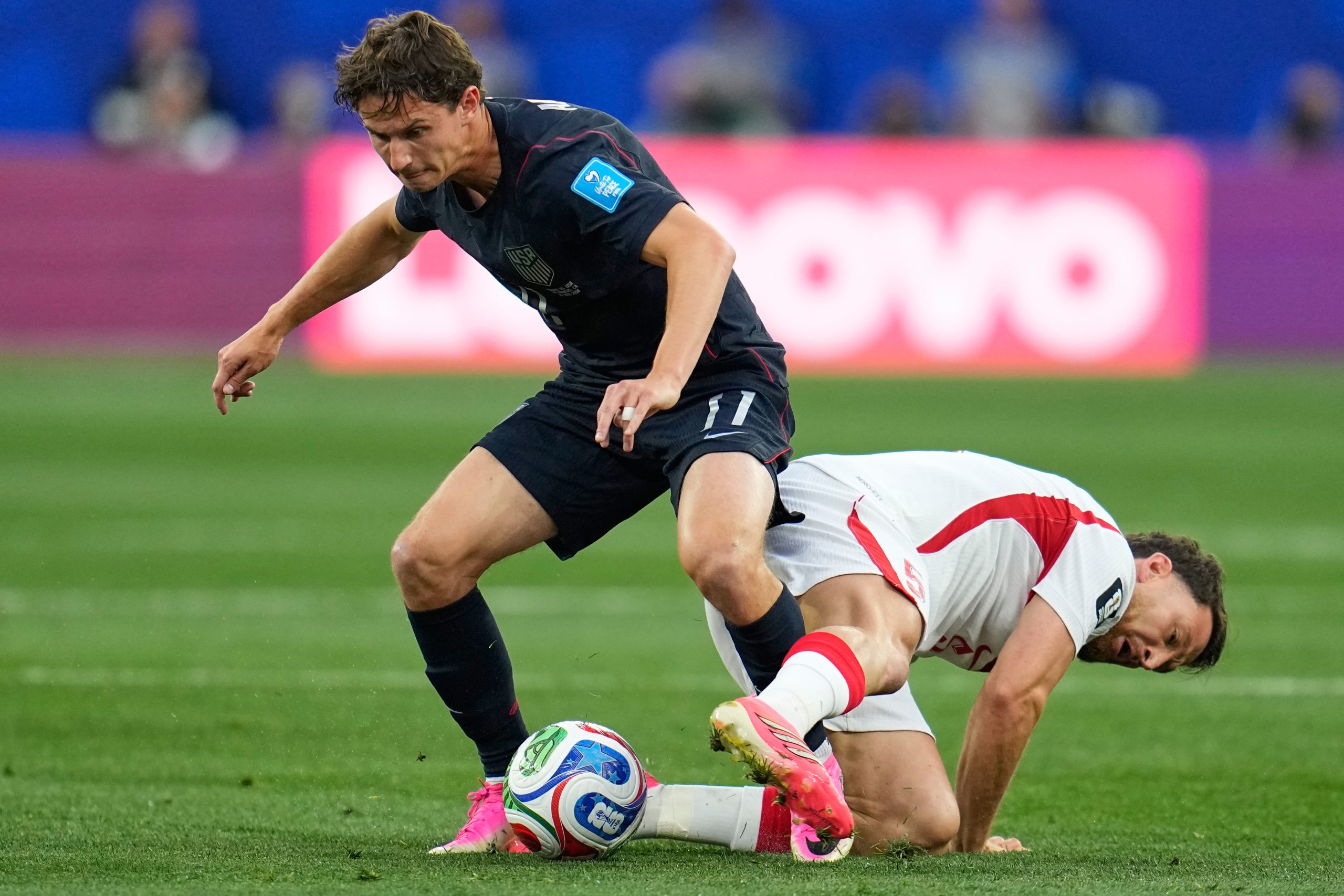
Brenden Aaronson (left) in action during the U.S.-Turkey group stage game, the only game of the World Cup he played in.Gregory Bull
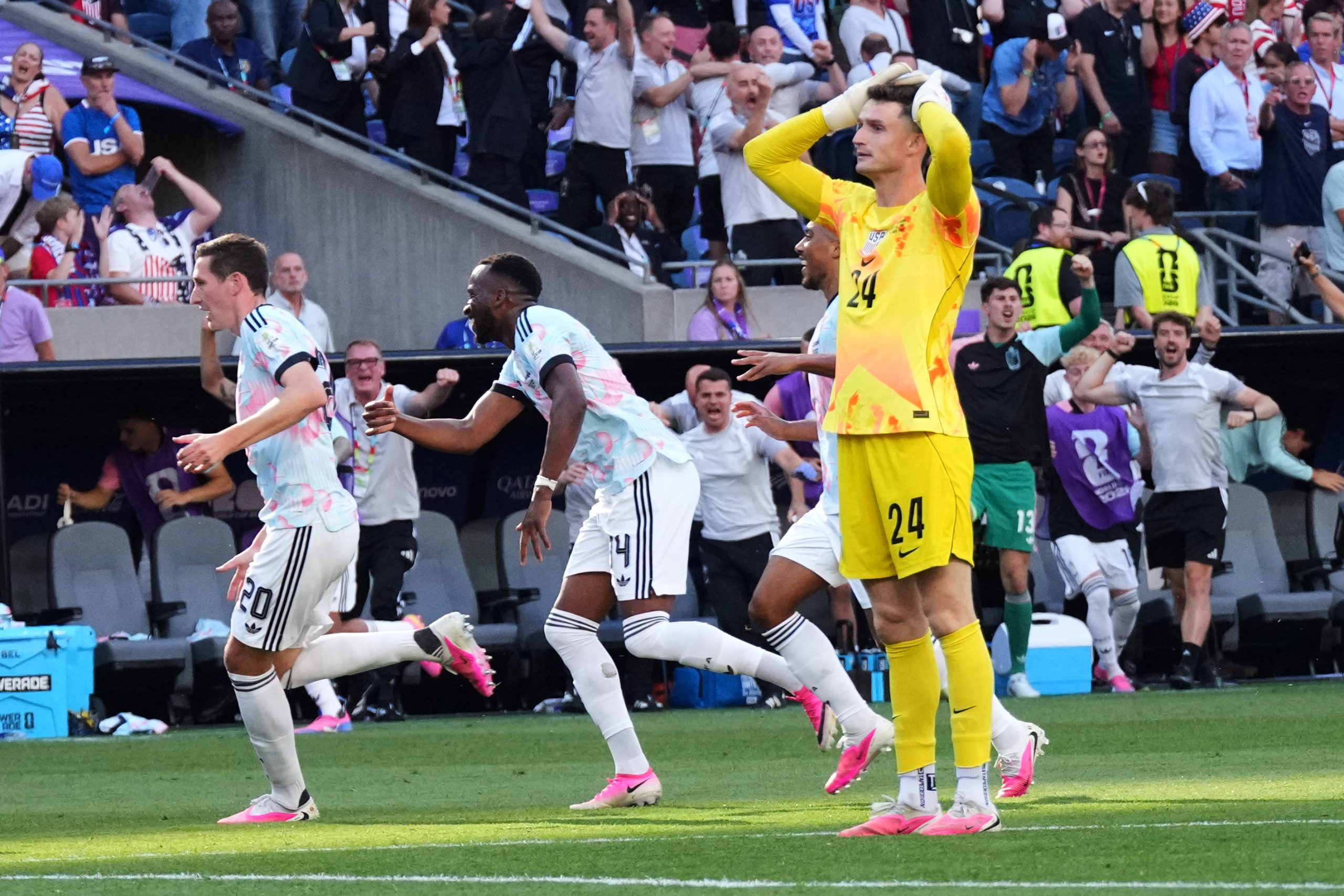
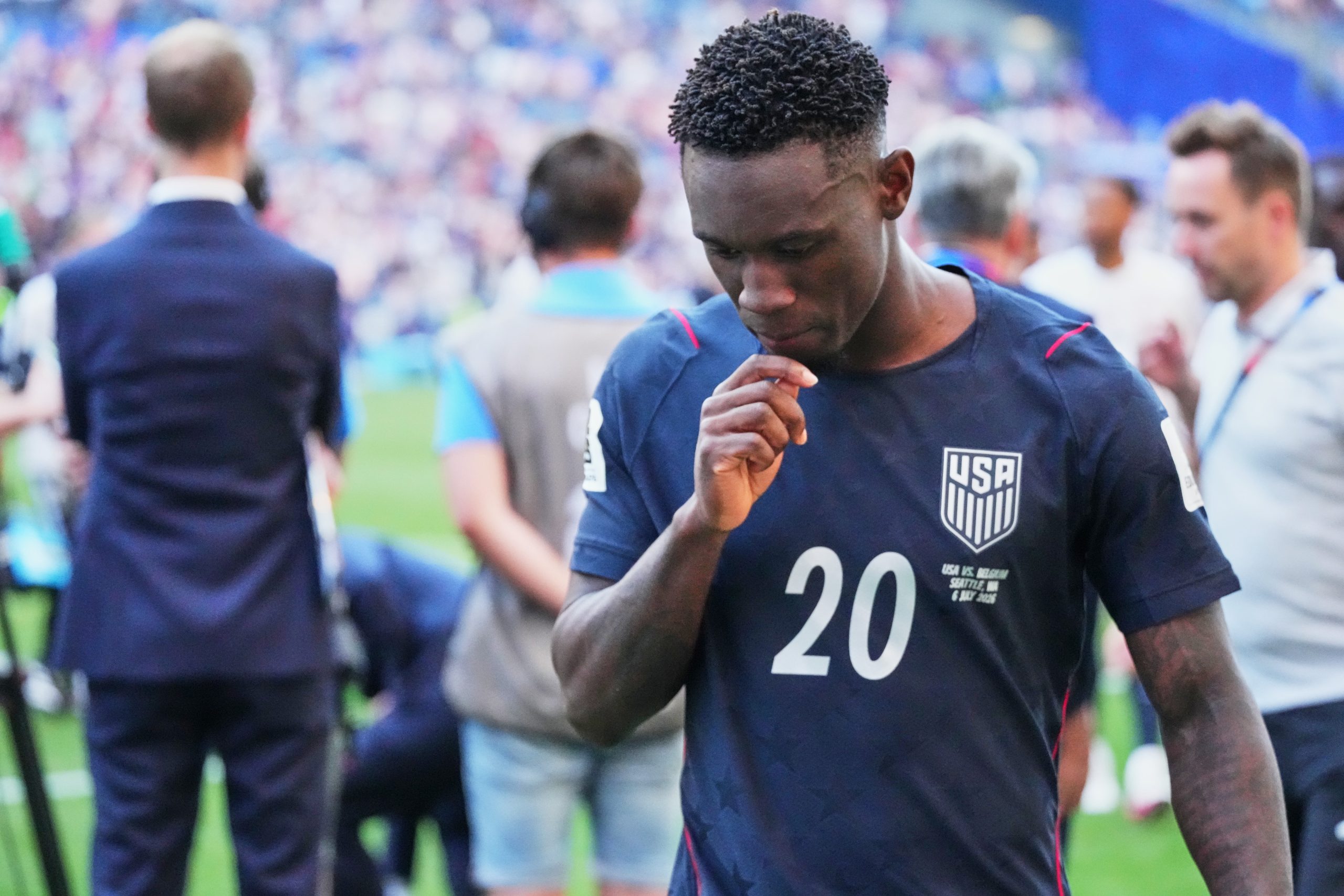
“It’s a shame that our worst game was in the round of 16,” he said. “I don’t think that we were at our best that game — I don’t think it’s anything to blame this or that, I just think we weren’t at our best. And sometimes you have to put your hands up, because they were also very good on the day, Belgium.”
He added that “it did feel like an opportunity lost” for a group of players who “felt very, very confident” heading into the biggest game of their lives.
A dejected Matt Freese (right) amid Belgium players celebrating one of their goals against the U.S.Ted S. Warren
“I felt like we knew what we could do and what we could have accomplished, and we knew we could have went farther in the tournament,” Aaronson said. “So I think that’s the thing that hurt the most. … It’s not fun when you lose that type of game, but also, I think we were upset with the way that we played, too.”
The emotions were particularly strong around U.S. centerback and captain Tim Ream, whom Aaronson said “was really upset after the game, knowing that maybe this [was] his last one — it was difficult to see.”
There was never any doubt about how the Balogun scandal affected Belgium’s team, especially President Donald Trump’s intervention with FIFA president Gianni Infantino to get Balogun reinstated. But there hasn’t been too much clarity about how it all affected U.S. players.
Folarin Balogun’s reinstatement might have ended up hurting the U.S. against Belgium more than it helped.Ted S. Warren
Aaronson came down on the latter side.
“I wouldn’t say it affected us,” he said. “I think we did a good job the whole time of kind of just staying in our little bubble and not really paying attention to the outside noise. We know in those moments, of course there’s media, it’s the World Cup, everybody’s going to be talking and stuff like this. But I didn’t really think much of it, to be honest, myself.”
He didn’t hesitate to add, though, “that it gave [Belgium] maybe a little more fire under their belly.”
On to a new season
As the next World Cup cycle begins, it’s natural that some players will move on, and newcomers will be welcomed. That’s likely to start in the fall, when the new FIFA calendar takes effect with a four-game national team window from Sept. 18-Oct. 3. And it will be no surprise if some of the players who’ve succeeded Aaronson at the Union get invitations, such as Cavan Sullivan, Frankie Westfield, and perhaps Quinn Sullivan too.
A lot of U.S. fans want to see Union midfielder Cavan Sullivan (left) get a shot with the senior team this fall.Yong Kim / Staff Photographer
“There’s a time period where you can test things out and try things,” Aaronson said. “So it’ll be interesting to see what goes on the next four years, but I’m excited for it. I think it’s an exciting time for the national team, and we need to keep getting better and better.”
Aaronson hasn’t gotten a ton of playing time from Mauricio Pochettino, who from all indications seems headed toward a new four-year contract as U.S. manager. But it’s hard to believe that a 25-year-old who plays regularly in the Premier League, the world’s top domestic circuit, will be cast off entirely.
He certainly intends to do his part to stay on the radar.
“My aspiration, of course, is to play every game for the club, be a big player at the club and score goals and get assists, and then ultimately transfer that to the national team,” he said. “I want to play every game for the national team — I think that’s what everybody wants to do. That’s just been my aspiration, my goals. I’ve always been hungry like that.”
Brenden Aaronson (right) signing autographs for fans during the U.S. team’s World Cup training camp.Jonathan Tannenawld
And he was pleased by the news that Pochettino is likely to return.
“I think it’s something that we can continue to grow on,” Aaronson said. “I mean, he’s coached the best players in the world [over his career]. Being able to study under him and learn from him is massive for me.”
This will be Aaronson’s fourth season at Leeds, one of England’s most passionately supported clubs, and his third in the Premier League. As with last year, when the Peacocks returned to the top flight, the first goal is to stay up. But now Leeds can aim a little higher, with new signings bankrolled by an ownership group tied to the NFL’s San Francisco 49ers.
“I swear, Leeds fans are everywhere,” Aaronson said. “It’s got such a big fan base, and it will continue to grow. Because what we want to do is put this club in the right spot, and that’s being in the top of the Premier League. So that’s the goal.”
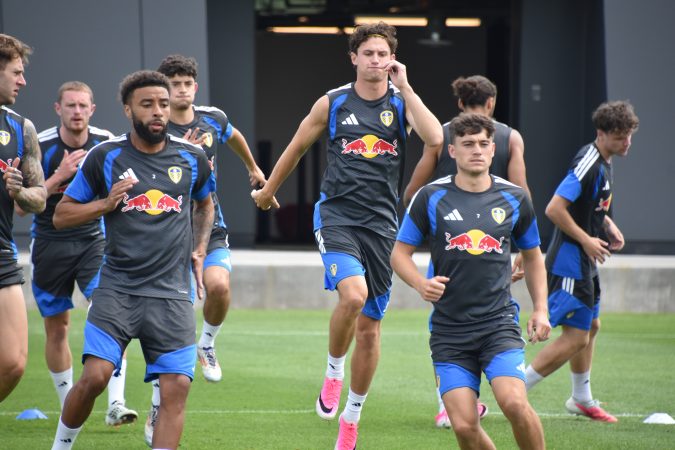
Brenden Aaronson at work during one of Leeds’ practice sessions leading up to Thursday’s game in North Jersey.Jonathan Tannenwald
He has his share of critics in England, largely for the same reason he has them over here: for all his industrious work on the field, he’s an attacking midfielder who doesn’t score a lot of goals. But Leeds manager Daniel Farke has been one of Aaronson’s biggest backers, and intends to stay that way.
“The task is more or less keep going exactly in the same way and develop exactly in the same way that he’s done since I’ve really worked with him,” Farke said. “I’m pleased for him that he was called up to the U.S. team — didn’t play perhaps as many minutes as he was hoping for, but he’s also a player full of potential, and he’s still in an age where he can develop and hopefully make the next steps. He is, in addition to that, also a great human being, and it’s a pleasure to work with him.”
Forward Lukas Nmecha, who scored the winner Thursday, also gave a nice endorsement.
“Firstly, on a personal level, he’s a lovely guy, works really hard,” he said. “On the football side, I think we all know what he brings. He’s very active in the game, he runs a lot, he creates a lot, and he’s just a good guy to have around.”
As we speak, the last of FIFA’s traveling caravan has packed up, ready to move onto its next stop, while leaving American fans looking at the soccer landscape in this country, wondering why, with the wealth of raw athleticism we have here, couldn’t one of those two teams in Sunday’s final have been us?
Good news. Historically speaking, every World Cup spawns change. Bad news? When it comes to soccer, the United States has been historically bad at making the changes needed to make a stir. In 2026, emerging from the group stage shouldn’t be a hope — it should be the norm.
The change needed to push American soccer forward is not an easy fix. OK, well, it is, but it requires a dedicated strategy and a collective belief that development, not greed, needs to be at the forefront.
That investment begins at the grassroots level and comes in two main tiers: Investing heavily in identification and developing raw, untapped talent.
The other? Educating parents that there’s more to the game than striving to make the top club team in your area.
You could add a third — offering greater exposure to the game — but that topic sits on its own almost entirely when you consider the level of gatekeeping that exists, from broadcasting contracts going to cable and streaming services to the outrageous price points of tickets.
Cavan Sullivan (left) is an example of the type of player the U.S. could produce behind a deeper focus on development. Philadelphia Union
It already is in some states, like here, in what the Union is doing with youth development that spawns real American hopefuls (see: Cavan Sullivan). Undoubtedly, that last sentence ruffled a few feathers among the club soccer community.
If that’s the case from where you’re standing, well, therein lies the problem.
Recent history has shown that’s not always going to arrive via a traditional club model where parents are overspending, because at the starting-out level, they honestly don’t know any better. It’s not saying the model is all that ails when it comes to development, just that it can no longer be widely considered as a preeminent pathway for children as young as 5.
U.S. Soccer recognizes this. Just last week, it noted that in the aftermath of the national team’s round of 16 exit, it’s “trying to create a new system that then we’d make highly affordable. It’s a bold strategy that comes with a ton of roadblocks. The current model is not just fully ingrained into how we develop talent, but it makes a lot of people really rich off kids with a dream and parents with deep pockets.
But what would an argument be without a solution? Here are two.
Giving kids an opportunity to ignite a passion for soccer starts with making sure there are ample, unlocked places to play.Allie Ippolito / For The Inquirer
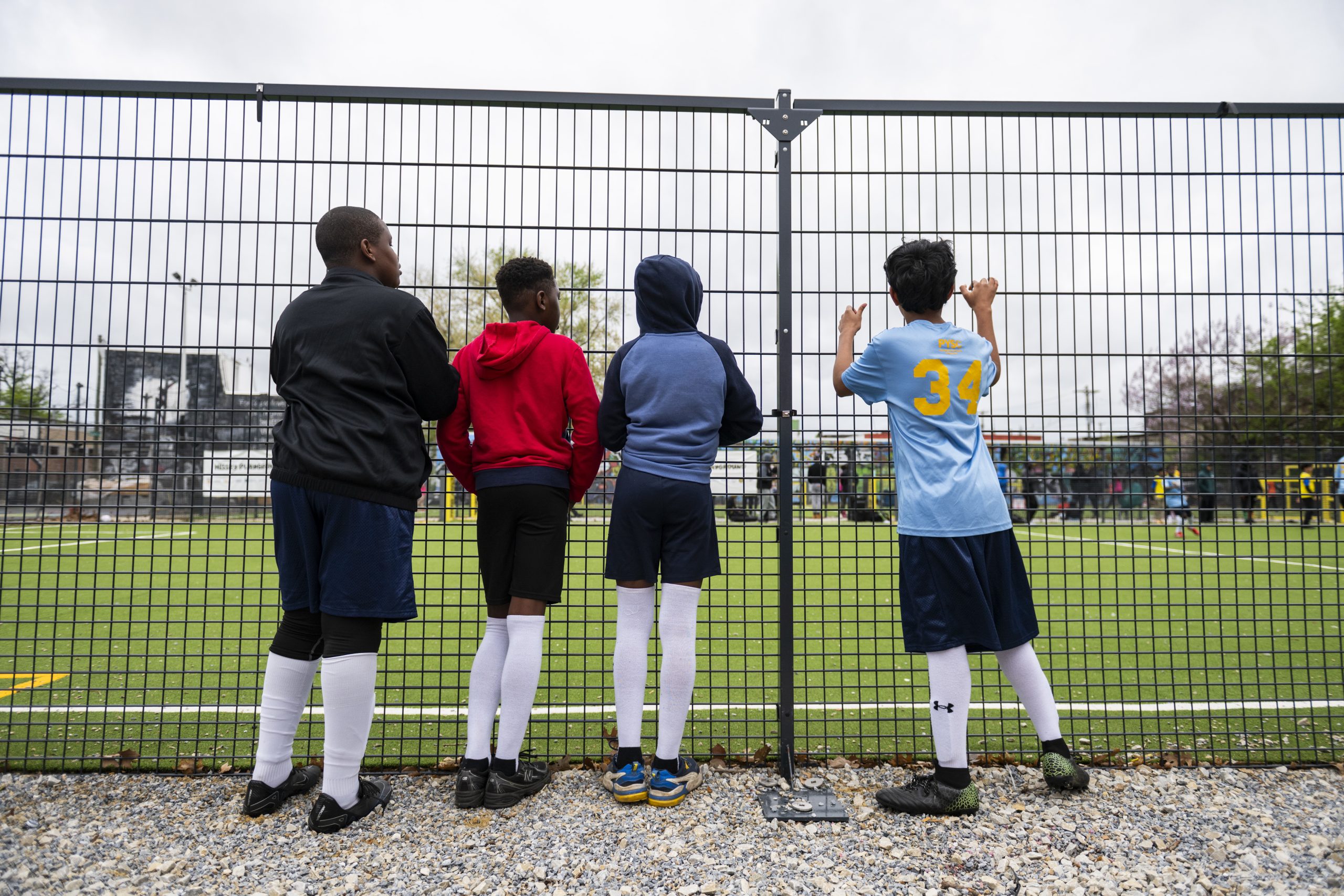
First, foster excitement by putting the game everywhere. Start with a focus on inner cities and rural communities. Loosen the restrictions on accessibility, price, and most importantly, the gates of locked-up ballfields that kids could be playing on.
Second? Put some skin in the game.
Imagine pouring financial resources into underserved neighborhoods. You’ve built the fields, now get kids playing on them. How about a series of cash prize tournaments at multiple age ranges and skill abilities?
Organizers receive winnings under the demand that a substantial amount of the proceeds is used to create more opportunities to foster interest. In turn, U.S. Soccer and the academies of Major League Soccer teams plant scouts at these events to find the raw talent and develop them.
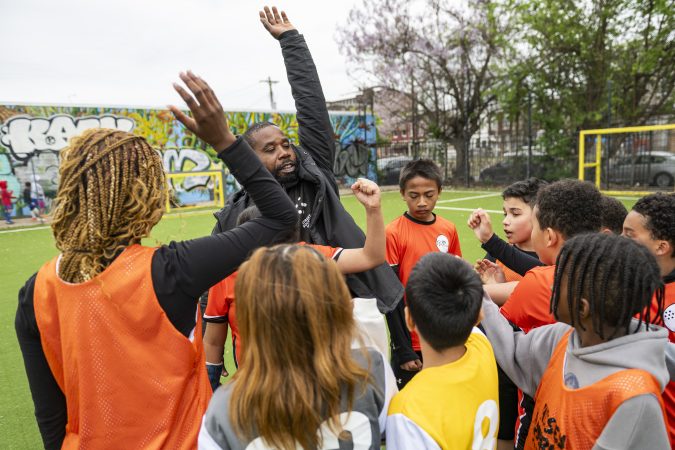
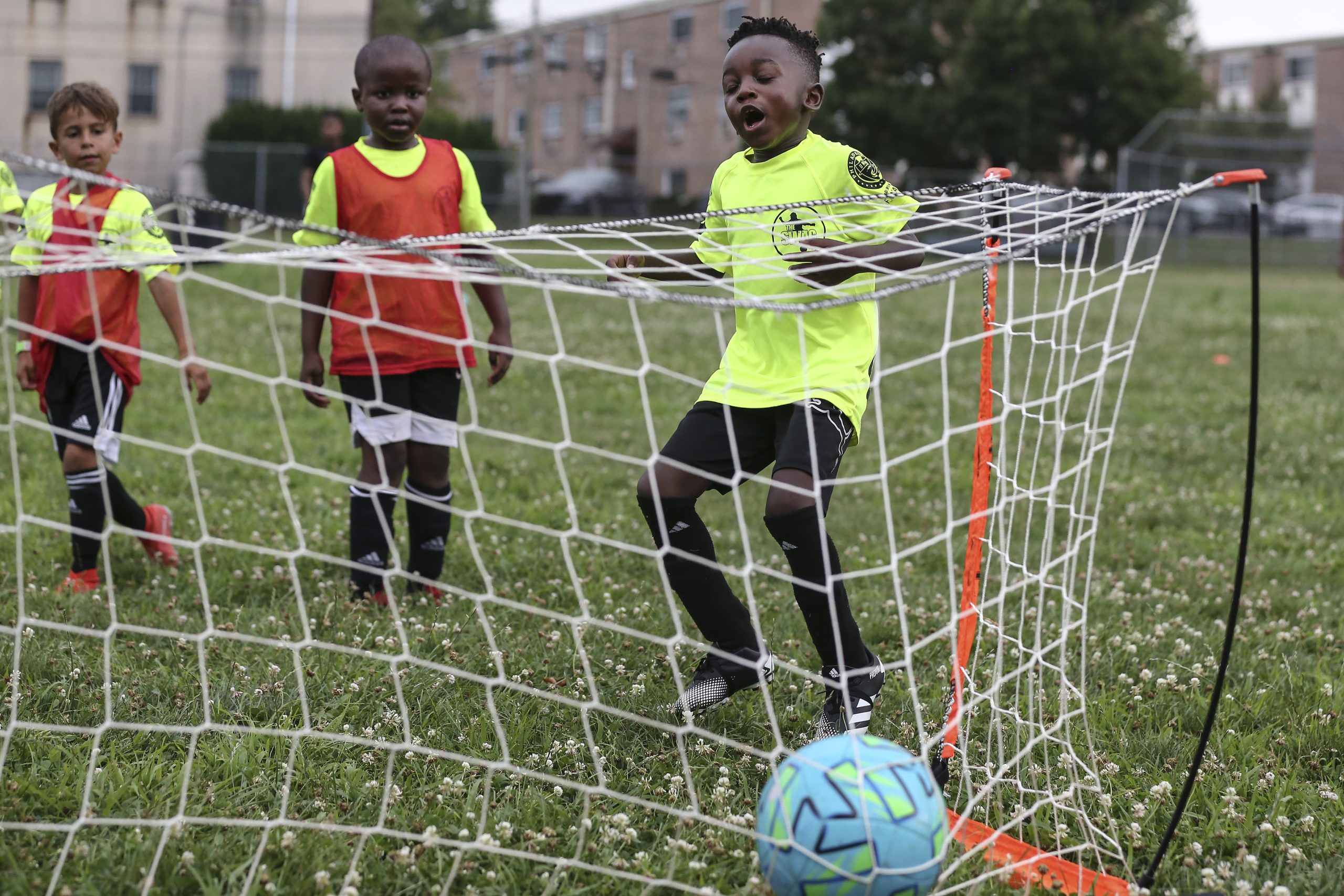
Started in 2018, the Philadelphia Union’s SWAG program offers underserved kids the opportunity to learn the game, and for the ones that show promise, get placed on a developmental path to pro track. STEVEN M. FALK / Staff Photographer
Some of that is already happening. In 2018, the Union created the SWAG program, going into schools, finding kids, developing them from the age of five, and grooming them to be on a professional pathway. It’s the kind of pipeline that city-based organizations like Kensington Soccer Club and Capitolo Soccer AC Fairhill, Street Soccer USA and many more are at the ready to be, and are already finding diamonds in the rough all along the way.
The problem is, as it stands, not enough people in power when it comes to the game care to look.
The parent trap
Listen, at the end of the day, you don’t know what you don’t know.
According to figures from Project Play, a study created by the Aspen Institute, youth sports is a $40 billion a year business, with youth soccer a sizable chunk of that equation.
The reason why there’s so much money to be made? Here’s a big one: uninformed parents.
At a certain level, there is this real fear of missing out from parents when it comes to their kids’ trajectory. The FOMO isn’t in every case, but here’s how it typically works when it comes to soccer in America. It starts innocently, a parent signing a child up for in-house soccer, where you discover, and it’s affirmed by a coach and others, that your kid has real talent.
Parents typically spend hundreds on top of committing multiple days of their family’s time to youth soccer tournaments all over the country. Sandy Huffaker
But instead of offering programs to develop that talent and get that child acclimated to the sport at a young age through actual development at a continued low cost, parents are coerced into believing that their child would fit seamlessly on a travel club team. One that competes year-round, practices 2-3 times a week, and plays games and tournaments on the weekend.
And then there’s the time cost. Traveling back and forth between states, sometimes to play the same team from the next town over from your club in a tournament.
If you’re a soccer parent, undoubtedly, you’re nodding your head as it probably sounds like your trajectory in youth soccer to date.
Suppose the solace comes in that you’re not alone?
For many parents, looking for the best place for their child to play the sport at a top level comes at a high cost. Butch Dill
And then there are the buzzwords. “Select.” “Premier.” “A-Squad.” All of these focus not on developing kids into the talent needed to put the U.S. in the best position to win a World Cup, but instead compile the best kids to help that club win across multiple age groups. They’re also words that make parents salivate, spending money they believe will deliver their child to greatness.
Or at least, that team that everyone is talking about.
At the end of the day, parents want to provide what they believe is the best opportunity for their child. Some don’t know what that looks like in soccer.
Can’t fault that. The real fault is in the subsequent exploitation of this ideology by organizations charging thousands for a child to have said opportunity.
Parents in these same circles have revealed that for kids as young as nine and 10 years old, their club won’t even look at kids who don’t already come in with a certain level of skill. Ask yourself: If the mindset has to be about development, how is that mentality not a perceived problem?
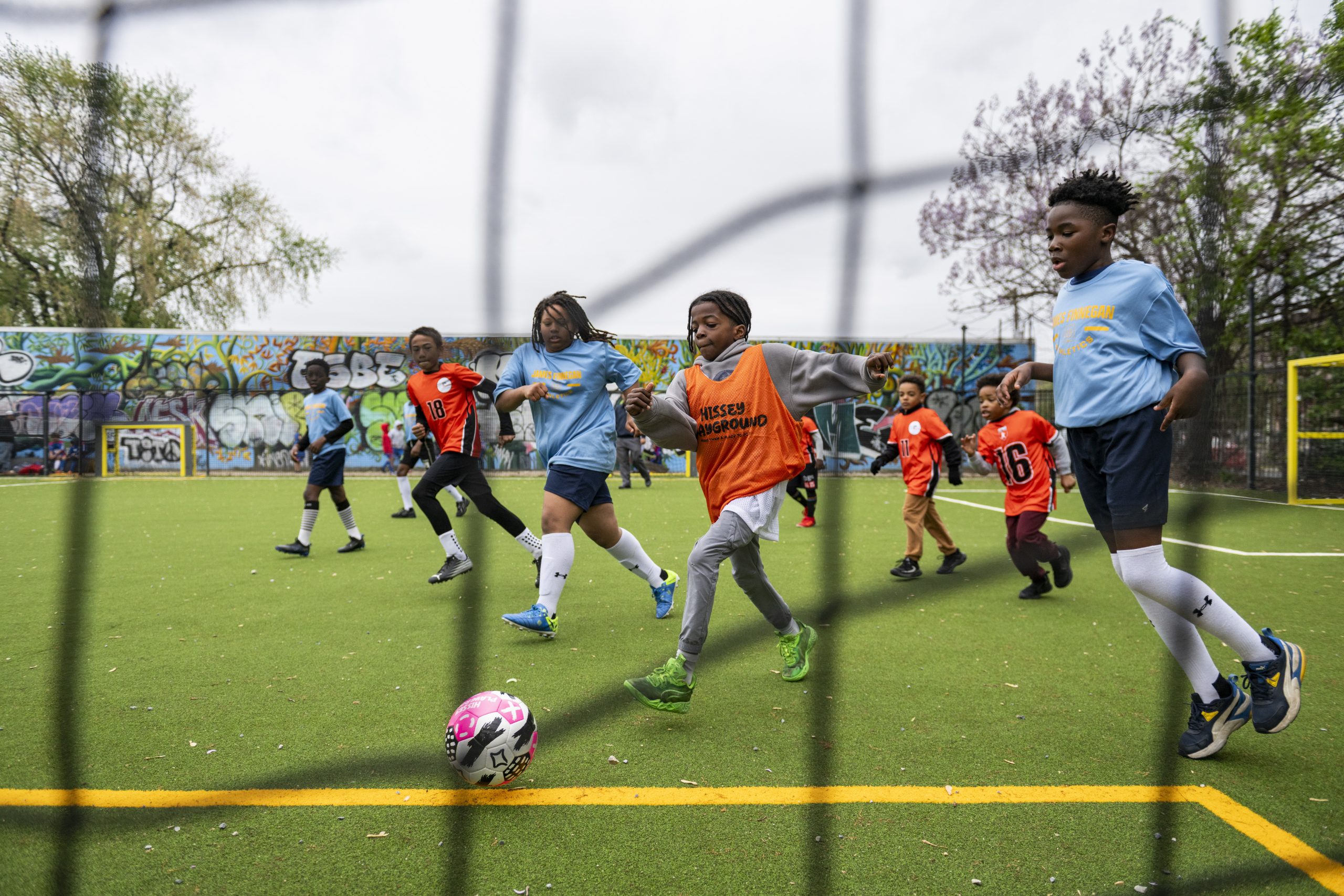
Kids play in Kensington Soccer Club’s Love Street League program at Hissey Playground in Kensington.Allie Ippolito / For The Inquirer
So, of course, that begs the question: “Who pays, then?” Well, there are plenty of youth systems around the world with strategies that give youth soccer in America a fantastic roadmap. Anyone tuning in to Sunday’s final was treated to a great page to start reading if you look at what Spain has been able to do on almost every level over the last 10 years, right up through yesterday.
Two World Cup titles in less than 20 years. A European title. The only nation where both the men’s and women’s teams are defending world champions. If the goal is to crack the code on how to produce players who can go far in a quest to chase a World Cup trophy, maybe start there.
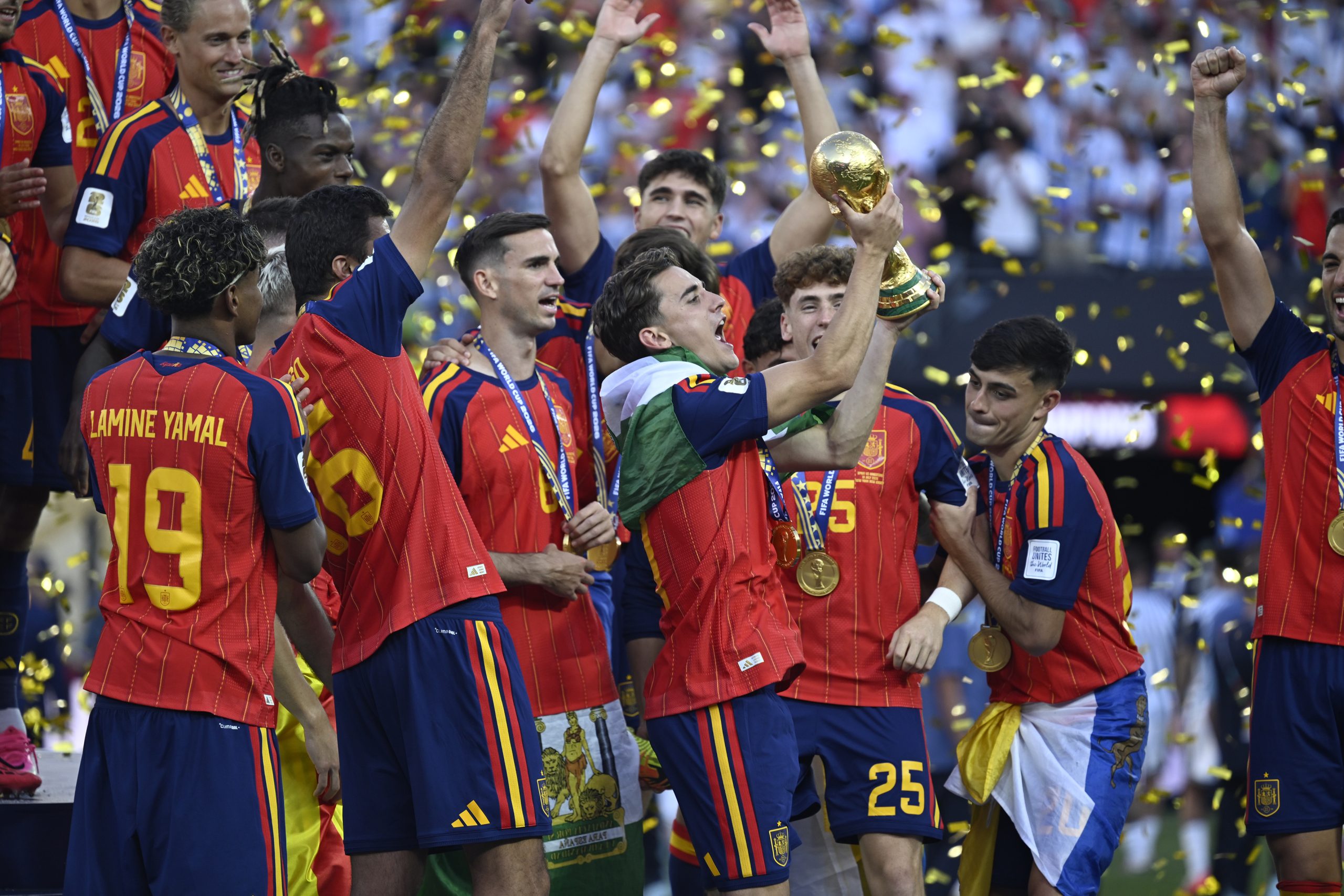
Spain’s Gavi (9) holds up the FIFA World Cup trophy as Spanish players celebrate after winning the World Cup final against Argentina in East Rutherford, N.J., on Sunday.VINCENT ALBAN
As it stands today, club soccer in America serves a purpose. It’s a great conduit for exposure. It offers youth players a firsthand look at the rigors of competition at a very young age. It teaches teamwork and being dedicated to a collective mission.
But it’s not about development. If it were, parents wouldn’t need to consider paying even more for privatized training or skill development camps and clinics. And now, the notion is growing that private equity sees ways in which it can get involved in the gambit. If there isn’t more of a fight to make sure that the status quo doesn’t become the legacy of this World Cup, history looks pretty bound to repeat itself in four years.