Fifty November general elections have passed “in the blink of an eye,” said Rita Lese as she was inducted into the state’s Voter Hall of Fame on Friday.
Lese has a long tradition of going to the polls, which started when she was a little girl, walking there with her parents. It felt like the “greatest thing” to go behind the curtain of the booth. That history continued as an adult, with her two daughters in tow on Election Day. Living in the same house for the last 50 years, just down the road from their polling place, she’d walk to cast her ballot in rain and sun.
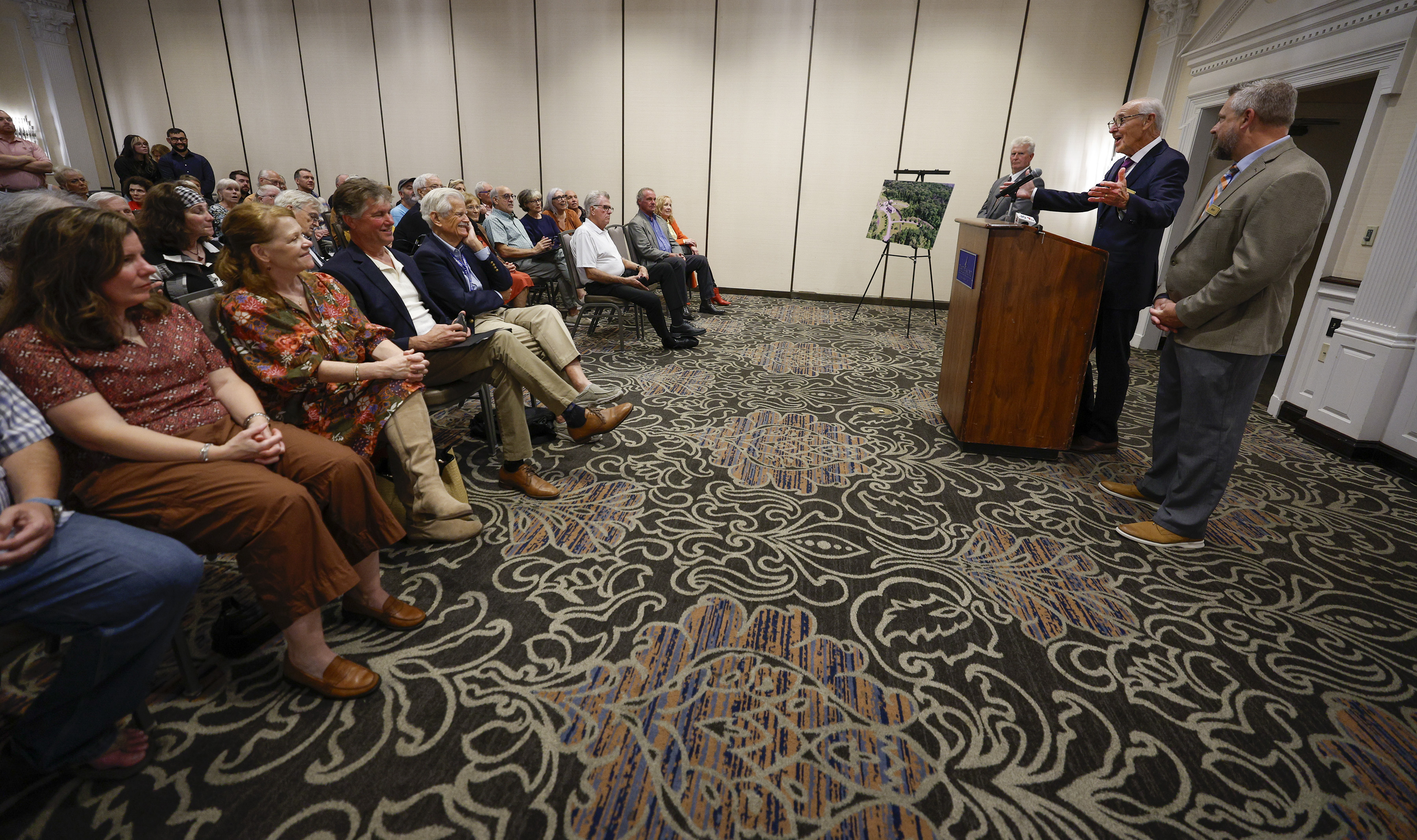
Lese, 77, was one of three Chester County residents — including her husband, Michael Lese, and Patricia Conroy — to be recognized for voting in 50 consecutive November elections during Chester County’s Board of Elections meeting Friday.
Established in 1986, the Voter Hall of Fame was formed to encourage Pennsylvania residents to cast their ballots. In the four decades since, more than 25,000 voters statewide have been inducted. Voters are recognized in each of the counties; Friday’s celebration increases Chester County’s contribution to that tally to 118, officials said.
“So there’s no excuse for the rest of us, is what you’re saying?” Josh Maxwell, the chairman of the county’s board of elections, asked Rita Lese.
It appears no.
It was a “a huge commitment and a tremendous accomplishment,” said Stephanie Reid, executive deputy secretary for the Pennsylvania Department of State.
“There had to have been some Election Days when they were ill, or they were busy with pressing work, or commitments with their children, the weather was bad, any other challenge that comes up every day in our lives that would have made going to cast their ballot inconvenient,” she said during the ceremony Friday. “Yet they persevered.”
But when Rita Lese thinks about what the suffragettes went through to secure some women’s right to vote in 1920, she can’t imagine not showing up to the polls each year; she thinks about it every year she does. Michael Lese, 78, who describes himself as an avid reader of history, said he feels similarly.
“When I read all of those sacrifices that people made so that we have the right to vote, it just instilled in me the importance of what this means,” he said.
The Leses’ civic engagement hasn’t stopped at casting their ballots, either. Rita always wanted to work the polls, but her career as a nurse made that pretty much impossible. In retirement, she thought maybe she’d have the opportunity. But Michael beat her to it: A longtime construction executive, he has spent essentially a second career at the polls. For 25 years, he has served as a clerk, a machine inspector and, for the last three, a judge of elections. He’s brought Rita in as an emergency poll worker when he’s low on poll workers.
It’s never been just about the issues for the Leses, but just the importance of showing up.
“It’s what you do,” Michael said in an interview.
“It’s what you do,” Rita echoed. “It’s a circle on the calendar, and that’s the day you vote.”
After half a century of voting, there are a few elections that stick out. The elections of presidents Jimmy Carter in 1976 and Barack Obama in 2008 felt particularly remarkable, they said. They’ve seen the evolution in voting: “from write-ins, to the styluses, to the little circles and different machines.”
With a rise in mail ballots, the crowds haven’t been the same, they said. But as their daughters are avid voters by mail ballots, they hope that participation hasn’t declined either. (In 2024, 77% of Pennsylvania’s eligible voters cast a ballot in the November election, in numbers that have dipped and grown in the last 36 years, according to state data. That year saw some of the highest participation since 1988.)
The Leses joked they’d hopefully go for another 25 years of consecutive elections.
Meanwhile, inductee Patricia Conroy, 79, came to her own civic participation a little differently. Her father, a longtime mail carrier who raised her and her four siblings basically on his own, “cared a whole lot about voting,” she said.
One Election Day, she remembers him coming home, remarking that someone told him they wouldn’t be voting: “Just imagine if everybody felt that way,” she recalls him saying.
That stayed with her.
“And so, I’ve been voting, all the time,” she said.
Elections have become a significant part of her family’s life. Two of her siblings ran for local office, and her sister is also being inducted to the Voter Hall of Fame in Philadelphia, she said.
A retired real estate agent, Conroy worked as a judge of elections, a Democratic committeeperson, and on campaigns. She also brought her sons with her to the polls. Both her and her husband — who met on the aptly patriotic Fourth of July as teenagers in 1966 — have early November birthdays. She remembers apologizing to him for missing his birthday in 1992 to celebrate President Bill Clinton’s win. (“I told him: You understand, we’re partying,” she said.)
There are other memorable elections: Gov. Josh Shapiro’s election was a highlight, she said. And some others are notable for not going her way, she said.
“Let’s just say we had a lot of laughs and a lot of tears on various election nights,” she said.
U.S. Rep. Chrissy Houlahan, a Democrat who represents Chester County, called the three “exemplars of what model citizens should be.”
“Elections and candidates have clearly changed over those 50 years,” she said. “Our country has changed, but throughout it, you have made your voice heard.”
This suburban content is produced with support from the Leslie Miller and Richard Worley Foundation and The Lenfest Institute for Journalism. Editorial content is created independently of the project donors. Gifts to support The Inquirer’s high-impact journalism can be made at inquirer.com/donate. A list of Lenfest Institute donors can be found at lenfestinstitute.org/supporters.
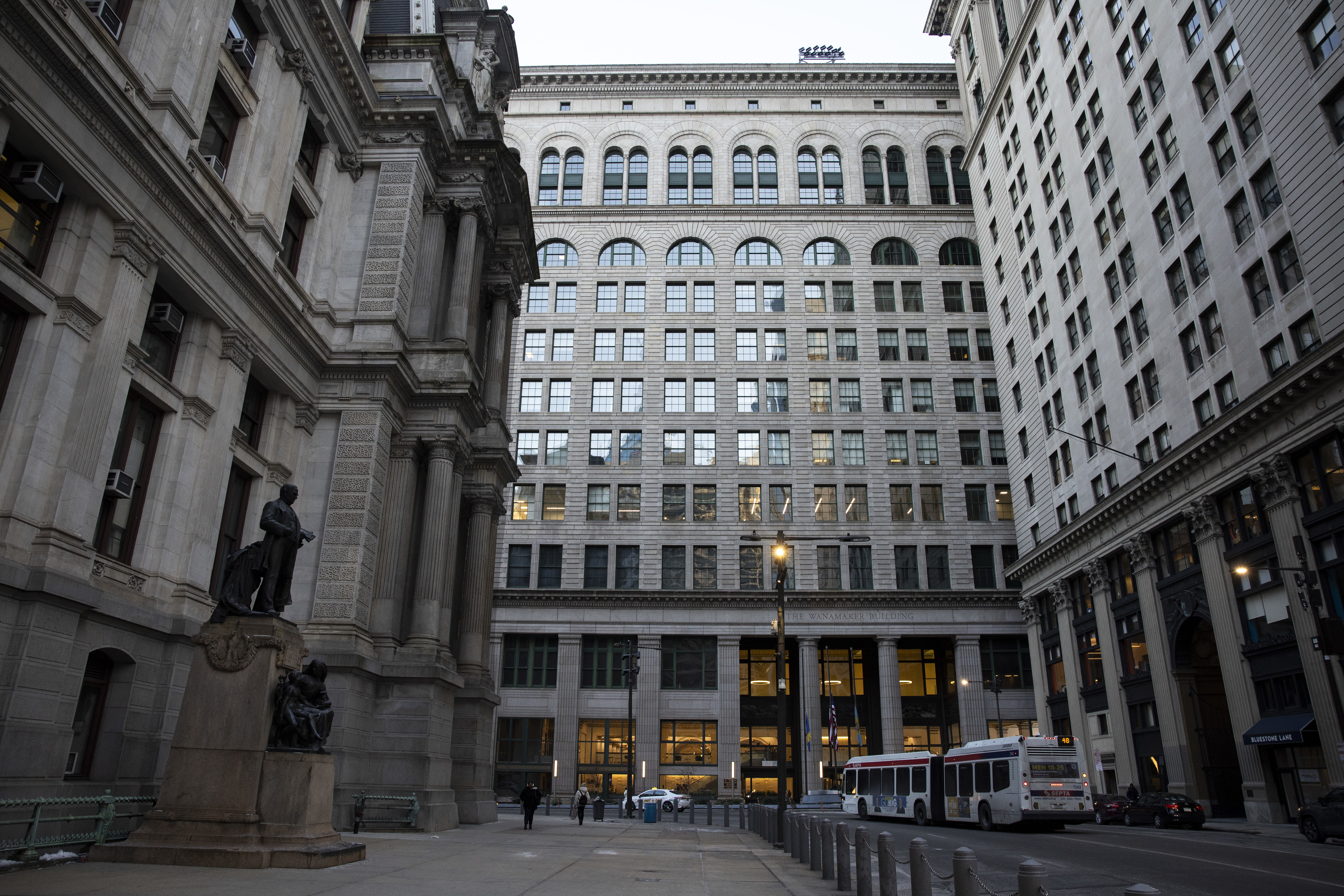
The historic Wanamaker Building in Center City will soon be home to a new $4 million event space.
The Wanamaker Room, the latest addition to the Finley Catering portfolio, will be able to serve as a standalone venue or an expansion of the Crystal Tea Room, where Finley has held weddings and banquets for 25 years.
The new 5,000-square-foot space, on the same floor as the Crystal Tea Room, is currently under construction, according to the Finley team, and is set to open in early 2027.
A rendering of the bar area in the Wanamaker Room at the Crystal Tea Room, which is set to be the latest venue in Finley Catering’s portfolio when it opens in 2027.Courtesy JKRP Archiects
“The Wanamaker Room is an investment in the guest experience and in the future of this landmark space,” owner and CEO Steve Finley said in a statement. “We’re excited to give our clients new possibilities for their events while continuing to welcome people to the heart of Philadelphia.”
With large windows overlooking City Hall, the Wanamaker Room will serve as the new cocktail-hour space for weddings at the Crystal Tea Room, a grand ballroom that can fit up to 1,200 people.
The Wanamaker Room will also be available to book for independent events, such as corporate functions, rehearsal dinners, and cocktail receptions, with space for as many as 400 guests.
A rendering of the “flex space” at the Wanamaker Room at the Crystal Tea Room, which is set to be the latest venue in Finley Catering’s portfolio when it opens in 2027.Courtesy JKRP Archiects
The new addition marks the latest change for the Wanamaker Building. Last year, its iconic Macy’s closed after occupying the bottom floors for 19 years. Like many brick-and-mortar retailers, the 435,000-square-foot location had struggled since the pandemic, and the company deemed it “underproductive.”
The company also wants to bring new retail, entertainment, and fitness outlets to the Macy’s shell, which it has owned since 2019. TF Cornerstone has said it sees the building being “a mixed-use anchor for Center City.”
The company also operates the Ballroom at the Ben and Union Trust in the city, as well as two suburban venues, The Ivy at Ellis Preserve and The Ballroom at Ellis Preserve, both in Newtown Square.
Unionized journalists and product engineers at The Inquirer secured a new contract on Friday that includes AI protections, raises, and changes to healthcare coverage.
Of 238 eligible union members, 160 workers voted, with 156 in favor of the new contract.
“AI is one of the biggest unknowns and new frontiers that is dramatically reshaping our entire industry right now, against the backdrop of ongoing cuts to local news,” said Guild President Max Marin, who is an investigative reporter at The Inquirer. “Many of our members viewed it as an existential threat, and we are incredibly proud of the agreement that we came to with management.”
The union that represents Inquirer workers also includes employees of Spotlight PA, the News Journal in Wilmington, the Trentonian, and the Scranton-Times Tribune, and other local news outlets.
The Inquirer’s last three-year union contract was set to expire Aug. 31, and was extended in negotiations through Sept. 15. The union and newsroom management reached a deal hours before that extended deadline.
The new contract goes into effect immediately and will expire in 2029.
Inquirer publisher and CEO, Lisa Hughes, said in a statement that reaching a new agreement with the union “is an important step forward for The Inquirer.”
“This agreement provides meaningful enhancements to both wages and benefits, and it reflects The Inquirer’s continued commitment to investing in our most important resource: the people who work here,” she said.
New AI policies
Under the new deal, The Inquirer may not use any AI generated videos or images that appear realistic “for editorial purposes.” The contract bars The Inquirer from using AI to mimic employees without their explicit consent.
Employees also have the right to have their byline removed from any content that is AI generated.
Under the contract, Guild members must be included in developing, training, and maintaining AI tools. Union employees must be involved in creating or otherwise verifying any AI-generated content.
The Inquirer will also put together an AI Advisory Committee in collaboration with the union, which will meet on a monthly basis. The group is expected to discuss “the implementation of AI-generated and AI-assisted editorial content, the implementation of AI tools for internal company purposes, and updates to the Employer’s AI usage policies.”
Changes to pay and benefits
Unionized Inquirer employees will receive a one-time $5,577 payment before taxes within 30 days of ratifying the contract. They will get a 4% wage increase and a $1,000 bonus in the second year, and another raise in year three.
The amount of that last pay bump varies between 2.25% and 4%, with lower-paid members getting the higher rates.
“This is our third consecutive contract with pay raises at The Inquirer, following a decade of layoffs and furloughs,” said Guild president Marin. “These are meaningful raises too.”
Vacation time will also accrue more quickly, with new Guild employees starting with three weeks per year.
Healthcare costs have been on the rise for many Americans, and under the Inquirer’s new union contract, members will see their weekly rates increase for the first time in 20 years, according to the union. Despite the increase, the union says it worked to keep rates low. Guild members’ contributions to their health plans will increase by $7.50 to $12.50 per week in year two of the contract.
New Jersey State Police have identified the remains of a man found off the coast of Atlantic City 45 years ago.
Glen Napoleon Burbage, a retired U.S. Coast Guard officer from South Carolina, was last seen in March 1981. Burbage, who was 59 when he disappeared, had flown to Atlantic City that month, and was never heard from again, officials said in a statement.
Two months later, on May 22, 1981, a group of boaters found a human body in the ocean about a mile off Raleigh Avenue in Atlantic City. At the time, investigators believed the man had died several weeks before his remains were recovered.
Police, however, were unable to immediately identify the remains. Previous DNA testing did not reveal any matches in the Combined DNA Index System, a national, federally managed DNA profile database. And lacking further leads, the case went unsolved for decades.
In April, authorities enlisted the help of Ramapo College’s Investigative Genetic Genealogy Center. Founded in 2022, the Mahwah center specializes in training students in an increasingly utilized field of DNA-based investigative technology that uses data from commercial genetic testing to identify previously unidentified victims and suspects.
That month, the center said, it had undergraduate students and law enforcement officials attending a weeklong boot camp examine the then-unidentified body’s DNA. Students built family trees and examined genealogical records in an effort to identify the man.
Following the boot camp’s end, they found a lead in Burbage, who had been missing since March 23, 1981. New Jersey State Police later conducted what they called a “one-to-one familial DNA comparison” with DNA collected from one of Burbage’s living children. South Carolina authorities also assisted in the case.
“For 45 years, Glen Burbage had a name and a family, even though investigators did not yet know who he was,” said centerdirector Cairenn Binder in a statement. “Investigative genetic genealogy gives us a way to revisit cases that once seemed to have reached the limits of available technology.”
Burbage’s case is not the first solved with help from Ramapo’s center. Perhaps most notably, in June last year, it identified through similar means the remains of Henry Goodsell, the captain of a schooner that wrecked off the coast of Brigantine in December 1844.
When it was solved, Goodsell’s case was among the oldest closed using investigative genetic genealogy, at more than 180 years old. Goodsell, having been unidentified for so long, and his remains discovered along a wide swath of the New Jersey coast, had become known colloquially as “Scattered Man John Doe.”
Investigative genetic genealogy differs from traditional DNA testing in that it is more expansive, and is able to identify more distant relatives. Regular DNA testing, meanwhile, looks at relatively little DNA information, Binder told The Inquirer last year.
With that additional information, genetic genealogists are able to reverse-engineer an unidentified person’s family tree to home in on the identity.
That investigative technique became widely known in 2018, when it was used to identify the Golden State Killer in California. Since then, it has been employed in notable cold-case identifications locally, including in identifying the so-called “Boy in the Box” and the Fairmount Park rapist.
Burbage’s death, however, remains under investigation, as authorities have not determined what led to his disappearance or demise. Officials have asked anyone with information about the case to contact the New Jersey State Police Missing Persons Unit at missingpinformation@njsp.gov.
Tim Boyce, the former director of Emergency Services for Delaware County, was convicted Friday of assaulting and harassing two of his female employees.
Weeks later, a second set of charges was filed when another woman Boyce hired and worked with for years, said he showed her pictures of his penis, lifted up her skirt to look at her genitals and once muted a Zoom call she was part of to ask her graphic questions about sexual positions she preferred.
After about nine hours of deliberation, jurors convicted Boyce of all but one count, the simple assault charge.
Boyce was taken into custody after the verdict was read and the judge set his bail at 10% of $50,000. He will be sentenced in December.
His attorney, Andrew Edelberg, said afterward that he was disappointed with the verdict, but respected the jury‘s decision.
County officials fired Boyce shortly before the criminal charges were filed, after the first woman filed a complaint with the Equal Employment Opportunity Commission.
In his closing arguments, Edelberg told jurors that the case against his client was “botched, bungled, fumbled, messed up” by investigators who failed to find evidence corroborating the women’s allegations.
He accused prosecutors of attempting to play on jurors’ emotions with the testimony of the two women, who he said offered unreliable testimony.
“The Commonwealth wants so badly to convict Mr. Boyce, they’re desperately clinging to this story,” he said.
The women’s true intention was money, he said, referring to potential settlements from lawsuits they both have filed against the county.
But Deputy Attorney General Madelyn Abry, in her closing arguments, warned jurors not to be distracted by what she described as “filibustering by the defense.”
“Mr. Boyce is upset, he’s sad, he was devastated because he was caught, because his actions have finally caught up with him,” she said. “And they did so because of these two brave women.”
Abry told the jurors Boyce chose his victims intentionally: Both women were single mothers at the time, desperate for better-paying jobs that would provide health benefits for their families.
“I’m not making excuses because I have nothing to excuse myself for,” he said, calling the second woman’s assertions “absolutely a lie.”
He became emotional under questioning by Edelberg, saying that he checked into a rehab facility in Arizona for treatment of suicidal ideation, and later sought treatment from a second facility in Pennsylvania.
Edelberg, in his closing arguments, described Boyce as a hero who helped recover bodies from Ground Zero during the Sept. 11 attacks, and who once saved three children from a burning building as an Upper Darby firefighter.
He noted that the second woman remained friendly with Boyce after the first alleged assault, which was in 2018. And she later invited him to her wedding, he said.
“Why would you include a man who tells you these horrible, dirty jokes … and not tell anybody?” he asked jurors. “It’s the same theme, ladies and gentlemen: excuse after excuse.”
During her testimony, the woman said she waited to report the first assault, and endured the subsequent ones, because of Boyce’s authority.
“I’m nobody,” she said. “He’s the director in charge of all 911.”
The first woman testified that she sent Boyce a text message after the assault, telling him he had degraded her and made her feel like a piece of meat.
Boyce responded to that text, saying he was “sorry and not making excuses,” according to a copy of that text exchange displayed in court.
When pressed by Abry about that text, Boyce, while denying the assault, said he apologized because he believed the woman was drunk while she was texting him and attempting to “set him up.”
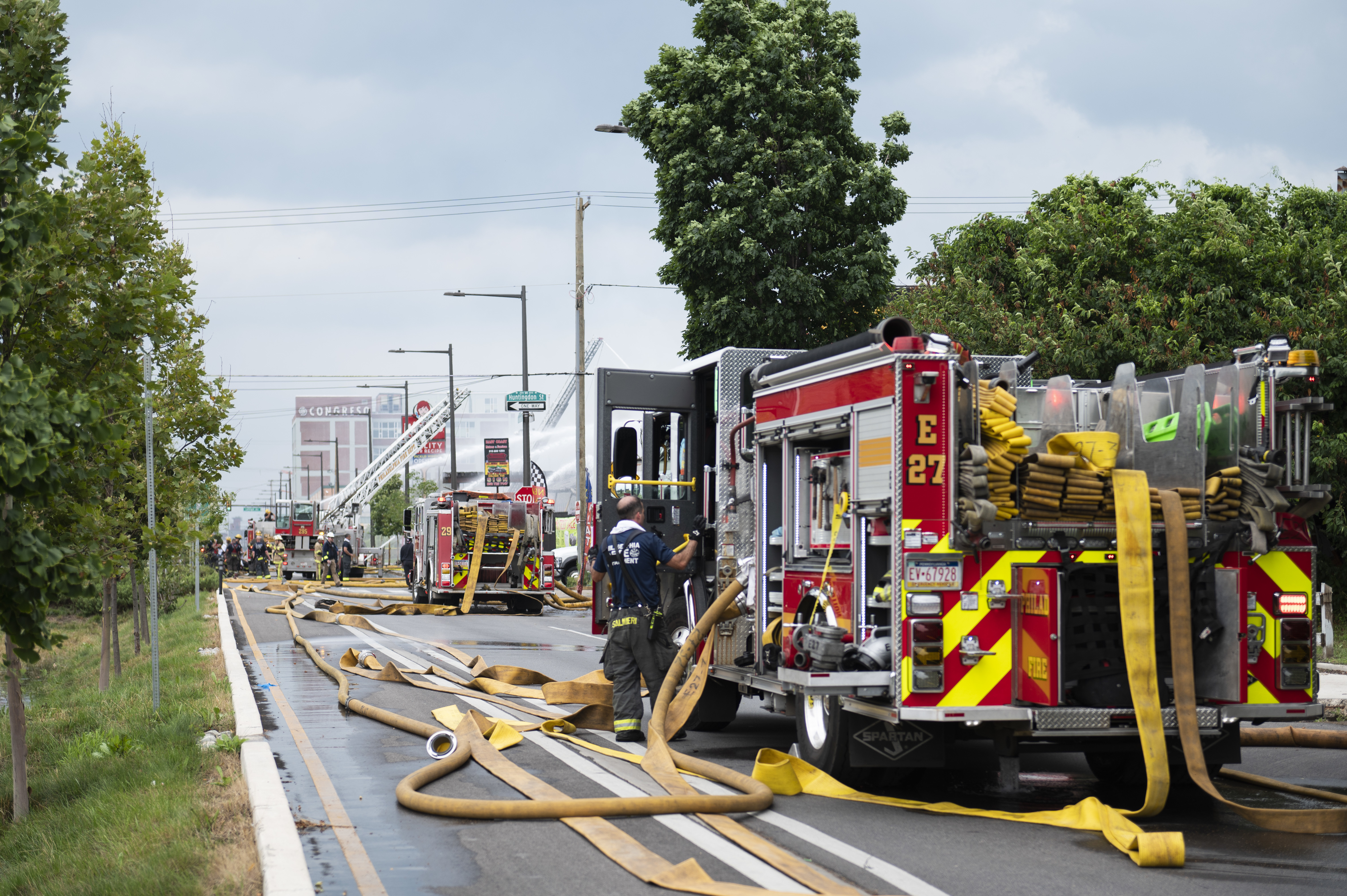
Federal prosecutors this week charged a former Philadelphia Fire Department supervisor with bribery in connection with what investigators described as a brazen overtime abuse scheme that involved her accepting cash from a colleague in exchange for approving fraudulent time sheets.
Marian Farris, 55, a former supervisor in the department’s payroll unit, faces one felony count of bribery and related theft charges. She was charged Tuesday by information, a process that is typically used when a defendant intends to plead guilty.
Attorneys for Farris, who resigned from the department in March 2025, did not immediately respond to a request for comment on the charges.
According to charging papers filed in the U.S. District Court of the Eastern District of Pennsylvania, Farris accepted multiple payments from a fire department employee that totaled more than $9,000 between 2023 and 2024. In exchange for those payments, prosecutors allege Farris made more than 300 fraudulent entries in the city’s payroll system amounting to more than $139,000 in payments to the employee.
Some of the overtime claims, according to prosecutors, were logistically impossible. Prosecutors wrote that Farris on 16 occasions credited the employee — identified only as “J.M.” in charging papers — with working 22 to 24 hours of overtime in a single 24-hour period. On other occasions, prosecutors wrote, the employee was credited with working overtime while she was vacationing in Bermuda, Cancun, and Las Vegas.
The Inquirer previously reported that Farris was under federal criminal investigation and that she was at the center of two tangled investigations into alleged misconduct at the fire department.
The city’s Office of the Inspector General led one investigation into the overtime abuse and found that Farris conspired with former paramedic Jacqulyn Murphy to defraud the city by abusing the system.
In a separate probe, the city retained a law firm to examine multiple sexual harassment allegations lodged by Murphy and other women against Anthony Hudgins, a former deputy commissioner and the department’s No. 2 in charge. According to court records, several women, including Murphy, told city investigators that Hudgins made sexual advances, including unwanted hugging and inappropriate comments.
Hudgins claimed that the harassment reports were orchestrated by Murphy only after he discovered the overtime fraud. In January, Hudgins sued the city and the women saying that he was defamed and subjected to a “bad faith” investigation that resulted in a demotion and a $75,000 pay cut.
Inspector General Alexander DeSantis had previously declined to publicly release the results of his investigation, citing an ongoing criminal investigation.
But Hudgins’ attorneys included the report in court filings related to his lawsuit, and the OIG investigation appears to confirm Hudgins’ timeline. The report stated that Hudgins had already conducted an overtime review before a November 2024 discrimination complaint was filed against him.
Those findings also align with a June 2025 report authored by attorneys at Campbell Durrant, the outside law firm that the city retained to investigate the sexual harassment claims. Hudgins’ attorneys included portions of that report in a recent court filing.
In the report, investigators reviewed some of the allegations brought by Murphy and her wife, who was also a paramedic in the Philadelphia Fire Department. The women told investigators that Hudgins had openly discussed his desire to engage in sexual activities with other women.
However, the conclusion of the report described the allegations brought by Murphy and her wife as “unsubstantiated” and lacking corroboration. It said that the “connection between the harassment complaints and the overtime investigation raises serious concerns about motive and credibility.”
The report said that the primary concerns regarding Hudgins were that he “has a habit of hugging employees and enforcing policies that are sometimes unpopular.” The investigators recommended that Hudgins receive a formal warning and be required to undergo harassment training.
A spokesperson for the city declined to release the full report on Friday, saying the city generally does not release reports of investigations into allegations of sexual harassment, and that the reports are only disseminated to the subjects of an investigation.
In the fall of 2025, shortly after Campbell Durrant completed its report, Hudgins was demoted from his role as a deputy commissioner to deputy fire chief, and he was reassigned to the Incident Safety Office.
Farris has not yet been scheduled to appear in court.
Staff writer Abraham Gutman contributed to this article.
The new season of Abbott Elementary is nearly back in session. From the looks of it, there are some changes coming.
In the Season 6 trailer, which dropped Wednesday, it’s revealed that Tyler James Williams’ Gregory will now be the school’s assistant principal in addition to his regular teaching duties, and Lisa Ann Walter’s Melissa is now a teachers’ union representative.
Melissa (Lisa Ann Walter) wears a “Philadelphia’s lucky charm” T-shirt and Barbara (Sheryl Lee Ralph) sports a Kyle Schwarber jersey in an episode of “Abbott Elementary.”Disney/Gilles Mingasson
Gregory’s new role will have him working more directly under Janelle James’ Ava, the hilariously self-absorbed principal of the fictional Philadelphia public school.
“It’s going to be the best year yet,” Ava says in the trailer.
Fresh into her union position, Melissa is at odds with guest star Katy Mixon, who plays a new staff member. “You’re not aware of the hierarchy around here,” Melissa says to Mixon’s character inside the break room. The newcomer retorts with, “I’m not going anywhere.”
The rest of the trailer, which opened with Guns N’ Roses’ “Welcome to the Jungle,” foreshadows another season of chaos in and outside the classroom.
Chris Perfetti’s Jacob is seen leading a PTA meeting line dance. Ava curses out fellow staff, and Gregory is startled by what appears to be an enraged parent.
The teachers and principal of “Abbott Elementary” talk to the school district’s superintendent.Disney/Gilles Mingasson
Of course, there are homages to the city that serves as the series’ backdrop, although the show is filmed in Los Angeles. Janine appears wearing a Penn sweater, Melissa dons a black Eagles sweat jacket, and Jacob tosses a basketball at two characters wearing Sixers jerseys.
The new season follows an eventful Season 5, which hinted at upcoming drama, including a potential engagement between Janine and Gregory, an uptick in Abbott’s student intake due to multiple school closings, plus a power struggle between Ava and Gregory with his new role.
The Season 6 premiere is set to air at 8:30 p.m. Oct. 7 on ABC. In the words of Janine: “Anything can happen.”
The Philadelphia Fringe Festival celebrated its 30th year with more than 338 productions across the city. Our reporters found shows that left us dazzled and confused, tearful but still laughing, and truly amazed by all the strange, weird, and delightful originality that artists from Philly (and beyond) had to offer.
These were some of our favorite performances, including solo shows, interactive experiences, immersive dance, otherworldly journeys, and incisive political explorations.
Most optimistic: ‘Lunar Retreat’
To enter this performance, you must prepare for take off: Grab a set of headphones specifically curated for your group (an audience of just a dozen or so, per entry time) and remove your shoes.
Past the doors lies a transformed Pearlstein Gallery, with different sections divided by flowing white curtains. The calm voice in your ears provides instructions, like a guided meditation for a winding path through a constellation of dancers before you arrive in a maze of tall, twisting cardboard adorned with twinkling lights and images of the moon’s various cycles.
After billions of years orbiting the earth, our moon has been slowly inching away from us, the disembodied voice explains. The show asks: What does it mean to enter someone’s orbit, to connect with another person, when we all drift apart eventually, inevitably? At its core, Lunar Retreat tackles grief, prompting the audience to imagine a loved one who is physically distant. What detail about this person do you never want to forget? After we write down our answers, we’re guided into the maze, where the answers from previous attendees dot the spiraling walls.
Fringe Fest regular Nichole Canuso’s dance company Branching Paths is renowned for immersive and interactive performances; here she worked with ocean explorer/artist Rebecca Rutstein, sound designer Bobby McElver, video designer Kate Freer, and set designer Anna Kiraly, among many collaborators. The projections were especially astounding: In one room, a dancer performed a series of moves in one place that were recorded and projected to the same location on a loop, allowing her to essentially dance with and embrace the projected version of herself. It was a mesmerizing collaboration between dance and technology.
Founder and artistic director of Nichole Canuso | Branching Paths, presented “Lunar Retreat” in the 2026 Philadelphia Fringe Festival.Theo Cote
At the end, the three audience groups gathered for the finale, when eight dancers (including the choreographer, Canuso) evoked ocean tides as they converged and separated, where they kept reaching for one another and then leaping apart. I was in awe not only of the performance itself but of my fellow audience members, who embraced the experience with open hearts and curious minds — leaving me surprisingly optimistic about the future of humanity.
— R.C.
Standout Solo Show: ‘Tuzluk’
This wildly inventive coming of age story follows Turkish Colombian American theatre artist izzy sazak as they deconstruct the heroes of their childhood. It’s a bold, imaginative examination of how we recontextualize the stories that we are told as kids. Throughout the piece, sazak examines their father, his Turkish heritage, and the Turkish mythos that they grew up instilled with. It is a magnificent look at the crossroads of culture, legacy, and family; while also being frankly honest about how many people idolize political figures.
sazak is an effortless performer, immediately engaging with the audience, establishing a welcome and safe feeling throughout the performance. They are also very adept at comedy: their timing is precise, and they can easily adapt and improvise.
izzy sazak in a promo image for their show “Tuzluk” in the 2026 Philadelphia Fringe Festival.Courtesy of subject
The word tuzluk is Turkish for “salt and pepper shakers,” but it is also a colloquial name for the folded paper toys that kids use to tell their futures. This item is used both as a literary device, as sazak unravels their future through the show, and also as set pieces.
Several tuzluks of varying sizes are arranged on the stage, and are utilized as props. The final moments of the show, when the last tuzluk is opened, is one of the most cathartic, community focused finales I’ve ever experienced in a theatre.
— F.S.
Best true story, retold: ‘Kramer/Fauci’
C-SPAN isn’t usually the place where one might find dramatic inspiration. But for director/creator Daniel Fish, one hour of a televised debate in 1993 provided an insightful window into a painful history that still resonates deeply. His innovative verbatim play follows a contentious conversation between Larry Kramer, the fierce activist/playwright who founded ACT UP, and Anthony Fauci, head of the National Institute of Allergy and Infectious Diseases at the time, about then-President Bill Clinton’s new task force to address the AIDS crisis.
On the sparse stage only four actors appear, playing the moderator (Greig Sargent), Fauci (Pete Simpson), Kramer (Thomas Jay Ryan), and the callers who dial into the TV segment (Jennifer Seastone). There are no cameras, no desks or green screens to evoke the monotony of C-SPAN’s regular programming; instead, the moderator is seated and his guests move around freely while Seastone spins around on roller skates, occasionally donning a chicken suit. The pared down production allows Kramer and Fauci’s sparring to take the spotlight (literally) but also creates a dynamic movement that keeps the audience engaged in their hot-and-cold ping-pong match without feeling like we’re watching a live podcast taping.
It’s far from boring, no matter how wonky the dialogue gets. Ryan’s Kramer erupts on a dime, shouting and throwing barbs and teasingly threatening to slap Fauci, who deflects and delivers defensive, boilerplate responses typical of a bureaucrat, knowing that his answers are dissatisfying. Kramer is fuming and defiant, demanding urgency from a government and a public whose inert response to the epidemic was a systemic, fatal failure on an unimaginable scale. When the callers chime in, many express sympathy, but one chilling, virulently homophobic standout accuses him of infecting the nation’s bloodline.
The most dramatic moment comes rather abruptly, when a towering bubble machine churns out a mass of suds that slowly takes over the stage. Kramer sits next to it, arms crossed, resigned as the machine whirs and the foam spreads.
Given the devastating subject matter, I didn’t expect to laugh so much. The pair at the center of the show hold profound respect for each other despite their disagreements and there’s a familiarity to their banter that underscores their shared goal; their debate is almost endearing to hear in retrospect today, if the reality wasn’t so infuriating. It ends with an epic line from Kramer when asked for his last word: “I want Bill Clinton to come out of the closet … and do something about this disease.”
— R.C.
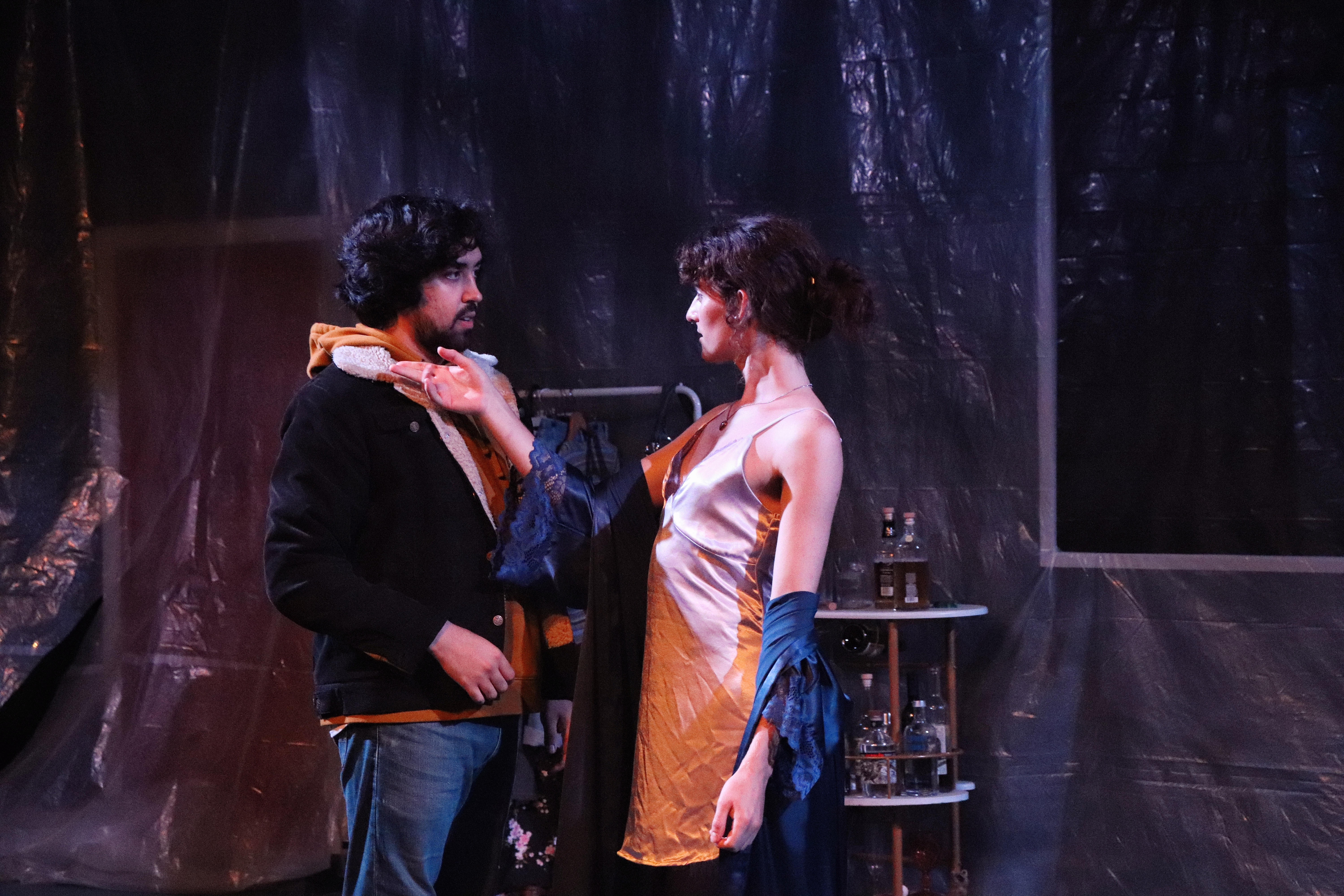
A scene from “Returned, Iridescent,” part of the 2026 Philadelphia Fringe Festival.Seph McAndrew
Most Promising: ‘Returned, Iridescent’
There is a scarcity of narrative stories that showcase LGBTQ+ people growing up and living into old age. Oftentimes, these characters are burdened with struggle, defeat, and frequently, a tragic end; especially stories of trans people. Returned, Iridescent, the new work by playwright Rose Farrell, defies this trope by taking the audience on a beautifully poetic journey of two queer characters who constantly collide, combust, and separate, only to be drawn back together again and again. The text shifts between realism and poetry, allowing the characters to be both their true selves and romanticized versions. It is a beautiful story about finding yourself, loving yourself, and accepting the happiness that you deserve.
Breathtakingly nuanced performances from the two leads (Olive Gallagher & Gideon Caro McDonald) help ground this work in the moment. Watching the two of them effortlessly push, pull, and play with each other is a joy. I’m eager to see what these two talents do next. Strong design elements, with direction by Jack McManus, help this play to soar.
This play is an extremely timely one, given the current social and political discourse around trans people, which often serves to dehumanize or vilify them. I commend Theatre by Development for choosing to tell this story now, and hope that it is told many times more.
— F.S.
Nerdiest romance: ‘Wikipedilove’
A Newfoundland town called Dildo. The erotic novella A Billionaire Dinosaur Forced Me Gay. Eva Braun?
All are ripe for exploration at the love-and-sex-themed Wikipedilove, the lo-fi, musical PowerPoint presentation staged at West Philly Fringe hub Studio 34.
Writer, singer, and guitarist Noam Osmond — who moonlights as a “troubadour for hire” and can occasionally be spotted serenading strangers in Clark Park — and singer and accordionist Anna Apostolidis take the audience through a whirlwind of weird internet, told through screenshots, academic analysis, and cutesy folk songs.
In under an hour, we learn, for instance, that gray whales mate in threes (“#consensuwhale”) and that there’s a Wikipedia page of “List of sexually active popes,” among many other NSFW topics.
At the packed Friday night performance I attended, audience members were game to sing and sway along, emblematic of the participatory theatre that makes the Fringe Festival so special.
Two actors dressed as sparkly winged green and yellow bugs who appeared in the finale were a highlight of the show — luna moths, which live for just one week, solely to mate. Because who says science can’t be silly and sexy?
— J.Z.
A projection of a vinyl record on the domed screen of Fels Planetarium for “Utopian Hotline,” part of the 2026 Philadelphia Fringe Festival.Rosa Cartagena
Strangest existential journey: ‘Utopian Hotline’
A night at the museum is always a fun set up for a new adventure. This trip to the cosmos — courtesy of the theatermakers at Mitu, an experimental group based in Brooklyn — took place inside the Franklin Institute’s Fels Planetarium.
At the center of the room sat a round desk with a camera, turntable, microphones, and telephones. Audience members wore headphones and sat back as the domed screen above came alive with the trippy, philosophical show.
The titular hotline is real, inspired by the Golden Record that NASA sent to space that’s meant to represent earth, featuring sounds from voices to waterfalls to classical music. Mitu’s project imagines the messages we could send out into the universe if we created another record with people answering the prompt, “How do you imagine a more perfect future?”
Their respondents express variations of similar feelings: that it’s a hard question to answer, that it’s especially difficult to imagine a future when our current present time is so fraught, that we all want compassion and care and kindness no matter how far humanity travels from earth. (It’s an active hotline for anyone who’d like to add their voice.)
The show was part listening session (headphones required) and part strange story time as the performers at the center, akin to astronaut guides in matching gray suits, tinkered with the machines in front of them, sometimes taking over the mic to sing and other times recording with the camera so that their face would appear in the screen like a ghost. They posed existential questions about whether we’re alone in this universe or if we’ll ever truly understand the fickleness of time. The performance was somewhat disorienting, but the experience felt strikingly unique regardless of the occasional confusion, or maybe because of it.
— R.C.
Actor Justin Jain in “Bad Clay,” a show in the 2026 Philadelphia Fringe Festival.Wendi Van Horn
Most Thought-Provoking: ‘Bad Clay’
Justin Jain brings the audience to the cross section of sculptural ceramics and performance art in his original work Bad Clay. An experimental piece about migration, America, and sculpture, it delights in the way Fringe shows often do; by highlighting something new and unexpected. Entering the space, the audience is greeted by a series of ceramics laid around the room, all of which are made by Jain. Throughout the piece, Jain interacts with each ceramic, and also throws some clay on a wheel, creating live sculptures in front of the audience. Conspicuously, there is also a mannequin in the room; dressed as an ICE agent, and draped in an American flag. Ever present, this mannequin provides a feeling of unease that permeates the room, and when it is finally addressed and incorporated into the piece, it results in a truly harrowing moment.
What really stood out about this piece was the prologue. In a prerecorded monologue from Jain, he explains that the piece we’re about to see is an experiment. He goes on to explain how he has struggled to be presented by the Asian Arts Initiative directly, and also how he came to be in the space that the piece is taking place in … as it was not the space he wanted to present in. According to this prologue, he was looked over for various fellowships and grants, which led to having to present this piece as part of the “pay to play” aspect of the Festival. As a Philly artist of some notoriety, Jain still has struggled for financial and creative stability. It was an interesting breath of realism, and a frank conversation about the state of arts funding throughout the city. Additionally, it also offered audiences a “peek behind the curtain” as they heard firsthand about the hurdles of presenting a fringe show, and how it affects performers and producers.
Bad Clay is something I would be intrigued to see again, and to see what it would look like as Jain envisions it fully. It is a piece that raises interesting thoughts and questions, paired with honest reflection, and fully seeing it as the artist intended would be an exhilarating experience.
— F.S.
Shows we’re excited to seeing develop further post-Fringe
CBS Sports and Tony Romo have officially parted ways, one month after the former Dallas Cowboys quarterback pleaded no contest to charges of operating a vehicle while intoxicated.
“CBS Sports and Tony Romo have mutually agreed to part ways,” CBS Sports said Friday in a statement. “We thank Tony for his contributions over the past nine years and wish him the best moving forward.”
Analyst JJ Watt had joined play-by-play announcer Jim Nantz and sideline reporter Tracy Wolfson on CBS Sports’ lead NFL team during Romo’s absence. Watt will continue in that role now and all other CBS teams will remain the same.
Romo was arrested following a traffic stop as he was driving south on Interstate 43 in Wisconsin. He pleaded no contest to a charge of operating while intoxicated on Sept. 1 and issued a statement apologizing for the actions that led to his arrest.
According to Milwaukee County court records, Romo lost his driving privileges for six months and was ordered to complete an alcohol assessment program.
“The past month has been difficult, but it has also been personally significant,” Romo said Sept. 1 in a statement on Instagram. “It has required me to confront and own my mistakes fully — to the Lord, to myself, to my family and now to the public.”
Romo said the multiple back surgeries that led to his retirement as a player “left me with constant, debilitating pain.” He noted that the pain “led to a dependence on pain medication, and my efforts to get off those medications led to an over-reliance on alcohol.”
“None of this is an excuse,” Romo said. “These are my failures and I take responsibility for them.”
Romo said he is working with a team of doctors to address his health and “make the necessary changes.”
The 46-year-old Romo made four Pro Bowl appearances during a playing career that ran from 2004-16 and was spent entirely with Dallas.
The auction for Chester County’s historic St. Peter’s Village — which put on offer roughly 80 acres, more than a hundred home sites, and the handful of businesses contained within the boundaries — ended before it began Wednesday.
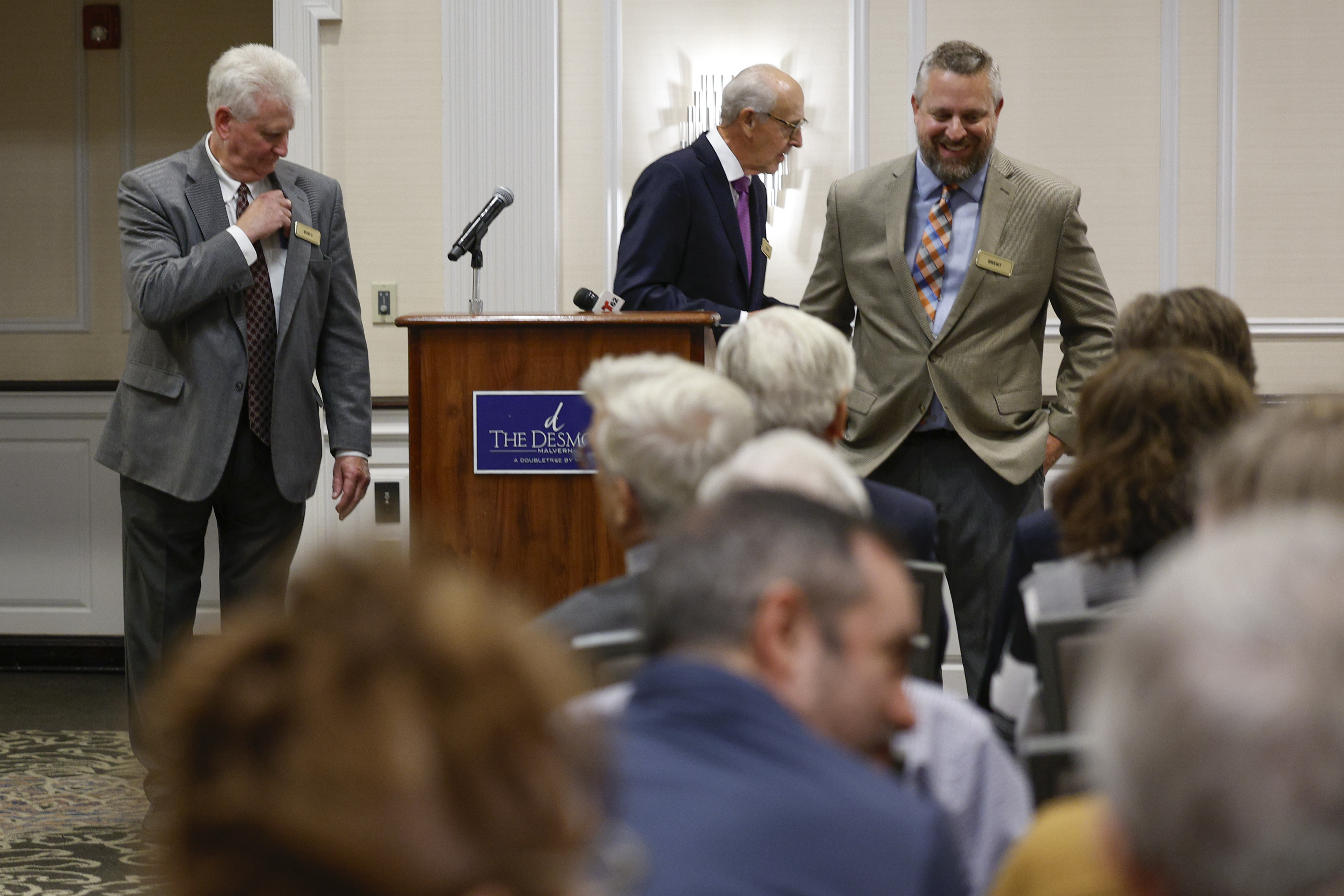
Speaking to a full house containing a large number of residents and business owners, auctioneer Doug Clemens informed attendees that it had been postponed — an announcement he acknowledged “could make you happy, maybe will make you sad.”
No date was immediately set.
A spokesperson for Piazza Management said on Friday, days after the auction, that “the auction was postponed due to technical electronic on line [sic] bidding issues and on site phone communication complications.”
Auctioneer Doug Clemens, center, walked off after announcing that there would be no auction on Wednesday of St. Peter’s Village. The auction was held off-site at the Desmond Hotel Malvern only to find out at the last second, the auction was canceled.Steven M. Falk / For The Inquirer
It was not immediately clear how many people had shown up to bid on the property. Those interested in bidding on the land were told to bring, by a bank cashier’s check, $150,000.
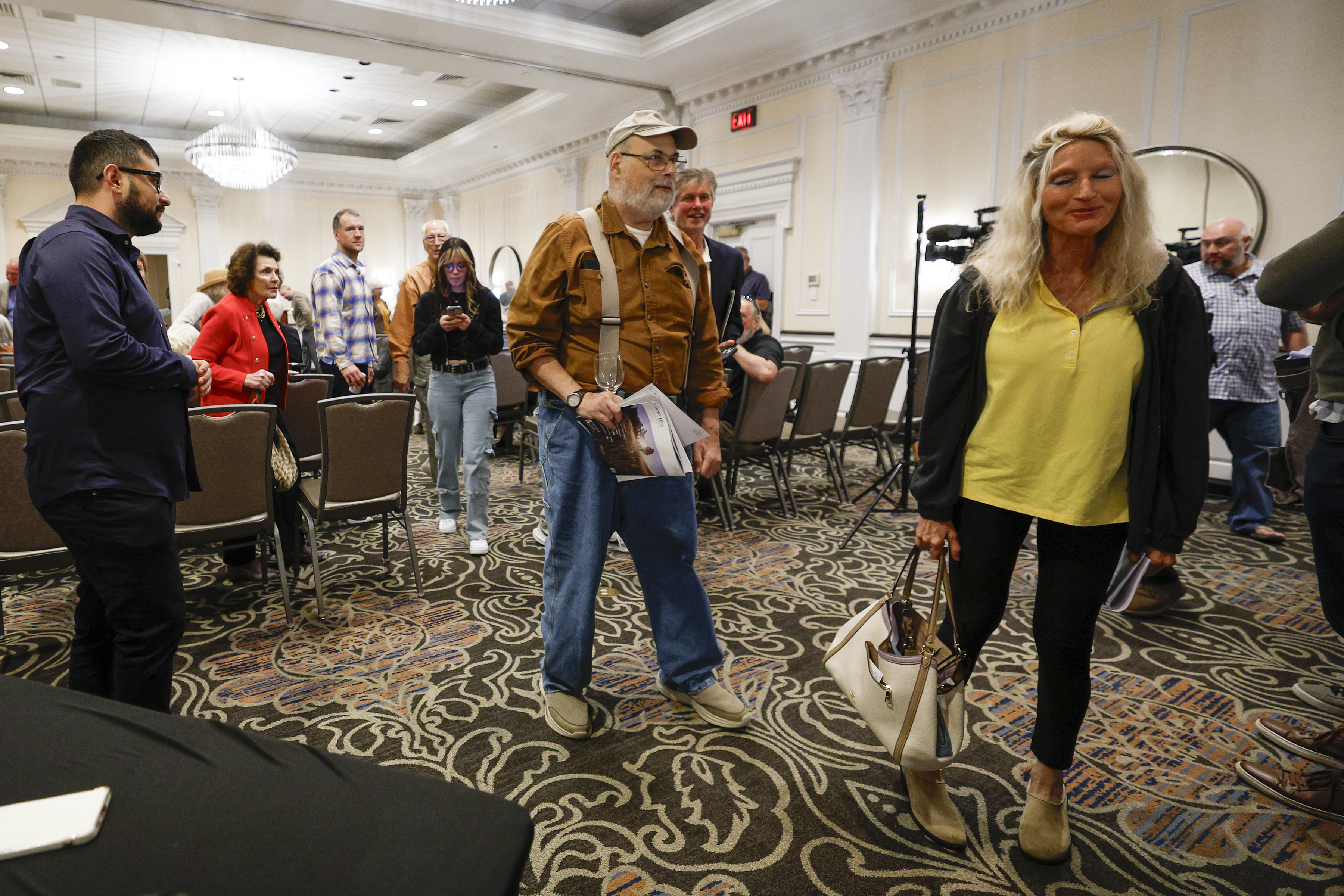
The public auction, held in Malvern, drew spectators and was a crowd of familiar faces for residents and business owners in the village. As they left the meeting room, they speculated over possible deals that could have arisen.
St. Peter’s Village, which grew around the French Creek and flourished in the Gilded Age due to its natural resources, became a place of recreation and leisure in the 1880s. Since then, it has continued to draw tourists to its quaint shops, rocky shores, and hiking trails. The village is nestled in Warwick Township, which has a population of roughly 2,600.
People walk out after the auction of St. Peter’s Village was canceled. The auction was held off-site at the Desmond Hotel Malvern only to find out at the last second, that auction was canceled.Steven M. Falk / For The Inquirer
The owners had planned two neighborhoods, totaling about 121 home sites, with a mix of densely populated housing and larger single-family homes. With the economic downturn in the early 2000s, that vision never fully materialized; several homes are unfinished. To see it through, a new buyer would have to improve the wastewater treatment plant included in the purchase.
Tom Tulley, a resident since 2009 who lives adjacent to the proposed development, has concerns about building out the land to the envisioned extent.
He has known development was inevitable, but if “they put another 150 homes with however many toilets and bathtubs and washing machines, I’m just concerned that the aquifer might not be able to support it,” he said.
Longtime business owners Christopher and Ashley Dilworth, who own Fox & Frog Apothecary, were excited that the Piazzas were set to turn it over so someone else could take the mantle and continue revitalizing the village. Christopher Dilworth acknowledged there “will be opinions on which way would be better, which way would be worse.”
But, Ashley Dilworth said, “I think all of the people in the village and everyone that came out would just be excited for anyone who had a big enough vision to move it to the next level.”
St. Peter’s Village was to be sold off to the highest bidder. The auction was held off-site at the Desmond Hotel Malvern only to find out at the last second, the auction was canceled,, September 30, 2026Steven M. Falk / For The Inquirer
It has had, over the last several years, a new life breathed into it, she said. With the help of social media, people from across the region — from New York to Delaware — have been discovering the town, which boasts everything from antique stores to modern jewelry to an antique arcade.
“People are staying in this little one-block town for a whole day,” Christopher Dilworth said. “There’s that much to do there and experience.”
Peter Melle and his wife, Melanie, who owned the bakery in town for about 15 years, were hoping to see someone pick up the project where it was left off.
“Everybody’s curious,” he said. “I think it’s a great project. … I think it’ll be a phenomenal location to build. But it’s about the money.”
Megan Reese, who lives in Malvern, has gone to St. Peter’s for a long time. She wanted to see someone purchase it who would take care of it and also “honor all the fun that’s occurring.”
“A lot of people love St. Peter’s, and it’s iconic. It’s been around for a very long time,” she said. “I really want it to be a heart project for somebody.”
This story has been updated to include a statement regarding the reason for the auction’s postponement.
This suburban content is produced with support from the Leslie Miller and Richard Worley Foundation and The Lenfest Institute for Journalism. Editorial content is created independently of the project donors. Gifts to support The Inquirer’s high-impact journalism can be made at inquirer.com/donate. A list of Lenfest Institute donors can be found at lenfestinstitute.org/supporters.