It’s terrible what’s going on with Haitians and Syrians who have been living under a special designation known as Temporary Protected Status (TPS).
They’ve literally been in panic mode since last month’s U.S. Supreme Court 6-3 ruling cleared the way for the Trump administration to strip away their ability to legally work and be protected from deportation. Roughly 350,000 Haitians and 6,000 Syrians are scrambling to figure out what their next moves will be.
Will they relocate to Canada? South America? Somewhere else? Or even go underground? Pause for a moment and imagine having to find a whole other country that will take you in.
Many fled Haiti’s 2010 earthquake and have lived in the United States for more than 15 years. We’re not talking about illegal aliens. These people are here legally. They are our neighbors. They own homes. Some have children who are U.S. citizens. They pay taxes. They hold jobs. Many work in hospitals, nursing homes, and retail establishments. Some are entrepreneurs. What are they supposed to do? Where do they go? Do they take their American-born children with them?
MAGA dismisses them, saying, “Go back to Haiti.” But it’s not that simple. The tiny Caribbean nation is on the U.S. Department of State’s Do Not Travel list. It’s not safe there. Not for Americans. Not for native-born Haitians, either.
The Trump administration has dramatically restricted the number of refugees allowed in this year to just 7,500, but makes exceptions for white South Africans.
As an African American, it galls me to have to sit back and watch this kind of racial preference play out. Granted, disparate treatment like this is nothing new. America has always been racially divided — but what’s happening now reaches a new depth of inequality.
It starts at the top.
President Donald Trump’s disdain for Haitians is deep and well documented, having falsely accused those living in Springfield, Ohio, of eating their neighbors’ pets and “destroying their way of life.” He has a long history of racial animus directed at Black people, famously referring to Haiti as being a “shithole country” and claiming many of its immigrants “probably have AIDS.”
Former Fox News host Megyn Kelly may be feuding with Trump, but it certainly sounded as if she were speaking for his administration last month when she said this about Haitians: “We don’t want you. We don’t care if you’re offended.”
Bigot Barbie wasn’t done, adding: “Get out. Go home,” before using an expletive to tell immigrants to go back to Haiti. Kelly delivered her vile commentary shortly after the Supreme Court’s conservative majority ruled that government officials could end Temporary Protected Status for those who had cometo America to escape violence and natural disasters.
Megyn Kelly speaks at a Donald Trump campaign rally at PPG Paints Arena in Pittsburgh in advance of his election in 2024.Evan Vucci
Now that the protections Haitians and Syrians have been living under have effectively ended, Trump can extend his campaign pledge and include those until now legally residing here in his mass deportation efforts.
This is scary.
And potentially life-threatening.
Yet, it’s not on a lot of people’s radar.
I reached out to the Rev. Jennifer Joseph, the lead pastor at Zion Community Church in Yeadon, where many Haitians worship. She told me people need to know that “folks on TPS are not illegal, and they are not criminals.”
Joseph added, “Those who are not well versed about immigration law just assume that these people shouldn’t have come [and that] they should have known better.”
It’s great that the U.S. allows immigrants to reside here when their homelands are in turmoil. But once people arrive and become long-term, law-abiding residents, they need more pathways to permanent legal status.
They also need to be protected from the political whims of people like Trump or Homeland Security Secretary Markwayne Mullin.
Neck-downs, chicanes, bulb-outs: They sound like threats from a 1930s mobster, but all three are traffic-slowing techniques that could soon arrive on your Abington street.
The township will now allow residents to request traffic-calming measures under a new policy approved last week that requires traffic studies and majority approval from nearby property owners.
The new petition policy adds to over a decade of efforts to curb speeding in Abington, which was the first town outside of Philadelphia to begin installing red-light cameras in 2014. Abington police have said they saw a resurgence in violations after the department limited in-person traffic stops during the pandemic.
Which streets can get traffic calmers?
To qualify for a traffic-calmer application, a street has to average between 500 and 6,000 vehicles per day on three weekdays in a row and cannot be a major artery or an emergency route. Private roads and alleys aren’t eligible, either, and the road has to be at least 500 feet long.
There are other criteria too, depending on why the traffic-calming tool is needed.
If the issue is speeding, only roads where three-day traffic studies show that over 15% of drivers are going more than 10 miles above the speed limit will qualify.
If cut-through traffic on a sleepy street is the problem, the traffic volume has to exceed the expected level under a formula the township uses, either as a daily average or at its peak.
Who decides which roads get bumps?
There are two ways a road can be evaluated for traffic calmers under Abington’s new policy: a property owner’s petition, or the township manager’s request.
If the manager requests it and a traffic study shows the road meets the criteria, property owners “directly adjacent” to the proposed traffic calmers will get at least 30 days’ notice of the proposal, the traffic data for that road will be posted on the township website, and there will be a two-week public comment period on the plan.
If a property owner submits their road, the police will do a traffic study and ensure it meets the criteria, and then get approval from the township manager to proceed with a petition for approval from local residents. The property owner who filed the request has to get signatures from 60% of the directly affected home and business owners supporting the measure within 90 days.
If approved, the property owner would then pass around a second petition to get 60% to 70% approval from a larger group of affected residents for the specific traffic-calming device and its planned location within 90 days.
Ticketable speeding not as common as some Abingtonians think, traffic studies show
The traffic study alone may stop many proposals in their tracks, based on similar studies the township already does when residents complain about speeding.
Most studies on the township’s website from 2025 and 2026, spurred by complaints, found very few enforceable speeding infractions.
For example, an October 2025 study at the 500 block of Montgomery Avenue where the speed limit is 25 mph found zero enforceable speeding violations. The average driver was going 18 mph, with 85% going 21 mph or slower.
Many of the dismissed complaints were for roads posted at 25 mph, where going just 9 mph over is 136% of the speed limit.
But some complaints do reflect frequent, enforceable speeding violations: An August 2025 study of the 300 block of Shelmire Street next to Lawnview Cemetery found an average speed of 31 mph in the 25 mph zone, and about 10% of passing vehicles met the criteria for enforcement. The police department planned to add speed enforcement on that block, according to the report.
“Most of our residential streets tend to have 25 mph speed limits,” said Sgt. Michael Coughlin, the traffic safety officer who introduced the new policy at last week’s commissioners’ meeting. “In our experience, people tend to be a little more concerned about speeds where they live, which helps explain some of the complaints.”
What traffic devices could Abington add?
The traffic-calming measures mentioned in the policy include speed humps, roundabouts, road narrowing (called neck-outs), bulb-outs (extended curbs), and chicanes, which create artificial curves in the road with deflectors.
A chicane, or artificial curve, at Charlotte Motor Speedway in Concord, N.C., in 2018. AP
But there are downsides to some devices, township officials have noted at public meetings: Residents might win speed humps on their street, only to realize they now hear the sound of tires thunking over bumps thousands of times per day.
This suburban content is produced with support from the Leslie Miller and Richard Worley Foundation and The Lenfest Institute for Journalism. Editorial content is created independently of the project donors. Gifts to support The Inquirer’s high-impact journalism can be made at inquirer.com/donate. A list of Lenfest Institute donors can be found at lenfestinstitute.org/supporters.
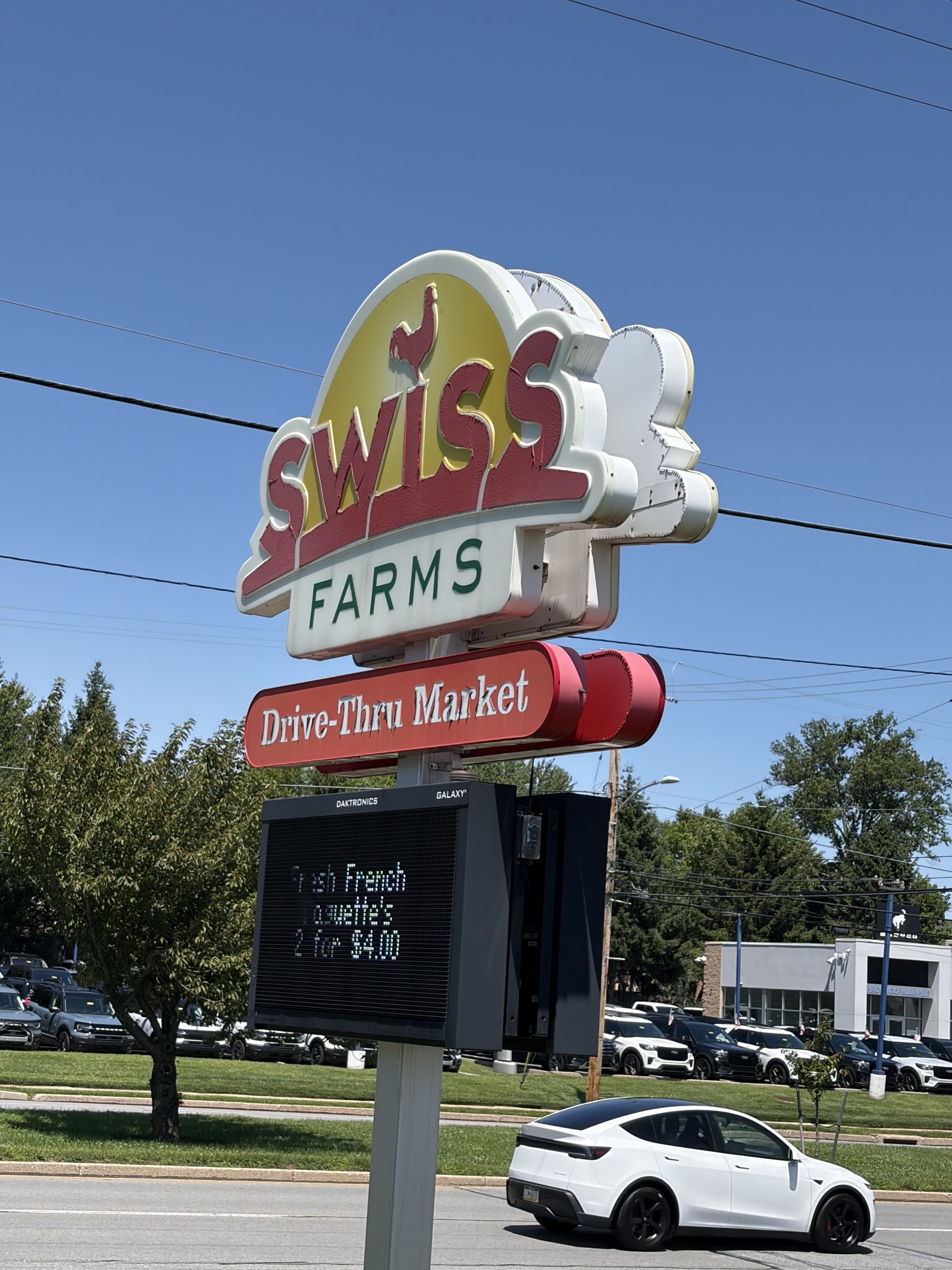
The new owner of Swiss Farm Stores, a Delco fixture selling dairy, groceries, and convenience goods almost as long as cross-county rival Wawa, is planning new stores with gas pumps in Delaware, Philadelphia, Montgomery, and Bucks Counties.
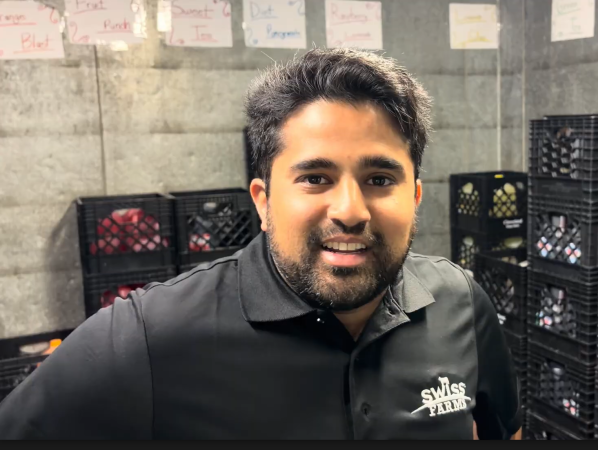
“We were neck and neck with Wawa, then they went into gas in 1996, and it revolutionized their business,” said Arsh Pola, a Drexel University graduate and gas station and convenience store operator, who bought the chain in stages after starting talks in 2022.
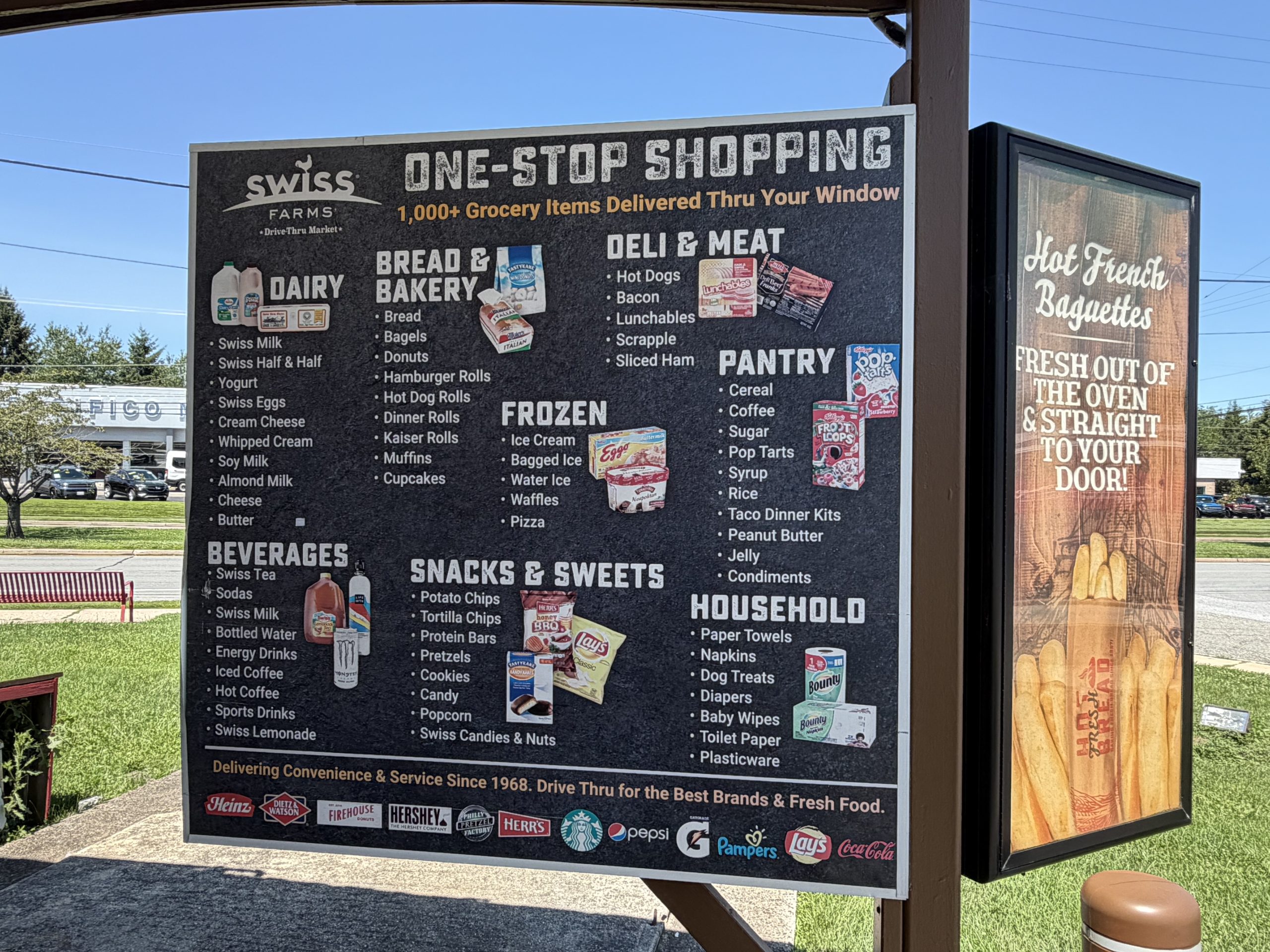
“It’s a beautiful business,” Pola said. Serving through drive-up windows from posted menus of hot and cold foods andpantry items, “we have a different customer from other stores: mom. We are serving local families milk and the things that built a cult following. We will add more of the right things.”
Side entrance at Swiss Farm Stores’ Drexel Hill, location.Joseph DiStefano
Pola’s vision to update Swiss Farm, which started in 1968, is fuel and an expanded menu.
Adding gas to a drive-up chain might not be a long jump for Pola, who owns gas stations, stores, and apartments in Philadelphia and Montgomery County.
The North Penn High School alumnus jokes that his retail focus in a family of professionals — engineer, pharmacist, dentist — makes him “a black sheep” but also tracks with his Gujarati immigrant grandfather, a teacher who saved his pay to buy a New England convenience store.
Pola began negotiating to buy Swiss Farm franchises in 2022, two years after Florida-based Farm Stores bought the company from Radnor-based MVP Capital and other investors.
Earlierowners tried and failed to grow Swiss Farms beyond Delaware County. When Pola realized the Delco-area franchises were the only stores still open, he bought one after another, starting in 2024, and then the parent company. He was financed by regional banks that also backed his gas station deals. The purchase closed June 30.
His plans rely on execution by Swiss Farm veterans, topped by Chris Gray, who worked 25 years at the company and rose to CEO before MVP let him go. Pola, now CEO, brought Gray back as chief operating officer.
Pola agreed to detail his plans for Swiss Farms to The Inquirer in interviews at the Broomall and Drexel Hill stores.
How did you get into retail?
When I was studying finance at Drexel [graduated 2019], I had the dream of working at Goldman Sachs. I became the youngest co-op at Goldman Sachs. And they quickly told me, ‘You get along really well with the clients.’
I started buying gas stations while I was still a student. I took Warren Buffett’s advice: ‘Buy something with a moat around it.’ Gas stations have a very strong customer cash flow that’s recession-proof.
I started with a former Liberty, up at Ridge and Manatawna. I wanted my own brand on the store. I called it Posh [with a crown over the P]. I ended up doing Marathons and Lukoils. I still have a few stations in Philadelphia and Montgomery County.
How could you afford to buy Swiss Farms?
Each gas station required a million-dollar investment. So I wanted to do a portfolio deal [buy several at once]. Everything was financed from the banks that knew me. They do 20-year mortgages.
Farm Stores’ goal was: ‘Let’s franchise!’ Wawa doesn’t franchise. Raising Cane’s CEO Todd Graves talks about this: You can’t control the quality of a franchise when you don’t own it.
I told Farm Stores, ‘You guys are 1,500 miles away. Let me buy it all.’
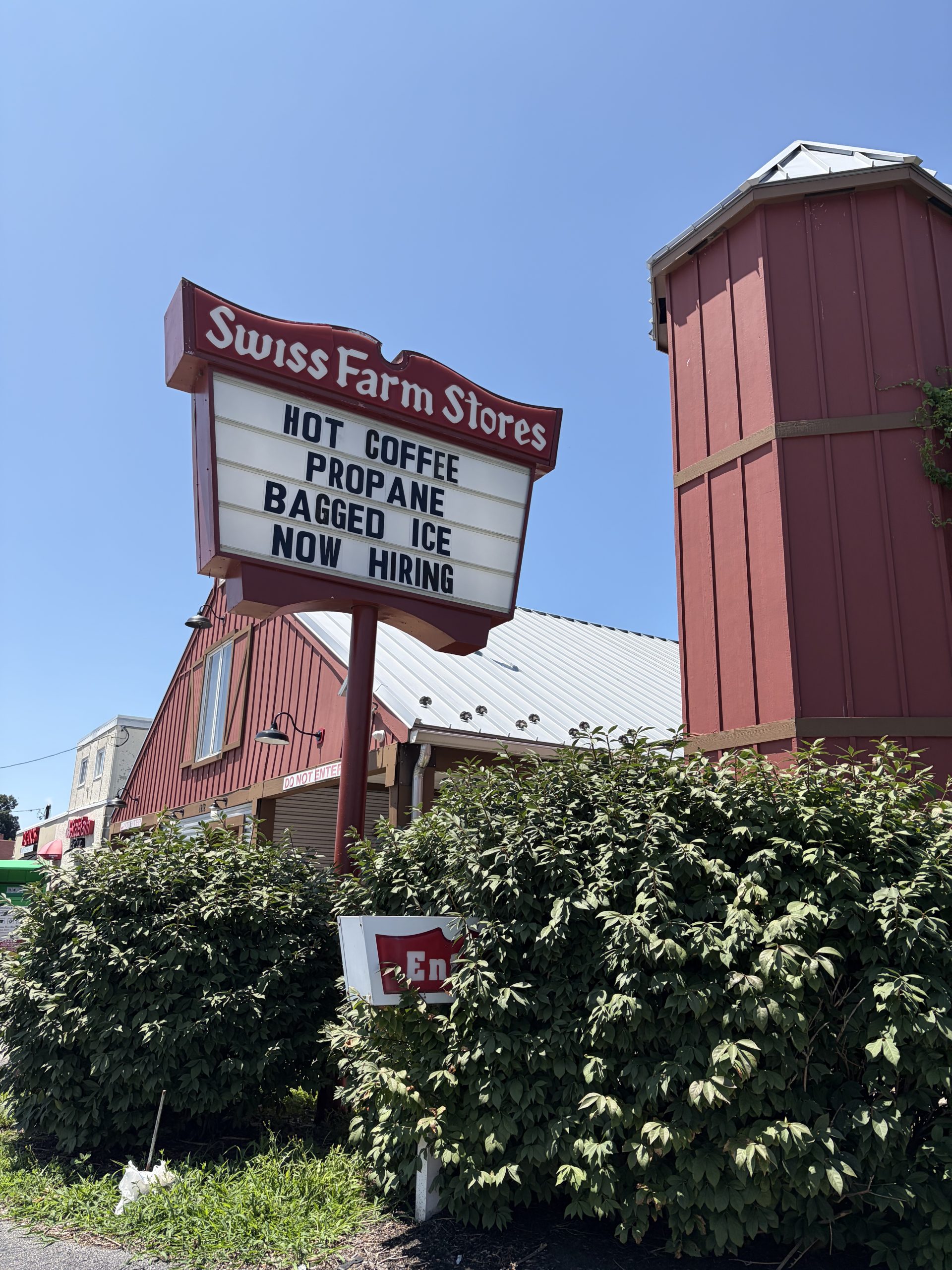
Sign at Swiss Farms’ Broomall, Delaware County store.Joseph DiStefano
What are the first few things you will add or take away?
The stores need a facelift. We won’t take away the silos, but [we’ll give them] a fresh look.
We always had employees in these black shirts. Now we’ve added six new colors, make it fun for the staff.
We just did an event with [former Eagle] Brian Dawkins. Everyone on his staff knew Swiss Farms and loves us.
How can you compete with large chains like Wawa and 7-Eleven that can purchase gas and food in bulk at lower costs?
I’m already in the gasoline business. I buy on the open market every day. I buy from the same [fuel suppliers] that sell to BJ’s and Sunoco. We are going to price gas the most aggressively we can.
Some costs you can cut. Swiss Farms had a consultant negotiating what were supposed to be the best trash rates. We cut that.
Swiss Farm Stores drive-up menu, July 2027Joseph N. DiStefa
Kathy Strimmel, who runs the Drexel Hill store, says she’s a longtime customer, who’s now been working there for a year. Is it hard to find people to work your stores?
It’s difficult to find quality talent. People don’t all have the same drive, or loyalty. We start at $10 to $12 an hour.
Your milk costs maybe a dollar more a gallon than the store down the street, why?
It’s good milk! People don’t say, ‘Can I get a gallon of whole milk?’ They say, ‘Can I get Swiss Vitamin D?’ And we share the cost for getting it into your car.
We do have the best prices on our iced teas. I don’t know why, but Delaware County has a reputation as the best iced-tea market in the country.
How many new stores are you planning?
Twenty-five in the next five years. We will find locations here in Delaware County, and we will enter Philadelphia, Montgomery County, and Bucks County. After that, we will grow organically, state by state, where it makes sense.
I respect Wawa. [Wawa CEO] Chris Gheysens said, ‘It took 60 years for us to get into six states; it’ll take six years to get into the rest.’”
Saquon Barkley isn’t just a champion on the field. On Wednesday, Jefferson Health announced that he will be the new face of its “Champions of Care” campaign, bringing the running back’s impact out of the stadium and into the community.
Barkley has a history of nonprofit work. Jefferson Health is partnering with The Michael Ann & Saquon Barkley Hope Foundation, a nonprofit the Barkley family founded in 2020. (Michael Ann was Saquon’s late grandmother.) Together the organizations plan to support underserved youth in the community through events like a backpack drive, as well as food and holiday gift drives.
“Saquon Barkley is a leader both on and off the field — someone whose work ethic, humility, and connection to this city inspire people far beyond the stadium. That’s why we’re so proud to welcome him as a Jefferson brand ambassador,” said Nick Ragone, executive vice president and chief marketing officer for Jefferson.
“Together, we will work to fulfill our mission of improving lives across the Greater Philadelphia and Lehigh Valley regions. Just as sports have the unique power to unite our city, this partnership will help us build a healthier, more connected community.”
Eagles running back Saquon Barkley during an event for the Michael Ann and Saquon Barkley Hope Foundation in November.Jose F. Moreno / Staff Photographer
Jefferson Health has been a major partner of the Eagles since 2024. Earlier this year it expanded its multiyear partnership and renamed the Eagles’ training facility in South Philadelphia to the Jefferson Health Training Complex.
Barkley is not alone in this endeavor. He and Eagles defensive end Brandon Graham plan to make public appearances as ambassadors throughout the Philadelphia and Lehigh Valley areas, potentially including the Jefferson Lehigh Valley Classic golf tournament, running Sept. 28-Oct. 4. The Classic also supports the Eagles Autism Foundation, with the team’s philanthropic efforts serving as a central pillar of its identity, and a motivation for Barkley to join the Champions of Care campaign.
“While everybody sees what my teammates and I accomplish during games, it’s just as important to have partners off the field that help make a difference for the communities around you,” Barkley said in a statement. “Teaming up with Jefferson as a ‘Champion of Care’ not only aligns with the mission of the Michael Ann and Saquon Barkley Hope Foundation but will make a tangible difference in the lives that we serve. I could not be prouder to join this team.”
“This ruling supports the long-term health of our industry” in Pennsylvania, said CJ Ciarrochi, CEO and fourth-generation owner of Modern Mushroom Farms in Toughkenamon, Chester County, part of the Fresh Mushrooms Fair Trade Coalition supporting the case against the Canadians.
But one of the largest area growers called the decision a protectionist move that would enable aging U.S. farms to avoid upgrades and leave consumers with fewer choices.
“We sell our Canadian-grown mushrooms in the U.S. at a higher price than our U.S.-produced mushrooms — the polar opposite” of dumping, said Lewis Macleod, Kennett Square-based CEO of South Mill Champs mushrooms, which also has operations in Canada and Mexico.
(function(){function e(){window.addEventListener(`message`,function(e){if(e.data[`datawrapper-height`]!==void 0){var t=document.querySelectorAll(`iframe`);for(var n in e.data[`datawrapper-height`])for(var r=0,i;i=t[r];r++)if(i.contentWindow===e.source){var a=e.data[`datawrapper-height`][n]+`px`;i.style.height=a}}})}e()})();
Final decisions in September could impose penalties that boost U.S. grocery stores’ cost to buy Canadian mushrooms. The Commerce Department’s calculations suggest anti-dumping and countervailing-duties penalties, if adopted, could add 10 to 15 cents per $1 to the price of Canadian mushrooms exported by Champs, owned by Eos Partners of New York; Highline Mushrooms, owned by Japan-based Sumitomo Corp.; and Windmill Mushrooms, owned by Toronto-based Instar Asset Management.
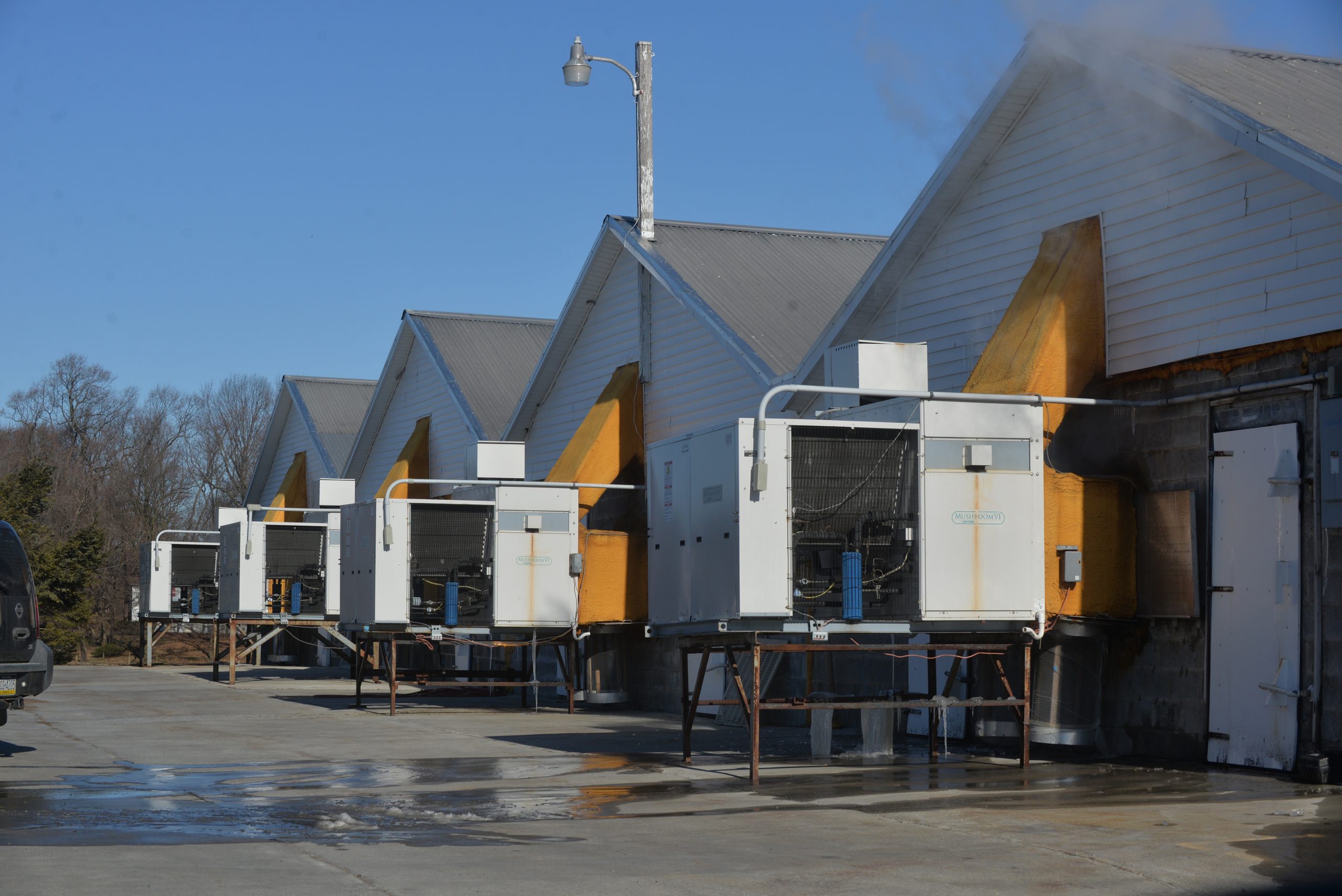
That would ease import competition for Pennsylvania growers, who produce more than two-thirds of the U.S. mushroom crop, mostlyin clusters of climate-controlled sheds in northern Berks County and southern Chester County.
At Modern Mushroom Farms, on Newark Road, Toughkenamon, Chester County, in 2020.Bob Williams For The inquirer
The Department of Commerce’s finding “is a win for fairness, competition and the future of American mushroom farming” and for “everyone to play by the same rules,” said Mark Currie, CEO of 99-year-old Giorgio Cos.’ food division, the largest of the coalition members.
Giorgio employs over 2,300 in Berks and Chester Counties and also buys from other growers such as Modern. Its corporate parent, Giorgi Global Holdings, is an international bottle and can maker with $5 billion in yearly sales.
While Champs’ Macleod predicted the Commerce Department’s final probes would find no dumping, Currie said he expects the review of sales records would find more evidence.
“We know the private-equity playbook: ‘Let’s drive the mom-and-pops out, jack prices, and then flip our companies” to outside investors and global companies, Currie said. “We called them on it. Enough’s enough.”
Sales to U.S. buyers peaked at around 1 billion pounds in 2019 but have since declined, according to the Mushroom Council,a national organization that promotes the crop. Canadian farms are gaining larger sales in a smaller U.S. market.
U.S. production peaked in 2015 at 811 million pounds and has fallen each year since, to 631 million pounds in 2025.
Fresh mushroom imports, mostly from Canada, have grown steadily since 2012, more than doubling to 208 million pounds in 2025.
The trade coalition says at least 10 U.S. mushroom farms have closed since 2022, including five in ChesterCounty and one in Berks County.
In its investigation, the Commerce Department compared the prices of premium-grade U.S. mushrooms to lesser-grade Canadian mushrooms and discounted low-priced U.S. mushrooms, Macleod said.
Canadian exports are winning U.S. customers not because Canadians are selling unfairly cheap but because Canadian farmstend to be new and efficient and grow an attractive product, he said.
Commerce began the investigation of alleged dumping and subsidies in January. The department’s latest finding follows its May “preliminary affirmative determination” that some Canadian mushroom farms were operating with an effective Canadian government subsidy of up to 5%.
South Mill Champs built an additional plant in 2023 in Chester County’s Elk Township, near the Maryland border, and now directly employs around 400 in the county, according to Macleod.
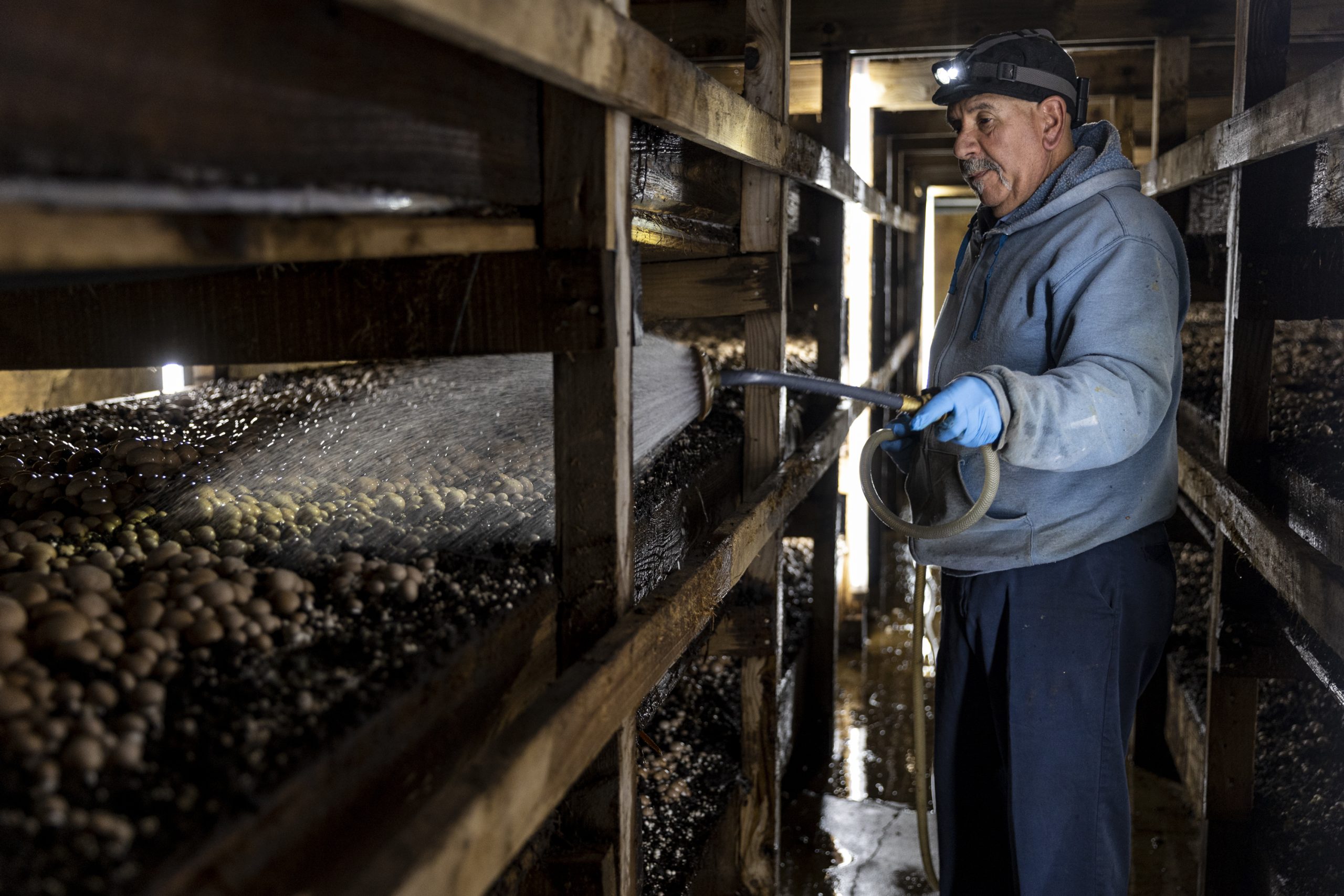
A worker is watering Crimini Mushrooms being grown at The Woodlands at Phillips Mushroom Farm in Kennett Square in 2022.Tyger Williams / Staff Photographer
The company also has added mushroom production near Winnipeg, Manitoba, and is building in Mexico’s Guanajuato state. It has a processing plant in Cambridge, Md., and has diversified into mushroom-based snacks and fruit storage and distribution.
Rival Giorgio has a joint-venture plant in Saltillo, northern Mexico, which has been selling to Mexican and U.S. buyers since the 1990s.
Many of Chester County’s Mexican mushroom workers are from Guanajuato. Thousands gained legal resident status and a path to citizenship in President Ronald Reagan’s 1980s amnesty program. Many have raised families and started businesses in the county. Nearly half Kennett Square’s population is Latino, according to the U.S. Census’ 2025 estimates.
Mario Gomez, of West Grove, cooks white mushrooms in butter, garlic, and salt to give out as free samples during the annual Mushroom Festival in Kennett Square in 2023.Tyger Williams / Staff Photographer
In recent years, growers have had more difficulty obtaining U.S. work permits for workers from other countries.
Miguel Morales, a Guatemalan labor contractor who served as employer of record for nearby Chester County mushroom growers from his base at an Oxford convenience store, was convicted in federal court in Philadelphia last year of hiring unauthorized workers and failing to collect and pay taxes for some of them. He was sentenced to a year in prison, plus $8 million in restitution to the IRS. The growers were not charged.
South Mill Champs’ Macleod said he and his neighbors, though they differ on trade and sanctions, all support efforts by the American Mushroom Institute to expand legal status for immigrant farm laborers.
But with government restrictions on labor growing instead of easing, he said, “we have had to limit our expansion in the U.S., owing to challenges with labor availability.”
Macleod says the key to the U.S. mushroom industry’s survival and growth is automation.
The “distraction” of the trade dispute has delayed South Mill Champs’ proposed investment in a new, fully automated mushroom farm at its Oxford facility, where there’s room to triple the size of the current facility, he said.
Imagine sitting down in a restaurant and having every item on the menu listed as “market price” — and not being able to learn exactly how much anything costs until after you’ve placed your order.
For restaurateurs, that kind of business model would probably put someone out of business.
For healthcare providers, it’s not only the norm, but it’s also one of the primary reasons so many Americans struggle with medical costs.
Healthcare may be the only entity in which a service is rendered without the user of that service knowing what it will cost them. As a retired physician, I’ve seen how this lack of price transparency can take many forms — all of which are harmful and unfair to consumers.
Facility fees are a prime example of lack of transparency. These are added costs charged by hospitals for services provided there. This information is rarely conveyed to patients, and most patients are unaware of them.
In one specific case, a patient was asked if he wanted his arthroscopic surgery to be done on a Wednesday or a Friday.
The difference was not simply a difference in dates. It was also a difference in locations, as the Wednesday procedure would be done at the hospital, while the Friday procedure would be done at an outpatient surgery center.
The difference in cost was approximately $11,000 because of the facility fees at the hospital. If the patient had a 50% coinsurance policy, they would have had to pay more than $5,000 extra if they chose Wednesday over Friday. How many patients know to ask about this potential added expense?
We must insist that these government mandates regarding price transparency be appropriately enforced. Furthermore, the ruling must be expanded to include any independent facility that provides any type of healthcare, such as a lab or imaging center. Patients have a right to know what things cost before they buy.
Government mandates regarding price transparency must be appropriately enforced, Mark Lopatin writes.Dreamstime / MCT
Facility fees must be removed to reduce the wide variability in costs at different types of facilities. Medicare has a policy in place to address neutral-site payments, but it only applies to certain services. This must be expanded to include all services and all insurers. Furthermore, this policy must be simplified and made readily available to patients in easy-to-understand language.
Hidden prices are also an issue in the pharmaceutical industry. The U.S. Department of Health and Human Services issued a ruling in 2019 requiring pharmaceutical companies to disclose costs in their direct-to-consumer ads.
Predictably, a lawsuit was filed by the pharmaceutical industry opposing this. The end result is that even today, pharmaceutical advertisements make only vague references to expected costs, and there are often multiple exclusions that make patients ineligible to get drugs at a reduced price.
One unique strategy to address some of the cost and transparency issues would be the increased use of direct primary care (DPC), which removes middlemen such as insurers and pharmacy benefit managers from the healthcare transaction.
Without middlemen taking their cut, patient costs come down. Patients who use DPC are able to get discounted posted rates on medications and testing, and they know in advance what their charges will be. Not surprisingly, the insurance lobby is opposed to this model because it restricts its control of the healthcare dollar.
Although affordability and price transparency are huge issues, we must keep in mind that there are many other variables that limit access to healthcare. Having insurance coverage does not eliminate long waits to see physicians or get imaging studies.
Delays can occur for a variety of reasons, such as physician shortages, administrative burdens, and increased patient demand. Efforts to address costs and clarity in prices unfortunately do not address these other issues.
Thus, as the midterms approach, we must consider all of the variables affecting access to healthcare. We repeatedly hear that healthcare is too expensive, but rarely do we hear anyone come up with any concrete strategies to lower healthcare costs.
Affordability is indeed a huge problem that must be addressed, but candidates must realize that access to healthcare is a much bigger issue. Addressing price transparency more strongly would be a good place to start any fixes.
Now all we need are legislators with the guts and determination to fight for patients against those who seek to exploit them for profit motives.
Mark Lopatin is a retired rheumatologist, a healthcare advocate, and the author of “Rheum for Improvement.” He speaks out regularly against forces that seek to compromise patient care in exchange for control of the healthcare dollar.
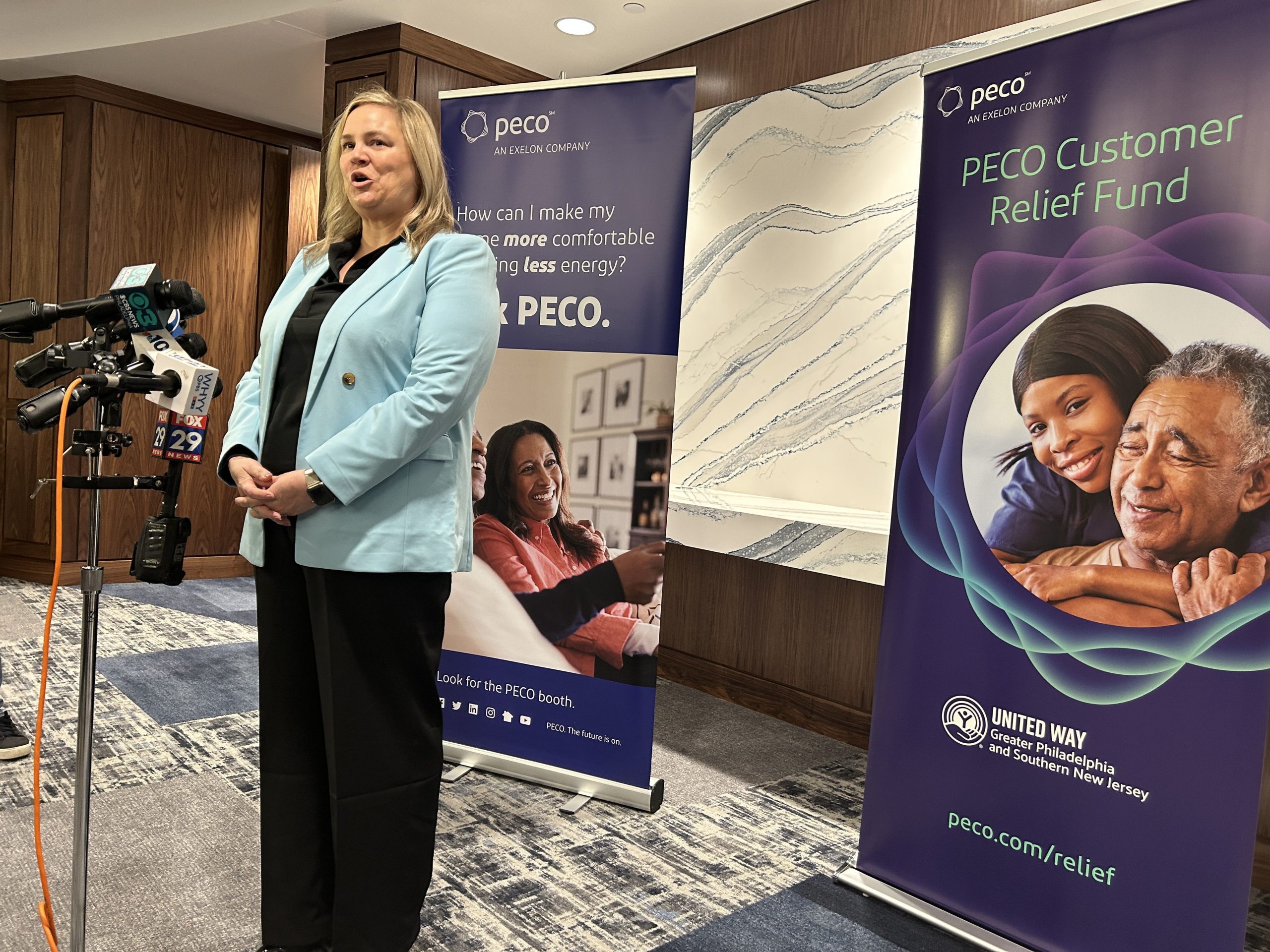
When IBEW Local 614 and Peco started negotiating a new contract earlier this year for call center employees, linemen, and other field workers, one thing was clear to local union president Larry Anastasi: He needed to get pensions back for all of his members.
Roughly 600 of his 1,500 members, hired since 2021, weren’t offered a pension. The rest had differing plans.
Clawing back pensions for the whole union wouldn’t just be a reversal of Peco’s trajectory. It would buck a cross-industry trend.
“The trend my entire career, which is now more than 40 years in this business, has been employers want to get away from defined benefit plans, and unions want to maintain them and get them in more places,” said Wendell Young IV, president of United Food and Commercial Workers Local 1776, which represents workers in Pennsylvania and neighboring states.
In early July, after a three-day strike, Peco and its worker union reached a deal that includes a pension plan for all workers. But it’s not your grandparent’s pension.
The traditional defined-benefit retirement plan peaked in popularity in the 1970s, whenup to 62% of private-sector workers relied on a pension as their sole retirement plan, according to the New York Times. That number shrank to 1% of private-sector workers in 2022.
Employers in the gas and electric utility industry started moving away from traditional pensions in the 1990s,according to William Dwyer, a professor at the Rutgers University School of Management and Labor Relations, who once worked at PSE&G in New Jersey.
Under the new Peco union contract, workers will get a cash-balance plan — where employees are promised a specific amount of money in retirement without having to contribute to it themselves. The benefit accrues throughout a worker’s career, unlike the old-school pension that is typically based on total years of employment and how much a worker is earning in the final few years of their career.
It’s an increasingly popular compromise, said professor Olivia Mitchell of the Wharton School. With workers living and working longer than they used to, traditional pensions become unpredictably costly for employers. The cash-balance option is a chance for both company and worker to better see the future.
“They accumulate benefits more evenly over a worker’s career,” she said, “making them easier to understand and often less costly and less risky for employers.”
By getting a pension of any sort, said Young, of UFCW, Peco’s unionized workers “rode against the current” and “achieved a really amazing benefit.”
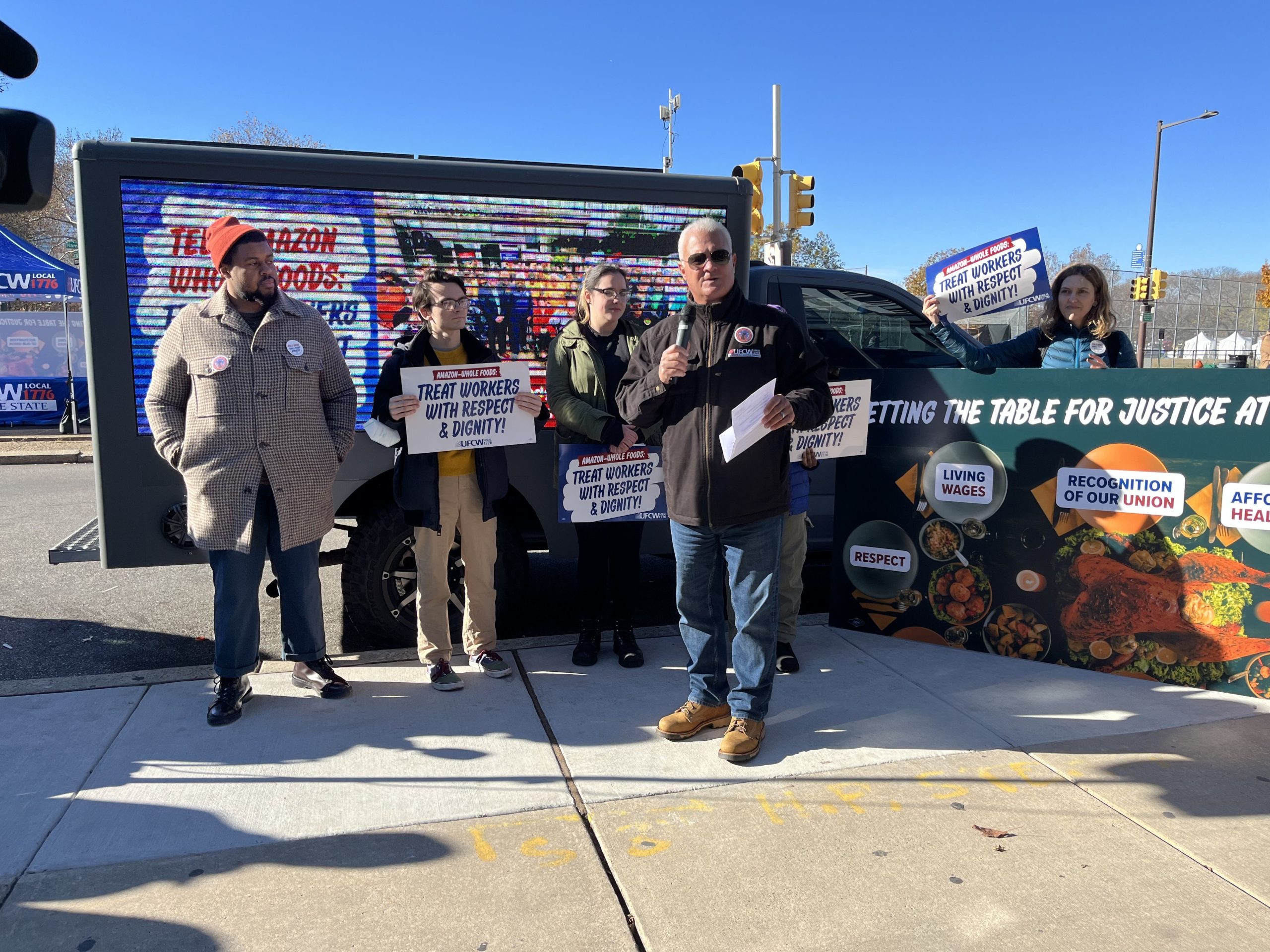
Wendell Young, president of UFCW Local 1776, gathers with supermarket workers outside the Whole Foods at 2101 Pennsylvania Ave on Nov. 24.Ariana Perez-Castells / Staff
What is a cash-balance pension plan?
Cash-balance plans are often seen as a hybrid of the traditional pension and the “defined-contribution” plan, such as a 401(k).
These plans debuted in the 1980s and gained popularity in recent decades. Some 23,000 employers offered them in 2020, up from 1,477 in 2001, the Wall Street Journal reported.
Traditional pensions “typically have benefit formulas that rise sharply late in a career, making them expensive for employers with long-tenured workforces and less valuable for employees who change jobs before retiring,” said Mitchell of Wharton.
Bank of America was the first large company to introduce one, in the 1980s.It offered young employees some flexibility to take their cash balance plan elsewhere if they switched jobs.
By 1996, some 200 “large companies” had cash balance plans, the New York Times reported. The Campbell’s Co., the food giant based in Camden, was one of them.Some companies faced backlash.
Despite adoption at several well-known companies, cash-balance plans still aren’t the norm in the private sector. A recent study by the International Foundation of Employee Benefit Plans found that 21% of corporations surveyed had a defined benefit plan, with 5% being the hybrid kind.
Then CEO of Campbell’s, Mark Clouse, at the company’s investor day on Sept. 10, 2024, in New York City.Ariana Perez-Castells
How Peco retirement evolved
Peco employees were given the option to transition to a cash-balance plan in 2001, and roughly 80% of them did so, the union has said, while others kept their traditional pension. This was before Peco workers unionized with IBEW.The company has also offered 401(k)-based retirement programs.
Peco’s retirement options“have evolved over time in a manner consistent with broader employer and utility industry practices,” the company said in a statement earlier this month.
Larry Anastasi, president and business manager of IBEW Local 614, joined other Local 614 bargaining committee members as they speak to the media about contract negotiations with Peco outside the Hilton Penn’s Landing Hotel on July 6. Jose F. Moreno / Staff Photographer
As IBEW laid out its goals for the new contract, including pensions for all, Peco laid out its own position. The companysaid it wanteda contract that maintained affordable service for customers.
Unlike other private sector businesses that can raise prices at their sole discretion to cover labor costs, Peco leaders mustget approval from the state’s regulating entity, the Pennsylvania Public Utility Commission (PUC) for rate hikes, which is a lengthy process.
Peco did raise rates in 2025 and tried to do so again this year. While the company’s 2025 profits were up 48% from the previous year, leaders said the business still needed to increase rates to meet customer demand for energy.
At Peco, “90% of what we receive [from ratepayers] goes right back into our infrastructure, and that includes paying for the wages and benefits for employees so they can go out and restore power and improve our grid,” Peco’s chief operating officer, Nicole LeVine, said earlier this year during bargaining.
Nicole LeVine, Peco’s chief operating officer, took questions from reporters on March 31 about the contract negotiations and a proposed rate hike.Ariana Perez-Castells
When pensions came up at the bargaining table this year, the cash-balance option prevailed.
The plan’s similarities with a defined contribution plan, such as a 401(k), make it easier for employees to understand, said Joseph Hicks, consultant and co-owner of Keystone 74 Benefits and Administration, which worked with IBEW local 614 during the recent bargaining process. If employers are spending money on a benefit, they want their workers to be able to understand and appreciate that benefit, Hicks said.
Peco, upon reaching the tentative agreement July 6, said the deal “recognizes the contributions of our employees while supporting our responsibility to deliver reliable, affordable service across Southeastern Pennsylvania.”
The Eagles reported to training camp Tuesday and hit the field Wednesday for their first official workout of the 2026 season.
The Sean Mannion era is here, the A.J. Brown era is over, and Nick Sirianni’s sixth training camp is underway as the Eagles again have a roster capable of making a deep playoff run.
Good teams like theirs mean fewer opportunities to get on the initial 53-man roster, which means there will be plenty of competition in camp. And while most of the starting jobs are spoken for, this Eagles training camp still has its share of intriguing position battles to pay attention to.
Here’s a closer look at six of them:
It’s Marcus Epps’ (right) job to lose at safety, but he’ll be pushed. Monica Herndon / Staff Photographer
Safety: Will Marcus Epps hold off the field?
It’s worth starting with safety because it’s one of the few spots on the field where a starter is written in pencil and not pen.
If you’ve been paying any attention to the Eagles since the spring, you know that Cooper DeJean is slated to move from nickel to safety in base defense. But the Eagles, like most NFL defenses, use nickel and dime packages much more often than base. So the spot next to Andrew Mukuba mostly will be manned by someone not named DeJean.
Vic Fangio indicated that Marcus Epps is in the pole position for the job to replace Reed Blankenship, but the 30-year-old will have to earn it. There will be competition from converted nickel Michael Carter II, seventh-round pick Cole Wisniewski, veteran special teamer J.T. Gray, and long shots like Andre’ Sam, Kapena Gushiken, and Maximus Pulley.
Don’t count out another roster addition, too, if Howie Roseman decides the Eagles need to upgrade the safety spot.
The progress of Hollywood Brown (0) in training camp figures to have an impact on the wide receiver depth chart.
Wide receiver: Who gets the final spots?
The top of the depth chart is basically set. Life after Brown means DeVonta Smith is WR1, but the order behind him needs some sorting out.
The Eagles were in 11 personnel (one running back, one tight end, three wide receivers) nearly 60% of the time in 2025. There’s a new coordinator in town, and the Packers were slightly below the Eagles in that type of usage, but expect some of the same in 2026.
Who joins Smith on the field in three-receiver sets? In a perfect world, the Eagles would want Dontayvion Wicks and Makai Lemon to get the bulk of those reps, but Hollywood Brown was brought in to be a vertical threat and should force his way onto the field. Those personnel packages will work themselves out.
Smith, Lemon, Wicks, and Brown are locks. It’s beyond them where the real training-camp battling begins.
Will the Eagles keep five receivers or six? Sirianni loves the “dirty work” Darius Cooper and Johnny Wilson do, but is keeping them both redundant? Can Elijah Moore prove he’s worth keeping around? Britain Covey, meanwhile, still wants to show he’s the best kick-returning option in camp.
What’s the vision for Andy Dalton (left) as the depth chart stacks up behind Jalen Hurts?
Quarterback: Will Andy Dalton or Tanner McKee back up Jalen Hurts?
The Eagles have a quarterback controversy. Sort of.
Andy Dalton and Tanner McKee alternated reps with the second-team offense during the offseason program, and it’s unclear which is the preferred backup to Jalen Hurts.
The team also drafted Cole Payton in the fifth round, and it seems pretty unlikely they make room for four quarterbacks on the initial 53-man roster given the talent elsewhere.
So, what gives?
The Eagles would love to find a trade partner for McKee, who is entering the final year of his contract. But if they can’t, does that put Dalton in jeopardy of being cut (or traded)? Payton is a bit of an unknown, but he has an intriguing athletic profile, and while the Eagles cut a sixth-round draft pick last year (Kyle McCord), they probably would be hesitant to expose Payton to waivers given his traits. Otherwise, maybe he joins Clayton Thorson as a recent fifth-round pick who hits the chopping block.
Third-round tackle Markel Bell has a chance to make an immediate impact.
Swing tackle: Can rookie Markel Bell supplant Fred Johnson?
Considering how much time Lane Johnson missed last season, and Jordan Mailata’s stint on injured reserve in 2024, the swing tackle is a pretty important job.
The Eagles brought back Fred Johnson in free agency because they know how important the backup tackle position is. They then used a third-round pick on Markel Bell, the 6-foot-9 tackle out of Miami. It was a bit surprising the Eagles waited until the 68th pick to select a tackle, but they like Bell a lot, and the big man has plenty of upside.
Which tackle will be first up if Lane Johnson or Mailata misses time? It was Bell who got the first nod filling in for Lane Johnson during OTAs, but Bell missed the final minicamp workout of the spring due to an undisclosed injury.
Who will emerge from camp as the preferred option?
A.J. Epenesa was a solid edge contributor on a generally strong Bills defense in recent years.
Edge rusher: Will A.J. Epenesa show his worth?
This group is pretty similar to wide receiver. The Eagles are set at the top. It’s Jonathan Greenard, Jalyx Hunt, and Nolan Smith Jr. Sure, there’s some interest in which of Hunt or Smith gets more snaps, but the top three edge rushers will see plenty of the field.
Behind them is where it gets interesting. Arnold Ebiketie signed a deal that could be worth around $7 million and is the clear No. 4 as camp begins.
Will the Eagles keep five or six here? They kept five last year and six the year prior in Fangio’s first season.
The Eagles made an interesting signing at the end of the offseason program in June, agreeing to a one-year deal with A.J. Epenesa.
Epenesa’s sack total fell from six in 2024 to just 2½ last season, but he had a better pressure rate (10.6%) in a reduced role with the Bills. He is the biggest edge rusher in the building by 2 inches at 6-6, a size that could be useful in helping set the edge against the run.
Epenesa will be in competition with seventh-round pick Keyshawn James-Newby, an undersized but speedy edge, as well as Jose Ramirez. The Eagles also have Joshua Weru, an International Pathway Player, in camp.
Kelee Ringo (left) is among those seeking a corner job. Monica Herndon / Staff Photographer
Cornerback: Can the Eagles find a trade partner for a bottom-of-the-depth-chart corner?
The Eagles could have the best cornerback trio in the NFL this season in Quinyon Mitchell, DeJean (nickel), and Riq Woolen, but behind them at corner are jobs up for grabs.
Veteran free-agent signing Jonathan Jones probably is a lock to take a roster spot given his 10 years of experience and inside-out versatility. Who claims the remaining spots will be determined in part by how many corners the Eagles decide to keep. They kept six last year, but could a player at a different position — like reserving a roster spot for defensive tackle Uar Bernard to not expose him to waivers — force them to go with five?
That would leave one spot for Kelee Ringo, Jakorian Bennett, and Mac McWilliams.
Ringo probably would be the preferred candidate there given his special-teams talent. The Eagles could also keep six and have spots for two of them.
It’s also possible that Roseman finds himself looking to offload one of them via trade in August.
Fullback: Is it 1996? The Eagles may have a fullback competition in camp between Carson Steele and Cameron Latu. Latu is listed as a tight end, but he’s more of an H back who blocks well and plays special teams.
Interior offensive line: Who would be first in line to back up Landon Dickerson or Tyler Steen? Right now, it’s probably Drew Kendall, who also is the backup center. After that, veteran guard Michael Jordan will try to edge out a group that includes sixth-round pick Micah Morris. Keep an eye on Myles Hinton, too. The second-year lineman took some reps at guard after entering the league as a tackle. The back end of the offensive-line group will be a fun battle to track.
Tight end: Dallas Goedert and second-round pick Eli Stowers are locks. Johnny Mundt’s blocking skills should lock him up a spot, too. With that in mind, it’s hard to imagine Grant Calcaterra, intriguing UDFA Dae’Quan Wright, or Stone Smartt earning a job, especially given the aforementioned skills that Latu brings to the table.
Oroshi Sushi Omakase opened on Broad Street last month, with startlingly low prices for the elegant format, where chefs slice fish and gently coax rice into nigiri, one piece at a time. Each nigiri constitutes one course in omakase dining.
Oroshi, which means “grated” in Japanese, serves omakases at dinner service at $68 for 15 courses, and lunch, for $48 and 10 courses (prices throughout this article are not inclusive of tax and tip). Dinner takes precisely 90 minutes and lunch takes 60 minutes.
Omakase deals can also be had at Uchi, whose happy hour omakase (served between 4 p.m. and 6 p.m. daily) costs $60 for nine courses. Oroshi’s omakase is even cheaper than the one at Yuhiro in Fishtown, which costs $78 per person and also takes 90 minutes to serve 15 courses. Most sushi restaurants in Oroshi’s price range focus on rolls and takeout, neither of which is available there.
The Otoro with Uni and Caviar at Oroshi on Thursday, July 16, 2026 in Philadelphia. Oroshi offers a $68 omakase.Monica Herndon / Staff PhotographerThe Hotate scallop at Oroshi on Thursday, July 16, 2026 in Philadelphia. Oroshi offers a $68 omakase.Monica Herndon / Staff Photographer
Yuhiro is also where Oroshi general manager Jahang Zhang, 29, met chef Leo Liu, 27. Together, they run Oroshi, along with recently hired 27-year-old sushi chef Ming Lee (he also goes by Leo), who just moved to Philadelphia from New York City two weeks ago.
Oroshi is funded by a private investor, who was also once a sushi chef.
The exterior of Oroshi on Thursday, July 16, 2026 in Philadelphia. Oroshi offers a $68 omakase.Monica Herndon / Staff Photographer
Liu, whose father was also a sushi chef, most recently worked at Hiroki (where the omakase costs $195 before a mandatory 20% service charge). Both he and Zhang were determined to share the omakase format and make it more approachable.
“I have worked in sushi restaurants since I was a kid — since I was about 14 years old. My dream was to open a sushi restaurant,” said Zhang, who worked every position in family-owned sushi restaurants at places like Rayaki in Franklin Mills and Sushi Man in Huntingdon Valley before going to manage Yuhiro, where Liu was working as a sushi chef.
The “zoomakase” trend, where single pieces of nigiri are served at a rapid pace and at much lower prices than traditional omakases, has been pervasive in New York, especially on the Lower East Side. But here in Philly, it never really took off. Just like the hand roll or temaki trend overwhelmed New York, but exists only in pockets here.
The King Salmon at Oroshi on Thursday, July 16, 2026 in Philadelphia. Oroshi offers a $68 omakase.Monica Herndon / Staff Photographer
Oroshi isn‘t skimping on ingredients to make their pricing work, flying in fresh fish and wagyu from Japan like the other omakase-focused restaurants in Philly.
On a recent night, the mist of gold glitter that Liu sprayed upon the otoro nigiri with caviar met with gasps of glee. (Indeed, there is caviar at Oroshi, though a very small amount.) Oroshi is also playful: a nigiri on their opening menu that they’ve since phased out consisted of premium Bakkafrost salmon from Scotland, topped with mayonnaise and a tiny square of Kraft American cheese that was torched multiple times.
The salmon with American cheese at Oroshi on Thursday, July 16, 2026 in Philadelphia. Oroshi offers a $68 omakase.Monica Herndon / Staff Photographer
At Oroshi, the lights are bright and the decor is spare. There are sake bottles and framed wagyu certifications behind the sushi bar. The former is just for decoration, as Oroshi is a BYOB. The latter is legitimate, indicative of the quality of their ingredients.
The Otoro with Uni and Caviar at Oroshi on Thursday, July 16, 2026 in Philadelphia. Oroshi offers a $68 omakase.Monica Herndon / Staff Photographer
It’s not a place to linger, but they will allow for add-ons so you can repeat your favorite pieces of nigiri and these range between $7 to $14 per piece. Salmon, for instance, is $7. Otoro, or the most prized and fatty cut of tuna, is $14 a la carte. That same otoro nigiri add-on at Royal Sushi? $35.
Oroshi Sushi Omakase, 425 S Broad St., oroshisushiomakase.com. Hours: 1 p.m. to 3 p.m. Monday through Friday, 4:30 p.m. to 9:30 p.m. Sunday through Thursday, 4:30 p.m. to 10 p.m. Friday and Saturday.
Nikita Grebenkin, who missed the final 13 games of the regular season and the postseason with an upper-body injury, is tracking well and the hope is that he will be ready for training camp, a team source told The Inquirer.
During general manager Danny Brière’s end-of-season press conference in May, he said Grebenkin was the one injured player the team had concerns would not be available at the start of camp.
“Initially we thought it was going to be something short and it just never got better,” Brière said. “Now we’re looking at different options for him. He’s the only one that I would say that maybe, if it doesn’t improve.”
But since then, the prognosis has improved. Grebenkin, who is a restricted free agent, was seen on the ice rehabbing during development camp in late June.
Grebenkin was a key piece of the Flyers’ bottom six for most of the regular season, with four goals and 10 assists in 55 games in his first full NHL season. The 23-year-old came to Philadelphia in the Scott Laughton trade at the deadline in 2024, and quickly made an impression with his physicality and energy.
With Garnet Hathaway traded to Florida and Luke Glendening as yet unsigned, only Sean Couturier remains from the Flyers’ playoff fourth line. Grebenkin could slot right back in upon return.
Michkov shines
Matvei Michkov returned to Russia over the weekend to compete at a charity event called Match of the Year. He scored three goals, including a Michigan, in the game.
First-round 2025 draft pick Jack Nesbitt and 2026 second-round choice Brek Liske are among 32 players competing for Team Canada at the World Junior Summer Showcase in Windsor, Ontario, which runs through Aug. 1.
Nesbitt and Liske join Flyers prospects Jack Murtagh and Carter Amico, who are competing for Team USA at the Showcase. Getting selected for the showcase is a precursor to potentially competing at the IIHF World Juniors in late December. The Canadian and U.S. teams will face each other Saturday.
Official World Junior rosters will be finalized later in the fall.
KJ Sauer will spend his next couple of years in Edmonton, Alberta and Duluth, Minn. Monica Herndon / Staff Photographer
NCAA commitments
KJ Sauer, the Flyers’ 2026 fifth-round pick, committed to Minnesota-Duluth to start in 2027. He will play next season with the WHL’s Edmonton Oil Kings, his first year in junior hockey after playing four years at Andover High School in Minnesota.
Deslauriers touts his hardware
Former Flyer Nic Deslauriers, who was traded to Carolina at the deadline after nearly four seasons in Philadelphia, spent his day with the Stanley Cup in Wildwood.
Deslauriers played just one playoff game en route to the Hurricanes’ Stanley Cup win, but got his name on the Cup for the first time in his career.
The Flyers will host the 10th annual Community Caravan, starting on July 29, with exclusive merchandise giveaways and guest appearances from Gritty and the Flyers Ice Team.
Here’s the schedule:
Wednesday, July 29: Flyers Training Center, Voorhees, NJ, 5:30-7:30 p.m.
Tuesday, Aug. 4: Congress Hall Great Lawn Cape May, NJ , 2-4 p.m.