Tag: topic-link-auto

  • Camden sees its third fatal shooting victim in June after a homicide-free summer in 2025

    Camden sees its third fatal shooting victim in June after a homicide-free summer in 2025

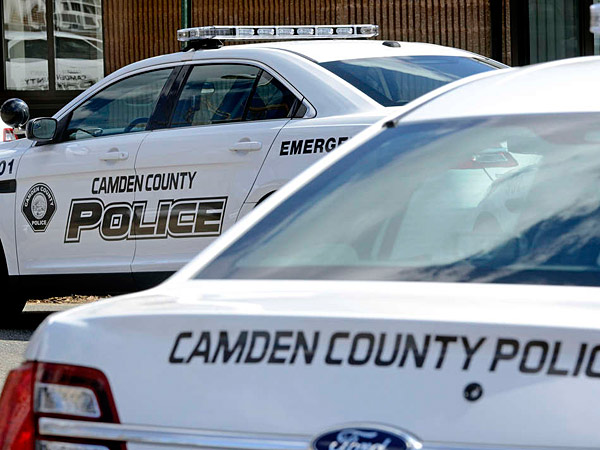
    A 50-year-old Camden man is dead after being shot on the city’s east side Thursday night, law enforcement said.

    Police responded to reports of a person shot on the 300 block of Morse Street around 10:20 p.m., according to a joint statement from the Camden County Prosecutor’s Office and Camden County police.

    Officers found Cornelius Smith, 50, lying in the street with a bullet wound. The Camden resident was transported to Cooper University Hospital, where he was pronounced dead about 10:46 p.m., officials said.

    No arrests have been made. The investigation into the killing is continuing, police said.

    Smith’s killing was the third fatal shooting in Camden this month.

    Around 12:20 a.m. on June 9, police responded to a report of a shooting in the 200 block of Morse Street and found Luis J. Bonet, 24, of Camden wounded by gunfire. He was pronounced dead at Cooper University Hospital a short while later.

    The following day, Eric Irizarry, 45, was charged in connection with Bonet’s death with first-degree murder, second-degree unlawful possession of a weapon, and second-degree possession of a weapon for an unlawful purpose.

    A week earlier, a fatal shooting in Camden, police said, was tied to a multi-vehicle crash in neighboring Pennsauken.

    While responding to a shooting on the 3300 block of Westfield Avenue on June 2, police discovered multiple shell casings and an unoccupied vehicle that had been struck by gunfire, officials said.

    A few minutes later, Pennsauken police responded to a crash involving five vehicles at Drexel Avenue and Route 130 in Pennsauken. One of the vehicles involved in the crash had been struck by gunfire and the driver, later identified as Izaiah Minzy, 36, of Westville, had been shot.

    Minzy was taken to Cooper University Hospital, where he was pronounced dead at 8:11 p.m.

    Six people in the other cars involved in the crash sustained minor injuries.

    The prosecutor’s office has not announced any arrests in the case.

    The violent June comes after Camden experienced a record year in 2025 with its lowest recorded homicide total in four decades and its first homicide-free summer, police said, in 50 years.

    Camden recorded 12 homicides last year, down from 17 in 2024, and saw an overall 6% drop in violent crime compared with the previous year, including a 32% decrease in sexual assaults and a 12% decrease in robberies, according to police.

    The decline came more than a decade after the city’s police department was disbanded in 2013. Since then, the department’s successor, the Camden County Police Department, has taken a new approach to community policing that includes pairing social workers with officers and supporting programs designed to help at-risk youth.

    Homicides have dropped by 82% since 2012, the last full year of the former police structure. During that time, the city has also invested heavily in public spaces and infrastructure, including $100 million for parks and street repaving.

    Earlier this month, U.S. Sen. Cory Booker (D., N.J.) visited the department’s headquarters alongside Camden Mayor Victor Carstarphen and Camden County Commissioner Director Louis Cappelli Jr. to get a firsthand look at some of the advanced tools and training methods police have utilized in recent years.

    Booker is promoting federal legislation designed to help other law enforcement agencies adopt similar technology, like automated license plate readers, live cameras, drones, and more, which Camden County Police Chief Gabriel Rodriguez has said contributed to the reduction in crime across the city.

    Officials asked that anyone with information about any of the recent shootings contact the Camden County Prosecutor’s Office Homicide Unit or the Camden County Police Department. You can also submit anonymous tips online.
  • Jefferson Einstein nurses sign a new contract with raises, more staffing

    Jefferson Einstein nurses sign a new contract with raises, more staffing

    Nearly 1,200 nurses at Jefferson Einstein Philadelphia Hospital this week ratified a contract that includes raises and additional staffing at the Logan hospital.

    The nurses, part of the Pennsylvania Association of Staff Nurses and Allied Professionals union, reached a contract agreement with Jefferson Health officials after authorizing union officials to call a strike last week.

    Jefferson officials said in a statement that the three-year contract “reflects a thoughtful and collaborative approach, balancing the financial realities facing healthcare organizations today with our ongoing commitment to invest in the communities we serve.”

    Nurses had called for assurances that the hospital will not close departments; the health system announced plans earlier this year to close several pediatric outpatient clinics that are staffed by non-union nurses.

    As part of the new contract, union officials said in a news release, the hospital will add staff to behavioral health units. And a committee of nurses and nursing directors must agree with any plans to reduce staffing levels in any hospital department.

    The union negotiated wage increases of 10% to 14% over the course of the three-year contract. In addition, nurses who work weekends will also see higher pay rates to retain staffing levels on weekends.

    The hospital also agreed to continue contributing to nurses’ pensions, and cannot “negatively impact” sick and vacation time. The union said Jefferson employees will also save money on health insurance costs thanks to changes to pediatric-care coverage.

    “We’re trying to make Jefferson Einstein a more desirable place to work by enhancing our benefits,” said Jyll Kurczewski, a registered nurse in Einstein’s emergency department and the Einstein union’s co-president, in a statement.

    “There are many healthcare networks in the area where RNs can choose to work. We want them to want to be at Einstein and to stay at Einstein.”

    A Jefferson spokesperson said that wages and benefits in the contract are “consistent with Jefferson’s compensation philosophy and include the support we provide to all the dedicated professionals who deliver exceptional patient care every day.”

  • Gov. Shapiro welcomes 63 new U.S. citizens from 17 countries in Chesco alongside a George Washington reenactor and bald eagle

    Gov. Shapiro welcomes 63 new U.S. citizens from 17 countries in Chesco alongside a George Washington reenactor and bald eagle

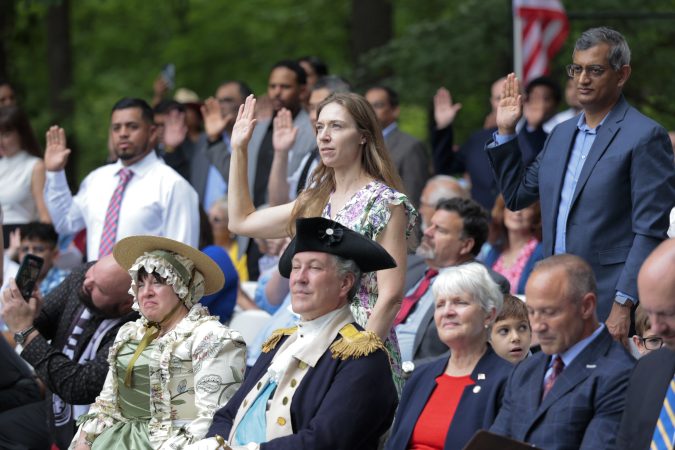
    It’s been a long time coming, Matthew Mckena reflected. There were hiccups in the process. But by midday Friday, he was officially a U.S. citizen, in time for the country’s 250th birthday, and welcomed by Gov. Josh Shapiro, a George Washington reenactor, and even a bald eagle.

    “It just became a battle of perseverance, but also we’ve come so far,” he said. “The hope in itself is also in the waiting, and so it’s now coming in full circle. It’s just unbelievable of having waited for so long for something, and then finally having it.”

    Mckena, 21, was one of 63 people from 17 counties to take their oaths as new citizens in Valley Forge on Friday. For many of them, who ranged in ages 18 to 87, the day was a culmination of years of effort and lives they’d built in the country.

    Mckena’s siblings were born in the United States, before his family moved back to Kenya, where he was born. When he was in high school, his family returned to the U.S. He’s now a college student pursuing a degree in mechanical engineering.

    “[There are] so many opportunities that have been afforded with this move to be at a place where it’s so easy to access education infrastructure,” he said.

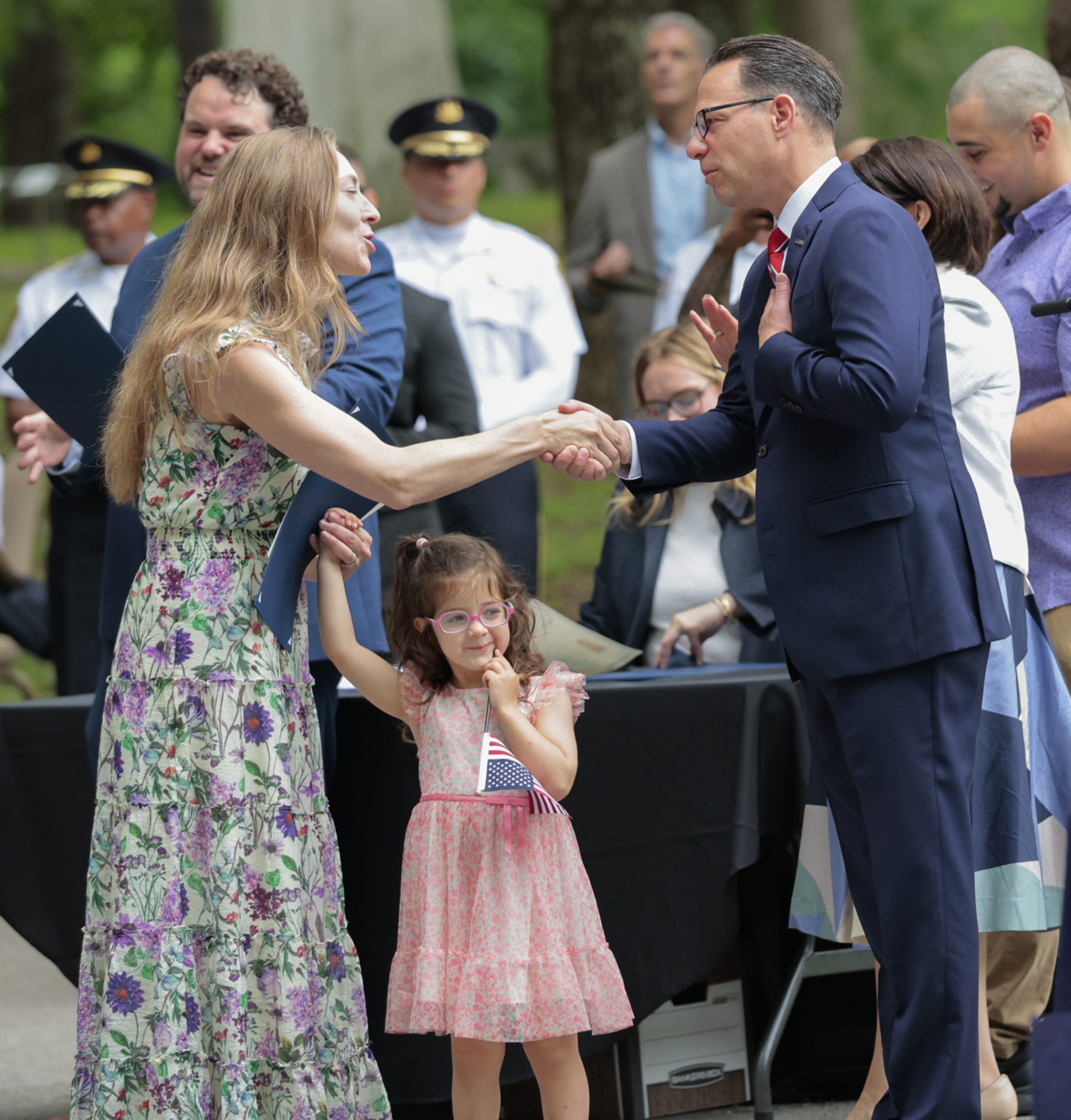
    New citizen Helene Hartmann Dirani with her 3-year-old daughter Victoria are greeted by Gov. Josh Shapiro as he welcomes 63 new citizens from 17 countries at the historic Founding Forward in Phoenixville. Steven M. Falk / For The Inquirer

    Helene Hartmann Dirani, 42, has called a few nations home: Originally from Kazakhstan, she moved to Germany at 13 years old, and then studied in Austria. She later met her now-husband in the United States. After years of long-distance dating, they settled down, and she moved to the country 13 years ago. Three children later, the ceremony felt like a special moment for Hartmann Dirani.

    “Being with my husband and my children, and settling down is really what makes it so special,” she said.

    The naturalization ceremony was held one week before America’s Semiquincentennial in historic Valley Forge. Chester County Court of Common Pleas President Judge Ann Marie Wheatcraft called the new citizens’ attention to that legacy.

    “Valley Forge reminds us that citizenship is not simply inherited, it is claimed often at a great cost, and many of the many of us take that for granted. You understand better than most,” she said. “You chose America. You worked hard for this. … Bear with us your gifts, your culture, and all that makes you unique.”

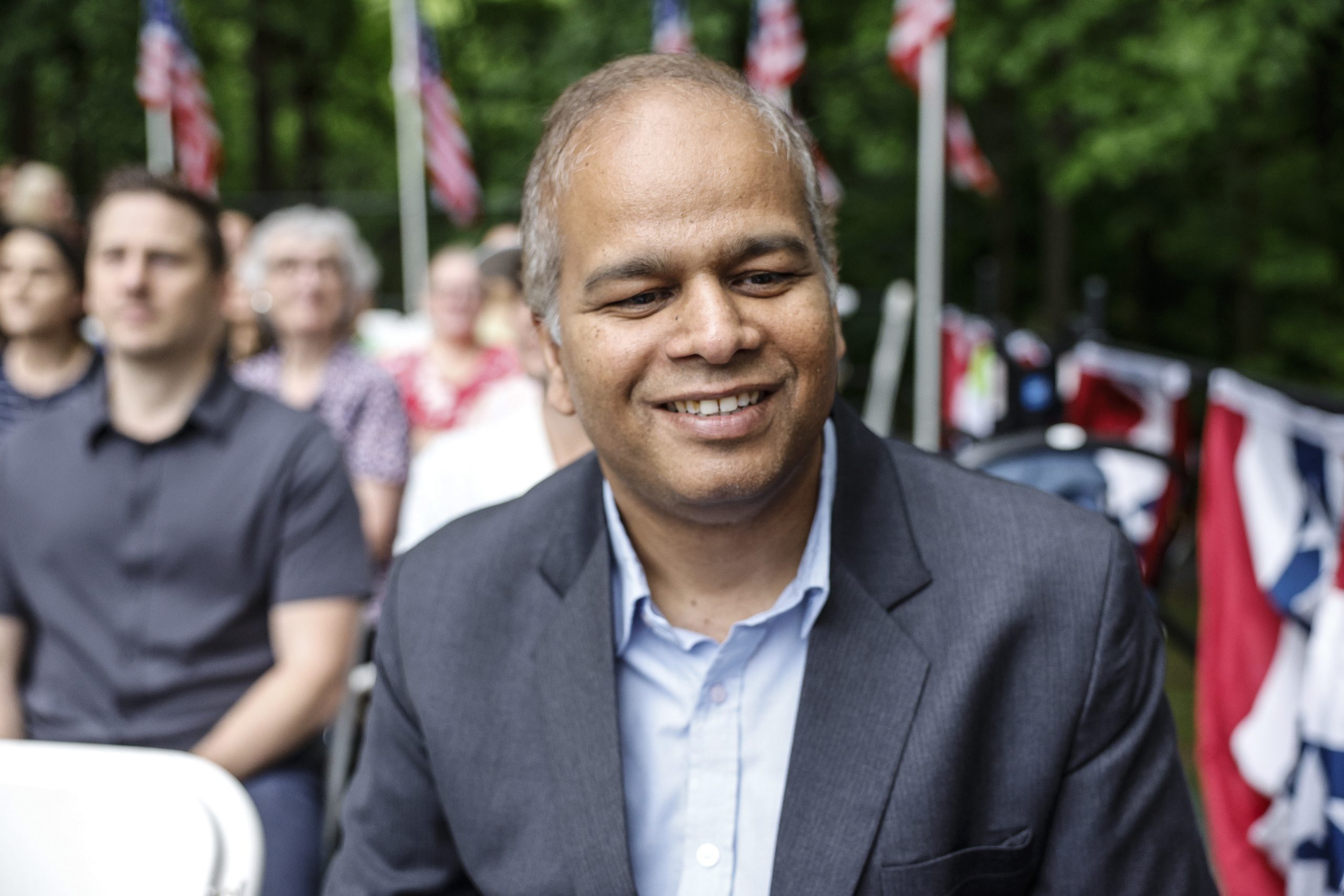
    Rohan Bakshi talks about becoming a new citizen before Gov. Josh Shapiro welcomed 63 new citizens from 17 countries at the historic Founding Forward in Phoenixville on Friday, June 26, 2026.Steven M. Falk / For The Inquirer

    America has always been “a land of dreams” for Rohan Bakshi, 45. He came to the country from India in 2012, and has felt a part of the country. He built a life, family, and career here. After so many years, this was a “dream come true,” he said.

    “This is the best country to live in,” said Bakshi, whose wife will be sitting in his seat soon, as she pursues her own citizenship. “I’ve seen other countries as well. It’s a privilege to be an American citizen.”

    Lina Zhang, 41, felt emotional as she waited to take her oath. Roughly 14 years ago, she moved from China to the United States. In the beginning, her English “sucked,” she said. But she learned fast: attending GED classes, using her translator app to translate English to Chinese, and then translating back to English, so she could take her exams.

    Her hard work earned her some of the highest marks her teacher had seen in years, she said. She went on to college, majoring in accounting and minoring in finance, landing a job with a public accounting firm.

    Surrounded by her family Friday, she was glad to be sitting at the ceremony.

    “I’m proud of myself,” she said.

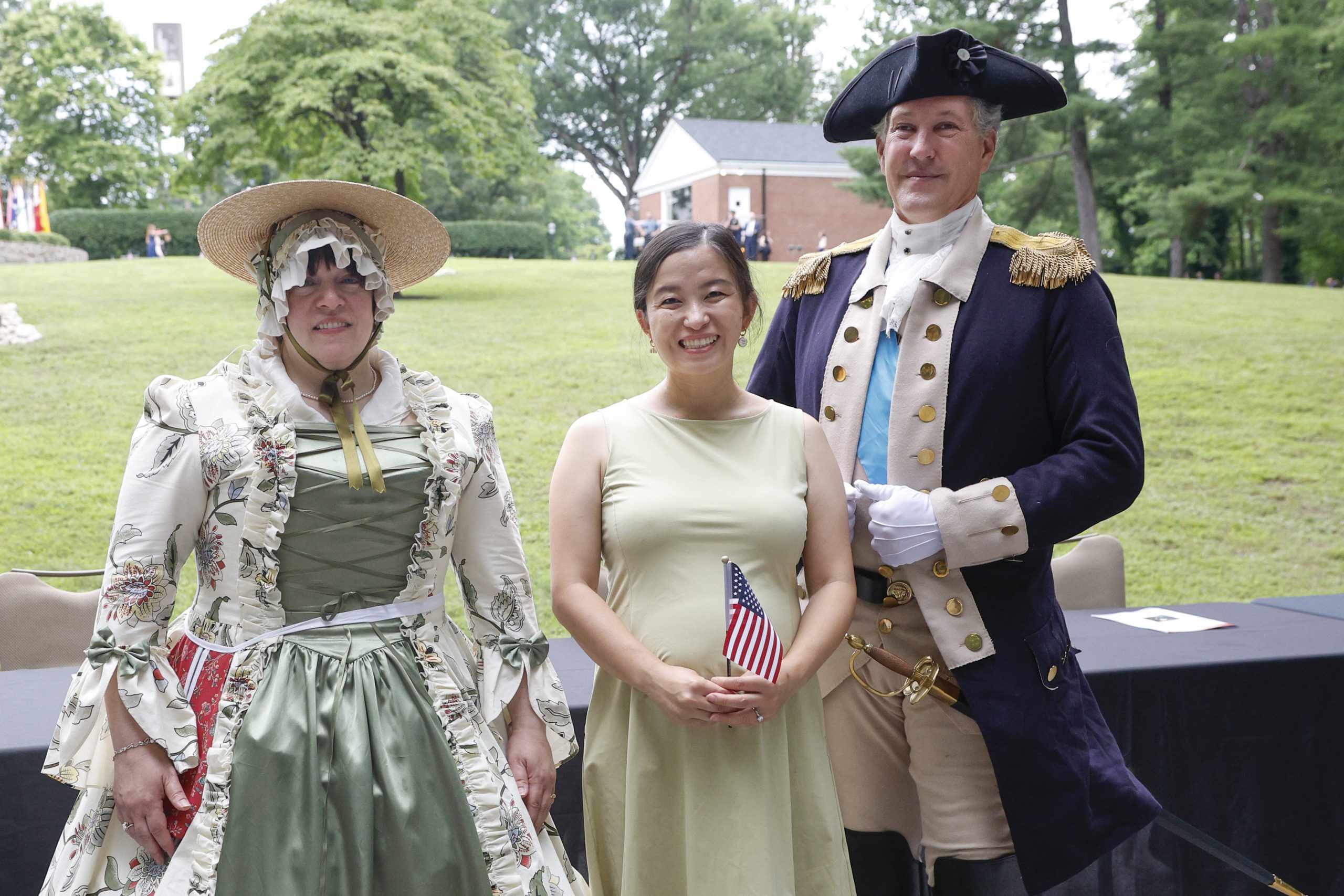
    New citizen Lina Zhang poses with George and Martha Washington reenactors Randall Spackman and Karyrn Saece before taking the oath of citizenship with 63 new citizens from 17 countries at the historic Founding Forward in Phoenixville. Steven M. Falk / For The Inquirer

    Speaking to the new citizens, Gov. Josh Shapiro recognized the work each person had put in to reach this moment. But, he warned: “As new Americans, your work is just beginning.”

    Recalling Ben Franklin’s famous quote, “A Republic, if you can keep it,” Shapiro told them those words — “if you can keep it” — was their charge.

    “Each successive generation of Americans have continued that work, caring for their neighbors, standing up for freedoms that our founding fathers fought for, taking an oath of citizenship, working in the halls of Congress, the halls of our state capitol, the halls of our county — that work now falls to each of you to be engaged American citizens,” he said.

    New citizens got to visit with Noah the bald eagle from the Elmwood Park Zoo after some 63 new citizens from 17 countries took the oath of citizenship at the historic Founding Forward in Phoenixville. Steven M. Falk / For The Inquirer

    After the ceremony, Mckena said, from his experience, a lot of people discount the value of American citizenship.

    “There really is a high cost that a lot of people pay, and there really is a huge disparity in what democracy offers and what the rest of the world offers, and so really it’s a special opportunity,” he said. “People who already had it [should] really treasure and understand it. And for those who don’t, seek after it.”

    This suburban content is produced with support from the Leslie Miller and Richard Worley Foundation and The Lenfest Institute for Journalism. Editorial content is created independently of the project donors. Gifts to support The Inquirer’s high-impact journalism can be made at inquirer.com/donate. A list of Lenfest Institute donors can be found at lenfestinstitute.org/supporters.

  • Could a Pa. Supreme Court decision on skill games help fund SEPTA?

    Could a Pa. Supreme Court decision on skill games help fund SEPTA?

    More funding for SEPTA and dozens of financially strained mass transit systems across Pennsylvania has been on the back burner in this year’s budget debate, but it may get some more attention now.

    The Pennsylvania Supreme Court ruled June 15 that tens of thousands of the so-called skill games in bars and convenience stores are in fact slot machines — and illegal unless licensed, regulated, and taxed like casino-based slots.

    “By dedicating a portion of skill game revenue to transportation, we can protect and strengthen transit services without placing additional burdens on taxpayers, while ensuring our transit agencies have the resources they need,” Republican State Sen. Frank Farry of Bucks County said Friday in a statement.

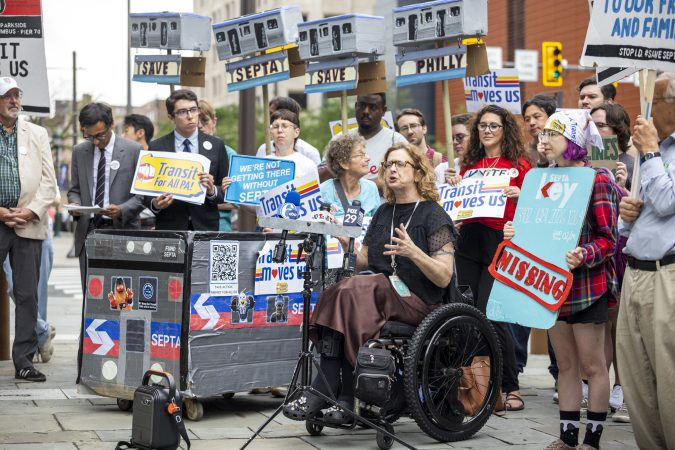
    Transit advocates renewed what has become an annual public push for more money for SEPTA and fellow transit agencies at a news conference in front of the Fifth Street/Independence Hall Station — prompted in part by the court decision.

    Farry issued the statement in support of that effort.

    “I have the freedom to be able to come here, thanks to this elevator behind us, which was recently renovated,“ said Julie Rea, an organizing fellow for Transit Forward Philadelphia who uses a wheelchair and depends on the Market-Frankford El (now called the L).

    “Without the long-term funding that SEPTA really needs, we’re not going to be able to keep the system accessible for all,” she said.

    Last year, lawmakers and Gov. Josh Shapiro failed for a third time to reach agreement on his proposal to dedicate an increased portion of general sales tax revenue to consistently fund transit agency operations for five years.

    Republicans, who control the Senate, did not want to take more sales tax revenue for transit, and the Democrats in charge of the House did not want to take up the GOP leadership’s counterproposal to use state money for infrastructure projects for operations instead.

    Farry offered legislation in 2024 to regulate and tax skill games and dedicate 50% of the revenue to create a stable source of funding for public transit. The most optimistic assessments are that taxes on the games at or near the rate casinos must pay for their slots could generate up to $1 billion a year.

    Taxing skill games has been discussed in budget deliberations for several years, though it never came together, in part because of differences of opinion in the GOP Senate caucus.

    “Maybe the court decision will spur people to get their act together,” Farry, who is up for reelection in the fall, said in an interview. “We have a pathway.”

    Shapiro has proposed taxing skill games at 52%, the same rate casinos pay for slot machine proceeds. Last year, the Senate GOP proposed a tax rate of 35% on the machines.

    When a transit funding deal failed to come together in 2025, SEPTA raised fares and slashed service, eliminating 32 bus routes outright, until a Philadelphia court ordered it to restore cuts in service.

    Shapiro then allowed SEPTA to use $394 million of reserved capital money in a state trust fund to pay to operate the transit system for two years; ironically, that was the same maneuver behind the GOP’s proposal.

    Meanwhile, this year, paratransit and shared-ride services are in trouble throughout the state and transit systems in Lancaster, Westmoreland County, and the Lehigh Valley are considering service cuts.

    “We know that the rural-urban divide is manufactured, and that a public good, like transit, touches us all,” said Connor Descheemaker, statewide campaign manager for Transit for All PA.

  • Pennsylvania health officials address measles outbreak: ‘We will not slow down until this … is over.’

    Pennsylvania health officials address measles outbreak: ‘We will not slow down until this … is over.’

    Pennsylvania health officials and doctors on Friday said several people have been hospitalized amid a growing measles outbreak that has spread to six counties in the southeastern and central parts of the state.

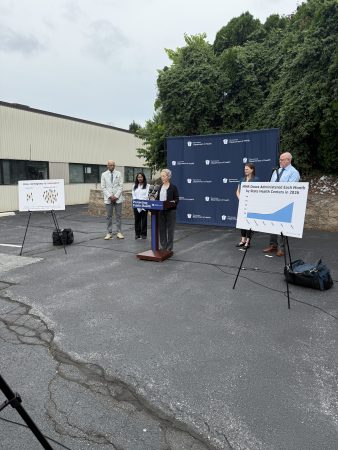
    At a news conference in Lancaster on the outbreak, which has sickened 72 people in the area since April, health officials stressed that vaccination was the best defense against the highly contagious disease.

    Secretary of Health Debra Bogen said she could not comment on the exact number of people hospitalized to protect their privacy, as the number was still relatively small.

    About one in 10 people who contract measles will require hospitalization, and three people were treated at hospitals in Lebanon County at the onset of the outbreak in late April.

    Fahmida McGann, an infectious disease doctor at Penn State Health, said the health system’s Lancaster Medical Center has treated patients who needed to be hospitalized for several days with symptoms including serious electrolyte abnormalities and liver and kidney dysfunction.

    Measles can infect up to 90% of unvaccinated people who come into contact with the disease, which can linger in the air for up to two hours.

    Newborns and young children are at higher risk for serious complications, but adults can also experience them, especially if their immune systems are weakened. Doctors at Friday’s news conference said they had treated both adults and children in hospitals.

    The state response

    In the current outbreak, state officials have recorded 41 cases in Lancaster County, 20 in Lebanon County, six in Northumberland County, two each in Berks and Dauphin Counties, and one in York County.

    Overall, the state has seen 84 measles cases this year, more than five times the cases recorded in all of 2025.

    The outbreak is spreading largely among people who are unvaccinated, Bogen said.

    “These are not numbers,” Bogen said. “They are children, parents, neighbors and friends.”

    The health department is conducting contact tracing to detect cases, and working with local healthcare providers and community organizations to ensure residents have access to vaccines and accurate information on their efficacy and side effects.

    (function() {
    var l2 = function() {
    new pym.Parent(‘HE_MEASLES2.html’,
    ‘https://media.inquirer.com/storage/inquirer/projects/innovation/arcgis_iframe/HE_MEASLES2.html’);
    };
    if (typeof(pym) === ‘undefined’) {
    var h = document.getElementsByTagName(‘head’)[0],
    s = document.createElement(‘script’);
    s.type = ‘text/javascript’;
    s.src = ‘https://pym.nprapps.org/pym.v1.min.js’;
    s.onload = l2;
    h.appendChild(s);
    } else {
    l2();
    }
    })();

    Health providers in Lancaster have said they believe there were more cases in the area than officials were aware of. Bogen said the department was working with community members to build trust and ensure that cases get reported.

    “People who are part of the community are really the key to the response, because we want people to know that if they call the department, we are here to help them,” she said.

    The department has vaccinated more than 430 people at pop-up clinics in the region in the last two months, she said, and state-run health centers around Pennsylvania have administered more than 1,300 measles, mumps, and rubella vaccine doses this year.

    “We’re not sitting back and just watching the virus spread,” Bogen said. “We will not slow down until this outbreak is over.”

    It’s crucial that residents get vaccinated, she said, to protect people who cannot safely get the vaccine, like newborns and pregnant women, and people whose immune systems are weakened, like organ transplant recipients and cancer patients.

    On Wednesday, the department recommended that physicians vaccinate infants and young children against measles early, beginning at 6 months, in affected areas. The same precautions should be taken by families with infants traveling to these areas.

    The department has also hosted webinars for hundreds of healthcare providers across the state. Measles was considered eradicated decades ago, and many doctors practicing today have never seen a case, Bogen said.

    Jeffrey Martin, a physician at Penn Medicine’s Lancaster General Hospital, said he last encountered a measles case 30 years ago, as a medical student in Colorado.

    “I still remember that patient, a child with a high fever, red eyes, and the classic rash we learned about in textbooks. At the time it was an illness we were trained to recognize,” he said. “None of us imagined that one day measles would become so rare that most physicians would go their entire careers without ever seeing a case.”

    Now, he said, physicians in Lancaster must keep measles in mind when they’re treating patients with respiratory symptoms. The virus’s early symptoms include a fever, a cough, and a runny nose — similar to other respiratory diseases — before patients develop a telltale rash.

    “It underscores the importance of being especially thoughtful about how we identify and respond to possible cases,” he said.

    It’s also key for families to call ahead to doctors’ offices if they’re experiencing measles symptoms, so physicians can prepare to treat them without exposing other patients, Martin said.

    Lower vaccination rates

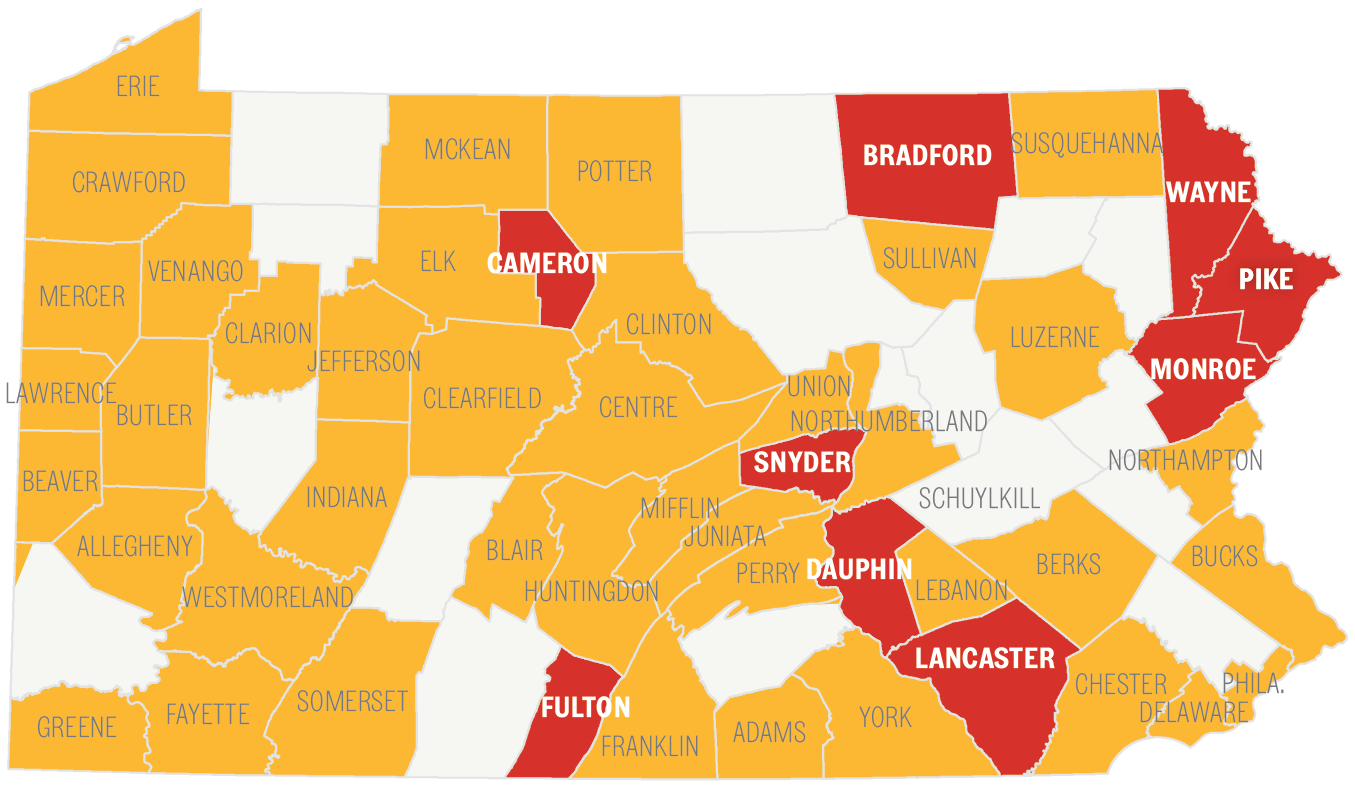
    Vaccination rates among kindergarteners have decreased across Pennsylvania in recent years, and some counties affected in the current outbreak have particularly low rates, including Lancaster, where about 88.5% of kindergarten students are vaccinated.

    Health experts say 95% of a community must be vaccinated to prevent the spread of the disease.

    A map showing vaccination rates in kindergarteners for the 2024-2025 school year. Counties in yellow have vaccination rates between 95% and 90%. Counties in red have vaccination rates below 90%. To halt the spread of measles, at least 95% of a community must be vaccinated against the disease.John Duchneskie

    The state is working with schools to increase vaccination rates, Bogen said Friday.

    After The Inquirer and the Pittsburgh Post-Gazette published analyses on low vaccination rates at individual schools across the state, health officials announced that they would soon publish a public database of school-level vaccination data. (Previously, the state published county-level vaccination data on its website.)

    Bogen said she hoped the new database would encourage schools with lower vaccination rates to reach out to healthcare providers to ensure students have access to vaccines.

    “We want to make sure as a public health department that we’re ensuring that anybody who wants access to a vaccine has that,” she said.

    Encouraging vaccination

    Martin, the Lancaster General physician, said the area was welcoming and helpful to people in need.

    “It is a defining characteristic of our community to help others, especially the most vulnerable, during times of crisis,” he said.

    Residents now have an opportunity to help protect vulnerable people from measles by getting vaccinated, raising awareness about the disease, and helping doctors decrease exposures in care settings, he said.

    “When vaccination rates are high, the virus has very little opportunity to spread. When gaps emerge, even small ones, measles can find a way back in because it is so contagious,” Martin said. “Ultimately what keeps measles rare is not luck. It’s the choices we make together to protect those who cannot protect themselves.”

  • Speed cameras on Frankford Avenue will begin issuing fines

    Speed cameras on Frankford Avenue will begin issuing fines

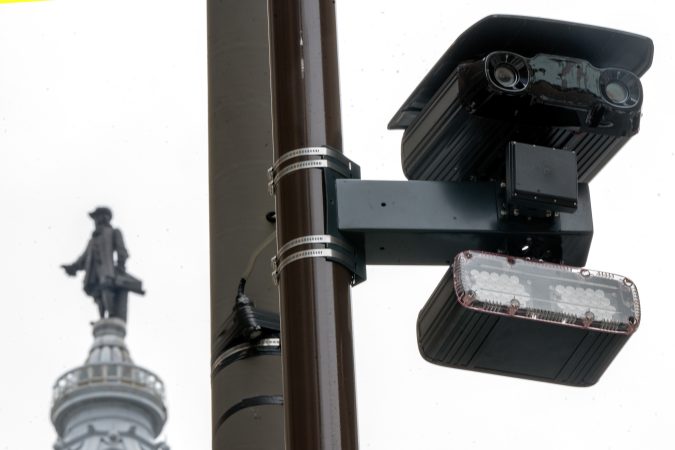
    Starting Friday, drivers traveling 36 mph or faster on Frankford Avenue in Northeast Philadelphia will face a minimum $100 fine.

    Ten new speed-enforcement cameras were activated on April 13, initiating a 60-day warning period which brought mailed warnings to violators of the road’s 25 mph speed limit.

    “Speed cameras are a tremendous tool that helps save lives,” said Gabe Roberts, acting executive director of the Philadelphia Parking Authority, in an emailed statement.

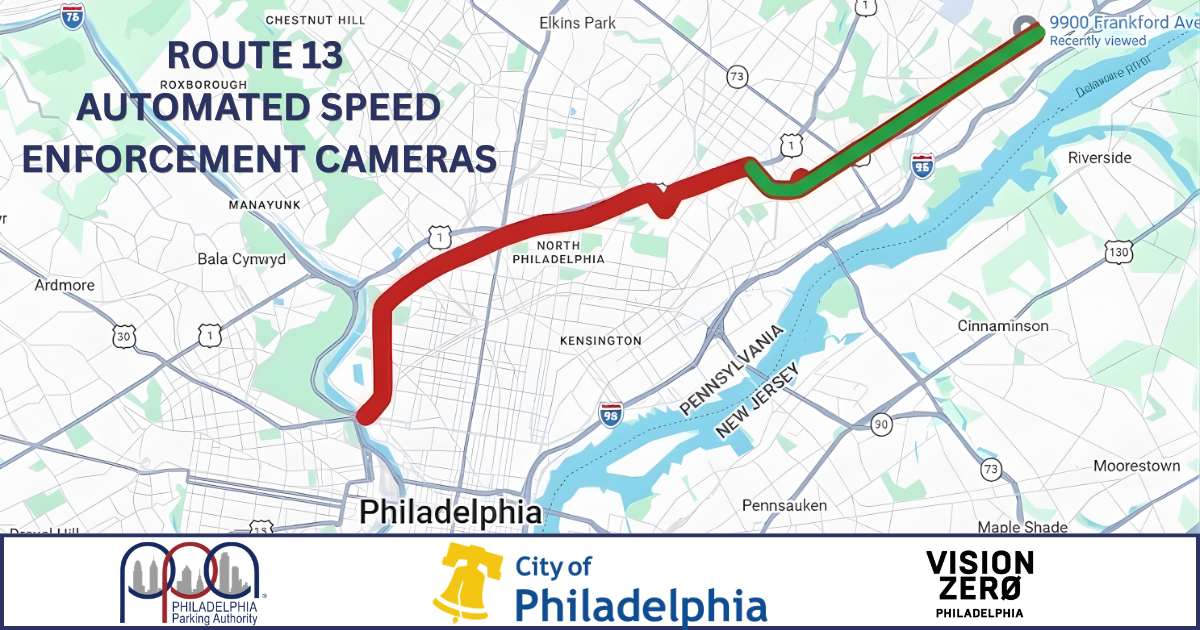
    There are three tiers of penalties for speeding on the 4.5-mile stretch of U.S. Route 13 that are now going into effect.

    Fines are $100 for traveling 11-19 mph over the speed limit; $125 for going 20-29 mph over; and $150 for speeding by 30 or more mph.

    Tickets are mailed to the registered owner of the vehicle speeding. No points — PennDOT’s method of recording driving violations — are added to the motorist’s driver’s license.

    The cameras are placed at 9900 Frankford Ave.; 8300 Frankford Ave.; 7000 Frankford Ave.; 6400 Frankford Ave.; 3100 Levick St.; and 2100 Robbins St.

    Automated speed enforcement cameras went live Monday April 13 on the portion of U.S. Route 13 shown in green. Philadelphia Parking Authority will install cameras on the rest of the corridor in July 2026.City of Philadelphia

    Speed-enforcement cameras were first piloted in Philadelphia on Roosevelt Boulevard in June 2020, with 32 automated cameras placed along the highway previously considered the most dangerous road in the city.

    According to the Philadelphia Parking Authority, speed violations have since decreased on the boulevard by more than 90%, and there has been a 50% reduction in pedestrian-involved crashes.

    There are now a total of 80 speed cameras operating throughout the city, with additional cameras installed on Broad Street and nearby five school zone locations.

  • The USMNT’s sour World Cup group stage ending should be motivation for the bigger games to come

    The USMNT’s sour World Cup group stage ending should be motivation for the bigger games to come

    INGLEWOOD, Calif. — It’s a good thing that the U.S. men’s soccer team’s 3-2 loss to Turkey on Thursday didn’t matter for the standings. Because in many other circumstances, it would have been infuriating, not just annoying.

    Had the game finished tied, there would have been very few complaints. Everyone knew coming in that the lineup would have a lot of rotation. An unbeaten run through the group stage would have kept up the good vibes, even with that changed squad giving up two goals.

    Instead, giving up a last-kick-of-the-game goal meant the questions that followed were far less positive.

    “Having that moment in the last moment where they score, it’s tough,” said Medford’s Brenden Aaronson, whose first World Cup start included four tackles, three defensive recoveries, three shots, 21-of-22 passing, and a first-touch misfire toward an open net in the 62nd minute that overshadowed much of the rest of his night.

    “We wanted to walk away with no losses in the group stage, but we’ve got to take it, as it was still a fantastic group stage,” Aaronson said. “We had so many really good performances, and even before the group stage, in the friendlies. We’re at a top level. I’m not worried whatsoever, and we’re going to move on to the next one and be ready to go for Bosnia” in the round of 32.

    Other players were more positive, in particular Sebastian Berhalter. He had an assist and a terrific goal in the game, and tried to set a tone by stepping to the microphone first.

    Asked if the final score affects the team’s momentum, he said bluntly, “No, it doesn’t. … I think we gave everything we had, and we’ll be ready for the knockouts.”

    Manager Mauricio Pochettino was flat-out defiant, saying “no one congratulated us for finishing first in a very difficult group.”

    He repeatedly chided the media, saying at one point: “Your questions are a little bit weird, but I am so happy, and the players are happy, because I think we perform, we compete, and we are first. … Maybe I am confused, but the mood, the vibes [are] like we go home tonight and Turkey stays.”

    Tyler Adams, who watched from the bench to avoid getting another yellow card, was asked if it’s better to flush the moment as Berhalter wanted or keep it as motivation heading into the knockout rounds.

    “It’s not going to be perfect,” he said. “No tournament is perfect. You live and you learn. I think a lot of the guys will take lessons from that game. A lot of good performances otherwise.”

    A moment later, goalkeeper Matt Turner was asked the same question. His inclusion in the starting lineup was perhaps the most controversial of the nine changes Pochettino made from the Australia game.

    Matt Turner (left) watches Turkey’s players celebrate the game-winning goal.Mark J. Terrill

    “When it’s 2-2 at the end there, that probably would have been the more fair result given the chances both sides had, but this is football, and we know how cruel the game can be,” he said. “We let our guard down, and we got punished for it. We were all in positions to make a play, and none of us could make the decisive play.”

    Alejandro Zendejas, who finally got to make his World Cup debut, had a similar opinion.

    “It’s always the worst, especially on the last play of the game, when that happens — when I think we had the game controlled, pretty dominated in my opinion,” he said. “But yeah, it’s a time to take the night or the day to reflect on the game, and then turn the page right away to focus on the next round for sure.”

    In the big picture, the result didn’t matter — a rare luxury for a U.S. team that for decades has scrapped for every point it has gained at men’s World Cups. But it still did in a way, because a last-second goal like that has to matter.

    Sebastian Berhalter (right) helping Auston Trusty (6) to his feet after the final whistle.Gregory Bull

    And when the Americans, who won Group D, next take the field, on July 1 against Bosnia & Herzegovina in Santa Clara, Calif. (8 p.m., Fox29, Telemundo), the result will be all that matters. Bosnia & Herzegovina finished third in Group B.

    “You can always take these things as fuel,” Aaronson said. Many U.S. fans will hope the team does so.

    Auston Trusty’s moment of history

    Whatever ends up happening to the U.S. in the knockout rounds, one moment will stay in the history books for a long time. Media native Auston Trusty became the first men’s player born and raised in the Philadelphia region to score a World Cup goal when he slammed in Berhalter’s corner kick service in the third minute.

    “I’m a center back usually, playing in a left back spot [in this game],” Trusty said. “I can advance up, I can show different parts of my game going forward. I live and breathe for corners, and then had the opportunity and took advantage of it.”

    The only other male player to have lived in the area and scored a World Cup goal was Bart McGhee. He immigrated from Scotland to Philadelphia as a child and scored the program’s first-ever World Cup goal in the inaugural tournament in 1930.

    “It means everything,” Trusty said. “I absolutely didn’t know that stat. … I think it’s an honor to score a goal and even participate in this competition, let alone score a goal. So yeah, just a dream come true.”

    His celebration was as vibrant as the shot, as he screamed and raised a finger while sprinting away toward the U.S. bench. And back home, a big crowd at Philadelphia’s fan fest on Lemon Hill roared just as loudly.

    Coincidentally, Trusty said, the celebration was similar to how he celebrated his first goal for the Union in 2018.

    “I don’t know why I did that,” he quipped. “I didn’t plan for that, but pretty cool. It’s kind of full circle.”

    Trusty’s night ended on a sour note when he got stepped on by Turkey’s Oğuz Aydın, rolled an ankle, and managed to suffer a hamstring cramp as he hit the ground. He went back in the game (in part because the U.S. was out of substitutions), then slipped amid the chaos of the last goal.

    By the time he emerged to the media, he had that ankle wrapped, but otherwise, he didn’t seem any worse for wear.

  • Why Fountain Porter raised the price of its iconic burger

    Why Fountain Porter raised the price of its iconic burger

    In 2026, you either die a bargain or stay around long enough to get hit by inflation. In other words, Fountain Porter’s iconic $6 burger is now $7, roughly the price of a fancy latte or a McDonald’s Quarter Pounder with cheese after tax.

    The East Passyunk neighborhood bar made the nearly 17% price increase official last Wednesday, said owner Evan Clancy, after months of watching the prices of ingredients creep up.

    Five days later, a post appeared in the popular r/PhiladelphiaEats subreddit breaking the news like a bargain hunting, beer-loving version of Paul Revere. “Recession indicator: Fountain Porter has officially raised the price of their burger,” the post read. “End of era.”

    Commenters were aghast.

    “Noooooooo,” bemoaned one Redditor. “Bring back boiled peanuts!” shouted another. A third cried of shrinkflation, alleging that the patty had gotten smaller. But most agreed on one thing: the burger is still dirt cheap and delicious.

    “I still ate three total this past weekend,” wrote another Reddit user, undeterred by the change.

    Recession Indicator: Fountain Porter has officially raised the price of their burger
    by
    u/grumdruitar in
    PhiladelphiaEats

    This isn’t first time inflation has come for Fountain Porter: When Clancy opened the bar at 1601 S. 10th St. in 2012, its burgers were just $5. Somewhere along the way — Clancy couldn’t recall when — he raised the price to $6 in recognition of the labor his staff put in to running a pub that, in many ways, also doubles as a burger factory.

    Fountain Porter makes upwards of 800 burgers a week, Clancy said, with the three cooks alone dedicated just to grilling and flipping patties. It’s also the platonic ideal of the sandwich, comprised of a modest beef patty with a salty char topped with American cheese, crisp lettuce, and a tomato slice on a Martin’s potato bun with two pickle chips on the side.

    The burger and its price — along with the bar’s deep beer list, dirty martini, and solid Guinness pour — has cemented Fountain Porter’s status as a Philly icon, beloved equally by world class chefs and people who just really like eating and drinking.

    “Their burger is the perfect size — not too small, not too big — and their lettuce is always cold and crispy,” Rachel Lorn, the co-owner of acclaimed South Philly restaurants Mawn and Sao, previously told The Inquirer.

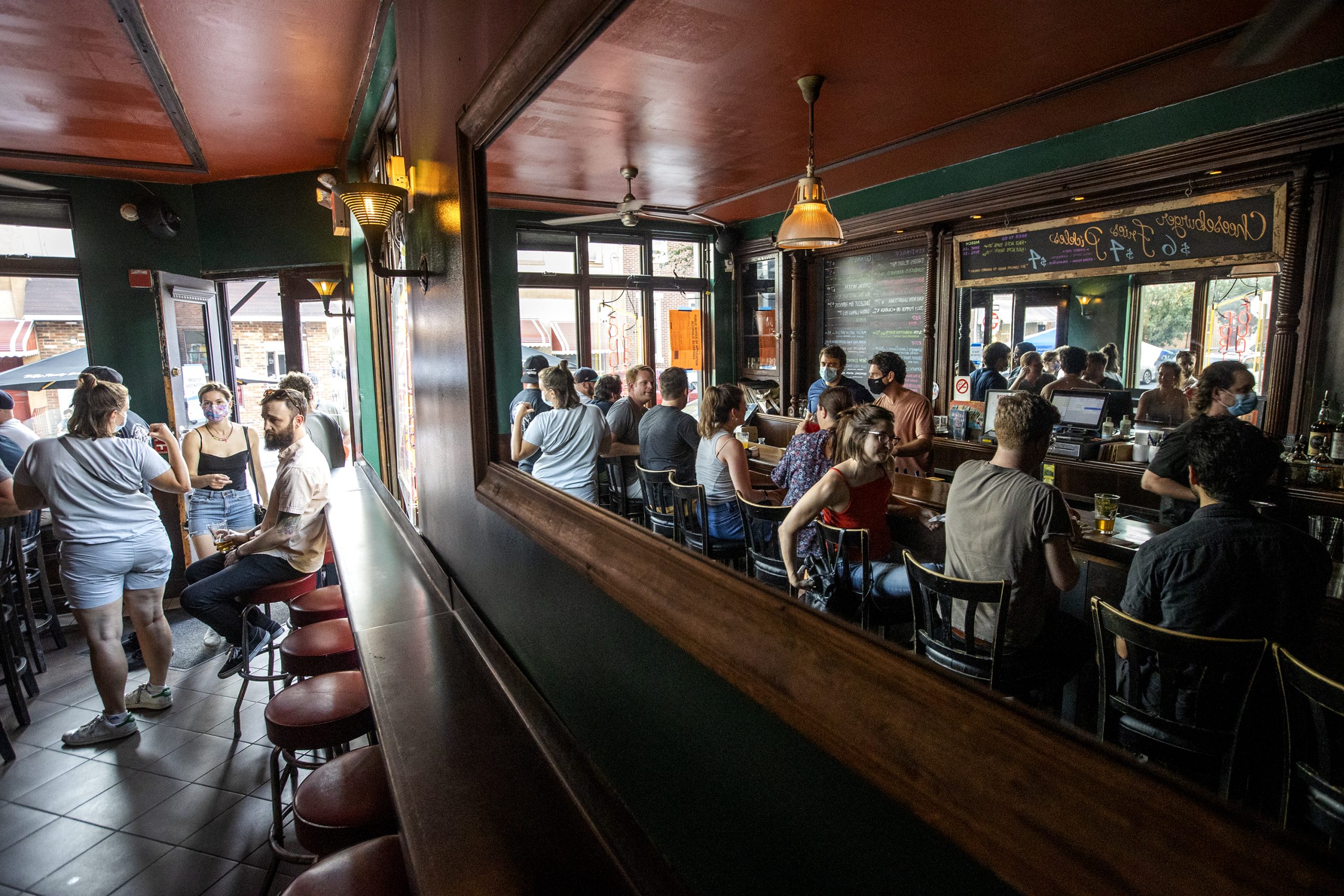
    The crowd is reflected in a mirror at Fountain Porter at 1601 S. 10th St. in 2021.CHARLES FOX / Staff Photographer

    The burger will remained unchanged despite the price increase, Clancy said. He also doesn’t think it will harm the bar’s reputation, and was shocked that people cared enough to post about it on social media.

    “If the burger is not good at $7, then it’s really not that good at all. And that’s not on me, that’s on whoever is heaping the praise,” said Clancy. “It’s never been about a budget burger. It’s about being fair and honest. That’s what a burger is supposed to be.”

    The change was borne out of necessity, Clancy explained, driven by the across-the-board inflation that has plagued grocery store items for the past several months, with explanations ranging from climate change and supply chain bottlenecks to war.

    Drinks on the bar at Fountain Porter at 1601 S. 10th St. in 2021.CHARLES FOX / Staff Photographer

    The price of the beef Fountain Porter uses in its burgers nearly doubled over the past two months, Clancy said, and he expects it to keep rising. The cost of tomatoes has also risen sharply and varies daily due to a mixture of tariffs and crop shortages, making it difficult for Clancy to budget. And, Clancy said, that despite Fountain Porter’s high volume of burgers, “we’re not making a lot of money off them.”

    Besides, Clancy wondered, why shouldn’t his burger be allowed to get more expensive if everything else is?

    “I know it’s a change, but we raised the price twice in 13 years, Clancy said. ”Tell me something else that hasn’t changed the price a lot in 13 years.”

  • NBA reveals Sixers’ Las Vegas Summer League schedule, which includes Labaron Philon’s expected debut

    NBA reveals Sixers’ Las Vegas Summer League schedule, which includes Labaron Philon’s expected debut

    The 76ers will play their first Las Vegas Summer League game July 9 against the Detroit Pistons, the NBA announced Friday afternoon.

    Those games are expected to mark the on-court debut of Labaron Philon, whom the Sixers drafted 22nd overall earlier this week. Johni Broome, last year’s second-round pick, also is expected to play in Las Vegas after missing much of his rookie season while recovering from knee surgery.

    That first game could match Philon against Ebuka Okorie, whom the Pistons acquired with the draft’s 17th overall pick.

    The Sixers will only play in Las Vegas Summer League this year, after also participating in Salt Lake City Summer League in recent years.

    Here is the Sixers’ full Las Vegas Summer League schedule:

    • July 9 vs. Detroit Pistons, 5:30 p.m. ET
    • July 11 vs. Indiana Pacers, 5:30 p.m. ET
    • July 14 vs. Houston Rockets, 4 p.m. ET
    • July 15 vs. Orlando Magic, 4 p.m. ET
  • N.J. hospitals could lose an estimated $3.6 billion from Medicaid changes through 2032

    N.J. hospitals could lose an estimated $3.6 billion from Medicaid changes through 2032

    New Jersey hospitals could lose an estimated $3.6 billion from Medicaid changes through 2032, forcing them to bring their expenses in line, Inspira Health Network CEO Amy Mansue said Friday during a panel discussion in Cherry Hill.

    “That will only happen with dramatic changes in how we look at our business,” she said during the Southern New Jersey Development Council’s Annual Health Care Leadership Forum at the Legacy Club of Woodcrest.

    Mansue predicted that health systems will close little-used programs. “There is no way to cut that much money out of the hospitals without doing some of that,” she said.

    The $3.6 billion estimate from the New Jersey Hospital Association does not include hospitals’ losses from the growing population of uninsured people who show up at emergency departments because they can’t afford to pay cash for a doctor visit.

    Already nearly 69,000 people have allowed their individual coverage from New Jersey’s Affordable Care Act marketplace to lapse after temporarily enhance tax subsidies expired at the end of last year. Thousands more are expected to lose Medicaid coverage next year when new requirements to stay enrolled take affect.

    New Jersey’s regulatory burden

    The hospital executives pleaded for state officials to reduce the red tape that makes it hard to implement programs needed to meet community needs.

    “We need to be more nimble, we need to be more adaptable, we need to be more flexible,” said Aaron Chang, president of Jefferson Health NJ, which includes hospitals in Cherry Hill, Stratford, and Washington Township.

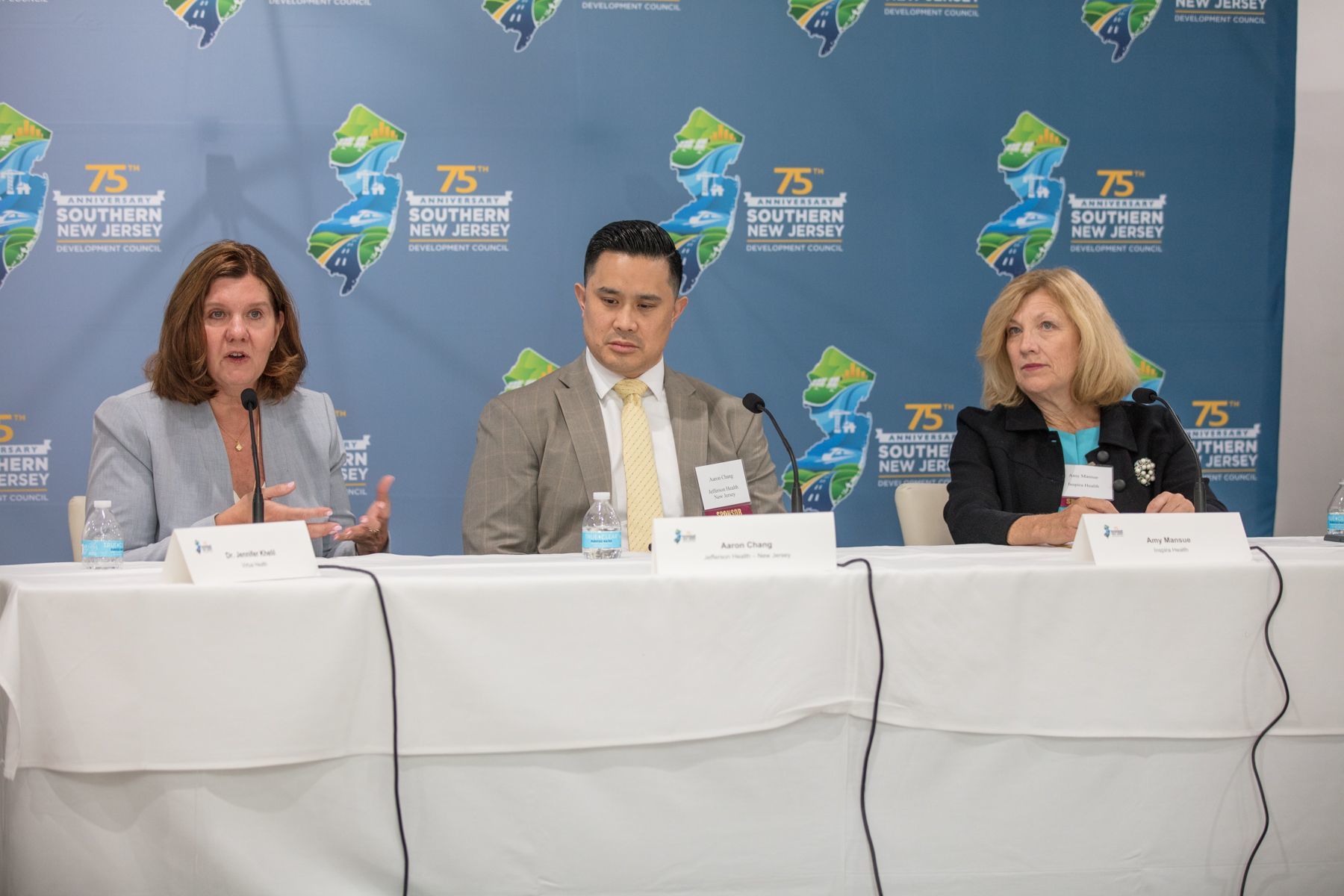
    Jennifer Khelil (left), Virtua Health’s chief clinical Officer; Aaron Chang (center), president of Jefferson Health New Jersey; and Amy Mansue, CEO of Inspira Health spoke Friday at the Southern New Jersey Development Council’s Health Care Leadership Forum.Southern New Jersey Development Council

    Inspira is adding a $220 million patient tower at Inspira Mullica Hill in Harrison Township, near the intersection of Routes 55 and 322. Construction is expected to be completed Oct. 1, Mansue said. “The reality is we’re not going to open until March” because it will take that long to get all the regulatory approvals, she said.

    Inspira operates three other hospitals in Cumberland and Salem Counties.

    Raynard E. Washington, who heads the N.J. Department of Health, spoke after the panel and said Gov. Mikie Sherrill is serious about making it easier to do business in the state. She told state agencies “to limit additional regulations and to look for opportunities to streamline,” he said.

    Workforce development is a top priority

    Six years ago, Virtua and Rowan University started working together to create the Virtua Health College of Medicine & Life Sciences out of Rowan’s School of Osteopathic Medicine, Rowan’s School of Nursing & Health Professions, and Virtua’s Our Lady of Lourdes Nursing School, plus a new school of translational biomedical engineering and sciences.

    The institution officially launched in 2022 with $85 million in support from Virtua and $125 million from Rowan and has seen its class sizes grow steadily.

    “We are now training about 360 nurse graduates every year, 300 medical students,” said Jennifer Khelil, Virtua’s chief clinical officer. Virtua operates five hospitals in South Jersey.

    Workforce efforts also reach into high schools, Chang said. Jefferson Cherry Hill Hospital has a relationship with Cherry Hill West High School that brings 12 to 15 interns to the hospital.

    “Because of the internship, their exposure to the hospital environment, whether it’s the ancillary departments and or the clinical areas, over 95% of those individuals get a healthcare job as a first foray into the workforce,” Chang said.

    Editor’s note: This story has been updated to correct the time period for the Medicaid cuts.