The Price Point compares homes listed for similar sale prices across the region to help readers set expectations about house hunting.
According to recent Zillow data, homes with “character” — visual distinction and a sense of history — are all the rage.
As the birthplace of the nation, the Philadelphia region has its fair share of drool-worthy older homes of all shapes, sizes, and price tags.
In May, the median sale price for homes in the Philadelphia metropolitan area was $405,000.
So, here are three pre-World War II homes in the Philadelphia region that about$405,000 can buy — all with ample “character.”
A Fairmount condo with a private patio
This second-floor condoboasts a desirable location, according to its listing agent, Jeniffer Benner with Home Sweet Home PHL.
It’s situated on a tree-lined street in the heart of the Art Museum neighborhood, with easy walkability to Center City, the Schuylkill River Trail, and Roberto Clemente Park just a block away.
Benner said a main draw is the property’s private rear patio, which is “tough to find in condo spaces.”
Built in 1920 with a major remodel in 2014, the home’s living room boasts modern features and touches of the past with its traditional red brick exterior. It has nine-foot ceilings, custom shutters, hardwood floors, recessed lighting, and crown molding. The built-in entertainment center has been a favorite of prospective buyers.
“A lot of people think that’s a really nice feature, rather than having a blank box like some of the newer construction condos,” Benner said. “They like that character.”
There are two bedrooms and two bathrooms, with the primary suite including two closets, one a walk-in.
Benner said the condo fee isminimal — $223 per month — because it only covers exterior maintenance and insurance for the townhouse’s three units. Compared to city condo fees that can reach upward of $1,000 a month, the cost is “very affordable.”
The property was listed for sale in March for $420,000. The listing price has since come down to $410,000.
A Tudor-style home in Drexel Hill
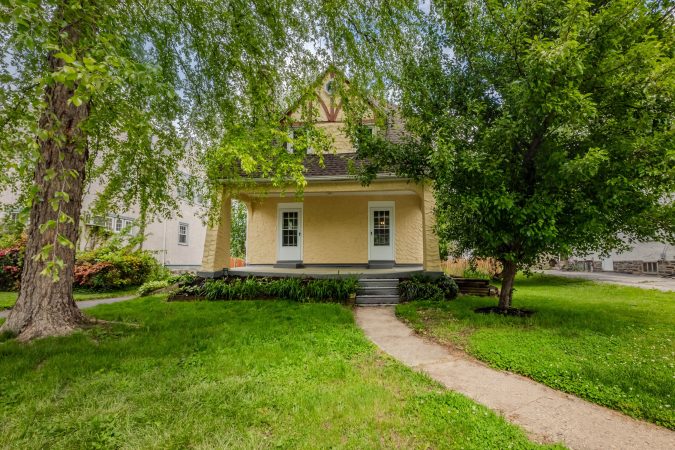
This Tudor-style home in Drexel Hill has an old-fashioned feel, as most of the neighborhood’s homes were built between 1925 and 1934, said listing agent Jason Cox with Long & Foster Real Estate.
“This is a throwback, and that’s one of the reasons people love it,” said Cox.
Two columns frame the property’s double-entry doors, which Cox said is an imprint of historical Drexel Hill homes. The kitchen’s mullioned glass-front cabinets and the bathroom’s checkered-tile accents further the home’s traditional aesthetic.
The front yard is shaded by a willow tree, and the backyard is spacious enough for a garden, play set, pool, or all of the above.
The three-story home has one full bathroom and five bedrooms — rare for its listing price. There are three larger bedrooms on the second floor, in addition to a smaller room that could double as an office, and a finished attic with skylights on the third floor.
The living room has a traditional brick fireplace, and the dining room features access to a deck that is a prime location for outdoor grilling. Recently repainted and carpeted, the home is move-in ready.
Cox, who lives a block away from the property, “can’t say enough about the neighborhood.” Ideal for families, the home is walking distance from the local elementary and middle schools, and is a five-minute drive from Upper Darby High School. In the neighborhood, some families have stayed for two or three generations.
Sitting on more than a half-acre, this home’s standout feature is its expansive backyard. About three years ago, the homeowners installed a patio and a gazebo with a mounted TV, transforming the empty space.
“It makes the outside feel like the inside, and it can be screened in,” said listing agent Aaron Wallace with KW Main Street. “It’s the best thing about this property.”
The four-bedroom, two-bath property was built in 1911 but underwent a major renovation in 2020. The contractor did everything “soup to nuts,” Wallace said, including the roof, windows, both bathrooms, and kitchen. “They left no stone unturned with this renovation.”
The bright and airy ground floor includes the mudroom, living room, dining room, kitchen, and full bathroom. Going up a level, there are three bedrooms and the second full bathroom. On the third floor, there’s a generously-sized carpeted room that can be utilized as a bedroom, office, or an alternative living space.
Another highlight is the living room’s fireplace, which is framed by a wooden chevron accent wall and serves as a focal point in the house.
Magnolia’s pre-K-8 school is within walking distance from the home, and there is a baseball field behind the house that hosts local games. Wallace said the homeowners enjoy watching games from their gazebo.
“It has a great small-town feel, and the big city is not too far away,” said Wallace.
The immediate problem with Washington’s algae-choked Lincoln Memorial Reflecting Pool is that, contrary to President Donald Trump’s typically inflated promises, it’s not reflecting much other than its hospitality to primitive aquatic life. And yet in a figurative sense, this relatively inconsequential public works project reflects the president’s excesses as faithfully as a mirror. Among them:
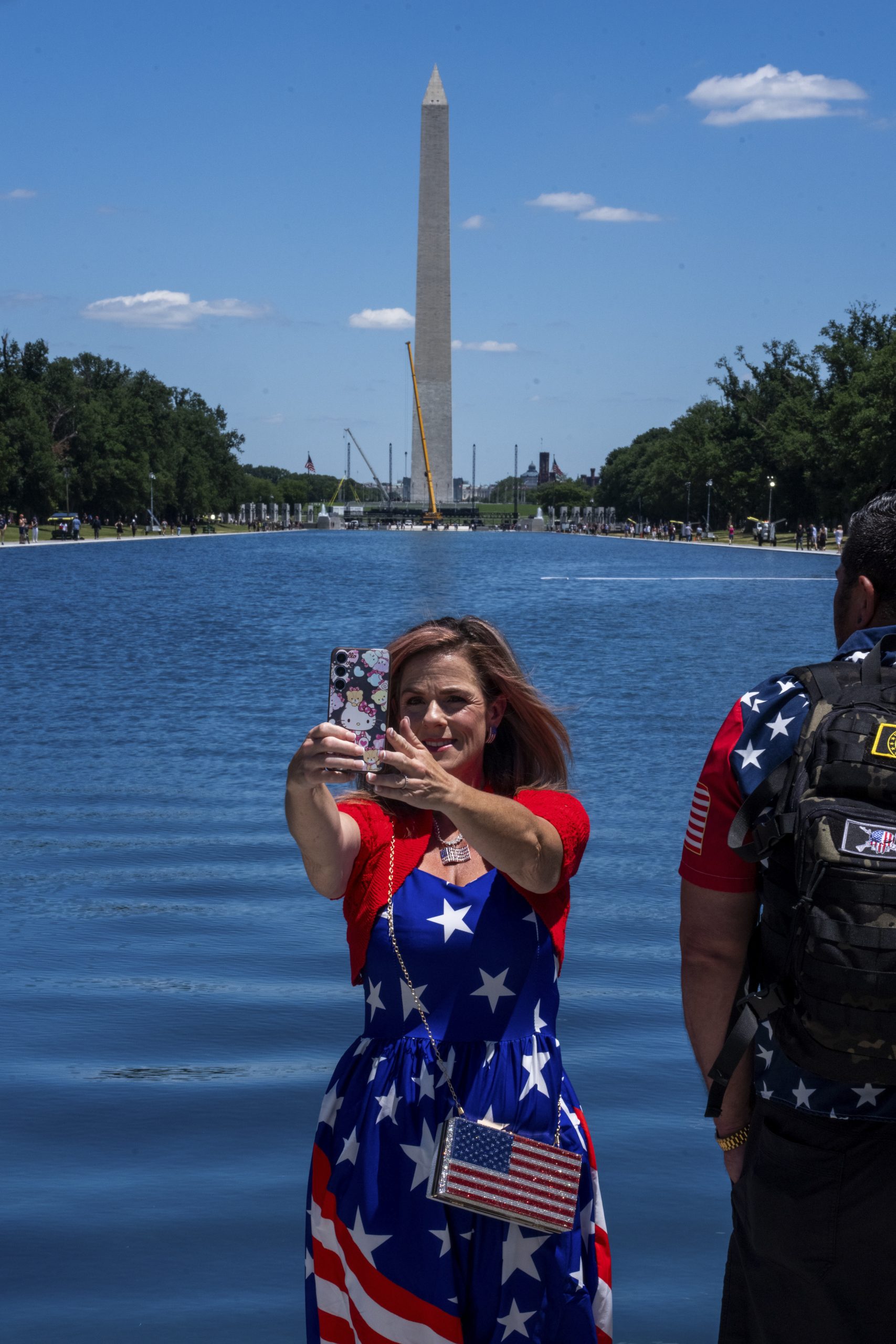
A visitor at the Lincoln Memorial takes a selfie Wednesday as workers repair the Reflecting Pool in Washington.Alex Kent
Narcissism: The Narcissus of myth fell in love with his own reflection in a pool of water, so it’s fitting that the same tendency lured Trump into this National Mall quagmire. Not content to quietly assess and address the feature’s deficiencies as if it’s his, well, job, the president made an ocean of a pond, insisting that repairing it would somehow simultaneously glorify America and himself, between which he makes little distinction.
Trump has bizarrely exaggerated the pool’s dimensions, falsely calling it “longer than the tallest building in the world” and suggesting its persistent murk was not just an age-old design flaw but a national calamity. Echoing a mantra dating to his original campaign, he claimed that he alone could fix it where his predecessors had failed, transforming its condition from “filthy,” “disgusting,” and “garbage-ridden” into “the most beautiful” “American-flag blue” for up to a century hence. And he said he could do it quickly and cheaply, vowing to complete the renovation in as little as a week for no more than $2 million.
Incompetence: But unlike the last attempt to remedy the pool’s persistent issues, during the Obama administration, Trump’s project did not grapple with the underlying plumbing problems that conspire with the Mid-Atlantic climate to create an ideal habitat for algae. His contractors simply resurfaced the pool’s concrete bottom with foam and a blue-tinted sealant.
Predictably, the algae persisted. Worse, the new surface did not, detaching and floating free in forlorn pieces. Workers dumped hydrogen peroxide into the water in a desperate attempt to beat back the pond scum, while the untimely demise of a few unlucky ducks in and around the pool raised further concerns. The project, meanwhile, took about six times as long as the president promised and cost eight times as much, with further work expected to prolong the effort beyond the Fourth of July.
Corruption: The nation’s approaching 250th birthday was cited as the dubious reason for awarding the work on an emergency basis without competitive bidding, allowing the administration to handpick companies with little or no experience as federal contractors. Some of the business went to an Ohio company called Greenwater Services — a bit of honest advertising given the water’s current hue — owned by James J. Cafaro, a Trump neighbor who has given hundreds of thousands of dollars to committees linked to the president.
This isn’t Cafaro’s first inauspicious encounter with the federal government. In 2001, he pleaded guilty to a conspiracy to bribe Democratic Rep. James Traficant of Ohio. He went on to testify that he gave the congressman, who was pushing Federal Aviation Administration officials to adopt a laser system sold by Cafaro’s company, an envelope stuffed with cash. In 2002, Traficant was convicted of corruption charges and expelled from Congress.
Deception: Lest anyone leap to the conclusion that these unsavory facts suggest the administration didn’t hire the best people for the job, Trump advanced the theory that the real culprit is a conspiracy.
Having begun the project with a fictive account of the pool’s history and false promises of a glorious future, he recently alleged without evidence that the project came up short because unidentified enemies had sabotaged the feature with “a very sharp knife or razors” and algae-promoting “chemicals” in the “dark of night.”
A demonstrator at the Lincoln Memorial speaks with a National Guard member as workers repair the Reflecting Pool in Washington, Wednesday.ALEX KENT
Authoritarianism: The farce took a fascist turn when Trump declared on social media that half a dozen people had been arrested for alleged vandalism of the pool.
One of the targets said he was arrested on an obscenity charge for taunting National Guard troops deployed around the pool. Another said he was taken into custody and detained for hours for touching a piece of federal flotsam. His lawyer, Norm Eisen, argued persuasively that the arrest was an attempt to distract from the mismanagement and corruption surrounding the project, calling it “textbook authoritarian behavior.”
In short, the president’s promise to embody national greatness has been exposed as a shoddy racket wrapped in lies and oppression. The pool reflects after all.
From George Washington crossing the Delaware and the Continental Army lodging at Valley Forge to the so-called real Penn’s Landing and the Battle of Brandywine, the Philadelphia suburbs played a crucial role in the early development of the United States.
And though Philadelphia — the birthplace of American democracy — has taken center stage for this year’s Semiquincenntenial celebrations, Bucks, Montgomery, Delaware, and Chester Counties have spent years preparing for 2026 and have curated an extensive list of activities for residents and visitors alike who are looking to honor the United States’ 250th birthday outside the city.
Here is what the Philly suburbs have in store for the 250th:
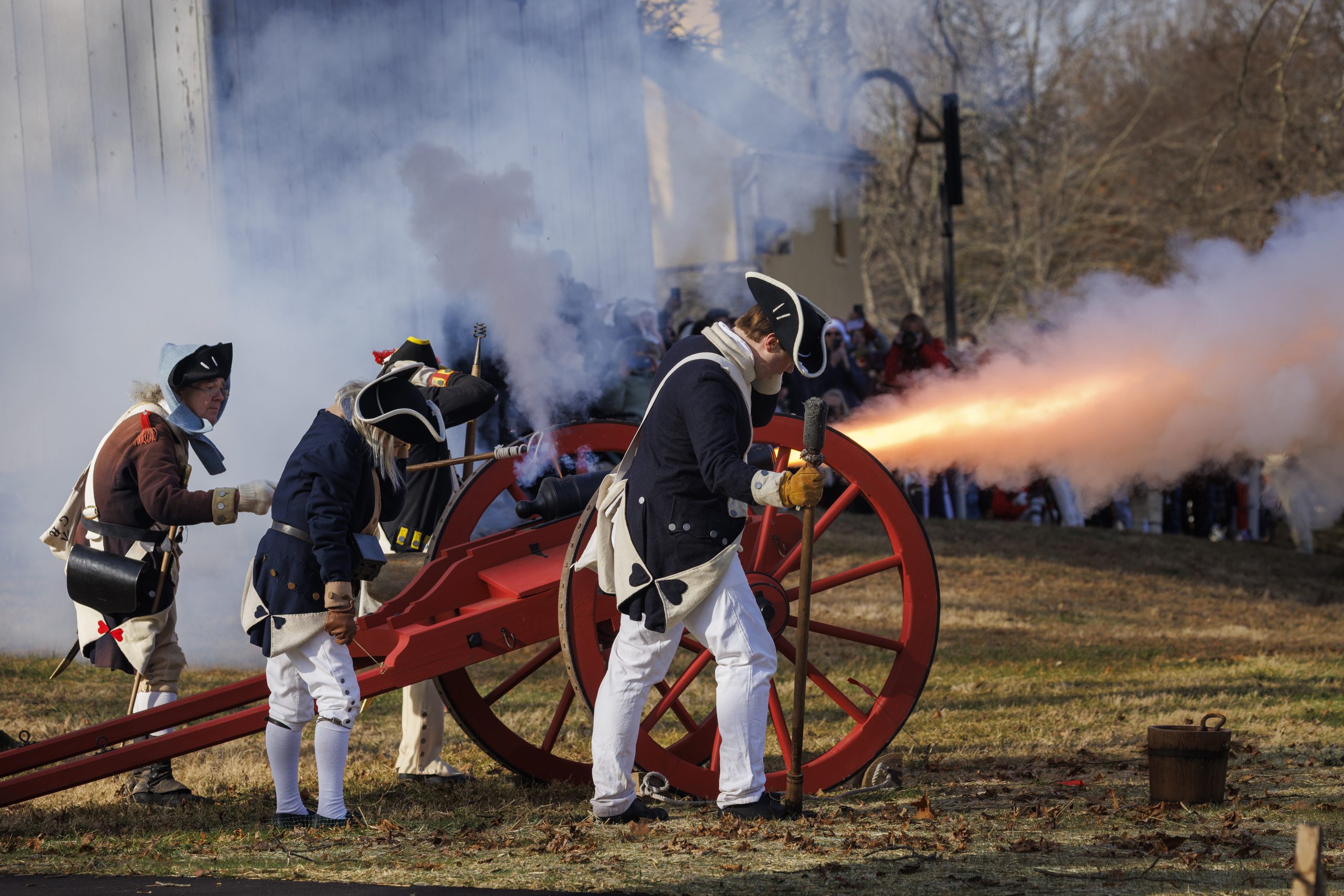
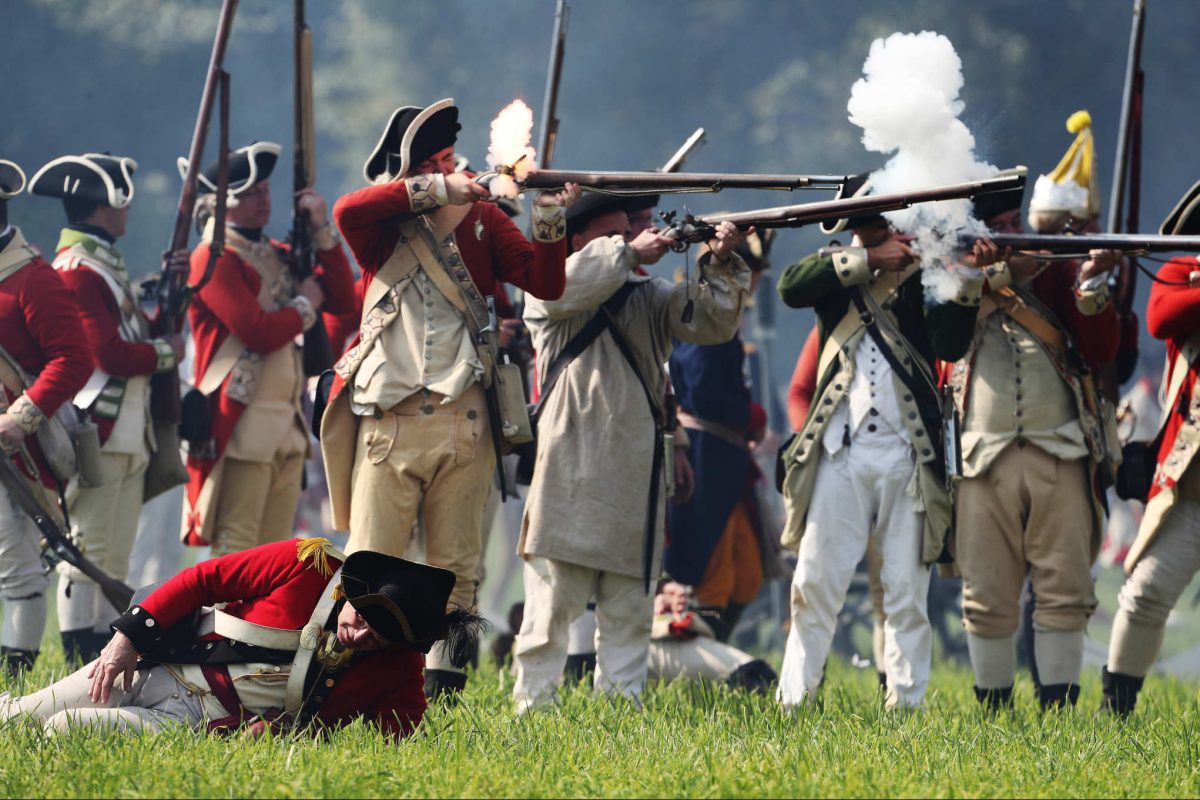
Reenactors fire off a Galloper gun during a reenactment of George Washington’s river crossing, Washington Crossing Historic Park, Washington Crossing, Pa., Thursday, December 25, 2025.Alejandro A. Alvarez / Staff Photographer
Bucks County’s history-packed celebrations
For Bucks County — established by William Penn in 1682 — 2026 is set to be chock-full of celebratory events tied to the founding of the U.S.
Bucks’ commissionin charge of planning 250th celebrations has partnered with numerous nonprofits to promote their events on a shared calendar on a dedicated county America 250 website.
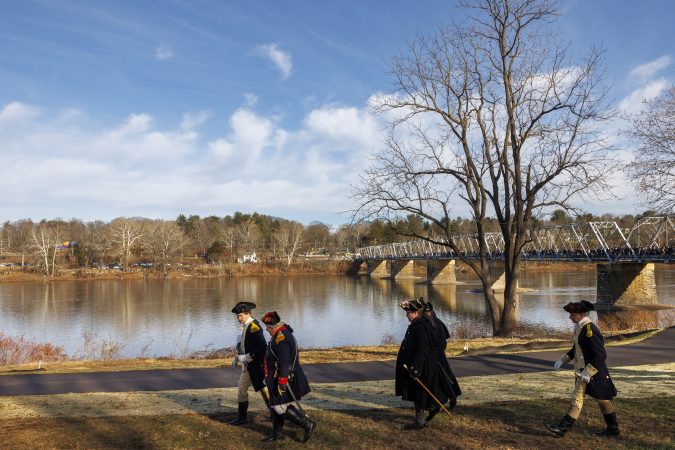
Forthcoming activities include art exhibitions, a Doylestown bash featuring big-band music and the reading of the Declaration of Independence, tours of a Revolution-era exhibit at the Mercer Museum, and fireworks at Washington Crossing Historic Park on July Fourth. Not to mention the annual reenactment of Washington crossing the Delaware River on Christmas Day.
The group also worked with the Bucks County Planning Commission and the Bucks County Herald to release a Revolutionary War trail map that takes participants throughout the county to visit historical sites.
Bucks gave $7,500 to the 250th commission in July 2024 in support of the celebrations, a county spokesperson said. Other financial support has come from sponsors, including several companies that have dished out at least $10,000 apiece.
Bucks County Commissioner Bob Harvie, who chairs the county’s 250th commission, said these events underscore the pride that communities have in their rich history.
“It’s also a chance for us to think back, I think, and remind ourselves about the foundation of this country, and the values that united us, because especially now we’re seeing a lot of attempts, unfortunately, within our country to divide us,” said Harvie, a Democrat who is running for U.S. Congress.
It is difficult to predict how this year’s 250th celebrations will affect the county’s tourism numbers, but Bucks typically hosts about 8 million visitors a year, Harvie said.
“We’ve been pitching ourselves sort of — no pun intended — for people who are coming here for the World Cup,” Harvie said. “We’re right between Philadelphia and New York, where you happen to have a place that’s sort of a central hub.”
The Valley Creek Trail at Valley Forge National Historical Park in Valley Forge, Pa., on Tuesday, Feb. 20, 2024.Tyger Williams / Staff Photographer
A ‘birthday bash’ and celebrating Valley Forge
Montgomery County’s 250th commission has curated months of events to commemorate the Semiquincentennial, but a free “birthday bash” on Monday at the county courthouse will kick off the height of the July Fourth celebrations.
Attendees can graze food trucks, take pictures, and meet an animal from the Elmwood Park Zoo.
Other programs this year include fireworks and live readings of the Declaration of Independence over July Fourth weekend, exhibits to commemorate the 50th anniversary of Valley Forge becoming a national park, and a gathering (with food and drink, of course) at a Skippack farmstead to honor Washington and his troops’ encampment in the town in 1777.
The 250th events have been planned by the county and local municipalities, said Jamila Winder, chair of the county commissioners, as an “opportunity to create meaningful, inclusive celebrations” and cultivate “civic pride.”
Montgomery County typically gets about 8 million visitors a year and are projecting an additional 1 million to the region for the 250th, said Winder, a Democrat.
To help fund this year’s festivities, the county started a grant program through which municipalities can apply to receive up to $500 to support their 250th events between now and Dec. 1.
The county has allotted a $35,000 budget for 250th celebrations, including the grant program, which 22 of 62 municipalities are a part of, a spokesperson said.
“It’s an opportunity for visitors to see how Montgomery County played a unique role in America’s founding, including our deep ties to Valley Forge in the Revolutionary area,” Winder said. “You know, people always think about Philadelphia, right? Philadelphia is a big piece of this story, but Montgomery County plays a huge role in that.”
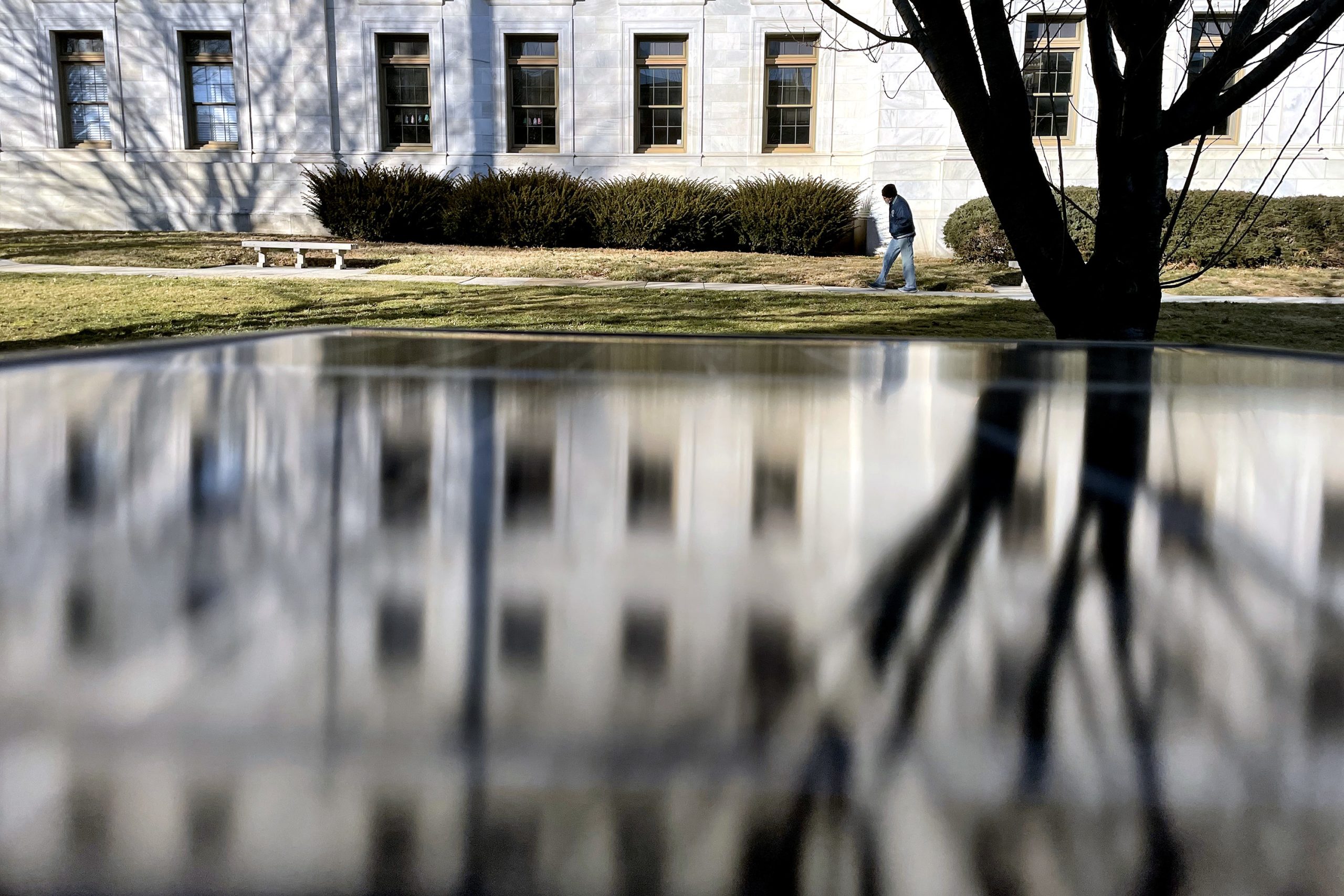
The Delaware County Courthouse in Media is reflected in a solar panel atop one of the borough’s on-street parking kiosks along Front Street.Tom Gralish / Staff Photographer
Delco is ‘pretty lit’ about its 250th celebrations
“If you thought Delaware County residents were proud of being Delco before America 250 — you’re just, like, next-leveling it now.”
That’s what Delaware County Council member Elaine Paul Schaefer said about Delco’s excitement leading up to the 250th, making sure to set the record straight that William Penn’s storied first steps in the New World hundreds of years ago were actually in Chester, not at Penn’s Landing in Philadelphia.
The county — through its America250PADelco commission — is promoting over 100 county, town, or nonprofit events through November, from art exhibits, concerts, and fireworks to “dining under the stars” in Media, a late-summer drone show, and a reading of the Declaration of Independence on the county courthouse steps.
“Delco is pretty lit about this,” said Schaefer, a Democrat.
The county’s 250th commission has disbursed more than $650,000 in grants for various initiatives. That grant money comes from a mix of funds from the American Rescue Plan Act and from different county agencies.
Schaefer said she hopes the events encourage residents to harness a connection to their communities, particularly through the county’s 250th volunteer program.
“You can do something small, do something big. … It’s a really great way to get people involved and connected, and I think that kind of volunteerism and increasing connection to the community will carry on after this big celebration,” Schaefer said.
About 800 Battle of Brandywine reenactors in Chester County.David Swanson / Staff Photographer
For Chester County, the party will last through next year
And the events planned for this year (and next year, as it honors various Revolutionary War-era battles, including the Battle of Brandywine) are key to celebrating the county’s role in the founding of the United States.
Residents and visitors have a wide array of activities to choose from outlined on the commission’s website, including driving tours of historical sites and Declaration of Independence readings. On the evening of July Fourth, the Chester County Concert Band will be playing patriotic music as a precursor to the fireworks show.
As opposed to hosting tons of large-scale events, Chesco is more focused on local events that can foster community building, said David Blackburn, heritage preservation coordinator at the Chester County Planning Commission. The commission is working with the county’s 250th commission to carry out plans.
“We’re really oriented to supporting the communities of the county to share their stories,” Blackburn said.
The county has invested over $170,000 in educational materials and programming related to the 250th, in addition to a more than $330,000 grant from the state, a spokesperson said.
But once the clock strikes midnight on New Year’s Eve, the celebrations won’t end for Chester County, said Matthew J. Edmond, executive director of the planning commission.
In 1777, many significant Revolutionary War battles took place in the collar counties, and Chester is planning to pour a lot of resources into commemorating those historical events next year.
“We are actively talking with our commission board about ways to celebrate, ways to fundraise for it, and ways that we can make maybe 2027 to be even better than celebrations in 2026,” Edmond said.
Dozens of bees crawled along the frame in Frances Ratay’s hands as she looked down at the colony in awe.
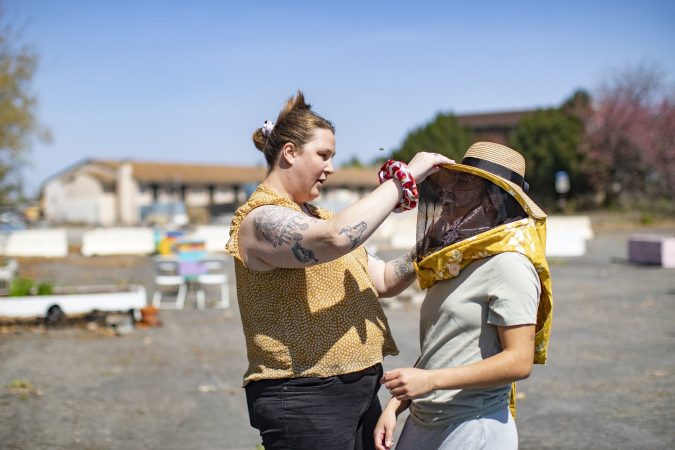
The 70-year-old retiree from South Philadelphia ordinarily would avoid bees out of fear, but this spring she suited up for a study on therapeutic beekeeping at the Half Mad Honey apiary in the Navy Yard. Led by Temple University occupational therapy student Meghan Robertson, the project tested if beekeeping could improve mental health and well-being in older adults.
Seeking to fill that gap, Robertson measured the mental health of 13 older adults (average age of 73) before and after a six-week beekeeping study. She found significant improvements in the average well-being, depression, and stress levels of the cohort immediately following the intervention.
Her research is unpublished and has not yet been peer-reviewed. The limitations include the small sample size and lack of a control group or long-term data.
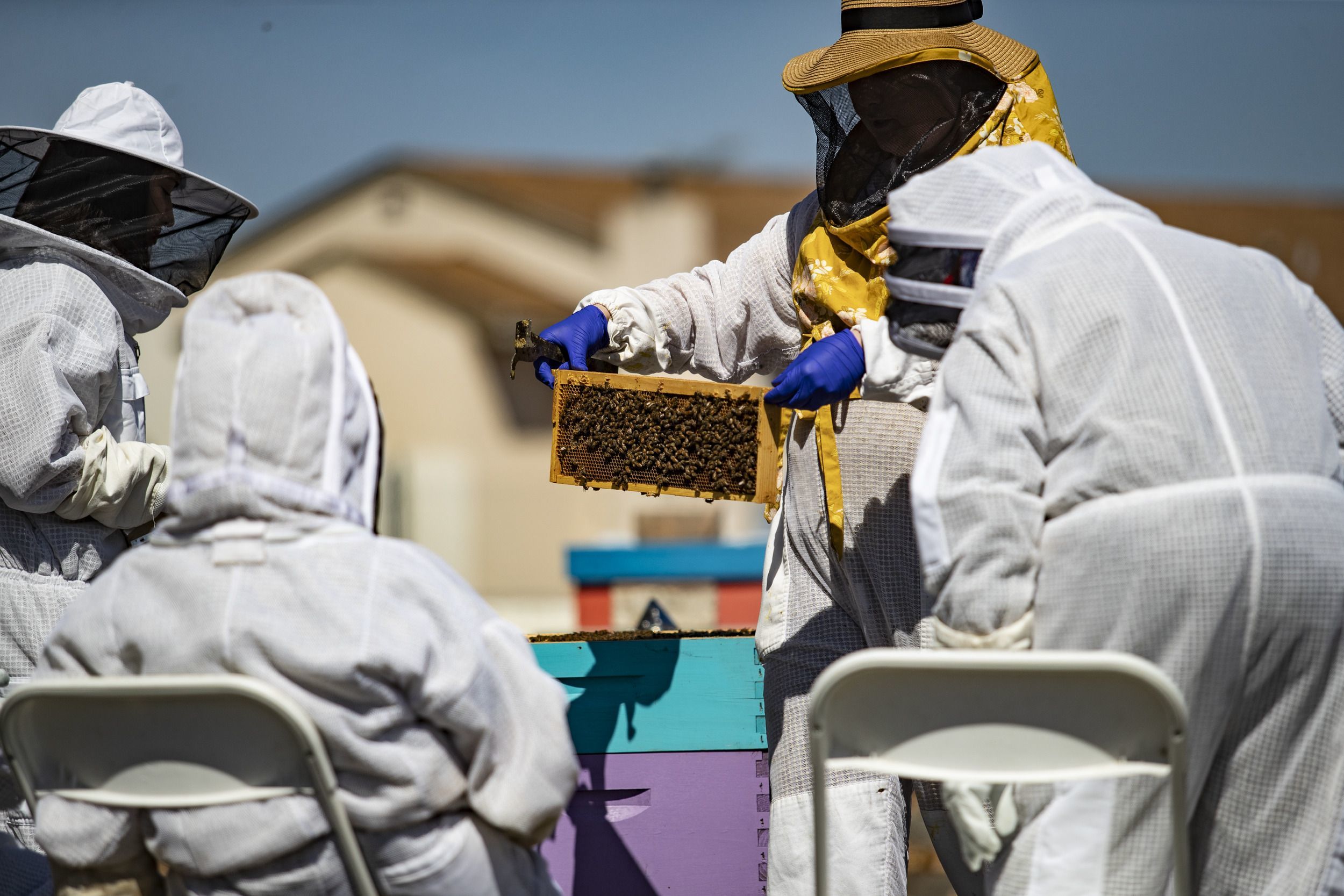
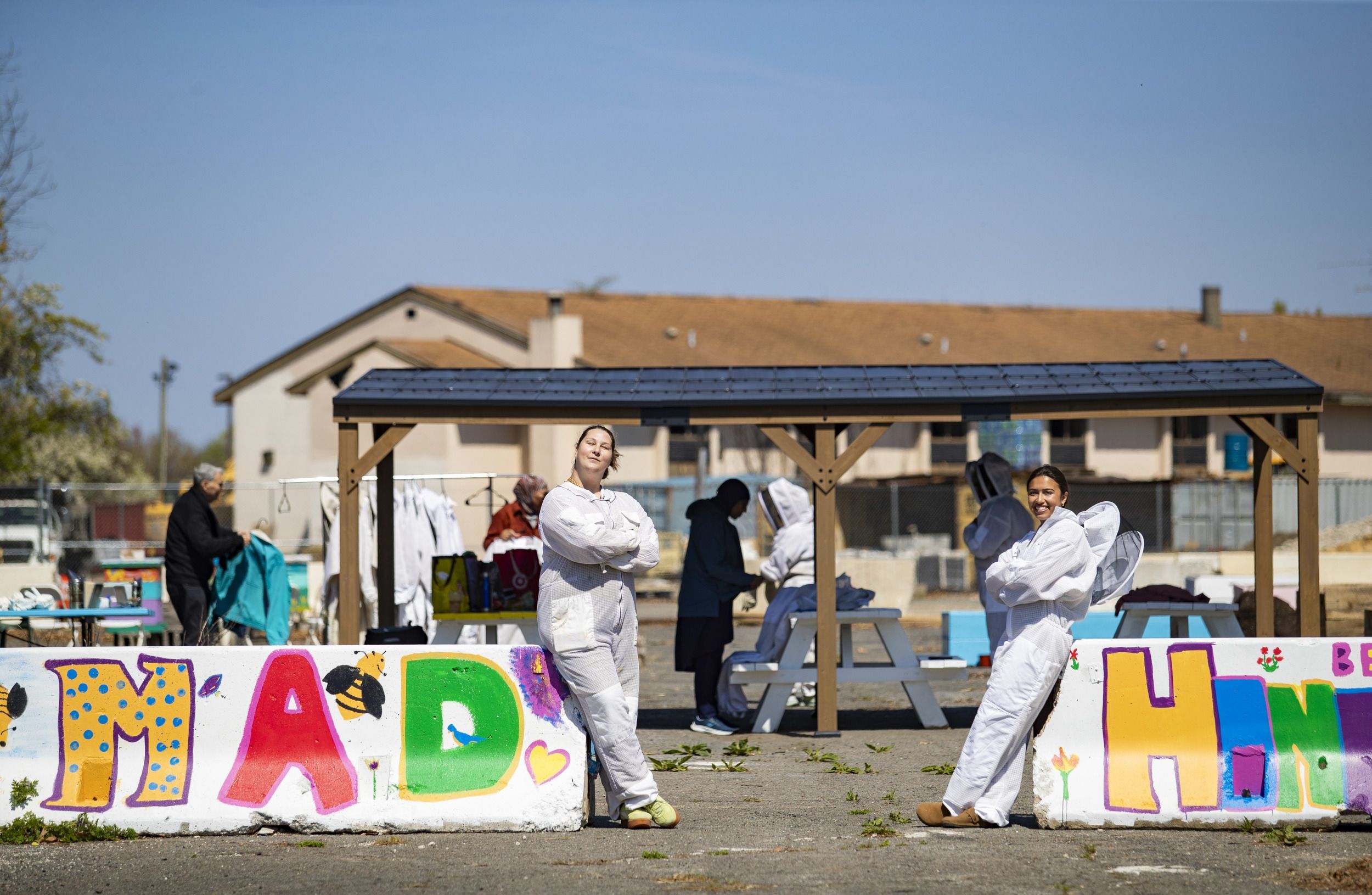
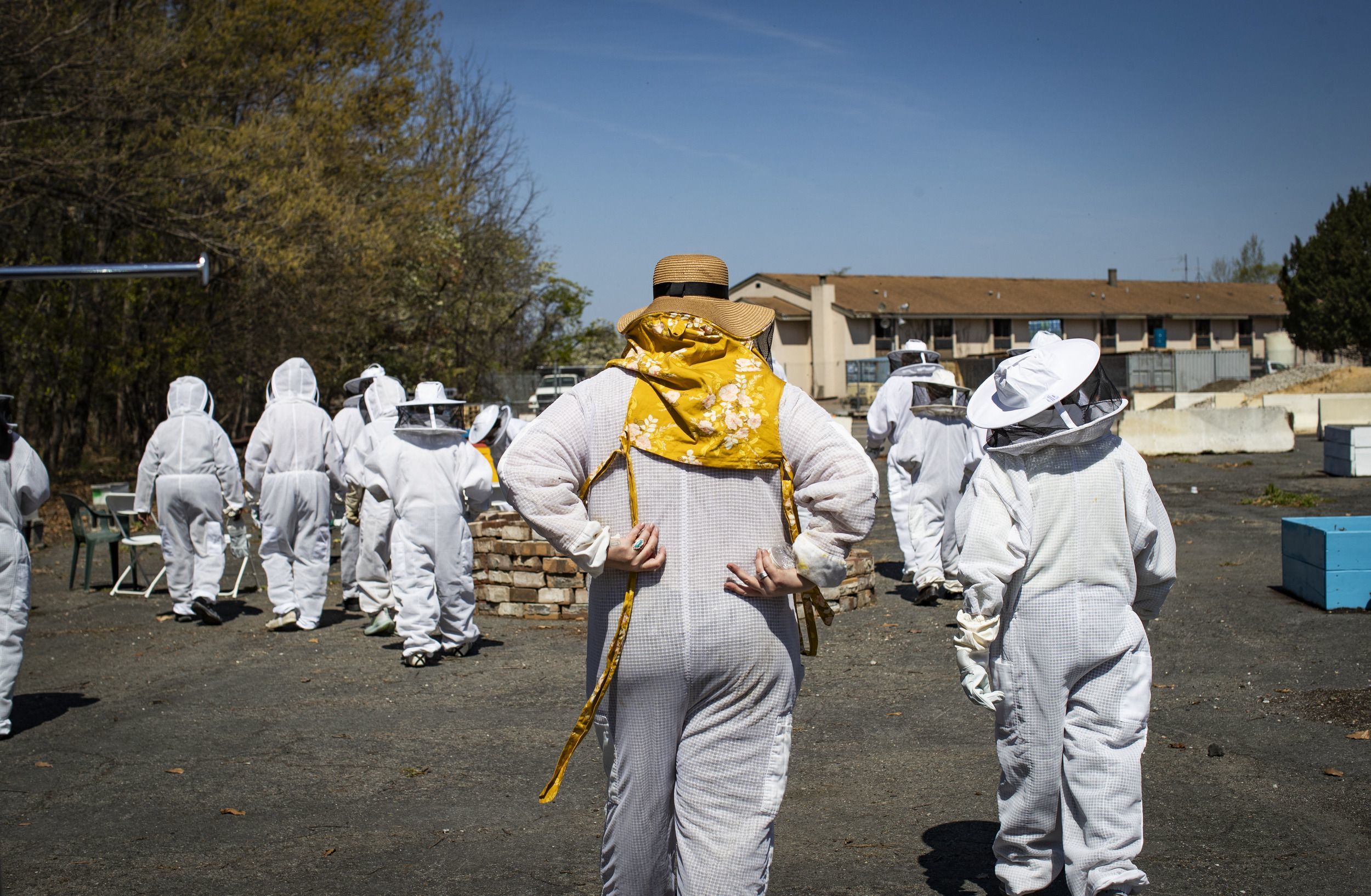
The six sessions of the program taught participants about the structure of a beehive and the different roles in a colony.Ryan S. Brandenberg / Temple
Ratay was among those who saw improvements in well-being, as her fear of bees transformed into a greater appreciation for nature.
“It was really life-giving to me,” she said. “It makes me feel worthwhile.”
Lessons from the bees
Half Mad Honey founder Amelia Mraz started beekeeping as an undergraduate at Temple in 2016.
At the time, she was at a low point in her ownmental health, dealing with anxiety and depression. Beekeeping became a meditative practice.
“Your worries just kind of melt away because you’re so immersed in the community of the bees,” Mraz said.
She founded her Navy Yard-based apiary with the goal of bringing therapeutic experiences outside of the clinic into nature.
Mraz offers beehive tours at Half Mad Honey that are designed to help participants practice stress reduction skills and mindfulness techniques.
Partnering with Robertson for her research in senior citizens was a natural extension of that work.
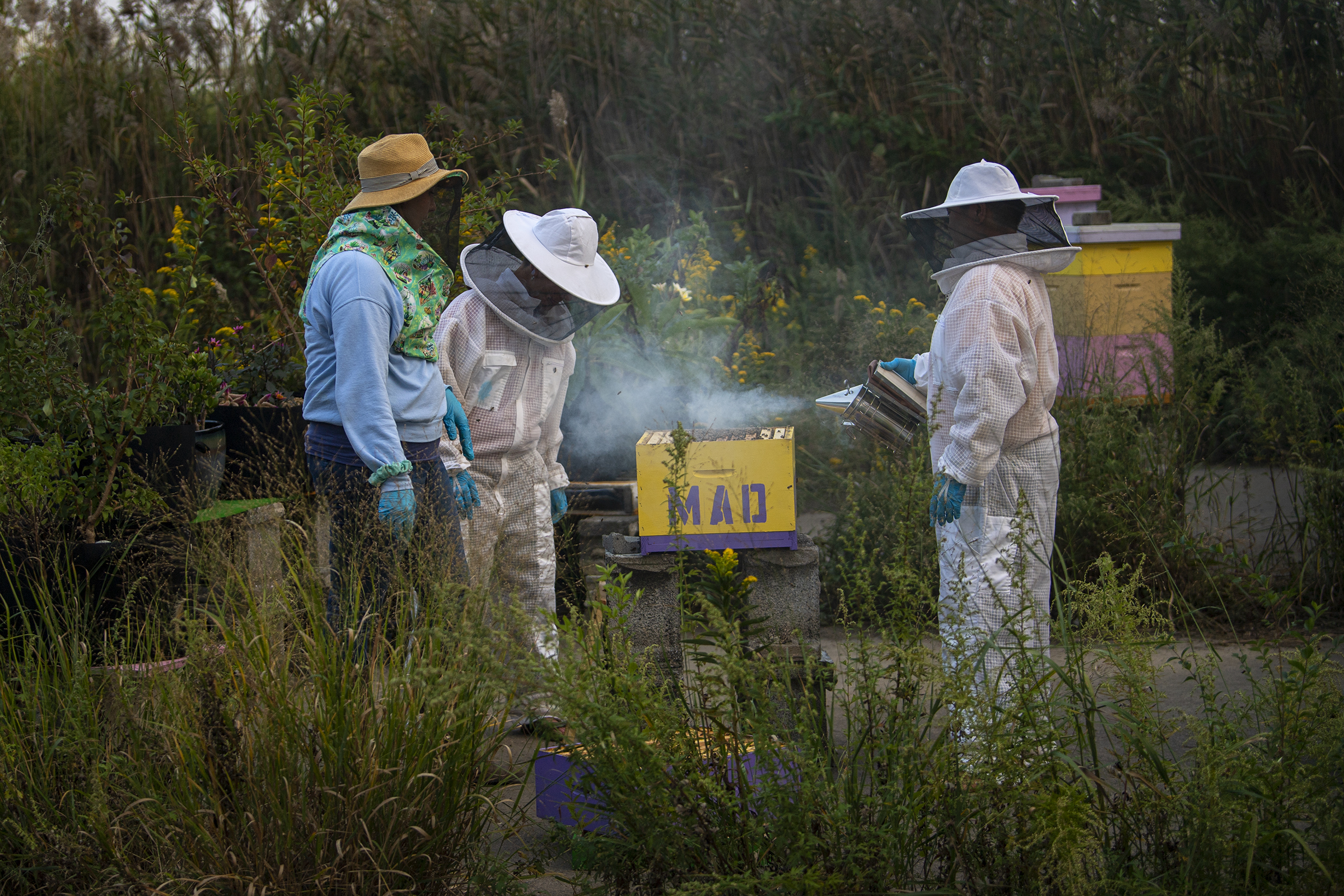
The study occurred at the Navy Yard-based Half Mad Honey.Ryan S. Brandenberg / Temple
Together, they designed six weekly sessions where participants learned about the structure of a beehive, painted boxes for the bees, opened the hives to identify different roles in the colony, and tasted the honey.
“They saw bees being born, they saw bees coming back with pollen on their legs, they saw the queen,” Mraz said.
Ratay, who retired from her career as a biology teacher last year, enjoyed learning about how bees work together to maintain the well-being of the hive.
Witnessing their interdependent nature boosted her own self-worth and feeling of belonging.
“It made me realize that no role is less important than another,” she said.
Robertson chose to study older adults specifically because they’re at an increased risk of experiencing mental health challenges due to loneliness, retirement, and major life changes, she said.
She assessed the participants’ well-being on a scale of 0 to 100 using the World Health Organization-Five Well-Being Index. The mean score increased from 66.15 before the program to 75.38 after.
The participants’ average depression score improved from mild to normal, while their average stress score decreased from moderate to normal.
The study included 13 older adults.Ryan S. Brandenberg / Temple
Ratay said the experience touched on her spirit of adventure and reminded her it’s never too late to try new things. She’s since returned to Half Mad Honey to help Mraz with the hives.
“It not only buoys you up and gives you confidence, but it allows you to tackle the next fear,” she said.
A small step forward
Robertson’s next step, having recently graduated from her occupational therapy program, is to finish writing a paper detailing the research.
Meanwhile, Mraz aims to continue developing therapeutic beekeeping programming, with the goal of bringing it to mental health organizations and expanding it beyond six weeks.
Though the data is still preliminary and too small in scale to generalize beyond the study participants, Mraz is excited to have more quantitative evidence behind the practice.
“It’s really my personal mission to share the joy, the relaxation, and the lessons of pollinators with folks,” she said.
Amelia Mraz (left), Amanda Geraci (center), and chef Natasha Pham are near their Half Mad Honey’s hives in Philadelphia. They use their beehives for mental health therapy.JOSE F. MORENO / Staff Photographer
Another participant, Deborah Rosan, struggled to find purpose outside of the house since she stopped working as a schoolteacher two years ago.
The 70-year-old from Ardmore had felt isolated and anxious adjusting to life outside the classroom.
Participating in the program reminded her that, “with conscious effort, I really do not need to experience the feelings of being superfluous and sidelined in culture just because I’m older,” she said.
Being a homeowner is getting more expensive not only because of the rising costs of buying properties but also because of the rising costs of protecting them.
From 2020 to 2025, home insurance rates across the country increased by a cumulative 47%, according to an analysis by the online loan marketplace LendingTree. In 2024 alone, they rose by about 13%. They increased by 6% in 2025.
Last year, rates increased by 7.5% in New Jersey and just over 1% in Pennsylvania.
Homeowners are seeing higher prices because of more frequent and damaging severe weather events and rising costs of labor, materials, and repairs.
“Rising home insurance costs are forcing many homeowners to make difficult financial trade-offs,” Lindsay Bishop, an insurance expert for LendingTree, said in a statement. “That suggests affordability pressures are becoming severe enough that some homeowners are questioning whether they can continue carrying coverage at all.”
Nationwide, more than 12 million owner-occupied homes are uninsured, according to a LendingTree report from March. LendingTree called homes uninsured if owners spent less than $100 per year on home insurance.
Of the country’s 100 most populated metropolitan areas, the Philadelphia region ranks in the middle — 47th — when it comes to shares of uninsured homes. Roughly 203,600 homes, or about 12%, did not have insurance in 2024.
Nationally, the average cost of home insurance is $2,395 per year. But costs are lower in New Jersey and Pennsylvania. The average cost is $1,449 in the Garden State and $1,712 in the Keystone State.
Costs vary by state because of their varying risks of severe weather.
Oklahoma, located in “Tornado Alley,” is the state with the highest average home insurance cost — $5,298 per year. Next is Nebraska, also in “Tornado Alley.” The average cost there is $4,956 per year.
Then comes Colorado, where homeowners pay an average of $4,310 per year. Colorado also was the state with the largest cumulative increase in home insurance costs from 2020 to 2025. The average rate more than doubled.
“States like Oklahoma, Nebraska, and Colorado experience greater damage from tornadoes, hail, wildfires, and severe storms,” Bishop said. “This leads to more frequent and expensive claims, so it’s unlikely that the gap between states will close dramatically unless the underlying risks change.”
As we approach the 250th anniversary of America’s founding, I can’t help recalling my 1999 visit to the Central Asian republic of Turkmenistan, whose dictator had a fetish for white marble architecture decorated with gold.
As I drove around the dusty capital of Ashgabat, it was impossible to escape Saparmurad Niyazov’s face.
It was emblazoned on banners hanging from government buildings and appeared on every denomination of paper currency. Statues of the dictator (I learned there were more than 2,200 of them in a country of 4.2 million people) loomed all around the city. The oil fields of this desert backwater funded Niyazov’s whims. Much of the country’s budget went into his private slush fund — all while he slashed resources for healthcare and renamed the months of January and April after himself and his mother.
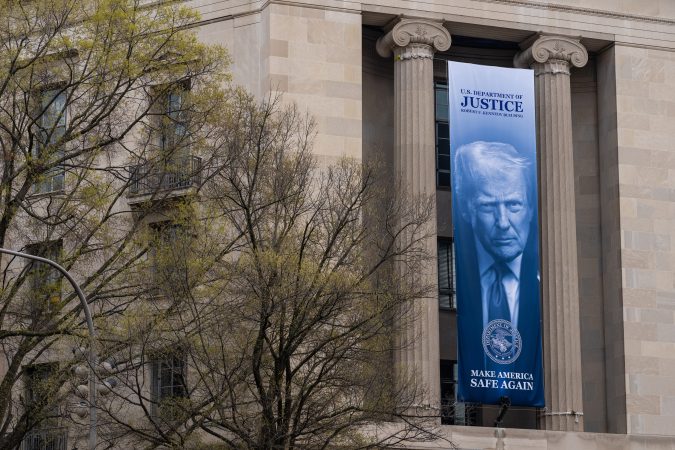
What sticks out most vividly among my memories, as President Donald Trump turns our nation’s Semiquincentennial into a celebration of himself — festooning government buildings with huge banners of his face and holding a political rally on the mall Wednesday to kick off July Fourth events — is Niyazov’s arch.
The three-legged arch, sitting in the center of Ashgabat, supported an observation tower that, at 226 feet, soared higher than the nearby presidential palace. The structure was topped by a 36-foot gold plated statue of the Asian potentate that rotated constantly to face the sun. Perhaps if the planned 250-foot high “Arch de Trump” ever gets built, and blocks the view of Arlington National Cemetery, the face on the gold winged figure atop the memorial will look familiar.
It seems all dictators and wannabes have the same instincts: to build grandiose monuments of marble and gold, the bigger the better, in order to impress their subjects with their magnificence. Back in Ashgabat all that seemed bizarrely amusing. Whoever thought it could happen here?
Instead of honoring the country’s founding values and documents in this year’s celebrations, Trump is performing like a wannabe Niyazov of Turkmenistan.
The main point of the Declaration of Independence was that governments “derive their just powers from the consent of the governed,” i.e., the people. The 13 colonies were quitting the British Empire because they refused to submit to a monarch who tried to rule by decree, rather than respect the elected representatives from the colonies.
Trump, who disdains any restraints on his powers and wants to rig election rules so they guarantee GOP victories, is turning the meaning of the Fourth of July on its head. I find it personally painful how this distortion has changed attitudes toward the United States all around the world.
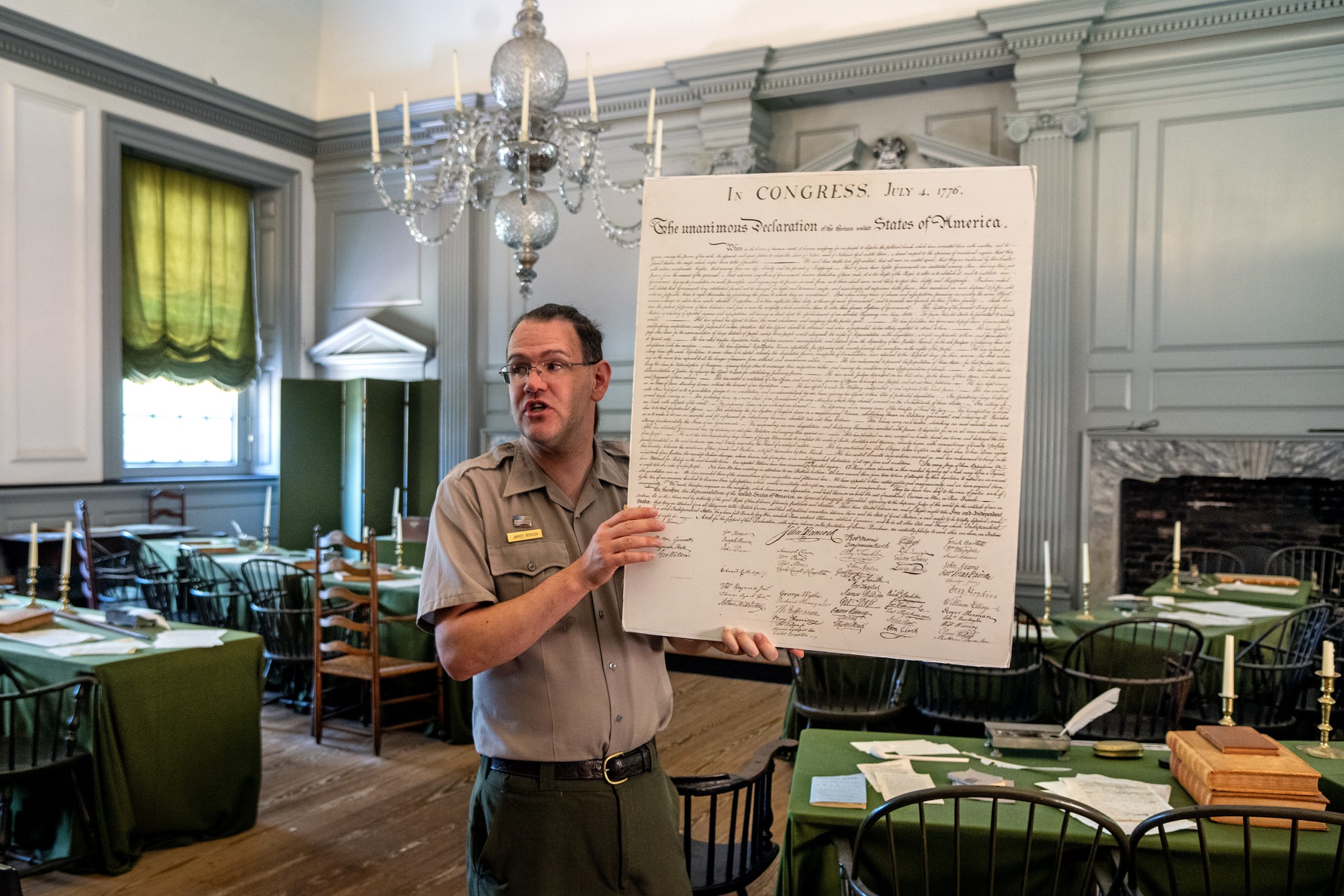
National Park Service ranger James Benson uses an enlarged copy of the Declaration of Independence while talking to visitors in the Assembly Room — where both the declaration and U.S. Constitution were signed — on the first floor of Independence Hall in Independence National Historical Park in August 2025.Tom Gralish / Staff Photographer
For decades I’ve reported on the struggles of other countries to achieve the kind of free elections that most Americans have taken for granted for decades. I had the privilege of bearing witness to struggles for some form of democracy in the Soviet Union and China, in new post-Soviet nations, during the 1980s upheavals in the Philippines and South Korea, during the Arab Spring revolts, in post-Saddam Hussein Iraq, and during the post-Taliban interval in Afghanistan.
Those who struggled for the right to choose their leaders often paid a terrible price. More often than not, their struggles failed or have been reversed after brief periods of freedom.
Throughout those struggles, the U.S. election system was a lodestar – even though reformers abroad may have opposed specific U.S. foreign policies or the U.S. exercise of overweening power. That admiration was especially evident in the ’80s and ’90s inside communist countries that were trying to break away from their past.
Russians listened to Voice of America (now nearly shuttered by Trump) and would eagerly query me about U.S. politics on my yearly visits to Moscow during those decades.
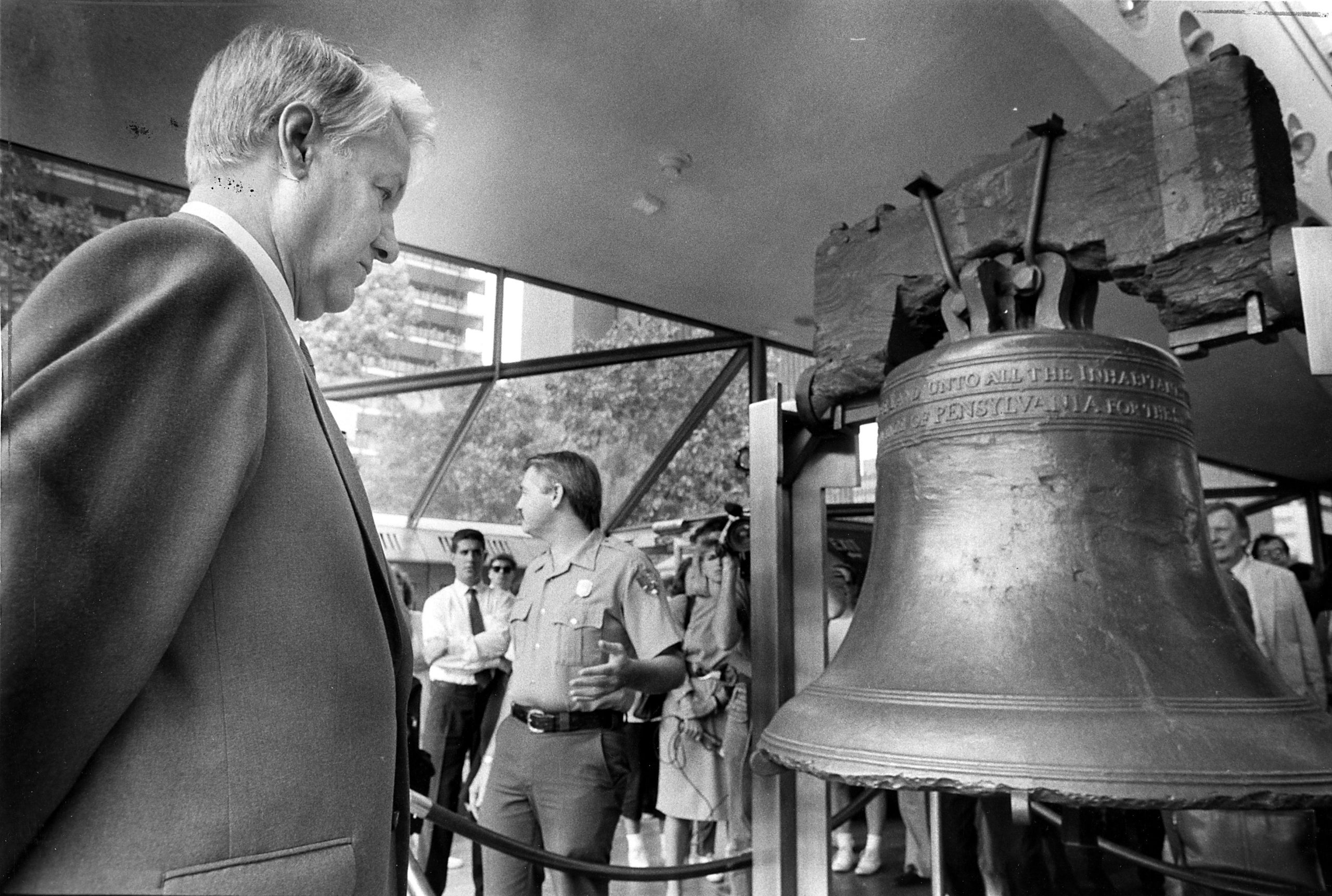
In 1989, I shadowed then-President of the Soviet Republic of Russia Boris Yeltsin for a day when he visited the room where the Declaration of Independence was adopted inside Independence Hall. He asked the National Park ranger how the American colonies apportioned power between states and central government after independence. I realized only later that he was preparing to take Russia out of the Soviet Union and wanted tips on how the Founding Fathers managed their exit from the British Empire.
Boris Yeltsin views the Liberty Bell during a visit to Philadelphia in Sept. 13, 1989. Seeking to view U.S. democracy up close, he traveled the country, including a visit to the White House.Eric Mencher / Staff Photographer
In May 1989, Chinese students erected a 33-foot-tall Goddess of Democracy statue in Tiananmen Square inspired by the Statue of Liberty. I was in Poland at the time, observing that country’s first free parliamentary elections on June 5 that were won by Lech Walesa’s Solidarity movement. But on June 4, I watched with horror on television, along with Polish colleagues, as the Chinese army sent tanks into Tiananmen Square.
Yet, despite hundreds to thousands of deaths (the exact figure is stillunknown), Chinese democrats didn’t give up. In the 1990s, I reported on their efforts to press the central government to permit village, and then town, elections. I interviewed law students at top universities who traveled to small villages to instruct peasants on their rights according to Chinese laws that were ignored by officials.
This progress has been totally reversed by China’s hard-line dictator Xi Jinping, who also crushed democratic institutions in once autonomous Hong Kong. But as recently as 2023, it was inspiring to hear Hong Kong high schoolers, who were protesting the ongoing crackdown by Beijing, recite from memory their rights under law as they had learned in civics classes. Since then, such classes have been banned, and students must memorize rote lessons on “patriotic education” or “Xi Jinping thought.”
It saddens me now to hear self-exiled Russian liberals or Hong Kong democrats or visiting Chinese who once worked for some form of democracy at home, express shock at Trump’s attacks on America’s democratic institutions and efforts to rig elections. Repeatedly, I get the same questions expressed with genuine bewilderment: Why isn’t it possible to stop him from doing this? How is it possible that this can happen in the United States?
In this Sept. 3, 2015, file photo, Chinese President Xi Jinping (right) and Russian President Vladimir Putin observe a parade commemorating the 70th anniversary of Japan’s World War II defeat, from Tiananmen Gate in Beijing.Ng Han Guan
Ukrainians, who have fought bravely for more than four years to save their independence from Vladimir Putin’s imperialism, ask me how a U.S. president can back a dictator who hates the West, and wants to restore the Soviet empire. As Independence Day approaches, POTUS continues to ignore the parallel between Ukraine’s courageous struggle for freedom and ours long ago against the imperial British.
Europeans have given up on Trump, and I understand why, having watched Vice President JD Vance at the 2025 Munich Security Conference praise far right, neo-Nazi parties and demean Europe’s democracies. Trump, Elon Musk, and other MAGA acolytes continue to support extremist Europeans whose values would make the Founding Fathers gag.
So it isn’t surprising that a new Pew Research Center poll reveals a steep decline in the popularity of the United States worldwide, especially over the past year. Only a median of 37% of adults polled across 36 countries hold a favorable opinion of our nation. Only 23% express confidence in Trump’s leadership of world affairs, ranking him behind Putin and Xi.
But what is even more striking is that only 39% believe the U.S. government respects the personal freedoms of its own citizens. This is how the world now views a country that was once seen as a beacon of democracy.
During July Fourth celebrations across the country, in places far away from Trump’s pollution of the capital, I hope Americans will reflect on what the Founding Fathers bequeathed to us 250 years ago. For inspiration, reread the Declaration of Independence and brainstorm with friends, colleagues, and family on how to prevent the president from desecrating its principles at the polls come November.
IRVINE, Calif. — For Philadelphians new to seeing a World Cup in person, it might feel like the road to this point began when FIFA picked the city to host games in 2022.
For others, it might feel like the first steps were taken when the U.S.-Canada-Mexico joint hosting bid won the formal vote in 2018, or when the bid was filed the year before.
In fact, the process began much longer ago than that, in 2007. That’s when U.S. Soccer Federation officials started seriously thinking about bringing the men’s World Cup back to the United States for the first time since 1994.
Nineteen years is a long time in American sports, and especially American soccer, where so much changes from year to year, not just decade to decade. So as the 2026 spectacle unfolds, it’s worth taking a moment to step back and turn to the history books.
There aren’t too many Americans who’ve been on the entire ride. In fact, there’s barely anyone at U.S. Soccer who has been, in part because the presidency has changed hands twice since 2007.
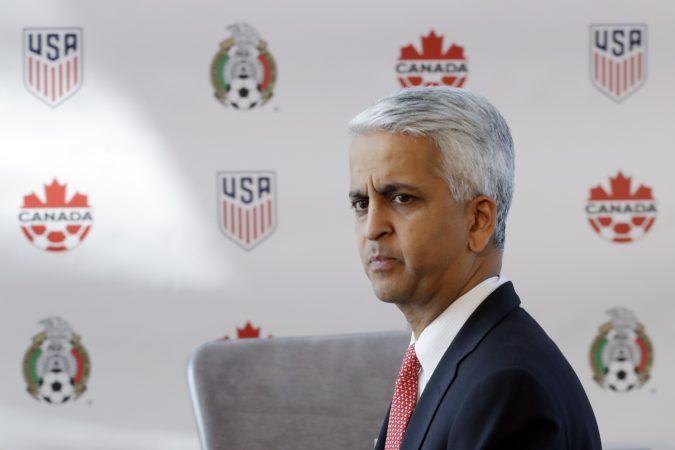
One who has and who knows Philadelphia well is Sunil Gulati. The longtime economics professor at Columbia University led U.S. Soccer from 2006-18 and has also served on the FIFA Council and the former FIFA Executive Committee.
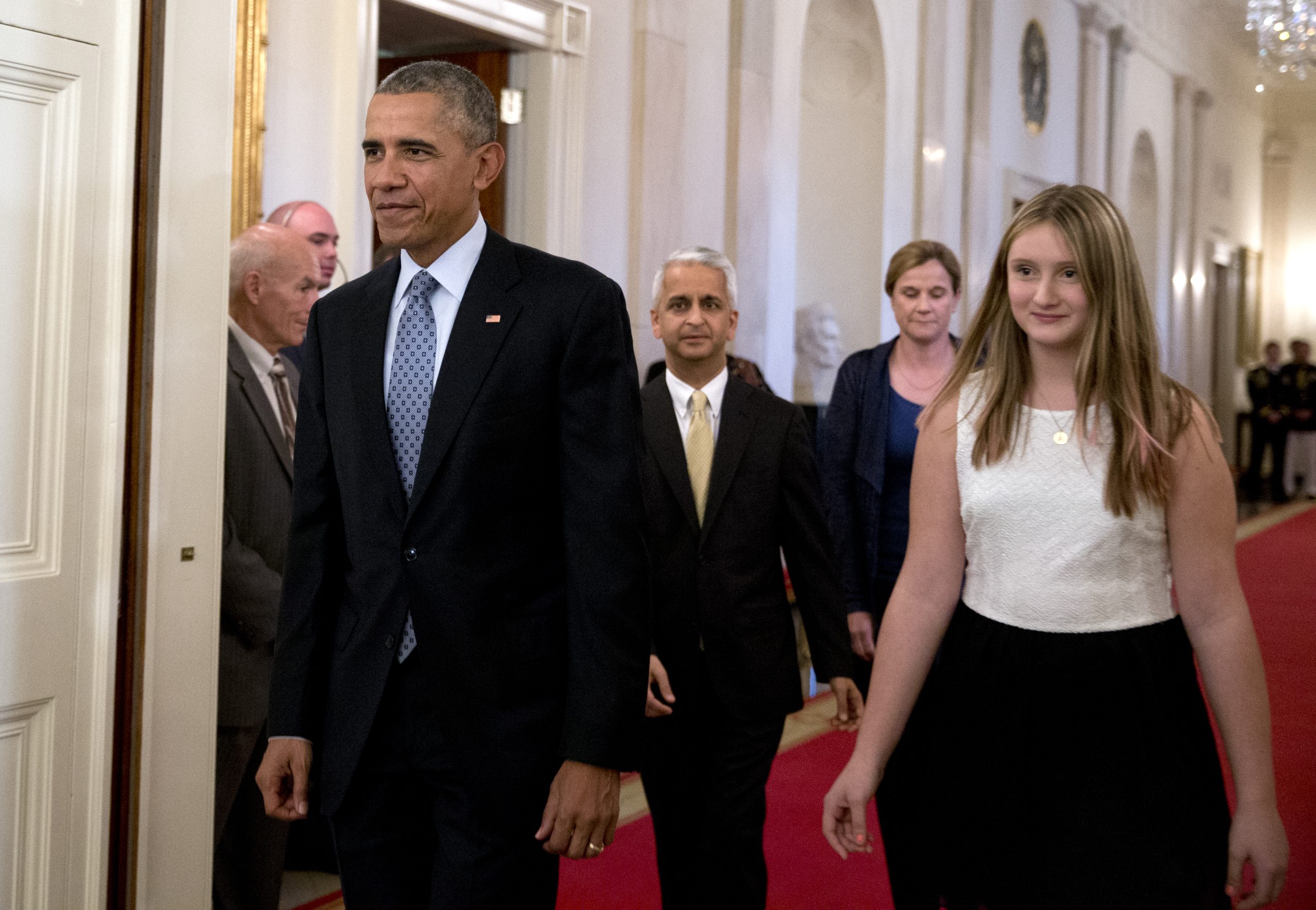
Sunil Gulati (center) walking behind Barack Obama in 2015 at a White House ceremony to honor the U.S. women’s soccer team’s World Cup win.Carolyn Kaster
Few people have seen more of soccer’s growth in this country up close, not just in his years as president but in a variety of roles across Major League Soccer, FIFA, and recently as the chair of European soccer confederation UEFA’s Club Financial Control Body.
Gulati has a lot of stories to tell, and not all of them are allowed to see the light of day. But he was happy to share some with The Inquirer as he enjoys this tournament just like the rest of us.
‘The day after’
When U.S. Soccer took those first steps in 2007, Gulati had been president for less than a year, and it was only 13 years since the 1994 tournament — not too long in World Cup terms. But some flickers of the afterglow were still there, and he knew how long it would take to bring the fire back.
“The ’94 World Cup had been highly successful, and hosting an event like the World Cup generates a lot of positive benefits — and they’re not pure economic benefits, including this [2026] World Cup,” he said. “It was never about the financial returns to the federation, or federations, in this particular World Cup, and there are three of them.”
In his view, “it was always about trying to increase the demand for the game, [and] accelerate the growth of the game in the United States. It’s [wondering] what does the sport look like the day after?”
That acceleration included building the foundations of a soccer infrastructure in this country. Many future power brokers had launchpad moments in 1994: future U.S. Soccer CEO Dan Flynn, promoter and media personality Charlie Stillitano, broadcaster Derek Rae, and future women’s World Cup, Olympics, and NWSL executive Marla Messing.
Above all, that World Cup produced Major League Soccer, as FIFA required the U.S. to launch a top-level league as a condition of hosting.
“All the people that worked in senior positions or in entry-level positions that became part of the landscape in the sport … those people became important players in the growth of the game in different ways,” Gulati said. “And obviously, then if you talk about MLS, the development of the league leads to huge changes in infrastructure, the stadiums in particular, training facilities.”
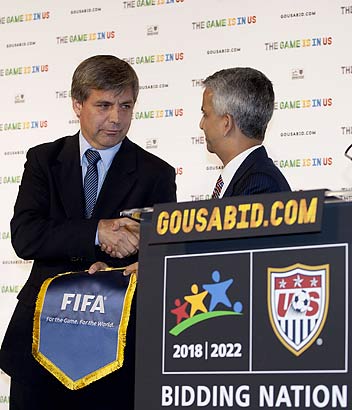
Harold Mayne-Nicholls (left), the head of the FIFA Inspection Delegation, exchanges a FIFA banner with then U.S. Soccer president Sunil Gulati at the conclusion of FIFA’s bid inspection for the 2018 and 2022 World Cups. Thomas Shea/ISI
Gulati believed another World Cup could do even more. So the long road began, with U.S. Soccer going in on 2022 when it became clear 2018 was going to Europe.
For some time, it seemed like effort would pay off. But in December of 2010, a day came that will live in soccer’s infamy.
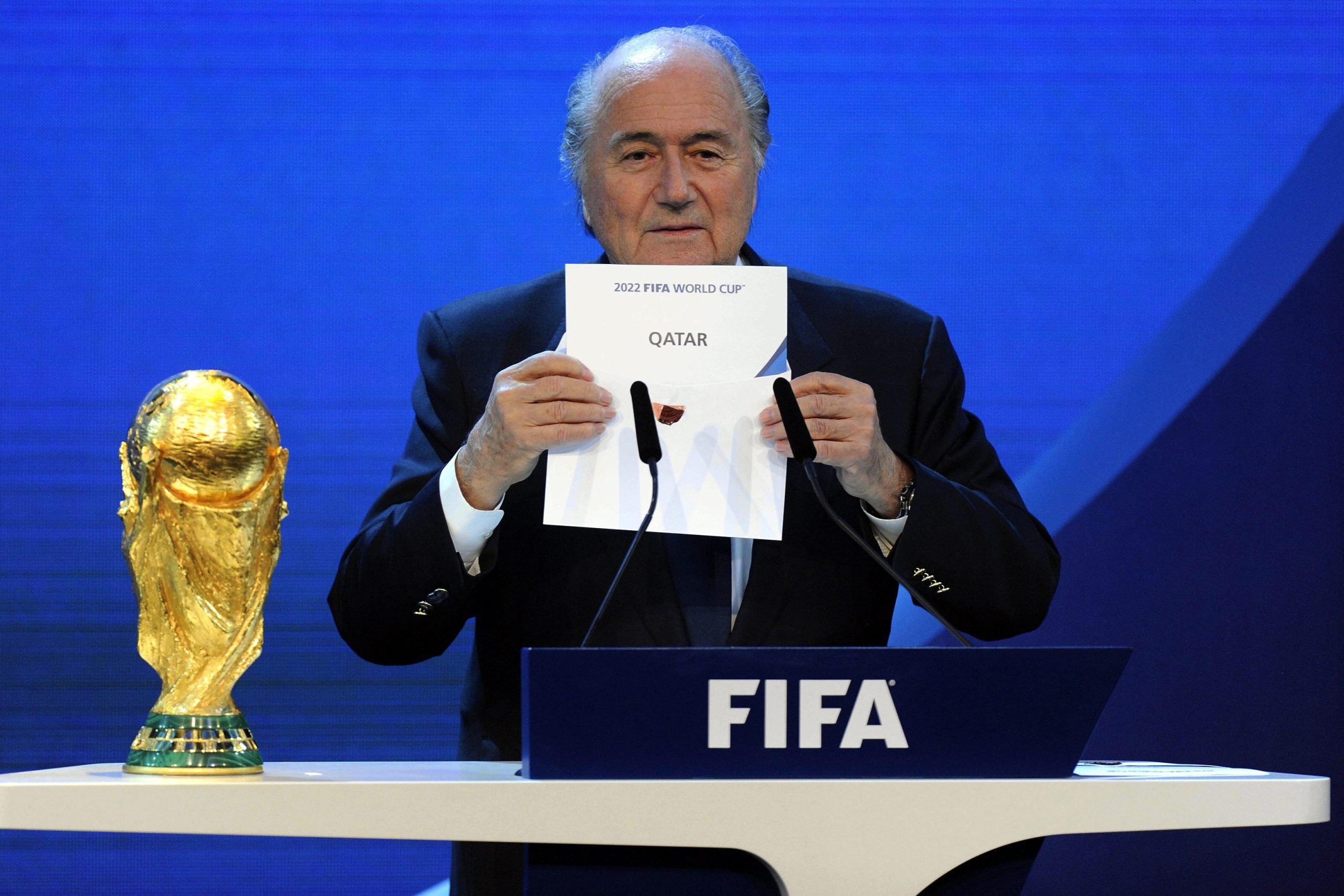
So many people around the sport remember where they were when then-FIFA president Sepp Blatter pulled Qatar’s name out of the envelope instead of the United States’. It hurt as much as any loss on the field, perhaps even more to some people.
But Gulati was ready for the gut punch because he sensed it might be coming.
Perhaps the most infamous day in FIFA’s modern history: when then-president Sepp Blatter announced on Dec. 2, 2010, that Qatar would host the 2022 men’s World Cup.Walter Bieri
“I had a better inkling, I think, than members of my team that it was going to go the wrong way for us,” he said. “Because we had a pretty accurate vote count, and that vote count relied on three European votes. And I had a pretty good idea that we weren’t going to get those — the votes that the weeks earlier, I was quite confident that we were going to get.”
Had those three votes on FIFA’s executive committee gone the U.S.’ way in the final round of voting, it would have been an 11-11 tie, and Blatter would have broken it in America’s favor.
“It didn’t shock me, but I think it probably shocked some other members of the team who maybe weren’t quite as close to the vote count,” Gulati said. “And it was obviously a huge disappointment, but not a shock.”
“Right after the decision, I wasn’t sure if I ever wanted to go near this process again, or if I wanted to start right away,” he said, and he referred to an even stronger version of that line he gave to France’s Le Monde newspaper earlier this month.
“On the one hand, I wanted to immediately jump into our next bid,” that version went, “and on the other, I told myself that I never again wanted to have anything to do with that kind of thing, or with those people.”
Sunil Gulati (center) with various international soccer officials at the Washington Monument in D.C. in 2019.Susan Walsh
As allegations that Qatar bribed FIFA officials to win the bid piled up, it would be a few years before the winner of Gulati’s internal battle emerged. When it did, the soccer landscape had changed in an even more epic way.
On May 27, 2015, the U.S. Department of Justice raided the Baur au Lac hotel in Zurich, Switzerland, and arrested a slew of international soccer officials. A few hours later in Brooklyn, N.Y., the department formally announced the charges and the people charged.
That day would lead to Blatter’s resignation and a pile of other impacts, including reforms to the World Cup bidding process.
Since Gulati was on the FIFA Executive Committee at that point, he had a role in those reforms. He acknowledged to The Inquirer that he wanted “to try to influence what the rules of the competition, in terms of the bidding process, would be. And those changed, which then allowed us to be more comfortable bidding again.”
By the end of that year, the wheels were in motion, and in 2016, Gulati started pushing for a multicountry plan. It started with just the U.S. and Mexico, as Gulati worked with the then-chairman of the powerful TV network Televisa, Emilio Azcárraga Jean. Then Canada joined the fold.
“There were some cultural reasons, frankly, that I wanted to do it with Mexico, about Hispanic relations, Mexico-U.S. relations, and so forth,” Gulati said. “And then we’re having a parallel set of discussions with Victor Montagliani, who was the president of the Canadian federation, and it eventually came to the three of us doing it together.”
From left, Victor Montagliani Sunil Gulati, and then-Mexican soccer federation president Decio de Maria presenting their joint bid to host the 2026 men’s World Cup.Mark Lennihan
Gulati knew a multicountry bid would look better to FIFA, but it would take convincing U.S. Soccer’s board first.
“I preferred having a 90% chance of winning 75% of the World Cup games than a 75% chance of hosting it all,” he said.
He also preferred the new FIFA president. Gulati played a key role in getting Gianni Infantino elected. During the election vote at the 2016 FIFA Congress, Fox’s TV broadcast repeatedly showed him working the hall.
Another aspect doesn’t attract big headlines but has had a huge impact behind the scenes. This is the first men’s World Cup where FIFA hasn’t had a national-level local organizing committee, run by domestic staff in the host countries, that handles marketing, venue deals, political relationships, and so on.
Instead, FIFA has tried to do almost everything itself. And as even casual soccer fans have seen by now, it has not gone well — especially just north of here in New Jersey.
Gulati didn’t want to go too far down that road in public, but he opened the door enough to sense what was beyond it.
“Some of the key figures in this World Cup are people that work for FIFA, which is fine, but it’s different, certainly,” he said.
Asked if FIFA was told that they weren’t going to be able to unilaterally rule over North American governments, he said: “They understood that. And that’s obviously posed a bunch of challenges … Not just state, local, federal, but three countries in this case.”
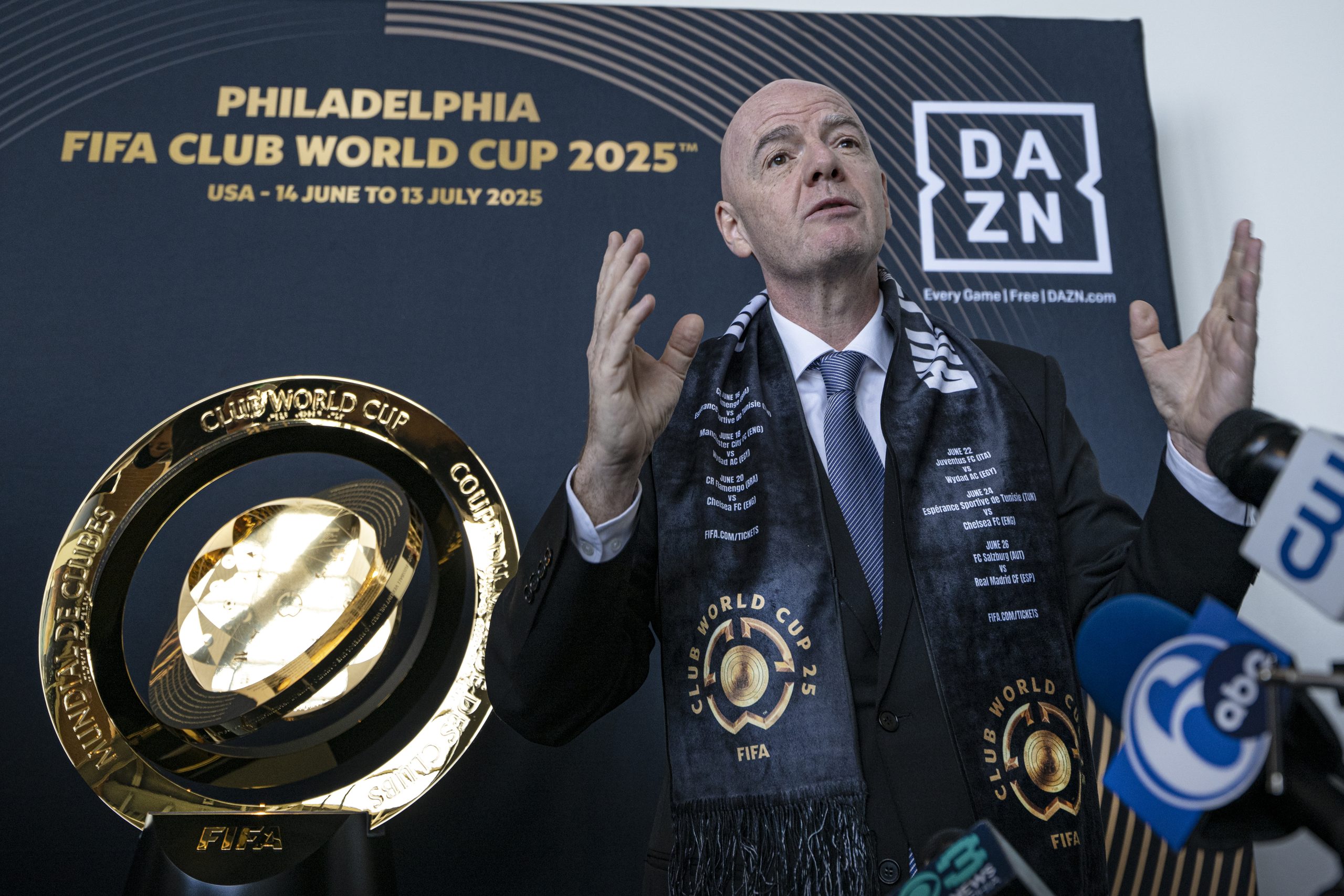
FIFA president Gianni Infantino (left) on a visit to Philadelphia last year to promote the Club World Cup.Jose F. Moreno / Staff Photographer
And asked in particular about dealing with state and local governments that don’t exist in other countries, Gulati said: “That’s obviously come up, and I get it. But look, there’s always some issues that come up in these things, whether it’s immigration or taxes, or who’s going to pay for what, or exclusivity, all those things — those are kind of par for the course in World Cups.”
A moment later, he added: “Maybe it’s a little bit easier given the obvious differences in governance that exist in other countries.”
In the end, Gulati is an optimist about this World Cup’s long-term potential, including for Philadelphia specifically. He knows the city well, and knows the spotlight it’s in this summer.
“I think what it can do is bring greater attention to the sport and greater attention to the city if it becomes an important attraction, and games go well, and people feel at home, and it’s welcoming, and so on,” he said. “Philadelphia, it’s a great sports city, it’s got great venues. And hopefully, some of the teams that are playing there — and the fans more importantly — come, and they talk about it, and there’s more people that want to visit in the future.”
Philadelphia has a long-standing reputation as an underdog city, but when it comes to hosting the FIFA World Cup, Anne Ryan, Pennsylvania’s Deputy Secretary of Tourism, sees Philadelphia as a front-runner.
Ryan visited the FIFA Fan Festival as it hosted “PA Day” on Saturday, which included visits from a Ben Franklin impersonator, Philadelphia Union mascot Phang and Hersh the Hershey Bar.
“I’m a Philadelphian,” Ryan said. “I do love that underdog mentality, but are we underdogs anymore? We’re ranking [at the] top as one of the best host cities in the country, because of our Fan Fest and our experiences.”
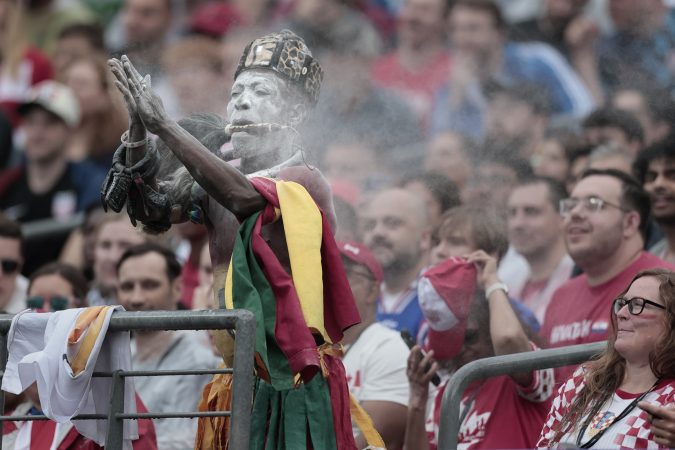
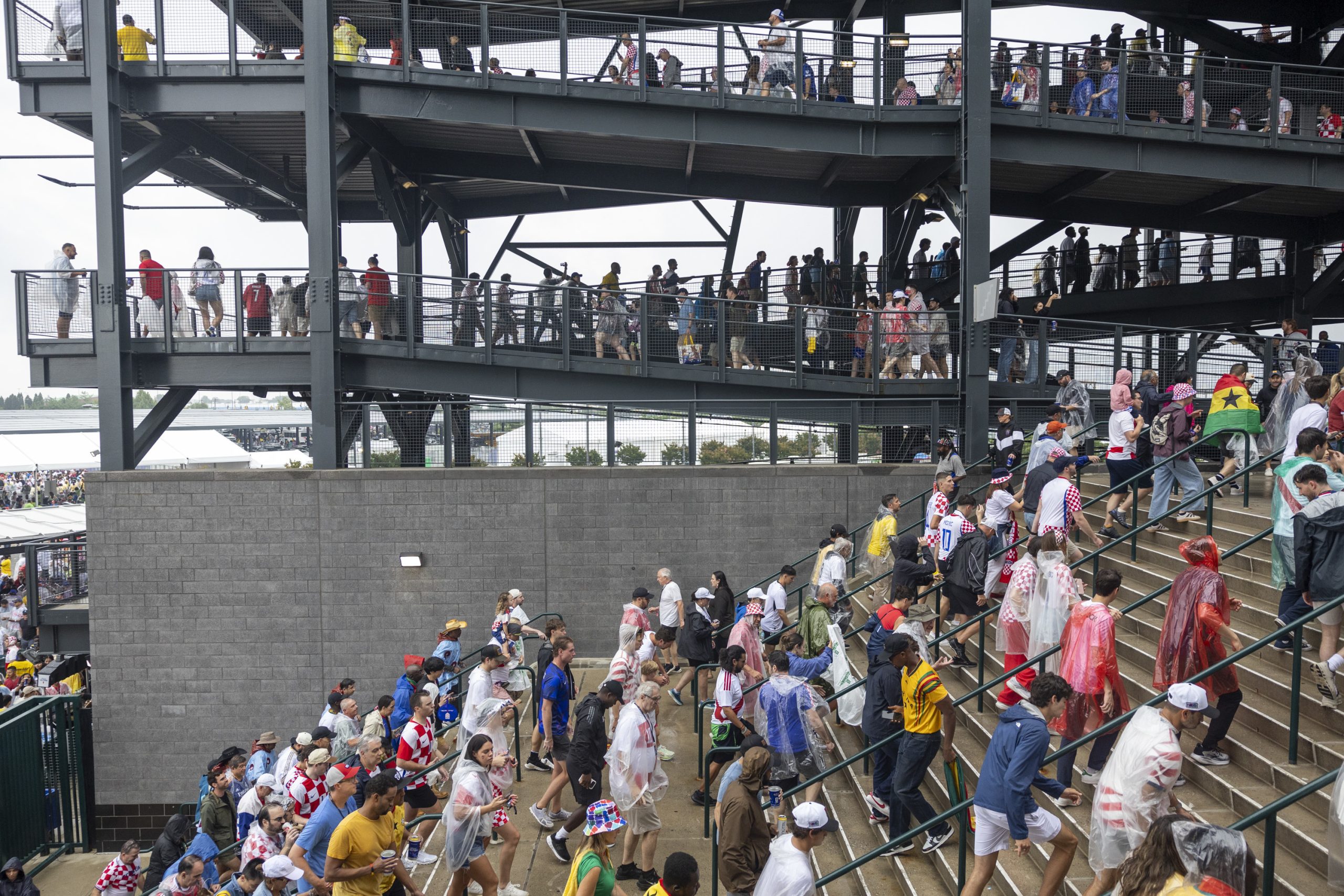
Despite cloudy and rainy conditions, crowds of fans entered the festival grounds again on Saturday for Croatia-Ghana, Philadelphia Stadium’s fifth and final group stage match.
Croatians and Ghanaian supporters were well-represented in the crowd, and both went home happy, despite a 2-1 win for Croatia. Ghana, who advanced to the knockout round as one of the eight best third-place teams, had already secured a round of 32 spot entering Saturday’s match, and Croatia was able to get off the third-place cut line by surpassing Ghana for second.
English fans at the festival went home happy, too, as England finished atop Group L with a 2-0 win over Panama.
While the state office of tourism has not formally measured the economic impact driven by Philadelphia hosting the World Cup, Ryan said the success of the free Fan Festival in Lemon Hill — which has hosted 250,000 fans since opening on June 11 — is a good indicator of how many fans have visited Philadelphia during the tournament.
“The fact that we’ve already had 250,000 attendees here, it’s just insane,” Ryan said at the festival on Saturday. “Some of our original projections were 15,000 [visitors] a day. And then, to have close to 54,000 just last Friday alone, has been fantastic.”
Ryan said her office could see through flight data and bookings of Airbnbs and other rental properties that plenty of international fans were traveling to Philadelphia for the tournament.
According to Ryan, visitors on flights from France to Philadelphia International Airport are up 59%, year over year. Passengers from the Netherlands to PHL airport are up 48%, and up 25% from the United Kingdom.
The tourism office also considered the economic profile of the nations Philadelphia was hosting, and how people from those nations like to travel. The World Bank Group classifies three of the nations Philadelphia hosted in the group stage — Haiti, Ivory Coast and Ghana — as “lower middle income” nations as it relates to gross domestic product per capita.
If fans from those nations successfully navigate partial or full travel restrictions to follow their team, they’re more likely to pick a high-capacity rental than a traditional hotel.
Over 250,000 people have already come through Philly’s FIFA Fan Festival during the World Cup.Tyger Williams / Staff Photographer
“There was so much projection pertaining to the World Cup, like, ‘Is this going to be a flop, because all of our hotels aren’t sold out?,’” Ryan said. “But you have to look at the teams we’re hosting and how they travel. Ghana, Haiti, Curaçao, Brazil, Ecuador — they’re not staying in a boutique hotel in Center City. Our three bedroom-plus Airbnb bookings are up 53%, year over year, for June and July.”
Ryan said overall, in the five-county region surrounding Philadelphia, Airbnb bookings are up 48%.
“They came, and they’re riding,” Ryan said. “They’re taking SEPTA. And we’ve actually heard good feedback. We did some man-on-the-street interviews with visitors. People [are] really complimenting SEPTA and our buses, and the transit here.”
And despite high ticket costs, another sell-out crowd watched Croatia-Ghana at Philadelphia Stadium (aka Lincoln Financial Field). The World Cup broke its attendance record after Thursday’s slate of matches, with 3,605,357 fans attending matches across the continent entering Friday. After Saturday’s match, 341,620 fans have attended five World Cup matches at the Linc.
While it will take time for the city’s official accounting to come out on hosting the tournament, Ryan suggested the stats and indicators in key areas show the city is positioned to meet, and potentially exceed, its pre-tournament estimation of 500,000 visitors generating $770 million worth of economic impact.
The Ghana-Croatia game on Saturday had a sellout crowd of 68,324 people.Tyger Williams / Staff Photographer
“I’m a betting girl, and I’m going to say for the World Cup, we’re probably going to net out close to 800,000 [visitors],” Ryan said. “And the $770 million in economic impact, I wouldn’t be surprised if that’s closer to $900 million, based off of that increase.”
More visitors are likely on the way to Philadelphia because of how the tournament’s group stage shook out. If Germany beats Paraguay on Monday, and France beats Sweden on Tuesday in the round of 32, it would set up a match between the Germans and the French, two star-studded European powers, on July 4 in a round of 16 match at Philadelphia Stadium.
“We’re still waiting to hear who we’re hosting on July 4,” Ryan said. “Let’s see what our hotels and Airbnbs look like after Tuesday.”
The Navy Yard got a new boat this month. It isn’t a military ship and won’t be setting sail.
The decommissioned 1977 tugboat, now painted in Urban’s signature yellow and marked by its logo, is now permanently stationed outside the company’s headquarters — as a sort of mascot, to company cofounder and CEO Dick Hayne.
The tugboat’s arrival coincides with a momentous anniversary for Urban: the company’s 20th year at the Navy Yard. Urban staff started relocating 500 employees there in 2004, and the headquarters was fully operational by 2006. Now it has 15 buildings and just over 2,500 employees.
And the company is continuing to grow.
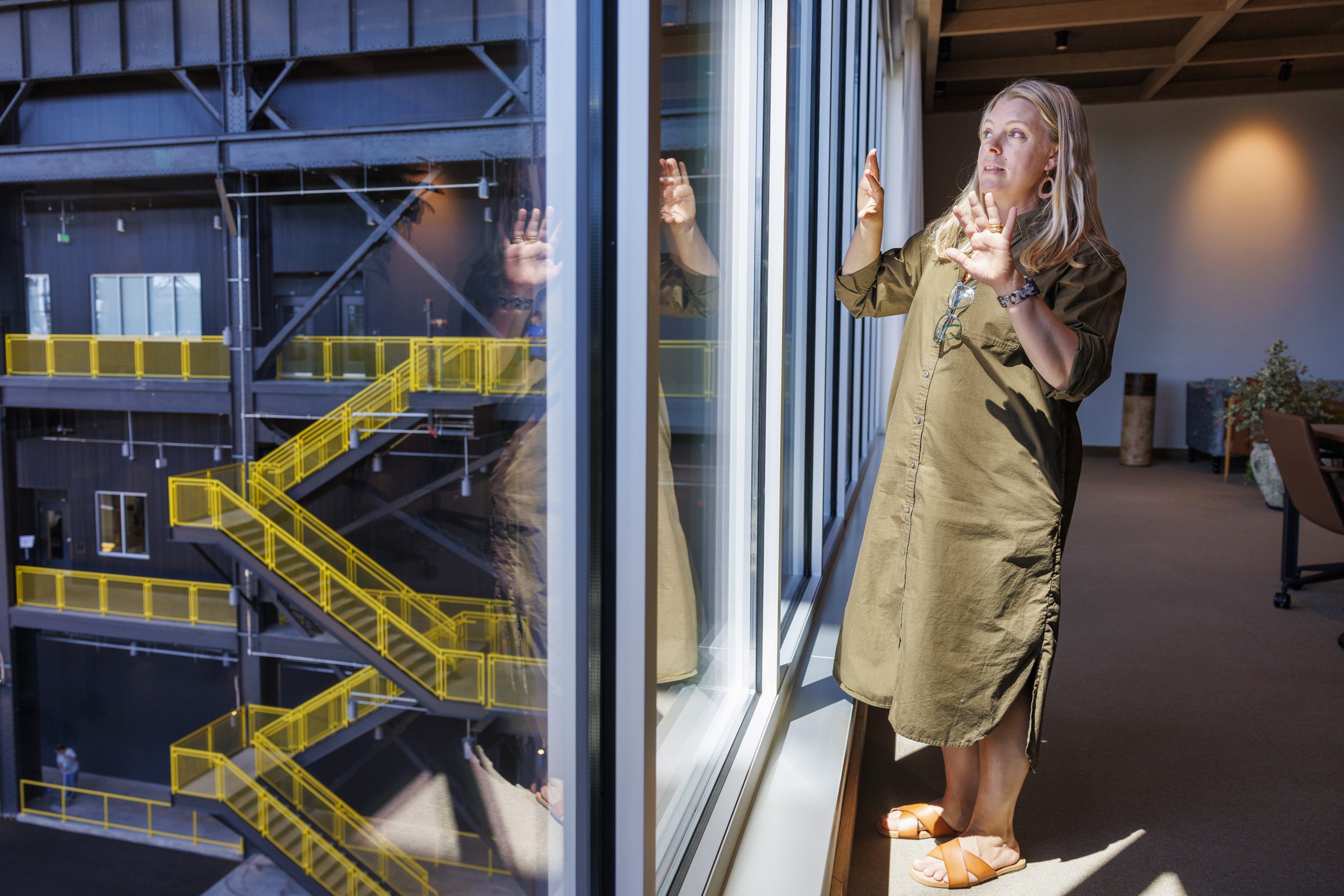
Urban Outfitters chief development officer Dave Ziel stands with a retired tugboat the company acquired for display at its Navy Yard headquarters.Alejandro A. Alvarez / Staff Photographer
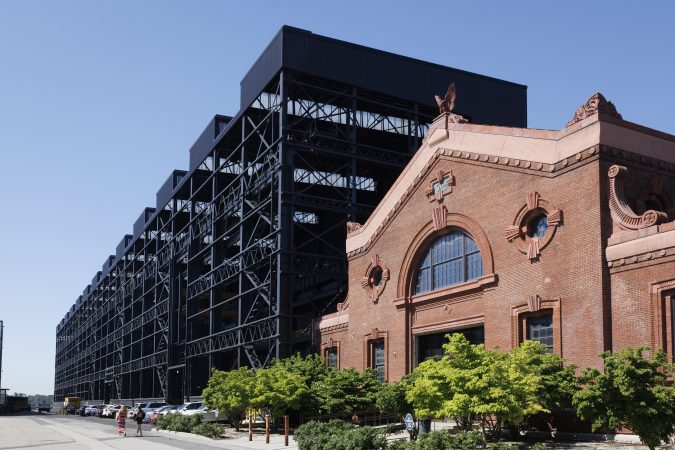
Urban’s newest addition at the Navy Yard is a 117,000-square-foot photo studio building, which opened in April.
Urban announced earlier this month that it plans to hire at least 450 workers at the Navy Yard and at least 600 at a new Bucks County facility, which is set to open by 2028. Gov. Josh Shapiro joined Hayne for the news conference, and lauded the business as a home-grown global company bringing jobs to Pennsylvania.
“We intend to stay here,” said CEO Hayne. “We have no thought of leaving.”
How Urban grew from Philly roots to global retailer
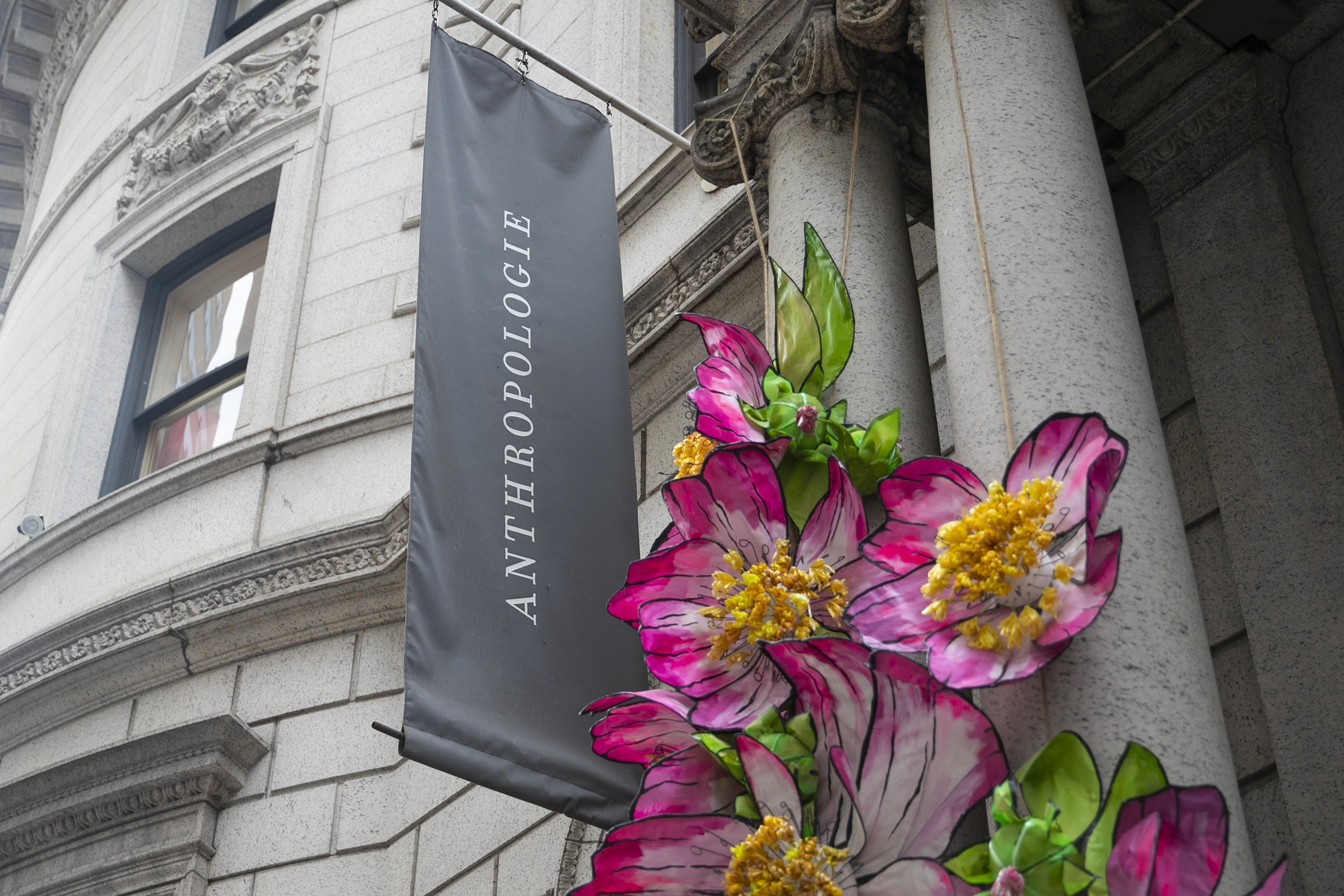
Urban was founded in 1970. The company’s roots are in West Philadelphia, where it opened its first store, a Free People. It now has almost 800 stores across the globe under the brand names Urban Outfitters, Free People, FP Movement, and Anthropologie.
Walking into an Urban store doesn’t feel like stepping into a Macy’s where there are racks of clothes and bright fluorescent lighting, said senior analyst Gerard Machado at RetailStat.
“It’s not like you’re running an errand to get something,” said Machado. “You might want to spend a little time looking at things. That’s a unique feature of Urban Outfitters.”
Similarly, customers who wander into Anthropologie find artfully arranged dinner plates and glassware amid scented candles — not just items stacked in rows on shelves.
Analysts say Urban is one of the more successful names in retail today, with strong sales numbers, loyal customers, and the ability to market to different audiences with its multiple brands. The company competes with the likes of J.Crew, Abercrombie & Fitch, Uniqlo, Ralph Lauren, Zara, and H&M.
The company grew profits by more than 15% in its most recent fiscal year, with nearly $465 million in net income in the year ending Jan. 31.
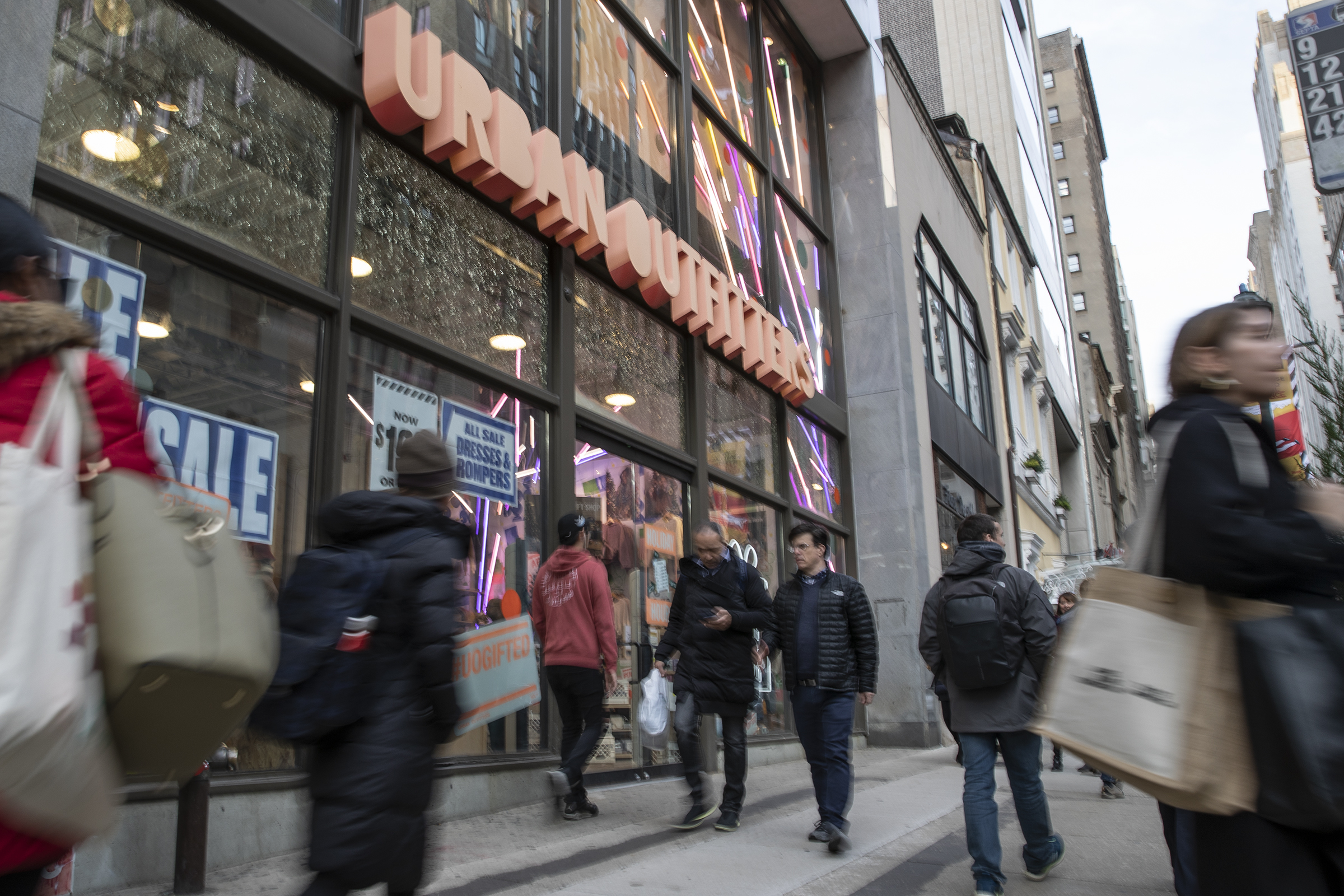
The Anthropologie store at 18th and Walnut Streets in Center City is shown in this 2020 file photo. Heather Khalifa / Staff PhotographerPeople walk outside the Urban Outfitters store near 16th and Walnut Streets in Center City in November 2019.Heather Khalifa / Staff Photographer
One key feature of Urban is that it’s experimental and innovative, said Neil Saunders, a retail analyst and managing director at GlobalData. Nuuly, the company’s clothing rental platform, which launched in 2019, is one of the “very few players that’s really successful” in that industry, he said. For $98 a month, subscribers get six fashionable items delivered to their door, which they can wear for a month and then ship back.
But there have been financial hurdles, too.
The Urban Outfitters brand struggled with declining sales in recent years. Gen Z consumers migrated “heavily into ultra fast fashion,” said Machado, and the brand didn’t adapt quickly enough. As merchandise piled up in inventory, Urban cut prices, which consumers grew to expect.
To turn the brand around, the company set out to rebuild relationships with customers, bring on more items attractive to Gen Z, and engage with customers on platforms they were already on, like TikTok and YouTube, The Inquirer reported in 2023. The company hired a new president to helm the brand in 2024, and it returned to profitability last year.
(function(){function e(){window.addEventListener(`message`,function(e){if(e.data[`datawrapper-height`]!==void 0){var t=document.querySelectorAll(`iframe`);for(var n in e.data[`datawrapper-height`])for(var r=0,i;i=t[r];r++)if(i.contentWindow===e.source){var a=e.data[`datawrapper-height`][n]+`px`;i.style.height=a}}})}e()})();
Tariffs have also pushed the company to adapt in part by negotiating better terms with vendors, shipping items by sea instead of air, and slightly adjusting pricing.
There have been workforce challenges too. In 2020, when a racial reckoning erupted in the country and seeped into corporate offices following the killing of George Floyd, Urban saw criticism from within its own workplace. Reports emerged of employees allegedly racially profiling customers as potential shoplifters, and some employees said people of color faced challenges to advancing their careers at the company, or reporting discrimination.
“Since 2020, we have prioritized creating a culture of inclusion and belonging at our home office, in our stores, and at our facilities,” said Meaghan Condon, Urban’s director of communications and impact, in an emailed statement this month. She said that includes training for new hires and managers focused on inclusivity.
Another key ingredient in the company’s culture: the Hayne family.
Pennsylvania Gov. Josh Shapiro (left) with Urban Outfitters CEO Dick Hayne at the company’s newest building, which houses photo studios. They held a press conference in June to announce Urban Outfitters’ plans to hire over 1,000 new employees.Alejandro A. Alvarez / Staff Photographer
Cofounder and CEO Dick Hayne’s son, Dave, is chief technology officer and president of Nuuly, and his nephew, Azeez Hayne, is chief administrative officer. His wife, Meg, is Urban’s co-president and chief creative officer.
Frank Conforti, chief operating officer and co-president at Urban, said the family ties are an asset and part of the culture.
Having a cofounder still at the helm has allowed Urban to focus on long-term strategy and take calculated risks, said Conforti, such as launching Nuuly. Investors weren’t all in on the idea to begin with.
Now Nuuly has over 450,000 active subscribers — more than doubling that number since 2023.
“We sort of don’t rest on what we did yesterday,” said Conforti. “It’s not about yesterday’s bestsellers.”
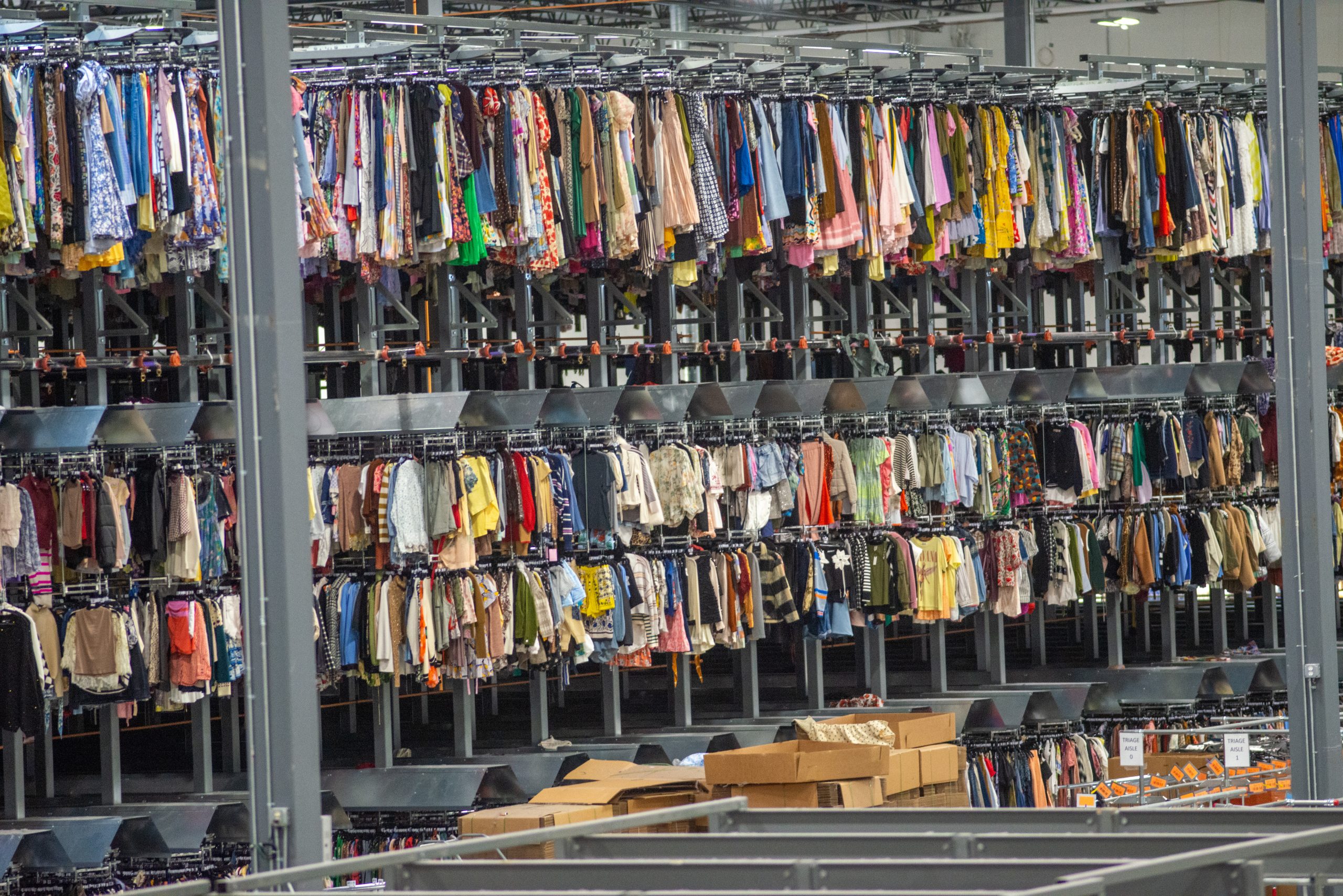
Racks of clothing inside the Nuuly warehouse in Levittown, Pa., last year. Nuuly is a clothing rental subscription service that offers a variety of styles, sizes, and brands.William Thomas Cain / For The Inquirer
A more efficient process
In Urban’s newest building at the Navy Yard, rows and rows of wheeled clothing racks are spread across several rooms. Industrial metal shelves are filled with sneakers, sandals, and handbags. Lamps and armchairs wait to be photographed for e-commerce.
The space was once used for building and housing ship components, noted Jennifer Calliagas, Urban’s North America director of planning, who led the new building’s development. Urban bought it from Rhoads Industries in 2016 for an undisclosed sum.
Urban spent about $40 million to fit the space for its needs, which included stripping the building down to its structure, said chief development officer Dave Ziel. Construction started last year, and Urban employees began working in the space by mid-April.
Inside the new building are adjoining rooms to seamlessly carry out the photography process: Clothing, shoes, and accessories are received in one room, then moved into the next room to be styled, and finally to the studio where they’re photographed. Staging areas are set up to portray bedrooms and bathrooms, functioning kitchens were built for cooking food to show in photos, and plants are on hand to finish off the staged living spaces.
The Inquirer was not permitted to photograph the studios because the merchandise had not yet been released publicly.
Not long ago, the company’s photo work was done in rented studios in New York City, Calliagas said, or scattered across the company headquarters.
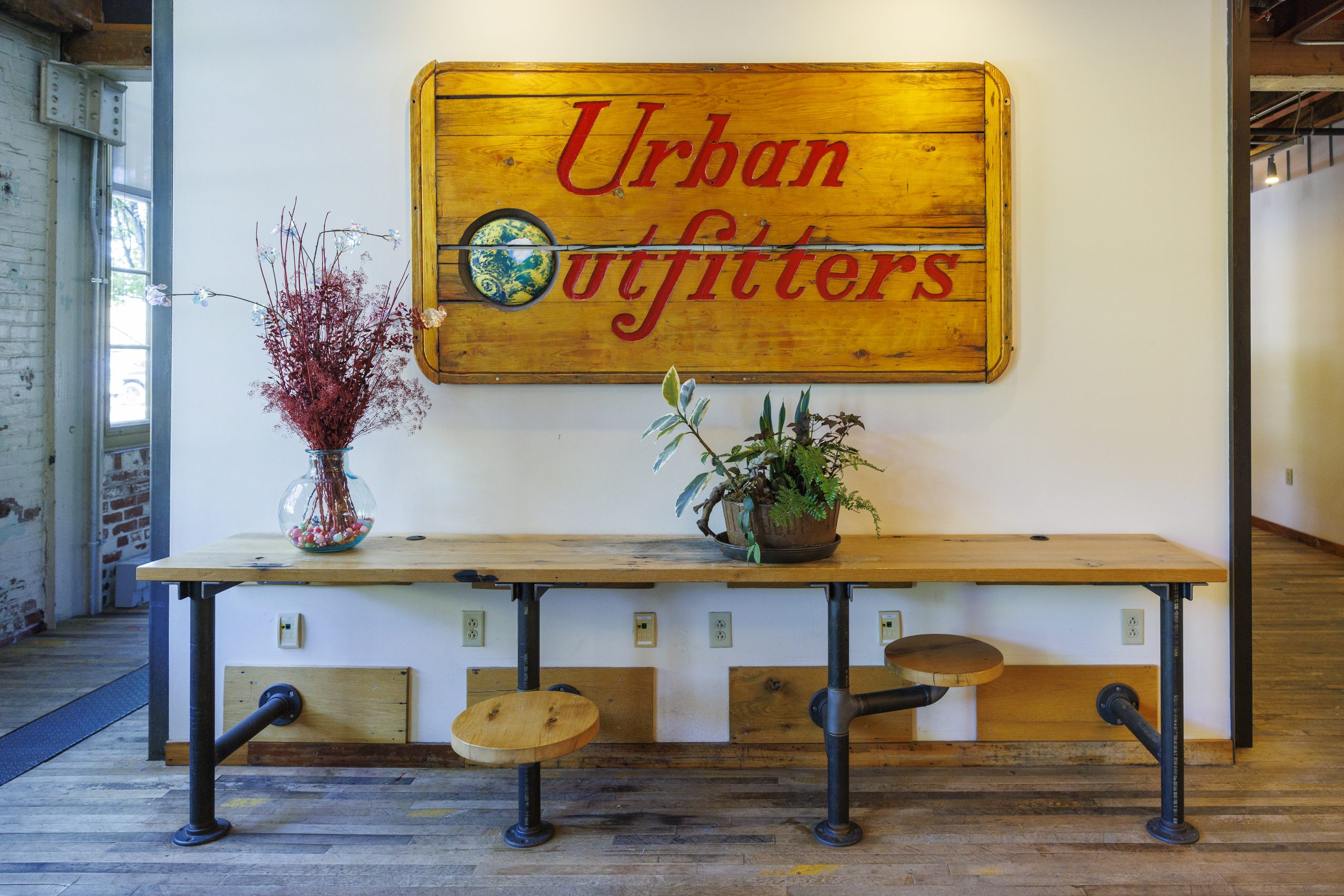
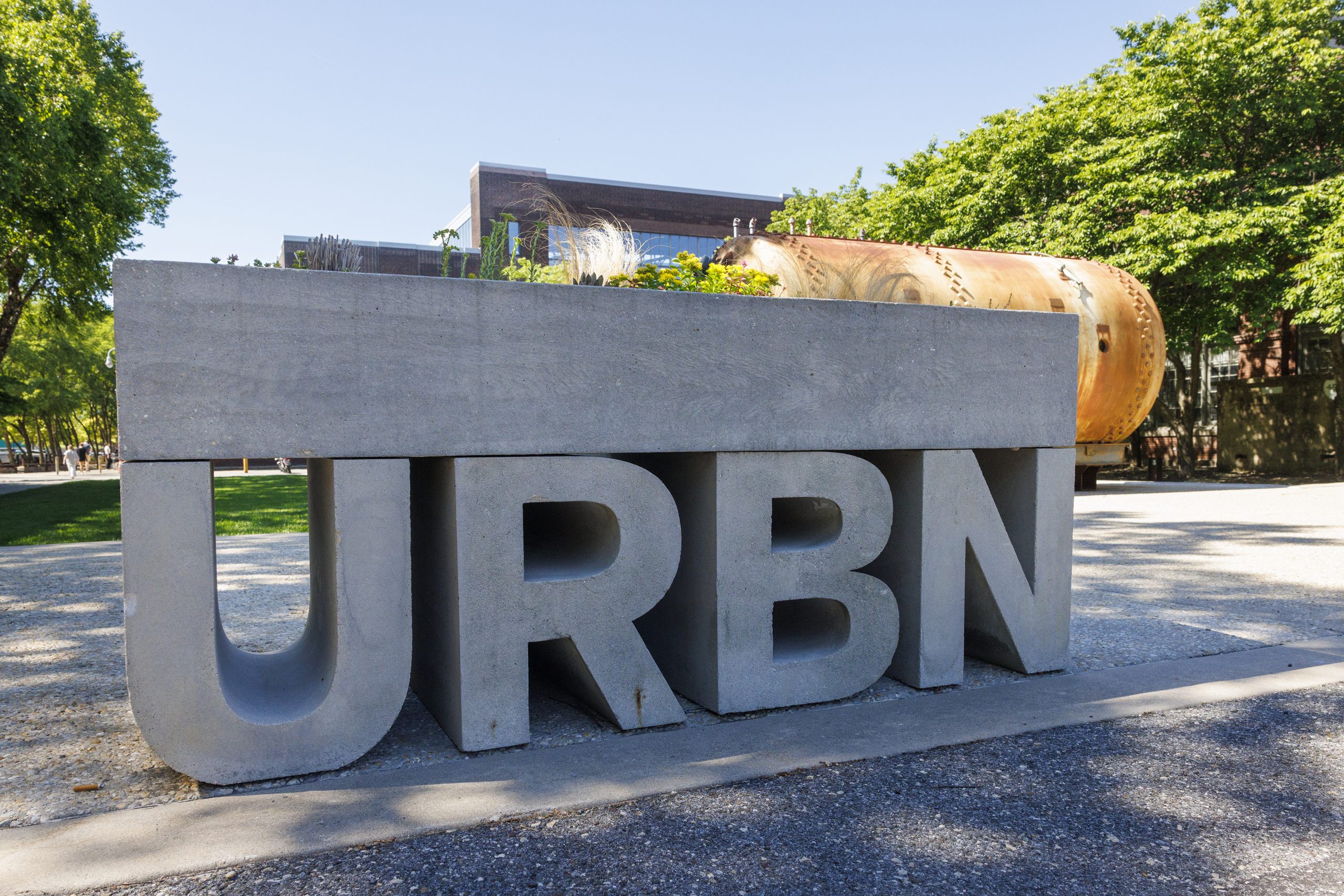
Vintage signage from the early days of Urban Outfitters, now displayed in the company’s Navy Yard headquarters.Alejandro A. Alvarez / Staff PhotographerMassive outdoor signage marks Urban Outfitters’ presence at the Navy Yard.Alejandro A. Alvarez / Staff Photographer
“Anthropologie, for instance … would be receiving in one area and then going to another building for style-outs, and then sometimes going back into another building for shooting,” Calliagas said. “It was a really inefficient process.”
At the Navy Yard, the company’s brands are housed in separate buildings, in part because they each “speak to their customer” in a different way, said Oona McCullough, executive director of investor relations. She called this kind of separation “states’ rights.”
Consolidating the photo work under one roof has freed up space in other buildings, said Ziel, which is helpful for the continued growth of brands.
“The brands are still growing pretty aggressively,” said Calliagas.
Jennifer Calliagas, director of planning for North America, discusses how the company will use its photo studios at its newest building in the Navy Yard.Alejandro A. Alvarez / Staff Photographer
A campus with more possibilities
Conforti refers to the headquarters as a “campus,” with a “youthful” and “very collegiate” atmosphere. When bankers or investors visit the headquarters, “we tell them to dress down casual,” he said. “They drop their tie.”
In keeping with standards set long ago by Google and other Silicon Valley tech companies, the campus is full of amenities. The newer ones include pickleball courts, a basketball court, and a walking track. And there’s plenty of green space for employees to walk their dogs, which are welcome in the workplace.
Most people work in the office at least three days a week, said Conforti.
“We’re not the most red-tape, bureaucratic company,” he said. “There’s just nothing like being here on campus getting things done. There’s an efficiency to it — and there’s a community.”
People walk to and from the building that houses Urban Outfitters’ cafeteria, which is open to employees and the public.Alejandro A. Alvarez / Staff Photographer
On a recent Monday, Urban’s cafeteria was just about to start serving warm lunches, and a few dozen people waited in line, while others roamed the large building with its decorative pools. Some wore U.S. Navy uniforms — the cafeteria is open to the public. Options included pizza, Teriyaki beef rice bowls, and grab-and-go items like ice cream bars and boxed sushi.
CEO Hayne stopped in for a bag of chips and a wrap, seemingly unnoticed.
At the June news conference, he recalled his first impression of the Navy Yard over 20 years ago: “I drove down Broad Street, came in Kitty Hawk [Avenue], looked at all these beautiful old brick buildings from the turn of the 20th century, and I said ‘sold!’”
Then & Now: Building 18 in 1917 and in 2024. Built in 1908 and used as a machine shop, it is now part of the URBN campus. Building 16 in the background was also used as a machine shop and is now a another example of an adaptive reuse project. #discovertheyard#navyyardhistorypic.twitter.com/VutWsQwrUc
On 20th Street between Market and Chestnut, much has changed in the past 50 years. One tenant that hasn’t: Nuts To You. The snack shop, wrapped in yellow wallpaper speckled with walnuts, remains packed with shelves of nuts, candy, and dried fruit galore.
Nuts To You, a snack haven owned by the same family for three generations, is celebrating 50 years in Center City. Since its first location opened in 1976, Nuts To You has survived the rise of the internet, and the emptying of the business district in a post-pandemic Philadelphia, building decades-long customer relationships on the way.
Pulling off such a feat is “rare, and it’s really hard,” according to Erika Tapp Duran, director of Temple University’s Small Business Development Center.
Nuts To You freshly roasts their nut products at a warehouse in Frankford. Over the years they have broadened their inventory to include freshly popped popcorn (also made in-house), as well as chocolates, candy, dried fruit, and almost anything else one could find in a kitchen pantry.
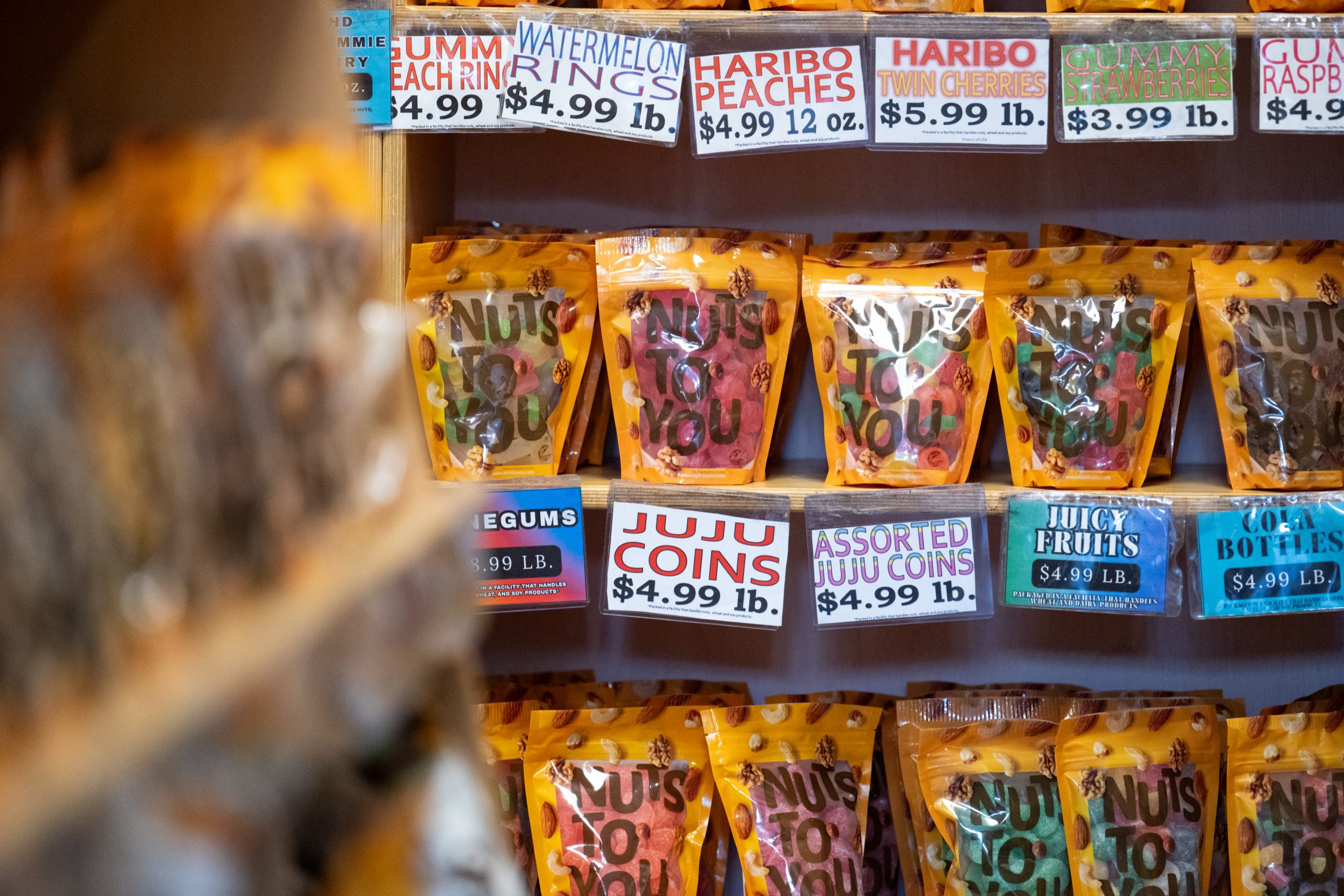
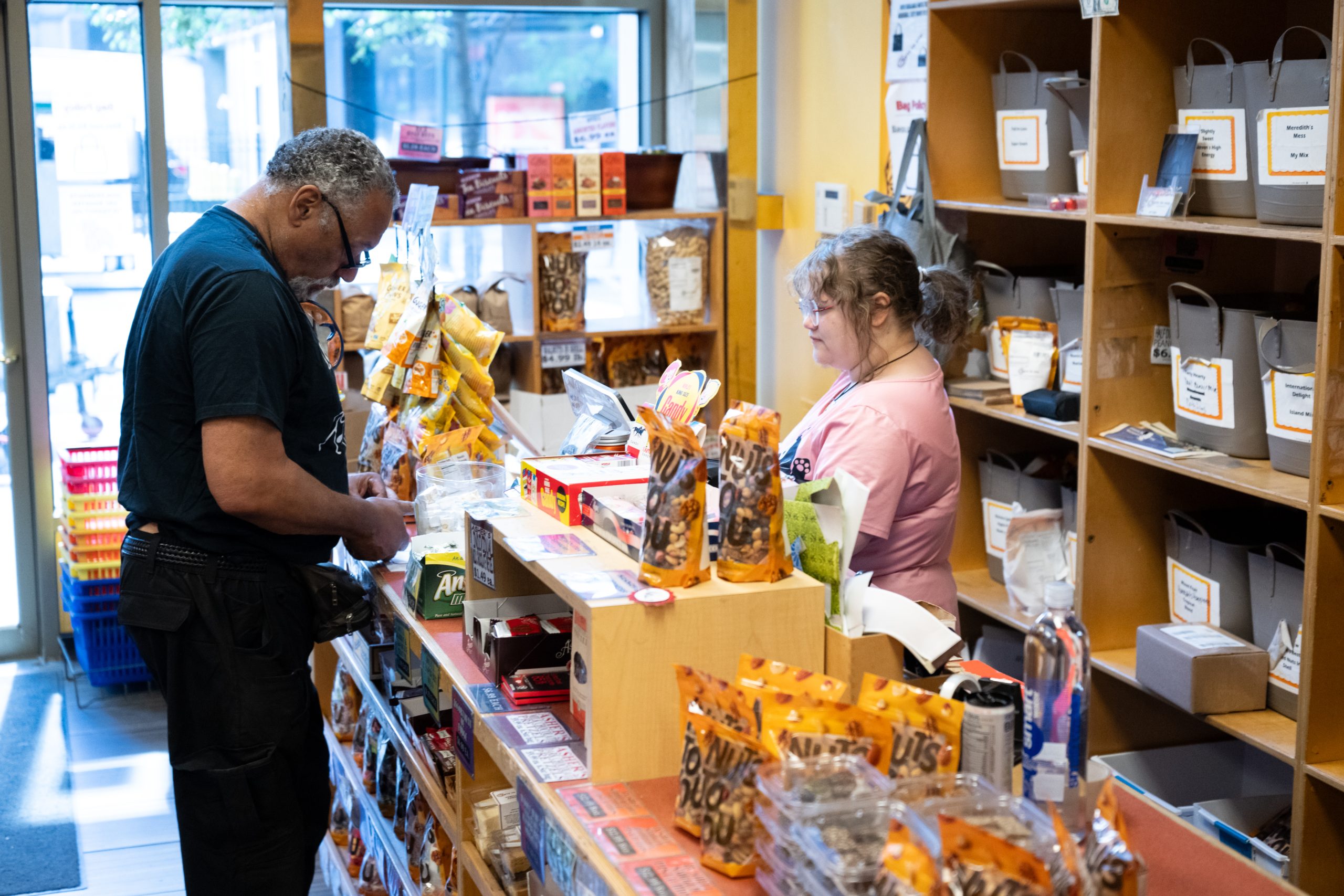
Gummy candies sold at Nuts To You, a family-owned and operated snack store.Erin Blewett / For The Inquirer
They sell those products out of three city storefronts: on 20th Street near Rittenhouse Square, 16th and Market Streets on the ground floor of Centre Square; and Seventh and Walnut Streets in Washington Square West.
But the brick-and-mortar business has changed. In 2018, Nuts To You had six physical stores, and its leaders were considering expanding into Washington, D.C.
“We used to have lines during lunch rush,” said Justin Bernstein, who co-owns the business with his father, Howard Bernstein. “That just doesn’t exist anymore.”
The location beneath Centre Square has a front-row seat to the evolution. At the end of 2025, the office building had the highest vacancy rate in Center City. Developers are now planning to convert it into a mixed-use complex with apartments and luxury hotel rooms. With three years left on that lease, Nuts To You is uncertain about the 16th and Market store’s future.
But for now, “We’re still here,” said Justin, who has spent most of his life as part of Nuts To You. “We’re still going.”
Fewer walk-ins and a digital pivot
James Troutman, 77, a regular at the Seventh and Walnut Street location, piled bags of rolled oats, cashews, peanuts, walnuts, and sunflower seeds into his gray backpack as he left the store on a Tuesday morning. He’ll later combine those ingredients into his daily homemade cereal, which he has been making from Nuts To You products for decades.
“That’s why I’m so young looking!” Troutman joked.
Employees said this location, the company’s most popular, draws an estimated 100 customers a day. But Nuts To You is not immune to the struggles facing brick-and-mortar businesses. In-person sales are down 30% to 40% from pre-pandemic levels, which the owners attribute to less foot traffic as more people have remote or hybrid work arrangements.
Anthony Feaster (left) makes a purchase with the help of employee Brianna Boyko at the 16th and Market Streets Nuts To You.Erin Blewett / For The Inquirer
The entry of big retail competitors into Center City has also changed the business.
“Fifty years ago, there was nobody selling this product,” said Howard. “CVS and all those drug stores didn’t have full lines of nuts and candy.”
For Nuts To You, the decline in foot traffic has been offset by an increase in online sales. The company launched its website in 2010, but was only making about $100 to $200 a day online before the pandemic. Within two days of COVID-19-related lockdowns taking effect, sales increased to $3,000 a day.
Now, 40% of Nuts To You’s sales come from its website, and the company has forayed into selling on TikTok. As of June, only about 1% of their sales come from TikTok Shop, but Justin said that’s already more than expected.
In lieu of the nuts and oats that traditional walk-in customers buy, online customers tend to purchase sugar-free products or nostalgic novelties like wax bottles or Sugar Daddies.
“Think about all the things that have changed for consumers in the last five or six years, and then multiply that out over 50 years,” said Temple’s Tapp Duran. “You have to be able to pivot.”
Howard says that Nuts To You’s popularity has stemmed from its business strategy, which he defines as “largest variety, lowest prices, highest quality.” This may have been true for many years. Though, with larger retailers’ entry into Center City — Justin cited Trader Joe’s in 2003 and Target in 2016 — it has been difficult to beat corporate giants on prices.
However, the owners say what they can still ensure is quality — “That’s what our customers expect,” Justin said. They source their walnuts and pistachios from small growers in California, with whom they’ve maintained yearslong connections.
“We don’t want to switch to another brand, even though I could save a dollar,” said Howard. “Most customers appreciate that.”
In addition to greater competition and a changing retail landscape, Nuts To You has faced challenges common among small businesses in 2026.
Within the past few months, they’ve joined the ranks of small businesses who were sued for violating the Americans With Disabilities Act, based on allegations that the Nuts To You website relied on a visual interface that was inaccessible to individuals who are blind or use screen readers. Another lawsuit came out of a Proposition 65 claim — a law that requires products sold in California to warn consumers for potential exposure to dangerous chemicals — leading Nuts To You to adopt a disclaimer on its website.
“You think you’re OK, we’re running smooth, we know our expenses, then all of a sudden you get served papers,” said Justin. “And it’s like, what?”
Generations of work
For years, Basheer Ali, 65, has been traveling from Southwest Philly to the Center City Nuts To You stores for his fresh nuts and candy. Employees there have helped him navigate a diabetic diet, introducing him to sugar-free chocolate pretzels.
“The people need these kinds of stores,” Ali said.
The company sees very little employee turnover, Justin said. At least half its 19 employees worked at the company for more than a decade.
Regina DeLeon, manager of the Washington Square West location, has been with the company for 26 years. When prompted by a customer, she recalled Nuts To You’s founder and first-generation owner, Manny Radbill.
Radbill predicted in 1975 that nuts were going to be the next health craze. He wasn’t wrong: In 1992, a study found an association between nut consumption and a lower risk of coronary heart disease, which kicked off decades of research on the health benefits of eating nuts.
With the help of Radbill’s daughter, Caryn, and her then-husband Howard, they opened that first store on South 20th Street, which is still in operation today.
Justin first entered the family business when he was 2 years old, pushing buttons on the cash register. Howard required him to gain outside experience first, but Justin said, “I always kind of knew this is what I wanted to do.”
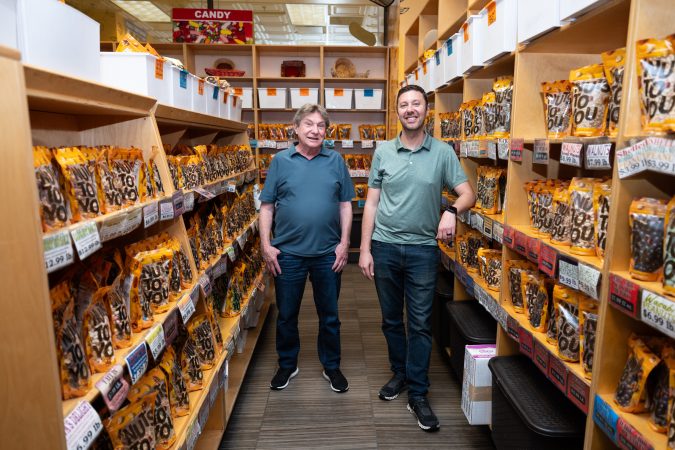
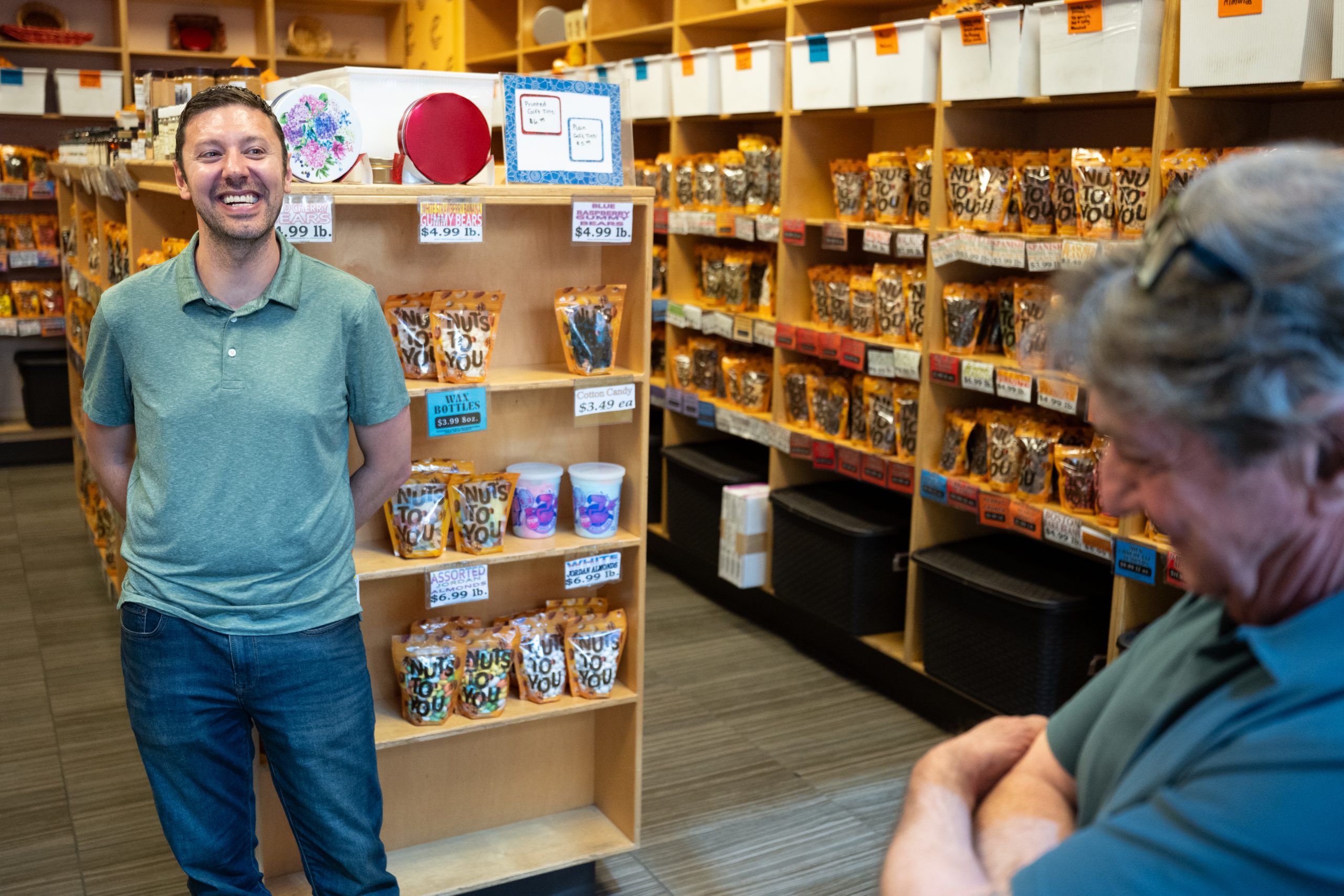
Justin Bernstein smiles at his father, Howard Bernstein, inside one of their three Center City Nuts To You stores.Erin Blewett / For The Inquirer
So, after his college graduation and a brief stint at Boscov’s, about 20 years ago Justin joined Nuts To You and has since become co-owner.
As iconic family businesses like Di Bruno Bros. have been acquired, buyers have approached the Bernsteins, but Howard and Justin decided against it. They entertained one offer, but the deal-breaker was a requirement to close all of the physical stores — the owners refused to put their staff out of jobs.
Over their 50 years in business, Justin said he is most proud of staying family owned.
“We’ll see what happens, what the future holds,” said Justin. “At least another 20 years, call it.”