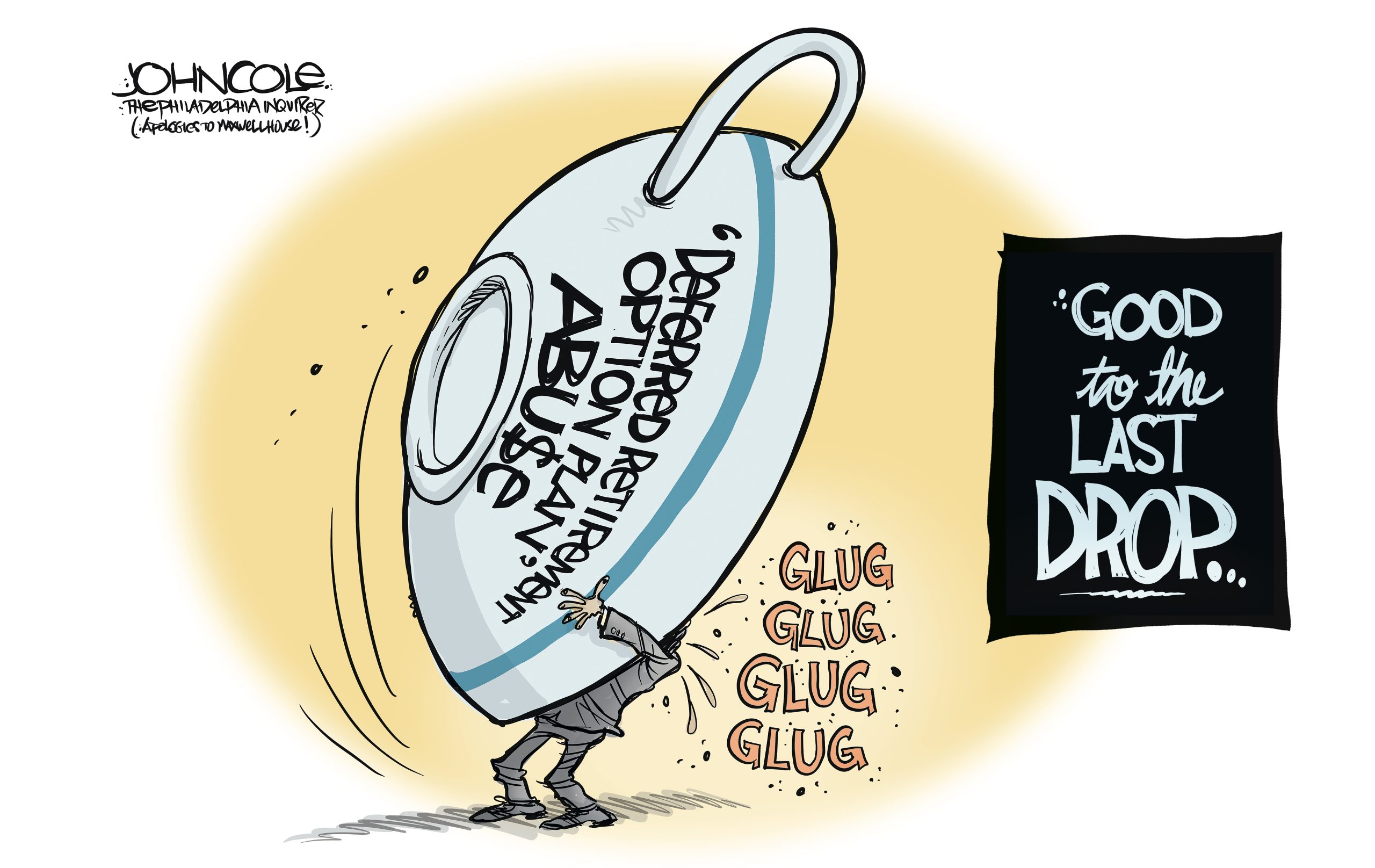
John Cole spent 18 years as editorial cartoonist for The (Scranton) Times-Tribune, and now draws for various statesnewsroom.com sites.
John Cole spent 18 years as editorial cartoonist for The (Scranton) Times-Tribune, and now draws for various statesnewsroom.com sites.
When it comes to office software, people generally think first of Microsoft. But the reality is that Google Workspace is used by over 11 million paying organizations and boasts more than 3 billion monthly active users globally.
Many of my small-business clients use Google Workspace to send emails, create documents and spreadsheets, host meetings, and store files. And yet most are only scratching the surface. It’s often frustrating to witness so many businesses not taking advantage of all the capabilities of Google Workspace, even though they’re paying for it. That’s a waste of money.
If used the right way, Google Workspace can scale right along with the growth of your business, provide excellent collaboration features, and can be cost-effectively managed and secured without requiring expensive IT firms.
If you’re going to use an office platform like Google Workspace, it’s best to lean into it fully. Mollie Plotkin, who runs a successful talent and speaker agency in Philadelphia, says Google Workspace is the “shared backbone” of her company. She uses Google Meet, Calendar, Chat, and Drive to “create an ecosystem” so that everything is in one place.
“Work is much more manageable when everyone had equal access to the same systems regardless of where they were working,” she said. “Instead of relying on multiple versions of files being e-mailed around, our teams work from one live document at a time, which dramatically reduces confusion and duplication.”
Plotkin also says that her internal team saves time on searching and improves efficiencies by consolidating all files and data in one place.
“Important information lives in shared spaces instead of individual inboxes, which makes collaboration faster and prevents bottlenecks,” she said. “We use shared templates, collaborative planning documents, and centralized project tracking so our team can move quickly without reinventing processes each time.”
Cheryl Friedenberg, a founder of High Key Impact, a digital marketing firm in Blue Bell, says that sharing calendars has significantly reduced “all the back and forth” for scheduling client calls and managing deadlines.
“Google Drive and Docs make sharing files simple, without endless email chains,” she said. “There’s no confusion about versions or missing attachments.”
Friedenberg always tells her clients to go the extra yard and make sure to also use Gmail within their own website domain and not as just a Gmail address.
“Using a generic @gmail.com address on proposals, invoices, or your website can make your business look less professional,” she said.
Once your team is using Google Workspace as a primary office management tool, it’s important to start automating tasks wherever possible.
Milan Baria, who runs Blueclone Networks, an IT services firm in Princeton, says that with Google Workspace you don’t need a developer to automate repetitive tasks. “We use simple scripts to bridge the gap between Google Sheets and Gmail to automate client follow-ups.”
Andy Williamson, one of the founders of Wilmington-based training firm ONLC, says that Google Workspace Studio, with Apps Script, lets a non-technical user describe a workflow in plain English and have it built.
“The new agents can read the email that came in, decide what kind of request it is, draft the reply, pull the right doc, and only come back to you when something actually needs a person,” he said.
Williamson says that it’s not difficult to create automation so that a company’s data power dashboards or other applications.
“Apps Script used to be just for programmers, but this has been changing recently,” he said. “Everyone in the business is becoming an agent builder, not just the developers.”
Even if you’re not ready to automate with agents, Google Workspace comes with many AI features right out of the box.
Friedenberg says that by leveraging AI, a user can turn a simple prompt into a fully designed presentation in minutes.
“You’re starting with something polished instead of a blank page,” she said.
In addition, and instead of hiring a videographer, Friedenberg encourages her clients to use Google Workspace to make short professional-looking video.
“You can make a spokesperson-style video without being on camera,” she said. “The voice-overs sound natural enough that most viewers wouldn’t know they were AI-generated. Many small-business owners don’t realize it’s already included in a tool they’re probably already paying for.”
Joe Henderson, a Philadelphia-based expert with Google premier partner Promevo, says that another underused application is Google’s Notebook LM, a premium feature with many paid Google Workspace plans.
“Notebook LM is an AI research assistant that analyzes your documents, then generates summaries, answers questions, creates study guides, timelines, podcasts, and other content based solely on your uploaded sources,” he said. “Our clients use it to input raw documents, industry articles, vendor videos, and automatically turn that chaotic information into easy-to-understand explainer videos, short audio podcasts, quizzes, and custom study guides. It’s like a proactive operational brain sitting within Google Workspace.”
Baria says that most owners don’t realize that they easily can restrict Workspace access based on the user’s location or device security status like any experienced IT professional.
“High-level security isn’t just for enterprises,” he said. “Small businesses can set up simple rules that prevent employees from accidentally emailing out sensitive information, and use Workspace’s license and user management tools to eliminate unnecessary applications and archive user accounts to save hundreds, even thousands, of dollars a year.”
Plotkin agrees.
“You don’t need a massive IT department or expensive infrastructure,” she said. “Workspace allowed us to add team members, improve collaboration, and manage more clients without drastically changing our operational structure.”
Like many, I’m big fan of Nicolas Cage’s work. How big? On my bachelorette party to New Orleans a few years ago I requested we tour St. Louis Cemetery No. 1 so I could get a pic of me and my girls with Cage’s nine-foot pyramid tomb.
Not only can the man seriously act, he can also seriously overact. As a writer who loves puns ( especially bad ones), I appreciate someone who has fun with their art form to the point it causes eye rolls.
And so, when I learned about Uncaged in Jenkintown: A Nic Cage cocktail crawl that happened on Sunday, I wanted to check it out. In some ways, it turned out to be like a lot of Cage movies — not a blockbuster, but still quirky and fun.
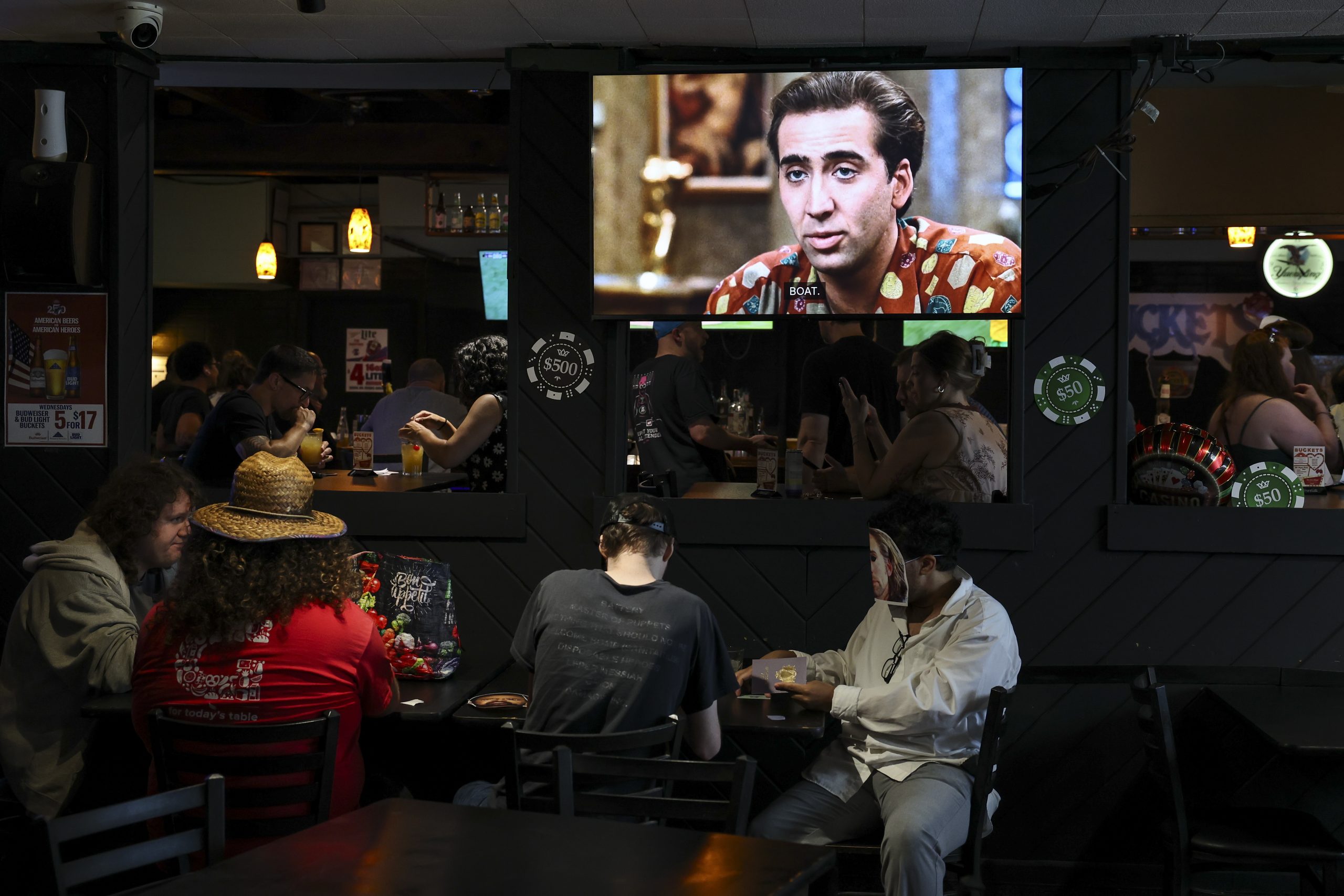
The crawl was spread across four Jenkintown bars — the Keep Easy, the Drake Tavern, Buckets Bar, and King’s Corner. Each one featured Cage-themed cocktails and hosted a “Cage match,” where participants went head-to-head in challenges based on Cage films.
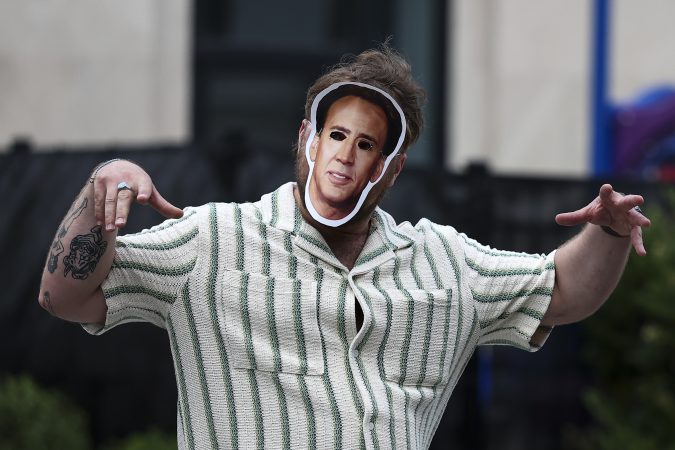
Organizer Mel Hager, an owner of the Keep Easy, said she sold out of the 50 Uncaged kits she’d prepared for $15 a pop. While the crawl was free to attend, those who bought a kit — including yours truly — received a passport book, which got you a free Cage match at each establishment (otherwise they were $2 to play); a piece of Cage cash, which was good for one shot at any of the bars (it’s a tiny dollar bill with Nic Cage’s face on it, I’m never spending that); and one of a variety of Cage masks (I felt like I won the lottery when I got the Con-Air Cage).
While I didn’t drink, I hopped around to the bars, tried my hand at the Cage matches, and talked with fellow Cage fans about what brought them out to the event. Here are five of the wackiest things I saw at the Nic Cage bar crawl.
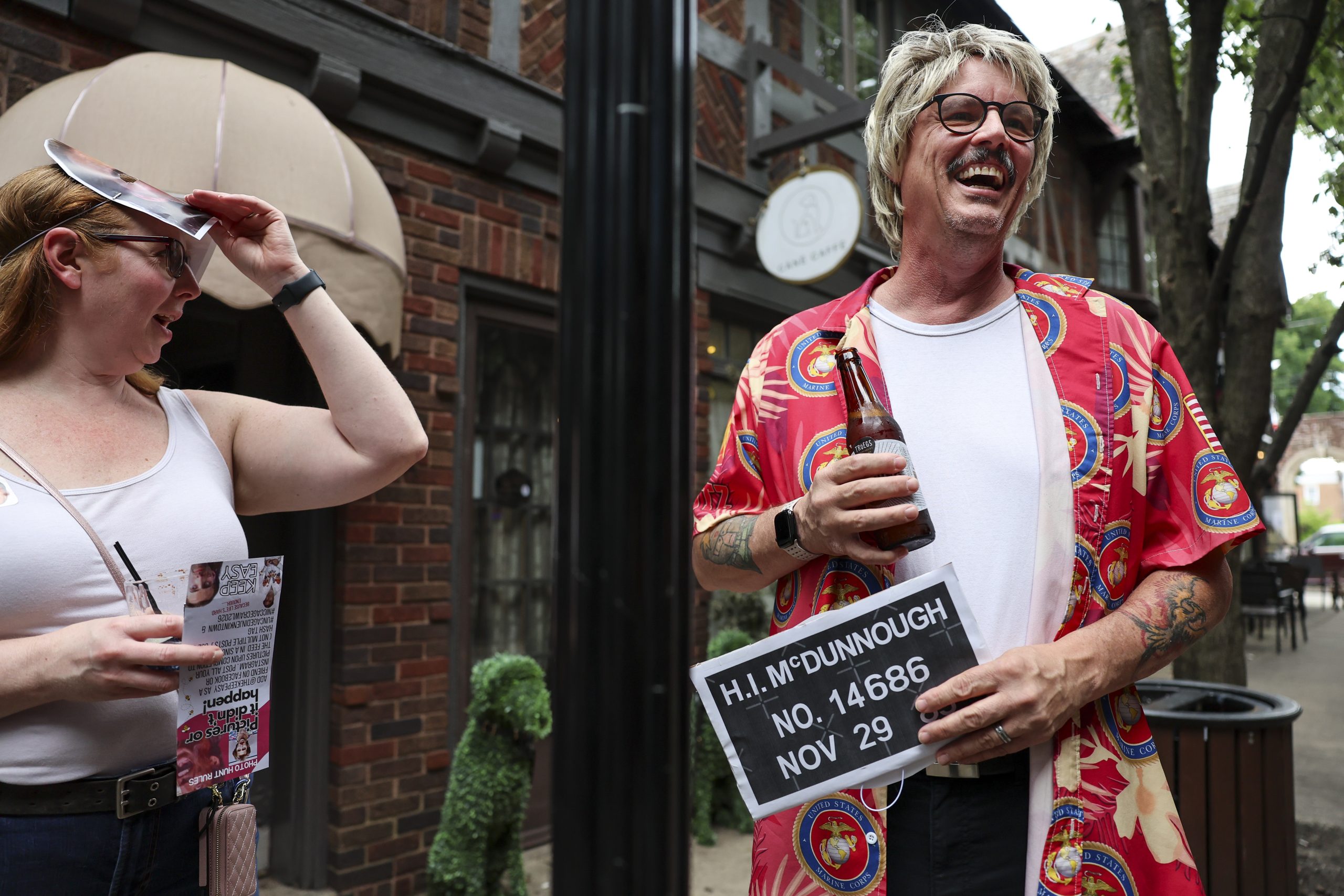
When H.I. McDunnough kidnaps one of the Arizona quintuplet babies in the 1987 Cohen Brothers classic, Raising Arizona, he proclaims to his wife: “I think I got the best one.”
Of the few Cage character costumes I saw Sunday — which included Ronny from Moonstruck, Cameron Poe from Con Air, and someone portraying Cage’s first role as an unnamed burger shop worker in Fast Times at Ridgemont High — Mike Hutz’s H.I. McDunnough costume was undoubtedly the best one. Hutz, of Huntingdon Valley, had the open Hawaiian shirt, a wig, and McDunnough’s mugshot board.
“What else are you going to do on a Sunday afternoon when you have a Nicolas Cage crawl option?” he said. “There’s nothing he can’t do and he does it with maximum cheesiness, which is just perfect for people who love cheesy.”
Seeing people at bars and walking the streets of Jenkintown wearing Cage face masks was both highly amusing and mildly unsettling, mainly because the eye holes were cut out wonkily, giving them a ragged, creepy edge.
Masks included Face/Off Cage, Con Air Cage, red carpet Cage, and Dracula Cage (from the movie Renfield).
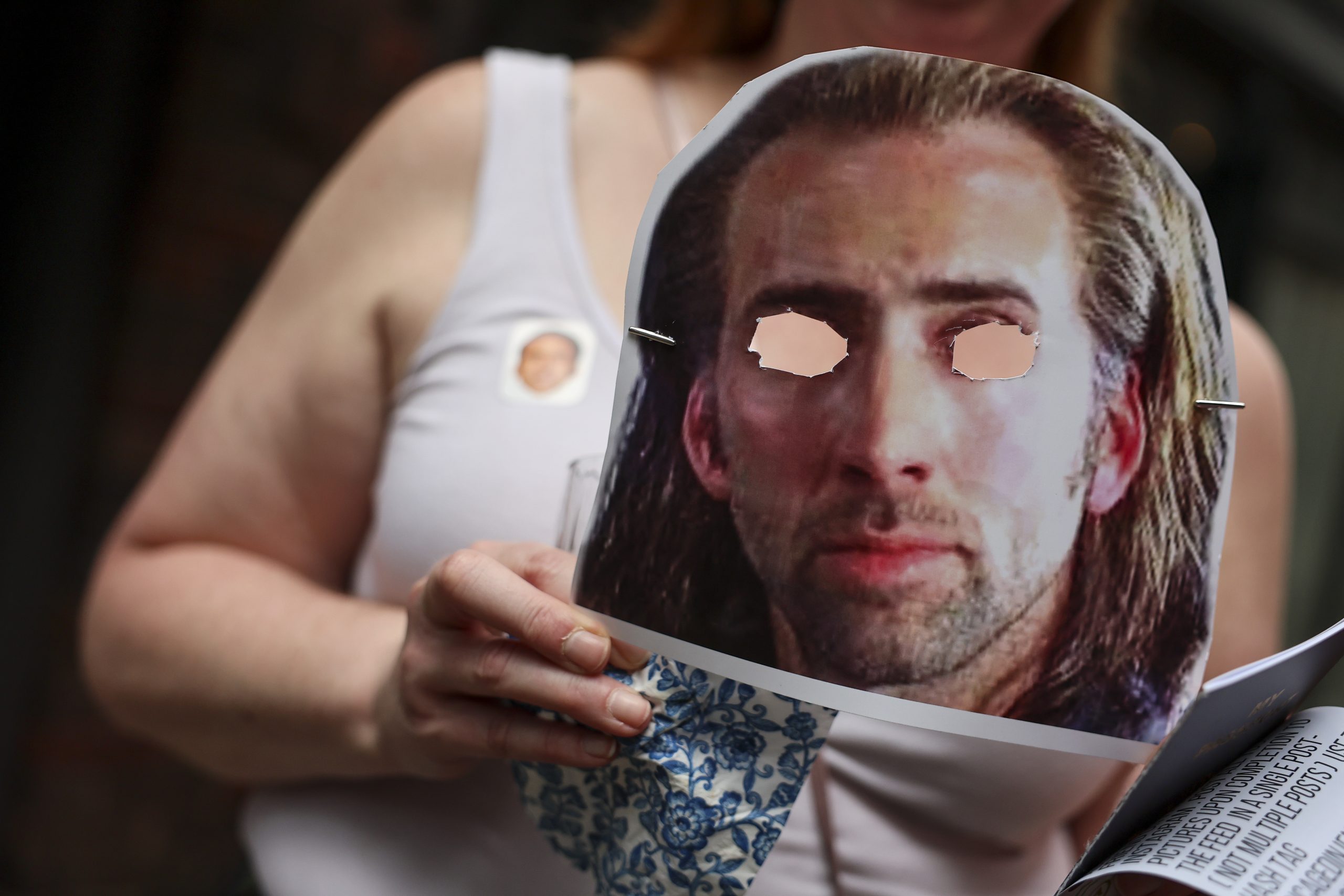
Julia Sousa and Josh Douglas traveled to the crawl from Roxborough because they love Cage and Jenkintown. Douglas walked from bar to bar with his Cage face mask on, which seemed to startle some passing motorists.
“I’m pretty sure they thought I was Michael Myers,” he said.
The games based on Cage films, while homespun, were clever and fun. At Buckets, the game was inspired by the scene in Honeymoon in Vegas where Cage skydives with a bunch of Elvis impersonators. Contestants had to throw toy parachute soldiers that were painted to look like Elvis onto particular spots of a mock-up of the Vegas strip for points.
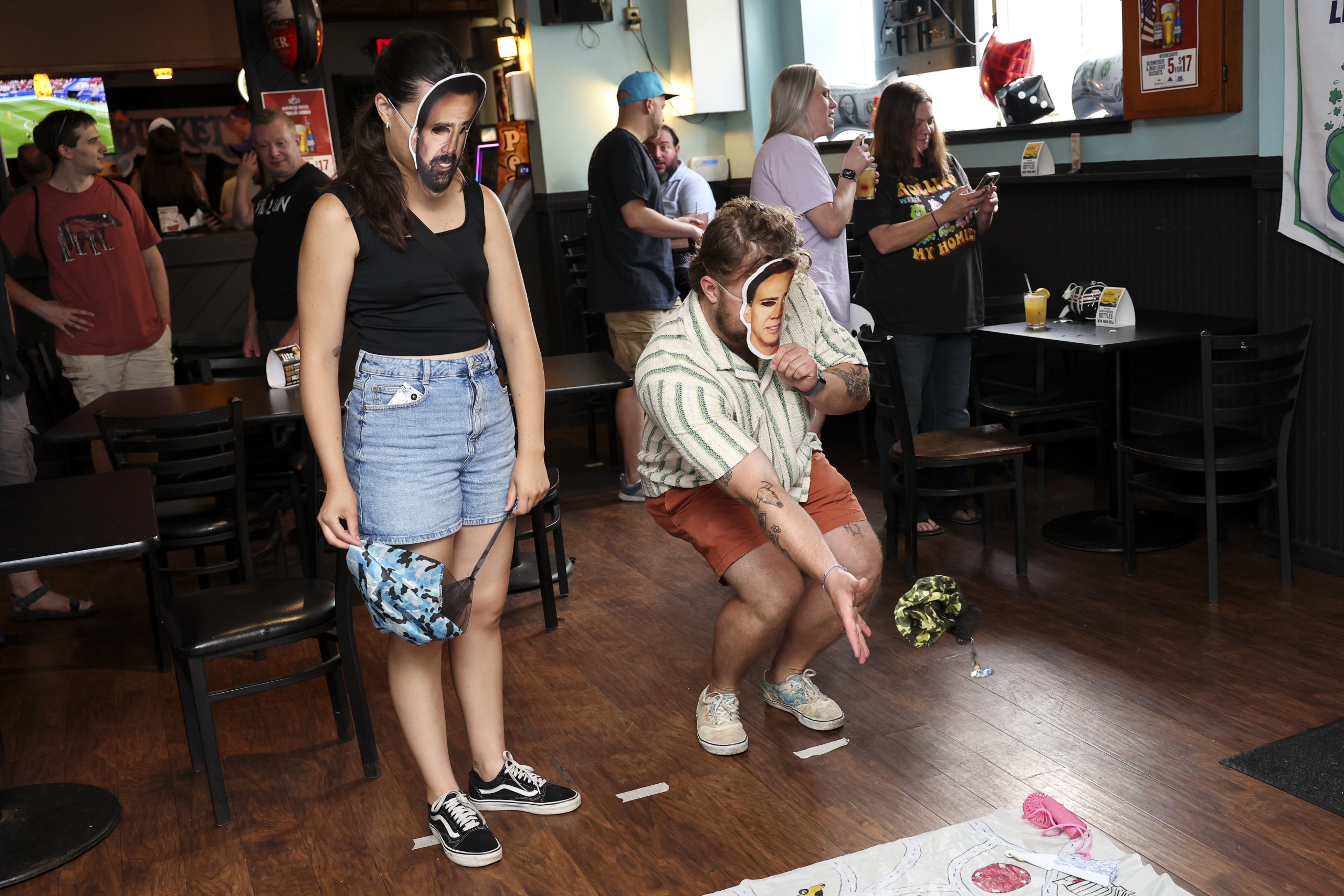
At King’s Corner, where the challenge was based on the movie National Treasure, participants had to solve little metal mind-bender puzzles.
For the Spider-Noir Cage match at the Drake, you had to keep a balloon bouncing in the air while putting on a cape, mask, and fedora.
I failed spectacularly at all three of those challenges — and I was completely sober! The only one I did succeed at was called Ghost Glider. Based on the film Ghost Rider, the challenge was to to roll a penny down an inclined surface made to look like a road and into the tongs of a fork at the other end.

For winning the Ghost Glider challenge, I received a bundle of sage and a sticker for my passport book of a shirtless, reclining Cage coming out of a banana.
Let’s address the sage first: Nobody could tell me why this was my prize for winning the challenge, which somehow makes it even better. I have two theories — it could be because sage rhymes with Cage, or maybe it’s because you light sage and in Ghost Rider, Cage lights on fire.
Whatever the reason, I’m gonna smudge some stuff up this weekend.

Now onto this banana sticker — I don’t know why it exists, but I am so happy it does. Each bar gave a different sticker if you won a challenge, but this banana-Cage split one was, by far, the most a-peeling.
Later at the Drake, I met Erica Adams of Bensalem and “her only friend of whimsy,” Amanda Knop, who’d driven from Baltimore to attend the Cage crawl with her. Adams had her own stickers of Cage’s head she was handing out like friendship bracelets at a Taylor Swift concert.
“I just love his movies and doing silly, fun things,” Adams said. “Nicolas Cage himself is very unserious. He’s lived a million different lives in a short span already.”
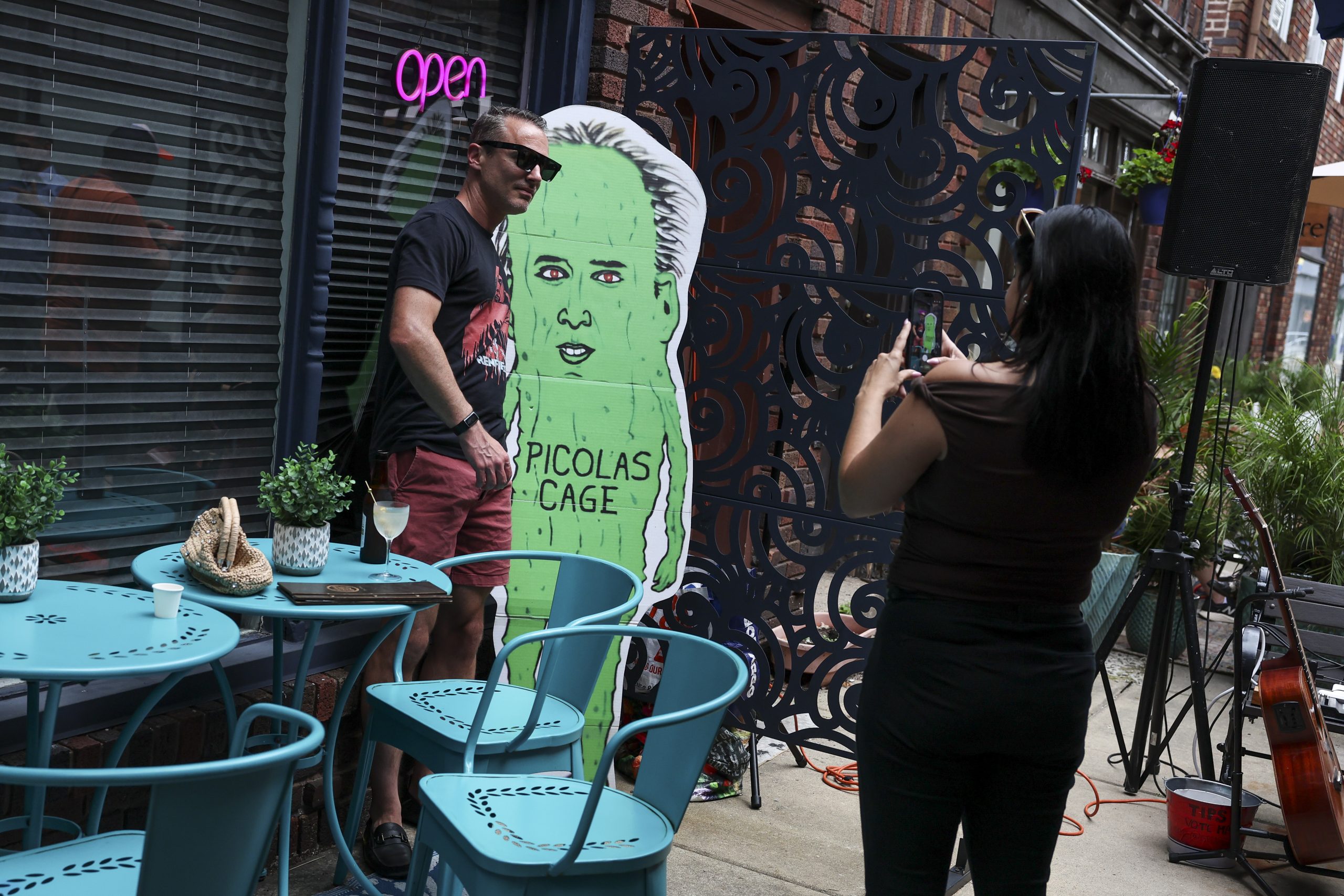
A giant cut-out of Cage as a pickle, aka Picolas Cage, was stationed outside of the Keep Easy during the crawl. As someone who likes Cage and cucumbers — but hates pickles — it was a jarring experience. But I saw others relishing the photo op so I didn’t make a big dill out of it.
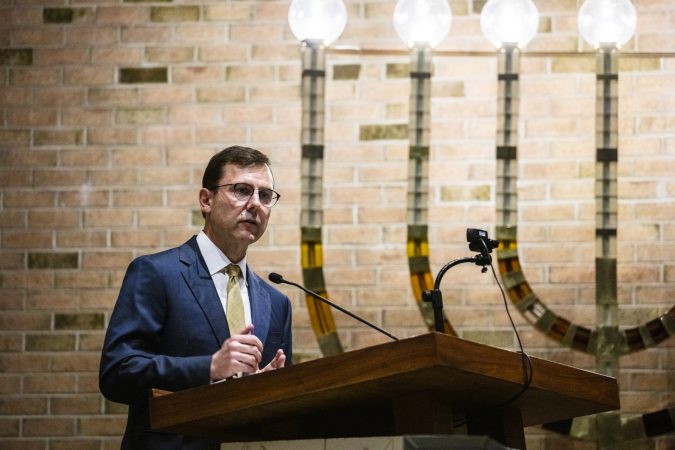
WASHINGTON — Rep. Tom Kean Jr., the New Jersey Republican who disappeared from Congress and the campaign trail in March with almost no explanation, is set to return to the Capitol on Tuesday and address the mysterious health condition he says has kept him away.
Kean, a 57-year-old seeking a third term in a competitive district, has missed more than 100 votes since he was last seen in public more than 100 days ago. His reemergence will be closely watched after months during which he and his staff refused to disclose anything about where he was or what was keeping him away.
Their silence has built Tuesday’s return into a major reveal after a prolonged cliffhanger. Even last week, when a reporter for The New York Times found Kean at his home in Westfield dressed in a suit and tie around 8:45 p.m., he declined to offer any explanation, saying: “I’ll talk to you next week.”
In the absence of official information, his own colleagues have speculated wildly about Kean’s condition, privately raising an array of possibilities for his long and unexplained absence.
Could it be rehab for a stroke, heart condition or addiction issue? Was it a case of plastic surgery gone awry? Might he reappear on Capitol Hill as a woman? (His brief appearance at home last week put at least some of that speculation to rest.)
Kean has said only that he is dealing with a “personal medical issue,” and until recently offered no timeline on his return, only vague assurances that when he did come back, he would be fully recovered and transparent about what he had been through.
Kean’s office also did not provide any detail Monday about his return, though CNN reported that he planned to give a speech on the House floor. He also was scheduled to participate in a fundraising reception Tuesday evening in Washington, according to an email obtained by the Times that confirmed an earlier report by Politico.
His chief of staff, Dan Scharfenberger, did not respond to calls and emails about the congressman’s planned schedule for Tuesday. A spokesperson for Speaker Mike Johnson said they were leaving the details of Kean’s return to him.
Kean has invited some Republican officials to participate in a 2 p.m. conference call Tuesday, according to multiple people who were invited. The people said they expected he would have to address the health issue in some way.
With an election in five months, Kean’s months of mysterious silence have tested the limits of what the public will tolerate in terms of privacy for its leaders.
Presidents traditionally release the results of their annual physicals and disclose what medications they are taking, although they are not legally required to do so. But members of Congress typically provide no information to the public about the state of their health or their fitness to fulfill their duties.
Voters tend to be forgiving about the health ailments of their leaders. And some lawmakers in the past have tried to turn their own medical challenges or experiences with mental health, alcohol or addiction into a way to relate to voters who may be struggling themselves.
So Kean’s decision to keep his constituents and his colleagues in the dark for so long has largely been viewed as inexplicable.
This article originally appeared in The New York Times.
House Republicans are considering using a fast-track process to bypass the filibuster and pass President Donald Trump’s sought-after voting restrictions.
House Speaker Mike Johnson (R-Louisiana) said Monday that Republicans are moving forward with a plan to establish a grant program that would incentivize states to adopt stricter election rules outlined in the Safeguard American Voter Eligibility (Save America) Act, which includes a new requirement to provide documented proof of citizenship and a photo ID at the time of voting.
The move would use the so-called reconciliation process, designed to overcome the filibuster, because it can be passed with a simple majority in both chambers, bypassing Democrats.
“If you put it into a grant program or something similar, then it does make it part of reconciling the budget,” Johnson told reporters Monday, after meeting with Trump at the White House. “It does ultimately work that way.”
“The only way to get that to the president’s desk, we’ve been shown many times, is to put it on reconciliation,” Johnson said.
Doing so, Johnson argued, would allow the Save America Act to comply with Senate rules.
However it’s not clear whether Trump would be on board with voting restrictions administered through a grant program. And many Senate Republicans have expressed doubt about passing more legislation through the fast-track process this year.
Trump has been trying to pressure Republicans to pass the act, including refusing to sign a bipartisan bill aimed at helping Americans with housing, which was sent to his desk Monday.
Speaking at the White House on Monday, Trump said it is “even more important” that Congress passes the Save America Act and said he doesn’t understand why Senate Majority Leader John Thune (R-South Dakota) won’t fire the parliamentarian, a nonelected, independent arbiter who advises the Senate on how to navigate laws and rules.
“[He] has the right to immediately fire her and put somebody else there and it’s not even believable that she’s still there,” Trump complained.
Senate Republican leaders have repeatedly told Trump that the votes are not there to pass his election bill, which would require proof of citizenship to vote in federal elections and restrict mail-in voting, among other provisions. The House passed a version of the bill earlier this year that did not include all the provisions Trump has demanded.
Under this new plan, House Republicans said they believe that establishing a grant program that incentivizes states to implement the new election restrictions — rather than establishing them outright — should comply with Senate rules and allow them to pass the legislation with Republican votes only.
However, Senate rules would likely prevent much of the Save America Act as written from being included as provisions passed through the process must be budgetary.
At least four Republicans in the Senate have expressed opposition to the Save America Act and previously voted against adding the language to another must-pass measure. It is unclear whether these senators would support the new grant provision.
Johnson said House Republicans will first attempt to pass a procedural rule that would merge the Save America Act and the National Defense Authorization Act, which is an annual defense policy bill, upon passage of the latter and send both bills together to Senate.
Rep. Anna Paulina Luna (R-Florida) and a group of GOP hard-liners have been holding up most action on the House floor since last week as a protest against Senate inaction on the Save America Act. They have refused to vote for rules, which are necessary to bring most legislation to the floor.
On Monday evening, Luna said she opposes the merger maneuver, and she also expressed skepticism over the grant program. The Florida Republican said Johnson had not spoken to her about either option.
McKaylin Peters, a 24-year-old Native American graduate student at Johns Hopkins University, still recalls when she first heard the words “merciless Indian savages.”
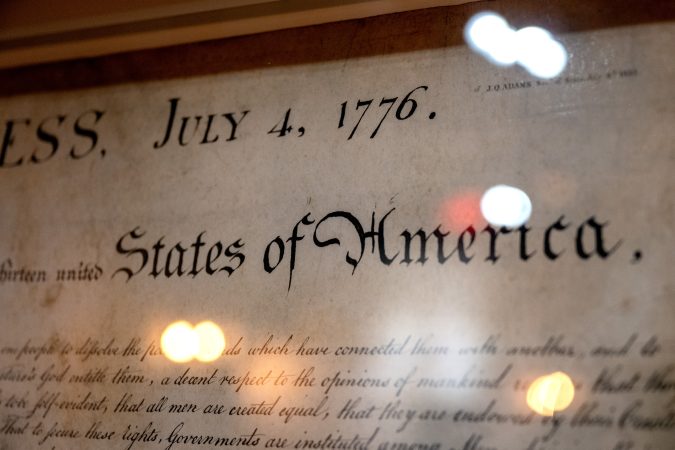
Sitting in social studies class at her predominantly White middle school near Green Bay, Wisconsin — a school that once used an image of an Indian as its mascot, she cringed when the teacher read a passage deep in the Declaration of Independence: “He has excited domestic insurrections amongst us, and has endeavoured to bring on the inhabitants of our frontiers, the merciless Indian Savages, whose known rule of warfare, is an undistinguished destruction of all ages, sexes and conditions.”
Peters said she and the six other Native students in the class looked quietly at one another.
“I was upset. It just rolled off her tongue very easily,” recalled Peters, a citizen of the Menominee Nation who is getting her master’s in organizational leadership. “It seemed like no one else was shocked except for us, the Indigenous students in the classroom. We were like, ‘Did she really just say that?’”
As the United States marks the 250th anniversary of the Declaration — a document fundamental to the nation’s founding and still revered — Peters and other Native American scholars and tribal leaders are reflecting on the Founding Fathers’ use of the derogatory description for Indigenous people in 1776. Many note that while the Declaration promises that “all men are created equal,” its ideals were not extended to everyone.
The document’s portrayal of Indigenous people helped establish a moral and legal framework that justified decades of devastating U.S. policies toward Native communities, according to historians. Celebrations of the 250th anniversary of the Declaration’s signing come amid a striking contrast: Native tribes are working to reclaim ancestral lands, revive lost languages and preserve cultural traditions, while the Trump administration has sought to remove or downplay references to slavery, Native dispossession and other dark chapters of U.S. history in parks and museums and on government websites.
“It’s not just a line in an old document,” Peters said. “It’s a reminder that this country was built by declaring us less than human. When the Declaration of Independence calls us that, it’s a message that Native youth sadly still hear today in classrooms, policy debates and in how society talks about us.”
Many historians and Indigenous historians say the term “savages” did more than reflect 18th-century attitudes. It helped perpetuate stereotypes of Native Americans and contributed to their marginalization; centuries later, it adds to feelings, especially for Native youths, of being excluded from America’s national story. A 2022 study by Texas A&M University researchers found that the Declaration’s pejorative reference to Native Americans helped normalize a view of them as threats rather than as sovereign nations and peoples with rights.
For many Native people, the meaning — and impact — of the phrase is emotional and complicated.
Some discover the wording as adults and are appalled. Others see it as a reminder of racist attitudes and centuries of broken treaties, land theft and forced assimilation. Some young people have reclaimed the epithet, debating it on social media and displaying it on T-shirts and tattoos as a symbol of resilience and empowerment. An Indigenous-led heavy metal band intentionally used the phrase as its name.
“It’s become sort of an ironic touchstone,” said Kevin Gover, the Smithsonian Institution’s undersecretary for museums and culture. A citizen of the Pawnee Tribe of Oklahoma, Gover said he did not encounter the term until middle age. After his initial outrage, Gover said, he responded as many Native people do: by mocking it.
“Even we, on the side of the descendants of those who were victimized, have to take a nuanced view,” said Gover, who is also the former director of the National Museum of the American Indian in D.C. “In many respects, it’s a badge of pride that our ancestors had the wherewithal to survive and allow us to be alive in this time.
“We can acknowledge the wrong,” he said, “and be grateful for our ancestors’ fortitude.”
Hartman Deetz, an enrolled member of the Mashpee Wampanoag — the Massachusetts tribe that famously helped the Pilgrims survive their first Thanksgiving in 1621 — said the wording reflects the opposite of how Indigenous people treated White settlers.
“They were fed when they were starving, given hospitality by us, but they treated us in a way that was savage and merciless in the dispossession of our homelands,” said Deetz, who served as a consultant for an exhibition at the Museum of the American Revolution in Philadelphia about the Declaration and the history behind it. “It was framed in a way that justified the treatment they brought upon us, and it continues to this day in attempts to sell our sacred sites for copper mines and to drill for oil and mining on our lands.
“The colonial enterprise hasn’t stopped,” he said. “There’s such a disregard for Natives to exist or have rights of where we do exist. That’s the legacy of these words.”
The words originated in an early draft of the Virginia Constitution written by Thomas Jefferson, who later included it in the Declaration of Independence, which Congress adopted.
Ironically, some historians say, the characterization of Native people contradicts Jefferson’s own views. In “Notes on the State of Virginia,” a book Jefferson wrote that laid out many of his views on race, government and religious freedoms, he was “very sympathetic to Native people,” said Kevin Butterfield, a historian at the Library of Congress. Jefferson described Indigenous people as just, honorable and noble — a sharp contrast to the widespread European belief that Indigenous people were inferior.
But Jefferson understood the Declaration was political rhetoric — a kind of “public relations piece,” said Butterfield, who is the acting chief of the Manuscript Division at the Library of Congress. He placed it near the end to bolster the case for independence.
“He’s trying to paint the worst possible picture of how the king is approaching his interactions with the American colonists,” Butterfield said. “So he’s laying out horrible wartime atrocities from the Revolutionary War.”
The description reflected colonial attitudes and the realities of frontier warfare, scholars say. Colonists were hostile toward Native Americans, who were powerful political and military figures and, just like other nations, protecting their sovereignty. Some Native nations had allied with the British — a move that many settlers resented — and many colonists also opposed King George III’s Proclamation of 1763, which barred settlement west of the Appalachian Mountains.
Repeated violence between Indigenous people and settlers also helped shape the ideology behind the description, including the French and Indian War and Dunmore’s War in 1774, when Virginia colonists fought the Shawnee and Mingo to expand into the Ohio Valley, according to historians. In the summer of 1776, as the Declaration was drafted and adopted, a lesser-known conflict unfolded when Cherokee warriors attacked frontier settlements across parts of Virginia, North Carolina, South Carolina and Georgia. Colonists responded by burning more than 50 Cherokee towns and driving Native people from their homes.
By 1776, the Founding Fathers “understood their need to accuse the king of what they considered the ultimate crime — partnering with Indigenous peoples and arming them,” said Ned Blackhawk, a Native American author and Yale University historian. “So they created this vilification in the Declaration that, in many ways, was at odds with their experience of living alongside Natives for generations.”
The rhetoric was part of a broader racial ideology taking shape during the Revolutionary era, said Blackhawk, an enrolled member of the Te-Moak Tribe of Western Shoshone Indians of Nevada.
“They were deeply committed to Enlightenment principles, but those were restricted to people similar to themselves,” he said. “Native Americans became a foil in simplified and racialized ways.”
Tracy L. Canard Goodluck, executive director of the Center for Native American Youth at the Aspen Institute, said she is disappointed the term is either glossed over or not taught in many school curriculums, its impact not discussed.
It wasn’t until she was a student at Dartmouth College, she said, that she fully understood the context of the description. She was angry, but the new knowledge also awakened in her a passion for educating others about Indigenous history and mistreatment. Goodluck, a member of the Oneida Nation who is also Mvskoke Creek, said in her previous work as a teacher in Seattle and Albuquerque she taught about Indigenous people and the harsh characterization in the Declaration.
“It shouldn’t just be about White history,” she said. “It should be about all history — the good, the bad and the ugly.”
She said it’s also important to educate the public, so every Fourth of July, she wears a T-shirt emblazoned with the phrase from the Declaration.
“Those words served the purpose back then as a way to dehumanize Native people in this country,” said Goodluck. “We need to change that narrative. We’re still here. We’re doctors, lawyers, teachers and political leaders.
“I am that merciless Indian savage who my ancestors prayed for to do great things.”
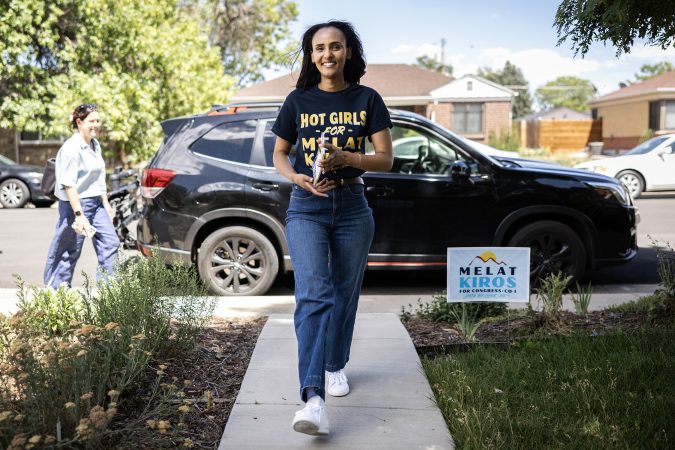
Melat Kiros was fresh out of Notre Dame Law School in 2023 when she was fired by her New York law firm after publishing a lengthy letter sharply criticizing Israel’s government, raising questions about its historical legitimacy and challenging the firm’s response to law students engaging in pro-Palestinian activism.
In Tuesday’s Democratic primary in Colorado, under the banner of the Democratic Socialists of America, Kiros, 29, is again challenging the establishment. This time, she hopes to defeat Rep. Diana DeGette, 68, a liberal Democrat who was elected to her Denver-area seat a year before Kiros was born.
The showdown is the latest between the mainstream Democratic Party and its ascendant, youthful left wing, but Kiros represents more than the DSA. She is one of several Generation Z candidates this year fueled by the generational frustrations of their pandemic-marred youth, social media-fueled isolation, artificial intelligence and the war in the Gaza Strip.
The upset pulled off by Darializa Avila Chevalier, 32, a socialist doctoral student, over Rep. Adriano Espaillat, 71, in last week’s New York Democratic primary may have only set the stage for the generational and ideological fights to come — on both sides of the political aisle.

“When you’re living through these kinds of moments on such a regular basis, it feels impossible to be able to change course and believe your vote actually makes a difference,” Kiros said.
But, she added, “we’re seeing just how broken the system is, and we’re seeing that no one’s coming to save us but us.”
DeGette sees lawmakers of all ages working together as important, citing her work with younger members of Congress like Alexandria Ocasio-Cortez, 36, and Jake Auchincloss, 38, on “Medicare for All” legislation. But DeGette still believes experience and community involvement are tantamount to age.
“What voters look at in these races is they look at who they think is going to most effectively represent them and who can have the power and leadership to fight against Donald Trump,” she said.
For Generation Z voters, youth and recent history have shaped their views. They did not experience the exhilaration of Barack Obama’s hope-fueled 2008 campaign or George W. Bush’s calls to service after the attacks of Sept. 11, 2001. Instead, they have weathered a decade of Trump’s “American carnage” narrative and the gerontocracy of Joe Biden. Their beefs tend to be less with the other party than their elders.
Generation Z voters express higher levels of party alienation than any other generation; two-thirds of Generation Z respondents in a recent New York Times/Siena poll expressed dissatisfaction with both Democrats and Republicans. Among Generation Z Democrats, 68% said they were unhappy with their own party.
But the rise of Generation Z and young millennial candidates demanding change is not limited to Democrats.
Joe Mitchell, the founder of Run GenZ, an organization aiming to elect young conservatives, is vying to fill the seat of Rep. Ashley Hinson of Iowa, a Republican running for Senate. Mitchell, 29, who runs a real estate development company, represents a brand of young male Republicans inspired by Charlie Kirk, the slain conservative activist, and driven by their Christian faith and by values aligned with Trump’s political movement.
“Everything I do is going to be America first,” said Mitchell, a former state representative. “Everything we do should be focused on, ‘how can we help the American worker?’”
Brendan Trachsel remembered celebrating his 16th birthday as he watched election results come in for Trump’s first presidential win in 2016. Although he grew up in a conservative household in the San Diego suburbs, he said he was in “utter shock that someone who is completely OK with treating people so horribly would get into office.”
After starting at Northern Arizona University in 2019, he registered with the Green Party. Now 25, Trachsel is running for the Arizona House of Representatives in a Democratic-held district near Flagstaff, focusing on labor organizing, data center moratoriums and tighter protections for online privacy.

If he wins, Trachsel would be the first third-party official in the Arizona Legislature. He cited Zohran Mamdani’s mayoral campaign in New York as an inspiration.
“It was just so people-focused, so intent on just shutting up and hearing what people needed and want,” Trachsel said.
Startled by Trump’s return in 2024, Leila Staton, 22, and her mother formed the Insufferable Wenches of Iowa, a progressive group designed in part to link like-minded but socially isolated rural residents. No Democrat had filed to run this year against the two-term Republican state legislator representing her district, so Staton, who lives in Stout, population around 200, decided to run herself.
College graduates from rural Iowa tend to leave the state. Staton pointed to a state Legislature, where in 2023 the average age was 54, as unrepresentative of her generation.
Staton has focused her campaign on public education, which has been drained of cash by a new school voucher program; family farms struggling with rising costs and corporate pressure; drinking water that is contaminated with nitrates; and Iowa’s rapidly rising cancer rates.
“There’s a lack of opportunity, prices are rising, wages are stagnant,” she said, “and our cancer crisis has no clear solution.”
Generation Z politicians are also the first largely born after the Columbine massacre in 1999 and raised amid the drumbeat of school shootings that followed.
Tyler Smith, 26, was in a Los Angeles high school when, in 2018, a gunman killed 17 people at Marjory Stoneman Douglas High School in Parkland, Florida. He joined school walkouts and watched as a young breed of activists emerged from Parkland.
While working for a gun control group, Smith decided to run as a Democrat for a Texas House seat this year in the Houston area held by a staunch conservative, insisting, “People right now are sick and tired of the same old, same old.”
Braxton Mitchell, a 26-year-old Montana state representative, also became involved in political activism in 2018. But for him, the gun control walkouts that followed Parkland did not represent his “way of life,” so he spearheaded a counter walkout, against gun control, at his high school in Columbia Falls, Montana. After graduation, he got on a plane for the first time and flew to Washington to meet Kirk, who had been sending him messages of support.
A year and a half later, the state Republican Party chair, Don Kaltschmidt, encouraged Mitchell to run for his local legislative seat, then held by a Democrat. He won and is now running for reelection.
“We need all generations at the table, especially in places like the state legislature, because the decisions being made are going to impact my generation the most,” Mitchell said.
He’s working on a school safety bill to put panic alert systems in rural schools across the state — without gun control.
COVID-19 is another shared experience. James Thibault, the son of a landscaper and a nursing assistant in New Hampshire, had no political aspirations until the pandemic shut down schools. Then politicians reopened them with mask mandates that Thibault, a high school freshman at the time, found onerous and not conducive to learning.
He protested at school board meetings. He was appointed to a youth legislative council. Then he filed to run for state representative before he graduated from high school. He was elected at 18 as a Republican, becoming the youngest state legislator.
“COVID was a wake-up call,” said Thibault, 20, who is running for reelection this year.
In Denver, Kiros also cited the pandemic as consequential to her own politics. “Stagnant” cultural norms that demanded working in offices suddenly gave way to acceptance of remote work, she said. The burning of fossil fuels plunged. Then those social benefits went in reverse.
Her frustrations with current representatives have only grown deeper.
“I don’t know if it’s ego,” Kiros said. “I don’t know if it’s recklessness. There really is just no sense of preparing or leaving the world better than where they found it.”
This article originally appeared in The New York Times.
Daveigh Chase, an actor known for voicing the character of Lilo in the hit animated film “Lilo & Stitch,” died in Los Angeles this month of AIDS, the county’s Department of Medical Examiner said Monday.
The case information for Chase, who was 35 and also known as Daveigh Schwallier, said her death at a hospital June 16 was natural. It listed AIDS, which is caused by HIV, as the cause, and said that “chronic polysubstance use” — repeatedly using more than one drug or substance at the same time or within a short period of time — was a “significant condition.”
The Los Angeles Department of Medical Examiner said a more detailed report about the case was not yet available.
When Chase’s father, John David Schwallier, confirmed his daughter’s death to The New York Times, he said the cause was complications of bacterial meningitis and a blood infection. Schwallier also said his daughter had been homeless and living in Los Angeles with her boyfriend near the hospital where she died.
“Lilo & Stitch,” released in 2002 when Chase was almost 12, told the story of an orphaned Hawaiian girl, Lilo, who brings home an impish blue space alien, Stitch, from the dog pound. Chase brought the plucky Lilo to life.
Her breakout role, however, was in the live-action thriller “The Ring,” released in the United States roughly four months later, alongside Naomi Watts. Chase played Samara, a long-haired child villain. The image of Samara crawling through a blurry television screen would become seared in the cultural consciousness of that period.
This article originally appeared in The New York Times.
Editor’s note: This story has been updated to reflect a later start time for the concert, which organizers changed due to the extreme heat advisory this week.
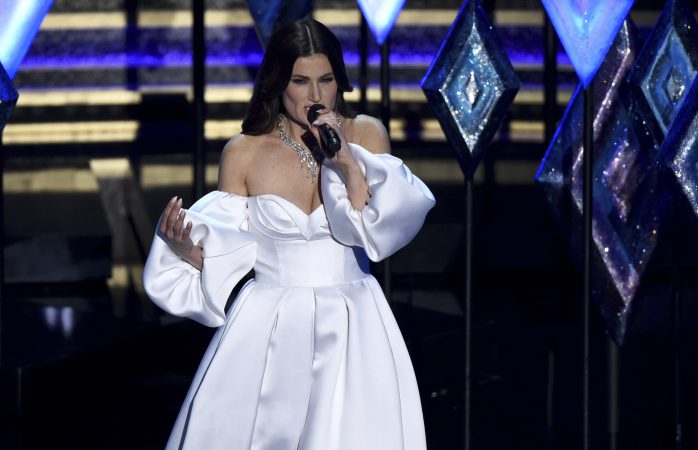
Broadway legend Idina Menzel has lived in Los Angeles for years now, but she still loves an East Coast audience — especially in Philly.
“They’re my vibe. I’ve got a lot of friends and family down there. They understand my humor,” said Menzel, who lives in Encino with her husband, actor Aaron Lohr, her 16-year-old son, Walker Nathaniel Diggs, and their dog, Gino.
“I just really feel like I’m very authentic when I’m on the stage with them, and we have a great time.”
The star singer behind unforgettable characters in Wicked, Rent, and Frozen, Menzel returns to Philadelphia on July 3 to perform her biggest hits from musicals and beyond, joining the Philly Pops for a free concert on Independence Mall.
“It’s been quite some time since I’ve done an orchestra show,” said Menzel, who last year starred in the Broadway musical Redwood, about a mother grieving the sudden loss of her son and finding solace in a redwood forest.
“It’s the most glorious experience, just standing up there in front of 80 some musicians and performing with them … there’s nothing like it.”
At Independence Mall, she’ll likely sing her popular hits, like “Defying Gravity,” “Take Me or Leave Me,” and “Let It Go,” as well as songs from her own discography, with some familiar arrangements and some new ones she created recently.
Outside of touring, the Tony Award-winner is no stranger to the city: As a New Yorker, Menzel has visited often before. In college, she once spent a Christmas in town with two New York University roommates from Philadelphia.
There’s one thing she loves to do whenever she stops in Philly — run up the Art Museum steps.
“I make it a point to, with my son, because he’s such an athlete. We run the steps. I call them the Rocky steps,” she said.
Performing as part of Wawa Welcome America’s Semiquincentennial celebrations leading up to July 4, Menzel joins a long list of celebrities coming to Philadelphia for the national birthday bash. If there’s one song from her history that she thinks Philly audiences — and Americans overall — need to hear right now, that would be “No Day But Today.”
“Rent was my very first professional show, and it’s one of my favorite songs from that show. For me, it’s kind of like a mantra, and whenever I sing it, audiences truly come together,” she said. “It’s more about gratitude and community. People coming together, not taking things for granted, and really embracing the moment.”
It’s a message that will likely resonate with Philadelphians — even if Menzel is a diehard Knicks fan.
Idina Menzel will headline Pops on Independence in Philadelphia at Sixth & Market Streets on the Independence Concert Series Stage at 8 p.m. on Friday, July 3.
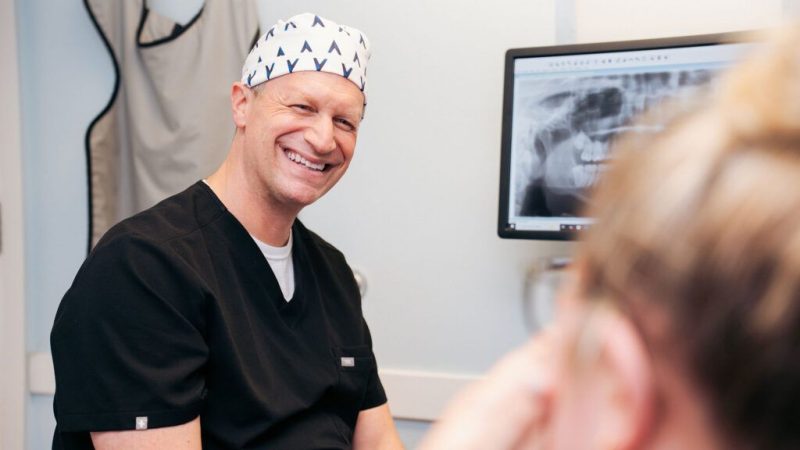
MAX Surgical Specialty Management, a private-equity backed company consolidating oral and maxillofacial surgery groups in the Northeastern U.S., has acquired two more practices in the Philadelphia area.
The latest deal, announced Friday, gives the Hackensack, N.J., firm 12 surgeons at 12 locations in Pennsylvania. Surgeon Jason M. Auerbach founded MAX in 2022 with private-equity backing and entered Pennsylvania two years later.
The two newly acquired practices have six offices in Bucks and Chester Counties.
Oral and Maxillofacial Surgeons P.C. has three surgeons, and offices in Doylestown, Quakertown, Warminster, and Chalfont. Oral Associates of the Main Line has two surgeons and offices in Exton and Paoli.
MAX did not disclose financial terms of the transactions.
In addition to New Jersey and Pennsylvania, MAX has practices in Connecticut, New York, and Vermont. The company — a management services organization — is majority-owned by its physicians, Auerbach said.
Oral and maxillofacial surgeons work at the crossroads of dentistry and medicine. Most have dental degrees, but some also have medical degrees. They remove wisdom teeth, install dental implants, repair facial traumas, and treat jaw injuries, among other services.
Auerbach founded Riverside Oral Surgery in Bergen County in 2007 and grew it to 12 locations before founding MAX with private equity partners. Part of his motivation was to create a home for independent physicians, Auerbach said in a May interview.
The Philadelphia region still has a high concentration of independents, with strong patient demand. “It’s hard nowadays to be an independent oral-maxillofacial surgeon, in terms of the complexities in running a healthcare business,” Auerbach said.
Robert Mogyoros, whose Greater Philadelphia Oral Surgery is in Elkins Park, said he valued his independence above all, but decided to look for a group to join after the business side had gotten too challenging.
Physician groups get better prices from vendors, better deals with insurers, and have an upper hand in physician and employee recruitment, said Mogyoros, who became part of MAX last July.
“What attracted me to MAX was that it’s doctor-driven and doctor-run,” he said in a May interview.
Rothman and Kim Oral & Maxillofacial Surgery, with offices in Northeast Philadelphia and Cinnaminson, was MAX’s first acquisition in Southeastern Pennsylvania. That deal also happened last year when MAX announced that it had borrowed $77 million to support growth.
When doctors sell their practices to MAX, they typically invest about 30% of the value into MAX, Auerbach said. MAX’s outside investors are MedEquity Capital near Boston, RF Investment Partners in New York, and Kian Capital in Charlotte, N.C.
Editor’s note: This article was update to correct the year when MAX made its first Pennsylvania acquisition.