Tag: topic-link-auto

  • Hearing to review Bill Cosby’s assets as he faces $59 million judgment

    Hearing to review Bill Cosby’s assets as he faces $59 million judgment

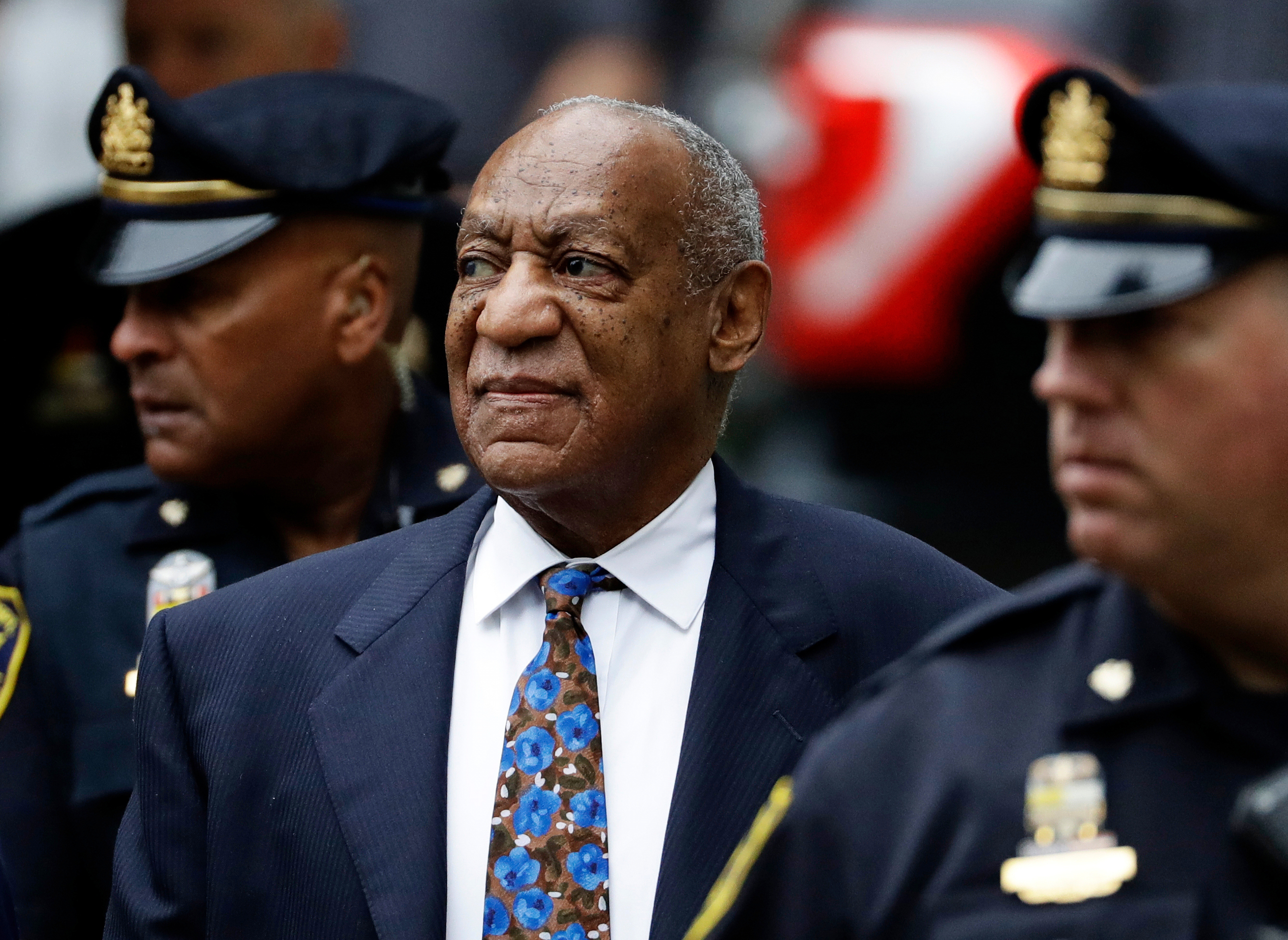
    A judge in California has ordered Bill Cosby or his lawyers into court next month to address questions about his assets as a woman who sued him for sexually assaulting her seeks to enforce payment of a $59 million judgment she was awarded earlier this year.

    In March, a civil jury made the award after finding that Cosby had drugged and sexually assaulted the woman, Donna Motsinger, a former server at a Sausalito restaurant, after escorting her to one of his comedy shows in 1972.

    In court papers, lawyers for Motsinger said Cosby, 89, hasn’t paid anything toward the judgment and, citing bank records, raised concern that in the past he and his family had moved assets around in a way that could hinder their ability to collect the judgment.

    “Cosby has paid none of the judgment, while showing a clear record of liquidating assets and then immediately dissipating the proceeds,” Motsinger’s lawyers wrote in court papers.

    Lawyers for Cosby did not respond to a request for comment.

    A hearing in the effort to enforce the judgment had originally been scheduled for January in Los Angeles Superior Court. But Motsinger’s lawyers, citing the financial transactions outlined in the court papers, asked the judge in the case, Bradley S. Phillips, to move up the date. In an order issued Tuesday, the hearing was set for September.

    Cosby has consistently maintained that any sexual contact he had with women was consensual. He has lodged an appeal of the trial finding.

    Judgments become due at the time they are awarded, though enforcement of them is left to the party who won to arrange. The lawyers for Motsinger wrote in the complaint that Cosby had failed to respond to post-judgment questions meant to identify his assets.

    One of the lawyers, Jesse Creed, detailed financial transactions in court papers that, while they occurred before the award of the judgment, were indicative, he argued, of an effort to transfer assets in ways that could prevent them from being subject to an enforcement action. For example, he cited bank records obtained by subpoena that showed that proceeds from the sale of a New York town house were wired into a Cosby account last November and within 48 hours, $1.29 million was transferred to other accounts, including those belonging to friends.

    Though dozens of women have come forward to accuse Cosby of sexual abuse, he was only criminally charged in one case. He was convicted, but in 2021 that conviction was overturned for procedural reasons after Cosby had served three years of a three- to 10-year sentence at a prison outside Philadelphia.

    In that case, he was convicted of drugging and sexually assaulting Andrea Constand, a former Temple University employee to whom Cosby had become a mentor. He was freed after the Pennsylvania Supreme Court ruled that a “non-prosecution agreement” with a previous prosecutor meant he should not have been charged.

    Cosby promoted the Pennsylvania Supreme Court decision as a full exoneration, and over the years, Cosby’s lawyers have depicted him as someone who unfairly became a target of the emotions stirred by the #MeToo movement.

    But the Motsinger case is one of two recent civil court findings that reinforce an image of him as a person who wielded his celebrity to take advantage of women.

    After his release from prison, Cosby was the subject of a civil trial in 2022 brought by another accuser, Judy Huth. In that case, the jury found that Cosby had sexually assaulted Huth in 1975, when as a 16-year-old girl she accepted his invitation to join him at the Playboy Mansion in Los Angeles.

    In Motsinger’s lawsuit, she described how Cosby had attacked her when they were both in their 30s, after giving her wine and a pill that had left her incapacitated. Cosby did not testify at the trial.

    Years ago, Motsinger’s case would have been time-barred because she did not make the accusation until after the expiration of the statute of limitations for such suits. But her case became possible because California is among the states that have amended the statutes in sexual assault cases so accusers can come forward even after a lengthy passage of time.

    Cosby says he has recently run into financial difficulties. During a deposition in the Motsinger case, he described being unable to get the high-profile work he once enjoyed as a comedy star whose television series “The Cosby Show” became a major success.

    But an expert witness Motsinger’s lawyers called to the stand before the jury’s final decision this year estimated that Cosby was worth roughly $128 million.

    This article originally appeared in The New York Times.
  • I don’t care what anyone says: Being ‘woke’ isn’t a bad thing

    I don’t care what anyone says: Being ‘woke’ isn’t a bad thing

    I was chatting with a friend recently whom I’ve known for a long time when she used the term woke as if it meant something disgusting.

    I was so stunned that I didn’t bother trying to correct her. But I hung up the phone thinking about how the concept has become a political football, with even some Dems kicking it around.

    African Americans created this vernacular. It preexisted MAGA’s hijacking of it by decades, dating back to the days of civil rights activist Marcus Garvey, founder of the Universal Negro Improvement Association. It has long been a part of pop culture, showing up in musical performances by everyone from Depression-era blues singer Lead Belly to Erykah Badu in her 2008 song, “Master Teacher.”

    I first heard it during the early 1990s. Back then, if someone said, “You’re not woke,” it was considered the ultimate insult, right up there with being an Uncle Tom — or worse. Being woke refers to being alert to racial transgressions. The opposite of woke is to be asleep, and therefore oblivious to systemic racism and injustice.

    No matter how President Donald Trump and Secretary of Defense Pete Hegseth attempt to vilify the term, I stand by the notion that being woke is a good thing. As in the exhortation, “Stay woke, brother.”

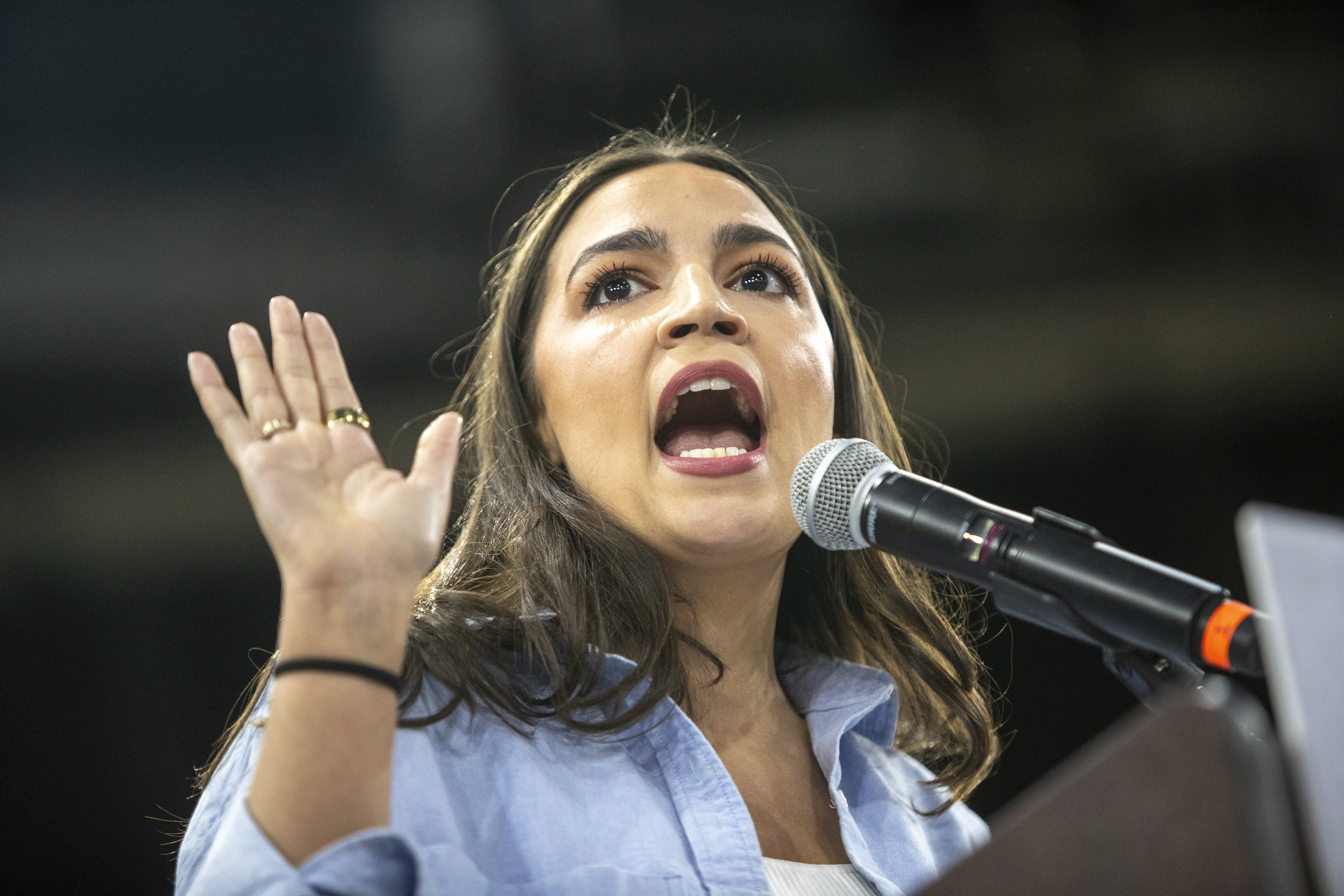
    It’s galling to watch politicians bastardize it. U.S. Rep. Alexandria Ocasio-Cortez recently brought it up during an ABC News interview when she said, “I have a local city councilman that has this saying: ‘Woke 1 was crazy.’”

    She was talking about Francesca Hong, a progressive candidate running for governor of Wisconsin with a history of making radical statements, and was also quoting New York City council member Chi Ossé, who used the “woke 1” term on social media. I get that Ocasio-Cortez was referring to far-left calls to defund the police — which most Black people never fully supported — among other extremist ideas. But her words still stung.

    I found myself wondering: Since when did the concept of being woke become a bad thing for Democrats?

    I have an awful lot of respect for Ocasio-Cortez. I recognize she may be weighing a run for the presidency in 2028 and trying to center herself politically. But this kind of virtue signaling won’t be as beneficial as she hopes if it also alienates African Americans.

    M.K. Asante said that “the idea of staying woke became associated with consciousness,” but that the meaning of the term has changed after being co-opted by the mainstream.

    For insight, I reached out to M.K. Asante, a professor at Morgan State University whose father is Molefi Kete Asante, a renowned professor of Africology at Temple University. “The idea of staying woke became associated with consciousness,” Asante told me, but added that the term was co-opted around 2020 following the widespread uprisings after the murder of George Floyd by a police officer.

    Asante pointed out, “Now it does not have the same meaning in the mainstream.”

    That’s mainly because of Trump, who, after his return to the White House, immediately began vilifying woke and other things associated with diversity.

    He declared an all-out war on diversity, equity, and inclusion efforts in both federal and private sectors, and has also taken aim at museums he says are “essentially, the last remaining segment of ‘WOKE.’” Trump also has cut funding from key government programs that support DEI.

    Even the military hasn’t been immune. Trump summarily dismissed Air Force Gen. Charles Q. Brown Jr., who was the second Black person to serve as chairman of the Joint Chiefs of Staff, and set about renaming military bases after Confederate generals.

    Earlier this year, Pentagon spokesperson Sean Parnell announced on X that officials were targeting Stars and Stripes, an independent newspaper that covers the military, in part to “refocus its content away from woke distractions that syphon morale.” Since then, the paper’s publisher, editor-in-chief, and a reporter have all been terminated, ending 155 years of editorial freedom, as my colleague Will Bunch reported.

    Meanwhile, the United States is at war with Iran, Canada, our closest ally, has announced retaliatory tariffs on U.S. products, and American consumers are wondering if the influx of tariff-free foreign beef imports Trump is pushing will be safe to consume.

    Yet, Trump says woke is the enemy.

    Despite the president’s best efforts, he can’t stamp the term or its real meaning out.

    As Asante pointed out, “You can co-opt a word, but the spirit of what ‘stay woke’ means is alive and well.”

  • Summer’s not over yet! Bruno Mars, Chris Stapleton, and Wu-Tang Clan headline a busy Philly music week

    Summer’s not over yet! Bruno Mars, Chris Stapleton, and Wu-Tang Clan headline a busy Philly music week

    Summer’s not over yet, at least when it comes to music schedules in and around Philadelphia. This is one of the busiest music weeks of the season, with big Bruno Mars and Chris Stapleton tours coming through, and Rufus Del Soul, Wu-Tang Clan, Squeeze, and Demi Lovato down the Shore.

    Thursday Aug. 27

    Swervedriver

    Indie bands with a fuzzy guitar sound that embrace the shoegaze label have proliferated this decade. Swervedriver is among the 1990s originators of the style, and the members of the British band are celebrating the 35th anniversary of their debut album, Raise. 8 p.m., Underground Arts, 1200 Callowhill St., undergroundarts.org

    Pinkshift

    Pinkshift, the hard-hitting Baltimore punk band fronted by Ashrita Kumar, is celebrating an expanded version of their 2021 debut EP Saccharine. Two Philly bands will join them: Kulfi Girls, the foursome fronted by Abi Natesh that mixes hard rock with Indian classical influences, and Nicolle Maroulis’ emo outfit Hit Like a Girl. 8 p.m., Ukie Club, 847 N. Franklin St., 4333Collective.net

    Kulfi Girls play the Ukie Club on Thursday, Aug. 27.Philly Music Fest

    Good Flying Birds

    Three winsome indie pop bands are on this free Live & Local show. Good Flying Birds, whose charming Talulah’s Tape came out in 2025, is a band of Midwesterners, who will be joined by two promising Philly quartets in Smarthearts and Heatloaf. Free. 6 p.m., Spruce Street Harbor Park, 301 S. Christopher Columbus Blvd., 4333Collective.net

    Friday Aug. 28

    Jerry Garcia Symphonic Celebration

    The Grateful Dead guitarist would have turned 84 this month, and his family organized this tour in his honor. Together with the Philly Pops, the lineup includes Jerry Garcia Band veterans Melvin Seals on organ and Jacklyn Branch on vocals, Philly guitarist Tom Hamilton, Phil Lesh’s son Grahame Lesh on bass, drummer John Morgan Kimock, and singer Kanika Moore. 8 p.m., TD Pavilion at Highmark Mann, 5201 Parkside Ave, highmarkmann.org

    Wu-Tang Clan’s Method Man performs at the Wells Fargo Center in Philadelphia on July 18, 2025. The Staten Island hip-hop crew is in Atlantic City on Friday.Kaiden J. Yu / Staff Photographer

    Wu-Tang Clan

    Remember the “Wu-Tang Forever” tour, which had its grand finale in South Philly last summer? Shockingly, that farewell didn’t last very long. Just over a year later, the RZA, Method Man, Ghostface Killah, and their brethren are playing Atlantic City. 8 p.m., Hard Rock Live at Etess Arena, 1000 Boardwalk, casino.hardrock.com/atlantic-city

    Squeeze

    Before the band went on a run with albums like Argybargy in 1980 and Sweets From a Stranger in 1982, Squeeze songsmiths Chris Difford and Glenn Tilbrook wrote Trixies, a song cycle about a nightclub that was never recorded. Now 50 years on, they have released it as a full-length album produced by the band’s bass player, Owen Biddle, who is a former member of The Roots. Adam Ant and Haircut 100 are also on the bill. 8 p.m., Borgata Event Center, One Borgata Way, Atlantic City, borgata.mgmresorts.com

    Demi Lovato

    Former Disney child actress and pop singer Demi Lovato has pivoted from the punk-pop of the 2022 album Holy F— to return to a more dance pop sound on the new It’s Not That Deep. 8 p.m., Ovation Hall, the Ocean resort, 500 Boardwalk, Atlantic City, theoceanac.com

    Chris Stapleton brings his All-American Road Show to the Freedom Mortgage Pavilion in Camden for two nights this weekend.Becky Fluke

    Friday and Saturday Aug. 28-29

    Chris Stapleton

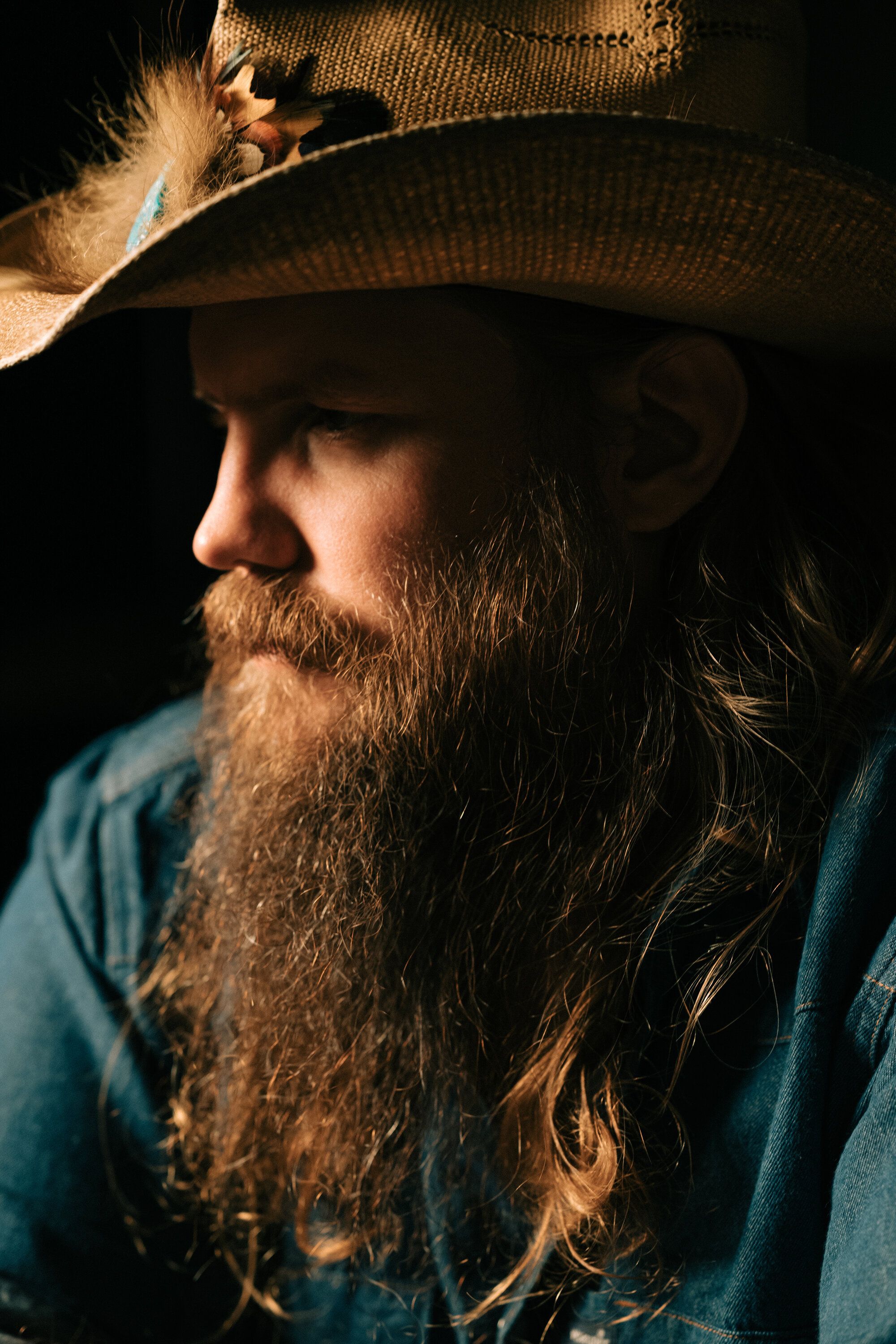
    Eleven-time Grammy winner Chris Stapleton has built himself a huge audience with his brand of beardy, rugged country-soul that’s rarely as slick as the manicured Nashville acts he rubs elbows with on the country charts. For this year’s two-night Camden stop on his “All-American Road Show,” he’s supported by North Carolina-born “Sex, Drugs and Country Music” singer Carter Faith. 8 p.m. Freedom Mortgage Pavilion, 1 Harbour Bvld., Camden, freedommortgagepavilion.com

    Jesse Malin will headline the Queen Jeans Ball in Wilmington on Saturday, Aug. 29. with Craig Finn and Tommy Stinson opening.Vivian Wang

    Saturday Aug. 29

    Queen Jeans Ball with Jesse Malin

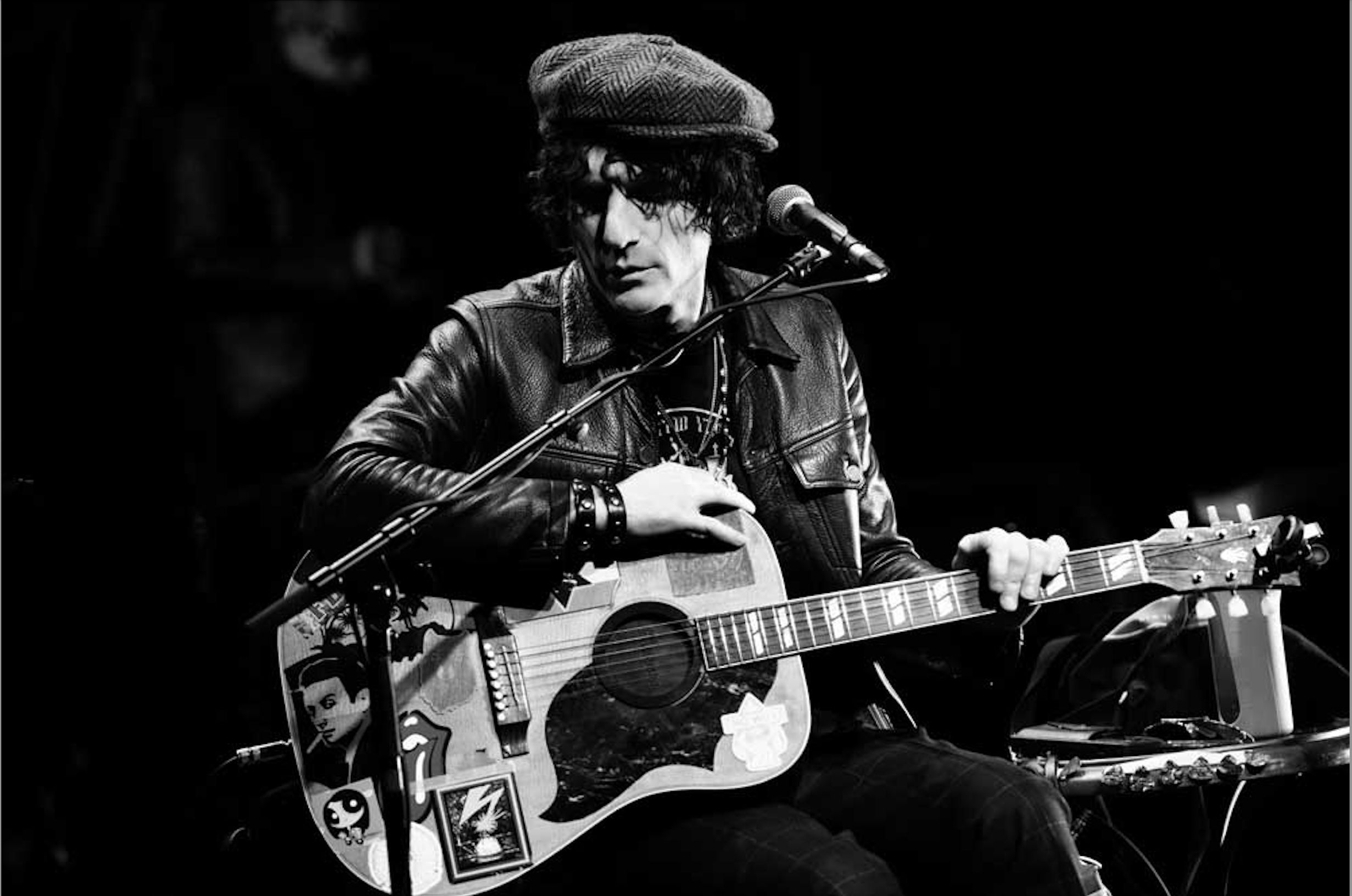
    New York songwriter Jesse Malin has always been a rock and roll true believer, dating back to his hardcore band Heart Attack (which he founded when he was 12). Then came D Generation and nine solo albums, including 2019’s Sunset Kids, which was produced by Lucinda Williams.

    In 2023, Malin suffered a rare spinal stroke that left him paralyzed from the waist down. The next year, he was the subject of a tribute that featured Bruce Springsteen and Billie Joe Armstrong, among others. Now, he’s returned to the stage with his Silver Manhattan musical and is back to touring with his band.

    Malin is headlining the annual Queen Jeans Ball in Wilmington, which benefits the nonprofit Donate Delaware. Craig Finn of the Hold Steady and Tommy Stinson will also perform and undoubtedly join Malin on stage. 8 p.m., the Queen, 500 N. Market St., Wilmington, thequeenwilmington.com

    Australian electronic dance music act Rüfüs Du Sol will perform on the Atlantic City beach on Saturday, Aug. 29.Boaz Kroon

    Rüfüs Du Sol

    Dance music arrives on the Atlantic City beach with Rüfüs Du Soul, the Australian alt-pop band who mix live instrumentation and electronic beats. The band fronted by singer Tyrone Lindqvist is touring stadiums for its 2024 album Inhale / Exhale. The show marks a return to Live Nation booking toes-in-the-sand shows in tandem with Visit Atlantic City for the first time since 2023. Ben Bohmer opens. visitatlanticcity.com

    Zac Brown Band

    The official name of this tour is “Love & Fear Tour presented by Margaritaville at Sea.” So it’s safe to say the Georgia country-rock singer who sang the national anthem at the UFC Freedom 250 cage fight at the White House in June, will be giving Jimmy Buffett vibes. His album Love & Fear features Snoop Dogg, Marcus King, and the late great Dolly Parton. Grace Potter, who also plays Free at Noon on Friday, opens. 7 p.m., TD Pavilion at Highmark Mann, 5201 Parkside Ave, highmarkmann.org

    Sam Sodomsky is The Bird Calls. He plays Young American Cider in Germantown on Sunday.Jake Fromm

    Sunday Aug. 30

    Cloud Nothings / Knifeplay

    Cleveland-born indie band Cloud Nothings, fronted by now Philly-based guitarist-songwriter Dylan Baldi, released its eighth album, Final Summer, in 2024. Sharp-edged Philly band Knifeplay open. 7 p.m., Ruba Club, 416 Green St., 4333Collective.net

    The Bird Calls

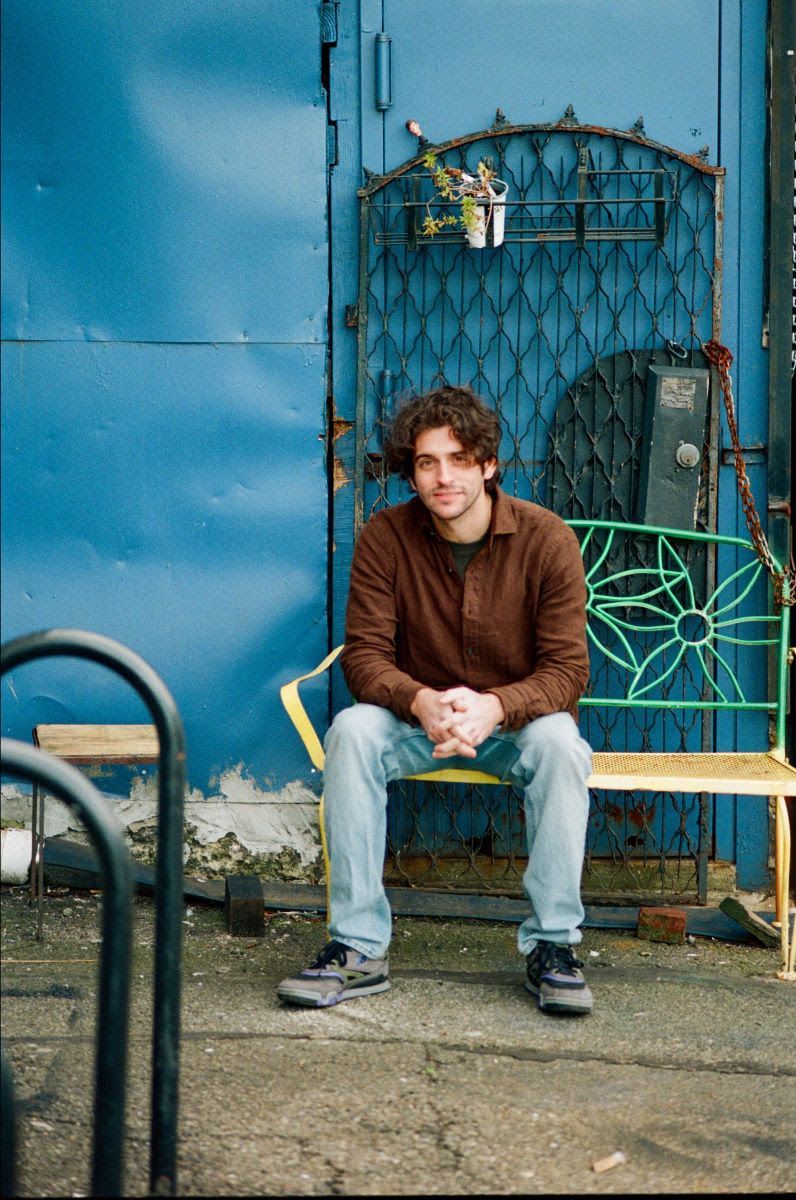
    The Bird Calls is Sam Sodomsky, a Brooklyn songwriter raised in Philly whose new album, Take Leave, is due Friday. Sodomsky, also a contributing editor at Pitchfork, makes homespun, open-hearted folk rock about trying to find a place in the world with songs like “Clockwork” and “Ethan Frome” that linger in the imagination. He’s playing a hard cider tasting room in Germantown. Kristin Daelynn and Adeline Hotel open. 7 p.m., Young American, 6350 Germantown Ave., youngamericancider.com

    Monday Aug. 31

    Arlo Parks

    The British singer and poet born Anaïs Oluwatoyin Estelle Marinho vaulted into stardom in the UK with her Collapsed Into Sunbeams debut, which won the prestigious Mercury Prize. Her third album, Ambiguous Desire, is a pleasant soul-searching work shaped by club culture, though it’s more likely to be heard by coffee shop latte sippers than dance floor denizens. 8 p.m., Union Transfer, 1026 Spring Garden St., utphilly.com

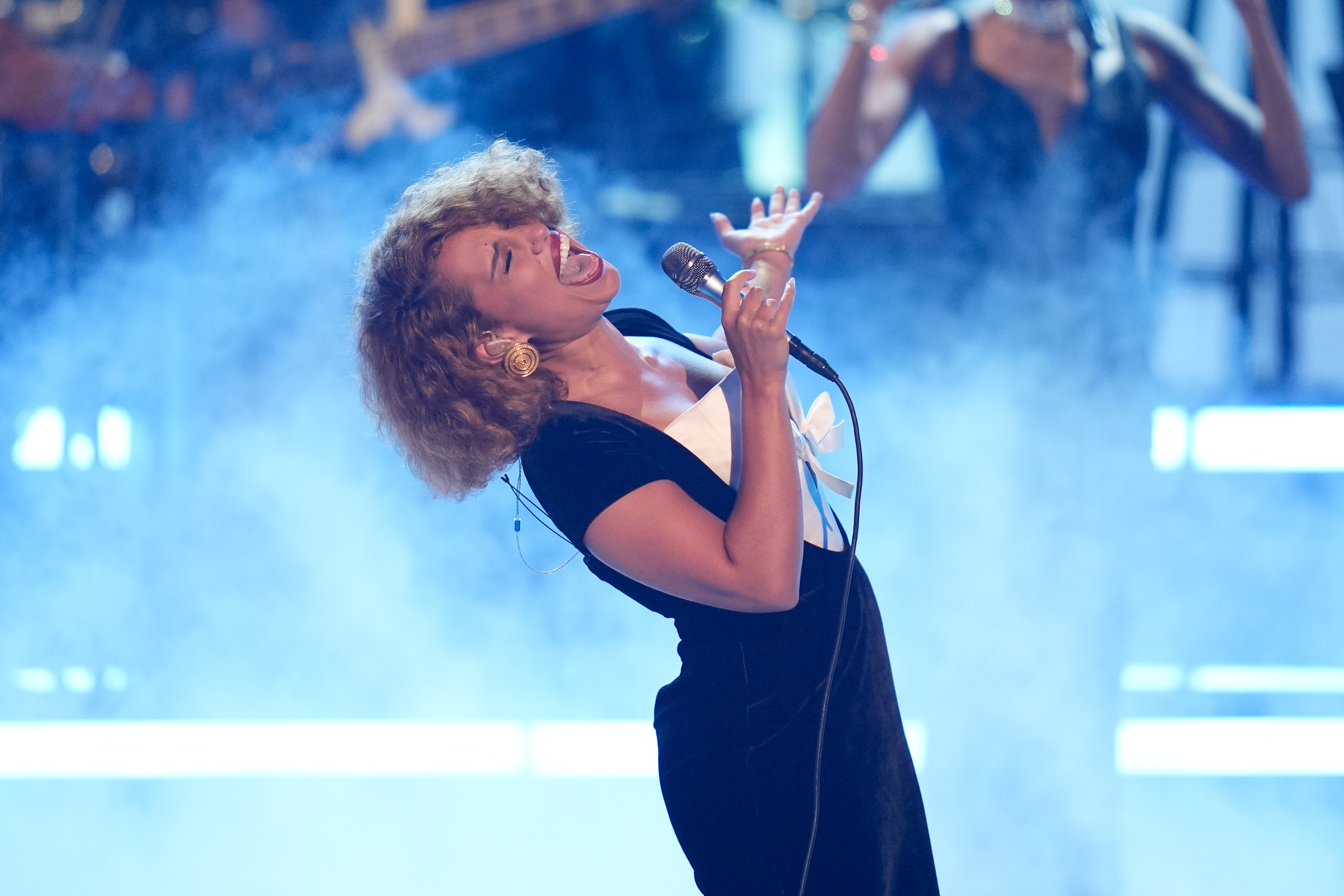
    Raye performs at the BET Awards on June 28, 2026, at the Peacock Theater in Los Angeles. She opens for Bruno Mars on Tuesday and Wednesday, Sept. 1 and 2, at the Linc. (AP Photo/John Locher)John Locher

    Tuesday and Wednesday Sept. 1-2

    Bruno Mars & Raye

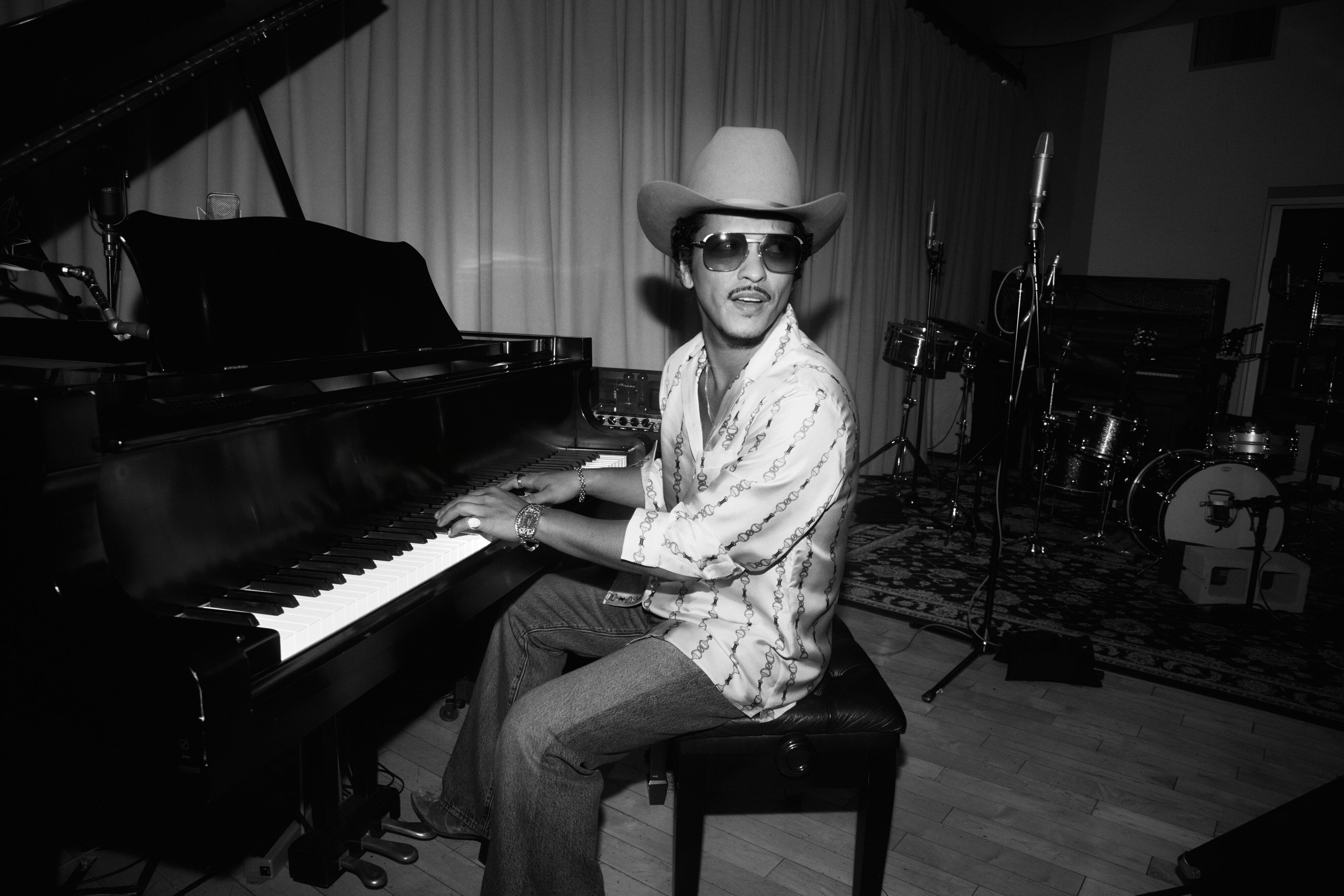
    Bruno Mars has been making hits nonstop since his 2010 Doo-Wops & Hooligans debut. His 2024 chart toppers “Die With a Smile” and “APT.” — with Lady Gaga and Rosé, respectively — and this year’s “I Just Might,” from his new album Romantic are the most recent examples. Raye, the British singer who has a knockout stage show, opens. Things get going with DJ Pee. Wee, who is Mars’ Silk Sonic bandmate Anderson .Paak in disguise. Shopper alert: There will be a Bruno Mars x Hello Kitty pop-up at the Fashion District from Aug. 31-Sept. 2. 7 p.m., Lincoln Financial Field, One Lincoln Financial Way, lincolnfinancialfield.com

  • That ‘curious’ lane switch in the middle of the Manayunk Bridge? Planners say it’s on purpose.

    That ‘curious’ lane switch in the middle of the Manayunk Bridge? Planners say it’s on purpose.

    Towering 80 feet above the Schuylkill and shaped by its colossal concrete arches, the Manayunk Bridge is a key connector in the region’s trail system and a link between Philadelphia and its suburban neighbor, Lower Merion Township.

    While the trail is beloved by city dwellers and suburbanites alike, a mid-trail traffic pattern switch for bikers and pedestrians has confused some users and prompted one reader to write in, asking The Inquirer to investigate. According to city and township officials, the traffic flow switch-up midway across the bridge is no accident.

    The Manayunk Bridge connects Manayunk to Bala Cynwyd. Monica Herndon / Staff Photographer

    The Manayunk Bridge connects the 80-plus mile Schuylkill River Trail with the Cynwyd Heritage Trail, a 2-mile multiuse path that runs along an unused segment of SEPTA tracks in Lower Merion. Much of the trail was once SEPTA’s Ivy Ridge line, which connected Philadelphia with Manayunk via Bala Cynwyd, but was truncated in the 1980s due to poor track conditions. The trail’s completion in 2011, and extension in recent years, has marked a major transformation for the previously underutilized corridor of Bala Cynwyd.

    Penn Valley resident J.J. Cutuli enjoys running and biking with his kids on the Cynwyd Trail.

    “We really love the pedestrian bridge. We really love the trail,” Cutuli said.

    But halfway across the Manayunk Bridge, “there’s this curious little thing that happens,” Cutuli said. The trail’s traffic pattern switches. The bicyclist side becomes the pedestrian side, and vice versa.

    “I’m kind of a rule-follower. One of my kids is a rule-follower, and he asked me that question. He was like, ‘What side should I be on? Should I be on this side? Should I be on that side? What are the rules of the road?’” Cutuli said.

    Unable to summon an answer himself, Cutuli wrote into Curious Lower Merion, The Inquirer’s forum for answering questions about the Lower Merion community.

    » ASK US: Have something you’re wondering about in Lower Merion? Submit your Curious Lower Merion question here.

    Chris Leswing, Lower Merion’s director of building and planning, said the traffic pattern switch was a deliberate choice to slow bikers traversing the downward slope from Lower Merion to Manayunk.

    It’s “easy to speed through areas where people may linger and watch the river” and the “idea was that bikers would need to be aware of the pavement markings to check their speeds,” Leswing said in an email.

    The city concurred.

    The switching of the bike and pedestrian zones was designed to slow bikes down and allow users to “experience both sides of the bridge and the amazing views,” Ra’Chelle Rogers, spokesperson for Philadelphia’s parks and recreation department, said in an email.

    The traffic pattern switch was in response to “what was heard from the public and stakeholders,” according to Rogers.

    Are trail users following the rules? Not completely.

    On one Reddit post, cyclists said the traffic pattern change and accompanying signage “makes zero sense” and “could not be more Looney Toons.” Most cyclists and pedestrians just stay to the right, commenters said.

    This suburban content is produced with support from the Leslie Miller and Richard Worley Foundation and The Lenfest Institute for Journalism. Editorial content is created independently of the project donors. Gifts to support The Inquirer’s high-impact journalism can be made at inquirer.com/donate. A list of Lenfest Institute donors can be found at lenfestinstitute.org/supporters.

  • The Flyers are banking on internal improvements being enough in 2026-27. Here are five players they need to step up

    The Flyers are banking on internal improvements being enough in 2026-27. Here are five players they need to step up

    The Flyers’ offseason was highlighted by the massive acquisition they almost made rather than any of the moves team completed.

    After catching lightning in a bottle last spring and riding that wave all the way to the second round of the playoffs, the Flyers went for broke this offseason — almost literally — by tendering a $90 million offer sheet to budding star Leo Carlsson. While the bold act firmly announced the Flyers’ ambitions and eagerness to become a contender again, it ultimately fell flat as the Anaheim Ducks matched the offer and retained their prized youngster.

    Not landing Carlsson means the Flyers’ offseason, at least to this point, has amounted to upgrading the backup goalie spot with Joseph Woll, adding a bottom-pair bruiser in Simon Benoit, and bolstering the fourth line with 34-year-old Noel Acciari. Nice depth adds, sure, but hardly the needle-movers you’d expect for an up-and-coming team looking to build on the momentum from its first non-COVID playoff run in eight years.

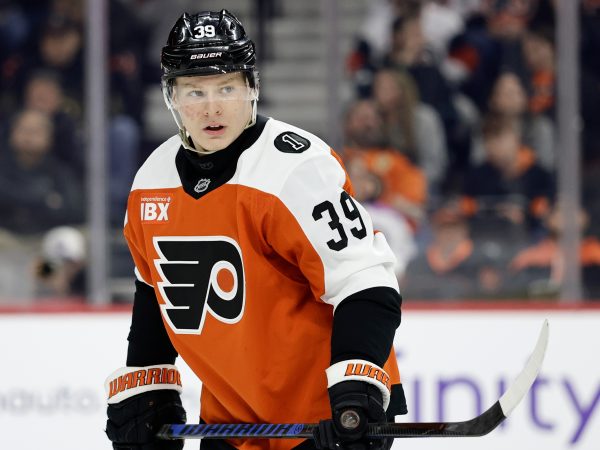
    Instead, general manager Danny Brière and the Flyers are banking on internal improvements from young players being enough for the Flyers to repeat — or better — last year’s success in what should be an improved Metropolitan Division that already includes the Stanley Cup-winning Carolina Hurricanes. Will that gamble pay off? Here are five players the Flyers will need more from if they are to avoid taking a step back.

    1. Matvei Michkov, RW

    No surprise here. Michkov will be looking to rebound from a sophomore season that saw him start slow, face public criticism for his conditioning, and clash with coach Rick Tocchet. Michkov’s play was markedly better post-Olympic break — 22 points in 26 games — but he struggled mightily in the playoffs, culminating with him being benched for the Flyers’ playoff finale.

    Michkov expressed in May that he wasn’t happy with his season overall and acknowledged that he needed to work harder this summer. To his credit, it appears he’s followed through. He was spotted on the ice in Voorhees the day after exit interviews and participated in a renowned summer training group in Russia with NHL players like Artemi Panarin. He looks considerably leaner based on pictures that have surfaced on social media in recent months.

    When you consider the 21-year-old finished with 20 goals and 51 points in a down year, with a better offseason of training and added motivation, the sky really seems to be the limit for the Russian winger. Brière, Tocchet, and Co. are expecting a “vengeance tour” from Michkov in 2026-27 as they seek a second consecutive playoff berth.

    2. Jamie Drysdale, RHD

    After a couple of underwhelming years split between Anaheim and Philadelphia, Drysdale took a major step forward last season and flashed glimpses of the skill set that made him the No. 6 overall pick in the 2020 draft. But is there even more meat on the bone?

    Drysdale’s biggest progression last season came defensively, as he cleaned up some of his poor habits and became a more reliable defender. He improved his plus-minus from minus-32 to minus-3 and set career highs in average ice time (21:33) and goals (eight), while also equaling his career best of 32 points.

    With a sturdier defensive foundation and a new four-year, $26 million contract to boot, the Flyers will hope a more confident Drysdale can take another step offensively and channel his effortless skating and puck-moving ability into increased production. While many expected the Flyers to add a proven power-play quarterback this summer to address the last-ranked unit, the team did not, meaning Drysdale likely will get the first crack at the point. The Flyers will need to click at a much higher rate than 15.7% with the man-advantage if they are to remain a playoff contender, and Drysdale grabbing the PP1 job with both hands would go a long way toward that aim.

    3. Porter Martone, RW

    After a banner collegiate season at Michigan State, the 2025 first-round pick didn’t miss a beat once he signed with the Flyers on March 29. Martone racked up six goals and 15 points in 19 games (including playoffs) down the stretch and, at 19 years old, was consistently among the Flyers’ most noticeable skaters during the postseason.

    While the burgeoning power forward is still just scratching the surface of his immense potential, he showcased the skill set and moxie of a player who looks destined for stardom. The question now will be how quickly Martone can make that leap to become a top-of-the-lineup player and whether that can be as soon as this season.

    Rookie Porter Martone, 19, has bona fide star potential and doesn’t seem like someone who gets daunted by the moment.Yong Kim / Staff Photographer

    The Flyers will be wary of heaping too much pressure too soon on the teenager, but Martone looks to have the broad shoulders and mental makeup to handle it. Given Martone’s pedigree as one of the top prospects in all of hockey — The Athletic ranked him No. 3 — the Flyers see having him for a full 84 games as one of their most obvious avenues toward improvement.

    4. Tyson Foerster, LW

    Amid Dan Vladař’s breakout season, Trevor Zegras’ resurgence, all the drama surrounding Michkov, and the late-season Martone hype train, it was easy to forget that the Flyers played most of last season without one of their top players in Foerster. To make matters worse, the 24-year-old’s arm injury came right as he looked to be breaking out.

    Flyers winger Tyson Foerster missed 39 games last year after injuring his arm on a one-timer in early November.Yong Kim / Staff Photographer

    With 11 goals in 21 games before his injury, on the heels of nine in nine to conclude 2024-25, Foerster was quietly playing at a 40-goal pace for the first quarter of the 2025-26 season. The Flyers rewarded him handsomely this summer with an eight-year, $56.8 million extension that will keep him in Philly until 2035. Now Foerster, who is also one of the top defensive wingers in the league, will need to prove he can live up to his contract and stay healthy, the latter being something he has struggled with to this point of his career.

    Foerster has the shooting release to become a consistent 30-goal scorer in this league and should provide a major boost for an offense that ranked 21st in goals last season. If all breaks right, could he even become the Flyers’ first 40-goal scorer since Jeff Carter in 2009?

    5. David Jiříček, RHD

    The Flyers are going to need a young blueliner to take a major step forward in 2026-27, and the likeliest candidates are Jiříček and Oliver Bonk. Jiříček, who turns 23 in November, will probably get the first chance, given he is almost two years older and, more importantly, no longer waiver-exempt.

    Acquired from Minnesota at last year’s trade deadline for Bobby Brink, the 2022 sixth-overall pick is on his third team and is looking to revive his once-promising career. Blessed with great size at 6-foot-4, puck-handling ability, and a booming shot, Jiříček is a worthy gamble for a Flyers team that lacks a true high-end offensive defenseman in its pipeline. The team can also point to its strong recent track record with reclamation projects like Zegras, Drysdale, and Vladař as a reason for optimism.

    The Flyers were patient with Jiříček last season as they sent him to the minors to have him rebuild his defensive game and learn the team’s style of play. Now, he will get a chance in training camp to show he’s made the necessary improvements and is finally ready for a full-time NHL role. Jiříček projected as a power-play quarterback when he entered the league, and given the Flyers’ persistent struggles in that area, he should be another option there given his big shot from the point.

    “The potential is high … 21-, 22-year-old, 6-foot-4 defensemen of his caliber are tough to find,” Brière said after acquiring Jiříček in March. “We know we have to work with him. … But that’s why I go back to the Jamie Drysdale learning curve. That gives us hope that he can get on the same track and eventually become a difference-maker for us.”

    Long fans of David Jiříček going back to his draft year, the Flyers believe they can get the best out of the toolsy defenseman.
  • Olivia Li is one of the Curtis Institute’s most promising new students. She’s 7 years old.

    Olivia Li is one of the Curtis Institute’s most promising new students. She’s 7 years old.

    In the lobby of the Curtis Institute of Music’s Lenfest Hall, Olivia Li, in a frilly-sparkly red dress, is running back and forth through a turnstile. A few minutes later, she is at the piano transformed — playing Chopin eyes closed, a countenance most serious, and seemingly a decade more mature.

    If her legs aren’t long enough for her feet to reach the piano’s pedals without an extender, give her time. She is 7 years old.

    Olivia is one of nearly four dozen new students now arriving at Curtis for the fall term. The school on Rittenhouse Square, one of the world’s top music conservatories, has always had its share of young talent. This year it will have 13 musicians entering school under the age of 18.

    But even at a place known for prodigies, Olivia is unusual. She is believed to be the youngest student to study at Curtis since 1950, when 6-year-old violinist Diana Halprin matriculated.

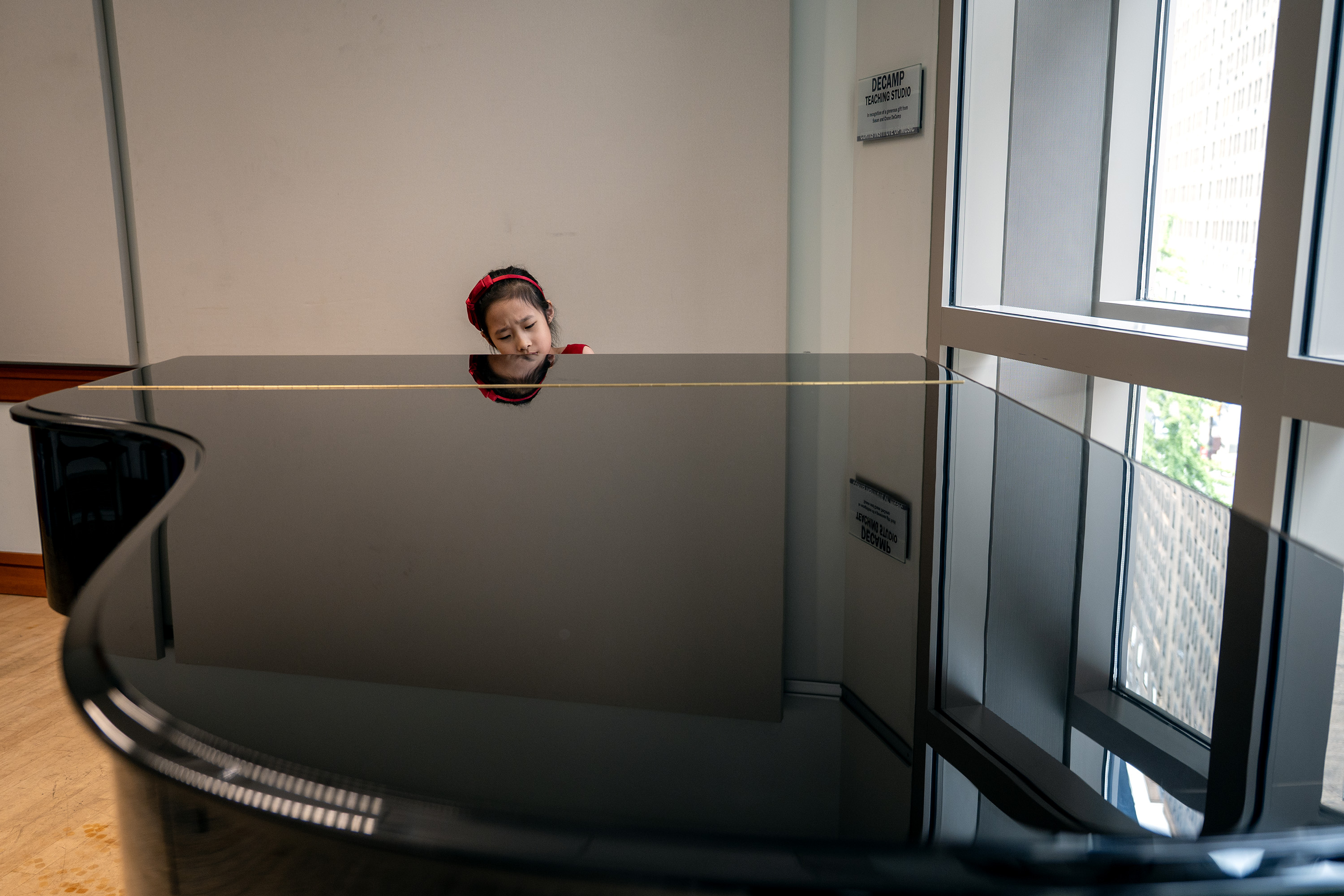
    Olivia Li, 7, plays the piano in a rehearsal room at Lenfest Hall at the Curtis Institute of Music.Tom Gralish / Staff Photographer

    “I was actually preparing for Juilliard,” Olivia said, “but my teacher said I could try for Curtis, and I just did. I didn’t expect I would get in.”

    She got in. Juilliard, too.

    Asked why she chose Curtis, she said, simply, “I just like Curtis better than Juilliard.”

    Michelle Cann, one of two professors with whom Olivia will study at Curtis (the other is Ignat Solzhenitsyn), says that the young pianist has “phenomenal fingers.” Then again, so did others who tried out for the school and did not get in.

    (function(){function e(){window.addEventListener(`message`,function(e){if(e.data[`datawrapper-height`]!==void 0){var t=document.querySelectorAll(`iframe`);for(var n in e.data[`datawrapper-height`])for(var r=0,i;i=t[r];r++)if(i.contentWindow===e.source){var a=e.data[`datawrapper-height`][n]+`px`;i.style.height=a}}})}e()})();

    For the current school year, Curtis received 154 applications to the piano department, a spokesperson said. Sixty-three of those auditioned live in the first round and 15 advanced to the finals. Four were eventually accepted.

    What set Olivia apart in her audition, Cann said, was “how musical she was and how much personality and character about the music-making she had that you don’t expect to see in a 7-year-old. It just stood out so much.”

    Seven-year-old pianist Olivia Li rushes down the stairs of Lenfest Hall at the Curtis Institute of Music on Monday, Aug. 17, 2026. She began studying the piano at age 4 and will receive a full-tuition scholarship to the prestigious institution.Tom Gralish / Staff Photographer

    The sole criterion for admission at Curtis is artistic promise, said provost and dean Nick DiBerardino. “It’s rare for someone as young as Olivia to have won a place at Curtis,” he said, “but it does happen, and when it does, it’s because there was something really special happening at the piano.”

    Curtis has had students younger than Olivia. The school is still in the process of reviewing its records, but to the best of its knowledge the youngest was pianist Ruth Slenczynska, who was 5 years and 2 months old when she arrived in April 1930. She stayed just a few weeks.

    The youngest to come and stay was Sol Kaplan, who was 5 years, 7 months when he began studies in 1924, the year Curtis was founded; he went on to compose music for episodes of the original Star Trek TV series and a slew of movie scores.

    Olivia Li is one of the youngest students to study at the Curtis Institute of Music.Tom Gralish / Staff Photographer

    Olivia is in exceedingly rare company. More than 4,000 composers, conductors, vocalists, pianists, and other instrumentalists have graduated from Curtis in its century-plus existence. Only 13 other students were under the age of 10.

    She comes to Curtis from East Williston, Long Island, N.Y. No one in her family is particularly musically inclined, said her mother, Yanan Zhang, who did study piano as a child and continued to play a bit on a digital piano the family had at home.

    “She just naturally started,” said Zhang of Olivia’s attraction to piano. “She saw me playing, and we hired a teacher to come to home once a week to teach her. So initially it was just for fun.”

    Olivia started studying with a teacher — a Yale and Juilliard graduate — who gave her “very systematic training. So from that time, we took the learning seriously,” Zhang said.

    The teacher told Zhang that Olivia learned fast and had strong fingers.

    Seven-year-old pianist Olivia Li in the lobby of the historic 1726 Locust St. mansion at the Curtis Institute of Music on Monday, Aug. 17, 2026. She began studying the piano at age 4 and will receive a full-tuition scholarship to the prestigious institution.Tom Gralish / Staff Photographer

    “I think he told me several times that she is outstanding, but I didn’t really take it seriously. I thought it’s just encouragement from teachers — that’s how they encourage kids, encourage parents.”

    Olivia was 4 when she started piano, and despite her quick progress, it did not occur to Zhang for a while that there was anything unusual about her daughter.

    “I just thought maybe that’s how all kids do.”

    Olivia, of course, is not like other children, and she won’t be like her fellow students at Curtis, either.

    While students are taking coursework during the day covering music theory and history, Olivia will be attending third grade at Germantown Friends School. After her normal elementary school day, she will go to Curtis for two hours of piano lessons per week and receive individualized instruction in other areas like ear-training, music history, and repertoire studies.

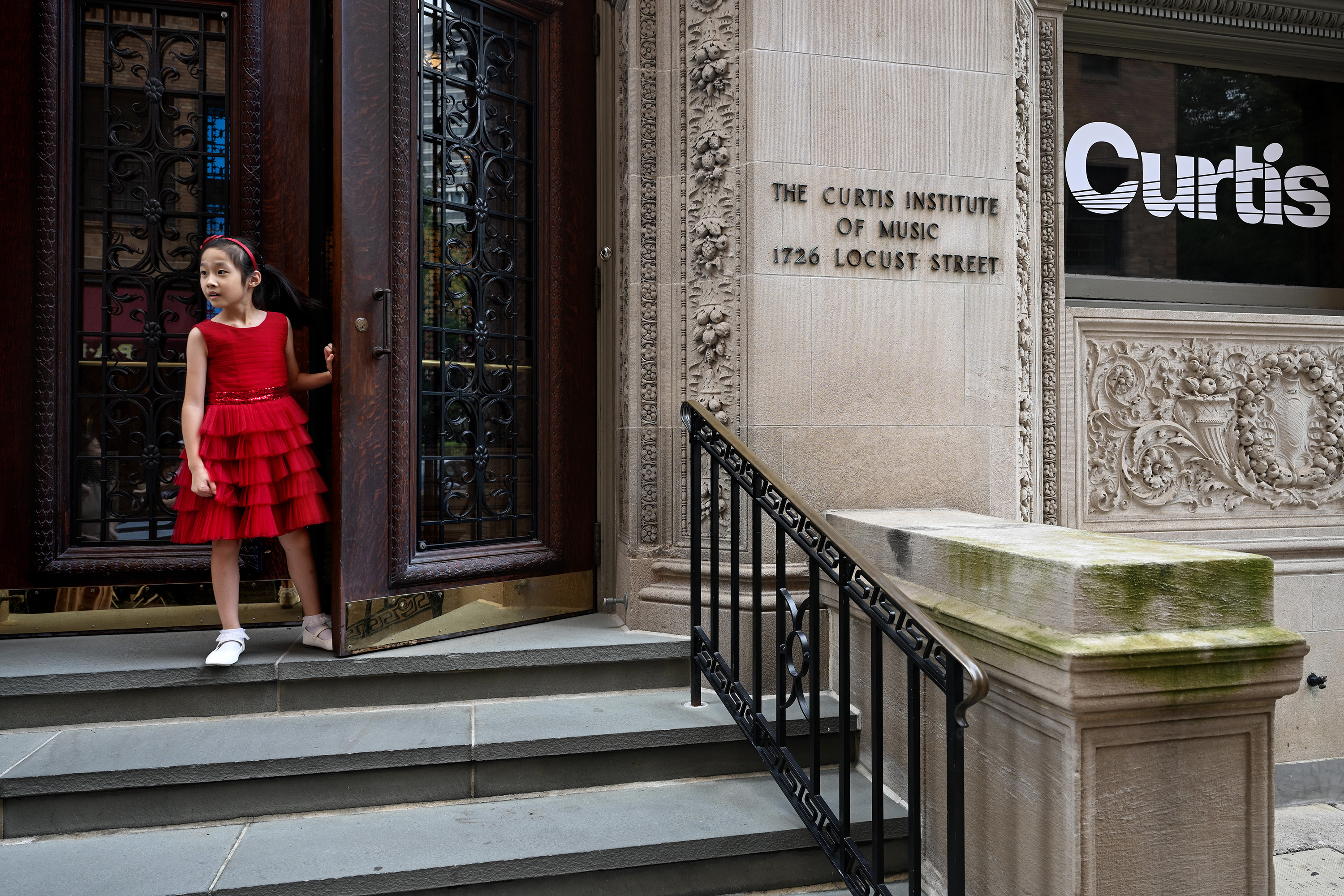
    Olivia Li walks toward the entrance to 1726 Locust St., the one-time mansion that is home to the Curtis Institute of Music.Tom Gralish / Staff Photographer

    Curtis requires students under the age of 18 to live with a parent or guardian, and so Zhang, who works remotely for a bank in risk management, has moved to Philadelphia and set up house locally. Olivia has a younger brother, who loves music but has not yet taken up an instrument.

    How does a 7-year-old integrate socially at a school where some students will be three times her age?

    “We haven’t had a 7-year-old [recently],” DiBerardino said, “but our undergraduate students are very accustomed to playing music with younger people and making a deliberate effort to make them feel welcome.”

    Olivia LiTom Gralish / Staff Photographer

    Some socializing will happen organically, DiBerardino said, but “we do have some structures in place to try to help with that process. We have a dedicated work study program for our undergraduate students who are trained by our student services team to be mentors or big brothers or big sisters. And we regularly check in on students like Olivia. So Olivia definitely would have that support.”

    Outside of practicing, Olivia likes drawing, writing, math, and swimming.

    “When she’s not practicing, she reads a lot,” Zhang said. “She holds a book when she is brushing her teeth.”

    “I like to read fiction,” Olivia said.

    With a Norman Rockwell portrait of Curtis founder Mary Louise Curtis Bok Zimbalist nearby, 7-year-old pianist Olivia Li sits with her stuffed panda.Tom Gralish / Staff Photographer

    Curtis does not have a separate precollege program the way some other music conservatoires do. Olivia won’t be enrolled in a bachelor’s program, but, rather, a diploma program.

    Several forks in the road lie ahead. She could end up continuing at Curtis post-high school, enrolling in the bachelor’s degree program. That means she could end up being at Curtis well over a decade, a prospect that has some Curtis professors joking that they will be retired by the time she graduates.

    Olivia could also decide at some point that she has gotten what she needed from Curtis and move on to another conservatory or music school.

    Asked whether she would like to be a professional pianist, Olivia said she doesn’t know yet. She is also interested in conducting, “because you get to, like, conduct a whole orchestra.”

    Olivia could also decide that music isn’t where she wants to end up. “We don’t know if at some point she’ll say, ‘I don’t want to do this with my life.’ Who is supposed to know that at 7?” Cann said.

    Zhang said she doesn’t have any thoughts on the matter.

    For now, the artist herself seems content to let the endgame play out. She has plenty to do in the meantime. Of what she wants from a Curtis education, she said:

    “I hope that I can play piano really good and learn a lot of pieces and share my music with the world.”

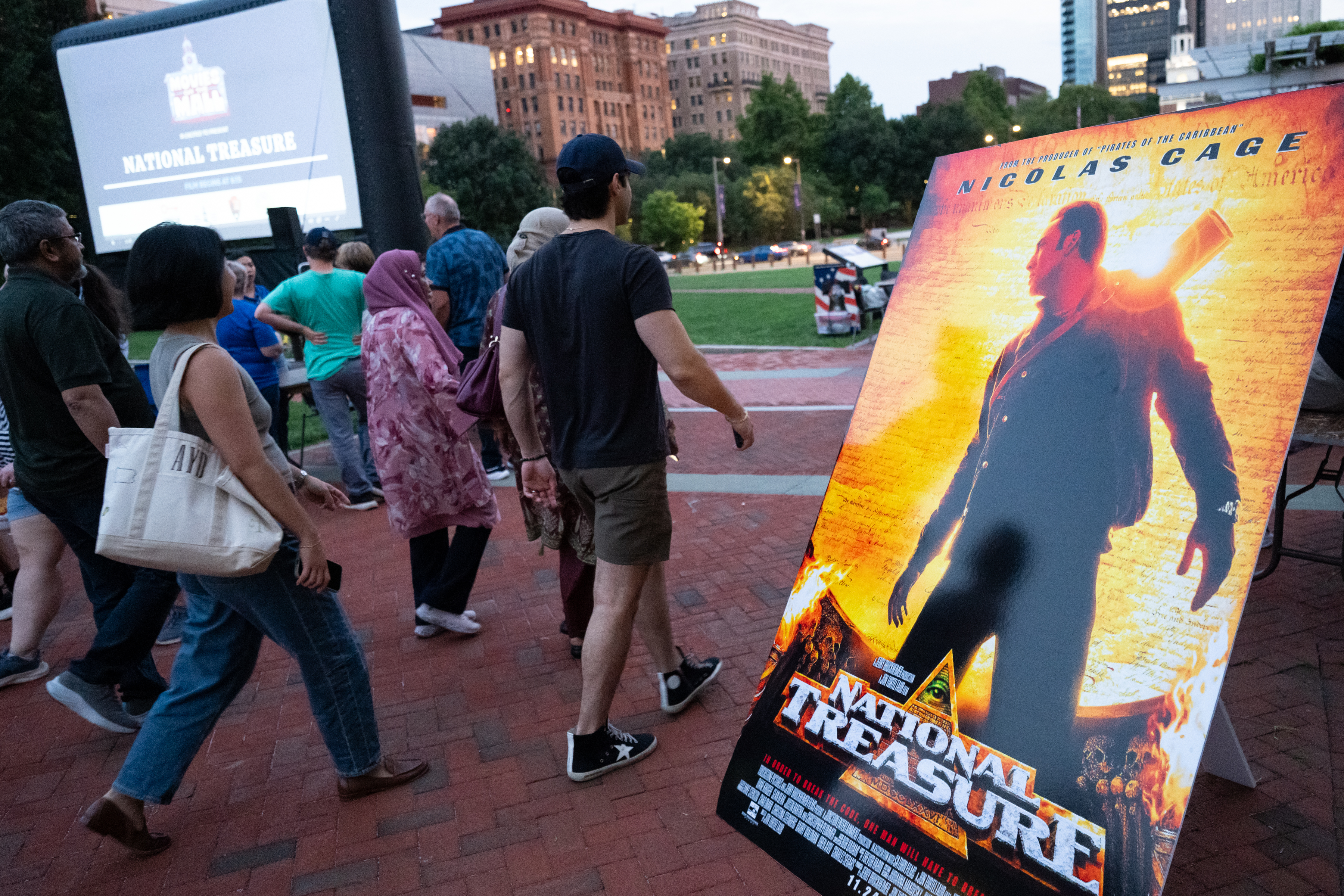
  • A strip club scene was cut from ‘National Treasure’ and other insights from Philly’s celebration of the film

    A strip club scene was cut from ‘National Treasure’ and other insights from Philly’s celebration of the film

    I’ve watched National Treasure more times than I can count and if I could count how many times I’ve seen it, I wouldn’t admit it to you.

    It’s a confluence of things that keep me coming back — the scenes filmed in Philly, Nic Cage taking an absurd plot line very seriously, and the fact that this movie always seems to be on TV. Plus, there’s a quick cameo of my favorite stand in Reading Terminal Market, which closed in 2016, that always makes me nostalgic (RIP Salumeria).

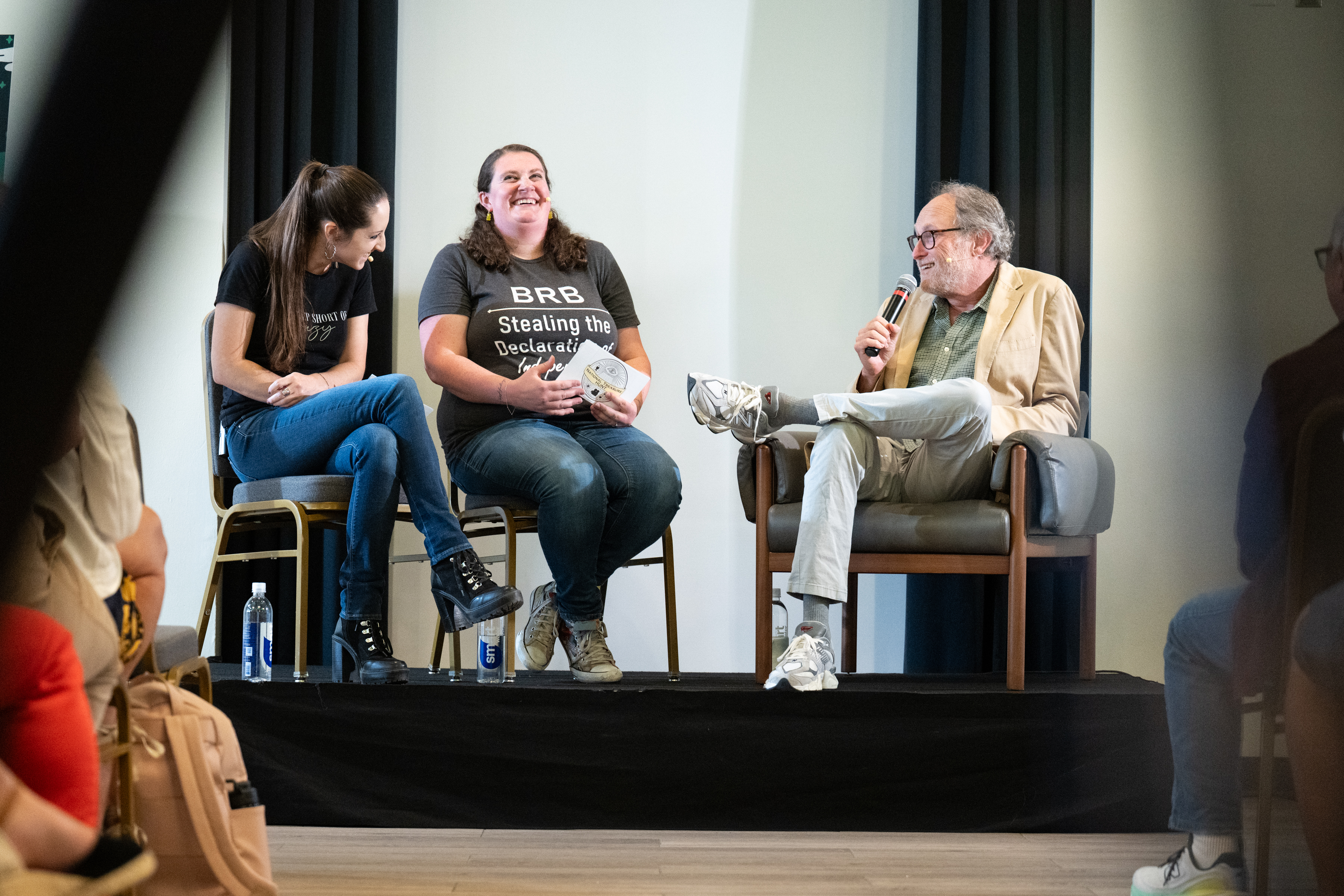
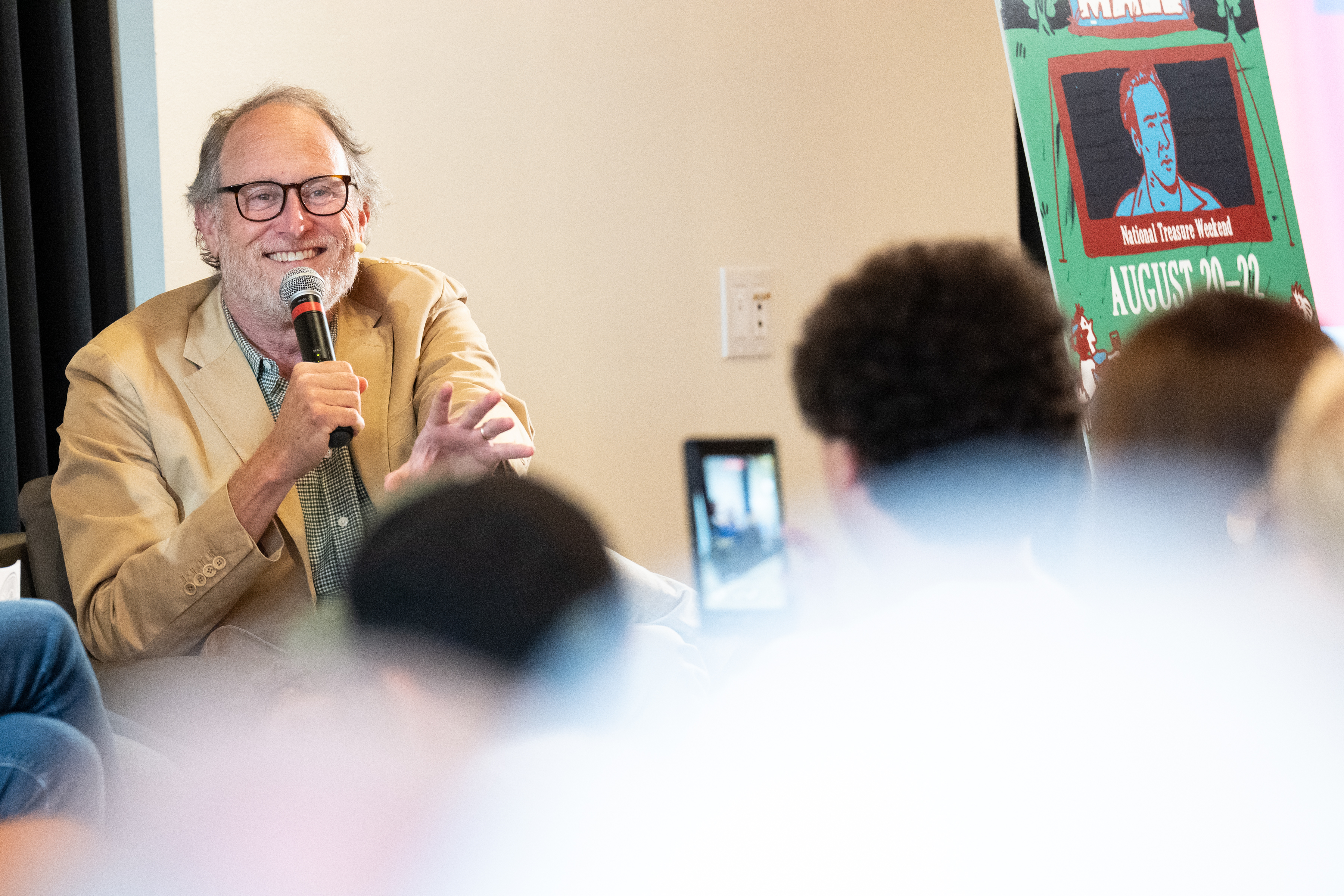
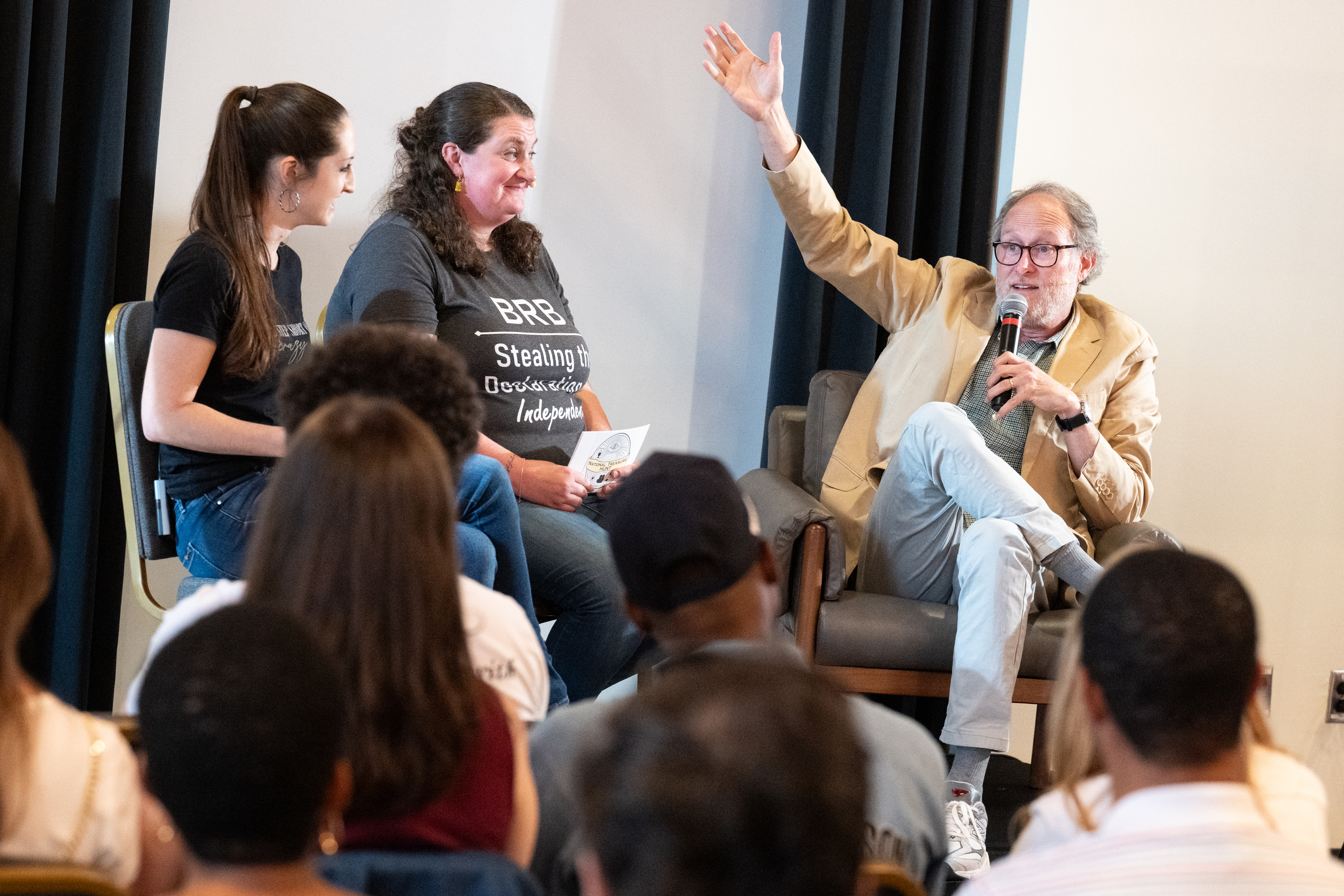
    On Friday, I got to geek out with other fans of the film and its sequel, National Treasure: Book of Secrets, during a ticketed talk with the director of the franchise, Jon Turteltaub, at the Independence Visitor Center. Turteltaub’s other films include Cool Runnings, While You Were Sleeping, and The Meg, which tracks.

    In the audience were a self-proclaimed “real-life treasure hunter,” several Freemasons, and Philly tour guide Stephen Pierce of Havertown. Pierce came dressed in his finest colonial garb and told me the movie, which came out when he was 9, was “definitely a huge inspiration for me growing up.”

    Stephen Pierce, a local tour guide with America’s Rising Son Tours, asks a question while wearing colonial-era clothing during a live recording of the “National Treasure Hunt” podcast at the Independence Visitor Center in Philadelphia on Friday, Aug. 21, 2026.Erin Blewett / For The Inquirer

    But there were no bigger fans in attendance than the cohosts and moderators for the evening, Aubrey Paris and Emily Black, creators of the National Treasure Hunt podcast, who helped curate Philly’s first National Treasure Weekend of events in conjunction with the Philadelphia Visitor Center.

    Aubrey Paris (left) and Emily Black (center), creators and hosts of the “National Treasure Hunt” podcast, speak with “National Treasure” director Jon Turteltaub during a live recording at the Independence Visitor Center in Philadelphia on Friday, Aug. 21, 2026.Erin Blewett / For The Inquirer

    Their palpable joy while interviewing Turteltaub for their podcast was only exceeded by the shock and excitement that washed over their faces when the director gave them the scoop that National Treasure 3 is “finally real.”

    That wasn’t the only gem Turteltaub dropped during their talk, though. Here are five other nuggets and behind-the-scenes stories the director shared about one of the best and most ridiculous films ever partially filmed in Philly.

    All up in Independence Hall

    Turteltaub said he was surprised that the National Park Service let the cast and crew climb up Independence Hall’s bell tower to film.

    “That was special. Being next to the Centennial Bell — amazing. More interesting was being behind the clock, coming up those stairs and seeing how that works was like ‘Wow, this is why I want to be in the movie business,’” he said. “It’s not art. You just get treated better than other people.”

    Visitors stand in a long line on Oct. 12, 2025, in front of Independence Hall waiting to view the nearby Liberty Bell.

    But the NPS didn’t allow filming at the doors or inside the building because it would have impeded visitors’ experience, Turteltaub said. And it was at this point in the conversation I learned there’s a replica of Independence Hall at Knott’s Berry Farm in Buena Park, Calif., which is where the interior scenes of the film were shot.

    So I either need to make a movie or go to California to live out my dream of climbing the bell tower. Duly noted.

    A meaty role

    During the chase scene that winds through Reading Terminal Market, Abigail (played by Diane Kruger) ducks into a butcher stand while clutching the Declaration of Independence. The woman running the counter initially says in the most unenthusiastic, Philly way possible: “If you’re not a steak, you don’t belong here.”

    But when Abigail tells the woman she’s running from her “ex-husband” (who’s actually a bad guy), the woman says: “Honey, stay as long as you like.”

    Pedestrians fill the sidewalk outside Reading Terminal Market in Center City on June 3, 2025.Alejandro A. Alvarez / Staff Photographer

    Paris said that the butcher has become “a favorite non-named character.” Some have even called her “the real national treasure.”

    “It’s a huge cult thing,” Paris said.

    Mark another win for Philly’s notoriously kind-but-not-nice attitude.

    Stripped down

    Turteltaub revealed that the first version of the original film was four hours long, so many scenes had to be left on the cutting room floor, including the original ending.

    “The original ending scene, they were back at the National Archives looking at the Declaration back where it belonged. We thought the world needed to know that,” Turteltaub said. “Everyone’s feeling good and then they get started talking about a different treasure and they go off like, ‘Oh no, I’m not doing that!’ It’s like the end of a Gilligan’s Island episode.”

    Jon Turteltaub, director of the 2004 film “National Treasure,” speaks during a live recording of the “National Treasure Hunt” podcast at the Independence Visitor Center in Philadelphia on Friday, Aug. 21, 2026.Erin Blewett / For The Inquirer

    Another scene that was stripped from the film took place when Abigail and Riley (played by Justin Bartha) are chased through Center City.

    “As Riley’s being chased, he cuts into a strip club and he runs through the strip club to get away,” Turteltaub said. “So my idea was he runs in and no one’s in there and it’s just some guy vacuuming and [Riley] says, ‘Well, that was disappointing,’ and keeps going.”

    I’m disappointed the cleanest scene ever filmed in a strip club didn’t make the cut.

    High school reunion

    Turteltaub and Cage attended Beverly Hills High School together and the director said the two were friends.

    “He’s kind of a great, nonconforming, march-to-his-own drum guy, which in high school is not easy,” Turteltaub said. “I was desperate to fit in and be liked by every single person ever. He didn’t care.”

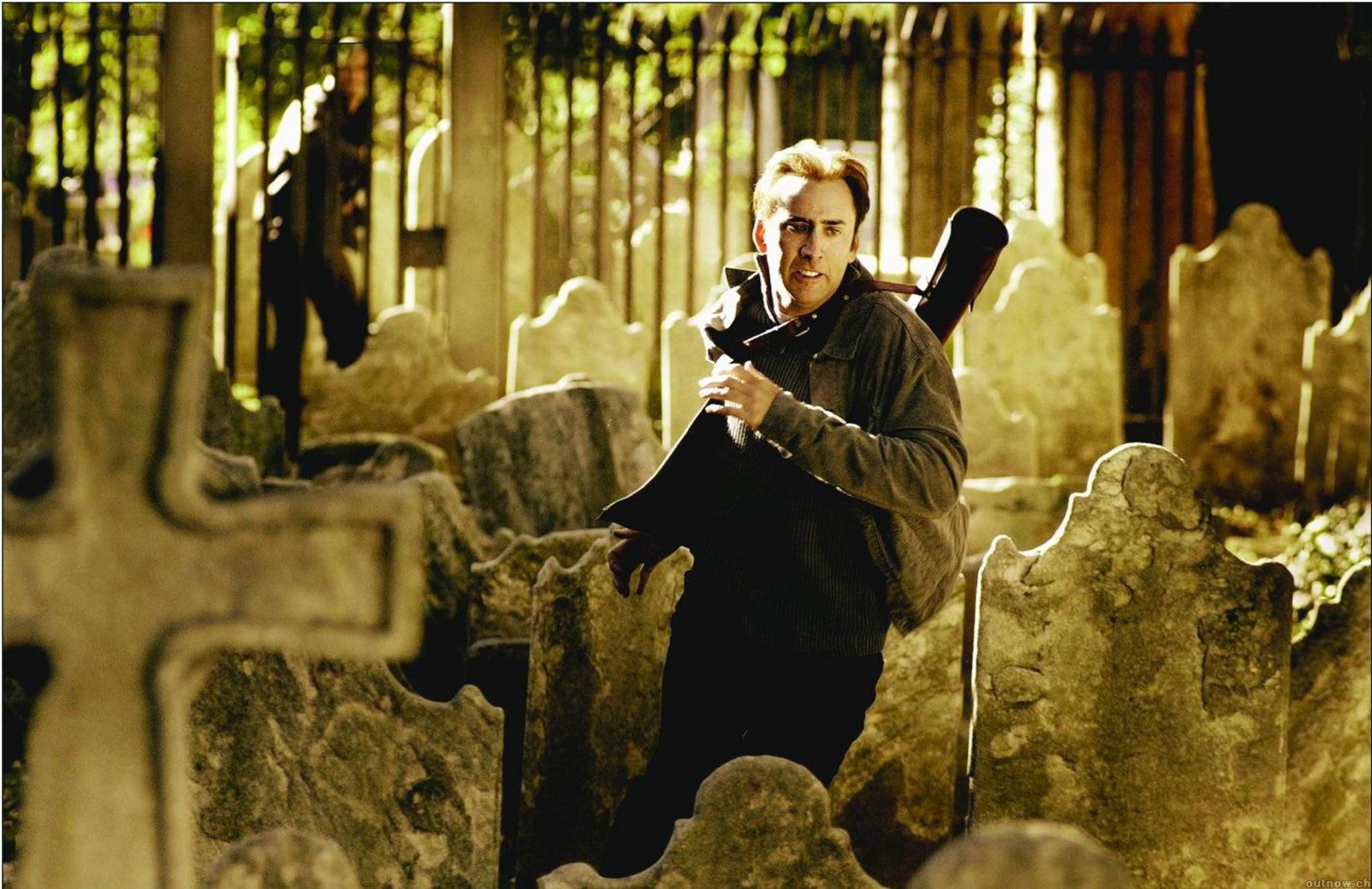
    Nicolas Cage runs through the Old Pine Street Presbyterian Church cemetery in a scene from “National Treasure.”Alamy Stock Photo

    The director said he sold the actor on taking the part of Benjamin Franklin Gates in National Treasure when he described the character to Cage with one word: audacity.

    “Nic is audacious and that was that connection. Nic never has a superficial connection to a character. He goes and finds the person,” Turteltaub said. “Sometimes that’s insane stuff and craziness and awesomeness and unpredictability and sometimes it just makes somebody very, very real.”

    Page turner

    During audience questions at the end of the talk, a child of no more than 6 asked Turteltaub: “What’s on page 47?” to thunderous applause from the crowd.

    The question referred to the end of the sequel film, when the President of the United States asks Gates what he thinks of what’s on page 47 of the book of secrets handed down from president to president. Gates calls what’s contained on the page “life-altering,” but its contents are never revealed to the audience.

    It may not be a secret for much longer, though.

    “The worst thing, to make it interesting, was we added the line at the last second — ‘life-changing, life-altering’ so now we have to come up with something that’s ‘life-altering,’” Turteltaub said. “If I said ‘I don’t know,’ everyone will hate me. If I said ‘I do know,’ you’ll hate me for not telling you, but I don’t think we can make the third movie without at least helping people out.”

    Aubrey Paris (left) and Emily Black (center), creators and hosts of the “National Treasure Hunt” podcast, speak with “National Treasure” director Jon Turteltaub during a live recording at the Independence Visitor Center in Philadelphia on Friday, Aug. 21, 2026. The event was part of Philadelphia’s first National Treasure Weekend.Erin Blewett / For The Inquirer
  • Don’t panic over Eagles rookie tight end Eli Stowers. Here’s where he can improve and who he might become

    Don’t panic over Eagles rookie tight end Eli Stowers. Here’s where he can improve and who he might become

    Optimism is generally high this time of year, especially for an Eagles offense that struggled throughout the 2025 season with consistency and continuity. New offensive coordinator Sean Mannion’s offense has shown flashes of encouraging play along with concerning stretches during training camp, but most fans are excited to watch the offense in full when the season kicks off in a few weeks.

    For second-round rookie tight end Eli Stowers, the confidence in his potential role this season seems to be far less positive. He hasn’t been a standout player much this preseason, which has caused some angst among fans.

    As history has shown with mid-round tight end prospects, the range of outcomes is wide, and most have the same thing in common: They required patience and time to adjust to the NFL game. Very rarely over the last five drafts has a tight end taken after the first round made an immediate impact. Those who have, like the Lions’ Sam LaPorta, Cardinals’ Trey McBride, and Packers’ Tucker Kraft, quickly ascended to become major receiving weapons with in-line blocking ability.

    To provide some perspective on what Stowers can ultimately become, here are three buckets the Eagles tight end could fall under at a position that typically requires patience to see the player’s finished product.

    Improved in a key area

    Dawson Knox, Buffalo Bills

    Though Knox and Stowers are different styles of players — Knox was a more rugged run blocker and not quite as explosive of an athlete — they share a similar background. Both were high school quarterbacks who had to learn a new position in college.

    Knox walked on at Ole Miss after missing most of his senior high school season, and didn’t get true tight end reps until his junior season. Stowers switched to tight end just three years ago and is still relatively new to the position.

    What helped Knox see the field early on in Buffalo was the blocking ability he displayed in college, but his key area of improvement has been his reliability in a passing game where he’s averaged 50 targets across his seven-year career.

    Knox’s two highest receiving success rates have come in the last two years, even though his numbers aren’t eye-popping. In Knox, Stowers can see a player that has adapted to the NFL game, and by the Buffalo tight end’s third year — his best statistical season — he became a much more prevalent receiving threat.

    Sam LaPorta, Detroit Lions

    We added LaPorta here because since his rookie season, when he exploded for 889 yards on 86 catches and 10 touchdowns, he has continued to add more to his game — including becoming a more reliable in-line blocker, which was a weakness in college. It even showed up early on in his NFL career, especially with one-on-one blocks against defensive ends.

    LaPorta was limited to nine games last season because of injury — he missed the last eight games with a herniated disk in his back — but showed some progression as a blocker for the Lions.

    Though Brock Wright handled more of the blocking duties, LaPorta, when healthy, has been a dynamic field stretcher and creator after the catch. What Stowers can learn from LaPorta — who also entered the league at sub-250 pounds — is that blocking can be improved, even in the NFL. Stowers likely will not reach the same level of involvement in the Eagles offense as LaPorta had in Detroit as a rookie, though.

    Struggled to block, contributed as part of a rotation

    Mike Gesicki, Cincinnati Bengals

    Among current players, there may not be a closer comparable to Stowers than Gesicki. Both were dynamic receiving tight ends who did their damage in college when split out wide, in the slot, or as off-the-ball tight ends.

    They share another commonality too: struggling to block in one-on-one scenarios against defensive linemen and generating displacement at the line of scrimmage. Gesicki’s best years of production — from 2019-21 — are likely behind him. Since leaving the Miami Dolphins in 2022, Gesicki has averaged about 45% of snaps across his time with the New England Patriots and Cincinnati Bengals.

    The former 2018 second-rounder has been relatively healthy throughout his career, but never improved even marginally as a blocker, which limits how much he can be on the field in the modern NFL.

    Jonnu Smith

    The Philadelphia native, currently a free agent, was best known for his ability to create explosive plays with the ball in his hands, though he has surpassed 600 receiving yards in a season just once. His usage in Arthur Smith’s offenses, first in Tennessee and then in Atlanta, made him a threat to turn a routine play into a big gain after the catch.

    But across his five NFL stops, the one inconsistency of his game has been his blocking. He showed much more promise than Gesicki as a blocker, but Smith has never consistently been able to block as an in-line player, and it’s a big reason he likely has not drawn a ton of interest entering Year 10.

    His last stop, in Pittsburgh last season, produced career-worst numbers in a loaded tight end room: 38 catches, 222 yards for a 5.8 yards per catch average.

    Smith, a former third-round pick, never assumed the top tight end role at any of his stops but has played nearly a decade in the league. He has carved out a niche role as an undersized tight end that is a run-after-catch threat , but he isn’t a fit for every offense as he ages.

    Receiving skills kept them on the field regardless of blocking struggles

    Jared Cook

    When you look up Stowers on Mockdraftable, which draws comparisons to previous players at a position, Cook’s name is his third-highest match at 73.9%, and for good reason. Cook was a nonfactor as a blocker and just not valuable when asked to handle defensive ends and linebackers in those blocking situations.

    When you look back at the receiving numbers, though, he was a matchup problem for linebackers, safeties, and even some cornerbacks. But his success took a while as he struggled early with the Tennessee Titans, but by his third year, he was consistently contributing as a receiver. In the last 10 years of his 13-season NFL career, Cook averaged just over 600 receiving yards and four touchdowns, including a career-best 896 receiving yards in Year 10 with Oakland.

    If Stowers never truly develops as a reliable blocker, a career similar to Cook’s, who was a second-round pick in 2009, would be an ideal outcome.

    Isaiah Likely, New York Giants

    Like Stowers, former fourth-rounder Likely walked into a veteran-laden tight end room as a rookie, and though there was excitement around the Baltimore Ravens tight end early on, his development took time, as did the production. Likely didn’t truly get going until the back half of his rookie season, with 26 of his 36 total catches and 279 of his 373 total receiving yards coming from Week 8 through the rest of the season.

    Blocking in space was a strength for Likely at Coastal Carolina, but translating it to the NFL game as a full-time in-line player has never materialized. It didn’t in Baltimore, with Mark Andrews and later Charlie Kolar taking more of those responsibilities.

    Likely, who signed with the New York Giants in the offseason (three years, $40 million), is best known for his receiving ability, specifically stretching the field vertically. Despite a down season last year, Likely’s greatest abilities are finding soft spots in zone coverage and winning his one-on-one matchups downfield.

    If Stowers can be serviceable as a blocker, similar to how Likely was in Baltimore, that can help the Eagles rookie earn more snaps early in his career.

    Patience, patience, patience

    It’s too early to write off Stowers, even if he isn’t productive in Year 1 in Philly. As we wrote on the night the Vanderbilt tight end was drafted, his true impact could come three or four years down the line. And leaning on previous examples, those breakouts for non-first-round tight ends often happened in Year 3 or 4.

    With Dallas Goedert and Johnny Mundt likely filling the top two roles for the Eagles tight end room, there should be no rush to force Stowers onto the field. The season is long, and should he make an impact in 2026, it’ll likely come deep into the season.

  • Temple’s linebackers built a tight-knit bond off the field. They’re hoping it helps them on the field too.

    Temple’s linebackers built a tight-knit bond off the field. They’re hoping it helps them on the field too.

    Coming from the roof of Temple linebacker Jordan Montgomery’s North Philadelphia home, sounds of music and general jeering fill the streets. The Owls linebacker room has gotten together for another function.

    It’s become somewhat of a tradition. Every few weeks, the Owls linebackers, headed by captain Eric Stuart, come together to eat, laugh and strengthen the bonds that have extended beyond the football field. And it’s a tradition that reflects the broader culture shift in the program, brought on by coach K.C. Keeler, and one the Owls hope sparks a resurgence on the field.

    “I think the first time we did it was last year for the Super Bowl, at my old crib,” said Stuart, a fifth-year senior. “We just cooked some food and had everybody come over and come eat and just hang out together. That’s how it all started.”

    Said senior Curly Ordonez: “For us, it is just like showing up for your brother, right? You don’t have to come for the whole time. I was one of those, especially last year. I was laid back, pretty quiet, and kept to myself. And it was about bringing people out of their shells. We have a lot of guys that are far away from home, and we can get them some home-cooked meals, which is something we like to do.”

    Continuity is key for the Owls linebackers with 10 returners from last season. Stuart, one of Temple’s most experienced defensive players, anchors a group that also returns 2025’s leading tackler, Ordonez, Tyree Alualu, Jayvant Brown, Wesley Brown, Montgomery, and others. They are joined by newcomers such as Jaylon Joseph and JaMair Diaz.

    “I think it’s just really important for us to be able to coach each other up,” Stuart said. “On the football field, stuff happens; emotions are high. … Every message might not come off in a regular tone, especially to the newer guys. But I feel like especially the guys in our room, we all understand that nobody is coming at you as a person.

    “We’re trying to be better out here, so knowing each other just helps with communication. You don’t get that bickering and fighting, and that is probably the biggest thing we’ve gotten from being so close.”

    Junior Tyree Alualu is one of Temple’s returning linebackers.Isaiah Vazquez / For The Inquirer

    And the cohesion among the Owls linebackers has been noticed from across the field.

    “I’ve never seen a room so close like the linebackers,” said quarterback Ajani Sheppard. “They are always hanging out with each other, always talking to each other. I think it’s such a great thing.”

    The relationships among the linebackers started just over a year ago with the hiring of Keeler and a new staff. Keeler inherited a program coming off four consecutive 3-9 seasons under Stan Drayton and Rod Carey but quickly made a culture shift a priority. Keeler said he met with every player on the roster individually following his hiring. Many players were encouraged to stay, and the coaching staff emphasized that continuity.

    “I would say, just having new coaches,” Ordonez said of the difference. “We had a lot of guys who were new to the team, and last year was one of those years that took us where it went, and I feel like this year, we understood the type of team we had and the guys we have coming and who we are. We obviously got better, and we’ve seen that throughout the spring. So understanding that by getting together we could really be something as a defense. But to be one of the best groups you got to get to know each other, got to hang out, you’ve got to do stuff outside of the city, gain that trust and gain that love.”

    Stuart said, unlike previous years, he wants to be in the facility every day.

    “I would say it’s more of a whole team energy that kick-started it for [the linebackers],” said Stuart. “Me personally, in 2024, [I] just honestly hated being in the facility every day. I didn’t want to be here. I didn’t want to hang out after or spend time with anybody. Then Coach Keeler and the new staff got here, and the energy changed. Like, I feel like everyone wants to be here, everyone comes in, and nobody is getting their stuff just to run out of the locker room and go home. We sit, and we hang out in the locker room. There’s no one in a rush to get out of here. I would say I thought that’s probably the biggest change.”

    The real test of their chemistry awaits on Sept. 5 with their season opener against Rhode Island.

  • Andy Dalton? Tanner McKee? Please. The Eagles lack a real backup quarterback. Unusual. Unsettling.

    Andy Dalton? Tanner McKee? Please. The Eagles lack a real backup quarterback. Unusual. Unsettling.

    The Eagles used to value the backup quarterback position, perhaps more than any other team in the NFL. Looking at their rosters in 2025 and 2026, it’s hard to believe they still do.

    This might not matter at all, except Eagles starter Jalen Hurts gets hurt a lot, and quarterbacks are the most important players in all of team sports.

    Still, it seems like a lot of energy to spend on a guy who won’t play much. Backup quarterback angst: The sort of nattering matter that makes the NFL preseason interminable; the sort of infuriating football geek-talk that fantasy nerds Snapchat about.

    You know. Guys like Lurie and Roseman.

    In 2017, the Eagles committed $11 million to their backup quarterback spot. So important was the position to owner Jeffrey Lurie that he told GM Howie Roseman to sign Nick Foles, whom Andy Reid had just cut from the Chiefs. It meant eating $7 million of the contract of Chase Daniel, whom the Eagles promptly released.

    Despite missing the playoffs in 2016 with rookie Carson Wentz at quarterback, Lurie saw 2017 as a real chance to win the franchise’s first Super Bowl, and he considered Foles, who’d had a strong run as an Eagle, to be a better option than Daniel, who’d never had a strong run anywhere.

    The rest, as they say, is history: Wentz got injured, Foles replaced him, played well down the stretch, and won the MVP award inSuper Bowl LII where he outplayed Patriots legend Tom Brady and outfoxed coach Bill Belichick.

    Nick Foles became an unassailable Eagles legend, but that doesn’t mean all backup quarterbacks are created equal. Michael Bryant / Staff Photographer

    “Our priority, as you’ve seen, is to make sure we have the very best possible other starting quarterback,” Lurie said during Super Bowl week.

    That’s generally been true, and it’s generally made sense for the Birds, since Lurie prefers mobile quarterbacks, who, of course, are more likely to get hurt.

    Lurie signed Michael Vick out of prison in 2009, and Vick supplanted Donovan McNabb the next season and went to the Pro Bowl in his second of four years as an Eagle. Lurie drafted Hurts in the second round in 2020 with plans that Hurts would be the long-term backup to Wentz, but that’s before Ginger Jesus lost his job, and maybe his mind. Lurie sanctioned the recent, sensible acquisitions of Gardner Minshew, Marcus Mariota, and Kenny Pickett.

    But in 2019, Lurie also approved the signing of Josh McCown, a 40-year-old with a 79.7 passer rating with eight other teams. McCown replaced Wentz early in the Eagles’ home wild-card playoff game, played atrociously (predictably), and cost the Birds their postseason.

    Last season, Lurie allowed the Birds to enter the season with third-year sixth-round pick Tanner McKee as the backup of a team defending its second Super Bowl title. It didn’t matter, since Hurts stayed healthy. But McKee got to start game 17 against the Commanders, and he was poor: 21-for-40, 241 yards, one touchdown, one interception, with a forgettable fourth quarter that cost the Eagles their chance to win the game and capture a better seed. It looked OK in the moment, but upon further review, the Eagles (and I) decided that McKee is not the answer.

    The Eagles (not I) determined that Andy Dalton is the answer.

    They were wrong.

    The Eagles’ bet on Andy Dalton does not appear to be going according to plan. Yong Kim / Staff Photographer

    The Birds in March traded a seventh-round pick to the Panthers for Dalton.

    No player at Eagles preseason work or in training camp has been a bigger disappointment than Dalton.

    That isn’t really fair. There should have been minimal expectations of Dalton.

    He’ll be 39 in October. He’s 1-6 in his last seven starts over the past three years, during which time his passer rating is 84.5. Aberration? No. In the five seasons before that, his rating was 85.5 in 57 games. He’s been the backup in Carolina the past three seasons, essentially a big brother for Bryce Young, the underperforming No. 1 overall pick from 2023, and an assistant coach of sorts.

    That’s the role he was expected to serve in Philadelphia, where new offensive coordinator Sean Mannion has installed a new scheme. Dalton can help with the adjustment for Hurts, and you’d think Dalton would have a significant advantage over McKee in executing the offense.

    Tanner McKee again appears to be the best backup option for the Eagles. Yong Kim / Staff Photographer

    But no. Dalton has looked appreciably worse than McKee — so much worse that McKee’s unremarkable performance looks good by comparison.

    Entering the third and final preseason game Friday, the competition, such as it is, for the backup job clearly tilts in McKee’s favor. Which delivers this uncomfortable truth:

    The Eagles, who have made the playoffs five years in a row, don’t really have a viable backup quarterback. That’s the fault of the front office.

    Roseman.

    Lurie.

    What should they have done?

    Maybe they should have signed Mitch Trubisky, who got two years and $10.5 million to back up Cam Ward in Tennessee. Maybe another dance with Minshew, who got $8.25 million to back up Jacoby Brissett in Arizona. Both would have cost a lot more than Dalton’s $1.5 million, but that’s also just about what Tua Tagovailoa got from the Falcons to be the emergency plan if Michael Penix Jr. wasn’t back in time from his knee injury.

    All three of those QBs are in spots where they will have a likelier chance to resurrect their careers. Maybe that’s why the Eagles weren’t able to land one of them, and why they had to trade a pick for Dalton.
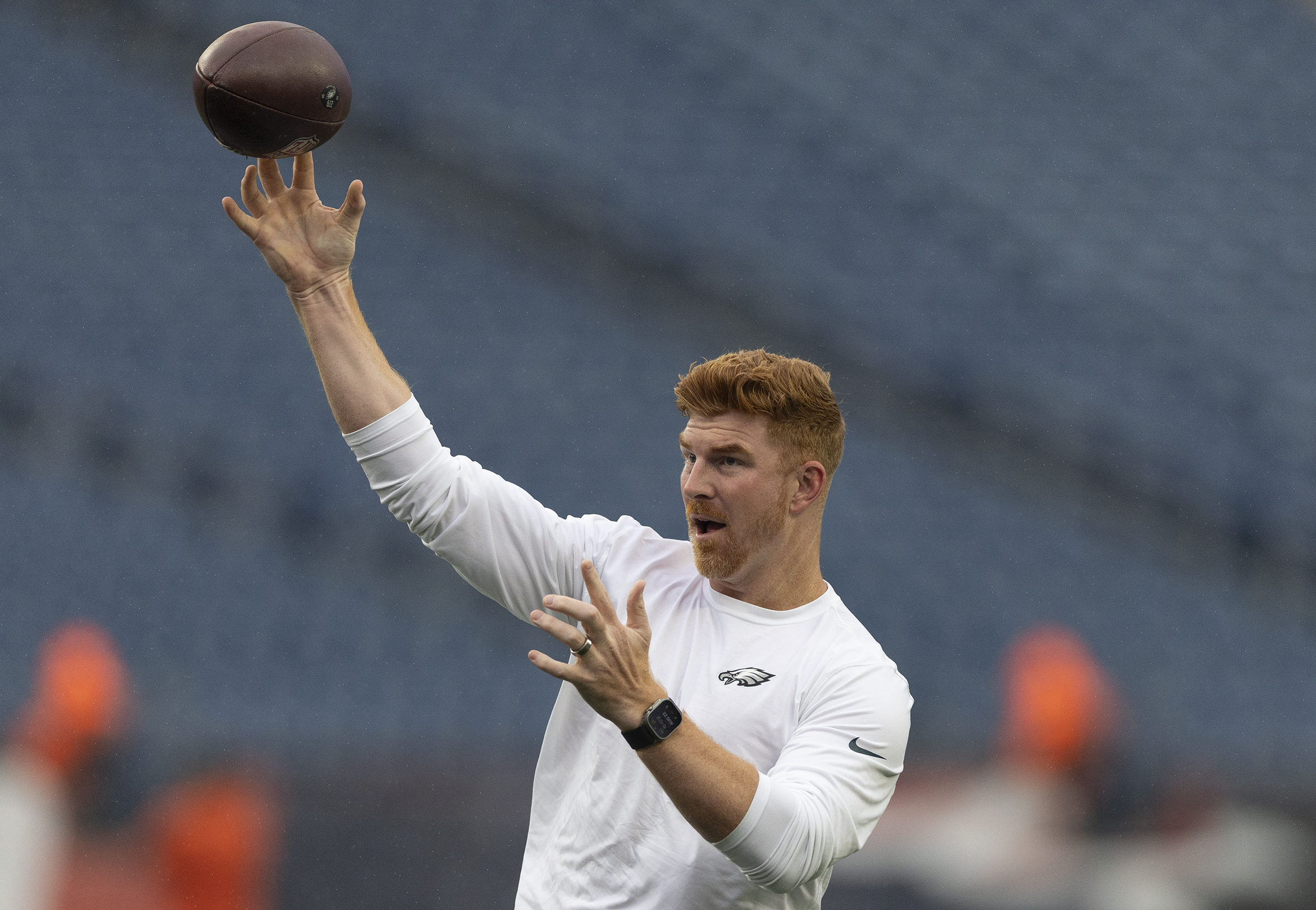

    To be fair to Roseman and Lurie, the Birds also drafted a quarterback in April: Cole Payton, in the fifth round, out of North Dakota State, who currently is not close to being an option.

    To be fair to Payton, he might be as good an option as the other two.