Tag: topic-link-auto

  • Third-generation owner ushers in a new era for Philly’s Ba Le Bakery

    Third-generation owner ushers in a new era for Philly’s Ba Le Bakery

    For decades, Washington Avenue’s Ba Le Bakery has been practically synonymous with bánh mì in Philadelphia, and not only for the beautifully composed Vietnamese sandwiches sold on-site. Ba Le has set the standard for bánh mìs elsewhere. The bakery supplies rolls, crisp with fluffy interiors, to dozens of wholesale customers as far away as upstate New York, and is also our area’s primary producer of Vietnamese bologna, which comes in many variations, from fried pork with pepper to steamed pork wrapped in banana leaves.

    But this Philadelphia institution has siblings all over the United States, all operating independently of each other. There are Ba Les in Hawai’i, Illinois, Virginia, Maryland, and California. Each bakes its own bread and has the same core menu of bánh mìs, summer rolls, house-made pates, and girthy tubes of Vietnamese bologna and fried pork rolls. They all share the same origin story and founder, Le Vo, who went by the nickname “Ba Le.”
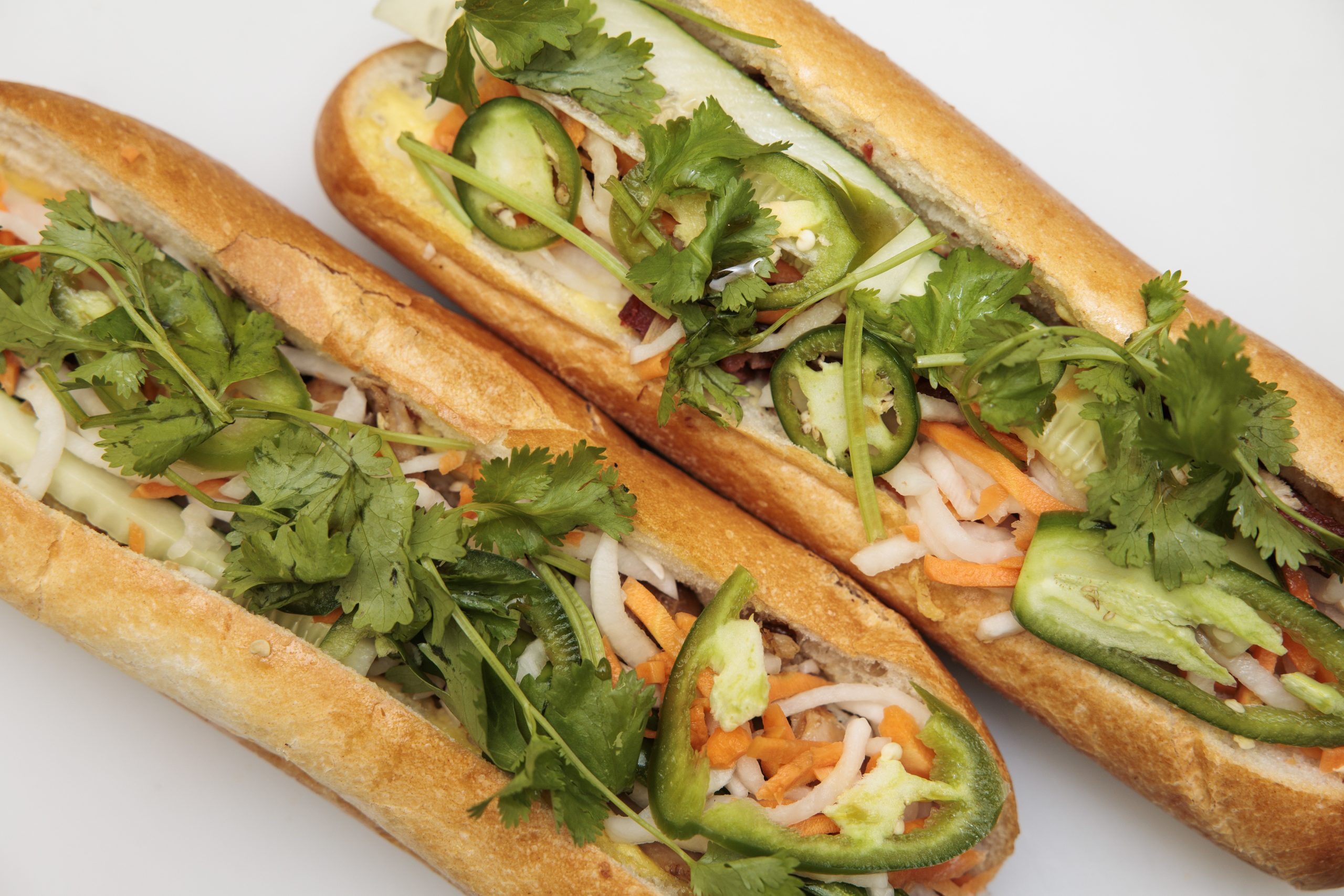
    Lemongrass chicken and bbq pork bánh mìs at Ba Le Bakery on Thursday, July 16, 2026, in Philadelphia.Monica Herndon / Staff Photographer

    Growing up in southern Vietnam, Le was the third of several siblings (“ba” means “three”). He launched the business that would become Ba Le as a Saigon sandwich cart in the 1950s, selling his bánh mìs prototypes. He grew the business to several carts before departing the country with his family in 1972 for San Jose, California, where he started the first stateside Ba Le in 1982. Le helped three of his daughters open Ba Le locations in different American cities over the next couple decades.
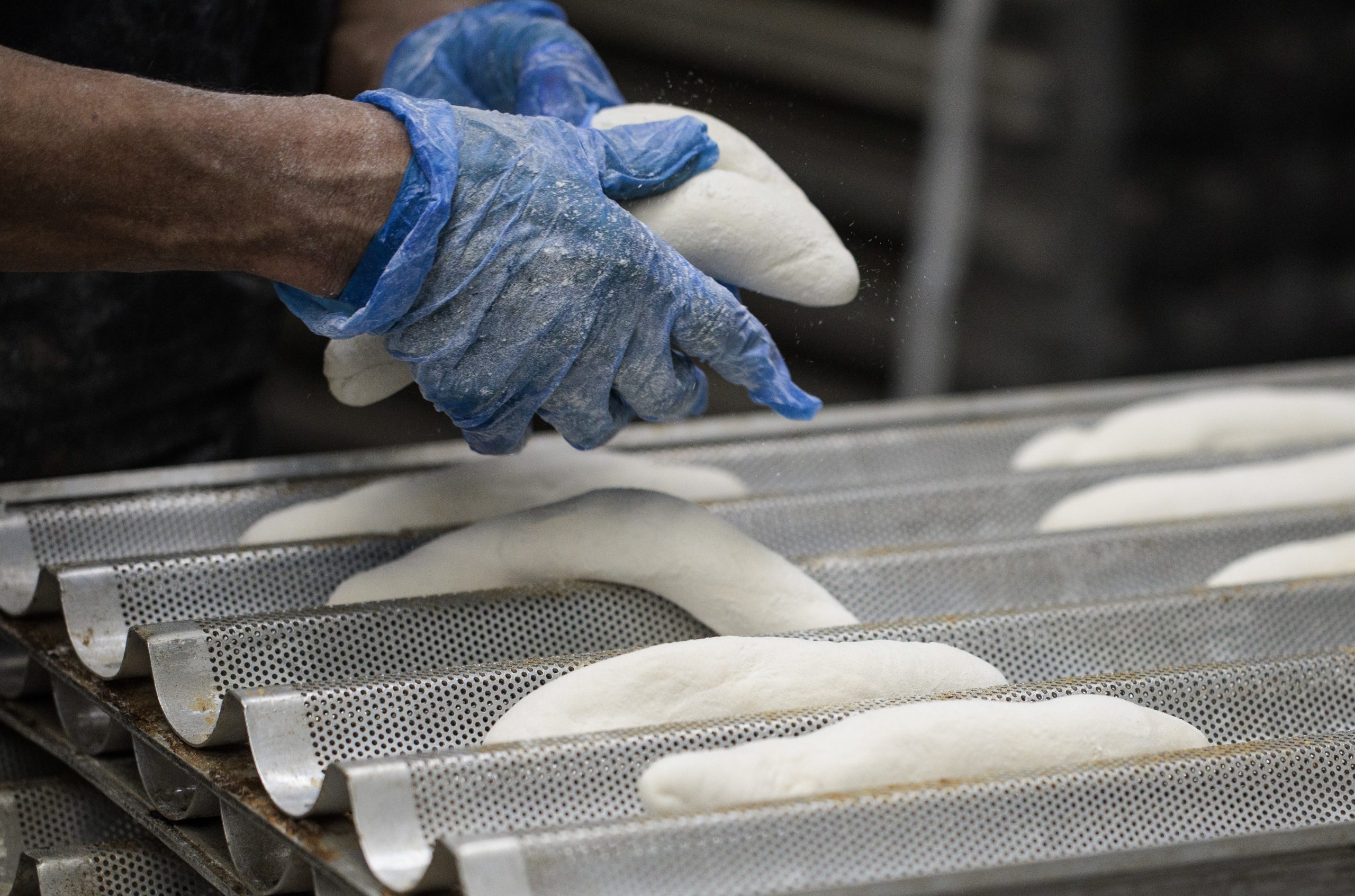
    Workers shape rolls at Ba Le Bakery on Thursday, July 16, 2026, in Philadelphia.Monica Herndon / Staff Photographer

    There are just a few regional differences among Ba Le menus across the country, a reflection of their geographic locations. The shrimp chips at the Ba Le in Falls Church, Virginia, are BBQ-flavored. In Alhambra, California, Ba Le Sandwich Shop sells smoothies and yogurt along with head cheese and vermicelli. The 20 or so Ba Le outposts in Hawai’i serve Spam, locally caught fish like opakapaka, and saimin, the islands’ beloved noodle soup.

    In Philadelphia, where Le and daughter Thi Nguyen opened Ba Le in 1998, grandson Victor Nguyen, 40, has just unleashed a veritable library of Vietnamese pantry items not found in any other branch of the family business. It’s not the only change the third-generation owner has made.
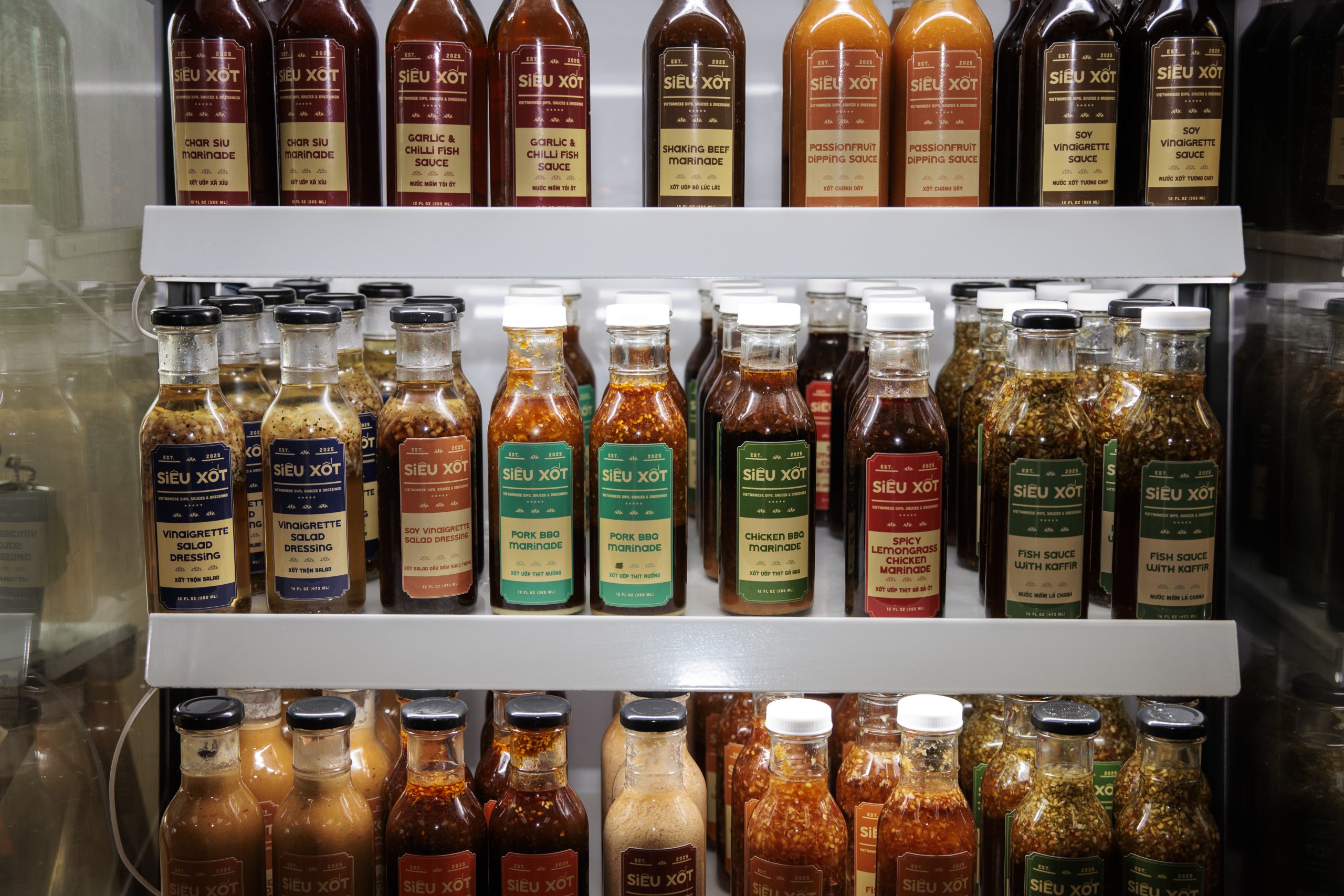
    The new line of Sieu Xot sauces at Ba Le Bakery on Thursday, July 16, 2026, in Philadelphia.Monica Herndon / Staff Photographer

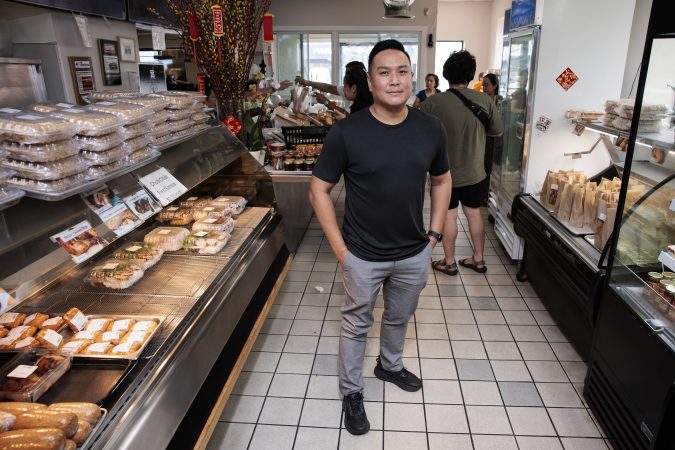
    Victor Nguyen officially took the reins of Washington Avenue’s Ba Le in 2024. Perhaps you’ve seen the storefront’s brand-new caramel-colored signage — sporting an Eiffel Tower logo, as all Ba Le bakeries do — which can now be spotted from many blocks away. Or maybe you’ve noticed that, after years of resisting an online presence beyond a Facebook profile, Ba Le Bakery has a website. You might even be surprised to find a slew of new, hip matcha-based drinks joining the traditional Vietnamese coffees on the beverage menu, as well as gourmet snacks and “shoppy shop” products you’d expect at Biederman’s or Rittenhouse’s Cork.
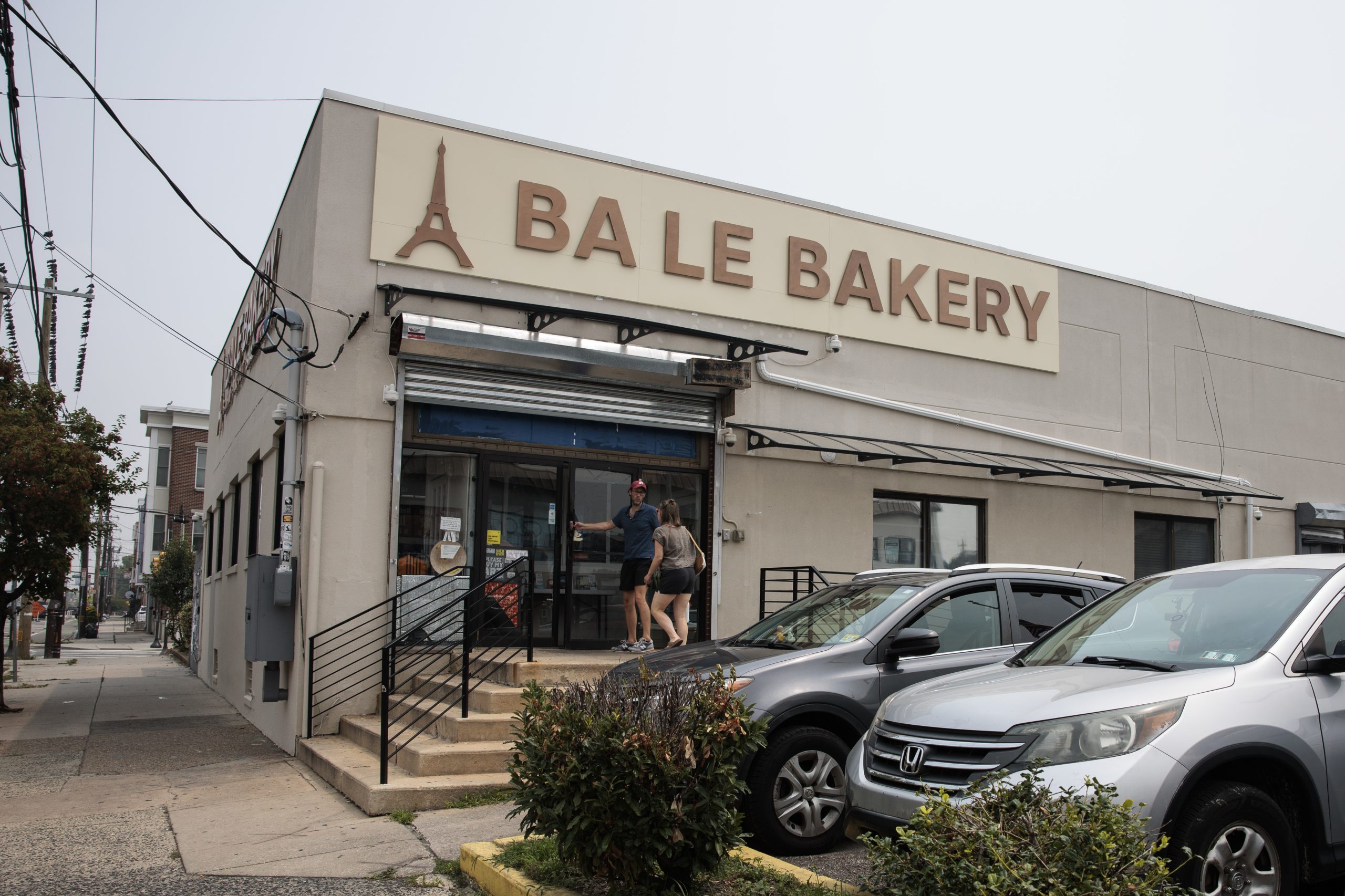
    The exterior of Ba Le Bakery on Thursday, July 16, 2026, in Philadelphia.Monica Herndon / Staff Photographer

    Today’s Ba Le Bakery stocks truffle- and brie-flavored potato chips imported from France and upmarket tinned fish alongside takeout containers of house-made bánh cuốn (rice rolls stuffed with pork). The selection appeals to a post-pandemic pantry-obsessed demographic, but it still has a firm hold on its old customer base. Before the lunch rush, you’ll still see Cantonese-speaking ladies clutching designer handbags stocking up on Vietnamese lunch platters that feature Chinese-style barbecue pork.
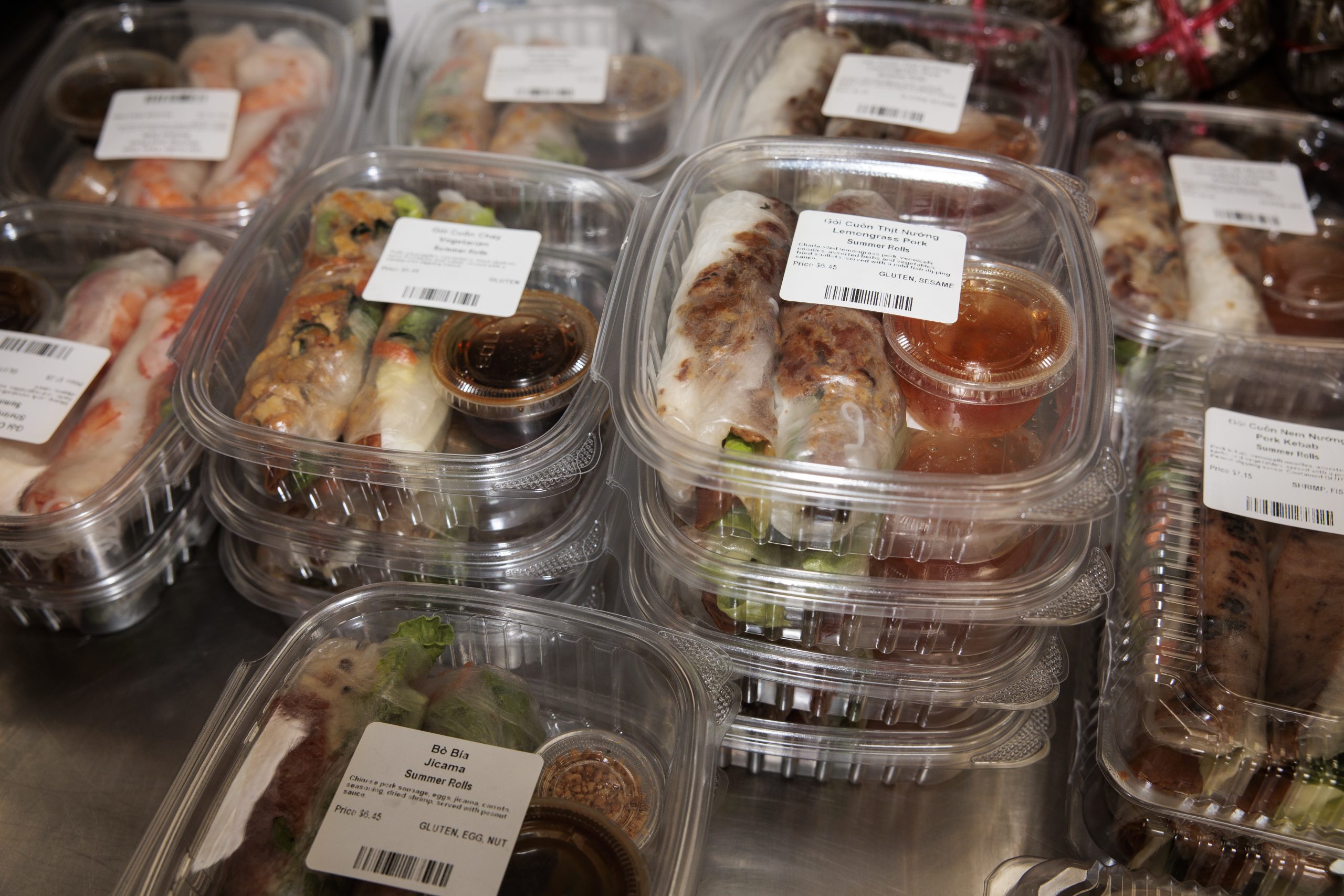

    Summer rolls on display at Ba Le Bakery on Thursday, July 16, 2026, in Philadelphia.Monica Herndon / Staff Photographer
    From left: Pork ribs, rice crepes with pork bologna, and a vegetarian stir fry at Ba Le Bakery on Thursday, July 16, 2026, in Philadelphia.Monica Herndon / Staff Photographer

    Nguyen trained for more than half his life to take over Ba Le. From the age of 17, “I have filled every single position in the bakery, from serving customers, all areas of the kitchen, facility maintenance, and office management,” he said. His first job was making and wrapping many different types of bolognas (fried, steamed, mixed with sea snails on the weekend, and more), which he did for five years.

    He has big plans to continue to pull Ba Le into the future, renovating the 6,000-square-foot store in stages over the next four years; moving some operations off-site, to another family-owned space on Columbus Boulevard; and expanding the bakery’s online business, which is currently run out of Ba Le’s former restaurant in the back of the building.
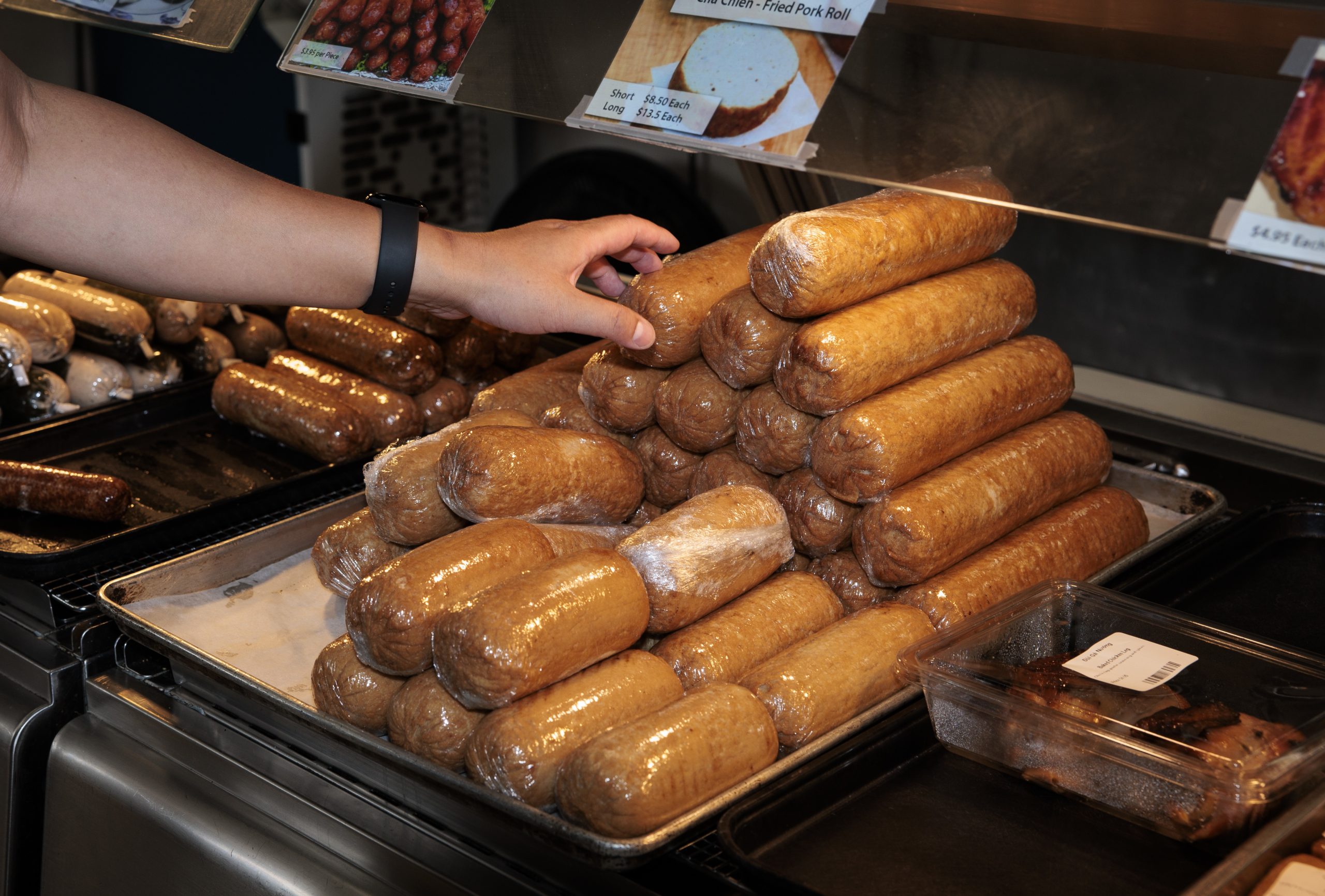
    Pork bologna on display at Ba Le Bakery on Thursday, July 16, 2026, in Philadelphia.Monica Herndon / Staff Photographer

    In a great departure from the family tradition of naming everything after its patriarch, Nguyen named his new line of sauces Sieu Xot (pronounced “see-yoo sot”), which means “super sauce.” The 20-sauce line includes sweet and savory dressings for salads, marinades for chicken, spicy garlic and chili-spiked fish sauces, zesty kaffir lime leaf-speckled sauces, and some funky fermented sauces that Nguyen’s Vietnamese customers have long had to make for themselves. “Making some of our traditional sauces can stink up your house,” Nguyen said with a laugh. “I think people are relieved to not make them at home now.”

    “This has always been a dream of my mom’s,” he said. “Creating this sauce line makes introducing Vietnamese flavors into households more accessible and easy.” Nguyen also hopes that the sauces will encourage home cooks to experiment.

    The sauce line might be Nguyen’s mother’s dream, but the execution is all Nguyen’s, from the flavors to the branding, which evokes art deco Saigon (with zero Eiffel Towers), created by Tyler School of Art and Architecture student Zoe Nguyen (no relation). While many of the sauces are based on traditional Vietnamese recipes, about a third of the line is Nguyen’s own invention — his signature is kumquat-cilantro dipping sauce. Taken as a whole, the new line is part of Nguyen’s agenda to put his own stamp on the family legacy.

    The new line of Sieu Xot sauces at Ba Le Bakery on Thursday, July 16, 2026 in Philadelphia.Monica Herndon / Staff Photographer

    “All of my efforts, whether it’s within our store or through our online channels, is to usher in my own perspective of Vietnamese food,” he said.
  • From bike lanes to historic districts, Philadelphians hash it out in court | Shackamaxon

    With City Hall taking their summer break and Harrisburg finally passing a budget, this week’s edition of Shackamaxon looks at what’s going on in the courts.

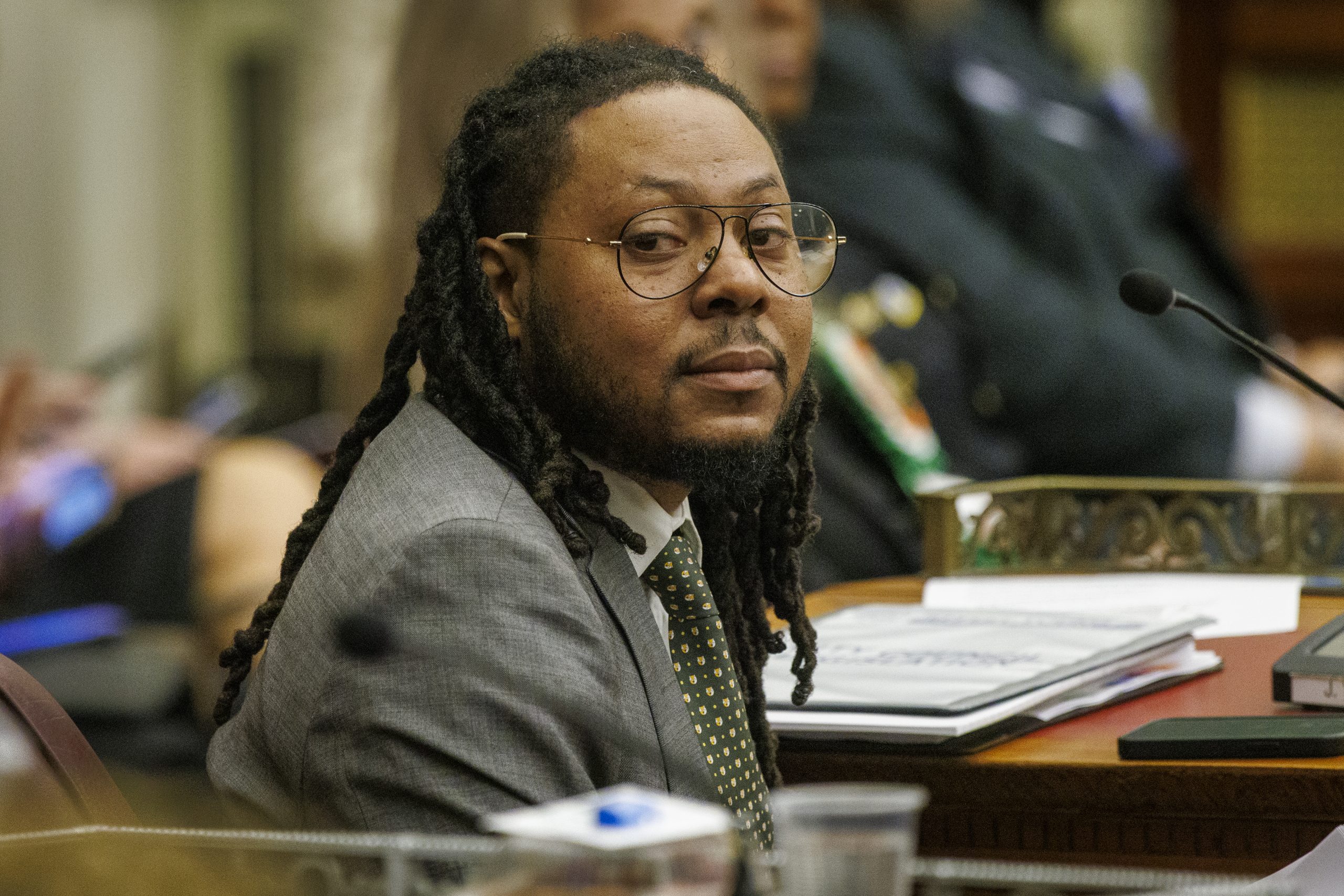
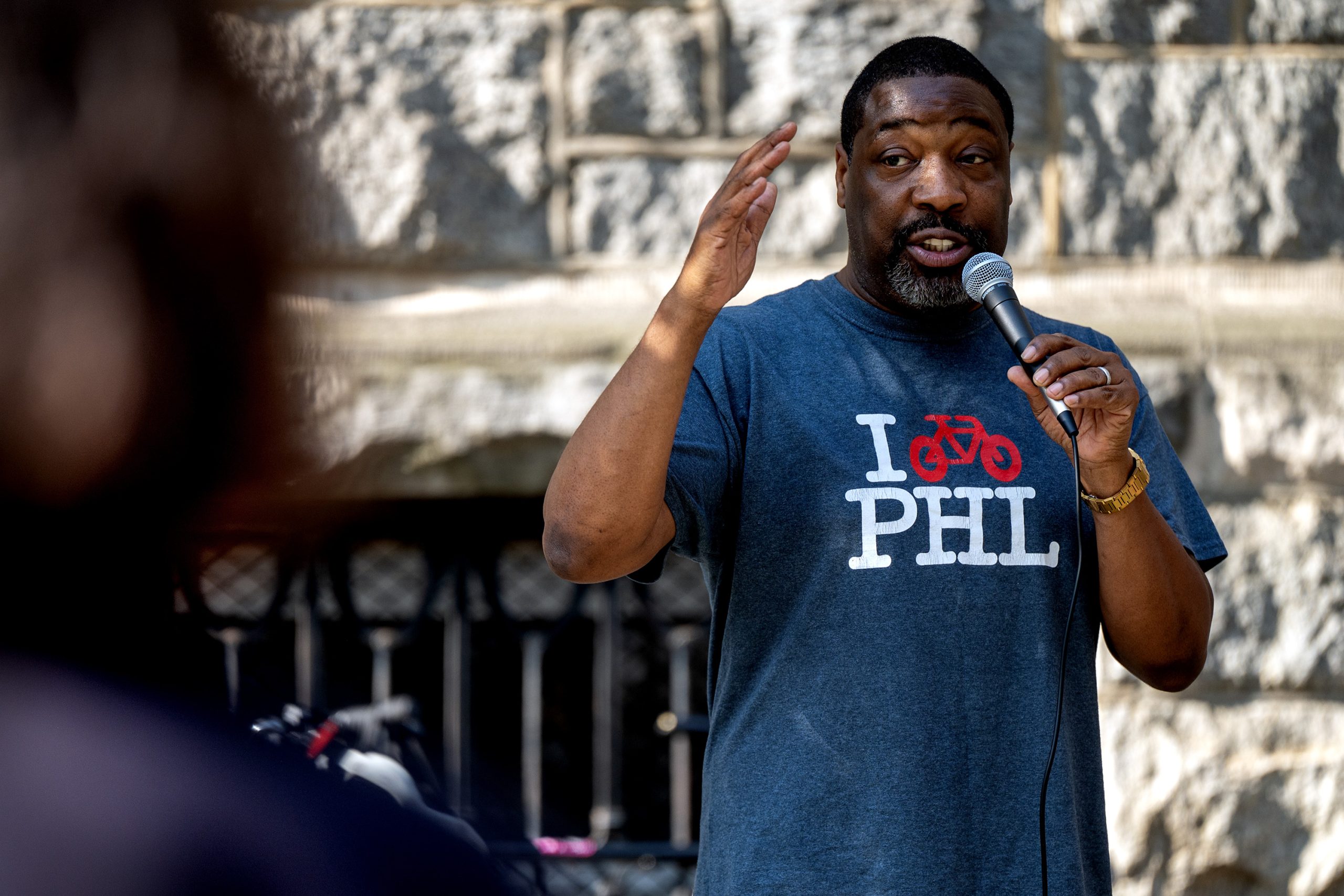
    City Council President Kenyatta Johnson speaks as friends, family, and Philly Bike Action members gather at a memorial for Barbara Friedes at 18th and Spruce streets on Sunday.Tom Gralish / Staff Photographer

    Street fight

    It has been two years since Barbara Friedes, 30, a physician specializing in children’s cancer, was killed riding her bicycle in Rittenhouse Square. The man who struck her, Michael Vahey, was driving at 50 mph, twice the speed limit, and his blood alcohol level was measured at .16, double the limit for intoxication.

    According to a prosecutor, Vahey, 69, could have easily chosen to walk home from the bar that night. Instead, he was impaired when he impatiently veered into the bike lane. Vahey was convicted last year and is now serving a six- to 20-year sentence.

    But the story did not end with Vahey’s imprisonment. For once, city officials took decisive action.

    City Council, led by Council President Kenyatta Johnson, passed the “no stopping in the bike lane bill.” Mayor Cherelle L. Parker pledged to add protection to the route, which could have prevented the kind of reckless maneuver that led to Friedes’ death. Yet, two years later, nothing has happened.

    The blame for the holdup, however, does not lie with City Hall. In fact, Johnson made an appearance at a vigil for Friedes hosted by her loved ones and Philly Bike Action this week.

    Instead, it has been the courts that have stymied the proposal. After a group called Friends of Pine and Spruce sued to stop the plan, a Common Pleas Court judge issued an injunction requiring the city to pass legislation codifying the administration’s right to install loading zones. City Council passed the legislation, only for another Common Pleas Court judge to decline to lift the injunction while the case proceeds.

    Frankly, things should never have gotten this far. Issuing loading zones is the exact kind of decision the Streets Department exists for, and having City Council pass a law for every loading zone in the city is a fool’s errand.

    It is certainly understandable that some neighbors would prefer to keep the status quo. The right venue to advocate for this position, however, is not the courts, but City Council. If the Court of Common Pleas fails to return control of city streets to city officials, the ruling must be appealed to the Commonwealth Court. Streets belong to everyone, not just the people who live alongside them.

    If residents want to stop bike lanes, they can do what cyclists have done. They can form advocacy groups, lobby elected officials, build a coalition, and pass legislation.

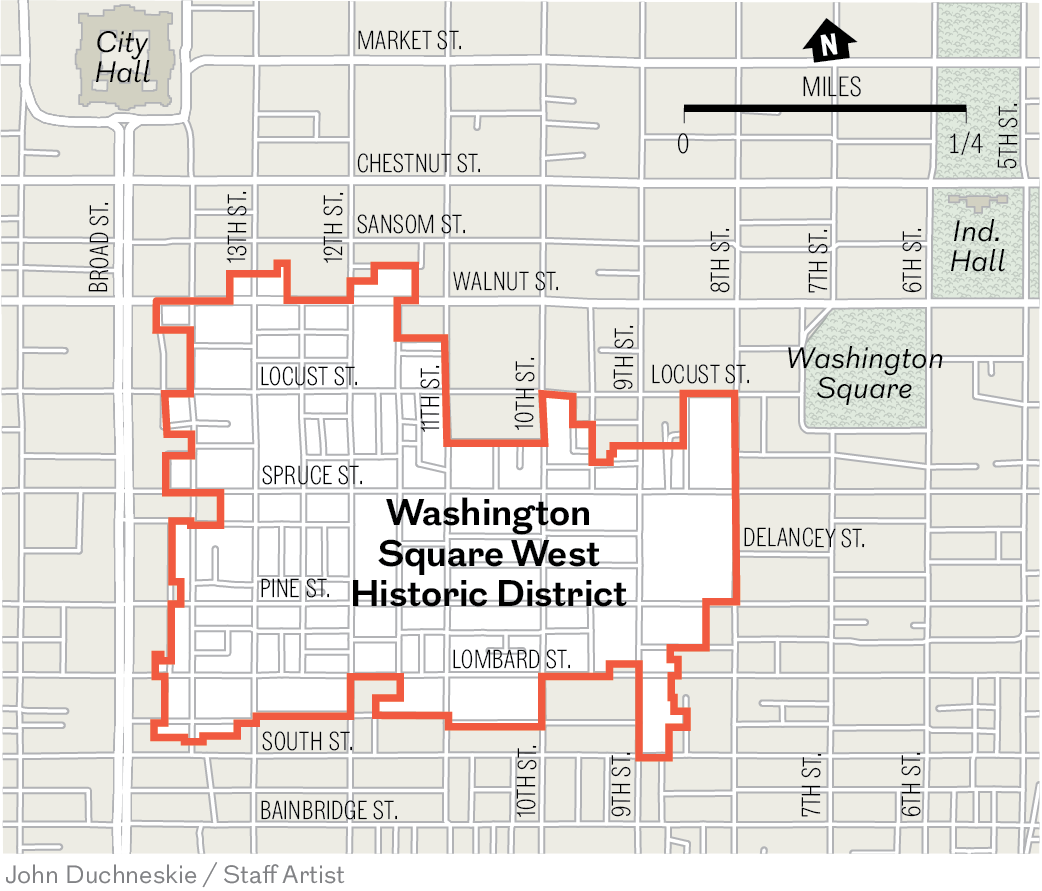
    Map of the Washington Square West Historic District. Some property owners are working to eliminate or curtail the district.John Duchneskie / Staff

    Historic challenge

    For some Center City residents, the Spruce and Pine saga contains a bitter irony. While some of their neighbors are suing to stop the city from designing public streets, they are suing to maintain the right to design their own homes.

    No one questions that the Washington Square West Historic District contains some of the city’s best architecture and links the present day to the city’s past. What’s been contentious throughout this process is how broad and restrictive the plan has been. While most districts cover a relatively small area, and typically pay homage to a specific era, style, or even architect, this district covers nearly all of Philadelphia’s history, from colonial times to the postwar era. More than 1,400 properties are listed as contributing, many of them fairly unremarkable.

    As a result, property owners like Jonathan Hessney have been working to eliminate or curtail the district. Most submissions to the Philadelphia Historical Commission were in opposition to the plan, with many citing both the personal financial burden and the fact that many of the most significant properties already have individual protections.

    Hessney also pointed out that Emily Cooperman, who is a member of the commission, helped draft the proposal. To some, this made the whole process feel like a foregone conclusion.

    Hessney and his neighbors sued. They won an early victory when Common Pleas Court Judge Christopher Hall overturned the designation. This was appealed by the city, keeping the district in place pending an appeal. The Preservation Alliance has filed its own brief in support of the district.

    Of course, the city could make everything easier by declining to pursue this suit further.

    Councilmember Jeffery “Jay” Young Jr. listens during the mayors budget address at City Hall in March.Alejandro A. Alvarez / Staff Photographer

    Senseless prerogative

    In another legal case concerning City Hall, the Commonwealth Court has ruled against Councilmember Jeffery “Jay” Young’s efforts to block a series of housing projects in North Philadelphia. Going forward, Young and his colleagues will have to secure the mayor’s signature before granting themselves standing to oppose zoning decisions.

    Young is one of Council’s most prolific users of what’s known as councilmanic prerogative, a tradition that gives district Council members final say on transportation and land-use decisions within their districts. While Council often defends this tradition as a way to ensure communities have a say, Young’s tactics usually attract the ire of his constituents, rather than representing their input.

    I talked to Ruth Birchett, a lifelong resident of North Philadelphia. Birchett has worked with both of Young’s immediate predecessors, supporting them at times and holding them accountable when needed. As the founder of Heritage Community Development Corp., she’s helped build affordable housing and fought against Temple’s efforts to build a football stadium. She told me that the way Young does business is very different. He does not seek input from her or other community leaders. He goes it alone.

    In particular, Birchett is upset over Young’s decision to block an affordable senior housing proposal. She took him to task in person. This situation is similar to Young’s opposition to renovations at the Cecil B. Moore Library branch. He came in at the very last minute to scuttle a shovel-ready project that had taken years of work to put together, and which had already secured funding.

    Birchett told me that the development was a “no-brainer.” Many seniors, herself included, live in homes that are much larger than their current needs. Philadelphia has a shortage of affordable senior housing. If seniors like Birchett can move into new housing in their own neighborhoods, this also helps younger residents access the city’s stock of sizable homes. That’s the housing circle of life.

    Instead of continuing to waste city resources by reauthorizing the appeal, Young should just let the project move forward.

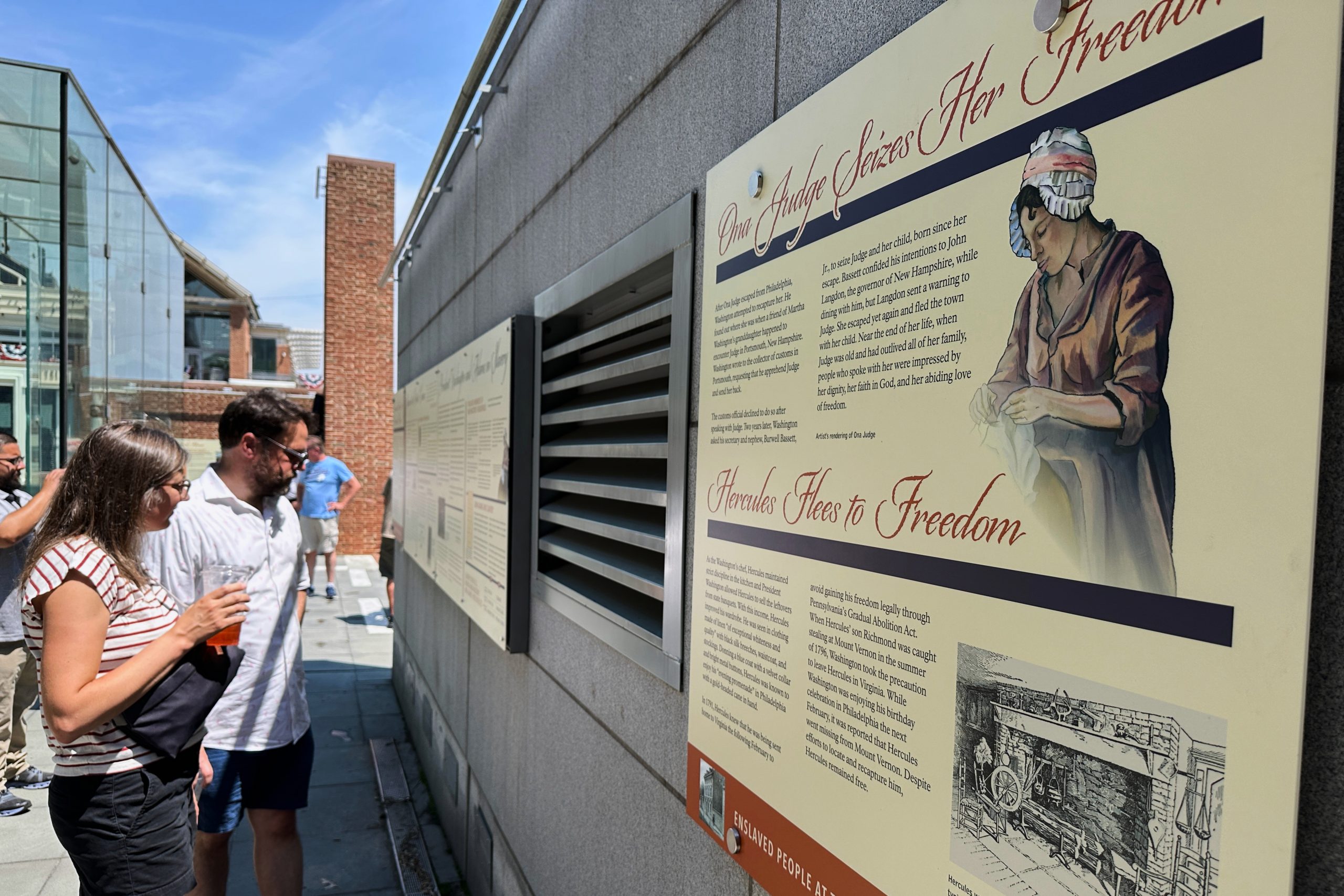
    Visitors view the recently reinstalled educational panels about slavery at the site of President George Washington’s home in Philadelphia.Tassanee Vejpongsa

    Washington whitewash

    For now, it seems the Trump administration has won the battle for the President’s House at Independence National Historical Park. After initial victories for the city, federal courts have affirmed the White House’s right to remove panels that were first installed roughly 20 years ago and replace them with new versions that advocates say minimize George Washington’s participation in America’s original sin of slavery. Mayor Parker has vowed to restore the originals.

    While some Founding Fathers, like Philadelphia’s Benjamin Franklin, realized the hypocrisy of calling for liberty while enslaving human beings, Washington showed he had no similar qualms. While living in Philadelphia, he acted with intent to evade Pennsylvania law, which stated that any enslaved person brought into the commonwealth would be emancipated after six months of continuous residence.

    The former panels ensured the stories of all Americans are heard, including those who were not given the rights of liberty during their own time. They also serve as a reminder that even the greatest heroes are still human.

    Washington deserves immense credit for helping secure America’s independence, and his decision to forgo the crown many assumed he’d take when he left office peacefully after two presidential terms — a precedent all but one of his successors (so far) has held to. He also deserves to be known as a man who failed to live up to the ideals he fought for.

  • Collingswood wants you to license your pets to help other animals in the borough

    Collingswood wants you to license your pets to help other animals in the borough

    Collingswood is hoping to get more pets on the books as a way to help fund the borough’s animal control services.

    Per New Jersey law, all cats and dogs 5 months of age and older are required to be licensed with their local municipality, but borough officials say registration is lagging.

    Without the fees collected through licensing, Collingswood has to find the funding for animal control services from elsewhere in the budget, Deputy Mayor Amy Henderson Riley said.

    In 2025, the borough spent $33,305 on an animal control officer and other services, she said. But as of the June 17 commissioners meeting, Collingswood had collected only $5,740 this year through residential pet licenses, which cost between $5 and $20 each annually.

    Assuming animal control services will cost the same for 2026, that leaves a more than $27,000 gap to fill.

    “This isn’t meant to be, you know, a ‘nanny state,’” Henderson Riley said of pet licensing. “This is meant to help have a balanced budget in town. We can find the money elsewhere, but I’d much rather have that $27,000 for all the rest of the required and amazing things that we do in town.”

    The cost for a license in Collingswood varies by type of animal and whether it is spayed or neutered:

    • Spayed/neutered dog: $17.
    • Non-spayed/neutered dog: $20.
    • Spayed/neutered cat: $5.
    • Non-spayed/neutered cat: $8.

    Since 2020, Collingswood has struggled to collect even close to half the amount needed to pay for annual animal control services, averaging around $7,680 in fees paid each year, according to borough records.

    As of July 21, registrations were further behind than they were at this time last year, when the borough had already collected around 20% more in fees, totaling over $7,000.

    In response to the drop, the borough is planning a small informational campaign on social media and in town bulletins to spread the word and get licensing rates up, Henderson Riley said.

    She said she wants to better inform the public on how this money is used, including for euthanasia of critically injured animals and reunification services for lost pets.

    If the funding gap continues, she said, the borough will consider conducting a pet census, hiring staff members to go door-to-door counting the animals in town.

    And while Henderson Riley said she understands that many household budgets are already tight, she argues that a relatively small fee can go a long way in helping animals across the borough.

    “Affordability is the word of the year,” she said. “People are paying a ton in taxes, and I think sometimes they think, ‘Why should I be paying for a pet license for my 14-year-old dog?’”

    The money residents spend on licensing may not go directly to their pet, she said, “but it might help care for an animal who’s hurt or injured or who got loose from their house.”

    “That’s money well spent,” she said.

  • The first episodes of ‘Sesame Street’ were tested on city preschoolers on this week in Philly history

    The first episodes of ‘Sesame Street’ were tested on city preschoolers on this week in Philly history

    On July 20, 1969, man landed on the moon.

    And the next day, on July 21, 1969, the Muppets landed on televisions across Philadelphia.

    But unlike the moon landing, the Muppets’ debut was a test run.

    Over five days, producers of Sesame Street broadcast five hour-long test-pilot episodes on WHYY-TV’S UHF Channel 35 on televisions spread across 70 homes throughout the city.

    So, why Philly?

    “The station is one of the country’s top public TV stations,” Edward Palmer, then Sesame’s director of research, told The Inquirer in August 1969. “It has displayed great interest in the [Children’s Television] Workshop and has been most cooperative. And it has Channel 35.”

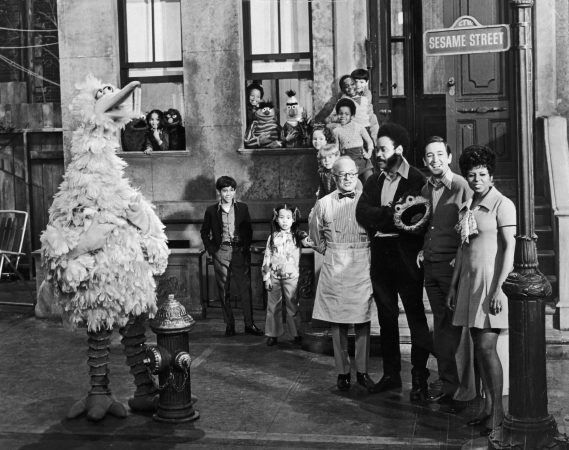
    Those first few episodes, set at the fictional Manhattan meeting place at 123 Sesame Street, paired a snappy theme song with a cast of unusual and friendly oddballs.

    The presentation offered children a venue where “everything’s A-OK.”

    The program, which can trace its roots to the mid-20th-century civil rights movement, would go on to delight, instruct, and entertain, thanks to the worldview and genius of Jim Henson.

    But it wasn’t a complete home run.

    The Philly research showed that of course the kids loved the Muppets, but they were bored by live-action street segments featuring only human actors.

    This taught the producers that they had to integrate the Muppets with the human cast, and have them interact, rather than keep the Muppets and humans separate.

    “Test audiences of preschoolers in Philadelphia had rejected live-action sequences shot on a mock urban street, with trash cans on the curb and laundry hanging from tenement windows,” according to Michael Davis’ book Street Gang: The Complete History of Sesame Street.

    The human-operated puppets would go on to charm millions of children and parents, and their names would become iconic: The Count, Cookie Monster, Big Bird, Bert, Ernie, Oscar, Miss Piggy, Elmo, Kermit, and many others.

    And they would later be joined by an endless A-list of guest stars.

    It officially debuted on Nov. 10 of that year.

    But in Philly, we remember those pilot episodes where the show made its first giant leap for Muppetkind.

  • Philadelphia’s Weitzman Jewish Museum has a new immersive family experience: ‘Colors of Creation’

    Philadelphia’s Weitzman Jewish Museum has a new immersive family experience: ‘Colors of Creation’

    It’s an interactive, color-soaked journey through creation that transforms at the whims of visitors.

    “Colors of Creation,” the centerpiece exhibit of a large new family gallery at the Weitzman National Museum of American Jewish History, opened July 21. The panoramic experience inspired by the story of creation combines concert-style lighting, interactive projections, and original music to present a form-shifting world of sound, light, and imagery.

    “‘Colors of Creation’ is The Weitzman like you’ve never seen us before,” said Dan Tadmor, President and CEO of The Weitzman. “We started with a story that we all know to create this visually stunning — and most importantly, fun — space for families and visitors of all ages. It’s also a glimpse of where The Weitzman is headed: a museum where stories come alive.”

    Attendees view panoramic projections during the Colors of Creation show at a preview event at the Weitzman National Museum of American Jewish History in Philadelphia on Tuesday, July 21, 2026.Erin Blewett / For The Inquirer

    Designed to be inclusive of all faith traditions and scientific understandings of creation, “Colors of Creation” invites children on a multisensory journey through the origins of the world, Tadmor said.

    Stepping inside the 30-minute explosion of color feels like entering the elusive Hall of Mirrors of an amusement park. Then color and sound blossoms all around, with light transforming into new images of life at a visitor’s every move.

    “It’s an immersive space,” said Tadmor, on a recent afternoon, standing amid the changing colors and shifting images of an expanding universe. “And as more things are introduced into the world, more colors are introduced.”

    The 7,000-square-foot gallery — including a hands-on play space for children featuring peg walls, magnetic puzzles, and light tables — is the second of three major openings at the Weitzman in 2006. “First Salute” — the museum’s landmark 250th exhibit exploring a forgotten story about Jews who helped win the Revolutionary War — opened in April.

    In October, the museum plans to open a new exhibition dedicated to modern antisemitism. The renewal of the 100,000-square-foot museum, which opened its new building on Independence Mall in 2010, comes as it recently unveiled a $100 million fundraising campaign. With half the money already raised, those funds will go to revamping exhibitions, renovations, and an endowment.

    Asher Kirschner interacts with projected imagery during the Colors of Creation show at a preview event at the Weitzman National Museum of American Jewish History in Philadelphia on Tuesday, July 21, 2026.Erin Blewett / For The Inquirer

    As visitors move through “Colors of Creation,” more colors explode onto one the exhibition’s screens, an expanding universe of life followed by a vast sky of shooting stars and far away galaxies.

    ”It’s a chance to be mindful of the beauty and value of what we’ve been given,” said Tadmor, worlds of color forming all around. “We’ve got this gift — let’s appreciate it and take care of it.”

  • Bankrupt weed company lays off 86 people at Vineland grow sites

    Bankrupt weed company lays off 86 people at Vineland grow sites

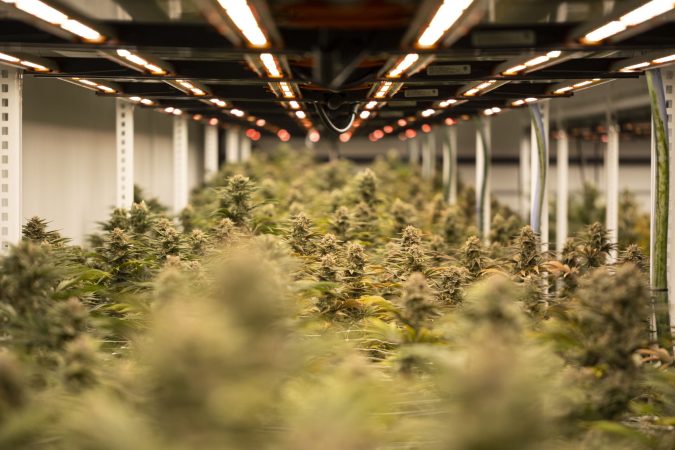
    Two cannabis grow sites in South Jersey will close their doors in October, laying off 86 staff members as multistate operator the Cannabist Company files for Chapter 15 bankruptcy.

    The cultivation facilities — located at 17 W. Park Ave. and 1560 N. West Blvd. in Vineland — will close on Oct. 11, laying off nearly all of the Cannabist’s cultivation and manufacturing employees in New Jersey according to a Worker Adjustment and Retraining Notification, or WARN, filing with the state.

    In its bankruptcy filings, the company stated that due to “regulatory, industry, and financial challenges,” it was facing a severe liquidity crisis and “unable to meet its financial obligations as they become due.” The Cannabist Company did not respond to a request for comment.

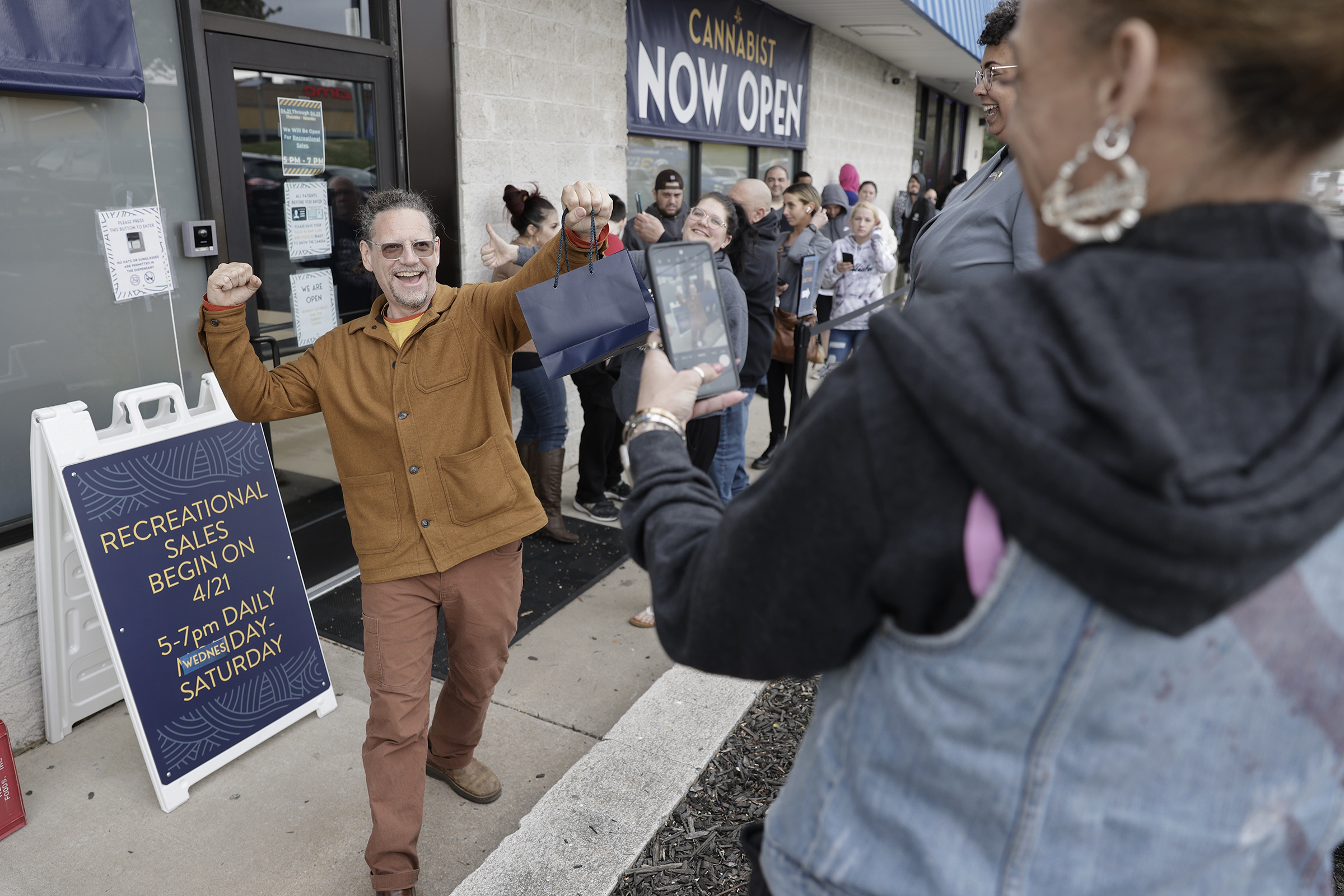
    Frank Burkhauser of Woodbury handed his phone to Cannabist employee Jennifer DeWalt so he could have a photo to remember this day that he made a legal marijuana purchase at Cannabist in Deptford on April 21, 2022. Burkhauser said he has been working for the legalization of marijuana since the early ’90s.ELIZABETH ROBERTSON / Staff Photographer

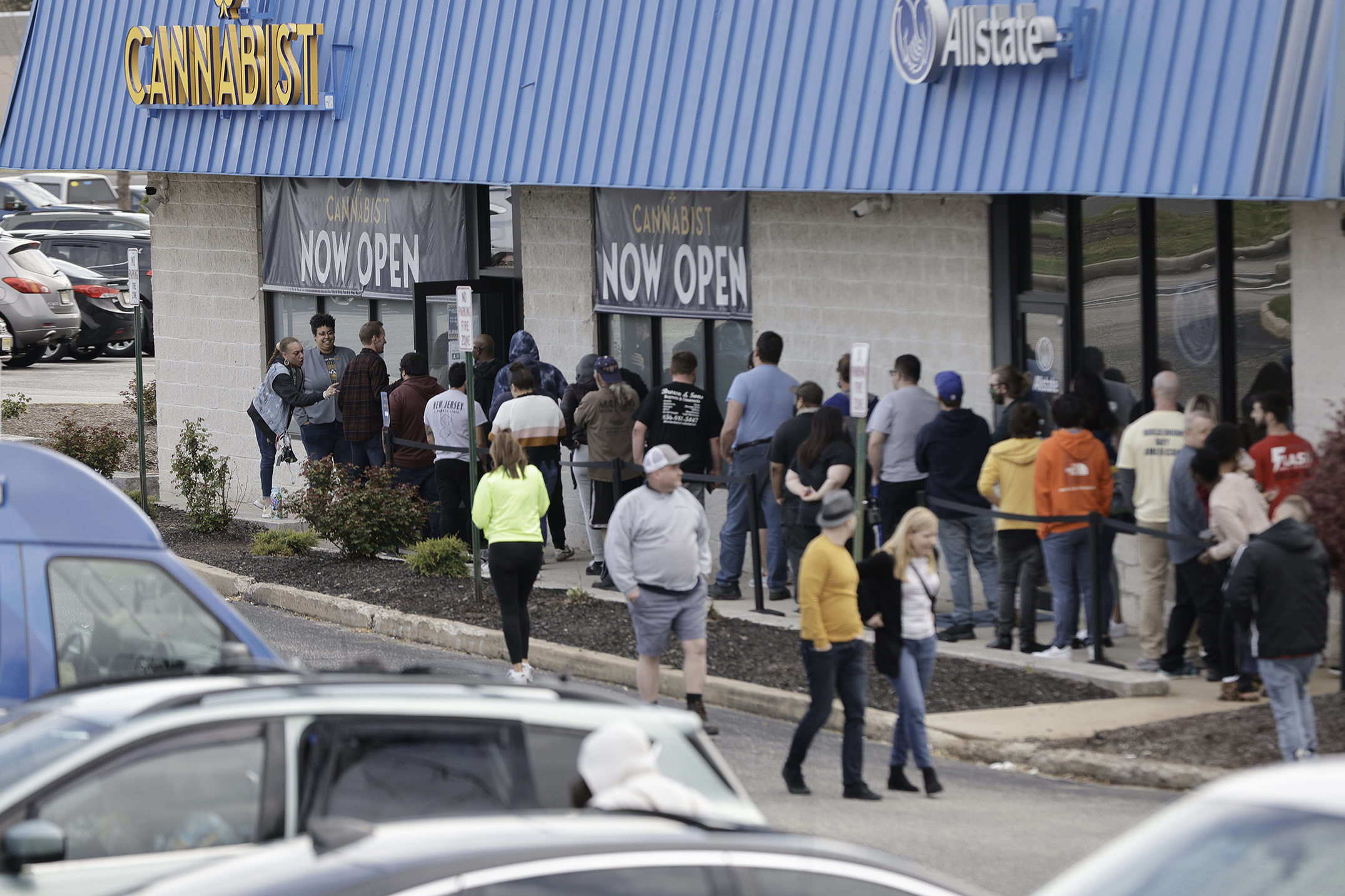
    The Cannabist’s New Jersey dispensaries were among some of the first adult-use locations to open in 2022. It operated one of the closest recreational weed dispensaries to the Philadelphia border. On the first day of Jersey’s recreational weed sales, it attracted consumers from all over, with a line wrapping around the building to the front door.

    The New York-based weed company operates 40 dispensaries and 14 cultivation and manufacturing facilities across 10 markets, including in New Jersey and Delaware. Those sites are being closed or sold off to new buyers. Last week, The Cannabist announced layoffs at one of its Denver grow sites, laying off 50 people in September, according to Colorado WARN notices.

    Customers line up just after 5:30 pm to make legal marijuana purchases at Cannabist in Deptford on April 21, 2022.ELIZABETH ROBERTSON / Staff Photographer

    Following the news of the two Vineland grow site closures, The Cannabist announced it would be selling the rest of its New Jersey operation, including the three retail stores in Deptford, Vineland, and Mays Landing, to Vireo Growth Inc for $35 million. The sale will also include some of the Cannabist’s operations in Colorado, Illinois, Massachusetts, and West Virginia markets.

    The Cannabist Co., which got its start as Colombia Care, began in Massachusetts in 2012 and soon expanded to 10 states. As of February, the company employed more than 1,200 people, including 101 manufacturing and 43 retail workers in New Jersey.

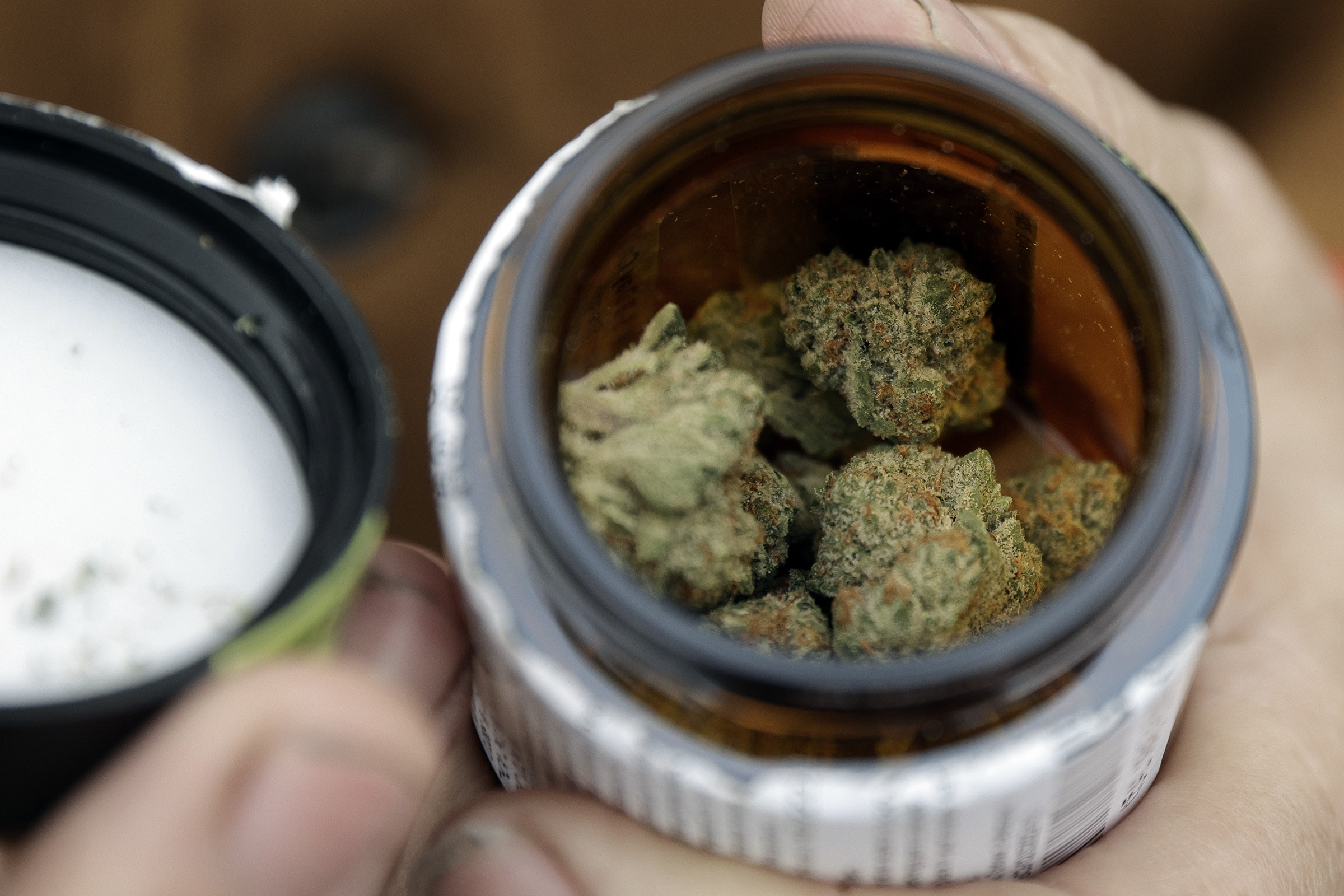
    Frank Burkhauser of Woodbury displays the legal marijuana purchase that he just made at Cannabist in Deptford on its opening day in 2022. ELIZABETH ROBERTSON / Staff Photographer

    In March, Cannabist filed for Chapter 15 bankruptcy due to owing lenders and the IRS more than $270 million. In addition to closing many operations across the country, Cannabist sold its Virginia business to Parma for $130 million, Delaware to Arboretum DE PermitCo for $16.5 million, and its Ohio dealings to Holistic for $47 million.

    Since the Cannabist Company is also filing for bankruptcy in Canada, this case is poised to be the first time a U.S. Bankruptcy Court recognizes a foreign insolvency proceeding related to a marijuana business, despite cannabis remaining federally illegal.

  • Amid a summer in the spotlight, Phillies prospect Gage Wood’s goal remains the same

    Amid a summer in the spotlight, Phillies prospect Gage Wood’s goal remains the same

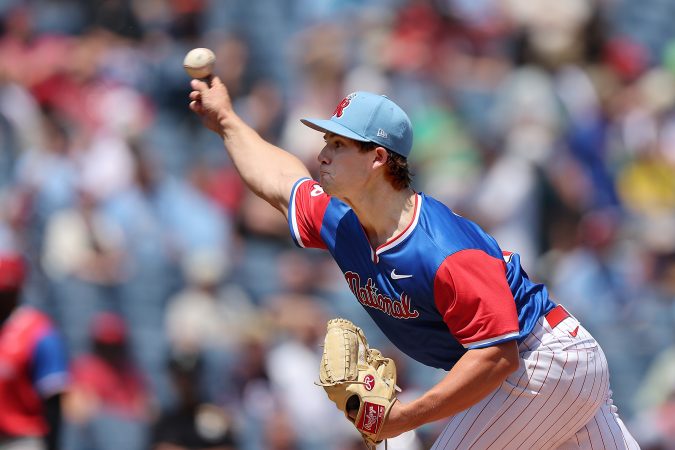
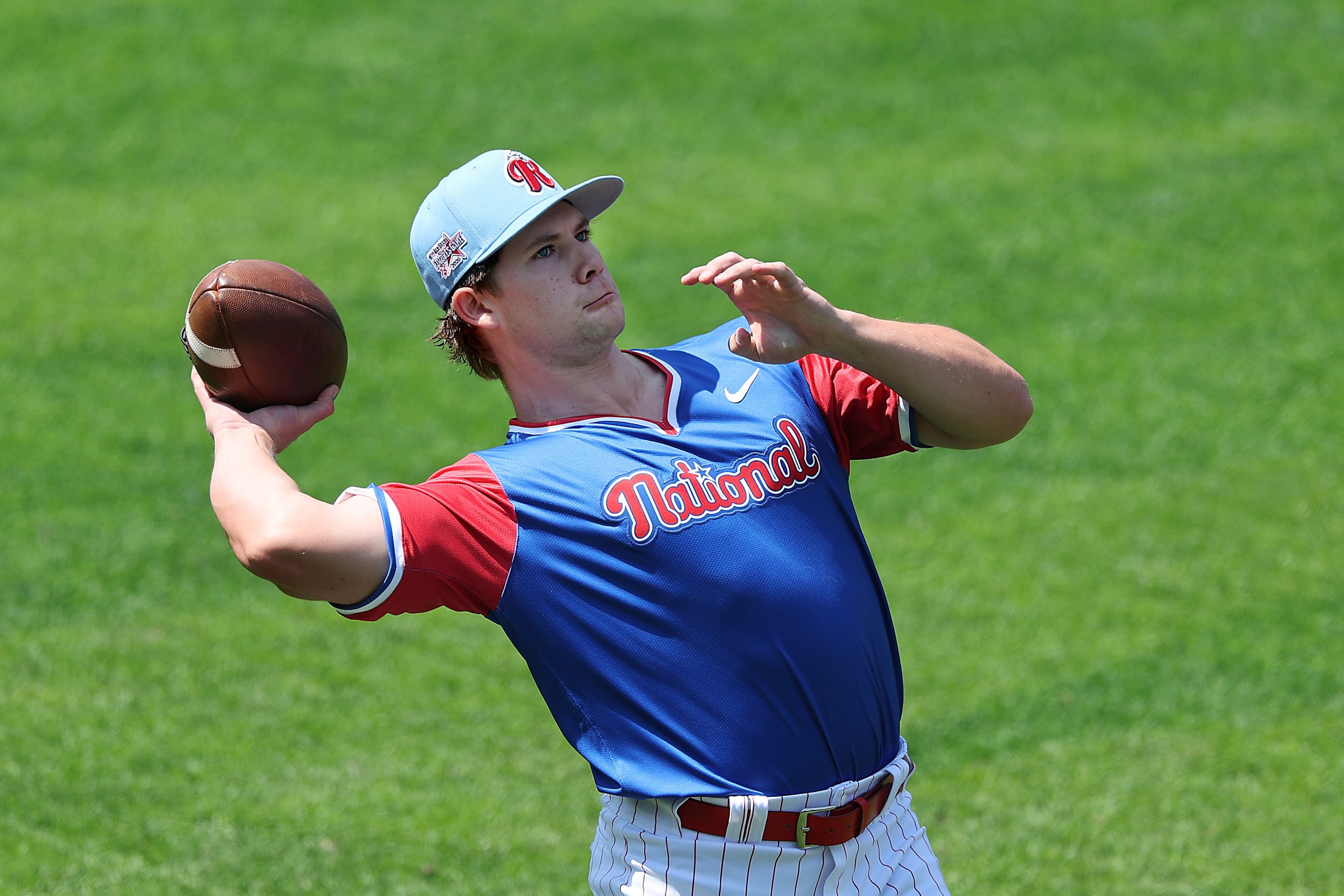
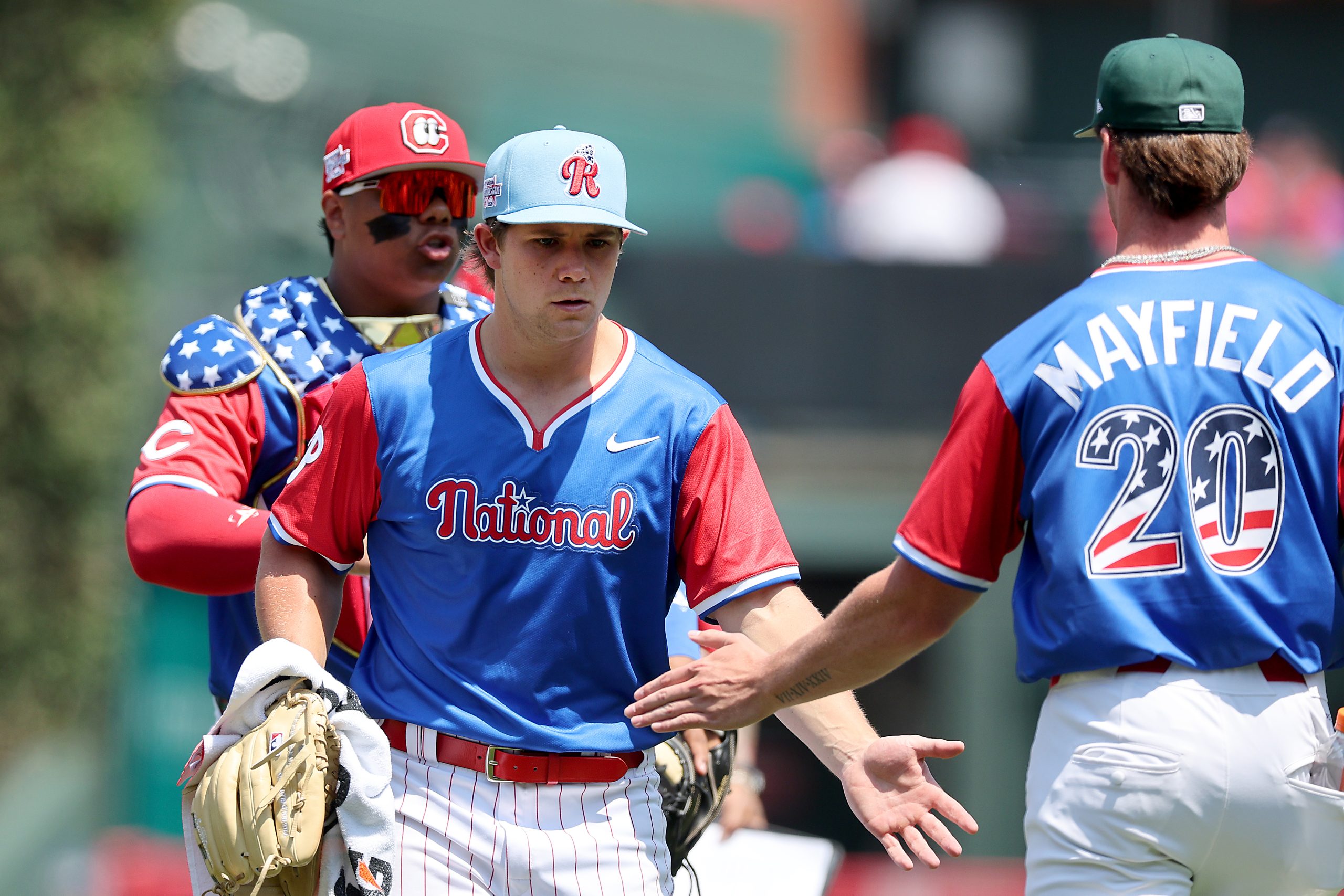
    Gage Wood has been in the spotlight since his days at Arkansas, when he tossed a no-hitter in the 2025 men’s College World Series. This summer, the spotlight is on the often-difficult journey to the big leagues.

    Wood was one of six prospects featured in MLB and NBC Sports’ Road to the Show. The docuseries follows Wood (double-A Reading Fightin’ Phils), Braden Montgomery (who recently was called up by the Chicago White Sox), the Milwaukee Brewers’ Jesús Made (double-A Biloxi Shuckers), and Colorado Rockies’ Ethan Holliday (single-A Fresno Grizzlies), alongside collegiate stars Roch Cholowsky (UCLA) and Justin Lebron (Alabama), who’ve since been drafted by the White Sox and Cincinnati Reds, respectively, as they pursue major league careers.

    Wood, who was a first-round pick (26th overall) by the Phillies last year, has a 3.51 ERA and 1.08 WHIP in 17 starts across two levels and is the organization’s top pitching prospect and 50th in baseball, according to MLB Pipeline. And after starting for the National League in the All-Star Futures Game, he’s ready to be back at Citizens Bank Park.

    “Obviously, I want to go back to the Bank as fast as I can,” Wood said. “I just keep working every day and try to get there as fast as possible.”

    Gage Wood was promoted to double-A Reading in May.David Maialetti / Staff Photographer

    Road to the Show debuted July 1 on Peacock, following NBC and MLB’s partnership earlier this year. The series is a first step in MLB’s content expansion into the minor leagues, aimed at bolstering fan connection to players, said Casey Brett, senior vice president of business development and minor league business operations at MLB.

    “Exposure was priority one for MiLB,” Brett said. “We asked, ‘How do we tell these stories more effectively?’ This docuseries was, frankly, one effort in a whole string of efforts to help us focus on and achieve that goal.”

    The series aims to highlight the players’ personal stories. Episode 2 introduces the players’ parents and details their journeys from T-ball to the big leagues.

    “Gage just became a great featured player as part of this, both because of his story and his truly unique competitive drive,” Brett said. “There are some really interesting stories to tell about that journey before they make their major league debut.”

    Unlike other pro sports, baseball can have a long and grueling path to the majors. Wood began his professional career with the Clearwater Threshers, the Phillies’ single-A affiliate, in September 2025 before being promoted to double A in May.

    In the show, Wood mentions his surprise at skipping the “middle step” of the Jersey Shore BlueClaws, the Phillies’ high-A affiliate.

    “You want to move as much as you can, as quick as you can,” Wood said in an interview featured in the series. “I want to keep growing and competing against the best, so it feels good, but the ultimate goal is to get called up to the show, so I don’t really think about anything else other than when that call happens.”

    Gage Wood (center) was the NL starter for the All-Star Futures Game.David Maialetti / Staff Photographer

    Wood and Made played in the All-Star Futures Game on July 12. Though Wood gave up a hit and a run in the first inning, he still had plenty of fans in South Philly as he headed to the mound.

    The game had its highest viewership ever, according to Brett, giving MLB added motivation to keep fans invested in the players beyond All-Star weekend. MLB timed the debut of the miniseries to coincide with the All-Star festivities in hopes of drawing viewers in.

    “I think everybody is in consensus that we’re going to be doing more of this. It’s great for that level of brand recognition,” Brett said. “This is the first iteration, and because of the support of NBC and the success we’ve seen to date with the program, it’s certainly something we’re considering for the future. We’d love to keep this going for years to come.”

  • Fed up, these Philly neighbors banded together to map illegal dump sites block by block

    Fed up, these Philly neighbors banded together to map illegal dump sites block by block

    Joyce Brooks is dismayed by the contractors who illegally dump behind a shopping center at 15th and Wingohocking Streets.

    But it’s the neighbors who dump there who sadden her most, she said. Some bring children with them to toss waste in a dump that has lasted 20 years, despite being cleaned out over and over again.

    “That’s a legacy. Passing it from adults to children to their children,” said Brooks, who leads the Block Captains Committee of Nicetown, a neighborhood grassroots group.

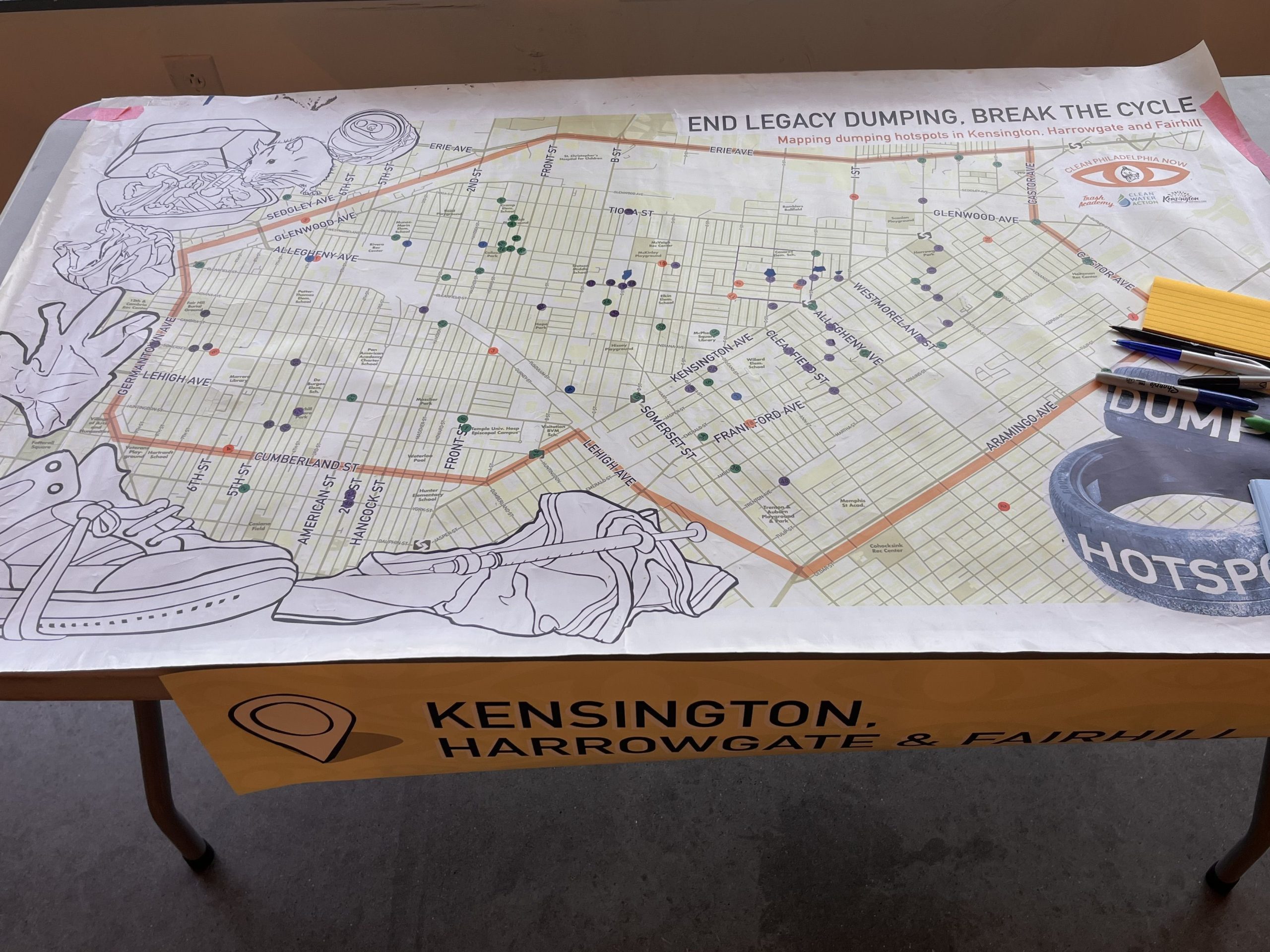
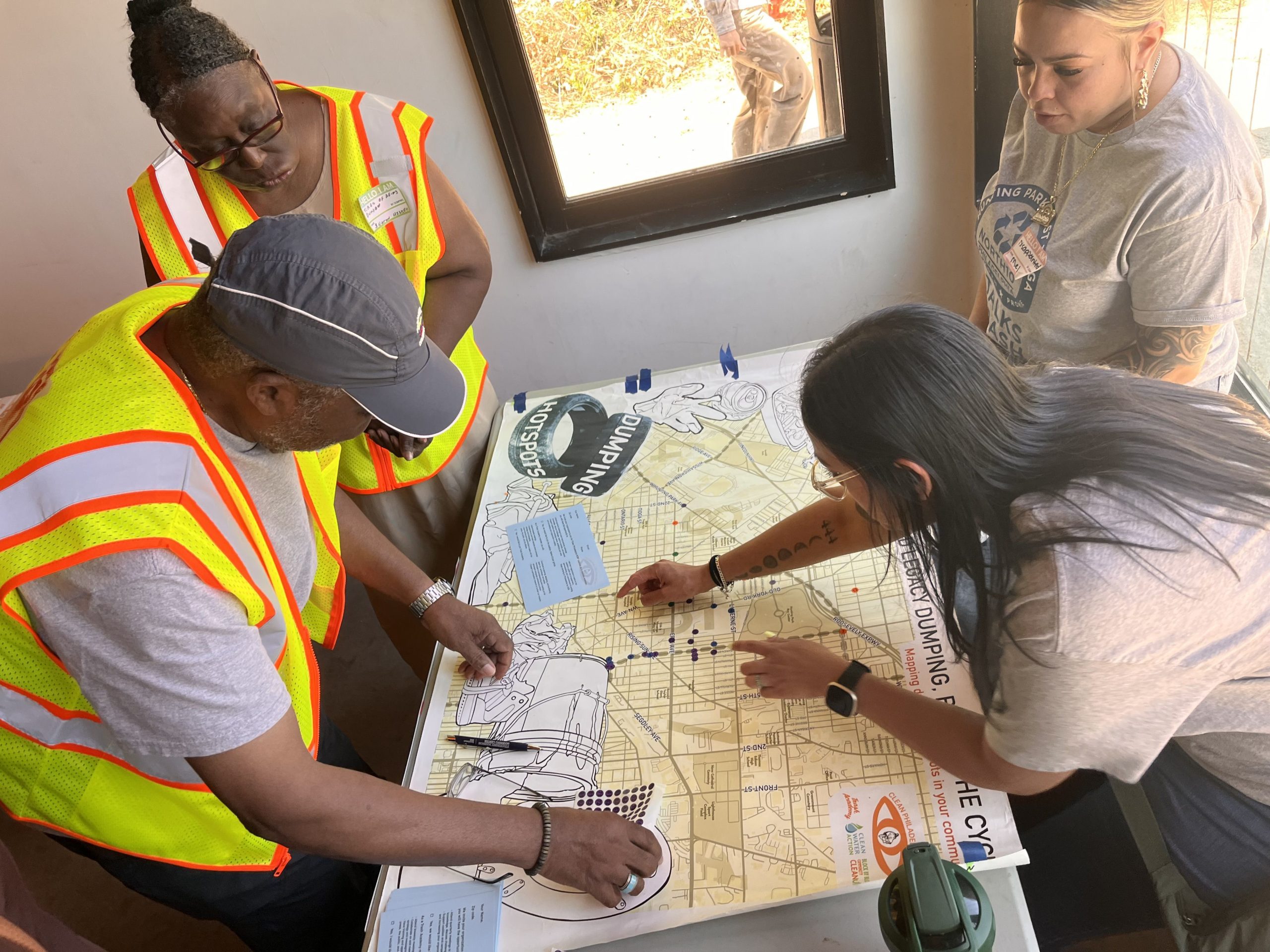
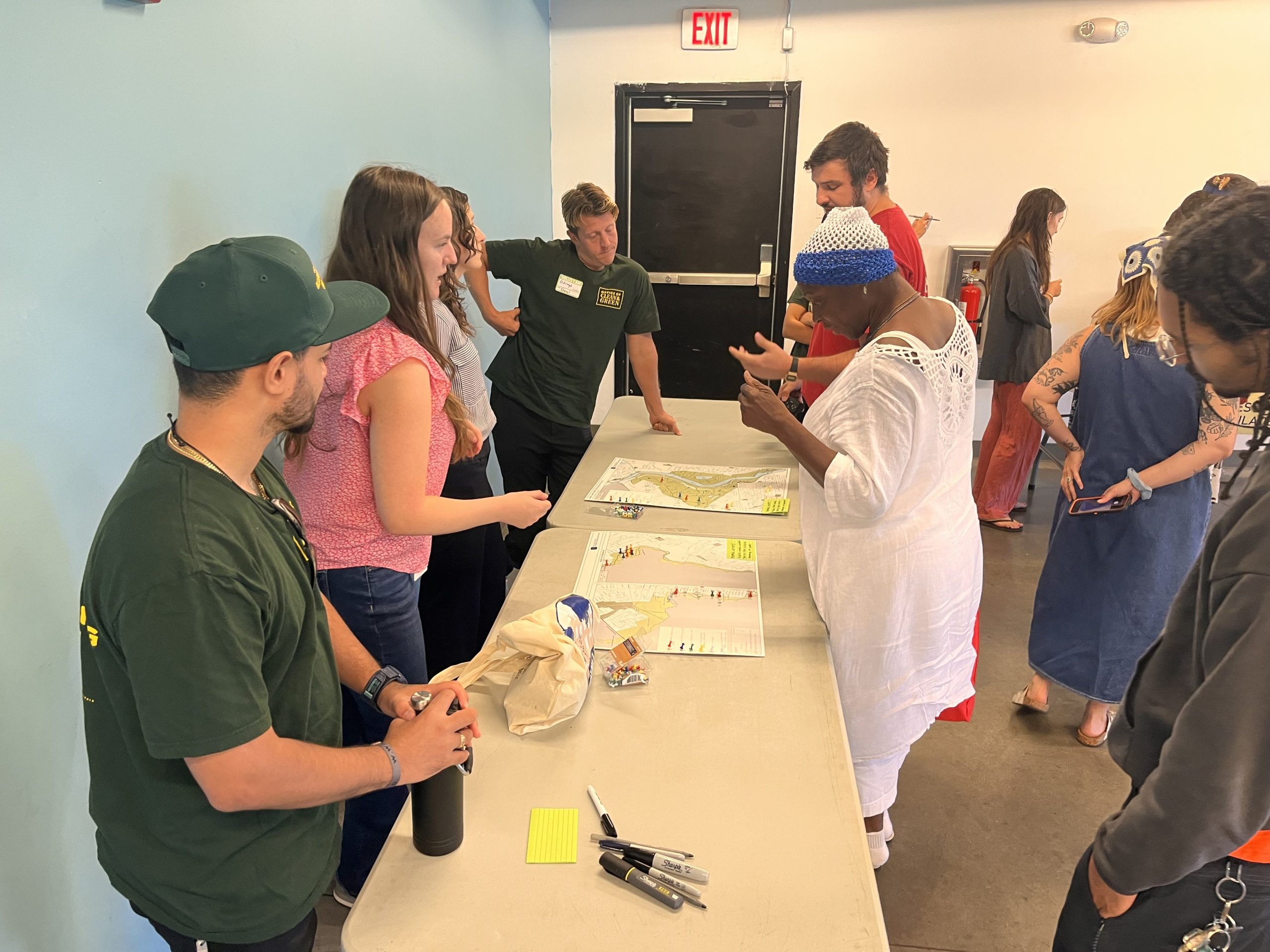
    Brooks was one of about 75 Philadelphia residents representing neighborhood groups and nonprofits who gathered Thursday at the Discover Center in Fairmount Park to map by hand illegal legacy dumps scattered throughout the city.

    The groups want a comprehensive, transparent map of illegal dump sites across city streets, vacant lots, and parks as a step toward being able to address them comprehensively.

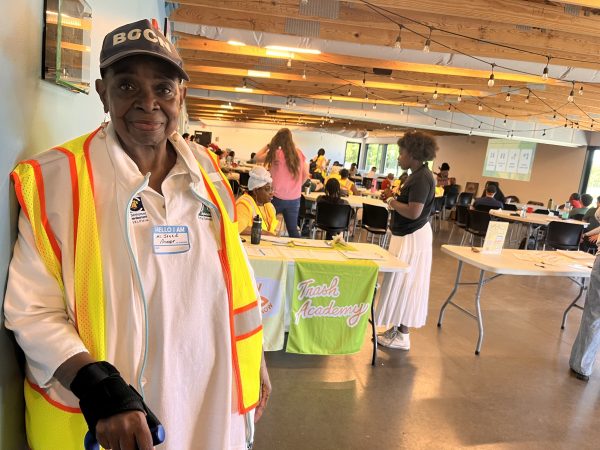
    The event was organized by Clean Philadelphia NOW, a collaborative with multiple neighborhood organizations and nonprofits. It pulled together community groups and residents from 11 neighborhoods.

    “I just want to encourage us as a people to stop this,” Brooks said, “not just in Nicetown but all over this city of Philadelphia. … I believe there’s hope.”

    Legacy dumps are one of the biggest issues affecting the quality of life in Philadelphia, said those at the event, and they want to find solutions.

    In April, The Inquirer identified one of the largest illegal dumps in the city. The dump spans more than a block down a slope off Pennway Street in Northeast Philly and finally comes to a dirty halt just feet from a clear creek.

    One of the maps where event attendees added pins to show the locations of potential dumping sites in their neighborhoods.Frank Kummer

    The root cause

    Shari Hersh, a codirector of Trash Academy, one of the groups collaborating under Clean Philadelphia NOW, said the goal is not only to clean sites but also to replace outdated waste management systems with sustainable, long-term solutions.

    The Clean Philadelphia NOW initiative began mapping sites in fall 2024, initially documenting 48 dump sites in the Fairhill and Harrowgate neighborhoods. It hosts the map on its website.

    While the city has heavily invested in abatement, Hersh argues that the approach falls short of addressing the root causes of the persistent “clean-dump-clean cycle.”

    Hersh said community cleanups are not a solution.

    She said some illegal dump sites, such as one at Ninth and Ontario Streets in North Philadelphia, have been actively dumped on multiple times a week since 2005. Simply cleaning them out does not stop dumping.

    “It can’t just be the neighbors who have the time to work on it,” Hersh said. “It has to be that we have a successful waste management system in the city of Philadelphia.”

    She believes dumping is fueled by several factors.

    “There are a lot of reasons why there’s dumping, and there are a lot of people doing it because, to some degree, it’s normalized in Philly,” said Hersh, who lives in Fairmount. “They think, ‘It’s always been dumped there, so we’re just going to keep using it as a dump.’ And some people don’t even know it’s wrong.”

    Hersh said collaborators would like to see municipal curbside composting to manage the food odors from residents putting trash out on non-collection days.

    And they would like to see cost-effective voucher programs for construction and demolition waste.

    “We don’t just want to manage illegal dumping,” Hersh said. “We want to end it.”

    She said she did not have a final tally yet on the number of legacy dump sites but estimated the group’s current total could be around 100.

    On Thursday, event attendees hand-pinned dumping sites to a physical map. Clean Philadelphia NOW volunteers will vet the sites against an online map to get a true count.

    Hersh expects the list of illegal dumping locations could swell to 200 as they keep adding more through the end of the year.

    Rosemary Duarte (front right) and Melmarys Gonzalez (back right) of the group North10 Philadelphia help mark a map of Hunting Park.Frank Kummer

    A sense of pride

    Dallas Herbert Sr. of the 215 People’s Alliance said he hopes the collaboration can help “create a sense of pride in the community.”

    Construction waste is a big issue, he said. It worsens as homes are razed and new ones built. He calls it an “unintended consequence” of the city’s attempt to create more housing. People unload the contents of old homes at the sites. Some contractors dump debris there.

    Herbert said contractors should have to show proof to the city that they dispose of waste correctly, and the city should “hold them to account.” He said much construction waste can be recycled.

    Most of those in attendance at Thursday’s event credited the city‘s focus on litter under Mayor Cherelle L. Parker. But they would like to see more done.

    Residents crowd around a table at an event organized by Clean Philadelphia NOW that focused on having residents from 11 neighborhoods map known illegal dumps sites. Seen here are maps of Cobbs Creek.Frank Kummer

    A dumping voucher

    Rosemary Duarte, director of neighborhood impact services for the nonprofit North10 Philadelphia, believes there are solutions. The group works to improve the Hunting Park and East Tioga neighborhoods.

    She said one dump in her neighborhood gets cleaned by the city each Tuesday and is monitored by video cameras. Still, contractors and others sneak in at night.

    North10 Philadelphia has a grant from the William Penn Foundation to give residents $120 vouchers for bulk-item trash taken to Burns Services in an effort to curb dumping. Burns has a 13-acre Hunting Park complex where demolition debris is sorted for resale to steel mills, building-materials makers, plastics plants, and other re-users.

    So far this year, North10 Philadelphia has given out $10,000 worth of vouchers, Duarte said.

    The group reaches illegal dumpers by posting signs at legacy locations that read “Please don’t dump here” and telling them how to reach out for vouchers.

  • It ‘just makes the city look bad’: Petition demands that the University Avenue Bridge be saved from further damage

    It ‘just makes the city look bad’: Petition demands that the University Avenue Bridge be saved from further damage

    The state of the University Avenue Bridge, long neglected and subject to vandalism, is attracting a wave of public scrutiny. An online petition that has collected hundreds of signatures calls for the historically significant span to be secured before further damage is done.

    “We demand that PennDOT and the City of Philadelphia treat this historic structure with the same respect shown to the Ben Franklin Bridge,” wrote the author of the change.org petition. “Officials must act now to secure the site from further destruction so that this beautiful bridge survives to celebrate its own 100-year anniversary in 2030.”

    The Ben Franklin Bridge was feted this month with a special centenary event closing it to vehicles that drew an estimated 50,000 pedestrians, cyclists, and others.

    The publication, Hidden City, also published a cri de coeur this week.

    “As the Benjamin Franklin Bridge receives accolades this year for its 100-year anniversary and receives regular maintenance by its owner, DRPA, the University Avenue Bridge continues to decay, seemingly ignored by PennDOT,” wrote Kimberly Haas in an article posted Tuesday.

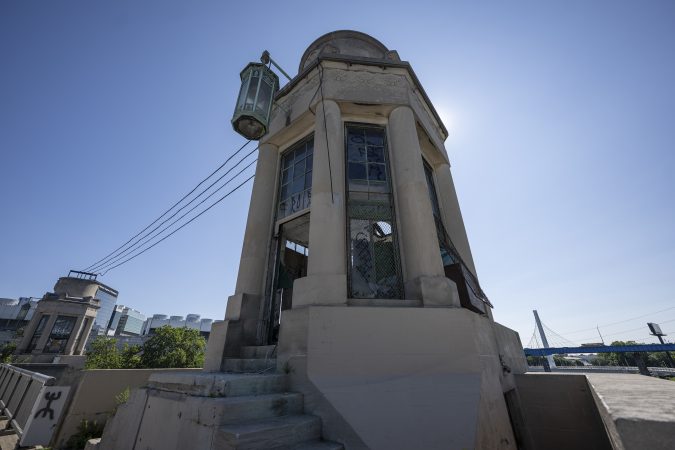
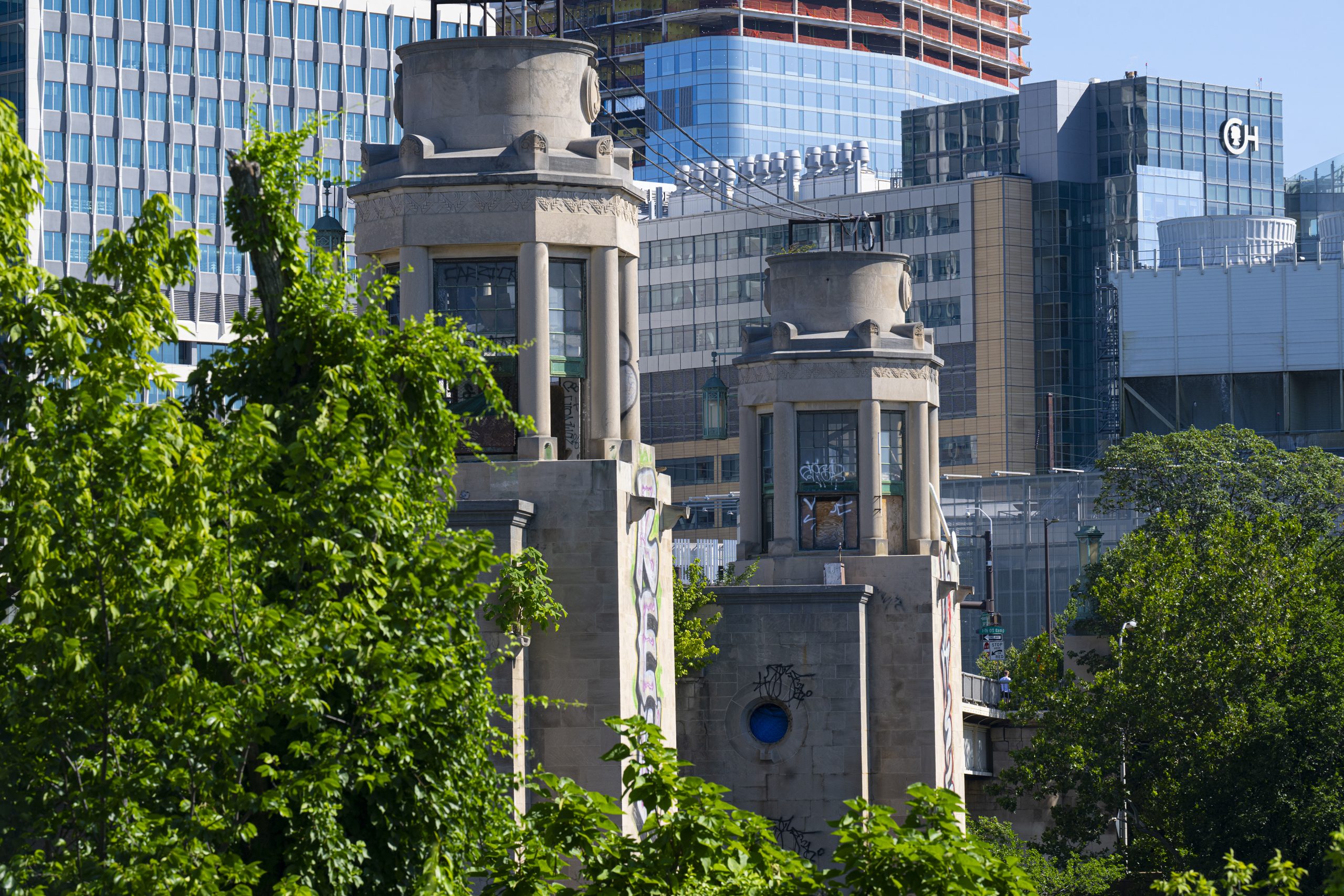
    Broken windows and graffiti at the University Avenue Bridge, with the medical buildings of West Philadelphia in the background, July 23, 2026.Jose F. Moreno / Staff Photographer

    A PennDOT spokesperson said that, in fact, it is in the process of finalizing a contract for work on the bridge, and that the work is expected to start “within a few weeks,” though the exact scope of the job is as-yet undetermined.

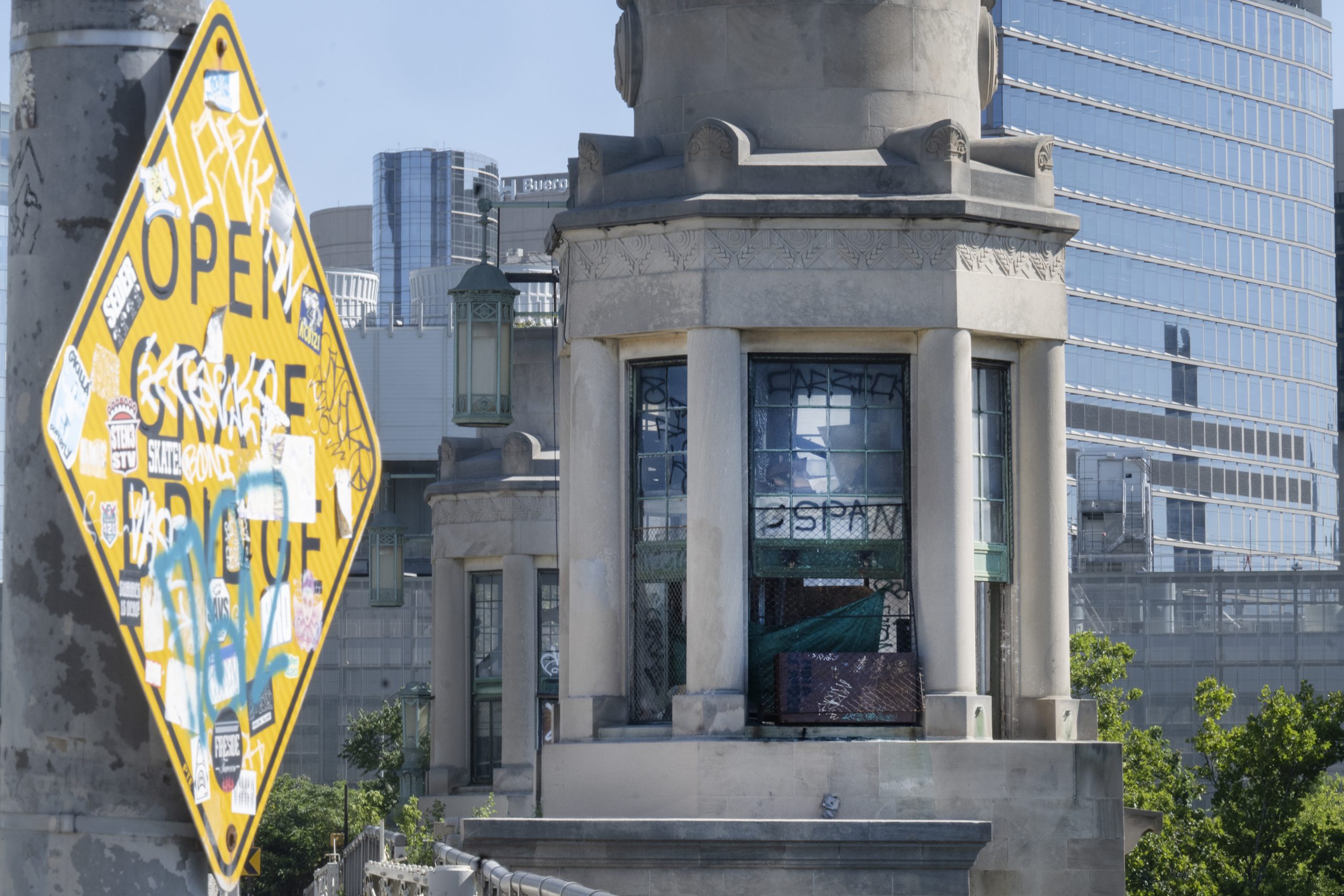
    The two bridges share an architect in widely admired French-born Penn professor Paul Philippe Cret. Today, the windows on the University Avenue Bridge’s richly detailed operator houses are broken or gone, mortar is missing, stone is marred by graffiti, and some architectural elements have been stolen, the petition notes.

    “The bridge must be made secure IMMEDIATELY to prevent further damage,” it states.

    The Preservation Alliance for Greater Philadelphia, which characterizes the bridge as threatened by neglect and has urged its restoration, applauded the petition.

    “We hope it will put pressure on PennDOT to take action to prevent further decay of the bridge and its operator houses,” said preservation alliance director of policy and communications Hanna Stark.

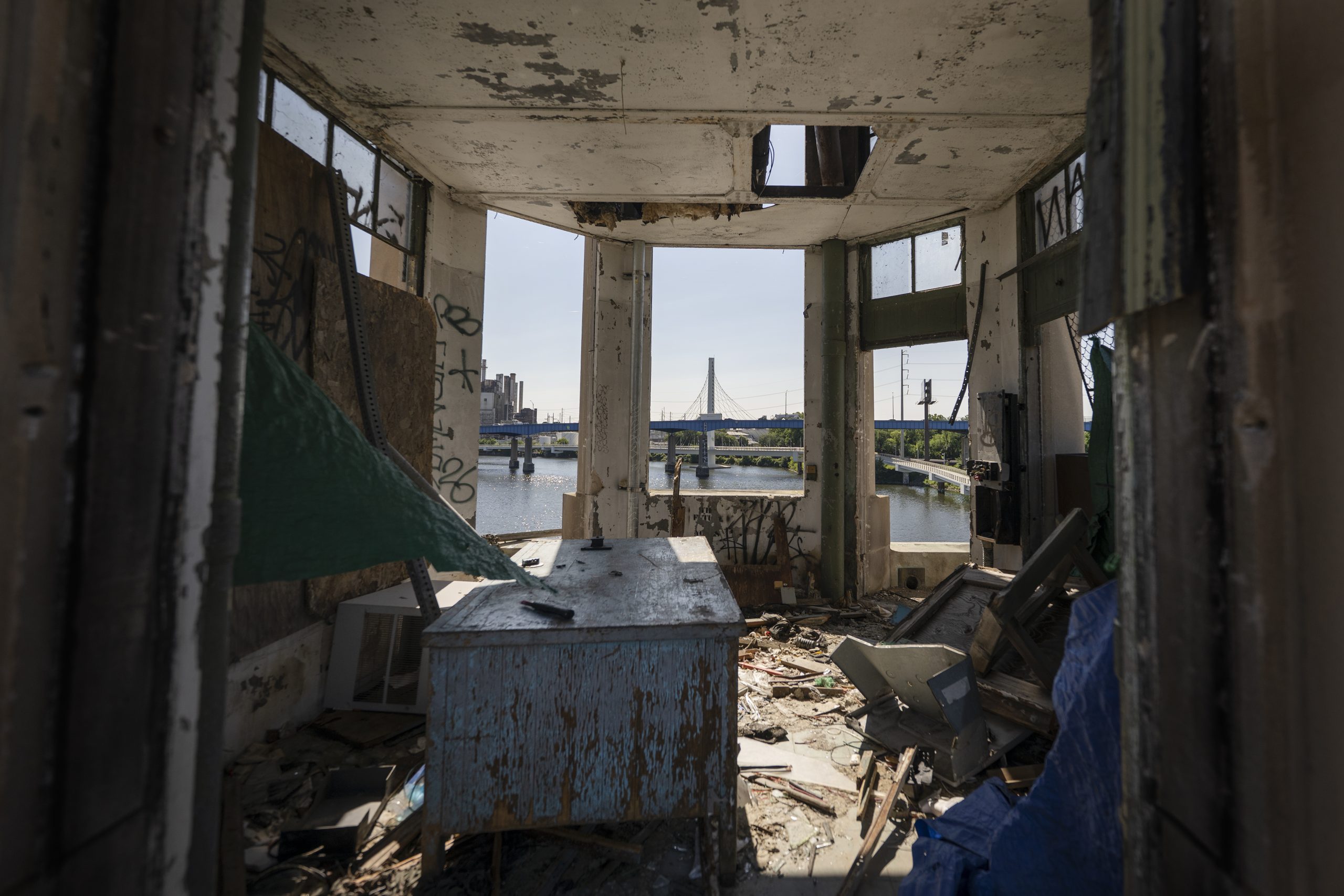
    On the University Avenue Bridge: The condition of the operator’s house closer to Grays Ferry has continued to deteriorate in recent weeks.Jose F. Moreno / Staff Photographer

    An Inquirer column in June highlighted the drawbridge’s condition, as did an article in September.

    The bridge, which links West Philadelphia and Grays Ferry, is owned by PennDOT, though responsibility for its upkeep is split between the state agency and the city’s Streets Department. The city agency oversees operations, including the mechanical components that lift the bridge, which currently do not work. Graffiti removal may also fall under Philadelphia’s jurisdiction.

    PennDOT handles the bridge’s aesthetic and structural components. It is responsible for cleaning up debris, and does routine maintenance on the other aspects of the bridge except for the mechanical components.

    The state agency would also oversee any full major rehabilitation project, whose price tag PennDOT estimates at about $50 million. No such project is planned at the moment. The last major rehabilitation was in 1985.

    The operator’s house closer to Grays Ferry on the University Avenue Bridge.Jose F. Moreno / Staff Photographer

    The complete scope of PennDOT’s work expected to start in the next few weeks is still to be determined, the agency’s spokesperson said, but it will include steel repairs and fortification to prevent vandalism. Completion is expected in late 2026 or early 2027.

    Damage to the bridge has continued in the past month or so at the operator’s house closer to Grays Ferry.

    “It just feels like it’s getting so much worse,” said Heather Calvert, the West Philadelphia resident and regular bridge visitor who started the petition. “It’s not a big ask to secure it to keep more of the historic elements from getting lost for everyone.”

    To have the bridge in this condition, Calvert said, “just makes the city look bad.”

  • It’s clear what the Phillies need at the trade deadline. Do they have the prospect capital to get it?

    It’s clear what the Phillies need at the trade deadline. Do they have the prospect capital to get it?

    Even at rock bottom — a 9-19 record, last place, the manager collecting a pink slip — Phillies officials figured they might still wind up buying at the trade deadline.

    But would they have the prospect capital for a big deal?

    “Well, there’s no doubt that we do,” Dave Dombrowski said back on April 28. “Yes.”

    Not everyone shares that opinion.

    With the deadline looming — set a calendar reminder for Aug. 3 at 6 p.m. — the Phillies are in playoff position and believed to be targeting late-inning relief, a right-handed bat, and a No. 4 or 5 starter. Or maybe, as one rival scout theorized this week, Dombrowski will attempt a bigger swing for higher-end starting pitching given the lack of available impact bats.

    In any case, the Phillies’ farm system is ranked 29th out of 30 teams, according to Baseball America’s recently released midseason assessment. But don’t take the word of one publication. FanGraphs pegs them with the No. 24 system; MLB Pipeline’s preseason ranking put them at No. 20.

    Many scouts are similarly unimpressed. One evaluator from a National League team, granted anonymity in exchange for candor, called the Phillies’ system “pretty barren,” while conceding they have a few “lottery ticket types” in the low minors.

    As another NL scout put it, “Their system’s thin at the upper levels.” While some teams “have guys who could come to the big leagues and probably perform at a high level, the Phillies don’t really have that at triple A at all.”

    Indeed, in trying to turn up right-handed hitting within the organization, the Phillies cycled through Otto Kemp (2-for-25, 10 strikeouts), Félix Reyes (6-for-38, nine strikeouts), switch-hitting Steward Berroa (1-for-7, four strikeouts), and now, veteran Bryan De La Cruz, who homered Wednesday night. They traded two minor leaguers last month for platoon outfielder Derek Hill.

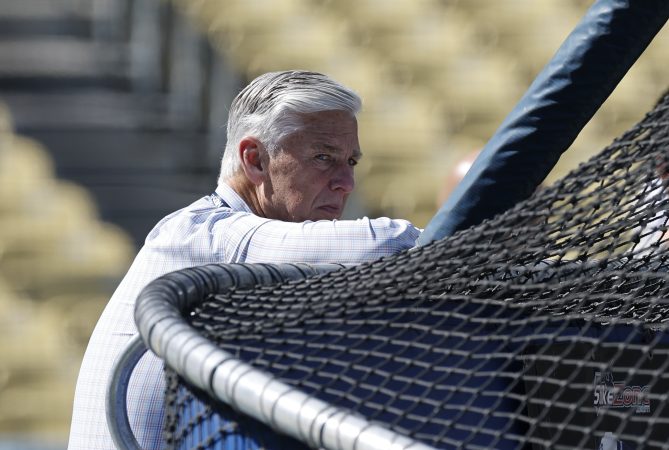
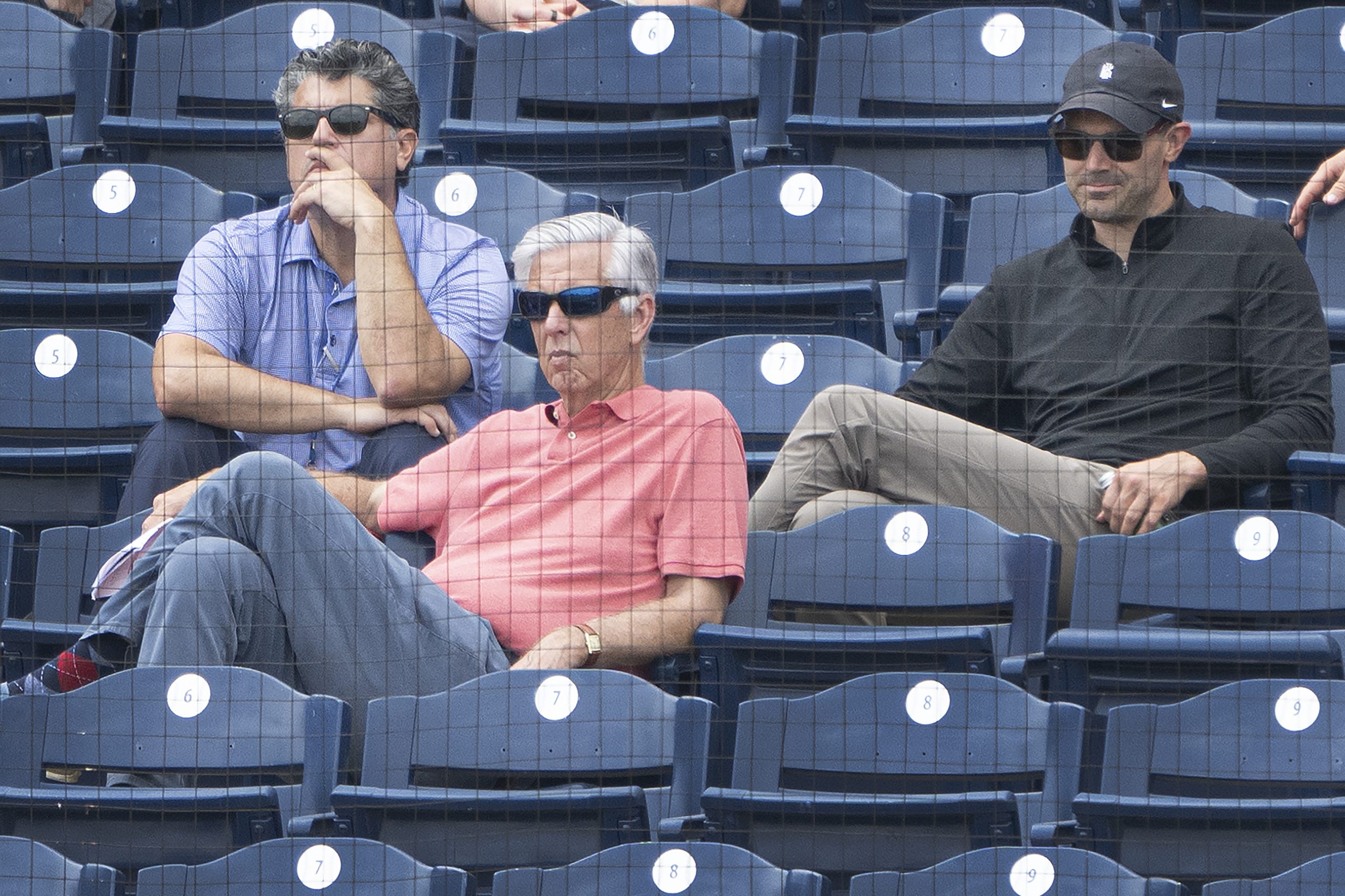
    Phillies president of baseball operations Dave Dombrowski (center) and general manager Preston Mattingly (right) push back against criticisms of the club’s farm system.Jose F. Moreno / Staff Photographer

    On the pitching side, untouchable (in past trade talks, at least) Andrew Painter lugged a 7.06 ERA back to triple A in June. The best in-house replacement: Alan Rangel, a 28-year-old righty who got released in the minors by the Angels two years ago and posted a 5.40 ERA before returning to Lehigh Valley this week.

    Dombrowski and general manager Preston Mattingly push back against criticisms of the farm system. Never mind, Mattingly says, that the Phillies have only two prospects (injured infielder Aidan Miller and righty Gage Wood) who are regarded among the top 100 in the sport.

    “A lot of times, you mention top-100 lists, that’s not necessarily what teams internally talk about and the players they ask about,” Mattingly said recently on The Inquirer’s Phillies Extra podcast. “They’re going with a lot of the information, the data that we have internally. And we feel really good where our system’s at.”

    Sure, but the Brewers and Dodgers feel the same about theirs, No. 1 and No. 3, respectively, in Baseball America’s rankings. The Braves and Cubs are closer to the middle of the pack, at No. 14 and No. 16, but still ahead of the Phillies.

    It’s shaping up as an extreme seller’s market, with 22 teams entering the weekend in playoff position or within 4½ games of a wild-card spot. Some will waive a white flag before Aug. 3; others will hold firm. Regardless, the demand for players will outweigh supply.

    “To me, it’s always about who can impact my team more rather than what’s my biggest need,” former major league general manager Jim Bowden said this week on Phillies Extra. “A starter probably helps the Phillies win the division more over a 162-game schedule. But to win in October, perhaps it’s the reliever or the right-handed bat that would be more important.”

    Relative to most of his counterparts, Dombrowski is willing to move prospects, though he has clung to Miller and especially Painter, whom he wouldn’t discuss at the deadline two years ago for Garrett Crochet. He probably will have to change that stance now for a starter who would pitch in the postseason — and certainly for Tigers ace Tarik Skubal, the marquee name on the market if Detroit makes him available.

    Even so, it’s fair to wonder if there’s enough in the Phillies’ minor-league stable to make meaningful additions to any area of the major league roster.

    “What’s fascinating about [Dombrowski’s] long, successful Hall of Fame career, which is what it’s been, is that he has made a lot of trades without having good farm systems,” Bowden said. “He did it in Detroit, he did it in Florida, he did it in Montreal.”

    It seems Dombrowski will have to pull another card from his sleeve this year.

    Phillies infield prospect Aidan Miller has not played since the end of last season because of a lower back condition.Jose F. Moreno / Staff Photographer

    Missing Miller

    As a nonroster invitee to spring training, Miller’s locker was in the high-rent district of the clubhouse, wedged between Bryce Harper and J.T. Realmuto.

    It wasn’t a coincidence.

    The Phillies hoped to bring Miller to the majors this year, especially after he batted .356 with six homers and 22 steals over the final two months last season. Instead, the 22-year-old former first-round pick hasn’t played at all because of a lower back condition involving a degenerating disc and joint swelling.

    Miller had a spinal procedure June 5, at which time the Phillies outlined “the goal to return to game activity in six to eight weeks.” Seven weeks later, updates are infrequent.

    ”He’s progressing,” farm director Luke Murton texted Thursday. “Back to playing catch. Some defense next week.”

    Even so, the treatment that Miller received — radiofrequency ablation of the facet joints — provides temporary relief and may need to be repeated. The uncertainty about Miller’s short- and long-term health creates multiple questions, not only about his status as the Phillies’ future shortstop but also his value in a potential trade.

    “If he was healthy,” an AL scout said, “he could lead a package.”

    And now? It’s doubtful Miller could anchor a deal for, say, Skubal or Padres closer Mason Miller. For a trade of that magnitude, the Phillies may have to use Painter as a headliner — and even then, the Brewers and Dodgers have the prospect depth to outbid them.

    But do they have the collateral in prospects to make a move for another starter, such as the Mets’ Clay Holmes, the Blue Jays’ Kevin Gausman, or Giants lefty Robbie Ray? Or will they have to aim lower, or fill a less costly need?

    Among their higher-end prospects, infielder Aroon Escobar entered the weekend with a .637 OPS in double A, and outfielder Dante Nori has been sidelined for six weeks with a lower body injury. Shortstop Bryan Rincon (13 homers, .834 OPS in double A) is having a nice year, but he profiles as a second or third piece in a deal.

    The top two positional prospects in the system — outfielder Francisco Renteria and shortstop Juan Parra — are 17 years old and in their first year of pro ball in the Dominican Summer League.

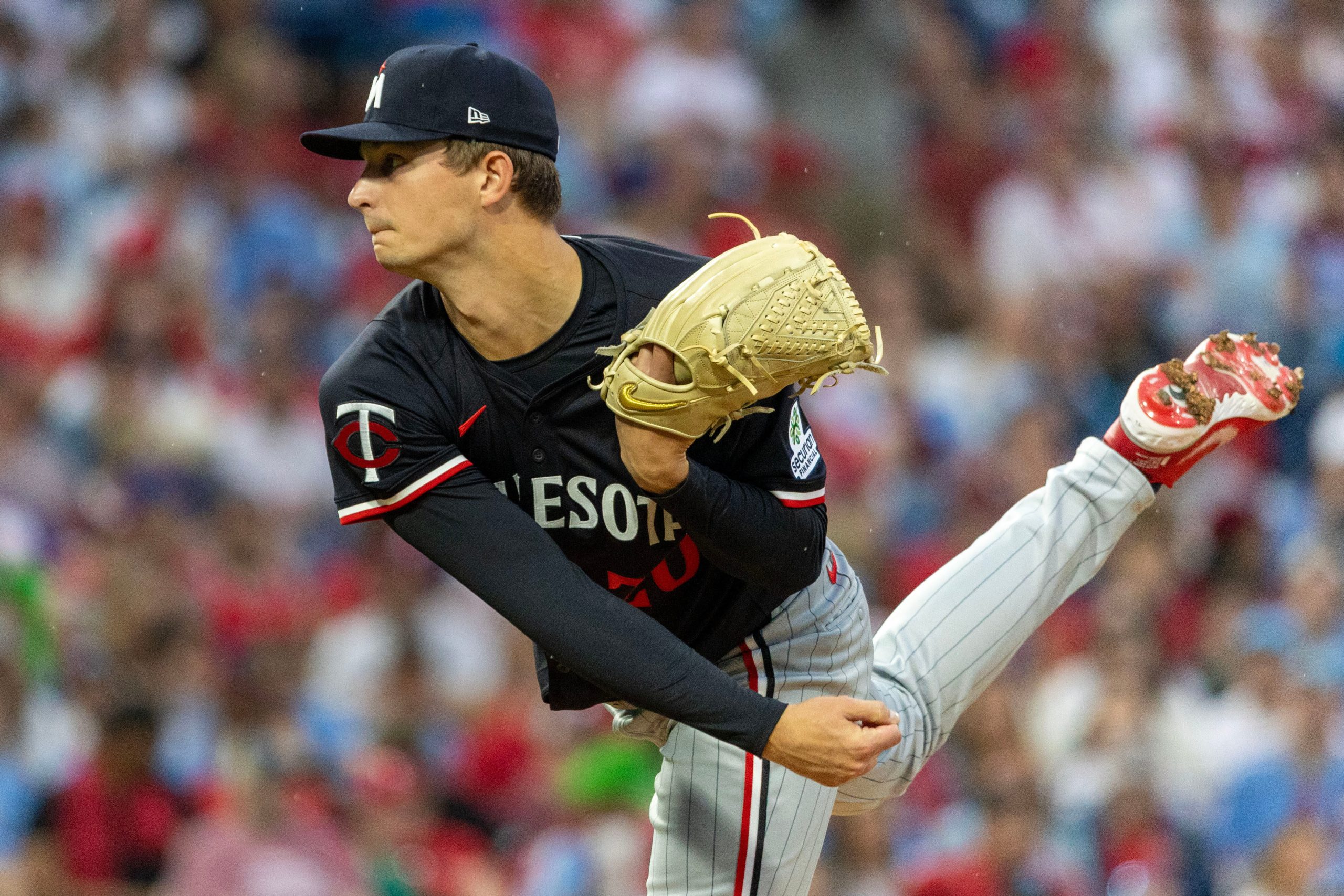
    The Phillies traded 2020 first-round pick Mick Abel to the Twins at the deadline last year for star closer Jhoan Duran.Laurence Kesterson

    Two years ago, the Phillies’ farm system was No. 14 in Baseball America’s midseason rankings. A partial list of trades since then:

    • Pitchers Sam Aldegheri and George Klassen to the Angels for closer Carlos Estévez.
    • Infielder William Bergolla to the White Sox for Tanner Banks.
    • Teenage shortstop Starlyn Caba and outfielder Emaarion Boyd to the Marlins for Jesús Luzardo.
    • Right-hander Mick Abel and teenage catcher Eduardo Tait to the Twins for Jhoan Duran.
    • Outfielder Hendry Mendez to the Twins for Harrison Bader.

    The Phillies haven’t been burned by any of those players … yet. And the Luzardo and Duran trades, in particular, were big wins. But a continuous drain of the prospect pool led to a cumulative erosion.

    “We’ve definitely been in a window where we’re acquiring players at the deadline,” Mattingly said. “We’re never recouping value, which is the state of where we’re at. It’s a great place to be, honestly, when you’re trying to compete for a championship every year.”

    And after having only 12 major league debutants over the last three seasons, fewer than any team in that span, the Phillies finally graduated Justin Crawford, Painter, and Gabriel Rincones Jr. to the majors this year.

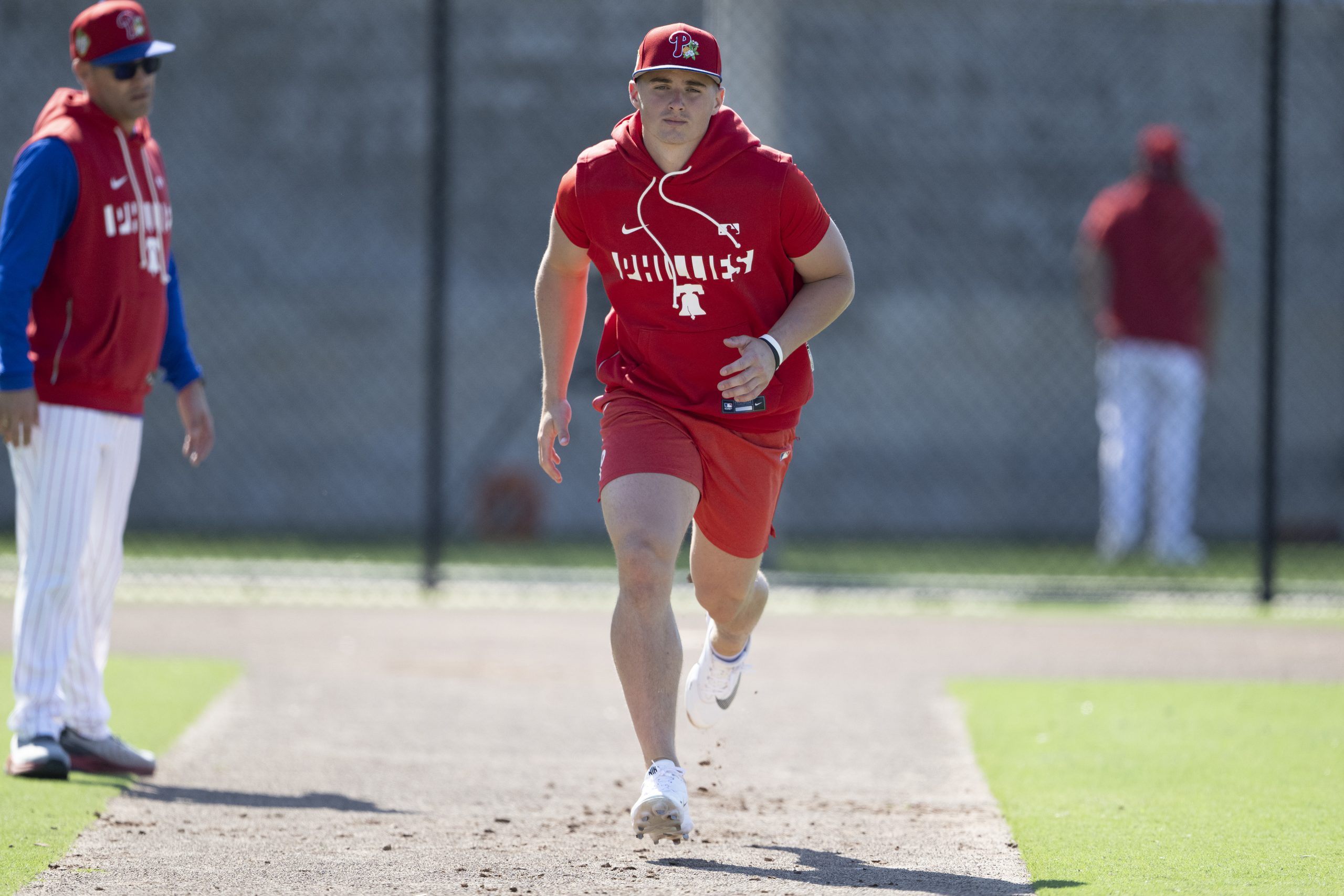
    Crawford and Rincones are platoon outfielders for now; Painter, long viewed by Dombrowski as Justin Verlander 2.0, is expected back in the majors before the end of the season.

    In time, the Phillies believe all three will make a greater impact, though they could also be used in a trade.

    Either way, it takes time to replace them in the system.

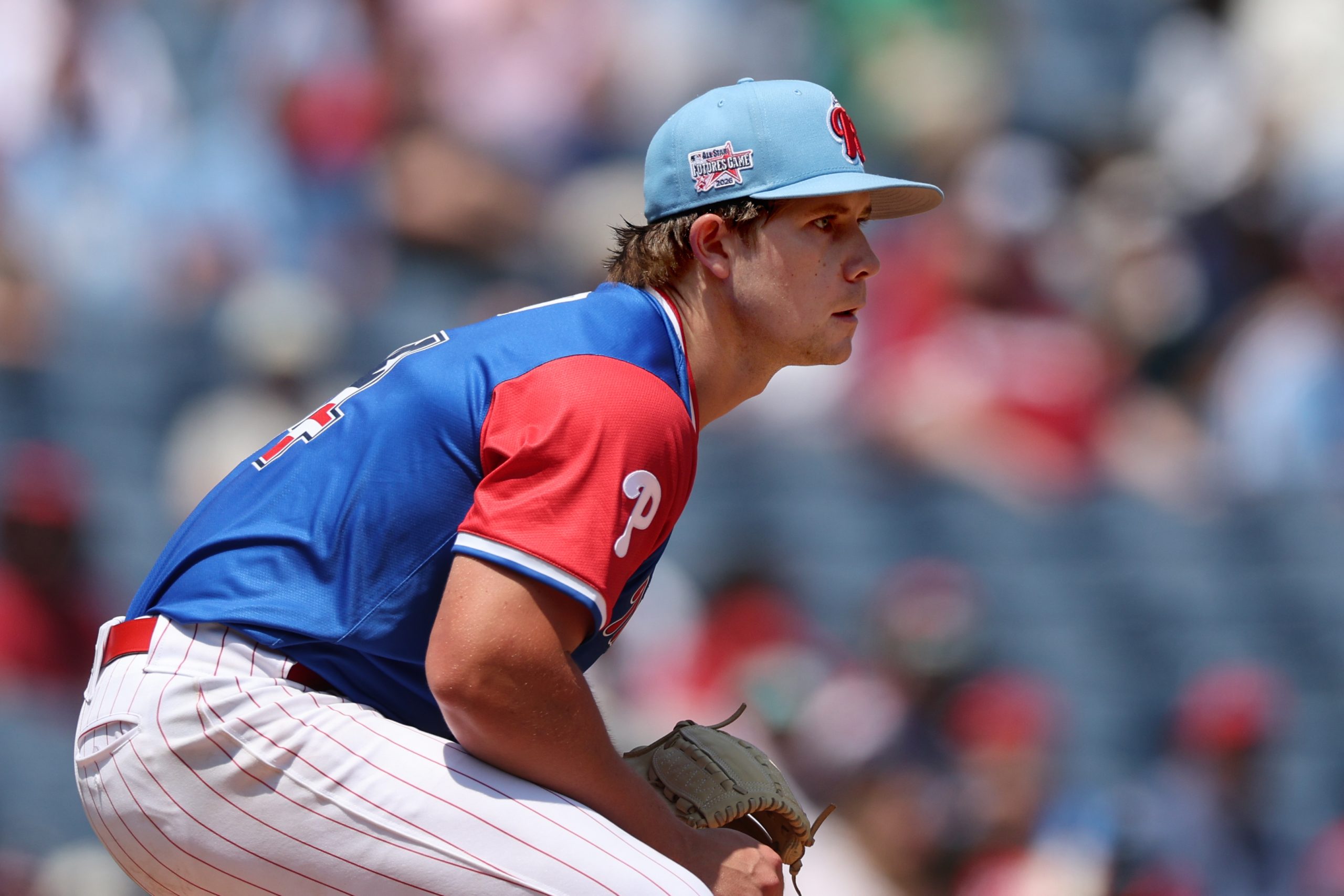
    Right-hander Gage Wood, the Phillies’ first-round pick in last year’s draft, is the organization’s top pitching prospect.David Maialetti / Staff Photographer

    Gage-ing the system

    The deepest subset of the Phillies’ farm system, in the assessment of three scouts, is right-handed pitching.

    Start with Wood.

    Or maybe bring him out of the bullpen?

    Most scouts concur that Wood will pitch in the majors, but there’s disagreement about his optimal role. The 22-year-old is starting in the minors, though he has pitched more than four innings only once. He has a 3.58 ERA in double A and gained more national exposure two weeks ago by starting the Futures Game.

    There may be enough interest in Wood to anchor a deal for a needle-moving player. But Wood also appears to be on an accelerated track, with the Phillies jumping him two levels to double A in late May.

    “I don’t think about that stuff,” Wood said of being the subject of trade rumors. “I’m just here to play baseball.”

    Several other right-handers are getting attention from scouts, but most are in the low minors. Two scouts mentioned 21-year-old righty Brad Pacheco, who has a 4.05 ERA and 78 strikeouts in 73⅓ innings for low-A Clearwater. Wen-Hui Pan and Alex McFarlane, a hard thrower who made his major league debut this week, also get decent marks.

    A name to watch: Ramon Marquez. The 20-year-old righty entered the weekend with a 2.02 ERA in 10 games, including a 2.25 mark in four starts since moving up to high-A Jersey Shore.

    One scout called Marquez “probably their best pitching prospect right now.”

    Maybe he’s the Phillies’ best trade chip, too.