For Blake Fleischer, an early morning jog in Center City last month began like any other.
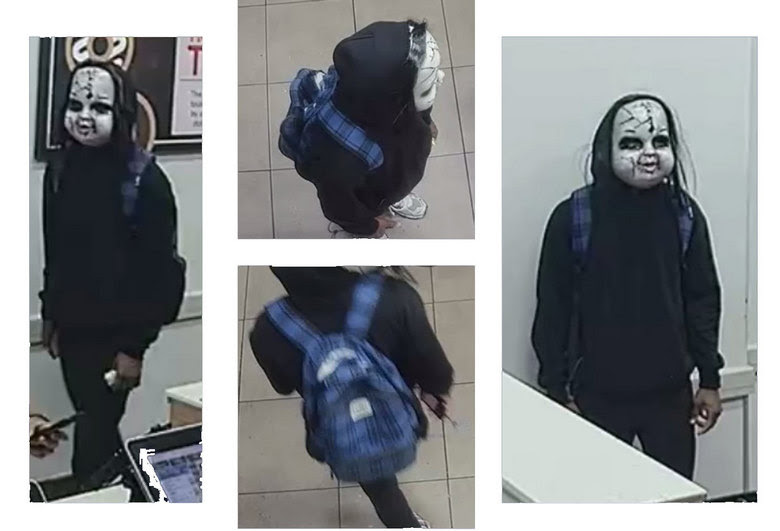
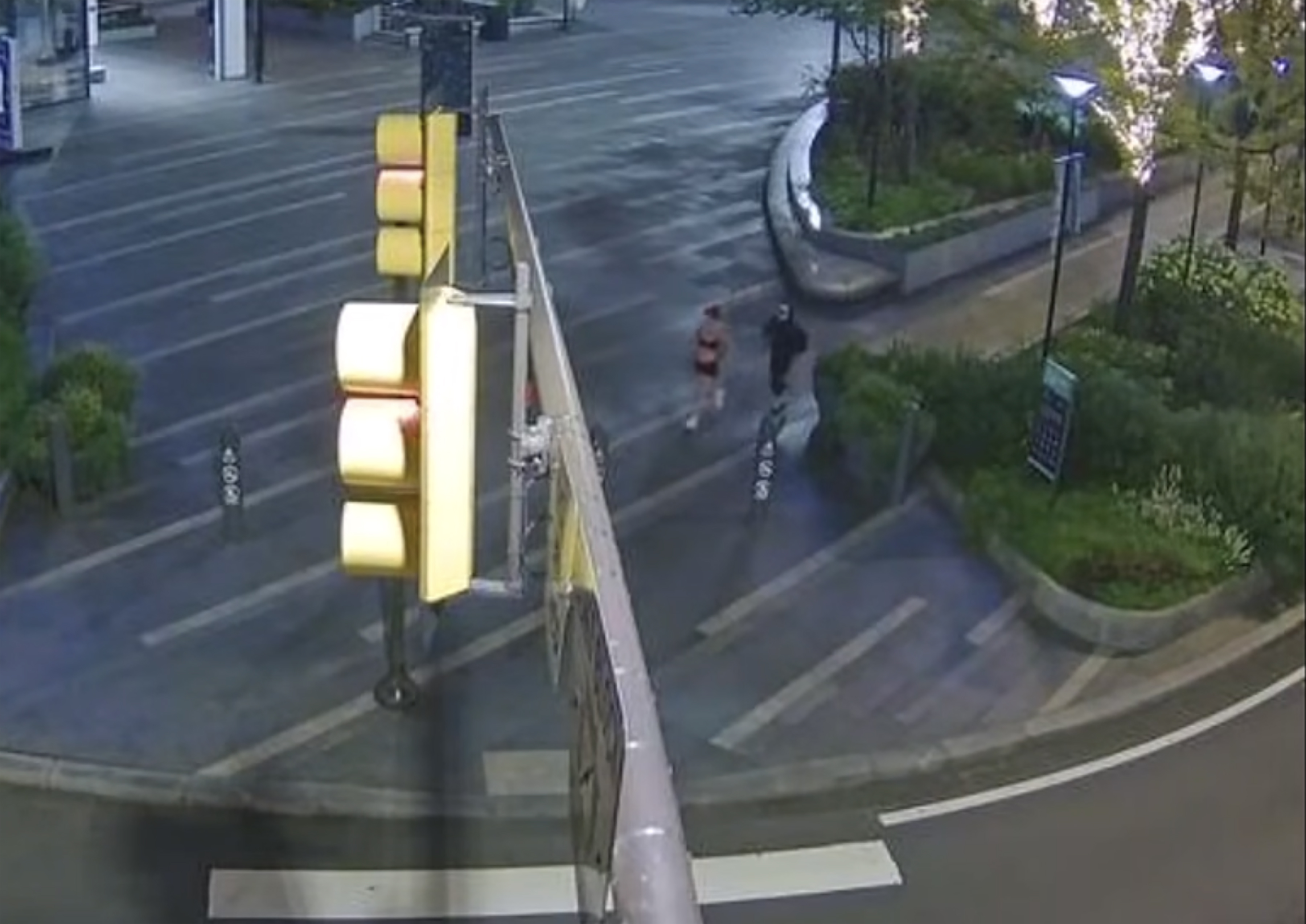
But it ended in terror, she said as she recalled running into traffic near City Hall, seeking help as a man wearing a Chucky-style horror mask followed close behind.
“I was extremely terrified,” Fleischer, 40, testified Wednesday in Philadelphia Municipal Court.
Fleischer, who entered the courtroom limping and using a crutch, tearfully recounted the pain of tearing her hamstring as she fled the man in the mask, who she feared was armed when he asked if she was “ready to die.”
“I thought he was going to attack me,” Fleischer said.
Hughes, 22, was arrested by U.S. marshals in Las Vegas two weeks after the incident. He sat across the courtroom wearing a blue prison jumpsuit and did not speak during the hearing, in which his defense attorney disagreed with many of the prosecution’s findings.
Municipal Court Judge Karen Simmons held Hughes for trial on charges of aggravated assault, possessing an instrument of a crime, terroristic threats, simple assault, reckless endangerment, and harassment. Simmons dismissed charges of disorderly conduct by engaging in fighting, as well as flight to avoid apprehension.
The hearing marked the first time that details about Hughes were heard in court after videos of the masked man’s antics went viral across local and national media outlets and social media feeds.
Prosecutors said Tuesday that surveillance footage recovered from cameras throughout the city had tracked Hughes’ travels, capturing him taking a SEPTA bus from his apartment building near North 23rd and West Venango Streets to Center City after 2 a.m. Aug. 12.
They said Hughes donned the horror mask and began harassing pedestrians in the Suburban Station concourse. He ignored a SEPTA transit officer’s request to remove the mask, they said, briefly flashing his face before putting it back on and leaving the area.
He encountered Fleischer around 5:30 a.m. as she jogged near the north side of City Hall, she testified to prosecutors.
The masked man began to chase her, she said, eventually cutting her off as the two got within several feet of each other.
In an image provided by the Philadelphia Police Department, a man dressed in dark clothing and wearing a mask styled after the character Chucky in “Child’s Play,” the 1988 horror film, chases a jogger in Philadelphia on Aug. 12, 2026. On Thursday, Aug. 20, the police identified a suspect, Zymire Hughes, 22, and said there was an arrest warrant for him. (Philadelphia Police Department via The New York Times) — NO SALES; FOR EDITORIAL USE ONLY. —PHILADELPHIA POLICE DEPARTMENT
Fleischer said she found herself caught between the facade of City Hall and the man, who held a phone in his left hand while his right hand was concealed behind his back, and she fled.
It was not until the next day — when she awoke in “extreme pain” and had trouble walking — that she went to the hospital for her hamstring injury, she said.
Prosecutors also called on detectives from the Central Police Division to verify surveillance footage of Hughes’ activity. That included a clip in which it appears Hughes is filming himself and gesturing toward his phone before leaving his apartment to head to Center City.
A SEPTA transit officer later testified that he was able to help detectives identify Hughes because he had interacted with him in 2023 and 2024 while on duty. Detectives added that widely circulated images of Hughes yielded a phone tip that aided their investigation.
Lauren Zitsch, Hughes’ public defender, told Simmons she took issue with many of the prosecutors’ assertions, particularly the aggravated assault charge.
“You have to show some form of malice” for that crime to stand, she said, noting that the confrontation between Fleischer and Hughes was not captured on video.
But Simmons agreed with prosecutors, who argued that by frightening the woman enough for her to flee, Hughes would have understood the “legal and likely consequence” of his actions.
Hughes is expected to appear in court for a formal arraignment in early October.
He had not posted the required 10% of his $100,000 bail and remained in custody at the Philadelphia Detention Center.
The Philadelphia District Attorney’s Office is investigating ties between one of DA Larry Krasner’s top advisers and a man serving life in prison after prosecutors learned that the official sent the man money years ago and did not disclose it.
G. Lamar Stewart, chief of external engagement and government affairs in the DA’s office, said he sent $100 to Anthony Sutton in January 2021 to support Sutton’s mentorship program, “Mann Up,” for men incarcerated at State Correctional Institute Phoenix.
Sutton, 61, who is serving life in prison for killing a man in Germantown in 1984, has been appealing his conviction for more than a decade.
The issue came to light last week, after the prosecutors assigned to Sutton’s appeal were reviewing his prison records and noticed that Stewart was among those who had sent Sutton money in recent years.
The records showed Stewart did so only once, Krasner said.
The payment raised concerns, in part because Stewart had organized and participated in meetings between Sutton’s defense attorney, Krasner, and prosecutors about the case, according to a source familiar with the matter.
Krasner’s office has opposed Sutton’s appeal and said his profession of innocence lacked merit.
When the prosecutors discovered the payment, it was quickly brought to the attention of Krasner, who then asked his office’s special investigation unit to investigate, according to multiple sources familiar with the case. The inquiry remains ongoing.
Stewart, who is also senior pastor of Taylor Memorial Baptist Church in Nicetown-Tioga, was working as the head of the office’s community engagement unit at the time of the donation. In an interview, he said he used his own money to support Sutton’s program as part of the faith-based charitable work he does to assist families and community organizations across the region every holiday season.
“I thought that the work that they were doing was positive, transformative, and it was geared to helping reduce violence in Philadelphia and to make communities and families whole,” he said.
He said he did not know of any way to reach the organization other than to send it through Sutton directly. “I was very intentional to make sure that my name was listed because when you’re not trying to hide anything, you just do things above the board,” he said.
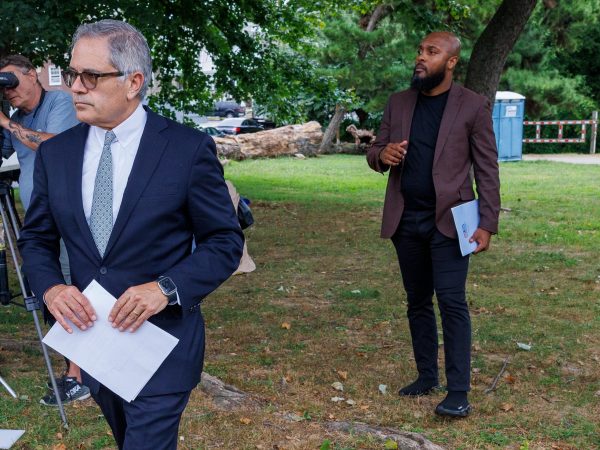
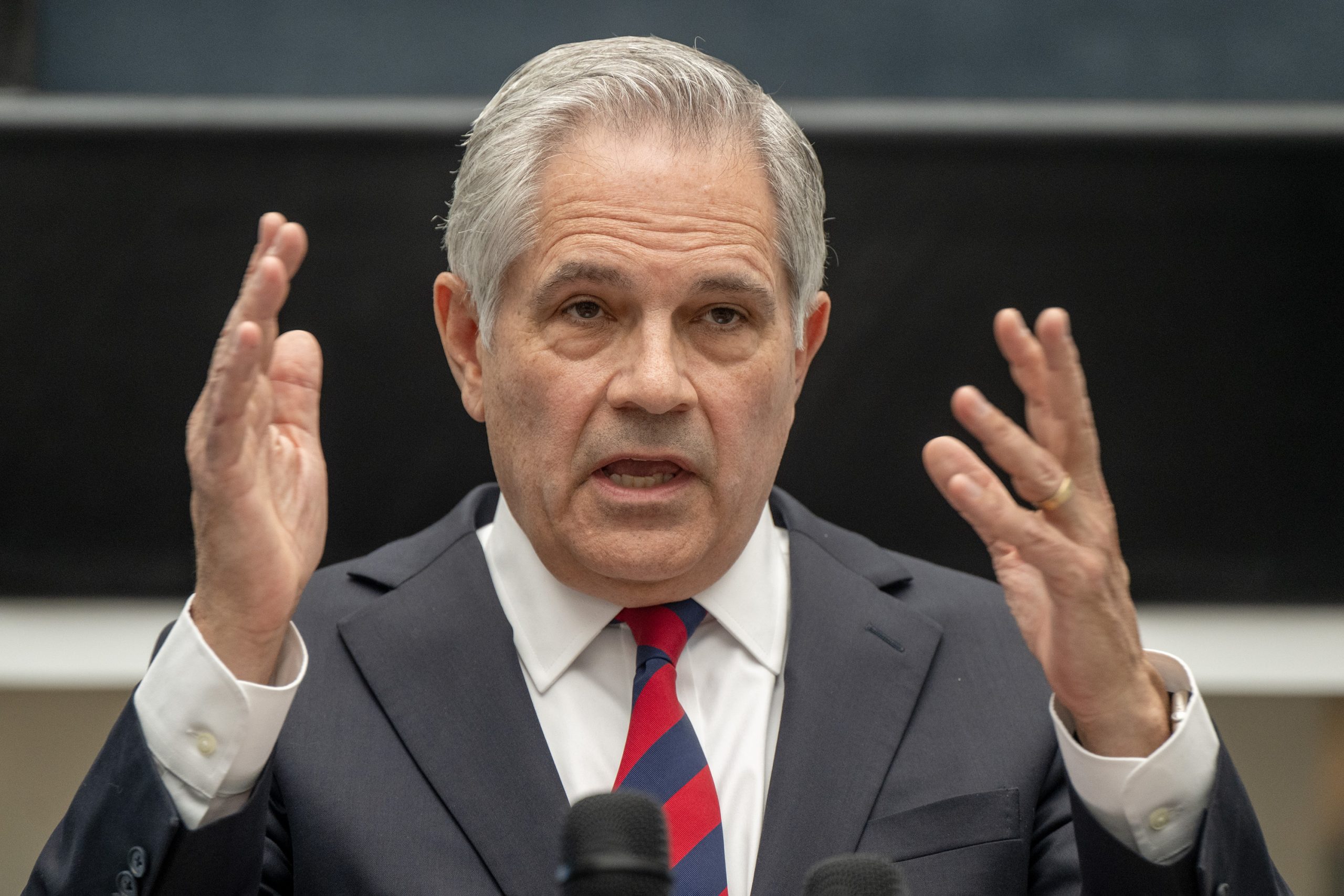
District Attorney Larry Krasner (left) and G Lamar Stewart, head of the Community Engagement and Government Affairs at the DA’s Office, outside the President’s House in Independence National Historical Park in February 2026.Tom Gralish / Staff Photographer
During a brief hearing in Sutton’s case on Monday, Assistant District Attorney David Napiorski, supervisor of the office’s law division, told Common Pleas Court Judge Giovanni O. Campbell that his attorneys needed additional time to investigate Sutton’s case after they found that someone in the office had put “money on the defendant’s books in prison.”
“That needs to be investigated by the office thoroughly before we can take any further action,” Napiorski told the judge.
Stewart said he did not try to influence the outcome of the appeal or advocate for Sutton. He acknowledged that he attended at least one meeting about Sutton’s case, but said his job requires him to coordinate and attend meetings with Krasner.
Krasner said that he saw no issue with Stewart’s donation or subsequent participation in meetings, and that his office’s inquiry and prosecutors’ comment in court Monday “establishes integrity.”
“G. Lamar Stewart gave a small amount of money for an organization … and then this office decided to oppose Mr. Sutton’s request. Where’s the issue?” he asked.
He added: “Any rock we haven’t flipped yet, we will flip. Preliminarily, it seems quite clear that this was a donation given for a completely legitimate purpose.”
Sutton did not immediately respond to a request for comment sent through a messaging app for people in prison. His attorney, Jason Javie, said Tuesday that he did not know anything about Stewart’s payment to Sutton and declined to discuss the matter further.
“My focus is 110% on the exoneration of Mr. Sutton,” he said.
The revelation comes amid mounting scrutiny over Krasner’s office’s handling of post-conviction matters. In a forceful ruling last month, the Pennsylvania Supreme Court said Krasner’s office had a pattern of misleading judges when seeking to overturn old murder convictions.
Last week, in a separate, controversial federal appellate case, a former assistant district attorney in Krasner’s office said prosecutors were “colluding” with defense attorneys to find the most effective way to have the murder conviction thrown out. And then, on Monday, in a striking court filing in that same contentious case, two supervisors in the law division said Krasner had instructed them to litigate the matter in a way that would “protect the office.”
And now, the office is investigating a case connected to Stewart, who has worked in the DA’s office since 2019 and is one of Krasner’s most trusted advisers.
District Attorney Larry Krasner at a press conference in May, denouncing criticism of his office leveled by Republican members of the House Judiciary Committee.Tom Gralish / Staff Photographer
Stewart, who is paid $154,500 annually, oversees the office’s community engagement, public affairs, and communications strategies, and acts as a conduit between Krasner and other public officials. Since Robert Listenbee retired as first assistant district attorney in January, Krasner has not named a successor — and several prosecutors say Stewart, who is not a lawyer, has effectively absorbed parts of that job. He often helps coordinate sensitive matters in cases, including relocating victims and witnesses.
He is respected by many in city government and across the community. Mayor Cherelle L. Parker, speaking at Krasner’s inauguration ceremony in January, mentioned Stewart as one of the office’s most essential staffers.
“District Attorney Krasner, as a moment of personal privilege, I want you to know that G. Lamar Stewart is one of the most committed, committed, committed members of your team in engaging in community outreach, and he represents you well, sir,” she said to applause.
Stewart, born and raised in Germantown and North Philadelphia, served in the U.S. Army and worked for the Philadelphia Police Department before joining Krasner’s team in 2019. At his church, he runs a nonprofit called Taylor Made Opportunities that offers job support and mentorship to young men in the neighborhood, and supports families of homicide victims.
Stewart said he donates to community organizations, and provides meals, Christmas gifts, and other means of support to crime victims’ families each year, using his personal money.
He does not typically disclose those donations to the DA’s office, he said, and it has never been a problem.
“My Christian faith is rooted in giving, in love, in showing up for the least of these, showing up for those who have been harmed, for showing up for those who are trying to rehabilitate and be accountable for the harm they caused to bring healing to our community,” he said. “For anyone to suggest that me giving through a faith lens, in the interest of good for community, is problematic for me, that is an infringement upon my faith tradition and my religious rights.”
Krasner said he did not think it was necessary for Stewart — or other employees in the office — to disclose donations.
“I don’t know that it makes sense to require 700 employees, especially if they’re doing so on a faith basis, to disclose everyone they give donations to,” he said. “It’s certainly something we could think about.”
In Stewart’s case, his money went to support a program run by Sutton, better known as Benny Doo, who was sentenced to life in prison after a jury convicted him of first-degree murder in the shooting death of Richard Berry in the Pelham section of Germantown in December 1984. In the early 1980s, prosecutors said, Berry hired Sutton and other members of his crew, called the “Ghostbusters,” to retrieve jewelry that had been stolen from him, and agreed to pay with “a few ounces of blow and a couple thousand dollars.”
Berry never paid up, and after he started avoiding Sutton and his crew, Sutton killed him, prosecutors said.
But Sutton said prosecutors violated his right to a fair trial when they failed to turn over police documents — including polygraph results and police interviews with several witnesses — to his defense attorney. One man who testified at trial has also since come forward to recant his testimony.
Prosecutors, in a court filing in May, said Sutton failed to show how those issues could have changed the outcome of his trial. His appeal, prosecutors wrote, was untimely and lacked merit.
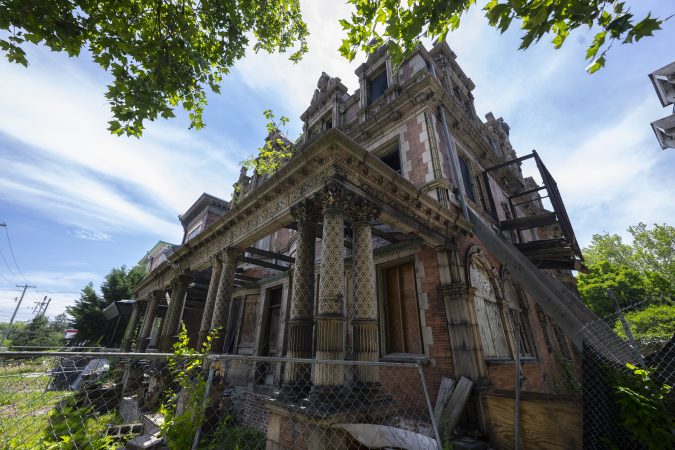
They don’t make them like the Conkling-Armstrong House anymore. They never really did — except this once.
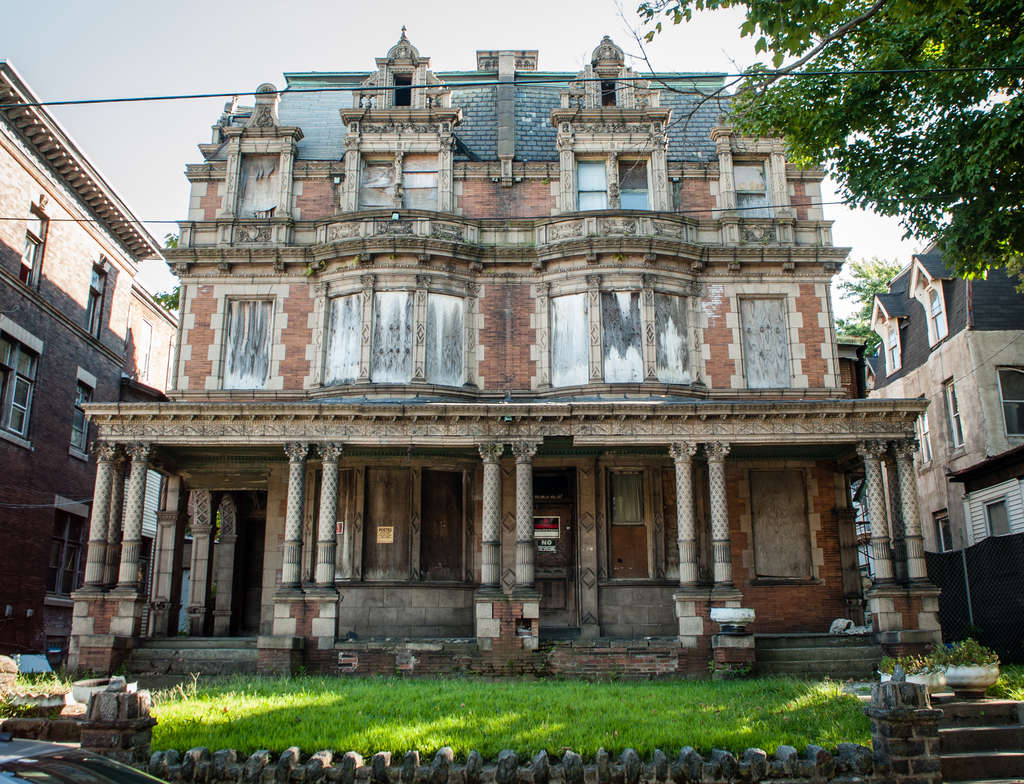
Located at 2224-26 W. Tioga St., each of the two roughly 5,000-square-foot houses in this twin mansion are encrusted with terra-cotta flourishes that set them apart from their neighbors and from pretty much any other building in the city.
That’s because this almost 130-year-old mansion in North Philadelphia was built as a towering advertisement for what the Conkling-Armstrong Terra Cotta Co. could offer late-19th-century developers and architects.
They studded it with beautiful decorations and elaborate details to demonstrate what their products could look like on future buildings.
When this one-of-a-kind house was built in 1898, the company’s factory stood mere blocks away. Now it is gone, demolished in 2011, and the house itself hasn’t been occupied in even longer.
That period of vacancy will end soon, if local affordable housing developer Brian Wise gets his way. He’s already invested almost $1 million in bringing the Conkling-Armstrong house back from the brink of demolition.
“When we first had the property, we could not even walk through it,” said Wise, managing partner of Wise Holding Group LLC. “There was so much deterioration from the roof all the way down to the basement.”
Wise plans to build 12 apartments in the twin buildings and another 12 in two additions behind the twins, each over 4,000 square feet. They will extend into the vacant lot behind the Conkling-Armstrong house, fronting on Estaugh Street.
The plan is to lease most of the units to tenants who use rent vouchers from the Philadelphia Housing Authority.
“It’s a pretty ambitious job to do and something that will be a challenge, but sometimes we like challenges,” Wise said. “We’ll do everything we can to keep the building stabilized and bring it back to its original form, especially the exterior.”
Earlier this month, the city’s Zoning Board of Adjustment gave Wise the go-ahead to begin the project.
“This is one of these projects that you’ll remember over the course of your career,” Wise’s attorney, Alan Nochumson, said in his pitch to board members to preserve the building.
Wise needed permission to build beyond the allowable density on the site, arguing that the rents from additional units were the only way to make the project economically feasible.
The Conkling-Armstrong house on the 2200 block of West Tioga Street in 2018. MATTHEW HALL / Staff Photographer
His case was supported by two local community groups, the Allegheny West Civic Association and the Swampoodle Neighborhood Parcels Association.
Wise anticipates an 18-month to two-year timeline, given the final Historical Commission approvals he needs.
Wise originally came to this block of West Tioga Street to try to buy one of the other venerable, if less ornamented, stone twin houses on the block.
He decided against that purchase, but while he was in the neighborhood, he noticed the intricate design and decoration of the Conkling-Armstrong House, as well as its dilapidated state.
After acquiring the building, Wise considered demolishing it. But the Conkling-Armstrong House is on the Philadelphia Register of Historic Places, which makes razing it a challenge. Instead, the developer decided to embark on his first adaptive reuse proposal. He needs a final Historical Commission approval to begin construction.
“My first impression, obviously, was that the architectural nature of the property was unique,” Wise said. “It was something that we weren’t used to seeing … so instead of knocking it down, we said let’s try to bring this building back to life.”
At the zoning board, Wise faced questions from commissioners who wanted him to add a porch to the new addition facing Estaugh Street, which he promised to do.
The new buildings behind the Conkling-Armstrong house will be more modest, with a design that echoes other houses in the neighborhood.
“We decided that trying to match all of these ornate features of the front building is not a tenable solution,” said Matt Masterpasqua of the Mass Architecture Studio, which is designing the project.
“So we tried to take context from the rear street, as well as some of the more modest neighboring buildings to inspire our new design,” Masterpasqua said. “It’s a little more feasible for us to construct.”
He anticipates the redevelopment of the Conkling-Armstrong Terra Cotta Co.’s house-and-showroom will cost at least $3 million, but he could be aided by federal Historic Preservation Tax Credits.
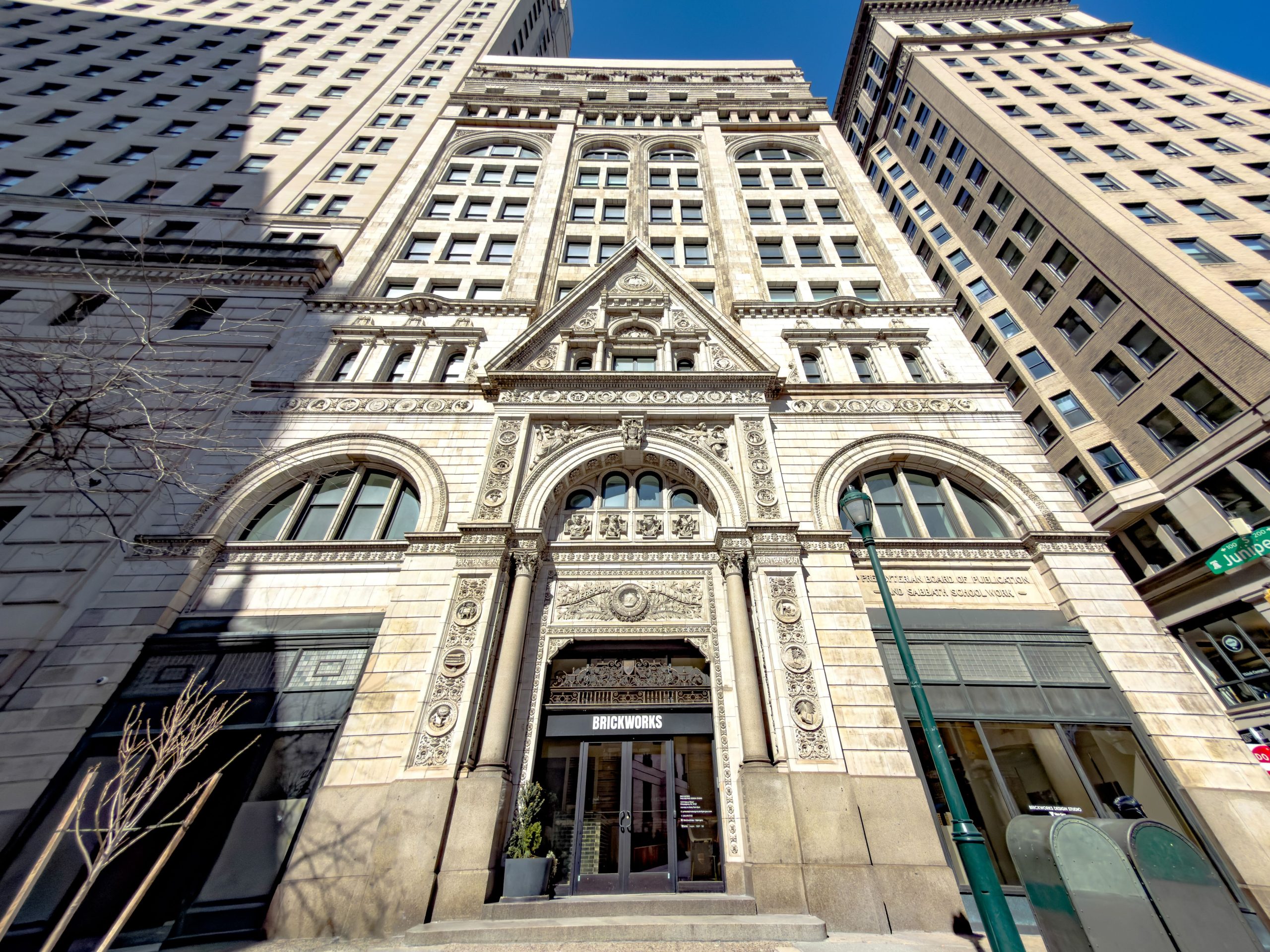
The Witherspoon building, ornamented by the Conkling-Armstrong Terra Cotta Co. Neff
The company’s historical legacy in Philadelphia includes ornamenting such structures as the Witherspoon building and the former Curtis publishing house. Like many historically protected gems, those buildings are in Center City, not residential North Philadelphia.
“It was a showcase for the capabilities of their company, but it’s also just really an incredible building,” Masterpasqua said. “It’s really great to be part of something that’s going to be able to salvage the neighborhood and this piece of architecture.”
Philadelphia’s ports ranked as the fastest in North America for the third year in a row, according to the latest annual Container Port Performance Index, sponsored by the World Bank and Standard & Poor’s as a way to encourage improvements to terminals that handle global trade and pack goods moving from the ocean to road and rail for delivery.
The survey gave Philadelphia the highest ranking of more than 50 ports in the United States, Canada, and Central America.
Boston and Jacksonville, Fla., ranked second and third. Philadelphia’s nearest neighbors — the New York area and Baltimore ports — ranked far behind. The list measures the time ships spend at port berths, the time from a ship docks until it is unloaded, crane availability, ship size, and other measures.
No North America port ranked among the 20 fastest of more than 200 surveyed worldwide. That list was dominated by ports in China and other parts of East Asia, in Arab and North African countries, plus Algeciras, Spain, and Posorja, Ecuador.
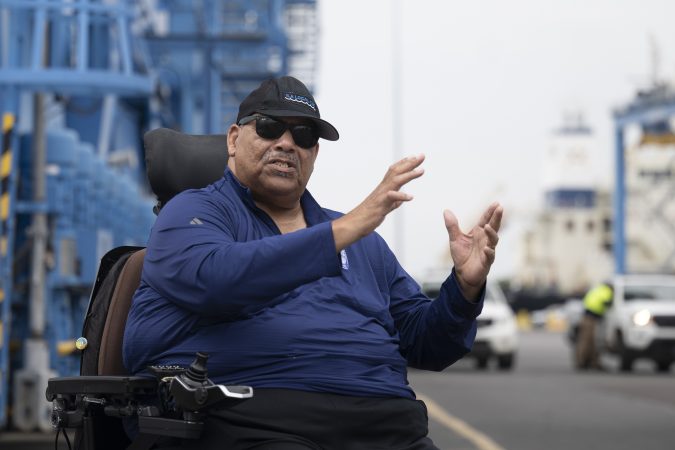
“This sometimes looks like chaos, but it’s organized chaos. It’s about teamwork,” said Boise Butler, president of Local 1291 of the International Longshoreman’s Association.
ILA is the main East Coast port labor union group, claiming more than 1,400 members on the Philadelphia docks, plus more in New Jersey and Delaware.
Butler said Philadelphia had long ago expanded its hours to attract shippers who were concerned that the terminals far up the Delaware estuary were more vulnerable to any delays.
Lazer credited “our very skilled labor” for handling large loads efficiently with minimum damage reports, according to commodity and container shippers.
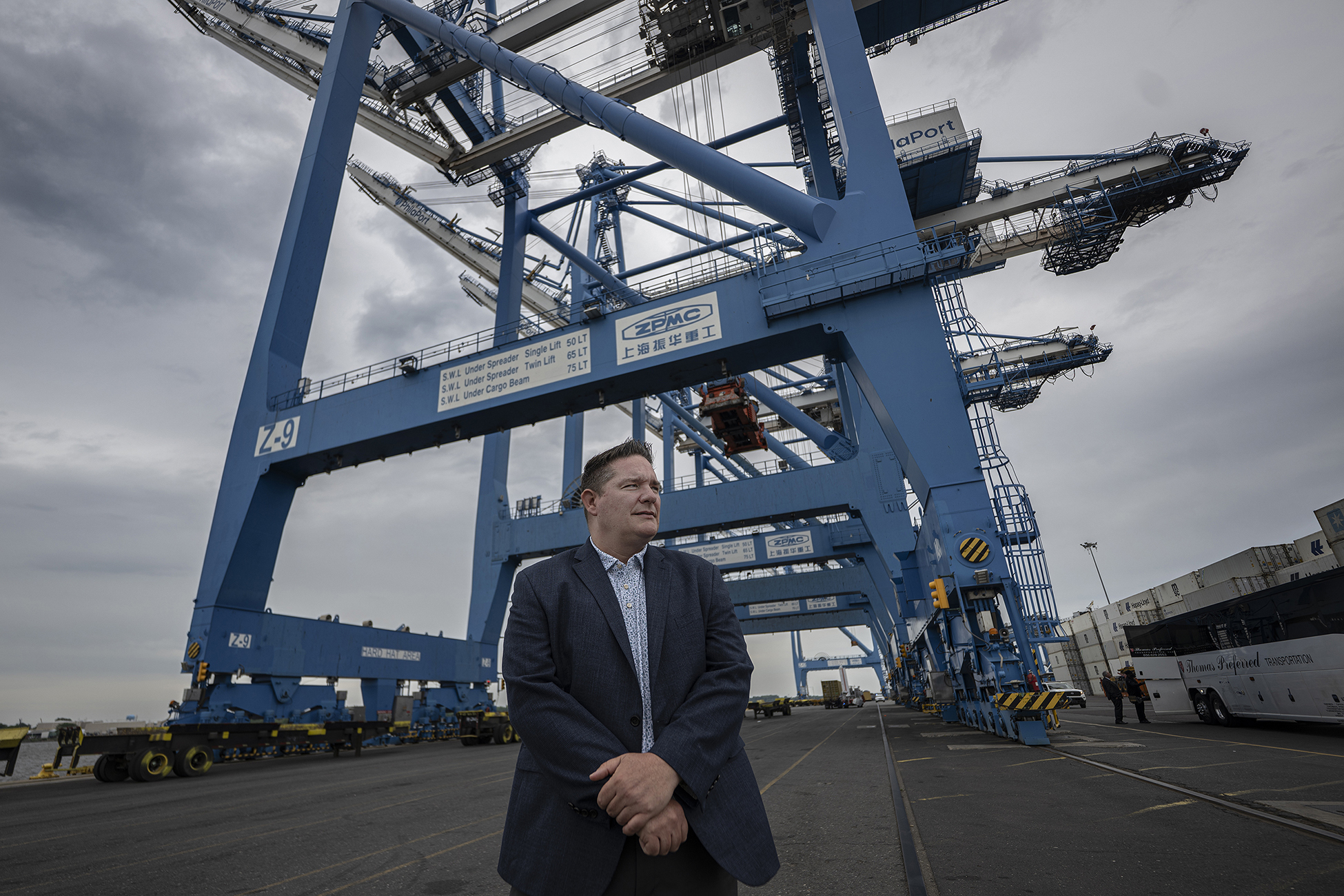
Richard Lazer, CEO of PhilaPort, near cargo cranes at the PhilaPort terminals. Lazer credits “our very skilled labor” for handling large loads efficiently with minimum damage reports.Jose F. Moreno / Staff Photographer
It is premium work. The Longshoremen’s contract currently pays experienced workers $50 an hour, rising to $54 in October, with overtime pay after five hours, Butler said. “If they’re not making $200,000 after five or six years, something’s wrong.”
But the ranking is “not just about labor,” Butler said. “It starts with the Commonwealth of Pennsylvania, what they have built, and their vision for this port.”
Leo Holt, whose family-owned shipping company operates on the Packer Avenue docks and at its own Gloucester City port terminals, said the latest high score is “credit to all parties.”
“It’s a partnership between labor and management that has taken a long time to refine,” Holt said, referring to last year’s report, which also put Philly at the top of North American ports. “We work hard at it.”
Butler said the port needs to expand beyond the recent record hauls of nearly 1 million containers a year if it is to challenge ports like Savannah, Ga., which he said shipped five times as many containers.
“We need more warehouses,” Butler said.
The state built or helped finance many of the port’s improvements and has pledged to lead expansion into part of the former Philadelphia Naval Base and the Norfolk Southern freight yard in South Philadelphia. Four cranes larger than any currently on the area dock and two new 1,000-foot berths are planned, Lazer said.
Philadelphia cargoes through the Tioga Marine Terminal near the Betsy Ross Bridge include wood pulp and cocoa beans moved and, recently, ship propellers and sheet and structural steel imported by Korean industrial giant Hanwha for transfer by barge back down the Delaware to Hanwha Philly Shipyard.
Besides containers, the South Philadelphia port that once handled iron and coal now ships fertilizer and cement. Korean cars from Hyundai and Kia also land in the port.
South American fruit, which once formed a significant part of the Philadelphia and Wilmington port totals, now goes mostly to ports in New Jersey, Butler said.