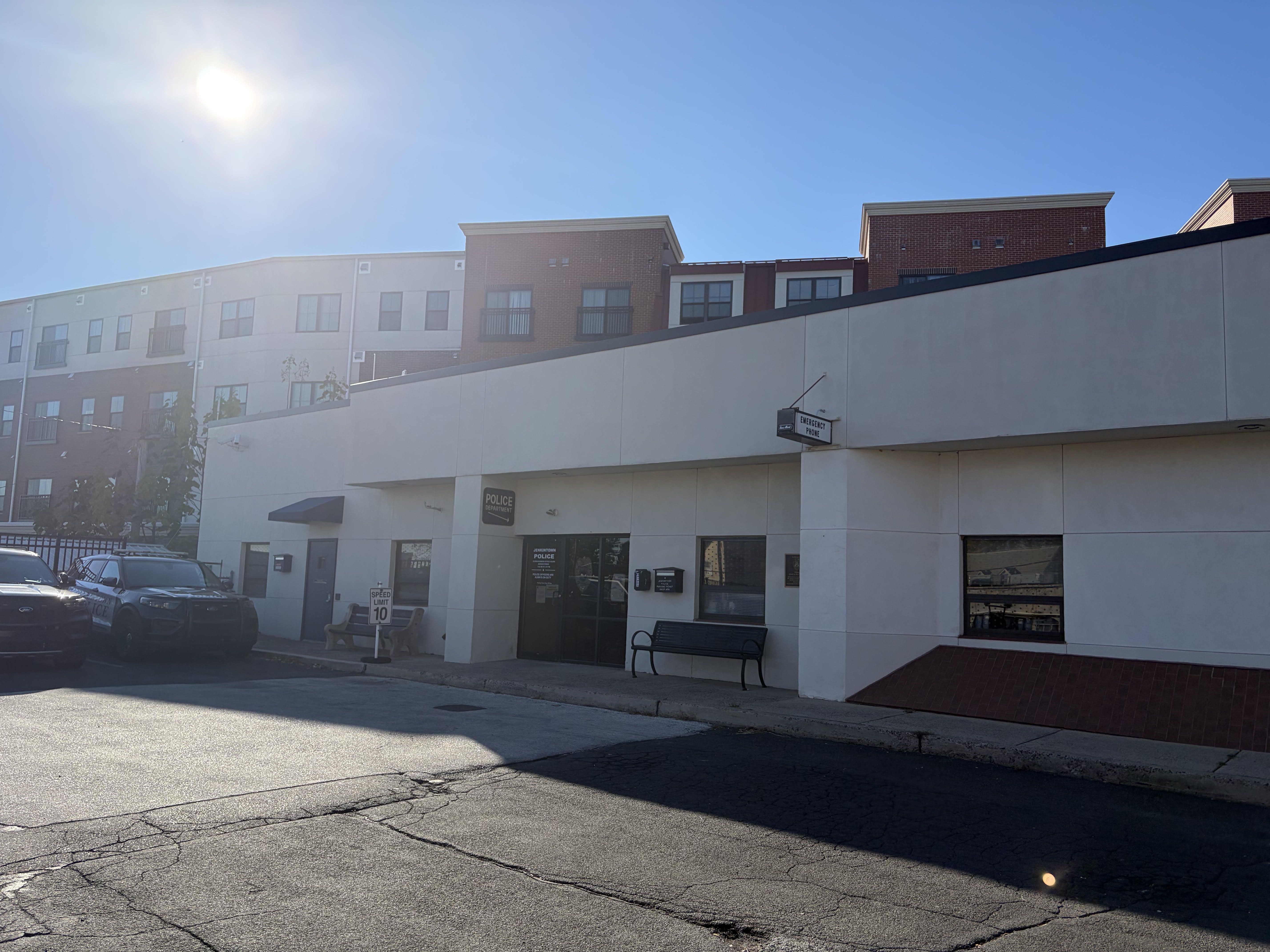
Tag: Thomas Scott

  • Jenkintown police spending is on track for a 13-year low, just two years after nearly cutting the department

    Jenkintown police spending is on track for a 13-year low, just two years after nearly cutting the department

    Just two years after the borough nearly closed its police department over rising costs and budgetary disarray, Jenkintown is set to hit a 13-year low on police spending for 2026.

    As of mid-November, the 4,700-person borough’s projected spend on the police department is about $1.36 million for 2026, manager George Locke said — about $180,000 less than had been budgeted for the year. The figure is down more than 25% from 2023, and it’s the lowest since 2013, when the town spent $1.25 million on police.

    “The borough has struggled financially for many years,” police Chief Thomas Scott said. “We’re on the right track.”

    The savings are largely due to personnel cuts, after two reports suggested that Jenkintown’s police department was too big. In the past year, two officers left the department, and another was furloughed, Scott said.

    In 2024, a state cost-benefit analysis led by two retired police chiefs found Jenkintown’s force may be too big for its needs, and that the borough was spending more on police per resident than the Greater Philadelphia average for similarly sized towns. That report followed a 2020 assessment by an independent police consultant recommending that Jenkintown consider reducing its force and improve its police budget practices.

    Jenkintown aims to keep its force at eight officers, Locke said, and therefore expects a slimmer budget for years to come.

    The department is currently at seven officers, with one opening, Scott said.

    The borough is also working to implement the dozens of other recommendations the reports made, including sending officers to more frequent trainings beyond the minimum requirements.

    “Close to 200 policies have been revamped,” said Scott, who credited his officers for their openness to change.

    “We’ve made great progress,” said Mayor Gabe Lerman, who oversees the department. “There are always going to be things to improve upon in an environment where continuous improvement is crucial.”

    Next steps include pursuing accreditation, Scott said, which the department stopped applying for under his tenure. That decision was partly due to a lapse in standards and training that had built up over years and needed to be corrected before seeking accreditation again, he said.

    The state report had come amid controversy in the department. Jenkintown appointed Scott, the current chief, in 2022, and discussions about dismantling the police department and contracting services from a nearby municipality like Abington or Cheltenham reached a fever pitch less than two years into his tenure.
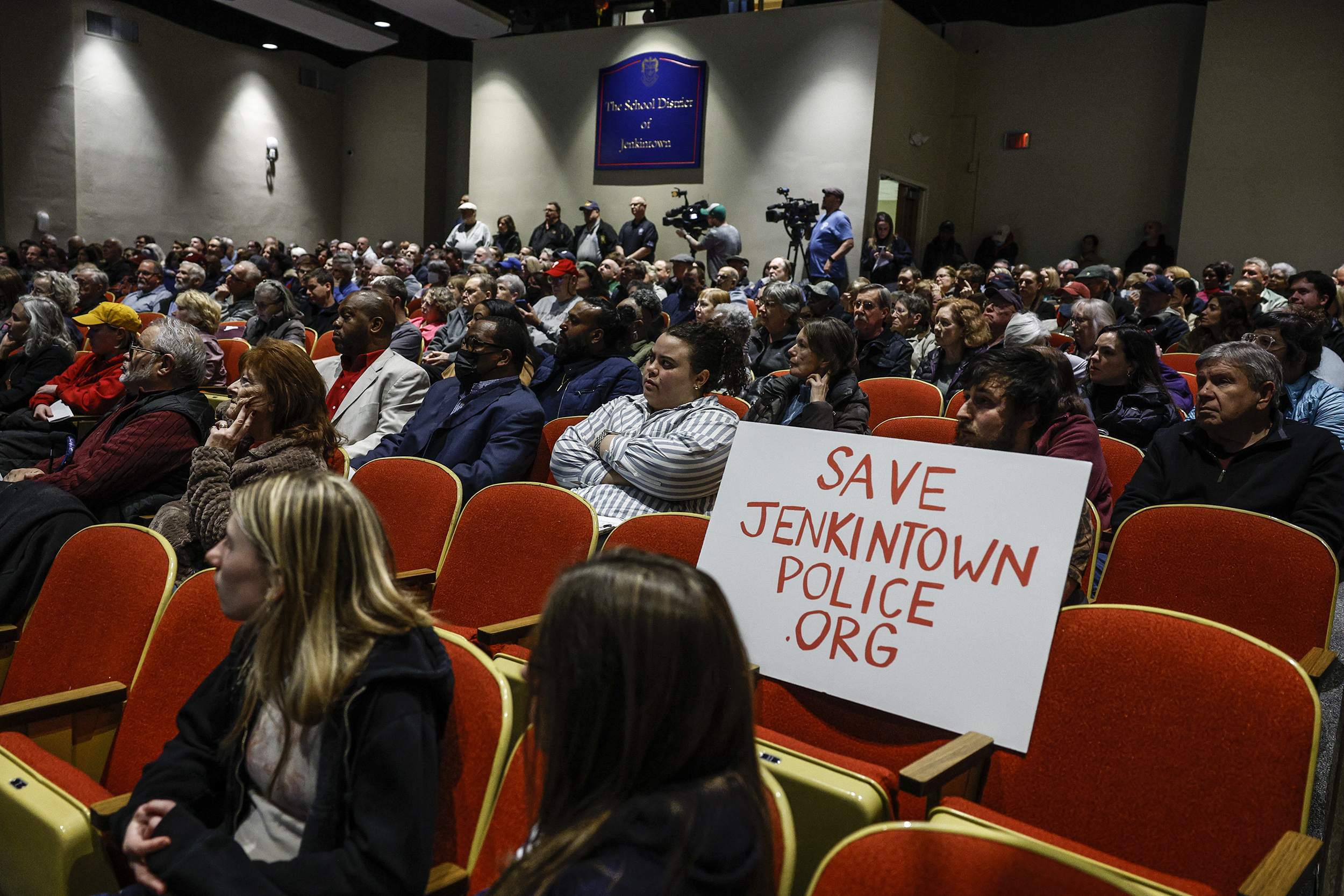
    Residents pack the high school auditorium during a public meeting for community members to voice their thoughts on whether the Jenkintown Borough should disband its police department. Monday, February 26, 2024.Steven M. Falk / Staff Photographer

    In September 2024, the police union claimed their members had voted no confidence in Scott over alleged misconduct.

    The employment law firm that the borough hired to investigate the situation concluded that the misconduct claims were unfounded and stemmed from disagreement with Scott’s leadership decisions and opposition to the potential closure of the department. The firm also found that a formal vote of no confidence was not taken.

    The current police union contract expires at the end of next year, but Jenkintown hopes to start negotiations at the beginning of 2027 and has already met with officers to prepare for bargaining.

    A draft budget for 2027 would raise the police allocation by about $36,000 to $1,576,613.

    Borough council is set to vote on the draft budget at the Nov. 23 meeting, which would then be made available for public viewing before it is finalized at a December meeting.

    There are no longer plans to dismantle the department, Lerman said.

    But it wasn’t easy to reach this point, Scott said: “You have to have hard conversations.”

    This suburban content is produced with support from the Leslie Miller and Richard Worley Foundation and The Lenfest Institute for Journalism. Editorial content is created independently of the project donors. Gifts to support The Inquirer’s high-impact journalism can be made at inquirer.com/donate. A list of Lenfest Institute donors can be found at lenfestinstitute.org/supporters.
  • Racial justice advocate and chair of Police Oversight Commission charged with witness intimidation, bribery

    Racial justice advocate and chair of Police Oversight Commission charged with witness intimidation, bribery

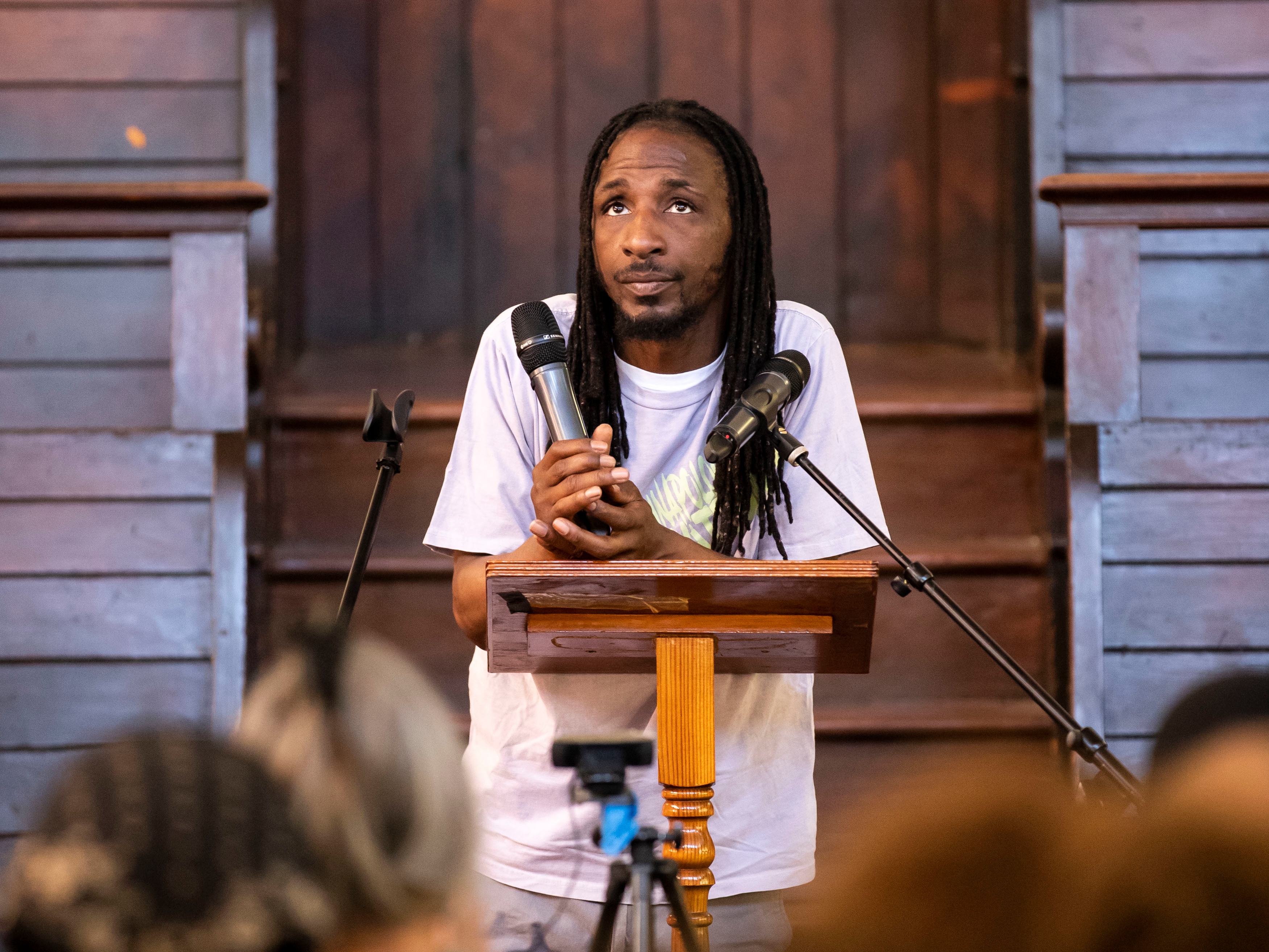
    The chair of Philadelphia’s Citizens Police Oversight Commission was arrested Tuesday after prosecutors accused him of obtaining and selling confidential information about a witness in an attempted murder case.

    Hassan Bennett then gave the information to a man who had threatened to hunt down and kill the witness, prosecutors said.

    Bennett, 43, faces charges of witness intimidation, bribery, conspiracy, and related crimes. The arrest marked a dramatic turn for Bennett, who became a prominent criminal justice advocate after spending nearly 13 years in prison for a murder he said he did not commit. His conviction was overturned in 2017, and he was acquitted at a retrial in 2019.

    In addition to his role with the oversight commission, Bennett works as a bail navigator for the Defender Association of Philadelphia. Prosecutors declined Tuesday to say whether Bennett used his position with the commission or the defenders to obtain the information he shared, including unredacted copies of police reports that contained the witness’ full name.

    They also declined to provide details of the underlying attempted murder case, citing the need to protect the witness.

    Bennett sold photos of those reports for $500, prosecutors said, to Thomas Scott, the man accused of trying to silence a key witness in the case. Scott, 45, is charged with witness intimidation and criminal use of a communication facility and is being held on $2 million bail.

    Prosecutors announced Bennett’s arrest at a news conference Tuesday afternoon, where they credited a monthslong investigation by the Gun Violence Task Force with foiling Scott’s efforts and linking Bennett to the leaked information.

    The investigation began after prison officials contacted the district attorney’s office about a series of suspicious calls between an incarcerated man and Scott, said William Fritze, chief of the task force.

    Digital records uncovered threats made against the witness on social media accounts linked to Scott, Assistant District Attorney Joseph Lanuti said. The social media posts, Lanuti said, were an attempt to “prevent witness from coming to court.”

    In one, he said, Scott threatened to “blow down the witness in broad day.”

    And among the many recorded calls provided by prison officials, investigators found one that captured Bennett’s voice as he read information from the report and shared the witness’ name, Lanuti said. Scott, he said, also possessed photos of the documents.

    Investigators found that Bennett and Scott were connected on social media, Fritze said. But prosecutors said they were still working to determine how Bennett and Scott had come to know one another and the extent of their relationship.

    Fritze said the investigation of Bennett is ongoing. “We will continue to do our due diligence and look into any other incidents Bennett may have been involved in,” he said.

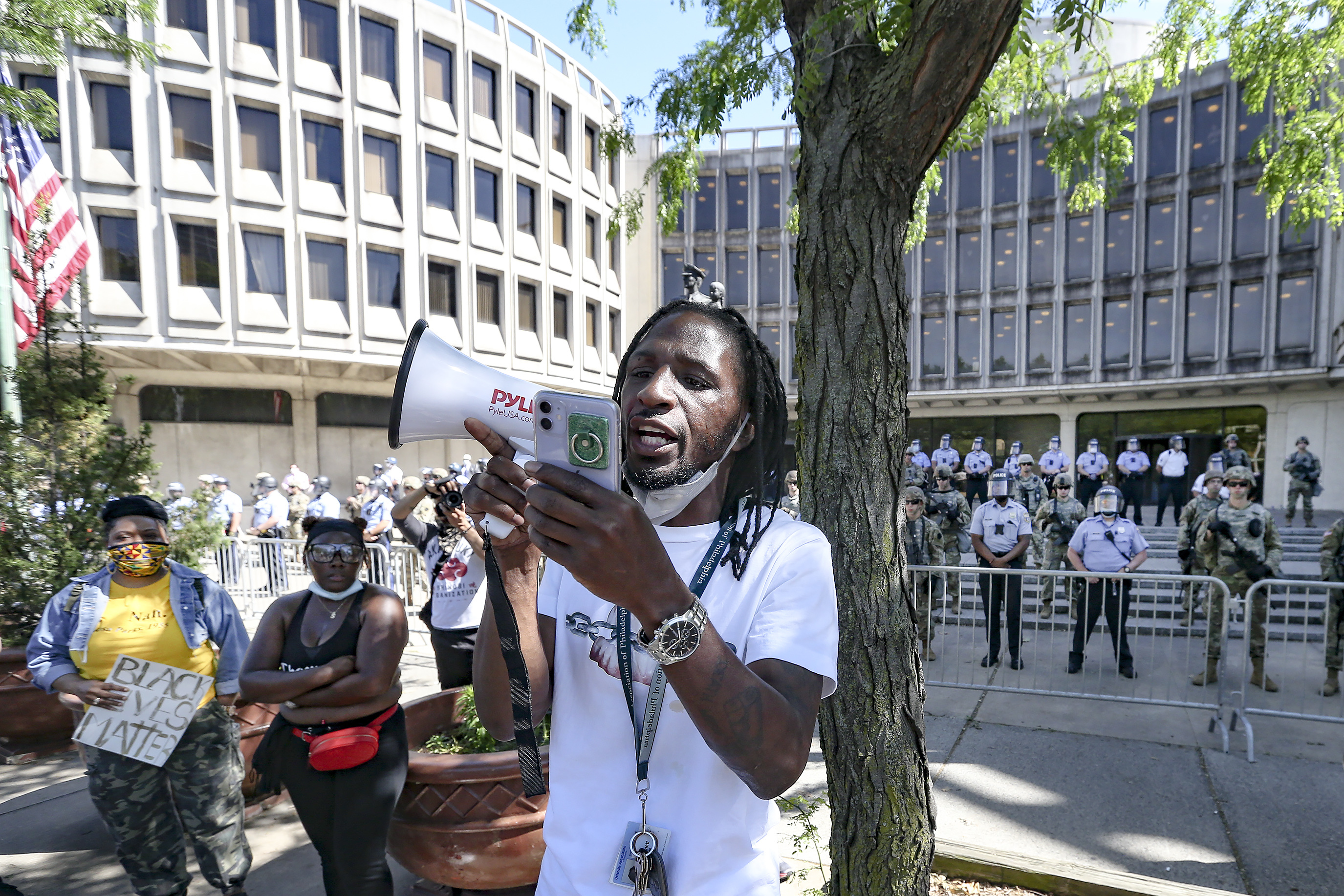
    Hassan Bennett speaks to protesters in front of Police Headquarters in June 2020.STEVEN M. FALK / Staff Photographer

    Bennett’s bail has been set at $1 million, Lanuti said.

    Bennett had served as chair of the oversight commission since 2024 and held various leadership roles since its formation four years ago. He had worked for the Defender Association for about six years, following his acquittal and release from prison on murder charges.

    In a statement, a spokesperson for the Defenders said the “allegations in this matter are exceptionally serious, and we are treating them with the urgency they demand.”

    The spokesperson, George Jackson, added that Bennett is “entitled to the same due process afforded to anyone who is accused of a crime,” and is considered innocent until proven otherwise. The association is cooperating with law enforcement as their investigation continues, Jackson said.

    Bennett, a union employee, will be terminated effective Thursday, Chief Defender Keisha Hudson said.

    Tonya McClary, the oversight commission’s executive director, said in a statement that the group would not comment on the allegations against Bennett this early in the case.

    “Our responsibility to the people of Philadelphia remains unchanged,” she said. “We will continue our work to strengthen police accountability, promote transparency, and build public trust.”

    The commission was formed by City Council — and later approved by Philadelphia voters — in 2020 amid nationwide protests over police brutality and racism after the killing of George Floyd in Minneapolis. It was meant to serve as an independent civilian oversight agency that, with subpoena powers, could take complaints from the public against officers and run investigations into police misconduct alongside the Police Department’s Internal Affairs Division.

    But the commission, which has been allocated millions in taxpayer funds, has drawn scrutiny for accomplishing little since its inception in 2022. Staff turnover and political infighting have also plagued the group, former staffers have said, as has pushback from the police department and police union that the group said has made it difficult to conduct independent investigations.

    Hassan Bennett hugs his grandmother in 2019 following his release from prison.MICHAEL BRYANT / Staff Photographer

    Bennett, of West Philadelphia, has been a face within the city’s racial and social justice movements since his release from prison in 2019 — a case that drew national attention and acclaim because Bennett represented himself in a successful retrial.

    He served nearly 13 years in prison for the 2006 murder of Devon English — a crime he maintained he did not commit and a case that went to trial four times.

    Bennett’s first trial ended in a mistrial. But prosecutors retried him in 2008, and he was convicted and sentenced to life in prison without the possibility of parole.

    The conviction was later overturned due to mistakes by his lawyer, and in 2017, he was granted a new trial, which began in 2018.

    After studying the law during his time behind bars, Bennett represented himself in the third trial and wore his blue prison uniform in court. The jury deadlocked, and jurors later acknowledged that all but one wanted to acquit him.

    The district attorney’s office under Larry Krasner moved to try him a fourth time. Bennett again represented himself. The jury acquitted him of the charges and he walked free.

    Krasner said Tuesday that he believed Bennett had committed that murder but that the case was tainted by the problematic behavior of former Philadelphia homicide detective James Pitts, who was later convicted of fabricating evidence and lying on the stand in a separate case and sentenced to 2 ½ years in prison.

    In February 2020, Bennett was hired by the Defender Association as a client advocate to link pretrial defendants with social services, like drug and alcohol counseling. He was most recently working as a bail navigator. It was not immediately clear Tuesday if Bennett remained employed with the association.

    Staff writer Jesse Bunch contributed to this article.