Tag: The 76

  • What’s in a pepper pot? Black chefs gather to celebrate, revive, and update Philadelphia’s signature soup.

    What’s in a pepper pot? Black chefs gather to celebrate, revive, and update Philadelphia’s signature soup.

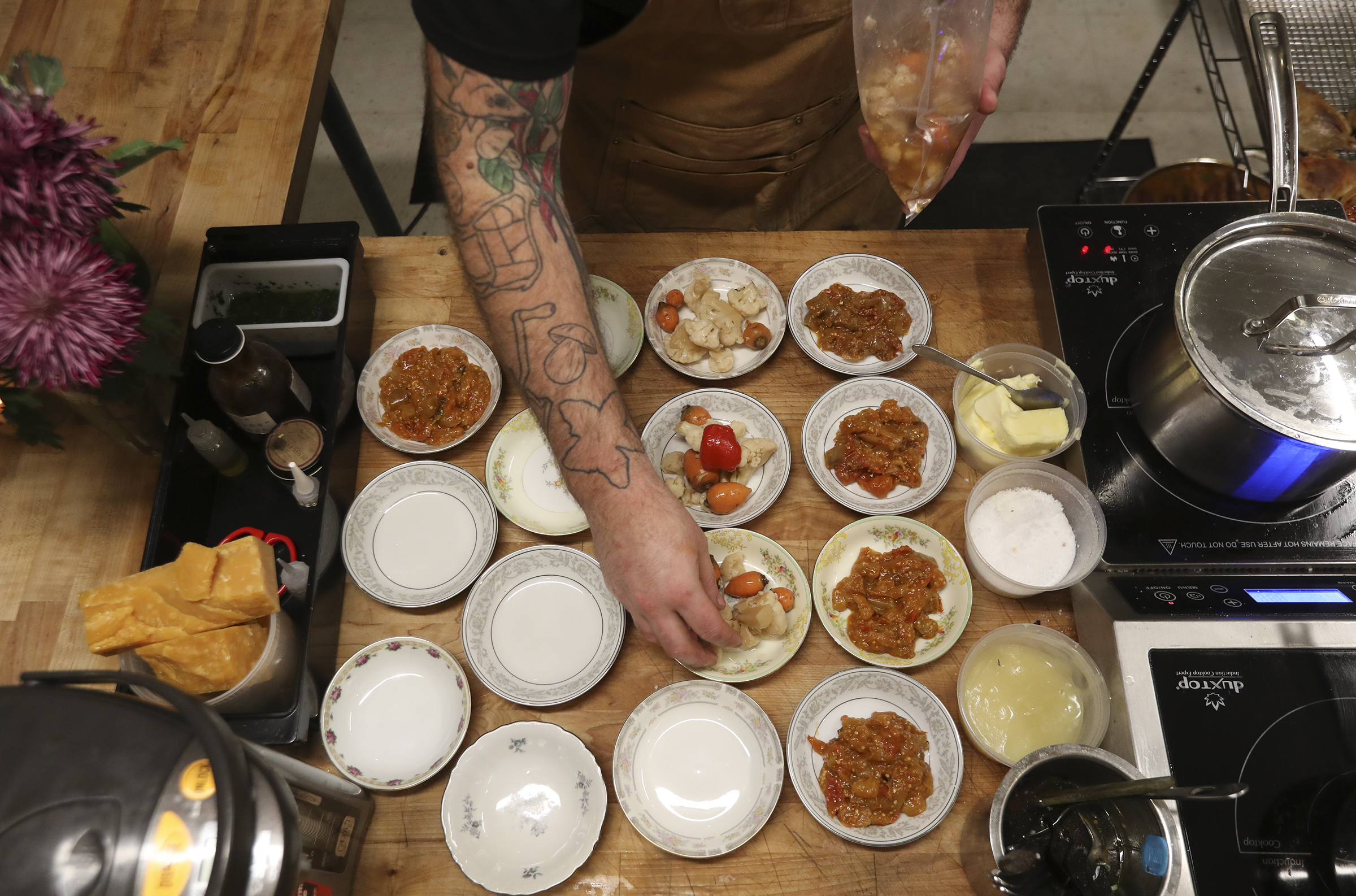
    The parade of soup bowls that perfumed the air of chef Shola Olunloyo’s South Philadelphia home kitchen with spice and heady broth could not have been more different. A buttery brown stew enriched with veal and bacon. An ethereal orange purée of squash that harbored habanero heat and delicate shellfish. A modernist collage of deconstructed elements — oxtail, pork belly, and frilly tripe dabbed with a gingery green mince of Caribbean herbs — artfully posed over a shallow splash of dark broth. But each one answered to the same name: pepper pot.

    “Pepper pot! Smoking hot!”
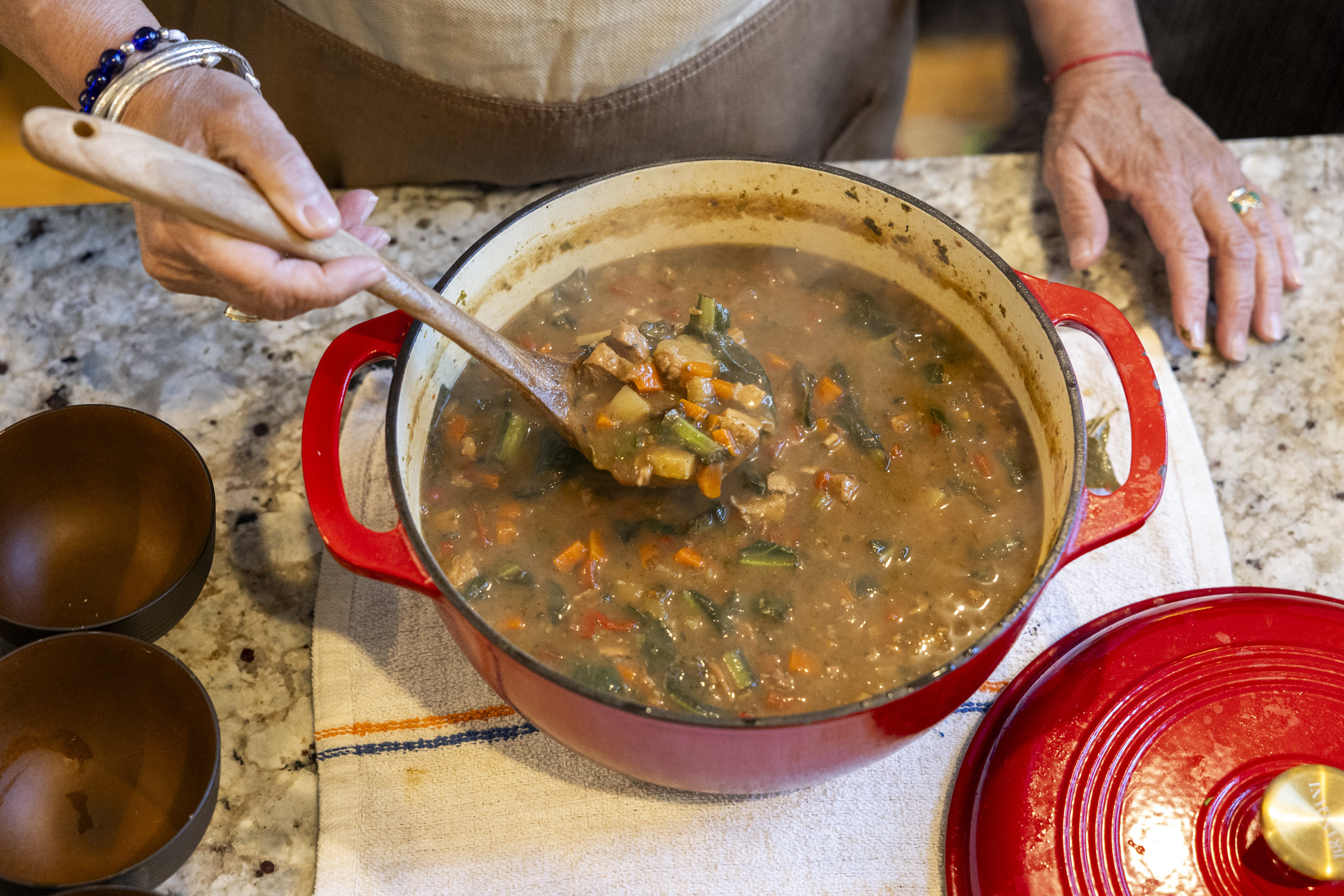
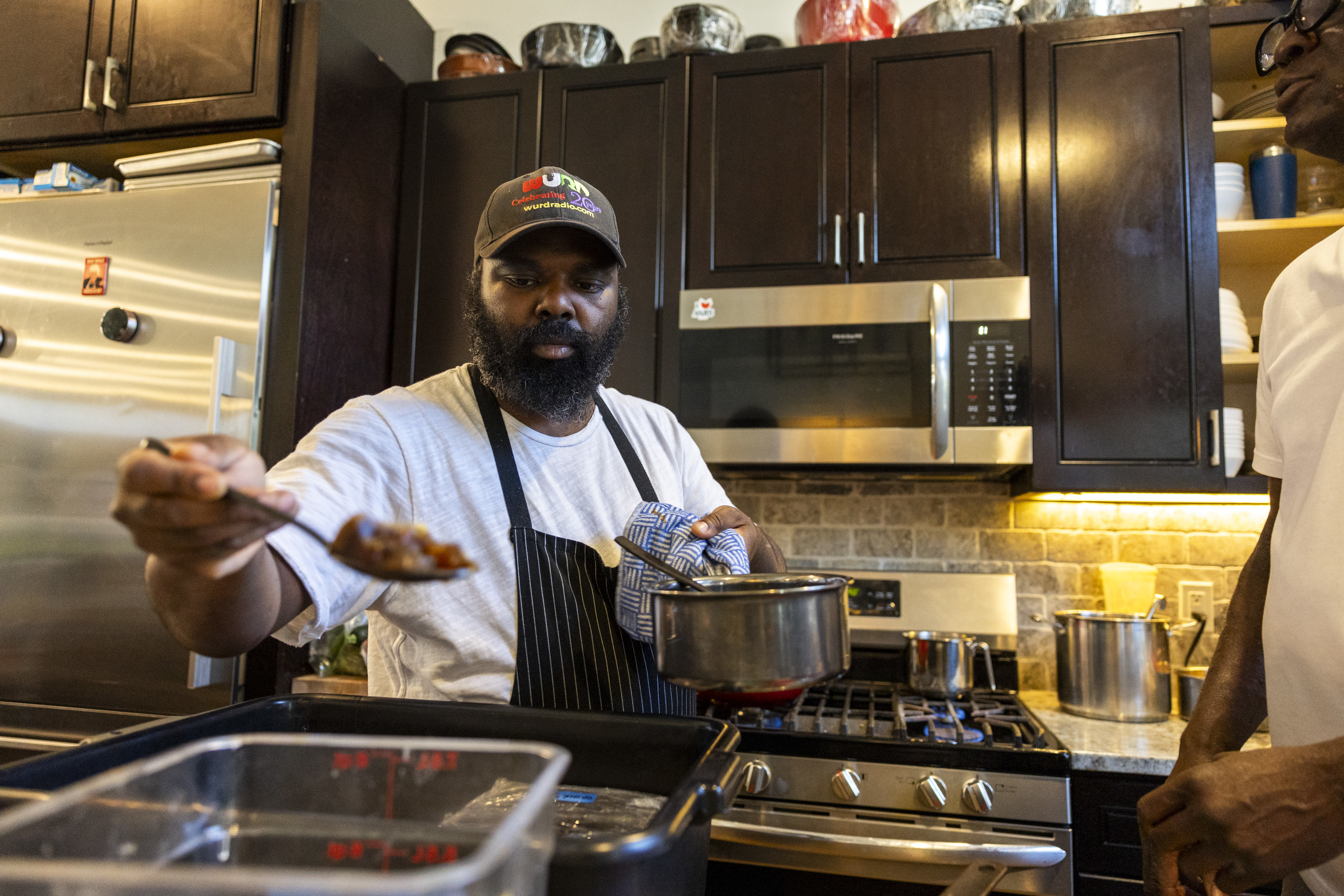
    Chef Angie Brown prepares to serve her version of pepper pot for fellow chefs to try.Tyger Williams / Staff Photographer

    So went the chant of the colonial-era vendors whose pepper pot cauldrons simmered on street corners across Philadelphia, America’s first capital city, with a “pleasant feast” made from an improvised variety of inexpensive cuts of meats, often including ox foot, tripe, and “a great portion of spice.” This iconic soup, largely produced by Black women from the West Indies, was immortalized as a city staple in an early 19th-century booklet chronicling the street cries of Philadelphia, a painting of an 1811 market scene painting by John Lewis Krimmel that hangs in the Philadelphia Museum of Art, and, more than 150 years later, Andy Warhol’s Pop Art series of Campbell’s soup can prints.
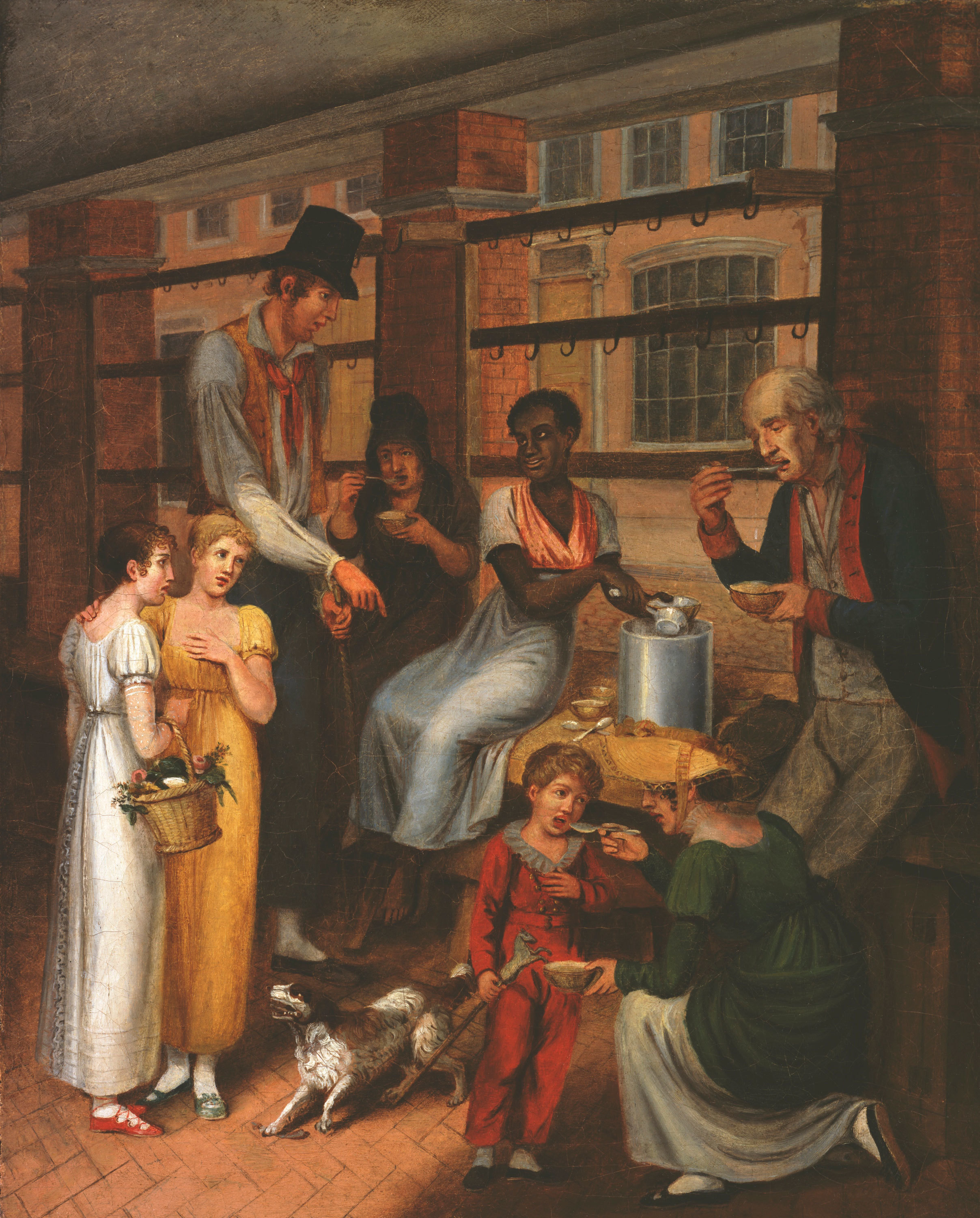
    “Pepper-Pot: A Scene in the Philadelphia Market” by John Lewis Krimmel depicts Philadelphians of varying classes enjoying the soup. Philadelphia Museum of Art: 125th Anniversary Acquisition. Gift of Mr. and Mrs. Edward B. Leisenring, Jr., 2001-196-1

    Over time, pepper pot evolved into a broad diversity of styles, hinted at by the starkly different interpretations on the table at Olunloyo’s home. Olunloyo, a culinary consultant and the chef of Studio Kitchen, had gathered a small group of Black chefs there for a pepper pot summit — to taste and compare recipes, reflect on its legacy, and, perhaps, spark a local resurgence.

    “I was excited to learn that Philadelphia had a distinct dish that was not just cheesesteaks or pretzels, and to be a part of understanding what cemented Philadelphia’s culinary reputation,” says chef Omar Tate, who served us a test run of a pepper pot he plans to add to the menu at Honeysuckle this fall.

    Chef Chad Williams, who was unable to attend the June gathering, is planning to serve a version of pepper pot on the tasting menu soon at his Michelin-starred Friday Saturday Sunday. He’s starting his process with the flavor memories of a pepper pot his grandpa Chester once made in West Philadelphia, along with other variations Williams cooked earlier in his career, then “working our way backwards.”

    “We’ve got to put it on restaurant menus again because if we don’t cook it, it dies,” says Angela Brown, a private chef and former culinary director for Rex at the Royal, who led off the lunchtime event with a hearty rendition of the dish she learned from her great-grandmother. “This new generation of cooks doesn’t know anything about pepper pot, so it’s nice to bring it back.” (The meal was also documented for radio by NPR reporter Justin Kramon for WHYY’s The Pulse.)
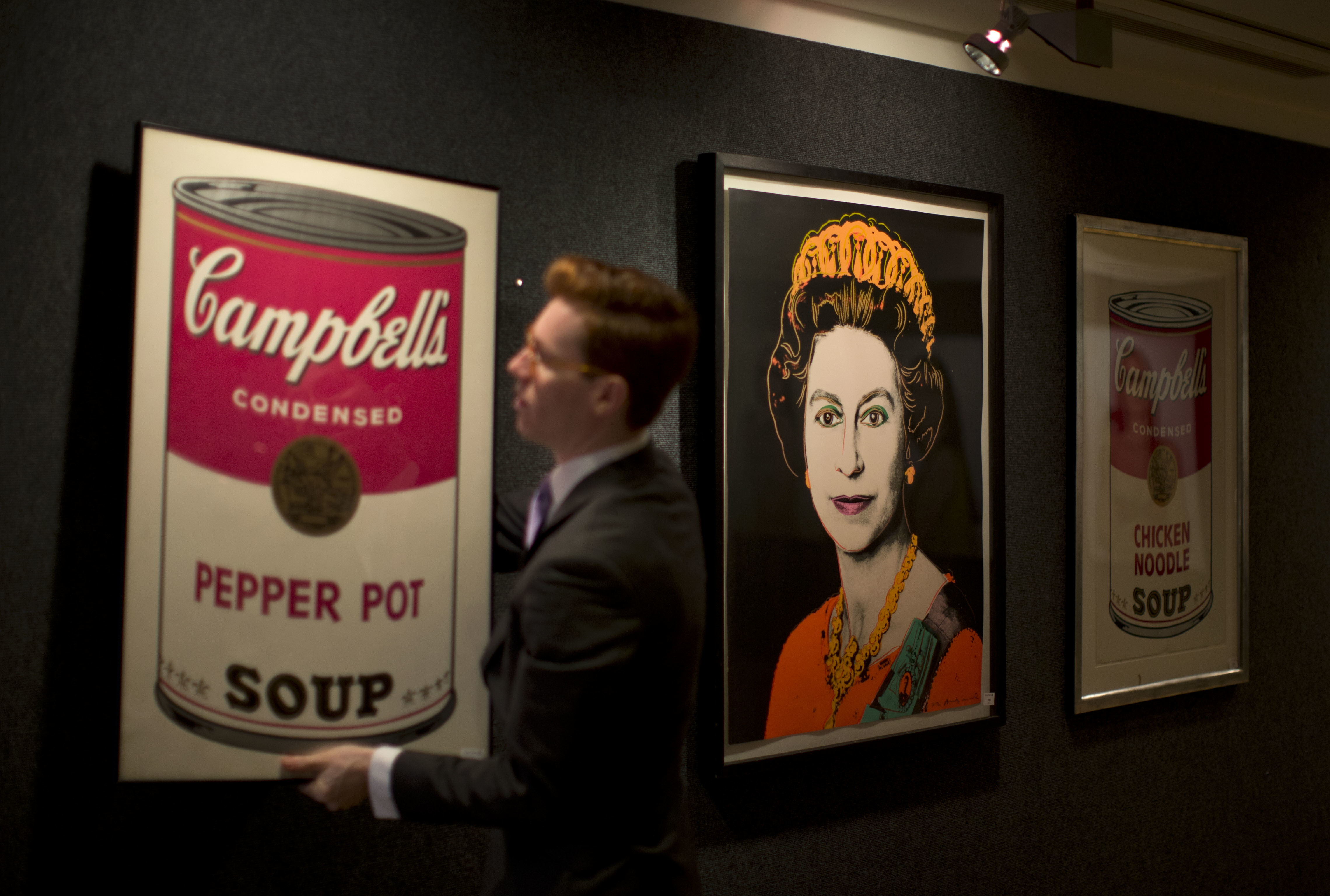
    Andy Warhol’s 1968 color screenprint “Pepper Pot.”Matt Dunham

    The rise and fall of pepper pot

    The effort can’t come soon enough. In 2026, pepper pot as we once knew it has become nearly extinct. Campbell’s stopped producing it in 2010, coinciding with a dwindling appetite for tripe. History-minded chef Adam Diltz still produces it occasionally at Elwood. There have been efforts by local food historians and home cooks to keep its memory alive. The last local restaurant to regularly serve pepper pot was City Tavern (although chef Walter Staib’s West Indies version was without tripe), before the replica of the historic tavern closed in 2020.

    The timing of this pepper pot party is not a coincidence. Reflections on history have been at the forefront of this year’s celebration of America’s 250th anniversary. Food historian William Woys Weaver, among the tasters at Olunloyo’s house, argues in his forthcoming Pepperpot City that no proto-Philadephia dish may be as meaningful — or elusive — to grasp.

    Weaver unearths a stunning array of pepper pots in the book, due out in October, from the humblest market-stall versions to those ladled from the gilded tureens of society’s hautest tables: There are myriad variations of meats, seafood, seasonal produce, dumplings, and numerous cultural influences. The breadth of iterations makes it impossible to define Philadelphia’s pepper pot as one specific thing, aside from the inclusion of tripe (usually, but not always) and the presence of spice. It was a way of life and cooking more than a particular bowl of soup.

    “What’s pepper pot? It’s whatever you had there right in front of you,” says Weaver. “These chefs did not live by written recipes, but oral traditions they learned from a mentor. That’s why there were so many different kinds. Each person cooked from their soul.”

    The ever-morphing nature of the soup became emblematic of colonial Philadelphia as a focal point for the New World melting pot, he says, where the confluence of Black, white, and Creole foodways began to define this newly founded country’s culinary personality.

    “The City of Brotherly Love helped create a singular identity that helped shape what we know today as American cuisine,” writes Weaver. “Especially when winnowed through the hands of Black cooks.”
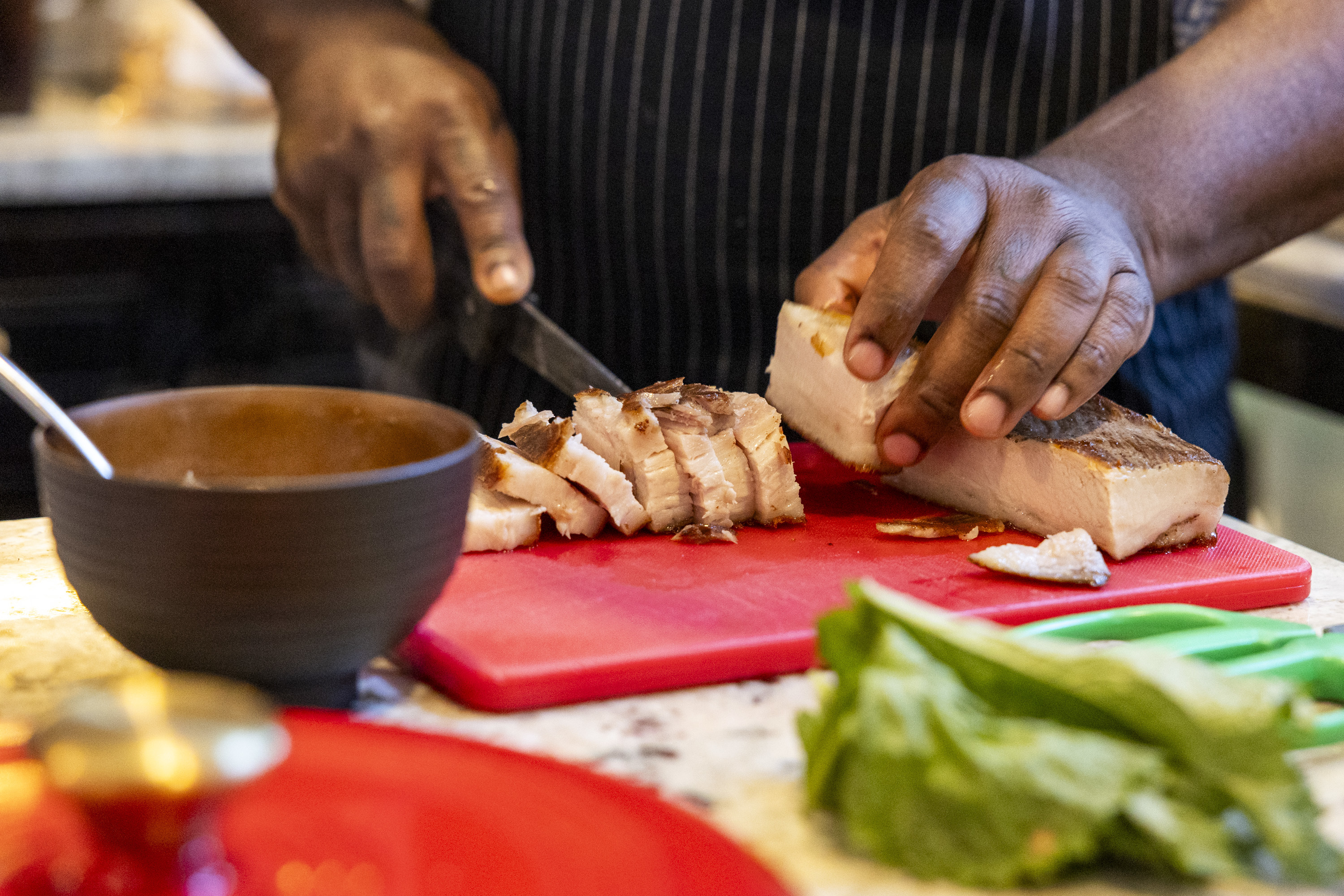
    Chef Omar Tate served a test run of a pepper pot he plans to add to the menu at Honeysuckle this fall.Tyger Williams / Staff Photographer

    Diverse foodways, all in one dish

    Philadelphia’s pepper pot shares Afro-Caribbean roots with a number of soups that go by the same name in the Caribbean and South America, although they’re distinctly different, since many are flavored with the caramelized cassava juice known as cassareep. It is also cousins with the callaloos and pepper soups of West Africa, as well as New Orleans gumbo and Haitian soup joumou. Pepper pot reflects Philadelphia’s unique status as a haven for free Black communities who had access to the tropical foodstuffs — allspice, habaneros, sea turtles, and pumpkins — arriving at its vibrant port on ships that also supplied the West Indies slave trade.
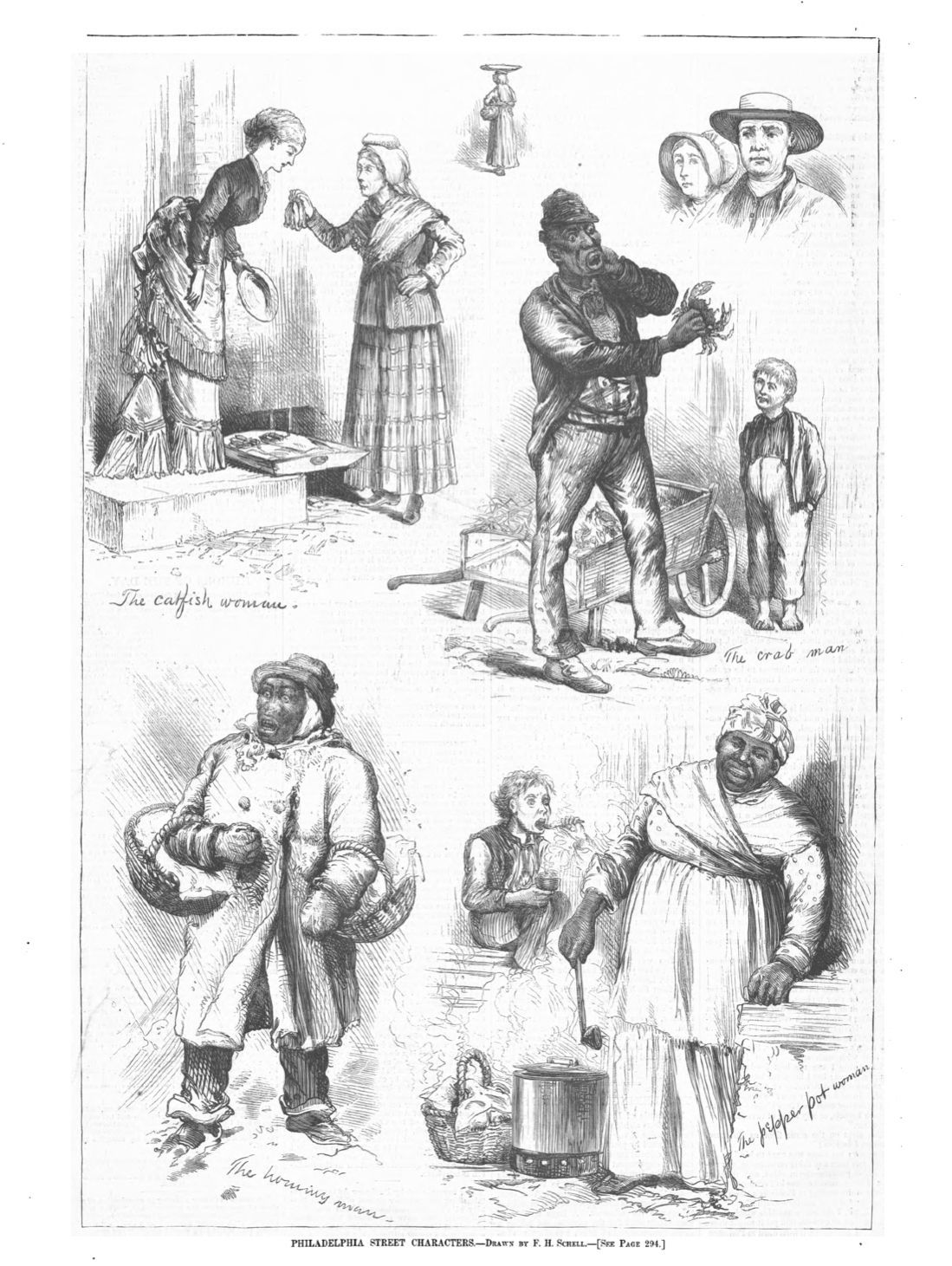
    This illustration of “Philadelphia street characters” was published in Harper’s Weekly in 1876. “The pepper pot woman” stands at the bottom right.Harper's Weekly/Google

    For this reason, many, including Weaver and food historian Jessica B. Harris, have come to regard early Philadelphia as the northernmost Creole city.

    “Nowhere is this connection more apparent than in Philadelphia’s pepperpot soup,” Harris writes in her book Beyond Gumbo. In a recent interview, she elaborated: “You’ve got a port bringing foods from other places and people also who are coming in from all over, enslaved and free. This kind of urban polyglot mix — that is the matrix of Philadelphia. And then you start getting their food. You know women of West Indian origin are going to make use of their skills and call on their memories to make something palatable to the people in this new place. All those things come together in pepper pot.”

    That lineage was especially resonant for Angela Brown, whose deeply flavored and nuanced stew of veal, bacon, and tripe took on a buttery texture from a dark roux and delivered just a gentle glow of peppercorn spice.

    “As a Black woman, when I think about all those women in the 1700s out there on the wharfs cooking soup to sell for the day and praying they get enough money, I feel sort of sad that my ancestors had to work that hard,” she says.
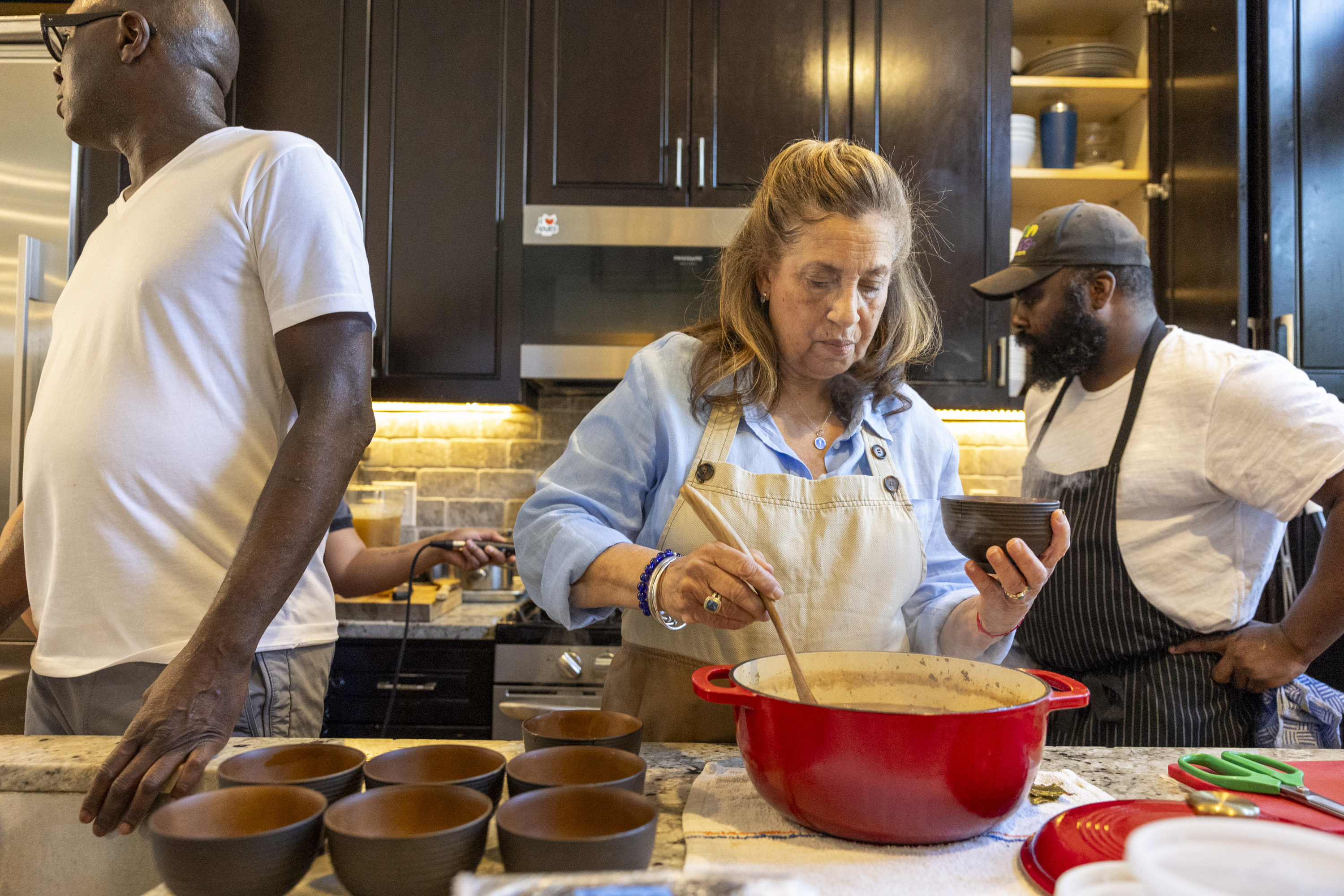
    Chef Angie Brown prepares her version of pepper pot for fellow chefs.Tyger Williams / Staff Photographer

    Yet cooking pepper pot also brought her joy, because it conjured warm memories of Brown’s childhood in Mount Airy. She’d walk to the neighborhood butcher for a pound of tripe, then closely watch her great-grandmother, Carrie Smithers, make it, beginning by sizzling the holy trinity of celery, bell peppers, and onions in rendered bacon fat and veal drippings.

    “That’s the reason I knew how to layer it,” says Brown. “I was very close to my great-grandmother, and she would be so proud that I made it delicious. I might have even made it better than hers.”

    Brown’s soup was the closest we’d taste that day to the thick, meaty tripe stew from Campbell’s that stamped pepper pot as a Philadelphia specialty, along with a version popularized nationwide on the dining cars of the Pennsylvania Railroad.

    “But there never really was a single ‘Philadelphia-style’ pepper pot. It was a marketing device, because this was a diverse city and pepper pot changed with every neighborhood,” says Weaver, who documents several 19th-century soup halls known as “pepperpot hotels” across the city, along with recipes that range from Esther Levy’s Jewish beef-and-mutton pepper pot from 1871 to pepper pot with crab, asparagus tips, and dumplings from a culinary instructor named Aunt Matilda in 1879. “Every Philadelphia recipe I’ve seen is different.”

    A recipe published for the Philadelphia World’s Fair in an 1876 cookbook from the Women’s Centennial Exhibition Committee featured two kinds of tripe in a veal knuckle broth studded with veal dumplings. Another completely different pepper pot called gingambo au potiron — with sea turtle broth, seafood, and a Brazilian pumpkin — emerged from the émigré Creole neighborhood called Hamiltonville, on the Woodlands estate southwest of the University of Pennsylvania campus.
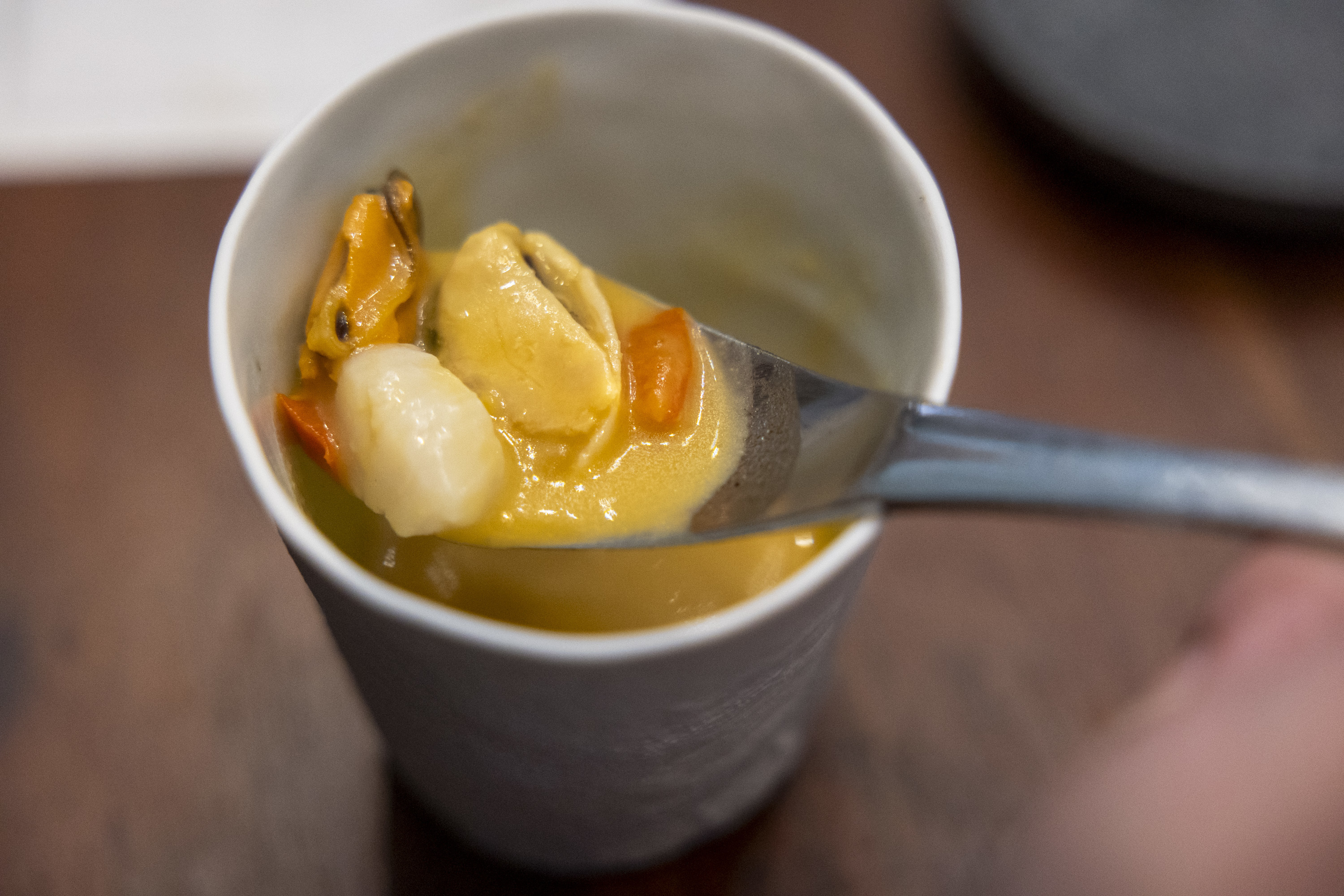
    Chef Shola Olunloyo, a culinary consultant and the chef of Studio Kitchen, made a variation of a seafood-pumpkin pepper pot he once cooked at the restaurant Deux Cheminees.Tyger Williams / Staff Photographer

    A soup that unlocks memories

    Coincidentally, Olunloyo served us a variation of that same seafood-pumpkin pepper pot, a dish he grew fond of making regularly when he launched his career at Deux Cheminées. The late chef-owner there, Fritz Blank, had amassed a legendary cookbook collection and befriended both Weaver and Harris, who published Blank’s recipe in Beyond Gumbo.

    Olunloyo’s soup skipped the turtle broth for rich fish stock and swapped out pumpkin for butternut squash. The froth of its silky orange puree — enriched with vermouth, cream, and leeks — sparks with Scotch bonnet, ginger, and a scant pinch of aromatic mace. Sweet little bay scallops, added to the bowl raw, cook in its warmth alongside mussels and other shellfish. It was an elegant reminder of the refinements that European-trained French chefs gave to the high-society kitchens of early Philadelphia, one of “two separate strands” — the vernacular creativity of its street foods being the other — that shaped the city’s culinary evolution, says Weaver. Ever-evolving pepper pot existed in both spheres.

    For Olunloyo, whose career as a consultant and supper club chef has been most influential in its advocacy of modern methods and cutting-edge technology, diving back into pepper pot has been a reminder of his formative years as a cook and the enduring value of classic techniques.
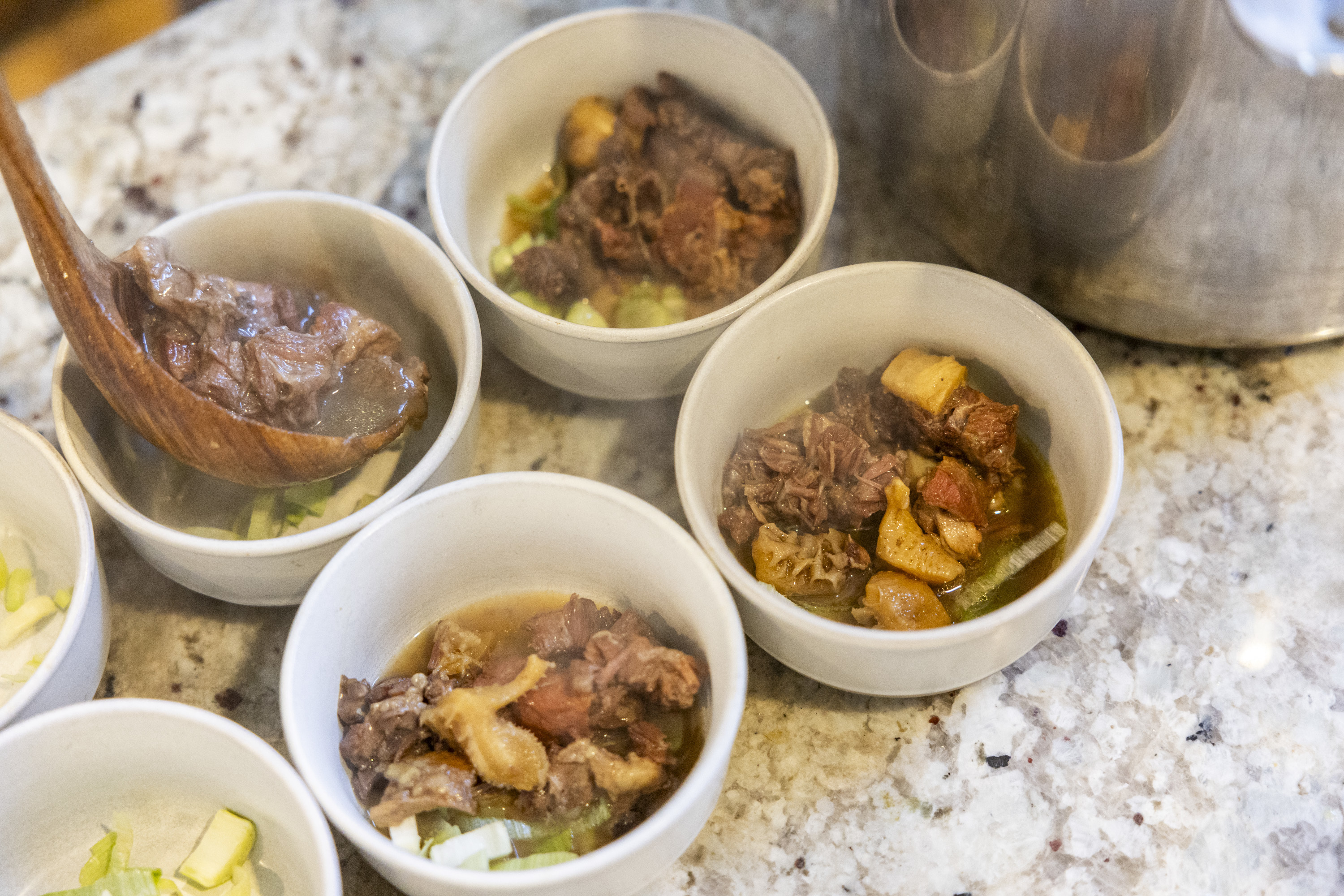
    Chef Shola Olunloyo ladles out a meaty version of Nigerian pepper stew, a not-so-distant cousin of pepper pot.Tyger Williams / Staff Photographer

    The dish transports him even farther back to his childhood in West Africa and the pepper soups he grew up eating in Nigeria. In addition to his seafood-squash pepper pot, he served the group a boldly spiced version of that pepper soup — a rustic, bone-in stew of goat, beef neck, and tripe flavored with a blend of Nigerian seeds and dried chilies, with an extra hit of habanero and fresh green shiso he snips over each bowl to replicate hard-to-find African scent leaves. The connection to the West African roots of pepper pot’s creators could not have been more obvious.

    “Taste is not linear,” observed Omar Tate. “It is kind of like a spiral, the memory is trying to circle back home at every point when you pick up an ingredient.”
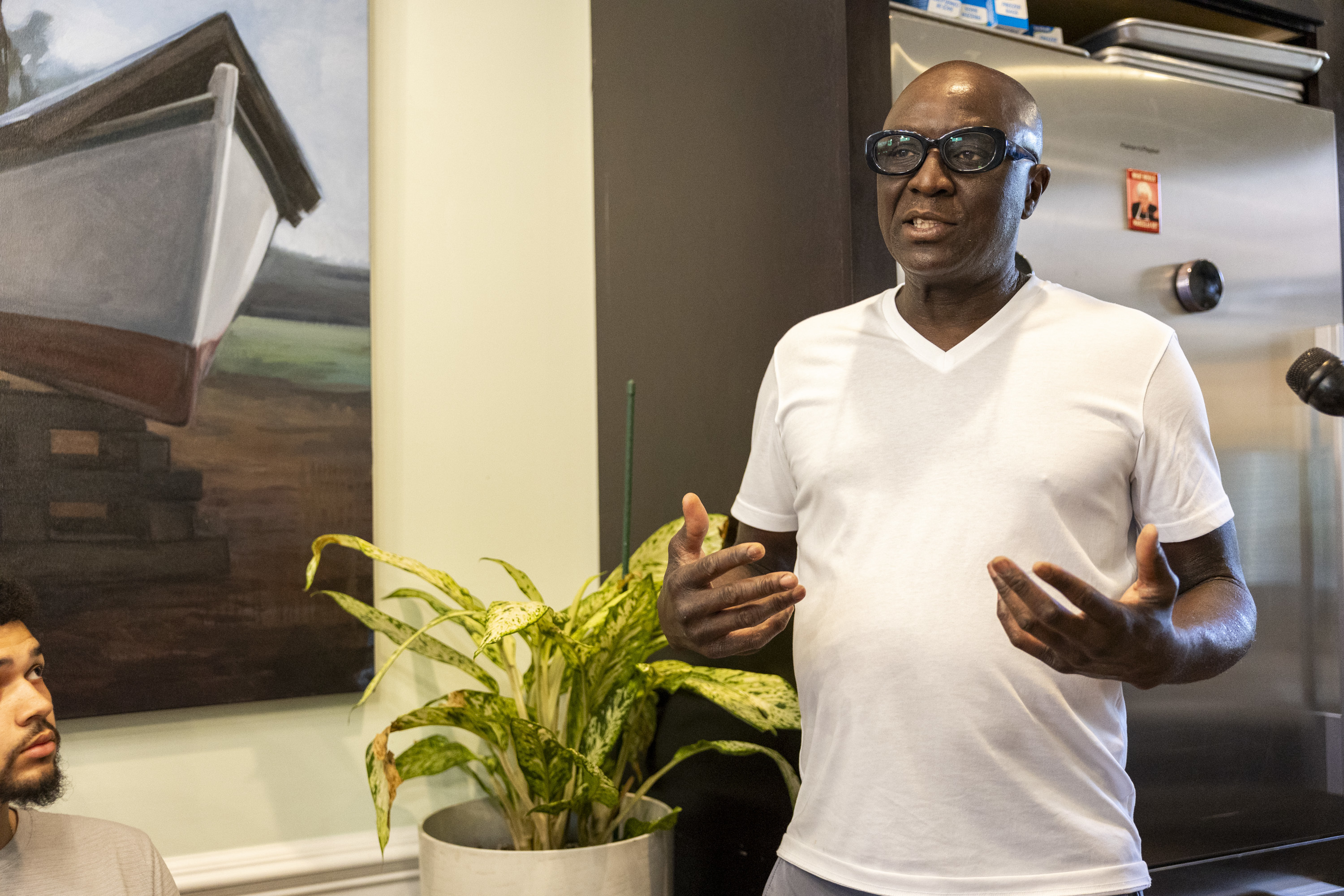
    Chef Shola Olunloyo explains his pepper pot recipe in his home kitchen in South Philadelphia.Tyger Williams / Staff Photographer

    The importance of historical Black dishes in 2026

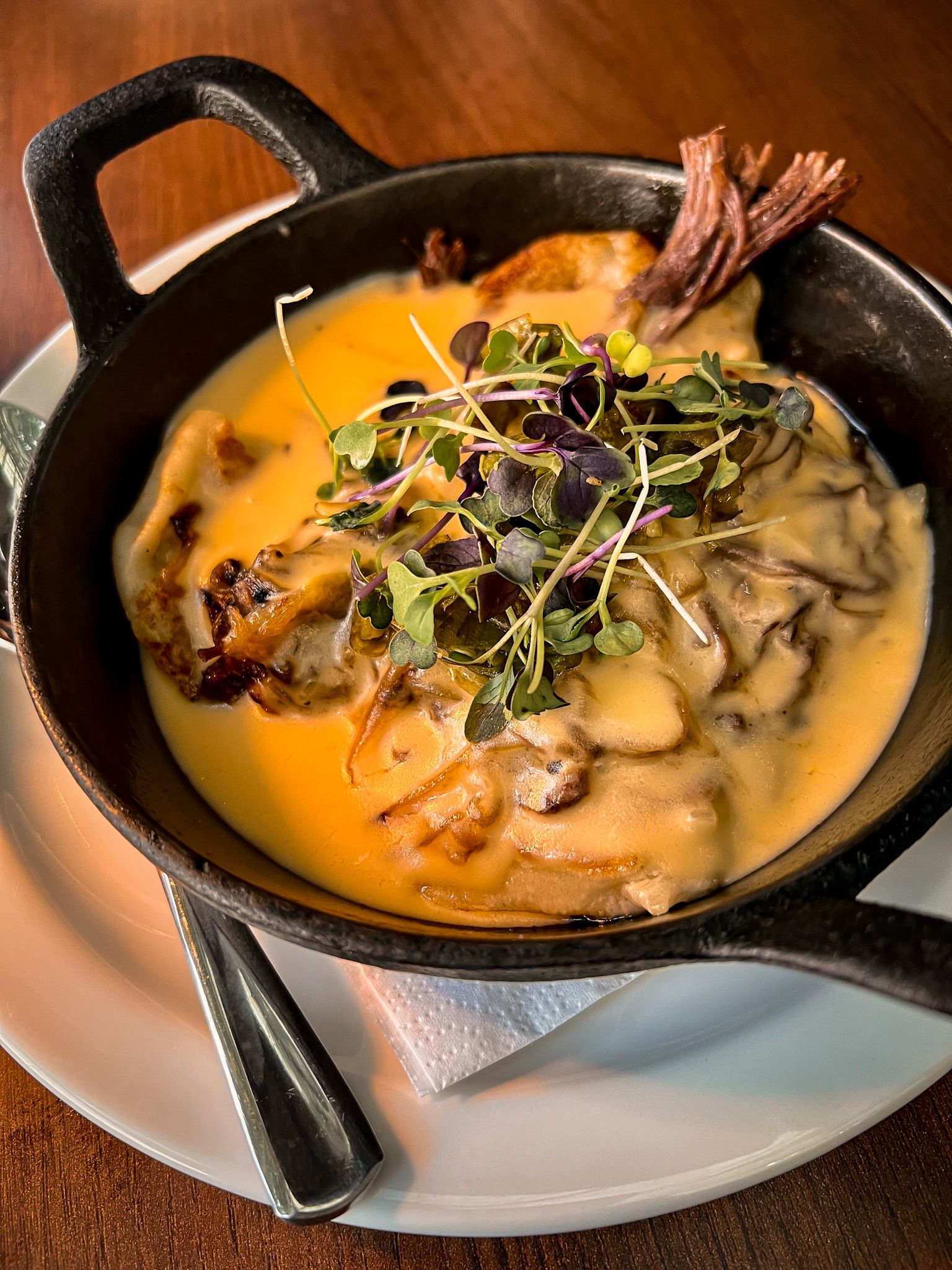
    For Tate, whose pepper pot efforts sit squarely within the provocative explorations of the Black American foodways Honeysuckle is known for, the point of the exercise for him was not to recreate history — “I’m not interested in copy-and-paste tradition” — but to modernize it for today’s tastes. His rendition with oxtail, pork belly, and honeycomb tripe was partly inspired by the Krimmel painting of a woman serving a market crowd of early 18th-century Philadelphians. But Tate’s deconstructed presentation, with each element suspended above locally raised vegetables and a puddle of intensely flavored broth spiced with fish peppers from Honeysuckle partner Plowshare Farms, looks like the melting pot in reverse. (Seeds for the fish pepper, an heirloom chile used by Black caterers in Baltimore in the 1800s, were publicly reintroduced by Weaver in 1995.)

    “I’ve never been able to fully sit in the idea of what tradition is because of my relationship to Black history in America, and realizing that the strongest, most consistent Black tradition is being uprooted constantly all the time,” he says. “Yes, we are preserving culture and honoring the past, but I’m constantly trying to disrupt what I know about that, because it helps understand how people navigated change.”
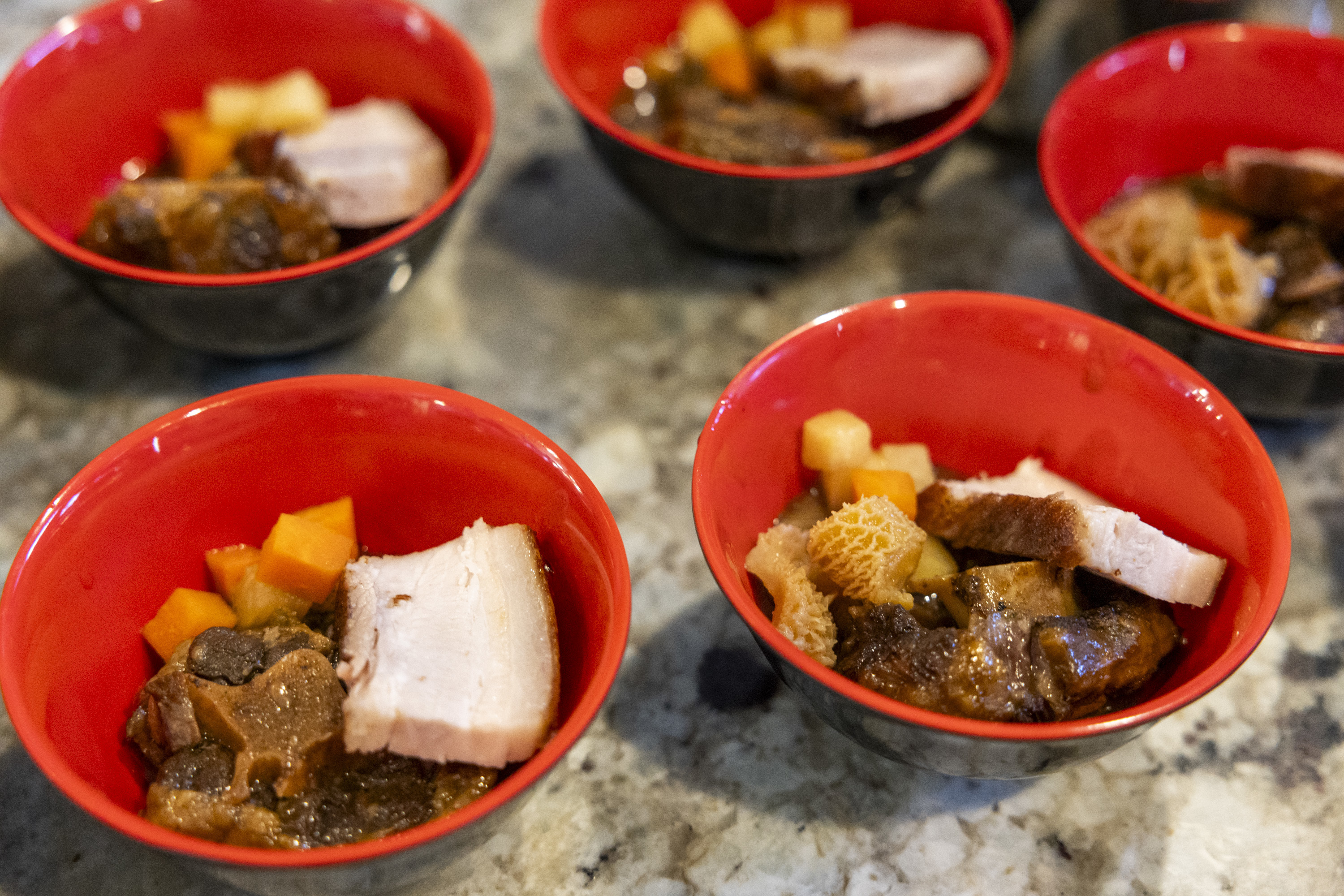
    Chef Omar Tate of Honeysuckle plates his version of pepper pot.Tyger Williams / Staff Photographer

    In this respect, the timing could not be more keen for a pepper pot tribute and the conversations it starts about the important role Black chefs played in shaping the nation’s cuisine. Keeping history front and center through food remains a powerful act, especially after the administration of President Donald Trump abruptly altered displays at the President’s House on Independence Mall to sanitize George Washington’s role there as an enslaver of nine people, including the seminal chef Hercules Posey.

    “We tried to honor their history and make sure tradition was preserved, but now that’s been disrupted and they have to be reimagined,” said Tate of the enslaved individuals previously commemorated at the President’s House, where the changes, he said, have deeply affected him. “That can only come through the possibility of taste and oral history.”

    Chad Williams agrees.

    “You have to cook it to keep it alive. Much of what makes dishes truly great is difficult to put into a recipe — the flavor, the experience of the dish, and making sure that gets pushed forward into the future by cooking it hand-to-hand. It can’t always come from a book.”
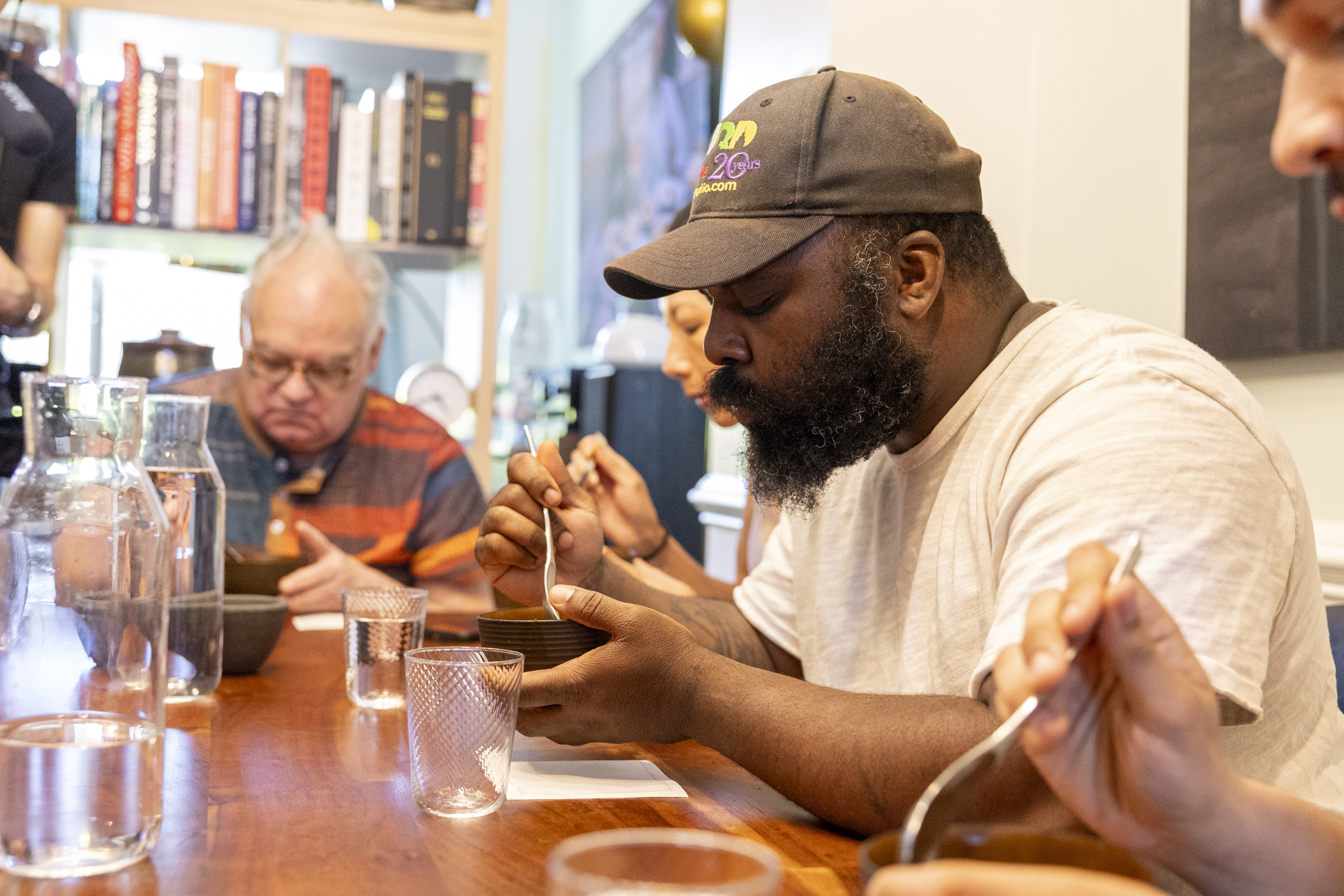
    Honeysuckle chef Omar Tate tastes the pepper pot recipe of Angie Brown.Tyger Williams / Staff Photographer

    Pepper pot keeps evolving

    The beauty of Philadelphia’s pepper pot is that it has proven to be less of a specific recipe than a culinary approach tied to this city, a resourceful way to coax tender sustenance and comfort in a stew flared with spice and the memories of a faraway land using whatever was locally available. As Tate and others at the tasting noted, such dishes have, in fact, continued to thrive with the arrival of new waves of immigrant communities, even if their fiery tripe-laced soups go by other names.

    Vietnamese bún bò Huế. Mexican menudo. Mauritanian tripe and cow skin gravy over Jollof rice. Spicy Korean beef gopchang-jeongol. Polish flaki. Italian trippa alla Romana. Excellent versions of all these and more can be found here, which, in the context of Pepperpot City, means they, too, could be considered as part of a grand centuries-old Philadelphia tradition that’s not quite ready to fade away.

    “They’re all pepper pots,” insists William Woys Weaver. “That’s our local word for it, you know! Let’s stop pretending that pepper pot is one thing. Pepper pot is Philadelphia’s soul soup.”
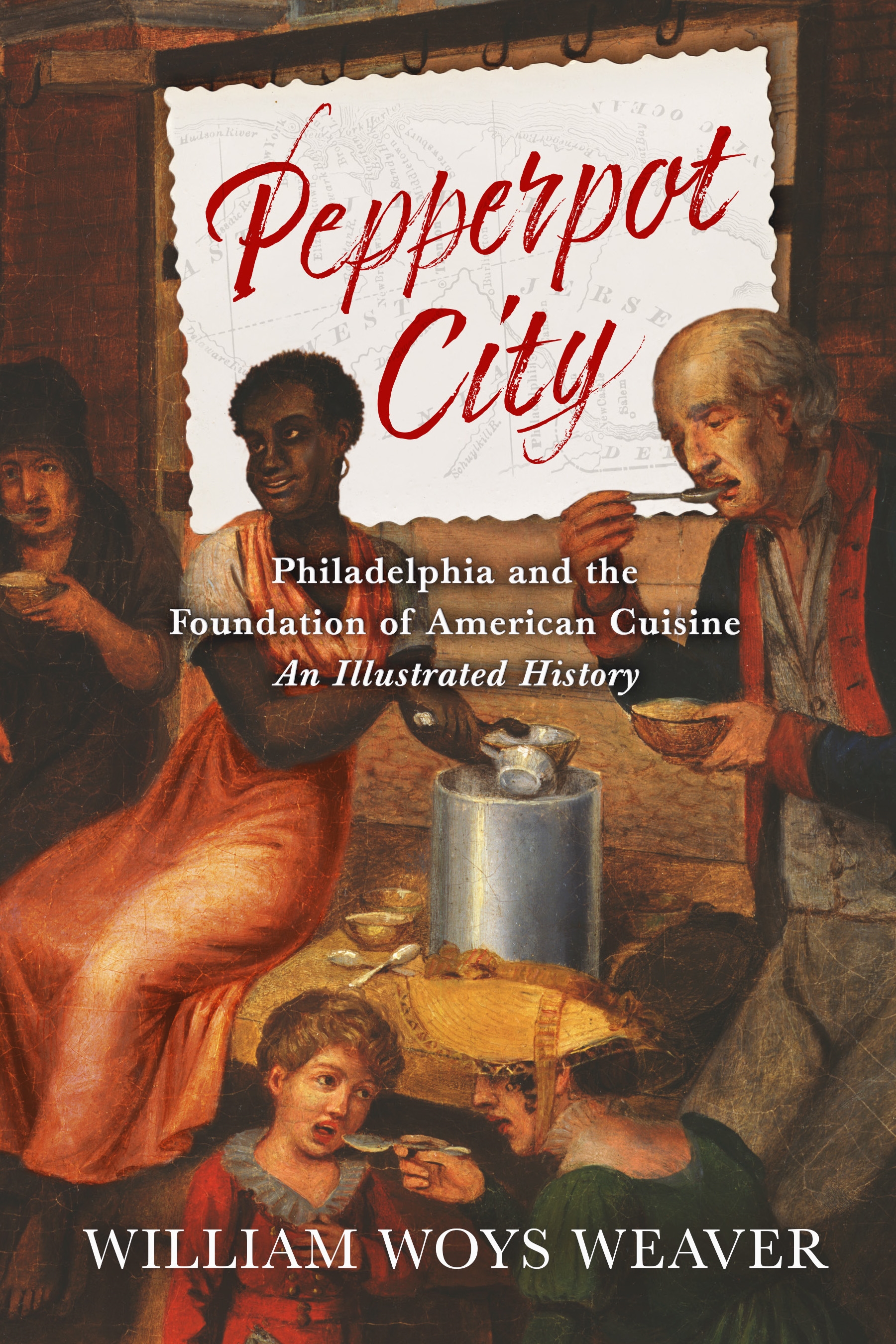
    The cover of “Pepperpot City,” a book about Philadelphia food history by local historian William Woys Weaver. The cover features a portion of an 1811 painting by John Lewis Krimmel depicting a pepper pot vendor selling the soup in a market.Courtesy University of Pennsylvania Press
  • Amy’s Pastelillos won a partnership with the Sixers worth $250,000. Here’s what it’s doing

    Amy’s Pastelillos won a partnership with the Sixers worth $250,000. Here’s what it’s doing

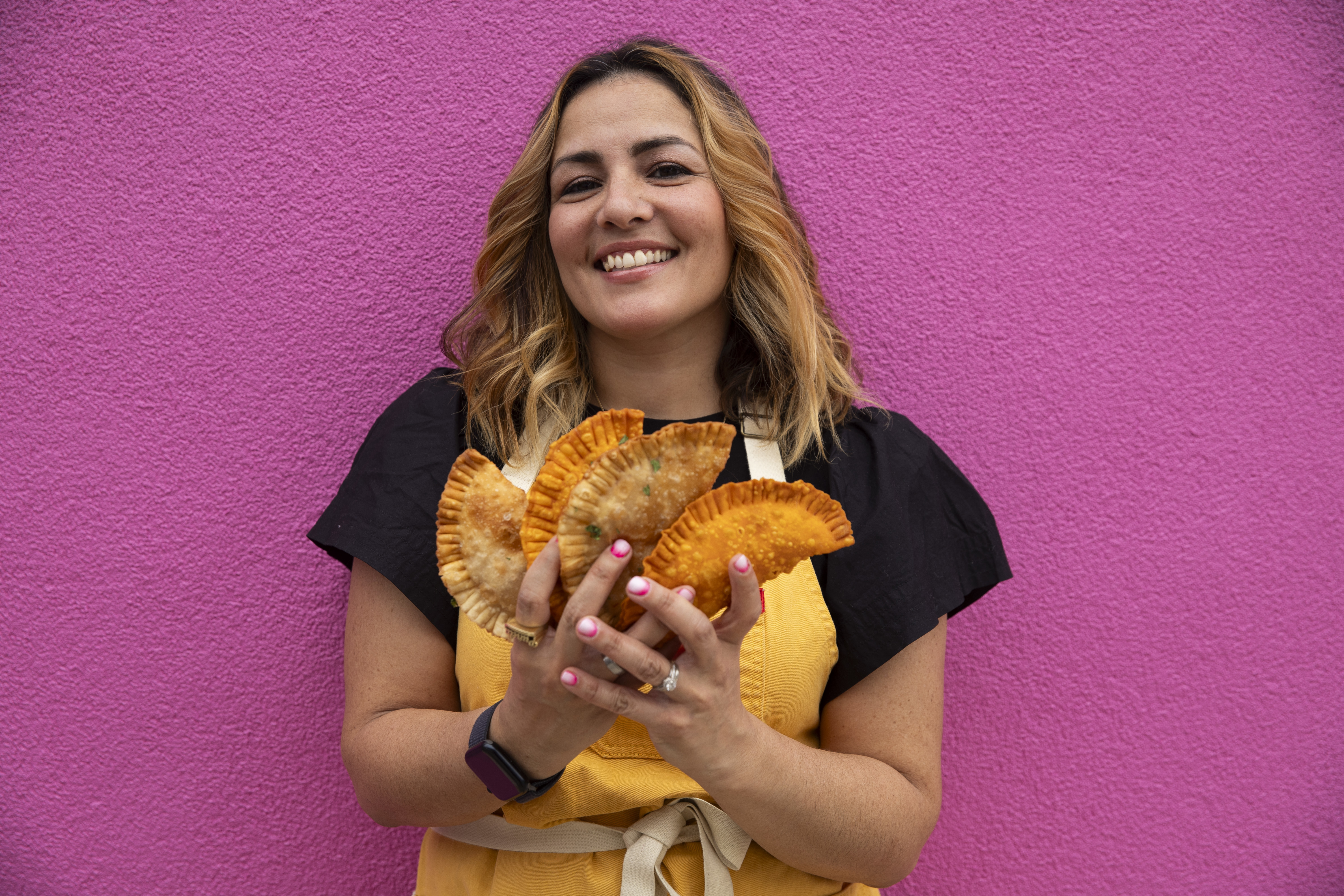
    Every week, Amaryllis “Amy” Rivera-Nassar hand-shapes and deep-fries around 2,000 pastelillos at her Fishtown takeout joint, Amy’s Pastelillos.

    Rivera-Nassar opened the bright pink storefront at 2001 Memphis St. in 2024 after spending years as the neighborhood’s “pastelillo lady,” selling the Puerto Rican turnovers — filled with classic chicken stew, guava BBQ pork, and truffled mushrooms, among others — via pop-ups. But 2026 is the year things really started to click.

    Amy’s landed a spot on The Inquirer’s The 76 at the end of 2025, and in February, the store saw a surge in business surrounding Bad Bunny’s Super Bowl LX performance.

    The only hitch: Rivera-Nassar says she’s running out of room to keep up. Her kitchen barely has enough space for two burners, two fries, a pair of fridges, and an oven.

    “It’s like a little tiny shoebox. We do so much with so little,” Rivera-Nassar said.

    Luckily, Rivera-Nassar now has a big team in her corner: This week, the Philadelphia 76ers and Bank of America announced that Amy’s Pastelillos won the Enrich Program competition, making the takeout shop an official Sixers partner for the upcoming NBA season.

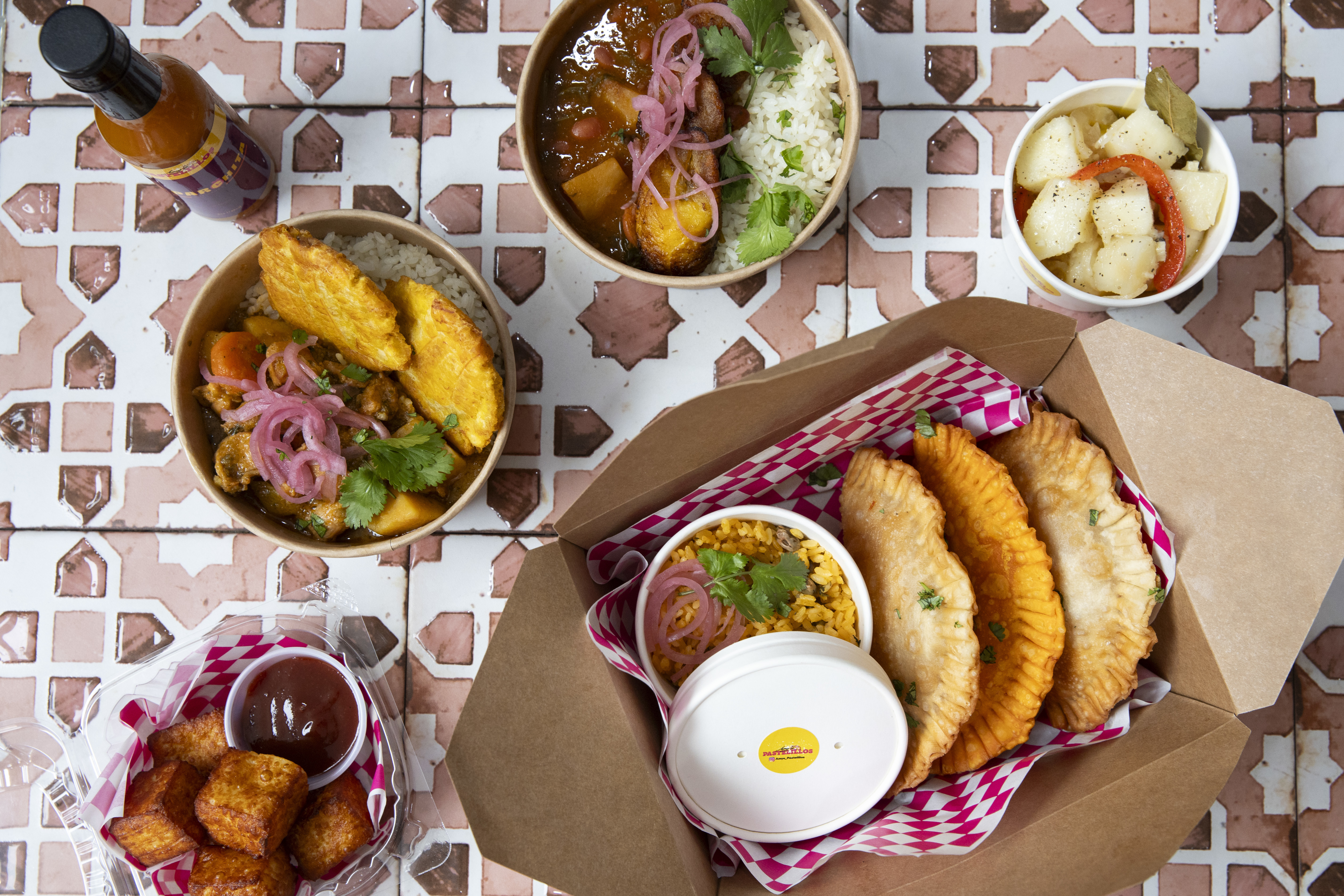
    A spread of dishes including pastelillos at Amy’s Pastelillos, now an official partner of the Philadelphia 76ers for the 2026-27 NBA season.Monica Herndon / Staff Photographer

    The prize package is valued at approximately $250,000, and includes a year of marketing support, business consulting, and strategic networking from both Bank of America and the Sixers. As an official partner, Amy’s Pastelillos brand will be promoted to 76ers fans through a mix of TV, social media, and radio ads, plus appearances.

    The opportunity, Rivera-Nassar said, couldn’t have come at a better time.

    “I had been spending all year trying to secure support and funding for my business, and had been getting constant ‘nos,’” she said. “I just can’t believe that we won.”

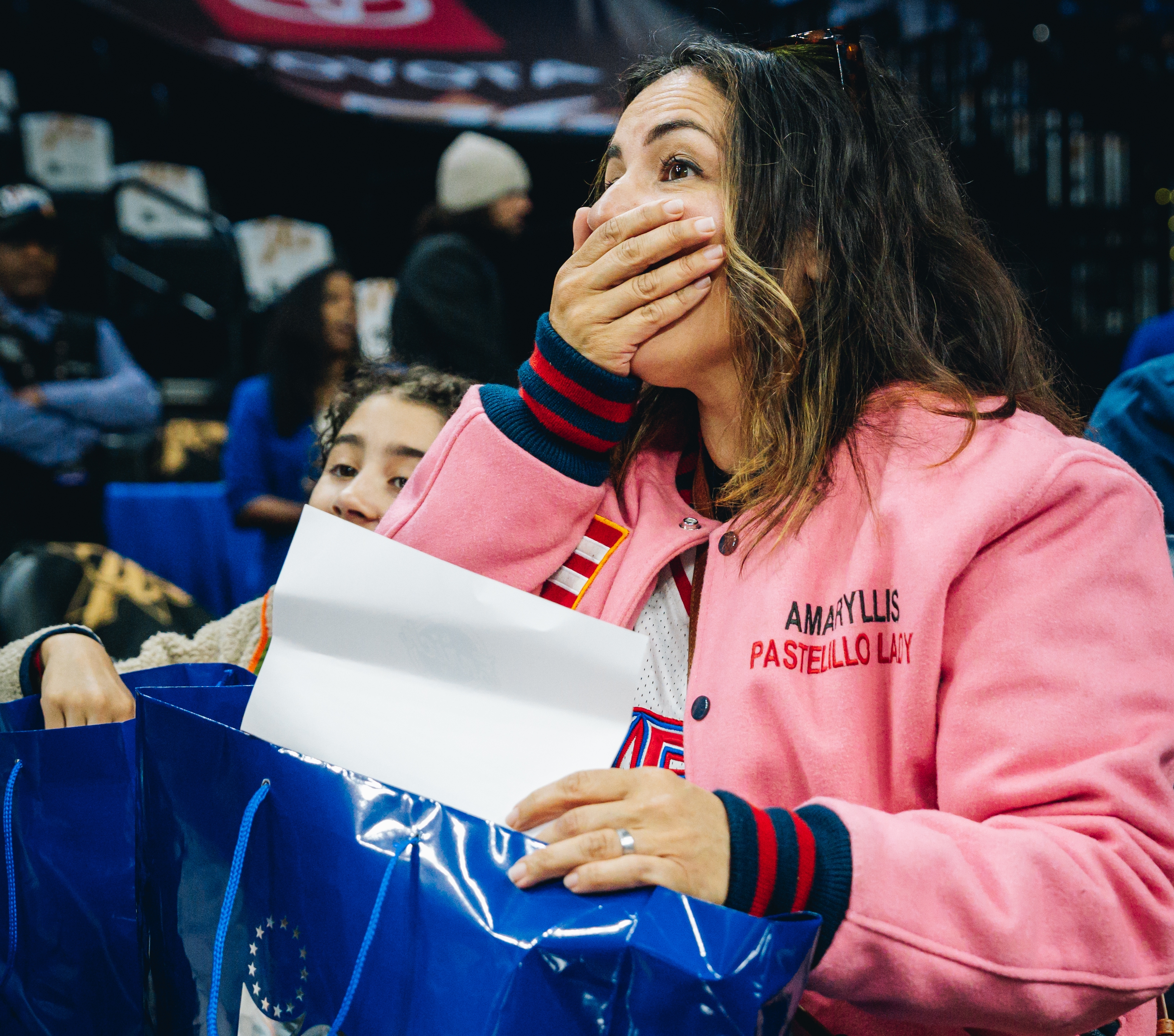
    Amaryllis “Amy” Rivera-Nassar, owner of Amy’s Pastelillos, found out her business was an Enrich Program winner during Game 4 of the Sixers playoff series against the Boston Celtics at the Xfinity Mobile Arena.Courtesy Philadelphia 76ers

    Bank of America and the Sixers started the Enrich Program during the 2020-21 basketball season as a way to uplift small, local, and underrepresented business owners in and around Philly. Previous winners include East Falls coffee shop Thunder Mug Cafe and the late Charisse McGill’s Lokal Artisan Foods, the brand behind the popular French toast bites stands previously located at Spruce Street Harbor Park and the Christmas Village.

    The program is competitive: 175 businesses applied earlier this spring, a Sixers spokesperson said via email. After submitting an application detailing their growth plans, selected business owners must pitch Bank of America and Sixers executives. Enrich’s two other finalists, the Northern Liberties gift shop Laser Philly and the popular Kensington gelato shop Cloud Cups, also received $10,000 cash prizes.

    “Amy’s story stood out to us,” the Sixers spokesperson said. “Her vision extends beyond the restaurant itself — she is passionate about creating a space where Philadelphians can experience and connect with Puerto Rican culture and community. That combination of entrepreneurial growth [and] cultural purpose … made Amy’s journey one we were excited to support.”

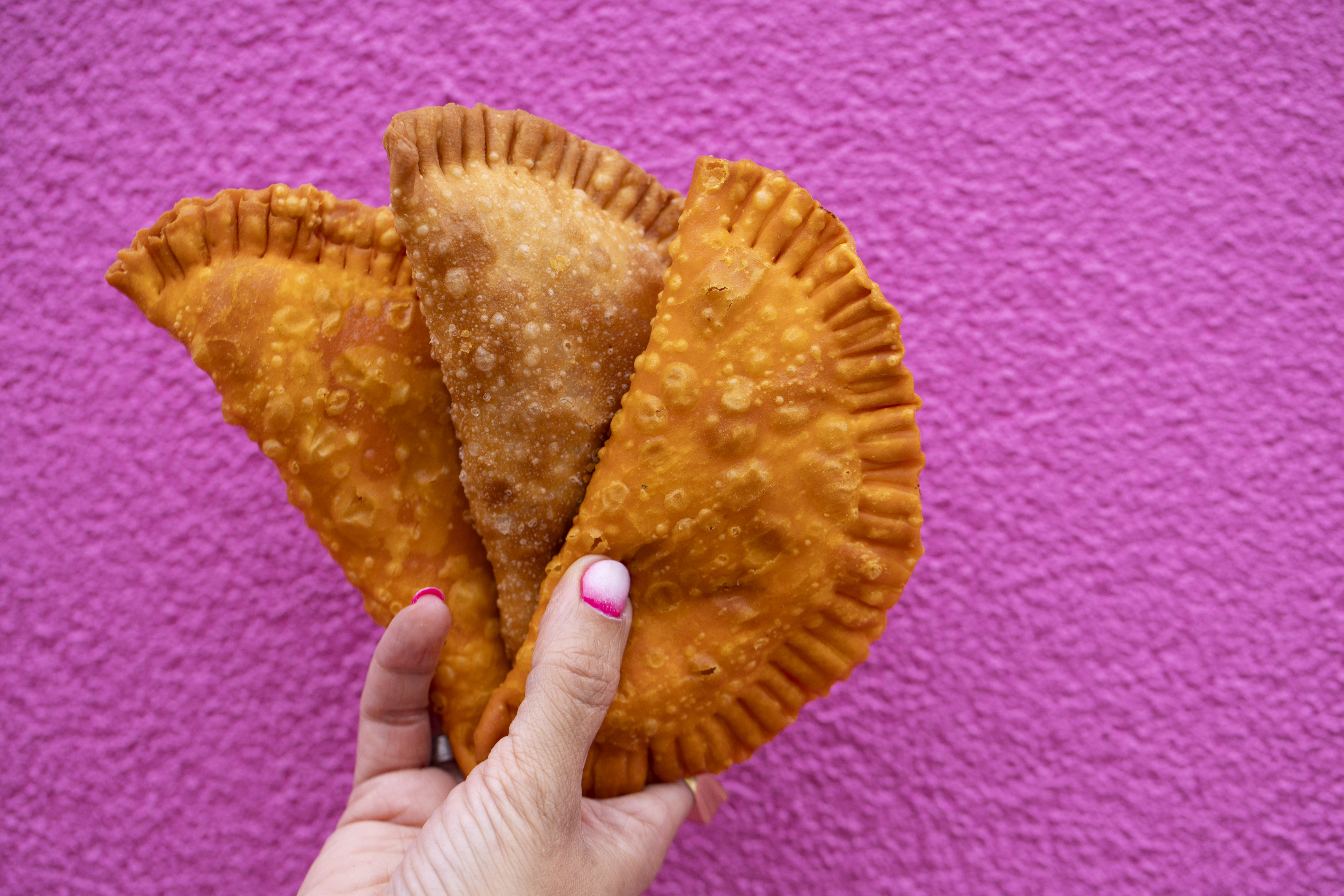
    Amaryllis “Amy” Rivera-Nassar holds three pastelillos from the menu outside her restaurant, Amy’s Pastelillos. She estimates the storefront sells just under 2,000 Puerto Rican turnovers per week.Monica Herndon / Staff Photographer

    Rivera-Nassar attributes at least some of Amy’s lasting boom to the power of Bad Bunny’s halftime show, which catapulted Puerto Rican culture into the mainstream.

    “We did 700 pastelillos in two hours for just Super Bowl parties alone,” she said. “But the aftermath was super-exciting. A lot of people were like, ‘Oooh, Puerto Rican food’ and really wanted to explore the culture.”

    Rivera-Nassar believes the support from Bank of America and the added visibility from the Sixers can help Amy’s expand to a larger off-site prep kitchen — even if she can’t bear to leave her bright pink storefront.

    “I’m attached. It’s my baby,” she said, at the same time acknowledging that, space-wise, “we’ve hit our ceiling.”

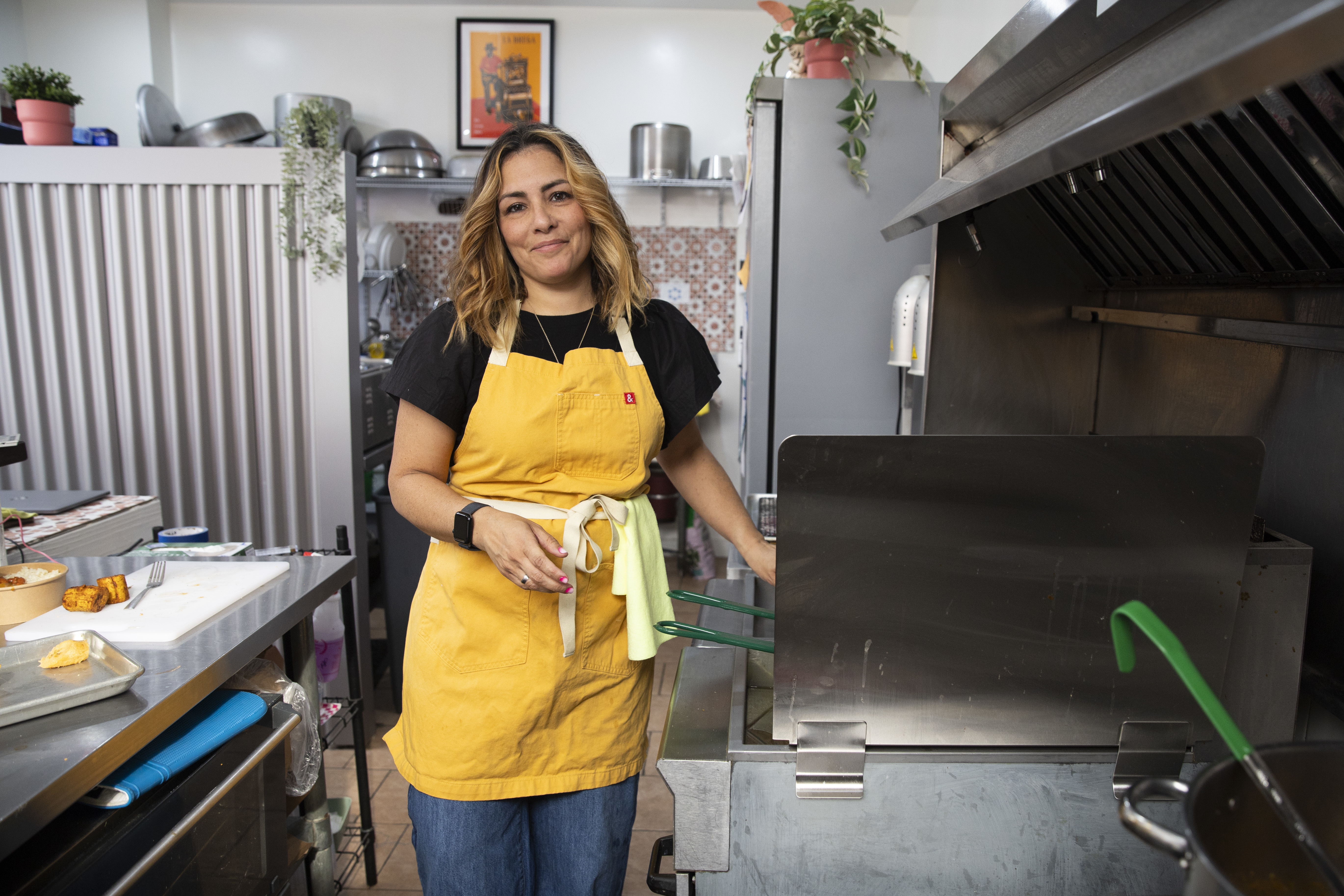
    Amaryllis “Amy” Rivera-Nassar works in the kitchen at Amy’s Pastelillos. Now an Enrich Program winner, Rivera-Nassar is hoping to expand to a larger, off-site prep facility.Monica Herndon / Staff Photographer

    Rivera-Nassar is most excited to see her business’ name in lights inside the Xfinity Mobile Arena. She learned about winning the Enrich prize while sitting courtside with her 10-year-old daughter at Game 4 of the Sixers playoff series against the Boston Celtics.

    “I was already overwhelmed by the fact that Tyrese Maxey and [V.J.] Edgecomb were right in front of us. And then the Sixers reps came out and congratulated me,” Rivera-Nassar said. “I was floored.”

  • Montco gets a stylish 300-seat restaurant from the team behind the Blue Bell Inn

    Montco gets a stylish 300-seat restaurant from the team behind the Blue Bell Inn

    Tiny Bridgeport, tucked off Route 202 between King of Prussia and Norristown, has long had its food landmarks. Since 1955, it’s been the home of Suzy-Jo Donuts and Franzone’s Pizzeria.

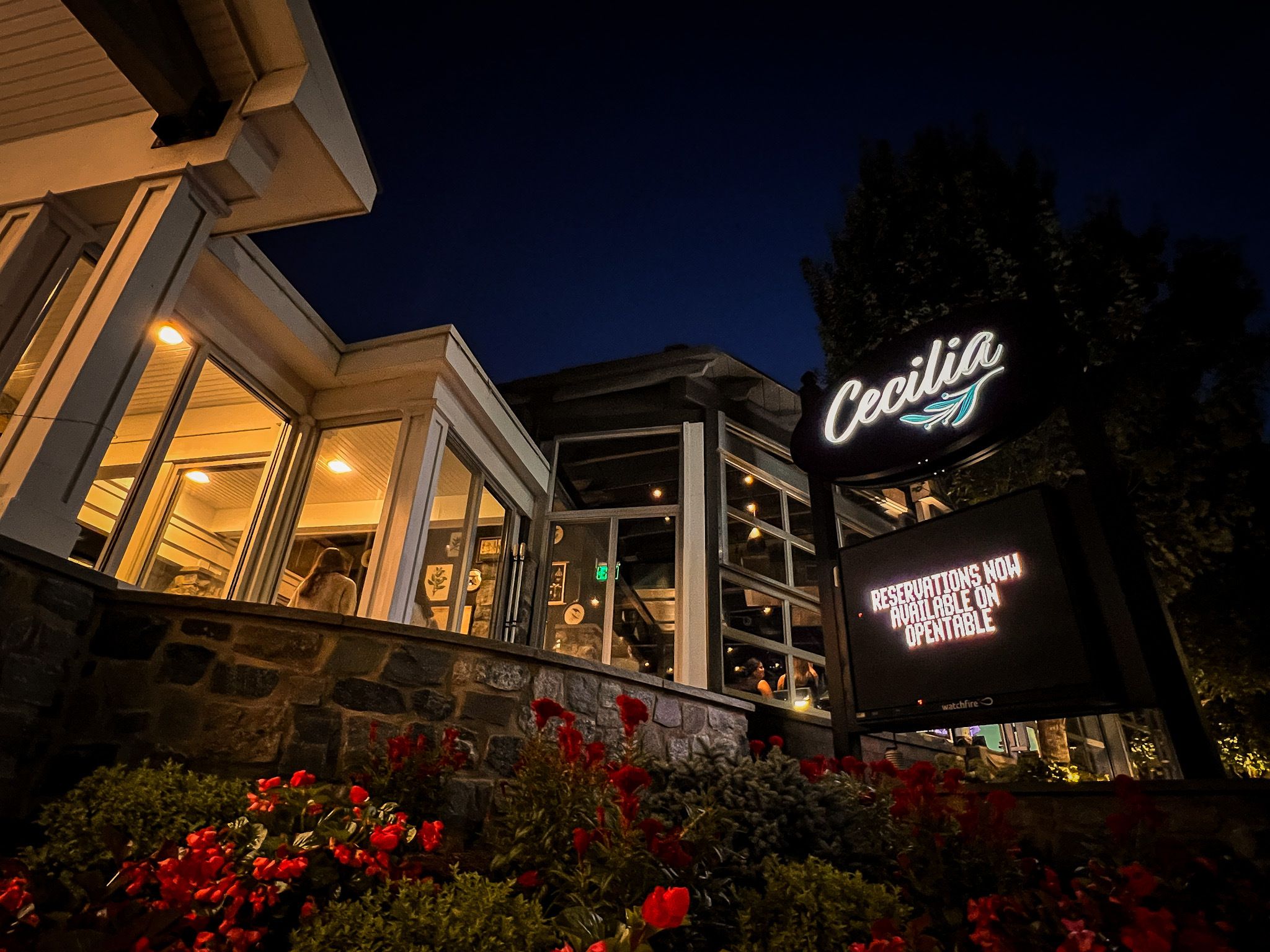
    Now comes the polished Cecilia, which opened Monday in the former Taphouse 23, following an extensive renovation by Scott Dougherty and Bruce Goodman, whose holdings include Copper Crow in Horsham and the Blue Bell Inn in Blue Bell (featured in The Inquirer’s 2024 edition of The 76).

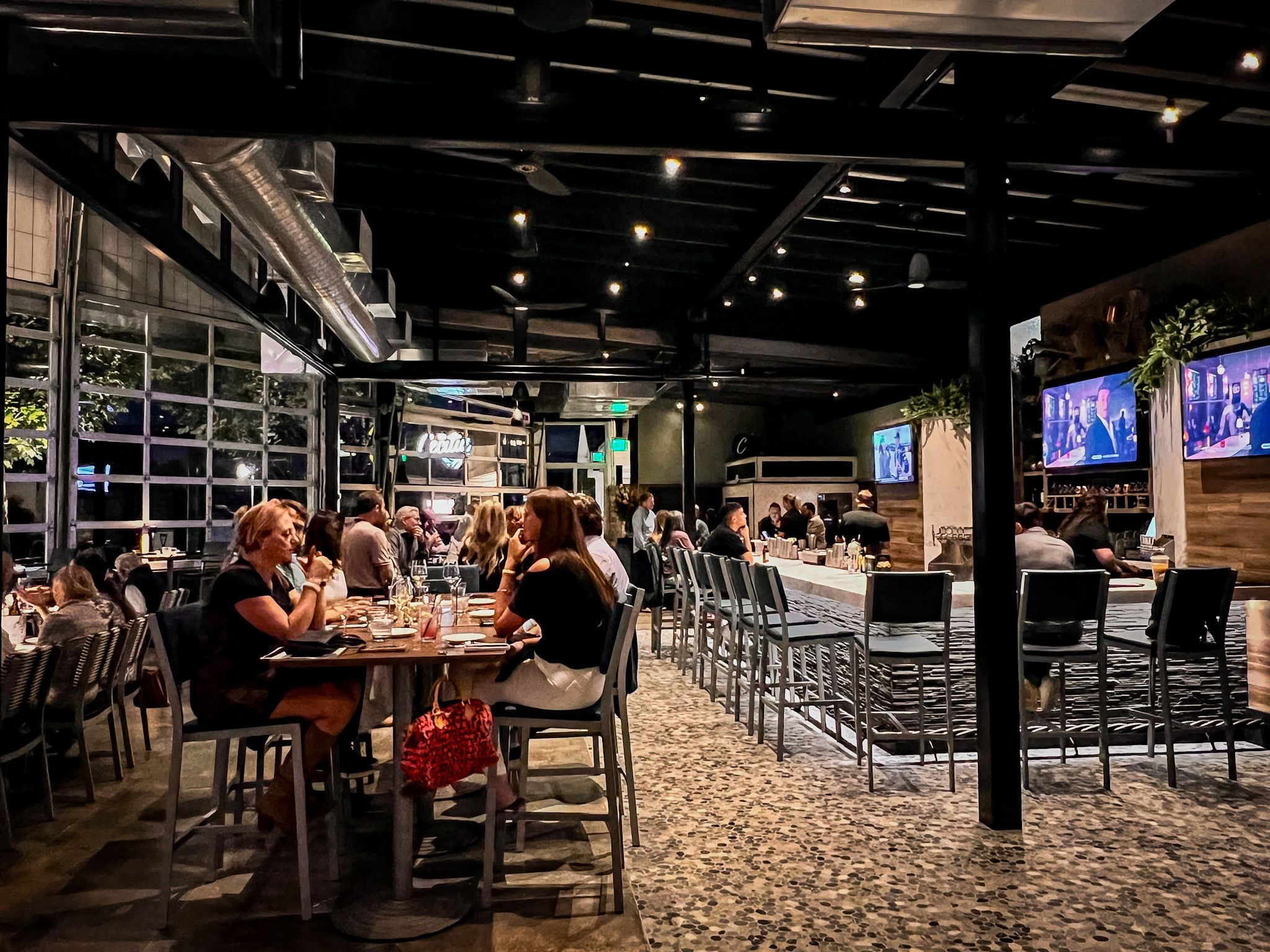
    Lounge at Cecilia, 266 E. Fourth St., Bridgeport.Michael Klein / Staff

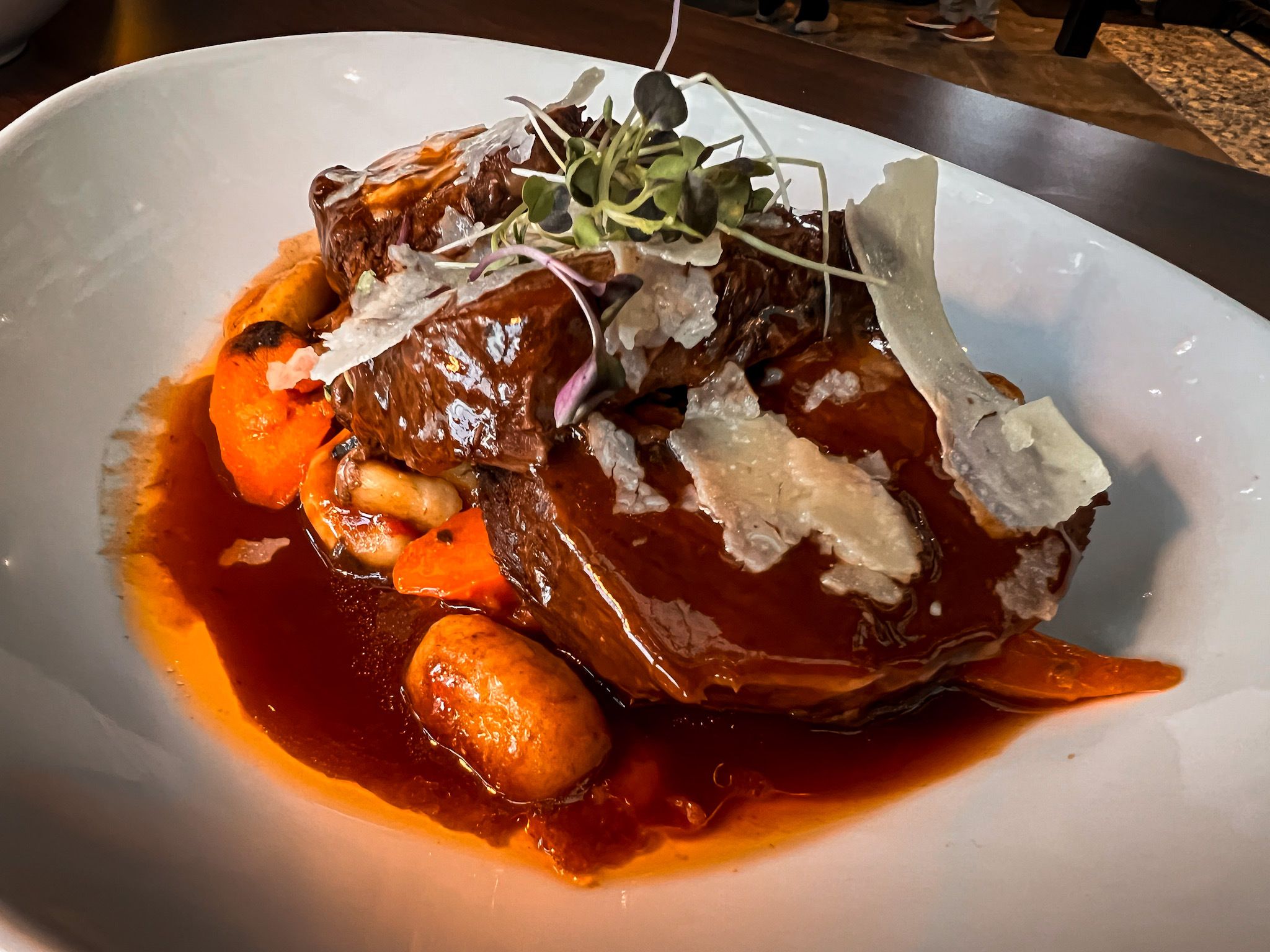
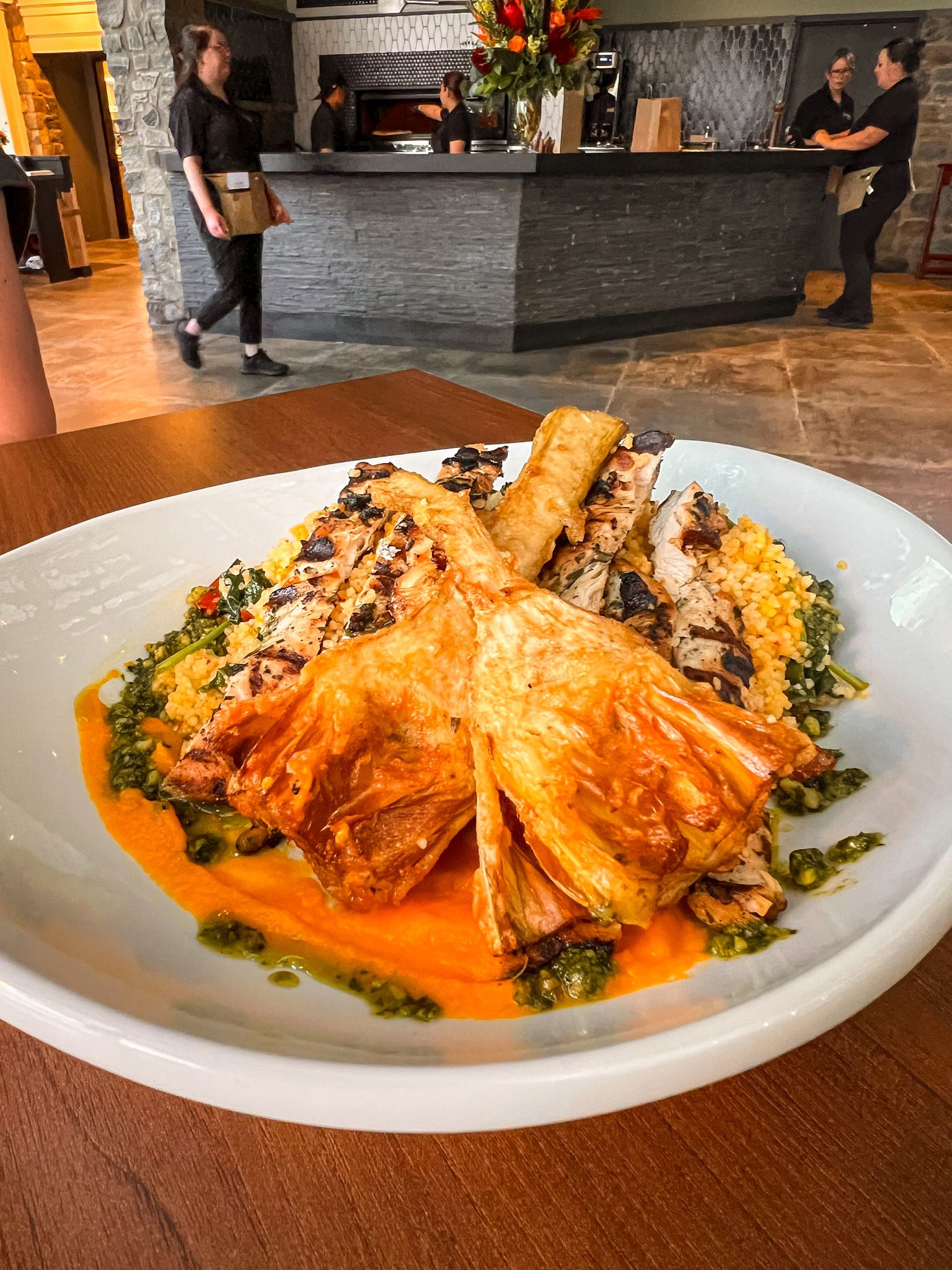
    Chef Peter Sherba, the Blue Bell Inn veteran who oversees the group’s kitchens, created Cecilia’s contemporary American menu. Early favorites during weekend previews included a wagyu French dip sandwich; a tuna tataki appetizer, whose seared rare ahi slices are topped with avocado, ponzu, Fresno chilies, and compressed pineapple; pierogies from Ambler’s Pierogie Kitchen napped in braised short rib, Cooper Sharp sauce, caramelized onions, and roasted long hots; and two hearty, autumnal entrees: a beef bourguignon-style short rib called “Meat and Potato” (the potato here is gnocchi), as well as a 12-ounce apple cider-glazed pork chop over Yukon Gold mashed potatoes. There’s brick-oven pizza, too. Prices range from the high teens for appetizers to just over $30 for mains.

    The roughly 300-seat restaurant represents a substantial makeover of Taphouse 23, which closed last year. Judi Goodman, who designs the restaurant group’s interiors, shrank the main bar by about 40%, making room for banquettes and lower dining tables. The partners also installed new lighting, wall coverings, furniture, artwork, TVs, and sound equipment.

    An adjoining space has been transformed into what the owners call the Greenhouse, with garage doors that can open in warmer weather. The parking lots and landscaping also were redone.

    Taphouse 23 opened in 2014 under Bridgeport businessman Gary Johnson — Judi Goodman’s brother — replacing a joint called the Point. After Johnson died in 2021, his family decided to ease out of the restaurant business, Dougherty said. Cecilia is named in tribute to the Johnson children’s mother.

    Dougherty said Cecilia will aim to reach beyond Bridgeport to build its customer base, drawing from Blue Bell, King of Prussia, and Conshohocken — all 10 to 20 minutes away.

    Cecilia, 266 E. Fourth St., Bridgeport. Hours: 11:30 a.m. to 9 p.m. Sunday to Thursday, 11:30 a.m. to 10 p.m. Friday and Saturday.

  • Honeysuckle’s Omar Tate and Cybille St.Aude-Tate named best new chefs by Food & Wine

    Honeysuckle’s Omar Tate and Cybille St.Aude-Tate named best new chefs by Food & Wine

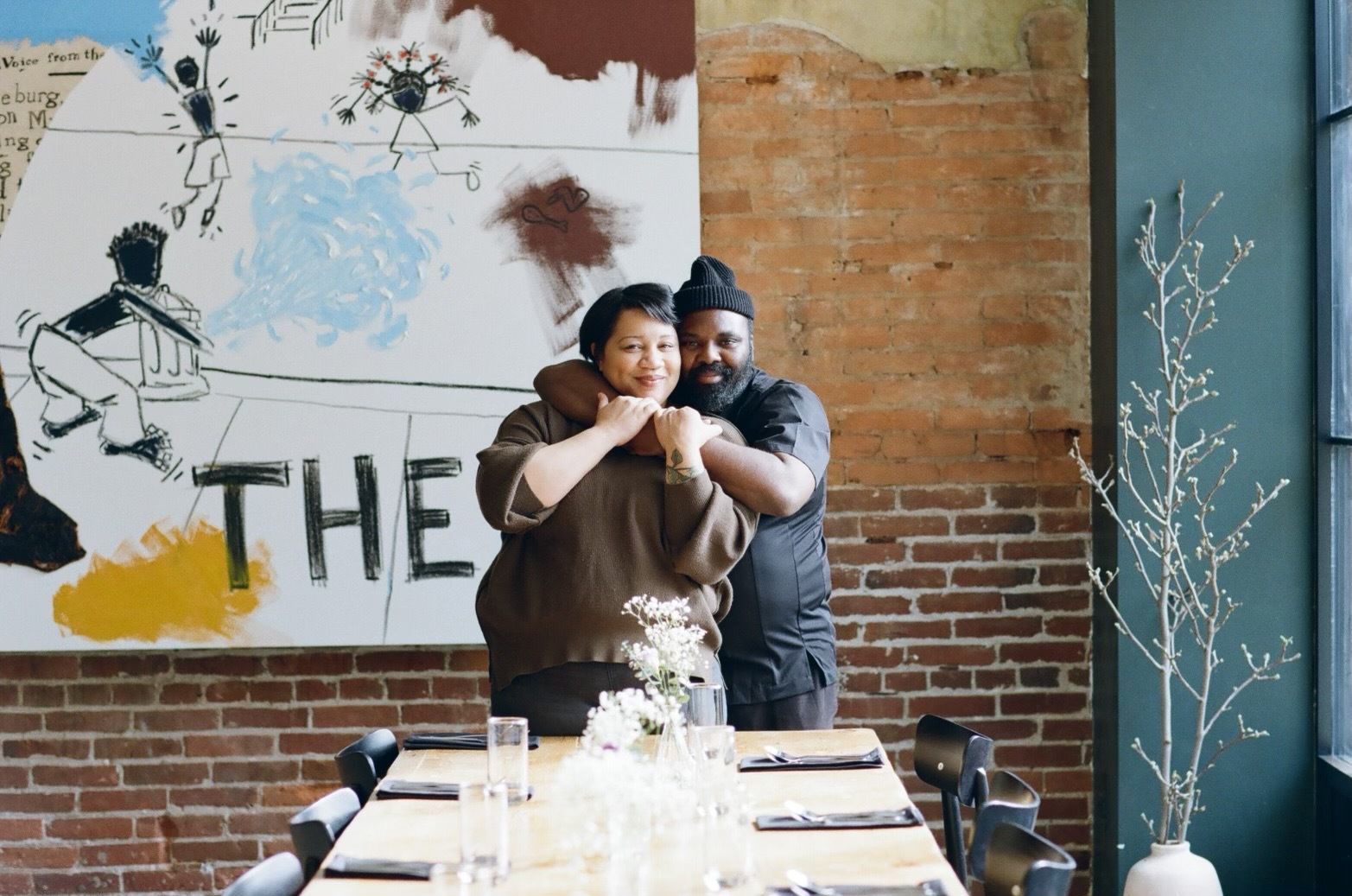
    Honeysuckle chef-owners Omar Tate and Cybille St.Aude-Tate have been named to Food & Wine’s annual Best New Chefs class, joining a prestigious list of Philadelphia talent who’ve shared the designation over the past 37 years.

    Though the Food & Wine list recognizes “rising talent at a pivotal moment in their careers,” the Tates have been lauded in Philly’s food scene for years.

    The couple have transformed Honeysuckle many times over the years; each iteration of the project has met significant acclaim. It started in New York City as a pop-up in 2017, then became a residency at Blue Hill at Stone Barns, followed by a brick-and-mortar provisions store and supper club in West Philly. In its current life, it’s a sprawling restaurant whose bar program and tasting menu Inquirer critic Craig LaBan has called “thought-provoking, original — and totally delicious.”

    The Tates are artists and storytellers — identities that are integrated in their roles as chefs and restaurateurs. In every iteration of Honeysuckle, they have celebrated the culture and foods of the Black American diaspora.

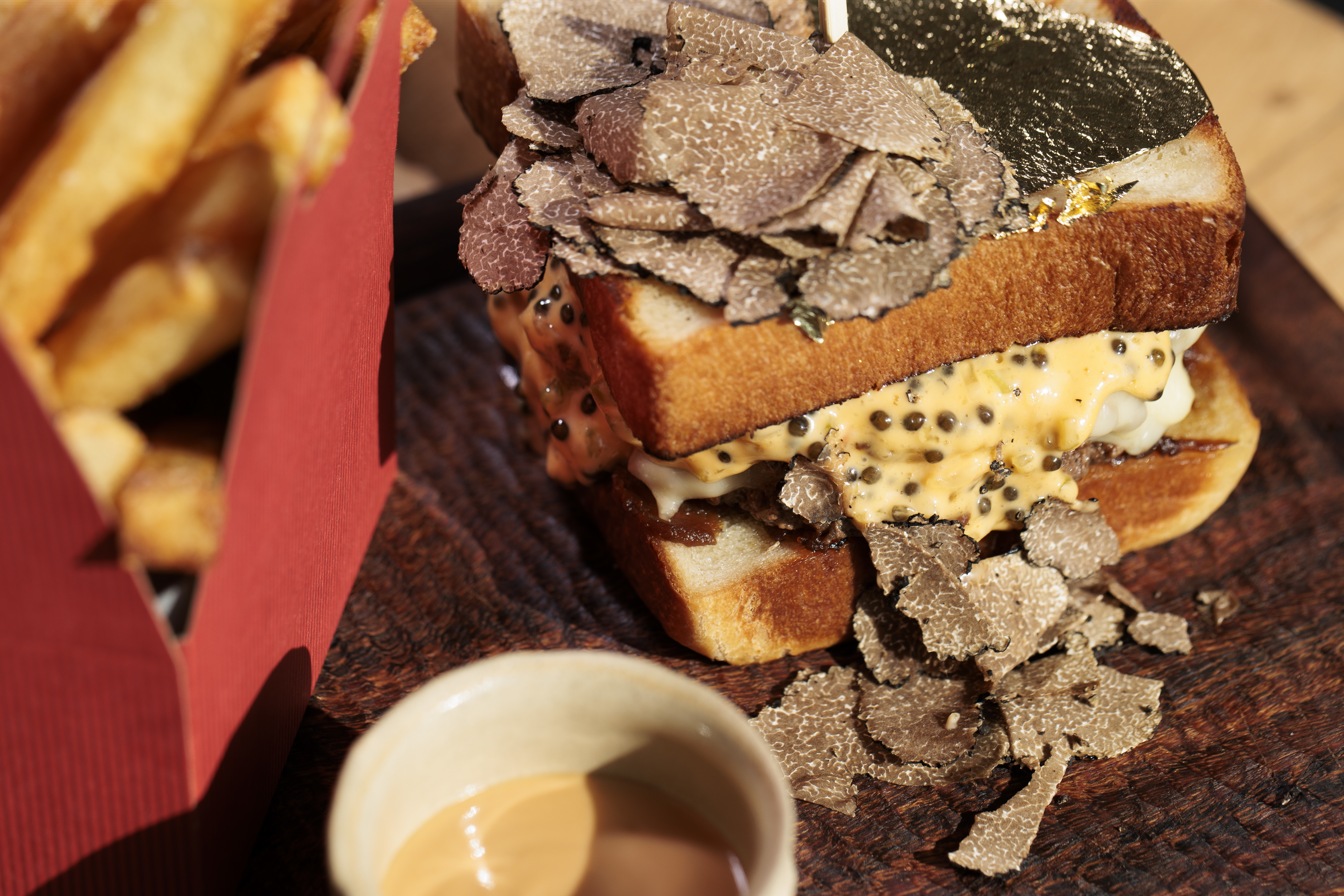
    Editorial director Melanie Hansche was particularly wowed by Honeysuckle’s McDonald’s Money burger: “As dinner unfolds, the couple show that they are wizards of surprise and delight,” Hansche writes. “Nowhere is that more evident than the McDonald’s Money burger, a ridiculous sandwich layered on slices of toasted shokupan, oozing with Cooper Sharp cheese, malt vinegar onions, and caviar remoulade, showered in gold leaf and shaved black truffles. It’s tangy, salty, sweet, and earthy and possibly the very best burger you’ll ever eat.”

    The McDonald’s Money burger at Honeysuckle on Thursday, June 26, 2025 in Philadelphia.Monica Herndon / Staff Photographer

    The Tates are among 14 chefs from 10 restaurants across the country to make this year’s list. They arrived in New York on Monday to participate in programming around Best New Chefs, including panel discussions, a luncheon with other alumni, and a mentorship workshop. The awards ceremony is scheduled for Tuesday night. They’ll be back in Philly on Wednesday, in time for dinner service at Honeysuckle.

    They learned they had made the list back in March. “We’ve had to keep this secret for a long time,” said St.Aude-Tate. “And this win feels different. We’ve both been in the industry for a really long time but this puts us on a national stage in a different way.”

    The Tates join a long roster of Philadelphia chefs named to Food & Wine Best New Chefs, including Susanna Foo (1989), Marc Vetri (1999), Jim Burke (2008), Eli Kulp (2014), Emily Riddell (2022), and Amanda Shulman (2023), to name a handful.

    St.Aude-Tate grew up reading Food & Wine and looking up to other chefs who had been named Best New Chefs by the magazine. “I used them as barometers as who to look up to in the industry,” she said.

    Honeysuckle has been racking up consistent awards since its ambitious opening on North Broad in April 2025. Last month, it was named to Bon Appétit’s Best New Restaurants list (along with Sao, which is owned and operated by fellow Food & Wine Best New Chef alum Phila Lorn). The Tates were also named as James Beard Awards finalists in the Best Chef: Mid-Atlantic category earlier this year (they were semifinalists in 2024). Honeysuckle also appeared on The Inquirer’s 2025 edition of The 76.

    “After our first Beard nomination, we didn’t know what to expect and we got slammed at the restaurant. It was crazy. We fell on our faces. There was no coaching on what to expect,” said St.Aude-Tate, adding that the mentorship and coaching provided by Food & Wine even before the awards were officially announced are what set the Best New Chefs program apart from other awards-granting institutions. “We talked to other people who had been in this position to understand how to navigate this moment,” she said.

    St.Aude-Tate hopes to apply those lessons to her own business. “But we are most excited about being able to scream from the rooftops about what we’re doing,” said St.Aude-Tate.

  • South Philly is celebrating chiles en nogada season, but not for long

    South Philly is celebrating chiles en nogada season, but not for long

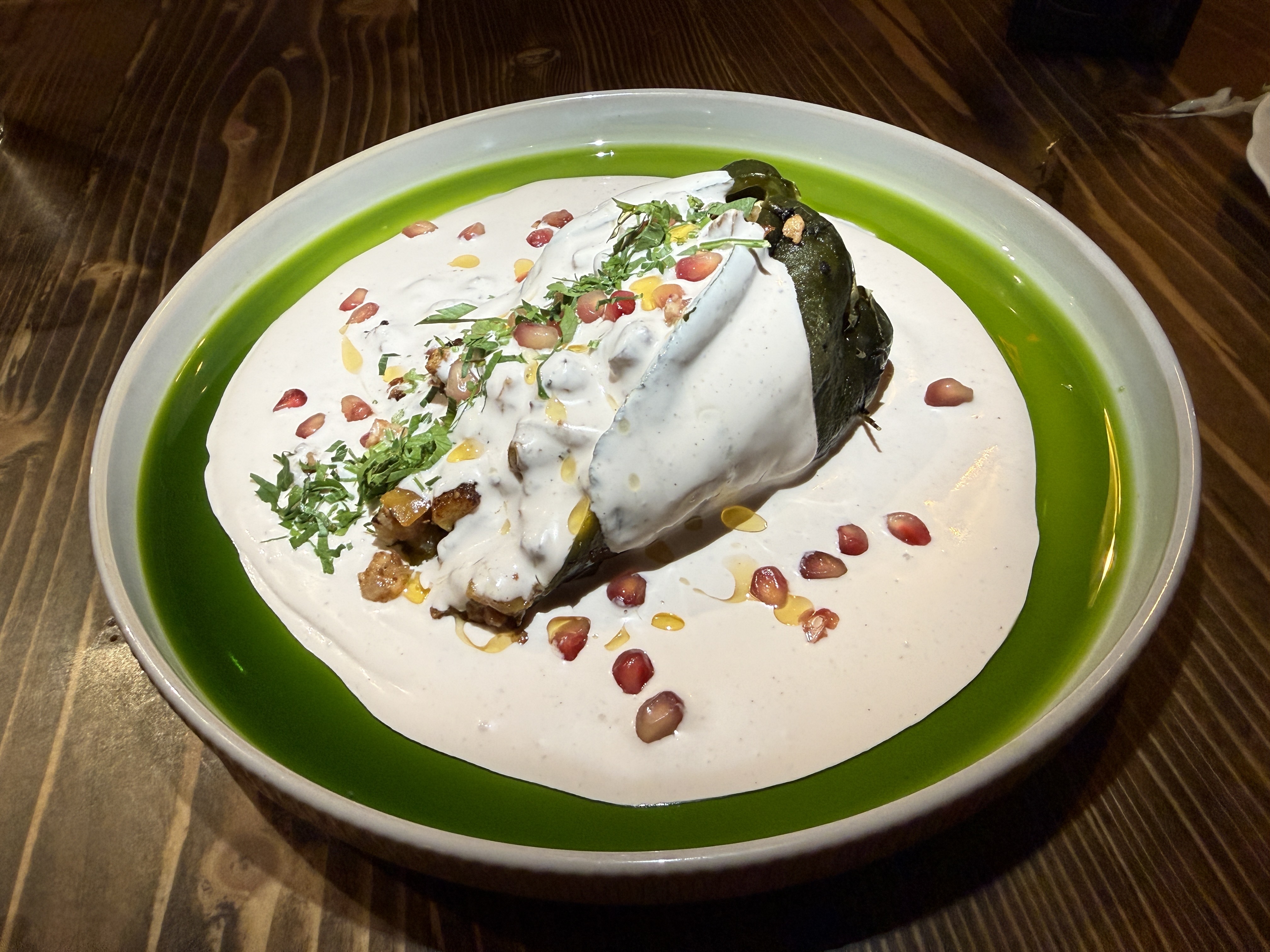
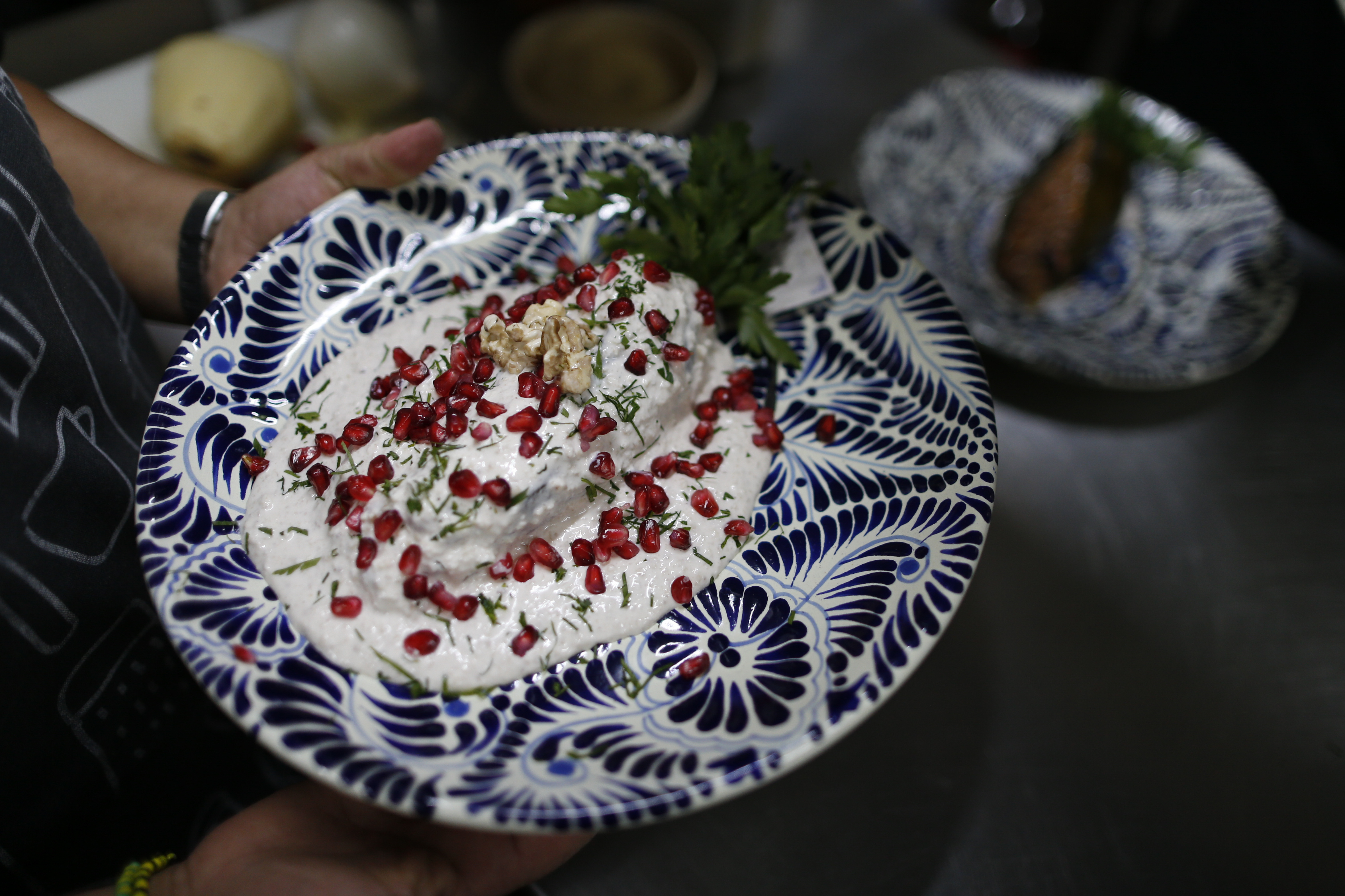
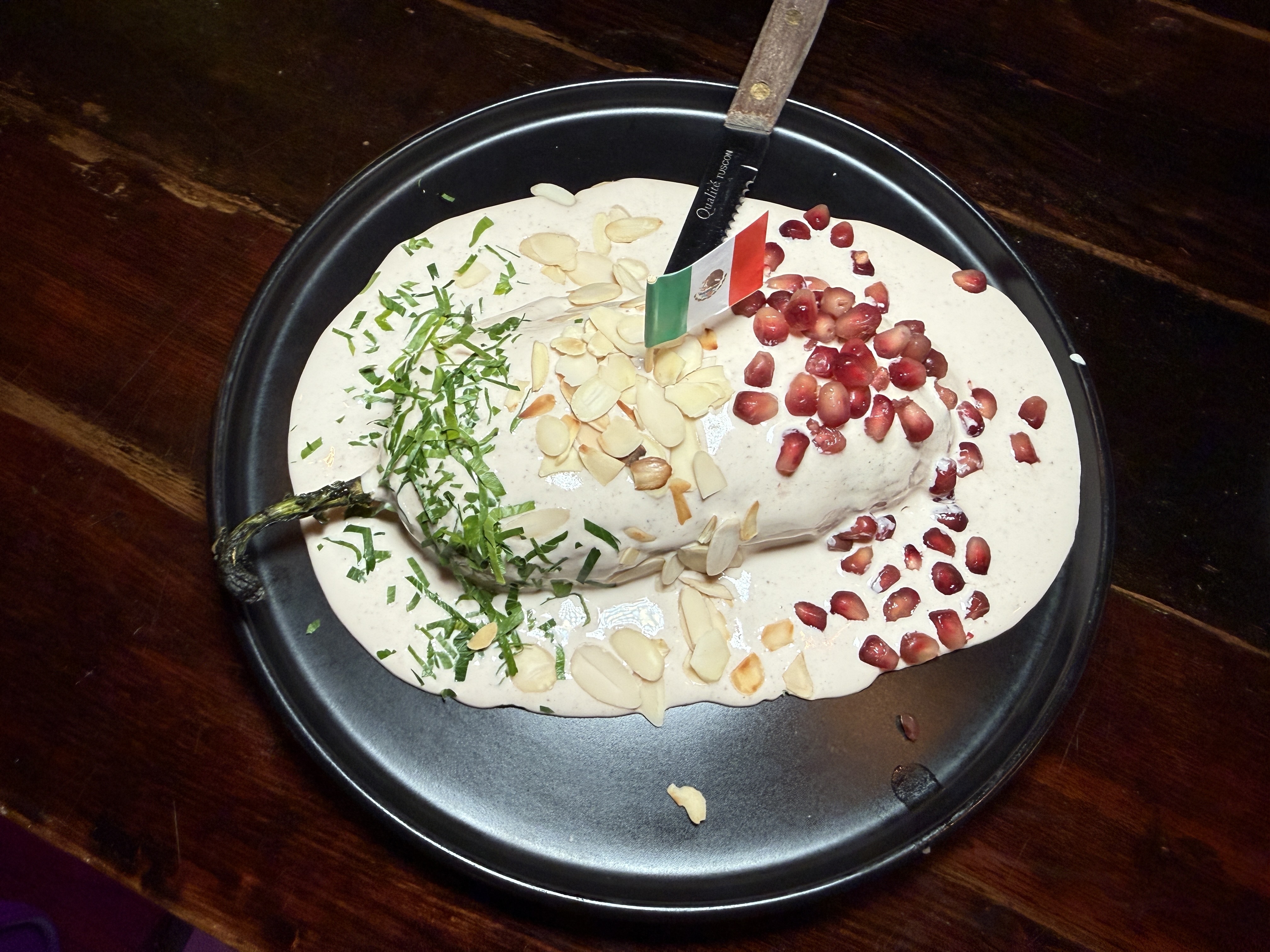
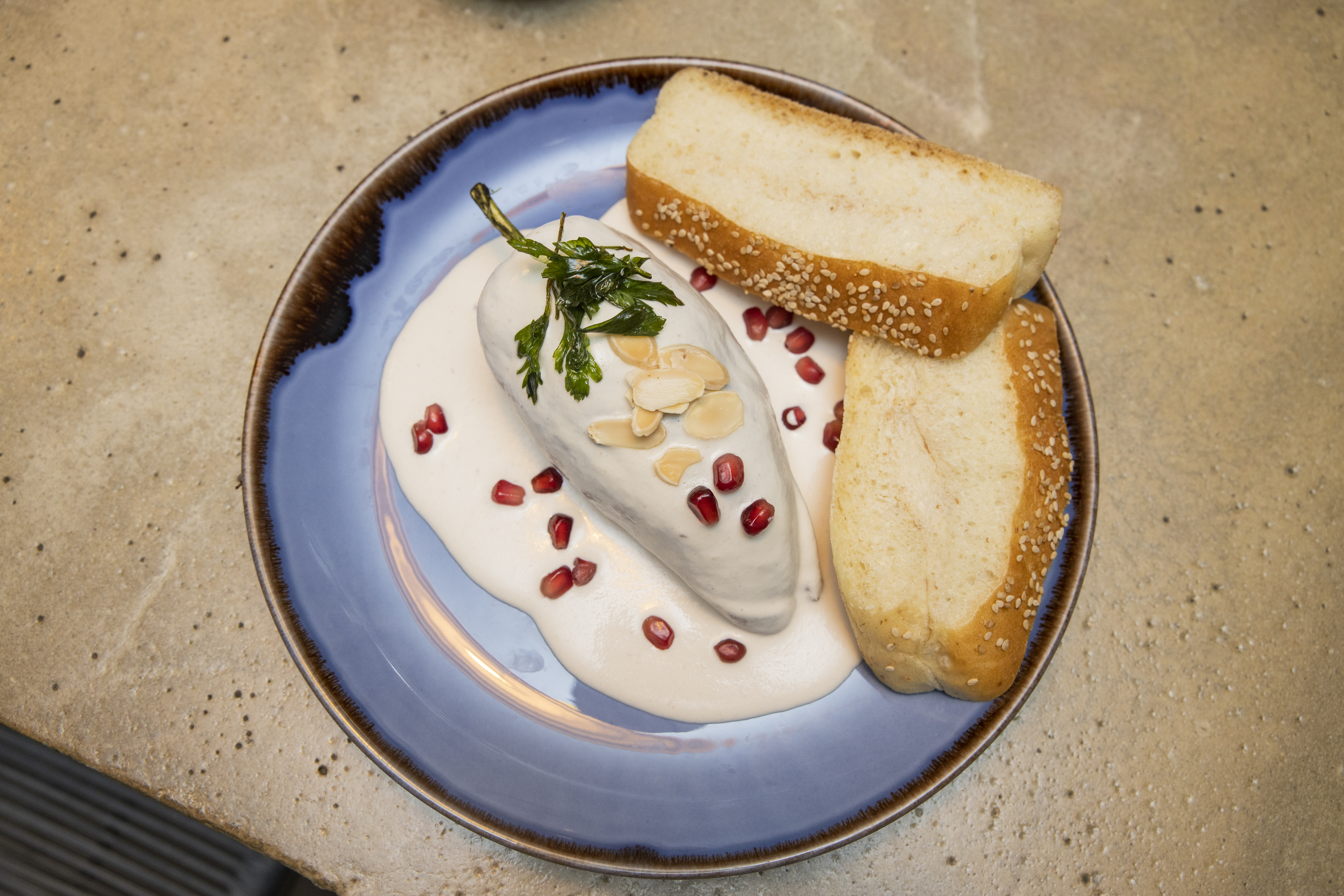
    Chiles en nogada, no matter who makes them, are visually arresting dishes. They’re distinctive for their colors: a base of a deep green poblano pepper, a blanket of creamy white walnut sauce (the titular nogada), traditional pops of red from fresh pomegranate seeds, and a sprinkling of more green from parsley. These components represent the colors of the Mexican flag. The poblano is stuffed with picadillo, a mix of ground meats and fruits that marry savory and sweet flavors and can often be time-consuming to prepare.

    Chiles en nogada season is fleeting, lasting just two to six weeks in late August and early September, when the dish’s main ingredients — poblanos and walnuts — are aligned and in season, along with the apples and peaches that are also at peak ripeness in Puebla, where the dish originated.

    In Mexico, chiles en nogada has become a national dish, treated with great reverence and ceremony. At fine-dining establishments in Mexico City, diners can select which poblano they’d like stuffed, just as one might select a fish from a tank to be cooked. But you don’t have to go to Mexico to eat it — there are several excellent versions found in Philadelphia.

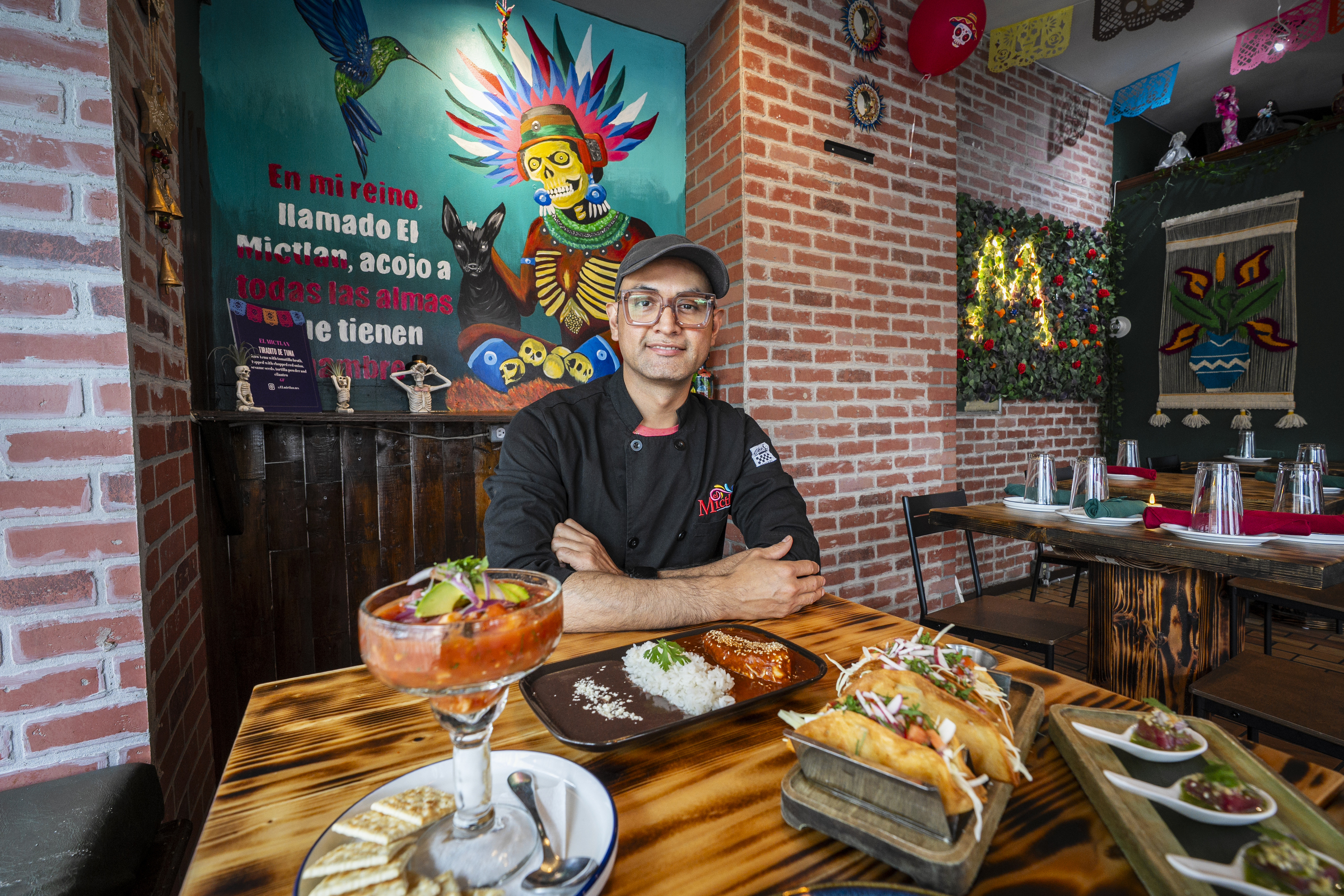
    Chelo Manzanarez, chef and owner at El Mictlan, where the menu brings a taste of Guerrero and Acapulco to South Philly.Jessica Griffin / Staff Photographer

    Chelo Manzanarez, the chef and owner of El Mictlan, which generally focuses on the food of Guerrero (the Mexican state located southwest of Puebla), has worked to make this fundamental Mexican dish his own.

    “It’s usually a sweet and heavy dish, but I’ve tried to make it more flavorful and more personal,” Manzanarez said of the chile en nogada at his South Philly BYOB at Beechwood and Snyder Streets.

    Manzanarez switched out beef in favor of a mix of pork and chicken, and he swapped raisins for dried dates. He seasons the picadillo with cinnamon, clove, and anise. He uses both green and red apples, “to get that contrast between sweet and sour.” He adds plantains and pineapples “for their tropical flavor.”

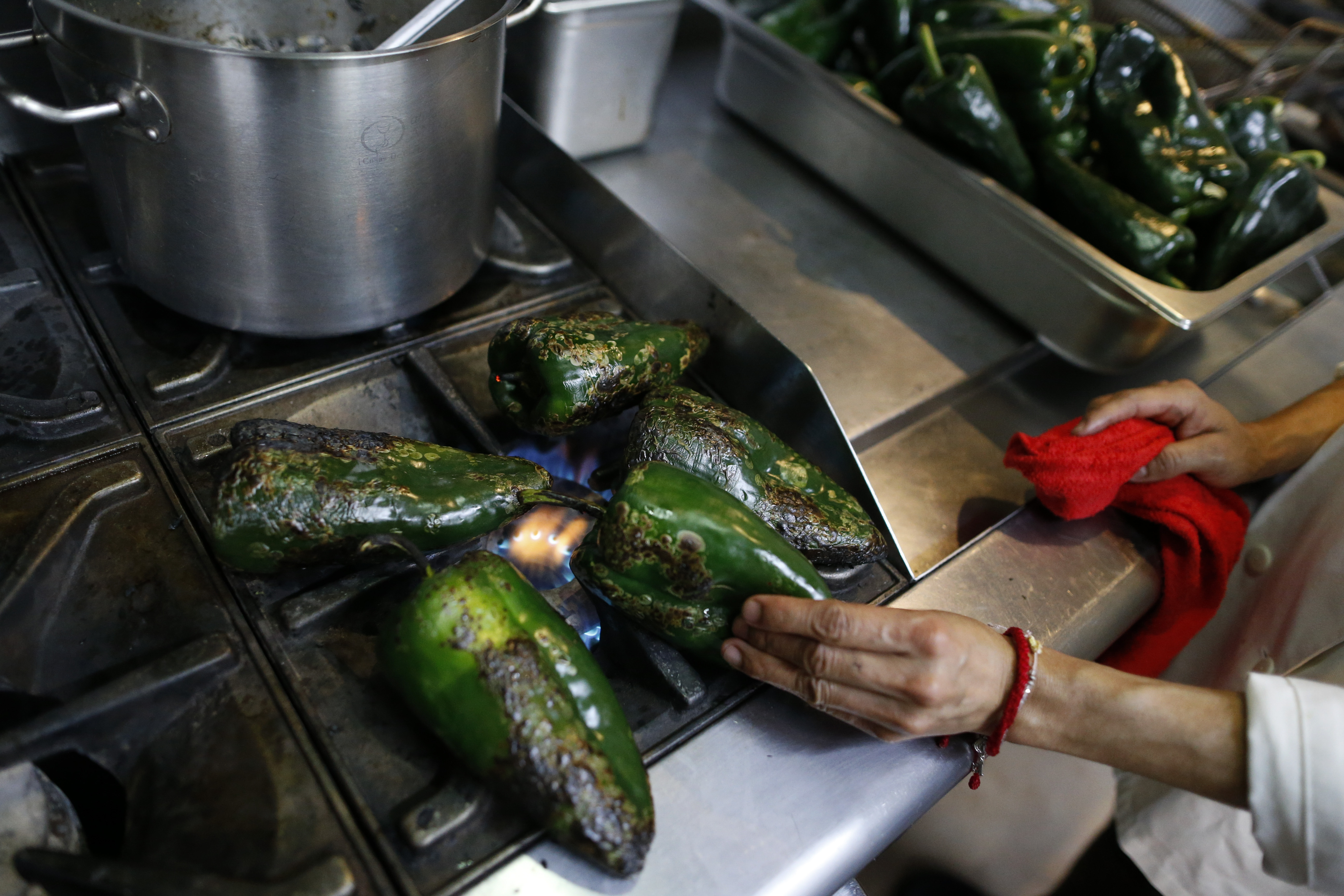
    Making his chile en nogada is truly a labor of love for Manzanarez. “I cook each fruit and vegetable individually and caramelize them separately. Most of the work comes from dicing everything very small.” After mixing all cooked components together for the filling, he still has to roast the peppers, which he does for three to four minutes on each side before letting them sweat in a plastic bag, making it easier to remove their skins. “It’s complicated — getting the poblanos to the right consistency so that they don’t lose their shape,” he said.

    For the white of the Mexican flag, Manzanarez eschews the traditional goat cheese, instead mixing cream cheese with queso fresco, walnuts, almonds, and a touch of milk. The result is creamy, luxurious, and not too rich.

    A plate of chiles en nogada at Testal restaurant in downtown Mexico City.Rebecca Blackwell

    Manzanarez finishes his chile en nogada with bright cilantro oil and red chili oil, doubling down on the colors as a deeper tribute to the Mexican flag.

    He first came up with his recipe while working at La Llorona, also in South Philly. It’s a dish customers ask for every year.

    A cook roasts poblano peppers on the stovetop in preparation for removing the skin, as kitchen staff make chiles en nogada at the Testal restaurant in downtown Mexico City in 2019. Rebecca Blackwell

    Restaurants traditionally stop serving chiles en nogada after Mexican Independence Day, on Sept. 16. “But now we celebrate Independence Day for the whole of September,” said Manzanarez, which is how long he plans on serving it at El Mictlan.

    More traditional iterations of the dish can also be found at La Llorona and El Chingon (usually only available at dinner).

    La Llorona serves a richer but very classic version with the roasted poblano battered in egg whites and gently sautéed before being blanketed in an especially rich and dense nogada. The pepper is stuffed with ground beef and pork, peaches, and apples. Its parsley, sliced almond, and pomegranate seed garnishes replicate the stripes of the Mexican flag precisely.

    The chile en nogada at La Llorona is stuffed with beef and pork and lightly battered in egg whites before being blanketed in nogada sauce.Kiki Aranita / Staff /

    The availability of chef Carlos Aparicio of El Chingon’s chile en nogada ($30) is entirely dependent on the fresh walnuts he flies in, one kilogram weekly, from his hometown of San Mateo Ozolco, located in the Calpan municipality of Puebla — the same municipality where, according to legend, chiles en nogada were first invented by Augustinian nuns. They created the dish in 1821 in honor of General Agustín de Iturbide, after he signed the treaty that recognized Mexico’s independence from Spain. He became the first emperor of Mexico, and the dish represents the colors of what was then the Mexican Army’s flag.

    The chile en nogada at El Chingon uses fresh walnuts flown in weekly from Puebla when they are in season.NaylaPolohovich

    “This year, [Puebla] had a lot of rain so the walnuts fell off the trees too soon,” said Aparicio. “They really have to be fresh, and we can’t preserve them. As soon as they get here, we wash and clean them and put them in milk immediately.” After their milk bath, the walnuts get mixed with goat cheese, cream cheese, cinnamon, and sugar.

    Aparicio’s chile en nogada is stuffed with beef, pork, and fruits, and garnished sparingly. Hewing to tradition, Aparicio’s serves it at room temperature.

    Aparicio is hoping that this year he will receive at least one or two more shipments of walnuts, which means he can serve chiles en nogada for one or two more weeks. (El Chingon sells about 12 to 15 per day when it is available.)

    Chiles en nogada season brings out the competitive nature in chefs and customers. “People will try to get every different chile en nogada in Philadelphia, make comparisons and [argue] about which one is the best,” said Manzanarez.

    You have one, maybe two weeks left to decide for yourself.

  • How a Michelin-starred Philly restaurant secured a $1.5 million state grant to take over the rowhouse next door

    How a Michelin-starred Philly restaurant secured a $1.5 million state grant to take over the rowhouse next door

    One of Philly’s most prominent fine-dining restaurants received a state grant to create an even higher-end establishment. The project promises to create 100 jobs and help cement Philly’s place as a culinary hot spot. It drew criticism over the use of tax dollars.

    The Weekend Restaurant Group, which owns the acclaimed Rittenhouse Square restaurant Friday Saturday Sunday, was awarded $1.5 million from the state’s Redevelopment Assistance Capital Program in July to help finance the expansion of the Michelin-starred restaurant. The grant will cover only a fraction of the project’s multimillion-dollar budget.

    The endeavor will be the “first minority-owned restaurant of its kind” in the United States, wrote Friday Saturday Sunday chef-owner Chad Williams, who is Black, in the restaurant group’s application.

    The undertaking involves connecting Friday Saturday Sunday with a neighboring rowhouse that will eventually be transformed into a three-story dining destination with an 18-seat chef’s counter, private dining rooms, and a post-dinner sweets lounge.

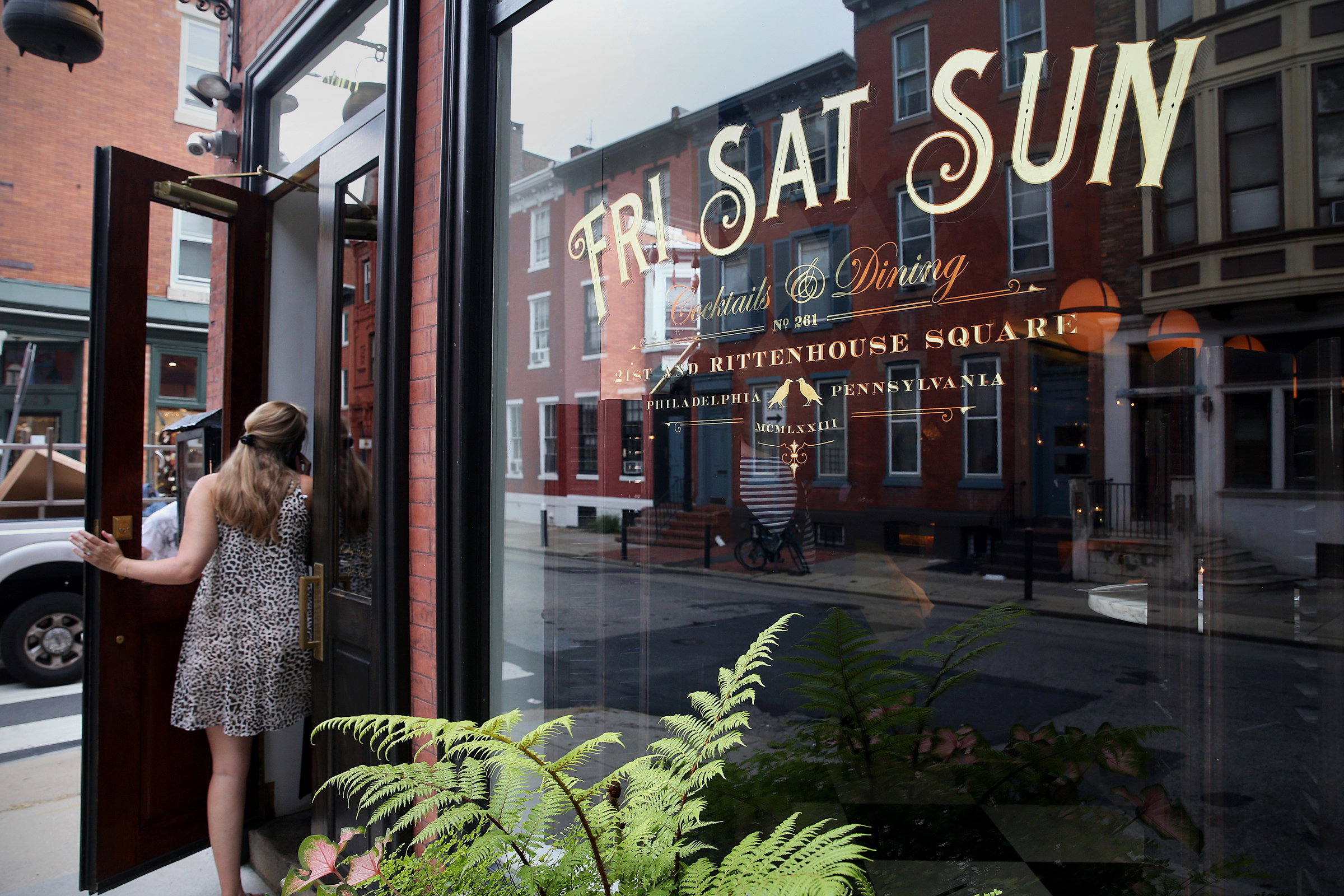
    Williams runs Friday Saturday Sunday with his wife, Hanna. Together, they announced plans to grow their award-winning restaurant at 261 S. 21st St. last summer, after entering an agreement to buy the adjoining property at 2048 Rittenhouse Square. Neighbors enthusiastically endorsed their ambitious plan, which came five months before the restaurant earned a Michelin star.

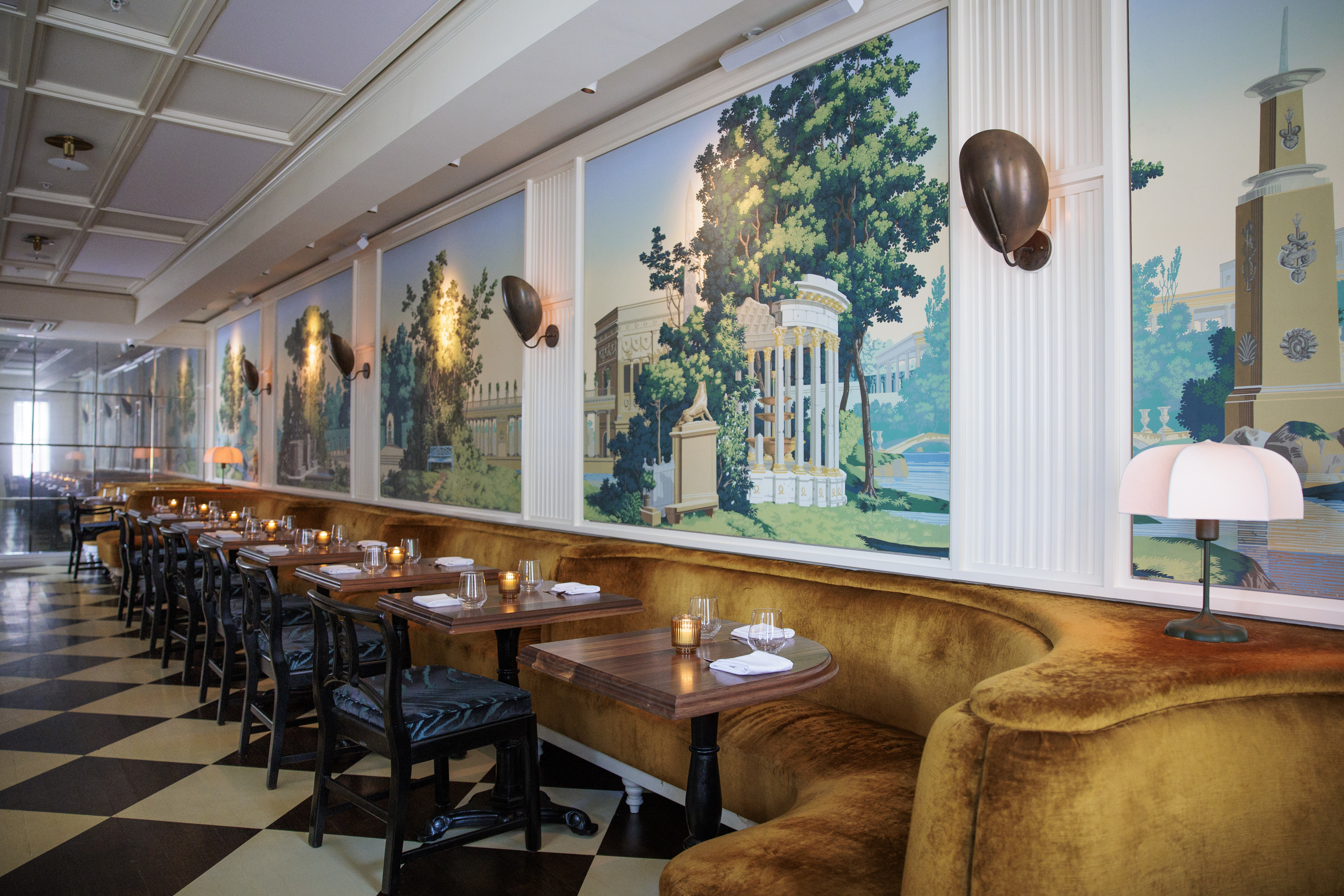
    The interior of Friday Saturday Sunday’s upstairs dining room, which offers a $205-per-person tasting menu.Monica Herndon / Staff Photographer

    In the state grant application, Williams wrote “the project will generate significant cultural impact [by] retaining and creating high-quality jobs, attracting visitors from the region and beyond, and raising Philadelphia’s profile.” Renovating the storied Philadelphia restaurant “demonstrates a long-term to commitment to the city, with the scale and ambition to be a generational anchor in its neighborhood.”

    Yet when news of the grant spread on social media last month, it was met with critics who were angry that taxpayer dollars were funding a fine-dining restaurant.

    “Luxe restaurant getting a grant to become more luxe? … WTF?” one person wrote under an Instagram post about the grant with over 100 comments, many of which were critical.

    “Give it to the schools” instead, wrote another.

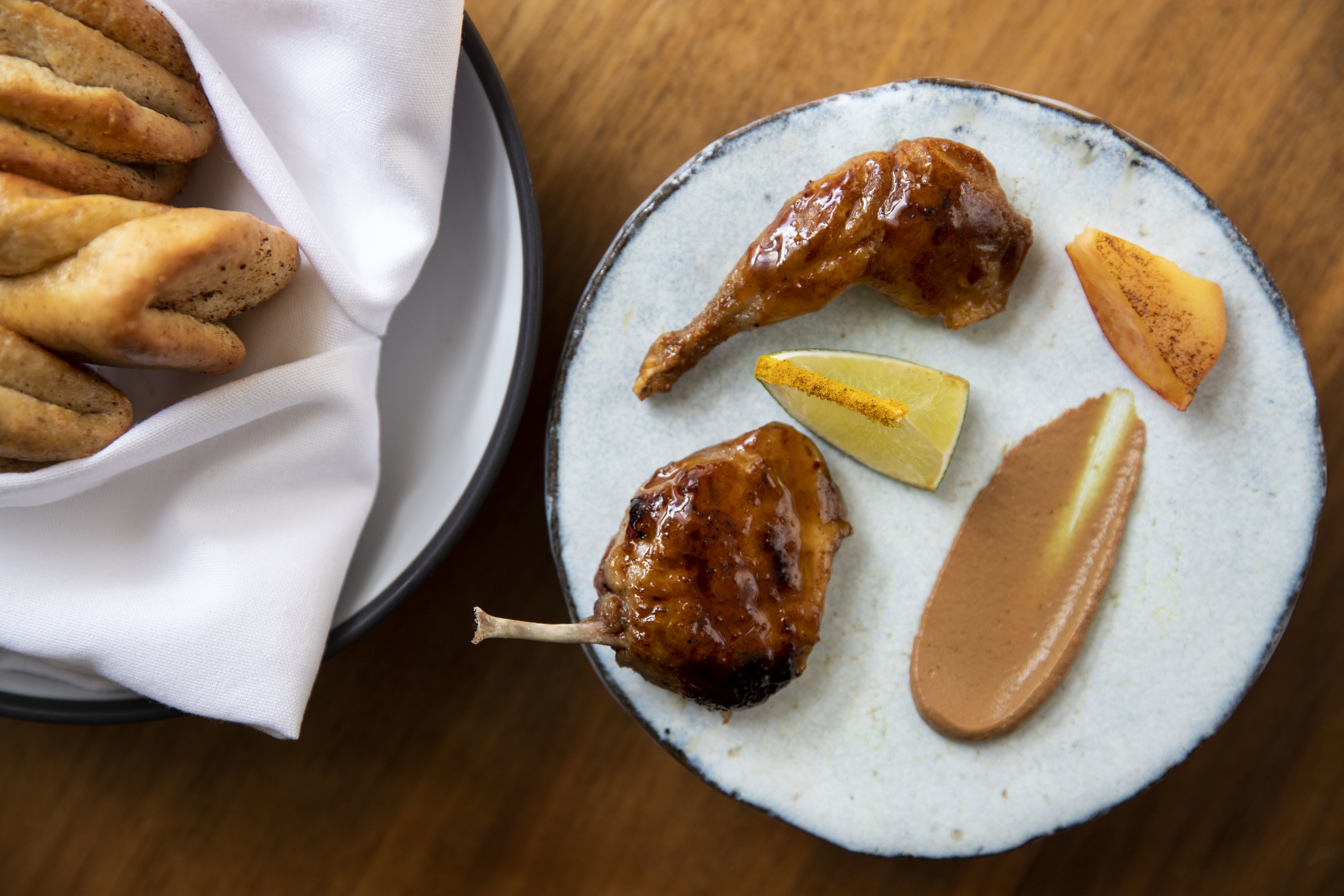
    The grilled quail with coco bread at Friday Saturday Sunday, photographed in 2022.MONICA HERNDON / Staff Photographer

    Williams says the grant money — which is from a fund for construction projects that would benefit the state culturally and economically — is a win for the city, not just Friday Saturday Sunday.

    “I was born here. I left, learned all that I could, and came back. What we want to do is push the culture forward and, with that, hopefully [bring] economic benefits for everyone in the city,” Williams said.

    “There’s going to be tax revenue and jobs that come back in a very real way.”

    A much-debated grant program

    Better known as RACP, the Redevelopment Assistance Capital Program defrays the cost of construction-ready projects across Pennsylvania that stand to generate substantial economic growth. The fund has stirred controversy in the past.

    The program was launched in 1986 to support construction and real estate projects that intend to create jobs, boost tax revenue, or have significant cultural and civic impact. Eligible projects must cost at least $1 million and secure at least half of their funding from other sources.

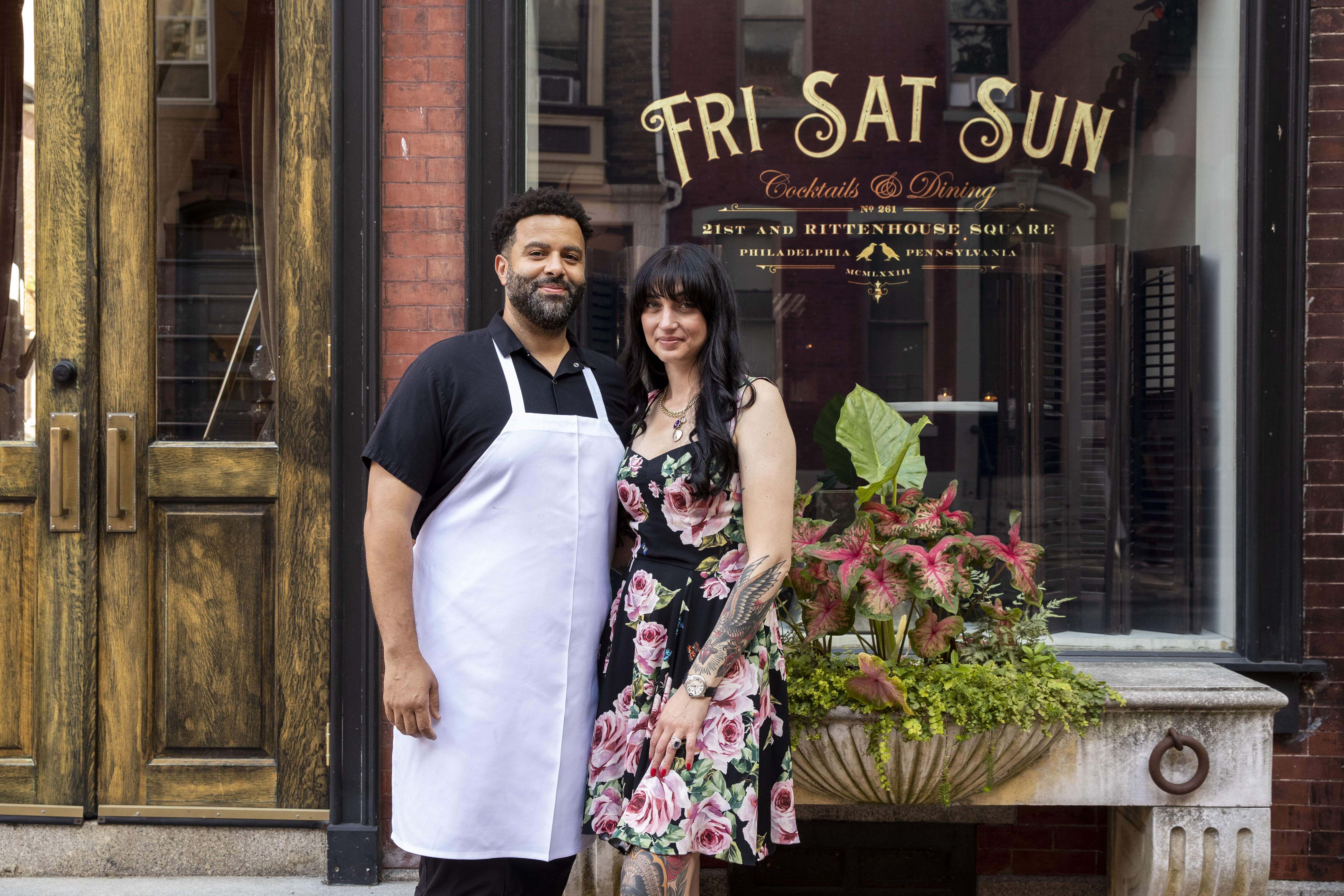
    Chef Chad Williams and Hanna Williams at their restaurant Friday Saturday Sunday.Monica Herndon / Staff Photographer

    Because grants are decided at the governor’s discretion, the program has previously been criticized for a lack of transparency and glad-handing.

    RACP was overhauled in 2012 after an audit found that the Gov. Tom Corbett administration did not adequately disclose or document why projects were awarded grants. Similar accusations cropped up again in 2020, when critics alleged Gov. Tom Wolf and state legislators were misusing the program for political favors.

    This July, Gov. Josh Shapiro’s administration allocated $445 million in RACP grants to 356 projects across the state. Recipients range from private real estate developments and public parks to affordable housing and renovations of schools, hospitals, and community centers. The program was particularly competitive in Philadelphia: 170 projects applied. More than half were rejected.

    (function(){function e(){window.addEventListener(`message`,function(e){if(e.data[`datawrapper-height`]!==void 0){var t=document.querySelectorAll(`iframe`);for(var n in e.data[`datawrapper-height`])for(var r=0,i;i=t[r];r++)if(i.contentWindow===e.source){var a=e.data[`datawrapper-height`][n]+`px`;i.style.height=a}}})}e()})();

    Friday Saturday Sunday’s expansion is projected to cost $7.5 million overall, according to the grant application. Once complete, Williams told The Inquirer, it will add 100 front- and back-of-house jobs to the Weekend Restaurant Group’s payroll. (The group currently has 40 employees, according to the application.)

    Not all RACP hopefuls are awarded the full amount of funding they applied for. Friday Saturday Sunday’s expansion was one of 12 Philly projects awarded the full amount requested.

    Other fully funded recipients include Rhoads Industries, a defense contractor awarded $4 million to build a new shipbuilding facility in the Navy Yard, and Comcast Spectacor, which received $1.4 million to build a traffic operations center at the sports complex, as well as Philadelphia Youth Basketball, the Community College of Philadelphia, and the Steamfitters Union. (The Philadelphia Eagles also received $4 million grant to renovate their training complex; the team applied for $7.725 million.)

    (function(){function e(){window.addEventListener(`message`,function(e){if(e.data[`datawrapper-height`]!==void 0){var t=document.querySelectorAll(`iframe`);for(var n in e.data[`datawrapper-height`])for(var r=0,i;i=t[r];r++)if(i.contentWindow===e.source){var a=e.data[`datawrapper-height`][n]+`px`;i.style.height=a}}})}e()})();

    A spokesperson for the Shapiro administration told The Inquirer over email that the Weekend Restaurant Group’s proposal “is fully consistent with the purpose and authorized uses of the RACP program and represents an appropriate use of RACP funds.”

    Building on a legacy

    Chad and Hanna Williams bought Friday Saturday Sunday — already a Philadelphia dining institution — in 2015, transforming the space into a cozy, first-floor bar and an elegant upstairs dining room. They reopened the restaurant in 2017, serving a tasting menu rich with Caribbean, Asian, and soul-food influences. Local and national praise has been steady ever since. Friday Saturday Sunday routinely earns a spot in Craig LaBan’s annual Top 10 and The Inquirer’s annual 76. It won the James Beard Award for Outstanding Restaurant in 2023 and was named on the World’s 50 Best in North America two years in a row. The first-floor Lovers Bar has also been twice-nominated by the James Beard Awards’ Outstanding Bar.

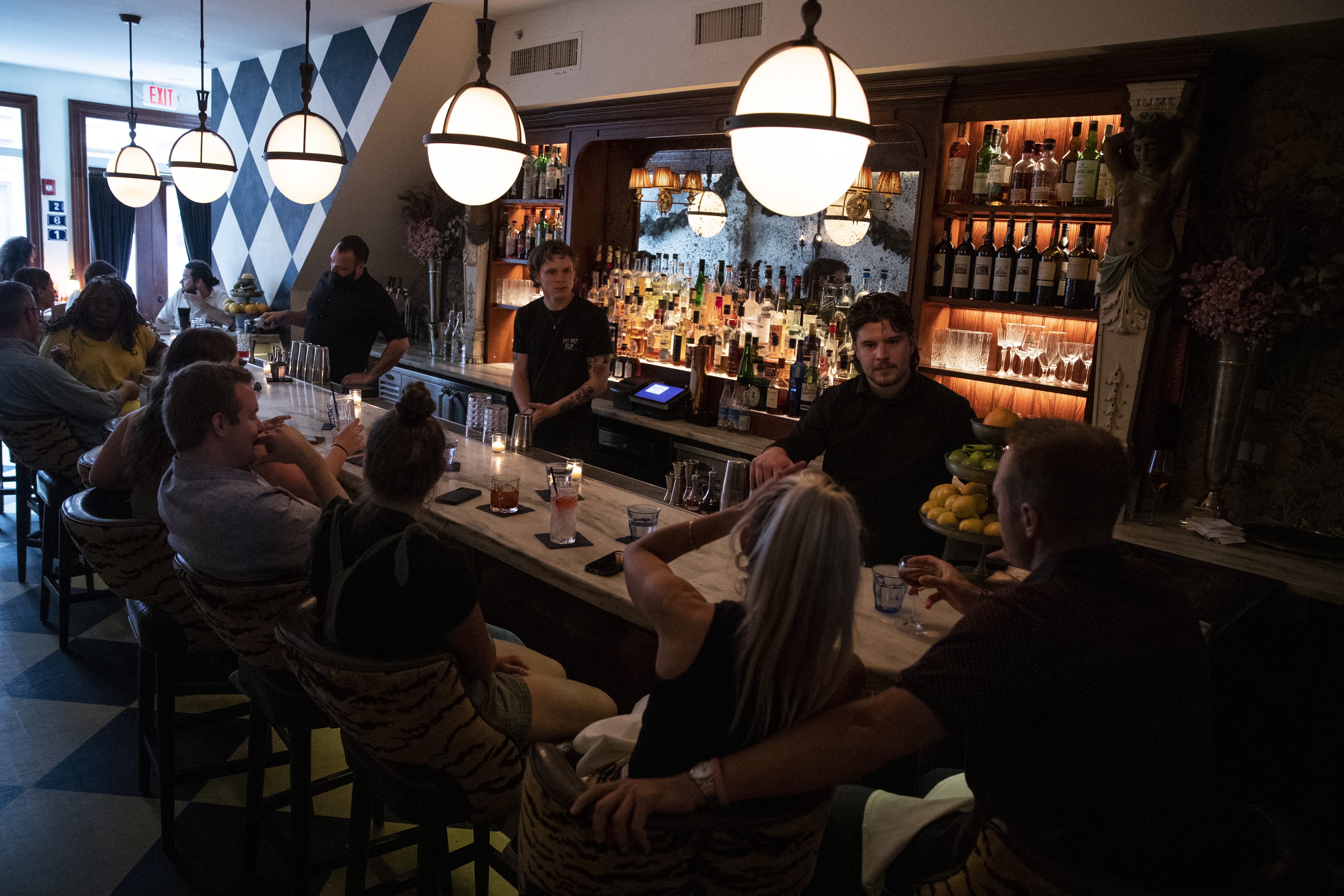
    The downstairs Lovers Bar at Friday Saturday Sunday is a two-time James Beard Award nominee.Monica Herndon / Staff Photographer

    Receiving the RACP grant was a relief, said Williams, who said he is funding more than half of the $7.5 million project with loans.

    Taking on the financial liability is “not a rosy story necessarily,” Williams said, “but it’s a risk we’re willing to take.”

    Williams envisions the 3,500-square-foot rowhouse at 2048 Rittenhouse Square as a chance to create an old-school fine-dining experience inspired by the likes of Le Bec-Fin and Vetri Cucina. Guests will start with welcome drinks on the ground floor before moving upstairs for an intimate meal at a chef’s counter helmed by Williams. Diners will finish the meal on the third floor in a designated dessert space, Williams said.

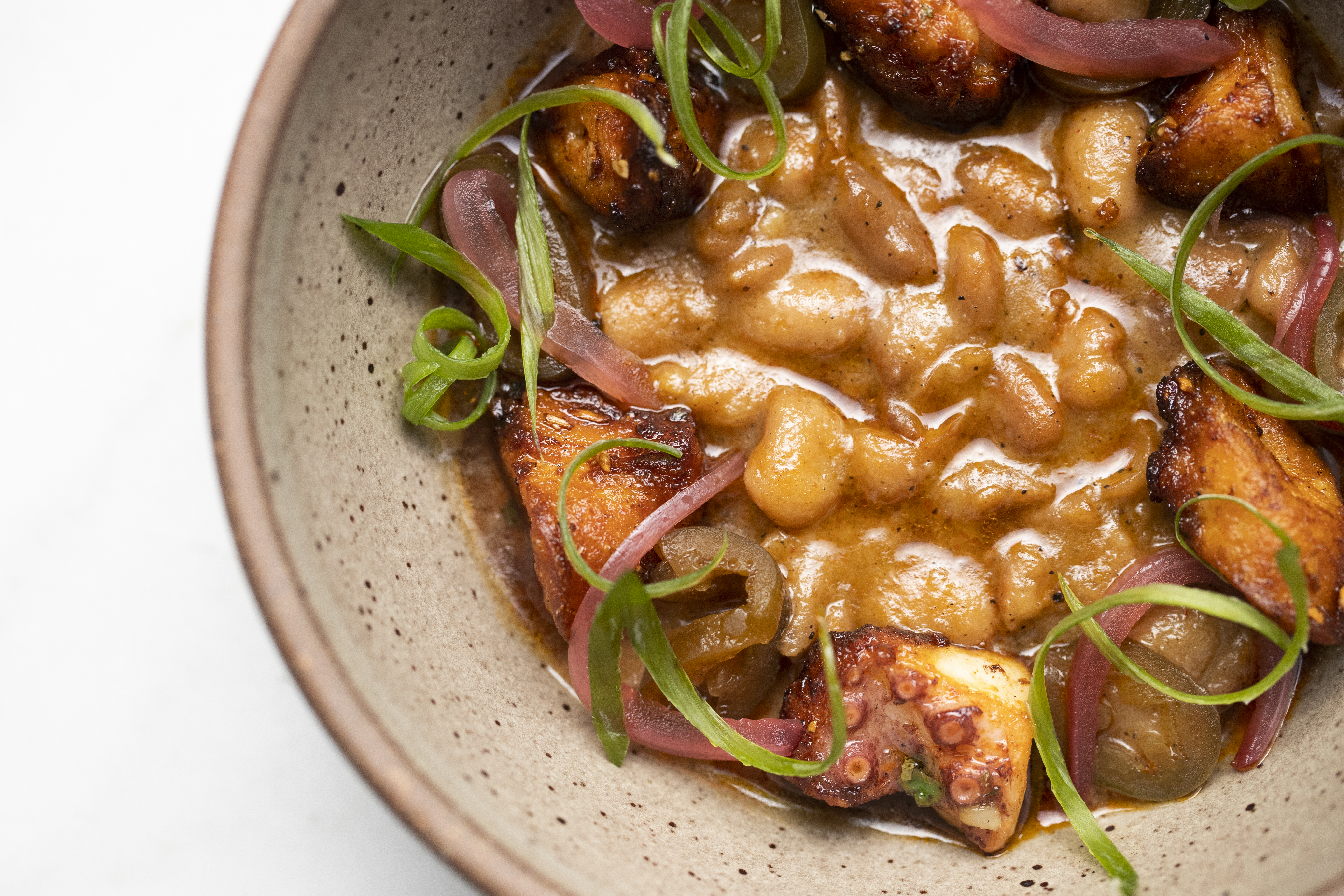
    The octopus and beans from the bar menu at Friday Saturday Sunday, photographed in 2023.Monica Herndon / Staff Photographer

    The concept will extend the Friday Saturday Sunday brand and render the original tasting menu into a “less formal” affair that is more in line with “what neighbors and regulars want,” Williams said. The connected properties will also enable Friday Saturday Sunday to serve large parties and potentially open seven days a week. The expanded hours will allow for more staff, Williams said

    Williams said the project could break ground in October. He’s optimistic about a September 2027 opening.

    He framed Friday Saturday Sunday’s expansion as a moonshot. “To be frank, for a Black chef to have this opportunity and do it is a big deal,” Williams said.

    “Having a chance to practice our craft at this level is extremely rare.”

    ‘We need all the help we can get’

    Williams decided to apply for RACP funds after exhausting more traditional financing routes.

    “Without state support, the project would face a significant financing gap,” he wrote in the application, “as private funds alone cannot absorb both the acquisition and essential structural work.”

    Despite his restaurant’s extremely successful track record, the chef found the process similar to the original financing of Friday Saturday Sunday — which required the Williamses to sell their home and submit paperwork to “14 different banks” before finding one that would take a chance on them.

    Friday Saturday Sunday, run by chef Chad Williams and his wife, Hanna, earns a Michelin star at the Kimmel Center on Nov. 18, 2025.Elizabeth Robertson / Staff Photographer

    It’s a struggle many Black entrepreneurs know well: Several studies have found that Black-owned businesses are discouraged to apply, denied, and offered inferior loans at higher rates than white counterparts, even when appearing more creditworthy.

    “We’ve put in our work here, had some success and won some things, but it did not make [financing] any easier,” said Williams. He was attracted to RACP because it was described to him as a “colorblind grant” by other BIPOC entrepreneurs who encouraged him to apply.

    Friday Saturday Sunday is not the first Philly restaurant to receive state funding through RACP. North Philly’s Caribbean Feast was awarded $750,000 in 2022 for construction costs associated with renovating their kitchen facilities to support other Caribbean-owned food businesses through a commissary model. The program also awarded $500,000 to FringeArts in 2014 for creating a Delaware River waterfront restaurant and $1.5 million to Yards Brewing Co. in 2019 for its Spring Garden brewery and taproom build-out.

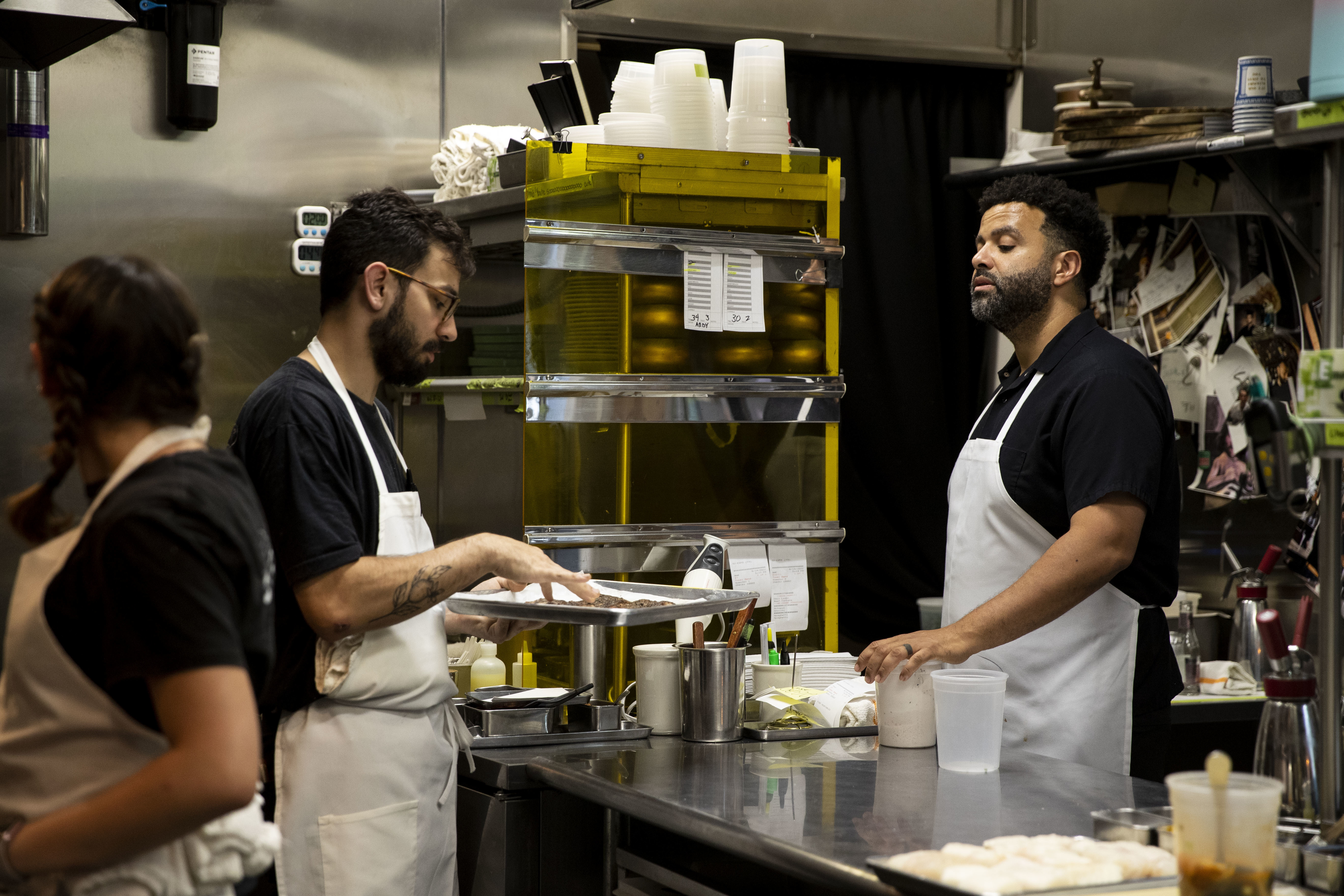
    Chef and co-owner Chad Williams (right) in the kitchen at Friday Saturday Sunday on Aug. 14, 2022.Monica Herndon / Staff Photographer

    Williams is hopeful that other restaurants will consider applying for RACP after seeing his success.

    “If I wouldn’t have done the research, I would’ve never known this was possible,” he said. “We need all the help we can get.”

  • Heavy Metal Sausage was forced to stop serving dinner. It may shutter the acclaimed South Philly restaurant

    Heavy Metal Sausage was forced to stop serving dinner. It may shutter the acclaimed South Philly restaurant

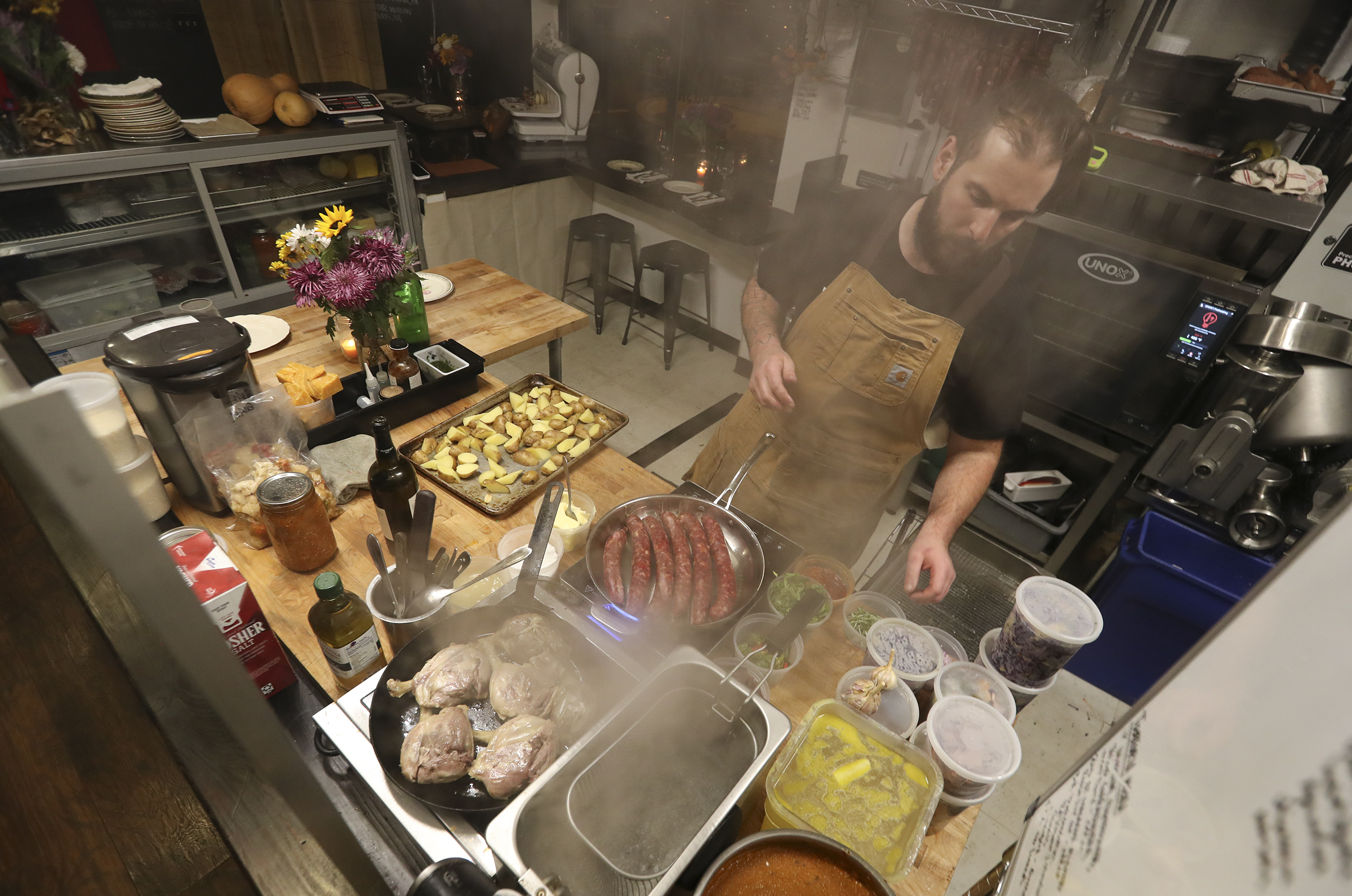
    South Philly butcher shop Heavy Metal Sausage Co. indefinitely paused its after-hours Italian dinners last week following a failed health inspection that ordered the shop to remove all indoor seating. Co-owners Patrick Alfiero and Melissa Pellegrino say the resulting loss of revenue could close the business.

    An inspector with Philadelphia’s Department of Public Health ordered the shop to remove its eight seats and cease all food prep in the basement on Aug. 21. The inspection found Heavy Metal’s setup did not align with the restaurant’s plan review, a document detailing operating procedures that all restaurants must submit to the health department in order to receive a food license.

    Among the three-hour inspection’s other findings: flies, mouse dropping, and unauthorized kitchen equipment, plus evidence that Heavy Metal was canning foods and dry-aging meat without an FDA-mandated food safety plan.

    The most consequential violation on the report, however, is that “the food facility does not have a handwash sink conveniently located in the customer dining area” because “access to the toilet room is located through the kitchen.”

    The location of Heavy Metal’s bathroom renders the space unsuitable for indoor dining, according to the health department. The recent determination — which came four years into Heavy Metal’s run as a hybrid butcher-restaurant — could cost Heavy Metal thousands of dollars in renovations and lost revenue, Pellegrino said.

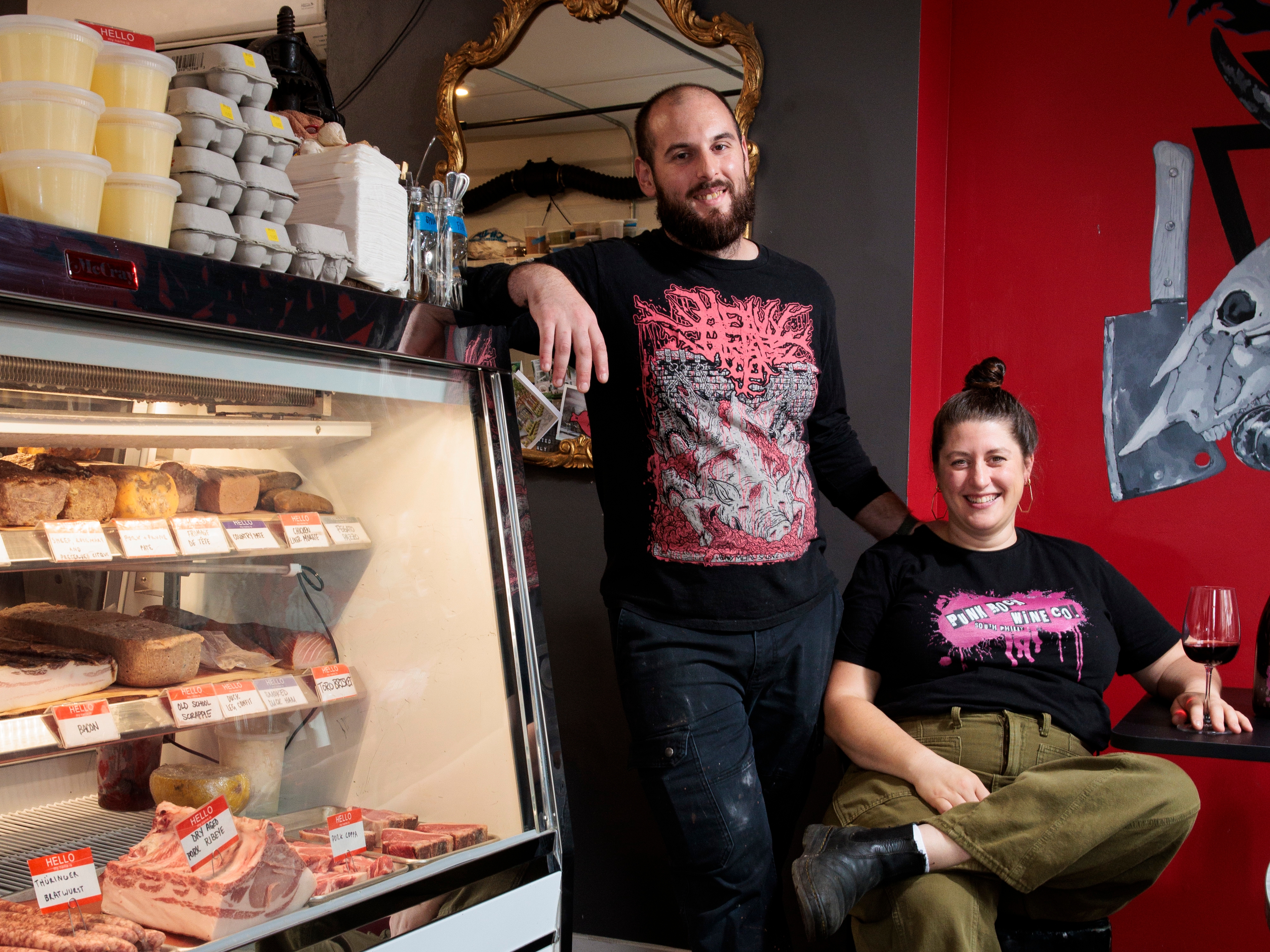
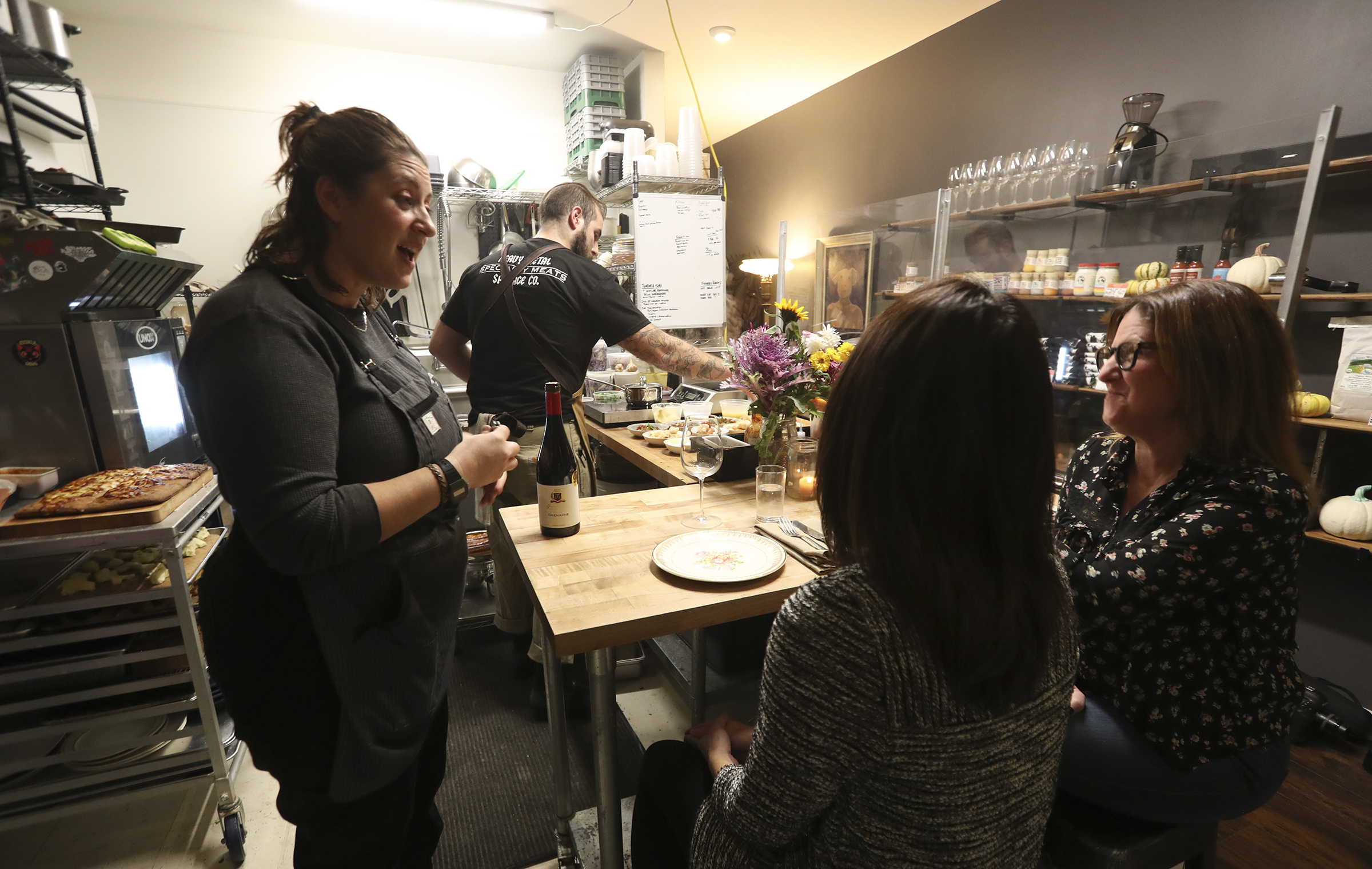
    Alfiero and Pellegrino opened Heavy Metal Sausage Co. at 1527 W. Porter St. in 2022. By day, it’s a deli where Alfiero uses local ingredients and artisanal cured meats to create hearty, inventive sandwiches. By night Thursday through Sunday, the 500-square-foot space transforms into an intimate trattoria. Tables are pressed against deli cases and seats are tucked into empty corners, lending a vaguely illicit, punk-rock aura to what’s otherwise a traditional prix fixe meal.

    The unorthodox setup (coupled with Alfiero’s masterful cooking) earned Heavy Metal a spot on Bon Appetit’s best new restaurants list in 2023 and a James Beard Award nomination that same year.

    The $98 dinners are also a moneymaker, accounting for well over half of Heavy Metal’s revenue, Pellegrino said. Without them, the duo have already had to lay off a cook and a server.

    “When the [health inspector] asked if we could stop dinner, I told him we might not be here in six weeks to be reinspected,” Alfiero said. “I was just like, ‘How are we going to survive this?’”

    Heavy Metal Sausage Co. chef/co-owner Patrick Alfiero prepares the antipasto course during the trattoria dinner on Nov. 17, 2022.Yong Kim / Staff Photographer

    Same setup, new violation

    Pellegrino and Alfiero told The Inquirer that they were blindsided by the findings in August’s health inspection. Heavy Metal has never hidden how it operates.

    The couple started offering the after-hours dinners just six months after opening as a way to offset the costs of running a niche butcher shop, which has never been profitable.

    A copy of the business’ plan review, reviewed by The Inquirer last week, shows that some form of indoor seating has been always accounted for. It also shows that the deli’s bathroom is accessible to customers via a hallway that runs parallel to the kitchen.

    The issue is brand-new despite Heavy Metal’s layout remaining static for months, according to a review of city records. The business has had an active food preparation and serving license since 2022. Heavy Metal has also passed all previous health inspections, including one in April 2026, whose report makes no mention of unauthorized seating, kitchen equipment, or food prep. It also doesn’t touch on sink or bathroom access.

    Heavy Metal Sausage Co. chef/co-owner Patrick Alfiero preps food before a trattoria dinner on Nov. 17, 2022.Yong Kim / Staff Photographer

    Health inspections are considered “snapshots in time” that may not necessarily be indicative of day-to-day operations, department spokesperson Jason Brooks said over email. During Heavy Metal Sausage’s prior inspections, inspectors only noted a basement storage space, “indicating that no food prep activities were taking place there — at that time,” Brooks wrote.

    “In April, our inspector did not observe any seating for indoor dining. Inspectors are investigating what they can physically observe and document during the inspection,” he wrote. “During this most recent inspection, our inspector observed, in real time, food preparation in an unapproved space and unapproved indoor dining. For this, the food business was cited for violations of its approved plan.”

    Pellegrino disputes the idea that Heavy Metal’s seating is a new development. “We were inspected four months ago, and we have done absolutely nothing different in those four months,” Pellegrino said. “Not a single thing has changed.”

    The deli’s inspection comes amid other notable health department shutdowns.

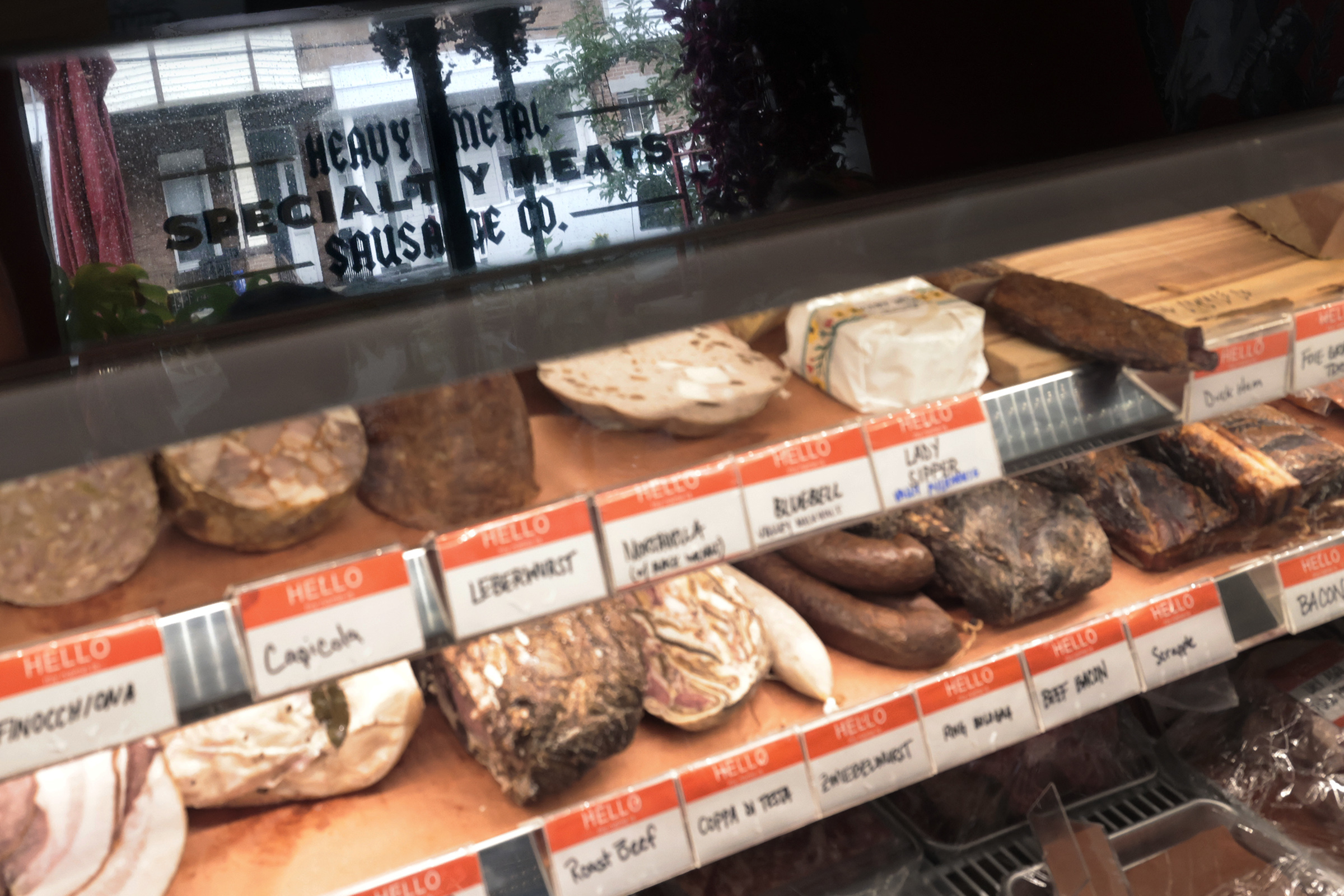
    The front window is reflected in the top of the meat case inside of the Heavy Metal Sausage Co., 1527 W. Porter St. in Philadelphia, on Aug. 9, 2024.Elizabeth Robertson / Staff Photographer

    Last week, Victory Brewing Co.’s three-level taproom on the Benjamin Franklin Parkway was ordered to temporarily cease operations after an inspector documented 26 health code violations that included live roaches, mice, and flies. And in mid-August, the health department failed Stargazy over “two unapproved countertop deep fryers without adequate mechanical ventilation,” a violation that has forced the East Passyunk Avenue restaurant to stop serving fish and chips.

    How can Heavy Metal fix this?

    Since Heavy Metal’s violations didn’t pose an imminent health hazard, the restaurant is allowed to remain open without indoor dining, Brooks confirmed.

    The butcher and deli counters are still open during normal daytime hours (11 a.m. to 4 p.m. Thursday through Saturday, 11 a.m. to 3 p.m. Sunday) for takeout only. Pellegrino and Afiero said they’ve addressed most of the violations by creating the required food safety plans and limiting the basement to storage only.

    The only hitch: What to do about the sink?

    Heavy Metal Sausage Co. co-owner Melissa Pellegrino (left) greets diners Jeannette Armstrong (center) and Liz Rissover as chef/owner Patrick Alfiero prepares meals in the kitchen during the trattoria dinner on Nov. 17, 2022.Yong Kim / Staff Photographer

    Heavy Metal must submit a new plan of review to the health department for approval. If the plan is approved and the restaurant passes reinspection, Brooks said, they will be allowed to restart indoor dining.

    But to do so, Pellegrino said the health department recommended Heavy Metal install a customers-only sink at the front of the restaurant, a change that would require a separate, weeks-long permitting process and a contractor. When Pellegrino asked the health department if she could add curtains or room dividers to more clearly separate the bathroom hallway from the kitchen — which she considers a more cost-effective solution — she said they didn’t respond.

    “All of these things take time and money,” Pellegrino said, “and we will have to make a calculus of what’s worth doing.”

  • At tiny Lau Kee, Chinatown’s most experienced duck chef delivers reliable excellence

    At tiny Lau Kee, Chinatown’s most experienced duck chef delivers reliable excellence

    Chinatown’s Wizard of Ducks did not come from poultry royalty. Chuien Liu was born to a long line of Fujianese fishermen on a rural island beside the East China Sea.

    “Going out every day to catch fish, shrimp, and crabs? That was a necessity,” says his son, Kenneth Liu, translating for his father. “But making duck was his passion, mostly because he liked to eat it.”

    In that respect, Chuien Liu scored big-time when he came to Philadelphia in the mid-1990s, following a wave of immigration from Fujian Province, on China’s southeastern coast, to the United States. He landed a spot beside the roasting oven at Chinatown’s iconic Sang Kee Peking Duck House, and he remained there as the master of ducks, soy sauce chicken, and crispy pig for 25 years.

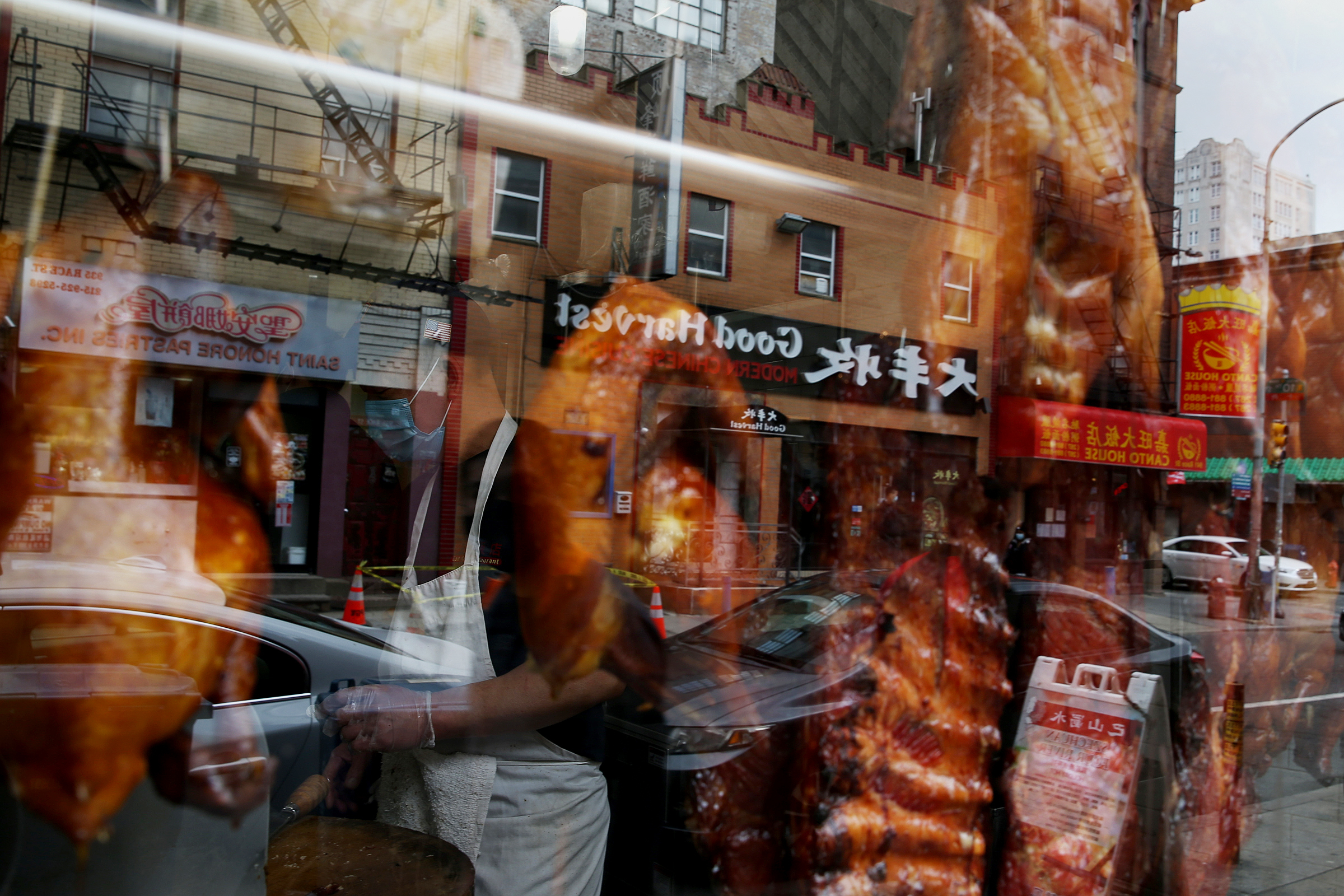
    And then we, the voracious duck eaters of Philadelphia, became the lucky ones. Liu and his family went independent in 2019 to claim their own little slice of Chinatown at Lau Kee, a cozy 20-seater with no decorations on the walls, but an absolute masterpiece display of Cantonese-style roasted meats hanging in the spotless front window.

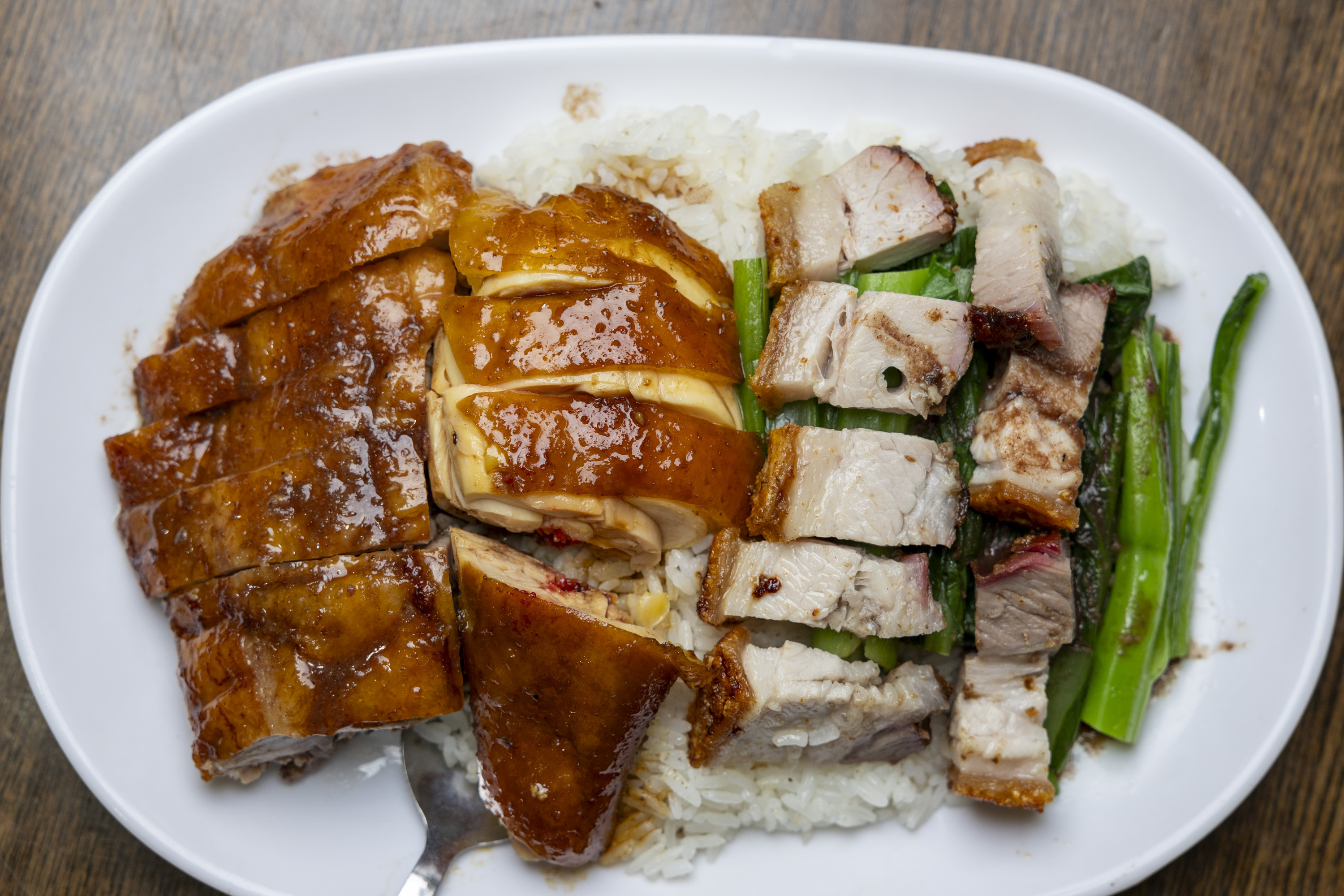
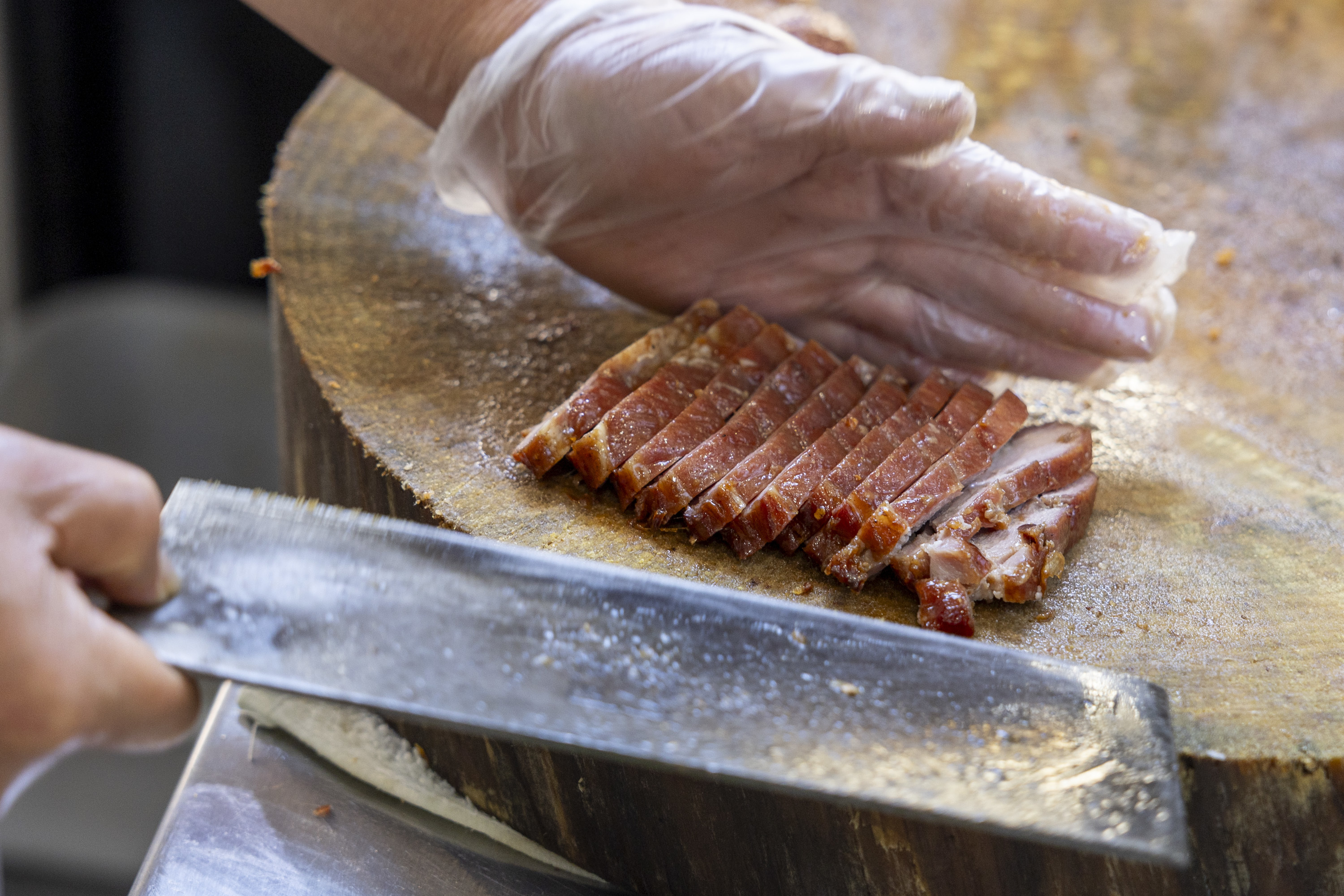
    Lacquered brown ducks dangle temptingly from hooks beside paper-wrapped bundles of whole chickens, pink-edged hunks of sweet char siu pork shoulder, and tawny sheets of pork belly, whose slow-rendered layers of pale meat, pearly fat, and cracker-crisp skin are simultaneously so moist, tender, and shatteringly crunchy, taking merely one bite is not an option.

    The three meat platter over rice at Lau Kee, in Philadelphia, Pa., on Friday, Aug. 7, 2026.Tyger Williams / Staff Photographer
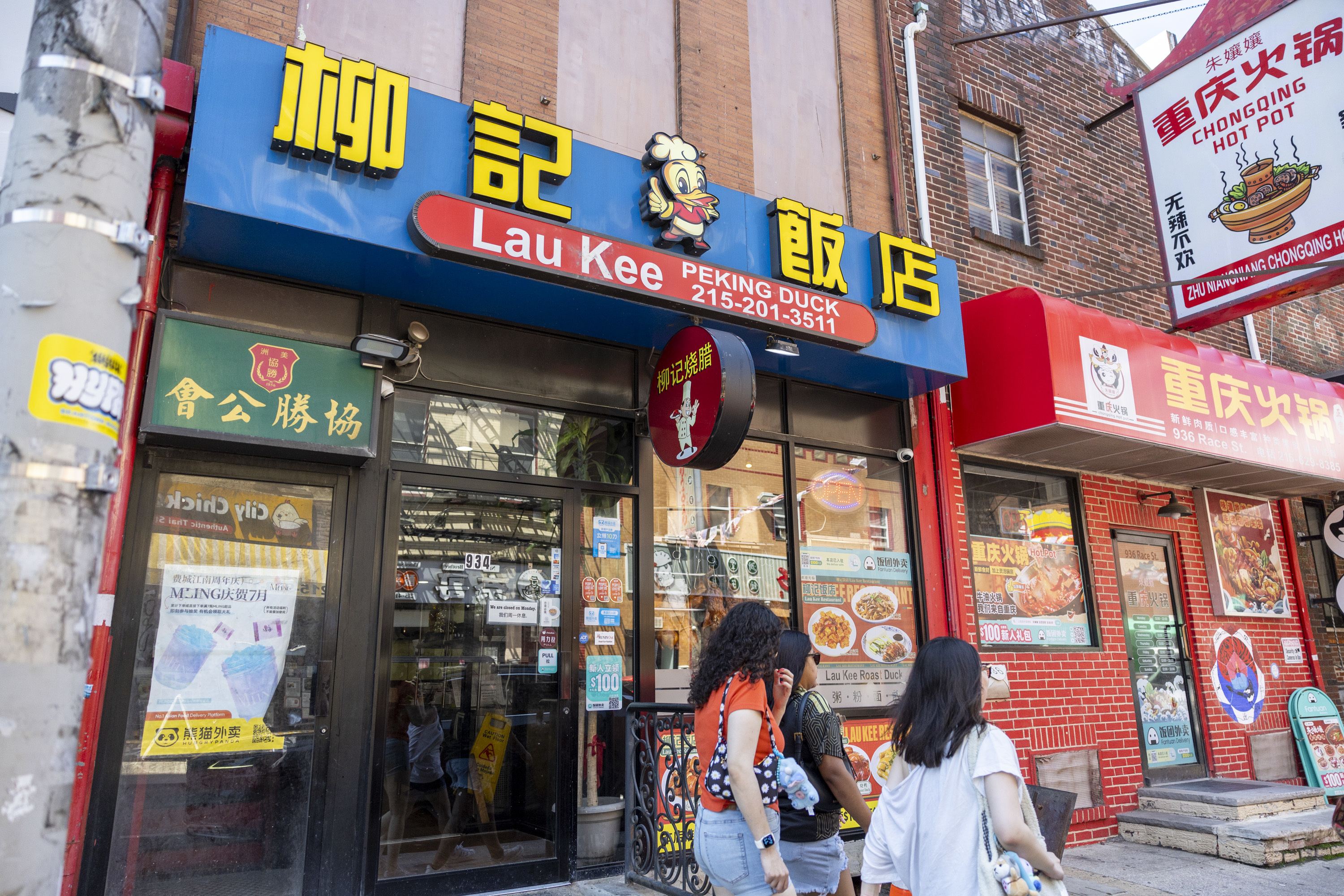
    Outside street view of Lau Kee, in Philadelphia, Pa., on Friday, Aug. 7, 2026.Tyger Williams / Staff Photographer

    There are other, larger, better-known duck houses in Chinatown with long-established and devoted patrons, from Ting Wong to M Kee, takeout-only Siu Kee, and, of course, Liu’s alma mater, Sang Kee.

    But with more than 31 years of experience and nearly half a million birds beneath his cleaver, Liu, now 55, is currently Chinatown’s longest-tenured duck chef — and also my vote for Philly’s best. As one of the very few chef-owners in the neighborhood, there is also an exceptional consistency in his insistence on doing things right.

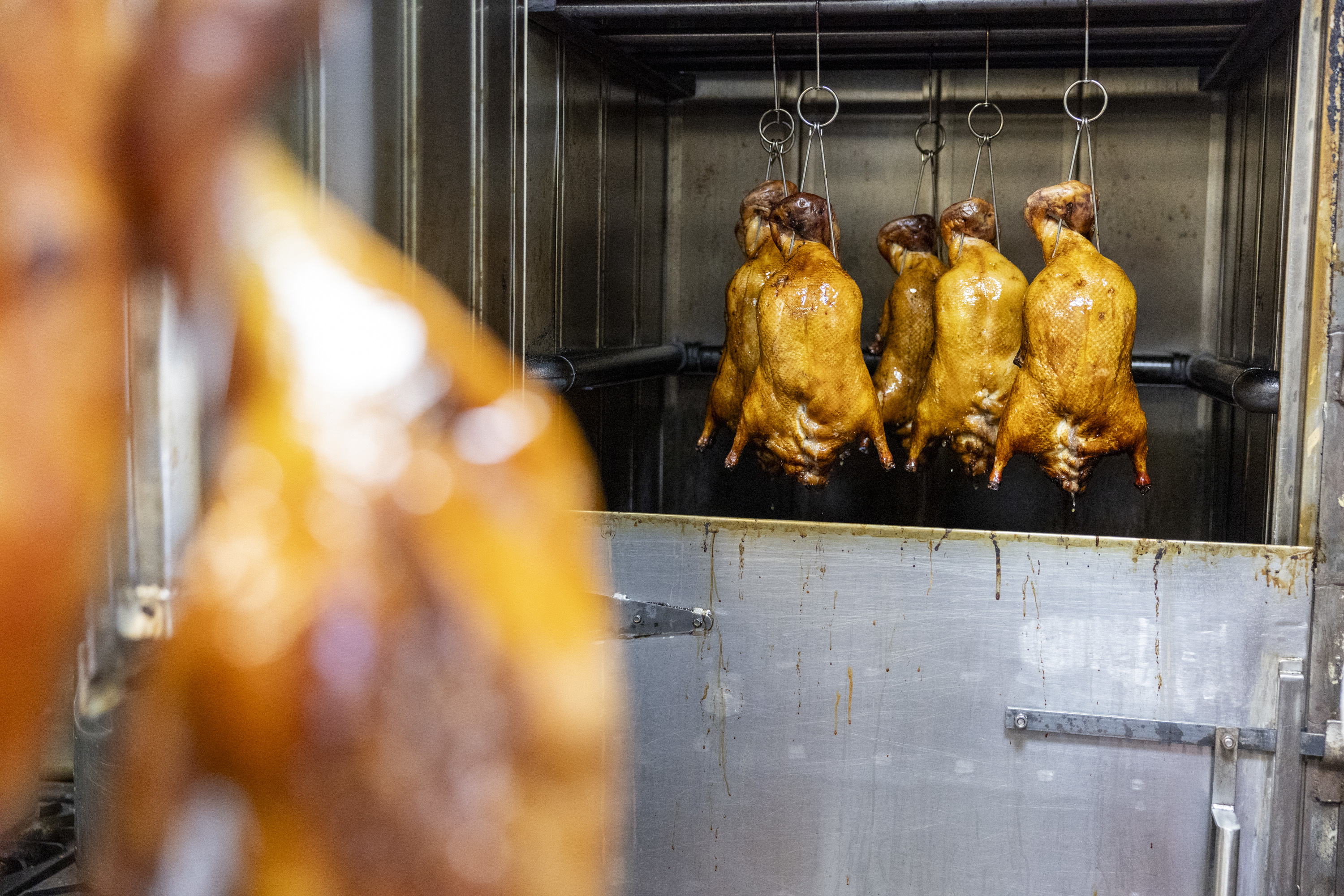
    Just preparing the ducks is a laborious, dayslong process, beginning with inflating them with air to separate the meat from the skin. A gingery marinade with chee hou sauce (a fermented bean paste that’s less sweet than hoisin) comes next, followed by a hot water bath to open the skin’s pores, then a dunk in a vinegar-sugar glaze that dries overnight. The following day, the ducks are hung in a vertical oven over an open flame to roast low and slow as juices collect below for a final basting. And that’s just for the Hong Kong-style roasted duck, which always comes chopped on the bone.

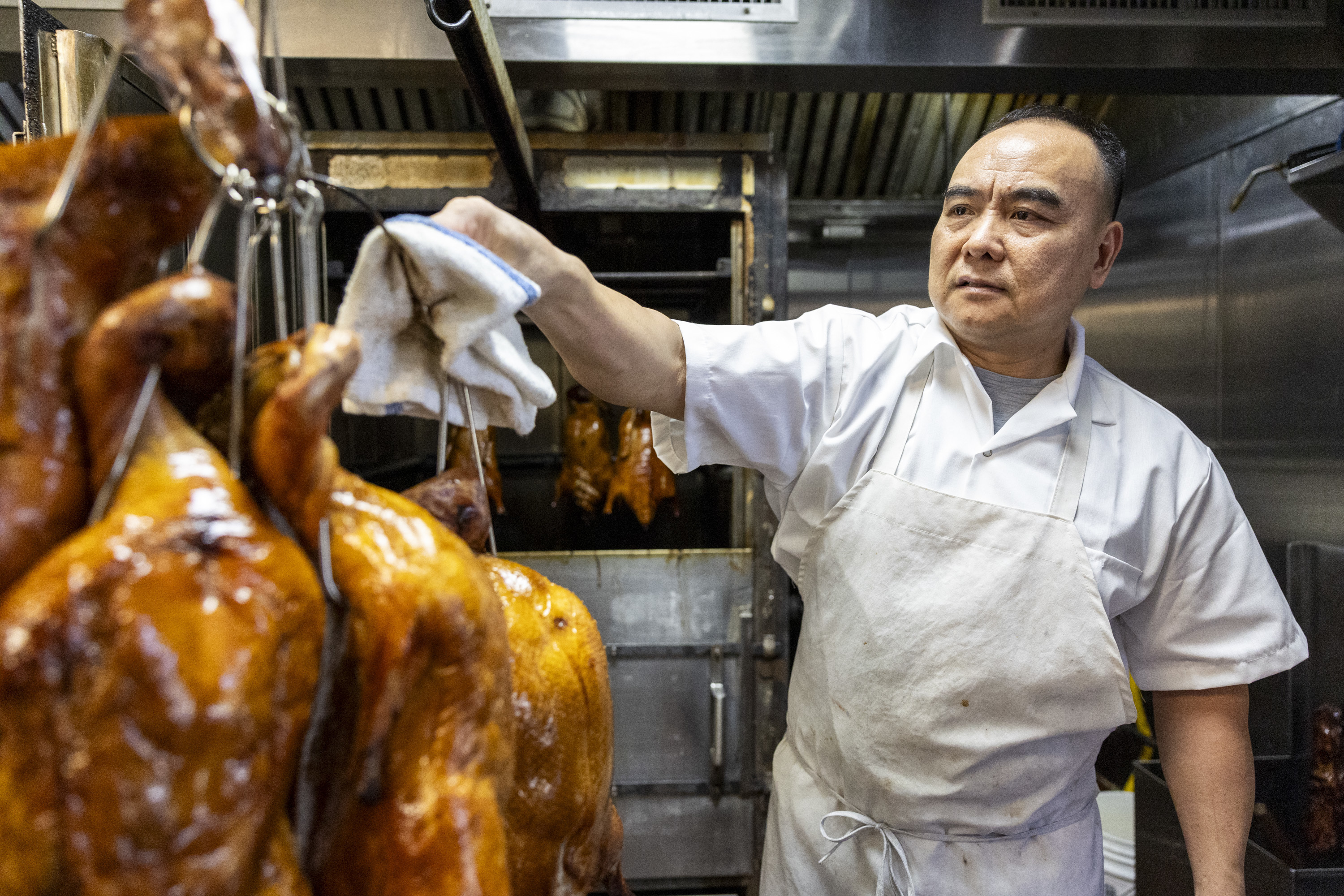
    Chuien Liu, Owner of Lau Kee, is taking out the cooked ducks from the oven in Philadelphia, Pa., on Friday, Aug. 7, 2026.Tyger Williams / Staff Photographer
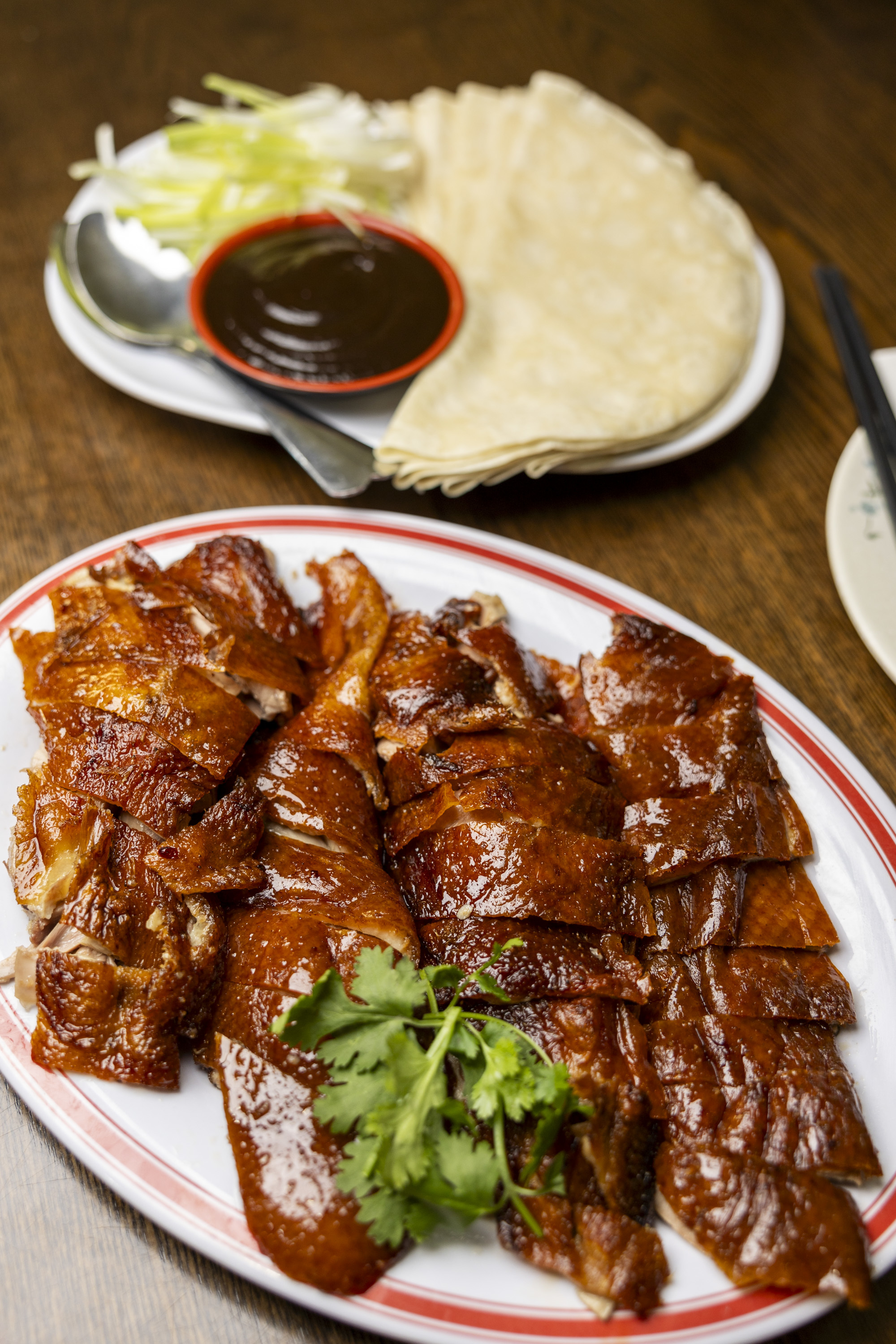
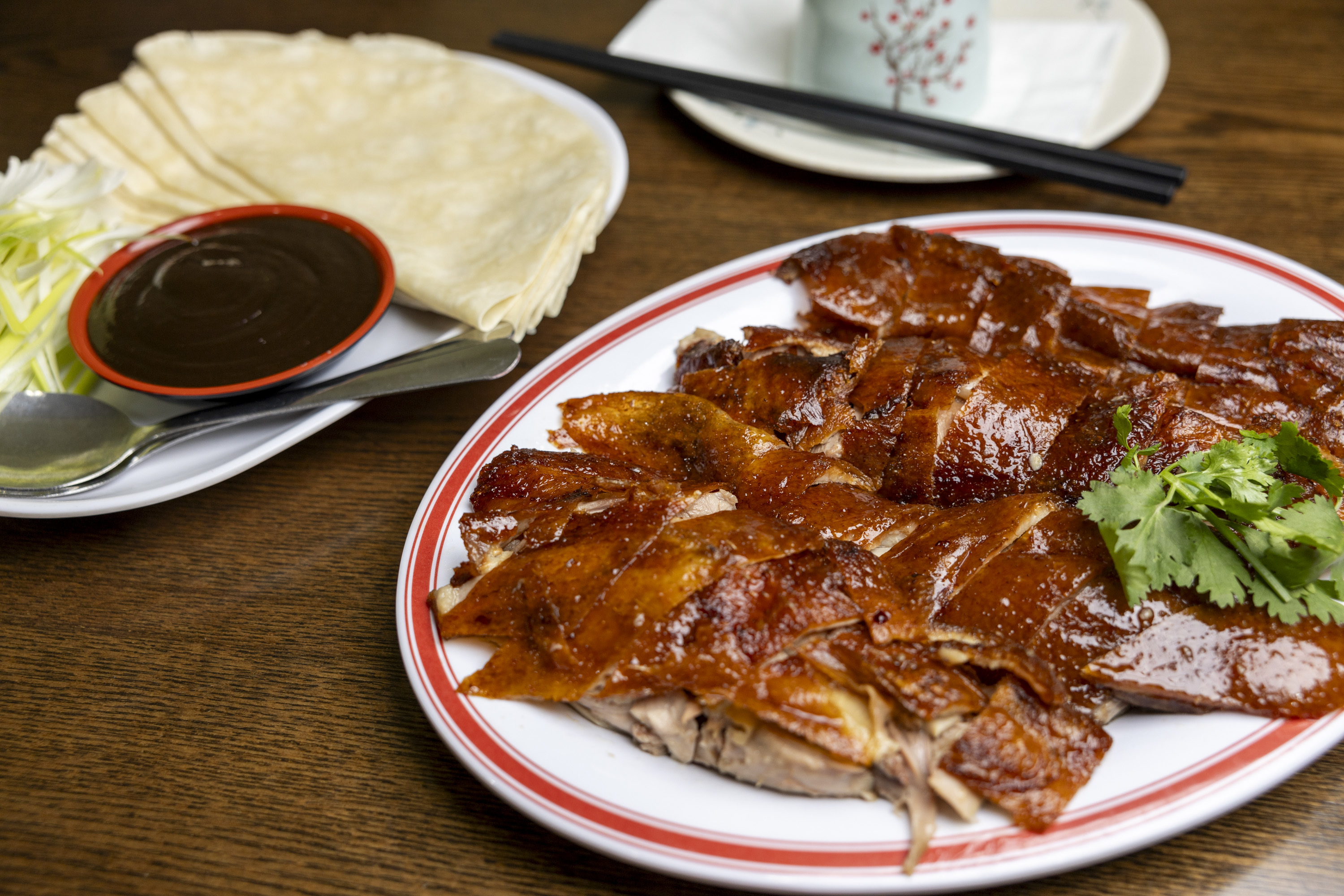
    A platter of Peking duck at Lau Kee, in Philadelphia, Pa., on Friday, Aug. 7, 2026.Tyger Williams / Staff Photographer

    The Peking-style duck is yet another process, involving a slightly sweeter marinade with a more pronounced five-spice savor plus a longer roast time to give that skin a delicate snap. At $30 for a half duck or $47 a whole bird, the sliced meat, served boneless alongside pancakes and scallions, is a delicious centerpiece for a sharing meal.

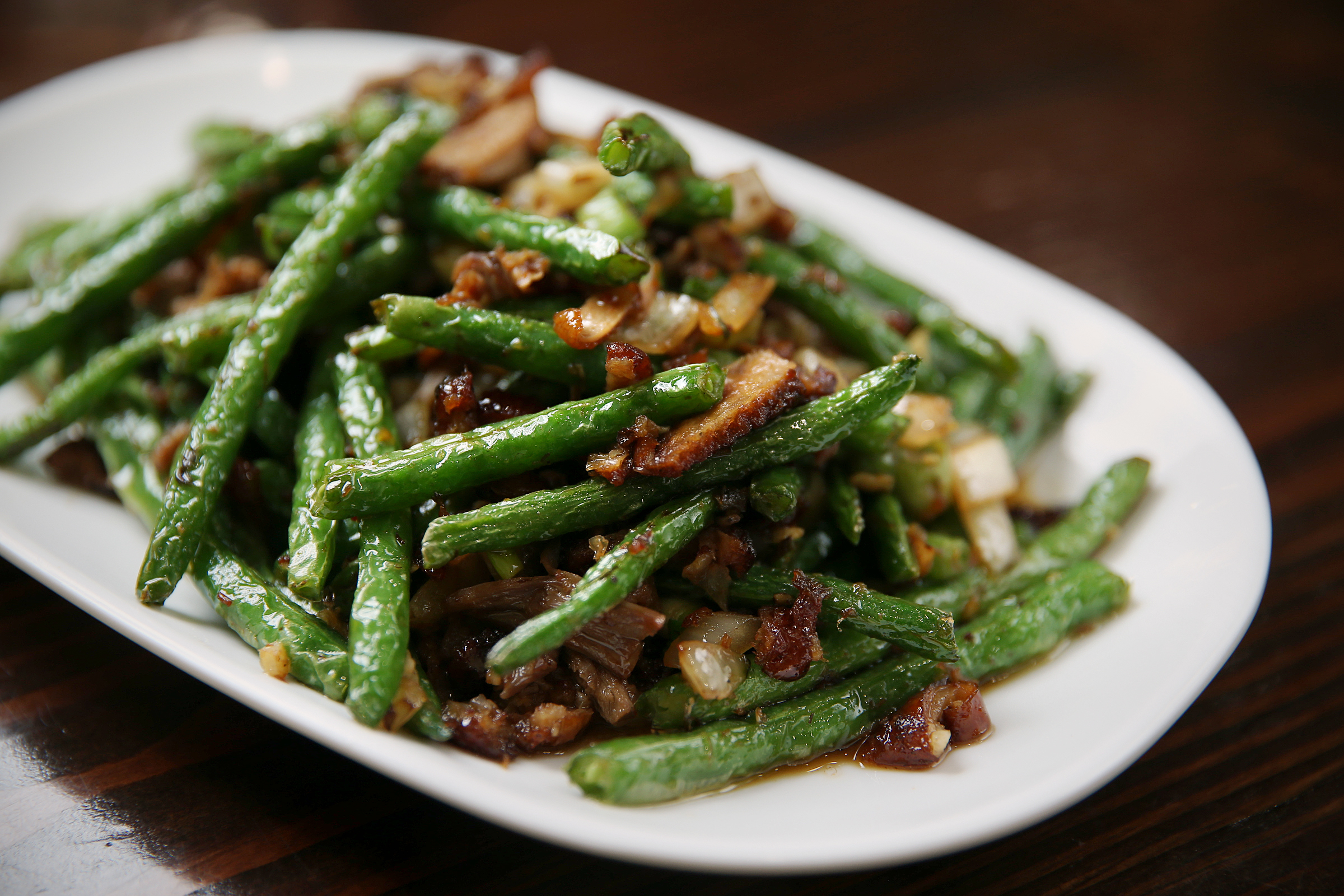
    If that’s too much of a commitment, Lau Kee makes appetizer-size duck rolls out of its copious duck trim — the perfect balance of tender meat, crunchy scallions, and dark hoisin — folded inside a soft pancake. A generous helping of shredded duck also stars in a stir-fry of snappy green beans tossed with ground pork and XO sauce. The earthiness of sliced duck and the roasted flavor of its skin also fully infuse the bowls of congee, whose rice porridge is regularly beaten to a snowy white mist and refreshed throughout the day so its texture remains airy and light. (“It’s almost fluffy,” opined my Inquirer colleague, Kiki Aranita, a noted congee scholar.)

    The shredded duck with string beans is pictured at Lau Kee in Philadelphia’s Chinatown on Thursday, April 1, 2021.TIM TAI / Staff Photographer
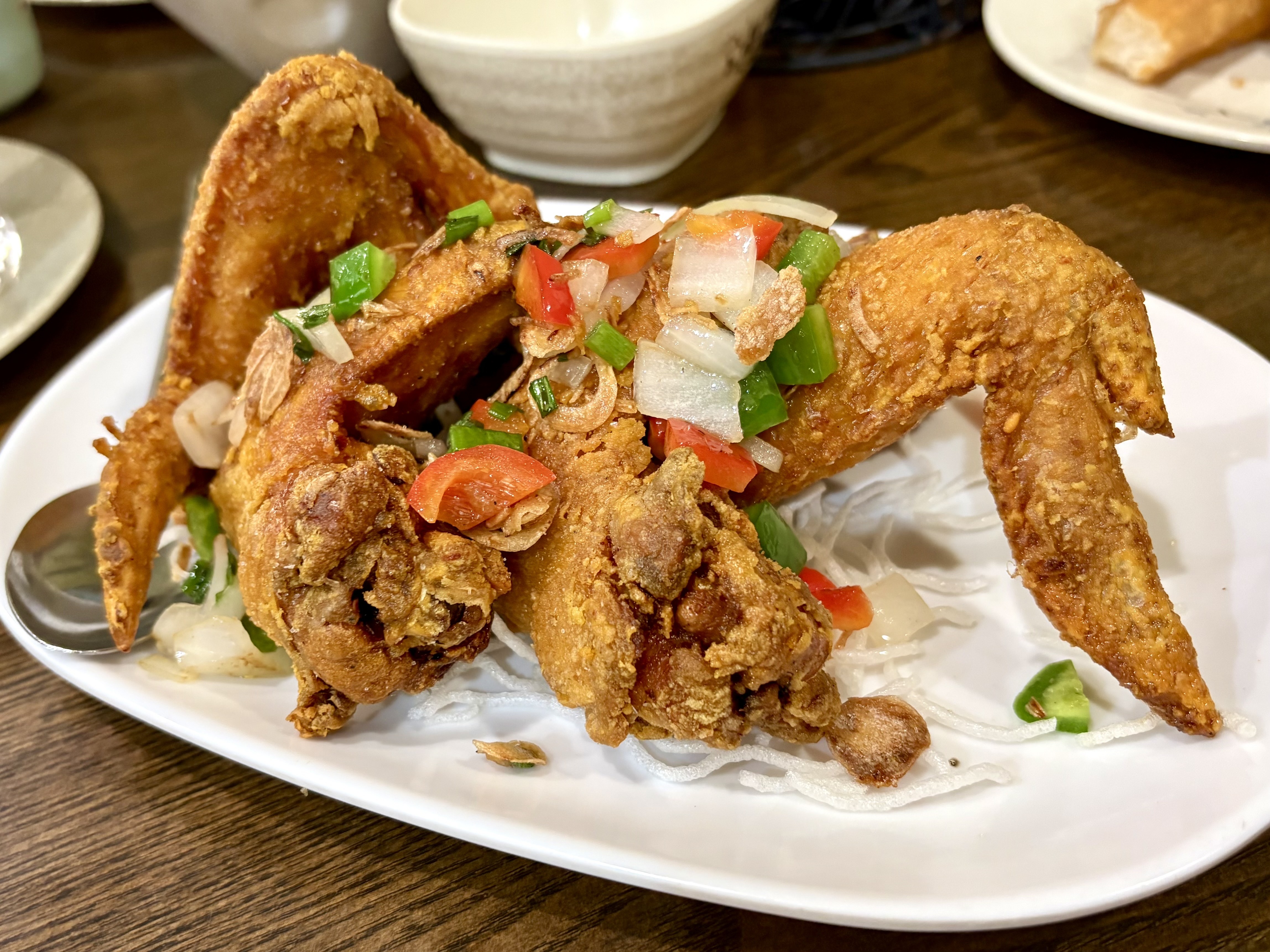
    The salt-baked chicken wings at Lau Kee are juicy, crisp and crackling with spice.Craig LaBan / Staff

    Other popular congee combinations contain thousand-year egg and pork, or sliced flounder mingled with ginger threads and scallion — options that are standard at a dozen other Cantonese kitchens across Chinatown.

    But it’s the subtle details of execution that make the difference in Lau Kee’s various soups, dumplings, stir-fries, and crispy delights. The battered crust on its salt-and-pepper shrimp in five-spice flavor might look heavy, but it’s as airy and crisp as tempura. Lau Kee’s juicy “salt-baked” chicken wings — which are actually perfectly fried — crackle with the spice of a crust infused with turmeric, cooking wine, and chili oil and easily rank among the city’s best.

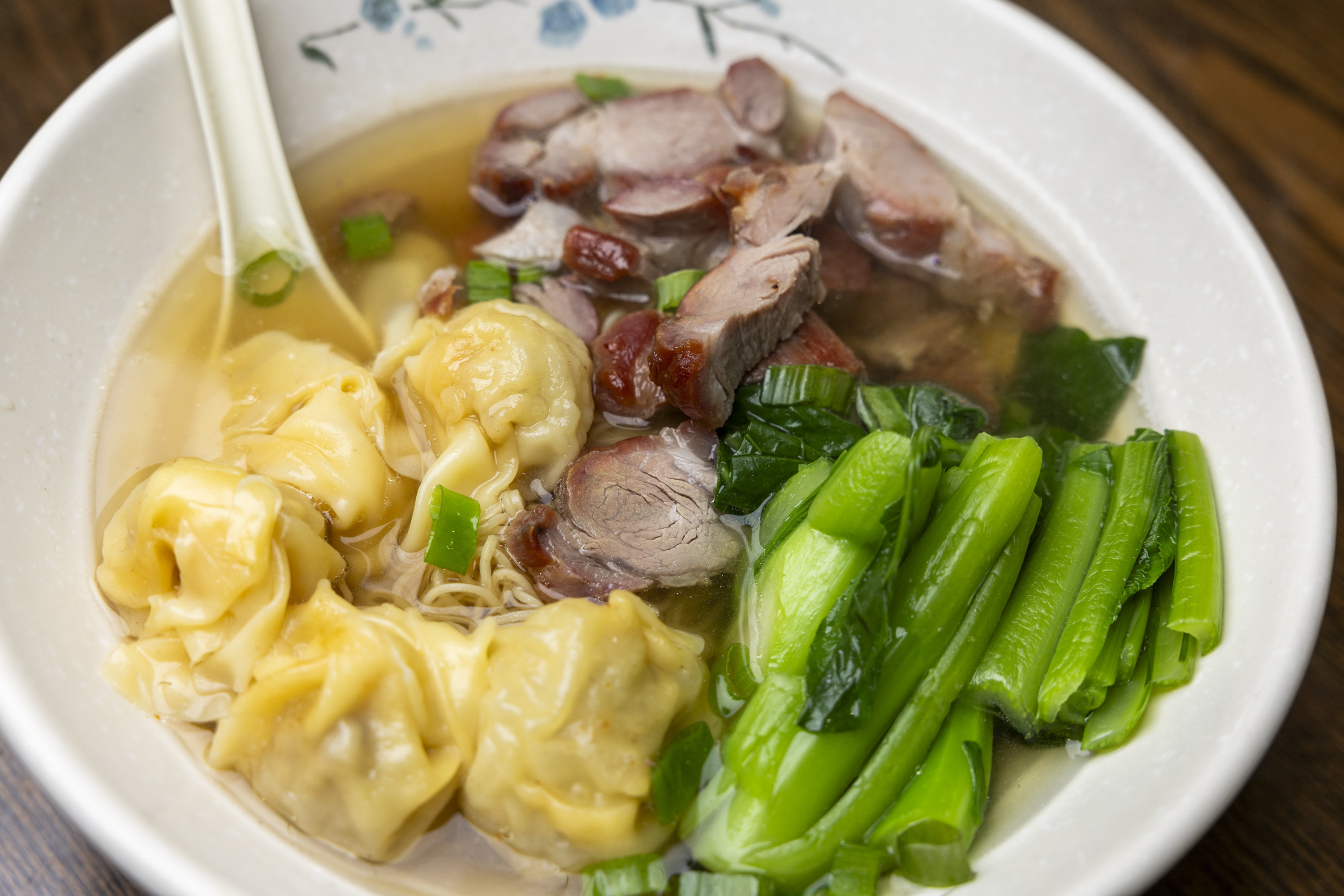
    The broth in Lau Kee’s wonton noodle soup is crystalline gold yet complex, drawing subtle smoky depth from a lightly charred salt fish that steeps for five hours with chicken bones. The poached yu choy greens that bolster the soup are snappy yet toothsome, and Lau Kee’s wontons, made by Liu’s wife, Fannie Qiu, are special. The addition of mushroom adds tenderness to a shrimp-and-pork stuffing that elsewhere can become overly bouncy. Top the soup with any of the meats, but char siu is my favorite, the star anise sweetness of the pork’s glaze adding even more layers to the brew.

    Wonton soup with greens and roast pork at Lau Kee.Tyger Williams / Staff Photographer

    Those wontons are also perfect splashed with the vibrant orange house chili oil, defined more by its fragrance of dried chilies than numbing Szechuan peppercorns.

    Lau Kee’s shrimp dumplings are memorable, reminiscent of Sang Kee’s but softer, thanks to the addition of bamboo, and more fragrant from a pinch of curry. The West Lake beef soup is also one of my favorites, its hearty pairing of ground beef and silky tofu batons bobbing in broth sparkling with white pepper, delicate egg drop ribbons, and crunchy cilantro greens.

    Lau Kee’s dry noodle dishes are solid, though less exciting. The minimalist scallion noodles, bright with shredded fresh ginger, is one of my two picks. The sesame oil-laced crispy noodle basket topped with morsels of flounder is another, notable for its delicacy and dual-textured noodles, both crunchy around the edges and soft in the middle from a velvety white gravy. Other noodle standbys were fine but forgettable: a serviceable Singapore noodles, and a beef chow fun that lacked the smoky singe of wok hei.

    Fresh cut char siu pork shoulder at Lau Kee, in Philadelphia, Pa., on Friday, Aug. 7, 2026.Tyger Williams / Staff Photographer
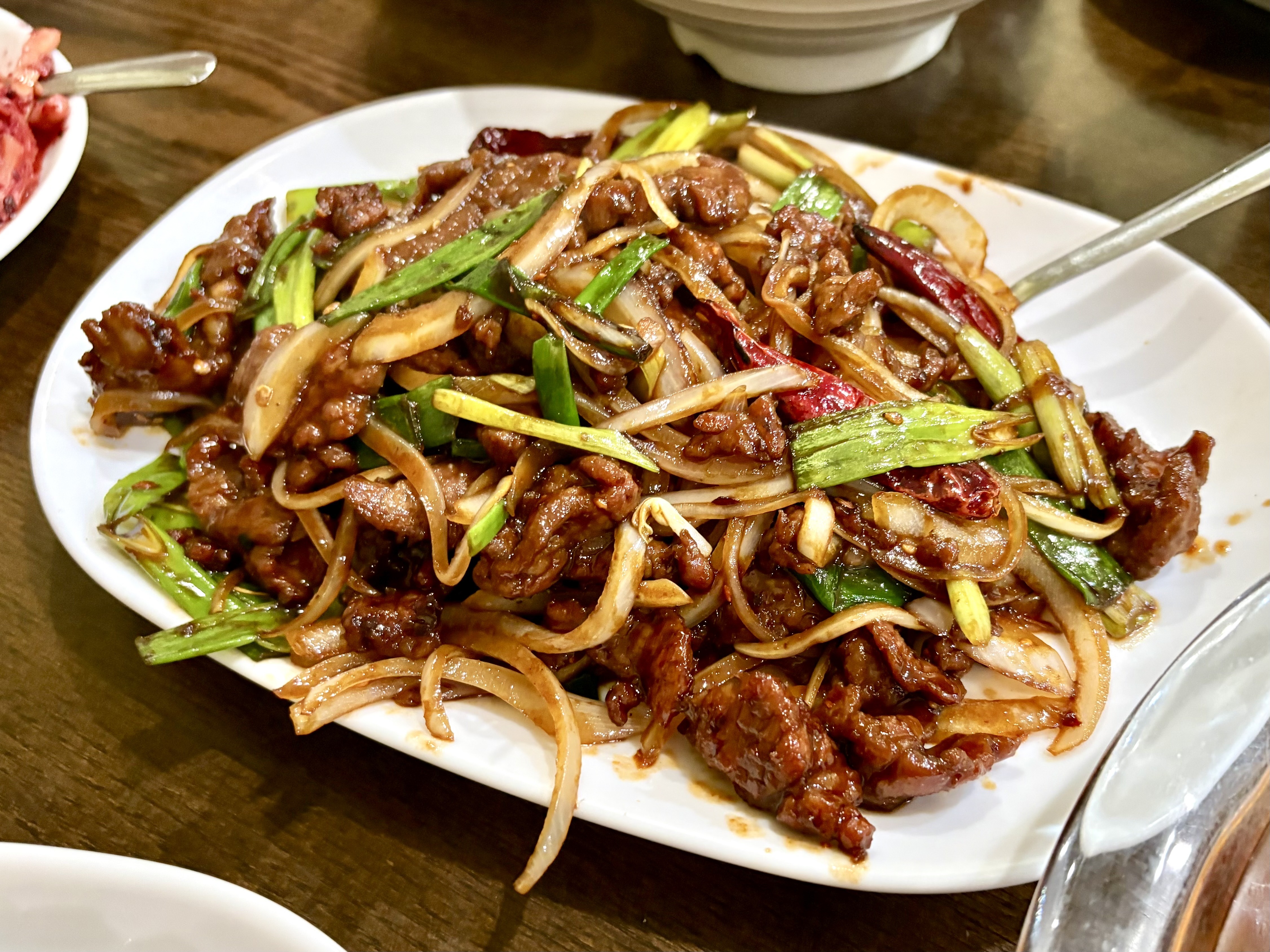
    The Mongolian beef from Lau Kee in Chinatown.Craig LaBan / Staff

    That whiff of caramelized char was absolutely present on the Mongolian beef, whose frizzled onion laces and dried chile heat added umami and sneaky spice to the sweet hoisin. It’s a specialty that traveled well by takeout, along with some good Americanized classics, including General Tso’s chicken, whose tender nuggets were glazed in a sweet sauce that also flickered with chili oil.

    As a small business that needs every order (beyond the 250 ducks Chuien Liu sells each week), Lau Kee caters to the demands of a broad audience, and, to my mind, does many familiar dishes better than most.

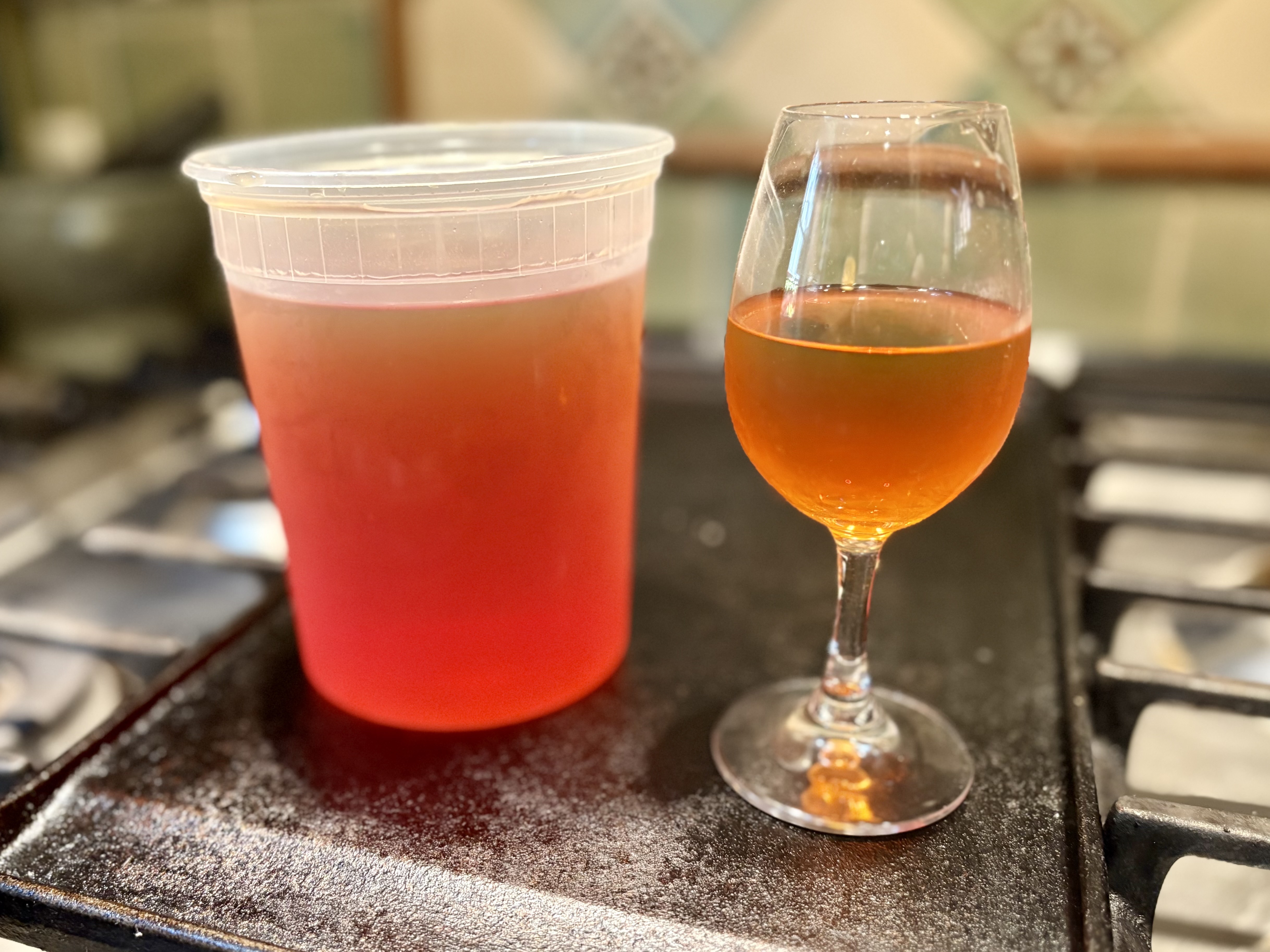
    But there’s an uncommon specialty on this vast menu that points to a niche of Fujianese specialties I wish Lau Kee would embrace more fully. Liu’s wife has mastered the Fujianese art of fermenting Qinghong, a wine made from sticky rice laced with red rice yeast.

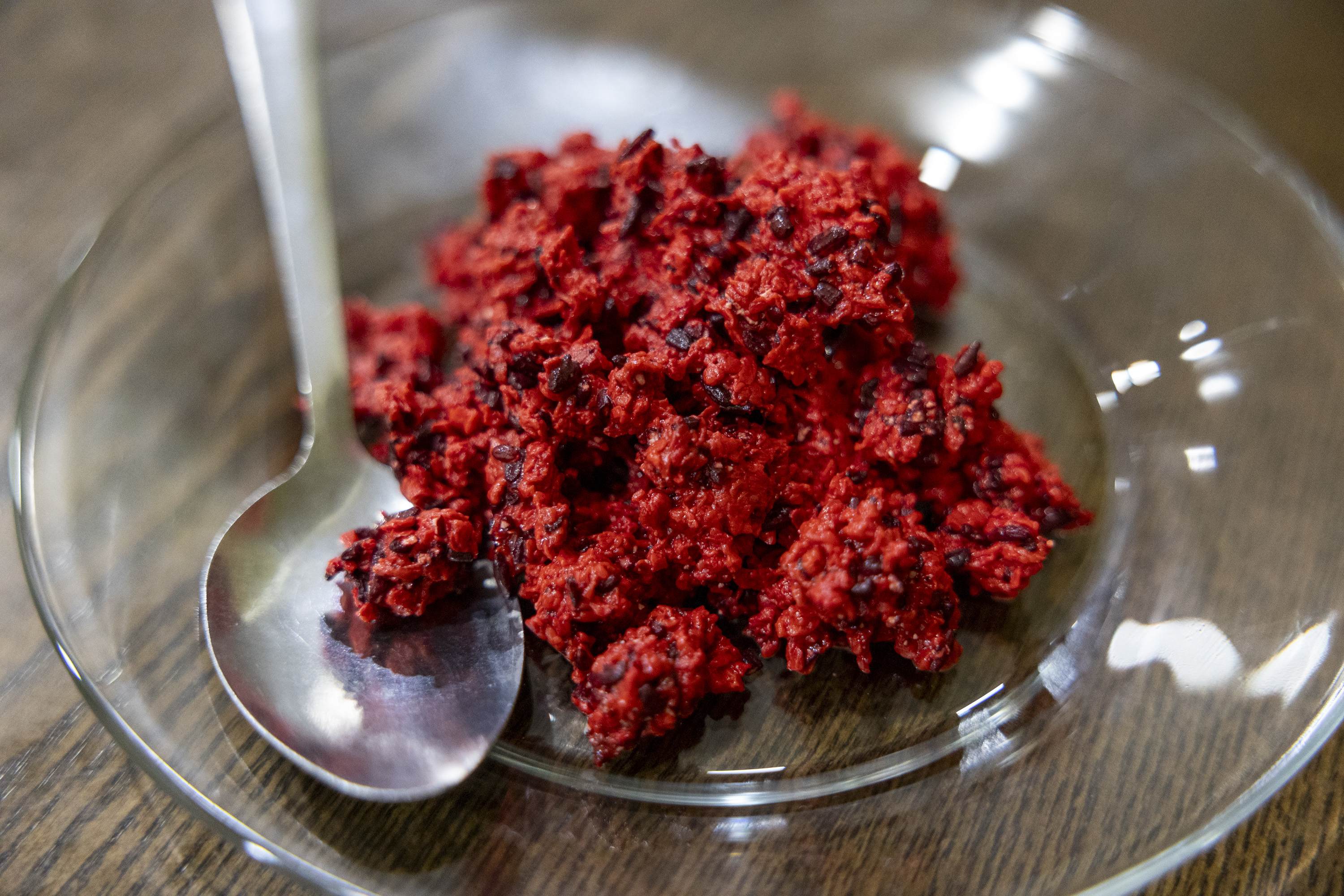
    The red vinasse before processing to turn it into sauce at Lau Kee, in Philadelphia, Pa., on Friday, Aug. 7, 2026.Tyger Williams / Staff Photographer

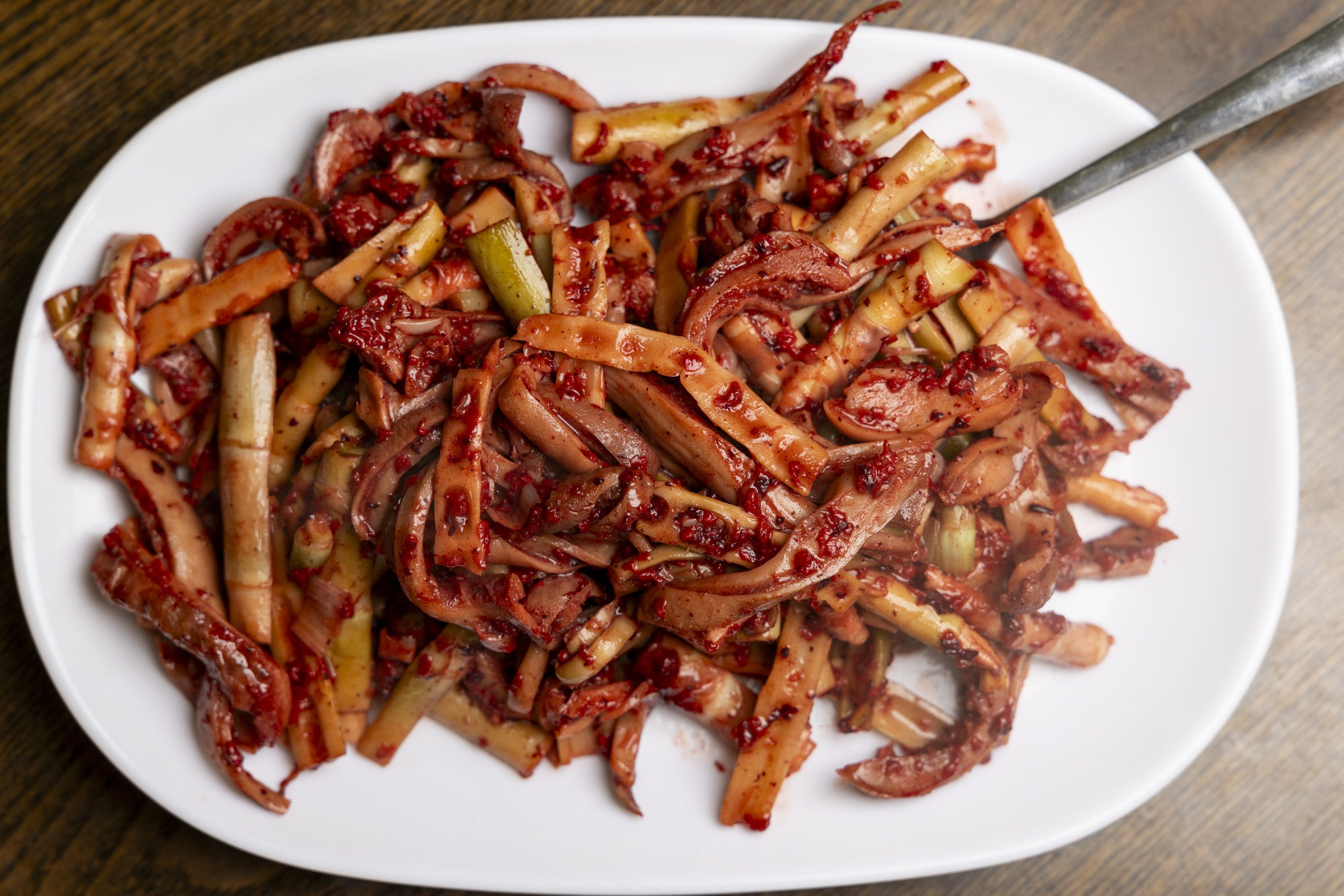
    As Kenneth Liu notes only half-jokingly, “My dad does not share his wine.” But the leftover lees, a crimson paste noted on the menu as “red vinasse,” is a valuable condiment that carries a fruity, fermented note and yeasty tang. It’s a transformative addition to Lau Kee’s stir-fry of chopped pig stomach with bamboo shoots. (The squeamish can order it instead with shredded pork meat.) There’s a toothy-yet-tender snap to the offal and an earthy undertone that harmonizes with the lightly boozy lees for a far more rewarding dish.

    The pig stomach with red vinasse at Lau Kee, in Philadelphia, Pa., on Friday, Aug. 7, 2026.Tyger Williams / Staff Photographer

    Considering the sizable community of Fujianese entrepreneurs who’ve moved to this region over the past two decades and opened everything from Americanized Chinese takeout windows to sushi restaurants and, yes, excellent Cantonese duck houses, there are precious few places showcasing traditional Fujianese food, an underrated regional cuisine. Since the closure of both Ming River Side Walk House and my other longtime 10th Street favorite, simply called “Chinese Restaurant” (aka Tai Jiang), I can no longer find delicate noodles in peanut sauce, fried taro cakes studded with pork, wok-fried baby oyster omelets, and Fujianese wonton soup with tiny dumplings no larger than a penny.

    Lau Kee doesn’t make them either, sadly, and even recently dropped another Fujianese specialty, drunken ribs, when Qiu’s brother retired from their kitchen. “[Fujianese cuisine] is not the fanciest food, and not everyone is willing to try,” says Kenneth Liu.

    Businesses are reflected in a window in front of roasted ducks at Lau Kee in Philadelphia’s Chinatown on Thursday, April 1, 2021.Tim Tai / Staff Photographer

    And yet, perhaps Philly’s diners would try if only they knew more of Lau Kee’s abilities to so beautifully represent their home region? My own enthusiasm was at least genuine enough to convince chef Liu to share a sample of his Qinghong wine stash.

    “Don’t drink it all at once — it’s strong!” he warned, showing me the small bowl from which he sips a chilled cup of Qinghong daily.

    I took a sniff. It was tart like crushed red berries. I took a taste: a fruity tang but also dry and pleasantly funky, not unlike a refreshing sherry. I took another sip, and one more. And I understood. No matter what Lau Kee’s menu says, or how many perfect ducks Chuien Liu roasts for his adopted hometown of Philadelphia, this descendant of Fujianese fishermen will never forget the taste of home.

    Qinghong, a Chinese wine made from fermented red rice, is made by Fannie Qiu for her husband, Chuien Liu, the chef-owner of Lau Kee in Chinatown, who used the leftover solids from the process to make Fujianese-style stir-fries.Craig LaBan / Staff

    Lau Kee

    934 Race St., 215-201-3511. Menu is posted on delivery apps.

    Open 9 a.m. to 8 p.m. Tuesday through Sunday for dine-in; until 9 p.m. for takeout.

    Wheelchair accessible via a small portable ramp.

    Not ideal for gluten-free diners. A small portion of the menu can be made gluten-free, but none of the roasted meats.

    BYOB

    Menu highlights: Roasted meats: Hong Kong-style roast duck, (boneless) Peking duck, char siu pork, crispy pig, soy sauce chicken; Peking duck rolls; sliced beef in scallion pancake roll; wonton noodle soup with roast pork; shrimp dumpling noodle soup; West Lake beef soup; congee with roast duck; ginger-scallion noodles; shredded duck with string beans and XO sauce; Mongolian beef; pig stomach with red vinasse; salt-baked chicken wings.

    The platter of Peking duck at Lau Kee, in Philadelphia, Pa., on Friday, Aug. 7, 2026.Tyger Williams / Staff Photographer
  • Michelin is headed back to New York City for its 2026 awards ceremony

    Michelin is headed back to New York City for its 2026 awards ceremony

    The Michelin Guide is taking its Northeast restaurant awards back to New York.

    Michelin said Tuesday that its 2026 Michelin Guide Northeast Cities ceremony will be held Dec. 14 at the Glasshouse in Manhattan, where it will disclose its latest restaurant selections for Boston, Chicago, New York, Philadelphia, and Washington.

    Jean-Georges Vongerichten and chef Marc Vetri greet each other as Megan Vetri looks on during the cocktail hour at the Michelin Guide announcements at the Kimmel Center on Nov. 18, 2025, in Philadelphia.Elizabeth Robertson / Staff Photographer

    Restaurateurs should treat this as a reminder that Michelin’s famously anonymous inspectors are on the prowl.

    The 2025 ceremony was held at the Kimmel Center in Philadelphia, as Philadelphia and Boston joined the guide for the first time. Michelin, which hosted ceremonies in New York in 2023 and 2024, said last year that it planned to hold the annual ceremony in different cities.

    A representative of the Philadelphia Convention and Visitors Bureau was not immediately available Tuesday to say whether Philadelphia had sought to host the event again.

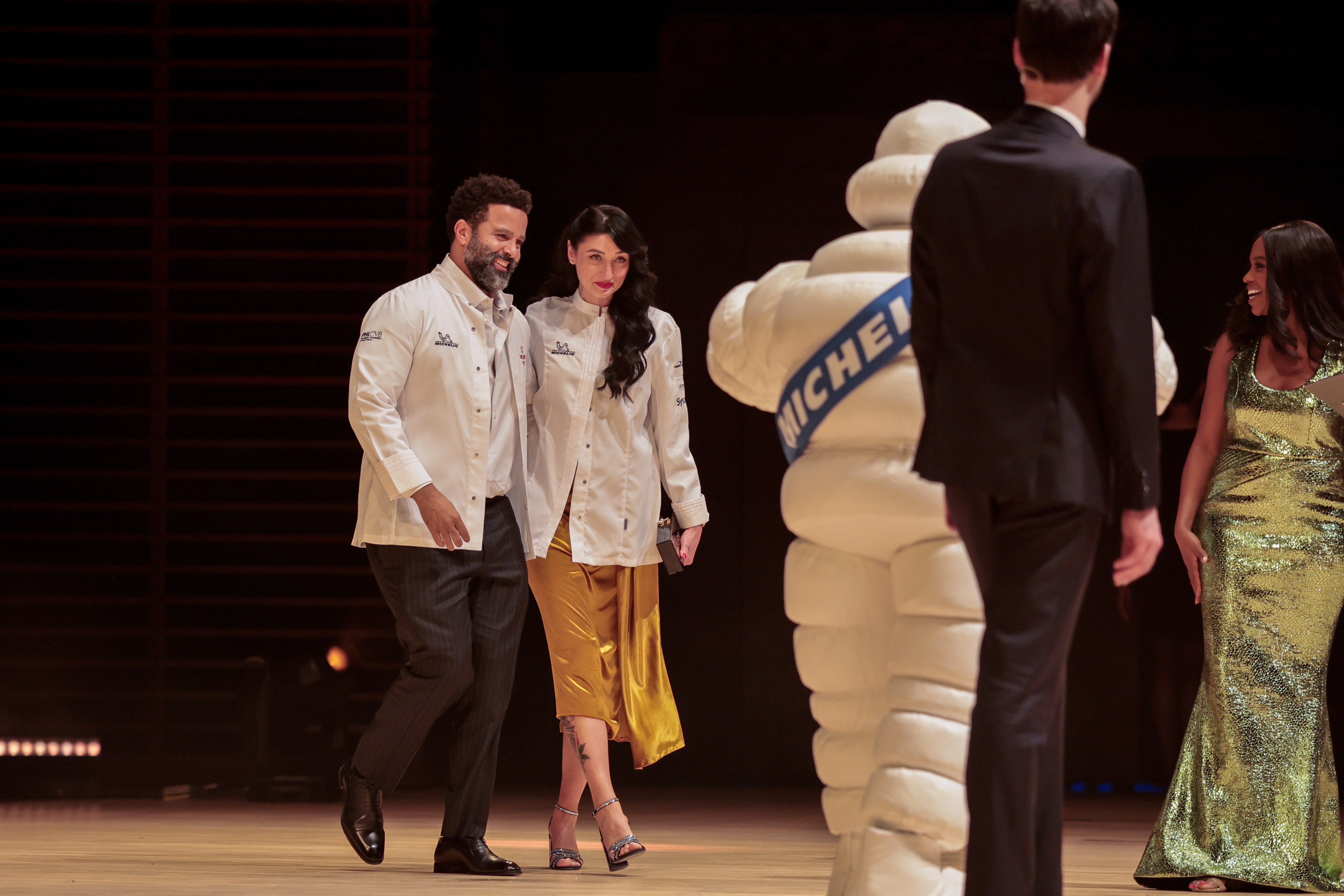
    Last year’s ceremony, attended by culinary glitterati from around the world, gave Philadelphia its first Michelin stars. Friday Saturday Sunday, Her Place Supper Club, and Provenance each received one star, while 31 other Philadelphia restaurants — including three cheesesteak shops — received Michelin recognition. Ten earned Bib Gourmands, Michelin’s designation for restaurants offering good food at a good value, while 21 were Recommended. Pietramala, the vegan restaurant in Northern Liberties, also received a Green Star for its sustainability practices. (Don’t expect more Green Stars this year; the award category was retired in May.)

    The Philadelphia chefs flooding the stage at the Michelin Guide announcements on Nov. 18, 2025.Elizabeth Robertson / Staff Photographer

    Attendance at the ceremony is by invitation only. Because Michelin operates largely in secrecy, it became clear, however, in the days before the Nov. 18 Philadelphia ceremony that restaurateurs invited to attend would receive some form of recognition.

    Michelin’s stars denote increasing levels of distinction: One star signals very good cooking that is “worth a stop,” two stars indicate excellent cooking “worth a detour,” and three stars represent exceptional cuisine “worth a special journey.”

    The French tire company introduced its first North American guide in New York in 2005 and has expanded rapidly since. Chicago followed in 2011 and Washington in 2017, while California, Florida, Toronto, Vancouver, Colorado, Atlanta, Mexico, Texas, and Québec were added in subsequent years.

    The expansion has accelerated recently. Michelin added the American South, Boston, and Philadelphia in 2025 and the Southwest and a statewide Florida guide in 2026. An American Great Lakes guide is scheduled to debut in 2027.

    Philadelphia’s inclusion is part of a partnership with the Convention and Visitors Bureau, which has not disclosed how much it is paying Michelin.

  • Ellen Yin’s newest Philly restaurant is an all-day aperitivo bar built for snacking and sipping

    Ellen Yin’s newest Philly restaurant is an all-day aperitivo bar built for snacking and sipping

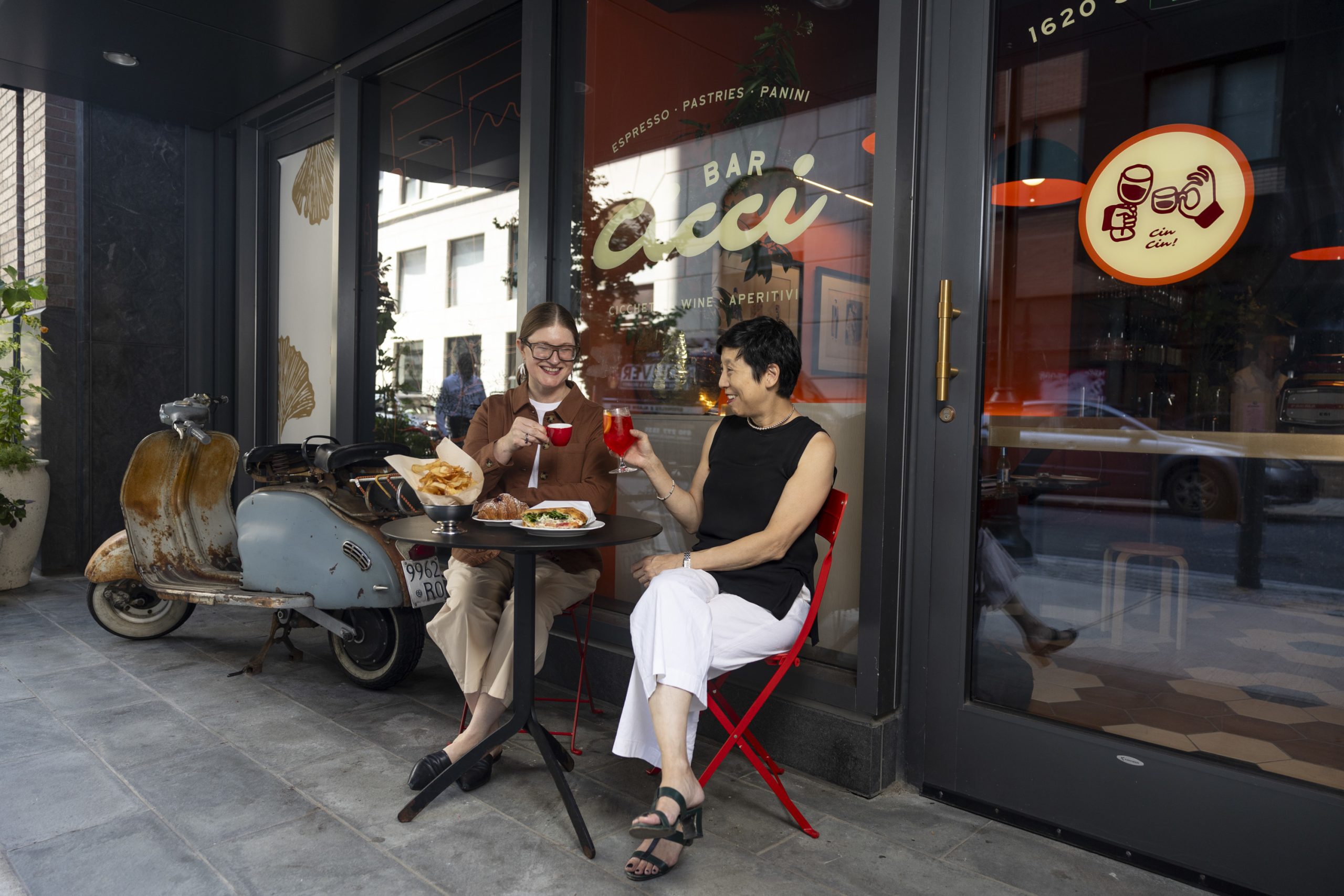
    Ellen Yin’s newest Philly restaurant doesn’t have a grand opening date yet, but it does have a vintage-looking light blue Lambretta scooter parked out front.

    Why? To set the mood.

    The acclaimed restaurateur’s latest project is Bar Cicci, an all-day aperitivo bar soft-opening Aug. 18 at 1620 Sansom St., just next door to Uchi. Inspired by Yin’s longstanding, almost obsessive love of northern Italy, the bar is an ode to the country’s casual drinking culture, with classic pastries in the morning followed by sandwiches in the afternoon and snacks and spritzes in the evening.

    Yin has traveled to Italy more than any other country. There, “a bar is a place where you go in the morning to have an espresso and meet up with your neighbors, chit-chatting away,” she said. “And that morning ritual turns into sandwiches and gelato at lunch time, and then [drinks] at dinner.”

    Pronounced “Bar CHEE-CHEE,” the name is a play on the Italian word ciccio, a term of endearment for something small and plump. The menu — curated by Yin and Christina McKeough, the culinary director for High Street and the Bread Room — will be a smorgasbord of little things. The dayside, counter service-only lineup will feature traditional Italian pastries and sandwiches. Starting at 4 p.m., the menu will switch to showcase 20 small plates and a rotating array of cicchetti (or snacks), with prices falling between $5 and $20 each.

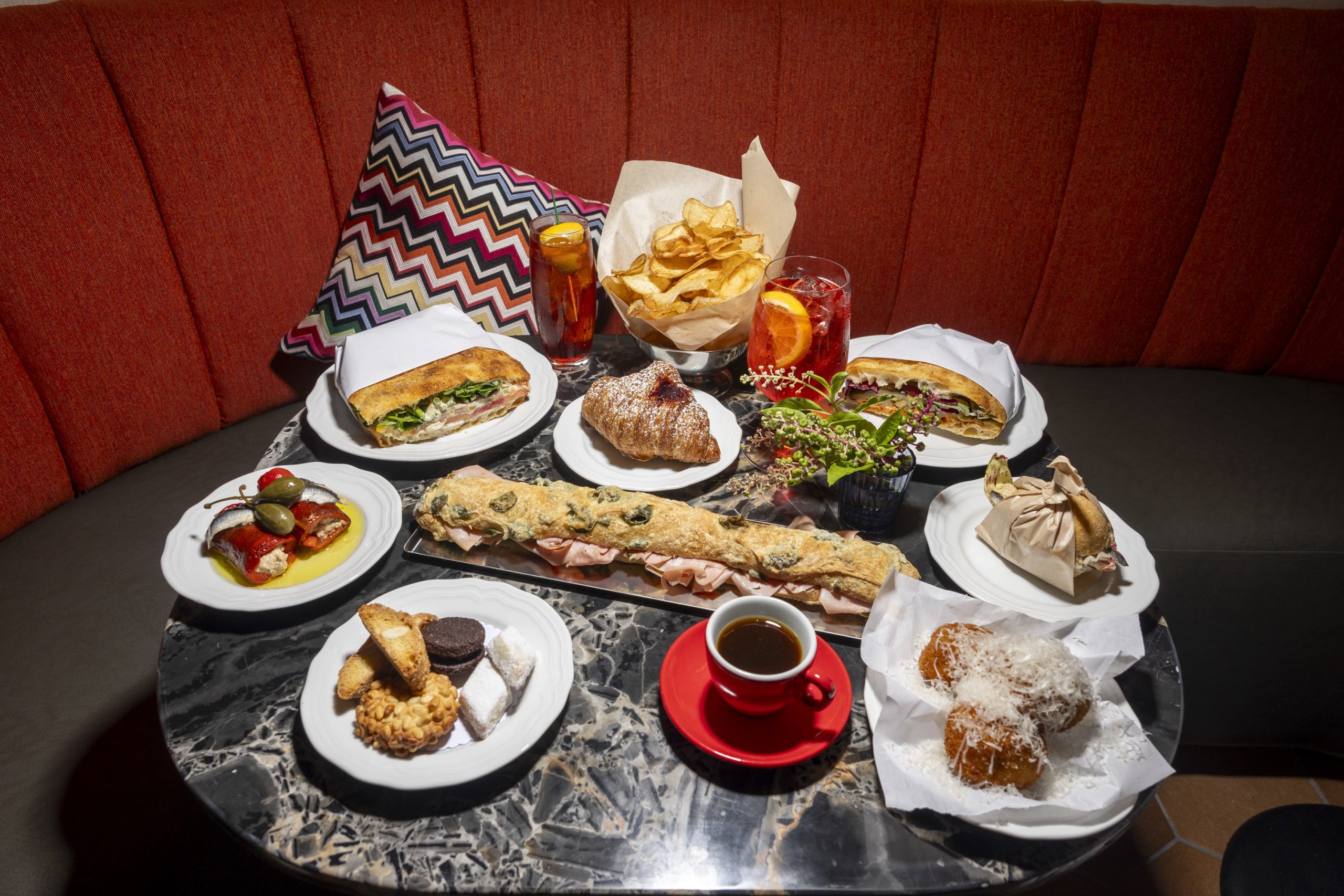
    An assortment of sandwiches, small plates, pastries, and drinks that will be available at Bar Cicci, Ellen Yin’s new restaurant set to open in mid-August. Tyger Williams / Staff Photographer

    Yin envisions Bar Cicci as a catchall space for those who live and work around Rittenhouse Square. In theory, a customer could stop in three times in one day: first for coffee and a pastry on the way to work, then again for a business lunch, and once more for pre-dinner drinks.

    Cicci will be Yin’s sixth Philly restaurant as part of High Street Hospitality, the restaurant group Yin cofounded with chef Eli Kulp. Fork, her first, opened in 1997 and went on to become one of Old City’s most enduring fine dining restaurants. She would follow it up with High Street — one of the city’s first all-day cafes, now located in Center City’s Franklin Residences — and a.kitchen, the Rittenhouse Square hotel restaurant. The Bread Room, known for its grown-up pop-tarts and morning buns, is the group’s bakery.

    Yin and McKeough had been working on Bar Cicci since April 2025. It’s their first themed project. “We don’t just get to do what we want here,” Yin said. Everything in the space has some tie to northern Italy, down to its groovy accent pillows.

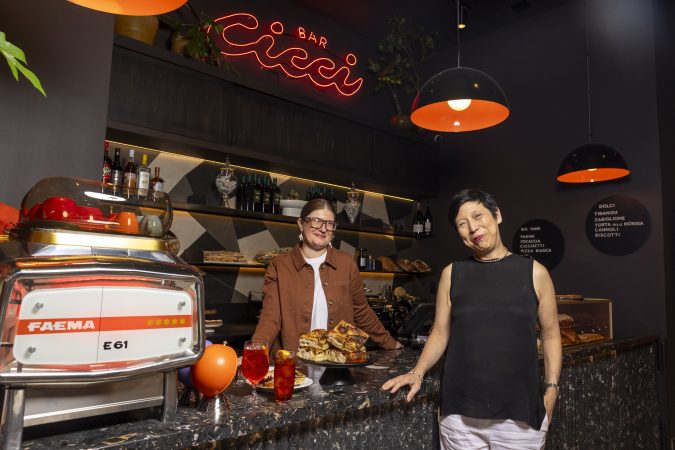
    High Street/The Bread Room culinary director Christina McKeough (left) and restaurateur Ellen Yin outside Bar Cicci, their new restaurant inspired by northern Italy. The light blue Lambretta scooter helps set the mood.Tyger Williams / Staff Photographer

    Bar Cicci’s 30-seat dining room channels 1970s Milan. Plush burnt-orange banquettes decorated with Missoni-style striped pillows wrap around black marble tables that interior designer Marguerite Rodgers repurposed from the lobby bar inside the Franklin Residences.

    The counter is outfitted with a modernized Faema E-61, at one point Italy’s best-selling and only semiautomatic espresso machine. Even the dome-shaped mid-century modern light fixtures — a holdover from when Sandler’s on 9th occupied High Street’s space at 101 S. Ninth St. — cast a slightly hazy glow, as if you’re sitting in a scene from a film.

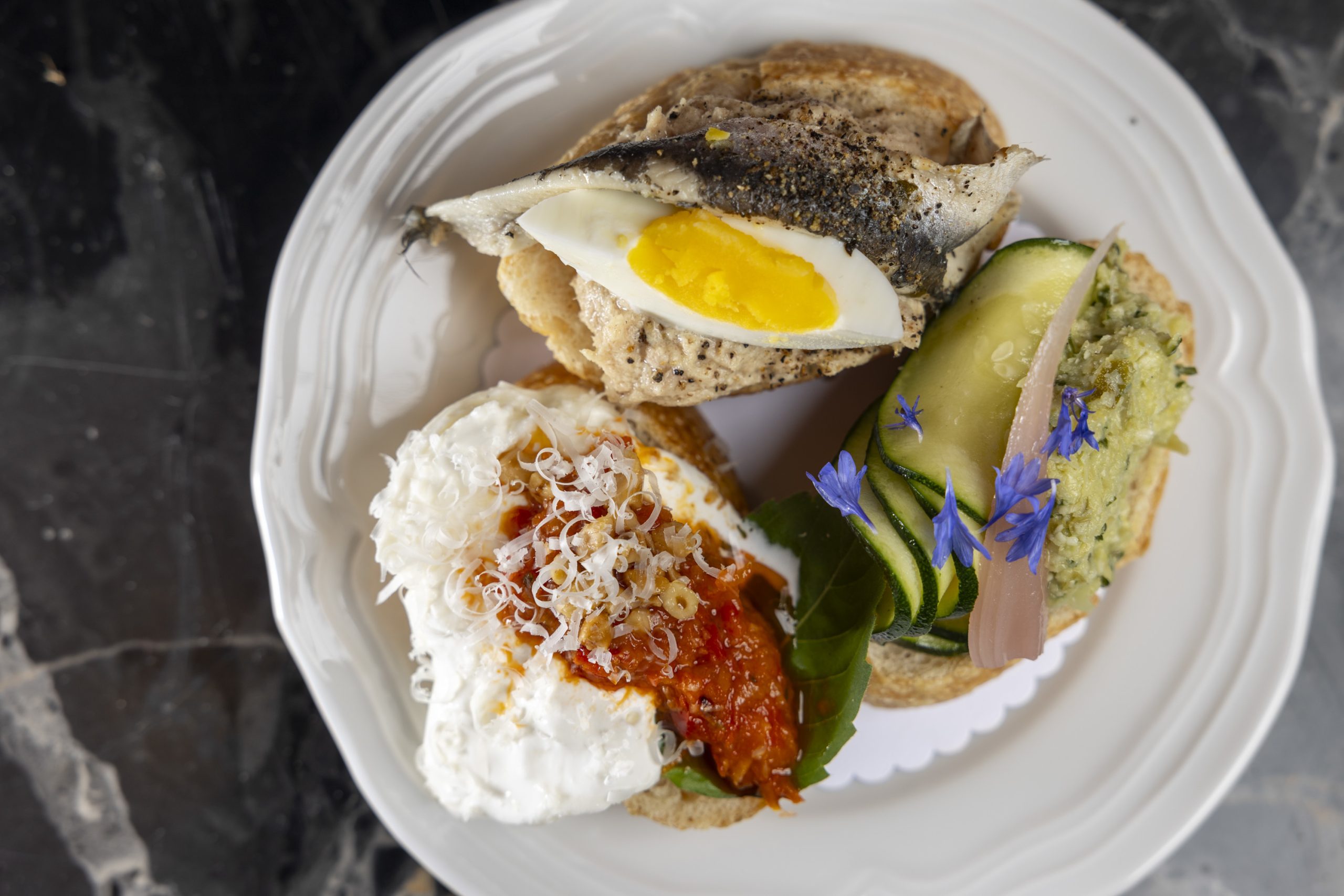
    An assortment of cicchetti at Bar Cicci. The crostini-like snacks are a Venetian speciality meant to be served with wine.Tyger Williams / Staff Photographer

    The vibe is inspired by Yin and McKeough’s favorite bars from research trips to Venice and Milan, such as Milan’s Bar Basso, where Yin recalled being offered seemingly endless pours of Campari. The duo intend for Bar Cicci to be an introduction to Italy’s slower-paced aperitivo hour, a time in the early evening when lower-ABV cocktails are paired with bite-sized snacks designed to get people socializing without pretense.

    Aperitivo is “supersocial,” McKeough said. “A lot of bars in Italy, people aren’t even sitting down. They’re standing up.”
    Sandwiches, spritzes, and snacks

    The centerpiece of Bar Cicci’s evening menu will be a rotating array of cicchetti, crostini-esque bites that you typically eat with a glass of wine while standing. The restaurant will offer about a dozen at a time, in sets of three or five, all prepared on McKeough’s version of an Italian baguette, which is chewier than its French counterpart.

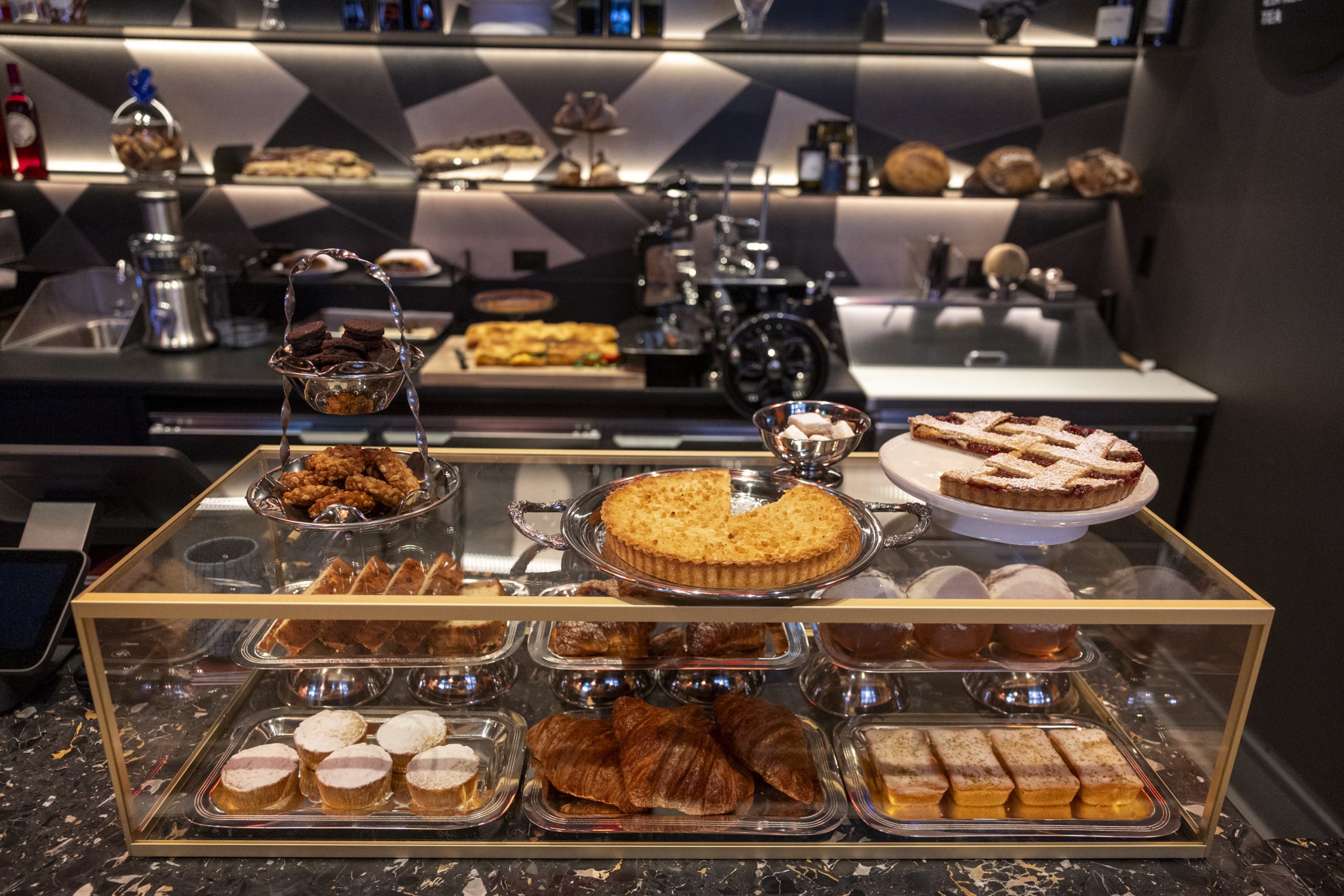
    The pastry case at Bar Cicci is full of classic Italian pastries such as maritozzi and cornetti. Tyger Williams / Staff Photographer

    The bread was the hardest to perfect, according to McKeough, and the most crucial to get right: “No matter where we went, [the cicchetti] were always so easy to eat … you could take a bite without it falling apart.” She anticipates Bar Cicci’s opening lineup will include Venetian standards such as salted cod and tuna with eggs.
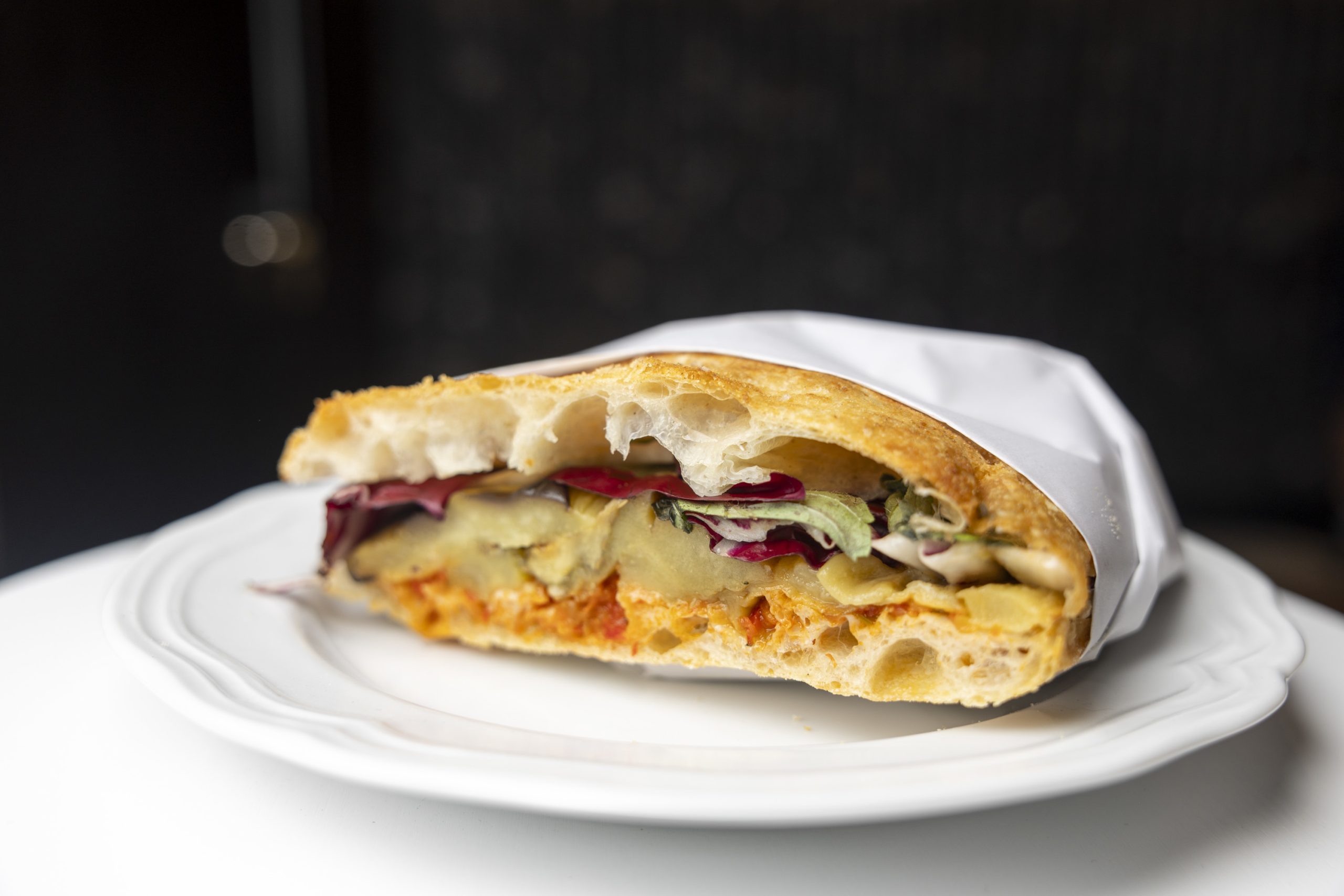
    The Bread Room will bake all the bread for Bar Cicci’s lunchtime sandwiches, will which include a long olive oil sfilatino loaf filled with mortadella; tuna and jammy egg on slider-sized rolls; and Roman-style pizza biancas layered with eggplant, bomba, and radicchio or anchovies, watercress, and tomato tonnato.

    A pizza bianca sandwich from Bar Cicci, which will be baking all of its breads in house.Tyger Williams / Staff Photographer

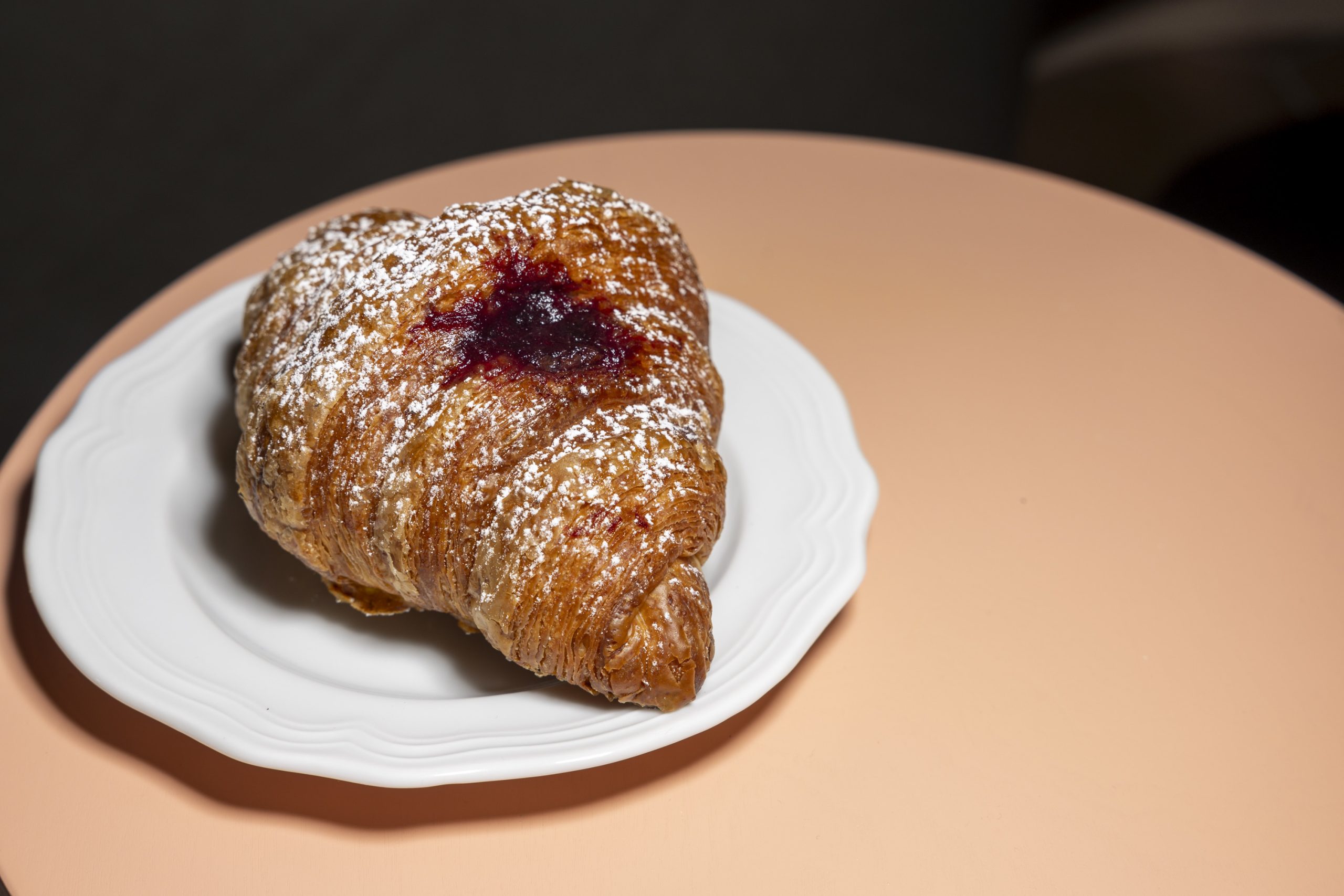
    As for the grab-and-go case, it will contain tried-and-true pastries that range from trendy cream-stuffed maritozzi to Italian-style chocolate chip pound cake and five versions of cornetti, which McKeough likened to a “reverse-engineered croissant.”
    Bar Cicci will serve dark-roast espresso and coffee from Arkansas-based roaster Onyx and Italian-style wines from Mural City Cellars, the popular Fishtown winery. The restaurant is going all in on aperitivi with its cocktail lineup, which will include a spaghett-style Aperol spritz, foamy espresso martinis al freddo, and the Garibaldi, a Campari cocktail made with the juice of a whole orange.

    For McKeough and Yin, the hope is that the food, if not cocktails, will make people linger.

    “There’s just something about a little bite that makes you want to have another drink,” McKeough said.

    A cornetto filled with seasonal jam at Bar Cicci.Tyger Williams / Staff Photographer

    Bar Cicci, 1620 Sansom St. Suite C3, 215-515-3793, barcicciphl.com. Hours: 8 a.m. to 9 p.m. Tuesday through Friday; 9 a.m. to 10 p.m. Saturday (to start). Soft-opening Aug. 18.