Tag: Tacony

  • Mike Bowe, popular longtime radio disc jockey, has died at 76

    Mike Bowe, popular longtime radio disc jockey, has died at 76

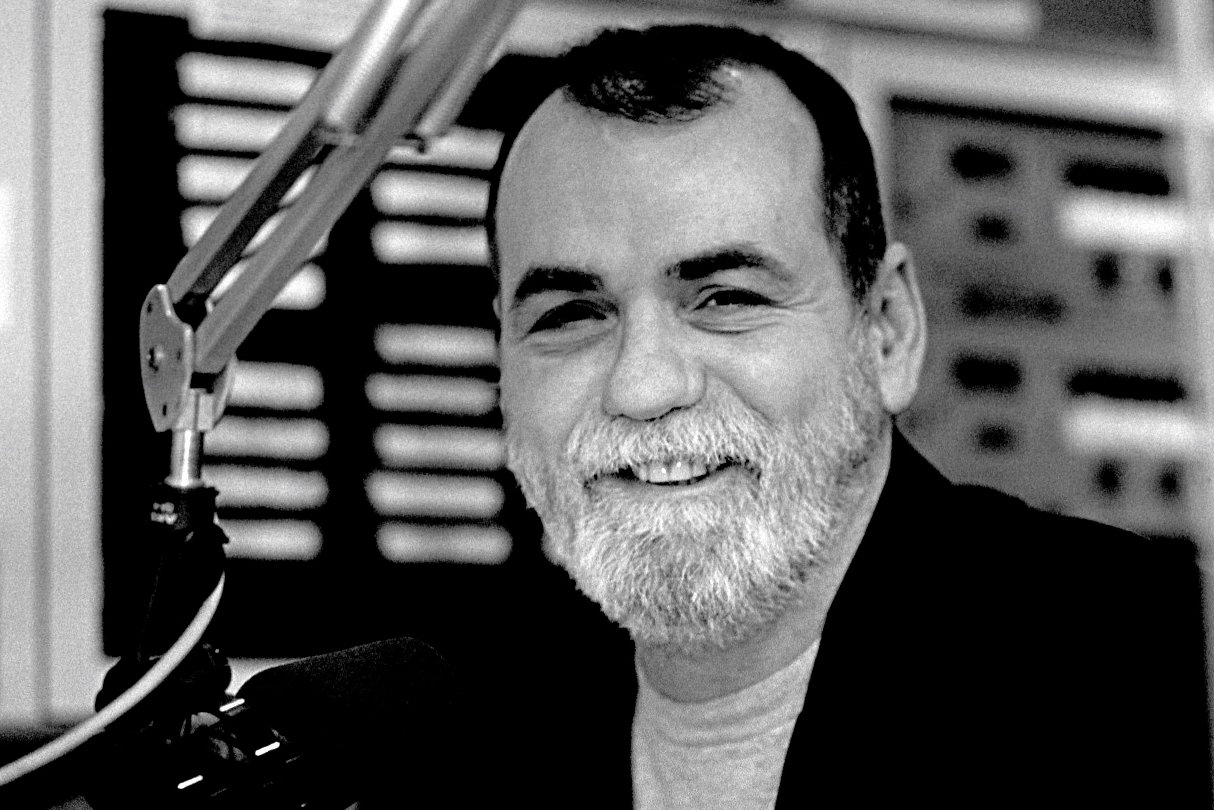
    Mike Bowe, 76, of Audubon, Camden County, longtime local disc jockey and popular radio show host at WMGK, WPEN, WHAT and other stations, Army veteran, devoted Phillies fan, and proud son of Gloucester City, died Monday, Sept. 14, of complications from cancer at his home.

    Mr. Bowe enjoyed music and socializing as a teen at Gloucester Catholic High School, and was skilled at chatting with people about their favorite songs and other interests. So he was a natural fit later as a radio show host and disc jockey for more than 40 years in studios and at remote appearances, dance parties, charitable fundraisers, and other events.

    “I like to think I communicate with people,” he told the Courier-Post in 1987. “I think I can relate the same way to somebody whether he’s on Ninth Street in South Philly or at a bank in Center City.”

    Fellow DJ Chris McCoy said. “He had something intangible. He made you feel like he knew you, and you knew him.”

    Using what his fans and colleagues described as a “calming and smooth voice” and “velvet intonations,” Mr. Bowe hosted music shows at WMGK from 1977 through the early 2000s, at KISS 100 in the 1990s, and at WPEN and WHAT between 2000 and 2011. Colleagues called him “loyal, dedicated, witty” in online tributes, and praised his “down to earth and friendly style.”

    They credited him with making WMGK’s Saturday Night ’70s show a hit in the mid-1990s. “He was the very foundation of that success,” McCoy said.

    Listeners called him “truly a master of this craft,” “one of the best ever,” and “a memorable radio legend.” He worked after 2011 at other local stations and iRadioPhilly.com.

    He teamed up with other popular DJs on morning, afternoon, and evening shifts, interviewed performers, took phone calls from listeners, and broadcast from Phillies games and charitable benefits. In 1989, he dressed up as George Washington to cross the Delaware River when the Tacony-Palmyra Bridge was finally reopened after repairs.

    He liked to air remotely from his favorite clubs and pubs, and ride shuttle buses with listeners to concerts. He also worked DJ dance party gigs at nightclubs, holiday parades, and private events in Philadelphia and South Jersey.
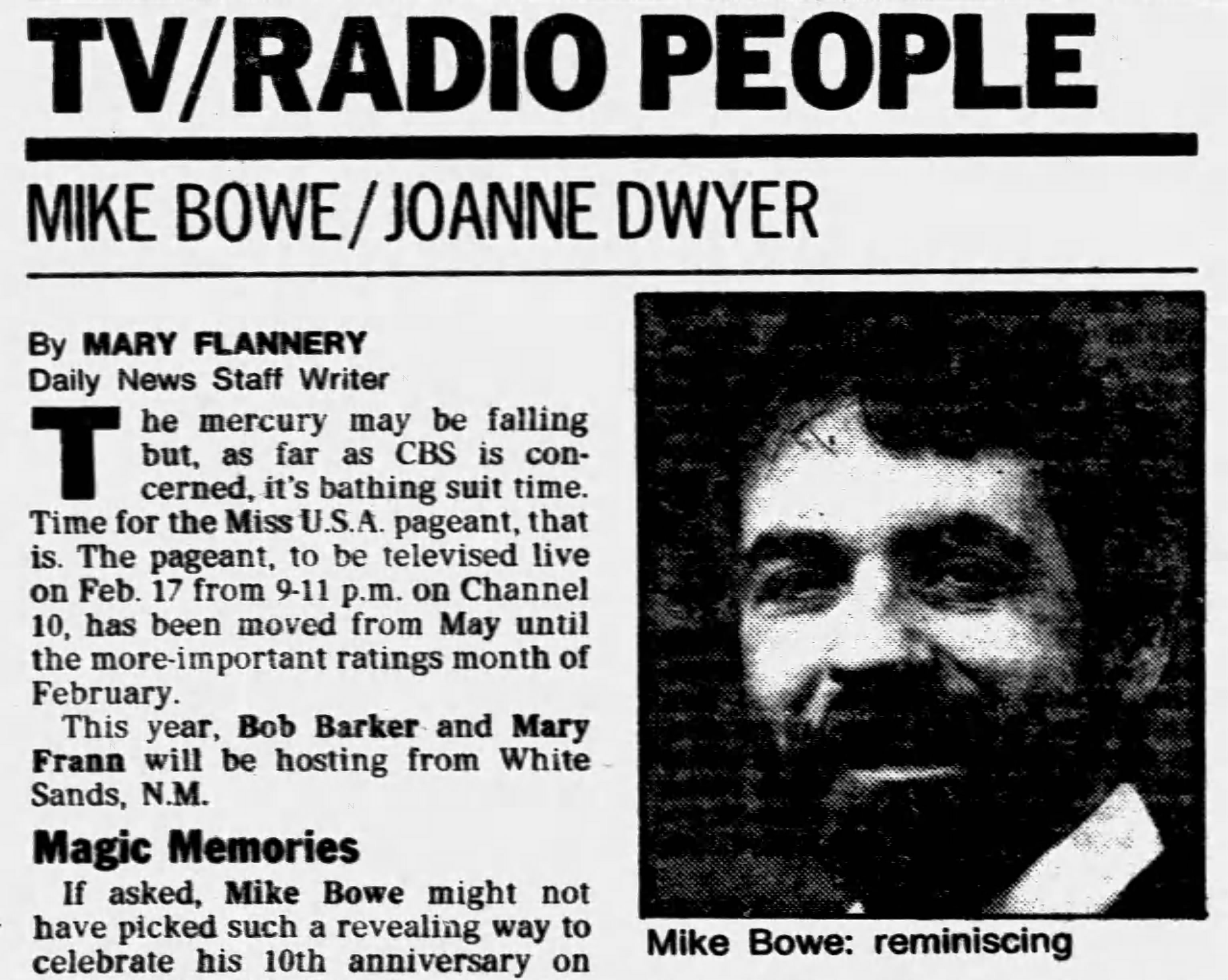
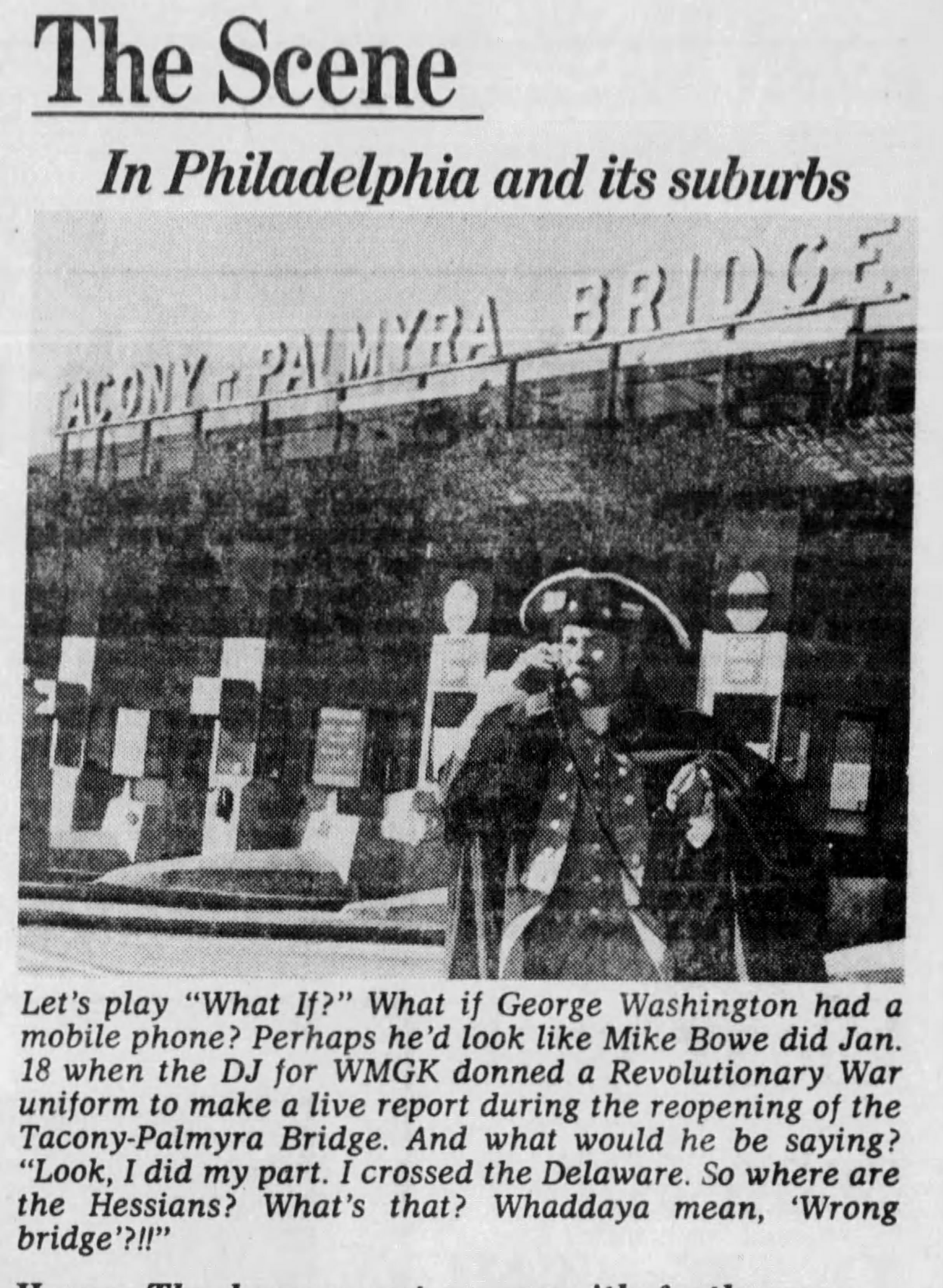
    Mr. Bowe appeared often in The Inquirer and Daily News, including in 1987 (above) and 1989 (below.)Newspapers.com

    His favorite song was “Ain’t No Woman (Like The One I’ve Got)” by his favorite group, the Four Tops. “He knew Philadelphia from A to Z,” McCoy said. “He brought a smile to your face.”

    Mr. Bowe served three years in the Army, 11 months and 11 days in Vietnam in 1968-69, and earned several medals and service stars, and an achievement badge. Fellow DJ Sue Serio said online that she enjoyed annual Veterans Day lunches with Mr. Bowe, “a treasured tradition that we never took for granted.”

    One day, a former WMGK colleague said online, Mr. Bowe took him to Mr. Bowe’s favorite three local landmarks: the Melrose Diner in South Philadelphia, Mel’s Italian restaurant in Bala Cynwyd, and the pool table at the VFW in Gloucester City.

    “Mike was a gift to Gloucester City and to the Delaware Valley professionally and as a man,” longtime friend Patrick Healey said. Longtime friend F. Emmett Fitzpatrick III said: “He prized honesty of character above all else.”
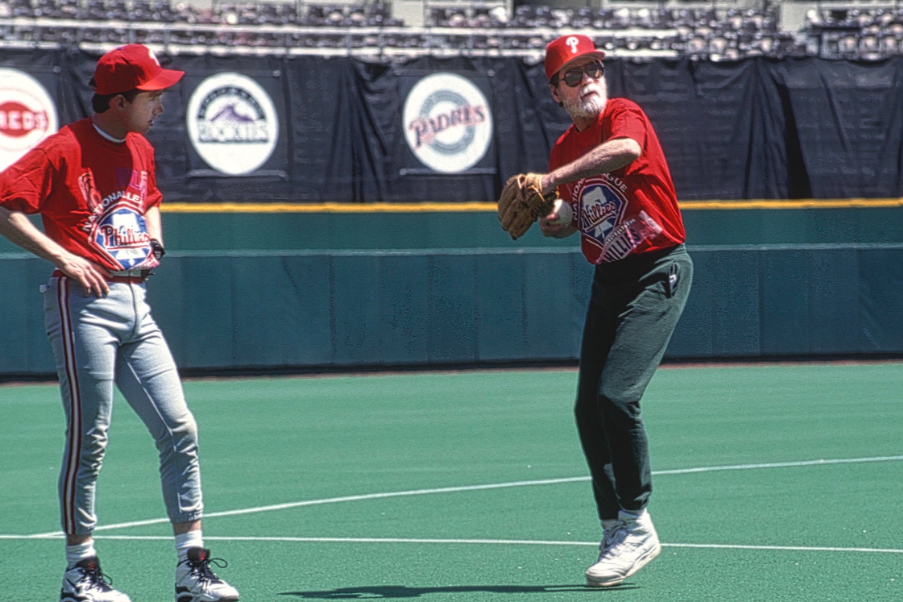
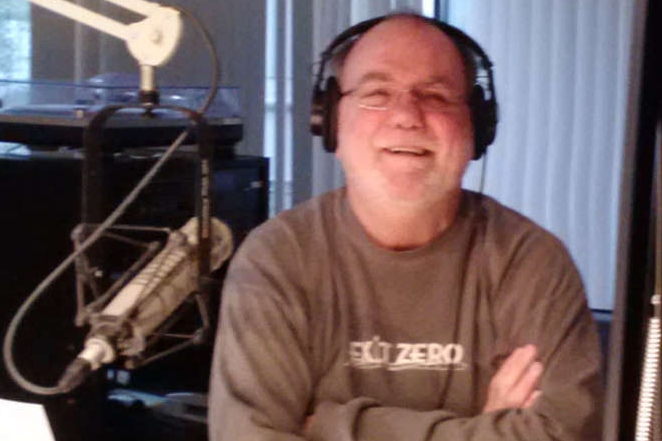
    Mr. Bowe, right above, was an avid Phillies fan. Below, he worked morning, afternoon, and evening shifts in the studio.F. Emmett Fitzpatrick III

    Mr. Bowe’s niece, Debra Ann Leblang, said: “He lived the ultimate American dream.”

    Michael Joseph Bowe was born Nov. 4, 1949, in Gloucester City. He graduated from Gloucester Catholic in 1967, studied broadcasting in Minnesota, and worked his way through the radio ranks in South Jersey and Philadelphia.

    He married Debbie Durso in 1985, and they lived in Audubon. Where one of them went, family and friends all said, the other followed.

    “They were partners, companions, and best friends,” his family said in a tribute. His wife died in June.
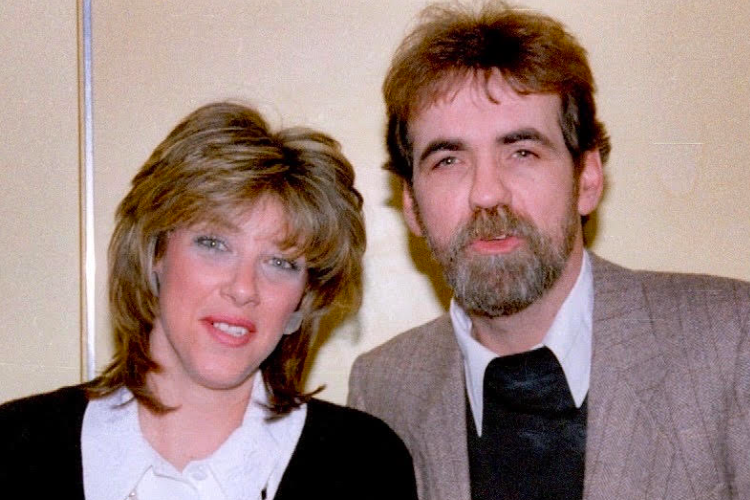

    Mr. Bowe and his wife, Debbie, married in 1985. Where one of them went, family and friends all said, the other followed. F. Emmett Fitzpatrick III

    Off the air, Mr. Bowe played softball and enjoyed visits to Atlantic City and Brigantine. He was a Sunday morning usher at St. Mary’s Catholic Church and belonged to the Townsend C. Young VFW post.

    He used to take dates to Jim’s Pizzeria in Gloucester City, and he told The Inquirer in 1994 that he enjoyed the place’s acerbic camaraderie. “Gloucester’s always been like that,” he said. “People love it. It’s a sarcastic, get-under-your-skin kind of thing. You don’t even get to order your own food.”

    His family said: “He was funny, quick-witted, sentimental, outspoken, and unforgettable. He carried his South Jersey roots with him wherever life took him.”

    In addition to his niece, Mr. Bowe is survived by a sister, a brother, and other relatives. Two brothers died earlier.

    Visitation with the family is to be from 8:45 to 9:45 a.m. Tuesday, Sept. 22, at the McCann-Healey Funeral Home, 851 Monmouth St., Gloucester City, N.J. 08030. Funeral services are to be at 11 a.m. at Brigadier General William C. Doyle Veterans Memorial Cemetery, 350 Province Line Rd., Wrightstown, N.J. 08562.

    Donations in his name may be made to the Wounded Warriors Project, Box 758516, Topeka, Kan. 66675; and St. Mary’s Roman Catholic Church, 426 Monmouth St., Gloucester City, N.J. 08030.
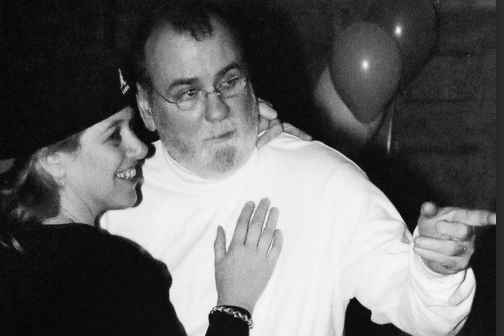
    Off the air, Mr. Bowe played softball and enjoyed visits to Atlantic City and Brigantine.F. Emmett Fitzpatrick III
  • Philly City Council returns with dueling plans for the city’s trash | Council roundup

    Philly City Council returns with dueling plans for the city’s trash | Council roundup

    Philadelphia City Council members are considering dueling proposals over how the city eliminates its garbage, with one lawmaker leading an effort to immediately block the city from shipping its garbage to a trash incinerator and another taking a longer-term approach.

    Councilmember Mark Squilla on Thursday introduced legislation authorizing Mayor Cherelle L. Parker’s administration to, within three years, develop a plan to dramatically reduce the city’s reliance on both trash incineration and landfills over the next 20 years.

    Squilla’s proposal, which he drafted with input from Parker’s administration, is something of an alternative for lawmakers to consider as Councilmember Jamie Gauthier has for months pushed for a more aggressive approach to stop the city from incinerating trash this year.

    Both lawmakers hosted news conferences this week alongside their allies to rally support for their cause, part of a long list of events Council members hosted as the legislative body returned Thursday for its first meeting of the fall session.

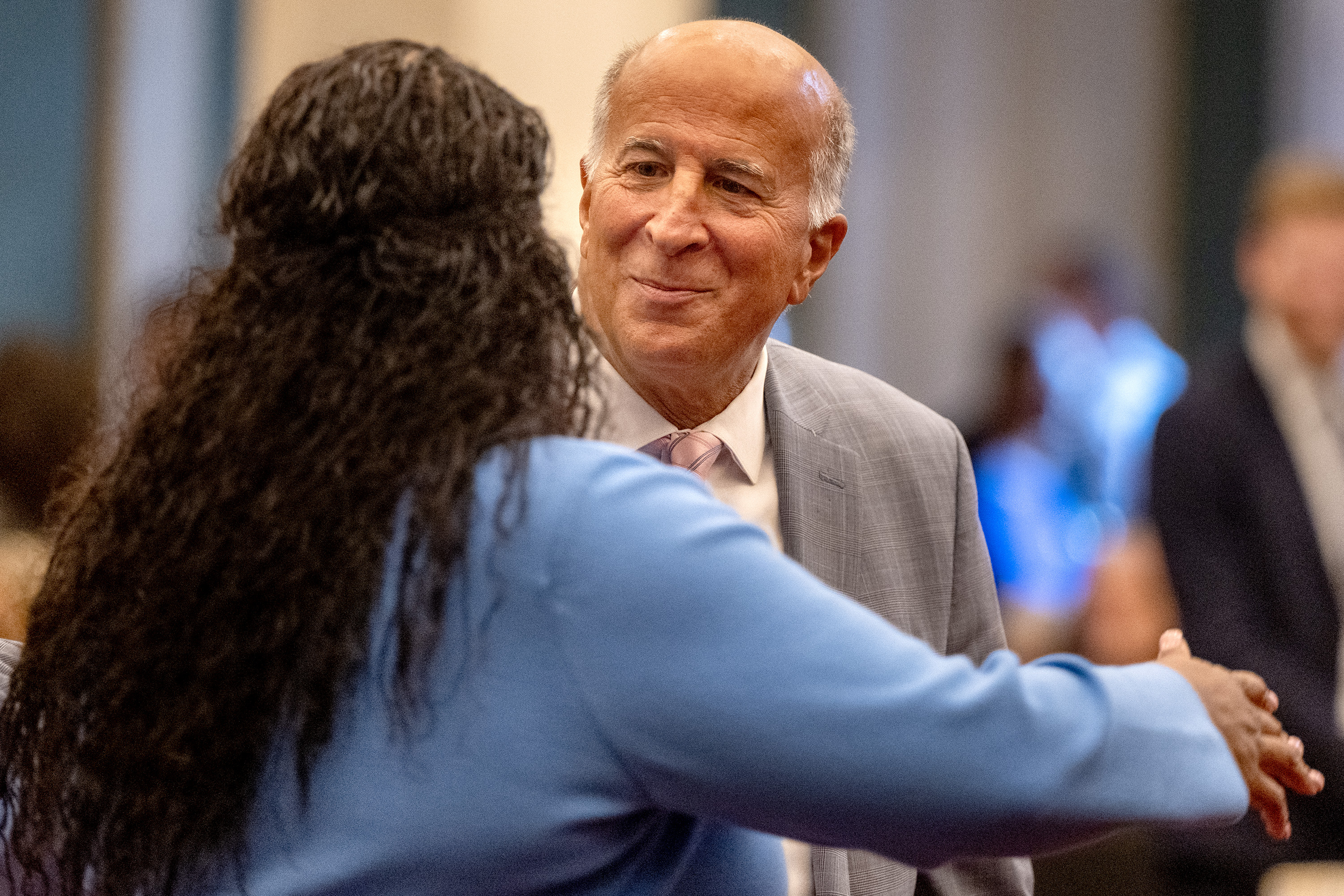
    Councilmembers Mark Squilla and Katherine Gilmore Richardson (back to camera) greet each other as City Council convenes for its fall session Thursday, Sept. 17, 2026.Tom Gralish / Staff Photographer

    The first meeting after the summer break typically has a jovial, first-day-of-school feel. But the mood briefly shifted Thursday when City Hall was evacuated and Council abruptly adjourned after a suspicious package was found on the floor where Council was meeting.

    Police cleared the package, and Council resumed its business Thursday afternoon.

    Here’s what else happened this week:

    What was this week’s highlight?

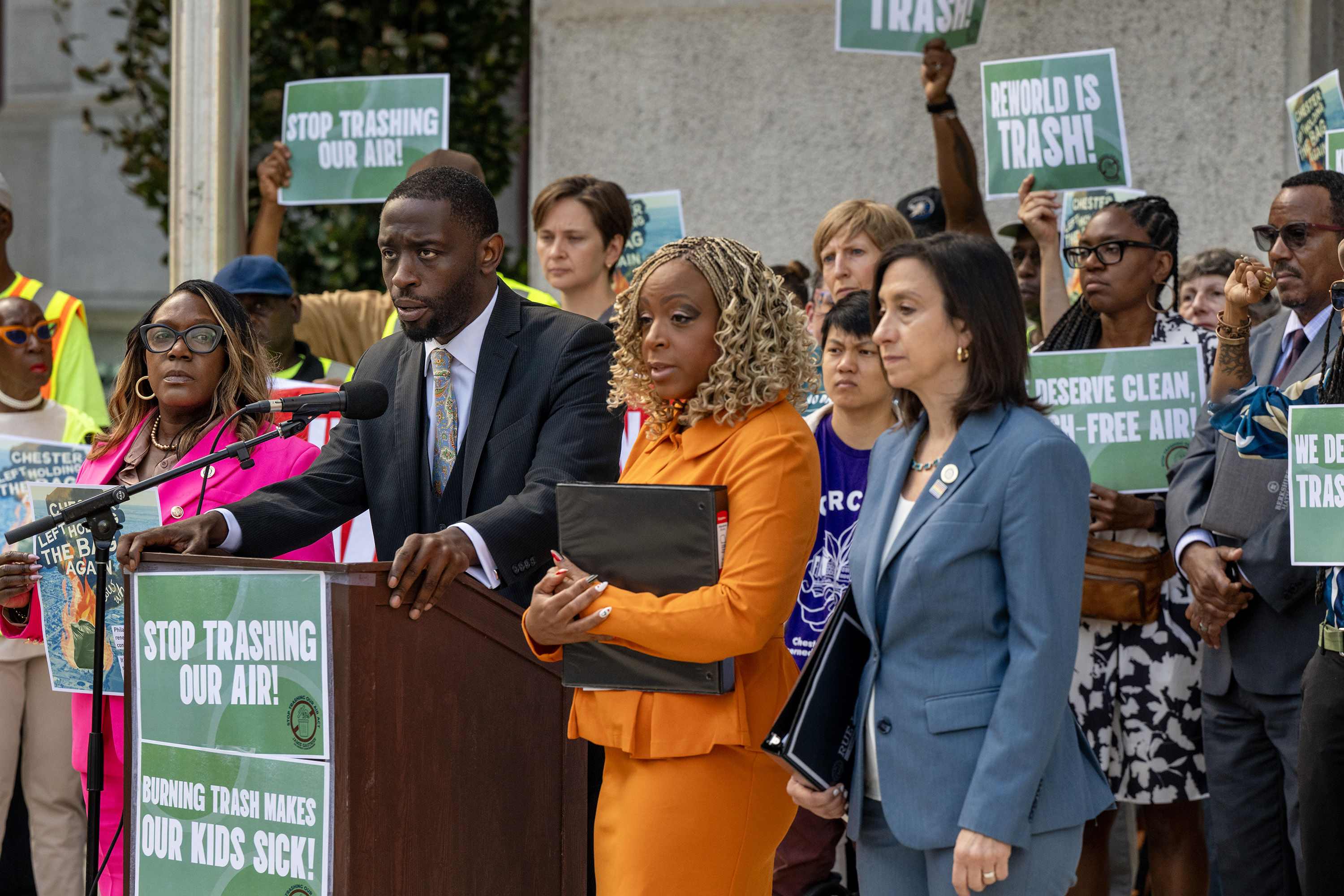
    Incinerator issue heats up: Gauthier has for months sought to pass legislation that would ban the city from continuing its long-term practice of sending about a third of its garbage to a trash incinerator in Chester, about 15 miles south of the city. She argues that incineration is bad for the environment and harms Chester residents’ health.

    Parker’s administration opposed the legislation, called the Stop Trashing Our Air Act, and Gauthier in the spring failed to gain enough support for it in Council.

    Now, Gauthier is trying to block the Parker administration from renewing its contract with Reworld, the incineration facility. The administration needs Council approval to enter into a new four-year contract with the firm.

    Gauthier has several members on her side, including three fellow progressive lawmakers, as well as Councilmember Isaiah Thomas, who is the Democratic majority whip.

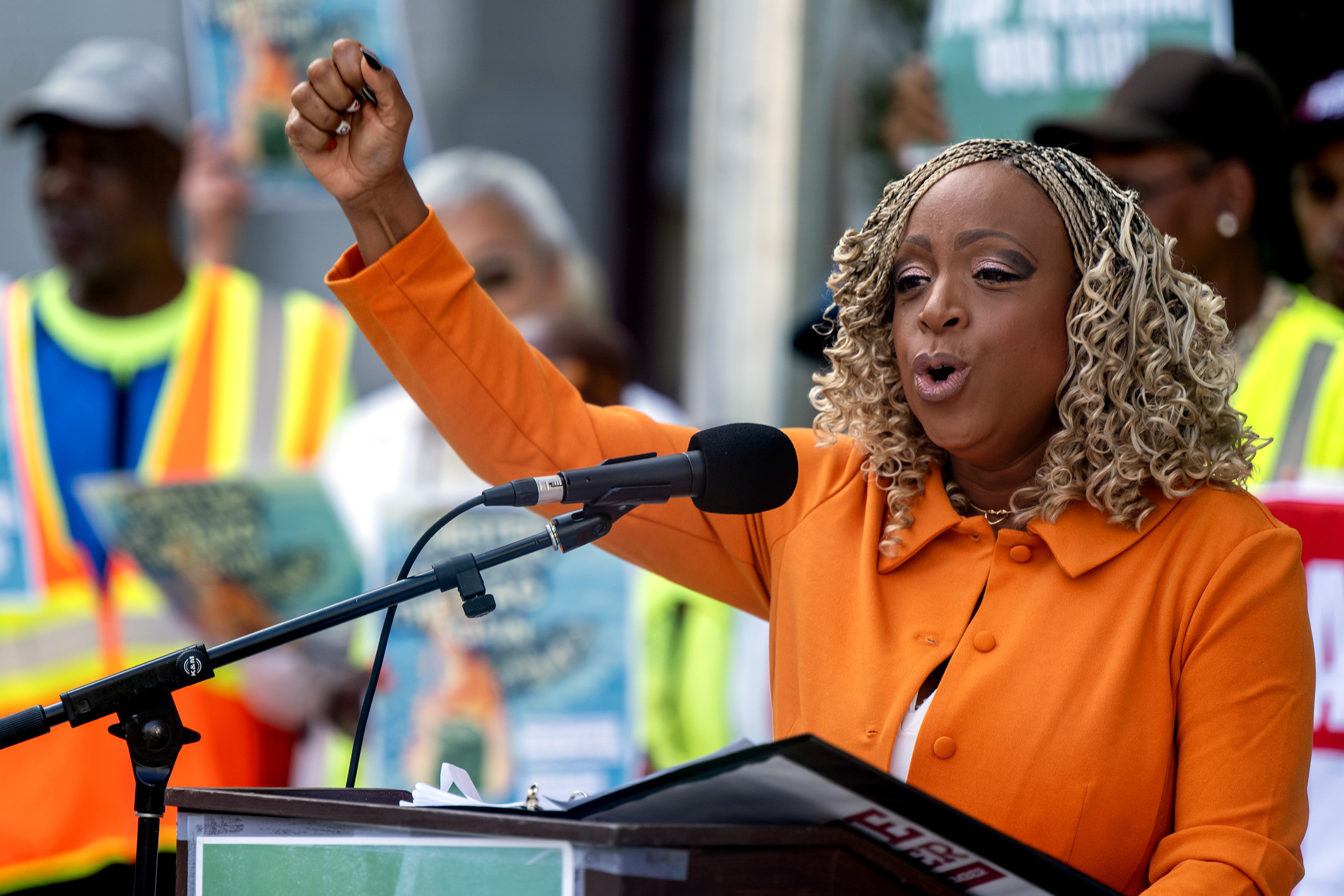
    City Councilmember Jamie Gauthier speaks at a rally outside City Hall early Thursday morning Sept. 17, 2026 where protesters called on Council to reject Mayor Cherelle L. Parker’s waste disposal contracts. A coalition of elected officials, health and climate experts, and advocates from Philadelphia and Chester gathered to oppose the city’s sending its trash to an incinerator in Chester.Tom Gralish / Staff Photographer

    Squilla’s proposal in some ways offers members an off-ramp. His bill calls for a “circular waste” system that includes new techniques for waste disposal, such as composting and “anaerobic digestion,” a process that breaks down organic waste.

    Managing Director Carlton Williams said Wednesday during a news conference with Squilla that the city is looking to build out an anaerobic digestion system within four years.

    Squilla said that while the administration is already working toward a more modern waste disposal system, passing a law would “codify what we had as plans and resolutions before.”

    Gauthier said that she supports Squilla’s goal of moving toward a more sustainable system, but that his legislation “is a plan to create a longer-range plan.”

    “It in no way changes the decision in front of Council,” she said. “We can move away from this practice right now.”

    What else happened this week?

    Severing the law department: The city law department serves as legal counsel for both the mayor’s administration and Council, a dynamic that can sometimes cause friction when the city’s elected officials disagree.

    Council on Thursday approved a resolution by Thomas to hold a hearing “to consider the separation of the [law] department’s functions between the administration and City Council.”

    The department is led by City Solicitor Monique Galloway, whom Parker appointed to the role in July.

    Thomas has clashed with Parker’s administration, and he said he became interested in looking at the department’s structure due to concerns that Council was not receiving independent legal advice on some issues.

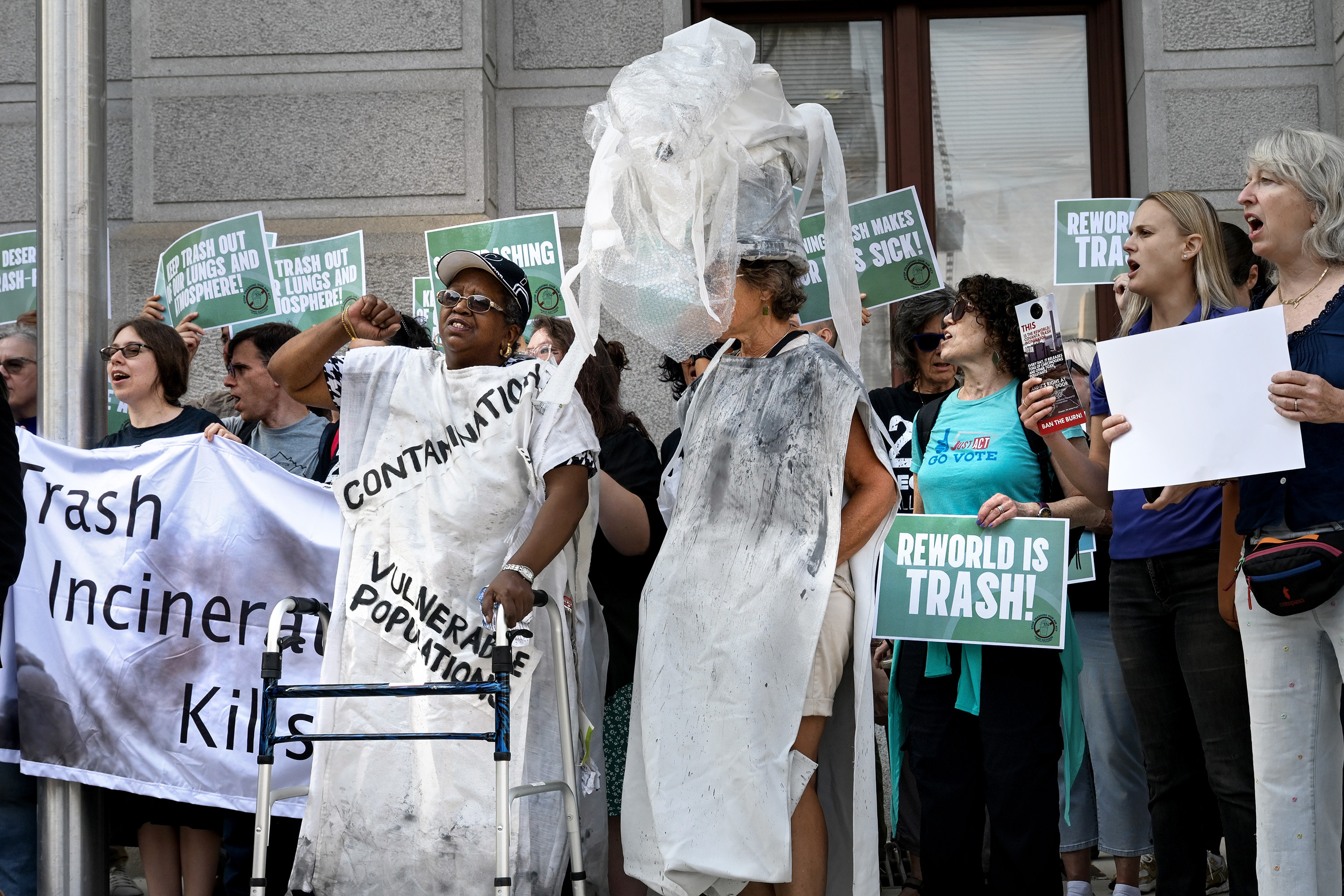
    Lois Williams (left), dressed as a “sick person,” and Shari Hersh (right) in costume as a “smokestack,” join a rally outside City Hall early Thursday to call on City Council to reject Mayor Cherelle L. Parker’s waste disposal contracts.Tom Gralish / Staff Photographer

    He pointed to the Philadelphia School District’s controversial facilities plan, which involves the closure of 17 school buildings and was adopted by the school board in April over the objections of many Council members.

    And he said recent legal proceedings around the city’s business income and receipts tax were “part of the motivation” to hold a hearing on the law department.

    In 2025, after a Massachusetts company sued the city seeking to overturn a popular tax break program that primarily helped small businesses, the law department said it had determined the lawsuit was likely to succeed. The Parker administration eventually settled the case and persuaded Council to eliminate the tax break. Some Council members at the time complained that the city did not defend the tax break more vigorously.

    The department already silos off some of the work it does on behalf of Council from the rest of the administration, such as when it drafts bills proposed by lawmakers. Council also may hire outside legal counsel, but must pay for those services out of its own budget.

    A law department spokesperson did not immediately respond to a request for comment.

    Storage wars: Councilmember Mike Driscoll introduced legislation on Thursday that would ban new self-storage facilities from his district in lower Northeast Philadelphia.

    The storage industry boomed during the COVID-19 pandemic, as consumer spending shifted from services to goods, many families struggled to afford larger homes, and low interest rates juiced development.

    Northeast Philadelphia saw a particularly large boom in self-storage buildings because of its rich supply of properties zoned for industrial development. Driscoll said that advocates in the Tacony neighborhood felt their community had become oversaturated.

    “They want more affordable housing and [self-storage units] are taking valuable sites for that,” Driscoll said.

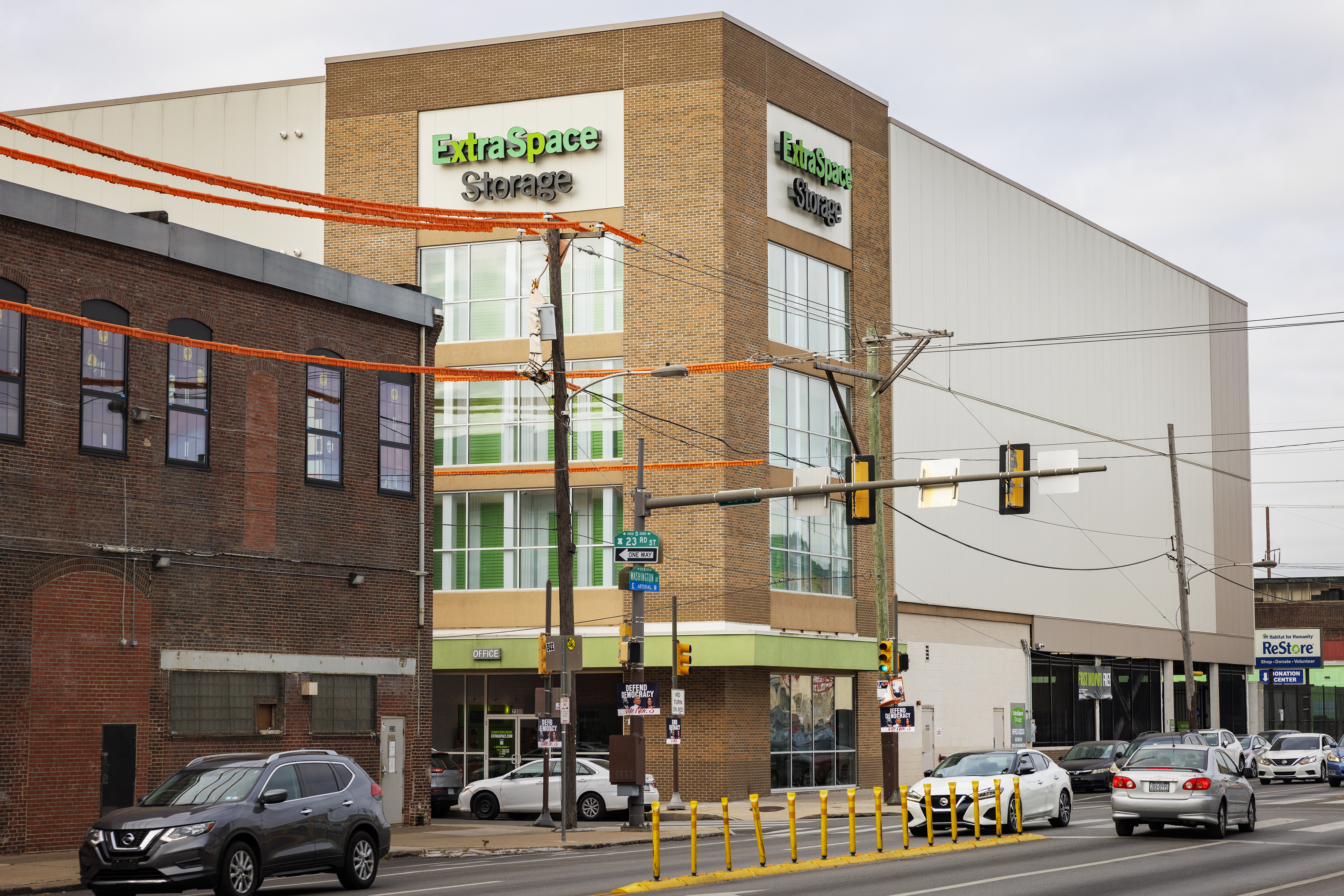
    ExtraSpace self-storage at Washington Avenue and S. 23rd Street, Philadelphia, Monday, November 4, 2024.Alejandro A. Alvarez / Staff Photographer

    Self-storage facilities are gold mines for developers. They suffer little wear and tear, they have few utility costs, and labor costs are low after construction.

    According to online industry search portal StorageCafe, Philadelphia has 89 self-storage sites containing more than seven million square feet of space. About a third of that has been built since 2019.

    Other municipalities have moved to limit the spread of self-storage facilities in recent years. New York City banned them from industrial areas to preserve jobs, and Denver blocked them from properties close to light rail lines. Providence, R.I., in 2023 banned new facilities from the city altogether.

    Driscoll said that he may further limit his legislation to the Tacony neighborhood.

    “I don’t want to hurt another part of my district that maybe wants these things,” he said.

    Embracing affordability: Multiple members of City Council said this week that tackling affordability is their primary objective this fall, including Councilmember Nicolas O’Rourke, whose office published a lengthy report outlining dozens of proposals aimed at reducing costs.

    Some may be more realistic short-term goals than others.

    The report, which was drafted by a Cost of Living Task Force made up of community advocates and industry leaders, recommended the city explore everything from opening municipal grocery stores to creating a local Medicaid supplement program.

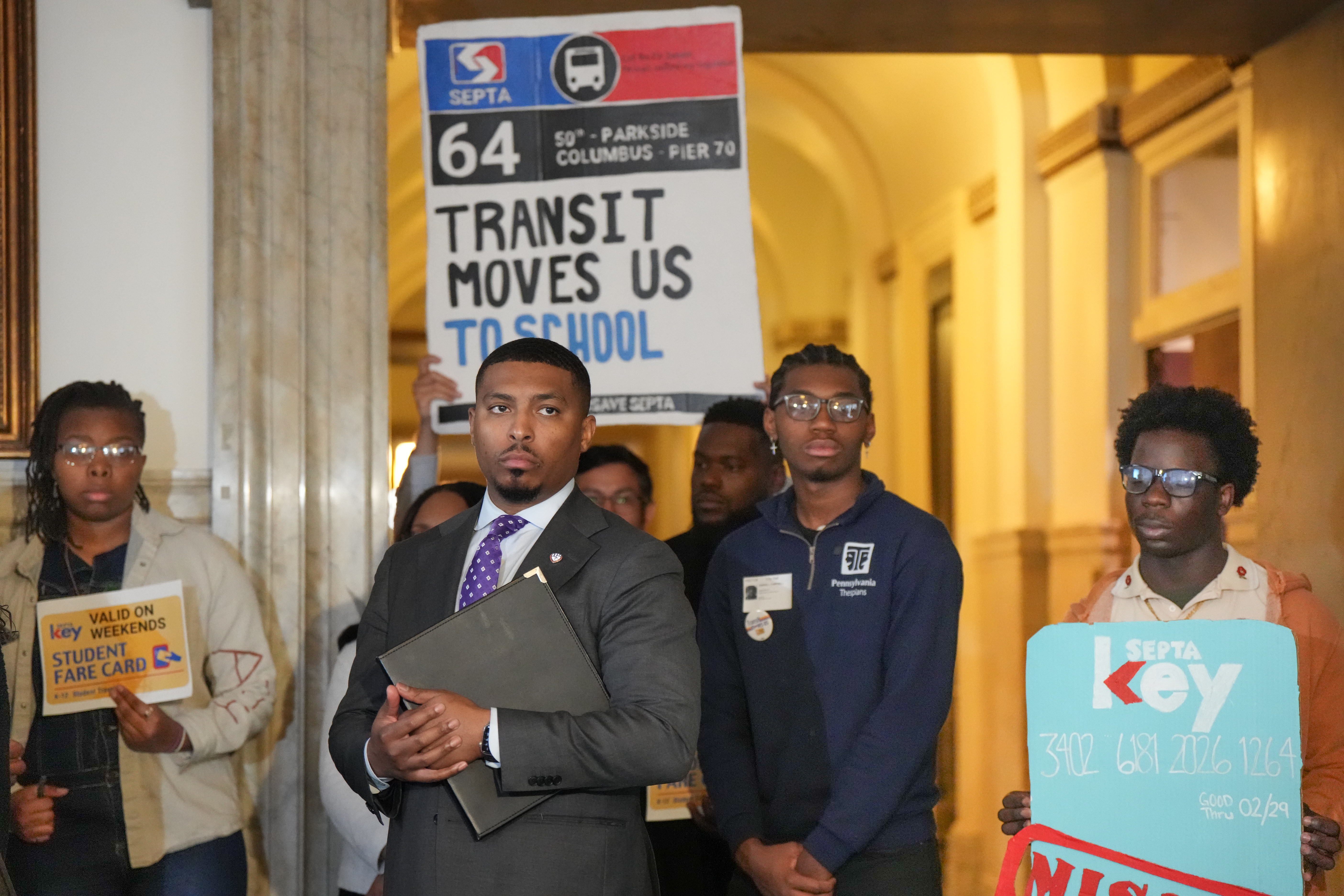
    Councilmember Nicholas O’Rourke with students and activists during a press conference about SEPTA in April.Jessica Griffin / Staff Photographer

    It also recommends restructuring existing housing programs to more aggressively target the poorest residents, and establishing a Transit Access Fund that would fund free or reduced-fare transit passes for low-income households.

    O’Rourke, a member of the progressive Working Families Party, plans to hold a committee hearing on the task force report this fall.

    Council President Kenyatta Johnson will also introduce an affordability measure this fall. He plans to bring forward legislation that would establish a permanent Food and Nutrition Security Coordination Office, he said in a statement.

    Quote of the week

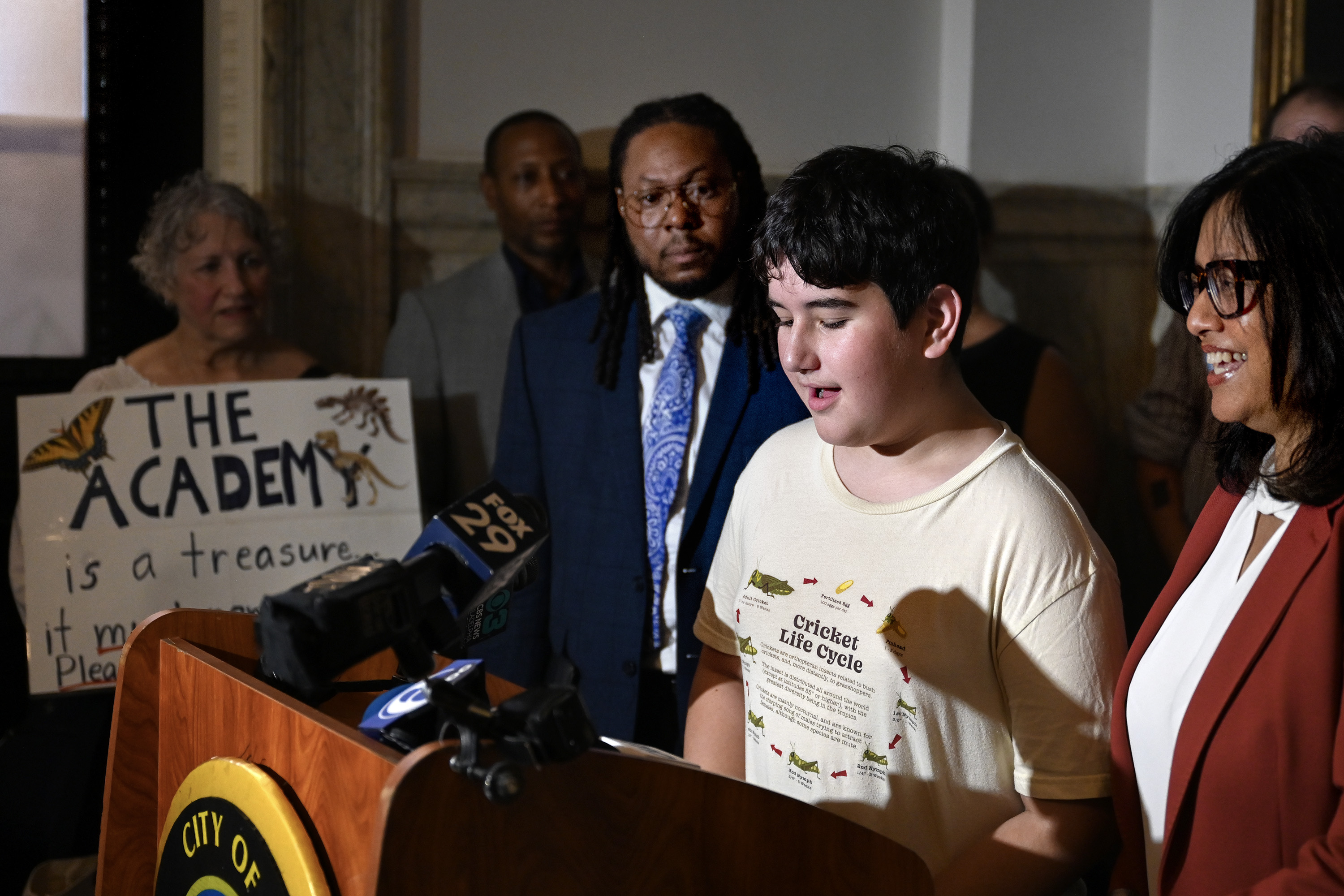
    Jeffery Young, Jr. (left) with twelve year-old Jack Erfer of Wynnewood and councilmembers and Nina Ahmad (right) in supporting the Academy of Natural Sciences of Drexel University before City Council resumes for its fall session Thursday.Tom Gralish / Staff Photographer

    No bones about it: That was Councilmember Jeffery Young Jr., who called for hearings on the planned closure of the Academy of Natural Sciences.

  • National hunger fighter visits Northeast Philly to criticize ‘a dangerous double whammy’ of SNAP cuts and rising prices

    National hunger fighter visits Northeast Philly to criticize ‘a dangerous double whammy’ of SNAP cuts and rising prices

    People throughout the Philadelphia region, hampered by cuts to federal food aid and soaring prices, are “facing a dangerous double whammy causing a skyrocketing hunger crisis,” said Joel Berg, a national hunger fighter, speaking in Northeast Philadelphia on Tuesday.

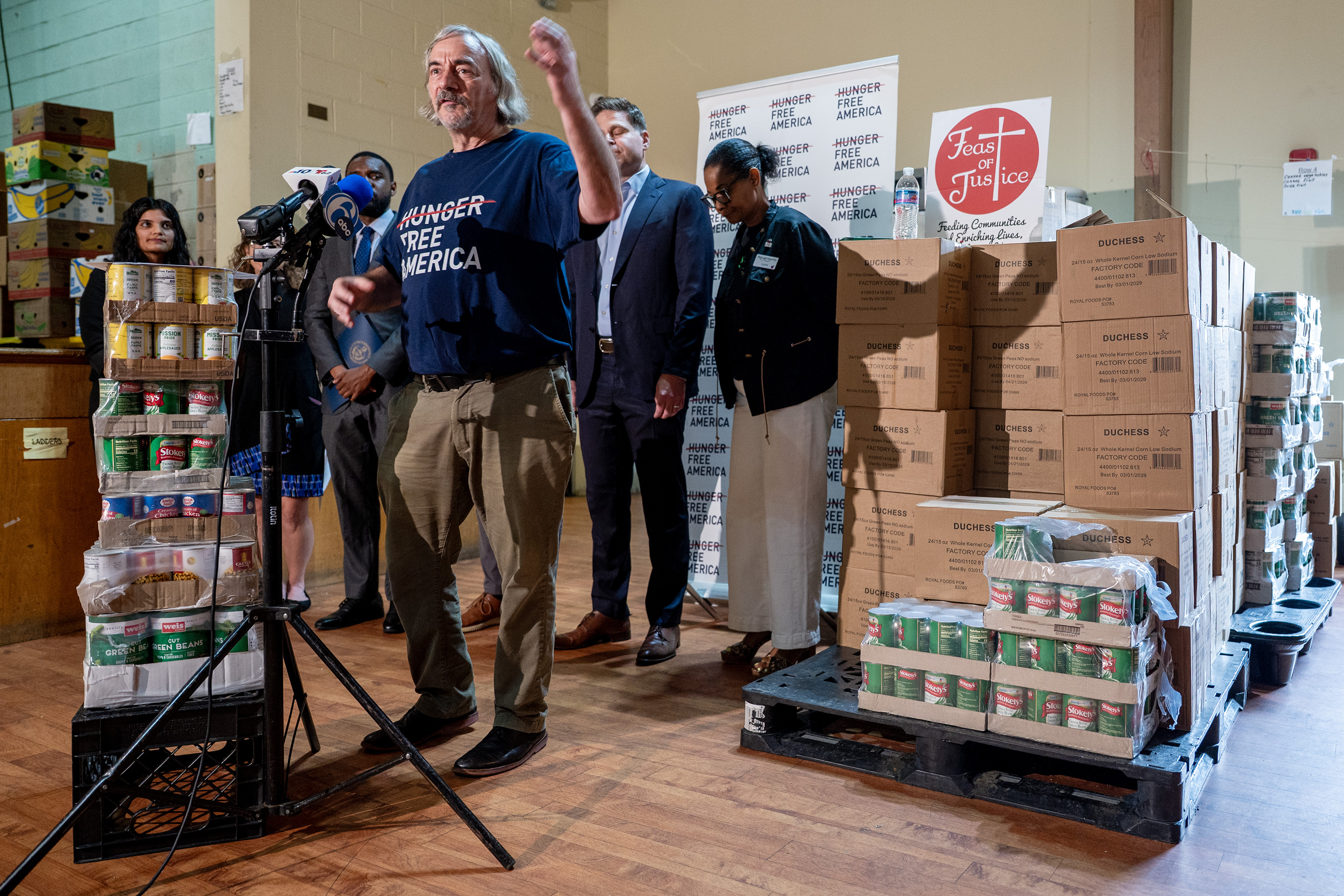
    Berg, CEO of the New York-based nonprofit Hunger Free America, was visiting Feast of Justice, one of the largest food pantries in the city with “probably the most diverse food pantry clientele in the nation,” he said. That is proof, according to Berg, that food insecurity can affect anyone, from any background.

    Feast of Justice, he added, “is the food affordability issue in the flesh.”

    Especially critical of the One Big Beautiful Bill Act, signed into law by President Donald Trump on July 4, 2025, Berg noted that it included more than $1.1 trillion in cuts to Medicaid and the Supplemental Nutrition Assistance Program (SNAP).

    Roughly 4 million Americans are expected to lose SNAP benefits in 2026 under the law. Many of them do not meet work or age requirements newly added to the anti-hunger program. The reductions in SNAP and Medicaid benefits helped pay for tax cuts ordered by Trump.

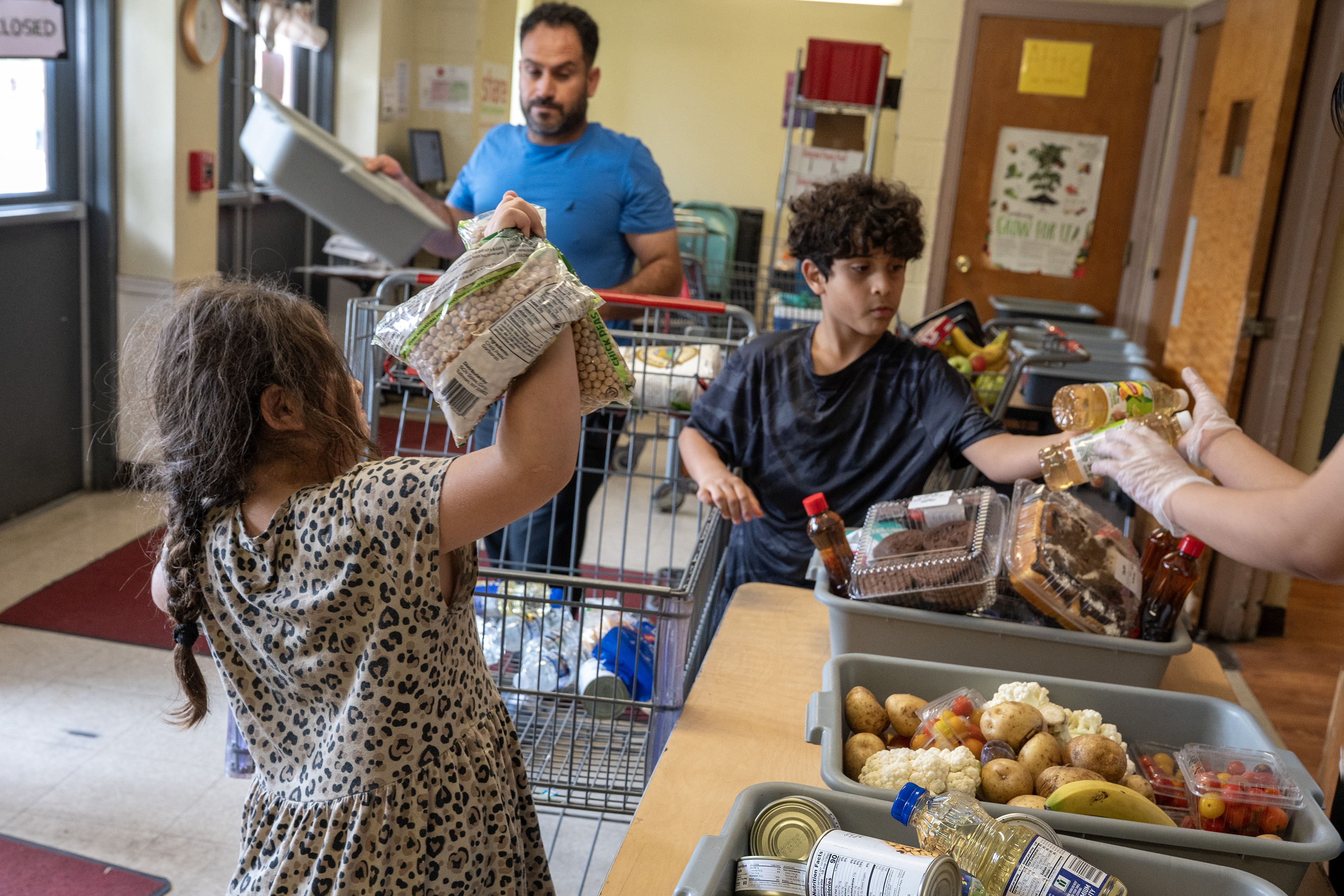
    Alahallak Abdelmenim and his children Asil (left), 6, and Hasan (right), 8, load groceries into their shopping cart at the Feast of Justice Food Pantry Tuesday, Aug. 11, 2026.Tom Gralish / Staff Photographer

    In Pennsylvania, around 144,000 SNAP recipients could see benefits cut this year — an estimated 45,000 in Philadelphia and 12,000 in its collar counties, according to Pennsylvania Department of Human Services estimates. In New Jersey, around 50,000 individuals could lose SNAP benefits, New Jersey Department of Human Services figures show.

    It’s not “rocket science,” said Berg, who used a pallet of canned beans and apple sauce as a lectern as he addressed a small crowd at the pantry. “When there’s a drought and you take away water, the drought’s going to get worse. When there’s a hunger crisis, and you take away food, the hunger crisis is going to get worse, especially after you throw in inflation,” he added.

    In response, Trump spokesperson Anna Kelly said Tuesday that Trump is “strengthening” SNAP to sustain it into the future. Changes to SNAP “crack down on waste, fraud, and abuse,” she said. Kelly added that Trump is “uplifting every American’s financial situation by passing the largest tax cut in history — which every congressional Democrat opposed — and bringing historic numbers of jobs and investments into our country.”

    Pastor Tricia Neale, executive director of Feast of Justice, said Tuesday that since the enactment of the One Big Beautiful Bill Act, an additional 1,850 families in Northeast Philadelphia have turned to the pantry for help. Overall within the last five years, she said, the number of households the pantry supports has grown from 2,750 to 6,425, a more than 200% increase.

    “And,” Neale added, “the crisis is accelerating.”

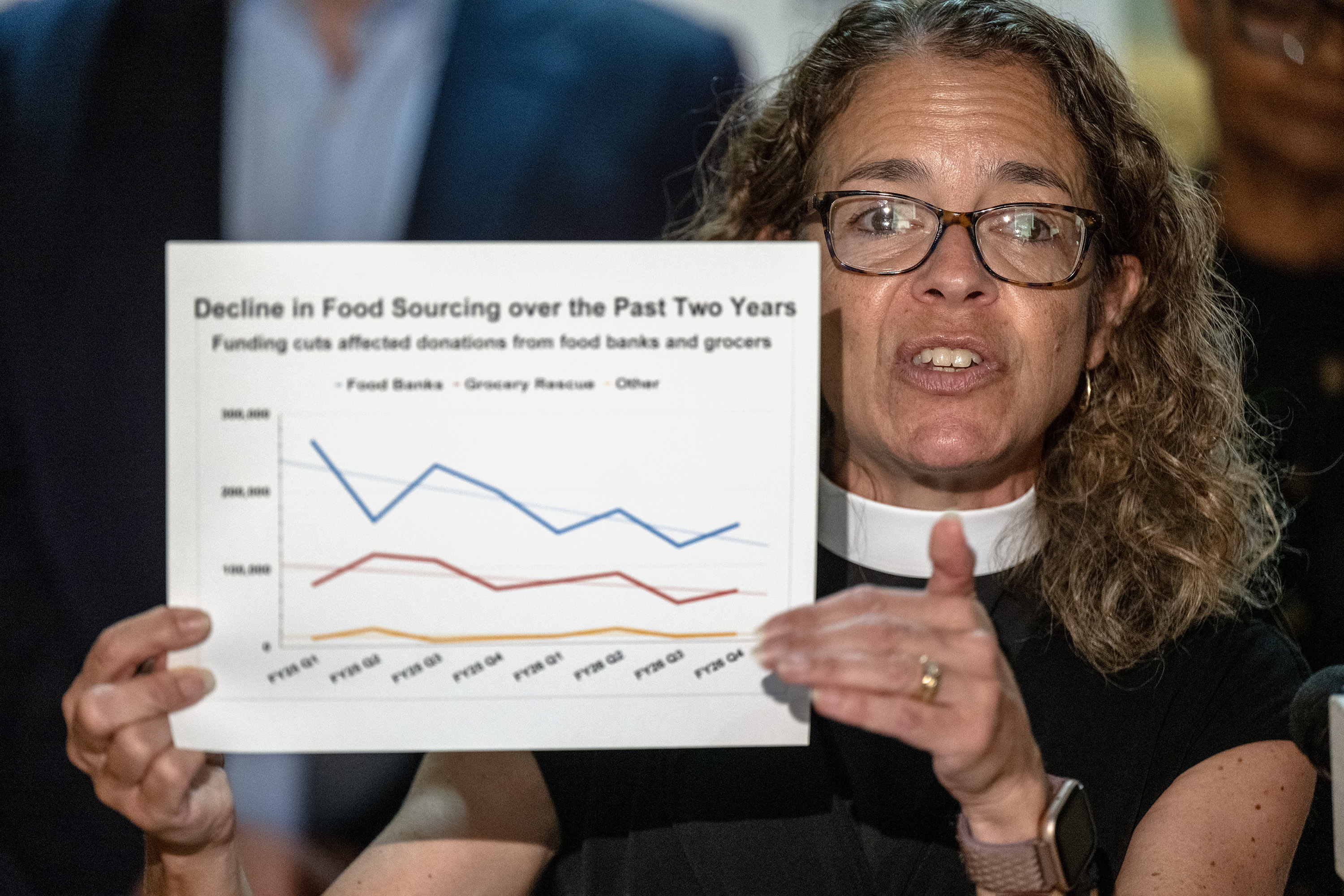
    Pastor Tricia Neale, executive director at Feast of Justice, displays a chart showing the decline in food sourcing as she speaks at a press conference at the food pantry Tuesday, Aug. 11, 2026. Tom Gralish / Staff Photographer

    The pantry has been forced to absorb a 35% decline in donated food it receives, in part because of cuts to federal and state food programs that have been so vital, she added.

    Even with diminished supplies, Feast of Justice is an essential institution, according to Angie Bryant, 55, of Tacony, a client. Formerly a phlebotomist who can no longer work, Bryant said she recently lost her SNAP benefits because new age restrictions exclude her participation.

    “In the body, hunger is hurtful,” she said. “Without this place, I don’t know how I could make it.”

    Food banks such as Philabundance and Share Food Program do their best to provide Feast of Justice whatever food they can, Neale emphasized.

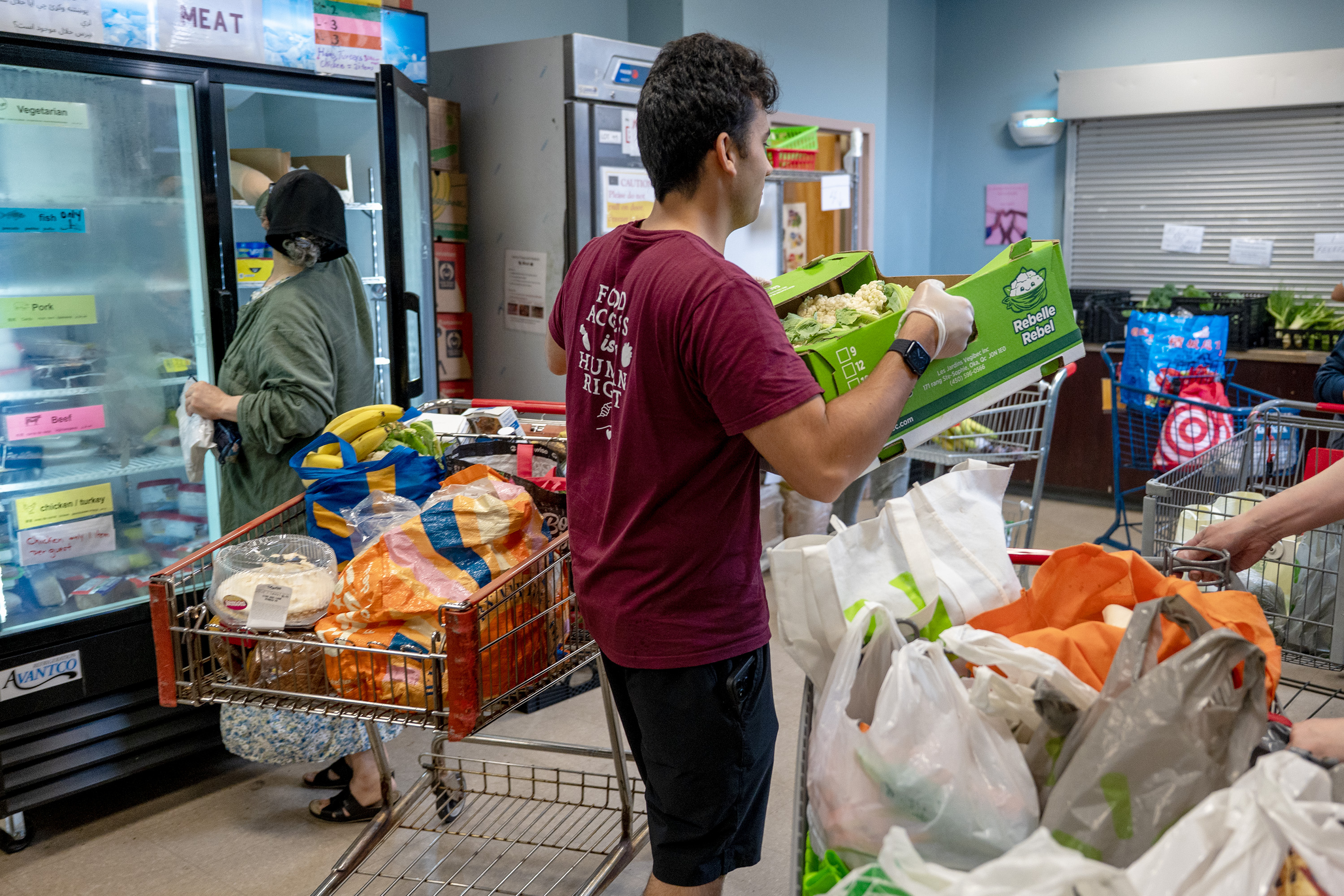
    Volunteer Daniel Khan (center) restocks the shelves as clients load groceries into their shopping carts at the Feast of Justice Food Pantry Tuesday, Aug. 11, 2026. Tom Gralish / Staff Photographer

    If SNAP is the safety net, “we’re the safety net of the safety net,” said Loree Jones Brown, CEO of Philabundance, who joined Berg and Neale at Feast of Justice on Tuesday. “But we can’t make up for the cuts.”

    She added that “this is a crucial time for food banks, legislators, and community organizations to stand together for our neighbors and against hunger.”

    That Feast of Justice does its best to beat back hunger is widely appreciated in the community, said client Anthony Morales, 27, of Mayfair. Laid off from a warehouse job, he said he is responsible for feeding his 7-year-old daughter and his partner, and he needs the pantry’s support.

    “When you fall,” he said, “this place lifts you up. You have a lot of fear and anxiety without enough food. It can give you hope and confidence that tomorrow could be better.”

  • I-95 on-ramp in Northeast Philly is closing for good next week

    I-95 on-ramp in Northeast Philly is closing for good next week

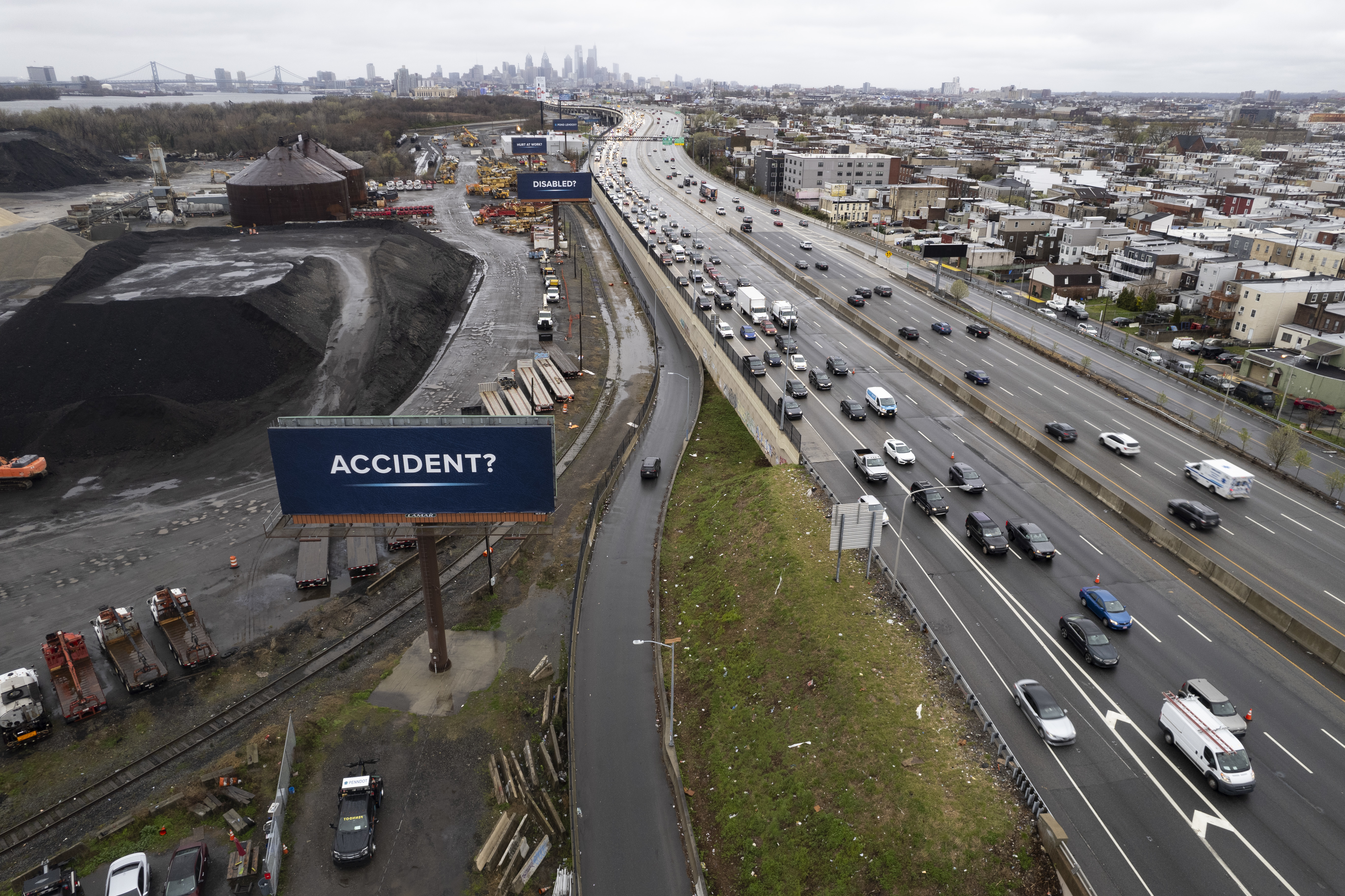
    An I-95 ramp in Northeast Philly is set to close for good next week.

    The ramp from Bridge Street to I-95 North is slated to shut down at 8 p.m. on Friday, Aug. 21, the Pennsylvania Department of Transportation announced Monday.

    The closure will make way for construction of a new I-95 entrance from Tacony Street and the Delaware Avenue extension, which the agency expects to open in late 2027.

    Until then, drivers will be detoured to Tacony Street and State Road/New State Road, where they can get on I-95 North via the Milnor Street ramp.

    The rerouting is part of a larger I-95 rehabilitation, which includes nearly $268 million of Northeast Philly improvements, including the reconstruction of the viaduct over Bridge and Tacony Streets.

    In addition to the ramp closure, I-95 North drivers will experience a traffic shift from 8 p.m. Aug. 21 to 5 a.m. Aug 22. They will be temporarily rerouted to southbound lanes as northbound reconstruction begins at the Bridge Street Interchange. PennDot expects to complete that project in 2028.

    The agency advises drivers in the area to allow for extra time, as backups and delays are expected due to the ramp closure.