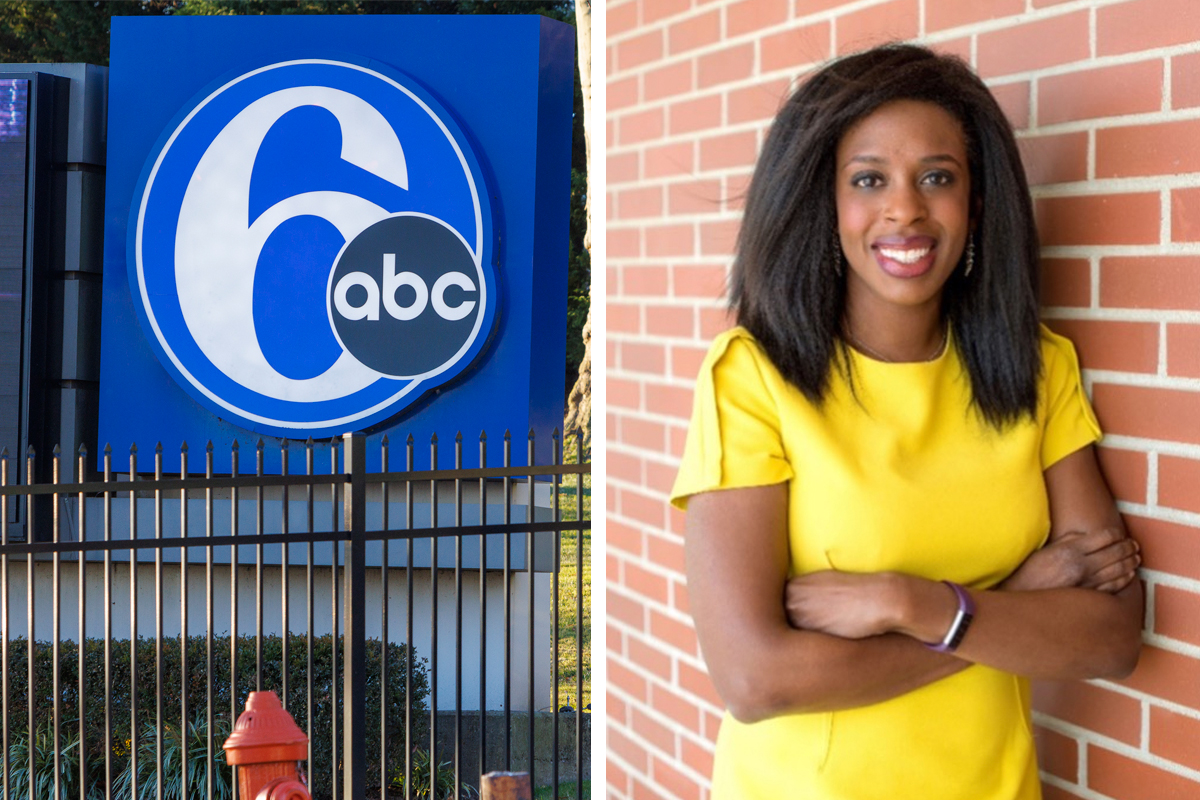
After more than five months, 6abc finally has a news director.
The station announced Nneka Nwosu, a Philadelphia native serving as the vice president of marketing and local programming at sister-station WLS in Chicago, would take over running the Action News newsroom.
6abc president John Morris announced the move to staff in an email Tuesday, noting that Nwosu is such a big Eagles fan “their 2018 Super Bowl win may have actually sent her into labor with one of her sons.”
“Running the news department at the station I grew up watching is surreal!” Nwosu wrote on LinkedIn, adding she was “thrilled to be coming home.”
Nwosu spent the past four years in Chicago, previously serving as one of the station’s assistant news directors. Prior to that, she spent eight years at Boston ABC affiliate WCVB.
At 6abc, Nwosu is inheriting the city’s most-watched newscast dating back more than 40 years. Her first day in the newsroom will be Oct. 5, and among her first tasks will be overseeing a new chief meteorologist following the retirement of Cecily Tynan, who delivered her final forecast Monday after more than three decades at the station.
Nwosu is filling the spot vacated by the sudden departure of Tom Davis, who abruptly left in March after more than two decades.
In a note to staff, Chad Matthews, the president of ABC’s eight owned and operated TV stations, wrote Davis “made the decision to leave 6abc” and thanked him “for his years of service to the station.”
Davis could not be reached for comment. He spent 15 years as news director, maintaining the station’s place as the region’s most-watched newscast. He also served as an assistant news director for seven years before that.
In a separate move, Morris also announced Mike Amato had been promoted to the vice president of technology. The Drexel grad has been with the station since 2015, and prior to that he spent nine years at NBC Sports Philadelphia.
It’s unclear if and when the government will take action. The FCC’sfinal deadline for public comments was Aug. 5, and respondents were overwhelmingly supportive of 6abc and the network’s other local stations.
Trump also recently called on the FCC to punish NBC and Philly native Kristen Welker, the moderator of Meet the Press, over a TV segment in which she said the president had “mixed results” backing candidates this election cycle.
Anna Gomez, the only remaining FCC commissioner appointed by a Democrat, wrote “the FCC has no authority to punish journalists this administration doesn’t like.”
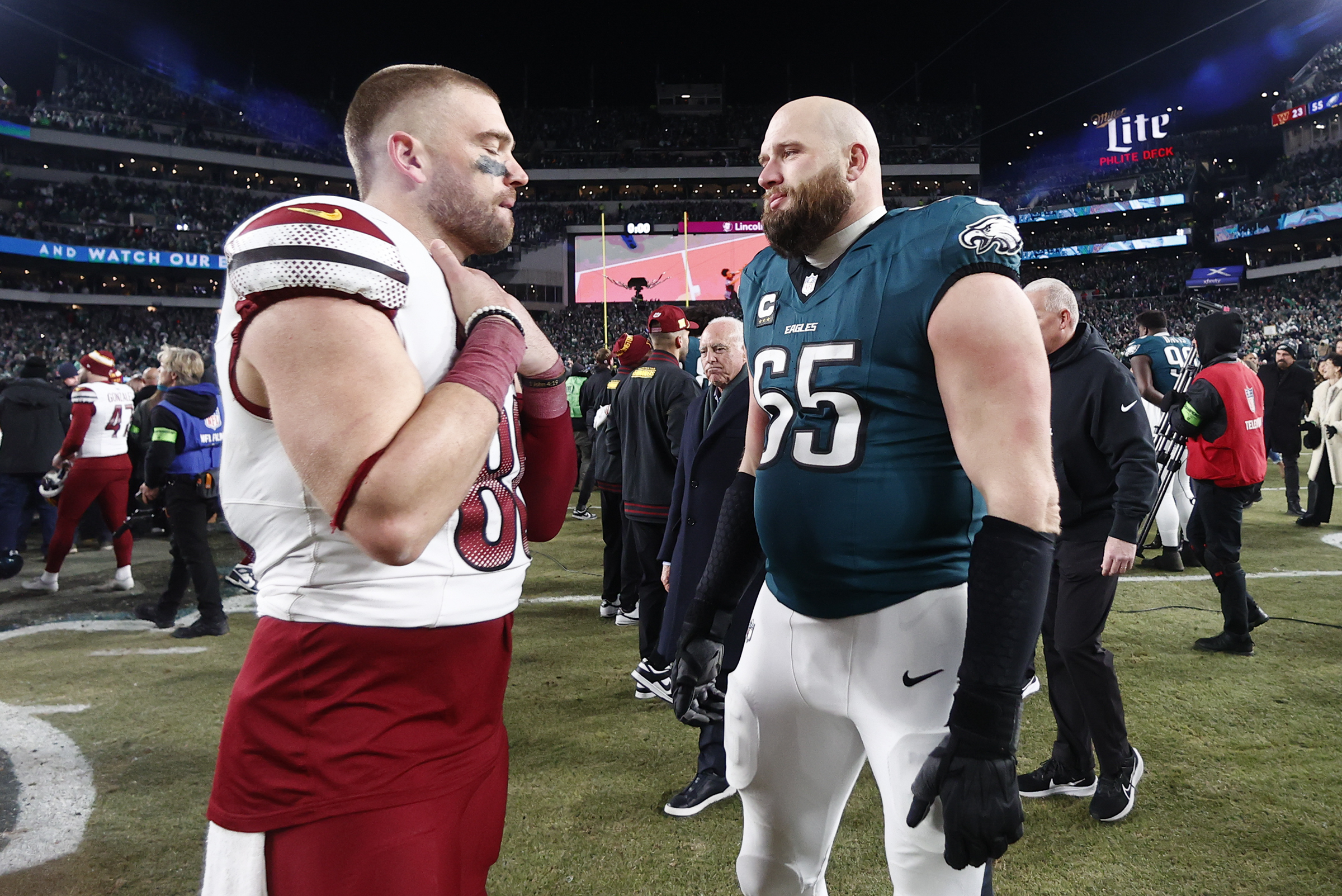
Less than 24 hours after the Eagles announced their 2026 roster, The Inquirer’s Jeff Neiburg conducted an AMA (ask me anything) session with Eagles Reddit users, discussing topics including the quarterback plan, the possibility of general manager Howie Roseman making a deal or two, and what’s going on at tight end (including the possible return of fan favorite Zach Ertz).
The following has been edited for length and clarity.
What do you think of the roster? Any mistakes? Many concerns? How much are we winning the Super Bowl by?
Neiburg: Well, I’m both surprised and not surprised. In my final 53-man roster prediction that I submitted Friday night when the game went final, I had the Eagles keeping four quarterbacks. Just didn’t see a trade materializing over the weekend.
Mistakes? Howie Roseman has won two Super Bowls and I’m, well, me. So I can’t say there are any mistakes.
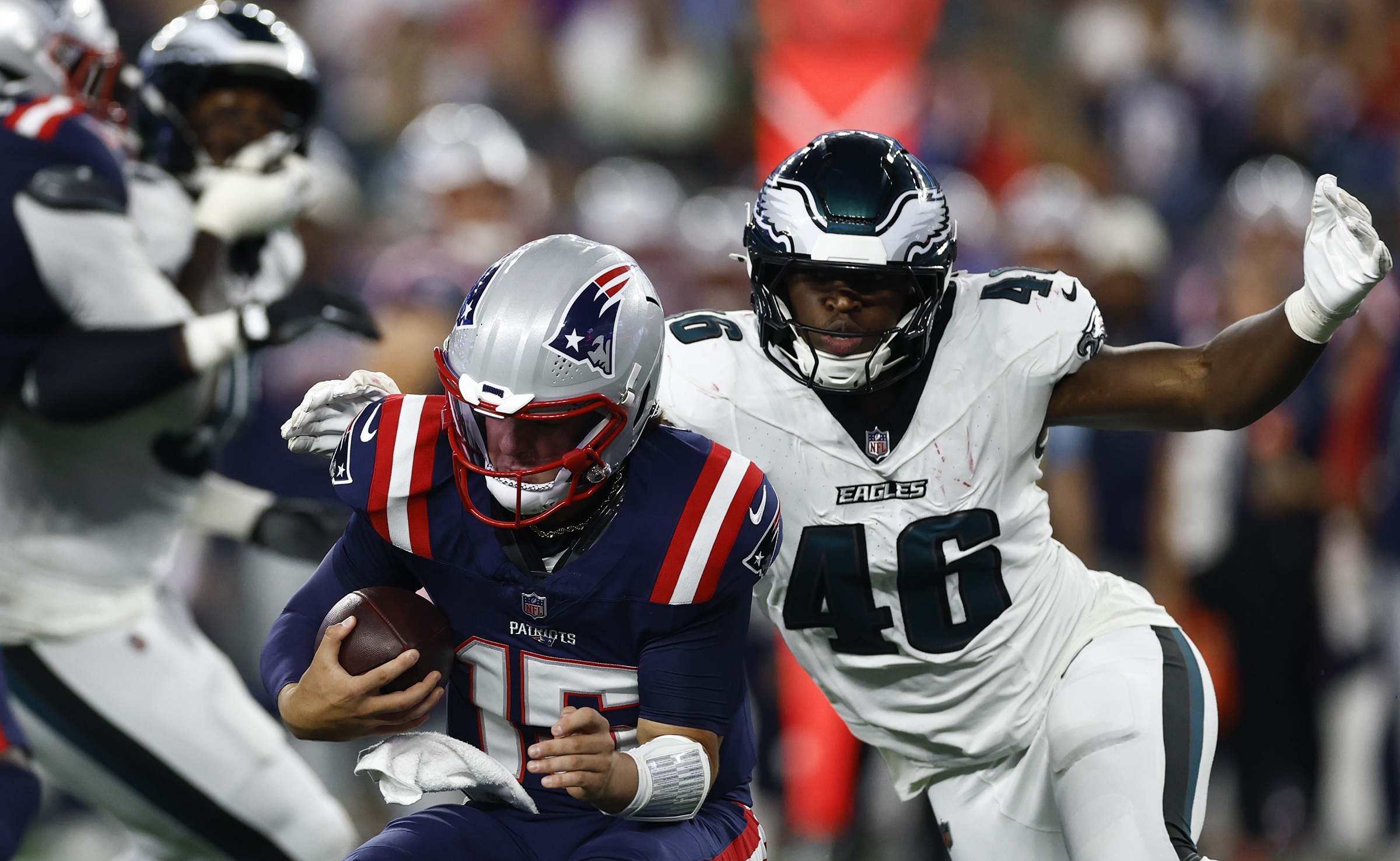
That being said, I did find a few things surprising. I didn’t expect both IPP players to get waived. I had both on my final 53, and I thought Joshua Weru was basically a lock. I don’t expect either to be claimed when waivers process today (Monday), but I thought the Eagles would avoid the risk, especially with Weru. (Editor’s note: Neither player was claimed and have been listed on the practice squad.)
Joshua Weru (46) being exposed to waivers was a mild surprise. Yong Kim / Staff Photographer
I know EJ Jenkins is a great blocker, and Eli Stowers is a bit behind, but I didn’t expect Jenkins to be on the roster.
I will say I’m pleasantly surprised Elijah Moore made the team. I had them cutting him simply because he’s a vested veteran that wouldn’t have needed to clear waivers, and they could have brought him on the practice squad and promised him a gameday elevation. But Moore outperformed Hollywood Brown during camp and good camps deserve to be rewarded. Plus, he could’ve signed anywhere else if the Eagles released him, too, and given their question marks in a world without A.J. Brown, keeping six makes some sense.
Re: the last question … I wouldn’t be shocked if the Eagles won the Super Bowl. The defense is that good. But — spoiler alert — I’ll have them losing in the NFC title game to the Los Angeles Rams when our season preview comes out.
Which cut surprised you the most based on what you saw day to day throughout training camp?
Neiburg: I was a little bit surprised by the IPP guys just based on the risk and whatnot. But that’s not really the spirit of your question. Besides them, I’m not really sure. I did nail 50 of the 53 in my final projection. I guess I’ll say Cameron Latu being cut in favor of EJ Jenkins was a bit surprising, but Jenkins is a really good blocker.
Any positions you see the team adding someone at before opening day or do you think the roster is set?
Neiburg: I do not think the roster is set. And I wouldn’t be surprised if they brought in players at two or more positions between now and opening day.
Let’s list some spots.
Tight end: Eli Stowers doesn’t look ready to play NFL football right now. That’s not to say the pick is a bust. It’s way too early to say that, and anyone who believes he is a bust right now is being hyperbolic. But besides Dallas Goedert, there’s not another reliable weapon in the passing game in the room right now. Johnny Mundt and EJ Jenkins are block-first tight ends. Those are important in this new offense, but what good is 12 or 13 personnel if the defense knows one or two of the tight ends isn’t a real threat in the passing game?
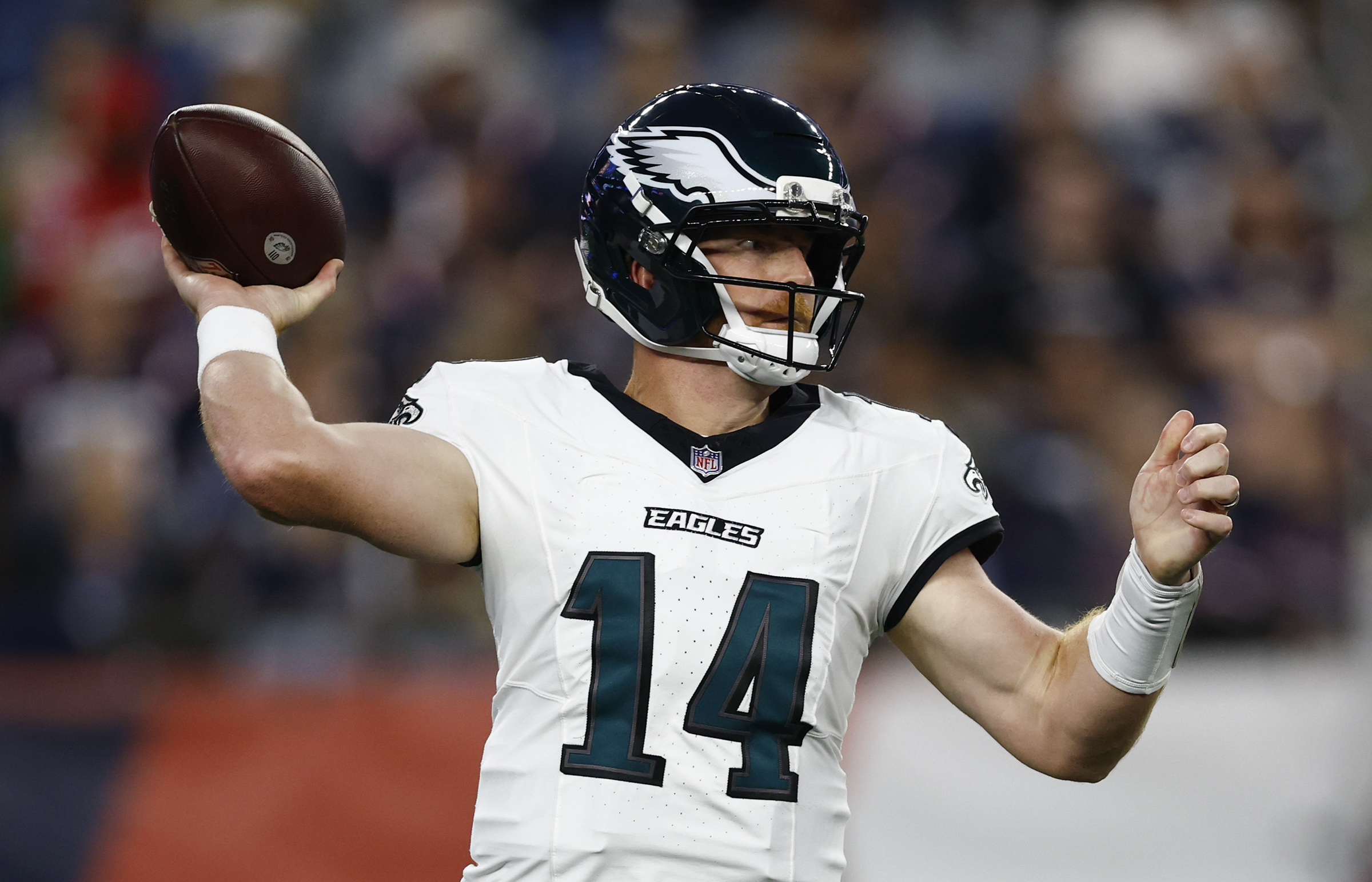
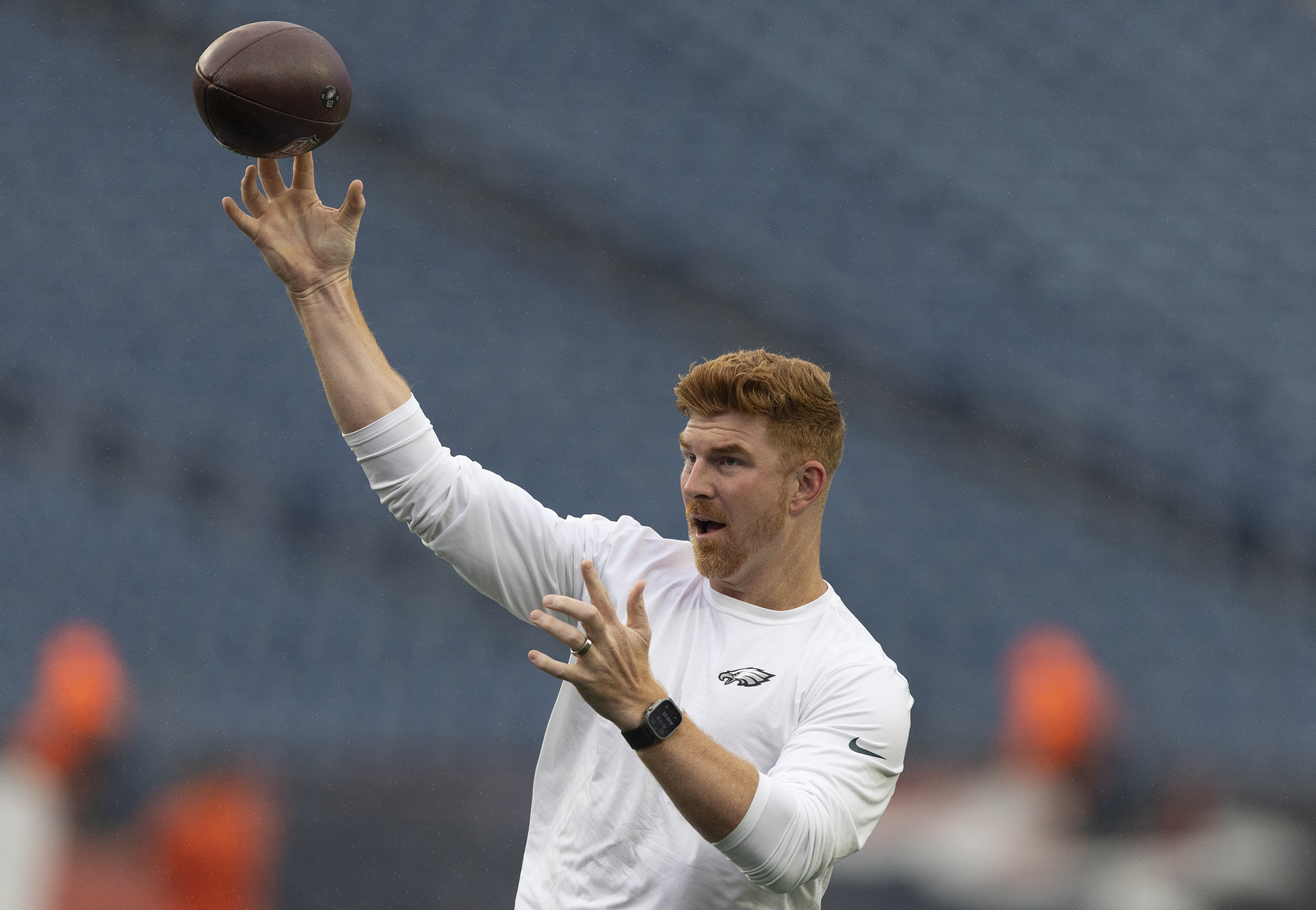
Could Andy Dalton (14) still prove expendable?Yong Kim / Staff Photographer
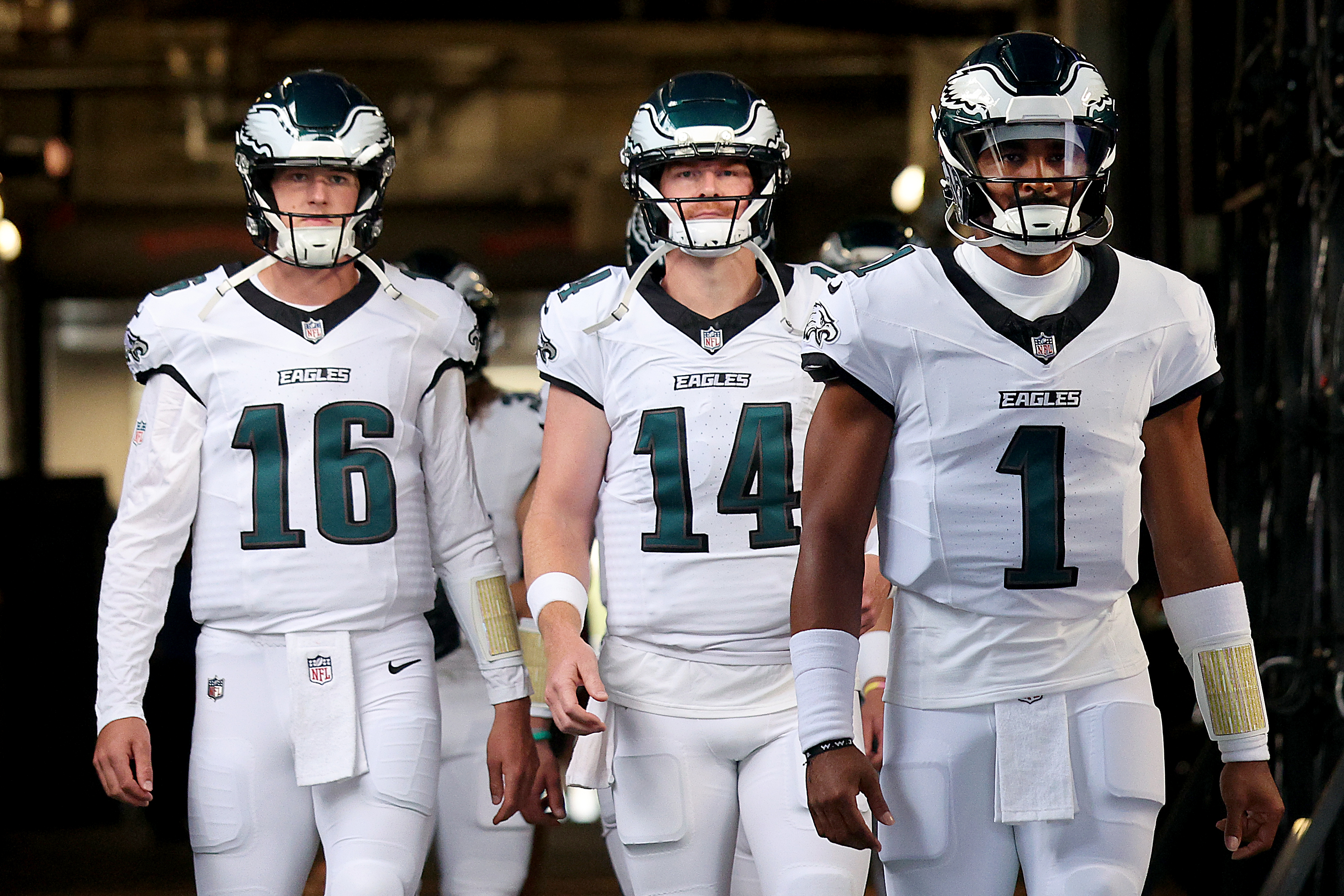
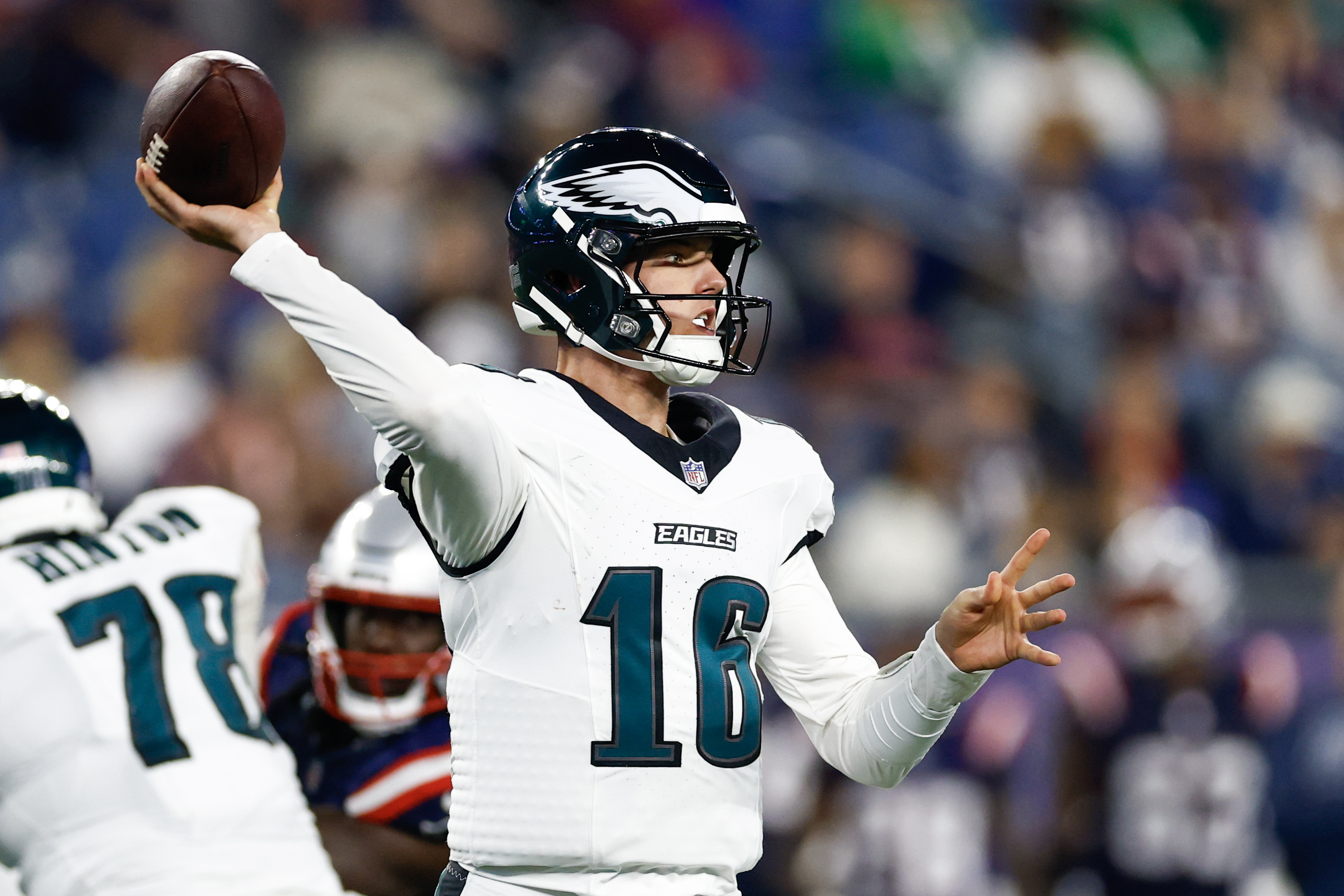
Quarterback: Is it possible the QB2 isn’t on the roster right now? I think so. Not saying it’s likely the Eagles trot out on opening day with a quarterback not named [Andy] Dalton or [Tanner] McKee backing up Hurts, but there’s definitely a chance. It’s easy to overreact to preseason games. But they are relatively meaningless and only one small part of the evaluation process. Fans don’t get to watch practice. I can tell you, though, that everything you’ve read about practice is true. Neither player was that good. If I’m the Eagles, I’m not sure I want to enter a season with Super Bowl aspirations and have either one of those dudes as my primary backup.
Safety: It’s still the thinnest position on the roster. They kept only three guys on the initial 53. But because Cooper DeJean will be on the field there at base, the need for multiple reserves isn’t really there. Still, besides 30-year-old Marcus Epps, there’s a dearth of experience at that spot. Drew Mukuba played 11 games last year as a rookie and is coming off a season-ending injury. Michael Carter II has primarily been a slot corner. DeJean might be an all-world defensive back, but he hasn’t really played safety at the NFL level.
Who was the ‘Camp MVP’ that stats or preseason games might not have fully captured, but who consistently stood out in practice drills and scrimmage situations?
Neiburg: Jalyx Hunt probably was the most consistent performer in camp (and you definitely didn’t see him play in a preseason game). Moro Ojomo was also a wrecker, and Jalen Carter, too. Based on what else was going on around him, Elijah Moore had a really good camp, too. Darius Cooper gets a lot of love, but Moore was super consistent throughout camp I thought, and he was deserving of a roster spot.
Is a Nick Sirianni and Zach Ertz reunion in the offing?David Maialetti / Staff Photographer
Is there a world where Zach Ertz ends up on this roster, maybe after Week 1? What are the implications for the other tight ends if it happens?
Neiburg: There is definitely a world. My former Inquirer colleague EJ Smith, who now works at PHLY, reported that a return to the Eagles is possible.
If it happens, my guess is it happens after Week 1. Why? The Eagles wouldn’t need to guarantee his salary if he’s not on the roster for Week 1. If Ertz doesn’t work out, it’s not a waste of resources. Plus, this scenario allows them to play a game and see where they’re at, too.
I do think there’s a need for a second reliable pass catcher at the position given that Eli Stowers needs some more seasoning. The implications of signing Ertz or trading for a tight end for the others would be one of them gets cut (looking at you, EJ Jenkins).
Which wide receivers will be on the field most frequently for Jalen Hurts?Monica Herndon / Staff Photographer
What is the expected WR depth chart? We know Devonta [Smith] is locked at WR1, [Dontayvion] Wicks seems to be 2. Has [Makai] Lemon done enough yet to get WR3?
Neiburg: Good question. I’m not sure there’s a firm answer yet, but I’d guess the depth chart looks like: Smith, Wicks, Lemon, Brown, Cooper, Moore. Not sure there’s a need to distinguish between WR2 and WR3 for Lemon, who will mostly line up in the slot. I don’t see him being on the field often in two-receiver sets.
Do you think Uar Bernard or Joshua Weru will provide any long term value to the team? What’s your record prediction? I say 12-5
Neiburg: The odds say no. But they both have athletic profiles worth trying to develop, and I think the Eagles would be thrilled if both cleared waivers and they had a chance to keep working with them. That’s the most likely outcome. It’s hard to imagine another team bringing either into their building on signing them to their 53, knowing they aren’t ready to play and won’t be for a while.
But the Eagles will only be able to designate one of them as their IPP player and theoretically will only be able to control one of them that way.
If I had to guess, I’d say Weru has the better chance at playing NFL snaps than Bernard.
I’m with you at 12-5, and I think the season ends in a conference title game loss to the Rams.
Will Jonathan Greenard be ready to make his Eagles debut in Week 1?David Maialetti / Staff Photographer
Any concern at linebacker with the final number that made the roster?
Neiburg: If we’re talking off-ball linebacker? Absolutely not. Arguably the best position group on the team. Jeremiah Trotter Jr. would start on some teams, and Smael Mondon is progressing nicely and is a reliable special teamer (like Trotter). I didn’t see a reason for the Eagles to keep five off-ball linebackers, no matter how much Vic Fangio professed his love of Chance Campbell. Plus, UDFA Deontae Lawson might’ve been the one pushing for that fifth spot anyway.
If we’re talking outside linebacker/edge rusher, I do think there’s some concern entering the season. Jonathan Greenard may not be ready for Week 1, but since the Eagles didn’t put him on PUP/IR, they do expect him back within the first four games. Good sign. And Jalyx Hunt had an excellent camp and may reach double-digit sacks this year.
But beyond the top two, I think there’s some question marks. Nolan Smith Jr. is coming off another injury and has been passed on the depth chart by Hunt. Arnold Ebiketie is on a sort of prove-it one-year deal. A.J. Epenesa was signed off the street in June after things didn’t work out when he tried to sign with Cleveland. There’s some upside overall in the room, but there’s a low floor, too.
Saquon Barkley’s evolution in the Sean Mannion offense is worth watching. Elizabeth Robertson / Staff Photographer
Do you think the run game will improve this year? If so why?
Neiburg: Yes. If only because it can only go up?
Joking aside, the offensive line seems to be healthier right now. Cam Jurgens is moving around great and says he feels much better after getting his stem cell treatment in the offseason. Lane Johnson looks good, too. I still would be concerned about Landon Dickerson getting through the season if I were the Eagles, and they’re probably thrilled Drew Kendall is progressing well.
Besides the health of Saquon Barkley’s blockers, the wide zone blocking scheme should favor him and most of the linemen. The Eagles have an athletic bunch up front. They have some capable blockers at tight end in Johnny Mundt and EJ Jenkins and even Dallas Goedert.
It’s hard to imagine Barkley not having more holes to run through this year, and given the wider nature of some of these running plays, he should find himself in more advantageous situations with the ball in his hands.
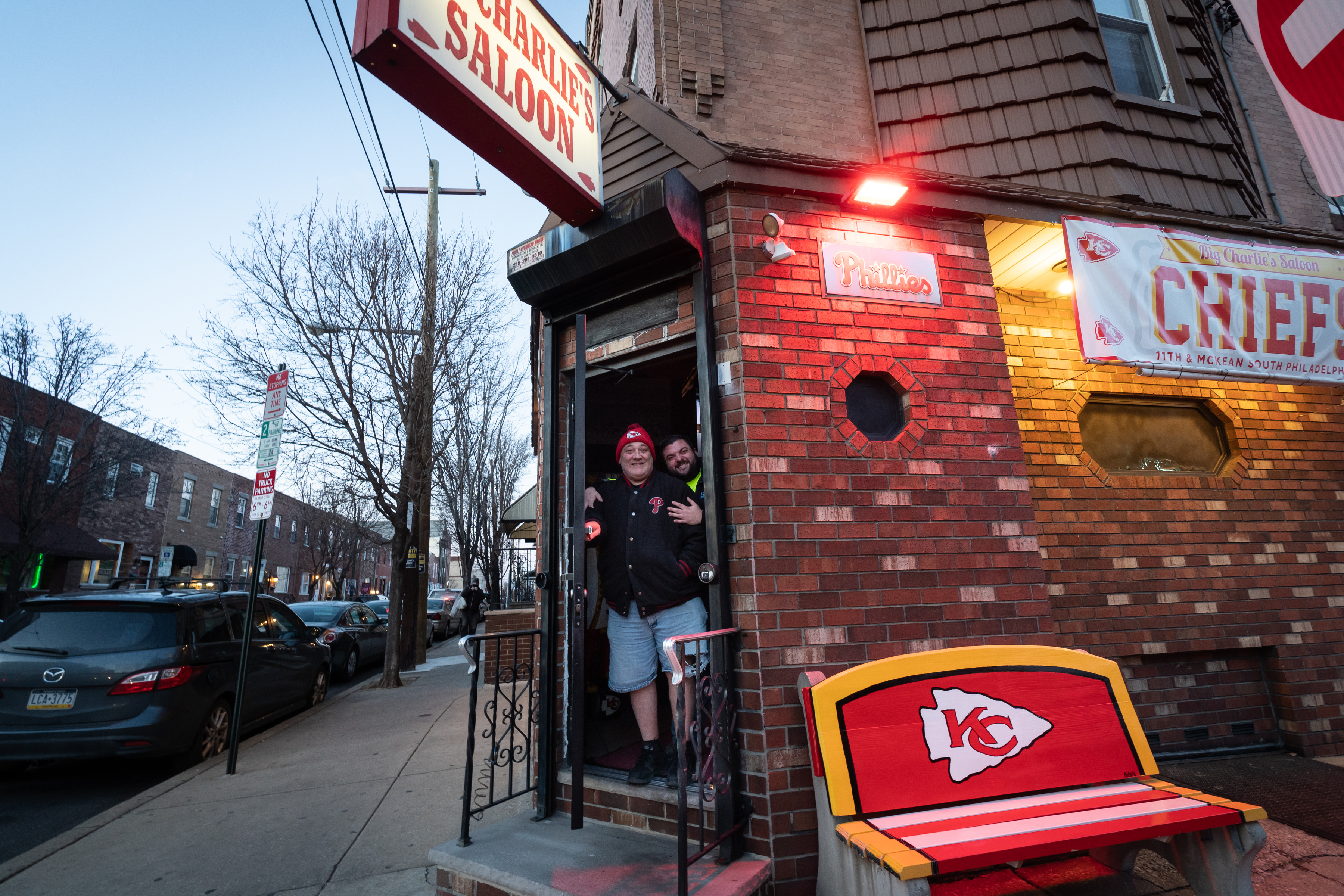
Big Charlie’s Saloon, the South Philadelphia corner bar known nationally for its unlikely devotion to the Kansas City Chiefs, is getting a new playbook.
DiTomo and Jacobsen say they plan to turn it into Sweets, a neighborhood bar. DiTomo said that he would remain at Meetinghouse and that his business partners there have no stake whatsoever in Sweets.
Sweets will have no Chiefs memorabilia — or sports theme of any kind, for that matter. DiTomo said they’re thinking low-key. “I’m not a big concept guy,” he said. “I’m going to stay true to what that neighborhood deserves out of a neighborhood bar, and that’s about it.” The partners started an Instagram account to float photos that inspire them.
DiTomo said he and Jacobsen are working through due diligence for the purchase of the building, which had been listed at $1.1 million and includes apartments upstairs. A liquor license transfer is also pending.
They are aiming for a winter opening, though that timing is tentative. “If we could capture the holiday season, that would be beyond fantastic,” DiTomo said. “But we’re both realists. We’ll see how it goes.”
Its allegiance dated to Super Bowl IV in January 1970, when Staico’s father, Charlie, bet on Kansas City to beat the Minnesota Vikings and promised his young son a bicycle if the Chiefs won. They did, Paul got the bike, and a lifelong allegiance began.
After taking over the bar following his father’s death in 1983, Staico bought a satellite dish in 1986 so he and friends could watch Chiefs games that rarely appeared on Philadelphia television. Over the decades, the bar became known as “Arrowhead East,” its wood-paneled rooms covered with signed helmets, pennants, bobbleheads, street signs, and other Chiefs memorabilia.
But Big Charlie’s was also a neighborhood bar, and that is the aspect of the property that DiTomo intends to preserve — rather than its sports identity. He and Jacobsen both live in South Philadelphia.
“I’ve always admired neighborhood bars,” he said. “I grew up in neighborhood bars, so I want it to be true to form — just the classics, done well.”
That philosophy will extend to the drinks. DiTomo said the bar will pour Meetinghouse beer, along with a straightforward selection of beer, wine, and cocktails built around classics.
Sweet’s food will be simple, he said, because of the tiny kitchen.
DiTomo, a Culinary Institute of America graduate who rose to prominence a decade ago in the Marc Vetri organization at Amis, was a chef consultant on M. Night Shyamalan’s series Servant on Apple TV+ when Meetinghouse opened in 2023.
DiTomo and Jacobsen have been friends for about five years. DiTomo said Jacobsen had long been interested in doing a project together, but nothing had clicked until the Big Charlie’s building became available. “This building spoke to him, so he jumped on it,” DiTomo said.
Stickball, Jacobsen’s shop, specializes in vintage clothing, art, and objects. GQ included it on its 2024 list of 30 notable vintage menswear stores in the United States.
DiTomo said the Sweets name came from a running list he has kept over the years. He associates the word with several of his uncles, who used it as a term of affection. “I always liked the feeling of it,” he said. “It sounds nice, and it’s timeless. It feels good for the neighborhood, too.”
The Eagles used to value the backup quarterback position, perhaps more than any other team in the NFL. Looking at their rosters in 2025 and 2026, it’s hard to believe they still do.
This might not matter at all, except Eagles starter Jalen Hurts gets hurt a lot, and quarterbacks are the most important players in all of team sports.
Still, it seems like a lot of energy to spend on a guy who won’t play much. Backup quarterback angst: The sort of nattering matter that makes the NFL preseason interminable; the sort of infuriating football geek-talk that fantasy nerds Snapchat about.
You know. Guys like Lurie and Roseman.
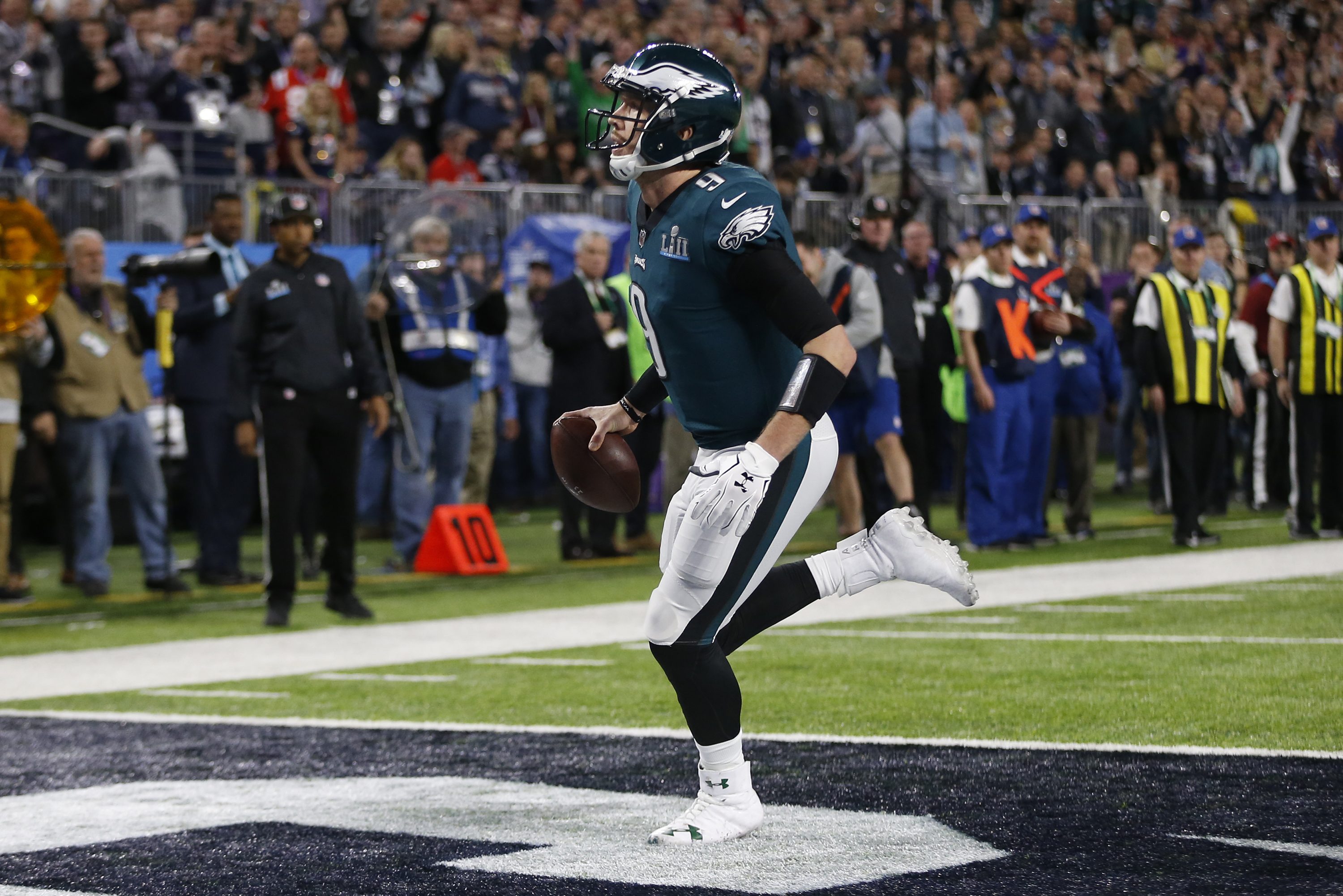
In 2017, the Eagles committed $11 million to their backup quarterback spot. So important was the position to owner Jeffrey Lurie that he told GM Howie Roseman to sign Nick Foles, whom Andy Reid had just cut from the Chiefs. It meant eating $7 million of the contract of Chase Daniel, whom the Eagles promptly released.
Despite missing the playoffs in 2016 with rookie Carson Wentz at quarterback, Lurie saw 2017 as a real chance to win the franchise’s first Super Bowl, and he considered Foles, who’d had a strong run as an Eagle, to be a better option than Daniel, who’d never had a strong run anywhere.
The rest, as they say, is history: Wentz got injured, Foles replaced him, played well down the stretch, and won the MVP award inSuper Bowl LII where he outplayed Patriots legend Tom Brady and outfoxed coach Bill Belichick.
Nick Foles became an unassailable Eagles legend, but that doesn’t mean all backup quarterbacks are created equal. Michael Bryant / Staff Photographer
“Our priority, as you’ve seen, is to make sure we have the very best possible other starting quarterback,” Lurie said during Super Bowl week.
That’s generally been true, and it’s generally made sense for the Birds, since Lurie prefers mobile quarterbacks, who, of course, are more likely to get hurt.
Lurie signed Michael Vick out of prison in 2009, and Vick supplanted Donovan McNabb the next season and went to the Pro Bowl in his second of four years as an Eagle. Lurie drafted Hurts in the second round in 2020 with plans that Hurts would be the long-term backup to Wentz, but that’s before Ginger Jesus lost his job, and maybe his mind. Lurie sanctioned the recent, sensible acquisitions of Gardner Minshew, Marcus Mariota, and Kenny Pickett.
But in 2019, Lurie also approved the signing of Josh McCown, a 40-year-old with a 79.7 passer rating with eight other teams. McCown replaced Wentz early in the Eagles’ home wild-card playoff game, played atrociously (predictably), and cost the Birds their postseason.
Last season, Lurie allowed the Birds to enter the season with third-year sixth-round pick Tanner McKee as the backup of a team defending its second Super Bowl title. It didn’t matter, since Hurts stayed healthy. But McKee got to start game 17 against the Commanders, and he was poor: 21-for-40, 241 yards, one touchdown, one interception, with a forgettable fourth quarter that cost the Eagles their chance to win the game and capture a better seed. It looked OK in the moment, but upon further review, the Eagles (and I) decided that McKee is not the answer.
The Eagles (not I) determined that Andy Dalton is the answer.
They were wrong.
The Eagles’ bet on Andy Dalton does not appear to be going according to plan. Yong Kim / Staff Photographer
The Birds in March traded a seventh-round pick to the Panthers for Dalton.
No player at Eagles preseason work or in training camp has been a bigger disappointment than Dalton.
That isn’t really fair. There should have been minimal expectations of Dalton.
He’ll be 39 in October. He’s 1-6 in his last seven starts over the past three years, during which time his passer rating is 84.5. Aberration? No. In the five seasons before that, his rating was 85.5 in 57 games. He’s been the backup in Carolina the past three seasons, essentially a big brother for Bryce Young, the underperforming No. 1 overall pick from 2023, and an assistant coach of sorts.
That’s the role he was expected to serve in Philadelphia, where new offensive coordinator Sean Mannion has installed a new scheme. Dalton can help with the adjustment for Hurts, and you’d think Dalton would have a significant advantage over McKee in executing the offense.
Tanner McKee again appears to be the best backup option for the Eagles. Yong Kim / Staff Photographer
But no. Dalton has looked appreciably worse than McKee — so much worse that McKee’s unremarkable performance looks good by comparison.
Entering the third and final preseason game Friday, the competition, such as it is, for the backup job clearly tilts in McKee’s favor. Which delivers this uncomfortable truth:
The Eagles, who have made the playoffs five years in a row, don’t really have a viable backup quarterback. That’s the fault of the front office.
Roseman.
Lurie.
What should they have done?
Maybe they should have signed Mitch Trubisky, who got two years and $10.5 million to back up Cam Ward in Tennessee. Maybe another dance with Minshew, who got $8.25 million to back up Jacoby Brissett in Arizona. Both would have cost a lot more than Dalton’s $1.5 million, but that’s also just about what Tua Tagovailoa got from the Falcons to be the emergency plan if Michael Penix Jr. wasn’t back in time from his knee injury.
All three of those QBs are in spots where they will have a likelier chance to resurrect their careers. Maybe that’s why the Eagles weren’t able to land one of them, and why they had to trade a pick for Dalton.
To be fair to Roseman and Lurie, the Birds also drafted a quarterback in April: Cole Payton, in the fifth round, out of North Dakota State, who currently is not close to being an option.
To be fair to Payton, he might be as good an option as the other two.
Broad Street is one of Philadelphia’s great ceremonial boulevards.
A defining urban design element in William Penn’s pathbreaking 1682 plan for Philadelphia, Broad Street intersects with Market at Penn Square, creating the armature for the colonial city that gives Philadelphia its je ne sais quoi — its unique sense of place. For out of this intersection sprang our majestic City Hall, anchoring the four original quadrants of Penn’s city, each coalescing around one of Penn’s great public squares.
South Broad Street is a place where the city comes together. Think of the great swell of civic ecstasy that suffused the street on either of the occasions in recent years when it hosted the Eagles’ Super Bowl victory celebrations. And then there is the perennial only-in-Philadelphia Mummers Day Parade, which animates the street on New Year’s Day as glittering costumes and the strains of string bands bounce and reverberate among the canyons of South Broad.
Still, the street struggles to invite people to linger, stroll, dine, and shop along its sidewalks on a daily basis, never matching the urban vibrancy of the great streets of the world like Fifth Avenue in Manhattan or Oxford Street in London. And it’s not for lack of trying.
The Avenue of the Arts was created to do just this during the Rendell administration. In defining an area for the performing arts, the street soon saw the arrival of the Kimmel Center, the Wilma Theatre, and other arts-based performance spaces. And yet, the street continued to flounder as a welcoming urban place.
Now, to be sure, South Broad has a lot going for it. One need only stand at the intersection of Broad and Walnut, surrounded by handsome towering buildings with majestic light fixtures along the sidewalk, and you have a sense of what the street was — and what it could be. The street certainly needs some TLC, but not radical surgery.
Which makes the recent “improvements” on the block of South Broad in front of the Kimmel Center all the more perplexing.
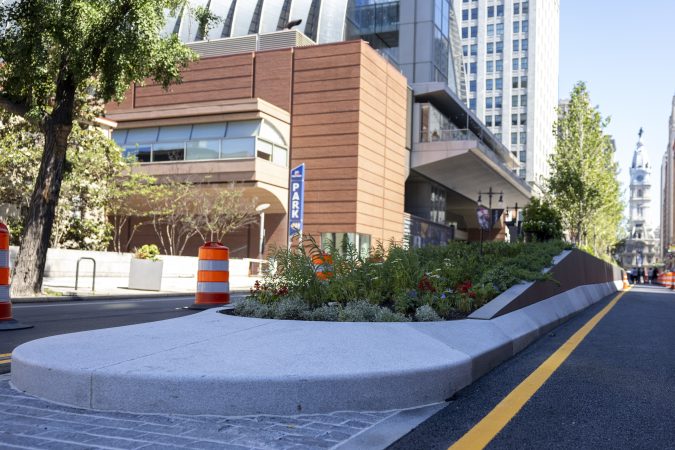
For there, officials have unveiled a beta test for a new Avenue of the Arts streetscape project smack in the middle of South Broad Street that includes an egregious four-foot-high continuous planter with trees on top of it. All intended to increase the attractiveness of the street and thereby encourage a livelier street life.
But therein lies the rub.
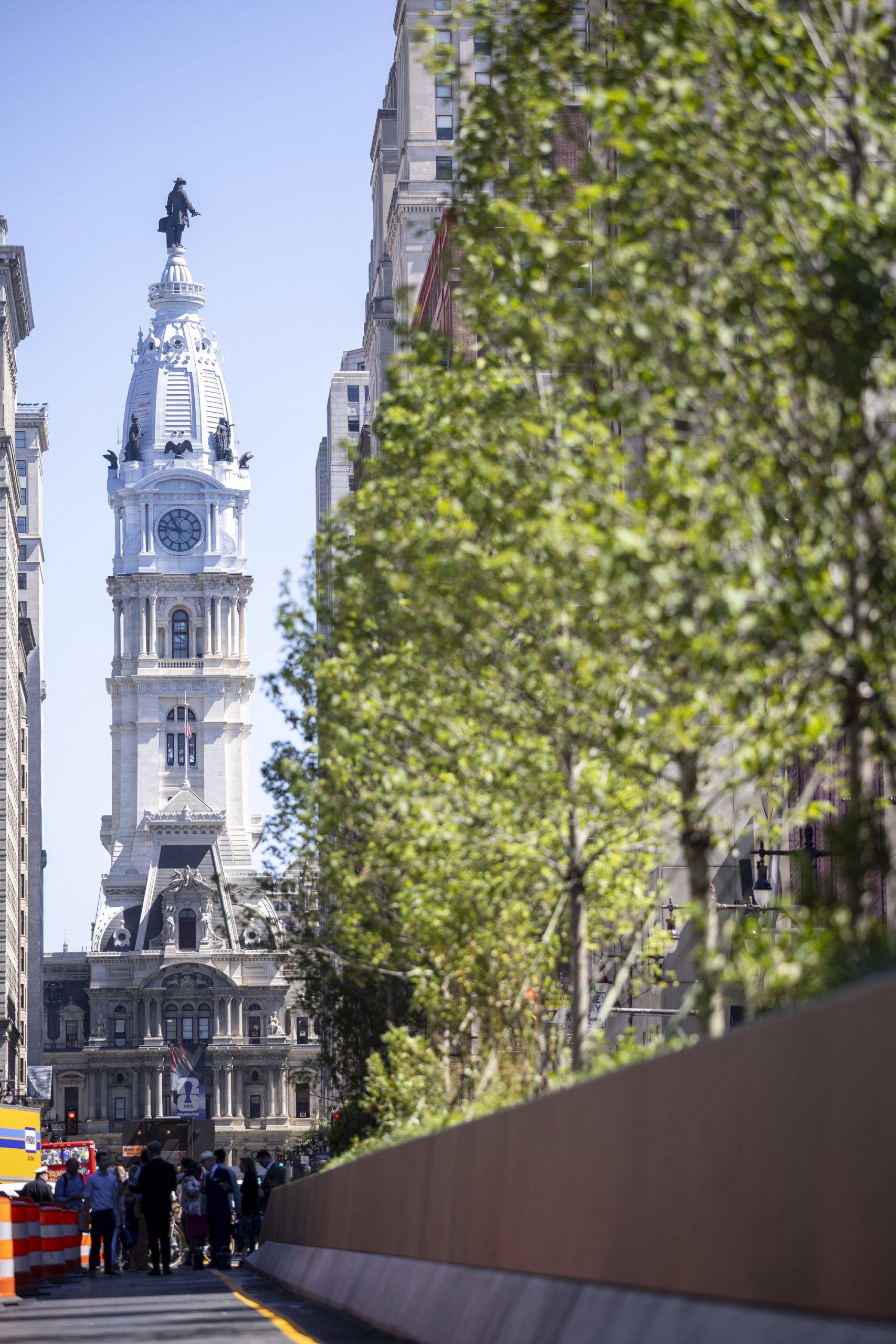
In creating this continuous concrete highway divider-cum-planter in the center of the street, the project actually has a chilling effect on South Broad. Not only do the planter and the trees destroy the primacy of the view of City Hall tower along the street, but it reinforces the nature of Broad Street as a highway, and makes it impossible to see the other side of the street while either walking or driving. And forget about parades and festivals.
The planters and trees destroy the primacy of the view of City Hall Tower along the street, write Alan Greenberger and Harris M. Steinberg.Tyger Williams / Staff Photographer
We are told this is to be replicated on the street from City Hall to Washington Avenue to the tune of $150 million, or $15 million per block. Who thought this was a good idea?
And, as if to add insult to injury, the project proposes outsized planters along the sidewalks that will further isolate the two sides of the street, crowd out whatever street life exists, and create, along with the tall planter in the center of the street, a series of cattle chutes for 10 blocks.
Welcome to Broad Street Narrows.
This can’t stand. The project must not be replicated along the length of the Avenue of the Arts. There are ways to integrate plantings into great streets, such as along Michigan Avenue in Chicago, but they are low in scale, do not include trees in the center of the street, and do not destroy the sensation of the street as a whole.
And the proposed planters have got to go, as well. One could think of planting shade trees along the sidewalk offering respite from the sun and inviting people to sit along the street and have a bite to eat. The subway concourse below South Broad is extremely wide and could undoubtedly accommodate the tree roots below grade.
The goal of increasing street life is crucial. To do so, it would be better to widen the sidewalks to allow for cafes and strolling. Street life needs foot traffic, and foot traffic is generated by people living, working, and shopping in the area, along with attending performances.
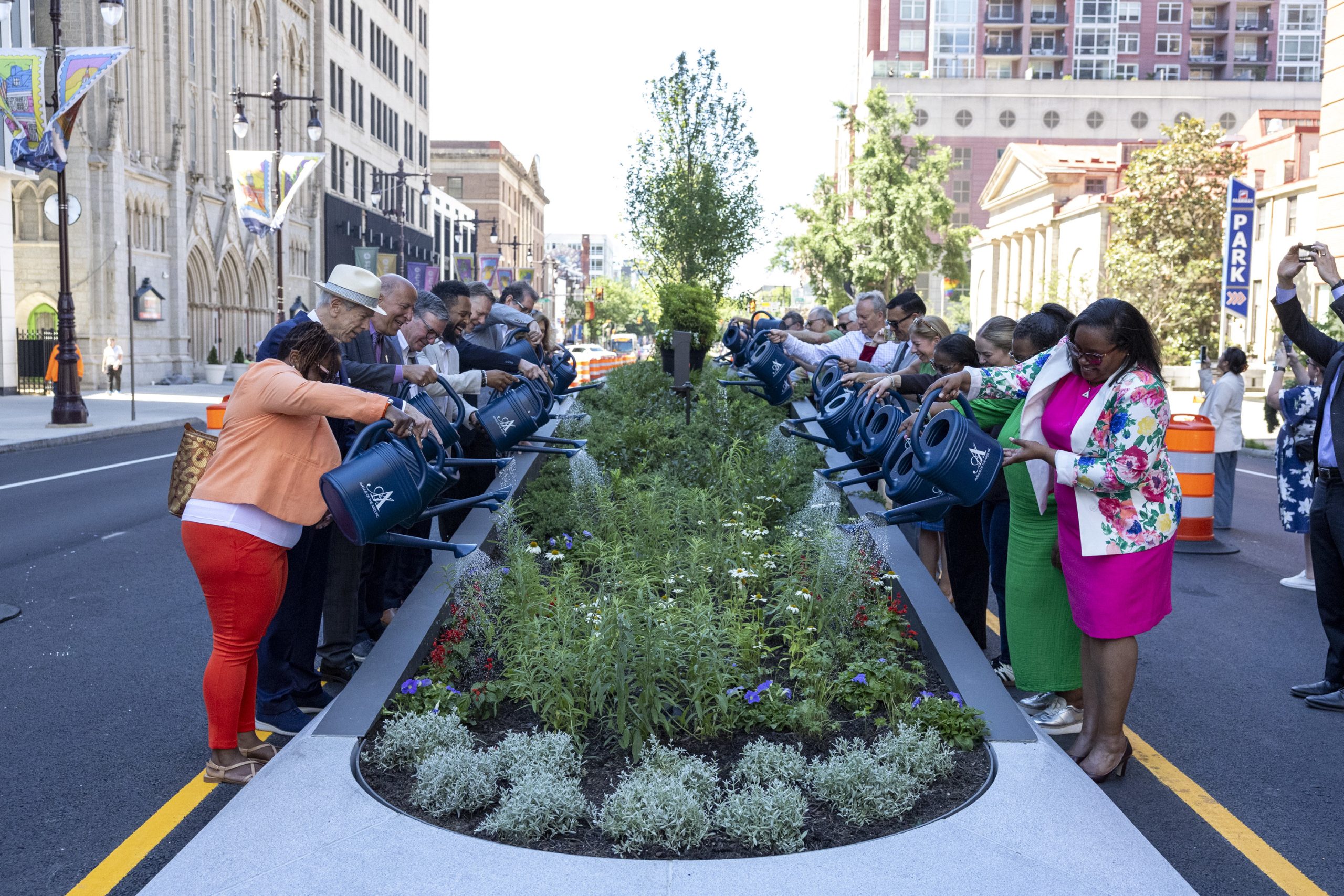
Guests at a June ceremony to unveil one of the redesigned medians water the greenery in its planter just outside the Kimmel Center.Tyger Williams / Staff Photographer
How is it that a street lined with hotels, residences, and offices has only one place for outdoor dining — at Arthaus? Broad Street wants bustling sidewalks, but landscaping and hardscape improvements alone will not increase street life. We learned this the hard way on the ill-fated Chestnut Street Transitway of the 1970s, and the planter fiasco should serve as a cautionary tale for the current design process for Market East.
We must not fall prey to the false choice that in order to maximize urban vibrancy, we must sink millions of dollars solely into landscaping and other surface improvements.
South Broad can be the best it can be with some thoughtful planning and a little gentle nurturing — it doesn’t need a Jersey barrier running down the middle of the street.
Alan Greenberger served as deputy mayor for economic development and director of commerce under Mayor Michael A. Nutter, and chaired the Philadelphia City Planning Commission. Most recently, he served as vice president of real estate and facilities at Drexel University. He is a fellow of the American Institute of Architects. Harris M. Steinberg served as the founding executive director of PennPraxisat the School of Design at the University of Pennsylvania. He led the planning process for the Central Delaware Waterfront, which is currently guiding the development of the riverfront. Most recently, he served as the founding executive director of the Lindy Institute for Urban Innovation at Drexel University. He is a fellow of the American Institute of Architects.
It’s a big promotion for Tucker, a Wyomissing native and former NFL offensive lineman, though for now it’s just Week 1. He’ll replace former Houston Texans star J.J. Watt, who will fill in for Romo alongside Jim Nantz in CBS’ No. 1 booth.
“I’m getting hundreds of text messages from people congratulating me. It’s kind of crazy,” Tucker said.
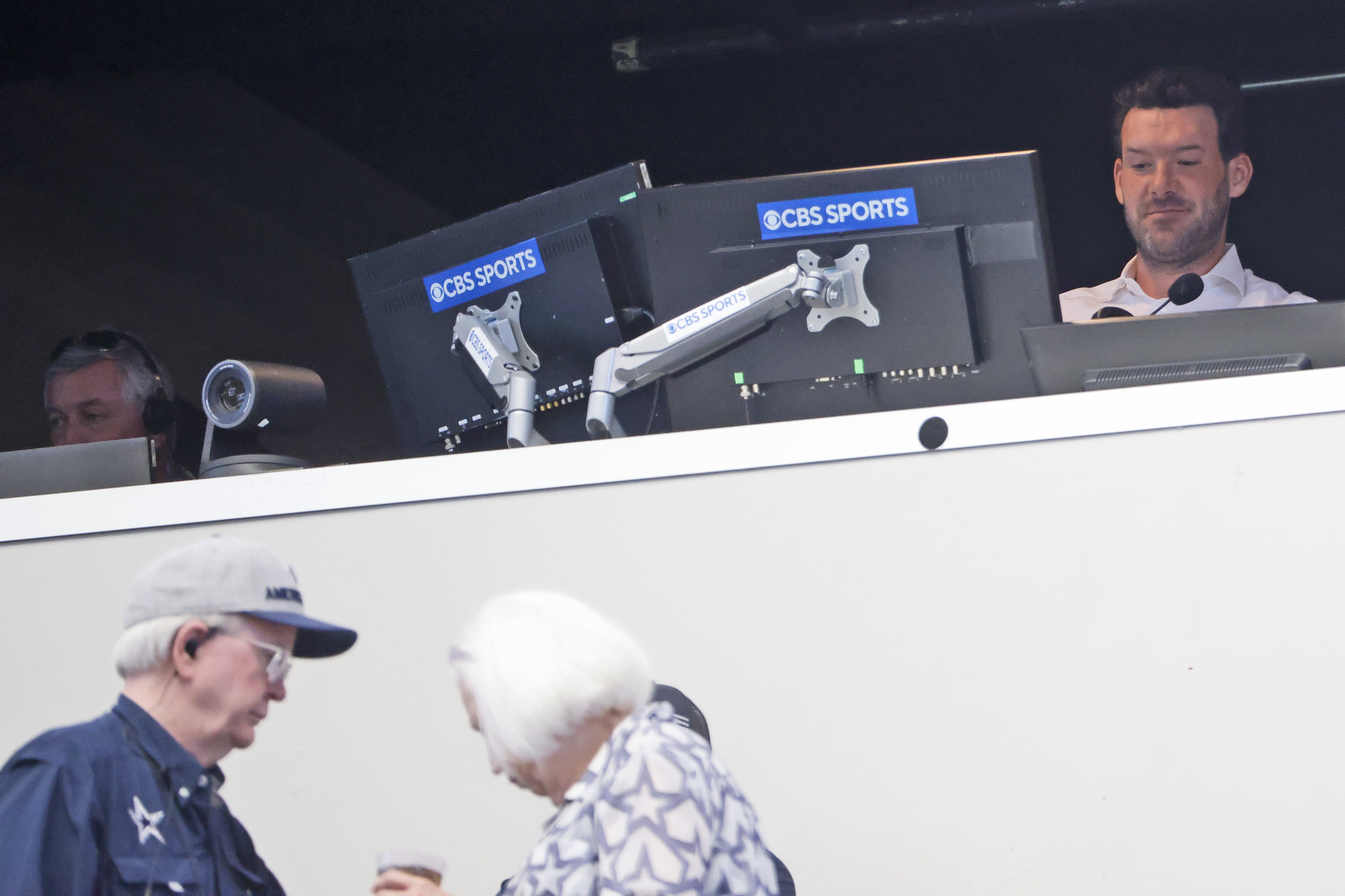
When Romo comes back is anyone’s guess. CBS placed him on indefinite leave following his arrest in Wisconsin on July 23 for suspicion of operating a vehicle while under the influence. He’s scheduled to appear in court Monday, Sept. 21, at the end of Week 2.
“I don’t think they have a timeline on anything,” Tucker said. “It sounds like we’re taking it one week at a time.”
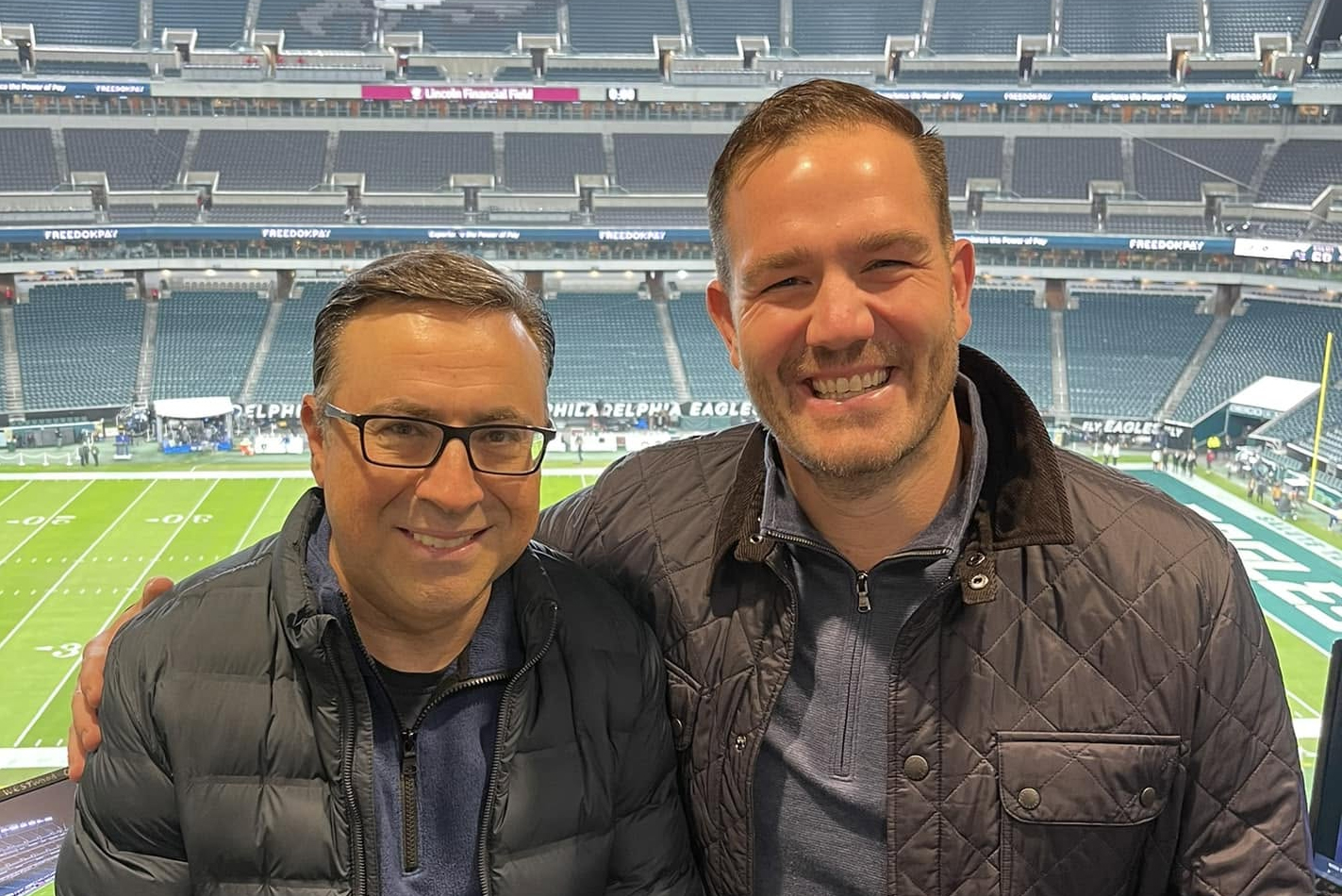
One reason CBS bumped Tucker up is that he and Eagle already have a great rapport in the booth. The two have called at least 20 games together on Westwood One, including the Eagles’ playoff loss to the San Francisco 49ers last season.
“There’s a real comfort level and familiarity there,” Tucker said. “And he has the quickest wit of almost anybody I’ve ever been around.”
In just one example, during Westwood One’s radio broadcast of a 2024 Thursday Night Football game between the Eagles and Washington Commanders, Ross reacted to a play made by Birds defender Zack Baun with the call, “Baun. Zack Baun.”
“Ian, with no hesitation, said, ‘Shaken and stirred!’” Tucker said. “I wasn’t expecting him to have a follow-up … but he’s just so good.”
In addition to his role with CBS, Tucker will call all three Eagles preseason games — two on NBC10 with Scott Graham and one on CBS alongside Andrew Catalon. He’ll also call his fair share of Thursday Night Football games on Westwood One, which has given him something of an upper hand leading into Sunday’s games on TV.
“Sometimes on the field talking to players and coaches, I’ll ask them about the game I have Sunday and their opinion on it, and I’ll get good insight there,” Tucker said. “So there’s a lot of value in doing both.”
The only downside for now is he will no longer call games alongside Phillies announcer Tom McCarthy, whose friendship with Tucker goes back to calling his college football games at Princeton.
Instead, McCarthy will pair up former running back Robert Turbin, who has been a college football analyst for CBS Sports Network since 2022.
The other new face for CBS is former Carolina Panthers linebacker Luke Kuechly, who was inducted into the Pro Football Hall of Fame last week. Kuechly was also recently hired by Netflix as the streamer’s top NFL analyst, where he’ll call games alongside Noah Eagle.
Romo could miss an Eagles game … if he’s gone that long
Tony Romo, seen here before a 2022 game, is on indefinite leave at CBS. Michael Ainsworth
Romo wasn’t in New York on Tuesday for CBS’ media day event, a result of his indefinite suspension from the network following his arrest in Wisconsin last month.
The former Cowboys quarterback, entering his 10th season with CBS, was arrested and charged with suspicion of operating a vehicle while under the influence. He was also cited for having an open container in the vehicle and refusing to take an intoxication test. Bodycam footage of his arrest has been widely shared on social media.
David Berson, president of CBS Sports, told reporters it’s an “evolving situation” and there’s “no timetable or final decision” on when — or if — Romo could be back in the booth.
“Fortunately, we have a very deep bench, and I’m really proud of the way everyone’s stepping up and responding,” Berson said.
The Eagles have two games scheduled to air on CBS. Romo had been slated to call the Birds’ Week 11 matchup against Aaron Rodgers and the Pittsburgh Steelers on Nov. 22, but that’s uncertain until his legal situation is resolved.
Sports media pundits have speculated that this could be a convenient way for CBS to move on from Romo and his reportedly $18-million-a-year contract, which runs through the 2029 season. But police have yet to release the results of his delayed blood alcohol test, and CBS could find itself ensnared in a nasty legal battle if it attempts to force Romo out using a morality clause in his contract.
“There is no extant reality in which CBS fires its No. 1 NFL analyst for ‘unsafe passing on the right’ or ‘crossing the gore area,’” Sportico’s Anthony Crupi wrote.
Other top announcers and sports media personalities have been able to come back from drunken driving incidents.
In 2009, Charles Barkley was suspended by TNT for six weeks after being arrested on New Year’s Eve for driving under the influence. Barkley ultimately pleaded guilty and served three days in jail.
Former Eagles cornerback Darius Slay Jr. is headed to CBS. Monica Herndon / Staff Photographer
Former Eagles defender and Super Bowl champ Darius Slay is headed to CBS as a studio analyst on The NFL Today+, the network’s streaming Sunday pregame show. He’ll be joined by fellow former NFLers Russell Wilson, Antonio Pierce, and Kyle Long. CBS Sports betting analyst Mackenzie Brooks, a Philly native and Central Bucks West alumna, will also contribute to the show.
Former Sunday Night Football sideline reporter Michele Tafoya easily won the U.S. Senate Republican primary in Minnesota on Tuesday night. She’ll face Democrat Peggy Flanagan in November’s midterm elections.
Eagles radio broadcasts will sound a little different this year.
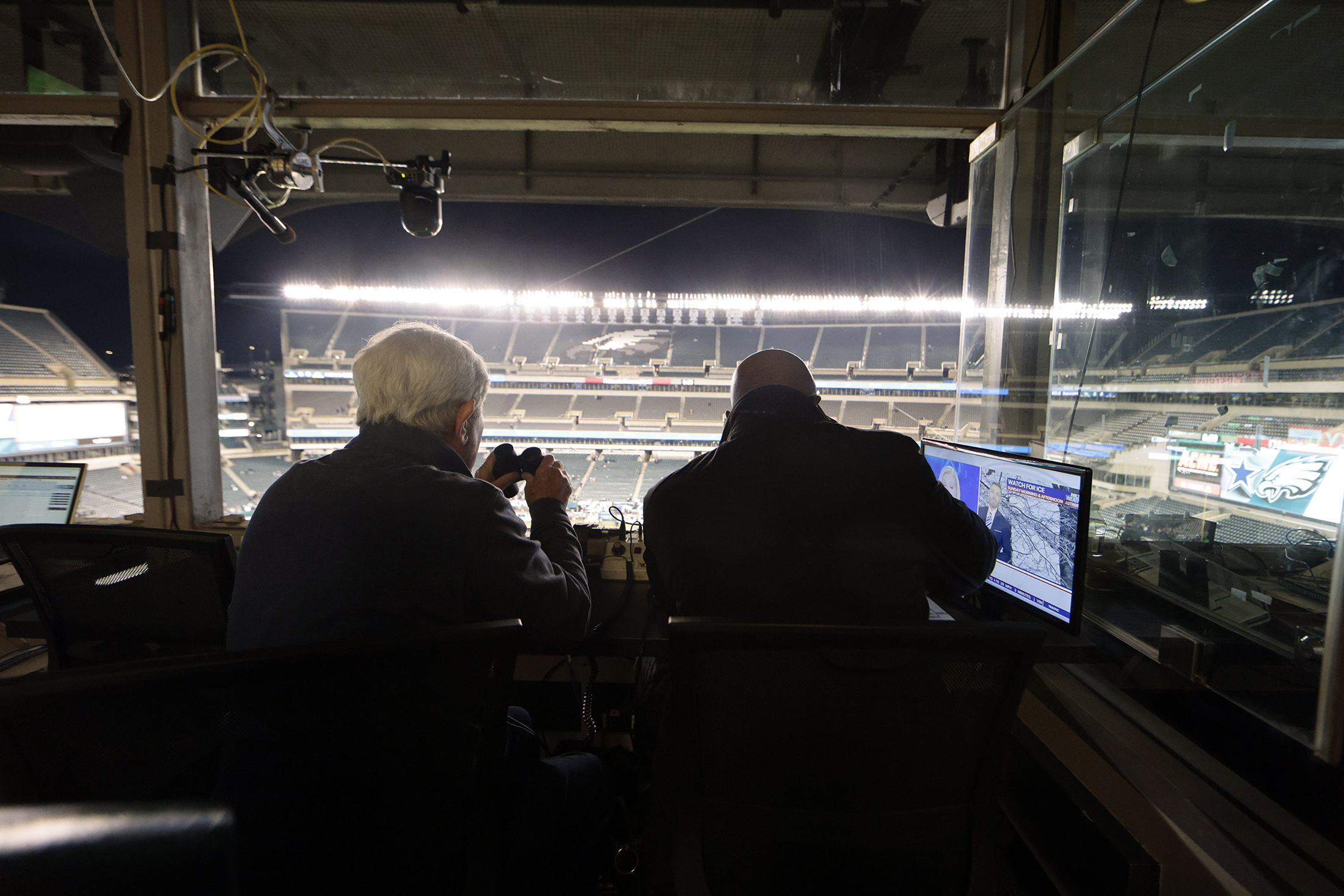
While longtime announcers Merrill Reese and Mike Quick will be back for their 29th season together in the booth, 94.1 WIP won’t have a dedicated sideline reporter during Eagles games for the first time in more than 15 years.
WIP is shifting to a more limited role within the broadcast, with Reese and Quick turning to another WIP personality when needed.
It’s assumed that Eliot Shorr-Parks, the station’s Eagles beat reporter since 2018, will be the broadcast’s go-to voice for updates, but others could jump in as needed. Shorr-Parks will do a pregame hit from the sideline ahead of Saturday’s preseason game against the Baltimore Ravens.
“The rest of the role is still TBD,” said David Helm, a spokesperson for WIP’s parent company, Audacy.
Devan Kaney was laid off by WIP in March and has since landed in Chicago. David Maialetti / Staff Photographer
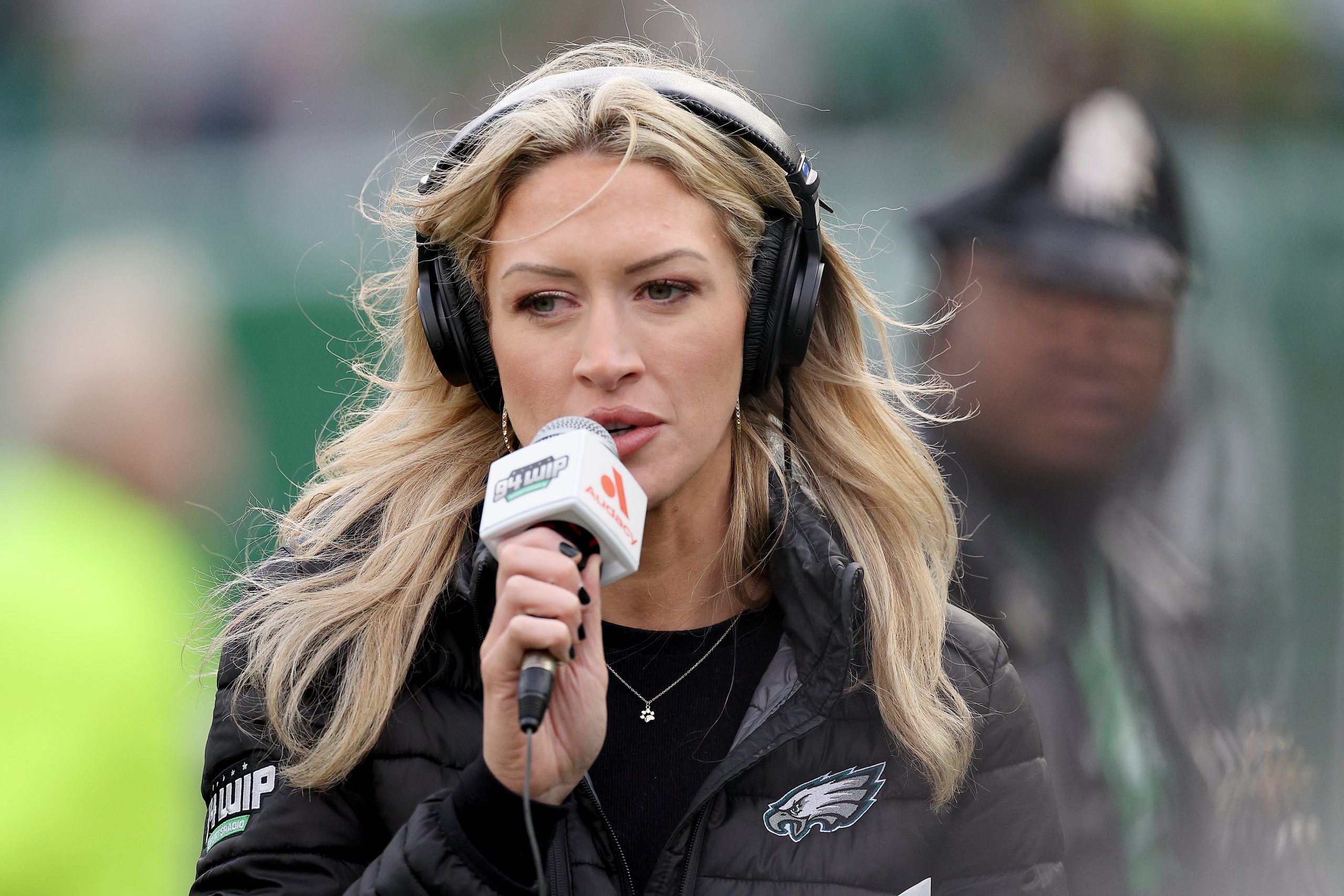
Devan Kaney, who served as sideline reporter last season and during the Eagles’ Super Bowl LIX run, was laid off by WIP in March as part of company-wide cutbacks by Audacy. She had been with the station since 2022 and served as an on-air personality, regularly cohosting WIP’s morning show alongside Joe DeCamara and Jon Ritchie.
“I had a blast working at WIP and sincerely enjoyed my time there,” Kaney told The Inquirer in March. “But as the old saying goes, when one door closes, another opens.”
Former WIP host Howard Eskin served as a sideline reporter for more than 15 years. dnphoto
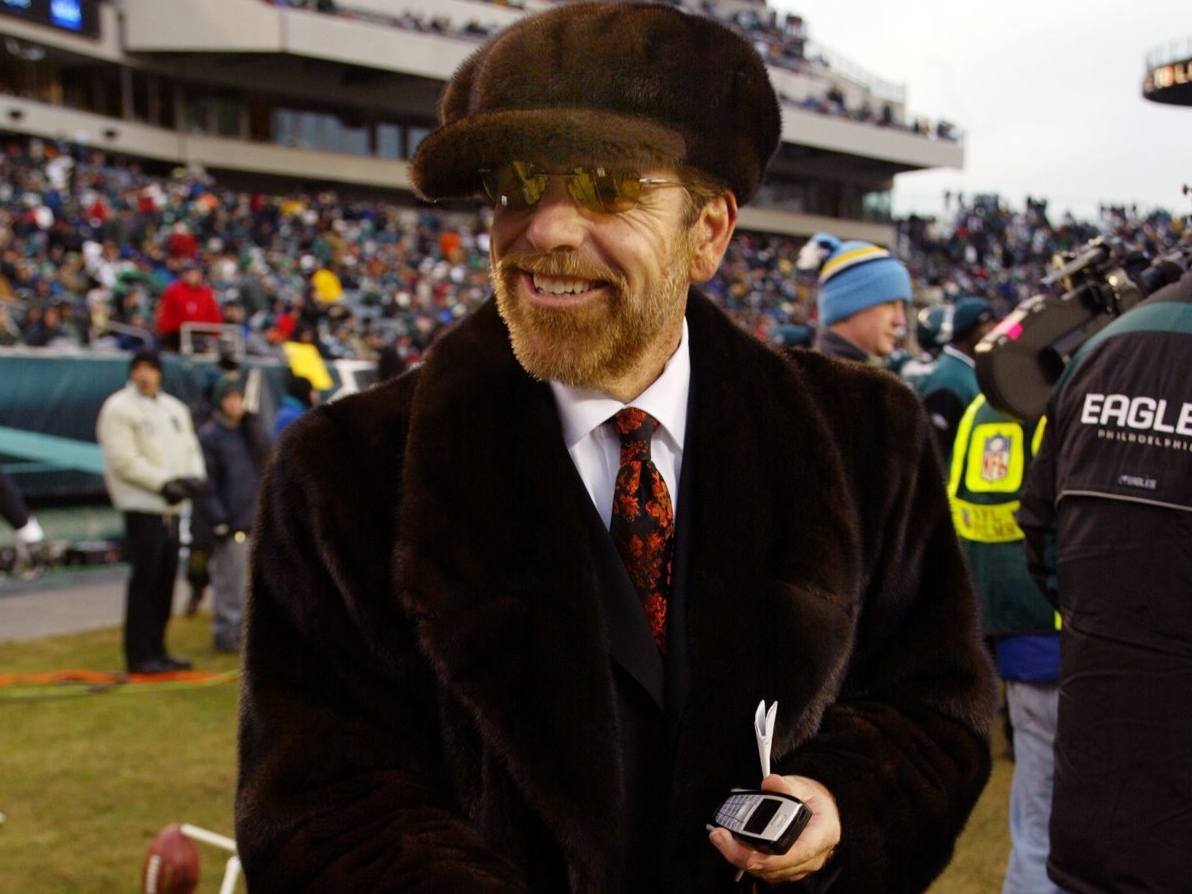
Former WIP host Howard Eskin was the station’s first Eagles sideline reporter, with his fur coats and colorful headphones becoming a sideline staple. Eskin covered the team since 1975, but said his first season as Eagles sideline reporter wasn’t until 2011.
WIP has been broadcasting Eagles games since 1969, with Reese entering his 50th season calling games, by far the longest-tenured announcer in the NFL. The station’s current deal to broadcast Eagles games runs through the 2028 season.
Do rich guys have to ruin everything? Apparently so. There came a time about 15 years ago when my soccer obsession got to the point where I felt I needed to pick an English Premier League team to root for, in addition to the U.S. national teams and the Union. Long story, but I went with Liverpool, in a city many consider the Philadelphia of the U.K., and it’s been a good ride, including a couple of trophies. On Monday, it was reported Amazon gazillionaire Jeff Bezos is buying 30% of the team. I’m officially out. Go, Leeds!
When did Trump’s ballroom become a national security fortress? We need answers.
Construction continues on a helipad and the White House ballroom on the South Lawn of the White House on Aug. 5.Tierney L. Cross
Donald Trump’s originally stated 2025 scheme to demolish the East Wing of the White House to make way for an oversized ballroom to hold state dinners and whatnot was bad enough: an unneeded, unwanted, gilded, and presumably tacky callback to Louis XVI, a massive monument to a modern let-them-eat-cake regime.
A year later, the project is better describedasan alleged ballroom — another bait-and-switch scam by America’s first grifter president. The fact that the public really doesn’t know how much this project actually costs — estimates have soared from the initial lowball of $300 million to now at least $600 million, but possibly more — or how much of that will be dumped on U.S. taxpayers is just the beginning of the problem.
Nearly 10 months after the president shocked Washington, D.C., and the rest of America by taking a wrecking ball to the history-packed East Wing, Trump has all but stopped talking about a black-tie party venue and instead rebranded the project as essential to national security.
When the D.C. federal appeals court on Friday ordered the White House, which never got congressional approval for either the demolition or the ballroom addition, to halt aboveground construction, Trump took to Truth Social and described the ruling as akin to treason.
“The Military and Secret Service are viewing this horrendous, politically motivated, and unlawful ruling as a National Security threat to our Nation in that the entire Complex is being built for the protection of our Country and, additionally, all future Presidents,” Trump posted, using language that’s probably never previously in human history been used to describe a “ballroom.”
Trump didn’t say in his post anything about crystal chandeliers, or great acoustics, or things you might expect in a world-class ballroom. Instead, he said the facility will have bomb shelters, a state-of-the-art hospital, top-secret military facilities, protective missile-resistant steel, columns, roofs, and beams, drone-proof ceilings and roofs, military-grade venting, and bullet-, ballistic-, and blast-proof glass.
It sounds like somebody is expecting a last tango in Washington.
Trump’s post was alarming — shocking, really — but in case anyone missed the point, or doesn’t know how to read, he also posted some AI-created renderings, which again did not depict waltzing diplomats, but instead showed a rooftop “DronePort” that was packed to thegills with ominous-looking military drones, manned by troops and also with armored vehicles that somehow drove up there. The vibe was Darth Vader’s Death Star, except with “military-grade venting” this time around.
There are two very different ways to look at all of this, and let’s start with the more benign one. Ever since the beginning of his second crack at the presidency, Trump — when he’s not pursuing his main projects of making billions of dollars, punishing his enemies, and staying out of prison — has been obsessed with placing his personalist stamp on Washington. Maybe that’s for his legacy, or maybe he just wants a Mar-a-Lago-by-the-Potomac to comfort his octogenarian mind.
Trump might not be able to crash weddings as he does at his Palm Beach, Fla., estate, but his ballroom idea would be close enough. Although he’s also sought and received donations for the project from the usual suspects of friendly billionaires and favor-seeking corporations, Trump also wants both additional dollars and — more importantly, in light of the appeals court ruling — a stamp of approval from Congress. That’s been a thwarted agenda item for GOP leaders on Capitol Hill for months.
But if Trump can’t sway Congress, he hopes to win over a U.S. Supreme Court where he has appointed three of the nine members. The White House knows that both Congress and the high court tend to fall in line whenever national security is invoked, while there is no constitutional right to foxtrot. So maybe all the military bluster is just political posturing for Trump’s latest real estate development.
But as the project enters its second year, it seems to have morphed into something a lot more disturbing than that. The pictures, descriptions, and accounts of Trump’s game here are sounding a lot more like the impregnable mountain lair of a Bond villain.
This is a man who fomented an attempted coup the first time he was asked to leave 1600 Pennsylvania Avenue, and who saw how South Korea’s corrupt right-wing president was ousted after a massive throng of protesters overwhelmed key government buildings. Wasn’t it Chekhov who said you don’t put drones up on the roof unless you intend to deploy them by the third act? The two most likely scenarios for actually using Trump’s bunker — Civil War II, or World War III — are less than optimal.
This national security bunker isn’t the only thing that’s worrisome as Trump looks to the second half of what’s supposed to be his final term. As noted in this space recently, Trump has also extended the presence of National Guard troops in Washington through Jan. 20, 2029, which coincidentally is the scheduled last day of his term.
Since their arrival last year, the Guard troops — many from units in pro-Trump red states, and costing U.S. taxpayers at least $1.4 billion and possibly more — have often been spotted hanging around, or picking up trash as a kind of busywork. But residents and some advocates like Scott Michelman, legal director of the American Civil Liberties Union of the District of Columbia, are already complaining Trump is “treating [D.C.] like a police state.”
It raises the same questions as the alleged “ballroom.” The president is entitled to state-of-the-art security, and while the public doesn’t need to know all of the operational details, American taxpayers also can’t be expected to fork over hundreds of millions of dollars for these projects without truly knowing what they are for.
Democrats on Capitol Hill need to start demanding answers. On Monday, there was an encouraging report by the New Republic’s Greg Sargent that the opposition party is working to demand communications from the Justice and Interior Departments to explain why several people were wrongly criminally charged with vandalism at the Lincoln Memorial Reflecting Pool when the actual damage was a botched repainting contract.
Congress can, and should, also flex its muscles over this ballroom fiasco — first by denying any public money for the project, and then by launching a similar investigation into the hasty demolition, the political fundraising, and the sketchy purposes for the project. Someone owes America the truth, and it’s not going to come from the current regime without a fight.
Whatever happens, the woman or man who hopefully succeeds Trump and sends those guard troops back to their own private Idaho in January 2029 is also going to have a giant mess in their backyard. But it’s better to have the ruins from a botched, halted construction project than from the Battle of Armageddon.
Yo, do this!
The California journalist Gil Durán has been paying attention to the political craziness coming out of Silicon Valley years before anyone else was, and now comes the big payoff in the form of a book that is not only incredibly timely but has the best title of the year: The Nerd Reich: Silicon Valley Fascism and the War on Democracy. Durán explores the strange beliefs of Elon Musk, Peter Thiel, Marc Andreessen, and their friends, their obsession with building their own private “networked cities,” and their unlikely alliance with Donald Trump. I’ve been waiting on this one for a while.
August is always a great month for books. While Durán drills down on the high-tech enemies of liberty, the great writer Dave Zirin has a new tome about one of democracy’s heroes, the late historian Howard Zinn, his former mentor. Public intellectuals are still arguing about the merits of Zinn’s 1980 masterwork, A People’s History of the United States, but nobody disputes his influence on the national conversation. Zinn rejected American exceptionalism, but also spotlighted everyday heroes like labor leaders or civil rights activists who expanded our freedoms over two centuries. I’m looking forward to reading The People’s Historian: The Outsized Life of Howard Zinn.
Ask me anything
Question: Data centers are the flashpoint but the root problem is the unregulated AI that is sweeping up every keystroke and every written document then repackaging it as if original thought. How do we get a federal government mired in 2020 to begin legislating on AI? — Suzi (@wanderponder.bsky.social) via Bluesky
Answer: Great question, Suzi, and I think we all know the main reason why the body politic — and I’m talking about both Democrats and Republicans — have been so painfully slow to respond to voters’ widespread anxiety not only about noisy, polluting, resource-wasting data centers, but also to artificial intelligence itself. The reason is money. Silicon Valley AI developers have raised an unbelievable $220 million to spend on November’s election, and — while there are some disagreements within Big Tech about policy — most of the cash will go to the politicians least likely to regulatean industry badly in need of it. Cognitive computing is not only stealing our intellectual property, as you noted, but also our jobs, as well as our children’s ability to learn.The good news is that public backlash against AI is so strong that even a quarter-billion dollars may not be able to stop the movement. But it’s way past time to get money out of politics.
What you’re saying about …
I should have guessed that newsletter readers don’t have much more of a clue than Donald Trump about what to do about the giant mess in the Persian Gulf. I did get one thoughtful response from an emailer with a “cbluff” handle (Reminder: Please sign your real name to these responses) who said the Trump regime needs to send skilled negotiators — and be realistic. “I believe the U.S. will have to cede the Strait of Hormuz, allow Iran and Oman to collect protection money, remove sanctions and pay them so we can declare victory and leave,” they wrote. It’s hard to disagree. Once again, the United States has lost a war.
📮 This week’s question: Since the Democratic Senate primary win by Michigan’s Abdul El-Sayed last week, the mainstream media has been obsessed with the question of whether this year’s progressive surge, including candidates (although not El-Sayed) tied to the Democratic Socialists of America, is hurting the Democrats. What do you think? Are leftists bringing needed energy to a moribund party, or are they too out there to defeat the GOP in November? Please email me your answer and put the exact phrase “Democrats and the left” in the subject line.
Backstory on the day Trump left his press corps for dead
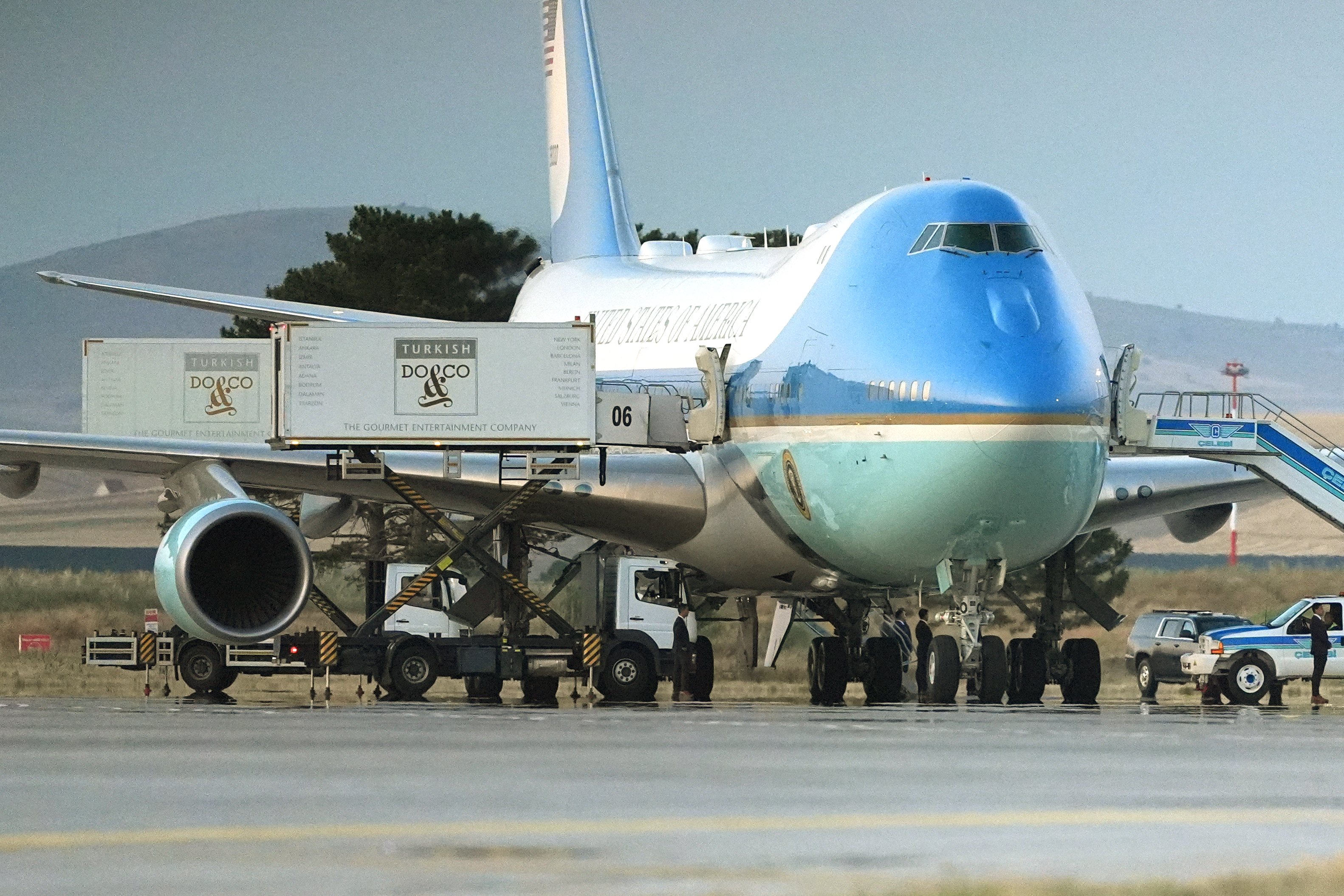
Catering trucks are parked at Air Force One on the tarmac as the motorcade carrying President Donald Trump arrives to depart following the NATO summit, at Ankara International Airport in Ankara, Turkey, on July 8.Alex Brandon
It was appalling enough back in late July when we watched a room full of some of America’s highest-profile journalists break bread with Donald Trump at the rescheduled White House Correspondents’ Association dinner in Washington, where the president got up and hurled crude insults at several of the media members. Many of us were disgusted that some of the nation’s most respected journalists would platform a man who has repeatedly called a free press “the enemies of the people.” But the White House press corps was in the dark about an even more disturbing plot twist.
Just 16 days earlier, Trump had left some of those journalists for dead — at least potentially — as human decoys who might be blown from the skies in a feared Iranian plot.
The stunning story came out late Monday night as I was writing this newsletter, with a scoop by the Washington Post, matched shortly, with some additional details, by the New York Times. The articles revealed a modern-day Air Force One kind of thriller that essentially involved a shell game with three different aircraft. It was triggered by what officials deemed was a credible Iranian assassination threat against the president when he traveled to a NATO summit in Ankara, Turkey — just over 700 miles from the border with the U.S. enemy.
This launched a series of events, beginning with a plan to abandon Trump’s new, $400 million gift-from-Qatar iteration of Air Force One for an older version that actually has more advanced defensive capacities. Trump was filmed boarding the replacement Air Force One, followed by the White House press corps and some traveling aides for the departure from Ankara to a U.S. air base in Great Britain. What those passengers could not have imagined was that Trump had somehow been spirited out “via a catering container that had been lifted to the opposite side of the plane,” and switched to a C-32A military plane for the flight to the U.K.
Then they kept the unwitting journalists and aides on the ground for a couple of hours before it was revealed POTUS was safely in Britain and the Iranians had been thwarted and … haha, of course that’s not what really happened. No, the press corps took off as human decoys — the latest sitting ducks in an idiotic war that never should have been launched in the first place. Thankfully, no one was hurt … this time. Journalists wondered why they’d been ordered to keep the airplane’s window blinds closed, which inspired this now ironic exchange between Trump and some journalists when they reunited for the flight from Britain back to the U.S.
Trump lied that he didn’t know of any specific plot against Air Force One, and then added: “I’m No. 1on their list, before you. But if I go, you go. Right?”
Apparently not.
Even as I write this in the middle of the night just hours after the Post and Times scoops, the internet is already flooded with memes depicting Trump crammed into one of those airport serving carts, or pigging out on the adjacent airline food. It’s funny to see that your president isn’t Harrison Ford punching out the terrorists, but, in reality, slinking away in a food truck, leaving other Americans in the line of fire, right?
No, it’s not funny at all. This whole episode is a grand metaphor for a careless president who smashes up things before retreating into his money or whatever keeps him going — not thinking twice about the fate of human beings in a squalid ICE detention camp or an Iranian girls’ school. Or bantering with the gaggle of journalists whom he abandoned after drawing a big target on their backs. The first media question at the next Oval Office event ought to be, “Why did you treat me like cannon fodder?” But I wouldn’t bet on that happening.
What I wrote on this date in 2016
It’s almost funny now, in a dark-comedy kind of way, to look back on the fateful summer of 2016 and remember what it felt like to be stubbornly convinced that something, anything, was bound to happen to stop the obvious insanity of a Donald Trump presidency. It seems so incredibly naive now to read what I believed exactly one decade ago, when I actually thought the success of a diverse and incredibly talented U.S. Olympics team in Brazil would expose the Big Lie of Trump’s racism. I wrote, “The exclamation point is the remarkable women’s gymnastics team led by individual gold medalist Simone Biles — so dominant you will easily forget they also celebrate the kind of diversity that is America’s best feature, not the bug that’s described by the bitter and the disaffected back home.”
The fight for America’s future is waged on many fronts, and I’m trying to keep up. Last week, I wrote about a fascinating political development that’s been largely flying under the radar screen: a movement out west to knock off GOP incumbents by creating one-on-one contests with feisty, populist independents. That means long-shot Democrats need to drop out — which has happened in Nebraska, Idaho, and South Dakota, but not in Montana. It’s both a bold plan to end the Republican majority on Capitol Hill and a sad commentary on the failed Democratic Party brand in the American heartland. This weekend, I wrote about the Trump regime’s latest assault on higher education — denying loans for students who major in fields linked to lower-income jobs — and the increasingly bleak future of a liberal arts education. I wondered why Democrats won’t fight harder to end runaway careerism and preserve college campuses as bastions of critical thinking.
This August feels like the calm before the storm in Philadelphia sports. Some of that is the excitement over the Eagles finally beingback in training camp and looking to regain that Super Bowl mojo as 76ers fans try to process, if that’s the right term, a once-in-a-lifetime offseason rebuilding project. But much of it is angst over the Phillies, who are clinging by their fingernails to a playoff spot despite adding the National League’s batting champ to a lineup that already includes home run king Kyle Schwarber, future Hall of Famer Bryce Harper, and one of baseball’s best pitching rotations. None of that matters when the Phillies don’t have a relief pitcher who can carry a lead past the 7th or 8th inning. The Inquirer’s ace sports columnists like David Murphy and Marcus Hayes have all asked the same question: Can this team be saved? The answers are just over the paywall, and you can leap over it just like Saquon Barkley at the first-down marker; all you need to do is subscribe to The Inquirer.
By submitting your written, visual, and/or audio contributions, you agree to The Inquirer’s Terms of Use, including the grant of rights in Section 10.
Terry Thompson’s spiral into gambling addiction offers a window into the human destruction Pennsylvania lawmakers unleashed when they legalized online betting.
Before sports gambling was legal, the Montgomery County resident placed occasional bets through bookies. But in 2020, shortly after Harrisburg legalized sports betting, Thompson created an account with FanDuel Sportsbook to bet on the Eagles.
He began placing numerous microbets through FanDuel and DraftKings, the two main gambling apps, and soon became addicted. Within five years, he wagered more than $22 million between the two companies, and lost more than $1.8 million.
To feed his gambling addiction, Thompson sold his company and took out additional mortgages on his home. He hit rock bottom in February, gambling away his last dollar and planning to take his own life, according to a lawsuit filed in the Common Pleas Court of Philadelphia against FanDuel and DraftKings, and detailed by Inquirer investigative reporter David Gambacorta.
Thompson’s story lines up with many others who get hooked on gambling. But it included a new wrinkle that adds to the insidious way gambling companies entice people to keep betting.
In November 2024, Thompson received a personalized video message from Phillies superstar Bryce Harper.
In the video, Harper references Thompson by name, mentions his young son, and thanks him for his support. Harper adds that he was reaching out on behalf of the VIP manager at FanDuel who wanted to make sure Thompson had an “extra special Thanksgiving.”
In a personalized video that was sent to a problem gambler, Phillies slugger Bryce Harper said he was reaching out on behalf of an official at FanDuel.Obtained by The Inquirer
A few days after Gambacorta’s story was published, Harper issued a statement claiming he was not aware of FanDuel’s involvement even though he mentions the company’s VIP manager by name.
Harper said he joined the messaging site Cameo to engage with fans by providing paid video messages. Indeed, there is no evidence Harper was paid by FanDuel or aware of Thompson’s addiction.
Strategic ignorance aside, it seems pathetic for a star athlete paid roughly $25 million a year to work a side hustle shilling videos to strangers. Talk about not elite.
Clearly, everyone is finding a way to make money off gamblers, including state lawmakers, sports leagues, gambling apps, and former and current players.
It’s all about the fans, right?
More disturbing is how the apps entice gamblers.
In Thompson’s case, FanDuel rewarded him with perks, including champagne, hotel stays, and Super Bowl tickets. His VIP manager texted him about the Eagles as well as personal exchanges about family and travel plans.
FanDuel said its VIP managers do not work on commission. The company has a number of systems in place to help gamblers bet responsibly, including a dashboard so customers can track spending, real-time check-ins if players deviate from usual habits, and devices that let gamblers set limits on losses or time spent on the app, as well as cooldown periods or formal self-exclusions.
That’s well and good, but gamblers find workarounds, and the VIP perks sure seemed designed to keep high rollers gambling. Expecting gamblers in the throes of addiction to police themselves is not a serious solution.
One recovering gambling addict not involved in this case told me how FanDuel and DraftKings would send him numerous incentives a day to keep betting.
Indeed, the gambling business model depends on a small percentage of gamblers making frequent bets. One study found 5% of sports gamblers generate 86% of the industry’s revenue.
The ease of online gambling has turned everyone’s mobile phone into a casino. Nearly 40% of men and 20% of women gamble online daily, according to the American Psychiatric Association.
Online betting has enabled companies to attract younger gamblers. Two-thirds of 18- to 22-year-old men surveyed by the NCAA had bet on sports. Many teens and adolescent children have become hooked on gambling, including some as young as 11.
In a statement, FanDuel said it “is committed to fostering a culture of responsible gaming and protecting our customers” and that “employees are trained to recognize and flag signs of problem gambling.”
Thompson’s experience, as alleged in his lawsuit, indicates otherwise.
“There are millions of Terry Thompsons out there,” Harry Levant, a former Philadelphia attorney who is now the director of gambling policy for Public Health Advocacy Institute, told me.
Levant, an addiction recovery coach, said he gets frequent calls from spouses, parents, and children seeking help for loved ones addicted to gambling. He said he has clients who gamble in the shower or before they get out of bed in the morning.
Harry Levant, an addiction recovery coach, said he has clients who gamble in the shower or while they’re lying in bed in the morning.Courtesy Harry Levant
Levant said the surge in online sports gambling has been fueled by a partnership between professional sports leagues and sports betting companies that provide a nonstop stream of in-game betting opportunities on everything from the next pitch to the next home run.
Microbets — such as betting on the outcome of the next pitch or play — and same-game parlays — where gamblers make a single bet that requires multiple events to happen — keep bettors engaged throughout a game. When the game is over, there is always another game somewhere in the country or across the world.
Levant said microbetting is designed to be addictive. “We are dealing with a fundamentally different form of gambling,” he told me. “It’s machine vs. humans, and no way can humans keep pace.”
Levant has called on Congress to pass the Safe Bet Act, which would require operators to conduct “affordability checks” on customers before accepting wagers; prohibit microbetting and the use of AI to track individual gambling habits and offer individualized promotions; and prohibit sportsbooks from marketing during live sporting events.
Even for us non-bettors, prohibiting sports gambling ads — the same way tobacco ads are not allowed — would be a welcome relief. The incessant ads from casinos and sportsbooks, as well as the in-game promotions, are beyond annoying.
The problem is the sports leagues, the TV networks, and the gambling companies are essentially in business together. The state lawmakers who are sworn to protect the public enjoy campaign donations from the gambling lobby and hefty taxes for state coffers.
But it is up to the 39 states and Washington, D.C., that have legalized sports betting to implement real safeguards to protect citizens from a system designed to keep people gambling. The states ignore the reality that all of their betting-related tax revenue comes from the pockets of gamblers.
Last year, Americans bet more than $166 billion on sports — and billions more at casinos and state lotteries. Before the U.S. Supreme Court cleared the way in 2018 for states to legalize sports betting, sports betting amounted to $4.9 billion.
Now, up to 30% of Pennsylvania adults engaged in some form of online gambling in the past year, researchers at Penn State University found.
The Philadelphia-area market leads the country in online gambling. The rapid growth has resulted in a doubling of calls to a problem gambling hotline.
Anthropologist Natasha Schull wrote a book years ago that explained how slot machines were designed to addict gamblers. The industry jargon was to get gamblers to “play to extinction.”
Now, online gambling saves a trip to the casino, but the endgame remains the same.
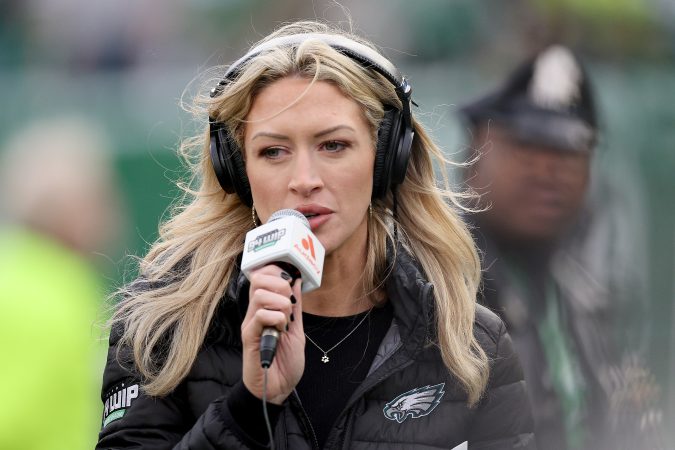
The former 94.1 WIP sideline reporter and Fox 29 sports anchor is leaving Philadelphia to cover the Chicago Bears for Fox 32, she announced on social media.
Kaney is taking over the role vacated by Cassie Carlson, who was promoted as the station’s lead sports anchor. Kaney will also do some sports anchoring work for the station, much like her role at Fox 29, which she left last month.
“I’m so grateful for the support all of my colleagues at Fox 29 have given me during my time there, but especially in the last few months,” Kaney told The Inquirer.
Those last few months included being laid off at WIP as part of company-wide cutbacks by parent company Audacy.
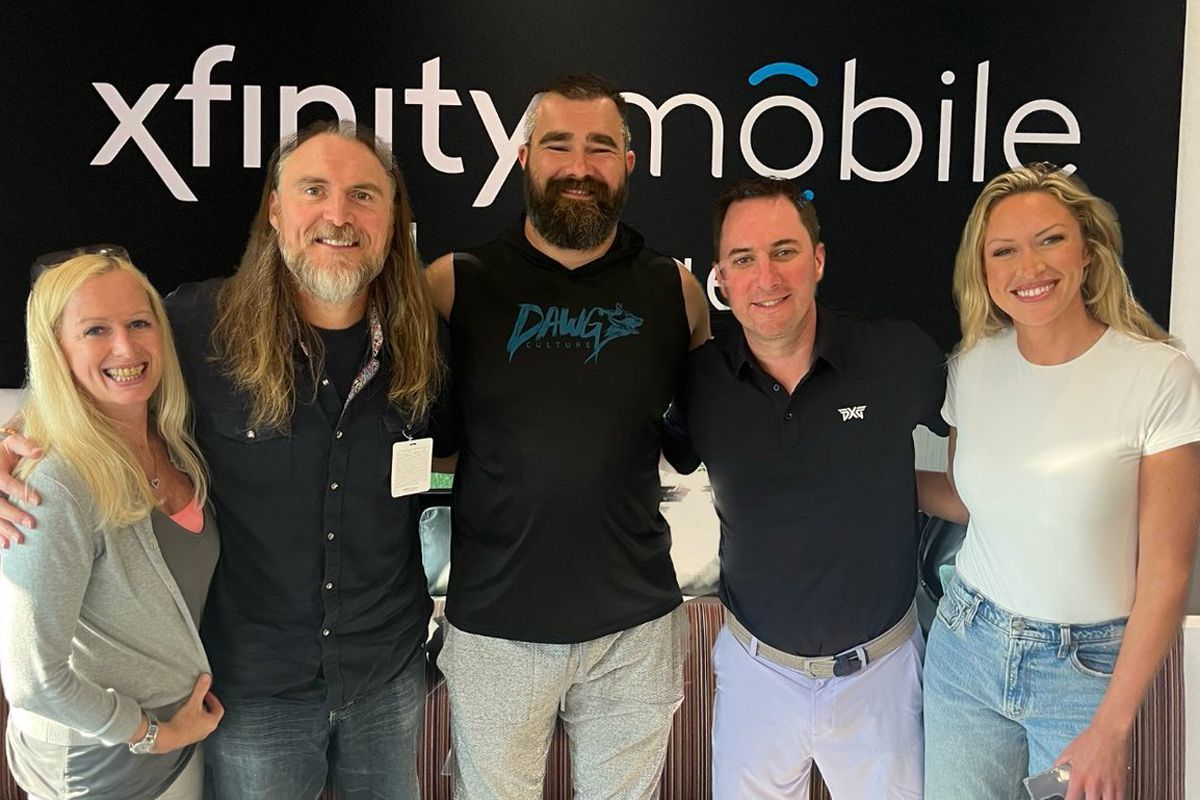
Devan Kaney (right) with 94.1 WIP’s morning show: (from left) Rhea Hughes, Jon Ritchie, Jason Kelce, and Joe DeCamara. 94.1 WIP
She also served as an on-air host, worked with the station’s popular morning crew, and hosted shows alongside Phillies announcer and former general manager Rubén Amaro Jr.
WIP hasn’t announced who will replace her, and the clock’s ticking. The Eagles’ first preseason game is five weeks away, with the Birds taking on the Baltimore Ravens on Aug. 15.
“It’s a tough job,” WIP program director Rod Lakin told The Inquirer in 2025. “You have to be someone that’s a really good communicator. You also need to be able to change quickly — circumstances change all the time in the NFL, and you’ve got to deliver that information quickly and in a collaborative way, because the game doesn’t stop.”
Over at Fox 29, Kaney’s role was partly taken over by former 6abc sportscaster Jamie Apody, who among other things is anchoring the station’s 10 p.m. newscast.
While Kaney is leaving the city, she’ll continue to host Werth Talking About, a PHLY podcast she’s co-hosting with former All-Star Jayson Werth. And Eagles fans might get a glimpse of her Sept. 28, when the Birds travel to Soldier Field to take on the Bears on Monday Night Football in Week 3.