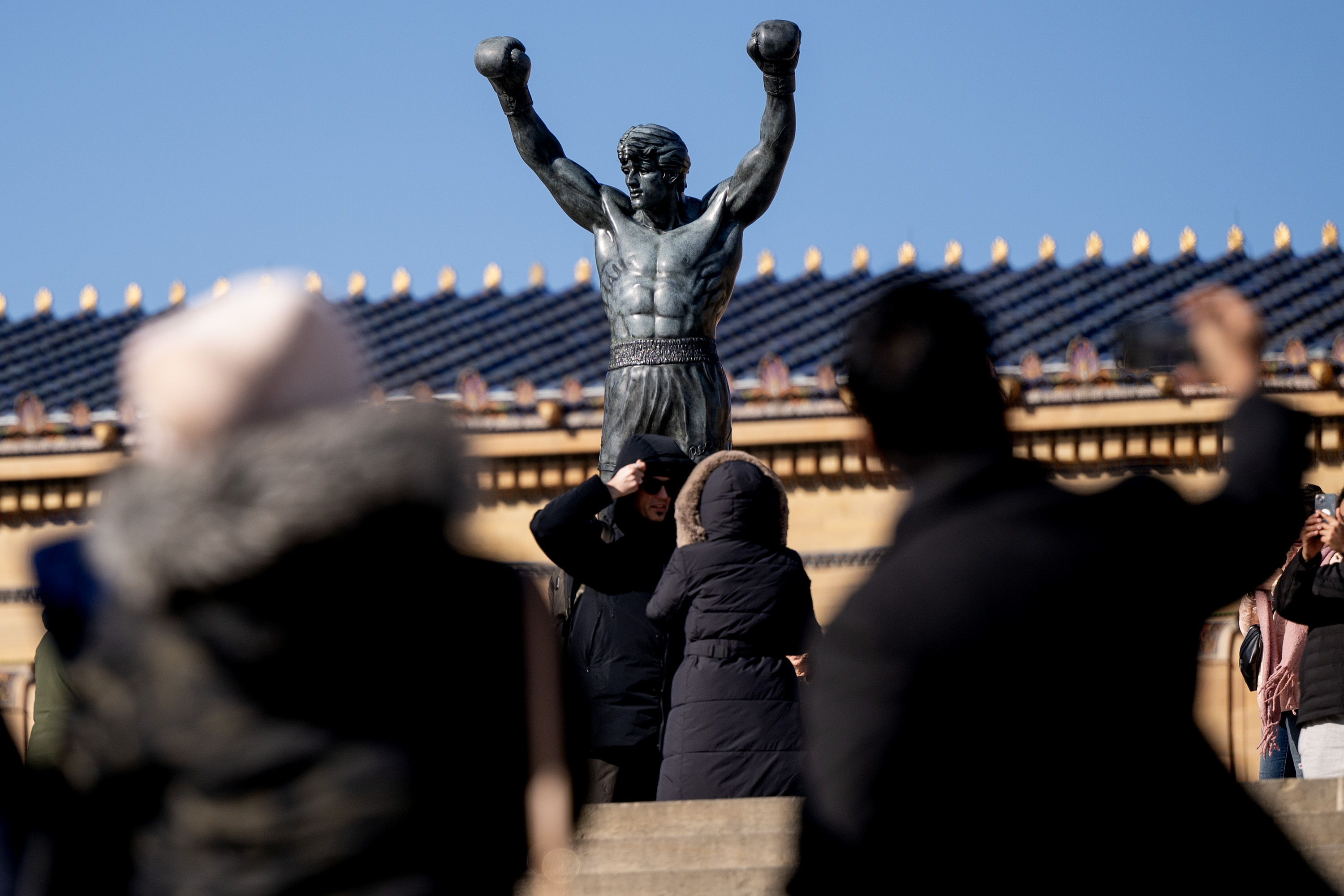
The monthlong 50th anniversary celebrations of Rocky continue this weekend with a rededication of the iconic Philadelphia Museum of Art statue and a race.
The Philadelphia Visitors Center is organizing a slate of events through Dec. 4, to honor Rocky Balboa’s cultural impact on the city’s tourism. Friday will see fans gather atop the Art Museum to attempt a Guinness World Record for the largest gathering of people dressed as Rocky Balboa. The scheduled Philly Pops concert is canceled, and the Rocky statue rededication has been postponed due to anticipated inclement weather.
Saturday will bring the Rocky Run, which consists of a 5K, a 10-mile walk or run, and an Italian Stallion half-marathon-distance challenge along Fairmount Park roads.
Road closures will pop up in these event areas, creating traffic delays and no-parking zones. Any vehicles still parked in no-parking zones during these events will be courtesy towed.
Friday, Nov. 13
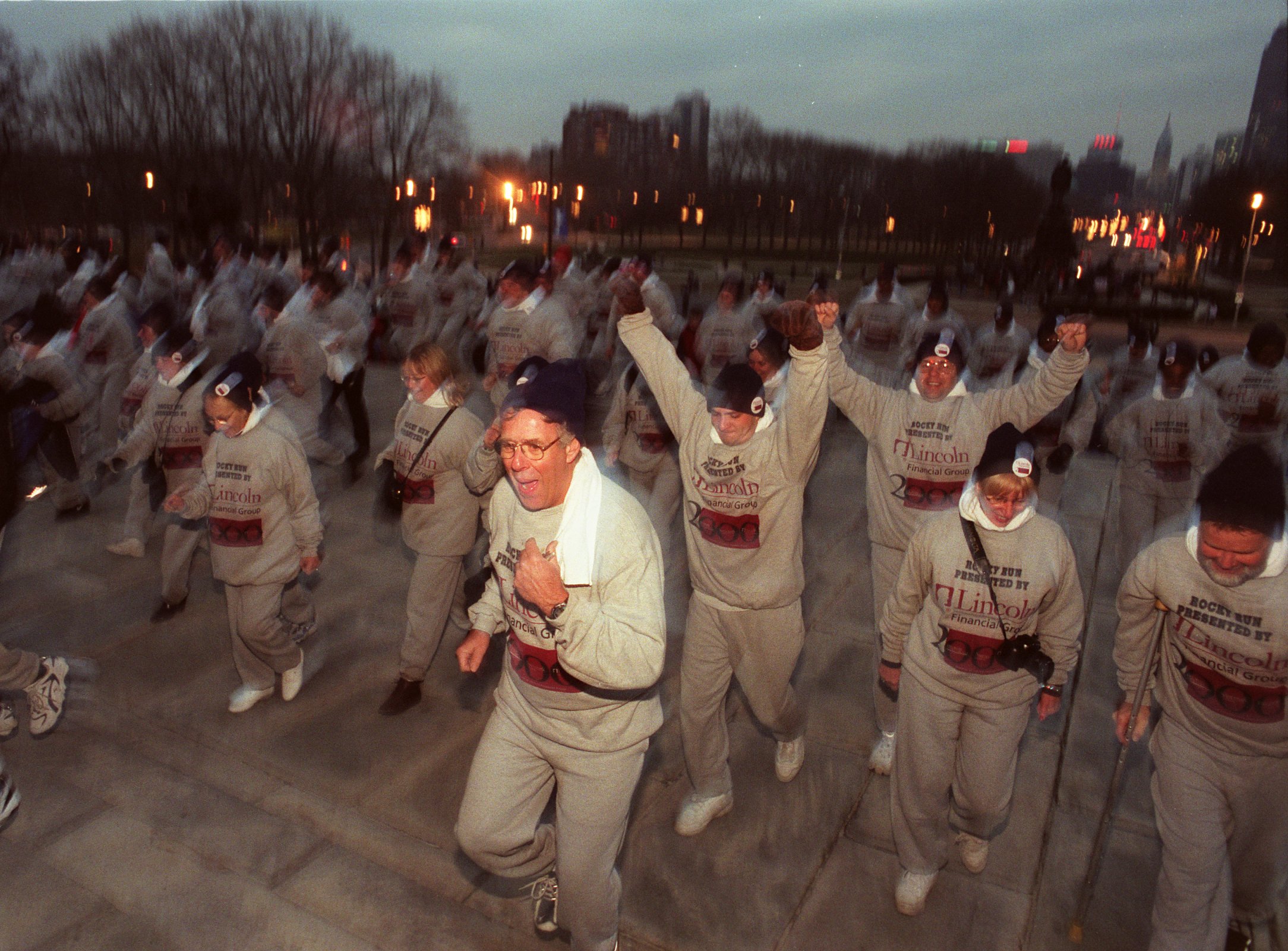
Hundreds clad in Rocky Balboa-like sweatsuits and black beanies will meet at the top of the Philadelphia Museum of Art steps, as Sylvester Stallone did 50 years before to attempt the world record.
Eakins Oval in front of the Art Museum will be closed from noon to 5 p.m. on Friday.
Additionally, to allow setup for the Rocky Run 5K, 10 Mile, and 13.1 Italian Stallion Challenge taking place Saturday, the Benjamin Franklin Parkway (inner lanes) between 22nd Street and Binswanger Triangle will be closed from 10 a.m. to 3 p.m. on Friday.
A 1999 file photo of the Rocky Run, 2000 people dressed as Rocky run up the Philadelphia Art Museum steps. The run kicked off the Millennium celebrations in Phila.Peter Tobia / Staff Photographer
The Rocky Run 5K, 10 Mile, and 13.1 Italian Stallion Challenge will take place from 7 a.m. to 2 p.m. on Saturday, starting at the Art Museum steps.
The following streets will be closed beginning at 3 a.m. Saturday:
Benjamin Franklin Parkway between 22nd Street and Eakins Oval
Spring Garden Street between Pennsylvania Avenue and 24th Street
Martin Luther King Drive between Eakins Oval and Falls Bridge
The following streets will be closed beginning at 4:30 a.m. Saturday:
Kelly Drive between Eakins Oval and Brewery Hill Drive
Sedgley Drive between Kelly and Poplar Drives
Lemon Hill Drive between Sedgley and Kelly Drives
The following streets will be closed beginning at 4 a.m. Saturday:
Strawberry Mansion Bridge
Sweetbriar Drive between Lansdowne and MLK Drives
Greenland Drive between Strawberry Mansion Bridge and Chamounix Drive
Ford Road between Chamounix and Greenland Drives
Chamounix Drive between Belmont Mansion and Greenland Drives
Lansdowne Drive between Sweetbriar Drive and Girard Avenue Bridge
Girard Avenue Bridge (eastbound lanes) between Lansdowne and Brewery Hill Drives
All streets (with the exception of Eakins Oval and MLK Drive) are scheduled to reopen by 2 p.m. on Saturday. Eakins Oval will be fully open to traffic by 3 p.m. MLK Drive will remain closed as part of its regular weekend closure for recreation.
SEPTA Bus Routes 7, 32, 38, 43, 48, and 49 will be detoured from their normal routes from 4 a.m. to 4 p.m. on Saturday.
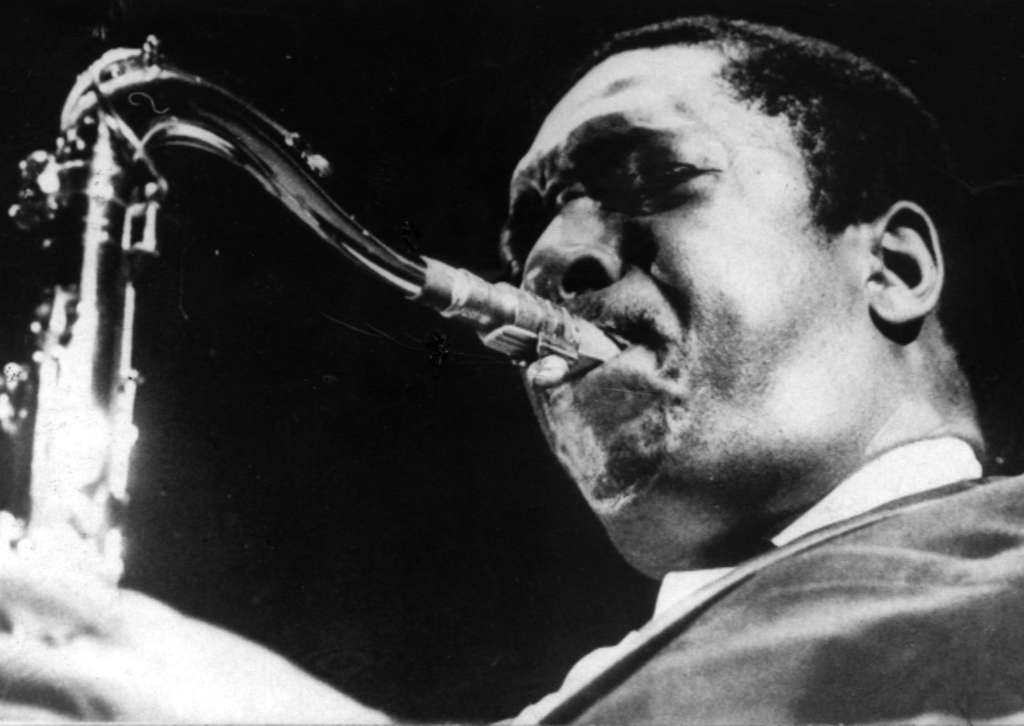
Sixty years ago, this week, John Coltrane returned to the city he had called home for more than a decade. He was playing at Temple University’s Mitten Hall, barely two miles from the Strawberry Mansion rowhouse where he’d spent several formative years.
He died nine months later in July 1967 and the Nov. 11, 1966 performance turned out to be the saxophonist’s final concert in his former hometown.
But the concert remains legendary for other reasons as well. Most notably, it featured the only known instance of Coltrane vocalizing, singing his venturesome melodic ideas while accompanying himself by beating rhythms on his chest.
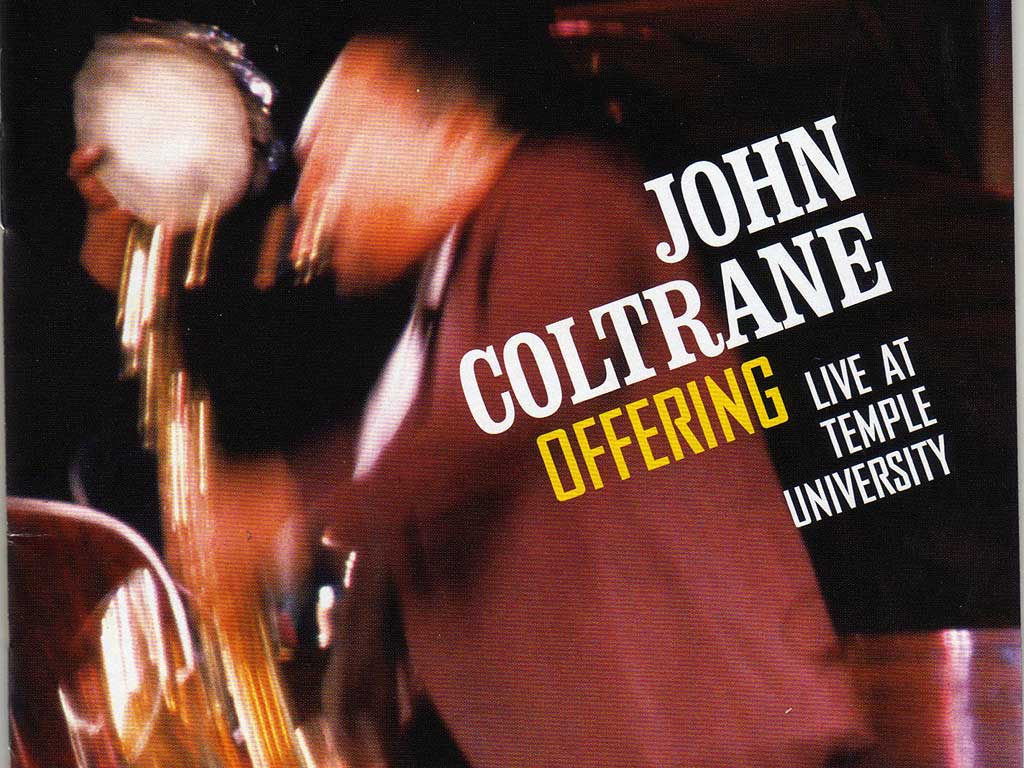
The Mitten Hall show was broadcast live on WRTI, then circulated for years as a bootleg before finally receiving an official release in 2014 as Offering: Live at Temple University. The album reveals the extremes to which Coltrane was stretching his music near the end of his life.
Album Cover for ” Offering: Live at Temple University” (2014).
The concert featured several unexpected guests joining Trane and his regular band mates — his wife and pianist, Alice Coltrane; fellow tenor saxophonist Pharoah Sanders; and drummer Rashied Ali, along with local bassist Sonny Johnson. Several percussionists had been invited to share the stage that evening, while a pair of saxophonists, Arnold Joyner and Steven Knoblauch, were allowed to sit in.
“True confession: I probably spent more time in the jazz clubs in North Philadelphia than I did on the Penn campus,” Knoblauch, now an accomplished psychologist, who was at that time an 18-year-old freshman at Penn, admitted over the phone from his home in upstate New York. “One of the reasons I chose to go to Penn was because I knew Philadelphia was full of great jazz musicians.”
Growing up in Jersey City, Knoblauch had frequented the Greenwich Village clubs where the jazz avant-garde was then taking shape. He has vivid memories of seeing pioneers like Coltrane, Miles Davis, Thelonious Monk, Sun Ra and Albert Ayler, and kept up the habit after moving to Philly.
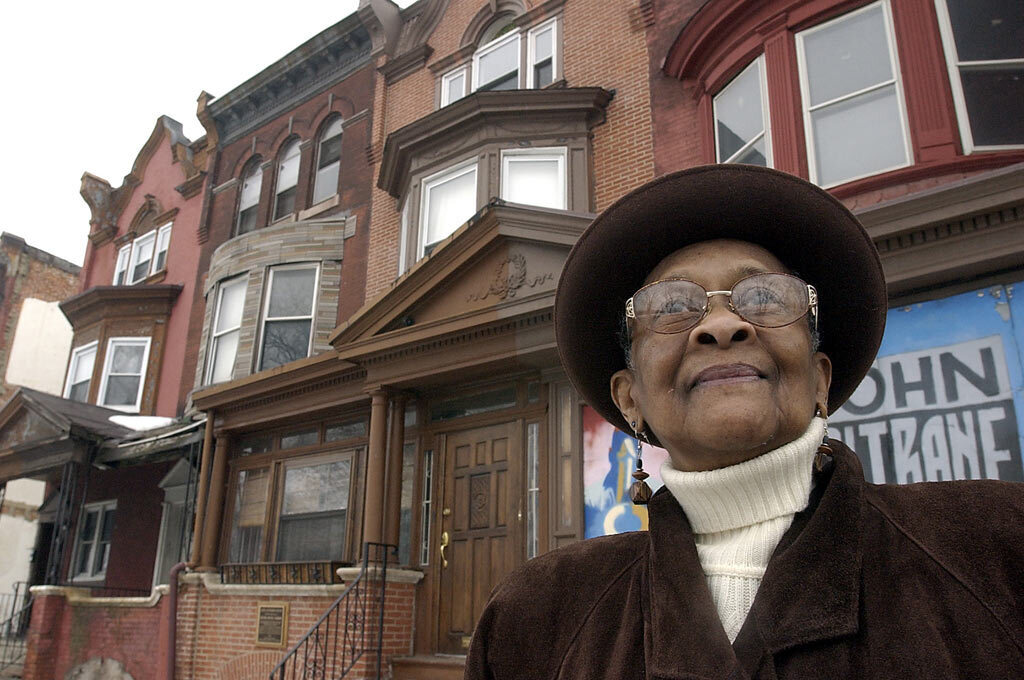
This 2003 photo shows Mary Alexander, John Coltrane’s cousin, in front of the John Coltrane house in Philadelphia. (Akira Suwa/The Philadelphia Inquirer via AP)AKIRA SUWA
During his four years at Penn, he led his own quartet, playing local clubs and coffeehouses. Hearing rumors that Coltrane had permitted young musicians to sit in with the band during recent performances, he showed up early to the Temple auditorium, sax in hand. Seeing that he and a bassist friend were musicians, the box office manager let them inside.
“When Coltrane and the band came in,” Knoblauch recalled, “his manager said, ‘Who told you to come up here?’ But Coltranesaid, ‘No, no, let them stay.’ He told us to sit stage left on a piano bench.”
Later in the evening, in the midst of the band’s 20-minute rendition of “My Favorite Things,” Coltrane strolled to the side of the stage and invited Knoblauch to take a solo.
“When you were around Coltrane, the man could read anybody,” Knoblauch marveled.“It was like being around a guru or a professor or a saint. He was a highly accomplished, highly intuitive, highly knowledgeable human being … He just looked at me and somehow he knew that I would play what he wanted me to play in that moment.”
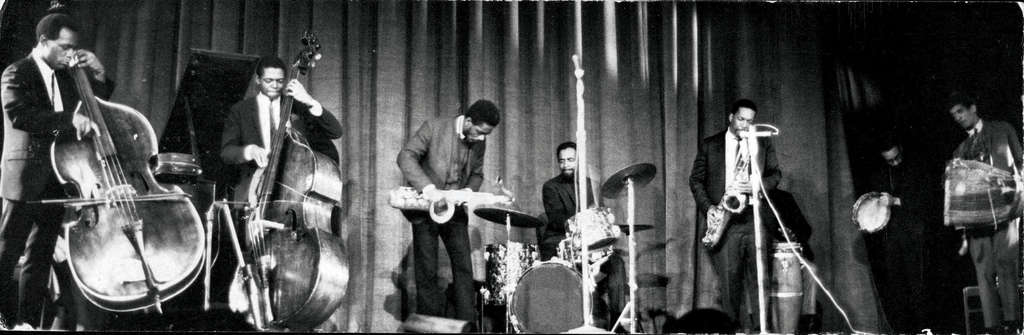
John Coltrane (fourth from right) playing at the Village Theater in New York, a month after the 1966 Temple University performance.Special Collections & Archives, UC- Santa Cruz and the Frank Kofsky Archives
Jazz Philadelphia and Ars Nova Workshop will commemorate that concert’s 60th anniversary this week on the campus where the original event took place. On Wednesday, the annual Jazz Summit will include a conversation on the stage of Mitten Hall with Robert Kenyatta and Knowblauch, moderated by WRTI’s Nate Chinen. On Thursday, a concert celebrating the event will feature an all-star band including pianist Kris Davis, bassist Robert Hurst, drummer Terri Lyne Carrington, and two saxophonists whose fathers led that night’s sonic torrent: Ravi Coltrane and Tomoki Sanders.
Throughout the month prior to the concert, Coltrane had become a regular presence at North Philly’s Church of the Advocate, where a group of local drummers met to practice twice a week.
Among them was Kenyatta, then a 24-year-old percussionist and member of the Visitors, a band led by brothers Carl and Earl Grubbs, cousins of Coltrane’s first wife, Naima.
“I knew who he was right off,” Kenyatta said last week, remembering the saxophonist’s impromptu first visit to the church. “He walked over to me on the stage and asked, ‘Would you mind if I sit in with you?’ I waved my hand at him like, ‘Get out of here. You’re John Coltrane!’ And he smiled, went to the other end of the stage, took out his horn, and started playing.”
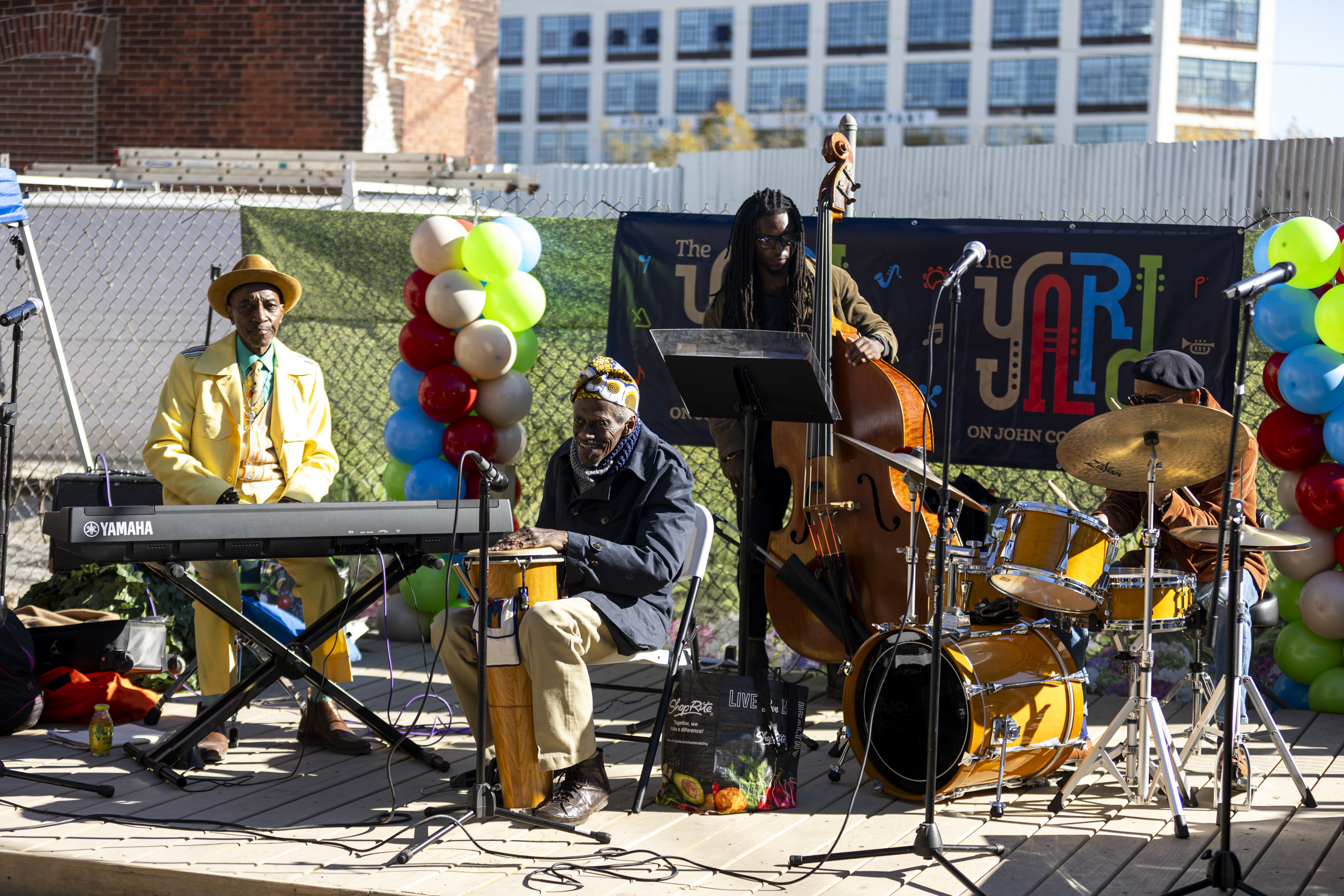
People gathered as they listen to Alfie Politts All-Star Trio with Robert Kenyatta at the grand opening of The Yard in Philadelphia, Pa., on Saturday Nov. 9, 2024.Tyger Williams / Staff Photographer
Kenyatta and his fellow drummers were at first somewhat dismissive of the fiery, experimental sound of Coltrane’s playing. But when he returned in early November, they were stunned.
“To our surprise, he started playing each of our rhythms on his horn. That spaced us out. He must have gone home and studied them in his head. When we finished, he asked if many of us could do a gig.”
Kenyatta took him up on the offer, joining a cohort of percussionists that included Charles Brown, Angie DeWitt, and Umar Ali, brother of the band’s drummer, Rashied Ali. It was an early career highlight for Kenyatta, who would go on to tour with Sonny Rollins and the Beach Boys, and work extensively with the Philly jazz bagpiper Rufus Harley.
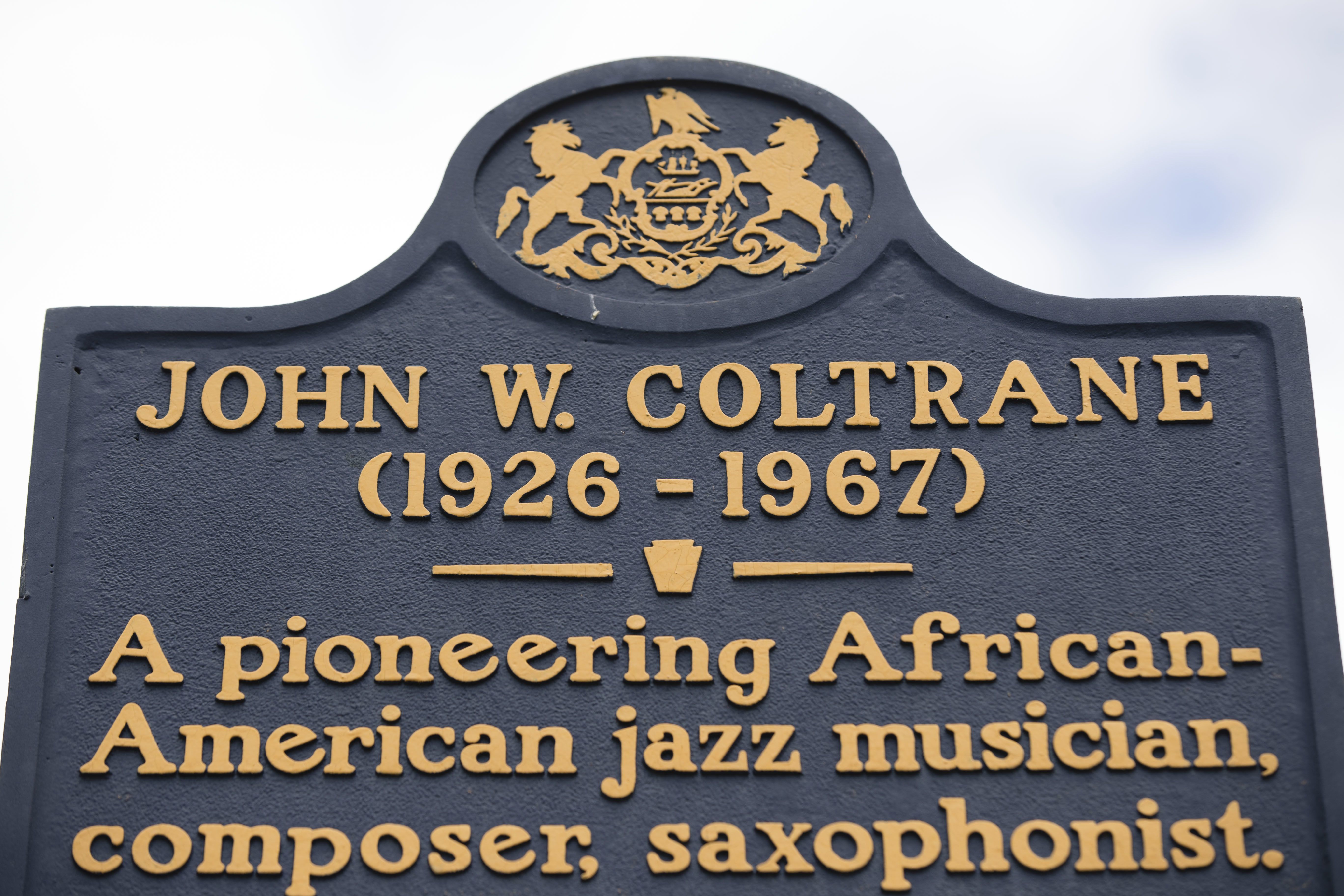
An historic marker posted outside the former home of jazz musician John Coltrane in Philadelphia, Monday, May 8, 2017.AP Photo/Matt Rourke
This week’s events are part of the ongoing celebration of Coltrane’s centenary in September in the city and beyond. Last week saw the release of The Tiberi Tapes, a collection of live recordings captured on a portable reel-to-reel tape by the saxophonist Frank Tiberi beginning in 1960 at clubs including Philly’s Showboat and Pep’s.
“Jazz Philadelphia Summit: Offering Edition,” Nov. 11, 1:30 p.m., Mitten Hall, Temple University, 1913 N Broad St, jazzphiladelphia.org
“John Coltrane’s Offering Revisited,” Nov. 12, 8 p.m., Temple Performing Arts Center, 1837 N Broad St, arsnovaworkshop.org
A Philadelphia pastor pleaded guilty in federal court this week to charges stemming from an alleged conspiracy with another pastor to create and share child pornography, U.S. Attorney David Metcalf said.
Bryan Jackson, 42, pleaded guilty Wednesday to conspiracy to manufacture child pornography, manufacture and attempted manufacture of child pornography, and receipt of child pornography, Metcalf said Thursday.
Jackson is scheduled to be sentenced in February, Metcalf said.
In June, Jackson, pastor at Garden of Prayer World’s Prayer Center in Strawberry Mansion, and Isaiah Banks, pastor of Second Pilgrim Baptist Church in Francisville, were charged by the Philadelphia District Attorney’s Office with allegedly grooming and sexually exploiting two teenage boys.
The U.S. Attorney’s Office soon took over the case.
Robert C. Keller, Jackson’s lawyer, said his client is “quite remorseful for his conduct” and “takes full responsibility.”
Jackson is still a member of the church, but took a leave of absence from his role as pastor, Keller said.
A representative for the Garden of Prayer World’s Prayer Center could not be reached for comment.
The federal case against Banks is still pending. His federal defender could not be reached for comment.
According to the plea memorandum filed this week by the U.S. Attorney’s Office, the investigation began in April when the Philadelphia Department of Human Services informed Philadelphia police that a 15-year-old was allegedly solicited by Banks to send masturbation videos.
Banks allegedly told the teen that older girls would be willing to pay for the videos. The teen told investigators that he sent sexually explicit material to a phone number he believed was for an older girl.
Banks and Jackson allegedly conspired to share the photos and videos with each other.
Authorities seized Jackson’s iPhone and found he had two cellular lines on the phone, which he used to receive and send child pornography, the memorandum said. On Banks’ phone, which also was seized, Jackson’s second line was labeled “Bryan 2.”
“Both of Jackson’s phone lines are paid/registered to the church, Garden of Prayer World Prayer Center, where he worked as a pastor,” the memo said.
On June 19, Jackson was arrested by Philadelphia police. During an interview with detectives, Jackson admitted to receiving child pornography from the teen boy using his second phone line, the plea memo said.
Jackson told detectives that he shared the images and videos with Banks. Jackson also admitted to receiving videos from a second teen, the memo said.
This week’s edition of Shackamaxon reflects on the closure of the Academy of Natural Sciences museum, City Council’s misguided efforts to restrict Philadelphia Gas Works, a last-minute cash infusion in the governor’s race, and how people argue when they know they are wrong.
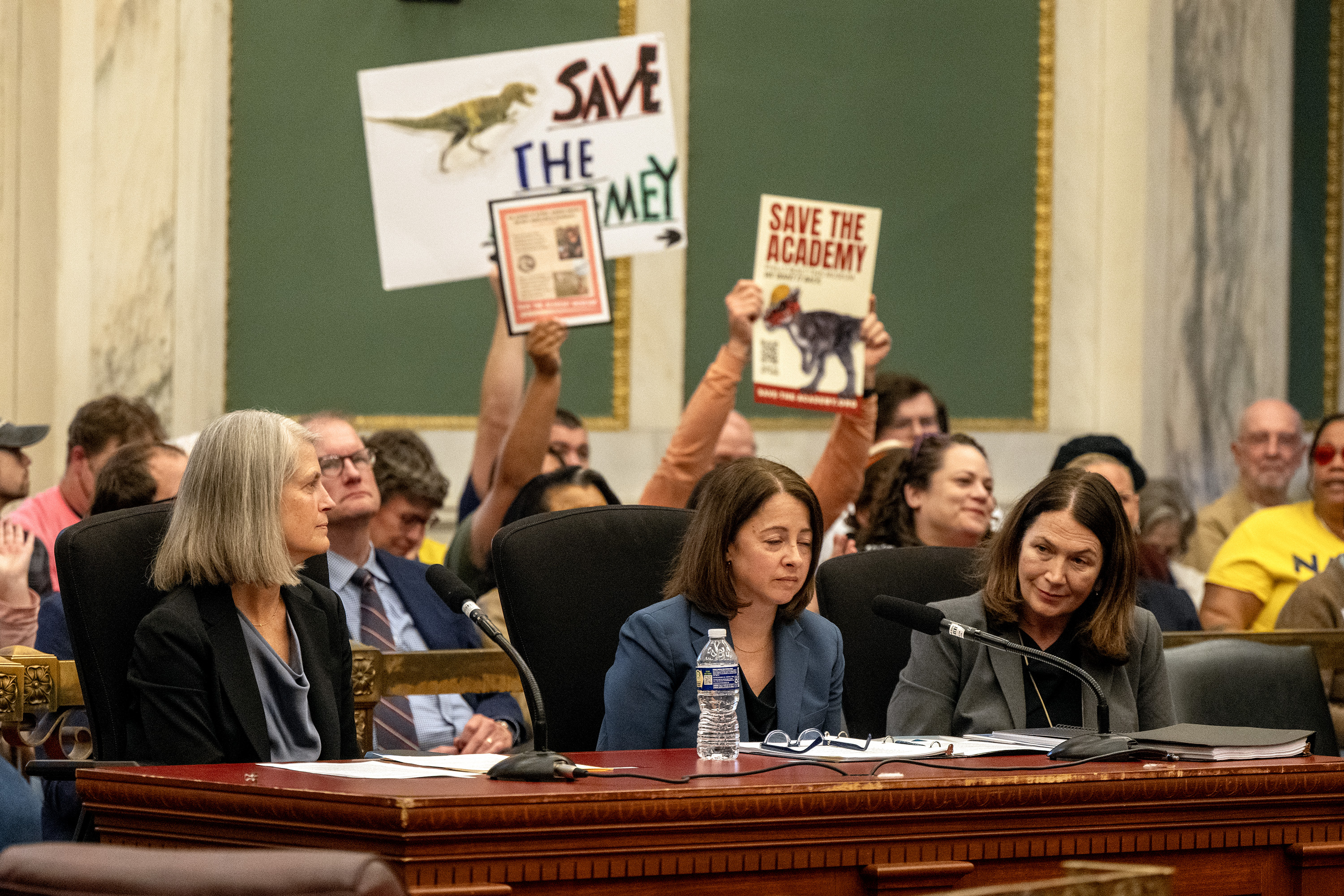
Melissa Richman (center), executive director of operations in the Office of the President of Drexel University, testifies as City Council holds a hearing Monday on the closure of the museum at the Academy of Natural Sciences.Tom Gralish / Staff Photographer
Confusing closure
On Monday, City Council held its long-awaited hearing into the closure of the Academy of Natural Sciences museum on the Parkway. Throughout the discussion, one question kept popping into my brain: “Why is this building closed?”
Nothing in the proceedings provided a satisfactory answer.
Yes, it is true that the building needs significant work, that both Drexel and the Academy are struggling financially, and that shutting down the public-facing side would save millions of dollars. It is just as true that for the average Philadelphian, the museum is the Academy of Natural Sciences. Without the ability to see the collections ourselves — where they belong in the historic building on the Parkway — the benefits of hosting the Academy are much less clear.
Unfortunately, city and state leaders do not seem to understand this sentiment. Deputy Mayor Trish Wellenbach, who has been appointed to advise the Academy, did not attend the hearing. The Parker administration issued a statement saying that “the critical work to preserve the Academy’s educational mission is ongoing.” Of course, to most of us, opening the building to the public is at the core of that mission.
Even more mystifying is the failure to accept the help offered by the William Penn Foundation to keep the museum open while options are explored, or to notify the wider public of the institution’s fiscal needs before insisting on a quick closure. This left many museum fans unable to visit before the doors shut on Sept. 27.
Many speakers cited the influence of Academy CEO Scott Cooper as a negative for the institution. Former employees said Cooper did not appreciate the museum’s charms, echoing reporting in Philadelphia Magazine and my own conversations with sources on the matter.
Cooper apparently preferred talking about art and architecture to dinosaurs and dioramas, and moved the museum away from its core audience of children and families. In a particularly bizarre decision for an institution with millions of dollars’ worth of deferred maintenance, Cooper spent $3 million on an art gallery no one had ever asked for. It replaced the museum’s reading room, which had actually brought visitors, and their money, to the museum.
Additionally, simply moving the collections to a new location is not a panacea. As many panelists testified, these are delicate artifacts that require specialized transportation and storage. This means moving itself would likely cost many millions of dollars.
Council members also seemed mystified by the lack of clarity from Drexel and the Academy. The hearing represented a strong reminder of how important their oversight role can be.
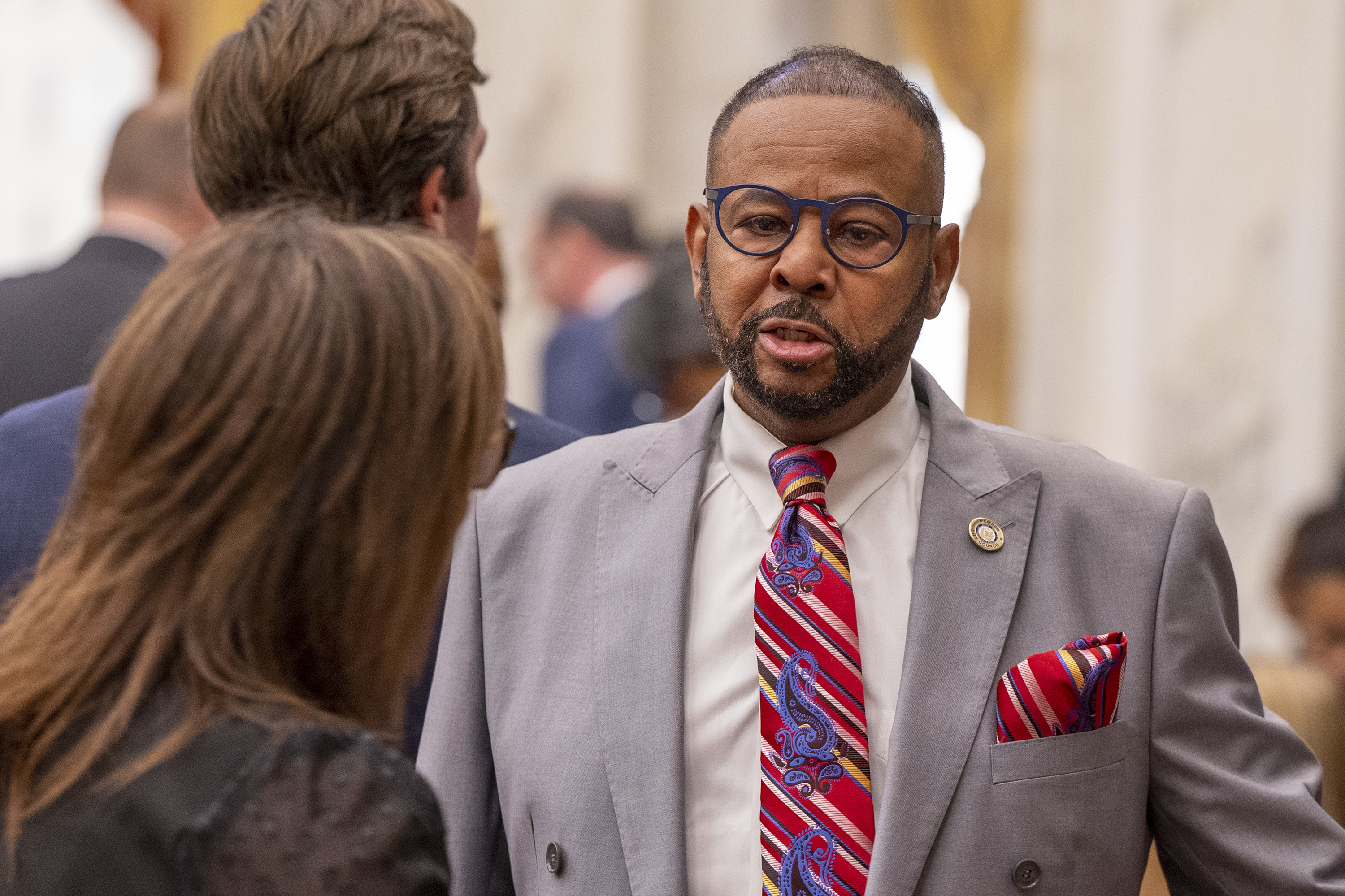
Councilmember Curtis Jones Jr. inside City Hall in 2023.Tom Gralish / Staff Photographer
Running on fumes
But while Council giveth, it also taketh away. Members are working to prevent Philadelphia Gas Works, the city-owned gas utility, from shutting off heat for residents. Citing a 39% rise in shutoffs, 4th District Councilmember Curtis Jones Jr. introduced a resolution that calls for hearings into PGW’s shutoff procedures.
Jones, who will likely face a reelection challenge next year, cast the move as a way to combat affordability concerns. But there’s a big problem with his logic: restricting shutoffs could lead to higher costs for paying customers.
A city-owned utility, PGW does not earn a profit. It also cannot shut off anyone’s heat during the winter. There are no shareholders hoping for dividends. There’s also an existing pathway to protect access to heating. Ratepayers already contribute roughly $100 million per year to cover the heating needs of the neediest Philadelphians, which is around $150 to $200 per year per paying household. According to PGW sources, covering the cost of the shutoffs would add approximately $43 million to the total, a 40% increase in subsidy costs.
I’m all for helping our neediest neighbors stay warm, but eligibility for this assistance should remain tied to incomes, not payment status.
State Treasurer and Republican candidate for governor Stacy Garrity sits down for an interview with Inquirer reporters at the newspaper’s offices in September.Tom Gralish / Staff Photographer
All in
Throughout this year’s gubernatorial race, Republican nominee Stacy Garrity has been noticeably outspent by incumbent Gov. Josh Shapiro. However, reporting from Spotlight PA indicates that this has changed during the last weeks of the election.
Stephen Caruso and Jaxon White write that “Republican Stacy Garrity raised more money in the past five weeks than she did during the rest of her campaign for governor, much of it tied to the skill games industry.” She’s still being outraised by Shapiro, but between Sept. 15 and Oct. 19, Garrity brought in almost $5.4 million.
Coincidentally, Garrity’s allies in the Pennsylvania Senate rejected a proposed compromise over the devices, which are currently illegal under state law, during this same period. While Shapiro has also received money from the skill games lobby, more than 80% of Garrity’s recent fundraising has come from groups that advocate for the extractive machines.
The additional money has enabled Garrity to run some TV ads. Although it remains to be seen whether the AI-generated takedowns of Shapiro will get her back in a race she’s been consistently losing by double digits in the polls.
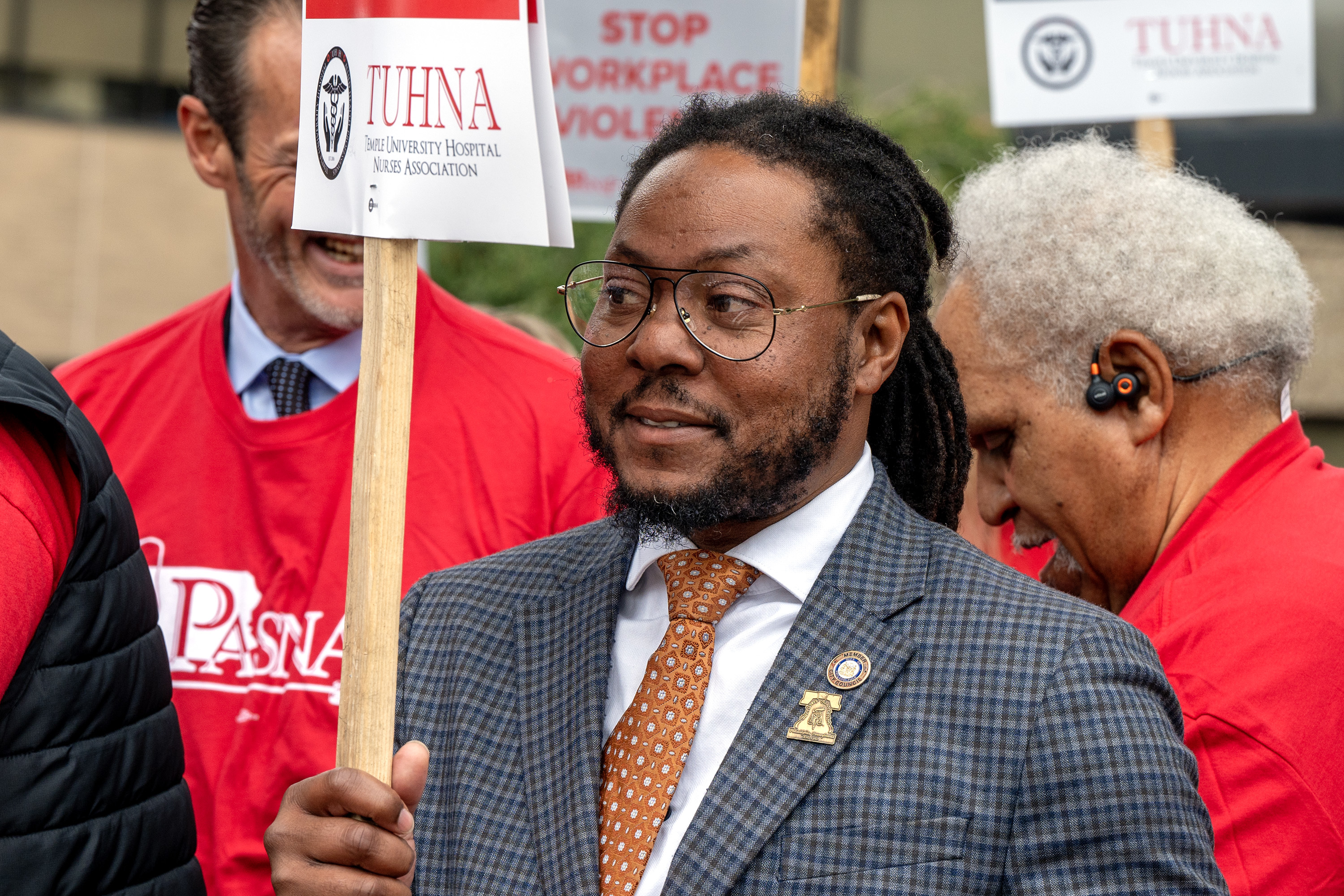
City Councilmember Jeffery Young Jr. at a union protest outside Temple University Hospital on North Broad Street in 2025.Tom Gralish / Staff Photographer
Much ado about tickets
When a political official receives a tough question from yours truly, there are many ways they could choose to proceed. They can ignore the question altogether. They can tell me they have nothing to say. Or they can speak with me and defend their position (I’m always open to changing my mind).
Councilmember Jeffery “Jay” Young Jr., however, chose a different option.
He went on a tirade at the end of last week’s Council hearing, alleging that the media is out to get him, and that criticism of his plan to forgive parking ticket debt was somehow anti-Philadelphia.
On social media, Young’s staff piled on. “This is how these new ‘Philadelphians’ feel about natives,” wrote Young’s legislative director. Of course, as Young well knows, this column is written by a lifelong resident. I also doubt that sentiment about parking enforcement varies significantly across demographic fault lines. Plenty of “new Philadelphia” social media influencers have made resentment of the city’s parking authority a major part of their content.
The reason Young gets so much negative media coverage isn’t a mystery: It’s because he makes bad decisions. His colleague Anthony Phillips entered Council at roughly the same time, and I’ve yet to write a bad word about him. That’s because he makes responsible choices, chooses his words carefully, and treats all his constituents with respect.
Young, so far, has not done these things. Instead, a remarkably wide assortment of residents, from grandmothers in Strawberry Mansion to young professionals in Logan Square and everyone in between, has reached out to say he’s nonresponsive and disrespectful.
Whenever people’s arguments veer away from facts and evidence and into the territory of smears, misrepresentations, and insinuations, it is a reminder of how limited their ideas are.
In 2021, DeVonté Douglass was fired from his role in the Philadelphia District Attorney’s Office and pleaded guilty to a prostitution-related misdemeanor after fatally shooting a sex worker in self-defense.
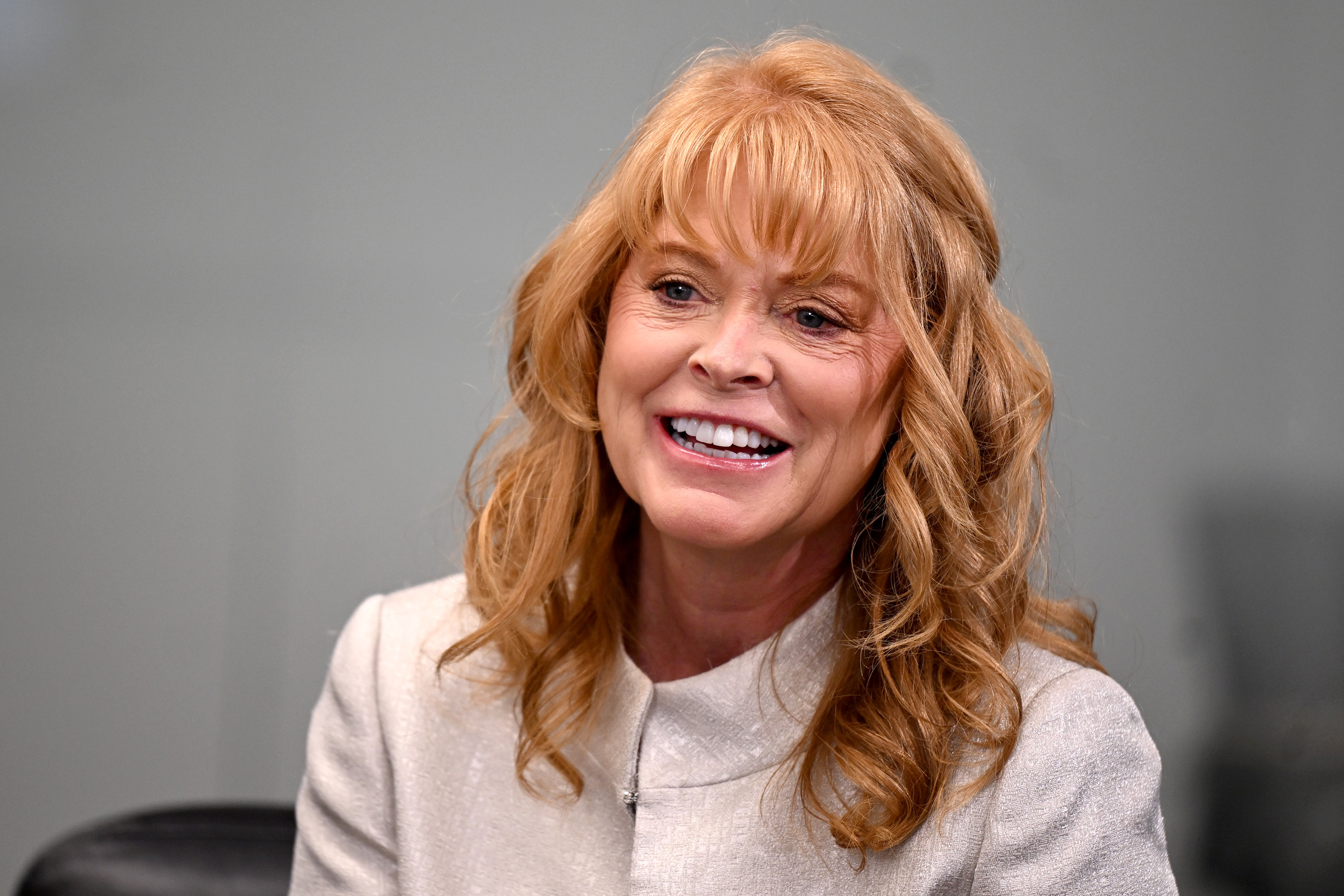
On Monday, Douglass started a new job in Philadelphia’s halls of power, working as a staffer for City Councilmember Jeffery Young Jr., according to an internal Council email obtained by The Inquirer.
Douglass announced his hiring in a post last week on LinkedIn. The post was still visible as of Tuesday afternoon, but had been deleted from Douglass’ account by Wednesday afternoon.
“I look forward to supporting Councilmember Young’s work, serving the residents of Philadelphia, and continuing to advocate for stronger, safer, and more empowered communities,” Douglass wrote. “This is more than a new position. It is another opportunity to serve the city and communities that have shaped who I am.”
Neither Douglass nor a spokesperson for Young responded to requests for comment Wednesday.
Young’s chief of staff, El Shafiyq Asad Ali, informed Council of Douglass’ hiring in an email Monday.
“Devonte will manage the Councilman’s calendar and be your primary point of contact for scheduling meetings, events, and other requests for his time,” Ali wrote.
In October 2020, Douglass — who at the time was working in a gun violence victims support role in the district attorney’s office — fatally shot 31-year-old Vernon Harris. The two men had chatted on Instagram and agreed to meet in Strawberry Mansion, and Douglass paid Harris $250 on CashApp, prosecutors said at the time.
Douglass in 2021 was charged in Philadelphia Municipal Court with three misdemeanors: soliciting prostitution; possession of an instrument of crime; and misleading investigators, with state prosecutors alleging he initially lied to investigators about why he was meeting Harris.
Later that year, Douglass pleaded guilty to the prostitution-related misdemeanor in exchange for the other charges being dropped, according to court records. He was sentenced to probation, records show.
Douglass at the time was a peer crisis responder working with victims of gun violence in the office of Philadelphia District Attorney Larry Krasner. He was fired after the incident, a spokesperson said then.
The state attorney general’s office managed the case due to the district attorney’s office’s conflict of interest.
Since leaving the district attorney’s office, Douglass has worked with nonprofit organizations focused on justice and safety issues and as a secretary in the Philadelphia court system, according to his LinkedIn profile. He described himself as a “dedicated Criminal Justice Professional with over a decade of experience working across the legal system — from judicial chambers to community-based advocacy.”
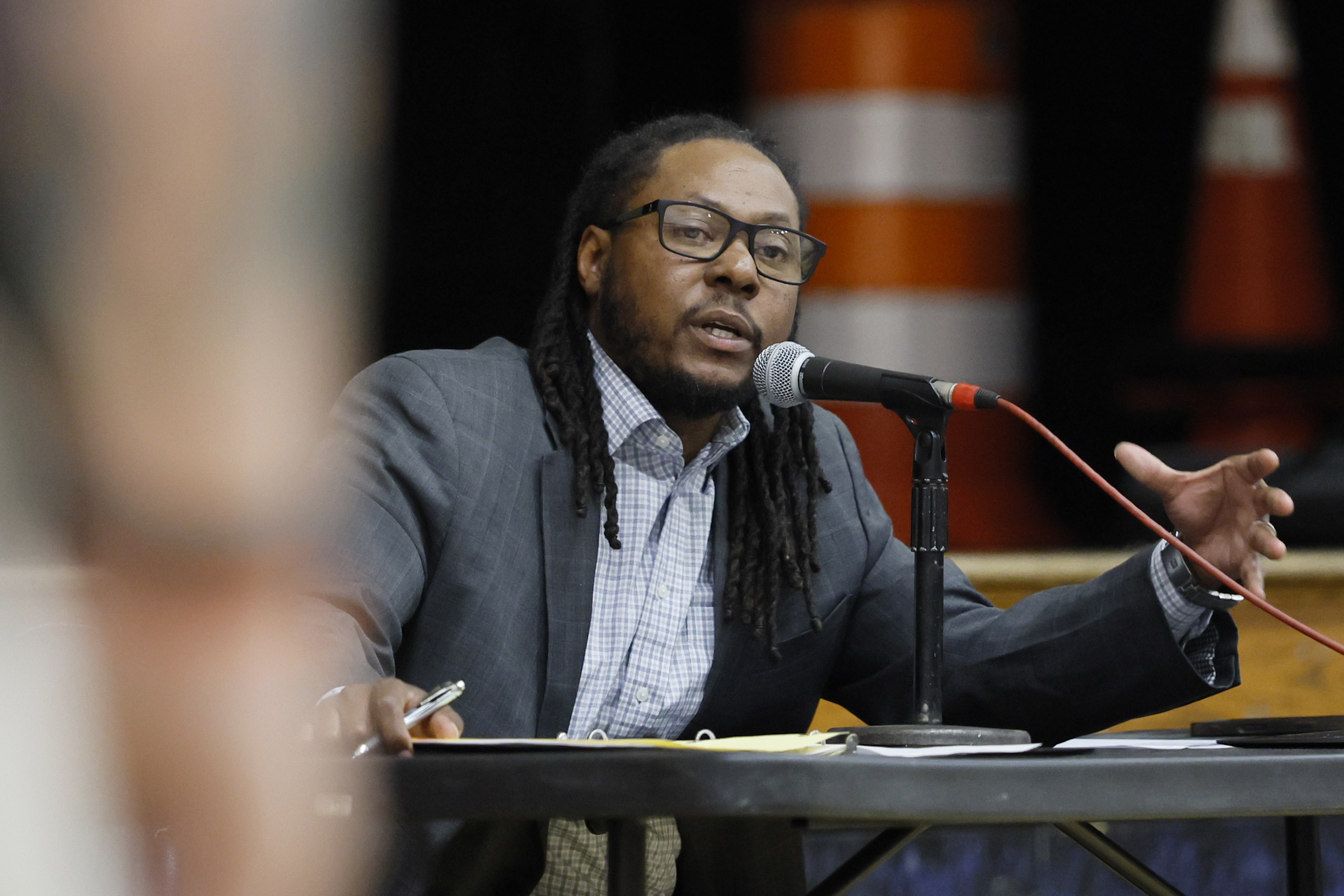
Councilmember Jeffery Young Jr. responds to a question from a member of the public during a community meeting on Tuesday, September 15, 2026.Elizabeth Robertson / Staff Photographer
Young’s office did not respond to multiple requests for comment Wednesday. A first-term Democrat, Young represents the 5th Council District, which includes most of North Philadelphia and parts of Center City.
A person who answered a phone number associated with Douglass said they would relay a request for comment to him. He did not respond.
Staff writer Anna Orso contributed to this article.
Ron Avery, 85, of Philadelphia, retired eclectic reporter and columnist for the Daily News, Philadelphia historian, volunteer city tour guide, author, high school history teacher, veteran, and canoe enthusiast, died Sunday, Aug. 2, of complications from amyotrophic lateral sclerosis at his home in East Falls.
Reared in Fairmount, Mr. Avery graduated from Thomas Edison High School and earned a bachelor’s degree in history at Pennsylvania State University. He was assigned to the ship newspaper in the Navy after college, found a creative niche in journalism, and went on to work for more than 30 years at the Associated Press, the Bucks County Courier Times, the Courier-Post in South Jersey, and the Daily News.
He wrote for the Daily News as a correspondent in 1981, joined the staff in 1982, and, until his retirement in 2000, wrote thousands of stories about crime, casinos, war orphans, historic houses, the MOVE bombing, local notables, and other subjects. His columns, “Poor Ronald’s Almanac” and “One of Us,” hammered away at local issues and featured everyday people doing exceptional things.
“He covered every nook and cranny of the city,” said his son Serge. “That burning curiosity sustained him till his last days.”
He wrote three books about Philadelphia, including A Concise History of Philadelphia in 1999. He produced a series of video guides he called the Urban Explorer for local TV in 2004 and posted blogs about the city from 2017 to 2019 on a website called Philadelphia Cracks Me Up.
“Like all cities,” he said in a 1995 Daily News column, “Philadelphia is honeycombed with hidden spaces and forgotten places.” In a 1997 review of his book, City of Brotherly Mayhem: Philadelphia Crimes and Criminals, The Inquirer’s Thomas Brady said: “The book … is decidedly a fun read.”
Alex Strang, his director on the Urban Explorer videos, called Mr. Avery an “unforgettable legend” and “a walking encyclopedia of the city’s history and eccentricities” in a Facebook tribute. Other former colleagues said he was “a clever journalist” and “a true Philadelphian.”
Longtime Daily News colleague Robin Palley said on Facebook: “He had an amazing knack of finding quirky people with fascinating skills or habits and making them come to life on our pages.”
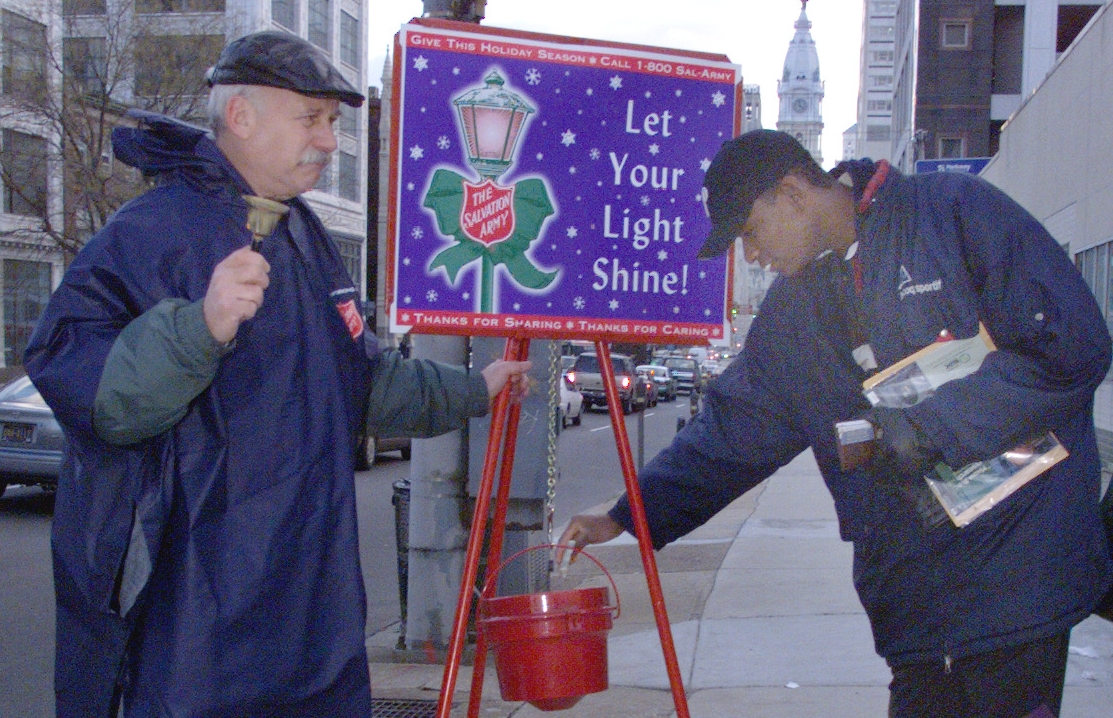
Mr. Avery (left) mans a Salvation Army donation kettle in 1999.Steven M. Falk / Staff Photographer
Before the Daily News, Mr. Avery wrote news and feature stories for the Courier-Post in the 1970s, and the Courier Times and the AP in the 1960s. He moved to Israel for six months in 1972 but returned to work for the Courier-Post in 1973.
He also wrote freelance pieces for the Hidden City Daily, PhillyHistory.org, UShistory.org, and op-eds later for The Inquirer and Daily News. He served in the Navy from 1964 to 1966, joined the Philadelphia Canoe Club later, and led water trips in the New Jersey Pine Barrens and elsewhere.
Knowledgeable, energetic, and naturally affable, he was a tireless promoter and volunteer guide in Philadelphia. He led walking tours throughout the city for students, civic groups, and other organizations, and his explanatory video tours featured cobblestone alleys, urban gardens, museums, statues, and other features of city life.
He was a stickler for details and historical accuracy, and he helped spur City Council to pass an ordinance in 2008 to educate and certify paid Center City tour guides. “They score high as Philadelphia ambassadors of good will,” he said in a 1995 column about uneducated guides, “but as historians they often flunk out.”
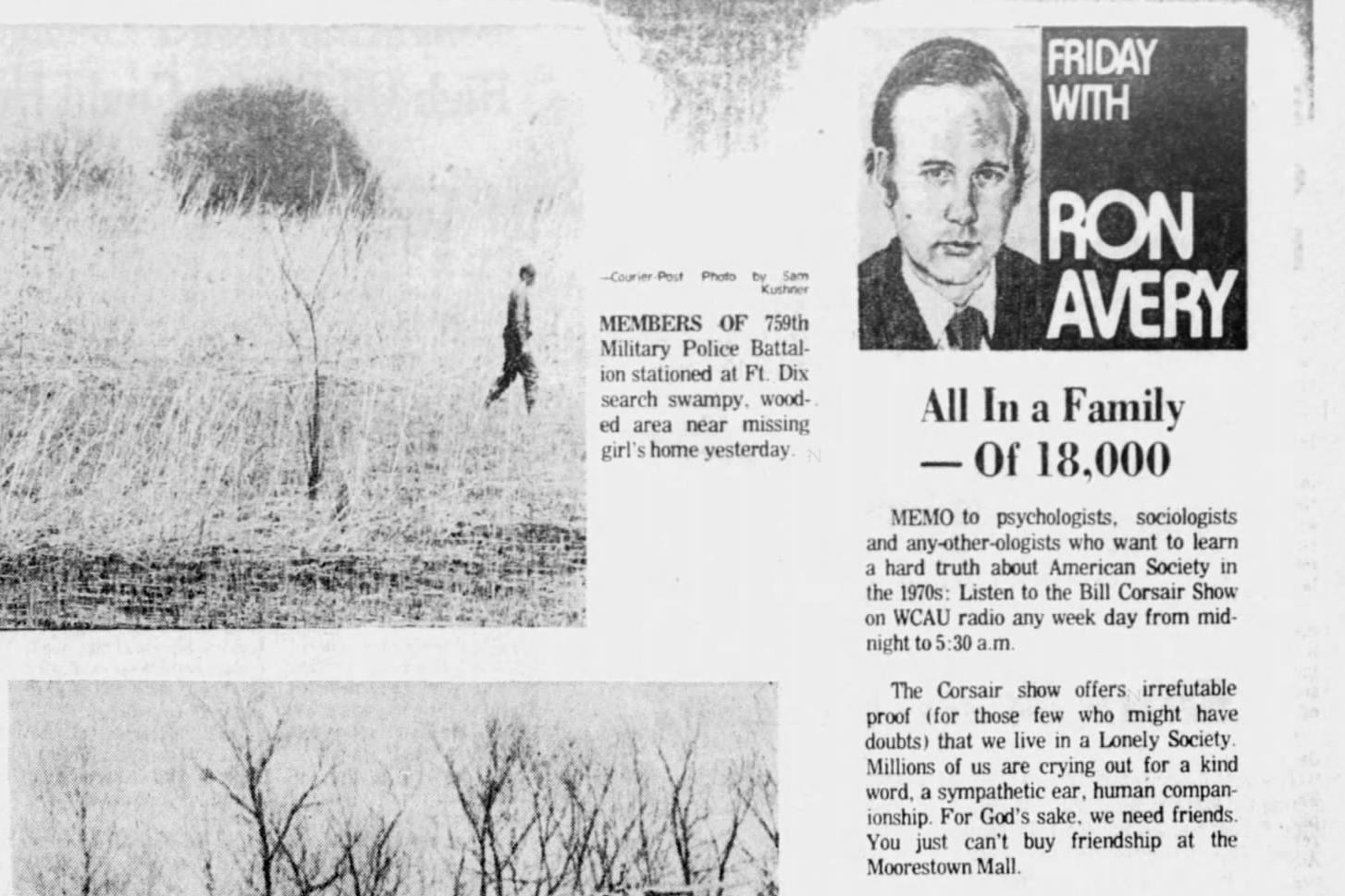
Mr. Avery wrote a column for the Courier-Post in 1974.Newspapers.com
Ronald Avery was born June 10, 1941, in Strawberry Mansion. He joined the Boy Scouts, earned his bachelor’s degree at Penn State in 1963, and taught history at Bensalem High School for a year.
He was a boxer in college and, mesmerized by the sport, later worked as a referee for amateur matches.
He met Suzet Habif in Israel in 1967, and they married in 1968. They had sons Serge and Ben, and lived for years in a rowhouse in Oxford Circle.
Mr. Avery cared for his wife during her long illness in the 1980s and ’90s. She died in 1993.
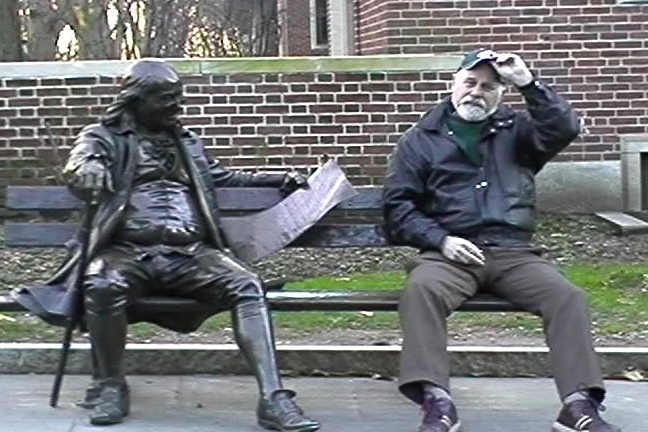
Mr. Avery liked to hang out with Benjamin Franklin and other historic figures. Alex Strang
He lived later in Pennsport and East Falls, was diagnosed with ALS in 2015, and proudly outlived its average life expectancy of 18 months by nearly a decade. “He defied that diagnosis and did not let it define him,” his son Serge said. “He always said he had a lot to live for.”
Mr. Avery was an avid reader and street photographer. He liked poetry, wrote limericks on birthday cards, and posted hundreds of his photos on flickr.com. One of his photos won a contest and was displayed at the airport.
He enjoyed jazz and jokes, led the prayers at family gatherings, and gave Yiddish quizzes to his two grandsons. He shared favorite recipes with Daily News colleagues and whipped up memorable homemade soups, especially white bean.
“I’ll greatly miss his endless anecdotes about all things Philadelphia,” said his daughter-in-law, Rebecca Houlding, “the stories about the local criminals, and his love of his family and friends.”
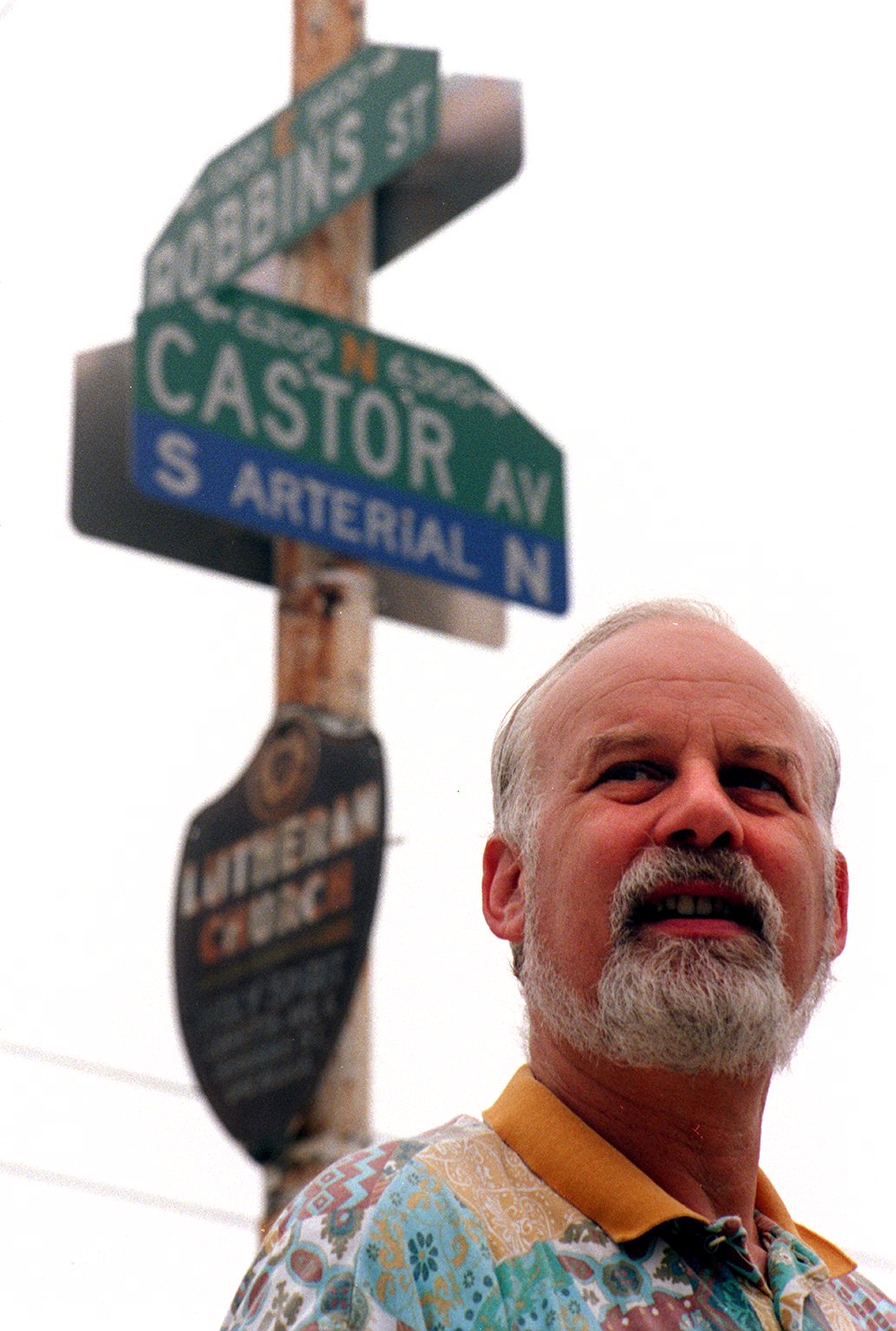
Mr. Avery wrote about his life in Northeast Philadelphia for the Daily News in 1997.Alejandro A. Alvarez / Staff Photographer
His son Serge said: “He loved chasing the stories from the back alleys and driveways, highlighting the working people of our town.”
In addition to his sons, daughter-in-law, and grandsons, Mr. Avery is survived by other relatives. A sister died earlier.
But for thousands of residents, many of whom live in North Philadelphia, next year’s tax bills are expected to soar.
Nearly 6,000 homeowners in Philadelphia saw their property assessments this year climb by more than 50% compared with two years ago, the last time the city conducted a mass revaluation, according to an Inquirer analysis of city property assessment data released in June.
Of those homeowners, more than 2,200 saw their assessments more than double.
That is likely to result in sticker shock come tax time next year, because property tax bills in the city are calculated based on home values. The revenue is split between the city and the Philadelphia School District.
Homeowners across the city saw a median 3% increase in their property assessments this year compared with the 2025 tax year. Jumps were higher in neighborhoods that border gentrifying areas, such as in parts of Kensington and West Philadelphia.
But this year, two other areas of the city had the densest concentrations of homes where property assessments increased by 50% or more, according to The Inquirer’s analysis.
The steep rises are clustered in the southern end of Strawberry Mansion, the historically Black neighborhood along the Schuylkill, and in the tiny Hartranft neighborhood north of Temple University and east of Broad Street, where residents are predominately Latino.
(function() {
var l2 = function() {
new pym.Parent(‘html_sandwich_2026_property4’,
‘https://media.inquirer.com/storage/inquirer/projects/innovation/arcgis_iframe/html_sandwich_2026_property4.html’);
};
if (typeof(pym) === ‘undefined’) {
var h = document.getElementsByTagName(‘head’)[0],
s = document.createElement(‘script’);
s.type = ‘text/javascript’;
s.src = ‘https://pym.nprapps.org/pym.v1.min.js’;
s.onload = l2;
h.appendChild(s);
} else {
l2();
}
})();
Housing experts and advocates for low-income homeowners have long criticized the city’s assessment system as systemically biased, leaving Black and brown homeowners to pay disproportionately high property taxes. Mayor Cherelle L. Parker convened a task force in 2024 to study the city’s revaluation system, and that group’s recommendations are expected to be released later this year.
Monty Wilson, a senior attorney at Community Legal Services who sits on the task force, said the Philadelphia Office of Property Assessment is the best in the state and has “worked really hard to become more and more accurate.”
But he said bias persists in part because of the unique challenges that assessors face in low-income neighborhoods that can cause volatility in home values, such as higher rates of vacant lots, foreclosures, and other factors.
A 2024 CLS report found that errors were clustered in lower-value neighborhoods where a majority of residents are people of color.
“That means when a property is overassessed,” Wilson said, ”it tends to occur in a Black and brown neighborhood.”
(function(){function e(){window.addEventListener(`message`,function(e){if(e.data[`datawrapper-height`]!==void 0){var t=document.querySelectorAll(`iframe`);for(var n in e.data[`datawrapper-height`])for(var r=0,i;i=t[r];r++)if(i.contentWindow===e.source){var a=e.data[`datawrapper-height`][n]+`px`;i.style.height=a}}})}e()})();
The Parker administration did not respond to requests for comment.
In response to a previous article about this year’s property reassessments, city officials emphasized that some lower-income homeowners pay relatively low tax bills because of the popular homestead exemption tax break. The program, which any homeowners can apply for and obtain if they live in their house as their primary residence, exempts the first $100,000 from a home’s taxable value.
That means that some homeowners in working-class neighborhoods previously paid little to no property taxes. A sudden increase in valuation, like the ones seen this year in pockets of North Philadelphia, could require they pay bills next year that are several hundred dollars more than in the past.
Take the 2500 block of North Marshall Street. The residential North Philly street sits between West Kensington and Broad Street, and nearly every home saw its assessment increase by 60% or more, according to The Inquirer’s analysis.
Most of the homes there had previously been valued at less than $100,000, meaning owners with the homestead exemption owed no property taxes. Now, many of the homes on the block are valued at about $140,000, an amount that would next year yield more than $500 in yearly tax bills for owners with the homestead exemption.
More than 40% of the Hartranft neighborhood’s residents are below the federal poverty level, which is $33,000 a year for a family of four, according to U.S. Census data.
At Left a property on 2500 N. Marshall St., Philadelphia, PA 19133 is shown Wednesday, Aug. 19, 2026, in Philadelphia.Jose F. Moreno / Staff Photographer
City Councilmember Quetcy Lozada, whose district includes parts of Kensington and North Philadelphia, said the Hartranft area is not like sections of Kensington that have seen an influx of development in recent years and where increases in property assessments may be expected.
It is possible, she said, that lower-income residents who have been displaced from parts of Kensington looked to move west of the neighborhood, increasing demand in the Fairhill and Hartranft areas.
Lozada — who has held workshops in the neighborhood to connect residents with property tax relief programs — said she fears her constituents are being asked to pay disproportionately high taxes and not seeing better city services and stronger public schools.
“How is it possible that someone in Fairhill is paying a higher tax for a property that has not had any investment, in a neighborhood that is not as safe, whose school system is not as great, as somebody that lives in Chestnut Hill, for instance?” she said, referring to the upscale Northwest Philadelphia neighborhood with a $109,000 median household income. “There has to be a better way of doing a more accurate evaluation in every neighborhood.”
In Strawberry Mansion, community leaders said that increased assessments are likely a result of market pressure from Brewerytown to its south, a comparatively whiter and higher-income neighborhood.
“The city has to be super transparent about this assessment system so people can better understand it and not feel that sticker stock,” said Tonnetta Graham, president of the Strawberry Mansion Community Development Corp. “If we know how they came to their number, it’s easier to chew.”
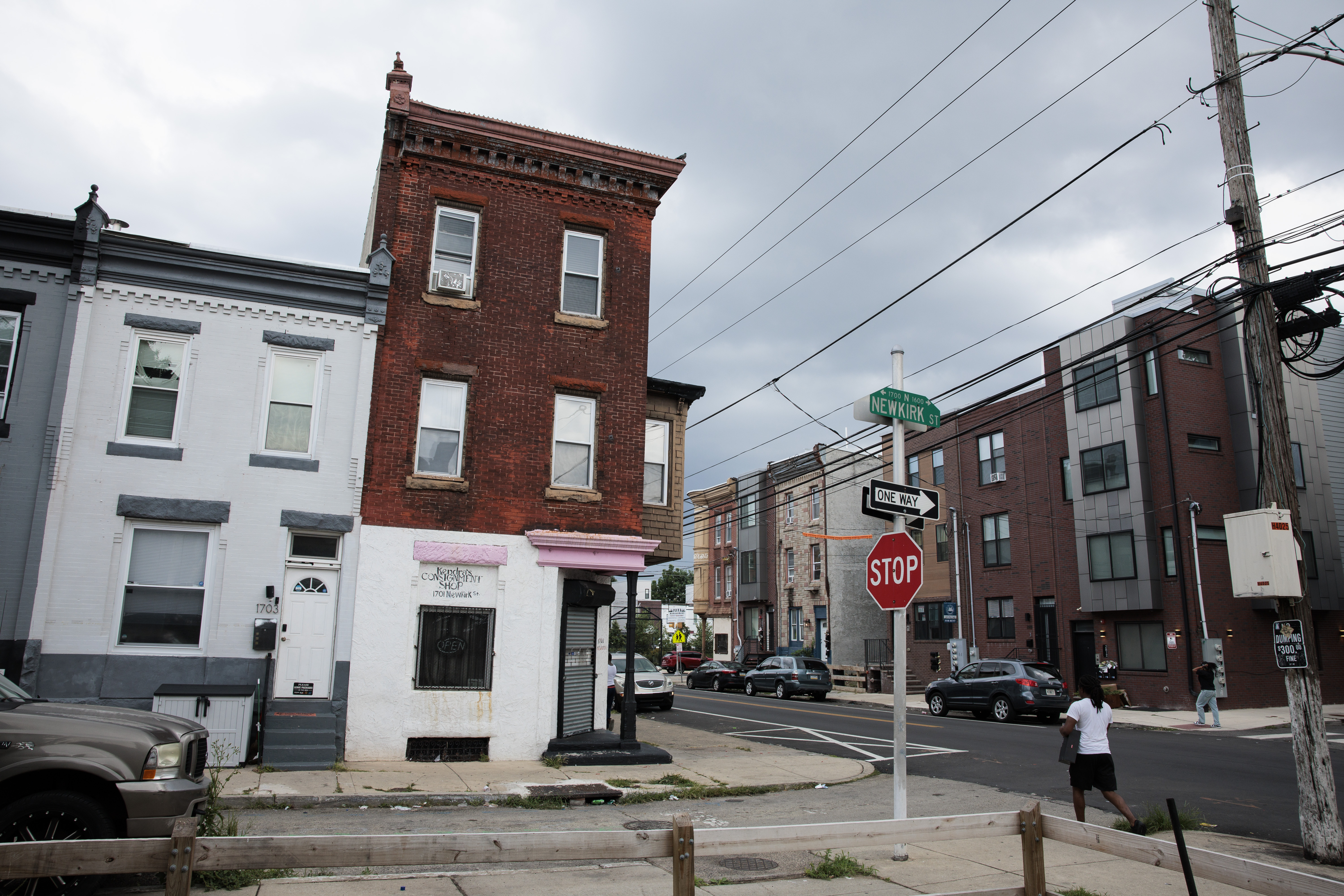
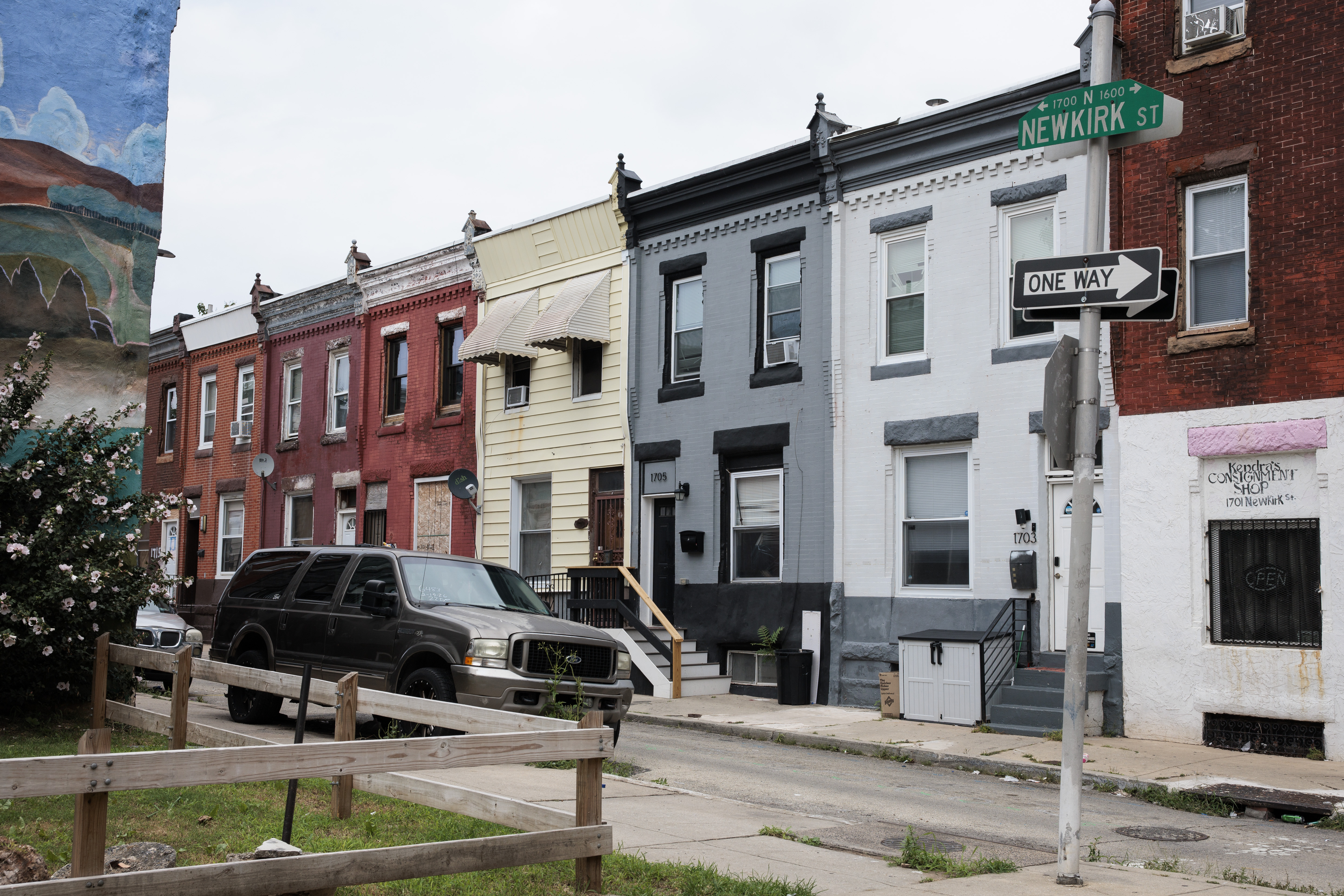
The 1700 block of North Newkirk Street on Thursday, Aug. 20, 2026 in Philadelphia.Monica Herndon / Staff Photographer
Councilmember Jeffery Young Jr., whose district includes both Strawberry Mansion and parts of Hartranft, did not respond to requests for comment.
Jalon Alexander, a Strawberry Mansion native who this month launched a campaign to challenge Young for his Council seat next year, said he was recently at a block party in the neighborhood where he heard repeatedly from older homeowners who were concerned about their increased assessments.
“They feel taken advantage of, and they feel like it’s coming out of nowhere,” Alexander said. “This is an area where there’s high levels of poverty, and there is not a lot of political or government attention in this area. I’ve spoken with many people whose rates have almost doubled. It’s the biggest issue in the neighborhood.”
Staff writer Michaelle Bond contributed to this article.
Northeast Philadelphia’s last traditional Jewish delicatessen will close this weekend, ending a chapter in a food culture that for decades seemed inseparable from the area itself.
Steve Stein’s Famous Deli, in Bustleton’s Grant Plaza, outlasted a food landscape once crowded with Jewish delis, bakeries, butchers, and other specialty shops. Its closing Sunday comes more than nine years after the finale of Jack’s Deli in Bell’s Corner, the Northeast’s penultimate deli. Like Stein’s, Jack’s combined a retail counter with a restaurant.
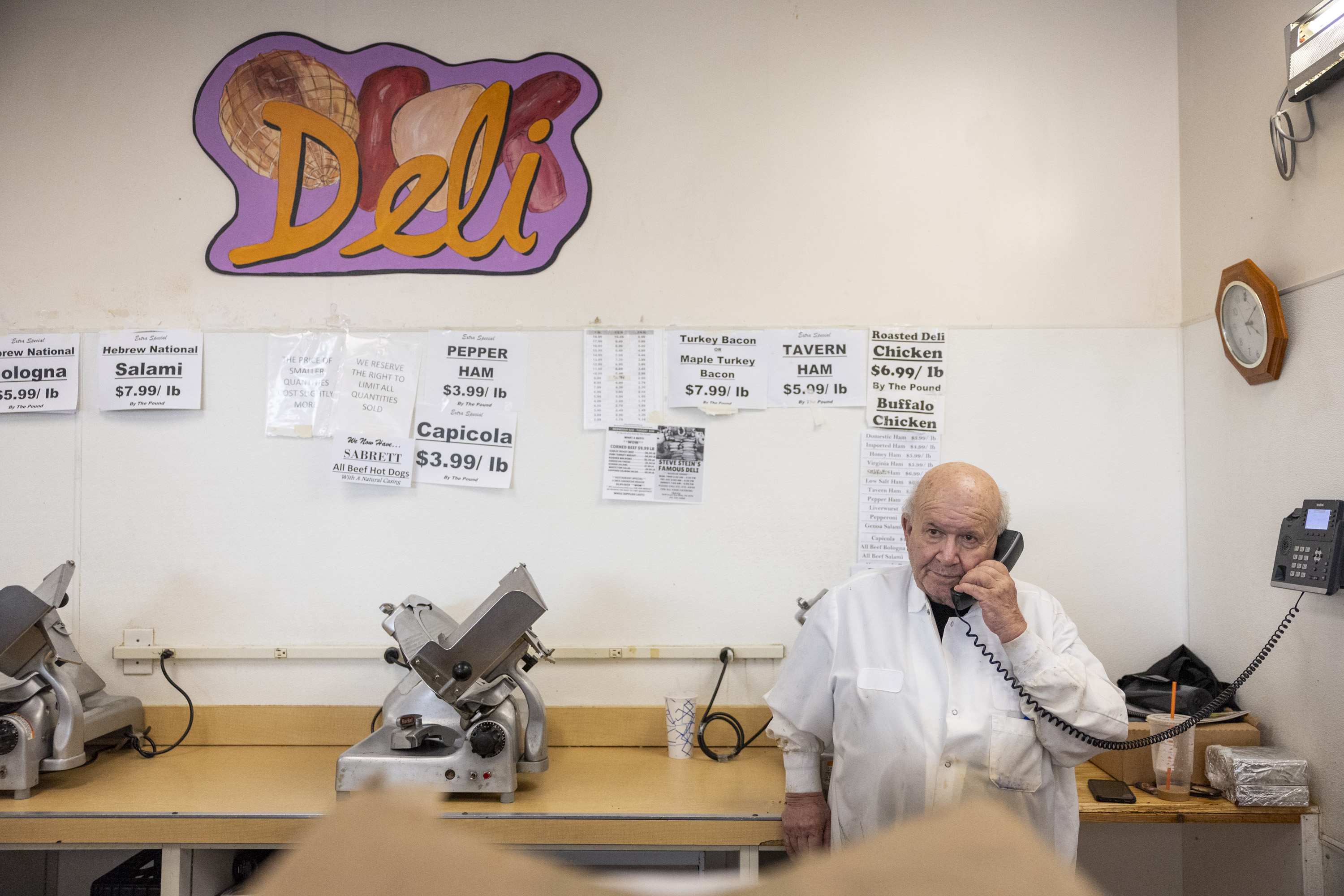
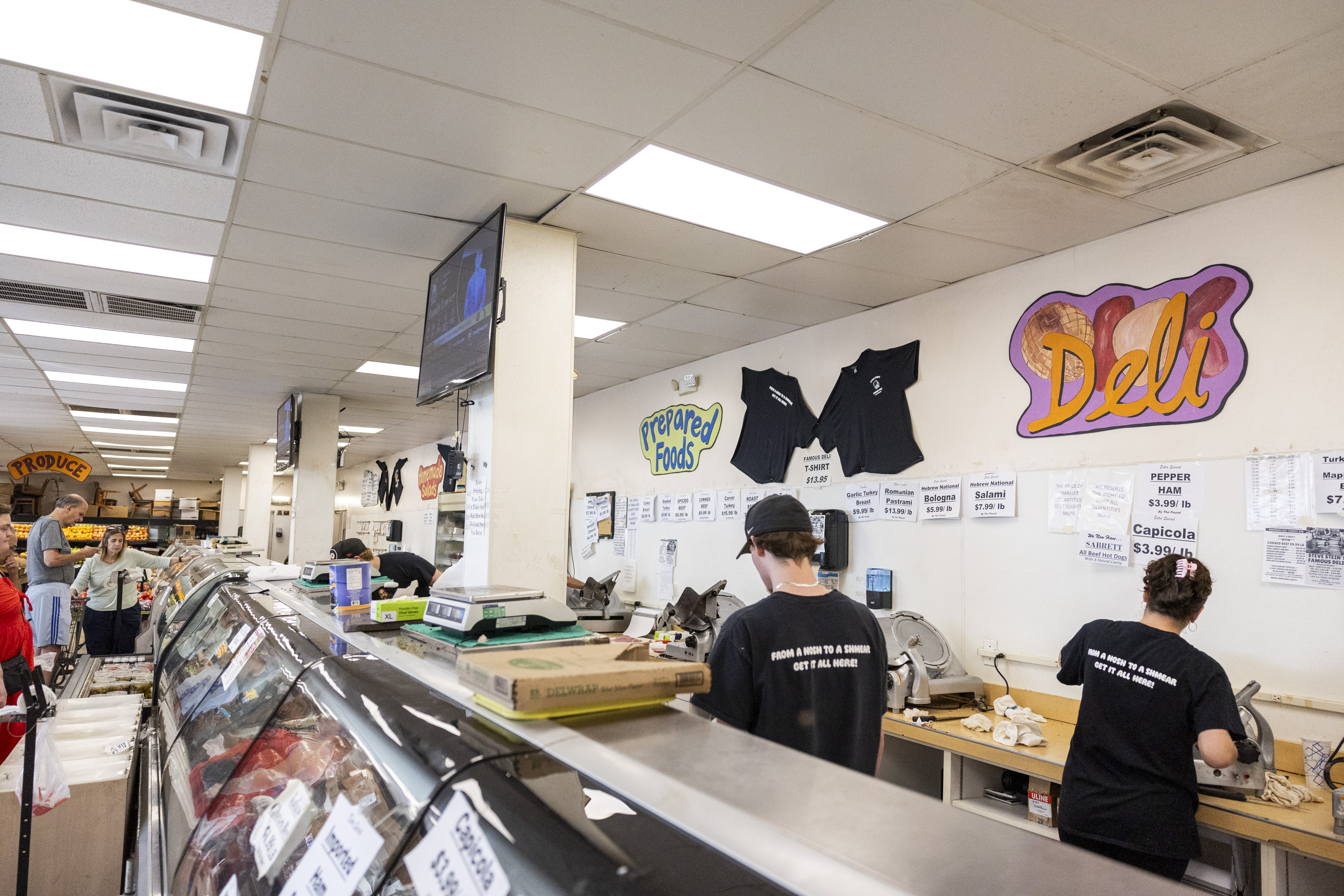
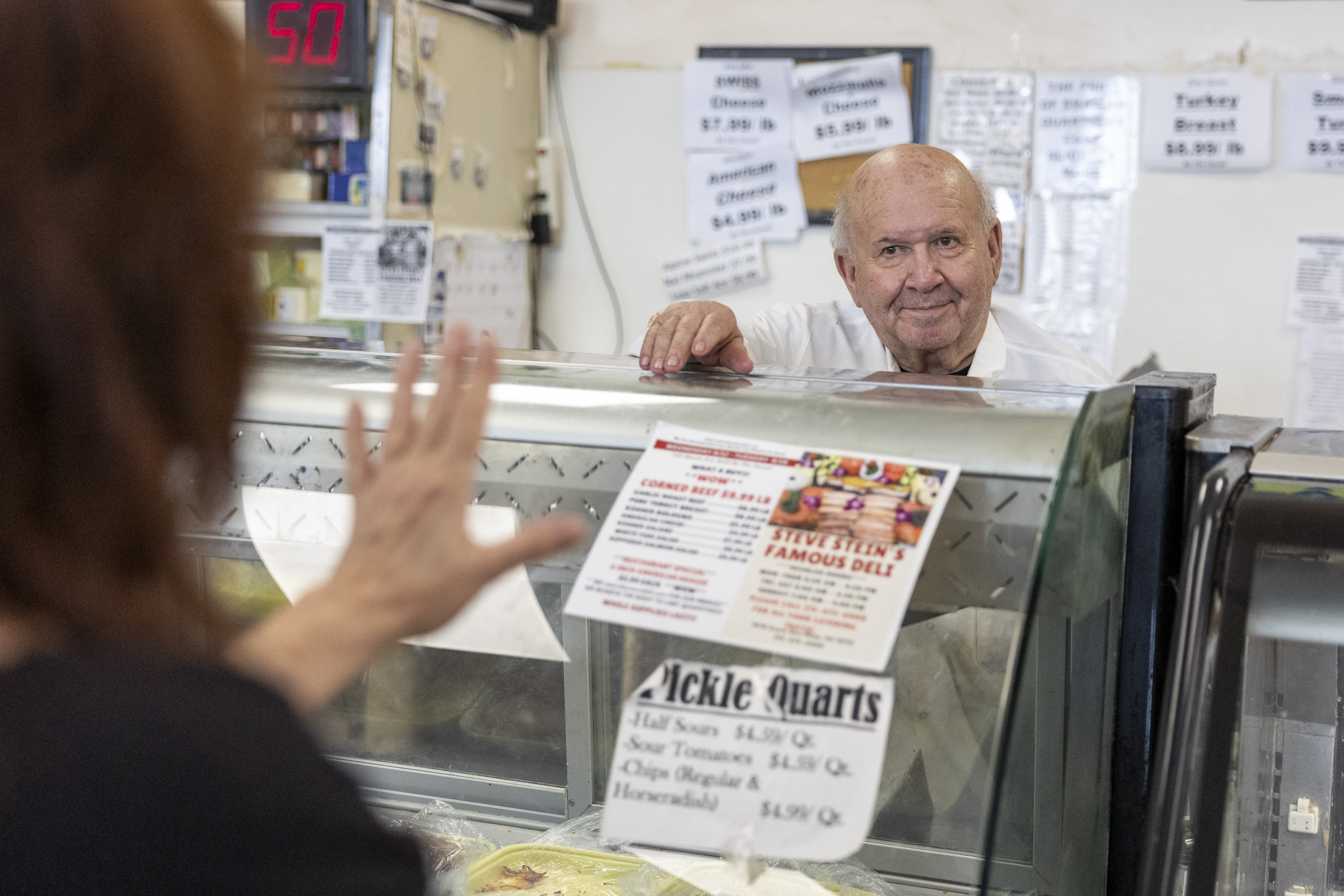
The deli counter at Steve Stein’s Famous Deli on Aug. 14, 2026.Tyger Williams / Staff Photographer
For Steve Stein, 83, the closing will end a family business whose roots stretch back to the late 1950s, when his family became involved with the Famous Deli location at 6826 Bustleton Ave. in Castor Gardens.
Famous was part of an older Philadelphia deli dynasty. Beginning in the 1920s, the Auspitz brothers launched a string of delis around the city, including the flagship at Fourth and Bainbridge Streets in Queen Village, now owned by Al Gamble.
Around 1960, Stein said, the Auspitzes sold the Bustleton Avenue Famous to Stein’s father, Mike, his brother Arnold, and his cousin Jack. The boys had run the produce concession there. Steve and Arnie, who died in 2010, later ran it side by side. Steve now runs the place with his son, Lee, now 57.
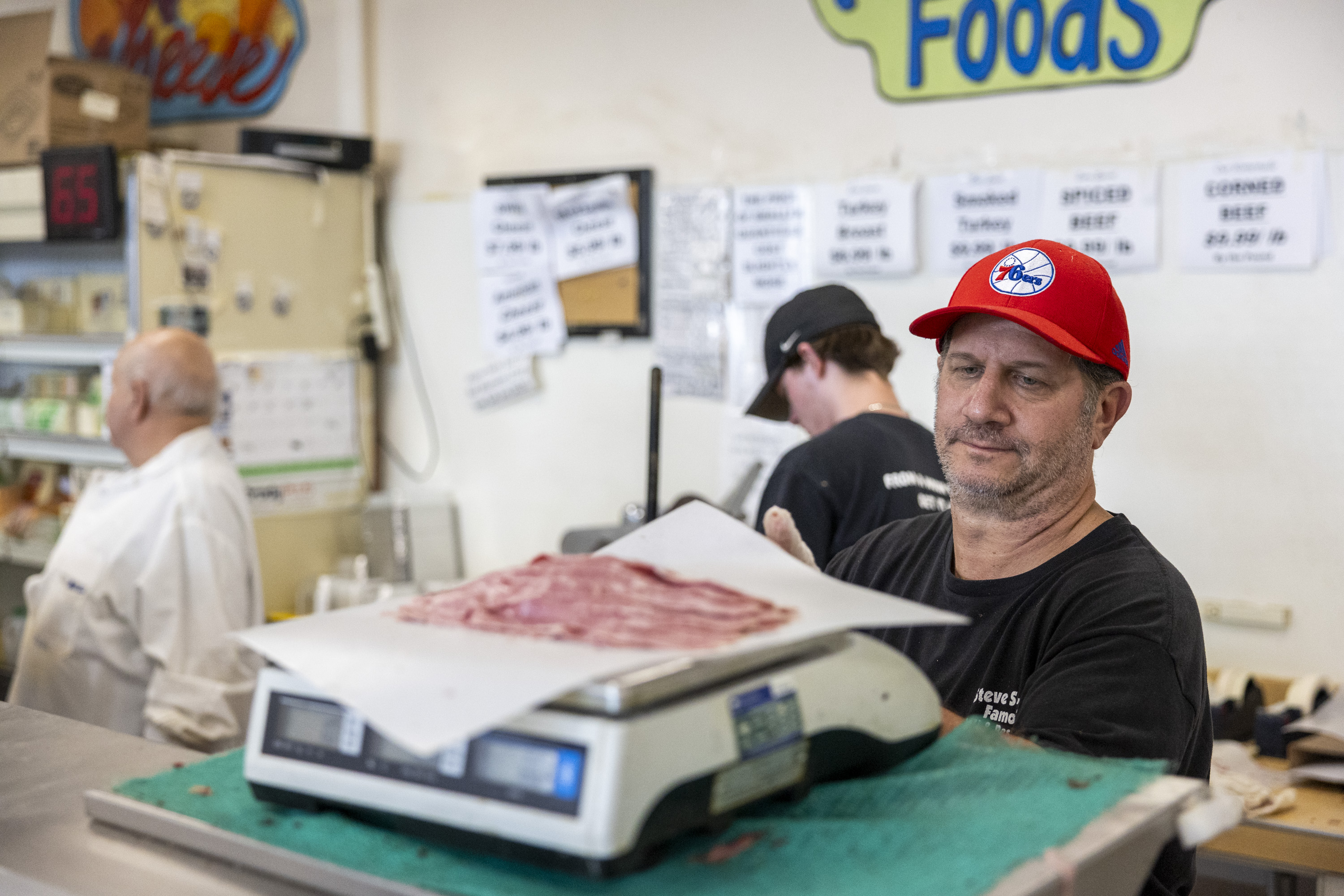
Lee Stein weighs corned beef at his father’s deli on Aug. 14, 2026.Tyger Williams / Staff Photographer
Since Stein announced the closing, customers have been stocking up on corned beef, smoked fish, rye bread, and other foods they fear they will not easily replace. Stein has cut prices as he tries to move inventory.
“Nobody’s charging $9.99 a pound for house-cured corned beef,” Lee Stein said.
On Friday, Tracey Lynn of Fox Chase ordered two pounds of corned beef while plucking garlic-perfumed sour tomatoes from a barrel, telling Stein that she planned to freeze some of the meat.
Lynn said she and her husband have been customers since 1993. She is not sure where she will shop next. “I don’t want whitefish salad from BJ’s or from Costco,” she said.
The closing is partly a retirement story. Stein said problems with his legs have made it increasingly difficult to work.
But it is also about labor costs, food prices, succession, and a neighborhood whose demographics have changed dramatically over the life of the business.
As Jewish families moved farther into the Northeast, Famous followed: first, in the mid-1970s, to Krewstown Road (where it had two locations) and, 14 years ago, to Grant Avenue. Stein, who later also had a short-lived store in Holland, Bucks County, sold the Bustleton Avenue store in the mid-1970s.
In that sense, the history of Famous tracks the movement of Jewish Philadelphia itself.
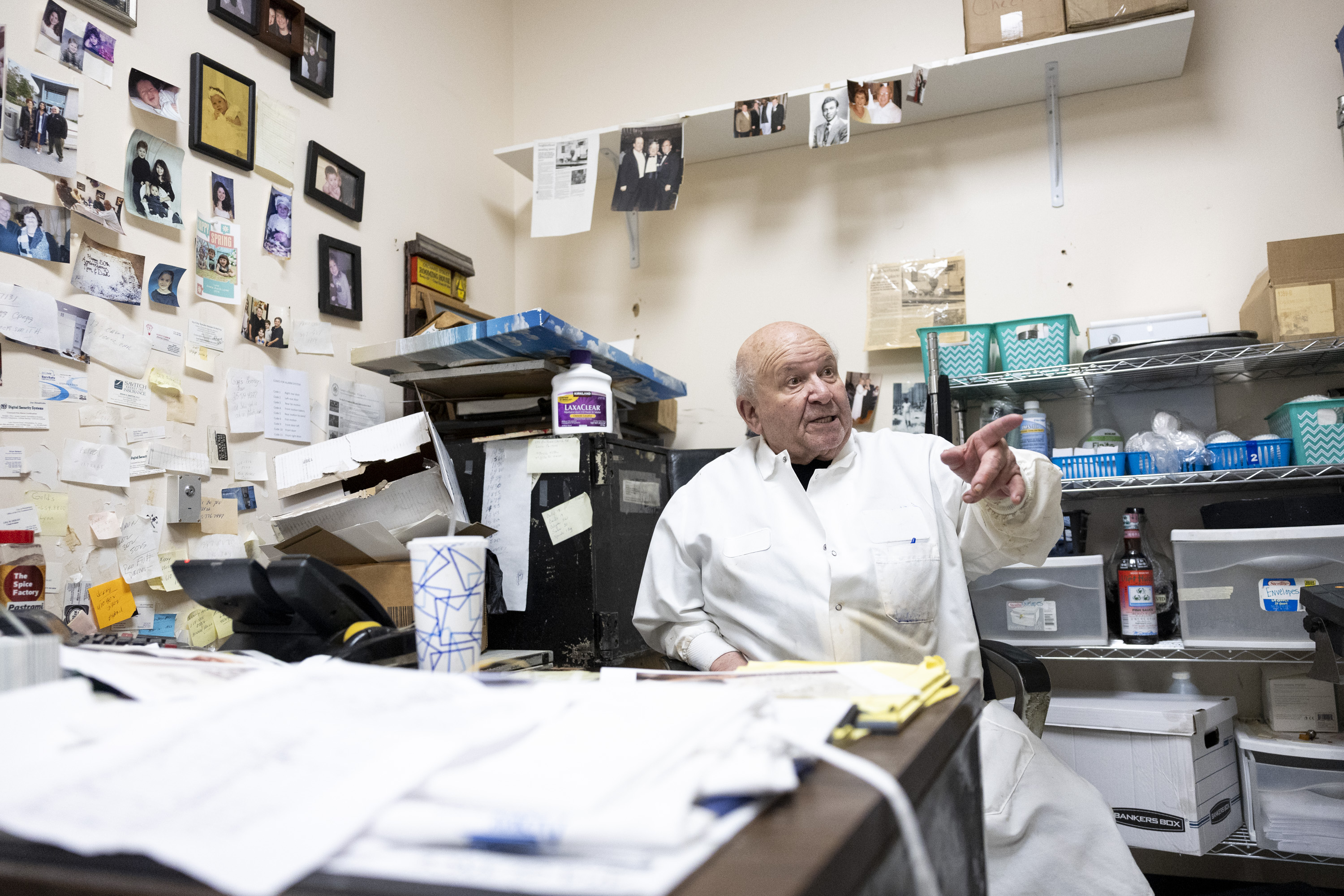
Steve Stein, owner of Steve Stein’s Famous Deli, takes a break in his office.Tyger Williams / Staff Photographer
A suburban diaspora
After World War II, thousands of Jewish families left older Philadelphia neighborhoods such as Strawberry Mansion, Queen Village, and Wynnefield for Oxford Circle, Castor Gardens, Rhawnhurst, and Bustleton in the rapidly developing Northeast. Others moved to Lower Merion and Cherry Hill, which developed large Jewish communities and deli cultures of their own that remain.
By 1970, demographer Ira Rosenwaike estimated, using Census data on Yiddish as a mother tongue, that more than 68,000 Jewish adults 25 and older lived in the Near and Far Northeast.
That population supported an extraordinary density of Jewish food businesses: Abe’s Appetizers, Castor Deli, R&W, Stern’s, Paul’s, Four Lads, Dave’s, Casino, the Nasherei, four Barson-Overbrook locations.
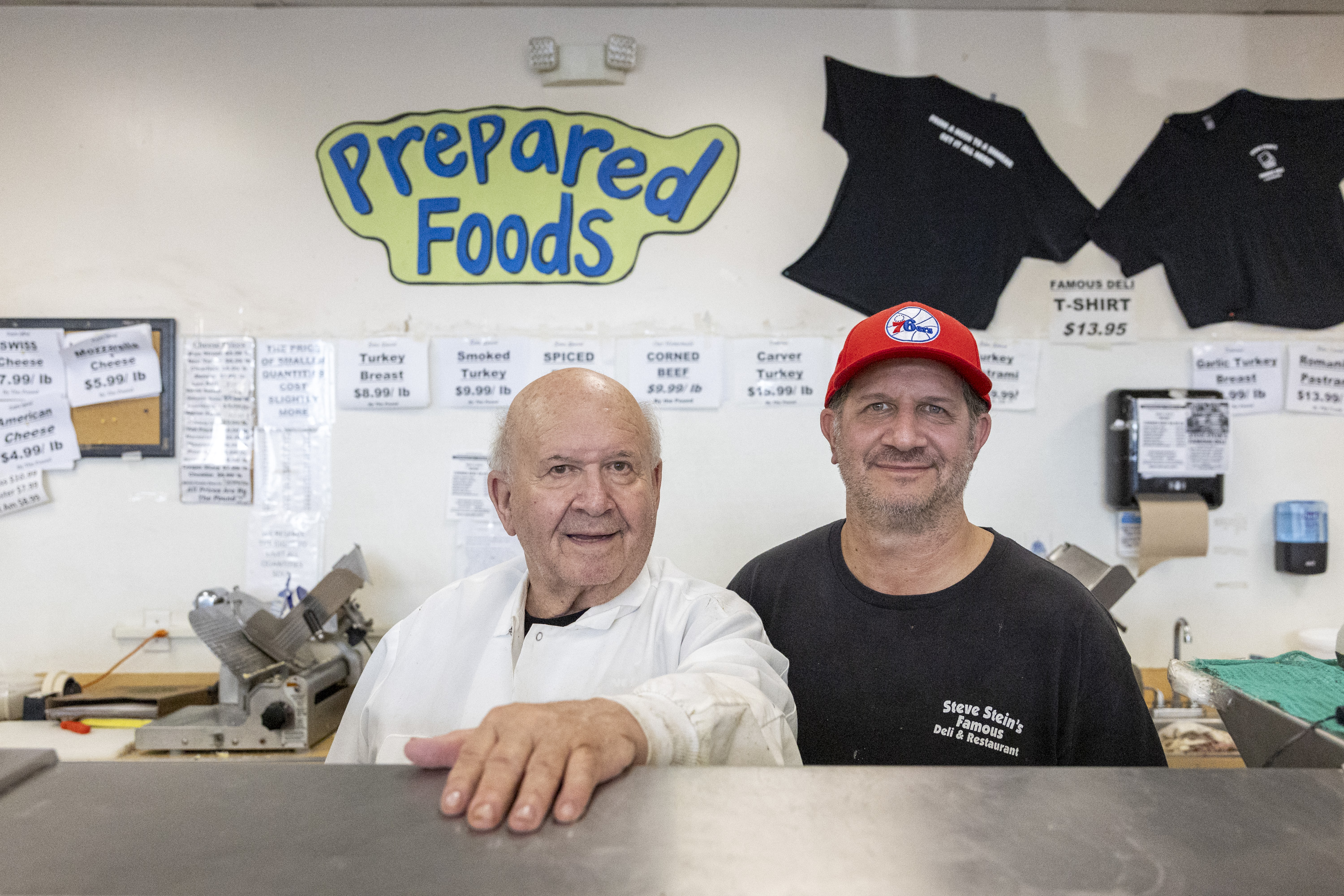
Steve Stein (left), owner of Steve Stein’s Famous Deli, behind the counter with his son, Lee.Tyger Williams / Staff Photographer
To Hasia Diner, a historian and New York University professor who specializes in American Jewish history, the significance of delis was precisely their ordinariness. They were not institutions created to preserve Jewish culture. They were where neighborhood life happened.
“On the one hand, [delis] seem so everyday,” Diner said in an interview. “They’re not great synagogues where religion was expounded, or places where great ideas were pronounced. But they were places where life was lived.”
Some were kosher and others were not. What mattered, Diner said, was that the deli offered a secular Jewish space, rooted as much in neighborhood and food as in religious observance.
By the 1980s, however, those neighborhoods were changing. In a 1987 Inquirer article, Bruce Isakoff of Paul’s Deli, on Castor Avenue near Brighton Street, said his business was doing more lunchtime trade as Jews left the neighborhood and it became a more generic deli. By then, Four Lads, on Castor Avenue at Creston Street in Oxford Circle, had stopped carrying smoked fish and pastrami. Both are long gone.
A ‘kind of shrine’
Many Jewish households moved farther north and into Bucks and Montgomery Counties. A 1996-97 Jewish Federation study found that Philadelphia accounted for 41% of the region’s population living in Jewish households, down from 54% in 1984, while Bucks County’s share had nearly doubled.
The studies used different definitions and geographic boundaries, but the direction was unmistakable: The dense Jewish population that once sustained neighborhood delis had dispersed.
Steve Stein, owner of Steve Stein’s Famous Deli, taking a deli order on Aug. 14, 2026.Tyger Williams / Staff Photographer
The movement itself was nothing new, Diner said. American Jewish communities repeatedly established themselves in neighborhoods and moved elsewhere. What changed was the role of the old neighborhood — and of the deli within it.
“The deli was often the kind of shrine to which they went back,” she said.
The old delis offered something beyond nostalgia. In their heyday, Diner said, they were overwhelmingly Jewish spaces where customers did not have to explain themselves or worry about how they appeared to outsiders.
“These places were so rich with a kind of embeddedness, of comfort and security and, again, letting your hair down,” she said.
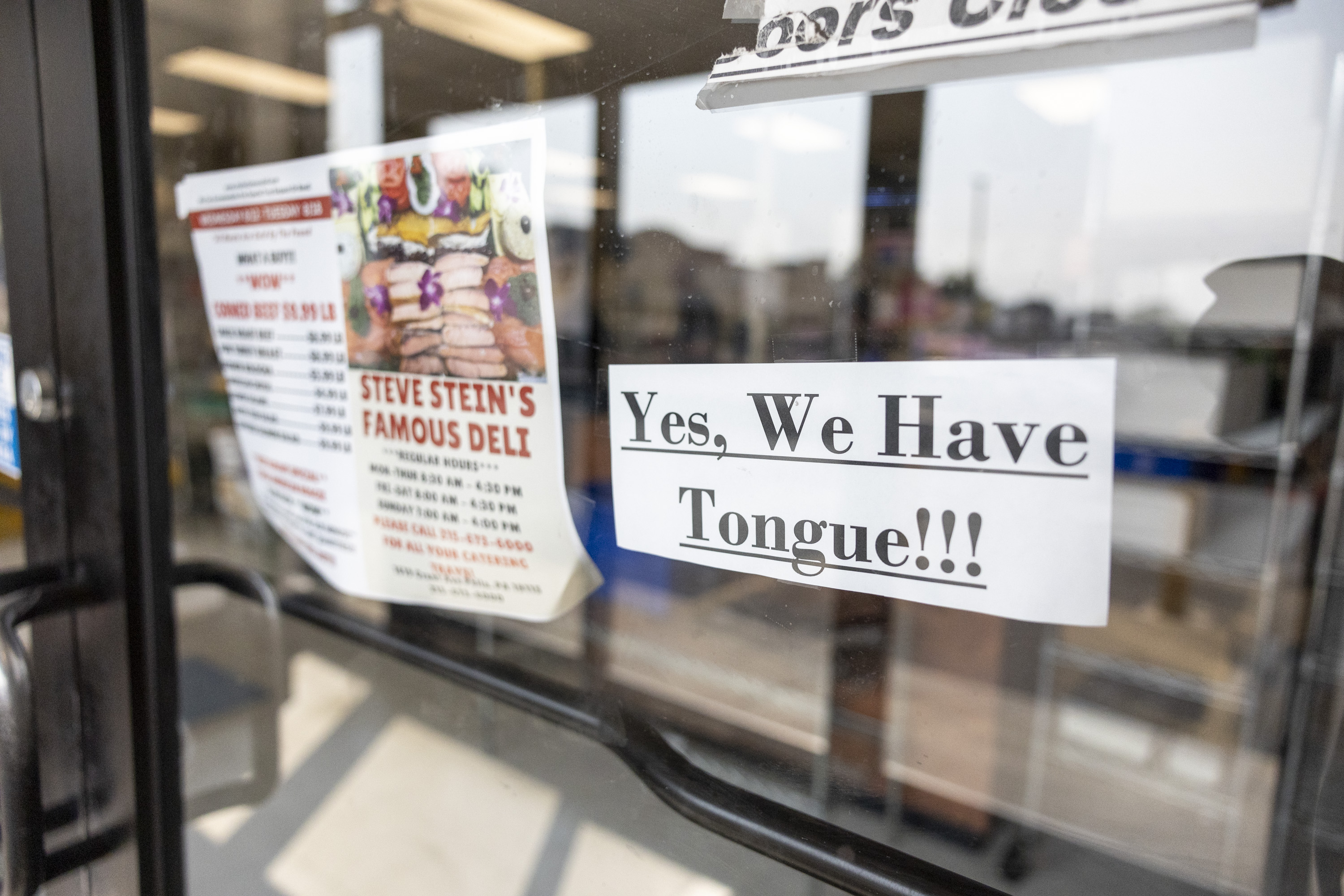
A sign proclaiming, “Yes, We Have Tongue!!!” at the entrance at Steve Stein’s Famous Deli.Tyger Williams / Staff Photographer
Population was only part of the story. Supermarkets increasingly stock foods that once sent customers to specialty counters: corned beef, pastrami, smoked fish, whitefish salad, herring, rye bread, bagels, pickles, and knishes. But not everything. Signs at Famous proclaim, “Yes, We Have Tongue!!!” Not many others do.
More important, Diner said, is what cannot be sold at a supermarket: the deli as a secular gathering place, where being Jewish required neither religious observance nor agreement about politics. “A pastrami sandwich is a pastrami sandwich,” she said.
Costly ingredients
The traditional deli model itself is expensive and labor-intensive, built around extensive preparation and a sprawling inventory. Famous still cures its corned beef and makes its own turkey, pastrami, whitefish salad, and spice beef.
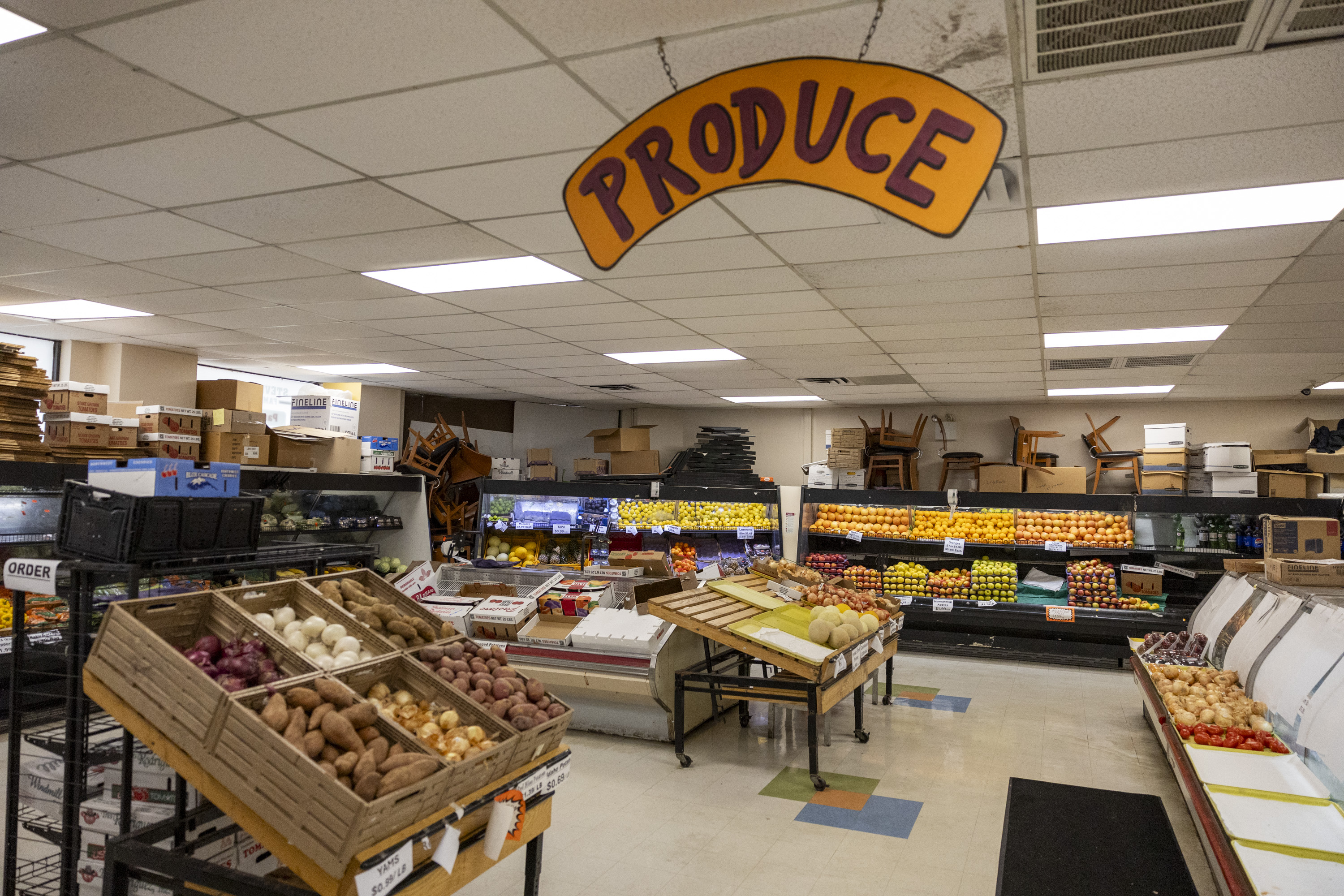
Steve Stein’s Famous Deli is equal parts market, deli counter, and restaurant.Tyger Williams / Staff Photographer
Steve Stein said finding employees has become increasingly difficult. Lee Stein said prospective workers have easier options, such as driving for Uber or making deliveries for Grubhub.
The deli has about 35 employees, many part-time. Some are placed through SPIN, the Philadelphia nonprofit that supports people with intellectual, developmental, and autism spectrum disabilities.
Survival has also required adapting to the customer base, increasingly non-Jewish. Lee said he remembers when Famous carried a single canned ham, hidden behind the counter. Though few Jewish delis are kosher, pork traditionally has been another matter.
“Nobody was allowed to say the word ham,” he said.
Today, their case holds about a dozen varieties.
Rob Woloshin, 40, owner of Manny’s Deli Stop in Willow Grove, grew up going to Stein’s Famous with his father. His deli represents a leaner version of the old model: counter service, a few tables, online ordering, and delivery, with traditional deli sandwiches alongside chicken cutlets, wraps, and other contemporary offerings.
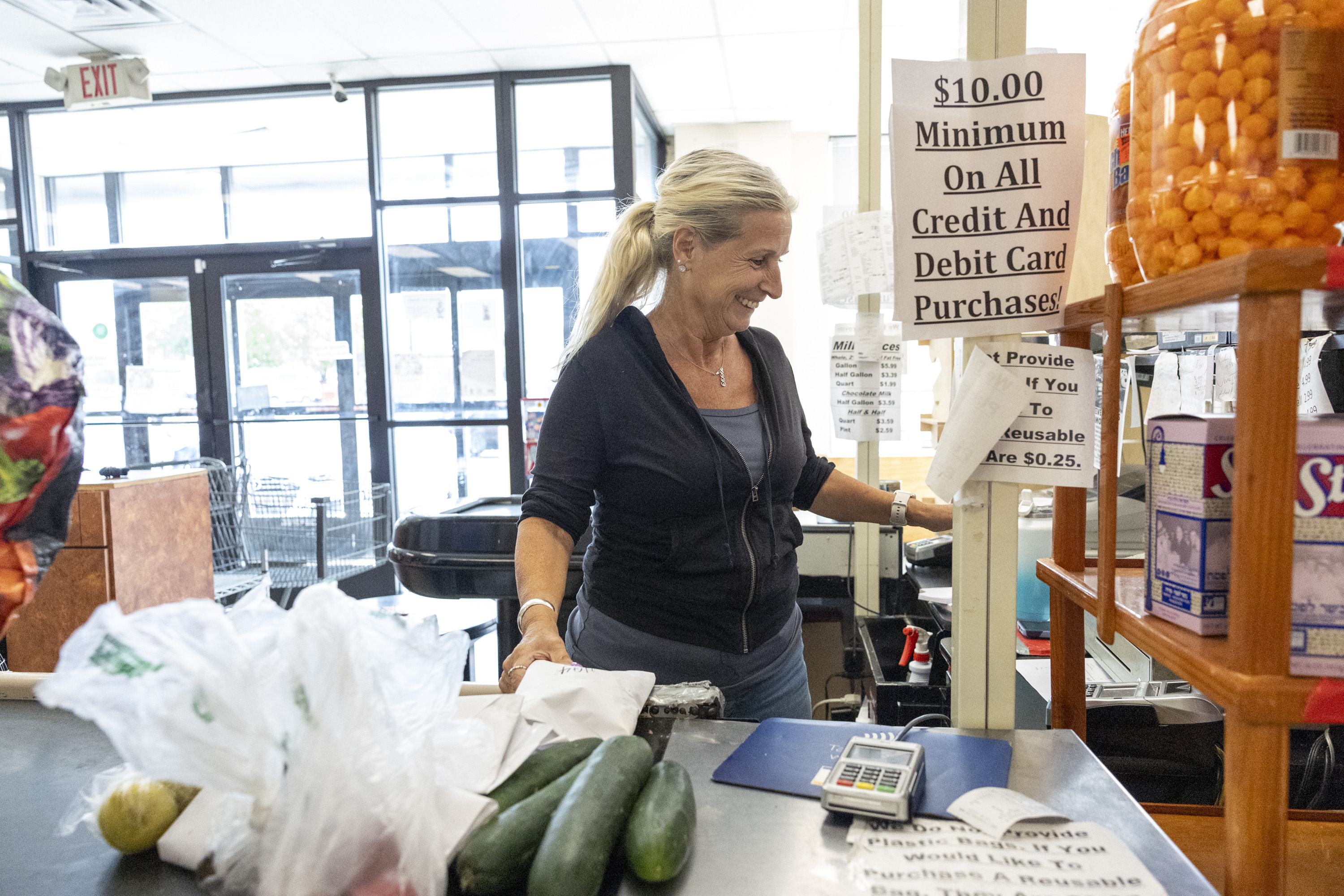
Cashier Linda DiNenno, who has worked at Steve Stein’s Famous for about 13 years, checks out a customer.Tyger Williams / Staff Photographer
“We’ve kind of modernized, I guess, as much as the Jewish deli can be modernized,” Woloshin said.
Famous may yet have an afterlife. Lee Stein said he is talking with the landlord about a deal that could keep him in the space, under another name, in time for the Jewish High Holy Days, which begin Sept. 11. If not, he might offer catering from a synagogue kitchen.
For longtime cashier Linda DiNenno, the closing is less about corned beef than the people around the counter. She said she will miss the family atmosphere among employees and customers who have been calling to say goodbye.
“I’ve got customers calling on the phone, like, ‘Oh my God, I’m gonna miss you, Linda,’” she said.
In this week’s Shackamaxon, the race for City Council kicks off, SEPTA police officers step in front of the cameras, and a Big Tech reckoning comes for the Ambitious Abingtonian.
Councilmember Jeffery “Jay” Young Jr. during the Barber’s Hall community legacy celebration on Aug. 1.Yong Kim / Staff Photographer
Contrarian challenge
In political circles, the legislative lineage of Philadelphia’s 5th Council District is one of the city’s most esteemed and iconic. The first person to represent the residents of the 5th in City Council was Raymond Pace Alexander, the civil rights leader who was later appointed as the first African American judge on the Court of Common Pleas. The seat has also been held by Cecil B. Moore, Ethel Allen, and John Street. Few other districts can boast such an impressive list of luminaries.
Today, its occupant is someone very different, Council’s quarrelsome contrarian, Jeffery “Jay” Young Jr.
Of course, there’s nothing wrong with “good trouble” or sticking out from the crowd. Moore himself was famously pugnacious, with the former Marine once quoted as saying that “The imported Gandhi philosophy of nonviolence that still exists in the South will not be accepted in Philadelphia, where we believe in self-help and self-defense.” Allen was also a maverick, styling herself as a “B.F.R. — a Black, female Republican, an entity as rare as a Black elephant and just as smart.”
Moore and Allen, however, were quarrelsome on behalf of the people they represented, and contrarians at a time when Black Philadelphians were mostly excluded from the halls of power.
Moore successfully desegregated Girard College, paving the way for Young himself to attend decades later.
Young, however, starts fights that help nobody. Worse, no one seems to understand why he’s fighting in the first place.
From delaying repairs at the Cecil B. Moore Library to blocking popular housing proposals, Young’s actions frequently bring him in conflict, rather than concert, with the community he was elected to represent.
It is unsurprising, then, to see that he’s already attracted a declared challenger for his seat, months before election season kicks off in earnest.
Jalon Alexander has a big advantage over the opponents Young (almost) faced in the past: He’s managed to successfully get onto the ballot before, during the 2023 City Council at-large election.
While he brings his own ideas to the table, Alexander is also clearly running in opposition to Young’s choices. The cybersecurity attorney grew up in Strawberry Mansion, and still lives there, but is running a campaign built to find support across the district’s geographic and political spectrum.
Kellan White, at this point a potential candidate, presents another strong alternative. White managed Rebecca Rhynhart’s 2023 mayoral campaign, which was successful across much of the 5th District. He has a deep knowledge of city politics and policy, and a Rolodex of contacts that any political journalist would be jealous of. Unlike Young, both Alexander and White are willing to answer the phone to talk to reporters, community leaders, and their constituents.
At this point, even if a dozen candidates run against him and split the opposition vote, Young may still face an uphill battle.
When I’ve criticized other Council members, I always get calls or emails from constituents who defend their choices. In nearly three years writing about Young, not a single person has offered a defense.
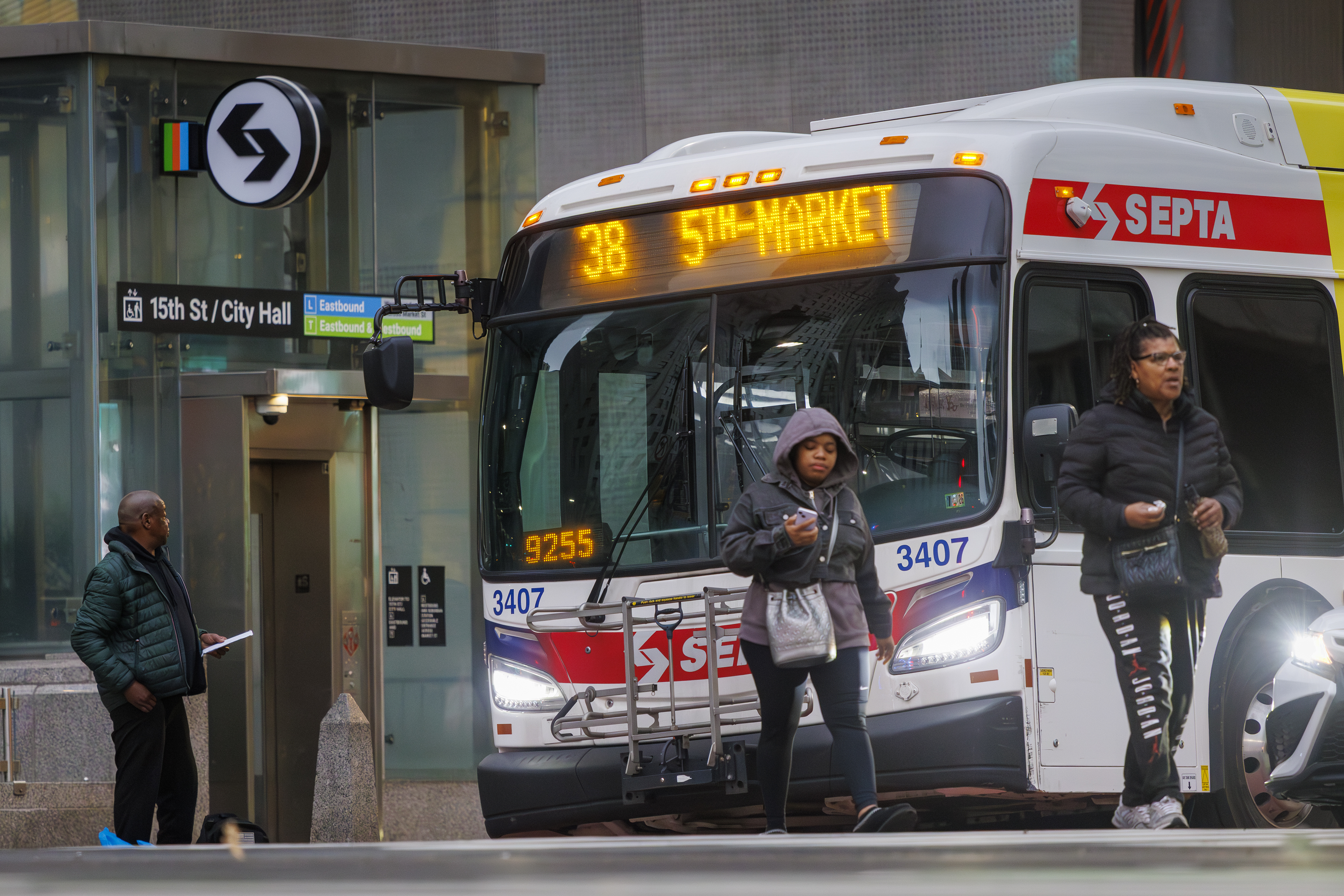
A SEPTA Route 38 bus at 15th and Market Streets in May.Alejandro A. Alvarez / Staff Photographer
Spotlight on SEPTA
A few readers have asked me about film crews they’ve seen following SEPTA police around stations and transit vehicles recently. Media Relations Director Andrew Busch confirmed that the A&E Network is filming a docuseries, which will be broadcast next year.
Personally, I’m looking forward to watching it. SEPTA’s roughly 250-strong police force is charged with patrolling more than 285 train and trolley stations, and nearly 3,000 vehicles. They are also in the midst of substantial declines in serious crime, which occurred alongside a crackdown on fare evasion and a surge in enforcement for quality-of-life issues. That’s a story worth showing.
Less worthwhile would be a series focused on Kensington and the city’s drug epidemic. That’s a real part of SEPTA’s policing duties, but is often exploitative when told by outsiders.
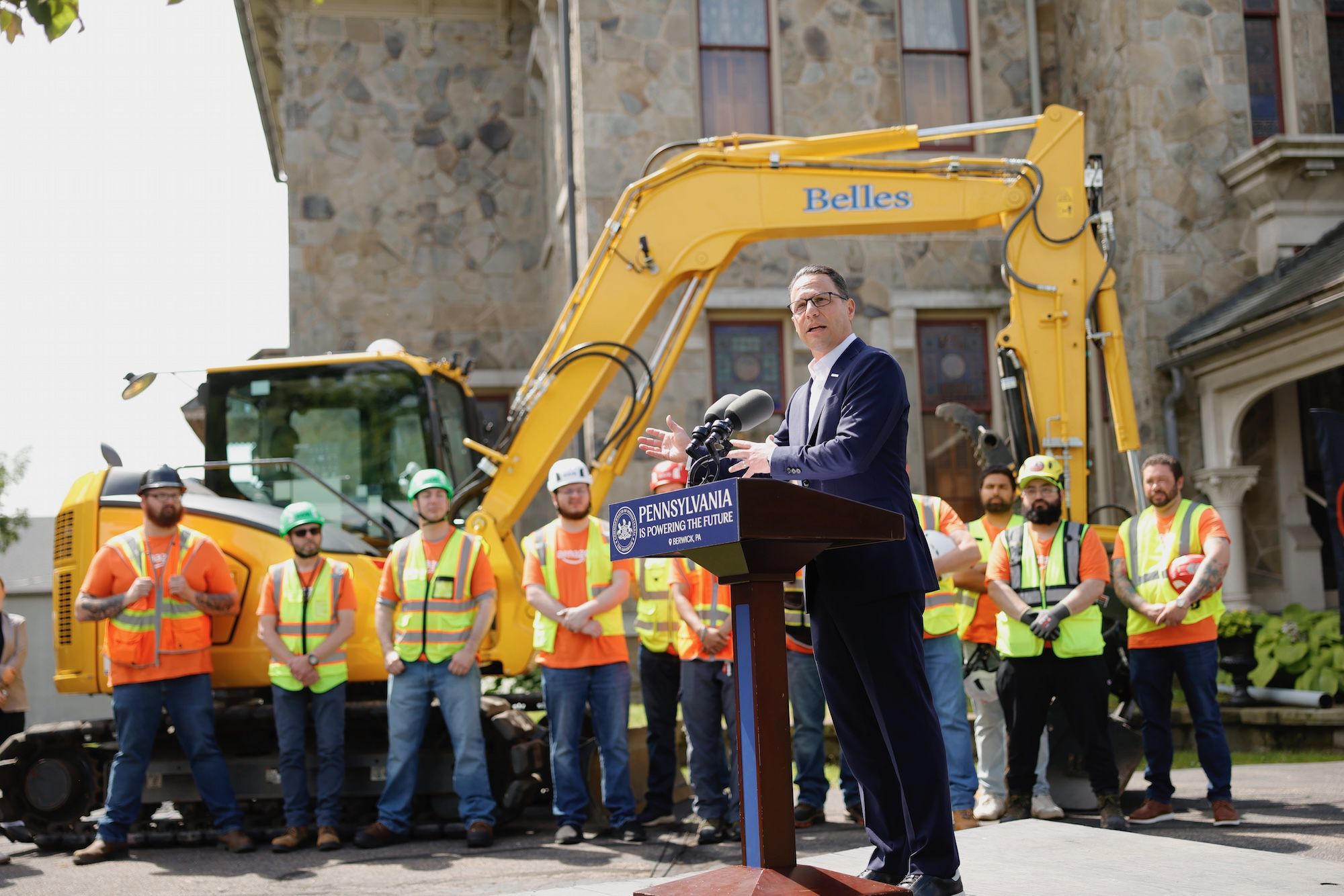
Gov. Josh Shapiro announces a $20 billion investment by Amazon in Pennsylvania data centers in Salem and Falls Townships in 2025.
Data-driven
Ever since the creation of the first computer, there have been concerns about its role in the future. It doesn’t help matters that many tech CEOs, like OpenAI’s Sam Altman, regularly express a kind of contemptuous attitude toward humanity and human needs. At one point, Altman said that artificial intelligence would “lead to the end of the world.” How inspiring!
This has put public officials in a tough position over their support of data centers.
For generations, states and cities have competed to attract investment. But these days, cash is flowing into an industry opposed by 74% of voters. Seeing an opportunity, challengers from across the political spectrum are using data centers in their political attack ads, while incumbents are scrambling to explain themselves.
Gov. Josh Shapiro, the Ambitious Abingtonian, exemplifies this conundrum. He was an early advocate for embracing data centers, but with polls tightening for his reelection efforts, he’s been forced to adapt.
Of course, there’s a certain opportunism to state Treasurer Stacy Garrity’s embrace of the techlash.
Her own party has been quite supportive of data centers. President Donald Trump has called them “tremendous.” Pennsylvania state Senate Majority Leader Joe Pittman has long advocated for the centers, which represent a particular opportunity for his own community, which has, in his words, “a long and storied history when it comes to the production of electricity.” U.S. Sen. Dave McCormick, the highest-ranking Republican in Pennsylvania, is married to Meta executive Dina Powell McCormick. Meta is one of the four companies investing a total of $1.5 trillion in new data centers.
Pennsylvania Senate Republicans declined to pursue Shapiro’s proposed “GRID” initiative, which would have required the centers to produce their own electricity, conform to environmental standards, and make community benefits agreements in exchange for permitting assistance.
Many of the current pitchfork-wielding politicos may themselves be forced to pivot when in office. Voters may hate data centers, but they also hate tax increases and service cuts.
Loudoun County, Va., which is known as data center alley, has averted both. Local authorities have cut property tax rates by nearly 30% over the last decade, and the centers pay roughly half of the county’s property tax revenue. Given the increasing share of Pennsylvania’s budget that is paid through the extractive gambling industry, the need to invest more in schools and transportation, and the continuing structural deficit, it is no surprise politicians initially saw the AI boom as an opportunity.
Now, state leaders will have to pick their poison.
If they pursue data centers, they’ll face voter backlash. If they continue to embrace gambling, they’ll contribute to the impoverishment of their own constituents. If they stop investing in education or allow transit agencies to fail, they’ll weaken the commonwealth’s economy going forward. If they raise taxes, they’ll take the blame for that, too.
While the data center surge may seem sudden to many, it is also a response to demand. Both businesses and individuals are increasingly using AI in daily life.
Ironically, many social media posts about data centers include AI-generated text and images. It is a bit like if the Women’s Christian Temperance Union had fundraised with a booze cruise.
The gunfire that killed a North Philadelphia woman and wounded her husband as the couple sat on their porch Sunday night may have been an act of retaliation for an earlier homicide, law enforcement sources said.
Shariff Perry, who police say killed Michelle Wilson, 61, and shot her 67-year-old husband, is the brother of a man authorities say was killed by the couple’s son, Evans, in 2022, according to the sources.
Authorities have not publicly disclosed a motive for the crime, but sources, who spoke on the condition of anonymity to discuss an ongoing investigation, said retribution was the likely cause.
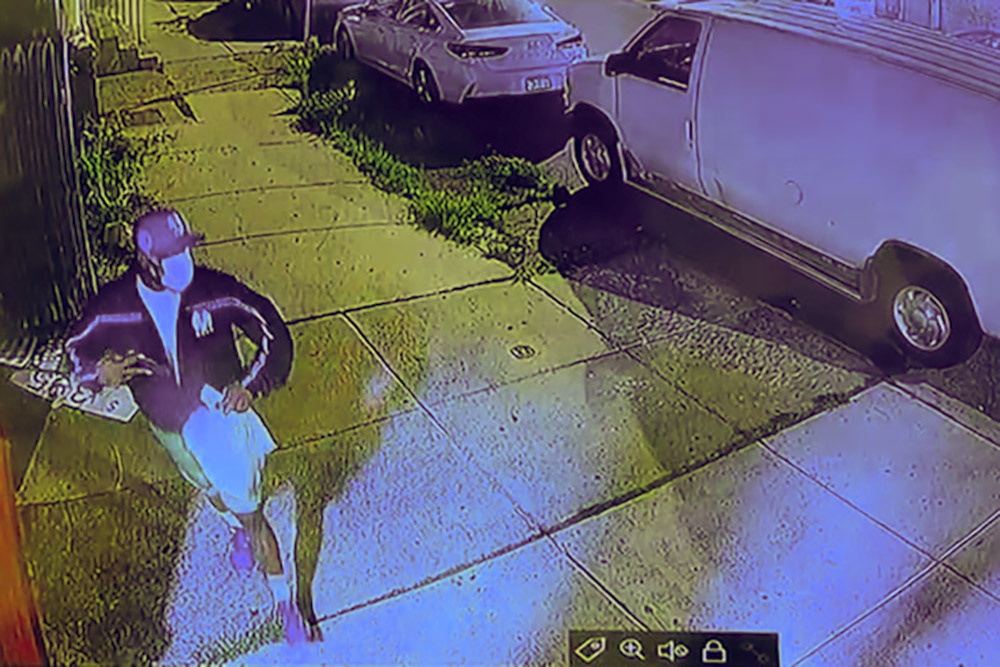
Surveillance video obtained from a business near Wilson’s home showed a man wearing a surgical mask and a hat approach the couple’s front porch, pull out a handgun, and open fire just before midnight. Wilson was pronounced dead moments later. Her husband survived.
On Wednesday, police identified Perry, 35, as the suspected shooter. He remained at large Thursday.
Reached by phone, Wilson’s husband tearfully declined to be interviewed, as did his daughter.
The Wilsons’ son, Evans, is one of three people charged in the death of James Dunbar, 20, who was shot in the head on the 2800 block of North Taylor Street, less than a mile from where the Wilsons were shot, sources said.
Another man was also shot, but survived, police said.
Witnesses told detectives at the time that they heard a barrage of gunshots, then saw two armed men fleeing in a Hyundai Sonata. Detectives recovered 17 bullet casings from the scene, authorities said.
Wilson and two teenagers were charged with murder and related crimes, court records show. Wilson has pleaded not guilty and is awaiting trial.
Wilson’s attorney, David Mischak, did not return a phone call on Thursday.
Dunbar’s death came during a wave of crime in the city following the pandemic.
Michelle Wilson’s killing was one of six homicides in Philadelphia between Friday morning and Sunday night, a burst of bloodshed in what has otherwise been one of the city’s least violent years in decades.
Hours before her death, Wilson’s family had gathered for a Sunday afternoon barbecue, with children and relatives on the porch, a neighbor said. The neighbor — who asked not to be identified for fear of retaliation — said the couple were “quiet” and “friendly.”
Police have offered a $20,000 reward for information leading to Perry’s arrest and conviction and have asked anyone with information to contact the department’s homicide unit at 215-686-3334 or its tip line at 215-686-TIPS (8477).
Staff writer Ellie Rushing contributed to this article.