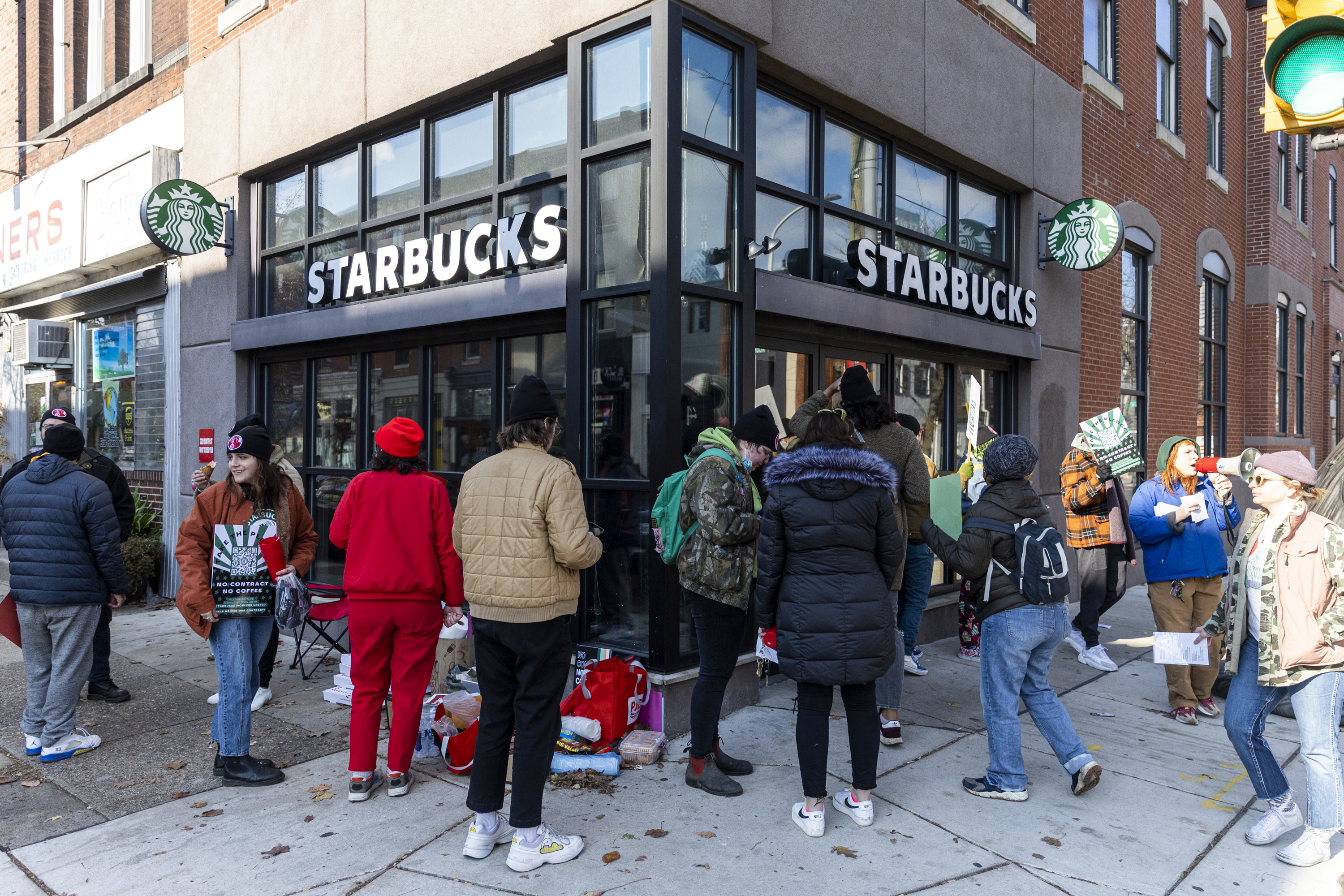
Starbucks is closing two Philadelphia stores and one in South Jersey among roughly 250 locations the company announced it is shuttering this week.
The company “identified locations where we do not believe we can consistently deliver the experience we want for customers and partners or where we don’t see a path to acceptable financial performance,” chief operating officer Mike Grams said in a statement this week.
Starbucks spokesperson Andrew Trull said the stores at 2201 South St. in Center City and 1018 N. Second St. in Northern Liberties, as well as the Willingboro store in New Jersey at 4380 Route 130, are expected to shutter “later this week.” The stores appear to be closing as of Sunday, according to the Starbucks website store locator. The company did not share whether other locations in the Philadelphia area are expected to close.
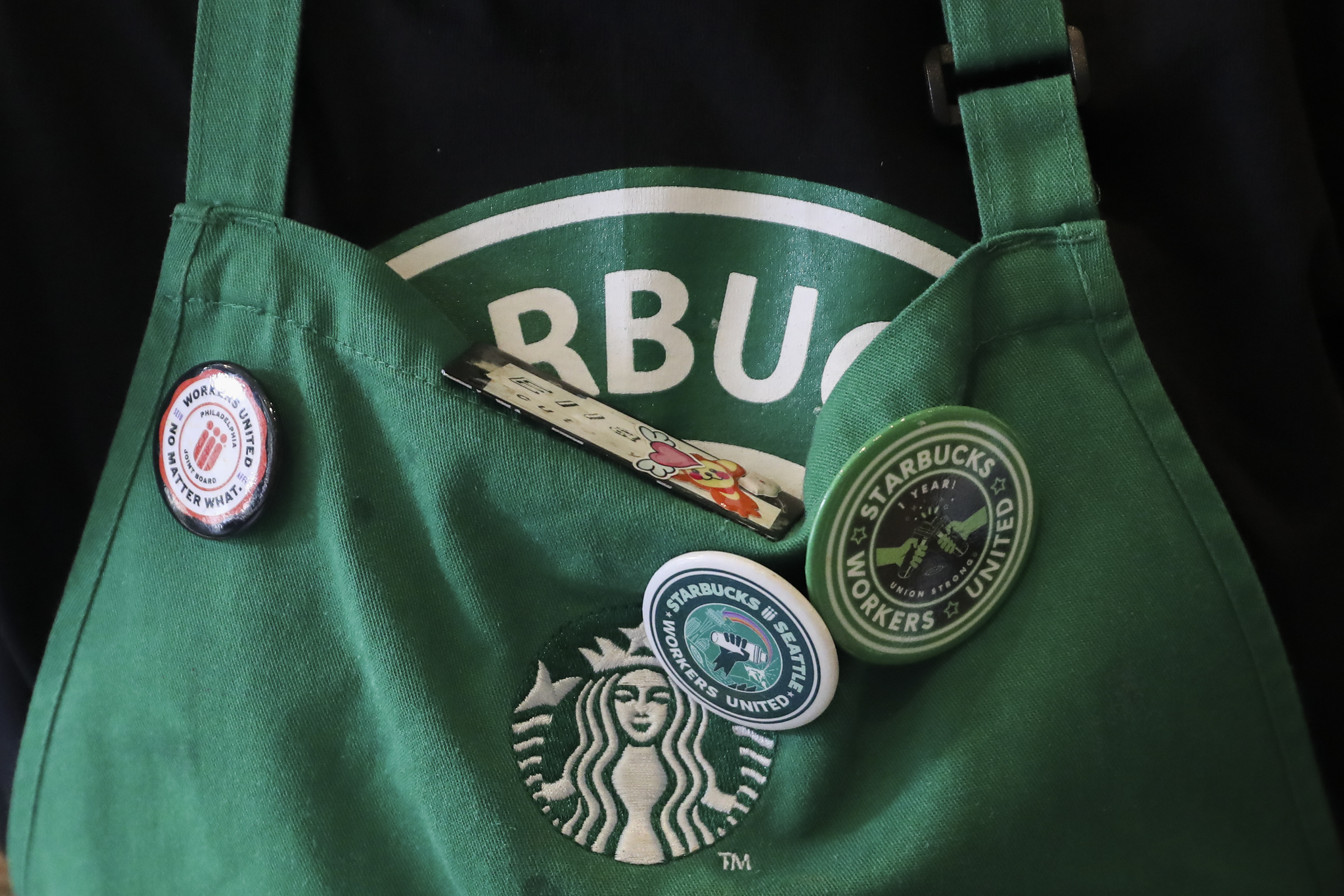
The 250 stores closing represent about 1% of the over 18,000 Starbucks in North America, according to Grams. Of the 250 closing stores, 20 are unionized, according to the baristas’ union, Starbucks Workers United.
A member of the Starbucks Workers United union wears pins during their shift at a Philadelphia store.Heather Khalifa / Staff Photographer
Starbucks has several dozen stores in Philadelphia and more in the surrounding counties.
“Starbucks leadership is failing the company, and trouble is brewing for Starbucks,” Starbucks Workers United said in a statement. The company, in response, pointed to its recent financial turnaround under company CEO BrianNiccol, who stepped into the role in 2024.
Starbucks baristas have been organizing for years, electing Starbucks Workers United to represent them at nearly 700 stores, according to the union, but they have not yet reached a first union contract with the company.
Starbucks closes some locations and opens new ones every year, Grams said, adding that is part of “managing our portfolio.”
“We remain excited about the significant long-term growth opportunity ahead in North America,” Grams said. “We are actively developing a strong pipeline of new coffeehouses and remain committed to growth in North America.”
The announcement this week is the latest round of store closures since Niccol took over as CEO. Upon last year’s closures, including six in Philly, Niccol cited nearly identical reasoning as Grams did this week for the latest changes.
Niccol has been focused on improving customer experience with a plan dubbed “Back to Starbucks.” It is paying off, he said in a statement this month, adding “we have returned to growth, delivered positive global comps and improved margins.”
The new closures support Niccol’s “Back to Starbucks” plan, Grams said.
The union this week, in light of the closure announcement, said Niccol’s plan is “nothing more than a betrayal of what workers and customers loved about the company.”
Starbucks spokesperson Trull, in response, pointed to a recent earnings call, in which Niccol said “we delivered our fourth consecutive quarter of positive global comps and our second consecutive quarter of consolidated margin growth. It’s clear proof that our Back to Starbucks plan is working.”
You may not have noticed it, unless you’re a teenager, a college student from China, or a Chinatown resident, but a slow wave has been sweeping through the storefronts of Philly’s Chinatown. There have been many openings in the past year that tap into both global food trends and scarcities in our local food scene that are changing the fabric of Chinatown.
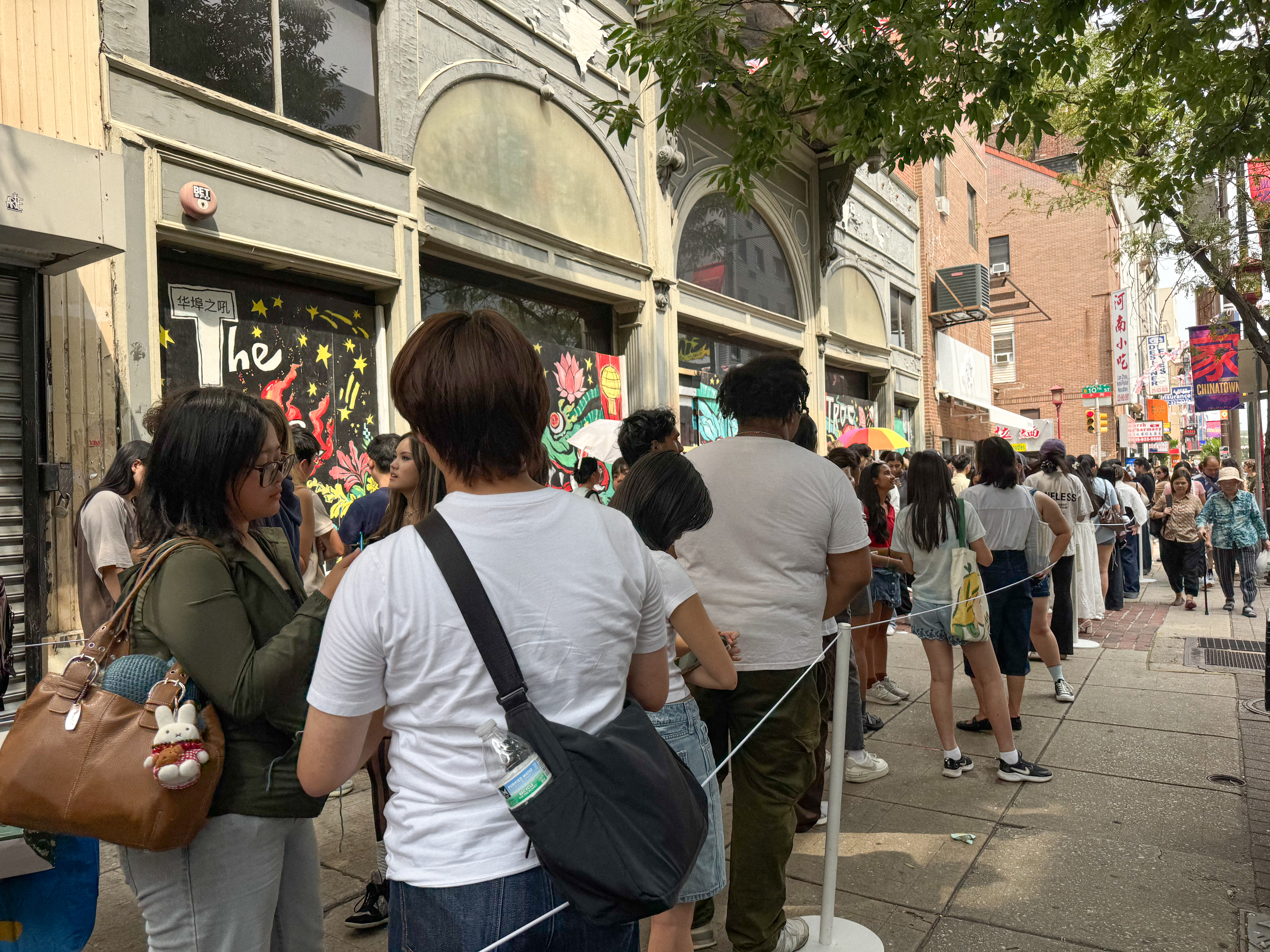
The splashiest opening has been at the corner of 10th and Arch Streets, adjacent to the Chinatown Friendship Arch, where heytea opened its first Philly store. They’ve had to assign bouncers to monitor the line that has snaked back and forth down the block. Heytea, which was founded in Guangdong in 2012 and is headquartered in Shenzhen, China, operates more than 4,000 stores worldwide.
It took 90 minutes to obtain one of its King Jasmine Guava tea beverages ($7.99) last month, during a thunderstorm that did not deter people from waiting in long lines to order. This is not unusual for the brand. According to heytea’s press representative, Yinnan Shen, when the chain opened its Upper West Side store in New York, a few weeks prior to Philly’s location opening, “more than 600 people were in line, stretching nearly three city blocks.”
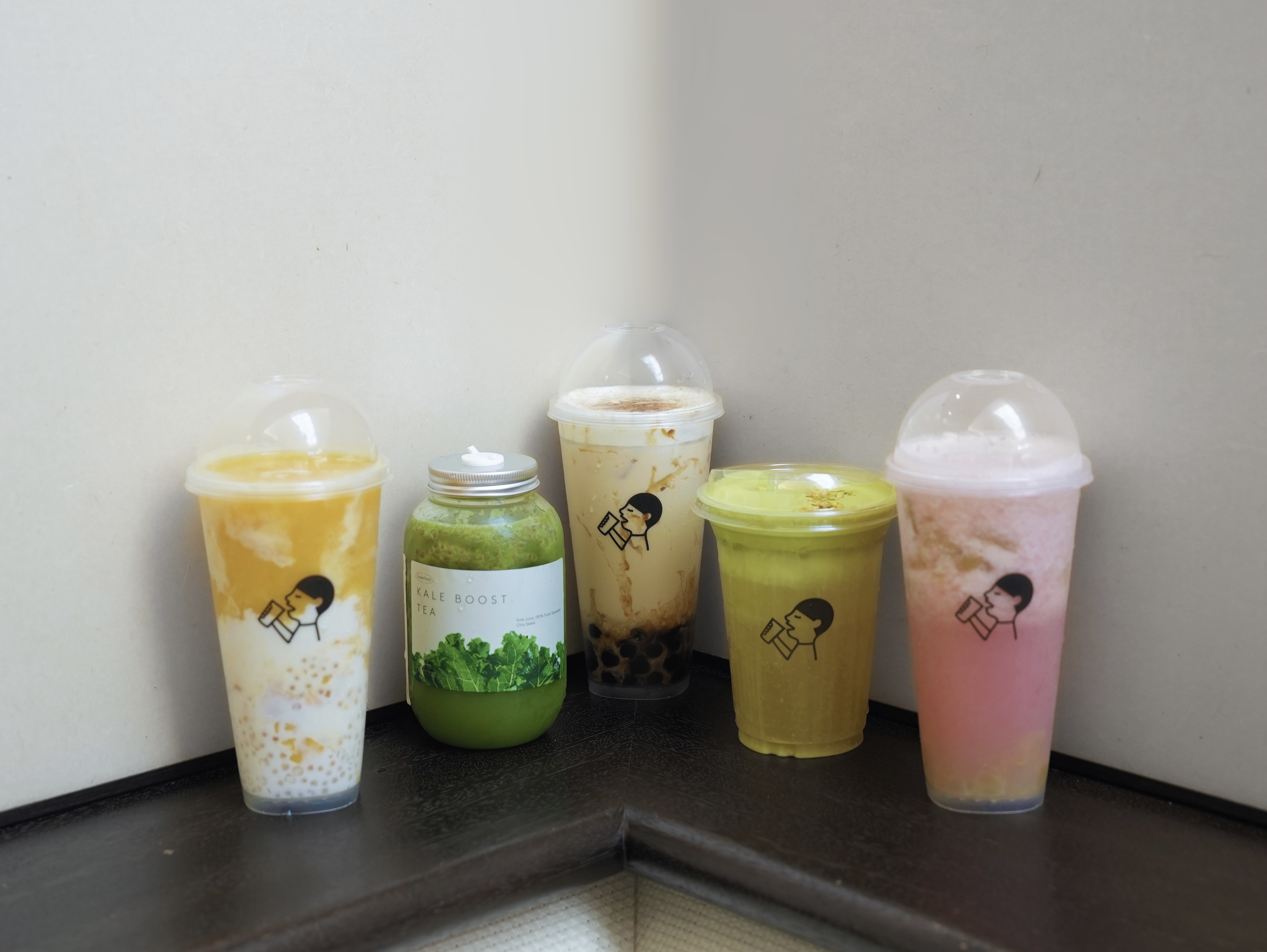
Heytea thus comes with its own built-in tailgate, populated in recent weeks by the tea company’s super fans (many of them teenagers), curious onlookers, and those lured by buy-one-get-one-free opening bargains. It seems to have found a sizable market for what it calls “new-style” tea, most of which pairs brewed, chilled Chinese tea (like oolong), mixed with fresh fruit.
Opening day (and subsequent days) have drawn long lines outside of heytea in Philly’s Chinatown.heytea
Heytea is just one of a slew of new Chinese beverage chains hitting Philly. Other markets have been whipped into a frenzy by these exports. But this wave has been relatively slow to reach Philly. For years, shops selling boba, or bubble tea, many of them franchises originating in Taiwan, have been plugging along in a relatively stagnant scene. But boba is waning. Chinese coffee, brewed iced tea, and yogurt drinks — all served cold — are on the rise.
Taiwanese chain Vivi Bubble Tea (100 stores in 13 countries) opened in Philly’s Chinatown in 2015. The first Philly Chinatown Kung Fu Tea opened in 2016, and the first Mr. Wish franchise opened in 2017. And the first Teazzi Tea Shop, a few steps away from heytea on Arch Street, opened in 2023.
Chinatown is home to many other now-familiar outposts of relatively smaller tea-focused chains, like the Chinese Tsaocaa and the Taiwanese Gong Cha, Chi Cha San Chen, and Tiger Sugar. Each of these brands have between 80 and 300 stores worldwide. In contrast with heytea, these chains are minuscule.
Non-Asian cafes may have just discovered matcha and ube (Filipino purple yam) to the point where both are now constantly seeing global shortages, but these flavors are generally a footnote on the new beverage shops’ menus.
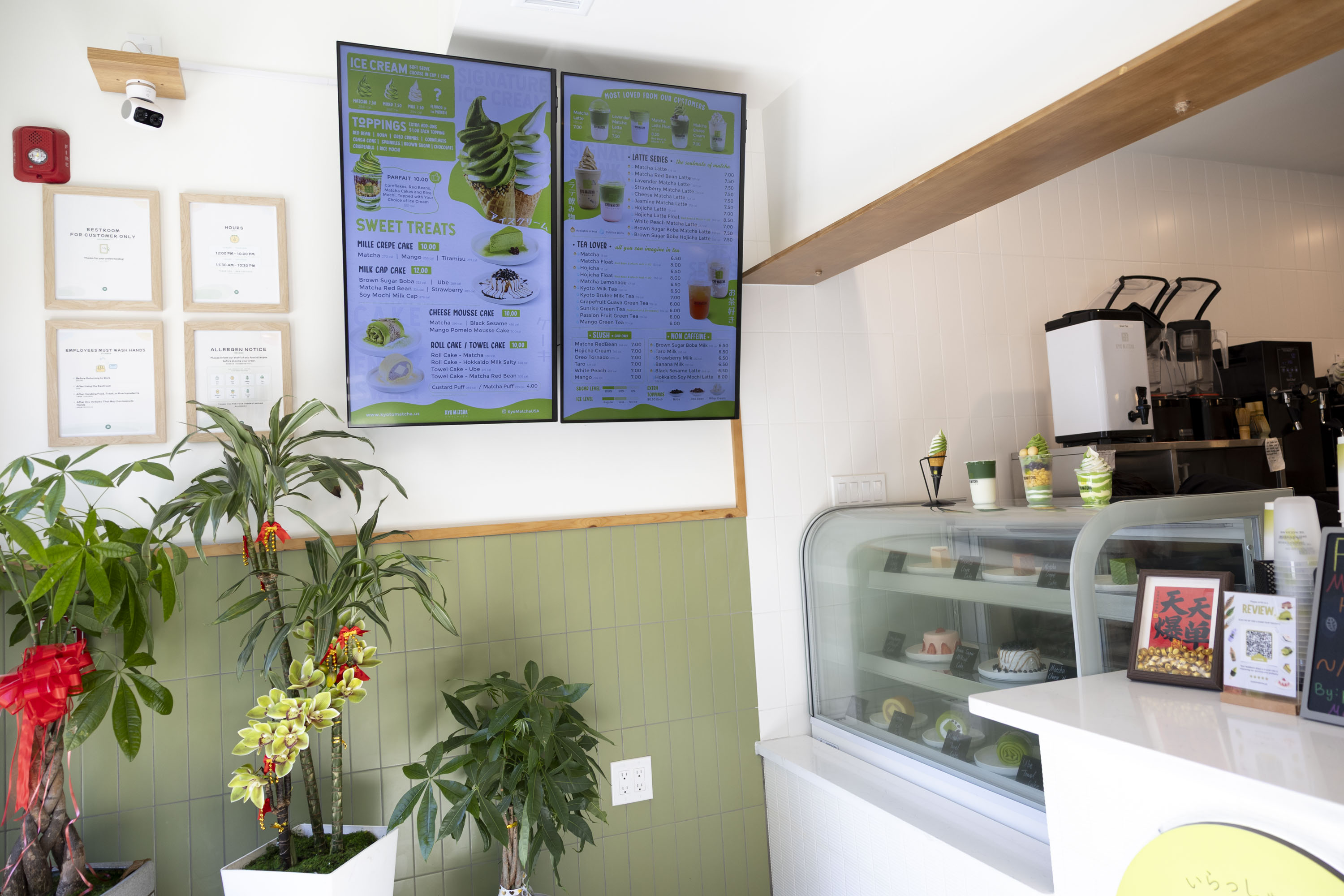
The inside of Kyo Matcha on Wednesday, Aug. 26, 2026, in Philadelphia.Tyger Williams / Staff Photographer
An exception to this is Kyo Matcha, which opened last month, also to dizzyingly long lines. At Kyo Matcha, matcha is, of course, the star, and ube plays second fiddle, appearing in both the shop’s desserts and beverages. It’s owned and operated by two young couples, originally from mainland China. When asked why they didn’t open their own, unique concept, one of the owners, Danya Li, said, “Starting a brand from scratch is so hard.”
People aren’t really opening independent, uniquely branded shops in Chinatown these days, with the exception of Super Bao & Cake Girl, which took over KC’s Pastries, and Hen Ji Hou Wei Xuan Cheung Fun, which serves gossamer rice paper rolls and hearty bowls of congee.
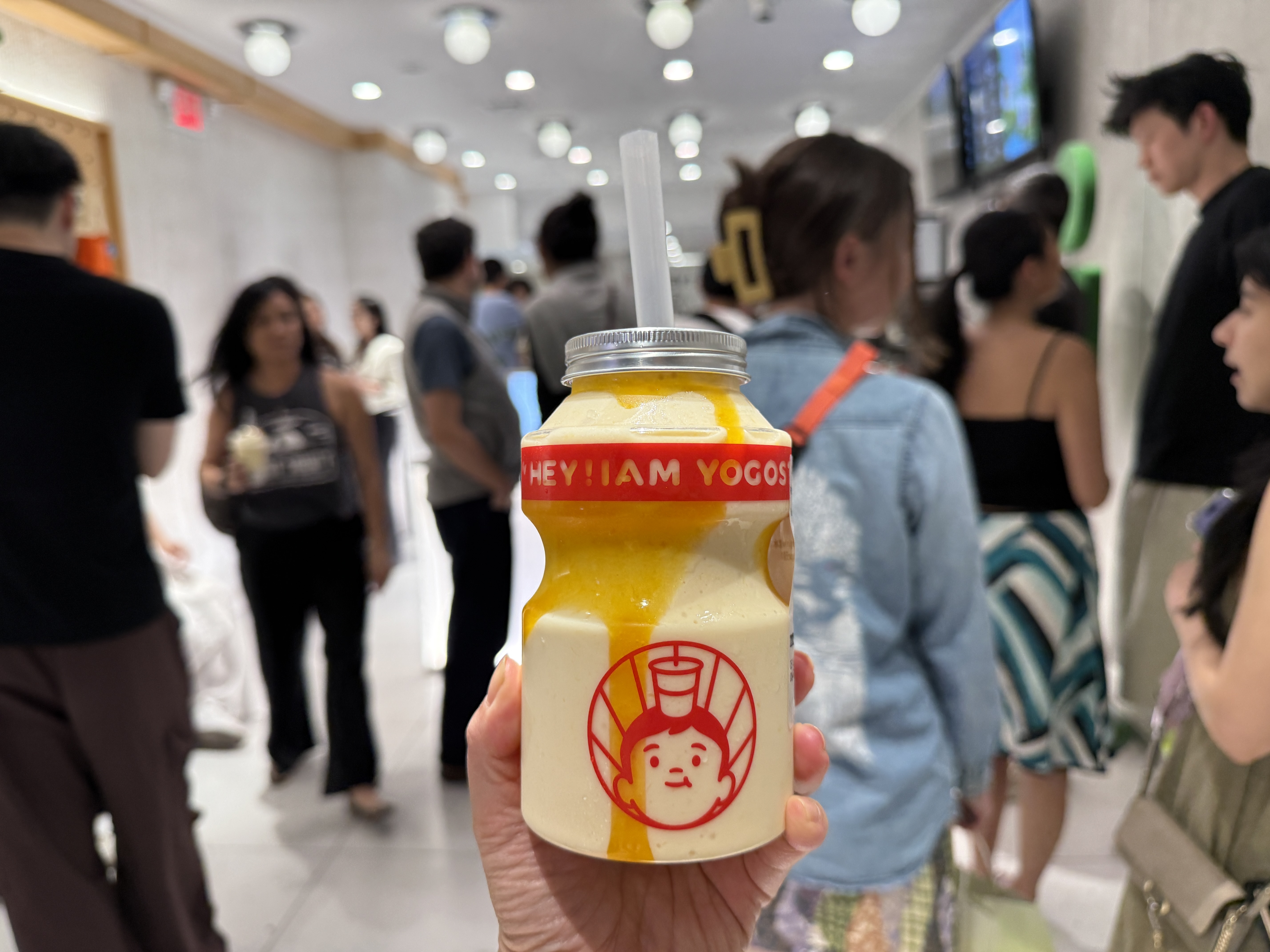
The Mango Yakult yogurt drink at Hey I Am Yogost, 124 N. 10th St.Kiki Aranita / Staff
And we’re probably going to see a lot more of them, especially as they spread through other Chinatowns in the tristate area.
Luckin Coffee, China’s largest coffee brand, debuted in Manhattan just over a year ago. It now has 25 locations in New York City alone and 36,310 stores worldwide. The brand is so huge that earlier this year, it acquired pioneering coffee roaster Blue Bottle. There isn’t a Luckin location in Philly yet, but it’s only a matter of time.
Luckin, along with fellow massive Chinese coffee chains Cotti (over 18,000 locations worldwide) and Mixue (almost 60,000 locations worldwide) have ingrained themselves into all of New York’s Chinatowns. All of them opened in New York in 2025. They are different in concept from quick service Taiwanese boba chains and cafes that promote lingering (like Starbucks). They prioritize scale, reaching as many people as possible.
Having chains move into Chinatown is a double-edged sword. It is invigorating a neighborhood barely saved from arena-related destruction and now teems with young people lining up for wholesome beverages.
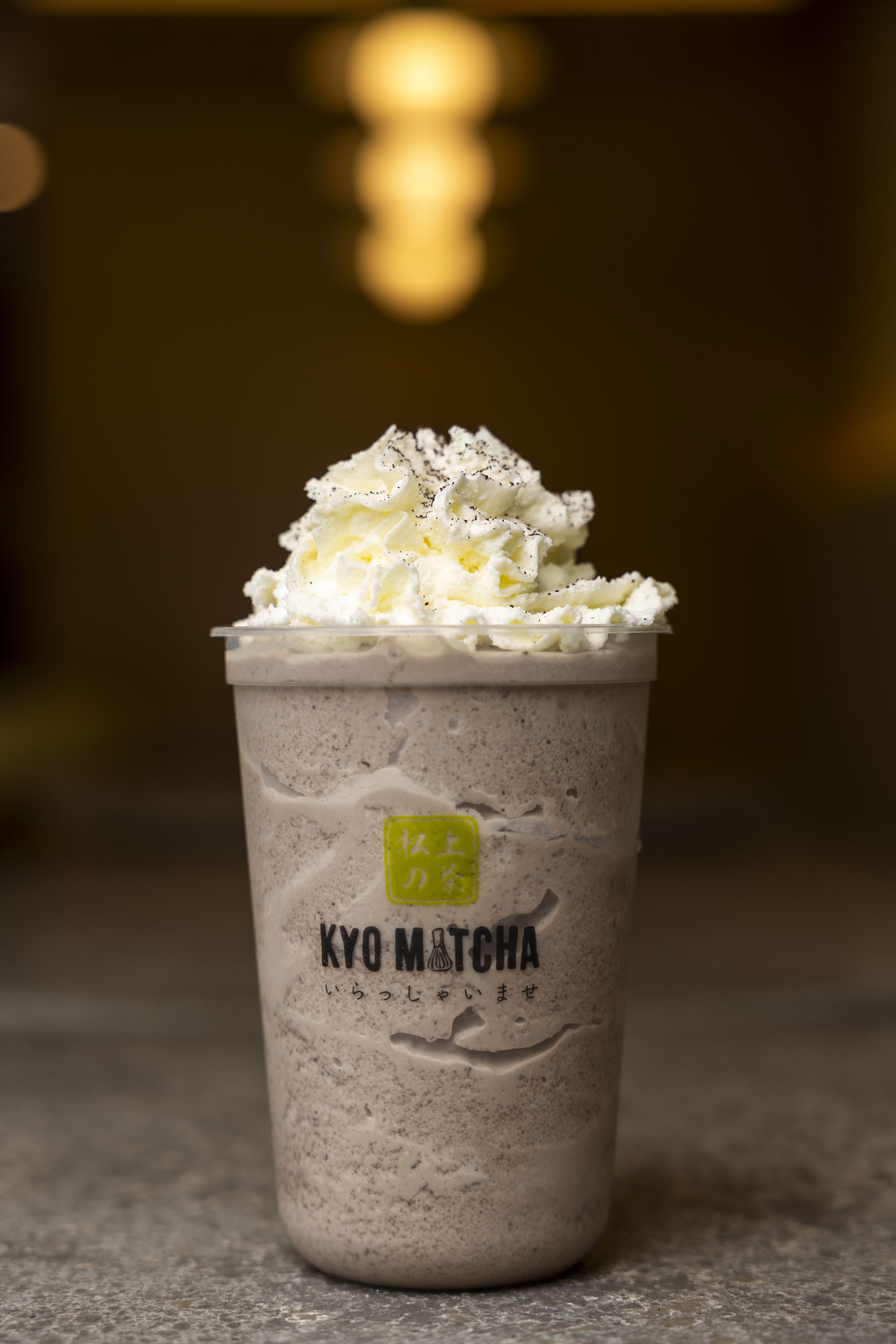
A Oreo Tornado at Kyo Matcha on Wednesday, Aug. 26, 2026, in Philadelphia.Tyger Williams / Staff Photographer
But in Manhattan, these chains have also been pricing out other businesses. It started years ago with boba chains — it has even been referred to as the “bobafication of Chinatown.” Boba chains were the first to supplant not only immigrant-owned restaurants, but housewares shops, pharmacies, salons, and other businesses.
Grace Young, an advocate for Chinatowns nationwide, asked on Instagram, “At this rate, will Chinatown become Bubble Tea Town?” In the last year, “Bubble Tea Town” has evolved into “Chinese coffee and tea town.”
Philly’s Chinatown has also experienced this form of gentrification; it has just, until now, been slower.
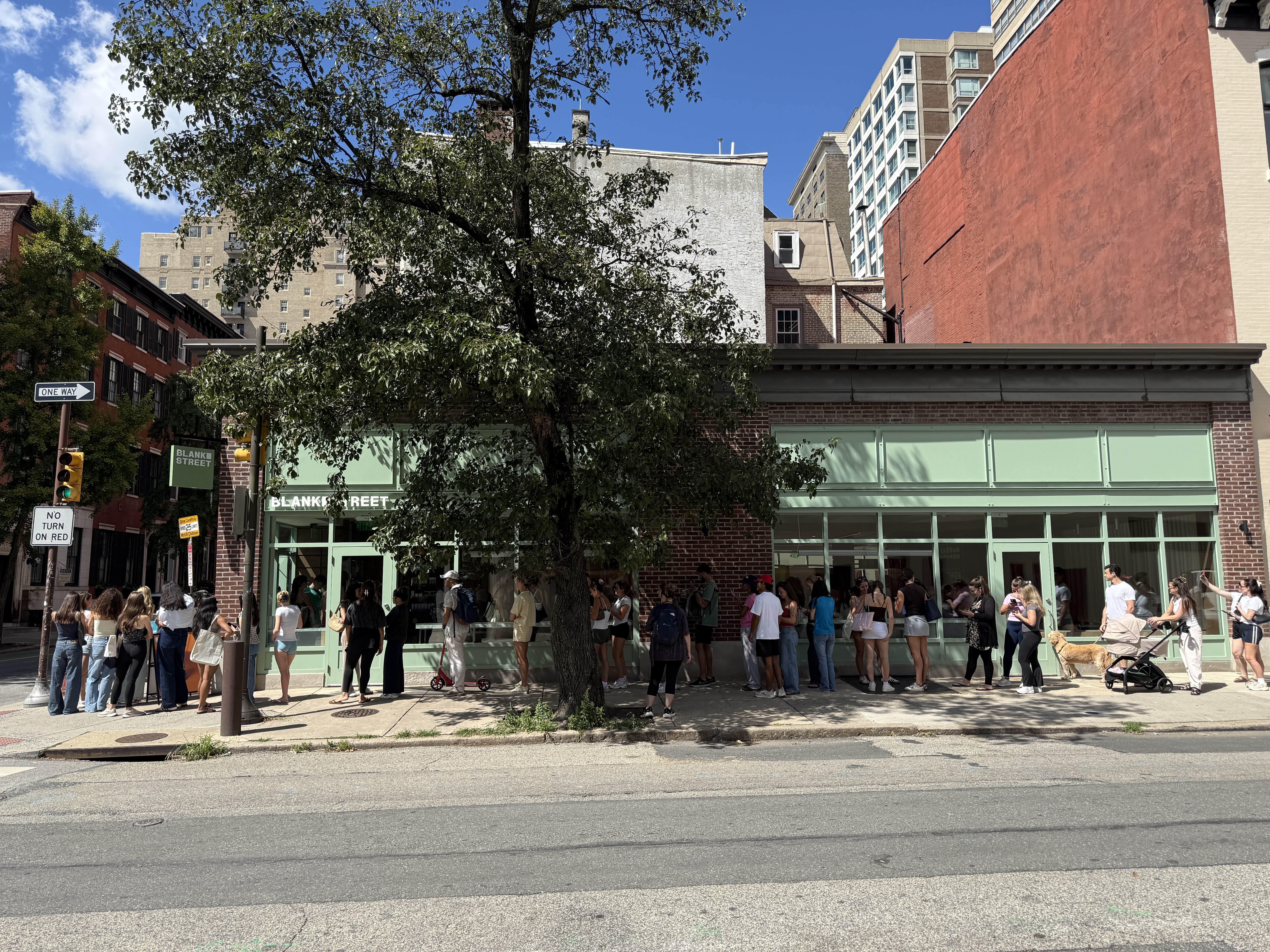
All over Philly, the cafe scene is going through seismic shifts, largely bolstered by chains. Rittenhouse’s location of Blank Street, the New York-based chain that sells coffee and matcha, opened Monday, to lines as long as heytea’s.
Blank Street’s first Philly location, at 1801 Spruce St., draws lines around the block on its opening day, Sept. 7, 2026.Kiki Aranita / Staff /
Haraz Coffee Shop is soon to open its third location in Philly, adding to the wave of Yemeni coffee shops sweeping through Philly.
We’re seeing more international outposts devoted to coffee in Philly neighborhoods, so that now Philadelphians have more options than ever, whether we’re looking for a Korean cafe or new wave Vietnamese coffee.
But no neighborhood other than Chinatown has been subject, at the hands of cafe chains, to such a condensed, rapid rate of change. Their influx means Chinatown will see fewer independent businesses and consume more from multinational conglomerates.
But it does make a younger generation, attuned to tea trends, happy. Like all forms of gentrification, it serves some communities while displacing other ones.
And every time, my blood boils at the rampant thuggery on display.
I abhor facile slogans, but as more and more incidents pile up, this one’s an easy call: Abolish ICE.
Smash it up. Close it down. Dismantle it. It shouldn’t be too hard, since it’s already been broken by President Donald Trump and his GOP allies in Congress, who have flooded the agency with billions of dollars and a mission directive that rewards lawlessness and recklessness.
Under Stephen Miller, the architect of the administration’s anti-immigrant policies, the goal is mass arrests and deportations, no matter the cost. A June 2025 post by the president on Truth Social made it explicit: “ICE Officers are herewith ordered, by notice of this TRUTH, to do all in their power to achieve the very important goal of delivering the single largest Mass Deportation Program in History.”
This has led to the foreseeable consequences that are playing out on America’s streets and inside immigration detention centers. The stories of abuse are so common, their number so overwhelming, that I don’t see how the agency survives.
This should not be interpreted as a call for nonexistent borders or unfettered immigration. Having spent much of my life in and around southwest Texas, I count myself among those who have a particular appreciation for the importance of humane, rational, and consistent immigration policies — but, by almost any measure, we’re getting none of the above from ICE as it’s currently formulated.
And it’s not just me or the usual left-leaning advocates who are questioning the national framework on immigration. Nearly three-quarters of Americans believe immigration is a good thing for our country, and most people prefer widening paths to citizenship rather than increasing enforcement efforts.
The prospect of doing away with ICE does not garner nearly as much support from undecided midterm voters, with just 21% of them saying in a recent poll that they favored eliminating the agency.
As I’ve written about how the administration is demonizing immigrants, I’ve heard from conservative readers who say the media is doing the same to ICE, casting it as the worst of the worst and inevitably forcing a critical look at its future.
To answer the question of what the agency might look like in the years to come — or if it should even continue to exist at all — I reached out to a few people who may know ICE better than nearly anyone else: those who’ve worked inside it.
Federal agents make a traffic stop on a U.S. citizen in Minneapolis in January.Adam Gray
Changing tactics
I put the question of ICE’s future and how its agents are regarded to Jason Houser, who spent his government career at the U.S. Department of Homeland Security and is a former ICE chief of staff. The Afghanistan combat veteran told me it starts and ends with leadership.
“The tactical and operational guidance and directives from the administration are putting ICE officers in a place to be demonized,” he said. “There’s a lot of authority and power in law enforcement, and the way that power is being used by this administration for the first 18 months has been disjointed, punitive, shortsighted, and targeted at the most vulnerable communities.”
While the behavior of some agents is inexcusable, and they should be held accountable, the agency is ultimately an instrument wielded by those in power.
For example, some of the same agents who are being maligned today were redeployed to Del Rio, Texas, in 2021 to help humanely and safely process almost 16,000 mostly Haitian immigrants who were living in substandard conditions in a makeshift border camp, Houser noted.
How ICE is operating today cannot be separated from the administration’s demands.
Some of the worst examples of abuse by ICE agents have come during vehicle stops, including the July killing of Lorenzo Salgado Araujo in Houston. Agents have been captured on video in high-speed pursuits, cutting off cars, and smashing windows.
Before Trump returned to office, the agency rarely engaged in these kinds of tactics, let alone used them to target noncriminal immigrants, said Joe Sifuentez, who worked for ICE until he retired in 2020.
“If it’s a bad guy in that vehicle, we have a judicial warrant, we stop them. Then we can break that window and drag that person out of the vehicle,” he said. “But that’s not what’s happening now.”
While the president campaigned on mass deportations, many voters believed the government would focus on immigrants with serious criminal records. Increasingly, that is not the case, with most people being detained only charged with violating civil immigration laws.
And in trying to fill a reported White House quota of 2,000 arrests a day, federal agents are engaged in random sweeps and racial profiling that put people at risk.
“I’m concerned that one of my loved ones could get pulled over tomorrow,” Sifuentez said. “God only knows what can happen.”
Detainees stand at windows at the Delaney Hall immigration detention center in Newark, N.J., in May, as demonstrators gather outside.TODD HEISLER
Bad math
The Republican-controlled Congress has given the administration more than $150 billion for immigration enforcement. The question is what taxpayers are getting in return. It isn’t increasing public safety, the former officials I spoke with said.
Houser pointed to a recent report by the DHS Office of Inspector General that found that as ICE shifted priorities toward immigration enforcement, its efforts to combat fentanyl trafficking declined. From fiscal years 2024 to 2025, the report said, fentanyl investigations decreased by 24%, investigative hours spent countering fentanyl decreased by approximately 30%, and fentanyl seizures decreased by almost 40%.
It’s not just drug trafficking investigations that are falling by the wayside over Trump’s misplaced priorities. ICE agents descending on a Home Depot or a Walmart to fulfill their arrest quotas fail to target the kinds of criminals the agency should be focused on.
“Real sex predators, convicted rapists, murderers, aren’t just hanging out at a Starbucks on a Tuesday, right? They’re not at the corner, walking their kids to school,” Houser said.
Mass arrests also put people in detention who do not have a final order of removal. These are immigrants who are going through the system and would generally be allowed to walk free until they had exhausted their legal options. Instead, the administration is deciding to hold them without bond for what can be an indeterminate amount of time.
Sifuentez, who oversaw ICE’s national fugitive operations program and detention facilities, told me that even under regular circumstances, detention is extremely challenging. As the government works to not only increase the number of such facilities in the country, but also how many people these places hold, the situation is bound to get worse.
“When I was in Atlanta, I oversaw a facility with 2,000 detainees. That in itself was very difficult to oversee and keep your staffing levels intact,” he said. “What do you think it’s going to be like when you ramp it up to 10,000?”
“You’re going to see more suicides. You’re going to see more people die of health conditions. You’re going to see more both mental and physical stress that leads to horrific outcomes,” Houser added. “It’s just math.”
Lorenzo Salgado Araujo, a 52-year-old Mexican immigrant, was fatally shot by ICE agents in Houston in July. A makeshift memorial took shape at the site where he was killed.ANTRANIK TAVITIAN
Abolish ICE
If ICE is being used to indiscriminately terrorize communities, and ignore constitutional protections while disregarding its public safety charge, what is the point of its continued existence? Even if you see it as a tool, if it can be abused so readily and so thoroughly by an out-of-control executive, wouldn’t the cause of sensible and coherent immigration policy be better served by replacing it?
Neither of the former officials I spoke with would endorse the call to abolish ICE, and perhaps their experiential knowledge of the agency’s complexity would keep them from ever embracing what can feel more like a facile bit of political sloganeering than anything else. After all, activists have long called to eliminate the agency, rightly underscoring the need for accountability over the lives that have been destroyed by detention and deportation — but they hardly ever offer realistic or politically viable alternatives.
Indeed, as long as we are a nation of laws, there will be the need for enforcement. In humanitarian terms, whatever agency takes ICE’s place will be judged harshly under those same standards, but exist it must.
Still, Sifuentez, until recently a lifelong registered Republican, said that at the very least ICE should be renamed and its functions divided among other agencies.
“Everybody in America should be very concerned about what’s going on,” he said. “This isn’t about politics. This is about what’s right and what’s wrong, and what’s going on is wrong.”
For his part, Houser stressed that we need migrants in this country, and we need public safety. Immigration enforcement is difficult, nuanced work and should be entrusted to those who have the highest level of training and expertise.
“No matter what the structure and organization of the bureaucracy is, there’s going to be immigration enforcement, and it needs to be handled with professionalism,” he said. “Remembering that 95% of individuals who are coming to this country want the American way of life, and that’s something to be embraced.”
Since the beginning of 2025, nearly a dozen bagel shops have opened or leased space in Philadelphia and its suburbs, bringing new locations from local operators as well as fast-growing out-of-town brands that see the region as fertile ground for expansion.
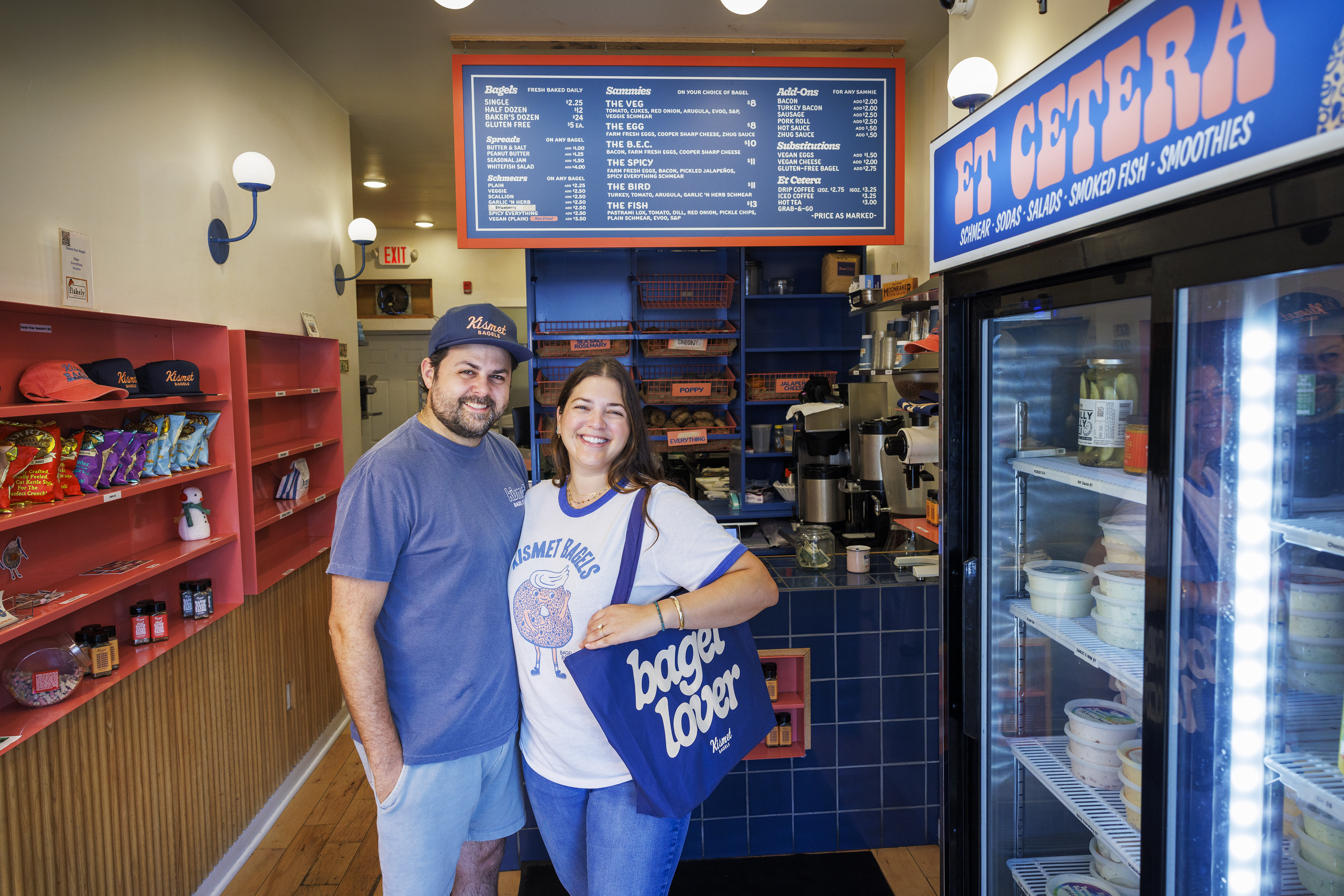
Jacob and Alexandra Cohen, owners of Kismet Bagels, at their location on Girard Avenue in Fishtown in 2024.Alejandro A. Alvarez / Staff Photographer
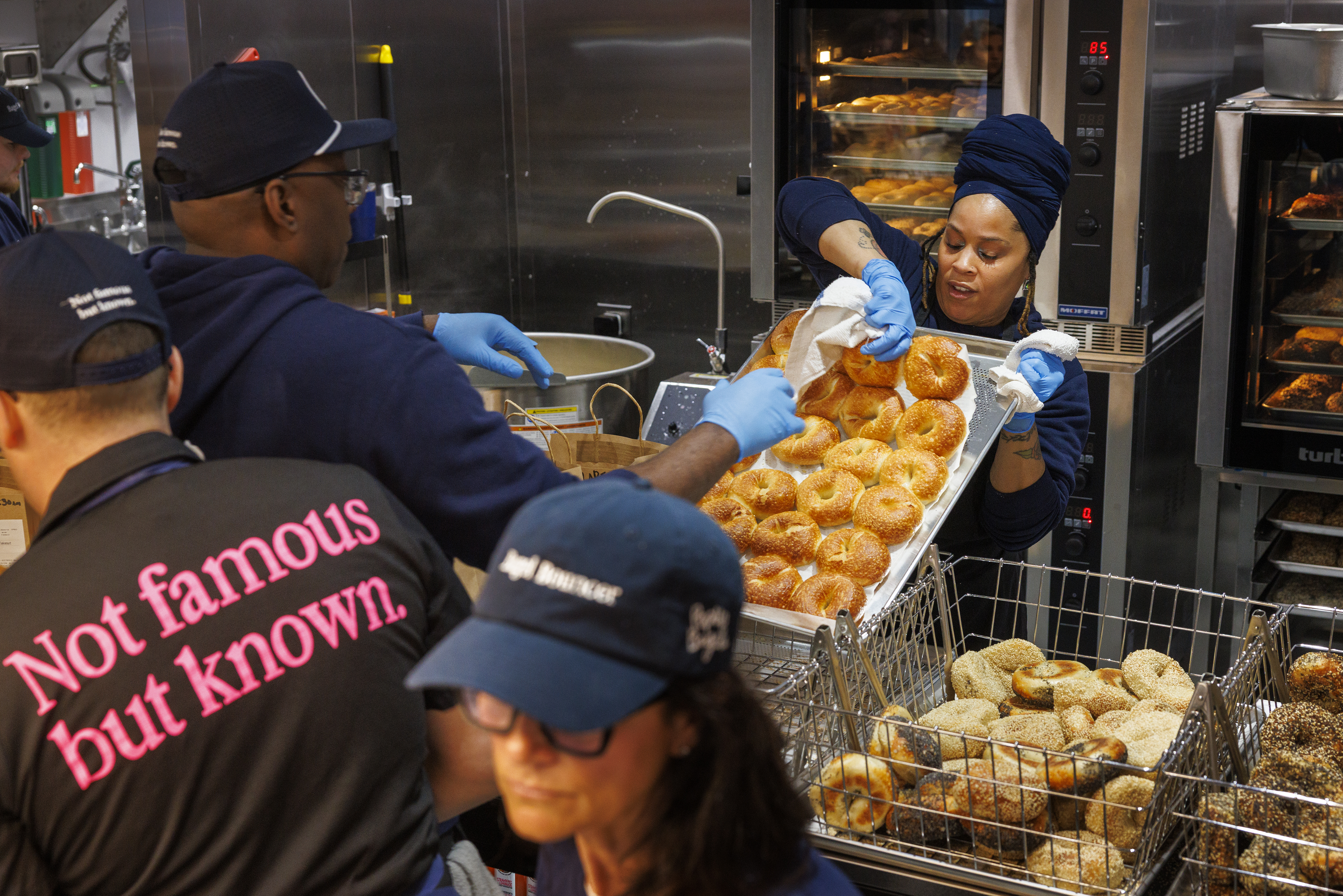
Kismet Bagels has opened its fourth and fifth shops, in Manayunk and Collingswood. Bart’s Bagels, which has shops in West Philadelphia and Bella Vista, recently expanded to the founders’ hometown of Bala Cynwyd. PopUp Bagels, the Connecticut-born chain that built a following on social media, made its local debut in Ardmore this spring and has signed a lease for a Rittenhouse shop as part of a larger regional expansion.
And Washington, D.C.-based Call Your Mother is preparing three soon-to-open Philadelphia locations — in Fishtown (due first), Rittenhouse, and Washington Square West — committing to all three before serving its first Philadelphia bagel.
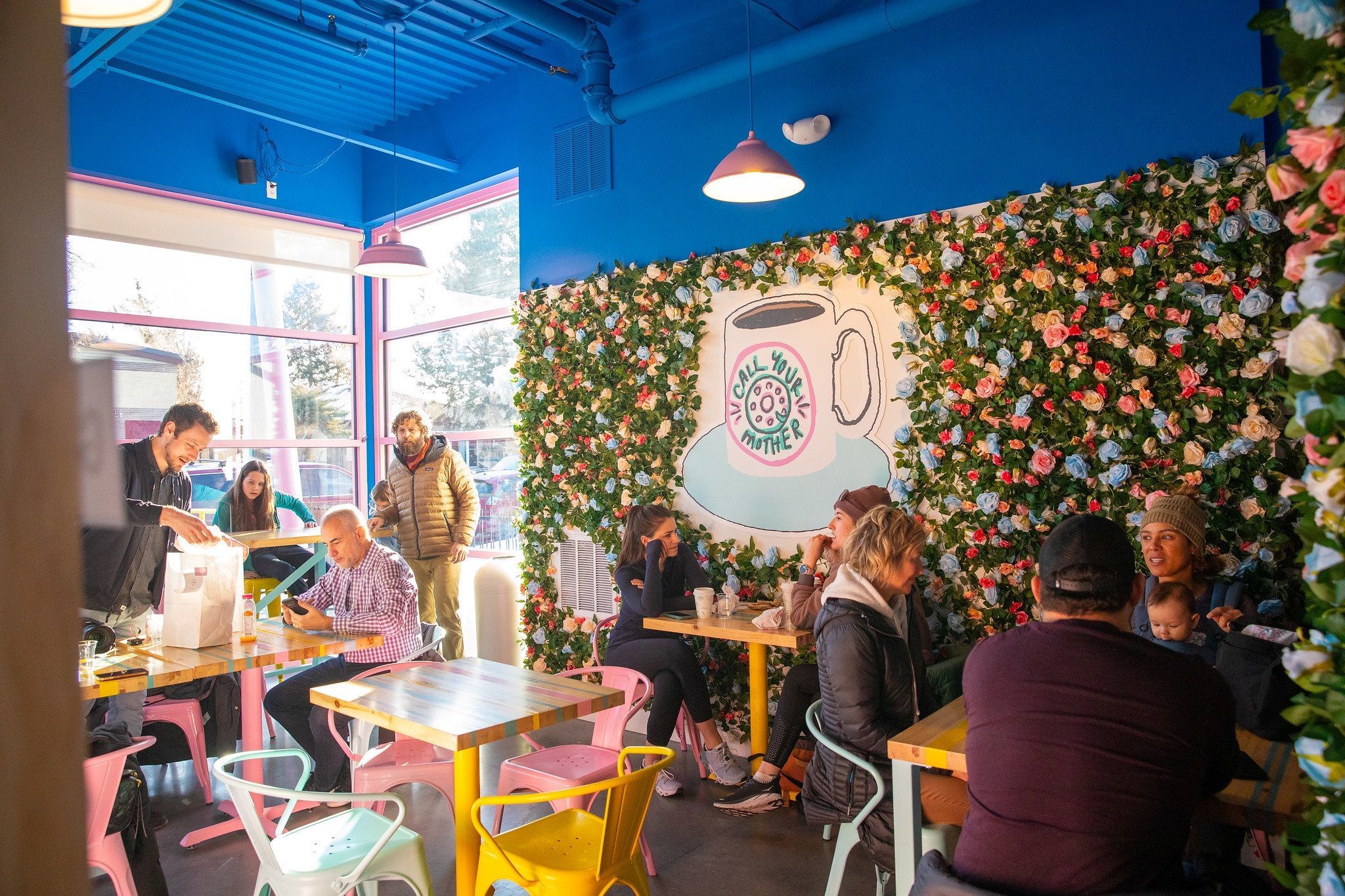
Call Your Mother bagel sandwich shops have a subtropical feel.Courtesy of Call Your Mother
That tally doesn’t include all of the stores that could follow. Florida-based Jeff’s Bagel Run has announced a 10-unit development agreement for Eastern and South Central Pennsylvania, while PopUp franchisee Brian Harrington is scouting additional territory in the Philadelphia suburbs.
All this raises an obvious question: How many bagels can Philadelphia eat?
Plenty, apparently — at least for now.
Jacob Cohen, who started Kismet six years ago with his wife, Alexandra, said the company has seen sales increase even as new bagel shops have entered the market. “I don’t think they’re just dividing the same customer base, because we’ve already had new shops open in Philadelphia and we haven’t seen a decrease in sales,” Cohen said.
But Cohen, who rapidly expanded Kismet before putting thebrakes on growth earlier this year, also sees a limit. “More is not always better,” he said. “I obviously don’t have a crystal ball, but I have a feeling that some of these private-equity bagel companies coming are going to learn that the hard way.”
Bagels are having a moment
Philadelphia is part of a much broader bagel boom. The U.S. bagel market generated an estimated $3.17 billion in revenue in 2025 and is projected to reach $4.51 billion by 2033, according to Grand View Research, a market-research firm. That represents annual growth of about 4.6%. Worldwide, the firm values the bagel market at $5.8 billion in 2025 and projects it will reach $8.6 billion by 2033.
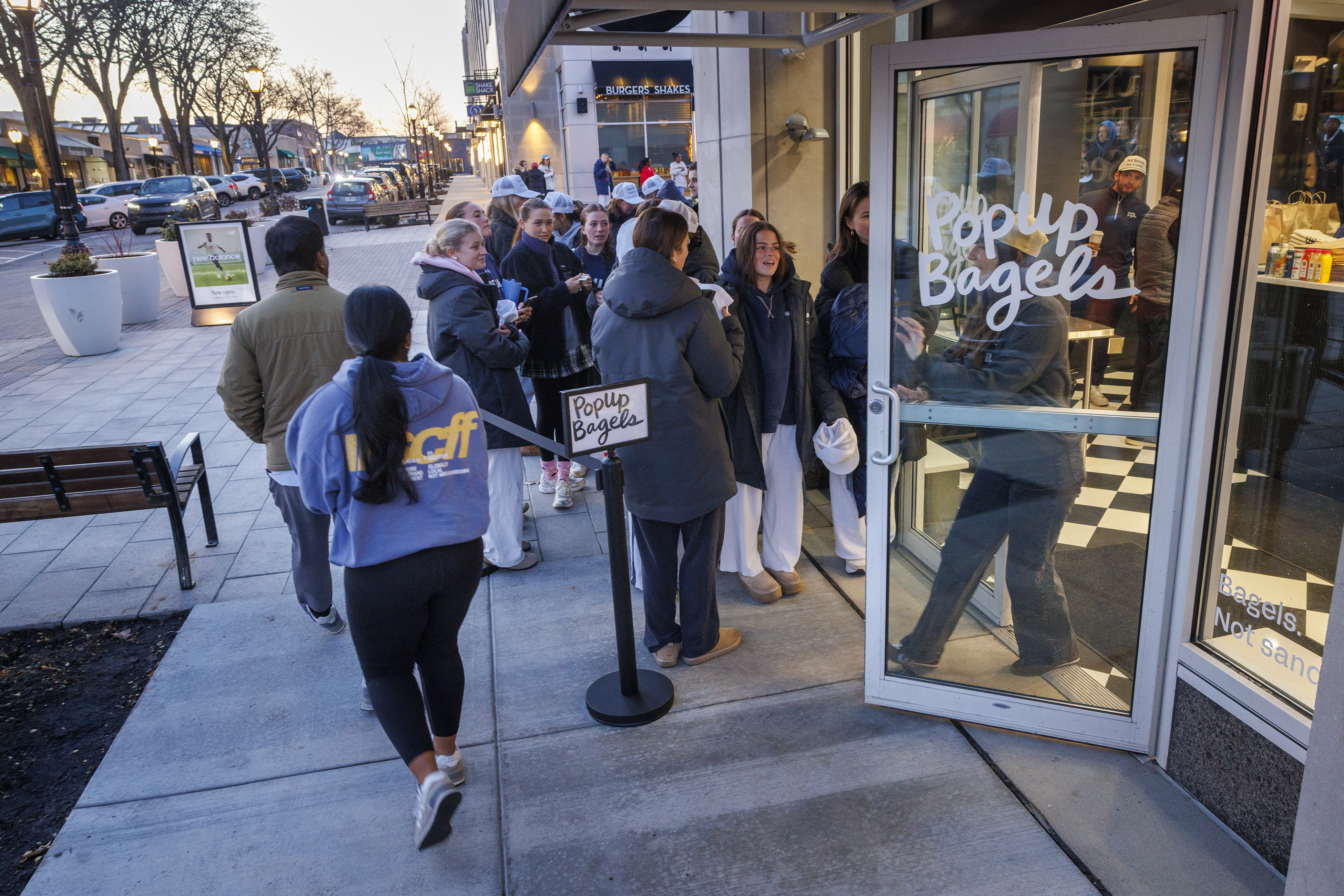
Customers lining up for the grand opening of PopUp Bagels in Ardmore in March.Alejandro A. Alvarez / Staff Photographer
Mike Kostyo, vice president of Menu Matters, a Vermont-based food-industry consulting firm, sees the current surge as the convergence of several trends rather than the sudden discovery of a new food. Artisan baked goods have been rising in popularity for years, he said, after the pandemic produced a generation of home bakers and pop-ups experimenting with sourdough and bagels. At the same time, café culture and the rise of the “little treat” have made consumers more willing to spend on premium versions of everyday foods.
“At its core, the bagel has always been a blank canvas for lots of flavors and toppings,” Kostyo said. “But now, instead of sesame seeds, you see them topped with Flamin’ Hot Cheetos.”
The traditional formula — bagels by the dozen, cream cheese, lox, and coffee — also has evolved into something closer to a breakfast-and-lunch fast-casual restaurant.
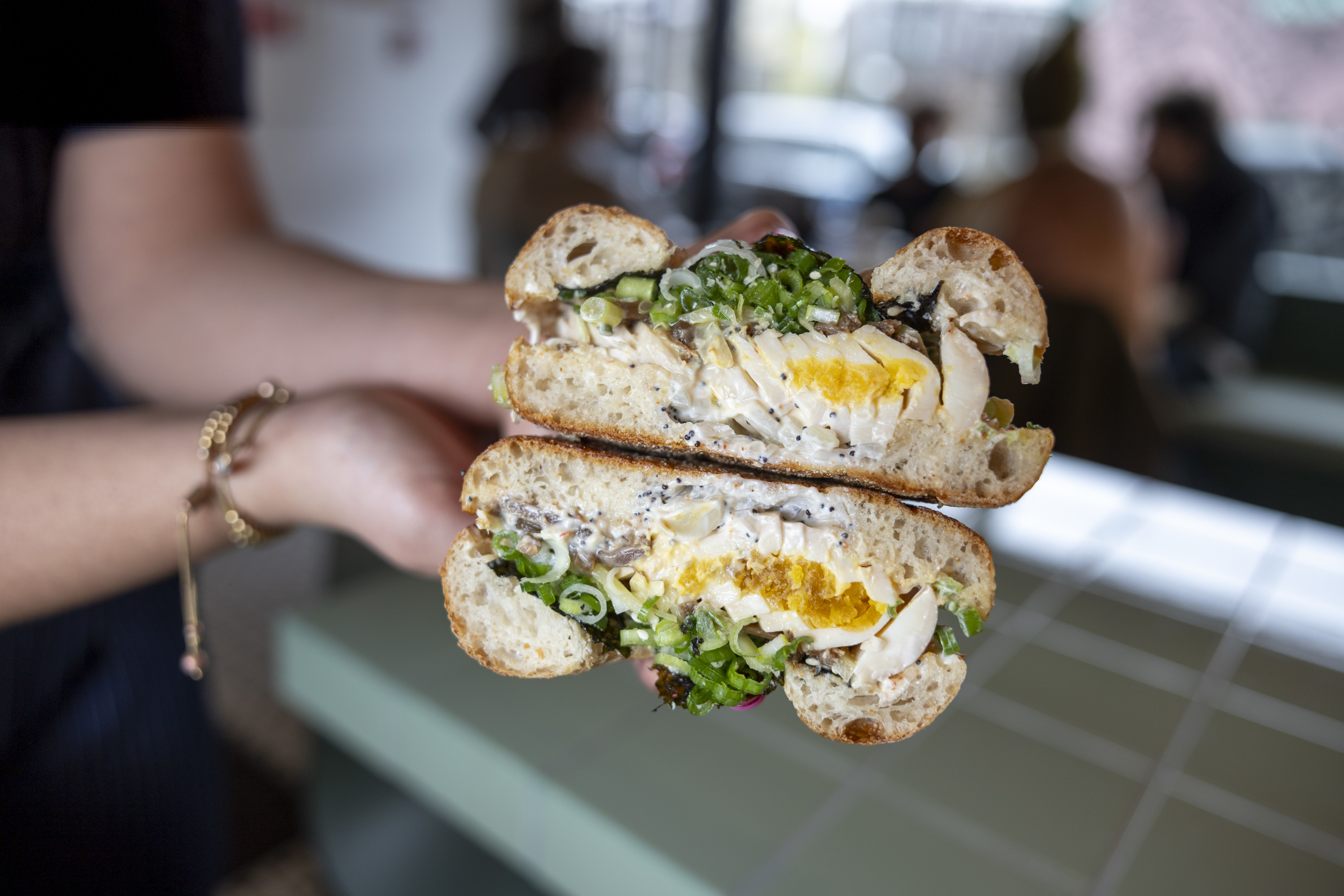
The Ramen Thing bagel sandwich from Cleo Bagels in West Philadelphia.Tyger Williams / Staff Photographer
Bagels become vehicles for egg sandwiches, smoked salmon, avocado, specialty cream cheeses, and elaborate combinations that can command substantially more than a plain bagel and schmear. And operators increasingly are looking beyond breakfast.
“The sandwich factor is so important,” Kostyo said. “You need something that you can sell across multiple occasions, not just to commuters in the morning.”
That versatility helps explain why investors have noticed.
“Investors are always looking for that next category that could blow up,” Kostyo said. “They want Call Your Mother or PopUp Bagels to be the next 7 Brew or Dutch Bros.”
From pandemic project to expansion vehicle
Some of the brands now expanding grew directly out of the pandemic.
The Cohens started Kismet as a pandemic project before turning it into a brick-and-mortar business and eventually growing to five locations — down from seven after the company shuttered a stand at Reading Terminal Market in 2025 and closed a shop in Ventnor earlier this year.
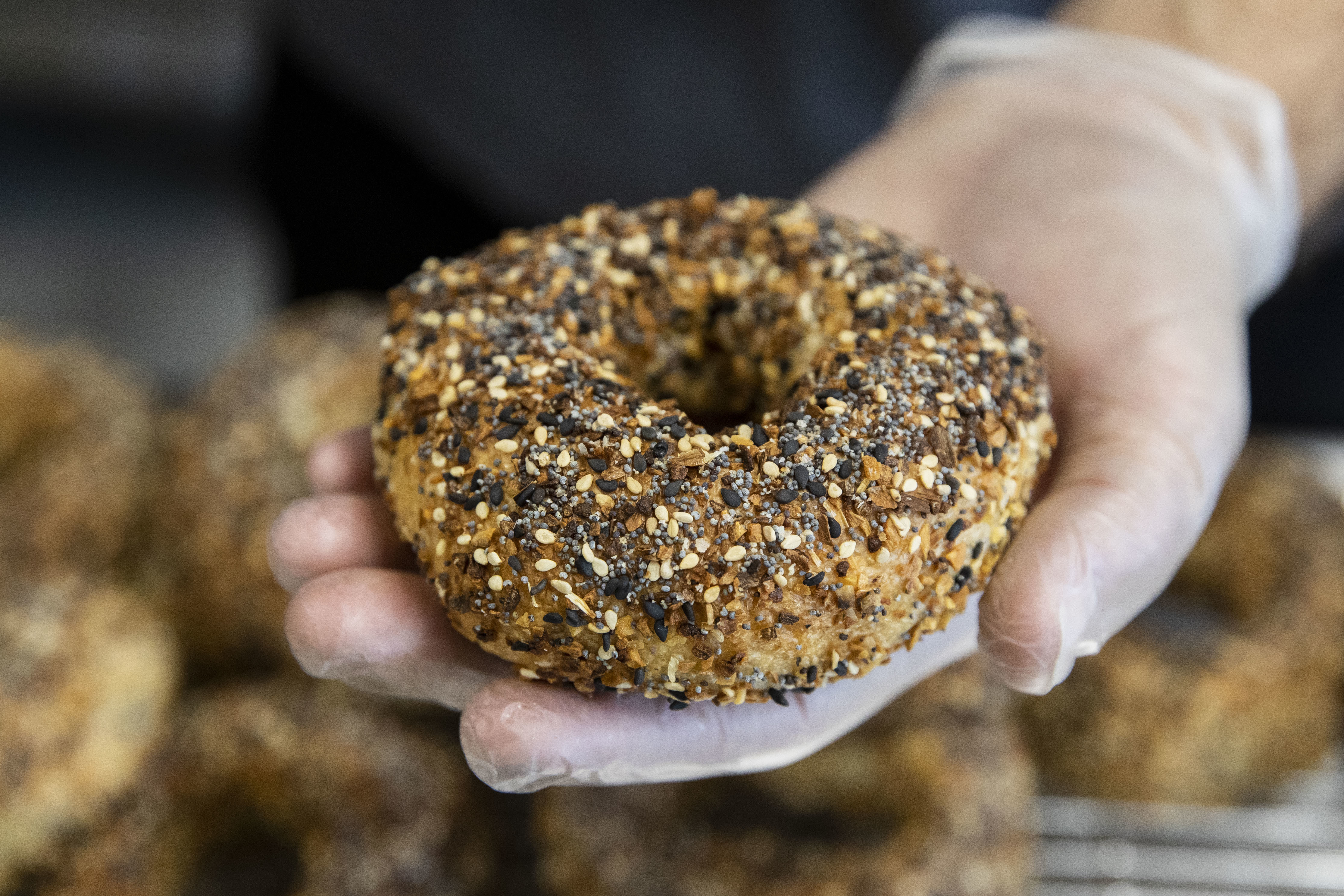
Jacob Cohen of Kismet Bagels holds an everything bagel.MONICA HERNDON / Staff Photographer
PopUp followed a similar trajectory. Founder Adam Goldberg began baking bagels at home during the pandemic and developed the idea into a business built around an unusually stripped-down concept: hot bagels and schmears, rather than the sprawling sandwich menus associated with many modern bagel shops.
Customers are encouraged to “grip, rip, and dip,” tearing apart the bagels and dipping them into containers of cream cheese.
The company’s first Philadelphia-area shop opened in the spring in Suburban Square in Ardmore. Harrington, the franchisee developing PopUp in this region, said sales have remained strong even through the summer.
“We anticipated a little bit of pullback with a lot of our core [teen] clientele getting jobs in Avalon and down the Shore, and with vacations and things like that,” Harrington said. “But it’s been very, very steady.”
In more than 25 years in the restaurant business, Harrington said, he has typically seen sales soften in late June, July, and early August. “We’ve not seen that,” he said.
PopUp has signed for the former Starbucks at 1709 Chestnut St. in Rittenhouse, as reported by the Philadelphia Business Journal. Harrington said he has a deal for a location in Lawrence Township, N.J., near Princeton, that is awaiting its permits. Another South Jersey deal is close, he said, and he sees additional potential in Montgomery County.
Despite the influx of bagel shops, Harrington said he believes PopUp occupies a somewhat different niche.
“We’re not making sandwiches,” he said. “So far, people have found us and enjoyed the way that we do it, and it doesn’t preclude them from going and getting a bacon, egg, and cheese somewhere else.”
Three stores before the first bagel
Call Your Mother is making an even larger initial bet on Philadelphia. Founded in Washington in 2018 by Andrew Dana and his wife, chef Daniela Moreira, the self-described “Jew-ish” deli has expanded beyond the Washington area as New York investment firm Invus acquired a majority stake in the company in January 2025.
Call Your Mother has signed three Philadelphia leases: 1500 Frankford Ave. in Fishtown, the former Metropolitan Bakery at 262 S. 19th St. near Rittenhouse Square, and 12th and Sansom Streets in Washington Square West. Dana said the decision to enter Philadelphia was considerably less scientific than the three-store commitment might suggest.
“My mom grew up there, my grandparents lived there, and I’ve been there so much visiting my friends,” Dana said. “I’ve been in Fishtown on a Sunday when it’s popping, and I’ve been in Rittenhouse Square when it’s super-crowded on the weekend and the market’s going. A lot of it is just gut and feel.”
Dana does not believe Philadelphia lacks good bagels. On a recent trip, he tried Bart’s and came away impressed.
“I think a lot of people are doing a great product in Philadelphia,” he said, “but there’s always room for a different bagel shop. At least I hope so.”
Dana also rejects the idea that taking investment inevitably leads to runaway growth or declining quality.
He described Invus as “patient capital” and said the investment agreement carries no requirement that Call Your Mother open a prescribed number of stores.
“We’re going to do what we can do while still keeping the quality of the food and the service top-notch,” Dana said. “And if that ever slips, we have the ability to hit the pause button.”
Local operators dig in
For some Philadelphia bagel operators, however, the arrival of heavily financed brands is cause for skepticism.
Cohen, at Kismet, is particularly wary.
“I think it’s the rare exception when private equity marries itself to a food brand and they continue to do good things,” he said. “I’d like to keep private equity out of bagels.”
He stressed that Kismet remains owned solely by him and Alexandra, financed through bank loans rather than outside investors.
David Fine, owner of Schmear Bagel Parlor, is also watching the expansion. Fine entered the business in 2013 with his Schmear It food truck and has since acquired the shops owned by Philly Bagels, giving the company eight locations in Philadelphia.
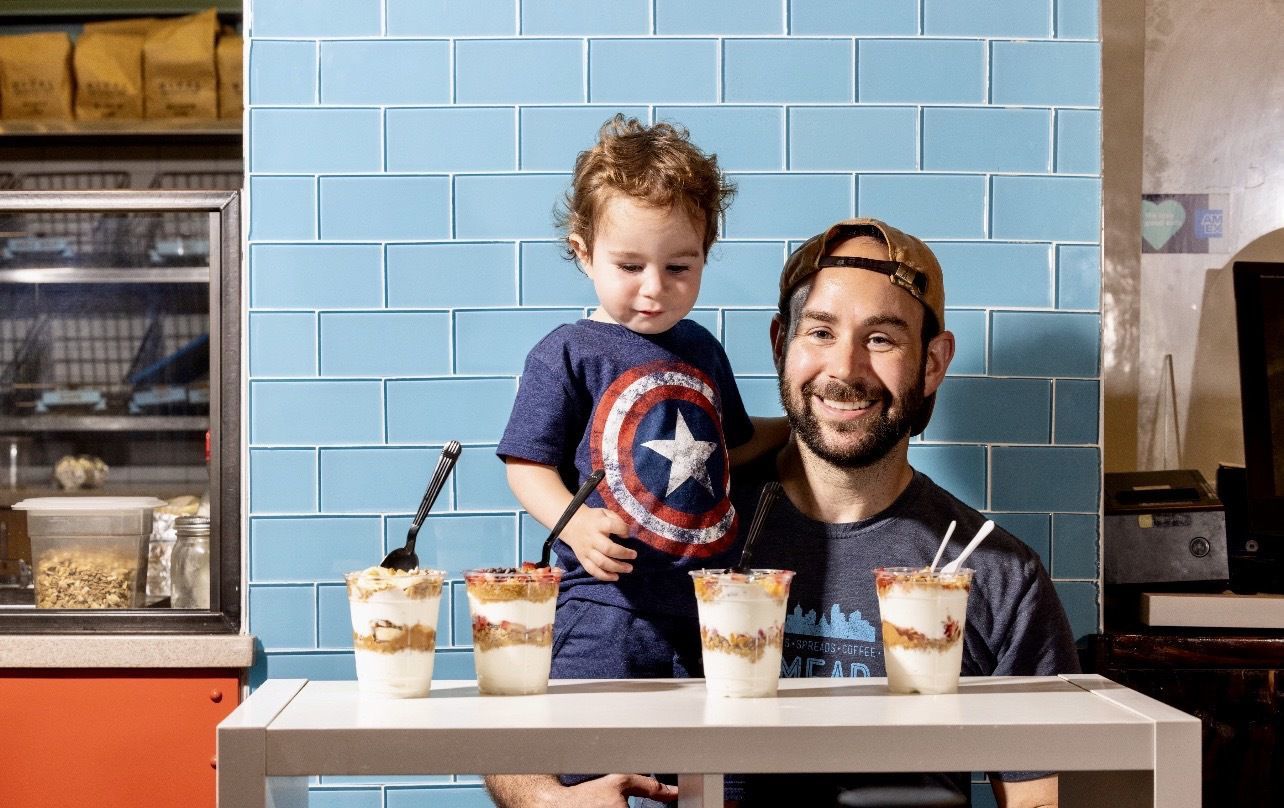
David Fine of Schmear with his son.Courtesy of David Fine
Fine said those stores have not appeared to steal business from one another.
He thinks part of the bagel’s appeal is almost mundane: It is familiar, relatively accessible, portable, and infinitely customizable.
“They’re comfort food at their very core, and they can really appeal to such a wide variety of customers,” he said.
He is less certain about the economics behind the rapid expansion of some competitors.
“The buildouts are expensive,” Fine said. “You have to be quite profitable for quite some time just to recoup that investment.”
Schmear is expanding, too, Fine said, renovating its original brick-and-mortar location at 36th and Market Streets. But he believes that being local gives the company an advantage as more national and regional shops arrive.
“There’s a keen allegiance to local brands,” Fine said.
Built for the feed
Bagels also have another quality particularly suited to the moment: They look good on a phone.
Kostyo points to the now-familiar image of a bagel sandwich sliced in half and held toward the camera, its fillings and schmear exposed.
“The visual factor is also so important in today’s social media age,” he said. “That picture … is the type of indulgent food that people go out of their way for today.”
The lines themselves become part of the marketing. A crowd outside a shop signals that the food is worth leaving home for, he said, while arguments over the proper density, crust, schmear, toppings, and even whether a respectable bagel can be made outside New York keep the category in the conversation.
“In the end, it’s all advertising and marketing,” Kostyo said.
But social media enthusiasm is fickle — witness the rise and fall of cookies and cupcakes — and Kostyo sees the flood of investment and expansion as carrying the seeds of an eventual shakeout.
“This is a pretty classic bubble where some of these brands that are doing a great job and really resonate with people will survive, but a lot will overexpand and shut down in the next few years,” he said.
Cohen, meanwhile, has decided not to test Kismet’s limits.
After years of opening shops, Kismet entered 2026 determined to improve what it already has rather than add more locations. The company is focusing on consistency, profitability, new products, employees, and customers, he said.
He is happy to see Philadelphia’s bagel culture growing and says he does not regard every new shop as a competitor. Years ago, Cohen recalled, Inquirer restaurant critic Craig LaBan told him that Philadelphia did not have enough bagels per capita.
“We might be starting to get there now,” Cohen said.
A certain seasonal disorientation is understandable these days, and we’re not talking about whatever is going on with the planet’s climate.
The Philly-born La Colombe coffee chain began offering its pumpkin spice drinks this week, and while that may seem early for evoking the spirit of Halloween, even among its rivals — Starbucks doesn’t turn to pumpkin until Aug. 25 — La Colombe is miles behind the candy industry, which has been at it for months.
In early May, as part of its “Halfway to Halloween” promotion, Mars Inc. was offering a “Creepy Crunch” variant of Skittles, Twix “skulls,” and pumpkin-shapedSnickers.
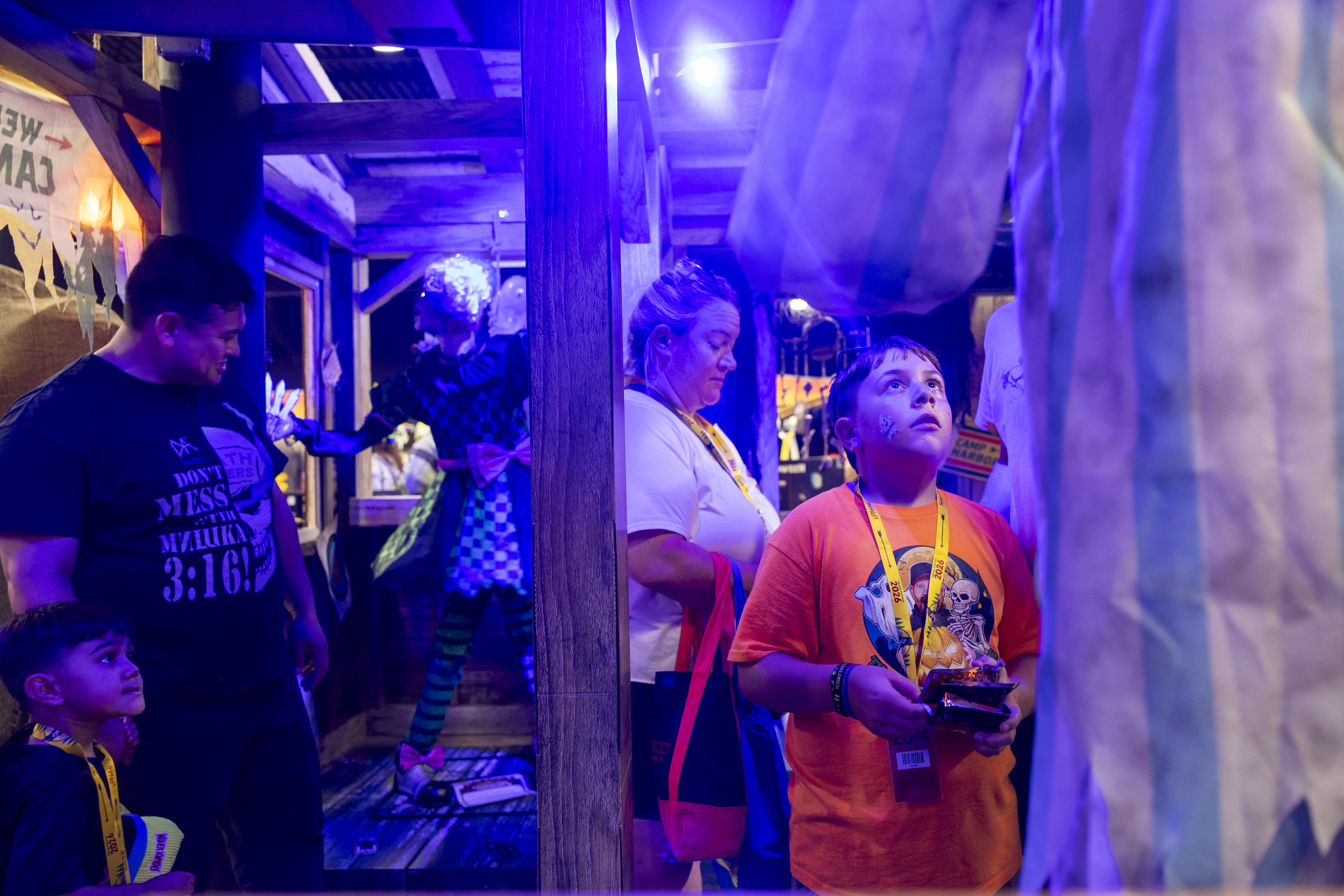
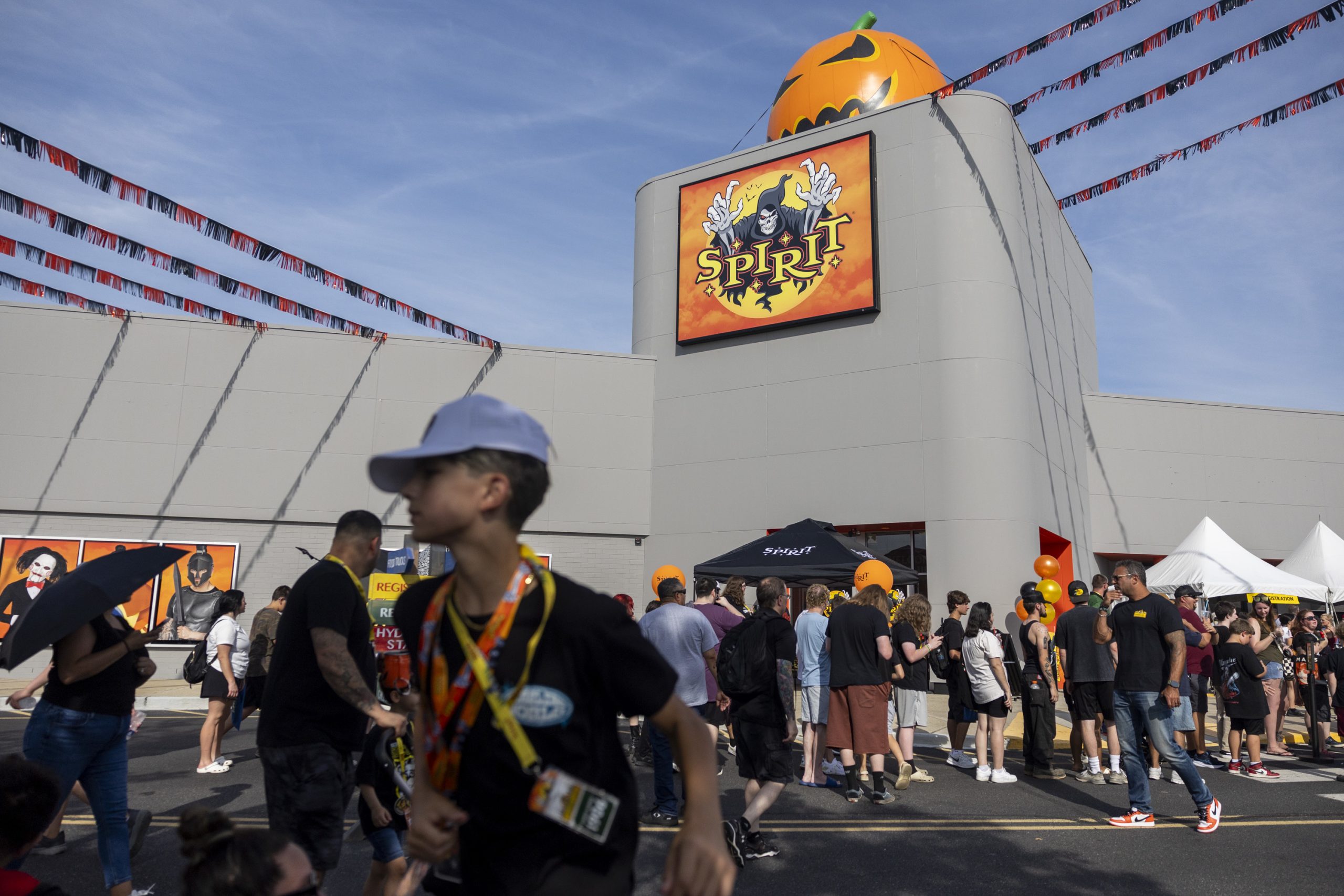
Over the weekend, as many as 3,000 people showed up for the seasonal grand opening of the Spirit Halloween store in Egg Harbor Township — 37 days before Labor Day, and in an era when summery weather appears to be lingering longer. (Philly’s average temperatures were above normal the last five Septembers.)
Complaints about the so-called seasonal creep phenomenon are decades old, but what was once a creeping tide has mutated into a tsunami “in the last several years,” in the view of Mark Lang, associate professor of marketing at the University of Tampa and a longtime supermarket executive.
“It snuck up on us,“ said Lang, an alumnus of both Temple and St. Joseph’s Universities.
“The guardrails are gone,” he added, sayingthe creep movement was “racing forward.”
“I see the movement as accelerating,” agreed Richard George, a St. Joe’s food-marketing emeritus professor.
However, it is not as though consumers are resisting, he said. For example, Christmas shopping in October is becoming ever more popular. “Consumers want to capture these deals, take advantage of greater product choices, spread out their spending, and avoid some of the stress related to holiday shopping,“ he said.
But one premature season at a time.
What is driving seasonal creep?
Money, for one, Lang said. And competition.
Sales in the confectionary industry reached a record $55 billion last year, according to Carly Schildhaus, spokesperson for the National Confectioners Association, with Halloween an important bite of that.
Businesses have to mine everything they can from the peak seasons — which very much include the sales of candy and assorted spooky paraphernalia for Halloween and holiday gifts for Christmas — said Lang, who for 11 years was the No. 2 marketing person at the Publix supermarket chain. And it doesn’t hurt to make those seasons longer.
“If they don’t beat last year’s seasonal sales, their whole year is off,” he said
Halloween is becoming the “longest retail season,” according to Mars executive Tim LeBel, who is quoted on the company website as saying, “Culture, not the calendar, is defining the seasons and our strategy.” According to Mars, it would begin in the spring.
By Mars’ count, 30% of all 20-somethings have participated in “Summerween” events, which have been gaining media attention in recent years. As the word suggests, those areHalloween-themed parties during the sweaty season. (The phrase comes from an animated TV series episode that aired over a decade ago.)
“Summerween has gained momentum,” said Schildhaus, who also invoked the cultural factor mentioned by LeBel.
For the retailers, the seasonal creep momentum is more about the economic connection, Lang said.
Stores are not only competing against one another but also battling “category killers,” like those temporary Halloween stores that put pressure on other shops to offer similar merchandise, he said.
“Everybody is grabbing at the bag at the same time,” Lang said. “Retailers have to get their piece or the other guy is going to get it. It’s a lack of imagination. I think retailers and vendors are just out of ideas.”
People gathering for the new Spirit Halloween flagship store in Egg Harbor Township, N.J., on Saturday, Aug. 1, 2026.Tyger Williams / Staff Photographer
Will the seasons continue to creep?
The consumer response argues that it will, and George believes the seasons will continue to stretch, and not just Halloween.
Online shopping has further blurred seasonal lines, George said, since it “combines technology with information and convenience, making shopping occur whenever consumers are in the mood.”
But Lang said he was not so sure the elongations would continue to stretch into perpetuity.
“I hear people saying, ‘Give me a break,’” he said. “When you see Halloween candy in July, it’s like, enough of it.”
Jumping the seasons induces a certain “holiday fatigue,” he added.
He said he fears that what was once an occasion “feels like it’s a selling event.”
For the record, only 139 shopping days until Christmas.
Staff writer Sarah Nicell contributed to this article.
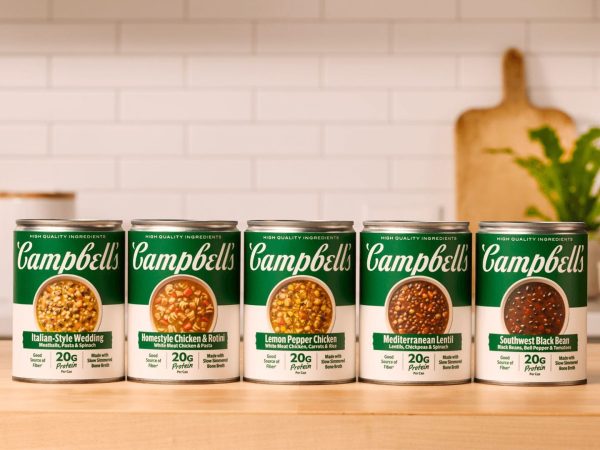
Campbell’s has hopped on the protein trend with a new soup lineup boasting 20 grams of protein per can.
With enhanced macronutrient profiles on five soups, the Camden-based soup and snack brand has joined the ranks of food companies that recently launched protein-forward products. Chipotle debuted a high-protein menu in December, and Starbucks now offers protein coffee, matcha, and cold foam.
“As consumers increasingly seek foods that offer both great taste and meaningful nutrition, this innovative product line will bring excitement and drive consumers to the soup category,” Benjamin Crook, senior vice president of soupand broth, said in a news release.
In 2025, 70% of Americans reported trying to consume more protein, according to a survey by the nonprofit International Food Information Council.
Campbell’s new soup line includes Italian-style wedding, homestyle chickenand rotini, lemon pepper chicken, Mediterranean lentil, and southwest black bean flavors.
The updated soups containmore protein than the company’s original iterations. The existing homestyle Italian wedding soup has 7 grams of protein, and the basic chicken noodle has 3 grams.
The protein soup line is Campbell’s second release of the summer designed to appeal to “better-for-you” consumer preferences. In June, Campbell’s partnered with Banza to introduce its first gluten-free chicken noodle soup. Banza makes chickpea pasta, which has 50% more protein and three times as much fiber as traditional pasta.
In addition to soups, Campbell’s has a vast food and snack portfolio. Under its umbrella is Pepperidge Farm, the baking company that produces Goldfish and Milano cookies, and Snyder’s-Lance, which owns Cape Cod Potato Chips, Kettle Brand, and Late July. In 2024, Campbell’s acquired the parent company of sauce brand Rao’s.
The company reported in June that net sales decreased 4% in the third quarter of the 2026 fiscal year. In the meals and beverages segment, sales decreased primarily due to declines in U.S. soup, Prego pasta sauces, and V-8 beverages, but those were partially offset by gains in Rao’s.
Campbell’s had 13,700 employees in 2025, per the company’s annual report. In 2023, the company launched a $50 million upgrade of its Camden headquarters. The expansion was anticipated to be completed over three years, bringing 330 additional positions to Campbell’s Camden offices.