Tag: sports-breaking

  • Aaron Nola starts on two days’ rest vs. Rays as Phillies look to clinch postseason berth

    Aaron Nola starts on two days’ rest vs. Rays as Phillies look to clinch postseason berth

    Aaron Nola is coming on for the save.

    With the Phillies desperate to snap a three-game losing skid and clinch the final National League wild card, Nola will start — on two days’ rest — Saturday night against the Rays in Citizens Bank Park.

    The Phillies discussed going with Zack Wheeler on three days’ rest, according to interim manager Don Mattingly, but settled on Nola because he typically throws 40- to 50-pitch bullpen sessions between starts, nearly twice as many as most starters.

    “If anybody’s built for this, it’s probably Nola,” Mattingly said. “He is a guy who is more old-school than anybody.”

    window.addEventListener(“message”,function(a){if(void 0!==a.data[“datawrapper-height”]){var e=document.querySelectorAll(“iframe”);for(var t in a.data[“datawrapper-height”])for(var r,i=0;r=e[i];i++)if(r.contentWindow===a.source){var d=a.data[“datawrapper-height”][t]+”px”;r.style.height=d}}});

    The Phillies are down a starter because Jesús Luzardo remains on the injured list with a strained left shoulder. He’s eligible for reinstatement Sunday and will be available to pitch if the Phillies must win, Mattingly said. Wheeler is lined up to start Sunday’s season finale, but likely only if the Phillies haven’t clinched yet.

    Mattingly said the Phillies briefed Nola on Thursday about the possibility of starting on short rest for the first time in his career. He skipped his scheduled bullpen session Friday and was informed after Friday night’s game that he would be starting.

    It’s unclear how many pitches Nola will be able to throw against the Rays. He threw 88 and allowed four runs in six innings Wednesday night in a 4-1 loss to the Brewers, the first of three consecutive losses that kept the Phillies’ magic number frozen at two.

    “Not necessarily a full start or anything like that,” said Mattingly, who cited 40 to 50 pitches as a “reasonable” goal, which could get him through the Rays’ order at least once. “He’s only had a couple of days off, so we’ll just see what it looks like and go from there.”

    The Phillies’ lead over the Diamondbacks has dwindled to one game with two remaining. They can make the playoffs with any combination of wins and/or Arizona losses totaling two.

    Nola, the longest-tenured Phillies player, started the 2022 wild-card clincher (in Game 160 in Houston). He has a 3.12 ERA in 89⅓ innings over his last 15 starts after posting a 6.04 ERA in 85 innings over his first 17 starts.

  • WNBA commissioner Cathy Engelbert, a South Jersey native, to retire in December

    WNBA commissioner Cathy Engelbert, a South Jersey native, to retire in December

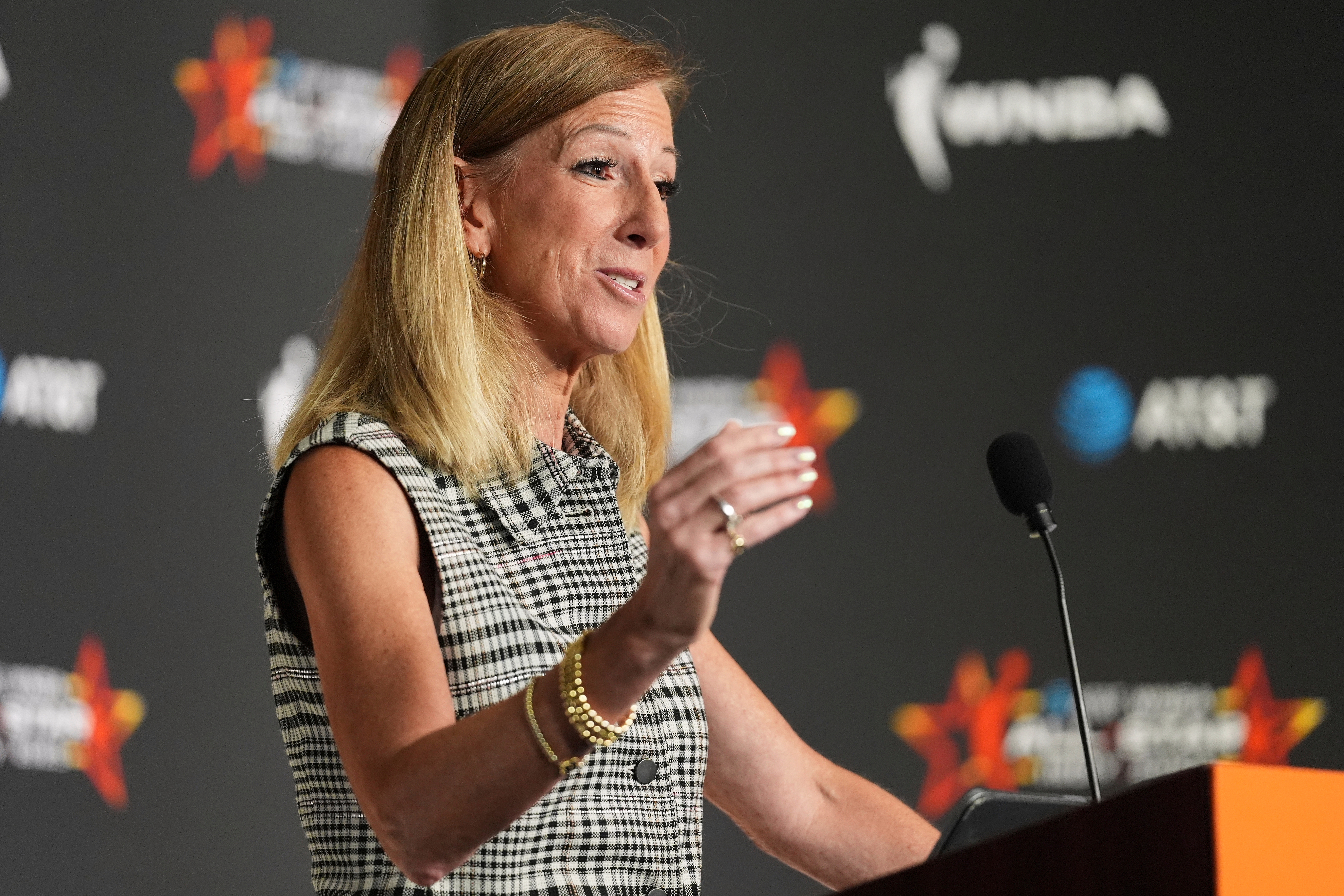
    WNBA commissioner Cathy Engelbert is retiring at the end the year, bringing to a close her seven-plus years at the helm of the league and a stewardship that has been transformative and at times tumultuous.

    Engelbert is the second-longest tenured WNBA president or commissioner, and she helped negotiate a lucrative collective bargaining agreement this past spring that resulted in the league’s first set of million-dollar player salaries. Philly-based lawyer Deb Willig helped lead negotiations for that CBA.

    “Cathy has presided over the WNBA through the most significant period of growth in the league’s 30-year history,” NBA commissioner Adam Silver said Friday when announcing Engelbert’s decision. “We are grateful for Cathy’s leadership and unwavering commitment to the advancement of women’s basketball.”

    Engelbert, a Collingswood native who turns 62 in November, told the Associated Press that she has been thinking about retiring for months.

    “When I first came to the league, I intended to do this for 3½ years,” she said in a phone interview. “The 7½ years exceeded that time. This is a really good time, given the financial transformation journey we’ve been on. Getting the collective bargaining agreement done, getting a long-term media rights deal done, getting expansion done.”

    Engelbert insists that the decision to leave was her own and that she did not feel any pressure to step down from NBA or WNBA stakeholders.

    Who’s next?

    The commissioner said she has been working on a succession plan over the last few years. While she didn’t give any specifics on who might be considered for the position, Engelbert did say there are both internal and external potential candidates on the league’s radar.

    “It’s a good time to hand it off to the next leader to take the ‘W’ into a better phase,” she said. “I’m proud of the team we built and everything we accomplished. A leader knows when it’s time to drop the mic and move on after building a powerhouse team in the league office.”

    Engelbert said she has mixed emotions about leaving.

    “I love women’s basketball, and am not going anywhere yet,” said Engelbert, who was a point guard for Muffet McGraw at Lehigh. “We’ll run a real succession process in the remaining four months. If we don’t find someone, I’ll stay on. I had no transition. I walked in the door, and I was by myself as no one transitioned me into this role.

    “Hopefully I can help this next leader transition in especially considering the elevation of this league.”

    The WNBA has grown at an exponential rate during Engelbert’s tenure as commissioner, with record television ratings, strong attendance, a new long-term media rights deal and expansion to 18 teams by the end of the decade. That run of expansion will be capped by a team coming to Philadelphia in 2030.

    “I was brought in as a business leader to transform the business,” she said. “I look at revenue and merchandise, viewership and attendance,” she said, noting how they’ve all improved. “A great leader senses when it’s time for someone else to come in. When I came in, this league was facing questions about our long-term viability and sustainability.”

    Turmoil, tension

    Engelbert said the growth of the league has “blown away her expectations” since she stepped into her role after leaving her previous position as president of Deloitte in 2019.

    Besides the new CBA, the list of things she is most proud of includes getting charter travel for players, keeping the league going during the coronavirus pandemic, the historic media rights deal and exponential increase in the value of WNBA franchises. In 2019, the average value of a WNBA franchise was $10 million; in 2026, it is about $460 million.

    Along with the financial gains, however, turmoil and tension have accompanied the WNBA’s growth.

    Players say they have seen more social media vitriol directed toward them over the last few years, and some don’t feel the league has done enough to ensure their safety. The league also has been at the center of discussions about transgender athletes playing in the league.

    Engelbert has repeatedly said the online attacks of players are unacceptable and she backs league initiatives to protect players. She also said there should be no confusion on the transgender question.

    “We have no current eligibility issues in the WNBA,” Engelbert said, adding that “if we did, we would have a thoughtful policy discussion with the [players’ association] and the players.”

    While there was a strained partnership between the commissioner and players during the recent CBA negotiations, Engelbert insists she has a good relationship with them.

    Talks between the commissioner and players have been complicated.

    New York Liberty forward Breanna Stewart, who’s vice president of the WNBA players’ union executive committee, said before the All-Star Game that there is a respect for Engelbert among the players, just not much of a relationship.

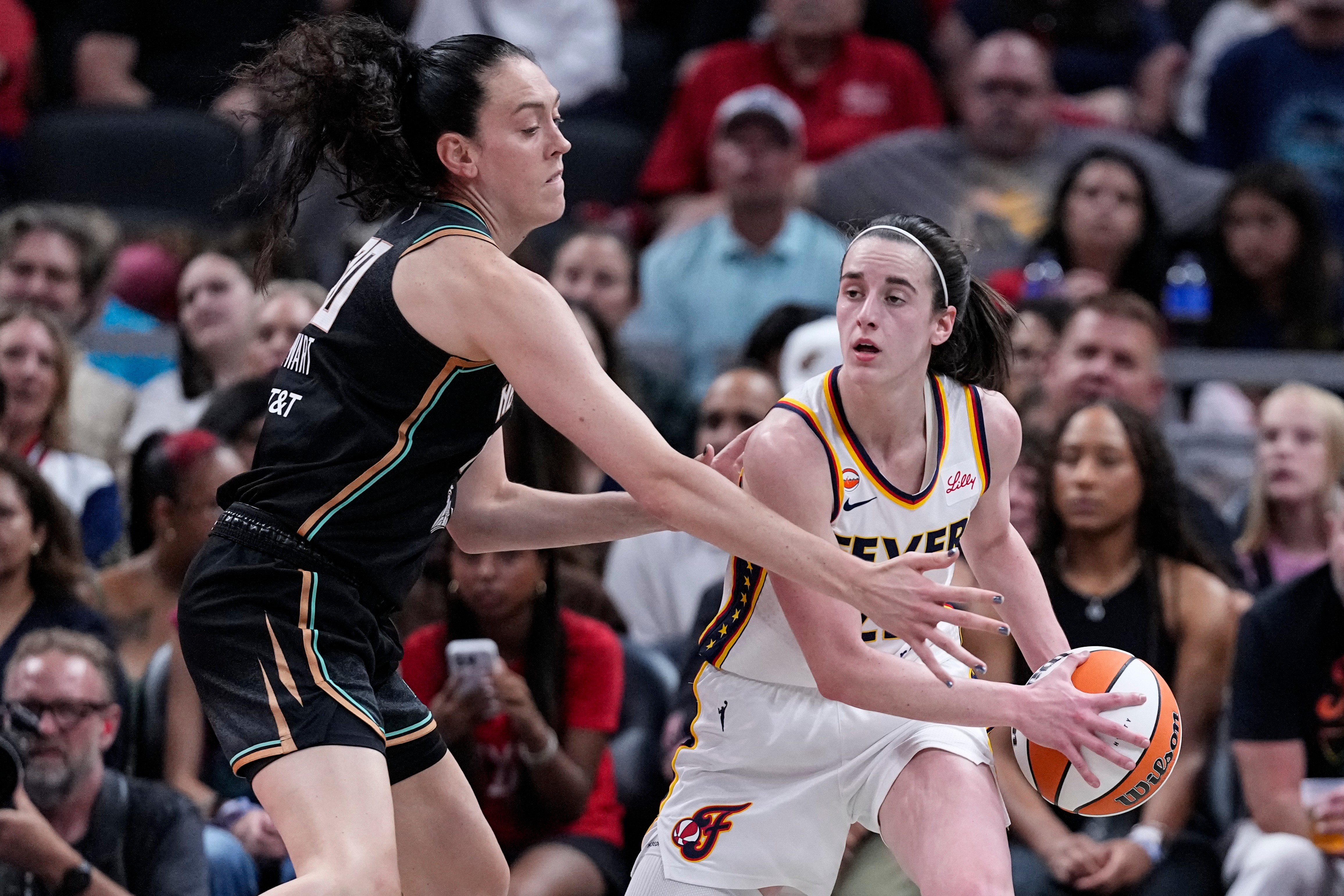
    New York Liberty forward Breanna Stewart (30) defends as Indiana Fever guard Caitlin Clark looks to pass in the first half of a game on Aug. 11 in Indianapolis.Michael Conroy

    Engelbert’s future

    Engelbert said she is ready to do what most retirees plan: spend more time with family.

    She also admitted that the online hate she receives has affected her family as well, though she did not share details of the impact.

    “There have been some hard parts of that on my family with the vitriol and hate I get online,” Engelbert said.

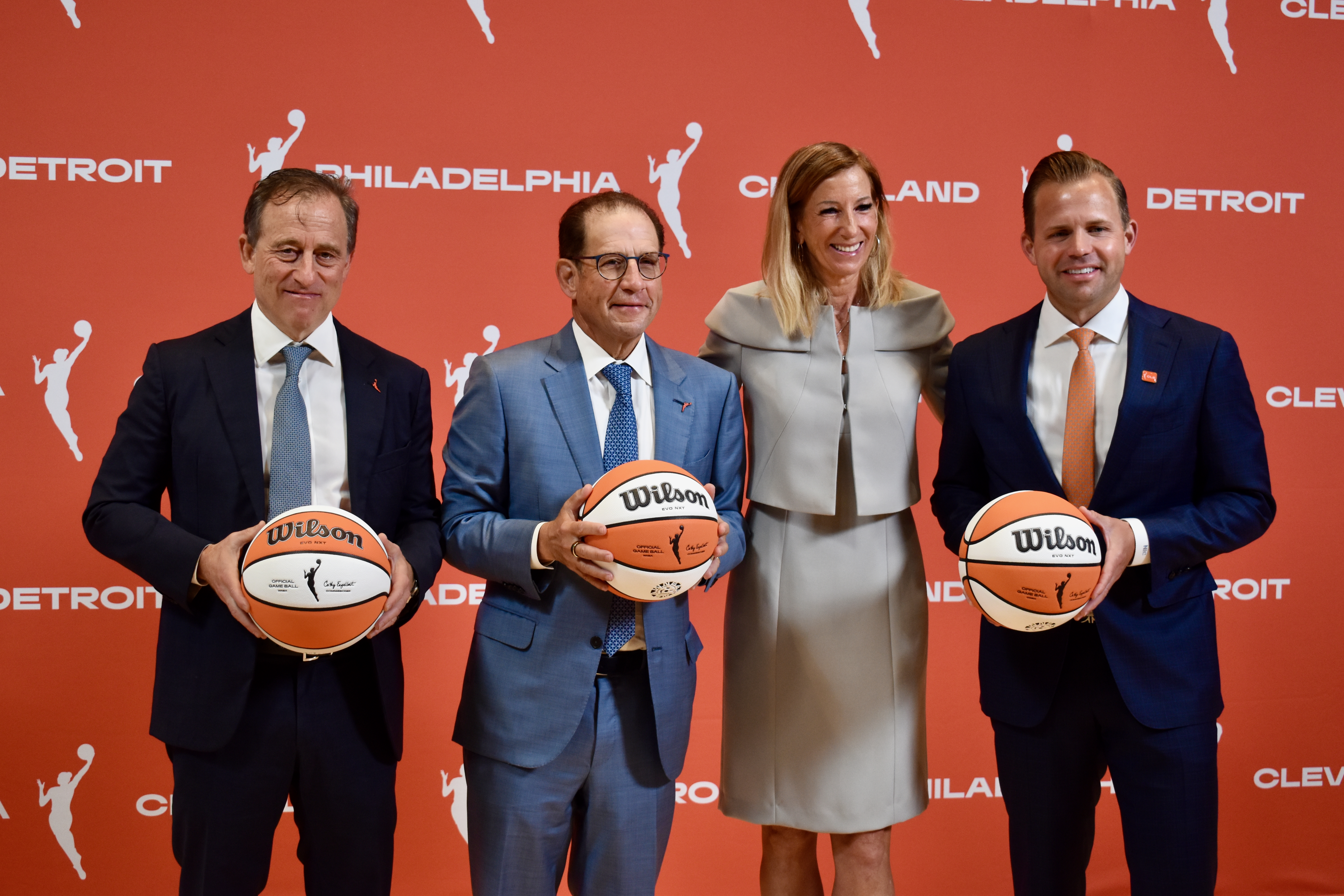
    Sixers majority owner Josh Harris (left), Detroit Pistons vice chairman Arn Tellem, WNBA commissioner Cathy Engelbert, and Cleveland Cavaliers CEO Nic Barlage celebrate the announcement of three new teams, including a franchise coming to Philly.Jonathan Tannenwald

    Her retirement will make her mother happy. Her father, Kurt, was a Hall of Fame basketball player at St. Joseph’s who died in 1987. Her parents were from Northeast Philly, and five of her siblings attended Villanova, according to a 2019 Inquirer article.

    “My mom is turning 90 this year, and she said that ‘it would be good if you were retired to spend more time with me,’” Engelbert said, laughing. “I have two children, one I barely see.

    “I’m one of eight kids [and I] have five brothers. They always say can you retire so you can spend more time with us.”

    Come Jan. 1, her family will get its wish.

  • San Francisco’s Chase Center, Valkyries to host 2027 WNBA All-Star Game

    San Francisco’s Chase Center, Valkyries to host 2027 WNBA All-Star Game

    SAN FRANCISCO — The WNBA All-Star Game is coming to the Bay Area next summer.

    League commissioner Cathy Engelbert announced Tuesday that the game will be July 31, 2027, at Chase Center after a weekend of All-Star activities around the San Francisco region.

    “We are thrilled to bring AT&T WNBA All-Star to the San Francisco Bay Area for the first time,” Engelbert, a Collingswood native, said in a statement. “The Golden State Valkyries have brought incredible energy and excitement to the WNBA from the moment they were announced as an expansion team in 2023, and the response from fans across the Bay Area has been remarkable. Valkyries fans have embraced this team with an extraordinary level of passion and enthusiasm, and we can’t wait to see that energy on full display for an unforgettable All-Star weekend next summer.”

    At the All-Star Game in Chicago last month, players’ union president Nneka Ogwumike, who played at Stanford, said many players felt that Golden State would be a great host for next year’s midsummer exhibition.

    The Valkyries have sold out all of their home games at the Chase Center, which opened in 2019, since the franchise’s inception last year. They became the first expansion organization to make the playoffs in its inaugural year and ultimately lost to the top-seeded Minnesota Lynx. The Valkyries clinched a playoff berth for this year on Monday night with a win over Dallas.

    The NBA All-Star Game was played at Chase Center last year.

    “Hosting AT&T WNBA All-Star in only our third season is an incredible honor and a reflection of everything this fanbase, this region, and this organization have built together,” Valkyries president Jess Smith said. “From Day 1, the Bay Area has shown up for this team in a way that’s redefined what’s possible in women’s basketball, and we can’t wait to put that same energy on display for the entire league next summer.”

    Last week, Major League Baseball announced the 2028 All-Star Game would return to nearby Oracle Park, home of the San Francisco Giants.

    The Super Bowl was played in February at Levi’s Stadium in Santa Clara, Calif., which then hosted the World Cup this summer.

  • SEC, Big Ten add long-missing support to college sports bill and revive its chances in the Senate

    SEC, Big Ten add long-missing support to college sports bill and revive its chances in the Senate

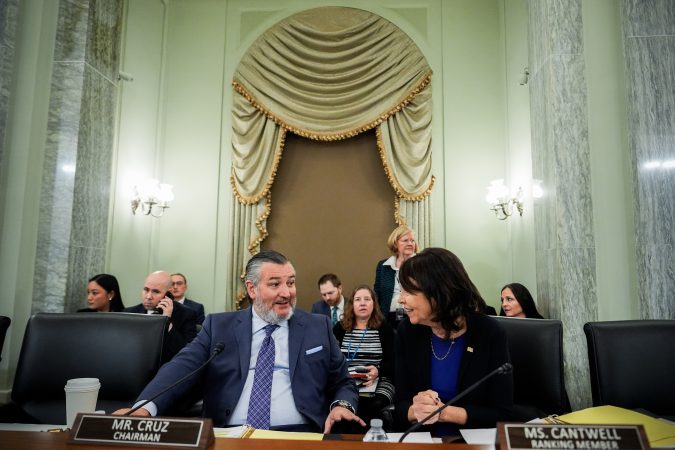
    The Big Ten and Southeastern Conference agreed Friday night to support the Protect College Sports Act, a Senate bill that seeks to regulate college sports, ending a breakneck week of negotiations and pulling the bipartisan measure out of what looked like a certain death spiral.

    School presidents from both conferences voted to back the bill after receiving last-minute concessions over language regarding third-party name, image, and likeness deals and the so-called “associated entities” that often make those arrangements.

    More details need to be worked out, but the bill still has a chance to earn the 60 votes it needs to halt debate and head to an up-or-down vote before the Senate heads for summer break next Friday.

    The summer recess was increasingly looking like a hard deadline for the Protect College Sports Act, a bipartisan effort headed by Sens. Ted Cruz, R-Texas, and Maria Cantwell, D-Wash.

    After the conferences, which had balked at large sections of the bill, put out a short release announcing they supported the act “as currently drafted,” Cantwell went on social media and said: “Good. Now progress can be made in protecting women and Olympic athletes and moving the legislation closer to the President’s desk.”

    President Donald Trump, who also has been seeking fixes for an industry that now pays its players millions, got involved late Thursday, which helped push the parties back to the negotiating table.

    Cody Campbell, the Texas Tech regent who has played a big role in shaping this policy, called the SEC and Big Ten support “a major breakthrough that moves us closer to a Senate vote — and a better future” for college sports.

    Increased salary cap, new language entice holdouts

    The most groundbreaking part of the reworked deal is the $27.5 million that schools would be allotted to retain players, in addition to the existing $21.3 million cap.

    It could represent a major reworking of the House v. NCAA settlement, which governs paying players. The idea is that the extra money will take the place of payments from “associated entities” that were allowed beyond the $21.3 million cap. It was those payments that, many schools complained, obliterated any idea of a cap or controlled cost.

    The SEC and Big Ten sought stronger language in the bill to guarantee that any third-party deals are truly outside deals and not coming from the schools’ multimedia-rights partners, which currently broker the majority of those deals.

    Among the questions still unanswered are whether the new cap will comport with the House settlement, which had specific instructions about the hard cap (22% of a certain part of revenues, which equals $21.3 million this season), and what would happen to the College Sports Commission, the main NIL enforcement arm that spends the bulk of its time analyzing third-party NIL deals.

    Long road remains

    Even with Friday night’s victory, the bill has a long road ahead. Sen. Tommy Tuberville, R-Ala., has been a staunch opponent of the bill since the beginning. Before the latest compromise, Sen. Bill Cassidy, R-La., said that “as written today,” the act “creates chaos and eliminates opportunity for student-athletes.”

    Whether the SEC’s approval is enough to get those senators and others from SEC states on board is one issue. If the bill clears the Senate, it would still then need to pass the narrowly divided House, which flailed on another college bill called the SCORE Act, for more than a year.

    There’s also the matter of whether smaller conferences, long in favor of the bill, will remain so now that their bigger competition is being allowed to directly pay players up to $48.8 million.

    Other court rulings

    Almost everyone in college sports agrees that the status quo isn’t working.

    The news about the bill broke only hours after the NCAA lost a pair of key court cases involving its new rule that would give most Division I athletes five years to complete five seasons of eligibility.

    Using those losses as another chance to urge for passage of the bill, NCAA President Charlie Baker said “It is long past time leaders across college sports call for the immediate passage of the bipartisan Protect College Sports Act.”

    Two-time national champion hoops coach Dan Hurley of Connecticut used social media to outline the stakes in more colorful terms: “Somebody please come and fix College Sports. It’s a complete [expletive] show,” he said, using an emoji where the expletive would go.

  • FIFA president Gianni Infantino abandons plans to sell World Cup profits to private equity

    FIFA president Gianni Infantino abandons plans to sell World Cup profits to private equity

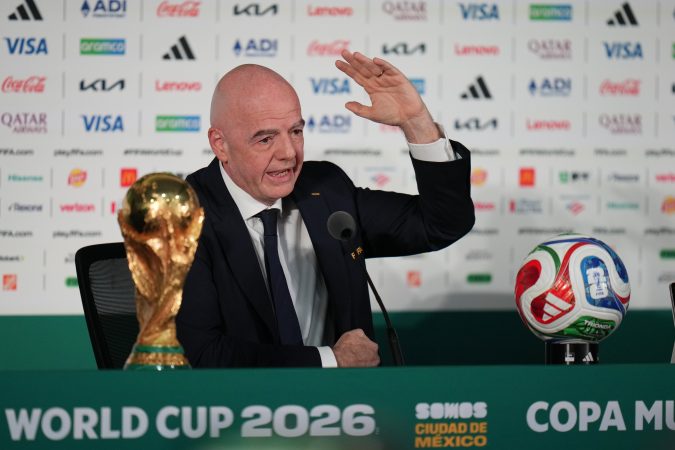
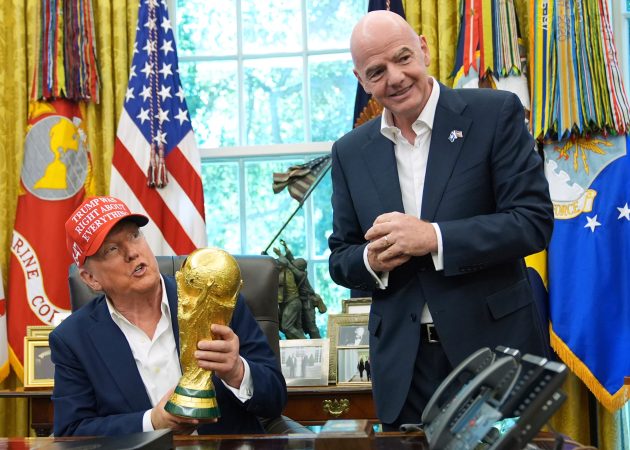
    ZURICH — FIFA president Gianni Infantino is abandoning his divisive plan to sell World Cup profits to private equity after receiving pushback from all corners of the soccer world.

    Infantino’s decision came after his senior adviser who sat on a White House panel resigned and Asia’s soccer body joined Europe and North America in opposing it.

    “Having listened carefully to all the views, it has become clear that the project has created divisions of a nature that, regardless of the level of support, are no longer in the interest of the objective set out in the first place,” Infantino said in a statement on Friday. “Our purpose has always been — and will always be — to unite and improve. As a result, this proposal will not proceed.”

    Infantino had proposed creating a $20 billion company to run the World Cup with private investors including the Kushner family, but drew backlash that grew every day since Tuesday’s announcement.

    European soccer body UEFA’s 55-member nations agreed to boycott the World Cup and all other FIFA competitions over Infantino’s plan on Thursday. North America’s Concacaf and the Asian Football Confederation also said they opposed the plan.

    “Some things are simply too important to sell,” UEFA said in a statement. “The FIFA World Cup belongs to football. It always will. And so long as Europe has a voice, it will never be for sale.”

    Infantino’s senior adviser, Carlos Cordeiro, a former Goldman Sachs banker who represented the soccer body on the White House Task Force for the World Cup, resigned on Friday and urged other senior FIFA staff to speak out.

    “I cannot stand by while FIFA considers selling a stake in the World Cup,” Cordeiro said in a statement, just hours after FIFA insisted: “Nobody is selling football.”

    Hours later, FIFA chief operating officer Kevin Lamour issued a statement to the Associated Press, saying FIFA staff were deceived by Infantino’s lack of openness in planning the sale over recent months and that the project must not continue.

    “It is the project of one person,” Lamour, a longtime colleague of Infantino at FIFA and UEFA, wrote. “Not only must this project not go ahead … but the time has now come for football political leaders to ask themselves the right questions and make the right decisions.”

    Infantino proposed spinning off FIFA’s commercial businesses — including World Cups and Club World Cups for men and women — into a $20 billion subsidiary with 20% owned by private investors.

    The “anchor investor,” described by FIFA, is a New York-based investment firm created by Joshua Kushner, the younger brother of U.S. President Donald Trump’s son-in-law, Jared Kushner.

    The next FIFA competition is the women’s Under-20 World Cup, which starts Sept. 5 in Poland — which UEFA members said they would boycott.

    The misstep could prove costly for Infantino, particularly after the interventions by Lamour and Cordeiro.

    Reelected unopposed in 2019 and 2023, Infantino is allowed one more four-year term under FIFA statutes. The deadline for the next presidential contest is Nov. 18, exactly four months ahead of the vote in Rabat, Morocco, where FIFA has its African headquarters.

    Infantino’s job seemed secure, despite long-term unease with his style and previous attempts to force through unpopular projects, but could become more tenuous with the failed private equity proposal.

  • Concacaf turns against FIFA as UEFA threatens boycott over World Cup privatization plan

    Concacaf turns against FIFA as UEFA threatens boycott over World Cup privatization plan

    GENEVA — North America’s soccer body on Thursday rejected FIFA president Gianni Infantino’s plan to sell stakes in the World Cup to private equity investors, joining European nations in opposition.

    The 41-member Confederation of North, Central American and Caribbean Association Football (Concacaf) held an urgent meeting Thursday after UEFA members agreed to boycott the World Cup and all other FIFA competitions to protest Infantino’s plan.

    “During the meeting,” CONCACAF said in a statement, “the membership expressed deep concerns about the lack of due process surrounding the proposal, the artificially short deadline imposed, and the absence of any review or approval by the relevant FIFA governance bodies.

    “In addition, the need for private equity investment to fund new and existing FIFA Forward programs following the most profitable FIFA World Cup in history was questioned.”

    U.S. Soccer offered a grand total of a one-sentence statement: “U.S. Soccer stands with Concacaf and its members.” A spokesperson said that was all the federation will say for now.

    UEFA made its declaration after an urgent online meeting of the confederation’s 55 members.

    “UEFA and its national associations will not participate in FIFA competitions,” the European soccer body said in a statement. “Some things are simply too important to sell. The FIFA World Cup belongs to football. It always will. And so long as Europe has a voice, it will never be for sale.”

    The strategy meeting was called to counter Infantino’s offer of $20 million to each of FIFA’s 211 global members that has to be accepted by mid-September.

    Infantino’s secret proposal was revealed Tuesday to spin off its commercial operations in a new $20 billion subsidiary 20% owned by private investors. The core investor would be a New York investment firm created by Joshua Kushner, the brother of U.S. President Donald Trump’s son-in-law, Jared Kushner.

    “This is not merely a profound failure of leadership, but an abdication of FIFA’s duty as the custodian of world football,” said UEFA, where Infantino was a longtime staffer and its CEO-like general secretary when he was first elected to lead FIFA in 2016.

    “The moment external investors acquire ownership interests in FIFA competitions, football changes forever,” UEFA said. “Commercial return becomes a permanent obligation. Investor expectations become a daily pressure.”

    Infantino has presented the private equity offer as a chance to “turbocharge” funding development of soccer across the world. A majority of the 211 FIFA members rely on its funding.

    Officials from about 40 UEFA members spoke at the urgent meeting, with anger expressed that FIFA is not using some of its multibillion reserves to fund extra development programs.

    The next scheduled FIFA tournament is in Europe — the Women’s Under-20 World Cup hosted by Poland starting Sept. 5. The following month, Europe stages its last qualifying playoffs for next summer’s women’s World Cup in Brazil.

    Inquirer staff writer Jonathan Tannenwald contributed to this article.
  • LeBron James signs two-year, $8 million contract to join Sixers

    LeBron James signs two-year, $8 million contract to join Sixers

    King James is officially bringing his talents to South Broad Street.

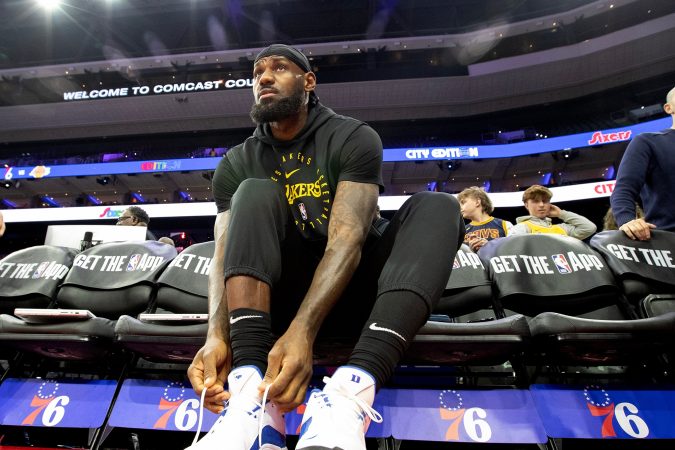
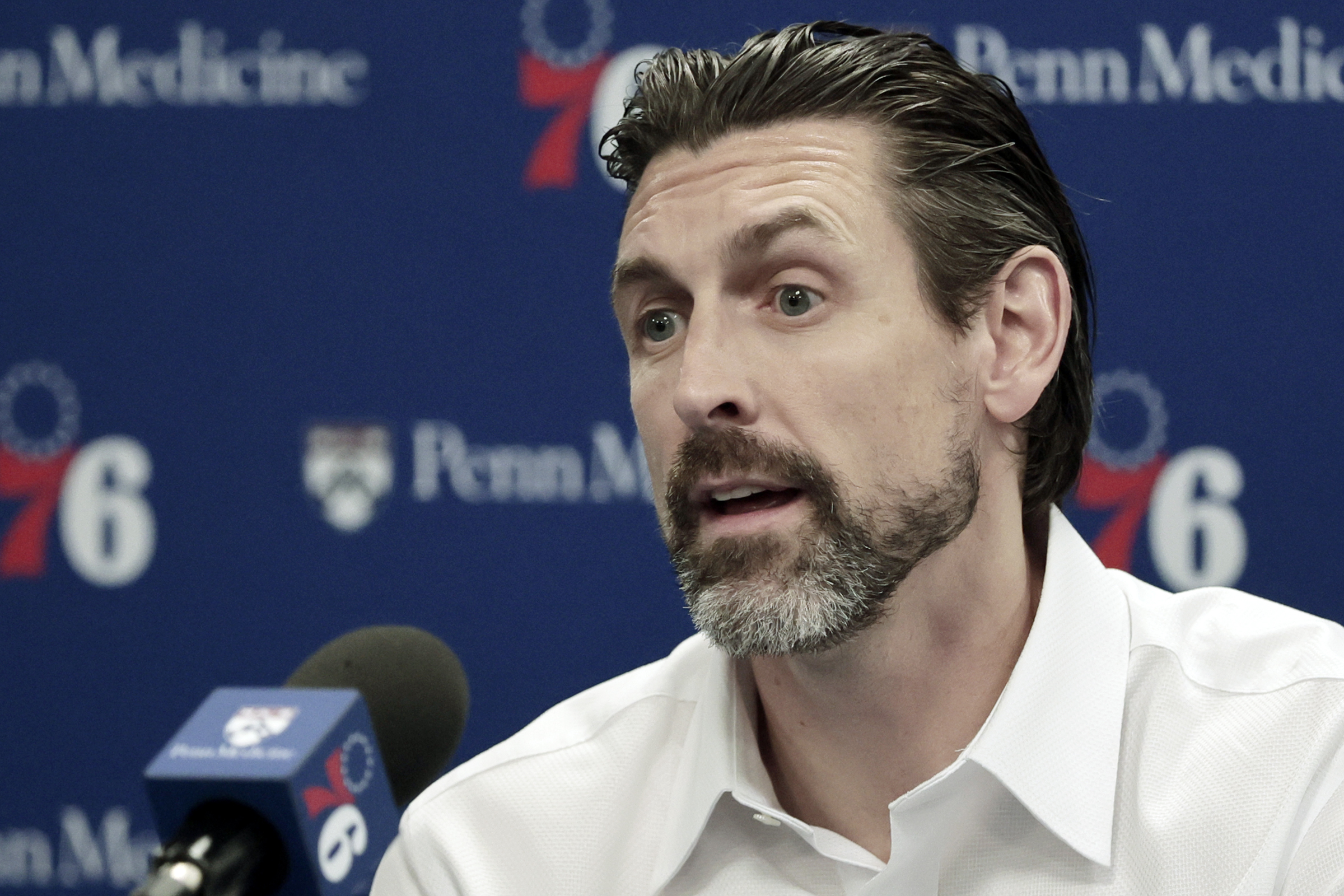
    LeBron James, a legendary player and one of the most famous humans on planet Earth, has signed with the 76ers on two-year, $8 million contract. The deal includes a full 15% trade kicker, according to ESPN’s Shams Charania.

    The Sixers already shocked the NBA this offseason by acquiring All-NBA wing Jaylen Brown from the Boston Celtics in a blockbuster trade. They then one-upped themselves by landing James in one of the more improbable roster additions in franchise history.

    This second monumental move during a transformational offseason further illustrates that the Sixers are making the all-in push toward championship contention in a deep Eastern Conference.

    New Sixers president of basketball operations Mike Gansey has now assembled a starting five featuring arguably the best player of all time in James, a former NBA MVP in Joel Embiid, a five-time All-Star in his prime in Brown, and ascending guards Tyrese Maxey and VJ Edgecombe. And James was willing to take a veteran minimum contract to join this group — and a historic franchise aiming to advance past the playoffs’ second round for the first time since 2001 and capture its first championship since 1983.

    James chose the Sixers over bookending his career with his hometown Cleveland Cavaliers or returning to the Miami Heat, where he won his first two NBA championships. The Golden State Warriors, Denver Nuggets, and Minnesota Timberwolves also were reported to be in contention for James.

    It took James more than three weeks for his latest decision, essentially putting the second wave of NBA free agency on hold.

    The Las Vegas Summer League, where NBA executives, coaches, and agents gather annually, came and went with more speculation than insight about where James would play next. James did not reveal his next playing destination during multiple public appearances at Fanatics Fest last Thursday and Friday in New York, even after some light coaxing by fellow NBA star Tyrese Haliburton during a live taping of James’ Mind the Game podcast. Commissioner Adam Silver said even he was waiting on James’ decision so the league could finalize its 2026-27 schedule because James’ popularity demands prime television games.

    It was worth the wait for the Sixers.

    James’ basketball resumé could fill a book. He is the NBA’s all-time leader in points and games played, a four-time MVP, and a 21-time All-NBA selection. He has won four championships with three teams in the Los Angeles Lakers (2020), Cavaliers (2016), and Heat (2012 and 2013), and three Olympic gold medals with Team USA.

    And though James is no longer a perennial MVP front-runner at age 41, he is still a versatile, All-Star-caliber player with an exceptional basketball IQ.

    LeBron James scored 29 points in his most recent game in Philly. Charles Fox / Staff Photographer

    Last season, he averaged 20.9 points, 7.2 assists, 6.1 rebounds, and 1.2 steals, and particularly thrived as a third offensive option behind Luka Dončić and Austin Reaves. James had a memorable performance in his most recent visit to Philly in December, scoring 29 points on 12-of-17 shooting — including a late tiebreaking three-pointer and another game-sealing jumper — in the Lakers’ 112-108 victory.

    Now, James will team up with another dynamic young player for whom he has expressed fondness in Maxey. James and Maxey, who made an All-NBA team for the first time last season, are represented by Klutch and super agent Rich Paul. Maxey has worked out with James dating back to his predraft process in 2020.

    “He loves Maxey,” Paul said on an episode of his Game Over podcast released earlier this month. “We don’t even need to talk about that.”

    ESPN reported last week that Maxey, Embiid, and Brown had been recruiting James. Bob Myers, the president of Harris Blitzer Sports & Entertainment and former lead executive during the Warriors’ dynasty, also went on Game Over to make his pitch to the Sixers.

    James also has loose ties to Gansey, who played high school basketball in Ohio at the same time as James and worked in the Cavaliers organization for more than a decade. The first hint that the Sixers were a legitimate contender may have come from Gansey’s brother, Steven, who after the Brown trade posted a photo of Mike Gansey and James as high school basketball players in Northeast Ohio, and the eyeballs emoji.

    Sixers president of basketball operations Mike Gansey continues to turn the franchise into a title contender. Elizabeth Robertson / Staff Photographer

    Gansey told The Inquirer last week that he, “like the rest of the NBA,” was simply waiting on James’ free-agency decision.

    “We’d love to have him in Philly,” Gansey said from the Sixers’ team hotel at Las Vegas Summer League. “I think he’d really, really help us and add to our group. But he’s making a big decision here. It’s wild [that], at his age, he’s playing at such a high level. But it’s not surprising.

    “I have all the respect in the world for him, and he’s smart as heck. He’s going to figure it out and talk to his family, and we’ll be waiting. Whatever he decides, I know he’s going to make the right decision.”

    When James informed the Lakers on June 30 that he would join another team in free agency, outsiders naturally connected him to his past stops in Cleveland and Miami as well as to the Warriors, where teaming up with fellow generational superstar Stephen Curry appeared tantalizing. Paul said publicly that James was prioritizing happiness and the opportunity to compete over salary at this point in his career.

    Sixers followers, though, unearthed memories — part joke, part lament — of when James considered Philly as a free agent in 2018 but did not personally attend the meeting with Sixers representatives. He instead signed with the Lakers, where he spent the ensuing eight seasons.

    Yet after the Sixers pulled off the trade for Brown, which sent Paul George (and his hefty contract) and four draft picks to Boston, Philly began percolating as a possible James destination once again.

    Paul went on his podcast and unveiled a whiteboard with James’ name pointing to five possible destinations: the Sixers, Cavaliers, Heat, Nuggets, and Timberwolves. The Warriors, Celtics, Dallas Mavericks, San Antonio Spurs, and New York Knicks were on the outskirts of that inner circle.

    “Philadelphia, everything changed,” Paul said.

    “Do they have [James’] attention?” cohost Max Kellerman asked.

    “How could you not have the attention when you have Maxey, Edgecombe, Brown, Embiid?” Paul responded. “ … [James] enhances everything. He unlocks everything here.”

    Now, that is reality. James is set to join the Sixers, in another NBA shocker and monumental roster move.

  • Caitlin Clark voted a starter in her third straight WNBA All-Star Game

    NEW YORK — Caitlin Clark was voted to start her third straight All-Star Game and will be joined by Indiana Fever teammates Kelsey Mitchell and Aliyah Boston, the WNBA announced Thursday.

    It’s the second time in four years that three players from the same team were chosen to start the game, with Las Vegas doing so in 2023. Clark couldn’t play in last year’s game that the Fever hosted because she was injured right before the All-Star break.

    Dallas’ Paige Bueckers and Minnesota rookie Olivia Miles will join Clark and her teammates as backcourt starters. It’s the fourth consecutive year that a rookie was chosen as an All-Star starter. Bueckers played last season.

    A’ja Wilson, Breanna Stewart, Jessica Shepard, Natasha Howard, and Gabby Williams were selected for the frontcourt for the game that will be played July 25 in Chicago. It will be Wilson’s and Stewart’s eighth All-Star appearance while Shepard will be making her first.

    “It’s an honor to be an All-Star, even though I’ve had a few of them,” Stewart said. “Each one is really special, and I’m not taking it lightly.”

    Williams played in her first All-Star Game last season. Howard will play in her third.

    Starters were chosen by a mix of fan, player, and media votes. The fan vote counted for 50% while media and player votes were 25% each. Each player’s score was calculated by averaging their weighted rank from all three areas.

    The league’s head coaches will select the 12 reserves for the team, and they’ll be announced Tuesday. The 15 head coaches will vote for three guards, five frontcourt players, and four players at either position regardless of conference. Coaches can’t vote for their own players.

    New this year, WNBA greats Cynthia Cooper and Teresa Weatherspoon will serve as honorary general managers and select the two teams from the pool of All-Stars. Previously, the top two fan vote-getters would serve as captains and select the squads.

    Bueckers, Clark, and Boston were the top three vote-getters among fans. All three received more than 1 million votes.

  • Serena Williams loses in opening round at Wimbledon in first singles match in nearly four years

    LONDON — Serena Williams showed plenty of what made her a 23-time Grand Slam tennis champion in her first professional singles match in nearly four years on Tuesday.

    But Williams, 44, couldn’t quite dominate like she used to and was beaten, 6-3, 6-7 (6), 6-3, by an opponent less than half her age, 20-year-old Maya Joint of Australia, in the opening round of Wimbledon.

    “It was really great to be back at Wimbledon. I never expected to be here,” Williams, who did not meet with media after the match, said in a statement released by Wimbledon organizers. “The atmosphere was amazing. Walking out was amazing. I definitely relished it and missed it and enjoyed the moment more than anything.”

    Williams displayed the same powerful serve and heavy groundstrokes that led her to seven Wimbledon singles titles, but the 87th-ranked Joint handled her pace and won more of the big points by hitting beyond Williams’ reach on Centre Court.

    “I don’t know what just happened, to be honest,” Joint said. “I didn’t get much sleep last night. I was up until like 2 a.m. just thinking about it.

    “She has such an aura, she’s just a legend, and this court has so many huge names that have played on it. I’ve been dreaming about this moment since I was a little kid, so this is pretty crazy.”

    While Williams played two doubles matches just before Wimbledon to announce her comeback to the sport she once dominated, she hadn’t played a singles match since the 2022 U.S. Open.

    Williams has 98 career victories in singles on the hallowed grass of the All England Club. By contrast, it was Joint’s first Wimbledon victory in just her second appearance at the All England Club after losing in the opening round last year.

    But Joint won a Wimbledon warmup in nearby Eastbourne last year and knows how to play on grass.

    Doubles match still to come

    Williams, who has no singles ranking after being out for so long, was given wild card invitations by Wimbledon organizers to play singles and doubles with her older sister, Venus. Her doubles match is later this week.

    Williams has said that having her two daughters off from school inspired her comeback, and it marked the first time that her younger daughter, Adira, who is almost 3, saw her play singles. Adira sat next to her 8-year-old sister, Olympia, in the front row of Serena’s players’ box.

    Standing ovation

    Williams was given a standing ovation as she walked on court before the match started under a closed roof and several supporters held up signs with messages like “Welcome Back” and one wore a T-shirt with the text “Unstoppable Queen.”

    Williams executed a delicate topspin lob winner early on and then cranked out a 121 mph ace to hold for 3-3 in the first set. But Williams also had a costly double fault that led to the only break of the first set.

    In the second set, Williams came back from 0-40 and saved four break points to hold for 6-5. Then Williams saved a match point in the tiebreaker with a big serve down the T followed by a forehand approach winner. Another big serve — clocking in at 122 mph — set up Serena’s first set point, which she converted when Joint missed a forehand long.

    After winning the set, Williams pumped her fist calmly.

    But Joint took control early in the third and a forehand from Williams sailed long on Joint’s third match point to conclude the encounter after 2 hours, 22 minutes.

    Williams then smiled as she walked off the court to loud applause.

    Williams and Joint both had 37 unforced errors, while Joint led, 40-26, in winners.

    Zverev, Świątek advance

    After opening day featured wins for No. 1s Jannik Sinner and Aryna Sabalenka, along with Novak Djokovic, French Open champion Alexander Zverev and defending Wimbledon champion Iga Świątek made it into the second round on Tuesday.

    In a match between hard servers, the second-seeded Zverev beat Alexander Blockx, 6-4, 6-7 (8), 7-6 (5), 7-6 (0).

    Świątek, who had her father and sister looking on from the Royal Box, struggled with her serve and committed nine double-faults before overcoming Taylor Townsend, 6-1, 2-6, 6-3.

    No. 2 Elena Rybakina also advanced, beating Lois Boisson, 6-4, 1-6, 6-3.

    Fourth-seeded Ben Shelton, a quarterfinalist here last year, lost to 140th-ranked Finnish qualifier Otto Virtanen in five sets, 6-4, 3-6, 6-7 (8), 6-2, 7-6 (9).

    Matteo Berrettini, a finalist in 2021, beat Stan Wawrinka, 6-7 (7), 7-6 (16), 7-6 (7), 7-6 (5). It was the final Wimbledon match for Wawrinka, who plans to retire at the end of the year.

  • Supreme Court upholds state laws banning transgender girls and women from school athletic teams

    The Supreme Court on Tuesday upheld bans in Idaho and West Virginia on transgender athletes playing on girls’ and women’s sports teams, the latest in a string of legal setbacks for the LGBTQ+ community before the high court.

    In a decision led by the court’s six conservatives — but joined in parts by its three liberals — the justices found that states can separate teams based on “biological sex” without offending the Constitution’s guarantee of equal protection and Title IX, a landmark 1972 antidiscrimination law involving education.

    “Separate sports teams for biological males and biological females are reasonable: Given the inherent physical differences between the sexes, allowing only biological females to play on women’s and girls’ teams can reduce the risk of physical injury and ensure fair competition,” Justice Brett M. Kavanaugh, who coached his daughter’s youth basketball team, wrote for the majority.

    The court’s three liberals, led by Justice Sonia Sotomayor, agreed that West Virginia’s ban did not violate Title IX. But they disagreed with the majority on several fronts, especially the conclusion that the West Virginia law withstands scrutiny under the Constitution’s guarantee of equal protection for all.

    Sotomayor wrote that a lower court should have the chance to sort out a question central to the case of the teenage plaintiff from West Virginia, Becky Pepper-Jackson: whether trans girls who have not undergone male puberty have physical advantages in sports.

    “Because of the Court’s decision today, West Virginia, and any other state actor, can deny B.P.J. and others like her these experiences simply because it thinks they have an inherent athletic advantage, even if the facts show that they do not,” Sotomayor wrote.

    The court did not address what is arguably the flip side of its ruling — whether schools and states can adopt policies allowing transgender athletes to compete on girls’ and women’s teams, as some liberal states and communities do.

    “That question is currently the subject of litigation in some lower courts,” Kavanaugh wrote in a footnote. “Nothing in this opinion is intended to decide that question.”

    The ruling is among several in recent terms that are consequential for the LGBTQ+ movement. The Supreme Court in March ruled a Colorado law banning “conversion therapy” for gay and transgender youths probably violated the free-speech rights of a religious counselor who wants to counsel such young people according to biblical teachings.

    Earlier that month, the court sided with Christian parents in blocking, for now, California policies that discourage schools from informing parents of a student’s sexual orientation or gender identity without the student’s consent. Last year, the court upheld bans on gender transition treatment for minors.

    Questions over whether transgender girls and women should play on girls’ and women’s sports teams has been a particular flash point in a broader conversation about transgender rights. Dozens of states have bans amid intense public debate about fairness at all levels of competition.

    The debate over the allowance of transgender women in collegiate athletics gained national attention in 2022 after Penn swimmer Lia Thomas won the national title in the women’s 500-yard freestyle. Thomas, who is a transgender woman, competed for the Quakers men’s team during the 2018-19 season before medically transitioning.

    In July 2025, Penn struck a deal with the Trump administration regarding Thomas’ participation. According to the deal, Penn agreed to ban transgender athletes, vacate Thomas’ records, release a statement in support of Title IX “as interpreted by the Department of Education,” and send personalized letters of apology to Thomas’ former women’s teammates. The deal came after the White House had paused $175 million in federal funding to Penn because of Thomas’ participation on the Quakers’ women’s team in 2021-22. The federal funding was restored following the agreement.

    The issue came to the high court in a pair of cases, brought separately by Pepper-Jackson, a teen from West Virginia, and Lindsay Hecox, a Boise State University student in Idaho. Both argued that the bans in their states discriminated on basis of sex and violated the Constitution’s equal protection clause. In January, the justices appeared sympathetic to arguments for keeping the bans in place as the cases were argued back-to-back.

    LGBTQ+ activists said the decision would be devastating for some young people.

    “This is a heartbreaking ruling for our clients and transgender girls like them who’ve asked for nothing more than the same opportunities afforded to their peers,” said Joshua Block, senior counsel for the American Civil Liberties Union’s LGBTQ & HIV Rights Project, who argued the case for Pepper-Jackson.

    Sasha Buchert, director of nonbinary and transgender rights at Lambda Legal, said the decision was upsetting but also narrow.

    The ruling is “a serious loss — we’re not minimizing that,” she said. But noting that the court did not impose a national ban on transgender athletes in female sports, Buchert added, “This ruling says, sure, a state may discriminate, not that they must discriminate.”

    Twenty-seven states have passed laws banning transgender student-athletes from competing on women’s or girls’ sports teams. Supporters of the bans say they are necessary to ensure fairness and safety because of inherent physical differences between males and females. Opponents say the laws discriminate against trans people and should be struck down.

    President Donald Trump early last year signed an executive order aimed at keeping transgender women out of women’s sports. The administration has argued that there are only two sexes — male and female — and that they “are not changeable.”

    Soon after the executive order on sports, the NCAA and the U.S. Olympic and Paralympic Committee updated their policies to bar trans women from playing on women’s sports teams. Since then, the administration has aggressively investigated schools that allow trans girls to participate in girls’ and women’s sports.

    Education Secretary Linda McMahon welcomed the court’s decision Tuesday.

    “For years, ideologues distorted Title IX to advance a radical transgender agenda, subjecting women to immeasurable harm,” she said in a statement.

    Nicole Neily, founder and president of Defending Education, a conservative advocacy group, called the decision an “exercise in judicial humility” and noted that it may be disappointing to conservatives in liberal states that allow transgender athletes to participate.

    “Although it’s certainly not as sweeping as parent activists would have liked, it means that the action shifts to the states and is now a persuasion game,” she said in a statement.

    Views among Americans on transgender issues are nuanced. A Pew Research Center survey published in February 2025 showed 56% of adults support policies aimed at protecting transgender people from discrimination in jobs, housing, and public spaces.

    But over the past few years, Americans also have become more supportive of restrictions for transgender people, according to the Pew survey. Fifty-six percent of Americans supported bans on providing gender transition care for minors, up 10 percentage points from 2022, the study found.

    But athletics have always stood out.

    The Pew survey found that 66% favored laws that require trans athletes to compete on teams that match their sex assigned at birth, up eight points from 2022. Even before the general shift in public opinion, a majority of Americans opposed allowing trans women to compete against other women at all levels of sports, according to a Washington Post-University of Maryland poll.

    The science concerning biological advantages of transgender girls and women in sports is evolving and remains hotly debated. The case featured competing evidence about whether transgender girls are inherently better at sports. The transgender plaintiffs presented evidence that transitioning before puberty prevents them from building enough body mass to have an advantage in high school and college sports.

    Lawyers for the states countered with studies that showed that nontransgender boys and men perform better at all ages. The study found that boys between the ages of 7 and 12 ran about 4% faster and jumped about 7% farther than girls in the same age group.

    “The legislatures and the schools are better equipped — and under the Constitution, are the more appropriate entities — to assess the competing medical and scientific considerations and draw appropriate lines,” Kavanaugh wrote in the majority opinion. “Of course, no line that the States draw will satisfy everyone.”

    While there’s no comprehensive tally of trans athletes nationally, an estimated 300,100 transgender youths between the ages of 13 and 17 live in the United States, according to the Williams Institute at the UCLA School of Law. The Human Rights Campaign, an LGBTQ+ advocacy group, has estimated that 14% of trans boys and 12% of trans girls play on a sports team.

    Inquirer Staff Writer Conor Smith contributed to this article.