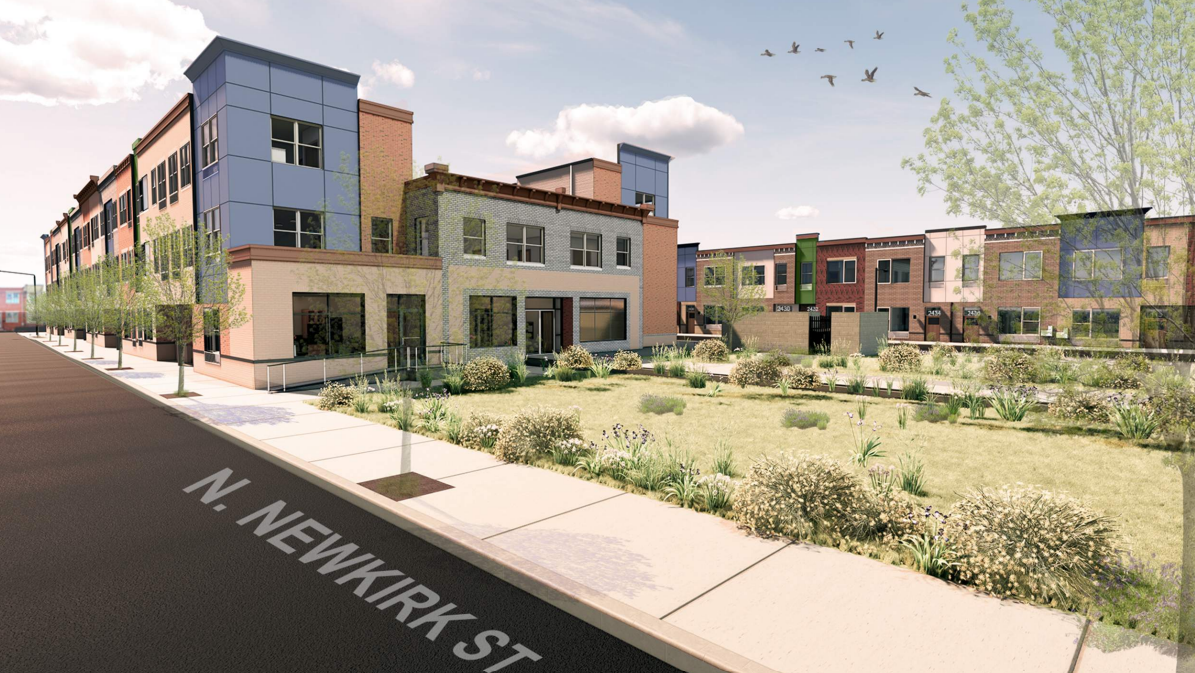
The Philadelphia Housing Authority is planning an 85-unit mix of affordable rental and homeownership units in Strawberry Mansion, around 28th and York Streets.
The proposal is part of a burst of PHA activity in this North Philadelphia neighborhood in recent years, as the agency has sought to use vacant land to add affordable housing to the area.
“This proposed development at 28th and York represents exactly the kind of investment Strawberry Mansion deserves — one that replaces long-term vacancy and blight with affordable homes, open space, and renewed opportunity,” Kelvin A. Jeremiah, president and CEO of the Philadelphia Housing Authority, said in a written statement.
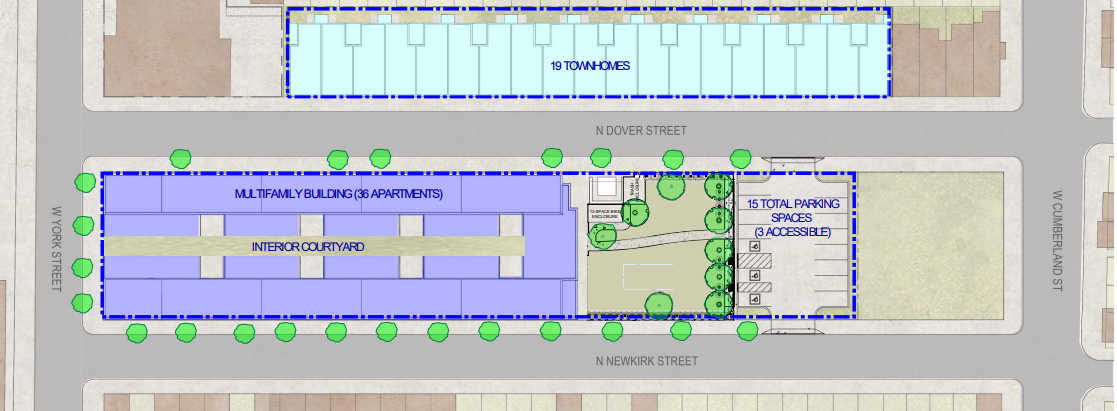
The project has 30 single-family houses that will be built using the city’s Turn the Key program, 19 rental townhouses, and a 36-unit apartment building roughly split between one- and two-bedroom units.
PHA also plans 15 parking spaces, street widenings to allow more parking, and a new agency-run park.
The rental portion of the project, which includes the apartment building at 2401 N. Dover St. and the 19 rental townhouses at 2416 N. Dover St., received permission to move forward from the Zoning Board of Adjustment in late July and early August.
The housing authority has the support of many of the area’s elected representatives, including State Sen. Sharif Street and State Rep. Keith Harris. The politically influential Laborers union also submitted testimony to the zoning board in support ofthe project.
The biggest regulatory hurdle to PHA’s plans isthat the land slated for multifamily development is zoned for single-family use, but the board waived that requirement after hearing from community members about PHA’s proposal.
“I would love to see some development on Dover Street,” said Altrena Nixon, who owns a business at 29th and York Streets.
“It’s been sitting like that for many, many, many years,” Nixon said in testimony before the zoning board. “We need the vibrancy. We need the development. We need the jobs that it’ll bring to our area.”
Two speakers warned about the housing authority’s history in the neighborhood, arguing against adding so much density and too much affordable housing.
All In The Family Group Associates Inc., a community organization, wanted further meetings with PHA to discuss how the project related to other nearby developments.
In a letter, PHA declined to enter into an agreement with the group over a planned park at 27th and York Streets. All In The Family did not respond to a request for comment.
“The PHA should not be able to get away with not coming to the table with us and ironing out these issues and ensuring that we have stability in our communities,” Odessa Tate, a member of All In The Family, said in testimony before the board.
Councilmember Jeffery Young — who is engaged in a legal action against a ZBA ruling in favor of another 57-home development PHA proposed in Strawberry Mansion — asked the board to delay its ruling to allow more time to meet with All In The Family.
A map showing where the rental portion of PHA’s plan will lay out.Cicada
But the zoning board ruled in the project’s favor at hearings on July 29 and Aug. 5. Six of the nine speakers at the hearing were in favor of the project.
“There is a dire need for affordable housing in our community, and to continue to just delay and delay and delay is counterproductive to the needs of the community,” said the Rev. Warren Marshall at the July hearing.
The 30 homeownership units did not require zoning board permission to move forward. They will be on 29th, Newkirk, and Dover Streets and are being built by Civetta Property Group, the developer that has used the city’s Turn The Key program the most extensively.
Construction will begin on the for-sale units in October. The rentals are slated for next year as they seek competitive Low-Income Housing Tax Credits that will become available in 2027.
The 15-space surface parking lot will be next to the apartment building, while Dover and Newkirk Streets will be widened to allow for more on-street parking.
A proposedpark at 27th and York, meanwhile, is being described as a space for community events.
“PHA will be responsible for development, maintenance, use procedures, and related management functions necessary to preserve the park as a community asset,” Jeremiah said in a letter to local political leaders.
This isn’t the authority’s only current project in Strawberry Mansion. WHYY recently reported PHA also has proposed converting a 126-year-old school on North 22nd Street into a 50-unit affordable apartment building for seniors.
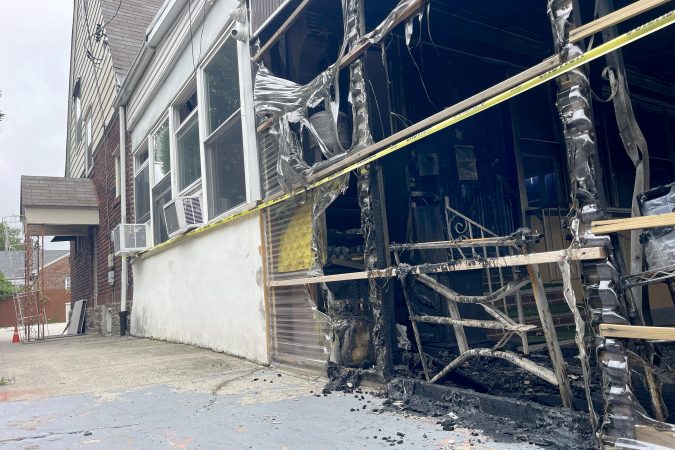
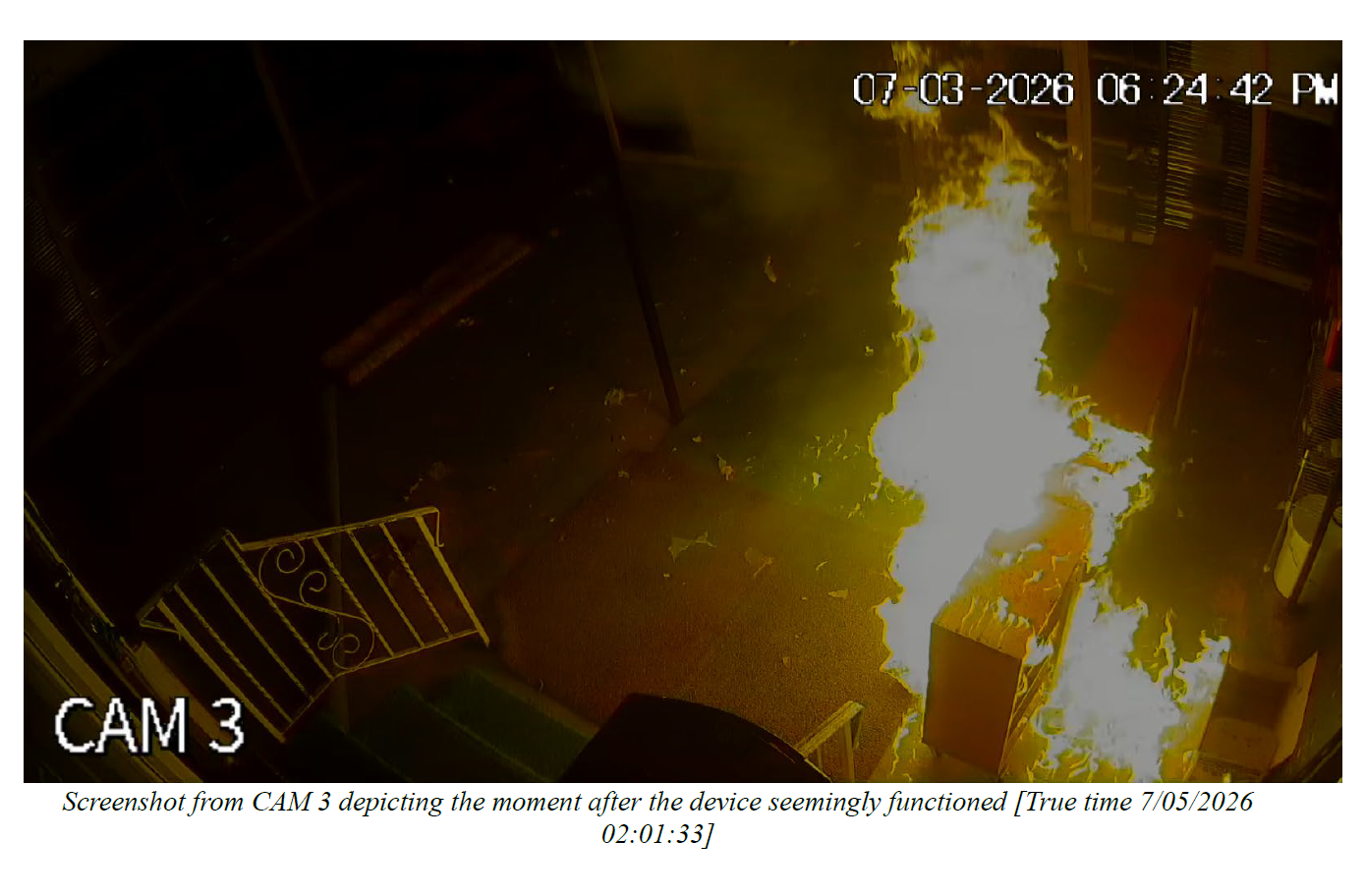
The same weekend America turned 250, I also watched a mosque burn in Northeast Philadelphia, a governor threatened with violence he’d already survived, and masked men march past the U.S. Capitol chanting “Reclaim America.”
None of it happened in the same city or involved the same people — and that is exactly why it matters.
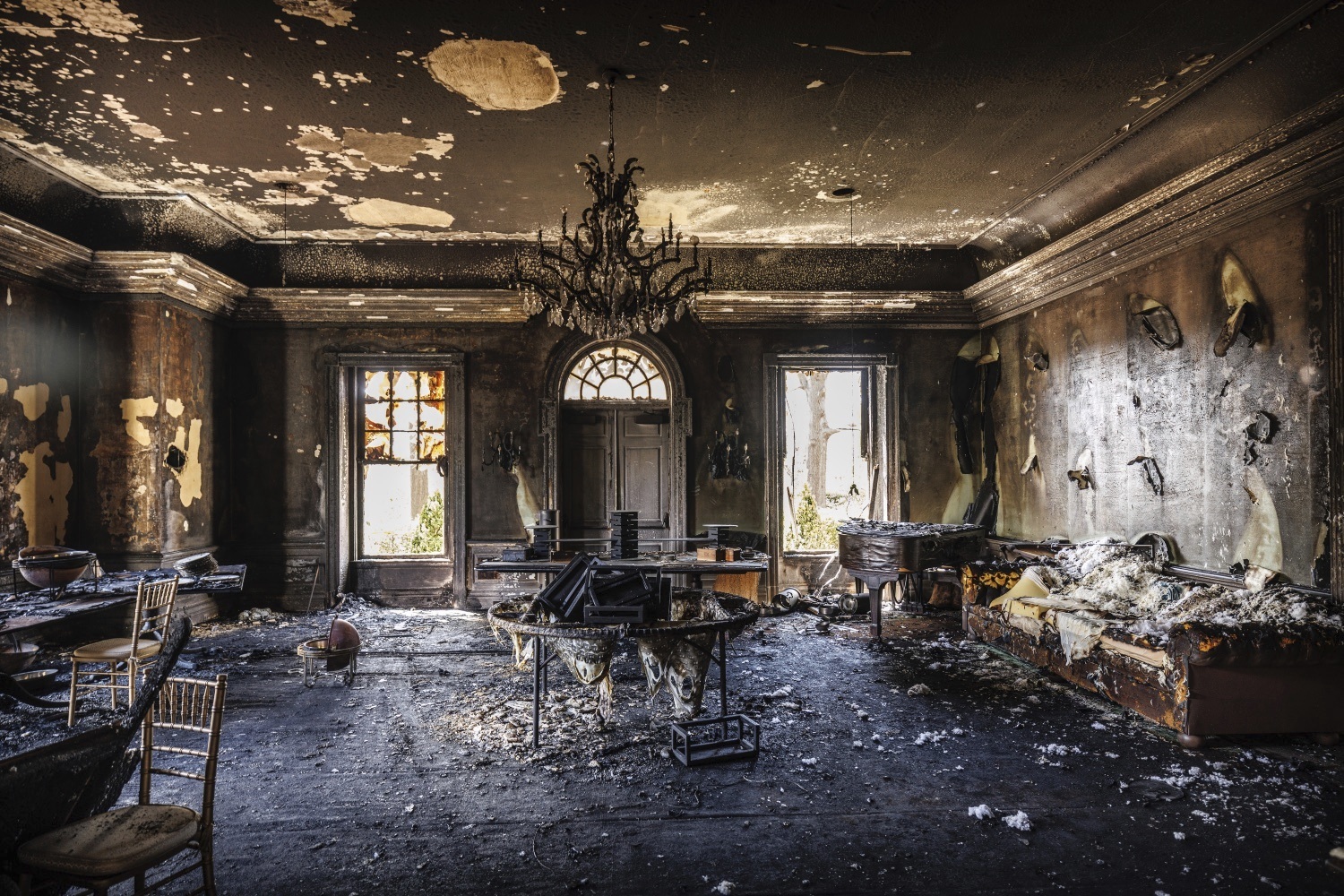
This image provided by Commonwealth Media Services shows damage after a fire at the Pennsylvania governor’s mansion while Democratic Gov. Josh Shapiro and his family slept inside on April 13, 2025, in Harrisburg, Pa.Commonwealth Media Services
Read that twice. A man was arrested for describing arson against a governor’s family as an act of sympathy.
On the National Mall, hundreds of Patriot Front members, a group the Anti-Defamation League calls the most visible white supremacist organization in the country, marched in coordinated uniforms, carrying Confederate flags, chanting about reclaiming a nation they insist belongs to them alone. They did this in broad daylight, on Independence Day, and walked away unbothered.
It doesn’t have to be this way. Pennsylvania has offered a glimpse of the right response to hate.
After mailers went out to Upper Bucks County voters attacking a Democratic candidate as the pick of the “corporate, Israel-first Democratic party,” alongside a photo of State Sen. Steve Santarsiero, who is Jewish, with an Israeli flag under his face, he called the language exactly what it was: “an antisemitic trope that falsely implies Jewish Americans are disloyal to the United States.” Republican Attorney General Dave Sunday agreed, as did State Rep. Dan Frankel (D., Allegheny) and State Sen. Judy Schwank (D., Berks), who called the mailers “unacceptable and dangerous.”
That’s what the response to hate should look like every time, not because it’s convenient, but because antisemitic hate speech is hate speech, and in the end, it is incumbent on all parties and political leaders to speak out.
Extremism doesn’t wait for permission from a party platform. It shows up as a firebomb thrown into a mosque, a slur hurled at a governor, matching uniforms marching past the Capitol, a hateful symbol that doesn’t disqualify a candidate.
The only real defense is what happened with the mailer in Bucks County: leaders naming it immediately, without waiting to see who it benefits politically to stay quiet.
I have spent my career watching people search for the loophole: this hate doesn’t count, this extremist isn’t really one of ours, this symbol was just a tattoo. There is no loophole. Hate doesn’t get a partisan exception, and neither does our responsibility to name it the first time we see it.
Here is what I’d ask, whatever you believe and whomever you vote for:
Condemn it the first time, not the 10th.
Refuse the whataboutism. “The other side does it, too” has never made anyone safer.
Show up for communities that aren’t yours. A mosque needs the same solidarity a synagogue would after an attack, and vice versa.
Report what you see. Silence is how patterns become normal.
This year marks 250 years of a promise: that all people are created equal.
That promise doesn’t come with a partisan carve-out. Leaders in Pennsylvania showed us it doesn’t have to. The question is whether we follow that example, or wait for the next arson, slur, or tattoo before it finally matters.
Andrew Goretsky is the senior regional director for ADL Philadelphia.
Pennsylvania elected officials are mourning the death of former State Sen. Shirley Kitchen, the second Black woman to serve in the state Senate and a champion for progressive issues who represented parts of North Philadelphia for more than two decades. She died Saturdayat 79. A cause of death was not immediately clear.
Kitchen represented the 3rd Senatorial District, composed of parts of North Philadelphia, for 20 years. She is remembered by her former colleagues as a pillar and matriarch of her community who worked tirelessly to improve the lives of low-income people, even after she retired.
“She did so many things for so many people. Now that I’m old enough to appreciate it, I’m not quite sure how she did it — and she did it with such force,” said State Sen. Anthony H. Williams (D., Philadelphia), who served alongside Kitchen in the Senate and had known her for decades. Kitchen was elected to the state Senate in 1996 and served five terms before retiring in 2016.
Her former colleagues, some through tears, credited many of Pennsylvania’s recent criminal justice reforms as being born under Kitchen’s leadership, with her early legislative proposals paving the way for their passage years later. For example, Kitchen authored early drafts of what is now known as the Clean Slate Act, which automatically seals some nonviolent convictions after 10 years, hiding them from most employer and landlord background checks. She first introduced similar legislationin Harrisburg years earlier and it failed. In 2018, two years after Kitchen retired, the Clean Slate Act became law in Pennsylvania and was heralded as a first-in-the-nation model for criminal justice reform.
Elected officials across the city shared their condolences, remembering Kitchen as an advocate who cared deeply for her community.
Mayor Cherelle L. Parker in a social media post on Sunday recalled Kitchen as “fighting for people who often had no one else to fight for them,” and as a trailblazer for Black women in politics.
“Shirley Kitchen cared about working people, and she cared about Philadelphia,” said Parker, the city’s first Black female mayor and a former state representative.
City Council President Kenyatta Johnson said in a statement that Kitchen “never forgot who she was fighting for,” dedicating her life to making people’s lives better.
State Rep. Joanna McClinton (D., Philadelphia), Pennsylvania’s first Black female speaker of the House, wrote in a social media post that Kitchen was “a mentor and her service in the state House and Senate inspired me greatly.”
Williams added that Kitchen also sought to elevate other Black politicians, like himself, to elected office — and laid the groundwork for much of the city’s current political progressivism.
“The reality is that a lot of the infrastructure that helps them, Shirley had everything to do with it, and more,” Williams said, noting her advocacy and experience during the Civil Rights Movement. “I would hope the progressives in this generation would tip their hat to a generation that really created the progressive movement.”
State Sen. Sharif Street (D., Philadelphia) had known Kitchen since he was a child, and said she helped him see the power a Senate seat has in improving the lives of his neighbors. When she decided to retire, Kitchen encouraged Street, who was on her staff at the time, to run to fill the vacancy in the 3rd District following her fifth and final term in the state Senate.
Williams and Street recalled Kitchen as a fair but demanding mentor.
“If she told you to do something, you better do it,” Williams said, with a laugh.
For Street, Kitchen “didn’t limit her advice. She had opinions about everything in my life, including when my wife was right and I needed to listen to her.”
Street said he spoke with Kitchen weekly, and Williams said he remained in touch with her as recently as last month. She often had ideas or issues she wanted the senators to take up. Street spoke with her last week about a forthcoming Registered Community Organization meeting that she was leading about a new proposed development nearby, emblematic of her continued involvement in her community.
Prior to her election to the state Senate, Kitchen was involved in the National Welfare Rights Movement, which was a progressive advocacy group for the dignified treatment of women and children, largely led by Black women, during the 1960s and 1970s, Williams said.
Kitchen served as the minority chair of the Senate Public Health and Welfare committee, in which she often leaned on her social work experience to inform her legislative proposals.
A Democrat in a time where Republicans controlled the state legislature, she served her entire tenure in the minority party, but was still able to garner bipartisan support for some of her legislative proposals.
“This image of her being an urban Black woman from Philadelphia would limit her ability to get stuff done in the Senate just wasn’t true,” Williams added. “She could analyze people and figure out what way to approach them with exceptional skill.”
Born in 1946 in Augusta, Ga., Kitchen attended the Philadelphia School District and graduated from Antioch University in 1979 with a bachelor’s degree in human services, according to her Senate Library biography. She went on to work for former Philadelphia Mayor John Street, Sharif Street’s father, before she was elected to the state House in a special election in 1987. After she lost reelection to the seat in 1989, Kitchen returned to Harrisburg a decade later after her election to represent the 3rd Senatorial District.
“She was a transformational figure that loved her community and understood that the purpose of those of us holding elected power is to be able to make a difference in the lives of the people we serve, in a way that they can feel and see,” Sharif Street added.
Funeral services will be announced in the coming days, he said.
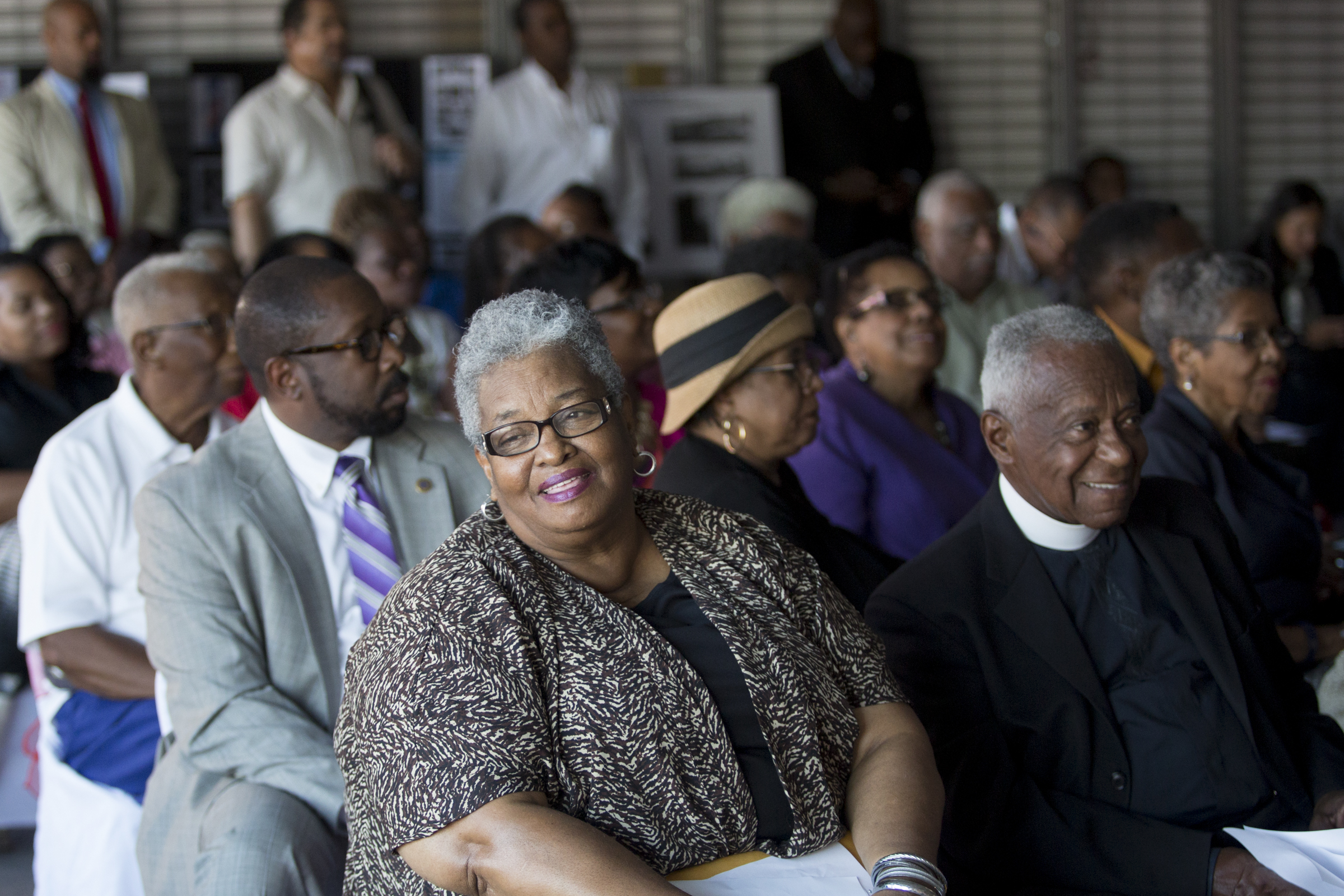
Senator Shirley Kitchen in the audience during speeches in honor of the historical marker that was unveiled at Sullivan Progress Plaza September 14, 2016. The plaza was the first black-owned and operating shopping center in America. Wednesday, Sept. 14, 2016.Margo Reed/ Staff Photographer
Former City Councilmember Jannie Blackwell, who has been a fixture of Philadelphia politics for decades, is no longer a Democratic wardleader. State Sen. Sharif Street — weeks after losing the city’s heated congressional race — just became one.
And the Rev. Lewis Nash Sr., who in 2024 was removed as leader of the 47th Ward after The Inquirer reported he was recorded making anti-LGBTQ+ remarks, has returned to the post after being reelected in his North Philadelphia ward Monday night.
Meanwhile, the upstart group Wards That Work, which was backed by progressive activists and sought to recruit hundreds of people to run for committee openings in the May 19 Democratic primary, claimed victories in six wards that were previously seen as aligned with the party establishment or more centrist Democrats.
Despite those notable gains,fewer than one-third of Philadelphia’s 69 Democratic ward leaders are seen as closely aligned with the party’s left wing.
That means Bob Brady, who has led the local Democratic Party since 1986 and is seen by many as the embodiment of the political old guard, will likely coast to victory in party leadership elections — decided by the ward leaders — next week, securing an 11th term as chair of the Democratic City Committee.
The party’s internal politics have become a key battleground in the fight between progressive upstarts and the Democratic establishment. There has also been a renewed push to grow the number of “open wards” — those that allow committeepeople to vote on political endorsements rather than allowing ward leaders to decide unilaterally.
Brady, a former U.S. representative, has over the last few weeks struck a conciliatory tone regarding the party’s left wing after clashing with activists in a series of elections, most notably when the party sought to punish committeepeople who endorsed the elections of Councilmembers Kendra Brooks and Nicolas O’Rourke from the progressive Working Families Party.
“These labels — Working Families, Reclaim, socialist — the best labels they have that I love is they’re Democrats,” he said in an interview, referring in part to Reclaim Philadelphia, a group inspired by U.S. Sen. Bernie Sanders’ presidential runs that organized the local progressive movement’s first successful ward takeovers in 2018.
Now, he said, he is focused on unity as Democrats hope to make gains in this year’s midterm elections and defeat candidates aligned with President Donald Trump in future elections.
“We can come together and beat that nut in the White House,” Brady said.
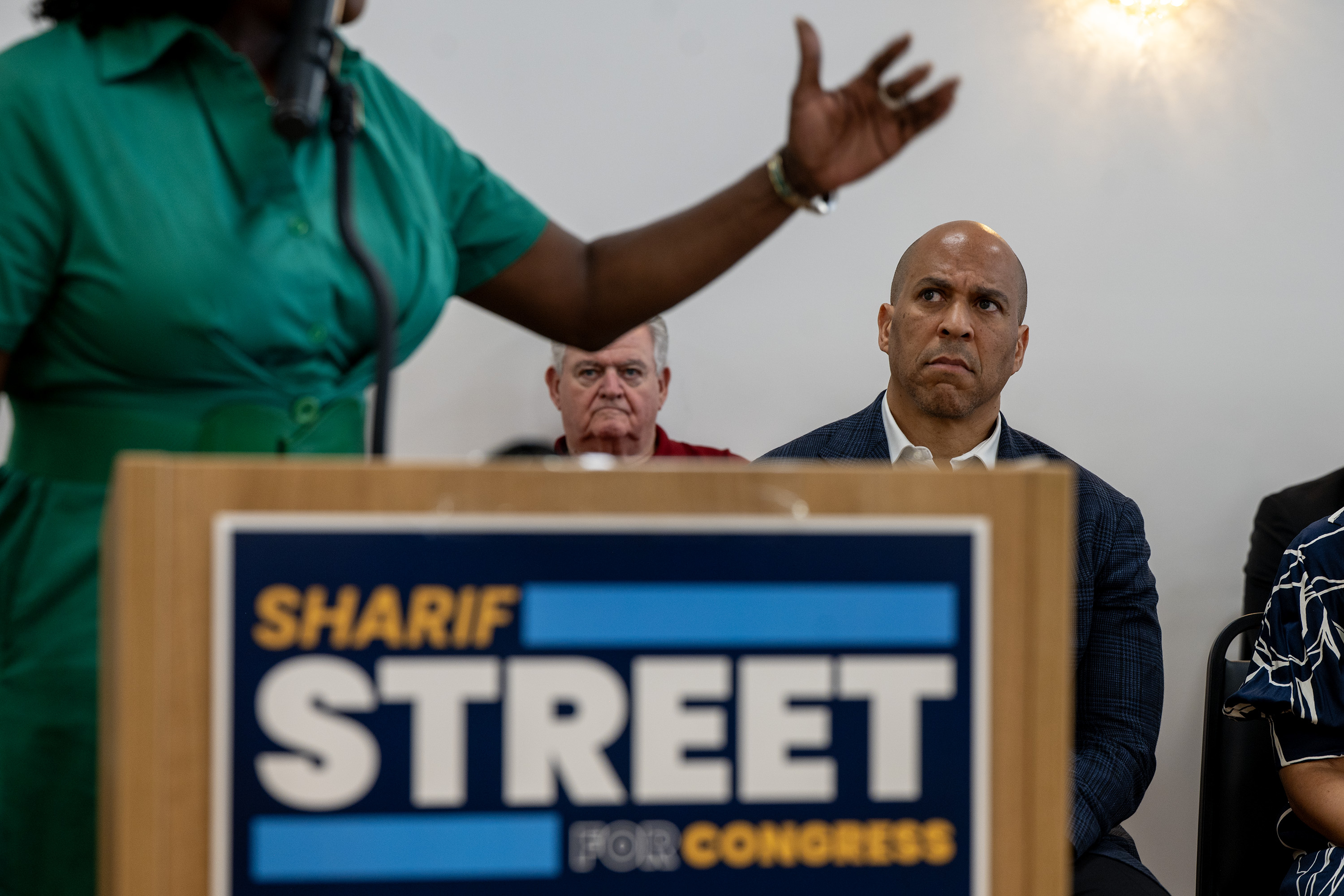
Philadelphia Democratic Party Chairman Bob Brady (left) and U.S. Sen. Cory Booker (right) listen as Mayor Cherelle L. Parker speaks in support of State Sen. Sharif Street at a get-out-the-vote rally at the Church of Christian Compassion in West Philadelphia Monday, May 18, 2026 the day before Tuesday’s Democratic primary election for the 3rd Congressional District.Tom Gralish / Staff Photographer
Earlier this year, however, Brady acknowledged that the Democratic City Committee funded mailers opposing some of the committeepeople backed by Wards That Work, and many on the left are still hoping for major changes in the local party.
District Attorney Larry Krasner, for instance, recently called on Brady to resign, and State Rep. Chris Rabb, a democratic socialist who last month won the Democratic primary for an open Philadelphia congressional seat, has emerged as a leading critic.
Rabb beat Street, the party’s endorsed candidate, in the 3rd Congressional District race, and has accused the city committee of neglecting the work of turning out the vote, instead concerning itself with backroom dealings among party insiders.
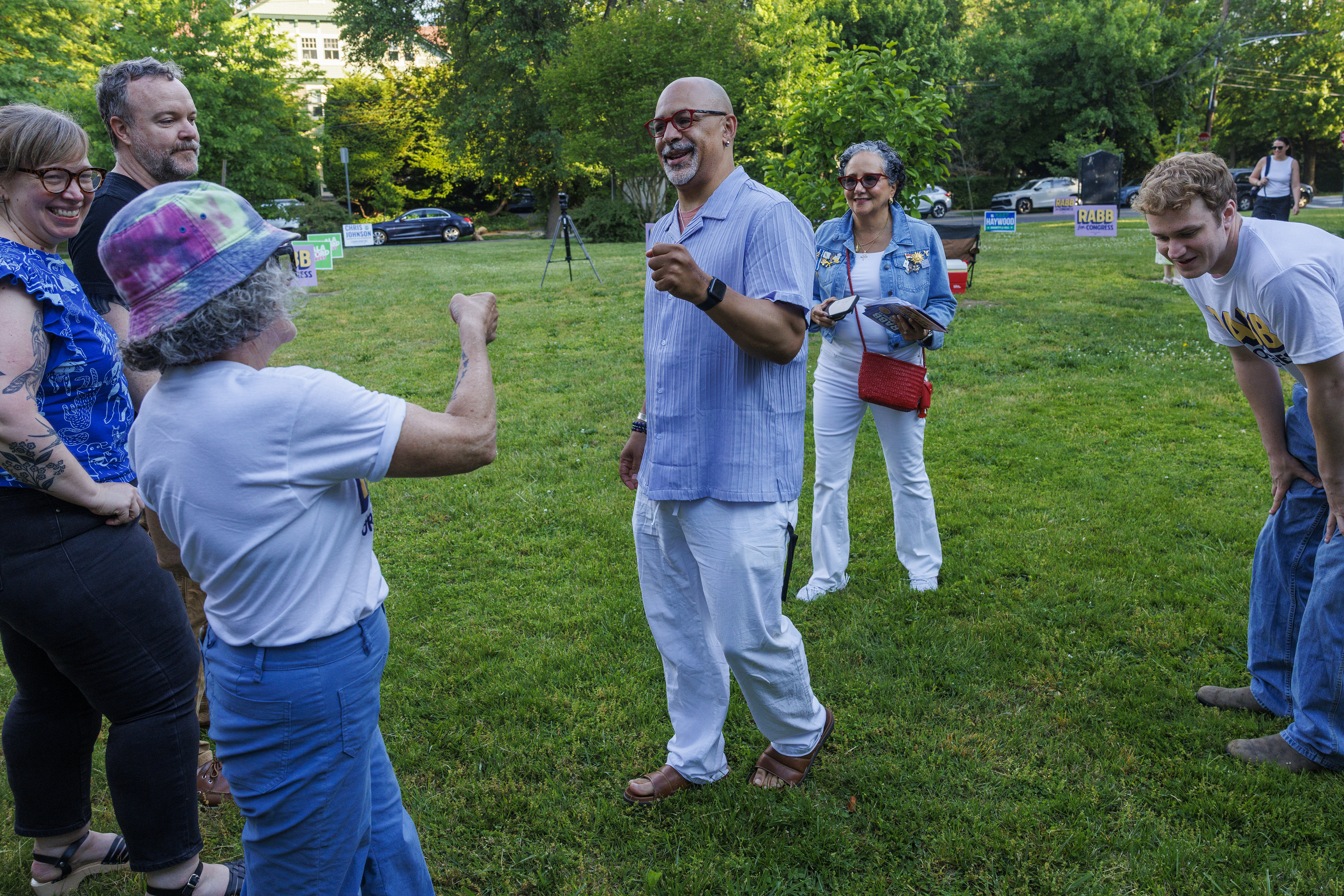
State Rep. Chris Rabb greets supporters on election day. He is arriving to his polling place to vote, Grace Epiphany Episcopal Church, Philadelphia, Tuesday, May 19, 2026.Alejandro A. Alvarez / Staff Photographer
Rabb has not explicitly called for Brady to resign. But he is now calling for a dramatic overhaul of the party, from its leaders to its bylaws to the city’s antiquated ward boundaries.
“What I’m asking for is for the ward leaders — whatever candidate is running for chair, whether it’s Bob Brady or anyone else — that they demand that their first order of business is to overhaul the bylaws by Labor Day [to focus] on building a local party built on transparency integrity and inclusion,” Rabb said in an interview last week.
Progressives make gains
On paper, Philadelphia’s Democratic Party structure is bottom-up. Every four years, during the primaries of presidential midterm cycles, registered Democrats elect two committeepeople from their precincts, as they did this year on May 19. The committeepeople then elect neighborhood-level ward leaders, and the ward leaders in turn elect the top officials in the city party, including Brady.
But in practice, many critics of the city’s old guard see a top-down reality, with Brady and other high-ranking city officials controlling the party’s agenda.
Progressives are hoping to wrest control of the party from the establishment or to force reforms that make it more hospitable to left-leaning candidates. But it remains an uphill battle given the diffuse nature of the party system.
Among the notable progressive wins in Monday night’s ward elections:
5th Ward (Center City): Ryan Alsayegh, a political consultant currently working for State Reps. Tarik Khan and Joe Hohenstein, unseated Mike Boyle.
25th Ward (Port Richmond, Kensington): Alexandria Mercedes Murphy, a neurophysiologist and volunteer with Reclaim Philadelphia, succeeded Tommy Johnson.
31st Ward (Fishtown, East Kensington): Molly Hartman, a staffer for Councilmember Rue Landau, faced no opponents in her bid to succeed Margaret Rzepski.
27th Ward (University City): Benjamin Moss-Horwitz, a staffer for State Rep. Rick Krajewski, won a contested race to succeed retiring ward leader Carol Jenkins, a party stalwart.
46th Ward (Squirrel Hill, Cedar Park): James Bridgeforth, a University of Delaware professor, ran an uncontested race to succeed Blackwell, who retired this year after defeating a progressive challenger for her ward in a contentious election four years ago.
In West Philadelphia’s 60th Ward, State Rep. Amen Brown, a centrist Democrat, was unseated by Lorraine White-Johnson.
White-Johnson, who had the backing of Wards That Work, said in an interview that she is not aligned with one faction and welcomes all Democrats. She added that she plans to explore opening up the ward but has not made formal plans to do so yet.
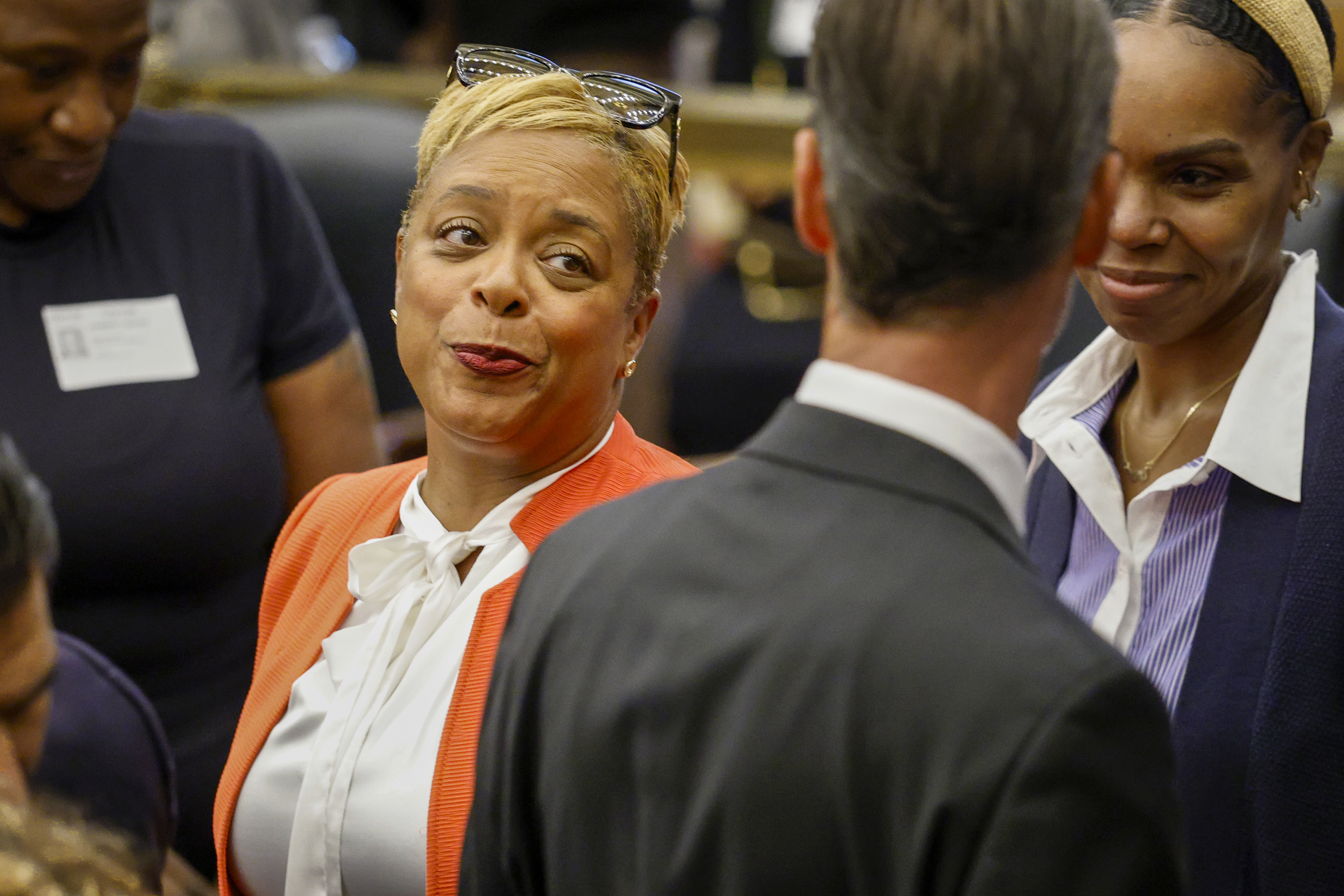
Philadelphia City Councilmember Cindy Bass on Thursday, September 11, 2025.Alejandro A. Alvarez / Staff Photographer
In Mount Airy’s 22nd Ward, Councilmember Cindy Bass declared herself reelected to a new term in a controversial move by saying she won a contested voice vote of committeepeople and denying motions for a roll-call vote that could have clarified the results. Her opponent, Octavius Price, was backed by progressive organizers and said he plans to challenge the election.
Some notable ward election results did not involve major ideological shifts.
Nash, who on Tuesday denied having made the anti-LGBTQ+ comments that previously cost him his seat, won a three-way race to reclaim the 47th Ward.
“I forgive everybody that was involved with those unforeseen circumstances,” Nash said in an interview Tuesday. “To anyone that was offended by the alleged comments, forgive me and the person who made those comments, allegedly and falsely, and let’s move forward.”
In a statement, Street said he would “take a back-to-basics approach, listening to my neighbors about their concerns and filling vacant committee member seats.”
“Last month’s election results galvanized my belief that we need to build the party from the ground up,” Street said in a statement. “We need to increase voter turnout in Black communities, like North Philadelphia, by demonstrating every day that Democrats are fighting for them.”
Staff writer Anna Orso contributed to this article.
The euphoria at Chris Rabb’s election night party last month hadn’t even started to wane before the democratic socialist and his supporters — dancing and hugging after capturing a rarely open Philadelphia seat in Congress — spoke of setting their sights even higher.
Taking on the city’s Democratic establishment to defeat a pair of more centrist candidates in the heated 3rd Congressional District race was a momentous win on its own. But the reckoning, they promised, wouldn’t be confined to Philadelphia’s borders.
“It’s going to change not just our city, but our entire commonwealth,” Rabb said in an interview amid the celebration at a Germantown banquet hall.
It was a sentiment echoed that night by key figures in Rabb’s coalition — from the head of the Working Families Party to Pittsburgh’s U.S. Rep. Summer Lee, the only other democratic socialist representing a part of Pennsylvania.
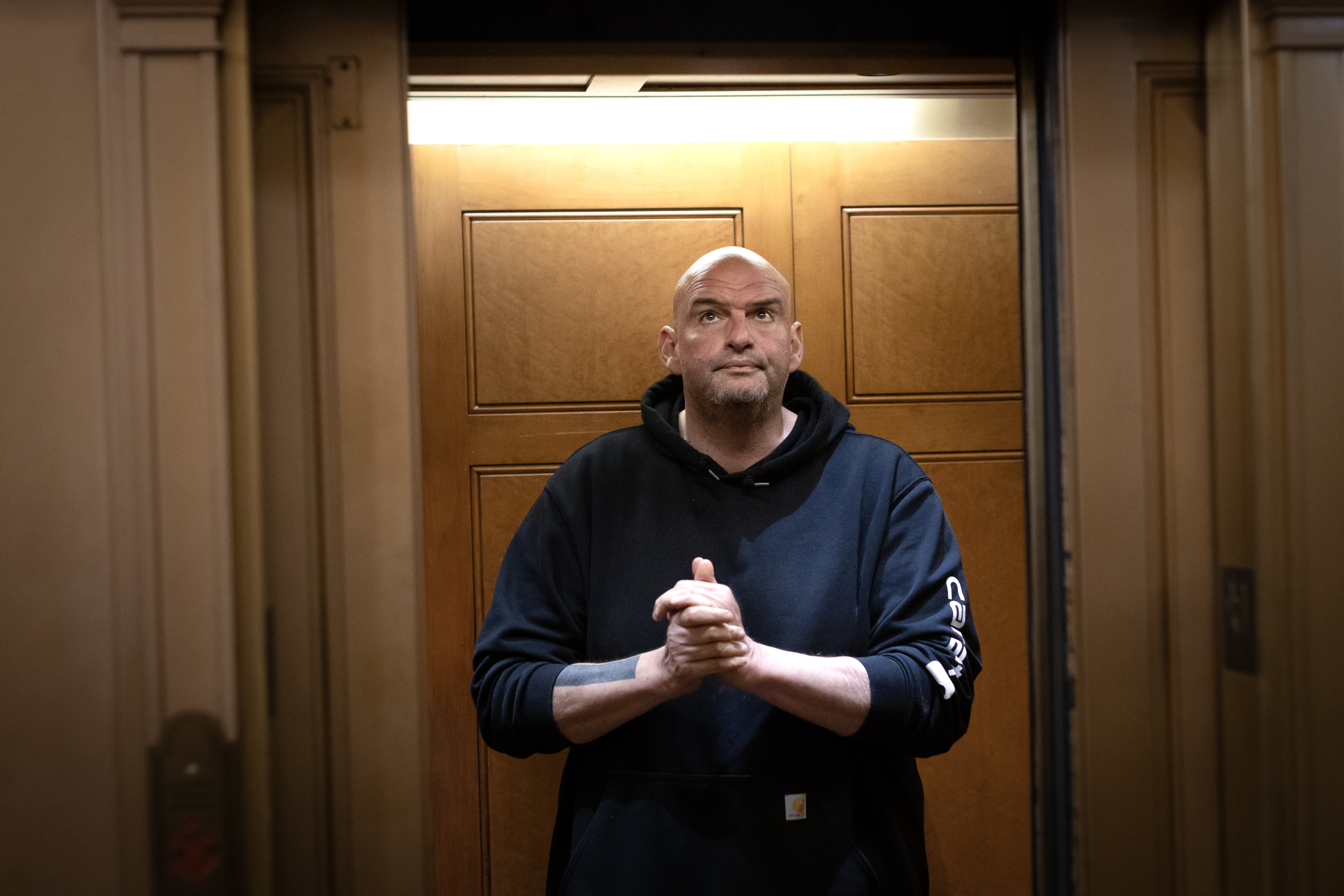
With the 2026 Pennsylvania Democratic primary in the rearview mirror, that conversation has broadly and quickly turned to the next biggest prize in the state: the U.S. Senate seat held by Democrat John Fetterman.
The senator has not said whether he will run for a second six-year term in 2028. But in an unusual situation for an high-profile elected official, a robust intraparty competition to replace him is expected to start either way in the next year as Fetterman increasingly sides with Republicans and as polls show that his support among Democratic voters has nose-dived.
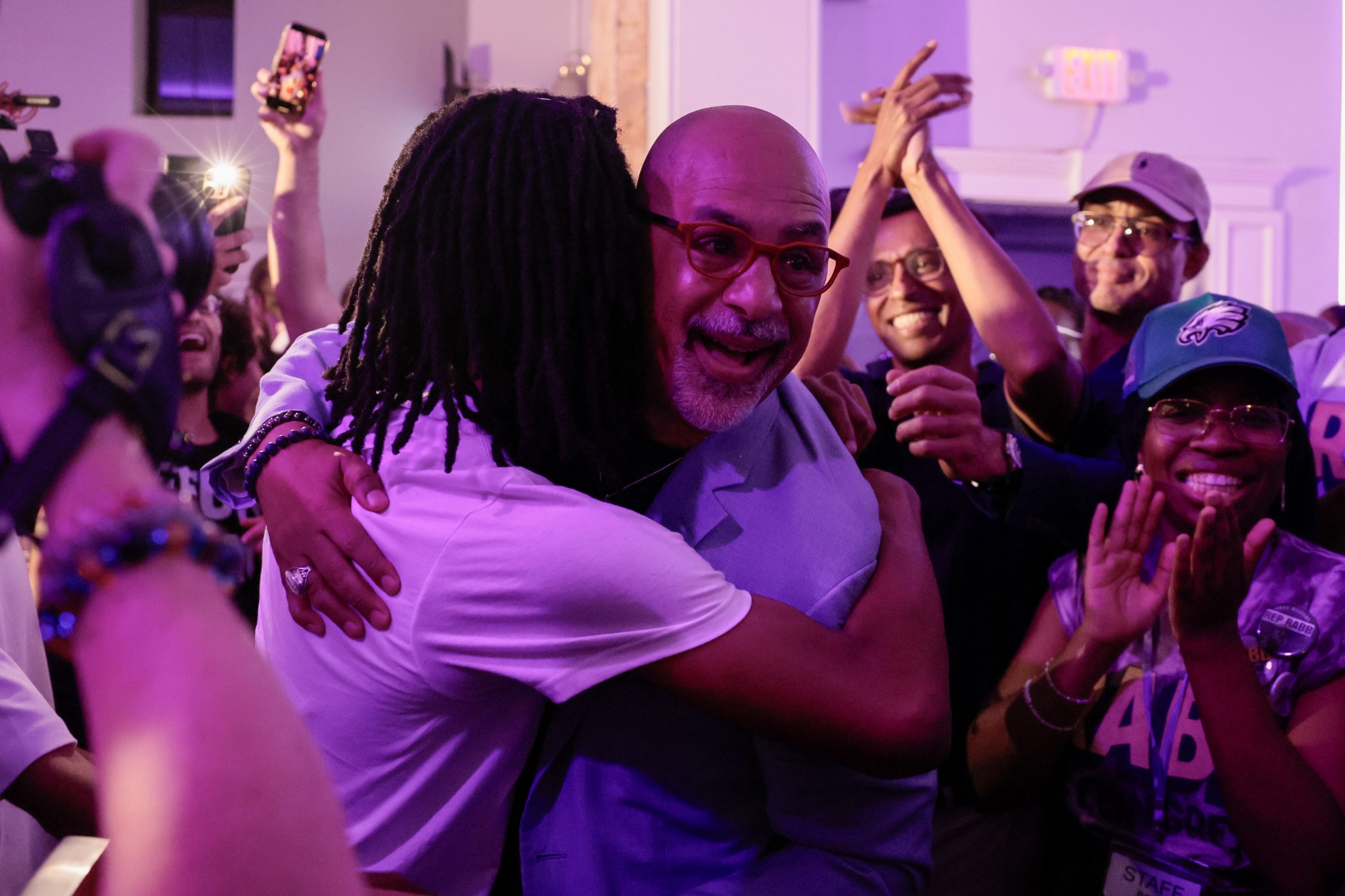
State Rep. Chris Rabb is hugged by his son, Issa Rabb, during his primary election night event at Victorian Banquet Hall on May 19.Elizabeth Robertson / Staff Photographer
Some Democrats who watched Rabb emerge from a competitive race, notching one of the left’s biggest wins yet in Pennsylvania, see an opportunity — one that extends the energy and momentum to boost a well-organized, progressive, anti-establishment candidate in the Senate primary.
Other strategists and activists say that’s a tall task, particularly in a swing state that rarely strays from electing more centrist politicians statewide.
“Anytime you have success, it breeds enthusiasm, which translates into more volunteers, into more money — everything you need to run a campaign,” said Mike Mikus, a Pittsburgh-based Democratic strategist. “But every election cycle is different. Every campaign’s different. The quality of candidates are different. And anybody who says that any one race signifies a permanent change within a party is mistaken.”
‘A huge impact on the political landscape of Pennsylvania’
In his campaign to succeed U.S. Rep. Dwight Evans, Rabb, a five-term state lawmaker, won 44% of the vote. He was up against State Sen. Sharif Street, who had the backing of the city Democratic apparatus, and physician Ala Stanford, a political newcomer endorsed by Evans.
That progressive infrastructure — the coming together of different groups to knock doors, make calls to voters, and unleash a significant independent advertising campaign in a way that rivaled the official Democratic Party organization — is likely the most important way that the left can use the experience of Rabb’s campaign to replicate its success elsewhere, strategists said.
It’s a template that could have “a huge impact on the political landscape of Pennsylvania,” said Rotimi Adeoye, a Philadelphia-based Democratic strategist who worked in the office of former U.S. Sen. Bob Casey.
In a district packed with Democratic voters, Rabb’s ability to turn out progressive voters should draw the attention of anyone looking to win the state’s Democratic Senate primary in 2028, Adeoye said.
“If a Democrat running statewide can learn from some of these organizational groups to build a strong, relational and community-based organizing campaign in Philadelphia and the surrounding suburbs in Montgomery County, Bucks County — they’re going to have a really big chance of winning,” Adeoye said.
In a sign that those efforts could coalesce around a Senate candidate, one of the groups that helped usher Rabb to victory remains the only major Democratic entity in the state to have publicly started laying the groundwork for a challenge to Fetterman.
The Working Families Party, which backed Fetterman in the 2022 general election after originally endorsing State Rep. Malcolm Kenyatta in the primary, said in November it would organize an effort to oust him. A “Primary Fetterman” website launched in January is equipped with a “Fetterman sell-out tracker” — highlighting his votes for Trump’s cabinet nominees and opposition to war powers resolutions that would rein in his military strikes, for example — and instructions for donors on how to request a refund from his campaign.
The website remains the extent of the group’s efforts so far to rally public support and back a new candidate, though its work is expected to pick up after this year’s midterm elections. For now, the party is looking forward to bringing new members who worked to elect Rabb into its fold.
“Our goal is always to keep building on the work we do each cycle and the success we have each cycle,” said Nick Gavio, the Working Families Party’s Mid-Atlantic communications director.
One PA, another statewide group in that progressive coalition, has not yet had internal discussions about the Senate race but it supports the Working Families Party’s position as a member of its steering committee, executive director Steve Paul said. He said more than 150 members of One PA mobilized for Rabb by talking to thousands of voters.
Winning a high-profile congressional race only helps add to that organizational infrastructure, making them “sharper for the next thing,” Paul said.
“I think it shifts what’s possible, politically — what people can envision,” he said.
Potential progressive roadblocks
Mikus said progressives have increasingly surpassed “more establishment Democrats” in their ability to run strong campaigns, including in his area of Western Pennsylvania where candidates like Lee have emerged in the last decade.
Democratic primary voters are also more progressive than they were 10 years ago, he said. But campaigning on a far-left — or a far-right — platform doesn’t often equate to success on a statewide level in Pennsylvania, a swing state where successful candidates tend to walk a “fine line” that appeals to both swing voters and a message that excites their partisan base, Mikus said.
“You’ve seen this time after time in presidential elections here in Pennsylvania,” Mikus said. “Hillary Clinton versus Bernie Sanders. Joe Biden versus Bernie Sanders. The vast majority of voters in Pennsylvania will go with the more mainstream Democrat.”
J.J. Balaban, a Philadelphia-based Democratic strategist and ad maker, said the party runs the risk of “drawing too big of a conclusion” based on a single election — particularly one like Rabb’s where candidates only needed to appeal to Democrats.
“Democrats really need to think hard about what it will take to win statewide in a purple state, which Pennsylvania clearly is,” Balaban said. “What it will take to win a general election in Pennsylvania is very, very different than what it will take to win in literally the most Democratic congressional district in the country.”
After recent years of tough losses — including the ousting of Casey by now-U.S. Sen. Dave McCormick, a Republican — Democratic voters will likely have a “tremendous thirst for candidates who have a credible case to make that they can win the general election,” Balaban said.
Fetterman, whose office did not comment for this story, has insisted that Pennsylvania’s purple state status means he should appeal to both sides of the aisle and not demonize the other side.
“Look at the people that are winning the primaries in our party right now, and look at their views on Israel,” Fetterman said at an American Jewish Committee conference in Washington this week.
On stage with McCormick and the head of the Jewish advocacy organization, Fetterman painted Graham Platner, the expected Democratic nominee for a U.S. Senate seat in Maine, as a “Nazi sympathizer” and connected him to Rabb.
“People also in our state, too. Rabb, he won, and he ran on being a very, very anti-Israel guy,” Fetterman said. “It’s actually a virtue [in the modern Democratic Party] … It’s heartbreaking for me. And if it isolates me, then so be it.”
Who might run?
Of the Democrats widely considered to be eyeing a campaign to replace Fetterman, the public jockeying has so far been limited to criticisms of the incumbent.
Former U.S. Rep. Conor Lamb, a moderate who represented a suburban Pittsburgh district before Fetterman beat him in the 2022 Senate primary, has frequently lambasted him.
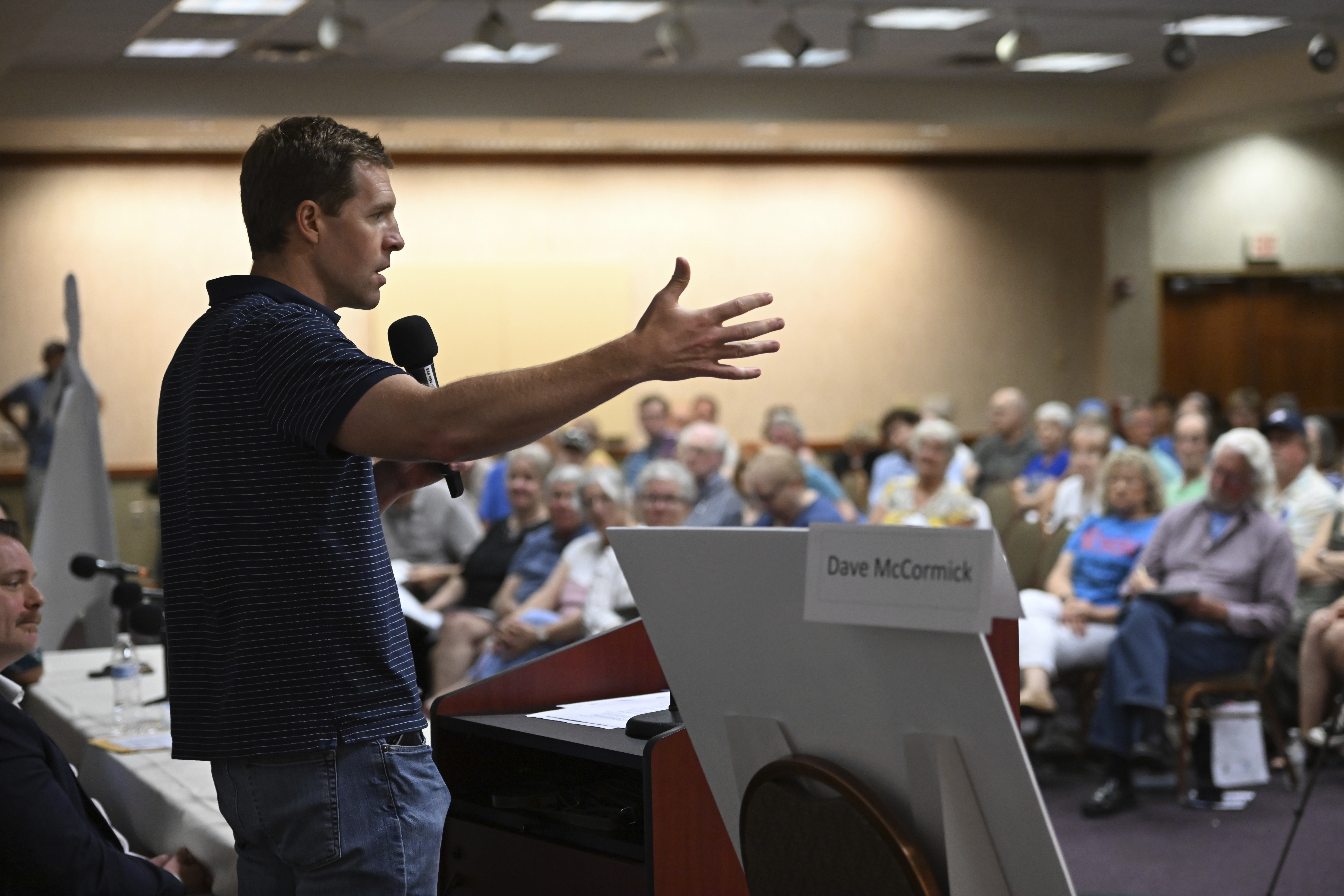
Conor Lamb speaks to the crowd at a town hall-style event organized by progressive groups at Central Penn College on June 22, 2025, in Enola, Pa. Marc Levy
And U.S. Rep. Chris Deluzio, who succeeded Lamb and leaned into progressive economic populism, has taken a less direct tack while noting the differences between himself and Fetterman over issues like Trump’s military interventions abroad. Deluzio has occasionally reposted others’ criticisms on social media — including one from Gavio, the Working Families Party spokesperson, last week that called Fetterman’s reversal on eliminating the filibuster “a new low” and “an indescribably massive backtrack from everything he ran on.”
None of the three have ruled out running.
Boyle is expected to weigh a Senate campaign vs. staying in the House to take a rare opportunity to lead the powerful budget committee if Democrats win the majority in November. Lamb, who’s remained highly active in Pennsylvania politics, said in an interview that he’s hoping to serve again and would run for office if he feels he “can be of service to the state.” Deluzio, who is also heavily involved in helping Democratic candidates across the state, said he’s focused on his reelection this year and that “we’ll see what 2028 holds.”
“I am not at all interested in seeing us lose this Senate election, and I certainly have gotten a lot of encouragement to look at 2028,” Deluzio said.
Progressives have also mentioned Lee, the Rabb ally who’s been a vocal member of the leftist wing on Capitol Hill while taking leadership roles in areas like securing the release of the Jeffrey Epstein files.
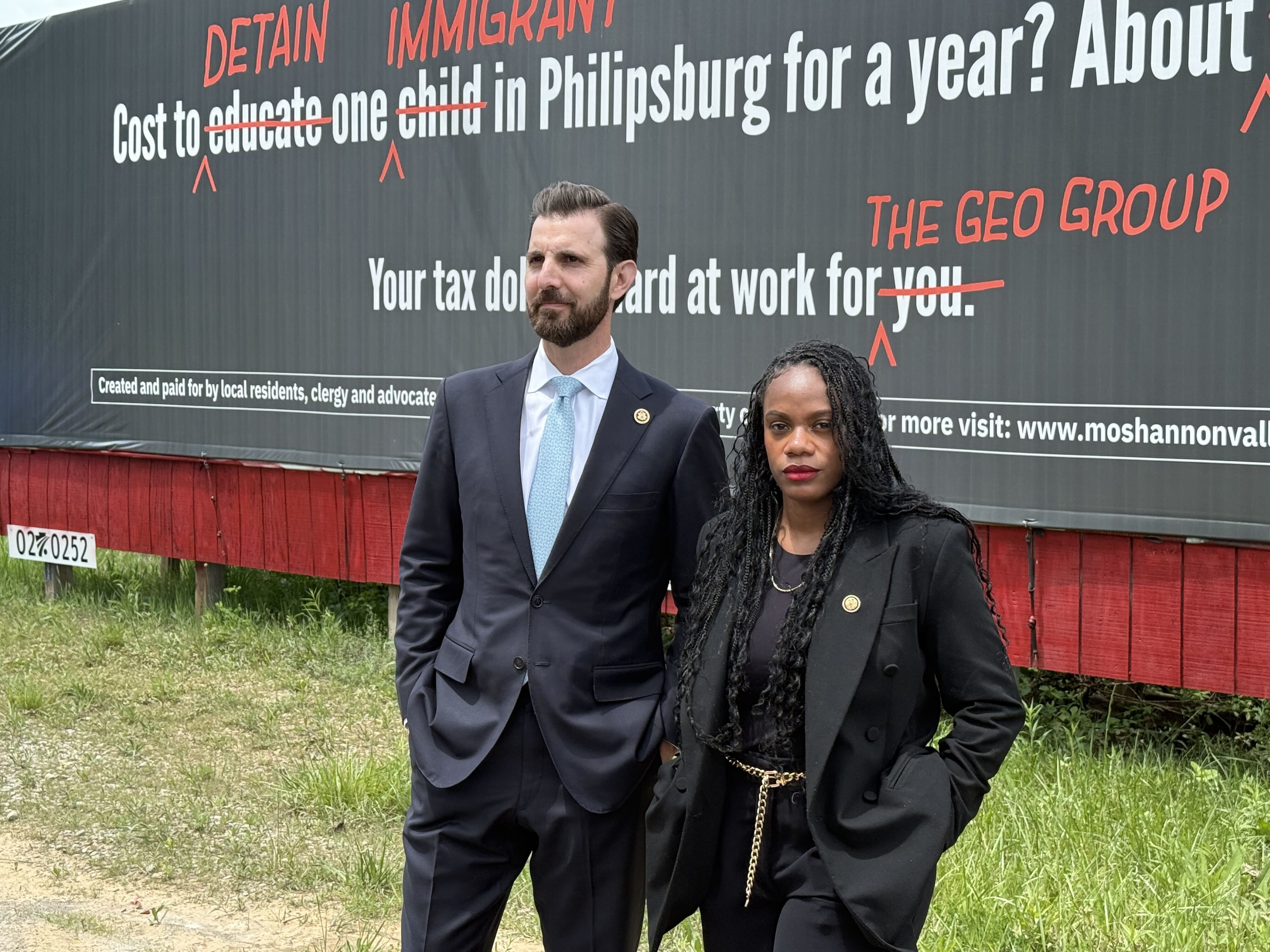
U.S. Reps. Summer Lee and Chris Deluzio, both Pittsburgh-area Democrats, speak outside the Moshannon Valley Processing Center in Clearfield County on May 28 after getting a tour of the facility, the largest detention center for undocumented immigrants in the Northeast.Sam Janesch / Staff
With potential candidates still several months away from making their decisions, it’s unclear who might try to take up the progressive mantle if Lee does not run, strategists say.
The field could also grow considerably. Other potential candidates could jump in, including the three other current Pennsylvania Democrats in Congress or former lawmakers like Susan Wild, who lost a swing congressional district in the Lehigh Valley in 2024. Wild said she’s “not ruling out” a run but she’s more interested in thinking about good female candidates in general since no woman has ever won a Pennsylvania U.S. Senate seat.
On the prospects of a battle between different factions of the party, Lamb said he believed Democrats had broadly learned a lesson — from Fetterman’s election in 2022, where he ran on being a reliable Democratic vote in the Senate — that was beyond ideological policy tests.
“Fetterman taught Democrats in Pennsylvania that you have to have a character test. Anybody can run around the state promising you these further left solutions, and that they’re going to be a thumb in the eye of the establishment, and they’re going to channel all your anger and dissatisfaction. And then that person can turn on you on a dime,” Lamb said. “The fact is that we have to evaluate our candidates based on whether they have integrity and they’re going to keep their word and, honestly, whether they have the work ethic to be a senator day in, day out.”