Tag: Semiquincentennial

  • The first Colored Convention was held in Philadelphia in 1830. Mother Bethel AME Church will revive it this weekend.

    The first Colored Convention was held in Philadelphia in 1830. Mother Bethel AME Church will revive it this weekend.

    To Denise Burgher, co-organizer of this weekend’s 2026 Colored Convention Conference, the attack on civil rights and Black history under President Donald Trump’s administration is chilling.

    Among the most egregious, she said, were his attempts to repeal the 14th Amendment, the Reconstruction-era addition to the Constitution guaranteeing citizenship to anyone born in the United States. In June, the Supreme Court upheld birthright citizenship.

    “The 14th Amendment overturned the Dred Scott Decision of 1857 ruling Black people — freed or enslaved — do not have the same rights as [their] white counterparts,” Burgher said. “Without that protection, Black Americans’ citizenship would be in question. Don’t think that could happen? We thought a woman’s right to chose was set in stone, too.”
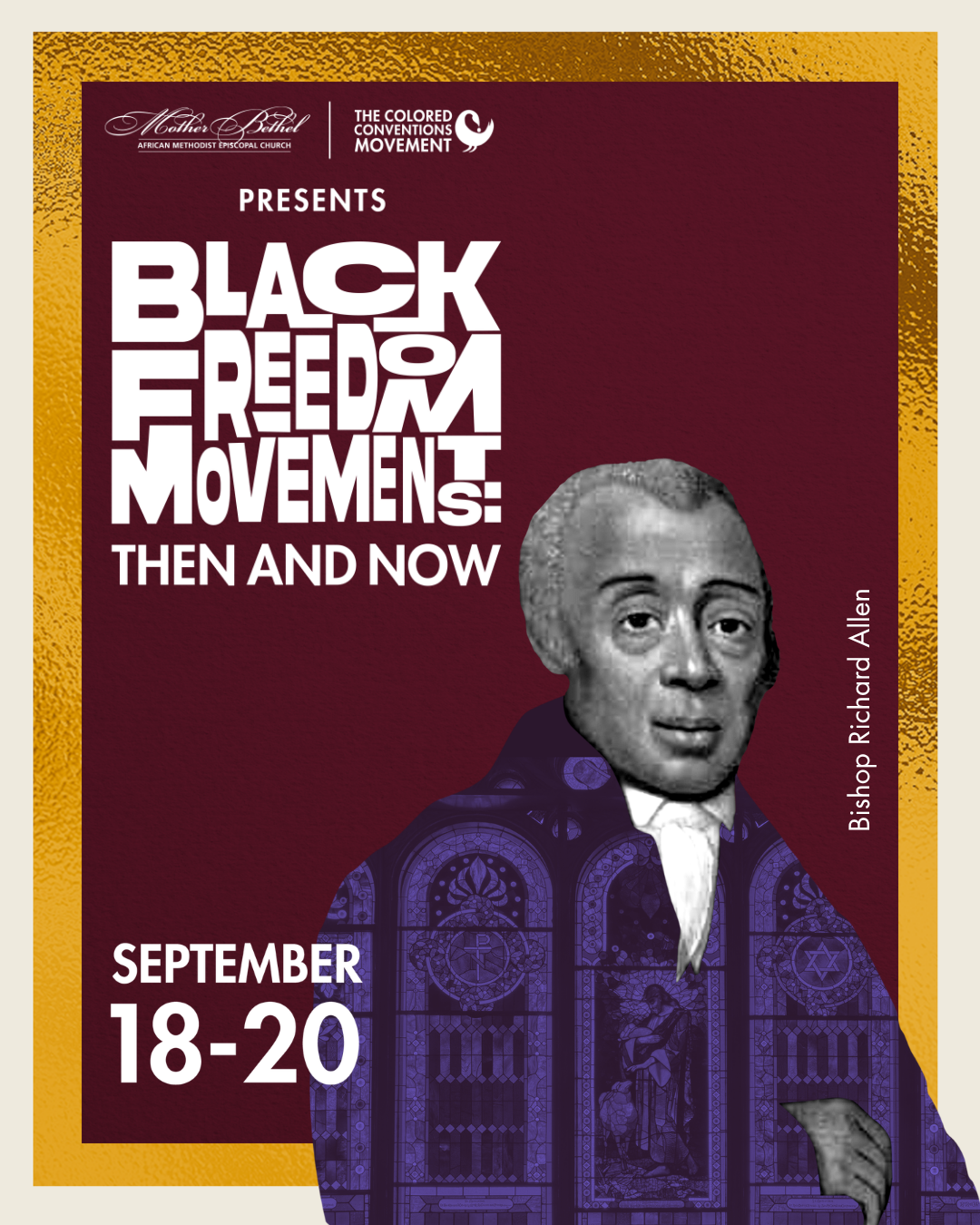
    A flyer advertising the 2026 Colored Convention: Black Freedom Movements Then and Now.2026 Colored Convention Committtee

    Burgher went on: Last week Trump threatened to snatch the tax exempt status from private schools that give minority students access to scholarships and educational programs, including at historically Black colleges and universities like Howard and Hampton.

    Add to that the dismal unemployment rate of college-educated Black women, who, according to D.C. think tank Economic Policy Institute, have lost more jobs in the public sector than Black men and white women in the last two years. Plus, the assault on Black history, including last week’s forced retirement of the Smithsonian secretary, Lonnie Bunch III, and the abrupt removal of memorials to enslaved souls at the President’s House site in Philadelphia.

    It’s clear Black equality in this political climate is not guaranteed.

    “We haven’t seen a threat like this on Black livelihood in this country since the post-Reconstruction era,” said Burgher, who is also the director of community engagement and curriculum development at Penn State’s Center for Black Digital Research. “This part of American history was a part of our past, now, it is not so suddenly aggressively and nakedly a part of our present.”

    A 19th-century America, she said, calls for 19th-century tactics.

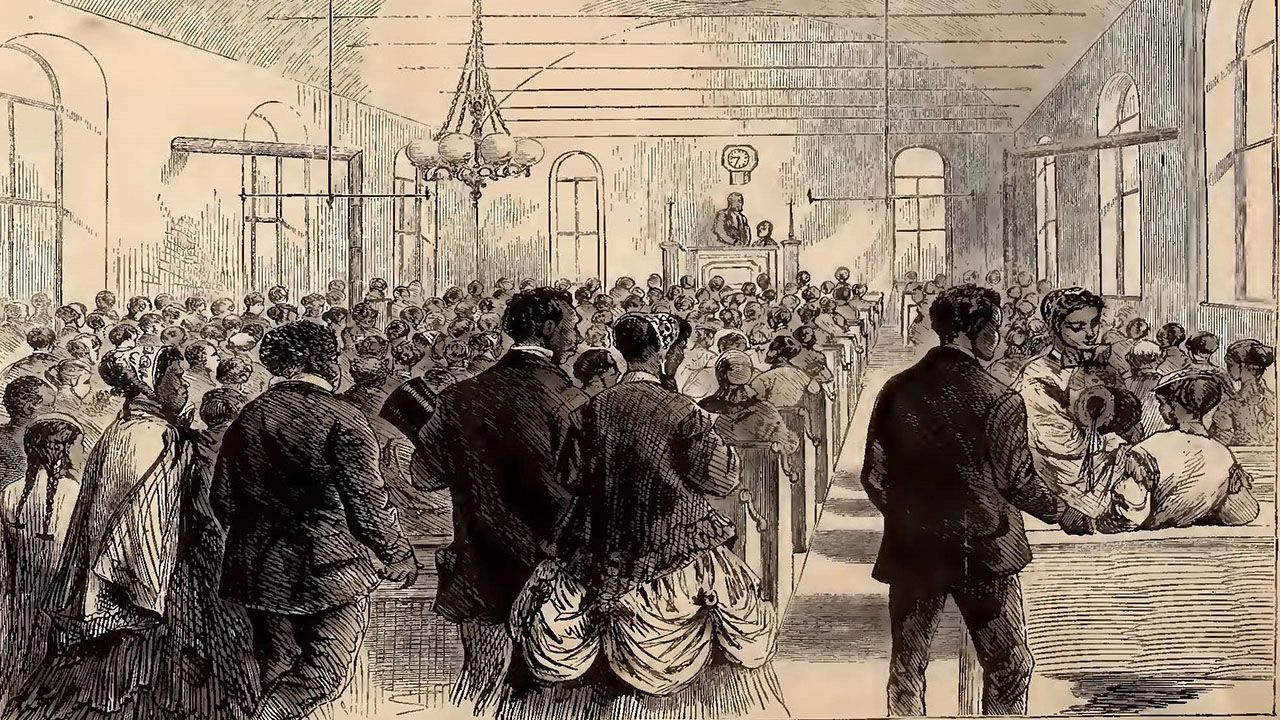
    This weekend, Mother Bethel AME will host the “2026 Colored Convention: Black Freedom Movements Here and Now,” a celebration of the first Colored Convention held almost 200 years ago at the church. Dozens of influential free Black clergymen, statesmen, and activists convened at the 1830 Colored Convention and laid the foundation for civil rights groups like the Niagara Movement and the NAACP.
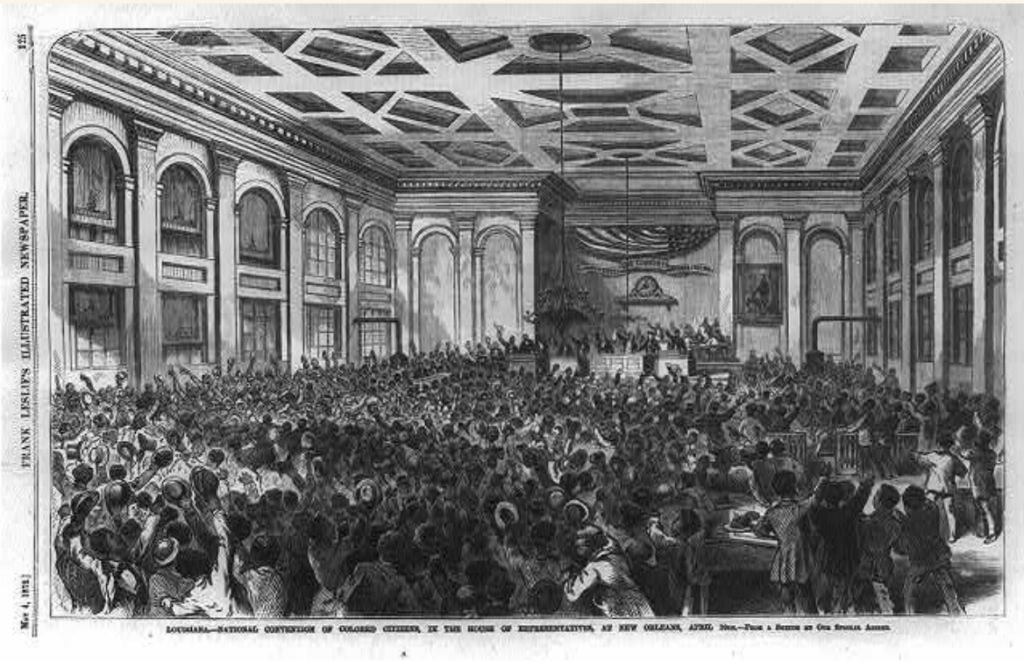
    This print from Frank Leslie’s Illustrated Newspaper depicts the National Convention of Colored Citizens’ meeting in the House of Representatives in New Orleans, in April 1872.The Library of Congress

    These organizations agitated for civil rights through the Civil War, Reconstruction, Jim Crow and into the 1960s, said Carolyn C. Cavaness, Mother Bethel’s pastor who tapped Burgher and Derrick Spires, historian and associate professor of English at the University of Delaware, to reignite the Colored Convention’s legacy.

    “To reclaim and be challenged by such a movement … is of much worth and esteem,” Cavaness said. “We are literally in a struggle now for equality and fairness of all people.”

    This weekend’s Colored Convention will feature workshops on genealogy, activism, and the 18th- and 19th-century Black press. Philadelphia school children will attend Thursday for arts and crafts projects that will teach them about the history of the Colored Convention.

    Andre E. Johnson, codirector of the Colored Conventions Project and professor at the University of Memphis, will deliver the keynote on the history of the Colored Convention and share how activists can apply 19th-century action plans to 21st-century technology to create a strategy to combat the present crisis.

    “In this year of the Semiquincentennial, this is yet another opportunity for Philadelphians to pay attention to history,” Burgher said, “and look at strategies our ancestors used more than 100 years ago. I’m not going to say the same thing is happening, but the events sure do rhyme.”

    The event will include a voter-registration drive, emphasizing the importance of voting in the midterms.

    Richard Allen founded Mother Bethel in 1794, and by 1830, the church was the cornerstone of the largest free community of African Americans in the country.

    In August of 1829, white mobs burned Black businesses and neighborhoods during the Cincinnati Race Riots. In response to the brutal loss of life and business, free man Hezekiah Grice wrote to Allen, asking the influential pastor to gather free Black intellectuals to strategize. His reasoning was, if white mobs could do this in Cincinnati, what’s to stop them from attacking Black communities everywhere else.

    More than 2,000 Black people from Cincinnati moved to Canada. The first Colored Convention was held from Sept. 20 to Sept. 24 in 1830 at Mother Bethel, resulting in emissaries from Philadelphia asking the Canadian government to allow Black people to establish communities there.

    The Colored Convention held annual meetings at Mother Bethel from 1831-85. By the turn of the 20th century, there were Colored Conventions regularly in nearly every major American city along the Northeast Corridor, in the Midwest, and along the West Coast.
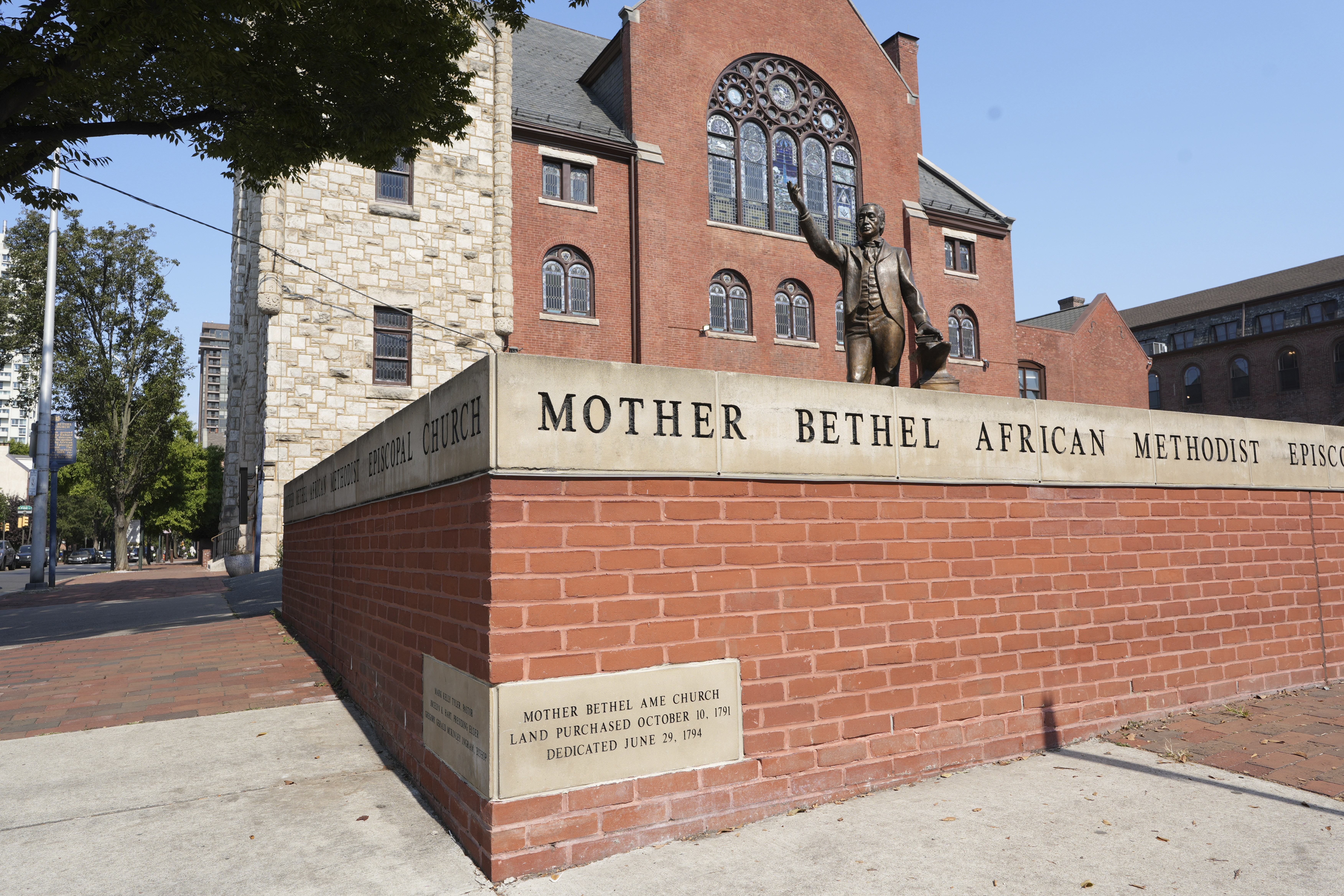
    A statue of Mother Bethel AME Church founder Richard Allen stands on the oldest parcel of land continuously owned by Black Americans in Philadelphia on Oct 13, 2024. (AP Photo/Luis Andres Henao)Luis Andres Henao

    Black leaders from every walk of life attended, among them Frederick Douglass — known as the Lion of the Convention because of his deep oratory voice and big, distinctive hair — poet Frances Ellen Watkins Harper, newspaperman T. Thomas Fortune, and Philadelphia educators Jacob C. White and Charles L. Reason.

    Colored Conventions, Burgher said, became forums for Black leaders to discuss abolition, fugitive slave laws, voting rights, and education. Many Black institutions were born from these conventions, including the charters for Talladega University and Howard University Law School, established in 1865 and 1869, respectively.

    The last Colored Convention on record was in 1972 in Newark, N.J., Burgher said.

    “I hope this 2026 celebration will not only bring this history home,” Burgher said. “And I also hope it inspires Philly residents to respond to the current moment like history has taught us.”

    2026 Colored Convention: Black Freedom Movements Here and Now will take place Thursday, Sept. 17 — Sunday, Sept. 20. Mother Bethel is located at 419 S. Sixth St. Admission is by donation.
  • What Philly got out of the World Cup, the nation’s 250th, and the MLB All-Star Game

    What Philly got out of the World Cup, the nation’s 250th, and the MLB All-Star Game

    As the afterglow of the world’s largest sports tournament and the country’s formal 250th birthday party in Philadelphia fades, the city is returning to its regularly scheduled programming.

    But those months of celebrations came with significant investments into the city: building up the Benjamin Franklin Parkway, hosting Grammy Award-winning stars, renovating Lemon Hill to welcome half a million people, and, of course, the cleaning and maintenance work that made Philadelphia look fresher than it has in years.

    SEPTA and the city partnered to landscape and beautify major traffic intersections, sometimes with a new mural provided by Mural Arts Philadelphia. SEPTA stations also received a much-needed deep clean and graffiti removal, all before and during the summer celebrations.

    PHLASH buses got an extra stop to get to Lemon Hill; fans got free rides on the Broad Street Line after World Cup games. And, just as the international fans packed up their bags to head home, it’s time for many of those features to go, too.

    But Philadelphia has taken steps to keep things looking pretty for the long term, beginning with the city’s $11.5 million landscaping and anti-graffiti project focused on transportation “gateways” that it has pledged to continue and expand beyond the summer. The city also added 250 cherry blossom trees throughout Fairmount Park and elsewhere, in a project led by the Japan Society of Greater Philadelphia that honored the original 1,600 cherry blossoms Japan gifted Philly for the Sesquicentennial in 1926.

    But what about all the things staying in Philly? The city is not getting just generational memories and a summer party out of the deal. Here are some of the major legacy projects remaining in Philadelphia for years to come, perhaps even until the tercentennial celebration in 2076.

    (function(){function e(){window.addEventListener(`message`,function(e){if(e.data[`datawrapper-height`]!==void 0){var t=document.querySelectorAll(`iframe`);for(var n in e.data[`datawrapper-height`])for(var r=0,i;i=t[r];r++)if(i.contentWindow===e.source){var a=e.data[`datawrapper-height`][n]+`px`;i.style.height=a}}})}e()})();

    New mini soccer pitches across Pennsylvania

    Location: Throughout Pennsylvania.

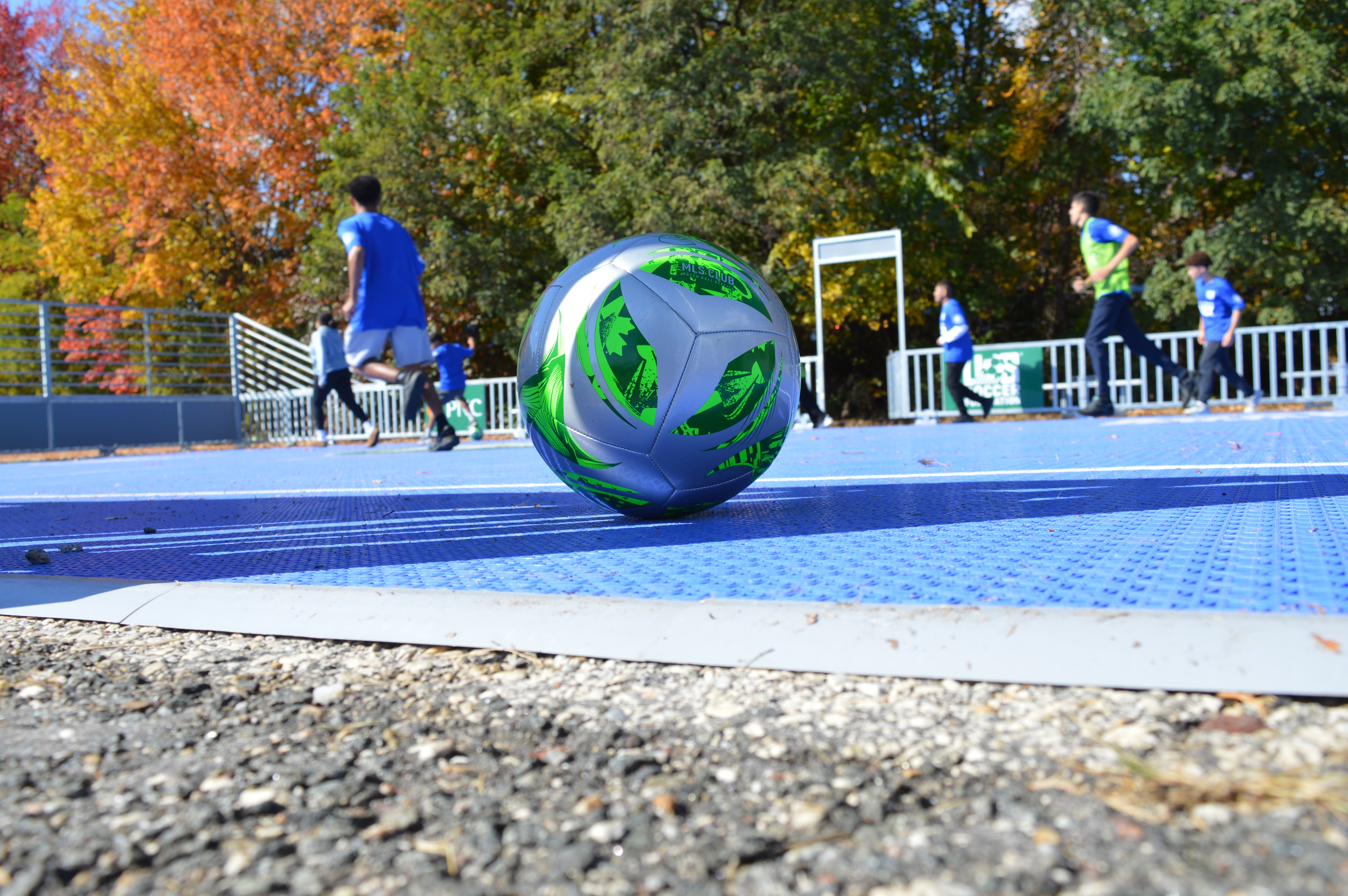
    The project: How does the United States grow the next crop of elite soccer players? By making it easier to play soccer starting at a young age. At least 13 mini soccer pitches are being installed at schools, recreation centers, and parks across Pennsylvania.

    The U.S. Soccer Foundation has committed $2 million to install mini-soccer fields like this one in Northeast Philadelphia ahead of the 2026 FIFA World Cup.Kerith Gabriel

    Who is behind it: The city and several nonprofits and private companies are backing this initiative, mostly through a $2 million investment from Philadelphia Soccer 2026, the city’s host committee for the 2026 men’s World Cup. Additional backers include the Philadelphia School District, Independence Blue Cross, and Comcast, among others. The U.S. Soccer Foundation is administering the funds and overseeing the installation of the pitches.

    Bank of America Visa Street Soccer Park

    Location: 1036 N. Front St.

    The project: The transformation of Fishtown’s TipTop Playground into two mini, enclosed turf soccer pitches, with additional event space and field lighting for night play. The pitches are now open for kids and adults.

    • Fishtown’s street soccer park will host leagues, free training clinics, and youth soccer programs. Casual pickup soccer is available outside of scheduled programming, led by Street Soccer USA, the organization that helps run such soccer parks across the country.
    • Keep up to date on programming at instagram.com/streetsoccerphila.

    Who is behind it: You guessed it: Bank of America and Visa. Street Soccer USA will run programming at the park in collaboration with local groups.

    Lemon Hill Park

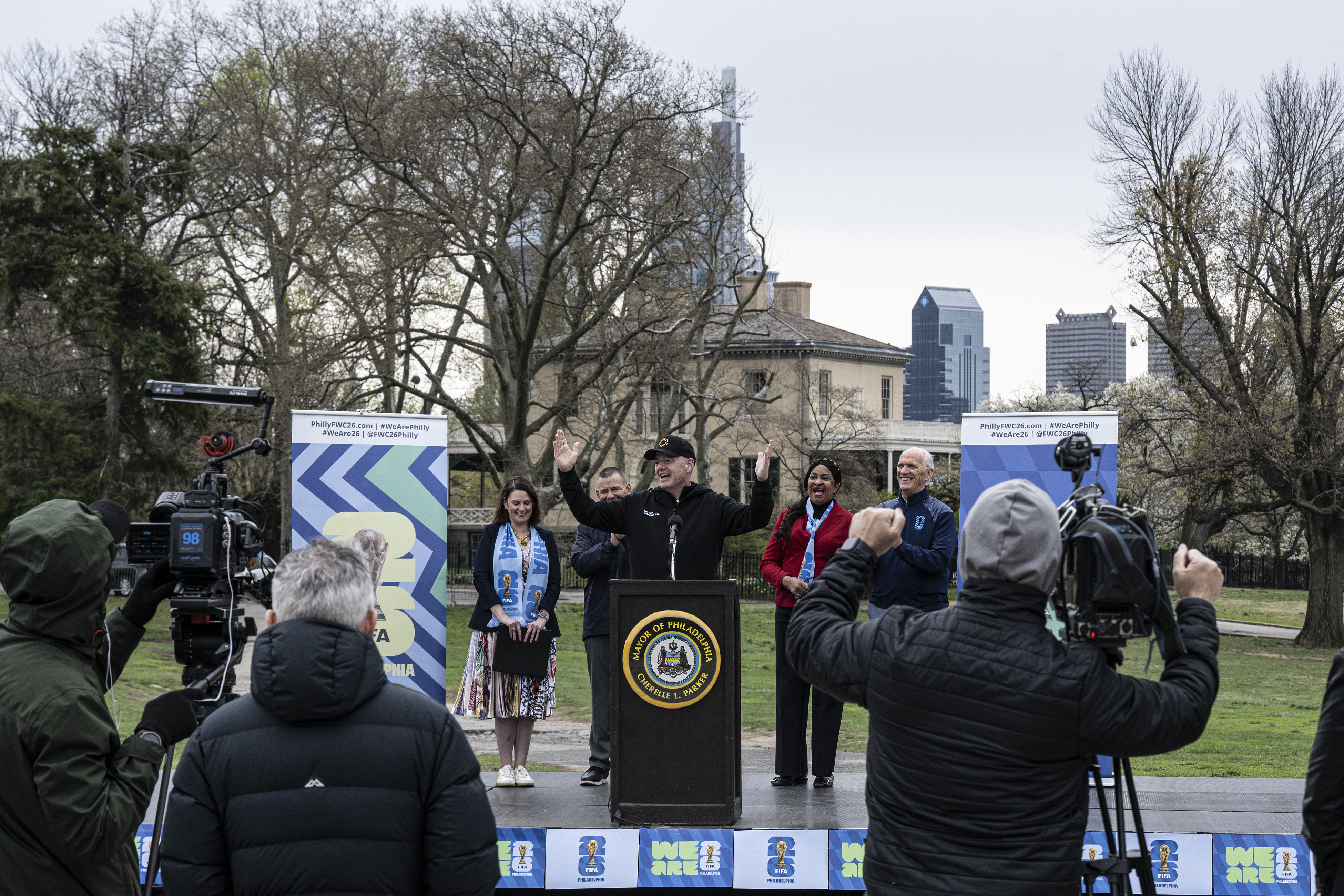
    FIFA President Gianni Infantino, center, will visit Lemon Hill Park on Thursday, April 10 for an operational planning tour of Philadelphia Soccer 2026’s FIFA Fan Festival siteJose F. Moreno / Staff Photographer

    Location: Sedgley Drive and North Lemon Hill Drive.

    The project: Lemon Hill Park received some updates ahead of hosting the official FIFA Fan Festival, and is now getting a much-needed makeover after 39 days of World Cup festivities. The restoration of the grass is underway, with more permanent amenities soon to be constructed.

    • Some upgrades are complete:
    • Other upgrades are coming soon:

    Who is behind it: Philadelphia Soccer 2026 is committing $4 million to park upgrades, with help from the city, to repair the grass fields, bring new modern amenities to parts of the park, and outfit the space with new electrical service, provided by Peco, to prepare for future large events.

    FDR Park’s Ashburn Field

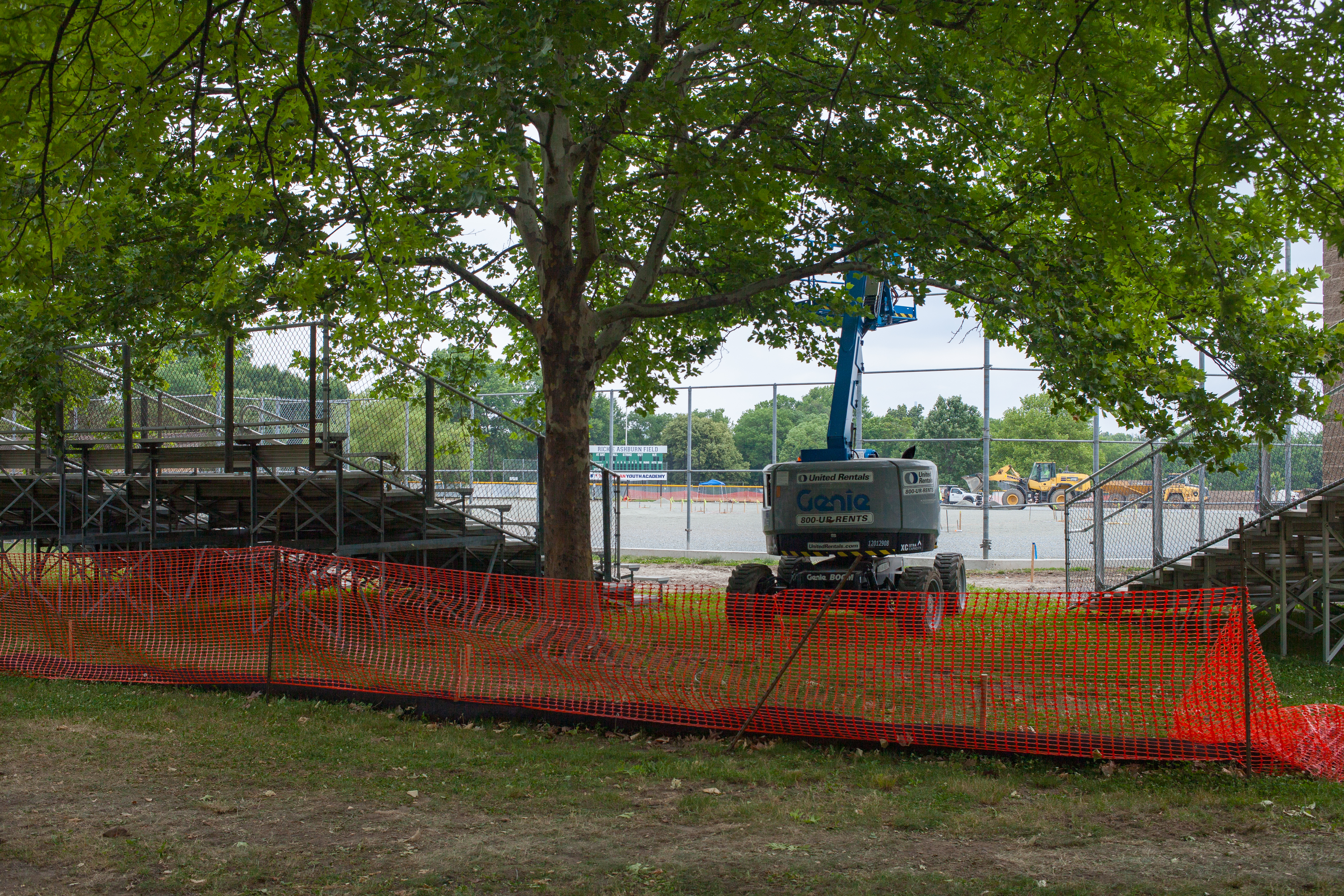
    The MLB is renovating Ashburn Field in FDR Park, a city field managed and maintained by the Phillies that hosts a variety of youth baseball programs.Colin Evans / For The Inquirer

    Location: 1500 Pattison Ave.

    The project: Ashburn Field at FDR Park has been resurfaced with a new turf field, meant to better handle wet weather conditions. The 135,000-square-foot field was built in 1998, using funds generated from the 1996 MLB All-Star Game in Philadelphia.

    Who is behind it: Major League Baseball and the Phillies, as part of a combined investment of more than $5 million in various projects tied to the 2026 MLB All-Star Game, including revitalizing the Negro Leagues Memorial Park and mural at 44th Street and Parkside Avenue in West Philly.

    Independence National Historical Park

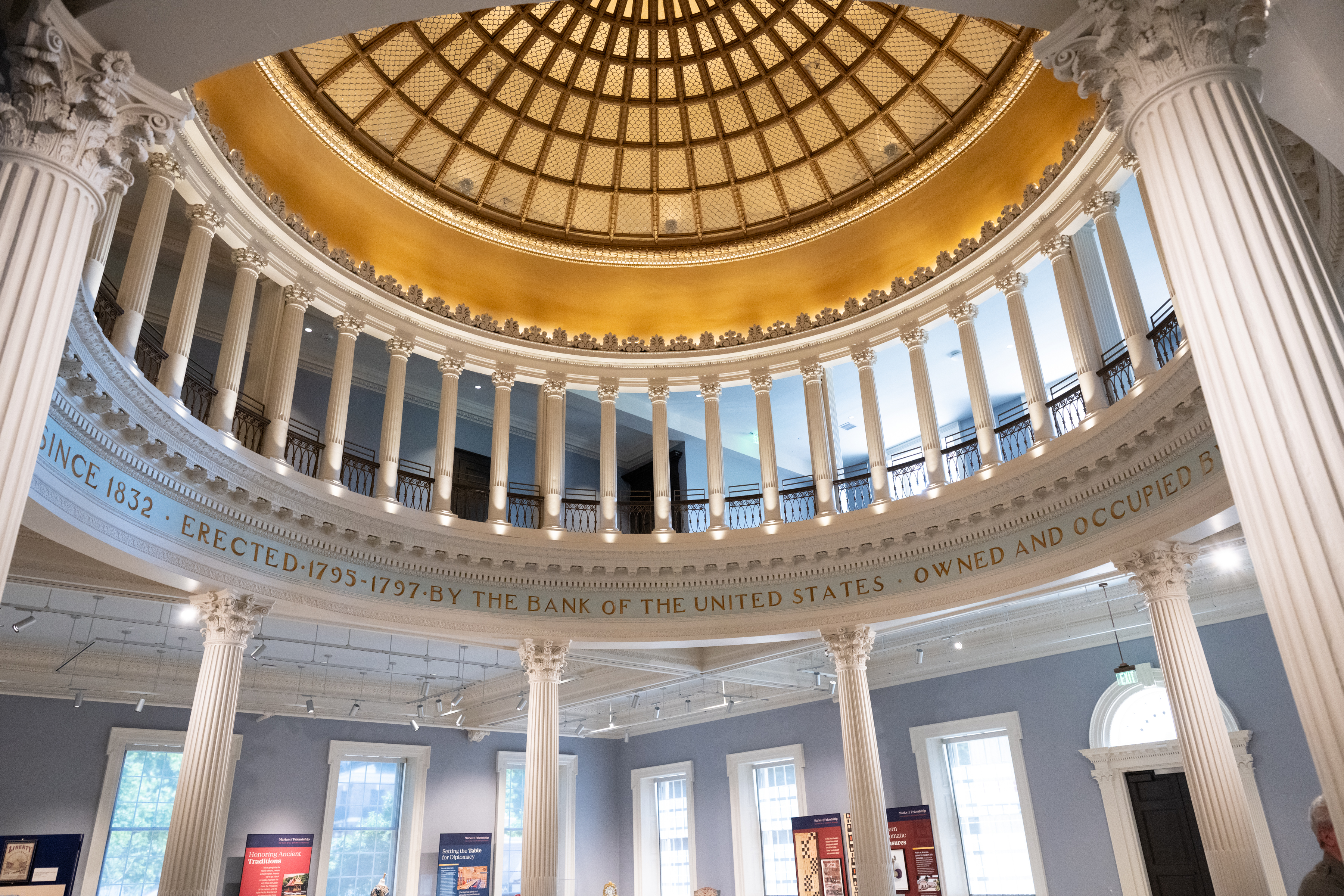
    The rotunda inside the First Bank of the United States is pictured on Monday, June 29, 2026 in Philadelphia.Erin Blewett / For The Inquirer

    Location: 599 Market St.

    The project: Several improvements have already come to Independence National Historical Park and Independence Mall to commemorate the nation’s Semiquincentennial, and more are on the way. They include:

    • A $3.9 million “Join or Die” sculpture on Independence Mall, inspired by the truncated snake in Benjamin Franklin’s cartoon of the same name. The 46-foot-long granite work is expected to be unveiled this fall.
    • Beautification and horticultural work. This includes work at the Benjamin Rush Garden at Third and Walnut Streets, which showcases the 1976 Bicentennial Bell, a 10-ton Liberty Bell replica gifted by Queen Elizabeth II.
    • The reopening of the First Bank of the United States, on Third Street between Walnut and Chestnut Streets. The bank had been closed for 50 years but is now open for visitors thanks to a $43 million renovation.

    Who is behind it: Independence Historical Trust, the city, the state, private foundations, philanthropists, and legacy groups.

    Germantown Historical Society Visitor Center

    Location: 5501 Germantown Ave.

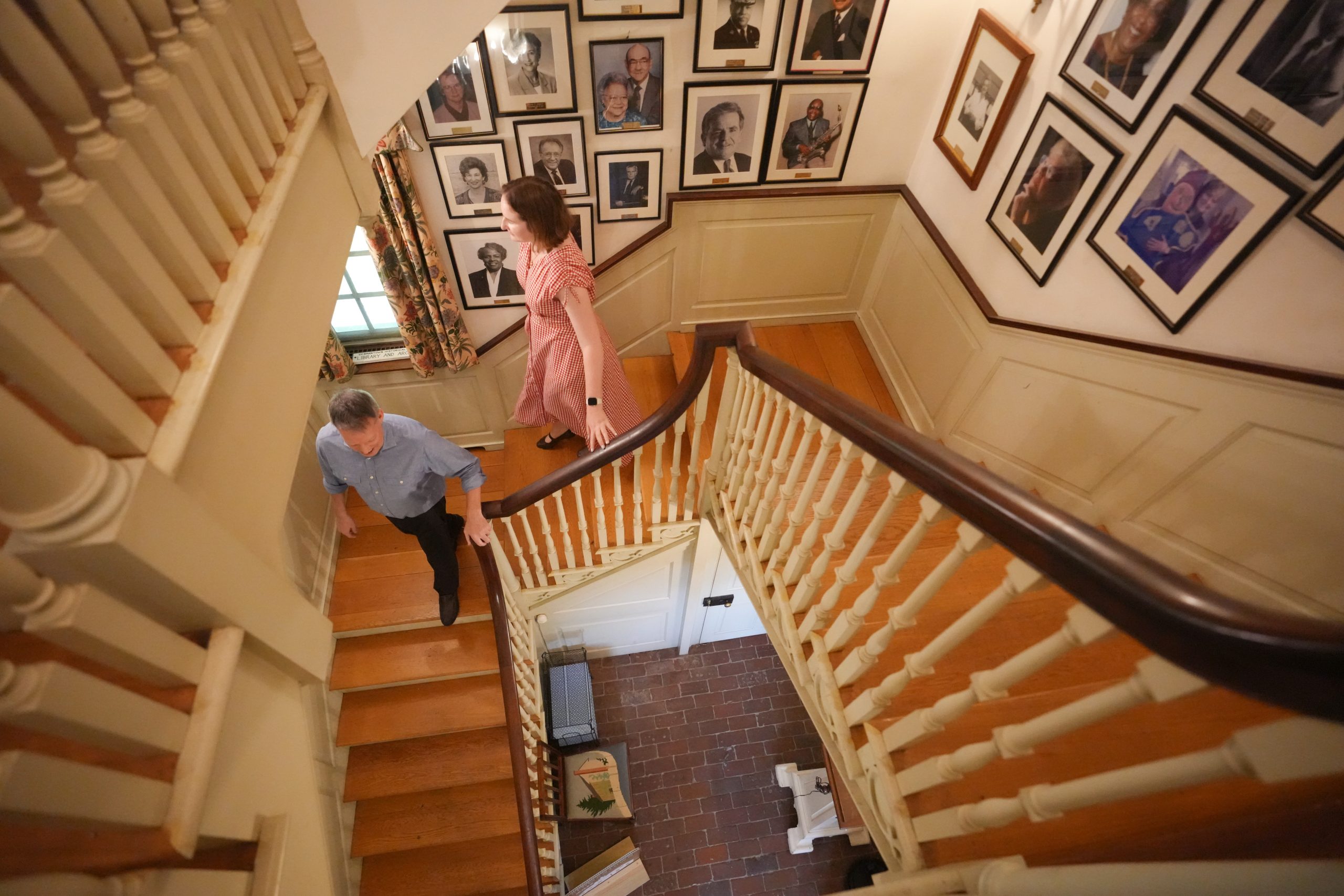
    Tuomi Forrest, executive director at the Germantown Historical Society, and Kaila Temple, curator of collections at GHS, at the Germantown Historical Society building located at 5501 Germantown Ave. in Philadelphia, July 21, 2026.Jessica Griffin / Staff Photographer

    The project: The Germantown Historical Society has its first visitors center, thanks to a $100,000 renovation of a section of its headquarters. It is modest but will host rotating exhibits, maps and pamphlets, and a gift shop.

    Historic Germantown consists of various landmarks and attractions in Northwest Philly, including the Aces Veterans Museum, Awbury Arboretum, and the Germantown White House, where George Washington once lived.

    Who is behind it: The Funder Collaborative for the Semiquincentennial, a philanthropic group organized by the Connelly Foundation that donated to many initiatives and projects related to the 250th anniversary celebration.

  • At 125, Philadelphia’s official tall ship isn’t done riding the waves

    At 125, Philadelphia’s official tall ship isn’t done riding the waves

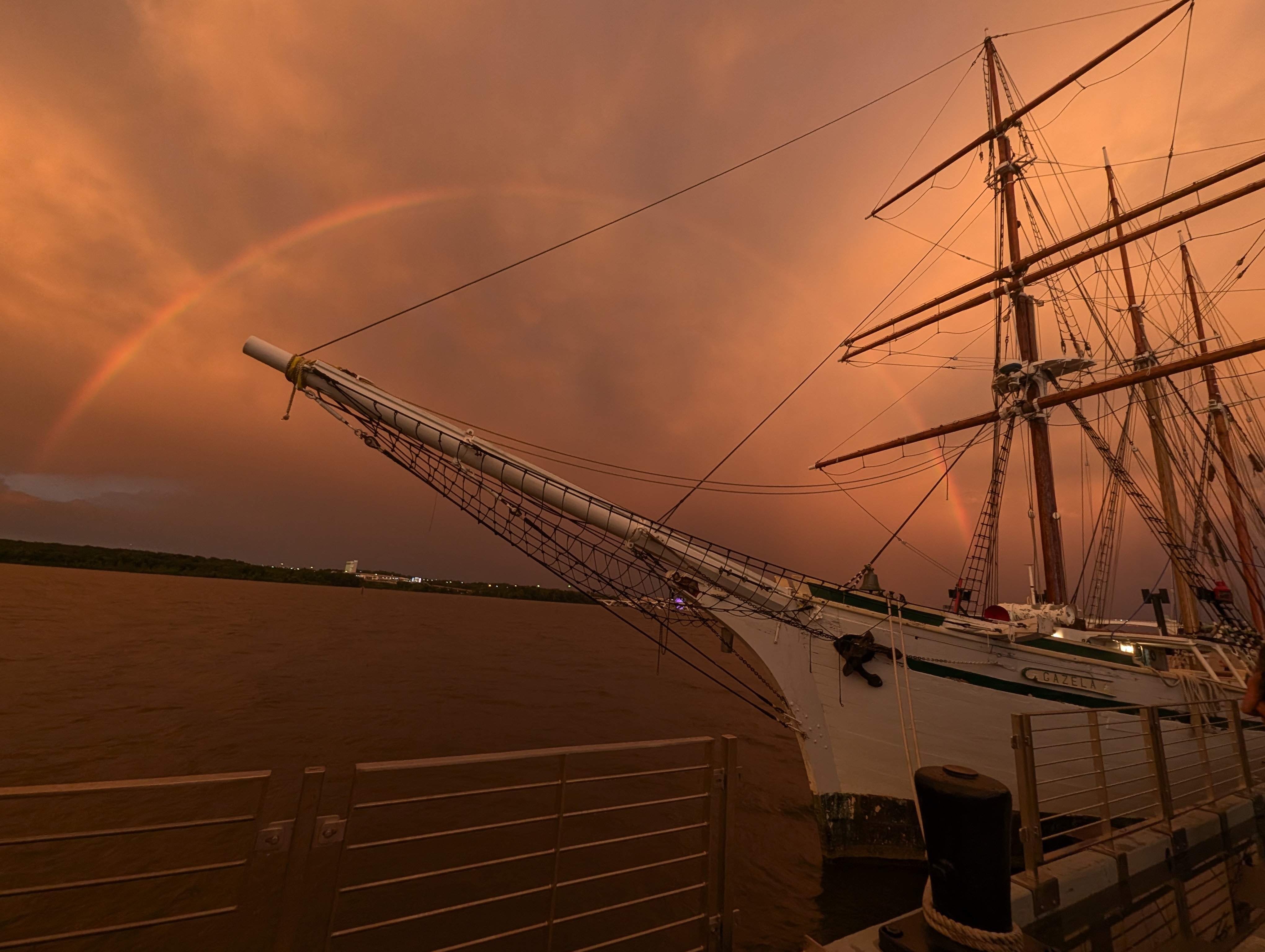
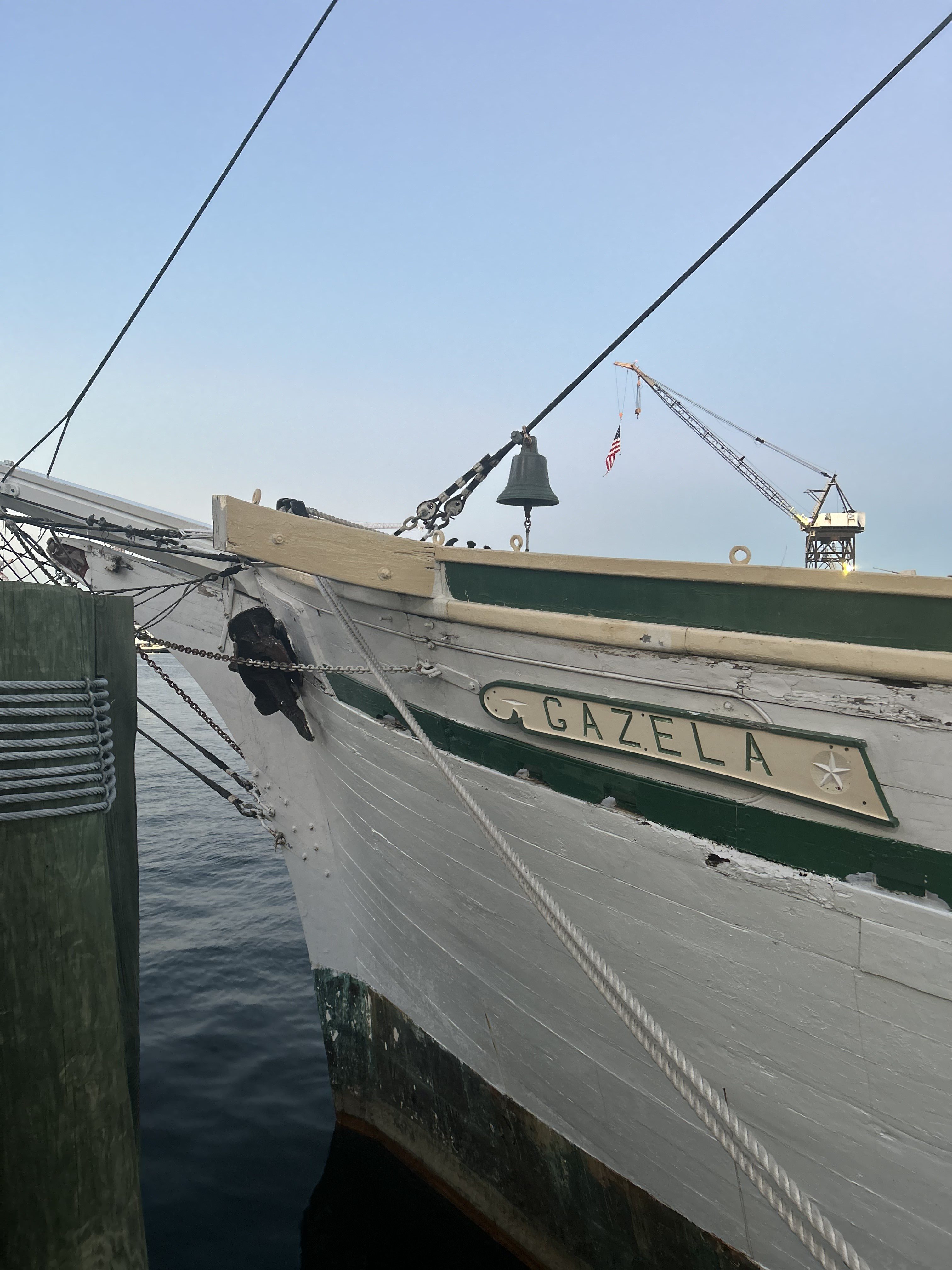
    125-year-old Gazela weighs 299 gross tons and is 177 feet tall. The ship has traveled across the Atlantic, appeared in the 1994 movie Interview with the Vampire, and was once, according to one of the ship’s longtime volunteer custodians, blessed by a group of nuns.

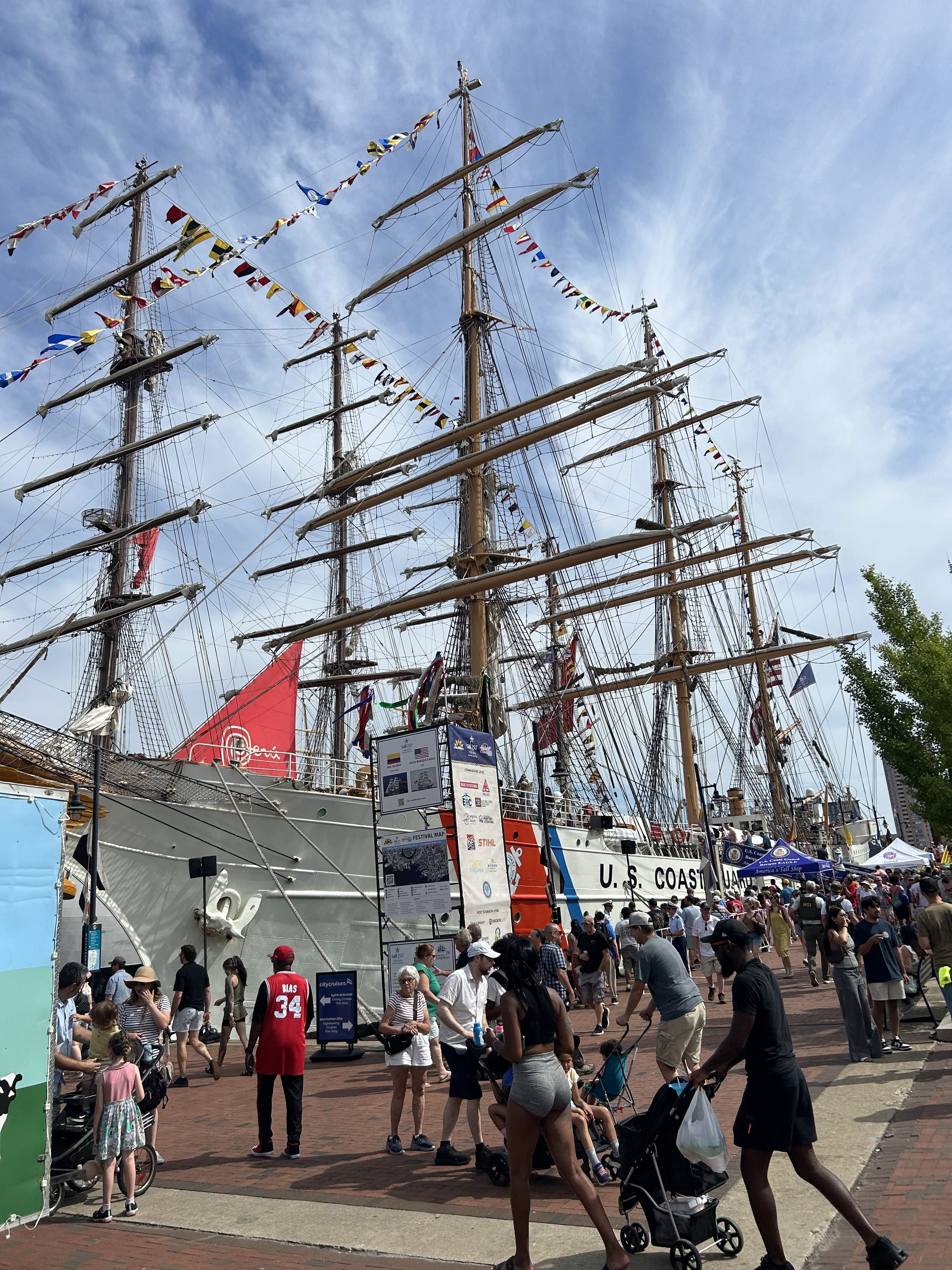
    It is also the official tall ship of Philadelphia, a role that requires it to take on some very serious duties. That included setting sail to Virginia’s Norfolk area, making stops at East Coast ports along the way, to represent the city at Sail250 Virginia, a celebration of the country’s 250th birthday, where the ship was one of the 60-plus visiting vessels from about 20 countries.

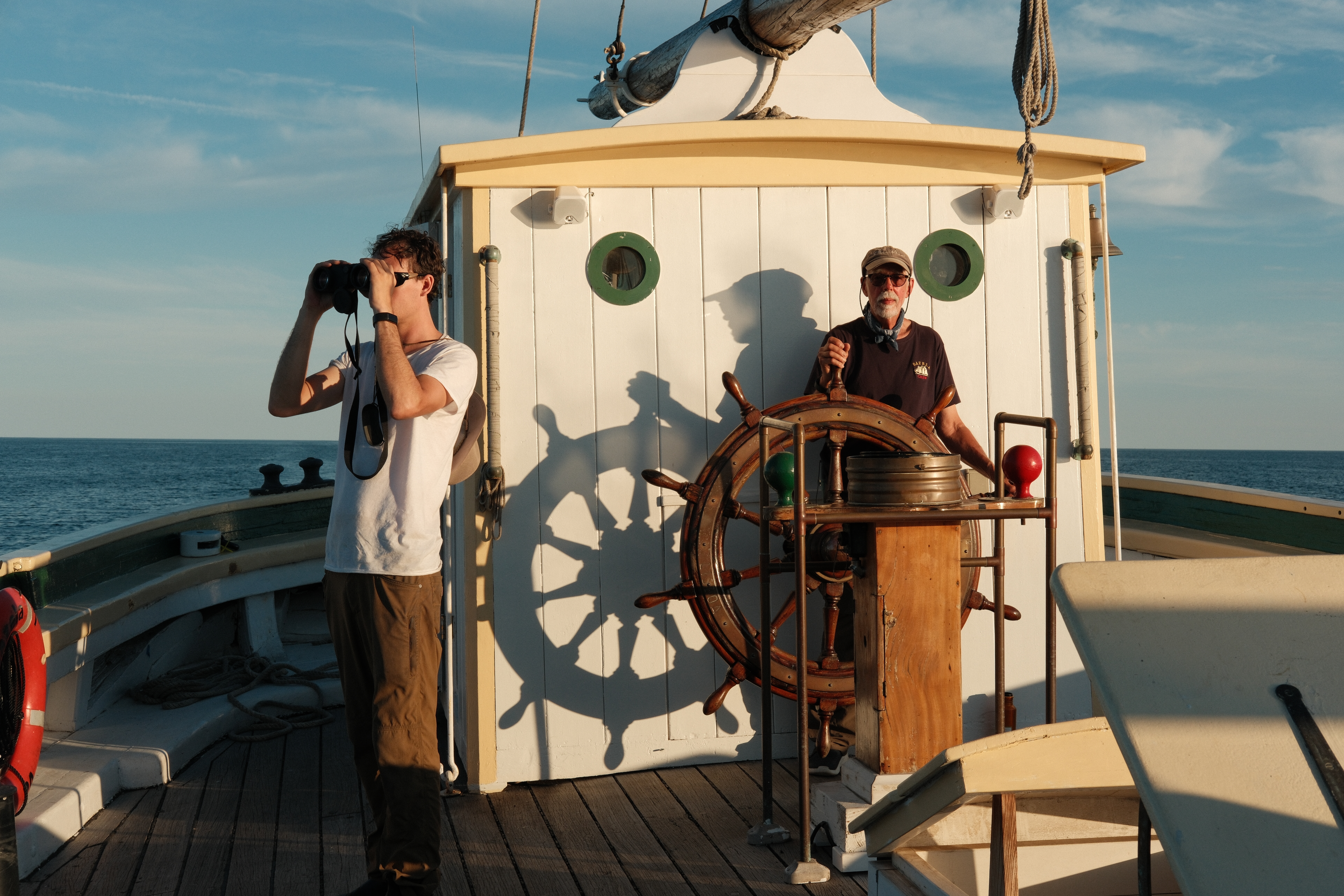
    Second mate Chris Peterson and crewmember Gary Dos Santos helm Gazela.Gael Chang Ortiz

    125 years of sailing

    Hailing from Portugal, the Gazela was first a cod fishing vessel from 1901 — when the ship was built — to 1969. During those years, the ship traveled thousands of miles, fishing off the coast of Newfoundland, and getting packed with salt and cod to bring back to Europe.

    In 1969, after a disastrous trip of horrible weather, broken gear, and a dismally low amount of fish caught, Gazela was finally laid up, putting the ship out of service. In 1971, Philadelphia philanthropist William Wikoff Smith brought the ship to the Philadelphia Maritime Museum. Just one year after arriving in America, Gazela was almost destroyed in an arsonist’s fire.

    As part of the Bicentennial celebration in 1976, Gazela participated in a race to Bermuda, where, during the last five minutes, the ship was wedged between two other vessels and nearly crushed.

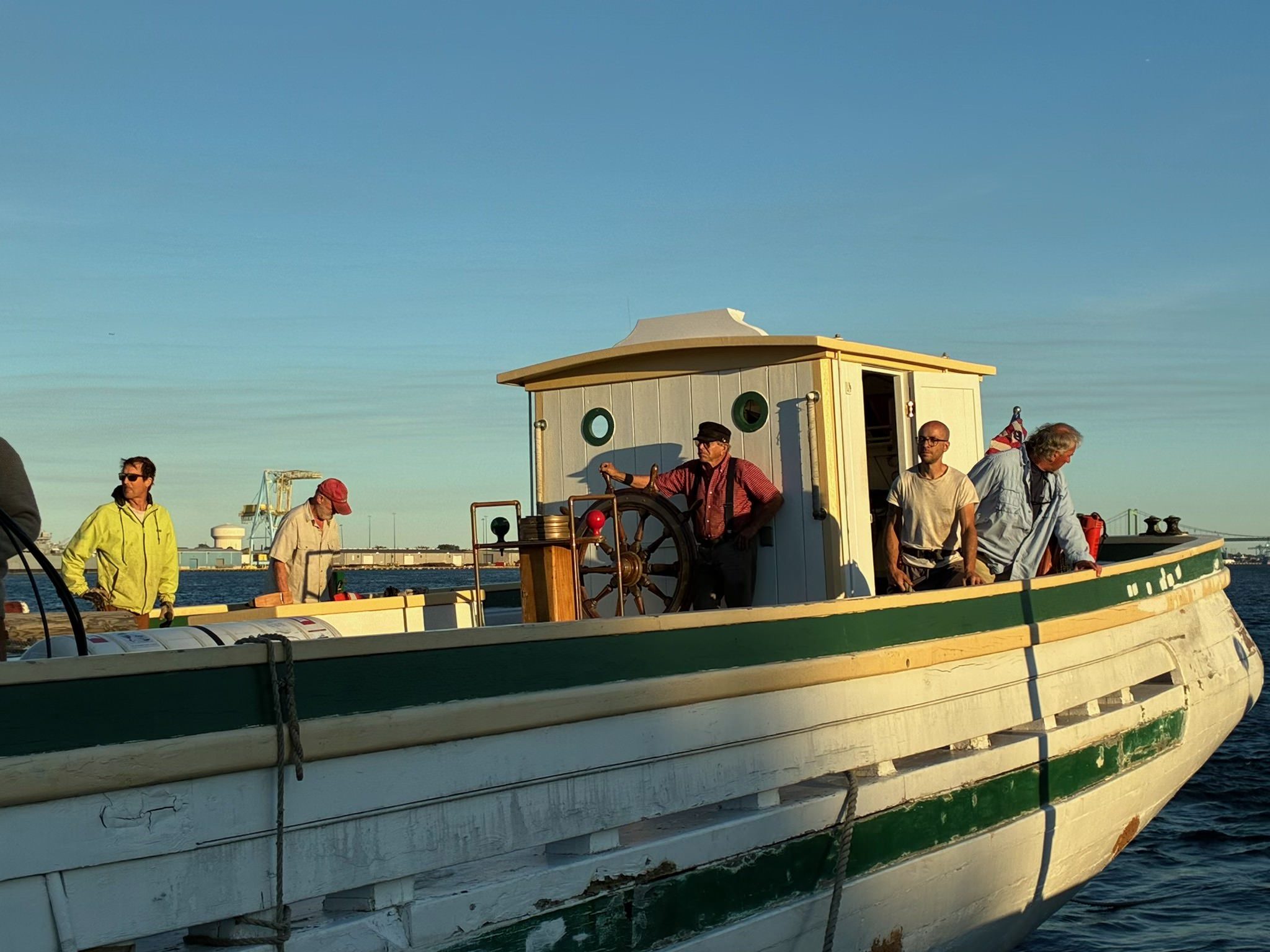
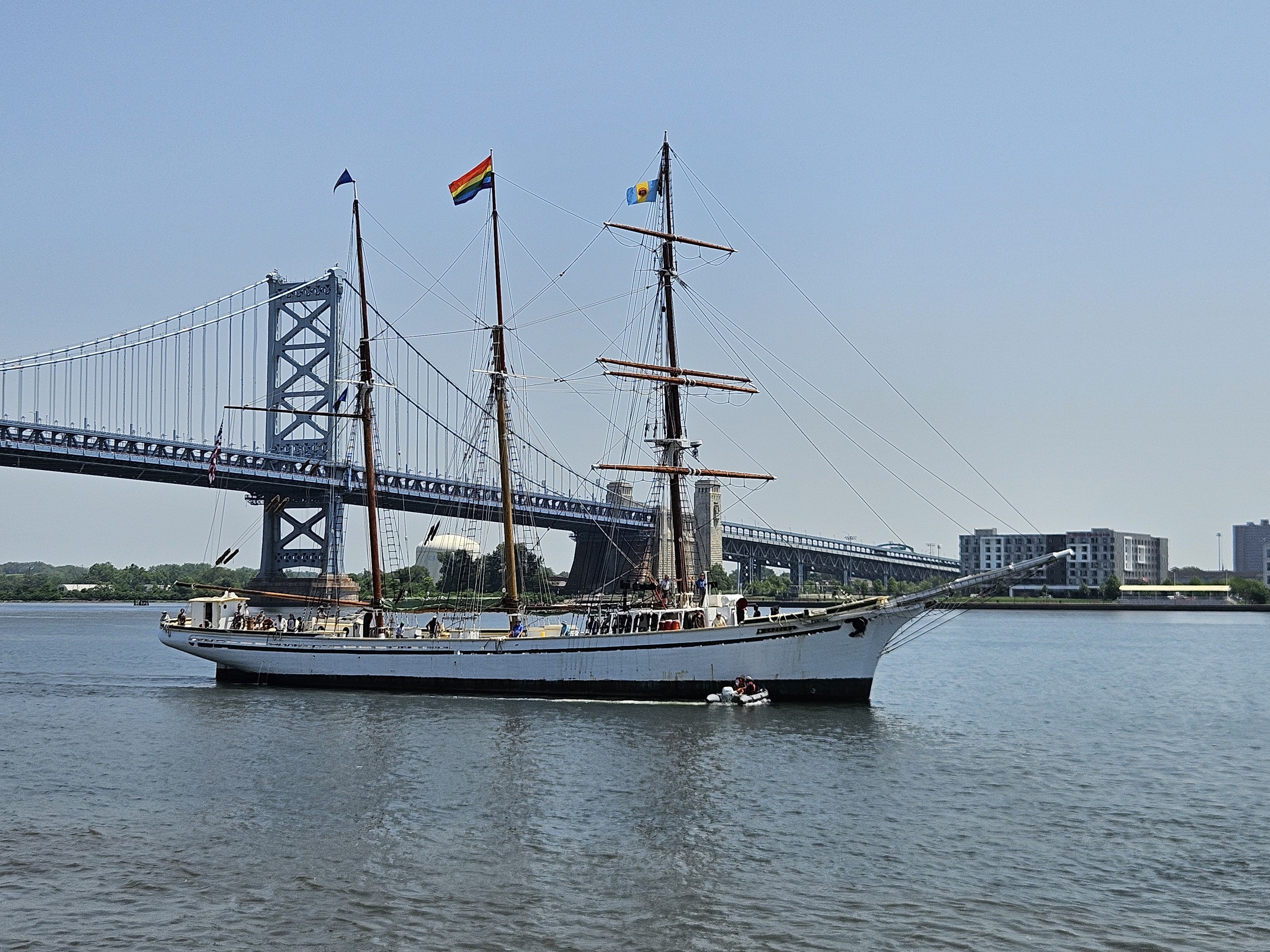
    Gazela prepares to set sail from Philadelphia on June 8.Allison Grosso

    When the ship is not at sea, Gazela remains docked at Penn’s Landing, under the care of the Philadelphia Ship Preservation Guild, providing an education to tall ship enthusiasts. Groups tour the decks; volunteers learn about carpentry, knots, and ship maintenance. The ship provides a venue for the guild’s apprenticeship program and a slew of classes aiming to educate folks on building a maritime career.

    All that grit has made Gazela a true Philadelphian: scrappy and enduring, no matter what punches life lands. A proud immigrant, the ship is a symbol of both global maritime history and Philly’s specific historical importance as a shipyard.

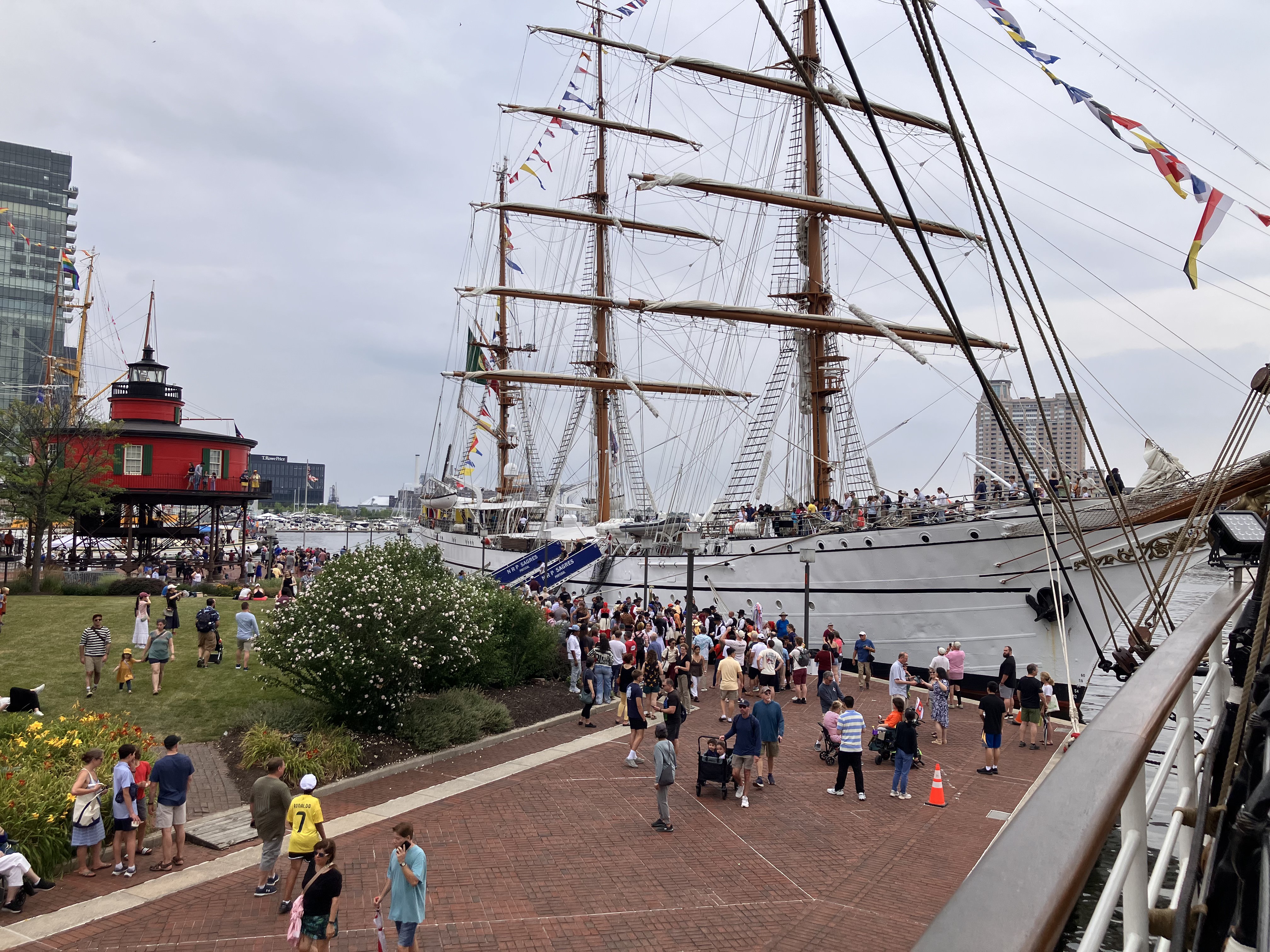
    Crowds gather to board the Portuguese naval vessel Sagres in Norfolk, Va.Alisa McDonald

    ‘We’re from Philly, what of it?’

    On June 18, David Goldman, the captain for Gazela’s trip to Portsmouth, one of the ports on their trip, stood with a slew of tall ships behind him. The ships were anchored outside of Norfolk, resting before a parade that would take them to dock alongside the city’s shore.

    “This scene could be out of the page of a book from 150 years ago. Please treat it with the reverence it deserves,” he said to the crewmembers. The Gazela stood out a little in the crowd: older than most of the other ships and a bit worn down from its century-plus of sailing. Slightly ragtag, slightly punchy.

    One crewmember referred to the ship as an “ugly duckling,” of course, with love.

    “We’re from Philly, what of it?” is the attitude that Gina Pickton, PSPG’s executive director, thinks Gazela has.

    A Coast Guard ship at port in Norfolk, Va.Isaac Pollock

    “This has not been easy, this is not a vacation,” said Allison Grosso, who manages events and communications for the guild. “Everybody on this boat feels the same way, and cares that much that we’re doing all this, because it’s that special to us.”

    Underway, the crew of 40 volunteers rotated through approximately five-hour shifts. Within each watch, a crewmember stood on lookout, checked the ship’s safety (including the ship engine — one was added in 1938 and updated in the late 20th century), helmed it, and kept it to the correct angle measured on a beautiful brassy compass.

    Bunks were stacked in threes in the focsle, with about a foot and a half of space in between, and hung in twos in the hold.

    Many of the volunteers have “land jobs” — one works at an environmental nonprofit, another attended art school, and another was in the Air Force. Some are hobbyist retirees; others, adults at the beginning or middle of a maritime career; one, a high school graduate spending as much time with the ship as he can before heading off to Temple in the fall.

    They form a tight-knit community.

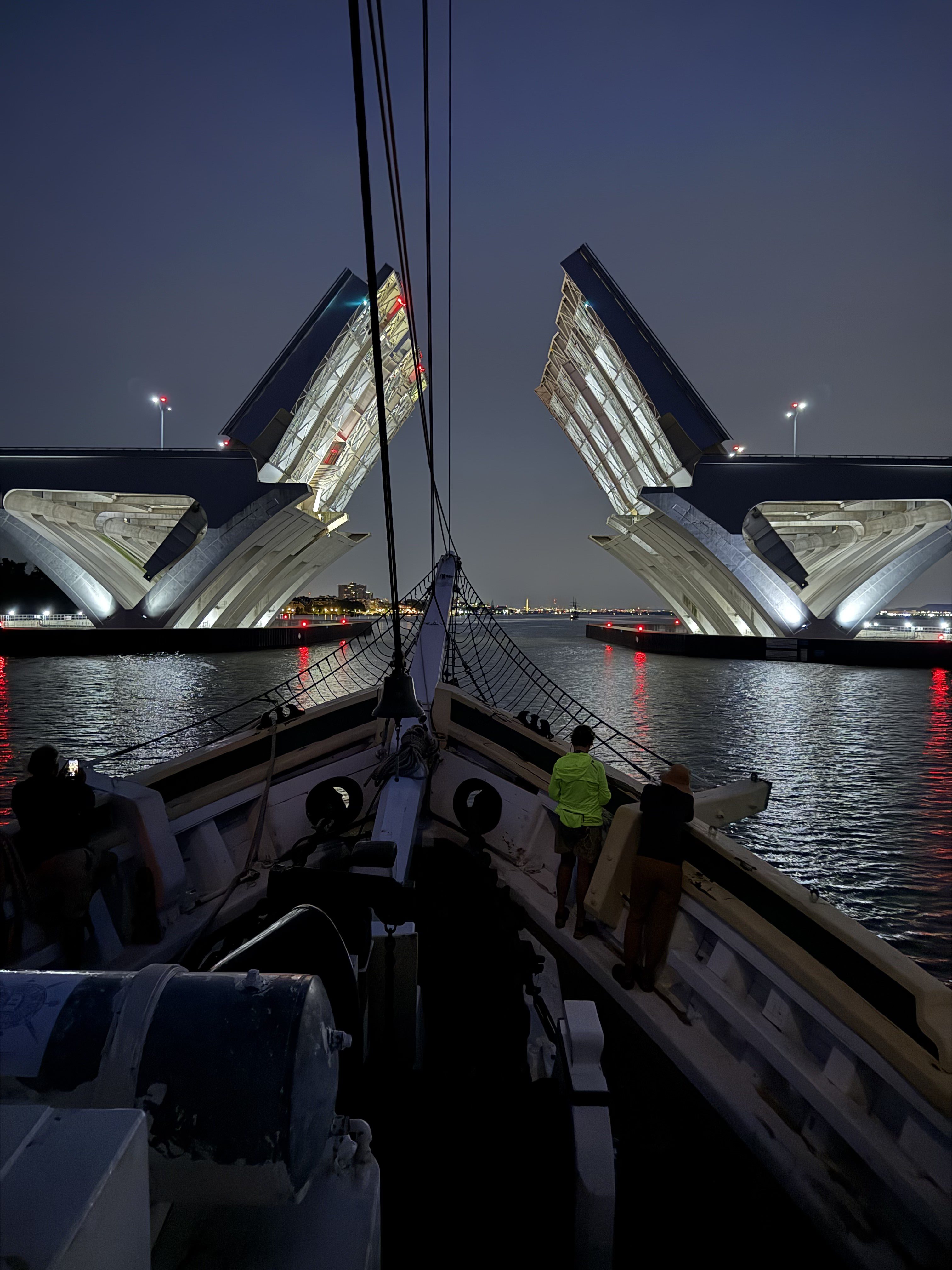
    Maryland’s Woodrow Wilson Memorial Bridge opens for Gazela’s passageStephan Botes

    “You can just step on[board], and people will be so friendly to you,” said Gael Chang Ortiz, 18. “They’re willing to teach you so much.”

    At 125, the tall ship remains an object of endless affection. While the ship was anchored outside of Portsmouth, a rowboat carrying four young men approached the ship’s flank and tossed a friendly offering of Goldfish crackers onto the ship’s deck.

    “Gazela’s still a fishing vessel!” shouted a crewmember, holding the bounty high.

    The Gazela just outside of PhiladelphiaAlex McNeil

    Documenting history

    Beyond preserving the community, the guild is working on preserving Gazela’s history — and not just by repainting the ship’s hull. Nancy Linden, the journey’s third mate, is working on an oral history project about Gazela. Chang Ortiz said he’s considering participating in Gazela’s apprenticeship program; there are PSPG members who started as volunteers and have wound up seeking full-time maritime careers.

    Gazela’s crew also thinks it’s important not only to preserve history, but to tell it truthfully.

    “Historically, sailing was an interesting pathway for both enslaved Americans as well as free African Americans to make a living,” said Maura Hackett, the chief mate for this journey and a seafarer for about two decades. “It’s really unfortunate that the first thing a lot of people think about [ships] is old white guys.”

    Gazela sits at port in Portsmouth, Va.Isaac Pollock

    “It’s hard to see yourself doing something if you’re not mirrored in the crew or the representation,” Hackett said. “I’ve had little kids come up to me and say, ‘I can be a captain too?’ And [I’ve said,] ‘Yeah, you can!’”

    After 29 days spent as much as 300 miles from home, Gazela returned to Philly.

    And as fireworks lit up the sky on July 4, the Portuguese Gazela, half as old as the ship’s adopted country, was just another Philadelphian basking under the night sky of the city it calls home.

  • The beauty of a walkable Philadelphia

    The beauty of a walkable Philadelphia

    There was one especially pleasant weekend back in June, as summer was officially arriving and Philly was in the middle of hosting three Group Stage matches for the World Cup. It was breezy with sunshine and low humidity and temperatures in the mid-80s; nothing like two weekends later as America turned 250 and temperatures hit 101 degrees or higher for three days in a row, the first time that happened in over 150 years of record keeping.

    Between covering some news that weekend, I walked around Center City just soaking up the street scene. It wasn’t just the wonderful weather, but an international vibe that was welcoming and friendly. I watched visitors speaking multiple languages rolling suitcases in and out of hotels and ride share cars, and saw sidewalk cafes overflowing with different colored jerseys and scarves.

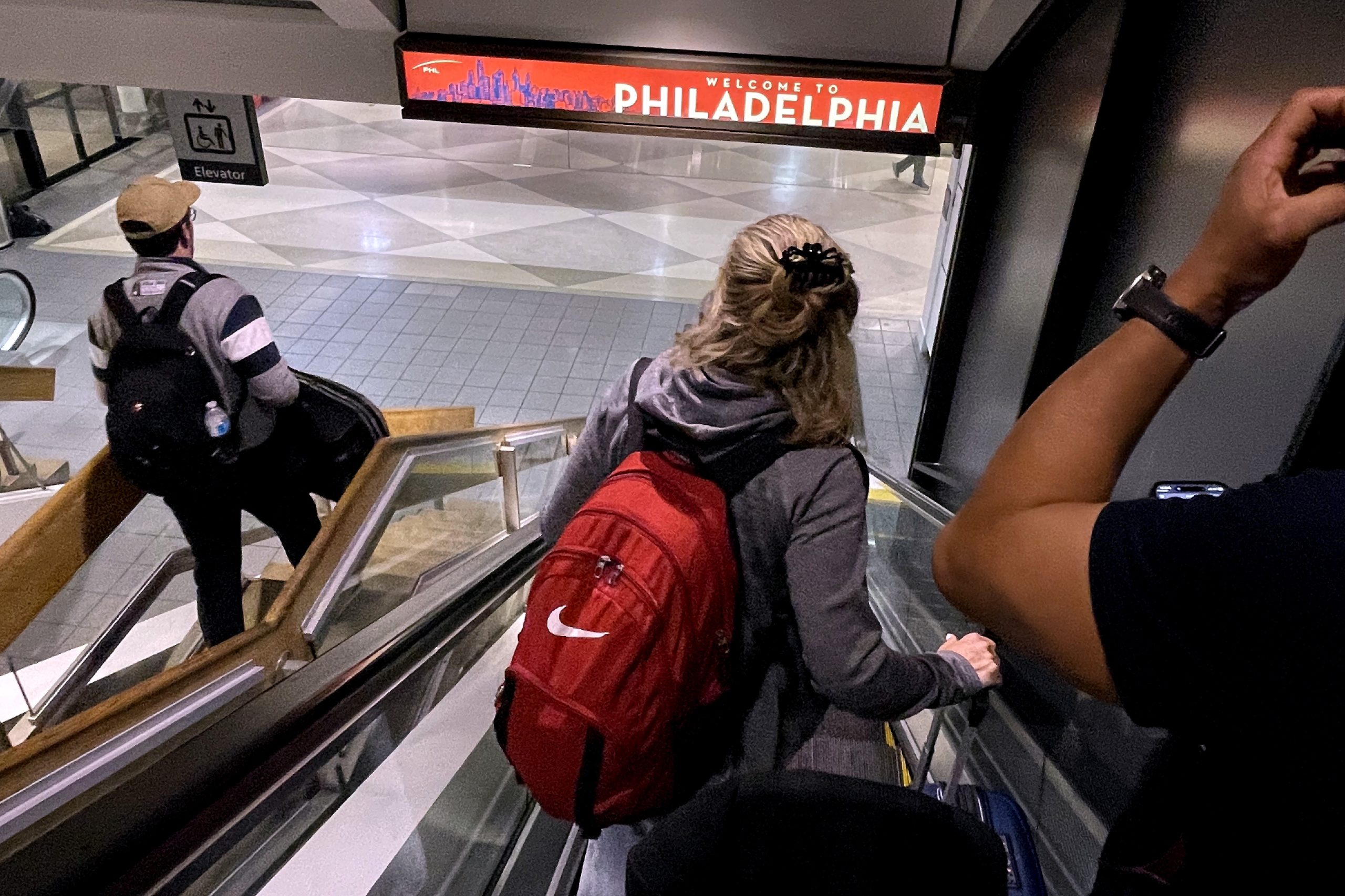
    Philadephia International Airport arrivals June 21, 2026.Tom Gralish / Staff Photographer

    It reminded me of the energy I feel almost every time I walk around the city, going back to my first night here and the weeks spent in my early days at the newspaper with unhoused men.

    We’ve long known we have one of the most walkable downtowns in the country, but USA Today told everyone else again this summer, naming Philadelphia number one — for the fourth year in a row. Center City is compact and easy to explore on foot, with many stores, restaurants, museums, attractions, and parks all within a short walk.

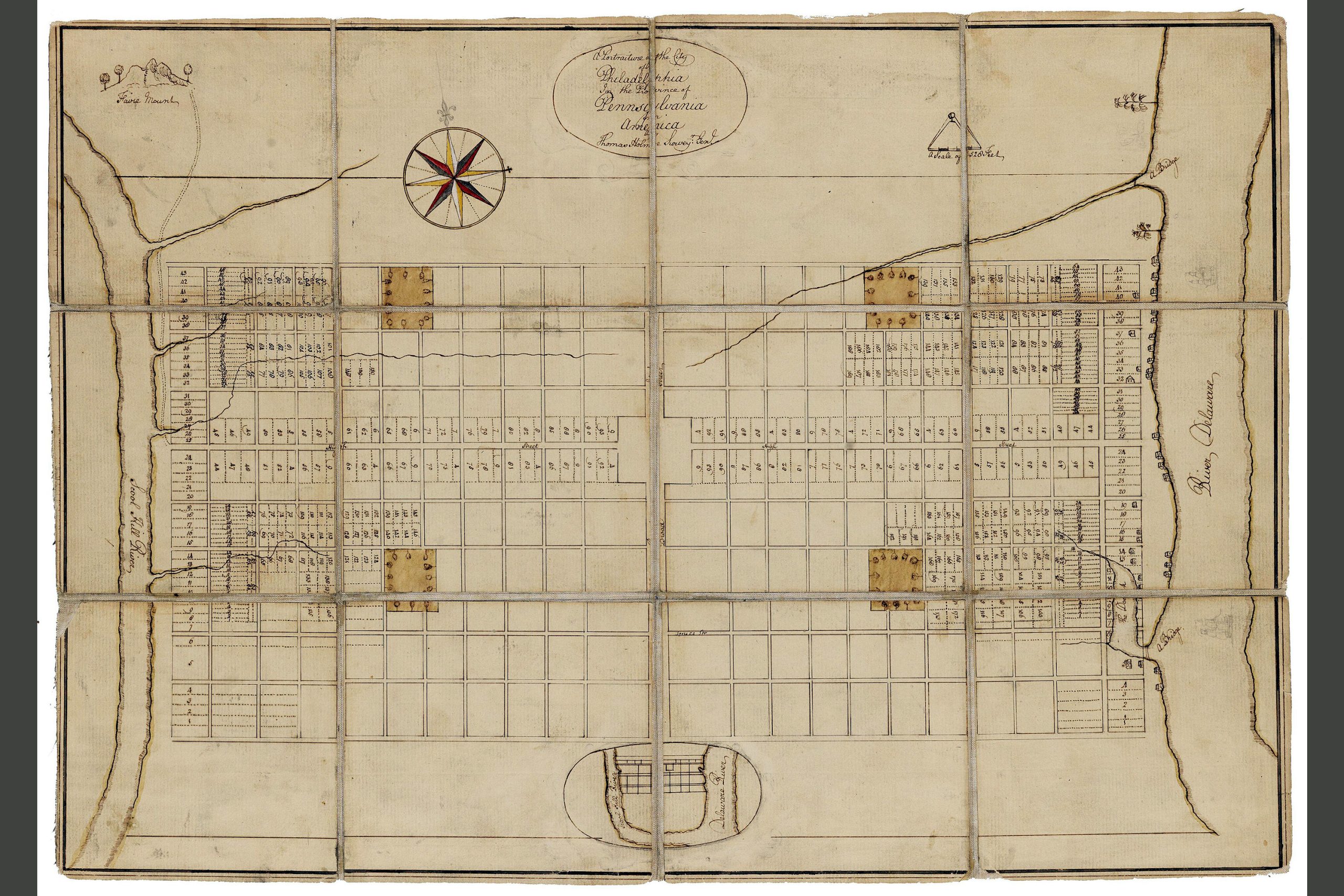
    “A Portraiture of the City of Philadelphia, In the province of Pennsylvania in America” by Thomas Holme. In 1682, William Penn appointed Holme surveyor-general of Pennsylvania and charged him with the task of laying out the “greene country towne” that Penn envisioned. This map, printed in London, was used for both reference and promotional purposes to show the unique layout of Penn’s emerging city.Historical Society of Pennsylvania

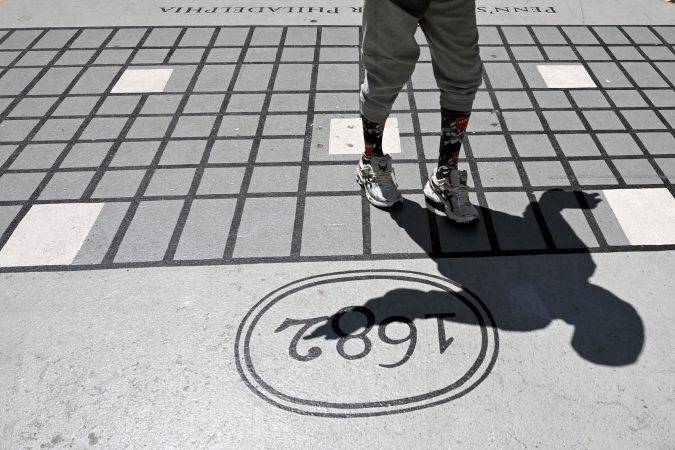
    Credit William Penn’s 1682 street plan that created small rectangular blocks with straight, predictable streets. I was thinking about that as I looked down at the grid on the ground in the courtyard of City Hall, when Lyn-el “The Torch” Wright paused right in front of me: “take a picture of my sneaks.” That’s his shadow above.

    I did, and asked if they were special, wondering if they had something to do with Adidas, the official World Cup sponsor and match ball provider. No, not really, he said, but then educated me on what the kids today were wearing: Asics and Saucony. And Salomon.

    So, being a history nerd, I had to enlighten him on the design he was standing on. Titled “Compass Rose,” it was commissioned by Edmund Bacon in 1994 as a gift to the city to mark Penn’s 350th birthday. It was painted by David Salama and Pat Sprott and updated by Mural Arts Philadelphia in 2004, 2015 and 2022. It marks the exact center of the middle of Penn’s five squares (Franklin, Logan, Rittenhouse, and Washington being the others).

    I didn’t actually say all of that (unlike similar “TED Talks” my grandson is subjected to), but our conversation is the other thing I like most about walking around Philadelphia. Meeting and talking to people.

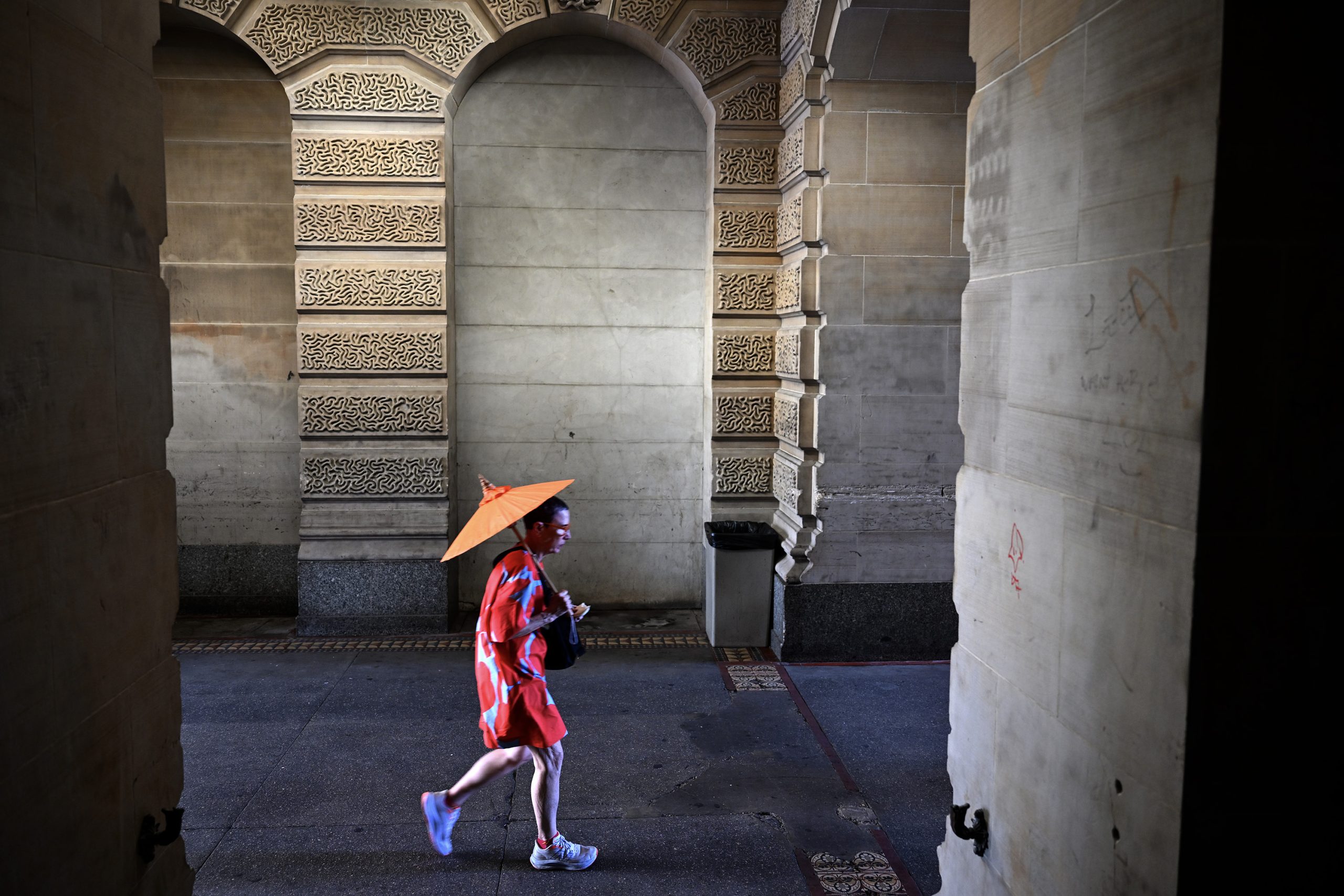
    Passing through the south portal of City Hall on Monday, July 20, 2026. She said the umbrella was a recent purchase. “Anything to keep cool in the heat.”Tom Gralish / Staff Photographer

    The day was a remarkable one in Center City, similar to the summer solstice back in June. And it was coming off the week of heavy rains, microbursts, and then, the Canadian and Great Lakes wildfire smoke that moved into the region.

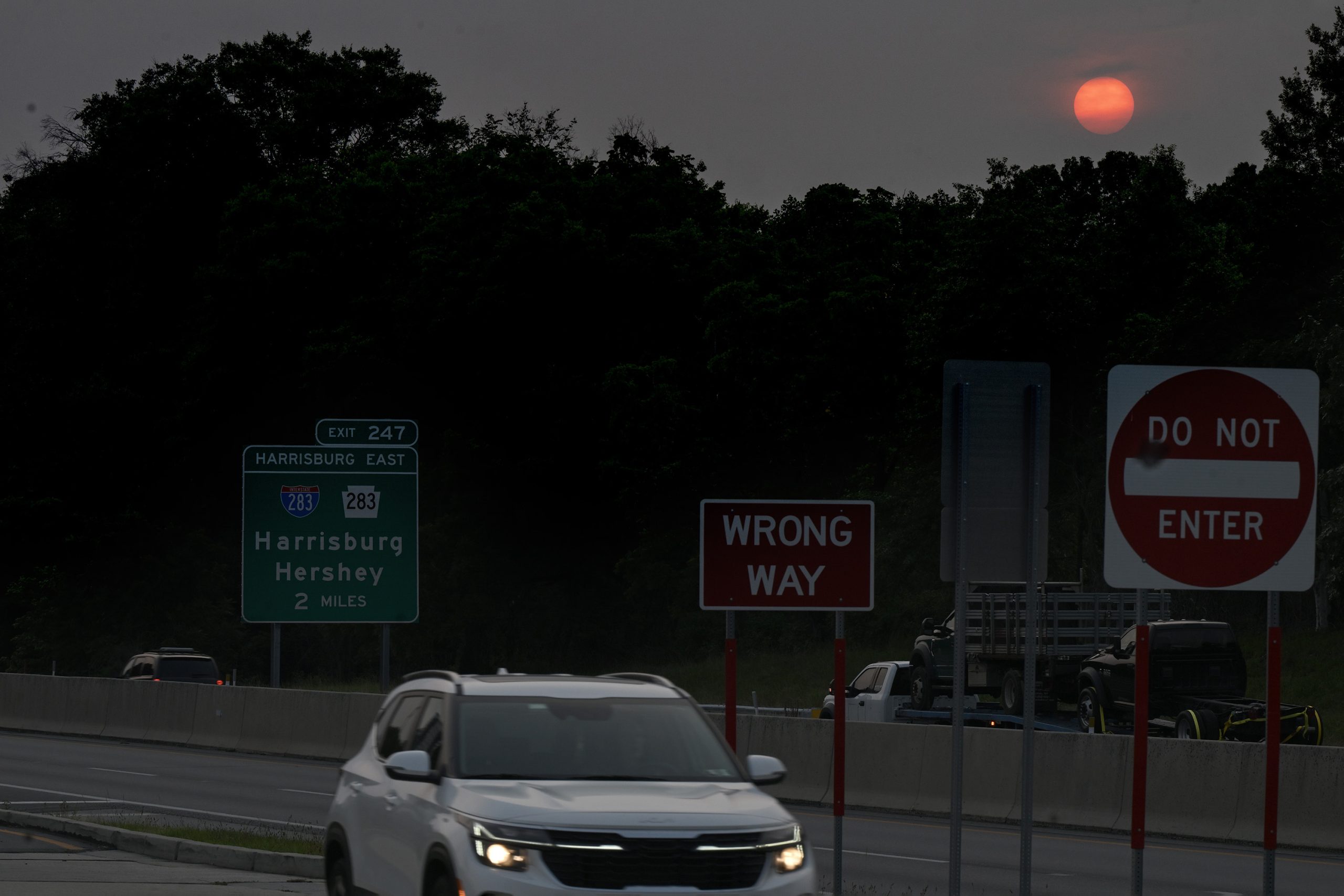
    The sun sets in a hazy sky over the Pennsylvania Turnpike Wednesday, July 15, 2026.Tom Gralish / Staff Photographer

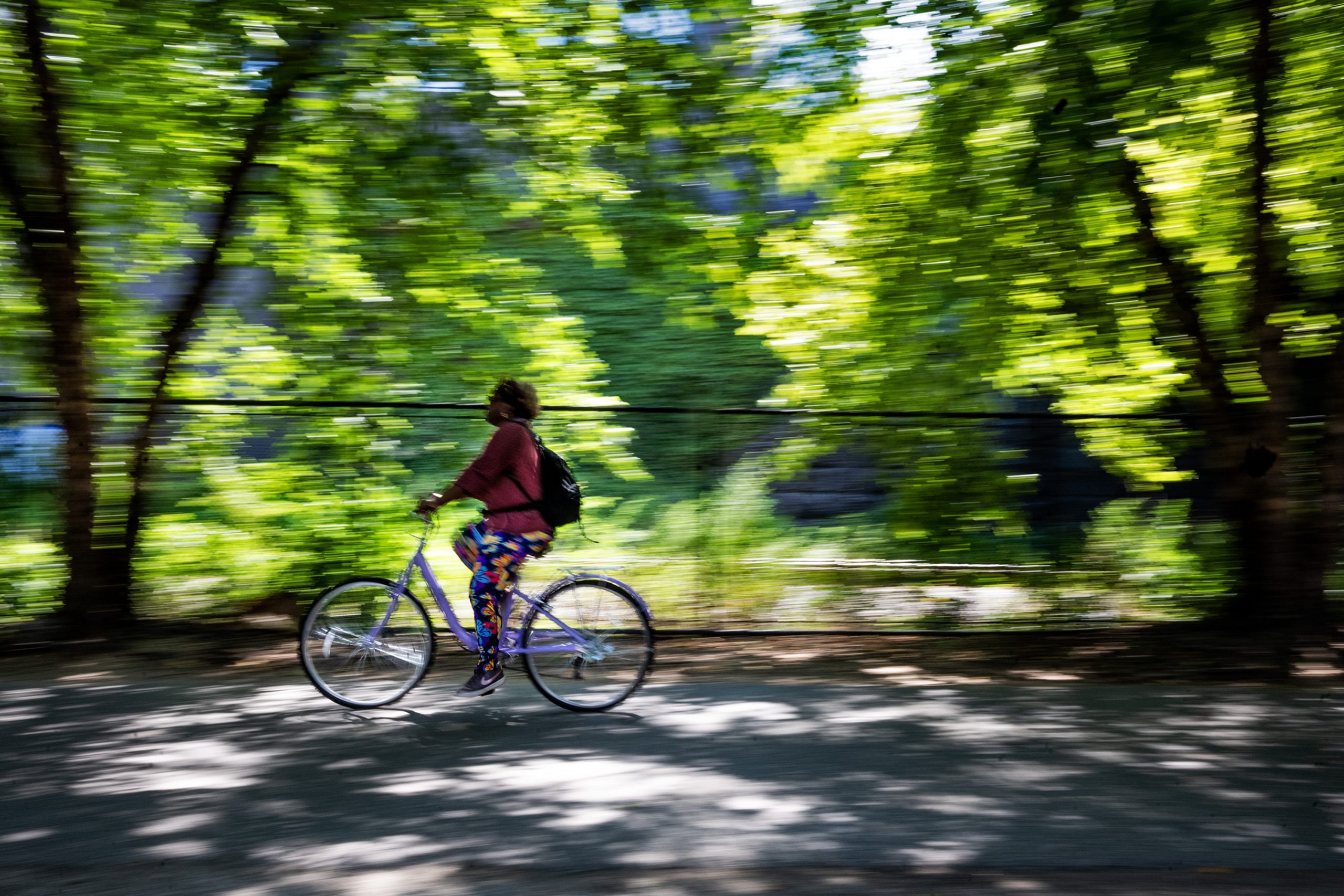
    When the skies finally cleared last Sunday, I joined hundreds of outdoor enthusiasts taking advantage the improved air quality and photographed along the Schuylkill River Trail.

    I scouted angles to get as many people — and a variety of runners and walkers — in the same frame. But, perhaps because I covered a memorial for Barbara Friedes, a 30-year-old CHOP doctor who was killed on her bike by a drunk driver in July 2024, my attention drifted toward the bicycles.

    When I saw a patch of backlit trees I knew if I panned with my camera and a slow shutter speed the highlights would turn into nice blurs — while the biker would be (somewhat) sharp and in focus.

    One of the advantages of digital photography is that you can get immediate feedback and adjust your camera settings for the effect you desire. I wanted to get a colorfully outfitted biker, and by the time the “right” one passed in from of me, I was set (1/20th second at f/22, with an ISO of 640 on my Nikon Z8 with a 24-70mm lens).

    Finally, here’s one more “nice day” photo I made after talking with “The Torch.”

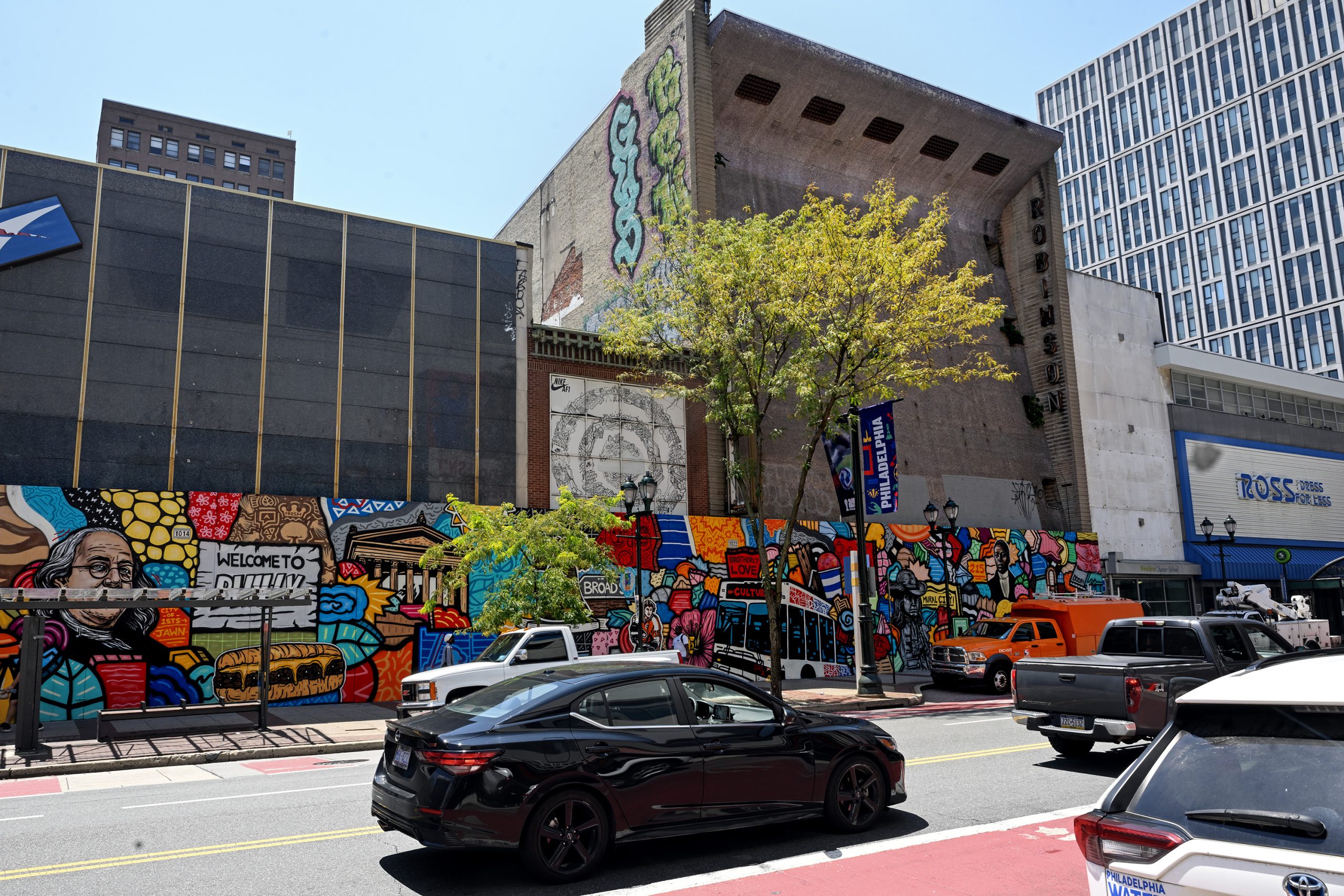
    I spent a good part of the winter and early spring of 2024 along an eight block stretch of Market East while the city was dreaming and debating its potential driven by later-scraped plan by the Sixers to build a $1.55 billion downtown arena.

    It was a tattered corridor, especially the south side of the 1000 block that was mostly boarded up storefronts. The city started trying to freshen it up before our summer of celebrations.

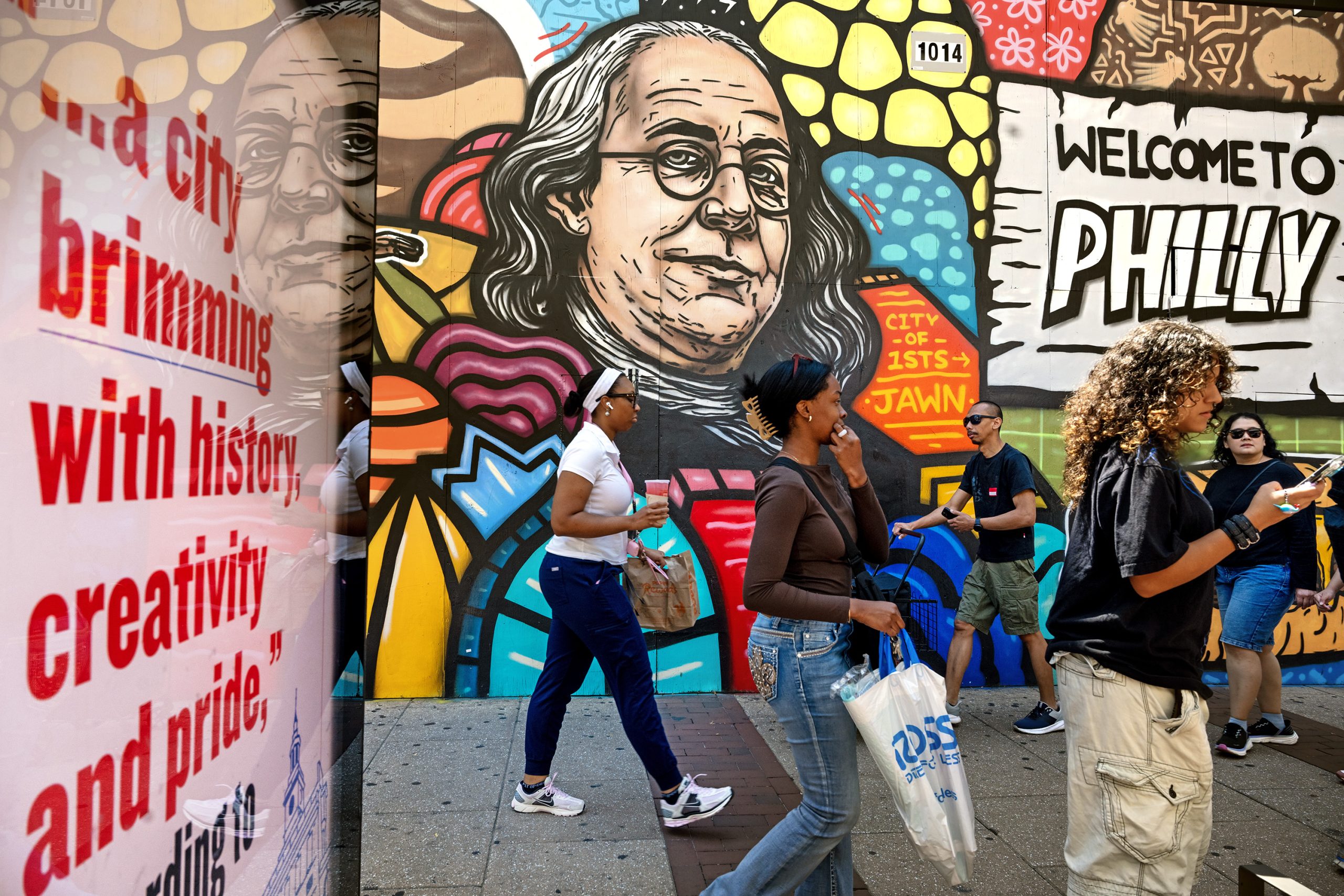
    Walking there on Monday I admired the 150-foot mural “Welcome to Philly” artist Alloyius McIlwaine was commissioned to paint there before the big summer. I didn’t want to merely record his month-old work, but as I stepped into a bus shelter to get out of the flow of pedestrian traffic, I was immediately stuck by Ben’s reflection in the shelter’s glass — and the words of an unrelated advertisement.

    I didn’t want a photo that called too much attention to a single fellow walker, so I waited patiently for that magic moment when my frame was filled with a half-dozen people.

    Since 1998 a black-and-white photo has appeared every Monday in staff photographer Tom Gralish’s “Scene Through the Lens” photo column in the print editions of The Inquirer’s local news section. Here are the most recent, in color:

    » SEE MORE: Archived columns and Twenty years of a photo column.

  • A veteran’s 100th birthday

    A veteran’s 100th birthday

    Birthdays are a funny thing. When you’re young, they are all about getting older. You can hardly wait for the next one.

    Then, somewhere along the way, they’re not. Suddenly, big league baseball players, your doctors, and bosses are all younger than you.

    Eventually, getting older becomes key again. You want to see more birthdays.

    This week I celebrated a birthday of my own, and also photographed a World War II veteran celebrating his 100th. I also photographed church services for an upcoming story on a South Jersey town a century after it was incorporated as the first Black self-governing municipality north of the Mason-Dixon Line.

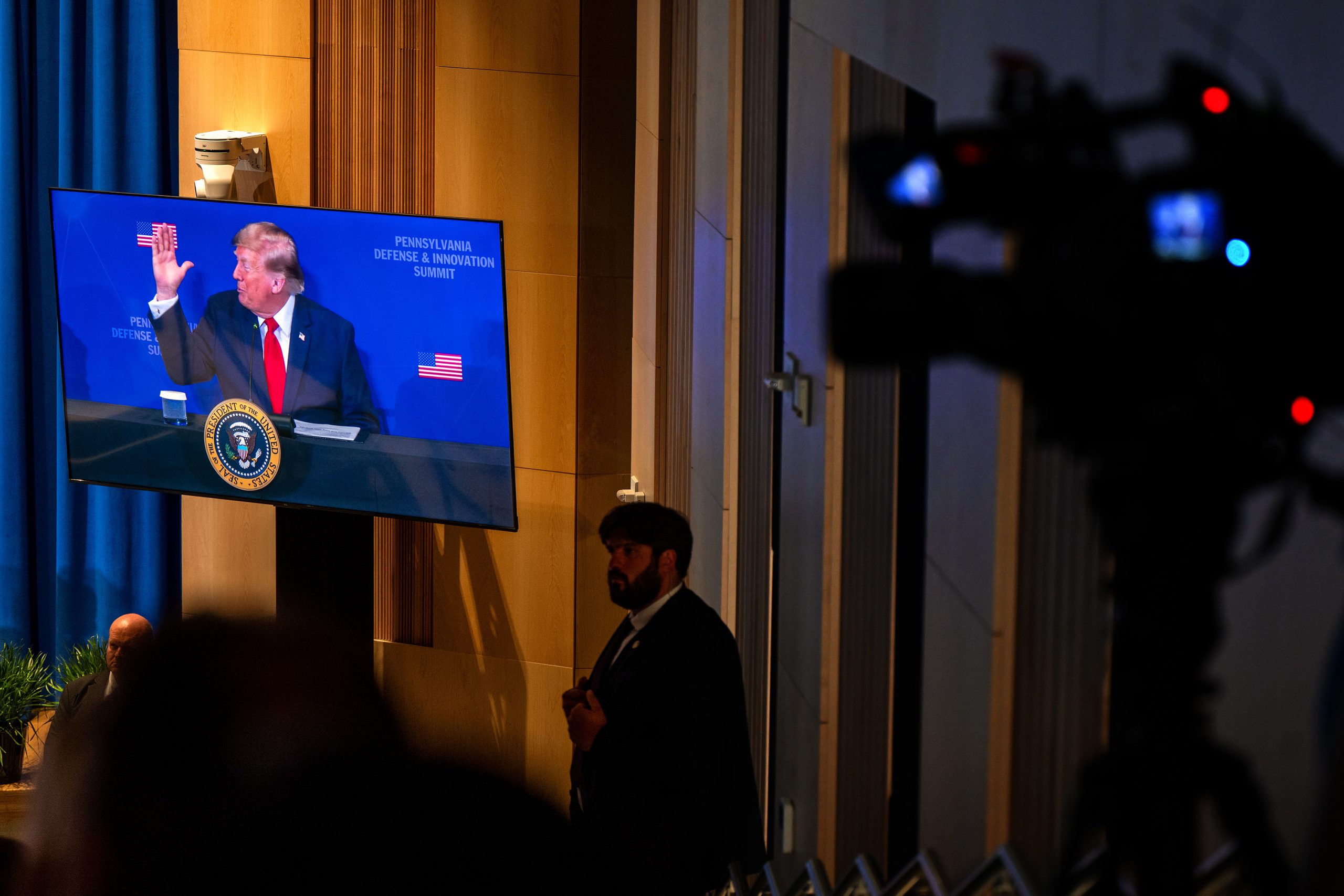
    President Donald Trump is seen on a monitor as he appears at a Defense and Innovation Summit hosted by U.S. Sen. Dave McCormick at the US Army War College in Carlisle Wednesday, July 15, 2026.Tom Gralish / Staff Photographer

    And I photographed a president, who unlike most of my coworkers and the folks I usually photograph, grew up before the internet and listened to music as it transitioned from Tony Bennett and Perry Como to Bill Haley & His Comets and Elvis.

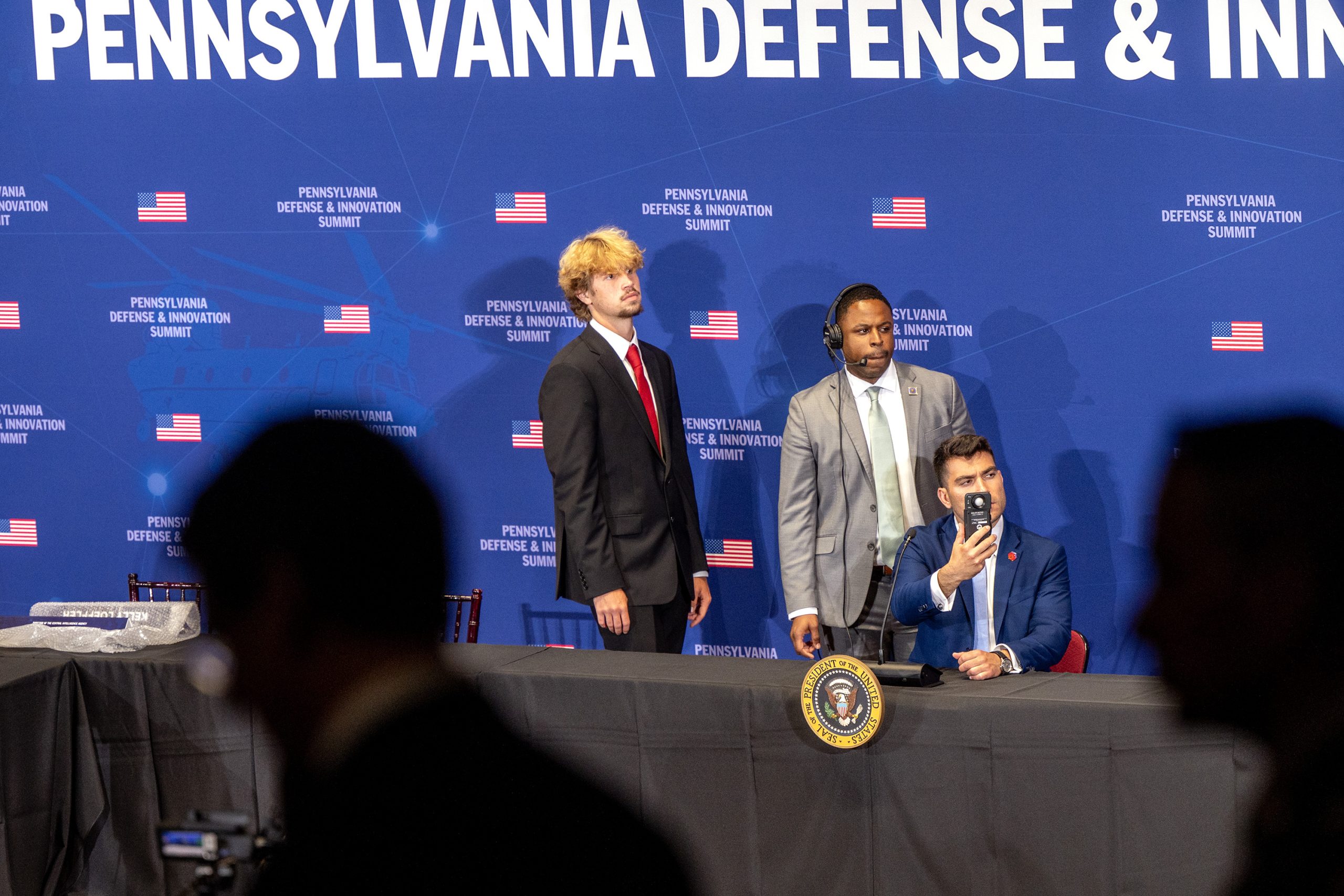
    Technicans prepare the lighting and microphones before President Trump appears at the Summit.Tom Gralish / Staff Photographer

    One of the ways I marked by birthday was by visiting the Main Line Camera Club as their guest speaker. Meeting people who appreciate photography is one of the things that keeps me young. That along with the joy I get from making and sharing photos.

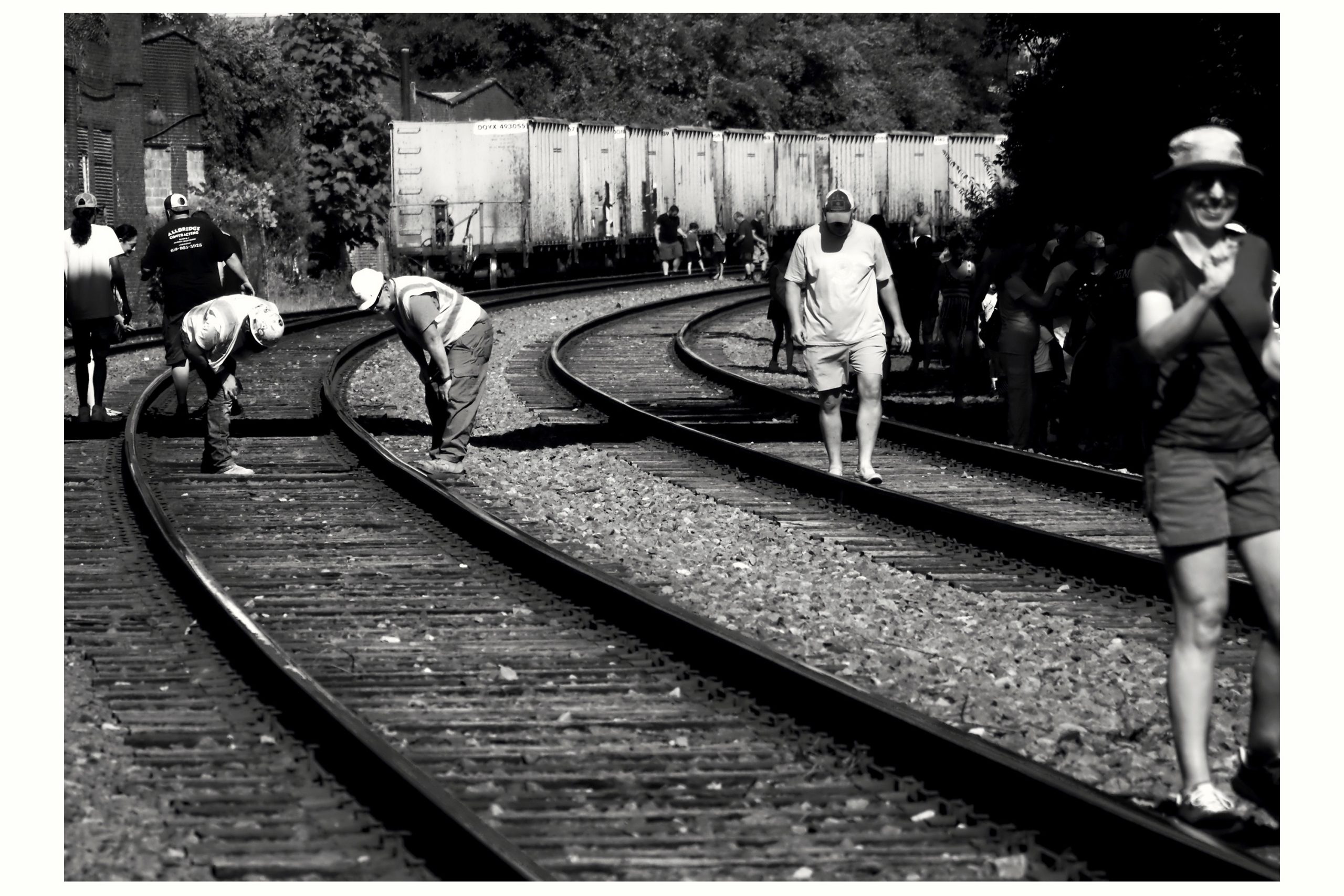
    They had many good images but one that stood out for a “different” photo that Jeffrey Benne took during the recent visit by Union Pacific’s famed Big Boy No. 4014, the world’s largest operating steam locomotive. My colleague Monica Herndon also photographed the big engine that could, but until I saw she was headed to Reading, I had no knowledge of it.

    After Googling, my social feed exploded with videos and photos of the train along its historic coast-to-coast tour to celebrate America’s 250th. I even heard traffic reports on KYW radio as it approached Philadelphia that weekend begging drivers to quit being foolish by stopping on the Schuylkill Expressway and getting out of their cars to photograph it passing by, being a bunch of train “foamers” (a term I just learned this week).

    Benne arrived in Bridgeport, Pa. 45 minutes before Big Boy’s arrival, staking his claim “on a piece of ground then played with the settings on my gear to get a good shot,” with just about 45 seconds to get it passing by.

    Afterward, he said he noticed the crowd searching the tracks and realized they were looking for smooshed coins, having set regular coins on the track minutes before. “I should have done that myself,” he said.

    Growing up, my friends and I did that, and usually had little luck finding our own “smooshed” pennies.

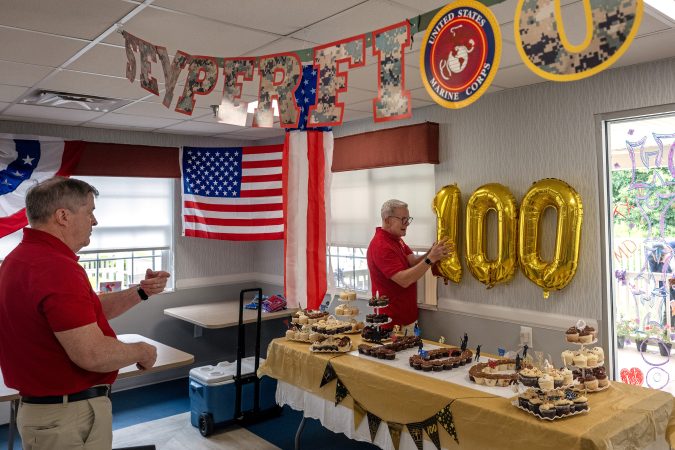
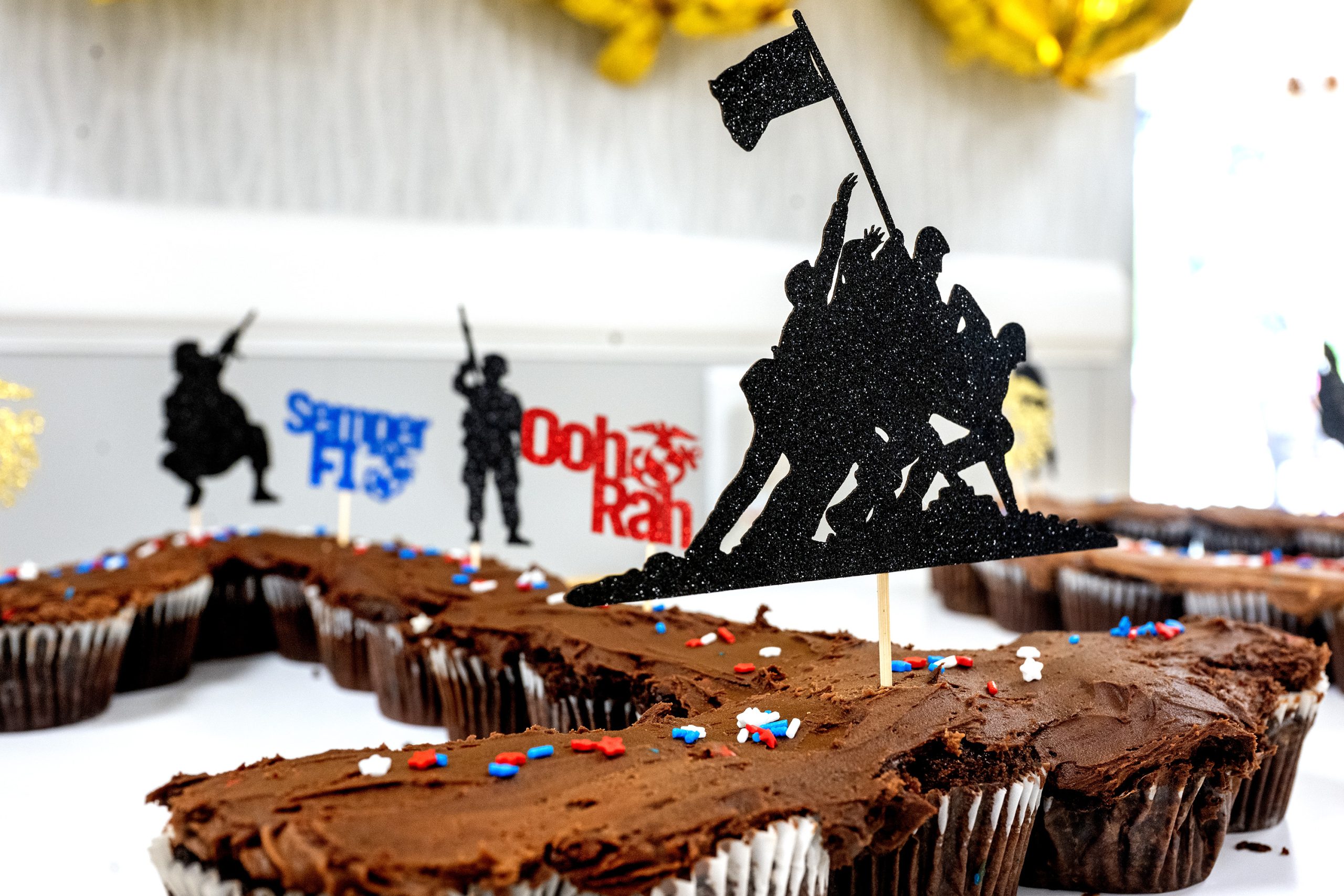
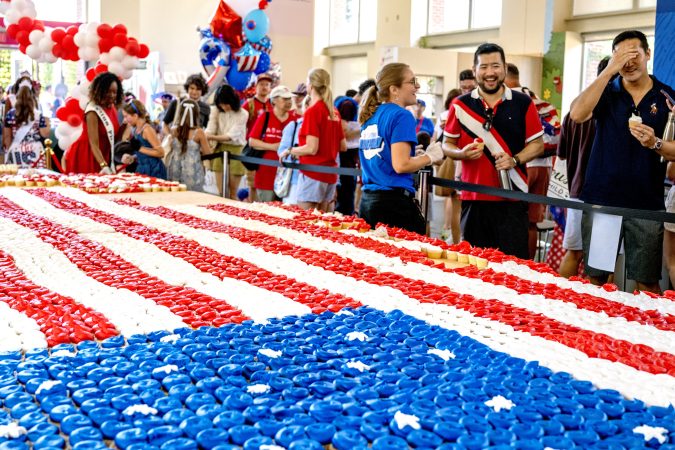
    Cupcakes – including one with a topping depicting the iconic Joe Rosenthal photo of U.S. Marines raising the flag at Iwo Jima – at a 100th birthday party for WWII Marine veteran Stephen Anderson.Tom Gralish / Staff Photographer

    Pat Dailey, setting up the birthday party in the photo at the top, founded the Tun Legacy Foundation, a nonprofit that supports veteran causes, Masonic charities, and educational scholarships. They are also rebuilding and reestablishing an authentic reproduction of the original Tun Tavern building in Philadelphia. The Tun, constructed in 1693, was the first documented lodge in North America and the birthplace of the U.S. Marine Corps in (1775).

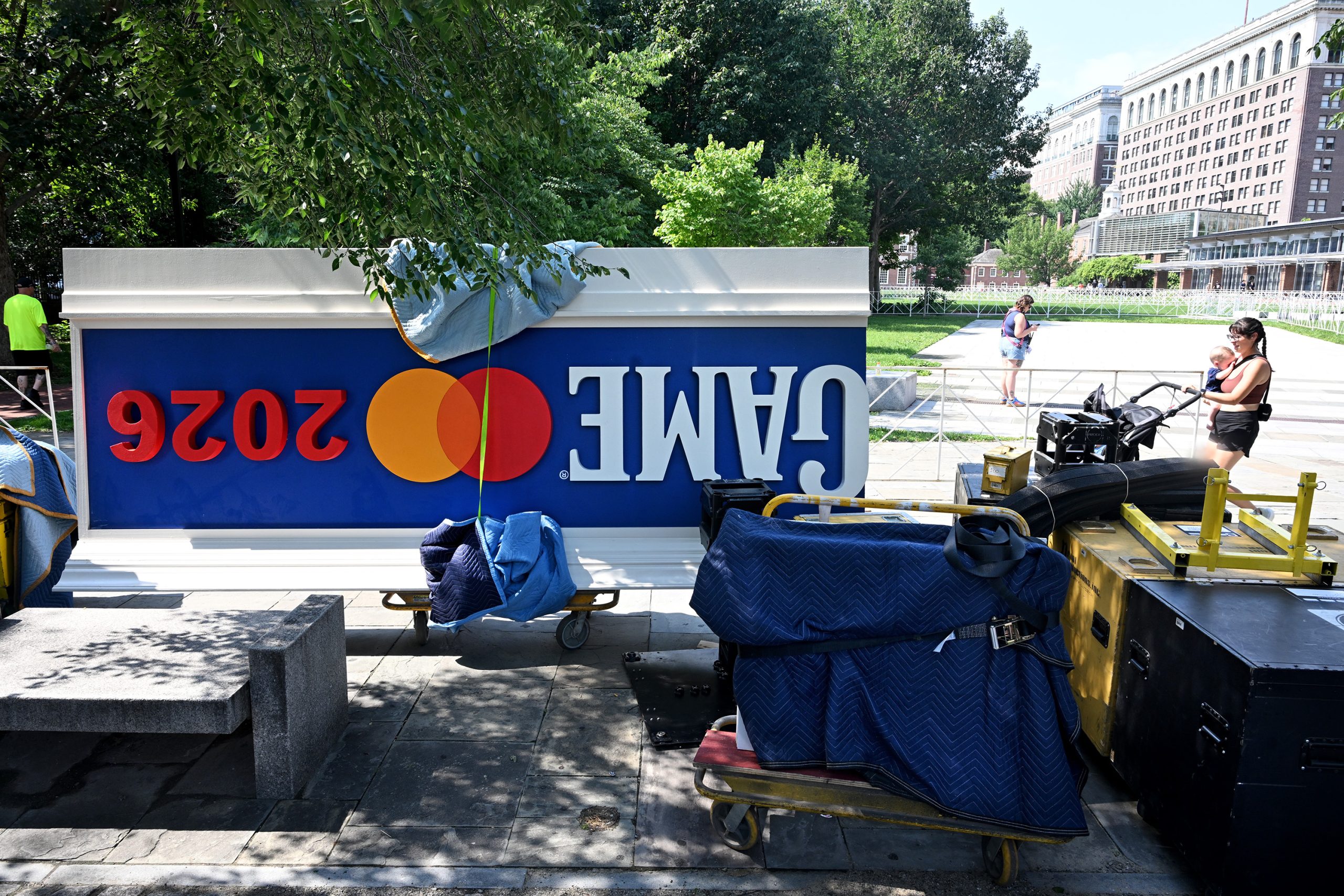
    Photographing workers setting up for the Red Carpet on Independence Hall was my only contribution to our coverage of Philly’s hosting the MLB All-Star Game for the first time in 30 years (I did cover THAT game).

    Preparations are underway on the Mall at Independence National Historical Park Monday, for the All-Star Red Carpet Show on Tuesday.Tom Gralish / Staff Photographer

    You can see the awesome photos made by my colleagues Yong Kim, Monica Herndon, David Maialetti and Elizabeth Robertson who did cover this week’s All-Star events.

    I made the Independence Mall prep photo during an early morning check-in on the President’s House site, something I have been doing for months.

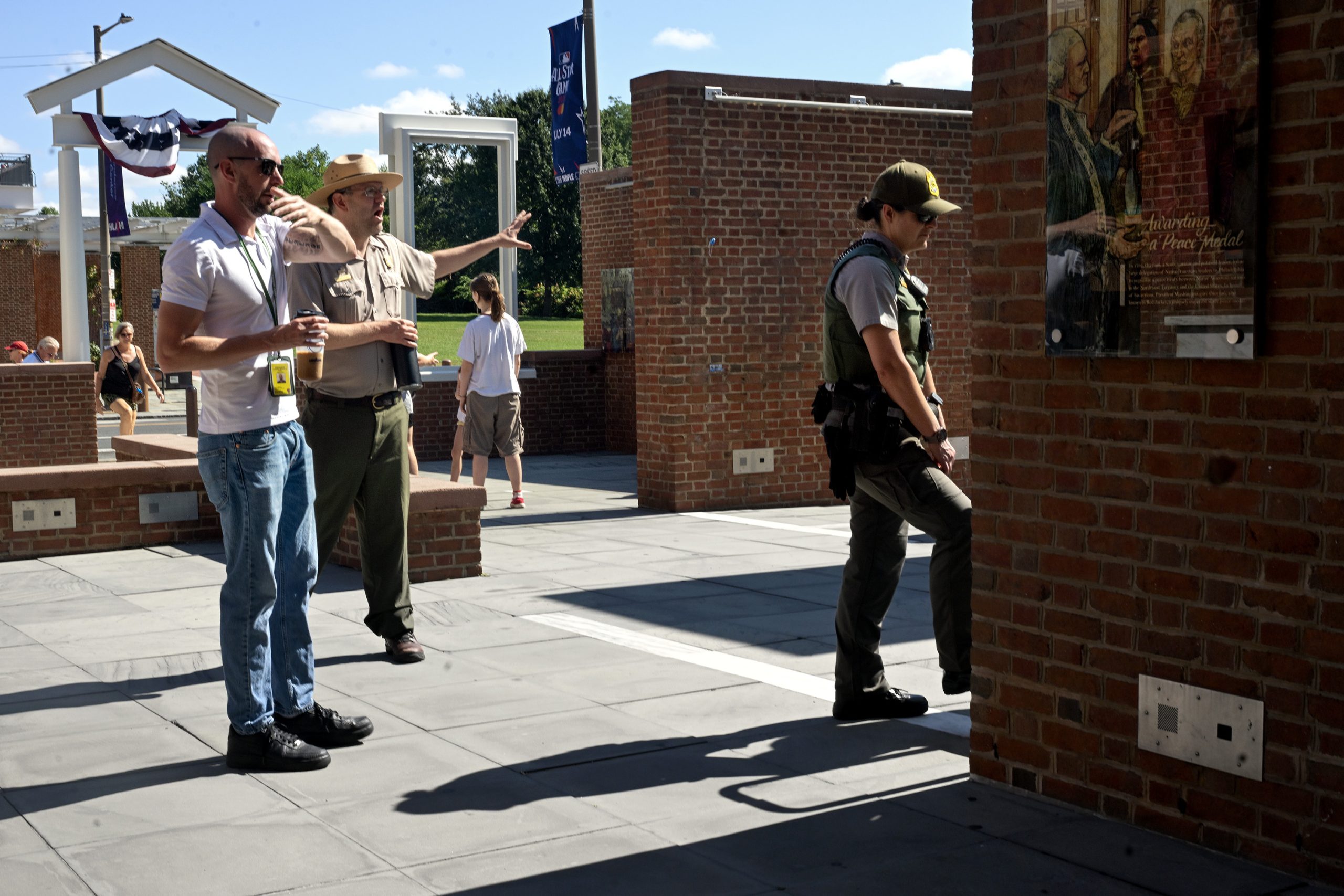
    There was nothing new on the site that morning, since I had found National Park Service employees a week earlier taking photos and measurements, and looking under, behind, and above the panels. They told me they were “just looking around” and not there to install the new Trump administration panels after a federal appeals court gave the go-ahead just before the Fourth of July weekend.

    A National Park Service employee along with a NPS ranger and NPS police officer visit the President’s House site Wednesday, July 8, 2026. Tom Gralish / Staff Photographer

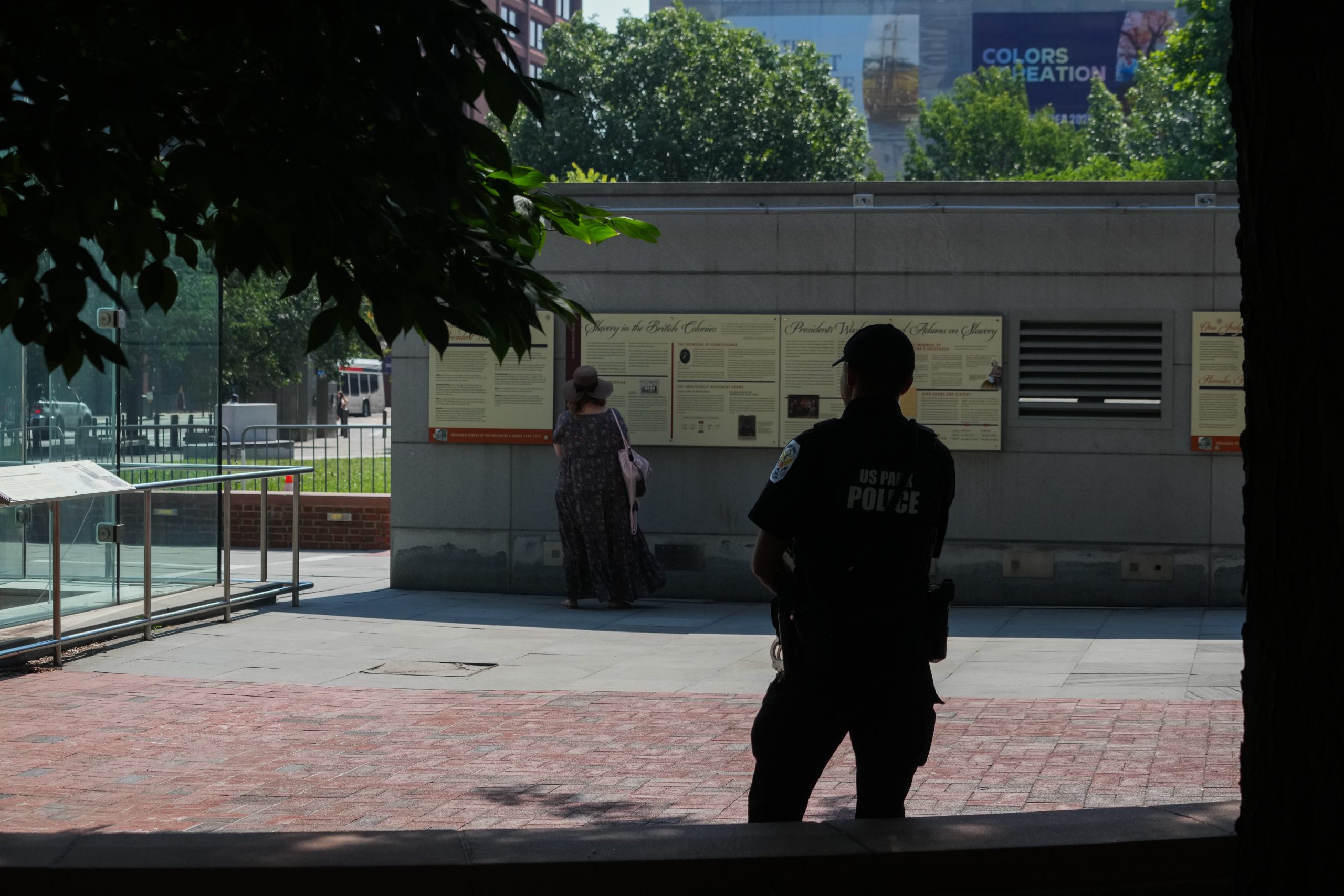
    Two days later, I was covering President Donald Trump at the War College in Carlisle, when his administration shut down the television screens and swapped out panels on the brutality of slavery at the site for displays that experts say sanitize George Washington’s role as an enslaver.

    But unlike the original January removal and the subsequent court-ordered return months later, they did it in the middle of the night, avoiding public scrutiny.

    Our reporters and photographer Jessica Griffin were there in the morning to document it all.

    A U.S. Parks police officer and a visitor at the President’s House site Wednesday, July 15, 2026 after new panels were installed.Jessica Griffin / Staff Photographer

    The alterations are a culmination of about a year of turmoil since the president’s executive order to review or remove displays at national parks that “inappropriately disparage Americans past or living.”

    Since 1998 a black-and-white photo has appeared every Monday in staff photographer Tom Gralish’s “Scene Through the Lens” photo column in the print editions of The Inquirer’s local news section. Here are the most recent, in color:

    » SEE MORE: Archived columns and Twenty years of a photo column.

  • Philly is minting the new Trump gold coins

    Philly is minting the new Trump gold coins

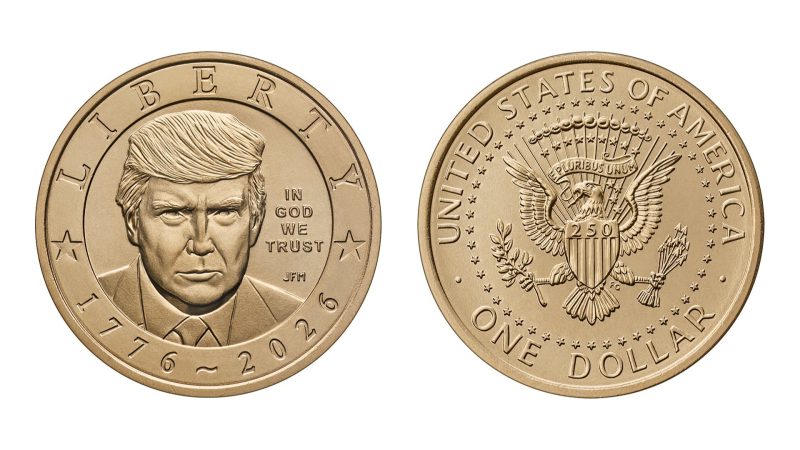
    The U.S. Mint will soon begin producing $1 gold-hued coins, featuring the face of President Donald Trump, Treasury Secretary Scott Bessent announced this week.

    The coins will be created at the Mint’s Philadelphia production facility on Independence Mall, the nation’s first and oldest mint. A Treasury Department spokesperson said the coins will be available in the fall, and there’s “no gold in this coin but [it] has a gold-like finish.”

    The designs boast a direct-gaze portrait of President Trump, with the phrase “In God We Trust” written next to his face. This side of the coin also includes the dual date, “1776 ~ 2026,” which is the same motif featured on the dimes, nickels, quarters, and half-dollars in the U.S. Mint’s Semiquincentennial program released at the start of the year.

    On the reverse side, the $1 coin shows a variation of the Great Seal, an insignia of an eagle that is only used by the U.S. Department of State to impress upon official documents and treaties. The version on the coin includes the same eagle holding an olive branch and arrows in its talons. Its shield, however, includes the number “250,” commemorating the 250th anniversary of the signing of the Declaration of Independence.

    In his announcement on X, Bessent said the coin “celebrates the strength of American values, and the promise of a nation dedicated to preserving freedom for all.”

    The coin’s production has faced obstacles, as U.S. code states that “only the portrait of a deceased individual may appear on United States currency.” Critics say the move violates federal law.

    In response, Bessent has cited a 2020 law that allows the Treasury to mint $1 coins with “designs emblematic of the U.S. semiquincentennial.” However, the same law reaffirms that no head-and-shoulders portrait of any person, “living or dead,” may be included on the coins.

    Bessent pointed to historical precedent. “During the 150th, there was a Calvin Coolidge coin, so we can put living presidents’ images on a coin,” he told Fox News in an interview.

  • Photographing America’s 250th birthday in Philadelphia

    Photographing America’s 250th birthday in Philadelphia

    Some weekends are just dates on the calendar. Others become part of history.

    America’s 250th anniversary was one of those weekends.

    Philadelphia, where the nation began, became the center of the celebration. Across days marked by extreme heat, thunderstorms, fireworks, a canceled parade, and a World Cup match, The Inquirer’s photographers captured the defining moments — and the quieter ones in between — creating a portrait of the country at 250.

    After days of closed streets, parking restrictions, and traffic backups leading up to the weekend, Jessica Griffin planned to ride to cover the Wawa Salute to Independence Semiquincentennial Parade. But it was canceled amid a declared heat emergency with 100-degree temperatures before she even left her house.

    Instead, she found all the floats — moved overnight from the Pennsylvania Convention Center to Independence Mall in preparation for the parade — in an unofficial parade away from the Historic District.

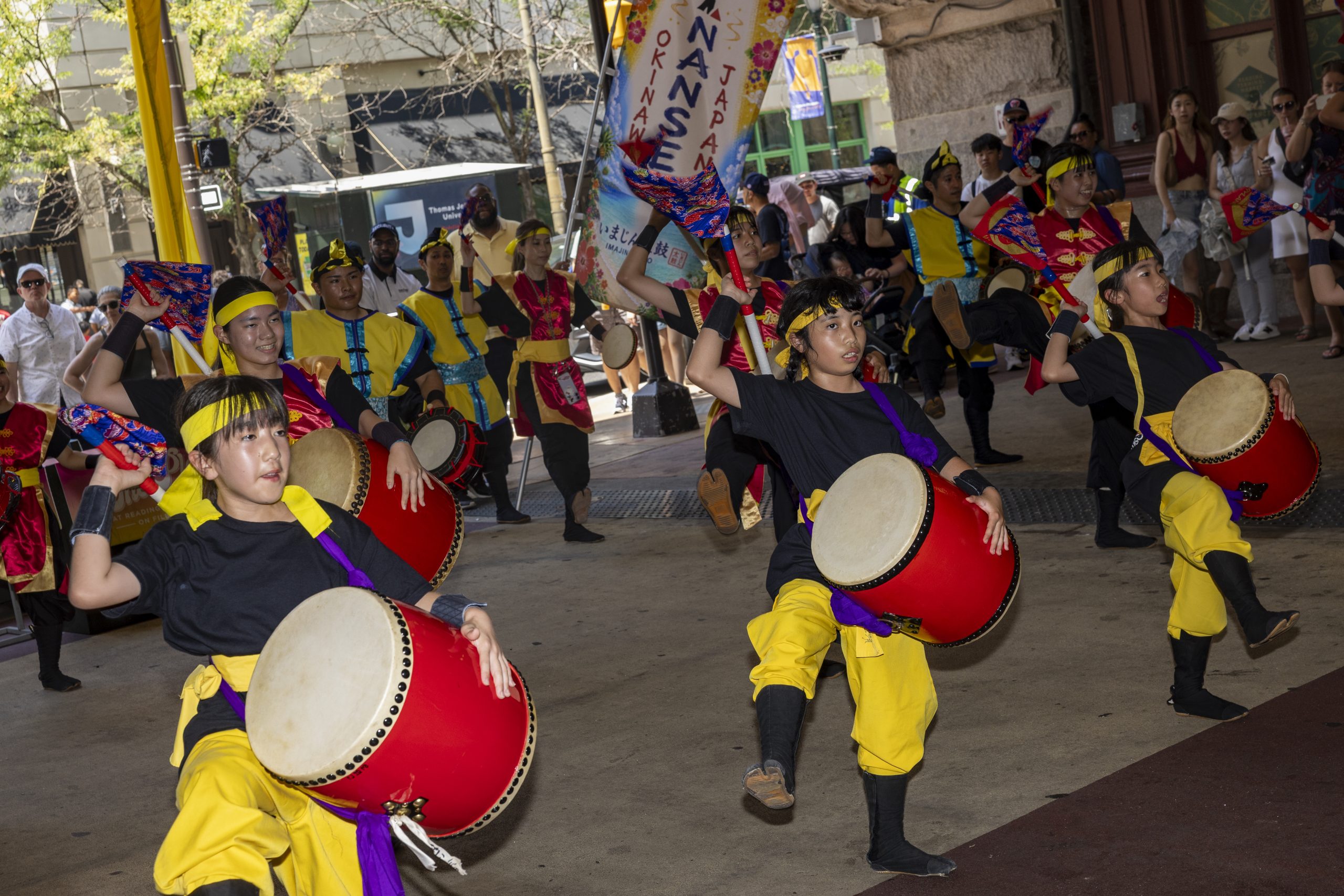
    The cancellation gave the many would-be paraders the opportunity to perform around Center City. Summer intern Aidan T. Gallo photographed Imajin Taiko, a lively dance group from Nakijin, Okinawa, Japan, performing outside Reading Terminal Market.

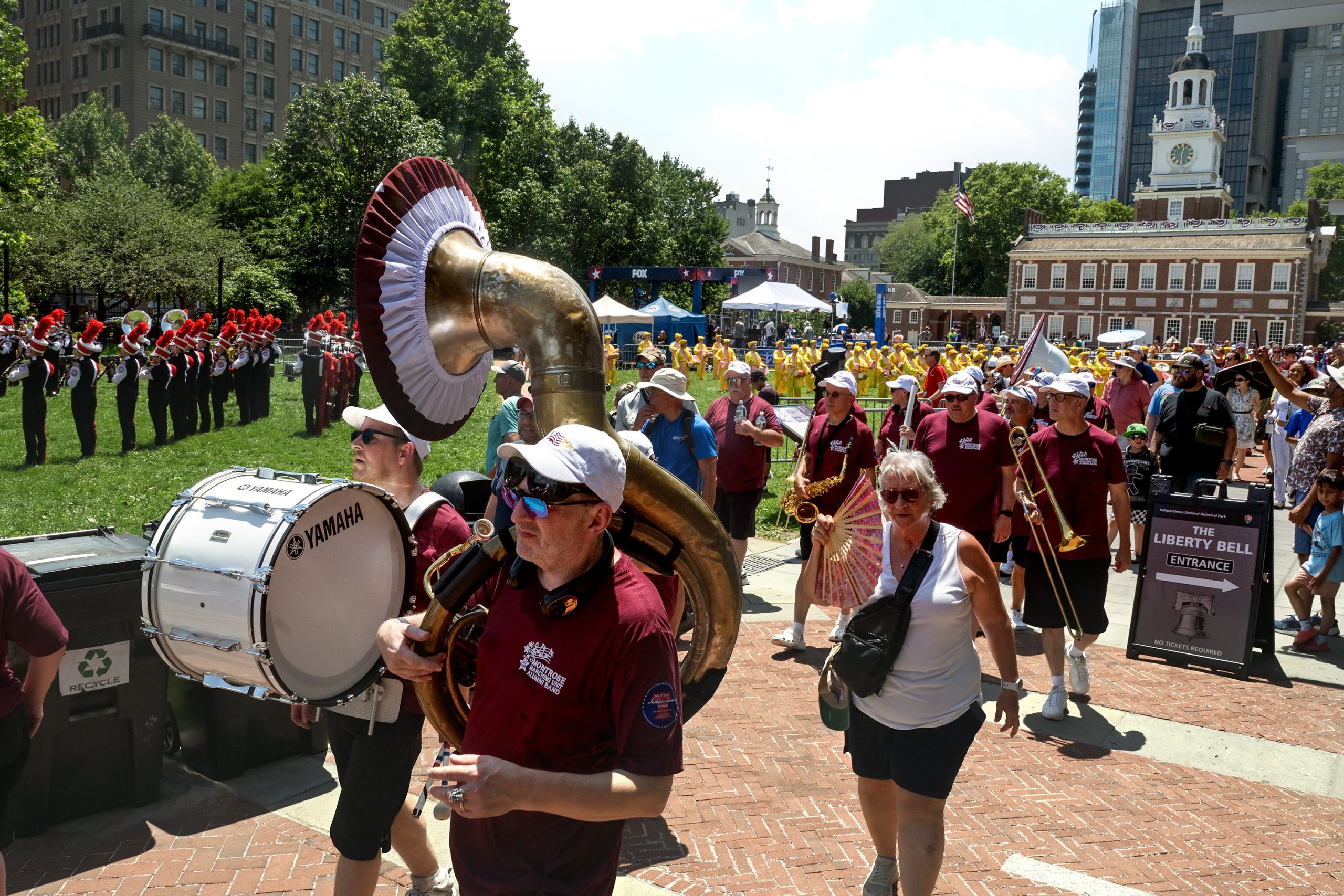
    Musicians, Colonial reenactors in sweat-soaked wool, and visitors (also sweaty) wandered the Historic District looking for something to do. It led to impromptu pageantry around Independence Hall. Marching bands did their (stationary) thing, taking turns performing on the grassy mall.

    Working the scene, I was able to frame three different bands at once. The Montrose Marching Unit Alumni Band from Susquehanna County was leaving as the Triuggio Marching Band, a community group from the northern Italian city of Triuggio, and a Falun Gong drum band from New York prepared to perform.

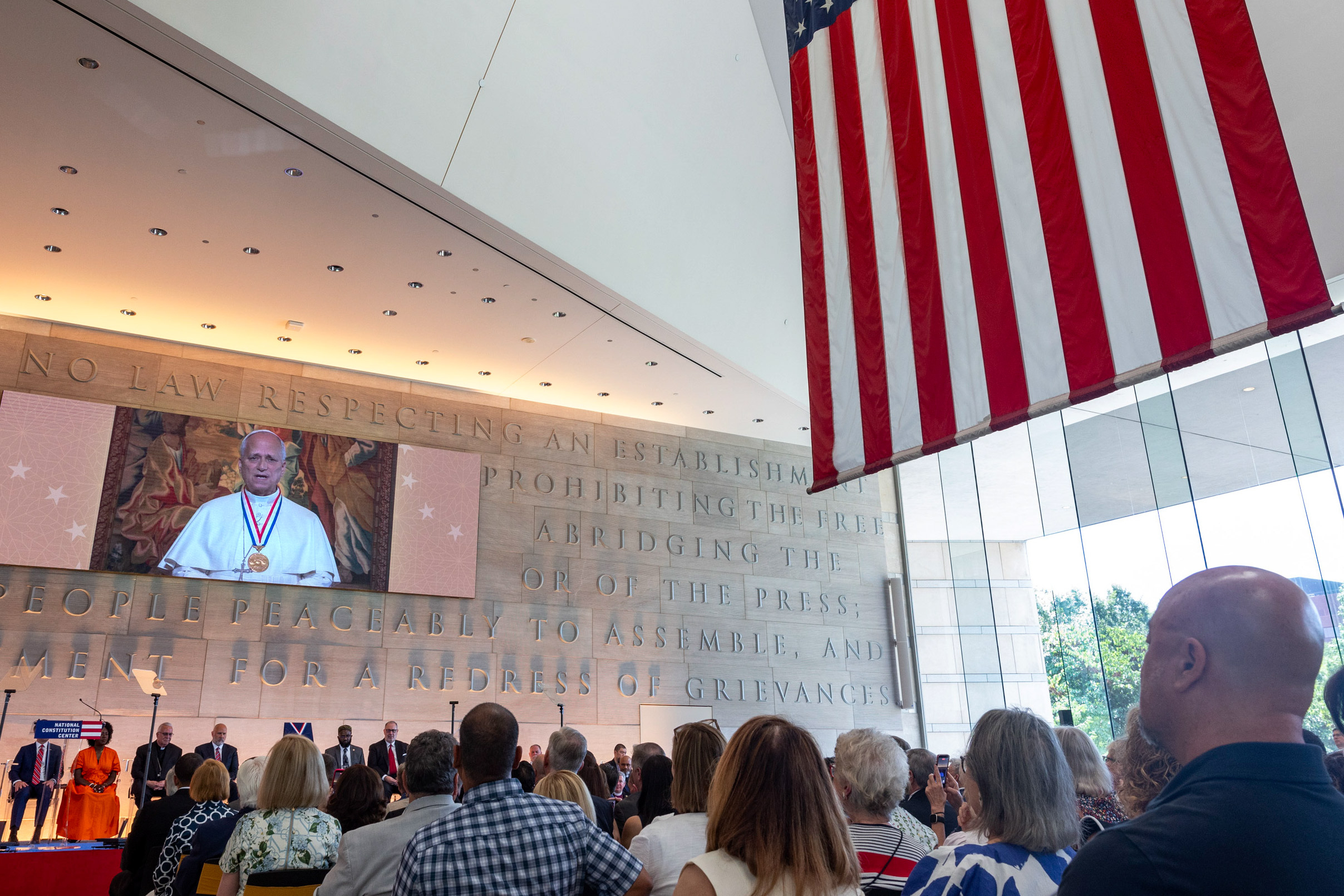
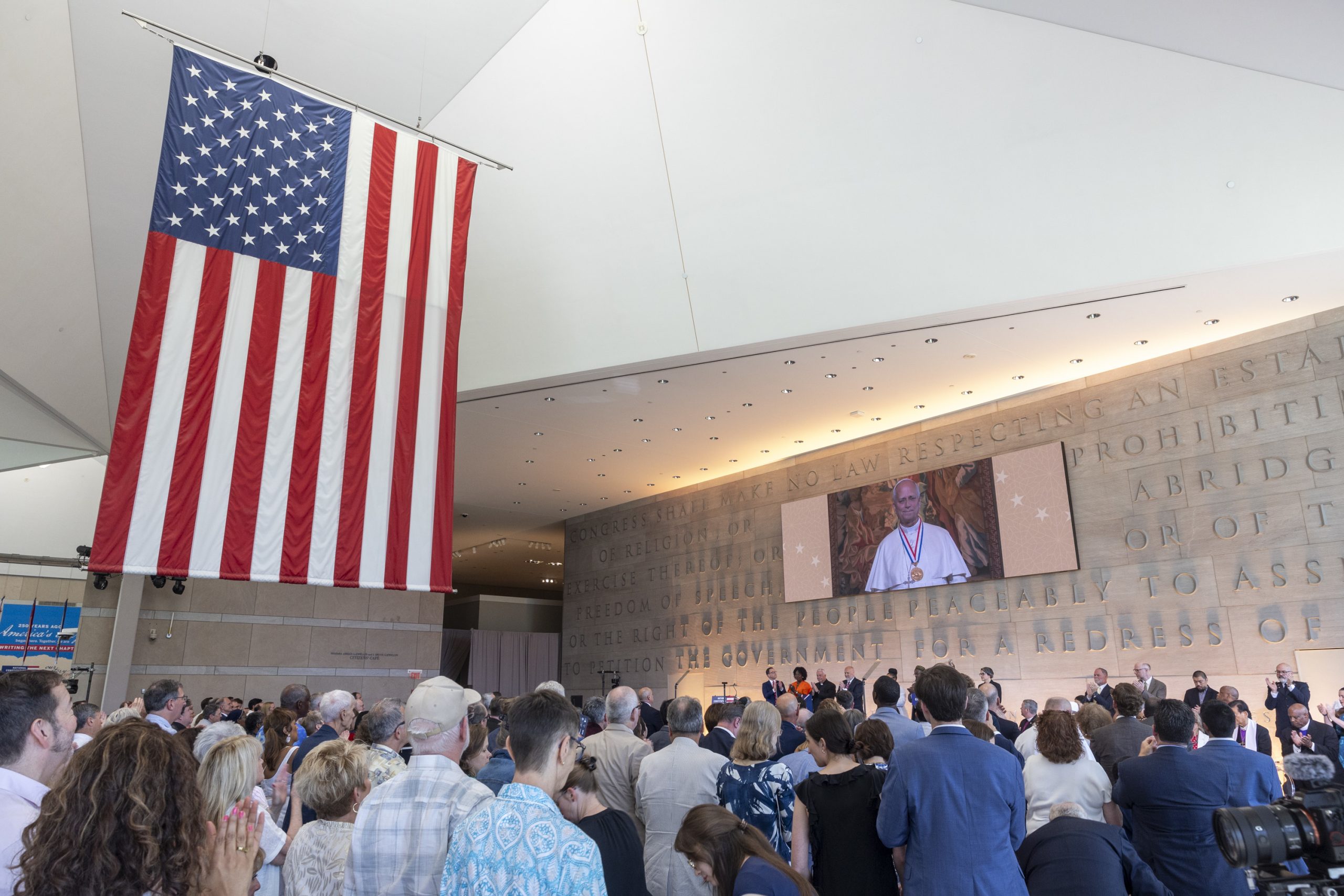
    On the Fourth, Tyger Williams found photographing the National Constitution’s Liberty Medal presentation an interesting experience even though the honoree, the U.S.-born pope and Villanova alum, Pope Leo XIV, wasn’t physically there.

    Finding a compelling way to photograph someone appearing only on a screen wasn’t easy, he said. “I wanted to be able to show the atmosphere when the Pope was speaking and show the impact he has to those listening to him.”

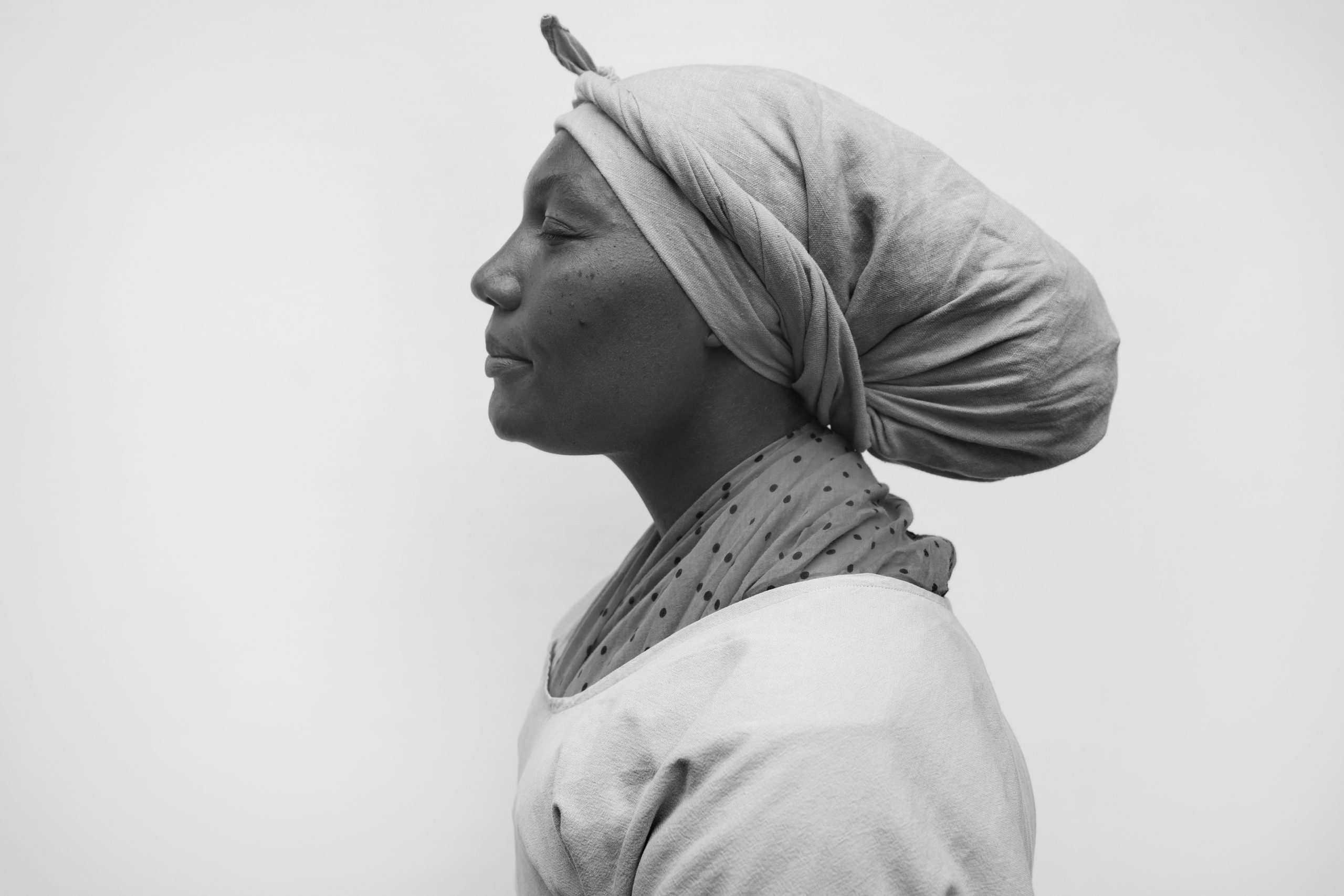
    Jose F. Moreno wanted to create a simple, straightforward portrait essay on the people we often see in costume walking through the Historic District to recognize the people “whose passion, knowledge, and dedication help tell Philadelphia’s story as the city celebrates this historic milestone.”

    By using a plain white background and removing all distractions, the focus remained entirely on the individuals and the history they represent. He photographed each History Maker one after another, asking them to “do nothing more than be themselves.” He only made two or three frames of each person against a plain white background.

    Courtney Mitchell, who portrays Margaret Woodby, a free Black woman who owned a cake-baking business, smiled during her full-length portrait before turning slightly to the side.

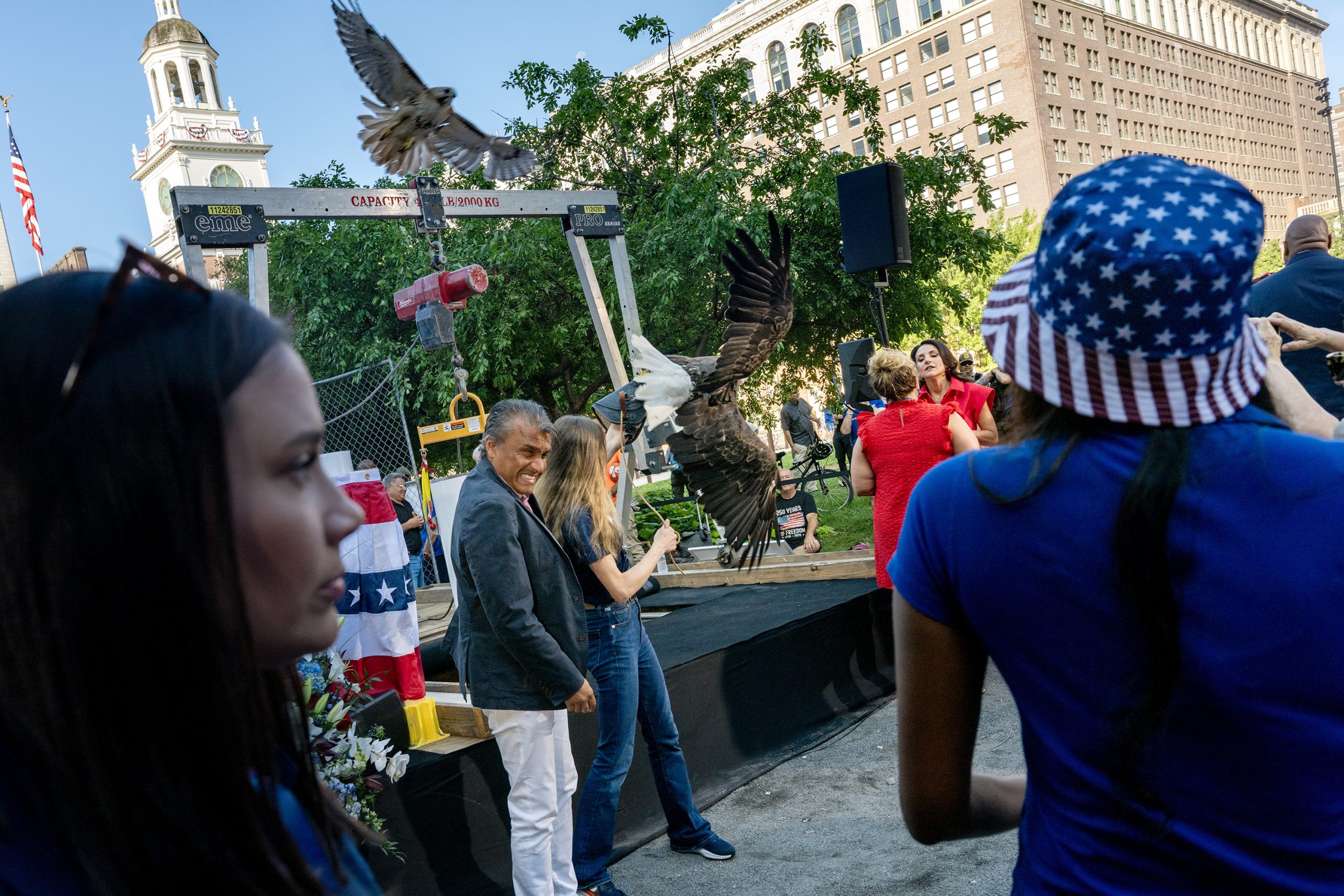
    On the morning of the Fourth, I covered the burial of “America’s Time Capsule” in Independence National Historical Park. Before the ceremony, dignitaries posed with Indy, a bald eagle from the Auburn University Raptor Center. Suddenly, another bird of prey swooped down asserting its territory.

    I wasn’t actively photographing the scene, but luckily my camera settings were already dialed in. I managed to capture a frame just as the hawk came within striking distance. Indy — who made her first appearance at a Philadelphia Eagles game in 2023 — and her handler spent the rest of the photo opportunity watching the skies overhead.

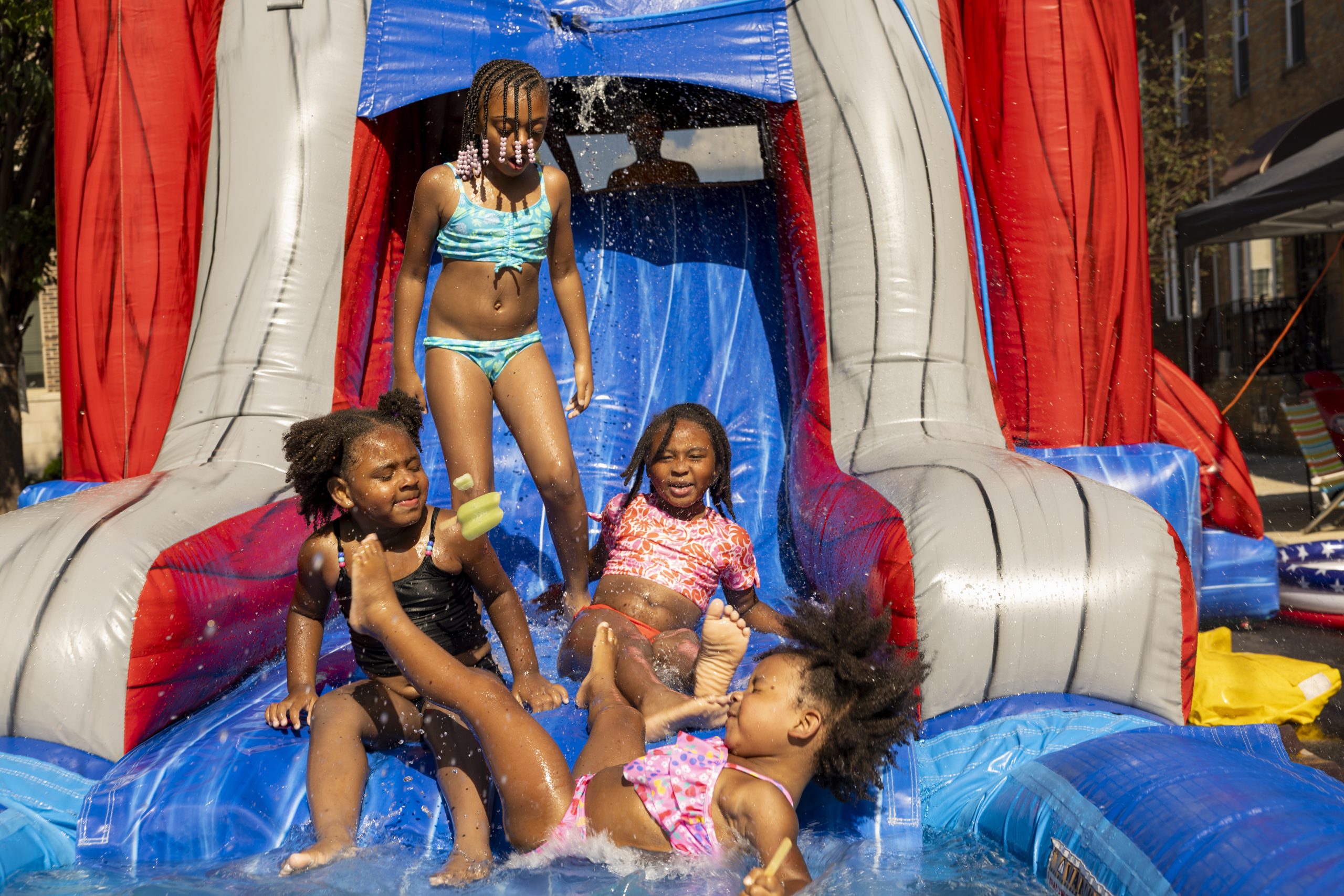
    Also on Saturday, Gallo was back covering neighborhood block parties. In Point Breeze, he heard kids sliding down an inflatable bounce water slide — a block party staple. What he didn’t expect was to see multiple children sliding all at once, including a little girl holding onto her popsicle.

    By the time she got to the bottom, the popsicle was knocked out of her hands into the pool. “Luckily, I pressed the shutter at the right times to capture the popsicle and its flying pieces mid-air.”

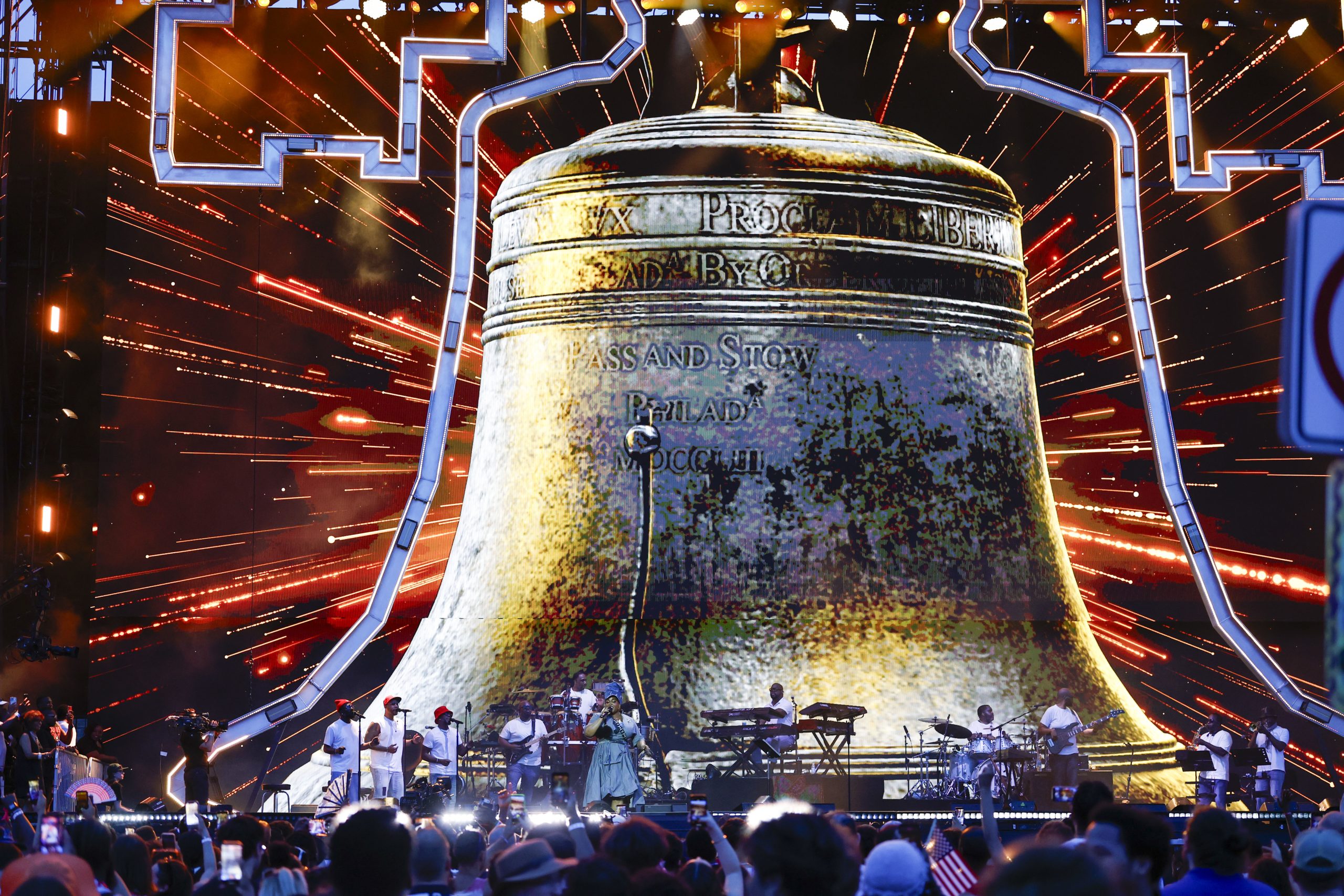
    Yong Kim covered the One Philly: Unity Concert for America on the Benjamin Franklin Parkway. The storm-delayed concert featured musical legends along with the legendary Liberty Bell.

    Jill Scott takes to the stage for One Philly: Unity Concert for America on the Benjamin Franklin Parkway on Saturday, July 4, 2026, in Philadelphia.Yong Kim / Staff Photographer

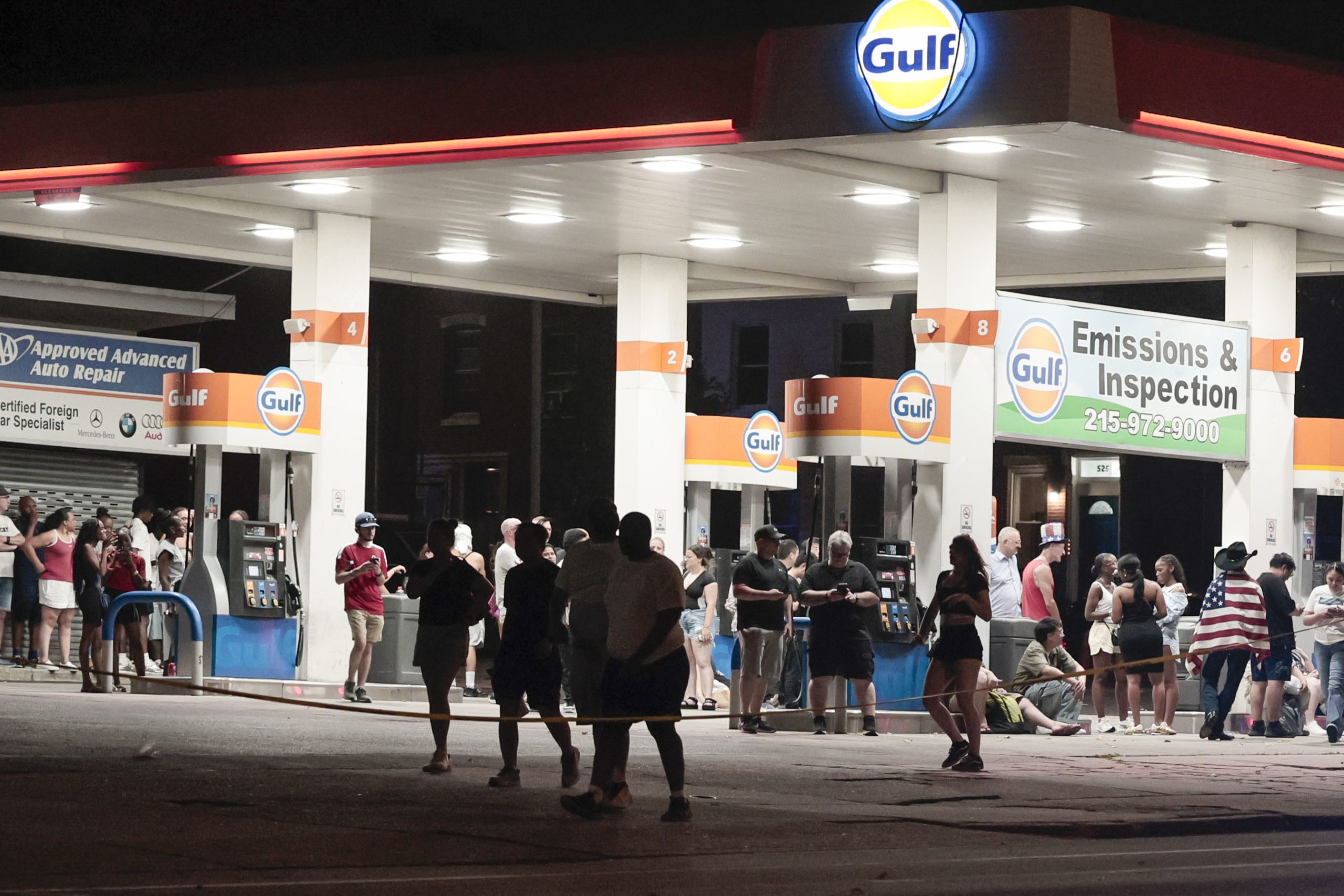
    Kim and Elizabeth Robertson evacuated the area during the more than three-hour rain and lightning display, eventually taking shelter beneath the canopy of a gas station along Spring Garden Street.

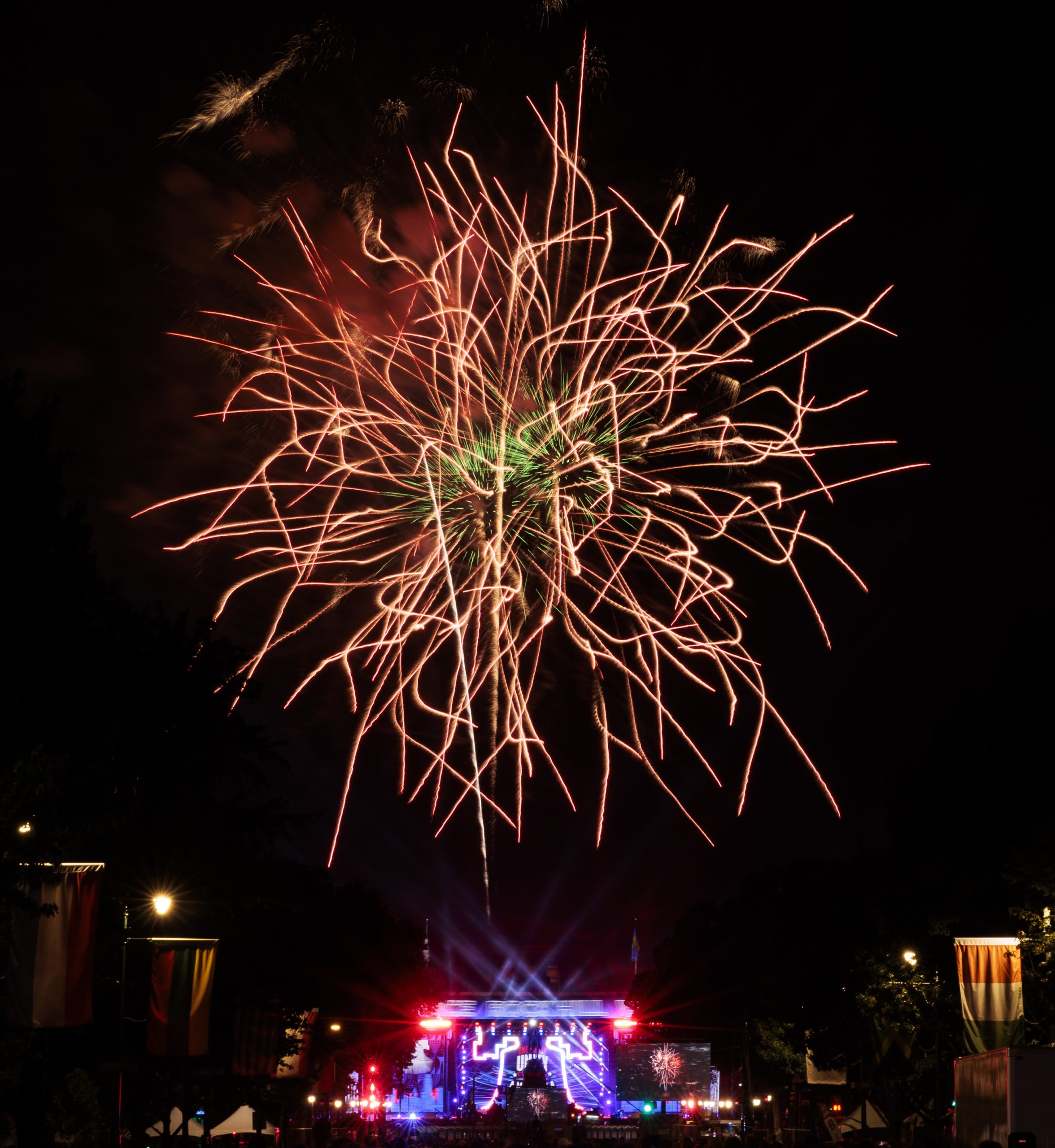
    Monica Herndon had been at The Inquirer for more than six years, but this was her first time covering the Parkway concert and fireworks. She “definitely did not expect to still be out there at 2:30 a.m.”

    As the storm soaked the area, she waited it out in her car, “eating snacks and singing along to Christina Aguilera hits.” Once the concert resumed, she grabbed her tripod and headed down the Parkway deciding to “set up farther back than usual, hoping to make an image that felt a little different from the fireworks photos I’d seen in years past.”

    Herndon used a slow shutter speed, alternating between one and two seconds, “to let the fireworks expand across the frame.” She made lots of images but liked the one with streaks of light that felt “organic and almost painterly…I also love the small starbursts created by the stage lights, a result of shooting at a narrow aperture [f/18].”

    A few days before Sunday’s World Cup Round of 16 match, David Maialetti began preparing by cleaning his gear and checking his cameras. He knew the extreme heat was going to be a challenge so kept himself extra hydrated leading up to the match, dressed in loose-fitting, sweat-wicking clothing, and topped it off with a bucket hat.

    “The last thing I wanted,” he said, “was to pass out during a key goal and end up a highlight on SportsCenter.”

    David Maialetti / Staff Photographer

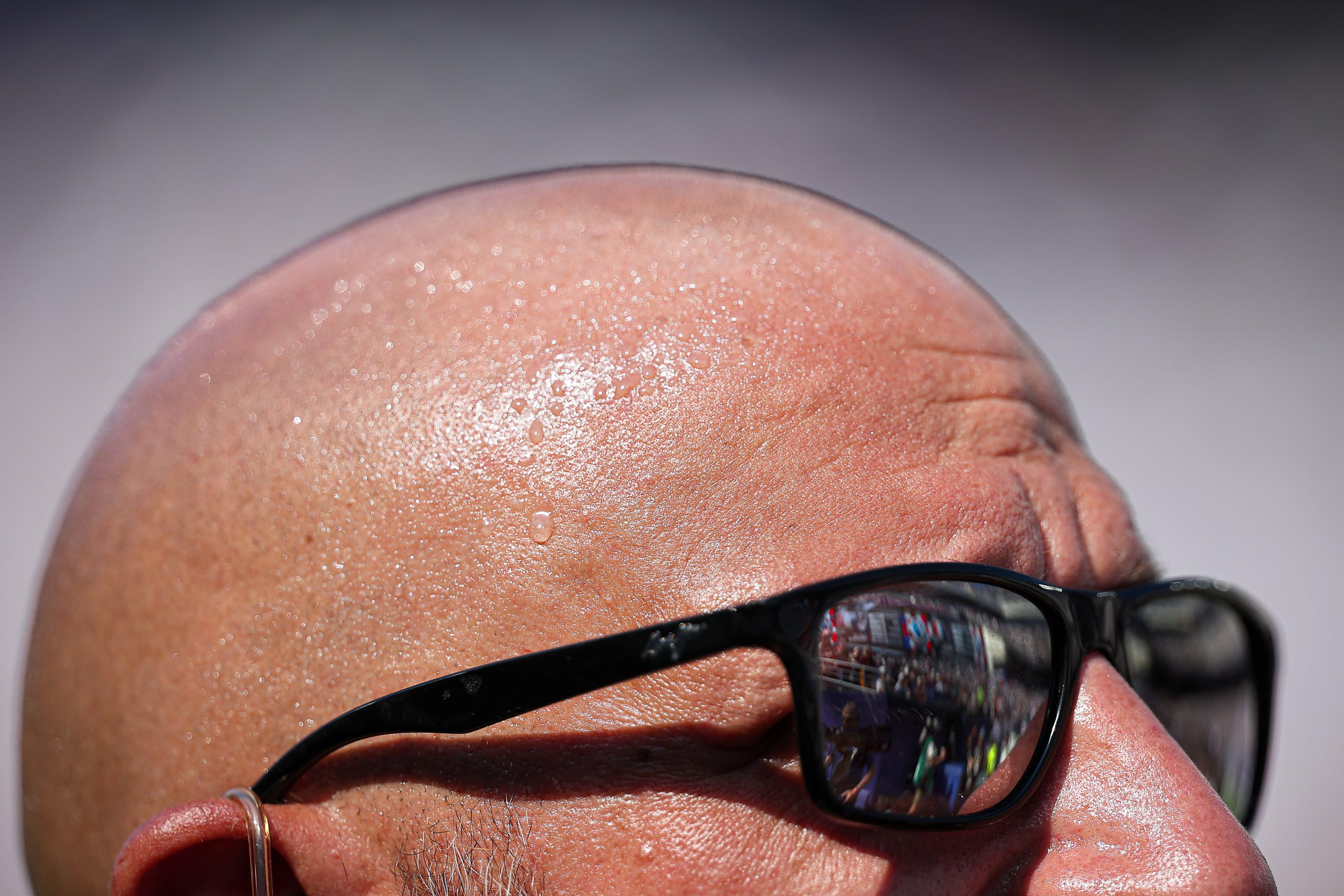
    Before kickoff, he photographed fans and the sweltering conditions, including a security guard dripping with sweat before France faced Paraguay.

    His game plan sounded solid on paper until he realized the top of his cameras would “feel like a sizzling frying pan.” He knew the electronics could malfunction if they overheated and “gripping a hunk of hot metal for a few hours,” would not be the most comfortable way to work. His “brilliant hack in the moment,” was to turn his camera upside down so the controls weren’t exposed to the blazing sun. “It was totally awkward like trying to ride a bicycle backwards.”

    Fortunately, newer cameras automatically reorient the electronic viewfinder, so after a few minutes it began to feel natural.

    His plan kept the cameras cool enough to capture France’s lone goal by superstar Kylian Mbappé. The only downside: every image had to be rotated before he could file on deadline.

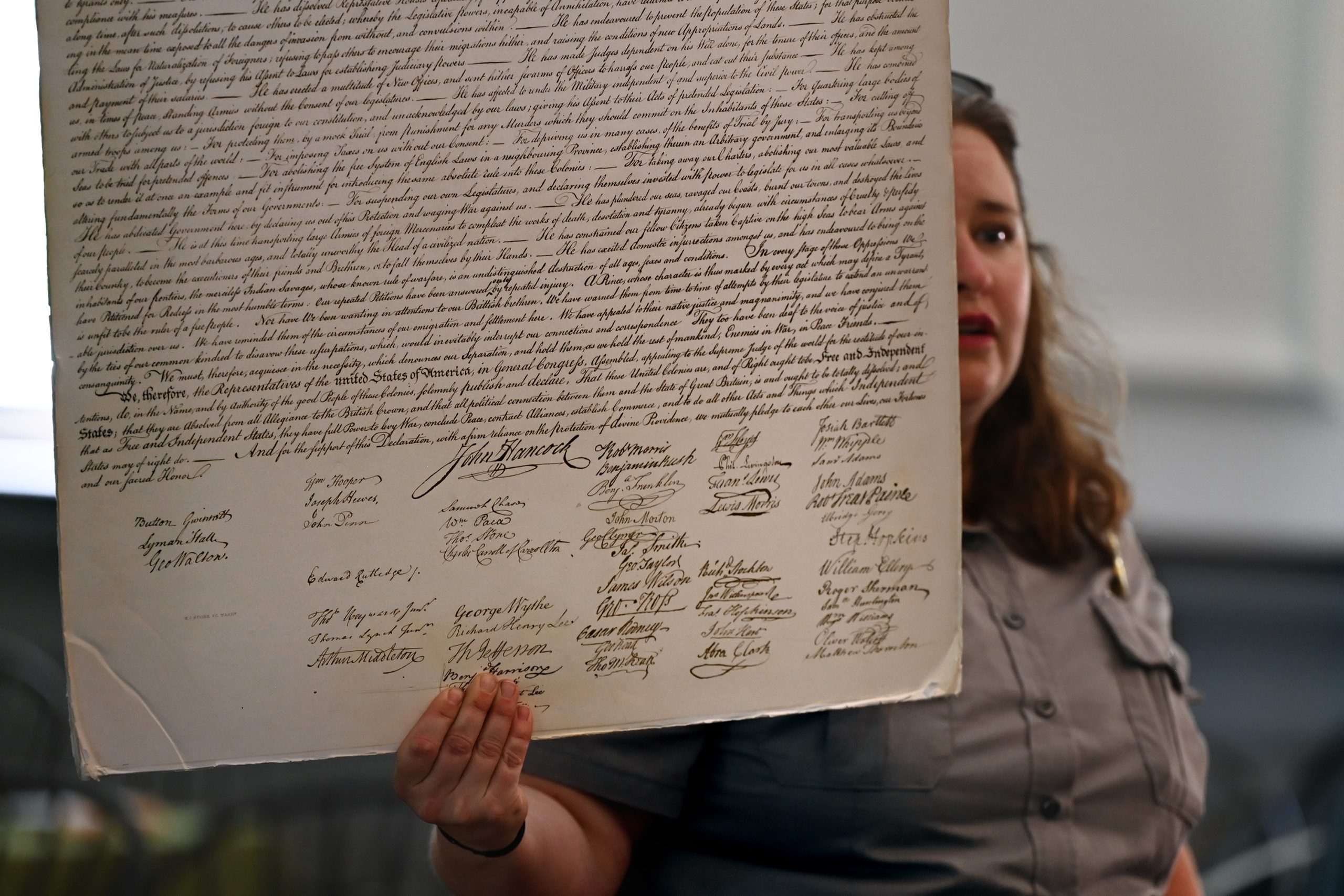
    National Park Ranger Maggie Burkett holds an oversized replica of the Declaration of Independence while guiding visitors on a tour of the Assembly Room in Independence Hall (then called the Pennsylvania State House) where the Second Continental Congress met and the Declaration of Independence was adopted. Tom Gralish / Staff Photographer

    In the month leading up to the weekend, I worked on a photo essay on the local Delaware, New Jersey, and Pennsylvania Founders who signed the Declaration of Independence. With help from their lineage organization, I met and photographed direct descendants of the often overlooked men who were here with the Second Continental Congress as America was born.

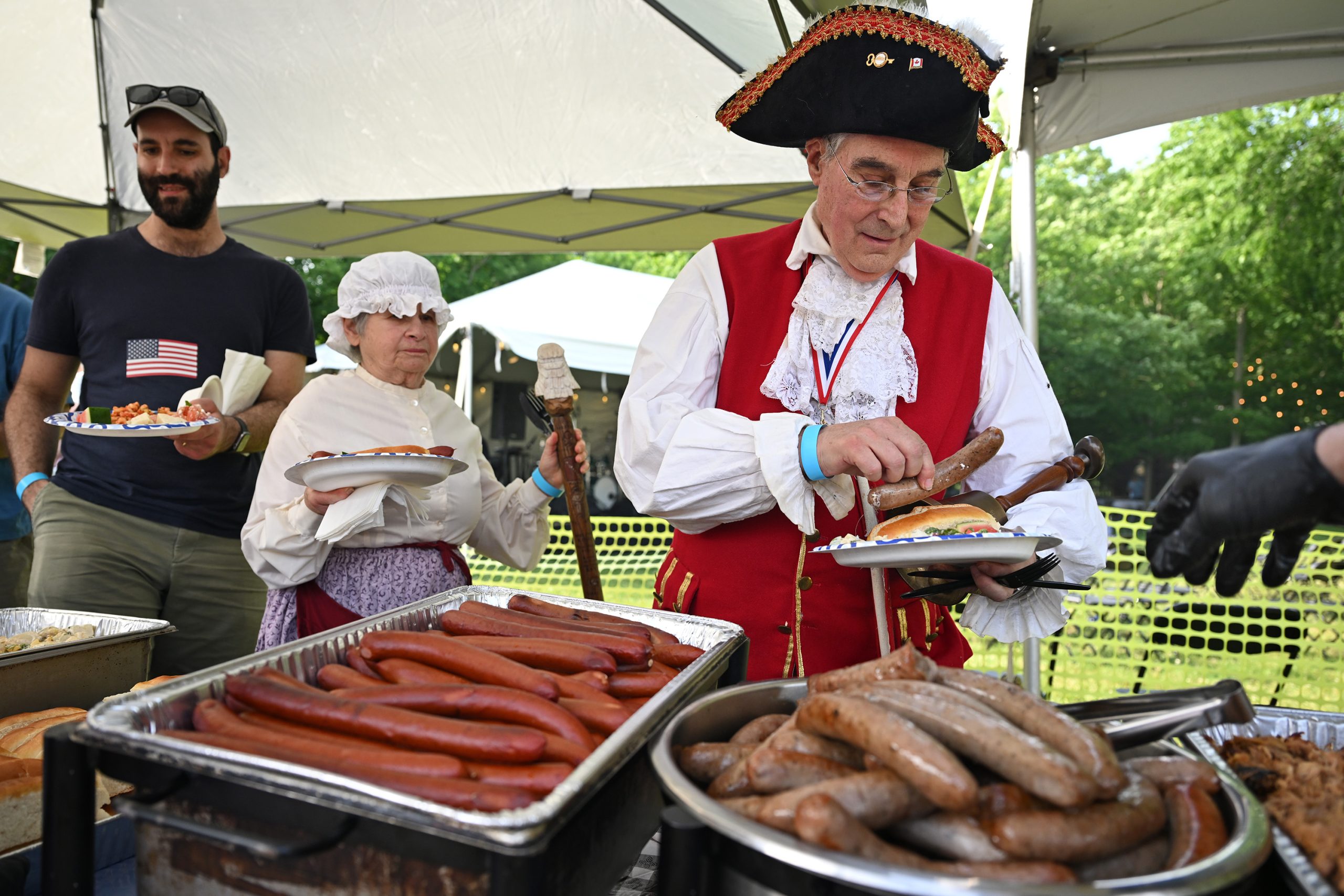
    The Town Crier of Hopewell, N.J., and his wife, Stanley and Cindy Saperstein, attend Hopewell’s USA 250th Town-Wide Block Party in June. John Hart, a signer of the Declaration of Independence, is buried at the Old School Baptist Church there.Tom Gralish / Staff Photographer

    Since 1998 a black-and-white photo has appeared every Monday in staff photographer Tom Gralish’s “Scene Through the Lens” photo column in the print editions of The Inquirer’s local news section. Here are the most recent, in color:

    » SEE MORE: Archived columns and Twenty years of a photo column.

  • On July 4, 1776, a world-changing Declaration rings out from Philadelphia

    On July 4, 1776, a world-changing Declaration rings out from Philadelphia

    Philadelphia. July 4, 1776.

    Independence is real. Philadelphia rejoices.

    And a printer awaits a declaration.

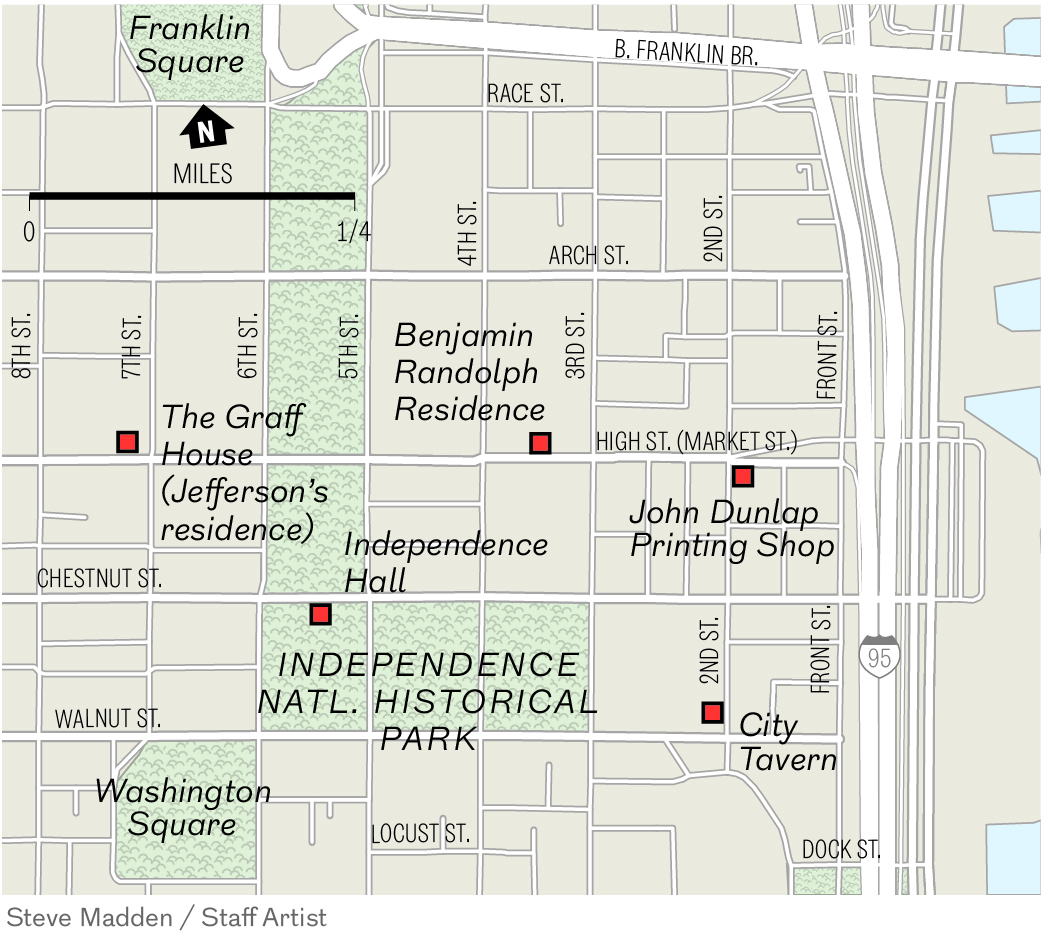
    John Dunlap, 29, an immigrant from Northern Ireland who operates a printing shop at Second and High Streets, a short stroll from the Pennsylvania State House, where the rebels conspire, has watched with keen attention the epochal events of the preceding days.

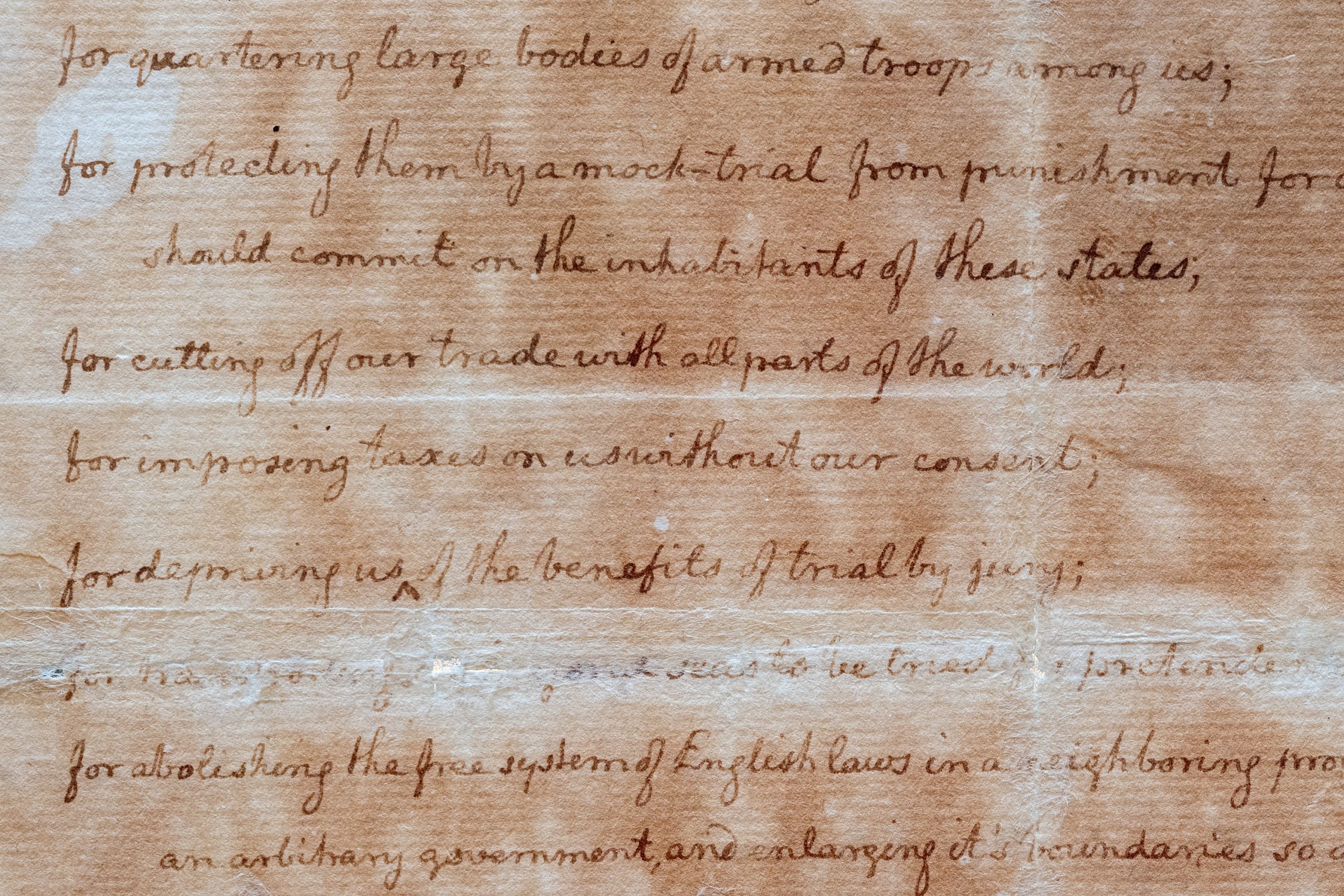
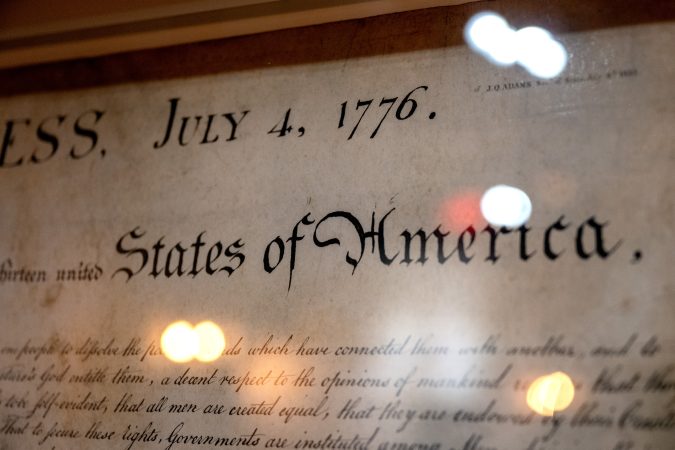
    A faded copy of a draft of the Declaration of Independence handwritten by Thomas Jefferson.Tom Gralish / Staff Photographer

    The exultant patriots and curiosity seekers who braved suffocating summer heat to stand watch outside the State House on July 1, when the 56 delegates of the Second Continental Congress finally commence their locked-door debate on independence. The rapture that seems to ring out from every Philly tavern and tippling joint, coffee house, and street corner on July 2, when word that Congress voted to sever ties with King George III spreads through America’s largest and wealthiest city, like a bolt from one of Dr. Franklin’s electricity experiments. The joy. Hope.

    And now, as an unusually mild morning gives way to rain-laden clouds, Philadelphia holds its breath upon the brink of a mighty happening.

    Cloistered inside their chambers, the delegates fiercely debate and painstakingly parse Thomas Jefferson’s draft of America’s founding creed. Its passage will formalize independence.

    Dunlap, who will eventually serve Washington as an officer in the First Troop Philadelphia City Cavalry, is a patriot. But nobody’s fool. Months earlier, Dunlap had secured a lucrative $654 printing contract with the Congress, and the handsome commission it brings.

    The ink-stained Irishman with the whipcord build of a jockey prepares the shop for the Herculean task he knows is coming. The delegates will desire to thunder out the news of American independence before the iron gall ink even dries on the Dutch paper. John Hancock, 40, charismatic president of the Congress, will want as many broadsides as Dunlap can muster by dawn. Printing broadsides by hand in sweltering, trembling candlelight — meticulously setting the type, carefully rolling the ink, and pulling the heavy presses — is messy, demanding work, the hardened printer knows. He’ll plan to toil until morning’s light.

    Outside, citizens collect in High Street. Soon, the print shop door pushes open. A man, his face obscured by the sun, darkens the doorway. He holds something close. A rag paper manuscript written in fine hand, still wet from fresh changes, and borne by delicate hand to the expectant printer. Words upon which a nation now rests. A declaration.

    July 1, 1776: Three days earlier

    At the Second Street boarding house of Mrs. Sarah Yard, John Adams, 40, awakes before dawn. The unyielding lawyer and farmer from Massachusetts has become accustomed to the city’s morning clarion cry of crowing roosters, ringing bells, clanking ships, and cursing sailors. But not its heat.

    Behold this atlas of independence at his breaking point. Exhausted. Homesick. Hot. Beyond cantankerous that any rational being could yet flinch at the surety and necessity of American independence. For weeks, Adams answers angry letters from citizens demanding to know why Congress stalls.

    “The only question is concerning the proper time for making a specific declaration in words,” Adams writes, barely concealing his own impatience. “But remember you can’t make thirteen clocks strike precisely alike at the same second.”

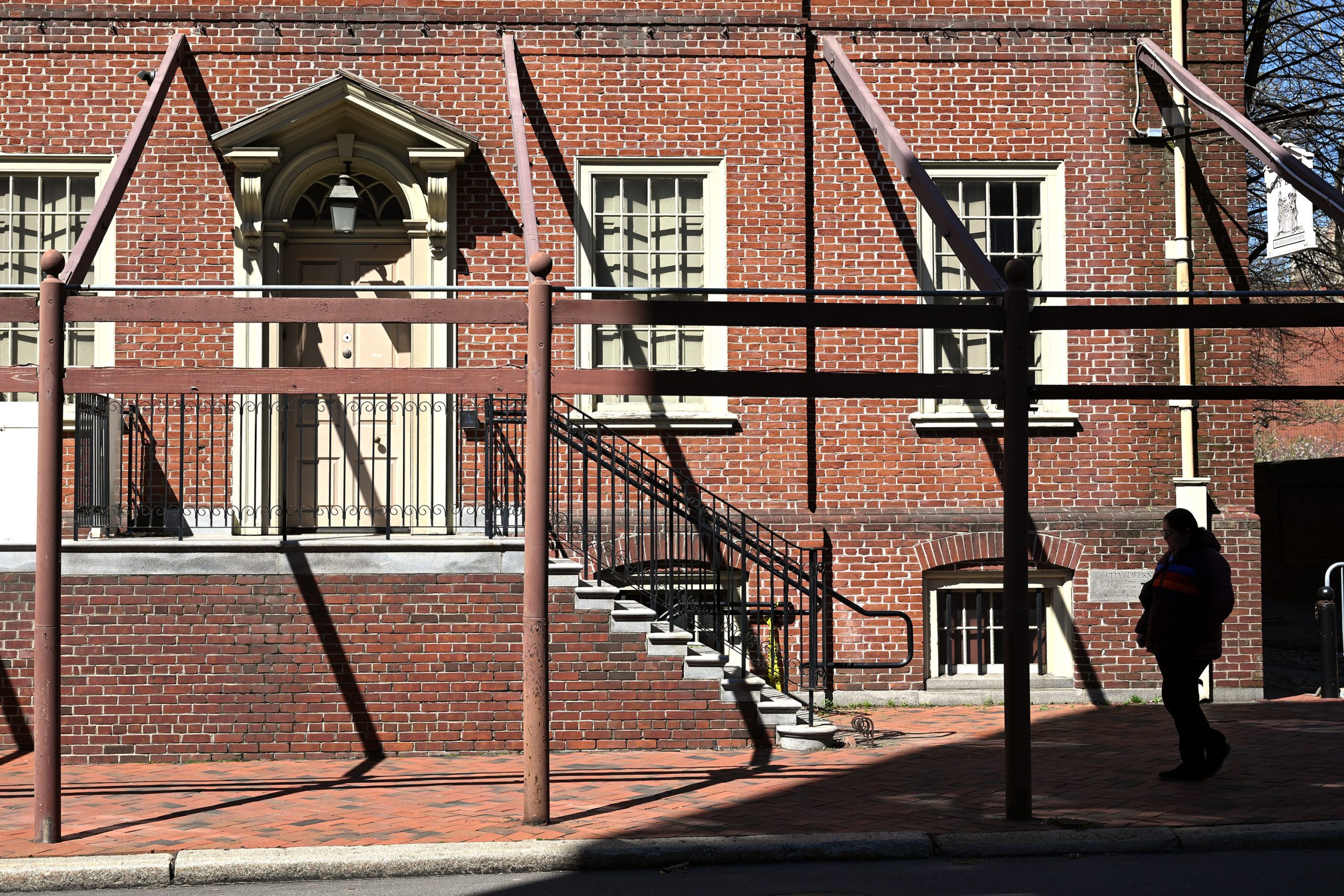
    John Adams and his cousin, Samuel, shared a boarding house near the City Tavern in July 1776. This reconstruction of the original tavern was built in 1975.Tom Gralish / Staff Photographer

    For nearly two years, John Adams has fought for liberty like a bruising prizefighter, while his less refined older cousin, Samuel, 53, conducts a campaign of persuasion in the shadows. No one has done more than John Adams for independence. On this morning, John Adams dresses in the twilight, wishing that he had been blessed with the graces and gifts of ancient orators.

    “This morning is assigned the greatest debate of all,” Adams writes before leaving for the State House. “A declaration, that these colonies are free and independent states, has been reported by a committee some weeks ago for that purpose, and this day or tomorrow is to determine its fate. May heaven prosper this newborn republic.”

    At 9 a.m. on July 1, 1776, Andrew McNair, old and gray bellman of the State House, pulls shut the chamber’s heavy doors. Hancock gavels history to order.

    In the silence, rises Pennsylvania’s reluctant rebel, John Dickinson. His writings once rallied American farmers against British taxes. Now, ghostly and gaunt from illness, he remains a dogged dissenter against independence. Summoning his strength, he abides his conscience, arguing America is not yet ready.

    To proceed with a declaration during an uncertain struggle would be “to brave the storm in a skiff made of paper,” he tells his colleagues, before sitting.

    Outside, the heat breaks. Rain beats against the chamber’s tall windows. Thunder booms. Lightning flashes.

    Adams stands. He speaks over the stormy din. His precise words are lost to posterity. He speaks for two hours. John Adams moves men.

    Adams speaks “with a power of thought and expression that moves us from our seats,” Jefferson, remaining characteristically mum at his table, will later recall.

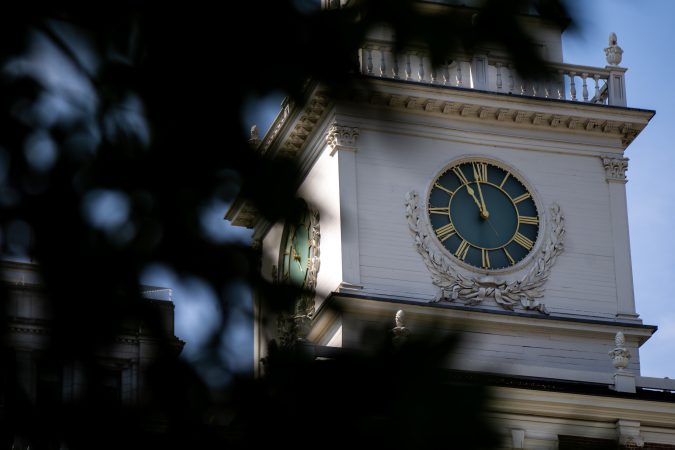
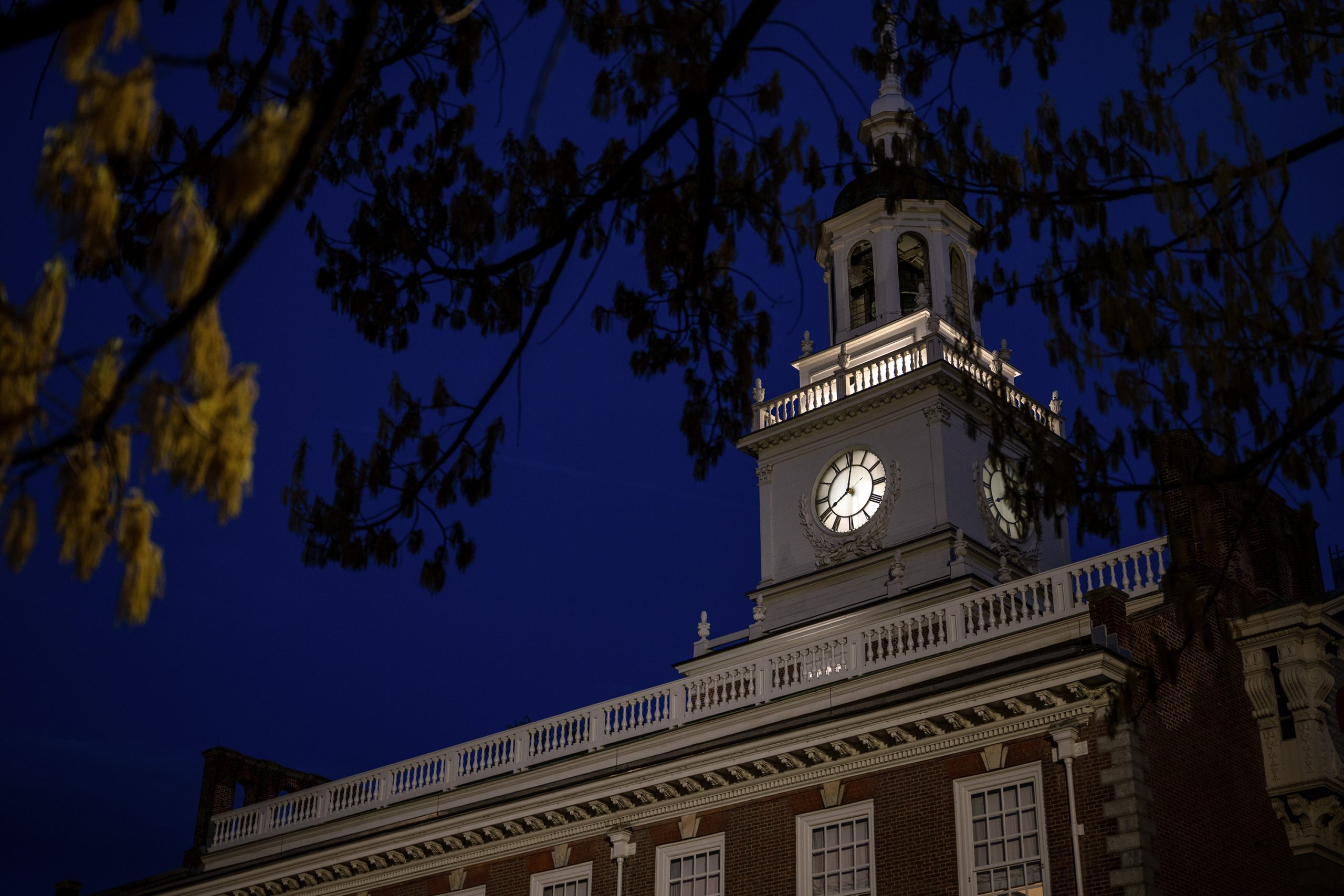
    Recreating the daily hub of the Revolutionary City in 1776. You can hear the cannons from the bell tower of the Pennsylvania State House at Sixth and Chestnut Streets, where the rebels conspire. Now, it’s Independence Hall, photographed April 14, 2026.Tom Gralish / Staff Photographer

    A preliminary vote is taken by candlelight. Despite popular opinion, four colonies — including four members of Pennsylvania’s critical seven-man delegation — vote no.

    Late into the night, at the City Tavern, the delegates drink upon tenterhooks.

    July 2, 1776

    The second day of debate begins with a prosperous portent. Caesar Rodney, of Delaware, mud-splattered boots and spurs, arms akimbo, bursts in before the doors to Congress close. The gravely ill delegate rode 80 miles through the tempest to cast his vote for independence.

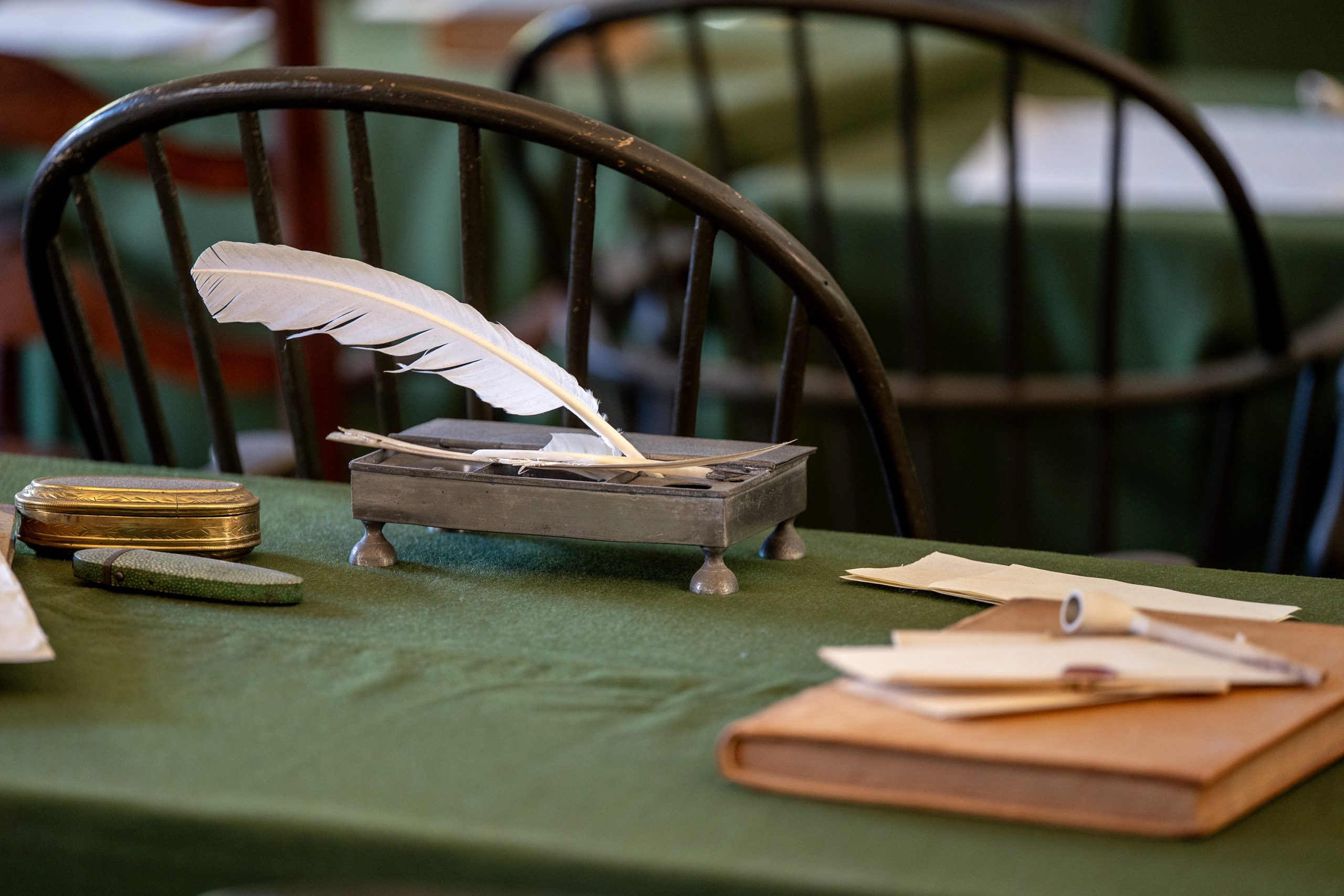
    Replica desks in the Assembly Room in Independence Hall, known as the Pennsylvania State House in 1776. This is the exact space where the Second Continental Congress met and the Declaration of Independence was adopted.Tom Gralish / Staff Photographer

    Better still are the two conspicuously empty chairs at the Pennsylvania table. Unable to vote for independence, but unwilling to thwart unanimity, Dickinson and fellow delegate, Robert Morris, voluntarily abstain. Despite his feelings, Dickinson will soon join the rebel militia — to fight for his country.

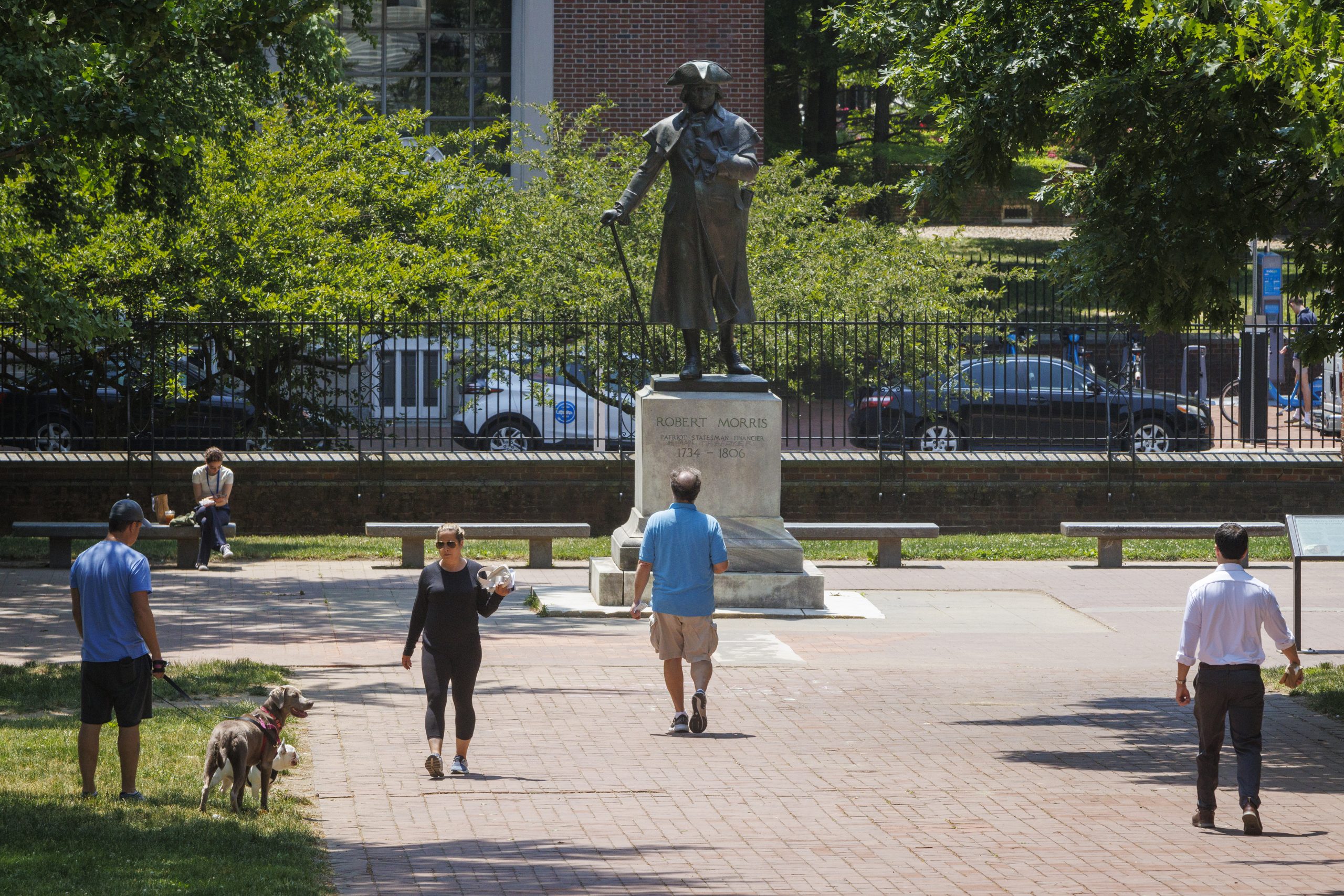
    The statue of Robert Morris in Independence National Historical Park on May 31, 2023. Alejandro A. Alvarez

    Again, the skies open up, raindrops drumming upon the glass.

    With New York abstaining — and Pennsylvania swinging toward independence — the vote goes quick.

    It is done.

    Independence.

    July 3, 1776

    The Congress continues without a break.

    Days earlier, before handing in his draft of the Declaration of Independence, Thomas Jefferson turned to Benjamin Franklin for one last look.

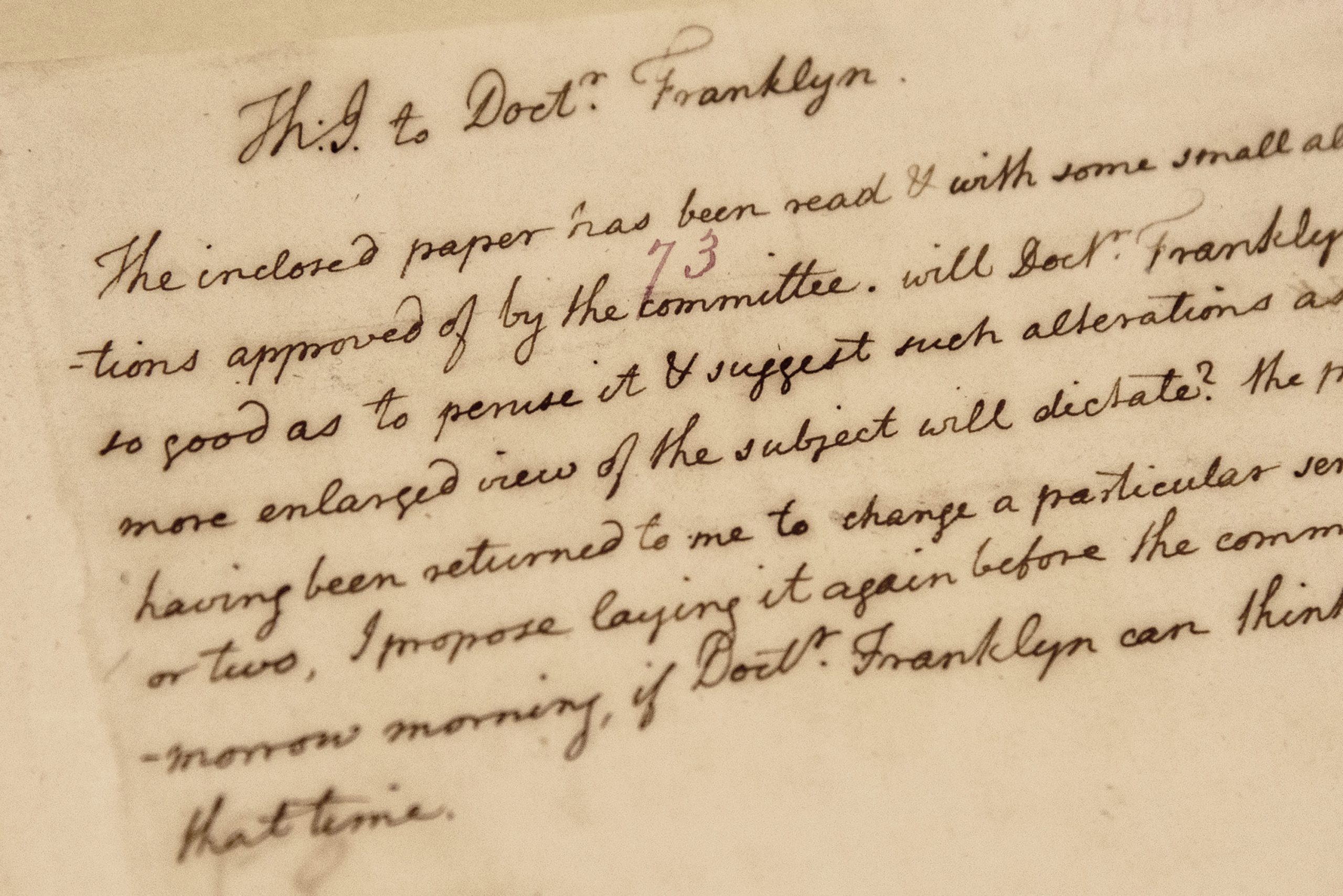
    A letter from Thomas Jefferson to “Doct. Franklyn” (Benjamin Franklin) in June 1776 asking for suggestions on the Declaration of Independence.Tom Gralish / Staff Photographer

    “Will Doctr. Franklyn be so good as to peruse it and suggest such alterations as his more enlarged view of the subject will dictate?” Jefferson inquires, in a note delivered to the silver-haired statesman’s High Street home.

    It’s Franklin, sly satirist, homespun philosopher — grand auteur of America’s self-made aura — who possibly suggests, the inspiring “self-evident” phrasing, replacing Jefferson’s initial “sacred and undeniable truths.”

    And it is Franklin, 70, spectacled lion of liberty, sage of Philadelphia, tamer of lightning, dean of American charm and wit, wooer of women, broad of bow and frame, portly of paunch and plain of coat, a winsome spark dancing across his gray-blue eyes, who comforts the young writer as delegates slash away at his declaration. The winking newspaperman unspools a tale about an enterprising hatmaker who wishes to advertise his wares. By the time the hatter’s friends finish their edits, all that remains is the man’s name, and a photo of a hat, Franklin jokes.

    The delegates trim Jefferson’s harsher language about King George. They excise completely his evisceration of the slave trade. Jefferson does not publicly protest.

    July 4, 1776

    At 11 a.m., debate is closed.

    The moment will eventually be memorialized in painting. The towering trio — Adams, Jefferson, Franklin — presenting America’s credo for approval. Imagine them, these Founding Fathers. These imperfect men for the ages who hazard everything to chance a republic, and change a world.

    There is little ceremony. Horseflies from a nearby stable buzz. One after another, a chorus of “Ayes.”

    Delegates break the tension with gallows humor about whose necks will snap the swiftest.

    History does not record the face of the man who darkens the doorway of John Dunlap’s print shop. Perhaps it was Adams, unable to yield his obsession even in its ultimate realization. Perhaps, it was Franklin, delivering the declaration with a deliciously wry aphorism. Or Jefferson, solemn and silent with the weight of his words.

    Dunlap works all night to the thumping groan of the presses. By morning, roughly 200 broadsides start to spread America’s newly minted founding document far beyond Philadelphia. Breathless riders herald the news in town squares.

    In the trenches in New York, Washington orders the declaration read aloud. Bells ring. Troops parade. Bonfires alight. Candles burn. Prayers are whispered, for those sons and fathers who will die in the bloody conflict ahead.

    By July 6, the Pennsylvania Evening Post, a paper published near Dunlap’s shop, prints the declaration word for word. Its previous issue had been put to press too early to capture the momentous events.

    Instead, the July 4, 1776 edition included usual fare.

    “To be sold,” read one back-page ad. “A NEGRO BOY, about four or five years of age.”

    Crowds pack the State House yard, where the rebels had long conspired. A military officer reads the manifesto to the hushed masses.

    Words that birth the American experiment on an ideal — and the sin of slavery. Words that will endure Civil War and oppression. Words that beckon centuries of American promise and possibility, triumph and failure. Words that inspire new revolutions, new freedoms, new fights. Words that transform. Words that twist. Words that promise a pursuit of happiness — but withhold so much from so many. Words that stand tested still.

    Words written in Philadelphia.

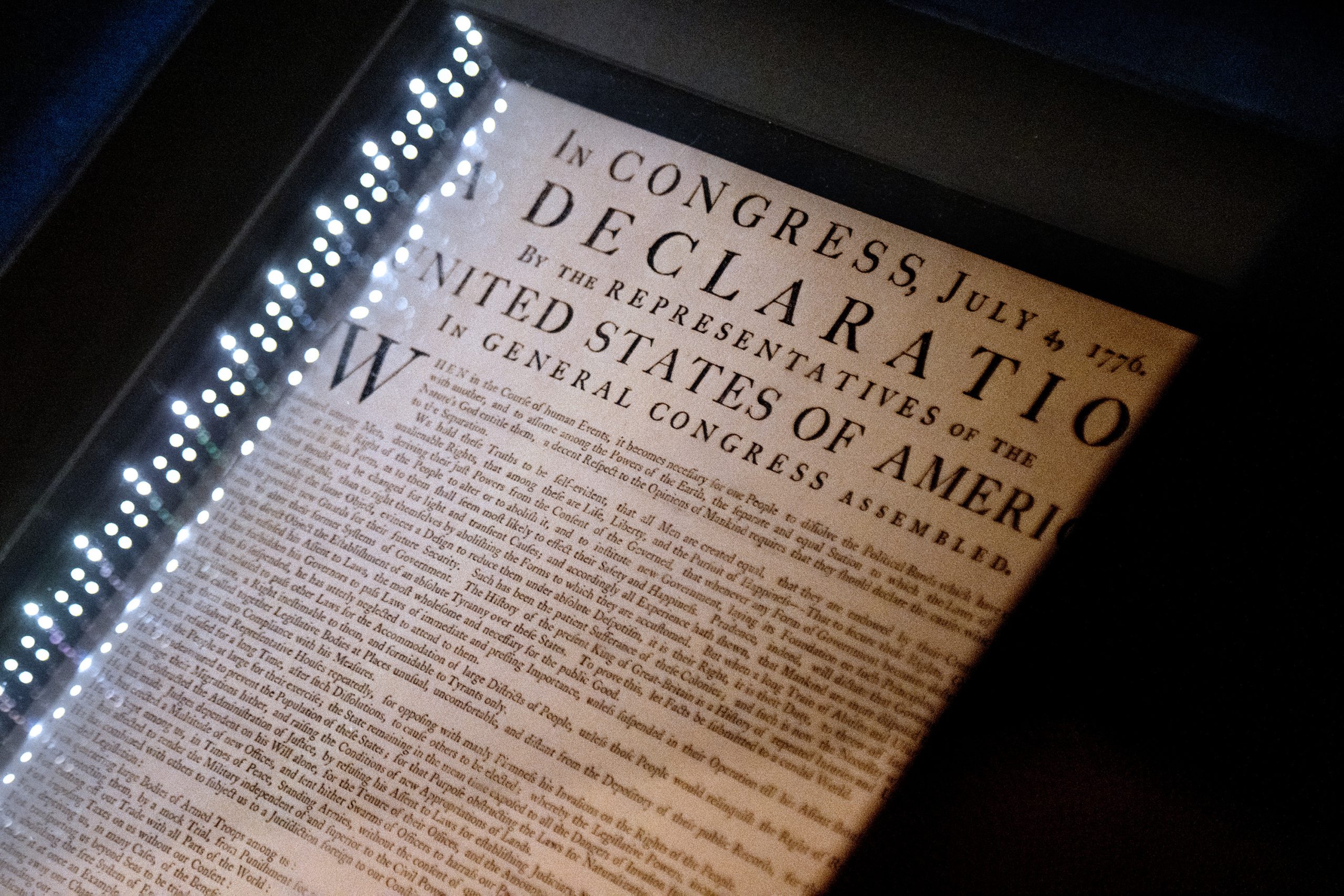
    An original broadside copy of the Declaration of Independence printed by John Dunlap on display in the “Great Essentials” exhibit in the West Wing of Independence Hall on July 29, 2025.Tom Gralish / Staff Photographer
  • Saluting the signers for the Semiquincentennial

    Saluting the signers for the Semiquincentennial

    It’s a common sound in Philadelphia’s historic district during the summer. I was photographing tourists in front of Independence Hall on Wednesday when the beat of a single snare drum a block away achieved its intended purpose.

    Just like when the fife and drum corps would relay tactical commands over the noise of the battlefield, or regulate a soldier’s daily routine, I stopped what I was going and headed in the direction of the beating pulse.

    It was coming from the normally quiet Signer’s Garden pocket park, across 5th Street.

    I had intended to go there anyway to photograph the statue — “The Signer” — as I am working with present-day descendants of the signers of the Declaration of Independence on a photo essay that will be posted online this Fourth of July weekend.

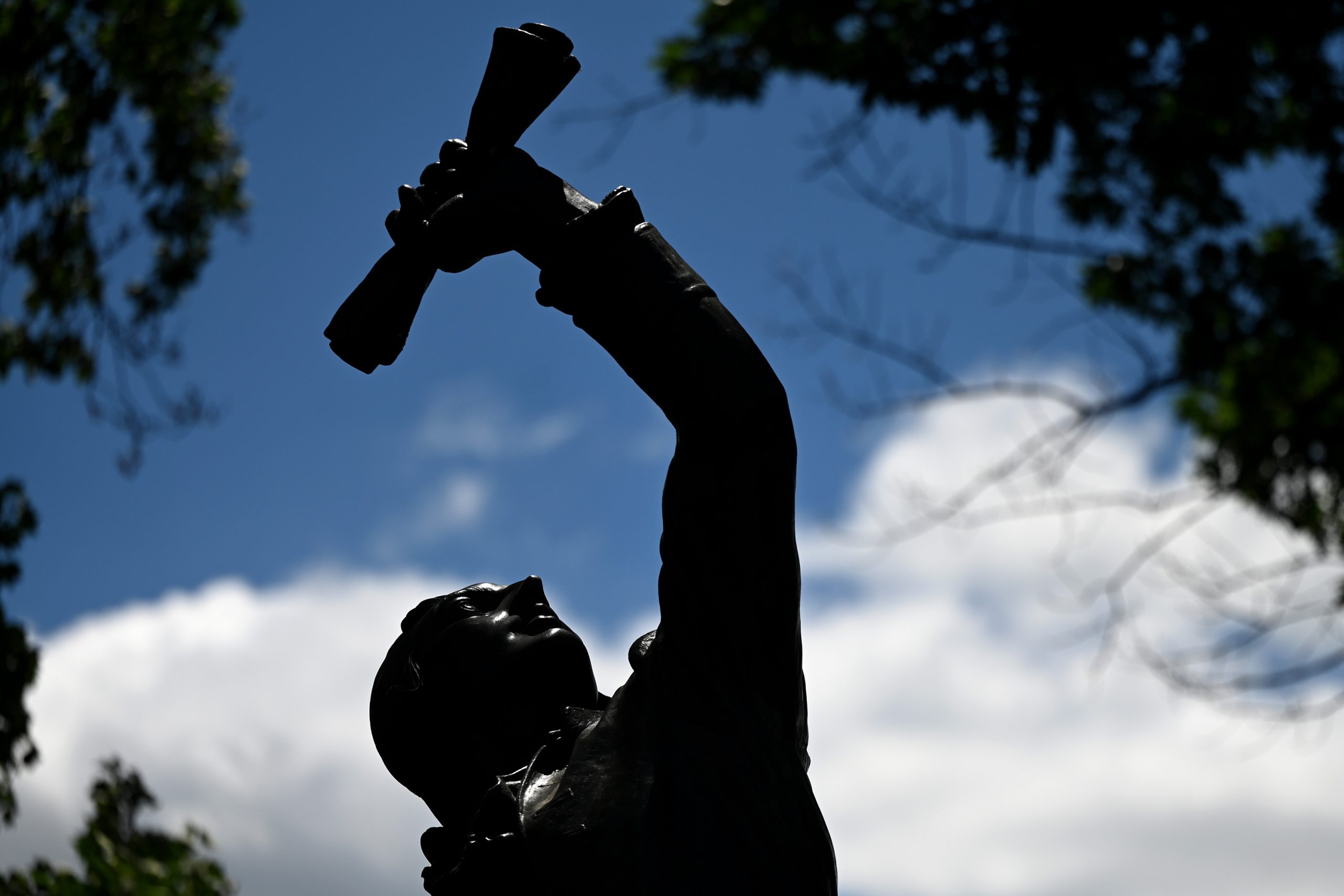
    The statue was inspired by George Clymer, a Philadelphia merchant, statesman, and signer of both the Declaration of Independence and the U.S. Constitution. A National Park Service plaque at the entrance reads “it commemorates the courage of those who altered their lives, and ours, by affixing their names to these documents.”

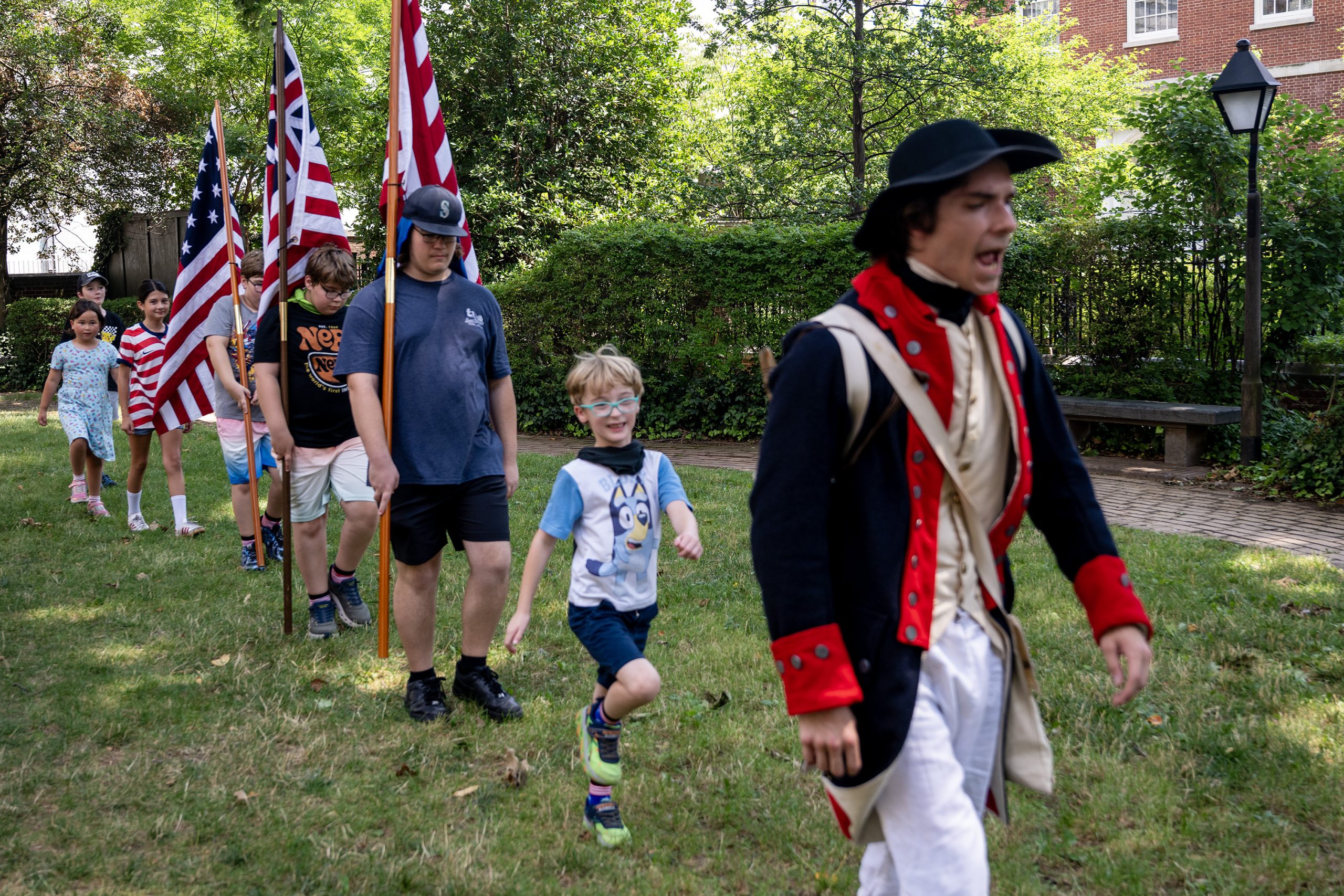
    The drum was mustering holiday week visitors for a presentation by two costumed actors from Historic Philadelphia portraying continental soldiers. I watched as the tourists watched them “draft” youngsters into their performance and found myself smiling more than once at how they engaged the kids — and the rest of us in the crowd — with some of their one-liners.

    Historic Philadelphia actor Lane Norris portraying Continental soldier Conrad Frye leads a contingent of young tourists in Independence National Historical Park Wednesday, July 1, 2026.Tom Gralish / Staff Photographer

    Did I say, smile? I might have had a slightly more sentimental reaction. I have written before that Independence Day has always been my favorite holiday. My dad, who passed away a few years ago, was born on the Fourth of July.

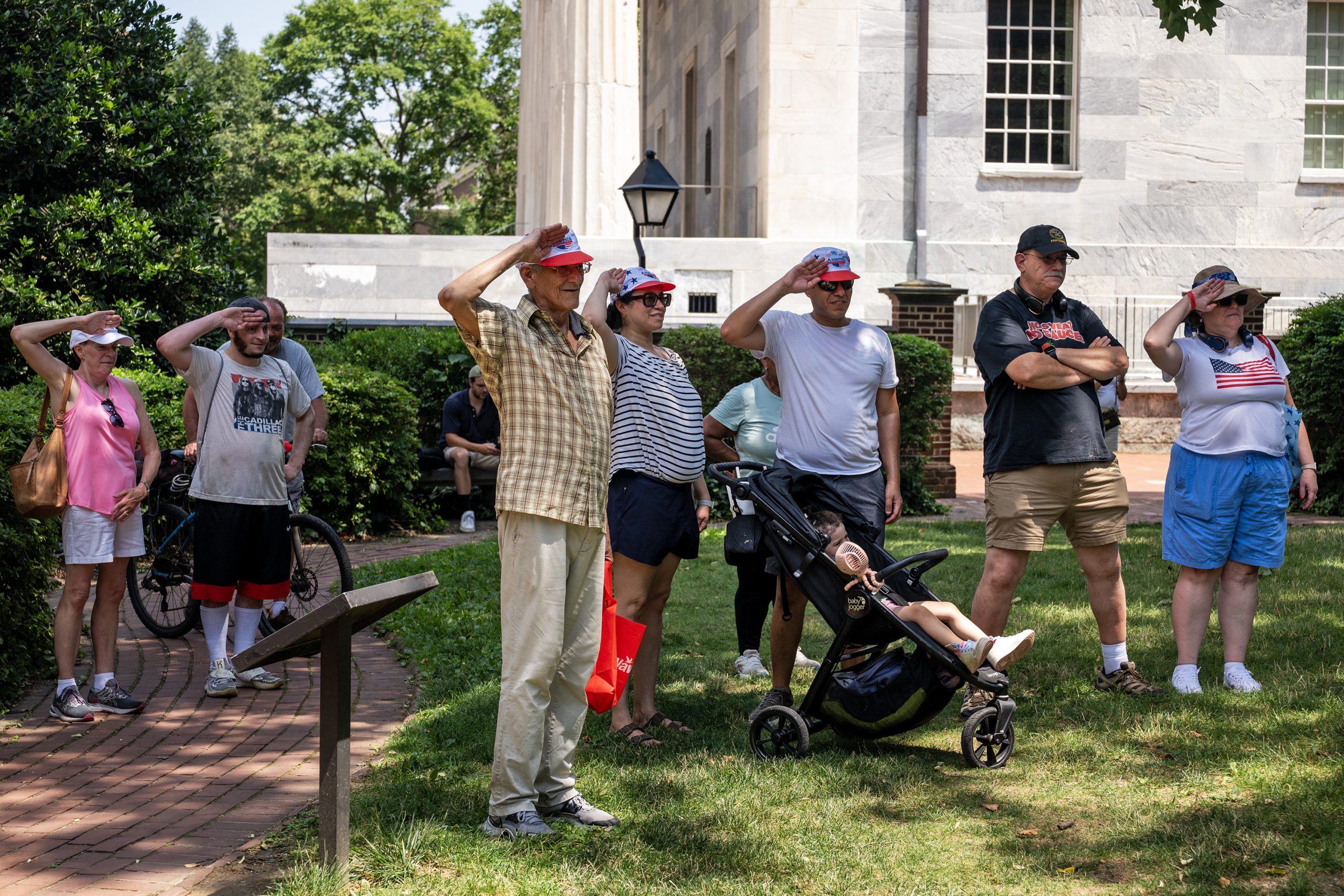
    As I looked around at the crowd I could tell everyone else was also getting into the interactive and engaging program. I photographed saluting adults who I assumed were parents, mirroring the actions of their kids doing the marching drills.

    Afterward, I learned they weren’t. They had a toddler still in a stroller. They were immigrants from Venezuela, and just happy to be here. Like me.

    We’re still in the middle of Philly’s celebration of America’s 250th birthday (with canceled events in a declared heat emergency with 100-plus degree temperatures!). Here are more of my Fourth of July photos and those of my colleagues:

    Since 1998 a black-and-white photo has appeared every Monday in staff photographer Tom Gralish’s “Scene Through the Lens” photo column in the print editions of The Inquirer’s local news section. Here are the most recent, in color:

    » SEE MORE: Archived columns and Twenty years of a photo column.

  • Pope Leo XIV celebrates immigrants in speech to Philadelphia crowd amid clash with Trump ahead of 250th anniversary

    Pope Leo XIV celebrates immigrants in speech to Philadelphia crowd amid clash with Trump ahead of 250th anniversary

    Addressing a Philadelphia crowd live from the Vatican, Pope Leo XIV called for a “recommitment” to American ideals.

    The first U.S.-born pope delivered remarks virtually at an interfaith ceremony inside Philadelphia’s National Constitution Center on the eve of the United States’ 250th birthday to accept the center’s prestigious Liberty Medal.

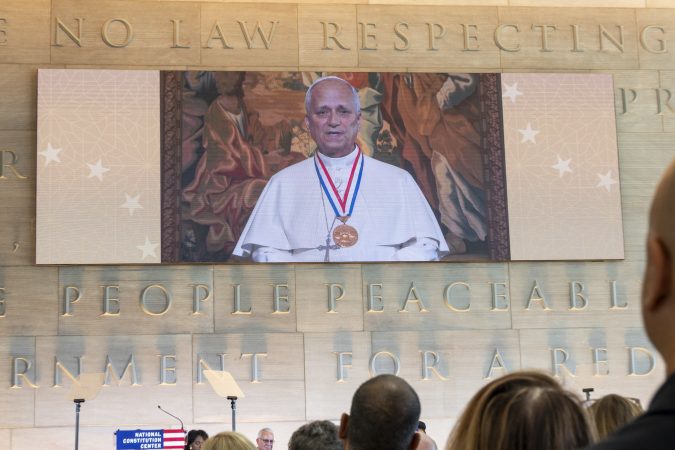
    Facing a screen showing the live, cheering Philadelphia audience, the pontiff wore his Liberty Medal along with a cross around his neck.

    Leo, who grew up in Chicago and attended Villanova University, quickly pointed out his American roots, calling himself “a son of this great country.”

    “I join you in asking God’s blessings upon America’s future that the lofty ideals enshrined at the beginning of the Declaration of Independence may continue to guide the flourishing of the nation in unity, justice, and peace,” he said.

    Leo, who was elected pope last year, spent years serving the church in Peru and has been outspoken about calling for international peace. That’s landed him at odds with President Donald Trump’s administration on the issue of migrants, the war in Iran, and more.

    The pope leaned into some of those themes in his speech, even though he did not refer to the president directly.

    He nodded to his advocacy for humane treatment of immigrants and noted that the founders of the United States “made America a byword for freedom, as the country opened its doors to successive waves of immigrants, enabling them and their children to play their part in shaping the future of the nation.”

    He said the “love of freedom” in the United States has inspired the country “to look beyond itself and at great sacrifice to champion the cause of freedom beyond its own borders.” But he acknowledged that mission hasn’t been straightforward, noting that building a society that embodies such ideals “was not always easy and, in many respects, is still a work in progress.”

    The pontiff’s speech comes the day before he plans to visit Lampedusa, an Italian island known as a stop for migrants making the dangerous journey across the Mediterranean Sea from North Africa to Europe. His predecessor Pope Francis made his first official visit outside of Rome in 2013 to the same island and condemned the “globalization of indifference” toward migrants.

    Pope Leo XIV speaks at the Liberty Medal Ceremony at the National Constitution Center in Philadelphia on Friday.Tyger Williams / Staff Photographer

    Julie Silverbrook, the chief content and learning officer for the National Constitution Center, emphasized in a Friday interview that Leo is a “global leader who has been uniquely shaped by American ideals.”

    “He has brought together people of different faith traditions, and through his ministry really reflected his belief in the inherent dignity of all human beings,” she said.

    Leo declined an invitation from Trump to the United States to celebrate the country’s 250th birthday on July Fourth, the New York Times reported. The first American-born pope opting to visit migrants instead sends a stark message as the president pursues his mission of mass deportations.

    But the pontiff’s participation in the Philadelphia program highlights his connections to the region, which isn’t lost on the National Constitution Center.

    The Philadelphia-based private nonprofit organization chose Leo for the award due to “his lifelong work promoting religious liberty and freedom of conscience and expression around the world — ideals enshrined by America’s founders in the First Amendment to the U.S. Constitution.” That, and also because he is the first pope born in the United States, and has connections to Philadelphia, Silverbrook said.

    “He was shaped by those freedoms … in much the same way that the Declaration of Independence was shaped by the city of Philadelphia, and of course a reflection of American values that have been carried globally,” she said.

    When a delegation from Philadelphia’s National Constitution Center met with Leo at the Vatican in April to present him with the medal in person, they also bore a few local goodies: a bundle of Villanova swag, a replica of George Washington’s Acts of Congress, and a Wawa tote bag filled with Tastykakes.

    “I think he very much so feels a connection to Philadelphia, both having been educated here, and I think in this semiquincentennial moment, I think the eyes of the world are on Philadelphia, and we’re thinking about the ideals that have emanated from this place for 250 years,” Silverbrook said.

    Leo, a 1977 Villanova alum, recently passed on a surprise message to graduates of his alma mater. Vince Stango, the interim president and CEO of the National Constitution Center, also went to the Augustinian university on the Main Line, which co-sponsored the NBC10 broadcast of the event along with the archdiocese and Malvern Prep.

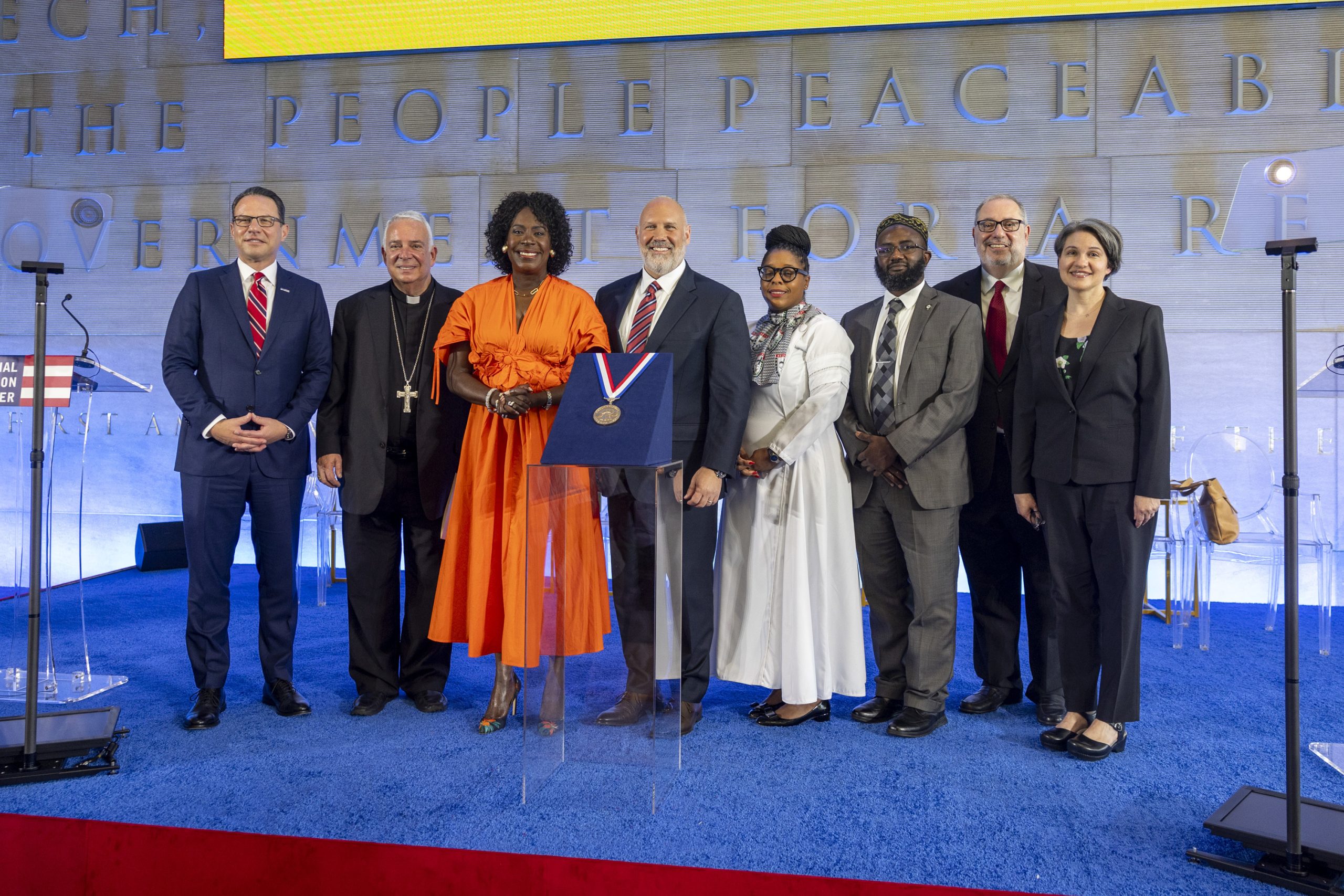
    (From left to right) Gov. Josh Shapiro, Rev. Nelson J. Pérez, Mayor Cherelle L. Parker, Interim President & CEO of National Constitutional Center Vince Stango, Rev. Carolyn C. Cavaness, Imam Quaiser D. Abdullah, Rev. Luis A. Cortés Jr., and Rabbi Jill L. Maderer, pose for a photo at the Liberty Medal Ceremony at the National Constitution Center in Philadelphia, Pa., on Friday.Tyger Williams / Staff Photographer

    Clashing with Trump

    The pope has contended that it’s up to each country to determine how they want to accept migrants while also denouncing the Trump administration’s “extremely disrespectful” treatment of them.

    He has also spoken out against Trump’s threats against Iran, and declined to participate in the president’s “Board of Peace” for Gaza’s reconstruction.

    In an April social media rant, Trump complained that he doesn’t “want a Pope who criticizes the President of the United States.” The president called the Catholic leader weak and accused him of “catering to the Radical Left.”

    Leo told reporters that month that he has “no fear, neither of the Trump administration, nor of speaking out loudly about the message in the Gospel, and that’s what I believe I am called to do, what the church is called to do.”

    In his Friday remarks, the pope made a call for unity but warned that a country should come together with “ideals that do not fade with the passing of time.”

    He called on the United States to recognize its values of “peace and prosperity, a country characterized by generosity and nobility of heart,” and said the values of “shared human dignity, equality, and the rights laid out in the Declaration of Independence” can help unite and guide the nation.
    The Liberty Medal

    The Liberty Medal was created in 1988 and has been hosted by the National Constitution Center since 2006.
    The award has gone to storytellers, philanthropists, civil rights leaders, and politicians on both sides of the aisle, such as Ukrainian President Volodymyr Zelenskyy, former Supreme Court Justice Ruth Bader Ginsberg, the Bushes, Malala Yousafzai, and Thurgood Marshall.

    The center describes its recipients as individuals who “strive to secure the blessings of liberty to people around the globe.”

    The process of selecting Leo began about a year ago, Silverbrook said.

    The speech was initially going to be projected on Independence Mall, but the event was moved indoors due to the extreme heat and livestreamed by the center online.

    Rich Russo, 63, a Fishtown resident who attended the event in person, called the experience “once in a lifetime.”

    “How many times do you get the pope talking to you?” said Russo, who works for a bank.

    Gov. Josh Shapiro, who is Jewish, and Mayor Cherelle L. Parker, a Baptist — both Democrats who have been outspoken about their own faiths — joined Philadelphia Archbishop Nelson J. Pérez and other religious leaders who made remarks on stage prior to the pope’s speech. Pennsylvania Attorney General Dave Sunday, a Republican, rang a replica Liberty Bell outside.

    “Philly is proud that the pope is a graduate of Villanova University who spent time living and working in our region,” Pérez said on stage. “Pope Leo knows us, and we feel like we know him, too.”

    “His influence, however, extends beyond Philadelphia,” the archbishop added.