This summer, a strange spate of posts popped upin neighborhood Facebook groups:
“Found a parrot in south philly,” one post said, “… anyone missing it? Singing its little heart out.”
“Lost bird!” said another.
Then another: “Please get this parakeet back home!”
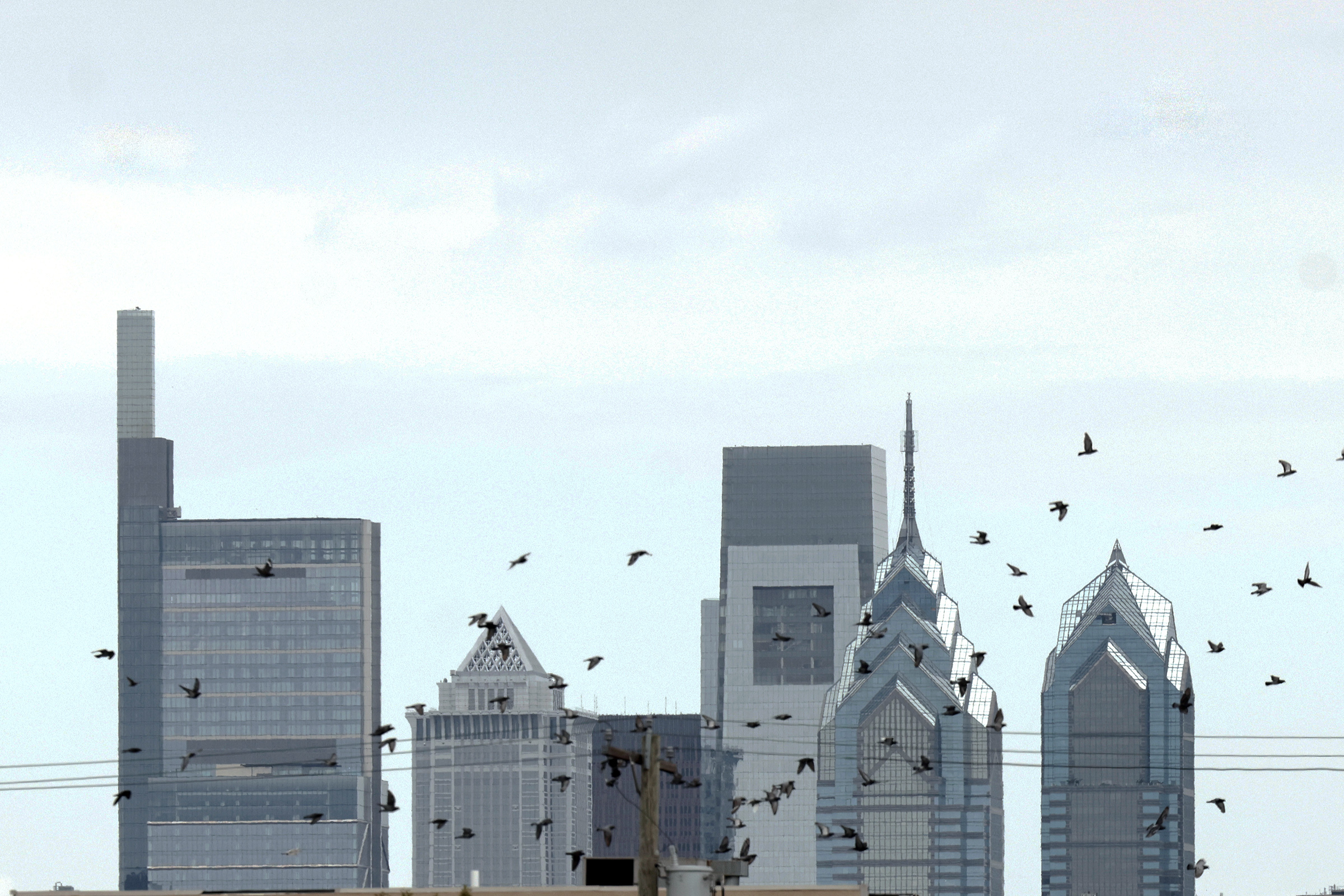
In the last few months, the number of these posts — alerting people to loose or lost exotic birds, like parrots, parakeets, or budgerigars, throughout Philadelphia — has seemingly, anecdotally, increased. One person on Reddit noticed this trend and wrote, “WTH is with all these lost birds around Philly? Did a pet store close and just let a bunch of birds loose?”
No official entity could confirm or quantify this phenomenon: The Pennsylvania Game Commission deferred questions to local animal welfare groups. The Animal Care and Control Team of Philly, which gets less than a dozen calls a year about pet birds, a spokesperson said, hasn’t noticed an uptick in those calls.
Nor had any other avian-related groups, like the Audubon Society, Bird Safe Philly, or the Schuylkill Center for Environmental Education, which all noted they primarily or exclusively deal with wild birds. No one had asked the Philadelphia Zoo to take in any surrendered or lost exotic birds, a spokesperson said. And multiple pet store chains did not respond to questions about whether they lost a flock of birds.
Susan Tyson, an avian veterinarian and owner of Avian & Exotic Philly Vet in Old City, said her clinic has treated four loose budgerigars, or “budgies,” so far this year, including at least two since July.
“We’ve always had people finding loose animals,” Tyson said, “but I’d probably say in the last maybe four years it’s increased.”
Is there a bird liberation movement?
This isn’t a captive bird mutiny. Tyson believes most of these birds inadvertently escaped from homes or pet stores. Navin Sasikumar, president of the Delaware Valley Ornithological Club (DVOC), suggested some might have been intentionally abandoned by their owners.
“Probably other people who have pet birds saw [the posts] and thought, ‘Hey, these birds are being rescued — I have birds that I don’t want anymore, maybe they’ll be rescued too,’” Sasikumar said.
“Or it could just be extra attention,” he said. “There might have been other escaped birds around, but no one was really paying attention until one [post] caught on.”
Tyson agreed that social media might be feeding this perceivedproliferation. “It’s like monitoring for breast cancer,” she said. “We’re doing it more, so we’re seeing it more.”
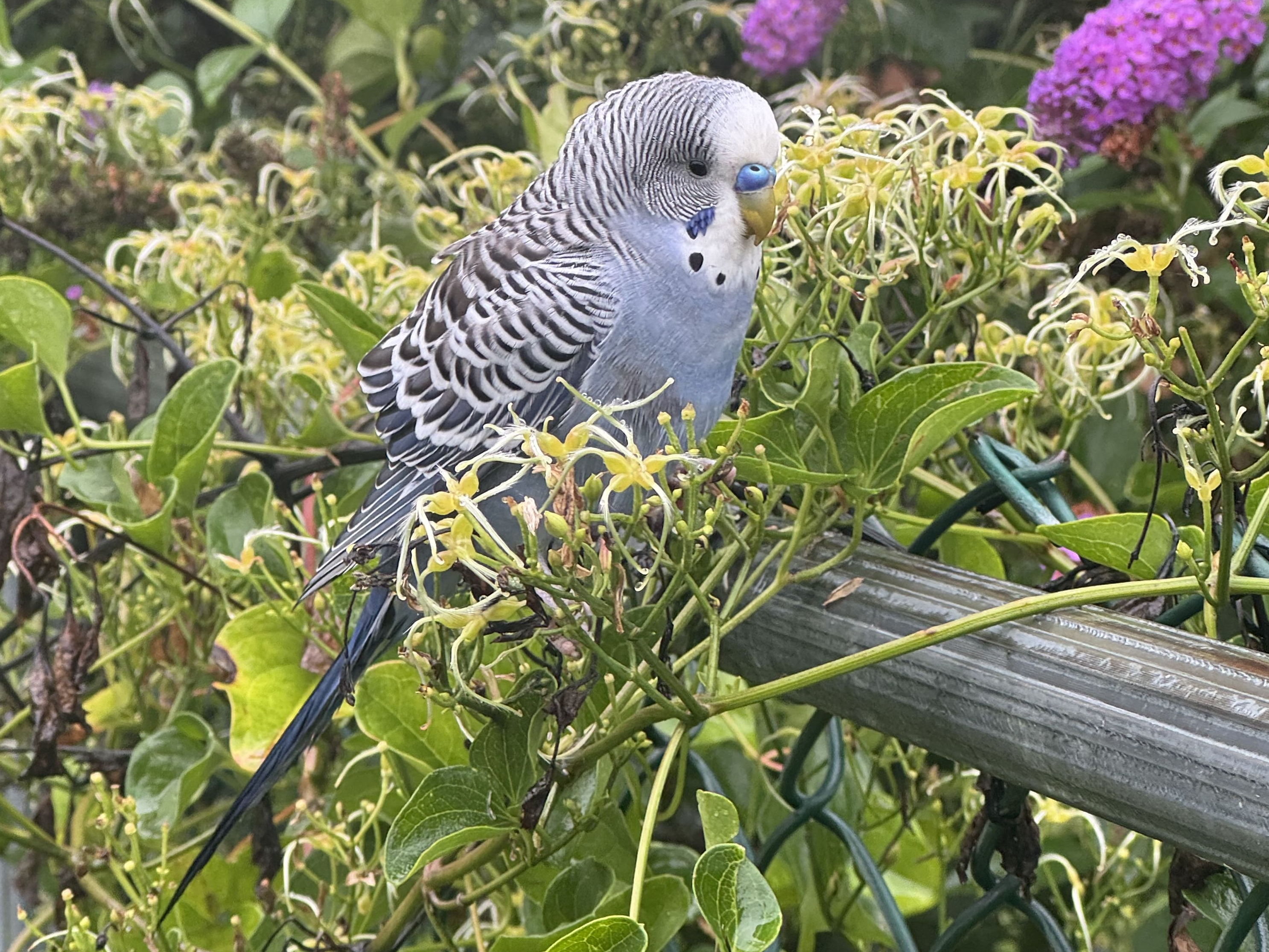
In late September, one of these wayward fledglings found itself in George Armistead’s Upper Roxborough backyard. He was sitting on his porch about 5 p.m. on Sept. 22 when “this thing” — a baby-blue budgie — “dropped out of the sky.”
“I was just totally flabbergasted,” Armistead, 52, said. A lifelong birder and former president of the DVOC, Armistead said he’s seen only a couple non-native budgies and maybe a handful of other exotic birds loose on the streets of Philadelphia.
This budgie’s plumage seemed fresh and uniform, and it was banded with a small ring typically used for research, tracking, or breeding, which lead Armistead to think it wasn’t a house pet. Instead, he thought maybe “a crateful of these things got loose.” (Tyson said there have been cases of birds getting loose while being delivered or transported.)
On a recent September evening, “this thing” — a baby-blue budgie — “dropped out of the sky” and into George Armistead’s Upper Roxborough backyard.Courtesy of George Armistead
Armistead doesn’t support the caged bird trade — he called it “unnatural,” akin to keeping killer whales in aquariums — but he captured the creature, fearing for its own safety in the elements.
Think freeing pet birds is kind? Experts say it isn’t
The greatest risk these loose birds pose is to themselves, experts said: Tropical species will likely be picked off by raptors or killed by the Pennsylvania winter. And while releasing a caged bird might sound idyllic, “the reality is much more ugly,” said Victoria Sindlinger, a senior at the University of Pennsylvania and founder of its Quackers Bird Club.
“It’s just really not going to be suited for life outside or life in this climate, and it is going to die,” Sindlinger said, “and unfortunately, it’s probably going to not be the quickest death.”
Ultimately, rescuing and caring for these animals is up to “individual people’s goodwill,” Sasikumar said. Tyson advocates for all pet birds to be microchipped, like cats or dogs. Her military macaw, Suzy, is microchipped, she said. Sindlinger added that bird ownership should not be taken lightly.
Meanwhile, Armistead’s budgie — which he’s been calling “Pudgie” — has taken up a residence in his spare bedroom, away from the family’s very curious cat. He’s looking to find Pudgie a permanent, loving home.
For now, he said, “my wife has gotten rather attached to it.”
How’s “false fall” treating you? If you pulled your sweaters out thinking summer was done and dusted, you’re not alone. Soon enough, it’ll start to feel like autumn (real autumn).
As the clock ticks on, we’re losing roughly 2½ minutes of sunlight each day, The Inquirer’s weather whisperer Tony Wood reports. One sure way to combat the negative effects of shorter days? “Get outside and move your body daily,” an expert told Wood.
In Philly and the surrounding region, we have a variety of fall festivals and markets to embrace the season in good company.
Here’s a preview of some lively events to look forward to:
🏺 Mt. Airy Arts Fest (Oct. 3) at Allens Lane Park will have stations for painting, printmaking, and ceramics to make art with your own hands, along with live performances and food to enjoy.
🧀 Manayunk Fall Festival (Oct. 17) lets you mac-and-cheese-crawl your way through local vendors. Plus, just one neighborhood over, enjoy free pumpkin decoratingand more fun for all ages at East FallsFest.
🍁 Cherry Hill Harvest Festival (Oct. 18) at Croft Farm will host a beer garden, free pumpkins, and a petting zoo.
Last weekend’s nor’easter underscored the limitations of computer models, and it may also foreshadow what’s to come.
🌳 Your outdoorsy experience
My colleague Sam Stewart recently spent a couple of days in the Poconos and was excited to share this with us:
These pics are from the Little Falls Trail in Promised Land State Park! It was SO beautiful, lots of water along the trail (including a waterfall!), and it was a super easy, 1.5-mile loop. It was my first fall hike of the year, the weather was incredible and the sun was shining 🙂
Such a spectacular sight! I’m already planning my own trip up there. Thanks, Sam.
How about you, dear reader? What’s happening in your neck of the woods? Email me with your favorite adventures or special outdoor memories (and pictures, if you have them). You may see it featured here.
Pennsylvania is home to tens of thousands of farms, and Airbnb wants you to stay on them.
The short-term rental giant ispartnering with the American Farmland Trust and recruiting Keystone State farmers — and even offering grants — to host guests and tap into the growing agritourism industry. The average farm stay listing on Airbnb, the company said, can make an extra $9,600 per year.
Valerie and Jeff Fellenbaum said they’re making much more than that at Pleasant Pines Stables, their horse farm dating to the early 19th century in Lancaster County.
“Once we started, we never looked back,” Valerie Fellenbaum said. “I would say, from March to about the end of October, we’re anywhere from 85% to 90% booked.” — Jason Nark
💡 A fall fact: According to Merriam-Webster,the term “autumn” entered English in the 1300s, and “fall” became the shortened version of “the fall of the leaves” in the 1600s.
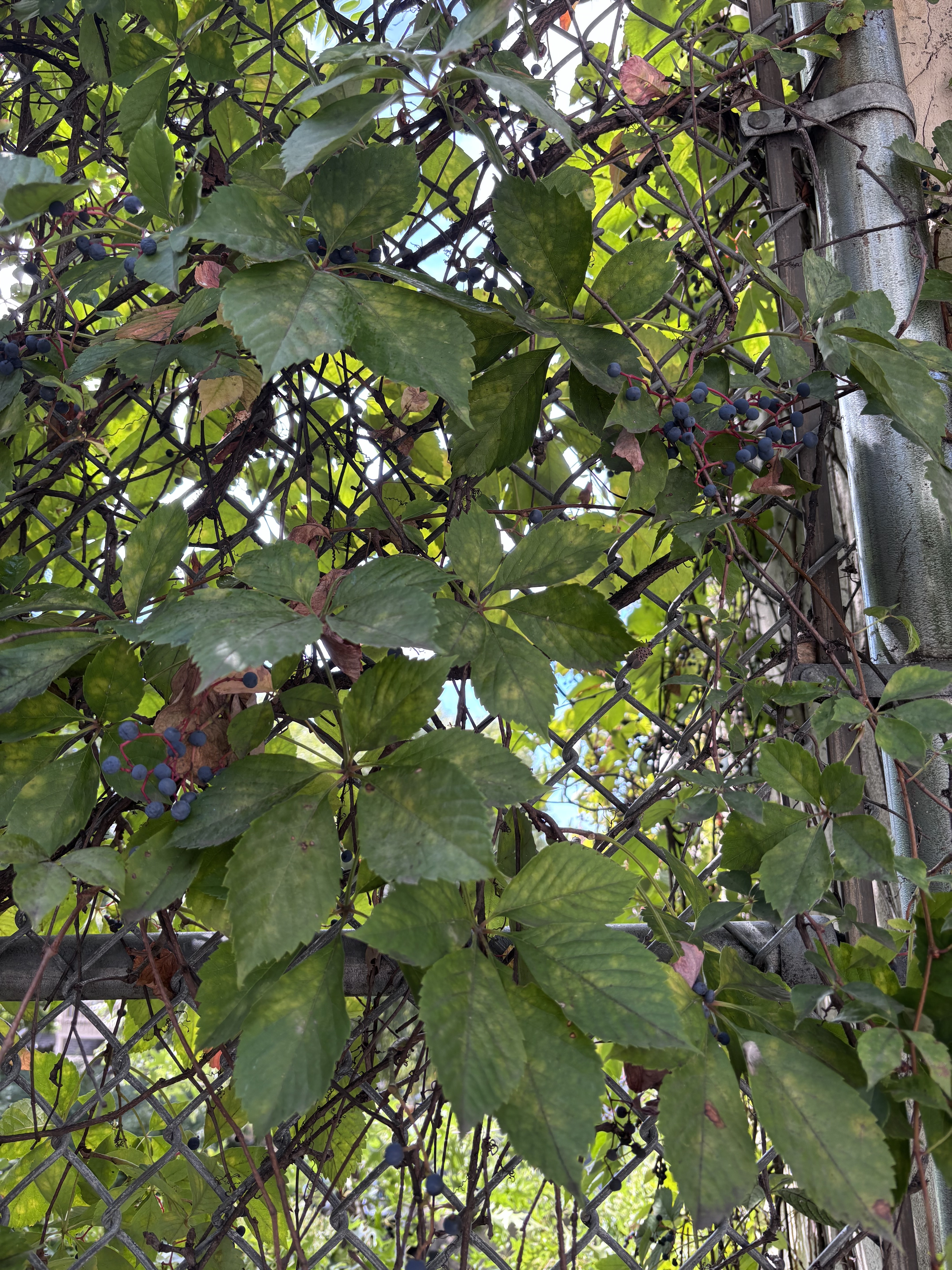
There are spotted lanternflies hidden among these vines.Paola Pérez
I believe this is a Virginia creeper plant, also known as woodbine. It also bears some resemblance to poison ivy. Avoid its berries, though — while wildlife can feed on them, they are toxic to humans.
👀 Can you spot a spotted lanternfly among the leaves? By my count, I think there are at least two.
Speaking of the invasive species, my colleague Nick Vadala reported this week about a man tricking at least 80 Pennsylvanians into paying for fake trainings and permits to contain the invasive species. Be wary of scams like that, folks.
👋🏽 Our next adventure awaits!
By submitting your written, visual, and/or audio contributions, you agree to The Inquirer’s Terms of Use, including the grant of rights in Section 10.
Friedman — who has posted over 50,000 photos and videos of dogs (and their humans) online since 2013 — is hosting a meetup on Sunday morning on the Schuylkill Banks. Hundreds of hounds are expected to attend.
“We’re going to meet at the Schuylkill River Dog Park,” said Friedman, speaking via Zoom from his Manhattan apartment, “and then we’re going to walk along the river up to the Art Museum and climb the Rocky steps for a group photo.”
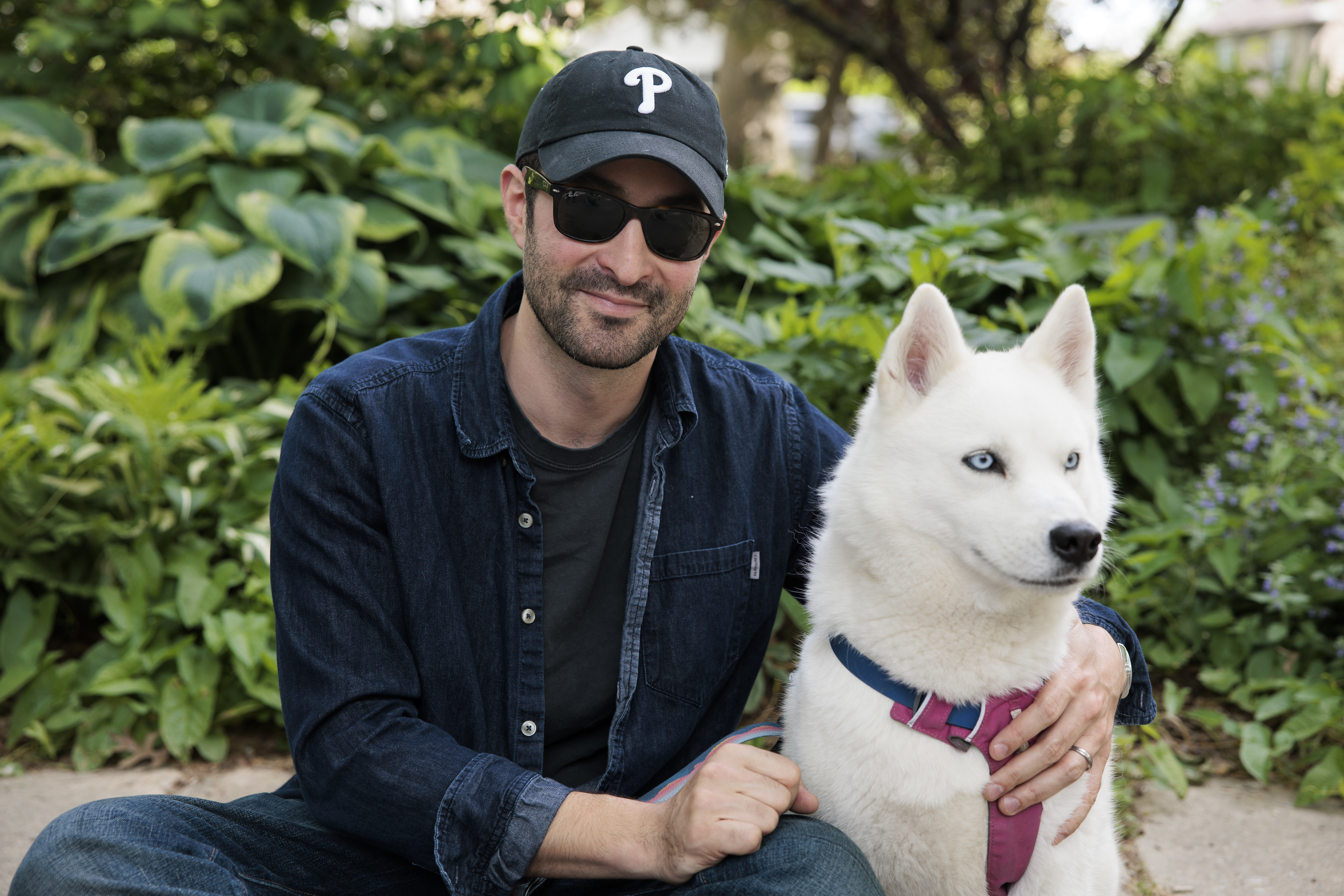
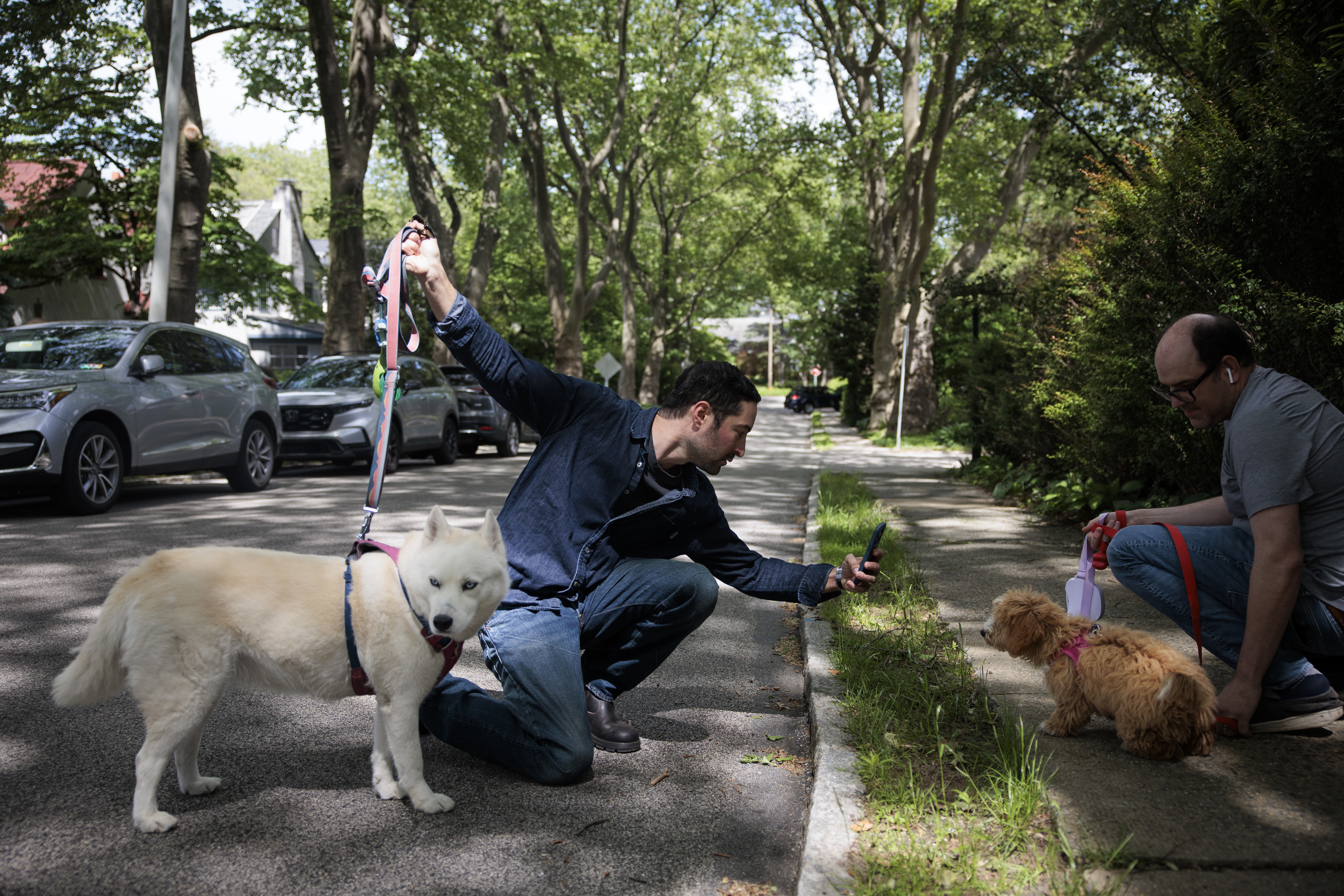
Friedman will be there with his dog, Elsa, the Instagram-famous white husky mix who was dog of honor at his 2025 wedding to Samantha Cutler, his fellow alum of Wynnewood’s Friends Central High School. The wedding was featured in the New York Times’ Vows column.
“It’s a little crazy for me,” said Friedman, “because I feel like I’m a prophet, or” — he laughs — “some sort of dog evangelist, where everybody’s gonna follow me. It’s like I’m leading a march.”
“It’s a very joyful thing to have people meet up around a shared love of dog. They get to know each other, and make a lot of connections. It’s an amazing show of the power of not just the dog community, but the Dogist community.”
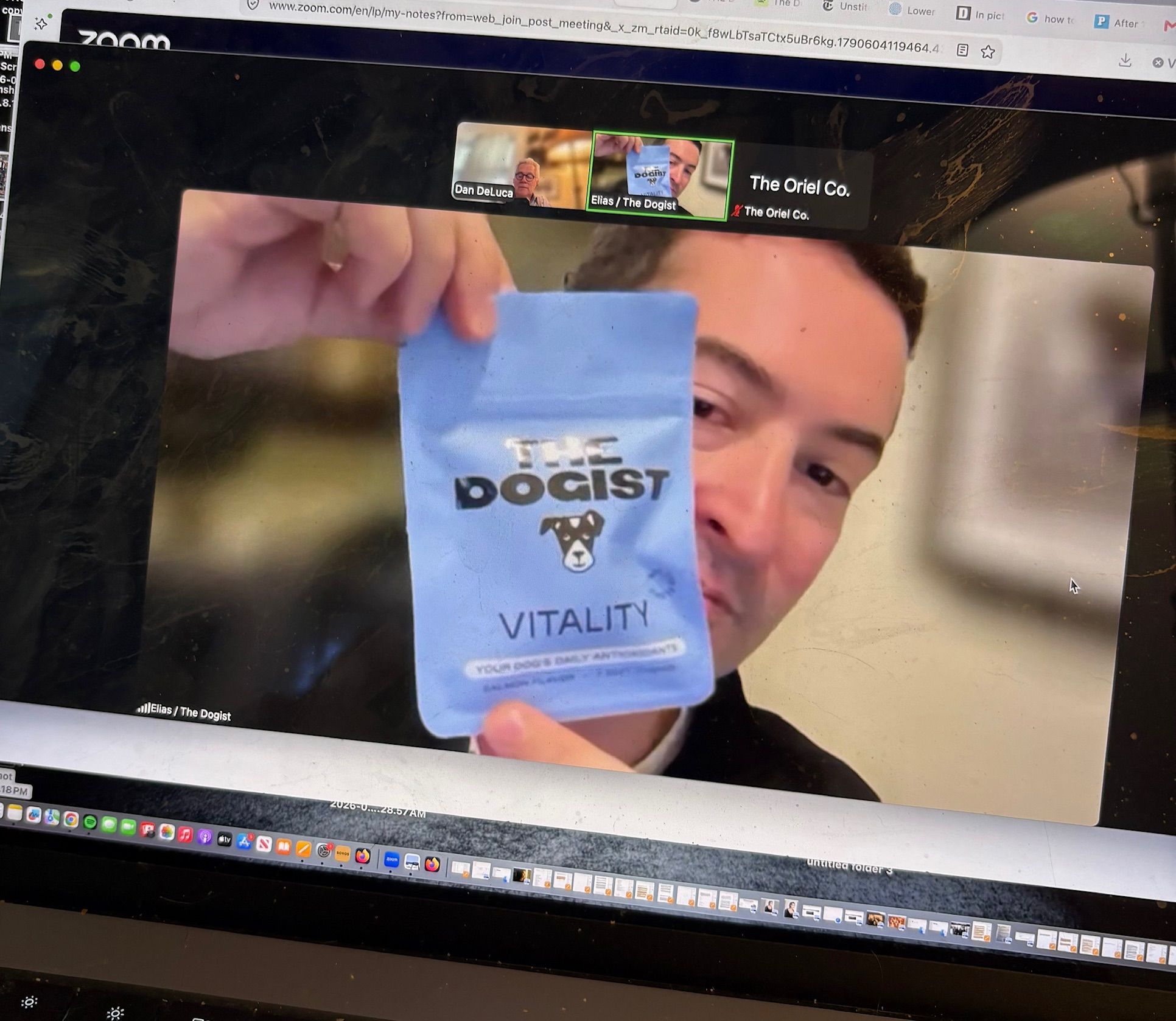
Sunday’s walk with Friedman is part of a Dogist tour tied to the launch of the Dogist Company, a canine wellness brand whose first product is Vitality, which is advertised as a “Board-Certified Vet-formulated antioxidant chew that supports brain, joint and immune health.”
“It’s salmon flavored so a dog might consider it a treat,” Friedman says of the product he developed with veterinary nutritionist Angela Rollins, which is available at thedogistcompany.com. “But it’s not a treat, it’s a supplement.”
Elias Weiss Friedman, a.k.a. the Dogist, holds a package of his newly launched canine wellness brand, The Dogist Company’s Vitality supplement, during a Zoom interview.Dan DeLuca
“Everybody wants more years with their dog. But it’s also about having good years with your dog,” says Friedman, who credits Elsa, 6, as “chief wellness officer” on the Dogist Company website.
“I’ve spent the last 13 years of my life showing the world how amazing dogs are. So the next evolution of the Dogist ecosystem is creating products that make dogs’ lives better — because it’s the least we can do for them for all they do for us.”
“They’re based in Narberth where I grew up,” Friedman said. “They raise service dogs to work with teenagers and children who are clinically diagnosed with depression, or PTSD, or are on the autism spectrum.”
Friedman also has a show on YouTube — simply called Dogs — where he strolls around meeting pups with celebrities, such as actors Zooey Deschanel and Sarah Paulson, and comedians Roy Wood Jr. and Lewis Black.
Elias Weiss Friedman, photographer and founder of the Dogist, holds onto his dog named Elsa, while photographing Michael Rey and Rosie, in his childhood neighborhood on May 20, 2025, in Narberth.Monica Herndon / Staff Photographer
Last year, Jane Goodall was a guest in an episode recorded a week before her death. Meeting the English primatologist and anthropologist “was the biggest honor, probably, of my life,” said Friedman.
The Dogist origin story dates back to when he was a 2 year old and wandered away from his grandmother’s house in Narberth toward traffic on Montgomery Avenue. Oreo, his grandmother’s dutiful black Lab, kept him from walking into speeding traffic.
Most of the Dogist’s photos are taken in New York, but Friedman’s content-gathering travels have frequently brought him to Philadelphia, where he’s found four-legged subjects in Manayunk, Rittenhouse Square, and the Main Line.
“Negativity is easily found on the internet,” he said. “Dogs are an antidote or a respite to all that.”
At group meetups like Sunday’s — where walkers without dogs are also welcome — he can connect IRL with members of the digital Dogist community.
“I always enjoy going out and meeting people and talking to them about their dogs,” said Friedman, who has published three books including last year’sThis Dog Will Change Your Life.
“Dogs don’t have an ego, right?” he said. “They’re not burdened by one like we are. So part of the joy of seeing that they’re so free is that it allows us to transcend our ego for a few minutes. And that’s a very liberating experience.”
The Dogist Company Vitality Walk at Schuylkill River Park, 30 S. 25th St. at 10 a.m. on Sunday, Oct. 4, Instagram.com/thedogist
Fleece fragments in a washer flow into a wastewater treatment plant. A plastic bag blows into a stream. A water bottle washes down a storm drain.
All can end up in the region’s waterways as microplastics smaller than a grain of rice and find their way into drinking water and the stomachs of animals and fish.
This kind ofmicroplastic pollution was detected in 22 stream and river segments across the Delaware River watershed, according to a new survey of waterways by the nonprofit advocacy group PennEnvironment Research and Policy Center.
Researchers analyzed water samples from sites along the Delaware River and its tributaries across Pennsylvania, New Jersey, Delaware, and New York.
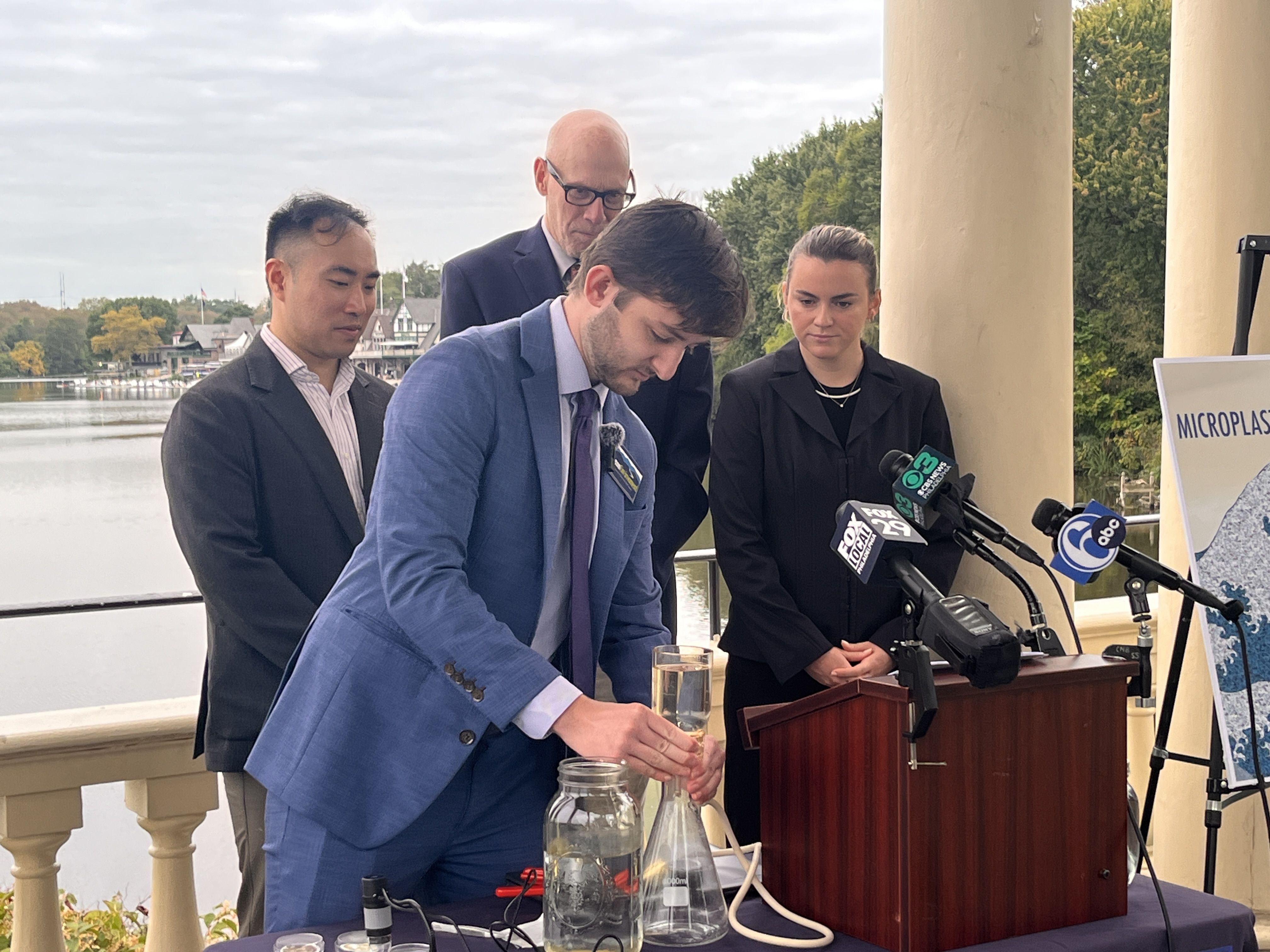
The research was conducted in partnership with the nonprofit Environment New Jersey Research and Policy Center. Scientists with the Academy of Natural Sciences at Drexel University helped analyze the results, which were released Wednesday during a news conference at Fairmount Water Works.
Contamination was found in the Delaware and Lehigh Rivers and the Schuylkill. It was found in Neshaminy Creek in Bucks County, Brandywine Creek in Chester County, and Cooper River in Camden County. And it was found along the Christina River in Delaware.
Drexel’s lab analysis confirmed microscopic plastic at every sampled site, highlighting what the researchers say is a widespread environmental threat.
“We can look at a waterway, and it might be free of litter, it might be free of visible plastic pollution, but that doesn’t necessarily mean it’s clean,” said Faran Savitz, an advocate for PennEnvironment. “The big takeaway is that we should be concerned. The depth, the breadth of this plastic pollution is staggering.”
Faran Savitz with PennEnvironment demonstrates water testing. In the background from right are: Lizzy Mulvenna, with Environment New Jersey Research & Policy Center; David Velinsky, senior scientist, Academy of Natural Sciences; and Derek Ho, microplastics researcher, University of Pennsylvania.Frank Kummer
Where do microfibers come from?
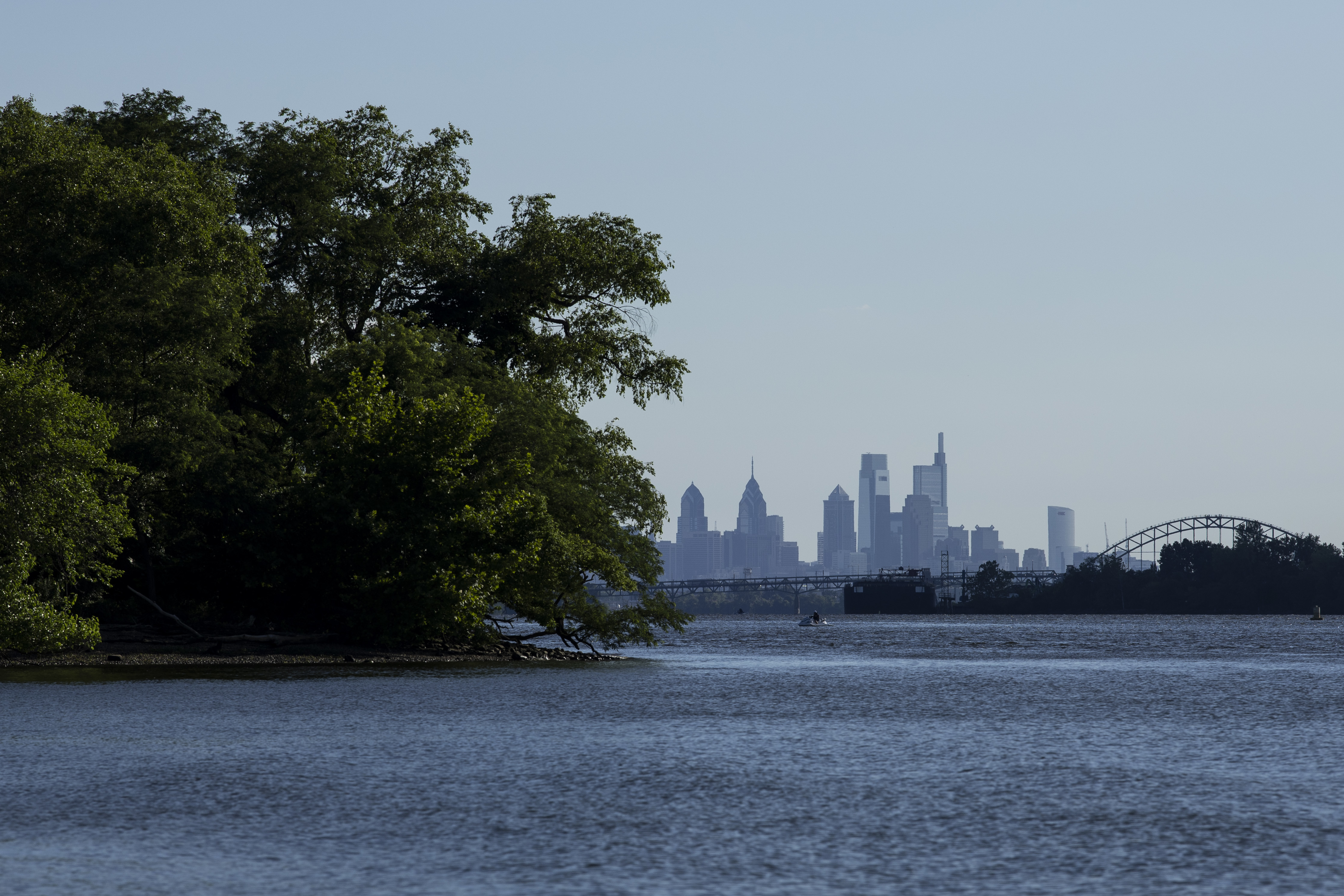
Waterways in and around Philadelphia emerged as significant focal points in the survey results.
Samples drawn from the Delaware River in Philadelphia tested positive for multiple categories of microplastics including microfibers, microfragments, and microfilm, as did other waterways. Microbeads, often found in cosmetic products, were also found in the Christina River.
Microplastics are defined as fragments of less than 5 mm in length.
The synthetic microfibers came primarily from clothing and textiles. Rigid microfragments from items such as fishing line were found in 82% of locations. And flexible microfilm from bags and packaging appeared in 77%.
(function(){function e(){window.addEventListener(`message`,function(e){if(e.data[`datawrapper-height`]!==void 0){var t=document.querySelectorAll(`iframe`);for(var n in e.data[`datawrapper-height`])for(var r=0,i;i=t[r];r++)if(i.contentWindow===e.source){var a=e.data[`datawrapper-height`][n]+`px`;i.style.height=a}}})}e()})();
Microplastics have been found in humans
Researchers explained that laundering synthetic garments releases millions of microfibers that wastewater treatment facilities are unable to completely filter out before they are discharged into local streams.
However, because plastic does not biodegrade but continuously fractures into tiny fragments, filters capture only a portion of plastic entering a waterway.
Savitz said PennEnvironment’s study did not release the concentrations of microplastics because it did not want to compare one waterwayor state against another.
The findings carry ecological and public health implications, as microplastics can block digestive tracts in wildlife and absorb toxic chemicals like PCBs and PFAS that bioaccumulate up the food chain, the report stated.
On average, humans ingest approximately 5 grams of plastic weekly, which is roughly equivalent to the weight of a credit card. Microplastics have been found in human blood, lung tissue, and organs, the researchers said.
Plastics are also routinely found in wildlife, including sea turtles, birds, and whales. About 60% of all seabirds have ingested plastic, with that number rising.
The environmental advocates are urging state and local leaders to enact policies such as producer responsibility for plastic packaging, bans on single-use foam and plastic bags, strict limits on pre-production plastic pellets, and enhanced drinking water filtration systems.
Microbeads once used in personal care products were phased out under President Barack Obama in 2015. But many of those products still linger on household shelves.
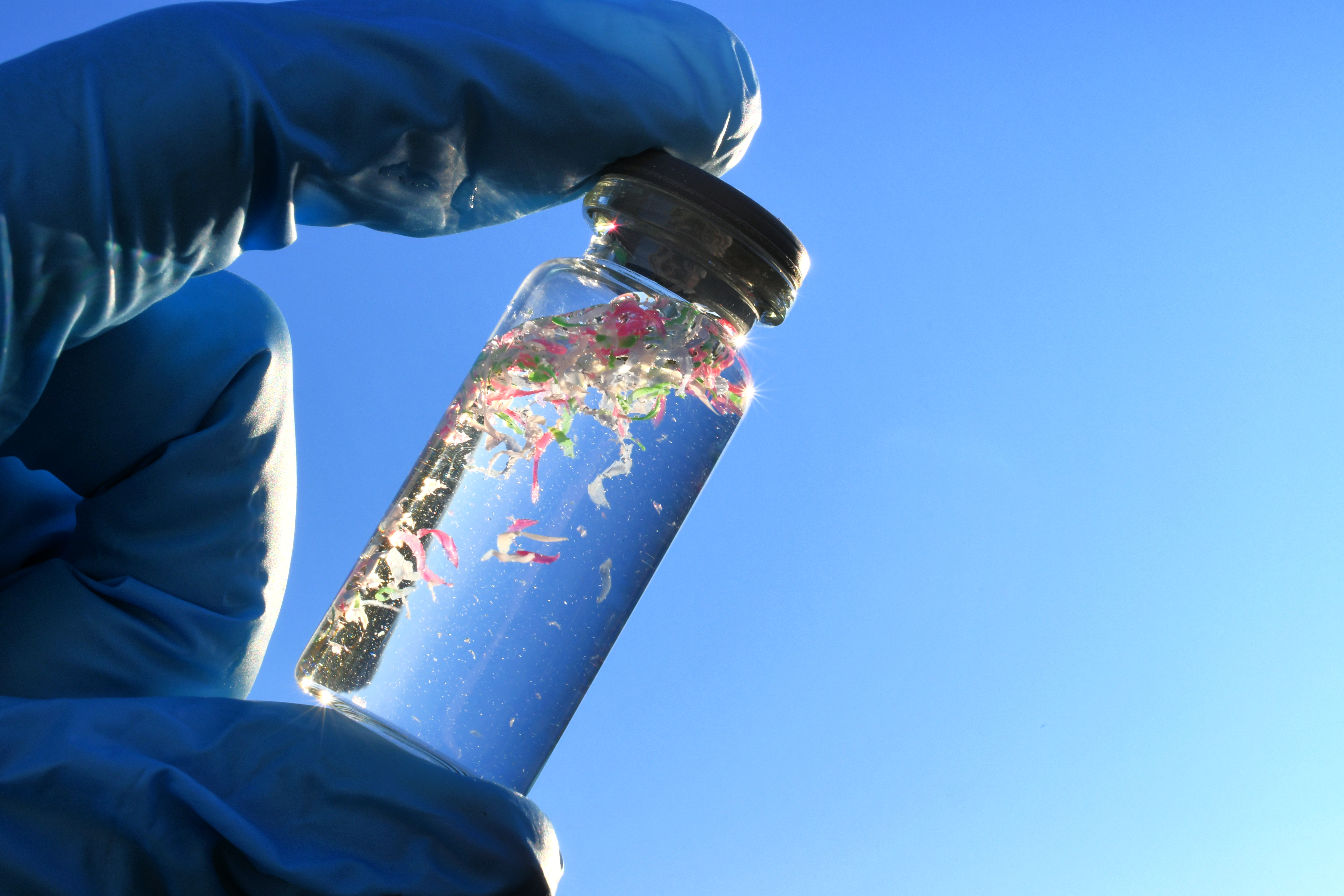
File: A glass vial containing water and microplastic pollutionGetty Images
Philadelphia’s drinking water
Philadelphians get their drinking water from the Delaware River and the Schuylkill. Most microplastics are filtered out at the Philadelphia Water Department’s wastewater treatment plants, but some particlesstill get through.
In 2025, PWD removed 4.6 tons of plastic litter from the Delaware and the Schuylkill, alongside an estimated 1,000 tons of plastic extracted through sewer maintenance, the researchers stated.
PWD said in an online report that it is “unclear whether microplastics pose a danger to human health,” noting that the risk could depend on the level of exposure, the type of plastic, and the size of the particles.
But it noted that research suggests some are harmful to fish and animals and can build up in the organs or bloodstream over time.
“PWD is always investigating advanced treatment technologies that may eliminate microplastics and other impurities,” the report stated.
David Velinsky, a senior scientist at the Academy of Natural Sciences of Drexel University, said, “plastics and microplastics are everywhere, from our clothing to the ubiquitous water bottle.”
When plastics and microplastics are not properly disposed of or recycled, he said, they break down into ever smaller pieces.
They “can travel great distances through both the air and in the water,” Velinsky noted.
A plea for ‘producer responsibility’
To combat pervasive plastics, advocates are urging federal and state lawmakers to enact targeted reforms, including the federal Plastic Pellet Free Waters Act currently before Congress, and state-level producer responsibility legislation for plastic packaging.
Savitz emphasized that shifting financial and operational burdens back onto manufacturers is critical to curbing waste at its source.
At least seven states have passed producer responsibility laws, though not all are in effect, according to the Product Stewardship Institute. Those states include Washington, Oregon, California, Colorado, Minnesota, Maryland, and Maine.
“If we can shift the burden back onto companies that create this waste in the first place,” Savitz said, “we can actually reduce the waste, encourage recycling, and make these broader, more systemic changes.”
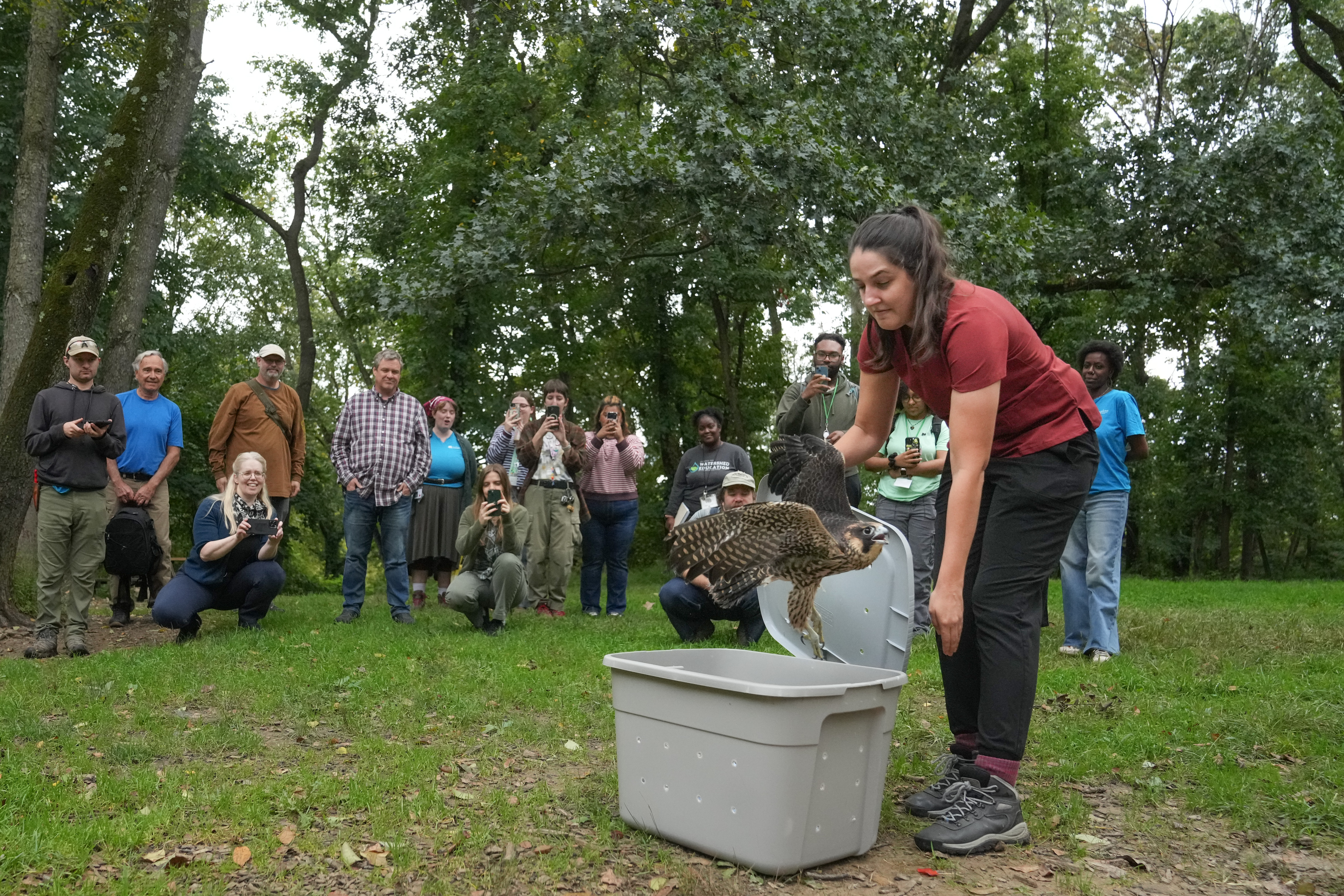
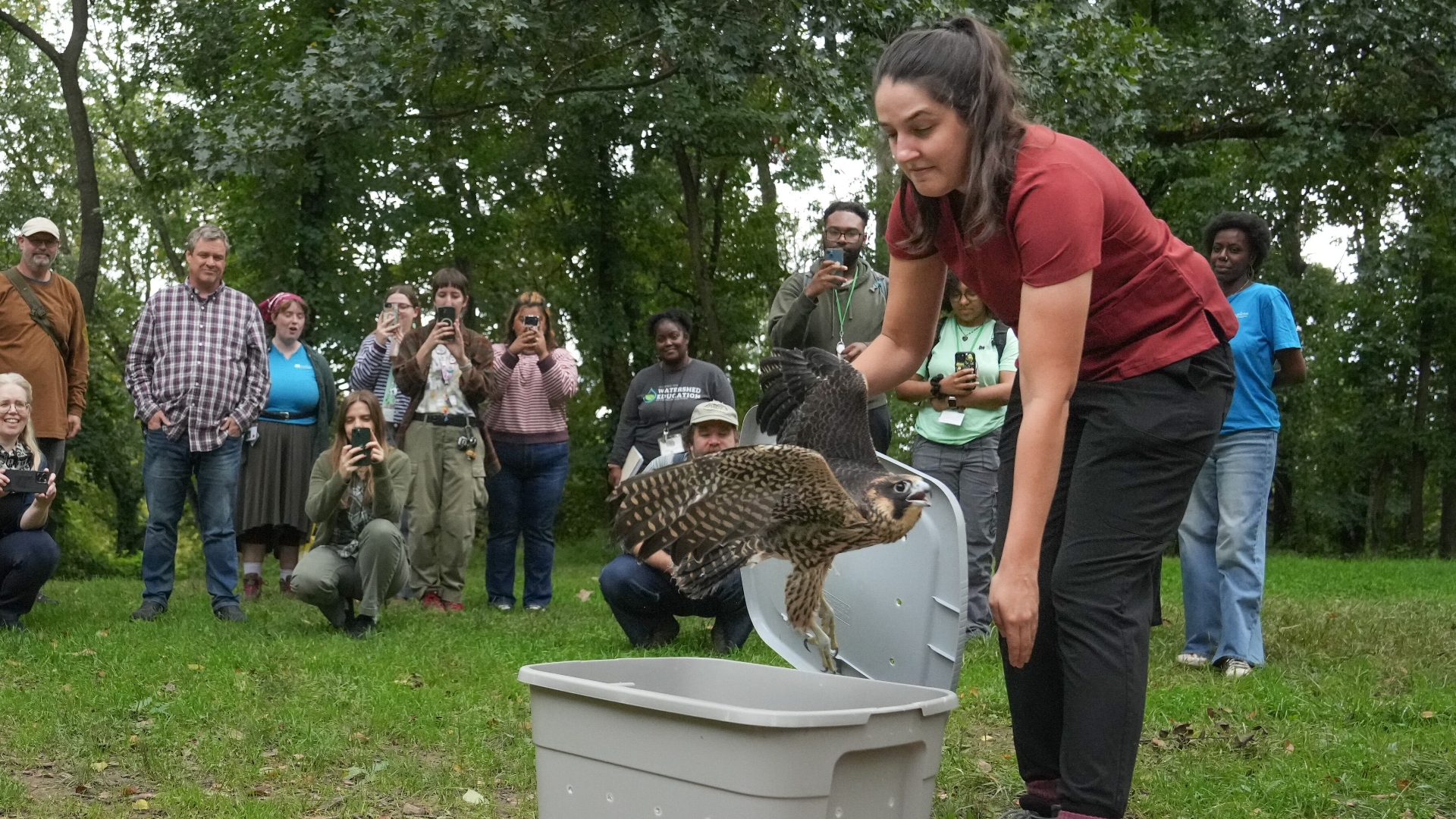
A gray plastic tote shook outside the Schuylkill Center for Environmental Education every few minutes Tuesday afternoon, proof that patient 718 was ready to fly.
A crowd gathered on the lawn beside it, adjusting shutter speeds to capture the world’s fastest animal. Just after 1 p.m., Sydney Glisan, director of the center’s wildlife clinic, unfastened the bungee cord, removed the lid, and offered the male peregrine falcon a few words of encouragement.
“All right, buddy,” Glisan said. “Today’s the day.”
Video: Peregrine falcon released into the wild after healing from lead poisoning
Like a feathered fighter jet, the bird burst from the tote and bolted for the big trees in Roxborough, letting out a few raucous shrieks as it disappeared.
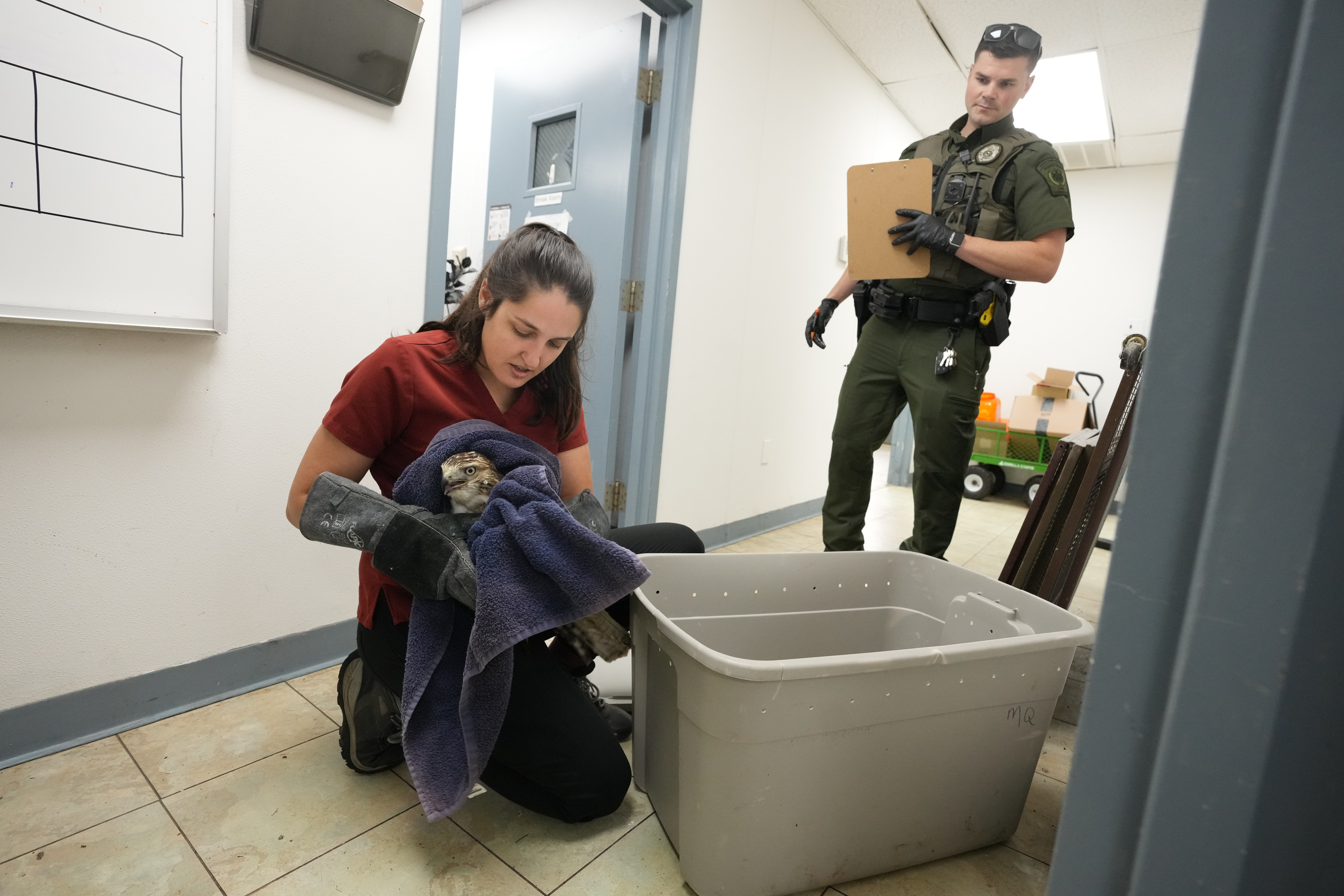
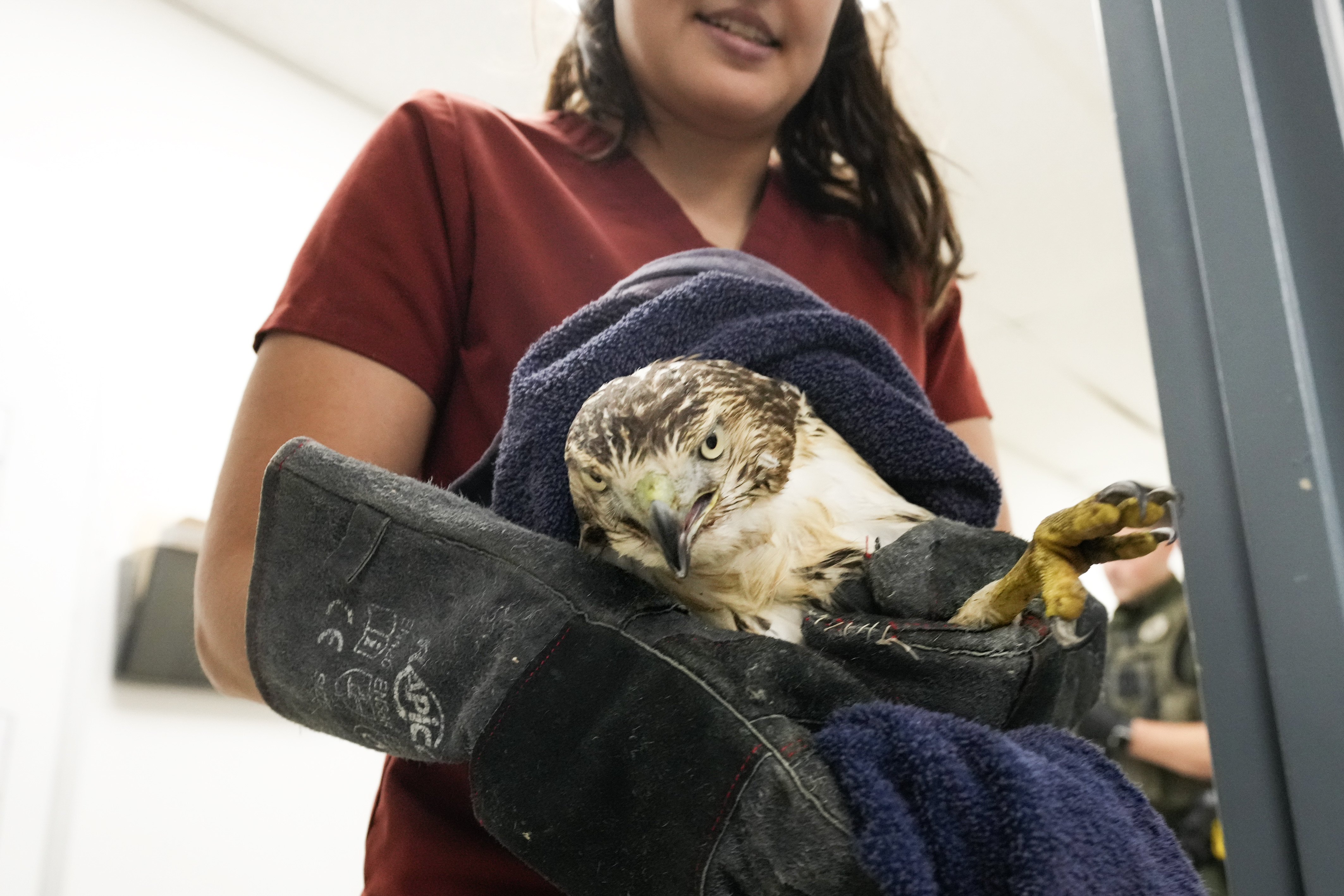
Patient 718 — animals are rarely named at the Schuylkill Center — arrived thin and sickly on June 4, suffering from high levels of lead poisoning. The bird was found near the entrance of the Philadelphia Museum of Art earlier that day, far below the nest its parents built there.
“He was just kind of sitting there,” Glisan said of 718.
A sibling, who had lower levels of lead poisoning, was also discovered at the museum the same day. That falcon, also a male, was treated at the clinic and released into the wild on July 1.
Glisan said most raptors in the region would test positive for lead, but 718’s levels were “off the charts.” Lead can be found in the soil, she said, from bullets, lead-poisoned prey, and even fishing gear.
At the clinic, 718 received chelation therapy, where a medication binds to the lead in the bloodstream and is then passed by the bird. The falcon received four rounds of chelation over the summer, with recovery breaks.
“It’s hard on the body,” Glisan said, “but he was a real trouper.”
After chelation, the falcon was taken to an aviary, where he practiced flying through an obstacle course that included pool noodles. He aced the test.
“It was fascinating,” she said. “They move so fast.”
Peregrines mostly hunt other birds from high perches and can reach speeds of over 200 mph when dive-bombing on prey.
Sydney Glisan, director of the wildlife clinic at the Schuylkill Center for Environmental Education, cares for a red-tailed hawk who was brought into the clinic on Tuesday.Jessica Griffin / Staff Photographer
Glisan said 718 would probably find his own territory and not return to the art museum. She said there are at least three active peregrine nests in Philadelphia, including one at City Hall.
Sydney Glisan, director of the wildlife clinic at The Schuylkill Center for Environmental Education, cares for a red-tailed hawk who was brought into the clinic Tuesday.Jessica Griffin / Staff Photographer
As of Tuesday afternoon, the Schuylkill Center has treated 1,775 animals this year, including numerous species of birds, gray squirrels, and rabbits. More were coming in by the minute, including a red-tailed hawk with an injured talon and a baby squirrel that tangled with a dog.
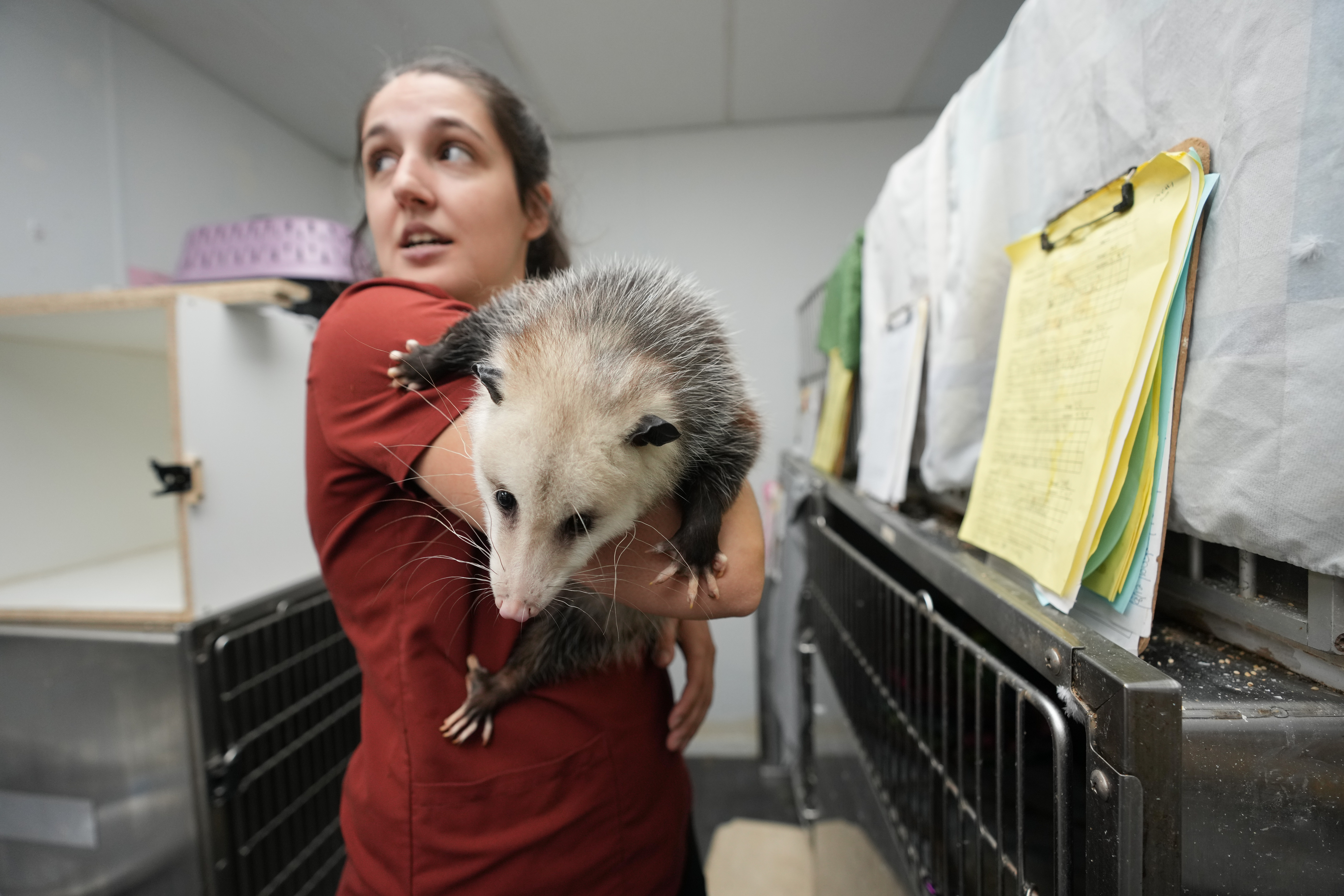
Many animals that come in don’t survive long, Glisan said, and some, like Buttercup, the mostly blind-but-friendly opossum with frostbitten ears, are unable to be released due to their injuries. They are used for education and, on occasion, cuddling.
“I do love you, Butter,” Glisan said, cradling the opossum.
Sydney Glisan, director of the wildlife clinic at The Schuylkill Center for Environmental Education, shown here with Buttercup, the mostly blind-but-friendly opossuma who is a permanent resident at the clinic.Jessica Griffin / Staff Photographer
Erin Mooney, the Schuylkill Center’s executive director, said the facility does not charge to take in and treat animals. She also said the center needs a new clinic building because theirs is 31 years old, and too small.
While the Schuylkill Center receives money from outside agencies on occasion, Mooney said they rely heavily on donors.
“In order for the work at the clinic and the Schuylkill Center itself to continue, we need people to give,” Mooney said.
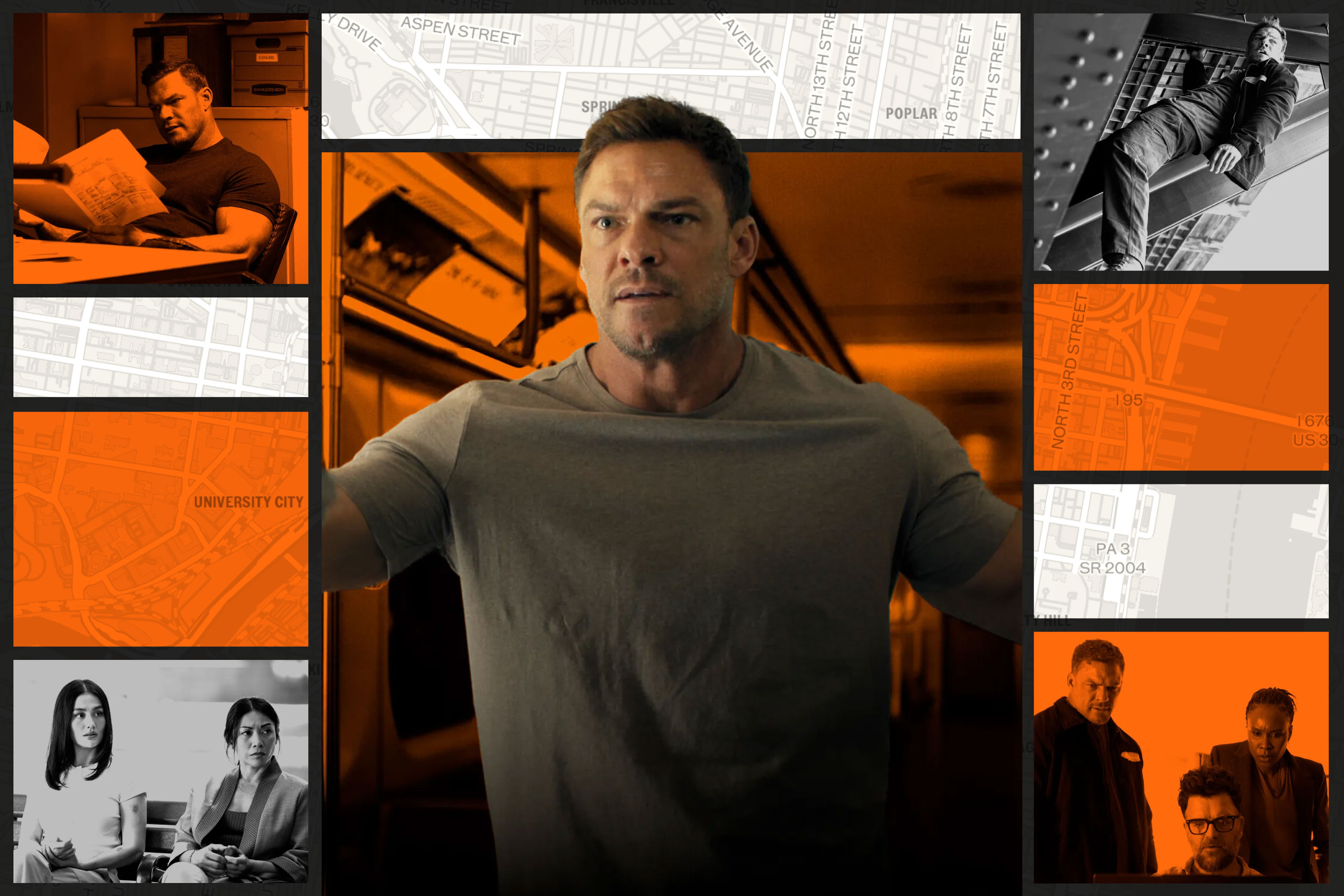
Vigilante Jack Reacher's shadowy dealings spilled out across Philadelphia for the Reacher’s fourth season, which is now available in full on Amazon Prime. Starring actor Alan Ritchson as the hulking retired Army investigator, the series was spotted filming around town in 2025.
Based on Lee Child's 2009 novel Gone Tomorrow, the fourth season of Reacher has its titular character facing off against he CIA, federal agents, and international mercenaries following a woman's suicide. And while much of the on-screen action appears to have been filmed elsewhere — namely Toronto, which looks a lot like Philly, but with space — the City of Brotherly Love does show up quite a bit.
Here, we've rounded up all the Philly spots we could identify in season four. Check out the map below for where Reacher and his cohorts went in the city.
story continues after advertisement
Loading…
Seen in episode 1
City Hall
Michael Bryant / Staff Photographer
Reacher's fourth season immediately sets the scene with a shot of the William Penn statue atop City Hall as a nightscape of Center City shines in the background.
Seen in episode 1
Uptown Beer Garden
Erin Blewett / For The Inquirer
We catch our first glimpse of our hero, Jack Reacher (Alan Ritchson), as he exits Uptown Beer Garden, walking out of the establishment silently with a beer in hand.
Seen in episode 1
LOVE Park
Michael Bryant / Staff Photographer
Reacher speaks for the first time this season, ordering a "wiz wit" from a nondescript food truck in Love Park.
Seen in episode 1
Avenue of the Arts
Jessica Griffin / Staff Photographer
Here, Reacher strolls down the sidewalk on the west side of Broad Street, chomping on his cheesesteak. Canonically, it is just after 2 a.m., and the street is deserted as he descends into the Walnut-Locust entrance of the B line, which runs along Broad Street.
Seen in episode 1
Walnut-Locust Station
Alejandro A. Alvarez / Staff Photographer
As he enjoys his cheesesteak, Jack Reacher (Alan Ritchson) heads down into the Broad Street Line at this Center City station. Several interior shots of the station are shown, including one in which a rat munches on a hot dog.
Seen in episode 1
Benjamin Franklin Bridge
Thomas Hengge / Staff Photographer
Philly is shown off in all its nocturnal glory in episodes one, and seven with a low-light shot of Center City from the Ben Franklin Bridge. Episode five features a skyline shot from the bridge, showing the One Water Street Apartments building.
Seen in episode 1
Benjamin Franklin Parkway
Tom Gralish / Staff Photographer
For the first time in the season's first episode, the sun rises on Philadelphia. And it does so in this stunning aerial shot showcasing many of the Ben Franklin Parkway's gems — Logan Circle, the Philadelphia Museum of Art, the works.
Seen in episode 1
Parkway Central Library
Tom Gralish / Staff Photographer
We get a great glimpse of the exterior of the Parkway Central Library before heading inside, where Jack Reacher (Alan Ritchson) and Jacob Merrick (Christopher Rodriguez-Marquette) do research on Congressman John Sampson (Marc Blucas), a North Carolina representative who is launching a presidential bid.
Seen in episode 1
Parc
Courtesy of HughE Dillon
Parc briefly plays host to Reacher, Lila Hoth (Agnez Mo), and Jacob Merrick (Christopher Rodriguez-Marquette) as the trio settles in at an outdoor table to evade police.
Seen in episode 3
Walt Whitman Bridge
Tom Gralish / Staff Photographer
Reacher and his cohorts travel back into Philly via this bridge after escaping Washington, D.C. In the background, the old Southwark Generating Station is clearly visible.
Seen in episode 3
Schuylkill Expressway
Tom Gralish / Staff Photographer
As Reacher and his crew traverse Philly at night, the action leads to a shot of the west end of Center City near 30th Street Station from the Schuylkill Expressway.
Seen in episode 3
Schuylkill Expressway
Monica Herndon / Staff Photographer
Here, we get another nightscape shot of Philly's skyline, again from I-76 near 30th Street Station looking east. In the foreground, Locust on the Park is lit up green and is featured prominently.
Seen in episode 4
Benjamin Franklin Parkway
Monica Herndon / Staff Photographer
The Philly skline is again featured in a sprawling shot from the Parkway. In the lower left, the Parkway House is visible.
Seen in episode 4
City Branch tunnel
Ed Hille / Staff Photographer
Fresh off a victory over some goons following a battle in the subway, Reacher makes his way back above ground here as he evades police.
Seen in episode 5
Philadelphia’s Magic Gardens
Margo Reed / Staff Photographer
While on the run from the police, Reacher and Tamara take refuge here, only narrowly avoiding capture in the Gardens' maze-like interior.
Seen in episode 5
The Rail Park
Yong Kim / Staff Photographer
Reacher and Tamara continue to evade capture, cutting through the Rail Park before dangling from its side to hide.
Seen in episode 6
12th and Market Streets
Alejandro A. Alvarez / Staff Photographer
Reacher and Tamara's mugshots appear on a screen at the corner of 12th and Market, which they see after passing by the Hard Rock Cafe.
Seen in episode 6
Italian Market
Alejandro A. Alvarez / Staff Photographer
Yet another Philly skyline shot, but this time from South Philly. If you look closely, you can see St. Paul Parish, as well as the seating area for the Di Bruno Bros. 9th Street Bottle Shop.
Seen in episode 7
56th and Market Streets
Kate McCann / Staff Photographer
This skyline shot looks east along the Market-Frankford El line, with one of Steve Powers' "A Love Letter For You" murals clearly visible.
Seen in episode 7
Highmark Mann Center for the Performing Arts
Jessica Griffin / Staff Photographer
The Mann becomes a plot point as a potential demonstration site for a toxin being sold on the dark web thanks to an orchestral concert of movie scores.
Seen in episode 8
Schuylkill Expressway
Tamara, Reacher, and Jacob travel along I-76 in South Philly, with a clear view of Kindy's Christmas Factory Outlet in the background. Reacher and his cohorts continue their journey on I-76, getting off at exit 349 and crossing over Packer Avenue. If you squint, you can just make out the Chickie's & Pete's sign in the background.
Seen in episode 8
Philadelphia Museum of Art
Tom Gralish / Staff Photographer
We get another aerial shot of the Parkway zooming into City Hall, but this time the camera travels over the roof of the Philadelphia Museum of Art. The building's bronze winged horses and griffins are the stars of the shot.
Seen in episode 8
45th and Market Streets
The season closes out on, you guessed it, an aerial shot of Center City. This one looks east from West Philadelphia as Reacher rides the subway to parts unknown, Drexel University's Vidas Field barely visible to the left.
story continues after advertisement
That was every location we could spot in this season of Reacher. Explore the map of all locations featured. Tap onHover overa pin to learn more.
Staff Contributors
Design and Development: Garland Fordice and Sam Morris
One of the many things we won’t forget about the Trump era is how much the family of POTUS 47 has enriched itself — not only the president but his children, including Donald Trump Jr., who is said to be now worth at least $500 million and growing. So it was no surprise when his second marriage to Palm Beach, Fla.’s Bettina Anderson in May was a lavish affair on two private islands in the Bahamas. What is a surprise — as we now know from some stunning work by a team of reporters from ProPublica — is who paid: a very close associate of Russian dictator Vladimir Putin. So maybe the “Russia, Russia, Russia” folks were onto something?
Pa. Democrats are alarmed at the rapid growth of ICE-police deals. But can they stop them?
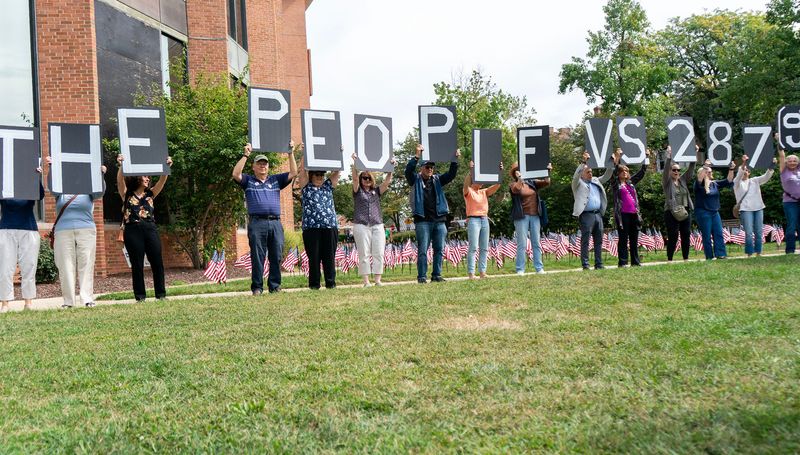
Immigrants’ rights advocacy group members and their supporters hold up letters that read “The people vs 287(g)” during a rally last September in Doylestown against the Bucks County sheriff’s efforts to implement a 287(g) program.Daniella Heminghaus | Bucks Coun
The big, mostly under-the-radar story around the Donald Trump regime’s relentless push to arrest and remove immigrants from the United States has been this year’s explosion of so-called 287(g) agreements. These allow local cops to act as immigration agents, working collaboratively with U.S. Immigration and Customs Enforcement, or ICE.
But if you look at a national map to understand how these 287(g) agreements have spiked from just 135 when Trump retook office in January 2025 to more than 2,500 such pacts today, you’ll notice that one state sticks out like a sore thumb.
In Pennsylvania, amped-up promises of federal cash incentives have meant a soaring number of localities where local beat cops are now working with ICE to make arrests — up from just a handful at the start of the year to some 130 now. Most 287(g) collaborators are in Trump-voting pockets of the Keystone State — northeast and south-central Pennsylvania, or out west near the Ohio border.
But when you look at the rest of the Northeastern United States, the 287(g) map is very sparse. That’s partly because most local pols across the region agree with their constituents about opposing Trump’s mass deportation policies, and in several states it’s also the result of legislation that aims to ban the program altogether.
In late August, New York enacted the Local Cops, Local Crimes Act — backed and signed by its Democratic Gov. Kathy Hochul — which calls on police departments and county sheriffs to terminate their 287(g) agreements, although several counties are still challenging the measure in court. Maryland has a similar law on the books, while New Jersey, which had long prevented such pacts under an attorney general’s directive, also passed a law this spring to codify the ban.
There’s a growing number of Pennsylvania lawmakers who want to pass a similar law here, but there’s one big problem: Republicans. They control the state Senate in Harrisburg — currently by a 27-23 margin — and GOP lawmakers have no interest in rebuking the president on immigration policy.
“The reason we exist alone is because of our split legislature,” State Rep. Heather Boyd, a Democrat who represents heavily immigrant Upper Darby and adjacent parts of Delaware County, told me. Last year, Boyd circulated proposed legislation to ban 287(g) deals in Pennsylvania, and while dozens of Democrats in Harrisburg are supportive, any move is on hold until a November election that could shift the balance of power. Boyd said lawmakers are wary of “starting any culture wars” ahead of the vote.
I pressed the office of Gov. Josh Shapiro, who’s running for a second term and who is seen as a possible top contender for the 2028 Democratic presidential nomination, for his position on reining in the 287(g) program here.
“Governor Shapiro has been clear that law enforcement should be focused on keeping Pennsylvanians safe — not sowing fear in communities or targeting people who are working hard, raising families, and contributing to our Commonwealth,” his press secretary, Rosie Lapowsky, said. She noted that the governor has barred Pennsylvania State Police from any formal ICE collaboration, and he would urge local police to take a similar stance.
She added: “Ultimately, however, these decisions rest with local law enforcement agencies. The governor does not have the unilateral authority to dictate whether individual sheriffs or police departments enter into these agreements.”
Many of those local law enforcement agencies have instead rushed to join 287(g), with ICE promising small-town departments an initial $100,000 cash windfall and additional incentives for training officers to make arrests and to cover the cost ofworking overtime on the program.
Last week, I reported from Schuylkill County in east-central Pennsylvania, where some 14 law enforcement agencies have raced to adopt 287(g), more than any other county in the state. Since the spring, local cops there have arrested about 100 immigrants at highway stops or by assisting ICE in job site raids. The blitz has prompted rising complaints about alleged racial profiling, the handcuffing of U.S. citizens, and a sense of fear that permeates a growing Latino community in Pennsylvania coal country.
Statistics obtained from the U.S. Department of Homeland Security by advocates show that local police in Pennsylvania have arrested and turned over to ICE more than 1,200 immigrants this year — ranking the state fourth in the nation on a list in which the other leading states are all south of the Mason-Dixon Line.
In Washington, some of the state’s Democratic House members say they’re fed up with a lack of transparency over who is being detained and how the 287(g) program is working here. Last week, four of them — Reps. Mary Gay Scanlon and Madeleine Dean from the Philadelphia suburbs and Reps. Chris Deluzio and Summer Lee from Western Pennsylvania — sent a letter to ICE’s acting director David Venturella demanding information on why the agency’s data lack any specific details about which departments are making arrests, which is required by law.
“It is unacceptable to me that ICE is hiding information from Pennsylvanians about who ICE is working with in their mass deportation regime,” Deluzio — viewed as a potential 2028 primary challenger to embattled Sen. John Fetterman — told me in an emailed statement.
Deluzio also summed up the growing unease by many over the speedy growth of 287(g) in the state. “Let’s keep local law enforcement focused on local public safety, rather than enlisting them in extreme federal immigration enforcement that has ripped away American liberties and targeted so many law-abiding families,” he said. Indeed, 287(g) data guru Andrew Thrasher has reported that a whopping 70% of the immigrants arrested in Pennsylvania under the program have no criminal record or pending charges.
“People in my community are getting smashed off the streets,” said Boyd, the Upper Darby lawmaker. That Delco township is about to vote on a local ordinance to restrict its cops from collaborating or sharing data with ICE.
Statewide, Boyd says she’s one of about 50 House Democrats in a Welcoming Pennsylvania Caucus with an extensive list of proposed bills that would not only bar 287(g), but look to expand opportunities for noncitizens to do things like obtaining driver’s licenses or gain professional certification. But any serious action hinges on November, when Democrats are hoping a blue wave at the ballot box will flip at least three more Senate seats and create a trifecta for their party in Harrisburg.
“Even if we can’t stop ICE from picking them up on the streets, we have to protect their rights,” Boyd said. “And right now, there are barriers to that in the state of Pennsylvania.”
Yo, do this!
The issue of wrongful convictions is back in the news here in Philadelphia — but for all the wrong reasons. Some reckless and seemingly wrongheaded moves by Philadelphia District Attorney Larry Krasner and his underlings have the vultures who’ve always opposed criminal justice reform circling. The shame is that the real crisis around wrongful conviction is the thousands of mostly Black and brown folks who remain behind bars for crimes they did not commit. I cannot say enough about a book that came out earlier this year from Brown University (yay!) sociologist Nicole Gonzalez Van Cleve called Crime Fictions: How Racist Lies Built a System of Mass Wrongful Conviction. She mines the most outrageous prosecutions — often of young Black teens and boys — to make a compelling argument that wrongful convictions aren’t a flaw in the criminal justice system. They are the system.
If timing is everything, then you’ve got to hand it to my freshman dorm pal at Brown who became Washington bureau chief for Mother Jones, David Corn. On the heels of ProPublica’s bombshell reporting on ties between the Trump family and Vladimir Putin, Corn is out Tuesday with his newest book: How Russia Won — Donald Trump, Vladimir Putin, and the Fight for America. It promises a raft of new information about Russia’s efforts to meddle in U.S. elections in 2020 and 2024, the ongoing close links between Team Trump and Team Putin, and how the current president’s pro-Russian slant has changed the world.
Ask me anything
Question: What happens when [House Speaker Mike] Johnson refuses to seat newly elected Dems in January? — David Minckler (@audivita.bsky.social) via Bluesky
Answer: Suddenly, Jan. 3 — the date the 120th U.S. Congress begins, and new members who won their November elections are to be sworn in — has become the new Jan. 6. Summer vacations are over, and the body politic is focused on the looming midterms, and — more importantly — with polls showing the Democrats on track to retake one and possibly both chambers. So there’s been a surge of speculation that the Trump-allied Johnson will do what former Vice President Mike Pence would not do on Jan. 6, 2021, and somehow fail to certify Democratic winners. That’s based on an assumption that Trump’s election-meddling tactics like stopping mail voting — blocked on Monday by the U.S. Supreme Court — won’t work, yet Team MAGA will attempt to undo the election after the fact, as was tried unsuccessfully in 2020-2021. Lawfare has published the most detailed analysis of a so-called rogue clerk theory in which Johnson appoints a MAGA loyalist to serve as House clerk with the understanding that some Democratic wins won’t be certified. Its article notes that such a gimmick is unlikely to pass muster in the courts, but that won’t necessarily stop Trump and the GOP from trying. My only guidance is: Fasten your seat belts.
What you’re saying about …
It turns out readers of the newsletter aren’t eager to join the punditocracy. Only a few of you responded to last week’s question about the chances of a Democratic-led Senate in 2027, and one of them was to give me a verbal tongue-lashing for even asking this. (Frequent writer Daniel Fleisher called it “a pointless exercise in predicting the unpredictable.”) That said, Cathy King has her eye on Abdul El-Sayed in Michigan, her home state, writing that “he seems to be following [Zohran] Mamdani’s playbook.” Meanwhile, in Iowa, Mary Chilton thinks the Dems’ Josh Turek has a real shot in a state won three times by Donald Trump, noting that farmers are up in arms “over the data center issue, imported beef, water pollution and the soaring cancer rates …”
📮 This week’s question: Suddenly, everyone is talking about one thing: the Silicon Valley whistleblowers saying there’s not a trivial chance that a swarm of angry artificial intelligence agents could wipe out humankind by the end of the decade. Are you worried by this, or do you think Big AI is deflecting here to draw attention away from other issues like data center opposition or the stock market bubble? Please email me your answer and put the exact phrase “the AI threat” in the subject line.
Backstory on that other thing that could kill humanity
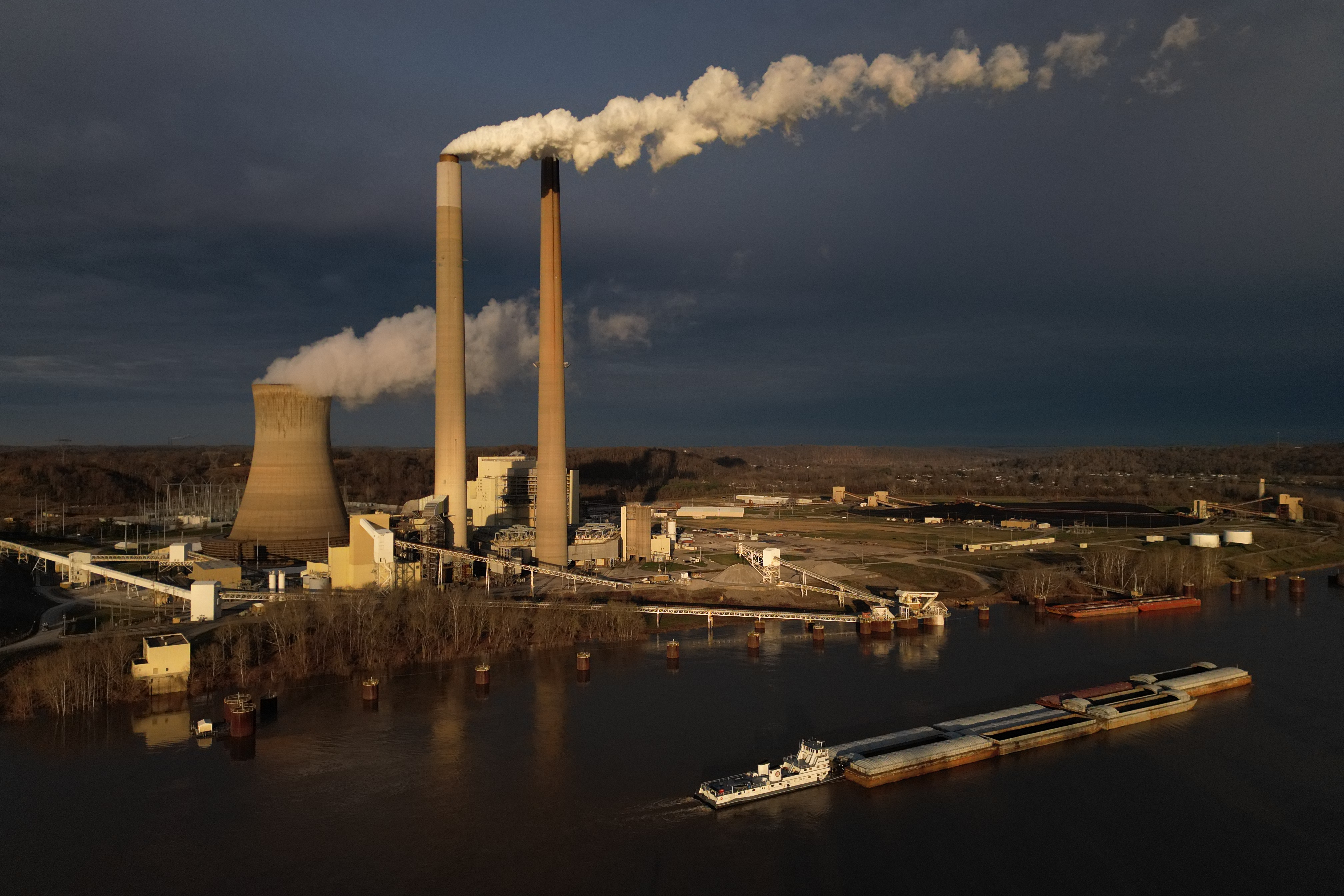
A barge on the Ohio River moves past the Mountaineer Power Plant, a coal-fired power plant near New Haven, W.Va., in March.Carolyn Kaster
This weekend, a Bluesky post went super viral almost the second its author, a scientist named David Ho, hit the button to post it. “I resigned from ExxonMobil today,” he wrote. “I spent the last three years doing fossil fuel extraction research at both BP and ExxonMobil. Neither company is acting responsibly. They are racing to maximize extraction while the window to act closes, and gambling with our lives.”
It’s a safe bet that many of the 13,000 people who liked Ho’s post truly believed they were sharing the words of a brave whistleblower — but instead the post was satire from a leading climate scientist based at the University of Hawaiʻi at Mānoa. Ho would never work for a Big Oil giant. He was trying instead to mimic — and thus make a point about — the recent posts from Silicon Valley whistleblowers that triggered the new freakout over whether AI robots are a threat to human existence.
Climate change is a threat to society, and it’s even closer to reality. Maybe we should freak out about that?
Ho absolutely has a point. Just before his post, it was announced that August had been tied for the hottest month ever recorded in the history of the planet. That doesn’t come without consequences. In the Himalayas between Nepal and Tibet, a glacier and the adjacent bedrock of mountains at 17,000 feet abruptly collapsed in a region plagued by higher-than-normal temperatures, sending a 150-foot-high cocktail of floodwater and debris down a populated valley at 100 mph. At least 1,386 were killed, and thousands more remain missing. Here in the U.S., a summer of record heat triggered wildfires across the Pacific Northwest.
Robots didn’t do this. Humans did. Maybe that’s why humans — at least the ones that are running Donald Trump’s America — are reacting so differently to the danger of AI than the way they’re dealing, or not dealing, with the lethal pollution from burning fossil fuels. In the case of artificial intelligence, even tech leaders like Anthropic’s Dario Amodei, whose firm makes the Claude program, have urged a slowdown until we better understand the risk from rogue AI agents.
But in the case of climate change, willful ignorance rules the day. The latest outrage from a Trump regime that’s expensively killing off wind farms while racing to extract as much fossil fuel as possible? The now ironically named Environmental Protection Agency is repealing the rule that limits greenhouse-gas emissions from power plants that burn coal or natural gas. A president who spent his summer sweltering on the golf course continues to insist climate science is “the greatest con job ever perpetrated on the world.”
There’s one last irony here. Increasingly, the biggest new sources of climate-altering pollution are the massive data centers that power AI. An Amazon data center proposed for Pecos County, Texas, would likely become the world’s largest source of carbon dioxide if it opens, spewing out 33 tons from natural gas generators every year. Slowing down the AI arms race would also help the planet. Artificial or not, that would be intelligence.
What I wrote on this date in 2019
Joe Biden performing badly in a presidential debate? Say it ain’t so, Joe. We all remember what happened on that 2024 stage in Atlanta (“The night the lights went out in Georgia,” I called that one), but I was almost as unimpressed with the future 46th president during a Democratic primary debate on this date seven years ago. That put me at odds with the punditocracy. I wrote, “The cable TV news show that both channels and is most revered by Washington’s elites — MSNBC’s Morning Joe — is at times so over the top in its bias toward Barack Obama’s former wingman that it could be renamed Morning Joe Biden.”
Summertime is over, and the living is no longer easy. I published my monthlong investigation into local cops collaborating with ICE under the controversial 287(g) program in semirural Schuylkill County, northwest of Philly. I found U.S. citizens handcuffed, families hiding behind blanket-covered windows, and a community wrestling with what it means for neighbors to be treated as suspects. Over the weekend, I delved into the astonishing $850 million or so Trump World has raised in campaign contributions since his reelection — despite the fact that he’s barred from seeking office again. You don’t think he has a scheme to pocket the excess cash, do you?
Dante only had Nine Circles of Hell, but the downward spiral of Pennsylvania Sen. John Fetterman seems to be never-ending. It’s one thing to profoundly disagree on a political and moral issue such as the war crimes of Israel’s right-wing government in Gaza, but recent reporting suggests things are far, far worse in Fettermanland. No senator — regardless of how much their ideology has flip-flopped — should be blowing off their home-state constituents, or clocking out of committee hearings after five minutes. The Democratic senator’s surprise video appearance at the midterm miniconvention of Donald Trump’s GOP, introducing his new best buddy, Republican Sen. Dave McCormick, did nothing to dispel the sense of utter betrayal among liberal voters who now see his winning 2022 campaign as a big lie. The next two years will be crazy as Democrats line up to primary Fetterman, amid rumors the hoodie-clad politico might run as an independent or even change parties. The only sure thing is that The Inquirer will be there for every move. Join us. Subscribe!
By submitting your written, visual, and/or audio contributions, you agree to The Inquirer’s Terms of Use, including the grant of rights in Section 10.
This fall’s restaurant openings reflect an industry hedging its bets: established operators expanding into the suburbs and repurposing familiar spaces, and newcomers pursuing narrowly drawn concepts built around omakase, caviar, Korean barbecue, cocktails, and live-fire cooking.
I count about five dozen restaurants in the region’s pipeline, with Italian concepts (no surprise), all-day service, and experience-driven dining recurring throughout the list. In addition to 60 restaurants opening between now and late December, two other restaurants are expanding: Lovat Square in Chestnut Hill is adding dinners and Palm Vintage across from City Hall is adding nighttime sushi service.
By comparison, last year’s fall roundup covered 53 restaurants. All of those opened except for three that are now a full year behind schedule: Adda in Fishtown is shooting for October, Ayat near Rittenhouse Square is aiming for November, and Brunch Bulls in Point Breeze is targeted for December. (Although this year has seen its share of closings, especially among longstanding restaurants, each of last fall’s restaurants is still open.)
Brand new and notable
Aogami (4343 Main St.): Underground sushi is coming to Manayunk as chef Tom LoMonte joins chef Moon Krapukthong to offer a 16-course omakase in a 20-seat BYOB setting beneath Krapukthong’s Yanako and neighboring Chabaa Thai Bistro, starting Sept. 25. LoMonte — a veteran of Zama, Izakaya by Yanaga, Pod, and Yanaga Kappo Izakaya — will lead the omakases at 6 p.m. Fridays and Saturdays; reserved sushi-bar seatings will run Wednesdays, Thursdays, and Sundays alongside hand rolls and à la carte service. LoMonte describes the atmosphere as energetic and less formal than typical omakase counters. Upstairs, Yanako will continue serving rolls, sushi platters, udon, tempura, and yakitori.
The Buttery (1099 Germantown Ave.): Malvern-based bakery and cafe the Buttery is preparing a Philadelphia location at Piazza Alta in Northern Liberties, near Scusi and Terra Grill. It recently opened a Bryn Mawr location and expanded its original Malvern operation into dinner service with Neapolitan pizza and shareable plates. An opening date has not yet been shared.
Nick & Nora’s Oyster Dive (560 Stokes Rd., Medford): Michael and Jeniphur Pasquarello (La Chinesca, Piccolina) are bringing a raw bar and American kitchen to a corner space with a large deck at Ironstone Village. The broader menu will include steak frites, burgers, fish, vegetables, and small plates, says Michael Pasquarello, who hopes to open in 60 to 90 days.
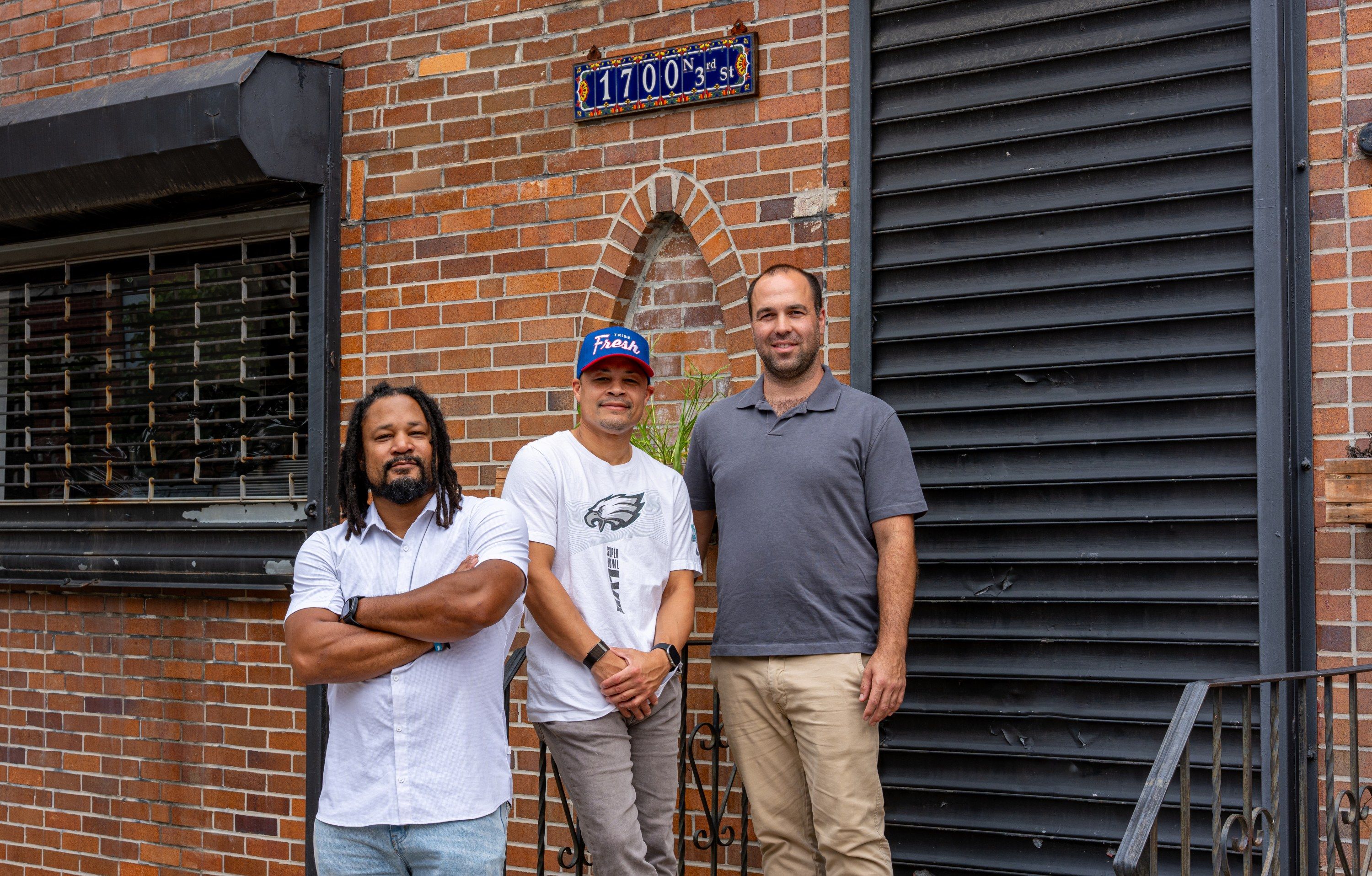
Chef Chaz Brown (left) is partnered with his brother Clifford Brown (center) and John Skeele in Rumblefish, 1700 N. Third St.Mike Prince
Rumblefish(1700 N. Third St.): Chef Chaz Brown is targeting November for this 900-square-foot, fast-casual Caribbean fish-fry restaurant at Third Street and Cecil B. Moore Avenue. Brown — a Trinidadian American chef whose resumé includes Nobu, Le Bec-Fin, Fatty Crab, and television’s Top Chef — will focus on invasive species such as lionfish, snakehead, green crab, and Chesapeake Bay blue catfish when available. (The catfish turned heads at the recent Oxtail Exchange at Forman Arts Initiative.) Brown uses gluten-free corn flour with Trinidadian spice blends and serves the fish on po’boy-style rolls baked by Angelo’s Bakery in Conshohocken. The mostly takeout operation will have counter seating, a 25-seat covered patio, slaws, fries, sea-moss drinks, and Solo Kola Champagne.
Pennsylvania suburbs
Alessandro’s Enoteca (915 W. Lancaster Ave., Bryn Mawr): Alex Fiorello’s third restaurant will bring a bar-focused Italian concept to the former Enoteca Tredici space in Bryn Mawr Village in mid-to-late October. Fiorello and culinary director Matt Arcomone, whose resumé includes Osteria, Vetri, and Palladino’s, are planning house-made pastas, wood-fired pizzas, live-fire cooking, and dry-aged meats. It’s intended to have a stronger evening and bar scene than Fiorello’s Wayne restaurants.
Bruzi (281 Montgomery Ave., Bala Cynwyd): Two couples with Calabrian roots plan to open this Southern Italian restaurant in the former Aldar Bistro in late fall. Expect house-made pastas and Calabrian dishes such as fusilli with slow-cooked meat sauce, baked lamb, and grilled tuna, plus cocktails and an opening list of about 100 Italian wines.
Capperini (137 S. Easton Rd., Glenside): Eastern Montco will get an upscale Italian-Mediterranean destination with a liquor license from Ilya Vorobey and partners including members of the team behind Capri in Queen Village. Vorobey is aiming for October or November.
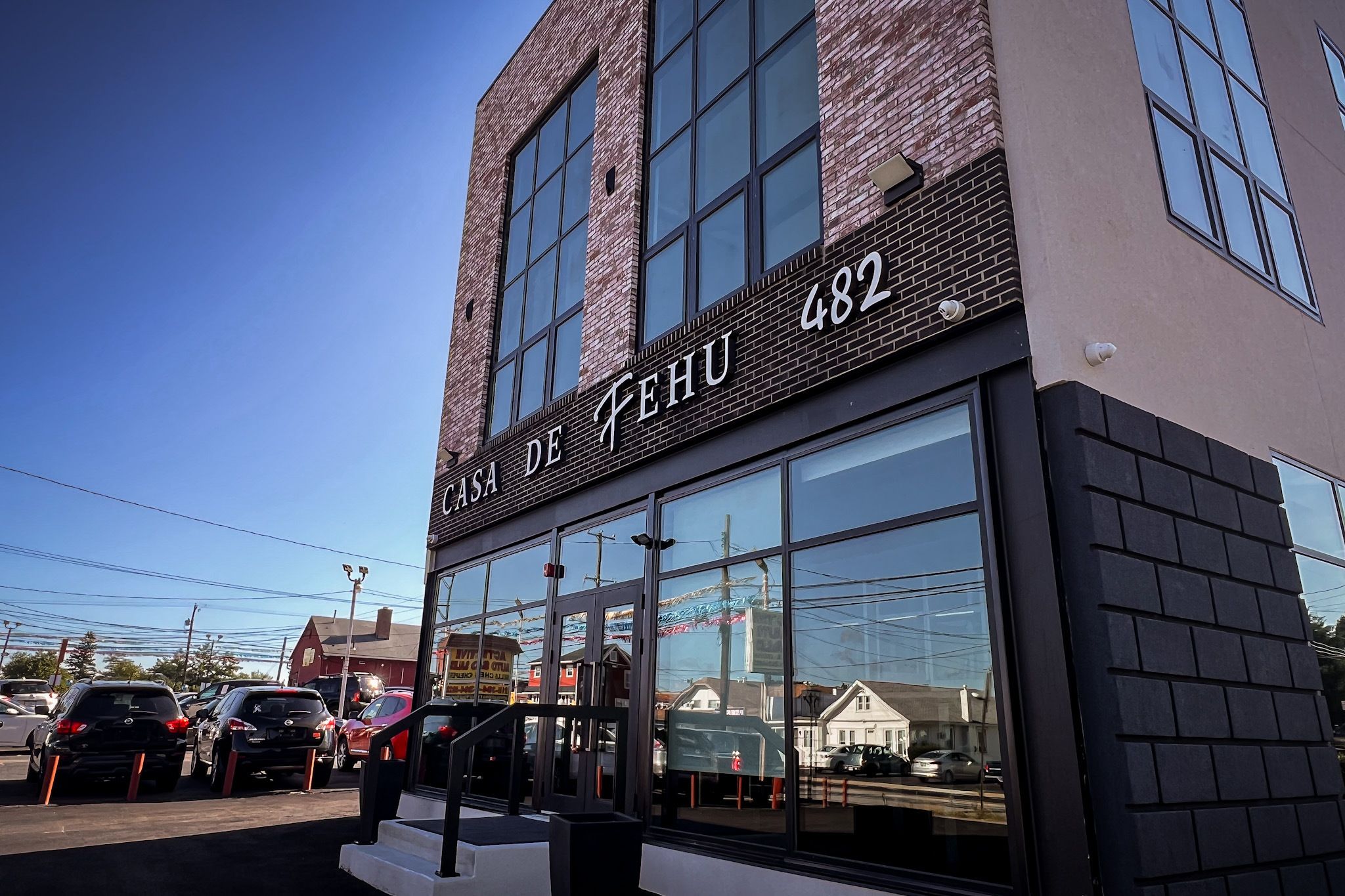
Casa de Fehu, 482 Jacksonville Rd., Hatboro.Michael Klein / Staff
Casa de Fehu (482 Jacksonville Rd., Hatboro): Hatboro couple Anthony Shalamov and Anastasia De Roy are developing this polished restaurant with European-inspired cooking and an upscale atmosphere, possibly with a tie-in to a local brewery that would allow alcoholic drinks. Shalamov is targeting an October soft opening.
Cecilia (266 E. Fourth St., Bridgeport): The team behind Blue Bell Inn and the Copper Crow is just about ready to open this contemporary American bar-restaurant in the extensively renovated former Taphouse 23. The roomy property includes a large patio and a wood-burning oven. The menu emphasizes familiar American dishes, positioning this as an all-purpose neighborhood destination.
Donatelli’s (1 Washington Ave., Newtown): Restaurateur Habib Troudi, who owns Panache and Ristorante Castelloin Blue Bell, is behind a top-to-bottom overhaul of the former Rocco’s at the Brick in downtown Newtown. He said he is hoping to open the Italian steakhouse in October.
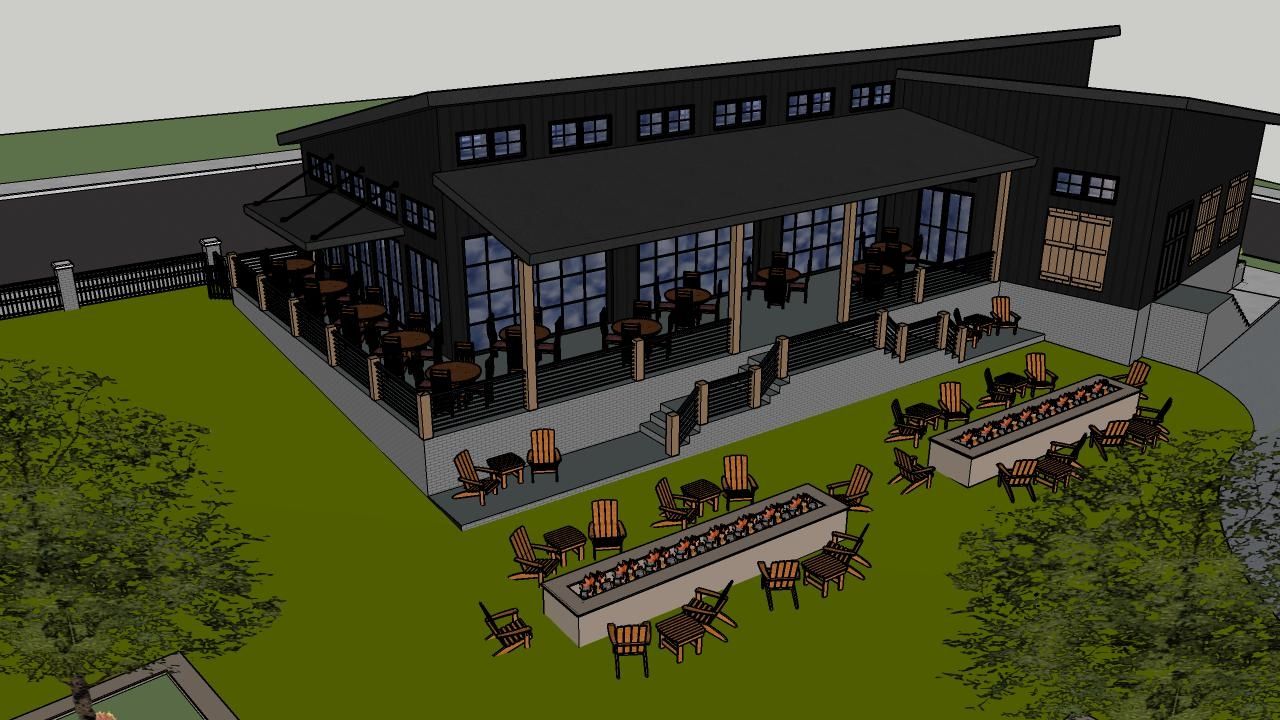
Rendering of the Garden by Pieri Winery, 127 E. Elm St., in Conshohocken.Courtesy of Christina Pieri
The Garden by Pieri Winery (127 E. Elm St., Conshohocken): Winery owner Christina Pieri and restaurateur Brian Pieri (StoneRose, Bar Lucca, Cerdo) are targeting a mid-October opening of their year-round indoor-outdoor restaurant beside the Schuylkill River Trail, an offshoot of Christina’s Coopersburg winery. A wood-fired kitchen will serve seasonal American food, including brick-oven pizzas, focaccia sandwiches, salads, steaks, and fish, at lunch and dinner Tuesday through Sunday. The property will include a covered patio, fire tables, a turf area, and pickleball and bocce courts.
The Hungry Hub (11 S. Orange St., Media): Media native Cassidy Moretti and her mother, Glenda, are taking over the former Rivalry Cafe with a family-run breakfast and lunch operation. The Hungry Hub also plans later hours and a late-night menu, broadening its role beyond that of a conventional daytime cafe. An Oct. 1 opening has been announced.
The Iron Oven (58 S. York Rd., Hatboro): Alex Nalbandian’s Southampton bar-restaurant — known for an expansive American menu, cocktails, craft beer, brunch, and dishes ranging from wings and burgers to flatbreads and entrees — is adding a second location in eastern Montco: the former Ross & Co. He’s aiming at November.
Lazy Dog(160 N. Gulph Rd., King of Prussia): The California-based bar, known for Rocky Mountain lodge imagery and a broad American menu, is targeting late 2026 at the King of Prussia Mall.
Luna (129 E. Butler Ave., Ambler): FineLine Hospitality, which recently opened Academy Grill in Fort Washington, is behind a stylish revamp of Dettera in downtown Ambler. Chef Marie Lavizzo-Mourey will base her menu on the 20-plus countries bordering the Mediterranean. The project is on track for fall.
Martini & Roz(523 W. Lancaster Ave., Wayne): Fearless Restaurants is turning Wayne’s former Bertucci’s into an ambitious, 300-seat Southern Italian restaurant named for founder Marty Grims’ parents, Martin and Roslyn. Menu will include crudo, oysters, steaks and chops, wood-fired pizzas, house-made pastas, and charcuterie. It will feature two open kitchens, a cheese cave, a tasting counter, and extensive outdoor seating.
Maru (2922 Conestoga Rd., Glenmoore): David Backhus and the team behind the former Oori restaurants are in the early days of a fast-casual Korean-inspired restaurant at their former Collective Coffee & Bakery. Think Korean fried chicken sandwiches, wings, and tenders, supplemented by mochi doughnuts and specialty Collective coffee.
Nudy’s Cafe (122 Park Ave., Willow Grove): Prolific suburban breakfast-and-lunch operator Ray Nudy hopes for late September for his latest diner, across from Marshalls in Willow Grove.
Old Friend (166 E. Lancaster Ave., Wayne): Childhood friends Larry Kagan and Chas McFeely are behind this contemporary American grill, with former Fork executive chef Sam Henzy leading the kitchen. The 86-seat restaurant will center on live-fire cooking in a Josper oven, with dry-aged fish, poultry, and larger proteins intended for sharing. Its compact wine list will be closely tied to the food. A late-fall opening is planned in the Apartments at Wayne Station.
Opus (201 Birch St., Kennett Square): Square Roots Collective will open this 125-seat New American restaurant Sept. 11 in the former temporary home of Hank’s Place, next to the Artelo hotel. Executive chef Matthew Anderson, formerly of Longwood Gardens and Winterthur, plans seasonal dishes, such as Kennett Square mushroom bisque, butternut squash agnolotti, herb gnocchi, and dayboat scallops. The two-story space includes a cocktail lounge, terraces, and work by local artists. Profits will support community projects and nonprofits.
Salt (840 W. Lancaster Ave., Devon): Rich Kim of North Wales’ acclaimed Salt predicts late December for his redevelopment of Devon’s former La Jonquille and Shiraz property into a second Korean barbecue concept, followed in 2027 by Yugo, a carousel sushi restaurant, upstairs.
The Still on State (18 W. State St., Doylestown): Only days open at the Doylestown Inn, this Irish pub-inspired bar/restaurant fills the former Hattery Stove & Still space; it’s paired with an on-site microdistillery called the Tilted Brim.
Taco Heart (120 Coulter Ave., Ardmore): Nano Wheedan is bringing his South Philadelphia breakfast-taco shop to the Ardmore Farmers Market, its first expansion beyond its East Passyunk-area home. Expect Austin-style flour tortillas and breakfast tacos built around eggs, potatoes, beans, bacon, brisket, and house salsas. Opening is set for Oct. 5.
Top Dog Cocktails (110 E. State St., Kennett Square, and 2012 Frankford Ave., Fishtown): Ken Smuckler’s cocktail company plans two vinyl listening rooms this fall inspired by Japanese jazz kissas. Kennett Square’s 750-square-foot space partners with local music venue Kennett Flash, while Fishtown’s 350-square-foot flagship — arguably the neighborhood’s smallest bar — will feature a 15-seat bar, two-turntable DJ station, and retail.
Tusk (50 N. Main St., Doylestown): Mike and Joy Grafenstine, owners of Roberts Block in Glenside and Bonnet Lane Family Restaurant in Abington, are taking over the former Water’s Edge wine bar, combining the martini-and-wine-bar airs of Roberts Block with approachable upscale American comfort food. Target is October.
Vintner’s Table (24 Cricket Ave., Ardmore): Andrea and Marco Folino, behind Kutztown’s Folino Estate Winery, are opening a third location of their Italian-inspired wine bar, salumeria, and lifestyle boutique in downtown Ardmore in October.
New Jersey suburbs
Akira 70 Omakase (249 Marlton Pike, Cherry Hill): Ming “Frank” Zheng is expanding his Japanese holdings — he owns Akira Sushi in Voorhees and Moorestown — with an omakase experience in a former fur salon.
Banjara Indian Bistro (687-689 Berlin-Cross Keys Rd., Sicklerville): Vaneet Chopra, whose family operates Cross Culture in Haddonfield and previously ran Banjara in Chestnut Hill, is bringing the Banjara name to Sicklerville; its dine-in starts Thursday.
Freckled Jawn Brewing(1003 N. Evergreen Ave., Woodbury): Woodbury residents John Wagner and Colleen Gibson are taking over the former Eight & Sand Beer Co., which closed in June after 10 years. Targeting the first week of October, the brewery will introduce new branding and a fresh lineup of approachable beers, emphasizing natural and locally sourced ingredients when possible.
Irishtown Steaks (155 S. Burlington St., Gloucester City): Donkey’s Placealumnus Dave Murphy is targeting Halloween for his steak shop, joining recent Gloucester City entries Lillo’s and Pudge’s Pub. Murphy will use rolls from Boaggio’s, which has a bakery in town.
Penny’s Bagels (212 Kings Highway East, Haddonfield): Chris Fetfatzes and the Happy Monday Hospitality Group (Wine Dive, Grace & Proper) are developing this long-delayed bagel shop in downtown Haddonfield, now with an October target.
Pizzeria Cusumano (872 Haddon Ave., Collingswood): Announced back in September 2021, this passion project from South Jersey’s Sal Cusumano is finally about to start offering his Roman-inspired squares and neo-New York rounds, but “I don’t want to box myself into a certain style.” Cusumano, a third-generation pizzaiolo, is planning a small shop with limited seating. This week, he said it will open in October for sure.
Philadelphia
Adda (1700 Frankford Ave.): New York’s Unapologetic Foods — behind Dhamaka, Semma, and the original Adda — is bringing its energetic Indian cooking to Fishtown, across from the 19125 post office. Expect regional dishes in an informal setting, continuing the restaurant group’s practice of pushing beyond familiar Indian American standards. Originally expected in fall 2025, the Philadelphia location is now targeting an October opening.
Ayat (2021 Sansom St.): Abdul Elenani’s New York-based Palestinian restaurant — first announced in spring 2024 — is looking at a November opening in the former Roxy Theater near Rittenhouse Square. Ayat is known for generous portions of mansaf, maklouba, mezze, grilled meats, and other homestyle Palestinian dishes.
The bar at Bar Caviar, 256 S. 16th St.Kenneth Schutz
Bar Caviar (256 S. 16th St.): Opening in early October in the Dwight D Hotel in Rittenhouse, this bar will pair caviar and seafood with 50 varieties of Champagne and a full wine program in a setting that’s more neighborhood than hushed luxury lounge. Executive chef Greg Vassos’ contemporary American menu, informed by classical French technique and Japanese precision, will feature raw-bar selections, caviar-focused dishes, and seasonal small plates. The restaurant also will operate Parallel, a caviar program emphasizing careful sourcing and extended maturation. In 2027, Vassos plans to follow with Fall Line, a Mid-Atlantic-focused tasting-menu restaurant.
Brunch Bulls (1638 W. Passyunk Ave.): Brothers Derrick “Dee” Long and Jarrick “Jakk” Long are behind this all-day brunch/dinner/dessert restaurant in Point Breeze. They say they’ll be open by December.
Call Your Mother (262 S. 19th St., 1500 Frankford Ave., 12th and Sansom Streets): The lively, Washington-based “Jew-ish” bagel chain is making a three-location push into Philadelphia, starting this week with its Fishtown debut. Menu includes bagel sandwiches, schmears, latkes, coffee, and deli-inspired specials.
Carolyn’s Modern Vietnamese (2015 Walnut St.): This week, chef Carolyn Nguyen opens her deeply personal successor to Revolution Taco, which she co-owned in the space for a decade. Her menu brings together her family’s Vietnamese cooking, the seafood boils and Southern food of her Louisiana childhood, French culinary technique, and the freewheeling flavor combinations that defined her earlier ventures. The 33-seat restaurant serves dinner, and alcohol, in a spare, contemporary dining room.
Corte (1175 Ludlow St.):Corio partners Ryan Mulholland, chef David Feola, and James Smith are taking over the former Mulherin’s Pizzeria at East Market, between Iron Hill Brewery and Mi Vida. Feola will lead a menu built around house-made pastas plus proteins, vegetables, and small plates cooked in the large Mugnaini wood-burning oven. Mulholland will oversee daily operations and oversee an Old World-leaning wine list and cocktails inspired partly by forgotten recipes from century-old books. The dark-wood, earth-toned restaurant is targeting a fall opening.
DiDi (3748 Lancaster Ave.): DanDan owners Kevin and Catherina “Cat” Huang say they are “within a month or two” of opening their fast-casual pan-Asian concept at the Triad apartment building in Powelton Village. DiDi will join Kabobeesh, Karak Cha House, Shibam Coffee, Two Locals Brewing, and other businesses in the growing complex at 38th and Lancaster.
Divers Club (733 S. Fourth St.): Queen Village is in line to get a neighborhood wine bar from Susan Freeman, Chris Fetfatzes, and Heather Annechiarico (Grace & Proper, Wine Dive) in a former hair salon that sits on the same stretch as Famous 4th Street, Southwark, Ambra, and Fitz on 4th. Fetfatzes describes the mood as “dark, scrappy, and European — somewhere between a Paris backstreet wine bar and a graffitied Berlin hangout.”
Eggcetera Haus (625 S. Sixth St.): Husband-and-wife team Rey Tamaka and Vina Kencana soon will turn the former Redcrest Kitchen into an all-day bar-restaurant. Tamaka, previously the chef at an Old City brunch restaurant, plans breakfast, lunch, and dinner, moving from specialty coffee and morning dishes into pastas, steaks, cocktails, and comfort food at night. The couple expects daily service, giving the Queen Village-Bella Vista border another full-day neighborhood option.
Field Day (923 N. Second St.): James Beard Award-winning bartender and author Danny Childs and his wife, Katie, have a fall opening targeted for their casual regional cocktail bar in Northern Liberties, next to Cescaphe Ballroom. Childs’ drinks will use locally farmed, foraged, and fermented ingredients. Executive chef Melissa McGrath, known for her work at the idled Sweet Amalia Market & Kitchen, will offer Pennsylvania Dutch-inspired snacks, sandwiches, and tomato pies. Highballs, house-made sodas, boozy gelati, and walk-in seating will help keep the mood informal.
Habibi Supper Club (1515 E. Passyunk Ave.): Miled Finianos is giving his itinerant Lebanese dinner series a permanent home on East Passyunk — possibly by the end of year — serving late breakfast and lunch before he offers ticketed, multicourse suppers.
HYO (1222 Walnut St.): Nightlife veteran Justin Jordan plans an October opening for this Korean tabletop barbecue restaurant behind Hearsay, his indoor-outdoor sidewalk bar and listening lounge. Guests will enter HYO through a phone booth inside Hearsay. The restaurant is part of Jordan’s multilevel entertainment complex, which also includes Celine and the forthcoming Chancellor Room event space and karaoke lounge.
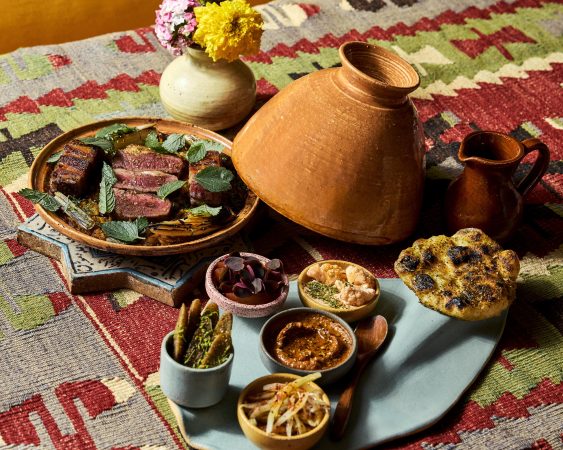
Jean (161 W. Girard Ave.): Emmett chef Evan Snyder and partner Julian van der Tak are going upstairs with a 15-seat tasting menu restaurant opening this fall. Snyder and chef de cuisine Antonio Pizzo will prepare a 12-course menu centered on a 7-foot wood-burning hearth, drawing on Algeria, Tunisia, coastal Morocco, and the southern Mediterranean for culinary influences. A tagine will roast throughout dinner before being served family-style.
Kato (1832 Frankford Ave.): Mei Meichef-owner Jay Ho is taking over the former Izakaya Fishtown space for a restaurant inspired by his Taiwanese father and the food Ho grew up eating. Influences from Korean, Thai, and Vietnamese cooking will broaden the menu. Ho, who hopes to open in late fall, plans to retain the front bar while replacing the rear sushi counter with additional seating that can double as a private dining area.
Lovat Square(184 E. Evergreen Ave.): Former Four Seasons sommelier Damien Graef and journalist Robyn Semien opened this Chestnut Hill wine shop and tasting room in February, offering small-production bottles, wines by the glass, and light fare. The couple, who also own Brooklyn’s Bibber & Bell wine shop, will debut a full dinner menu by the end of September.
Macaluso’s (3101 S. 13th St.): Realtor Joel Gruenke and restaurateur Mark D’Andrea, long-ago roommates at Valley Forge Military Academy, are looking at an early October opening of this white-tablecloth Italian restaurant at 13th Street and Packer Avenue, near the sports complex. D’Andrea’s family owns RoadHouse in Staten Island, N.Y. Gruenke says the moderately priced menu will stick to traditional Italian cooking and offer a full bar. Parking will be available across the street.
Mylar Bar (1636-38 S. Ninth St.): Hospitality veterans Liv Arterbridge and Gina Piccari are turning the former Dino’s Party Center into a festive neighborhood bar inspired by the building’s history. They promise something nostalgic, playful, and deliberately unserious. Drinks will include martinis, punches, classics, and draft beer. Chef Colin White, formerly of Sally and Emmett, will oversee shareable “party snacks,” larger plates, and desserts available late.
Nippy’s on South (1312 South St.): Nurse and first-time restaurateur Nikia Peterson has purchased the former Ms. Tootsie’s building for an ambitious restaurant and bar. Peterson plans a polished setting with seafood towers, steaks, Asian and Caribbean influences, a substantial happy hour, and weekend brunch. The project will revive a prominent South Street property that had remained closed since restaurateur KeVen Parker’s death in 2021.
O’Morrey’s (1720 Sansom St.): Chefs Biff Gottehrer and Kenjiro Omori are developing a cocktail bar on the former site of Genji, the Japanese restaurant created by Omori’s father. The name is a cheeky rendering of the Omori family name. Plans call for a comfortable neighborhood bar in the spirit of the Ripplewood, where both chefs work, with cocktails and a serious food component. Their second joint project, Tako Taco, is months away at the former Bing Bing Dim Sum in South Philadelphia.
Palm Vintage (1414 S. Penn Square): Houston Yang and Mike Beja, who opened this day-to-night cafe and cocktail bar across from City Hall in the Residences at the Ritz-Carlton, are close to expanding into a nighttime scene with cocktails, sushi, oysters, caviar, and light food in a lush, tropical-inspired room meant to offer an escape from Center City.
Panco (2300 S. Croskey St.): Chef Ryo Igarashi, whose background includes Tokio Global and Maru Global (noted for its takoyaki balls), is behind a corner shop in West Passyunk whose menu will focus on Japanese cutlets. He says it’s opening soon.
Philly Curio (2240 Frankford Ave.): Tattoo Arts Convention founder Troy Timpel is creating an intimate Kensington restaurant-bar around his private collection of curiosities (think tribal masks, skeletal displays, taxidermy, and glass-topped tables containing preserved animals). Inspired partly by Savannah’s Alligator Soul, Timpel has discussed a Cajun-Creole menu with small plates and unconventional proteins such as rattlesnake. Drinks are expected to include cocktails, wine, bottled beer, and limited drafts. Target is November.
Philly Po’Boy (102 W. Berks St.): Brothers Chris and Greg Lynch are bringing a taste of New Orleans to the storefront beneath the Berks station of the Market-Frankford Line. Chris spent years cooking in New Orleans, while Greg’s Philadelphia background includes Starr Restaurants and LMNO. Plans call for classic powdered-sugar-dusted beignets, gumbo, and a mix of classic and specialty po’boys like fried shrimp, oysters and roast beef “debris,” plus fries, Creole potato salad, and café au lait from coffee roasted by Applied Arts in New Orleans.
Santé Social(1546 E. Passyunk Ave.): Sommelier Daniel Solway is giving his roving dinner series a permanent home across from the Singing Fountain. The approximately 30-seat space will function less like a conventional restaurant than a flexible hospitality venue, hosting wine dinners, tastings, classes, collaborations, private events, and some walk-in service. Cocktails are being developed with Danny Childs of Slow Drinks and Field Day, while changing chefs and collaborators may shape the food programming.
Somedays Bakery (1601 Walnut St.): Hand-laminated croissants are the foundation of this Queens-rooted bakery, which deals in sandwiches, salads, soft serve, and coffee. It’s targeting the end of the month.
Thalassa (918 N. 28th St.): Matt Maltepes is looking at late October or early November for his Greek-inspired cafe in Fairmount that will serve baklava, croissants, and house-made ice cream in flavors that change weekly. Savory offerings will include small plates such as feta grilled cheese with honey, avocado toast, and bagels with cream cheese. The drinks menu will feature European-style coffee preparations, including frappes and Freddo espresso.
Looking ahead
Two major projects are now on the docket for January, as the owners don’t want to compete with the holiday-season madness:the Pelican Club, Stephen Starr’s flashy Greek-themed restaurant taking shape in the former Devon Seafood Grill on Rittenhouse Square, and the yet-to-be-named “punk French” restaurantthat chefs Justin Bogle and Arthur Cavaliere are creating at the former Winnie’s Manayunk.
The long-closed Mermaid Bar in Mount Airy will retain its name under the new ownership of pizzaiolo Dan Gutter and business partner Alex Carbonell of Circles & Squares and Pizza Plus. The project, announced earlier this year, is aiming at a summer 2027 rollout.
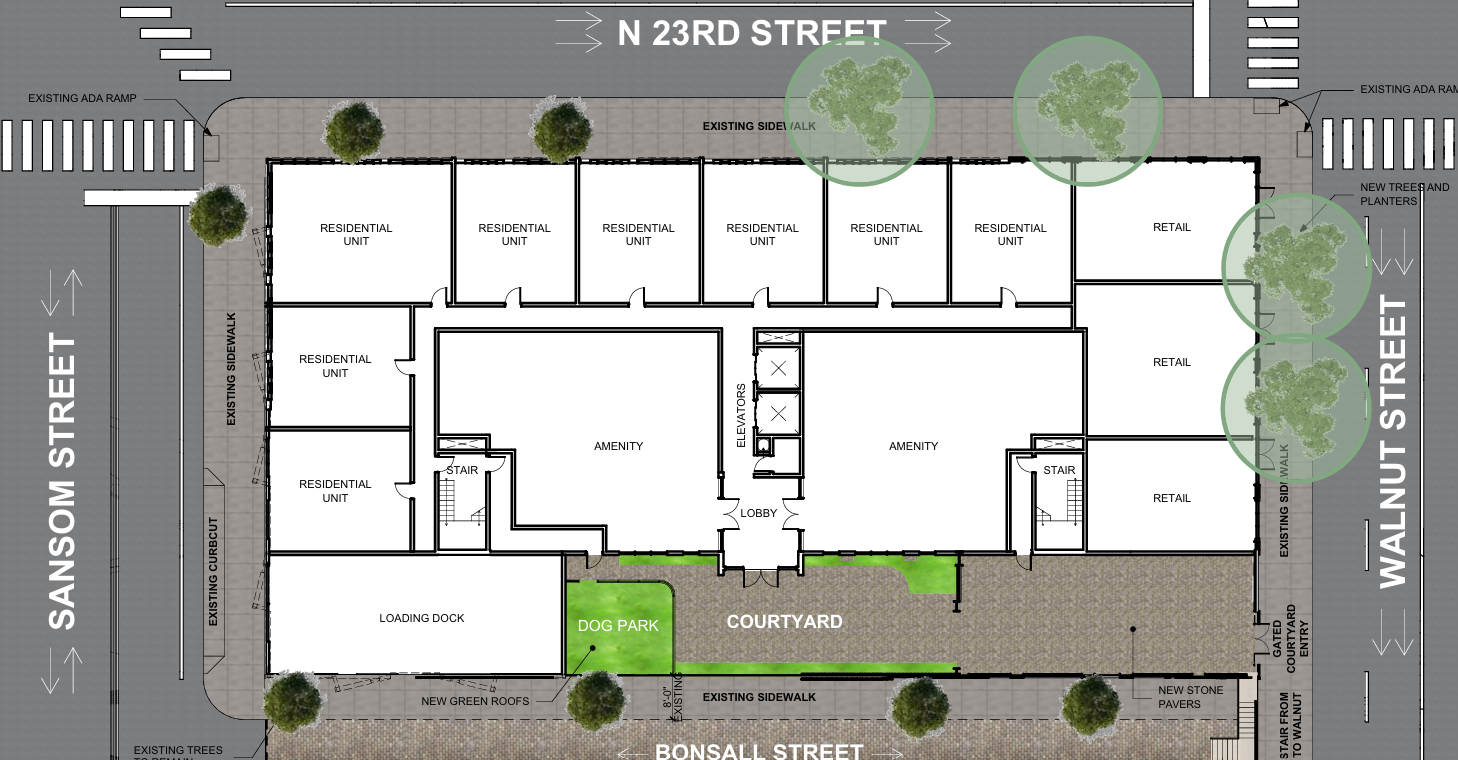
An 118-unit apartment building at 2301-11 Walnut St. received a warm welcome from a city-designated panel of architects and planners at Tuesday’s meeting of the Civic Design Review committee.
The eight-story proposal is slated for land that once housed a suburban-style Rite Aid and its surface parking lot.
The new building would include 46 underground parking spaces, 2,750 square feet of retail on Walnut Street, and 5,675 square feet of amenity space facing an interior courtyard.
The property has long been held by Patriot Development Associates, a company that owns and operates parking facilities throughout Center City.
In 2022, developer Trammel Crow Co., based in Dallas, proposed a 172-unit tower on the site, but the project was scuttled when interest rates began rising sharply.
The new plans show Patriot developing the property themselves. The president of the company, Richard Zeghibe, did not respond to requests for comment.
Philadelphia-based Boxwood Architects is designing the project. The firm is known for high-end restaurant and bar design, as well as multifamily projects.
The architect plans a variety of plant life features, including new street trees, a green roof, and a garden in the courtyard facing Bonsall Street, as well as design detailing on the side of the building.
“We introduced an artistic gesture on Bonsall Street, inspired by the movement of the Schuylkill River, to activate the streetscape and connect the courtyard to the neighborhood through brick screens and sculptural metal railings,” said John Weckerly of Boxwood.
The detailing on Bonsall Street is “inspired by the movement of the Schuylkill River,” according to the project architect.[Box]wood Architects
“Gardens and green spaces are situated throughout the project to reduce the heat island effect and create a more welcoming experience for residents and neighbors,” Weckerly said.
The overwhelming majority of the project is comprised of one-bedroom units, with only 13 two-bedrooms.
The proposal does not require any breaks from zoning law, so the developer only had to meet with the local community organization — the Center City Residents Association (CCRA) — in advance of Tuesday’s advisory-only meeting.
“[We] welcome the addition of housing to the neighborhood, additional residents, and retail opportunities for more businesses,” Alex Roederer, head of CCRA’s zoning committee, said at the Tuesday meeting.
He noted that Patriot Development had expanded the bicycle room in response to the neighborhood’s feedback and that the company was considering a Community Benefits Agreement as well. Details are not yet available.
A close-up rendering of Patriot Development’s proposed building, with the green roof visible.[Box]wood Architects
The Civic Design Review committee generally praised the aesthetics of the project and its potential to enliven Walnut Street as it approaches the Schuylkill.
Multiple street-level businesses in the blocks of Walnut Street leading up to the river have shuttered since 2020.
Some members of the CDR committee encouraged the developer to add more street-level commercial space — currently only the Walnut Street side features room for retail — and others urged the architects to bring more definition to the existing street frontage.
Alternatively, they suggested wrapping amenity space, such as a gym, around to Walnut. (Currently, the space faces the courtyard, with residential units lining Sansom and 23rd Streets.)
A map of the ground floor of the proposed building, which unusually has apartments on the ground floor.[Box]wood Architects
“I would just love to see how you can … make this more special because right now I’m afraid it’s just a glass surface on the sidewalk,” said Ximena Valle, an architect who chairs the committee. “If they remain empty, which they might, it’s really quite ominous. It would be more of what’s already there” — vacant space.
When asked about specific amenities — beyond a dog park — Weckerly of Boxwood noted that those details have not been fleshed out.
Neither have potential retail offerings, with committee members noting that the current configuration did not appear to have the back-of-house space needed to sustain a restaurant.
However, the committee on the whole praised Boxwood and Patriot Development’s design, a contrast with the reception of Trammell Crow Co.’s project in 2022.
“Sometimes we have developers come in, and they do the absolute minimum to make an apartment, and this is more than that,” said Dan Garofalo, an architect who is the committee’s vice chair.
This is the second major development recently announced this summer on the western edge of Walnut Street. A 372-unit building from PMC Property Group is planned just to the west at 200-10 S. 24th St.
“I was excited to see the project come through. It provides a great opportunity of connecting West Philly and the east side of the Schuylkill,” Valle said. Right now, “I think that pedestrian experience, pre-bridge, heading west is pretty miserable.”
If you have ever considered giving up your car, now is the time.
There’s the price of gasoline, which has shot up by more than 35% since President DonaldTrump launched the war against Iran in February. Even if you never start the ignition, simply owning a car will now set you back an average of $8,000 a year in insurance, maintenance, and loan payments.
And those are just the immediate costs. As a major source of greenhouse gases, cars contribute significantly to climate change, which is already pushing up the price of food and everyday purchases.
So, let’s say you’re ready to ditch your money pit on wheels. Then what?
I’ve been struggling with this question since I moderated a panel this spring with Sarah Goodyear and Doug Gordon, the duo from the popular podcast The War on Cars, who just published a rousing call to arms, Life After Cars: Freeing Ourselves from the Tyranny of the Automobile. The event, held at the capacious Resurrection Philadelphia church in Center City, was sponsored by Philly Bike Action and 5th Square Advocacy, two groups dedicated to promoting alternatives to driving.
Resurrection’s sanctuary was packed — with the converted. When Goodyear and Gordon asked the audience who had traveled to the event by car, only a few sheepish hands went up.
While their bookdoes a great job of detailing the ways cars “ruin everything,” there is little in it to help the car-dependent kick the habit. The problem is, most people have no idea where to start.
Even in the Philadelphia region, which has better-than-average transit and cycling infrastructure, the prospect of living without a car can seem a little like trying to swim without arms and legs. How will you take the kids to sporting events, look after elderly parents, and buy groceries without a vehicle? Our local transit services — SEPTA, NJ Transit, and PATCO — don’t serve every nook and cranny of the region and don’t run as frequently as they should.
Like everything else in America these days, the debate over the role of cars in our daily lives tends toward extremes. Philadelphia urbanists can sometimes come off as unsympathetic, as if they expect people to go cold turkey and swap their vehicles for bikes and SEPTA. Meanwhile, the pro-car lobby keeps insisting, against the evidence, that the car-free life is not practical outside a few transit-rich neighborhoods, like Center City.
But who says it has to be all or nothing?
‘Habituate walking’
My advice: Keep your car — for now, at least — but look for opportunities to get around by other means. Walk to the grocery store. Ride a bike to dinner at a nearby restaurant. Think of these excursions as a trial run. Once you feel comfortable, take the train or bus to work. You may never give up your car permanently, but you will save a bundle on gas and maintenance, reduce congestion, and boost your step count.
That’s how Jane Murray started weaning herself from the car. The Ardmore resident, who now runs a popular Instagram account called @Janewalksardmore, first began taking long walks as a way toexperience her Main Line town on a deeper level. To give shape to her Instagram project, she decided to visit every block in Ardmore and document her travels.
Jane Murray walks along Lancaster Avenue in downtown Ardmore, as part of a project to to walk every street in the Main Line town.Alejandro A. Alvarez / Staff Photographer
The more she walked, the more comfortable she felt leaving her car at home. She now wheels a “granny cart” to Trader Joe’s, a 15-minute walk from her house. Not long ago, she hopped a SEPTA bus to meet friends for quizzo in a pub a few towns away. At the end of the night, she took an Uber home.
Murray’s kids still have to take a bus the four miles to their middle school and she drives them to distant sporting events, but makes a conscious effort to “habituate walking” into her routine. Before leaving the house, she checks her transit apps to see if she can get to her destination without driving. Sometimes, she mixes it up: When she’s running errands, she’ll drive part of the way, then walk the last few blocks. Her Instagram has inspired her neighbors, who pepper her for tips about safe walking routes.
A mobility menu
Living in America without a car is often portrayed as a hardship, something that people on the margins are forced to endure. But, for me, living without a car has been a joy.
I didn’t know what to expect when I impulsively decided to get rid of my aging clunker 30 years ago after being presented with an expensive repair bill. Before then, I had rarely taken taxis or splurged on Amtrak to visit family in New York. Since I would no longer have to pay for car insurance, I promised to allow myself those indulgences. My husband and I were living in Center City, which certainly made our experiment more doable. (I should mention that I was pregnant at the time. I took a taxi to and from the hospital.)
Besides saving a lot of money, not having a car has liberated me in ways I never could have imagined. Bike lanes were virtually nonexistent in Philadelphia in the ’90s; today my bicycle is my main form of transportation. Thanks to the city’s mostly flat terrain, I can easily cycle to interviews and events in far-flung neighborhoods. My ride is equipped with side baskets, allowing me to do my grocery shopping by bike. When my destination is beyond biking distance, or when I have to look presentable, I’ll take SEPTA or reserve a Zipcar from the local car-sharing company. In a pinch, I can always summon an Uber, a Lyft, or a taxi. I still walk a lot, and it’s no exaggeration to say I run into people I know on every outing.
The key here is to think of mobility as a menu of options, rather than a car/no-car binary. While low-speed electric bikes have made it easier to cover long distances, not everyone can, or wants to, bike. Even transit can be daunting for a novice. The fear of crime also deters some people from using SEPTA, even though serious incidents have fallen dramatically in the last decade.
In 2022, Councilmember Mark Squilla (center), former Eagle Connor Barwin, Councilmember Kendra Brooks, and Councilmember Helen Gym took part in a Bike to Work Day event sponsored by the Bicycle Coalition of Greater Philadelphia to promote cycling as a means of transportation.JESSICA GRIFFIN / Staff Photographer
Eden MacDougall vividly remembers his trepidation when he started commuting from Langhorne, in Bucks County, to Temple University on SEPTA’s Regional Rail. “I kept thinking, how will I know it’s my stop?”
By the time MacDougall graduated in 2022, he was a super-commuter. To get to his new job at Mastery Charter School, where he is an AmeriCorps reading instructor, he had to use three forms of transportation: He started his day by biking two miles from his home to the Langhorne station. After taking a SEPTA train to Fern Rock, he changed to the Broad Street subway, getting off at Erie. The trip took an hour and 45 minutes, but MacDougall, who never learned to drive, loved it. “I’d open up my book and read the whole way.”
Stephen Bronskill, coalition manager for Transit Forward Philadelphia, shows incoming Temple University students how to navigate SEPTA during a tour organized at the start of the new semester. Bastiaan Slabbers / For The Inquirer
Now he lives in Philadelphia and volunteers as an instructor for Transit Forward Philadelphia and the Bicycle Coalition of Greater Philadelphia, which run Saturday tours to help people feel more confident riding SEPTA. Although the events provide practical advice, like how to use a transit app, they’re intended to be fun excursions. MacDougall recently shepherded a group from Roxborough to the Clark Park farmers market, showing them how to change from the Route 9 bus to a West Philadelphia trolley. Along the way, the group got to see SEPTA’s efficient new Wissahickon Transit Center on Ridge Avenue, where 11 bus routes converge.
The two groups, which have been lobbying the state legislature to help SEPTA secure much-needed state funding, started the Saturday tours as an extension of their advocacy work. They believe the exposure to SEPTA’s system can help reset public perceptions.
SEPTA’s new Wissahickon Transportation Center on Ridge Avenue in Manayunk is a major upgrade for the city’s bus riders. The sprawling, $50 million station opened in January 2026 and allows 5,000 passengers a day to switch between 11 bus lines. (photographeed Aug. 2026)Inga Saffron / For The Inquirer
“People had a lot of negative experiences during the pandemic,” Julio Rodriguez, the Bicycle Coalition’s policy director, told me. So, when SEPTA announced it was implementing its long-awaited schedule changes this summer, the transit advocates saw a chance to change the conversation.
Helping SEPTA boost ridership isn’t their only goal, however. Because they believe fewer cars will make Philadelphia a safer, more livable city, they’re organizing similar outings to get people comfortable with bike commuting.
Changing habits
Even while these advocates are gaining adherents, many skeptics remain convinced people will never give up their cars.
But the public’s cheerful response to this summer’s car-free celebrations around Philadelphia suggests that habits can change. Almost 600,000 people converged for World Cup watch parties at Lemon Hill in Fairmount Park during the 39-day FIFA Fan Festival — even though parking was banned. After the games ended, I saw hundreds of people streaming along the Schuylkill River Trail to 30th Street Station, a distance of 1.5 miles. Thousands took transit, rode bikes, or walked to the Ben Franklin Bridge to celebrate its centennial in July.
Thousands of people took transit, biked, or walked on July 11 to parade across the Ben Franklin Bridge to celebrate the 100th anniversary of its opening.Elizabeth Robertson / Staff Photographer
For people who switch to alternative forms of transportation, the payback is immediate. But Philadelphia and the region also have much to gain from having fewer cars racing through the streets: cleaner air, less noise, more casual social encounters with neighbors, and less wear-and-tear on infrastructure
The impact on climate change is a different story. Individual actions can only do so much to slow the dramatic shifts in global weather. It’s also a frustrating chicken-and-egg situation. People won’t see car-free living as truly feasible until there is intensive government investment in transit, bike infrastructure, and pedestrian safety.
Until that happens, carry a fare card, sign up for car-share, install a transit app on your phone — and don’t forget to wear ahelmet.