Food magazine Bon Appétit released its annual best new restaurants list on Monday, and it includes two Philadelphia restaurants.
Honeysuckle, Omar Tate and Cybille St.Aude-Tate’s fine-dining restaurant in North Philadelphia, and Sao, Phila and Rachel Lorn’s East Passyunk oyster bar, were among the 19 establishments that made the cut.They joined restaurants in New York City, San Francisco, Chicago, Seattle, Nashville, and Birmingham, Ala., and more.
The unranked list defines new restaurants as those that opened between March 2025 and March 2026. Scouts visited restaurants in 43 U.S. cities and rated them according to seven criteria: flavor, technique, hospitality, ambiance, cultural significance, innovation, and sense of place.
To be considered the best, “a restaurant must serve dishes and drinks that are complete in terms of flavor and technique, from the pre-meal cocktails to dessert, like an album with no skips,” wrote Bon Appétit editor-in-chief (and former Inquirer food editor) Jamila Robinson.
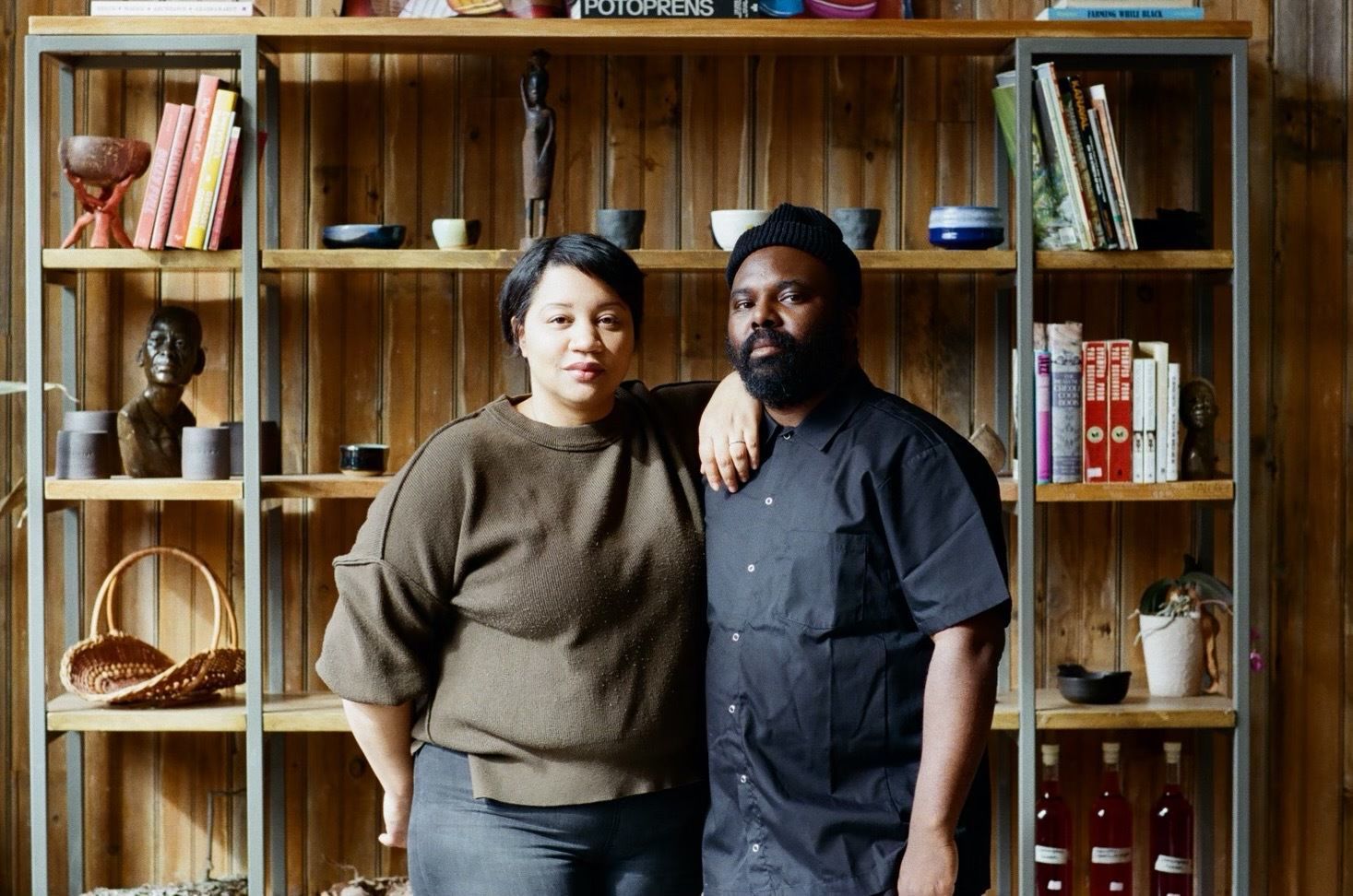
Partners and chefs Cybille St.Aude-Tate and Omar Tate, who opened Honeysuckle at 611 N. Broad St. in April 2025.Clay Williams
Tate and St.Aude-Tate opened Honeysuckle at 611 N. Broad St. in April 2025. The restaurant’s five-course tasting menu evolved from the couple’s beloved West Philly café-market, Honeysuckle Provisions, which closed in 2024. The couple uses the menu to weave a dynamic and complex narrative about how the Black diaspora has shaped American food culture.
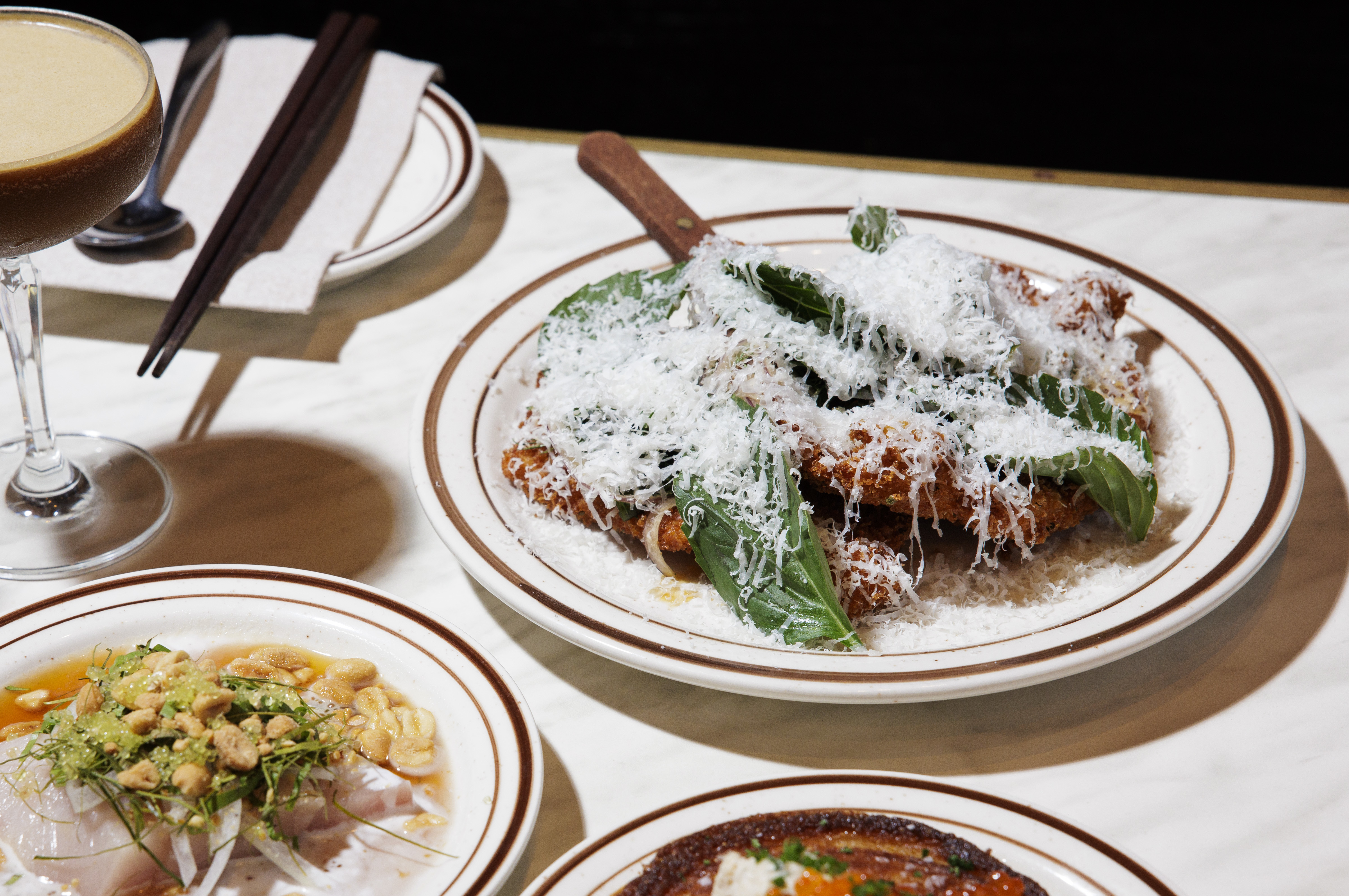
The Mawn Cutlet at Sao, the East Passyunk Avenue oyster bar from married restaurateurs Phila and Rachel Lorn.Monica Herndon / Staff Photographer
“Chefs Omar Tate and Cybille St.Aude-Tate deliver a showstopping walk through nostalgia, pop culture, Philadelphia, and Black American history through dishes that spark new reflection and conversation,” Robinson wrote of Honeysuckle.
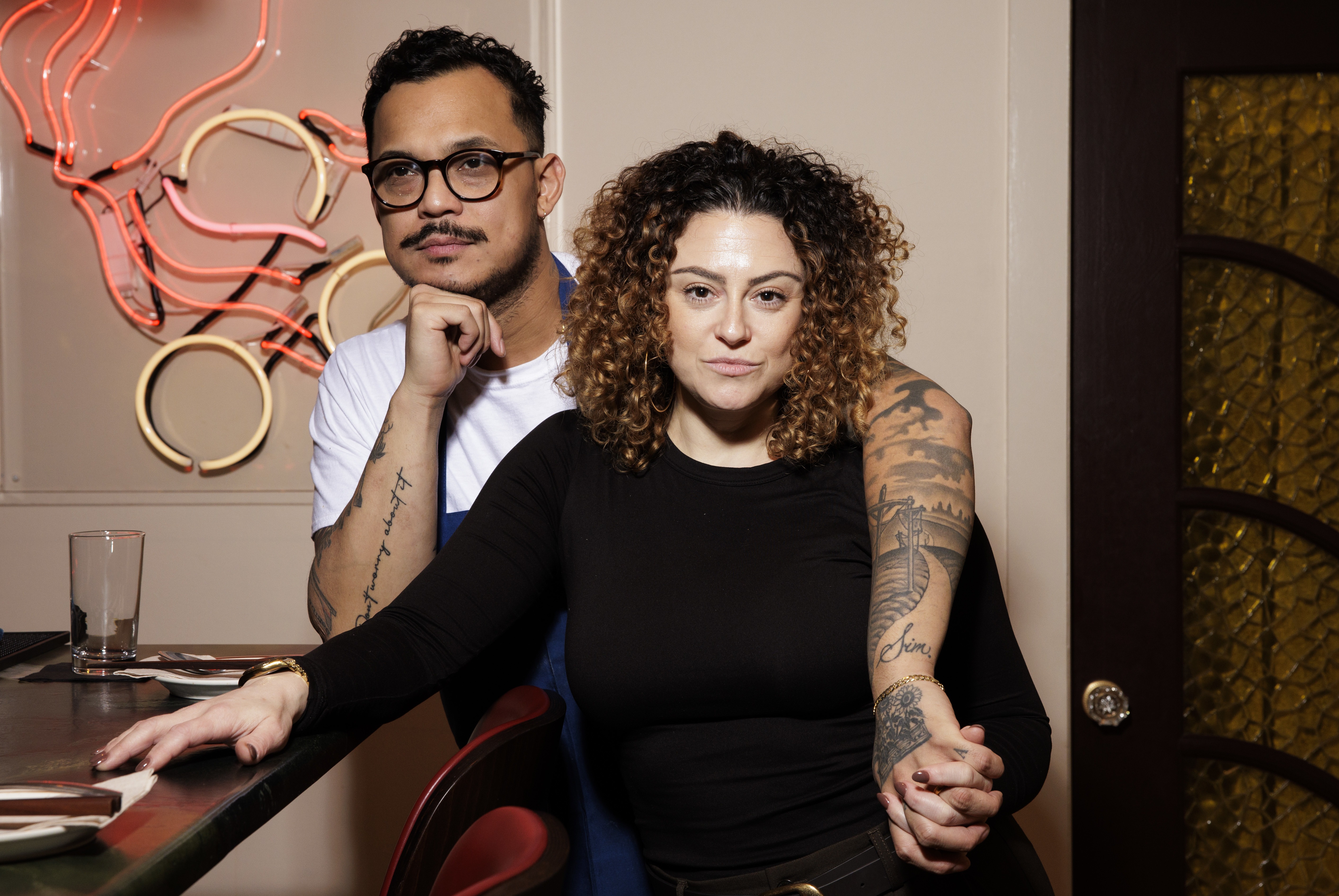
Phila (left) and Rachel Lorn (right) own Cambodian noodle bar Mawn and oyster bar Sao. Bon Appétit has named Sao one of the country’s best new restaurants of 2026.Monica Herndon / Staff Photographer
Bananas are both tropical and ubiquitous — an ingredient that couldn’t be less local to our region, but found in every grocery store. They’re mundane yet polarizing, especially when ripened and rendered into syrup. They’re summery, due to their cultivation in hot climates, and soul-warming.
The fruit has long been taken for granted, until now. Its popularity is suddenly booming: It’s a featured ingredient in protein bars, gummy bears, coffee creamer, lip balms, and body washes. Even Wendy’s launched a Minions-themed Banana Frosty Swirl last month.
But bananas’ recent prevalence in Philadelphia’s bars and cafes has little to do with the little yellow cartoon characters. Banana beverages have been a long time coming, hot on the heels of other wildly popular, vibrantly colored, Asian-inflected flavors like matcha and ube.
(Unlike matcha and ube, we’re probably not going to see a shortage of banana. But you never know. The bananas we buy at most grocery stores are of the Cavendish variety, but artificial banana flavoring was engineered with the Gros Michel variety in mind. And sometime in the 1950s, after a devastating fungal blight or “bananapocalpyse” called Panama disease, Gros Michel bananas mostly disappeared.)
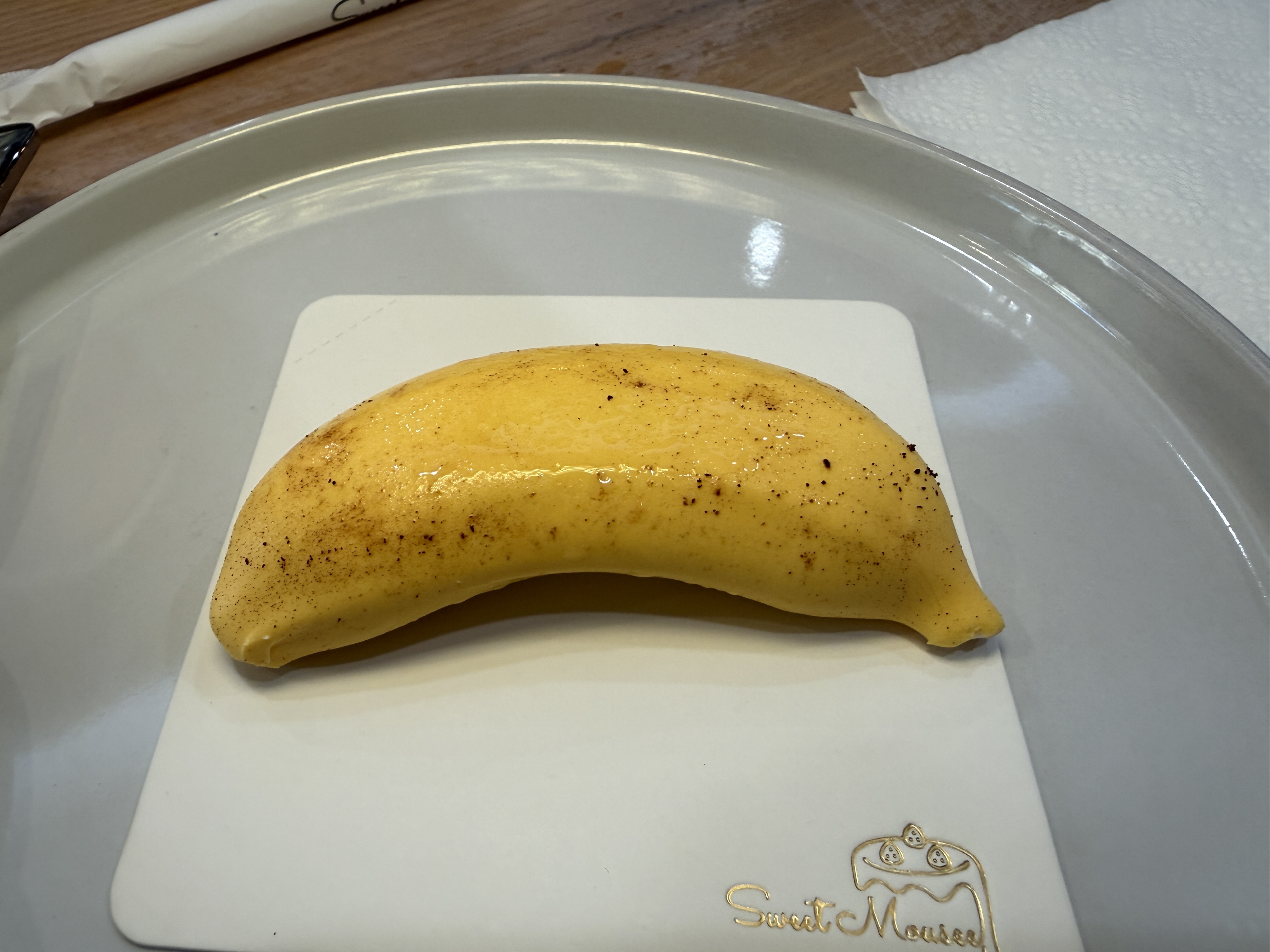
“Little treat” cafes are utterly enamored with the banana, as evidenced by banana milk, a classic Korean beverage that has made it onto several cafe menus lately. The cafe crush doesn’t stop there: At the just-opened Sweet Mousse on South Street in Graduate Hospital, you can get a tiny trompe l’œil banana mousse cake ($6) with a dark chocolate center.
The dark chocolate banana mousse cake from Sweet Mousse in Graduate Hospital.Kiki Aranita / Staff /
But bananas are not the easiest ingredient to work with.
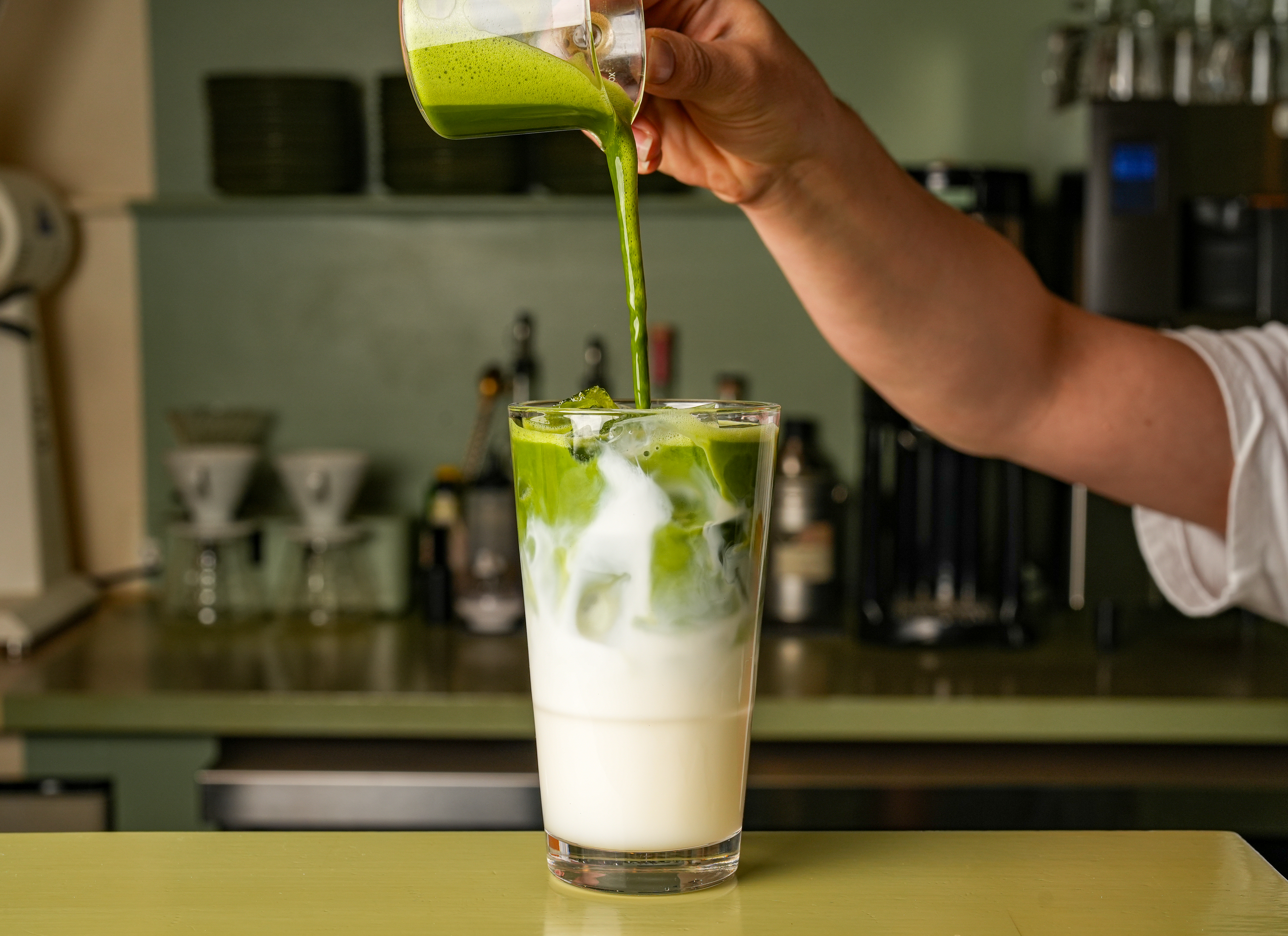
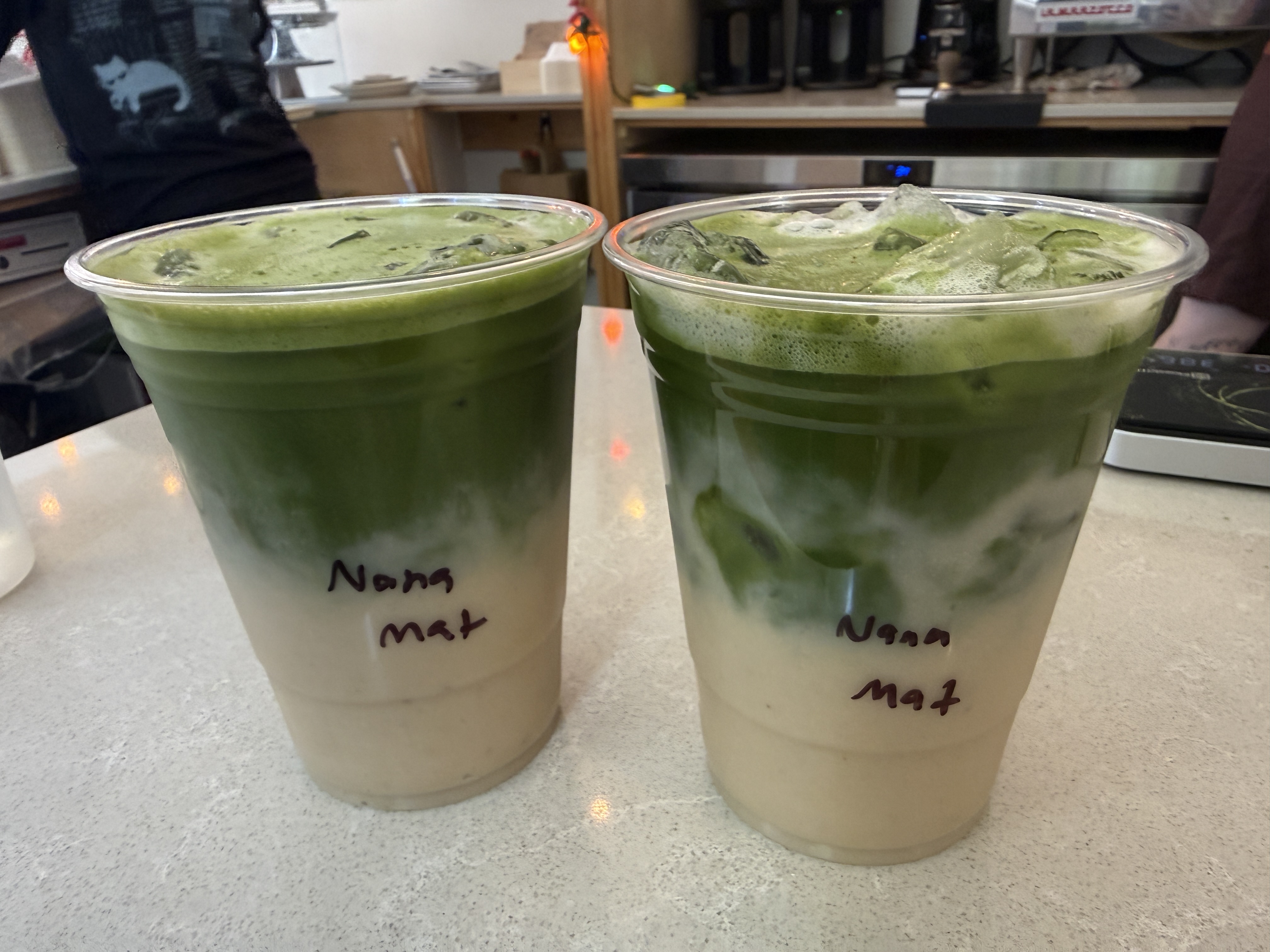
At Seaforest Bakeshop, also in Grad Hospital, cafe manager Mackenzie Quick makes banana milk from scratch, blending oat milk, maple syrup, vanilla extract, and bananas. It’s layered into the cafe’s best-selling beverage: their iced banana milk matcha. And it can only be served iced. “It’s not good at all hot. When you steam it, it turns into porridge,” said Quick.
Bartenders are reaching for all types of banana liquor, including Giffard’s Banane du Brésil, which goes into the banana cocktails at Friday Saturday Sunday and Sao, and Crème de Banane from Tempus Fugit Spirits, which is shaken into the banana Negroni ($13) at Cormorant Corner Bar and a banana-y Old Fashioned riff called the Triple Header ($16) at Bar ILU.
Philly cocktail bars are also coming up with unique ways to use the banana in its entirety, including its peel.
“We take the leftover peels after infusing bananas into dark rum and cut them down into half-inch slices,” said Josh Grejdus, the beverage manager at Bluebird Distilling. “Then we use equal parts by weight of sugar and macerate the skins. Let it sit overnight and then strain it” to create a banana oleo-saccharum (or aromatic syrup). A similar elixir is made at both Static! and Next of Kin, said co-owner Kyle Darrow, where brûléed banana goes into liquors like rum and scotch.
Libertee Grounds, the bar with indoor mini golf in Fairmount, takes an approach akin to Seaforest Bakeshop’s. “I make a banana puree, then incorporate it into a simple syrup using a mixture of sugar, maple syrup, cinnamon, nutmeg, and vanilla to lean into the banana bread feel,” said beverage manager Ellie Bley. “I batch this about once a week or more depending on demand.”
And demand for bananas sees no signs of waning.
Where to fuel up with banana cafe drinks
The iced banana milk matcha from Forin Cafe.Mike Prince
Forin Cafe
Forin makes a banana milk that consists of a simple syrup base with a banana emulsion and vanilla paste, which you can add to coffee and matcha drinks. Most popularly, it’s combined with ube and matcha.
The iced banana milk matcha latte from Seaforest Bakeshop uses house-made banana milk.Kiki Aranita / Staff /
Seaforest Bakeshop
Seaforest’s iced banana milk matcha uses Junbi matcha with their house-made banana-oat-maple syrup milk. The matcha is vigorously whisked for a drink that is creamy, fresh, grassy, and thick. It’s lightly sweet and has the texture of a loose smoothie.
This pink-tiled Chinatown cafe serves a banana latte ($7.75) made with strong Vietnamese phin-brewed coffee, poured over ice and layered with milk and foam spiked with DaVinci brand banana syrup.
Matcha Cafe Maiko in Chinatown is serving a banana pudding matcha latte, in which banana extract is mixed into whipped cream, the sweetness of which is balanced by a very robust matcha base. The whipped cream tastes like a cross between Runts and sunscreen (which some people love).
Static! has a banana cocktail called Split Decision made of brûléed banana scotch, banana skin, absinthe, bitters, and is washed with brown butter. Sister bar Next of Kin uses a similar process for their banana cocktail, Crocodile Tears.Kiki Aranita / Staff /
Next of Kin
While Static’s bestselling banana cocktail is rotating off their menu soon, the process for making it continues at sister bar Next of Kin, where banana is brûléed, infused into liquor for a day, then strained. Next of Kin’s banana daiquiri, one of the cocktails that uses rum infused with banana, is also one of the bar’s top sellers.
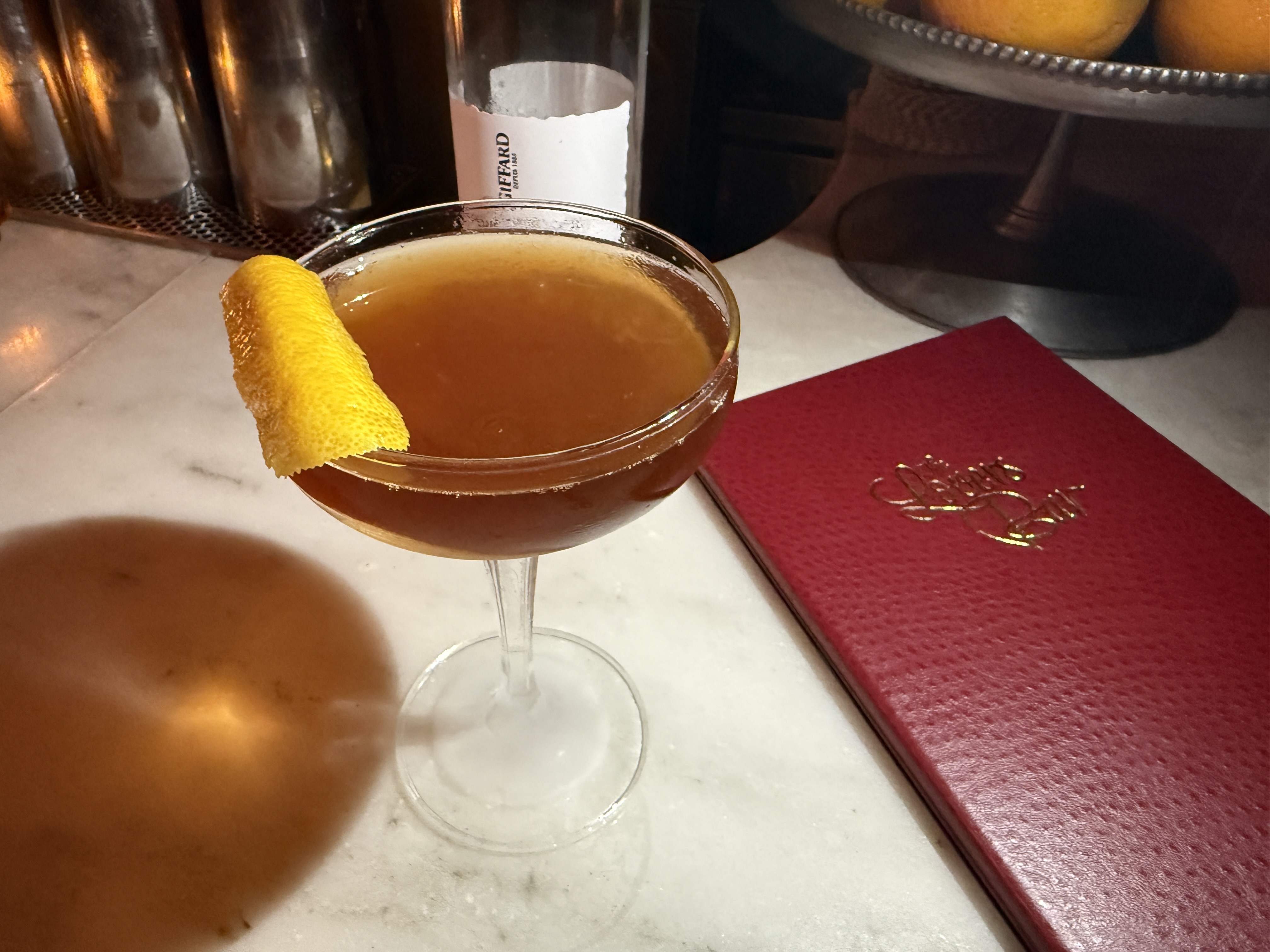
The cocktail Saul’s Revenge at the Lovers Bar at Friday Saturday Sunday consists of quinquina, pineapple distillate, Malört, coffee and banana liqueurKiki Aranita / Staff /
The Lovers Bar at Friday Saturday Sunday
Bartender Eric Martinez created the extremely complex cocktail Saul’s Revenge ($20) for the Lovers Bar using six ingredients: Quinquina, a French bittersweet aperitif, a pineapple distillate akin to mezcal), the divisive and herbaceous Malört, coffee, and Giffard banana liqueur, which is made from overripe Brazilian bananas. The result is smoky, nuanced, and gets a bitter edge from the Malört.
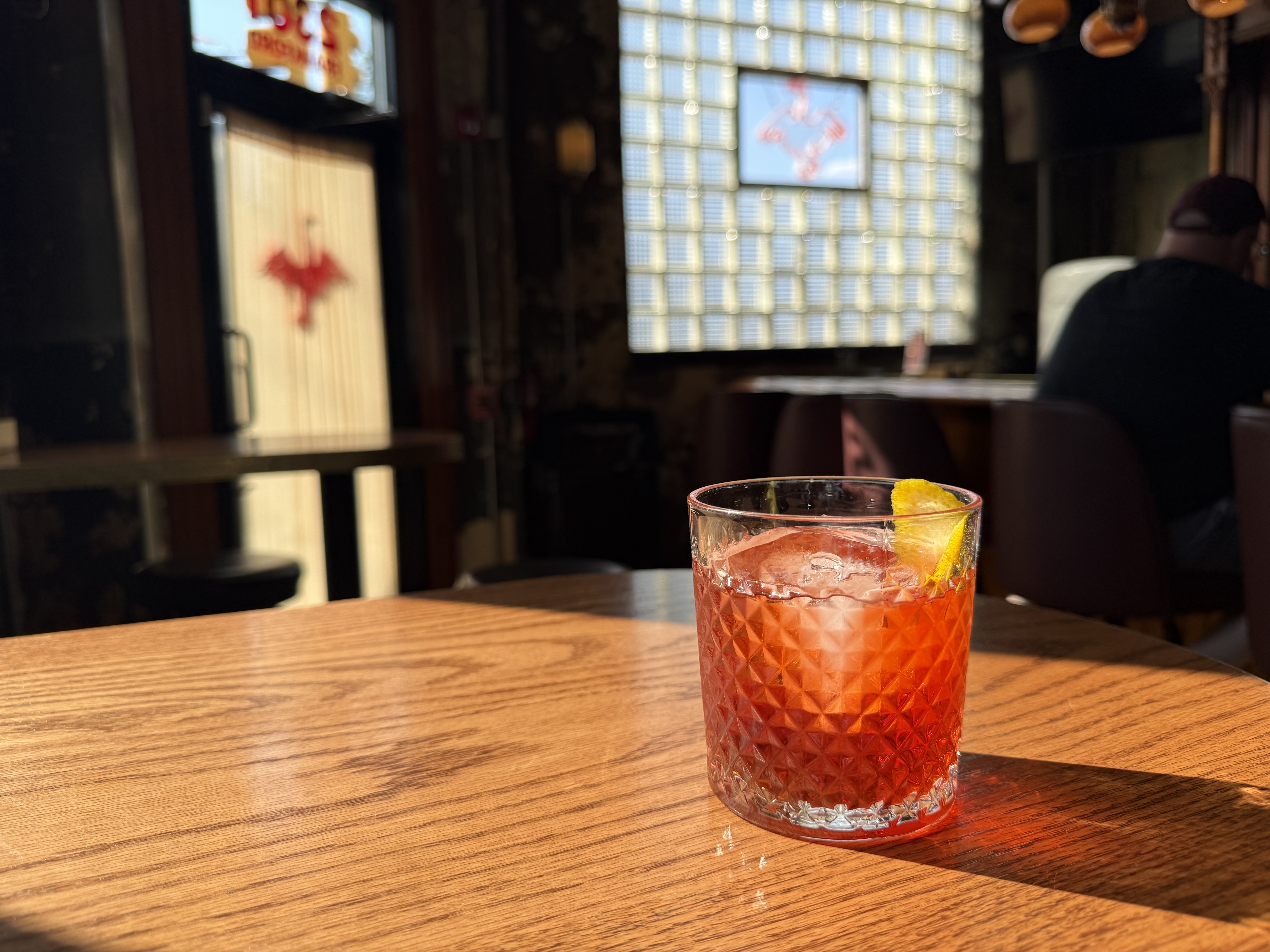
The banana negroni from Cormorant Corner Bar uses Crème de Banane.Kiki Aranita / Staff /
Cormorant Corner Bar
A fairly straightforward Negroni (with gin, Campari, and sweet vermouth) is transformed with a slug of Crème de Banane liqueur. Crème de Banane lends a silky viscosity to the classic cocktail and balances out its herbal notes.
Cormorant Corner Bar, 2301 Frankford Ave., 215-575-5112, cormorantphl.com
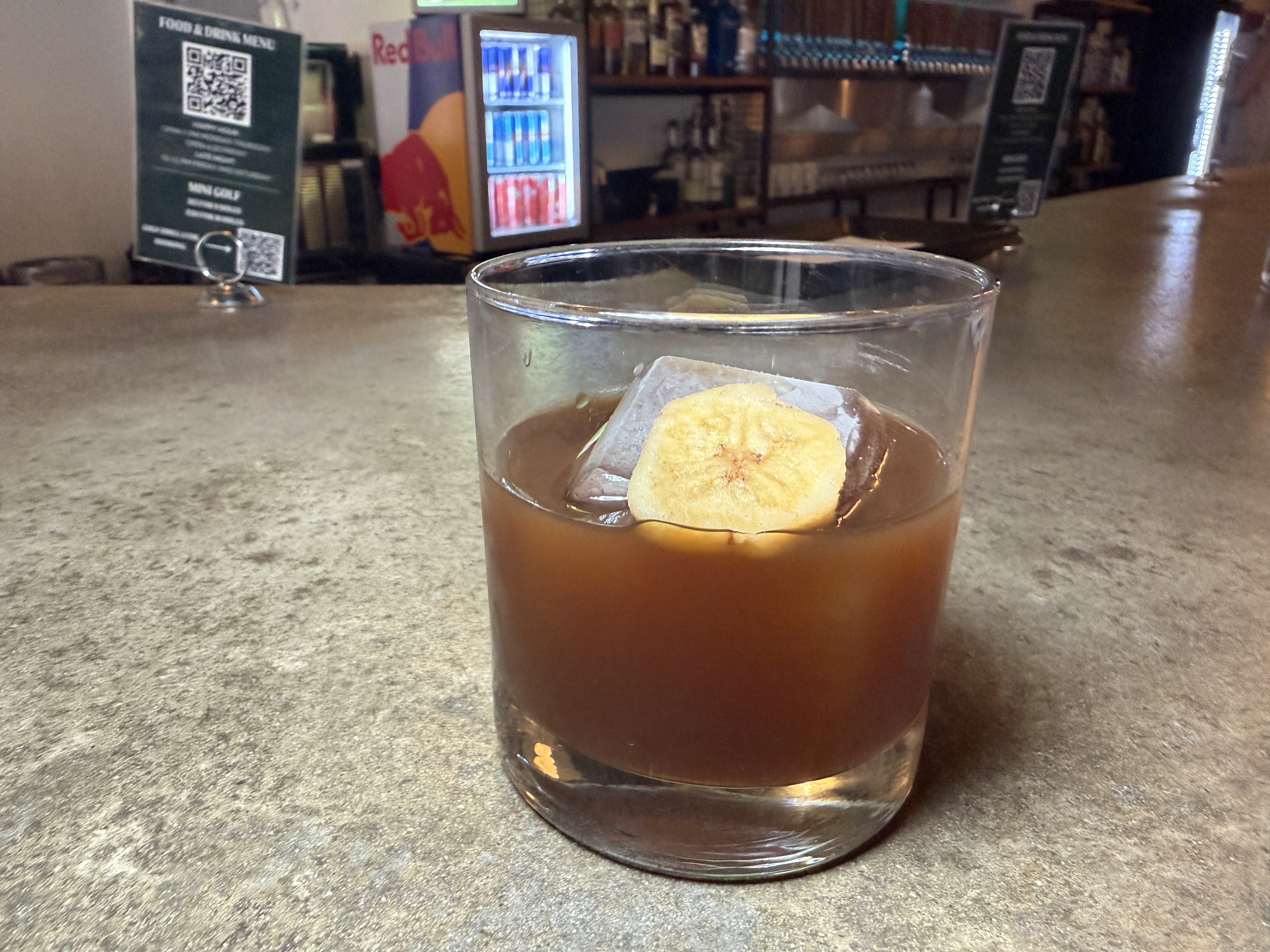
The Drunken BBL cocktail at Libertee Grounds consists of vanilla vodka, Borghetti espresso liqueur, Cynar, La Colombe cold brew, and banana.Kiki Aranita / Staff /
Libertee Grounds
Take a break from mini golf to try Libertee Grounds’ clarified cocktail, the Drunken BBL ($14) which combines vanilla vodka with Borghetti espresso liqueur, Cynar, La Colombe cold brew, and a house-made banana milk that consists of banana puree mixed with wintry spices.
Libertee Grounds, 1600 W. Girard Ave., Ste. C5, 267-324-3487, liberteegrounds.com
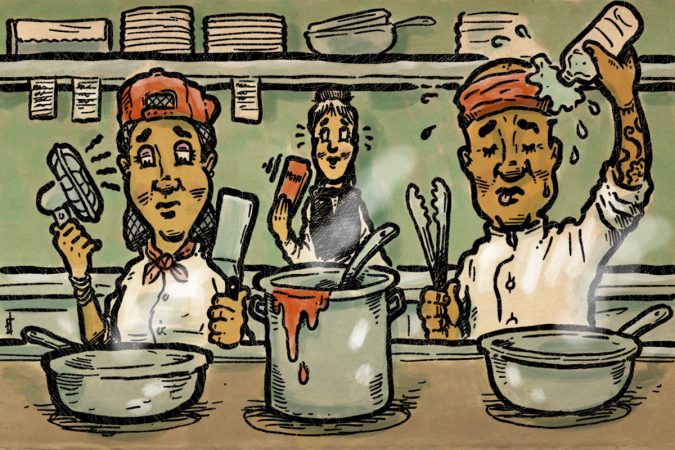
Even on 100-degree days, Philly’s chefs and cooks are still in the kitchen. For the most part, they only call it quits when the food they’re making can’t take the heat.
How do theymake it through their stifling shifts? The answer comes down to preparedness, hydration, and lots of icy treats to lower body temps and boost morale.
The planning for heat waves starts long before the mercury rises. At Pizzata Pizzeria‘s South Philly location, recently added split-unit air conditioners and commercial kitchen fans have kept temperatures moderate. “They have been tremendously beneficial and helpful to our staff,” said owner Davide Lubrano Lavadera. “For our Rittenhouse spot, we didn’t have a chance to install these units, so we added an evaporative air cooler there.”
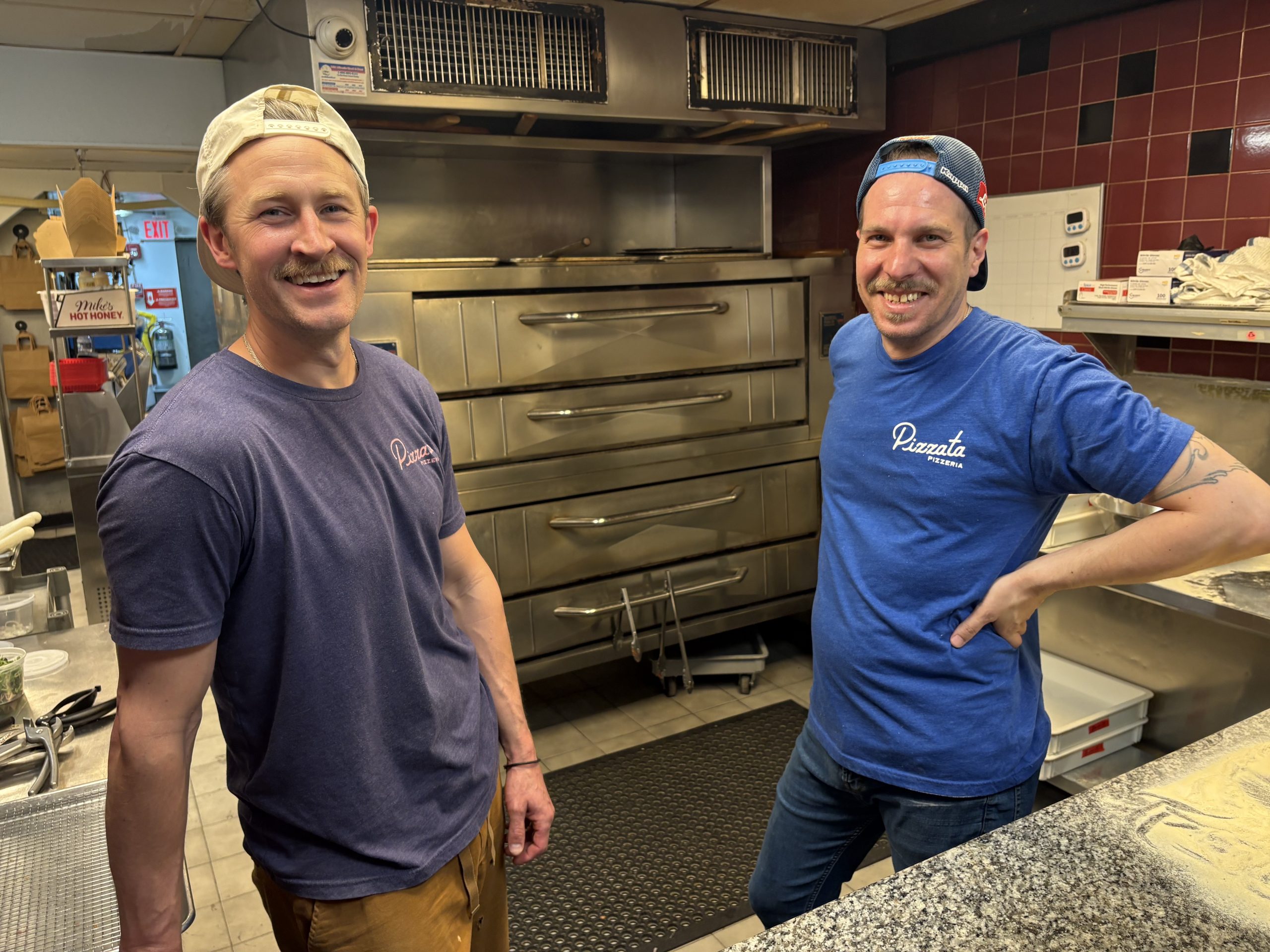
Pizzata Pizzeria co-owners and chefs Vinny Gallagher and Davide Lubrano Lavadera pose in the kitchen of their original pizzeria location on 22nd Street near Fitler Square.Craig LaBan / Staff
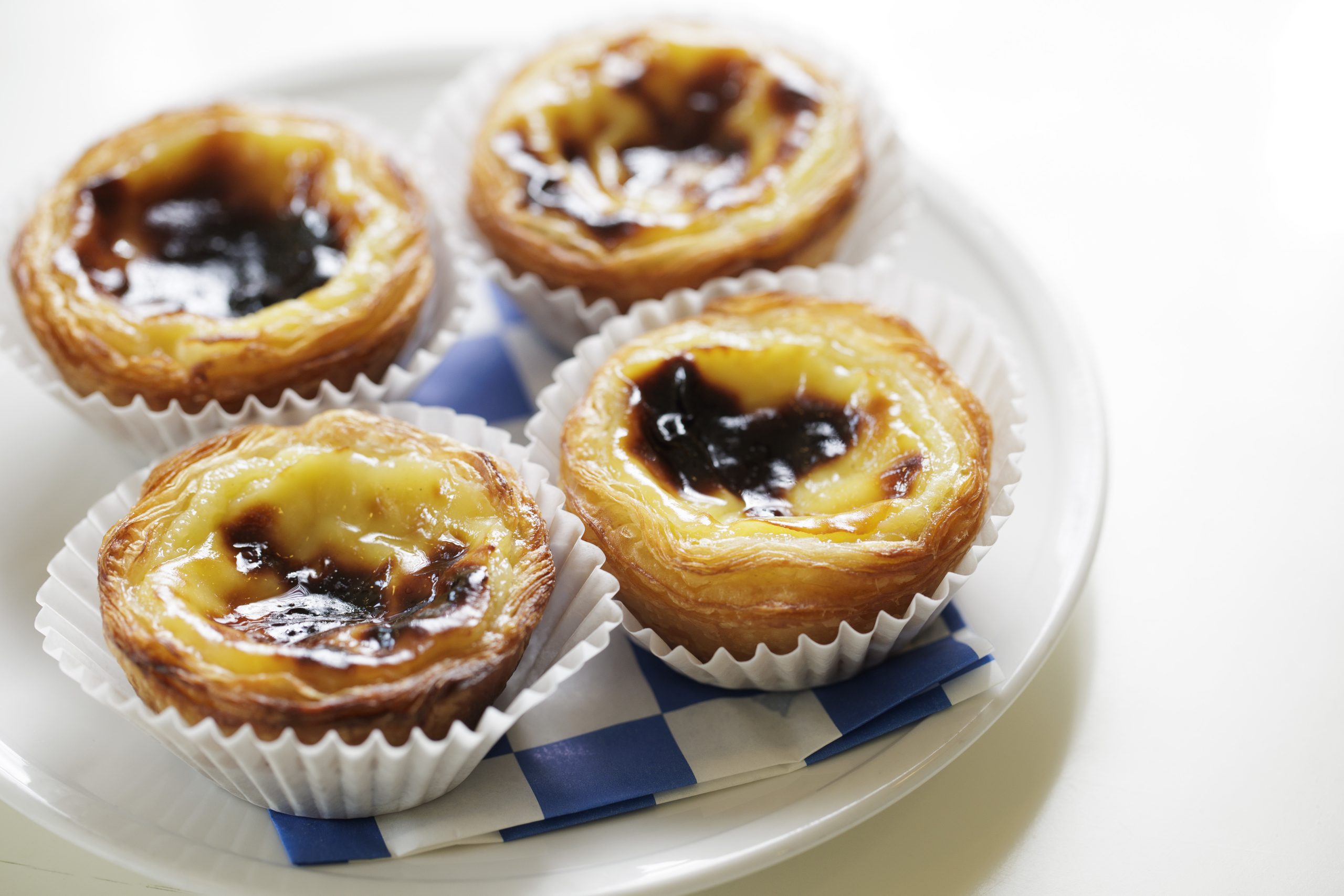
Two weeks ago, when temperatures spiked over 100 degrees three days in a row, Gilda chef-owner Brian Mattera warned customers on social media that the cafe would close if the heat tipped above 120 degrees in the kitchen — besides being uncomfortable, it would compromise the cooking. The flaky, laminated dough for Gilda’s signature pastéis de nata is notoriously temperamental, Mattera said.
“Our pastry chef, Sophia Fiorenza, is the star of the show. When she comes to me and says the temperature is one or two degrees up, she’s not being dramatic,” Mattera said. “The dough is tacky and difficult to work with. It’s unfortified and it can feel like papier mache.”
When the kitchen temperature is too high, the dough expands and falls off the sheeter, the machine that folds the dough into its many layers. “We say the dough is angry with us,” Mattera said.
The pastéis de nata at Gilda get harder to make in hot weather. Monica Herndon / Staff Photographer
Even in Gilda’s diminutive space,with just six gas burners and a flat-top, Mattera needs five separate HVAC units to maintain the perfect temperature for the dough, around 70 degrees. They weren’t enough to keep the kitchen open during early July’s heat waves: Gilda’s crew called it a day when the temperature behind the line reached 137 degrees.
When the heat’s that intense, Mattera has a trick. “I’ll get a deli container of ice water, bring it into the bathroom, pour it over my head, and go back on the line.”
Chefs in nontraditional kitchens also battle the heat. Josh Broder owns Root to Fruit, a vegan meal-delivery service that operates out of the Culinary Collective commissary space in the Bridesburg neighborhood.“We’ve basically become professional heat dodgers. We start cooking earlier, pack our delivery bags like they’re headed to the Arctic with insulated bags and extra ice packs, and everyone’s usually carrying a water bottle in one hand and a spatula in the other,” he said.
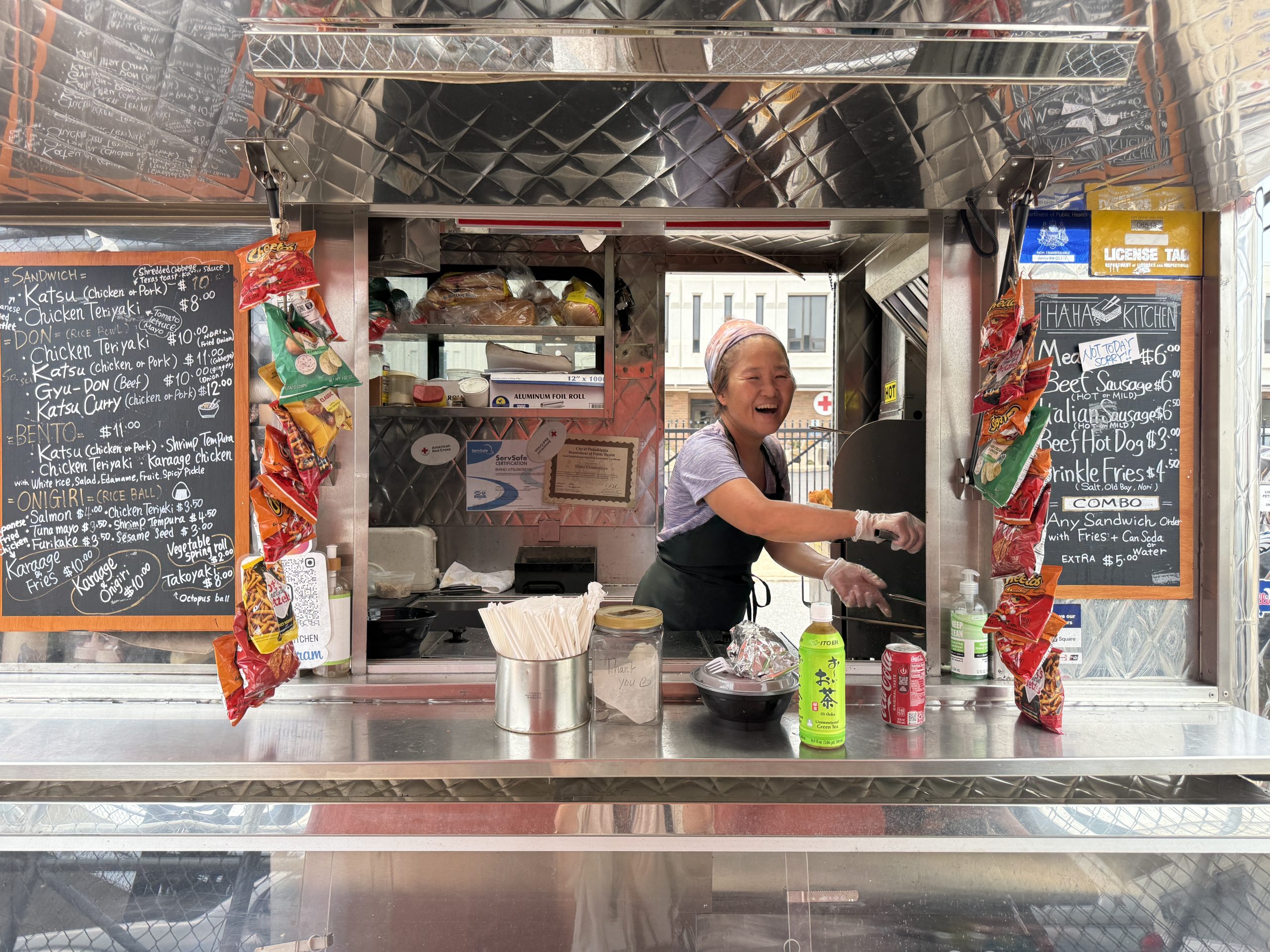
Shiho Utsonomiya, the chef operator of Haha’s Kitchen, rarely closes the tiny food cart she has operated at the corner of Seventh and Spring Garden Streets since 2018. But she was forced to break for a few days leading up to July 4 this year, when the heat became unbearable. She closed the cart Wednesday for the same reason.
Shiho Utsunomiya in her food cart during a heat wave.Kiki Aranita / Staff
“It’s been getting hotter every year,” she said. “Winter, I don’t mind! Minus 17 degrees, no problem. But the heat just kills me.” She’s surrounded by a burner, steam tables, a fryer, and rice cooker. She’s enhanced her setup this year with a rechargeable fan with a mister.
Utsonomiya’s location has a significant benefit: free ice from her best customer. United Refrigeration’s offices are nearby and her cart is popular with their workers.
Extreme heat also prompted Little Walter’s — where the wood-fired grill casts off 120-degree heat, according to chef-owner Michael Brenfleck — to close in early July. Brenfleck said reservations were light during the holiday weekend, but the same could not be said of the following Friday, when the restaurant was nearly fully booked. That presents a challenge in itself: The busier the restaurant, the hotter it is inside.
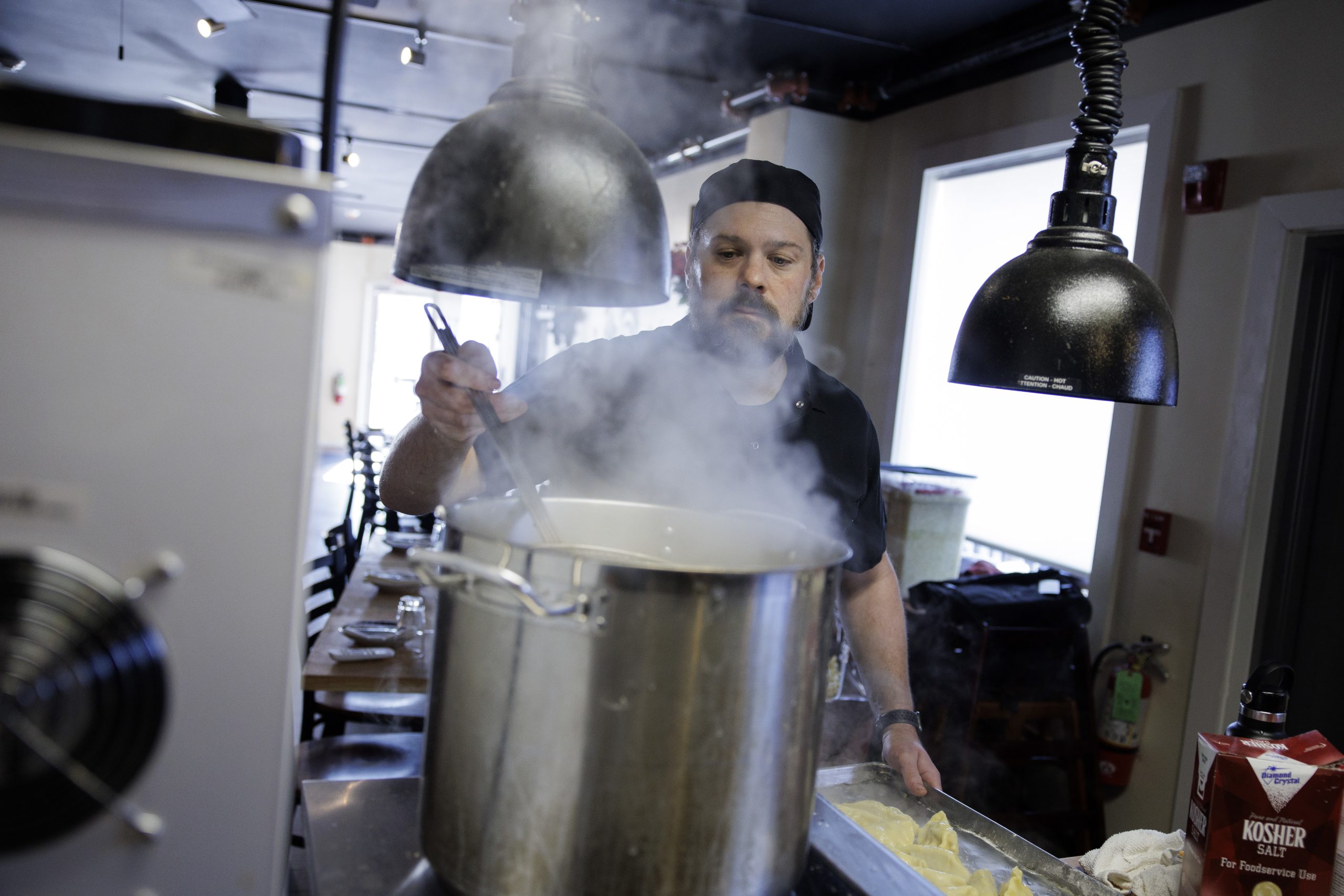
Chef Michael Brenfleck cooks pierogi at Little Walter’s in Philadelphia on Wednesday, Sept. 4, 2024.Monica Herndon / Staff Photographer
“Every person’s body radiates a certain number of BTUs, both in the kitchen and in the dining room,” said Brenfleck. His solution:“We’re going to put some cold specials on the menu, like a chilled pickle soup.”
Brenfleck and Phila Lorn, the chef-owner of Sao and Mawn, were both amazed their respective staff endured the heat without complaint.
“The real ones plan for these times and problem-solve,” Lorn said. “It amazes me to see my chefs in the kitchen crushing it. They’re eating popsicles,[mopping themselves with]cold wet towels, using Gatorade powder, but I swear to you, not one complaint from the back of house.”
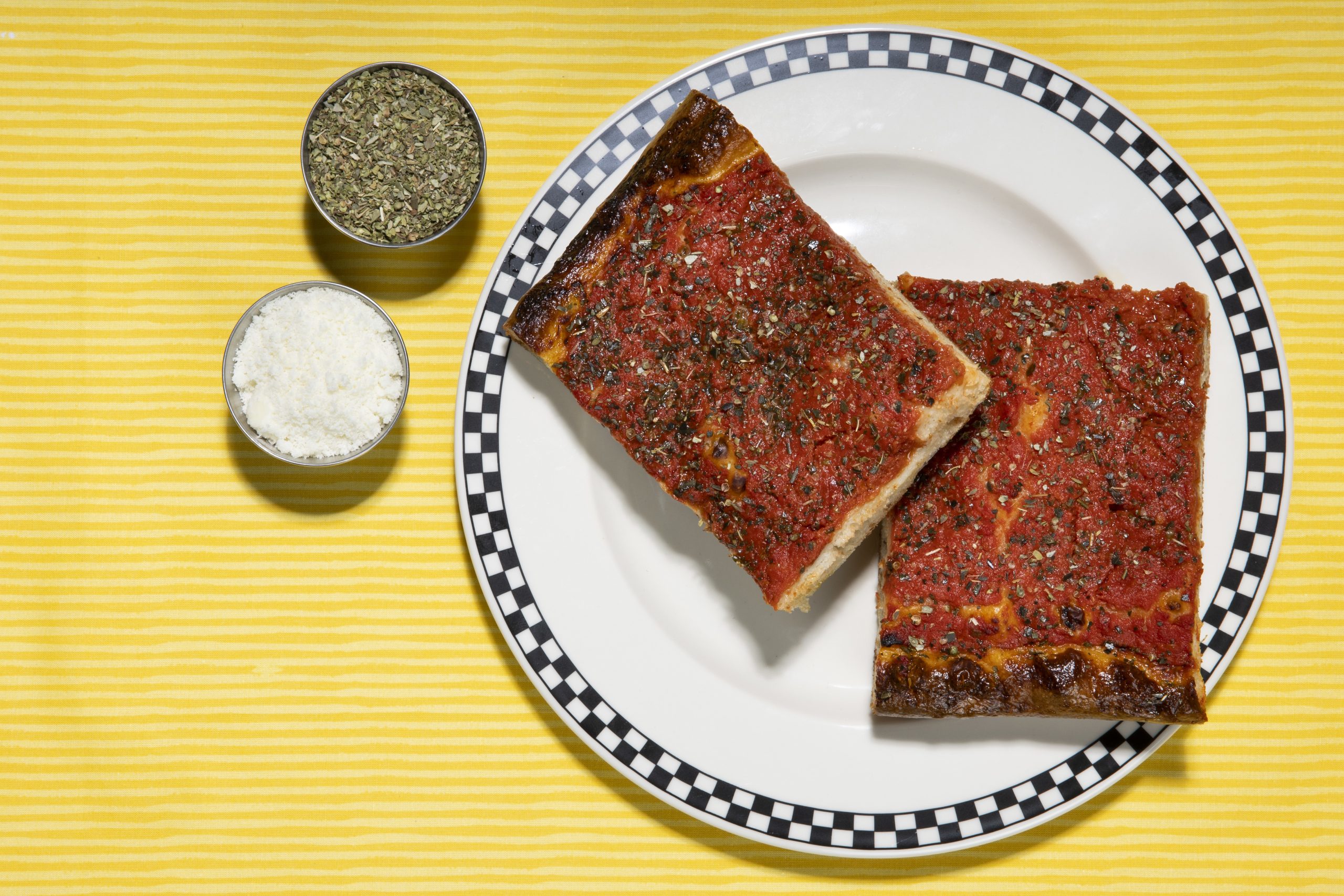
Liberty Kitchen staff trades tomato pie for soft serve on hot days. Monica Herndon / Staff Photographer
Heat waves tend to foster community among restaurants — especially when there’s an ice cream shop involved. On the hottest days, the staff at Liberty Kitchen trades boxes of tomato pie with 1-900-ICE-CREAM, according to Liberty Kitchen chef Beau Neidhardt. “They’ll give us individual cups of soft serve for our staff. It’s very neighborly.”
For many restaurant workers, it’s just part of the job.
“We aren’t doing anything that needs to be applauded,” said Mattera. “At the end of the day, we’re all professionals. This is what we do. We can handle the heat.”