Washington Lake Park sees more than 100,000 visitors every year. Now there’s a new way to keep them safe — and it honors the lives of two South Jersey hockey players.
The Aliver Foundation, a nonprofit that works to promote cardiac arrest prevention, donated outdoor automated external defibrillator equipment to the Gloucester County park in the spring. AEDs analyze the heart’s rhythm and deliver an electric shock to help recalibrate the heart if necessary, according to the American Red Cross.
The bright yellow enclosure, which keeps the AED in a climate-controlled environment, features a small plaque memorializing Johnny and Matty Gaudreau, Salem County natives and brothers who used to skate at a rink not far from the park.
Johnny, an NHL player, and Matty, an American Hockey League alumnus, died in 2024 when they were struck and killed while riding their bikes in Salem County. Johnny was 31, and Matty was 29.
Jane Gaudreau, Johnny and Matty’s mother, said she’s glad that something used to save lives is honoring her sons.
“My sons were always there for everybody else. They always wanted to help other people,” Jane said. “They would take their shirts off their backs for someone.”
Although the equipment has been up and running for months, the AED will be officially dedicated to the Gaudreaus at a community celebration at Washington Lake Park on Hurffville-Cross Keys Road on Sunday, from 10 to 11 a.m. There will also be AED and CPR demonstrations, children’s activities, and the chance to engage with first responders.
Placed on the brick wall of Washington Lake Park’s ranger station, the AED equipment is in the same park where the Gaudreau family hosts an annual memorial 5K run, and less than two miles from Hollydell Ice Rink in Sewell, a place the brothers used to skate and where their father, Guy Gaudreau, teaches skating lessons for kids.
To access the kit, visitors in need must call 911 to get a code to open the AED enclosure.
Barbara Moore, Washington Lake Park’s events coordinator, said the park already has an AED, but the equipment isn’t outdoors and public-facing.
“With the amount of youth sports, daily visitors and community events taking place at the park, having readily accessible outdoor AED equipment is an important additional safety measure that can be accessed while emergency responders are en route,” Moore wrote in an email.
Five years ago, Jill Pall, Aliver’s founder, experienced cardiac arrest at a park in North Jersey. Her friend did CPR for nearly 15 minutes, and because there was no AED on site to use, Pall had to wait for first responders to arrive with the equipment.
Since then, Pall’s organization has helped place more than 185 outdoor AEDs in 12 states, with the majority located in New Jersey.
The Gaudreau family once needed the emergency equipment, too.
In 2018, Guy collapsed while running up a hill during Philly’s annual Love Run, Jane said. Luckily, there was an AED on a nearby golf cart, and after a few days in an induced coma, he recovered.
Jane said her husband still runs the Love Run, but he doesn’t push himself so hard on the hills. And now, runners who pass through Washington Lake Park for the Gaudreau 5K every spring will have life-saving equipment close by, too.
“Anything we can do to keep John and Matty’s legacy alive, we’re for it,” Jane said.
For many, a quintessential South Jersey fall includes apple picking, a warm cider, and sugared doughnuts.
But fall in the Garden State might look a little different this year after a spring freeze left farms across the region with damaged apple varieties and huge crop losses — at least $300 million worth, Gov. Mikie Sherrill said in May.
At Russo’s Fruit & Vegetable Farm in Tabernacle, which typically attracts visitors for six weeks of picking, the apple cropwas decimated by the freeze. The farm had to purchase apples from a farm in New York to sell this year, the most local they could get.
Third-generation owner Joann Gsell, 59, said she won’t know the extent of their lost profit until fall is over, but the farmers are doing their best to fill in the gaps.
Russo’s staff planted sunflower fields and popcorn plants for picking instead, both new experiments, along with their usual pumpkins. Gsell planned new events, too, spread across the picking season to draw in more customers.
“Even if we get the same amount of customers coming out, the per-dollar sale won’t be what it was when apples were available,” Gsell said. “But we really don’t know until we’re past it.”
Jersey’s apple harvest season typically begins in mid-July and wraps up by the end of October, according to a report by the state Department of Agriculture, but local farmers, who are still recovering from a tough summer of sparse berries and higher prices, say the season will likely be much shorter and will rely on success in their pumpkin fields.
Still, fall must go on, farm owners say, starting with their apple festivals.
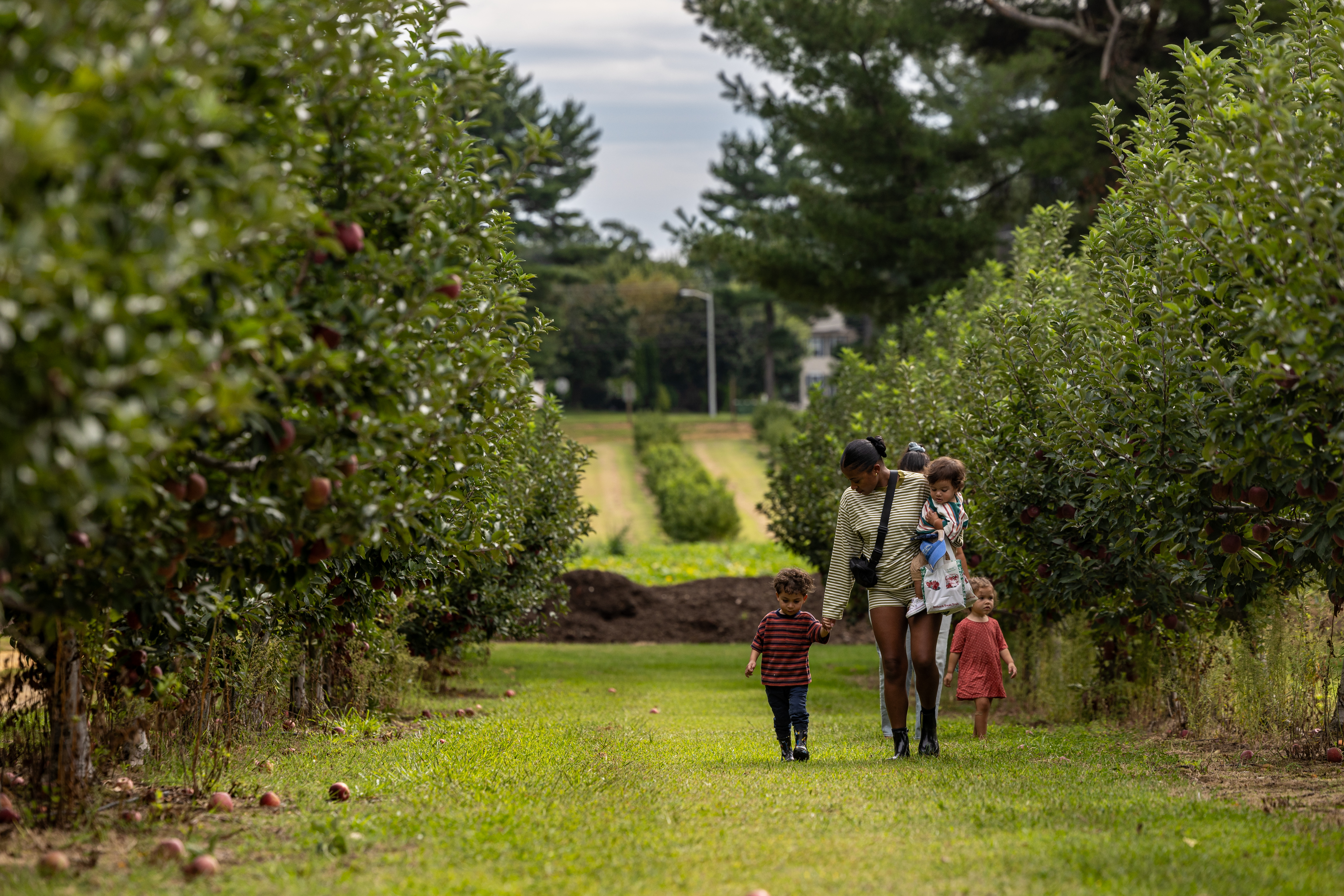
17-month-old Rome Imbesi bites into a big apple next to his mother Kristen Imbesi, 34, of Haddonfield, after picking apples at Duffield’s Farm.Aidan T. Gallo / Staff Photographer17-month-old Rome Imbesi bites into his apple.Aidan T. Gallo / Staff Photographer
‘Figure things out’
Tracy Duffield, who has worked at Duffield’s Farm Market in Sewell for four decades, said the Gloucester County farm had to push back the start of apple picking by a month.
The freeze killed Duffield’s early apple cropplanted in January, and with half its crop remaining, it’s uncertain how long picking will last this fall.
But that didn’t stop Duffield’s from hosting its annual Apple & Food Truck Festival on Saturday, featuring apple picking, pony and hayrides, and face painting. It’s the official launch of the farm’s apple season this year.
“I compare it to COVID. You have to get creative and figure things out,” Duffield said. “It is what it is. You just make the best of it.”
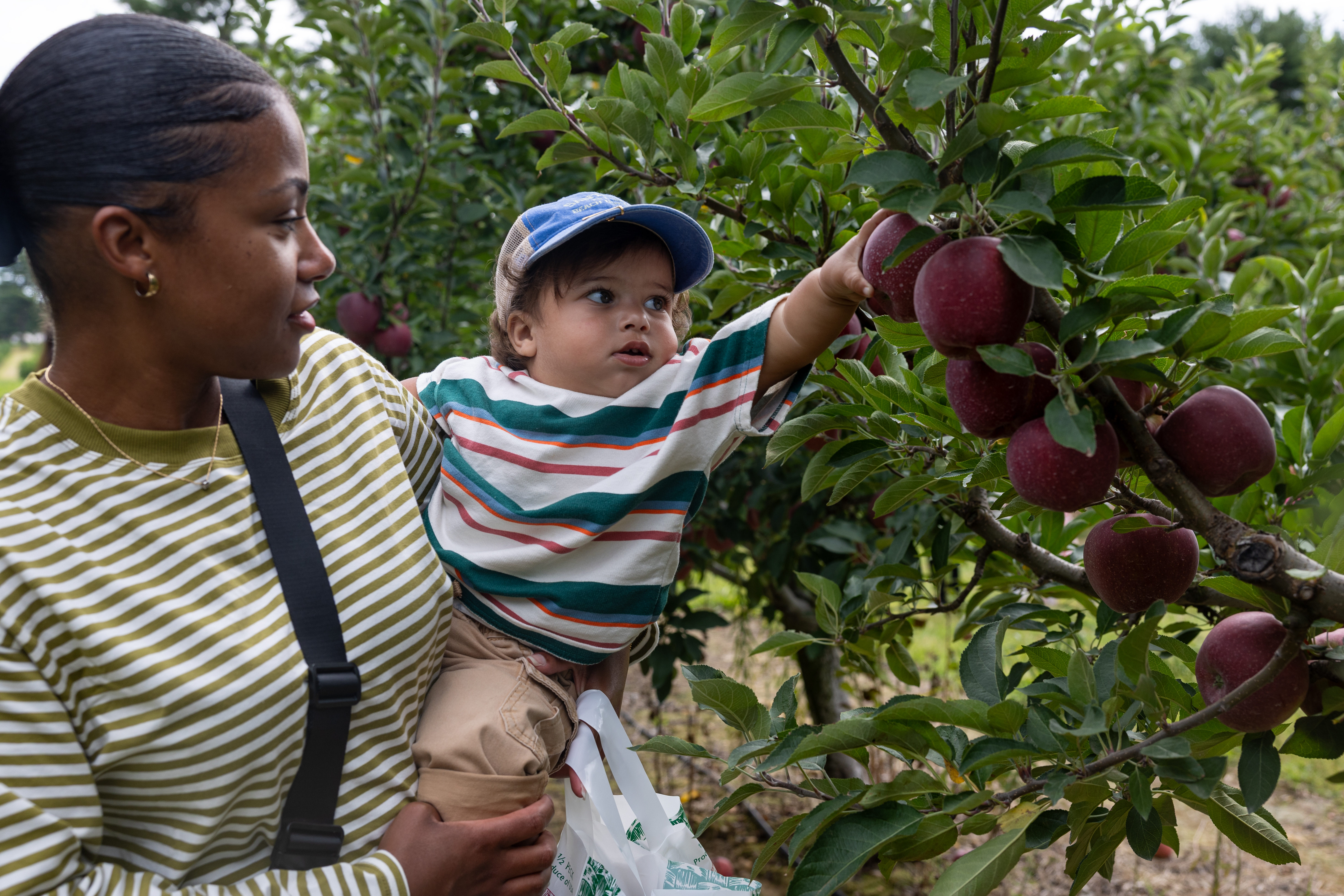
Calah Donato, 26, of Port Elizabeth, N.J., holds her son Neo, 1, while he picks an apple off an apple tree at Duffield’s Farm.Aidan T. Gallo / Staff Photographer
Duffield’s will still carry its beloved apple cider doughnuts this year, along with new apple-cider-doughnut-scented candles. But they did have to switch cider providers this year, buying from a Central Jersey-based farm instead of Mood’s Farm, 20 minutes away in Mullica Hill.
Mood’s is not making fresh cider this year, said co-owner Patti Mood, but they’ll have frozen cider from past apple seasons to get them through.
“We’ll just see how long it lasts,” Mood said. “We’re not sure what next year will look like.”
Kristine Duffield (center), the daughter-in-law of farm owner Tracy Duffield, hosts an apple-themed story time at Duffield’s Farm in Sewell on Friday, Sept. 11.Aidan T. Gallo / Staff Photographer
This fall, Mood’s doesn’t have enough quality apples to run its pick-your-own operation. At the farm’s own Apple Festival on Saturday, visitors gathered apples sourced from nearby states placed in bins in the orchard during discounted hayrides, instead of picking them off the trees.
Other farms have canceled their apple-picking operations this year. Neither Strawberry Hill Farm in Chesterfield nor Johnson’s Corner Farm in Medford have apples to pick.
Julian, who is two-and-a-half years old, makes a craft next to his grandmother Deb Carter, 69, of Washington Township, at Duffield’s Farm Market on Friday, Sept. 11.Aidan T. Gallo / Staff Photographer
Off the farm
Despite the shortage, apples are still being celebrated this year, on and off the farm. First Methodist Church of Moorestown is hosting its third apple festival on Sept. 18.
And Medford Historical Society will host its 47th annual Apple Festival on Oct. 10, their biggest fundraiser of the year.
Danny, 2, attempts to poke his sister Sosie, 4, with a piece of hay while being held by his great-grandmother Joan Ballah, 80, at Duffield’s Farm in Sewell on Friday, Sept. 11. The family is local to Sewell and comes to the farm often to participate in the farm’s activities and shop the farmer’s market.Aidan T. Gallo / Staff Photographer
Thomas Gerber, copresident of the historical society, said their usual supplier in Pennsylvania lost all their apples and couldn’t provide the 320 pounds needed for the festival, so they found a different farm in New Jersey.
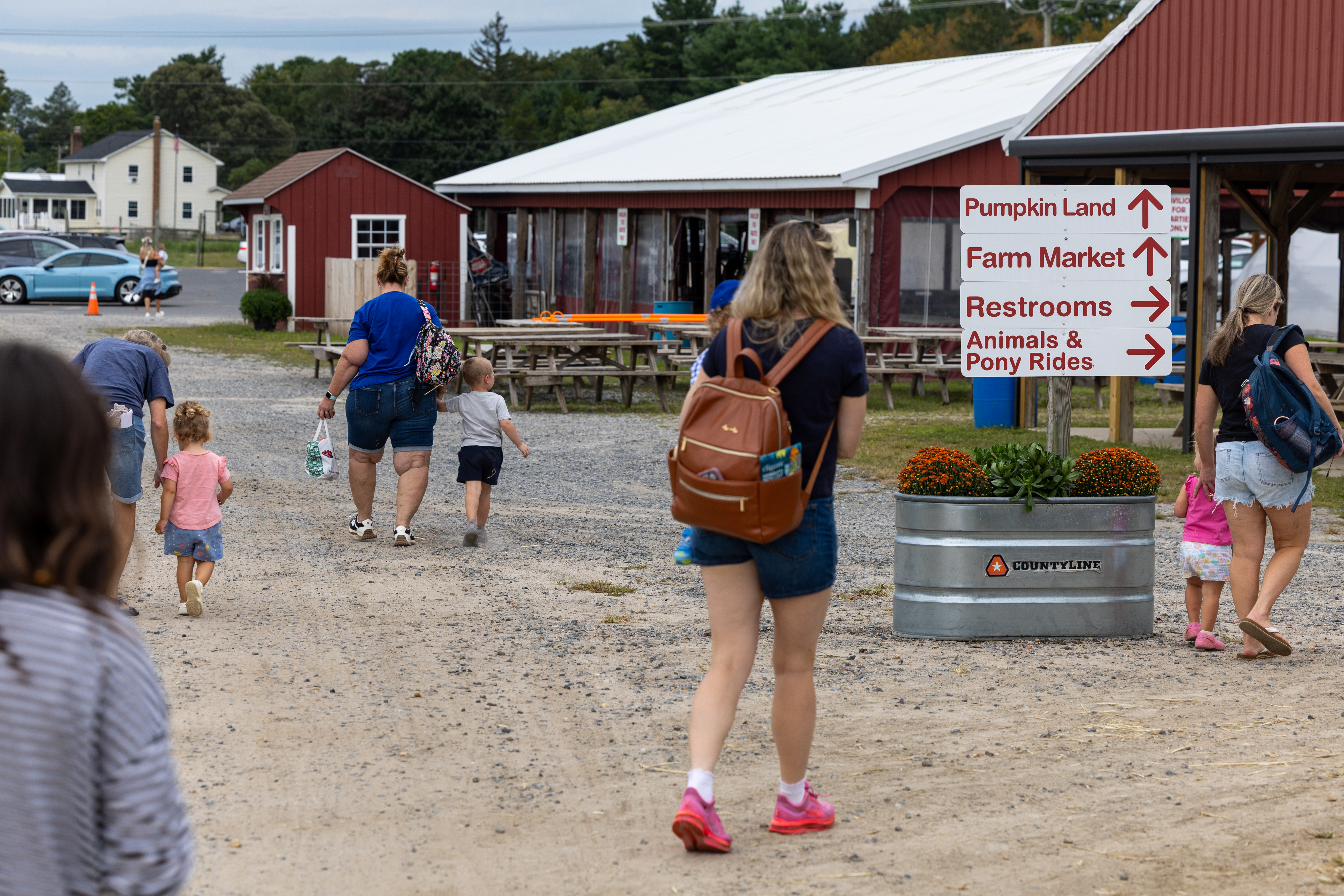
Families wait to enter the hayride to pick apples out in the orchard at Duffield’s Farm in Sewell on Friday, Sept. 11.Aidan T. Gallo / Staff Photographer
Amy Zorn, an eighth-generation owner of Hunter’s Farm in Cinnaminson, said their farm market has been able to buy Jersey apples from other farms, but they’ve had to pay higher rates for smaller apples compared to previous years. She hopes customers continue to support their local farms through this year’s challenges.
“There are still Jersey fresh items out there,” she said. “You might not see as many apples, but there are fall squashes, sweet potatoes, and other things coming to Jersey. I encourage people to go out to their farmers markets.”
Families exit Duffield’s Farm after the apple-themed activities concluded on Sept. 11.Aidan T. Gallo / Staff Photographer
‘For the long run’
Mario Caltabiano, 31, has been farming since he was 6 years old. As the owner of MC Farms in Pilesgrove in Salem County, Caltabiano grows 14 varieties of apples, Asian pears, and several types of vegetables.
He said he’s used to freezes that take out large sums of fruit, but apples, “the hardiest things,” usually power through.
Caltabiano said one of his farms saw a total apple loss, and the other lost 90% of its crop. With about 20 apples clustered on each tree, and thousands of trees, Caltabiano said he’s not sure how long it’ll take the public to pick them all. Either way, Caltabiano has to continue to tend to the orchards to make sure the trees stay strong enough to produce fruit next season.
“This year, when fruit is 90% of your business, you have the same amount of bills. You have to take care of the trees to the very end,” Caltabiano said. “How do you make up for that?”
In recent years, MC Farms has ventured into the agritourism world, offering hayrides, barrel train rides for kids, cut-your-own flowers, and a wine garden settled in the orchards. Rising prices for fuel and fertilizer are still making work difficult, along with the destruction of most of his crops.
But Caltabiano said he plans to make it to next fall, and the one after that.
“I’m in it for the long run,” Caltabiano said. “I’m in it till I croak.”
The unofficial last weekend of Philly’s summer pop music schedule keeps the heat on. There’s Don Toliver and Kacey Musgraves in South Philly, Kehlani in Camden, Lily Allen in Fairmount Park, Los Lobos in King of Prussia, and the Delaware Valley Bluegrass Festival in South Jersey.
Thursday Sept. 3
Los Lobos
The great Chicano band Los Lobos is the focus of Native Sons, a documentary that is now making the film festival rounds. It shares a name with the band’s 2021 album of songs of Los Angeles. That album was produced by the band’s one non-Los Angeleno: Cheltenham-native sax and keyboard player Steve Berlin. So this Montgomery County gig is a hometown show of sorts for the band that — if justice is ever served — will one day wind up in the Rock & Roll Hall of Fame. 7 p.m., Concerts Under the Stars, 175 W. Valley Forge Road, King of Prussia, concertsunderthestarskop.com.
Don Toliver performs during the BET Awards on Sunday, June 28, 2026, at the Peacock Theater in Los Angeles. (AP Photo/John Locher)John Locher
Don Toliver
The Houston rapper born Caleb Zackery Toliver brought his “Octane Tour” to South Philly in May and already, he’s back. It’s the second “Nitrous” leg of the trek for Toliver’s Octane album, which features Teezo Touchdown and The Odyssey actor Travis Scott. Chase B. is also on the bill. 8 p.m., XfinityMobile Arena, 3601 S. Broad St., xfinitymobilearena.com
Friday Sept. 4
Kacey Musgraves
Kacey Musgraves comes back to country on Middle of Nowhere, the Grammy-winning Texas songwriter’s excellent seventh album. Willie Nelson, Billy Strings, and Philly Music Fest headliner Gregory Alan Isakov drop in. Musgraves also finds common ground with fellow Lone Star State singer Miranda Lambert, with whom she had a longstanding beef, on “Horses and Divorces.” Expect this show to turn into a Dolly Parton celebration. Flatland Cavalry opens. 8 p.m., Xfinity Mobile Arena, 3601 S. Broad St., xfinitymobilearena.com
Dan Tyminski headlines the Delaware Valley Bluegrass Festival in Pilesgove, N.J., on Saturday, Sept. 5.Courtesy of the Artist
Friday Sept. 4 to Sunday Sept. 6
Delaware Valley Bluegrass Festival
Founded at the urging of bluegrass titans Bill Monroe and Ralph Stanley in 1972, the Delaware Valley Bluegrass Festival is a Labor Day weekend tradition that endures.
This year’s three days of music kicks off Friday in Salem County in South Jersey with Kathy Mattea, the country-bluegrass singer who hosts public radio’s Mountain Stage, as headliner. Friday’s lineup also includes the Price Sisters — singing Ohio siblings Lauren and Leanna Price — as well as Virginia guitarist Junior Sisk and the Travelin’ McCourys, sons of bluegrass legend and frequent DVBF headliner Del McCoury.
On Saturday, Dan Tyminski gets top billing. The former member of Alison Krauss’ Union Station has had two moments of extraordinary popularity for a bluegrass musician: 2000’s O Brother, Where Art Thou? soundtrack, on which he sang “I Am a Man of Constant Sorrow,” and “Hey Brother,” an unlikely 2013 hit with Swedish dance music producer Avicii.
New Orleans street band Tuba Skinny at the Delaware Valley Bluegrass Festival in 2022. The band will return to play the Pilesgrove, N.J., fest on Saturday.Delaware Valley Bluegrass Festival
New Orleans ragtime street band Tuba Skinny also plays Saturday, as do Critten Hollow, Danny Paisley & Southern Grass, and the Gibson Brothers. The festival winds down Sunday with Black Eyed Suzies — self-described as “the Bluegrass Ladies of Maryland” — as well as Tennessee quintet Blue Highway, Chicago duo Special Consensus, Boone, N.C., roots band Burnett Sisters, and Nashville quintet Appalachian Road Show. Gates open at 8 a.m. each day. Salem County Fairgrounds, 735 Route 40, Pilesgrove, N.J., delawarevalleybluegrass.org.
Kehlani performing during the second day of The Roots Picnic at the Belmont Plateau on May 31, 2026, in Philadelphia.Monica Herndon / Staff Photographer
Saturday Sept. 5
Kehlani
Kehlani had the biggest hit of their career last year with “Folded,” which was co-written with Philly producer Andre Harris and won two Grammys. The R&B vocalist celebrated with a performance at The Roots Picnic, and now they’re back for a headlining show in Camden on a tour that includes Durand Bernard, TheArti$t, Wahseel, and Dixson. 7 p.m., Freedom Mortgage Pavilion, 1 Harbour Blvd, Camden, freedommortgagepavilion.com.
Lily Allen at the Met Philly in April during her show “Lily Allen performs West End Girl.” She returns to play the Highmark Mann on Sunday.Christina Bryson
Sunday Sept. 6
Lily Allen performs ‘West End Girl’
Lily Allen struck a nerve with last year’s West End Girl, a song suite inspired by the dissolution of her marriage to actor David Barbour, that resonated big time with an audience all too familiar with shady doings by unfaithful partners. Earlier this year, the British songwriter, who has displayed a winningly wicked wit going back to her 2006 Alright, Still?, performed West End Girl album in order in a terrific, if brief, show at the Met. Sunday’s show was scheduled for the Xfinity Mobile Arena but moved to the Mann. 8 p.m., TC Pavilion at the Highmark Mann, 52901 Parkside Ave., highmarkmann.com.
Philly tribute to the Clash
Many, including me, have argued that the four sides of London Calling, the 1979 double album by the British punk band the Clash, add up to the greatest album of all time. One side each goes to a Philly band: Citizens Riot, No Good Crowd, the Big Trip, and 2 Tones Clash. Guests on this tribute show include Hannah Taylor, Spoon Ferguson, John Faye, Cowmuddy, Phil Dunn, and Adam Weiner of Low Cut Connie (also playing a Free at Noon in Ardmore on Friday.) 6 p.m., Ardmore Music Hall, 23 E. Lancaster Ave., ardmoremusichall.com
Slowey and the Boats
Fab Philly instrumental quintet Slowey and the Boats’ breezy, light-on-its-feet sound is built around steel guitarist Isaac Stanford. The band’s delightful Slowey After Dark swings sweetly, using the Hawaiian origins of Stanford’s instrument as a starting point. 2 p.m. Wissahickon Brewing Company, 3705 W. School House Lane, sloweyandtheboats.com.
Peter Hook & the Light play Union Transfer on Monday.Adam Kennedy
Monday Sept. 7
Peter Hook & the Light
Bassist Peter Hook was a key player in Manchester, England, in the late 1970s and 1980s as cofounder of Joy Division, New Order, and Durutti Column. Since 2020, he’s played the music of Joy Division and New Order, with his bassist son Jack, who frees him up to sing. He’ll perform New Order’s 2001 album Get Ready, plus pull from the JD and NO catalogs. 8 p.m., Union Transfer, 1026 Spring Garden St., utphilly.com
Tuesday Sept. 8
Social Distortion
Longtime Southern California punk band Social Distortion is in fine form on Born to Kill, its first album in 15 years. Leader Mike Ness sounds refreshed after a battle with tonsil cancer, and the band is pushed hard by drummer David Hidalgo Jr., son of the coleader of Los Lobos. Social D’s fellow SoCal punks the Descendents and young Australian punks the Chats also perform. 8 p.m., themetphilly.com
Gary Clark Jr.
At Bruce Springsteen’s Music of America concerts in the spring, Gary Clark Jr. covered “Power of Soul” by Jimi Hendrix’s Band of Gypsys and Bobby “Blue” Bland’s Texas shuffle “Further on up the Road.” Those two songs hint at the range of the Austin-based Clark Jr., who has been Texas’ leading guitar hero since he gained nationwide renown with Blak & Blu in 2012. Dumpstaphunk and DJ Kurupt open. 8 p.m. Keswick Theatre, 291 N. Keswick Ave., Glenside, Keswicktheatre.com
DJ Jazzy Jeff performing at The Roots Picnic in Philadelphia, on May 30, 2026.Tyger Williams
Wednesday Sept. 9
DJ Jazzy Jeff
Jeff Townes has had himself a Semiquincentennial summer. At The Roots Picnic, the West Philly-born and -raised DJ put on a turntablism clinic on Belmont Plateau. Then Townes teamed with Will Smith and The Roots to shut down the Philly 250th celebration on the Ben Franklin Parkway in the wee hours of the morning. Now he’ll display his musical mastery at a Longwood Gardens illuminated Fountain Party. 8 p.m.,1001 Longwood Road, Kennett Square, longwoodgardens.org.
New Zealand singer Aldous Harding plays Underground Arts on Wednesday.Emma Wallbanks
Aldous Harding
New Zealand songwriter Aldous Harding is touring behind Train on the Island, the fourth album she’s recorded with PJ Harvey collaborator John Parish producing. The songs are in keeping with Harding’s reputation as an inscrutable, willfully strange songwriter but are also rock solid psychedelic folk tunes. Sam Burton opens. 8 p.m., Underground Arts, 1200 Callowhill St., undergroundarts.org.
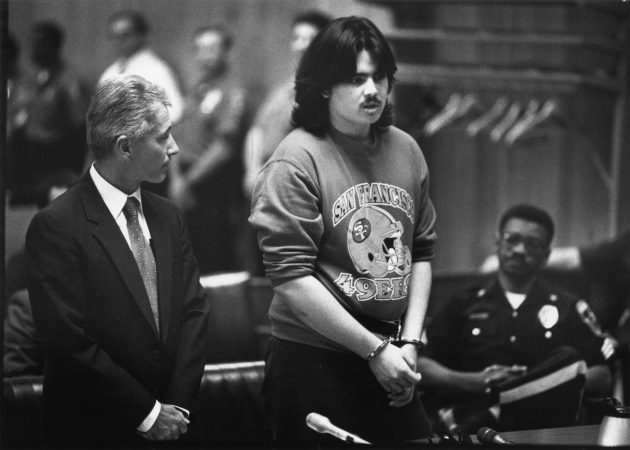
Nearly four decades after a 14-year-old boy killed his 12-year-old neighbor by stabbing her 95 times in one of South Jersey’s most infamous crimes, the killer spoke extensivelyfor the first time about that day, according to a newly released recording.
“I am truly sorry,” Kenneth Houseknecht, now 53, said of the events in April 1988, when he attacked Kim Marie Anderson as she was getting ready for school in her family’s home in Deptford.
“Years ago, when I first got incarcerated, I didn’t take responsibility at all for what had happened. I was going back and forth between no, it didn’t happen, this is a dream. It couldn’t have happened. It wasn’t me. All I can say is that I am sorry, not only to the Andersons, but to my family.”
Houseknecht’s comments came during an unusual May 28 hearing in Gloucester County Superior Court.
After serving 38 years, Houseknecht was seeking a reprieve from a life sentence under a 2022 New Jersey Supreme Court decision that declared mandatory minimum 30-year prison sentences without parole unconstitutional for juvenile offenders.
The ruling allows juveniles serving lengthy prison sentences to seek a review after 20 years of incarceration. Describing it as “the most gruesome homicide of my time,” Superior Court Judge Kevin T. Smith ultimately affirmed the original sentence, stating that Houseknecht continues to be a danger to the community.
No media was present during the nearly two-hour hearing. A succinct news release issued by the Gloucester County Prosecutor’s Office confirmed Smith’s ruling.
However, an audio recording of the proceeding, obtained through an open public records request, offers a compelling window into Houseknecht’s imprisonment since he was a student in junior high school, his family’s pledge of support for his potential release, and the continued anguish and anger of Anderson’s parents, Stephen and Esther.
In 1991, Houseknecht was sentenced to life in prison, meaning he would have to serve a minimum of 30 years before becoming eligible for parole.
If Smith ruled in Houseknecht’s favor, he could be released without relying on the discretion and supervision of a parole board.
Twelve-year-old Kim Anderson, seen in a painting in 2009.John Costello / Staff Photographer
The crime
In the early morning of April 19, 1988, Kim and another girl were expected for breakfast at a friend’s house across the street before all three girls boarded their bus for school. Esther Anderson would normally be home to see Kim and her brother, Stephen Jr., off to school, but because of an issue at the family’s catering business, she was already at work, assisting her husband.
Houseknecht was a friend of Stephen Jr., who left the house before his sister because his bus came earlier. Other than the family’s boxer, Bo, Kim was home alone.
It was supposed to be a simple robbery. Houseknecht owed money to an older friend for pornographic magazines. He didn’t expect anyone to be inside the Anderson home. He had with him a small knife he had stolen from the Ames department store.
Confronted by Kim, Houseknecht, who was 6 feet tall and weighed 200 pounds, attacked the 5-foot-3, 120-pound seventh grader. He stabbed her nearly 100 times. The ferocity of the assault was so intense that the tip of the knife broke twice, leaving pieces in her head. Houseknecht also beat her repeatedly with a French-style telephone.
One of Kim’s friends discovered her battered body lying on the floor just inside her bedroom, next to a blood-soaked Cabbage Patch doll.
Investigators immediately focused on Houseknecht as a suspect. While they were scouring the neighborhood for clues shortly after the murder, he approached them and made a bizarre revelation.
“You know my fingerprints are all over the house, even in Kim’s room,” he told them, according to sworn statements at the time.
Investigators also discovered a note on Houseknecht’s bed to the Andersons featuring sexually explicit drawings.
“This is your daughter’s killer. I hope you know I used gloves. The next one to get it is Mrs. Anderson,” the note read.
When a judge ordered Houseknecht tried as an adult, Houseknecht pounded furiously on the table, shouting, “Kill me, kill me,” and “I didn’t kill that girl purposely.”
A jury convicted him of murder following an emotionally charged trial that was moved from Gloucester County to Salem County because of extensive pretrial publicity.
Over the years, attorneys with the state’s Office of the Public Defender have exhausted most appeals to have his sentence reduced, contending, among other things, that Houseknecht’s lawyers provided ineffective counsel.
The May hearing before Smith appeared to be the best chance for Houseknecht to be released, barring any potential future parole board decision.
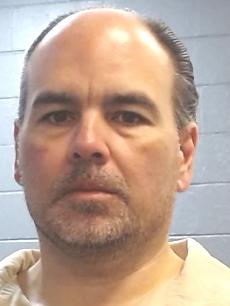
Kenneth HouseknechtState of New Jersey Department of Corrections
Houseknecht’s courtroom appearance
Dressed in an orange prison jumpsuit, Houseknecht stood for most of the 17 minutes he addressed the court, trying to convince the judge that after being in prison since he was a teenager, he was ready to reenter society. At one point, he became emotional and told Smith he would be more comfortable sitting down.
“It was a robbery that turned tragic,” Houseknecht read from notes. “I had forgotten about somebody being there. I hated that. I hate it today. I fully understand the pain that I caused the Andersons, especially Kim. I know their family can’t be whole.”
He said he regretted writing the note threatening Esther Anderson, describing it as a “stupid attempt to avert attention” from what he had done.
He noted that he had since earned his GED certificate, taken college-level courses, and was a model prisoner who helped tutor other inmates.
“I’ll just end it here with this,” Houseknecht said. “What you see, what you read about me, all that I’ve learned is genuine. I do want to give you my word that I will continue to be the same way on the streets.”
Houseknecht’s sister, Katrina Andreen, testified on her brother’s behalf via Zoom. An actress who goes by the name Katrina Law, she appears on the show NCIS.
“It took many years for him and us to figure out why he did what he did, and then even more years to address it properly, which Ken has done,” she read from a statement. At the time of the murder, she was 11 years old and went by the name Joyce Houseknecht.
A former Miss New Jersey Teen USA pageant winner, Andreen said, “Ken does not shy away from taking full responsibility for his past mistakes and actions. Ken has had almost four decades in prison to think about and reflect on what he did as a troubled 14-year-old, and now, as a grown man, he takes full responsibility and is truly sorry.”
She said her family was prepared to help her brother transition to a life beyond prison.
“Our family will be there for Ken every step of the way, offering moral support, encouragement and most importantly, love,” she said. “I look forward to our family being whole again. I ask that we please believe in forgiveness. I ask that we please believe in rehabilitation. I ask that we please believe in second chances, and I ask that we believe in my brother.”
The Andersons respond ‘it’s just not fair’
Stephen and Esther Anderson, in 2009, in their Mount Laurel home as they prepare to move. Portraits of their slain 12-year-old daughter, Kim who was murdered 21 years ago hang on the walls of the dinning room and den.John Costello / Staff Photographer
Over the decades, Stephen Anderson, now 76, has attended numerous court proceedings in support of justice for his daughter. When it was his turn to speak, he chose not to read from a statement. Instead, he spoke extemporaneously about how his family’s life was forever upended on that April morning in 1988.
He described Houseknecht as a monster who is “not even human to do what he did.” He explained that his wife was not with him in court because she remains fearful of Houseknecht because of the threatening note found on his bed after he killed Kim.
He was extremely skeptical of Houseknecht’s profession of remorse, calling it a lie.
“It took him all these years to become remorse, the doctor said he wasn’t, and now all of a sudden he has it because his lawyers are telling him to say it,” Anderson said.
He said not only is his family fearful of Houseknecht’s release, but the community who remembers the crime is also frightened of the possibility.
“It’s just not fair that not just my family has to live in fear,” he said. “There are a lot of people still living in Gloucester County, and they are going to be fearful of what they have to face when he gets out.”
He asked the judge to “see it the right way” and keep Houseknecht behind bars.
“We’re not gun people, but we’re going to apply for gun permits because we’re scared,” he said.
Assistant County Prosecutor Michael Mellon argued that the original sentence remains intact. He cited expert opinions that found Houseknecht had failed to accept the reality of what occurred and his role in it.
He also reminded the court that Kim Anderson never got to experience high school, college, relationships, or a career.
“Regardless of the outcome here today, no one that can hear my voice should forget Kim Anderson,” he said. “No one in this room, no one that reads this transcript, because Kim matters today, she matters tomorrow, and she matters always.”
The judge’s ruling: ‘The deep-down demon that brought about this crime’
Before sharing his opinion, Smith pointed out that while the hearing focused on Houseknecht’s future, Kim would be 51 today if not for that fateful encounter with her neighbor when both were young.
“We don’t know whether she would be the first woman president,” Smith said. “We don’t know whether she would give birth to the next man on the moon. We don’t know what 12-year-old Kim would have to offer, as 20-year-old Kim, 35-year-old Kim, or 50-year-old Kim. We don’t know that, so we can’t lose sight of the absence of this particular person in this equation.”
He acknowledged Houseknecht’s positive experiences while in prison and his efforts to better himself, saying he has not “gotten into the unproductive behavior of many of his fellow inmates of just playing cards all day.”
But he sided with prosecution experts who believe Houseknecht still poses a risk of violence. Smith also noted that an expert had suggested there was a sexual component to the crime, though that was never addressed at trial.
In affirming the original sentence, Smith said to reduce it and allow Houseknecht to be freed with no supervision, would be derelict on his part.
Despite having spent decades in prison and his efforts to improve himself, Houseknecht, Smith said, has never addressed the fundamental issues and “the deep-down demon that brought about this crime.”
Houseknecht remains in custody at the South Woods State Prison in Bridgeton. When he first became eligible for parole in 2018, he refused to cooperate with the hearing process and a hearing was not scheduled.
Nicole Swiderski, a spokesperson for the New Jersey State Parole Board, said in an email that Houseknecht’s status has not changed.
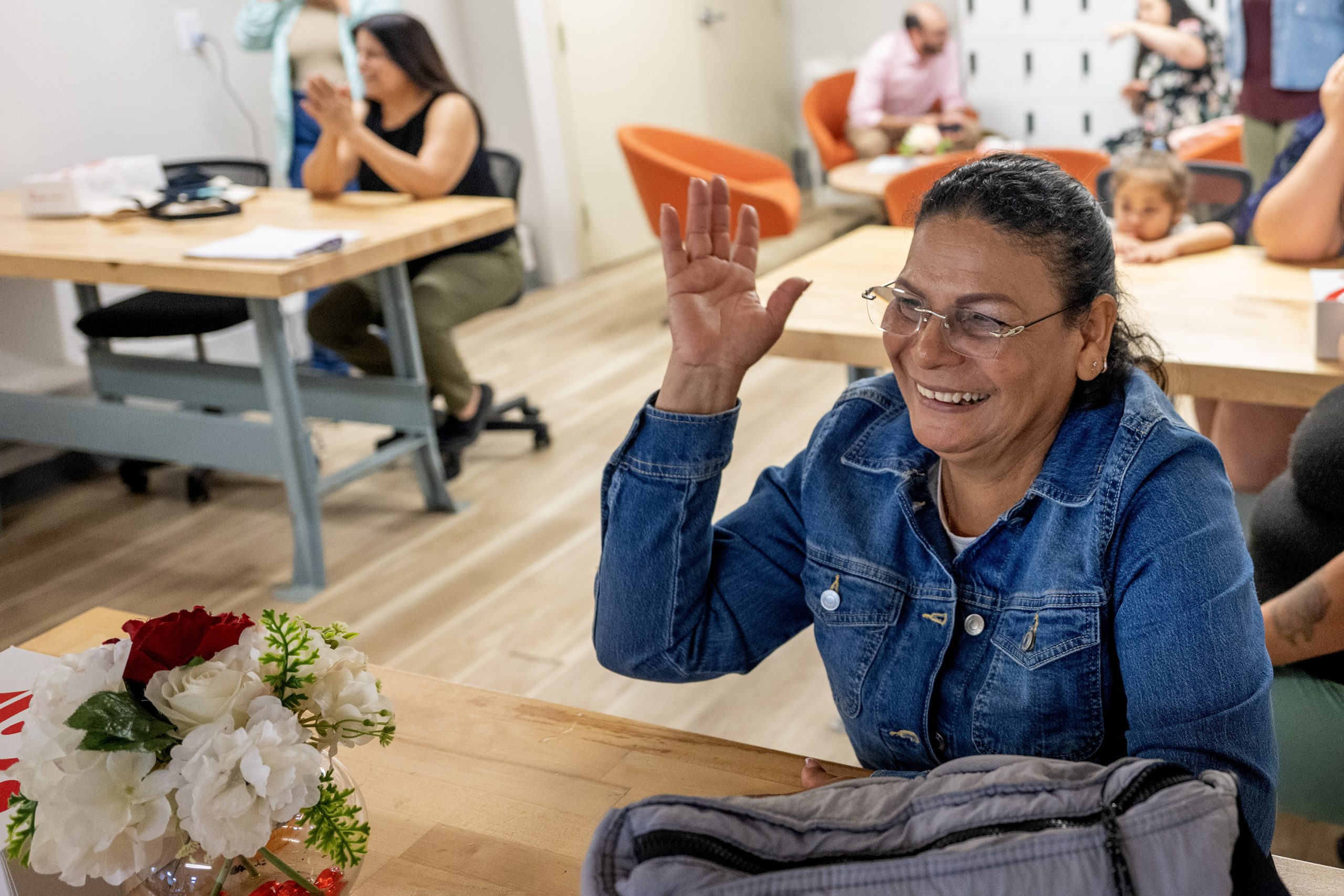
Consensa Francisca Silva Silva moved to Camden from Costa Rica more than two years ago knowing nobody. She lived on the street for two months, she said, and thenwas bouncing from house to house when a young man in the neighborhood told her to check out the Hispanic Women’s Resource Center in Camden, one of several such centers in the state.
She went. With help from the program, Silva received food, obtained a work permit, made a down payment for a studio apartment, and started a job at McDonald’s.
That statewide initiative is now facing detrimental cutsunder DemocraticGov. Mikie Sherrill’s budget proposal. The governor has proposed cutting nearly 80% ofits funding, and Silva worries that other immigrant women looking to improve their circumstances will not get the help she received.
“It was very hard to come here without knowing anyone, and it was really hard because at first I couldn’t find any work,” Silva, who is Nicaraguan, said in Spanish, translated by Jesselly De La Cruz, the executive director of the Latino Action Network Foundation, which funds the centers.
Sherrill and legislative leaders announced Tuesday they had come to an “agreement” on a budget totaling$60.7 billion, the same price tag Sherrill proposed in March. But it has not been made public and it is unclear how far into the details they have gotten. They have until Tuesday to figure it out.
And the process is still underway. State Sen. Nilsa Cruz-Perez, a Camden Democrat who sits on the Senate Budget and Appropriations Committee, has been a supporter of the centers.She was unable to speak Wednesday afternoon because she was in a committee budget hearing.
Client Consensa Francisca Silva Silva (right) participates in a workshop at the Hispanic Women’s Resource Center in Camden Thursday, June 11, 2026.Tom Gralish / Staff Photographer
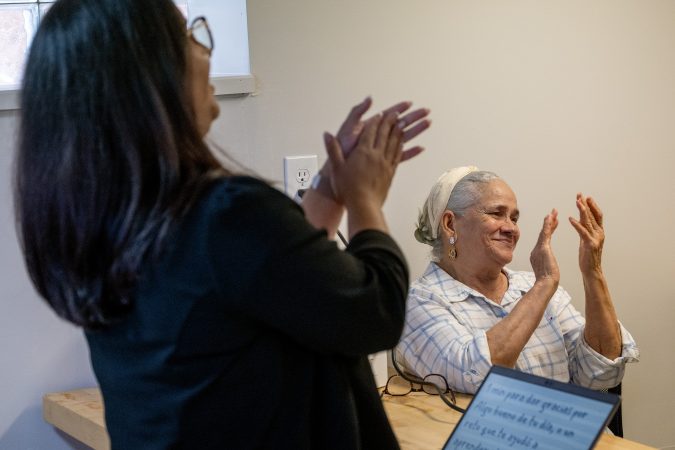
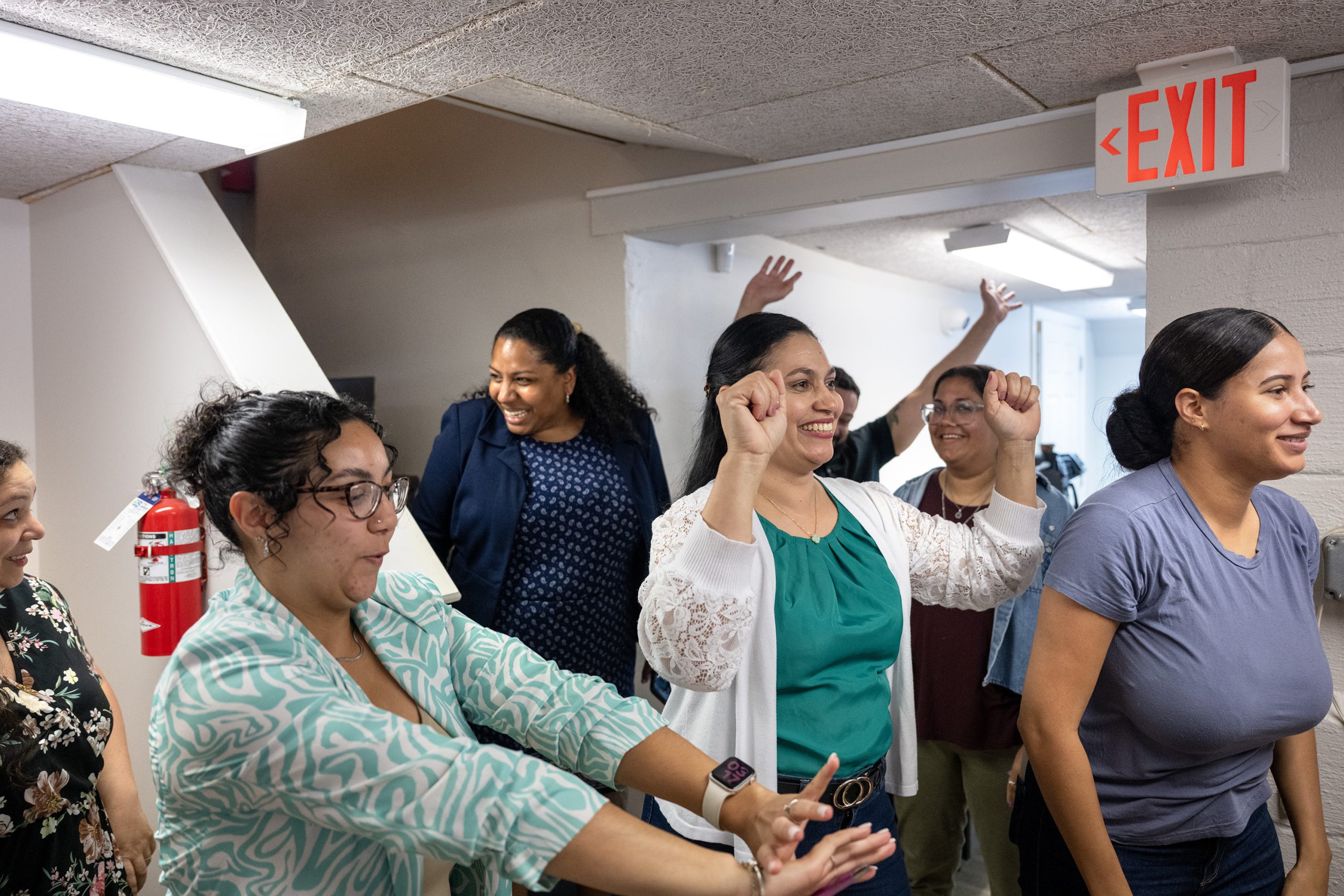
On a recent Thursday, Silva participated in a healthy life skills workshop in Spanish at the Camden center, where she learned about taking care of herself as summer temperatures get hotter in the city. About 20 adults clapped for one another with big smiles on their faces, and they received goody bags with sunscreen, lip balm, a towel to keep cool, and a little fan. A young girl played with magnetic tiles and a baby was kept calm, passed between women.
The governor proposed cutting funding for the center’s programs to$535,000, down from more than $2.5 million this year and more than $3 million in 2025. Murphy had proposed a similar cut last year, but the funding was restored during budget negotiations.
Hispanic Women’s Resource Centers were established through 1991 legislation to address the wage gap for Latinas. New Jersey is one of the states with the biggest wage gap for Latina workers, according to the National Women’s Law Center.
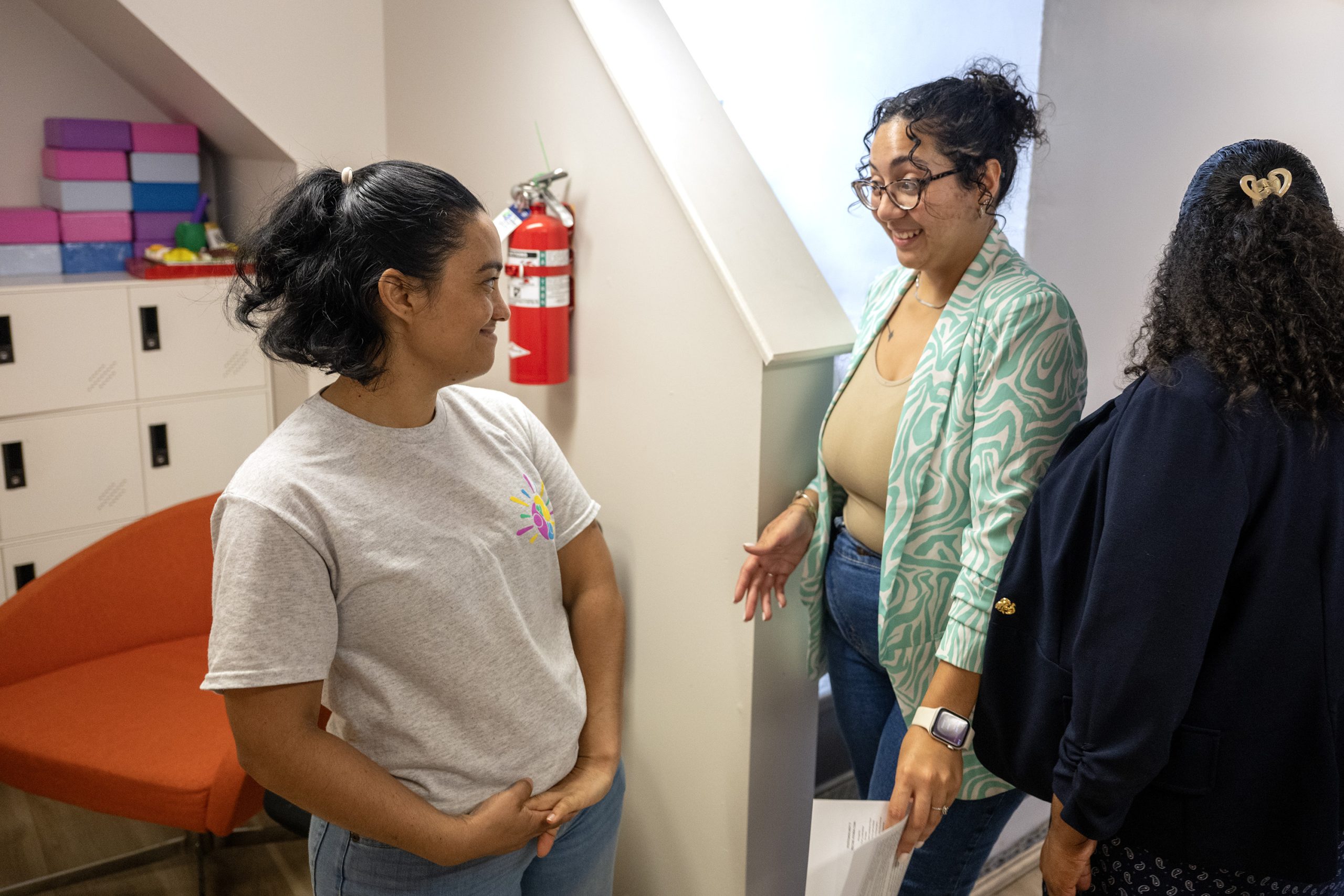
Staff members observe from back of the room during a workshop at the Hispanic Women’s Resource Center in Camden Thursday, June 11, 2026. Tom Gralish / Staff Photographer
The Latino Action Network Foundation funds these resource centers in partnership with six nonprofits across 14 sites, including five in South Jersey. The Camden center is located at the nonprofit Healthy Families and Communities, and there are centers in Vineland in Cumberland County, Hammonton in Atlantic County, Pennsville in Salem County, and Rio Grande in Cape May County.
Sherrill’s proposal would “drastically cut” the number of resource centers, and sites in Hammonton and in Lakewood, in Ocean County, would likely be on the chopping block, De La Cruz said, adding that services would need to be cut in eight of 11 counties.
Martha Infante, 38, who lives in Pennsauken, said she was disoriented when she moved to South Jersey from the Dominican Republic. But through the Camden center, she found out how to apply for work online and learned basic English. She obtained coats for her daughters’ first U.S. winter, and a staffer accompanied her to a New Jersey Department of Motor Vehicles center to get her driver’s license.
“I came here and my mind was all over the place, I didn’t know where things were,” she said in Spanish.
She now works as a home health aide, thanks to training she got through the center, and even participated in a program where she learned about advocating for her community in Trenton.
“Don’t cut these funds, Gov. Sherrill,” she pleaded. “Don’t cut the funds! This is like a family. It’s like a home for the community.”
Client Martha Infante (left) talks with staff member Chailienisse Vega (right) after participating in a workshop at the Hispanic Women’s Resource Center in Camden Thursday, June 11, 2026. Tom Gralish / Staff Photographer
Some of the women in the program are fleeing domestic violence and seeking financial independence. Others are struggling to get a work permit, or may have lost a family member who helped pay the bills to deportation. A lot of former “Dreamers” — undocumented immigrants who came to the U.S. as children — utilize the center as well, De La Cruz said.
The need for the centers has only escalated under President Donald Trump’s second administration, she said.
The social worker-turned-executive said she was surprised by the severity of Sherrill’s proposed cut, especially because of the governor’s efforts to push back against Trump’s immigration policies.
A 2023 Rutgers study funded by the Latino Action Network Foundation found that the most popular services at these resource centers were English-language classes and employment services, such as job referrals, assistance filling out applications, resume writing, and interview preparation.
Staff member Andreina Pardo pauses to stretch with participants as she leads a workshop at the Hispanic Women’s Resource Center in Camden Thursday, June 11, 2026. Tom Gralish / Staff Photographer
“Aside from helping them with the technical aspects of job hunting, the assistance from the Centers seemed to provide a boost of confidence for many of the women, giving them an additional push to apply for positions even if they felt hesitant to do so at first,” the study said.
Gladys, 48, who declined to give her last name due to concerns over her safety, said in Spanish that the free English courses made her feel like she could “come up for air and breathe” after not being able to communicate.
The Camden resident had been an ecologist in Nicaragua and has gotten involved in the center’s community garden. She said she would love to pursue a career teaching children about the environment, but her plans are on hold because her work visa was canceled.
In the meantime, Gladys said, activities at the center like art classes have made her feel less alone. She has been able to connect with women in the same situation as her, and those who migrated to the U.S. earlier who can give her advice from their experiences.
“Maybe my circumstances don’t change, but my emotional well-being changes because I’m able to connect with others,” she said in Spanish.
Shelly Gaither, 51, of Cheltenham, makes sure her three sons, ages 6, 9, and 18, get their meals while she manages with whatever is left over — if anything ever is.
“Oh, my God, groceries are too expensive,” said Gaither, a former data analyst who suffers from a disability that makes working difficult. She visits a food pantry regularly to make sure her kids eat chicken when they can. Her monthly SNAP (Supplemental Nutrition Assistance Program) benefits were reduced from $400 to $200 earlier this year because of changes to the programunder President Donald Trump’s One Big Beautiful Bill Act.
“I don’t think there’s hope,” she said. “I feel guilty for bringing children into a world that doesn’t want them to exist because the government makes cuts that take away their food and their healthcare.”
For people like Gaither throughout the United States, levels of food insecurity have seen a “remarkable” rise since the pandemic in 2020, according to a national survey taken earlier this year and released in late May by the Federal Reserve Bank of New York.
Around 10% of 1,300 heads of households polled in February reported a lack of enough food and said their children were missing meals, according to the survey. Nearly 16% relied on food donations. Among families taking in less than $50,000 a year, almost 20% reported being forced to skip meals or go without.
In 2020, when the federal government stepped in to help families at the height of the pandemic, just 4% of households reported missing meals, including less than 7% of families earning less than $50,000 a year, according to the survey.
At that time, temporary supplemental unemployment benefits, expanded SNAP payments, and direct government relief payments helped stave off hunger among Americans. Food insecurity increased after COVID-19 relief expired, according to the Urban Institute.
But the recent surge in hunger has also been attributed to the sweeping law Trump signed last year, whichreduces SNAP benefits and other safety net programs to help pay for his tax cut.
Findings in the bank’sreport also reflect Gaither’s sense of despair, a pessimism about personal finances and the overall economy among people with low incomes. That same group exhibits diminished expectations for finding a job and declining levels of consumer confidence, the survey says.
(function(){function e(){window.addEventListener(`message`,function(e){if(e.data[`datawrapper-height`]!==void 0){var t=document.querySelectorAll(`iframe`);for(var n in e.data[`datawrapper-height`])for(var r=0,i;i=t[r];r++)if(i.contentWindow===e.source){var a=e.data[`datawrapper-height`][n]+`px`;i.style.height=a}}})}e()})();
According to thereserve bank’s report, non-white Americans have been especially hard hit. The number of such households that reported missing meals increased from 4% in 2020 to 19% in February. At the same time, the number of non-white people receiving SNAP benefits jumped from 14% to more than 26%.
Overall, the survey found food insecurity was particularly acute among lower-educated and lower-income households, as well as households with young children. Many families are experiencing financial stress due to the high cost of living, persistent inflation, and high interest rates, even as the stock market has been steadily rising, according to the survey.
Pantries struggle to keep up with demand
More people are flocking to food pantries, but they are not equipped to take up the slack of reduced SNAP benefits.
“Pantries across the state are in perpetual crisis mode,” said Stuart Haniff, CEO of Hunger-Free Pennsylvania in Pittsburgh. Add to that the advent of summer, when kids are no longer receiving free breakfast and lunch at school. “Families must now provide those 60 to 80 meals a month,” Haniff said.
In Norristown, “immense need” has increased the number of people frequenting Martha’s Choice Marketplace, the largest food pantry in Montgomery County, by 100% since 2022, said Patrick Walsh, director of programs. “And I don’t expect things to get better.”
Food prices are also up 3.2% this spring over last, according to U.S. Department of Agriculture figures,exacerbating the issue.
In South Jersey, “we are seeing record numbers at our food distributions,” said Jane Asselta, president and CEO of the Food Bank of South Jersey, in a statement to The Inquirer. “Life is getting harder to afford for more and more people.”
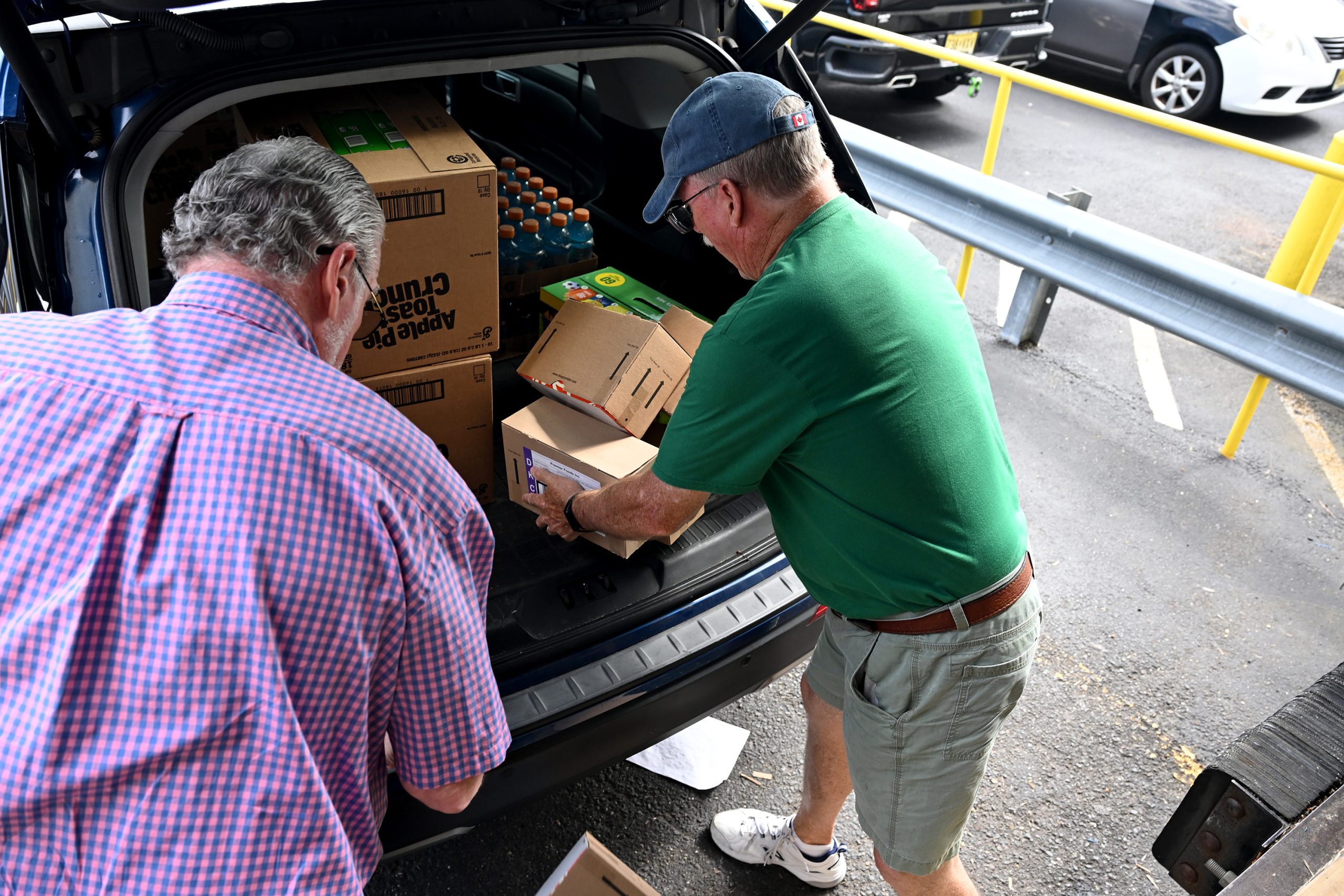
Matt McDevitt (left) and Michael Hickey load their vehicle at the Food Bank of South Jersey Thursday, June 11, 2026. The men are volunteers at the Temple Lutheran Church in Pennsauken and their food bank is open from 5-6 p.m. every Thursday.Tom Gralish / Staff Photographer
Asselta said the Federal Reserve Bank’s report “mirrors” what her organization has observed through its network of 300 community partners.
“Hunger has never been higher,” said Pastor Sonita Johnson, who runs the food pantry at St. John’s Pentecostal Outreach Church in Salem City, Salem County. “Food prices are high, and the lines you see you would not believe — a 50% increase in people just over the last two months.”
Nationwide, between January 2025 and January 2026, SNAP rolls decreased by more than 4 million people — from 42 million to 38 million — according to USDA figures.
Between last September and April of this year, nearly 90,000 Pennsylvanians lost SNAP benefits due to new eligibility requirements stipulated by the Trump administration, according to an analysis by the Pennsylvania Department of Human Services (DHS).
And between December 2025 and last month, more than 32,000 Philadelphians lost benefits, DHS figures show.
In New Jersey, SNAP participation has fallen by more than 50,000 individuals between March 2025 and March of this year, New Jersey Department of Human Services figures show.
The Trump administration’s SNAP changes include an expansion of work requirements for people who receive SNAP benefits and increased documentation requirements “designed to make maintaining eligibility increasingly difficult,” according to the Food Research and Action Center (FRAC), the largest anti-hunger lobby in the United States.
Deputy White House press secretary Anna Kelly said in a statement that Trump signed the changes to strengthen SNAP and to ensure that it is “sustainable for future generations.” She added that Trump was “elected to eliminate runaway spending across the federal government.”
William Meo works on the loading dock at the Food Bank of South Jersey Thursday, June 11, 2026. Tom Gralish / Staff Photographer
For people like Shelley Gaither, how her reduced SNAP benefits could be seen as part of “runaway spending” is tough for her to figure, given her needs. To survive this precarious moment, Gaither said, she will do whatever she can.
“We eat more vegetarian meals and I don’t buy my kids cookies or snacks,” she said. “If I drink enough coffee, maybe I just need one meal a day. This is our existence now. This is how we live.”
Mia Garcia showed off her clothing haul: a multicolored tank top, a backless white tee, a lacy maroon cardigan, and white tights for an upcoming trip to the New Jersey Renaissance Faire.
The 19-year-old was as excited about the bill as she was about the fashion.
Her grand total: $15.
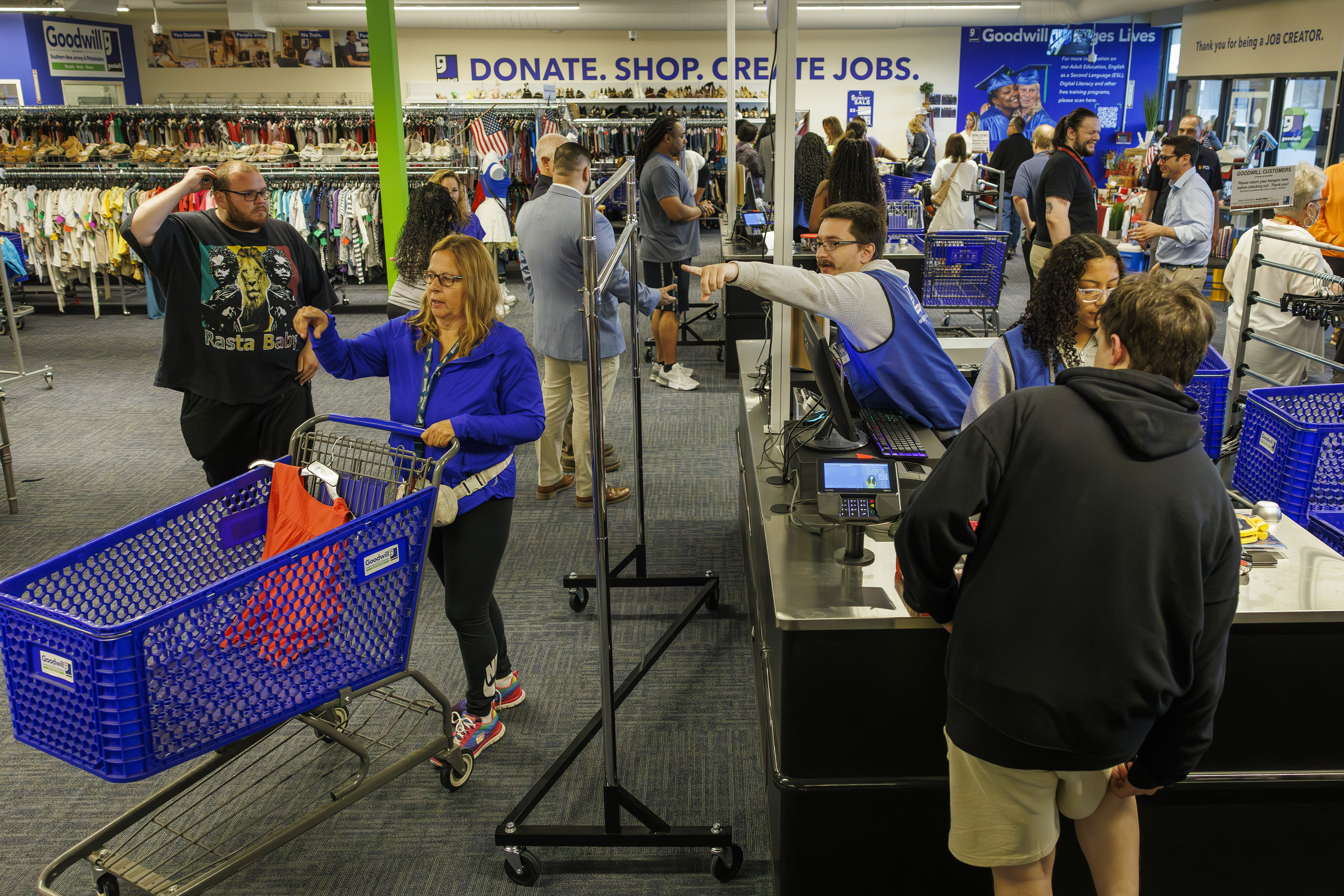
She and her friend, Salsbee Jahan, scored the deals at a massive new Goodwill store in Deptford, where local executives say a growing number of Gen Z shoppers are flocking for clothes, shoes, decor, and more. Young customers are increasingly fueling the world’s largest thrift store chain, which posted record revenue last year.
At Goodwill, “it’s definitely cheaper and easier to find older-style clothes,” like popular Y2K-inspired fits that are sold at a premium elsewhere, Garcia said. At some name-brand stores, “$20 won’t even get you get a shirt.”
The women, both Deptford natives attending Rowan College of South Jersey, say they frequent malls, too. But Jahan, 18, said they’re trying to thrift more because “everything is going up” in price.
Shoppers lined up to get inside the new Goodwill store in Deptford on opening day.Alejandro A. Alvarez / Staff Photographer
The sentiment was echoed by several other customers at the 19,000-square-foot store, which was buzzing with dozens of shoppers around lunchtime Tuesday.
“Gas prices have gone up. Groceries have gone up,” said Kaitlin Deegan, a 38-year-old nurse from Salem County. She was wearing a graphic tee and denim shorts that she had bought for under $10 at another Goodwill. “Now it’s all about thrifting.”
Nearby, one woman put a $6.49 denim skirt in her cart, next to a pair of $7.99 sparkly shoes she’d grabbed earlier. Across the room, children perused shelves of toys, games, and stuffed animals — most under $10 — and teens eyed rows of $1.99 DVDs and 99-cent CDs.
In its first 12 days, the new location on Clements Bridge Road averaged about 600 customers a day, more than double the foot traffic recorded at a smallerGoodwill retail store that recently closed in nearby Woodbury Heights, said regional manager Josef Fortun.
Each Deptford customer has spent about $31 on average, he said, exceeding managers’ goals.
Josef Fortun, regional manager with Goodwill Industries of Southern New Jersey, prepares the new Deptford store to open on May 21.Alejandro A. Alvarez / Staff Photographer
This early success in South Jersey comes amid a larger thrifting resurgence. Last year, the U.S. resale market grew nearly four times faster than the broader apparel market, according to an annual report from the online consignment platform ThredUp.
Goodwill recorded more than $7 billion in revenue last year, the New York Times reported, and annual sales across its 3,400 stores have risen 50% since 2019. Smaller secondhand shops, such as Savers Value Village and ThredUp, have also reported revenue increases, according to the Times.
In the same Deptford shopping center as the new Goodwill, there are three other thrift stores: Once Upon A Child, Plato’s Closet, and Play It Again Sports. All are owned by Winmark Corporation, which has been adding more thrift stores and reporting year-over-year revenue increases.
In nearby Cherry Hill, a Red White & Blue Thrift opened this spring, a half-mile from a 2nd Ave thrift outpost — owned by Savers Value Village — that opened in 2024.
Goodwill also opened a store a year ago in a former Rite Aid in Voorhees. And its Woodbury Heights location, which is still accepting donations, is set to reopen June 15 as a Goodwill Home Medical Equipment Store.
Boyd said the nonprofit chain is looking to expand into Cape May County in the near future.
Why are more people thrifting?
More people are buying secondhand right now for many reasons, said Mark Boyd, president and CEO of Goodwill Industries of Southern New Jersey and Philadelphia.
“Challenging economic times definitely bring people into the Goodwill store, maybe for the first time,” Boyd said. At the same time, “there’s a lot of people out there who care a lot about reuse, and that’s driving particularly younger shoppers into Goodwill.”
Friends Reed Habiak (foreground left) and Anthony Nunez (foreground right), both influencers and resellers, were first in line at the new Goodwill store in Deptford on May 21.Alejandro A. Alvarez / Staff Photographer
And while thrifting is one of the most “tactile” experiences, Boyd said social media is playing a role in its rebirth. Many Goodwill customers are resellers, he said. They find steals in store aisles and then mark up the products to sell online or at flea markets.
On Deptford Goodwill’s opening day last month, professional reseller Anthony Nunez was first in line. He had arrived with a friend around 4:30 a.m., ready to hunt for sports jerseys, Pokemon memorabilia, video games, and vintage clothing to resell on eBay.
Since losing a job in compliance during the pandemic, the 34-year-old Sayreville resident has been reselling full-time, making more than $100,000 a year, he said.
Anthony Nunez flashes a Pokemon Stadium game he picked up in the toy section at the opening of the new Goodwill in Deptford.Alejandro A. Alvarez / Staff Photographer
At the Deptford Goodwill, Nunez made a beeline for items with a high resale value, including a still-in-the-box Pokemon Stadium video game for Nintendo 64. He bought it for $18, Nunez said, and later resold it for $150, recouping the cost of his entire Goodwill trip.
It helped that Goodwill executives had invited several resellers to a store preview, he noted.
“They understand we help them too,” Nunez said. “I don’t know if they would be able to exist without us.”
Some longtime thrifters have started using social media to make extra cash.
Melody Appel got into thrifting decades ago, when she was a student at Drexel University.
Now 47 and living in Monmouth County, N.J., Appel recently got a TikTok account at the urging of her teenage daughters. At first, she just used the account to show off her thrifting hauls. But over the past month, she said she has started reselling items, too, making around $1,500.
Many of her TikTok followers seem to be between the ages of 30 and 60, she said, but she has noticed many younger customers in stores.
“People are seeing what they can find,” said Appel, who works as an educator and interior decorator. “And maybe their perception of what thrifting was is different from what thrifting is.”
Reed Habiak, a social media influencer and reseller, looks for items in the Deptford Goodwill’s toy section on opening day last month. Alejandro A. Alvarez / Staff Photographer
While some found their way to thrifting through social media, others get hooked when they stumble into a store, said Fortun, the Goodwill regional manager. He has noticed more young people at the Deptford store than at the old location in Woodbury Heights, he said, and he attributes some of that to the Edge Fitness Club right next door.
Customers often come in on a whim, he said, and are in awe of the wide selection and the price tags.
“People always look for deals,” Fortun said. “You go to discount stores like Ross and Burlington, you still don’t find items as cheap.”
Goodwill is trying to keep these customers hooked with a new online loyalty program, which will offer special deals and send push alerts to shoppers when their favorite brands are stocked at a local store, said Boyd, CEO of the South Jersey and Philadelphia locations.
Mark Boyd, CEO at Goodwill Industries of Southern New Jersey and Philadelphia, cuts the ribbon to open the new store in Deptford last month.Alejandro A. Alvarez / Staff Photographer
Executives are also looking into using artificial intelligence to optimize parts of their operations, such as pricing, he said. But he doesn’t think technology could enhance the customer experience much, he added, and over-digitization could detract from it.
“I really think thrifting is like one of the most human experiences you’re going to have, and it’s a great shopping experience,” Boyd said, “and that’s why it’s so popular.”