Tag: Sagami

  • Sagami is taking over the former Pod space in University City

    Sagami is taking over the former Pod space in University City

    The three futuristic dining pods at Stephen Starr’s former Pod restaurant in University City are staying. Almost everything around them is changing.

    Alan Su, who took over the landmark Sagami Japanese restaurant in Collingswood last year, plans to open a second location of Sagami at the Inn at Penn, 3636 Sansom St., replacing Pod, which closed in February 2025 after nearly 25 years.

    Patrons sitting inside a dining “pod” at what was Kpod in University City in 2022.Yong Kim / Staff Photographer

    The new restaurant, which Su hopes to open next summer, will be a sharp contrast to Pod, whose David Rockwell-designed space evoked a science-fiction set.

    Su plans to bring in traditional Japanese finishes while retaining the three semiprivate dining pods — one large and two smaller — with updated upholstery.

    The beverage bar will stay in place. The former conveyor-belt sushi area, removed during Pod’s temporary incarnation as the Korean-themed KPod, will become a large sushi counter.
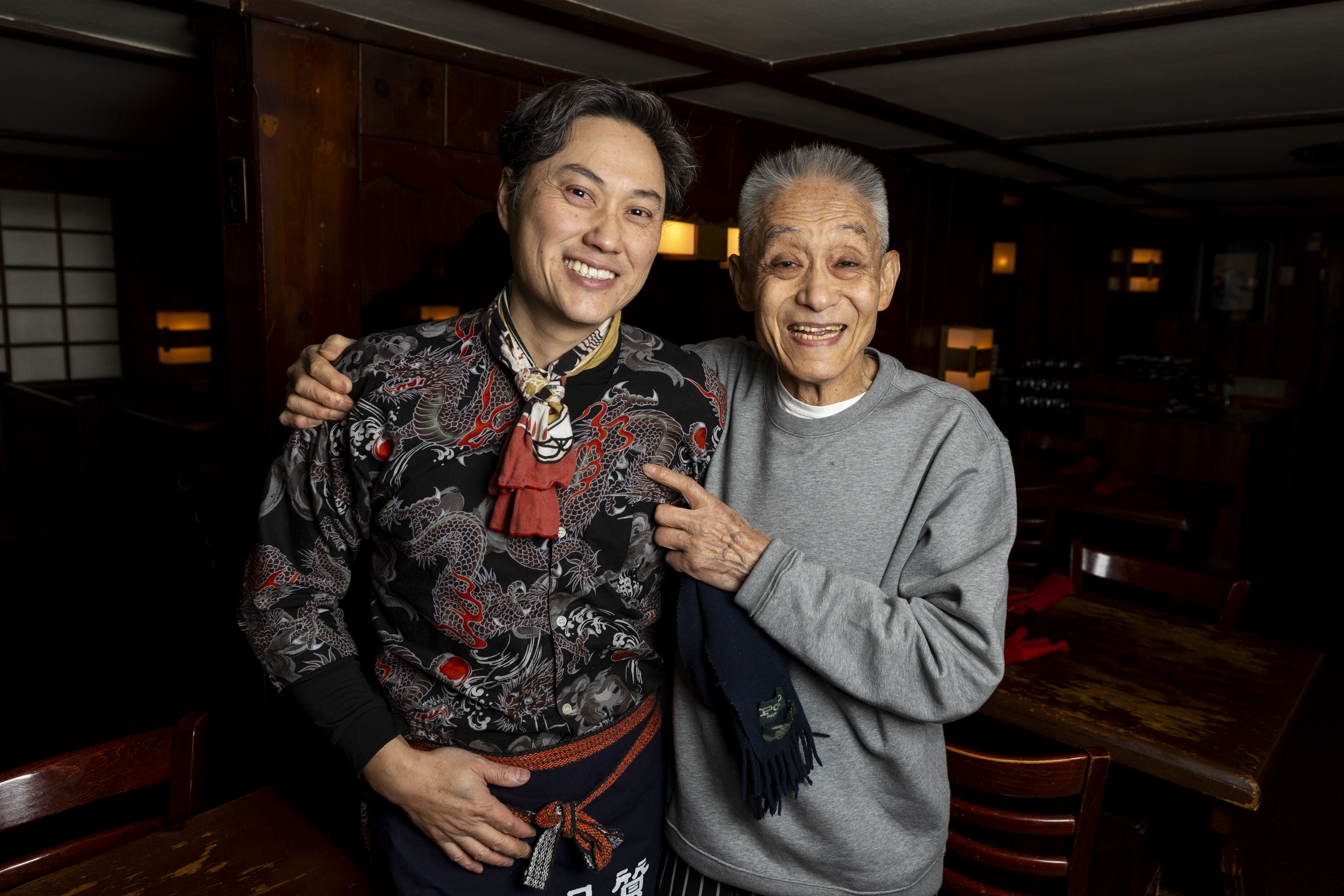
    Shigeru Fukuyoshi (right), chef and founder of Sagami in Collingswood, with Alan Su in 2024, shortly before Su’s purchase.Tyger Williams / Staff Photographer

    Su said it could be among the largest in Philadelphia, with as many as eight sushi chefs working on busy nights.

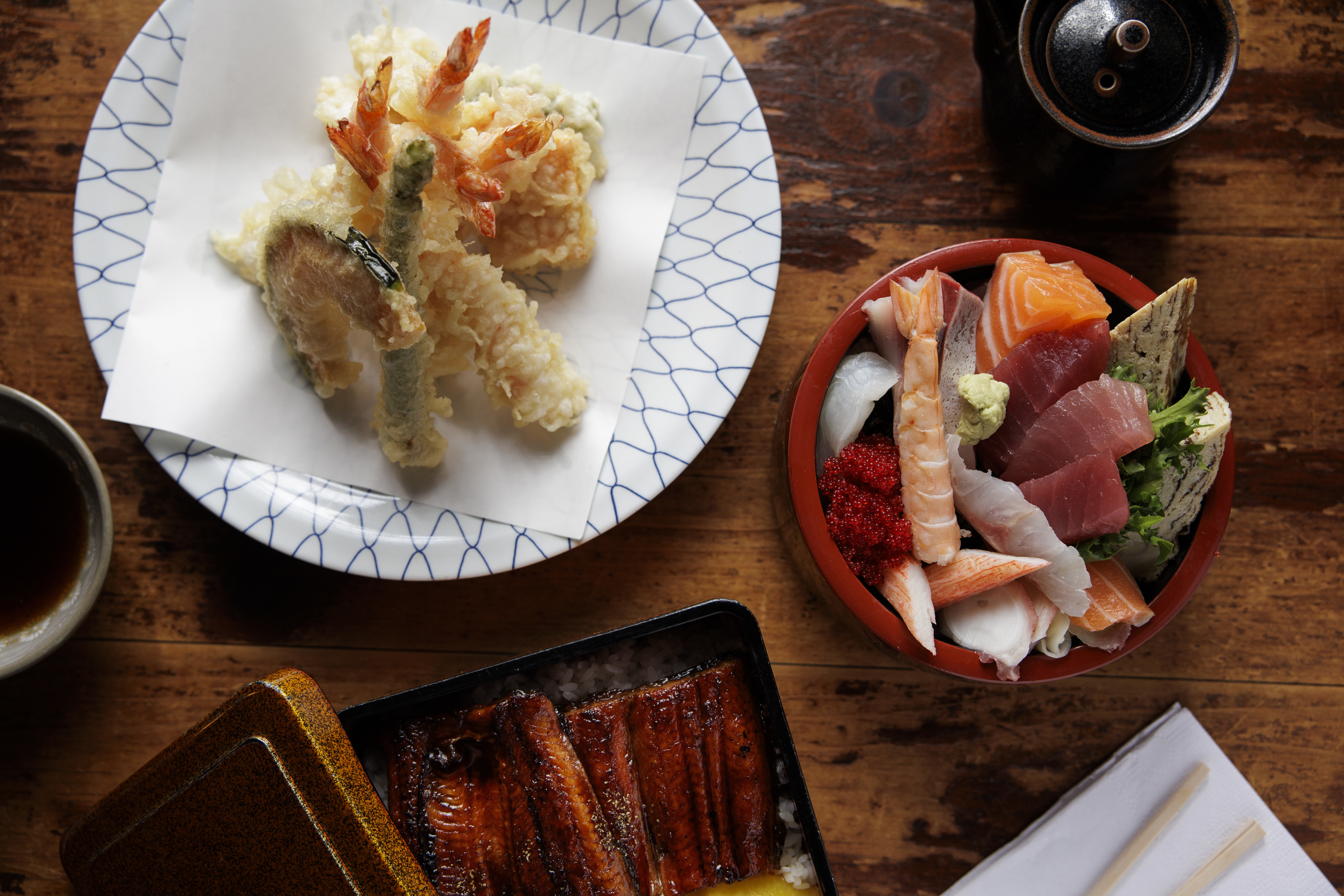
    Sagami has its own history to carry forward. Shigeru and Chizuko Fukuyoshi opened the modest restaurant on Route 130 in 1974, when sushi was still a rarity in the Philadelphia area.

    Over five decades, their traditional Japanese cooking earned a devoted following. Sagami was a James Beard Award semifinalist for Outstanding Restaurant in 2017 and 2019, while Shigeru was an Outstanding Chef semifinalist in 2023. It was named to The Inquirer’s 76, a compendium of the region’s most influential restaurants, in 2024.
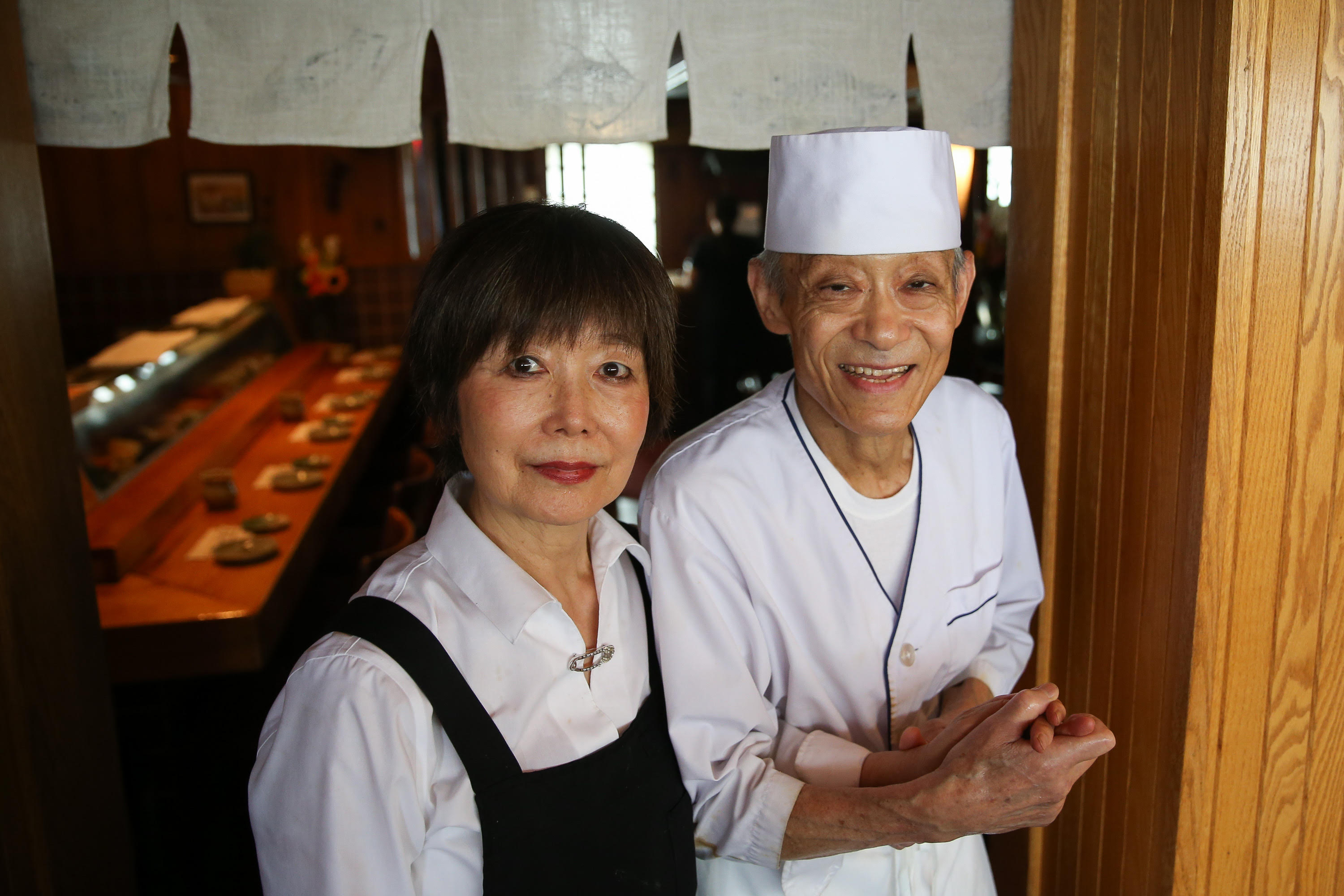
    Chizuko Fukuyoshi and her husband, Shigeru, at Sagami in Collingswood in 2018.Tim Tai / Staff Photographer

    Chizuko Fukuyoshi, who ran the dining room and business operations, died in July 2024 at 79. Her husband initially continued operating Sagami, then decided to retire. Su, a longtime family friend and customer for about 30 years, acquired the restaurant effective Jan. 1, 2025.

    The Fukuyoshis had considered turning the business over to Su several years earlier but postponed the decision. At the time of the sale, Shigeru Fukuyoshi said he regarded Su as a son. Su pledged to preserve the restaurant’s menu and character.

    Now, Su is planning a larger interpretation of Sagami, replicating the entire Collingswood menu plus dishes not available at the original. He wants to make noodles in-house, potentially including soba, using specialized equipment from Japan.
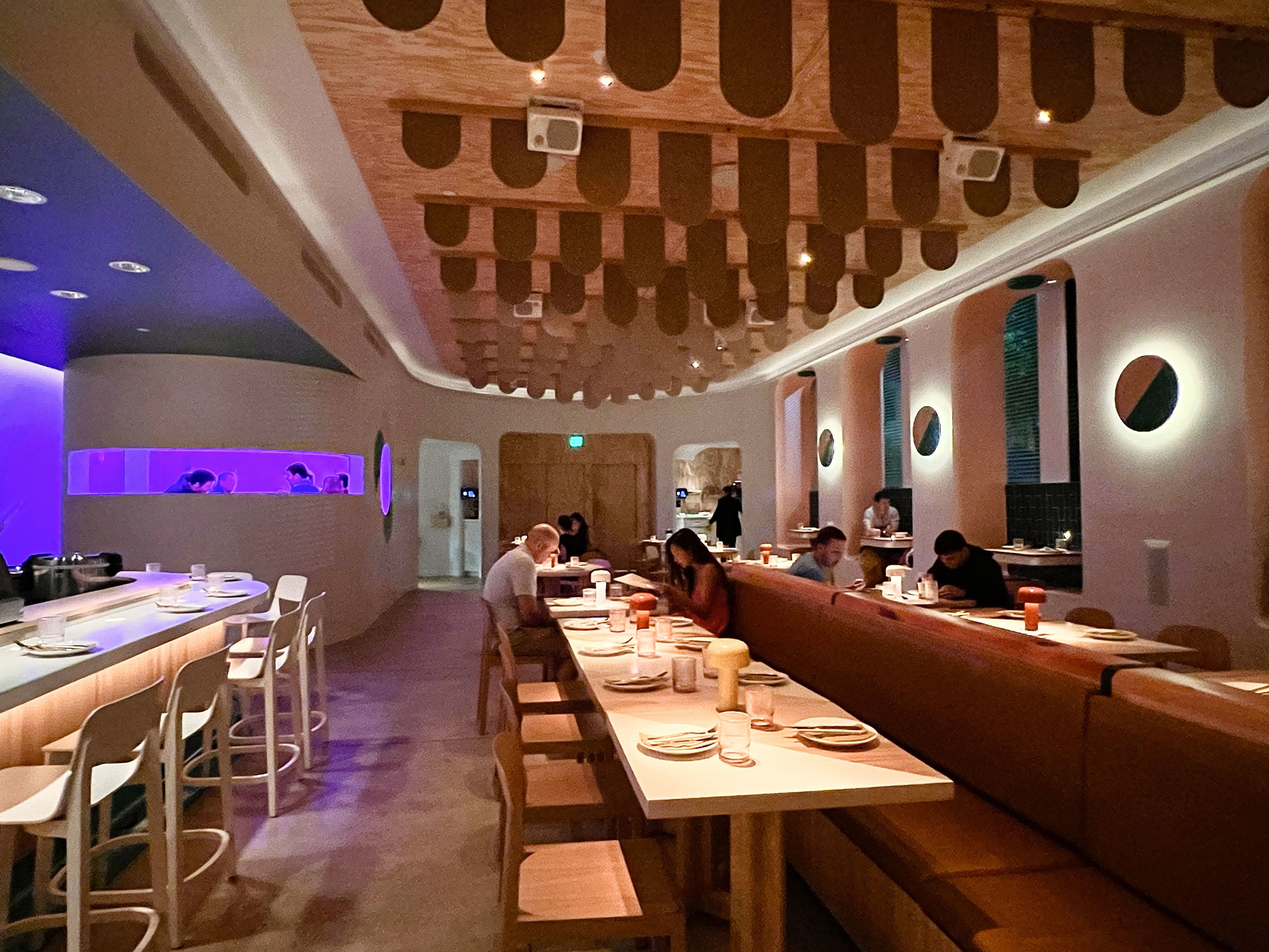
    The dining room at Pod in 2023 after its transition from Kpod.Michael Klein / Staff

    He also plans izakaya-style dishes, including yakitori cooked over Japanese binchotan charcoal rather than gas or electric grills. Unlike Sagami in Collingswood, the new restaurant will serve lunch and lunch specials.

    Su, who also owns Nom Nom Ramen, Umami, and Shiso, said he is not pursuing a high-priced omakase restaurant. He wants family-style dining that accommodates Penn students and neighborhood customers without sacrificing ingredients or preparation.
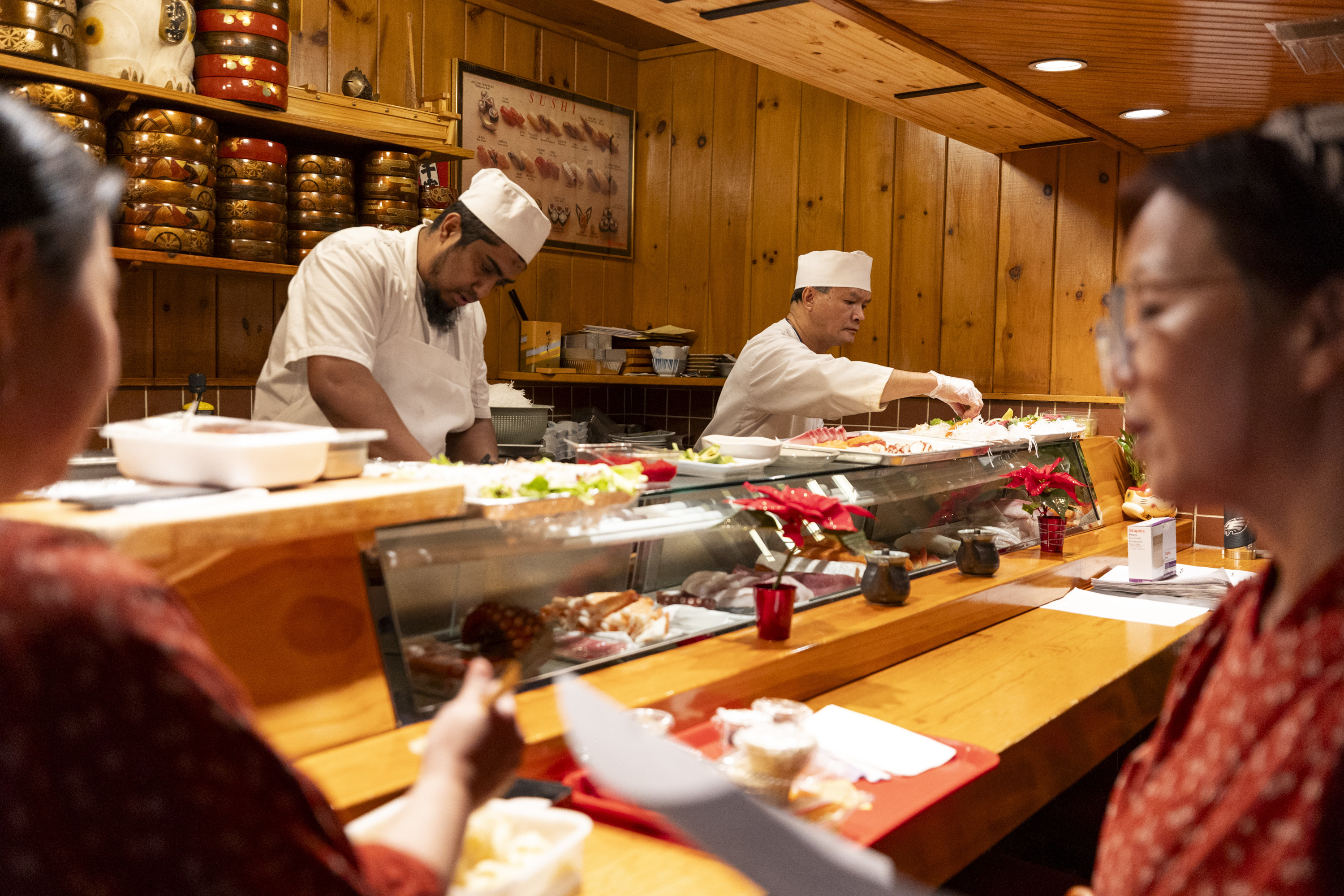
    Chefs and workers at Sagami in Collingswood in 2024.Tyger Williams / Staff Photographer

    Josh Weiss of MSC represented Su in the lease transaction, while Jacob Cooper, also of MSC, represented the University of Pennsylvania, the landlord.

    “Starr created a restaurant where the atmosphere was a big part of the experience,” Su said. “But for us, the emphasis is more on the food and its identity. That’s what I want people to remember.”
  • These Philly sushi chefs lift weights — and bluefin tunas — together

    These Philly sushi chefs lift weights — and bluefin tunas — together

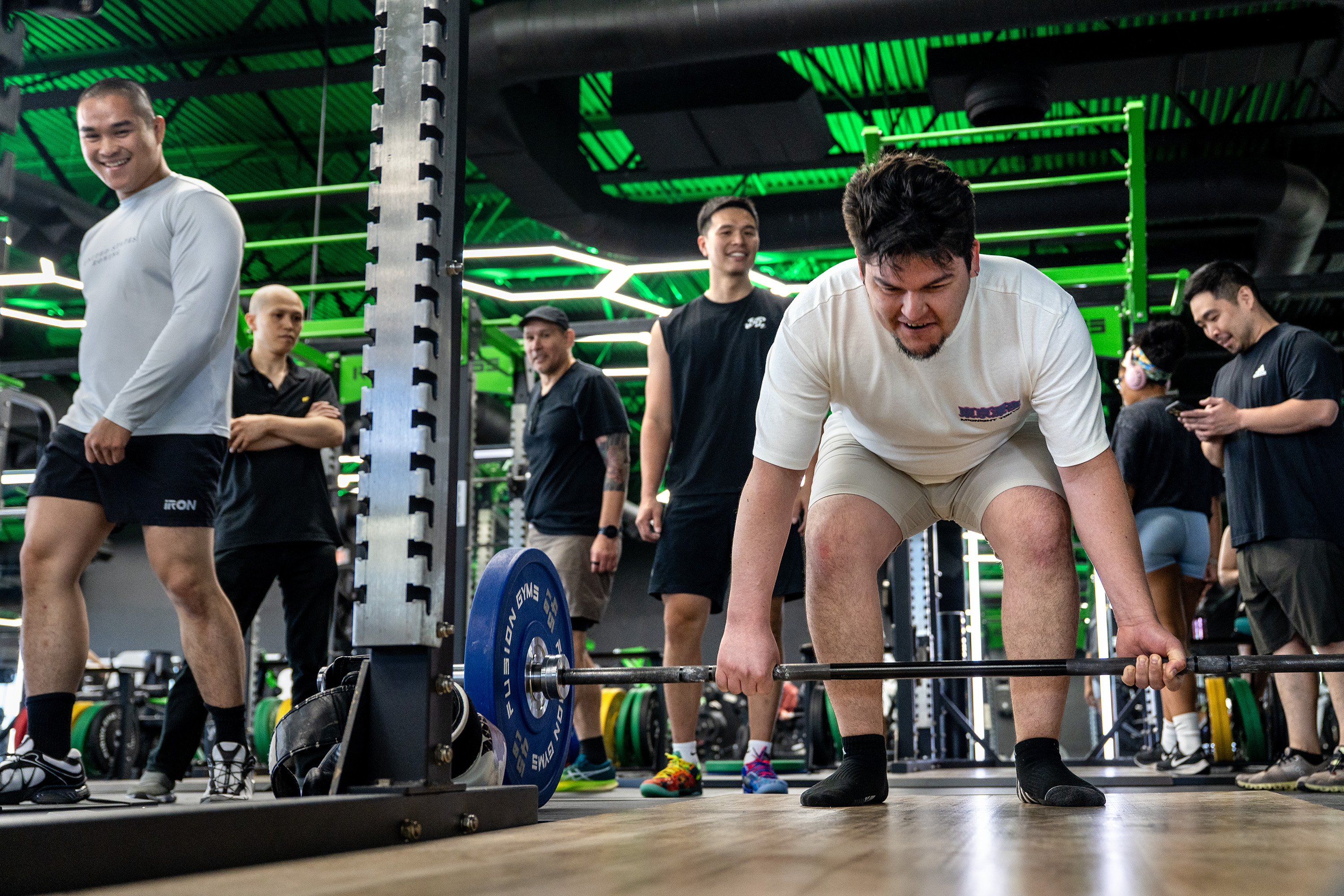
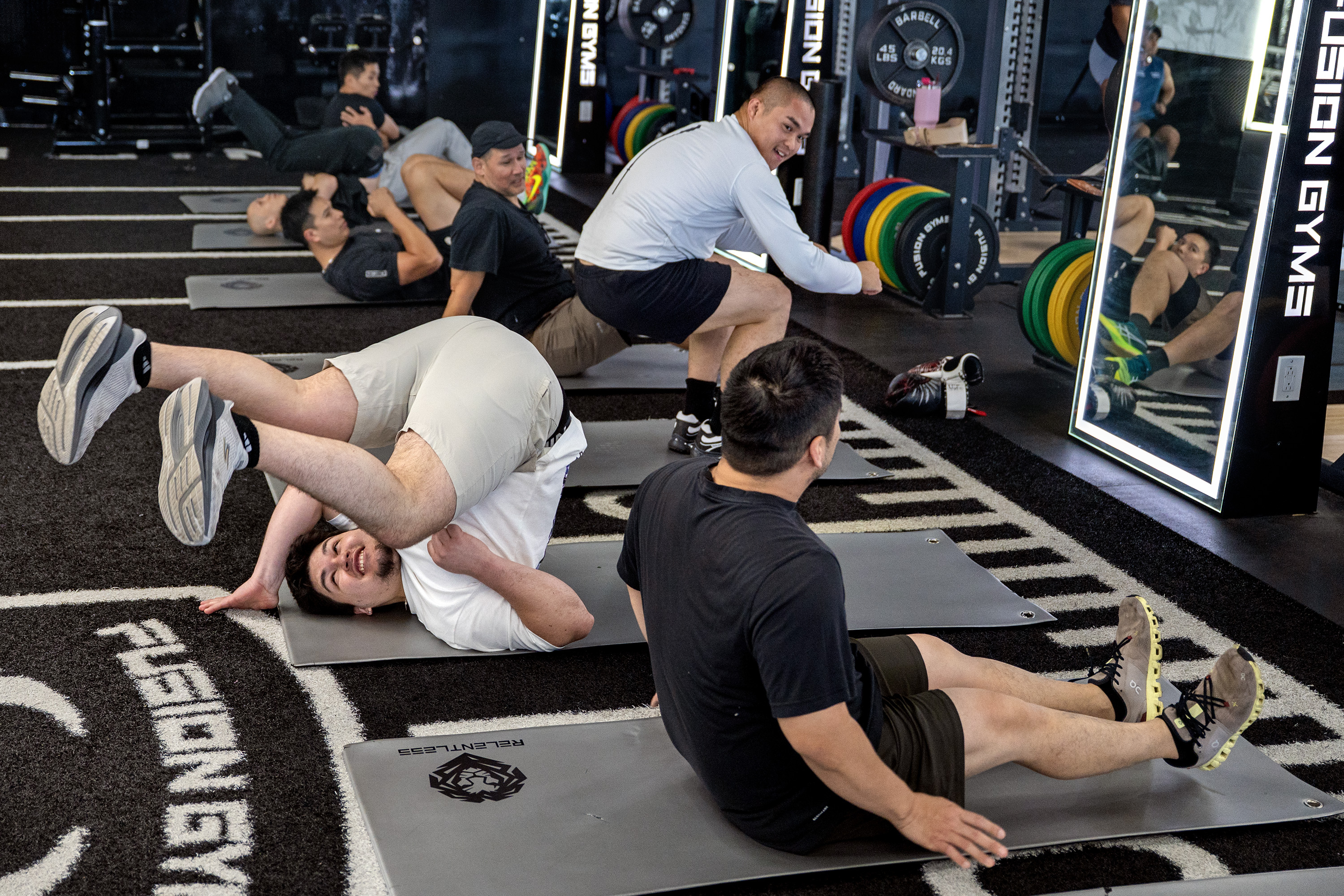
    One of Fusion Gyms’ five locations is in a strip mall in deep South Philly, sandwiched between a children’s clothing shop and a wig store. In the neon-green glow of the gym’s bright lights, seven Philly sushi chefs stretched on rubber mats, preparing to lift weights set to be as heavy as a fully grown bluefin tuna.

    The crew — usually just four or five chefs — meets regularly on weekday mornings, loosely led by Albert Zheng, 34, and Dan Santana, 40, who co-own and run Kiku Sushi in South Philadelphia. (Zheng also owns Javelin in Fairmount and is a partner in the upscale Old City omakase restaurant Ogawa.)

    Zheng and Santana are there every weekday. The other chefs drop in weekly or monthly. They exercise to stay fit for their physically demanding jobs, but also just to hang out with each other.

    On a recent Tuesday morning, a larger-than-normal group gathered, including chefs from Kiku, Ogawa, and Javelin, as well as Kichi Omakase and Yanaga Kappo Izakaya, which houses the omakase counter 637 Sushi Club.

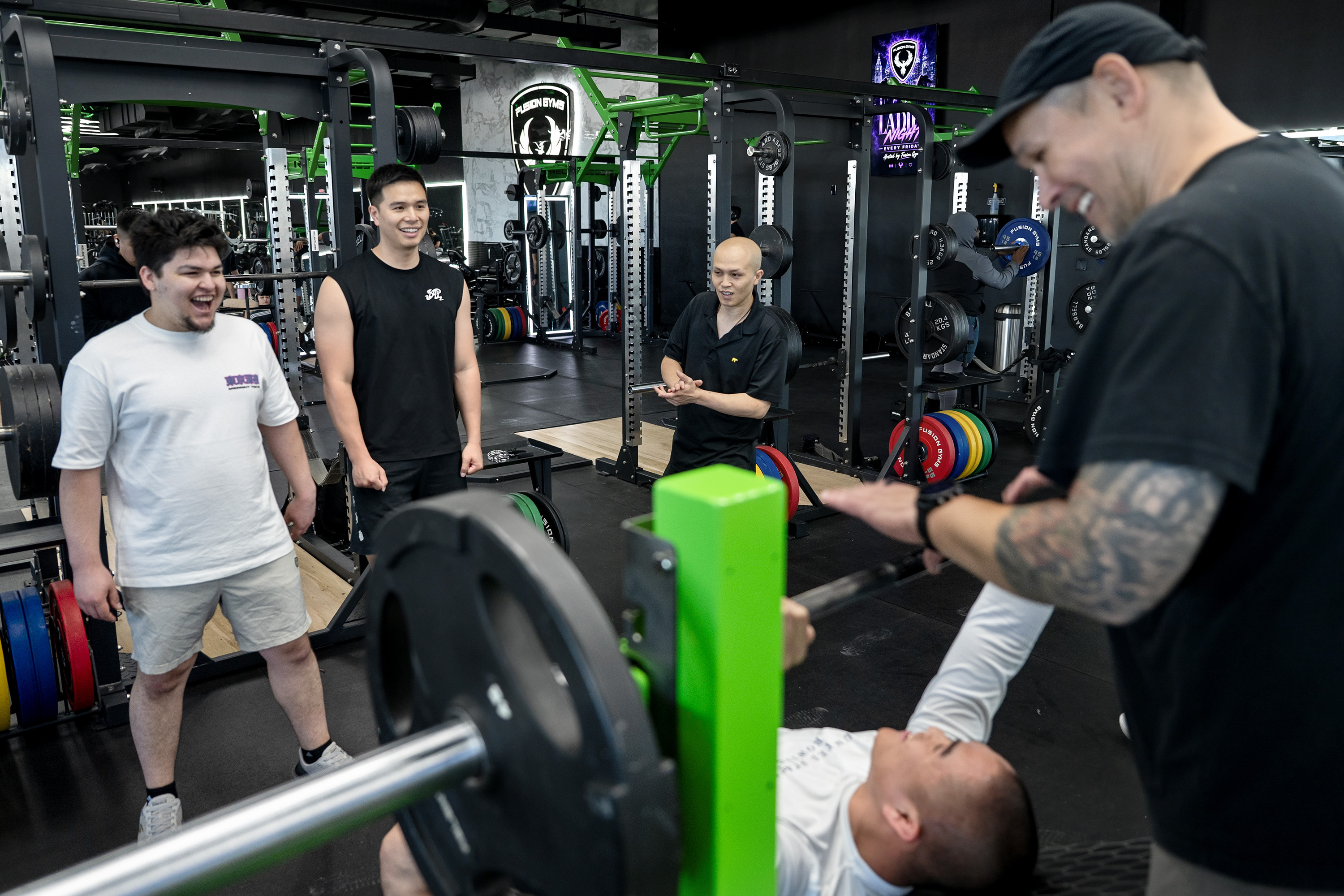
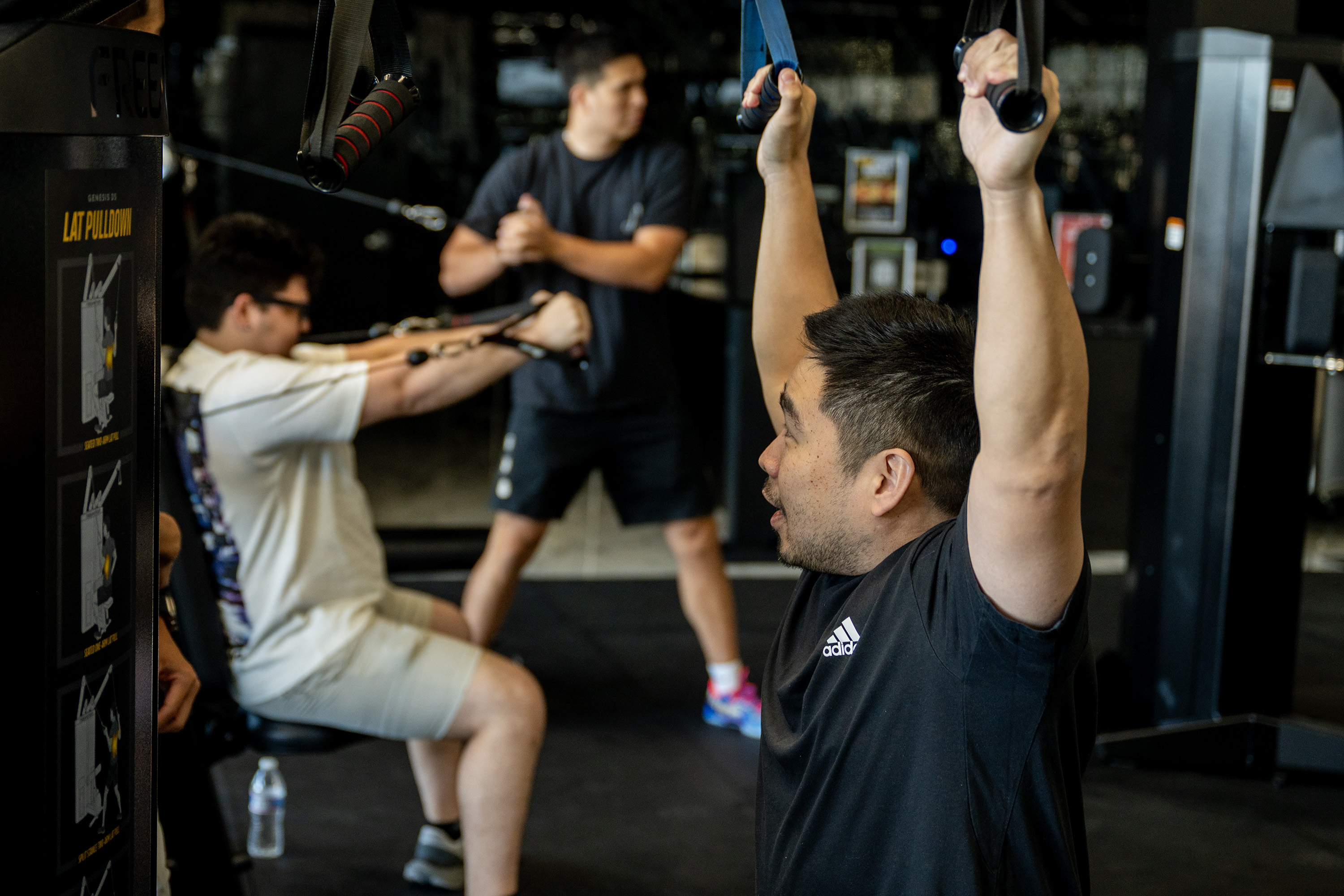
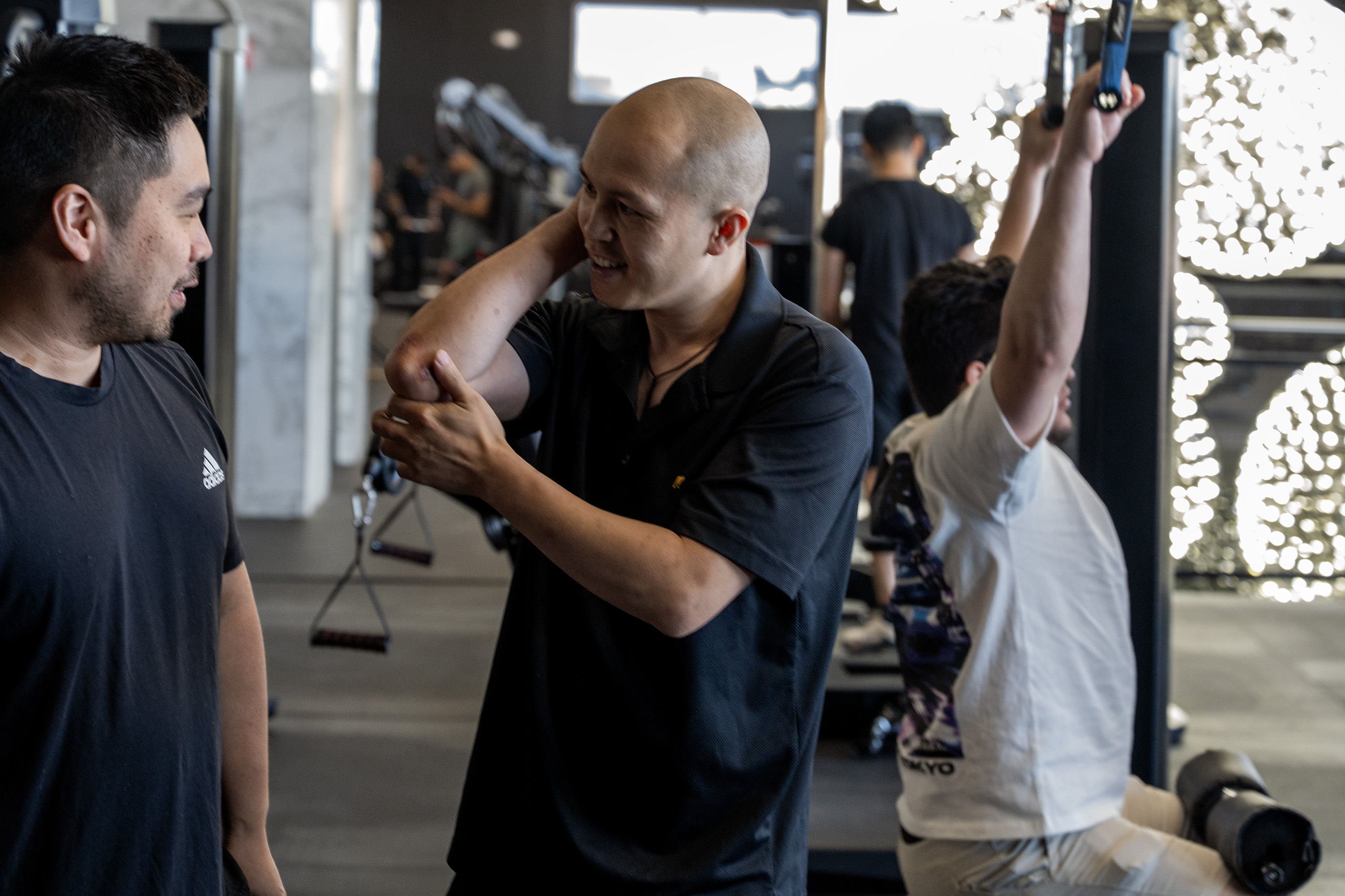
    Sushi chefs work out at Fusion Gyms in South Philadelphia in August. They get together regularly, trading both exercise tips and fish intel. From front to back are Dan Santana; Carlos Wills, Joseph Nguyen, Kevin Yanaga, Albert Zhang, Cai Li, and Alex Jiang.Tom Gralish / Staff Photographer

    They also count among their crew sushi chefs from Sagami and Nakama. “We’re less consistent in summer, when our kids are home from school,” Zheng said. “During the school year, we drop the kids off and meet at the gym right after.”

    They work out for two, sometimes three hours at a stretch. “The third hour is usually our jaw workout,” joked Zheng. “And it takes longer when there are more people.”

    As they wove through Fusion Gyms’ open-floor plan, they compared ingredient lists and traded tips about good restaurants and where to get salmon for a better price. These are regular topics of discussion, along with mise en place and sourcing.

    Sushi chefs work out at Fusion Gyms in South Philadelphia in August. They get together regularly, trading both exercise tips and fish intel. Clockwise from left: Carlos Wills, Albert Zheng, Alex Jiang, Kevin Yanaga, and Joseph Nguyen (on bench).Tom Gralish / Staff Photographer

    Kevin Yanaga, 55, and Joseph Nguyen, 27 — partners in 637 Sushi Club’s Oma Cafe, which pairs fish with coffee — coached the others through Muay Thai moves while trying to convince the other chefs to join them on a November trip to Vietnam for a three-day Oma Cafe pop-up. “I need help prepping,” said Yanaga.

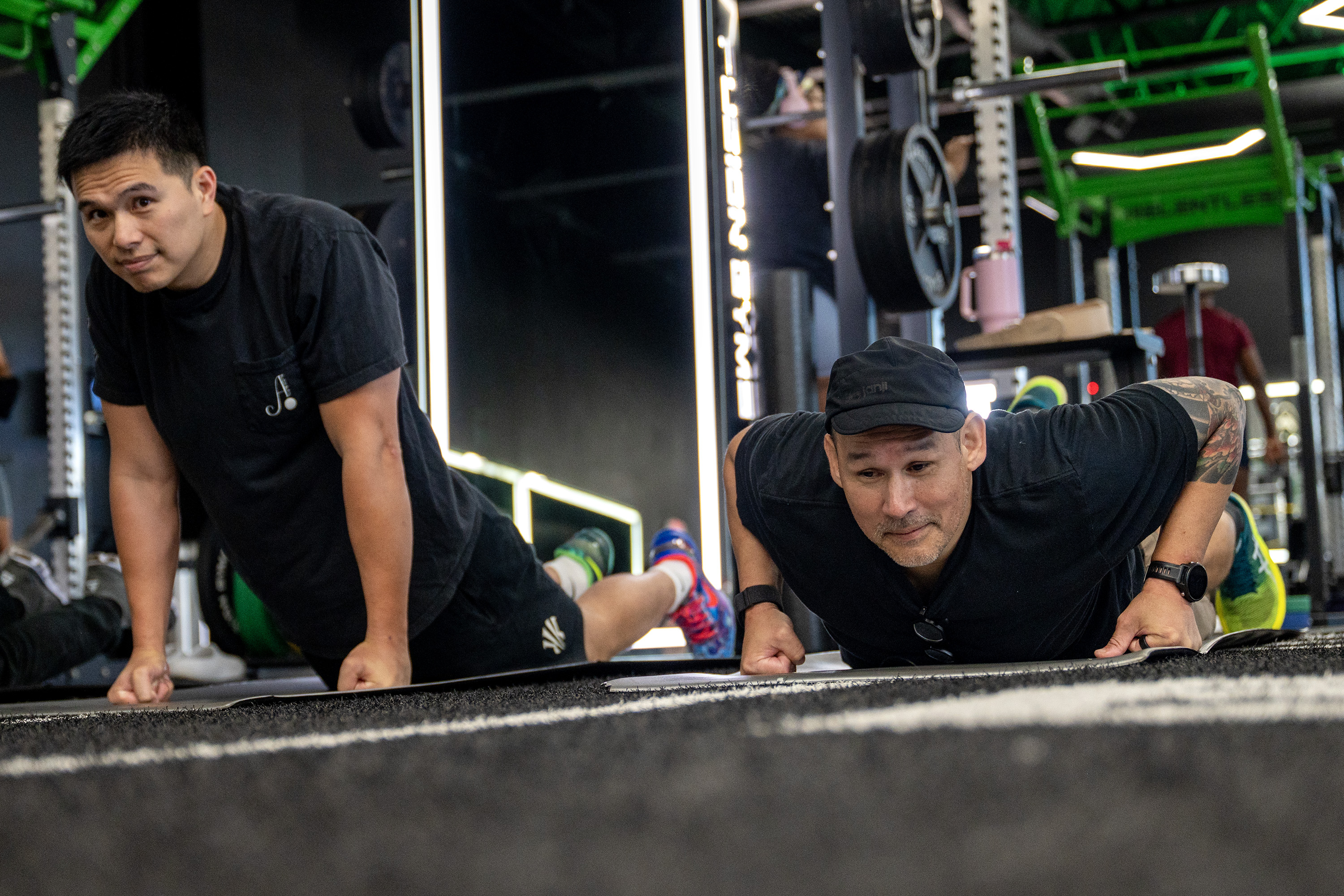
    Sushi chefs work out at Fusion Gyms in South Philadelphia. They get together regularly, trading both exercise tips and fish intel. From front to back are Dan Santana, Carlos Wills, and Albert Zheng.Tom Gralish / Staff Photographer

    At one point, Carlos Wills, 26, who helms the omakase counter at Ogawa, pulled up a list of available ingredients sent by his buyer from Japan’s Toyosu Market, the world’s largest wholesale seafood market, and showed Yanaga the $500 tray of uni and $55 60-sheet packet of nori that he was considering ordering once he was done working out.

    On this Tuesday, the chefs were also drinking some of the world’s most expensive coffee, brewed by Nguyen. “It’s Orange Geisha and it’s expensive because it’s so rare and it takes half a pound of beans for me to brew one bottle,” explained Nguyen, who also owns and operates the Coffee Connoisseur Club. The Instagram-based subscription club sources beans from Nguyen’s plots in Vietnam and small farmers in South America. “This is a $250 bottle of coffee,” Yanaga interjected.

    “I’m getting kumquat, jasmine, and orange notes coming from it,” said Nguyen. “I like saba [mackerel] paired with this, as the fattiness of it pairs with the bright citrusy notes. Saba with a little bit of wasabi.”

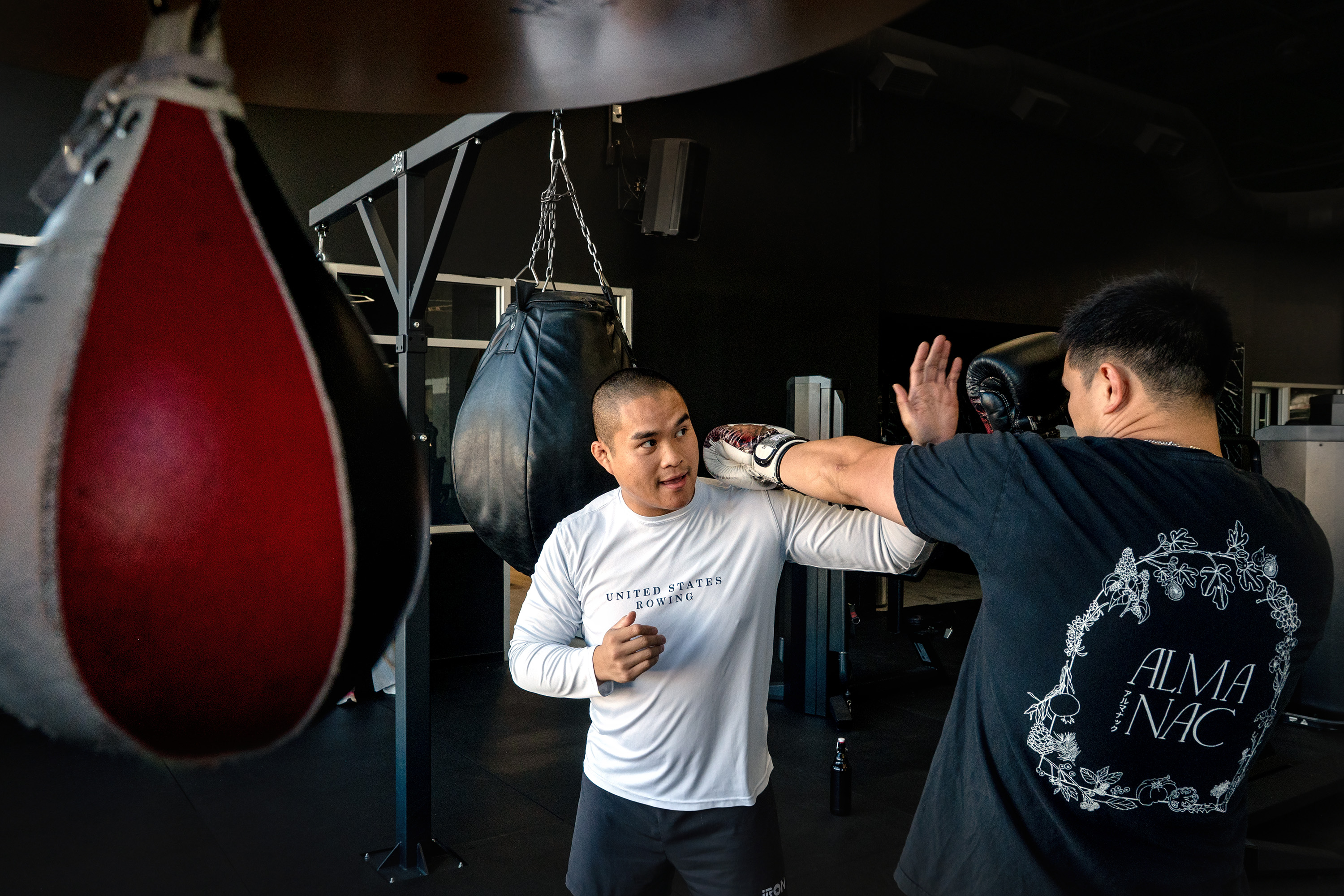
    There was no saba in sight as Nguyen held a punching bag while Zheng jabbed, gently coaxing him on where to aim his punches. He did the same for Alex Jiang, 42, from Kichi Omakase. “We have a heavy jab over here!” he proclaimed.

    Sushi chefs Joseph Nguyen (left) and Albert Zheng work on boxing at Fusion Gyms.Tom Gralish / Staff Photographer

    When the crew moved on to bench-pressing, Wills said, “You can tell people this is how I prepare to lift a tuna.”

    As Wills sat back on the weight bench and lifted the bar, he said, “This is a 60-pound tuna.”

    The sushi chefs spot one another and cheer each other on: “One more! Half a tuna more! You’re very strong!”

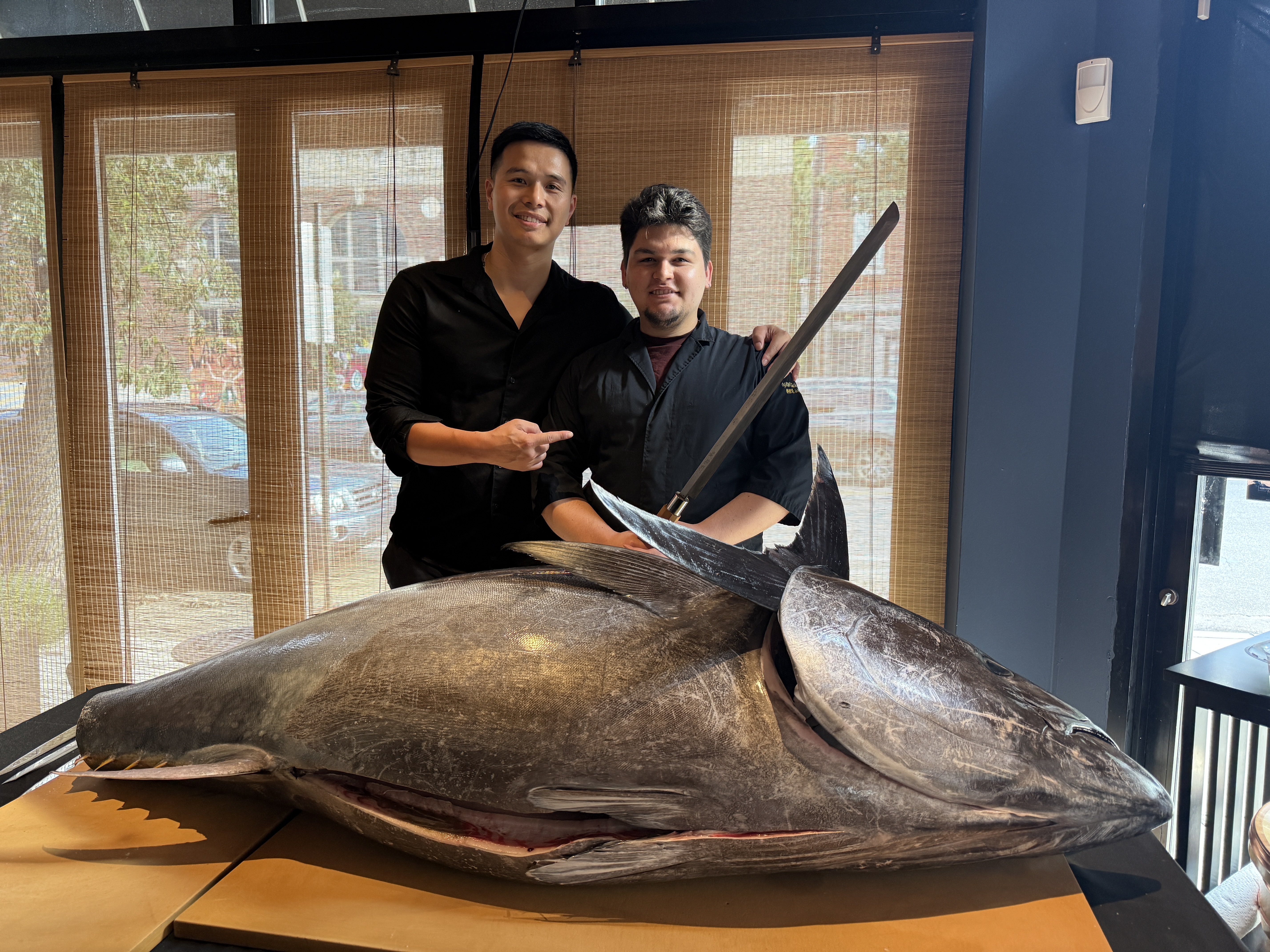
    “I thought about bench-pressing the 281-pound tuna we brought into Javelin for the tuna breakdown last week,” said Zheng. “But it was so slippery.”

    Sushi chefs like Albert Zheng and Carlos Wills say they work out to stay in shape for lifting fish like this 281-pound Spanish bluefin tuna at Javelin in Fairmount.Kiki Aranita / Staff /

    “When we get a tuna like that, it takes eight of us to lift it,” said Yanaga.

    “We got a Spanish bluefin last week,” said Wills. “It was $23 per pound, so just over $6,600. Pretty cheap. The Japanese ones are $31 per pound right now.”

    “Who wants to do a whole tuna?” asked Zheng as he and Santana added more weights on to a bar for a round of dead lifts.

    Nguyen steps up and dead lifts 315 pounds. “We’re hiring him for the next tuna breakdown,” said Wills.

    Sushi chefs (from left) Dan Santana, Alex Jiang, and Carlos Wills work out at Fusion Gyms.Tom Gralish / Staff Photographer
    Sushi chefs Albert Zheng (left) and Kevin Yanaga work on planks at Fusion Gyms in South Philadelphia.Tom Gralish / Staff Photographer

    In fact, the chefs do often join up for tuna cuttings, helping one another out even if they aren’t in business together.

    But mostly, the crew keeps one another accountable at the gym, welcoming each other even if weeks or months pass between workouts.

    Once the coffee was consumed and their muscles were spent, the chefs dashed off in different directions, to their respective sushi counters.