A line in Philadelphia’s zoning code conflates drag performances with strip clubs, topless bars, and other adult cabaret venues. It’s a definition that City Council hopes to change.
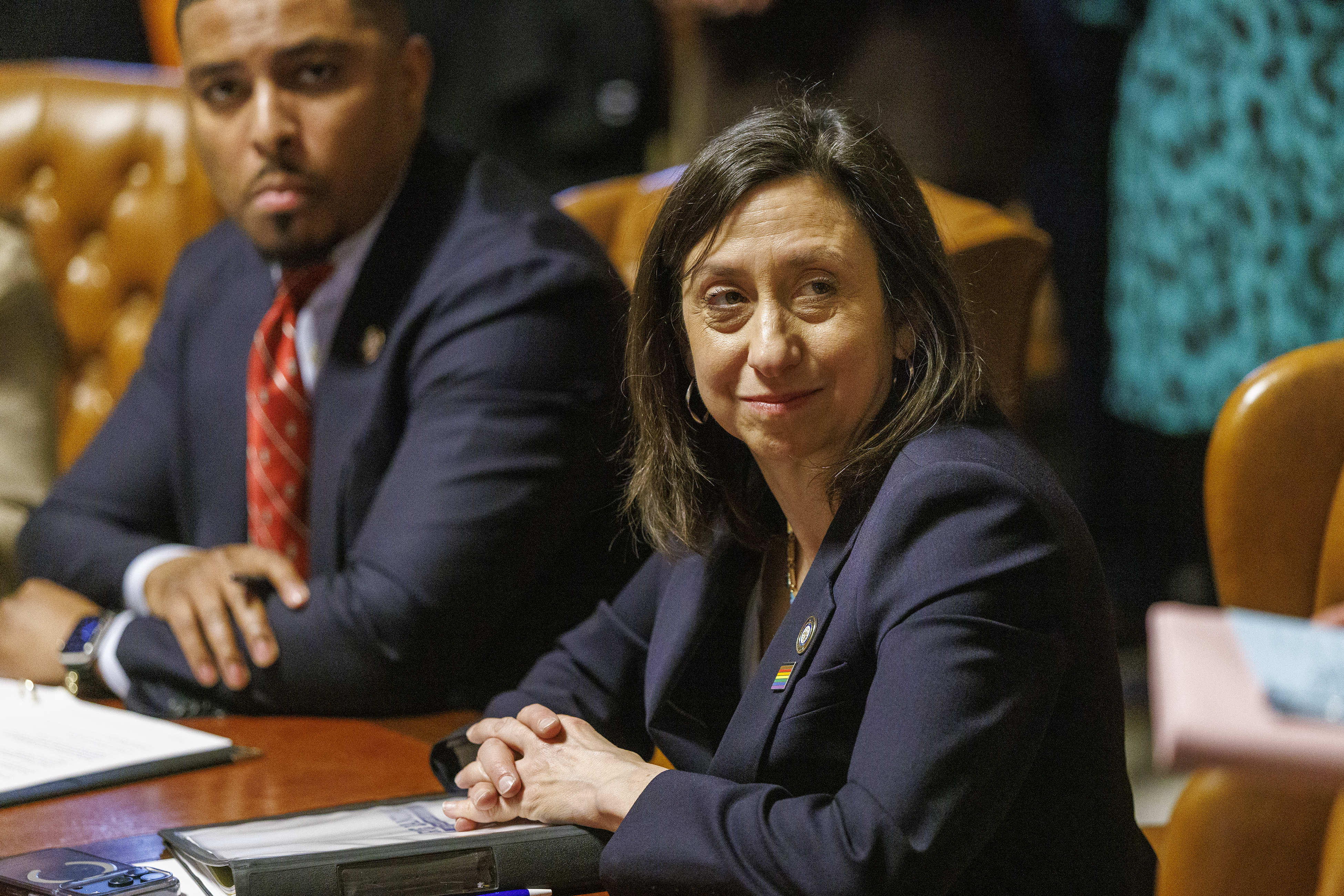
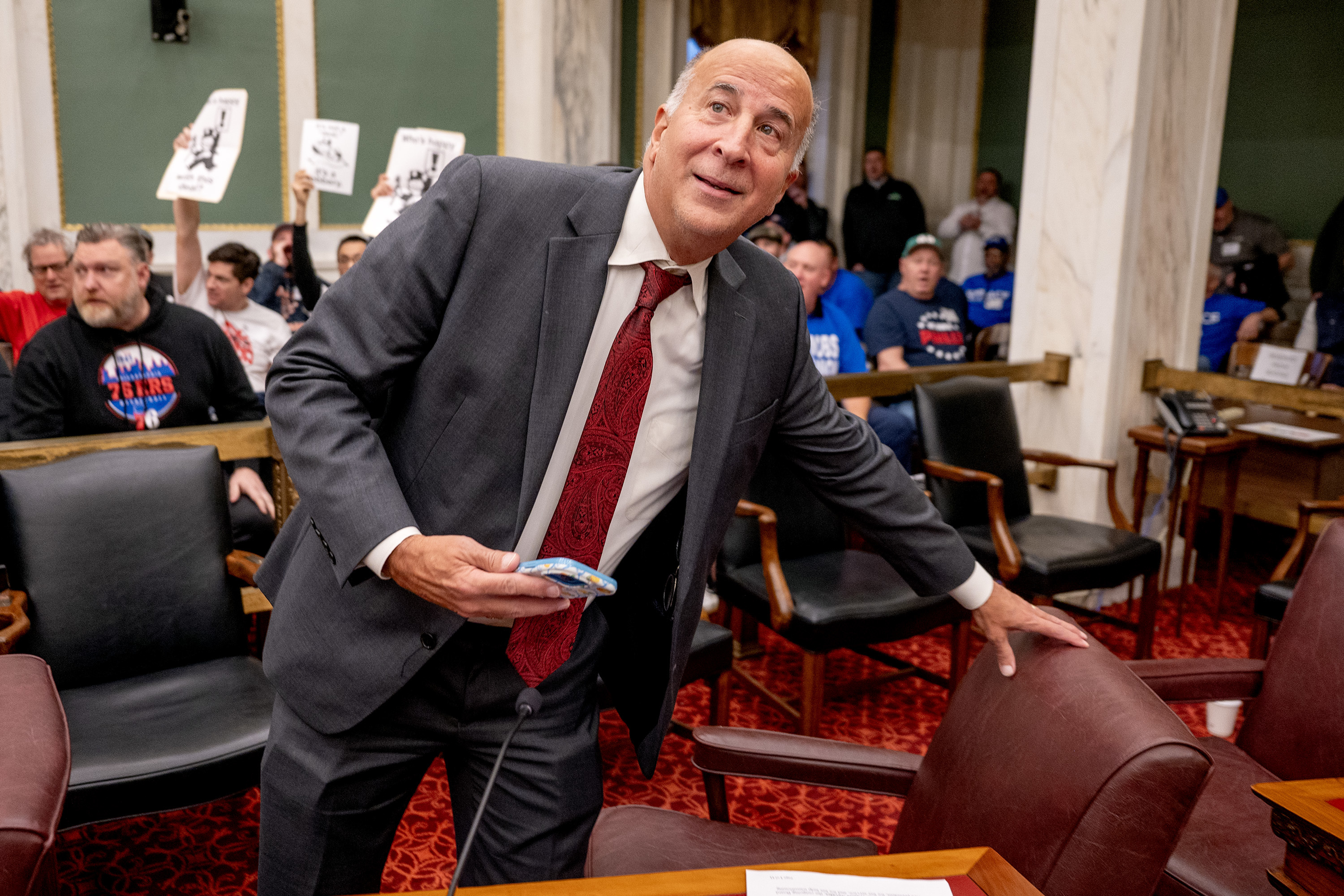
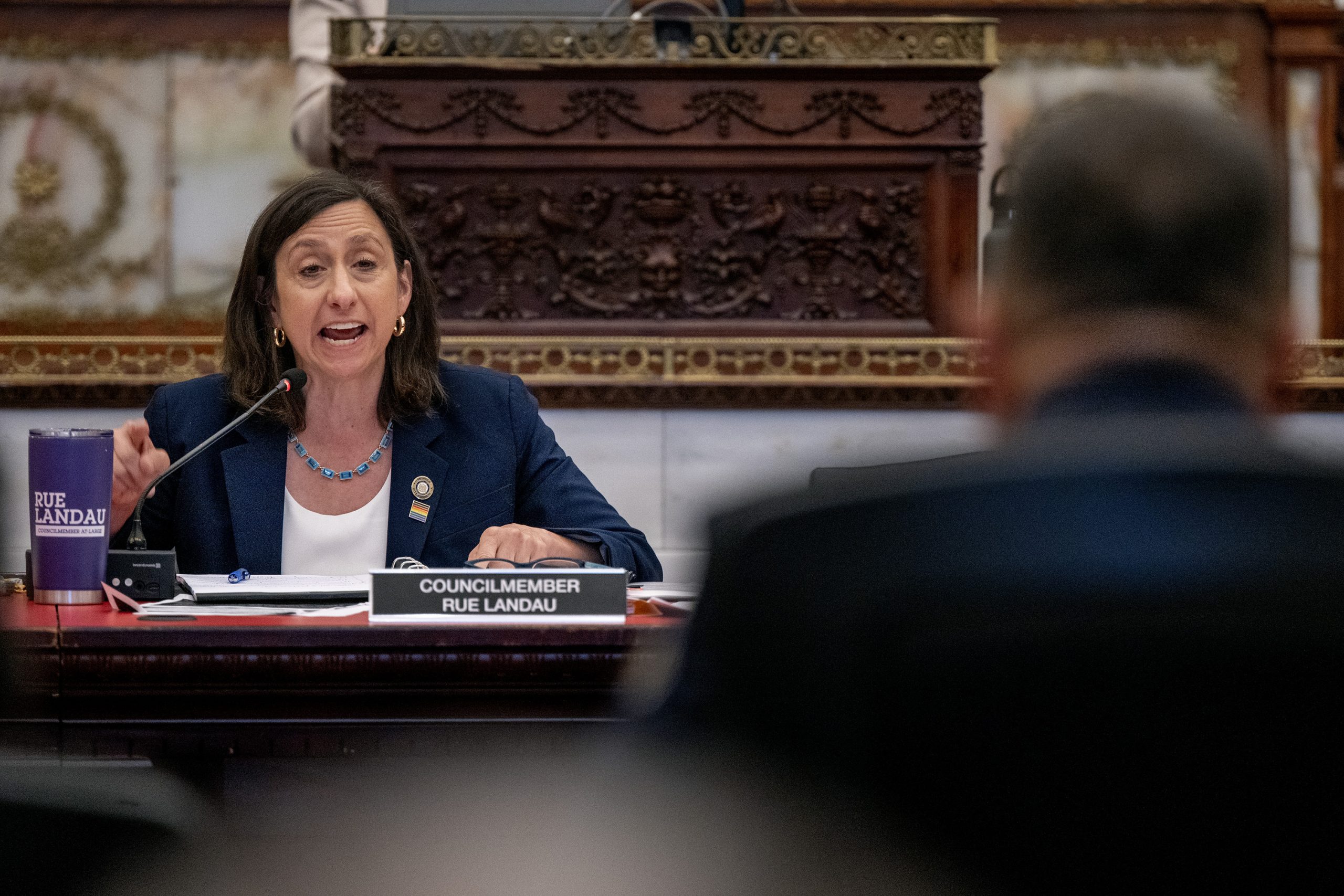
Councilmember Rue Landau introduced legislation on Thursday to remove references to “male or female impersonators” in a section of the zoning code that regulates “Adult Oriented Services.”
As currently written, Philadelphia defines an adult cabaret as a place that “features topless dancers, go-go dancers, exotic dancers, strippers, male or female impersonators or similar entertainers … dancing, performing or acting in a lewd, sexually erotic, exciting or stimulating manner.”
The distinction is similar to one found in a Tennessee law that prohibits so-called “adult cabarets” featuring “male or female impersonators” from being staged anywhere minors might see it. It also mirrors language used in similar drag bans struck down this year byjudges in Texas and Montana, and one currently up for consideration by the Idaho Senate.
If passed, Landau’s proposal would strike the provision regarding male and female impersonators.
The bill will first be considered by City Council’s Rules Committee. The legislation has the support of Mayor Cherelle L. Parker’s administration, Landau said, and has also been shared with her colleagues in City Council, who Landau described as “supportive.”
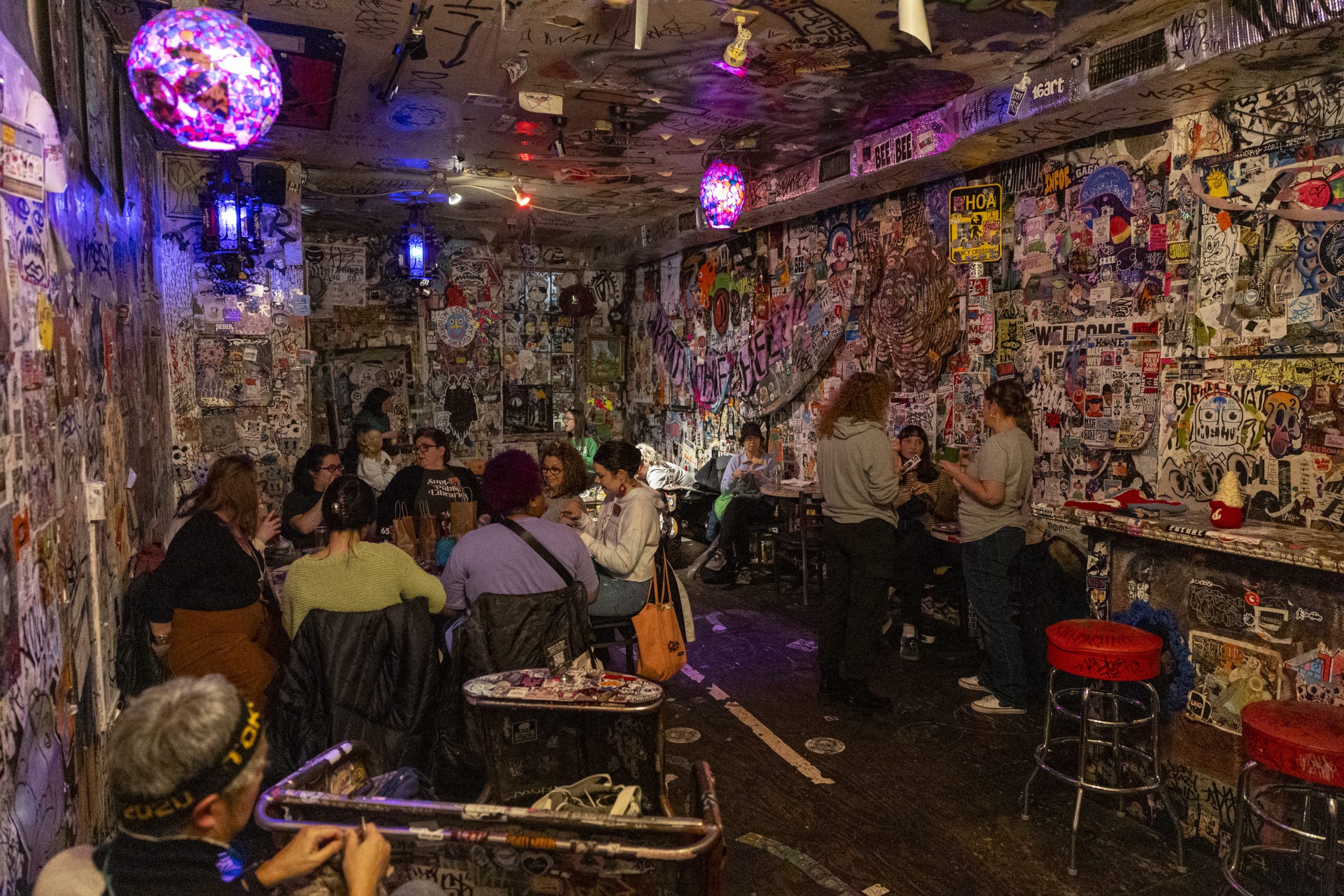
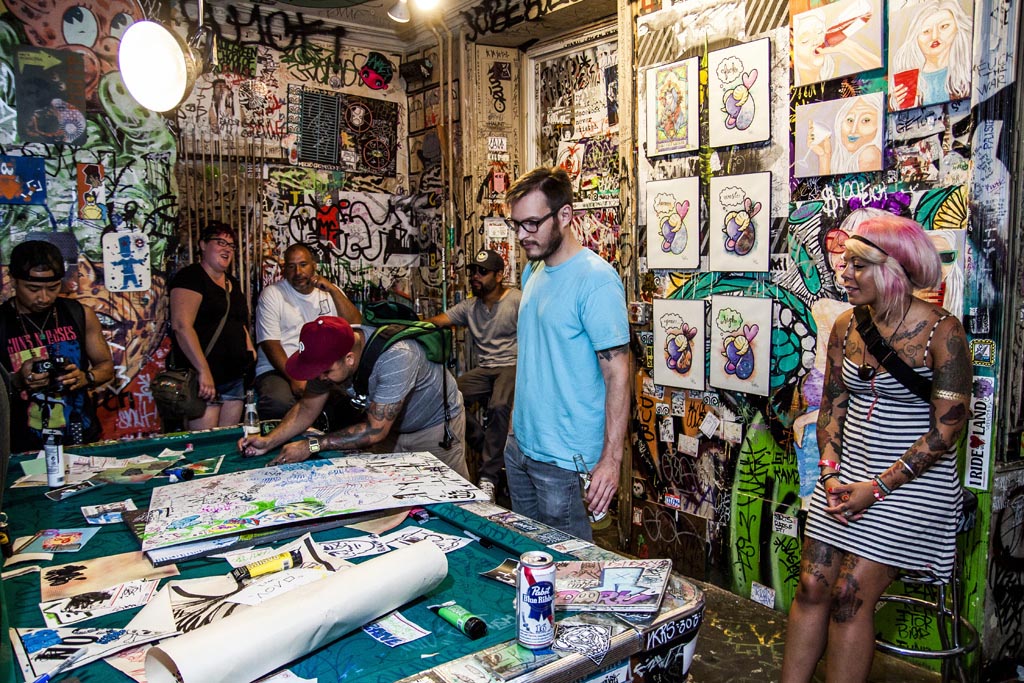
Landau’s bill is inspired by recent events at South Street bar Tattooed Mom, which has long been a go-to venue for Philly’s LGBTQ+ artists, and particularly drag performers, in part because it doesn’t charge acts.
A crowd fills Tattooed Mom. The popular South Street bar is unable to host events with music for the foreseeable future.Tyger Williams / Staff Photographer
Tattooed Mom owner RobertPerry told The Inquirer Friday that he brought what he called the “offensive and troubling language” to the attention of Landau’s staff, but was not involved in drafting the legislation.
The incident “opened my eyes to actually reading the code and having conversations … I think the [language] is so antiquated that people don’t even realize it’s there,” Perry said. “We might have initially spurred the conversation, but Landau did all the heavy lifting.”
Perry was initially instructed to seek an adult cabaret permit in addition to a special assembly license for Tattooed Mom, he told the Philadelphia Gay News in July. That same month, an L&I spokesperson told Philly Voice that the permit — which traditionally governs businesses such as strip clubs and adult theaters — is required to host drag and burlesque events.
Perry now believes that his bar doesn’t need one upon further research, he said Friday.
Regardless,Landau said Tattooed Mom’s predicament was the spark for her proposal.“They were cited in violation of this provision simply because they had a drag performance happening,” she said. “We don’t want that happening in Philly … A lot of folks rely on drag performances for their livelihood, and we just want to keep supporting them.”
Landau is unaware of L&I citing other Philly venues for hosting drag or burlesque shows without a permit. “This is thankfully nothing that L&I is usually citing establishments” over, she said.
A crowd looks at art inside the South Street bar Tattooed Mom.
If passed, Landau’s legislation won’t green-light events with music at Tattooed Mom. All Philly establishments with an occupancy of 50 or more people that host music performances, dancing, or DJs are required to have a special assembly occupancy license, which costs $253 and must be renewed annually. To procure one, Tattooed Mom must first apply for a zoning exception.
The process involves holding a public meeting for community feedback followed by a separate hearing in front of the Zoning Board of Adjustment. As of March 2026, the wait time for a hearing is 180 days — or roughly six months — according to a manual from the City of Philadelphia.
Perry said he has yet to begin Tattooed Mom’s application.
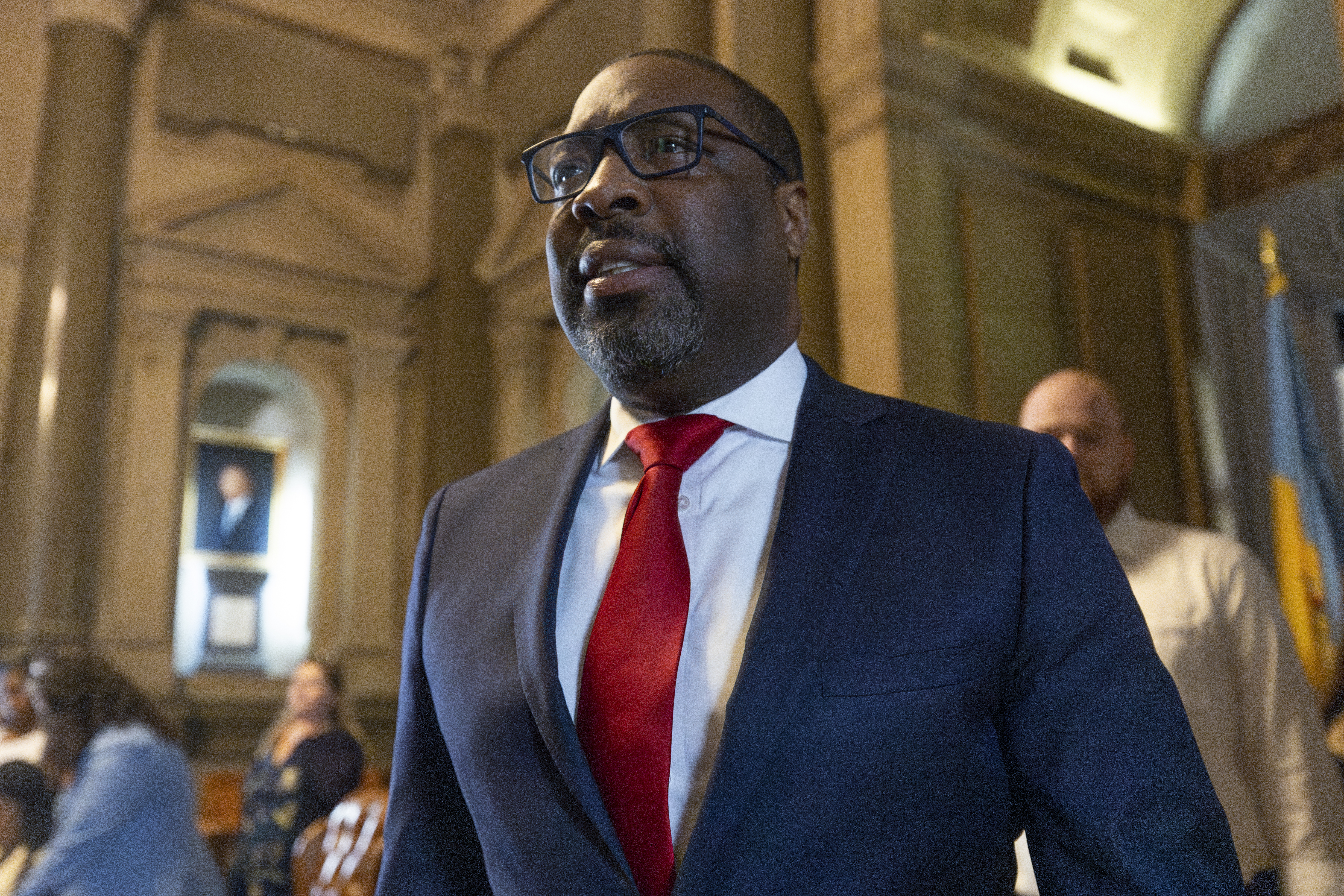
One evening last week, City Council President Kenyatta Johnson stood on South Broad Street and greeted his fellow lawmakers as they arrived at Steak 48.
Johnson had invited them to the swanky Center City steakhouse to “reconnect, share conversation, and enjoy each other’s company outside of City Hall,” according to an invitation for the Sept. 9 “members only” event obtained by The Inquirer.
Council resumes for its fall session Thursday — and after the way things ended in the spring, the city’s legislators may have needed the opportunity to break bread together.
When lawmakers last met in June, they approved a $7.1 billion city budget that left all sides feeling dejected. Council turned away a series of tax proposals from Mayor Cherelle L. Parker, including a $1-per-ride levy on rideshare companies like Uber and Lyft, and ended up passing a budget that omitted a number of members’ own priorities and left unanswered how the city will help the Philadelphia School District navigate its funding crisis in the long run.
In addition to representing a new low in Parker’s relationship with the legislative body of which she was once a member, some Council members also questioned their own negotiating team’s handling of the ordeal.
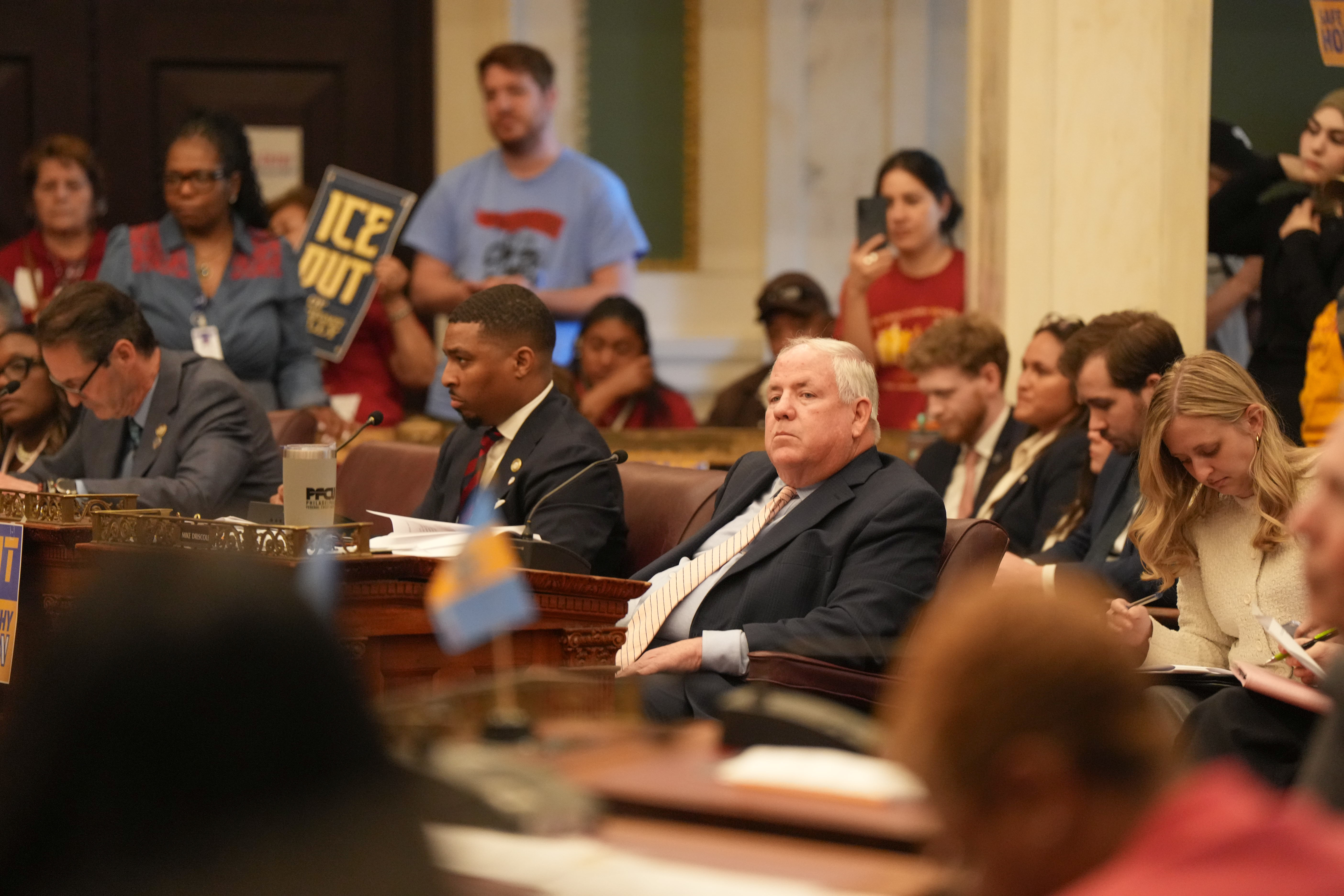
Councilmember Mike Driscoll noted last week that while he was not “pointing fingers,” Council could have added more money in the budget for line items requested by lawmakers, such as funding for community groups.
“I’m disappointed and pissed off at the way it played out,” Driscoll, who represents parts of Northeast Philadelphia, said in an interview. “Our priorities weren’t analyzed in a more thoughtful [way]. … We do the amendments. [Parker] doesn’t. We could have put money in.”
Councilmember Michael Driscoll in Philadelphia on April 23, 2026.Jessica Griffin / Staff Photographer
An Inquirer reporter saw at least 11 of Council’s 17 members at the Steak 48 event, meaning a majority, or quorum, of Council was present. The Pennsylvania Open Meetings Act, or Sunshine Act, requires legislative bodies to notify the public if a quorum is present for a meeting at which official business is discussed.
But Johnson said at the beginning of the dinner that would not be happening.
“Tonight we do no official business,” Johnson said in an interview. “Just social. Welcome back to City Council. Eat and drink and be merry. No policy on the table. No legislation on the table. Just having a good time.”
Johnson’s invite directed members to RSVP to a Council staffer’s city email address. Johnson said his campaign picked up the tab.
“Everyone facing reelection next spring knows they have to be able to point to real accomplishments on the important issues voters care about,” City Hall lobbyist John C. Hawkins said. “And this fall is their last opportunity for them to address the most pressing issues that were not fully resolved in the spring budget process.”
Budget fight hangover
When Council and the mayor in the spring failed to reach a deal over new tax revenue to plug a $48 million hole in the school district’s budget, Johnson said Council had helped identify one-time savings in the city budget to fill the gap for a year while vowing to explore new recurring revenue streams for the district.
Johnson has not yet scheduled a hearing on schools funding, and Council’s dissatisfaction with the district appears to have been mounting.
Mayor Cherelle L. Parker, Council President Kenyatta Johnson, and Superintendent Tony B. Watlington Sr. arrive for an announcement at the School District of Philadelphia Headquarters on Wednesday, June 10, 2026 in Philadelphia. Monica Herndon / Staff Photographer
He said in a statement this week that Council will honor its commitment, but also alluded to finding that money in the district’s own budget, despite school officials saying they are navigating a $300 million structural deficit.
Johnson said Council is awaiting the results of a performance audit of the school district that is being conducted by City Controller Christy Brady. He said that report “will help Council identify any available funds to support recurring funding.”
New arena, who dis?
In the fall of 2024, Council wasconsumed by the debate over the 76ers’ proposal to build an arena in Center City.
Lawmakers spent much of the session debating the economic benefit of the project, while opponents cried out that it would displace businesses and residents in nearby Chinatown.
Despite Council approving it, that project was scuttled by the Sixers, who instead teamed up with Comcast, which owns the Flyers, to plot a different project: a joint venture that would bring a new arena to the South Philly sports complex. Earlier this month, they released the first renderings of what the Spectrum-inspired arena could look like.
There will likely be spirited discussions about it all in Council — at some point. But don’t expect a redux this fall of the all-out brawl that was 2024.
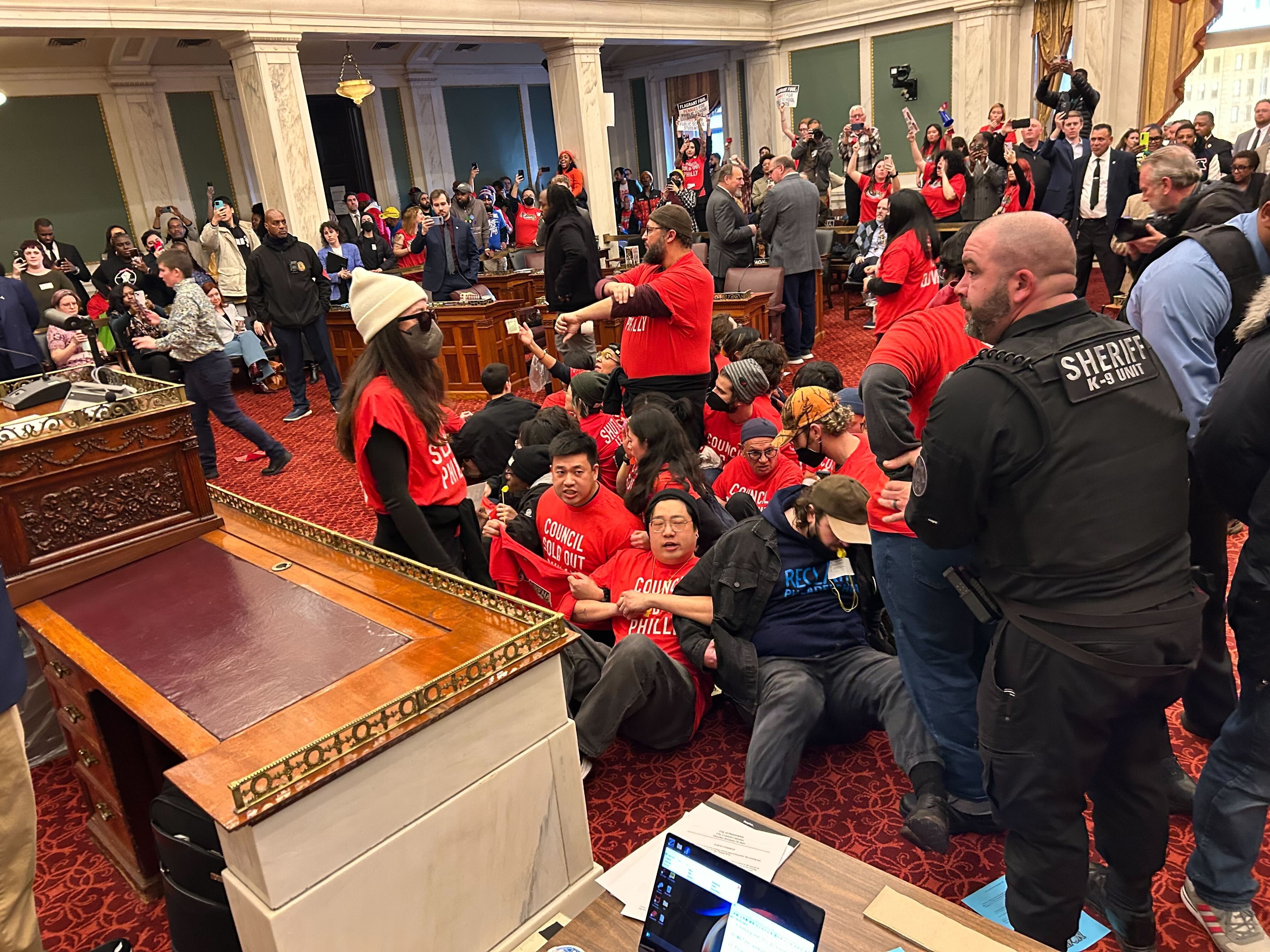
Protesters link arms as sheriff’s deputies attempt to remove them from Philadelphia City Council chambers as the council is scheduled to vote on final approval for the Sixers’ proposed Center City arena on Thursday, Dec. 19, 2024.Sean Collins Walsh / Staff
The stadium district falls in Johnson’s 2nd District, meaning it will be on him to introduce legislation that would green-light the project. And he has not been in a hurry to accommodate the Sixers’ timeline, which would be to approve the project as soon as possible so the venue can open by 2030.
Johnson said in a statement that “no zoning legislation is scheduled for introduction,” and that he is working to find consensus with the Parker administration and other Council members before introducing any legislation.
“I am focused on ensuring that any future legislation concerning the new arena addresses the interests and concerns of the community around the Stadium District and in Philadelphia,” he said.
When that legislation is brought forth, it is unlikely to be anywhere near as controversial as the 76ers’ Center City proposal, which drew opposition due to its proximity to Chinatown, so long as the teams uphold their promise to not seek public subsidies.
The Asian Pacific Islander Political Alliance, which led opposition to the Center City arena, released a statement earlier this month that signaled openness to the South Philly project.
“The people of South Philly should have a meaningful voice in whether and how this project moves forward,” said Will Gross, an API PA member who is rumored to be considering a run for Council. “And if it does, it should mean good union jobs, a strong community benefits agreement, and real benefits for the people who live and work in the neighborhood.”
Trash issue continues to burn
Councilmember Jamie Gauthier has spent the better part of the last year trying to whip up support for a bill that would ban the city from shipping off its trash to be burned at an incinerator in Chester, a longtime practice she and others say is poisoning residents of the city to Philadelphia’s south.
The Parker administration opposed the measure, saying it would limit the government’s ability to carry out its normal competitive bidding process and select the best-value contractor. Gauthier failed to get a majority of Council on her side, and she never called up the Stop Trashing Our Air Act for a vote.
This fall, she will try a new tactic.
Gauthier and her allies are attempting to kill the Parker administration’s effort to approve a new contract with Reworld, which operates the Chester waste-to-energy facility where the city sends about a third of its garbage. (The remainder is hauled off to landfills.)
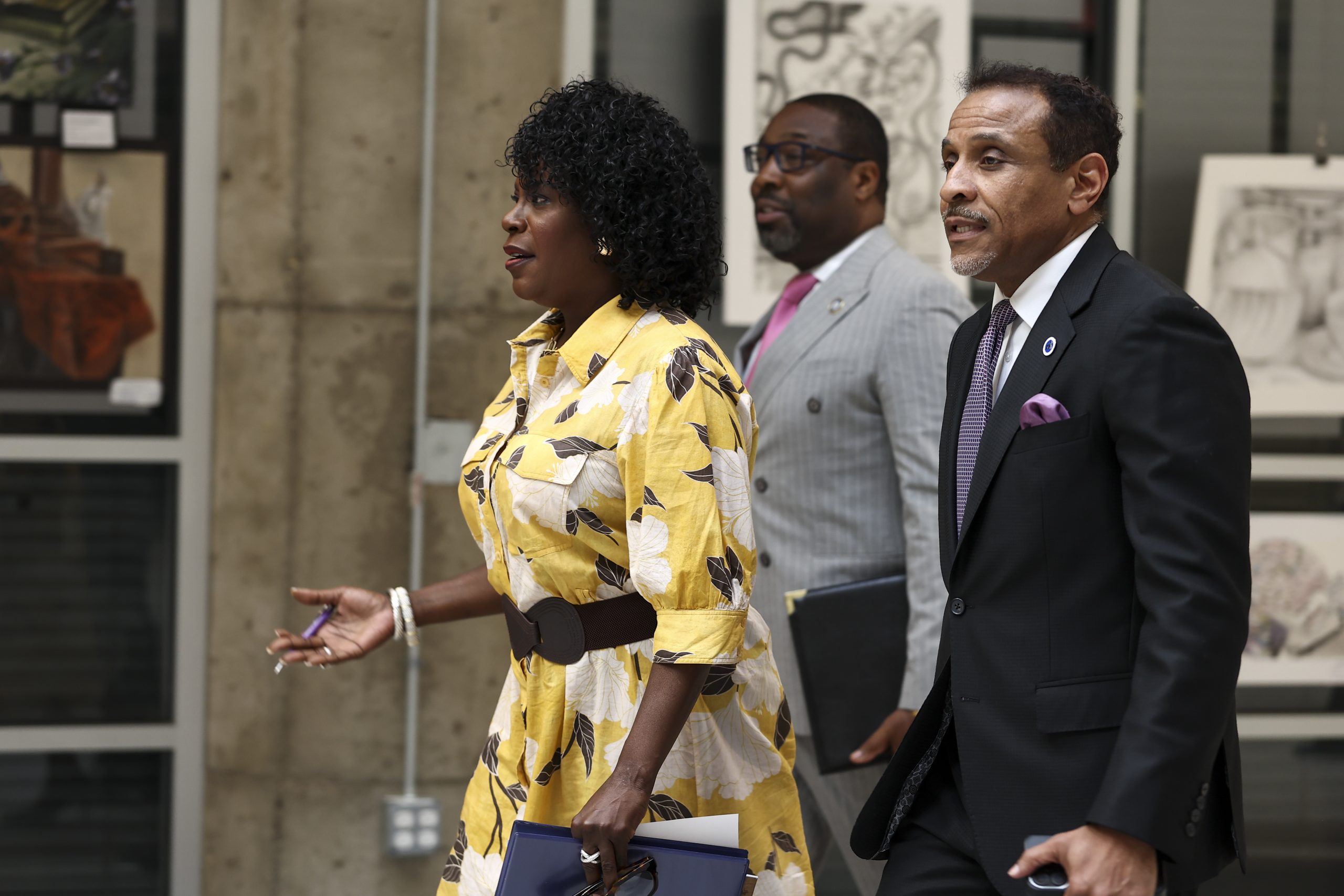
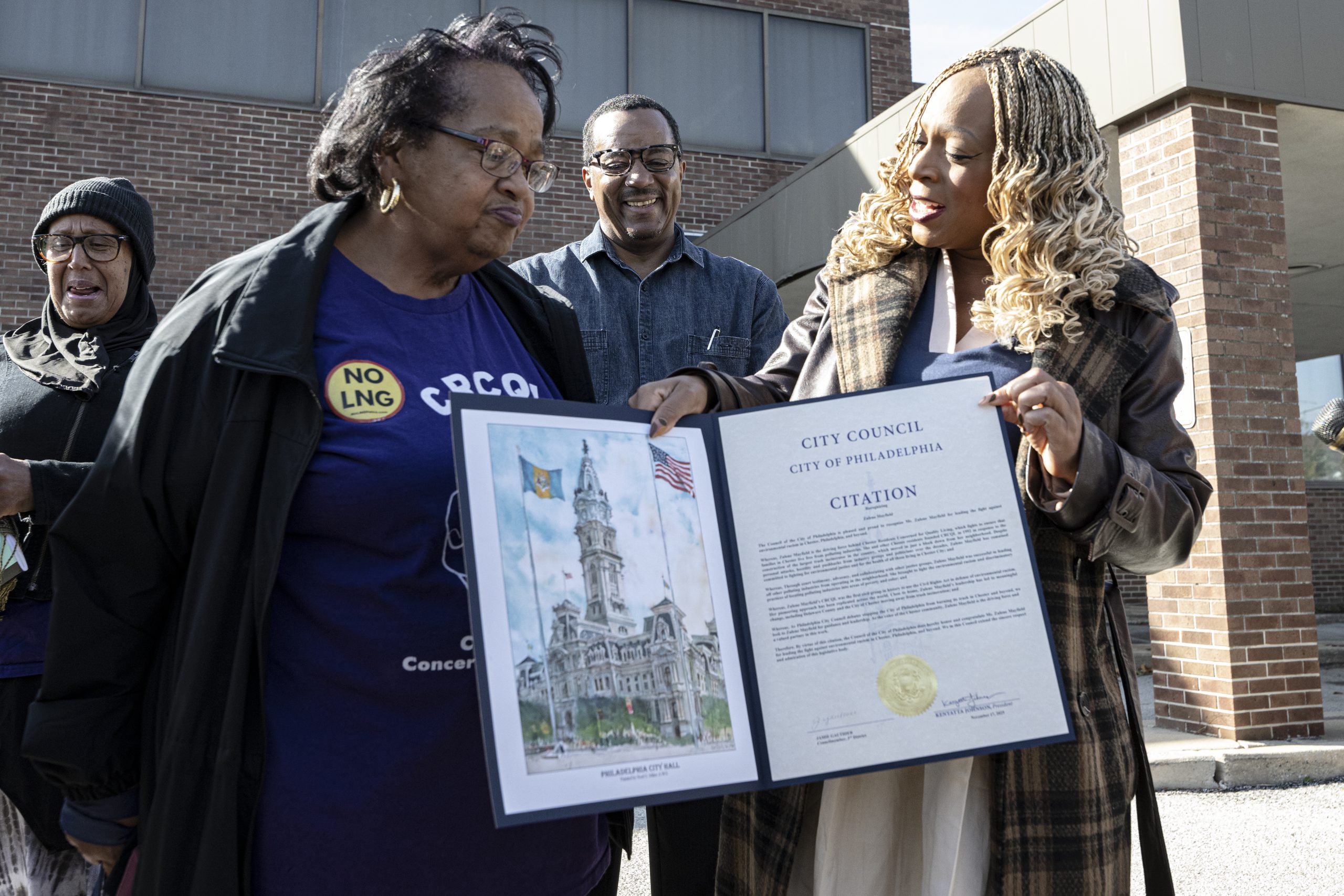
Chester resident Zulene Mayfield, left, Philadelphia Councilmember Jamie Gauthier, right, and Chester Mayor Stefan Roots meet to discuss Gauthier’s “Stop Trashing Our Air Act,” which would ban the city from incinerating waste, during a visit with lawmakers and staff in Chester, Pa., on Friday, Nov. 7, 2025.Jose F. Moreno / Staff Photographer
In July, the Parker administration announced that it intends to enter into a new four-year contract for waste processing and disposal with Reworld, as well as two landfill operators, Republic Services and Waste Management. The terms of those contracts have not yet been made public.
Council must approve multiyear contracts, and Gauthier, who represents parts of West and Southwest Philadelphia, said she is planning a full-court press to get her colleagues to “block Mayor Parker’s dirty deal with trash incinerators.”
The question is whether she can get eight other members on her side to reach a majority of Council. She is likely to find support from three fellow progressives, and she is expected to be joined by Councilmember Isaiah Thomas, the Democratic majority whip, at a Thursday news conference calling on the city to end its contract.
Councilmember Mark Squilla takes his seat in chambers Wednesday, Dec. 11, 2024, before a scheduled committee vote on Sixers arena related legislation was postponed,Tom Gralish / Staff Photographer
Meanwhile, Councilmember Mark Squilla said he has been working with the administration on a plan to build out a “circular waste” system that would replace incineration and landfilling over time with composting and waste “digestion.”
“The incinerator bill …. doesn’t solve a problem we have: to reduce our waste,” Squilla, whose district includes parts of Center City, South Philadelphia, and the river wards, said in an interview. “If we can reduce our waste by going to composting and digestion and other forms, we then eliminate all of our trash. Therefore end up with the result of what the goal should be, [which] is to get as close as possible to zero waste.”
Squilla’s proposal, which would involve “a long-term contract to attract providers to be able to build out a possible digester to decrease the amount of food waste,” could make it easier for Council members sympathetic to Gauthier’s goals but skeptical of her incinerator bill to approve the administration’s contract with Reworld while committing to a long-term solution.
The business tax, revisited
Separate from the school district revenue, some Council members are hoping to advance measures that would provide tax relief to businesses.
Council two years ago approved a 13-year schedule of rate cuts that would dramatically reduce the business income and receipts tax. But at the same time, Parker moved to eliminate a tax break that primarily helped small businesses after its legality under the Pennsylvania Constitution was challenged in court.
The elimination of the tax break — which excluded from taxation companies’ first $100,000 in revenue — has forced thousands of small firms and sole proprietors that make less than that threshold to begin paying a tax from which they had been effectively exempted.
Driscoll worked with tax experts to find a workaround that could pass legal muster — exempting certain types of businesses, such as sole proprietors, from the tax entirely — and he is planning to call up for a vote his bill this fall.
Thomas, meanwhile, said he will introduce a resolution Thursday to hold hearings this fall on the feasibility of reducing the net income portion of the business tax “much sooner” and more “aggressively,” meaning an acceleration of the tax cuts already scheduled.
The measures are likely to spark opposition from more progressive members of Council and could be tricky to navigate for Parker, who wants to make Philly more business-friendly but may not want to forgo additional revenue.
Members eye priorities as election looms
With next year’s election looming — and all 17 members indicating they intend to seek new four-year terms — the fall session is also likely to see movement on a myriad of issues championed by individual legislators.
Majority Leader Katherine Gilmore Richardson said she will propose bills to “protect communities from harmful nuisance businesses and improve processes around code violations,” continuing her efforts to crack down on businesses that neighbors say attract crime.
Councilmember Rue Landau, who represents the city at-large, said she is “tackling the impact of emerging technologies, making Philadelphia more affordable for working people, and ensuring equity remains at the center of how we serve our LGBTQ+ communities.”
Landau said she also plans to introduce a resolution calling on the state to ban automated license plate readers like Flock cameras.
The Philadelphia Council members inside the caucus inside City Hall in Philadelphia, Pa on Thursday, June 11, 2026.Aidan T. Gallo / Staff Photographer
And Councilmember Kendra Brooks will propose new protections for temporary workers and tenants facing eviction, according to her spokesperson, Kathleen Melville.
Brooks, a progressive who represents the city at-large, will also fight for additional funding for reproductive healthcare providers, a priority of hers that was left out of the budget following Council’s impasse with Parker, Melville said.
“That was her biggest focus going into the budget,” Melville said. “She had the same experience as every other Council member in that none of her budget priorities made it into the budget.”
Several members have also said that they want to bolster the city’s property tax relief offerings after the administration this summer released its citywide assessments that will mean higher taxes for thousands of homeowners.
The most likely move would be for Council to amend the city’s tax code to increase the popular homestead exemption, which currently exempts the first $100,000 from a home’s taxable value if the owner lives in the dwelling as their primary residence.
Johnson said Council “will review all tax-relief options” this fall.
The battle over data centers and the artificial intelligence they power has officially reached Philadelphia City Hall.
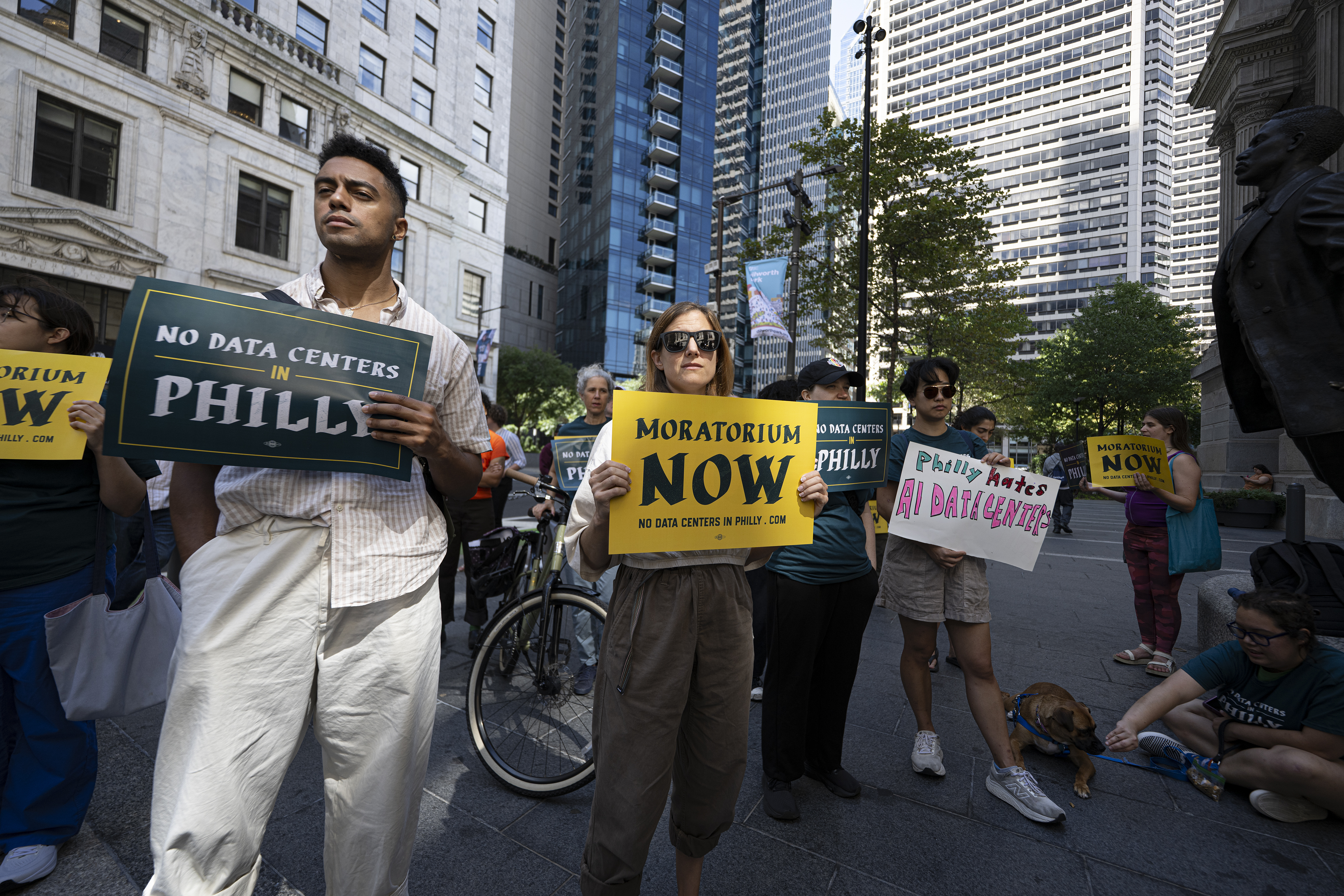
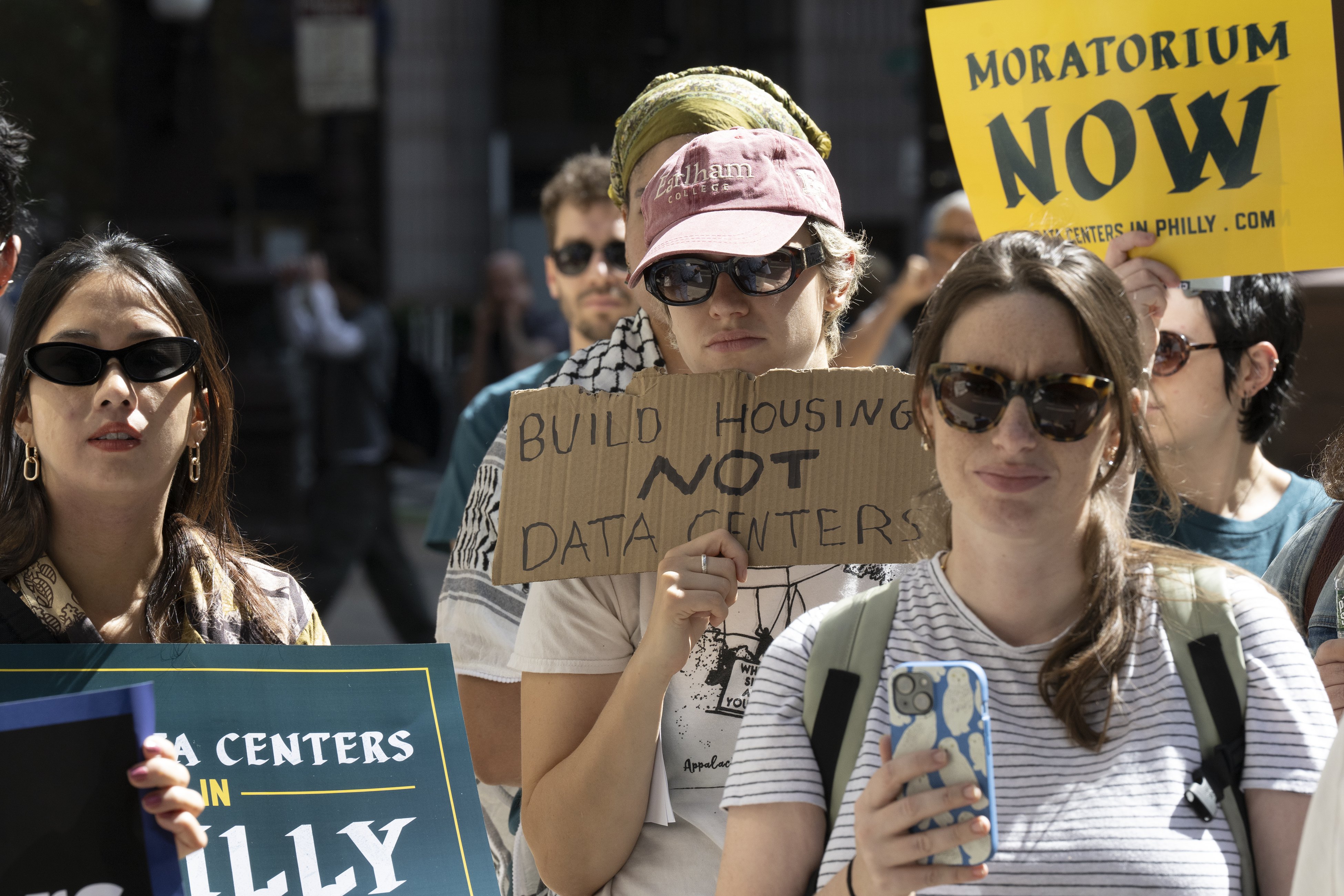
A coalition of activist groups and environmental advocates gathered at City Hall Monday to call on local lawmakers to pass a moratorium on data center construction in the city, the opening salvo for the group’s public pressure campaign to oppose the projects that it says could hike energy rates and drive pollution.
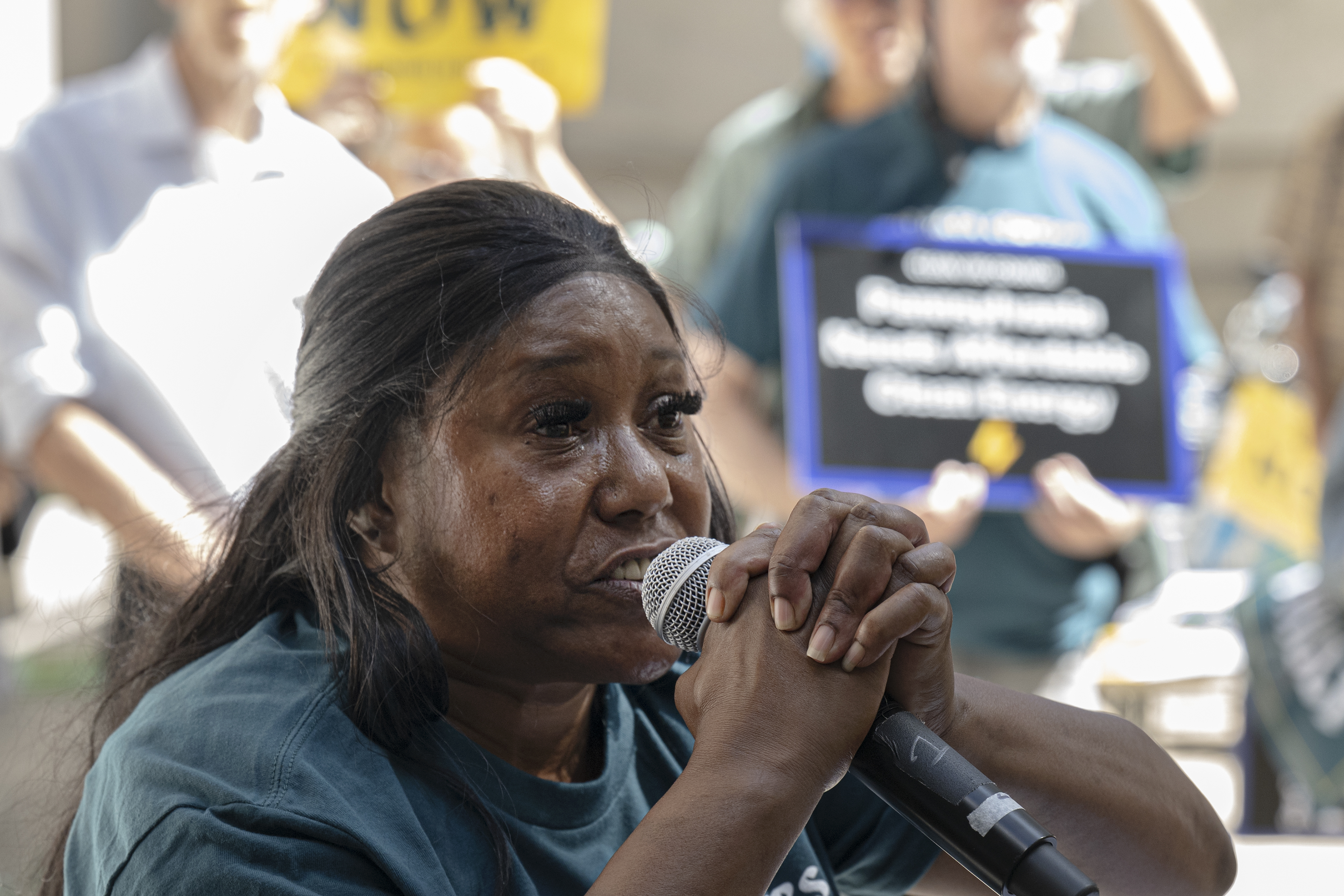
“There’s way too much at stake to let data centers expand without guardrails,” said Sonya Sanders, board president of Philly Thrive, an advocacy group for racial, economic, and environmental justice.
The coordinated push could put Mayor Cherelle L. Parker and members of City Council in a politically tricky spot as they gear up to run for reelection in the spring. Data centers have proven deeply controversial and have drawn bipartisan backlash, but some unions that see job-creating potential support their construction.
There is no specific data center proposal currently under consideration by City Council, andno member has said that they will introduce a moratorium bill. A spokesperson for Council President Kenyatta Johnson said that Council members and Parker’s administration are in “discussions on the future of data centers in the city.”.
Any data center legislation would have to run through Parker, a centrist Democrat who has not staked a position on the issue. She is allied with the unions that represent construction workers and has generally been pro-development. However, she positioned herself as an opponent of Big Tech earlier this year when she advocated for new taxes on companies like Uber and Airbnb.
Parker said in a statement Monday that she would sign an executive order this week to “formalize” a task force she convened over the summer to explore potential standards for data center development, and she vowed that the city would put “rigorous guardrails in place.” She did not specify a timeline.
Grays Ferry resident Sonya Sanders speaks during a rally at Philadelphia City Hall on Monday, calling on City Council to pass a citywide data center moratorium and kicking off the No Data Centers in Philly campaign.Jose F. Moreno / Staff Photographer
The data centeractivists’ event in Philadelphia came as fear of AI’s rapid development and increasingly humanlike capabilities has spread substantially and as leaders of the nation’s largest AI developers over the weekend signaled support for a global slowdown.
On Saturday, Anthropic chief executive Dario Amodei wrote that the technology is advancing more rapidly than leading companies can implement safeguards. Several of his top rivals, including Sam Altman of OpenAI and Elon Musk of SpaceX, endorsed his call for a slower pace of growth.
Meanwhile, talks of regulation have gripped Washington, with lawmakers from both major parties drafting plans to rein in tech companies and add layers of oversight to AI development. Any proposal faces an uncertain future, as President Donald Trump has said the country should remove barriers to AI development and accelerate advancement in order to outpace China.
On Monday morning, Trump posted on his Truth Social platform: “The only control or ‘guardrails’ that AI needs is a STRONG AND SMART (High IQ!) PRESIDENT, and the U.S.A. has that, in spades!”
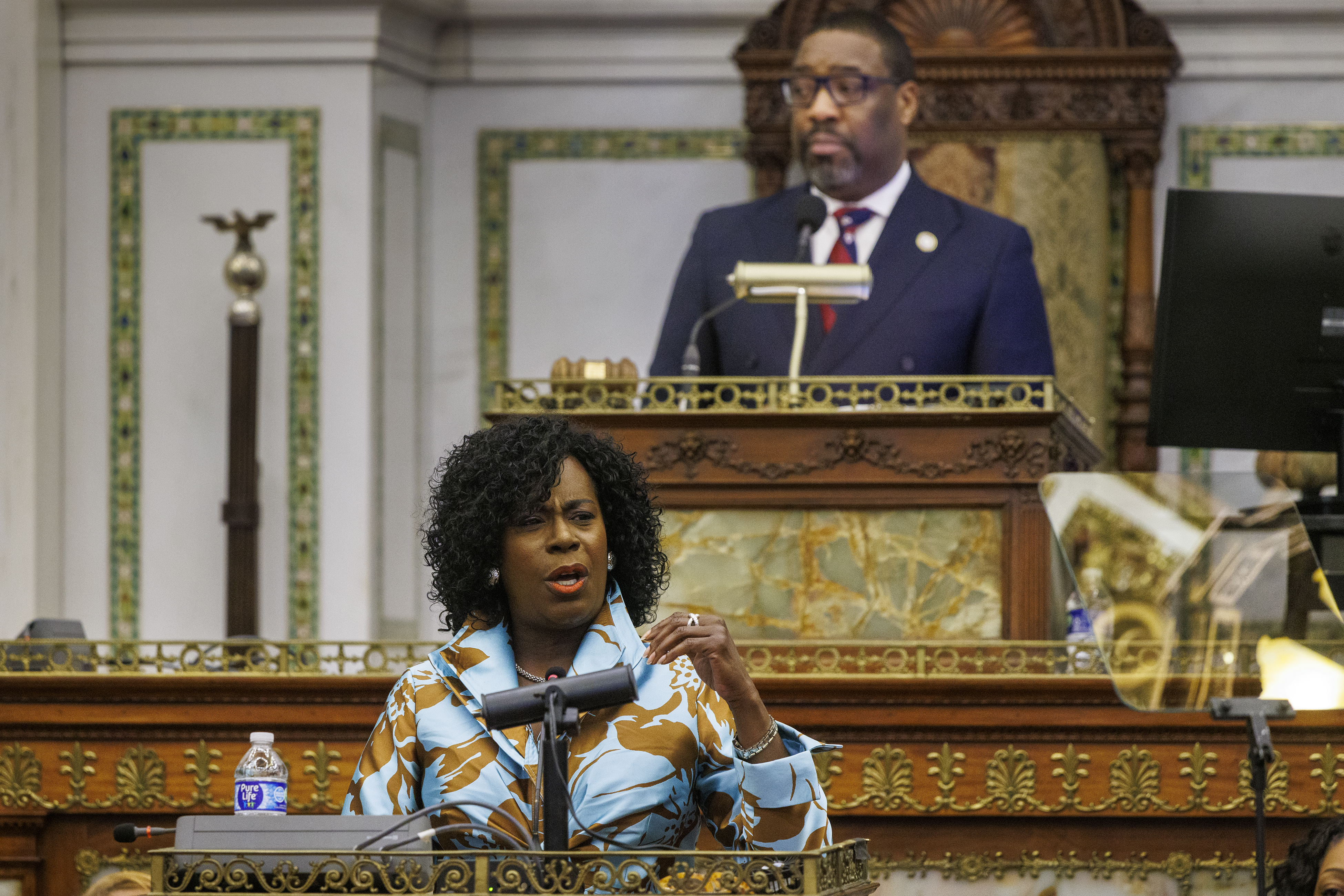
Philadelphia Mayor Cherelle L. Parker start to make her budget presentation to City Council in Council Chambers on March 12. In the background is Council President Kenyatta Johnson.Alejandro A. Alvarez / Staff Photographer
Inaction in Washington has left an opening for states and cities to regulate the construction of data centers, which produce the massive amount of computing power needed for artificial intelligence. They have become increasingly unpopular — a July poll found that 3 in 4 Pennsylvanians don’t want a data center in their backyard.
Municipalities in Pennsylvania, including Philadelphia, now have more power than ever to slow or halt the development of data centers. Gov. Josh Shapiro, a Democrat who is considered a potential presidential contender and who had previously courted data center projects, last month signed an executive order requiring local approval for any project to receive a state permit.
Philadelphia is already home to eight data centers that were constructed before the issue was widely controversial. The existing data centers are far smaller than the newer “hyperscale” projects that are meant to power AI and have faced opposition in communities across the country.
In July, the city’s planning commission said there are only two locations in the city that could support an industrial-size data center: the former South Philly refinery site known as the Bellwether District and 2600 Grant Ave., a city-owned plot adjacent to the Northeast Philadelphia airport.
Planning commission officials emphasized that they were not asked to consider a specific proposal to build a data center at either of those sites.
People hold signs opposing data centers during a rally at Philadelphia City Hall on Monday, calling on City Council to pass a citywide data center moratorium and kicking off the No Data Centers in Philly campaign.Jose F. Moreno / Staff Photographer
City Council has thus far not taken action on data centers, aside from passing a resolution authored by Councilmember Rue Landau earlier this year to hold hearings on the issue. A hearing has not yet been scheduled.
Council, which is led by a supermajority of Democrats, will convene Thursday for the first meeting of the fall session.Members are unlikely to green-light a controversial data center project ahead of the primary election in May, when every Council seat will be on the ballot.
But activists said Monday that city lawmakers must take proactive steps to ban data centers temporarily while they draft a regulatory framework and a system for considering public input on proposed projects.
Shawmar Pitts, the managing co-director of Philly Thrive — which is rooted in the communities that surround the former South Philly oil refinery — said Council members are “on notice.”
“Don’t put a moratorium in place, and your seat will be taken,” he warned.
Senia Lopez, a Northeast Philly resident and an organizer with the advocacy group 215 People’s Alliance, said people in neighborhoods surrounding any future hyperscale data center would be saddled with higher utility costs and “increased threats to our health.”
“City Council must chose whose interests it represents,” Lopez said. “It can side with Big Tech companies seeking to extract from our communities, or it can stand with the working people who have built and sustained them.”
Philadelphia real estate developers see the writing on the wall.
As progressives have toppled centrist Democrats in nationally watched races, some local development interests are wary that the same trend could reshape Philadelphia City Council this spring, when every member is up for reelection. They see a growing progressive faction as a threat to business.
Enter the incumbent protection plan.
Nearly a dozen local developers are already pouring hundreds of thousands of dollars into Philly For Growth, a group that in the past two Council election cycles spent millions on advertising campaigns to back business-friendly Democrats, according to a source familiar with the planning.
Philly For Growth is an independent expenditure group, also known as a super PAC. It can raise and spend unlimited amounts of money to influence an election, but there are rules barring super PACs from most forms of coordination with the candidates they support.
In 2023, the group was the biggest special interest group involved in that year’s Council races, and it provided a substantial boost to its chosen candidates by outspending individual campaigns.
Ahead of the May primary election, Philly For Growth plans to spend $1.5 million to support pro-business Democrats, most of whom are sitting Council members, according to the source, who spoke on the condition of anonymity because they were not authorized to discuss the plans. The group will not fund negative advertising about Council’s four incumbent progressives, the source added.
Councilmember Kendra Brooks, of the progressive Working Families Party, speaks during a rally outside of the School District of Philadelphia headquarters in May. At left is Councilmember Rue Landau and at right is Councilmember Jamie Gauthier. All three are members of Council’s progressive faction.Monica Herndon / Staff Photographer
The idea is to keep progressives from growing their power on Council instead of spending money to knock off the leftists who are already there. There are currently four reliably progressive votes out of the total 17 on Council, but some members may be more likely to vote with that faction as Democratic voters nationally revolt against incumbents.
That’s a different strategy than in 2023, when Philly For Growth backed a slate of five candidates — two incumbents and three challengers. Both incumbents won, but all three challengers lost.
Philly For Growth has previously been affiliated with the Building Industry Association of Philadelphia, an advocacy group for development interests. Mo Rushdy, the BIA’s former president who leads the organization’s political activity, declined to comment.
The source said that Philly For Growth will fund advertising to support Council members Mark Squilla, whose 1st District includes parts of South Philly, Center City, and Fishtown; Cindy Bass, whose 8th District is based in North and Northwest Philadelphia; and Quetcy Lozada, whose 7th District includes much of North Philadelphia and Kensington.
All three are seen as more centrist members and have said they intend to run for reelection. No challenger has officially launched a campaign against any of them, but candidates who are aligned with the city’s left-leaning political organizations are expected to emerge as the primary — still eight months away — draws nearer.
The super PAC is making one exception when it comes to supporting incumbent district Council members, the source said. In the 5th District, currently represented by Councilmember Jeffrey Young Jr., the group will support a to-be-decided challenger.
Councilmember Jeffery Young Jr. speaks to other members of Council during a 2025 session.Tom Gralish / Staff Photographer
At least five people have said they are interested in running for the North Philly-based 5th District seat, and Young has drawn opposition from development interests for pushing proposals that would slow or halt some projects in his district.
Young said in a statement that building “sensible, affordable housing” is one of his top priorities and that he has supported city programs like Turn the Key, which provides mortgage support to first-time homebuyers.
“People are free to back those who share their values. These are my values,” Young said. “I am leaving it to the residents of the 5th to determine whose values best reflect them.”
The super PAC will also fund advertising backing four incumbent members who represent the city at-large: Isaiah Thomas, Katherine Gilmore Richardson, Jim Harrity, and Nina Ahmad. That group doesn’t include progressive at-large Councilmember Rue Landau, but Philly For Growth doesn’t plan to oppose her, the source said.
Council President Kenyatta Johnson laughs inside the caucus inside City Hall on June 11.Aidan T. Gallo / Staff Photographer
A spokesperson for Landau’s campaign arm said in a statement that the Council member “stands by her accomplishments for working people, small businesses and vulnerable communities in Philadelphia and looks forward to voters having the opportunity to make up their own minds next year.”
It’s unclear just how competitive the at-large race will be, and candidates have until the spring to decide — nomination paperwork is typically due in March. Seven of Council’s members represent the entire city at-large, and two of those seats are effectively reserved for members of minority parties under the city’s Home Rule Charter.
That has traditionally meant that five seats are held by Democrats, given the party’s massive voter registration advantage in the city. In recent years, Republicans and the progressive Working Families Party have battled for the remaining two seats during the fall general election, and the WFP currently holds both.
Mayor Cherelle L. Parker, who is also up for reelection, and Council President Kenyatta Johnson, who insiders do not expect will see a serious challenger, will likely be on Philly For Growth’s slate, too, the source said.
Several members of Philadelphia City Council and a bevy of LGBTQ+ community leaders on Wednesday sharply criticized Police Commissioner Kevin Bethel, who testified about the department’s response to Pride festivities in the city’s Gayborhood in June and largely defended the force’s crowd-control tactics that had drawn outrage.
Bethel acknowledged that June 7 was “not a perfect day” and vowed that the police department would implement more robust planning procedures ahead of next year’s celebrations.
But he stopped short of apologizing for the police department’s response, saying chaotic scenes from the Pride events were part of officers’ attempts to disperse crowds from the Gayborhood, where thousands of people congregated instead of the city’s official festival on the Benjamin Franklin Parkway.
Among them, Bethel said, were hundreds of teenagers, some of whom were seen on video fighting.
“There’s a large group of young people who [had] descended into the neighborhood for what they think is something there,” Bethel said. “There is nothing for them there, other than to take over the street.”
That comment did not sit well with Council members and dozens of LGBTQ+ community members who attended the hearing at City Hall.
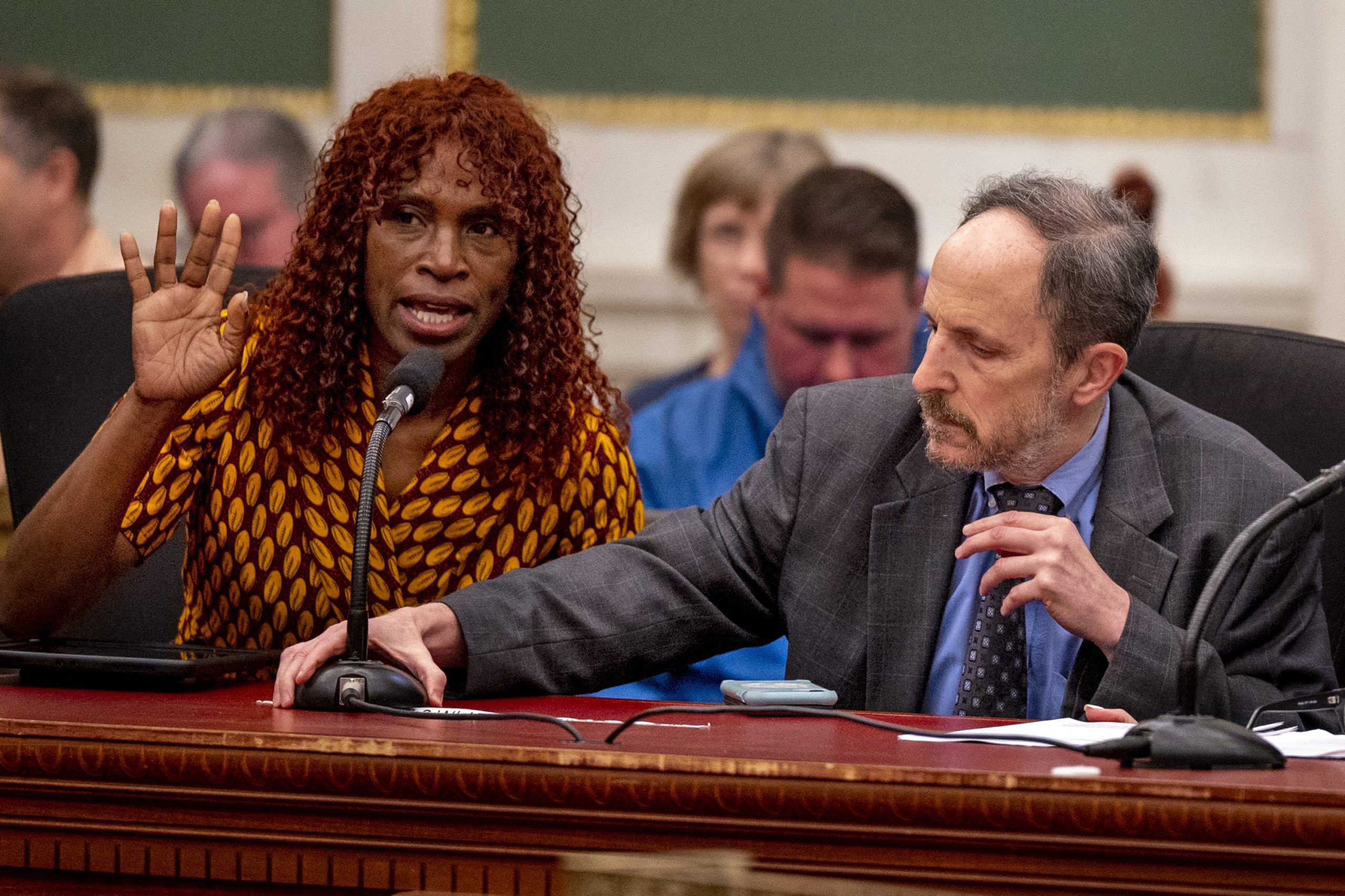
“Your testimony today and what I’m hearing is both painful and perplexing,” said Councilmember Rue Landau, a Democrat who called for the hearing and is the first out LGBTQ+ person to serve on Council. “It is mind-boggling to think that you and your team would not know that people were going back to the Gayborhood.”
Councilmember Isaiah Thomas, a Democrat, said he was “confused” why groups of teenagers fighting would have prompted an outsized police response throughout the Gayborhood that included crowds running amid police on horseback and motorcycles.
“It doesn’t really feel like we’re having a conversation that can put us in a position of earning the trust of a lot of the people who feel like the trust has been lost,” he said.
And C. Michael Robinson, a community advocate, added: “Only adult bullies scapegoat children, and that was a weak display of leadership.”
Councilmember Rue Landau questions Police Commissioner Kevin Bethel (foreground) as Council’s Committee on Legislative Oversight holds a hearing Wednesday, Aug. 5, 2026 into the Philadelphia Police tactics used during Pride celebrations in June.Tom Gralish / Staff Photographer
The hearing Wednesday before Council’s Committee on Legislative Oversight was the most tense questioning that Bethel, a veteran of the city’s police force, has faced since he was sworn in as commissioner in January 2024 at the beginning of Parker’s term. He has enjoyed a largely warm relationship with Council members, who have been supportive of his leadership amid a significant drop in violent crime.
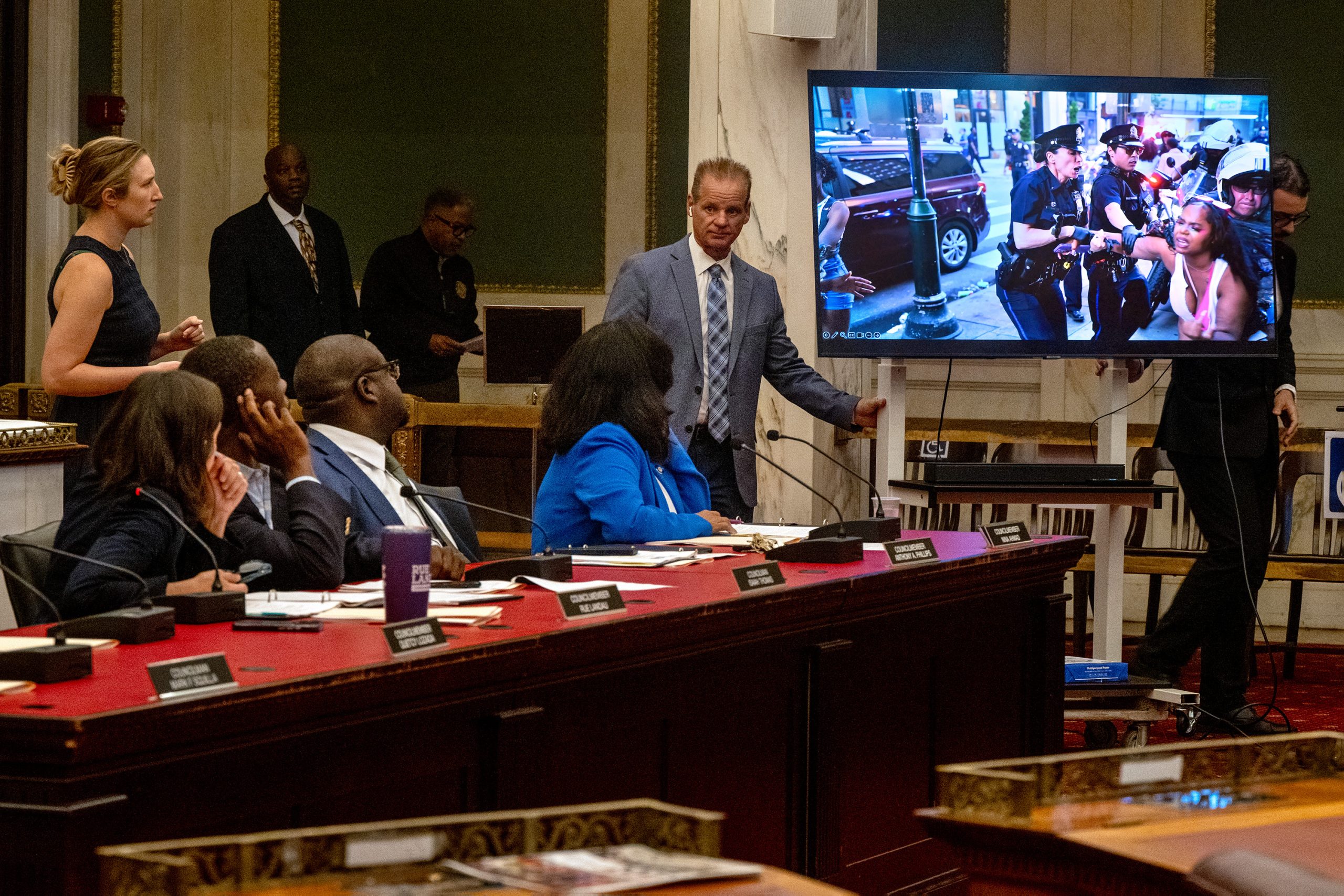
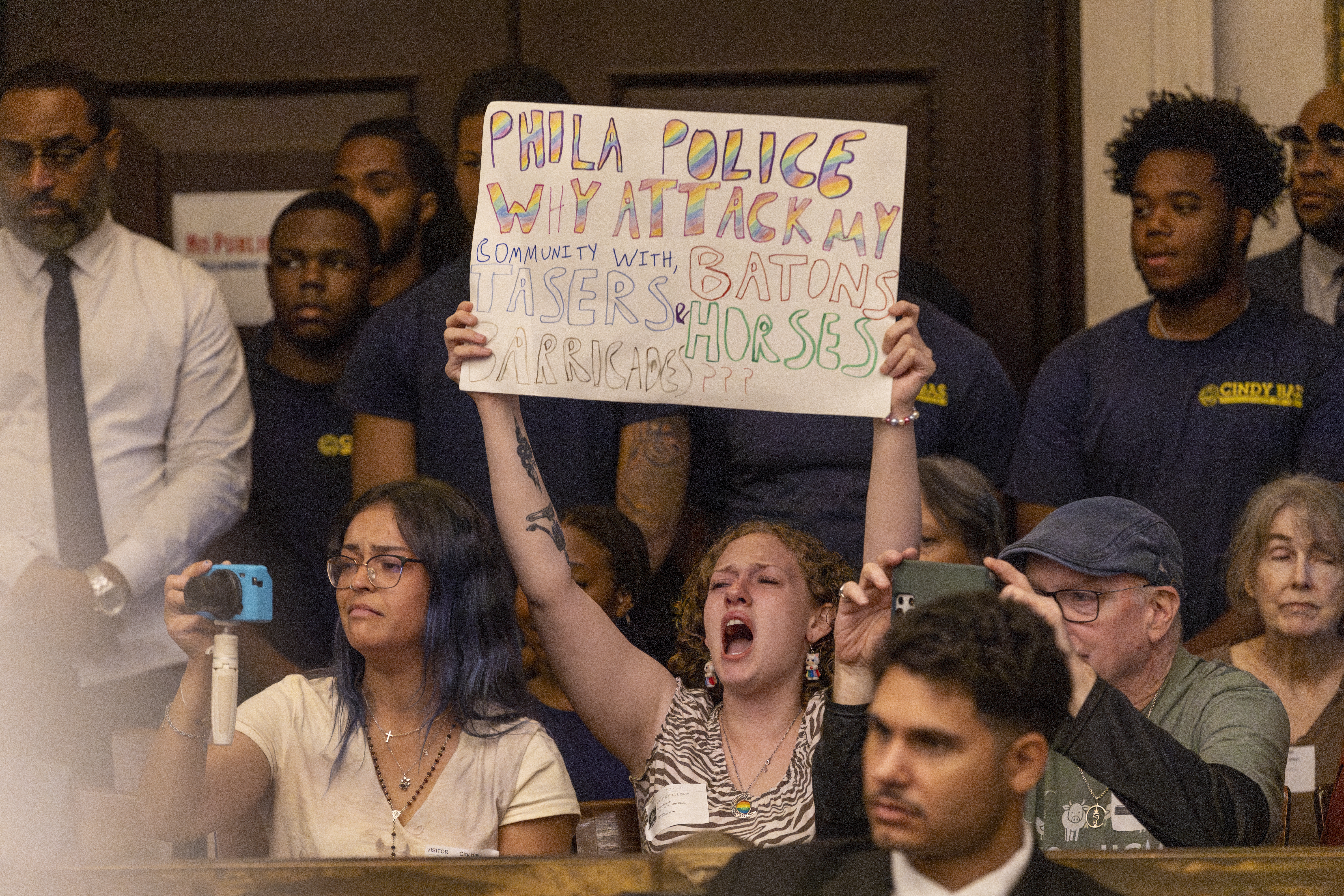
However, the police department faced intense scrutiny following June 7, the day of the Pride parade and celebration during which 15 people were arrested and videos of police corralling crowds in the Gayborhood drew widespread criticism. Videos posted to social media showed officers physically struggling with Pride attendees, as well as police on horseback and motorcycles dispersing people, and at times displaying batons and Tasers.
Following the backlash, Landau called for Council’s Committee on Legislative Oversight to hear testimony from the department’s top brass, as well as members of Mayor Cherelle L. Parker’s administration and LGBTQ+ advocates.
Pride attendees who testified Wednesday said police forcefully directed them through a maze of barricades in the Gayborhood. Several described being pushed and yelled at, and said that the most aggressive tactics were used on crowds of mostly Black people. One person said they heard an officer use a slur.
Parker said in a statement Wednesday that the events described during the hearing “show us we can and must do better.”
“We can and will learn from what occurred,” she said.
Councilmember Rue Landau (seated, left) shows a collection of social media videos as City Council’s Committee on Legislative Oversight holds a hearing Wednesday, Aug. 5, 2026 into the Philadelphia Police tactics used during Pride celebrations in June.Tom Gralish / Staff Photographer
This year marked the first time the city’s Pride festival was held on the Benjamin Franklin Parkway, where Bethel said police had been well-prepared to manage crowds. Thousands of people still congregated in the Gayborhood, where celebrations were held in previous years, creating dueling events that he said overwhelmed the department.
Officers attempted to manage crowds in the Gayborhood for hours, Bethel said, and began working to disperse people by late afternoon. To do so, he said, officers used barricades, as well as officers mounted on horseback and motorcycles to motivate people to leave on their own.
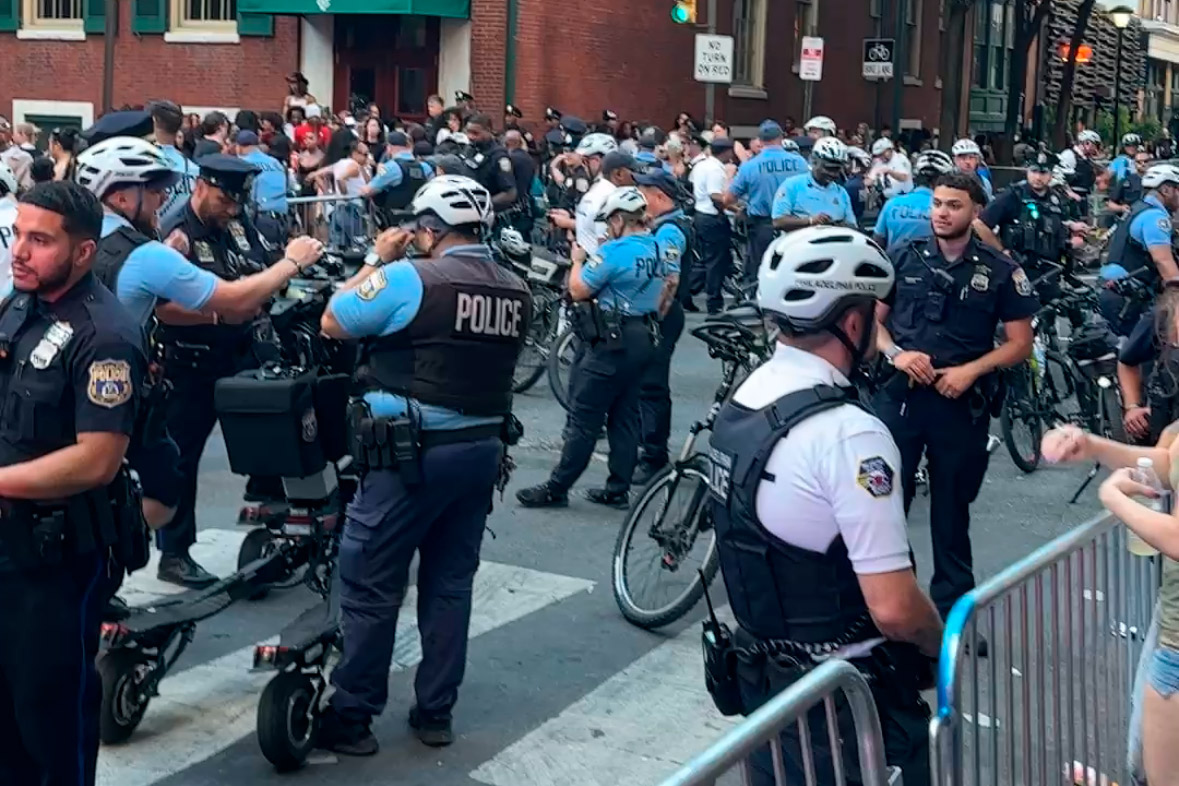
A large police presence at a Pride celebration in the Gayborhood on Sunday, June 8, 2026.Courtesy of Joshua Stokem
Landau said she was horrified by the crowd-control tactics and asked Bethel if he supported the decision to have officers on motorcycles on the sidewalk, calling it “terrifying” and “dangerous.”
He said the goal of moving the crowd was “appropriate at the time.”
In what became a tense back-and-forth, Landau said that people attending Pride “did not believe that you were there to protect them.”
“They were terrified, they were harassed, they were traumatized,” she said. “This was not about protection. You had 150 officers there, by your own testimony. That is a significant amount of officers.”
Bethel responded: “Do you want police there at all?”
Landau appeared taken aback.
“My comment that there was 150 officers there should not turn into the end-sum game of ‘Do you not want anybody there?’” she said.
The police commissioner did not specify how many officers in total are facing potential discipline stemming from Pride events on June 7, but he said “eight or nine″ are under investigation by the internal affairs division for wearing facial coverings, a violation of department policy.
Bethel, who was formerly the department’s liaison to the LGBTQ+ community, vowed a more collaborative planning process next year.
“Next year it will not be like that. It will be prepared,” Bethel said. “It is not my job to police that event. It is to keep it safe.”
Several LGBTQ+ advocates and community members testified in favor of additional accountability measures.
Jacen Bowman, the president of Philly Black Pride, called for an independent after-action review, a permanent LGBTQ+ public safety advisory council that is consulted during the planning of large events, and more consistent cultural competency training for officers.
“Versions of these structures already exist,” Bowman said. “The question is whether or not the structure has the authority, independence, or enforcement power necessary to produce accountability. Oversight without authority is observation.”
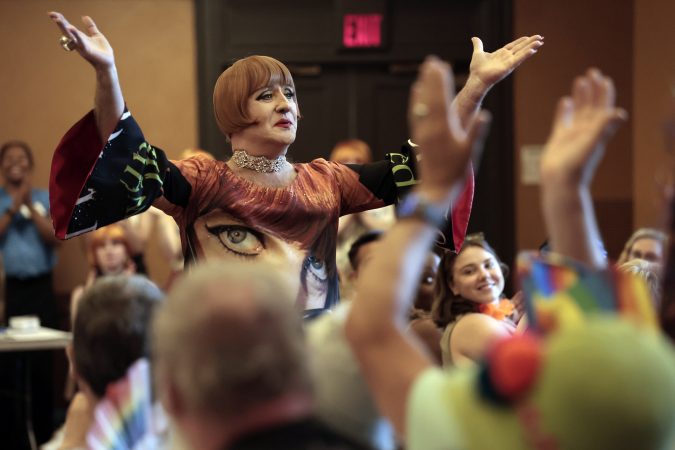
The legendary redheaded drag queen Carlota Ttendant donned a baby-blue Eva Gabor-inspired gown — its plunging neckline revealing tasteful chest hair — and sensible black heels.
At 65, arthritis stifles her strut in stilettos.
“Drag is a young girl’s game,” she said.
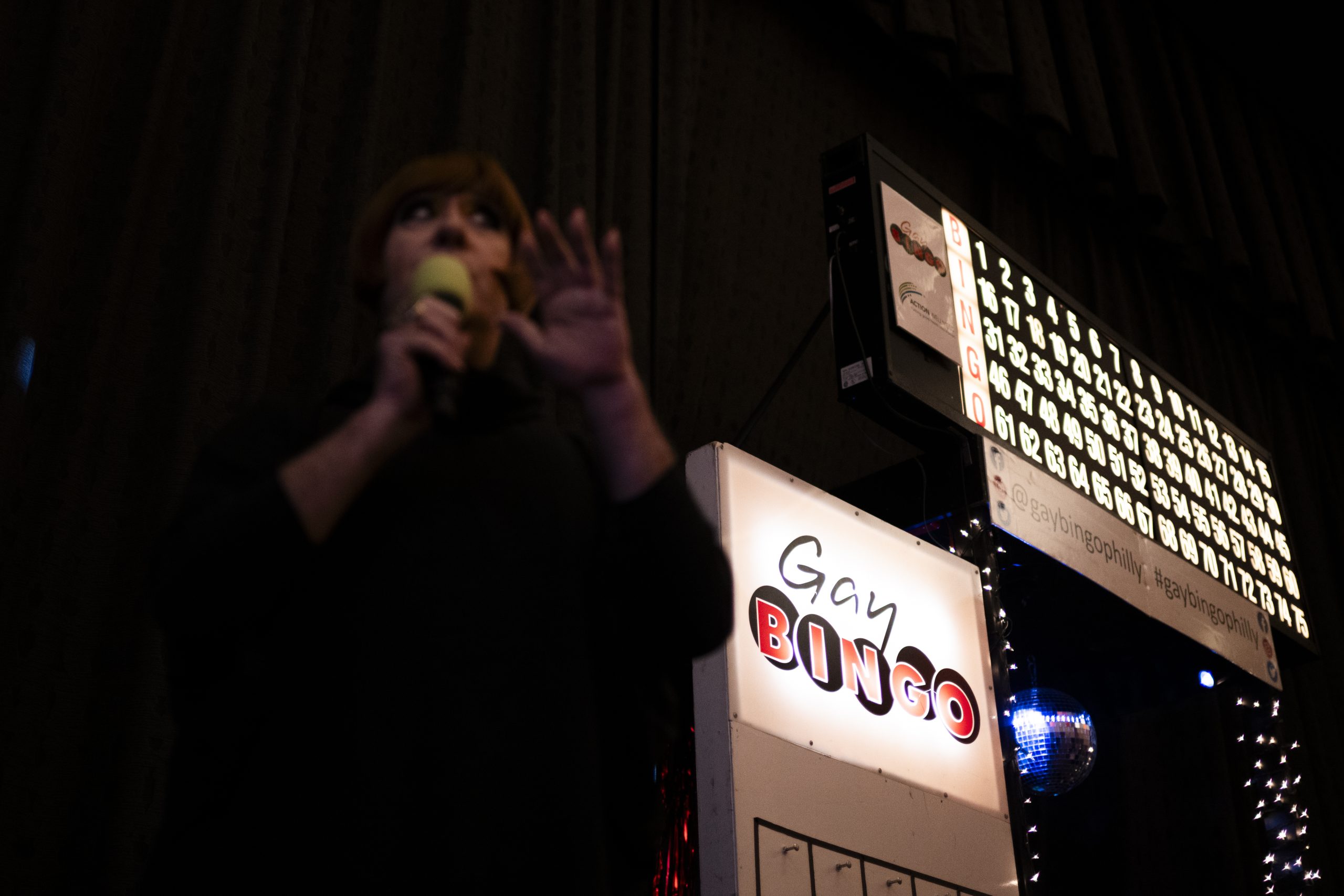
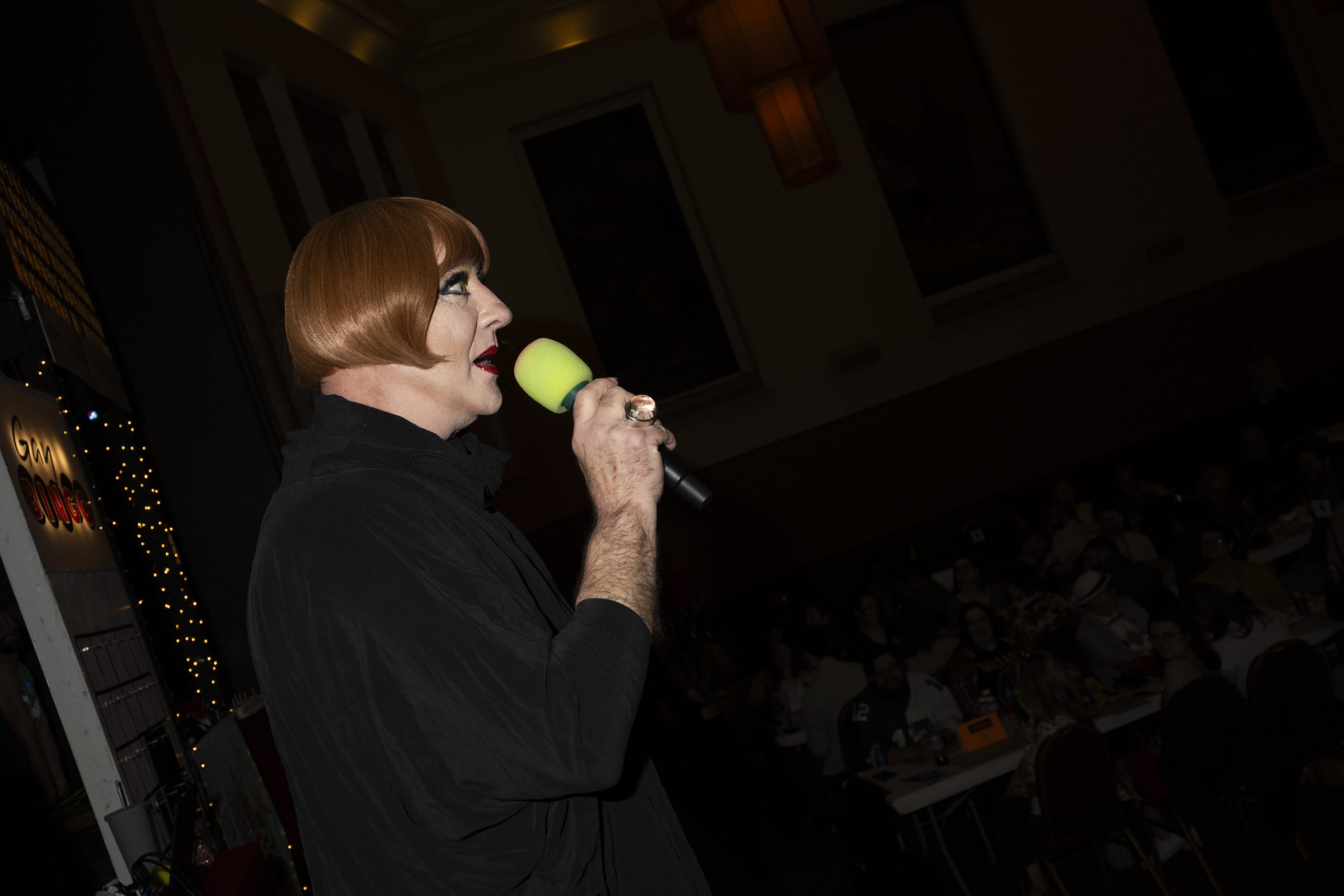
This was her swan song. At the close of its 30th season this Pride Month, the man behind the makeup, Michael Byrne, hung up his heels and bid adieu to his drag persona and his longtime gig hosting Gay Bingo, the camp, irreverent, slightly profane, and undoubtedly silly monthly HIV/AIDS fundraiser.
“I know it’s time,” Byrne said. And, “I’m excited to never wear Spanx ever again.”
Across three decades, Carlota Ttendant has called hundreds of games and elicited endless laughs, all while raising millions for people living with HIV/AIDS across the Delaware Valley. She helped steer a community through crisis, providing a respite to those experiencing immense loss and stigma. Even as medicine has advanced and HIV/AIDS has become manageable, she’s crafted a safe space for queer Philadelphians. For one night each month, she’s been an entertainer and an equalizer, responsible for uniting people — gay and straight, from Haddonfield to Phoenixville — around a common goal.
And since Carlota came into Byrne’s life, she’s taught him to lead with courage, practice gratitude, and be unabashedly unafraid. He’s gone from being the “worst waiter ever” and selling cosmetics, to being a performer, licensed clinical social worker counseling older LGBTQ+ folks through their own next phases of life, and president of Philly AIDS Thrift’s board.
“None of it would have been possible without all of you,” Carlota told the 400-person crowd — the biggest turnout in years — at her last Gay Bingo on June 13 in the basement ballroom at Congregation Rodeph Shalom. “In the ’90s there was horror happening, and today there is horror happening.
“But please, let’s do some laughing,” Carlota said.
“Let’s play bingo!”
Michael Byrne, as his drag persona Carlota Ttendant, during Gay Bingo on Saturday, May 9, 2026, at Congregation Rodeph Shalom in Philadelphia.Joe Lamberti / For The Inquirer
Act I
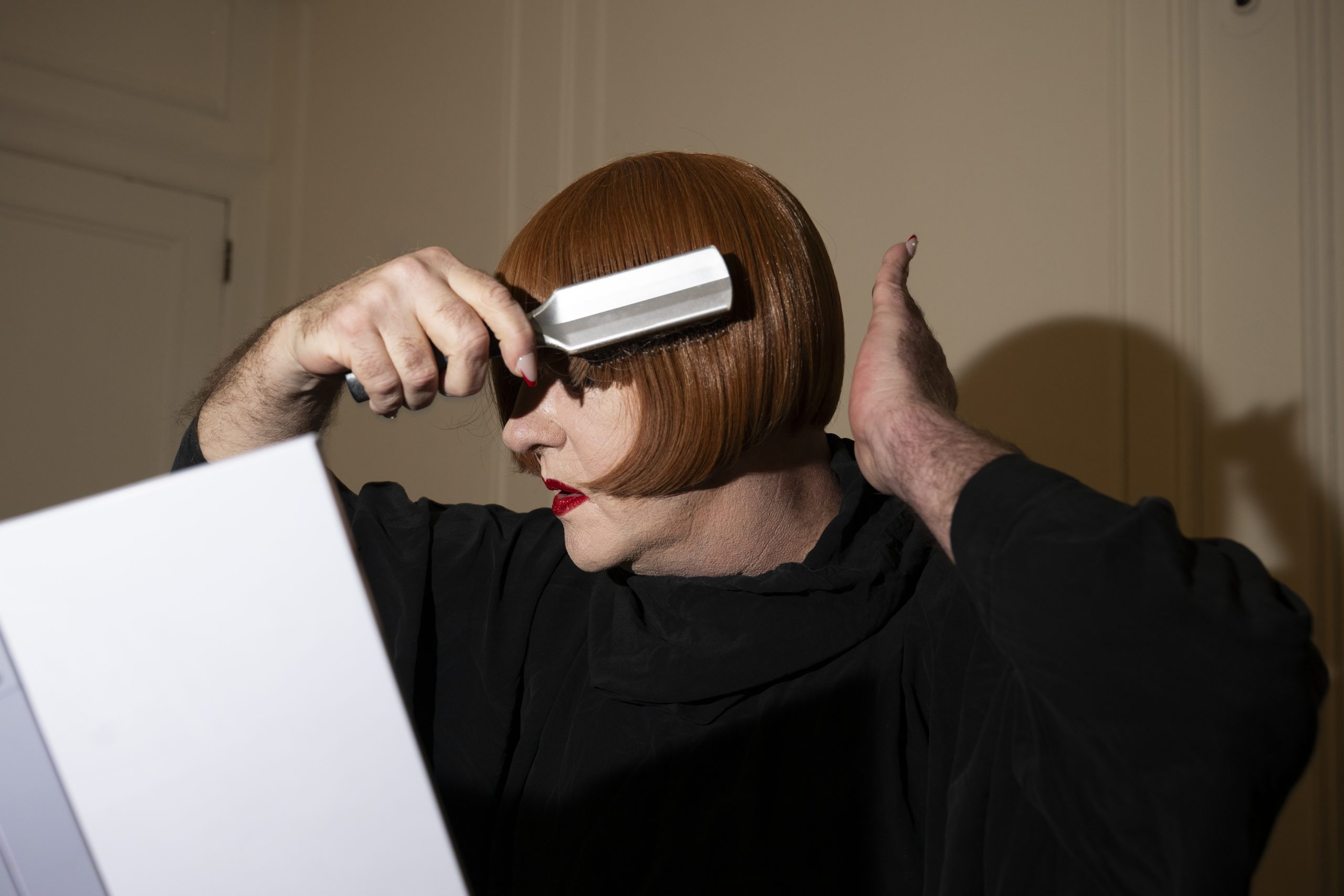
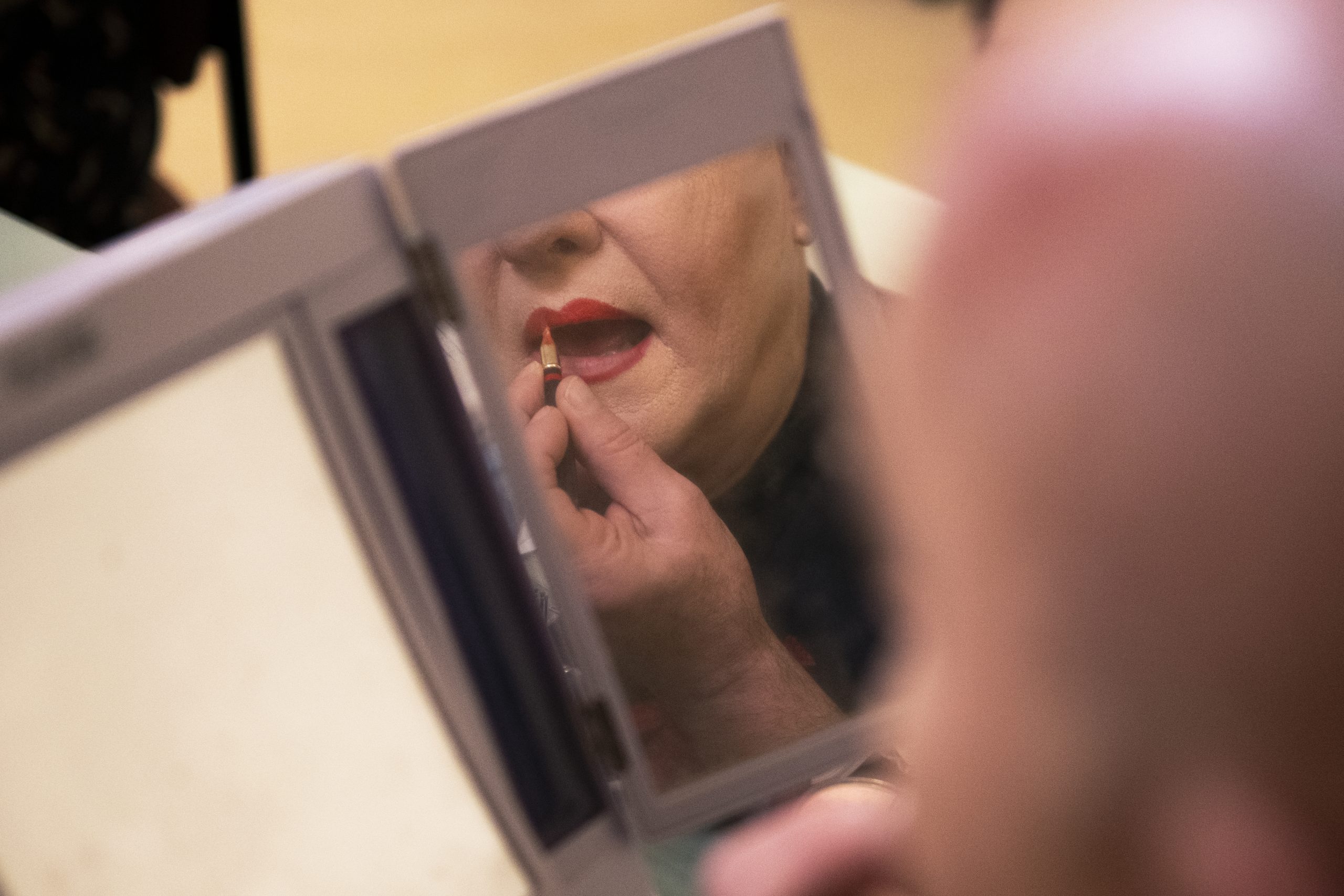
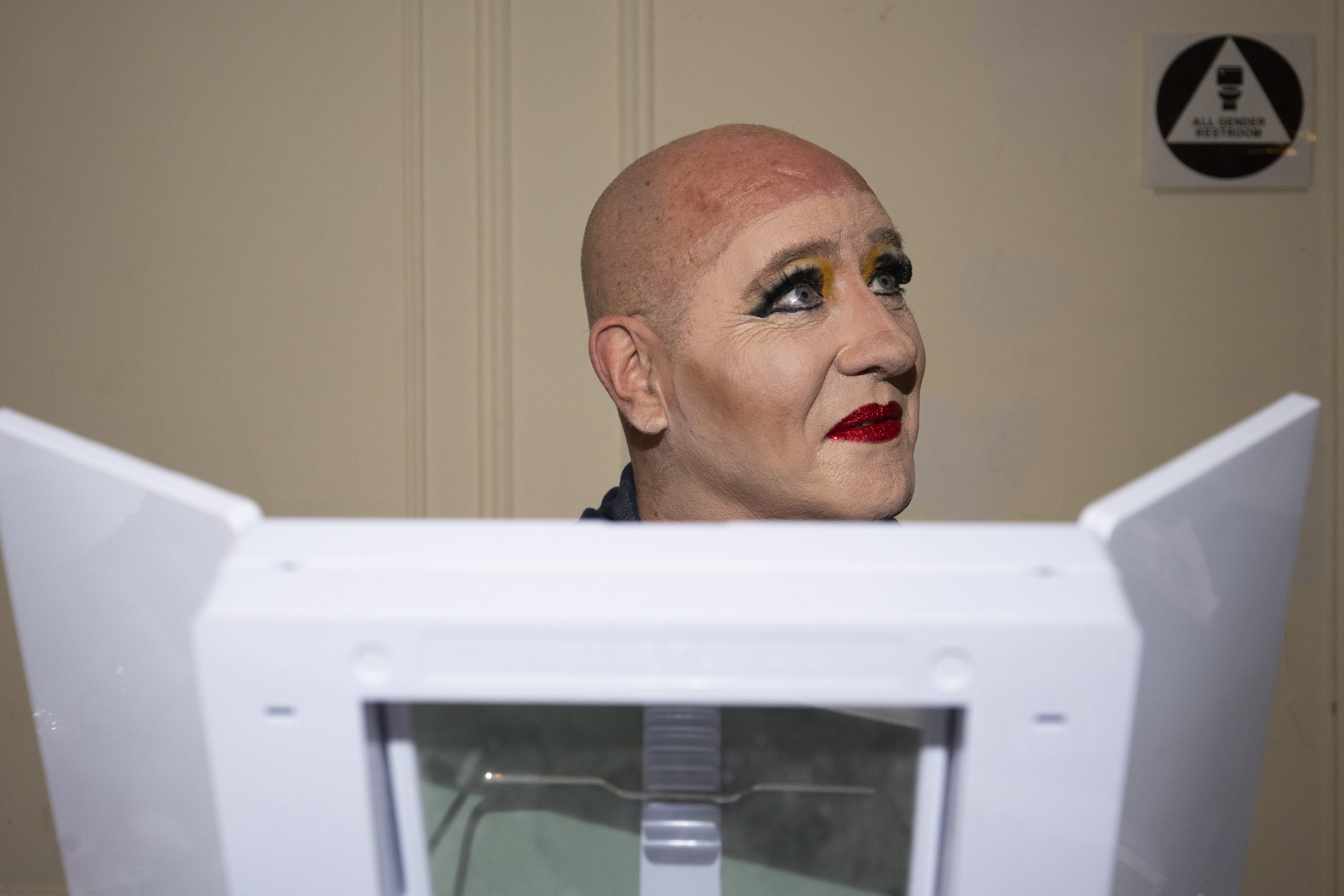
Like so many Saturdays before, Byrne, on June 13, slathered his face with foundation, carved out his cheeks, deepened his eyes, and painted on his red lip. There was haze — from the dusting of loose setting powder, bronzer, and blush — and musk — from sweat and heat and hairspray — in a Rodeph Shalom classroom, which moonlights as a bridal suite and a boudoir for the Bingo Verifying Divas or BVDs. At 10 minutes till curtain, he futzed with his press-on nails, shimmied into a mod swing dress, straightened the back seams of his tights, and dabbed on some glitter. With each gender-bending step, he transformed into his “twin sister,” Carlota.
Michael Byrne transforms into his drag persona Carlota Tendant ahead of Gay Bingo on May 9 at Congregation Rodeph Shalom in Philadelphia.Joe Lamberti / For The Inquirer
Like all classy ladies, Carlota’s exact age is lost to time. In the 1990s, Byrne was organizing a fundraiser for Big Mess Theatre, an avant-garde troupe that he helped establish as the spinning axis of Philadelphia’s alternative performance scene, complete with vaudeville acts, an oompah orchestra, and live auction with a striptease routine. Byrne was to host and make his drag debut, and Carlota Ttendant (read as car lot attendant) was conjured up over bourbon and blackjack. (He learned, years later, that there was a ’60s stripper at the famed Trocadero Theatre with the same name.)
Byrne never aimed to create a perfect, feminine illusion with Carlota. He left his chest unshaven and unstuffed, but short, thrifted dresses showed off his long and feminine legs. Carlota’s makeup was an extension of the exaggerated theater paint Byrne, who has been on stages since he was 10, knew; cheap wigs hid his sideburns. Nothing could mask his deep, raspy, anything-but-ladylike voice.
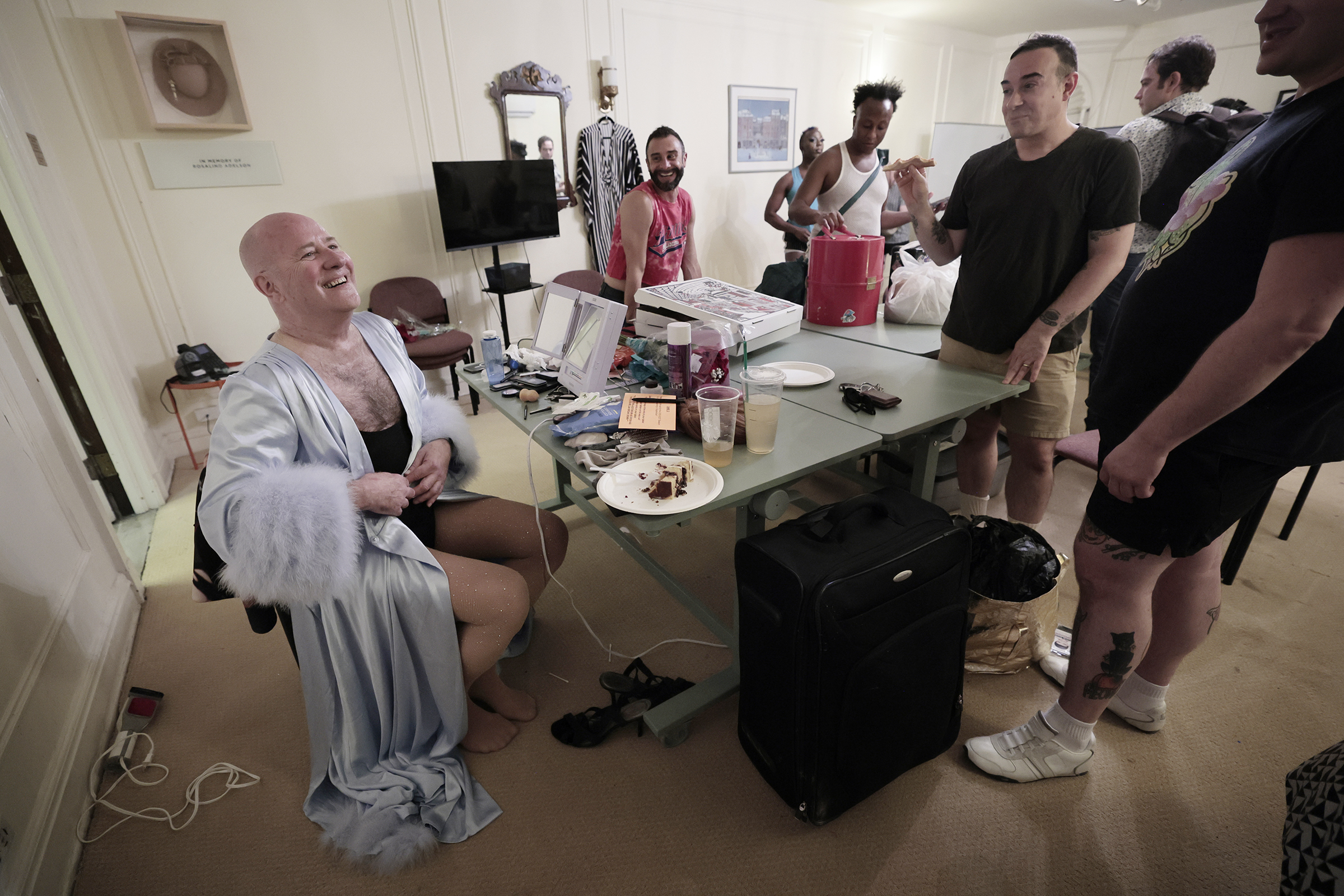
Carlota Ttendant (Michael Byrne) (at left) laughs with friends and fellow performers after Carlota’s final evening cohosting Gay Bingo at Congregation Rodeph Shalom in Philadelphia on June 13. Elizabeth Robertson / Staff PhotographerMichael Byrne transforms into his drag persona Carlota Ttendant ahead of Gay Bingo on May 9 at Congregation Rodeph Shalom in Philadelphia.Joe Lamberti / For The Inquirer
Carlota could be bossy and profane but never vulgar; she could poke fun at audiences without being cruel. She became the “drag queen you could bring your grandma to,” Byrne said.
Around the time Carlota came to be, the number of new AIDS diagnoses and deaths peaked in Philadelphia. In 1992, new AIDS cases surpassed 1,500; in 1994, AIDS deaths topped 900, according to city data.
(function(){function e(){window.addEventListener(`message`,function(e){if(e.data[`datawrapper-height`]!==void 0){var t=document.querySelectorAll(`iframe`);for(var n in e.data[`datawrapper-height`])for(var r=0,i;i=t[r];r++)if(i.contentWindow===e.source){var a=e.data[`datawrapper-height`][n]+`px`;i.style.height=a}}})}e()})();
Misinformation about the disease, which strips the body of its natural defenses and leaves it vulnerable to life-threatening infections and ailments, was rampant. People alienated gay men, wrongly fearing HIV/AIDS could be transmitted through a handshake, a hug, or across a dinner table, The Inquirer and Philadelphia Daily News wrote. Diagnostic testing took weeks; what rudimentary treatments were available sometimes made people sicker; and HIV often progressed to AIDS within a few years.
“It was not unusual to have people dying every month,” said Kevin Burns, who as a case manager with the nonprofit ActionAIDS (now called Action Wellness) connected clients to hospice care. Burns later served as Action Wellness’ executive director.
The need for resources was rife, and in 1996, Philly’s nonprofit AIDS Fund set out to supplement the money it made from its annual AIDS Walk, according to Sandra Thompson, former chair of its board of directors. An article in City Paper about an irreverent bingo-drag night sweeping Seattle — which, by one report in the Seattle Times, raised $10,000 a night — caught the attention of Mark “Chumley” Singer, then a fledgling events producer, who pitched the idea to the AIDS Fund. (The fund folded in 2024 due to the decrease in new AIDS cases, and turned ownership of Gay Bingo over to Action Wellness.)
Singer recalled thinking at the time: “I’ve been doing sad, mopey, candlelight vigil fundraisers. … Why can’t we raise money and have fun?”
Singer and Byrne had never met before the latter was tapped to host Gay Bingo, but their chemistry was kismet.
“There was never a show where we weren’t having more fun than everybody,” said Singer, who cohosted until the early aughts. Byrne and Singer left Gay Bingo around that time, but Byrne later returned.
Byrne remembers the magic of those early years of Gay Bingo. He remembers when 600 seats would sell out in 10 minutes, and he remembers doing his glittered red lip from the floor of the Gershman Y’s mirrored dance studio. He remembers two-show Saturdays and how six hours in heels would make him catatonic on Sunday. He remembers riffing with and ribbing Singer and the laughs their off-color jokes and mild profanity elicited. He remembers the constant movement of the bold and bawdy BVDs, on Rollerblades, or the electricity when O-69 was called and hundreds stood up, shaking and shouting with the fervor of their libidos.
But Byrne also remembers the solemn moments: the steelworker who told a documentarian about watching his bodybuilder son become emaciated; the families who sponsored games on the anniversary of their loved one’s death; the pharmacist who learned all he could about HIV drugs; Byrne’s own friends who were infected.
“Our community was in crisis,” Byrne said, “while we focused on it, we also focused on being fun and laughing.
“And we all needed that at that point.”
Act II
The “Rainbow Bombshell” Gay Bingo on June 13 doubled as a Pride extravaganza and an homage to all things Carlota. Her first outfit of the night was crafted from a promotional banner from her years hosting the Philadelphia Orchestra’s Halloween Concert. Alongside her, the BVDs dressed as Big Mess-era Carlota, Norma Kamali-inspired Carlota, Phillies Carlota, and fuzzy caftan-wearing Carlota. Attendees, ushers, volunteers, and even the American Sign Language interpreter wore that signature red bob — wigs that Action Wellness bought in bulk. One wore a T-shirt that read, “Dibs on the ginger.”
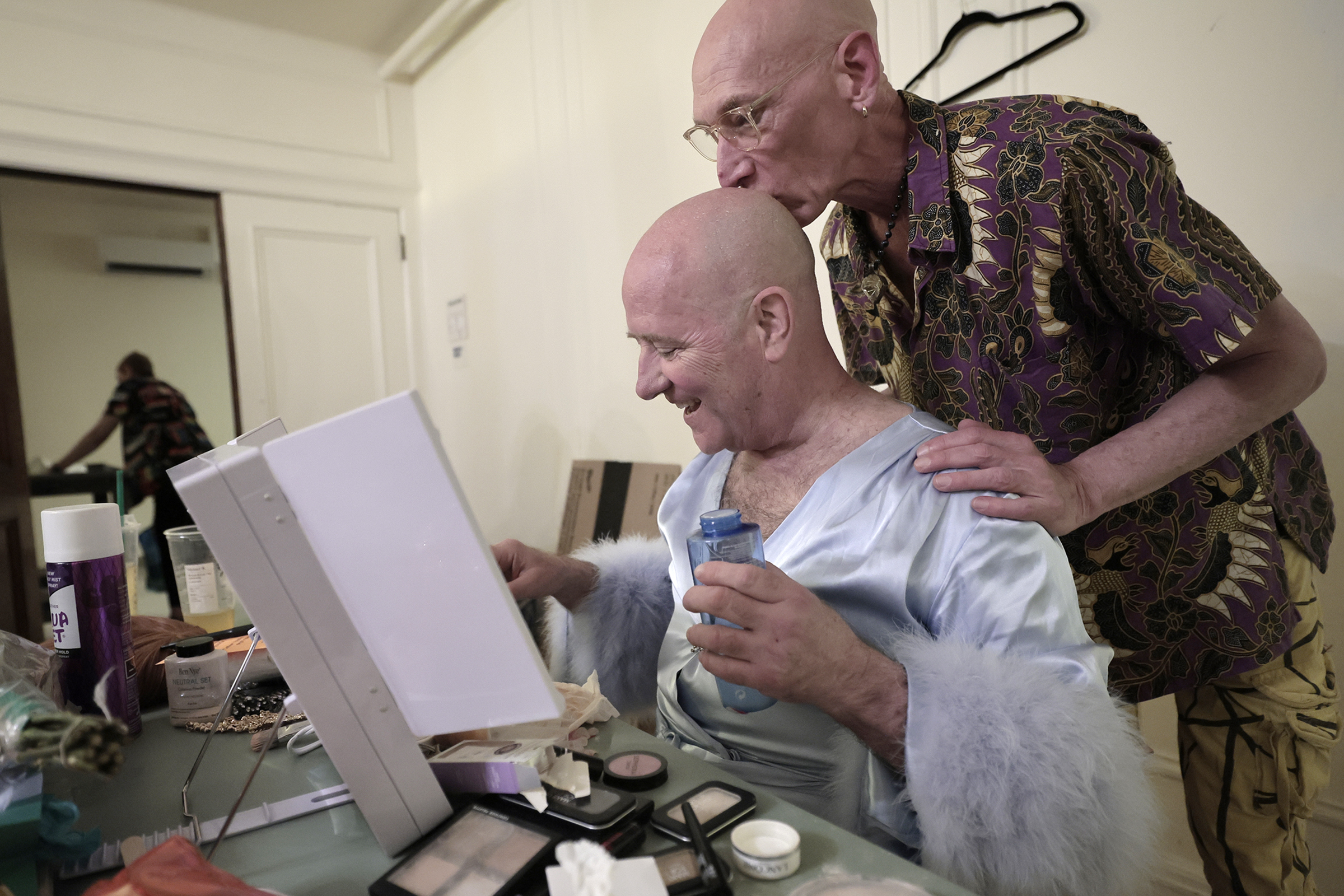
In the dressing room, Tess Tickle (Paul Struck) kisses Carlota Ttendant (Michael Byrne) on the head after Rainbow Bombshell Gay Bingo at Congregation Rodeph Shalom in Philadelphia on Saturday, June 13, 2026. “I love him” said Struck as he walked out of the dressing room.Elizabeth Robertson / Staff PhotographerCarlota Ttendant (Michael Byrne) puts on a favorite crystal ring and fake nails before cohosting Rainbow Bombshell Gay Bingo on June 13. Elizabeth Robertson / Staff Photographer
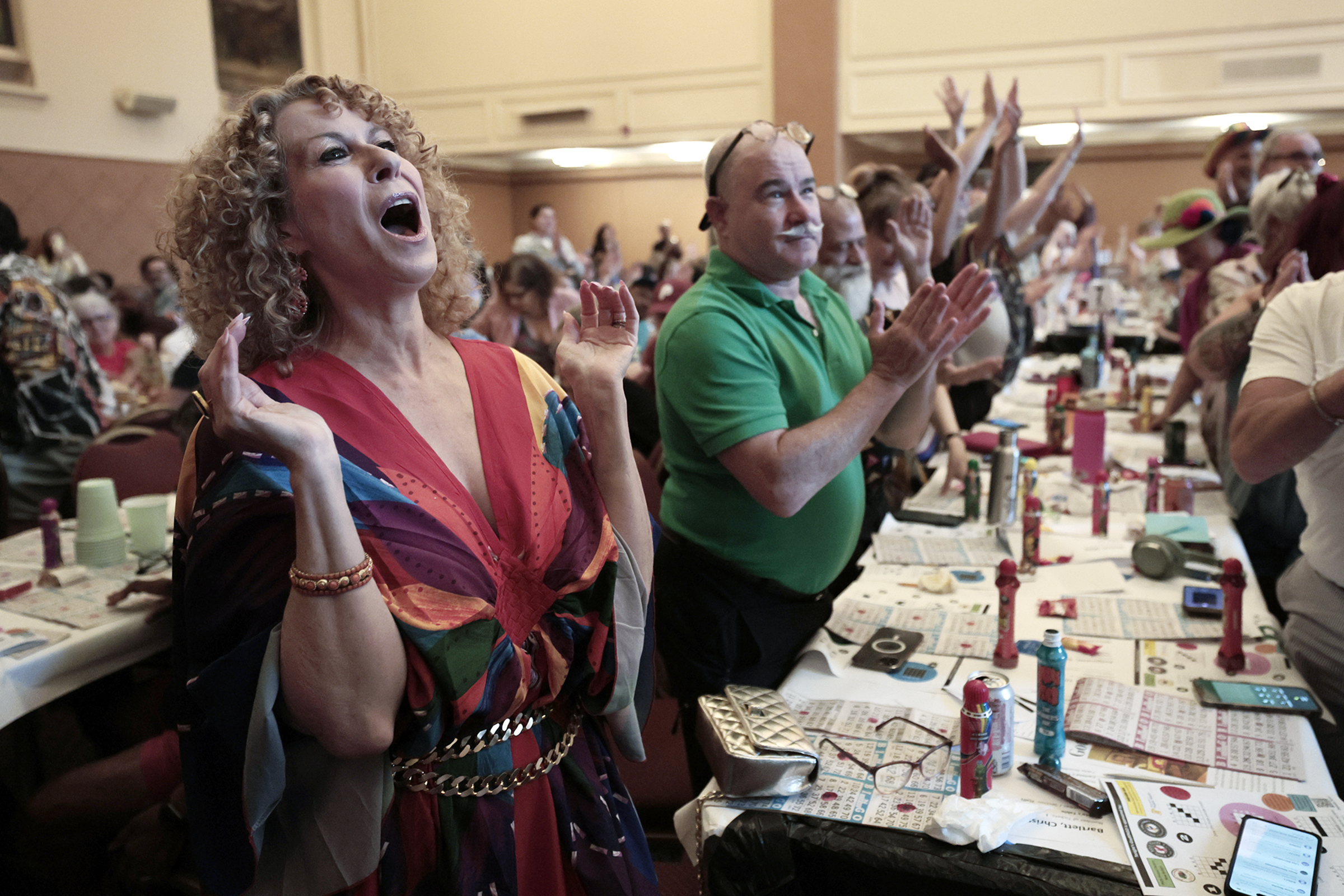
“Are we ready to win some money?” Carlota said, hyping up the crowd before the first of 12 rounds of bingo. Councilmember Rue Landau, the Philadelphia City Council’s first openly LGBTQ+ member, called the first game:
I-28.
I-26.
G-52.
B-14.
O-63.
B-3.
“Bingo!” someone cried out, as the audience let out an audible wave of disappointment, exasperation, and defeat, and the BVDs rushed over to authenticate.
“Did you just get bingo, girl?” Carlota wisecracked.
For 30 years, these Gay Bingo players have pledged each month to “keep on playing Gay Bingo until this crisis is over.” And today, HIV/AIDS deaths and new diagnoses have stagnated, according to the most recently available health department data, and drug cocktails have made it so people with HIV can live long, healthy lives and may never pass the disease onto others or have their illness advance to AIDS. Preventative medications, like PrEP, can also dramatically decrease the risk of becoming infected.
Michael Byrne, as his drag persona Carlota Ttendant, on May 9 at Congregation Rodeph Shalom in Philadelphia.Joe Lamberti / For The Inquirer
But there are still obstacles to ending the epidemic. HIV/AIDS disproportionately affects Black and brown communities and low-income people who experience barriers to healthcare, according to Action Wellness executive director Mary Evelyn Torres. The geographic disparities are also stark: Current drug regimens may be readily available in well-resourced countries, like the United States, but access is scarce in the world’s vulnerable pockets. These problems have only been exacerbated by President Donald Trump’s proposed cuts to domestic and foreign HIV/AIDS programs. The withdrawal of American dollars overseas, United Nations officials warned, could lead to more than 4 million AIDS-related deaths and 6 million more HIV infections by 2029.
(function(){function e(){window.addEventListener(`message`,function(e){if(e.data[`datawrapper-height`]!==void 0){var t=document.querySelectorAll(`iframe`);for(var n in e.data[`datawrapper-height`])for(var r=0,i;i=t[r];r++)if(i.contentWindow===e.source){var a=e.data[`datawrapper-height`][n]+`px`;i.style.height=a}}})}e()})();
“We’ve come a long way, but there’s still work to be done,” Torres said, “and that work is being threatened by this administration.”
As the epidemic has changed, so has Gay Bingo: The money raised — more than $5 million since its inception — now goes toward Action Wellness’ social services and programming. The BVDs ditched their roller skates at the Gershman Y (because of the new, carpeted venue). Tickets cost $50-$60, compared to $10-$12 in May 1996, and these days, attendance averages between 150 and 200 a month.
Drag has evolved, too. Spending centuries on the periphery as proto-punk-beatniks and after-midnight acts, queens disrupted and challenged the mainstream with wit and wonder. Then, the exploding popularity of RuPaul’s Drag Race, a drag reality-TV competition, seismically changed the culture, snubbing scrappiness for silicon and kitsch for couture. The show ushered drag into the zeitgeist: Its lingo became commonplace and its contestants turned into social media stars, with businesses, makeup brands, books, and podcasts, as the art form continues to face political bans and threats nationwide.
The show “has taken everything to a whole other planet,” Byrne said, “and that’s amazing and that’s really great.
“That’s also not what I do.”
Carlota was never concerned with “affecting female mannerisms” or “trying to be this woman or this drag queen,” Singer said. To Byrne, she’s come to embody the fiercest, most unafraid, and righteous versions of himself. But “Michael was never far from Carlota,” Singer said.
Janie Lopez of Philadelphia cheers for her friend Carlota Ttendant during Gay Bingo at Congregation Rodeph Shalom.Elizabeth Robertson / Staff Photographer
To those who know Byrne, Carlota’s come to represent someone purer and more singular, a testament to what joyful resistance and defiant resilience can achieve amid tragedy. Her ingenuity and authenticity have made her synonymous with Gay Bingo, according to Action Wellness event planner and cohost Tim Johnson (otherwise known as Stella D’Oro); her playfulness is what’s engaging, Burns said; the safe space she’s cultivated for the queer community is what keeps people coming back season after season, said regulars Cat Johnson, 47, and Katie Dickerson, 38, of Roxborough.
“It’s going to be really different without Carlota,” Johnson said. “No one’s going to fill her shoes, but I think that the vibe and the energy is going to live on.”
“It’s a lot easier to raise money when everyone is having fun,” said Amber Schlesman, 38, of Point Breeze, who’s been coming to Gay Bingo since its Gershman Y days. “And for the shoes, I’m guessing it’s a size 12.”
All those shoes will be donated to Philly AIDS Thrift soon enough, Byrne said.
Byrne’s voice cracked as he thought of the people who made Carlota’s run possible: the AIDS Fund organizers, Singer, the original cast of BVDs, the volunteers, those who came back monthly, the victims, their families. Many sent her off June 13 with a trove of well wishes, notes that read, “thanks for the memories,” and “so proud of all you’ve done.” They told her, “I love you,” and “hang up those high heels, baby.”
At the end of the night, Byrne’s best friend gifted him a throw pillow.
“Don’t be a lady,” it said. “Be a legend.”
Michael Byrne transforms into his drag persona Carlota Ttendant ahead of Gay Bingo on Saturday, May 9, 2026, at Congregation Rodeph Shalom in Philadelphia.Joe Lamberti / For The Inquirer
In past years, the city’s budget process has followed a certain pattern for Mural Arts Philadelphia and other groups.
The mayor’s proposed budget lists city funding at one level; City Council and others advocate for modifications at a higher level; and the budget goes back to the mayor and is finalized with the higher allocation in place.
This year was different.
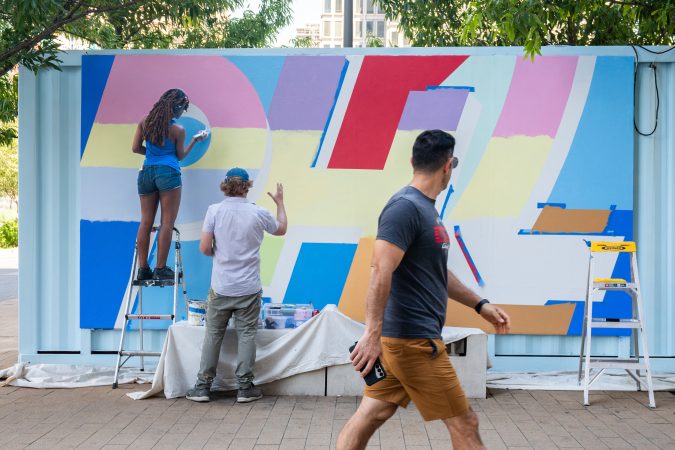
Philadelphia’s nationally acclaimed program that puts colorful murals in neighborhoods and provides jobs was hoping for a boost in city funding.
Instead, the budget ultimately agreed to by Mayor Cherelle L. Parker’s administration and City Council cut funding to Mural Arts — from $5.1 million in fiscal year 2026 to $3.7 million in 2027.
Likewise the Philadelphia Cultural Fund. The group — which awards hundreds of grants to arts groups throughout the neighborhoods — was looking for increased funding in the city’s newly approved $7.1 billion budget for the fiscal year starting July 1.
But the arts nonprofit, established by the city recently, learned that it will get substantially less — $3.5 million instead of the $5 million it received from the city for the fiscal year now ending.
As a result, both groups say they will have to make deep cuts to programs.
Philadelphia’s arts and culture sector had greeted the start of Parker’s term 2½ years ago with optimism for increased funding. Today, it is “alarmed” by the cuts to Mural Arts and the Cultural Fund, said Patricia Wilson Aden, president and CEO of the Greater Philadelphia Cultural Alliance.
“We always say that your budget tells a story, and I have to say that the cultural community is disappointed and frustrated with the story being told by this FY27 budget,” she said. “Cutting the budget of signature programs like Mural Arts by 26% or decreasing funding to the Philadelphia Cultural Fund, that’s going to have ramifications throughout the city.”
Parker was not available for comment, a spokesperson said.
Valerie V. Gay (left) chief cultural officer with the City’s Office of Arts, Culture and the Creative Economy, and finance director Rob Dubow (right) testify at a Philadelphia City Council hearing, Aug. 8, 2024 on the collapse of the University of the Arts.Tom Gralish / Staff Photographer
Valerie V. Gay, the city’s chief cultural officer, said it was the city’s view that funding for the two groups had remained flat from 2026 to 2027, since the base allocation stayed the same and it was only the added amount that did not come through — though she allowed that “absolutely I can see how it can be perceived.”
A ripple effect
The resulting cuts at both groups promise to be substantial. The Cultural Fund will be forced to reduce the number of grants it had been expecting to distribute in the coming year, from 332 to 232. It has changed its eligibility requirements, which will eliminate grants to a pool of midsize organizations currently eligible.
“It’s going to be a ripple effect. People are going to feel it and communities are going to feel it,” said Philadelphia Cultural Fund executive director Gabriela Sanchez.
“An investment in the Philadelphia Cultural Fund is more than a budget line item,” Sanchez wrote in a statement distributed by the group. “Funding to PCF represents how the city values neighborhood theaters, cultural centers, museums, arts education programs, festivals, dance companies, community storytelling initiatives, music programs, and cultural traditions that bring Philadelphians together. These spaces are where young people discover their creativity, where seniors find connection, where communities celebrate their heritage, and where residents gather across lines of difference.”
Jane Golden (center right) speaks with press at the Wawa Welcome America media preview for the Philly Fair 250, outside the Please Touch Museum in West Philadelphia, June 18, 2026. Mural Arts held a ceremonial unveiling of a 10-story-high mural replica, originally titled ‘CityKids Speak On Liberty,’ and created by Keith Haring.
Mural Arts director Jane Golden declined to comment, but an initial assessment from the group obtained by The Inquirer says that “hundreds of residents in at least 15 Philadelphia communities will lose the opportunity to develop public art projects,” and that opportunities for paid work, job training, and mentorship through the Mural Arts Restorative Justice program will be reduced by 25%.
Mural Arts will also have to cut by 75% its program of restoring and preserving the city’s murals, “putting at risk community landmarks that took years and significant public investment to create,” the impact statement reads.
Of the program reductions at both groups, Gay said: “I am always sad that any cuts are made or that any organizations are unable to do the work they thought they were going to be able to do. That’s always a sad time for us, and I’m looking forward to when we are a fully funded sector.”
A city spokesperson was unable to provide a full list of groups that in past years had received higher allocations after advocacy from City Council and others, but this year did not.
What’s behind the cuts
Aden says arts and culture has seen some significant recent “wins” from city government. Among them is the advancement of a referendum that, if approved by the mayor and then by voters this fall, would enshrine the city’s office of arts and culture, called Creative Philadelphia, in the City Charter.
The city has approved $500,000 a year to develop and implement a cultural plan for Philadelphia that would document financial needs and could identify potential pathways to establishing funding.
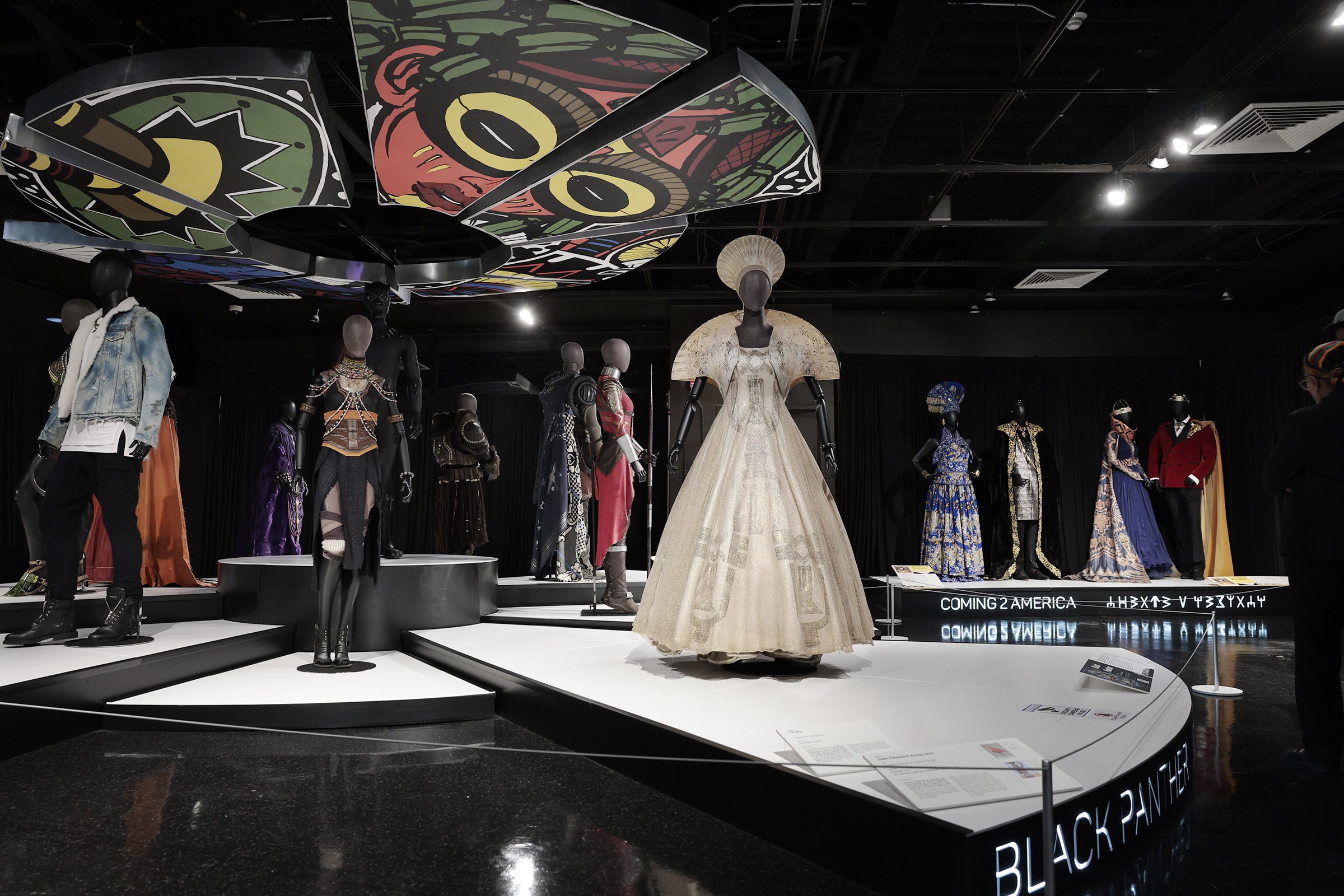
The ‘Ruth E. Carter: Afrofuturism in Costume Design’ exhibition at the African American Museum in Philadelphia, Nov. 1, 2025.Elizabeth Robertson / Staff Photographer
Sometimes the city’s support is for regular operations, and other times it is for specific capital projects. In an unusually large commitment, the city has pledged $50 million to the African American Museum in Philadelphia for its relocation to the Benjamin Franklin Parkway.
The city is providing nearly $32.5 million to arts and culture in FY27, according to a list provided by Parker’s office. While that total includes small items that might seem mundane — paying utility bills at various facilities, for instance — it also shows multimillion-dollar allocations to the Philadelphia Museum of Art, Dell Music Center, and Philadelphia Zoo.
But the arts and culture sector often finds itself fighting for adequate funding in the annual budget process. Arts leaders and others say it has been standard practice in recent memory that funding is listed at one level in the mayor’s proposed budget and after City Council testimony in budget hearings ends up being higher.
This year, the mayor “could have funded [the arts] at a higher amount,” as she did last year, but did not do so, Councilmember Rue Landau said.
The cuts came after a budget that passed without a series of tax increases proposed by Parker, including a $1 tax on rideshare services, after failing to win support from City Council. After Council signaled it would reject Parker’s tax proposals, the administration would not agree to any last-minute line items for new funding requests from lawmakers.
Councilmember Isaiah Thomas, a consistent arts supporter who, like Landau, is an ex-officio Mural Arts board member, said that with the lack of new tax revenue and the city’s extra allocation of $48 million to cover the Philadelphia School District’s budget shortfall, the funding pie for other allocations got smaller.
“This budget year, a lot of attention and advocacy went toward schools,” Thomas said. The funding cuts to Mural Arts and the Cultural Fund were “extremely unfortunate,” he said, “and I wish we could have done something different.”
The need for ‘predictable, stable, reliable’ funding for the arts
While the city’s budget is now final, there is another potential window of opportunity for funding through a midyear budget transfer process in which the city might see expenditures in certain areas coming in lower than expected, and then transfer money from those categories to other areas.
Asked whether funds might be restored through a budget transfer to Mural Arts or the Cultural Fund, Gay said:
“I think anything is on the table, but I also think nothing is guaranteed.”
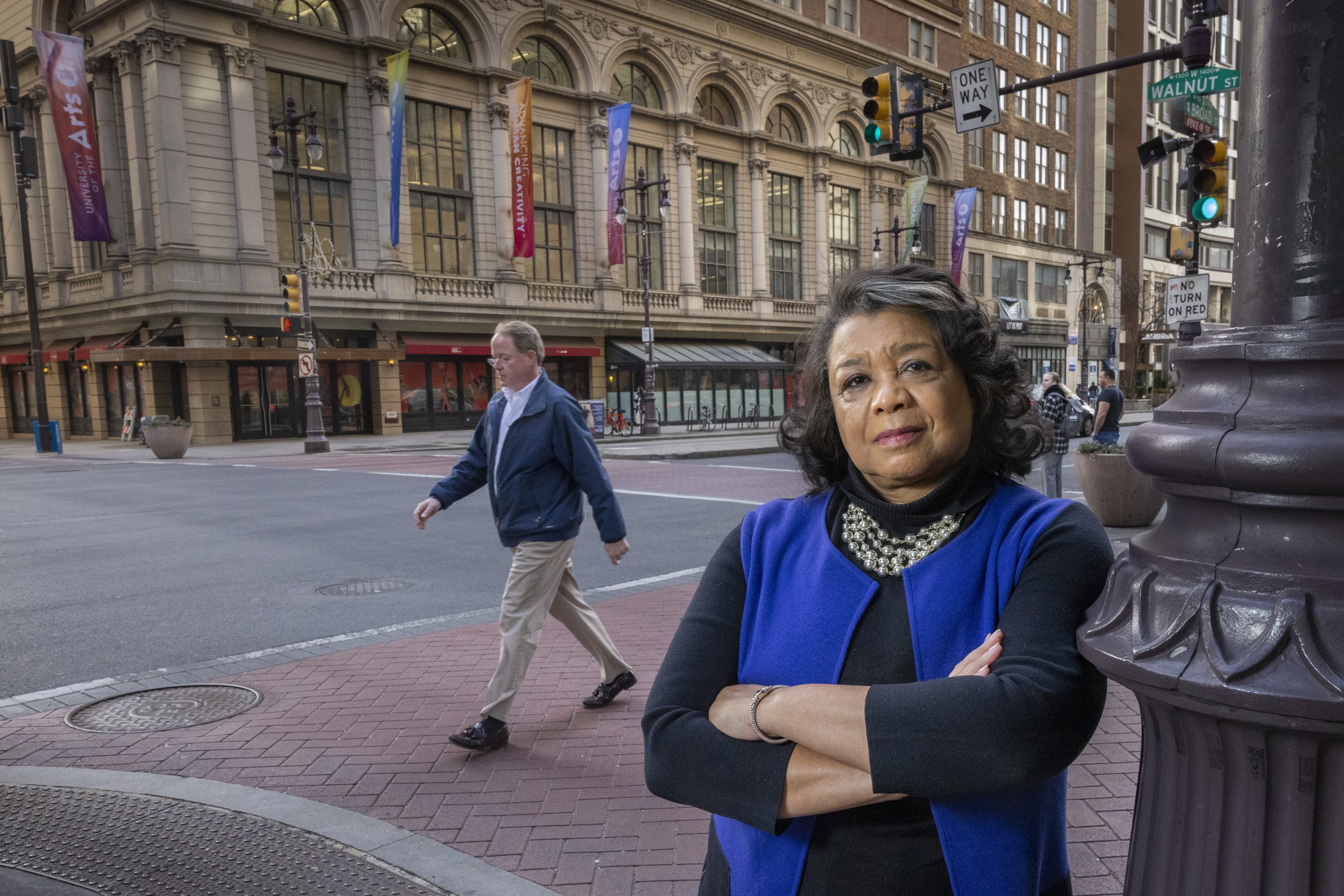
Patricia Wilson Aden, president and CEO of the Greater Philadelphia Cultural Alliance, at S. Broad Street and Walnut along the Avenue of the Arts, Feb. 15, 2023.Alejandro A. Alvarez / Staff Photographer
Any restoration of funds would happen after arts groups have already put cuts in place, and this kind of unpredictability “makes planning by these organizations very, very difficult,” Aden said.
“The practice of underfunding the arts and having Council and other entities have to go on an advocacy campaign to increase funding is illogical,” Landau said. “It is clear as day that we should be supporting the arts with additional funding every single year, so we don’t have to go through this and it won’t ever be a question mark for them.”
What is really needed, Aden said, is a dedicated arts fund in Philadelphia and the region.
“We’ve seen other regions benefit from this predictable, stable, reliable funding. And instead, here in Philadelphia, each year we have this conversation about increases and decreases and their impact. We are sometimes left to the will and whim of elected officials, and we would like to take the creative economy out of the political realm and put it solidly within our larger civic interest, so that it is stable and has the investment that is required to reach its full potential.”
Staff writer Anna Orso contributed to this article.
Sick of being charged with “processing” or “transaction” fees when shopping online?
So is City Councilmember Rue Landau, and she introduced a bill Thursday to help Philadelphians avoid so-called pay-to-pay fees for online transactions.
“This will keep money in people’s pockets,” Landau said in an interview. “Oftentimes, people are paying these fees every single month to simply pay their bills to an entity that only allows you to pay it in a certain way. They are unnecessary. We are making them unlawful.”
The legislation aims to ban fees that are not related to actual costs to the seller. That means standard credit card processing fees, which retailers must pay to credit card companies, would not be banned under the bill. Instead, the bill aims to tackle additional fees beyond those processing charges by:
Mandating online payment portals have at least one option that involves no additional fees.
Requiring “cost justification” for fees, which Landau’s office said would essentially ban convenience fees by necessitating proof they are related to real costs borne by the seller.
Compelling online retailers to disclose all fees up front in “total-price advertising” before a transaction begins.
To enforce the bill’s provisions, the city’s law department would be authorized to sue businesses charging illegal pay-to-pay fees. The bill would also allow private individuals to sue for damages from companies charging the fees, including as part of a class-action lawsuit.
Next, Council President Kenyatta Johnson will refer the bill to a committee, where it could get a hearing as soon as this fall.
Philadelphia City Council members inside the caucus inside City Hall in Philadelphia, Pa. on Thursday, June 11, 2026.Aidan T. Gallo / Staff Photographer
City budget negotiations wrapped up last week, and Thursday’s votes were largely procedural.
But the fallout continued Thursday from Council’s decision last week not to adopt Mayor Cherelle L. Parker’s proposal to plug the Philadelphia School District’s budget deficit with a new $1-per-ride tax on rideshare services like Uber and Lyft.
Council President Kenyatta Johnson speaks during an announcement at the School District of Philadelphia Headquarters on Wednesday, June 10, 2026 in Philadelphia. Philadelphia School District officials will move to restore 340 classroom-based jobs that were slated to be cut, despite top district leaders saying last week that they did not have the recurring funding needed to keep the positions.Monica Herndon / Staff Photographer
Council instead pulled roughly $50 million, the amount the tax would have generated next year, from the existing city budget to help fund the schools. District officials, however, said after that vote that they would have to move forward with cuts to 340 classroom positions because Council did not provide recurring revenue.
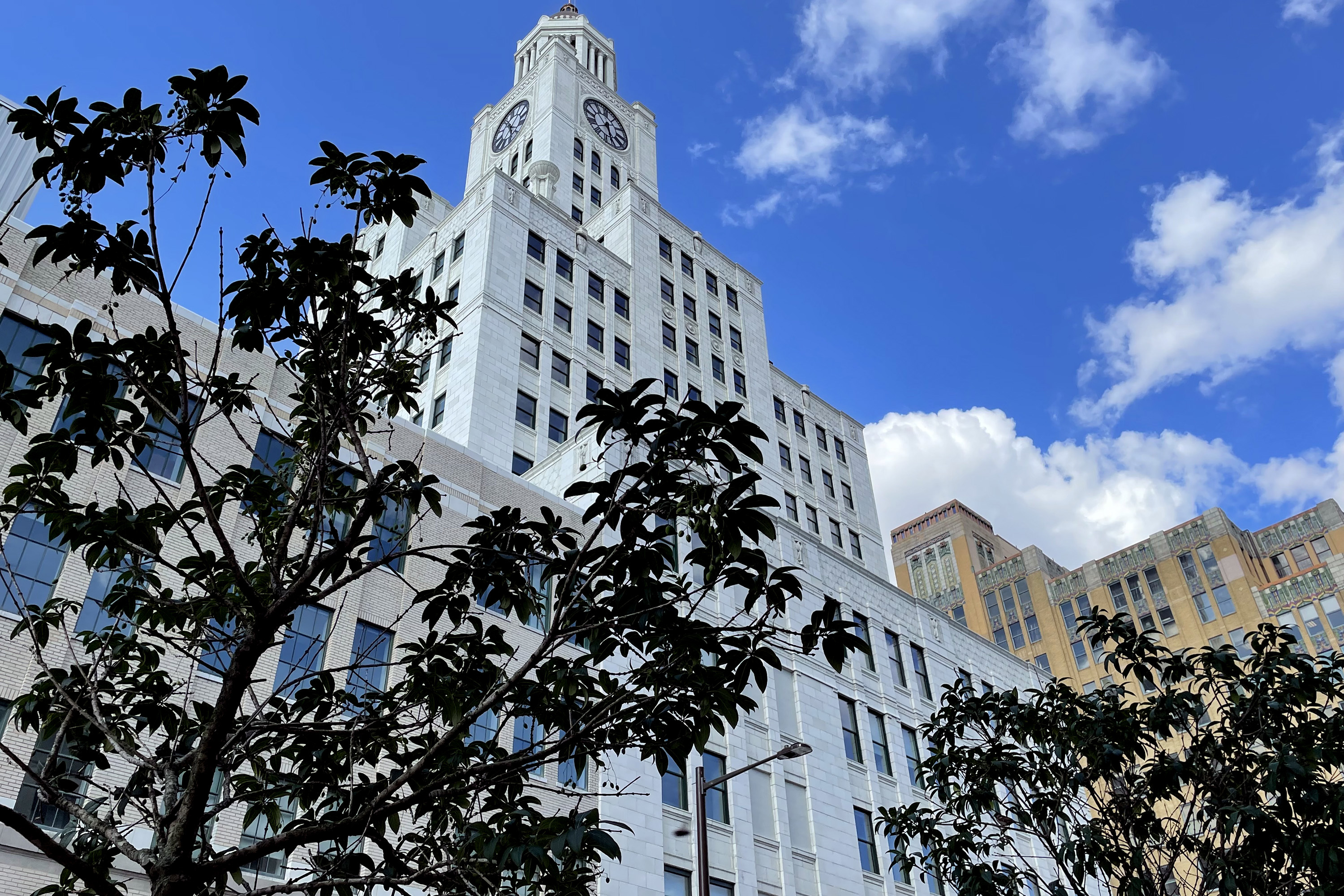
The Tower of Taxpayers: The city will soon own the 18-story tower at 400 N. Broad St., the beaux arts landmark that is the Philadelphia Police Department’s headquarters and was dubbed the “Tower of Truth” when it was the home of The Inquirer.
Council on Thursday voted 17-0 to approve legislation authorizing the city to borrow $200 million so it can own the building, part of a complex and controversial deal in which the city is buying outstanding debt on the property that is currently held by developer Bart Blatstein.
The Philadelphia Public Services Building (PPSB) at 400 North Broad Street is the historic former Inquirer and Daily News building. It will soon be owned by the city of Philadelphia.TOM GRALISH / Staff Photographer
The purchase stems from an agreement inked in 2017 during former Mayor Jim Kenney’s administration. Under the terms of the deal, the city’s current $15 million annual rent on the building was set to nearly double if the city did not exercise a one-time option to buy the property.
Parker administration officials testified to a Council committee last week that, while the building is appraised to be worth $21.5 million, in order to purchase the structure, the city was required to assume the debt that Blatstein incurred to renovate the property.
Council members on the Finance Committee balked at the $200 million price tag and initially held up the proposal, but eventually approved the measure.
The city will issue bonds to buy the debt and will pay roughly $15 million a year in debt service.
Expanding the definition of ‘the line of duty’: The city appears poised to offer death benefits to the families of first responders who die by suicide, a change that amounts to an expansion of how the government defines a death that occurred “in the line of duty.”
Council approved legislation to offer pension payments, healthcare coverage, and other forms of compensation to the families of city workers who either had a diagnosed psychiatric disorder due in “significant part to exposure to one or more traumatic events in the line of duty” or died by suicide within 45 days of exposure to a traumatic event at work.
That was despite the city’s risk manager testifying last week to a Council committee that the Parker administration opposes the change. Sharolyn Murphy told Council members that the administration is focused on suicide prevention, and that expanding who is eligible for death benefits would result in higher costs to the pension fund.
On Thursday, Council approved the bill in a 17-0 vote, sending it to Parker’s desk with a veto-proof majority.
Quote of the week
Philadelphia City Council members inside the begin the session inside the chamber at City Hall in Philadelphia, Pa. on Thursday, June 11, 2026.Aidan T. Gallo / Staff Photographer
A bittersweet Pride: That was Mark Segal, the publisher of the Philadelphia Gay News and one of the most recognized leaders of the city’s LGBTQ+ community. He spoke Thursday during a Pride celebration in Council, and he called for accountability following the police response to Pride festivities on Sunday that many have called heavy-handed.
Philadelphia City Council will hold public hearings to examine the police department’s crowd-control tactics used during Sunday’s Pride festivities in the city’s Gayborhood, a response that drew criticism from LGBTQ+ community leaders who have called the display of force unacceptable.
Councilmember Rue Landau, a Democrat who represents the city at-large and is Council’s first openly LGBTQ+ member, introduced legislation Thursday to authorize Council to hold hearings on the response, citing video and eyewitness accounts of “aggressive police tactics,” such as physical confrontations between police and celebrators, as well as the use of mounted and motorcycle officers to disperse crowds.
A large police presence at a Pride celebration in the Gayborhood on Sunday, June 8, 2026.Courtesy of Joshua Stokem
Images and videos that circulated widely on social media this week showed officers pushing attendees, as well as police on horseback dispersing crowds from the sidewalk. Multiple officers were seen on video with their faces covered, and others barricaded Gayborhood streets. Police said 15 people were arrested.
“It’s clear that this was a lack of communication, a lack of planning, and a lack of clear on-the-ground decision making of what to do in this situation,” Landau said Thursday.
Holding hearings in Council “is not going to heal the pain and trauma that happened on Sunday,” Landau said, but it will “answer strategic and tactical questions.”
”We need to work towards a time when the Gayborhood is safe and open and welcoming to every member of the queer community, but especially to Black and brown queer people and trans people,” she added.
Councilmember Rue Landau on Thursday, March 12, 2026.Alejandro A. Alvarez / Staff Photographer
During an acknowledgment of Pride month in Council on Thursday, Mark Segal, the publisher of the Philadelphia Gay News and a fixture of the city’s LGBTQ+ community, said he was looking for accountability and wanted to know: “Who was in charge Sunday?”
“No police should be wearing a mask in Philadelphia,” Segal said to applause. “No motorcycle should be up on the sidewalk. Police on horseback should not be hurting citizens. The police should not be running around with Tasers. People should not be punched. People should not be fenced off like animals.”
Council unanimously approved a resolution to hold hearings. They are not likely to take place until fall, as Thursday was Council’s final meeting before adjourning for summer recess.
The move to hold hearings is a notable step for a Council that has largely steered clear of public criticism of the city’s police department in recent years. While individual members have taken issue with discrete tactics or policies, most have been satisfied with the leadership of the force under Commissioner Kevin J. Bethel, who took the helm in 2024 when Mayor Cherelle L. Parker appointed him to the role.
Bethel said the police department is investigating the agency’s response during the Pride festivities, and a police spokesperson said that five officers who wore facial coverings may face discipline for violating department policy.
Parker said in a statement that senior members of the administration were examining the response. During an unrelated news conference Thursday, she said that “accountability will be reached.”
“Rest assured we’re going to do the research. We’re going to find out what happened and where accountability is appropriate,” Parker said.
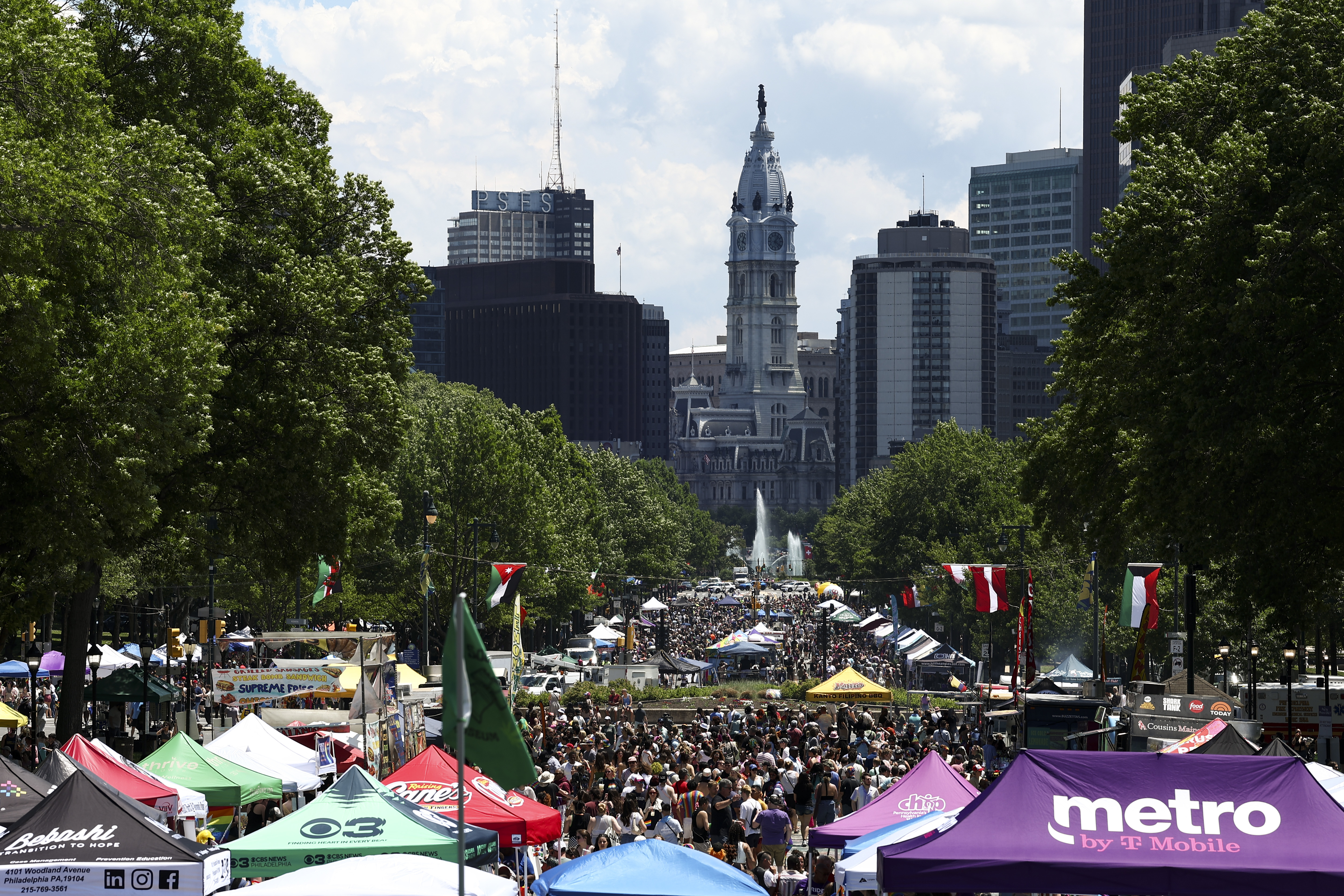
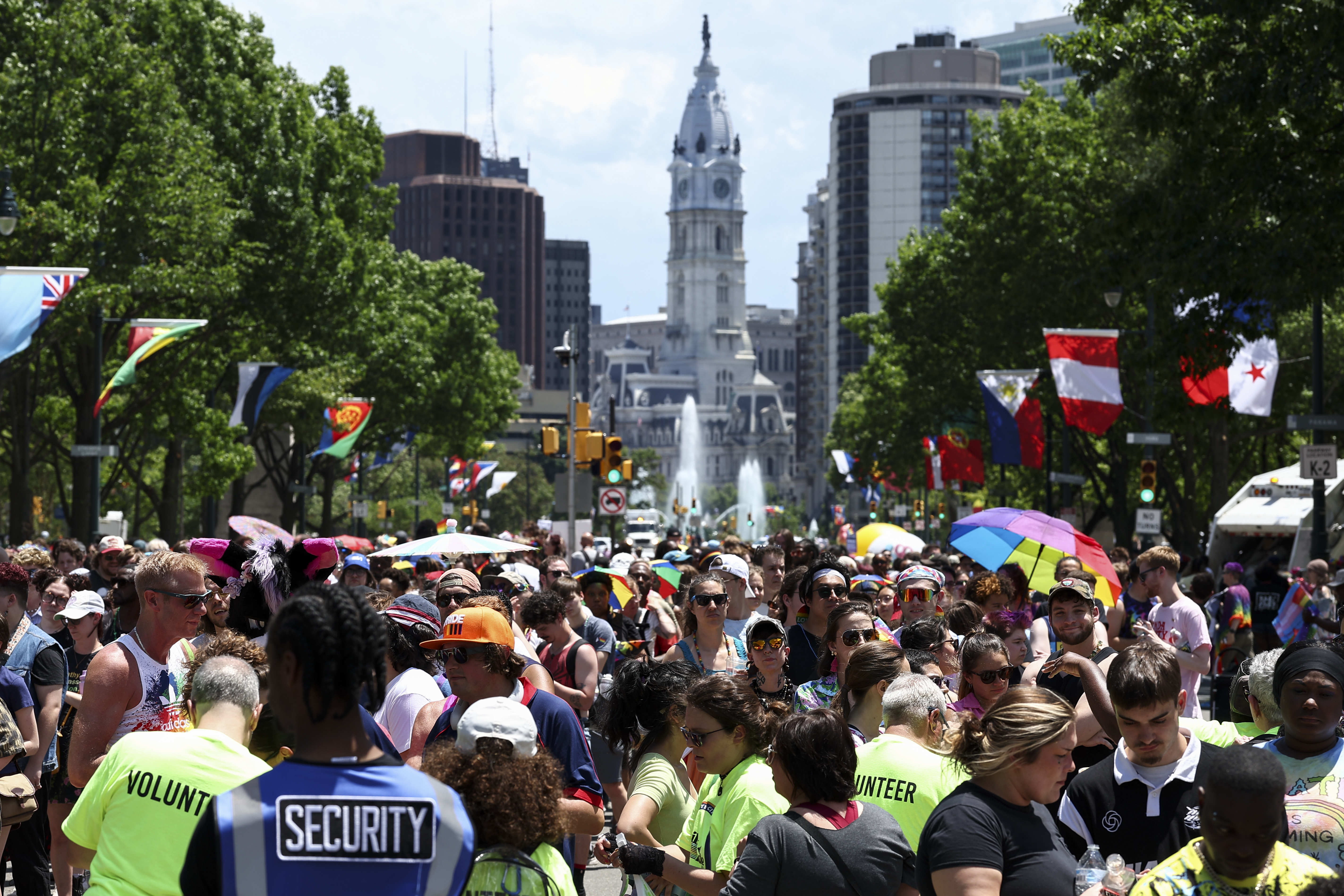
People fill the street during the Philly Pride Festival on the Ben Franklin Parkway on Sunday, June 7, 2026 in Philadelphia.Monica Herndon / Staff Photographer
More than a dozen LGBTQ+ residents and Pride attendees came to Council on Thursday to tell lawmakers about their experiences Sunday and call for an investigation.
Philadelphia resident Jazmyn Henderson, a longtime activist in the city, was in the Gayborhood on Sunday and said she witnessed police using aggressive crowd-control tactics.
She said she did not think Council’s resolution was enough to make her feel safe going forward.
“I think City Council is delusional,” Henderson said. “I think the city is delusional, and they think that that resolution meant anything to any of the Black and brown people who were brutalized, assaulted, hurt, or mistreated by the cops on Sunday.”
Sergio Cea, political director of the progressive political group Reclaim Philadelphia, testified during Council’s public comment section that he was tear-gassed by officers in West Philadelphia during a wave of civil unrest in 2020 and, following Sunday’s events in the Gayborhood, he does not feel safe in the city from what he described as “police violence.”
“I really welcome the resolution that Rue Landau is presenting, but we need to go beyond that,” Cea said. “We are not safe.”
Mayor Cherelle L. Parker says she is looking for answers after Philadelphia police arrested 15 people at a Pride celebration in the Gayborhood on Sunday that drew anger from community members over police use of force.
“I know that members of our LGBTQ+ community are hurting, frustrated, and looking for answers. … I want everyone to know that I hear you, I see you, and my Administration is taking your concerns seriously,” Parker said on social media Tuesday evening.
Images and videos spread across social media of police using crowd control tactics to disperse Pride-goers in the neighborhood, in what some considered to be an outsize and aggressive law enforcement presence.
In one image shared on X, a police officer on a motorcycle appears to push against a woman’s chest, and, in a separate photo, another officer pushes the same woman against a storefront security door while arresting her.
Other videosposted on social mediashowed police on horseback dispersing young people from a sidewalk, as well as officers physically struggling with a man outside the gay bar Woody’s. Another clip shows a row of police officers — two of them wearing face coverings — forming a line to clear a barricaded Gayborhood street while officers on motorbikes rode along the sidewalks.
On Wednesday, Sgt. Eric Gripp, a spokesperson for the police department, said that officials had identified five officers who wore face coverings during the enforcement, and that those officers had violated department policy by doing so.
The department is still working to determine what type of corrective action will be taken depending on the outcome of an internal investigation, he said.
On Tuesday, Parker said she and some of her top staff, Director of LGBTQ+ Affairs Tito Valdes, and Philadelphia Police Commissioner Kevin Bethel had met to “review the information available to us and discuss next steps.”
“In the days ahead, we will meet with community leaders as part of that effort. As we move forward, we must reject the notion that public safety and accountability are mutually exclusive,” Parker said in the statement posted to social media.
Commanding officers at the scene gave orders to disperse crowds, according to Gripp, the police spokesperson.
The crowd control tactics used on Sunday drew ire from local elected officials like City Councilmember Rue Landau, who said she has been in talks with city departments and police to understand why PPD used this strategy. “Police brutality has no place at Pride,” Landau said.
People wait to enter the Philly Pride Festival at 21st Street on the Ben Franklin Parkway on Sunday.Monica Herndon / Staff Photographer
A different Pride this year
This year’s Pride looked different from that of earlier years. Usually, Philadelphia Pride celebrations and parades occur within the Gayborhood in Center City, east of Broad Street. But this year Philly Pride 365 and the city moved the parade and festival to the Benjamin Franklin Parkway because of security concerns over crowd sizes that had grown to more than 150,000 people, among other reasons, festival organizers said.
The festival portion of Pride also asked attendees to pay $10 to enter an event that for years had been free to attend.
Before and after the official celebrations ended, Pride-goers gathered in the Gayborhood, patronizing bars and spilling into the streets — a common practice during the celebration. But guests were surprised to find that several Gayborhood blocks around 13th and Walnut Streets were blocked with metal barricades, limiting crowds to sidewalks, said Joshua Stokem, a New Jersey resident who regularly attends the city’s Pride celebrations.
Stokem said the layout caused large groups to pack into the corridors outside bars and restaurants and, in his view, created confusion and exacerbated some of the issues attendees had with police.
On Sunday, police had 600 officers assigned to Pride celebrations with around 150 officers in the Gayborhood monitoring festivities, Bethel said.
“By all accounts, [it was] a successful event attended and enjoyed by thousands of people. As crowd sizes increased in the Gayborhood, officers responded to a growing number of public safety concerns, including fights, disorderly behavior, blocked roadways, and the challenges associated with safely managing large crowds in a confined area,” he saidin the statement.
Bethel said the department had expected the Parkway celebration to gradually transition to the Gayborhood event, but that did not happen.
Instead, he said, two separate gatherings were essentially happening at once, creating a situation that was “challenging to manage safely” and led to the decision to clear parts of the neighborhood.
“That decision was not made in any way, shape, or form because people were celebrating Pride,” he said.
Most of the arrests during Sunday’s event were for disorderly conduct, according to Bethel, while one person was charged with aggravated assault of a police officer.