Roxborough Memorial Hospital was cited by the Pennsylvania Department of Health for failing to properly dispose of medical waste and document patient treatment plans earlier this year.
The incidents were among 11 times inspectors visited the hospital, which is part of California-based Prime Healthcare Foundation, to investigate potential safety problems.
Here’s a look at the publicly available details:
July 17, 2025: Inspectors came to investigate a complaint but found the hospital was in compliance. Complaint details are not made public when inspectors determine it was unfounded.
July 22: Inspectors followed up on an April 2025 citation regarding failure to report suspected elder abuse and found the hospital was not in compliance. The hospital had been cited for failing to report suspected abuse of a patient at the behavioral health facility where they had been staying before arriving at Roxborough. In April, the hospital said it would update its policies to make clear suspected abuse should be reported as soon as possible and retrain staff. In July, inspectors found the hospital had reported the suspected abuse to the behavioral health facility, but not to the Pennsylvania Department of Health, as required. The hospital said it would clarify in its policies that all cases of suspected abuse should be reported to the health department.
Aug. 4: The hospital was cited for failing to properly transfer patients under federal EMTALA (Emergency Medical Treatment and Labor Act) protocol. In one of 11 patient records inspectors reviewed, staff transferred a patient to another facility without sending along their emergency records. The hospital was also cited for a staff member who had not completed mandatory annual EMTALA training since 2022. The hospital retrained staff on documenting patient transfers and agreed to hold monthly meetings on EMTALA compliance. Staff members who are not up-to-date on their EMTALA training will be removed from the schedule until they complete the required training.
Oct. 15: Inspectors followed up on the August EMTALA transfer complaint and found the hospital was in compliance.
Feb. 2, 2026: Inspectors followed up again on the April abuse reporting citation and found the hospital was in compliance.
Feb. 12: Inspectors came to investigate a complaint but found the hospital was in compliance.
March 4: Inspectors cited the hospital for improper medical waste disposal and unsafe equipment in behavioral health rooms. Inspectors found that a pharmaceutical disposal box was unlocked and lined with a black trash bag, which is not approved for pharmaceutical waste disposal containers. The hospital was also cited for cords attached to call bells on beds in the geriatric psychiatric unit, which could be dangerous for people at risk of self-harm. The hospital retrained staff on pharmaceutical waste disposal and replaced the corded call bells with wireless systems.
March 4: Inspectors visited for a mental health survey and cited the hospital for failing to complete written treatment plans for one of 12 patient files they reviewed. The hospital retrained staff on documentation and the importance of scanning any written documentation into patients’ electronic files.
March 25: Inspectors came to investigate a complaint but found the hospital was in compliance.
March 31: Inspectors visited for a mental health survey and found the hospital was in compliance.
You say you want a revolution? That’s not quite what SEPTA’s proposing. This weekend, the region’s transit agency will roll out the first phase of its New Bus Network, the bus system’s first significant update since the agency was formed in the 1960s.
Sound familiar? Once dubbed Bus Revolution, the project began in 2021 after transit agencies around the country saw massive declines in ridership. SEPTA’s Bus Revolution was set to launch in 2025 but faced significant community pushback and coincided with the state funding crisis that halted many planned transit initiatives. It was officially shelved in November 2024.
Later phases of the plan, which will roll out in 2027, will impact other neighborhoods. The number of bus routes in SEPTA’s system will drop from the current 124 to 106 when all four phases are complete.
SEPTA says the changes are needed to modernize the system and make it easier to use.
To help you navigate the changes that will impact how you navigate the city, we’re here to breakdown down all 30 impacted routes.
This route remains the same but with reduced service.
Days
Times
Previous
Now
Weekdays
6 a.m. to 9 p.m.
Every 16-25 minutes
Every 30 minutes
Saturdays
8 a.m. to 9 p.m.
Every 22-25 minutes
Every 30 minutes
6
Cheltenham-Ogontz to Olney Transportation Center
On weekdays, route 6 will have increased service during peak hours, but a reduced service otherwise.
Days
Times
Previous
Now
Weekdays
6 a.m. to 9 p.m.
Every 11-13 minutes
Every 10 minutes
Weekdays
9 p.m. to midnight
Every 20 minutes
Every 30 minutes
Weekdays
midnight to 4 a.m.
Every 30-40 minutes
Every 60 minutes
SEPTA also rolled out new signage that identifies certain routes as “frequent red”, indicating a bus is scheduled to arrive within 15 minutes or less on weekdays from 6 a.m. to 9 p.m.
17
Front-Market to 20th-Johnston
Route 17 will be shortened and no longer operate on its old route from 20th Street and Johnston Street down to the stadium complex or the Navy Yard. SEPTA recommends Navy Yard commuters take route 45 instead.
This route will also operate with reduced service overnight.
Days
Times
Previous
Now
Weekdays
midnight to 5 a.m.
Every 30 minutes
Every 60 minutes
SEPTA also rolled out new signage that identifies certain routes as “frequent red”, indicating a bus is scheduled to arrive within 15 minutes or less on weekdays from 6 a.m. to 9 p.m.
25
Frankford Transportation Center to Front-Spring Garden
Route 25 is essentially being cut in half. The old route ran down Delaware Avenue to Columbus Commons. The new route will terminate at the Spring Garden Market-Frankford Line station. The old route from Spring Garden to Columbus Commons will be serviced by the new route 76.
Route 25 will now operate for 24 hours a day, as part of SEPTA’s late-night OWL network.
This route will also have increased service.
Days
Times
Previous
Now
Weekdays
6 a.m. to 9 p.m.
Every 20-30 minutes
Every 15 minutes
Weekends
6 a.m. to 9 p.m.
Every 30 minutes
Every 20 minutes
SEPTA also rolled out new signage that identifies certain routes as “frequent red”, indicating a bus is scheduled to arrive within 15 minutes or less on weekdays from 6 a.m. to 9 p.m.
32
Broad-Carpenter to Ridge-Lyceum
Route 32 will have slightly reduced service with fewer buses overall. All route 32 buses will terminate at Manayunk, as opposed to the previous schedule where half would terminate at 33rd Street and Cecil B. Moore Avenue. There’s also a slight route extension into Roxborough for school service.
35
Manayunk Roxborough Loop
Route 35 will be discontinued on Aug. 23. SEPTA recommends riders take route 61.
According to SEPTA’s operation statistics, route 35 is the seventh most expensive bus based on the average cost per passenger.
39
Richmond-Cumberland to 33rd-Dauphin
Route 39 will remain the same but with reduced service on weekdays and slightly increased service on Saturday evenings..
Days
Times
Previous
Now
Weekdays
6 a.m. to 9 p.m.
Every 20-30 minutes
Every 30 minutes
Saturday
5 p.m. to 9 p.m.
Every 40-60 minutes
Every 30 minutes
44
Front-Market to Ardmore
Route 44 will no longer run along its old route that would sometimes terminate at Gladwyne. Beginning Aug. 23, all 44 buses will run to Ardmore, with select trips stopping at Narberth.
This route will also have reduced service.
Days
Times
Previous
Now
Weekdays
9 a.m. to 3 p.m.
Every 15-30 minutes
Every 60 minutes
Weekends
6 a.m. to midnight
Every 30 minutes
Every 60 minutes
45
Navy Yard/Broad-Oregon to 12th-Noble
Route 45 will be extended to the Navy Yard to cover for the changes to route 17.
After 9 p.m. the route will have reduced service on weekdays.
Days
Times
Previous
Now
Weekdays
9 p.m. to midnight
Every 20 minutes
Every 30 minutes
46
58th-Baltimore to 63rd-Malvern
Route 46 will have increased service on weekdays.
Days
Times
Previous
Now
Saturdays
9 a.m. to 6 p.m.
Every 20 minutes
Every 15 minutes
Sundays
9 a.m. to 7 p.m.
Every 30 minutes
Every 20 minutes
SEPTA also rolled out new signage that identifies certain routes as “frequent red”, indicating a bus is scheduled to arrive within 15 minutes or less on weekdays from 6 a.m. to 9 p.m.
47
Whitman Plaza to 5th-Godfrey
Route 47 will merge with route 47M and have increased service.
Days
Times
Previous
Now
Weekdays
6 a.m. to 9 p.m.
Every 8-9 minutes
Every 7-8 minutes
All days
Midnight. to 5 a.m.
Every 45 minutes
Every 30 minutes
SEPTA also rolled out new signage that identifies certain routes as “frequent red”, indicating a bus is scheduled to arrive within 15 minutes or less on weekdays from 6 a.m. to 9 p.m.
47M
Whitman Plaza to 7th-Spring Garden via 9th
Route 47M has been discontinued and will now be served by a more frequent route 47.
The merger of these two routes includes a realignment so that the northbound 47 runs on Seventh Street, as opposed to Ninth Street. Southbound buses will still run on Eighth Street.
49
33rd-Dauphin to 40th-Baltimore
Route 49 will look very different from its old route. It will no longer serve Gray’s Ferry. SEPTA recommends riders take route 79 instead.
Route 49 will also operate on many different roads. The most notable change is taking 33rd Street instead of 29th Street. in Strawberry Mansion and Brewerytown.
These changes are paired with generally reduced service.
Days
Times
Previous
Now
Weekdays
8 a.m. to 3 p.m.
Every 18-22 minutes
Every 30 minutes
Saturdays
8 a.m. to 9 p.m.
Every 22 minutes
Every 30 minutes
Sundays
9 a.m. to 7 p.m.
Every 22 minutes
Every 30 minutes
52
49th-Woodland to Wissahickon Transportation Center/50th-Parkside
Route 52 will no longer follow its old route to Gladwyne. SEPTA cites low ridership and doesn’t offer an alternative route.
SEPTA also rolled out new signage that identifies certain routes as “frequent red”, indicating a bus is scheduled to arrive within 15 minutes or less on weekdays from 6 a.m. to 9 p.m.
53
Carpenter Station to Richmond-Westmoreland
Buses on route 53 will no longer follow the old route that terminated at Sedgwick Street and Wayne Avenue. Instead, service will end at Carpenter Regional Rail station. There are additionally a bunch of small differences across the route. For example, route 53 will now serve Roosevelt Boulevard. on the western side of Hunting Park.
The 53 will also continue past G Street and extend into Port Richmond.
54
Richmond-Cambria to 33rd-Dauphin
Buses on route 54 will have reduced service during weekdays and increased service during evenings.
Days
Times
Previous
Now
Weekdays
9 a.m. to 3 p.m.
Every 15-18 minutes
Every 20 minutes
All days
9 p.m. to midnight
Every 45 minutes
Every 30 minutes
57
Whitman Plaza to Fern Rock Transportation Center
The old route 57 occasionally would terminate at Packer Marine Terminal, that service will be discontinued.
During weekends the route 57 will run at a reduced service.
Days
Times
Previous
Now
Weekends
All day
Every 10-12 minutes
Every 15 minutes
Service along Crescentville and Cheltenham Avenues will be reduced to every hour.
SEPTA also rolled out new signage that identifies certain routes as “frequent red”, indicating a bus is scheduled to arrive within 15 minutes or less on weekdays from 6 a.m. to 9 p.m.
60
Wissahickon Transportation Center/35th-Allegheny to Richmond-Westmoreland
Most of route 60 will continue to go down Allegheny Avenue, but it will not follow its old route where some buses stopped on Delaware Avenue and Lewis Street.
The 60 will occasionally take an extended route and continue to the Wissahickon Transportation Center. The schedule is roughly split 50:50 whether a bus will continue to this new terminus or stop early at 35th Street and Allegheny Avenue.
Route 60 will also see increased service.
Days
Times
Previous
Now
Weekdays
6 a.m. to 6 p.m.
Every 10-15 minutes
Every 10 minutes
SEPTA also rolled out new signage that identifies certain routes as “frequent red”, indicating a bus is scheduled to arrive within 15 minutes or less on weekdays from 6 a.m. to 9 p.m.
61
9th-Market to Ridge-Summit
Route 61 will be extended to Upper Roxborough. This is primarily to cover for the discontinued route 35.
62
9th-Market to Andorra
Route 62 will be discontinued. SEPTA recommends riders take routes 9, 27, or 61 as an alternative. According to SEPTA, route 62 was the fourth most expensive route to operate, costing an average of $45 per passenger.
64
50th-Parkside to Pier 70
Previously, route 64 would occasionally terminate at 49th Street and Woodland Avenue. Under the new network, all trips will terminate at Parkside Loop. The 64 will also no longer take the old route’s detour into Grays Ferry.
Route 64 will operate at a increased service.
Days
Times
Previous
Now
All days
6 a.m. to 9 a.m.
Every 12-18 minutes
Every 12 minutes
All days
9 a.m. to 9 p.m.
Every 20 minutes
Every 15 minutes
SEPTA also rolled out new signage that identifies certain routes as “frequent red”, indicating a bus is scheduled to arrive within 15 minutes or less on weekdays from 6 a.m. to 9 p.m.
72
Cedarbrook Plaza to Frankford Transportation Center
72 is a brand new route that mostly operates on Cheltenham Avenue and will run every 30 minutes.
73
Frankford Transportation Center to Richmond-Westmoreland
Route 73 will now run at a reduced service from every 20-25 minutes to every 30 minutes.
Additionally the route 73 will no longer be part of the OWL network, ending 24-hour service on the line. SEPTA recommends riders take route 25 for overnight buses.
76
Rising Sun-Olney to Columbus Commons
Route 76 is a brand new route that will mostly run along Delaware and Frankford Avenues every 30 minutes. This route replaces service removed from the newly aligned route 25.
78
Express from Cornwells Heights to Center City
Route 78 will be discontinued due to lower ridership. SEPTA does not recommend an alternative bus.
According to SEPTA figures, the 78 was the most expensive bus to operate in their network. It has an average of 2.4 passengers per hour, costing the agency $394 per rider.
79
Columbus Commons to 29th-Snyder/40th-Market
Route 79 will occasionally be extended into West Philadelphia. Roughly every other bus will continue to 40th and Market Streets, instead of the current terminus of 29th Street and Synder Avenue.
SEPTA also rolled out new signage that identifies certain routes as “frequent red”, indicating a bus is scheduled to arrive within 15 minutes or less on weekdays from 6 a.m. to 9 p.m.
80
Express from Horsham to Olney Transit Center
Route 80 will be discontinued. SEPTA stated that “ridership has declined significantly since 2019 and the same connection can be made with a transfer on local routes 22, 51, and 310.”
According to SEPTA data, route 80 was the third most expensive route to run, costing the agency $50 per passenger.
89
Front-Dauphin to Arrott Transit Center
Route 89 will be discontinued. SEPTA says route 89 is “duplicative of other routes,” and offers “routes 3, 5, 25, 39, 41, 43, 53, 56, 75, 76, and K as alternatives.”
105
Paoli/Rosemont to 69th Street Transit Center
Route 105 will extend to Paoli for roughly every other bus, essentially merging with the now discontinued route 106.
The old route that serviced Suburban Square will no longer operate. There are also minor alignment changes in Overbrook.
Route 105 will operate at a increased service.
Days
Times
Previous
Now
Weekdays
All day
Every 30-60 minutes
Every 30 minutes
Weekends
All day
Every 60 minutes
Every 30 minutes
These changes will take effect on Aug. 24.
106
Paoli to 69th Street Transit Center
Route 106 will be discontinued on Aug. 24.
Do you still have questions about the changes to SEPTA’s bus network? Read our Q&A guide for details on how to contact SEPTA, information about future alterations in 2027, and much more.
Methodology
The animating buses on the diagram are an approximation of the number of buses active at 9 a.m. on a weekday schedule.
Old routes are accurate to SEPTA’s bus network on Aug. 4.
For simplicity, if a route can have different terminuses, we show all possible paths the bus operates on.
story continues after advertisement
Staff Contributors
Design, Development, and Data: Sam Morris
Reporting: Sam Morris and Erica Palan
Editing: Cynthia Henry
Subscribe to The Philadelphia Inquirer
Our reporting is directly supported by reader subscriptions. If you want more journalism like this story, please subscribe today
Philadelphia-area patients say they are often being left in the dark about side effects that could result from new medications given during hospitalizations, even though hospitals are required to explain the potential risks.
One in three patients at Philadelphia-area hospitals claimed that staff did not consistently explain possible side effects of medication, according to a leading patient satisfaction survey conducted annually by the Centers for Medicare and Medicaid Services.
To gauge the patient experience, the Hospital Consumer Assessment of Healthcare Providers and Systems (HCAHPS) survey asks questions about the hospital environment and how staff treated them during their stay. These quality indicators are less tangible thanclosely watched rates of infections or falls but still can offer meaningful insight into hospital culture and help administrators identify gaps in care.
The regional hospitals where large portions of patientssurveyed reported not being told about medication side effects included three operated by the Virtua health system in New Jersey. About 40% of patients at Our Lady of Lourdes, Mount Holly, and Willingboro said staff had “never” or only “sometimes” explained side effects.
“These survey results reinforce that it is not enough for patients to receive clear information most of the time,” Jen Khelil, executive vice president and chief clinical officer at Virtua, said in a statement.
(function(){function e(){window.addEventListener(`message`,function(e){if(e.data[`datawrapper-height`]!==void 0){var t=document.querySelectorAll(`iframe`);for(var n in e.data[`datawrapper-height`])for(var r=0,i;i=t[r];r++)if(i.contentWindow===e.source){var a=e.data[`datawrapper-height`][n]+`px`;i.style.height=a}}})}e()})();
“Our goal is for every patient to feel fully informed about new medications, including their potential side effects, every time,” Khelil said.
Medication safety
The most recent HCAHPS report, released in June, includes responses from about 2.3 millionpatients across the country, including nearly 32,000 from Philadelphia-area hospitals, between July 2024 and June 2025.
The survey covers topics such as noise levels, room cleanliness, staff friendliness, and whether they would overall recommend the hospital.
Among the questions: Before giving you any new medicine, how often did hospital staff tell you what the medicine was for?
Patients can answer “never,” “sometimes,” “usually,” or “always.” The survey results published by CMS combine “never” and “sometimes” answers.
These multiple-choice answers are subjective. But generally speaking, doctors and nurses should strive to always explain side effects, said Jeffrey Millstein, an internist and regional medical director for Penn Primary Care who regularly writes about the doctor-patient relationship as an Inquirer contributor.
Patients who do not fully understand potential side effects may disregard a dangerous complication as “normal.” Alternatively, a common, harmless side effect could be alarming to a patient who wasn’t educated about what to expect when taking a new medication, he said.
“They need to know the real red flags, and to not discontinue their medicine for the wrong reason,” he said.
In busy medical settings, staff may focus on other aspects of medication adherence, such as explaining what the medication does, instructions for when and how to take it, and whether it will negatively mix with a patient’s other medications. Side effects may be mentioned last, quickly, or by telling patients to refer to a manufacturer’s pamphlet with warnings.
“That’s really useless,” Millstein said. “It doesn’t put anything in context.”
Doctors and nurses should open a conversation about side effects by asking patients what they know about a drug, or what concerns they have, which can allow staff to dispel inaccurate information, he said.
Philadelphia-area hospitals respond
Across the Philadelphia region, three Penn Medicine hospitals scored the highest marks for explaining medication side effects.
More than half of survey respondents who stayed at Chester County Hospital, Penn Presbyterian Medical Center, and Hospital of the University of Pennsylvania said staff “always” explained side effects. About a quarter of respondents said they had received such information “sometimes” or “never” during their stay at the Penn hospitals.
(function(){function e(){window.addEventListener(`message`,function(e){if(e.data[`datawrapper-height`]!==void 0){var t=document.querySelectorAll(`iframe`);for(var n in e.data[`datawrapper-height`])for(var r=0,i;i=t[r];r++)if(i.contentWindow===e.source){var a=e.data[`datawrapper-height`][n]+`px`;i.style.height=a}}})}e()})();
Lower Bucks Hospital and Roxborough Memorial Hospital — both owned by California-based Prime Healthcare Foundation — received the region’s lowest marks for explaining side effects.
Forty-five percent of survey respondents said Lower Bucks staff had “never” or only “sometimes” explained side effects, while 34% said they had “always” received such information during their stay.
Michelle Aliprantis, a spokesperson for Prime, said the 2024-2025 data in the CMS survey does not reflect more recent efforts at the hospitals to improve bedside medication education and postdischarge follow-up. The health system has also expanded pharmacy consultation to ensure patients understand medications.
“We are always focused on continued improvement,” Aliprantis said in a statement.
Virtua’s chief medical officer said the health system closely monitors results from the CMS survey, which includes responses from about 2,000 patients across the New Jersey hospital system.
Administrators review feedback from a total of some 300,000 consumers a year from satisfaction surveys, Google ratings, and other ratings systems.
Virtua has been working to improve consistency and patient communication.
“We remain committed to listening, learning, and improving so that every patient receives clear, compassionate, and consistent communication,” she said.
(function(){function e(){window.addEventListener(`message`,function(e){if(e.data[`datawrapper-height`]!==void 0){var t=document.querySelectorAll(`iframe`);for(var n in e.data[`datawrapper-height`])for(var r=0,i;i=t[r];r++)if(i.contentWindow===e.source){var a=e.data[`datawrapper-height`][n]+`px`;i.style.height=a}}})}e()})();
The first phase of SEPTA’s bus network overhaul begins Aug. 23, and Brandon Miller is mobilizing hundreds of employees for a final push to meet face-to-face with riders in the days leading up to the changes and during the first week after they take effect.
“It’s a blitz,” said Miller, manager of planning programs at SEPTA, describing discussions at “pop-ups” as an effective way to help people navigate the new network.
Unlike some transit agencies, SEPTA has not done a comprehensive redesign of its bus network in its 58-year history. The agency has publicly pushed to do so since 2021, but change was delayed by opposition, political wrangling, and, later, a two-year fiscal crisis.
Originally the “Bus Revolution” was supposed to happen all at once, but SEPTA ultimately decided to phase in changes to routes.
“I think there’s more willingness to accept the fact that … we need to make the bus network a little bit more efficient,” Nemiroff said. “We need to make the system more attractive for people.”
Some routes with low ridership or that duplicate nearby service will be eliminated. Others will be extended or run more frequently, and two new routes will be added.
What routes will change?
New and expanded routes: Route 72, a new crosstown bus running along Cheltenham Avenue, and the new Route 76 bus from Columbus Commons to Rising Sun and Olney. Route 45 will be extended to provide service to the Navy Yard, and Route 79 will be extended from South Philadelphia into University City.
Eliminated routes: 35, 47M, 62, 78, 80, 89, and 106.
Riders can call SEPTA customer service at 215-580-7800 or email specific questions to planning@septa.org.
I want to talk to someone in person.
Beginning Monday, street teams will conduct “pop-up” visits at key transit hubs at various times between 6 a.m. and 8 p.m.
Next week, visits will include South Broad Street and Snyder Avenue, Cedarbrook Plaza, Hunting Park Station for changes to Route 53, Spring Garden Station, and Willow Grove Mall.
Staff are also attending community events.
When will changes happen?
The majority of changes will take effect Sunday, Aug. 23, followed by the Route 105 extension and elimination of Route 106 on Monday, Aug. 24.
Phase 3 changes are planned to begin in June 2027.
Phase 4 changes are planned to begin in Fall 2027. Many details are still being worked out.
Why redesign the bus network?
SEPTA launched its bus redesign efforts in earnest after ridership declined 13% from 2013 to 2019, a drop attributed to slow speeds, reliability problems, and competition from ridesharing companies. And that was before the COVID-19 pandemic.
Bus ridership rebounded faster than it did on other transit services, but SEPTA’s thinking is that simplifying the network will make it easier to use, with more frequent service on fewer or shorter routes.
Will bus stops be changed?
Stops will disappear during the first phase on routes that are eliminated, but there will be no wholesale changes yet.
Having more stops per mile provides access to more people, but closely spaced stops can also slow buses and make them less reliable.
Early plans for Philadelphia’s bus network redesign aimed to “rebalance” stops by spacing them farther apart to improve speed. But the idea has been unpopular.
SEPTA may revisit the issue later.
More questions about the New Bus Network?
Email transportation reporter Thomas Fitzgerald at tfitzgerald@inquirer.com.
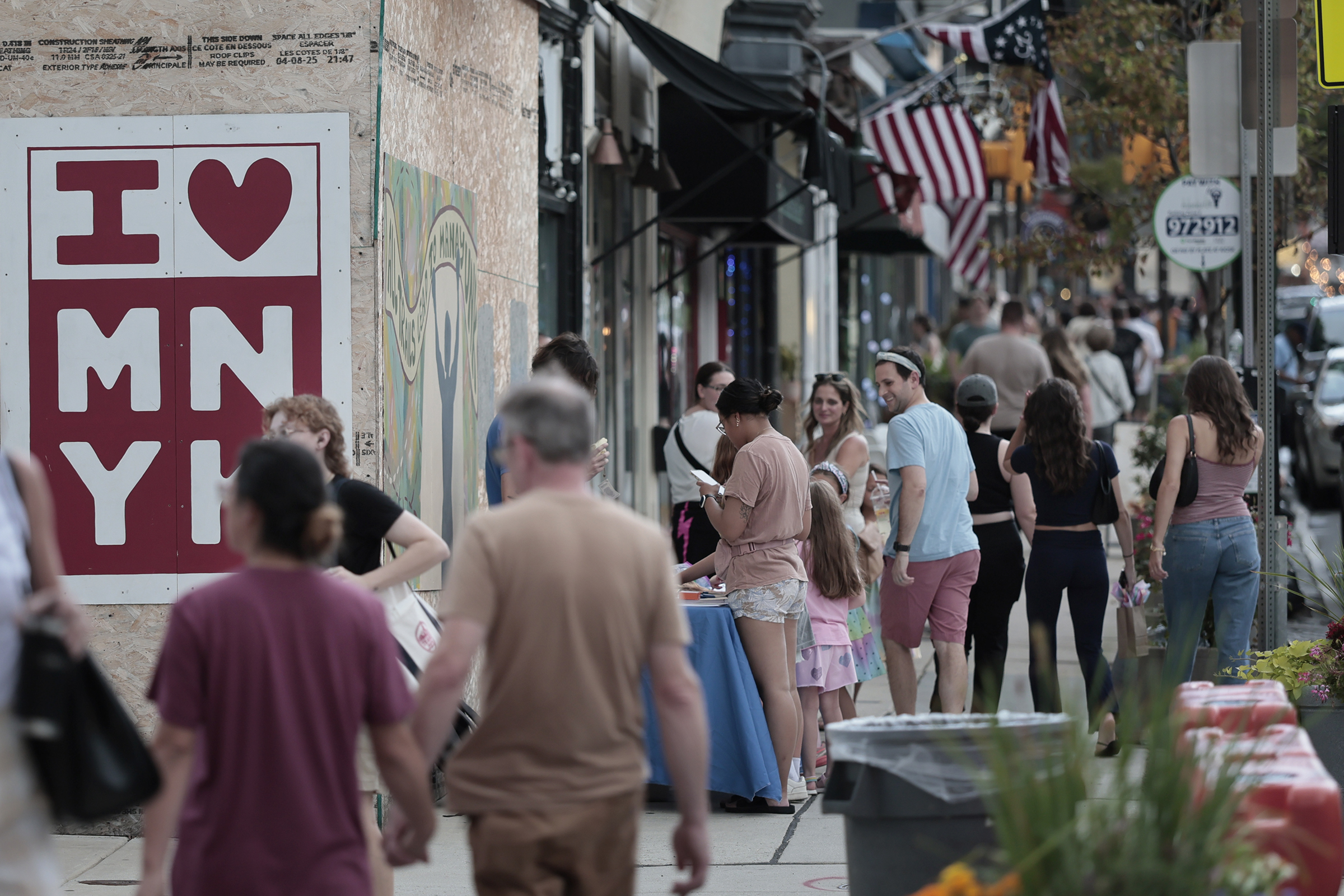
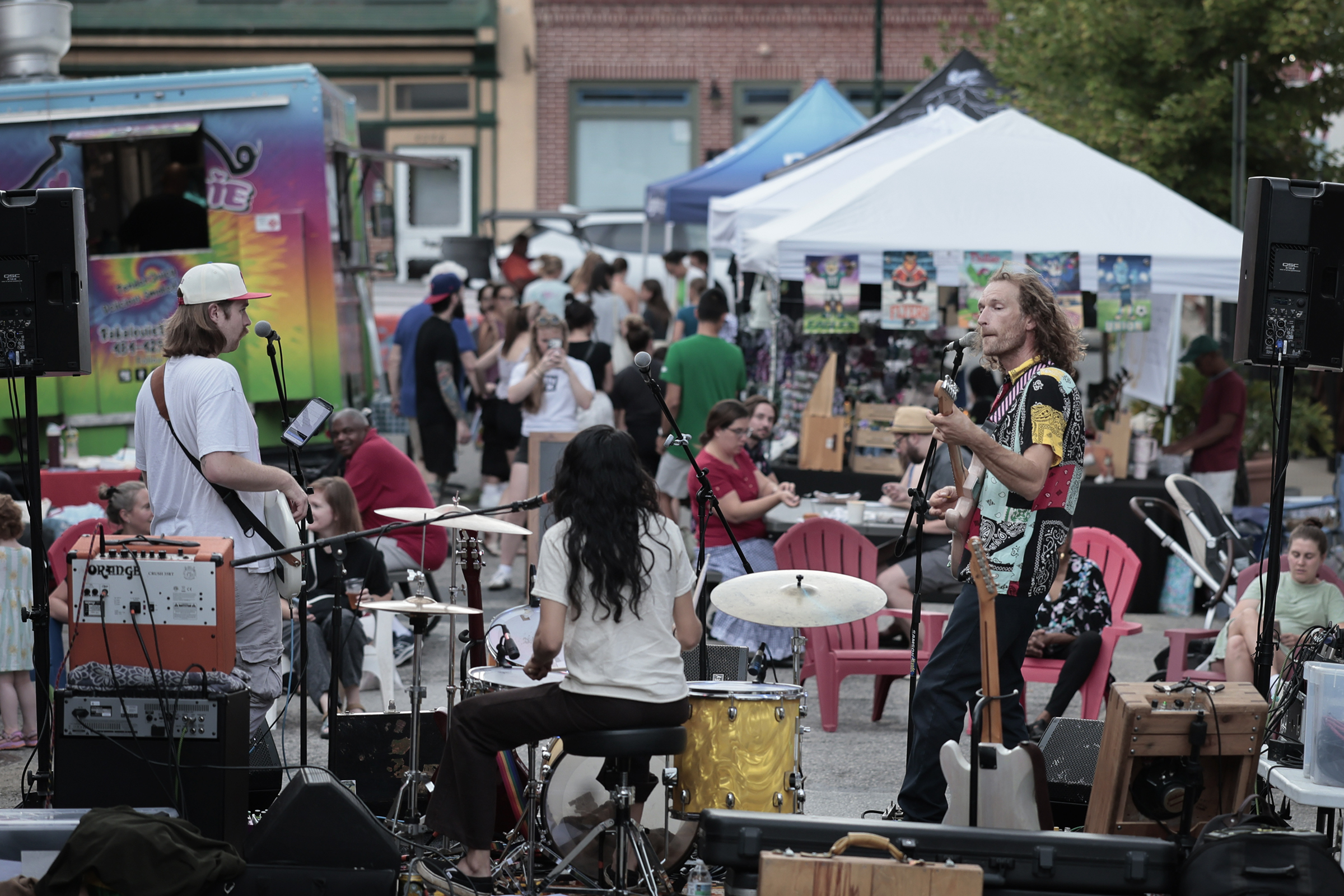
On the last Thursday of July, during Manayunk’s summertime Stroll After Hours event, throngs of young families pushing strollers and couples walking dogs roamed the business corridor.
Some stopped at art vendors with frames sprawled across the sidewalk, while others meandered down Grape Street to grab a bite from a food truck or claim a seat at the outdoor screening of Toy Story.
On such an evening, Main Street Manayunk’s evolution is on full display.
The riverside neighborhood in Northwest Philadelphia has seen many eras, from textile mills in the 19th century to chain retailers in the 1990s, to today’s collection of local upstarts.
“It’s the best it’s ever been,” said Jen Wankoff, 51, of Roxborough, who turned out to Stroll After Hours with her friend, Jen Filip, 50.
“It used to be a lot more commercial. There was a Banana Republic, a Pottery Barn, but then once one left, they all left,” said Filip, who has lived in Roxborough since the early 2000s. “Now it’s all small businesses.”
More changes are coming to Manayunk. Even as apartment development has slowed in much of Philadelphia, over 1,800 new residential units are proposed along or adjacent to Main Street. All that additional population stokes neighborhood anxiety about traffic and parking, but retailers expect it will be good for business.
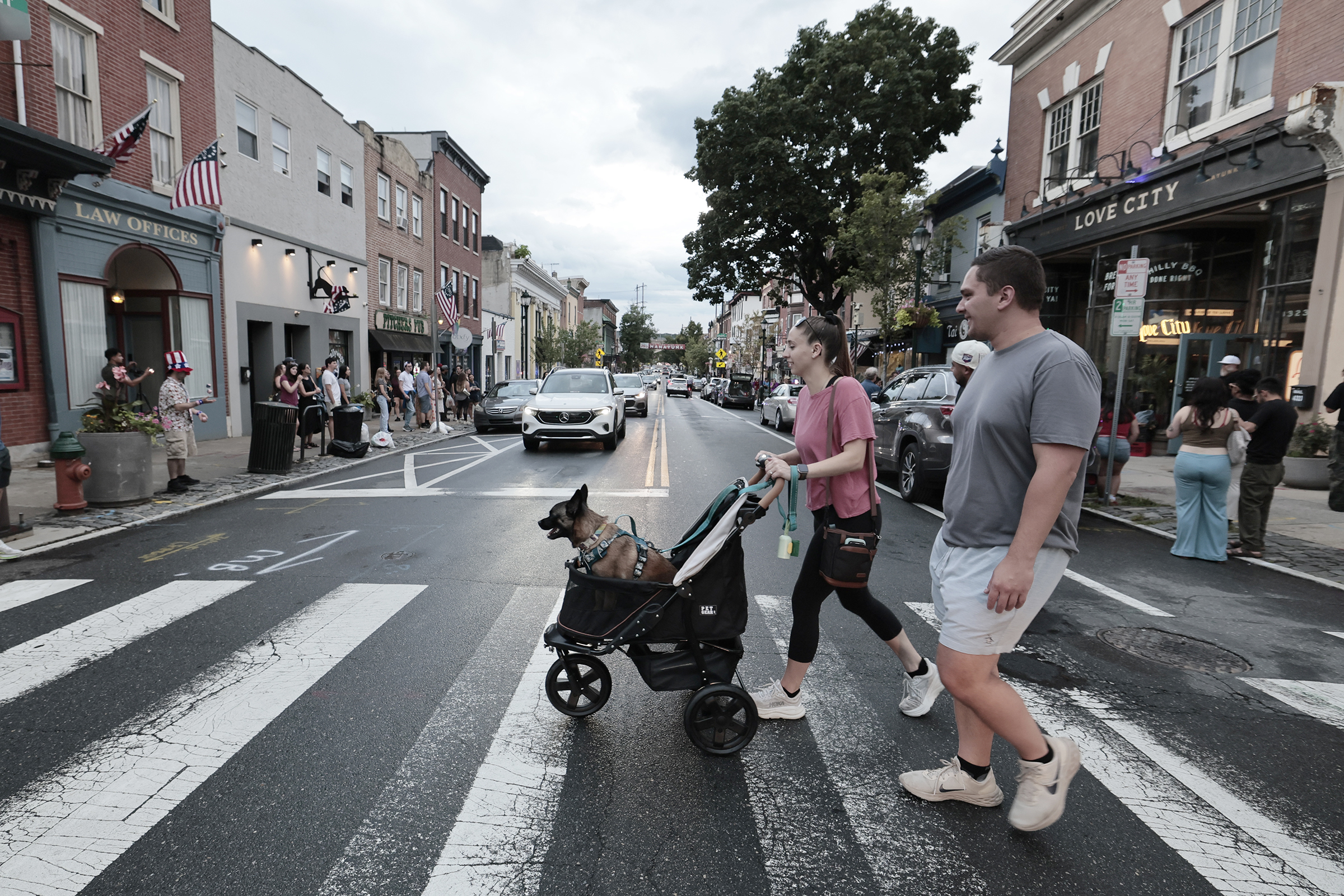
Kim Albanowski of Philadelphia pushes her dog, Koda, across Main Street in “his chariot” as Jason Pepin looks on.Elizabeth Robertson / Staff Photographer
“There’s probably going to be 1,600 new people living in those units, and they’re all going to come to Main Street to shop and eat,” said Dan Neducsin, 83, who has long been the largest property owner on Main Street and helped shape the identity of the corridor.
“The restaurant scene has been strong [since the 1990s], and now I think it’s even going to get stronger,” said Neducsin, who has sold 12 of his properties in recent years to long-term tenants and small-business owners like Tim Spinner, owner of Taqueria Amor.
“I just want to see the people who I have in there now do well, and my tenants have welcomed the opportunity,” said Neducsin, who emphasized that his company is not closing or selling all its holdings. But “it does make sense now for some new people to come in and take advantage of what’s here.”
Manayunk’s Main Street appeal
In the past two years, 12 new businesses opened along Main Street.
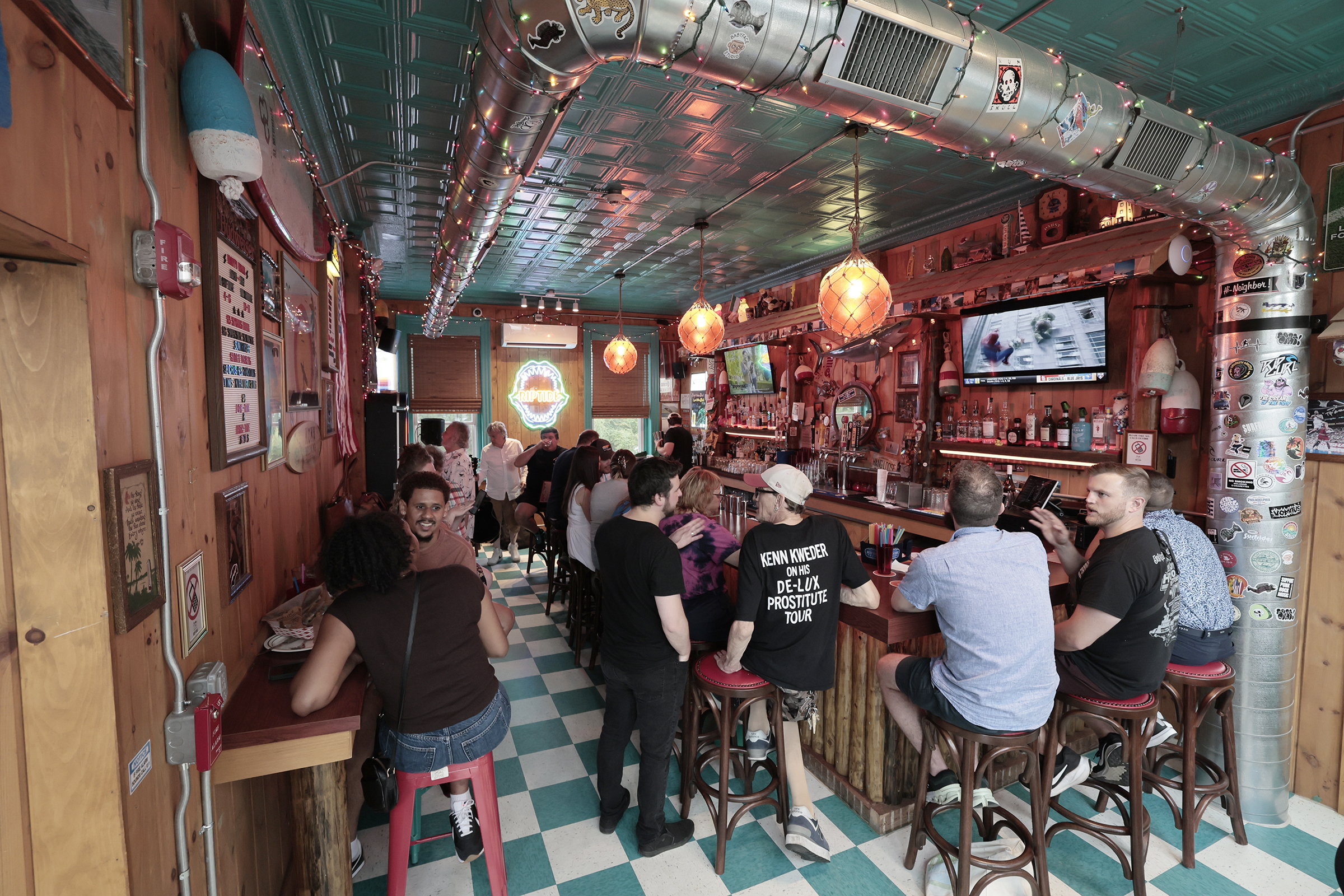
One of them is Riptide Tavern, opened in June by Spinner, who also owns Taqueria Amor next door.
Spinner said he wanted to open a neighborhood bar with creative cocktails and a cheap beer menu — much like a dream restaurant he conceived for a culinary school project years ago.
“I wanted to be in the Caribbean or down the Shore, but along the Schuylkill River with the canal back there is close enough,” Spinner said.
The Riptide Tavern in Manayunk is packed on a Thursday during Stroll After Hours.Elizabeth Robertson / Staff Photographer
Eleanor’s Consignment is set to open on Main Street in October. Owner Emily Mannix, aformer paralegal who has lived in Manayunk for two years, named the consignment store after her late mother, who died in 2023. They shared a love of secondhand-shopping.
“This has been something that has been on my mind for the past four years,” Mannix said. “Life is short, and I might as well jump in and try.”
It’s not a bad place to do that. Realtor Christine Ertz notes that while rent is not low, it’s more affordable than in areas like South Street and Queen Village.
“Manayunk has the demographic businesses want,” said Ertz. “It has the younger folks, but also the more mature folks that have expendable income, and we’ve got the 27-to-35-year-olds that really enjoy the niche, smaller stores.”
The apartment boom in Manayunk promises to add even more. Many of the new developments have smaller units, which are likely to attract single people or younger couples. The price points of the new rentals, while lower than Center City or Northern Liberties, also suggest that tenants will have disposable income.
Those changes haven’t been without controversy. The Manayunk Neighborhood Council has pushed back against development it deems as out of scale with the community, and that’s often lacking new commercial space, affordable housing, and parking while being weighted to small apartments.
John Hunter, an architect and zoning chair of the Manayunk Neighborhood Council, says few of the new buildings have commercial space to add to the neighborhood’s daytime vitality. He disagrees with the idea that the apartment boom will boost local businesses.
“We have heard that misrepresentation for years now — that new apartments will generate pedestrian traffic along Main Street,” Hunter said. “Fifteen years of those promises has proved that is not the case.”
But some neighborhood observers see the development interest along Main Street as a concrete example of the area’s ability to attract people and investors.
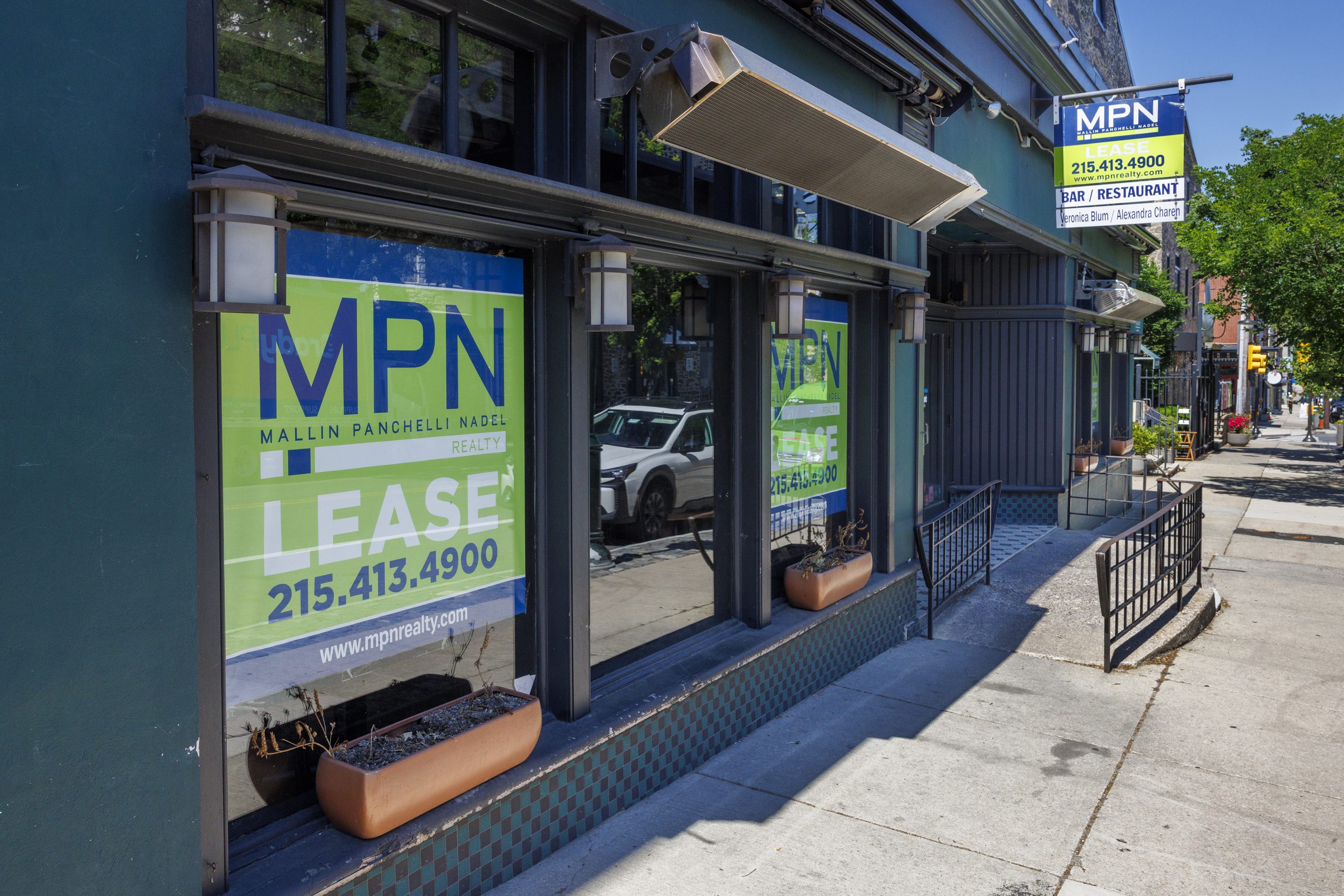
“We’re seeing a diverse group of experienced, well-regarded developers all making independent decisions to put their capital and time into Manayunk,” said Veronica Blum, a retail broker with MPN Realty who has been working with Neduscin on leasing and sales.
“When that many smart people come to the same conclusion about a neighborhood, it says a lot,” said Blum. “It’s a real vote of confidence in Manayunk’s future, and I think we’re just beginning to see what’s possible.”
Nervous Nikki and the Chill Pills perform during the Stroll After Hours event on July 30.Elizabeth Robertson / Staff Photographer
The cost of staying open
Still, the commercial corridor has seen turnover and closures.
Pizza Jawn closed andKismet Bagels came in its place — Pizza Jawn’s owner bought the former Manayunk Tavern down the street, which became Bar Jawn. Smiley’s closed and Blu Zone Cafe moved in; and Iron Works Fitness opened up in the former Kismet Cowork.
A large restaurant space sat empty for months after Winnie’s closed last November. But, two Roxborough natives recently leased the space for a new “punk French” restaurant, planned to open in late fall.
Joan Boroff Denenberg, who does marketing and retail strategy for the Manayunk Development Corp. (MDC), said a few storefronts remain empty because the property owners aren’t local and are backed up with other projects throughout the country.
Neduscin says he isn’t struck by an unusual number of vacancies along Main Street. But maybe that’s because when he began buying properties there in the late 1980s, much of the commercial strip was vacant to the southeast of Cotton Street.
“Anytime I saw a property that was available in Manayunk I ended up buying it because I thought if I owned enough properties, I could kind of set the direction of the street,” Neduscin said. “I got to handpick who my potential tenants would be. I tried to bring tenants that I thought would bring additional people here.”
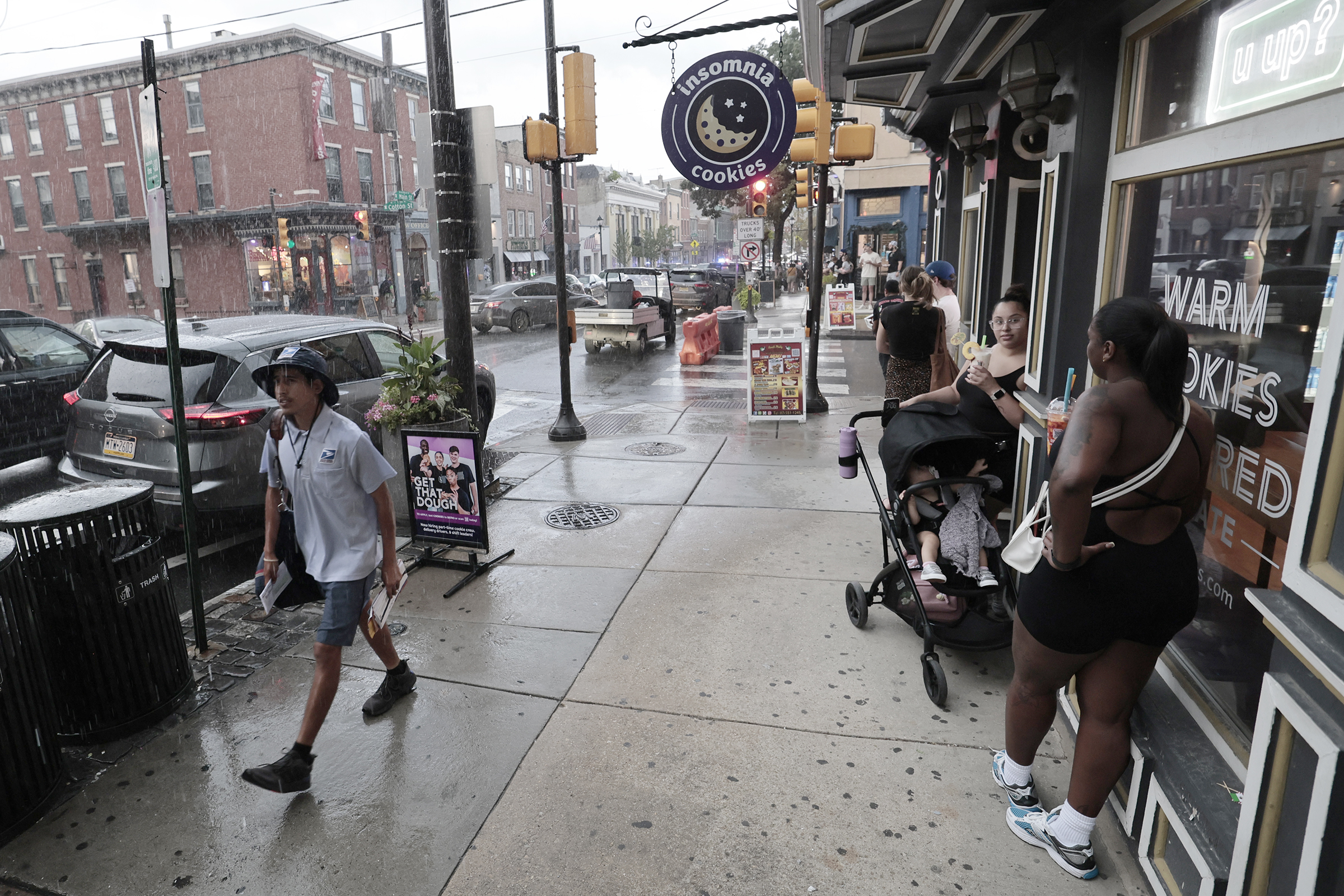
Insomnia Cookies is one of the few remaining chains with a presence on Main Street in Manayunk.Elizabeth Robertson / Staff Photographer
The bustle of Main Street now extends all the way down to Shurs Lane, roughly double its occupied length when he started.
Neduscin also says he really tried to find independent entrepreneurs to lease to — “I didn’t want a McDonald’s on Main Street” — and those restaurateurs and small-business owners gave Main Street a unique identity.
More than 30 years later, that’s why he wanted to sell some properties to one-time tenants like Spinner.
Still, business owners say myriad challenges remain. The permitting process is notoriously slow, especially if a trip to the Zoning Board of Adjustment is necessitated. That can leave business owners paying rent without being able to open their doors as they wait for permission.
“When it takes longer, you have to have deeper pockets, and I think that does scare some prospective businesses,” Neduscin said.
Further, owners on Main Street face the macro challenges affecting small businesses throughout the region. Brandy Deieso, who opened the gift boutique the Little Apple in 2010, said the cost of goods has increased due to tariffs, shipping costs, and rising gas prices.
“Being a street full of locally owned small businesses is great,” said Melissa Walter, co-owner of Love City Brewing, which just opened a second location in Manayunk. “But as we all know, running a small business is really hard.”
Building a business community
The bubblegum pink Cupid’s Bookshop storefront has built a following and even attracted customers from Baltimore and New York since opening last year. Now, it’s upgrading to a bigger location on Main Street.
“The growth we’ve had, it’s been amazing,” said owner Tina Long.
Cupid’s capitalized on the insatiable demand for bodice rippers and love stories, and Long says the bookshop benefited immensely from the MDC’s incubator program. Cupid’s was the first participant.
The program allowed Long to lease a storefront at 106 Grape St., owned by the business association, for a below-market monthly rent of $1,000 for up to three years, and the MDC provided guidance and support. With her new storefront opening in August and a five-year lease, she’s graduating from the incubator space early.
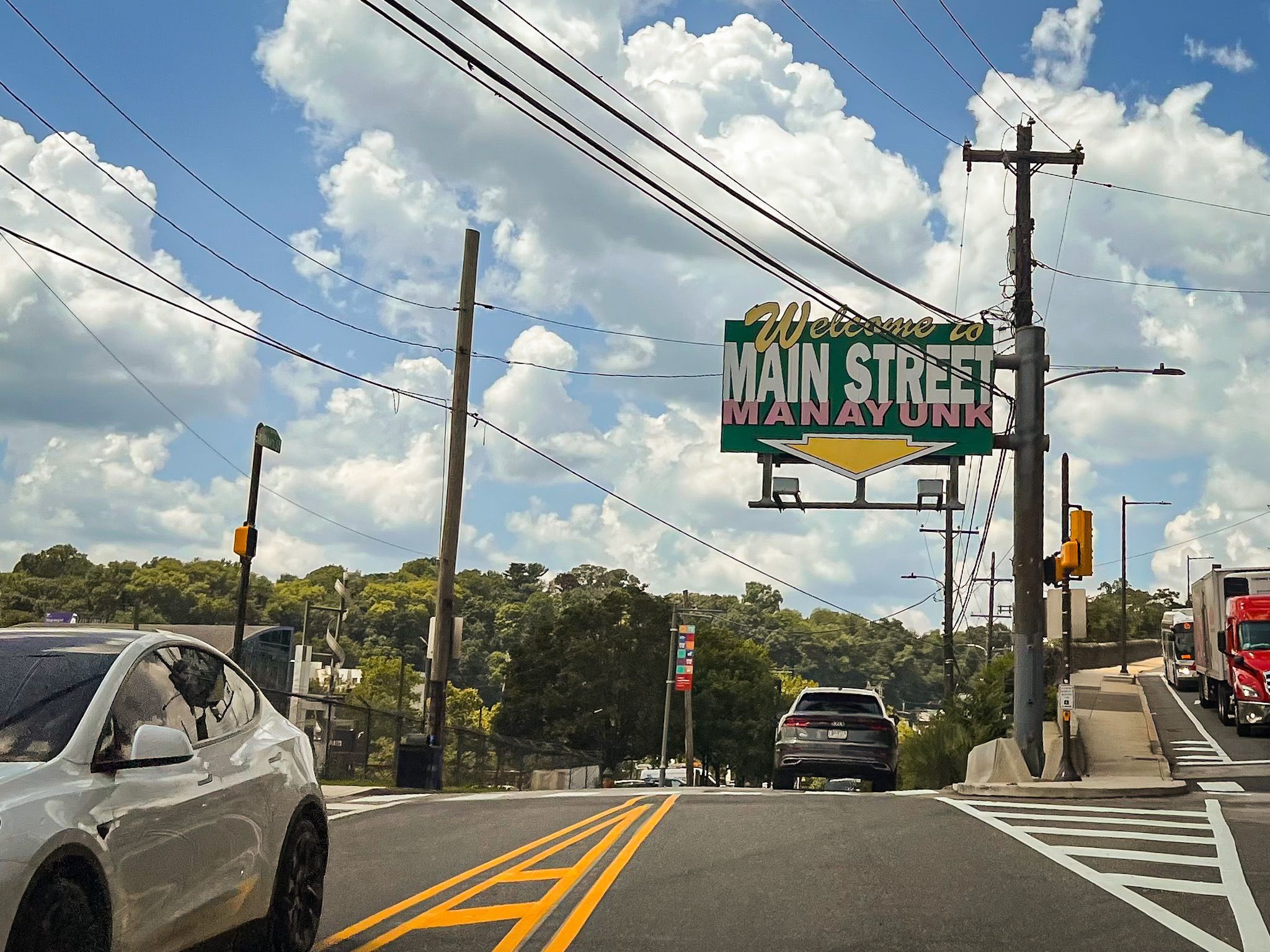
The “Welcome to Main Street” sign hangs over Main Street at Ridge Avenue in Manayunk.Michael Klein / Staff
“We loved the idea, but it turned out beyond our wildest dreams,” MDC executive director Gwen Mccauley said. “She’s now becoming part of the fabric of our district.”
Baby Face Studio also ended up on Main Street in part because of the MDC.
Artist and owner Kim Canefield in 2022 applied for the MDC’s emerging artist tent at the Manayunk Arts Festival, where she could set up shop for $100 instead of operating a $500 tent on Main Street. The festival draws over 300 artists and 150,000 visitors each June, McCauley said.
She set up a full-time vendor tent at the next three Arts Festivals. Each time, she was stationed in front of an art gallery, not knowing that the same space would eventually become Baby Face Studio.
“I just kept looking at it, and peeking through the window,” Canefield said. “The whole time I was staring at the future of what the studio was going to be.”
Love City Brewing already has a foothold in Callowhill, but saw Manayunk as a place to grow. Its second spot opened in the former Fat Lady Brewing. When searching for a new location, co-owner Walter was attracted to Main Street’s critical mass of small, independent businesses.
“Seeing them succeed, we thought: ‘Oh, we’re a small, local Philly business too,’” Walter said. “We can make it work there.”
Hours before Mohamed Coulibaly was found dead in his Gloucester County home, one of his alleged victims said, the 23-year-old entrepreneur had been desperately seeking a $75,000 loan.
A recent Barron’s investigation alleged Coulibaly defrauded three former NFL players out of $1 million in an e-commerce scheme involving fake Shopify stores. Now others who invested in the venture or lent Coulibaly money were blowing up his phone. They wanted to know if Jalen Carter and several former members of the Eagles, including Nakobe Dean and Terrell Edmunds, were even real clients, a claim Coulibaly made on promotional materials.
Above all, these people wanted their money back.
The morning of his death, July 31, Coulibaly solicited money from a New York man, who agreed to speak with The Inquirer on the condition of anonymity to protect his family’s privacy. He is one of at least 10 people, including the three former NFL players, alleging Coulibaly scammed them out of more than $5 million through phony investments over the last year.
Coulibaly, who lived in Mullica Hill, a section of Harrison Township, promised to send a Lamborghini, two gold Rolexes, and a signed Lionel Messi cleat as collateral for what was to be a weeklong loan.
Coulibaly still owed the man $1 million for a bridge loan due in March. Yet he insisted the additional loan somehow would make it possible to return the initial money owed. His alleged victim said he figured he could only gain from the arrangement — if the collateral proved to be real.
But a driver — not in a Lamborghini — arrived at his doorstep with two fake watches, an unauthenticated signed cleat, along with an insurance card and a bill of sale for the promised luxe car, according to the man.
The man called off the loan.
“[Coulibaly] then started to cry hysterical on the phone,” the victim said. “He said, ‘I’ve lost it all, please help me here, please help me here.’”
Coulibaly was found dead later that day.
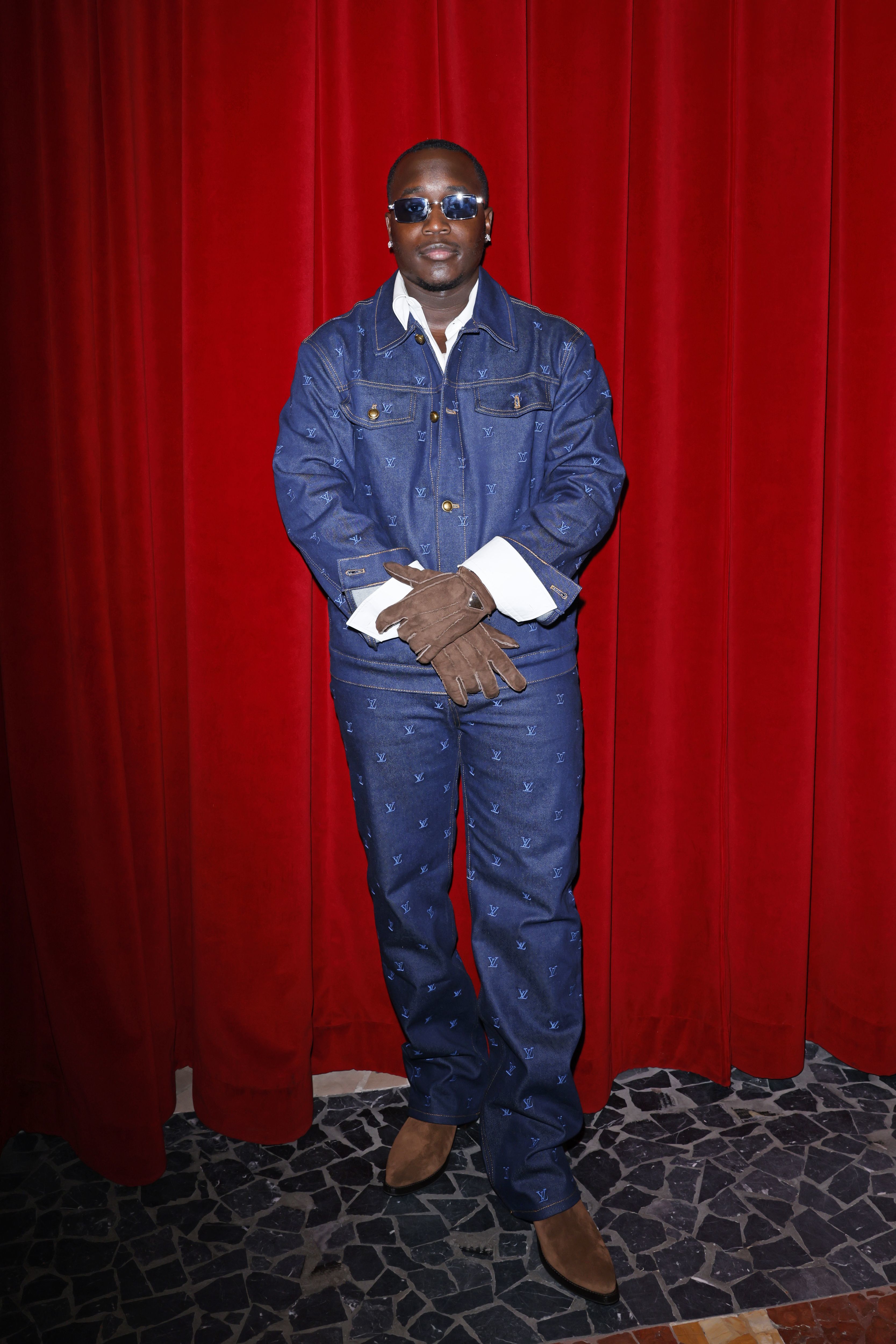
Mohamed Coulibaly attends Milan Fashion Week on Jan. 19 in Milan, Italy.Dave Benett/Getty Images
The Gloucester County Prosecutor’s Office is leading the investigation into Coulibaly’s death and declined to comment. No charges have been filed in connection to the alleged scams Coulibaly is accused of spearheading.
Coulibaly’s death has only added a layer of uncertainty for his allegedly defrauded clients, who now believe they were unwitting participants in a Ponzi scheme. New so-called investments went toward paying off other clients. But the chain could not be sustained.
“In terms of his death, it sounds rather brash or harsh, but the only reason I’m upset for his passing is that he’s not able to go to jail and suffer,” the bridge loan investor said.
The Inquirer spoke with four victims, all but one of whom asked to remain anonymous citing lingering shame, privacy concerns, and, in one case, safety considerations. They provided alleged contracts Coulibaly gave them, text messages, screenshots of their purported Shopify store sales, and a whistleblower report sent to federal and Pennsylvania financial regulators.
In hindsight, the business always seemed too good to be true. The young entrepreneur convinced them they could rake in millions each month selling vacuums, printers, desktop humidifiers, and silicone trays on Shopify, an e-commerce platform similar to Amazon.
At first, investors said they had no reason to question Vent Motion LLC, also known as Motion Venture. Shopify alerted the victims to a steady stream of sales through their phone apps.
But at least two Shopify stores victims bought into were fake, full of transactions a Barron’s analysis suggests are also a sham. Shopify did not respond to requests for comment.
The alleged victims say Coulibaly lured them in by highlighting purported investor relationships with wealthy and connected people. His pitch deck listed several former members of the Eagles and the NBA as clients. Representatives for the current and former Eagles declined to comment or could not be reached.
“A selling point [Coulibaly] gave me was, ‘Hey, we only have about 90 to 100 people in this,’ insinuating you can make it behind the velvet rope because everybody involved is celebrities or athletes, and this is just a venture they do,” said another of the defrauded investors, requesting anonymity because family and friends do not know about the scam.
Yet as more victims have found one another in the wake of Coulibaly’s death, it has become clearer the scheme was not limited to targeting NFL players.
It involved everyday investors from Arizona, Pennsylvania, and New York who now want to know if any of it was real.
A ‘magnetic’ man with the digital footprint of a business phenom
Coulibaly knew how to sell the image of a successful entrepreneur.
His story always hit the same beats: Coulibaly was a professional soccer player. He made $4 million reselling rare sneakers before he turned 21. His success was largely attributed to “building connections” with athletes and influencers. Grinding was the key to success.
But much of that was embellished.
A database for American high school sports coverage noted Coulibaly played soccer for Roxborough High School.
Coulibaly said he began his professional career with the New York Red Bulls soccer team, but a spokesperson said Coulibaly never had a contract.
A friend from Coulibaly’s days at Temple University said the sneaker venture Heatkickcity was also a scam that swindled students out of thousands. He asked not to be named out of safety concerns, saying Coulibaly often touted relationships with gang-affiliated people.
While Coulibaly told publications he was born in Mali, West Africa, and immigrated to the United States at a young age, while in college, he often intimated that he was a trust fund child and that his parents worked for the French government, the Temple friend said.
He added that may have helped induce so many of their peers to pay a $1,200 membership for monthly access to rare sneakers that ultimately never came.
“He’d be like, ‘It’s stuck in shipping,’ or ‘my assistant forgot to order them,’ or ‘my assistant’s slacking,’ and then he would just keep on extending it, extending it,” said the friend. “If you questioned him in any way, shape, or form about the product that you paid for, then he would switch to angry mode.”
The friend eventually got his money back after pressuring him for weeks but said Coulibaly continued his self-proclaimed pursuit of becoming a billionaire.
“He scammed his best friends,” the friend said. “Nobody was off-limits.”
Coulibaly’s next venture was fashion line Motion Apparelz. It was profiled in Forbes last year, where the author describes Coulibaly’s energy as “magnetic.” In the piece, Coulibaly name-drops artist friends, including rapper YG, who was later listed as an investor in Motion Venture promotional materials.
Rapper YG performs at the Coachella Music & Arts Festival in 2019.Amy Harris
YG’s agent could not be reached for comment.
Outside of the glowing profiles, a now-defunct Instagram account also detailed a lavish lifestyle full of run-ins with celebrities, boat jaunts on luxury yachts with city skylines in the background, and snapshots of Coulibaly in or in front of private planes. Often, Coulibaly could be seen wearing gold watches, what appear to be Van Cleef & Arpels bracelets, and diamond-studded chains.
Coulibaly’s digital footprint set the stage for an even bigger business pitch.
A business promising exorbitant returns
When it came to Vent Motion LLC, Coulibaly told clients he operated “factories in China and India with a combined team of 125 full-time employees,” according to a pitch deck he showed investors that was obtained by The Inquirer.
This allowed stores to operate without keeping any inventory and reducing overhead — a model known as drop-shipping.
The savings from eliminating the middlemen, he said, could then be reinvested into artificial intelligence-driven ads and “influencer amplification” to drum up more customers. Coulibaly’s company would set up and manage the Shopify stores on behalf of investors, pushing out additional advertising or swapping out products if sales slowed.
Clients would be charged a 20% to 25% service fee for that work, and even so, Coulibaly dangled extraordinary returns for those who joined the venture.
One Shopify store that began with a $550,000 investment in January 2024 had allegedly generated $2 million in revenue in April and a whopping $23 million in July of that year. By August, this particular store had generated a total of $84 million in revenue, according to the company’s unsubstantiated pitch deck.
Further sweetening the deal was an initial investment “protection” guarantee if their store did not generate profit within six months.
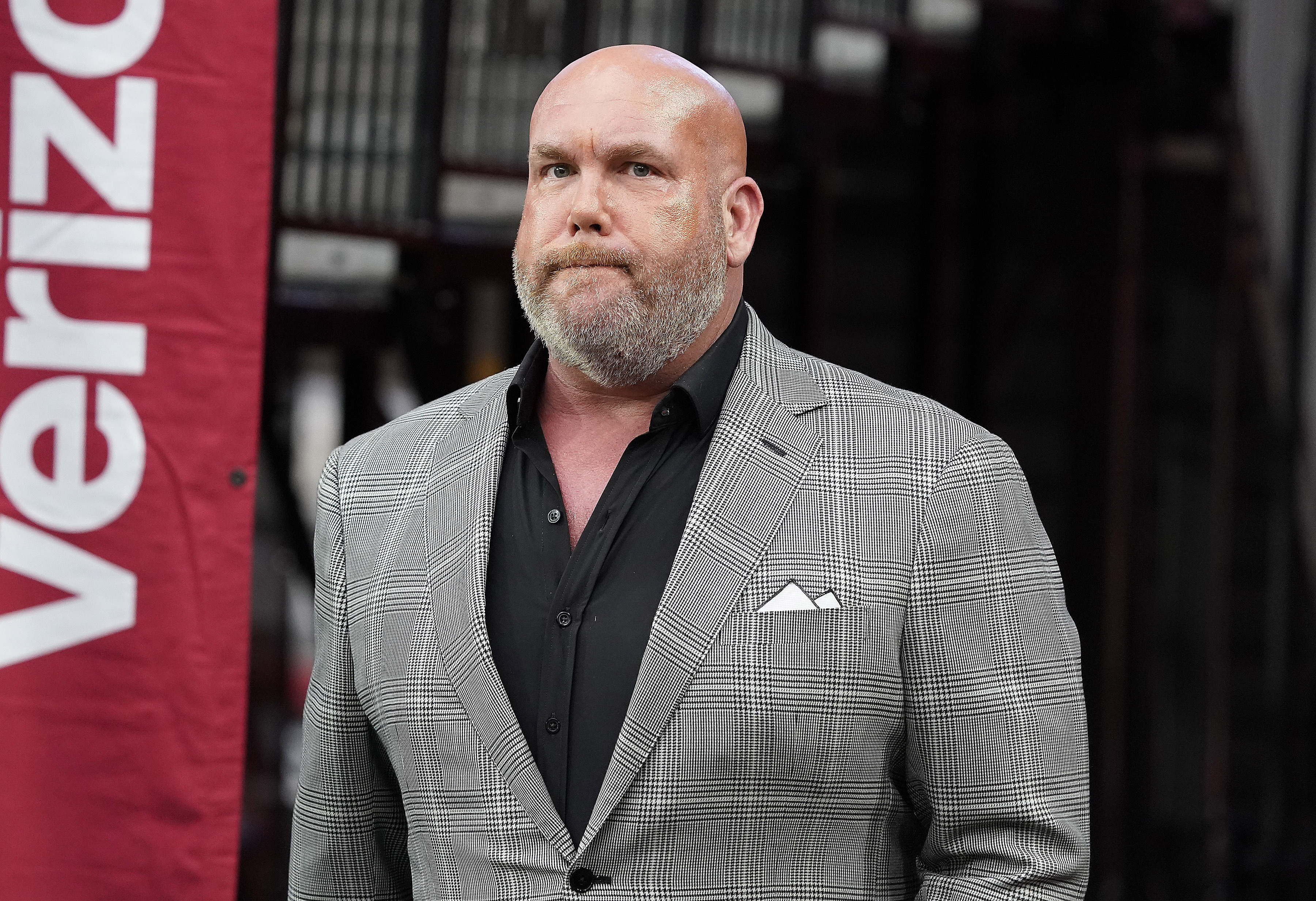
Former Arizona Cardinals General Manager Steve Keim says he was just as much of victim of Mohammed Coulibaly’s alleged scam.Darryl Webb
It’s what got Steve Keim, former general manager of the Arizona Cardinals, into the business.
Keim said he met Coulibaly through mutual Eagles acquaintances and by August 2025 he had bought his first Shopify store, which was recording sales at a pace that had him on track totriple his investment over six months. Keim bought into six more stores the following month, he said. His son and ex-wife would also buy into the business for at least a $1 million investment between all three.
Keim said he was soon offered the role of chief operating officer/chief growth officer, which he now sees as a way for Coulibaly to “legitimize his business.”
“I introduced him to people to sell stores to and that sort of thing,” said Keim, who describes fulfilling a figurehead role with no decision-making power. “He called me the COO but he also made promises to give me health insurance and to have some kind of bonus structure.”
The health insurance, bonuses, and exorbitant returns never materialized. Keim said he never had access to bank records and was never made aware of how many people gave money to Motion Venture. But by the start of the year, Keim claims, a flood of disgruntled investors were asking him for help getting their money back. Around this time, Keim said, he asked Coulibaly to stop using his name in promotional materials and told him he no longer wanted to be COO.
Keim contended he was as much of a victim as anyone else, holding onto hope that he could recover his money until Coulibaly’s death.
“This went downhill fast,” he said. “Not only did I get my name drug through the mud, I lost a lot of money since I was an investor.”
A Dubai deal
As more investors were demanding access to their Shopify funds in the fall, Coulibaly was telling them that the Dubai firm Middle East Venture Partners was interested in buying the operation for $215 million.
All they had to do was reach 175 online stores and meet other benchmarks by Aug. 1.
To back his claim Coulibaly produced a letter of intent dated Aug. 14, 2024.
Troubling for investors: The letter was dated more than a month before the company was registered in Pennsylvania.
The discrepancy was the biggest red flag for Barry Minkow, a convicted fraudster who now investigates scams on behalf of fraud victims. He started poking around the company at the start of the year for an investor who had put up $150,000.
“So here you are looking at a private equity company saying they’re going to buy up this company that doesn’t even exist for $200 million?” Minkow said in disbelief.
Middle East Venture Partners did not respond to an email to asking if a relationship existed with Coulibaly’s Vent Motion LLC.
With the permission of three of the alleged victims, Minkow submitted a 23-page whistleblower report to the U.S. Securities and Exchange Commission, FBI, and Pennsylvania Department of Banking and Securities. The report laid out victim accounts and flagged glaring issues with Motion Venture’s business model.
Minkow warned regulators in February thatintervention was essential to “halt ongoing solicitations, trace misallocated funds,” and stressed the importance of doing so “before the scheme inflicts further, irreparable harm.”
Minkow would prove to be right. Motion Venture was still actively recruiting new investors that month.
Picking up the pieces
Coulibaly’s college friend thinks he might have been one of the first victims of the Shopify sometime about three years ago. It involved less paperwork back then, more of a handshake deal. The friend put in $5,000 in a store with an investment protection promise in place, he said. Unlike that time in college, however, the friend only got half his money back.
The friendship with Coulibaly cooled after that.
“People just keep on saying he scammed NFL players,” said Coulibaly’s college friend. “No, anybody with money could be scammed, no matter how small.”
Coulibaly would insist money issues were the Dubai firm’s fault until his death, according to his alleged victims who shared screenshots and voice memos of conversations.
He ricocheted from distraught, lamenting the financial ruin that awaited him if he did not acquire more investors, to defiant, celebrating the Philadelphia 76ers’ LeBron James trade on X as he dodged investors.
When Keim and another investor flew into Philadelphia to meet with Coulibaly in late July, they spent a day and a half trying to figure out how much money was left, to no avail.
It was around that time that Coulibaly was soliciting the New York man for the $75,000 loan.
Coulibaly’s last post on X was a reshare a day before his death. “Trying to be everyone’s friend is a foolish behavior,” it read.
Whether any investor money remains is unclear. A now-defunct GoFundMe page put together by a man claiming to be Coulibaly’s brother raised more than $12,000 for the body’s “international transportation arrangements.”
Investors are also trying to figure out what legal recourse they might have, if any.
Coulibaly’s death has shattered any last remaining hope some victims had that a Dubai firm was to blame for cash-flow issues, and they are now seeking legal help.
It also left them feeling cheated one last time.
Staff writer Ryan W. Briggs contributed to this article.
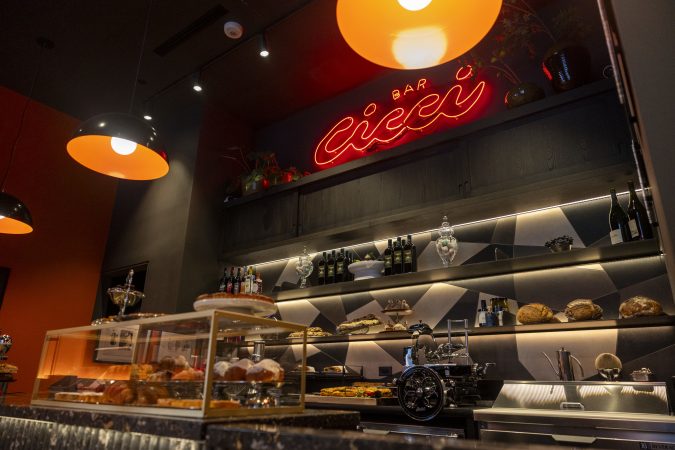
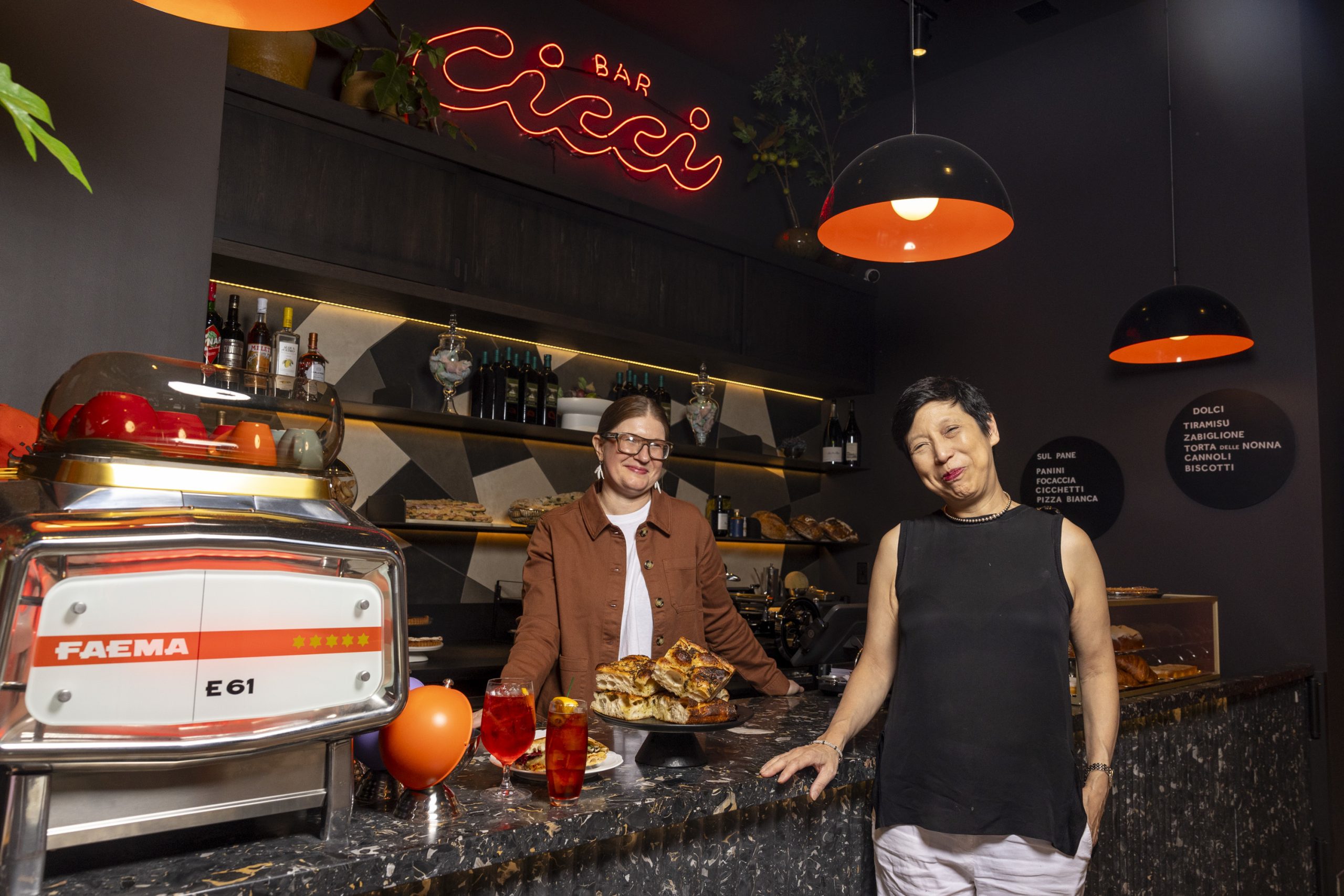
High Street Hospitality founder and James Beard Award winner Ellen Yin is just about ready to hit Rittenhouse with Bar Cicci, an all-day drop-in for espresso and pastries by morning, sandwiches by day, and spritzes, cicchetti, and small plates by night. Join Beatrice Forman on Sansom Street for your first look.
Shore season isn’t done yet, and neither are farmers markets, which have seen an uptick in business locally in the midst of a cyclospora outbreak. Hira Qureshi maps out where you can buy local produce, baked goods, and more at markets down the Shore.
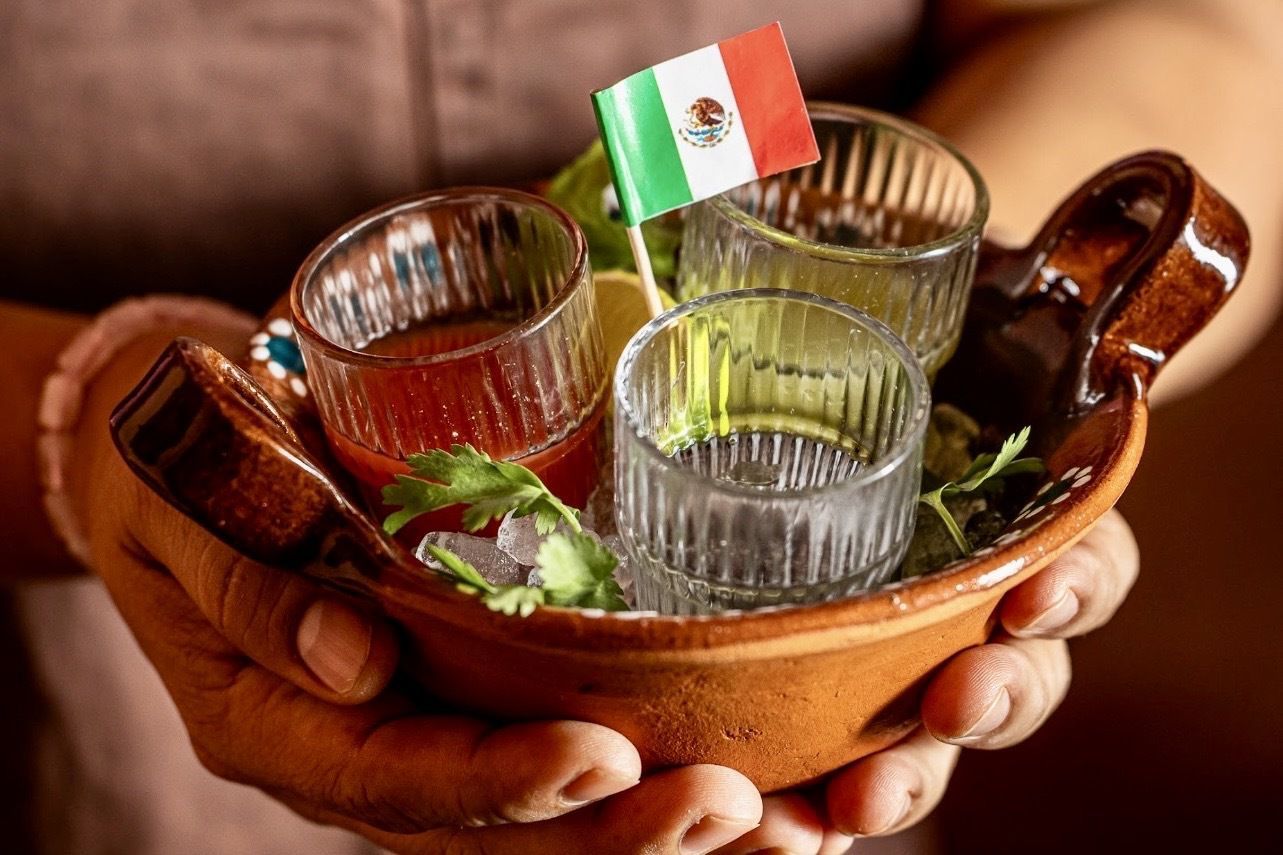
Besides Bar Cicci, a half-dozen new restaurants are on tap this month, including Recipe Philly in Center City, Cecilia in Bridgeport, and Mixteca in East Kensington, where the red, white, and green of la bandera figures into the signature cocktail.
Lancaster Avenue in Ardmore, one of the Main Line’s busiest commercial strips, is now home to two new dessert shops. Denali Sagner explains that one specializes in tea, cakes, and buns, while the other celebrates the mango.
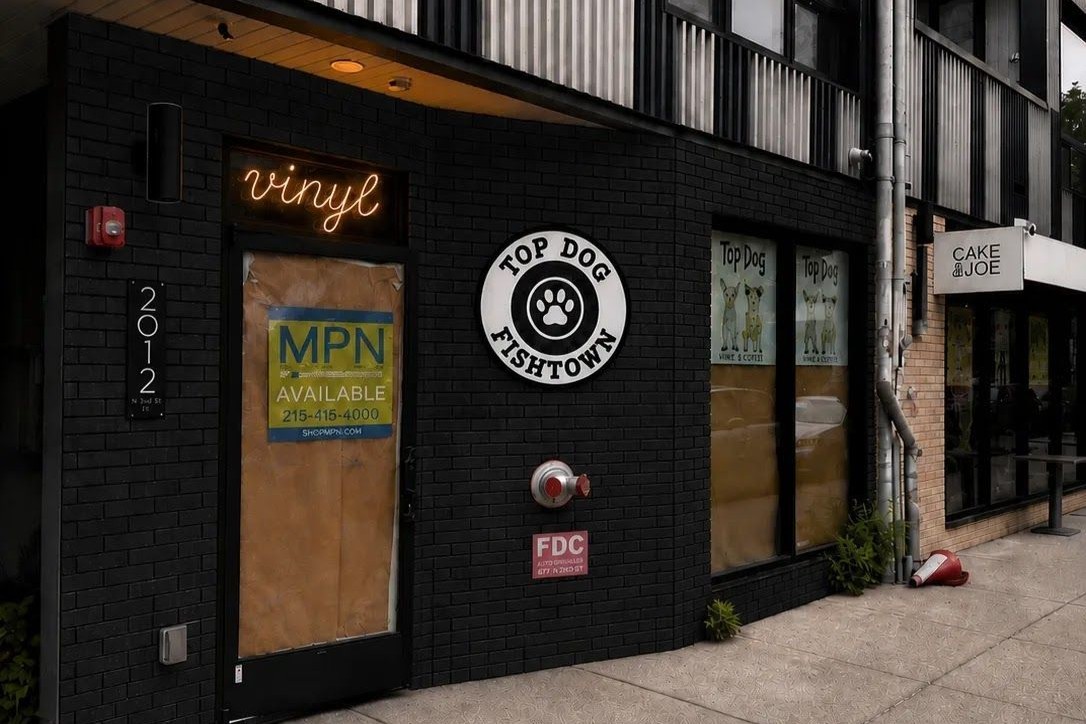
Canned-cocktail brand Top Dog is setting up listening rooms in Kennett Square and Fishtown, embracing the Japanese jazz kissa model — a music cafe or bar that’s focused on listening to vinyl records. Brooke Schultz chatted up Top Dog’s Ken Smukler, who aims to deliver an “analog feel in a digital world.” The Fishtown location is tiny. It used to be an ATM.
The handmade tarts from Market Day Canelé layer summer tomatoes over a corn custard with cremini and button mushrooms, herb-roasted cotto ham, eggs, and Gruyère in a flaky crust. Kiki Aranita says you have to act fast to snap one up.
Scoops
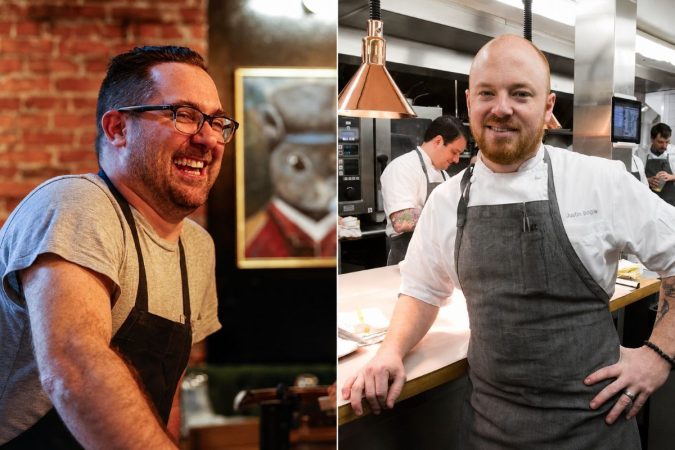
Two chefshave made big professional strides from their roots in Roxborough, and now they’re coming home to Manayunk to take over the Winnie’s space with a “punk French” eatery.
Aldar Bistro in Bala Cynwyd is giving way after 34 years to a white-tablecloth Southern Italian restaurant called Bruzi.
Does a spateof restaurant-closing announcements — such as Hiroki, Federal Donuts & Chicken,and the Lodge by Two Robbers — portend industry doom? No, and I’ll explain why not.
Restaurant report
Gabriella’s Vietnam in South Philadelphia is counting down to closing in mid-December as the new owner of her building is planning a restaurant of their own. Chef-owner Thanh Nguyen told Kiki Aranita that she is looking for a new spot.
Side Eye, the Queen Village bistro, gets a bit of side eye from critic Craig LaBan, who likes the vibe and pricing but thinks the execution could be sharper.
New drive-thru coffee option: The syndicated 7 Brew has opened at 4000 Woodhaven Rd. in Northeast Philadelphia’s Knights Road Shopping Center.
More bagels are coming round: Central Florida-based Jeff’s Bagel Run — schmeared with private-equity investment — has cinched a franchisee for 10 stores from the Harrisburg area east through Reading and the Lehigh Valley to suburban Philadelphia. No leases have been signed, the company announced in a press release.
Briefly noted
Cantina la Martina’s fourth annual Cemita Festival returns from 11 a.m.-4 p.m. Sunday at the Garden Center across from Mural City Cellars (1825 Frankford Ave). Six restaurants will each serve interpretations of Puebla’s iconic cemita sandwich for $16: Cantina la Martina, Gilda, Bolo, Vientiane Bistro, Cinteotl Tamalli, and Los Cuatro Soles Restaurant. Also: beverages from Mural City Cellars, DJ Cali Rumba, dance performances by Danza Tonantzin Cultura, face painting, and artisan vendors. It’s pay-as-you-go. Some cemita vendors are cash only.
Post Haste in East Kensington will become Philadelphia’s only participant in the inaugural Global Pay What You Can Day on Aug. 26, joining restaurants from Mexico City to Mumbai in a one-day effort to make dining more accessible. Guests can order whatever they’d like and pay what they can (excluding alcohol), building on chef Ari Miller’s weekly pay-what-you-can program launched earlier this year. (Miller is married to Inquirer staff writer Kiki Aranita.)
The Fishtown Pickle Project is taking its annual pickle-themed dinner outside of Fishtown for the first time. The Aug. 27 edition will have founders Niki Toscani and Mike Sicinski in Rittenhouse to collaborate with Uchi on a nine-course, pickle-centric tasting menu (e.g. oysters with giardiniera, yellowtail with pickled peach, salmon with pickled enoki, and a dessert featuring pickle jam). Seatings: 6 and 8:30 p.m. Tickets: $125 per person, plus tax and gratuity.
Chef Chaz Brown, in partnership with Forman Arts Initiative, will present the third annual Oxtail Collective from 1-5 p.m. Aug. 30 at the Substation in Kensington. Titled “The Hercules Posey Celebration” — after George Washington’s enslaved chef — the event will bring together Black chefs, historians, artists, and entrepreneurs to explore the intersections of food, culture, business, and history while serving as an early public introduction to Forman’s future 100,000-square-foot arts campus. Participating chefs include Chad Williams of Friday Saturday Sunday, Omar Tate and Cybille St. Aude-Tate of Honeysuckle, and Shola Olunloyo of Studiokitchen. PBS NewsHour’s Geoff Bennett will moderate panels, and the program also includes tastings from 15 chefs, cooking demos, and a marketplace featuring Black-owned businesses. Tickets ($92.55, including fees) are on sale.
Delicious City Philly Podcast’ssecond annual Hoagie Throwdown has a date: Sept. 27, from noon-4 p.m., at Other Half Brewing in Fishtown, drawing 20 chefs, restaurants, delis, and sandwich makers to compete. There will be unlimited hoagie samples, beer/soft drinks, and pro wrestlers grappling. (Last year’s outing was a scene: The Inquirer’s Craig LaBan, in a Zorro mask and big hat, went through hoagie-making boot camp.) The podcast has made 500 tickets available and early pricing starts at $55.
❓Pop quiz
Which Pennsylvania farm crop is in the crosshairs of the U.S. Department of Commerce?
What is going on at 117 Chestnut St.? The restaurant 117 is closed already and it just opened. — Chris D.
Old City restaurant 117, which opened only last November, posted a note on Instragram last week that it had closed “due to circumstances beyond our control.” According to Philadelphia court records, the restaurant was evicted over back rent.
The space’s previous occupant, the Avery, also had a very short run last year. Previous occupants had better luck: 2nd Story Brewing Co. closed in 2024 after a decade and was the last to use the brewing equipment installed by Triumph Brewing Co. for its own run from 2007 to 2014.
Adding intrigue now is the liquor license application that was filed at 117 Chestnut St. last week in the name “Finish Your Champagne LLC.” Finish Your Champagne is the name of the long-in-the-works Columbus Boulevard cocktail bar project from Kevin Dolce, owner of Center City’s Taste Cheesesteak Bar and Savù. Dolce declined comment.
📮 Have a question about food in Philly? Email your questions to me at mklein@inquirer.com for a chance to be featured in my newsletter.
By submitting your written, visual, and/or audio contributions, you agree to The Inquirer’s Terms of Use, including the grant of rights in Section 10.
After nearly four decades of friendship and two careers that took them in different directions, chefs Arthur Cavaliere and Justin Bogle are working together.
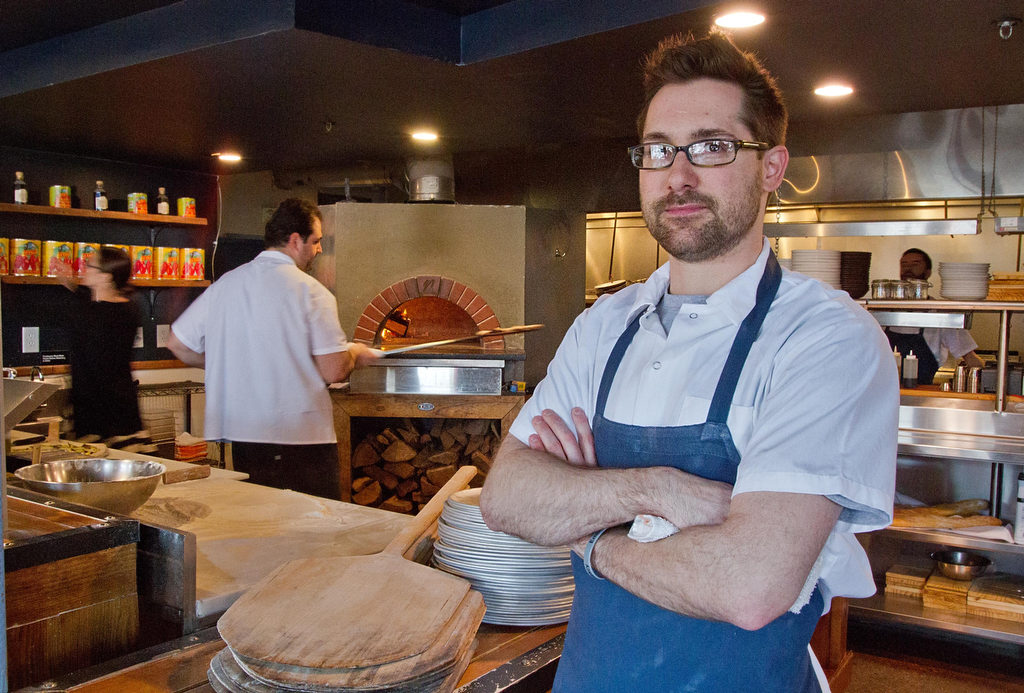
The Roxborough natives and best friends since third grade, both 45, have signed a lease for the former Winnie’s Manayunk space on Main Street near Roxborough Avenue, where they plan to open a new restaurant in late fall. Though they are keeping most details, including the name, under wraps, they describe the project cryptically as a “punk French” restaurant inspired by the neighborhood that helped shaped them.
The former Winnie’s at 4266 Main St. in Manayunk.Alejandro A. Alvarez / Staff Photographer
For both, the restaurant represents the fulfillment of a dream they have shared since they started cooking together as teenagers.
“Artie and I have been best friends since grade school,” Bogle said. “We always had this vision, this pipe dream, that someday we would join forces and do something together.”
The two met at Shawmont Elementary in Roxborough and got their start in the late 1990s working for chef Derek Davis at his string of restaurants then on Main Street. Their careers soon diverged.
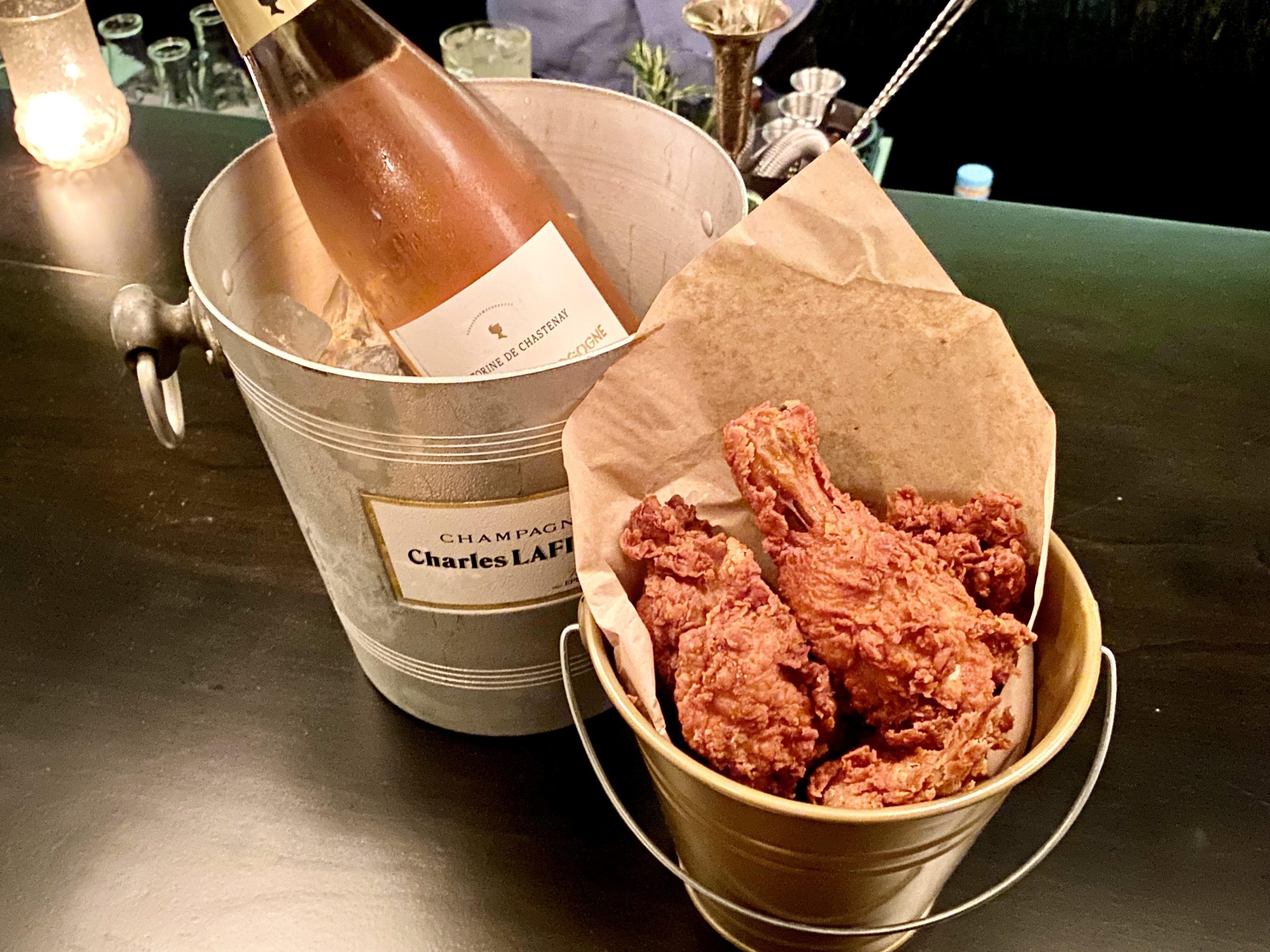
Cavaliere is a longtime consulting chef. Among the gems he created was the shatteringly crispy chicken at the former Bar Poulet at 20th and Walnut Streets. He came up through Philadelphia kitchens including El Vez and Parc, where he was executive chef, and headed to chef Michel Richard’s orbit in Washington, before opening In Riva, Black Squirrel Pub & Haunt, and Foghorn in East Falls. He left that partnership last year.
Chef Arthur Cavaliere’s fried chicken was a signature at Bar Poulet, which was open in 2021-22 at 2005 Walnut St. Michael Klein
Bogle, who attended Walnut Hill College, cooked at Striped Bass and Alma de Cuba before heading to New York, where he became one of the youngest American chefs to lead a two-Michelin-starred restaurant at Gilt. In 2013, he returned to Philadelphia to open Avance — the successor to Le Bec-Fin — and after its 2014 closing joined Garces Group as corporate executive chef. He later returned to New York, where he spent years with Union Square Hospitality Group, most recently as executive chef of Manhatta.
Family drew him home after nearly two decades in New York.
“I knew I needed to give my kids a backyard,” Bogle said. “Raising three kids in a two-bedroom apartment wasn’t the goal for me.”
Avance, led by Justin Bogle, had a 10-month run after Le Bec-Fin’s closing at 1523 Walnut St.David M Warren / Staff Photographer
He left Manhatta last spring, relocated his family to the area last August, and immediately resumed planning with Cavaliere. They spent the past year evaluating Main Street locations before settling on the former Winnie’s, which closed last November.
“When the right space presented itself, it was a no-brainer,” Bogle said.
The partners are keeping quiet about the menu, name, and design while they refine the concept. Bogle will oversee the kitchen and said the long-term plan extends beyond a single restaurant. “We have goals and aspirations to do more than just this,” he said.
Chef-owner Arthur Cavaliere at In Riva in 2013. Working the pizza oven at rear is sous chef Biff Gottehrer, now at Ripplewood, the Refectory, and Izzy’s.David M Warren / Staff Photographer
If construction and permitting stay on schedule, they hope to open in November. If delays push the project into December, they are likely to wait until after the new year.
Cavaliere said the concept is rooted in “friendship, memory, and the neighborhood that raised” them.
“Their decision to invest in Manayunk is another testament to the strength of the neighborhood and the continued momentum of its dining scene,” said Veronica Blum of MPN Realty, who brokered the lease with Alex Charen. “It’s especially rewarding to help bring operators of this caliber to a community that values independent concepts.”
For Bogle, returning to Main Street with the friend he has known since childhood carries a significance beyond opening another restaurant.
“For us to come back to where it all started, plant our roots there, and have some fun — it has been a goal for a long time,” he said. “We’re just really excited about the opportunity.”
Fifty years ago this Aug. 11, my brother Harold Rosenthal was late for a plane out of Istanbul bound for Jerusalem. He was always late — school, appointments, parties, or late finishing dinner at Horn & Hardart’s, the only restaurant working-class families patronized in Philly then.
While my younger brother Norman and I agonized on the sidewalk, Harold would take bites of food in between whatever book he was reading, a passion cultivated when he was a student at Central High in the early 1960s.
On this August day his tardiness put him near the back of the line at the gate for El Al Airlines. At the time, Harold was working as a senior aide to Republican New York Sen. Jacob K. Javits. He was heading to Israel as part of an assignment for the Senate Foreign Relations Committee, which had sent him on a tour of American embassies in the Mediterranean, ending with a seminar at Jerusalem’s Van Leer Institute.
Fifty years on, I’m certain Harold’s improbable rise was built in Philadelphia.
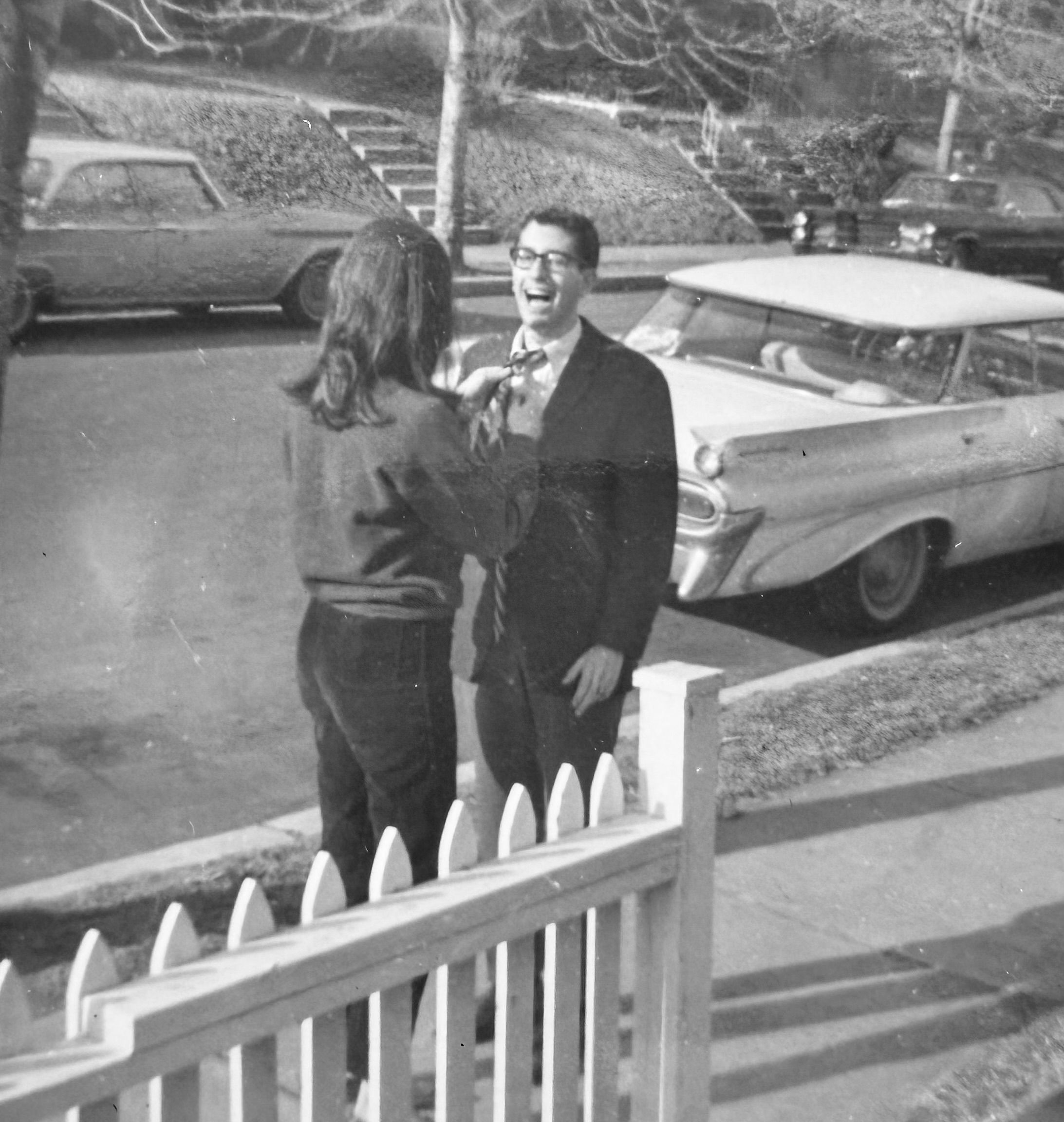
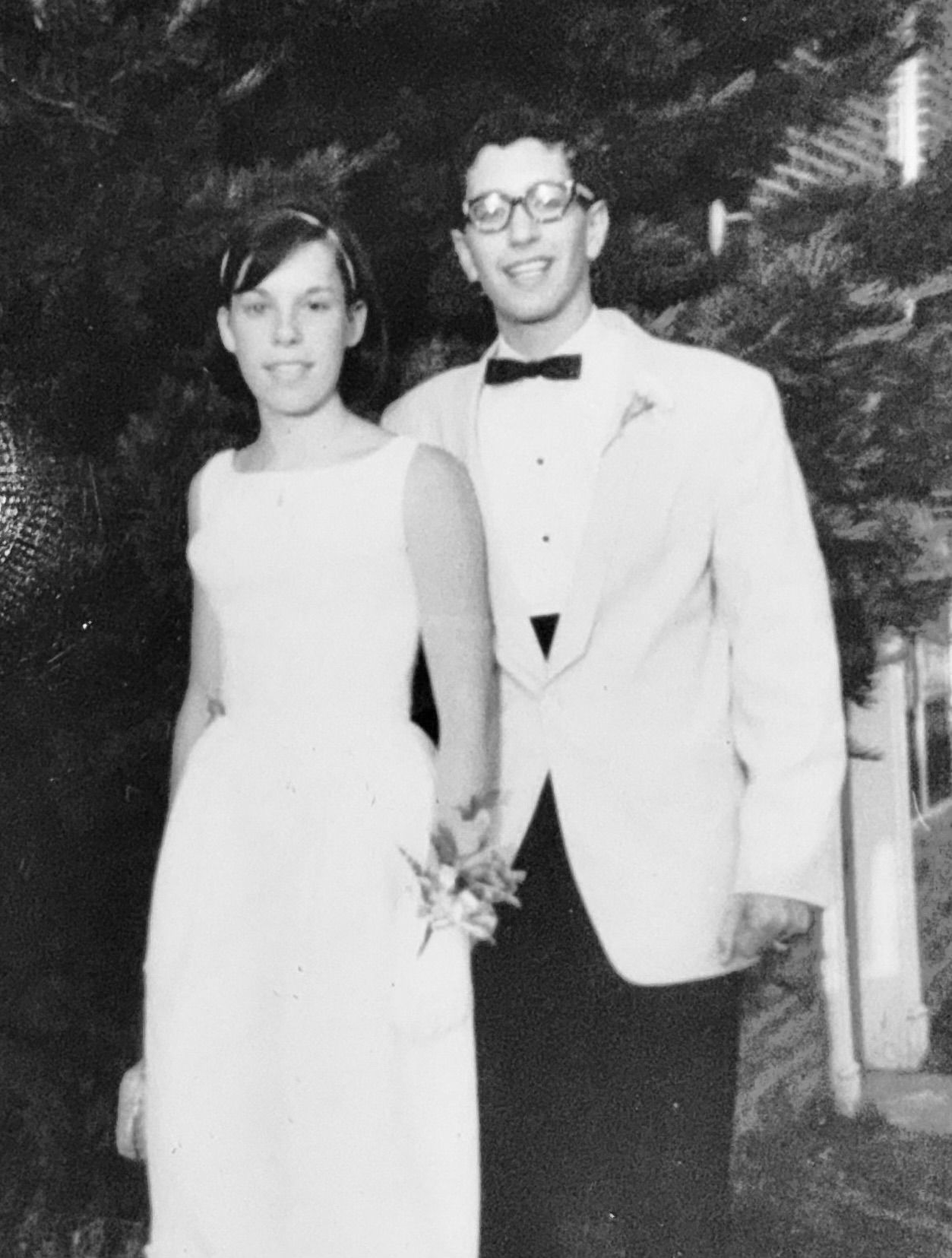
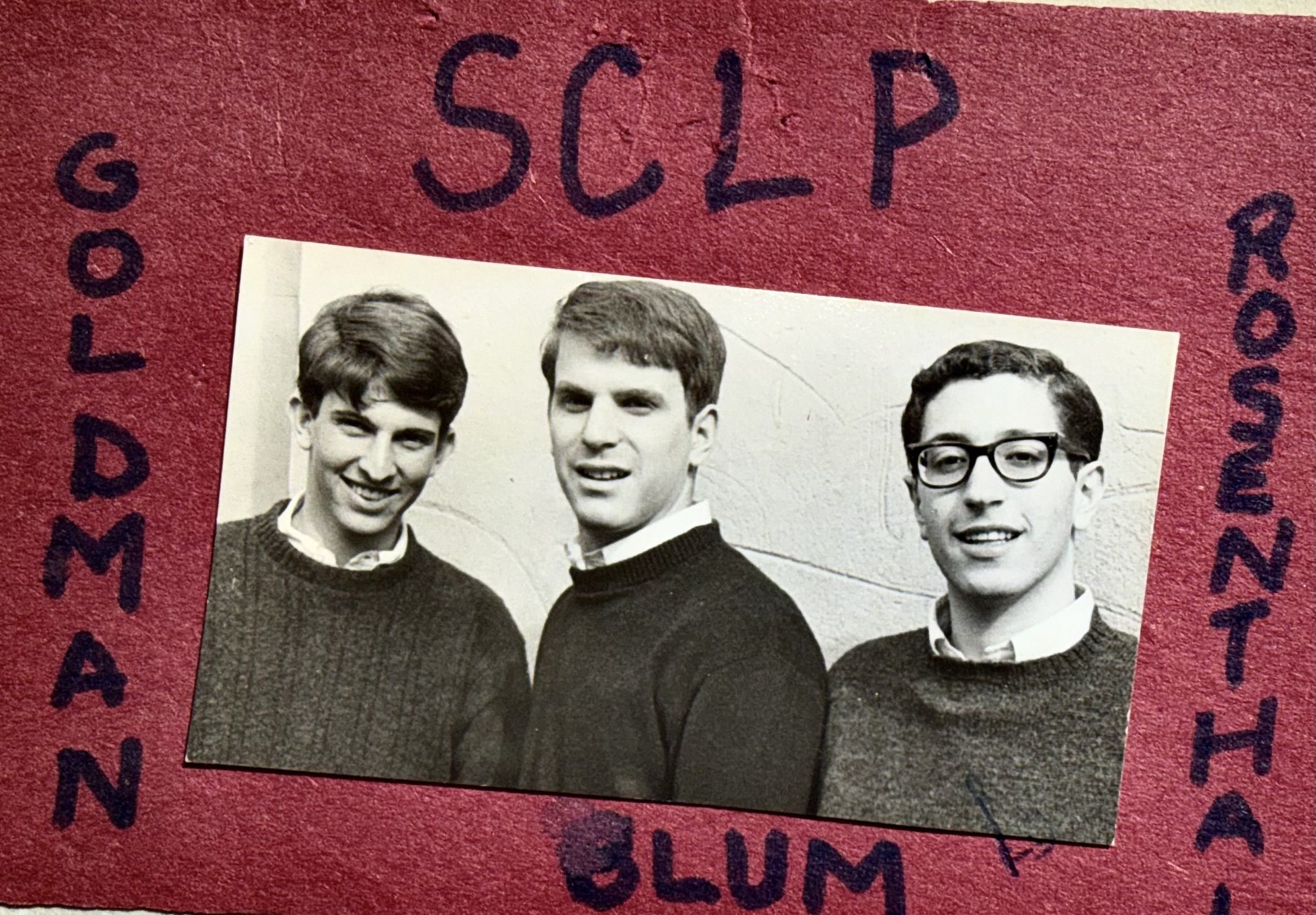
Harold Rosenthal, on Tulpehocken Street in West Oak Lane, in 1966.Courtesy of Mark RosenthalHarold Rosenthal ready for his senior prom at Central High School, May 1965.Courtesy of Mark Rosenthal
We grew up in a rowhouse on Tulpehocken Street in West Oak Lane, the kind of block where everyone knew everyone and you learned early which streets were yours to walk down and which weren’t.
Our parents worked hard but nearly lost that house to foreclosure twice. No kids had cars back then, which was fine. You walked to Pennypacker Elementary and then, to get to Wagner Junior High, Central High, and Temple University, you learned the buses, trolleys, and subways.
Harold Rosenthal (right) running for student council at Temple University in 1966.Courtesy of Mark Rosenthal
Out of this modest life, Harold built a career in a world that seemed unknowable to the rest of us — all on his own. We didn’t have a word yet for “nepo baby” because no one we knew had money or connections. But Harold was audacious about wanting more. That audacity carried him to a scholarship in France, then Cambridge University in England, and finally Harvard.
I was awed by his fearlessness. At Cambridge, seated at the back of a church for an Advent Carol service, he watched choristers slip through a side door and, deciding his seat wasn’t good enough, followed them. His friends — the ones who’d never dare follow — watched an hour later as he processed down the aisle in white robes, candle flame dancing, past Prince Charles, biting back a laugh.
That was Harold in full: certain that any door marked not for you was the one worth opening.
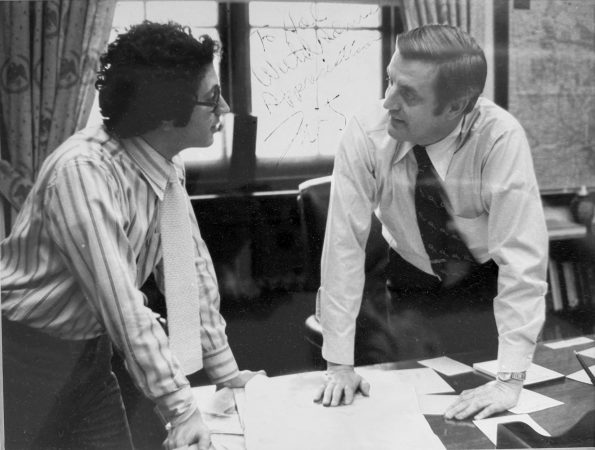
After Harvard, his climb was stunning. Legislative assistant to New York Rep. Hugh Carey, then for Sen. Walter Mondale of Minnesota, a stint at the Rockefeller Brothers Fund, and finally a senior adviser to Javits.
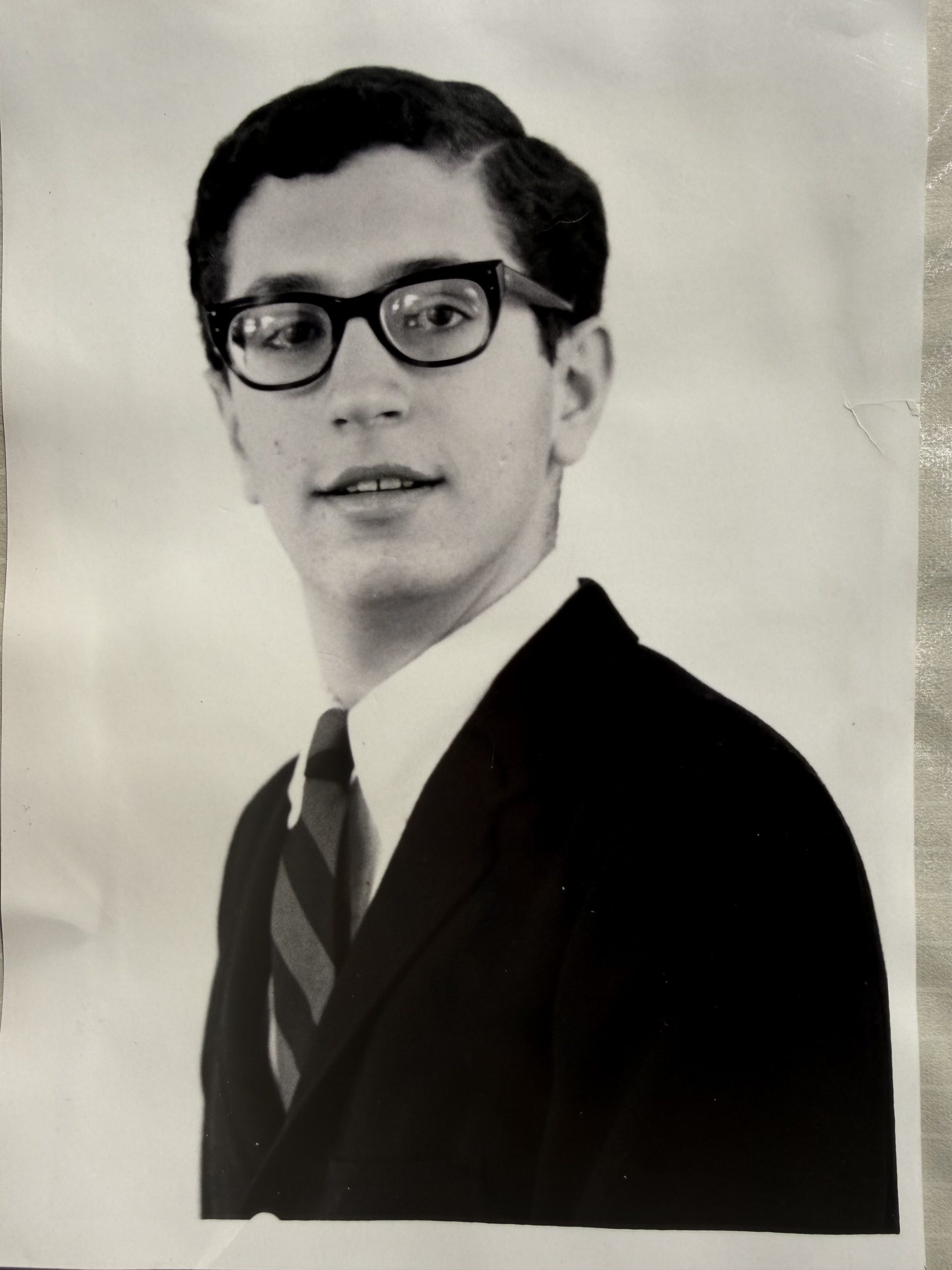
Harold Rosenthal at a Harvard seminar in November 1972.Courtesy of Mark RosenthalHarold Rosenthal’s official portrait for the Senate Foreign Relations Committee, 1976.Courtesy of Mark Rosenthal
Sen. Mondale had already told him that if Jimmy Carter won the White House in November, there’d be a staff position for Harold in the West Wing or as part of an undersecretary’s desk at the State Department. A public school kid from a Philly rowhouse, one election away from the top of the government.
That August I took a position as a teaching assistant at the University of the Pacific in California, more hiding from adulthood than pursuing a doctorate. Our younger brother, Norman, was already on his way to an influential career as an endocrinologist.
Harold Rosenthal (center) during a State Department visit to South Africa, 1974.Courtesy of Mark Rosenthal
If my future was uncertain, Harold was rewarding my overworked parents with the gift of an insider’s view of his rise. He always shared his itinerary, printed on Senate stationery, with my mother, who tracked this Mediterranean tour almost hourly. He was only passing through Istanbul.
I was at a going-away dinner near Penn when I called home and heard the fear in my mother’s voice — something about an attack on an El Al flight. There was no cable news then, no way to know. I quickly said my goodbyes and drove to Roxborough.
I opened the door to find my mother collapsed on the floor and my father — who’d flown with the Flying Tigers in China during World War II, and who’d lost his own cousin on D-Day — slamming his head against the wall. A stranger from the State Department had called and quickly said, “We regret to inform you that your son is dead. Someone will contact you soon.” That’s all.
It took time to bring Harold’s body home. Turkish law required an autopsy first, and a friend of Harold’s quietly warned me it would leave him unrecognizable. Waiting for Harold, my father consoled himself with the fact he’d be able to see his son one last time. In the back of a limo to Roosevelt Cemetery, Norman and I had to tell our father the casket would be closed — one of the hardest sentences I’ve ever spoken.
Sens. Mondale and Javits both eulogized Harold at the funeral on Broad Street. Weeks later, after a memorial at the Capitol, I sat with my parents outside, silently, in the brutal heat and viscous humidity waiting for a valet to find their car, which had been misplaced. Watching people coming and going up and down the marble steps, I realized this world wouldn’t stop for Harold. It doesn’t pause for anyone. It was already looking for his replacement.
Years later, because of a new thing called the “internet,” we were handed a second wound. Just a year after the attack, a Christian-supremacist cult leader had fabricated a grotesque “Rosenthal Interview,” inventing a confession in which Harold revealed how Jews secretly run the government. So witless — it was dated a year after Harold died. It was too absurd to survive anywhere but in fringe pamphlets — that is, until the internet gave it a permanence no pamphlet ever could.
What outlasted the hoax is the Harold Wallace Rosenthal Fellowship in International Relations, founded by his friends in 1977. Fifty years and over 300 fellows later, it’s still helping ordinary students from ordinary families into congressional offices and embassies — through the same door Harold forced open with nothing but nerve.
The fellowship started by Harold Rosenthal’s friends on Capitol Hill is still going strong, placing graduate students into offices from the Senate to the Pentagon.Courtesy of Mark Rosenthal
The night Harold’s shiva ended, sitting in my parents’ now quiet apartment, I demanded of myself to learn something from Harold’s death. Two things happened. First, I admitted the only thing I actually cared about was movies, not academics, and after my doctorate was done, I packed my car, which had been Harold’s car, and drove to Los Angeles to figure out a way into the movie business.
Second, I swore never to hear news the same way again. We measure disasters in body counts — just two, just eight — a statistic filed away and forgotten by people with their own lives to return to. I promised myself I’d stop, every time, and imagine the families behind each number.
In floods in Texas. In Gaza. In Kyiv. The dead are aggregated. Grief is always singular. Every one of those numbers is somebody’s brother, somebody’s family.
Mine was Harold.
Mark David Rosenthal is a writer and producer of film and television. He is a member of the Motion Picture Academy of Arts and Sciences and the Writers Guild of America, West. He was nominated for an Emmy for the 2016 miniseries, “Roots,” and his WGA credits include “Mona Lisa Smile,” Tim Burton’s “Planet of the Apes,” and “The Jewel of the Nile,” among many others.
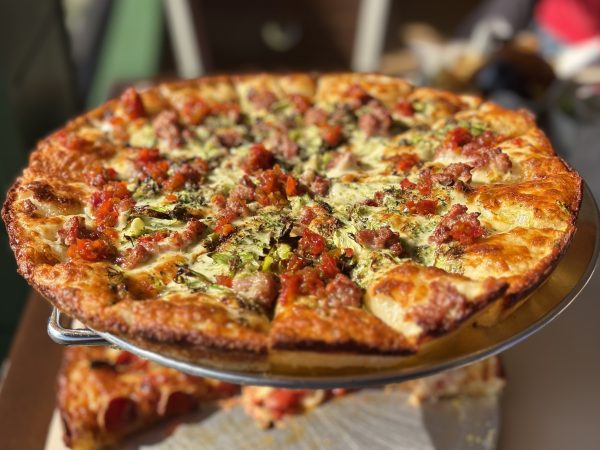
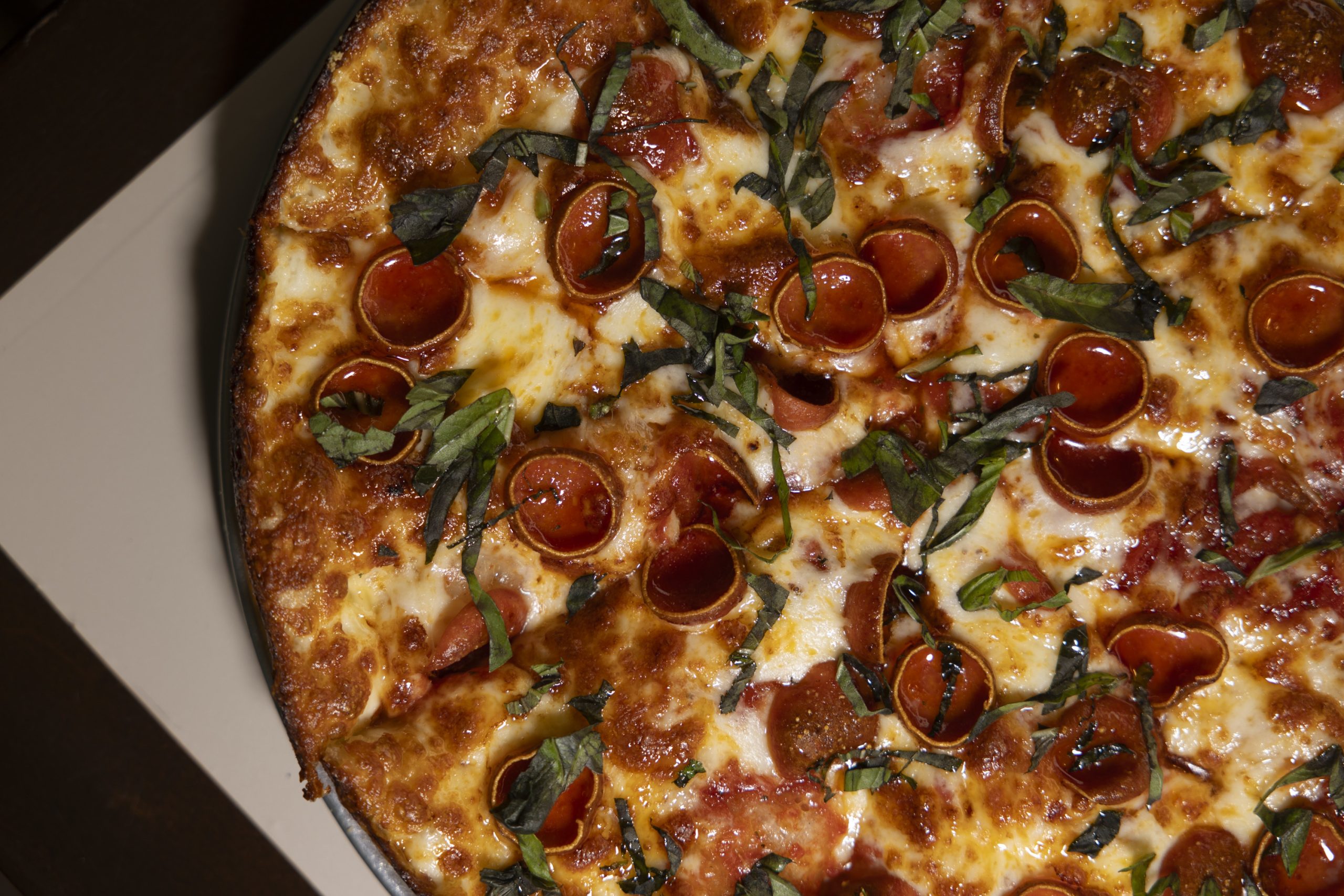
Gluten-free pizzas are generally less than exciting, as Craig LaBan notes, with textures ranging between pressboard and Styrofoam. At Barclay Pies, it’s not like that at all. Even the mozz sticks and their conventional pizzas are well worth a stop.
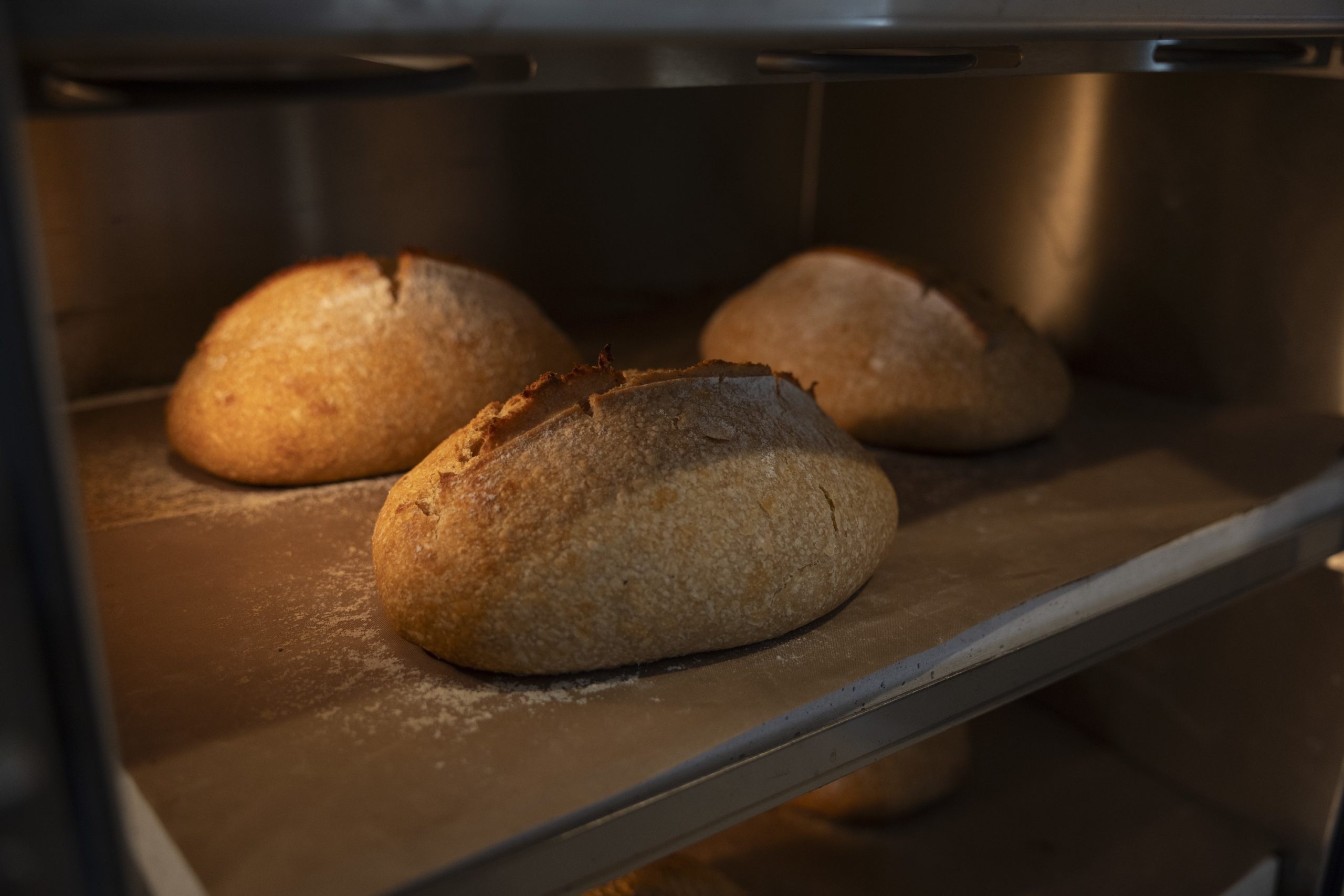
Wild Yeast Bakehouse, Wayne’s new sourdough bakery, has a living room vibe, writes Jenn Ladd. That makes sense, because the founder started baking out of his living room.
Saif Manna started baking during the pandemic in his Temple dorm room. He’s opening a brick-and-mortar home for his Levantine and Palestinian pastries, and tomorrow is the first day.
Ba Le Bakery in South Philly is practically synonymous with the city’s bánh mì scene. Now, writes Kiki Aranita, a third generation is expanding the business dramatically.
Two Sweet Boutique has had an interesting problem in its new location in Washington Township, writes Sarah Nicell. It’s selling out. Want that banana pudding? Get there early.
After four decades, The Frog Commissary Cookbook remains a Philadelphia icon — “our book,” says one acolyte. Contributor Devra Ferst takes a stroll down memory lane and winds up at the Commissary’s original location, where the current restaurant occupant bakes its carrot cake.
Oroshi, a new omakase restaurant at Broad and Lombard Streets, is part of a minitrend of faster, less expensive omakase experiences. The lights are bright and the decor is spare, but Kiki Aranita walked away happy after 90 minutes.
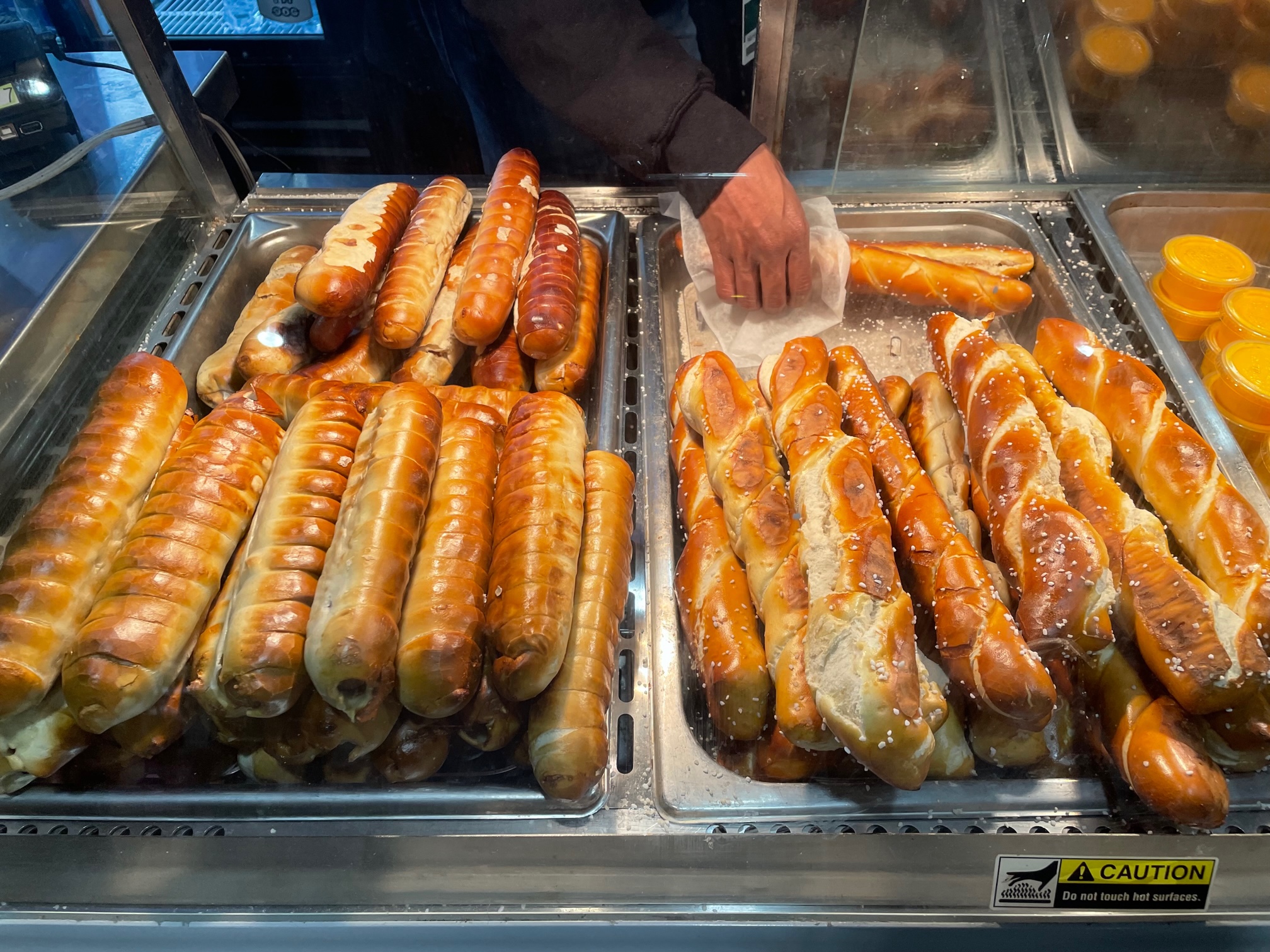
Here’s a twist: Local food brands such as Philly Pretzel Factory are working to accommodate consumers who are eating less and “protein-maxxing,” Olivia Prusky writes.
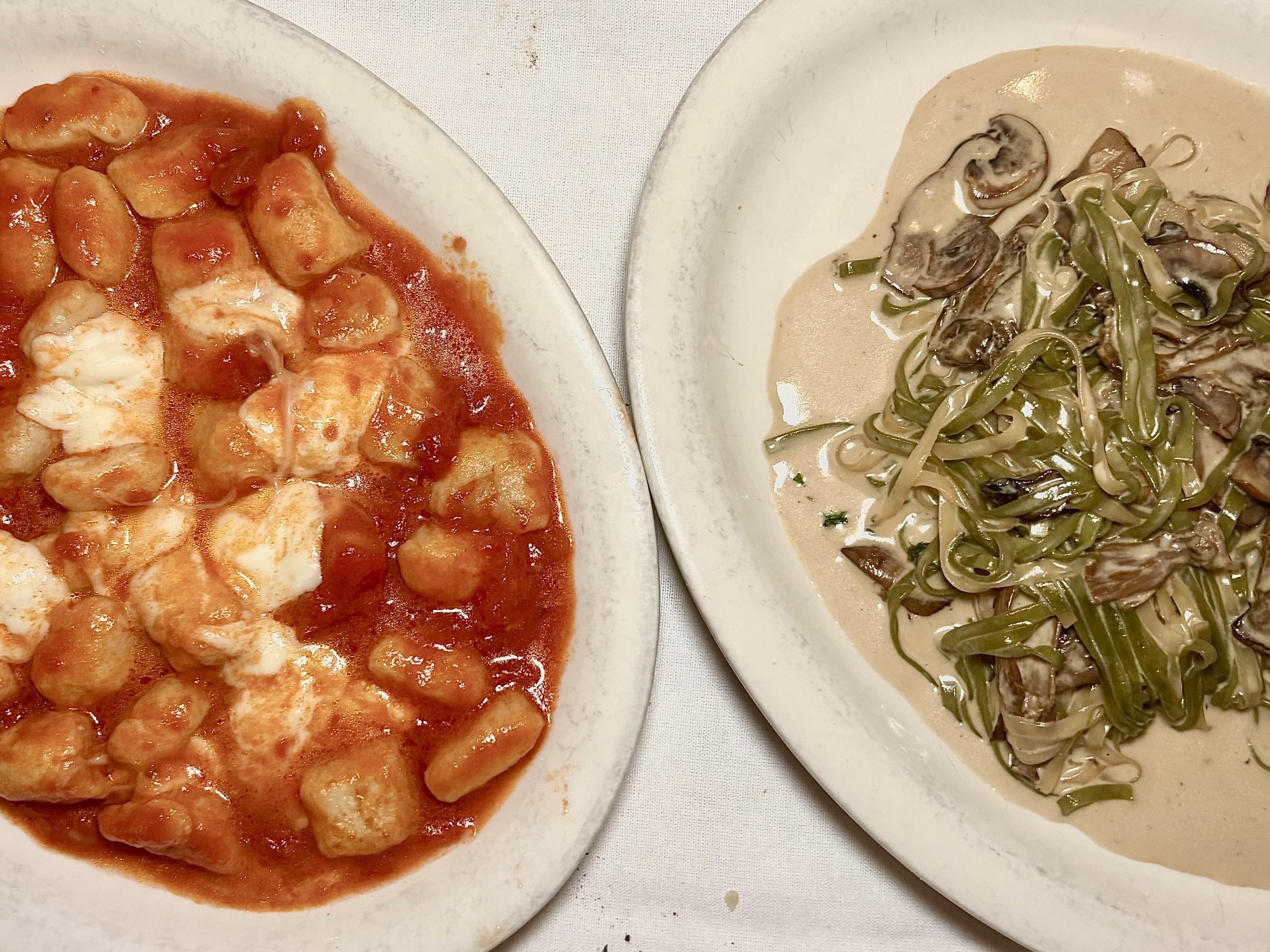
Craig visited an old fave — Porcini in Rittenhouse — and found the pastas have not lost a beat even after three decades. And yes, it’s still a BYOB.
Scoops
Chef Nic Macri and restaurant-ops specialist Suzanne O’Brien are proving you’re never too old experienced to open your first restaurant. They’re partnering with Stephen Simons on a spot just off 13th and Sansom in Washington Square West, and Macri describes the menu as “Philadelphia cooking with an Italian accent.”
Anh Em, a Vietnamese bar-restaurant and bar from husband-and-wife team Victor Nguyen and Anna Huynh, is aiming for an Aug. 8 grand opening at 1252 S. 21st St. in Point Breeze, the former Madira. Nguyen, a longtime Philadelphia hospitality veteran who bartended at Mad Mex in the late 1990s, co-owned a Chinatown bubble tea shop in the early 2000s and later spent 15 years managing Tango, is realizing a longtime goal of opening his own place. The roughly 45-seater will pair Vietnamese comfort food (pho and bánh xèo alongside home-style dishes) with a 20-seat bar pouring 24 local drafts and a small cocktail list.
Andorra Kitchen & Tap will join Andorra Shopping Center’s $32 million glow-up by Federal Realty, possibly in the fourth quarter. Spanning 6,900 square feet in the former Applebee’s, the restaurant is positioning as an all-day neighborhood gathering place serving breakfast/brunch, lunch, and dinner, with a full bar and dedicated coffee area for the morning. Owner Emmanouil Lagoudakis says he was drawn to Andorra-Roxborough for its “wonderful energy.”
Restaurant report
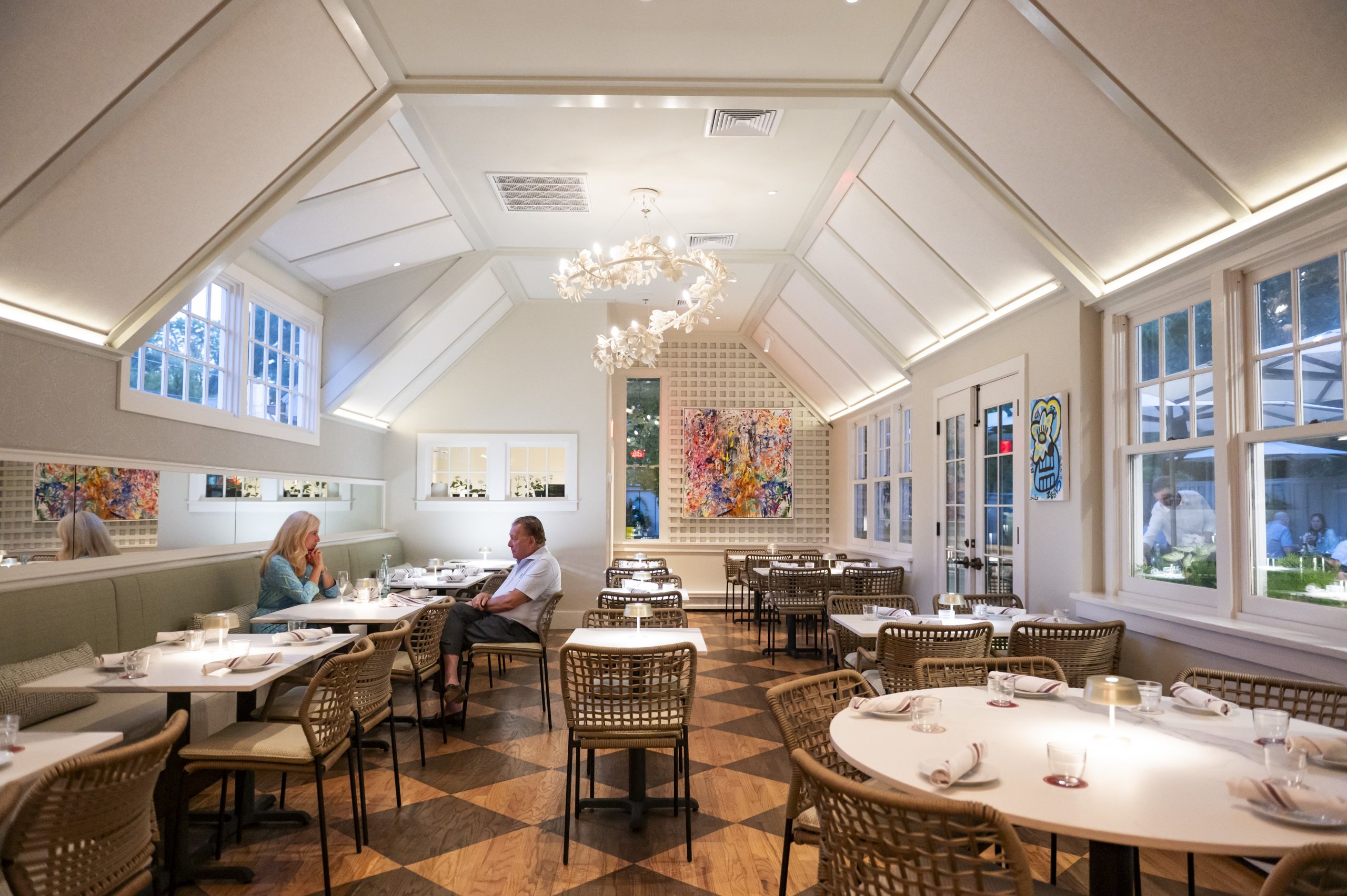
333 Belrose, one of the Main Line’s old-guard restaurants, has reopened after a dramatic renovation that flipped the bar with a dining room, opening up the layout. The menu is still “nothing too cerebral, nothing too crazy,” as chef Ross Essner told me, adding that there’s one dish he will never take off the menu.
Toll Man Joe’s, whose South Philly run was abbreviated by the pandemic, will resurface at the former Mixto on Pine Street near 12th. The owners hope to get the sports bar open in just a few weeks.
Pomelo Rooftop Terrace, atop the new Brandywine hotel in Radnor and counterpoint to Merrick’s Tavern off the lobby, will grand-open Aug. 8. It’ll be open year-round with indoor-outdoor seating. Weekend brunch begins Aug. 22.
The region’s last Brio Italian Grille, in Cherry Hill’s Towne Place at Garden State Park, closed abruptly Monday, two months after its Marlton location shuttered. The site 42Freeway joined the Facebook account A View From Evesham in first reporting that steakhouse Fogo de Chao will occupy the Cherry Hill location, citing township permits. A rep from Fogo declined my request for comment.
Briefly noted
Flash back to 2023, when chef Dionicio Jiménez and Mariangeli Alicea Saez of Cantina la Martina, La Baja, and the Cantina on the Go locations went to Mexico with Inquirer critic Craig LaBan and photographer Jessica Griffin for articles that won a James Beard Award in 2024. The restaurateurs are using part of that trip as inspiration for a five-day excursion to Oaxaca they’re planning for Oct. 30–Nov. 4. (LaBan and Griffin, who also met with Tequilas’ David Suro for a lesson in mezcal and tequila production during that 2023 trip, will sit this one out.) Limited to eight guests, the experience will feature family celebrations, cultural traditions, home-cooked meals, a private mezcal tasting, artisan visits, and special dinners, including one from Jiménez himself. It’s $2,000pp plus airfare. Details via cantina@cantinaonthego.com.
Nine Philadelphia bartenders will throw down Patrón Tequila-based cocktails in the Dirty Rocks Cocktail Competition from 3-7:30 p.m. Sunday at Fringe Bar (140 N. Columbus Blvd.). Attendees will determine the winner among Matt Welch (R&D), Kari Rosenfeld (Bourbon & Branch), Kevin Castro (Soufiane at the Morris), Roland Bui (Com.Unity Consulting), Damian Langarcia (Drams by Damian), Chris Harrop (Known Associates), Tony Jimenez (Static), Jackie Miller (Fringe Bar), and defending champion Jessica Stark (Trestle Inn). Also: a DJ, pizza truck, food and drink specials. Admission ($20) includes three tasting votes; VIP tickets are $45 and include a welcome cocktail, gift bag, and 10 votes. Cocktails: $5-$12. Tickets via DirtyRocks.com.
2nd Street Festival returns to Northern Liberties from noon-10 p.m. Sunday, transforming the stretch from Spring Garden to Girard Avenue into a festival with more than more than 50 restaurants and food trucks, 10 beer and cocktail gardens, two live music stages, and family activities.
❓Pop quiz
Name the brand that Wawa has partnered with on a hot-selling tote bag.
Owner Rayyan Kayyali sounded discouraged but not defeated when we caught up yesterday, more than two months after a gas explosion destroyed his Overbrook Park bagel bakery on the very morning of its reopening following another blast in March. He said he is waiting for a new burner pipe for the oven, and “so far, I haven’t seen a dime” from the insurance company. Meanwhile, lords Jeffrey Gladstone and Andy Rubin of Herbert Yentis & Co. say they have not charged him rent since the first explosion. Kayyali vows to rebuild and reopen.
📮 Have a question about food in Philly? Email your questions to me at mklein@inquirer.com for a chance to be featured in my newsletter.
By submitting your written, visual, and/or audio contributions, you agree to The Inquirer’s Terms of Use, including the grant of rights in Section 10.